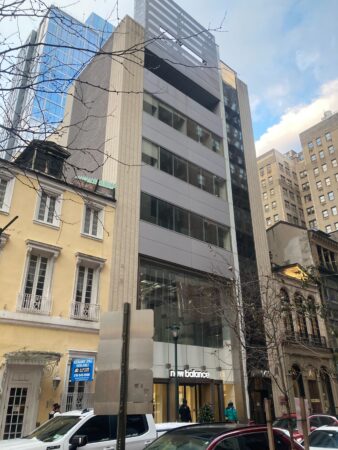
Another Philadelphia office building has sold for a small fraction of what it last changed hands for, this time in the heart of Center City’s retail district.
The six-story property at 1619 Walnut St. was purchased by Marc Zollinger, a Swiss investor and CEO of the company MZP AG, which is listed as the purchaser. Zollinger’s LinkedIn profile shows that he formerly worked in Philadelphia for Miller Investment Management.
The property sold for over $5 million, a dramatic decrease from when the seller Nuveen Real Estate purchased it in 2013 for over $19 million, according to a person familiar with the sale.
Neither Nuveen or Zollinger responded to a request for comment.
The office space in 1619 Walnut is wholly vacant, although real estate firm Keller Williams still holds a lease for two floors of now empty office space.
The retail picture at the property is more positive, with shoe seller New Balance occupying nearly 4,000 square feet on the ground floor with a lease that expires in 2035.
The sale price is seen as an unusually good deal for the location. Although the second-tier office space available in the building is the exact kind of product that has been hard hit by the rise of hybrid work since the COVID-19 pandemic, the upper floors of 1619 Walnut are seen as ideal for conversion into apartments.
“The sale price is an anomaly. … [Zollinger] bought it at an astoundingly good price,” said Larry Steinberg, head of the urban retail division for real estate services firm Collier’s Philadelphia office, who was not involved with the deal. “It would make a lovely residential conversion.”
The property’s sale was handled by JLL, a real estate services company, which advertised the building as an ideal office-to-residential conversion. The property enjoys the most flexible zoning in Philadelphia’s code, making such a transition relatively simple.
“With rectangular floorplates measuring approximately 4,900 square feet, the floor plan of the building makes it an ideal candidate for a conversion to boutique residential,” reads JLL’s promotional materials for the sale. “Given the existing layout of each floor, the redevelopment would accommodate a variety of modern open layouts with access to an abundance of natural light.”
JLL estimates that the office floors could accommodate up to 20 residential units, depending on the size of the apartments.
The building was purpose built for KYW radio in 1937 and, later, its television division. The influential Mike Douglas Show was based out of the building for much of its run, employing Roger Ailes, later of Fox News fame, in the late 1960s. In the early 1970s, John Lennon and Yoko Ono guest-hosted the show from the building for a week, interviewing people including Chuck Berry and Ralph Nader.
More recently, between 1997 and 2009, 1619 Walnut was home to the influential French restaurant Brasserie Perrier.
JLL’s Jim Galbally, who led the sales team, told real estate analytics firm CoStar that the purchase represented a “rare opportunity to acquire a retail, mixed-use asset along Walnut Street, Philadelphia’s premier high avenue.”
Last week, I visited two subsidized apartment communities in North Philly. One was newly built and still leasing, and the other was built years ago.
But they had something in common that set them both apart from other subsidized housing complexes: They are also sites of playful learning.
Basically, that’s the concept of engaging children and their caregivers in skill-building lessons through play. Think matching games that help kids recognize patterns and the classic I Spy game that teaches kids to describe their surroundings.
An organization founded in Philly has brought educational play spaces to laundromats, grocery stores, and parks. But this is the first time it’s taken playful learning to subsidized housing. Supporters hope Philly can be a national model.
Keep scrolling for that story and more in this week’s edition:
Timing is everything: Read why an economist says this spring may be the time for hopeful homebuyers to make moves.
In Sharswood, a yellow street painted on a sidewalk teaches children rules of the road. A few minutes away, what was once just a bike rack has become a place children can picture themselves as superheroes and act out stories they create on a stage.
Bringing playful learning to subsidized housing communities is a matter of educational equity, said architect Heidi Segall Levy.
She’s the project manager for the Live and Learn pilot that brought playful learning to North Philly.
Kids do a lot of their learning outside the classroom, and this initiative is meant to help vulnerable children catch up to peers who have access to more educational opportunities.
The goal is to incorporate playful learning into subsidized housing developments across the country. And Philly is the test case.
Everyone from your coworker to your Lyft driver has an opinion (in my personal experience).
But if you’re looking to hear from someone who’s a bit more of an expert, we’ve got some advice from Mark Zandi, chief economist at Moody’s Analytics.
He reinforces some of what you’ve seen and felt. Homes have gotten a lot more expensive. There aren’t that many properties to choose from. Renting can be the more affordable option.
But Zandi says that if you’ve been thinking about buying a home, this spring could be the time to make the leap.
I feel like it’s never good when someone in the home design industry calls your house “an interesting design dilemma.”
But the home that Diane and Keith Reynolds bought a few years ago in Rydal, Montgomery County was all over the place.
It was originally built in the Cape Cod style, but the previous owner had added on to the home in the Craftsman style.
The designer had to make sense of elements that didn’t go together and kitchen features such as the loft, beams, and floor plan that made for an “unusual design problem.”
“The reclaimed wood loft installed by the previous architect is something I’ve never seen before, and I’m sure will never see again,” he said.
To hear the Parker administration officials tell it, moving the Rocky statue from the bottom of the Philadelphia Art Museum steps to the top is a victory for the underdog.
The new location, which received a green light from the Art Commission on Jan. 14, will certainly create a dramatic, Instagrammable moment for tourists, and further elevate the Rocky brand (and value).
But it’s no victory for Philadelphia residents, who remain the true underdog in this saga. Allowing the old movie prop to dominate the Parkway’s iconic vista is simply the latest in a series of decisions that have privatized the Art Museum’s gorgeous, landscaped grounds.
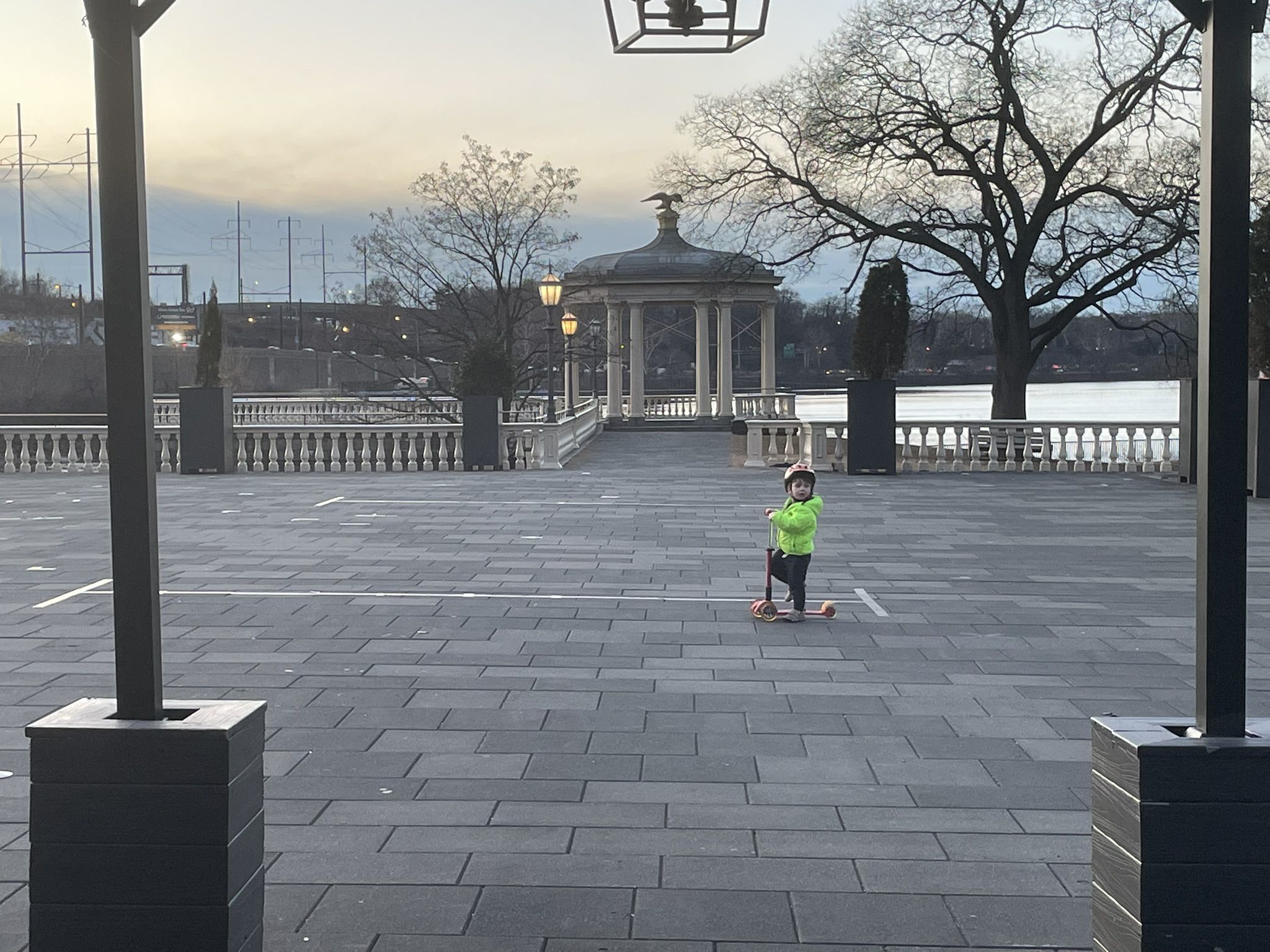
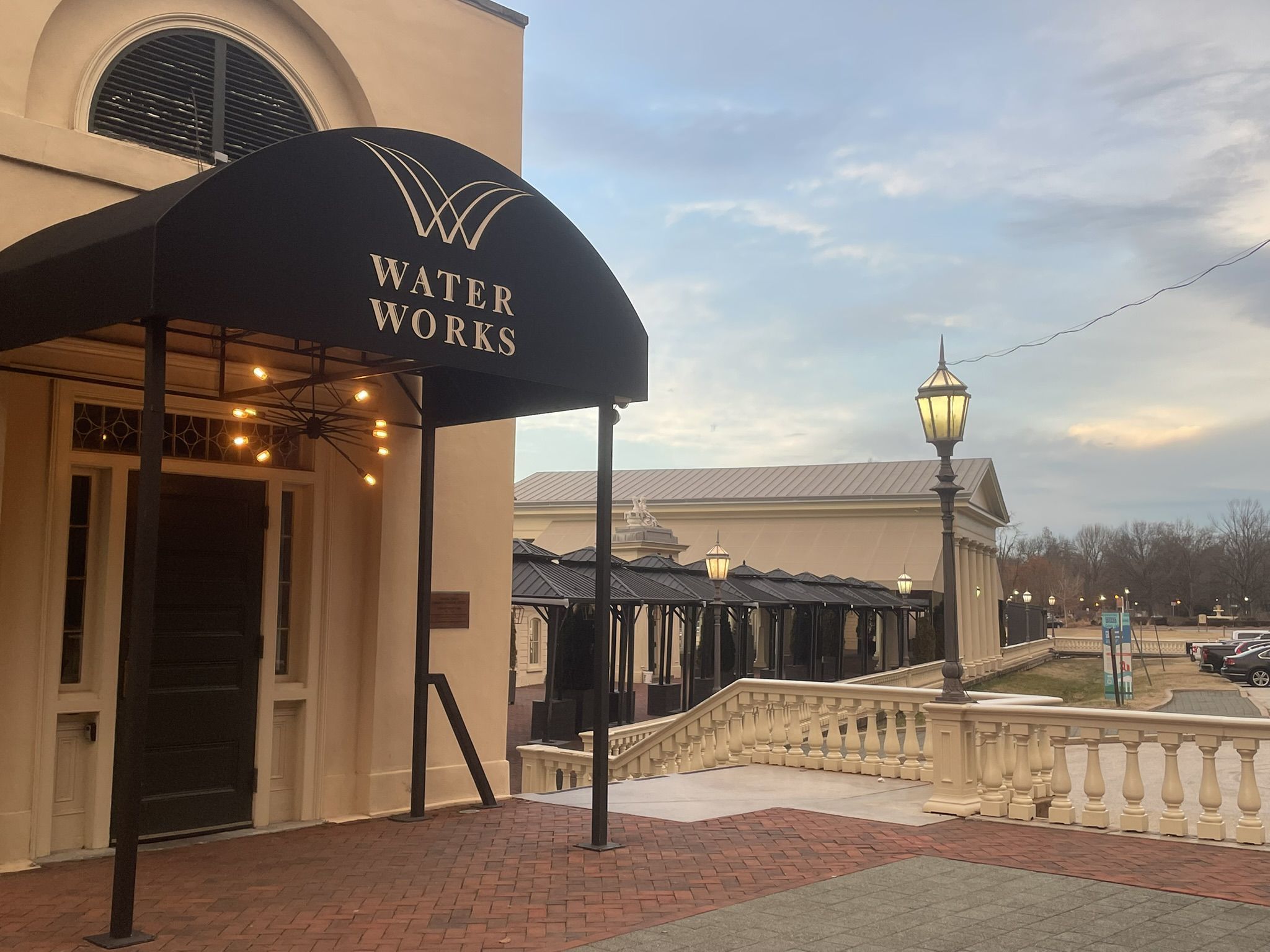
If you walk to the back of the museum, you’ll find the most egregious example of Philadelphia’s zeal for monetizing public space: the sprawling Cescaphe banquet operation at the Fairmount Water Works.
While the main Engine House had been used as a restaurant in the past, the city allowed Cescaphe to take over the entire complex in 2021. Today, the Water Works is surrounded with a cordon of server stations, portable restrooms, and covered walkways.
Since 2021, the historic Fairmount Water Works has been surrounded by a cordon of server stations and covered walkways. A glass party room prevents the public from enjoying the Mill House Deck, a pier overlooking the Schuylkill.
Cescaphe’s presence has drastically limited the public’s access to this historic landmark, a scenic spot where generations have come to stroll and take in views of the Schuylkill. Although visitors are permitted to wander though the Water Works’ classically inspired temples and colonnades when no events are going on, who would know that, given the messaging conveyed by Cescaphe’s formidable barricades?
Preparations for evening events often start in the afternoon, further limiting access. Every spring, Cescaphe installs an enormous glass party room on the pier known as the Mill House Deck. It remains in place until late fall, which means the public gets to use the overlook only during the coldest months of the year.
Rocky already has a good spot
Moving the Rocky statue to the top of the steps might seem like a modest imposition by comparison, but the new location will interfere considerably with the public’s enjoyment of the space.
Since people with mobility limitations will have trouble climbing the 72 steps to the top of the museum’s grand staircase, they’ll need transportation. The Philadelphia Visitor Center — the initial advocate for the new location — has offered to run a shuttle bus around the museum apron every 15 minutes. Better watch out when you’re taking that selfie!
During the recent Art Commission hearings, the city’s two top cultural officials, Valerie V. Gay and Marguerite Anglin, argued that the Rocky statue deserves a higher profile perch because it’s a unique tourist attraction. They noted that the statue has been the subject of books and podcasts and will soon be the focus of a major Art Museum exhibition, “Rising Up: Rocky and the Making of Monuments,” curated by Monument Lab’s Paul Farber.
Yet, given the added complications, it’s hard to understand what the city gains by changing the statue’s location.
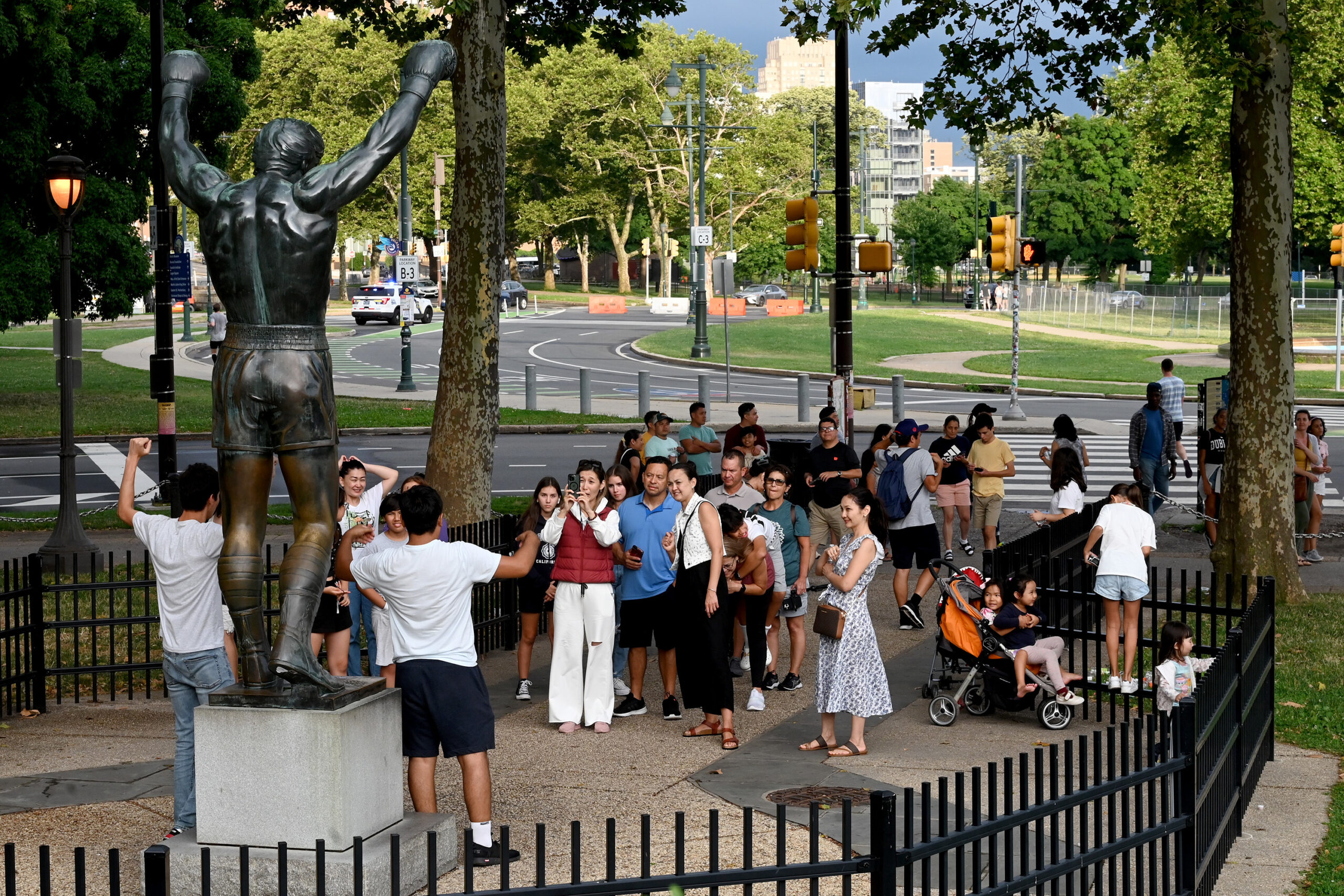
Rocky’s current home — a shady grove at the bottom of the steps — has been a huge success. The statue was installed there in 2006, after years of shuttling around Philadelphia, from the museum to the sports complex and back. In a typical year, 4 million people make the pilgrimage to see Rocky, the same number who visit the Statue of Liberty annually.
The Rocky statue, currently at the base of the Art Museum steps, is easily accessible to visitors and tour groups.
Because the grove is so close to the street, there are no accessibility issues. Tour buses and cars can pull up to the curb, allowing people to jump out for a quick selfie. Sometimes there’s a line for photos, but the mood is always festive, with visitors and locals mingling along the sidewalk. Anyone who wants to reenact the fictional boxer’s run up the museum stairs can do that, too.
Yes, this site occupies a piece of the museum’s grounds. But the intrusion is relatively discreet. Considering how well this location works, why change it? It’s not like there was a huge public clamor to give Rocky more prominence. When Inquirer columnist Stephanie Farr polled readers in September, most respondents said they were happy to keep the statue in its current location — or get rid of it entirely.
Only a single person testified at the Art Commission’s Jan. 14 hearing — and he argued against the move. Several civic organizations, including the Design Advocacy Group (DAG), sent written statements urging the city to reject the proposal.
“All we’re doing is glorifying Sylvester Stallone, who sells merchandise at bottom of the steps,” complained David Brownlee, a member of the DAG board and a renowned University of Pennsylvania art historian who has written a history of the Art Museum.
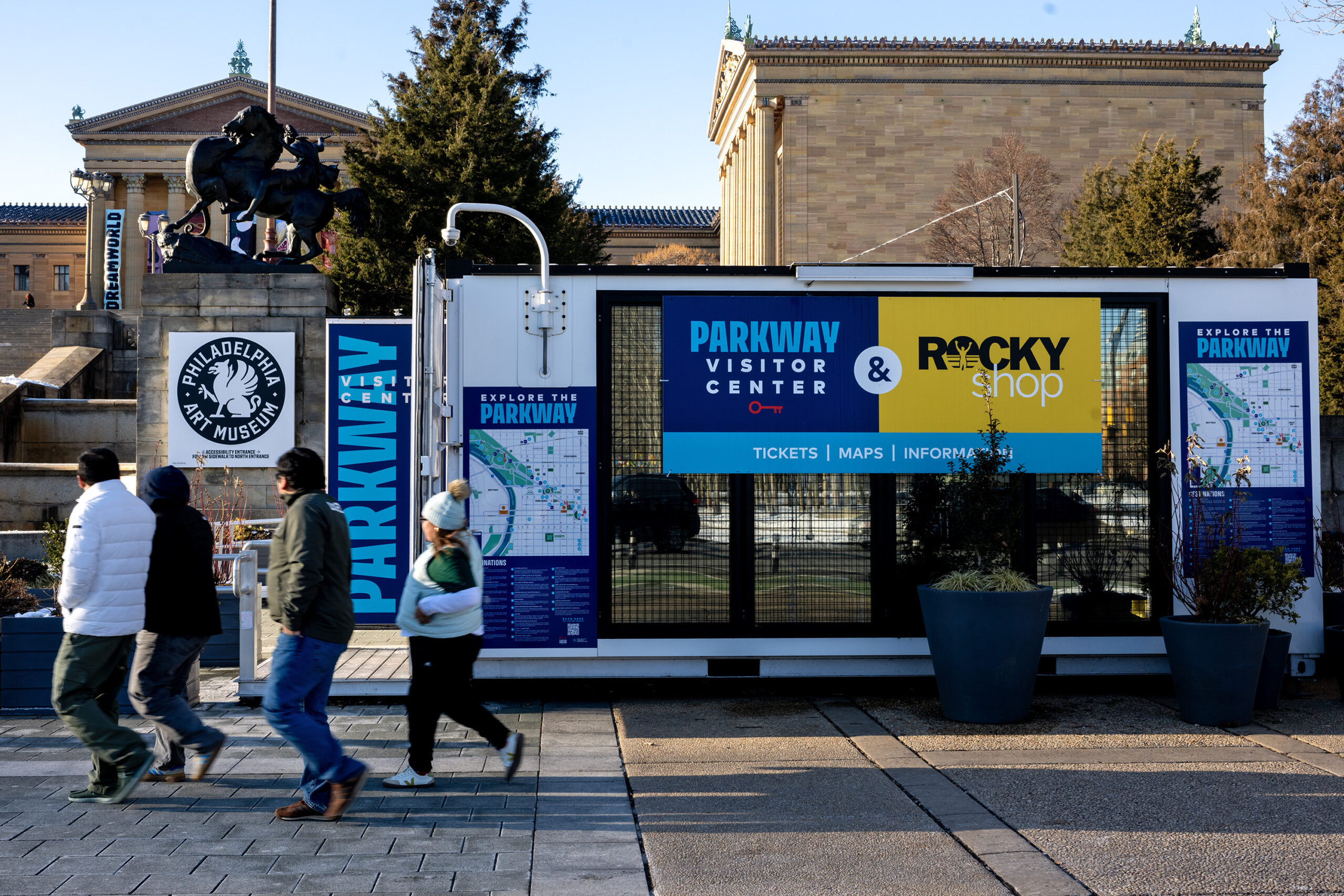
Those Stallone-licensed souvenirs are sold in the “Rocky Shop,” a metal shipping container that was allowed to encroach on the plaza at the base of the museum steps in 2023. Although the metal structure doesn’t take up as much public land as Cescaphe’s banquet operation, it clunks up the approach to the museum’s elegant stone staircase.
The Parkway Visitor Center & Rocky Shop at the base of the Philadelphia Art Museum steps Jan. 20, 2026. In 2023, the city allowed Sylvestor Stallone to set up the metal shipping container at the base of the Philadelphia Art Museum steps.
Initial reports said the Visitor Center, which pushed for the shop, would get a cut of the sales. Yet when I asked how much money that partnership had yielded, a spokesperson for the independent tourism agency declined to answer. The Visitor Center is now run by Kathryn Ott Lovell, who was parks commissioner when the department signed off on Cescaphe’s 2021 expansion at the Water Works.
The exorbitant cost of moving
What jumped out at me during the Art Commission hearing was the cost of moving the bronze sculpture and setting it up on a new base.
Creative Philadelphia, the city department overseeing the move, originally estimated the job would run about $150,000. Now it says the price could rise to $250,000. Those figures don’t include the cost of operating the shuttle, which will be borne by the Visitor Center.
To put those numbers in context, consider the basepayment the city receives from Cescaphe annually for operating a banquet hall at the Water Works: $290,000.
When Cescaphe was given permission to occupy the Water Works complex in 2021, the city said the arrangement was necessary because the parks department could no longer afford to adequately maintain the property. In addition to rent, the agreement generated about $187,000 annually in concession fees between 2015 and 2022 for the city.
That income isn’t peanuts, but is it really worth severely limiting public access to such an iconic Philadelphia landmark? What’s the point of monetizing our parks if the businesses prevent us from enjoying them?
Except for a few months during the winter, the Mill House Deck pier at the Fairmount Water Works is covered with Cescaphe’s glass party room, making it impossible for Philadelphians to enjoy the space.
The privatization of such beloved sites is the direct result of city government’s unwillingness to properly fund its parks. For years, Philadelphia has spent far less than peer cities on green space. Maintenance declined to the point where some parks became unusable.
Rather than devote more money to this basic public amenity, the city has increasingly outsourced its parks to private managers. Enormously popular destinations, such as Dilworth Park and Franklin Square, are run by independent groups.
Cescaphe, a banquet company, has surrounded the Fairmount Water Works with a cordon of arcades, server stations and portable restrooms since it began holding events there in 2021.
But there’s a crucial difference between those private managers and the likes of Cescaphe. First, they’re nonprofits, not businesses. They exist to serve the public. While it’s frustrating when they close their parks for private fundraising events, all the money they raise goes back into improving the parks for the public’s use.
With the Cescaphe deal, the city has crossed a line. Cescaphe is a money-making business that runs the Water Works for its own benefit. In theory, the rent and concession fees are supposed to be invested in the maintenance of the complex, which was considered one of the wonders of the world when it opened in 1815. But it’s Cescaphe, not the public, that benefits from the improvements.
It’s not even clear that Cescaphe is doing the promised maintenance. The Engine House suffered a serious fire in November, and the company still has several outstanding building code violations.
When asked about the citations, a spokesperson for Parks & Recreation described the infractions as minor. “Cescaphe has been a great partner,” Commissioner Sue Slawson said in a statement.
To be clear, there is a big difference between leasing a public building to a restaurant concession and privatizing public space for the sole use of a single business. Restaurants are open to everyone. They also provide services, such as restrooms, that the public can use. It’s a win-win: The city makes a little money on the deal, and the public gets a nice amenity.
The city had the right idea when it leased the Water Works’ Engine House to a restaurateur in the early 2000s. But instead of finding a replacement when that restaurant shut down in 2015, the city turned the complex over to Cescaphe. This April the banquet company’s lease will come up for renewal. It’s time to go back to the original model.
Wouldn’t it be great to grab a sandwich at a Water Works cafe after a long walk or bike ride along the Schuylkill River Trail? The trail, which just completed a spectacular extension, does not have a single cafe between its new Grays Ferry terminus and the museum, apart from a small snack bar at Lloyd Hall. Philadelphia has plenty of great restaurateurs who would jump at the chance to operate in a prime spot like the Water Works.
People have framed the Rocky discussion as a clash between elites, who object to the glorification of a movie prop as art, and the mass of fans who believe the statue embodies their aspirations.
The reality is, there’s nothing less democratic than turning over the public’s land to private companies driven by their own gain.
An earlier version of this column listed FDR Park as one of several city parks that are run by private managers. The Philadelphia Department of Parks & Recreation operates the park and provides workers to staff it.
This story has been updated to remove the Schuylkill River Trail from a list of private managers because the Schuylkill River Development Corp. has a different type of contractual agreement with Philadelphia’s Department of Parks & Recreation and does not lease the land it oversees.
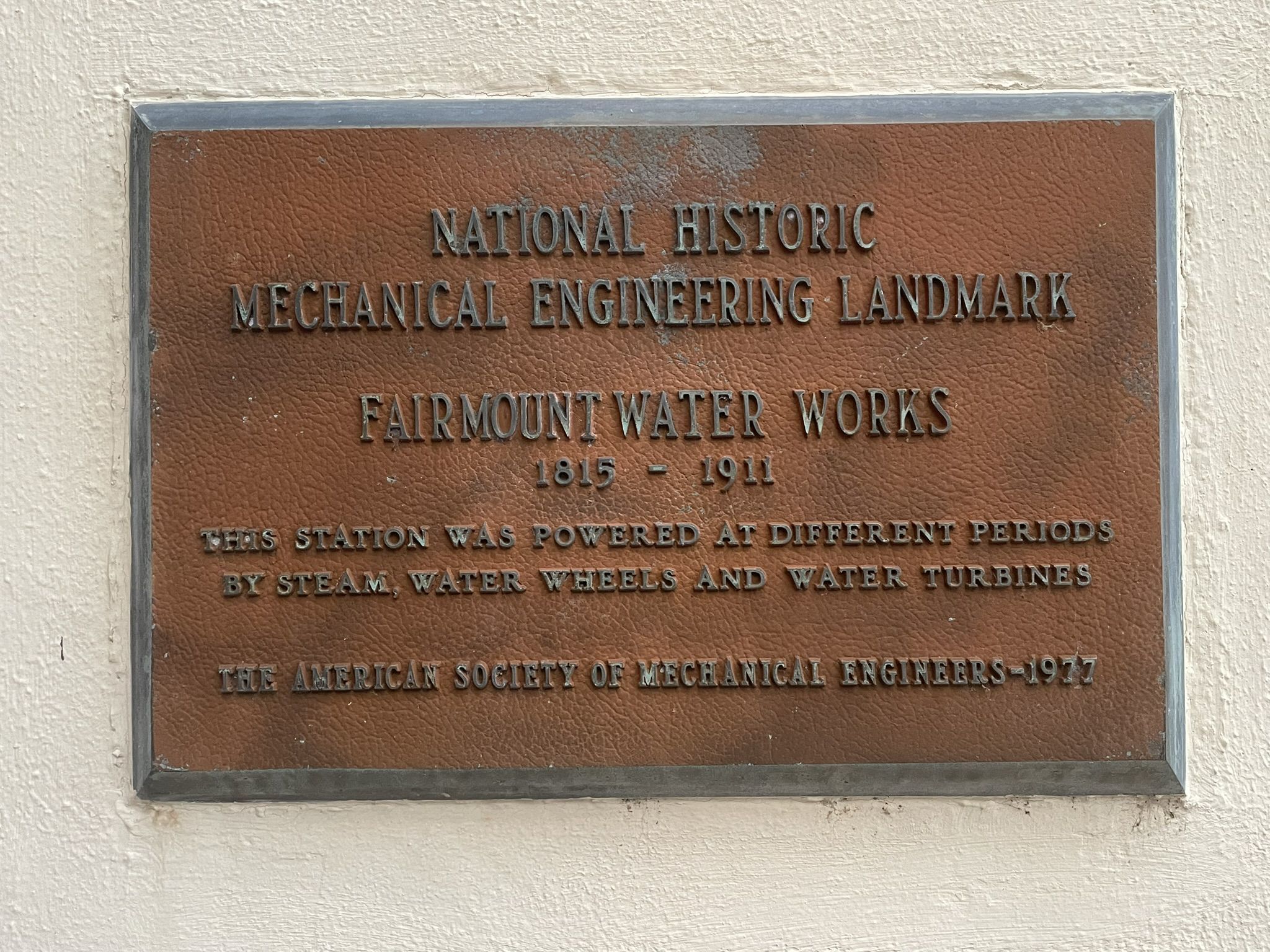
When it opened in 1815 to provide the growing city with a reliable supply of drinking water, the Fairmount Water Works was a major engineering advance and was considered one of the wonders of the world.
A warehouse developer’s proposal to trade land with the state in Limerick Township and beyond has blindsided local officials — and ignited fierce opposition from residents who fear the deal could clear the path for a data center.
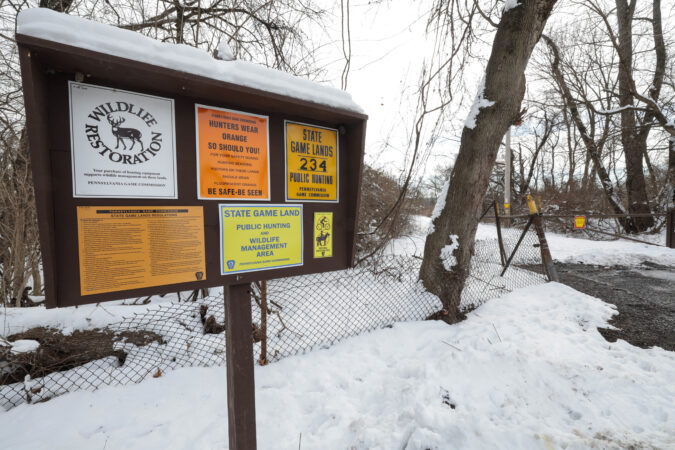
The state would gain 559 acres across three counties, including what would become Delaware County’s first state game lands,according to the proposal on file with the Pennsylvania Game Commission.
In return, the developer, Limerick Town Center LLC, would secure a 55-acre property in Limerick. That landadjoins an industrial tract the developer already owns, which was formerly the site of the Publicker distillery.
(function() {
var l2 = function() {
new pym.Parent(‘LANDSWAP1-22-26.html’,
‘https://media.inquirer.com/storage/inquirer/projects/innovation/arcgis_iframe/LANDSWAP1_22_26new.html’);
};
if (typeof(pym) === ‘undefined’) {
var h = document.getElementsByTagName(‘head’)[0],
s = document.createElement(‘script’);
s.type = ‘text/javascript’;
s.src = ‘https://pym.nprapps.org/pym.v1.min.js’;
s.onload = l2;
h.appendChild(s);
} else {
l2();
}
})();
Collapse
Residents flooded an hourslong Board of Supervisors meeting Tuesday night to oppose the land swap, prompting officials to open a second room fortheoverflow.
“I’m against the swap,” resident Jeff Schmidt told the board. “It’s a terrible idea, and I need to stop now because a lot of bad words want to come out of my mouth.”
Connie Lawson, board chair, said that ultimately the state controls the land involved in theswap, not the township.
Township manager Daniel Kerr told the crowd that the township had little information and hadjust learned of the proposal last week. But, he said, plans for land involved in the swap would have to go through the township for zoning and planning.
After hours of listening to residents, the board voted to send a “strongly worded” letter of opposition to the Game Commission.
Although the developer has not proposed building a data center, theidea has been widely circulated on social media, including inposts by state Sen. Katie Muth. Sheurged residents who oppose the swap to attend the township meetingTuesday, as well asa state Game Commission meetingonSaturday.
Data centers, whichhouse servers used for artificial intelligence, have become a hot topic in recent months, as residents in multiple towns have voiced concerns over their use of land, energy, and water. Meanwhile, political and labor leaders have embraced them as job creators.
Those twolocations are within two milesof the land Limerick Town Center would acquire in the swap.
“If this swap goes through, we are one step closer to turning our communities into Data Center Alley 2.0,” Muth wrote on Facebook last week. “This land is publicly owned wildlife habitat and forest. It should not be traded away so Big Tech and AI corporations can maximize profits at the expense of our environment and quality of life.”
What’s involved with the land swap?
Limerick Town Center LLCis already proposing to build two warehouses totaling 1.9 million square feet in Limerick’s Linfield section. That would be off Main Street and Longview Road, not far from Constellation Energy’s Limerick Clean Energy Center, a nuclear power plant.
The proposed swap would give Limerick Town Center LLC state-owned landand a 200-foot right-of-way adjoining the warehouse site, in exchange for the company giving the state property inLimerick and other counties.
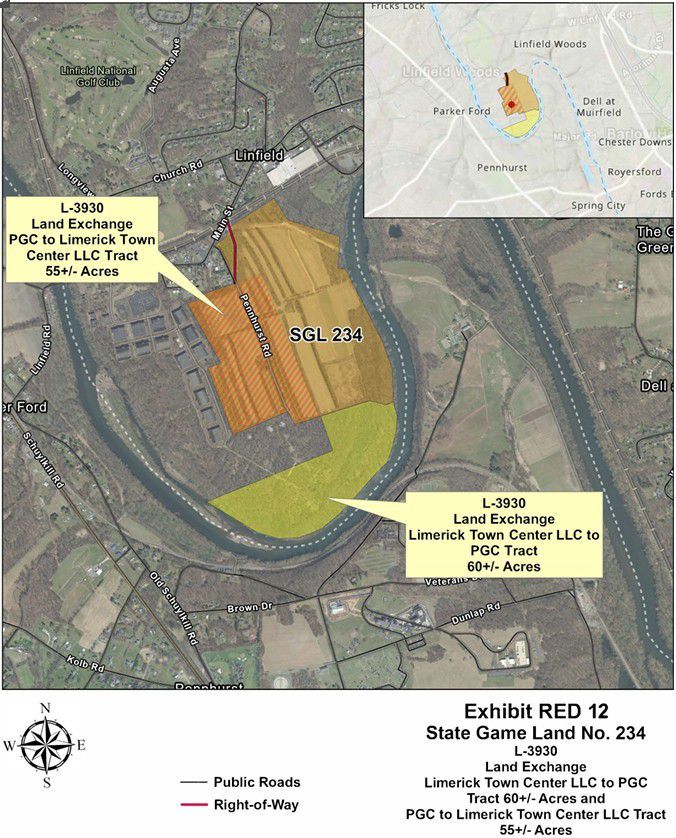
Overall, the company would give the state a total of 614 acres in return for a 55-acre chunk of Game Land 234.
Included in the 614 acres is a 60-acre parcel it already owns in Limerick that adjoins the southern portion of Game Land 234 near the river.
Map shows a proposal by Limerick Town Center LLC to give the state 60 acres it owns in Limerick Township in return for the state giving the company 55 acres of State Game Land 234.
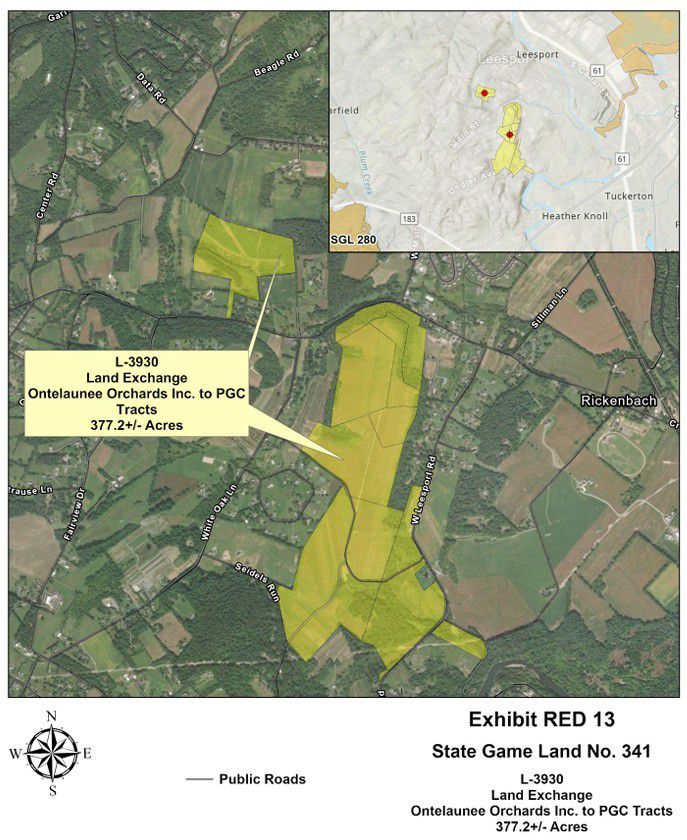
The company would alsogive 377 acres in Bern Township, Berks County, to be managed by the state.
Map shows part of a land swap being proposed by Limerick Town Center LLC. The company is proposing to give the state 377 acres of Ontelaunee Orchards in Bern Township, Berks County, in return for 55 acres of State Game Land 234 in Limerick Township, Montgomery County.
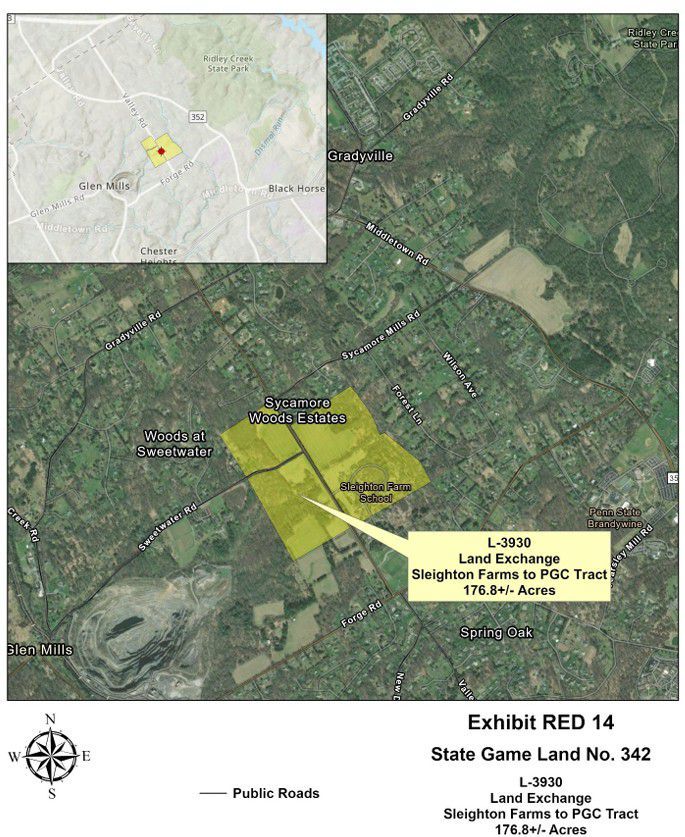
And the company would give the state 177 acres in Edgmont Township that would become the first state game land in Delaware County.
Map shows part of a land swap being proposed by Limerick Town Center LLC to acquire 55 acres of state Game Land 234 in Limerick Township, Montgomery County. In return, Limerick Town Center would give the state hundreds of other acres including 177 acres in Edgmont, Delaware County that could be used for a new state Game Land.
Local concerns
At Tuesday night’s meeting, resident after resident opposed the plan, citing overdevelopment, traffic, a change in the character of the community, and an impact on wildlife and the environment. Only one man from Berks County, who said he was a hunter, supported the swap.
Limerick resident Jennifer Wynne told the board she opposes the swap, saying the public hasn’t been given enough information that it would provide “a clear public benefit.”
“I am also concerned that this transfer may function as a precursor to future high-intensity or industrial development,” she said.
Michael Poust said he moved to Limerick to escape overdevelopment, and he opposes the land swap.
“My land is surrounded by the state game lands,” he said. “I bought it there for a reason.”
Muth, the state senator, lives in neighboring East Vincent and has been part of the fight against a data center proposed for Pennhurst.
“I highly recommend that you review the path forward to change the zoning in that area,” Muth told the board.
A view of the former Publicker Distillery tract now owned by Limerick Town Center LLC, which is proposing to build two warehouses on the land. The company is also proposing a land swap with the state to gain 55 acres of adjoining land.
Edgmont’s response
Meanwhile, Edgmont Township, Delaware County, could gain new state game land near, but not connected to, Ridley Creek State Park.
Pennsylvania Game Lands, supported by hunting and trapping fees, are widely used for hunting, hiking, fishing, and birdwatching.
Ken Kynett, Edgmont Township’s manager, said officials only learned of a land swap on Jan. 16.
“We got an email from the game commission last week saying we’re interested in acquiring property in your township,” Kynett said. “It was as much a surprise to us as anyone else.”
Under the land-swap proposal, Limerick Town Center LLC would give the state a 177-acre portion of the old Sleighton Farm School grounds.
The school, originally set on 300 acres and run by Quakers, was founded to serve “troubled children.” In 1931, it split into two separate schools: the Glen Mills School for boys and the Sleighton Farm School for girls. Eventually, the schoolbecame coed and was called simply Sleighton School.
The school closed in 2001 because of financial difficulties, and the grounds were sold. Elywn, a large nonprofit, owns the land.
Kynett said heassumed Limerick Town Center LLC is working with Elwyn on the deal. Part of the land is zoned for agriculture, and part is zoned residential.
He said that keeping the land as open space could be a positive, but the township doesn’t have enough information to know whether to support or oppose the swap.
“We haven’t really had a chance to discuss it with the board,” Kynett said.
State Game Lands 234, Main Street and Pennhurst Road, Limerick Twp., Montgomery County.
Who’s behind Limerick Town Center LLC?
Limerick Town Center LLChas an address in Madison, Conn., according to Montgomery County land records. The address is linked to a company registered by Christine Pasieka, who is a business partner and the wifeofChris Rahn. The two have made development deals throughout the Philadelphia area for years.
Pasieka could not be reached immediately for comment on Wednesday.
Property records show that Limerick Town Center LLC purchased the 197-acre parcel in 2022 for $17 million.
In 2023, the company applied to build on the Publicker tract, according to county records. The registered agent for Limerick Town Center LLC was Sandra DiNardo, whose family owns a large trucking and cement business.
DiNardo could not be reached immediately for comment.
Hours before leaving office, New Jersey Gov. Phil Murphy on Tuesday signed legislation that could make it easier for commercial real estate projects in Camden to qualify for hundreds of millions of dollars in state tax incentives.
One planned development that could benefit is the Beacon Building, a proposed 25-story office tower downtown on the northwest corner of Broadway and Martin Luther King Boulevard, The Inquirer previously reported.
Murphy approved the bill and dozens of others on the final day of his second term, shortly before fellow Democrat Mikie Sherrill was sworn in as governor. Another newly signed law authorizes up to $300 million in tax breaks to renovate the Prudential Center in Newark, home of the New Jersey Devils. The hockey team is owned by Harris Blitzer Sports & Entertainment, which also owns the Philadelphia 76ers.
The Camden-focused law makes changes to the state’s gap-financing program, known as Aspire, which authorizes up to $400 million in corporate tax credits over 10 years for “transformative” redevelopment projects that have a total cost of $150 million and meet other requirements.
To qualify for the incentives, most commercial projects must generate a net positive benefit to the state, based on the Economic Development Authority’s economic modeling. The new law exempts certain projects from that “net benefit test.”
The law applies to redevelopment projects located in a “government-restricted municipality” — as described in the Aspire program’s statute — “which municipality is also designated as the county seat of a county of the second class.” In addition, the project must be located in “close proximity” to a “multimodal transportation hub,” an institution of higher education, and a licensed healthcare facility that “serves underrepresented populations.”
A rendering of the 25-story Beacon Building proposed for the northwest corner of Broadway and Martin Luther King Boulevard in Camden. It would be the tallest building ever constructed in the city.
The site of the proposed Beacon Building is across the street from the Walter Rand Transportation Center and Cooper University Hospital. Rutgers’ Camden campus is also nearby. Lawmakers said projects in New Brunswick and Trenton could also qualify for exemptions under the law.
Development firm Gilbane is leading the project with the Camden County Improvement Authority. Gilbane has yet to announce any commitments from tenants.
Assembly Majority Leader Louis Greenwald (D., Camden), who sponsored the legislation, has said it wasn’t written with a specific project in mind but rather to remove a barrier to investment in South Jersey.
Critics said that the law removes a key safeguard meant to protect taxpayers and that it represented an about-face for Murphy, who earlier in his tenure sought to reform corporate incentive programs.
“Just in terms of the governor signing the bill, this is a massive disappointment,” said Antoinette Miles, state director of the New Jersey Working Families Party.
“Broadly, if there’s a so-called transformative project that can’t pass the net benefit test, maybe it isn’t so transformative,” she said.
Murphy’s office announced the bill signing without commenting on it, though he has previously cheered state investment in Camden. Any Aspire tax incentives must be approved by the state’s Economic Development Authority.
Regina Robinson isn’t used to being asked what she wants out of her home.
But for about a year, architects and designers had detailed discussions with her and other tenants at the Susquehanna Square subsidized apartment community in North Philadelphia about how to transform the look and feel of the development.
Robinson and her now 8-year-old daughter, Faith, went to every meeting. Residents talked about their love of graphic novels and the inspiration they found in superheroes — not just those who can fly, but real people they saw making a difference in their own families and communities.
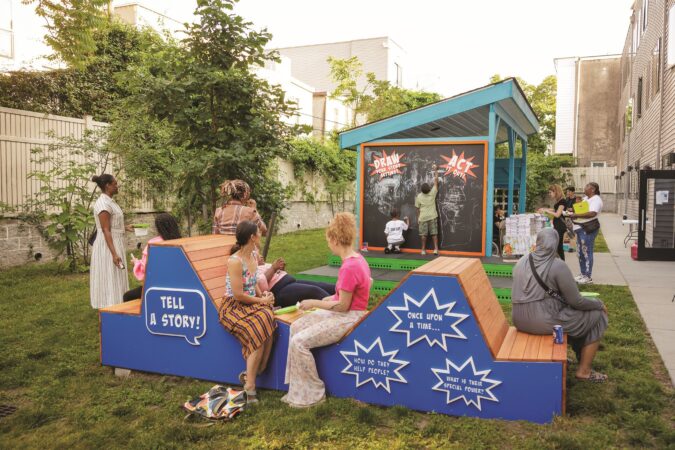
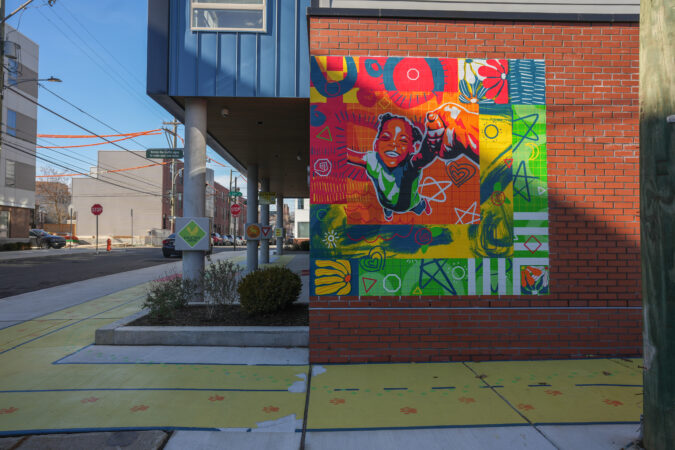
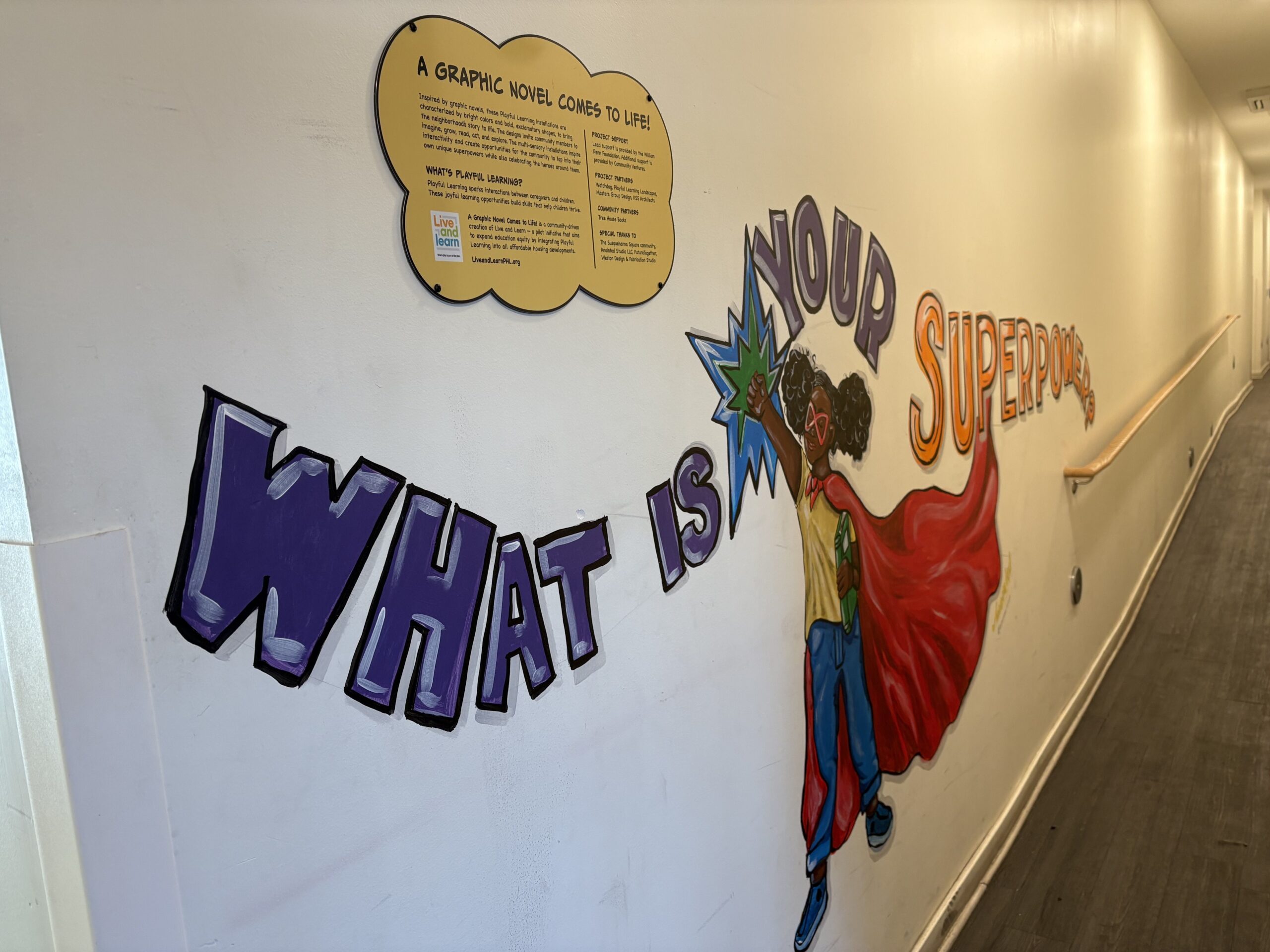
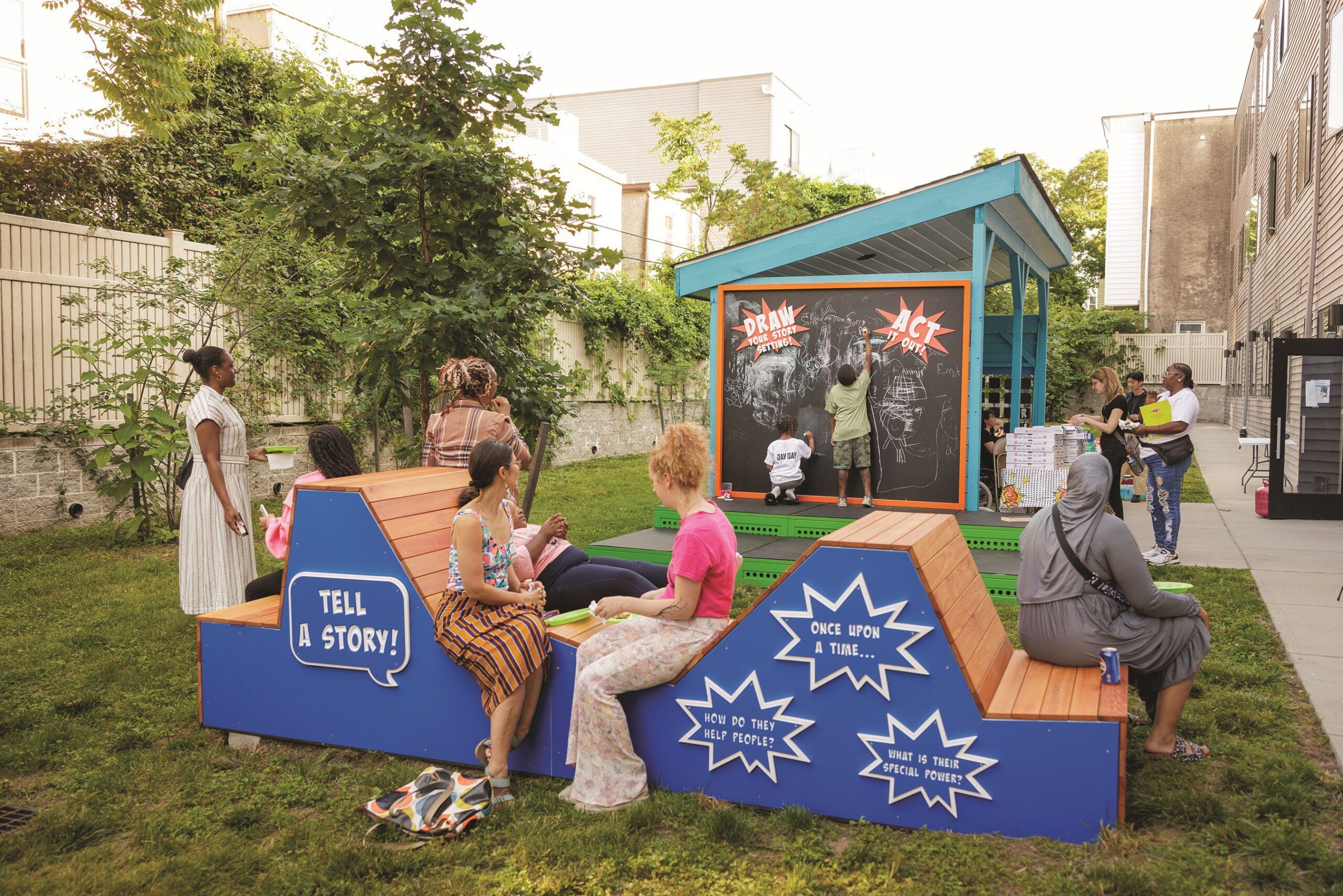
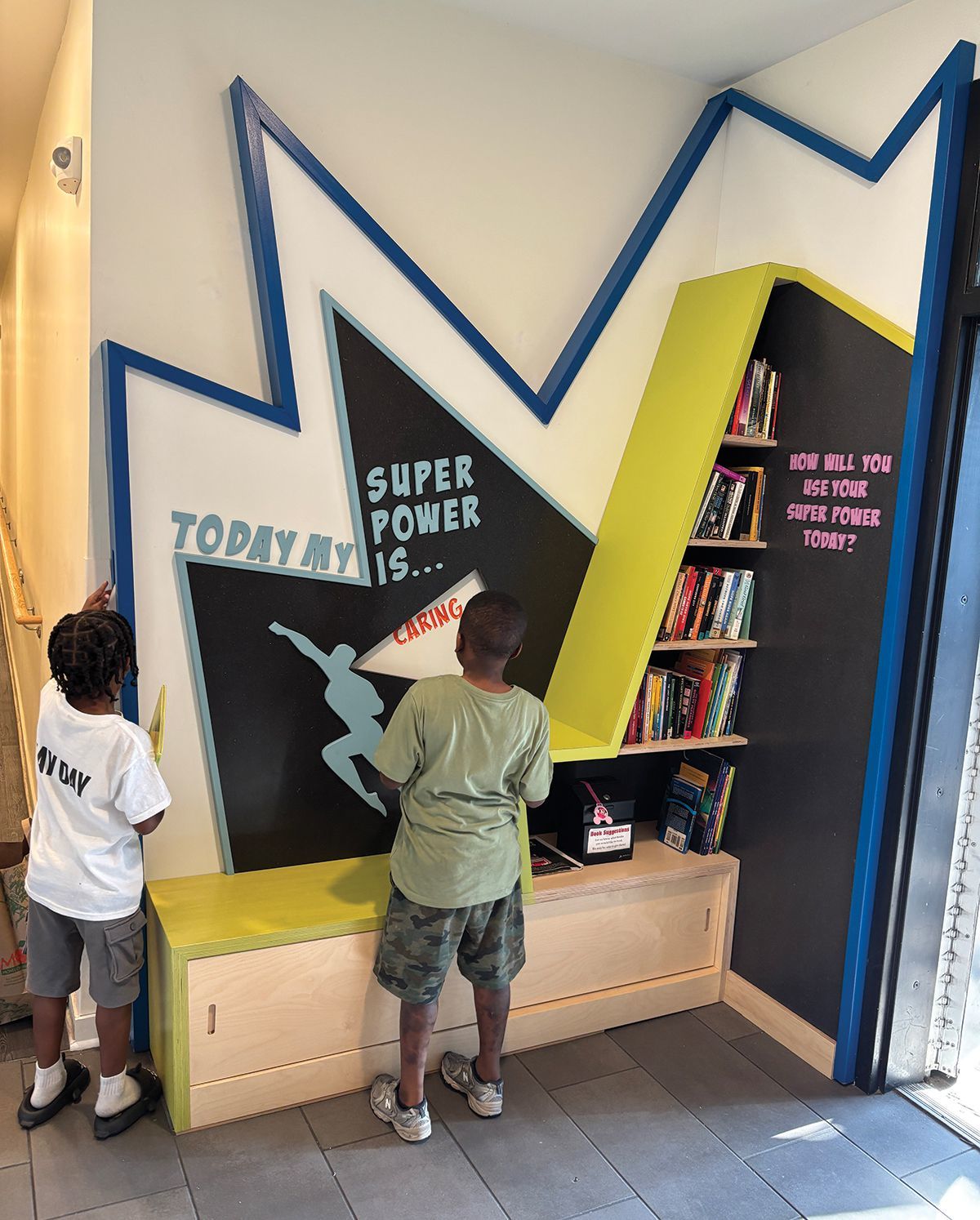
Blank white walls in apartment hallways became canvases for colorful murals of people in capesmeant to inspire children and adults to have self-confidence and set goals. A previously unused bike shed now stores bikes but is also a stage for acting out stories and a puzzle wall for spelling words. In courtyards, residents got new places to sit that double as little libraries. Prompts ask them to think about the books they read and create characters and stories of their own.
“They really listened to us. … They were taking our ideas and they actually brought it to life,” Robinson, 52, said. “It really brought tears to my eyes.”
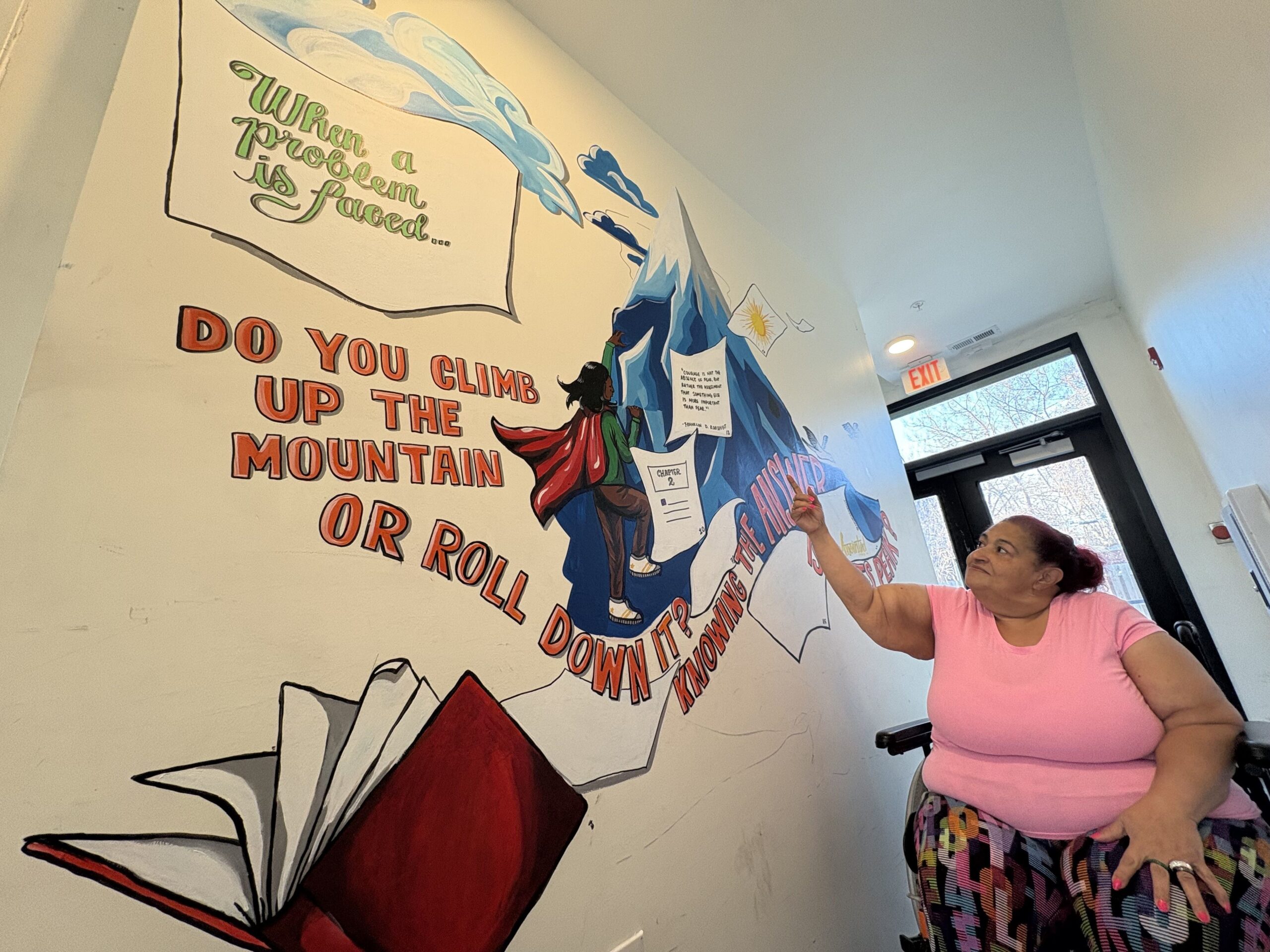
A mural asks “What is your superpower?” in the hallway of an apartment building in the Susquehanna Square development in North Philadelphia.
The project was an initiative of Playful Learning Landscapes, cofounded in Philadelphia in 2009 by Temple University professor Kathy Hirsh-Pasek and University of Delaware professor Roberta Michnick Golinkoff. The organization has brought the concept of playful learning — engaging children and their caregivers in skill-building lessons through play — to spaces such as laundromats, parks, grocery stores, sidewalks, and subway stops.
But installations at two sites in North Philadelphia are the organization’s first that bring playful learning to subsidized housing. And the organization and its partners hope the Live and Learn pilot will lead to similar projects across the country that help vulnerable children catch up to peers who have access to more educational opportunities.
The goal is to incorporate playful learning into all subsidized housing developments, said architect Heidi Segall Levy, project manager of the Live and Learn initiative and an associate at Watchdog, a Philadelphia-based real estate consulting firm.
“We were really trying to increase educational equity,” she said. “And the way to do that is to really bring it into [people’s] homes.”
Architect Heidi Segall Levy, manager of the Live and Learn project, shows a mural by Linda Fernandez and Martha O’Connell from Amber Art & Design, at one of the educational play spaces at 2000 Ridge Ave.
About playful learning
Adults might not immediately understand what playful learning is until they’re reminded of childhood games.
Take Simon Says, for example. Children learn to retain information, evaluate the directions they’re given,and follow through. I Spy helps children learn how to describe their surroundings. Matching games strengthen memory and help kids recognize patterns.
Playful Learning Landscapes wants to transform any space where children and caregivers spend time into somewhere they can engage with each other. The organization has dozens of installations in Philadelphia and projects in about 30 U.S. cities and about 10 countries.
Now an activity hub, this transformed bike shed invites children and caregivers to draw, act, and tell stories together. Interactive puzzles, a chalkboard, and a small stage surround a multi-seat bench that doubles as a learning prompt and bookshelf.
One goal of the Live and Learn pilot was to train housing providers to continue the work.
“Our hope in the future is that developers and designers will be thinking about how to build playful learning into the architecture,” Segall Levy said. And eventually, “playful learning will just be included in public space design.”
Most of the pilot’s funding came from the William Penn Foundation, which contributed $647,250.
The foundation has invested about $26 million in playful learning projects in Philadelphia over the last decade and wants to see playful learning elements become standard in recreation centers, parks, libraries, and other places, said executive director Shawn McCaney.
“We believe every neighborhood should have access to high-quality public spaces” that can support community building, safety, and children’s development, McCaney said. “These kinds of spaces can become really important points of pride and engagement in communities.”
Super at Susquehanna Square
David La Fontaine, whorecently retiredasexecutive director of the nonprofit housing developer Community Ventures, was immediately interested when he was approached about adding playful learning to his Susquehanna Square apartment complex.
“A program that helps young kids in school was really what made me most interested,” La Fontaine, the son of a public schoolteacher, said.
Residents at Susquehanna Square spin the wheel to discover their superpower — a feature of the Book Nook. This custom Playful Learning installation is designed to create a sense of arrival while encouraging reading and social connection.
Community members’ vision came to life with the help of KSS Architects.
Susquehanna Square resident Merlyn DeJesus, 61, likes to sit in her building’s backyard and take in what the space has become. Young residents now have things to do when they go outside. They draw on a chalkboard, spin the letter tiles of a puzzle, and turn wheels to create their own superheroes.
DeJesus and her 8-year-old granddaughter read books together from the little library, where community members can take and leave titles. Her granddaughter also helped paint superhero murals, which are on each of her building’s three floors.
It all makes the space feel “more homey,” DeJesus said.
“I feel proud inviting people to come to my home,” she said.
Merlyn DeJesus, a resident of the Susquehanna Square subsidized housing development in North Philadelphia, points to one of the murals painted in her apartment building as part of the Live and Learn project.
Transforming community spaces
Playful Learning Landscapes focuses on tailoring projects for specific communities based on extensive outreach.
For example, residents in the Sharswood area of North Philadelphia noted that nearby Ridge Avenue has lots of fast-moving traffic. So they said they wanted their children to learn about street safety in the Live and Learn project that was focused on subsidized homes developed by Pennrose in partnership with the Philadelphia Housing Authority.
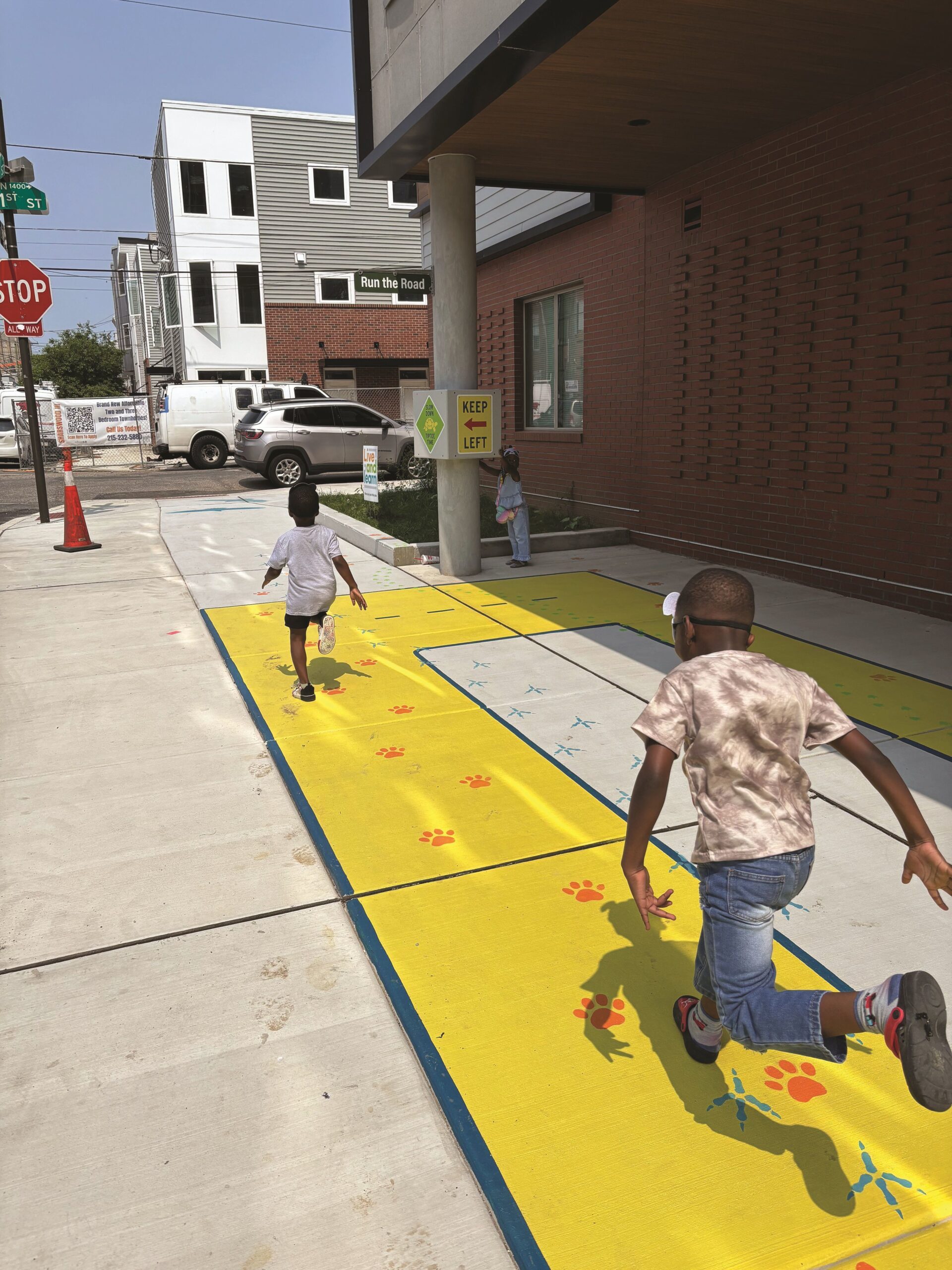
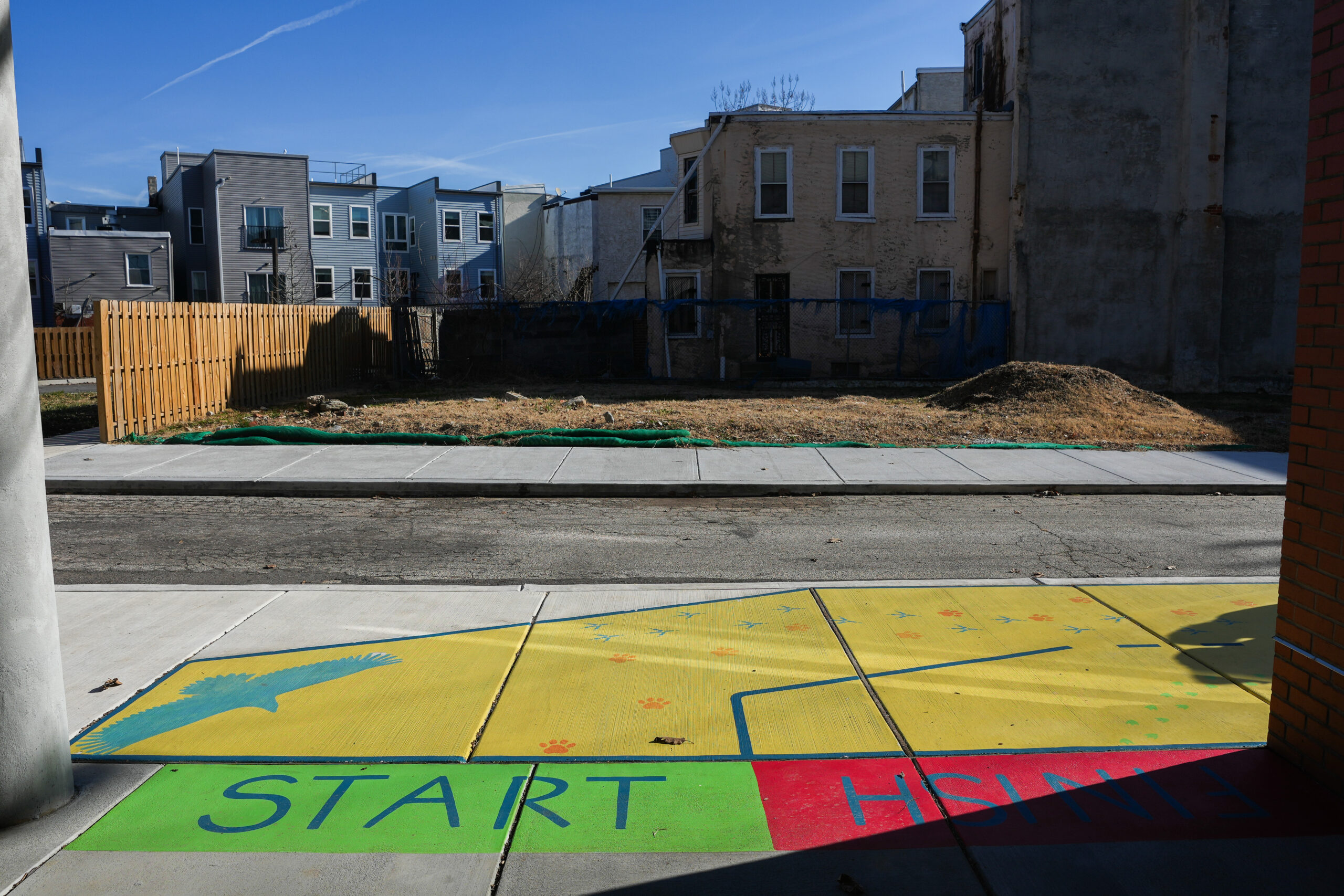
Children in Sharswood “run the road” along a new Playful Learning track painted on the sidewalk of a Pennrose housing development.
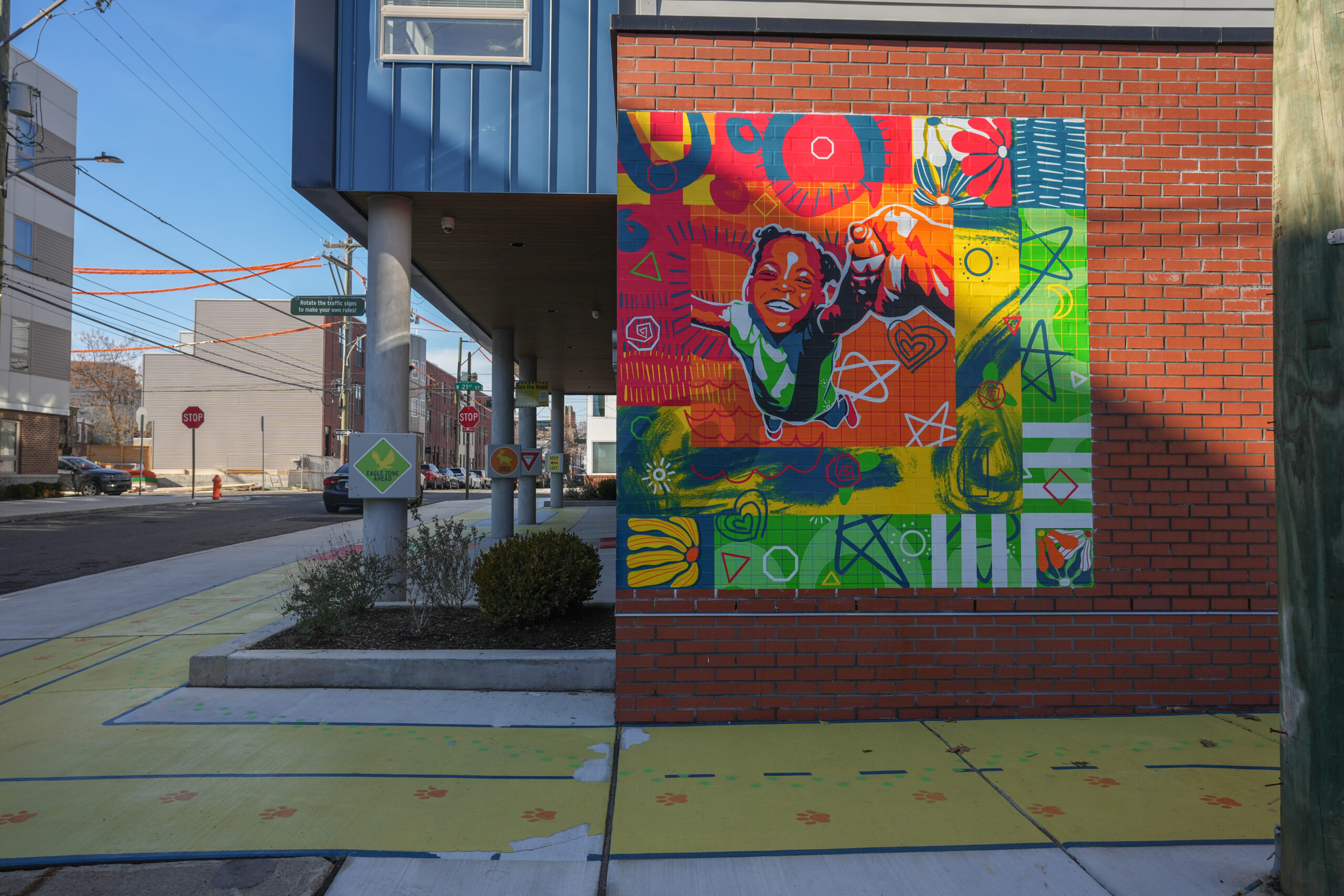
At the “Run the Road” installation, a colorful street is painted on a sidewalk. Children can spin traffic signs and learn what “yield,” “keep right,” and “one way” mean. They learn about crosswalks. They can step on animal prints and walk like the creatures.
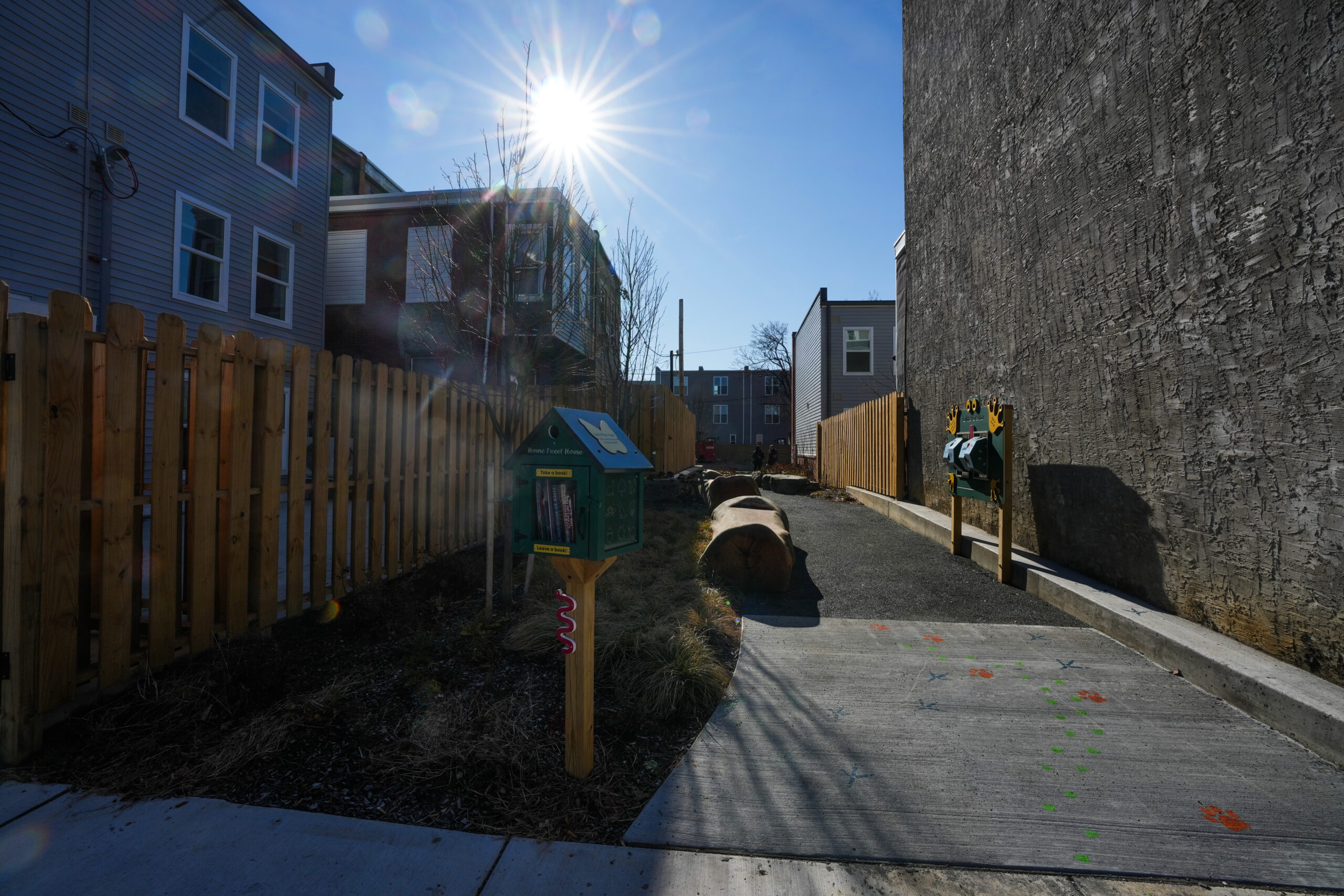
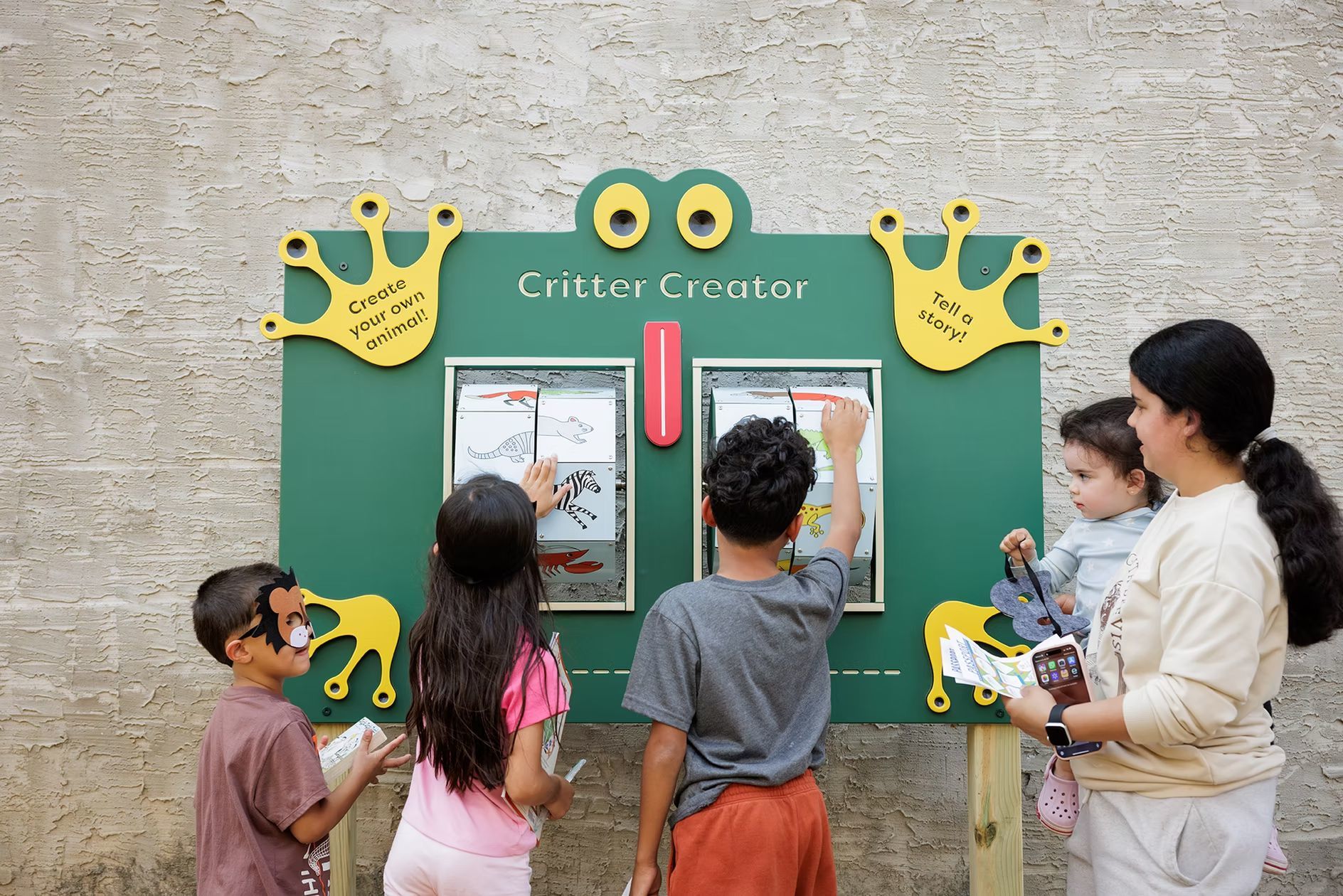
Residents also said they didn’t have open space they could enjoy. So the Live and Learn project transformed a small strip of unused land into a pocket park. It has seating anda little library. There’s a puzzle and matching game and wheels children can turn to create their own animals and tell stories based on their creations.
A pocket park is one of the educational play spaces that the Live and Learn initiative brought to a subsidized housing community in the Sharswood area of North Philadelphia.
“Anytime you take blighted property and change it into a beautiful play and sitting area, I think that’s great,” she said. “There is no longer an eyesore in this community.”
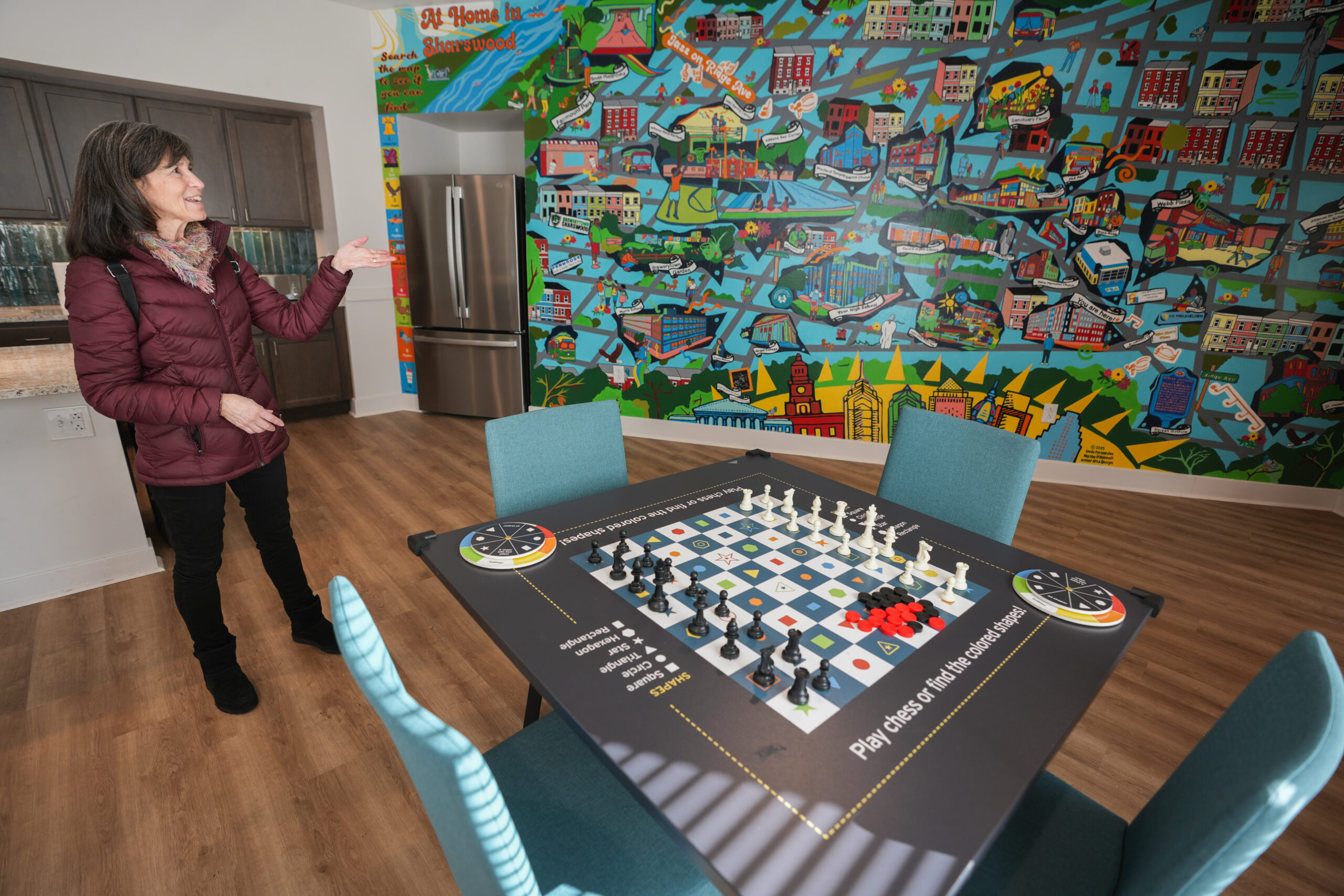
Inside the community room of a new subsidized apartment building at 2000 Ridge Ave., what was originally going to be a blank white wall became a mural featuringa map of the neighborhood with cultural landmarks. The room also features tabletops with activities, such as chess, matching games, word games, and storytelling prompts.
A young Sharswood resident explores a custom-designed Playful Learning chess table in the community room of a Pennrose housing development. The table is one of six navigation stations that help children build skills through play where they live.
Architecture firm WRT worked on the installations. Associate Lizzie Rothwell has been an architect for more than 15 years and said she doesn’t usually get so much breathing room to collaborate with community members.
“Within my professional career, it was a pretty unique opportunity,” Rothwell said. “It was one of the more rewarding experiences I’ve had working with a community on a design.”
A forgotten strip of land wedged between housing developments on 22nd Street between Ingersoll and Master Streets in Sharswood is now “The Backyard,” designed with Playful Learning installations, including this Critter Creator, two nature-themed standing puzzles, and a little library with a built-in I Spy game.
Looking ahead
Now, Playful Learning Landscapes wants to pursue public policies that support the expansion of playful learning projects and provide incentives for developers and architects to incorporate this work into their plans, said Sarah Lytle, the organization’s executive director.
Playful learning advocates briefed City Council members this fall about their work. In September, the city’s Department of Planning and Development issued a call for proposals to create or preserve affordable housing and encouraged developers to include art or design elements that foster children’s development.
“We’re starting to see some traction,” Lytle said.
More than seven months after the opening of the play spaces at Susquehanna Square, Robinson and her daughter now live in South Philadelphia, but they’ve come back to visit the murals they helped paint and the installations they helped develop.
“To see it and to know it’s going to always be there,” Robinson said, “it brings a lot of joy to me.”
The “Run the Road” installation on a sidewalk at 2045 Master St. teaches children in Sharswood about traffic rules.
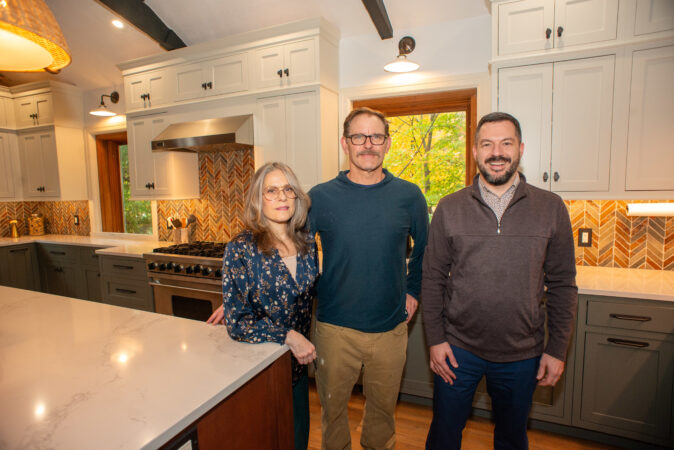
When Diane and Keith Reynolds moved back to the Philadelphia area from Austin, Texas, in 2023, and bought their house in Rydal, Montgomery County, they knew immediately that they wanted to remodel the kitchen.
But they also knew that project alone wouldn’t make a home they’d be satisfied with.
“We wanted to keep it craftsman style,” said Diane, referring to the arts and crafts movement of the late 19th century. The style is characterized by simplicity, emphasis on natural materials, and closeness to nature.
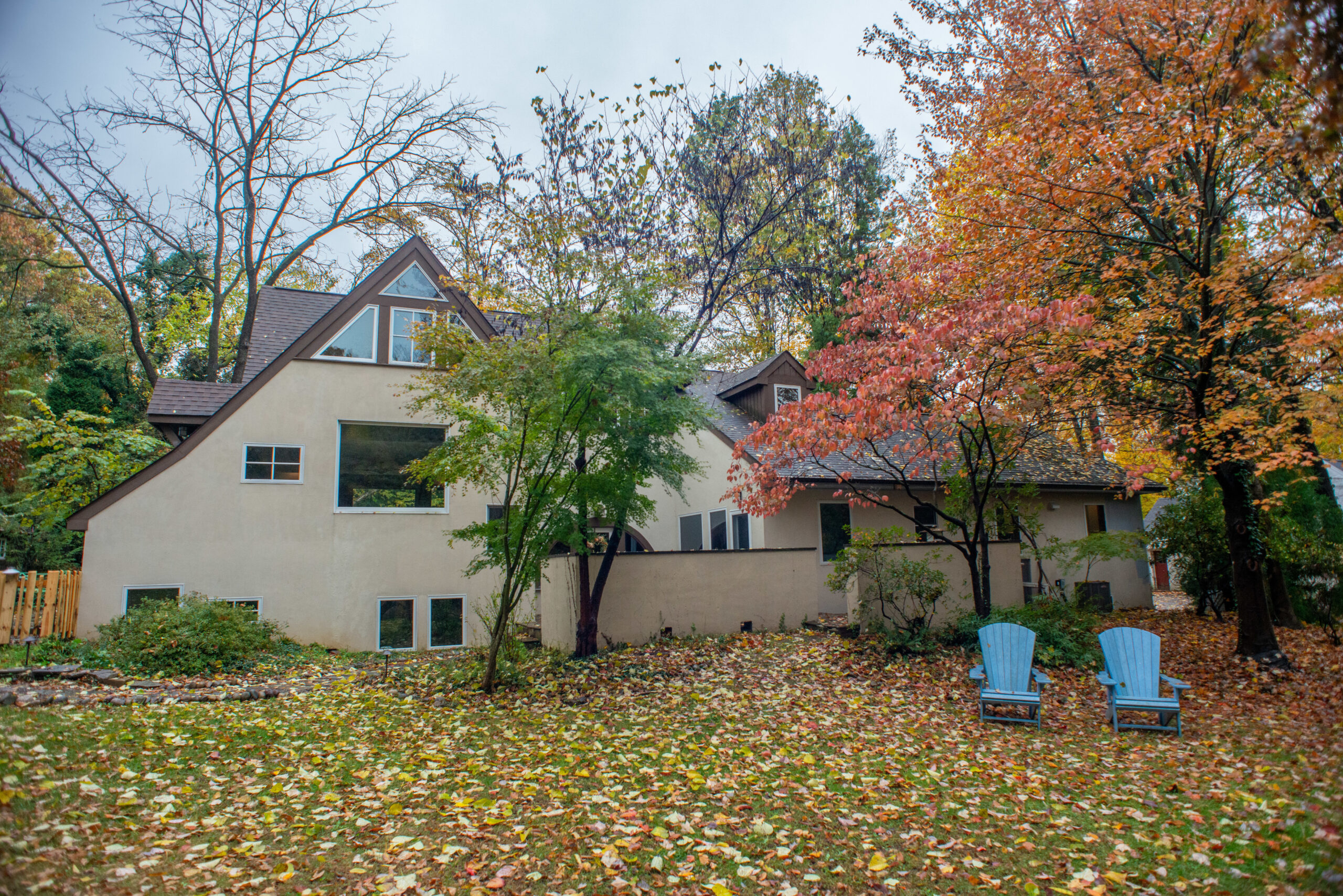
An exterior view of the Reynolds’ home. It was originally built as a Cape Cod, and a later addition brought in the craftsman style.
Keith, a software sales engineer for a technology company, said he specifically wanted to avoid a “cutesy” environment in the home. Diane, executive assistant for a trade association, called it “bringing nature inside.” It was the third house they’d lived in since they married.
Through an internet search, the couple found Philadelphia-based Airy Kitchens and designer Sean Lewis for the remodel.
“It was an interesting design dilemma,” Lewis said.
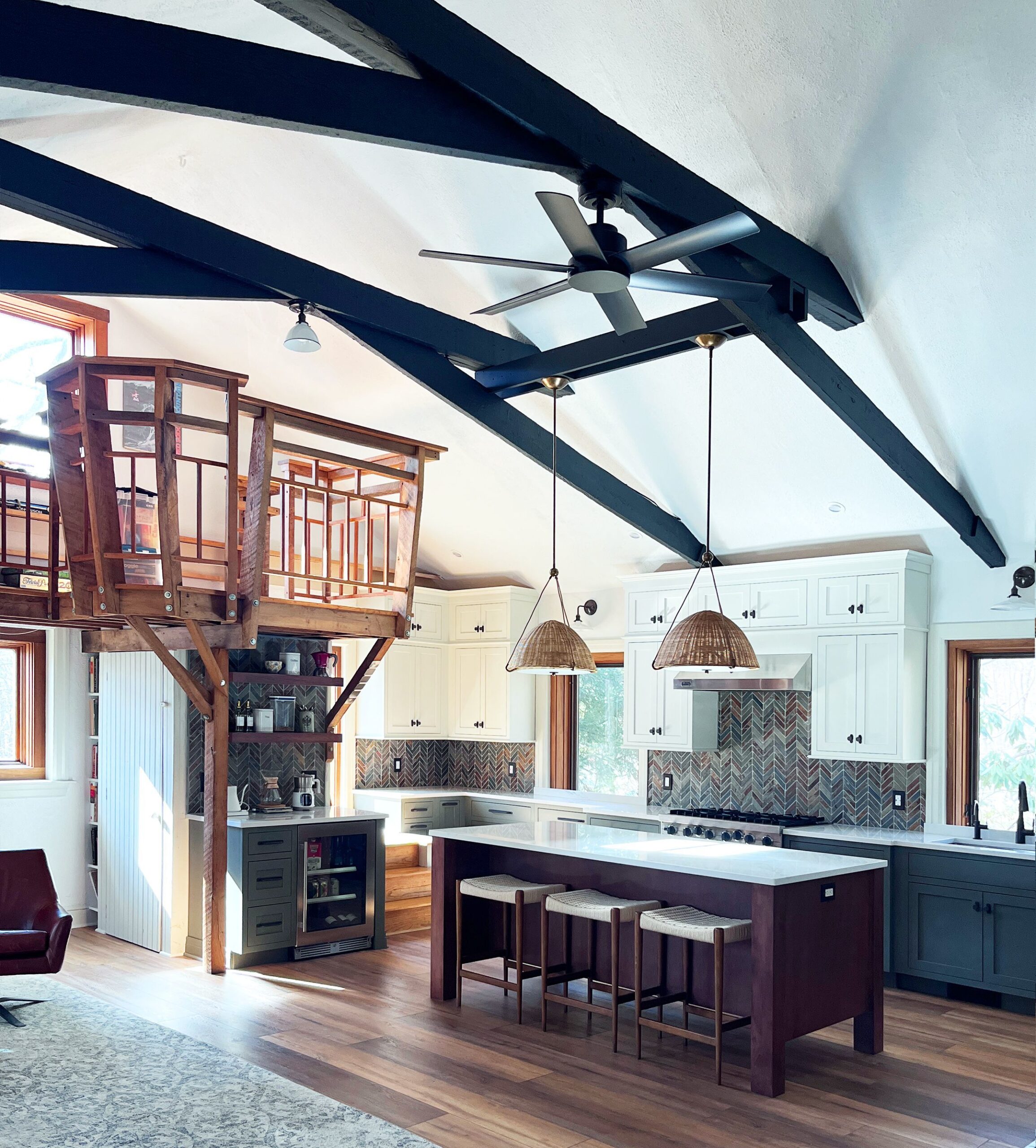
The house was originally built in the Cape Cod style in 1914, but when the previous owner added onto the home, he chose the craftsman style. By 2023, the kitchen needed significant updating for practical use. It had an unusual layout, opening up into a larger great room with high ceilings and a loft built from reclaimed wood towering over one side of the space.
The loft over the kitchen created a unique design task. The range had previously been placed underneath it, but it was relocated to another wall.
The loft was retained, but many other details were changed. “We changed a lot of the symmetry,” Lewis said.
For example, a full bathroom tucked behind the kitchen was made into a powder room, giving Lewis more kitchen space to play with.
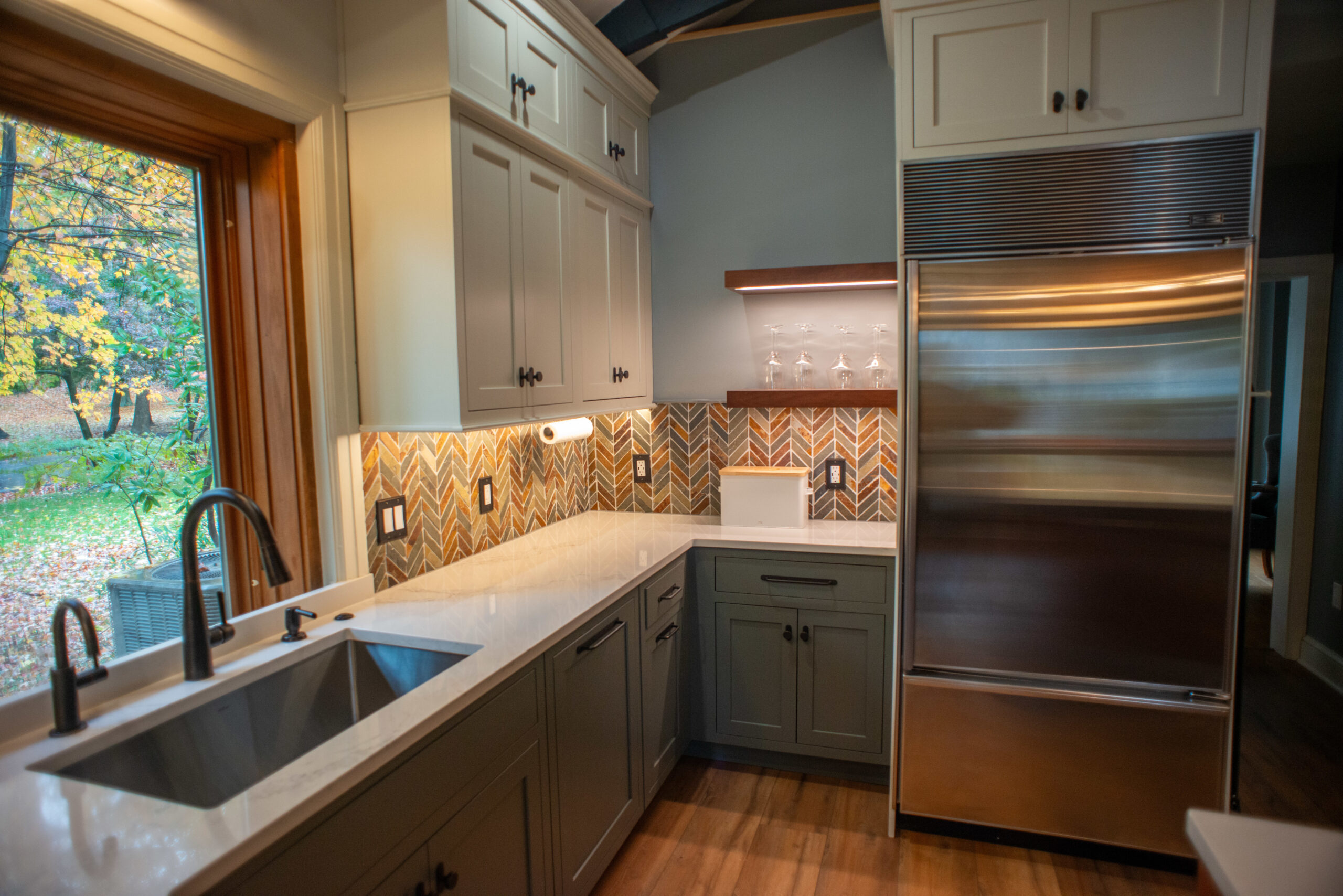
The home’s kitchen after renovations. At the upper left, the reclaimed wood loft remains.
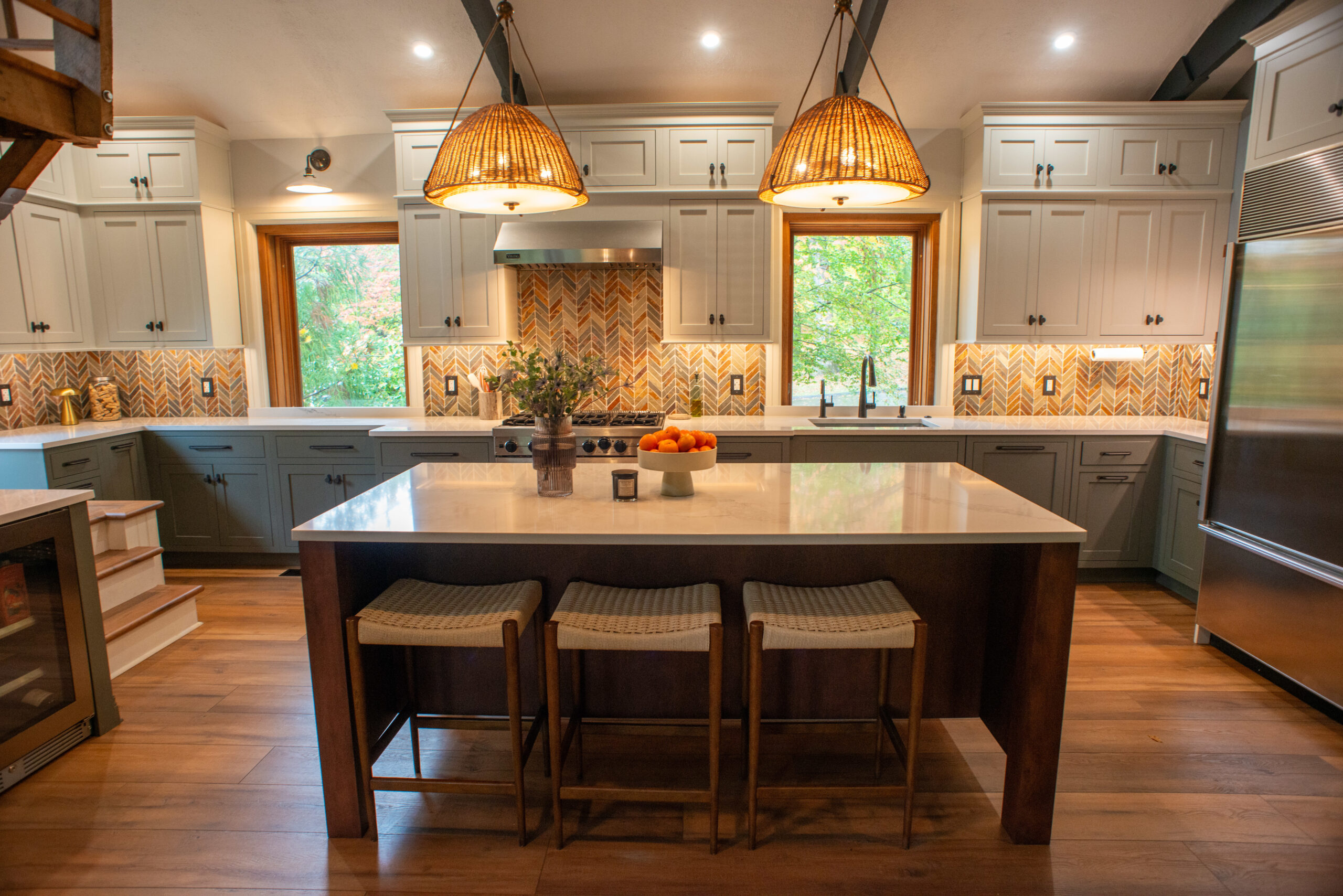
The refrigerator and gas range were reused. A new hood, dishwasher, and beverage refrigerator were added. The custom island — larger than its predecessor — is a stained cherry wood that was chosen to match the natural wood trim on the existing windows.
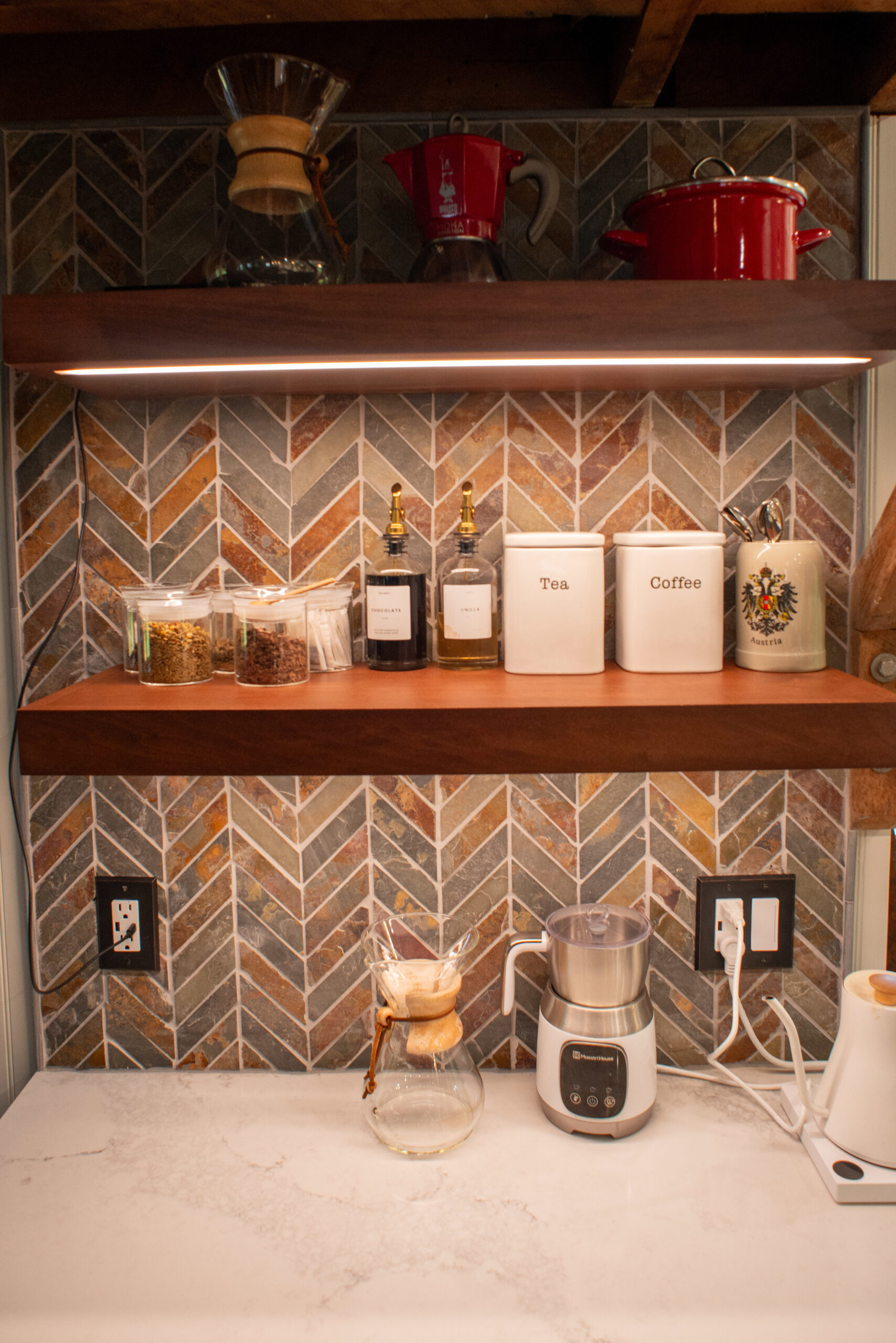
The backsplash is a multicolored earth-toned slate material in a chevron pattern, evoking the outdoors from within their kitchen.
“It’s the first time we’ve seen or used that material as a backsplash,” Lewis said, and it was the jumping-off point for choosing the colors in the kitchen.
“The assignment of rethinking a kitchen space is not unusual for us,” he said. But the home’s disparate styles and unique features, like the loft, beams, and open floor plan, created an “unusual design problem.”
“It’s quite unusual for a 100-year-old home to have a great-room layout with a vaulted ceiling,” Lewis said. “The reclaimed wood loft installed by the previous architect is something I’ve never seen before, and I’m sure will never see again.”
Maximizing storage was a no-brainer, and they accomplished that simply by adding cabinets.
One of the key challenges was providing counter space around the range. The range was previously located below the loft, but is now centered on the kitchen’s longest wall, between two windows, with the sink off to the right, just below a window. This allowed Lewis to add counter space around the range, for more practicality.
The backsplash tiles and wood stain were chosen to match colors from the surrounding yard.
The windows were left untreated in the Craftsman style.
Inside, woodwork was stained to match the outside.
The stove was relocated so it would be surrounded by counter space.The refrigerator was reused in the remodeled kitchen.
Diane said she and Keith looked at the house as a “homecoming” from their time in Austin, “a little bit like reclaiming our roots.” He grew up in the nearby neighborhood of Meadowbrook, and she is from King of Prussia.
“From the second we walked into the house it was so warm — we felt immediately connected. There’s something grounding about watching the seasons change,” she said. “It’s colors and leaves and movement. Every day it just restores me.”
Is your house a Haven? Nominate your home by email (and send some digital photographs) at properties@inquirer.com.
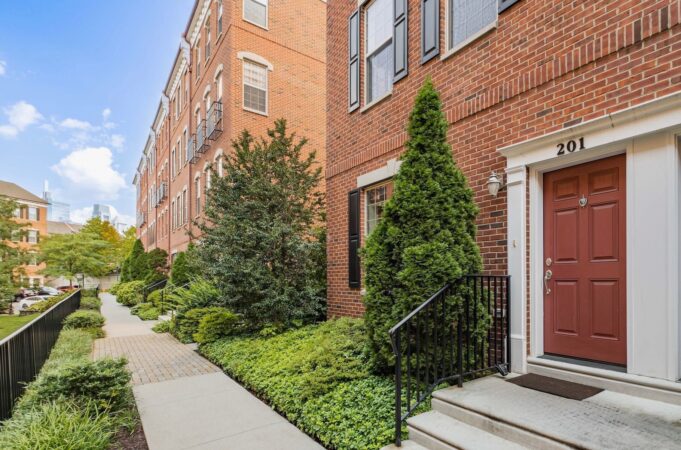
“It has a country feeling,” said Sruthi Selvam, “but if you walk out the gate, you’re downtown in 10 minutes. And the landscaping is beautiful.”
Selvam and her husband, Kamesh Arumuzam, spent three years in the three-bedroom, 2½-bathroom end-unit condo in the Naval Square community.
The couple bought the unit in 2022 while Selvam, a dentist, was in an international dental program at the University of Pennsylvania. Now the two, both natives of India, and their two young children have returned to California, where she is setting up a practice, and he is a software engineer.
Kitchen
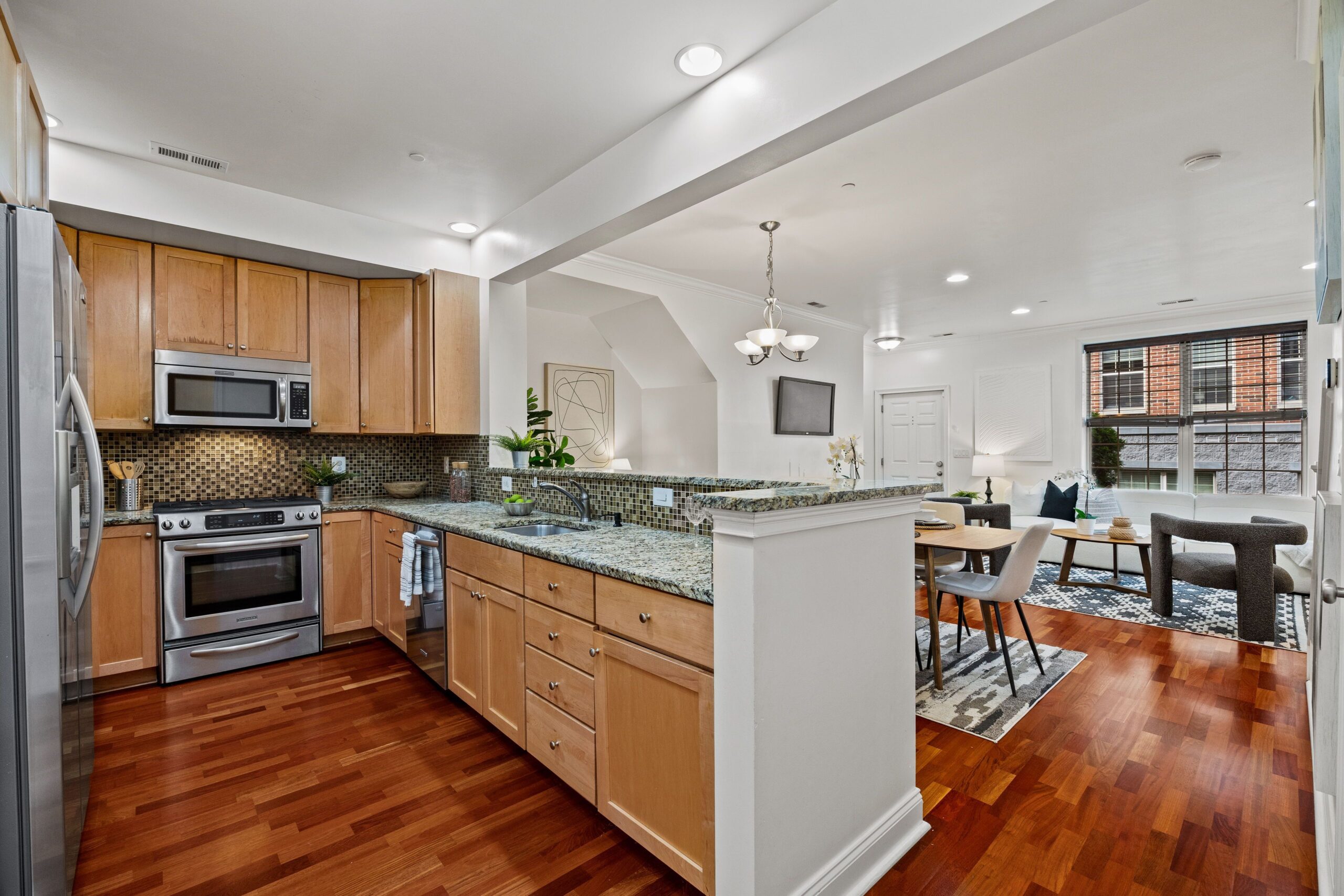
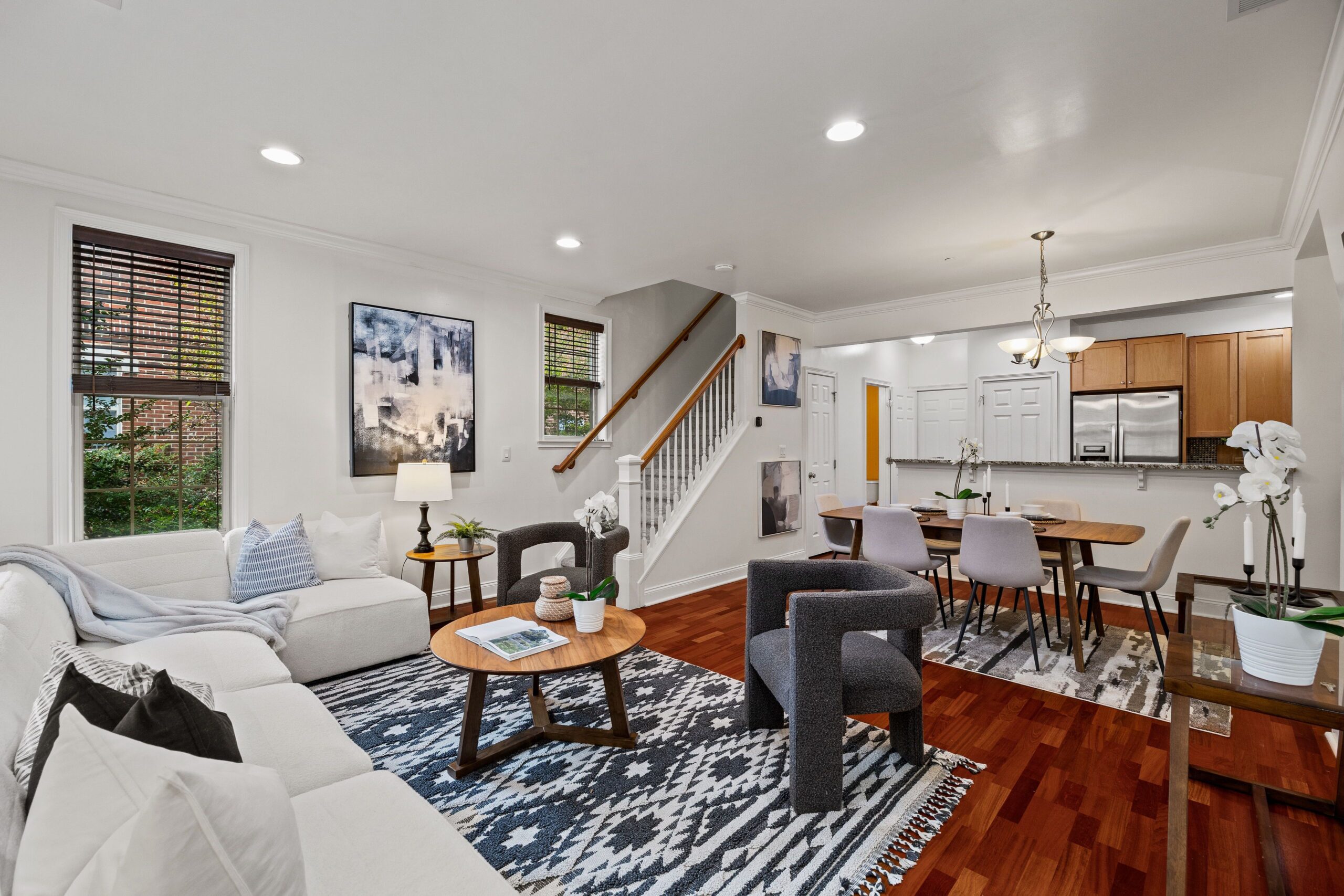
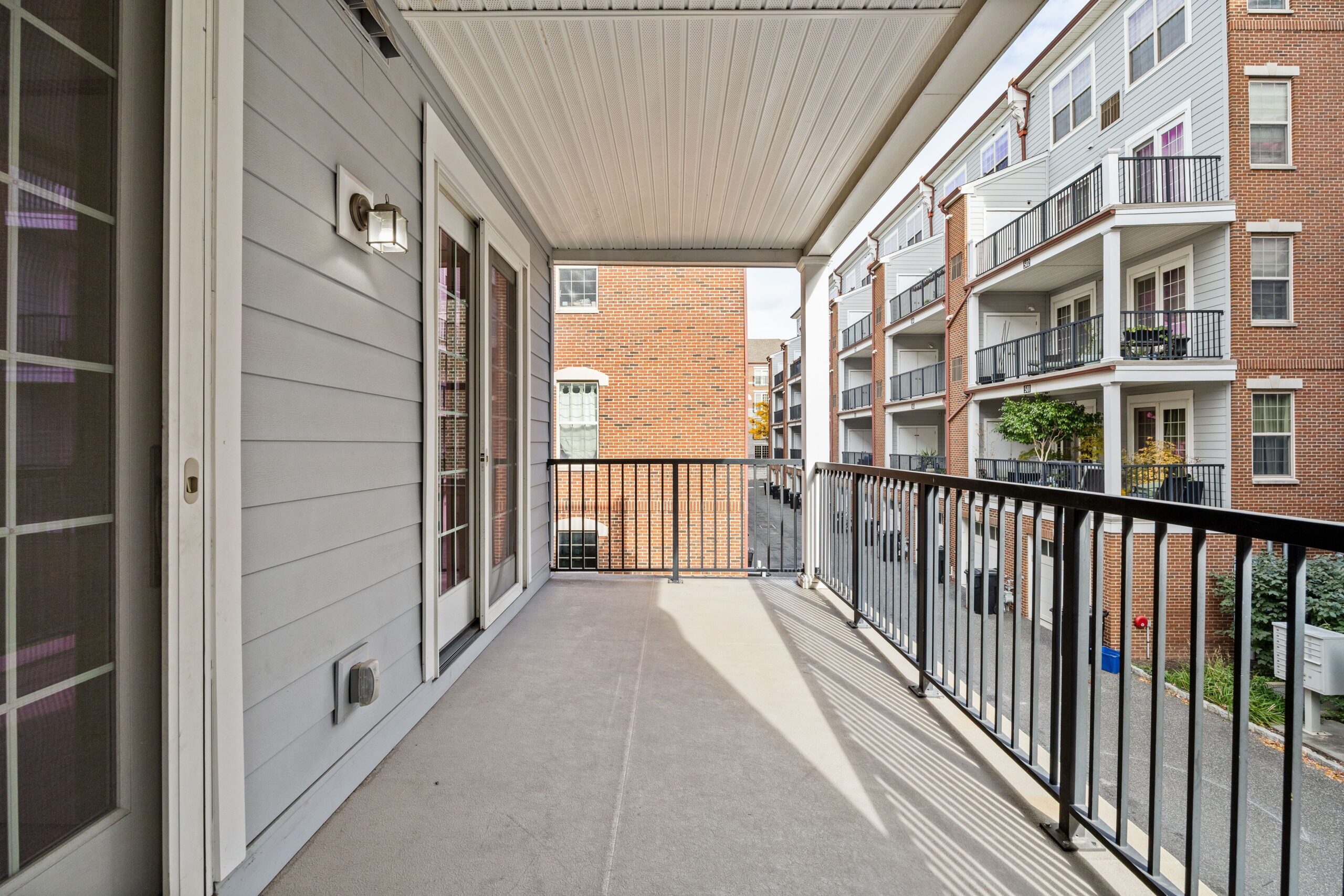
The unit features a private terrace spanning the width of the property. On the first level, it has an open-concept living and dining area and a kitchen with Shaker-style maple cabinetry, stone countertops, a glass tile backsplash, Brazilian cherry hardwood flooring, and a half bath.
There is also a coat closet tucked under the stairs.
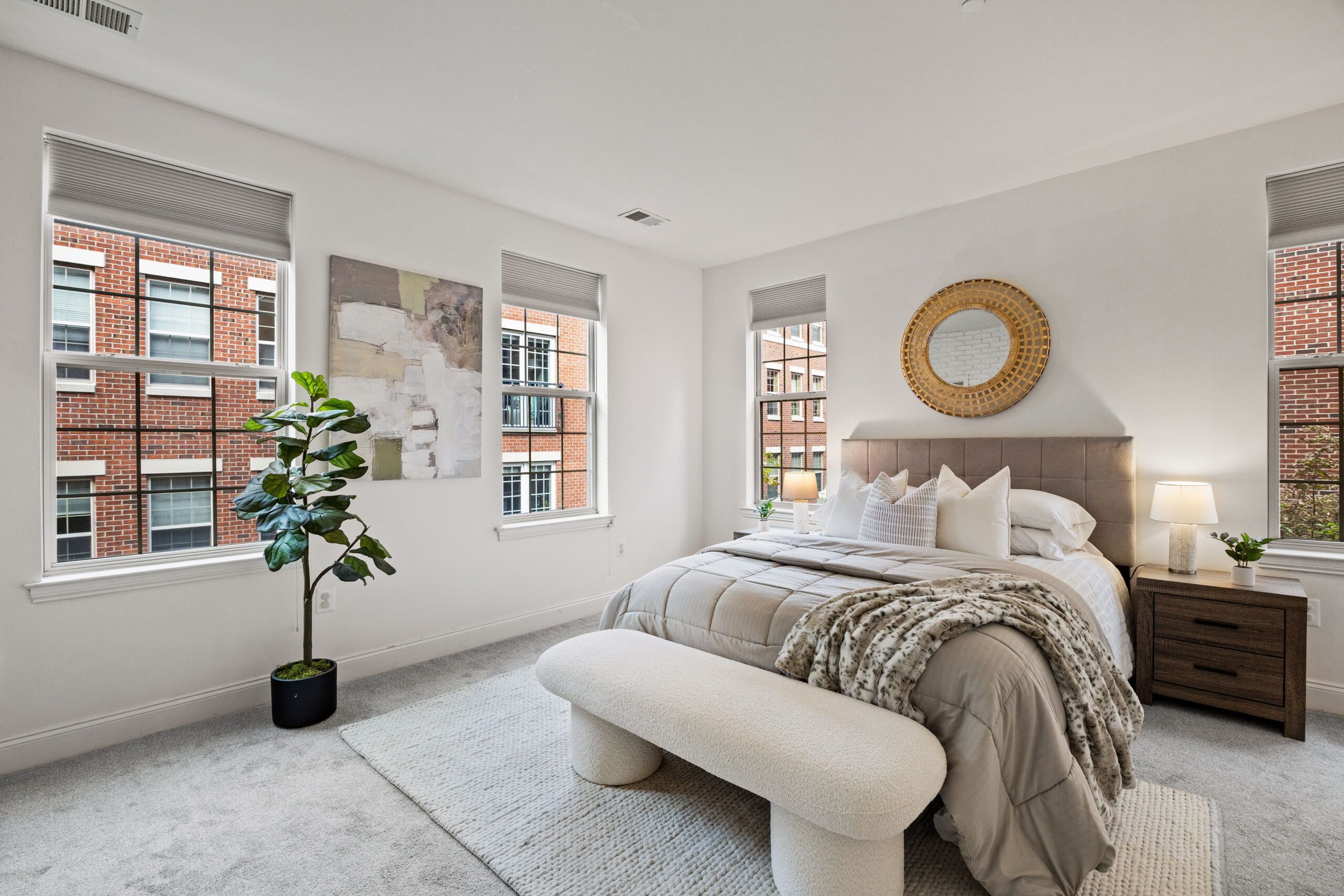
The second-floor primary suite includes an exposed brick wall, an oversized walk-in closet, dual sinks, a soaking tub, and a separate stall shower.
The open-concept living and dining area.
Two other bedrooms have French sliders that open to a covered terrace, a laundry area, front-loading washer/dryer, and shared hall bath.
The attached one-car garage has ample storage and an electric car charger, and there are dual thermostats and a Ring alarm system.
The primary bedroom.
The water heater was replaced in 2022, the HVAC system in 2024.
Community amenities include a pool and fitness center, picnic areas, guest parking and a community room.
A private terrace private spans the width of the property.
Naval Square is close to the South Street Bridge, the University of Pennsylvania, Rittenhouse Square, and Schuylkill River Park. It is also pet-friendly.
The unit is listed by Jocelyn Morris of Compass Realty for $749,000.
A coalition of building trades unions will lend the Philadelphia Housing Authority $50 million out of its pension fund to help finance the redevelopment of Brith Sholom House, a dilapidated senior apartment complex in West Philadelphia.
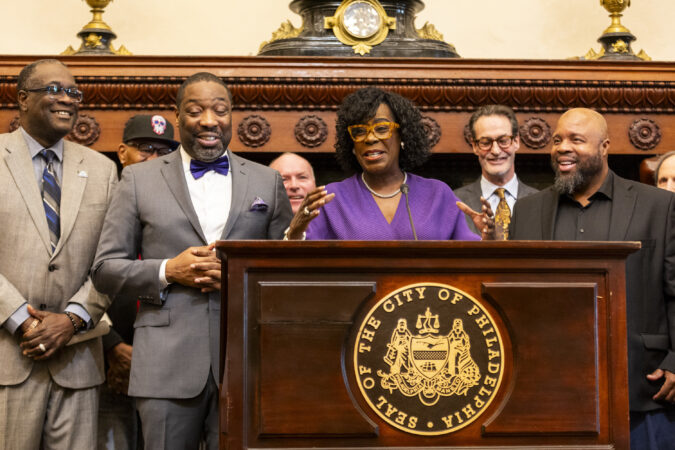
Mayor Cherelle L. Parker and her longtime political ally Ryan N. Boyer, the business manager of the Philadelphia Building and Construction Trades Council, announced the arrangement Tuesday and framed it as a first-of-its-kind approach to expanding the city’s affordable housing stock.
Under the terms of the deal, PHA will repay the building trades over 15 years at a 4.5% interest rate. PHA President and CEO Kelvin Jeremiah called it a good deal for taxpayers as banks and traditional financing institutions are lending at higher rates.
The city is guaranteeing the loan.Parker said the outcome will be 336 units of affordable housing for seniors on fixed incomes. Members of the building trades unions will perform the work at the site.
“This isn’t an investment for the building trades,” Boyer said. “It’s a down payment on our city’s future.”
Boyer, one of the most powerful nonelected political figures in the state, has been a longtime ally to Parker and much of City Council. The trades unions poured millions into Parker’s run for mayor in 2023 and have remained largely in lockstep with her. Boyer led the mayor’s transition team and has been a key voice on her signature housing plan, which stands to generate thousands of construction jobs.
The trades’ $50 million investment comes in addition to the $99.6 million that the housing authority is spending on a gut rehabilitation of the Wynnefield apartment complex, bringing the total cost of the project to $150 million.
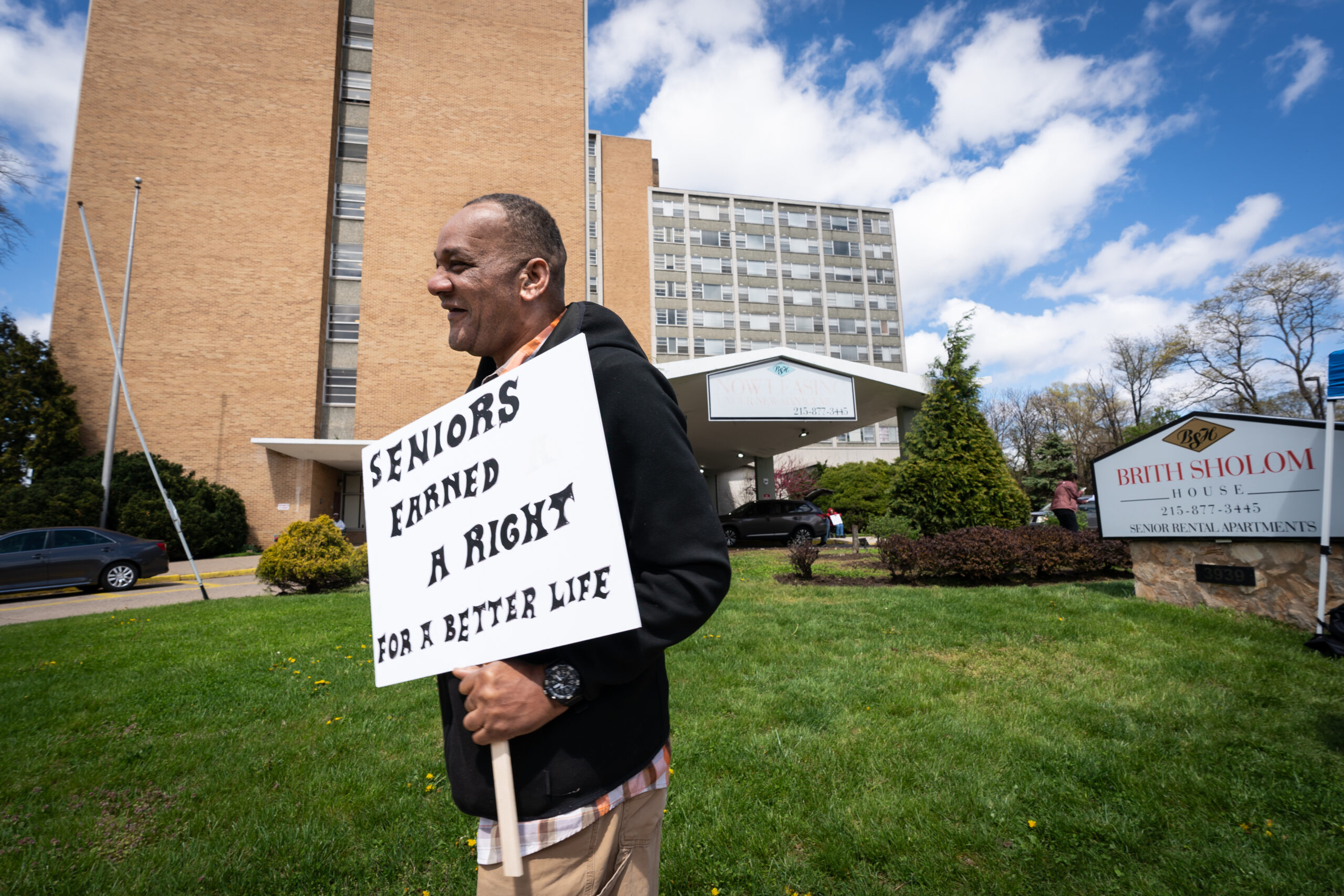
A protestor carries a sign to protest the living conditions at Brith Sholom House apartments, in Philadelphia, on Friday, April 12, 2024.
Jeremiah said he has been “shocked and dismayed” by the conditions at Brith Sholom, which was so neglected under its previous owners that tenants were forced to move out.
Work will begin late this year and is expected to take about 20 months to complete, Jeremiah said, meaning tenants may not be able to move back in until 2028. He had previously estimated a timeline that would have allowed residents to return this year.
Brith Sholom fell into disrepair under its previous owners, the New Jersey-based Puretz family. A 2024 Inquirer investigation found that members of the family became one of the nation’s largest affordable housing purveyors by buying up old buildings, saddling them with debt, and then defaulting on loans.
At Brith Sholom, the Puretz family profited while defaulting on a $36 million mortgage and amassing dozens of code violations. Residents — who organized to save their homes — complained of deteriorating infrastructure, threats of utility shutoffs, squatters, and severe pest infestations.
In a bid to preserve the building and reuse it in part as subsidized housing, PHA acquired Brith Sholom House in August 2024 for $24 million.
In addition to the price of the acquisition, Jeremiah estimated in 2024 that the cost of rehabilitating the building would be an additional $30 million to $40 million. PHA said then that the remaining 111 elderly residents in the 360-unit building would be able to remain in place.
Three months later, Jeremiah informed the tenants that Brith Sholom was in such ragged shape that they would have to be moved out to repair the building. Some units were so badly damaged that PHA could not fix them.
Following the acquisition of Brith Sholom, PHA has embarked on an ambitious $6.3 billion, 10-year plan that includes the purchase of 4,000 other privately held apartments. In the face of a glut of market-rate multifamily properties, many developers have struggled to charge the rents they need to pay back their loans — and the housing authority has been able to purchase buildings from such companies across the city.
City Council President Kenyatta Johnson speaks during a news conference about the plan to redevelop Brith Sholom. At right is Mayor Cherelle L. Parker.
Parker also said the investment at Brith Sholom is part of her signature housing initiative, called Housing Opportunities Made Easy, or H.O.M.E. The mayor — who has promised to build, redevelop, and preserve more than 30,000 units of housing — is in the midst of continued negotiations with City Council over H.O.M.E.’s first-year budget.
Council in December gave initial approval to changes to legislation related to Parker’s housing initiative, which set income eligibility thresholds for two housing programs funded by H.O.M.E.’s bond proceeds. Parker wanted a higher threshold so middle-class residents could access the programs, while Council’s version aims to prioritize poorer Philadelphians.
Council could take a final vote on the related legislation as early as Thursday, when lawmakers return to session following their winter break.
Throughout the contentious process, Parker has said her administration is committed to affordable housing for lower-income Philadelphians. The collaboration with PHA to remake Brith Sholom, she said, is part of that effort.
“It’s not just for one particular constituency,” Parker said Tuesday about her overarching housing plan. “I’m personally on a mission to save Philly rowhomes. We’re trying to address our housing crisis and doing it for Philadelphians from all walks of life.”
Parker was joined at the news conference Tuesday by Council President Kenyatta Johnson, despite the two being at odds over the H.O.M.E. legislation in recent months. Johnson praised the mayor’s leadership and said the financing arrangement for Brith Sholom is remedying a “miscarriage of justice.”
“This is the type of work that helps those most in need,” Johnson said, “which is our seniors, who deserve to live out the twilight of their lives in dignity.”
A six-story apartment project at 2001 E. Lehigh Ave. is moving forward with a new owner after years of delay amid a difficult development environment.
Five-lane Lehigh Avenue divides the southern portion of Kensington, which has experienced development more akin to the boom in Fishtown, from the parts of the neighborhood to the north that are at the heart of the city’s opioid crisis.
But along the northern edge of the avenue, next to the Conrail tracks, a series of auto-oriented and light-industrial properties have been redeveloped as housing in recent years.
“That whole corridor has continued developing. It’s even pushing over the tracks further up north, too,” said Brian Corcodilos, CEO of Designblendz, the architect for the project. “We’re confident that … this area continues to rent up.”
The former owner of 2001 E. Lehigh, developer Isaac Singleton, secured zoning approvals for the project in 2023 and 2024. City records then show the property sold for $2.5 million in January 2025.
A demolition permit for the property was issued this week to an address associated with developer Roman Ovrutsky — whose home The Inquirer profiled last year — and Corcodilos said their team expects construction to begin by early spring.
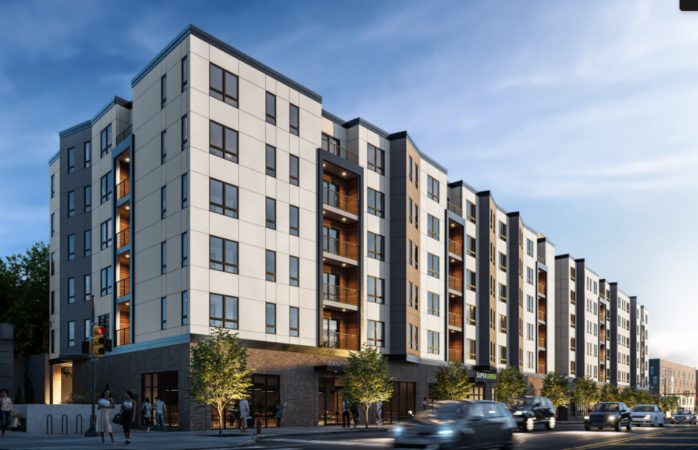
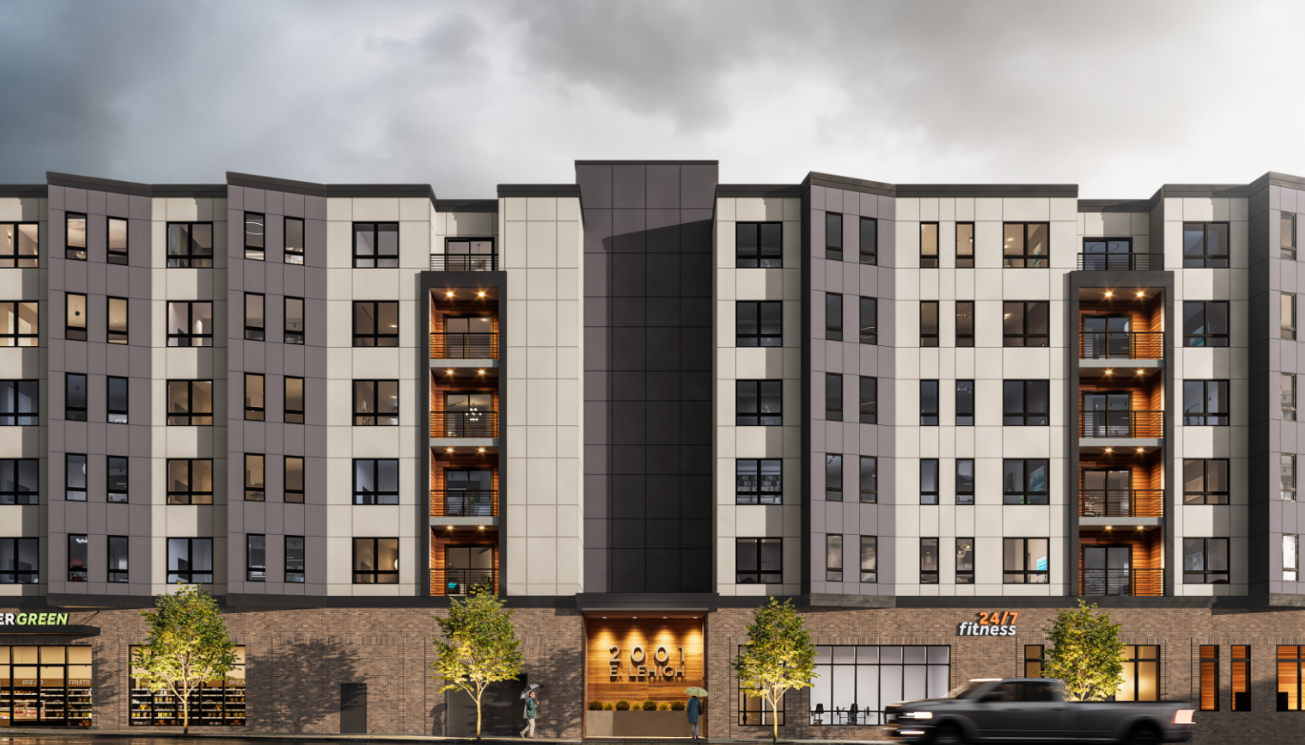
Ovrutsky’s version of the project will feature 146 apartments, a slightly smaller number than Singleton proposed, and a little over 6,000 square feet of commercial space on the ground floor. The project will also have 54 underground parking spaces.
Designblendz has updated the visual palette for the project by adding darker grays and slate-colored hues.
Corcodilos said that changes in federal tax policy in President Donald Trump’s Big Beautiful Bill have enabled clients to begin building again. A lull in recent years was caused by heightened interest rates and an apartment glut that made it hard for developers to charge the rents necessary to pay back the loans on their projects.
The former design for the building included greens and browns. The new vision features slate-colored hues.
Corcodilos said developers have also found that more projects are making sense if they use either the city’s mixed-income housing zoning bonus — which allows taller or denser construction in exchange for an affordability component — or if they base their financing on catering to some tenants who use federal rent voucher subsidies.
“That’s how a lot of these projects are getting done,” Corcodilos said.
It’s illegal in Philadelphia to discriminate against renters using vouchers, but it’s common for landlords to discourage those tenants, and many buildings owners don’t proactively advertise to subsidized tenants.
But in recent years, increasing numbers of landlords have seen the advantage of tapping into a large tenant base with almost guaranteed payments.
Another property just north of Lehigh Avenue at 2200 E. Somerset St. was sold last year to the Philadelphia Housing Authority, after many of its tenants ended up being voucher holders.
“A lot of these big buildings that are going up, the only way they’re penciling is if there’s some sort of an affordability component to it,” Corcodilos said.
Beyond Kensington, Designblendz is seeing an increase in work this year due to developer-friendly changes in the federal tax code, opportunities in affordable housing provision, and an easing of the overall apartment glut, he said.
“I’m not getting a sense at the moment that clients are worried about not filling their units,” Corcodilos said. “Obviously things slowed down a little bit over the last year and a half for the industry. But what we’re seeing right now, it’s busier than ever.”