Category: Real Estate

  • She saved $100,000 for a house in Port Richmond | How I Bought This House

    She saved $100,000 for a house in Port Richmond | How I Bought This House

    The buyers: Mercedes Murphy, 33, healthcare worker

    The house: a 1,710-square-foot townhome in Port Richmond with three bedrooms and two baths, built in 1925.

    The price: listed for $289,000; purchased for $291,000

    The agent: Emily Terpak, Compass

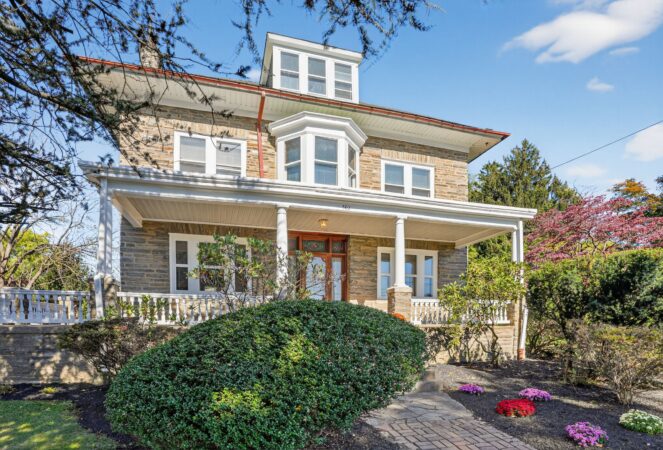
    The exterior of Mercedes Murphy’s home in Port Richmond.

    The ask: Murphy had a strategy for maximizing her savings: never pay more than $850 in rent. If it went above that, she would simply move, which she did several times over five years. But eventually, what started as a strategy began to feel like a trap. “The quality of the places I was willing to pay for kept dropping,” Murphy said. When her small, rat-infested apartment in Point Breeze flooded — the second place she’d lived in that had flooding issues — she decided she’d had enough and set out to find a two-bedroom house with an updated kitchen for $350,000 or less.

    The search: Murphy looked across the city, including in Mt. Airy, Fishtown, and South Philly. Some houses looked good in photos, but looked worse once she saw the surroundings. A Northwest Philly rowhouse made a great impression inside, thanks to its sparkling wood floors, but not outside. “It was just parking lots, and nobody was around,” Murphy said. “It wasn’t very safe.”

    She saw a promising place in Fishtown — a beautiful house with updated appliances, right by Girard Avenue. But it was small and had only one bathroom. Murphy debated the pros and cons with her then-fiancé (now husband), Stefan Walrond, for a few days, then made an offer. Almost immediately, she regretted it. She pulled her offer less than 24 hours later. “They had so many offers already,” Murphy said, “I didn’t feel like fighting for it.”
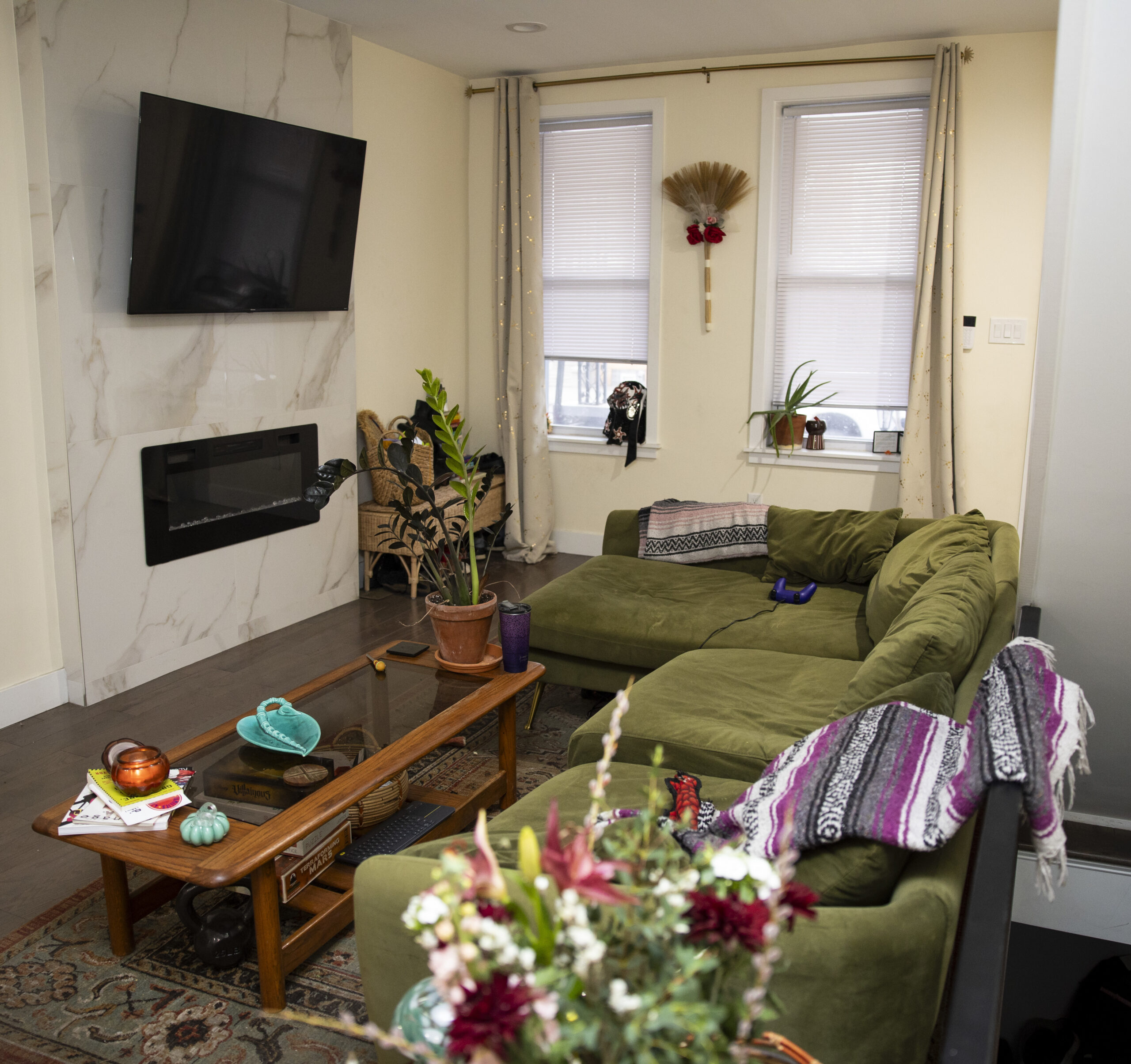
    The living room in Murphy’s Port Richmond home. She liked how large it was compared to others that she had seen.

    The appeal: A week after she pulled her offer, Murphy got COVID and couldn’t attend showings. Her fiancé went to see a house in Port Richmond without her. “He did the tour,” she said. “He sent me photos and did a little video walk-through.”

    Murphy could tell that this might be the one. It had everything she wanted, including lots of space, two full bathrooms, and an updated kitchen. It even had a backyard with a cherry tree and enough room for their dog. What ultimately sold her, though, were the finishes in the kitchen and upstairs bathroom: the gold faucets, the marble countertops, the built-in bench in the shower. “I loved the modern aesthetic,” Murphy said.

    The deal: Murphy wanted to avoid a bidding war, so she offered $291,000, $2,000 over the asking price.
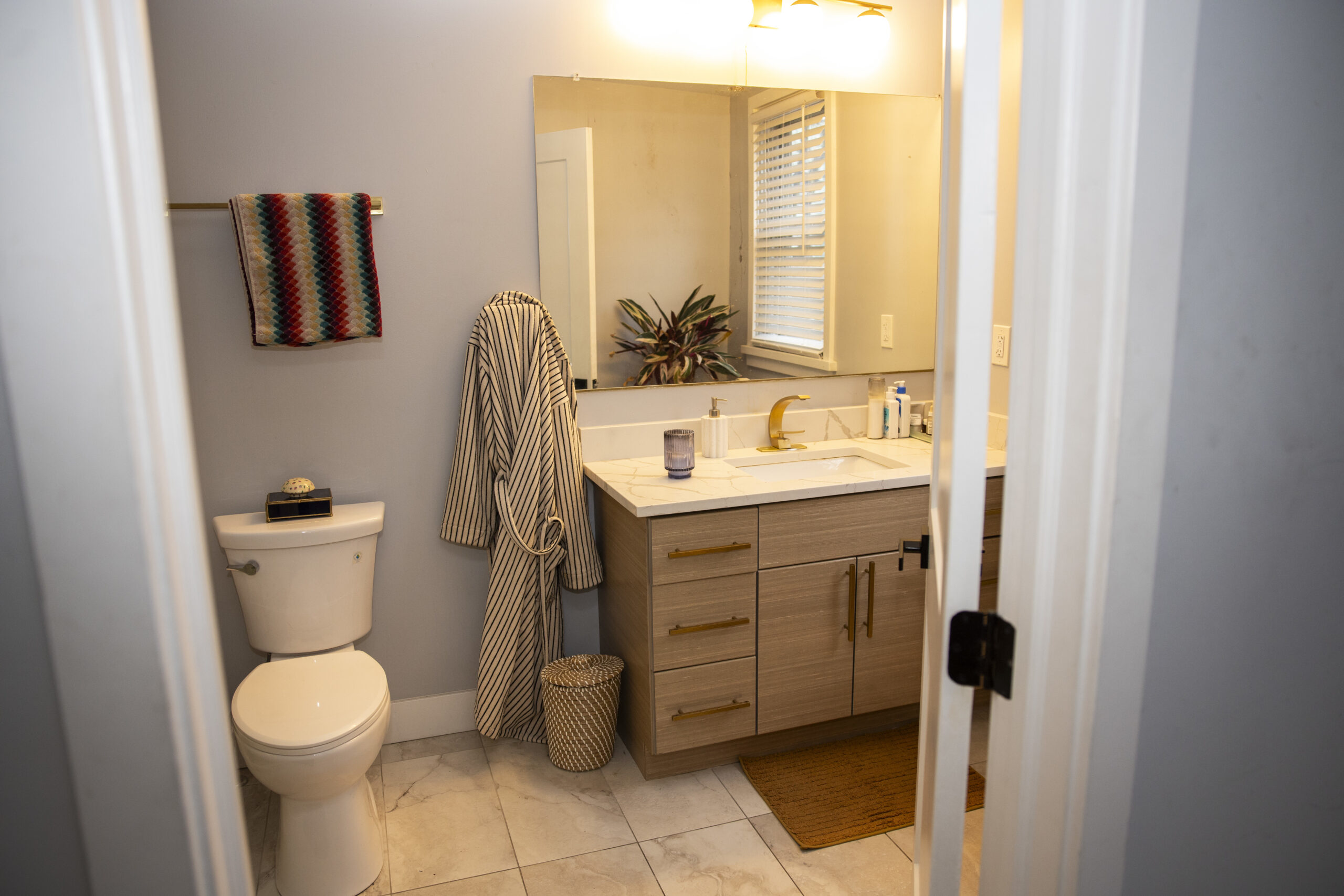
    Murphy fell in love with the modern finishes, like the gold faucet, in the bathroom.

    The inspection was straightforward. The only major issue was the roof. It would need to be replaced in a few years. A few of the appliances looked like they wouldn’t last very long either. Murphy didn’t ask for any concessions or credits. She just made sure she had enough money saved to pay for replacements down the line. Sure enough, the fridge broke one week after she moved in, and the roof started leaking within the year.

    The money: Murphy, a self-described “huge saver,” started aggressively saving money in 2015, the year she got her first “major job.” When she went to buy a house seven years later, she had just over $100,000 in savings. “I always lived really below my means,” Murphy said. She drove an old used car, lived with roommates, and didn’t have any “crazy expenses, like video games or makeup.”

    “I’m just not a big spender,” she said. Not having student loans helped too.
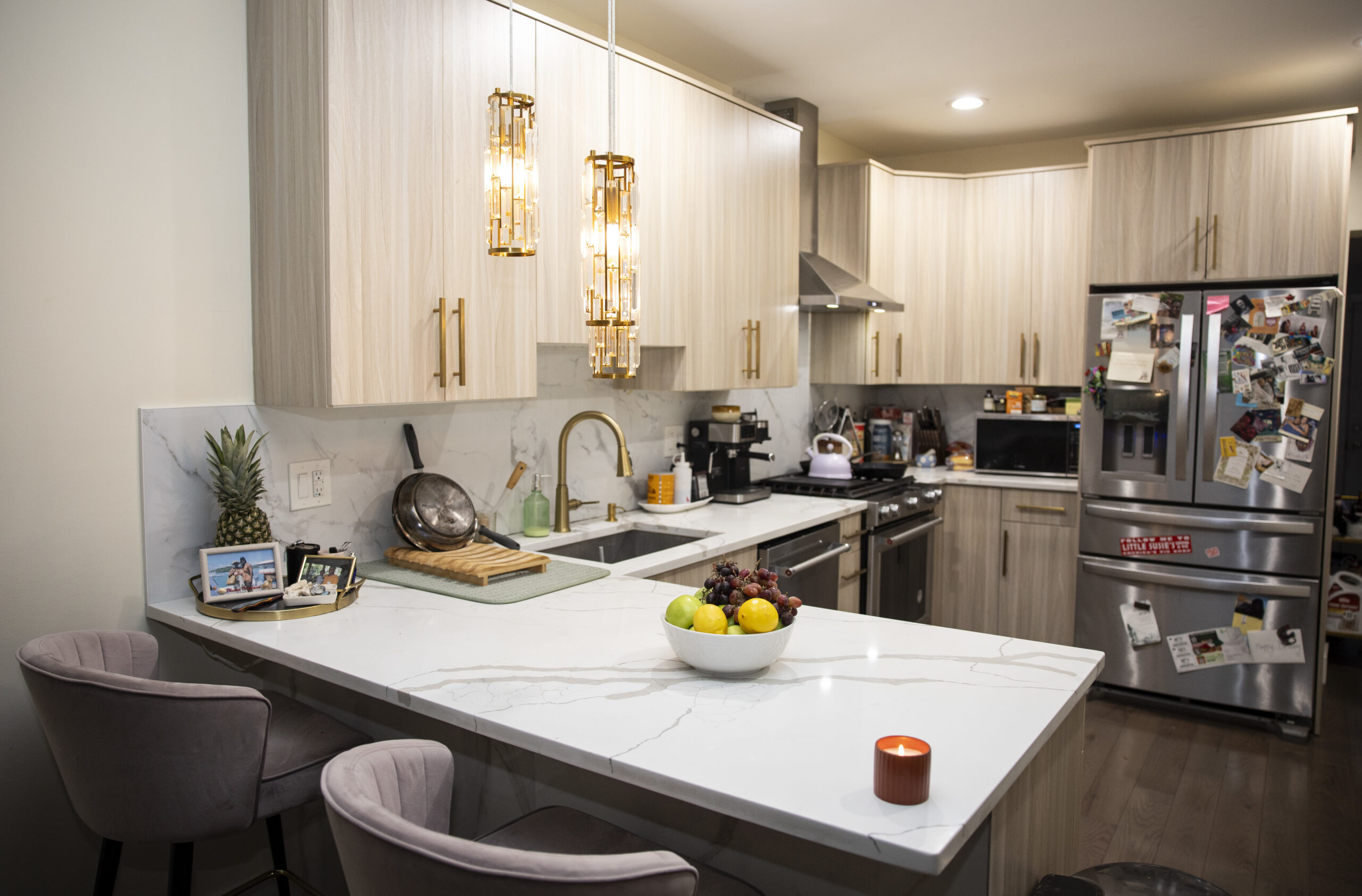
    Murphy loved the modern aesthetic of the kitchen.

    Murphy used $70,000 for a 20% down payment. She tapped into her remaining $30,000 to pay for the new roof, which cost $6,000, and a new washing machine, which cost $1,700. Her parents bought her a new fridge for $2,000.

    The move: Murphy’s landlord allowed her to break the lease she shared with her fiancé due to the flooding. She hired movers for the first time ever. “I moved so much in Philly before that I knew this time I definitely wanted movers,” Murphy said. It only cost $400. “We didn’t have that much stuff,” she said, “and we weren’t going very far.”

    Any reservations? Murphy and Walrond love their neighborhood and their neighbors, but they wish they lived on a quieter street. “Aramingo is a main thoroughfare,” Murphy said. “So we have a lot of emergency vehicles come by.”

    Other than that, Murphy wishes she negotiated more. If she could do it all over again, she wouldn’t offer $2,000 over the asking price. She would also ask for more concessions from the seller to address the aging appliances. “I didn’t even think to do it,” Murphy said. “I was just so happy to get a house.”

    Mercedes Murphy and Stefan Walrond pose with their pets Archie (left) and Onyx at their Port Richmond home on Tuesday, Jan. 13, 2026, in Philadelphia.

    Life after close: Murphy hasn’t changed anything since moving in, just repaired things. The leak in the roof damaged the bedroom drywall, which she is now in the process of fixing. And she had to replace a leaky window in the office. Despite the minor inconveniences, she’s happy with her purchase. Now she’s focused on rebuilding her savings. She wants to get back to $100,000. “Let’s see if I can do it again,” she said.

    Did you recently buy a home? We want to hear about it. Email acovington@inquirer.com.
  • Temple bought the site of a former McDonald’s for $8 million

    Temple bought the site of a former McDonald’s for $8 million

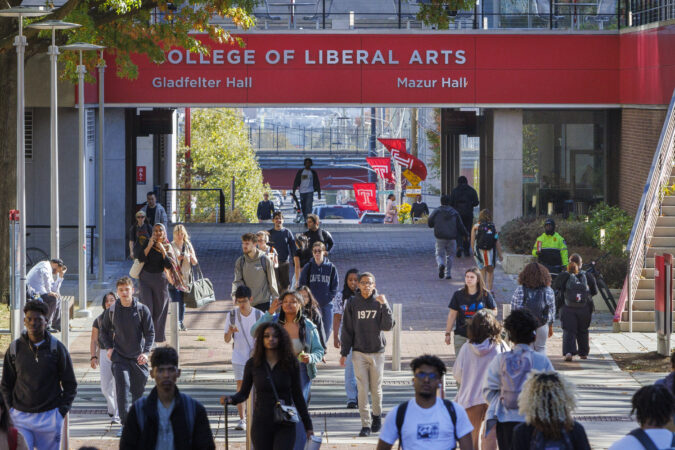
    Temple University last month bought a vacant property at the site of a former McDonald’s near its North Philadelphia campus for $8 million, according to property records.

    The university is still developing plans for the 48,640 square-foot lot at 1201-1219 N. Broad St., by Girard Avenue, a spokesperson said.

    It’s adjacent to the Temple Sports Complex, which features two fields for soccer, lacrosse, and field hockey. That location “provides an opportunity to implement the vision of our campus safety and physical environment plan,” Steve Orbanek said.

    The transaction was earlier reported by the Philadelphia Business Journal.

    The restaurant franchise was demolished in 2023.

    Temple’s latest acquisition comes as the university has expanded its footprint in recent months along Broad Street.

    In early 2025 the university paid $18 million for Terra Hall, a former University of the Arts building on South Broad Street. The building will be Temple’s Center City campus. And last fall Temple bought jazz bar New Barber’s Hall on Oxford Street for $2.3 million, the Business Journal reported.

  • Suburban Square now has apartments

    Suburban Square now has apartments

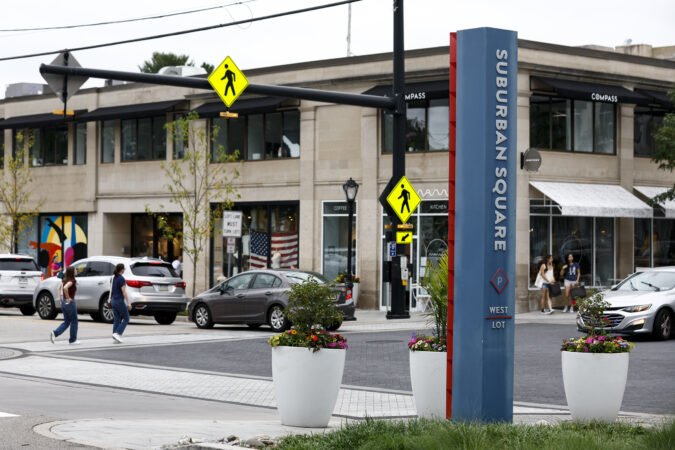
    Apartments have come to Suburban Square.

    This week, owner Kimco Realty and developer Bozzuto Development announced the opening of Coulter Place, the first apartment community in the Ardmore shopping destination.

    The five-story, mixed-use development includes 131 apartments with one to three bedrooms and about 20,000 square feet of ground-floor retail space. Amenities for residents include a fitness center, clubroom, game room, pool, coworking spaces, and pet-care spaces. It has two courtyards and garage parking with electric-vehicle charging stations.

    The promise of apartment residents helped attract new retailers to Suburban Square, including New Balance, Sugared + Bronzed, and the apparel brand Rhone on the ground floor of the apartment building.

    The complex is one of a few projects planned in recent years that have added or will add hundreds of apartments near Lancaster Avenue in Ardmore. One Ardmore, a 110-unit apartment complex, opened in 2019 after a yearslong campaign by residents to stop it. The long-awaited Piazza development is expected to add 270 apartments and almost 30,000 square feet of retail space when it opens in a couple of years.

    This rendering shows the outdoor pool at Coulter Place.

    Conor Flynn, CEO of Kimco Realty, said in a statement that Suburban Square is an “iconic, walkable destination” and that the addition of apartments creates “a more vibrant, connected experience for residents, retailers, and visitors alike.”

    “Coulter Place represents the next chapter in Suburban Square’s evolution and a clear example of how we’re unlocking long-term value through thoughtful mixed-use development,” Flynn said.

    The apartments are across from Trader Joe’s and the Ardmore Farmers Market and within walking distance to the Ardmore station for SEPTA and Amtrak trains.

    Apartments available for lease at Coulter Place range from one-bedroom, one-bathroom units for about $3,030 per month to a three-bedroom, two-bathroom unit for $7,035 per month.

    Philadelphia-based JKRP Architects designed the apartment building.

    Suburban Square was developed in 1928 and now has about 80 shops, restaurants, fitness spaces, and more. Businesses include Apple, SoulCycle, Warby Parker, Van Leeuwen Ice Cream, CAVA, and Di Bruno Bros.

    This rendering shows one of the courtyards for residents of Coulter Place.
  • Three best friends bought this house | Real Estate Newsletter

    Three best friends bought this house | Real Estate Newsletter

    Through the years, friends and family members have floated the idea of a group of us buying houses next to each other or in some kind of compound. It’s a nice dream, although it probably won’t become a reality.

    But three childhood friends have taken this dream a step further. The besties bought a communal house together in West Mount Airy.

    My colleague Zoe Greenberg talked to the friends (one of whom has a husband and kids) about how their living arrangement works for them.

    Keep scrolling for that story and more in this week’s edition:

    — Michaelle Bond

    If someone forwarded you this email, sign up for free here.

    Homebuying besties

    Rachel Luban, Rachel Neuschatz, and Lizzy Seitel had always talked about living together. They ignored the haters who said it wouldn’t work.

    The Rachels met when they were 5 and 6, and then Seitel became an honorary “Rachel” after they all met in middle school.

    The friends lived apart as young adults, but when they were ready to settle down, they decided to do it together.

    A few years ago, they and Seitel’s husband bought a 4,470-square-foot old stone house in West Mount Airy. Seitel was pregnant with her first child at the time.

    One of the Rachels said, “A lot of people, including lawyers, told us not to do this.”

    Here’s why they did it anyway and how they make it work.

    📮Would you want to live with friends like this? Share your thoughts.

    The latest news to pay attention to

    Home tour: Modern reno in Montgomery County

    When Casey Lyons and her husband, James, bought their home in 2021, there was a lot to like.

    The almost 5,000-square-foot house had oak floors, two fireplaces, and a beamed cathedral ceiling in the living room.

    The basement included a sauna, gym, and full bathroom.

    The home had a three-level deck with a hot tub and covered porch.

    But Casey didn’t love the house. So she asked interior designers to help change that.

    The homeowners got rid of dated features. They added a white marble island and new tiles and fixtures in the kitchen. They whitewashed the stone fireplace in the family room. They painted the deck so it blends better with the surrounding greenery.

    Peek inside the property and find out what else they changed to make Casey love the house.

    📊 The market

    Across the Mid-Atlantic last year, people who wanted to buy homes couldn’t afford to, and that held back the housing market. The total number of homes sold in 2025 — more than 235,000 — was only 0.1% higher than the number sold in 2024, according to the multiple listing service Bright MLS.

    Lisa Sturtevant, chief economist at Bright MLS, said the market has “a lot of pent-up demand,” and buyers have more choices now because more homeowners are listing their properties for sale.

    “But even with mortgage rates coming down, affordability is still a major challenge for many buyers, particularly first-time buyers,” Sturtevant said in a statement.

    Still, our region had strong home sales last month. The number of closed sales was up 7.1% compared to last December.

    In the Philadelphia metro area, according to Bright MLS:

    🔺The number of closed home sales was up 1.3% in 2025 compared to 2024. Bucks and Chester Counties had the strongest sales increases — 7.7% and 5.3%, respectively.

    🔺The number of new listings in 2025 was up 2% from the year before.

    🔻But the number of homes for sale is still only about half — 54% — of the pre-pandemic number in 2019.

    🔺The median sale price in 2025 was $390,000 — 4% higher than in 2024.

    📷 Photo quiz

    Do you know the location this photo shows?

    📮 If you think you do, email me back. You and your memories of visiting this spot might be featured in the newsletter.

    Last week’s photo quiz featured an image of the Athenaeum of Philadelphia located next to Washington Square on South Sixth Street.

    Props to Evan N., Ann B., and Timothy S. for getting that right. Ann told me she wants her ashes to rest in the Reading Room. I’ve walked by this building countless times, but this is what makes me want to go inside.

    Enjoy the rest of your week.

    By submitting your written, visual, and/or audio contributions, you agree to The Inquirer’s Terms of Use, including the grant of rights in Section 10.

  • What the Saks bankruptcy means for Philly-area shoppers

    What the Saks bankruptcy means for Philly-area shoppers

    Saks Global, which operates Saks Fifth Avenue and Neiman Marcus, has filed for bankruptcy.

    The high-end clothing retailer announced the move on Wednesday, saying in a statement that the Chapter 11 filing will “facilitate its ongoing transformation.”

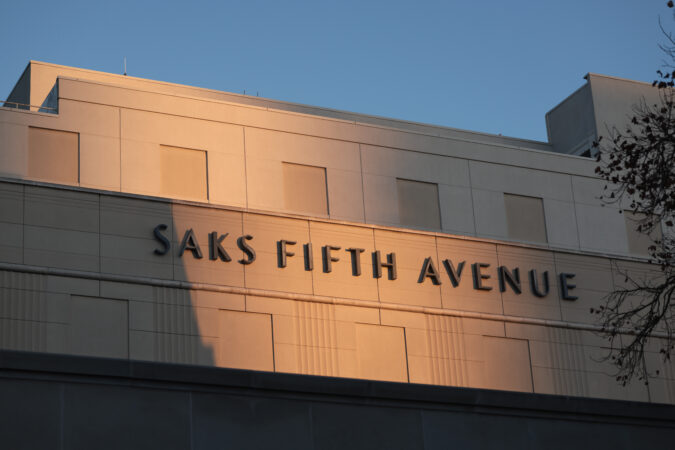
    In the Philadelphia region, Saks Global has long operated an expansive Saks Fifth Avenue store off City Avenue in Bala Cynwyd. The company also has a Neiman Marcus at the King of Prussia Mall, as well as Saks Off 5th discount outlets at the Franklin Mall in Northeast Philadelphia and at the Metroplex shopping center in Plymouth Meeting.

    Both local Saks Off 5th locations are slated to close soon, as was reported this fall by several news outlets, including the Philadelphia Business Journal.

    Here’s what the bankruptcy filing means for local Saks shopper.

    Is Saks Fifth Avenue in Bala Cynwyd closing?

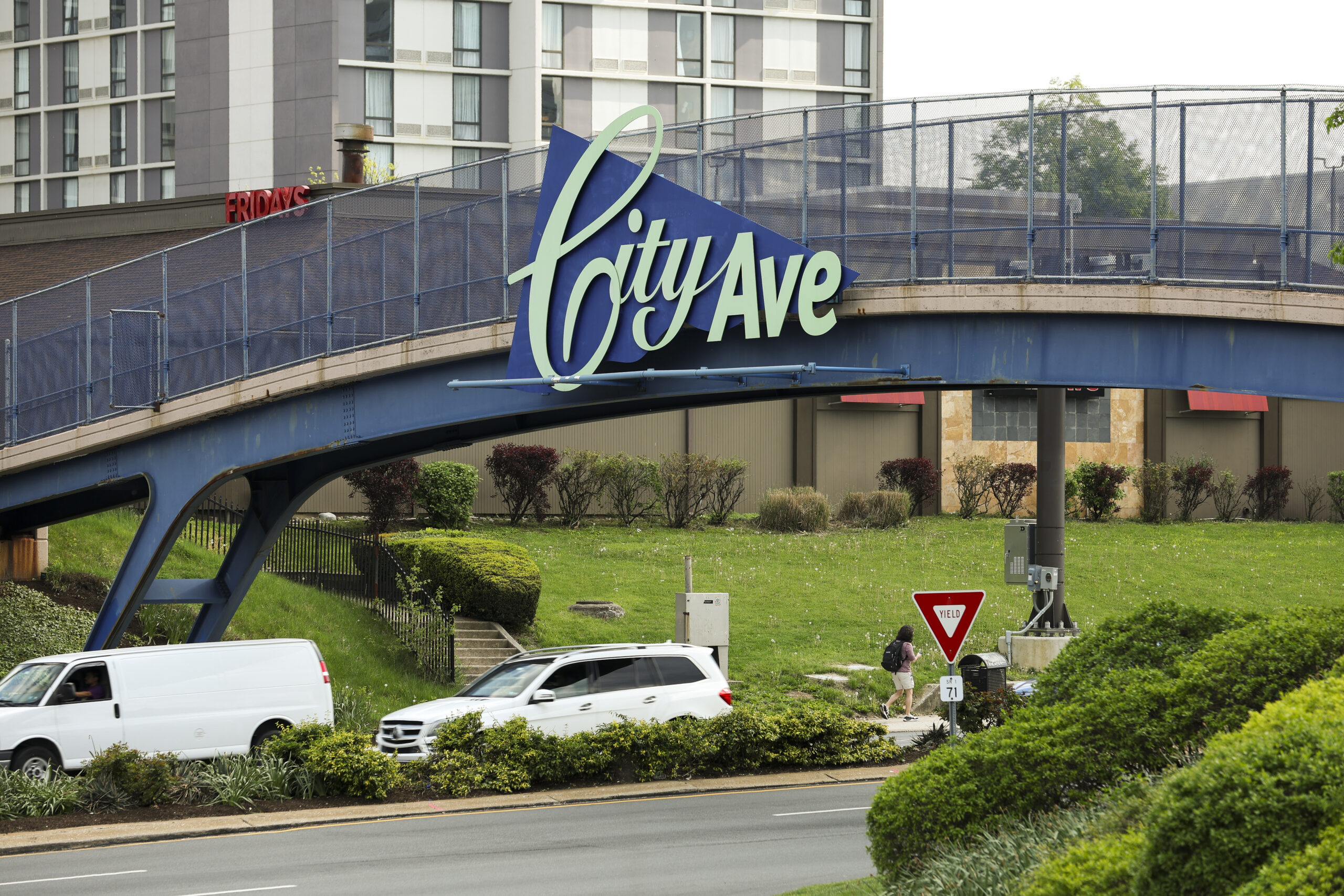
    Saks Fifth Avenue has been a retail success along City Avenue in Bala Cynwyd, as shown in April 2024.

    No. At least not in the immediate future.

    Saks has filed for Chapter 11 bankruptcy, which means the company intends to reorganize financially and stay in business. That’s opposed to Chapter 7 bankruptcy — as is the Iron Hill Brewery case — through which businesses liquidate all their assets and close locations.

    “To be clear, a Chapter 11 filing does not mean that Saks Global is going out of business,” Saks wrote in a bankruptcy FAQ on its website.

    But when companies reorganize through bankruptcy, they sometimes do close stores, particularly underperforming ones.

    Saks executives alluded to the possibility of this in its statement, which read in part: “As part of the Chapter 11 process, the company is evaluating its operational footprint to invest resources where it has the greatest long-term potential. This approach reflects an effort to focus the business in areas where the company’s luxury retail brands are best positioned for sustainable growth.”

    The Saks Fifth Avenue opened in Bala Cynwyd decades ago. It is now the retailer’s only location in the Philadelphia region and is called “Saks Philadelphia” on the company’s website.

    The Inquirer reported in 2024 that business at the store was strong and that the chain had resisted offers to move to King of Prussia, according to the City Ave District.

    In response to questions from The Inquirer about the future of Philadelphia-area stores, Saks Global said: “Our footprint evaluation is underway, and we have already begun to work collaboratively with our real estate partners to find future-facing solutions, where possible, to achieve a stable and sustainable business model and optimized portfolio on the other side of this process.”

    Is Neiman Marcus in King of Prussia closing?

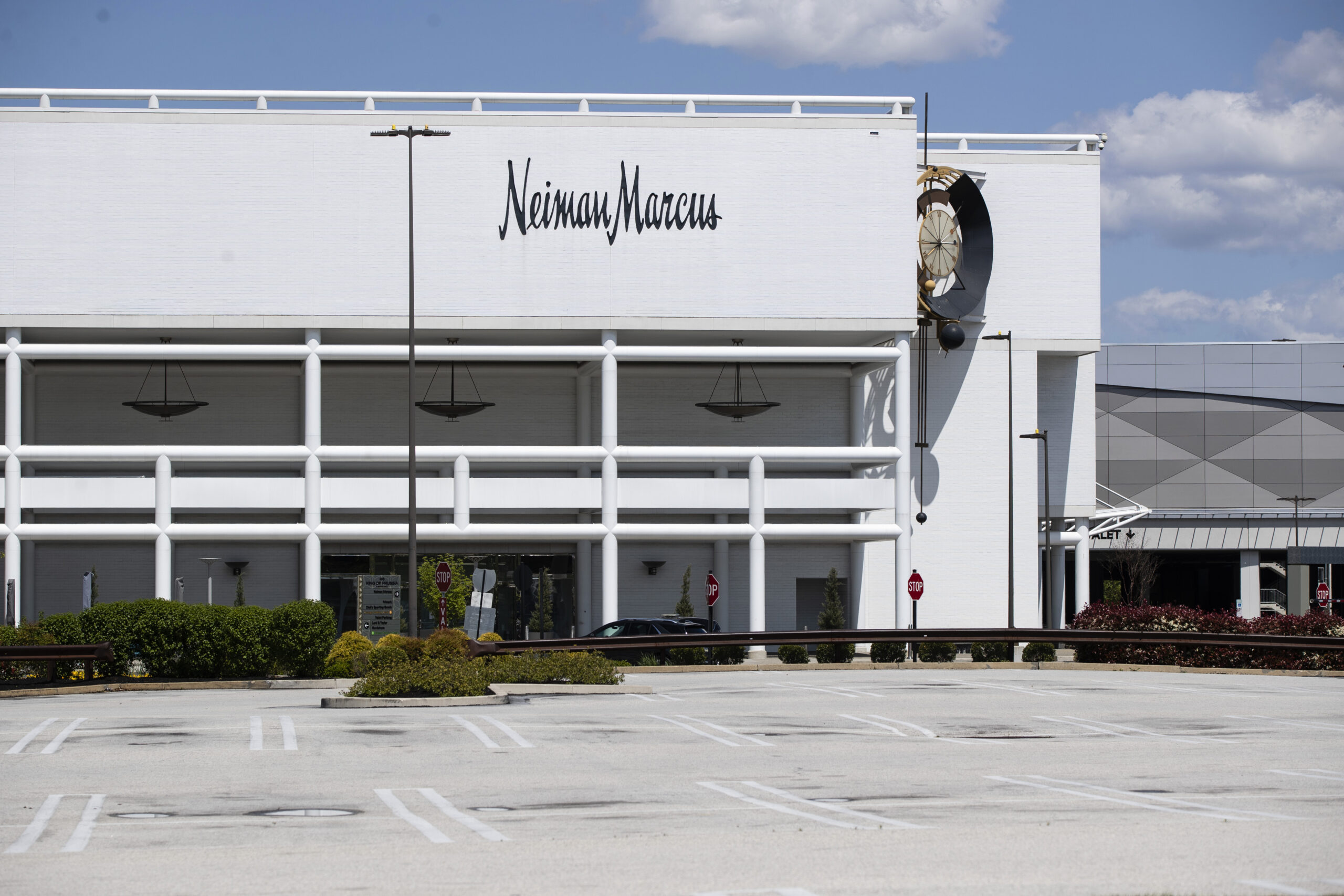
    The Neiman Marcus store in King of Prussia, as shown in May 2020.

    Also not in the immediate future.

    King of Prussia Mall has long been a go-to spot for retailers. Even after the challenges of the pandemic, and amid competition from online retailers, the center remains among the region’s thriving shopping destinations.

    In 2024, Saks Global bought Neiman Marcus in a $2.65 billion deal after Neiman Marcus filed for Chapter 11 bankruptcy during the pandemic.

    Are Saks credit cards or gift cards impacted by the bankruptcy?

    No, the company says.

    “There are no changes to our credit card programs and rewards, with customers continuing to shop, earn and redeem benefits as usual,“ the company wrote in the FAQ. ”We continue to accept payments as usual, including credit cards and gift cards, with no changes to how customers transact with us.”

    Are Saks’ return policies impacted by the bankruptcy?

    No, according to the company.

    “Our refund and exchange policy is expected to remain unchanged, with refunds and exchanges being accepted and issued as usual,” the company wrote.

    I am waiting on a package from Saks. Will my order still arrive?

    Yes, all current and future orders will be delivered as usual, the company said.

    What’s next for Saks?

    In New York, Saks Fifth Avenue’s holiday light show and window was revealed in November.

    The company says it is not going anywhere.

    “Saks Global is firmly focused on the future, and we look forward to continuing to serve customers and deliver for our stakeholders,” the company wrote in the FAQ.

    As of Wednesday, Saks was waiting for court approval of a $1.75 billion financing deal that would come with an immediate $1 billion debtor-in-possession loan from an investor group.

    If approved, the deal “will provide ample liquidity to fund Saks Global’s operations and turnaround initiatives,” the company said in a statement.

    Saks estimates its assets and liabilities at between $1 billion and $10 billion, according to court documents filed in U.S. Bankruptcy Court in Houston. Saks has between 10,001 and 25,000 creditors, including luxury brands like Chanel, to which Saks owes $136 million, according to the documents.

    To lead the company during this transition, Saks also announced a new chief executive, with former Neiman Marcus CEO Geoffroy van Raemdonck replacing Richard Baker.

    Saks said it hopes to emerge from bankruptcy later this year.

    The company said in its FAQ: “With new capital and a stronger financial foundation on the other side of this process, we are confident that we can play a central role in shaping the future of the luxury retail industry while delivering the elevated shopping experience our customers expect from our dedicated team.”

  • How this family’s dated Montco property became their dream house

    How this family’s dated Montco property became their dream house

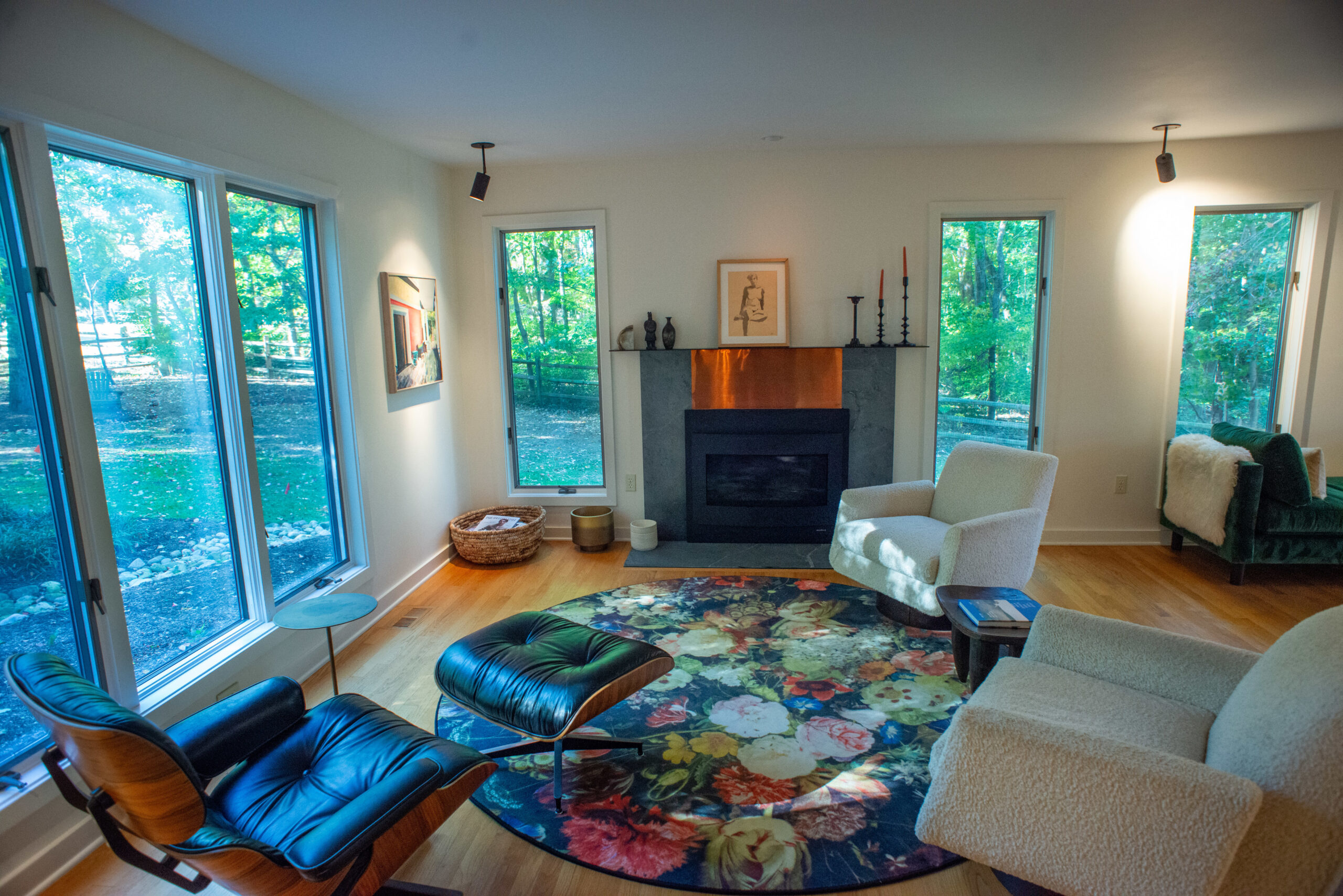
    The Mediterranean-style stucco home in Montgomery County was ringed by maple and oak trees. A tri-level deck with a hot tub and covered porch faced a sylvan pond on an adjacent property.

    Inside, the house had oak flooring, Amish-crafted red oak kitchen cabinets, two fireplaces, and a family room with a beamed cathedral ceiling.

    The almost 5,000-square-foot home Casey Lyons and her husband, James, purchased in 2021 also had a basement with a sauna, gym, full bath, and a great room opening out into a patio where their two young sons could play.

    On the second floor were four bedrooms and three baths and abundant closets fitted with drawers and shelving. Previous owners had installed a sophisticated sound system to play music.

    The 1988 structure was dated, though. The kitchen had “peachy” squares of tile for a backsplash, Casey said. The 1½-acre property was attractively landscaped, but the outdoor decks were stained a worn rust color.

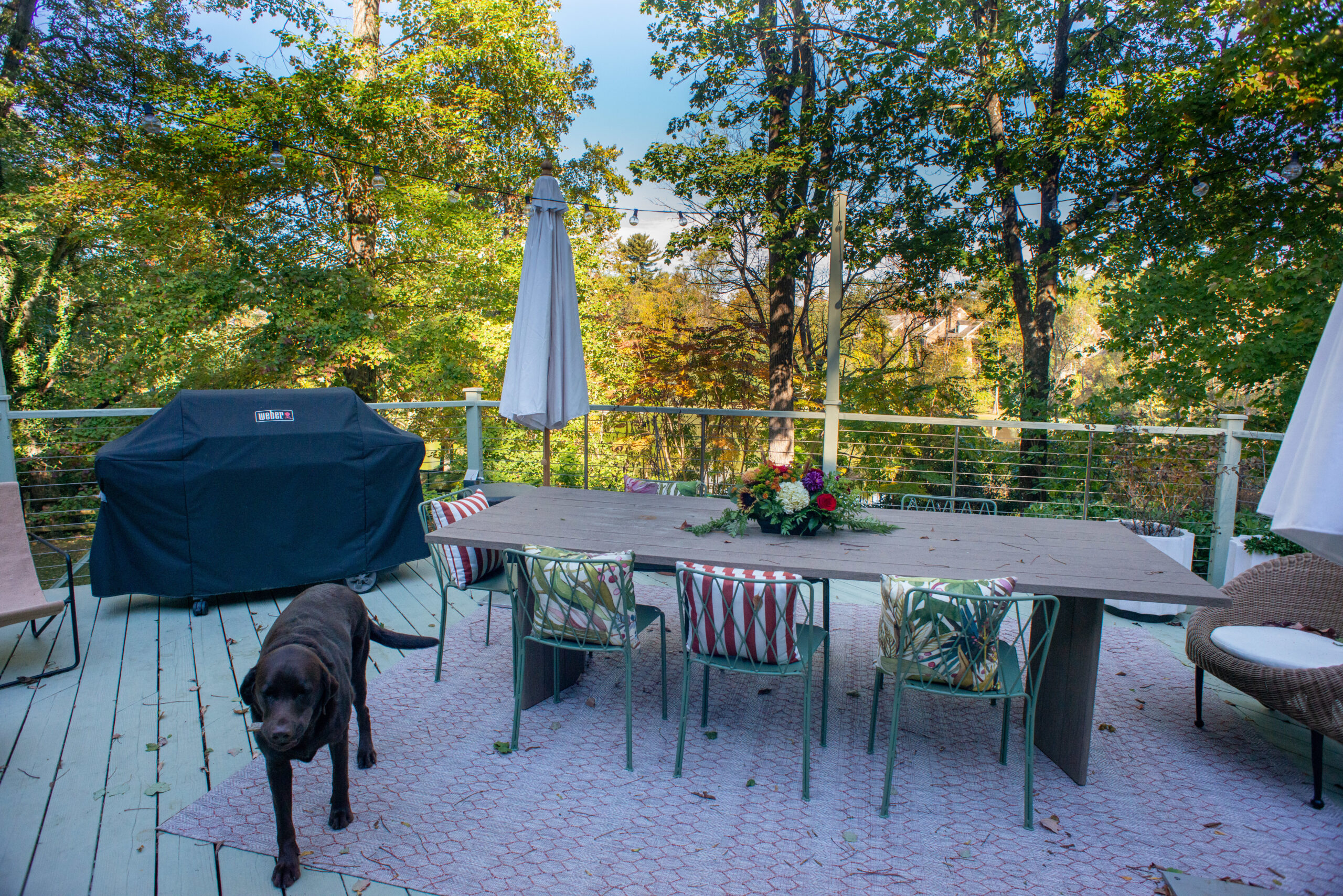
    The home has a three-level deck in the backyard. It was painted green to play off the surrounding trees.

    To give the first-floor living spaces a contemporary look, Casey reached out to interior designer Val Nehez through a mutual friend. Nehez remembers, “Casey asked me, ‘Can you make me love this house?’”

    Nehez, owner of Studio IQL, and her senior designer, Ulli Barankay, were up to the challenge.

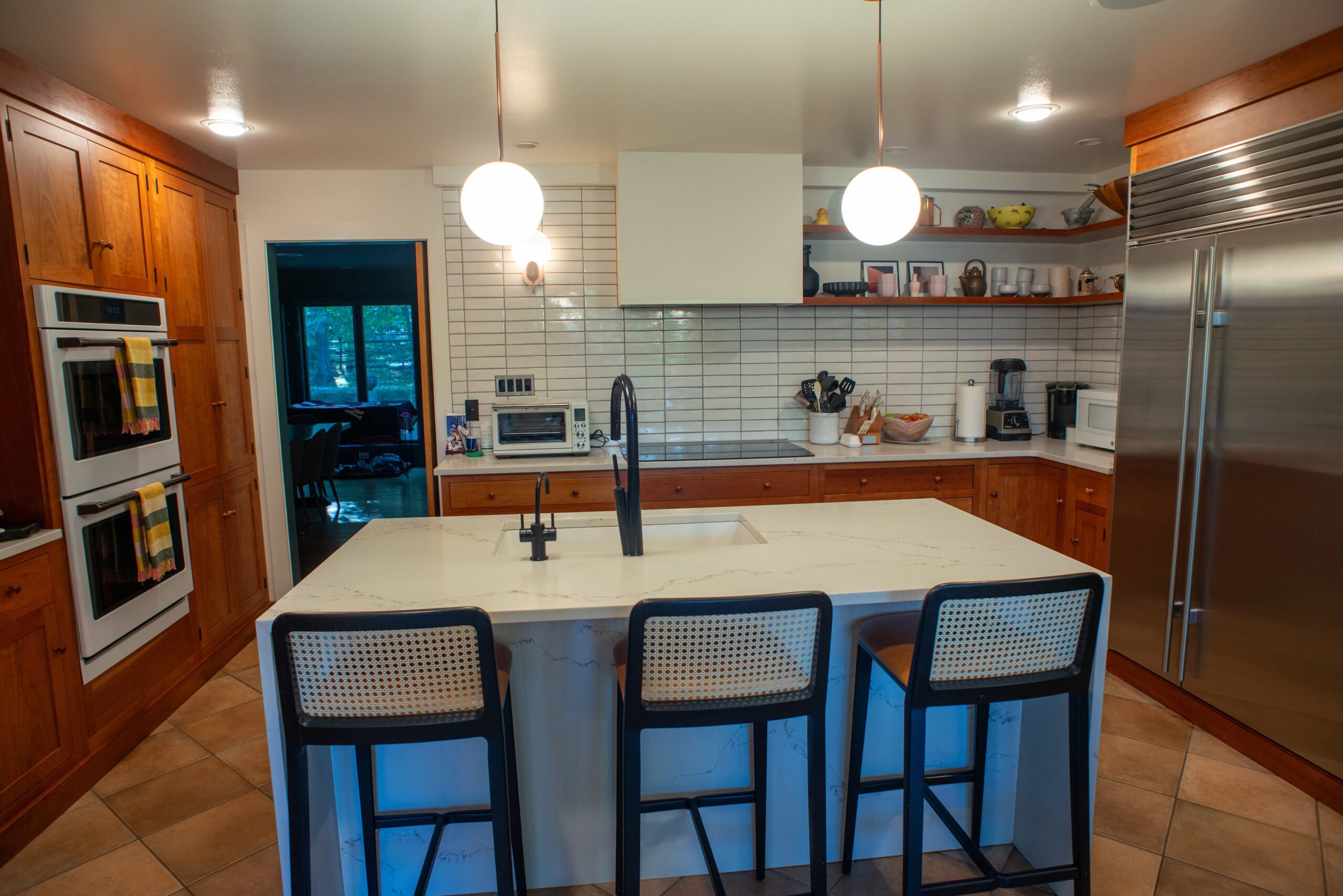
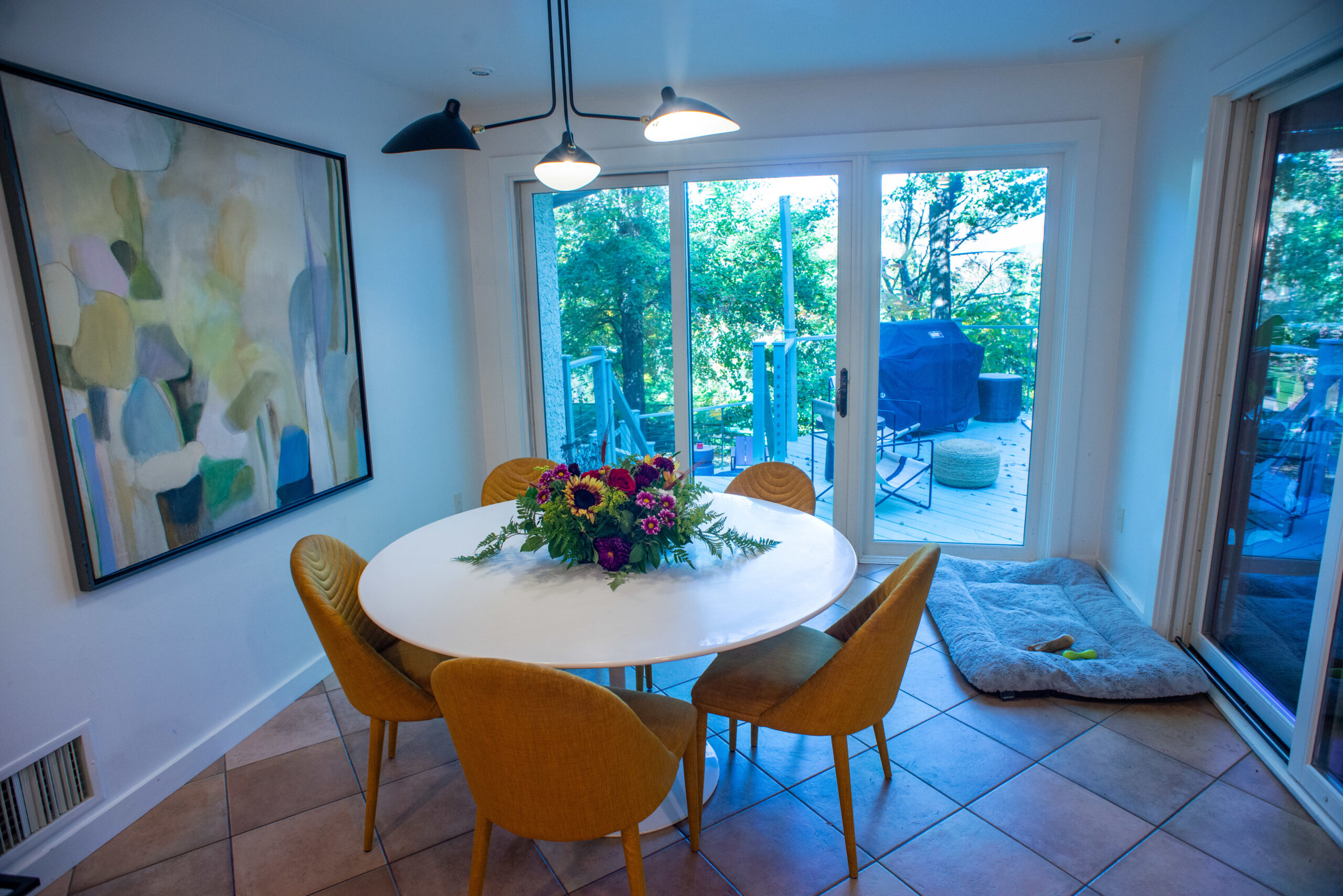
    In the kitchen they kept most of the cabinetry but replaced one wall with white subway tile and open shelves. They installed a white marble island, new globe light fixtures, and curved black faucets. Mustard-colored chairs surround a white table.

    “We turned a Lancaster County country kitchen … into a Southern California kitchen,” Nehez said.

    With two active boys and a chocolate lab, Casey has to clean the chairs once a month. Still, she said, “I love the color.”

    The renovated kitchen features white subway tiles and a marble island.
    Lyons loves the mustard color of the chairs in her kitchen.

    In the center hall, red oak entry doors, adjacent closet doors, and the staircase were painted dark green to match the slate floor.

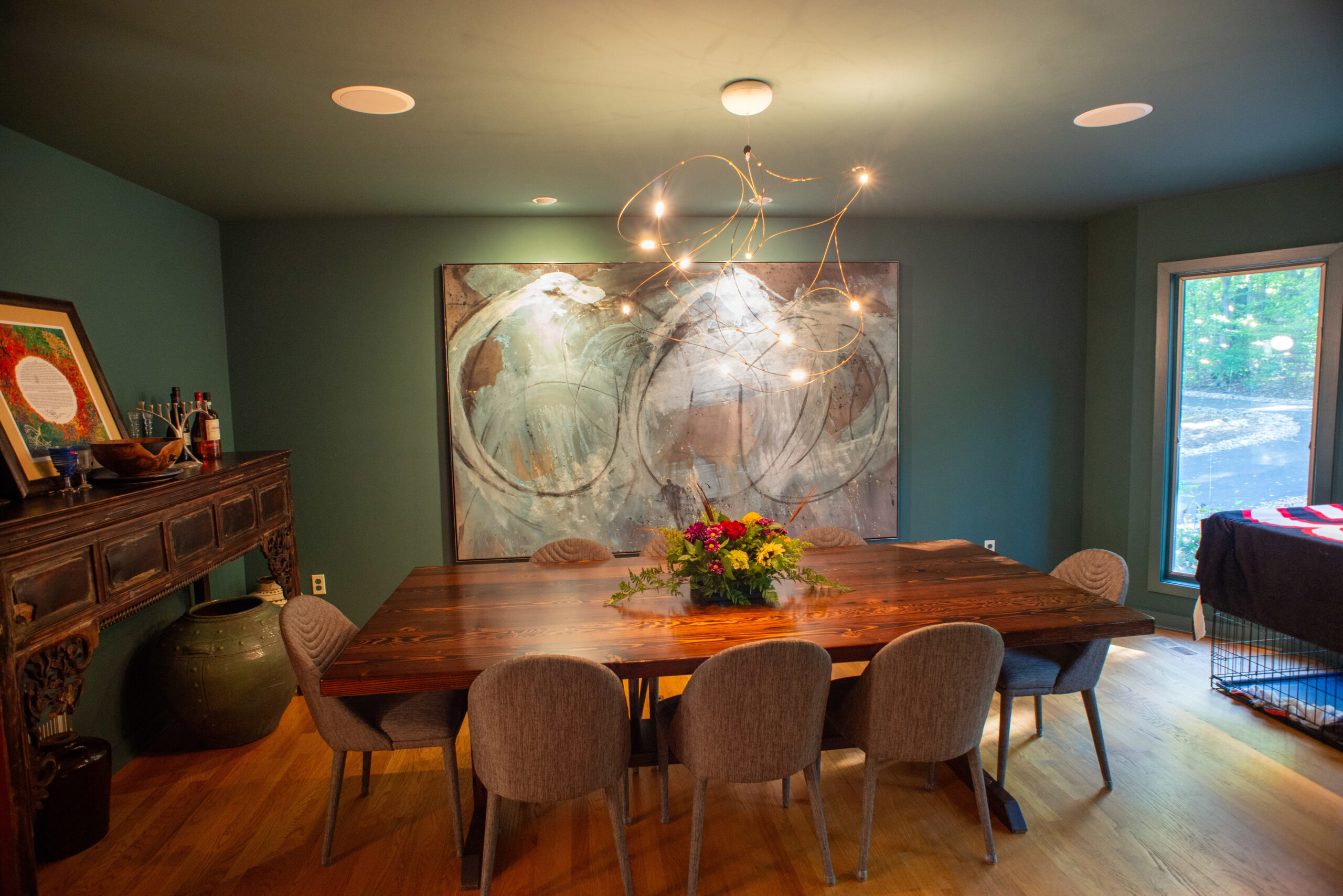
    The dining room decor was inspired by a large abstract painting of white swirls on a green background from James’ family’s art collection. The walls are hunter green, and the “Flock of Light” curved metal chandelier from Design Within Reach complements the swirls in the painting.

    Nehez found upholstered chairs for the walnut table, which Casey had custom-made by John Duffy, owner of Stable Tables in Flourtown.

    For the formal dining room, Lyons chose a large abstract painting from her husband’s family collection and a “Flock of Light” chandelier.

    The dining room’s vintage apothecary cabinet and heavily carved buffet had been in her previous home.

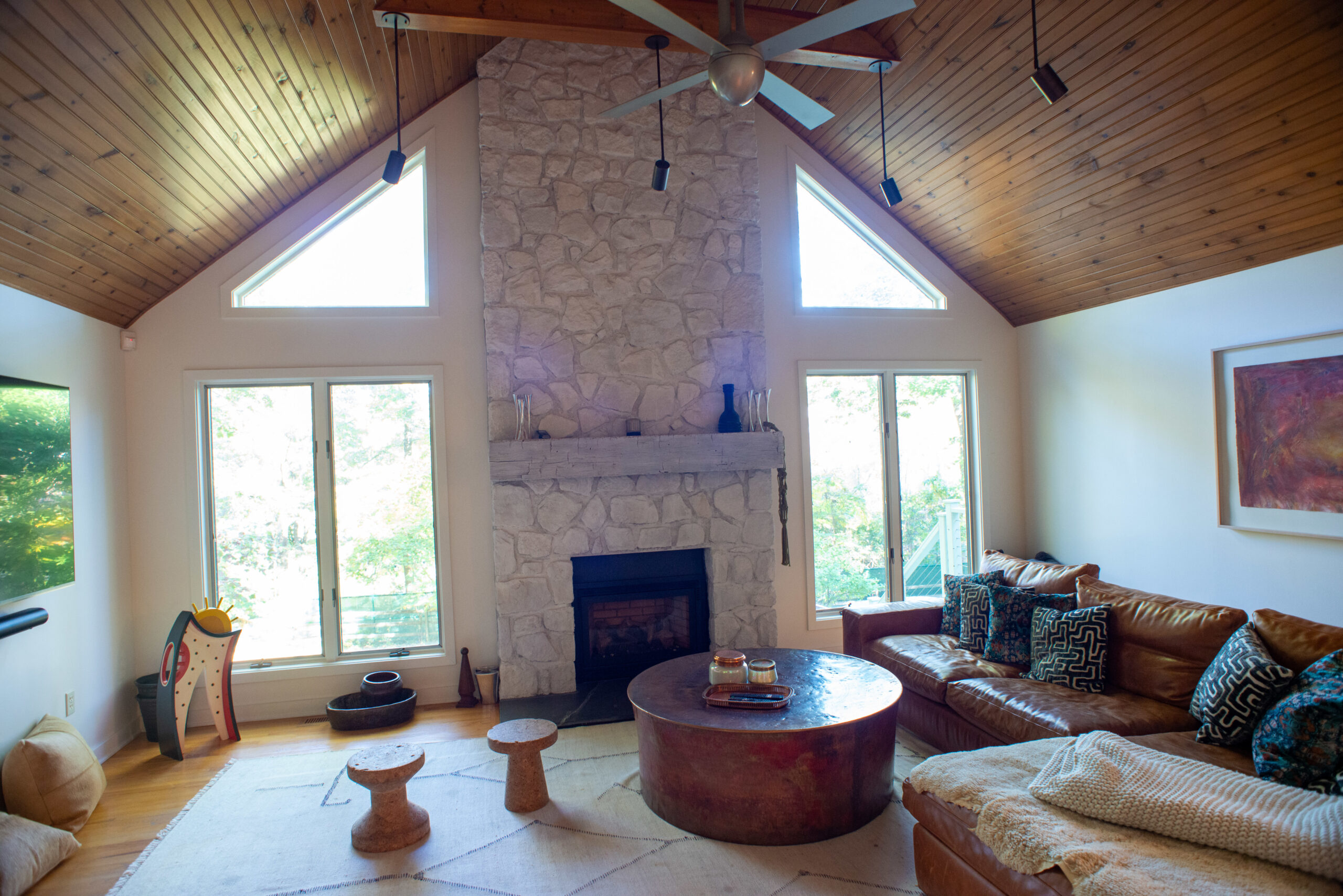
    A copper plate and new mantle were added to the living room fireplace to make it more distinctive. The stone fireplace in the family room was whitewashed to blend with the white walls and emphasize the height of the cathedral ceiling. Furnishings include a tan leather sofa in the family room and white chairs, and a green velvet sofa and floral-pattern rug in the living room.

    The fireplace stone in the family room was whitewashed to accentuate the tall ceilings.
    A copper plate and mantel were added to the living room fireplace.

    Outside, the decking was painted a moss green to blend with the surrounding foliage. The back wall of the covered porch was covered with glazed green tiles. The porch features a maroon-and-white-striped sectional and blue, beige, and purple lantern-shaped lights. “It’s a beautiful place to sit” and admire the pond and the changing colors of the leaves in late autumn, Casey said.

    Some furnishings came from Material Culture, an antique store in Germantown. Other items and lighting came from Minima, a contemporary lighting and furniture store in Old City. Nehez said items were selected to “reflect the owners’ taste.”

    She and Barankay chose black porcelain fixtures for the powder room and wallpaper patterned with black and white zebras on a red background. In a happy coincidence, after the powder room remodeling was completed, the designers found a print of two zebras in the families’ art trove, which they hung in the hall nearby.

    The view of the nearby pond from the deck outside Lyons’ home.
    Lyons’ dog, Joe, walks along the three-level deck.

    As is their custom, with some exceptions such as the dining room painting, they waited until all the furnishings were in place to hang the art.

    Finding the right piece to blend in, Nehez said, is “like finding the perfect pair of earrings after getting dressed.”

    Since the remodeling Casey, her sons, and husband “have a space where we can cook, watch, television, and dance,” she said, in a home she now loves.

    Is your house a Haven? Nominate your home by email (and send some digital photographs) at properties@inquirer.com.
  • Camden’s planned 25-story Beacon Building could get a boost from new N.J. tax credit bill

    Camden’s planned 25-story Beacon Building could get a boost from new N.J. tax credit bill

    New Jersey lawmakers on Monday approved a bill that would make it easier for development projects in Camden to qualify for hundreds of millions of dollars in tax credits.

    That could be a boon to the Beacon Building — a planned 25-story office tower downtown whose backers have said they intend to seek state incentives — among other projects, according to the bill’s supporters.

    Under current law, most commercial real estate developers must show their projects would generate more dollars in economic activity than they would receive in subsidies in order to qualify for tax credits under New Jersey’s gap-financing program, known as Aspire.

    The new legislation — which was introduced late last month and approved by the Democratic-led Legislature days before Democratic Gov. Phil Murphy is to leave office — would exempt certain projects from the program’s so-called net benefit test.

    Lawmakers on Monday also passed a bill increasing the cap on the size of the Aspire tax-credit program from $11.5 billion to $14 billion and authorized $300 million in tax breaks to renovate the Prudential Center in Newark, home of the New Jersey Devils hockey franchise. The team is owned by Harris Blitzer Sports & Entertainment, which also owns the Philadelphia 76ers.

    ‘Competitive market’

    Supporters of the Camden bill, A6298/S5025, said it would make South Jersey more competitive in the Philadelphia market, while critics contended it would weaken a provision of a 2020 economic development law signed by Murphy that was intended to ensure fiscal prudence.

    The test has impeded big projects in South Jersey, said Assembly Majority Leader Louis Greenwald (D., Camden), a sponsor of the bill. Since the law was signed, the region hasn’t attracted a single “transformative project” — a designation in the Aspire program for developments that have a total cost of $150 million and are eligible for up to $400 million in incentives over 10 years, Greenwald said.

    “We started to ask people, what’s the barrier?” he said. “And when you look at the competitive market of what [developers] can get in Philadelphia or Pennsylvania compared to other areas in the state that don’t have to compete with that, that net operating loss test, that net benefits test, is a barrier.”

    The legislation was not drafted with a specific project in mind, Greenwald said, but he acknowledged that one that might benefit is Beacon, which would feature 500,000 square feet of office space.

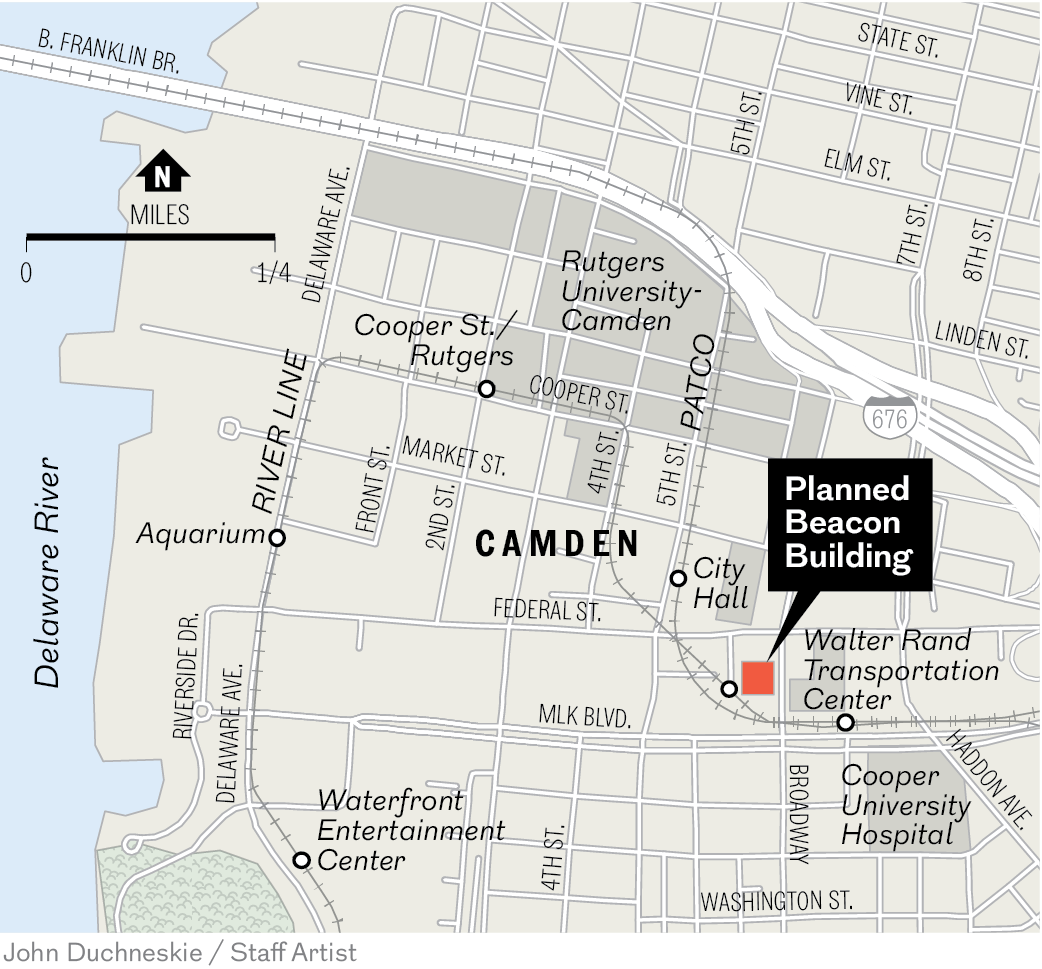
    Developer Gilbane is leading the project with the Camden County Improvement Authority at a vacant site on the northwest corner of Broadway and Martin Luther King Boulevard across the street from the Walter Rand Transportation Center and Cooper University Hospital.

    Map of the planned Beacon Building in Camden.

    “The goal is to attract projects, maybe like Beacon Tower, to capitalize off of the growth that we’ve seen in Camden city,” Greenwald said.

    Any project seeking Aspire subsidies must apply to the Economic Development Authority.

    Camden County officials have said they expect tenants to include Cooper University Health Care, which has said it needs additional office space to accommodate its $3 billion expansion. They also hope to entice civil courts to relocate there.

    County Commissioner Jeff Nash said last year that tenants had yet to commit, in part because the development team was still working on an application for Aspire tax credits.

    The incentives will help determine rent, he told the Cherry Hill Sun. The land is owned by the Camden Parking Authority, and Nash has said officials are still trying to determine who will own the site and the building going forward, according to Real Estate NJ.

    County spokesperson Dan Keashen said that those talks remain ongoing and that the improvement authority may issue a request for proposals for a new developer. Gilbane, the current master developer, didn’t respond to a request for comment.

    Wendy Marano, a spokesperson for Cooper University Health Care, said she didn’t have an immediate answer to a question about whether the hospital network planned to obtain an equity stake in the development.

    In 2014 the state awarded $40 million in tax credits to incentivize Cooper Health’s relocation of suburban office jobs to Camden, and Cooper later bought a stake in the development.

    The possible new state investment in Camden comes after Murphy’s administration separately allocated $250 million to renovate the state-owned Rand center — which serves two dozen NJ Transit bus lines and the River Line, and includes PATCO’s Broadway station.

    Construction on the transit center is expected to begin soon, according to county officials. While that renovation is underway, the Beacon site will serve as a temporary bus shelter, Keashen said, adding that possible construction on an office tower is still years away.

    Fast track

    Critics of the bill said that it was rushed through the Legislature with minimal public input and outside the normal budget process, and that it appeared to be designed to benefit specific projects. The bill passed the Assembly, 48-25, and the Senate, 24-14. It now heads to Murphy’s desk. The governor’s second term ends on Jan. 20, when he is to be succeeded by fellow Democrat Mikie Sherrill.

    The legislation applies to redevelopment projects located in a “government-restricted municipality” — language included in the Aspire program’s statute — “which municipality is also designated as the county seat of a county of the second class.” The project must also be located in “close proximity” to a “multimodal transportation hub,” an institution of higher education, and a licensed healthcare facility that “serves underrepresented populations.”

    “I say to you that there’s going to be one project that fits all those criteria,” Assemblyman Jay Webber (R., Morris) said on the floor of the chamber during debate Monday.

    “The net benefits test was put in as an accountability measure to make sure these projects were at least by some measure benefiting the taxpayer,” Webber added in an interview.

    “And now apparently one or more projects can’t meet that test,” he said. “And so rather than stick to the rules that they agreed to and pull the credits, they’re going to change the rules, lower the bar so that somebody can step over it. It’s wrong.”

    Greenwald said the legislation has “nothing to do with [Beacon] in particular,” adding that he hopes it is one of many projects that could benefit. Possible developments in Trenton and New Brunswick could also qualify for incentives under the bill, he said.

    Assembly Majority Leader Louis Greenwald in 2019.

    The net benefit test

    The test relies on economic modeling based on data such as projected jobs and wages. Under current law, most commercial projects seeking Aspire credits must demonstrate a minimum net benefit to New Jersey of 185% of the tax credit award — meaning, for instance, an applicant that receives $100 million in credits must generate $185 million in economic activity.

    The credits can be sold to the state Treasury Department for 85 cents on the dollar.

    Projects located in “government-restricted municipalities” — a half-dozen cities, including Camden, selected by the Legislature — already face a lower threshold of 150%, according to the state Economic Development Authority.

    Some projects, including residential and certain healthcare centers, are exempt from the net benefit test.

    The test was strengthened in the Economic Recovery Act of 2020, signed by Murphy, because “we saw in previous iterations of the tax credit program that if the guardrails weren’t strong enough … then companies could simply not meet the test, or, you know, not follow through on their promises, and nonetheless collect the funds,” said Peter Chen, senior policy analyst at New Jersey Policy Perspective, a liberal-leaning think tank.

    The 2020 law changed that, he said. “It’s one of the most important guardrails of the entire corporate tax credit program,” Chen said in an interview last week. “So exempting any project from the net benefit test requires a pretty large, pretty strong reason for doing so, and in this case, no reason was given.”

    Criminal case

    The renewed push for tax credits in South Jersey comes as a criminal case involving an earlier round of corporate subsidies continues to play out in court.

    Democratic power broker George E. Norcross III — founder of a Camden-based insurance brokerage and chairman of Cooper Health — and five codefendants were indicted in 2024 on racketeering charges related to development projects on the city’s waterfront.

    A judge dismissed the charges last year, and the state Attorney General’s Office is appealing the decision. Norcross has denied wrongdoing. He and his allies say state incentives have helped revitalize the city.

    During his floor speech on Monday, Webber alluded to “incredible allegations of corruption” in the earlier economic development program and noted that Murphy had previously championed reform of the system.

    The governor’s spokesperson, Tyler Jones, declined to comment on pending legislation.

  • House of the week: A six-bedroom in Upper Roxborough for $725,000

    House of the week: A six-bedroom in Upper Roxborough for $725,000

    For Jennifer Rodier, it was “a wonderful place to grow up.”

    The six-bedroom, 2½-bathroom stone house is on a wide Upper Roxborough street, perched high above a valley.

    Her father, Walter D’Alessio, bought the house in 1969, and “he never wanted to let go of it,” Rodier said.

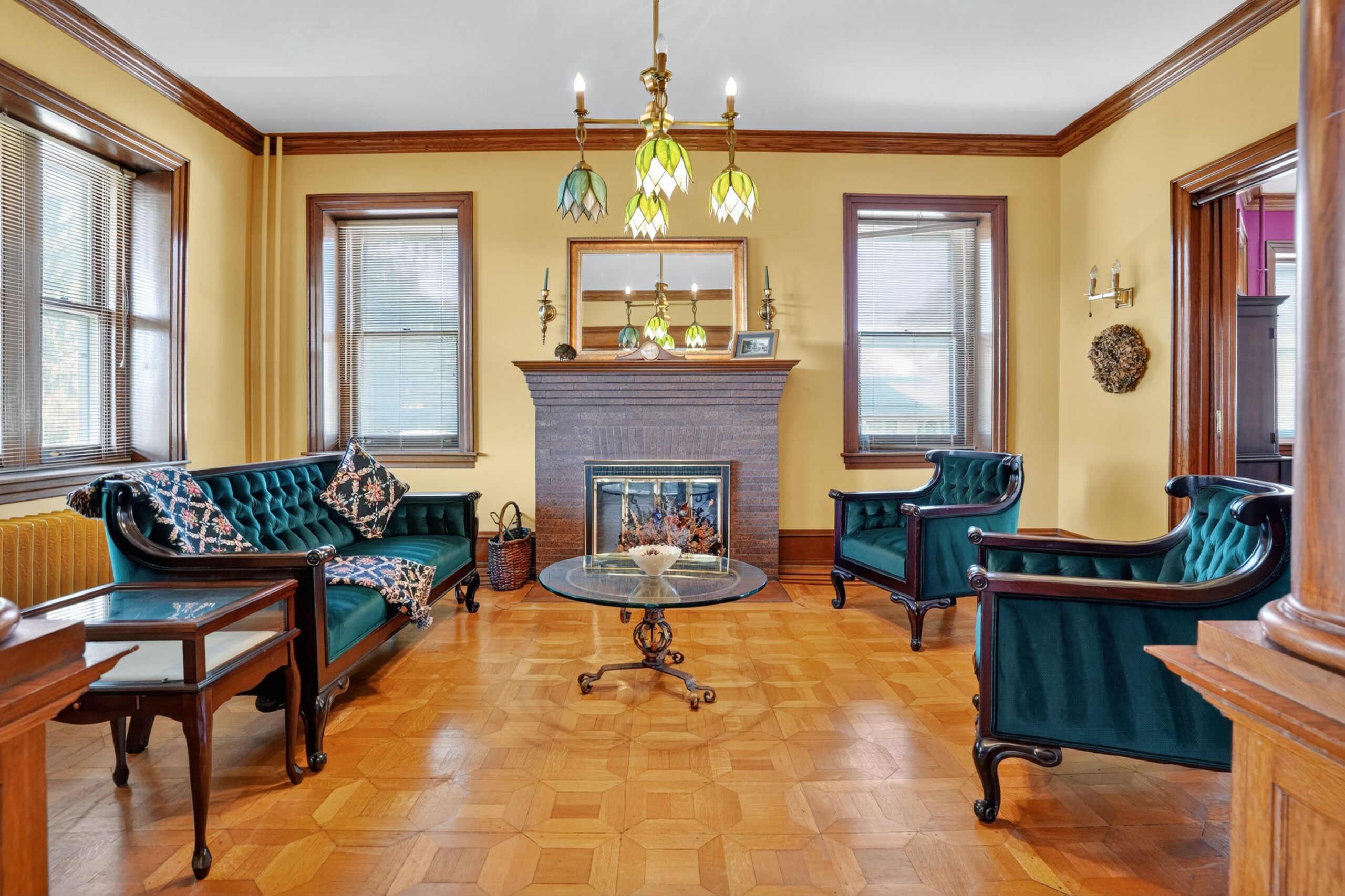
    The formal living room has a working wood-burning fireplace.

    D’Alessio headed the Philadelphia Redevelopment Authority and Philadelphia Industrial Development Corp. and served under five Philadelphia mayors. He died in 2024.

    Rodier, a nonprofit executive who lives in Lafayette Hill, is selling the place where she and her friends played hide-and-seek or cavorted in the large yard.

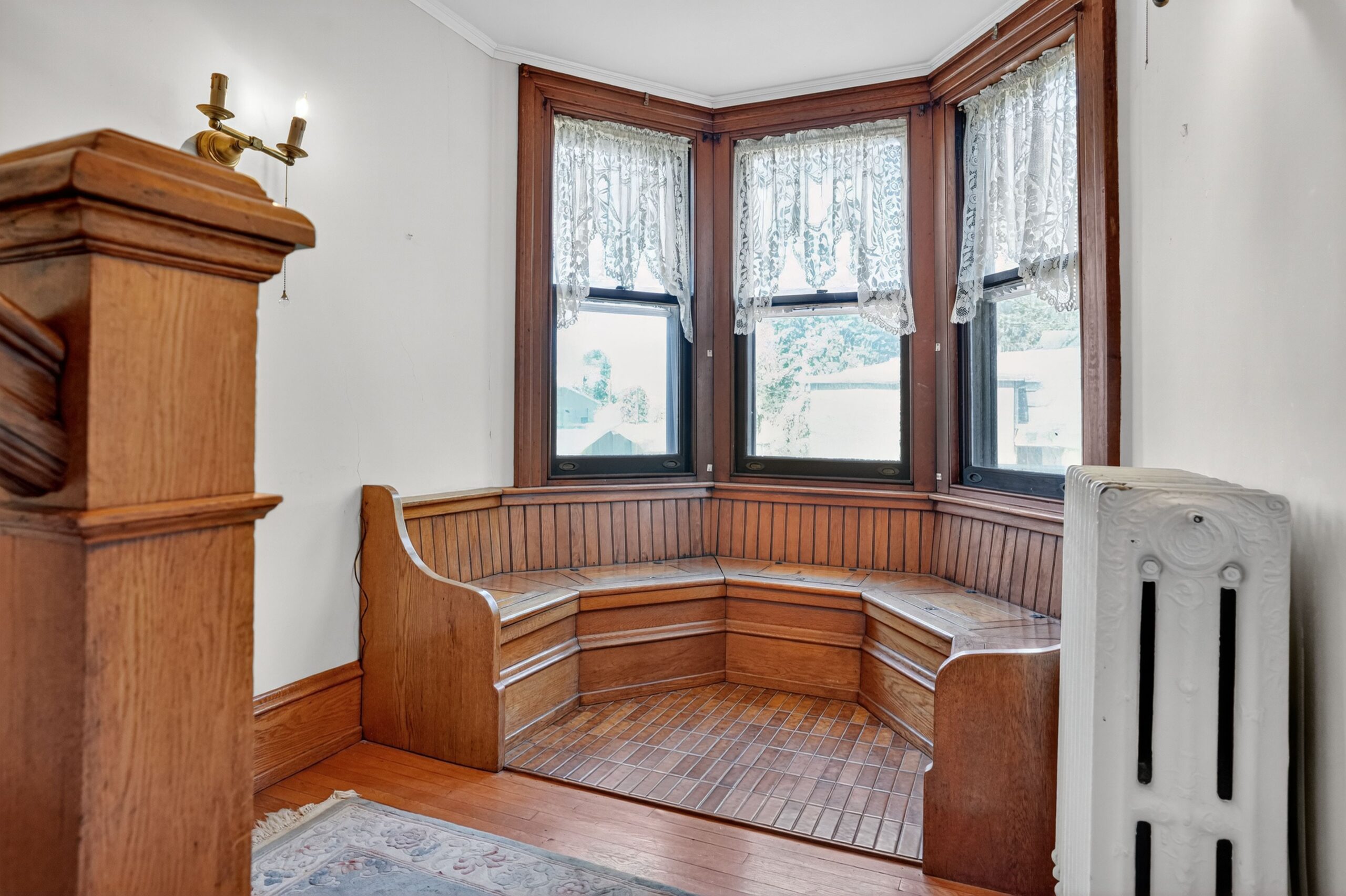
    Window seat off the grand staircase.

    She said the D’Alessios did extensive renovations on the house in their time there.

    It is 4,406 square feet, and Rodier says it was built around 1910, with her parents only the second owners.

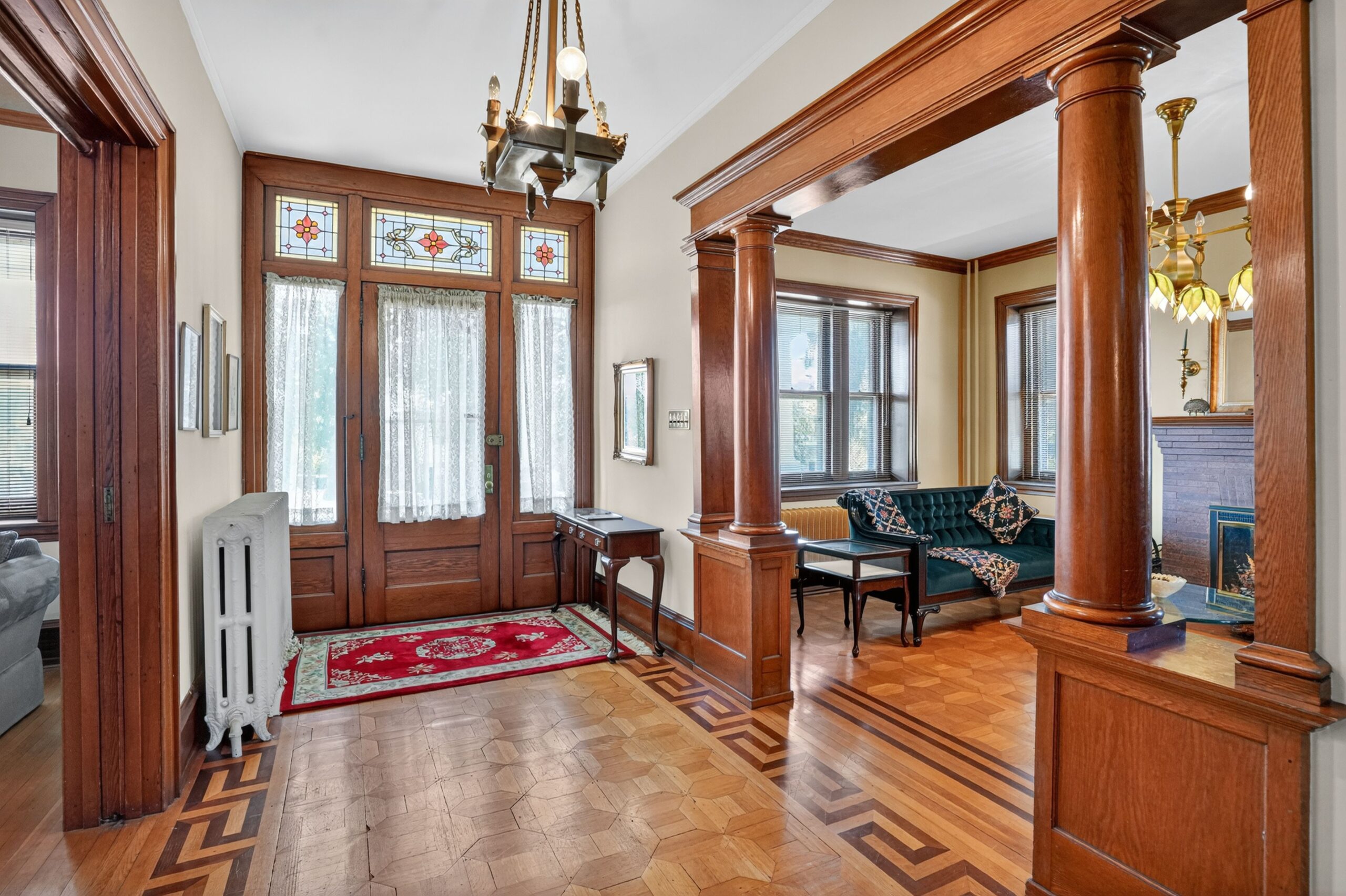
    The house has a center-hall Colonial foyer, its original wide entry door with a leaded glass transom, original exposed ribboned hardwood floors, a grand staircase with a window seat, original wall light sconces and pocket doors, and a wraparound front porch.

    The foyer’s original wide entry door has a leaded glass transom.

    The formal living room has a working wood-burning fireplace, and the first floor includes the kitchen, breakfast room, powder room, and pantry.

    The second floor has four bedrooms with large closets and a hall bath.

    The third floor has the other bedrooms, including a large front bedroom that could be used for a primary suite, and bath with a claw-foot tub.

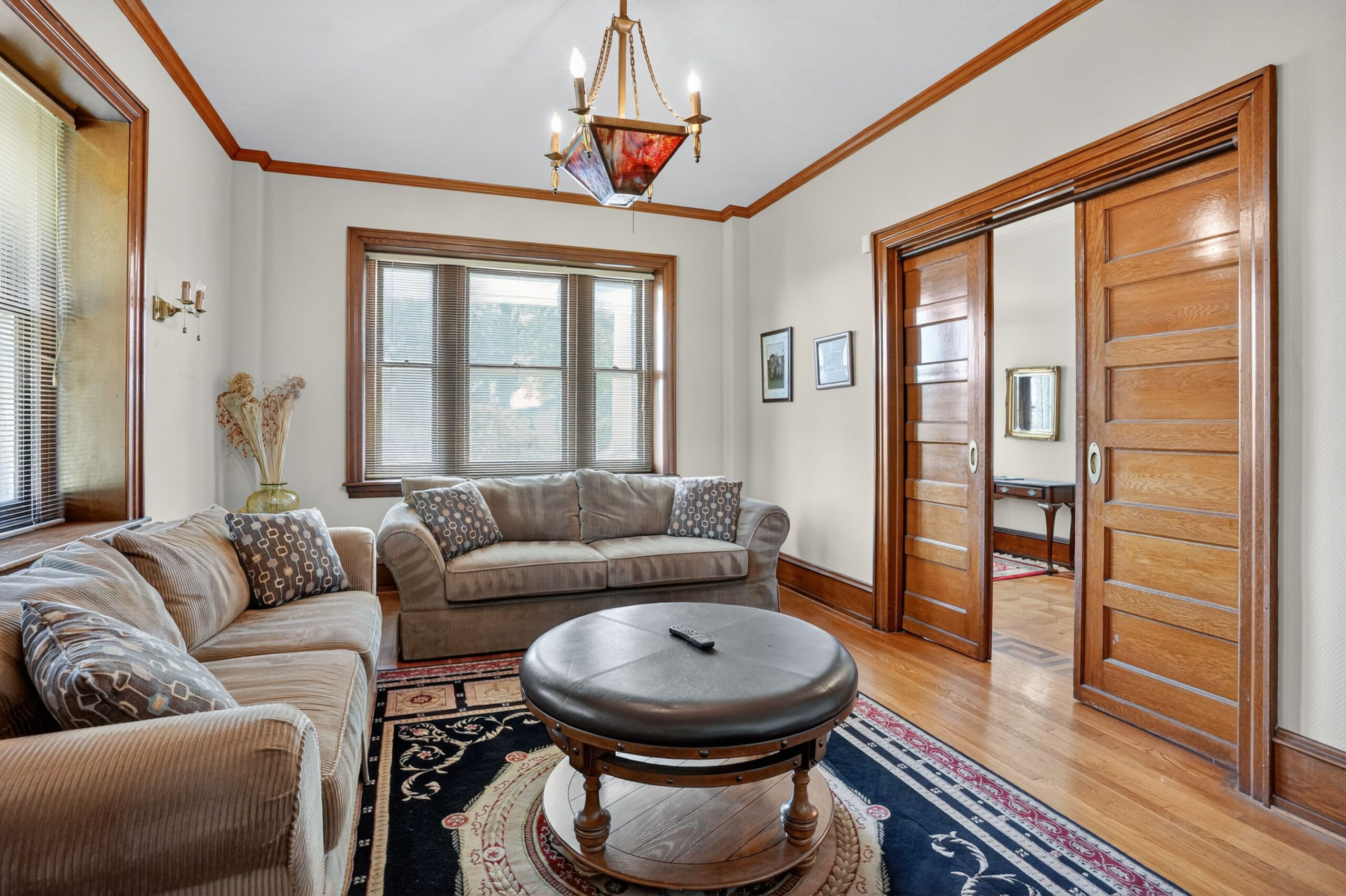
    Reading nook with pocket doors.

    The house has a full basement with a workshop and a storm door to the rear yard.

    The sale could include some of the original furnishings, Rodier said.

    The house is minutes from the Ivy Ridge Regional Rail station, Route 309, and the Schuylkill Expressway.

    It is listed by Dennis McGuinn of Realty Broker Direct for $725,000.

  • New Jersey sues Camden metal recycler over a dozen ‘especially dangerous’ fires

    New Jersey sues Camden metal recycler over a dozen ‘especially dangerous’ fires

    New Jersey officials have filed suit against the large scrap metal recycler EMR over a string of hazardous and “especially dangerous” fires at its facilities, especially in Camden.

    One four-alarm fire at an EMR scrapyard on Camden’s Front Street nearly a year ago resulted in black, billowing smoke that could be seen for 15 miles and led to the voluntary evacuation of 100 families.

    As a result of that Feb. 21, 2025, fire, the U.K.-based metal recycler agreed in August to pay $6.7 million toward improvements to Camden’s Waterfront South neighborhood. The fire occurred when a lithium ion battery embedded in an item ignited while being recycled.

    That fire was one of a dozen at the Camden facilities in the last five years, says the suit filed by the state Attorney General Matthew Platkin and the Department of Environmental Protection (DEP). EMR has several facilities in Camden.

    “It is outrageous that EMR has failed to correct the dangerous conditions at its facilities in Camden — conditions that have resulted in over a dozen hazardous fires in recent years that threaten the lives and health of Camden residents,“ Platkin said in a statement. ”We’re taking action today to hold EMR accountable for its reprehensible conduct and to protect Camden residents.”

    He accused EMR of turning “a quick buck at the expense of their communities.”

    Joseph Balzano, CEO of EMR USA, on Monday pointed to the $6.7 million agreement from August. “It appears the current Attorney General is not aware of … EMR’s fire suppression investments,” he said. “We look forward to working with the State of New Jersey to addressing the scourge of lithium ion battery fires plaguing recycling facilities throughout the country.”

    ‘Severe harm’

    The civil suit, filed Monday in New Jersey Superior Court in Camden, alleges that fires at EMR facilities have created an “ongoing public nuisance.”

    It alleges that the company’s facilities are unsafe, and that the company has failed to take steps to remedy those conditions.

    As a result, EMR has caused “severe harm” to the “health and well-being” of nearby communities.

    EMR’s global headquarters is in England. But the company has various subsidiaries in the U.S. EMR USA Holdings Inc. is a Delaware company with its headquarters on North Front Street in Camden. Both EMR Eastern, LLC and Camden Iron & Metal Inc are subsidiaries with Camden addresses.

    The lawsuit alleges that fires related to EMR’s scrap metal operations have occurred in multiple locations. The company also has facilities in Bayonne and Newark. The suit notes a fire that broke out in May 2022 on a barge in the Delaware Bay carrying scrap metal between the company’s Newark and Camden locations.

    But the suit singles out the Camden location as the worst with some fires occurring within days of each other.

    “Over the last five years, at least 12 major fires have occurred in scrap metal piles at Defendants’ facilities in the Camden Waterfront South neighborhood,” the lawsuit states.

    The suit states that the fires filled streets with smoke and air pollution, “causing chemical and burning smells to permeate through homes and causing residents to suffer from asthma and other acute respiratory illnesses.”

    It alleges the fires have “caused severe harm to the health and well-being of individuals and communities in the vicinity.”

    The Feb. 21, 2025, fire occurred at EMR’s waterfront shredder facility. It started in a large pile of scrap metal material waiting to be shredded. It burned for eight hours before Camden firefighters brought it under control, but took 12 hours to fully extinguish.

    The burning pile measured 300 feet by 250 feet, according to the suit, and was roughly two stories high. It was destined for a conveyor belt leading to a four-story building.

    The pile, conveyor belt, and building all became fully engulfed in the city’s Waterfront South area, which is home to 2,300 people. The suit states that the community already “experiences disproportionate environmental harm and risks due to exposures or cumulative impacts from environmental hazards.”

    The scene at EMR Metal Recycling in Camden on Feb. 22, 2025, the morning after a four-alarm fire.

    The fires

    Among the fires in Camden since 2020, according to allegations in the suit:

    • Feb. 18, 2020: “Automobile fluff” caught fire at the shredder facility on Front Street.
    • Nov. 29, 2020: EMR failed to notify the DEP of this fire at the Kaighns Avenue facility.
    • Jan. 29, 2021: EMR failed to notify the DEP in a timely manner when a pile of material three stories high and 300 feet by 150 feet ignited at the shredder facility, causing the nearby Sacred Heart School and 30 families to evacuate. Five firefighters were treated for smoke inhalation and one was hospitalized. Two residents were hospitalized for smoke inhalation.
    • Feb. 27, 2021: Residue caught fire at the shredder facility and could be seen burning from Philadelphia and the Benjamin Franklin Bridge.
    • Feb. 28, 2022: A pile of shredded material caught fire at the South Sixth Street facility.
    • July 21, 2022: A fire occurred at the shredder facility.
    • July 22, 2022: A fire broke out at the South Sixth Street facility, possibly from a lithium ion battery.
    • Oct. 18, 2022: During a fire at the shredder facility, residents were offered hotel accommodations by EMR if they needed to evacuate.
    • July 29, 2024: A pile of material caught fire at the South Sixth Street facility.

    “Neighbors of EMR should not have to live in fear of the industrial business next door to them, wondering whether the air is safe to breathe and the company values its role in the community as much as its profits,” DEP commissioner Shawn LaTourette said in a statement.

    The suit seeks to make EMR take measures that include adding continual surveillance and monitoring, reducing the height of scrap piles, hiring an engineer to evaluate its facilities and issue a report to the DEP, installing a system that can generate real time reports, and immediately notifying the DEP of any issues.

    It seeks a maximum allowable penalty of $1,000 under a nuisances law, and any other money a court might award.

  • Zillow says the Philly region will be one of the 10 hottest housing markets of 2026

    Zillow says the Philly region will be one of the 10 hottest housing markets of 2026

    Zillow predicts that the Philadelphia region will be one of the 10 hottest housing markets of 2026.

    This year is a big one for Philadelphia, which will host celebrations for the country’s 250th birthday, FIFA World Cup matches, and Major League Baseball’s All-Star Game. Both the Wall Street Journal and the New York Times have called the city the top travel destination in the world for 2026.

    But Zillow’s ranking of the country’s 50 most-populous metros is based on housing market fundamentals that have nothing to do with one-off events. The company examined markets’ home value growth and competitiveness.

    The Philadelphia metropolitan area ranked sixth-hottest for 2026.

    “Competition among buyers will be stiff, and sellers will have the upper hand in this year’s hottest markets,” Mischa Fisher, Zillow’s chief economist, said in a statement. “Shoppers will need to tap all the resources they can muster in these fast-moving markets, from their team of experts to tech aids to financial assistance, but successful buyers will quickly gain equity.”

    In the Philadelphia area, the number of homes for sale last year was about 40% lower than the average pre-pandemic. And demand is outpacing supply. That has made local housing markets more competitive.

    Two in five homes sold for more than the asking price from September 2024 to September 2025. And homes typically spent just 13 days on the market in the year ending in October 2025.

    During that same period, 22% of listings had a price cut on Zillow. Among the 50 most-populous metros, this share ranged from 13.5% to 33%.

    And Zillow estimates that Philadelphia-area home values grew by 3%. It forecasts that values will grow by another 1.7% over the next year.

    window.addEventListener(“message”,function(a){if(void 0!==a.data[“datawrapper-height”]){var e=document.querySelectorAll(“iframe”);for(var t in a.data[“datawrapper-height”])for(var r,i=0;r=e[i];i++)if(r.contentWindow===a.source){var d=a.data[“datawrapper-height”][t]+”px”;r.style.height=d}}});

    This is Zillow’s second recent recognition of the strength of local housing markets. Last month, the company revealed that Philadelphia was the only large city that made its list of the 20 most popular housing markets of 2025. That analysis included many more markets — not just the largest ones — and the list was dominated by midsize cities in the Midwest.

    On Zillow’s list of the predicted hottest major metros of 2026, Hartford, Conn., knocked Buffalo, N.Y., from the No. 1 spot. Zillow had ranked Buffalo as the hottest metro two years in a row.

    In Hartford, more than two-thirds of homes sold above the listing price on average between September 2024 and September 2025. That’s the largest share among major metros. The typical home for sale spent about a week on the market. And Zillow expects home values to grow by about 4% from October 2025 to October 2026.

    The New York metro area, which includes parts of New Jersey and Pennsylvania, ranked third-hottest for 2026. Among major metros, it had the lowest share of listings with a price cut: 13.5%.