Category: Associated Press

  • Wendy’s closes U.S. restaurants and focuses on value to turn around falling sales

    Wendy’s closes U.S. restaurants and focuses on value to turn around falling sales

    Wendy’s is closing several hundred U.S. restaurants and increasing its focus on value after a weaker-than-expected fourth quarter.

    The Dublin, Ohio-based company said Friday that its global same-store sales, or sales at locations open at least a year, fell 10% in the October-December period. That was worse than the 8.5% drop expected by analysts polled by FactSet.

    U.S. same-store sales fell even further in the fourth quarter. Wendy’s said late last year that it planned to close underperforming U.S. restaurants, but it gave more details about those closures Friday.

    Wendy’s said it already closed 28 restaurants in the fourth quarter and ended 2025 with 5,969 U.S. locations. It expects to close between 5% and 6% of its U.S. restaurants — or 298 to 358 locations — in the first half of this year.

    Those actions come on top of the closure of 240 U.S. Wendy’s locations in 2024. At the time, the 57-year-old chain said many of its locations are simply out of date.

    Like McDonald’s, Taco Bell, and other rivals, Wendy’s also plans to emphasize value as it tries to win back inflation-weary customers.

    “One learning from 2025 around value, we swung the pendulum too far towards limited-time price promotions instead of everyday value,” said Ken Cook, Wendy’s interim CEO and chief financial officer, in a conference call with investors.

    In January, Wendy’s introduced a permanent “Biggie Deals” value menu with three price tiers: $4 Biggie Bites, $6 Biggie Bags, and an $8 Biggie Bundle. Cook said Wendy’s also has new products coming this year, including a new chicken sandwich.

    Wendy’s said its revenue fell 5.5% in the fourth quarter to $543 million. That was higher than the $537 million analysts had forecast.

    Wendy’s expressed confidence that its U.S. turnaround plans and international growth will help arrest its sales slide this year. The company said it expects global systemwide sales — which includes sales at both company-owned and franchised restaurants — will be flat this year. Systemwide sales fell 3.5% last year.

    Wendy’s shares closed up nearly 3% on Friday.

  • Brazilian au pair gets 10-year sentence for scheme to kill lover’s wife and another man

    Brazilian au pair gets 10-year sentence for scheme to kill lover’s wife and another man

    FAIRFAX, Va. — An au pair who schemed with her employer-turned-lover to kill his wife and another man received a 10-year prison sentence on Friday.

    Prosecutors had recommended Juliana Peres Magalhães walk free after she pleaded guilty to a downgraded manslaughter charge in the February 2023 killing of Joseph Ryan. Instead of being tried for second-degree murder, she became their star witness, testifying that she had fatally shot Ryan as Brendan Banfield was fatally stabbing his wife, Christine, in the couple’s bedroom.

    Brendan Banfield was convicted by a jury this month of aggravated murder in the deaths of his wife and Ryan.

    “I know my remorse cannot bring you peace,” Magalhães told the victims’ families on Friday, wiping away tears and muffling sobs. “I hope you can someday understand that I really did not believe his plan would actually happen.”

    Instead of sentencing her to time served, Judge Penney Azcarate delivered the maximum possible sentence to the woman from Brazil.

    “Let’s get it straight: You do not deserve anything other than incarceration and a life of reflection on what you have done to the victim and his family. May it weigh heavily on your soul,” the judge said.

    At Banfield’s trial, Magalhães testified that she and the IRS agent created an account in the name of his wife, a pediatric intensive care nurse, on a social media platform for people interested in sexual fetishes. Ryan connected with the account and agreed to meet for a sexual encounter involving a knife.

    Magalhães, then 22, said she and Brendan Banfield took the couple’s 4-year-old child to the basement, and then found Ryan surprising Christine Banfield with a knife in the couple’s bedroom. She said Brendan Banfield shot Ryan and then began stabbing his wife in the neck. When she saw Ryan moving, Magalhães said, she fired the second shot that killed him.

    The au pair wasn’t arrested until eight months later, and hasn’t left jail since. Prosecutors raised concerns that if she were to be allowed bail, she would flee to Brazil or be deported by immigration officials before they could finish their case. She didn’t talk with investigators for more than a year, until she changed her mind as her trial date approached.

    “I lost myself in a relationship, and left my morals and values behind,” Magalhães told the judge.

    “You were texting and speaking to Joseph Ryan, encouraging him to bring a knife and ultimately, through the phone conversation, getting his consent, knowing all along you were bringing him to his death,” the judge responded.

    Ryan’s mother, Deirdre Fisher, told the court that her son, born days before Christmas, was her “greatest gift.” Three years after his killing, she can’t bear taking down their Christmas tree. An urn with Ryan’s ashes sits in front of the decoration.

    “I say good morning to him each day when I turn on the tree’s lights,” she said. “But of course that’s not Joe sitting there. He can’t say ‘I love you’ back.”

    Sangeeta Ryan described her nephew as “inquisitive, curious, smart, charming and so dang talkative.” She said he loved martial arts and role-playing with his friends. She also noted that he had moved in with his octogenarian grandmother to care for her.

    “His sudden murder devastated his grandma — she could no longer live in the family home without Joe,” his aunt said. The woman quietly moved away, hoping to avoid her memories and the reporters knocking at the door.

    Christine Banfield’s relatives attended Friday’s hearing. A judge has said Banfield will be sentenced in May.

  • Feds open a perjury probe into ICE officers’ testimony about the shooting of a Venezuelan man

    Feds open a perjury probe into ICE officers’ testimony about the shooting of a Venezuelan man

    MINNEAPOLIS — Federal authorities have opened a criminal probe into whether two immigration officers lied under oath about a shooting in Minneapolis last month, as all charges were dropped against two Venezuelan men.

    Immigration and Customs Enforcement Director Todd Lyons said Friday that his agency opened a joint probe with the Justice Department after video evidence revealed “sworn testimony provided by two separate officers appears to have made untruthful statements” about the shooting of one of the Venezuelan men during the Trump administration’s immigration crackdown across the Minneapolis-St. Paul area.

    The officers, whose names were not disclosed, are on administrative leave while the investigation is carried out, he said. Lyons said the two ICE officers could be fired and face criminal prosecution.

    “Lying under oath is a serious federal offense,” said Lyons, adding that the U.S. attorney’s office is actively investigating.

    “The men and women of ICE are entrusted with upholding the rule of law and are held to the highest standards of professionalism, integrity, and ethical conduct,” Lyons said. “Violations of this sacred sworn oath will not be tolerated. ICE remains fully committed to transparency, accountability, and the fair enforcement of our nation’s immigration laws.”

    Earlier Friday, U.S. District Court Judge Paul A. Magnuson dismissed felony assault charges against Alfredo Alejandro Aljorna and Julio Cesar Sosa-Celis, who were accused of beating an ICE officer with a broom handle and a snow shovel during a Jan. 14 fracas. The officer fired a single shot from his handgun, striking Sosa-Celis in his right thigh.

    The cases were dropped after a highly unusual motion to dismiss from U.S. Attorney for the District of Minnesota Daniel N. Rosen, who said “newly discovered evidence” was “materially inconsistent with the allegations” made against the two men in a criminal complaint and at a hearing last month.

    The reversal follows a string of high-profile shootings involving federal immigration agents in which eyewitness statements and video evidence have called into question claims made to justify using deadly force. Dozens of felony cases against protesters accused of assaulting or impeding federal officers have also crumbled.

    The immigration lawyer representing Aljorna and Sosa-Celis said they are “overjoyed” that all charges have been dismissed. Had they been convicted, the two immigrants would have faced years in federal prison.

    “The charges against them were based on lies by an ICE agent who recklessly shot into their home through a closed door,” said attorney Brian D. Clark. “They are so happy justice is being served.”

    It is unclear whether the men could still be deported.

    A chase, claims of an attack, and a shot fired

    Last month, an FBI investigator said in a now-discredited court affidavit that ICE officers attempted to conduct a traffic stop on a vehicle driven by Aljorna on Jan. 14. He crashed the vehicle and fled on foot toward the apartment duplex where he lived. An immigration officer chased Aljorna who — according to the government — violently resisted arrest.

    The complaint alleged Sosa-Celis and another man attacked the officer with a snow shovel and a broom handle as the officer and Aljorna struggled on the ground. The officer, who is not named in court filings, fired his handgun, striking Sosa-Celis. The men ran into an apartment and eventually were arrested.

    After the shooting, Homeland Security Secretary Kristi Noem attacked Minnesota Gov. Tim Walz and Minneapolis Mayor Jacob Frey, accusing the Democrats of “encouraging impeding and assault against our law enforcement which is a federal crime, a felony.”

    “What we saw last night in Minneapolis was an attempted murder of federal law enforcement,” Noem said in a Jan. 15 statement. “Our officer was ambushed and attacked by three individuals who beat him with snow shovels and the handles of brooms. Fearing for his life, the officer fired a defensive shot.”

    The Department of Homeland Security did not responded Friday to questions about whether Noem stands by those statements, which ICE — part of DHS — says are now under investigation.

    Robin M. Wolpert, a defense attorney for Sosa-Celis in the criminal case, said she was pleased ICE and the Justice Department are publicly acknowledging and investigating apparent untruthful statements by the two ICE officers.

    “These untruthful statements had serious consequences for my client and his family,” Wolpert said. “My client is a crime victim.”

    Clark, the immigration lawyer for Aljorna and Sosa-Celis, urged the government to release the name of the ICE officer who shot his client and charge him.

    Court filings show state authorities have opened their own criminal investigation into the shooting, though the FBI has thus far refused to share evidence, provide the name of the ICE officer who fired his weapon or make him available for an interview.

    Holes already apparent in prosecution case

    Rosen’s motion seeking to drop the charges did not detail what new evidence had emerged or what falsehoods had been in the government’s prior filings, but cracks began to appear in the government’s case during a Jan. 21 court hearing to determine whether the accused men could be released pending trial.

    In court, the ICE officer’s account of the moments before the shooting differed significantly from testimony from the two defendants and three eyewitnesses. Available video evidence did not support the ICE officer’s account of being assaulted with a broom and snow shovel.

    Aljorna and Sosa-Celis denied assaulting the officer. Testimony from a neighbor and the men’s romantic partners also did not support the agent’s account that he had been attacked with a broom or shovel or that a third person was involved.

    Frederick Goetz, a lawyer representing Aljorna, said his client had a broomstick in his hand and threw it at the agent as he ran toward the house. Wolpert, representing Sosa-Celis, said he had been holding a shovel but was retreating into the home when the officer fired, wounding him. The men’s attorneys said the prosecution’s case relied wholly on testimony from the agent who fired the gun.

    Neither Aljorna and Sosa-Celis had violent criminal records. Both had been working as DoorDash delivery drivers at night in an attempt to avoid encounters with federal agents, their attorneys said.

    Aljorna and Sosa-Celis retreated into their upstairs apartment and barricaded the door, so federal officers used tear gas to try to force the men out, the FBI agent said. Concerned about the safety of two children under 2 inside the home, Aljorna and Sosa-Celis surrendered.

    A third Venezuelan man, Gabriel Alejandro Hernandez Ledezma, who lived in the apartment downstairs was also arrested.

    Though he was never federally charged, a Jan. 30 court petition seeking his release says Hernandez Ledezma was detained without a warrant and within hours flown to an ICE detention facility in Texas. He alleges his removal was to prevent him becoming a material eyewitness who could undercut the federal government’s case and help the Minnesota state investigation.

    Hernandez Ledezma was returned to Minnesota and discharged from ICE custody on Monday after a federal judge ordered his release.

  • ‘Quad God’ Ilia Malinin falls twice in disastrous Olympic free skate; Mikhail Shaidorov claims gold

    ‘Quad God’ Ilia Malinin falls twice in disastrous Olympic free skate; Mikhail Shaidorov claims gold

    MILAN — Ilia Malinin wound his way through the tunnels beneath the Milano Ice Skating Arena on Friday night, trying in vain to explain — or even just understand — exactly went wrong in an Olympic free skate that could only be described as a disaster.

    In the arena, Mikhail Shaidorov was taking a victory lap wearing the gold medal everyone expected the American to win.

    Meanwhile, Coldplay’s song “Viva La Vida,” and the lyrics that begin, “I used to rule the world …” played over the loudspeakers.

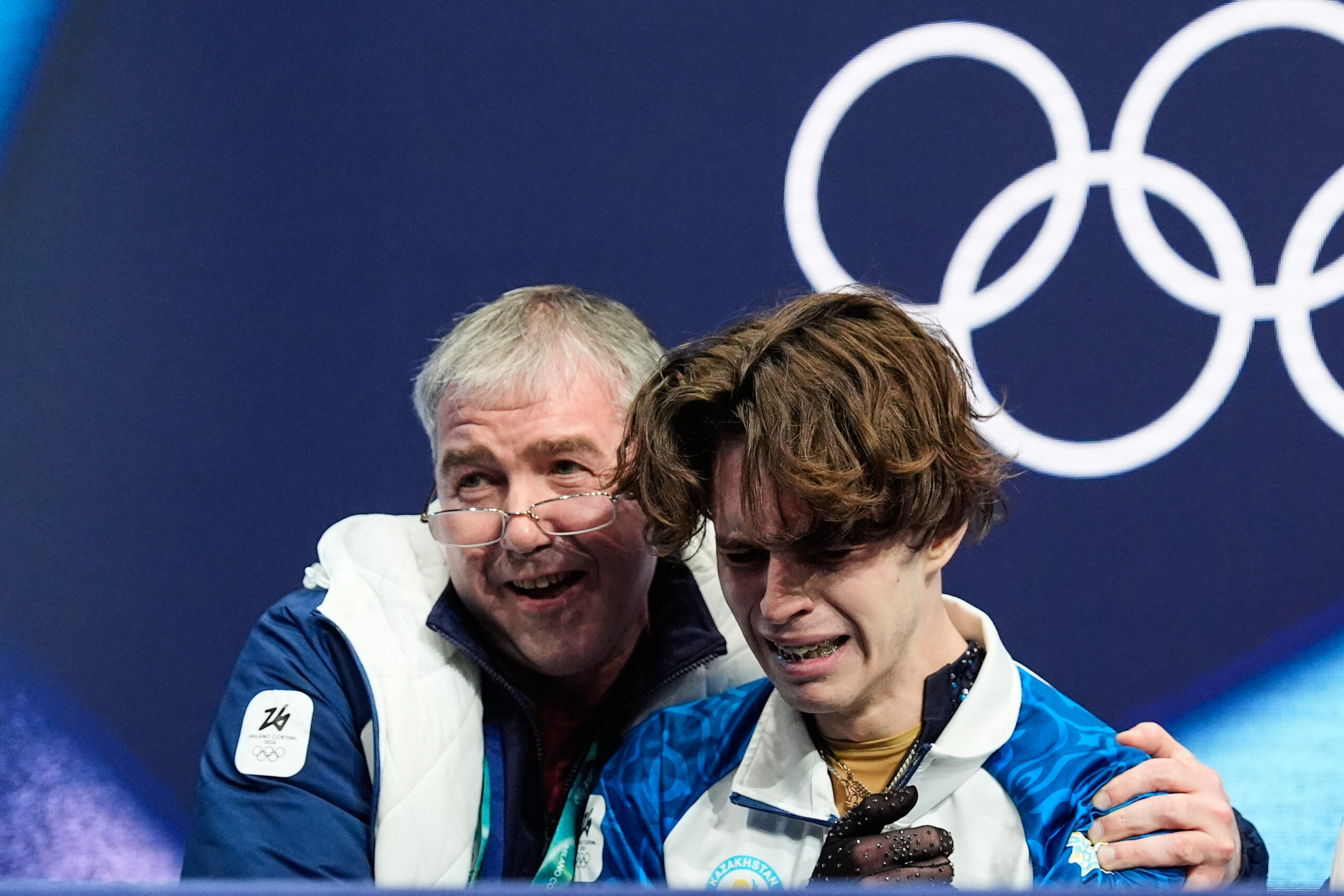
    In one of the biggest upsets in figure skating history, Malinin fell twice and made several other glaring mistakes, sending the “Quad God” tumbling all the way off the podium and leaving a star-studded crowd in stunned silence. And that cleared the way for Shaidorov, the mercurial but talented jumping dynamo from Kazakhstan, to claim the first gold medal for his nation at these Winter Games.

    “Honestly, I still haven’t been able to process what just happened,” Malinin said. “I mean, going into this competition, I felt really good this whole day. Feeling really solid. I just thought that all I needed to do was trust the process that I’ve always been doing.

    “But it’s not like any other competition. It’s the Olympics, and I think people [don’t] realize the pressure and the nerves that actually happen from the inside. So it was really just something that overwhelmed me and I just felt like just I had no control.”

    Ilia Malinin falls during his free skate.

    Out of control is a good way to summarize the performance.

    The 21-year-old Shaidorov finished with a career-best 291.58 points, while Yuma Kagiyama earned his second consecutive Olympic silver medal, and Japanese teammate Shun Sato took bronze.

    Then there was Malinin, also 21, who dropped all the way to eighth. The two-time world champion finished with 264.49 points, his worst total score in nearly four years and one that ended a two-plus year unbeaten streak covering 14 competitions.

    “Honestly, yeah, I was not expecting that,” Malinin said. “I felt, going into this competition, I was so ready. I just felt ready going on that ice. I think maybe that might have been the reason, is I was too confident it was going to go well.”

    Much of Malinin’ journey during the Milan Cortina Games had felt a little bit off.

    He was beaten by Kagiyama in the short program of the team event, later acknowledging for the first time the pressure of winning at the Olympics was starting to get to him. And he still wasn’t quite his dominant self in the team free skate, even though a head-to-head win over Sato was enough to clinch the second consecutive gold medal for the American squad.

    But by the time of his individual short program Tuesday night, Malinin’s fearless swagger and unrivaled spunk seemed to be back. He took a five-point lead over Kagiyama and Adam Siao Him Fa of France that seemed insurmountable entering Friday night.

    “Going into the competition,” Malinin said, “I felt like this is what I wanted to do, this is what we planned, this is what I practiced, and really just needed to go out there and do what I always do. That did not happen, and I don’t know why. ”

    Malinin had decided to practice early in the day at U.S. Figure Skating’s alternate training base in Bergamo, just outside of Milan, and that gave him a brief reprieve from the pressure of the Olympic bubble. And he was the essence of calm throughout his warmup, never once falling in all of his practice jumps while wearing his familiar glittering black-and-gold ensemble.

    Then came the performance that could haunt Malinin for the rest of his career.

    As the atmospheric music with his own voice-over began, he opened with a quad flip, one of a record-tying seven quads in his planned program. Then he appeared to be going after the quad Axel that only he has ever landed in competition and had to bail out of it.

    Malinin recovered to land his quad Lutz before his problems really began.

    He only doubled a planned quad loop, throwing his timing off. He fell on a quad Lutz, preventing him from doing the second half of the quad Lutz-triple toe loop combination. And in his final jumping pass, which was supposed to be a high-scoring quad Salchow-triple Axel combination, Malinin only could muster a double Salchow — and he fell on that.

    “He never messes up,” Italy’s Daniel Grassl said, “so, obviously, we’re all a little surprised by how it went.”

    By the time the music stopped, Malinin was left trying to mask his sorrow for a crowd that included Nathan Chen, the 2022 Olympic champion, along with seven-time Olympic gold medal gymnast Simone Biles, actor Jeff Goldblum, and his wife, Emilie.

    “I knew that I could not have necessarily a perfect program and still manage to have a good skate. But just really, something felt off,” Malinin said, “and I don’t know what it was, specifically. I’m still trying to understand what that was.”

    Shaidorov seemed just as shocked as everyone as the realization hit that he had won the gold medal.

    He was only in sixth after the short program and an afterthought as the night began. But the world silver medalist, known for high-flying jumps but maddening inconsistency, delivered the performance of his life, landing five quads in a technically flawless program.

    “It was my goal,” Shaidorov said simply, when asked about the gold medal. “It’s why I wake up and go to training. That’s it.”

    Mikhail Shaidorov of Kazakhstan (right) reacts in the kiss and cry after his free skate on Friday.
  • Journalist Don Lemon pleads not guilty to civil rights charges in Minnesota church protest

    Journalist Don Lemon pleads not guilty to civil rights charges in Minnesota church protest

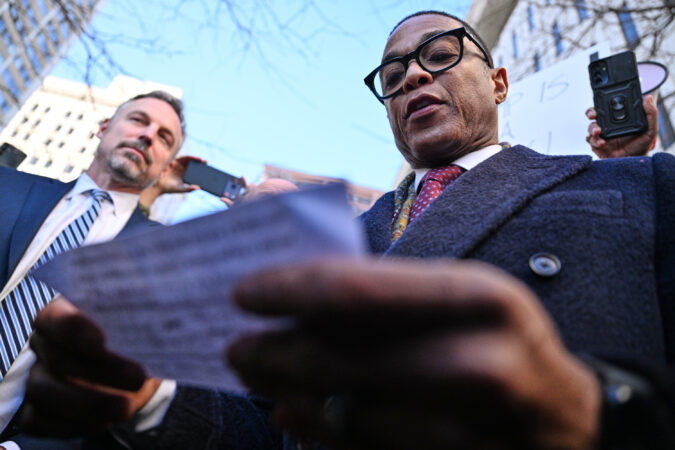
    ST. PAUL, Minn. — Former CNN host turned independent journalist Don Lemon pleaded not guilty to federal civil rights charges Friday, following a protest at a Minnesota church where an Immigration and Customs Enforcement official is a pastor. Four others also pleaded not guilty in the case.

    Lemon insists he was at the Cities Church in St. Paul to chronicle the Jan. 18 protest but was not a participant. The veteran journalist vowed to fight what he called “baseless charges” and protect his free speech rights.

    “For more than 30 years, I’ve been a journalist, and the power and protection of the First Amendment has been the underpinning of my work. The First Amendment, the freedom of the press, are the bedrock of our democracy,” Lemon said outside the courthouse after his arraignment. “And like all of you here in Minnesota, the great people of Minnesota, I will not be intimidated, I will not back down.”

    Dozens of supporters gathered outside the courthouse, chanting “Pam Bondi has got to go” and “Protect the press.”

    ‘We the people have to stand for our rights’

    Civil rights attorney Nekima Levy Armstrong was among the other defendants who pleaded not guilty Friday. The prominent local activist was the subject of a doctored photo posted on official White House social media that falsely showed her crying during her arrest. The picture is part of a deluge of AI-altered imagery that has circulated since the fatal shootings of Renee Good and Alex Pretti by federal officers in Minneapolis amid President Donald Trump’s administration’s immigration crackdown.

    Levy Armstrong echoed Lemon’s defiant words after the hearing.

    “We the people have to stand for our rights. We have to stand for the Constitution. We have to stand for our First Amendment rights to freedom of the speech, some freedom of assembly, and freedom of the press,” she said.

    “Today we have the federal government trying to weaponize the Department of Justice in order to silence us, in order to prevent us from speaking the truth,” Levy Armstrong said. ”They are trying to prevent us from calling out a manifest injustice.”

    All of the defendants have been charged under the FACE Act

    Protesters interrupted a service at the Southern Baptist church last month, chanting “ICE out” and “Justice for Renee Good,” referring to the 37-year-old mother of three who was fatally shot by an ICE officer in Minneapolis.

    In total, nine people have been charged under the 1994 Freedom of Access to Clinic Entrances Act in relation to the church protest. The FACE Act prohibits interference or intimidation of “any person by force, threat of force, or physical obstruction exercising or seeking to exercise the First Amendment right of religious freedom at a place of religious worship.”

    Two more defendants accused in the protest are scheduled for arraignment next week, including another independent journalist, Georgia Fort.

    Penalties can range up to a year in prison and up to a $10,000 fine.

    Attorneys for journalists seek to pierce veil of grand jury secrecy

    Lawyers for Lemon and Fort filed a joint motion with the court Friday seeking transcripts of the normally secret grand jury proceedings that resulted in the indictments against the nine defendants. They maintained that Lemon and Fort were at the church protest in their capacity as journalists covering the story.

    The defense attorneys noted that several judges — including the chief federal judge for Minnesota — found no probable cause to support the complaints that prosecutors first tried to file against the two journalists, so they refused to sign arrest warrants for Lemon or Fort before the government turned to the grand jury.

    They said those refusals raise serious concerns about whether the government made misleading or inaccurate statements of law and/or facts to the grand jury. And they expressed concern that President Donald Trump, Attorney General Pam Bondi and other Justice Department officials put undue pressure on prosecutors to charge them.

    “In the United States of America, we do not prosecute journalists for doing their job. That happens in Russia, China, Iran and other authoritarian regimes. And yet the government sold this unconstitutional mess to the grand jury,” they wrote. “Disclosure of the grand jury proceedings is necessary to ensure the government did not mislead or mis-instruct it.”

    The attorneys also said prosecutors told them they will oppose the motion.

    Protest provoked conservative religious backlash

    Renee Carlson, an attorney with True North Legal, which is representing Cities Church, said in a statement that by pleading not guilty Lemon and others are “doubling down on their claim that the press can do whatever they want under the auspices of journalism.”

    “The First Amendment does not protect premeditated schemes to violate the sanctity of a sanctuary, disrupt worship services, or intimidate children,” Carlson said. “There is no ‘press pass’ to trespass on church property or conspire to invade religious worship.”

    The church protest drew sharp complaints from conservative religious and political leaders. White House press secretary Karoline Leavitt warned in a social media post at the time: “President Trump will not tolerate the intimidation and harassment of Christians in their sacred places of worship.” Even clergy who oppose the administration’s immigration enforcement tactics expressed discomfort.

    Former federal prosecutor is part of Lemon’s legal team

    One of Lemon’s attorneys who was in court Friday is Joe Thompson, one of several former prosecutors who have left the Minnesota U.S. Attorney’s Office in recent weeks citing frustration with the Trump administration’s immigration enforcement crackdown in the state and the Justice Department’s response to the killing of Good and Pretti.

    Thompson had led the sprawling investigation of major public program fraud cases for the prosecutors office until he resigned last month. The Trump administration has cited the fraud cases, in which most defendants have come from the state’s large Somali community, as justification for its immigration crackdown.

  • Trump says change in power in Iran ‘would be the best thing that could happen’

    Trump says change in power in Iran ‘would be the best thing that could happen’

    WASHINGTON — President Donald Trump said Friday that a change in power in Iran “would be the best thing that could happen” as the U.S. administration weighs whether to take military action against Tehran.

    Trump made the comments shortly after visiting with troops in Fort Bragg, N.C., and after he confirmed earlier in the day that he’s deploying a second aircraft carrier group to the Mideast for potential military action against Iran.

    “It seems like that would be the best thing that could happen,” Trump said in an exchange with reporters when asked about pressing for the ouster of the Islamic clerical rule in Iran. “For 47 years, they’ve been talking and talking and talking.”

    The president has suggested in recent weeks that his top priority is for Iran to further scale back its nuclear program, but on Friday he suggested that’s only one aspect of concessions the U.S. needs Iran to make.

    Israeli Prime Minister Benjamin Netanyahu, who traveled to Washington this week for talks with Trump, has been pressing for any deal to include steps to neutralize Iran’s ballistic missile program and end its funding for proxy groups such as Hamas and Hezbollah.

    “If we do it, that would be the least of the mission,” Trump said of targeting Tehran’s nuclear program, which suffered significant setbacks in U.S. military strikes last year.

    Iran has insisted its nuclear program is for peaceful purposes. Before the June war, Iran had been enriching uranium up to 60% purity, a short, technical step away from weapons-grade levels.

    Trump’s comments advocating for a potential end to Ayatollah Ali Khamenei’s rule come just weeks after Secretary of State Marco Rubio said a potential change in power in Iran would be “far more complex” than the administration’s recent effort to oust Venezuelan President Nicolás Maduro from power.

    Rubio, during a Senate hearing last month, noted that with Iran “you’re talking about a regime that’s in place for a very long time.”

    “So that’s going to require a lot of careful thinking, if that eventuality ever presents itself,” Rubio said.

    Trump said the USS Gerald R. Ford, the world’s largest aircraft carrier, is being sent from the Caribbean Sea to the Mideast to join other warships and military assets the U.S. has built up in the region.

    The planned deployment comes just days after Trump suggested another round of talks with the Iranians was at hand. Those negotiations didn’t materialize as one of Tehran’s top security officials visited Oman and Qatar this week and exchanged messages with U.S. intermediaries.

    “In case we don’t make a deal, we’ll need it,” Trump told reporters about the second carrier. He added, “It’ll be leaving very soon.”

    Already, Gulf Arab nations have warned any attack could spiral into another regional conflict in a Mideast still reeling from the Israel-Hamas war in the Gaza Strip. Meanwhile, Iranians are beginning to hold 40-day mourning ceremonies for the thousands killed in Tehran’s bloody crackdown on nationwide protests last month, adding to the internal pressure faced by the sanctions-battered Islamic Republic.

    The Ford, whose new deployment was first reported by the New York Times, will join the USS Abraham Lincoln and its accompanying guided-missile destroyers, which have been in the region for over two weeks. U.S. forces already have shot down an Iranian drone that approached the Lincoln on the same day last week that Iran tried to stop a U.S.-flagged ship in the Strait of Hormuz.

    Trump in exchanges with reporters on Friday still offered measured hope that a deal can be struck with Iran.

    “Give us the deal that they should have given us the first time,” Trump said about how U.S. military action can be avoided. ”If they give us the right deal, we won’t do that.”

    Ford had been part of Venezuela strike force

    It would be a quick turnaround for the Ford, which Trump sent from the Mediterranean Sea to the Caribbean last October as the administration built up a huge military presence in the lead-up to the surprise raid last month that captured then-Venezuelan President Nicolás Maduro.

    It also appears to be at odds with the Trump administration’s national security and defense strategies, which put an emphasis on the Western Hemisphere over other parts of the world.

    In response to questions about the movement of the Ford, U.S. Southern Command said U.S. forces in Latin America will continue to “counter illicit activities and malign actors in the Western Hemisphere.”

    “While force posture evolves, our operational capability does not,” Col. Emanuel Ortiz, spokesperson for Southern Command, said in a statement. U.S. “forces remain fully ready to project power, defend themselves, and protect U.S. interests in the region.”

    The Ford strike group will bring more than 5,000 additional troops to the Middle East but few capabilities or weapons that don’t already exist within the Lincoln group. Having two carriers will double the number of aircraft and munitions that are available to military planners and Trump.

    Given the Ford’s current position in the Caribbean, it will likely be weeks before it is off the coast of Iran.

    Trump has repeatedly threatened to use force to compel Iran to agree to constrain its nuclear program and earlier over Tehran’s bloody crackdown on nationwide protests.

    Iran and the United States held indirect talks in Oman a week ago, and Trump later warned Tehran that failure to reach an agreement with his administration would be “very traumatic.” Similar talks last year ultimately broke down in June as Israel launched what became a 12-day war on Iran that included the U.S. bombing Iranian nuclear sites.

    Asked by a reporter about the new negotiations, Trump said Friday that “I think they’ll be successful. And if they’re not, it’s going to be a bad day for Iran, very bad.”

    Long carrier deployments affect crews and ships

    The USS Ford, meanwhile, first set sail in late June 2025, which means the crew will soon have been deployed for eight months. While it is unclear how long the ship will remain in the Middle East, the move sets the crew up for an unusually long deployment.

    The Navy’s top officer, Adm. Daryl Caudle, told reporters last month that keeping the Ford longer at sea would be “highly disruptive” and that he was “a big nonfan of extensions.”

    Carriers are typically deployed for six or seven months. “When it goes past that, that disrupts lives, it disrupts things … funerals that were planned, marriages that were planned, babies that were planned,” Caudle said.

    He said extending the Ford would complicate its maintenance and upkeep by throwing off the schedule of repairs, adding more wear and tear, and increasing the equipment that will need attention.

    For comparison, the aircraft carrier USS Dwight D. Eisenhower had a nine-month deployment to the Middle East in 2023 and 2024, when it spent much of its time engaged with the Iran-backed Houthi rebels in Yemen. The ship entered maintenance in early 2025 as scheduled, but it blew past its planned completion date of July and remains in the shipyard to this day.

    Caudle told the Associated Press in a recent interview that his vision is to deploy smaller, newer ships when possible instead of consistently turning to huge aircraft carriers.

  • Gifts and soup from ‘Uncle Jeffrey’: The Epstein ties that ended Kathy Ruemmler’s run at Goldman

    Gifts and soup from ‘Uncle Jeffrey’: The Epstein ties that ended Kathy Ruemmler’s run at Goldman

    NEW YORK — Goldman Sachs general counsel Kathy Ruemmler has had a storied legal career. As a federal prosecutor, she helped successfully prosecute Enron executives including Ken Lay and Jeffrey Skilling. She was part of President Barack Obama’s administration, working in various roles for much of his two terms in office, including as White House counsel.

    She was even briefly considered by President Obama as a candidate for attorney general.

    On Thursday, Ruemmler, 54, announced that she plans to resign from the top legal post at Goldman after a trove of emails and correspondence between her and disgraced financier Jeffrey Epstein showed the two individuals were especially close, years after Epstein’s 2008 conviction on sex crimes charges, when he became a registered sex offender.

    Ruemmler previously downplayed her relationship with Epstein. She called him a “monster” and said she regretted ever knowing him. Ruemmler has repeatedly described their relationship as professional, citing her job as a private defense attorney before she ever joined Goldman Sachs.

    But documents released in recent weeks and reviewed by the Associated Press depict a deeper relationship than had previously been characterized by Ruemmler and Goldman Sachs. These included intimate email exchanges, social plans and gifts that went beyond formal legal work.

    Roughly 8,400 documents involved Ruemmler or referenced her. Some correspondence shows that Ruemmler was aware of the extent of the allegations that Epstein had faced involving underage girls in Florida. In some instances, she advised Epstein on how he might go about trying to repair his image and defend himself publicly against new claims of misconduct.

    The gifts Epstein gave to Ruemmler have been documented in news reports: the spa treatments, the handbags from Hermes, an Apple Watch, a Fendi coat, among many others. But some of the interactions between Epstein and Ruemmler described throughout their correspondence indicates that Epstein and Ruemmler did not simply have a lawyer-client transactional relationship, as Ruemmler previously attested to.

    “It makes him happy to see you happy,” Epstein’s assistant wrote to Ruemmler in 2016, after Epstein prepaid for a spa treatment for her.

    In October 2018, Epstein directed one of his assistants to send flowers and chicken soup to Ruemmler because she has “not been feeling well.” It would not be the first time that Epstein would send her a small token of appreciation when she was sick. They talked about dating issues, made jokes about both the wealthy and everyday people, and shared laments about their careers and dating lives.

    They would message each other about mundane things like their mutual distaste for seeing babies in business class on flights and would repeatedly plan to have dinner or drinks in various places. Epstein even had Ruemmler as a backup executor of his will at one point.

    Setting aside the immense wealth and privilege and Epstein’s legal troubles, many of the emails between the two would look no different from the banter that many Americans would share to in their own text messages, emails, or group chats.

    “Well, I adore him. It’s like having another older brother!” she wrote in an email in 2015.

    During her time in private practice after she left the White House in 2014, Ruemmler received several expensive gifts from Epstein, including luxury handbags and a fur coat. The gifts were given after Epstein had already been convicted of sex crimes in 2008 and was registered as a sex offender. Ruemmler was also involved in Epstein’s legal defense efforts after he was arrested a second time for sex crimes in 2019 and later killed himself in a Manhattan jail.

    “So lovely and thoughtful! Thank you to Uncle Jeffrey!!!” Ruemmler wrote to Epstein in 2018.

    She later joined Goldman Sachs in 2020 and became the investment bank’s top lawyer in 2021.

    The firm’s leadership backed her publicly amid the revelations. But the embarrassing emails raised questions about Ruemmler’s judgment. Historically, Wall Street frowns on gift-giving between clients and bankers or Wall Street lawyers, particularly high-end gifts that could pose a conflict of interest. Goldman Sachs requires its employees to get pre-approval before receiving gifts from or giving them to clients, according to the company’s code of conduct, partly in order to not run afoul of anti-bribery laws.

    Bloomberg News, the Wall Street Journal, and other media outlets reported that Goldman’s partners, who are the firm’s most senior and well-regarded members going back to when the investment bank was privately held, had begun to question why the firm was holding Ruemmler in such high regard when other lawyers were just as qualified to hold the top legal job.

    In her statement Thursday, Ruemmler said: “Since I joined Goldman Sachs six years ago, it has been my privilege to help oversee the firm’s legal, reputational, and regulatory matters; to enhance our strong risk management processes; and to ensure that we live by our core value of integrity in everything we do. My responsibility is to put Goldman Sachs’ interests first.”

    Goldman CEO David Solomon said he respected Ruemmler’s decision to resign. The firm isn’t rushing Ruemmler out the door, saying in a statement that she would wind down her work at the bank “to ensure a smooth transition,” before her last day on June 30.

  • Trump pardons 5 former NFL players for crimes ranging from perjury to drug trafficking

    Trump pardons 5 former NFL players for crimes ranging from perjury to drug trafficking

    WASHINGTON — President Donald Trump on Thursday pardoned five former professional football players — one posthumously — for various crimes ranging from perjury to drug trafficking.

    The pardons were announced by White House pardon czar Alice Marie Johnson. Ex-NFL players Joe Klecko, Nate Newton, Jamal Lewis, Travis Henry, and the late Billy Cannon were granted the clemency.

    “As football reminds us, excellence is built on grit, grace, and the courage to rise again. So is our nation,” Johnson wrote on the social media site X, as she thanked Trump for his “continued commitment to second chances.”

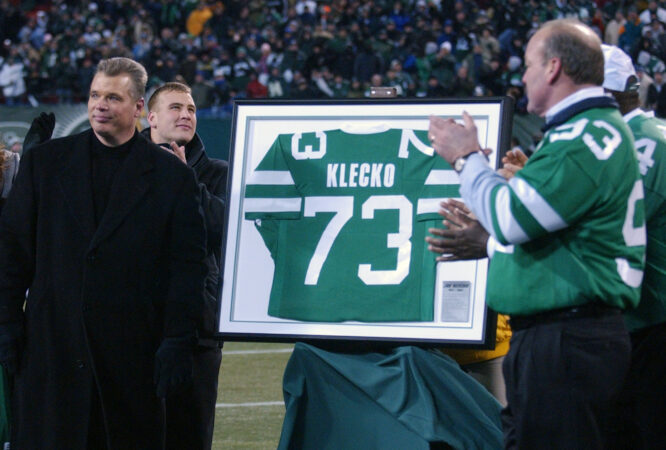
    Klecko, a former star for the New York Jets, pleaded guilty to perjury after lying to a federal grand jury that was investigating insurance fraud.

    A defensive lineman, Klecko played high school football at St. James Catholic High School for Boys in Chester and at Temple. He was inducted into the Pro Football Hall of Fame in 2023. He was a two-time Associated Press All-Pro player and a four-time Pro Bowler.

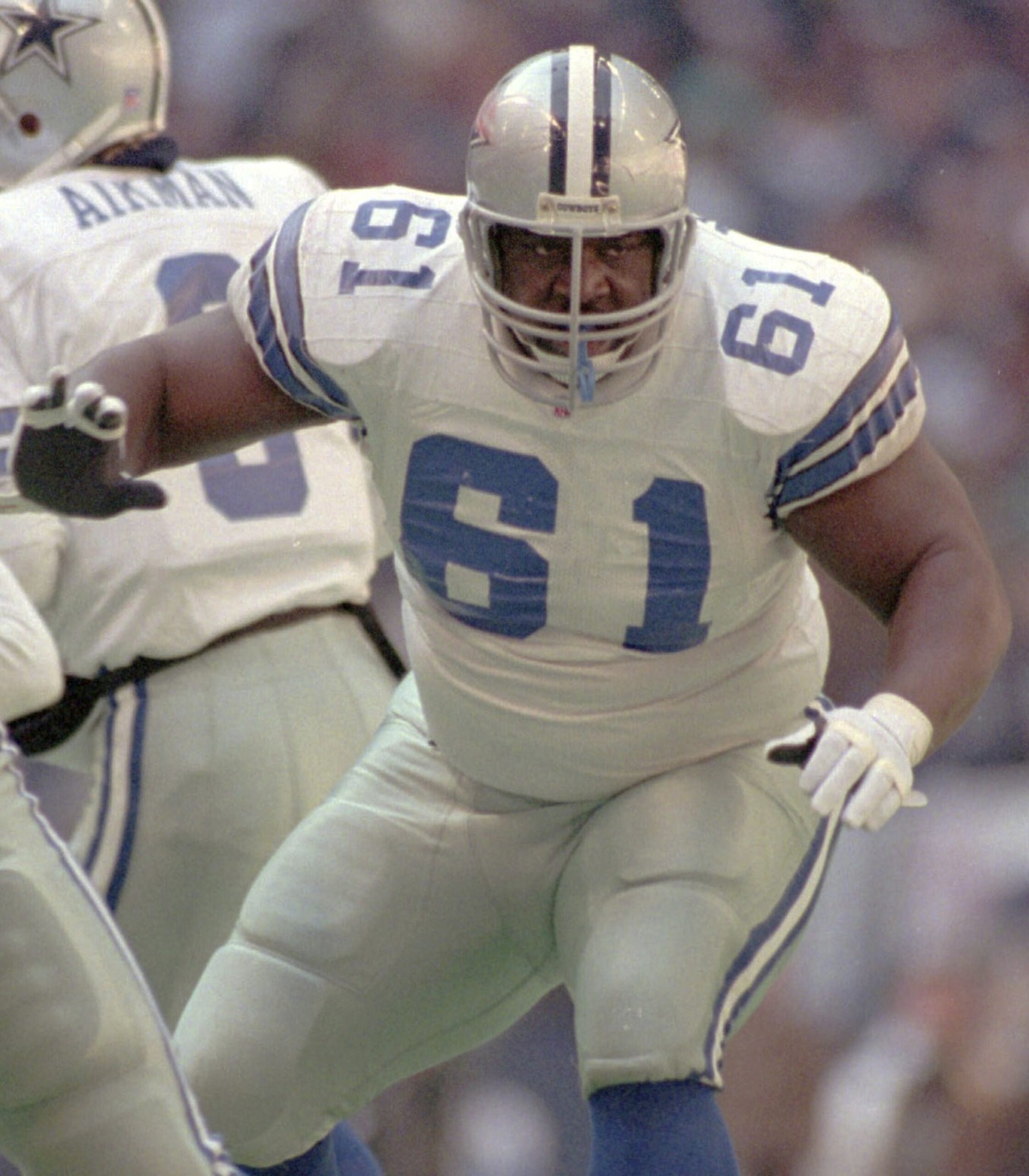
    Johnson said Dallas Cowboys owner Jerry Jones “personally” shared the news with Newton, who won three Super Bowls with the team.

    The White House did not return a request for comment Thursday night on why Trump, an avid sports fan, pardoned the players.

    Dallas Cowboys offensive lineman Nate Newton is in action against the Philadelphia Eagles during the NFC divisional playoffs in Irving, Texas, Jan. 7, 1996.

    Newton, an offensive lineman, pleaded guilty to a federal drug trafficking charge after authorities discovered $10,000 in his pickup truck as well as 175 pounds of marijuana in an accompanying car driven by another man. Newton was a two-time All-Pro player and six-time Pro Bowler.

    Lewis, formerly of the Baltimore Ravens and the Cleveland Browns, pleaded guilty in a drug case in which he used a cellphone to try to set up a drug deal not long after he was a top pick in the 2000 NFL draft. Lewis, a running back, was named an All-Pro once and was a one-time Pro Bowler. He was named the 2003 AP Offensive Player of the Year.

    Henry, who played for the Denver Broncos, pleaded guilty to conspiracy to traffic cocaine for financing a drug ring that moved the drug between Colorado and Montana. He was a running back for three teams and a one-time Pro Bowler.

    And Cannon — who played with the Houston Oilers, Oakland Raiders, and Kansas City Chiefs — admitted to counterfeiting in the mid-1980s after a series of bad investments and debts left him broke.

    Cannon was a two-time All-Pro player and a two-time Pro Bowler. Cannon also won the 1959 Heisman Trophy while starring for Louisiana State University, where he had one of the most memorable plays in college football history: an 89-yard punt return for a touchdown against Ole Miss. He died in 2018.

  • Justice Department sues Harvard for data as it investigates how race factors into admissions

    Justice Department sues Harvard for data as it investigates how race factors into admissions

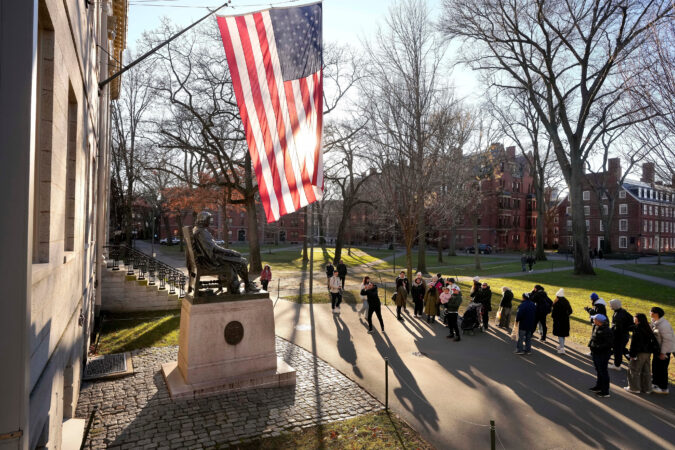
    WASHINGTON — The Trump administration is suing Harvard University, saying it has refused to provide admissions records that the Justice Department demanded to ensure the Ivy League school stopped using affirmative action in admissions.

    In a lawsuit filed Friday in federal court in Massachusetts, the Justice Department said Harvard has “thwarted” efforts to investigate potential discrimination. It accused Harvard of refusing to comply with a federal investigation and asked a judge to order the university to turn over the records.

    Harmeet Dhillon, who leads the department’s Civil Rights Division, said Harvard’s refusal is a red flag. “If Harvard has stopped discriminating, it should happily share the data necessary to prove it,” Dhillon said in a statement.

    A statement from Harvard said the university has been responding to the government’s requests. It said Harvard is in compliance with the Supreme Court decision barring affirmative action in admissions.

    “The University will continue to defend itself against these retaliatory actions which have been initiated simply because Harvard refused to surrender its independence or relinquish its constitutional rights in response to unlawful government overreach,” the university said.

    The suit is the latest salvo in President Donald Trump’s standoff with Harvard, which has faced billions of dollars in funding cuts and other sanctions after it rejected a list of demands from the administration last year.

    Trump officials have said they’re taking action against Harvard over allegations of anti-Jewish bias on campus. Harvard officials say they’re facing unconstitutional retaliation for refusing to adopt the administration’s ideological views. The administration is appealing a judge’s orders that sided with Harvard in two lawsuits.

    The Justice Department opened a compliance review into Harvard’s admissions practices last April on the same day the White House issued a series of sweeping demands aligned with Trump’s priorities. The agency told Harvard to hand over five years of admissions data for undergraduate applicants along with Harvard’s medical and law schools.

    It asked for a trove of data including applicants’ grades, test scores, essays, extracurricular activities and admissions outcomes, along with their race and ethnicity. It asked for the data by April 25, 2025. The lawsuit said Harvard has not provided that data.

    Justice Department officials said they need the data to determine whether Harvard has continued considering applicants’ race in admissions decisions. The Supreme Court barred affirmative action in admissions in 2023 after lawsuits challenged it at Harvard and the University of North Carolina.

    Trump officials have accused colleges of continuing the practice, which the administration says discriminates against white and Asian American students.

    The White House is separately pressing universities across the U.S. to providing similar data to determine whether they have continued to factor race into admissions decisions. The Education Department plans to collect more detailed admissions data from colleges after Trump signed an action suggesting schools were ignoring the Supreme Court decision.

    Trump’s dispute with Harvard had appeared to be winding down last summer after the president repeatedly said they were finalizing a deal to restore Harvard’s federal funding. The deal never materialized, and Trump rekindled the conflict this month when he said Harvard must pay $1 billion as part of any deal, double what he previously demanded.

  • A Homeland Security shutdown seems certain as funding talks between White House and Democrats stall

    A Homeland Security shutdown seems certain as funding talks between White House and Democrats stall

    WASHINGTON — A shutdown for the Department of Homeland Security appeared certain Thursday as lawmakers in the House and Senate were set to leave Washington for a 10-day break and negotiations with the White House over Democrats’ demands for new restrictions had stalled.

    Democrats and the White House have traded offers in recent days as the Democrats have said they want curbs on President Donald Trump’s broad campaign of immigration enforcement. They have demanded better identification for U.S. Immigration and Customs Enforcement and other federal law enforcement officers, a new code of conduct for those agencies and more use of judicial warrants, among other requests.

    The White House sent its latest proposal late Wednesday, but Trump told reporters on Thursday that some of the Democratic demands would be “very, very hard to approve.”

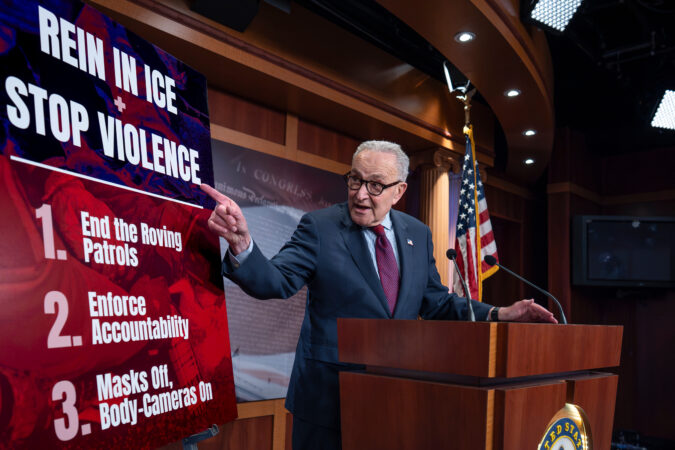
    Democrats said the White House offer, which was not made public, did not include sufficient curbs on ICE after two protesters were fatally shot last month. The offer was “not serious,” Senate Democratic Leader Chuck Schumer of New York said Thursday, after the Senate rejected a bill to fund the department.

    Americans want accountability and “an end to the chaos,” Schumer said. “The White House and congressional Republicans must listen and deliver.”

    Lawmakers in both chambers were on notice to return to Washington if the two sides struck a deal to end the expected shutdown. Sen. Patty Murray, the top Democrat on the Senate Appropriations Committee, told reporters that Democrats would send the White House a counterproposal over the weekend.

    Impact of a shutdown

    Senate Majority Leader John Thune, R-S.D., said after the vote that a shutdown appeared likely and “the people who are not going to be getting paychecks” will pay the price.

    The impact of a DHS shutdown is likely to be minimal at first. It would not likely block any of the immigration enforcement operations, as Trump’s tax and spending cut bill passed last year gave ICE about $75 billion to expand detention capacity and bolster enforcement operations.

    But the other agencies in the department — including the Transportation Security Administration, the Federal Emergency Management Agency, the Secret Service and the Coast Guard — could take a bigger hit over time.

    Gregg Phillips, an associate administrator at FEMA, said at a hearing this week that its disaster relief fund has sufficient balances to continue emergency response activities during a shutdown, but would become seriously strained in the event of a catastrophic disaster.

    Phillips said that while the agency continues to respond to threats like flooding and winter storms, long-term planning and coordination with state and local partners will be “irrevocably impacted.”

    Trump defends officer masking

    Trump, who has remained largely silent during the bipartisan talks, noted Thursday that a recent court ruling rejected a ban on masks for federal law enforcement officers.

    “We have to protect our law enforcement,” Trump told reporters.

    Democrats made the demands for new restrictions on ICE and other federal law enforcement after ICU nurse Alex Pretti was shot and killed by a U.S. Border Patrol officer in Minneapolis on Jan. 24. Renee Good was shot by ICE agents on Jan. 7.

    Trump agreed to a Democratic request that the Homeland Security bill be separated from a larger spending measure that became law last week. That package extended Homeland Security funding at current levels only through Friday.

    Schumer and House Democratic leader Hakeem Jeffries of New York have said they want immigration officers to remove their masks, to show identification and to better coordinate with local authorities. They have also demanded a stricter use-of-force policy for the federal officers, legal safeguards at detention centers and a prohibition on tracking protesters with body-worn cameras.

    Democrats also say Congress should end indiscriminate arrests and require that before a person can be detained, authorities have verified that the person is not a U.S. citizen.

    Thune suggested there were potential areas of compromise, including on masks. There could be contingencies “that these folks aren’t being doxed,” Thune said. “I think they could find a landing place.”

    But Republicans have been largely opposed to most of the items on the Democrats’ list, including a prohibition on masks.

    Sen. Eric Schmitt, R-Mo., said Republicans who have pushed for stronger immigration enforcement would benefit politically from the Democratic demands.

    “So if they want to have that debate, we’ll have that debate all they want,” said Schmitt.

    Judicial warrants a sticking point

    Thune, who has urged Democrats and the White House to work together, indicated that another sticking point is judicial warrants.

    “The issue of warrants is going to be very hard for the White House or for Republicans,” Thune said of the White House’s most recent offer. “But I think there are a lot of other areas where there has been give, and progress.”

    Schumer and Jeffries have said DHS officers should not be able to enter private property without a judicial warrant and that warrant procedures and standards should be improved. They have said they want an end to “roving patrols” of agents who are targeting people in the streets and in their homes.

    Most immigration arrests are carried out under administrative warrants. Those are internal documents issued by immigration authorities that authorize the arrest of a specific person but do not permit officers to forcibly enter private homes or other nonpublic spaces without consent. Traditionally, only warrants signed by judges carry that authority.

    But an internal ICE memo obtained by The Associated Press last month authorizes ICE officers to use force to enter a residence based solely on a more narrow administrative warrant to arrest someone with a final order of removal, a move that advocates say collides with Fourth Amendment protections.

    Far from agreement

    Thune, R-S.D., said were “concessions” in the White House offer. He would not say what those concessions were, though, and he acknowledged the sides were “a long ways toward a solution.”

    Schumer said it was not enough that the administration had announced an end to the immigration crackdown in Minnesota that led to thousands of arrests and the fatal shootings of two protesters.

    “We need legislation to rein in ICE and end the violence,” Schumer said, or the actions of the administration “could be reversed tomorrow on a whim.”

    Simmering partisan tensions played out on the Senate floor immediately after the vote, as Alabama Sen. Katie Britt, the chairwoman of the Senate Appropriations subcommittee that oversees Homeland Security funding, tried to pass a two-week extension of Homeland Security funding and Democrats objected.

    Britt said Democrats were “posturing” and that federal employees would suffer for it. “I’m over it!” she yelled.

    Connecticut Sen. Chris Murphy, the top Democrat on the Homeland spending subcommittee, responded that Democrats “want to fund the Department of Homeland Security, but only a department that is obeying the law.”

    “This is an exceptional moment in this country’s history,” Murphy said.