WASHINGTON — The Trump administration on Thursday revoked a scientific finding that long has been the central basis for U.S. action to regulate greenhouse gas emissions and fight climate change, the most aggressive move by the Republican president to roll back climate regulations.
The rule finalized by the Environmental Protection Agency rescinds a 2009 government declaration known as the endangerment finding that determined that carbon dioxide and other greenhouse gases threaten public health and welfare. The Obama-era finding is the legal underpinning of nearly all climate regulations under the Clean Air Act for motor vehicles, power plants and other pollution sources that are heating the planet.
The repeal eliminates all greenhouse gas emissions standards for cars and trucks and could unleash a broader undoing of climate regulations on stationary sources such as power plants and oil and gas facilities, experts say. Legal challenges are near certain.
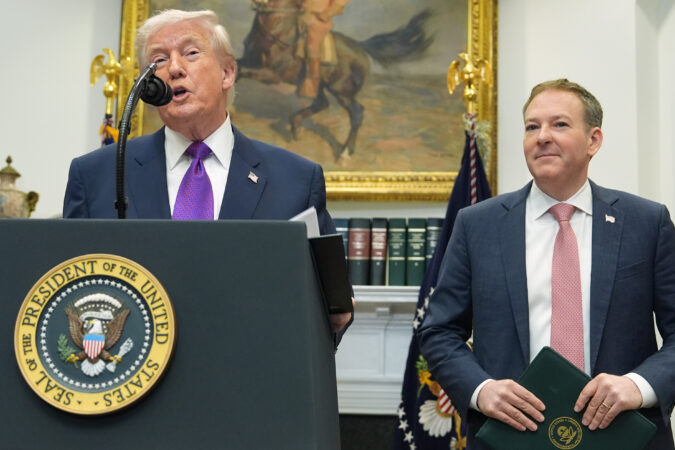
President Donald Trump called the move “the single largest deregulatory action in American history, by far,” while EPA Administrator Lee Zeldin called the endangerment finding “the Holy Grail of federal regulatory overreach.”
Trump called the endangerment finding “one of the greatest scams in history,” claiming falsely that it “had no basis in fact” or law. “On the contrary, over the generations, fossil fuels have saved millions of lives and lifted billions of people out of poverty all over the world,” Trump said at a White House ceremony, although scientists across the globe agree that carbon dioxide and other greenhouse gases are driving catastrophic heat waves and storms, droughts and sea level rise.
Environmental groups described the move as the single biggest attack in U.S. history against federal authority to address climate change. Evidence backing up the endangerment finding has only grown stronger in the 17 years since it was approved, they said.
“This action will only lead to more climate pollution, and that will lead to higher costs and real harms for American families,” said Fred Krupp, president of Environmental Defense Fund, adding that the consequences would be felt on Americans’ health, property values, water supply and more.
The EPA also said it will propose a two-year delay to a Biden-era rule restricting greenhouse gas emissions by cars and light trucks. And the agency will end incentives for automakers who install automatic start-stop ignition systems in their vehicles. The device is intended to reduce emissions, but Zeldin said “everyone hates” it.
Zeldin, a former Republican congressman who was tapped by Trump to lead EPA last year, has criticized his predecessors in Democratic administrations, saying that in the name of tackling climate change, they were “willing to bankrupt the country.”
The endangerment finding “led to trillions of dollars in regulations that strangled entire sectors of the United States economy, including the American auto industry,” Zeldin said. “The Obama and Biden administrations used it to steamroll into existence a left-wing wish list of costly climate policies, electric vehicle mandates and other requirements that assaulted consumer choice and affordability.”
The endangerment finding and the regulations based on it “didn’t just regulate emissions, it regulated and targeted the American dream. And now the endangerment finding is hereby eliminated,” Zeldin said.
Supreme Court has upheld the endangerment finding
The Supreme Court ruled in a 2007 case that planet-warming greenhouse gases, caused by the burning of oil and other fossil fuels, are air pollutants under the Clean Air Act.
Since the high court’s decision, in a case known as Massachusetts v. EPA, courts have uniformly rejected legal challenges to the endangerment finding, including a 2023 decision by the U.S. Court of Appeals for the District of Columbia Circuit.
The endangerment finding is widely considered the legal foundation that underpins a series of regulations intended to protect against threats made increasingly severe by climate change. That includes deadly floods, extreme heat waves, catastrophic wildfires and other natural disasters in the United States and around the world.
Gina McCarthy, a former EPA administrator who served as White House climate adviser in the Biden administration, called the Trump administration’s actions reckless. “This EPA would rather spend its time in court working for the fossil fuel industry than protecting us from pollution and the escalating impacts of climate change,” she said.
Former President Barack Obama said on X that repeal of the endangerment finding will make Americans “less safe, less healthy and less able to fight climate change — all so the fossil fuel industry can make even more money.”
Dr. Lisa Patel, a pediatrician and executive director of the Medical Society Consortium on Climate and Health, said Trump’s action “prioritizes the profits of big oil and gas companies and polluters over clean air and water” and children’s health.
“As a result of this repeal, I’m going to see more sick kids come into the Emergency Department having asthma attacks and more babies born prematurely,” she said in a statement. “My colleagues will see more heart attacks and cancer in their patients.”
David Doniger, a climate expert at the Natural Resources Defense Council, said Trump and Zeldin are trying to use repeal of the finding as a “kill shot’’ that would allow the administration to make nearly all climate regulations invalid. The repeal could erase current limits on greenhouse gas pollution from cars, factories, power plants and other sources and could hinder future administrations from imposing rules to address global warming.
The EPA action follows an executive order from Trump that directed the agency to submit a report on “the legality and continuing applicability” of the endangerment finding. Conservatives and some congressional Republicans have long sought to undo what they consider overly restrictive and economically damaging rules to limit greenhouse gases that cause global warming.
Withdrawing the endangerment finding “is the most important step taken by the Trump administration so far to return to energy and economic sanity,” said Myron Ebell, a conservative activist who has questioned the science behind climate change.
Tailpipe emission limits targeted
Zeldin and Transportation Secretary Sean Duffy have moved to drastically scale back limits on tailpipe emissions from cars and trucks. Rules imposed under Democratic President Joe Biden were intended to encourage U.S. automakers to build and sell more electric vehicles. The transportation sector is the largest source of greenhouse gas emissions in the U.S.
The Trump administration announced a proposal in December to weaken vehicle mileage rules for the auto industry, loosening regulatory pressure on automakers to control pollution from gasoline-powered cars and trucks. The EPA said its two-year delay to a Biden-era rule on greenhouse gas emissions by cars and light trucks will give the agency time to develop a plan that better reflects the reality of slower EV sales, while promoting consumer choice and lowering prices.
Environmental groups said the plan would keep polluting, gas-burning cars and trucks on U.S. roads for years to come, threatening the health of millions of Americans, particularly children and the elderly.
WASHINGTON — Republican House Speaker Mike Johnson said Thursday that he did not think it was appropriate for the Justice Department to be tracking the search histories of lawmakers who are reviewing files from the Jeffrey Epstein investigation.
The rare rebuke to the Trump administration came as photographs emerged revealing an apparent index of records reviewed by a Democratic member of Congress who was among the lawmakers given an opportunity to read less-redacted versions of the Epstein files at a department annex and on department-owned computers.
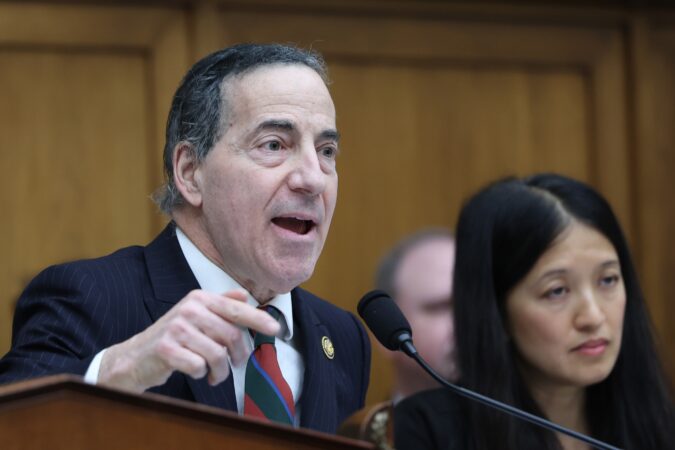
Rep. Jamie Raskin, the top Democrat on the House Judiciary Committee, asked the Justice Department’s inspector general to investigate what he characterized as “spying,” and Johnson, a close ally of President Donald Trump, offered his own scolding when asked about the issue Thursday.
“I think members should obviously have the right to peruse those at their own speed and with their own discretion. I don’t think it’s appropriate for anybody to be tracking that,” Johnson told reporters. “I will echo that to anybody involved with the DOJ — and I’m sure it was an oversight.”
The Justice Department said in a statement that, as part of the process of permitting lawmakers to review the Epstein files, it “logs all searches made on its systems to protect against the release of victim information.”
Photographs taken during Attorney General Pam Bondi’s hearing before the House Judiciary Committee on Wednesday showed her with a printout that said “Jayapal Pramila Search History” and that listed a series of documents that were apparently reviewed. Pramila Jayapal, a Democratic congresswoman from Washington state, was among the Judiciary Committee members who pressed Bondi during the hearing about the department’s handling of the Epstein files.
Jayapal called it “totally unacceptable” and said lawmakers will be “demanding a full accounting” of how the department is using the search history.
“Bondi has enough time to spy on Members of Congress, but can’t find it in herself to apologize to the survivors of Epstein’s horrific abuse,” Jayapal said in a post on X.
The Justice Department statement did not explain why Bondi came to the House hearing with information on lawmaker searches.
A bipartisan contingent of lawmakers has traveled in recent days to a Justice Department outpost to review less-redacted records from the files, but some who have seen the documents have complained that too much information about Epstein associates remains withheld from view. The Trump administration Justice Department said last month that it was releasing more than 3 million pages along with more than 2,000 videos and 180,000 images related to Epstein investigations.
In a statement, Raskin said that not only had the Justice Department withheld records from lawmakers “but now Bondi and her team are spying on members of Congress conducting oversight in yet another blatant attempt to intrude into Congress’s oversight processes.”
He added: “DOJ must immediately cease tracking any Members’ searches, open up the Epstein review to senior congressional staff, and publicly release all files — with all the survivors’ information, and only the survivors’ information, properly redacted — as required by federal law.”
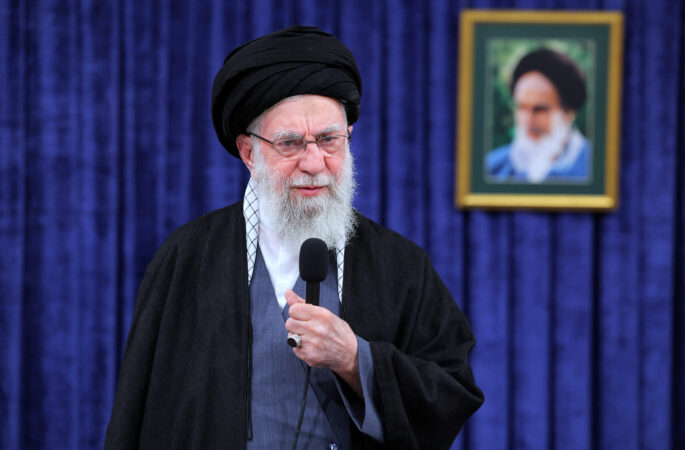
The continued rise in the tally of the dead from the demonstrations adds to the overall tensions facing Iran both inside the country and abroad as it tries to negotiate with the United States over its nuclear program. A second round of talks remains up in the air as Israeli Prime Minister Benjamin Netanyahu pressed his case directly with President Donald Trump to intensify his demands on Tehran in the negotiations.
“There was nothing definitive reached other than I insisted that negotiations with Iran continue to see whether or not a Deal can be consummated. If it can, I let the Prime Minister know that will be a preference,” Trump wrote afterward on his Truth Social website.
“Last time Iran decided that they were better off not making a Deal, and they were hit. … That did not work well for them. Hopefully this time they will be more reasonable and responsible.”
Trump told reporters at the White House Thursday that Iran should come to an agreement with US “very quickly.” Asked about his timeline for striking a deal with Iran over its nuclear program, Trump said, “I guess over the next month, something like that.”
Trump, who is seeking a deal to constrain Iran’s nuclear program and who also has suggested the U.S. might take military action in response to Iran’s crackdown on protesters, warned Iran that failure to reach a deal with his administration would be “very traumatic.”
Meanwhile, Netanyahu told reporters before boarding a plane to return to Israel that Trump believes that his terms and Iran’s “understanding that they made a mistake the last time when they did not reach an agreement, may lead them to agree to conditions that will enable a good agreement to be reached.”
Netanyahu said he “did not hide” his own “general skepticism” about any deal, and stressed that any agreement must include concessions about Iran’s ballistic missiles program and support for militant proxies, not just the Islamic Republic’s nuclear program. He described talks with the U.S. president as “excellent.”
Meanwhile, Iran at home faces still-simmering anger over its wide-ranging suppression of all dissent in the Islamic Republic. That rage may intensify in the coming days as families of the dead begin marking the traditional 40-day mourning for the loved ones.
Activists’ death toll slowly rises
The U.S.-based Human Rights Activists News Agency — which offered the latest figure of 7,003 people killed, including 214 government forces — has been accurate in counting deaths during previous rounds of unrest in Iran and relies on a network of activists in Iran to verify deaths. The continuing rise in the death toll has come as the agency slowly is able to crosscheck information as communication remains difficult with those inside of the Islamic Republic.
Iran’s government offered its only death toll on Jan. 21, saying 3,117 people were killed. Iran’s theocracy in the past has undercounted or not reported fatalities from past unrest.
The Associated Press has been unable to independently assess the death toll, given authorities have disrupted internet access and international calls in Iran.
Diplomacy over Iran continues
Senior Iranian security official Ali Larijani met Wednesday in Qatar with Foreign Minister Sheikh Mohammed bin Abdulrahman Al Thani. Qatar hosts a major U.S. military installation that Iran attacked in June, after the U.S. bombed Iranian nuclear sites during the 12-day Iran-Israel war in June. Larijani also met with officials of the Palestinian Hamas militant group, and in Oman with Tehran-backed Houthi rebels from Yemen on Tuesday.
Larijani told Qatar’s Al Jazeera satellite news network that Iran did not receive any specific proposal from the U.S. in Oman, but acknowledged that there was an “exchange of messages.”
Qatar has been a key negotiator in the past with Iran, with which it shares a massive offshore natural gas field in the Persian Gulf. Its state-run Qatar News Agency reported that ruling emir Sheikh Tamim bin Hamad Al Thani spoke with Trump about “the current situation in the region and international efforts aimed at de-escalation and strengthening regional security and peace,” without elaborating.
The U.S. has moved the aircraft carrier USS Abraham Lincoln, ships and warplanes to the Middle East to pressure Iran into an agreement and have the firepower necessary to strike the Islamic Republic should Trump choose to do so.
Already, U.S. forces have shot down a drone they said got too close to the Lincoln and came to the aid of a U.S.-flagged ship that Iranian forces tried to stop in the Strait of Hormuz, the narrow mouth of the Persian Gulf.
Trump told the news website Axios that he was considering sending a second carrier to the region. “We have an armada that is heading there and another one might be going,” he said.
Concern over Nobel Peace laureate
Meanwhile, the Norwegian Nobel Committee said it was “deeply appalled by credible reports detailing the brutal arrest, physical abuse and ongoing life‑threatening mistreatment” of 2023 Peace Prize laureate Narges Mohammadi.
The committee that awards the prize said it had information Mohammadi had been beaten during her arrest in December and continued to be mistreated. It called for her immediate and unconditional release.
“She continues to be denied adequate, sustained medical follow‑up while being subjected to heavy interrogation and intimidation,” the committee said. “She has fainted several times, suffers from dangerously high blood pressure and has been prevented from accessing necessary follow‑up for suspected breast tumors.”
Iran just sentenced Mohammadi, 53, to seven more years in prison. Supporters had warned for months before her arrest that she was at risk of being put back into prison after she received a furlough in December 2024 over medical concerns.
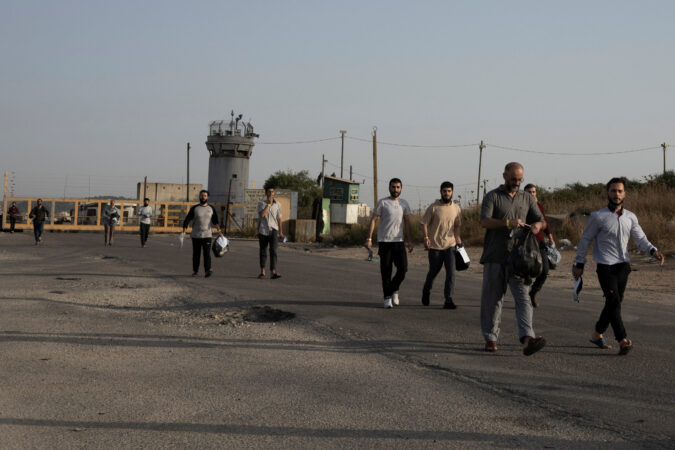
RAMALLAH, West Bank — Israel asked a court Thursday to revoke the citizenship of two men convicted of terrorism offenses, in what appears to be the first test of a law allowing the deportation of Palestinian citizens convicted of certain violent crimes.
Court documents filed by Prime Minister Benjamin Netanyahu on Thursday argue that the severity of the crimes, along with payments those found guilty allegedly received from a Palestinian Authority fund, justify revoking citizenship and expelling the individuals convicted of violent attacks.
Roughly one in five Israeli citizens is Palestinian. When the law passed, critics said it was one instance in which Israel’s legal system treats Jewish and Palestinian citizens differently. Rights groups argued that basing a deportation law on Palestinian Authority payments effectively limited its application on the basis of race and excluded Jewish Israelis — including settlers convicted of attacksagainst Palestinians — from the threat of having their citizenship revoked.
Netanyahu has long argued the fund in question rewards violence, including attacks on civilians. Palestinian officials, however, have defended it as a safety net for the broad cross‑section of society with family members in Israeli detention. They have dismissed Netanyahu’s focus on the relatively small share of beneficiaries involved in such attacks.
Citizenship revocation law faces first test
Netanyahu in a statement this week said proceedings were launched against two men with more such cases were on their way. One of the court filings seen by The Associated Press details the request against Mohamad Hamad, who the state’s request says was convicted of “offenses that constitute an act of terrorism and receiving funds in connection with terrorism.”
It alleges Hamad, a 48-year‑old citizen from east Jerusalem, received payment after he was sentenced in 2002 on charges that included shootings and weapons trafficking. He went on to serve more than two decades in prison before his release.
The 2023 law applies to citizens or permanent residents convicted of “committing an act that constitutes a breach of loyalty to the State of Israel,” including terrorism.
Hassan Jabareen, the general director of Israel’s Adalah legal center, called steps taken to apply it this week “a cynical propaganda move” by Netanyahu. He said revoking citizenship violated the most basic principles of the rule of law, including by acting against individuals who completed prison sentences.
“The Israeli government is attempting to strip individuals of the very foundation through which all rights are protected, their nationality,” he said on Thursday.
If the court moves ahead, it would make Israel one of the few nations — including Bahrain — to revoke citizenship of people born with the status in their country. Countries such as the United Kingdom and France have stripped dual or naturalized citizens of their citizenships over terrorism convictions, but international conventions generally bar states from taking away someone’s nationality if it would leave them stateless.
The Palestinian Authority payments, Israel argues, create a sufficient link to justify revoking citizenship and deporting such citizens to the West Bank or Gaza.
The request does not say to where the citizens will be deported.
CLAIRTON, Pa. — For Don Furko, Aug. 11, 2025, was a normal shift. Until it became the shift he would never forget.
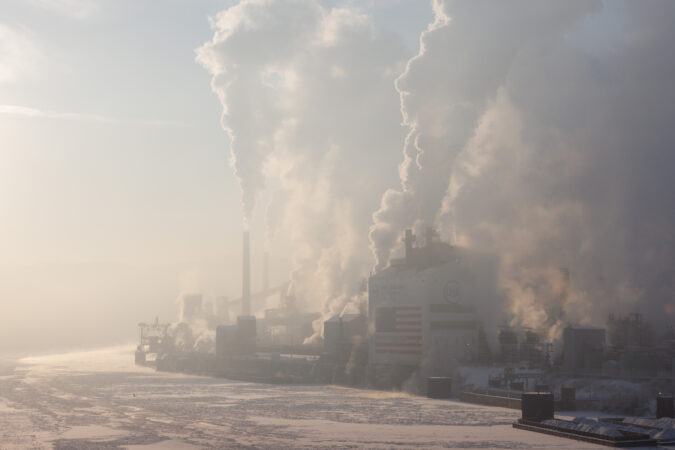
At 10:47 a.m., U.S. Steel’s Clairton Coke Works outside Pittsburgh — a sprawling riverside industrial facility and the largest of its kind in the Western Hemisphere — erupted in an ear-piercing boom.
A steelworker for 25 years and former Clairton local union president, Furko pulled on flame-retardant jacket and pants, a hard hat and safety glasses, left his post and rushed to the black plume of smoke rising from the facility’s batteries — the massive arrangements of industrial ovens that heat coal to some 2,000 degrees, turning it into carbon-rich coke.
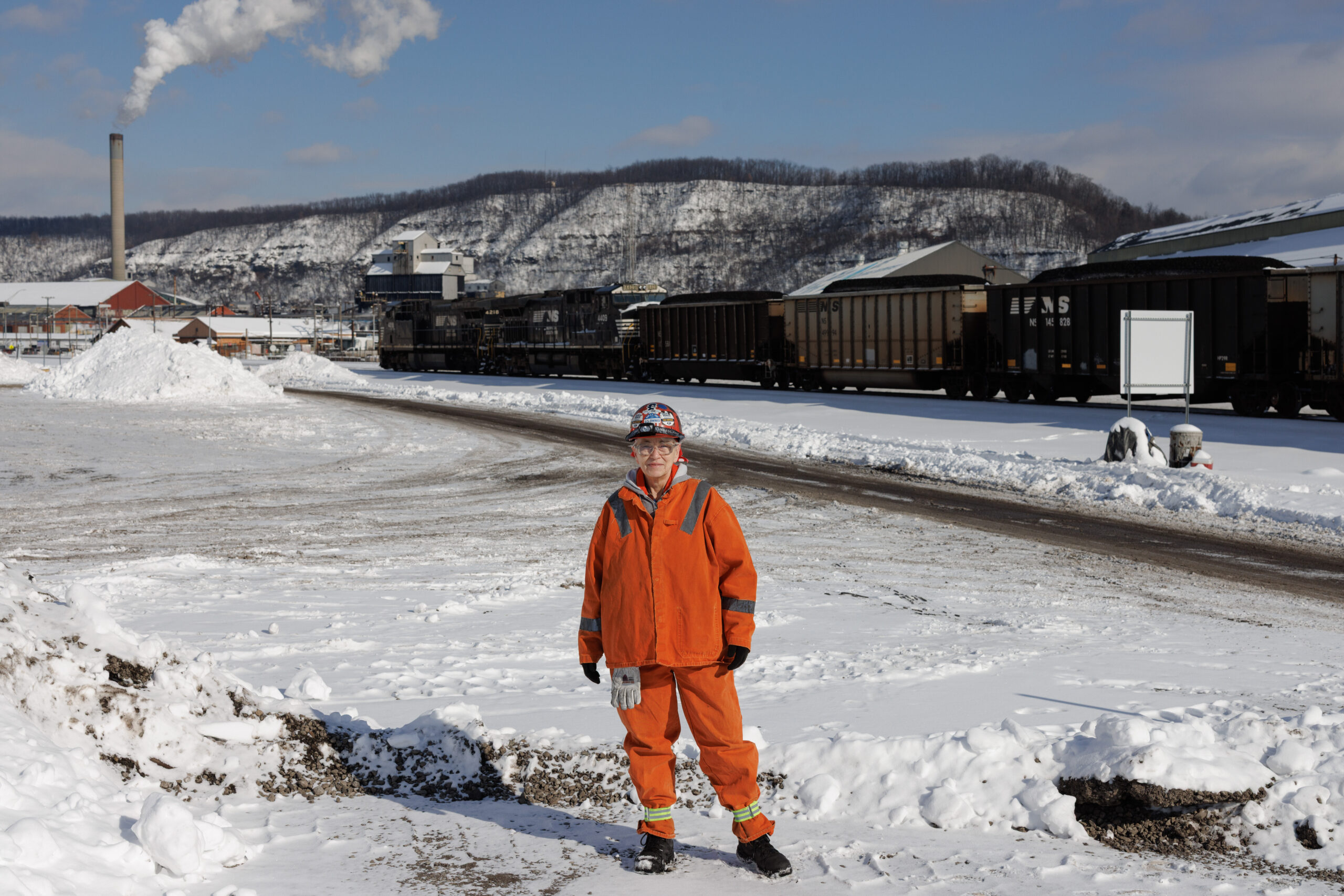
Steelworker Renee Hough stands at U.S. Steel’s Clairton Coke Works in Clairton, Pa., on Jan. 29. (Quinn Glabicki/Pittsburgh’s Public Source via AP)
Near the wharf, Renee Hough, a utility technician in charge of loading coke, sat in the cab of the plant’s screening station when the explosion ripped through the air, blinding her in black dust. “My first thought was I was dead,” Hough recalls. Flames emerged as the dust settled, and a voice crackled through the radio: Battery 13 had just exploded.
“I can’t even explain how mangled everything was,” Furko recalls. “There were flames everywhere.” Workers shuttled the injured to the helipad for evacuation. Through the chaos, Furko heard a fellow steelworker screaming, buried beneath the rubble.
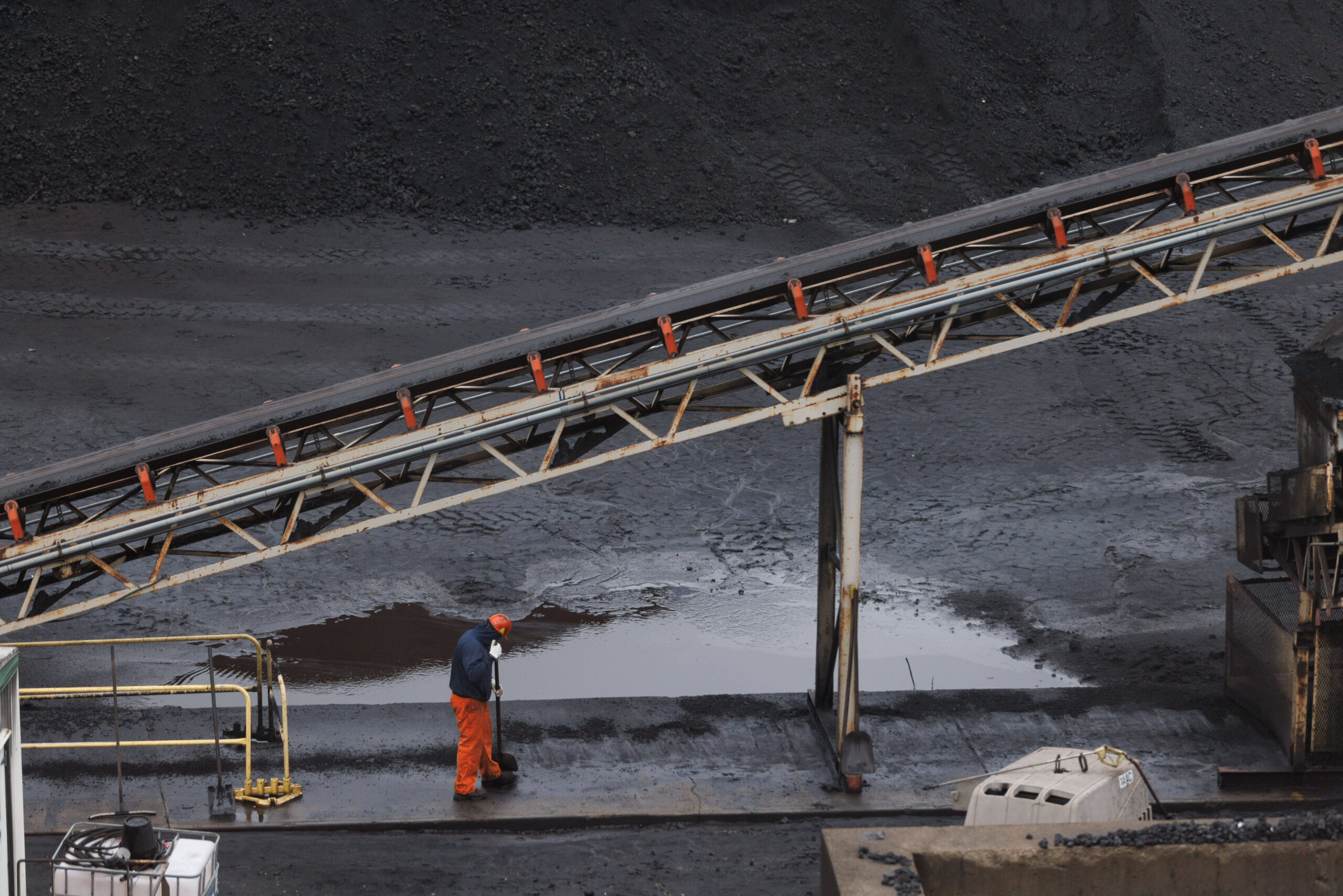
A worker in the coal fields at U.S. Steel’s Clairton Coke Works in Clairton, Pa., on Nov. 19, 2025. (Quinn Glabicki/Pittsburgh’s Public Source via AP)
The blast killed two U.S. Steel workers and injured 11 others, including contractors, according to the Chemical Safety Board, a federal agency investigating the incident.
Six months later, workers remain rattled and community concerns about air pollution from the plant are heightened.
The blast comes on top of a string of other accidents at the Clairton plant over time as well as a long history of legal battles between U.S. Steel and Allegheny County regulators, who regularly accuse the company of flouting environmental rules at the facility. As recently as Jan. 27, pollution control equipment at the Clairton plant temporarily broke down and nearby air monitors recorded elevated air pollution, according to the Allegheny County Health Department.
To U.S. Steel’s critics, the August blast highlighted chronic problems at the facility. And some current and former workers at Clairton Coke Works say poor management and underinvestment have exacerbated air pollution and undermined workplace safety at the plant where operators already have little margin for error, Pittsburgh’s Public Source and the Associated Press have found.
The August explosion also came after Nippon Steel’s $15 billion acquisition of U.S. Steel in June 2025. It’s an open question whether the Japanese steel company will invest significantly in Clairton Coke Works and address issues raised by workers, government officials and environmental watchdogs.
The Chemical Safety Board has said that the August explosion occurred while workers were preparing to replace a damaged valve that was detected in July, as well as other valves. The agency’s investigation continues; it said in December that it has identified “potentially unmitigated hazards for workers at Clairton Coke Works that warrant immediate attention.”
“They try to say ‘safety first, safety first,’” said Brian Pavlack, a current worker at Clairton Coke Works. “Safety is not the first priority for them.”
Nippon Steel did not provide a response to written questions. In a written statement responding to detailed questions, U.S. Steel stressed its commitment to safety.
“Safety is our core value and shapes our culture, influences how we lead, and anchors our responsibility to ensure that every employee returns home safely, every single day,” the company said.
Dangerous work
The 392-acre Clairton Coke Works opened more than a century ago, 20 miles south of Pittsburgh along the west bank of the Monongahela River. The ovens at the plant heat coal at high temperatures for hours to make coke, a key component in steelmaking. Its ovens produce 3.6 million tons of coke annually, which is shipped to the company’s operations farther up the river at the Edgar Thomson Works in Braddock, and to U.S. Steel’s Gary Works in Indiana.
But making coke isn’t a clean process or without risk. The heat removes impurities, producing a flammable byproduct called coke oven gas. Coke oven gas includes hydrogen, methane, nitrogen and carbon monoxide, and some of it is used as fuel to heat the coke ovens. Coke oven gas is explosive due to high hydrogen content, said Fred Rorick, a former operations manager at Bethlehem Steel and steel industry consultant.
“At a coke works, when you have that, you have to be very, very, very careful,” Rorick said.
According to the Chemical Safety Board, the August explosion happened while workers were closing and opening a gas isolation valve in a basement after pumping water into the valve. U.S. Steel’s written procedure did not mention the use of water and a U.S. Steel supervisor directed workers to pump the water, the agency said. Kurt Barshick, U.S. Steel’s vice president of the Mon Valley Works, said during an October presentation to residents in the wake of the August explosion that workers trapped “3,000 PSI water inside of a valve that’s rated for 50 PSI.” The valve cracked and gas filled the area, Barshick added.
Drew Sahli, the Chemical Safety Board’s investigator in charge, said there was a “release of coke oven gas” and that the gas “contacted an ignition source” and exploded. The agency is still investigating how the gas was released, Sahli said.
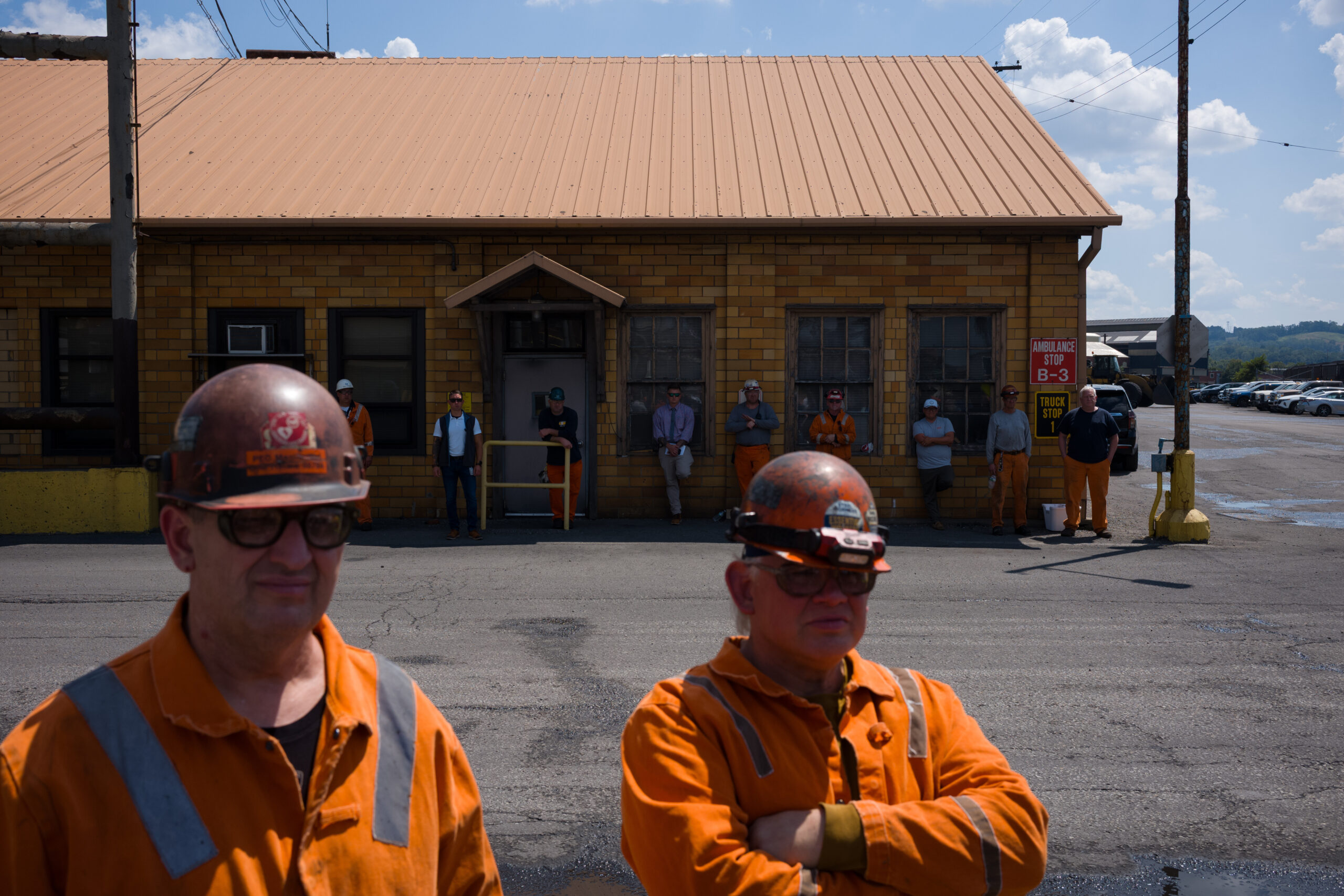
Steelworkers stand at U.S. Steel’s Clairton Coke Works in Clairton, Pa., on Aug. 12, 2025, a day after an explosion at the facility killed two workers. (Quinn Glabicki/Pittsburgh’s Public Source via AP)
U.S. Steel said it has “strengthened several safety protocols” based on its own ongoing investigation, including prohibiting the use of high-pressure water for valve cleaning and reviewing their “Management of Change program, which assesses proposed changes in procedures and evaluates risk.”
Before the August blast, Clairton Coke Works already had a history of accidents and explosions.
In 2009, a maintenance worker was killed in a blast.
In 2010, an explosion injured 14 employees and six contractors.
In 2014, a worker was burned and died after falling into a trench.
In February 2025, a problem at a battery led to a “buildup of combustible material” that ignited, injuring two people, according to the Allegheny County Health Department.
After the 2010 explosion, the Occupational Safety and Health Administration fined U.S. Steel and a subcontractor $175,000 for safety violations. U.S. Steel appealed its citations and fines, which were later reduced to $78,500 under a settlement agreement. U.S. Steel admitted no wrongdoing as part of the settlement.
While there’s “a lot of ways that you can get yourself hurt or killed” at Clairton Coke Works, explosions are the biggest hazard, said Calvin Croftcheck, who previously worked at the plant and served as the United Steelworkers safety coordinator for U.S. Steel.
“Since 2009, there have been three accidents that have resulted in fatalities and that is just not common in today’s age of safety,” said Phillip Kondrot, a workers’ compensation attorney who represents workers injured at Clairton Coke Works. “That is a dangerous place to work.”
“We have intensive procedures that are currently in place at Clairton and our other facilities, and our employees are charged with following them,” U.S. Steel said. “We will not respond to comments from for-profit lawyers and stand behind the safety professionals who tirelessly work at U. S. Steel.”
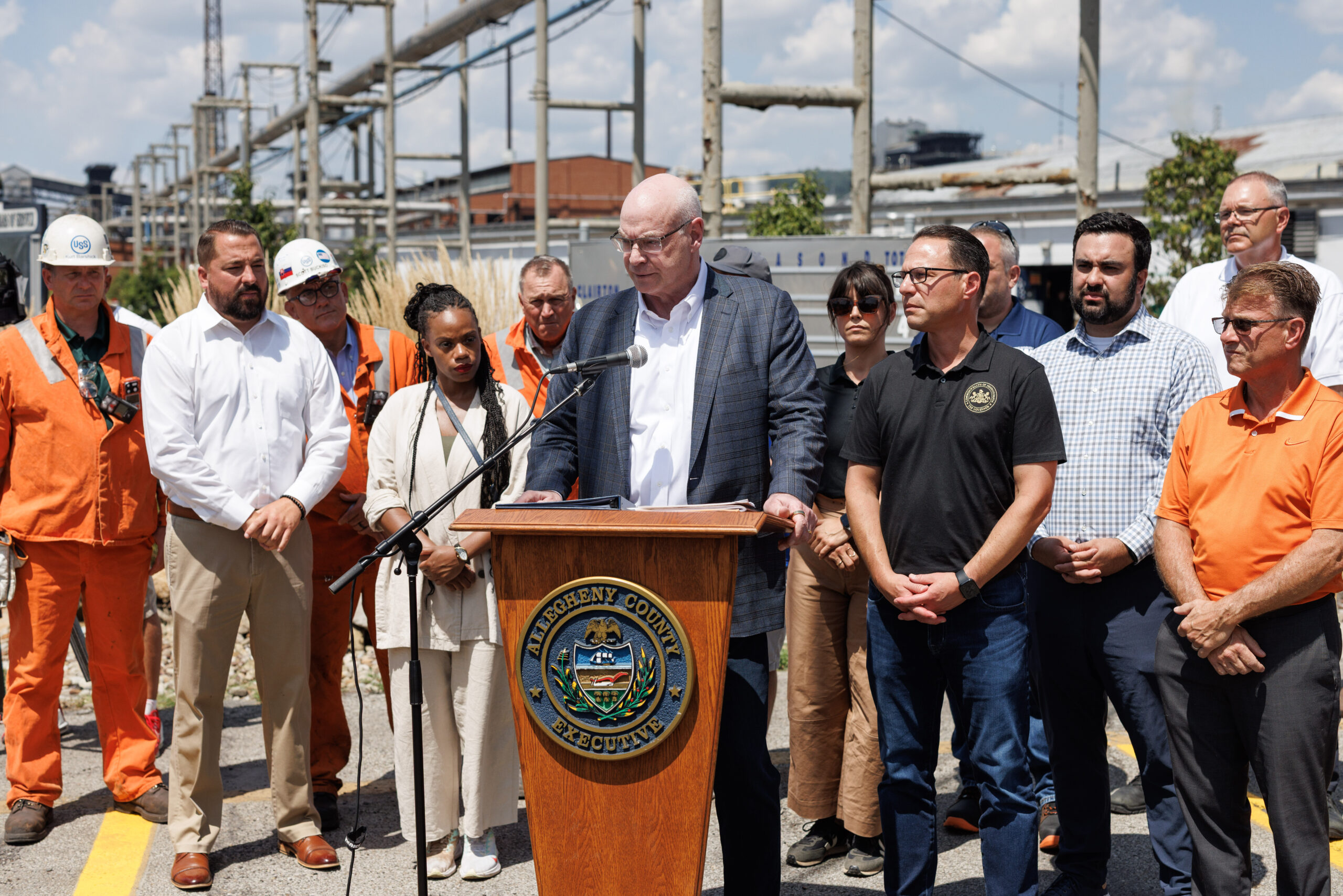
U.S. Steel president and CEO David B. Burritt, accompanied by Pennsylvania Gov. Josh Shapiro (center right) and other officials, speaks during a news conference at U.S. Steel’s Clairton Coke Works in Clairton, Pa., on Aug. 12, 2025, a day after an explosion at the facility killed two workers. (Quinn Glabicki/Pittsburgh’s Public Source via AP)
Management questioned
Some current and former workers at the Clairton plant fault U.S. Steel’s management of the aging facility, saying that it has caused a range of operational problems.
“A lot of things that have happened there, where they needed something fixed and something went wrong, it was because corporate wouldn’t approve them ordering the parts,” said Jonathan Ledwich, who worked at Clairton Coke Works between 2011 and 2022 trying to prevent emission leaks from the coke ovens. “We did the best we could with what we had.”
Ledwich points to a fire at the Clairton plant on Christmas Eve 2018. It shut down pollution control equipment and led to repeated releases of sulfur dioxide and hydrogen sulfide, according to a lawsuit filed by environmental groups after the incident. In the wake of the fire, Allegheny County warned residents to limit outdoor activities, with residents saying for weeks afterward that the air smelled like rotten eggs and was hard to breathe.
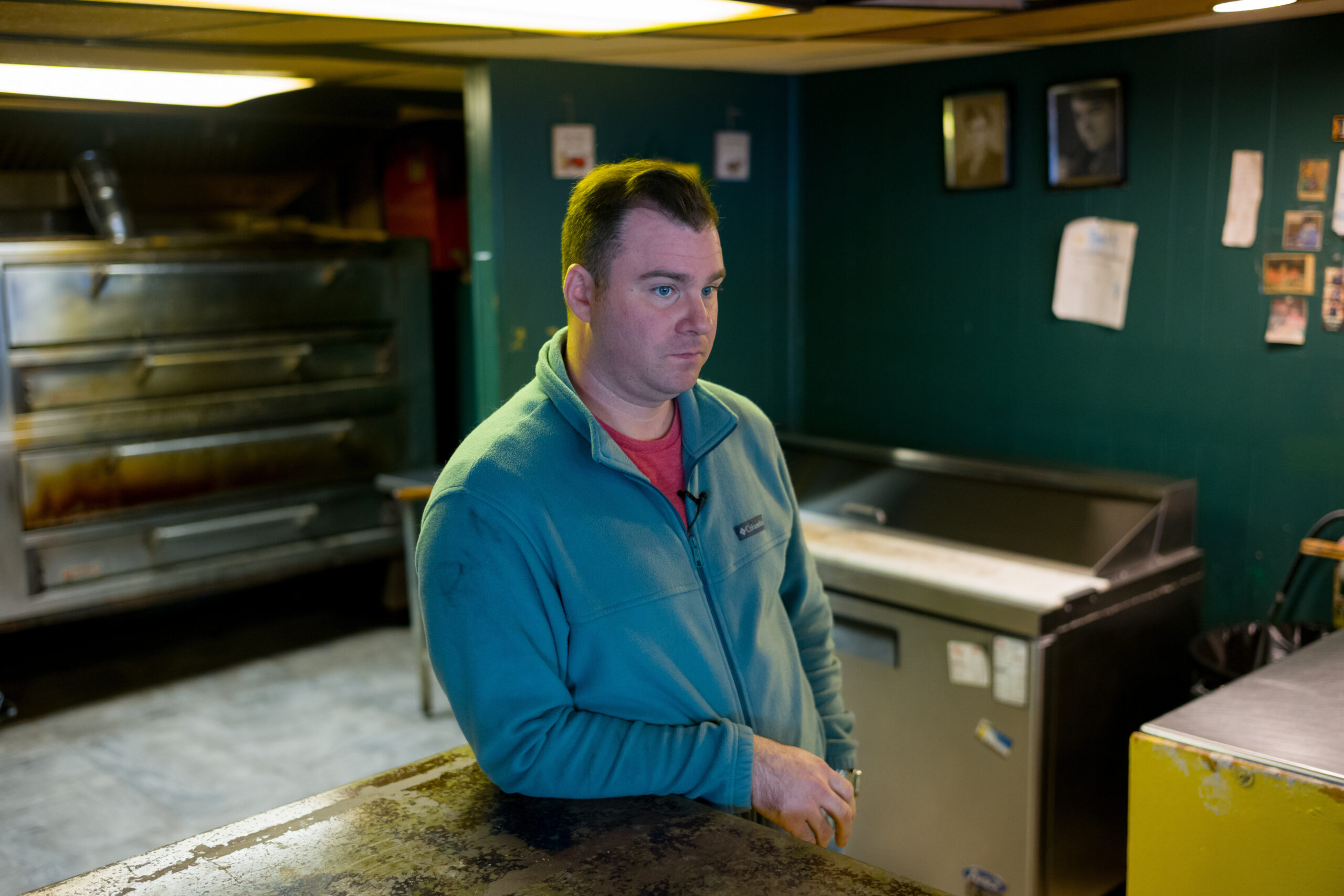
Former U.S. Steel worker Jonathan Ledwich stands at the pizza shop he now owns in Trafford, Pa., on Dec. 15, 2025. (Quinn Glabicki/Pittsburgh’s Public Source via AP)
Ranajit Sahu, an engineer hired by the plaintiffs, wrote in a report filed in the case that he found “no indication” that U.S. Steel “has an effective, comprehensive maintenance program for the Clairton plant.” Sahu also wrote that the 2018 accident, which was precipitated by piping falling due to corrosion, was “preventable by a robust inspection and preventive maintenance program and by better plant design.”
In a 2024 consent decree settling the lawsuit, U.S. Steel agreed to measures including investing close to $20 million in facility upgrades and permanently idling a battery of coke ovens at the plant. As part of the consent decree, U.S. Steel admitted no liability.
Hough, the utility technician in charge of loading coke, said that the lack of proactive maintenance at Clairton Coke Works makes her feel unsafe at times.
“There’s a lot of things that need to be repaired that they’re not prioritizing because you can’t stop production,” Hough said of U.S. Steel.
Some current and former plant workers also describe difficulty getting coke oven doors replaced. Ledwich, the former Clairton steel worker, said some doors that needed to be replaced would leak emissions.
In a 2020 deposition for the lawsuit related to the 2018 Christmas Eve fire, James Kelly, former deputy director of the environmental health bureau at the Allegheny County Health Department — the agency that oversees emissions at the plant — said the facility is “one of the most decrepit facilities” that he’d ever seen.
The litigation surrounding the Christmas Eve fire wasn’t the first time U.S. Steel was accused in court of skimping on maintenance. In a 2017 amended federal class action lawsuit alleging violations of federal securities laws, U.S. Steel shareholders said that the company CEO hired the consulting firm McKinsey & Company in 2014 after multiple unprofitable years and “implemented extreme cost-cutting measures” in 2015 involving layoffs and deferrals of “desperately-needed maintenance and repairs.” The lawsuit was eventually settled and the U.S. Steel defendants admitted no wrongdoing.
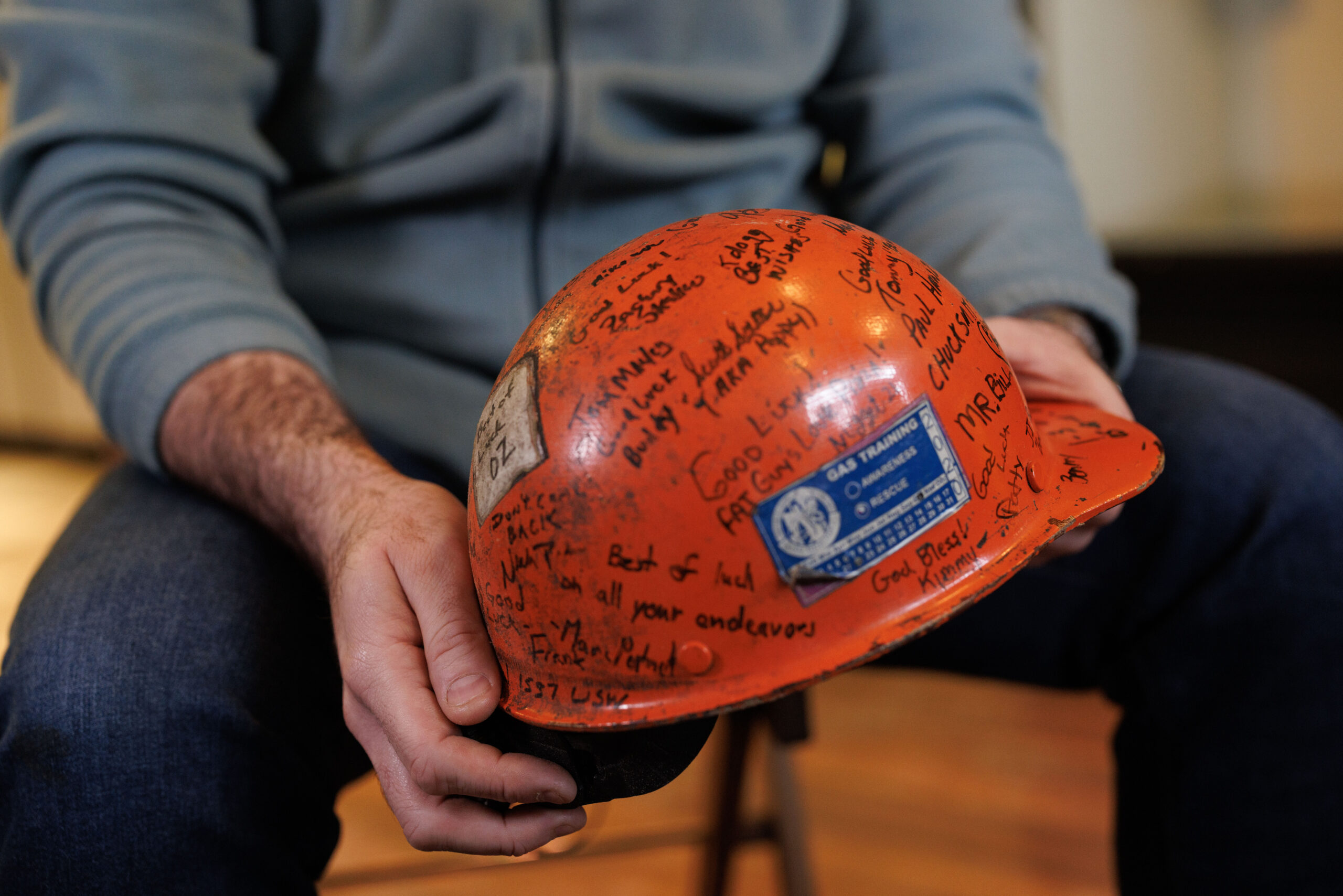
Former U.S. Steel worker Jonathan Ledwich holds his old hard hat at the pizza shop he now owns in Trafford, Pa., on Dec. 15, 2025. (Quinn Glabicki/Pittsburgh’s Public Source via AP)
U.S. Steel had “one of the best safety staffs in the country,” said Mike Wright, former director of the health, safety, and environment department at the United Steelworkers. But key safety department leaders were fired, according to Wright and Croftcheck, the former union safety coordinator. Wright said the dismissals occurred in 2016.
Ed Mazurkiewicz, former director of safety and industrial hygiene at U.S. Steel, said that he was let go by the company in 2016. While he knew at the time that McKinsey had been “evaluating all of U.S. Steel” and that there would be downsizing, it was still a shock when his job was eliminated, Mazurkiewicz said.
U.S. Steel said it has “worked with many advisers and partners” over the years and that the company’s “overall transformation efforts have improved our company’s performance, created a robust maintenance program, and improved employee safety over time.” In response to questions about U.S. Steel’s safety department and the firing of department leaders, the company said: “We cannot comment on personnel matters.”
“They brought in McKinsey to tell them really how to run things,” Wright said of U.S. Steel. “We were a little outraged by that.”
McKinsey said in a statement that the company is one of “many advisers that have served U.S. Steel in support of its efforts to keep manufacturing jobs in the United States, improve operational resiliency, and invest in and support the communities in which it operates.”
“As with all our work for the company — and with all our clients — safety is always a top priority,” the company added.
Maintenance practices have changed over time, some current and former workers say.
“I used to see a lot more maintenance and taking care of things and fixing things before they broke, or replacing things that were worn out,” said Hough, who has worked at the plant for 29 years. “That used to happen back when I was first hired there, and that hasn’t happened in the last 10 or so years.”
Battles over air pollution
For years, Clairton Coke Works has drawn the ire of government regulators, environmental advocates and community members concerned about air pollution originating from the plant. Air quality in the region has improved over time, but the Clairton plant has been the largest local source of air pollution — such as sulfur oxides and particulate matter — in recent years, according to the Allegheny County Health Department. Particulate matter, for instance, is linked to various health issues, including heart attacks and aggravated asthma. The plant also emits carcinogenic benzene.
While the Clairton plant is allowed to emit some air pollution, county Health Department regulators routinely clash with U.S. Steel over alleged violations of the plant’s operating permit, such as excessive emissions or failing to use pollution control equipment. In 2023, for instance, the Allegheny County Health Department fined U.S. Steel more than $2 million for violations at Clairton Coke Works.
“You’re sort of in this cycle of patching, monitoring, fining, patching, monitoring, fining, and it’s never really good enough,” said Karen Hacker, director of the Allegheny County Health Department between 2013 and 2019. “You can’t say it hasn’t improved. Just look at the sky in Pittsburgh, right? But it hasn’t removed a source of pollution.”
In response to questions from Public Source and AP, the Allegheny County Health Department said in a written statement that the agency “inspects coking operations daily” and “addresses violations as discovered during inspections” with a full compliance evaluation every two years.
The department also said that air monitoring stations near the Clairton plant “have measured a 15-25% reduction in annual average particle pollution concentrations compared to ten years ago.” The department declined to comment on “open investigations, enforcement orders, or pending litigation.”
Nationally, Clairton Coke Works’ environmental compliance track record is an outlier, according to a Public Source and AP analysis of federal Clean Air Act data from about 14,000 facilities. The analysis found that Clairton Coke Works is classified by the EPA as a “high-priority violator” — only about 11% of major emitters fall into that category. It’s even rarer for facilities to garner financial penalties on the magnitude that Clairton Coke Works has faced in the last five years, the analysis shows. Just 11 facilities, including Clairton Coke Works, have faced $10 million in penalties or more in the last five years.
“It’s a massive facility. It’s a complex facility and it’s an underfunded facility,” said Adam Ortiz, former EPA regional administrator of the Mid-Atlantic region during the Biden administration. “All those things make it tough.”
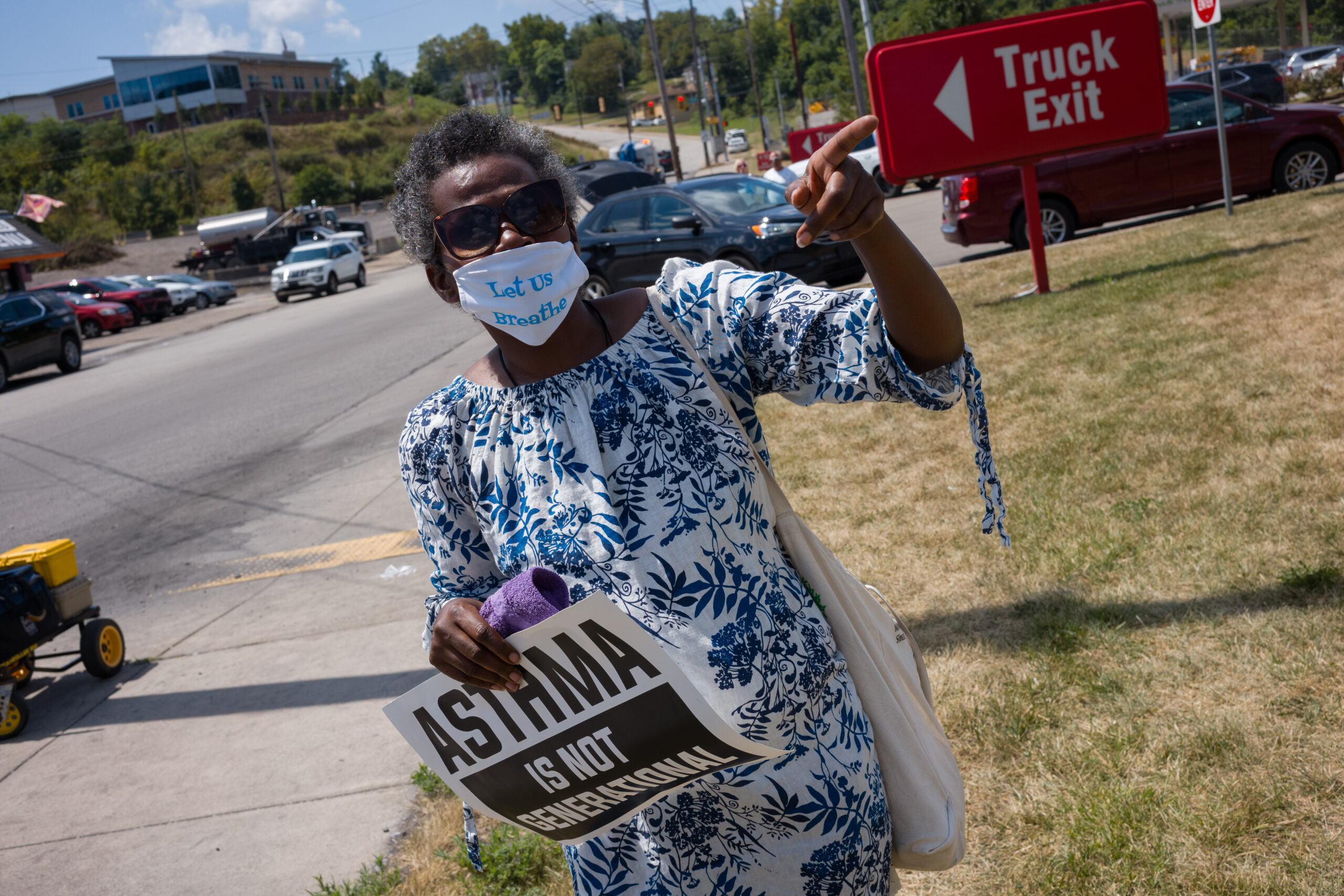
Clairton resident and environmental advocate Melanie Meade stands at the entrance of the Clairton Coke Works in Clairton, Pa., on Aug. 12, 2025, a day after an explosion at the facility killed two workers. (Quinn Glabicki/Pittsburgh’s Public Source via AP)
U.S. Steel said in its statement that the company spends “$100 million annually on environmental compliance at Clairton alone and has consistently achieved an environmental compliance rate exceeding 99% for regulated activities per year at our Clairton Plant, the largest coke-making facility in North America.”
The company said that it has “invested more than $750 million in environmental improvement projects in the Mon Valley” and that preliminary data shows that a county air monitor located downwind of the Clairton plant has met the Environmental Protection Agency’s national ambient air quality standard for particulate matter since 2024.
“Our steadfast pursuit of environmental excellence will continue,” the company said. “We maintain a productive relationship with the ACHD and other regulators, with a commitment to regulation grounded in science and law.”
Some environmental advocates have argued that the Allegheny County Health Department is outgunned against U.S. Steel. The department’s air quality program, which handles oversight of Clairton Coke Works, is funded by fees paid by industrial polluters. But the program has struggled financially in recent years. In a 2018 report, the EPA asserted that revenue from emissions-based fees was “diminishing as a result of emissions reductions” and that the existing fee structure could potentially “undermine long-term program sustainability.” The Allegheny County Council approved raising the fees in 2021 and again in November.
Meanwhile, the Trump administration has signaled that it is taking a more hands-off approach with polluters. In November, President Donald Trump temporarily exempted Clairton Coke Works and other coking plants from provisions of a Biden-era rule that, for instance, required fence line monitoring for benzene emissions. U.S. Steel previously requested an exemption.
U.S. Steel said that the rule “imposed significant compliance costs while setting technically unachievable standards and providing little or no environmental benefit.” Its Mon Valley facilities have “never been fined” for exceeding benzene emission standards, the company said.
New ownership arrives
Before the August explosion, workers and outside observers were already watching Nippon Steel closely for clues about their plans for Clairton Coke Works and the Mon Valley. Now, questions about Nippon’s intentions have become even more pressing.
In the nearly $15 billion deal to buy U.S. Steel, Nippon Steel pledged to invest $14 billion in domestic steelmaking operations, including building a new electric arc furnace somewhere in the U.S. Much of that money remains publicly uncommitted, and U.S. Steel has been firm that it wants to keep the Clairton plant operating.
“The Clairton Coke Plant is an important part of our North American Flat-Rolled integrated operations,” the company said in November. The company added that a “steady coke supply remains critical” and that the “Clairton Coke Plant will be maintained for the next generation of steelmaking.”
Since Nippon Steel acquired the company, things have started to change, according to Hough. The company has invested more in repairs and preventive maintenance, she said.
“Nippon is putting the money into the plant, and let me tell you, they’ve got a long way to go,” Hough said. “U.S. Steel let it go so bad for so long.”
However, U.S. Steel has not publicly committed to spending money at the Clairton plant to expand production, extend its life, improve efficiency, upgrade safety or reduce its polluting air emissions.
In response to questions about its investment plans for Clairton Coke Works, U.S. Steel said the company plans to invest “more than $2 billion at Mon Valley Works.”
Furko served as Clairton local union president in 2021 when U.S. Steel canceled a pledged $1 billion investment in the Mon Valley Works. He remains wary of Nippon’s promises.
“Until I see shovels start to hit dirt,” Furko said, “then I don’t believe it until I see it.”
Of the $14 billion, U.S. Steel has said $2.4 billion will go toward its Pittsburgh-area plants. A portion of that money will be spent on building a new hot strip mill to replace the one at its Irvin plant, just down the Monongahela River from Clairton, that processes steel into massive sheet rolls, primarily for the automotive, appliance and construction industries.
It’s unclear how Nippon and U.S. Steel will address recent findings from federal investigators. In December, the Chemical Safety Board recommended that U.S. Steel conduct a siting evaluation of all buildings at the Clairton plant that are occupied or could be occupied to identify and assess potential hazards for workers. The agency said that the company has not conducted a facility siting evaluation as part of efforts to rebuild and relocate its “personnel facilities” after the blast.
U.S. Steel continues to cooperate with the Chemical Safety Board and the Occupational Safety and Health Administration and “evaluate their recommendations,” the company said.
Even with Nippon’s promise of revitalizing U.S. Steel with billions of dollars of investment, the August explosion is still darkening the minds of workers. Furko said he struggles to motivate himself to go to work on some days.
“I’ve been there 25 years. There’s been guys who have lost legs from rail equipment running over them. Bad falls and stuff like that,” Furko said. “Nothing has affected me like this has.”
This story is a collaboration between Pittsburgh’s Public Source and the Associated Press.
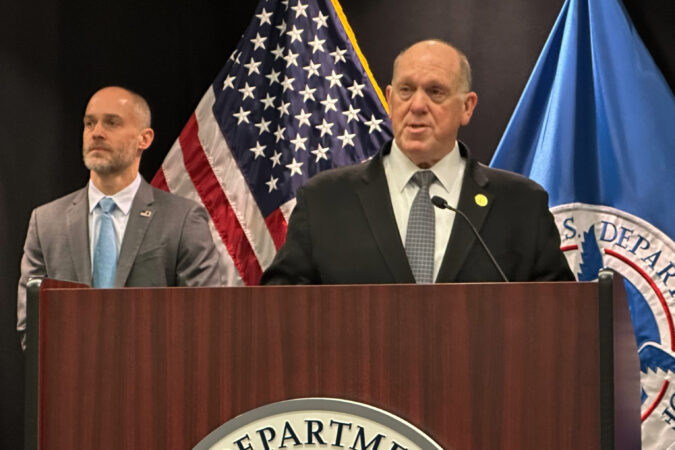
MINNEAPOLIS — The Trump administration is ending the immigration crackdown in Minnesota that led to thousands of arrests, violent protests and the fatal shootings of two U.S. citizens over the past two months, border czar Tom Homan said Thursday.
The U.S. Immigration and Customs Enforcement operation focused on the Minneapolis-St. Paul area resulted in more than 4,000 arrests, Homan said, touting it a success.
“The surge is leaving Minnesota safer,” he said. “I’ll say it again, it’s less of a sanctuary state for criminals.”
The announcement marks a significant retreat from an operation that has become a major distraction for the Trump administration and has been more volatile than prior crackdowns in Chicago and Los Angeles. It comes as a new AP-NORC poll found that most U.S. adults say Trump’s immigration policies have gone too far.
State and local officials, who have frequently clashed with federal authorities since Operation Metro Surge started in December, insisted the swarm of immigration officials inflicted long-term damage to the state’s economy and its immigrant community.
Democratic Gov. Tim Walz urged residents Thursday to remain vigilant in the coming days as immigration officers prepare to leave. He called the crackdown an “unnecessary, unwarranted and in many cases unconstitutional assault on our state.”
“It’s going to be a long road,” Walz told a news conference. “Minnesotans are decent, caring loving neighbors and they’re also some of the toughest people you’ll find. And we’re in this as long as it takes.”
Trump’s border czar pledged that immigration enforcement won’t end when the Minnesota operation is over.
“President Trump made a promise of mass deportation and that’s what this country is going to get,” Homan said.
Some activists expressed relief at Homan’s announcement, but warned that the fight isn’t over. Lisa Erbes, a leader of the progressive protest group Indivisible Twin Cities said officials, must be held accountable for the chaos of the crackdown.
“People have died. Families have been torn apart,” Erbes said. “We can’t just say this is over and forget the pain and suffering that has been put on the people of Minnesota.”
While the Trump administration has called those arrested in Minnesota “dangerous criminal illegal aliens,” many people with no criminal records, including children and U.S. citizens, have also been detained.
Homan announced last week that 700 federal officers would leave Minnesota immediately, but that still left more than 2,000 on Minnesota’s streets. At the time, he cited an “increase in unprecedented collaboration” resulting in the need for fewer federal officers in Minnesota, including help from jails that hold deportable inmates.
Homan took over the Minnesota operation in late January after the second fatal shooting by federal immigration agents and amid growing political backlash and questions about how the operation was being run. He said Thursday that he intends to stay in Minnesota to oversee the drawdown that began this week and will continue next week.
“We’ve seen a big change here in the last couple of weeks,” he said, crediting cooperation from local leaders.
During the height of the surge, heavily armed officers were met by resistance from residents upset with their aggressive tactics.
“They thought they could break us, but a love for our neighbors and a resolve to endure can outlast an occupation,” Minneapolis Mayor Jacob Frey said on social media after Homan’s news conference. “These patriots of Minneapolis are showing that it’s not just about resistance — standing with our neighbors is deeply American.”
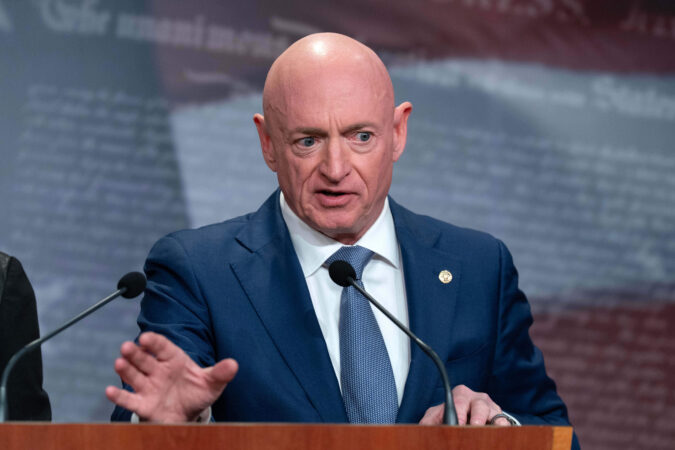
WASHINGTON — A federal judge agreed Thursday to block the Pentagon from punishing Democratic Sen. Mark Kelly, a former Navy pilot, for participating in a video that called on troops to resist unlawful orders.
U.S. District Judge Richard Leon ruled that Pentagon officials violated Kelly’s First Amendment free speech rights and “threatened the constitutional liberties of millions of military retirees.”
“To say the least, our retired veterans deserve more respect from their Government, and our Constitution demands they receive it!” wrote Leon, who was nominated to the bench by Republican President George W. Bush.
Kelly, who represents Arizona, sued in federal court to block his Jan. 5 censure from Defense Secretary Pete Hegseth. Leon’s order prohibits the Pentagon from implementing or enforcing Kelly’s punishment while his lawsuit is pending. The judge instructed the parties to provide him with an update in 30 days.
In November, Kelly and five other Democratic lawmakers appeared on a video in which they urged troops to uphold the Constitution and not to follow unlawful military directives from the Trump administration. Republican President Donald Trump accused the lawmakers of sedition “punishable by DEATH” in a social media post days later.
The court case is just one front in a broader dispute that has spiraled between the group of Democratic lawmakers and the Trump administration since they posted the video. Earlier this week, a Washington grand jury declined to indict the lawmakers over the video.
Michigan Sen. Elissa Slotkin has said she has been told the Justice Department could seek a new indictment as soon as Friday. Kelly and Slotkin said at a news conference Wednesday that they are keeping all legal options on the table regarding potentially suing the administration.
Leon said that Kelly “is likely to succeed on the merits” of his free speech claim. “He has also shown irreparable harm, and the balance of the equities fall decidedly in his favor.”
Hegseth said Kelly’s censure was “a necessary process step” to proceedings that could result in a demotion from the senator’s retired rank of captain and subsequent reduction in retirement pay.
The judge concluded that Kelly’s speech is entitled to full First Amendment protection. Leon wrote, “Horsefeathers!” in response to the government’s argument that Kelly is trying to exempt himself from the rules of military justice.
“Rather than trying to shrink the First Amendment liberties of retired servicemembers, Secretary Hegseth and his fellow Defendants might reflect and be grateful for the wisdom and expertise that retired servicemembers have brought to public discussions and debate on military matters in our Nation over the past 250 years,” Leon wrote.
“If so,” he added, “they will more fully appreciate why the Founding Fathers made free speech the First Amendment in the Bill of Rights!”
The Pentagon did not immediately respond to an email seeking comment on the judge’s ruling.
Kelly said in a video statement posted after the ruling that the case was about more than just him and that the administration “was sending a message to millions of retired veterans that they too can be censured or demoted just for speaking out.”
He added that the ruling was unlikely the end: “This might not be over yet, because this president and this administration do not know how to admit when they’re wrong.”
The 90-second video was first posted on a social media account belonging to Slotkin. Reps. Jason Crow of Colorado, Chris Deluzio of Pennsylvania, Maggie Goodlander of New Hampshire and Chrissy Houlahan of Pennsylvania also appeared in the video. All of the participants are veterans of the armed services or intelligence agencies.
The Pentagon began investigating Kelly in late November, citing a federal law that allows retired service members to be recalled to active duty on orders of the defense secretary for possible court-martial or other punishment. Hegseth has said Kelly was the only one of the six lawmakers to be investigated because he is the only one who formally retired from the military and still falls under the Pentagon’s jurisdiction.
Kelly’s lawyers said the Pentagon’s censure of Kelly — and its efforts to reduce his retirement grade and pay — are an unprecedented attack on the rights of veterans to publicly debate national security issues.
“Defendants assert an absolute and unreviewable authority to impose military punishment on a retired veteran and sitting United States Senator for engaging in speech a civilian political appointee dislikes. That position is as alarming as it is unprecedented,” they wrote.
Government lawyers said the case “is not about legislative independence or freedom of speech in civilian society.”
“Instead, this case involves a retired military officer who seeks to use his military status as a sword and his legislative position as a shield against the consequences of his actions in military personnel matters,” they wrote.
Hegseth, the Defense Department, Navy Secretary John Phelan and the Navy are named as defendants in the lawsuit.
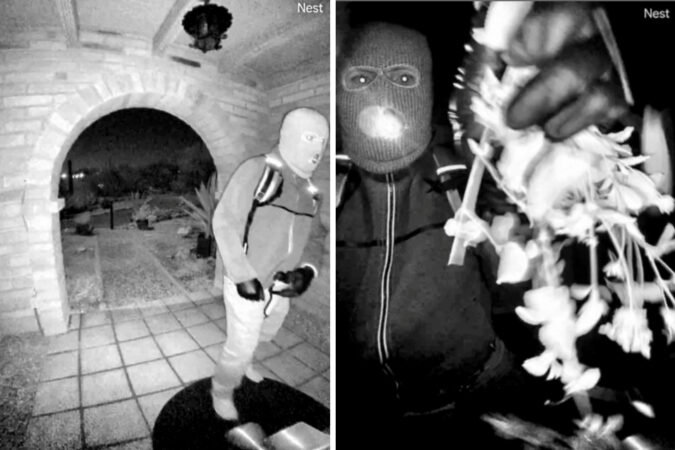
TUCSON, Ariz. — Fresh surveillance images from Nancy Guthrie’s porch the night she went missing, coupled with intense police activity across Arizona and the detention of a man had raised hopes that authorities were nearing a major break.
But then the man was released after questioning, leaving it unclear Wednesday where the investigation stood into last week’s disappearance of Guthrie, the 84-year-old mother of “Today” show host Savannah Guthrie.
FBI agents carrying water bottles to beat the 80-degree F (26.7-degree C) heat walked among rocks and desert vegetation at Guthrie’s Tucson-area home. They also fanned out across a neighborhood about a mile (1.6 kilometers) away, knocking on doors and searching through cactuses, bushes and boulders.
Several hundred detectives and agents are now assigned to the investigation, which is expanding in the area, the Pima County Sheriff’s Department said.
In a nearby neighborhood, two investigators emerged from daughter Annie Guthrie’s home with a paper grocery sack and a white trash bag. One, still wearing blue protective gloves, also took a stack of mail from the roadside mailbox. They drove away without speaking to reporters.
Barb Dutrow, who was jogging through a neighborhood where teams were searching, said an FBI agent told her they were looking for anything that might have been tossed from a car. Dutrow, who was visiting from Louisiana for a convention, said she “can’t imagine the feeling of the family of having their mother taken.”
A day earlier, authorities said they had stopped a man near the U.S.-Mexico border, just hours after the FBI released videos of a person wearing a gun holster, ski mask and backpack and approaching Nancy Guthrie’s home in Tucson. The man told media outlets early Wednesday that he was released after several hours and had nothing to do with Guthrie’s disappearance last week.
Authorities have not said what led them to stop the man Tuesday but confirmed he was released. The sheriff’s department said its deputies and FBI agents also searched a location in Rio Rico, a city south of Tucson where the man lives.
It was the latest twist in an investigation that has gripped the nation since Nancy Guthrie disappeared on Feb. 1. Until Tuesday, it seemed authorities were making little headway in determining what happened to her or finding who was responsible.
The black and white images released by the FBI showing a masked person trying to cover a doorbell camera on Guthrie’s porch marked the first significant break in the case. But the images did not show what happened to her or help determine whether she is still alive.
FBI Director Kash Patel said investigators spent days trying to find lost, corrupted or inaccessible images.
Even though the images do not show the person’s face, investigators are hopeful someone will know who was on the porch. More than 4,000 calls came into the Pima County sheriff’s tip line within the past 24 hours, the department said Wednesday afternoon.
Authorities have said for more than a week that they believe Nancy Guthrie was taken against her will. She was last seen at home Jan. 31 and reported missing the next day. DNA tests showed blood on her porch was hers, authorities said.
Savannah Guthrie posted the new surveillance images on social media and said the family believes their mother is still alive.
The longtime NBC host and her two siblings have indicated a willingness to pay a ransom.
It is not known whether ransom notes demanding money with deadlines that have already passed were authentic, and whether the family has had any contact with whoever took Guthrie.
TMZ reported it received a message Wednesday from someone claiming to know the kidnapper’s identity and that they unsuccessfully tried to reach Savannah Guthrie’s brother and sister. The person asked for bitcoin in exchange for the information, TMZ said. The FBI did not immediately respond to a message.
Authorities have said Nancy Guthrie takes several medications and there was concern from the start that she could die without them.
Jose Alvarado scored a season-high 26 points and Mikal Bridges added 22 points as the New York Knicks beat the 76ers 138-89 Wednesday night.
The Knicks bounced back from an overtime home lost to the Indiana Pacers on Tuesday night for their 10th win in 12 games. Two of those victories have come against the Sixers. The teams split their four-game season series.
Alvarado, acquired last week from New Orleans, shot 8-for-13 from three-point range and finished with five steals.
Karl-Anthony Towns had 21 points and 11 rebounds. Mohamed Diawara scored 14 points. Jalen Brunson, who scored 40 points against the Pacers, scored eight on Tuesday.
Tyrese Maxey led the way with 32 points in three quarters for the Sixers, who played without center Joel Embiid. The Sixers’ center sat out due to right knee soreness. VJ Edgecombe added 14 points, and Dominick Barlow scored 13.
The Sixers, who lost their second straight and for the third time in four games, were held to a season-low point total, just their third game under 100 points this season.
The Knicks jumped out to a 16-4 lead thanks to nine points from Bridges. They led by 30 at the half. The Knicks shot 58% from the field in the first half, paced by 19 points from Bridges and 16 from Towns. They finished with a season-high 41 assists.
Embiid missed his second straight game. He hadn’t missed consecutive games since Dec. 19-20. Quentin Grimes missed a second straight game due to illness.
OG Anunoby missed this fourth straight game for the Knicks with a right toenail avulsion.
The Sixers head into the All-Star break with a 30-24 record and will host the Atlanta Hawks next on Feb. 19 (7 p.m., NBCSP).
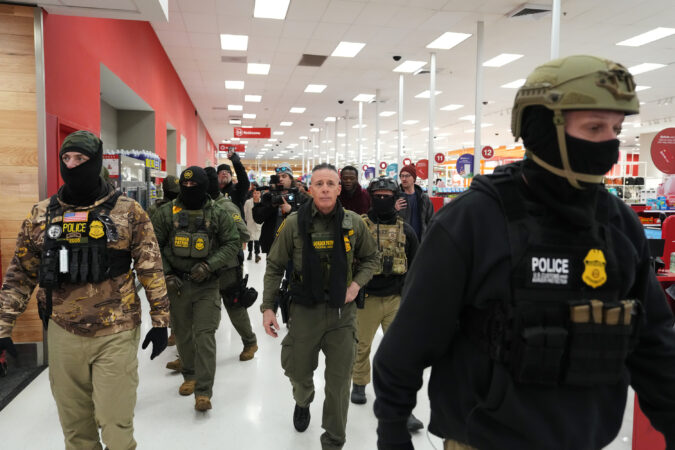
NEW YORK — Activists planned protests at more than two dozen Target stores around the United States on Wednesday to pressure the discount retailer into taking a public stand against the 5-week-old immigration crackdown in its home state of Minnesota.
ICE Out Minnesota, a coalition of community groups, religious leaders, labor unions, and other critics of the federal operation, called for sit-ins and other demonstrations to continue at Target locations for a full week. Target’s headquarters are located in Minneapolis, where federal officers last month killed two residents who had participated in anti-ICE protests, and its name adorns the city’s major league baseball stadium and an arena where its basketball teams plays.
“They claim to be part of the community, but they are not standing up to ICE,” said Elan Axelbank, a member of the Minnesota chapter of Socialist Alternative, which describes itself as a revolutionary political group. He organized a Wednesday protest outside a Target store in Minneapolis’ Dinkytown commercial district.
Demonstrations also were scheduled in St. Paul, Minnesota, Boston, Chicago, Honolulu, Philadelphia, Pittsburgh, Raleigh, North Carolina, San Diego, Seattle and other cities, as well as in suburban areas of Minnesota, California and Massachusetts. Target declined Wednesday to comment on the protests.
Target first became a bull’s-eye for critics of the Trump administration’s surge in immigration enforcement activity after a widely-circulated video showed federal agents detaining two Target employees in a store in the Minneapolis suburb of Richfield last month. Luis Argueta, a spokesperson for Unidos Minnesota, an immigrant-led social justice advocacy organization that is part of the ICE Out Minnesota coalition, said his group is focusing its protests on the Richfield store.
One of the demands of Wednesday’s protests is for Target to deny federal agents entry to stores unless they have judicial warrants authorizing arrests.
Some lawyers have argued that anyone, including U.S. Border Patrol and Immigration and Customers Enforcement agents without signed warrants, can enter public areas of a business as they wish. Public areas include restaurant dining sections, open parking lots, office lobbies and shopping aisles, but not back offices, closed-off kitchens or other areas of a business that are generally off-limits to the public and where privacy would be reasonably expected, those lawyers say.
Target has not commented publicly on the detention of the store employees. CEO Michael Fiddelke, who became Target’s chief executive on Feb. 2, sent a video message to the company’s 400,000 workers two days after a Border Patrol agent and a Customs and Border Protection officer shot and killed Minneapolis resident Alex Pretti on Jan. 24.
Fiddelke said the “violence and loss of life in our community is incredibly painful,” but he did not mention the immigration crackdown or the fatal shootings of Pretti, an ICU nurse at a medical center for U.S. veterans in Minneapolis, and Renee Good, a mother of three fired on in her car by an ICE agent.
Fiddelke was one of 60 CEOs of Minnesota-based companies who, in the wake of Pretti’s death, signed an open letter “calling for an immediate de-escalation of tensions and for state, local and federal officials to work together to find real solutions.”
The protests over its alleged failure to oppose the immigration crackdown in Minnesota come a year after Target faced protests and boycotts over the company’s decision to roll back its diversity, equity and inclusion initiatives. At the time, critics said the decision marked a betrayal of Target’s retail giant’s philanthropic commitment to fighting racial disparities and promoting progressive values in liberal Minneapolis and beyond.
The retail chain also is struggling with a persistent sales malaise. Critics have complained of disheveled stores that are missing the budget-priced flair that long ago earned the retailer the nickname “Tarzhay.”
While Wednesday’s protests targeted a tiny fraction of the company’s nearly 2,000 stores, the negative attention serves as another distraction from Target’s business, according to Neil Saunders, managing director of the retail division of market research firm GlobalData.
“The agenda has been hijacked by this,” Saunders said. “And it is a bit of a distraction for Target that they’d rather not have.”
In recent days, a national coalition of Mennonite congregations organized roughly a dozen demonstrations inside and outside of Target stores across the country, singing and urging Target to publicly call Congress to defund Immigration and Customs Enforcement among other demands.
A spokesperson for Mennonite Action said the coalition was not formally connected to ICE Out but following the lead of organizers in Minneapolis.
The Rev. Joanna Lawrence Shenk, associate pastor at First Mennonite Church of San Francisco, said the group did not plan any actions on Wednesday but was mapping out weekend singalong events at Targets in a handful of towns and cities, including Pittsburgh and Harrisonburg, Virginia. She estimated that by the end of the weekend more than 1,000 congregation members will have participated.
Shenk noted that the Mennonites sing This Little Light of Mine and other gospel songs and hymns.
“The singing was an expression of our love for immigrant neighbors who are at risk right now and who are also a part of our congregation,” she said. “For us, it’s not just standing in solidarity with others but it’s also protecting people who are vulnerable.”