Category: Associated Press

  • Pentagon-FAA dispute over lasers to thwart cartel drones led to airspace closure, AP sources say

    Pentagon-FAA dispute over lasers to thwart cartel drones led to airspace closure, AP sources say

    EL PASO, Texas — The Pentagon allowed U.S. Customs and Border Protection to use an anti-drone laser earlier this week, leading the Federal Aviation Administration to suddenly close the airspace over El Paso, Texas, on Wednesday, according to two people familiar with the situation who spoke on the condition of anonymity to discuss sensitive details.

    The confusing arc of events began as the FAA announced it was shutting down all flight traffic over the city on the U.S.-Mexico border for 10 days, stranding some travelers, but the closure ended up only lasting a few hours. The Trump administration said it stemmed from the FAA and Pentagon working to halt an incursion by Mexican cartel drones, which are not uncommon along the southern border.

    One of the people said the laser was deployed near Fort Bliss without coordinating with the FAA, which decided then to close the airspace to ensure commercial air safety. Others familiar with the matter said the technology was used despite a meeting scheduled for later this month between the Pentagon and the FAA to discuss the issue.

    While the restrictions were short-lived in the city of nearly 700,000 people, it is unusual for an entire airport to shut down even for a short time. Stranded travelers with luggage lined up at airline ticket counters and car rental desks before the order was lifted.

    Normal flights resumed after seven arrivals and seven departures were canceled. Some medical evacuation flights also had to be rerouted.

    Jorge Rueda, 20, and Yamilexi Meza, 21, of Las Cruces, New Mexico, had their morning flight to Portland, Ore., canceled, so they were losing part of their Valentine’s Day weekend trip.

    Rueda said he was glad that “10 days turned into two hours.” They were booked on an evening flight out of El Paso.

    Troubling lack of coordination

    The investigation into last year’s midair collision near Washington, D.C., between an airliner and Army helicopter that killed 67 people highlighted how the FAA and Pentagon were not always working well together.

    The National Transportation Safety Board said the FAA and the Army did not share safety data with each other about the alarming number of close calls around Reagan National Airport and failed to address the risks.

    Democratic Sen. Tammy Duckworth of Illinois, a former Army helicopter pilot who serves on committees focused on aviation and the armed services, said the issue Wednesday was the latest example of “the lack of coordination that’s endemic in this Trump administration.”

    Senate Commerce Committee Chairman Ted Cruz (R., Texas) said he would request a briefing from the FAA on the incident.

    Rep. Veronica Escobar, a Democrat whose district includes El Paso, said neither her office nor local officials received any advance notice of the closure. After it was lifted, she said “the information coming from the federal government does not add up.”

    “I believe the FAA owes the community and the country an explanation as to why this happened so suddenly and abruptly and was lifted so suddenly and abruptly,” Escobar said at a news conference.

    Transportation Secretary Sean Duffy said earlier that the airspace was closed as the Defense Department and the FAA halted an incursion by Mexican cartel drones and “the threat has been neutralized.”

    Officials at the Department of Homeland Security, FAA and Department of Transportation did not immediately respond to requests for comment. A Trump administration official insisted the agencies were in lockstep to protect national security and pointed to Duffy’s statement. The Pentagon said it had nothing to add to its statement that largely mirrored Duffy’s.

    Cross-border drone activity is not new

    Republican Rep. Tony Gonzales, whose congressional district covers an area that stretches about 800 miles along Texas’ border with Mexico, said cartel drone sightings are common.

    “For any of us who live and work along the border, daily drone incursions by criminal organizations is everyday life for us. It’s a Wednesday for us,” Gonzales said.

    Steven Willoughby, deputy director of the counter-drone program at the Department of Homeland Security, told Congress in July that cartels are using drones nearly every day to transport drugs across the border and surveil Border Patrol agents. More than 27,000 drones were detected within 1,600 feet of the southern border in the last six months of 2024, he said, mostly at night.

    What is “extremely rare” is the closure of an entire airport over a security issue, according to a former chief security officer at United Airlines.

    Officials usually will try to take security measures to isolate the risk if a specific plane or airline is threatened rather than shut down the airport, said Rich Davis, now a senior security adviser at risk mitigation company International SOS.

    Mexican officials question the explanation

    Asked about the drone explanation provided by U.S. officials, Mexican President Claudia Sheinbaum said she had “no information about the use of drones on the border.” She noted that if U.S. authorities have more information, they should contact Mexico’s government.

    Mexican defense and navy secretaries planned to talk with officials from U.S. Northern Command in a meeting Wednesday in Washington attended by several other countries, Sheinbaum told reporters. Sheinbaum said the Mexican officials would “listen” in the meeting and her government would look into “the exact causes” of the closure.

    El Paso is a hub of cross-border commerce alongside Ciudad Juárez. That Mexican city is home to about 1.5 million people, and some of its residents are accustomed to taking advantage of facilities, including airports, on the U.S. side of the border.

    That easy access to the United States also has made Juarez, like other border cities, attractive to Mexico’s drug cartels seeking to safeguard their smuggling routes for drugs and migrants headed north and cash and guns moving to the south.

    ‘This was a major and unnecessary disruption’

    El Paso Mayor Renard Johnson told reporters that he did not hear about the closure until after the alert was issued.

    “Decisions made without notice and coordination puts lives at risk and creates unnecessary danger and confusion,” Johnson said. “This was a major and unnecessary disruption, one that has not occurred since 9/11.”

    The airport describes itself as the gateway to west Texas, southern New Mexico and northern Mexico. Southwest, United, American and Delta are among the carriers that operate flights there.

    A similar 10-day temporary flight restriction for special security reasons remained in place Wednesday around Santa Teresa, New Mexico, which is about 15 miles (24 kilometers) northwest of the El Paso airport. FAA officials did not immediately explain why that restriction remained.

    Sen. Ben Ray Lujan, a New Mexico Democrat, said in a statement that he was seeking answers from the FAA and the Trump administration “about why the airspace was closed in the first place without notifying appropriate officials, leaving travelers to deal with unnecessary chaos.”

    Confusion for travelers

    Travel plans on both sides of the border were disrupted.

    María Aracelia was pushing two roller suitcases across the pedestrian bridge from Ciudad Juarez to El Paso on Wednesday morning. She had a round-trip flight to Illinois scheduled for the afternoon.

    After receiving a text at 4 a.m. telling her about the 10-day closure, she scrambled to try to find other options, even how to get to another airport. Then came a notification that the El Paso airport had reopened.

    “This is stressful, and there isn’t time to make so many changes, especially if you need to get back for work,” Aracelia said.

  • House votes to slap back Trump’s tariffs on Canada in rare bipartisan rebuke of White House agenda

    House votes to slap back Trump’s tariffs on Canada in rare bipartisan rebuke of White House agenda

    WASHINGTON — The House voted Wednesday to slap back President Donald Trump’s tariffs on Canada, a rare if largely symbolic rebuke of the White House agenda as Republicans joined Democrats over the objections of GOP leadership.

    The tally, 219-211, was among the first times the House, controlled by Republicans, has confronted the president over a signature policy, and drew instant recrimination from Trump himself. The resolution seeks to end the national emergency Trump declared to impose the tariffs, though actually undoing the policy would require support from the president, which is highly unlikely. The resolution next goes to the Senate.

    Trump believes in the power of tariffs to force U.S. trade partners to the negotiating table. But lawmakers are facing unrest back home from businesses caught in the trade wars and constituents navigating pocketbook issues and high prices.

    “Today’s vote is simple, very simple: Will you vote to lower the cost of living for the American family or will you keep prices high out of loyalty to one person — Donald J. Trump?” said Rep. Gregory Meeks of New York, the top Democrat on the House Foreign Affairs Committee, who authored the resolution.

    Within minutes, as the gavel struck, Trump fired off a stern warning to those in the Republican Party who would dare to cross him.

    “Any Republican, in the House or the Senate, that votes against TARIFFS will seriously suffer the consequences come Election time, and that includes Primaries!” the president posted on social media.

    The high-stakes moment provides a snapshot of the House’s unease with the president’s direction, especially ahead of the midterm elections as economic issues resonate among voters. The Senate has already voted to reject Trump’s tariffs on Canada and other countries in a show of displeasure. But both chambers would have to approve the tariff rollbacks, and send the resolution to Trump for the president’s signature — or veto.

    Trump recently threatened to impose a 100% tariff on goods imported from Canada over that country’s proposed China trade deal, intensifying a feud with the longtime U.S. ally and Prime Minister Mark Carney.

    GOP defections forced the vote

    House Speaker Mike Johnson tried to prevent this showdown.

    Johnson (R., La.) insisted lawmakers wait for a pending Supreme Court ruling in a lawsuit about the tariffs. He engineered a complicated rules change to prevent floor action. But Johnson’s strategy collapsed late Tuesday, as Republicans peeled off during a procedural vote to ensure the Democratic measure was able to advance.

    “The president’s trade policies have been of great benefit,” Johnson had said. “And I think the sentiment is that we allow a little more runway for this to be worked out between the executive branch and the judicial branch.”

    Late Tuesday evening, Johnson could be seen speaking to holdout Republican lawmakers as the GOP leadership team struggled to shore up support during a lengthy procedural vote, but the numbers lined up against him.

    “We’re disappointed in what the people have done,” Kevin Hassett, the director of the White House’s National Economic Council, told reporters at the White House on Wednesday morning. “The president will make sure they don’t repeal his tariffs.”

    Terminating Trump’s emergency

    The resolution put forward by Meeks would terminate the national emergency that Trump declared a year ago as one of his executive orders.

    The administration claimed illicit drug flow from Canada constitutes an unusual and extraordinary threat that allows the president to slap tariffs on imported goods outside the terms of the U.S.-Mexico-Canada trade agreement.

    The Republican chairman of the House Foreign Affairs Committee, Rep. Brian Mast of Florida, said the flow of fentanyl into the U.S. is a dire national emergency and the policy must be left in place.

    “Let’s be clear again about what this resolution is and what it’s not. It’s not a debate about tariffs. You can talk about those, but that’s not really what it is,” Mast said. “This is Democrats trying to ignore that there is a fentanyl crisis.”

    Experts say fentanyl produced by cartels in Mexico is largely smuggled into the U.S. from land crossings in California and Arizona. Fentanyl is also made in Canada and smuggled into the U.S., but to a much lesser extent.

    Torn between Trump and tariffs

    Ahead of voting, some rank-and-file Republican lawmakers expressed unease over the choices ahead as Democrats — and a few renegade Republicans — impressed on their colleagues the need to flex their power as the legislative branch rather than ceding so much power to the president to take authority over trade and tariff policy.

    Rep. Don Bacon (R., Neb.) said he was unpersuaded by Johnson’s call to wait until the Supreme Court makes its decision about the legality of Trump’s tariffs. He voted for passage.

    “Why doesn’t the Congress stand on its own two feet and say that we’re an independent branch?” Bacon said. “We should defend our authorities. I hope the Supreme Court does, but if we don’t do it, shame on us.”

    Bacon, who is retiring rather than facing reelection, also argued that tariffs are bad economic policy.

    Other Republicans had to swiftly make up their minds after Johnson’s gambit — which would have paused the calendar days to prevent the measure from coming forward — was turned back.

    “At the end of the day, we’re going to have to support our president,” said Rep. Keith Self (R., Texas).

    Rep. Darrell Issa (R., Calif.) said he doesn’t want to tie the president’s hands on trade and would support the tariffs on Canada “at this time.”

  • Bondi clashes with Democrats as she struggles to turn the page on turmoil over the Epstein files

    Bondi clashes with Democrats as she struggles to turn the page on turmoil over the Epstein files

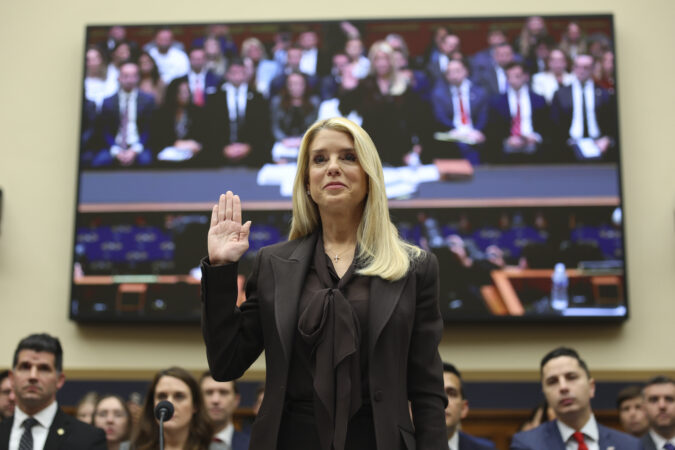
    WASHINGTON — Attorney General Pam Bondi launched into a passionate defense of President Donald Trump Wednesday as she tried to turn the page from relentless criticism of the Justice Department’s handling of the Jeffrey Epstein files, repeatedly shouting at Democrats during a combative hearing in which she postured herself as the Republican president’s chief protector.

    Besieged by questions over Epstein and accusations of a weaponized Justice Department, Bondi aggressively pivoted in an extraordinary speech in which she mocked her Democratic questioners, praised Trump over the performance of the stock market and openly aligned herself as in sync with a president whom she painted as a victim of past impeachments and investigations.

    “You sit here and you attack the president and I’m not going to have it,” Bondi told lawmakers on the House Judiciary Committee. ”I am not going to put up with it.”

    With victims of Epstein seated behind her in the hearing room, Bondi forcefully defended the department’s handling of the files related to the well-connected financier that have dogged her tenure. She accused Democrats of using the Epstein files to distract from Trump’s successes, when it was Republicans who initiated the furor over the files and Bondi herself fanned the flames by distributing binders to conservative influencers at the White House last year.

    The hearing quickly devolved into a partisan brawl, with Bondi repeatedly lobbing insults at Democrats while insisting she was not “going to get in the gutter” with them. In one particularly fiery exchange, Rep. Jamie Raskin of Maryland accused Bondi of refusing to answer his questions, prompting the attorney general to call the top Democrat on the committee a “washed-up loser lawyer — not even a lawyer.”

    Trying to help Bondi amid an onslaught of Democratic criticism, Republicans tried to keep the focus on bread-and-butter law enforcement issues like violent crime and illegal immigration. Bondi repeatedly deflected questions from Democrats, responding instead with attacks seemingly gleaned from news headlines as she sought to paint them as uninterested about violence in their districts. Democrats became exasperated as Bondi declined time and again to directly answer.

    “This is pathetic. I am not asking trick questions,” said Becca Balint, a Vermont Democrat who tried to ask Bondi whether the Justice Department had questioned different Trump administration officials about their ties to Epstein. “The American people deserve to know.”

    Bondi has struggled to move past the backlash over the Epstein files since handing out binders to a group of social media influencers at the White House in February 2025. The binders included no new revelations about Epstein, leading to even more calls from Trump’s base for the files to be released.

    In her opening remarks, Bondi told Epstein victims to come forward to law enforcement with any information and about their abuse and said she “deeply sorry” for what they had suffered. She told the survivors that “any accusation of criminal wrongdoing will be taken seriously and investigated.”

    But she refused when pressed by Rep. Pramila Jayapal to turn and face the Epstein victims in the audience and apologize for what Trump’s Justice Department has “put them through” and accused the Washington state Democrat of “theatrics.”

    Bondi’s appearance on Capitol Hill comes a year into her tumultuous tenure that has amplified concerns that the Justice Department is using its law enforcement powers to target political foes of the president. Just a day earlier, the department sought to secure charges against Democratic lawmakers who produced a video urging military service members not to follow “illegal orders.” But in an extraordinary rebuke of prosecutors, a grand jury in Washington refused to return an indictment.

    Turning aside criticism that the Justice Department under her watch has become politicized, Bondi touted the department’s work to reduce violent crime and said she was determined to restore the department to its core missions after what she described as “years of bloated bureaucracy and political weaponization.”

    GOP Rep. Jim Jordan, of Ohio, praised Bondi for undoing actions under President Joe Biden’s Justice Department that Republicans say unfairly targeted conservatives — including Trump, who was charged in two criminal cases that were abandoned after his 2024 election victory.

    “What a difference a year makes,” Jordan said. “Under Attorney General Bondi, the DOJ has returned to its core missions — upholding the rule of law, going after the bad guys and keeping Americans safe.”

    Democrats, meanwhile, excoriated Bondi over haphazard redactions in the Epstein files that exposed intimate details about victims and also included nude photographs. A review by The Associated Press and other news organizations has found countless examples of sloppy, inconsistent or nonexistent redactions that have revealed sensitive private information.

    “You’re siding with the perpetrators and you’re ignoring the victims,” Raskin told Bondi in his opening statement. “That will be your legacy unless you act quickly to change the course. You’re running a massive Epstein coverup right out of the Department of Justice.”

    Republican Rep. Thomas Massie of Kentucky, who broke with his party to advance the legislation that forced the released of the Epstein files, also took Bondi to task for the release of victims’ personal information, telling her: “Literally the worst thing you could do to survivors, you did.”

    Bondi told Massie that he was only focused on the files because Trump is mentioned in them, calling him a “hypocrite” with “Trump-derangement syndrome.”

    Department officials have said they took pains to protect survivors, but that errors were inevitable given the volume of the materials and the speed at which the department had to release them. Bondi told lawmakers that the Justice Department took down files when they were made aware that they included victims’ information and that staff had tried to do their “very best in the time frame allotted by the legislation” mandating the release of the files.

    After raising the expectations of conservatives with promises of transparency last year, the Justice Department said in July that it had concluded a review and determined that no Epstein “client list” existed and there was no reason to make public additional files. That set off a furor that prompted Congress to pass the legislation demanding that the Justice Department release the files.

    The acknowledgment that the well-connected Epstein did not have a list of clients to whom underage girls were trafficked represented a public walk-back of a theory that the Trump administration had helped promote when Bondi suggested in a Fox News interview last year that it was sitting on her desk for review. Bondi later said she was referring to the Epstein files in total, not a specific client list.

  • James Van Der Beek, the ‘Dawson’s Creek’ star who later mocked his own hunky persona, has died at 48

    James Van Der Beek, the ‘Dawson’s Creek’ star who later mocked his own hunky persona, has died at 48

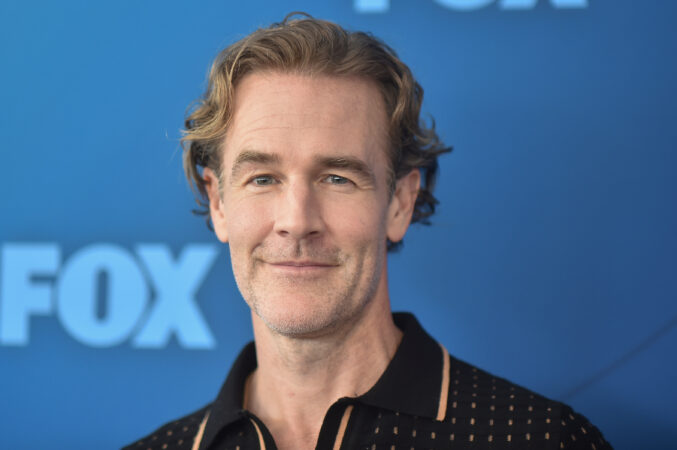
    NEW YORK — James Van Der Beek, a heartthrob who starred in coming-of-age dramas at the dawn of the new millennium, shooting to fame playing the titular character in Dawson’s Creek and in later years mocking his own hunky persona, has died. He was 48.

    “Our beloved James David Van Der Beek passed peacefully this morning. He met his final days with courage, faith, and grace. There is much to share regarding his wishes, love for humanity and the sacredness of time. Those days will come,” the statement read. “For now we ask for peaceful privacy as we grieve our loving husband, father, son, brother, and friend.”

    Mr. Van Der Beek revealed in 2024 that he was being treated for colorectal cancer.

    Mr. Van Der Beek made a surprise video appearance in September at a Dawson’s Creek reunion charity event in New York City after previously dropping out due to illness.

    He appeared projected onstage at the Richard Rodgers Theatre during a live reading of the show’s pilot episode to benefit F Cancer and Mr. Van Der Beek. Lin-Manuel Miranda subbed for him on stage. “Thank you to every single person here,” Mr. Van Der Beek said.

    Forever tied to ‘Dawson’s Creek’

    A one-time theater kid, Mr. Van Der Beek would star in the movie Varsity Blues and on TV in CSI: Cyber as FBI Special Agent Elijah Mundo, but was forever connected to Dawson’s Creek, which ran from 1998 to 2003 on The WB.

    The series followed a high school group of friends as they learned about falling in love, creating real friendships and finding their footing in life. Mr. Van Der Beek, than 20, played 15-year-old Dawson Leery, who aspired to be a director of Steven Spielberg quality.

    Dawson’s Creek, with the moody theme song Paula Cole’s I Don’t Want To Wait, helped define The WB as a haven for teens and young adults who related to its hyper-articulate dialogue and frank talk about sexuality. And it made household names of Mr. Van Der Beek, Joshua Jackson, Katie Holmes and Michelle Williams.

    The show caused a stir when one of the teens embarked on a racy affair with a teacher 20 years his senior and when Holmes’ character climbs through Dawson’s bedroom window and they curl up together. Racier shows like Euphoria and Sex Education owe a debt to Dawson’s Creek.

    Mr. Van Der Beek sometimes struggled to get out from under the shadow of the show but eventually leaned into lampooning himself, like on Funny Or Die videos and on Kesha’s Blow music video, which included his laser gun battle with the pop star in a nightclub and dead unicorns.

    “It’s tough to compete with something that was the cultural phenomenon that Dawson’s Creek was,” he told Vulture in 2013. “It ran for so long. That’s a lot of hours playing one character in front of people. So it’s natural that they associate you with that.”

    A popular GIF and ‘Varsity Blues’

    More than a decade after the show went off the air, a scene at the end of the show’s third season became a GIF. Dawson was watching as his soul mate embarks on a love affair with his best friend and burst into tears.

    “It wasn’t scripted that I was supposed to cry; it was just one of those things where it’s a magical moment and it just happens in the scene,” he told Vanity Fair. He seemed exasperated when he told the Los Angeles Times: “All of a sudden, six years of work was boiled down to one seven-second clip on loop.” (Mr. Van Der Beek himself recreated the GIF in 2011 for Funny or Die and gave it a second life.)

    While still on Dawson’s Creek, Mr. Van Der Beek hosted Saturday Night Live — the musical guest was Everlast — and landed a plumb role in Varsity Blues, playing a second-string high school quarterback who leaps into the breach when the star suffers an injury.

    Mr. Van Der Beek’s character, Mox, turns out to not be a football fanatic, preferring to read Kurt Vonnegut and yearning for the college education which will allow him to escape the jock mentality of his Texas town. “I don’t want your life,” he screams at one point. Critic Roger Ebert called him “convincing and likable.”

    After ‘Dawson’s Creek’

    Some of his projects after Dawson’s Creek include co-creating and playing Wesley “Diplo” Pentz, a dull but likable music producer in the mockumentary satire on Viceland, What Would Diplo Do? In 2019, he made it to the semifinals of ABC’s Dancing with the Stars and played a balding, out-of-shape ex-boyfriend on How I Met Your Mother.

    “The more you make fun of yourself and don’t try to go for any kind of respect, the more people seem to respect you,” he told Vanity Fair in 2011. “I’ve always been a clown trapped in a leading man’s body.”

    Between 2003 and 2013, he made appearances in shows like Criminal Minds, One Tree Hill, and How I Met Your Mother” He played himself with a crackpot intensity in the Krysten Ritter-led ABC drama Don’t Trust the B— in Apartment 23, and the short-lived CSI spinoff CSI: Cyber and CBS’s Friends With Better Lives.

    He’s also appeared in a number of movies, such as Kevin Smith’s 2001 comedy Jay and Silent Bob Strike Back and its 2019 sequel, Jay and Silent Bob Reboot. He also was in the Bret Easton Ellis adaptation of “The Rules of Attraction” in 2002 opposite Jessica Biel and Kate Bosworth.

    In 2025, he was unmasked as Griffin on The Masked Singer, after singing a cover of John Denver’s Take Me Home, Country Roads, and I Had Some Help by Post Malone and Morgan Wallen.

    Early life as a theater kid

    Mr. Van Der Beek, who was raised in Cheshire, Conn., started acting at 13 after suffering a concussion playing football that prevented him from playing for a year on doctor’s orders. He landed the role of Danny Zuko in his school production of Grease.

    He stuck with theater, landing at 16 in 1994 an off-Broadway role in Finding the Sun by Pulitzer Prize-winner Edward Albee and one of the sons in a revival of Shenandoah at the prestigious Goodspeed Opera House in his home state.

    He earned a scholarship to New Jersey’s Drew University but left school early when he got Dawson’s Creek. In 2024, he returned to campus to accept an honorary degree for his “selfless service and exemplary commitment to the mission of Drew,” the university said.

    Drew University President Hilary Link welcomed Mr. Van Der Beek with a popular quote from his Dawson’s Creek character: “Edge is fleeting,” she said, “but heart lasts forever. So on this morning, we pay tribute to that heart.”

    He is survived by his wife, Kimberly, and six children, Olivia, Joshua, Annabel, Emilia, Gwendolyn and Jeremiah.

  • Suspect in Canada school shooting is identified as 18-year-old who had prior mental health calls

    Suspect in Canada school shooting is identified as 18-year-old who had prior mental health calls

    VANCOUVER, British Columbia — Police on Wednesday identified the suspect in a school shooting in Canada as an 18-year-old who had prior mental health calls to her home and who was found dead following the attack that killed eight people in a remote part of British Columbia.

    Royal Canadian Mounted Police Deputy Commissioner Dwayne McDonald said Jesse Van Rootselaar had a history of mental health contact with police, and that the suspect’s mother and stepbrother were found dead in a home near the school.

    The motive remained unclear.

    Police initially said nine people were killed Tuesday in the attack, but McDonald clarified Wednesday that there were eight fatalities, plus the suspect, who authorities said shot herself. McDonald said the discrepancy arose from a victim who was airlifted to a medical center. Authorities mistakenly thought that person had died.

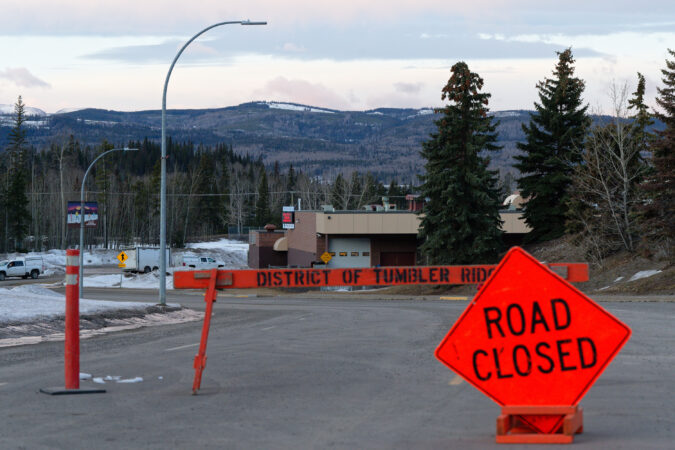
    More than 25 people were wounded Tuesday in the attack in the small mountain community of Tumbler Ridge, police said.

    Town is near border with Alberta

    The town of 2,700 people in the Canadian Rockies is more than 600 miles northeast of Vancouver, near the provincial border with Alberta.

    Police said the victims included a 39-year-old teacher and five students, ages 12 to 13.

    McDonald said the suspect’s mother, who was also 39, and an 11-year-old stepbrother, were found at the suspect’s home.

    The killings at the home occurred first, he said. A young family member at the home went to a neighbor, who called police.

    At the school, one victim was found in a stairwell and the rest, McDonald believed, were found in the library. The suspect was not related to any of the victims at the school, he said.

    “There is no information at this point that anyone was specifically targeted,” McDonald said.

    Police recovered a long gun and a modified handgun. McDonald said officers arrived at the school two minutes after the initial call. When they arrived, shots were fired in their direction.

    “Parents, grandparents, sisters, brothers in Tumbler Ridge will wake up without someone they love. The nation mourns with you, and Canada stands by you,” an emotional Prime Minister Mark Carney said as he arrived in Parliament.

    Deadliest rampage since 2020

    The attack was Canada’s deadliest rampage since 2020, when a gunman in Nova Scotia killed 13 people and set fires that left another nine dead.

    Carney said flags at government buildings will be flown at half-staff for seven days and added: “We will get through this.”

    Shelley Quist said her neighbor across the street lost her 12-year-old. “We heard his mom. She was in the street crying. She wanted her son’s body,” Quist said.

    Quist said her 17-year-old son, Darian, was on lockdown in the school for more than two hours. The provincial government website lists Tumbler Ridge Secondary School as having 175 students in grades 7 to 12.

    “The grade sevens and eights, I think, were upstairs in the library, and that’s where the shooter went,” she said. Her son was in the library just 15 minutes prior to the attack.

    Quist was working at the hospital down the street when the shooting started.

    “I was about to go run down to the school, but my coworker held me back. And then I was able to get Darian on the phone to know he was OK,” she said.

    Darian Quist said he knew the attack was real when the principal came down the halls and ordered doors to be closed. He said fellow students texted him pictures of blood while he remained locked down in a classroom.

    “We used the desk to block the doors,” he said.

    School shootings are rare in Canada, which has strict gun-control laws. The government has responded to previous mass shootings with gun-control measures, including a recently broadened ban on all guns it considers assault weapons.

    A video showed students walking out with their hands raised as police vehicles surrounded the building and a helicopter circled overhead.

    Village is a ‘big family’

    Tumbler Ridge Mayor Darryl Krakowka said it was “devastating” to learn how many had died in the community, which he called a “big family.”

    “I broke down,” Krakowka said. “I have lived here for 18 years. I probably know every one of the victims.”

    The Rev. George Rowe of the Tumbler Ridge Fellowship Baptist Church went to the recreation center where victims’ families were awaiting more information.

    “It was not a pretty sight. Families are still waiting to hear if it’s their child that’s deceased and because of protocol and procedure, the investigating team is very careful in releasing names,” Rowe said Tuesday.

    Rowe once taught at the high school, and his three children graduated from there.

    “To walk through the corridors of that school will never be the same again,” he said.

    The school district said the high school and elementary school will be closed for the rest of the week.

    Carney’s office said he called off a planned trip to Halifax, Nova Scotia, and Munich, Germany. He had been set to announce a long-awaited defense industrial strategy Wednesday in Halifax before heading to Europe for the Munich Security Conference.

    British Columbia Premier David Eby on Tuesday said he had spoken to the prime minister about the “unimaginable tragedy.”

    “I know it’s causing us all to hug our kids a little bit tighter tonight,” he said. “I’m asking the people of British Columbia to look after the people of Tumbler Ridge tonight.

  • Alex Murdaugh continues to insist he didn’t kill wife and son as he gets another day in court

    Alex Murdaugh continues to insist he didn’t kill wife and son as he gets another day in court

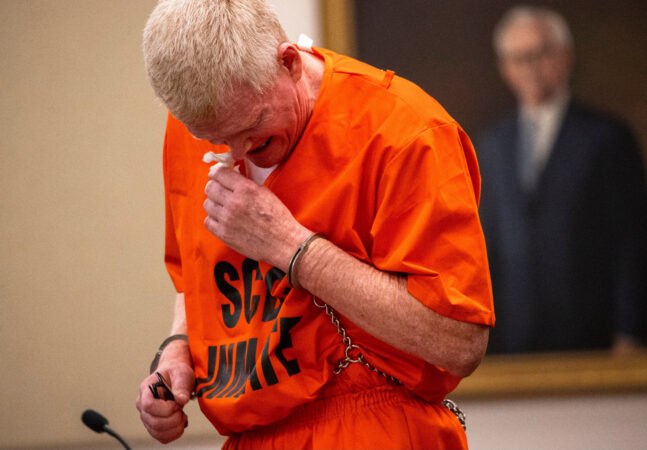
    COLUMBIA, S.C. — Alex Murdaugh has admitted he is a thief, a liar, an insurance cheat, a drug addict and a bad lawyer. But even from behind bars he continues to adamantly deny he is a killer.

    Murdaugh’s attorneys argued Wednesday before the South Carolina Supreme Court, asking the justices to overturn the two murder convictions and life sentence Murdaugh is serving for the shooting deaths of his wife, Maggie, and younger son, Paul, outside their home in June 2021.

    The defense argues the trial judge made rulings that prevented a fair trial, such as allowing in evidence of Murdaugh stealing from clients that had nothing to do with the killings but biased jurors against him. They detail the lack of physical evidence — no DNA or blood was found splattered on Murdaugh or any of his clothes, even though the killings were at close range with powerful weapons that were never found.

    And they said the court clerk assigned to oversee the evidence and the jury during the trial influenced jurors to find Murdaugh guilty, hoping to improve sales of a book she was writing about the case. She has since pleaded guilty to lying about what she said and did to a different judge.

    Prosecutors argued that the clerk’s comments were fleeting and the evidence against Murdaugh was overwhelming. His lawyer said that didn’t matter because the comments a juror said she made — urging jurors to watch Murdaugh’s body language and listen to his testimony carefully — removed his presumption of innocence before the jury ever deliberated.

    “If only the people who may be innocent get a fair trial, then our Constitution isn’t working,” Murdaugh’s lawyer Dick Harpootlian told the justices.

    Murdaugh won’t leave prison

    The case continues to captivate. There are streaming miniseries, best selling books and dozens of true crime podcasts about how the multimillionaire Southern lawyer whose family dominated and controlled the legal system in tiny Hampton County ended up in a maximum security South Carolina prison.

    Even if Murdaugh wins this appeal, he isn’t going anywhere. Hanging over the 57-year-old’s head is a 40-year federal prison sentence for stealing more than $12 million from clients intended for their medical care and living expenses after they or their relatives suffered devastating and even deadly injuries in accidents.

    “He said he deserved to go to prison for what he did financially, but he can’t accept the fact that he was convicted of murdering his wife and son, for which he constantly proclaimed his innocence,” attorney Jim Griffin said after the hearing.

    Wednesday’s state Supreme Court arguments featured the same lawyers who squared off at Murdaugh’s 2023 murder trial, although Murdaugh was not there.

    Did the court clerk influence jurors?

    Former Colleton County Clerk of Court Mary Rebecca “Becky” Hill pleaded guilty in December to obstruction of justice and perjury for showing a reporter photographs that were sealed as court exhibits and then lying about it.

    The justices pressed prosecutor Creighton Waters to say whether the trial judge, who initially rejected Murdaugh’s appeal for a new trial, was right to ignore testimony from a few jurors while believing the 11 who did not accuse the clerk of misconduct.

    Waters agreed there were problems, but said they were so isolated in the six-week trial that they had no impact. Murdaugh’s lawyers said that is impossible to figure out because jurors could be influenced subtly, without realizing it.

    “It was improper. Perhaps not improper to the point of reversal, but it was improper,” Chief Justice John Kittredge observed.

    There will be no immediate decision. Rulings usually take months to be handed down.

    “We understand the gravity of the situation and the entitlement of every individual to a fair and impartial trial,” Kittredge said.

    Prosecutors reiterate evidence for conviction

    Prosecutors have said in court papers there is no reason to throw out the guilty verdicts for murder against Murdaugh.

    They carefully recounted the case for the first 34 pages of their brief. Murdaugh’s financial situation was crumbling as he stole from clients to repay his mounting debts from his drug habit and expensive tastes. He was financially vulnerable when Paul Murdaugh caused a boat crash that killed a teen.

    The brief recalls evidence that helped convict Alex Murdaugh, who told investigators for months he hadn’t seen his wife and son for about an hour before they were killed. That story went unchallenged until investigators cracked the passcode on Paul Murdaugh’s phone and found a video with a barking dog and Alex Murdaugh’s voice admonishing it five minutes before the young man stopped using his phone.

    Defense says court allowed an unfair trial

    To establish Murdaugh’s motive at trial, prosecutors presented more than a week of testimony about his dire financial situation, including how he had stolen a multimillion insurance settlement from the son of a longtime family employee who died in a fall at the Murdaugh home. Waters said it was all critical to the big picture of a unique crime.

    “You can’t understand the boiling point if you don’t understand the slow burn that led up to it,” Waters said. “The jury could not understand the full weight of the pressure if they didn’t understand the entre criminal and financial history.”

    The chief justice asked why prosecutors piled on so much financial evidence, including pointing out the family employee also had a disabled son.

    That could have caused the jury to think “not only is he a thief with the motive for murder but he is a despicable, low-life character,” Kittredge said.

    In the insular world of South Carolina, the state Supreme Court’s decision could have impacts well beyond courtrooms. Sitting at the prosecution table on Wednesday with the case’s chief litigator was Republican South Carolina Attorney General Alan Wilson, a candidate in November’s election for the open governor’s seat.

  • Lawyers of Chicago woman shot by federal agents say documents show how DHS lies about investigations

    Lawyers of Chicago woman shot by federal agents say documents show how DHS lies about investigations

    CHICAGO — Border Patrol commander Gregory Bovino praised a federal agent who shot a Chicago woman during an immigration crackdown last year, according to evidence released Wednesday by attorneys who accused the Trump administration of mishandling the investigation and spreading lies about the shooting.

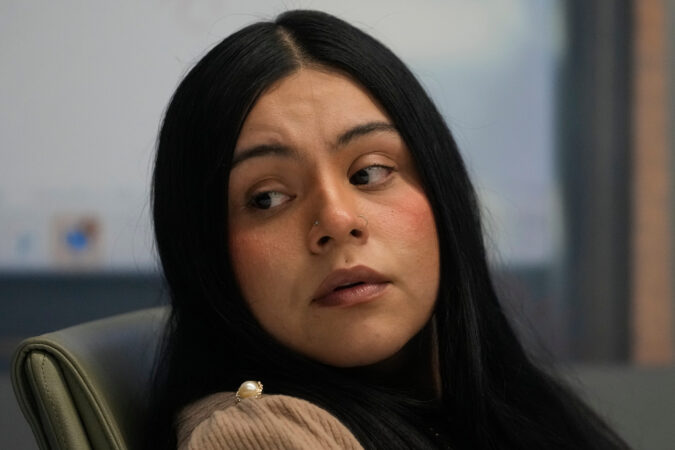
    Marimar Martinez, a teaching assistant and U.S. citizen, was shot five times by a Border Patrol agent in October while in her vehicle. She was charged with a felony after Homeland Security officials accused her of trying to ram agents with her vehicle. But the case was abruptly dismissed after videos emerged showing an agent steering his vehicle into Martinez’s vehicle.

    Her attorneys pushed to make evidence in the now-dissolved criminal case public, saying they were especially motivated after a federal agent fatally shot Minneapolis woman Renee Good under similar circumstances.

    Martinez’s attorneys are pursuing a complaint under a law that permits individuals to sue federal agencies. They outlined instances of DHS lying about Martinez after the shooting, including labeling her a “domestic terrorist” and accusing her of having a history of “doxxing federal agents.” The Montessori school assistant has no criminal record and prosecutors haven’t brought evidence in either claim.

    “This is a time where we just cannot trust the words of our federal officials,” attorney Christopher Parente said at a news conference where his office released evidence.

    That included an agent’s hand-drawn diagram of the scene to allege how Martinez “boxed in” federal agents. It included three vehicles Parente said “don’t exist.”

    Many of the emails, text messages and videos were released the night before by the U.S. attorney’s office.

    DHS didn’t immediately return a message Wednesday.

    The shooting came during the height of the Chicago-area crackdown. Arrests, protests and tense standoffs with immigration agents were common across the city of 2.7 million and its suburbs. Weeks before the Martinez shooting, agents fatally shot a suburban Chicago dad in a traffic stop.

    The government unsuccessfully fought the release of the documents, including an email from Bovino, who led enforcement operations nationwide before he returned to his previous sector post in California last month.

    “In light of your excellent service in Chicago, you have much yet left to do!!” Bovino wrote Charles Exum on Oct. 4.

    In an agent group text, others congratulated Exum, calling him a “legend” and offering to buy him beer. In previously released documents, text messages sent by Exum, appeared to show him bragging to colleagues about his shooting skills.

    “I fired 5 rounds and she had 7 holes. Put that in your book boys,” the text read.

    The latest documents are public now because U.S. District Judge Georgia Alexakis lifted a protective order last week. Federal prosecutors had argued the documents could damage Exum’s reputation. But Alexakis said the federal government has shown “zero concern” about ruining the reputation of Martínez.

    On the day Martinez was shot, she had followed agents’ vehicle and honked her horn to warn others of the presence of immigration agents. Body camera footage showed agents with weapons drawn and rushing out of the vehicle.

    “It’s time to get aggressive and get the (expletive) out,” one agent said.

    Martinez, who sat near her attorneys, was largely silent during the news conference.

    She declined an Associated Press interview request. But in recent weeks she has spoken to local media and before lawmakers.

    Earlier this month, Martinez testified before congressional Democrats to highlight use-of-force incidents by DHS officers. Members of Good’s family also spoke. Martinez is scheduled to attend President Donald Trump’s State of the Union address this month as the guest of U.S. Rep. Jesus “Chuy” Garcia.

    She was hospitalized before being taken into the custody of the FBI, which still has her car. Martinez said the incident has left her with mistrust of law enforcement, which accused her of being armed.

    Martinez has a valid concealed-carry license and had a handgun in her purse. Attorneys showed a picture of it in a pink holster at the bottom of her purse, saying it remained there during the encounter.

    “They are not targeting the worst of the worst, they are targeting individuals who fit a certain profile, who simply have a certain accent, or a non-white skin color just like mine. This raises serious concerns about fairness, discrimination, and abuse of authority,” she said during her congressional testimony. “The lack of accountability for these actions is deeply troubling.”

    Martinez’s attorneys said they’d pursue a complaint under the Federal Tort Claims Act. If the agency denies the claim or doesn’t act on it within six months, they can file a federal lawsuit.

  • Instagram chief says he does not believe people can get clinically addicted to social media

    Instagram chief says he does not believe people can get clinically addicted to social media

    LOS ANGELES — Adam Mosseri, the head of Meta’s Instagram, testified Wednesday during a landmark social media trial in Los Angeles that he disagrees with the idea that people can be clinically addicted to social media platforms.

    The question of addiction is a key pillar of the case, where plaintiffs seek to hold social media companies responsible for harms to children who use their platforms. Meta Platforms and Google’s YouTube are the two remaining defendants in the case, which TikTok and Snap have settled.

    At the core of the Los Angeles case is a 20-year-old identified only by the initials “KGM,” whose lawsuit could determine how thousands of similar lawsuits against social media companies would play out. She and two other plaintiffs have been selected for bellwether trials — essentially test cases for both sides to see how their arguments play out before a jury.

    Mosseri said it’s important to differentiate between clinical addiction and what he called problematic use. The plaintiff’s lawyer, however, presented quotes directly from Mosseri in a podcast interview a few years ago where he said the opposite, but he clarified that he was probably using the term “too casually,” as people tend to do.

    Mosseri said he was not claiming to be a medical expert when questioned about his qualifications to comment on the legitimacy of social media addiction, but said someone “very close” to him has experienced serious clinical addiction, which is why he said he was “being careful with my words.”

    He said he and his colleagues use the term “problematic use” to refer to “someone spending more time on Instagram than they feel good about, and that definitely happens.”

    It’s “not good for the company, over the long run, to make decisions that profit for us but are poor for people’s wellbeing,” Mosseri said.

    Mosseri and the plaintiff’s lawyer, Mark Lanier, engaged in a lengthy back-and-forth about cosmetic filters on Instagram that changed people’s appearance in a way that seemed to promote plastic surgery.

    “We are trying to be as safe as possible but also censor as little as possible,” Mosseri said.

    In the courtroom, bereaved parents of children who have had social media struggles seemed visibly upset during a discussion around body dysmorphia and cosmetic filters. Meta shut down all third-party augmented reality filters in January 2025. The judge made an announcement to members of the public on Wednesday after the displays of emotion, reminding them not to make any indication of agreement or disagreement with testimony, saying that it would be “improper to indicate some position.”

    In recent years, Instagram has added a slew of features and tools it says have made the platform safer for young people. But this does not always work. A report last year, for instance, found that teen accounts researchers created were recommended age-inappropriate sexual content, including “graphic sexual descriptions, the use of cartoons to describe demeaning sexual acts, and brief displays of nudity.”

    In addition, Instagram also recommended a “range of self-harm, self-injury, and body image content” on teen accounts that the report says “would be reasonably likely to result in adverse impacts for young people, including teenagers experiencing poor mental health, or self-harm and suicidal ideation and behaviors.” Meta called the report “misleading, dangerously speculative” and said it misrepresents its efforts on teen safety.

    Meta is also facing a separate trial in New Mexico that began this week.

  • Trump says he ‘insisted’ to Netanyahu that U.S. talks with Iran continue as Israel wants them expanded

    Trump says he ‘insisted’ to Netanyahu that U.S. talks with Iran continue as Israel wants them expanded

    WASHINGTON — President Donald Trump met privately with Israeli Prime Minister Benjamin Netanyahu on Wednesday and said he’d insisted that negotiations with Iran continue as the U.S. pushes for a nuclear deal with Tehran.

    Netanyahu spent nearly three hours at the White House, but he entered and left out of the view of reporters and he and Trump didn’t take questions. In a subsequent post on his social media site, however, the president called it “a very good meeting” and said “there was nothing definitive reached, other than I insisted that negotiations with Iran continue to see whether or not a Deal can be consummated.”

    “If it can, I let the Prime Minister know that will be a preference,” Trump wrote. “If it cannot, we will just have to see what the outcome will be.”

    He added, “Last time Iran decided that they were better off not making a Deal” and were hit by U.S. airstrikes.

    “Hopefully this time they will be more reasonable and responsible,” Trump wrote.

    In a statement, Netanyahu’s office said the two leaders had discussed negotiations with Iran as well as developments in Gaza and around the region and they had “agreed to continue their close coordination and relationship.”

    Wednesday’s meeting was their seventh during Trump’s second term and took place as both the U.S. and Iran are projecting cautious optimism after holding indirect talks in Oman on Friday about how, once again, to approach negotiations over Iran’s nuclear program.

    Trump said on reaching an agreement with Iran in a Tuesday interview with Fox Business Network’s Larry Kudlow: “I think they’d be foolish if they didn’t. We took out their nuclear power last time, and we’ll have to see if we take out more this time.”

    “It’s got to be a good deal,” he said then. “No nuclear weapons, no missiles.”

    Netanyahu pushes for more in Iran talks

    Netanyahu’s office said prior to the meeting that he wants the U.S.-Iran talks to include limits on Tehran’s ballistic missile program and its support for militant groups such as Hamas and Hezbollah.

    “I will present to the president our outlook regarding the principles of these negotiations — the essential principles which, in my opinion, are important not only to Israel, but to everyone around the world who wants peace and security in the Middle East,” Netanyahu said Tuesday before leaving Israel.

    But it remains unclear how much influence Netanyahu will have over Trump’s approach toward Iran. Trump initially threatened to take military action over Iran’s bloody crackdown on nationwide protests in January, then shifted to a pressure campaign in recent weeks to try to get Tehran to make a deal over its nuclear program.

    Iran is still reeling from the 12-day war with Israel in June. The devastating series of airstrikes, including the U.S. bombing several Iranian nuclear sites, killed nearly 1,000 people in Iran and almost 40 in Israel.

    Trump has said repeatedly that U.S. strikes had “obliterated” Iran’s nuclear capabilities, although the extent of the damage remains unclear. Satellite photos of nuclear sites have recently captured activity, prompting concern that Iran could be attempting to salvage or assess damage at the sites.

    Israel has long called for Iran to cease all uranium enrichment, dial back its ballistic missile program, and cut ties to militant groups across the region. Iran has always rejected those demands, saying it would only accept some limits on its nuclear program in return for sanctions relief.

    Washington has built up military forces in the region, sending an aircraft carrier, guided-missile destroyers, air defense assets and more to supplement its presence. Arab and Islamic countries, including Turkey and Qatar, have been urging both sides to show restraint, warning that any strike or retaliation could have destabilizing consequences for a region already strained by the Israel-Hamas war in Gaza.

    Gaza was also a topic

    In his post, Trump said he and Netanyahu had “also discussed the tremendous progress being made in Gaza, and the Region in general.”

    Trump plans to hold the first meeting next week of his Board of Peace, which was initially framed to oversee future steps of the U.S.-brokered Gaza ceasefire plan but has taken shape with Trump’s ambitions of resolving other global crises.

    Earlier Wednesday, Netanyahu met with Secretary of State Marco Rubio at Blair House, across the street from the White House, and agreed to be part of the board.

    On Iran, Trump said Friday that his special envoy, Steve Witkoff, and son-in-law Jared Kushner had “very good” talks and more were planned this week. But the Republican president kept up the pressure, warning that if Iran did not make a deal over its nuclear program, “the consequences are very steep.”

    Abbas Araghchi, Iran’s foreign minister, made similar comments, saying there will be consultations on “next steps.” He also said the level of mistrust between the two longtime adversaries remains a “serious challenge facing the negotiations.”

    He signaled that Iran would stick to its position that it must be able to enrich uranium — a major point of contention with Trump.

    Netanyahu met with Witkoff and Kushner shortly after arriving in Washington on Tuesday evening and they gave him an update on the talks held with Iran in Oman, the prime minister’s office said.

    Araghchi said in November that Iran was no longer enriching uranium due to the damage from last year’s war.

    Before the war, Iran had been enriching uranium up to 60% purity, a short, technical step away from weapons-grade levels. The U.N. nuclear watchdog, the International Atomic Energy Agency, had said Iran was the only country in the world to enrich to that level that was not armed with the bomb.

    Iran has been refusing requests by the IAEA to inspect the sites bombed in the June war. Even before that, Iran has restricted IAEA inspections since Trump’s decision in 2018 to unilaterally withdraw the U.S. from Iran’s 2015 nuclear deal with world powers.

  • Several ICE agents were arrested in recent months, showing risk of misconduct

    Several ICE agents were arrested in recent months, showing risk of misconduct

    Investigators said one immigration enforcement official got away with physically assaulting his girlfriend for years. Another admitted he repeatedly sexually abused a woman in his custody. A third is charged with taking bribes to remove detention orders on people targeted for deportation.

    At least two dozen U.S. Immigration and Customs Enforcement employees and contractors have been charged with crimes since 2020, and their documented wrongdoing includes patterns of physical and sexual abuse, corruption, and other abuses of authority, a review by The Associated Press found.

    While most of the cases happened before Congress voted last year to give ICE $75 billion to hire more agents and detain more people, experts say these kinds of crimes could accelerate given the sheer volume of new employees and their empowerment to use aggressive tactics to arrest and deport people.

    The Trump administration has emboldened agents by arguing they have “absolute immunity” for their actions on duty and by weakening oversight. One judge recently suggested that ICE was developing a troubling culture of lawlessness, while experts have questioned whether job applicants are getting enough vetting and training.

    “Once a person is hired, brought on, goes through the training and they are not the right person, it is difficult to get rid of them and there will be a price to be paid later down the road by everyone,” said Gil Kerlikowske, who served as commissioner of U.S. Customs and Border Protection from 2014 to 2017.

    Almost every law enforcement agency contends with bad employees and crimes related to domestic violence and substance abuse are long-standing problems in the field. But ICE’s rapid growth and mission to deport millions are unprecedented, and the AP review found that the immense power that officers exercise over vulnerable populations can lead to abuses.

    Department of Homeland Security Assistant Secretary Tricia McLaughlin said that wrongdoing was not widespread in the agency, and that ICE “takes allegations of misconduct by its employees extremely seriously.” She said that most new hires had already worked for other law enforcement agencies, and that their backgrounds were thoroughly vetted.

    “America can be proud of the professionalism our officers bring to the job day-in and day-out,” she said.

    Could become a ‘countrywide phenomenon’

    ICE announced last month that it had more than doubled in size to 22,000 employees in less than one year.

    Kerlikowske said ICE agents are particularly “vulnerable to unnecessary use-of-force issues,” given that they often conduct enforcement operations in public while facing protests. With the number of ICE detainees nearly doubling since last year to 70,000, employees and contractors responsible for overseeing them are also facing challenging conditions that can provide more opportunities for misconduct.

    The Border Patrol doubled in size to more than 20,000 agents from 2004 to 2011 — six years longer than ICE took. It was embarrassed by a wave of corruption, abuse, and other misconduct by some of the new hires. Kerlikowske recalled cases of agents who accepted bribes to let cars carrying drugs enter the U.S. or who became involved in human trafficking.

    He and others say ICE is poised to see similar problems that will likely be broader in scope, with less oversight and accountability.

    “The corruption and the abuse and the misconduct was largely confined in the prior instance to along the border and interactions with immigrants and border state residents. With ICE, this is going to be a countrywide phenomenon as they pull in so many people who are attracted to this mission,” said David Bier, director of immigration studies at the Cato Institute, a libertarian think tank.

    Bier, who has helped publicize some of the recent arrests and other alleged misconduct by ICE agents, said he has been struck by the “remarkable array of different offenses and charges that we’ve seen.”

    AP’s review examined public records involving cases of ICE employees and contractors who have been arrested since 2020, including at least 17 who have been convicted and six others who are awaiting trial. Nine have been charged in the last year, including an agent cited last month for assaulting a protester near Chicago while off-duty.

    Some of the most serious crimes were committed by veteran ICE employees and supervisors rather than rookies.

    While federal officials have justified ICE’s aggression, the behavior of agents is drawing scrutiny from cellphone-wielding observers and prosecutors in Democratic-led jurisdictions. Local agencies are looking into last month’s fatal shootings in Minneapolis of protesters Renee Good and Alex Pretti by federal agents, as well as the killing of Keith Porter by an off-duty ICE agent in Los Angeles on New Year’s Eve.

    Arrests have made local headlines

    Around the country, the cases have attracted unwelcome headlines for ICE, which has spent millions of dollars publicizing the criminal rap sheets of those they arrest as the “worst of the worst.”

    Among them:

    — The assistant ICE field office supervisor in Cincinnati, Samuel Saxon, a 20-year ICE veteran, has been jailed since his arrest in December on charges that he attempted to strangle his girlfriend.

    Saxon had abused the woman for years, fracturing her hip and nose and causing internal bleeding, a judge found in a ruling ordering him detained pending trial. “The defendant is a volatile and violent individual,” the judge wrote of Saxon, whose attorneys didn’t return a message seeking comment. ICE said he is considered absent without leave.

    — “I’m ICE, boys,” an ICE employment eligibility auditor told police in Minnesota in November when he was arrested in a sting as he went to meet a person he thought was a 17-year-old prostitute. Alexander Back, 41, has pleaded not guilty to attempted enticement of a minor. ICE said Back is on administrative leave while the agency investigates.

    — When officers in suburban Chicago found a man passed out in a crashed car in October, they were surprised to discover the driver was an ICE officer who had recently completed his shift at a detention center and had his government firearm in the vehicle. They arrested Guillermo Diaz-Torres for driving under the influence. He’s pleaded not guilty and has been put on administrative duty pending an investigation.

    — After an ICE officer in Florida was stopped for driving drunk with his two children in the car in August, he tried to get out of charges by pointing to his law enforcement and military service. When that failed, he demanded to know whether one of the deputies arresting him was Haitian and threatened to check the man’s immigration status, body camera video shows.

    “I’ll run him once I get out of here and if he’s not legit, ooh, he’s taking a ride back to Haiti,” Scott Deiseroth warned during the arrest.

    Deiseroth, who was sentenced to probation and community service, is on administrative leave pending the outcome of an internal investigation. “He did something stupid. He owned up to it,” said his attorney, Michael Catalano. “He’s very sorry about the whole thing.”

    Several cases of force and abuse

    The AP’s review found a pattern of charges involving ICE employees and contractors who mistreated vulnerable people in their care.

    A former top official at an ICE contract facility in Texas was sentenced to probation on Feb. 4 after acknowledging he grabbed a handcuffed detainee by the neck and slammed him into a wall last year. Prosecutors had downgraded the charge from a felony to a misdemeanor.

    In December, an ICE contractor pleaded guilty to sexually abusing a detainee at a detention facility in Louisiana. Prosecutors said the man had sexual encounters with a Nicaraguan national over a five-month period in 2025 as he instructed other detainees to act as lookouts.

    Outside Chicago, an off-duty ICE agent has been charged with misdemeanor battery for throwing to the ground a 68-year-old protester who was filming him at a gas station in December. McLaughlin has said the agent acted in self-defense.

    Other charges cited corruption

    Another pattern that emerged in AP’s review involved ICE officials charged with abusing their power for financial gain.

    An ICE deportation officer in Houston was indicted last summer on charges that he repeatedly accepted cash bribes from bail bondsmen in exchange for removing detainers ICE had placed on their clients targeting them for deportation.

    ICE said the officer was “indefinitely suspended” in May 2024, before his arrest one year later. He has pleaded not guilty to seven counts of accepting bribes and was released from custody while awaiting trial.

    Prosecutors say a former supervisor in ICE’s New York City office provided confidential information about people’s immigration statuses to acquaintances and made an arrest in exchange for gifts and other gain. He was arrested in November 2024, has pleaded not guilty and is awaiting trial.

    Two Utah-based ICE investigators were sentenced to prison last year for a scheme in which they made hundreds of thousands of dollars stealing synthetic drugs known as “bath salts” from government custody and selling them through government informants.

    Using badges to dodge consequences

    The wrongdoing often included the use of ICE resources and credentials to try to avoid arrest or receive favorable treatment.

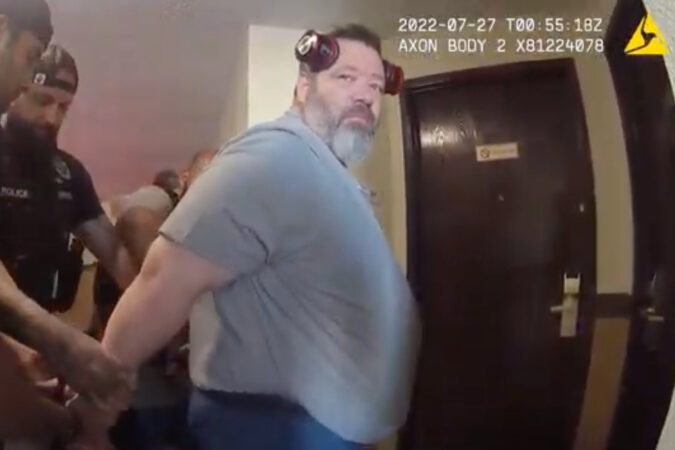
    In 2022, ICE supervisor Koby Williams was arrested in a sting by police in Othello, Washington, while going to a hotel room to meet who he thought was a 13-year-old girl he’d arranged to pay for sex.

    Williams had driven his government vehicle, which was filled with cash, alcohol, pills, and Viagra, and was carrying his ICE badge and loaded government firearm. The 22-year ICE veteran offered a rationale that turned out to be a lie: that he was there to “rescue” the girl as part of a human trafficking investigation. Williams is serving prison time for what prosecutors called a “reprehensible” abuse of power.

    “With a duty to protect and serve,” they wrote, “defendant sought to exploit and victimize.”