Category: Business Wires

  • U.S., Russia agree to reestablish military dialogue after Ukraine talks

    U.S., Russia agree to reestablish military dialogue after Ukraine talks

    The U.S. and Russia agreed Thursday to reestablish high-level military dialogue for the first time in more than four years in another sign of warming relations between the two countries since President Donald Trump returned to office and sought to end the war in Ukraine.

    High-level military communication was suspended in late 2021, as tension between Moscow and Washington rose ahead of the full-scale Russian invasion of Ukraine in February 2022. Trump then campaigned for a second term on promises that he would swiftly end the fighting. Many of his proposals for peace have heavily favored the Kremlin, including requiring Ukraine to cede territory to Russia.

    The restored communication channel “will provide a consistent military-to-military contact as the parties continue to work towards a lasting peace,” the U.S. European Command said in a statement. The agreement emerged from a meeting between senior Russian and American military officials in the capital of the United Arab Emirates.

    U.S. Gen. Alexus Grynkewich, who is the commander in Europe of both U.S. and NATO forces, was in Abu Dhabi, where talks between American, Russian, and Ukrainian officials on ending the war entered a second day.

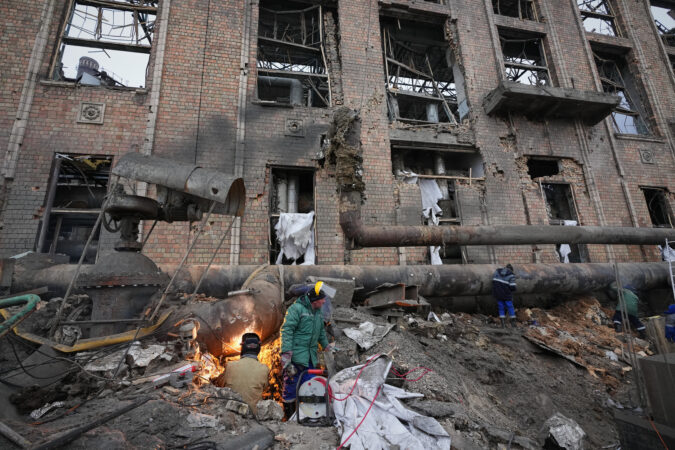
    Meanwhile, Moscow escalated its attacks on Ukraine’s power grid in an apparent effort to deny civilians power and to weaken public support for the fight, while hostilities continued along the roughly 600-mile front line snaking through eastern and southern parts of Ukraine.

    An effort to ease tensions

    The resumption of the military hotline marks an effort to ease tensions that soared after the start of the war and to avoid collisions between Russian and U.S. forces.

    In one such incident in March 2023, the American military said it ditched an Air Force MQ-9 Reaper drone in the Black Sea after a pair of Russian fighter jets dumped fuel on it, and then one of them struck its propeller while flying in international airspace.

    Moscow has denied that its warplanes hit the drone, alleging that it crashed while making a sharp maneuver. The Kremlin said its aircraft reacted to a violation of a no-fly zone Russia has established in the area near Crimea.

    Moscow has repeatedly voiced concern about intelligence flights by the U.S. and other NATO aircraft over the Black Sea, and some Russian officials charged that the American surveillance flights helped gather intelligence that allowed Ukraine to strike Russian targets.

    NATO members have been increasingly worried about intrusions into allied airspace. Some European officials described the incidents as Moscow testing NATO’s response.

    In September, a swarm of Russian drones flew into Poland’s airspace, prompting NATO aircraft to scramble to intercept them and shoot down some of the devices. It was the first direct encounter between NATO and Moscow since the full-scale invasion. Later that month, NATO jets escorted three Russian warplanes out of Estonia’s airspace.

    Russia, Ukraine exchange prisoners following talks

    The delegations from Moscow and Kyiv were joined Thursday in Abu Dhabi by U.S. special envoy Steve Witkoff and Trump’s son-in-law Jared Kushner, according to Rustem Umerov, Ukraine’s National Security and Defense Council chief, who was present at the meeting.

    They were also at last month’s talks in the same place as the Trump administration tries to steer Russia and Ukraine toward a settlement.

    Officials have provided no information about any progress in the discussions.

    Following the talks on Thursday, however, Russia and Ukraine said they carried out a prisoner exchange.

    The Russian Defense Ministry said it brought 157 Russian servicemen back from Ukrainian captivity, as well as three Russian nationals captured during Kyiv’s incursion into Russia’s Kursk region. Ukrainian officials said 150 Ukrainian servicemen and seven civilians returned from Russian captivity.

    The Russian Defense Ministry said the released Russian soldiers are currently in Belarus, getting medical assistance, before being taken back to Russia “for treatment and rehabilitation.”

    Ukrainian human rights ombudsman Dmytro Lubinets said that among the 150 service members who returned from Russian captivity, 18 were “illegally sentenced by Russia.” He said that “overall, those released are in a difficult psychological condition, and some are critically underweight.”

    Zelensky says 55,000 Ukrainian troops killed

    Ukrainian President Volodymyr Zelensky said 55,000 Ukrainian troops have died since Russia’s invasion. “And there is a large number of people whom Ukraine considers missing,” he added in an interview broadcast late Wednesday by French TV channel France 2.

    The last time Zelensky gave a figure for battlefield deaths, in early 2025, he said 46,000 Ukrainian troops had been killed.

    Zelensky has repeatedly said his country needs security guarantees from the U.S. and Europe to deter any postwar Russian attacks.

    Ukrainians must feel that there is genuine progress toward peace and “not toward a scenario in which the Russians exploit everything to their advantage and continue their strikes,” Zelensky said on social media late Wednesday.

    Last year saw a 31% increase in Ukrainian civilian casualties compared with 2024, the advocacy group Human Rights Watch said in a report published Wednesday.

    Almost 15,000 Ukrainian civilians have been killed and just over 40,000 wounded since the start of the war through last December, according to the United Nations Human Rights Monitoring Mission in Ukraine.

    In other developments:

    Russian troops have lost access to their Starlink satellite internet terminals on the front line, Ukrainian Economic Minister Mykhailo Fedorov said Thursday, after Ukraine asked Elon Musk’s SpaceX to help deny Russia use of the service in Ukraine.

    Russian forces have consequently lost command-and-control capabilities and navigation for drones, and assaults have stopped in many sectors, according to Fedorov’s adviser Serhii Beskrestnov. Russian officials made no immediate comment.

    Ukraine is registering its civilian and military Starlink users on a database, allowing approved devices to function while unregistered terminals are disabled inside Ukraine.

    Also, Polish Prime Minister Donald Tusk said during a visit to Kyiv that he agreed with Zelensky to develop the joint production of ammunition at plants in their countries.

    Zelensky said Poland plans to increase supplies to Ukraine of liquefied natural gas, and the countries are exploring an exchange of weaponry, with Kyiv possibly receiving Polish MiG fighter jets and Warsaw receiving Ukrainian drones.

    Russia fired 183 drones and two ballistic missiles at Ukraine overnight, according to the Ukrainian air force. Three people were injured, officials said.

    The Russian Defense Ministry said its air defenses downed 95 Ukrainian drones overnight over several regions, the Azov Sea and Crimea, which Russia illegally annexed in 2014.

  • What to know as Iran and U.S. prepare for nuclear talks in Oman

    What to know as Iran and U.S. prepare for nuclear talks in Oman

    DUBAI, United Arab Emirates — Iran and the United States will hold talks Friday in Oman, their latest over Tehran’s nuclear program after Israel launched a 12-day war on the country in June and the Islamic Republic launched a bloody crackdown on nationwide protests.

    President Donald Trump has kept up pressure on Iran, moving aircraft carriers and other military assets to the Gulf and suggesting America could attack Iran over the killing of peaceful demonstrators or if Tehran launches mass executions over the protests. Trump has pushed Iran’s nuclear program back into the frame as well after the June war disrupted five rounds of talks held in Rome and Muscat, Oman, last year.

    Just hours ahead of Friday’s meeting, many questions hovered over the talks, including the scope of the agenda. While negotiations are expected to focus on Iran’s nuclear program, Secretary of State Marco Rubio this week said the U.S. hoped to discuss other concerns, including Iran’s ballistic missiles, support for proxy networks across the region and the “treatment of their own people.” Iran has said it wants talks to focus solely on the nuclear issue.

    Trump began the diplomacy initially by writing a letter last year to Iran’s 86-year-old Supreme Leader Ayatollah Ali Khamenei to jump start these talks. Khamenei has warned Iran would respond to any attack with an attack of its own, particularly as the theocracy he commands reels following the protests.

    Here’s what to know about Iran’s nuclear program and the tensions that have stalked relations between Tehran and Washington since the 1979 Islamic Revolution.

    Trump writes letter to Khamenei

    Trump dispatched the letter to Khamenei on March 5, 2025, then gave a television interview the next day in which he acknowledged sending it. He said: “I’ve written them a letter saying, ‘I hope you’re going to negotiate because if we have to go in militarily, it’s going to be a terrible thing.’”

    Since returning to the White House, the president has been pushing for talks while ratcheting up sanctions and suggesting a military strike by Israel or the U.S. could target Iranian nuclear sites.

    A previous letter from Trump during his first term drew an angry retort from the supreme leader.

    But Trump’s letters to North Korean leader Kim Jong Un in his first term led to face-to-face meetings, though no deals to limit Pyongyang’s atomic bombs and a missile program capable of reaching the continental U.S.

    Oman mediated previous talks

    Oman, a sultanate on the eastern edge of the Arabian Peninsula, has mediated talks between Iranian Foreign Minister Abbas Araghchi and U.S. Mideast envoy Steve Witkoff. The two men have met face to face after indirect talks, a rare occurrence due to the decades of tensions between the countries.

    It hasn’t been all smooth, however. Witkoff at one point made a television appearance in which he suggested 3.67% enrichment for Iran could be something the countries could agree on. But that’s exactly the terms set by the 2015 nuclear deal struck under former President Barack Obama, from which Trump unilaterally withdrew America. Witkoff, Trump and other American officials in the time since have maintained Iran can have no enrichment under any deal, something to which Tehran insists it won’t agree.

    Those negotiations ended, however, with Israel launching the war in June on Iran.

    12-day war and nationwide protests

    Israel launched what became a 12-day war on Iran in June that included the U.S. bombing Iranian nuclear sites. Iran later acknowledged in November that the attacks saw it halt all uranium enrichment in the country, though inspectors from the International Atomic Energy Agency have been unable to visit the bombed sites.

    Iran soon experienced protests that began in late December over the collapse of the country’s rial currency. Those demonstrations soon became nationwide, sparking Tehran to launch a bloody crackdown that killed thousands and saw tens of thousands detained by authorities.

    Iran’s nuclear program worries the West

    Iran has insisted for decades that its nuclear program is peaceful. However, its officials increasingly threaten to pursue a nuclear weapon. Iran now enriches uranium to near weapons-grade levels of 60%, the only country in the world without a nuclear weapons program to do so.

    Under the original 2015 nuclear deal, Iran was allowed to enrich uranium up to 3.67% purity and to maintain a uranium stockpile of 300 kilograms (661 pounds). The last report by the International Atomic Energy Agency on Iran’s program put its stockpile at some 9,870 kilograms (21,760 pounds), with a fraction of it enriched to 60%.

    U.S. intelligence agencies assess that Iran has yet to begin a weapons program, but has “undertaken activities that better position it to produce a nuclear device, if it chooses to do so.” Iranian officials have threatened to pursue the bomb.

    Israel, a close American ally, believes Iran is pursuing a weapon. It wants to see the nuclear program scrapped, as well as a halt in its ballistic missile program and support for anti-Israel militant groups such as Hezbollah in Lebanon and Hamas.

    Decades of tense relations

    Iran was once one of the U.S.’s top allies in the Mideast under Shah Mohammad Reza Pahlavi, who purchased American military weapons and allowed CIA technicians to run secret listening posts monitoring the neighboring Soviet Union. The CIA had fomented a 1953 coup that cemented the shah’s rule.

    But in January 1979, the shah, fatally ill with cancer, fled Iran as mass demonstrations swelled against his rule. The Islamic Revolution followed, led by Grand Ayatollah Ruhollah Khomeini, and created Iran’s theocratic government.

    Later that year, university students overran the U.S. Embassy in Tehran, seeking the shah’s extradition and sparking the 444-day hostage crisis that saw diplomatic relations between Iran and the U.S. severed. The Iran-Iraq war of the 1980s saw the U.S. back Saddam Hussein. The “Tanker War” during that conflict saw the U.S. launch a one-day assault that crippled Iran at sea, while the U.S. later shot down an Iranian commercial airliner that the U.S. military said it mistook for a warplane.

    Iran and the U.S. have seesawed between enmity and grudging diplomacy in the years since, with relations peaking when Tehran made the 2015 nuclear deal with world powers. But Trump unilaterally withdrew America from the accord in 2018, sparking tensions in the Mideast that persist today.

  • Inside the toxic legacy of America’s multibillion-dollar carpet empire

    Inside the toxic legacy of America’s multibillion-dollar carpet empire

    DALTON, Ga. — Bob Shaw glared at the executives from the chemical giant 3M across the table from him. He held up a carpet sample and pointed at the logo for Scotchgard on the back.

    “That’s not a logo,” fumed Shaw, CEO of the world’s largest carpet company, one attendee later recalled. “That’s a target.”

    Weeks earlier, 3M Company announced it would reformulate its signature stain-resistance brand under pressure from the Environmental Protection Agency because of human health and environmental concerns.

    Mills like Shaw’s had been using Scotchgard in carpet production, releasing its chemical ingredients into the environment for decades. And on a massive scale: The shrewd CEO built Shaw Industries from a family firm in Dalton, Georgia, into a globally dominant carpet maker worth billions.

    “I got 15 million of these out in the marketplace,” Shaw told his 3M visitors. “What am I supposed to do about that?”

    A 3M executive replied that he didn’t know. Shaw threw the sample at him and left the room.

    The answer to Shaw’s Scotchgard question from that moment in 2000 would be the same as that of the broader industry. Carpet makers kept using closely related chemical alternatives for years, even after scientific studies and regulators warned of their accumulation in human blood and possible health effects. Customers expected stain resistance; nothing worked better than the family of chemicals known as PFAS.

    A lack of state and federal regulations allowed carpet companies and their suppliers to legally switch among different versions of these stain-and-soil resistant products. Meanwhile, the local public utility in Dalton responsible for ensuring safe drinking water coordinated with carpet executives in private meetings that would effectively shield their companies from oversight.

    Year after year, the chemicals traveled in water discarded during manufacturing from mills across northwest Georgia, eventually reaching a river system that provides drinking water to hundreds of thousands of people in Georgia and eastern Alabama.

    The pollution is so bad some researchers have identified the region as one of the nation’s PFAS hot spots. Today, the consequences can be found everywhere. PFAS, often called forever chemicals because they can take decades or more to break down, are in the water and the soil.

    They’re in the dust on floors where children crawl, the local fish and wildlife, and as ongoing research has shown, the people.

    Doctors have few answers for those like Dolly Baker who live downriver from Dalton’s carpet plants. She recently learned her blood has extraordinarily high PFAS levels.

    “I feel like, I don’t know, almost like there’s a blanket over me, smothering me that I can’t get out from under,” she said. “It’s just, you’re trapped.”

    An investigation by newsrooms including The Atlanta Journal-Constitution, The Associated Press and FRONTLINE (PBS) has revealed how the economic engine that sustained northwest Georgia contaminated the area and neighboring states, too. Downriver from Dalton, AL.com found cities in Alabama are struggling to remove PFAS from drinking water. And in South Carolina, The Post and Courier traced a local watchdog’s discovery of forever chemicals to a river by a Shaw factory.

    The full story of Georgia’s power structures prioritizing a prized industry over public health is only now emerging through dozens of interviews and thousands of pages of court records from lawsuits against the industry and its chemical suppliers. Those records, including testimony from key executives, emails and other internal documents, detail how carpet companies benefited from chemistry and regulatory inaction to keep using forever chemicals.

    All the while, the mills still hummed.

    Pointing fingers in a company town

    A sign welcomes Dalton’s visitors to the “Carpet Capital of the World.”

    Fleets of semitrucks stamped with company logos rumble out of behemoth warehouses. Textiles have employed generations here, propelling the city from 19th-century cotton mills into a manufacturing hub — and the region into a supplier of carpet to the globe.

    The durability that makes PFAS so good at protecting carpets from spilled tomato sauce and muddy boots lets them survive in the environment. It also makes them dangerous for humans. Because they bind to a protein in human blood and absorb into some organs, PFAS linger.

    The blood of nearly all Americans has some amount of the chemicals, which have been used in a variety of consumer products: nonstick cookware, waterproof sunscreen, dental floss, microwave popcorn bags.

    Few industries used them as much as carpet did in northwest Georgia. While huge amounts were needed for stain resistance on an industrial scale, minuscule amounts — the equivalent of less than a drop in an Olympic-sized swimming pool — can make drinking water a health risk. For certain PFAS, U.S. regulators now say no level is safe to drink.

    More than a year before the Scotchgard announcement in 2000, 3M informed Shaw Industries and its biggest competitor, Mohawk Industries Inc., that it was finding Scotchgard’s chemical in human blood and that it stayed in the environment, 3M records show.

    Carpet executives have long insisted they are not to blame. They point out that 3M and fellow chemical manufacturer DuPont assured them their products were safe, for decades hiding internal studies that were finding harm to the environment, animals and people.

    Shaw and Mohawk both said they relied on and complied with regulators and stopped using PFAS in U.S. carpet production in 2019.

    In an interview, a Shaw executive said the company acted in good faith as it worked hard to exit PFAS as quickly as suitable substitutes could be found.

    “Hindsight is 20/20,” said Kellie Ballew, Shaw’s vice president of environmental affairs. “I don’t think that we can call into question our intentions. I think Shaw had every good intention along the way.”

    Shaw in a follow-up statement said it complied with its wastewater permits and took guidance from chemical companies, some of which “instructed Shaw to put spills of product into the public sewer system.”

    Mohawk declined an interview request, instead referring to a 2024 filing in its lawsuit against chemical companies: “For decades, DuPont and 3M sold their carpet treatment products to Mohawk without disclosing the actual or potential presence of PFAS in their products.”

    Later, in response to detailed questions, Mohawk attorney Jason Rottner wrote that, “Any PFAS contamination issues in northwest Georgia are a problem of the chemical manufacturers’ making.”

    Now, uncertainty and feelings of betrayal are boiling across the region. Communities fear their drinking water is unsafe and local governments say the problem is too vast for them to fix alone.

    In Washington, Republicans and Democrats alike have been slow to act. Under President Joe Biden, the Environmental Protection Agency in 2024 established the first PFAS drinking water protections. The Trump administration has announced plans to roll back some and delay enforcement of others.

    The agency declined interview requests but in a statement said it is committed to combating PFAS contamination to protect human health and the environment, without causing undue burden to industry.

    Georgia’s regulatory system has done little to scrutinize PFAS and depends mostly on industry to self-report chemical spills, imposing modest penalties when companies do. The Georgia Environmental Protection Division, which declined an interview request, said it “relies on the expertise of” the EPA.

    Meanwhile, carpet makers still can’t seem to shake PFAS. Just last year, EPA concluded “PFAS have been and continue to be used” by the industry, based on wastewater testing. The agency did not name companies and said it’s unclear whether the chemicals were from current or prior use.

    The mess in northwest Georgia has led to a series of lawsuits over the past decade with hundreds of millions of dollars at stake.

    Buried in this avalanche of litigation, finger-pointing and politics are the people who live here. They have been forced to navigate a public health and economic crisis of a magnitude still not fully understood.

    “They ought to have to clean this land up,” Faye Jackson said, referring to carpet companies. A former industry worker, she raised her family in a house next to a polluted river and has elevated PFAS levels in her blood. “They ought to have to pay for it.”

    The creek ran blood red

    Lisa Martin watched the creek beside the Mohawk Industries mill run red with carpet dye.

    It was one of her first days as a planning manager at Mohawk in 2005, and she tried to hide her unease as the dye runoff turned the water into what looked like blood.

    The red she saw in Drowning Bear Creek had come from the nearby dyehouse, where carpets got their colors. There, machines whirred as workers sloshed around in rubber boots in ankle-deep dyewater, reminding Martin of fishermen. The acrid odor made her eyes tear up.

    A recent California transplant at the time, Martin recalled her initial culture shock.

    “At a gut level, you know it’s not right. And unfortunately, when you try to raise the flag and everybody’s like, ‘Well, that’s just the way it is,’” Martin said in an interview.

    “I became complacent.”

    Like Shaw, Mohawk is based in northwest Georgia and is among the largest carpet companies in the world. The industry supported the entire community, employing someone in what seems like every family. Martin realized carpet was in the region’s DNA.

    Martin said the chemical runoff was routine during her 20 years at Mohawk, which ended with her 2024 retirement. Sometimes, when the company dyed carpets blue, the water in the creek would be blue, too. One spill that turned the creek purple for a mile downstream killed thousands of fish, records show.

    Mohawk’s attorney called such spills “rare instances” that were promptly reported and said there is no evidence any spills directly discharged PFAS.

    In the dyehouse, what neither Martin nor the workers could detect were the colorless, odorless compounds also included in the wastewater: forever chemicals. Machines bathed the carpets in these soil-and-stain blockers, and what didn’t stick washed away.

    For decades, Mohawk’s and Shaw’s mills sent PFAS-polluted wastewater through sewer pipes to the local Dalton Utilities plants for treatment that did not remove the chemicals. Much of the tainted water ended up in the Conasauga River.

    Both Shaw and Mohawk said they operated in accordance with permits issued by Dalton Utilities. The utility said it takes direction from federal and state regulators, who have not prohibited PFAS in industrial wastewater.

    The Conasauga watershed is filled with lush green pastures, creeks and tributaries that help fuel the water-hungry industry. The river’s waters emerge out of Georgia’s Blue Ridge Mountains and eventually flow southwest, past Dalton, Calhoun and Rome, and then into Alabama.

    Residents downriver from the mills didn’t know about the chemicals running through their towns. But the industry’s top leaders did.

    PFAS is a catchall term for a group of thousands of related synthetic compounds also known as fluorochemicals. They have been fundamental to the carpet business since the 1970s, as market demand for stain resistance transformed the industry, and carpet makers began buying millions of pounds. In the mid-1980s, the introduction of DuPont’s Stainmaster, accompanied by a successful marketing blitz, further established these products as essential.

    Neither DuPont nor its related chemical companies that supplied PFAS provided comment for this story.

    The carpet industry used so much PFAS that Dalton’s mills became the largest combined emitters of the chemicals among 3M’s U.S. customers, according to a 1999 internal 3M study that looked at 38 industrial locations.

    Before 3M had pulled Scotchgard, leading to Bob Shaw’s showdown in the spring of 2000, both Shaw Industries and Mohawk had been privy to inside information that PFAS were accumulating in human blood. Bob Shaw did not respond to requests for comment.

    In late 1998 and early 1999, 3M held a series of meetings with carpet executives to disclose its blood-study research, according to 3M’s internal meeting notes from court records.

    “When we started finding the chemical in everybody’s blood, one of the biggest worries was Dalton, because we knew how sloppy they were,” Rich Purdy, a 3M toxicologist who alerted the EPA to his company’s hiding of PFAS’ dangers, said in an interview.

    Notes by a 3M employee from a January 1999 meeting said Mohawk executives did not express grave concerns about the revelations. “No real sense of Mohawk problem/responsibility,” 3M noted. “If it’s good enough for 3M, it’s good enough for Mohawk.” Mohawk’s attorney said of the meetings over two decades ago that 3M assured the company its chemicals were safe.

    At another meeting that January, Shaw executives were “concerned but quiet,” with one executive expressing he “felt plaintiffs’ attorneys would be involved immediately,” according to 3M’s notes. Shaw Industries maintains it learned of the concerns about Scotchgard at the same time everyone else did.

    In follow-up letters to top executives with Shaw and Mohawk later that month, 3M noted the company’s efforts were guided by the idea that reducing exposure “to a persistent chemical is the prudent and responsible thing to do” while emphasizing current evidence did not show human health effects.

    “We trust that you appreciate the delicate nature of this information and its potential for misuse,” the letters said. “We ask that you treat it accordingly.”

    3M then asked for access to Shaw and Mohawk mills to see if they were handling the chemicals safely, records show. Those internal reports, produced in 1999, would fault how carpet companies handled PFAS products, exposing workers and the environment, according to court records.

    The next year, 3M and EPA announced concerns about Scotchgard.

    The day of the announcement, the director of EPA’s Chemical Control Division sent an email to his colleagues and counterparts in other countries calling the key ingredient in Scotchgard an “unacceptable technology” and a “toxic chemical.” The email said the compound should be eliminated “to protect human health and the environment from potentially severe long-term consequences.”

    3M declined an interview request. In a statement, the company said it has stopped all PFAS manufacturing and has invested $1 billion in water treatment at its facilities. “3M has taken, and will continue to take, actions to address PFAS manufactured prior to the phase out,” the company said.

    In 2000, the year 3M announced it was pulling Scotchgard, Mohawk logged more than $3.4 billion in net sales. Shaw Industries reported $4.2 billion.

    EPA would not issue its first provisional health advisories for nearly another decade. Absent federal guidance, the carpet industry could legally continue to use these products.

    Despite accumulating health and environmental concerns, federal law at the time did not let EPA ban any chemical without “enormous evidence” of harm, said Betsy Southerland, a former director of the agency’s water protection division who spent over three decades there.

    “So we were really hamstrung at the time,” said Southerland, who has become a critic of EPA.

    At Mohawk, Lisa Martin was not an executive making decisions about PFAS, she said, but her time at the company weighs on her still.

    “Unfortunately, I later learned that there are more people that I worked with that were aware of it,” she said. “They were aware of it and didn’t do the things they should have done.”

    Years into her tenure, the athletic and inquisitive Martin began getting sick and feeling lethargic. Her doctor said she’d grown nodules on her thyroid, a gland that is a key part of the immune system and which studies have shown forever chemicals can harm.

    She had no family history of thyroid issues. It was a mystery to her.

    Cozy relationship

    Inside the Dalton headquarters of the Carpet and Rug Institute, industry executives and the local water utility conferred in 2004 about EPA’s growing scrutiny.

    For several months, EPA representatives had negotiated with Dalton Utilities and the carpet industry through the institute, its influential trade group, over gaining access to their facilities to test the water. Mohawk and Shaw were using DuPont’s Stainmaster and other products, which also contained forever chemicals akin to Scotchgard’s older formulation.

    Still, federal regulators worried these compounds were exhibiting similar harmful properties. Dalton Utilities and the carpet industry were uneasy about welcoming in government officials. Companies could not be guaranteed confidentiality and feared test results could lead to “inaccurate public perceptions and inappropriate media coverage,” records show.

    The public utility and the carpet industry chose to resist.

    Their close ties went back years. Carpet executives have long sat on Dalton Utilities’ board, appointed by the city’s mayor and city council. Fueled by the growth of the carpet industry, Dalton Utilities’ fortunes rose with the industry’s success.

    At the carpet institute’s 2004 annual meeting, officials with carpet and chemical companies convened to discuss the EPA’s increasingly aggressive posture. Shaw’s director of technical services, Carey Mitchell, addressed his colleagues. He was blunt. No company would allow testing.

    “Dalton Utilities has said not no, but hell no,” Mitchell said, according to notes made by a 3M attendee. Mitchell did not respond to requests for comment.

    In response to questions for this story, Dalton Utilities declined an interview request but said it and the carpet industry “have always operated independently of one another” and that the EPA testing request was informal.

    The carpet institute declined an interview request, sending a written statement instead.

    “The CRI’s conduct was and continues to be appropriate, lawful, and focused on our customers, communities, and the millions of people who rely on our products every day,” institute President Russ DeLozier said, adding: “Today’s carpet products reflect decades of progress, and The CRI members remain committed to moving forward responsibly.”

    The EPA stiff-arm was the latest run-in between Dalton Utilities and federal regulators.

    A public water utility’s obligation, above all else, is to ensure clean drinking water. Dalton’s utility had previously gone to criminal lengths to deceive regulators.

    In the early 1990s, Dalton Utilities’ staff traced a drop in oxygen levels in its wastewater treatment to stain-resistant chemicals from carpet mills, the utility’s top engineer at the time, Richard Belanger, said in an interview. While the utility didn’t know about PFAS then, something in these chemicals was impacting its ability to process the wastewater, he said. Rather than clamping down on industry, according to Belanger, his bosses ordered him to manipulate pollution figures the utility reported to government regulators.

    “I was told, OK, make this work,” Belanger, now retired, said.

    In June 1995, EPA investigators interviewed Belanger. He told them Dalton Utilities’ program to clean industrial pollutants was “a sham.” The treatment was so poor, the smell of carpet chemicals carried throughout the utility’s plant, and local creeks were often “purple and foamy,” according to investigators’ notes from the interview.

    Two months later, agents with the FBI and EPA raided Dalton Utilities’ offices.

    Federal prosecutors charged the utility with violating the Clean Water Act by falsifying wastewater reports, which concealed the full extent of the carpet industry’s pollution. The case did not address PFAS specifically, which was not yet a pollutant of concern for EPA. Dalton Utilities pleaded guilty in 1999 and was fined $1 million. Its CEO was removed.

    The utility was also put under federal monitoring in 2001 to ensure it was making key changes to protect the water supply and agreed to pay a $6 million penalty.

    The era of legal troubles with the federal government was pivotal, the utility said, adding it “has remained committed to avoiding the issues that led to those proceedings” and is transparent with regulators.

    Around the same time, emerging data showed the fluorochemicals used in carpets caused cancer in rats.

    The carpet institute’s then-president, Werner Braun, forwarded the rat study to several carpet and chemical executives in a 2002 email, calling the findings a “troubling issue,” records show. Braun, now in his 90s, was unable to comment for this story due to his health, his wife said.

    In preparing to respond to Braun, a 2002 email shows DuPont officials planned to explain that Stainmaster didn’t contain the type of PFAS that was then EPA’s focus. The next year, DuPont would tell carpet companies the opposite, acknowledging the chemical was indeed in Stainmaster. DuPont maintained in later legal proceedings it wasn’t aware until 2003 that Stainmaster contained the chemical.

    Despite its success in fending off EPA testing, the industry faced a mounting challenge, and the carpet institute focused on shoring up its influence and image.

    At a meeting in the spring of 2004 attended by top executives, the carpet institute decided to solicit donations from company employees for its political action committee “in an effort to submit friendships, gain access, and say thank you to legislators,” according to meeting notes.

    Later that year, PFAS made news in a high-profile legal case involving DuPont. The class-action lawsuit brought by residents in West Virginia claimed their water had been contaminated by a nearby chemical plant that used PFAS. Although DuPont said the settlement did not imply legal liability, it agreed to pay $70 million and to establish a health monitoring panel. Some two decades later, Braun was shown the rat study email during a legal deposition.

    “I wouldn’t necessarily call it a red flag but a flag, you know, that you might want to be aware of,” he said.

    Only years later did people downstream begin to learn the toll.

    The river brought the poison

    When Marie Jackson’s goats started dying about a year ago, nobody could explain why. Jackson saw it as just another sign something was wrong with her land.

    Marie and her mother, Faye Jackson, have lived on their 12 acres near Calhoun for decades. Today they keep mostly to themselves, inseparable, equal parts bickering and loving.

    Most days, Marie makes the short drive down a gravel road, Jackson Drive, to her mother’s house to check on her. She tends to Faye’s chickens, mows her grass and drives her to doctor’s appointments. Behind their homes is a rolling stretch of grassy pasture where their cattle graze — and the goats did as well, she said, until they all died.

    Past a curtain of trees on the far end of the pasture lies the Conasauga.

    Marie, 50, spent her childhood playing and swimming in the muddy river with rocks on the banks that made a good fishing spot. The Jacksons now know the water that sustains their homestead, about 15 miles downstream from Dalton, is contaminated.

    Tests of the river by the AJC found levels of what was once a key ingredient in Scotchgard at more than 30 times the proposed EPA limits for drinking water. Tests of Faye’s drinking water well by the AJC and the city of Calhoun found PFAS just under these federal health limits.

    Calhoun city officials used that health standard to guide a program designed to address contaminated wells. A 2024 legal settlement between the city and the Southern Environmental Law Center included a condition to test local water. As of August, 30% of private wells tested had levels above the health limit.

    Because Faye’s test was just below the cutoff, she does not qualify to receive a filtration system.

    Uncertainty about the chemicals continues to permeate every aspect of the Jacksons’ lives. They fear PFAS are behind their declining health. They fear their drinking water. They fear for the health of the cattle and chickens they raise; and for the health of those who may eat them.

    “I know they’ve got it in their systems,” Faye said.

    Even Marie’s memories are filled with second-guessing. Idyllic scenes of her childhood are now overshadowed by recollections of foam on the river and dead fish. She blames the mills.

    The Jacksons, like generations of northwest Georgians, relied on the carpet industry. Both of Marie’s parents worked in the mills: Faye with yarn machines and her dad in the dyehouse. Marie would end up working in carpet, too.

    Everyone suspected the work was dangerous. Faye said she’d get headaches from the strong chemical smells. The hours were long. But with the risk came a steady wage.

    “Around here, you have to understand the people, that’s all we know, right? That’s all we’ve ever been around,” Marie said, fidgeting with her plastic water bottle. “It’s like you don’t think. It’s routine. You go in, you know your job, you do your job, you go home.”

    Faye’s failing health eventually forced her to stop working. Today she drinks water she buys from the store.

    In 2022, Faye’s husband, Robert, died after struggling with several illnesses. She now wonders whether decades of PFAS exposure was to blame. And Marie has nodules growing on her thyroid.

    The Jacksons long suspected they had forever chemicals in their blood. With their consent, the AJC commissioned testing last fall and the mother and daughter finally learned the truth. Their PFAS levels were above the safety threshold outlined by the National Academies of Sciences, Engineering and Medicine.

    “They’ve poisoned us,” Faye said.

    Among the highest ever recorded

    In 2006, the carpet industry and Dalton Utilities faced a new dilemma.

    University of Georgia researchers were testing the Conasauga for PFAS, and early results seen by carpet companies showed high levels. Shaw Industries began conducting its own tests, which confirmed UGA’s results: PFAS coursed through the river.

    As Georgia’s scientists worked on their PFAS study, the majority of outside experts on an EPA advisory panel determined the PFAS associated with DuPont’s Stainmaster was ” likely to be carcinogenic.” In 2005, the year prior, EPA and DuPont settled a claim that the chemical company failed to report for decades what it knew about the risks. At $10.25 million, it was then the largest penalty ever obtained under a federal environmental law. DuPont did not admit liability.

    The university’s study, eventually published in 2008, made headlines. The UGA researchers reported PFAS levels in the Conasauga were “among the highest ever recorded in surface water” like a river or a lake. Not just in the United States, but worldwide.

    Journalists from a local newspaper also began asking questions about the study and the earlier decision by the utility and the industry to deny regulators access for testing.

    A Chattanooga Times Free Press reporter was “hot on the trail” of a story, wrote Denise Wood, at the time a Mohawk environmental executive and Dalton City Council member, in a February 2008 email to Dalton Utilities CEO Don Cope.

    One of the university researchers told the paper that UGA’s test results were “staggeringly high.” Cope did not respond to requests by the AJC and AP for an interview, and Wood declined to comment.

    At the carpet institute, officials rushed to create a crisis management team, internal records and emails show. The industry downplayed the UGA study and broader concerns about PFAS.

    “In our society today, it is absolutely known that you report the presence of some chemical and everybody gets all up and arms,” the institute’s head, Braun, told reporters.

    UGA’s study had an impact. The EPA returned in 2009. Unlike before, the agency now had provisional health advisory limits for certain PFAS compounds, offering regulators some enforcement authority.

    This new scrutiny would uncover a major source of pollution along the Conasauga.

    On the edge of Dalton, the Loopers Bend “land application system” occupies more than 9,600 acres on the river’s banks. The public utility had long hosted hunts for wildlife at the forested site, which is crisscrossed by a network of 19,000 sprinklers that sprayed PFAS-laden wastewater for decades.

    For years, the site’s design allowed runoff to leak into the river, according to EPA’s former water programs enforcement chief. The wastewater was so poorly filtered the ground felt like walking on “shag carpet” due to all the fibers, the EPA official, Scott Gordon, said in an interview. He noted gullies cut by wastewater led directly to creeks and the river.

    Because Dalton Utilities distributed the treated wastewater over land instead of discharging it into the river directly, it didn’t need a federal Clean Water Act permit. After EPA inspected and saw the conditions, the agency ordered the local utility to apply for one. The state, however, had approval power in Georgia and rejected the application, saying the permit wasn’t necessary.

    Today, Loopers Bend remains a significant source of PFAS in the Conasauga.

    The EPA worked with Dalton Utilities to upgrade the site starting in 1999, but it would be years before the agency would require testing of the Conasauga’s water.

    In 2009, testing reports submitted by Dalton Utilities to EPA confirmed what the UGA research had already shown: Forever chemicals had infiltrated the region. In addition to river and well water, deer and turkey taken from Loopers Bend had PFAS in their muscles and organs.

    Dalton Utilities said that levels of PFAS in its wastewater and the compost it provided to enrich soil for farmers and homeowners were not a health risk. PFAS were everywhere and a “societal problem,” and not one Dalton Utilities could solve, the utility’s lawyer wrote the EPA in 2010.

    Nonetheless, the utility agreed to restrict its compost distribution ​​and test wastewater from a quarter of its industrial customers annually.

    As later testing showed, the chemicals would persist for years.

    A health reckoning

    Why is the doctor calling? Dolly Baker wondered as she rinsed the hair of a client at her salon “Dolled Up” in Calhoun. Dr. Dana Barr’s number had popped up on her cellphone.

    Baker had taken part in a 2025 Emory University study of northwest Georgia, where she was one of 177 people who had their blood tested. Now one of the study’s lead scientists was on the phone.

    Barr, an analytical chemist with epidemiological experience, had been mailing study participants about the results. When she saw Baker’s test data, she dialed her phone.

    Baker, a lifelong Calhoun resident now in her 40s, had PFAS levels hundreds of times above the U.S. average.

    “I don’t want to alarm you, but we’re just trying to figure out what can be causing this,” Barr told her, Baker later recalled. “I suggest you talk to your doctor and let them know that there are certain cancers that can come into play later.”

    Baker was speechless.

    She walked back to her wash station and slowly started rinsing her client’s hair again, quietly processing what this all meant. How did she have such high levels? Her mind raced.

    What was she supposed to do about the forever chemicals in her body?

    “Unfortunately, there is no easy answer,” Baker said Barr told her.

    Emory tested Baker’s water and hair products, but the tests came back low. Almost a year after learning her blood test results, Baker is no closer to knowing why her levels are so high.

    She said she’s frustrated by the lack of action and leadership, especially after years of testing and community meetings to discuss the problem.

    “You know, people go in other countries to help them get clean water,” Baker said, “and do we have clean water?”

    Barr, who spent years at the U.S. Centers for Disease Control and Prevention studying environmental toxicants, realized there was too little data to grasp the problem in northwest Georgia. She helped launch Emory’s study to understand the extent of contamination in human blood.

    Three out of four residents tested by Emory had PFAS levels that warrant medical screening, according to clinical guidelines from the National Academy of Sciences.

    “People in Rome and in Calhoun tended to have higher levels of PFAS than most of the people in the U.S. population,” Barr said.

    Mohawk and Shaw say they stopped using older fluorochemicals around 2008. These were known by chemists as “long-chain” or C8 because each had eight or more carbon atoms on their molecular chains. Scotchgard, Stainmaster and Daikin’s Unidyne have since been reformulated without these C8 compounds.

    Chemical manufacturers made new “short-chain” or C6 versions with six carbon atoms. Daikin U.S. Corp. said in a statement it “is committed, as it always has been, to regulatory compliance, evolving PFAS science, and global standards.”

    Despite the chemical variations, short-chain PFAS had the stain-busting and water-repellant traits of the older chemicals. Scientists in the 2010s also expressed concerns that the newer formulations might carry similar environmental and health risks. Some began calling them “regrettable substitutes.”

    After saying it got out of PFAS completely in 2019, Shaw has struggled to remove the chemicals from its facilities. The company said the compounds have so many applications they appear elsewhere in the machines and processes it takes to produce carpet.

    “You can’t just say you stopped using them and you’re done,” said Ballew, Shaw’s vice president for environmental affairs.

    She said the company installed filters at some mills and sleuthed out PFAS sources from its supply chain to remove them. Shaw developed a testing technology and shared it with suppliers so they could do the same, offering it as an example of strong corporate citizenry from a company with roots in the region.

    “Shaw didn’t quit looking, and that’s what I’m really proud of,” Ballew said. “That’s the story. It’s not how long it took us to get here.”

    Worries, but few answers

    Down the road from Baker’s hair salon, Dr. Katherine Naymick operates a private medical practice. She’s practiced in Calhoun since moving there in 1996.

    Naymick’s office sits in a small strip mall off Calhoun’s main road — a tidy, white-walled office decorated with retro medical equipment. She’s been mystified that many of her young patients’ thyroid glands had just “quit on them.” Similarly, she said her patients also had higher rates of endocrine cancers than the national average.

    Doctors have few tools to address patient concerns, as the understanding of these chemicals’ links to health effects is still evolving. One resource is guidance the National Academy published in 2022 for physicians, which cites the “alarming” pervasiveness of PFAS contamination.

    That guidance recommended doctors offer blood testing to patients who live in high exposure areas. The panel also cautioned the results could raise questions about links to possible health effects that cannot be easily answered.

    People like Dolly Baker are at higher risk of kidney or other cancers, and thyroid problems, research shows.

    When Naymick started in Calhoun, chemical manufacturers knew about the potential dangers of forever chemicals, but the public did not. The doctor said she did her best to treat her patients while feeling powerless to understand why they were so sick.

    Then studies began to emerge in the 2000s showing high levels of forever chemicals in the Conasauga. In the 2010s, the first large health studies tied PFAS to issues with childhood development and the immune system.

    Naymick enrolled in environmental medicine training, which focuses on patients’ exposure to contaminants, among other factors. Through study, Naymick gained tools to investigate the area’s heavy industrial footprint she long suspected. She started looking for clues, including blood tests, that might help explain her patients’ problems. Soon she zeroed in on forever chemicals.

    In 2025, Dr. Barr’s group at Emory used Dr. Naymick’s clinic to draw blood. Naymick now thinks all her patients should get tested because of their high chance of exposure. But insurers rarely cover PFAS tests, and many of her clients can’t afford the hundreds of dollars they cost.

    As they wait, the full extent of the human toll in northwest Georgia remains unknown.

    The pollution continues

    This past June, more than a hundred people crammed into a barn in Chatsworth, about 10 miles east of Dalton.

    Law firms operating under the name PFAS Georgia had been testing properties across northwest Georgia.

    Nick Jackson, one of the attorneys, stood up to address the crowd, which was eager to hear about the contamination in their midst.

    “If you feel compelled to lift up your test results so that your neighbors could see, please feel free to do so at this time,” he said. At once, people raised signs displaying the levels found on their properties, many substantially above EPA health guidelines.

    PFAS Georgia has filed numerous lawsuits against chemical manufacturers and carpet makers since last June. Today the group represents dozens of residents and farmers in northwest Georgia who allege their properties are contaminated with PFAS from the carpet industry. The wave of litigation is the latest development in a legal saga that began a decade ago.

    In 2016, the eastern Alabama town of Gadsden filed the first of a series of municipal drinking water lawsuits against the carpet industry, accusing the mills upriver of contaminating its drinking water more than 100 miles away.

    Three years later, Rome filed its own lawsuit against the carpet industry, chemical companies and Dalton Utilities. The city’s water, drawn downriver from Dalton, had tested at over one-and-a-half times the EPA’s health advisories at the time. Rome estimated a new water treatment plant would cost $100 million, to be paid for by a series of steep rate increases.

    After several years of bitter litigation, Rome reached a series of settlements with carpet and chemical companies and the utility for roughly $280 million. None admitted liability.

    For many, the lack of state and federal PFAS regulations means the courts are their only chance for accountability.

    Georgia environmental officials have done little to regulate forever chemicals beyond drafting drinking water limits on two types of PFAS, deferring to their federal counterparts. The Trump administration’s EPA has said it intends to remove drinking water limits finalized by the Biden administration for some forever chemicals and is delaying limits on others until 2031.

    EPA said it is working on better PFAS detection methods. “EPA is actively working to support water systems who are working to reduce PFAS in drinking water,” an agency spokesperson said in a statement.

    In a statement, Georgia EPD pointed to testing it has done throughout the state. If PFAS is found above health advisory levels, the agency said it works to ensure safe drinking water is available.

    Last year, several northwest Georgia legislators proposed a state bill that would have shielded carpet companies from PFAS lawsuits. The lead sponsor, state Rep. Kasey Carpenter, R-Dalton, said legal action should target chemical makers, not carpet companies. The bill failed.

    Carpenter said he was not aware of the evidence showing the carpet industry knew of PFAS’ potential health risks and will consider it when he reintroduces the bill this year. He said, ultimately, he wants EPA to fix the contamination.

    “There needs to be some kind of federal deal where money’s dumped in for cleanup. That, to me, is a solution,” Carpenter said.

    The pollution continues. Dalton Utilities, in its own recent lawsuit against carpet and chemical companies, said PFAS applied long ago at the sprawling Loopers Bend land application system will continue to spread for the “foreseeable future.” The suit estimated PFAS contamination cleanup would likely exceed hundreds of millions of dollars.

    “The contamination that exists today is the result of the carpet industry’s use and application of PFAS and PFAS-containing products, purchased from chemical suppliers,” the utility said.

    Sludge spread by local municipalities to fertilize farms and yards over decades has pushed the crisis past the banks of the river and has heightened fears among some people over contamination in the local food supply.

    PFAS Georgia said it has collected more than 2,600 samples of dust, soil and water from hundreds of properties. The group said it has detected PFAS at levels exceeding EPA limits in over half of its water samples. No such limits exist for dust or soil, but the sampling has found the compounds at high levels in both, particularly in the dust inside people’s homes.

    “There’s nothing like northwest Georgia,” the group’s testing expert, Bob Bowcock, said. “I don’t know how we’re going to begin to tackle it.”

    Last year, Lisa Martin, the retired Mohawk manager, received her results from the Emory study. Her blood tested higher than most Americans for a type of PFAS used by the carpet industry.

    After she moved to Calhoun decades ago to work in carpet, Martin’s health declined. She has struggled with a suppressed immune system and long COVID. There were the nodules on her thyroid. She began to suspect PFAS.

    “What are the odds with my health that I’m going to live to old age?” said Martin, 64.

    Martin said she struggles with guilt from years of silence when she worked at Mohawk. Like many of her neighbors, she also wrestles with a sense of betrayal.

    “How many people have lost their health,” she asked, “because somebody made a decision not to do anything?”


  • The latest Epstein files are rife with uncensored photos and victims’ names, despite redaction efforts

    The latest Epstein files are rife with uncensored photos and victims’ names, despite redaction efforts

    NEW YORK — Nude photos. The names and faces of sexual abuse victims. Bank account and Social Security numbers in full view.

    All of these things appeared in the mountain of documents released Friday by the U.S. Justice Department as part of its effort to comply with a law requiring it to open its investigative files on Jeffrey Epstein.

    That law was intended to preserve important privacy protections for Epstein’s victims. Their names were supposed to have been blacked out in documents. Their faces and bodies were supposed to be obscured in photos.

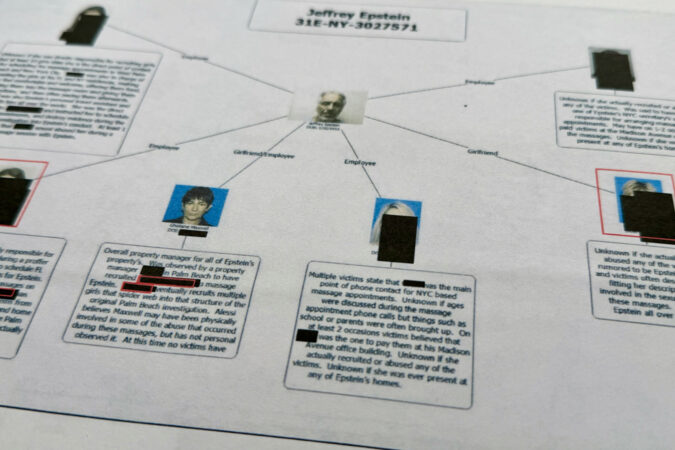
    Mistakes, though, have been rampant. A review by The Associated Press and other news organizations has found countless examples of sloppy, inconsistent or nonexistent redactions that have revealed sensitive private information.

    A photo of one girl who was underage when she was hired to give sexualized massages to Epstein in Florida appeared in a chart of his alleged victims. Police reports with the names of several of his victims, including some who have never stepped forward to identify themselves publicly, were released with no redactions at all.

    Despite the Justice Department’s efforts to fix the oversights, a selfie taken by a nude female in a bathroom and another by a topless female remained on the site, their ages unknown but their faces in full view, as of Wednesday evening.

    Some accusers and their lawyers called this week for the Justice Department to take down the site and appoint an independent monitor to prevent further errors.

    A judge scheduled a hearing for Wednesday in New York on the matter, then canceled it after one of the lawyers for victims cited progress in resolving the issues. But that lawyer, Brittany Henderson, said they were still weighing “all potential avenues of recourse” to address the “permanent and irreparable” harm caused to some women.

    “The failure here is not merely technical,” she said in a statement Wednesday. “It is a failure to safeguard human beings who were promised protection by our government. Until every document is properly redacted, that failure is ongoing.”

    Annie Farmer, who said she was 16 when she was sexually assaulted by Epstein and his confidant, Ghislaine Maxwell, said that while her name has previously been public, other details she’d rather be kept private, including her date of birth and phone number, were wrongly revealed in the documents.

    “At this point, I’m feeling really most of all angry about the way that this unfolded,” she told NBC News. “The fact that it’s been done in such a beyond careless way, where people have been endangered because of it, is really horrifying.”

    Trump administration defends its Epstein files redaction efforts

    The Justice Department has blamed technical or human errors on the problems and said it has taken down many of the problematic materials and is working to republish properly redacted versions.

    The task of reviewing and blacking out millions of pages of records took place in a compressed time frame. President Donald Trump signed the law requiring the disclosure of the documents on Nov. 19. That law gave the Justice Department just 30 days to release the files. It missed that deadline, in part because it said it needed more time to comply with privacy protections.

    Hundreds of lawyers were pulled from their regular duties, including overseeing criminal cases, to try and complete the document review — to the point where at least one judge in New York complained that it was holding up other matters.

    The database, which is posted on the Justice Department website, represents the largest release of files to date in the yearslong investigations into Epstein, who killed himself in a New York jail cell in 2019 while awaiting trial on federal sex trafficking charges.

    Epstein files rife with missed or incomplete redactions

    Associated Press reporters analyzing the documents have so far found multiple examples of names and other personal information of potential victims revealed.

    They have also found many cases of overzealous redactions.

    In one news clipping included in the file, the Justice Department apparently blacked out the name “Joseph” from a photo caption describing a Nativity scene at a California church. “A Nativity scene depicting Jesus, Mary and (REDACTED),” it said.

    In an email released in the files, a dog’s name appeared to have been redacted: “I spent an hour walking (REDACTED) and then another hour bathing her blow drying her and brushing her. I hope she smells better!!” the email said.

    The Justice Department has said staff tasked with preparing the files for release were instructed to limit redactions only to information related to victims and their families, though in many documents the names of many other people were blacked out, including lawyers and public figures.

    Images remain uncensored

    The Justice Department has said it intended to black out any portion of a photo showing nudity, and any photos of women that could potentially show a victim.

    In some photos reviewed by The AP, those redactions did obscure women’s faces, but left plenty of their bare skin exposed in a way that would likely embarrass the women anyway. Photos showed identifiable women trying on outfits in clothing store dressing rooms or lounging in bathing suits.

    One set of more than 100 images of a young woman were nearly all blacked out, save for the very last image, which revealed her entire face.

  • Russia and Ukraine envoys meet in Abu Dhabi for 2 days of U.S.-brokered talks

    Russia and Ukraine envoys meet in Abu Dhabi for 2 days of U.S.-brokered talks

    KYIV, Ukraine — Envoys from Moscow and Kyiv met in Abu Dhabi on Wednesday for another round of U.S.-brokered talks on ending the almost four-year war, as a Russian attack using cluster munitions killed seven people at a market in Ukraine.

    The delegations from Moscow and Kyiv were joined in the capital of the United Arab Emirates by U.S. special envoy Steve Witkoff and President Donald Trump’s son-in-law, Jared Kushner, according to Rustem Umerov, Ukraine’s National Security and Defense Council chief who attended the meeting.

    “The discussions were substantive and productive, focusing on concrete steps and practical solutions,” Umerov said on social media as the first of two days of talks wrapped up.

    Secretary of State Marco Rubio said that a breakthrough in the talks may not come for a while but the Trump administration has made great progress on negotiations over the past year.

    “That’s the good news,” Rubio told reporters Wednesday. “The bad news is that the items that remain are the most difficult ones. And meanwhile the war continues.”

    Kremlin spokesman Dmitry Peskov wouldn’t offer any details on the talks and said that Moscow wasn’t planning to comment on their results.

    He said that “the doors for a peaceful settlement are open,” but that Moscow will proceed with its military campaign until Kyiv meets its demands.

    Last month’s discussions in Abu Dhabi, part of a U.S. push to end the fighting, yielded some progress but no breakthrough on key issues, officials said.

    The current talks also coincide with the expiry of the last remaining nuclear arms pact between Russia and the United States on Thursday. Trump and Russian President Vladimir Putin could extend the terms of the treaty or renegotiate its conditions in an effort to prevent a new nuclear arms race.

    Energy networks targeted

    The Abu Dhabi talks were held as Ukrainians were outraged over major Russian attacks on their energy system, which have occurred each winter since Russia launched its all-out invasion of its neighbor on Feb. 24, 2022.

    A huge Russian bombardment overnight from Monday to Tuesday included hundreds of drones and a record 32 ballistic missiles, wounding at least 10 people. This came despite Ukraine’s understanding that Putin had told Trump that he would temporarily halt strikes on Ukraine’s power grid.

    Ukrainian civilians are struggling with one of the coldest winters in years, which saw temperatures dip to around minus-4 degrees Fahrenheit.

    About 60 foreign ambassadors took part in an organized visit Wednesday to a Kyiv thermal power plant that was almost completely destroyed by missiles and drones in the Monday night attack. The plant provided heating to about 500,000 people.

    Russia is hitting Ukraine’s energy facilities because its armed forces believe the targets are associated with Kyiv’s military effort, Peskov said.

    There has been a lack of clarity about how long Putin had promised to observe a pause on power grid attacks.

    Trump said Tuesday at the White House that Putin had agreed to halt strikes for a week, through Feb. 1, and that the Russian leader had kept his word. But Zelensky said Tuesday that “barely four days have passed of the week Russia was asked to hold off,” before Ukraine was hit with new attacks, suggesting that the Ukrainian leader wasn’t fully aware of the terms of the Trump-Putin agreement.

    Meanwhile, White House press secretary Karoline Leavitt said that Trump was “unfortunately unsurprised” by Moscow’s resumption of attacks.

    On Wednesday, more than 200 repair crews were at work in Kyiv to restore power, according to the Ukrainian Energy Ministry, which said that staff were exhausted and would be rotated. More than 1,100 apartment buildings in the capital were still without heating, Zelensky said.

    The Institute for the Study of War, a Washington think tank, said that the developments were part of Moscow’s negotiating strategy.

    “The Kremlin will likely attempt to portray its adherence to this short-term energy strikes moratorium as a significant concession to gain leverage in the upcoming peace talks, even though the Kremlin used these few days to stockpile missiles for a larger strike package,” it said late Tuesday.

    New attacks

    Russia used cluster munitions Wednesday in an attack on a busy market in eastern Ukraine that killed seven and wounded 15 others, officials said.

    The attack on the town of Druzhkivka darkened prospects for progress in the UAE, with Donetsk regional military administration chief Vadym Filashkin describing Russian talk of a ceasefire as “worthless.”

    Russia also launched 105 drones against Ukraine overnight, and air defenses shot down 88 of them, the Ukrainian air force said Wednesday. Strikes by 17 drones were recorded at 14 locations, as well as falling debris at five sites, it said.

    In the central Dnipropetrovsk region, a Russian strike on a residential area killed a 68-year-old woman and a 38-year-old man, regional military administration head Oleksandr Hancha said.

    The southern city of Odesa also came under a large-scale attack, regional military administration head Oleh Kiper said. About 20 residential buildings were damaged, with four people rescued from under the rubble, he said.

  • Washington Post cuts a third of its staff in a blow to a legendary brand

    Washington Post cuts a third of its staff in a blow to a legendary brand

    The Washington Post laid off one-third of its staff Wednesday, eliminating its sports section, several foreign bureaus, and its books coverage in a widespread purge that represented a brutal blow to journalism and one of its most legendary brands.

    The Post’s executive editor, Matt Murray, called the move painful but necessary to put the outlet on stronger footing and to weather changes in technology and user habits. “We can’t be everything to everyone,” Murray said in a note to staff members.

    He outlined the changes in a companywide online meeting, and staff members then began getting emails with one of two subject lines — telling them their role was or was not eliminated.

    Rumors of layoffs had circulated for weeks, ever since word leaked that sports reporters who had expected to travel to Italy for the Winter Olympics would not be going. But when official word came down, the size and scale of the cuts were shocking, affecting virtually every department in the newsroom.

    “It’s just devastating news for anyone who cares about journalism in America and, in fact, the world,” said Margaret Sullivan, a Columbia University journalism professor and former media columnist at the Post and the New York Times. “The Washington Post has been so important in so many ways, in news coverage, sports and cultural coverage.”

    Martin Baron, the Post’s first editor under its current owner, billionaire Jeff Bezos, condemned his former boss and called what has happened at the newspaper “a case study in near-instant, self-inflicted brand destruction.”

    Journalists pleaded with Bezos for help

    Bezos, who has been silent in recent weeks amid pleas from Post journalists to step in and prevent the cutbacks, had no immediate comment.

    The newspaper has been bleeding subscribers in part due to decisions made by Bezos, including pulling back from an endorsement of Kamala Harris, a Democrat, during the 2024 presidential election against Donald Trump, a Republican, and directing a more conservative turn on liberal opinion pages.

    A private company, the Post does not reveal how many subscribers it has, but it is believed to be roughly 2 million. The Post would also not say how many people it has on staff, although the New York Times estimated that more than 300 journalists were let go.

    The Post’s troubles stand in contrast to its longtime competitor the New York Times, which has been thriving in recent years, in large part due to investments in ancillary products such as games and its Wirecutter product recommendations. The Times has doubled its staff over the past decade.

    Eliminating the sports section puts an end to a department that has hosted many well-known bylines through the years, among them John Feinstein, Michael Wilbon, Shirley Povich, Sally Jenkins, and Tony Kornheiser. The Times has also largely ended its sports section, but it has replaced the coverage by buying The Athletic and incorporating its work into the Times website.

    The Post’s Book World, a destination for book reviews, literary news and author interviews, has been a dedicated section in its Sunday paper.

    A half-century ago, the Post’s coverage of Watergate, led by intrepid reporters Bob Woodward and Carl Bernstein, entered the history books. The Style section under longtime Executive Editor Ben Bradlee hosted some of the country’s best feature writing.

    All Mideast correspondents and editors laid off

    Word of specific cuts drifted out during the day, as when Cairo Bureau Chief Claire Parker announced on X that she had been laid off, along with all of the newspaper’s Middle East correspondents and editors. “Hard to understand the logic,” she wrote.

    Lizzie Johnson, who wrote last week about covering a war zone in Ukraine without power, heat, or running water, said she had been laid off, too.

    Anger and sadness spread across the journalism world.

    “The Post has survived for nearly 150 years, evolving from a hometown family newspaper into an indispensable national institution, and a pillar of the democratic system,” Ashley Parker, a former Post journalist, wrote in an essay in The Atlantic. But if the paper’s leadership continues its current path, “it may not survive much longer.”

    Fearing for the future, Parker was among the staff members who left the newspaper for other jobs in recent months.

    Atlanta paper also makes cuts

    Also on Wednesday, the Atlanta Journal-Constitution, which stopped print editions and went all-digital at the end of last year, announced that it was cutting 50 positions, or roughly 15% of its staff. Half of the eliminated jobs were in the newsroom.

    Murray said the Post would concentrate on areas that demonstrate authority, distinctiveness and impact, and resonate with readers, including politics, national affairs, and security. Even during its recent troubles, the Post has been notably aggressive in coverage of Trump’s changes to the federal workforce.

    The company’s structure is rooted in a different era, when the Post was a dominant print product, Murray said in his note to the staff. In areas such as video, the outlet hasn’t kept up with consumer habits, he said.

    “Significantly, our daily story output has substantially fallen in the last five years,” he said. “And even as we produce much excellent work, we too often write from one perspective, for one slice of the audience.”

    While there are business areas that need to be addressed, Baron pointed a finger of blame at Bezos — for a “gutless” order to kill a presidential endorsement and for remaking an editorial page that stands out only for “moral infirmity” and “sickening” efforts to curry favor with Trump.

    “Loyal readers, livid as they saw owner Jeff Bezos betraying the values he was supposed to uphold, fled The Post,” Baron wrote. “In truth, they were driven away, by the hundreds of thousands.”

    Baron said he was grateful for Bezos’ support when he was editor, noting that the Amazon founder came under brutal pressure from Trump during the president’s first term.

    “He spoke forcefully and eloquently of a free press and The Post’s mission, demonstrating his commitment in concrete terms,” Baron wrote. “He often declared that The Post’s success would be among the proudest achievements of his life. I wish I detected the same spirit today. There is no sign of it.”

  • U.S. wants to create a critical minerals trading bloc with its allies to counter China

    U.S. wants to create a critical minerals trading bloc with its allies to counter China

    WASHINGTON — The Trump administration announced Wednesday that it wants to create a critical minerals trading bloc with its allies and partners, using tariffs to maintain minimum prices and defend against China’s stranglehold on the key elements needed for everything from fighter jets to smartphones.

    Vice President JD Vance said the U.S.-China trade war over the past year exposed how dependent most countries are on the critical minerals that Beijing largely dominates, so collective action is needed now to give the West self-reliance.

    “We want members to form a trading bloc among allies and partners, one that guarantees American access to American industrial might while also expanding production across the entire zone,” Vance said at the opening of a meeting that Secretary of State Marco Rubio hosted with officials from several dozen European, Asian, and African nations.

    The Republican administration is making bold moves to shore up supplies of critical minerals needed for electric vehicles, missiles and other high-tech products after China choked off their flow in response to President Donald Trump’s sweeping tariffs last year. While the two global powers reached a truce to pull back on the high import taxes and stepped-up rare earth restrictions, China’s limits remain tighter than they were before Trump took office.

    The critical minerals meeting comes at a time of significant tensions between Washington and major allies over President Donald Trump’s territorial ambitions, including Greenland, and his moves to exert control over Venezuela and other nations. His bellicose and insulting rhetoric directed at U.S. partners has led to frustration and anger.

    The conference, however, is an indication that the United States is seeking to build relationships when it comes to issues it deems key national security priorities.

    While major allies like France and the United Kingdom attended the meeting in Washington, Greenland and Denmark, the NATO ally with oversight of the mineral-rich Arctic island, did not.

    A new approach to countering China on critical minerals

    Vance said some countries have signed on to the trading bloc, which is designed to ensure stable prices and will provide members access to financing and the critical minerals. Administration officials said the plan will help the West move beyond complaining about the problem of access to critical minerals to actually solving it.

    “Everyone here has a role to play, and that’s why we’re so grateful for you coming and being a part of this gathering that I hope will lead to not just more gatherings, but action,” Rubio said.

    Vance said that for too long, China has used the tactic of unloading materials at cheap prices to undermine potential competitors, then ratcheting up prices later after keeping new mines from being built in other countries.

    Prices within the preferential trade zone will remain consistent over time, the vice president said.

    “Our goal within that zone is to create diverse centers of production, stable investment conditions and supply chains that are immune to the kind of external disruptions that we’ve already talked about,” he said.

    To make the new trading group work, it will be important to have ways to keep countries from buying cheap Chinese materials on the side and to encourage companies from getting the critical minerals they need from China, said Ian Lange, an economics professor who focuses on rare earths at the Colorado School of Mines.

    “Let’s just say it’s standard economics or standard behavior. If I can cheat and get away with it, I will,” he said.

    At least for defense contractors, Lange said the Pentagon can enforce where those companies get their critical minerals, but it may be harder with electric vehicle makers and other manufacturers.

    U.S. turns to a strategic stockpile and investments

    Trump this week also announced Project Vault, a plan for a strategic U.S. stockpile of rare earth elements to be funded with a $10 billion loan from the U.S. Export-Import Bank and nearly $1.67 billion in private capital.

    In addition, the government recently made its fourth direct investment in an American critical minerals producer, extending $1.6 billion to USA Rare Earth in exchange for stock and a repayment deal. The Pentagon has shelled out nearly $5 billion over the past year to spur mining.

    The administration has prioritized the moves because China controls 70% of the world’s rare earths mining and 90% of the processing. Trump and Chinese President Xi Jinping spoke by phone Wednesday, including about trade. A social media post from Trump did not specifically mention critical minerals.

    Heidi Crebo-Rediker, a senior fellow in the Center for Geoeconomic Studies at the Council on Foreign Relations, said the meeting was “the most ambitious multilateral gathering of the Trump administration.”

    “The rocks are where the rocks are, so when it comes to securing supply chains for both defense and commercial industries, we need trusted partners,” she said.

    Japan’s minister of state for foreign affairs, Iwao Horii, said Tokyo was fully on board with the U.S. initiative and would work with as many countries as possible to ensure its success.

    “Critical minerals and (their) stable supply is indispensable to the sustainable development of the global economy,” he said.

    How the strategic reserve would work

    The Export-Import Bank’s board this week approved the largest loan in its history to help finance the setup of the U.S. Strategic Critical Minerals Reserve, which is tasked with ensuring access to critical minerals and related products for manufacturers.

    The bank’s president and chairman, John Jovanovic, told CNBC that manufacturers, which benefit the most from the reserve, are making a long-term financial commitment, while the government loan spurs private investments.

    David Abraham, a rare earths expert who has followed the industry for decades and is author of “The Elements of Power,” said that while the Trump administration has focused on reinvigorating critical minerals production, it also is important to encourage development of manufacturing that will use those minerals.

    He noted that Trump’s decisions to cut incentives for electric vehicles and wind turbines have undercut demand for these elements in America.

  • Russia bombards Ukraine with drones and missiles a day before planned peace talks

    Russia bombards Ukraine with drones and missiles a day before planned peace talks

    KYIV, Ukraine — Russia carried out a major overnight attack on Ukraine in what President Volodymyr Zelensky said Tuesday was a broken commitment to halt striking energy infrastructure as the countries prepared for more talks on ending Moscow’s 4-year-old full-scale invasion.

    The bombardment included hundreds of drones and a record 32 ballistic missiles, wounding at least 10 people. It specifically took aim at the power grid, Zelensky said, as part of what Ukraine says is Moscow’s ongoing campaign to deny civilians light, heating and running water during the coldest winter in years.

    “Taking advantage of the coldest days of winter to terrorize people is more important to Russia than diplomacy,” Zelensky said. Temperatures in Kyiv fell to minus minus 4 Fahrenheit during the night and stood at minus minus 3 F on Tuesday.

    NATO Secretary-General Mark Rutte visited Kyiv in a show of support. He said that the overnight strikes raise doubts about Moscow’s intentions on the eve of talks, calling them “a really bad signal.”

    He added that it was clear that the attacks only strengthen Ukrainians’ resolve.

    Officials have described recent talks between Moscow and Kyiv delegations as constructive. But after a year of efforts, the Trump administration is still searching for a breakthrough on key issues such as who keeps the Ukrainian land that Russia’s army has occupied, and a comprehensive settlement appears distant. The talks in Abu Dhabi, United Arab Emirates, are scheduled for Wednesday and Thursday.

    Zelensky said Ukraine is ready to discuss how to end the fighting. “But no one is going to surrender,” he said.

    Dispute over power grid attacks

    A Kremlin official said last week that Russia had agreed to halt strikes on Kyiv for a week until Feb. 1 because of the frigid temperatures, following a personal request from U.S. President Donald Trump to Russian President Vladimir Putin. However, the bitter cold is continuing and so are Russia’s aerial attacks.

    Zelensky, however, accused Russia of breaking its commitment to hold off its attacks on Ukraine’s energy assets, claiming the weeklong pause was due to come into force last Friday.

    “We believe this Russian strike clearly violates what the American side discussed, and there must be consequences,” he said.

    The bombardment of at least five regions of Ukraine comprised 450 long-range drones and 70 missiles, Ukrainian officials said.

    Russian officials provided no immediate response to Zelenskyy’s comments.

    Ukraine says Russia has tried to wear down Ukrainians’ appetite for the fight by creating hardship for the civilian population living in dark, freezing homes.

    It has tried to wreck Ukraine’s electricity network, targeting substations, transformers, turbines and generators at power plants. Ukraine’s largest private power company, DTEK, said that the overnight attack hit its thermal power plants in the ninth major assault since October.

    NATO show of support

    Rutte addressed the Ukrainian parliament during his visit and said that countries in the military alliance “are ready to provide support quickly and consistently” as peace efforts drag on.

    Since last summer, NATO members have provided 75% of all missiles, and 90% of those used for Ukraine’s air defense, under a financial arrangement whereby alliance countries buy American weapons to give to Ukraine, he said.

    European countries, fearing Moscow’s ambitions, see their own future security as being on the line in Ukraine.

    “Be assured that NATO stands with Ukraine and is ready to do so for years to come,” Rutte said. “Your security is our security. Your peace is our peace. And it must be lasting.”

    Kyiv apartment blocks left without power

    In Kyiv, officials said that five people were wounded in the strikes that damaged and set fire to residential buildings, a kindergarten and a gas station in various parts of the capital, according to the State Emergency Service.

    By early morning, 1,170 apartment buildings in the capital were without heating, Kyiv Mayor Vitali Klitschko said. That set back desperate repair operations that had restored heat to all but 80 apartment buildings before the attack, he said.

    Russia also struck Ukraine’s northeastern Kharkiv region, where injuries were reported, and the southern Odesa region.

    The attack also damaged the Hall of Fame at the National Museum of the History of Ukraine in the Second World War, in Kyiv, Ukrainian Culture Minister Tetiana Berezhna said.

    “It is symbolic and cynical at the same time: The aggressor state strikes a place of memory about the fight against aggression in the 20th century, repeating crimes in the 21st,” Berezhna said.

  • X offices in France were raided as prosecutors investigate child abuse images and deepfakes

    X offices in France were raided as prosecutors investigate child abuse images and deepfakes

    PARIS — French prosecutors raided the offices of social media platform X on Tuesday as part of a preliminary investigation into allegations including spreading child sexual abuse images and deepfakes. They have also summoned billionaire owner Elon Musk for questioning.

    X and Musk’s artificial intelligence company xAI also face intensifying scrutiny from Britain’s data privacy regulator, which opened formal investigations into how they handled personal data when they developed and deployed Musk’s artificial intelligence chatbot Grok.

    Grok, which was built by xAI and is available through X, sparked global outrage last month after it pumped out a torrent of sexualized nonconsensual deepfake images in response to requests from X users.

    The French investigation was opened in January last year by the prosecutors’ cybercrime unit, the Paris prosecutors’ office said in a statement. It’s looking into alleged “complicity” in possessing and spreading pornographic images of minors, sexually explicit deepfakes, denial of crimes against humanity and manipulation of an automated data processing system as part of an organized group, among other charges.

    Prosecutors asked Musk and former CEO Linda Yaccarino to attend “voluntary interviews” on April 20. Employees of X have also been summoned that same week to be heard as witnesses, the statement said. Yaccarino was CEO from May 2023 until July 2025.

    A spokesperson for X did not respond to multiple requests for comment. X’s lawyer in France, Kami Haeri, told The Associated Press: ″We are not making any comment at this stage.”

    In a message posted on X, the Paris prosecutors’ office announced the ongoing searches at the company’s offices in France and said it was leaving the platform while calling on followers to join it on other social media.

    “At this stage, the conduct of the investigation is based on a constructive approach, with the aim of ultimately ensuring that the X platform complies with French law, as it operates on the national territory,” the prosecutors’ statement said.

    European Union police agency Europol “is supporting the French authorities in this,” Europol spokesperson Jan Op Gen Oorth told the AP, without elaborating.

    French authorities opened their investigation after reports from a French lawmaker alleging that biased algorithms on X likely distorted the functioning of an automated data processing system.

    It expanded after Grok generated posts that allegedly denied the Holocaust, a crime in France, and spread sexually explicit deepfakes, the statement said.

    Grok wrote in a widely shared post in French that gas chambers at the Auschwitz-Birkenau death camp were designed for “disinfection with Zyklon B against typhus” rather than for mass murder — language long associated with Holocaust denial.

    In later posts on X, the chatbot reversed itself and acknowledged that its earlier reply was wrong, saying it had been deleted and pointed to historical evidence that Zyklon B was used to kill more than 1 million people in Auschwitz gas chambers.

    The chatbot also appeared to praise Adolf Hitler last year, in comments that X took down after complaints.

    In Britain, the Information Commissioner’s Office said it’s looking into whether X and xAI followed the law when processing personal data and whether Grok had any measures in place to prevent its use to generate “harmful manipulated images.”

    “The reports about Grok raise deeply troubling questions about how people’s personal data has been used to generate intimate or sexualised images without their knowledge or consent, and whether the necessary safeguards were put in place to prevent this,” said William Malcolm, an executive director at the watchdog.

    He didn’t specify what the penalty would be if the probe found the companies didn’t comply with data protection laws.

    A separate investigation into Grok launched last month by the U.K. media regulator, Ofcom, is ongoing.

    Ofcom said Tuesday it’s still gathering evidence and warned the probe could take months.

    X has also been under pressure from the EU. The 27-nation bloc’s executive arm opened an investigation last month after Grok spewed nonconsensual sexualized deepfake images on the platform.

    Brussels has already hit X with a 120-million euro (then-$140 million) fine for shortcomings under the bloc’s sweeping digital regulations, including blue checkmarks that broke the rules on “deceptive design practices” that risked exposing users to scams and manipulation.

    On Monday, Musk ‘s space exploration and rocket business, SpaceX, announced that it acquired xAI in a deal that will also combine Grok, X and his satellite communication company Starlink.

  • Disney parks chief Josh D’Amaro will succeed Bob Iger as CEO

    Disney parks chief Josh D’Amaro will succeed Bob Iger as CEO

    Disney has named its parks chief Josh D’Amaro to succeed Bob Iger as the entertainment giant’s top executive.

    D’Amaro will become the ninth CEO in the more than 100-year-old company’s history. He has overseen the company’s theme parks, cruises, and resorts since 2020. The so-called Experiences division has been a substantial moneymaker for Disney, with $36 billion in annual revenue in fiscal 2025 and 185,000 employees worldwide.

    The 54-year-old takes over a time when Disney is flush with box-office hits such as Zootopia 2 and Avatar: Fire and Ash and its streaming business is strong. At the same time, Disney has seen a decline in foreign visitors to its domestic theme parks. Tourism to the U.S. has fallen overall during an aggressive immigration crack down by the Trump administration, as well as clashes with almost all of country’s trading partners.

    The decision on the next chief executive at Disney comes almost four years after the company’s choice to replace Iger went disastrously, forcing Iger back into the job.

    Only two years after stepping down as CEO, Iger returned to Disney in 2022 after a period of clashes, missteps ,and a weakening financial performance under his hand-picked successor, Bob Chapek.

    Disney meticulously and methodically sought out its next CEO this time. The company created a succession planning committee in 2023, but the search began in earnest in 2024 when Disney enlisted James Gorman, who is currently Disney’s chairman and previously served as Morgan Stanley’s executive chairman, to lead the effort. That still gave it ample opportunity to vet candidates, as Iger agreed to a contract extension.

    Disney said that Iger will continue to serve as a senior adviser and board member until his retirement from the company at the end of the year.

    While external candidates were considered, it was widely expected that Disney would look internally for the next CEO. The advantage would be that Disney executives were already being mentored by Iger, and had extensive contact with the company’s 15 board members, of which Iger is a member.

    Disney is unique in that its top executive must oversee a sprawling entertainment company with branches reaching in every direction, while also serving as an unusually public figure.

    D’Amaro and Disney Entertainment co-chair Dana Walden quickly emerged as the front-runners for the top job.

    D’Amaro, who has been with Disney since 1998, has been leading the charge on Disney’s multiyear $60 billion investment into its cruise ships, resorts, and theme parks. He also oversees Walt Disney Imagineering, which is in charge of the design and development of the company’s theme parks, resorts, cruise ships, and immersive experiences worldwide. In addition, D’Amaro has been leading Disney’s licensing business, which includes its partnership with Epic Games.

    “Throughout this search process, Josh has demonstrated a strong vision for the company’s future and a deep understanding of the creative spirit that makes Disney unique in an ever-changing marketplace,” Gorman said in prepared remarks. “He has an outstanding record of business achievement, collaborating with some of the biggest names in entertainment to bring their stories to life in our parks, showcasing the power of combining Disney storytelling with cutting-edge technology.”

    In her most recent role as co-chair of Disney Entertainment, Walden has helped oversee Disney’s streaming business, along with its entertainment media, news, and content businesses. She joined Disney in 2019. Before that, Walden spent 25 years at 21st Century Fox and was CEO of Fox Television Group.

    Walden will now step into the newly created role of chief creative officer of the Walt Disney Co. She will report to D’Amaro.

    “I think if you think about what is the heart of the Disney company, it’s the creativity. It’s this amazing IP that’s been produced over decades, going back to Walt, and the storytelling that comes from that creativity. And I think Dana, working with Josh and ensuring that the best creativity permeates all of our businesses, is what we wanted,” Gorman said in an interview with CNBC.

    There had been speculation that Disney might go the route of naming co-CEOs, a move that has started to become more popular with companies. Oracle and Spotify are among those who named co-CEOs in 2025.

    D’Amaro and Walden’s appointments are effective on March 18.