Category: Nation World News Wires

  • Russia offers cash bonuses, frees prisoners, and lures foreigners to replenish its troops in Ukraine

    Russia offers cash bonuses, frees prisoners, and lures foreigners to replenish its troops in Ukraine

    For average wage earners in Russia, it’s a big payday. For criminals seeking to escape the harsh conditions and abuse in prison, it’s a chance at freedom. For immigrants hoping for a better life, it’s a simplified path to citizenship.

    All they have to do is sign a contract to fight in Ukraine.

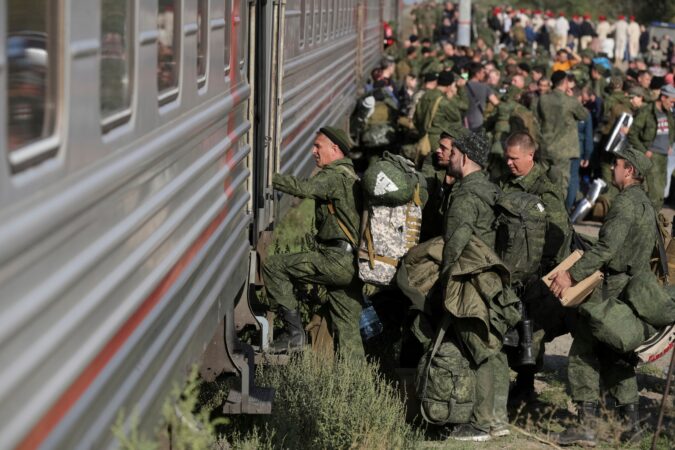
    As Russia seeks to replenish its forces in nearly four years of war — and avoid an unpopular nationwide mobilization — it’s pulling out all the stops to find new troops to send into the battlefield.

    Some come from abroad to fight in what has become a bloody war of attrition. After signing a mutual defense treaty with Moscow in 2024, North Korea sent thousands of soldiers to help Russia defend its Kursk region from a Ukrainian incursion.

    Men from South Asian countries, including India, Nepal, and Bangladesh, complain of being duped into signing up to fight by recruiters promising jobs. Officials in Kenya, South Africa, and Iraq say the same has happened to citizens from their countries.

    Russian numbers in Ukraine

    President Vladimir Putin told his annual news conference in December that 700,000 Russian troops are fighting in Ukraine. He gave the same number in 2024, and a slightly lower figure — 617,000 — in December 2023. It’s unclear if those numbers are accurate.

    Still hidden are the numbers of military casualties, with Moscow having released limited official figures. The British Defense Ministry said last summer that more than 1 million Russian troops may have been killed or wounded.

    Independent Russian news site Mediazona, together with the BBC and a team of volunteers, scoured news reports, social media and government websites, and collected the names of over 160,000 troops killed. More than 550 of those were foreigners from over two dozen countries.

    How Russia gets new soldiers

    Unlike Ukraine, where martial law and nationwide mobilization has been in place since the start of Russia’s full-scale invasion in February 2022, Putin has resisted ordering a broad call-up.

    When a limited mobilization of 300,000 men was tried later that year, tens of thousands of people fled abroad. The effort stopped after a few weeks when the target was met, but a Putin decree left the door open for another call-up. It also made all military contracts effectively open-ended and barred soldiers from quitting service or being discharged, unless they reached certain age limits or were incapacitated by injuries.

    Since then, Moscow has largely relied on what it describes as voluntary enlistment.

    The flow of voluntary enlistees signing military contracts has remained strong, topping 400,000 last year, Putin said in December. It was not possible to independently verify the claim. Similar numbers were announced in 2024 and 2023.

    Activists say these contracts often stipulate a fixed term of service, such as one year, leading some potential enlistees to believe the commitment is temporary. But contracts are automatically extended indefinitely, they say.

    The incentives

    The government offers high pay and extensive benefits to enlistees. Regional authorities offer various enlistment bonuses, sometimes amounting to tens of thousands of dollars.

    In the Khanty-Mansi region of central Russia, for example, an enlistee would get about $50,000 in various bonuses, according to the local government. That’s more than twice the average annual income in the region, where monthly salaries in the first 10 months of 2025 were reported to be just over $1,600.

    There also are tax breaks, debt relief, and other perks.

    Despite Kremlin claims of relying on voluntary enlistment, media reports and rights groups say conscripts — men aged 18-30 performing fixed-term mandatory military service and exempted from being sent to Ukraine — are often coerced by superiors into signing contracts that send them into battle.

    Recruitment also extends to prisoners and those in pretrial detention centers, a practice led early in the war by the late mercenary chief Yevgeny Prigozhin and adopted by the Defense Ministry. Laws now allow recruitment of both convicts and suspects in criminal cases.

    Targeting foreigners

    Foreigners also are recruiting targets, both inside Russia and abroad.

    Laws were adopted offering accelerated Russian citizenship for enlistees. Russian media and activists also report that raids in areas where migrants typically live or work lead to them being pressuring into military service, with new citizens sent to enlistment offices to determine if they’re eligible for mandatory service.

    In November, Putin decreed that military service was mandatory for certain foreigners seeking permanent residency.

    Some reportedly are lured to Russia by trafficking rings promising jobs, then duping them into signing military contracts. Cuban authorities in 2023 identified and sought to dismantle one such ring operating from Russia.

    Nepal’s Foreign Minister Narayan Prakash Saud told the Associated Press in 2024 that his country asked Russia to return hundreds of Nepali nationals who were recruited to fight in Ukraine, as well as to repatriate the remains of those killed in the war. Nepal has since barred citizens from traveling to Russia or Ukraine for work, citing recruitment efforts.

    Also in 2024, India’s federal investigation agency said it broke up a network that lured at least 35 of its citizens to Russia under the pretext of employment. The men were trained for combat and deployed to Ukraine against their will, with some “grievously injured,” the agency said.

    When Putin hosted Indian Prime Minister Narendra Modi for talks in 2024, New Delhi said its nationals who were “misled” into joining the Russian army would be discharged.

    Iraqi officials say about 5,000 of its citizens have joined the Russian military along with an unspecified number who are fighting alongside Ukrainian forces. Officials in Baghdad cracked down on such recruiting networks, with one man convicted last year of human trafficking and sentenced to life in prison.

    An unknown number of Iraqis have been killed or gone missing while fighting in Ukraine. Some families have reported that relatives were lured to Russia under false pretenses and forced to enlist; in other cases, Iraqis have joined voluntarily for the salary and Russian citizenship.

    Foreigners duped into fighting are especially vulnerable because they don’t speak Russian, have no military experience and are deemed “dispensable, to put it bluntly,” by military commanders, said Anton Gorbatsevich of the activist group Idite Lesom, or “Get Lost,” which helps men desert from the army.

    A drain on a slowing economy

    This month, a Ukrainian agency for the treatment of prisoners of war said over 18,000 foreign nationals had fought or are fighting on the Russian side. Almost 3,400 have been killed, and hundreds of citizens of 40 countries are held in Ukraine as POWs.

    If true, that represents a fraction of the 700,000 troops that Putin said are fighting for Russia in Ukraine.

    Using foreigners is only one way to meet the constant demand, said Artyom Klyga, head of the legal department at the Movement of Conscientious Objectors, noting Russian recruitment efforts appear to be stable. Most of those seeking help from the group, which assists men in avoiding military service, are Russian citizens, he said.

    Kateryna Stepanenko, a Russia researcher at the Washington-based Institute for the Study of War, said the Kremlin has gotten more “creative” in the last two years with attracting enlistees, including foreigners.

    But recruitment efforts are becoming “extremely expensive” for Russia, which faces a slowing economy, she added.
  • Man arrested after spraying unknown substance on Rep. Ilhan Omar at Minneapolis town hall

    Man arrested after spraying unknown substance on Rep. Ilhan Omar at Minneapolis town hall

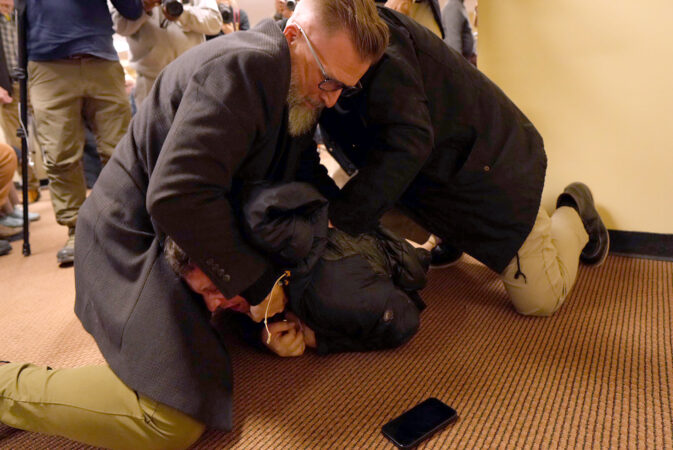
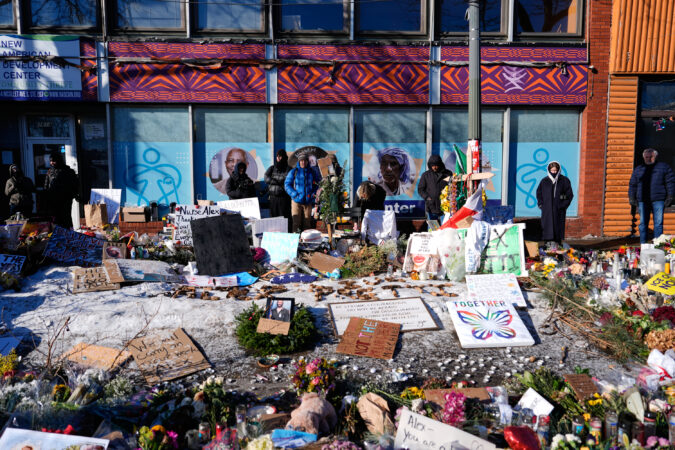
    MINNEAPOLIS — A man sprayed an unknown substance on Democratic U.S. Rep. Ilhan Omar and was tackled to the ground Tuesday during a town hall in Minneapolis, where tensions over federal immigration enforcement have come to a head after agents fatally shot an intensive care nurse and a mother of three this month.

    The audience cheered as the man was pinned down and his arms were tied behind his back. In video of the incident, someone in the crowd can be heard saying, “Oh my god, he sprayed something on her.”

    Just before that Omar had called for the abolishment of U.S. Immigration and Customs Enforcement and for Homeland Security Secretary Kristi Noem to resign or face impeachment. Calls are mounting on Capitol Hill for Noem to step down after the shooting deaths in Minneapolis of two people who protested deportations. Few Republicans have risen to her defense.

    “ICE cannot be reformed,” Omar said, seconds before the attack.

    Minneapolis police said officers saw the man use a syringe to spray an unknown liquid at Omar. They immediately arrested him and booked him at the county jail for third-degree assault, spokesperson Trevor Folke said. Forensic scientists responded to the scene.

    Police identified the man as 55-year-old Anthony Kazmierczak. It was not immediately clear if Kazmierczak had an attorney. The county public defenders’ office could not immediately be reached.

    Omar continued speaking for about 25 more minutes after the man was ushered out by security, saying she would not be intimidated.

    There was a strong, vinegarlike smell after the man pushed on the syringe, according to an Associated Press journalist who was there. Photos of the device, which fell to the ground when he was tackled, showed what appeared to be a light-brown liquid inside. There was no immediate word from officials on what it was.

    Minneapolis Council Member LaTrisha Vetaw said some of the substance also came into contact with her and state Sen. Bobby Joe Champion. She called it a deeply unsettling experience.

    No one in the crowd of about 100 people had a noticeable physical reaction to the substance.

    Omar says she is OK and ‘a survivor’

    Walking out afterward, Omar said she felt a little flustered but was not hurt. She was going to be screened by a medical team.

    She later posted on the social platform X: “I’m ok. I’m a survivor so this small agitator isn’t going to intimidate me from doing my work. I don’t let bullies win.”

    The White House did not immediately respond to a message seeking comment Tuesday night.

    President Donald Trump has frequently criticized the congresswoman and has stepped up verbal attacks on her in recent months as he turned his focus on Minneapolis. During a Cabinet meeting in December, he referred to her as “garbage.”

    Hours earlier on Tuesday, the president criticized Omar as he spoke to a crowd in Iowa, saying his administration would only let in immigrants who “can show that they love our country.”

    “They have to be proud, not like Ilhan Omar,” he said, drawing loud boos at the mention of her name.

    He added: “She comes from a country that’s a disaster. So probably, it’s considered, I think — it’s not even a country.”

    Omar is a U.S. citizen who fled her birthplace, Somalia, with her family at age 8 as a civil war tore apart the country.

    The Minneapolis-St. Paul area is home to about 84,000 people of Somali descent — nearly a third of Somalis living in the U.S.

    Officials condemn the attack

    Democratic Minnesota Gov. Tim Walz expressed gratitude that Omar was safe, adding in a post on X: “Our state has been shattered by political violence in the last year. The cruel, inflammatory, dehumanizing rhetoric by our nation’s leaders needs to stop immediately.”

    U.S. Rep. Nancy Mace, a South Carolina Republican, also denounced the assault.

    “I am deeply disturbed to learn that Rep. Ilhan Omar was attacked at a town hall today” Mace said. “Regardless of how vehemently I disagree with her rhetoric — and I do — no elected official should face physical attacks. This is not who we are.”

    Minneapolis Mayor Jacob Frey, a Democrat, called the attack “unacceptable.” He said he was relieved that Omar “is OK” and thanked police for their quick response, concluding: “This kind of behavior will not be tolerated in our city.”

    The city has been reeling from the fatal shootings of two residents by federal immigration agents this month during Trump’s massive immigration enforcement surge. Intensive care unit nurse Alex Pretti was killed Saturday, less than three weeks after Renee Good was fatally shot behind the wheel of her vehicle.

    Lawmakers face rising threats

    The attack came days after a man was arrested in Utah for allegedly punching U.S. Rep. Maxwell Frost, a Democrat from Florida, in the face during the Sundance Film Festival and saying Trump was going to deport him.

    Threats against members of Congress have increased in recent years, peaking in 2021 in the aftermath of that year’s Jan. 6 attack on the U.S. Capitol, before dipping slightly only to climb again, according to the most recent figures from the U.S. Capitol Police.

    Lawmakers have discussed the impact on their ability to hold town halls and public events, with some even citing the threat environment in their decisions not to seek reelection.

    Following the assault on Omar, U.S. Capitol Police said in a statement that the agency was “working with our federal partners to see this man faces the most serious charges possible to deter this kind of violence in our society.”

    It also released updated numbers detailing threats to members of Congress: 14,938 “concerning statements, behaviors, and communications directed against lawmakers, their families, staff and the Capitol Complex” in 2025.

    That is a sharp increase from 2024, when the number of cases was 9,474, according to USCP. It is the third year in a row that the number of threats has increased.

    Capitol Police have beefed up security measures across all fronts since Jan. 6, 2021, and the department has seen increased reporting after a new center was launched two years ago to process reports of threats.

  • 2 federal officers fired shots during encounter that killed Alex Pretti, DHS tells Congress

    2 federal officers fired shots during encounter that killed Alex Pretti, DHS tells Congress

    WASHINGTON — Two federal officers fired shots during an encounter that killed ICU nurse Alex Pretti in Minneapolis, a Customs and Border Protection official told Congress in a notice sent Tuesday.

    The notice said one Border Patrol officer fired his Glock and a CBP officer fired his, according to a notification to Congress obtained by The Associated Press.

    Investigators from CBP’s Office of Professional Responsibility conducted the analysis based on a review of body-worn camera footage and agency documentation, the notice said. The agency is required to report in-custody and certain other deaths involving its agents and officers to Congress.

    A Customs and Border Protection official said in the notice that officers tried to take Pretti into custody and he resisted, leading to a struggle. During the struggle, a Border Patrol agent yelled, “He’s got a gun!” multiple times, the official said.

  • Judge issues temporary order barring removal of boy, 5, and father who were detained in Minnesota

    Judge issues temporary order barring removal of boy, 5, and father who were detained in Minnesota

    A federal judge has issued a temporary order prohibiting the removal of a 5-year-old Ecuadoran boy and his father who were detained last week in Minnesota in an incident that further inflamed divisions on immigration under the Trump administration.

    U.S. Judge Fred Biery ruled Monday that any removal or transfer of 5-year-old Liam Conejo Ramos and his father, Adrian Alexander Conejo Arias, is on hold while a court case proceeds.

    A petition seeking their release was filed Saturday as dozens of immigrant families protested behind the fences of the family detention facility where the father and son are detained in Dilley, Texas, near San Antonio.

    A photo of the boy wearing a beanie and a Spiderman backpack has circulated widely on social media, sparking strong reactions.

    “He has become emblematic of the monstrosity of the ICE system and the detention system,” U.S. Rep. Joaquin Castro said in a Facebook video. He used the post to announce that he and fellow Texas Democratic, U.S. Rep. Jasmine Crockett, would visit the father and son on Wednesday at the Dilley Detention Center.

    Castro added that it was “inhumane to be keeping young kids like that in that place.” Advocates say conditions inside the center include constant illness and insufficient medical access.

    The boy and his father were taken into custody last week outside their home in Minnesota. Neighbors and school officials say that federal immigration officers used the preschooler as “bait” by telling him to knock on the door to his house so that his mother would answer.

    The Department of Homeland Security has called that description of events an “abject lie.” It said the father fled on foot and left the boy in a running vehicle in their driveway.

    Ramos’ attorney, Jennifer Scarborough, didn’t immediately respond to phone or email messages from The Associated Press seeking comment. The Department of Homeland Security sent a response only reiterating their version of events, insisting they did not arrest or target the child. Their statement did not address the judge’s court order.

    Federal officials have said the father was in the U.S. illegally, without offering details. Stephen Miller, the White House deputy chief of staff, said the man entered the country in December 2024.

    The family’s attorney said he had a pending asylum claim allowing him to stay in the country.

    An online court summary shows the case was filed on Dec. 17, 2024, and is assigned to the immigration court inside the Dilley detention center.

    The child’s immigration status may be a critical factor, and it is unclear if the 5-year-old was legally in the United States. If he wasn’t, he may be subject to deportation with one or both parents.

  • Judge finds Virginia Democrats’ redistricting resolution illegal

    Judge finds Virginia Democrats’ redistricting resolution illegal

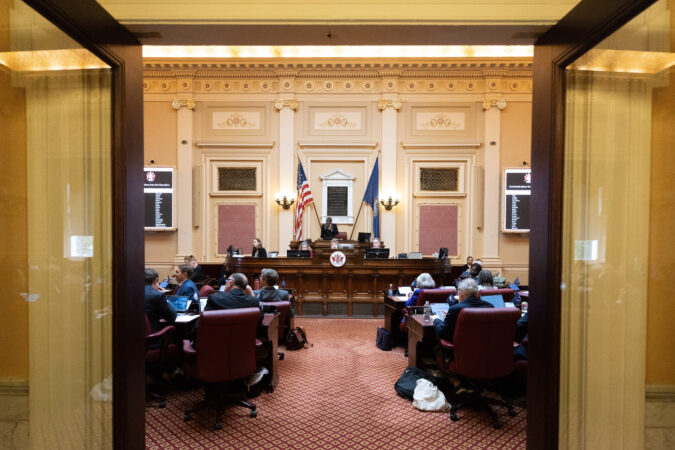
    RICHMOND, Va. — A Virginia judge ruled Tuesday that a proposed constitutional amendment letting Democrats redraw the state’s Congressional maps was illegal, setting back the party’s efforts to pick up seats in the U.S. House in November.

    Tazewell Circuit Court Judge Jack Hurley Jr. struck down the legislature’s actions on three grounds, including finding that lawmakers failed to follow their own rules for adding the redistricting amendment to a special session.

    His order also said Democrats failed to approve the amendment before the public began voting in last year’s general election and failed to publish the amendment three months before the election, as required by law.

    As a result, he said, the amendment was invalid and void.

    Virginia House Speaker Don Scott, who was listed in Republicans’ lawsuit over the resolution, said Democrats would appeal the ruling.

    “Nothing that happened today will dissuade us from continuing to move forward and put this matter directly to the voters,” Scott said in a joint statement with other state Democratic leaders.

    Virginians for Fair Elections, a campaign that supports the redistricting resolution, accused conservatives of filing their lawsuit in a known GOP-friendly jurisdiction, saying, “Republicans court-shopped for a ruling because litigation and misinformation are the only tools they have left.”

    President Donald Trump launched an unusual mid-decade redistricting battle last summer when he urged Republican officials in Texas to redraw districts to help the GOP win more seats, hoping to hold on to a narrow House majority in the face of political headwinds that typically favor the party out of power in midterms.

    So far that battle has resulted in nine more seats that Republicans believe they can win in Texas, Missouri, North Carolina and Ohio, and six that Democrats think they can win in California and Utah. Democrats hope to fully or partially make up that three-seat margin in Virginia.

    As in Virginia, redistricting is still being litigated in several states, and there is no guarantee that the parties will win the seats they have redrawn.

    Other states still could join the fray: Democratic Maryland Gov. Wes Moore is pushing for revised districts that could help Democrats win all eight of the state’s U.S. House seats, up from the seven they currently hold, and Republican Florida Gov. Ron DeSantis plans to call a special session on redistricting in April.

    Hurley’s ruling comes after lawmakers said they would unveil their proposed new House districts to voters by the end of this week.

    The state is currently represented in the House by six Democrats and five Republicans from districts whose boundaries were imposed by a court after a bipartisan redistricting commission failed to agree on a map after the 2020 census.

    Because the commission was established by a voter-approved constitutional amendment, lawmakers have to revise the constitution in order to be able to redraw maps this year. That requires the pass a resolution in two separate legislative sessions, with a state election sandwiched in between.

    Virginians would have to vote in favor in a referendum.

  • Trump visits Iowa trying to focus on affordability during fallout over nurse’s Minneapolis shooting

    Trump visits Iowa trying to focus on affordability during fallout over nurse’s Minneapolis shooting

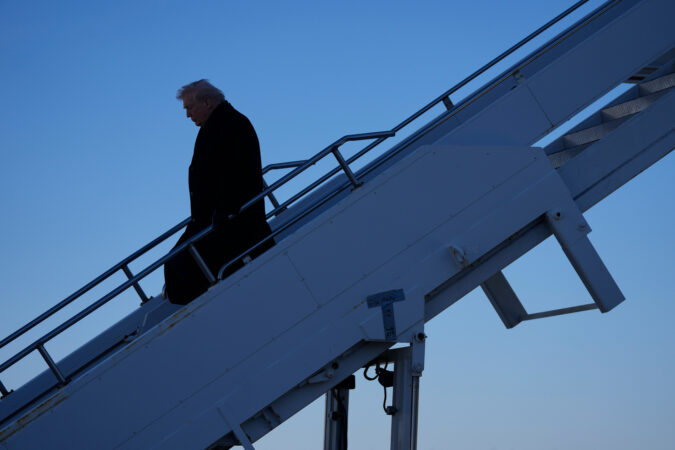
    CLIVE, Iowa — President Donald Trump arrived in Iowa on Tuesday as part of the White House’s midterm-year pivot toward affordability, even as his administration remains mired in the fallout in Minneapolis over a second fatal shooting by federal immigration officers this month.

    The Republican president first made a stop at a local restaurant, where he met some locals and sat for an interview with Fox News Channel — in which he said he was attempting to “de-escalate a little bit” in Minnesota. Afterwards, he was scheduled to deliver a speech on affordability at the Horizon Events Center in Clive, a suburb of Des Moines.

    The trip is expected to also highlight energy policy, White House chief of staff Susie Wiles said last week. It’s part of the White House’s strategy to have Trump travel out of Washington once a week ahead of the midterm elections to focus on affordability issues facing everyday Americans — an effort that keeps getting diverted by crisis.

    The latest comes as the Trump administration is grappling with the weekend shooting death of Alex Pretti, an ICU nurse killed by federal agents in the neighboring state of Minnesota. Pretti had participated in protests following the Jan. 7 killing of Renee Good by an Immigration and Customs Enforcement officer. Even as some top administration officials moved quickly to malign Pretti, Trump said he was waiting until an investigation into the shooting was complete.

    Trump calls Pretti killing ‘sad situation’

    As Trump left the White House on Tuesday to head to Iowa, he was repeatedly questioned by reporters about Pretti’s killing. Trump disputed language used by his own deputy chief of staff, Stephen Miller, who on social media described Pretti as an “assassin” who “tried to murder federal agents.” Vice President JD Vance shared the post.

    Trump, when asked Tuesday if he believed Pretti was an assassin, said, “No.”

    When asked if he thought Pretti’s killing was justified, Trump called it “a very sad situation” and said a “big investigation” was underway.

    “I’m going to be watching over it, and I want a very honorable and honest investigation. I have to see it myself,” he said.

    He also said Homeland Security Secretary Kristi Noem, who was quick to cast Pretti as a violent instigator, would not be resigning.

    Later, as he greeted diners at an Iowa restaurant, Trump weighed in further with comments that were likely to exacerbate frustration among some of his backers who are also strong Second Amendment proponents.

    “He certainly shouldn’t have been carrying a gun,” Trump said of Pretti.

    He called it a “very, very unfortunate incident but said, ”I don’t like that he had a gun. I don’t like that he had two fully loaded magazines. That’s a lot of bad stuff.”

    Republicans want to switch the subject to affordability

    Trump was last in Iowa ahead of the July 4 holiday to kick off the United States’ upcoming 250th anniversary, which morphed largely into a celebration of his major spending and tax cut package hours after Congress had approved it.

    Republicans are hoping that Trump’s visit to the state on Tuesday draws focus back to that tax bill, which will be a key part of their pitch as they ask voters to keep them in power in November.

    “I invited President Trump back to Iowa to highlight the real progress we’ve made: delivering tax relief for working families, securing the border, and growing our economy,” Rep. Zach Nunn, R-Iowa, said in a statement in advance of his trip. “Now we’ve got to keep that momentum going and pass my affordable housing bill, deliver for Iowa’s energy producers, and bring down costs for working families.”

    Trump’s affordability tour has taken him to Michigan, Pennsylvania and North Carolina as the White House tries to marshal the president’s political power to appeal to voters in key swing states.

    But Trump’s penchant for going off-script has sometimes taken the focus off cost-of-living issues and his administration’s plans for how to combat it. In Mount Pocono, Pennsylvania, Trump insisted that inflation was no longer a problem and that Democrats were using the term affordability as a “hoax” to hurt him. At that event, Trump also griped that immigrants arriving to the U.S. from “filthy” countries got more attention than his pledges to fight inflation.

    Competitive races in Iowa

    Although it was a swing state just a little more than a decade ago, Iowa in recent years has been reliably Republican in national and statewide elections. Trump won Iowa by 13 percentage points in 2024 against Democrat Kamala Harris.

    Still, two of Iowa’s four congressional districts have been among the most competitive in the country and are expected to be again in this year’s midterm elections. Trump already has endorsed Republican Reps. Nunn and Mariannette Miller-Meeks. Democrats, who landed three of Iowa’s four House seats in the 2018 midterm elections during Trump’s first term, see a prime opportunity to unseat Iowa incumbents.

    This election will be the first since 1968 with open seats for both governor and U.S. senator at the top of the ticket after Republican Gov. Kim Reynolds and Republican U.S. Sen. Joni Ernst opted out of reelection bids. The political shake-ups have rippled throughout the state, with Republican Reps. Randy Feenstra and Ashley Hinson seeking new offices for governor and for U.S. senator, respectively.

    Democrats hope Rob Sand, the lone Democrat in statewide office who is running for governor, will make the entire state more competitive with his appeal to moderate and conservative voters and his $13 million in cash on hand.

  • Families of 2 men killed in boat strike sue Trump administration over attack they call ‘unlawful’

    Families of 2 men killed in boat strike sue Trump administration over attack they call ‘unlawful’

    WASHINGTON — Families of two Trinidadian nationals killed in a Trump administration boat strike last October sued the federal government on Tuesday, calling the attack a war crime and part of an “unprecedented and manifestly unlawful U.S. military campaign.”

    The lawsuit is thought to be the first wrongful death case arising from the three dozen strikes that the administration has launched since September on boats in the Caribbean Sea and eastern Pacific Ocean. The complaint will test the legal justification of the Trump administration attacks; government officials have defended them as necessary to stem the flow of drugs into the United States, but many legal experts say they amount to a brazen violation of the laws of armed conflict.

    The complaint echoes many of the frequently articulated concerns about the boat strikes, noting for instance that they have been carried out without congressional authorization and at a time when there is no military conflict between the United States and drug cartels that under the laws of war could justify the lethal attacks.

    “These premeditated and intentional killings lack any plausible legal justification. Thus, they were simply murders, ordered by individuals at the highest levels of government and obeyed by military officers in the chain of command,” the lawsuit says.

    White House Deputy Press Secretary Anna Kelly said in a statement that the Oct. 14 strike “was conducted against designated narcoterrorists bringing deadly poison to our shores.”

    “President Trump used his lawful authority to take decisive action against the scourge of illicit narcotics that has resulted in the needless deaths of innocent Americans,” Kelly stated.

    The lawsuit was filed by the mother of Chad Joseph and the sister of Rishi Samaroo, two Trinidadian nationals who were among six people killed in the Oct. 14 missile strike on a boat traveling from Venezuela to Trinidad. The men were not members of any drug cartel, the lawsuit says, but had instead been fishing in the waters off the Venezuelan coast and were returning to their homes in Trinidad and Tobago.

    The two had caught a ride home to Las Cuervas, a fishing community where they were from, on a small boat targeted in a strike announced on Truth Social by President Donald Trump. All six people aboard the boat were killed.

    “These killings were wrongful because they took place outside of armed conflict and in circumstances in which Mr. Joseph and Mr. Samaroo were not engaged in activities that presented a concrete, specific, and imminent threat of death or serious physical injury, and where there were means other than lethal force that could have reasonably been employed to neutralize any such threat,” the lawsuit says.

    The lawsuit is the first to challenge the legality of the boat strikes in court, according to Jen Nessel, a spokesperson for the Center for Constitutional Rights, which filed the lawsuit in federal court in Massachusetts on behalf of the families, along with the ACLU and others.

    Nessel said in an email that the center also has a Freedom of Information Act lawsuit seeking the release of the legal justification for the strikes.

    Jeffrey Stein, an American Civil Liberties Union attorney, told reporters over Zoom that the lawsuit seeks compensatory and punitive damages that can be determined after a trial.

    “We don’t think that it’s something that we could put a precise dollar amount on,” Stein said. “But we’re seeking damages that can go some way toward bringing justice for these really heinous abuses of power.”

    The lawsuit also aims to prevent more boat strikes, Stein said, with the hope that a U.S. court rejects the Trump administration’s “frankly absurd claims about its authority to engage in these illegal strikes.”

    The lawsuit was filed in federal court in Massachusetts. It cites the Death on the High Seas Act, which the lawyers say permits wrongful death cases in situations like this, as well as the Alien Tort Statute, which permits foreign nationals to sue in federal court for alleged human rights violations.

    The death toll from the boat strikes is now up to at least 126 people, with the inclusion of those presumed dead after being lost at sea, the U.S. military confirmed Monday. The figure includes 116 people who were killed immediately in at least 36 attacks carried out since early September, with 10 others believed dead because searchers did not locate them following a strike.

  • Man wounded after exchanging gunfire with Border Patrol agents near US-Mexico border

    Man wounded after exchanging gunfire with Border Patrol agents near US-Mexico border

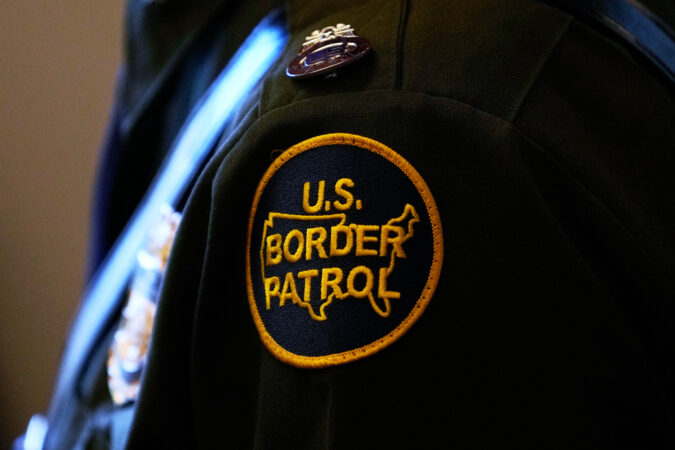
    ARIVACA, Ariz. — A man who authorities say was involved in a smuggling operation was shot Tuesday in an exchange of gunfire with the U.S. Border Patrol and after firing at a federal helicopter near the U.S.-Mexico border, authorities said.

    Federal agents were attempting to apprehend the 34-year-old Arizona man near Arivaca, Ariz., when he shot at a Border Patrol helicopter and at agents, the FBI said. Agents returned fire, striking the man and wounding him, the FBI said.

    The man was transported to a hospital and was recovering from surgery Tuesday evening, authorities said.

    The Pima County Sheriff’s Department said the FBI asked it to lead a use-of-force investigation of the Border Patrol. It noted that such investigations are standard when a federal agency is involved in a shooting in the county.

    FBI special agent Heith Janke said suspect Patrick Gary Schlegel has a criminal history that includes a 2025 warrant for escape stemming from a smuggling conviction.

    Hagle was in federal custody and is expected to be charged with a criminal complaint, Janke said.

    Arivaca is a community about 10 miles from the border. The area is a common path for drug smugglers and migrants who illegally cross the border, so agents regularly patrol there.

    The Santa Rita Fire District said it responded to the shooting and the person who was wounded was in custody.

    “Patient care was transferred to a local medical helicopter for rapid transport to a regional trauma center,” the fire district said.

    One level-one trauma center hospital in Tucson declined to release information, and the AP was waiting on a response from another.

    The shooting comes in a month that has seen three shootings — two fatal — by immigration officers involved in the massive Department of Homeland Security enforcement operation in Minnesota.

    While there were numerous videos of those shootings taken by residents monitoring the enforcement operations in the Minneapolis area, the latest shooting in Arizona happened in a community of about 500 people apparently without any bystander video of the incident.

    The sheriff department said its involvement in the investigation was the result of “long standing relationships” built over time in the border area to promote transparency.

    Sheriff Chris Nanos, a Democrat, has previously said his agency will not enforce federal immigration law amid President Donald Trump’s crackdown and that he will use his limited resources to focus on local crime and other public safety issues.

    U.S. Customs and Border Protection did not immediately respond to emails and telephone calls seeking more information.

    Border Patrol agents fired weapons in eight incidents during the 12-month period through September 2025, 14 times during the year before that and 13 times the year before that.

  • TikTok settles as social media giants face landmark trial over youth addiction claims

    TikTok settles as social media giants face landmark trial over youth addiction claims

    LOS ANGELES — TikTok agreed to settle a landmark social media addiction lawsuit just before the trial kicked off, the plaintiff’s attorneys confirmed.

    The social video platform was one of three companies — along with Meta’s Instagram and Google’s YouTube — facing claims that their platforms deliberately addict and harm children. A fourth company named in the lawsuit, Snapchat parent company Snap Inc., settled the case last week for an undisclosed sum.

    Details of the settlement with TikTok were not disclosed, and the company did not immediately respond to a request for comment.

    At the core of the case is a 19-year-old identified only by the initials “KGM,” whose case could determine how thousands of other, similar lawsuits against social media companies will play out. She and two other plaintiffs have been selected for bellwether trials — essentially test cases for both sides to see how their arguments play out before a jury and what damages, if any, may be awarded, said Clay Calvert, a nonresident senior fellow of technology policy studies at the American Enterprise Institute.

    A lawyer for the plaintiff said in a statement Tuesday that TikTok remains a defendant in the other personal injury cases, and that the trial will proceed as scheduled against Meta and YouTube.

    Jury selection starts this week in the Los Angeles County Superior Court. It’s the first time the companies will argue their case before a jury, and the outcome could have profound effects on their businesses and how they will handle children using their platforms. The selection process is expected to take at least a few days, with 75 potential jurors questioned each day through at least Thursday. A fourth company named in the lawsuit, Snapchat parent company Snap Inc., settled the case last week for an undisclosed sum.

    KGM claims that her use of social media from an early age addicted her to the technology and exacerbated depression and suicidal thoughts. Importantly, the lawsuit claims that this was done through deliberate design choices made by companies that sought to make their platforms more addictive to children to boost profits. This argument, if successful, could sidestep the companies’ First Amendment shield and Section 230, which protects tech companies from liability for material posted on their platforms.

    “Borrowing heavily from the behavioral and neurobiological techniques used by slot machines and exploited by the cigarette industry, Defendants deliberately embedded in their products an array of design features aimed at maximizing youth engagement to drive advertising revenue,” the lawsuit says.

    Executives, including Meta CEO Mark Zuckerberg, are expected to testify at the trial, which will last six to eight weeks. Experts have drawn similarities to the Big Tobacco trials that led to a 1998 settlement requiring cigarette companies to pay billions in healthcare costs and restrict marketing targeting minors.

    “Plaintiffs are not merely the collateral damage of Defendants’ products,” the lawsuit says. “They are the direct victims of the intentional product design choices made by each Defendant. They are the intended targets of the harmful features that pushed them into self-destructive feedback loops.”

    The tech companies dispute the claims that their products deliberately harm children, citing a bevy of safeguards they have added over the years and arguing that they are not liable for content posted on their sites by third parties.

    “Recently, a number of lawsuits have attempted to place the blame for teen mental health struggles squarely on social media companies,” Meta said in a recent blog post. “But this oversimplifies a serious issue. Clinicians and researchers find that mental health is a deeply complex and multifaceted issue, and trends regarding teens’ well-being aren’t clear-cut or universal. Narrowing the challenges faced by teens to a single factor ignores the scientific research and the many stressors impacting young people today, like academic pressure, school safety, socio-economic challenges, and substance abuse.”

    A Meta spokesperson said in a statement Monday the company strongly disagrees with the allegations outlined in the lawsuit and that it’s “confident the evidence will show our longstanding commitment to supporting young people.”

    José Castañeda, a Google Spokesperson, said Monday that the allegations against YouTube are “simply not true.” In a statement, he said “Providing young people with a safer, healthier experience has always been core to our work.”

    TikTok did not immediately respond to a request for comment Monday.

    The case will be the first in a slew of cases beginning this year that seek to hold social media companies responsible for harming children’s mental well-being. A federal bellwether trial beginning in June in Oakland, Calif., will be the first to represent school districts that have sued social media platforms over harms to children.

    In addition, more than 40 state attorneys general have filed lawsuits against Meta, claiming it is harming young people and contributing to the youth mental health crisis by deliberately designing features on Instagram and Facebook that addict children to its platforms. The majority of cases filed their lawsuits in federal court, but some sued in their respective states.

    TikTok also faces similar lawsuits in more than a dozen states.

  • US sending ICE unit to Winter Olympics for security, prompting concern and confusion in Italy

    US sending ICE unit to Winter Olympics for security, prompting concern and confusion in Italy

    MILAN — News that a unit of U.S. Immigration and Customs Enforcement would be present during the upcoming Winter Games has set off concern and confusion in Italy, where people have expressed outrage at the inclusion of an agency that has dominated headlines for leading the Trump administration’s immigration crackdown.

    Homeland Security Investigations, a unit within ICE that focuses on cross-border crimes, frequently sends its officers to overseas events like the Olympics to assist with security. HSI officers are separate from the ICE arm at the forefront of the immigration crackdown known as Enforcement and Removal Operations, and there was no indication ERO officers were being sent to Italy.

    That distinction, however, wasn’t immediately clear to local media on Tuesday morning.

    Italy reacts to U.S. security deployment

    The reaction among some in Italy reflects not only a worsening perception abroad of the administration’s tactics on immigration but also underscores a broader rift between the U.S. under President Donald Trump and its international allies.

    Vague reports that ICE would be deployed in some capacity surfaced over the weekend, resulting in a series of online petitions gathering support of people opposed to the presence of ICE at the Games. They followed a RAI news report that aired Sunday showing an Italian news crew being threatened in Minneapolis by ICE agents. Trump’s immigration crackdown has in recent weeks intensified in Minneapolis, leading to the fatal shootings of two U.S. citizens at the hands of federal immigration officers.

    Milan Mayor Giuseppe Sala said that ICE would not be welcome in his city, which is hosting the Feb. 6 opening ceremony to be attended by U.S. Vice President JD Vance, as well as most ice sports.

    “This is a militia that kills, a militia that enters into the homes of people, signing their own permission slips. It is clear they are not welcome in Milan, without a doubt,” Sala told RTL Radio 102.

    ICE units breakdown

    Immigration and Customs Enforcement is broken into various arms. Enforcement and Removal Operations is the part of the agency that is tasked with monitoring, arresting, and removing foreigners who no longer have the right to be in the U.S. They’re the officers most directly tasked with carrying out Trump’s mass deportation agenda.

    Another arm of ICE is Homeland Security Investigations. Agents from HSI conduct investigations into anything that has a cross-border nexus from human smuggling to fentanyl trafficking to smuggling of cultural artifacts. Agents from HSI are stationed in embassies around the world to facilitate their investigations and build relations with local law enforcement in those countries.

    The ICE agents deployed to Italy for the Games will have a different role from the one seen in immigration crackdowns in the U.S., officials have stressed.

    “Obviously, ICE does not conduct immigration enforcement operations in foreign countries,″ the Department of Homeland Security said in a statement Tuesday.

    “At the Olympics, ICE’s Homeland Security Investigations is supporting the U.S. Department of State’s Diplomatic Security Service and host nation to vet and mitigate risks from transnational criminal organizations. All security operations remain under Italian authority.”

    A U.S official speaking on condition of anonymity to discuss security measures said the general public likely wouldn’t even see or be aware of the HSI agents on the ground during the Olympics. The official said HSI agents would be working behind the scenes, mainly in offices or the U.S. consulate in Milan, as they have done during previous international events.

    For years HSI distanced itself from anything having to do with deportations or immigration enforcement. At one point they got new branding and email addresses to set themselves apart because agents working in parts of the country with strong political opposition to immigration enforcement wouldn’t get their emails answered because they had an ICE.gov address.

    Under the Trump administration, however, HSI agents have been working closer with ICE’s other arm — the deportation officers — to focus more on immigration issues. They’ve been going out on operations with deportation officers and focusing more on immigration fraud cases.

    Reaction underscores fraught ties

    The International Olympic Committee said in a statement that security “is the responsibility of the authorities of the host country, who work closely with the participating delegations.”

    The reaction in Italy highlights increasingly fraught relations between Trump and the U.S.’ traditional allies in Europe, which have been tested during the president’s second term over his threats to take over Greenland.

    Foreign Minister Antonio Tajani told reporters Tuesday that the ICE agents deployed for the Games will not be “those with machine guns and faces covered. They will be functionaries who belong to the anti-terrorism department.″

    Interior Minister Matteo Piantedosi met in his office with U.S. Ambassador Tilman Fertitta in the late morning for a conversation that was described as cordial. The Interior Minister is Italy’s top law enforcement officials, charged with security for the Games, which is coordinated with regional prefects.

    Asked about the potential deployment over the weekend, he gave a diplomatic shrug: “I don’t see what the problem would be,″ the news agency ANSA quoted him as saying.

    Cortina Mayor Gianluca Lorenzi told the Associated Press that the municipal administrations defers to the prefecture and Italian law enforcement on matters of delegation security — which he assumes are in line with Italian guidelines.

    ———

    Barry reported from Milan. Associated Press writers Rebecca Santana and Matthew Lee contributed from Washington and Graham Dunbar from Crans-Montana, Switzerland.