Category: Wires

  • Shark attack on Alabama teen inspires the start of a national alert system

    Shark attack on Alabama teen inspires the start of a national alert system

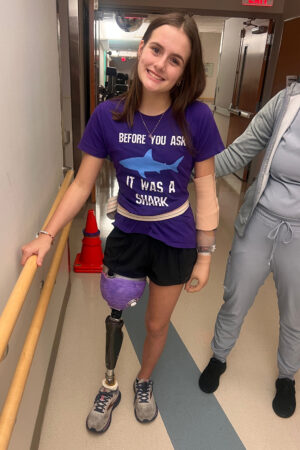
    Lulu Gribbin was 15 when she survived a shark attack off the coast of Florida. She lost her left hand, part of her right leg and almost her life.

    What she didn’t know when she entered the water on that day in 2024 was that another woman had been bitten by a shark 90 minutes earlier and just 3 miles down the beach. Had she known about the earlier attack, there is no way she would have been swimming, she said.

    Gribbin’s story has inspired new federal legislation to authorize emergency alerts to mobile phones to warn beachgoers when a shark has bitten someone in the area.

    President Donald Trump last week signed Lulu’s Law, which requires the Federal Communications Commission to allow the emergency messages. The legislation, which Gribbin advocated for, authorizes the warnings by classifying a shark attack as an event for which an emergency alert can be issued. It is up to states to implement the warnings. Gribbin’s home state of Alabama approved such a warning system last year.

    “It’s really just common-sense legislation. It says that whenever there has been a shark attack in a certain area where you are near, it will send an alert to your phone, exactly like how an Amber Alert system works when a child is abducted,” she said.

    Gribbin said she hopes the alert system will help prevent attacks like hers. “I definitely see this law working in the future and I’m really excited to hopefully save lives,” she said.

    A fight to survive

    Gribbin was one of three people bitten by a shark on June 7, 2024, off the Florida Panhandle.

    She was on a mother-daughter trip to the Florida Panhandle. Gribbin said she and her friend had been diving for sand dollars.

    “All of the sudden my best friend yelled, ‘Shark!’ and so we all started swimming for our lives,” Gribbin recalled. She said she remembered that sharks are attracted to frantic splashing and yelled for everyone to be calm. Gribbin, who was closest to the shark, was bitten.

    “The shark bit off my hand first, and I raised my arm out of the water, and there was just flesh and bone there,” Gribbin said. The shark then latched onto her leg. A man punched the shark off her and strangers on the beach rushed to help. She was flown by helicopter to a nearby hospital.

    Doctors were able to save the teen’s life but had to amputate part of her right leg.

    Choosing positivity throughout her recovery

    In the hospital, Gribbin made a deliberate decision to choose joy and to never give up.

    She initially struggled, knowing “that I only have two regular limbs, and that my life would be completely different.”

    “I would cry, and I would ask my mom, ‘Why is it happening to me?’ And on that day, we put a Bible verse on my bedside table that said, ‘With God, all things are possible.’ And then she told me that what you look like doesn’t define you, it’s who you are on the inside. And so, I think that stuck with me throughout my whole recovery the past two years.

    “It doesn’t matter what I look like, as long as I’m spreading positivity and inspiring others to stay strong and to never give up,” she said.

    Gribbin was fitted with prosthetic limbs, quickly regained her ability to walk, returned to sports, and got her driver’s license. She has gone back in the water and learned to surf, meeting Bethany Hamilton, a professional surfer who lost her arm in a shark attack.

    U.S. Sen. Katie Britt, the Alabama Republican who sponsored the legislation, said the fact that Gribbin was bitten soon after an attack on another woman prompted discussions about what could have been done differently. That led to the idea of an alert. She contacted Gribbin’s parents who had thought about the same possibility.

    “If there had been any type of alert that was given, that there’s no way that Lulu would have been in the water. And so we talked about how a simple change could have made a huge impact,” Britt said.

    Shark bites remain rare

    While sharks are commonly found in the waters off the United States, shark bites are rare, said Gavin Naylor, director of the Florida Museum of Natural History’s shark research program.

    There are between 60 to 80 known unprovoked bites worldwide each year, he said. It’s extremely rare that two or more people are bitten in close proximity. He said in a database of known shark bites, called the International Shark Attack File, there have only been a few instances of multiple bites in a single day.

    “If somebody is bitten by a shark, and then an alert goes out, the probability that another person’s going to be bitten by a shark within, let’s say, two or three hours is incredibly small,” Naylor said.

    When that happens, he said it’s likely because of environmental conditions such as sharks following schools of bait fish closer to the shore. Murky water conditions can also be a factor because they increase the chance that a shark will mistake a person for a fish or seal.

    In the area where Gribbin was bitten, there are about 20 to 30 bull sharks 1,312 feet offshore at any time, Naylor said. Great white sharks have been spotted more frequently in the chilly waters of New England and Atlantic Canada, according to conservation groups. A smartphone app called Sharktivity also allows shark spotters to report their sightings.

    The sightings might unnerve people, but Naylor said it’s important to remember that shark attacks are rare.

    “If sharks wanted to eat people, we’d have about 10,000 bites a day. The fact that we have so few is basically testament to the fact that the sharks are doing their level best to avoid people, not to target them,” Naylor said.

    Britt said she believes parents and others on the beach will want the information. “I know as a parent, I want every tool in my toolbox to be able to keep my child safe,” Britt said.

    Another survivor praises the alert system

    Braxton Rocha, who was bitten by a large tiger shark off the north shore of the Big Island of Hawaii, said he liked the idea of an alert system. He thinks it is information that people, particularly tourists to the island, will want to know.

    Rocha was spearfishing in 2015 when he saw the large shark. “Looked like a bus or submarine. She was the biggest thing I’d seen in the ocean at that time,” Rocha said. He started making his way to shore. When he looked back to check where the shark was, the animal was right in front of him. He tried to push the shark away, but the animal was too big and powerful. It latched onto his leg. Rocha punched it in the nose and the shark let go and swam away.

    “Everything happened so fast. It was almost like being struck by lightning. I was still kind of out of it. I looked down and see giant clouds of blood just bursting out of my leg,” he said.

    It took nearly 100 staples to repair the gaping wound on his leg. But the experience did not dampen Rocha’s enthusiasm for the ocean and wildlife. “I’ve always loved sharks,” Rocha said.
  • After gutting foreign aid, Trump goes big on Venezuela earthquake relief

    After gutting foreign aid, Trump goes big on Venezuela earthquake relief

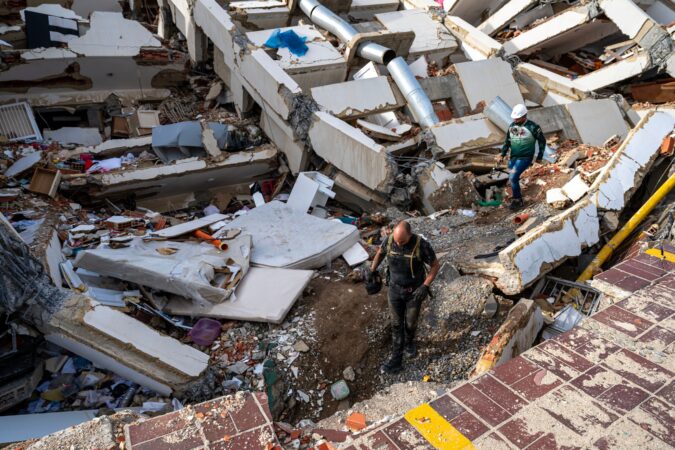
    The humanitarian crisis gripping Venezuela after last week’s earthquakes is testing President Donald Trump’s claim of American leadership in the Western Hemisphere, as officials tout their surge of U.S. money and personnel to the country after gutting America’s foreign assistance apparatus early in the administration.

    At first glance, the large-scale relief effort may be surprising as the Trump administration has championed a policy of “trade over aid” in its attempt to reimagine how Washington apportions the federal government’s largess.

    But the U.S. aid presence now in Venezuela — including search-and-rescue teams along with military and civilian logistical support — is an example of the big, brash displays of humanitarian assistance and disaster relief that the administration says it favors over slower-paced development work.

    “There is a definite ‘Team America’ element to a search-and-rescue deployment,” said Jeremy Konyndyk, former head of disaster assistance at the United States Agency for International Development (USAID), which the Trump administration dismantled and shuttered within months of the president taking office. “It makes for good TV.”

    Another twist is Washington’s newly close relationship with Venezuela, which has become tethered to the United States since a January military raid captured President Nicolás Maduro. The Trump administration has fostered ties with the country’s interim leader, Delcy Rodríguez, focusing on shared economic benefits, including the takeover of Venezuela’s oil industry, and sidelining its exiled opposition leader María Corina Machado.

    Trump emphasized this dynamic in the hours after the two quakes struck June 24, writing on social media that the U.S. would “be there for our new and great friends.”

    On Capitol Hill, some in the president’s own party have appeared more skeptical of this relationship, citing reports of Venezuelan officials stymieing the efforts of international rescue teams, including those from the U.S. Such accounts are “very troublesome for the White House,” Rep. María Elvira Salazar (R., Fla.) told reporters this week, adding that it raised questions about where Rodríguez’s “heart is.”

    Asked about the reports, John Barrett, chargé d’affaires of the U.S. Embassy in Caracas, told reporters Wednesday that “local authorities have fully complied with our requests and have accelerated this massive humanitarian response.”

    Since returning to office, Trump has advanced a more assertive U.S. leadership role in the Western Hemisphere in a bid to dilute the influence of China and Russia. His supporters call it the “Donroe Doctrine,” a play on the 19th-century pledge by President James Monroe to protect America’s neighboring nations from European colonial powers.

    At the same time, the Trump administration has radically overhauled the U.S. government’s decades-old approach to foreign aid, and what remains is sharply scaled back in key areas, including global health, food aid, and support for refugees around the world.

    Few have expressed doubt that the U.S. response to the Venezuelan earthquakes is substantial, though some experts question the metrics being used by the Trump administration to promote its claims that the relief effort is one of Washington’s fastest and most robust in decades.

    Jeremy Lewin, a senior official with the State Department’s foreign aid bureau, told reporters Monday that the $300 million the United States had pledged to spend on the relief effort was likely to grow significantly.

    “This is, by really any estimate, at this point the largest response to any natural disaster the United States has mounted in this century in terms of personnel on the ground, money out the door, [and] speed,” Lewin said.

    It is unclear how the State Department arrived at that assessment. One official, speaking on the condition of anonymity to describe internal discussions, pointed to the number of U.S. personnel “on the ground,” including military staff, urban search-and-rescue teams, and other U.S. government employees, as well as the initial pledge of monetary support.

    Gen. Francis Donovan, the commander of U.S. Southern Command, told reporters this week that there were “roughly 2,000 teammates” from the Defense Department in area to help with search and rescue. The U.S. military has used drones to aid those efforts and led the repair and reopening of an international airport in Caracas that had been inoperable due to damage.

    Sam Vigersky, a former USAID official now at the Council on Foreign Relations think tank, said that in 2010, when Haiti experienced a devastating earthquake, records show that the U.S. sent roughly 5,800 military personnel to help within five days — a figure significantly larger than those currently deployed to Venezuela.

    The Obama administration deployed six search-and-rescue teams to Haiti, compared to the four in Venezuela, Vigersky said.

    President Barack Obama also extended temporary protected status to Haitian nationals after the earthquake, allowing tens of thousands of people to continue living and working in the U.S. by shielding them from deportation.

    The Trump administration canceled TPS for Haitians and for Venezuelans, who were granted protected status by the Biden administration due to political and economic turmoil under Maduro. Deportation flights originating from the U.S. were arriving in the country right up until the day of last week’s earthquakes.

    Vigersky said that the different nature of the natural disasters in Haiti and Venezuela, as well as the political situations in the two nations, may explain disparate figures; the U.S. initially estimated more than 65,000 dead in Haiti, far more than the current toll of about 1,700 in Venezuela.

    Even still, Vigersky said, “Venezuela is a huge response by any measure.” And with the $300 million in aid announced by the State Department so far, the Trump administration may well surpass early U.S. spending after the Haiti earthquake.

    However, only a third of that money appeared to be new funding for partner organizations in Venezuela, with the rest made up of previously announced assistance for the United Nations Office for the Coordination of Humanitarian Affairs and other agencies.

    The State Department said this week it was directing funding to several large and well-established religious aid agencies, including the evangelical Samaritan’s Purse and Catholic Relief Services. Both organizations have been involved in relief efforts since the earthquakes hit, with CRS working through a local partner, Caritas Venezuela, and Samaritan’s Purse setting up a field hospital in the coastal city of La Guaira.

    Representatives of both organizations said Wednesday that they had not yet received funding from the State Department.

    Brittany Wichtendahl, a media relations contact for CRS, said that their “request is still in proposal form” and they did not have a dollar figure yet.

    Franklin Graham, president and CEO of Samaritan’s Purse, said his organization was in “final discussions” with the State Department for a $15 million funding agreement. “While that has not been finalized yet, these funds would certainly enable us to do more and to help more people,” Graham said in a statement.

    In response to a request for comment from the Washington Post, the State Department said that there were 1,900 personnel currently deployed to Venezuela and that the number of search-and-rescue teams sent to the region does not “signify any perceived level of support.”

    “In terms of personnel, financial support, and speed, the State Department’s response has been swift and comprehensive,” the State Department said in a statement.

    The Trump administration drew criticism last year for a slower and smaller response to an earthquake in Myanmar that occurred amid the dismantling of USAID. More than 5,000 were later estimated to have died in that disaster.

    Paul Spiegel, a professor at Johns Hopkins University who chaired a recent commission that proposed radical ways to overhaul the international humanitarian system, expressed concern with what he called the seemingly selective nature of the support for Venezuela.

    “A $300 million response to Venezuela, framed around its strategic importance and set beside roughly $9 million for a comparable earthquake in Myanmar last year, creates the appearance of aid being allocated by political interest rather than relative need,” Spiegel said.

    Speaking to reporters Monday, Lewin, the State Department official who oversaw much of USAID’s dismantling, said politics and geography would play a role in the Trump administration’s response to such disasters going forward.

    “Venezuela,” he told reporters, “has been part of our system and part of our hemisphere … it’s one of our neighbors.”

    Lewin pointed to efforts in the Caribbean last year, where the State Department led a smaller disaster-relief effort after Hurricane Melissa struck the region. The new model, he explained, is to support these nations as “quickly, efficiently, and accountably as possible, whenever these sudden onset disasters occur in friendly nations and our neighbors.”

    Konyndyk, who now leads the nongovernmental group Refugees International, said he supported the administration spending big on the disaster-relief efforts underway in Venezuela. “There’s a really powerful symbolism to it, in addition to being lifesaving,” he said.

    But in terms of dollars spent per life saved, the administration could do more if it also reinstated other forms of foreign assistance, Konyndyk added.

    “The administration has fully cut off food aid to Somalia ahead of what could turn into a famine there,” he said. “You could save exponentially more lives for dramatically less money in Somalia just by turning food aid back on there. They’re choosing not to do that.”

  • Caitlin Clark voted a starter in her third straight WNBA All-Star Game

    Caitlin Clark voted a starter in her third straight WNBA All-Star Game

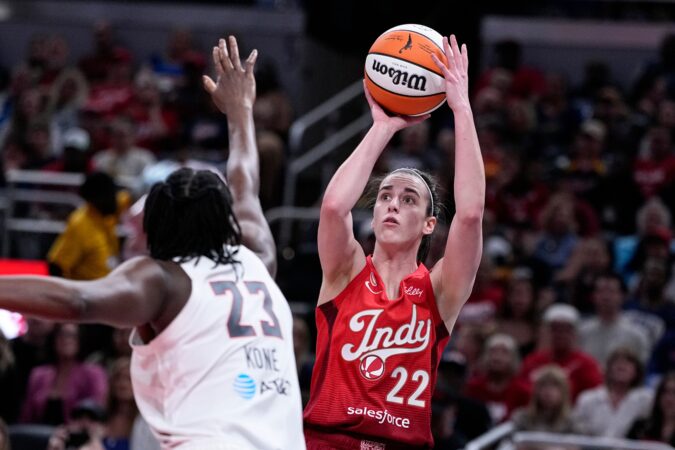
    NEW YORK — Caitlin Clark was voted to start her third straight All-Star Game and will be joined by Indiana Fever teammates Kelsey Mitchell and Aliyah Boston, the WNBA announced Thursday.

    It’s the second time in four years that three players from the same team were chosen to start the game, with Las Vegas doing so in 2023. Clark couldn’t play in last year’s game that the Fever hosted because she was injured right before the All-Star break.

    Dallas’ Paige Bueckers and Minnesota rookie Olivia Miles will join Clark and her teammates as backcourt starters. It’s the fourth consecutive year that a rookie was chosen as an All-Star starter. Bueckers played last season.

    A’ja Wilson, Breanna Stewart, Jessica Shepard, Natasha Howard, and Gabby Williams were selected for the frontcourt for the game that will be played July 25 in Chicago. It will be Wilson’s and Stewart’s eighth All-Star appearance while Shepard will be making her first.

    “It’s an honor to be an All-Star, even though I’ve had a few of them,” Stewart said. “Each one is really special, and I’m not taking it lightly.”

    Williams played in her first All-Star Game last season. Howard will play in her third.

    Starters were chosen by a mix of fan, player, and media votes. The fan vote counted for 50% while media and player votes were 25% each. Each player’s score was calculated by averaging their weighted rank from all three areas.

    The league’s head coaches will select the 12 reserves for the team, and they’ll be announced Tuesday. The 15 head coaches will vote for three guards, five frontcourt players, and four players at either position regardless of conference. Coaches can’t vote for their own players.

    New this year, WNBA greats Cynthia Cooper and Teresa Weatherspoon will serve as honorary general managers and select the two teams from the pool of All-Stars. Previously, the top two fan vote-getters would serve as captains and select the squads.

    Bueckers, Clark, and Boston were the top three vote-getters among fans. All three received more than 1 million votes.

  • Immigrant arrests surge to 10,000 in 5 days as ICE clamps down

    Immigrant arrests surge to 10,000 in 5 days as ICE clamps down

    WASHINGTON — Federal immigration officials have detained more than 10,000 people in the five days ending Thursday, a major surge that has stemmed from a push within Immigration and Customs Enforcement to increase arrest rates.

    Agency leaders in recent days ordered top ICE officials to focus more of their officers’ efforts on picking up immigrants they want to deport, according to documents obtained by the New York Times and interviews with federal officials. ICE officers have arrested people at check-ins, with immigration authorities, during traffic stops, and on the street. The push has apparently yielded results, with recent arrest numbers roughly doubling from the 1,000 picked up each day earlier this year.

    ICE officials were told that the White House wanted an increase in arrests, according to three officials with knowledge of the conversations. One of the officials said that it was unclear how long the pace could continue, but that ICE officials had been told that 2,000 arrests a day was the new standard for enforcement.

    The surge has occurred without the fanfare of highly visible operations last year, in which officials announced their intentions ahead of time to target cities, including Chicago and Los Angeles, and send officers pouring into the streets. Markwayne Mullin, the homeland security secretary, pledged to mount a quieter enforcement campaign following the chaos of a monthlong operation in Minnesota, where federal officers killed two U.S. citizens.

    The rise in arrests suggests that President Donald Trump is determined to meet his pledge of mass deportations, a goal that is popular among his conservative supporters but that has fueled a political backlash amid the administration’s heavy-handed tactics. The Trump administration has promised more aggressive actions, particularly after the Supreme Court in recent days expanded the president’s power to set federal immigration policy, but undercut his effort to eliminate birthright citizenship for the children of immigrants in the country illegally and visitors.

    “Our message is clear: If you come to our country illegally, we will find you, we will arrest you, and we will deport you,” Lauren Bis, a Department of Homeland Security spokesperson, said in a statement.

    Word of an uptick in arrests has started to trickle out, sowing fear in immigrant communities and among advocates already on edge after the Supreme Court ruled that Trump could end deportation protections for people from disaster- and war-torn countries under the Temporary Protected Status program.

    In recent days, ICE officers have launched an intense push to ramp up arrests. Arrests topped out Saturday when authorities detained more than 2,400 people, according to documents obtained by the Times. The detention population inside ICE facilities has jumped nearly 4,000, to more than 63,000 in the agency’s custody as of Tuesday, according to internal documents.

    In emails to ICE personnel, agency leaders applauded the latest numbers.

    “I want to personally thank each of you for your extraordinary efforts this past weekend,” Marcos Charles, the head of ICE’s deportation wing, wrote this week. “Through your dedication, professionalism, and unwavering commitment to our mission, enforcement and removal operations achieved remarkable operational results.”

    Top ICE officials were told to make sure that as many officers as possible were working seven days a week, and to put 80% of their officers on arrest operations, according to two U.S. officials who spoke on the condition of anonymity to discuss internal conversations. Top supervisors were expected to be working closely on the operations as well.

    Last year, Stephen Miller, Trump’s deputy chief of staff, set a goal of 3,000 arrests a day for the agency, a figure it was not able to hit. Since then, the agency has hired thousands of new officers and has had its budget increased by billions of dollars for the enforcement surge.

    Across the country, immigration lawyers and advocates have reported an uptick in enforcement.

    In South Texas, Sister Letty Ugboaja, a Nigerian nun, was arrested on her way to church on Sunday morning, according to Sister Norma Pimentel, her colleague. Ugboaja is a local nurse who also helps at a parish in the region. Pimentel called local leaders after learning of the arrest, and congressional officials soon got involved and pushed for her release.

    On Sunday, she was let go from ICE custody, and Pimentel was there to greet her.

    Pimentel said that Ugboaja was distraught upon her release.

    “It took her awhile to be able to talk — she was crying,” she said.

    In southern Florida, attorneys have been on alert. Cindy Blandon, an immigration attorney in Miami, said that one of her clients, a Nicaraguan father of two children, had an immigration court hearing set for 2027, but was arrested by ICE on Monday during a routine check-in.

    And in Utah, Ysabel Lonazco, an immigration attorney, has noticed an uptick as well. She has spoken to several clients, including a man who was driving when he was picked up by the agency for overstaying his visa this weekend.

    “It sets further fear in the community,” she said. “People don’t want to leave their houses. They are afraid to drive to do their grocery shopping. They are just terrified with these detentions.”

    One of her clients, Arturo, a 48-year-old Mexican man, was arrested in Salt Lake City on his way to a soccer game Sunday, according to his wife, Veronica. She said the arrest had shattered their family.

    “They’re getting people — be very careful,” her husband told her from ICE detention, she recalled through an interpreter. She said her 13-year-old son was traumatized by the arrest of his father, who had worked most days of the week building furniture before his arrest, she added.

    A Department of Homeland Security spokesperson said that Arturo had illegally reentered the United States and would be held in ICE custody as the agency sought to deport him.

    Veronica said the family had not expected to be caught up in Trump’s deportation sweep.

    “We were worried, but it wasn’t like we were extremely worried. We figured — we don’t have any criminal record, we pay taxes every year,” she said.

    This article originally appeared in the New York Times.

  • Taylor Swift and Travis Kelce donate $26M to charities ahead of wedding

    Taylor Swift and Travis Kelce donate $26M to charities ahead of wedding

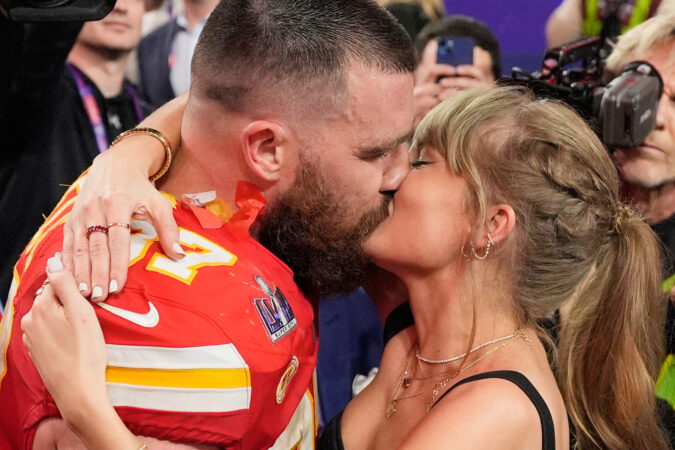
    Taylor Swift and Travis Kelce have donated $26 million to charities this week ahead of their Friday wedding at Madison Square Garden.

    The donations were spread out across 20 local and national charities, according to Swift’s publicist, with many located in areas where the couple has deep ties. The announcement did not include any mention of Swift and Kelce’s wedding, but a law enforcement official briefed on security plans has told AP that the wedding will be held today, after a smaller rehearsal dinner Thursday night.

    Nine of the selected organizations are based in New York, ranging from the Food Bank For NYC, City Harvest, to Musical Mentors, a nonprofit that connects music teachers with students in need.

    Just how much each charity received was not disclosed.

    Other charities reflected where Swift and Kelce have also called home, including the Rhode Island Community Food Bank — where Swift owns an estate in Watch Hill — and the Children’s Mercy Hospital in Kansas City, Mo. — where Kelce plays tight end for the Kansas City Chiefs.

    A handful of national groups also received money: Dolly Parton’s Imagination Library, a book giveaway program spearheaded by the music legend; the American Society for the Prevention of Cruelty to Animals; and Feeding America.

    The large donations ahead of Swift and Kelce’s wedding are reminiscent of charitable gifts the couple has given in the past. Swift, a billionaire, gave millions to food banks ahead of her Eras Tour stops, while Kelce has been recognized by the Chiefs for winning “charity challenges” and operating his own nonprofit.

    Swift and Kelce have been in a relationship since 2023, enthralling millions around the world. Their relationship have been documented in countless shots of Swift celebrating at Chiefs games and fan videos of Kelce dancing along at Swift’s Eras concert tour as it traveled the globe. In 2025, they announced their engagement with the caption “Your English teacher and your gym teacher are getting married” but have remained mum on wedding details.

    Yet buzz has remained high around New York’s MSG, with multiple trucks and crews going in and out delivering materials for what is expected to be an elaborate event.

  • How Philadelphia’s past tragedy prepared the city for today’s extreme heat

    How Philadelphia’s past tragedy prepared the city for today’s extreme heat

    Thanks to Thomas Jefferson, we know that July 4, 1776, was a pleasant day in Philadelphia with temperatures that topped out in the mid-70s.

    Two hundred and fifty years later, visitors who descend on the city to celebrate the signing of the Declaration of Independence — and to watch a World Cup match on July 4 — will find a far more sweltering reality.

    A dangerous heat dome over the Eastern United States for the next several days is forecast to send temperatures into the triple digits, break records across multiple states, and pose health risks for tens of millions of Americans.

    In the Philadelphia area, the National Weather Service has warned that daily heat indexes could be as high as 110 degrees through Sunday. “This is not the kind of heat event we see every year,” the service wrote in an update this week, adding that the region could experience its hottest stretch since July 2011.

    Of any city in the path of the furnacelike blast, Philadelphia might be the most prepared. The onetime capital of the nation, home to Independence Hall and the Liberty Bell, has long had one of the country’s most robust heat-response programs.

    “We are a fairly well-oiled machine when it comes to monitoring the weather and making the decision to declare a heat health emergency,” said Palak Raval-Nelson, the city’s health commissioner. She said officials spent years planning for the America 250 and World Cup crowds.

    Behind those extensive preparations lies the memory of a deadly heat wave decades ago, and the lessons learned that started Philadelphia on its current path. The early interventions developed in its aftermath are still part of the city’s regular heat protocols.

    A brutal stretch of heat in the summer of 1993 killed 118 people in Philadelphia, a tally higher than in other cities that were grappling with similar conditions. Many of the victims were among the city’s most vulnerable — poor, elderly, or infirm. Some had no access to air-conditioning and were found with their windows closed, the stifling heat probably worsening any health conditions.

    In the wake of that disaster, officials dug deeper into what went wrong. At the time, deaths were typically considered heat-related only when there were documented signs of hyperthermia — defined as a core body temperature of 105 degrees or higher.

    But Philadelphia’s then-medical examiner, Haresh Mirchandani, expanded the definition of heat deaths to include those for which heat was a contributing factor, resulting in a more accurate picture of the heat wave’s toll.

    “It was a turning point,” recalled Laurence Kalkstein, a climatologist and heat-mortality expert who worked with Philadelphia on developing a novel approach that would eventually be emulated by numerous cities.

    The 1993 heat wave led to a litany of changes in Philadelphia, aimed at raising awareness and reducing risk among those residents most imperiled by urban heat.

    The city set up a mass-notification system to alert residents when the mercury spikes and conditions pose serious health risks. Officials designated cooling centers, mobilized a network of block captains to check on neighbors, launched a public awareness campaign, and set up an emergency heat hotline.

    One early study found that the early-warning system saved at least 117 lives in the first several years of the program and that the benefits far outweighed the costs.

    “Philadelphia led the pack,” said Kalkstein, who still works on heat-related policies in the United States and abroad.

    One measure of the success of such interventions, he said, is that even as global warming has worsened extreme heat events in recent decades, fatalities in places such as Philadelphia have not trended higher.

    “You would think because of climate change, heat-related deaths would be going up,” he said. “That’s not what we are finding.”

    Raval-Nelson said the preparations have been even more extensive ahead of the World Cup and America 250 celebrations, which are expected to draw huge crowds to the city.

    For example, she said the free FIFA Fan Festival on Lemon Hill will have cooling tents, water filling stations, ample shade, and medical stations. Organizers also have reduced the festival’s hours because of the forecast for crippling heat.

    Many of the same precautions — misting fans, free water stations, medical tents, extra shade — have been set up throughout the city, Raval-Nelson said, adding that Philadelphia also has “an elaborate network” of pools and spray parks where people can cool off.

    In addition, officials recently conducted the latest workshop for block captains on how to look out for residents. That can be especially key in neighborhoods such as Hunting Park, a predominantly Black and Hispanic enclave where surface temperatures can reach far higher than those in whiter, shadier suburbs.

    As this week’s heat dome descends, Raval-Nelson said she hopes the range of actions Philadelphia has taken will lead to a safer holiday throughout the city where the Founding Fathers enjoyed a much more mild July 4.

    “We want everyone to celebrate safely,” she said. “Practice makes perfect, and we’ve been practicing this.”

  • Donors were misled by Trump-backed Freedom 250, House Democrats allege

    Donors were misled by Trump-backed Freedom 250, House Democrats allege

    Some donors who intended to give money to a bipartisan effort to celebrate the nation’s 250th anniversary were, instead, steered to a White House-backed initiative under false pretenses, House Democrats allege in a report released Thursday morning, citing whistleblower interviews and newly obtained documents.

    The donors meant to give money to America250, a congressionally chartered initiative to celebrate the nation’s semiquincentennial, according to Democrats on the House Natural Resources Committee. They instead were given routing and account numbers that directed their funds to Freedom 250, which President Donald Trump established last year to organize anniversary events, the report says.

    The report does not identify the donors. In interviews, Democrats said they needed to protect the identity of whistleblowers who worked with the panel. But they said their report — which includes other allegations of Freedom 250 officials and allies explicitly steering money away from America250 and toward projects shaped by Trump — shows how the president transformed a bipartisan celebration of the nation’s anniversary into an initiative that benefited him and his allies.

    “I’m a lawyer, and I know better than to pronounce that a crime has been committed,” said Rep. Jared Huffman (D., Calif.), who oversaw the report as the committee’s top Democrat. “But I do know the elements of fraud, and there is evidence of all those elements here.”

    The White House referred questions to Freedom 250, which denied that donors had been misled by its fundraising activities and criticized Democrats for the timing of their report.

    “This so-called ‘report’ is nothing more than a partisan smear from politicians who would rather manufacture division than celebrate America’s 250th birthday alongside the rest of the country,” Freedom 250 spokesperson Danielle Alvarez said in a statement.

    Alvarez also criticized America250, saying that the bipartisan organization — which Congress established in 2016 — “had nothing to show” for its 10 years of planning and spending.

    “Freedom 250 was created because the American people deserved better,” Alvarez said.

    America250 declined to comment on the specific allegations in Democrats’ report.

    “America250 will continue to focus on the values-based programming approved by our bipartisan Commission at the local, state, national and international levels, including once-in-a-lifetime celebratory moments during the 4th of July weekend,” Rosie Rios, who chairs America250, said in a statement. “We are supportive of the many other organizations planning events for the 250th at the federal, state and local level, so all Americans have ample opportunities to join in the celebration.”

    Trump has extolled Freedom 250 in public remarks, saying that the initiative has organized multiple special events. The public-private partnership, which the White House launched in December, has overseen a flurry of high-profile announcements, including some from the Oval Office.

    “We’ll have a Freedom 250 Grand Prix right here in Washington around the Capitol,” the president said last week in remarks kicking off the Great American State Fair on the National Mall — another Freedom 250-backed event.

    The Trump-backed initiative has overtaken some efforts led by America250, which is directed by a bipartisan board created by Congress a decade ago.

    America250 originally applied for and received a grant from the Institute of Museum and Library Services for so-called Freedom Trucks, mobile museums inspired by the American Freedom Train that crisscrossed the country from 1975-1976. The institute is a federal agency that provides financial support for museums and libraries.

    Officials have said the grant was later voluntarily transferred to Freedom 250, which is now operating Freedom Trucks that provide a sanitized version of the nation’s founding, according to administration critics.

    America250 officials have said they reoriented their initiative to organize events outside Washington, while Freedom 250 focuses on events in the nation’s capital. But the dueling organizations and approaches have confused some corporate leaders and lawmakers, and tensions between the groups have grown, the Washington Post reported earlier this year.

    The Democratic lawmakers’ report offers further examples of how the two groups have come into conflict.

    Some donors and sponsors interested in donating to America250 were told by the Trump administration that they lacked a “green light” to do so, according to the Democrats. The report also claims that administration officials pressured donors to redirect donations from the bipartisan effort to Freedom 250, with the Trump-backed group conducting outreach to America250 sponsors with donation requests.

    Some corporate executives did not understand the difference between the two organizations and were confused by this process, the report says.

    Freedom 250 officials also worked to deprive America250 of money, the Democrats charge, citing new examples of Trump allies pressuring donors to reallocate funds away from the bipartisan initiative. They also allege that Trump allies worked to shift public financial support away from America250, including $75 million of congressionally allocated funds that America250 leaders were expecting to receive. The remaining funds are likely to be kept by the White House, the report says.

    The reduced funding posed challenges for America250 to execute planned programming, according to the report, including grants, educational initiatives, and volunteer programs. Redirected federal funding created “significant headwinds” for this programming, the Democrats said, though the group still sought to execute all planned events through additional private fundraising.

    Though America250 is still organizing anniversary celebrations in large cities across the country, its programming has been overshadowed by that of Freedom 250. The Trump-backed group helped organize last month’s UFC fight on the White House lawn, this week’s opening of the Theodore Roosevelt Presidential Library in North Dakota, and a Trump rally and fireworks show scheduled for the evening of Independence Day.

    Freedom 250 also employs many former U.S. DOGE Service officials and harvested users’ data for political purposes, according to the report.

    Huffman said that if Democrats retake the House this fall — and obtain the power to issue subpoenas — they will open broader investigations into Freedom 250.

    “If and when we have more tools at our disposal to do investigation and oversight, perhaps in the next Congress you will see a lot more information on this, I’m sure,” he said.

  • Venezuelan security guard pulled alive from building basement 8 days after twin quakes

    Venezuelan security guard pulled alive from building basement 8 days after twin quakes

    CATIA LA MAR, Venezuela — Rescuers pulled a 43-year-old security guard alive from a collapsed basement early Thursday, ending a grueling dayslong operation that became a symbol of hope after the devastation of twin earthquakes that struck Venezuela eight days earlier.

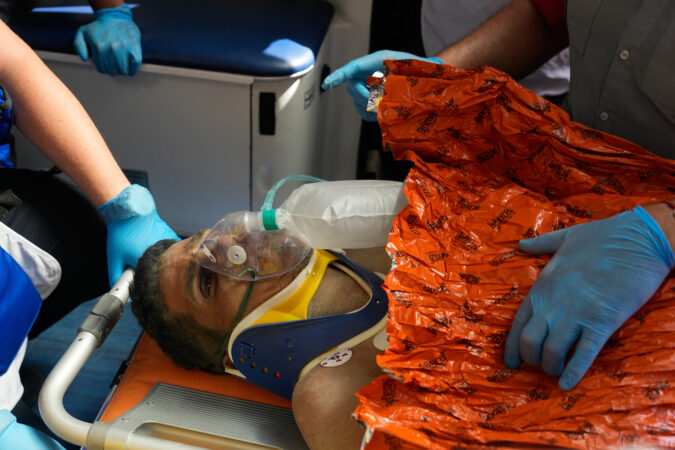
    Hernán Alberto Gil Flores emerged to safety atop a stretcher surrounded by helmet-clad rescue workers after being trapped since June 24 under rubble in the basement of the Galerías Playa Grande shopping center in the coastal town in La Guaira.

    Rescuers, who initially made contact with him over the weekend, worked for more than 100 hours to free him — navigating a highly unstable structure, torrential rain, and persistent aftershocks to tunnel down to the survivor.

    Teams carrying flags from around the world cheered as rescuers carried Gil Flores, wearing an oxygen mask and covered in an orange tarp, through throngs of people to an ambulance.

    One Chilean rescuer carrying his stretcher pumped his fist in joy. A group of men in red Costa Rican Red Cross uniforms embraced and laughed in relief. Others broke out into applause.

    “When we found him, he asked us not to tell his wife that he was alive, just in case he wouldn’t make it,” Costa Rican Red Cross rescuer Minyar Collado told the Associated Press, but she added “We were never going to leave him here.”

    The rescue was considered a small miracle cutting through a week of tragedy. By supplying Gil Flores with food and water while they excavated the concrete, rescue teams were able to keep him alive far longer than the 48- to 72-hour threshold most operations give to find survivors in disasters.

    Gil Flores, who worked as a night-shift security guard at the complex, was inside his small security cabin when the first violent tremor struck. While the surrounding concrete structure collapsed around him, his cabin held ground, shielding him from crushing debris and creating a vital pocket of air.

    A specialized team from the Costa Rican Red Cross first detected signs of life and established contact with him Sunday.

    His wife, Gusbimar González, told the AP that she grappled with despair for days before hearing that rescuers made contact.

    “When I learned he was alive, I saw a ray of light in the darkness,” she said. The couple has two children, ages 8 and 10.

    The operation was coordinated by an urban search and rescue team of Chilean firefighters, who worked around the clock with specialized teams from the United States, Portugal, Mexico, Costa Rica, El Salvador, and Venezuela.

    Acting Venezuelan President Delcy Rodríguez celebrated the rescue on social media at a time that her government has come under fire for what many Venezuelans say has been an inadequate crisis response.

    “We celebrate the greatness of humanity, when it is united for a single purpose: to save another. Thank you to our rescuers and to the support of the international rescuers,” she wrote on a post on X.

    Teams used a telescopic camera to help maintain constant contact with Gil Flores, passing water and liquid nutrients through a narrow shaft to keep him hydrated during the final three days of the rescue.

    María Paz Campos, a veteran firefighter from Chile, talked him through the entire operation and kept him calm during the final excruciating hours Thursday.

    In a video published by Chilean firefighters in the hours before the rescue, Gil Flores is seen drawing, seemingly to pass the time. Campos then gently tells him to look at the camera and to wear protective goggles.

    “I need you to keep the goggles on, for the small particles that are falling, to avoid them getting into your eye,” Campos told the Venezuelan survivor.

    The collapse of the building was triggered by two back-to-back earthquakes on June 24 that registered magnitudes of 7.2 and 7.5, respectively. The shallow, violent tremors damaged or destroyed tens of thousands of buildings across northern Venezuela, killing more than 2,200 people, injuring over 11,000 and leaving La Guaira state as the hardest-hit region in the country.

  • 6 ways to shift your stress mindset to dial down daily anxiety

    6 ways to shift your stress mindset to dial down daily anxiety

    To deal with a stressful world, many of us try to avoid and reduce the stress. But what we believe about stress may have just as important a role in helping us deal with it.

    Psychologists call this our “stress mindset” — our belief that stress can debilitate us or enhance us and have positive consequences.

    Research from the past decade shows that these beliefs can affect our psychology and physiology; people who are more inclined to see the positives of stress are more likely to experience improved performance, boosted mood and, in fact, reduced stress.

    Importantly, you can change your stress mindset, experts say.

    “If somebody perceives that stress has benefits for them, they’re likely to engage in a stressful situation much more adaptively,” said Sarah Williams, a sport and performance psychologist and associate professor at the University of Birmingham in England.

    Having a stress-is-enhancing mindset is less about “Pollyannaish” positive thinking or toxic positivity and more about acknowledging that a stressful experience can “lend itself to growth, to opportunities,” said Alia Crum, an associate professor of psychology at Stanford University who first developed a psychological measure for stress mindsets in 2013.

    “So rather than trying to remove stresses and calm everybody down, it’s about trying to help people understand the benefits of when they feel stressed, what those responses can do for them, how they can fuel them to perform better,” Williams said.

    In other words, stress — and how we think about it — may actually help us thrive.

    What our mind does to stress

    The negative effects of stress are still real. Stress, especially if it is chronic, can cause physical and mental illnesses or premature aging.

    But the true nature of stress is more complex.

    “The body’s stress response was not designed to kill us,” Crum said. “It was designed evolutionarily to help our bodies, brains, and minds rise to the occasion and meet the challenges and threats that we are faced [with].”

    (When most people say “stress,” they are usually referring to “distress,” the negative side of stress. Eustress, by contrast, is what researchers consider motivating and energizing stress.)

    There are four ways that our mindsets change how stress affects us, Crum said.

    First, what we believe changes what we pay attention to. Believing that stress is inherently harmful can cause people to overly fixate on the bad and “freak out or check out” as a result, Crum said.

    Second, our stress mindset changes what we are motivated to do. When people believe stress can be enhancing, they are more likely to engage with it in appropriate ways.

    Third, what we believe changes our emotions. “Something I always tell people is often the detrimental thing is not the stress,” Williams said. “It’s the stressing about the stress.” Conversely, believing that stress is enhancing can boost positive emotions, research shows.

    And fourth, there is evidence that mindset can change our body’s physiological response to stress, including by decreasing levels of salivary cortisol, our body’s principal stress hormone.

    Research shows that having a more stress-is-enhancing mindset is linked to better mental health outcomes in the long run, including higher resilience, more optimism, and lower anxiety and depressive symptoms, Williams said.

    Crum said she has tested stress mindsets in different groups of people — students, athletes, workers — across different cultures, and, on average, all groups fell more on the stress-is-debilitating side of the scale.

    The one exception she has found? Candidates working to become Navy SEALs. “These are people who are literally choosing to go into one of the most stressful experiences, professions that exist on the planet,” Crum said. “So they must have a belief that stress can serve them.” (Nevertheless, Navy SEAL candidates who had greater stress-is-enhancing mindsets were more likely to persist through training, have faster obstacle course times, and have fewer negative evaluations from their peers or instructors.)

    This is not to say that the stressor, whether it’s a big job interview, getting an F on an exam, or a tough relationship conversation, is necessarily a good thing or something we enjoy.

    But the stressor is distinct from our experience of the stress.

    “You’re only stressed about things that matter to you,” Crum said. We should “welcome stress” because stress is “a sign that there’s something you care about.”

    Malleable mindsets

    Shifting stress mindsets — and reaping the benefits — is possible for anybody, even for those with the deepest struggles, researchers say.

    Early research found that presenting people with evidence of the benefits of stress could shift their mindset and confer psychological and physiological benefits.

    In a 2017 study published in the journal Anxiety, Stress, & Coping, Crum and her colleagues presented 113 participants with a three-minute video that emphasized either the enhancing or debilitating properties of stress. Afterward, participants took part in a mock job interview — a typically stressful activity — and received either positive or negative feedback.

    Participants who learned that stress is enhancing experienced more improvements to their positive emotions regardless of whether they were told they performed well or poorly. They also exhibited more cognitive flexibility, which is the ability to adapt our thinking and behavior to different contexts. Conversely, participants who learned that stress is debilitating had worse cognitive and emotional outcomes.

    But more recently, Crum and colleagues found that giving a more holistic perspective of stress and emphasizing the power of mindsets may be even more effective, according to a 2023 study in Journal of Experimental Psychology: General. This “metacognitive” approach improved self-reported physical health symptoms and work performance compared with people who were wait-listed for the training.

    And compared with participants who learned only about the positive benefits of stress, those who received the metacognitive approach were more able to maintain the stress-is-enhancing mindset even when presented with evidence of negative effects of stress a week or two later.

    People who can imagine themselves succeeding in a stressful situation may further shift their belief that stress can be enhancing, according to a 2023 study conducted by Williams and colleagues. “We’re almost training the brain to connect the responses to stress with that positive outcome,” Williams said.

    Researchers are careful to note that just because our stress mindset matters, it doesn’t mean it’s “all that matters,” Crum said. “It’s just one piece of the puzzle to help us live happier, healthier, more productive lives.”

    How to shift your stress mindset

    Here are steps experts say you can take to shift your stress mindset.

    Acknowledge the stress. Instead of denying it or trying to suppress it, say what is stressing you aloud. Notice your physiological responses — elevated heart rate, sweatier palms — and remind yourself that “this is my body preparing for me to perform,” Williams said.

    Welcome the stress. It is a sign that there’s something you care about, which can be focusing and energizing if you allow it to be.

    Use the stress response. Instead of expending effort and resources trying to avoid the stress, “utilize the narrowed focus, the increased arousal and energy that happens in the body in order to meet the goals that you have,” Crum said.

    Fuel your stress mindset. Think about a time in your life when you’ve excelled or grown the most. “Anytime you want to, you know, level up, there’s usually some stress involved,” Crum said. “So we just need to remember that is evidence to fuel and sustain the belief.”

    Try stress-mindset micropractices. Take moments to reflect on what stresses you have and what you care about most. This is something Crum says she does when she makes the transition going up the stairs into her workplace and again when returning home.

    Complement with other stress management strategies. More research needs to be done about what contexts and scenarios call for different approaches to stress, experts say. But strategies such as reframing negative experiences and slowing our breath also can help alleviate stress and improve mood.

  • Victor Willis, who fronted the Village People and co-wrote ‘Y.M.C.A.,’ dies at 74

    Victor Willis, who fronted the Village People and co-wrote ‘Y.M.C.A.,’ dies at 74

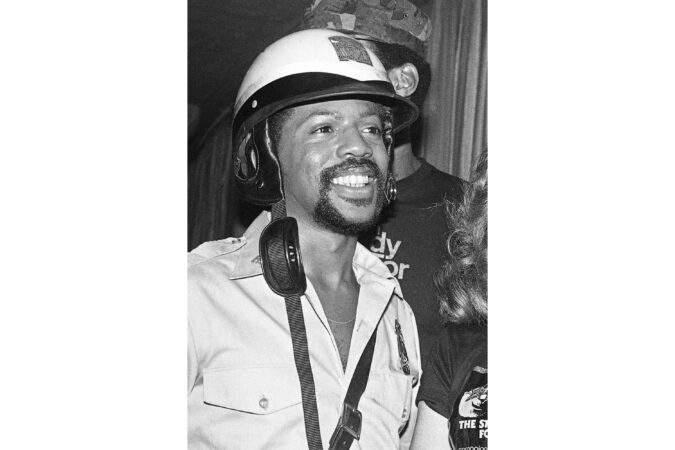
    WASHINGTON — Victor Willis, who helped make the Village People one of the most enduring groups of the disco era, singing lead and co-writing hits including “Y.M.C.A.” and “Macho Man,” died June 30, a day before his 75th birthday.

    His wife, Karen Huff-Willis, announced the death in a statement on social media, saying that Mr. Willis suffered from a “short, but aggressive illness.” Additional details were not immediately available.

    Mr. Willis rose to fame in the late 1970s as the front man of the Village People, donning flamboyant costumes while becoming a camp favorite of nightclubs and dance halls. Most often dressed as a police officer, he shared the stage with a parade of macho male archetypes — bandmates who dressed as a naval officer, a cowboy, a biker, a construction worker, or a Native American in a headdress – while performing upbeat hits including “Macho Man,” the group’s first Top 25 single, and “In the Navy,” a military spoof.

    The Village People’s biggest hit, 1978’s “Y.M.C.A.,” remains a mainstay of weddings, sporting events, and party playlists, bringing listeners to their feet with its joyous horn blasts, four-on-the-floor drum groove, and sing-along chorus. The song was inducted into the Library of Congress’s National Recording Registry in 2020.

    “Everybody knows ‘Y.M.C.A.’,” said Mr. Willis, who drew inspiration for the song from his trips to New York’s 63rd Street Y as a newcomer to the city. “Everywhere I go, people tell me their little children know ‘Y.M.C.A.’ They don’t know Village People, but they know ‘Y.M.C.A.’”

    President Donald Trump has regularly played “Y.M.C.A.” at his rallies, and Mr. Willis and the Village People performed the song last year at an event that was part of Trump’s second inauguration.

    “He was a great and happy guy,” the president wrote in a Truth Social post Wednesday, adding that “we will think of Victor every time YMCA is played, like today, and all throughout this July Fourth Birthday week.”

    Ahead of the inauguration, Mr. Willis and the group took to social media to say that their performance was not intended as an endorsement of Trump. Their “preferred candidate” had been Kamala Harris, the group wrote in a lengthy Facebook post, adding that they believed that “Y.M.C.A.” had the power to bridge partisan divides.

    “We’re trying to make people come together and unite the country,” Mr. Willis told NPR. “And regardless if you didn’t vote for him —basically, I’m a Democrat. We lost, so we have to put that aside, and it was time for everybody to get behind the president-elect.”

    Mr. Willis’ decision to participate in inauguration ceremonies polarized the group’s fans, including gay listeners who had embraced the Village People’s macho image and subtly suggestive lyrics for decades.

    The group’s shifting lineup included gay and straight musicians, although Mr. Willis dismissed labels about the band and its music, going so far as to threaten to sue news organizations that described “Y.M.C.A.” — with its lyrics about hanging out “with all the boys” and doing “whatever you feel” — as a gay anthem.

    “The group performs a masculine show. Gay people like us, straight people like us,” he told Rolling Stone in 1979. “But we’re not a gay group.”

    Mr. Willis was born in Texas on July 1, 1951, and grew up in San Francisco, singing at a Baptist church where his father served as minister. By age 15, he was singing in a local group, the Ballads, that had opened for the Temptations.

    After moving to New York, he performed in Broadway productions of Two Gentlemen of Verona and The Wiz, including while serving as an understudy for some of The Wizard of Oz adaptation’s lead characters.

    Amid the disco craze of the movie Saturday Night Fever and the Studio 54 nightclub, Mr. Willis was asked in 1977 to front a group being developed by Henri Belolo, a music executive, and Jacques Morali, a songwriter.

    “I had a dream that you sang lead vocals on an album I produced and it went very, very big,” Morali told him, according to an online history of the Village People. “I have four tracks. I can’t pay you much right now, but if you agree, I’ll make you a star.”

    Mr. Willis agreed, leading to the release of the Village People’s self-titled debut later that year. He continued to record and perform with the group until 1979, when he left as Belolo and Morali prepared to release a film about the group, the critically reviled Can’t Stop the Music.

    “I just felt the ship sinking, and I didn’t want to be on it when it went down,” Mr. Willis told the San Diego Union-Tribune in 2015, “because I felt I had a little more life in me.”

    Mr. Willis recorded an album, Solo Man, that went unreleased until 2015. (He said it had been blocked by Belolo and Morali, who were angry by his decision to leave the group.) He also “got kind of drugged out,” in his telling, and struggled with addiction before entering rehab in 2006 at the Betty Ford Center in California. He said his recovery was aided by Huff-Willis, a lawyer, whom he married in 2007.

    An earlier marriage to actress Phylicia Rashad, who appeared with him in The Wiz and later starred as Clair Huxtable on the television show The Cosby Show, ended in divorce. Complete information on survivors was not immediately available.

    With Huff-Willis’s encouragement, Mr. Willis won a 2012 copyright case to regain control over the Village People’s biggest hits. He rejoined the group after reaching a settlement in 2017 with Belolo’s production company.