Category: Wires

  • Venezuelan medics fear infections from quake injuries as search for untold dead continues

    Venezuelan medics fear infections from quake injuries as search for untold dead continues

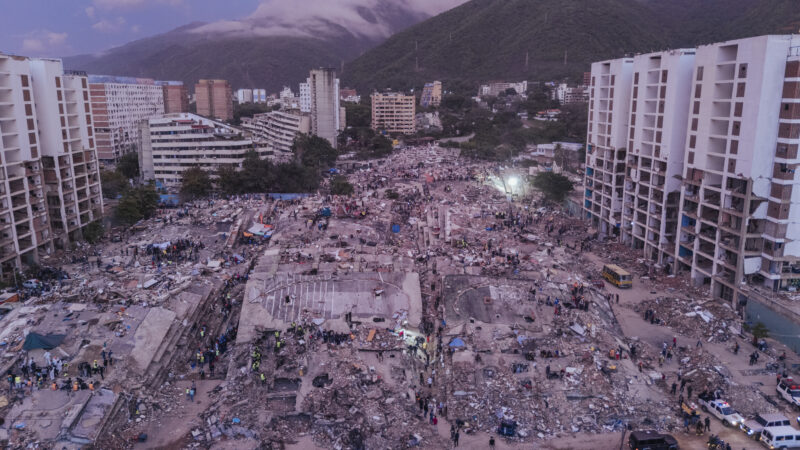
    CARACAS, Venezuela — A week after Venezuela’s historic twin earthquakes, doctors on Wednesday said the biggest dangers now facing survivors were untreated wounds and infectious diseases.

    Thousands of displaced Venezuelans are sleeping in crowded shelters or outside without access to clean water amid dismal sanitary conditions following the June 24 earthquakes. Aid workers said the aftermath has become a major medical crisis that, unless quickly controlled, would take more lives in the days and weeks ahead.

    “The issue we foresee just around the corner are the infections that patients who have been exposed to the disaster for the longest time might bring,” said Eugenio Cova, the head of the trauma unit at Hospital del Oeste Dr. José Gregor Hernández in Caracas, the capital.

    The hospital has treated scores of severely injured people since the earthquakes, despite a shortage of crucial medical equipment. Cova said the public hospital, parts of which are now inaccessible because of possible earthquake damage, lacks screws and plates needed for orthopedic surgery and medicated gauze to prevent infections.

    According to the government, the earthquakes damaged or otherwise compromised 38 hospitals nationwide.

    “We’ve already gone through the period of complex trauma — which will continue to occur — but now it’s complicated by infections,” Cova added.

    Even as the window of opportunity narrowed in the search for survivors trapped under the rubble, expert teams from more than two dozen countries pressed on Wednesday with rescue operations. Against the odds — the window for survival when trapped under rubble is typically 48 to 72 hours — teams are continuing to find a small number of survivors, including a toddler on Tuesday who had been trapped for six days.

    The United States, which took control of Venezuela’s oil industry after seizing then-leader Nicolás Maduro in January, has scaled up its assistance in recent days, with 900 military personnel supporting relief and rescue efforts as of Wednesday, Steven McCloud, a U.S. Southern Command spokesman, told the Associated Press.

    An additional 100 people from the U.S. State Department were deployed to help aid work on the ground, he said.

    Venezuelan officials have counted over 1,900 deaths from the earthquakes as of Tuesday, a figure that continues to rise. Many more thousands remain missing, adding ambiguity to the temblors’ complete toll and leaving families in an agonizing limbo as they wait days by collapsed buildings, hoping for the bodies of their loved ones to surface.

    One non-governmental digital database where families can register missing loved ones showed more than 40,600 people unaccounted for as of Wednesday.

  • Trump’s income topped $2 billion in 2025, boosted by crypto, coin ventures

    Trump’s income topped $2 billion in 2025, boosted by crypto, coin ventures

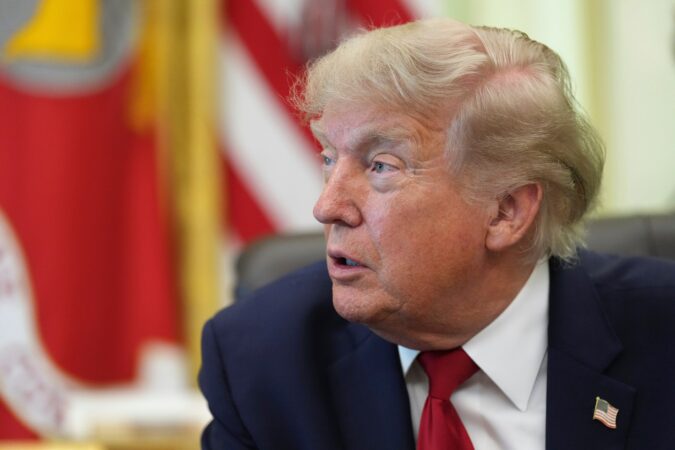
    WASHINGTON — President Donald Trump’s reported income soared to more than $2.2 billion in 2025, as the president took in more than $1.4 billion from cryptocurrency, digital tokens and related partnerships, according to his latest financial disclosure forms.

    The 927 pages of disclosuresindicated that Trump’s income substantially increased after he reentered the White House last year.

    Overall, Trump reported assets worth at least $2.4 billion and income of more than $2.2 billion. His assets are almost certainly worth more, since the federal disclosure forms require only that asset values be reported in ranges that top out at “over $50 million,” which leaves the full value of the president’s holdings unclear.

    In his 2024 financial disclosure, filed a year ago, Trump reported assets worth more than $1.6 billion and income of over $600 million.

    In addition to income from crypto ventures, Trump reported over $620 million in real estate, hotel and golf-related income.

    The president also reported receiving $86.5 million from settlements in five separate lawsuits against ABC, CBS, YouTube, Meta, and the social media platform X.

    The 2025 disclosure, released Tuesday, includes $635 million in royalties from a license agreement with Celebration Coins; at least $525 million in proceeds from token sales by World Liberty Financial, a cryptocurrency project founded by Trump and his sons; $65 million in proceeds from World Liberty Financial’s equity sale; and $196 million in net proceeds from a stablecoin transaction.

    Trump also saw increased income from his golf clubs and resorts. He reported $121 million from Trump National Doral in 2025, up from $110 million a year earlier, and $77 million from Mar-a-Lago, up from $56 million.

    In response to a request for comment about Trump’s significant increase in income from crypto and similar ventures, White House spokeswoman Anna Kelly said that Trump had “proudly made the United States the crypto capital of the world through executive actions, supporting legislation like the GENIUS Act, and other commonsense policies to drive innovation and economic opportunity for all Americans.”

    “Neither the President nor his family has ever engaged — or will ever engage — in conflicts of interest,” Kelly continued, saying any suggestion otherwise is a “tired, false narrative.”

    Trump’s disclosures are in stark contrast to Vice President JD Vance’s filing, which came in at 17 pages. Vance, however, also saw a boost in at least one category of income: royalties for his memoir Hillbilly Elegy, released in 2016.

    Vance reported earning $50,000 to $100,000 from the book in 2024. Last year, that range shot up to $1 million to $5 million, he disclosed.

    This month Vance published a second book, Communion, which he has promoted on an extensive media tour over the last two weeks.

  • Belarus’ authoritarian leader pardons 28 political prisoners to ease ties with the West

    Belarus’ authoritarian leader pardons 28 political prisoners to ease ties with the West

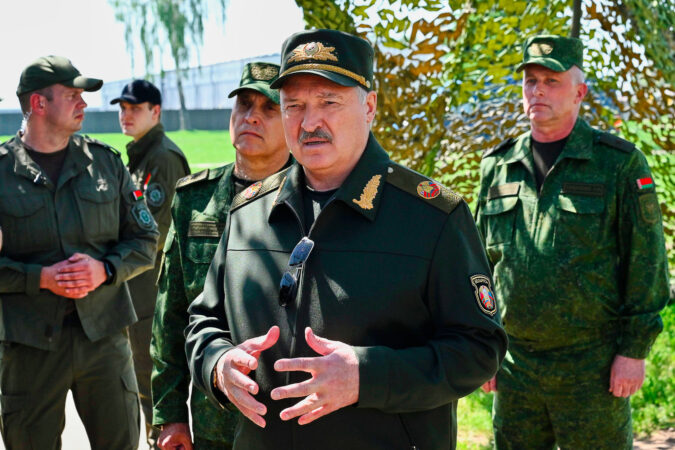
    TALLINN, Estonia — Belarus’ authoritarian President Alexander Lukashenko on Wednesday pardoned 28 political prisoners, the latest of his efforts to improve relations with the West.

    Lukashenko’s decree marking the country’s Independence Day celebrated Friday announced that 28 convicts serving prison terms for “extremist crimes,” a term used by the authorities’ in their sweeping crackdown on dissent, were pardoned on “humanitarian” grounds.

    More than 800 political prisoners remain jailed in the country, according to a rights organization in Belarus.

    Lukashenko has ruled the nation of 9.5 million with an iron fist for more than three decades, and the country has been sanctioned repeatedly by Western countries — both for its crackdown on human rights and for allowing Russia to use its territory in the full-scale invasion of Ukraine in 2022.

    Lukashenko’s rule was challenged after a 2020 presidential election, when hundreds of thousands of people took to the streets to protest a vote they viewed as rigged. In an ensuing crackdown, tens of thousands were detained, with many beaten by police. Prominent opposition figures fled the country or were imprisoned.

    Five years after the mass demonstrations, Lukashenko won a seventh term last year in an election that the opposition called a farce.

    Since U.S. President Donald Trump returned to the White House, Lukashenko has released hundreds of political prisoners in a series of U.S.-mediated deals that also lifted some U.S. sanctions.

    As part of a deal in March that Washington helped broker, Lukashenko ordered the release of 250 political prisoners, while the U.S. agreed to lift sanctions from two Belarusian state banks and the country’s Finance Ministry, and to remove the top Belarusian potash producers from a sanctions list.

    Another deal in April released prominent journalist Andrzej Poczobut in a swap with Poland that saw a total of 10 people freed.

    Belarus still has 864 political prisoners, including 21 journalists, according to the Viasna human rights center in Minsk, the capital of Belarus.

    In a report released earlier this week, the U.N. special rapporteur on the situation of human rights in Belarus, Nils Muižnieks, warned that despite the release of several hundred political prisoners over the past year, there has been no overall improvement in the human rights situation in the country.

    “Sustainable progress requires an end to politically motivated repression and accountability for past violations,” he said.

    Belarus opposition leader-in-exile Sviatlana Tsikhanouskaya told the Associated Press that although the release of 28 political prisoners will bring relief to their relatives, “we mustn’t forget that hundreds of political prisoners remain in Belarusian jails, and all of them must be released.”

  • Defying Pope Leo XIV, traditionalists go ahead with bishop consecrations in Switzerland

    Defying Pope Leo XIV, traditionalists go ahead with bishop consecrations in Switzerland

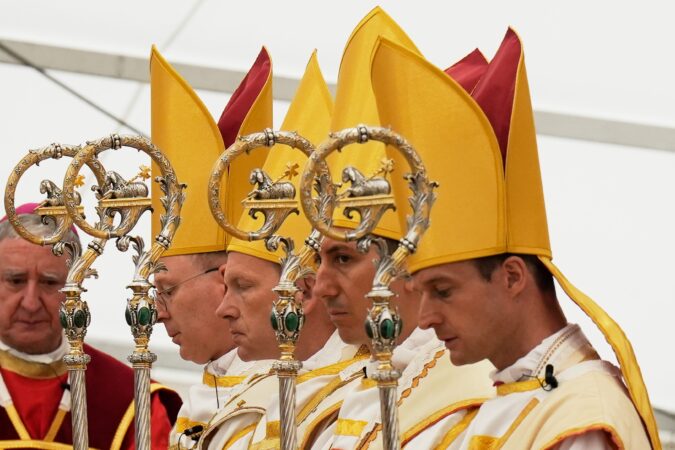
    ECONE, Switzerland — A group of traditionalist Catholics directly defied Pope Leo XIV on Wednesday by consecrating four bishops without his consent, dismissing the resulting excommunications and break with the Holy See by saying it was necessary to defend the Catholic faith.

    The Society of St. Pius X, which opposes modernizing reforms in the Catholic Church, conducted the five-hour ceremony at its seminary in Econe, Switzerland, despite an appeal by Leo to call it off.

    The American pope warned in a letter Tuesday that consecrating bishops without his approval amounted to a “sin of extreme gravity” that will actually harm their faithful.

    The consecrations amounted to a crisis for Leo, who has prioritized church unity and healing tensions with traditionalists that worsened during the Pope Francis pontificate.

    The SSPX, as the society is known, represents a parallel, ultra-Catholic faith to the Holy See. It now has six bishops, 751 priests, 264 seminarians training in five seminaries, 145 religious brothers, 88 oblates, and 250 religious sisters representing 50 nationalities, according to SSPX statistics.

    Bells tolled through the misty Alpine mountain valley as hundreds of priests walked two-by-two to the altar under a tent to start the service and then again at the end. An estimated 16,500 faithful who prefer the traditional Latin Mass over modern liturgies attended, sitting in a field through a downpour alongside their children who were too numerous for organizers to count.

    The Mass, rich in velvet and gold-trimmed vestments, chanting, and incense, was livestreamed on the society’s YouTube channel, with simultaneous explanations in several languages. The highly organized religious extravaganza underscored the society’s international reach, despite its schismatic outsider status, and its appeal to conservative, traditionalist Catholics wary of the modern, secular world.

    At the start of the Mass, a priest read aloud a statement justifying the consecrations as a necessary “sacred duty” and dismissing the resulting penalties. “We consider every punishment and censure brought to bear against this step will have no validity,” he said.

    In the consecration rite, Bishop Alfonso de Galarreta, who himself was excommunicated after being consecrated without papal consent in 1988, placed his hands on the head of each of the four new bishops. The ritual confers the Holy Spirit from one bishop to another and recalls Christ’s gesture to his apostles. After they received their miter hats, gloves, and pastoral staffs, the four made a procession through the crowd, blessing the faithful as bishops.

    According to church law, consecrating a bishop without a papal mandate incurs the harshest penalty in the Catholic Church: automatic excommunication for the four new bishops and the bishop administering the rite. It also amounts to a schismatic act, an intentional rupture of church unity.

    The society was founded in opposition to Vatican II

    French Archbishop Marcel Lefebvre founded the SSPX in opposition to the modernizing reforms of the Second Vatican Council. Among other things, the 1960s meetings known as Vatican II revolutionized the church’s relations with other Christians, Jews, and people of other faiths, and allowed Mass to be celebrated in the vernacular rather than Latin.

    In 1988, Lefebvre consecrated four bishops without papal consent. The Vatican promptly excommunicated him and the four bishops and declared the consecrations a “schismatic act.” Pope Benedict XVI in 2009 lifted the excommunications, but the SSPX today has no legal standing in the church.

    The SSPX has accused the church of being rife with heresies and errors and said that only it is upholding the true faith of Christ. It has justified the consecrations, citing a “state of necessity” to minister to its faithful.

    It identified the new bishops as Pascal Schreiber of Switzerland, Michael Goldade of the United States, Michel Poinsinet de Sivry of France, and Marc Hanappier, also of France.

    Catholic faithful don’t incur penalties for attending SSPX services, but they also can attend Latin Masses celebrated by priests in communion with the Vatican.

    The Vatican didn’t immediately comment on the consecrations and it wasn’t clear how or if it would declare the excommunications or any other penalties. The SSPX acknowledged in a statement late Wednesday that the consecrations did not have papal approval.

    The ritual had a joyous air

    Everything about Wednesday’s ceremony had the air of a joyous celebration. Participants received a baseball cap with the “Econe2026” seal on it.

    And in perhaps the most obvious sign of a celebration, registered participants could buy a souvenir set of wine to commemorate the “historic” event for 75 Swiss francs ($92.50). The “Cuvee des Sacres” gift box featured pinot noir, syrah, Petit Arvine, and Fendant, each bottle with a label depicting a bishop’s miter, his ring, a cross or crozier staff.

    The field, located under giant power lines, was awash in smiling nuns, priests posing for photos, youths handing out bottled water, black-clad security guards with earpieces, and orange-vested volunteers who occasionally cut short journalists’ interviews with the faithful. During the downpour, priests administered Communion under yellow and white umbrellas, the colors of the Holy See.

    Arlina Onglao, a 71-year-old travel agent from the Philippines, said she wanted to be on hand for the “historic event” and didn’t care about the prospect of excommunications of the bishops. She said the Vatican had “lost credibility.”

    “I don’t think it’s going to scare any of us. Me, I’m not scared,” she said. “I feel like I’m on a safer road to heaven.”

    Many Catholics not in Econe, including conservative and traditional ones, opposed the consecrations as an act of severe disobedience that hurts the church.

    “You can’t serve tradition while disobeying the church and her authority,” said the Rev. Robert Gahl, an ethics expert at the Catholic University of America.

  • ICE’s arrest of nun heading to church fuels bipartisan backlash in South Texas

    ICE’s arrest of nun heading to church fuels bipartisan backlash in South Texas

    SAN ANTONIO, Texas — Sister Leticia “Letty” Ugboaja was walking to Sunday Mass in McAllen, Texas, when federal immigration officers stopped her, confiscated her rosary, and placed her in handcuffs.

    The Catholic nun from Nigeria was released hours later after Democratic and Republican lawmakers intervened. The Department of Homeland Security did not respond to requests for comment about her immigration status, and officials from the Diocese of Brownsville would not give details other than to say she is a nurse who entered the country legally.

    Ugboaja’s arrest was the latest to trigger anger from both sides of the political aisle in South Texas, highlighting how Hispanics in a region that supported President Donald Trump in the 2024 elections are growing wary of his administration’s deportation campaign.

    An unlikely bipartisan consensus has emerged in Texas’s Rio Grande Valley to protest several recent immigration arrests, including those of three teenage mariachi musicians, numerous construction workers, and cases involving children and people who had been granted protection from deportation.

    Rep. Monica De La Cruz, a Republican who flipped her House district that includes the Texas border in 2022, has joined Democrats in the predominantly Mexican American region in calling for the release of immigrants with deep ties to their local communities and no criminal record.

    “As I have repeatedly said, our immigration enforcement should target violent criminals,” she wrote on Facebook. “A Catholic nun on her way to church is not a threat to our community.”

    Trump won 12 of 14 Texas border counties that had long been dominated by Democrats in the last presidential election. The rightward shift was the result of widespread discontent over how the Biden administration handled immigration and inflation.

    Lawmakers and political analysts say border constituents hold nuanced views that the Trump deportation campaign is testing. They support deporting criminals and enhancing border security, but they also say hardworking immigrants with no criminal record should be given a chance. And they are upset by images of people like Ugboaja being detained while going about their daily lives.

    “If the administration said they closed the border and are deporting criminals and stopped there, it would’ve been welcome news,” said Rep. Henry Cuellar (D., Texas). “But they didn’t stop there. They started going after people on the streets, and that part — the overreach by ICE — is turning Hispanics back to other candidates, to Democrats honestly.”

    The diocese said Ugboaja is part of the Daughters of Mary Mother of Mercy congregation headquartered in Nigeria and has worked more than a decade at local Texas hospitals. Ugboaja has not publicly addressed her arrest by Immigration and Customs Enforcement and did not respond to a request for comment.

    ICE did not respond to a request for comment on why she was detained.

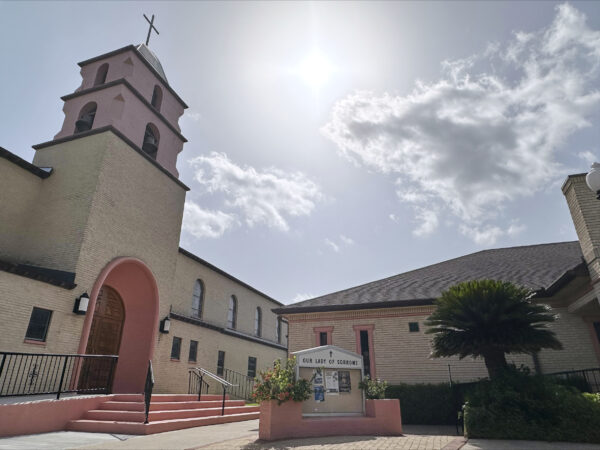
    Richard Cortez, a Democrat who is the elected judge, or administrator, of Hidalgo County, is a parishioner at Our Lady of Sorrows, the church that Ugboaja had been walking to when she was arrested. He said he contacted representatives for De La Cruz and Cuellar after a deacon texted him to let him know that a nun had been arrested. The lawmakers then sent frenzied phone calls and text messages to Homeland Security Secretary Markwayne Mullin and Tom Homan, the administration’s border czar.

    “Where is she?” Cuellar recalled texting officials in Washington, demanding her swift release. The veteran lawmaker, who sits on the House Appropriations Committee, said Mullin and Homan reassured him that Ugboaja would be home by nightfall that same day.

    De La Cruz wrote on Facebook on Sunday that she had “elevated this to the highest levels.”

    The congresswoman is up for reelection and has been walking a careful line in supporting the Trump administration while also advocating for specific immigrants caught up in the deportation campaign. In a statement to the Washington Post, she said there is a “misconception” that Hispanic families want open borders.

    “It simply isn’t true,” she said. “We want a strong, secure border and enforcement that prioritizes violent criminals and real threats to our neighborhoods.”

    Local activists and cultural leaders were also involved in sounding the alarm, including Tejano singer Bobby Pulido, a Democrat challenging De La Cruz in the November general election. “It’s an aggression coming from the top, and they are not targeting bad people,” he said. “Trump voters, friends of mine, are very upset by this.”

    Sister Norma Pimentel, a well-known figure in the region, drove to the El Valle Detention Center in Raymondville, Texas, late Sunday to embrace a tearful Ugboaja as she exited the metal gates.

    De La Cruz ”is arguing for the compassionate release for some but not others,” said political scientist Álvaro Corral of the University of Texas in the Rio Grande Valley. “It puts her in a complicated place. The folks that elected her likely cheered some of this on.”

  • Voters are angry with Washington, and other takeaways from the Colorado primaries

    Voters are angry with Washington, and other takeaways from the Colorado primaries

    WASHINGTON — Democrats in Colorado rode a backlash against Washington to victory Tuesday night, as a surge of primary voters picked candidates without ties to Congress.

    The state’s Democratic primary had been closely watched to see whether the wave of democratic socialist victories in New York last week would travel west from coastal, urban terrain into more politically diverse stretches of the country.

    One key House race proved the theory true: Lawyer and democratic socialist Melat Kiros, 29, ousted Rep. Diana DeGette, a liberal, 30-year incumbent from Denver.

    And in the primary race for governor, ties to D.C. also became too toxic to overcome as Colorado Attorney General Phil Weiser decisively beat U.S. Sen. Michael Bennet, a three-term incumbent who once held a double-digit lead in polling.

    The most prominent Democratic incumbent to fend off a challenger, Sen. John Hickenlooper, won against a challenger who did not air a single television ad. Hickenlooper, a former two-term governor and Denver mayor who was born outside Philadelphia in Narberth and graduated from the Haverford School, posted the narrowest primary victory of his more than 20 years running for public office in Colorado.

    Here are some takeaways from primary night in Colorado, a once-purple state that saw a surge of Democratic ballots this year.

    Democratic primary voters seek a fighter

    In a campaign built on who would best fight President Donald Trump, Bennet’s early advantage evaporated as Weiser argued that the lawsuits he filed against the administration made him a better antagonist than an 18-year creature of Congress.

    During his second term, the president has moved the U.S. Space Command headquarters out of the state and shut down Colorado’s globally recognized climate research center, among other moves that challengers said D.C.-based politicians did not do enough to stop.

    Bennet is the first sitting senator to lose a gubernatorial primary in 15 years, a loss underwritten by a nearly $1 million personal loan to his campaign and almost twice as much spending on TV ads compared to Weiser.

    Weiser tweaked Bennet for voting to confirm eight of Trump’s Cabinet members. Bennet stood by his votes, except for the one to confirm Energy Secretary Chris Wright. He argued that his support was necessary to help the state secure federal resources.

    Colorado primary voters ultimately decided to leave Bennet in D.C., where he has another two years in his Senate term.

    Democratic socialists can topple liberals

    Kiros’s victory fuels nationwide exuberance of democratic socialists trying to pull the Democratic Party closer to their brand of economic populism and opposition to Israel.

    After three candidates endorsed by New York Mayor Zohran Mamdani won their congressional primaries in New York last week, establishment Democrats felt angst. Democratic socialists looked to Colorado, and the money followed.

    “Today, the East Coast, next week the Mountain West,” the Democratic Socialists of America posted on X the night of those NYC victories, along with a photo of Kiros and entreaties to help phone bank and “elect another socialist to Congress.”

    Sen. Bernie Sanders (I., Vt.) had endorsed her a week earlier.

    Kiros, a first-time candidate, beat Colorado’s most veteran member of Congress, a longtime progressive who supports Medicare-for-all and other causes dear to the left.

    On the campaign trail, Kiros argued that DeGette had become part of the party’s out-of-touch establishment and accepted corporate donations but not doing enough to support the working class. A lawyer and Ph.D. student, Kiros moved back to Colorado from New York after she was fired in 2023 for writing an anti-Israel letter and refusing to retract it.

    Buoyed by her savvy social media campaign, national groups flooded the race with cash in the closing weeks, tapping into the electorate’s growing interest in candidates vowing to upend the political system they seek to join. Establishment groups responded with cash to boost DeGette.

    Outside spending for both candidates exceeded $3.1 million.

    Kiros was not born when DeGette, 68, entered Congress in 1997, and her primary victory in a deeply blue district centered in Denver all but assures she’ll join the small caucus of Gen Z members of the House next year.

    In the swingiest district, a progressive moves toward the middle

    In Colorado’s most competitive House district, currently held by a Republican and stretching from the Denver suburbs north through ranches and farmland, the Democratic winner shifted positions away from those endorsed by democratic socialists — even as he remained the most liberal candidate in the field.

    Manny Rutinel, a 31-year-old first-term state lawmaker, moderated his progressive views as he battled through a three-way primary race, finishing well ahead of his closest challenger, Shannon Bird.

    The district, represented by Gabe Evans, is expected to be one of the country’s most expensive general election races this fall.

    Rutinel is among the most progressive members of the state legislature, but he shifted on enough positions during his campaign that the Denver chapter of the democratic socialist party declined to endorse him. An editor’s note on the DSA’s voting guide added: “Many of our members are concerned that even a Neutral vote is too supportive of this candidate.”

    A Yale-educated lawyer who also worked as an economist for the Army Corps of Engineers, Rutinel declined to support Medicare-for-all, proposing a strong public option instead. He also stopped supporting a fracking ban and ending student debt.

    Colorado Democrats lost a redistricting fight, but they may flip seats anyway

    The surge in Colorado’s Democratic turnout fueled the party’s optimism that losing in court over redistricting won’t matter too much in the end.

    Democratic groups in the state had been planning in recent weeks an effort to redraw their maps ahead of the 2028 election in hopes of countering a string of Republican-run states that gerrymandered to favor the GOP in recent months.

    Currently the state’s delegation is split 4-4 under boundaries drawn by an independent redistricting commission. But Colorado has trended blue for years amid a population explosion, and Democrats believed they could add as many as three seats.

    Three ballot measures proposed by a Democratic-aligned group, Coloradans for a Level Playing Field, would have temporarily suspended the independent redistricting commission and adopt new maps for the 2028 elections. The Colorado Supreme Court ruled Monday that they were unconstitutional because of how they were structured.

    But high turnout among Democrats in Tuesday’s primary has Democrats believing they can gain one or more seats in November, two years earlier than they had originally hoped.

  • Retrofitted Qatari jet takes flight as Air Force One for Trump’s trip to North Dakota

    Retrofitted Qatari jet takes flight as Air Force One for Trump’s trip to North Dakota

    WASHINGTON — President Donald Trump on Wednesday took his maiden voyage on a new Air Force One — a retrofitted Boeing 747 worth $400 million gifted by Qatar that embeds his personality more deeply into the institution of the American presidency.

    Gone is the trademark light blue hull that helped Air Force One blend into the sky. The refurbished jet is painted to Trump’s preferred color scheme of a navy blue belly and red and gold stripes.

    It has the luxury features that the president believes a commander-in-chief’s entourage should have — plush carpets, lie-flat seats, wood paneling, and a presidential seal on the seat belts, according to reported tours of the plane.

    Trump told reporters that he was proud of the luxurious plane. “You can do two things: You can low-key it, or you can show it,” he said.

    Reporters are generally not permitted to take photographs on the plane unless Trump is present. But on Wednesday, Trump administration staffers posted images of the plane’s interior on social media.

    White House communications director Steven Cheung posted a photo of aides gathered around a circular table that had off-white place mats and leather captain’s chairs. Monica Crowley, the chief of U.S. protocol, posted a picture of herself perched on a leather couch between a pair of Air Force One throw pillows. Mounted on the wall behind her was a framed photo of the Thomas Jefferson Memorial.

    The jet carried Trump to North Dakota to see the Theodore Roosevelt Presidential Library, the first official visitor ahead of its opening on the nation’s 250th anniversary.

    The jet, a gift from the Middle Eastern power, raised ethical concerns, but Trump saw the plane as a necessary replacement to the 35-year-old planes that had previously ferried him as president.

    “This is a gift from a country that has treated us very well,” Trump said.

    The new jet will only temporarily be in the nation’s service only temporarily, as Boeing is expected to deliver in 2028 long-delayed planes that will permanently serve as Air Force One. Trump, a Republican, has said in the past that the Qatar plane would end up in a presidential library.

    The Air Force has said that it did little to change the cabin layout of the plane and that it spent less than $400 million on security upgrades.

  • U.S. and Iran meet with mediators in Qatar

    U.S. and Iran meet with mediators in Qatar

    U.S. and Iranian negotiators were in Qatar on Tuesday as both sides were set to hold talks with mediators, after a surge of attacks in recent days over the Strait of Hormuz threatened to derail efforts to agree on a lasting peace deal.

    Steve Witkoff and Jared Kushner, two of President Donald Trump’s closest advisers, were to meet with the prime minister of the Persian Gulf state, Sheikh Mohammed bin Abdulrahman Al Thani, a U.S. official said. The official added that the U.S. and Iranian delegations would hold separate talks with Qatari and Pakistani mediators today.

    Iran and Qatar said no direct, high-level meetings between the U.S. and Iranian officials were planned and that the discussions would instead be conducted via Qatari intermediaries. The negotiations would focus on implementing the preliminary ceasefire deal reached two weeks ago, the spokespeople for both countries’ foreign ministries said separately.

    The absence of face-to-face talks underscores the depth of the distrust between the United States and Iran, after negotiators met in Switzerland in June. The meetings follow a dayslong flare-up of hostilities over the strait, a key transit route for oil and gas shipments that Iran effectively blockaded during the war.

    The preliminary ceasefire largely deferred discussion of the toughest topics, including Iran’s nuclear program and U.S. sanctions on Iran, and allotted 60 days for the countries to reach a comprehensive, long-term deal. But the two sides have been unable to agree even on the meaning of the ceasefire agreement.

    U.S. officials also hoped that the pact would lead to the full reopening of the strait to its prewar status, when ships transited for free. Iran, however, has insisted that the agreement gives it substantial authority over the waterway and has threatened ships that do not travel on Iranian-mandated routes.

    Iran and Oman, a U.S. ally, are advancing a plan to collect payments for ships moving through the strait, despite U.S. objections, according to an Iranian official and four diplomats with knowledge of the matter.

    The latest round of hostilities began Thursday when the U.S. military said Iran had attacked a cargo ship hours after Iran warned that vessels could only travel through its waters in the strait. The ship was transiting through an alternative route near the Omani coast.

    U.S. officials also blamed Iran for another attack Saturday. The U.S. retaliated by striking what it said were Iranian military sites, and Iran responded by carrying out drone and missile strikes against U.S. targets in Bahrain and a Kuwait.

    The clashes ended Sunday, but neither side has publicly acceded to the other’s demands on the strait.

  • Serena Williams loses in opening round at Wimbledon in first singles match in nearly four years

    Serena Williams loses in opening round at Wimbledon in first singles match in nearly four years

    LONDON — Serena Williams showed plenty of what made her a 23-time Grand Slam tennis champion in her first professional singles match in nearly four years on Tuesday.

    But Williams, 44, couldn’t quite dominate like she used to and was beaten, 6-3, 6-7 (6), 6-3, by an opponent less than half her age, 20-year-old Maya Joint of Australia, in the opening round of Wimbledon.

    “It was really great to be back at Wimbledon. I never expected to be here,” Williams, who did not meet with media after the match, said in a statement released by Wimbledon organizers. “The atmosphere was amazing. Walking out was amazing. I definitely relished it and missed it and enjoyed the moment more than anything.”

    Williams displayed the same powerful serve and heavy groundstrokes that led her to seven Wimbledon singles titles, but the 87th-ranked Joint handled her pace and won more of the big points by hitting beyond Williams’ reach on Centre Court.

    “I don’t know what just happened, to be honest,” Joint said. “I didn’t get much sleep last night. I was up until like 2 a.m. just thinking about it.

    “She has such an aura, she’s just a legend, and this court has so many huge names that have played on it. I’ve been dreaming about this moment since I was a little kid, so this is pretty crazy.”

    Maya Joint is ranked 87th in the world.

    While Williams played two doubles matches just before Wimbledon to announce her comeback to the sport she once dominated, she hadn’t played a singles match since the 2022 U.S. Open.

    Williams has 98 career victories in singles on the hallowed grass of the All England Club. By contrast, it was Joint’s first Wimbledon victory in just her second appearance at the All England Club after losing in the opening round last year.

    But Joint won a Wimbledon warmup in nearby Eastbourne last year and knows how to play on grass.

    Doubles match still to come

    Williams, who has no singles ranking after being out for so long, was given wild card invitations by Wimbledon organizers to play singles and doubles with her older sister, Venus. Her doubles match is later this week.

    Williams has said that having her two daughters off from school inspired her comeback, and it marked the first time that her younger daughter, Adira, who is almost 3, saw her play singles. Adira sat next to her 8-year-old sister, Olympia, in the front row of Serena’s players’ box.

    Serena Williams’ husband, Alexis Ohanian, and their daughters, Olympia and Adira, watch her match against Maya Joint at Wimbledon.

    Standing ovation

    Williams was given a standing ovation as she walked on court before the match started under a closed roof and several supporters held up signs with messages like “Welcome Back” and one wore a T-shirt with the text “Unstoppable Queen.”

    Williams executed a delicate topspin lob winner early on and then cranked out a 121 mph ace to hold for 3-3 in the first set. But Williams also had a costly double fault that led to the only break of the first set.

    In the second set, Williams came back from 0-40 and saved four break points to hold for 6-5. Then Williams saved a match point in the tiebreaker with a big serve down the T followed by a forehand approach winner. Another big serve — clocking in at 122 mph — set up Serena’s first set point, which she converted when Joint missed a forehand long.

    After winning the set, Williams pumped her fist calmly.

    But Joint took control early in the third and a forehand from Williams sailed long on Joint’s third match point to conclude the encounter after 2 hours, 22 minutes.

    Williams then smiled as she walked off the court to loud applause.

    Williams and Joint both had 37 unforced errors, while Joint led, 40-26, in winners.

    Serena Williams and Maya Joint shake hands following their first-round match at Wimbledon.

    Zverev, Świątek advance

    After opening day featured wins for No. 1s Jannik Sinner and Aryna Sabalenka, along with Novak Djokovic, French Open champion Alexander Zverev and defending Wimbledon champion Iga Świątek made it into the second round on Tuesday.

    In a match between hard servers, the second-seeded Zverev beat Alexander Blockx, 6-4, 6-7 (8), 7-6 (5), 7-6 (0).

    Świątek, who had her father and sister looking on from the Royal Box, struggled with her serve and committed nine double-faults before overcoming Taylor Townsend, 6-1, 2-6, 6-3.

    No. 2 Elena Rybakina also advanced, beating Lois Boisson, 6-4, 1-6, 6-3.

    Fourth-seeded Ben Shelton, a quarterfinalist here last year, lost to 140th-ranked Finnish qualifier Otto Virtanen in five sets, 6-4, 3-6, 6-7 (8), 6-2, 7-6 (9).

    Matteo Berrettini, a finalist in 2021, beat Stan Wawrinka, 6-7 (7), 7-6 (16), 7-6 (7), 7-6 (5). It was the final Wimbledon match for Wawrinka, who plans to retire at the end of the year.

  • Three words in the Declaration of Independence paint a cruel picture of Natives

    Three words in the Declaration of Independence paint a cruel picture of Natives

    McKaylin Peters, a 24-year-old Native American graduate student at Johns Hopkins University, still recalls when she first heard the words “merciless Indian savages.”

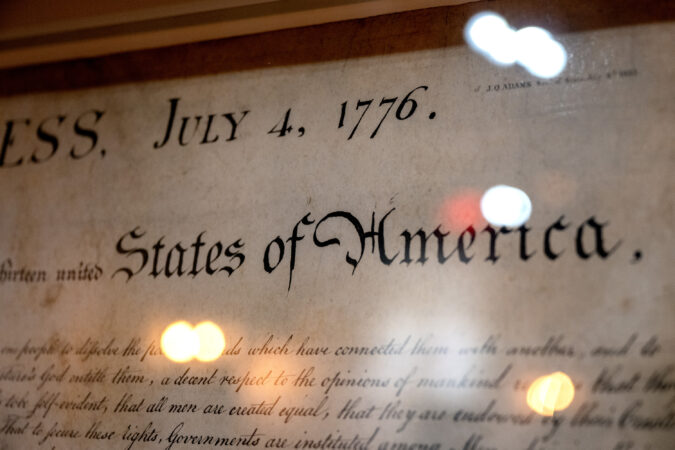
    Sitting in social studies class at her predominantly White middle school near Green Bay, Wisc. — a school that once used an image of an Indian as its mascot — she cringed when the teacher read a passage deep in the Declaration of Independence: “He has excited domestic insurrections amongst us, and has endeavoured to bring on the inhabitants of our frontiers, the merciless Indian Savages, whose known rule of warfare, is an undistinguished destruction of all ages, sexes and conditions.”

    Peters said she and the six other Native students in the class looked quietly at one another.

    “I was upset. It just rolled off her tongue very easily,” recalled Peters, a citizen of the Menominee Nation who is getting her master’s in organizational leadership. “It seemed like no one else was shocked except for us, the Indigenous students in the classroom. We were like, ‘Did she really just say that?’”

    As the United States marks the 250th anniversary of the Declaration — a document fundamental to the nation’s founding and still revered — Peters and other Native American scholars and tribal leaders are reflecting on the Founding Fathers’ use of the derogatory description for Indigenous people in 1776. Many note that while the Declaration promises that “all men are created equal,” its ideals were not extended to everyone.

    The document’s portrayal of Indigenous people helped establish a moral and legal framework that justified decades of devastating U.S. policies toward Native communities, according to historians. Celebrations of the 250th anniversary of the Declaration’s signing come amid a striking contrast: Native tribes are working to reclaim ancestral lands, revive lost languages, and preserve cultural traditions, while the Trump administration has sought to remove or downplay references to slavery, Native dispossession, and other dark chapters of U.S. history in parks and museums and on government websites.

    “It’s not just a line in an old document,” Peters said. “It’s a reminder that this country was built by declaring us less than human. When the Declaration of Independence calls us that, it’s a message that Native youth sadly still hear today in classrooms, policy debates, and in how society talks about us.”

    Many historians and Indigenous historians say the term “savages” did more than reflect 18th-century attitudes. It helped perpetuate stereotypes of Native Americans and contributed to their marginalization; centuries later, it adds to feelings, especially for Native youths, of being excluded from America’s national story. A 2022 study by Texas A&M University researchers found that the Declaration’s pejorative reference to Native Americans helped normalize a view of them as threats rather than as sovereign nations and peoples with rights.

    For many Native people, the meaning — and impact — of the phrase is emotional and complicated.

    Some discover the wording as adults and are appalled. Others see it as a reminder of racist attitudes and centuries of broken treaties, land theft, and forced assimilation. Some young people have reclaimed the epithet, debating it on social media and displaying it on T-shirts and tattoos as a symbol of resilience and empowerment. An Indigenous-led heavy metal band intentionally used the phrase as its name.

    “It’s become sort of an ironic touchstone,” said Kevin Gover, the Smithsonian Institution’s undersecretary for museums and culture. A citizen of the Pawnee Tribe of Oklahoma, Gover said he did not encounter the term until middle age. After his initial outrage, Gover said, he responded as many Native people do: by mocking it.

    “Even we, on the side of the descendants of those who were victimized, have to take a nuanced view,” said Gover, who is also the former director of the National Museum of the American Indian in D.C. “In many respects, it’s a badge of pride that our ancestors had the wherewithal to survive and allow us to be alive in this time.

    “We can acknowledge the wrong,” he said, “and be grateful for our ancestors’ fortitude.”

    Hartman Deetz, an enrolled member of the Mashpee Wampanoag — the Massachusetts tribe that famously helped the Pilgrims survive their first Thanksgiving in 1621 — said the wording reflects the opposite of how Indigenous people treated white settlers.

    “They were fed when they were starving, given hospitality by us, but they treated us in a way that was savage and merciless in the dispossession of our homelands,” said Deetz, who served as a consultant for an exhibition at the Museum of the American Revolution in Philadelphia about the Declaration and the history behind it. “It was framed in a way that justified the treatment they brought upon us, and it continues to this day in attempts to sell our sacred sites for copper mines and to drill for oil and mining on our lands.

    “The colonial enterprise hasn’t stopped,” he said. “There’s such a disregard for Natives to exist or have rights of where we do exist. That’s the legacy of these words.”

    The words originated in an early draft of the Virginia Constitution written by Thomas Jefferson, who later included it in the Declaration of Independence, which Congress adopted.

    Ironically, some historians say, the characterization of Native people contradicts Jefferson’s own views. In Notes on the State of Virginia, a book Jefferson wrote that laid out many of his views on race, government, and religious freedoms, he was “very sympathetic to Native people,” said Kevin Butterfield, a historian at the Library of Congress. Jefferson described Indigenous people as just, honorable and noble — a sharp contrast to the widespread European belief that Indigenous people were inferior.

    But Jefferson understood the Declaration was political rhetoric — a kind of “public relations piece,” said Butterfield, who is the acting chief of the Manuscript Division at the Library of Congress. He placed it near the end to bolster the case for independence.

    “He’s trying to paint the worst possible picture of how the king is approaching his interactions with the American colonists,” Butterfield said. “So he’s laying out horrible wartime atrocities from the Revolutionary War.”

    The description reflected colonial attitudes and the realities of frontier warfare, scholars say. Colonists were hostile toward Native Americans, who were powerful political and military figures and, just like other nations, protecting their sovereignty. Some Native nations had allied with the British — a move that many settlers resented — and many colonists also opposed King George III’s Proclamation of 1763, which barred settlement west of the Appalachian Mountains.

    Repeated violence between Indigenous people and settlers also helped shape the ideology behind the description, including the French and Indian War and Dunmore’s War in 1774, when Virginia colonists fought the Shawnee and Mingo to expand into the Ohio Valley, according to historians. In the summer of 1776, as the Declaration was drafted and adopted, a lesser-known conflict unfolded when Cherokee warriors attacked frontier settlements across parts of Virginia, North Carolina, South Carolina, and Georgia. Colonists responded by burning more than 50 Cherokee towns and driving Native people from their homes.

    By 1776, the Founding Fathers “understood their need to accuse the king of what they considered the ultimate crime — partnering with Indigenous peoples and arming them,” said Ned Blackhawk, a Native American author and Yale University historian. “So they created this vilification in the Declaration that, in many ways, was at odds with their experience of living alongside Natives for generations.”

    The rhetoric was part of a broader racial ideology taking shape during the Revolutionary era, said Blackhawk, an enrolled member of the Te-Moak Tribe of Western Shoshone Indians of Nevada.

    “They were deeply committed to Enlightenment principles, but those were restricted to people similar to themselves,” he said. “Native Americans became a foil in simplified and racialized ways.”

    Tracy L. Canard Goodluck, executive director of the Center for Native American Youth at the Aspen Institute, said she is disappointed the term is either glossed over or not taught in many school curriculums, its impact not discussed.

    It wasn’t until she was a student at Dartmouth College, she said, that she fully understood the context of the description. She was angry, but the new knowledge also awakened in her a passion for educating others about Indigenous history and mistreatment. Goodluck, a member of the Oneida Nation who is also Mvskoke Creek, said in her previous work as a teacher in Seattle and Albuquerque she taught about Indigenous people and the harsh characterization in the Declaration.

    “It shouldn’t just be about white history,” she said. “It should be about all history — the good, the bad, and the ugly.”

    She said it’s also important to educate the public, so every Fourth of July, she wears a T-shirt emblazoned with the phrase from the Declaration.

    “Those words served the purpose back then as a way to dehumanize Native people in this country,” said Goodluck. “We need to change that narrative. We’re still here. We’re doctors, lawyers, teachers and political leaders.

    “I am that merciless Indian savage who my ancestors prayed for to do great things.”