Category: Wires

  • As war stalls, Putin concedes he never cut a deal with Trump in Alaska

    As war stalls, Putin concedes he never cut a deal with Trump in Alaska

    Russia’s war in Ukraine is stalling — on the battlefield and in the corridors of diplomacy.

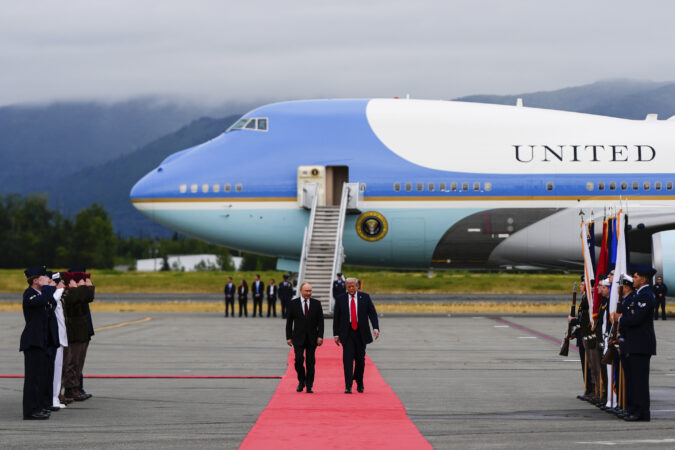
    For months, high-ranking Russian officials insisted that a path to ending the war in Ukraine — largely on Moscow’s maximalist terms — had been decided at a meeting between President Vladimir Putin and President Donald Trump last August in Anchorage. Only Ukraine’s intransigence stood as an obstacle.

    But that narrative has unraveled — perhaps because the only way to get the United States to help broker a new deal is admitting there never was a previous one.

    In recent days, three top Russian officials accused the White House of not honoring the Alaska agreement. Foreign Minister Sergei Lavrov even speculated that the summit was a U.S. “ploy to buy time to rearm the Kyiv regime.”

    Secretary of State Marco Rubio, however, pushed back. “If there had been an agreement, we would have had an end of the war,” Rubio told reporters.

    “Russia wants the entirety of Donetsk to be turned over to them, among some other things,” he said, explaining Russia’s demand for more Ukrainian territory.

    After days of back-and-forth, Putin conceded the point, saying on Sunday that “there were indeed no agreements reached in Anchorage.”

    “The spirit of Anchorage — although it wasn’t expressed in any formal documents, and no one put any signatures down — in Anchorage we discussed certain possibilities for ending the crisis in Ukraine,” Putin told a state television reporter Sunday. “And the compromises discussed were precisely the proposals the American side made to us.”

    The contradictions started in Alaska immediately after the summit. Putin said an agreement that will “pave the path toward peace in Ukraine” was reached, while Trump said that while the meeting was “extremely productive … there’s no deal until there’s a deal.” Trump also told Fox News afterward that it was “up to Zelensky” now to get a deal done, referring to Ukrainian President Volodymyr Zelensky.

    The Russian leader’s decision now effectively to bury the Alaska summit, which the Kremlin and its propagandists had mythologized as a turning point, comes as Russian forces are largely stalled on the battlefield in Ukraine — a sharp change from the previous four summers when they made gains.

    Instead, the skies over Russia and the Ukrainian territory it occupies are increasingly crowded with advanced Ukrainian drones, signaling a new phase in which Russia is playing technological catch-up and regular Russian citizens are feeling the war intrude on their lives with gasoline shortages and disruptions to summer travel, including to occupied Crimea.

    Russian political analysts have interpreted the indirect spat between Rubio and Lavrov over the alleged deal as a sign that Ukraine has convinced Trump it can keep fighting — and that it can pose a serious threat to Crimea, which Russia illegally annexed in 2014, rather than surrendering the Donbas region, as Russia has demanded.

    Trump probably arrived in Anchorage believing that Ukraine’s defeat was inevitable and that the sooner it accepted terms, the better for everyone, Fyodor Lukyanov, a prominent foreign policy analyst who advises the Kremlin, wrote in an op-ed in a Russian publication.

    “The goal of Kyiv and the collective Brussels was to convince Trump that the belief in Ukraine’s inevitable defeat was mistaken,” Lukyanov wrote. “Ten months after the Anchorage summit, they succeeded in persuading him.”

    Since Alaska, no major breakthrough has materialized in Russia’s favor, Europe so far has managed to sustain its military and economic aid to Ukraine, and Trump has become distracted by Iran.

    “Diplomacy in the midst of hostilities is shaped by their outcome,” Lukyanov wrote. “If the balance of power — or the perception thereof — shifts, the understandings reached at an earlier stage lose their validity.”

    Ukraine’s push to impose a “logistical lockdown” on Crimea and Kyiv’s growing capability to strike deep inside Russia seem to be part of a 40-day blitz declared by Zelensky to “influence” Moscow to end the war.

    Continuing that pressure, Ukraine overnight launched dozens of drones at the Moscow region and struck Russia’s Dubna satellite communications center north of the capital. Zelensky said ​Russia uses the Dubna site for reconnaissance and coordination of its military activities in Ukraine.

    Andrei Vorobyov, governor of the Moscow region, confirmed the attack had occurred but said that an “administrative building was damaged by drone debris.”

    Amid chaotic scenes in Crimea, the Russia-installed authorities imposed a state of emergency in response to strikes on highways and bridges. There have also been blackouts that have prompted many summer visitors to return home.

    “He’s holding his own at least,” Trump said of Zelensky last week, speaking to reporters at the White House. “A lot of people dying on both sides, but I think he’s doing pretty well. You have to say he’s courageous, he’s got great equipment, he’s got great men, he’s got fighters.”

    Ukraine seems to have scaled drone production to a level that can sustain strikes on Russian cities hundreds of miles from the border, and that keeps the frontline kill zone stable. This means that ground action is drying up.

    “The war has markedly changed this year,” said Ruslan Leviev, an analyst with the Conflict Intelligence Team, a group that uses open-source data to track the Russian military.

    “It’s hard to say the battle initiative is on the Ukrainian side,” Leviev said, “but time is on Ukraine’s side — more problems keep arising for Russia, economically, politically, and militarily, and it’s all adding up.”

    Russian budget data indicates that its military recruited 71,216 men during the first quarter of 2026, compared with 89,601 over the same period last year, according to Janis Kluge, a Russia expert at the Berlin-based German Institute for International and Security Affairs.

    Recruitment stabilized somewhat in the second quarter, returning to around 30,000 contracts per month. But local media reports suggest the overall stream of recruits has slowed compared with previous years as the pool of men drawn by the enormous pay packages that eclipse regional Russian salaries appears to be shrinking.

    Rumors have circulated that Russia may declare a fresh mobilization after key parliamentary elections in the fall — the first since the war began — but politically that move could prove extremely costly for the Kremlin. The “partial mobilization” in 2022 drove tens of thousands of men to flee Russia. After four years of war, and mounting economic strain, the mood has soured considerably.

    Leviev and other analysts said that they doubt Moscow would call for full mobilization, since this would require significant financial resources to set up new formations, and train and equip them, and that such a move fundamentally wouldn’t unfreeze the line of contact. “At this pace, the war on the ground looks to us as a dead end,” Leviev said.

    This poses several challenges for Russia.

    Russia still holds an advantage in manpower, conventional arms, and ballistic missiles, which it continues to use against Ukrainian cities and infrastructure. But Ukraine’s relentless drone campaign, especially its use of medium-range drones, has chipped away at this advantage, complicating frontline logistics and driving up the costs for Moscow of supplying the front.

    Russia’s flagship air defense systems were designed for high-altitude targets like jets and ballistic missiles, not slow, low-flying drones. Interceptor missiles also cost many times more than the drones they shoot down, draining stocks at a rate Western officials have said may be unsustainable.

    In his remarks Sunday, Putin commented on the deteriorating situation in Crimea and the wider fuel shortage in Russia after weeks of silence.

    Addressing Ukraine’s drone campaign, Putin said that Russia needed to “significantly ramp up production of air defense systems.” He also pledged to ensure the supply of fuel to Crimea by land and sea but did not say how this would be accomplished.

    Putin also asserted that Kyiv had put forward what he called “new proposals” to curtail hostilities in four regions of eastern Ukraine — Kherson, Zaporizhzhia, Donetsk, and Luhansk — and agree to mutually halt long-range strikes.

    Putin, however, cast the offer as a distraction that would allow Ukraine to redeploy units from other regions to these four areas, relieving pressure along the nearly 800-mile frontline. He reiterated that Moscow aims to fight on.

    “We have some certainty regarding the challenges facing Putin, but what we can expect from him in response to these challenges remains unclear,” said Vladimir Pastukhov, a Russian political scientist and honorary senior research fellow at University College London.

    According to Pastukhov, Putin has several options to escalate the war, all fraught with risk. These include an attack on a NATO nation in the Baltics, the detonation of a tactical nuclear weapon in Ukraine, or a mass mobilization of Russian soldiers. Moscow could also adopt a hybrid strategy, potentially striking European military facilities supporting Ukraine.

    That would effectively be a limited, undeclared war on Europe, testing Trump’s loyalty to NATO allies.

    Putin could also pressure its ally Belarus to allow Russian forces to attack Ukraine from its territory, opening a new northern front.

    Putin on Sunday said Russia was expecting a resumption of U.S.-led peace talks and a visit to Moscow by U.S. envoys Steve Witkoff and Jared Kushner — once the “hot ​phase” of the Iran war is resolved.

    Lukyanov, the analyst, said Russia believes that Trump’s position on the war in Ukraine will shift again — as it has many times. “But first,” he wrote, “the White House must be brought to the understanding that a military victory for Russia’s adversaries is impossible.”


  • House GOP defections block move to attach Trump-backed elections measure to defense bill

    House GOP defections block move to attach Trump-backed elections measure to defense bill

    The latest attempt by House Speaker Mike Johnson (R., La.) to fulfill President Donald Trump’s demand to advance an elections overhaul bill failed Tuesday and delayed consideration of an annual defense policy bill.

    Due to GOP defections, a procedural vote failed 224-198 on the House floor. The vote would have merged the Save America Act and the National Defense Authorization Act upon passage of the latter and sent both bills together to Senate.

    Thirteen Republicans joined with Democrats to defeat a measure that would set rules for debate. GOP hard-liners, led by Rep. Anna Paulina Luna (Fla.), rebelled against the tactic, arguing it would make it too easy for the Senate to remove provisions of the Save America Act. Senate leaders have said repeatedly that they lack the votes to pass the Save America Act as a stand-alone measure.

    House Majority Leader Steve Scalise (R., La.) voted “no” on the rule Tuesday alongside the 13 GOP lawmakers, a move that preserves a chance for the House to reconsider the vote later.

    Johnson said Republicans will spend the next day and a half working on getting everyone in the party to a yes.

    He said the Republicans who voted against the rule are making “irrational decisions.”

    “It makes no sense to punish the House and stop the great progress of the House because of what Senate Democrats are doing or not doing,” he told reporters. “We’ve got to move forward.”

    When asked if Trump should talk to the House GOP holdouts, Johnson said he believes the president is “going to be very frustrated” with them.

    House Republicans have scrambled to find a way to get another vote on the Save America Act that would impose new voting restrictions, including a requirement to provide documented proof of citizenship and a photo ID at the time of voting, as Trump has demanded.

    After Tuesday’s failed vote, Luna said she will vote for the rule if House leaders let her add an amendment to the NDAA that would call for voter ID plus proof of citizenship to be placed into the text of the NDAA — two crucial portions of the Save Act.

    Another option House Republicans are considering would use a fast-track process to bypass the filibuster and pass Trump’s sought-after voting restrictions.

    Johnson said Monday that Republicans are moving forward with a plan to establish a grant program that would incentivize states to adopt stricter election rules outlined in the Save America Act.

    The move would use the reconciliation process, designed to overcome the filibuster, because it can be passed with a simple majority in both chambers, bypassing Democrats.

    “If you put it into a grant program or something similar, then it does make it part of reconciling the budget,” Johnson told reporters Monday, after meeting with Trump at the White House. “It does ultimately work that way.”

    “The only way to get that to the president’s desk, we’ve been shown many times, is to put it on reconciliation,” Johnson said.

    However it’s not clear whether Trump would be on board with voting restrictions administered through a grant program. And many Senate Republicans have expressed doubt about passing more legislation through the fast-track process this year.

    On Tuesday, Scalise said Trump is “really excited” about House Republicans’ plans to put components of the Save America Act into a reconciliation bill, but Scalise did not indicate whether the president supports the idea of getting the act done through a grants program.

    “He wants to get Save America signed into law, so do I. So you’ve seen us pass it multiple times in different ways, and we’re going to keep trying,” Scalise said. “The Senate is going to have to figure out a way to get it to the president’s desk.”

    Trump has been trying to pressure Republicans to pass the act, including refusing to sign a bipartisan bill aimed at helping Americans with housing, which was sent to his desk Monday.

    Speaking at the White House on Monday, Trump said it is “even more important” that Congress passes the Save America Act.

    Senate Republican leaders have repeatedly told Trump that the votes are not there to pass his election bill, which would require proof of citizenship to vote in federal elections and restrict mail-in voting, among other provisions. The House passed a version of the bill earlier this year that did not include all the provisions Trump has demanded.

    Johnson said he believes that establishing a grant program that incentivizes states to implement the new election restrictions — rather than establishing them outright — should comply with Senate rules and allow them to pass the legislation with Republican votes only.

    However, Senate rules would likely prevent much of the Save America Act as written from being included as provisions passed through the process must be budgetary.

    At least four Republicans in the Senate have expressed opposition to the Save America Act and previously voted against adding the language to another must-pass measure. It is unclear whether these senators would support the new grant provision.

  • Pope promotes Italian nun to top migrant role in his first major appointment of a woman to Holy See

    Pope promotes Italian nun to top migrant role in his first major appointment of a woman to Holy See

    ROME — Pope Leo XIV on Tuesday made his first major appointment of a woman to the Holy See hierarchy, promoting Italian Sister Alessandra Smerilli to head the Vatican office responsible for migrants, the environment, and development.

    Smerilli, an economist, is currently the No. 2 in the Dicastery for Promoting Integral Human Development. As prefect, she replaces the retiring Canadian Cardinal Michael Czerny, who turns 80 this month.

    With the appointment of Smerilli, Leo appears to be following suit of his predecessor, Pope Francis, who made a point of promoting women to top-level management positions within the Holy See as part of his response to calls by women for greater decision-making roles in the church.

    But Leo too is following Francis’ lead by simultaneously naming Cardinal Fabio Baggio as a “pro-prefect” of the office, where he is currently undersecretary.

    The dual nominations recognize that sometimes the role of a Vatican department head requires being an ordained priest and cardinal.

    Baggio was also given the mandate to head up the Vatican’s Borgo Laudato Si environmental educational center, at Castel Gandolfo, near Rome.

    The Catholic Church reserves the priesthood for men, and women have long complained of a second-class status despite carrying out the lion’s share of the church’s work running schools and hospitals and passing the faith on to younger generations.

  • Congo bans gatherings in areas far from Ebola outbreak. Some say it limits dissent

    Congo bans gatherings in areas far from Ebola outbreak. Some say it limits dissent

    KINSHASA, Congo — Opposition and civil society groups are protesting Congo’s new ban on public demonstrations and mass gatherings in the capital and other areas far from the country’s deadly Ebola outbreak, alleging that the decision aims to limit freedom of speech.

    The decision announced over the weekend came as the outbreak of a type of Ebola with no approved treatment or vaccine continues to grow, with 1,307 people infected and 377 dead across three provinces in eastern Congo. It could be the worst Ebola outbreak yet.

    Congo’s ministry of interior on Saturday said gatherings and demonstrations were forbidden in the provinces of Kinshasa, Tshopo, Haut-Uele, and Bas-Uele as fears grow about the outbreak spilling into new areas. None of the provinces have any confirmed cases.

    Separately, the mayor of ​Goma, eastern Congo’s largest city and now under the control of the Rwanda-backed M23 rebel group, also banned public gatherings and demonstrations, including celebrations linked to sports events, on Monday. Congo is in its first World Cup in over half a century.

    Congo’s political opposition has denounced the ban as unconstitutional. Prince Epenge, the spokesperson for the Lamuka coalition, has said the ban aims to prevent a planned demonstration in the capital, Kinshasa, early next month. The protest is against proposed constitutional changes that would allow Congo’s President Felix Tshisekedi to run for a third term.

    Civil society organizations also condemned the ban in a statement on Monday, citing freedom of speech and freedom of assembly.

    In a televised address on Monday evening, Tshisekedi announced a $319 million response plan to the Ebola outbreak, and called on people to respect health guidelines, report suspected cases, and not give in to misinformation. He did not directly address the bans.

    “Ebola is neither a rumor nor a source of shame,” Tshisekedi said. “It is a health emergency that demands responsibility, solidarity, and truth.”

    Health workers have reported some skepticism and attacks over Ebola from residents in the affected areas of Ituri, North Kivu, and South Kivu provinces.

    Cases also have been confirmed in neighboring Uganda, as well as one in France in a doctor who returned from Congo.

    The United Nations ​warned in a report on Tuesday that if the virus spreads into other neighboring countries, including Rwanda and Angola, it could cost Africa up to $3.6 billion and result in 328,000 job losses.

    More than a month into the outbreak, officials believe it continues to outpace response efforts and no one knows its true scale. They are yet to identify patient zero and struggle to trace contact cases.

    The World Health Organization has warned that violence from rebels in eastern Congo is complicating the response to the outbreak. In Ituri, attacks by the Islamic State group-backed Allied Democratic Force have cut off access to many villages and forced people to flee their homes, adding to already overcrowded camps of people displaced by years of conflict.

  • Judge orders Trump to end efforts to kill Hudson Tunnel funding

    Judge orders Trump to end efforts to kill Hudson Tunnel funding

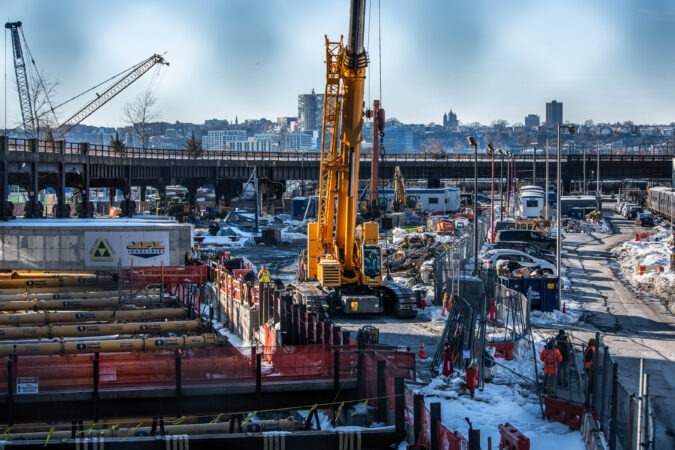
    A federal judge on Monday ordered the Trump administration to permanently abandon its efforts to suspend funding for a $16 billion rail tunnel under the Hudson River, describing those attempts as “flagrantly” illegal.

    Judge Jeannette A. Vargas of the Southern District of New York said that the administration violated federal guidelines when it stopped reimbursing the tunnel’s builders for their expenses in September. The suspension forced a shutdown of the construction project and led to a brief layoff of about 1,000 workers in New York City and New Jersey in February.

    Federal officials said that the payments were stopped while the project’s hiring practices were reviewed. But Vargas noted that President Donald Trump had indicated in interviews that there were political reasons for stopping the tunnel project, which was a favorite of Sen. Chuck Schumer, the Democratic minority leader from New York.

    “We’re cutting a $20 billion project that Schumer fought for 15 years to get, and I’m cutting the project,” the judge quoted Trump as saying in October. “The project is gonna be dead. It’s just pretty much dead right now.”

    The project, known as Gateway, would supplement two 116-year-old single-track tunnels under the Hudson between Manhattan and New Jersey. Schumer had called it the most critical infrastructure project in the United States.

    The project ran out of money about five months after the federal government stopped making payments. The states of New York and New Jersey jointly sued the Trump administration in federal court in Manhattan, seeking an emergency order to end the suspension.

    On Feb. 6, the day that work on the tunnel stopped, Vargas granted a temporary restraining order. The Trump administration opposed that order and continued to press its case but never disputed that the suspension “flagrantly violates federal law,” the judge said.

    In declaring the suspension of funding illegal, Vargas also said that the federal government could not attempt to suspend payment of the federal grants again.

    Catherine Rinaldi, executive vice president of the Gateway Development Commission, which oversees the project, said that before federal funding was frozen, the tunnel project “was on schedule and on budget, and we have made significant progress since federal funding for the project resumed in February.”

    In response to the judge’s decision, Gov. Kathy Hochul of New York and Gov. Mikie Sherrill of New Jersey, both Democrats, released a joint statement with Letitia James, the attorney general of New York, and Jennifer Davenport, the attorney general of New Jersey.

    “We are grateful that a federal court has once again agreed that the Trump administration’s decision to freeze billions of dollars in grants for the Gateway Tunnel Project is flagrantly unlawful,” their statement said. “This victory sends a clear message: The Trump administration’s attempt to halt Gateway funding will not stand.”

    The federal Department of Transportation said that it remained “committed to ensuring hard-working taxpayer dollars are being spent responsibly and do not fund unconstitutional, discriminatory contracting practices.”

    The decision Monday did not complete litigation over the suspension. The development commission is still suing the Transportation Department for monetary damages resulting from the forced shutdown of the project.

    This article originally appeared in the New York Times.

  • Why the true death toll of Venezuela’s quakes is so hard to know

    Why the true death toll of Venezuela’s quakes is so hard to know

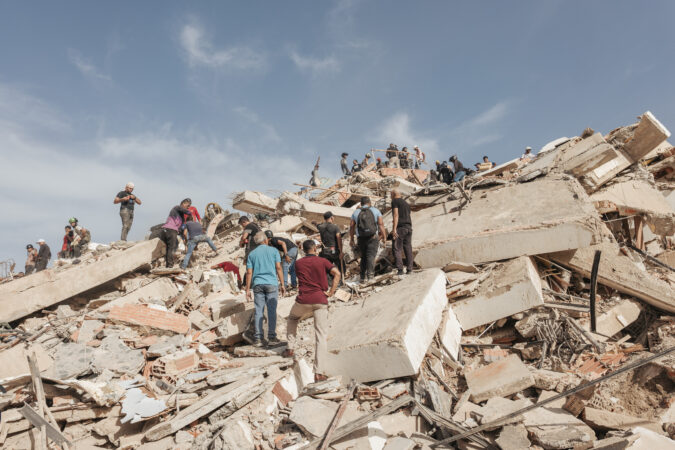
    It has been six days since devastating twin earthquakes flattened entire residential neighborhoods in Venezuela, and dozens of newly found bodies are still being hauled out of the rubble.

    On Monday, rescuers piled up coffins inside an improvised morgue at the sun-scorched port in the town of La Guaira, one of the hardest-hit areas. Small trucks arrived with more bodies, leaving them arranged in a long row by a concrete dock.

    “Every day the number of victims keeps going up,” said Jennifer Moreno Canizales, a spokesperson for the United Nations Office for the Coordination of Humanitarian Affairs in Caracas. “And we expect it to keep rising.”

    The official death toll after Venezuela’s earthquakes rose Monday to 1,719 people, an increase of nearly 300 since Sunday. It is based on the number of bodies recovered during the search operations, Moreno Canizales said.

    But sobering as it is, that figure could be a substantial undercount. Many more Venezuelans remain missing, with chances of finding them alive shrinking every day.

    The uncertainty of the number is not just a matter for the journalistic or historic record. For many Venezuelans, it signifies their anguished limbo as they search for friends with bleeding hands, trapped between uncertainty and a desperate refusal to accept the worst.

    There is no official or reliable toll for the missing. And with so much debris from tall residential buildings pressed tightly together, and a shortage of heavy machinery to remove the rubble, estimates of how many people might still be trapped inside vary widely.

    Two forensic doctors at the main morgue in the capital, Caracas, estimated a death toll of about 4,000, basing that on the number of bodies that had been arriving at a morgue in La Guaira every day.

    In anticipation of the toll increasing, the United Nations has been procuring 10,000 body bags in coordination with Venezuela’s government, said Gianluca Rampolla del Tindaro, the organization’s resident coordinator for Venezuela. “That is the applying assumption; it’s very sad,” he said.

    According to an unofficial website where Venezuelans can report the missing, more than 46,000 people were still unaccounted for. The New York Times could not independently verify the figure, which can include people who survived but became separated from relatives.

    To veteran rescue workers, the high number of reported missing may be ominous.

    “Contact is difficult, but not that difficult that you wouldn’t have gotten in contact,” said Linda Hornisberger, the president of REDOG, a nonprofit Swiss search-and-rescue association that has deployed eight dogs and 88 emergency responders to Venezuela since Friday. “We must assume most to be dead.”

    Hornisberger said that despite working eight- to 12-hour shifts for days, “we have not been able to rescue anybody.”

    Disaster response experts say that it often takes several weeks for a full picture to emerge after disasters of this magnitude.

    When Hurricane Maria hit Puerto Rico in 2017, the official government death toll was 64 people. Nearly a year later, they updated it to 2,975, nearly 50 times as high. After the Indian Ocean tsunami of 2004, when entire coastal villages were completely erased, it took the authorities more than a year to settle on the final estimate of 230,000 victims.

    Several signs out of Venezuela indicate that there might also be a delay before a final death toll is reached.

    The area of the quakes

    The day the earthquake struck was a holiday in Venezuela, when it was more likely that families would have been home, or had traveled to the seaside area of La Guaira. Many buildings there were built during an economic boom in the 1970s and 1980s, when developers erected tall towers, many 10 stories or more. A mountain range limited building space, which led developers to choose to build vertically, said Josué Araque, a Venezuelan geographer.

    Now, many of those buildings have been pancaked into a dense tangle of debris.

    “They are mountains of rubble from buildings of many, many levels, made of concrete, which basically turns them into tombs,” Araque said. It is difficult to search the lowest floors of the buildings, he said, “because there are 10 floors that fell on top of them.”

    Araque said he believed that there were probably many more missing people whom “they probably will not be able to recover.”

    There is 1.2 million tons of debris in the hardest-hit areas of La Guaira, the U.N. Development Program said Monday.

    Moreno Canizales, from the U.N., said 700 buildings had collapsed. Despite the rescue teams’ best efforts, she said, “it is hard to reach them all in time” to rescue those who might still be trapped alive.

    Del Tindaro, the U.N. humanitarian coordinator in Venezuela, also said in an interview that the high number of collapsed buildings indicated that the official toll was an undercount.

    Ilan Kelman, a professor of disasters and health at University College London, said a full accounting of the number of deaths might never be known. But a preliminary projection that the final toll could exceed 10,000 — shared by the U.S. Geological Survey based on factors including the magnitude of the earthquake, the population density, and local infrastructure — remains grimly feasible, he said.

    A difficult search

    The work of recovering bodies is painstakingly slow, and it’s not a priority for most response teams that are trying to save those who may be still alive. On Sunday, 49 rescue teams coordinated by the U.N. rescued seven survivors, Moreno Canizales said. Sometimes, she said, the teams are responding to families telling them that they can hear a relative crying from the rubble.

    When the disaster response shifts, more bodies are likely to be found, experts said.

    “The focus of the search-and-rescue teams is to look for those who might be alive” based on reports of sound and motion, said Phil Gelman, a Latin America coordinator with GOAL, an international humanitarian response agency. “When the search-and-rescue phase is ended, and heavy machinery is moved in to move rubble, the casualty count will rise.”

    Even in well-organized response efforts, many survivors end up being rescued by untrained friends, family, and neighbors, said Emily So, a professor of architectural engineering at the University of Cambridge.

    One Caracas resident, Rosmaria Herrera, 30, said she had lost at least three relatives. Family members and other civilians pulled the bodies of her father, her cousin, and her grandmother out of the rubble. But they couldn’t find her uncle.

    “It’s strange, because there is practically nothing left of the building,” she said.

    Witnesses and aid workers described a shortage of heavy machinery as one of the biggest obstacles to rescue efforts, saying volunteers often lacked the equipment needed to move concrete slabs and reach survivors trapped beneath collapsed buildings.

    In videos widely shared on social media, residents pleaded for excavators and other heavy equipment. In one, a man says neighbors pooled their own money to hire machinery after waiting days for government assistance to arrive.

    “If we keep waiting for our wonderful authorities, another week will go by with our relatives still buried there,” he says. “We had to start doing this ourselves.”

    Some victims will likely die from their injuries, in part because of Venezuela’s already overstretched health system, Kelman said.

    So said the final toll would likely be determined by the number of people reported missing, the extent of visible damage to buildings, and impeded access to the worst hit areas, which has stymied some responses.

    “Tragically, until they recover the bodies from underneath the rubble,” So said. “The count will be low.”

    This article originally appeared in the New York Times.

  • Trump’s July 4 fireworks to start much later and last much longer

    Trump’s July 4 fireworks to start much later and last much longer

    The July Fourth fireworks show on the National Mall will start later, last longer, and have far more pyrotechnics than any held previously on Independence Day, according to officials in charge of producing the event.

    Typically, the Fourth of July fireworks at the core of the nation’s capital begin a little before 9:30 p.m. and last 17 to 25 minutes. This year, the show won’t begin until after 10:30 p.m. and may not start until 11 p.m., a spokesperson for Freedom 250, the public-private partnership aligned with President Donald Trump that has taken over much of the programming for America’s semiquincentennial, said in an email.

    The show is expected to last approximately 40 minutes.

    No reason has been publicly provided for why the fireworks will start so late, but Trump has described the event as a “rally” and said he will begin speaking at 9 p.m. The duration of the fireworks is longer — about twice the average length — because of the administration’s goal of setting a record for the world’s largest fireworks display.

    Danielle Alvarez, an adviser to Freedom 250, did not specifically address the late time but called the July 4 event a “once-in-a-generation milestone.”

    “This isn’t just another Independence Day. It’s America’s 250th,” Alvarez said in a statement. “And history only comes around once.”

    The late start, as well as rules prohibiting attendees from bringing coolers, lawn chairs, bags, and more than one bottle of water, drew criticism on social media and elsewhere, particularly because organizers have recommended people arrive early Saturday, when temperatures could surpass 100 degrees.

    A Freedom250 spokesperson said there will be four free hydration stations on the Mall.

    “We’re closely monitoring conditions and will keep adjusting as needed to make sure everyone stays safe and has a great time,” the spokesperson said in a statement.

    D.C. Mayor Muriel E. Bowser (D) urged anyone attending the fireworks show on the Mall to stay hydrated and be cautious.

    “The thing to remember, especially with this heat, is that’s a long, long day,” Bowser said at a news conference Monday to discuss safety measures for Independence Day. “I’m expecting … that families with small children are going to decide that the children should watch on TV or watch at a neighborhood event.”

    The current record for a single display is about 810,000 fireworks, launched at a New Year’s event in the Philippines in 2016, according to Guinness World Records. That display lasted a little over an hour and took place in a driving rain.

    Pyrotecnico, the Pennsylvania-based company putting on this year’s show, plans to set off more than 850,000 fireworks from 10 locations including West Potomac Park, the Reflecting Pool, and barges in the Potomac River, Pyrotecnico CEO Stephen Vitale said in an interview Monday.

    Vitale said he hopes the weather will cooperate and that there will be a slight breeze to clear the smoke and keep all of the fireworks visible.

    A typical July Fourth fireworks show on the Mall in D.C. features about 20,000 fireworks, Vitale said. While this year’s show is about 10 times bigger than any previous show his company has produced, he hopes viewers will remember the show for more than just setting a record.

    “Size always helps, but it’s about the beauty and the memories that people will have for generations,” Vitale said. “Fireworks are magical to people, and we help people walk away believing that’s the best fireworks display that they have seen or ever will see.”

  • Trump begins construction of unannounced White House helipad

    Trump begins construction of unannounced White House helipad

    President Donald Trump has begun construction on a new White House helipad, his latest change to the historic grounds, according to three people who spoke on the condition of anonymity because they were not authorized to discuss the project publicly.

    Construction crews worked into the night Monday on the White House’s South Lawn, with the project blocked off by a large fence. The helipad will be located near the South Portico, the traditional landing site for Marine One, the call sign for whichever helicopter is transporting the president, the people said.

    The new helipad, which the White House has yet to announce, is intended to address a long-running problem: The new generation of Marine One helicopters runs the risk of burning the lawn. The VH-92A Patriot, manufactured by Sikorsky Aircraft, has exhaust vents that aim heat down, making grass-scorching likely.

    Lockheed Martin, which owns Sikorsky Aircraft and has spent years trying to develop a solution to the scorching problem, will donate $5 million to help cover the cost of the helipad, according to a company official familiar with the project.

    The Washington Post reported last month that a helipad was under consideration and reported earlier this month that the administration was moving forward with the project and would rely on a $5 million donation to help fund it.

    The White House and the Marine Corps, which operates the presidential helicopter program, did not immediately respond to questions about the project, its timing or total cost.

    Trump has faced criticism for his recent alterations to the White House, such as his plan to build an expansive ballroom, add gilding to the Oval Office, and create a “Presidential Walk of Fame” that mocked past Democratic presidents. Current and former officials characterized the helipad as a different type of project, driven by security and operational priorities.

    Past administrations had also considered building a permanent helipad on the White House grounds, but the idea had been dismissed for several reasons, including that it would alter an iconic image — the U.S. president boarding a helicopter on the White House’s grassy lawn — that has persisted across administrations for nearly seven decades.

    That was not a concern for Trump, who has made significant changes to the White House in his second term, including demolishing the building’s East Wing and paving over the Rose Garden. Trump also has been an avid helicopter user for much of his professional life, dating back to his time as a real estate magnate when he relied on a Trump-branded helicopter.

    Ray L’Heureux, a retired Marine Corps colonel who previously oversaw the Marine Helicopter Squadron One, said it appears the installation of the White House helipad was determined to be operationally necessary.

    “The new [Marine One] program is a costly one and not using the capability is bad optics all around for many reasons,” he said, adding that having helicopters to ferry the U.S. president to and from the White House is “paramount for seamless operations and security concerns.”

    L’Heureux added that while he believes changing the aesthetics of the White House’s South Lawn is a negative, he hopes the impact of the helipad can be mitigated — perhaps by using green concrete, he suggested — to help it better blend in.

    The VH-92A has been envisioned for more than a decade as the full-time presidential helicopter. The Marine Corps received the final VH-92A in its 23-aircraft presidential fleet nearly two years ago at a cost of about $4.95 billion, or about $215 million each, according to a 2019 report by the independent Government Accountability Office. But the helicopters have yet to ferry a president to and from the South Lawn.

    Trump has used the new VH-92A Patriot for other travel, such as his recent trip to New York City for the NBA Finals, with the new helicopter ferrying the president to a helipad in Manhattan. Trump has continued to rely on older Marine One models when landing in grassy fields, including during his trip to the Group of Seven summit in France earlier this month.

  • Supreme Court lifts spending limits on political parties and candidates

    Supreme Court lifts spending limits on political parties and candidates

    WASHINGTON — The Supreme Court lifted limits Tuesday on how much political parties can spend on advertising and other expenses in coordination with candidates.

    The 6-3 decision, divided along ideological lines, is a major victory for Republicans and could undercut one of the Democrats’ financial advantages going into the midterms.

    The question before the justices was whether current federal limits on such spending — called coordinated party expenditures — violate the First Amendment. During oral arguments, Noel J. Francisco, a lawyer for the National Republican Senatorial Committee, which brought the legal challenge, told the justices that such limits were “at war” with previous decisions by the court that have found that restricting how money can be spent in politics amounts to limiting speech.

    The Republican groups had argued that such spending is necessary to allow political parties to spread their message.

    The Trump administration had supported the Republican groups, asserting in court filings that the federal law “abridges the freedom of speech” under the court’s “recent First Amendment and campaign finance precedents.”

    The coordinated spending case is the latest in a series of efforts to chip away at campaign finance regulations that were enacted after Watergate to lessen the influence of money in elections. In 2010, the Supreme Court struck down limits on independent spending by corporations and unions in Citizens United v. Federal Election Commission. That decision cleared the way for a flood of new money to enter politics and set the stage for further challenges to spending limits.

    The coordinated spending case had been closely watched as the midterm elections approached.

    Experts said the decision would immediately cut into one of the Democratic Party’s critical financial advantages in television advertising. That’s because federal law requires that television broadcasters give political candidates low advertising rates, but extends no such requirement to super political action committees, which are often charged double, triple, and even four times as much for the same television time.

    Republicans in recent election cycles have been more reliant on super PACs and national party committees than Democrats, whose candidates have tended to outraise Republicans and who therefore often have been able to take advantage of the lower television ad rates.

    Allowing unlimited coordinated spending between candidates and parties would essentially permit both to take advantage of the lower rates.

    The case began in 2022, when JD Vance, then a candidate for the Senate in Ohio, sued to challenge the campaign coordination limits. He was joined by several Republican groups. The Biden administration defended the limits, and a panel of federal judges agreed they were legal.

    After President Donald Trump returned to office, the federal government flipped sides in the case and backed the Republicans challenging the spending caps.

    With the government no longer defending the spending limits, the justices appointed veteran Supreme Court litigator Roman Martinez to argue on their behalf. He argued the justices should dismiss the case as moot because Vance is no longer running for office.

    Democratic groups intervened in the case, urging the court to uphold the spending limits. They warned that overturning the law would create a system in which political parties would pay candidates’ expenses for everything from flower arrangements to electric bills.

    This article originally appeared in the New York Times.

  • Trump is using a $500M no-bid contract to build his White House ballroom

    Trump is using a $500M no-bid contract to build his White House ballroom

    White House officials last year secretly awarded a no-bid contract worth up to $500 million for the construction of the East Wing ballroom in an unusual arrangement that sidestepped typical contracting procedures designed to control costs, according to a copy of the agreement obtained by the Washington Post.

    The White House routed the contract through the Executive Residence, the document shows, an office that is exempt from rules that require federal agencies to solicit competitive bids and disclose details to the public. The office is typically responsible for routine repairs, entertainment expenses, and the purchase of furniture, art, and other items for the executive mansion.

    The confidential contract with Clark Construction, along with related correspondence and records obtained by the Post, reveal for the first time how the Trump administration bypassed norms last summer as it set the ballroom project in motion.

    Records also show that President Donald Trump was directly involved in negotiating some costs for the East Wing project.

    The East Wing contract is the latest example of the administration turning to no-bid deals to hasten a Trump-style makeover of the nation’s capital, which has included handpicking firms to upgrade Lafayette Square next to the White House and to renovate the Lincoln Memorial Reflecting Pool.

    Competitive bidding is generally required at most federal agencies. Experts said the Executive Residence is exempt from those rules, and the president has legal authority to hire companies of his choosing to make changes to the executive mansion and the surrounding grounds. Those experts said soliciting bids would have ensured the best price for taxpayers, especially given the size and cost of the East Wing project.

    “I would certainly expect them to compete a project of this size and complexity,” said Anthony Costa, a former General Services Administration official who oversaw complex government real estate projects during a career that spanned four presidential administrations.

    The estimated East Wing construction cost has tripled since last July, when the project was first announced, with half expected to come from taxpayers, the Post previously reported.

    Trump has repeatedly claimed that the ballroom would be paid for by private donors and once said that Clark executives offered to build it for free.

    “They said: ‘Sir, we’ll do it for nothing. This is the greatest honor,” Trump told the New York Times in January.

    Clark’s internal cost projections show the McLean, Virginia-based company, the largest general contractor in the D.C. metro area, stands to make tens of millions of dollars from the work.

    Clark charged a 3% profit for its early work on the East Wing, records show, a rate that experts said was typical for large government construction projects.

    The records reviewed by the Post do not break out Clark’s estimated profit margin for the entire project, but a March document shows the company projected it would receive a total of $65 million in combined profit, overhead, and daily rates for on-site staff and other costs.

    A White House official said in a statement that the East Wing contract was issued through the Executive Residence because that office “will be the primary support of the facility.” The Executive Residence is a division of the Executive Office of the President, which the statement said “consistently executes contracts following the law.”

    A Clark spokesperson said in a statement that the firm has been a federal contractor for more than 80 years, adding: “We follow established procurement and contracting processes for each project and execute the work consistent with schedule, budget, delivery, and contractual requirements.”

    The Trump administration tasked Clark with site preparation and other preliminary work last July, months before the East Wing was demolished, records show. That work was performed under a separate, existing Executive Residence contract the company had won in 2024, during the Biden administration.

    The Biden-era contract covered “a wide variety of maintenance, repair, alteration, and construction type tasks” that might arise at the White House over five years. It was awarded to Clark after a competitive bidding process and had a ceiling of $500 million, according to a copy of the agreement obtained by the Post.

    The White House official told the Post that Clark’s Biden-era contract was “missing various clauses necessary for construction contracts.”

    By mid-August, records show, Trump administration officials began negotiating the new, no-bid agreement for Clark to “fully demolish the East Wing and East Colonnade and construct a modernized East Wing facility.”

    In an email exchange in early September, White House officials explained that they could award the no-bid contract to Clark because the Executive Residence is not bound by competitive bidding requirements, although it often follows them.

    The email cited a federal law that authorizes the president to freely spend for the “care, maintenance, repair, alteration, refurnishing, improvement, air-conditioning, heating, and lighting” of the White House residence.

    In a court case challenging the legality of the ballroom project, the Trump administration has cited the same law as the basis for its authority to undertake the project. The litigation has not surfaced the fact that the contract was awarded without competitive bidding.

    A federal judge rejected the administration’s position, concluding in March that the president’s authority to make changes to the White House does not include demolishing the East Wing and building the ballroom. The administration has appealed the ruling.

    The Justice Department acknowledged in court filings in the case that the Executive Residence is overseeing contracts for the project, claiming it was “best-positioned” to do so in part because of its expertise in the use of White House for official ceremonies.

    Experts told the Post that the GSA or National Park Service are better equipped to handle contracting for large construction projects at the White House, and an internal White House document shows that is the norm.

    Major repairs and structural changes to the White House’s East Wing and East Colonnade are the responsibility of the GSA and Park Service, according to the document, a 2024 memorandum of understanding for the maintenance and operations of the White House obtained by the Post.

    The role of the Executive Residence “does not include maintenance or repair involving structural building elements or major utility systems for those areas, which are handled by GSA or NPS,” according to the memorandum, which expires in 2029.

    An Interior Department spokesperson, responding to questions sent to the Park Service, said in a statement that the Executive Residence is “best positioned to coordinate with all agencies that have equities regarding planning for and implementation of the project.” The GSA referred questions to the White House.

    On Sept. 22, Clark signed the White House contract for the East Wing, which included a range of work the company would provide over a five-year period and a nondisclosure agreement.

    Joshua Fisher, the director of the White House Office of Administration, indicated on the contract that the administration did not solicit bids for the East Wing work because “the disclosure of the executive agency’s needs would compromise the national security.”

    In recent months, Trump has said rebuilding the East Wing is a national security issue, describing an underground military bunker and a rooftop “drone empire … to protect Washington.”

    The Trump administration continued to issue work orders to advance the East Wing project under both the 2024 and 2025 agreements with Clark, records show. Clark’s internal construction cost estimates rose from $200 million in July 2025 to $600 million by March 2026, the Post previously reported.

    After signing the East Wing contract, Clark officials notified the White House that the company planned to award no-bid deals to at least 11 subcontractors for demolition, abatement, excavation, fencing, and other services, according to copies of correspondence obtained by the Post. Two of those subcontractors are Clark subsidiaries.

    On March 4, days after the start of the war with Iran, Trump personally negotiated the price of concrete to be provided by one of Clark’s wholly owned subsidiaries, according to a summary of the terms that notes his involvement. The summary indicates the price, initially more than $47 million, dropped $2.3 million during the negotiation.