Category: Wires

  • Comcast plans to split into two public companies by spinning off NBCUniversal and Sky

    Comcast plans to split into two public companies by spinning off NBCUniversal and Sky

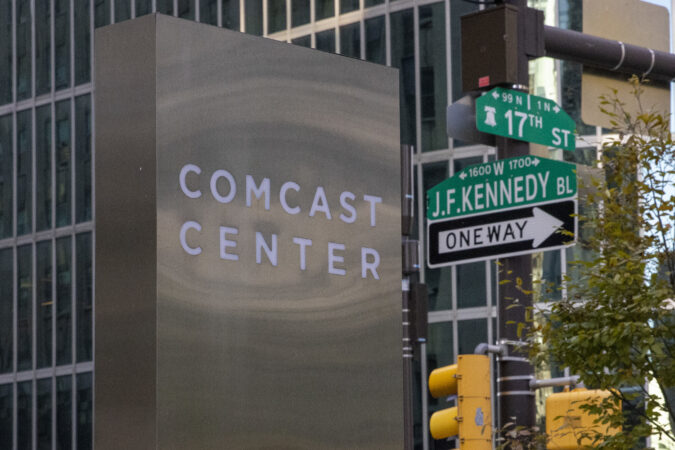
    NEW YORK — Communications giant Comcast is planning to split itself into two: one media-centered business that would include brands like NBCUniversal and Sky and a separate company focused on broadband and wireless services.

    In a Monday announcement, Comcast said the breakup will put both of these operations in a better position to pursue their own priorities and growth. The move arrives as communications companies continue to wrestle with years of cord-cutting, and shifting habits in how consumers now buy subscriptions for anything from their phone plans to streaming budgets more broadly.

    “The world is changing faster than ever,” Comcast Chairman and co-CEO Brian Roberts said on a Monday call — adding that it “has become clear” the company’s technology and media businesses each “have compelling opportunities in front of them that are distinct in nature and best pursued with dedicated focus.”
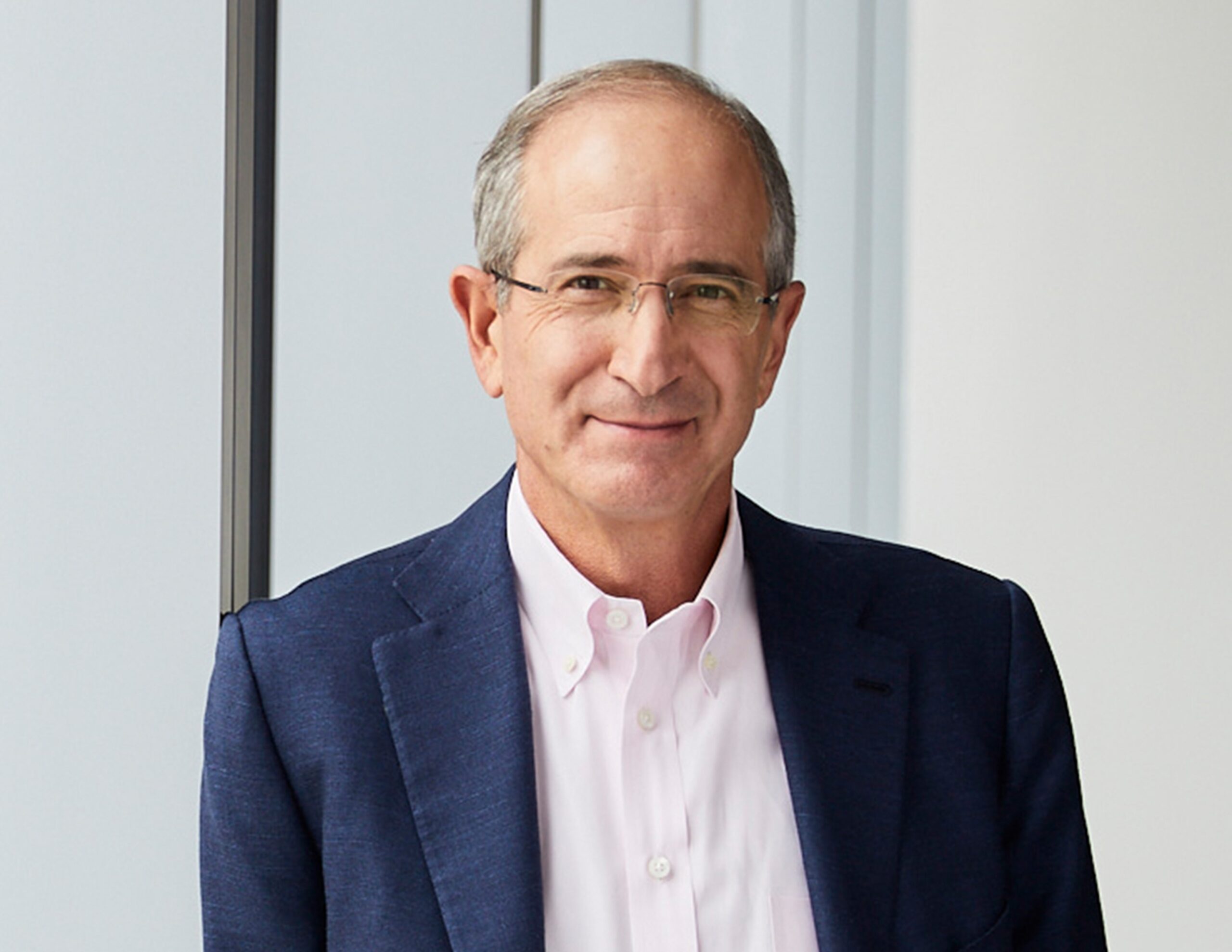
    Brian L. Roberts: “The world is changing faster than ever.”

    Upon the spinoff’s completion, both businesses would become their own publicly-traded companies. Comcast said it expects to complete the process in about a year, pending regulatory approvals and a final greenlight from its board.

    That means consumers shouldn’t feel immediate impacts. But a host of major brands currently sit under Comcast’s umbrella — from internet and wireless provider Xfinity to streaming platform Peacock, NBC News, and Universal Studios. And analysts are eyeing what those businesses could look like further down the road.

    What could be in store for NBCUniversal and Comcast

    “In the short term, bundles, pricing, and distribution will likely hold,” said Mike Proulx, a vice president and research director at market research firm Forrester. For NBCUniversal — set to head the media-centered company Comcast is spinning off — the split in itself carries little effect on its current business, he noted, and is “more to do with what it becomes longer term.”

    Proulx is bracing for future acquisitions in this space, adding that “Comcast is following a playbook we have already seen.” He pointed to Warner Bros. Discovery, which announced its own intention to split just last June — before becoming a takeover target that erupted into a messy tug-of-war between Netflix and Skydance-owned Paramount. Paramount eventually became victorious, and is now edging closer to closing its $81 billion buyout of Warner’s entire company.

    Comcast executives have appeared to so far dismiss the possibility of heading toward a similar fate. When asked on Monday’s call whether investors should view the separation as a step toward “potential strategic transactions” for either business, Roberts said: “Absolutely not.”

    Mike Cavanaghis co-CEO of Comcast and set to become chief executive of the NBC Universal spinoff in the split. (Comcast Corp./TNS)

    His co-CEO Mike Cavanagh — who is set to become the chief executive of the NBCUniversal spinoff — echoed that sentiment. Cavanagh reiterated plans to “build and invest for growth” with more freedom as a standalone business.

    Still, analysts like Proulx speculate that even if NBCUniversal doesn’t become a takeover target, “it’ll likely be the company doing the acquiring.”

    “As it stands, traditional TV is dying, and Peacock alone isn’t enough to compete at scale against the biggest streaming services,” Proulx said via email. “One way or the other, NBCU’s entertainment business will look different within the next couple of years.”

    This isn’t the first spinoff for Comcast

    Like other companies, Comcast in recent years has shifted its business emphasis away from traditional cable toward streaming and other sources of revenue, such as its movie studio, theme parks, and home wireless and internet services.

    NBCUniversal includes that theme parks division, Universal film and television studios, NBC and Telemundo networks, Peacock, and Bravo — and with the spinoff, European media business Sky will also be part of that portfolio led by Cavanagh.

    Meanwhile, Philadelphia-based Comcast will continue providing internet services to residential and business customers. Comcast’s former Chief Financial Officer Michael Angelakis will become the CEO of that company following its separation.

    Comcast has split off assets before. Monday’s move arrives just months after the company officially completed its separation of Versant Media Group — which, as first announced in November 2024, is the new home of networks like USA, Oxygen, E!, SYFY, and Golf Channel, as well as CNBC and MSNBC (now MS NOW). Movie ticketing platform Fandango and the Rotten Tomatoes movie rating site were also included.

    Once the latest split is complete, Comcast shareholders will own shares in both Comcast and NBCUniversal. Comcast expects to keep a stake of up to 19.9% ownership position in NBCUniversal for up to one year after the spinoff is complete.

    Comcast shares jumped more than 6% as of midday trading following Monday’s announcement. Shares still are down over 10% since the start of 2026.
  • Supreme Court rules mail-in ballots arriving after Election Day can be counted

    Supreme Court rules mail-in ballots arriving after Election Day can be counted

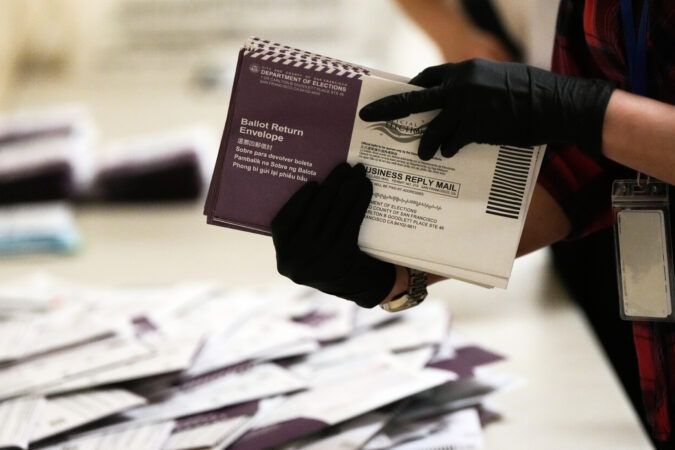
    The Supreme Court on Monday upheld a Mississippi law that allows officials to tally mail-in ballots postmarked by Election Day that arrive later, a decision that keeps voting procedures in place in several states as the midterm elections loom.

    In an ideologically mixed 5-4 ruling, the justices turned aside a challenge by Republicans and Libertarians, who argued federal law preempts a Mississippi statute that allows the counting of such ballots that arrive up to five days after polls close.

    The decision could make less likely similar legal challenges in 14 states that allow the counting of ballots that arrive days or weeks after polls close, and others that allow military members to return ballots later. Most states require mail-in ballots to be received by Election Day.

    Justice Amy Coney Barrett delivered the opinion for the majority, which included Chief Justice John G. Roberts Jr. and the court’s three liberals. Barrett said federal election law did not address when ballots should be received.

    “The election-day statutes say nothing about ballot receipt, and we cannot add to the words Congress chose,” Barrett wrote.

    The ruling came over the objections of four of the court’s conservatives. Justice Samuel A. Alito Jr. wrote the opinion for the group, which included Justices Clarence Thomas, Neil M. Gorsuch, and Brett M. Kavanaugh.

    “Not only is today’s decision inconsistent with statutory text, legal context, historical practice, and precedent; it also threatens to produce lamentable consequences,” Alito wrote. “The majority’s holding spawns a slurry of troubling election-law questions and risks further undermining Americans’ confidence in election integrity.”

    President Donald Trump and some Republican allies have falsely argued that voter fraud is rampant in mail-in balloting. Trump partly blamed his loss in the 2020 presidential election on mail-in votes and unsuccessfully called on states to stop tallying them during the contest.

    Trump called the ruling a “tremendous loss” in a post on Truth Social. He called on Congress to pass the Save America Act, which tightens voter identification laws.

    Republicans in a number of states have launched legal challenges to mail-in voting, which has grown in popularity since the onset of the coronavirus pandemic. One study found about 1 in 3 voters voted by mail in 2024, but the practice is more widespread in Democratic-leaning states.

    Conservatives in Congress also have introduced legislation to limit mail-in voting.

    In March, Trump issued an executive order telling the Postal Service to send ballots only to voters who appear on lists of citizens created by states in conjunction with the federal government. A federal judge in Massachusetts blocked that provision of the executive order last week, saying states — not the president — are responsible for setting election rules.

    Despite his criticism of mail-in voting, Trump voted by mail in a special election in Florida earlier this year.

    In the case decided by the high court, the Republican National Committee, the Mississippi Republican Party, a state voter, and a county election commissioner had sued Mississippi in 2024, claiming it was illegal to count mail-in ballots that arrive after polls close because federal law sets elections for a specific day. The Libertarian Party later filed a similar suit.

    The cases were consolidated by a federal judge, who allowed groups of veterans and retirees to intervene in the suit on behalf of Mississippi. The judge dismissed the case, but the U.S. Court of Appeals for the 5th Circuit reversed that ruling. Mississippi then appealed to the Supreme Court.

    During arguments in March, Paul D. Clement, an attorney for the conservatives, told the justices that casting and counting ballots at the same time has long been “intertwined.” He said allowing mail-in ballots to be counted after Election Day could increase fraud and undermine faith in elections, particularly if the winning candidate was not the one ahead when polls closed.

    “The losers are going to doubt the result, full stop,” Clement said. “That is bad for our system.”

    Mississippi Solicitor General Scott G. Stewart countered that existing law required only that voters fill out their ballots by Election Day. He said mail-in voting has a long history in the United States, pointing to field voting that occurred during the Civil War.

    “States have allowed it for over a century, and Congress has respected it,” Stewart said.

    This term has been an active one for the justices on voting and election issues. In January, the court allowed a Republican congressman from Illinois to challenge the state’s mail-in balloting laws, finding candidates have inherent standing to sue over election rules.

    The case brought by Rep. Mike Bost (R., Ill.) also argues that federal law prohibits ballots from being counted after Election Day. The case was sent back to the lower courts.

    The justices also severely limited a key section of the Voting Rights Act, which has cleared the way for a number of Republican-controlled states in the South to carve up districts held mostly by Black Democrats ahead of the midterm elections. Hundreds of other minority officeholders could be redistricted out of their seats in state and local boards.

    The court has yet to rule in a case challenging limits on spending coordinated between political parties and candidates that is being pushed by the Republican Party. Striking down the spending limits could give Republicans a big money boost in November.

    Fourteen states provide grace periods for all mail ballots, and another 16 provide them for military and overseas voters. Republican-led states have been steering away from ballot grace periods recently, with Kansas, North Dakota, Ohio, and Utah eliminating them last year, according to Voting Rights Lab.

    RNC Chairperson Joe Gruters said Republicans would push Congress to pass legislation requiring ballots in all states to be returned by Election Day.

    “Democrats are inviting chaos at the ballot box by allowing elections to drag on for days and weeks after voters cast their ballots,” he said in a statement.

    Voting rights advocates praised the decision, saying they feared the court could reverse long-standing policies on when ballots are due.

    “Good news rarely comes out of this Supreme Court, but today’s ruling is a win for our democracy,” NAACP President Derrick Johnson said. Virginia Kase Solomón, president of Common Cause, said the decision was correct because voters “shouldn’t lose their voice because of mail delays outside their control.”

  • Supreme Court rejects Trump’s push to toss $5 million verdict in E. Jean Carroll sexual abuse case

    Supreme Court rejects Trump’s push to toss $5 million verdict in E. Jean Carroll sexual abuse case

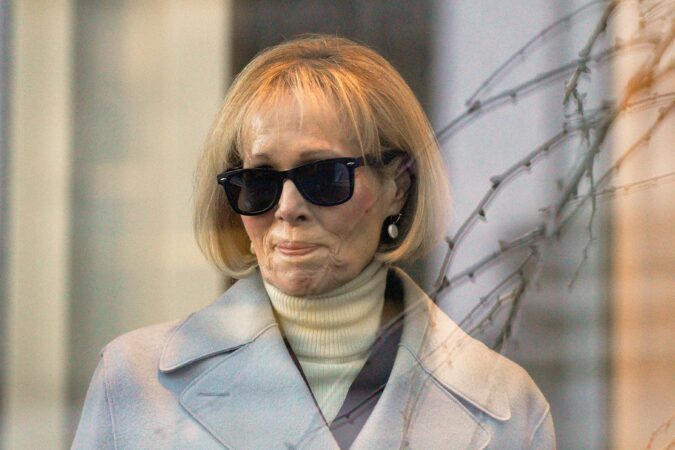
    WASHINGTON — The Supreme Court on Monday rejected a push by President Donald Trump to throw out a jury’s $5 million finding that he sexually abused the writer E. Jean Carroll at a New York City department store in the mid-1990s and later defamed her.

    The high court declined to take up the case in a brief, unexplained order, as is typical. There were no noted dissents. Trump also plans to appeal another $83.3 million verdict awarded to Carroll by a different jury after a second defamation trial, his lawyers have said.

    The decision comes as the court hands down its biggest opinions, including a ruling that expands Trump’s firing power over the federal bureaucracy with the exception of the Federal Reserve.

    Trump called the decision to pass on the Carroll case “surprising” in a social media post, and he said he would continue to fight the defamation claims. “This Case is really against the United States of America, and all it stands for,” he wrote.

    Trump’s lawyers had argued that allegations leading to the verdict were propped up by “highly inflammatory” evidentiary rulings, including those that allowed the testimony of two other women who accused Trump of sexual abuse decades ago. Trump has denied all three women’s allegations.

    Trump’s attorneys argued the judge broke federal evidence rules in the case. They framed it as a distraction from Trump’s unique duties as president, though the verdict came before his return to the White House.

    “This mistreatment of a President cannot be allowed to stand,” Attorney Justin D. Smith wrote in court documents. Trump, a Republican, has since nominated Smith to be an appeals court judge. His lawyers called the case “Liberal Lawfare” in a statement on Monday.

    Carroll’s lawyers had urged the justices to pass on the case. They argued that the women’s testimony was relevant because the allegations were similar and that Judge Lewis Kaplan’s decisions were in line with others around the country. “This question is not worthy of review,” wrote attorney Roberta Kaplan, who is not related to the judge.

    Monday’s decision affirms the jury’s verdict will stand, she said in a statement Monday. “His multiple efforts to appeal that verdict have all failed and today’s ruling ends his quest to avoid accountability for his actions,” she said.

    Carroll, a longtime advice columnist and former TV talk show host, testified at a 2023 trial that Trump turned a friendly encounter in spring 1996 into a violent attack in the dressing room at Bergdorf Goodman, a luxury retailer across the street from Trump Tower in Manhattan. The jury also found Trump liable for defaming Carroll when he denied her allegation in 2022.

    The Associated Press does not identify people who say they have been sexually assaulted unless they come forward publicly, as Carroll has done.

    Trump has successfully fended off other hefty court judgments, including a New York civil fraud penalty of over $500 million thrown out by a New York appeals court. The Supreme Court also granted him broad immunity from criminal prosecution in 2024, though it later narrowly rejected his bid to halt sentencing in his New York hush money case.

  • America 250 celebrations bring extraordinary security challenge to Washington

    America 250 celebrations bring extraordinary security challenge to Washington

    WASHINGTON — Federal law enforcement authorities in Washington, D.C., are preparing for one of their largest and most complex security operations as the nation’s capital gears up to celebrate the 250th anniversary of the nation’s freedom.

    With rising political violence, including recent incidents near the White House, and a president who enjoys being at the center of public pomp yet has repeatedly faced attempts on his life, a major security challenge awaits.

    “It comes as no surprise to you that D.C. on a normal day is a target-rich environment,” said Darren B. Cox assistant director in charge of the FBI’s Washington Field Office at a recent news conference detailing the security preparations. “We are prepared for any threats.”

    Hundreds of thousands of people are expected to visit Washington in the coming weeks for the festivities.

    The throngs will be joined by thousands of law enforcement officers and agents and 5,000 National Guard troops, along with military-style vehicles and other hardware they don’t often see on the streets of America.

    Authorities are preparing for a major security operation

    The largest crowds are expected July 4, with multiple events happening simultaneously, including the Great American State Fair, a showcase for each state and a signature attraction of the celebrations that stretches across the National Mall.

    The annual fireworks display that night is designated a National Security Special Event for the first time by the Department of Homeland Security, granting it the highest classification for federal security coordination.

    For visitors, that means strict ID requirements, long lines, and magnetometers, similar to air travel security. Snipers are also expected to be deployed at some events.

    Flights at Ronald Reagan Washington National Airport, which is across the Potomac River from Washington, will be suspended longer than in other years because of the scope of the celebrations — from noon on July 4 until the next day. Other America 250 events that include flyovers or parachute jumps could prompt more flight disruptions.

    The FBI, Secret Service, U.S. Capitol Police, U.S. Park Police, and D.C. National Guard have all been involved in security coordination for the events. At the news conference earlier this month, equipment that could be deployed to guard the city was on display, including BearCat armored SWAT vehicles, Mine-Resistant Ambush Protected, known as MRAPs, as well as communication vans and FBI diving boats.

    “Our protective model is meant to adjust to any type of direct or indirect threats that we come across,” said Tara McLeese, special agent in charge of the Secret Service Washington Field Office. “I can assure you that we have no lack of imagination as to the potential threats out there.”

    Brig. Gen. Leland Blanchard II, interim commander of the D.C. National Guard, said the planning had been underway for months and included rehearsals.

    Blanchard said the guard members would continue the roles they have served the last 10 months as part of a deployment to the city President Donald Trump says is meant to fight crime. Blanchard highlighted that guard members, including military police officers, would be helping with duties like traffic and crowd control as well as responding to emergencies around the events.

    Trump, who has already attended several events leading up to July 4, including the kickoff rally last week launching the Great American State Fair, has said on Truth Social that he would hold a rally on the National Mall.

    Speaking at a news conference Monday updating the upcoming security preparations, Cox reiterated that “at this time we are not tracking any credible threats related to the July 4th event, but we always remain vigilant.”

    Recent violence has shaped the threat picture

    The festivities come at a fraught moment, with recent political violence creating a complex threat environment for authorities. One man, Cole Tomas Allen, has been charged with attempting to assassinate the president after he sprinted past security at the White House Correspondents’ Association dinner in April. Allen has pleaded not guilty.

    In the following weeks, two men on two separate occasions opened fired at Secret Service officers, the service said. Each incident happened in the vicinity of the White House.

    More recently, the FBI announced it had thwarted a planned attack targeting Trump’s UFC cage-fighting show at the White House. Several suspects have been arrested in that case.

    Security was already enhanced on the National Mall ahead of the launch of festivities, as Trump claimed without providing evidence that vandals had damaged the Reflecting Pool that he had recently renovated.

    Matt Dallek, a political scientist at George Washington University who studies extremism, said Trump posed a unique security challenge because he is “both an accelerant and a target of political violence.”

    The nation’s bicentennial offers a historical parallel

    Observers draw some parallels to the 1976 bicentennial. The nation was coming off Watergate and Vietnam, and 10 months before the celebration there were two assassination attempts against then-President Gerald Ford.

    “There was a lot of sourness in the country in ’76, a lot of cynicism about the direction of the country,” Dallek said. But both Ford and his democratic opponent Jimmy Carter understood the threat political divisions posed and “were looking to bring down the level of vitriol.”

    Angelyn Spaulding Flowers, professor of homeland security and administration of justice at the University of the District of Columbia, said the amount of security was unparalleled for the city, citing the ongoing and open-ended National Guard presence that has flooded Washington with additional security patrols for months.

  • Venezuelans search more earthquake ruins as aftershock rattles rescuers in disaster zone

    Venezuelans search more earthquake ruins as aftershock rattles rescuers in disaster zone

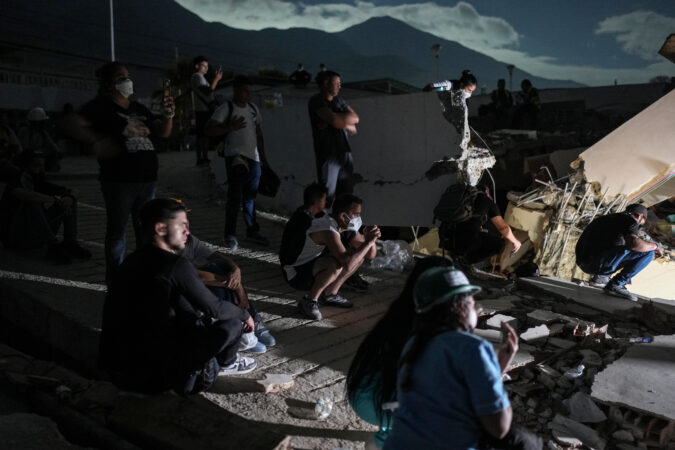
    LA GUAIRA, Venezuela — With the window for finding survivors shrinking fast, Venezuelans combed Monday through more ruins of buildings toppled by last week’s powerful back-to-back earthquakes, and a 4.6 magnitude aftershock rumbled through the disaster zone in the northern state of La Guaira.

    Relief organizations say the first 72 hours after a natural disaster is the most crucial time period for rescues, though survival can be extended if people have access to food and water. Five days after the twin quakes struck northern Venezuela, attention turned to the humanitarian crisis that was taking shape in devastated regions.

    The death toll stood at more than 1,700 people, according to the government.

    Major questions loomed about whether the cash-strapped government under acting President Delcy Rodríguez — who came to power in January after the Trump administration seized former President Nicolás Maduro — will be able to coordinate the effort needed to care for thousands of people who have been left homeless.

    Facing criticism that authorities have done too little, too slowly, the government has promoted its rescue efforts on social and state-run media. On Monday, it shared footage of Rodríguez inspecting a school-turned-shelter for displaced people in the hard-hit northern town of Catia La Mar and of survivors being lifted out of the ruins to applause.

    But such bright spots are rare at the quake’s epicenter, where families keep vigil at search sites.

    “We have to stay strong, even without food, without sleep,” said Ana Rada, watching as civil defense workers looked for her brother. “Until I see the body, I still have hope.”

    Aftershock rattles rescuers

    Following a weekend of smaller aftershocks, Monday’s temblor struck near the epicenter of last week’s quakes — 17 miles north of Caraballeda on Venezuela’s Caribbean coast — and measured 4.6 magnitude, according to the United States Geological Survey. Colombia’s geological survey put the magnitude at 5.1.

    Jorge Rodríguez, the leader of the Venezuelan National Assembly, said there were no immediate reports of additional damage, but the aftershock sent residents in the capital of Caracas screaming into the streets.

    “Here we are again, back in the street. I don’t know when we’ll have a moment of true peace,” said Concepción Hernández, 51, who evacuated her apartment building in the Chacao municipality of Caracas.

    The Caracas Metro said it would temporarily suspend service Monday to inspect infrastructure following the aftershock.

    Questions over extent of U.S. help

    The disaster has raised expectations for the Trump administration, considering its takeover of Venezuela’s oil industry earlier this year.

    In a briefing with reporters, a senior State Department official said 300 first responders sent from the U.S. are working on the ground — alongside dozens of other international rescue teams — and two dozen C-17 military transport planes arrive every day with supplies. Financial support from the U.S. now exceeds $300 million.

    The American military is also assisting with some repairs, including damage to the port in La Guaira to enable the arrival of more relief supplies by sea. Another team is helping to manage air traffic after the quakes destroyed part of the control tower at Simón Bolívar International Airport in Caracas, said the official, who spoke on condition of anonymity because he was not authorized to speak publicly.

    It seemed unlikely, however, that the Trump administration would grant temporary legal protections to Venezuelans as previous administrations have done for people from disaster-stricken countries already in the U.S. Such action was taken after earthquakes in 2010 in Haiti and 2001 in El Salvador.

    Venezuelans have been a major focus of the Trump administration’s immigration crackdown, with officials revoking temporary legal protections for hundreds of thousands of Venezuelans and stepping up deportation flights.

    Rescuers included a miner deported from the U.S.

    Among the rescuers digging through the rubble Monday in La Guaira was miner Jean Sosa, who said he was deported from the U.S. in January over a missed immigration court hearing and returned to Caracas last month, dazed by an odyssey that he said began in shackles at an Arizona immigration detention center. The journey involved traveling by bus through five countries after immigration agents left him in southern Mexico without his passport, phone, or wallet.

    Since arriving Wednesday in La Guaira to visit family and friends, Sosa has raced to pull people from the rubble in the absence of national rescue teams.

    “I’m not involved in politics, but I believe many people could have been saved if there had been equipment and support from top authorities from the very beginning,” he told the Associated Press, wearing a helmet and a black T-shirt splotched with dust in the port city where he said he had already rescued 20 people alive.

    Those rescues heartened him, he said, and gave him hope for more despite the lack of supplies. “We’re working without gloves, without equipment, borrowing supplies, improvising bandages and whatever else we can.”

    Government, U.N. offer vastly different numbers of people affected

    The full scale of the damage remained unclear. Jorge Rodríguez, who is the brother of the acting president, said that as of Monday, a total of 15,866 people had been affected, while the number of damaged or collapsed buildings had reached 855.

    A preliminary assessment by NASA estimated that the earthquake damaged or destroyed 58,870 buildings. The assessment relied on radar imagery from the European Space Agency’s Sentinel-1 satellites, which can detect changes to infrastructure.

    The United Nations has said that up to 6.8 million of Venezuela’s nearly 30 million residents may be affected, which could mean being displaced or losing access to essential services such as electricity and water.

    Because of the chaos and poor cell phone service, many Venezuelans have turned to non-governmental digital databases to report their loved ones as missing. More than 50,000 people were reported missing on one such database, though it is unclear how many have been found.

  • Heat dome could bring triple-digit temperatures to the Midwest and Eastern U.S.

    Heat dome could bring triple-digit temperatures to the Midwest and Eastern U.S.

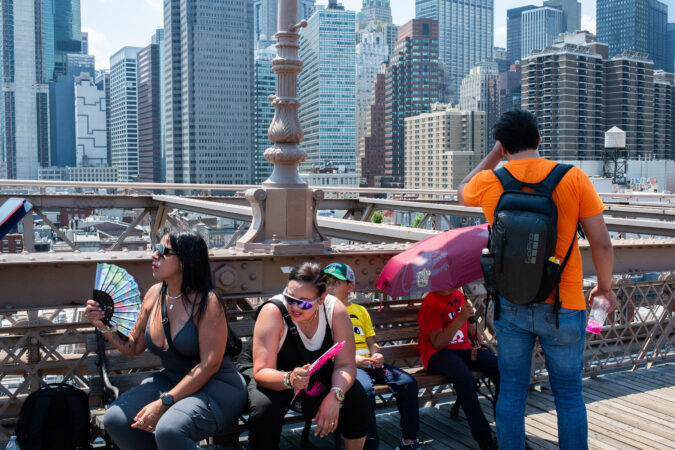
    A dangerous and prolonged heat wave is expected to build across central and eastern parts of the United States this week, with forecasters warning that temperatures could soar into the triple digits and reach record-breaking levels in some areas into the Fourth of July holiday weekend.

    From the Midwest to the East Coast, temperatures are forecast to reach the 90s to low 100s, said Marc Chenard, a meteorologist at the Weather Prediction Center.

    Parts of the East, particularly across the mid-Atlantic and the Northeast, could see temperatures climb above 100 degrees.

    “Washington, D.C., will almost certainly exceed 100 on at least one or two days,” Chenard said. “And Philadelphia and New York City are also currently forecast to go over 100.”

    He said daily records could be broken on Thursday and Friday in Washington, New York City, and Philadelphia.

    Philadelphia could tie its record high of 104 degrees for the month of June.

    The heat wave was expected to begin to take hold starting on Sunday across portions of the Plains, where temperatures were expected to rise into the 90s. The heat was expected to reach into the Great Lakes region, including Chicago, and toward the Gulf Coast on Tuesday.

    By Wednesday, much of the East Coast is expected to be experiencing the extreme heat.

    The high temperatures will be accompanied by high humidity, making conditions feel even more oppressive.

    The National Weather Service said that heat index values — a measure of what the temperature feels like to the human body, when humidity is considered with the air temperature — could reach 110 degrees, and locally up to 115.

    Little relief is expected during the nights, with temperatures remaining unusually high after sunset.

    Chenard said minimum temperatures were forecast to stay in the 70s, while some cities in the East could remain even warmer, particularly during the middle of the week, which could lead to numerous record-high low temperatures.

    “Areas like New York City, Philadelphia, and Washington, D.C., could have a low for one or two nights that doesn’t get below 80,” he said. “Chicago could be close to 80 on Tuesday or Wednesday morning, too.”

    The hot and humid conditions are expected to last through much of the Fourth of July weekend.

    Chenard said the longevity of the heat was being driven by a “pretty persistent” sprawling area of high pressure, often referred to as a heat dome.

    Toward the end of the holiday weekend, the heat dome was expected to shift west, back toward the Plains, allowing for cooler conditions in the East but also for the chance of thunderstorms.

    This article originally appeared in the New York Times.

  • Parades in New York and San Francisco wrap up LGBTQ+ Pride Month

    Parades in New York and San Francisco wrap up LGBTQ+ Pride Month

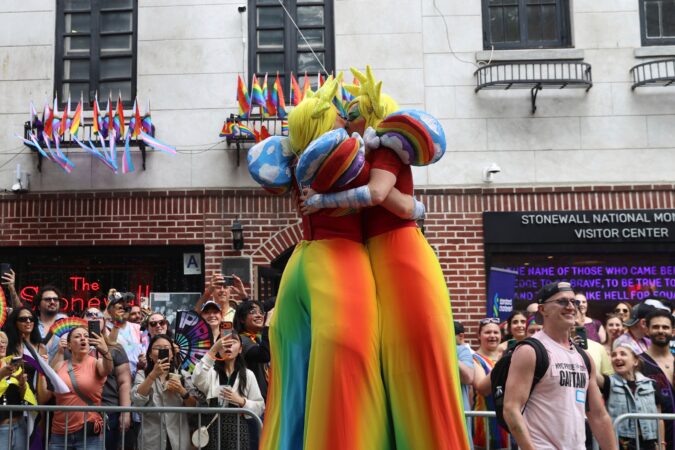
    NEW YORK — Pride Month celebrations peaked Sunday with big parades in New York, San Francisco, and some other cities on the anniversary of the 1969 Stonewall uprising, which accelerated and transformed the modern LGBTQ+ rights movement.

    Pride events often mix celebration and calls to action, reflecting the political winds, cultural climate, and news around LGBTQ+ rights.

    This month’s parades and festivals around the U.S. have unfolded as President Donald Trump works to roll back transgender rights and diversity, equity, and inclusion initiatives. Among other moves, the Republican’s administration removed a rainbow Pride flag from the Stonewall National Monument earlier this year, then ultimately relented amid a lawsuit.

    “As LGBTQIA+ events and symbols are being erased, it’s vital that our community have safe spaces to show up and march to make clear: We are here,” Chris Piedmont, a spokesperson for New York parade organizers Heritage of Pride, said in a statement Friday. “We will not be erased.”

    Carlos Duarte came in from Long Island to attend New York’s parade.

    “It’s very important for us to be here … to be all together for love, peace, and to show the world who we are,” Duarte said.

    Meanwhile, multiple Republican governors have promulgated conservative-friendly designations for June, such as “Nuclear Family Month,” sometimes openly describing them as a counter to Pride. Other prominent Republican politicians, including Vice President JD Vance, criticized Major League Baseball‘s response to some San Francisco Giants players who added Bible verses to the rainbow-themed Pride Night caps they were issued.

    Against that backdrop, the NYC Pride March and the San Francisco Pride Parade set out to further their legacies as some of the world’s largest and oldest such celebrations.

    Both trace their roots to events held in 1970 to commemorate the Stonewall rebellion on June 28, 1969, when patrons of a New York gay bar called the Stonewall Inn resisted a police raid and ended up kindling a wave of activism.

    The Stonewall Inn still is a bar; the Stonewall monument centers on a small park across the street, about half a mile from the Pride March route at its closest point.

    The newer Queer Liberation March, founded by activists who saw the Pride March as too corporate and official, also was held in Manhattan on Sunday.

    This year, some transgender rights activists pressured Pride organizers to bar some New York City hospitals’ contingents from marching because the institutions announced in recent months that they would stop providing transgender youth treatments.

    Christen Clifford, a mother of two trans children, said during a news conference before the parade that New York City needs to enforce state laws that protect gender-affirming care.

    “How can you let institutions that are actively harming queer kids march in Pride?” Clifford said. “I hope that New York City Pride will ban these hospitals from any future Pride parades until they restart care and so that families like mine know that you are listening to our concerns.”

    The cutoff came amid funding threats from the Trump administration, and at least some of the hospitals also got federal Justice Department subpoenas for transgender patients’ medical records. A judge has temporarily blocked the document demand.

    Heritage of Pride said it has been talking with the hospitals about the issue. The group also noted the parade contingents are organized by LGBTQ+ employee groups, not by the top administrators responsible for decisions about care.

    A message was sent to San Francisco Pride organizers about whether they faced similar questions.

    Other cities with Pride parades Sunday include Seattle, where a World Cup soccer match Friday took on a Pride dimension after the countries whose teams were involved — Iran and Egypt — tried unsuccessfully to get the celebrations canceled.

  • Khadijah Farrakhan, ‘first lady of Nation of Islam’ as wife of famous pastor, dies at 90

    Khadijah Farrakhan, ‘first lady of Nation of Islam’ as wife of famous pastor, dies at 90

    Khadijah Farrakhan, longtime wife of Nation of Islam leader Louis Farrakhan, died on Saturday, the Nation of Islam has announced. She was 90.

    “Mother Khadijah” worked alongside her provocative and charismatic husband for decades, helping lead their religious and sociopolitical movement, which espouses Black self-reliance. Its home base was Mosque Maryam on the south side of Chicago, where the pair lived.

    “The Honorable Minister @LouisFarrakhan with deep sadness yet with profound gratitude to Allah informs you that his beloved wife of 72 years, the first lady of the Nation of Islam, Mother Khadijah has returned to Allah (may Allah be pleased),” a statement by the Shura Executive Council said.

    Her death came only seven months after devotees had marked Khadijah’s 90th birthday. The statement said funeral services are to be announced.

    Mosque Maryam remembered Ms. Farrakhan as “a devoted follower” with “a precious soul, a sweet heart.”

    In a post on Facebook, R&B artist ZaRio Son Rise recalled her as “a true queen, a righteous woman, and one of the greatest examples of dignity, faith, loyalty, and grace our generation has ever witnessed.”

    Born Betsy Ross, Khadijah Farrakhan married her husband, then named Louis Walcott, in Boston on Sept. 12, 1953. The two had nine children. Their eldest son, Louis Farrakhan Jr., died in 2018, and son Joshua Farrakhan died in 2023.

    Khadijah Farrakhan converted to Islam in 1955, the same year that her husband joined the Chicago-based movement after being heavily influenced by Malcolm X, his friend from Boston. The pair changed their names around that time.

    Louis Farrakhan stepped into the organization’s leadership vacuum shortly after Malcolm X was assassinated in 1965. Among his most significant accomplishments was the Million Man March on Washington in 1995.

    Two years later, Khadijah Farrakhan spoke before a gathering of America’s Black women in Philadelphia dubbed the Million Woman March.

    “A nation can rise no higher than its women,” she told the crowd. “We focus on women but cannot lose sight that we must rise as a family — men, women and children.”

  • Inside the Onion’s quest to turn Infowars into a comedic revenge story

    Inside the Onion’s quest to turn Infowars into a comedic revenge story

    It’s not easy to parody Alex Jones, but that’s not stopping the Onion from trying.

    The right-wing conspiracy theorist behind Infowars, Jones has spent years promoting stranger-than-fiction ideas, arguing that chemicals in water turn frogs gay, the U.S. government deploys “weather weapons” against its own citizens, and that yogurt maker Chobani imports “migrant rapists.” (Chobani sued for defamation, and Jones apologized upon settling the lawsuit.)

    Days after a gunman killed 20 students and six educators at Sandy Hook Elementary School in Newtown, Conn., Jones falsely claimed the massacre was staged.

    The insidious lie cost him dearly: Jones was ordered to pay roughly $1.5 billion to the families of the victims in a landmark defamation case forcing him to declare bankruptcy.

    The satirical news site the Onion is trying to capitalize on the rare opportunity. For Ben Collins, CEO of the Onion’s parent company, Global Tetrahedron, the idea to buy Jones’s signature site began as a bit.

    On the social media site Bluesky, he saw a reposted newspaper ad marketing the Infowars assets.

    “I thought, ‘huh, this would be the funniest thing of all time if we pulled this off,’” he said. “It was, and is, but it’s also become the world’s biggest pain in the ass.”

    Since 2024, the Onion has been locked in a legal battle to take over Infowars and transform it into a parody site. Infowars assets are still largely tied up in bankruptcy court, preventing the Onion from absorbing the URL. Still, it’s moving forward with launching its site on Thursday, which will live at theonion.info.

    “There is a whole world of like grifters and weirdos who have not been made fun of, and have taken over like the United States,” said Collins. “We need to make fun of this more efficiently, and we need professionals to do it, and what better way to do it than to do a hostile takeover of where it all started.”

    As a reporter at NBC, Collins covered a unique beat in his prior life: “disinformation, extremism, and the internet.” He even wrote about Jones’s defamation trial.

    Now, he’s left the confines of a real news organization to run a fake one.

    Collins enlisted comedian Tim Heidecker, best known as one half of the comedy duo Tim and Eric, as the creative director of this parodic Infowars. He’s also the face of it, performing as a caricature of Jones — complete with his signature rasp, cadence, and penchant for selling questionable nutritional supplements.

    Jones did not respond to a request for comment.

    The Onion has faced roadblocks to taking over Infowars: In 2024, a judge prevented the Onion from buying Infowars at a bankruptcy auction. Instead, its assets were transferred to a court-appointed receiver. So the Onion struck a licensing deal with the receiver to pay $81,000 a month for the Infowars.com domain and brand. But in April, a Texas appeals court halted any transfer of Infowars assets, again thwarting the Onion.

    Collins said he never expected the legal proceedings to take this long: “We thought it was going to be like Storage Wars, and it wound up being more like a dream that you have when you’ve taken too much NyQuil.”

    A version of the site viewable before launch featured a video of Heidecker addressing viewers as “infowarriors,” mimicking Jones, and taking a fake call from President Donald Trump. The site’s homepage was full of fake ads imploring readers to buy oxygen capsules and another obvious troll of the embattled Jones: “Turn your gold into piss. Liquidate your assets today.”

    There’s an extra motivation for Collins: helping the Sandy Hook families.

    The Onion has said it’s worked closely with Sandy Hook families and is donating $100,000 to the families through proceeds from the site. The company called the gift “the first of many.”

    “No one else was going to get these families money, and he owes them,” Collins said about Jones. “He still owes them 1½ billion dollars, and we want to get them some cash.”

    Chris Mattei, a lawyer for the families who sued Jones in Connecticut, said the families appreciate the Onion’s commitment, though he said it’s never been about the finances for them.

    “The families we represent actually never cared about money at all,” Mattei said. The verdict let them “prove to the world in an open courtroom that Alex Jones was a fraud” and “demonstrate to the world the type of real-world harm that online misinformation can cause.”

    Collins emphasized that he wants the families to be at the heart of this effort — because they’re the ones who have suffered because of Jones’s false claims. “There’s a few sacred things that we really got to protect if we want to have like a society still,” Collins said. “And these [families] are some of them.”

  • Trump says he is nominating former Oklahoma state trooper Lance Schroyer as ICE director

    Trump says he is nominating former Oklahoma state trooper Lance Schroyer as ICE director

    NEW YORK — President Donald Trump on Saturday said he is nominating Lance Schroyer, a former Oklahoma state trooper, as the next director of Immigration and Customs Enforcement.

    Trump said on his Truth Social platform that his new pick for the immigration enforcement agency is a former U.S. Marine and a “PATRIOT with real operational experience.” He called Schroyer a ”proven leader with DECADES of experience locking up the worst of the worst.”

    Schroyer hails from the same home state as the new Department of Homeland Security Secretary Markwayne Mullin, a former congressman. Earlier this month, Mullin brought Schroyer onstage at a National Sheriffs’ Association event, calling him a “good friend of mine” and noting DHS had recently hired him.

    On Saturday, Mullin quickly praised Schroyer in a statement highlighting the former trooper’s 29-year career and his work with federal and state partners on a U.S. immigration enforcement program.

    “President Trump made a great pick, and I’m confident Lance’s strong leadership and firsthand experience will empower the men and women of ICE to deport criminal illegal aliens, secure the homeland, and protect the American people,” Mullin said.

    If confirmed, Schroyer will lead ICE at a time when the public mood has soured on Trump’s immigration crackdown, which sent surges of federal immigration officers into American cities to round up immigrants. Those raids sent tensions soaring and prompted clashes between protesters and law enforcement, leading to the fatal shootings of two U.S. citizens in Minneapolis earlier this year.

    Trump returned to the White House on a promise of mass deportations, and ICE has been a central executor of that vision. The agency is undergoing massive growth from a one-time injection of $75 billion last year, which has allowed for the hiring of 12,000 officers and increased detention capacity.

    Mullin, who started in his role in March, has promised to keep his department out of the headlines and has indicated a softer tone on immigration, although he is expected to align with the president’s priorities on mass deportations.

    Claire Trickler-McNulty, a former senior ICE official, said prior confirmed ICE directors have often been attorneys, though some state and local law enforcement officials have also been nominated. She said Schroyer’s background in Oklahoma suggests Mullin likely had influence over the pick.

    “I think probably given the attention on ICE, he wants to feel like he has somebody he can trust in there,” she said in an interview.

    John Torres, another senior ICE official, said Schroyer faces an uphill climb toward Senate confirmation but his experience being at the state and local level instead of the federal level might help.

    “He won’t have any of that baggage, where they’re going to turn around and say, oh, well, he worked for this administration or that,” Torres said.

    Schroyer’s nomination comes after former ICE director Todd Lyons resigned at the end of May. David Venturella, a former executive at a private prison operator, has been serving as the acting head of the agency. Venturella is expected to stay on as the acting director until Schroyer is Senate confirmed, according to a DHS official speaking on condition of anonymity.

    ICE has not had a Senate-confirmed director since the Obama administration, a result of polarizing politics around the agency and immigration policy.