Category: Wires

  • U.S. strikes Iran to respond to attack on ship that Trump says violated ceasefire

    U.S. strikes Iran to respond to attack on ship that Trump says violated ceasefire

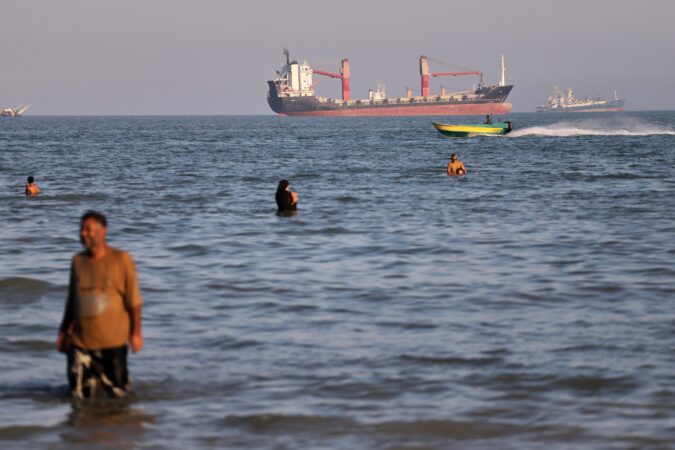
    WASHINGTON — The U.S. struck Iran on Friday in response to a drone attack a day earlier on a cargo ship in the Strait of Hormuz. It’s the most significant test yet to an interim understanding reached a week ago by the two countries to begin working to end their monthslong war and reopen the pivotal waterway.

    U.S. President Donald Trump said the drone attack violated the ceasefire. The strikes came shortly after Trump told reporters, “You’ll find out” whether the U.S. would respond.

    U.S. Central Command said the military struck missile and drone locations and coastal radar sites in Iran.

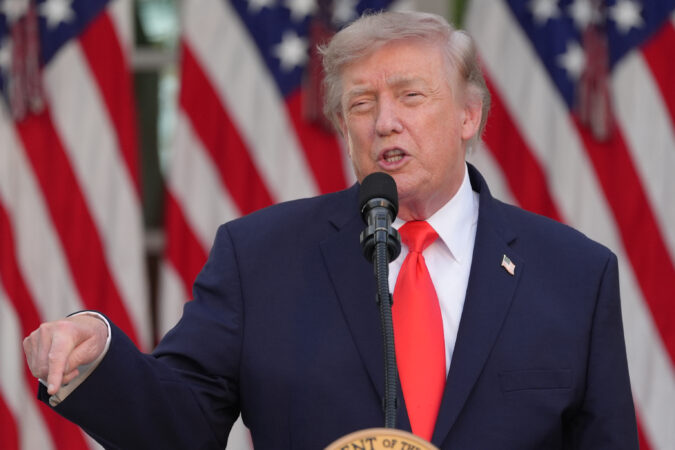
    “I don’t like the fact that they took a shot yesterday, actually four of them,” Trump said at the White House shortly before the U.S. struck back. When asked why there would be strikes when Trump has insisted talks with Tehran are going well, Trump said of Iran: “They’re a little bit different.”

    He then abruptly cut off questions and reporters were ushered out of his office.

    Ebrahim Azizi, who heads the Iranian parliament’s national security commission, responded to Trump on social media earlier Friday, saying, “the Strait of Hormuz is governed by Iran, so: Respect the rules” and to “not mistake control for escalation.”

    “This is not a violation of the ceasefire; it is ceasefire management,” Azizi wrote.

    Friday evening, Vice President JD Vance said on social media that Iran should “pick up the phone” if there are disagreements about the ceasefire agreement.

    “But violence will be met with violence,” Vance said.

    Strikes conclude an hour later

    The U.S. strikes on Iran concluded about an hour after U.S. Central Command announced the military action on social media, a U.S. official with knowledge of the situation told the Associated Press. The official spoke on condition of anonymity to discuss an ongoing military operation.

    The British military said on Thursday that a container ship was hit a by projectile off the coast of Oman, coming hours after Iran threatened vessels to stop using the route. The United Kingdom Maritime Trade Operations center said no injuries were reported.

    The development came during a fragile time for the U.S. and Iran as they work to negotiate a permanent end to the war. Iran has increasingly challenged the region and the U.S. over its control of the Strait of Hormuz, even with the current interim deal it reached with the U.S. last week.

    The attack on the cargo ship happened while a United Nations maritime agency was beginning an operation to move stranded ships out of the strait this week, using an alternative route, hugging the shores of Oman rather than sailing through the central part of the strait.

    The International Maritime Organization halted the evacuations after the attack and said on Friday they won’t resume until there are guarantees that the other ships won’t be attacked.

    About 115 ships were able to move out of the strait in recent days, leaving about 500 still in the area, said Arsenio Dominguez, the agency’s secretary-general.

    The opening of the alternative passage through the strait was expected to relieve pressure on the world economy and remove Iran’s main source of leverage in ongoing peace talks with the U.S.

    The U.S. and Iran are still negotiating terms of the deal, including issues such as getting ships through the key strait and addressing the future of Iran’s stockpile of highly enriched uranium. Under the interim deal, the two sides have 60 days to work out the details.

    Shipping analysts said the drone strike cast a shadow over what had been a growing stream of trapped vessels finally leaving the Gulf and an increasing flow of tankers carrying crude oil.

    “A week of widening commercial confidence in the Strait of Hormuz has hit its first significant test,” said marine data company Windward on X. It said that while the strait remains operationally open with 43 transits recorded after the incident, “the pace of normalization has slowed.”

    On Wednesday before Thursday’s drone strike, 78 vessels transited the strait, the highest since the war began, although below the prewar averages of 130 or more per day.

    At least two tankers reversed course while attempting to transit the strait on the U.N.-backed route near Oman after Iran insisted vessels use only the Teheran-approved routes, according to marine data and analytic firm Lloyd’s List Intelligence.

    More than two dozen ships were still transiting the strait’s southern route after the attack, Lloyd’s said Friday.
  • Buttigieg was briefly separated from his children after police say he was target of false report

    Buttigieg was briefly separated from his children after police say he was target of false report

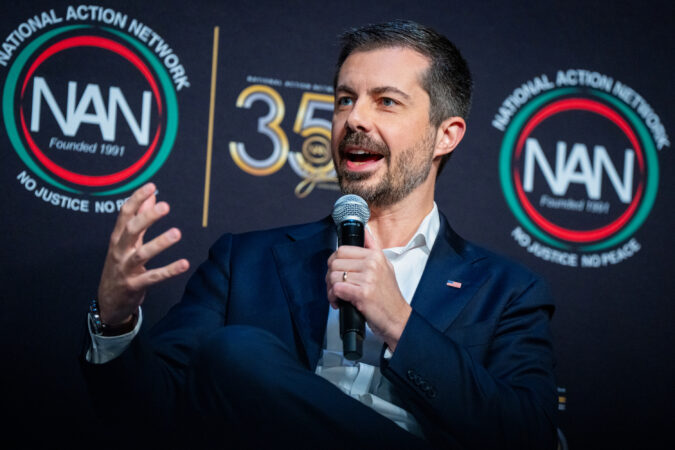
    WASHINGTON — Former Transportation Secretary Pete Buttigieg was the target of an anonymous report that police determined was false and that he says forced him to spend a night away from his 4-year-old twins.

    Buttigieg wrote in a Substack post that a Michigan State Police officer told him they found nothing to substantiate the anonymous allegation and believed it was politically motivated. He described the 24-hour ordeal as “among the darkest hours of my life.”

    In a statement, Michigan State Police said they received an “anonymous report” and that they and Child Protective Services “responded and determined the report was false.”

    According to Buttigieg, a Michigan State Police officer and a Child Protective Services worker came to his home after receiving an anonymous report alleging he posed a danger to his children. He said authorities arranged forensic interviews for his twins and instructed him not to be alone with them until the interviews were complete.

    The following day, Buttigieg said investigators told him the anonymous caller claimed he had confessed years earlier to violent crimes during a chance meeting in Alabama. Buttigieg said he had never been to the town where the meeting allegedly occurred. He said police told him the allegation would not be referred to prosecutors, while Child Protective Services found nothing to substantiate the report.

    “I cannot describe the mix of rage and sadness that I feel at the idea that someone brought our children into this,” writes Buttigieg. “They are four years old. Four. They do not know or care what a Democrat or a Republican is.”

    Buttigieg, who is widely viewed as a potential Democratic presidential candidate in 2028, has long been the target of anti-LGBTQ attacks.

    In recent years, conservative activists and some Republican officials have opposed efforts to portray same-sex parents as ordinary families in schools and public life. June — widely recognized as Pride Month — is Strong Families Month in Alabama, intended to coincide with Father’s Day. Gov. Kay Ivey’s proclamation says fathers are “the head of the household” and “homes led by a father and mother provide children with the structure and discipline necessary to succeed throughout life.”

    Buttigieg wrote that the incident occurred soon after he shared photos of his family online for Father’s Day.

    Buttigieg drew criticism from some Republicans for taking paternity leave after he and his husband, Chasten, adopted their twins while he was serving in the Biden administration. Buttigieg also wrote that he has faced death threats during his career.

    “But this is the ugliest thing that has happened to me since my career in service began,” he wrote.

    Public officials from across the political spectrum have increasingly been targeted by swatting, which is the act of making a false call to emergency services to prompt a response at a particular address. The goal is to get authorities, particularly a SWAT team, to show up. Law enforcement agencies have warned that the incidents divert resources from other pressing tasks and pose risks to both law enforcement and the victims.

    Buttigieg said the incident reflected a broader escalation in political attacks.

    “Everyone knows politics is ugly these days,” he wrote. “It’s always been ugly, but now it feels more and more like bloodsport.”

    “Even so, this is different.”

  • Venezuelans take search for the missing into their own hands as earthquake death toll climbs

    Venezuelans take search for the missing into their own hands as earthquake death toll climbs

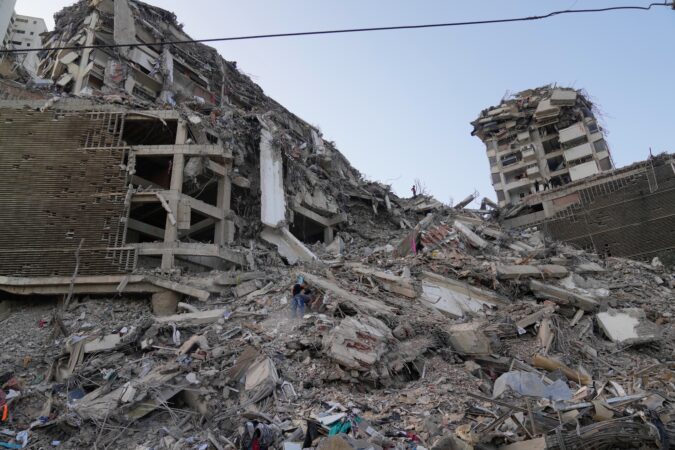
    LA GUAIRA, Venezuela — Venezuelans took the search for missing loved ones into their own hands Friday in the aftermath of back-to-back earthquakes, citing the scarcity of government rescuers, as the human toll of the disaster climbed to at least 920 dead and more than 51,000 missing.

    Citizens digging through the rubble of their homes said they have seen few state rescue teams in the areas hit hardest by the devastating 7.2 and 7.5 magnitude quakes that struck late Wednesday, despite authorities projecting an image of a robust government response.

    The lack of help compounded families’ desperation as the pressure to find buried survivors increased with each passing hour. The South American nation on Friday marked nearly two days since the disaster. Aid agencies consider the first 48 to 72 hours to be a crucial time frame to retrieve people alive, though that period can be extended if they have access to food and water.

    Meanwhile, a broad international aid effort accelerated, with dozens of rescue teams from around the globe arriving in Venezuela or due to arrive there soon.

    “Each person saved is a miracle,” said Jorge Rodríguez, the president of the country’s National Assembly. “We are not going to hide absolutely anything about the magnitude of this tragedy.”

    Anxious families wait to see if their relatives survived

    Families across northern Venezuela searched in the ruins of buildings for relatives and whatever remained of their lives.

    Nazareth Jimenez sobbed into the shoulder of a loved one as she watched neighbors try to cut through slabs of concrete with hammers and power tools in a building reduced to a mountain of debris. “My god, how are we going to get them out of there?” she murmured.

    She was in the northern state of La Guaira, just north of the capital of Caracas, where some of the worst destruction unfolded. Jimenez was wracked with anxiety as she waited to see if her siblings, nephews, nieces, and friends would emerge from the debris alive.

    “We’re making a call for help to governments of countries across the world,” she said, pleading for machines that would be capable of moving collapsed structures. “There are still people alive in there.”

    Government forces distributed food and water to survivors in La Guaira as acting President Delcy Rodríguez said her government was “working tirelessly” to mount a full response. She welcomed the arrival of rescuers and humanitarian aid from all over the world. She said La Guaira had been militarized and that more help was on the way, even as residents said it was just a fraction of the aid they needed.

    The disaster poses a huge challenge for Rodríguez, the former vice president who took office in January after the capture and removal of then-President Nicolás Maduro by the United States. Venezuela has been facing economic disarray for more than a decade, and many people reject the legitimacy of the political movement Rodríguez represents.

    The number of dead was expected to climb, and civilians reported tens of thousands of people missing on independent digital databases. The number of missing likely includes those who have been incommunicado due to the lack of cell phone signals in disaster zones. Some reports may be duplicates created when multiple loved ones are searching for the same person.

    The number of injured climbed to more than 3,300 as of midday Friday, and authorities said they had rescued 243 people.

    Quakes leave millions of people reeling

    The International Organization for Migration said that up to 6.76 million people in Venezuela could be affected by the quakes, some 2 million of them in Caracas alone. Loyce Pace, the International Red Cross’ regional director for the Americas, said “people are still terrified to reenter what were their homes.”

    Desperation started to sink in Friday as many families still had not found their missing loved ones, had minimal equipment for rescue efforts, and continued to sleep on the street.

    In Catia La Mar, a community adjacent to the country’s main airport, throngs of people began to loot basic goods like toilet paper and food from stores. Others swarmed a civilian pickup truck that was giving out loaves of bread and water. A soldier intervened to allow the vehicle to leave. People turned the parking lot of a pharmacy into a makeshift shelter by setting up tarps, hammocks, and tents.

    Omar Reyes walked through the remains of what was once his home, calling out the names of his wife and children. He received no response.

    Around 20 family members have died. Two of his four children are buried in the debris.

    “I’ve been left alone in this life,” he said quietly.

    International aid is on the way

    Venezuela authorities said Friday that 861 international volunteers from Mexico, the U.S., El Salvador, Switzerland, Colombia, and beyond were working in Venezuela. Many more from other countries were expected in the coming hours and days. The U.N. said 1,000 emergency responders in 25 search-and-rescue teams from across the globe were on their way.

    On the country’s main highway, caravans of state forces, emergency personnel, dump trucks, and heavy machinery moved in the direction of the tragedy. A civilian pickup truck carrying thin mattresses had its windows marked with “Help from Trujillo.”

    Some survivors emerge from the dust and debris

    Media reports have shared notable moments of hope, including a young man brought out on a stretcher in the San Bernardino district of Caracas to the applause of onlookers as his tearful mother said, “Leandro, I love you.”

    Venezuelan TV broadcast video of a girl covered in dust and wrapped in a sweatshirt as she emerged from rubble with the help of rescuers. Caracas metropolitan rescue team head José Luis Núñez said she was found in a 10-story building in La Guaira that collapsed and flattened “like a pancake.”

    “We want to highlight this girl’s strength, determination, and will to live,” Núñez said.

    The U.S. Geological Survey said both earthquakes were centered near Moron on the Caribbean coast, about 105 miles west of Caracas. The one-two punch of the quakes, combined with the shallow seismic movements, amplified the destruction, said Marcos Ferreira, a geophysicist and researcher at the Geological Survey of Brazil.

  • Israel and Lebanon sign framework agreement with U.S. in ‘first step’ toward peace, Rubio says

    Israel and Lebanon sign framework agreement with U.S. in ‘first step’ toward peace, Rubio says

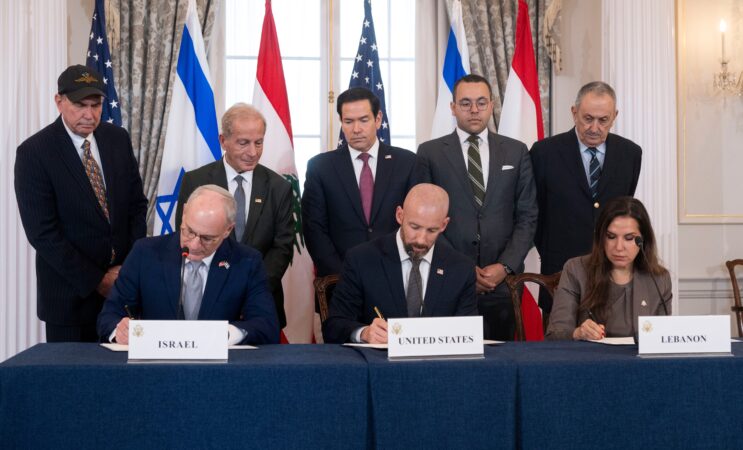
    WASHINGTON — Secretary of State Marco Rubio joined ambassadors from Israel and Lebanon to the U.S. Friday to announce a framework agreement that was described as a first step toward peace following months of conflict between Israel and the Lebanese militant group Hezbollah.

    The officials did not share details on the agreement, which does not include Hezbollah and prompted one of the group’s officials in Lebanon to warn of civil war. Israeli Prime Minister Benjamin Netanyahu later said that the framework would allow Lebanese forces to eventually take control of territory from Israel’s military.

    The agreement was signed in front of Rubio in Washington by Yechiel Leiter, the Israeli ambassador to the United States, and Nada Hamadeh, the Lebanese ambassador to the United States.

    Hamadeh said the framework “is a first step on the road to restoring Lebanese sovereignty and territorial integrity, securing a permanent and final cessation of hostilities, enabling our people to go back to their land and allowing all Lebanese to live in peace, security, and prosperity.”

    Leiter said the final destination of the framework is peace between the two countries.

    “Real peace, where both countries will live in security, where Israel’s and Lebanon’s sovereignty will be respected, honored, and protected,” Leiter said. “In this performance-based trilateral framework agreement, Iran is out. Hezbollah is out. And the road to peace between Israel and Lebanon is in.”

    The latest conflict began when Hezbollah fired rockets into Israel days after Israel and the U.S. launched their war on Iran on Feb. 28. Israel invaded Lebanon and has expanded its control.

    The talks between Israel and Lebanon were separate from the interim deal that was signed last week by the leaders of the U.S. and Iran to end the fighting in the Islamic Republic. That agreement set a 60-day period for negotiations on key issues, including the future of Tehran’s nuclear program amid concerns that Iran wants to use it for military purposes, a claim the country denies.

    The Lebanese government had been wary of having Iran negotiate on its behalf, and Lebanon launched its own direct negotiations with Israel after the outbreak of the latest Israel-Hezbollah war. Hezbollah was not part of the talks, which resulted in several ceasefire agreements that were never implemented on the ground. Iran, meanwhile, insisted that its own agreement with the U.S. explicitly include a ceasefire in Lebanon. The first halt in fighting in Lebanon since March coincided with the beginning of U.S.-Iran talks in Switzerland.

    Hassan Fadlallah, a member of Hezbollah’s parliamentary bloc, reiterated the group’s stance on Beirut-based pan-Arab Al-Mayadeen TV that it rejects Lebanon’s direct negotiations with Israel and that it will not give up its weapons.

    Fadlallah said Lebanese authorities “will not be able to enforce the agreement signed in Washington unless they go, with American support, to civil war.” He also called the agreement in Washington “an attempt to derail the Islamabad process,” referring to the U.S.-Iran negotiations.

    In a statement, Lebanese President Joseph Aoun thanked the Trump administration and the Lebanese negotiating team and said Friday’s agreement will be a “first step” toward allowing the Lebanese displaced by the war “to return to their fully liberated land and to their homes” and to live “with their heads held high, under the sovereignty of a Lebanese state that has no partner in its sovereignty over its land and people.”

    He did not share details of the pact.

    More than 4,000 people in Lebanon have been killed in Israeli strikes since March. At least 37 Israeli soldiers have been killed in Lebanon or northern Israel during the fighting.

    A lull earlier this week in firing between Israeli and Hezbollah forces began to show cracks after Israel said it targeted Hezbollah militants in several strikes across southern Lebanon.

    Lebanese officials have said that securing a withdrawal of Israeli forces from southern Lebanon is a top priority for them in the negotiations, while Israeli officials have prioritized the disarmament of the Iran-backed Hezbollah.

    Aoun had told a visiting British parliamentary delegation on Wednesday that a proposal for “pilot zones” where the Lebanese army is supposed to take exclusive control of the territory as Israeli troops will withdraw was “under discussion pending approval from the Israeli side.” He reiterated that the Israel-Lebanon negotiations in Washington are separate from what emerged from the Iran-U.S. talks in Switzerland.

    An Israeli official who spoke on the condition of anonymity because they were not authorized to speak to the media said Israel’s direct negotiations with Lebanon include discussions about the redeployment of Israeli forces after southern Lebanon is cleared of Hezbollah infrastructure and Hezbollah has disarmed.

    Hezbollah is unlikely to agree to any plan that would include its disarmament throughout the country. The group has maintained that it is only required by previous agreements and U.N. resolutions to disarm in the area south of the Litani River, near Lebanon’s border with Israel.

    Netanyahu, the Israeli leader, said in a video on Friday that the framework is a “great achievement” for Israel.

    “The most important thing, first and foremost, is that Israel will remain in the security zone in southern Lebanon,” he said. “This is a major achievement, and we will maintain it as long as Hezbollah has not been disarmed and as long as it continues to pose a threat to the State of Israel.”

    Netanyahu also said that Israel is allowing the Lebanese army to begin preparing to take control of territory.

    “We are establishing two pilot zones, both based on the recommendation of the IDF,” he said. “The first is entirely outside the security zone and south of the Litani River. The second is north of the Litani.”

  • Ukrainian drones drive Russia to declare emergency in occupied Crimea

    Ukrainian drones drive Russia to declare emergency in occupied Crimea

    Authorities in occupied Crimea, the Black Sea peninsula that Russia annexed illegally from Ukraine in 2014, declared a state of emergency Friday following weeks of punishing Ukrainian drone strikes.

    The Russian Defense Ministry said its air defenses intercepted 660 Ukrainian drones overnight across 13 regions, including Crimea. The peninsula, which Ukrainian President Volodymyr Zelensky has vowed to reclaim, has become the centerpiece of Kyiv’s campaign to demonstrate the reach of its increasingly advancing medium-range drone capabilities.

    The Ukrainian military last month announced a “logistics lockdown” of Crimea, with plans to “systematically destroy Russian logistics, warehouses, equipment, command posts, and supply routes at operational depth.” In the weeks since, Ukrainian forces have targeted roads, bridges, and energy infrastructure to sever the peninsula from Russia and from Russian-occupied territories in eastern Ukraine.

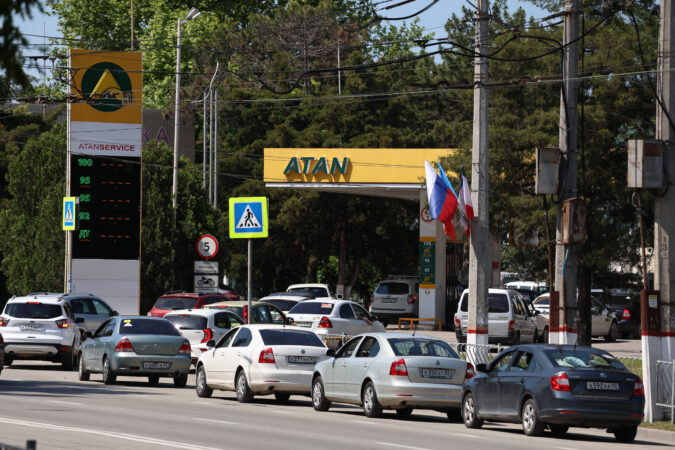
    The assault has disrupted fuel, electricity, and water supplies, and the Russian tourists who have traveled to Crimea each summer despite the war have rushed to leave.

    Locals have not seen such disturbance to everyday life since the annexation. Gas stations have run dry, leaving motorists who have already waited hours for fuel vouchers to queue at the few stations still operating. Summer camps have been canceled and children evacuated, including from Artek — the iconic Soviet-era camp the Kremlin has used as a symbol of state prestige since 2014.

    Rolling power outages have halted water supplies that depend on electric pumps.

    Kyiv intends the strikes on Crimea, which is far removed from the main front line in Donbas, to erode the sense of distance from the war that President Vladimir Putin has worked to maintain since the full-scale invasion began — and to chip away at the public perception that Russian forces can contain the fighting within Ukraine.

    Ukraine has also stepped up pressure on Russia’s closest ally, Belarus, which allowed Moscow to use its territory as a launchpad for attacks on Ukraine early in the invasion. Kyiv maintained diplomatic relations with Minsk. But after Russian drone strikes on northwestern Ukraine this year, Zelensky ordered strikes on relay stations in Belarus.

    Zelensky warned President Alexander Lukashenko this week that he would strike them again if Lukashenko didn’t shut them down. Zelensky said Wednesday they had been switched off.

    It was the latest test for Lukashenko’s long-running gamble. He has survived for years by balancing his regime’s economic and security dependence on Russia against being fully absorbed by Moscow.

    Ukrainian officials say Russia might be trying to draw Belarus deeper into the war. On Friday evening, Lukashenko flew to Putin’s Valdai residence, where the Kremlin said they discussed “the implementation of joint economic projects and issues related to regional security.”

    Before the trip, Lukashenko said he had recently received Zelensky’s representatives in Minsk.

    “If he thinks he can talk to us like this and then drag us into a war, he must understand that the quality of the war will instantly change,” the Belarusian president said. “This will be a completely different war. So let’s come to an agreement.”

    The combination of the chaos in Crimea, record drone strikes on Moscow, and fuel rationing spreading across Russia appears to be taking a toll. According to data from the Public Opinion Foundation, a polling organization with Kremlin ties, trust in Putin has fallen to 69% — its lowest point since the war began.

    The emergency declaration stoked anxiety among residents that already had been building for weeks. Authorities appeared eager to manage the alarm, describing the measure as “an emergency situation” rather than a “state of emergency.” It should allow authorities to bypass normal bureaucratic procedures to mobilize resources, use emergency budgets, and coordinate evacuations where necessary.

    “This does not envision restrictions on movement and the introduction of a curfew,” Sergei Aksyonov, the Russian-installed governor, wrote on social media.

    Zelensky said Thursday he had authorized a 40-day strike campaign against Russian targets to “influence the aggressor state in order to press for an end to the war.” Strikes were reported to have hit oil facilities deep inside Russia.

    Kyiv has been trying to reengage President Donald Trump after a monthslong effective freeze in peace talks. Trump this week had rare praise for Zelensky over the offensive, saying the Ukrainian leader is “doing pretty well.”

    Trump, meeting with NATO Secretary General Mark Rutte, was asked whether he believed Zelensky was winning the war.

    “He’s winning now. Well, he’s doing pretty well. … At least he’s holding on,” Trump said. He also said “a lot of people are dying on both sides.”

    “I have to say he’s courageous,” Trump said. “He’s got great equipment, he’s got great people, he’s got fighters.”

    Whether Ukraine’s campaign can pressure Putin into yielding is another question. The Russian leader has shown a consistent willingness to absorb enormous losses in a grinding war of attrition. Analysts warn that the Ukrainian offensive could fuel anti-Ukrainian sentiment at home.

  • Trump threatens 100% tax on European imports if countries impose tax on digital services

    Trump threatens 100% tax on European imports if countries impose tax on digital services

    WASHINGTON — President Donald Trump on Friday threatened a 100% tax on imports from any country that imposes a tax on digital services from United States companies.

    In a post on social media, Trump took aim at European countries that he said are discussing “imminent” implementation of taxes on American companies. The U.S. president has repeatedly sought to use tariffs as way to deter such taxes, but many countries are looking for revenues as their economies increasingly operate in digital realms that are dominated by American companies.

    “Please let this statement serve to represent that any Country that imposes such a Tax will immediately be met with a 100% TARIFF on any and all Goods sent to the United States of America,” Trump wrote.

    He added that the new tax would supersede any previously negotiated trade deals. Trump said the penalty would apply to any country that moves forward with such a tax, but he singled out European nations in his post.

    The move could lead to a larger showdown that could increase prices and hinder economic growth, possibly setting off a larger trade war if the 27-member European Union was compelled to retaliate.

    “Unilateral measures targeting such legitimate policies are unjustified. If pursued, the EU will respond swiftly and decisively to defend its rights and regulatory autonomy,” said Olof Gill, a spokesperson for the European Commission on Friday.

    He defended taxation on technology companies as “non-discriminatory” and applied equally to “all large companies, regardless of their origin.”

    Trump has repeatedly pushed against foreign efforts to tax or regulate American tech giants. Last year, he threatened new tariffs on any country that moved to do so. A post from last August said that digital taxes and regulation “are all designed to harm, or discriminate against, American Technology.”

    The threat comes ahead of Trump’s July 4 deadline for the European Union and the United States to start implementing a tariff deal that caps tariffs on most EU exports at 15%.

    The European Union in May finalized a trade deal with the United States that caps most tariffs on EU exports at 15%. The deal followed months of debate within the EU after European Commission chief Ursula von der Leyen tentatively struck the deal last year while visiting Trump’s golf course in Scotland.

    Digital taxes were not part of the agreement and have remained a sticking point between the U.S. and the European bloc.

    The U.S. government has previously conducted tariff investigations into digital services taxes under Section 301 of the Trade Act of 1974. But it was unclear how Trump would carry out his threat and whether he would apply the tariffs broadly or initially target certain nations.

    Britain, which is no longer part of the EU, has since 2020 levied a 2% digital services tax on revenues earned by search engines, social media sites, and online marketplaces that “derive value” from U.K. users.

    The British government said in a policy document at the time that corporate tax rules for digital businesses had “led to a misalignment between the place where profits are taxed and the place where value is created.”

    The U.K. tax includes thresholds, so mainly large international companies will pay it. The tax was designed to “ensure the large multinational businesses in-scope make a fair contribution to supporting vital public services,” the document said.

  • U.S. strikes Iran in response to attack on ship Trump says violated ceasefire

    U.S. strikes Iran in response to attack on ship Trump says violated ceasefire

    WASHINGTON — The U.S. struck Iran on Friday to respond to a drone attack a day earlier on a cargo ship in the Strait of Hormuz, a provocation that U.S. President Donald Trump said violated the ceasefire.

    U.S. Central Command said the military struck missile and drone locations and coastal radar sites in Iran.

    The strikes came shortly after Trump told reporters, “You’ll find out” whether the U.S. would response to the drone attack.

    “I don’t like the fact that they took a shot yesterday, actually four of them,” Trump said at the White House shortly before the U.S. struck back. When asked why there would be strikes when Trump has insisted talks with Tehran are going well, Trump said of Iran: “They’re a little bit different.”

    He then abruptly cut off questions and reporters were ushered out of his office.

    The British military said on Thursday that a container ship was hit by a projectile off the coast of Oman, coming hours after Iran threatened vessels to stop using the route. The United Kingdom Maritime Trade Operations center said no injuries were reported.

    The development came during a fragile time for the U.S. and Iran as they work to negotiate a permanent end to the war. Iran has increasingly challenged the region and the U.S. over its control of the Strait of Hormuz, even with the current interim deal it reached with the U.S. last week.

    The attack on the cargo ship happened while a United Nations maritime agency was beginning an operation to move stranded ships out of the strait this week, using an alternative route, hugging the shores of Oman rather than sailing through the central part of the strait.

    The International Maritime Organization halted the evacuations after the attack and said on Friday they won’t resume until there are guarantees that the other ships won’t be attacked.

    About 115 ships were able to move out of the strait in recent days, leaving about 500 still in the area, said Arsenio Dominguez, the agency’s secretary-general.

    The opening of the alternative passage through the strait was expected to relieve pressure on the world economy and remove Iran’s main source of leverage in ongoing peace talks with the U.S.

    The U.S. and Iran are still negotiating terms of the deal, including issues such as getting ships through the key strait and addressing the future of Iran’s stockpile of highly enriched uranium. Under the interim deal, the two sides have 60 days to work out the details.

    Shipping analysts said the drone strike cast a shadow over what had been a growing stream of trapped vessels finally leaving the Gulf and an increasing flow of tankers carrying crude oil.

    “A week of widening commercial confidence in the Strait of Hormuz has hit its first significant test,” said marine data company Windward on X. It said that while the strait remains operationally open with 43 transits recorded after the incident, “the pace of normalization has slowed.”

    On Wednesday before Thursday’s drone strike, 78 vessels transited the strait, the highest number since the war began, although below the prewar averages of 130 or more per day.

    At least two tankers reversed course while attempting to transit the strait on the U.N.-backed route near Oman after Iran insisted vessels use only the Teheran-approved routes, according to marine data and analytic firm Lloyd’s List Intelligence.

    More than two dozen ships were still transiting the strait’s southern route after the attack, Lloyd’s said Friday.
  • Vance dismisses Watergate scandal, says ‘deep state’ went after Nixon

    Vance dismisses Watergate scandal, says ‘deep state’ went after Nixon

    Vice President JD Vance on Thursday expressed sympathy for former President Richard M. Nixon, suggesting that Nixon was wrongly forced out as president in 1974 and comparing his political travails decades ago to those facing President Donald Trump now.

    “As I joked … backstage, if Watergate happened tomorrow, it would be like a 12-hour news story,” Vance said in remarks at the Richard Nixon Presidential Library and Museum in California. “The idea that it would have taken down a presidency is crazy.”

    A spokesperson for Vance did not immediately respond to questions about whether the vice president was being facetious and how he was defining Watergate.

    The Watergate scandal, which began in 1972 with a botched attempt to bug the Democratic National Committee’s offices at the Watergate Hotel in Washington, mushroomed into a wide-ranging investigation by reporters and lawmakers that revealed Nixon was aware of the break-in and directed secret White House payments in an effort to cover it up. He resigned as president two years after the scandal broke, with Nixon blaming the Washington Post for its central role in exposing his involvement in the break-in and other abuses.

    The scandal also prompted a series of reforms intended to rein in presidential authority, including more independence for government watchdogs such as inspectors general, which Trump has steadily rolled back.

    Historians said Thursday that the full scope of the Watergate scandal, ranging from the president’s efforts to apply pressure to his “enemies list” to asking for a census of Jewish Americans serving in government because he believed they were unpatriotic, revealed Nixon’s abuses of presidential power.

    Vance “should know better as a well-educated lawyer,” said Timothy Naftali, a previous director of the Nixon library, referring to Vance’s law degree from Yale University.

    Naftali, a Columbia University presidential historian, referenced tapes that contained thousands of hours of Nixon’s Oval Office conversations.

    “You can hear him suborn perjury on the tapes. He’s telling an intermediary, what to tell someone who’s about to be interviewed by the FBI, what to say and what not to say,” said Naftali, who oversaw the Nixon library’s Watergate exhibit. “You can hear Nixon being told that money had been found to hire teamsters to go and break the bones of demonstrators. That’s all illegal.”

    “It’s not as if it’s a matter of partisan interpretation. The evidence is overwhelming,” Naftali said, offering additional examples of Nixon’s efforts to subvert legal protections. “If he does know all of this, he’s telegraphing the kind of president he hopes to be.”

    Some conservatives in recent years have reframed the scandals that ended Nixon’s presidency, arguing that government bureaucrats and the media unfairly sought to push him out.

    In his remarks, Vance also repeatedly compared Nixon to Trump, pointing out the similarities in their political coalitions as well as their experiences with overseas wars.

    “One of the other lessons of Richard Nixon is it’s not just that he got out of Vietnam, but that he got out of Vietnam from a position of strength. OK?” Vance said, making a comparison with Trump’s war against Iran. “It’s one thing to tuck tail and run. It’s another thing to clearly define an objective, to accomplish that objective, and then to ensure that you don’t allow mission creep to transform a victory into a defeat.”

    Vance also alluded to lawmakers’ efforts to investigate both presidents. Trump was twice impeached in his first term, after first pressuring the Ukrainian government to investigate his rival Joe Biden, and then after lawmakers said he helped incite a riot at the U.S. Capitol on Jan. 6, 2021, as he attempted to have the results of the election overturned.

    Nixon resigned as president while an impeachment process into his Watergate-related conduct was underway. Lawmakers ultimately decided to end the process given Nixon’s resignation. His former vice president, Gerald Ford, later issued a controversial pardon.

    “If you look at the story of how the ‘deep state’ took down Richard Nixon, it’s not all that different from what the same groups of people, the same institutions tried to do to Donald Trump and the first Trump administration,” Vance said to applause. “There is a parallel.”

    The 41-year-old Vance also mused on his own similarities to Nixon, who served as a California senator in his late 30s and became vice president when he was 40.

    “Young senator, vice president, writes some best-selling books, is hated by the media,” Vance said. “It kind of sounds like JD Vance. … I’ve always liked Richard Nixon.”

  • Jerry Moriarty, painter whose brushstrokes elevated comics, is dead at 88

    Jerry Moriarty, painter whose brushstrokes elevated comics, is dead at 88

    In the late 1970s, comic artist Art Spiegelman and his wife, the editor Françoise Mouly, began dreaming up a new magazine, one they hoped would elevate cartooning into the realm of high art.

    A colleague suggested that they talk to Jerry Moriarty, a painter who lived in Manhattan, a little uptown from their SoHo loft.

    Arriving at Mr. Moriarty’s studio, Spiegelman was stunned by what he encountered: comics that were painted.

    “It was totally mind-blowing,” Spiegelman, whose graphic memoir Maus won a Pulitzer Prize in 1992, said in an interview. “It was exactly what we were groping for, which was a place that wasn’t underground comics anymore, nor was it art underground.”

    Raw, their magazine, debuted in 1980 with Jack Survives, the first in a series of painted comics by Mr. Moriarty about a stoic Everyman who muddles through the indignities of life in a hat and tie, refusing to capitulate.

    “It’s as if Edward Hopper had taken up songwriting,” comic artist Chris Ware wrote in the Believer magazine in 2009. “For lack of a better word, it’s poetry — I believe the first that comics has ever seen — and poetry as fresh and affecting now as when first drawn.”

    Mr. Moriarty died on March 25 at his home in Binghamton, N.Y., where his nephew Kevin Moriarty had been caring for him in his final years. He was 88. His death, which was not widely reported, was confirmed by his brother Fred Moriarty, who survives him.

    A self-described loner, Mr. Moriarty refused to sell his paintings, and supported himself by teaching at the School of Visual Arts in Manhattan. In many ways, he had the sort of average life embodied by his Everyman character, Jack, who resembled Mr. Moriarty’s father in appearance (and only in appearance).

    “Jack is an average man wanting to be average,” he wrote in The Complete Jack Survives, a 2009 collection of his Jack comics. “I am an average man who doesn’t want to be average, and art allows me to express that frustration.”

    Jack’s spare dialogue — often spoken aloud to himself — reminded Mr. Moriarty’s admirers of Samuel Beckett’s minimalist, existentialist plays.

    In another panel, Jack is in his office. He opens his lunch and discovers that his wife has packed him a cat-shaped cookie.

    “I can’t eat a cat cookie,” he says out loud, seemingly to nobody, before taking a bite. “You have to start with the head or it looks at you to the end.”

    To describe his craft, Mr. Moriarty created a portmanteau: paintoonist, a fusion of painter and cartoonist. The word hasn’t yet appeared in the Oxford English Dictionary, but it certainly defined him.

    “There’s a kind of stillness in his work,” Hillary Chute, a professor at Northeastern University and a scholar of graphic narratives, said in an interview. “So you enter it as a story, and it has psychological depth, but also the kinds of composition that you would see in paintings.”

    Jerome Brien Moriarty was born on Jan. 15, 1938, in Binghamton, the third of four children. His father, John Moriarty, was an expert in Morse code who telegraphed play-by-play accounts of sporting events for the Associated Press. His mother, Esther (Turner) Moriarty, sold magazine subscriptions and worked as a sales clerk at a department store.

    Growing up, Jerry loved cowboy movies and radio shows. He also read and collected comics.

    “At age 8, I crossed the ‘fantasy barrier’ and became an ‘art kid’ because I could copy Superman or Bugs Bunny better than my classmates,” he wrote in the catalog for “Uninked: Paintings, Sculpture and Graphic Works by Five Cartoonists,” a 2007 exhibition at the Phoenix Art Museum.

    His father bought him a drafting table and encouraged him to pursue a career in art, setting up a studio in the cellar.

    “It was dank, low and funky, but I loved the cellar because no one came down there unless they had to,” Mr. Moriarty said in the Believer. “Sometimes my dad came down after supper and watched me paint, still in his shirt and tie from work.”

    After graduating from high school, he moved to Brooklyn to study at the Pratt Institute, earning a bachelor of fine arts degree in 1960.

    He remained in New York City, working as a freelance illustrator and contributing drawings to Esquire, GQ, Seventeen, the New Yorker, and pinup magazines. In 1963, he began teaching at the School of Visual Arts, painting in his studio at night.

    Jack came along in the late 1970s after a student gave Moriarty a copy of the war comic Frontline Combat, which he had read as a teenager.

    “I took it home and I fell on the floor,” he said in a 2009 interview with the Daily Cross Hatch, an online comics journal. “Not only was it better than I remembered, it was inspiring. I thought, ‘How many other things since that period have I not seen?’ So I started going to comic cons, and that’s where the collector in me started to awaken.”

    To Moriarty, Jack wasn’t just a character on canvas; he was a way to reconnect with his father, who had died when he was 14.

    Jack Survives is a whimsical, one-sided conversation with my father where I am 99% of it,” he told the Believer. “Dad is in Jack as a quiet presence who survives Jack’s frustrations far better than I do.”

    Mr. Moriarty moved on from Jack in the late 1980s and continued to paint, though in an entirely new way — in panel form, much like a comic book artist. In one painting, Moriarty peers down from the ceiling at his father, who is reading the newspaper. In another, he is an old man painting in his cellar.

    “There was no conscious attempt to be poetic or subtle,” he said. “I am not a fan of bigness or theatricality. I prefer string quartets to symphonies, jazz trios to big bands.”

    He also savored solitude.

    “Loner and loneliness are not the same,” he said. “Everybody has been lonely, but not everybody is a loner. Jack is alone, but he is not a loner. I am a loner, and I fully understand why that makes me strange to society. I am not lonely. Being alone is total freedom for me.”

    He usually started painting after midnight, finished by 3 a.m., ate dinner, watched movies, went to bed at 7 a.m., woke up at 2 p.m., had breakfast and watched Jeopardy! He had no use for the hoity-toity art world.

    “It was about as pure an experience of being an artist as I’ve ever witnessed,” Spiegelman said. “It was, in some ways, without ambition and without a thought about posterity.”

    This article originally appeared in the New York Times.

  • John Bolton, former Trump adviser, pleads guilty in classified information case

    John Bolton, former Trump adviser, pleads guilty in classified information case

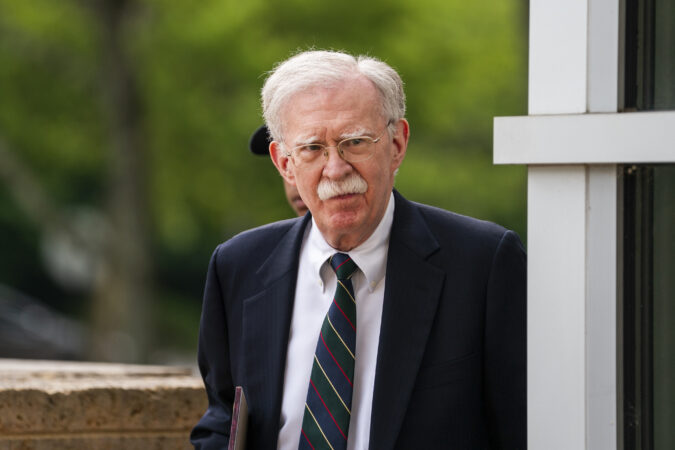
    WASHINGTON — John Bolton, a former top adviser to President Donald Trump who became one of his most outspoken critics, pleaded guilty Friday morning to mishandling classified information in a case that could send him to prison.

    Bolton appeared in U.S. District Court in Greenbelt, Md., and admitted to a single charge of illegal retention of classified information over notes he compiled for a book that excoriated Trump.

    “I’m sorry for it,” he told Judge Theodore Chuang, who said he would sentence Bolton in October.

    Under the plea deal, Bolton could be incarcerated for up to five years, according to the terms of the plea deal described in court. The deal also includes a fine of $2.25 million. If Bolton had gone to trial and lost, he could have faced decades in prison.

    When he was first indicted, Bolton sought to frame the case against him as part of a push by the president to misuse the Justice Department to punish his perceived political enemies. The case against Bolton, however, began in the first Trump administration and gained momentum during the Biden administration, as investigators gathered additional evidence.

    The original 18-count indictment against Bolton accused him of using personal email and a messaging app to share more than 1,000 pages of notes, which included national defense information, with two family members who did not have security clearances.

    The accusations against Bolton center on his notes for The Room Where It Happened, his 2020 memoir about his time as Trump’s national security adviser. Those relatives were Bolton’s wife and daughter, according to people with knowledge of the matter, who spoke on the condition of anonymity to describe details of the case that were not in court filings.

    According to the indictment, Bolton’s notes revealed that he understood that he was documenting intelligence secrets. One entry began, “The intel briefer said,” while another read, “While in the Situation Room, I learned.”

    The first Trump administration fought unsuccessfully to prevent the publication of Bolton’s book, but the criminal investigation ultimately focused not on what was in the published manuscript, but instead on what Bolton wrote in private notes and correspondence.

    Unlike some other investigations involving classified information, including charges filed in 2023 against Trump, Bolton was not accused of retaining the secret documents themselves, but rather of keeping diaries and sending emails that mentioned details of his daily work in national security.

    Bolton’s emails, however, were later hacked by someone associated with the government of Iran, the indictment said.

    “A representative for Bolton notified the U.S. government of the hack in or about July 2021,” according to the filing, “but did not tell the U.S. government that the account contained national defense information, including classified information, that Bolton had placed in the account from his time as national security adviser.”

    One section of the indictment described Bolton apparently being taunted by his hacker. A message on July 25, 2021, warned, “I do not think you would be interested in the FBI being aware of the leaked content of John’s email (some of which have been attached).”

    The email went on to declare: “This could be the biggest scandal since Hillary’s emails were leaked, but this time on the GOP side! Contact me before it’s too late.”

    A representative for Bolton forwarded the email to the FBI.

    This article originally appeared in the New York Times.