Category: Wires

  • Gavin Newsom sat by his mother during her assisted suicide, and came to terms with anger and grief

    Gavin Newsom sat by his mother during her assisted suicide, and came to terms with anger and grief

    It was the spring of 2002 when Gavin Newsom’s mother Tessa, dying of cancer, stunned him with a voicemail. If he wanted to see her again, she told him, it would need to be before the following Thursday, when she planned to end her life.

    Newsom, then a 34-year-old San Francisco supervisor, did not try to dissuade her, he recounted in an interview with the Washington Post. The fast-rising politician was wracked with guilt from being distant and busy as she dealt with the unbearable pain of the breast cancer spreading through her body.

    Newsom’s account of his mother’s death at the age of 55 by assisted suicide, and his feelings of grief and remorse toward a woman with whom he had a loving but complex relationship, is one of the most revealing and emotional passages in the California governor’s book, Young Man in a Hurry: A Memoir of Discovery, which will be published Feb. 24.

    Newsom, a potential Democratic candidate for president, has seldom spoken of the chapter in his family’s life, which is likely to generate controversy if he enters the race. Assisted suicide, at the time, was illegal in California and remains illegal in all but 12 states and the District of Columbia, according to the advocacy group Death with Dignity.

    When that Thursday in 2002 arrived, Newsom and his sister Hilary did as his mother asked and sat by her bedside in Pacific Heights, Newsom said in an interview this week. He wanted her suffering to end, he said, but it would be years before he could forgive her for asking him to be there.

    “I hated her for it — to be there for the last breath — for years,” he said in an interview in San Diego this week. “I want to say it was a beautiful experience. It was horrible.”

    Forty-five minutes before the “courageous doctor” arrived to administer the medicine that would end her life, Newsom and his sister gave their mother her regular dose of painkillers to keep her comfortable, he said.

    When the doctor arrived, Tessa Newsom lucidly answered his questions and told him she was sure of her decision, Gavin Newsom said. Her labored breathing and the gravity of the moment became too much for Newsom’s sister. She left the room. Newsom stayed.

    “Then I sat there with her for another 20 minutes after she was dead,” he said, his voice breaking briefly and his eyes welling as he told the story. “My head on her stomach, just crying, waiting for another breath.”

    Despite his painful memories, Newsom said that he believes assisted suicide should be legal nationally, that people should have “the freedom to make that decision themselves.” California legalized the practice in 2015 with the “End of Life Option Act.”

    Six years after voters approved the practice, and two years after he became governor in 2019, Newsom signed a second bill that reduced the waiting period for a drug-induced suicide from 15 days to 48 hours and eliminated a requirement for a formal written declaration of intent at the end of the process. Last year, Newsom signed a third bill that eliminated a sunset clause in the 2015 bill, making assisted suicide legal in California indefinitely.

    When the bill came up in the California legislature, Newsom heard objections not only from churches and religious groups, but also from “the old Irish Catholic side of my family.”

    They were “up in arms about that bill, and obviously, by extension, by what my mom did,” he recalled. But Newsom said his own experience with his mother strengthened his support for the bill.

    “I watched the physical deterioration, the mental deterioration, just the cries of pain,” he said this week. “She would have just suffered.”

    Last year in an interview on the Diary of a CEO podcast, Newsom said he had no regrets about his role — “If you want to come after me, come after me, she needed to do it,” he said.

    Tessa Newsom worked three jobs to support her two children after her husband left, Newsom wrote in the book. His father, William Newsom, an attorney who became a judge, was the best friend of the billionaire Gordon Getty — and had for a time helped manage the Getty Trust. Their father’s friendship with the Gettys, which began in high school, created what Newsom described as a “surreal” double life for the two Newsom children, who joined their father and the Gettys during summer vacations that involved private jets, resorts and limousines.

    Tessa Newsom, a quiet but dominant force who shaped his work ethic, he said, did not approve of Newsom’s political ambitions.

    She urged him to stay immersed in his business, the PlumpJack Group, a wine and hospitality company that he founded in 1992.

    “Get out before it’s too late,” Tessa Newsom told her son after he had become a San Francisco supervisor in 1997 and was considering a 2003 run for mayor of San Francisco, which had been his father’s dream.

    She never fully explained the admonition. But William Newsom had also harbored political ambitions for a time — running for San Francisco county supervisor and state senator. And the younger Newsom learned years later, through an oral history his father recorded, that his electoral failures and subsequent debt had led to the unraveling of his parents’ marriage, Newsom said in an interview with the Post and in his book.

    Newsom — a father of four who is married to Jen Siebel, a documentary filmmaker — said his mother’s warning still haunts him.

    “I think about it any time when things are really going down — that she was right,” he said with a laugh. And while many people don’t believe that Newsom is still wrestling with whether he will run for president, his mother’s warnings are part of the quandary, he said.

    “I don’t think people are taking me as literally as they should. We’ll see what happens,” he said of a potential presidential run. “Every day, I just try to get better, and be a better husband, be a better father. I’ve got to take care of them, and I can’t do what my father did.”
  • The latest Epstein files are rife with uncensored photos and victims’ names, despite redaction efforts

    The latest Epstein files are rife with uncensored photos and victims’ names, despite redaction efforts

    NEW YORK — Nude photos. The names and faces of sexual abuse victims. Bank account and Social Security numbers in full view.

    All of these things appeared in the mountain of documents released Friday by the U.S. Justice Department as part of its effort to comply with a law requiring it to open its investigative files on Jeffrey Epstein.

    That law was intended to preserve important privacy protections for Epstein’s victims. Their names were supposed to have been blacked out in documents. Their faces and bodies were supposed to be obscured in photos.

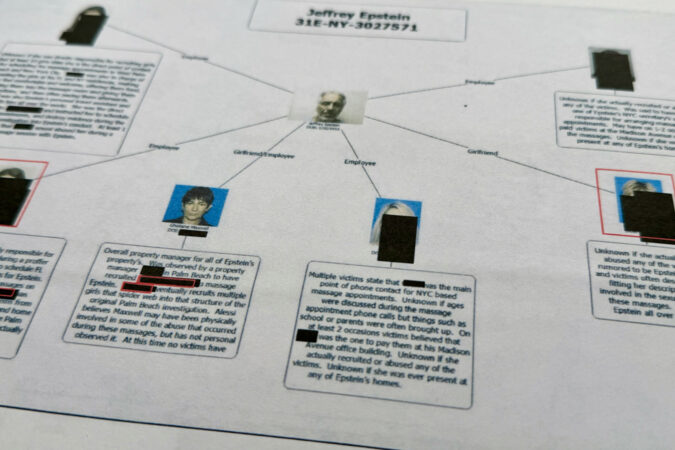
    Mistakes, though, have been rampant. A review by The Associated Press and other news organizations has found countless examples of sloppy, inconsistent or nonexistent redactions that have revealed sensitive private information.

    A photo of one girl who was underage when she was hired to give sexualized massages to Epstein in Florida appeared in a chart of his alleged victims. Police reports with the names of several of his victims, including some who have never stepped forward to identify themselves publicly, were released with no redactions at all.

    Despite the Justice Department’s efforts to fix the oversights, a selfie taken by a nude female in a bathroom and another by a topless female remained on the site, their ages unknown but their faces in full view, as of Wednesday evening.

    Some accusers and their lawyers called this week for the Justice Department to take down the site and appoint an independent monitor to prevent further errors.

    A judge scheduled a hearing for Wednesday in New York on the matter, then canceled it after one of the lawyers for victims cited progress in resolving the issues. But that lawyer, Brittany Henderson, said they were still weighing “all potential avenues of recourse” to address the “permanent and irreparable” harm caused to some women.

    “The failure here is not merely technical,” she said in a statement Wednesday. “It is a failure to safeguard human beings who were promised protection by our government. Until every document is properly redacted, that failure is ongoing.”

    Annie Farmer, who said she was 16 when she was sexually assaulted by Epstein and his confidant, Ghislaine Maxwell, said that while her name has previously been public, other details she’d rather be kept private, including her date of birth and phone number, were wrongly revealed in the documents.

    “At this point, I’m feeling really most of all angry about the way that this unfolded,” she told NBC News. “The fact that it’s been done in such a beyond careless way, where people have been endangered because of it, is really horrifying.”

    Trump administration defends its Epstein files redaction efforts

    The Justice Department has blamed technical or human errors on the problems and said it has taken down many of the problematic materials and is working to republish properly redacted versions.

    The task of reviewing and blacking out millions of pages of records took place in a compressed time frame. President Donald Trump signed the law requiring the disclosure of the documents on Nov. 19. That law gave the Justice Department just 30 days to release the files. It missed that deadline, in part because it said it needed more time to comply with privacy protections.

    Hundreds of lawyers were pulled from their regular duties, including overseeing criminal cases, to try and complete the document review — to the point where at least one judge in New York complained that it was holding up other matters.

    The database, which is posted on the Justice Department website, represents the largest release of files to date in the yearslong investigations into Epstein, who killed himself in a New York jail cell in 2019 while awaiting trial on federal sex trafficking charges.

    Epstein files rife with missed or incomplete redactions

    Associated Press reporters analyzing the documents have so far found multiple examples of names and other personal information of potential victims revealed.

    They have also found many cases of overzealous redactions.

    In one news clipping included in the file, the Justice Department apparently blacked out the name “Joseph” from a photo caption describing a Nativity scene at a California church. “A Nativity scene depicting Jesus, Mary and (REDACTED),” it said.

    In an email released in the files, a dog’s name appeared to have been redacted: “I spent an hour walking (REDACTED) and then another hour bathing her blow drying her and brushing her. I hope she smells better!!” the email said.

    The Justice Department has said staff tasked with preparing the files for release were instructed to limit redactions only to information related to victims and their families, though in many documents the names of many other people were blacked out, including lawyers and public figures.

    Images remain uncensored

    The Justice Department has said it intended to black out any portion of a photo showing nudity, and any photos of women that could potentially show a victim.

    In some photos reviewed by The AP, those redactions did obscure women’s faces, but left plenty of their bare skin exposed in a way that would likely embarrass the women anyway. Photos showed identifiable women trying on outfits in clothing store dressing rooms or lounging in bathing suits.

    One set of more than 100 images of a young woman were nearly all blacked out, save for the very last image, which revealed her entire face.

  • A self-collected test allowed me to finally get cervical cancer screening

    A self-collected test allowed me to finally get cervical cancer screening

    If you have a cervix you may have felt a surge of relief — joy, even — when the American Cancer Society (ACS) announced its updated guidelines for cervical cancer screening in December. I know I did.

    The organization now allows for a self-collection test for human papillomavirus, or HPV, a sexually transmitted infection that causes almost all cases of cervical cancer, as an alternative to a more traditional clinician-collected test. For some women — including me — this endorsement means that we can finally access this lifesaving screening.

    Over the last decade, there have been notable changes in how and when women are screened for cervical cancer. The go-to method used to be the Pap smear, which involves inserting a speculum so that a provider can collect cells from the cervix, the lowest end of the uterus that connects to the vagina. Eventually, in 2020, the ACS began recommending that all women at average risk of cervical cancer start screening at age 25 with a clinician-collected HPV test.

    For the patient, the experience was the same for a Pap or HPV test: Your provider would still have you lie on your back with your feet in stirrups, insert a speculum, and use a swab to collect a sample of cells from your cervix. As someone with vaginismus — a condition that causes my vaginal muscles to involuntarily contract — it would have been impossible for me to get these done.

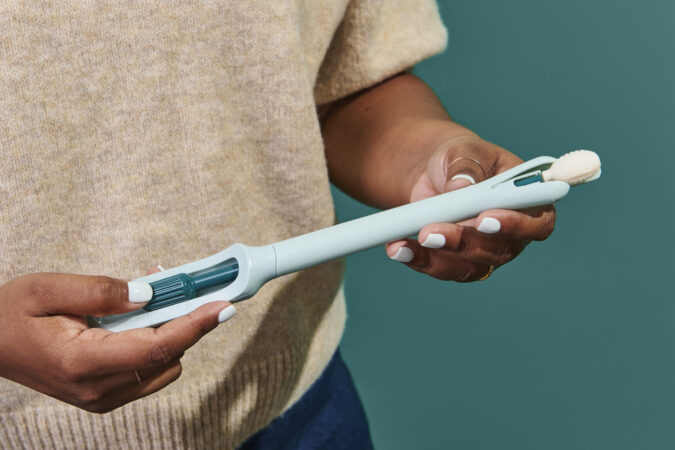
    Then, in 2024, the Food and Drug Administration (FDA) approved self-collected HPV tests for use in healthcare facilities — meaning that women at average risk could opt to do a less-invasive self-swab of their vagina with their provider present. And in 2025, the FDA approved the first at-home tool, a wand made by Teal Health, to screen for cervical cancer, allowing women to collect the sample and mail it to a lab without even needing to visit their doctor. (If you have a personal history of cervical cancer or are at high risk, you may not be a candidate for self-collected testing).

    At 26, I was officially overdue for my first screen, so my doctor recommended I try the in-office self-collection test.

    What the self-collected HPV test was like

    Before self-collection became an option, I would lie on the exam table at my gynecologist’s office, put my legs in stirrups, and involuntarily clench at any touch. I was excited to try the self-collection test, but also skeptical that it would work for me.

    The self-swabs in the clinic looked manageable and controllable, something I could hold and insert myself. The handle was as narrow as a mascara wand, and the brush at the end was made of flexible plastic bristles that felt soft. Most importantly, it did not need to directly touch my cervix. It was less invasive, without the internal pressure that usually made my body tense. I inserted the swab about two inches into my vagina, rotated it for 30 seconds and then handed it to my doctor, who swirled it inside a vial with liquid solution.

    “That’s it?” I asked my doctor once she screwed the cap on the vial. “Is it for sure as accurate as a regular Pap smear?” Yes and yes, she assured me. I was in awe. There was a time earlier in life when my vaginismus made it feel impossible to even insert a tampon — I couldn’t believe I had completed an HPV test.

    My doctor mailed my sample to a lab, and I received the results in less than two weeks. My Pap smear came back normal with no signs of HPV. Even better, this meant I did not need to be tested again for another five years.

    Amy Banulis, an OB/GYN and associate medical director for Women’s and Maternal/Child Health at Kaiser Permanente in Virginia, said most women will be able to comfortably complete the self-collected test, even if they have vaginismus.

    “For those that still do have discomfort, there are relaxation techniques that can be utilized,” Banulis said. These could include progressive muscle relaxation, deep breathing, and imagery or visualization. If these tactics don’t make a difference, your OB/GYN can refer you to a pelvic floor physical therapist that may be able to help you with this, Banulis said.

    How effective it is compared to a traditional Pap

    The experience was so seamless that I actually worried something was wrong. What if I didn’t insert the swab high enough? I wondered when I got home. Would the results of the test still be reliable if, God forbid, I did not rotate it long enough? It almost felt too comfortable, so how effective was it really? Many women share the same concerns, but they don’t need to worry, said Jasmin Tiro, a professor of public health sciences at the University of Chicago.

    Many women who use the test say it’s easy to do and doesn’t hurt, Tiro said, adding: “It’s very hard to do it wrong.”

    It’s important to clarify that the self-collected HPV test is not the exact same test as a Pap smear or a clinician-collected HPV test, she said. The self-test collects vaginal cells, while the latter two tests use a sample of cervical cells. While a cervical sample can be tested for both HPV and abnormal cells (cancerous or precancerous), vaginal cells can only reveal if you have HPV, Tiro said.

    This means that a self-collected test may be only one part of the screening process, Tiro said. About 10% of women will screen positive for HPV, she said. If you get a positive HPV self-collected result, the next step may be a type of test or procedure that involves a pelvic exam to look for precancerous or cancerous cervical cells. That follow-up test is essential for the screening process to be effective, Tiro said.

    However, HPV does not always turn into cervical cancer; especially in people in their teens or early 20s, the virus often clears on its own without causing any health issues — which is why screening isn’t even recommended before 25. So depending on your age, your doctor may just want to retest you a few years later to see if you still have an HPV infection and determine then if that warrants further testing.

    My takeaway: We need to make screening more accessible

    I’m grateful for testing that is less invasive and painful, but I still find myself wondering why it took so long for us to arrive here. How many women would have been protected if our pain and concerns were not routinely diminished? In the past, I had doctors tell me, “Since you’ve had sex before, the speculum shouldn’t feel intimidating.” I became so used to people, including well-meaning physicians, questioning the validity of my pain. And I felt demoralized that I couldn’t even complete a test that was essential for detecting and preventing a disease that kills about 4,000 women in the U.S. each year.

    I also wonder what, if anything, can be done to ensure the new self-swab testing is accessible to all women who want or need it? When I asked Tiro, she told me that gathering more patient testimonials, developing patient-centered guidance for people who may still not want to complete the test, and devoting more research to the testing can all help. These are all things that physicians and researchers are actively working on.

    Personally, the self-collected HPV test has given me a sudden sense of agency, something I have rarely felt in a gynecologist’s office. My hope is that this alternative option can give other women greater control over their healthcare, too. Cervical cancer screening is an essential preventive care service. If you have trouble undergoing a Pap smear, ask for the alternative self-collection test. There is no shame, only power, in advocating for your health.

  • LaMonte McLemore, singer and founding member of The 5th Dimension, has died at 90

    LaMonte McLemore, singer and founding member of The 5th Dimension, has died at 90

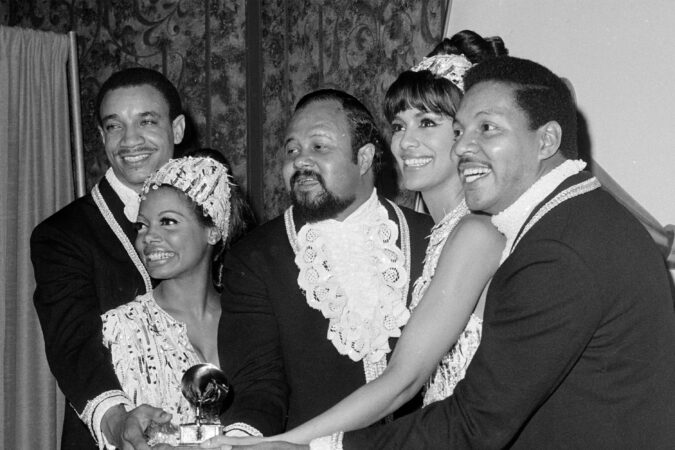
    Singer LaMonte McLemore, a founding member of vocal group The 5th Dimension, whose smooth pop and soul sounds with a touch of psychedelia brought them big hits in the 1960s and ’70s, has died. He was 90.

    Mr. McLemore died Tuesday at his home in Las Vegas surrounded by family, his representative Jeremy Westby said in a statement. He died of natural causes after having a stroke.

    The 5th Dimension had broad crossover success and won six Grammy Awards including record of the year twice, for 1967’s “Up, Up and Away” and 1969’s “Aquarius/Let the Sunshine In.” Both were also top 10 pop hits, with the latter, a mashup of songs from the musical Hair, spending six weeks at No. 1.

    Mr. McLemore had a parallel career as a sports and celebrity photographer whose pictures appeared in magazines including Jet.

    Born in St. Louis, Mr. McLemore served in the Navy, where he worked as an aerial photographer. He played baseball in the Los Angeles Dodgers’ farm system and settled in Southern California, where he began making use of his warm bass voice and skill with a camera.

    He sang in a jazz ensemble, the Hi-Fi’s, with future 5th Dimension bandmate Marilyn McCoo. The group opened for Ray Charles in 1963 but broke up the following year.

    Mr. McLemore, McCoo, and two of his childhood friends from St. Louis, Billy Davis Jr., and Ronald Towson, later formed a singing group called the Versatiles. They also recruited Florence LaRue, a schoolteacher Mr. McLemore met through his photography, to join them. In 1965 they signed to singer Johnny Rivers’ new label, Soul City Records, and changed their name to The 5th Dimension to better represent the cultural moment.

    Their breakthrough hit came in 1967 with the Mamas & the Papas’ song “Go Where You Wanna Go.”

    That same year they released the Jimmy Webb-penned “Up, Up and Away,” which would go to No. 7 on the Billboard Hot 100 and win four Grammys: record of the year, best contemporary single, best performance by a vocal group and best contemporary group performance.

    In 1968 they had hits with a pair of Laura Nyro songs, “Stoned Soul Picnic” and “Sweet Blindness.”

    The peak of their commercial success came in 1969 with “Aquarius/Let the Sunshine In,” which along with its long run at No. 1 won Grammys for record of the year and best contemporary vocal performance by a group.

    That same year they played the Harlem Cultural Festival, which has become known as the “Black Woodstock.” The festival, and The 5th Dimension’s part in it, were chronicled in the 2021 documentary from Ahmir “Questlove” Thompson, Summer of Soul.

    The 5th Dimension also had a rare level of success with white audiences for a group whose members were all Black. The phenomenon came with criticism.

    “We were constantly being attacked because we weren’t, quote, unquote, ‘Black enough,’” McCoo said in Summer of Soul. “Sometimes we were called the Black group with the white sound, and we didn’t like that. We happened to be artists who are Black, and our voices sound the way they sound.”

    The group had hits into the 1970s including “One Less Bell to Answer,” “I Didn’t Get to Sleep at All,” and “If I Could Reach You.”

    They became regulars on TV variety shows and performed at the White House and on an international cultural tour organized by the State Department.

    The original lineup lasted until 1975, when McCoo and Davis left to make their own music.

    “All of us who knew and loved him will definitely miss his energy and wonderful sense of humor,” McCoo and Davis, who married in 1969, said in a statement.

    LaRue said in her own statement that Mr. McLemore’s “cheerfulness and laughter often brought strength and refreshment to me in difficult times. We were more like brother and sister than singing partners.”

    Mr. McLemore is survived by his wife of 30 years, Mieko McLemore, daughter Ciara, son Darin, sister Joan, and three grandchildren.

  • Russia and Ukraine envoys meet in Abu Dhabi for 2 days of U.S.-brokered talks

    Russia and Ukraine envoys meet in Abu Dhabi for 2 days of U.S.-brokered talks

    KYIV, Ukraine — Envoys from Moscow and Kyiv met in Abu Dhabi on Wednesday for another round of U.S.-brokered talks on ending the almost four-year war, as a Russian attack using cluster munitions killed seven people at a market in Ukraine.

    The delegations from Moscow and Kyiv were joined in the capital of the United Arab Emirates by U.S. special envoy Steve Witkoff and President Donald Trump’s son-in-law, Jared Kushner, according to Rustem Umerov, Ukraine’s National Security and Defense Council chief who attended the meeting.

    “The discussions were substantive and productive, focusing on concrete steps and practical solutions,” Umerov said on social media as the first of two days of talks wrapped up.

    Secretary of State Marco Rubio said that a breakthrough in the talks may not come for a while but the Trump administration has made great progress on negotiations over the past year.

    “That’s the good news,” Rubio told reporters Wednesday. “The bad news is that the items that remain are the most difficult ones. And meanwhile the war continues.”

    Kremlin spokesman Dmitry Peskov wouldn’t offer any details on the talks and said that Moscow wasn’t planning to comment on their results.

    He said that “the doors for a peaceful settlement are open,” but that Moscow will proceed with its military campaign until Kyiv meets its demands.

    Last month’s discussions in Abu Dhabi, part of a U.S. push to end the fighting, yielded some progress but no breakthrough on key issues, officials said.

    The current talks also coincide with the expiry of the last remaining nuclear arms pact between Russia and the United States on Thursday. Trump and Russian President Vladimir Putin could extend the terms of the treaty or renegotiate its conditions in an effort to prevent a new nuclear arms race.

    Energy networks targeted

    The Abu Dhabi talks were held as Ukrainians were outraged over major Russian attacks on their energy system, which have occurred each winter since Russia launched its all-out invasion of its neighbor on Feb. 24, 2022.

    A huge Russian bombardment overnight from Monday to Tuesday included hundreds of drones and a record 32 ballistic missiles, wounding at least 10 people. This came despite Ukraine’s understanding that Putin had told Trump that he would temporarily halt strikes on Ukraine’s power grid.

    Ukrainian civilians are struggling with one of the coldest winters in years, which saw temperatures dip to around minus-4 degrees Fahrenheit.

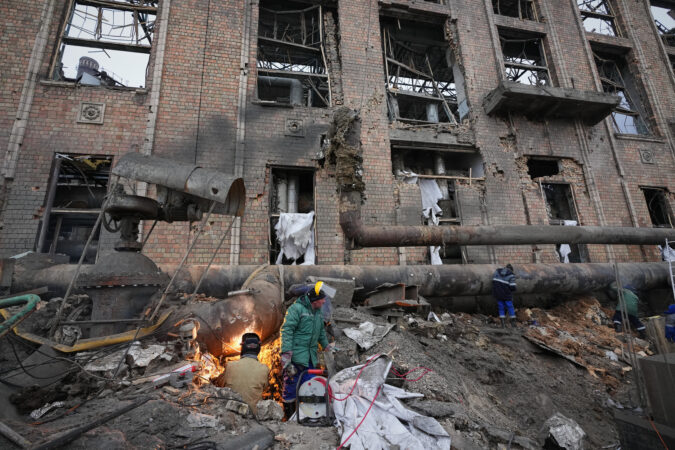
    About 60 foreign ambassadors took part in an organized visit Wednesday to a Kyiv thermal power plant that was almost completely destroyed by missiles and drones in the Monday night attack. The plant provided heating to about 500,000 people.

    Russia is hitting Ukraine’s energy facilities because its armed forces believe the targets are associated with Kyiv’s military effort, Peskov said.

    There has been a lack of clarity about how long Putin had promised to observe a pause on power grid attacks.

    Trump said Tuesday at the White House that Putin had agreed to halt strikes for a week, through Feb. 1, and that the Russian leader had kept his word. But Zelensky said Tuesday that “barely four days have passed of the week Russia was asked to hold off,” before Ukraine was hit with new attacks, suggesting that the Ukrainian leader wasn’t fully aware of the terms of the Trump-Putin agreement.

    Meanwhile, White House press secretary Karoline Leavitt said that Trump was “unfortunately unsurprised” by Moscow’s resumption of attacks.

    On Wednesday, more than 200 repair crews were at work in Kyiv to restore power, according to the Ukrainian Energy Ministry, which said that staff were exhausted and would be rotated. More than 1,100 apartment buildings in the capital were still without heating, Zelensky said.

    The Institute for the Study of War, a Washington think tank, said that the developments were part of Moscow’s negotiating strategy.

    “The Kremlin will likely attempt to portray its adherence to this short-term energy strikes moratorium as a significant concession to gain leverage in the upcoming peace talks, even though the Kremlin used these few days to stockpile missiles for a larger strike package,” it said late Tuesday.

    New attacks

    Russia used cluster munitions Wednesday in an attack on a busy market in eastern Ukraine that killed seven and wounded 15 others, officials said.

    The attack on the town of Druzhkivka darkened prospects for progress in the UAE, with Donetsk regional military administration chief Vadym Filashkin describing Russian talk of a ceasefire as “worthless.”

    Russia also launched 105 drones against Ukraine overnight, and air defenses shot down 88 of them, the Ukrainian air force said Wednesday. Strikes by 17 drones were recorded at 14 locations, as well as falling debris at five sites, it said.

    In the central Dnipropetrovsk region, a Russian strike on a residential area killed a 68-year-old woman and a 38-year-old man, regional military administration head Oleksandr Hancha said.

    The southern city of Odesa also came under a large-scale attack, regional military administration head Oleh Kiper said. About 20 residential buildings were damaged, with four people rescued from under the rubble, he said.

  • Still no suspect in the disappearance of ‘Today’ host Savannah Guthrie’s mother

    Still no suspect in the disappearance of ‘Today’ host Savannah Guthrie’s mother

    TUCSON, Ariz. — The search for Today show host Savannah Guthrie’s mother still had no suspect or person of interest Wednesday, authorities said, four days after she disappeared with signs of forced entry at her home in southern Arizona.

    Investigators believe Nancy Guthrie was taken against her will over the weekend and Pima County Sheriff Chris Nanos has said they don’t have credible information indicating Guthrie’s disappearance was targeted. Guthrie has limited mobility, and officials do not believe she left on her own. Nanos said she is of sound mind.

    “Detectives continue to speak with anyone who may have had contact with Mrs. Guthrie,” the sheriff’s department said in a statement on social media Wednesday. “Detectives are working closely with the Guthrie family.”

    Multiple media organizations reported receiving purported ransom notes Tuesday that they handed over to investigators. The sheriff’s department has said it’s taking the notes and other tips seriously but declined to comment further.

    The Pima County sheriff and the Tucson FBI chief urged the public to offer tips during a news conference Tuesday. Nanos has said Guthrie needs daily medication and could die without it. Asked whether officials were looking for her alive, he said, “We hope we are.”

    Authorities say Nancy Guthrie was last seen around 9:30 p.m. Saturday at her home in the Tucson area, where she lived alone, and she was reported missing midday Sunday. Someone at her church called a family member to say she was not there, leading family to search her home and then call 911.

    DNA samples have been gathered and submitted for analysis as part of the investigation. “We’ve gotten some back, but nothing to indicate any suspects,” Nanos said.

    There were signs of forced entry at Guthrie’s home, evidence of a nighttime kidnapping, and several personal items were still there, including Guthrie’s cell phone, wallet and car, according to a person familiar with the investigation, who was not authorized to publicly discuss details of the case and spoke to the Associated Press on condition of an anonymity. Investigators were reviewing surveillance video from nearby homes and information from area license plate cameras and analyzing local cell phone towers data.

    Guthrie’s upscale Catalina Foothills neighborhood is quiet and mostly dark at night, lit mainly by car headlights and homes spaced far apart. Long driveways, front gates and desert plants provide a buffer from the winding streets. Saguaro cacti tower above her home’s roofline, and wispy trees partially block the view of the front door. Decorative streetlamps and prickly pear cacti dot the grassy front yard.

    Jim Mason, longtime commander of a search and rescue posse for the Maricopa County Sheriff’s Office, said desert terrain can make looking for missing people difficult. Sometimes it’s hard to peer into areas that are dense with mesquite trees, cholla cactus and other brush, he said. His group is based 175 miles (280 kilometers) north of Tucson, and is not involved in the search for Guthrie.

    On the other side of the country, Victory Church in Albany, New York, said it’s offering a $25,000 reward for information that leads to finding Nancy Guthrie.

    “Me and my wife, we watch Savannah every single morning. We’ve heard of her faith. We’ve heard of her mom’s faith. And she’s got such a sweet spirit,” Pastor Charlie Muller said.

    For a third day Wednesday, Today opened with Nancy Guthrie’s disappearance, but Savannah Guthrie was not at the anchor’s desk. NBC Sports said Tuesday that Guthrie will not be covering the 2026 Milan-Cortina Winter Olympics “as she focuses on being with her family during this difficult time.”

    The Today host grew up in Tucson, graduated from the University of Arizona and previously worked as a reporter and anchor at Tucson television station KVOA. Her parents settled in Tucson in the 1970s when she was a young child. The youngest of three siblings, she credits her mom with holding their family together after her father died of a heart attack at 49, when Savannah was just 16.

  • Supreme Court allows new California congressional districts that favor Democrats

    Supreme Court allows new California congressional districts that favor Democrats

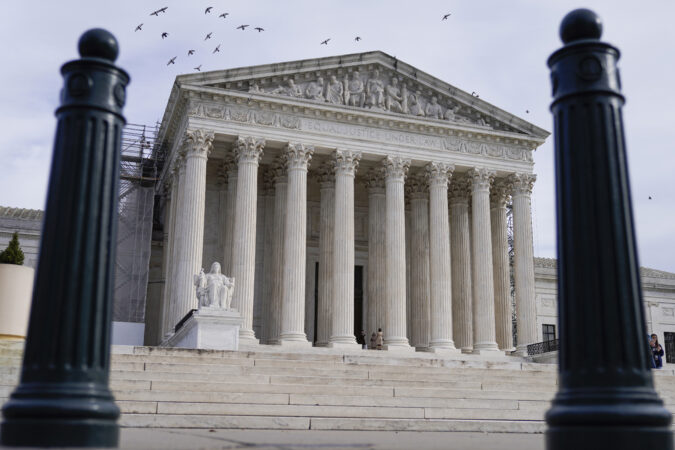
    WASHINGTON — The Supreme Court on Wednesday allowed California to use a new voter-approved congressional map that is favorable to Democrats in this year’s elections, rejecting a last-ditch plea from state Republicans and the Trump administration.

    No justices dissented from the brief order denying the appeal without explanation, which is common on the court’s emergency docket.

    The justices had previously allowed Texas’ Republican-friendly map to be used in 2026, despite a lower-court ruling that it likely discriminates on the basis of race.

    Conservative Justice Samuel Alito wrote in December that it appeared both states had adopted new maps for political advantage, which the high court has previously ruled cannot be a basis for a federal lawsuit.

    Republicans, joined by the Trump administration, claimed the California map improperly relied on race as well. But a lower court disagreed by a 2-1 vote. The Justice Department and White House did not immediately respond to messages seeking comment.

    The justices’ unsigned order keeps in place districts that are designed to flip up to five seats now held by Republicans, part of a tit-for-tat nationwide redistricting battle spurred by President Donald Trump, with control of Congress on the line in midterm elections.

    Last year, at Trump’s behest, Texas Republicans redid the state’s congressional districts with an eye on gaining five seats.

    California Gov. Gavin Newsom, a Democrat who is eyeing a 2028 presidential run, pledged to respond in kind, though he had to win over voters, not just lawmakers, to do so.

    Newsom celebrated the court’s decision, saying on social media that Trump had “started this redistricting war” and would end up losing out in the November midterms, when control of Congress is at stake.

    California’s attorney general, Democrat Rob Bonta, said the decision was “good news not only for Californians, but for our democracy.”

    The state Republican Party, which brought the case, vowed to keep fighting against the map’s use in future elections.

    “We will continue to vigorously argue for Equal Protection under the law for all of California’s voters,” Michael Columbo, counsel for the plaintiffs, said in a statement.

    One longtime party strategist, Jon Fleishman, a former executive director of the California Republican Party, said in a post on X that the decision means “this year’s elections will take place on the new lines shrinking the already very small Republican delegation from California.”

    Filing for congressional primaries in California begins on Monday.

  • Washington Post cuts a third of its staff in a blow to a legendary brand

    Washington Post cuts a third of its staff in a blow to a legendary brand

    The Washington Post laid off one-third of its staff Wednesday, eliminating its sports section, several foreign bureaus, and its books coverage in a widespread purge that represented a brutal blow to journalism and one of its most legendary brands.

    The Post’s executive editor, Matt Murray, called the move painful but necessary to put the outlet on stronger footing and to weather changes in technology and user habits. “We can’t be everything to everyone,” Murray said in a note to staff members.

    He outlined the changes in a companywide online meeting, and staff members then began getting emails with one of two subject lines — telling them their role was or was not eliminated.

    Rumors of layoffs had circulated for weeks, ever since word leaked that sports reporters who had expected to travel to Italy for the Winter Olympics would not be going. But when official word came down, the size and scale of the cuts were shocking, affecting virtually every department in the newsroom.

    “It’s just devastating news for anyone who cares about journalism in America and, in fact, the world,” said Margaret Sullivan, a Columbia University journalism professor and former media columnist at the Post and the New York Times. “The Washington Post has been so important in so many ways, in news coverage, sports and cultural coverage.”

    Martin Baron, the Post’s first editor under its current owner, billionaire Jeff Bezos, condemned his former boss and called what has happened at the newspaper “a case study in near-instant, self-inflicted brand destruction.”

    Journalists pleaded with Bezos for help

    Bezos, who has been silent in recent weeks amid pleas from Post journalists to step in and prevent the cutbacks, had no immediate comment.

    The newspaper has been bleeding subscribers in part due to decisions made by Bezos, including pulling back from an endorsement of Kamala Harris, a Democrat, during the 2024 presidential election against Donald Trump, a Republican, and directing a more conservative turn on liberal opinion pages.

    A private company, the Post does not reveal how many subscribers it has, but it is believed to be roughly 2 million. The Post would also not say how many people it has on staff, although the New York Times estimated that more than 300 journalists were let go.

    The Post’s troubles stand in contrast to its longtime competitor the New York Times, which has been thriving in recent years, in large part due to investments in ancillary products such as games and its Wirecutter product recommendations. The Times has doubled its staff over the past decade.

    Eliminating the sports section puts an end to a department that has hosted many well-known bylines through the years, among them John Feinstein, Michael Wilbon, Shirley Povich, Sally Jenkins, and Tony Kornheiser. The Times has also largely ended its sports section, but it has replaced the coverage by buying The Athletic and incorporating its work into the Times website.

    The Post’s Book World, a destination for book reviews, literary news and author interviews, has been a dedicated section in its Sunday paper.

    A half-century ago, the Post’s coverage of Watergate, led by intrepid reporters Bob Woodward and Carl Bernstein, entered the history books. The Style section under longtime Executive Editor Ben Bradlee hosted some of the country’s best feature writing.

    All Mideast correspondents and editors laid off

    Word of specific cuts drifted out during the day, as when Cairo Bureau Chief Claire Parker announced on X that she had been laid off, along with all of the newspaper’s Middle East correspondents and editors. “Hard to understand the logic,” she wrote.

    Lizzie Johnson, who wrote last week about covering a war zone in Ukraine without power, heat, or running water, said she had been laid off, too.

    Anger and sadness spread across the journalism world.

    “The Post has survived for nearly 150 years, evolving from a hometown family newspaper into an indispensable national institution, and a pillar of the democratic system,” Ashley Parker, a former Post journalist, wrote in an essay in The Atlantic. But if the paper’s leadership continues its current path, “it may not survive much longer.”

    Fearing for the future, Parker was among the staff members who left the newspaper for other jobs in recent months.

    Atlanta paper also makes cuts

    Also on Wednesday, the Atlanta Journal-Constitution, which stopped print editions and went all-digital at the end of last year, announced that it was cutting 50 positions, or roughly 15% of its staff. Half of the eliminated jobs were in the newsroom.

    Murray said the Post would concentrate on areas that demonstrate authority, distinctiveness and impact, and resonate with readers, including politics, national affairs, and security. Even during its recent troubles, the Post has been notably aggressive in coverage of Trump’s changes to the federal workforce.

    The company’s structure is rooted in a different era, when the Post was a dominant print product, Murray said in his note to the staff. In areas such as video, the outlet hasn’t kept up with consumer habits, he said.

    “Significantly, our daily story output has substantially fallen in the last five years,” he said. “And even as we produce much excellent work, we too often write from one perspective, for one slice of the audience.”

    While there are business areas that need to be addressed, Baron pointed a finger of blame at Bezos — for a “gutless” order to kill a presidential endorsement and for remaking an editorial page that stands out only for “moral infirmity” and “sickening” efforts to curry favor with Trump.

    “Loyal readers, livid as they saw owner Jeff Bezos betraying the values he was supposed to uphold, fled The Post,” Baron wrote. “In truth, they were driven away, by the hundreds of thousands.”

    Baron said he was grateful for Bezos’ support when he was editor, noting that the Amazon founder came under brutal pressure from Trump during the president’s first term.

    “He spoke forcefully and eloquently of a free press and The Post’s mission, demonstrating his commitment in concrete terms,” Baron wrote. “He often declared that The Post’s success would be among the proudest achievements of his life. I wish I detected the same spirit today. There is no sign of it.”

  • Democrats demand ‘dramatic changes’ for ICE, including masks, cameras and judicial warrants

    Democrats demand ‘dramatic changes’ for ICE, including masks, cameras and judicial warrants

    WASHINGTON — Democrats are threatening to block funding for the Homeland Security Department when it expires in two weeks unless there are “dramatic changes” and “real accountability” for U.S. Immigration and Customs Enforcement and other law enforcement agencies who are carrying out President Donald Trump’s campaign of federal immigration enforcement in Minnesota and across the country.

    Congress is discussing potential new rules for ICE and U.S. Customs and Border Protection after officers shot and killed two Minneapolis protesters in January. Senate Democratic leader Chuck Schumer and House Democratic leader Hakeem Jeffries reiterated their party’s demands on Wednesday, with Schumer telling reporters that Congress must “rein in ICE in very serious ways, and end the violence.”

    Democrats are “drawing a line in the sand” as Republicans need their votes to continue the funding, Jeffries said.

    The negotiations come amid some bipartisan sentiment that Congress should step in to de-escalate tensions over the enforcement operations that have rocked Minnesota and other states. But finding real agreement in such a short time will be difficult, if not “an impossibility,” as Senate Majority Leader John Thune (R., S.D.) said Tuesday.

    President Donald Trump last week agreed to a Democratic request that funding for the DHS be separated from a larger spending bill and extended at current levels for two weeks while the two parties discuss possible requirements for the federal agents. House Speaker Mike Johnson (R., La.) said this weekend that he was at the White House when Trump spoke with Schumer and that they were “on the path to get agreement.”

    But it’s unclear if the president or enough congressional Republicans will agree to any of the Democrats’ larger demands that the officers unmask and identify themselves, obtain judicial warrants in certain cases and work with local authorities, among other asks. Republicans have already pushed back.

    And House GOP lawmakers are demanding that some of their own priorities be added to the Homeland Security spending bill, including legislation that would require proof of citizenship before Americans register to vote. South Carolina Sen. Lindsey Graham and other Republican senators are pushing for restrictions on sanctuary cities that they say don’t do enough to crack down on illegal immigration. There’s no clear definition of sanctuary jurisdictions, but the term is generally applied to state and local governments that limit cooperation with federal immigration authorities.

    It’s also uncertain if Democrats who are furious over the Trump administration’s increasingly aggressive immigration enforcement operations would be willing to compromise.

    “Republicans need to get serious,” said Schumer, a New York Democrat, adding that they will propose “tough, strong legislation” in the next day.

    A look at Democrats’ demands and what Republicans are saying about them:

    Agreement on body cameras

    Republicans say they are open to officer-worn body cameras, a change that was already in the underlying homeland security spending bill. Homeland Security Secretary Kristi Noem backed that up on Monday when she ordered body-worn cameras to be issued to every DHS officer on the ground in Minneapolis, including those from ICE. She said the policy would expand nationwide as funding becomes available.

    The bill already directed $20 million to outfit immigration enforcement agents with body-worn cameras.

    Gil Kerlikowske, who served as commissioner of U.S. Customs and Border Protection from 2014 to 2017, said that most agents are “very supportive” of cameras because they could help exonerate officers. But he added that complex questions remain, including when footage should be released and when cameras must be activated.

    “When do you turn it on? And if you got into a problem and didn’t have it on, are you going to be disciplined? It’s really pretty complex,” he said.

    Schumer said Tuesday that the body cameras “need to stay on.”

    Disagreement on masking

    As videos and photos of aggressive immigration tactics and high-profile shootings circulate nationwide, agents covering their faces with masks has become a flashpoint. Democrats argue that removing the masks would increase accountability. Republicans warn it could expose agents to harassment and threats.

    “State law enforcement, local folks don’t do it,” said Rep. Bennie Thompson, the top Democrat on the Committee for Homeland Security. ”I mean, what’s so special about an ICE law enforcement agency that they have to wear a mask?”

    But Republicans appear unlikely to agree.

    “Unlike your local law enforcement in your hometown, ICE agents are being doxed and targeted. We have evidence of that,” Johnson said on Tuesday. He added that if you “unmask them and you put all their identifying information on their uniform, they will obviously be targeted.”

    Immigration officers are already required to identify themselves “as soon as it is practical and safe to do so,” according to federal regulations. ICE officials insist those rules are being followed.

    Critics, however, question how closely officers adhere to the regulations.

    “We just see routinely that that’s not happening,” said Nithya Nathan Pineau, a policy attorney with the Immigrant Legal Resource Center.

    Judicial vs. administrative warrants

    Democrats have also demanded stricter use of judicial warrants and an end to roving patrols of agents who are targeting people in the streets and in their homes. Schumer said Tuesday that they want “arrest warrants and an end to racial profiling.”

    Most immigration arrests are carried out under administrative warrants, internal documents issued by immigration authorities that authorize the arrest of a specific person but do not permit officers to forcibly enter private homes or other non-public spaces without consent. Traditionally, only warrants signed by judges carry that authority.

    But an internal ICE memo obtained by The Associated Press last month authorizes ICE officers to use force to enter a residence based solely on a more narrow administrative warrant to arrest someone with a final order of removal, a move that advocates say collides with Fourth Amendment protections.

    Democrats have not made clear how broadly they want judicial warrants used. Jeffries of New York said that Democrats want to see “an end to the targeting of sensitive locations like houses of worship, schools and hospitals.”

    Johnson said Tuesday that Democrats are trying to “add an entirely new layer” by seeking warrants signed by a judge rather than the administrative warrants that are signed by the department. “We can’t do that,” he said.

    The speaker has said that an end to roving patrols is a potential area of agreement, but he did not give details.

    Code of conduct, more accountability

    Democrats have also called for a uniform code of conduct for all ICE and federal agents similar to that for state and local law enforcement officers.

    Federal officials blocked state investigators from accessing evidence after protester Renee Good was shot and killed by an ICE agent on Jan. 7. Gov. Tim Walz, a Democrat, demanded that the state be allowed to take part, saying that it would be “very difficult for Minnesotans” to accept that an investigation excluding the state could be fair.

    Hoping for a miracle

    Any deal Democrats strike on the Department of Homeland Security is unlikely to satisfy everyone in the party. Rep. Ayanna Pressley of Massachusetts said she would never support an agreement that didn’t require unmasking.

    “I ran for Congress in 2018 on abolish ICE,” Pressley said. “My position has not changed.”

    Thune, of South Dakota, has repeatedly said it’s an “impossibility” to negotiate and pass something so complicated in two weeks. He said any talks should be between Democrats and Trump.

    “I don’t think it’s very realistic,” Thune said Tuesday about finding quick agreement. “But there’s always miracles, right?”

  • Iran and the U.S. will hold nuclear talks Friday in Oman, Iranian foreign minister says

    Iran and the U.S. will hold nuclear talks Friday in Oman, Iranian foreign minister says

    DUBAI — Nuclear talks between Iran and the United States will take place Friday in Oman, the Iranian foreign minister said, as tensions between the countries remain high following Tehran’s bloody crackdown on nationwide protests last month.

    The announcement by Iranian Foreign Minister Abbas Araghchi on Wednesday came after hours of indications that the anticipated talks were faltering over changes in the format and content of the talks.

    ”I’m grateful to our Omani brothers for making all necessary arrangements,” Araghchi wrote on X on Wednesday evening.

    Earlier Wednesday, a regional official said Iran was seeking a “different” type of meeting than that what had been proposed by Turkey, one focused exclusively on the issue of Iran’s nuclear program, with participation limited to Iran and the United States. The official spoke on condition of anonymity because they were not authorized to brief the media.

    Secretary of State Marco Rubio had said U.S. officials were working on maintaining a meeting with Iran this week.

    Tensions between the countries have spiked after U.S. President Donald Trump suggested the U.S. might use force against Iran in response to its crackdown on protesters. Trump also has been pushing Tehran for a deal to constrain its nuclear program.

    Rubio hopes talks will go beyond nuclear ones

    Iran’s reformist President Masoud Pezeshkian on Tuesday said he had instructed the foreign minister to “pursue fair and equitable negotiations” with the U.S., in the first clear sign from Tehran it wants to try to negotiate. That signaled the move is supported by Supreme Leader Ayatollah Ali Khamenei, who has the final say on all matters of state and previously dismissed any negotiations.

    Rubio said the U.S. hoped to discuss a number of concerns beyond the nuclear issue, including discussions on Iran’s ballistic missiles, support for proxy networks across the region and the “treatment of their own people.”

    “The leadership of Iran at the clerical level does not reflect the people of Iran. I know of no other country where there’s a bigger difference between the people who lead the country and the people who live there,” he told reporters.

    Vice President JD Vance told The Megyn Kelly Show that diplomatic talks with Iran are challenging because of Tehran’s political system, overseen by Khamenei.

    “It’s a very weird country to conduct diplomacy with when you can’t even talk to the person who’s in charge of the country. That makes all of this much more complicated, and it makes the whole situation much more absurd,” Vance said, noting that Trump could speak directly by phone with the leaders of Russia, China or North Korea.

    Vance said Trump’s bottom line is that Iran cannot be allowed to develop a nuclear weapon, asserting that other states in the region would quickly do the same.

    Iran long has insisted its nuclear program is peaceful. However, Iranian officials in recent years have increasingly threatened to pursue the bomb.

    Vance said he believed Trump would work to “accomplish what he can through non-military means. And if he feels like the military is the only option, then he’s ultimately going to choose that option.”

    Talks expected even after U.S. shot down Iranian drone

    On Tuesday, a U.S. Navy fighter jet shot down an Iranian drone that approached an American aircraft carrier. Iranian fast boats from its paramilitary Revolutionary Guard also tried to stop a U.S.-flagged ship in the Strait of Hormuz, the narrow mouth of the Persian Gulf, the Navy said.

    Iran did not immediately acknowledge either incident, which strained but apparently did not derail hopes for talks with the U.S.

    On Wednesday, Iranian military chiefs visited a missile base in an attempt to highlight its military readiness after a 12-day war with Israel in June devastated Iran’s air defenses. The base holds the Khorramshahr missile, which has a range of more than 1,250 miles and was launched towards Israel during the war last year.

    Turkey urges diplomacy

    Also Wednesday, Turkish President Recep Tayyip Erdogan reiterated Turkey’s opposition to foreign intervention in neighboring Iran, calling for the resolution of issues through dialogue.

    Turkey has been urgently working for the past week to bring the U.S. and Iran to the negotiating table, and was previously expected to host the talks.

    “We believe that external interventions involving our neighbor Iran would pose significant risks for the entire region,” Erdogan said during a visit to Cairo. “Resolving issues with Iran, including the nuclear file, through diplomatic means is the most appropriate approach.”