Category: Wires

  • Tyrese Maxey scores 29 as Sixers win fourth straight with 128-113 win over Clippers

    Tyrese Maxey scores 29 as Sixers win fourth straight with 128-113 win over Clippers

    INGLEWOOD, Calif. — Tyrese Maxey scored 29 points, including seven three-pointers, Dominick Barlow added 26 points and 16 rebounds, and the 76ers beat the Los Angeles Clippers 128-113 on Monday night for their fourth consecutive victory.

    The game featured two big names who weren’t selected as All-Star reserves: Joel Embiid of the Sixers and Kawhi Leonard of the Clippers.

    Embiid had 24 points as he continues to gain full strength after a right ankle injury. The Sixers improved to 11-10 without Paul George, who is serving a 25-game suspension for violating the NBA’s anti-drug program.

    Leonard led the Clippers with 29 points and Jordan Miller had 21 points off the bench.

    Los Angeles was without James Harden, who missed his second straight game due to personal reasons. Coach Tyronn Lue said before the game that Harden was at home in Phoenix.

    Leonard had two dunks and a three-pointer in the fourth, but the Clippers couldn’t put together a sustained run and he finished the game on the bench.

    Maxey, Barlow, and Embiid combined to score 22 points in the third when the Sixers were outscored 34-28, but still led 100-87.

    The Sixers led the entire game, going up by 23 points before settling for a 72-53 halftime advantage.

    The Clippers are 8-3 over their last 11 games as they try to stay within range of at least making the play-in tournament.

    The Sixers visit the Golden State Warriors on Tuesday night (10 p.m., NBCSP) to finish a back-to-back.

  • Every Homeland Security officer in Minneapolis is now being issued a body-worn camera, Noem says

    Every Homeland Security officer in Minneapolis is now being issued a body-worn camera, Noem says

    WASHINGTON — Every Homeland Security officer on the ground in Minneapolis, including those from Immigration and Customs Enforcement, will be immediately issued body-worn cameras, Secretary Kristi Noem said Monday, in the latest fallout after the shooting deaths of two U.S. citizens at the hands of federal agents.

    Noem said the body-worn camera program is being expanded nationwide as funding becomes available.

    “We will rapidly acquire and deploy body cameras to DHS law enforcement across the country,” Noem said in a social media post on X.

    The news of the body cameras comes as Minneapolis has been the site of intense scrutiny over the conduct of federal officers after two U.S. citizens protesting immigration enforcement activities in the city were shot and killed.

    It is the latest effort by the Trump administration to alleviate tensions after the shootings and show it is responding to calls for accountability.

    In the immediate hours after ICU nurse Alex Pretti’s death, Noem went on the offensive, saying several times that Pretti “came with a weapon and dozens of rounds of ammunition and attacked” officers, who took action to “defend their lives.” Other administration officials painted a similar picture.

    Multiple videos that emerged of the shooting contradicted that claim, showing Pretti had only his mobile phone in his hand as officers tackled him to the ground, with one removing a handgun from the back of his pants as another officer began firing shots into his back.

    Homeland Security has said that at least four Customs and Border Protection officers on the scene when Pretti was shot were wearing body cameras. The body camera footage from Pretti’s shooting has not been made public.

    The department has not responded to repeated questions about whether any of the ICE officers on the scene of the killing of Renee Good earlier in January were wearing the cameras.

    The shootings, and the narrative coming from some in the administration, triggered outrage and demands for accountability, including among some Republicans.

    President Donald Trump sent his border czar Tom Homan to Minneapolis to take control of operations there, displacing Border Patrol commander Gregory Bovino, who has become a lightning rod for criticism in the various operations he’s joined in cities like Chicago and Los Angeles.

    The Justice Department has also opened a federal civil rights investigation into Pretti’s shooting, which it did not do in the case of Good.

    There have been increased calls by critics of Homeland Security to require all of the department’s officers who are responsible for immigration enforcement to wear body cameras.

    President Joe Biden ordered in 2022 that federal law enforcement officers wear body cameras as part of an executive order that included other policing reform measures. Trump had rescinded that directive after starting his second term.

    Noem’s move comes after Trump over the weekend endorsed the idea of body cameras for immigration officers.

    After Noem’s announcement Monday, Trump said the decision was up to the secretary but said that he thought it was generally good for law enforcement to wear cameras.

    “They generally tend to be good for law enforcement because people can’t lie about what’s happening,” he said in the Oval Office Monday, adding “If she wants to do the camera thing, that’s OK with me.”

  • Musk joins his rocket, AI businesses into a single company before an expected IPO this year

    Musk joins his rocket, AI businesses into a single company before an expected IPO this year

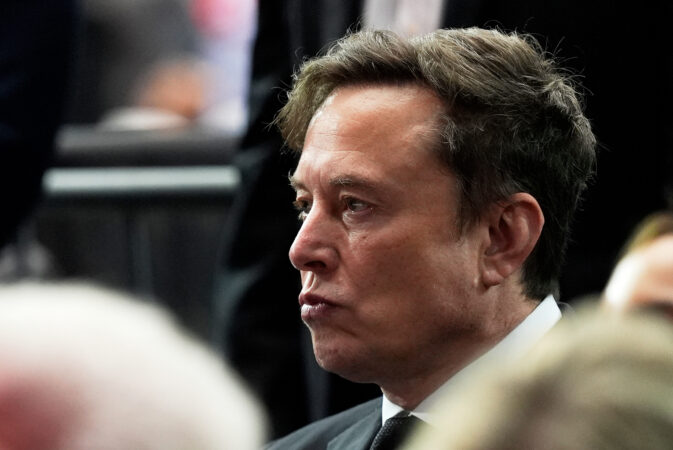
    NEW YORK — Elon Musk is joining his space exploration and artificial intelligence ventures into a single company before a massive planned initial public offering for the business later this year.

    His rocket venture, SpaceX, announced on Monday that it had bought xAI in an effort to help the world’s richest man dominate the rocket and artificial intelligence businesses. The deal will combine several of his offerings, including his AI chatbot Grok, his satellite communications company Starlink, and his social media company X.

    Musk has talked repeatedly about the need to speed development of technology that will allow data centers to operate in space to solve the problem of overcoming the huge costs in electricity and other resources in building and running AI systems on Earth.

    It’s a goal that Musk said in his announcement of the deal could become much easier to reach with a combined company.

    “In the long term, space-based AI is obviously the only way to scale,” Musk wrote on SpaceX’s website Monday, then added in reference to solar power, “It’s always sunny in space!”

    Musk said in SpaceX’s announcement he estimates “that within 2 to 3 years, the lowest cost way to generate AI compute will be in space.”

    It’s not a prediction shared by other many companies building data centers, including Microsoft.

    “I’ll be surprised if people move from land to low-Earth-orbit,” Microsoft’s president, Brad Smith, told The Associated Press last month, when asked about the alternatives to building data centers in the U.S. amid rising community opposition.

    SpaceX won’t be the first to explore the idea of putting AI data centers in space. Google last year revealed a new research project called Project Suncatcher that would equip solar-powered satellites with AI computer chips.

    Mississippi officials last month announced that xAI is set to spend $20 billion to build a data center near the state’s border with Tennessee.

    The data center, called MACROHARDRR, a likely pun on Microsoft’s name, will be its third data center in the greater Memphis area.

  • Woodie King Jr., founder of powerhouse off-Broadway New Federal Theatre, has died at 88

    Woodie King Jr., founder of powerhouse off-Broadway New Federal Theatre, has died at 88

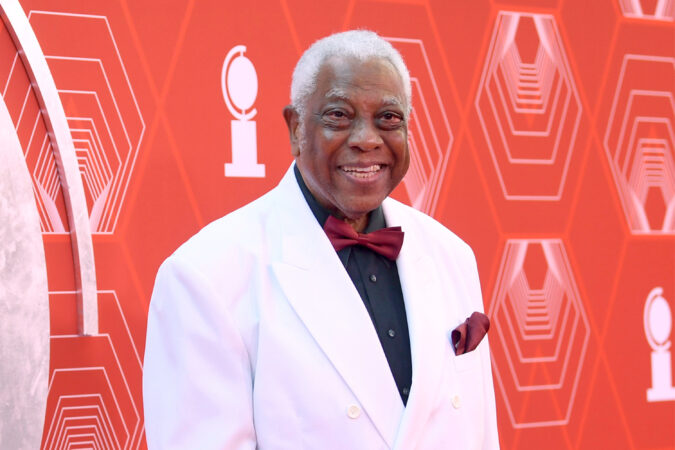
    NEW YORK — Woodie King Jr., an actor, director, and producer who founded the New Federal Theatre to give voice and employment to Black playwrights, actors, directors, designers, and young people entering the American theater, has died. He was 88.

    His off-Broadway theater company said Mr. King died Thursday at Weill Cornell Medical Center in New York City of complications from emergency heart surgery.

    Mr. King was inducted into the American Theatre Hall of Fame in 2012 and received the Tony Honors for Excellence in Theatre in 2020.

    “We have lost a giant,” said Emmy Award-winning actor and educator Erin Cherry on Instagram. “I am here because of Woodie King Jr. My very first introduction to the Black theater scene was the play ‘Knock Me a Kiss’ produced by New Federal Theatre. It changed my life. I’m forever grateful.”

    The New Federal Theatre produced such key works as Black Girl by J.E. Franklin, The Taking of Miss Janie by Ed Bullins — which jumped to Lincoln Center and won the Drama Critics Circle Award — and For Colored Girls Who Considered Suicide When the Rainbow is Enuf by Ntozake Shange, which landed on Broadway in 1976 and was nominated for the best new play Tony Award.

    The New Federal Theatre was a springboard for many playwrights, including Charles Fuller — later to win the Pulitzer Prize for A Soldier’s Play — who premiered two plays — In My Many Names and Days and The Candidate. David Henry Hwang premiered The Dance and the Railroad at the New Federal and would later win the Tony for M. Butterfly.

    Some performers who got early career boosts thanks to the company include Chadwick Boseman, Debbie Allen, Morgan Freeman, Phylicia Rashad, Denzel Washington, LaTanya Richardson Jackson, Samuel L. Jackson, and Issa Rae.

    Mr. King was born in Alabama, raised in Detroit, and earned his bachelor’s degree from Lehman College and later his master’s from Brooklyn College. He served as the cultural director of Mobilization for Youth for five years, before founding New Federal Theatre in 1970.

    Mr. King is survived by his wife, Elizabeth Van Dyke, and his three children, Geoffrey King, Michael King, and Michelle King Huger, whom he shared with ex-wife Willie Mae Washington, as well as five grandchildren.

    Tyler Fauntleroy, an actor who has toured in Hamilton, took to Instagram to recall working at the New Federal in 2019 on a show called Looking for Leroy that would change his career. “His belief in me came at a time when my own was at an all-time low. What a champion he was for Black artists. It was an honor to witness. Thank you, sir and rest easy.”

  • X.J. Kennedy, 96, prize-winning poet and educator

    X.J. Kennedy, 96, prize-winning poet and educator

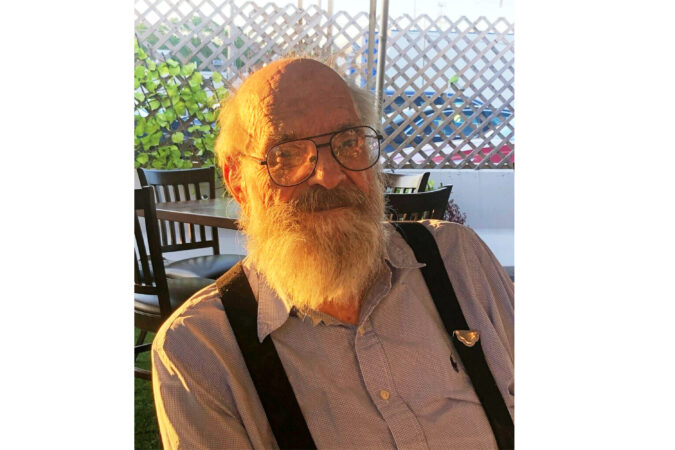
    NEW YORK — X.J. Kennedy, an award-winning poet, author, translator, and educator who schooled millions of students through The Bedford Reader and other textbooks and engaged voluntary readers with his children’s stories and intricate, witty verse, died Sunday at 96.

    Mr. Kennedy died of natural causes at his home in Peabody, Mass., according to his daughter, Kate Kennedy.

    Born Joseph Charles Kennedy, he chose the professional name X.J. Kennedy as a young man to avoid confusion with Joseph P. Kennedy, the former ambassador to Britain and father of President John F. Kennedy. Starting in the early 1960s, he turned out dozens of poetry and children’s books, contributed to the popular Bedford Reader and collaborated with the poet and onetime National Endowment for the Arts chair Dana Gioia on anthologies of poetry, drama, and fiction.

    “I write for three separate audiences: children, college students (who use textbooks), and that small band of people who still read poetry,” Mr. Kennedy once observed.

    The Bedford Reader, established in the early 1980s, is a widely used composition book for college students that has included everything from the Rev. Martin Luther King Jr.’s “I Have a Dream” speech to the classic Shirley Jackson story “The Lottery.” Mr. Kennedy edited the Reader along with his wife, Dorothy; Jane E. Aaron and Ellen Kuhl Repetto. The goal, they stated, was “to show you how good writers write” and not to feel “glum if at first you find an immense gap” between yourself, and, say, E.B. White.

    Mr. Kennedy’s poems, some published in the New Yorker and the Atlantic, were rhyming vignettes on everyday and macabre matter such as bartending, aging, and the discovery of a severed arm. They were brief, often light-hearted in tone and dark and unsettling in content. In Innocent Times, Mr. Kennedy mocks the idea that the country was better off during the “Mad Man” era, looking back to when doctors “puffed their cigarettes” and “cheap thermometer and thermostat/leaked jets of mercury like poison darts.” The poem Fireflies shifts abruptly from the calm of a twilight lawn to the horrors of the war on terrorism.

    Complacently we watched them glow

    Like kindly lantern lights that sift

    Through palm fronds in Guantánamo

    On the torture squad’s night shift

    His awards included a Los Angeles Times book prize, the Poetry Society of America’s Robert Frost Medal for lifetime achievement, and the Jackson prize from Poets & Writers for an “American poet of exceptional talent who deserves wider recognition.” He taught English at the University of Michigan, the Woman’s College of the University of North Carolina (now UNC-Greensboro), and Tufts University, among other schools. In the 1970s, he served as the Paris Review’s poetry editor.

    A native of Dover, N.J., he was an intrepid young man who wrote and published science fiction and helped found the Spectator Amateur Press Association, a leading science fiction fandom organization whose members have included Harlan Ellison, Robert Silverberg, and Lenny Kaye. After attending Seton Hall and Columbia University, Mr. Kennedy served briefly in the Navy in the 1950s. At the University of Michigan, he worked for several years on a Ph.D. in the 1950s and 1960s and never finished his dissertation. But he did meet his future wife and professional collaborator, Dorothy Mintzlaff, who died in 2018. They had five children and six grandchildren.

    His first book, Nude Descending a Staircase: Poems, Songs, a Ballad, was published in 1961. His children’s books included One Winter Night in August and Other Nonsense Jingles and the novel The Owlstone Crown, while In a Prominent Bar in Secaucus is a compilation of poems from 1955 to 2007 that ends with a bon voyage for the text itself.

    Go, slothful book. Just go

    Fifty years slopping around the house in your sock-feet

    Sucking up to a looking-glass

    Rehearsing your face. Why

    Don’t you get a job?

  • In Venezuela, change is coming fast. Relief is taking more time.

    In Venezuela, change is coming fast. Relief is taking more time.

    CARACAS, Venezuela — American oil traders are poised to descend on Venezuela’s capital — and may soon be able to fly here direct. The Trump administration is preparing to reopen the U.S. Embassy. The socialist government here has made the nationalized oil industry friendlier for foreign investors, and the U.S. Treasury has eased sanctions to allow U.S. companies to buy and sell Venezuelan oil.

    The dizzying changes would have seemed unthinkable just a month ago, when U.S. forces were surrounding the country, seizing Venezuelan oil, and menacing the authoritarian government.

    But the U.S. capture Jan. 3 of President Nicolás Maduro, and President Donald Trump’s vow to exploit the world’s largest proven oil reserves, has fundamentally transformed relations between the two countries. The administration is working with Delcy Rodríguez, Maduro’s vice president, rather than María Corina Machado, the popular opposition leader whom Trump previously championed.

    The economic outlook for Venezuela has improved dramatically; after years of economic collapse, rising unemployment, and soaring inflation, some economists say it’s not far-fetched to imagine double-digit growth this year.

    In the latest surprise move, Rodríguez on Friday proposed a general amnesty for hundreds of political prisoners, some of whom have been held for decades — and promised to repurpose the infamous Helicoide prison, an alleged torture center.

    Human rights defenders have expressed cautious optimism. But in Caracas, hope is colliding with reality. For many Venezuelans, the changes have done little to ease the daily pressure of paying for basic goods or fears of being detained by police.

    Rodríguez, Maduro’s vice president, has yet to release details of elections or power-sharing agreements. The individuals who ran the country’s feared security forces under Maduro remain in power. It’s still unsafe for opposition leader Machado, the recipient of the 2025 Nobel Peace Prize, to return home.

    With the government’s apparatus for repression fully intact, Venezuelans say, real change feels far away.

    “I don’t know if the politics are changing, but my pocket is the same,” said Argenis Pérez, who parks cars at a restaurant in eastern Caracas. Waking at 4 a.m. each morning to take two buses from his home in working-class Avenida Victoria to his job, he earns $120 a month, paid in bolivars and in bags of food.

    “I don’t buy an entire grocery list,” he said. “I just buy the basics.”

    He was interrupted by cars approaching the restaurant — luxury SUVs that sell for well over $100,000. What did he think about the changes?

    “Well, you know … we can’t speak about that,” he said. “I don’t know what will happen, but I need to work.”

    After weeks in which the United States was boarding tankers and seizing Venezuelan oil, the economy is experiencing some relief. The United States has released $300 million from oil sales to pay government workers. The injection has helped stabilize Venezuela’s foreign exchange rate and could help reduce retail prices, economist Francisco Rodríguez said.

    It’s unclear how the U.S. will manage the proceeds from oil sales and how the money will flow into the Venezuelan economy. The government has not released economic statistics for years.

    The government-controlled National Assembly voted unanimously Thursday to make Petróleos de Venezuela and other state-run enterprises more attractive to foreign investors. The U.S. Treasury then announced a general license for U.S. companies to buy, sell, transport, and refine Venezuelan oil.

    Alejandro Grisanti, an economist with the Caracas consulting firm Ecoanalítica, said dialogue between the government and the private sector also has improved. “I think 2026 will be a good year,” he said. Ecoanalítica predicts oil production will grow by at least 200,000 barrels per day, more bolivars will circulate, and banks can offer more credit.

    The country is still recovering from cumulative inflation, which in the first three weeks of January was 15%. “But for that to actually improve the purchasing power of the average Venezuelan,” Grisanti said, “that will take six to eight months.”

    “There is still a lot of uncertainty,” he said. The recent inflation, along with messaging from the government that Maduro’s allies remain in control, means Venezuelans “may not feel the profound change that is taking place.”

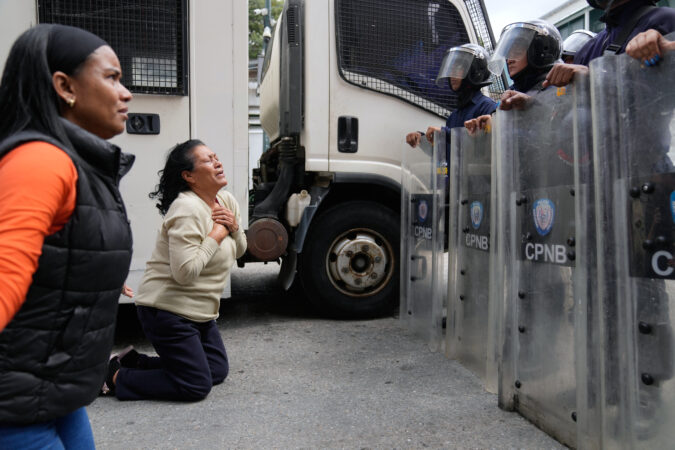
    Under Rodríguez, the regime already has released hundreds of political prisoners, but security forces continue to detain Venezuelans arbitrarily, human rights advocates say. About 50 detainees have disappeared within the prison system, and officials have refused to say where they are or what’s happened to them.

    Some prisoners have been released without notice. One Venezuelan political prisoner, who had been in the Rodeo 1 prison for more than a year, was suddenly given a haircut, masked, and put on a bus with other detainees, according to his sister, who spoke on the condition of anonymity to discuss sensitive details about her brother’s case. The detainees were taken to an unfamiliar location in Caracas and directed to leave the bus. Their families weren’t alerted.

    The man walked for two hours to the home of a relative, and asked to use a phone to call other family members who had been waiting outside the prison in hopes he would be released.

    In the weeks since his release, his family says, he has said nothing of what he experienced in the prison. He remains in Venezuela, where he is prohibited from speaking publicly about his detention.

    Many of the recently released prisoners have been surveilled, threatened, and warned not to speak out, according to Orlando Moreno, a human rights coordinator for Vente Venezuela, Machado’s political party.

    “This is not true freedom. It is freedom with chains,” Moreno said. “They will let you out of your cell, but you are not free.”

    But some Venezuelans appear willing to take on more risk, according to Andreina Baduel, director of the Committee of Family and Friends for the Freedom of Political Prisoners. Many have come forward for the first time to report cases of relatives imprisoned long ago. A protest outside the attorney general’s office recently drew twice the usual number of demonstrators, she said.

    “We now know that we are not alone in this struggle,” Baduel said.

    Some opposition politicians are emerging from hiding and speaking publicly for the first time in months or even years. And within the government-controlled National Assembly, some of the few opposition lawmakers allowed to hold seats have sensed more open dialogue.

    “The government has acknowledged its vulnerability,” opposition lawmaker Antonio Ecarri said. “There has been more respect and cordiality.”

    One important change is the inclusion of some government critics on a new peace commission.

    “Venezuela needs to find itself. We’ve become accustomed to living separately and in tribes. It’s been many years of conflict,” commission member Michael Penfold, a professor at the Institute of Advanced Studies in Administration in Caracas, wrote on X. “Let’s hope that in this process, Venezuelans don’t become the main obstacle.”

    Opposition lawmaker Henrique Capriles, who ran against Maduro twice, called on the regime to release plans for an election. “So far, all we have are announcements of investment in the oil sector,” he said. The government must increase salaries and pensions, he said, to give Venezuelans a sense that their lives are, in fact, improving.

    “We Venezuelans have been very patient, and we know it’s not quick,” he said. “Urgent things need to be done, but democracy cannot be detached from building Venezuela’s future.”


  • Son of Norway’s crown princess arrested on new allegations ahead of his rape trial

    Son of Norway’s crown princess arrested on new allegations ahead of his rape trial

    OSLO, Norway — The eldest son of Norway’s crown princess has been arrested over new allegations, police said Monday, a day ahead of his trial on charges including rape in a case that has been an embarrassment to the royal family.

    Marius Borg Høiby was arrested on Sunday evening and is accused of assault, threats with a knife, and violation of a restraining order, police said in a statement. Norwegian media quoted police as saying the offenses allegedly took place over the weekend.

    On Monday, the Oslo district court granted their request to keep him in detention for up to four weeks on the grounds of a risk of reoffending.

    Defense lawyer Petar Sekulic told the Associated Press that the arrest followed an alleged “incident” involving another person on Sunday. He declined to give details, but said Høiby contests his detention and his legal team was considering an appeal as soon as he and the other person can provide statements to police.

    With his trial opening on Tuesday, police won’t be able to hear those statements any sooner than this weekend, when the proceedings take a scheduled break, Sekulic said.

    On Tuesday, Høiby faces an indictment including 38 counts at the Oslo court. They include rape, abuse in a close relationship against one former partner, acts of violence against another, and transporting 7.7 pounds of marijuana. Other charges include making death threats and traffic violations.

    Høiby has been under scrutiny since he was repeatedly arrested in 2024 on various allegations of wrongdoing. He was indicted in August, but had been free pending trial until Sunday.

    Høiby is the son of Crown Princess Mette-Marit from a previous relationship and stepson of the heir to the throne, Crown Prince Haakon. He has no royal title or official duties.

    The indictment centers on four alleged rapes between 2018 and November 2024; alleged violence and threats against a former partner between the summer of 2022 and the fall of 2023; and two alleged acts of violence against a subsequent partner, along with violations of a restraining order.

    Høiby’s defense team has said that he “denies all charges of sexual abuse, as well as the majority of the charges regarding violence.”

    Haakon said last week that he and Mette-Marit don’t plan to attend court and that the royal house doesn’t intend to comment during the proceedings, which are scheduled to last until March 19.

    He emphasized that Høiby isn’t part of the royal house and that, as a citizen of Norway, he has the same responsibilities and rights as all others. He said that he’s confident that all concerned will make the trial as orderly, proper, and fair as possible.

    While the royals are generally popular in Norway, the Høiby case has cast a shadow on their image. And the trial is opening just as his mother faces renewed scrutiny over her contacts with Jeffrey Epstein.

    Friday’s release of the latest batch of documents from the Epstein files shone an unflattering spotlight on Mette-Marit. They contained several hundred mentions of the crown princess, who already said in 2019 that she regretted having had contact with Epstein, Norwegian media reported.

    The newly released documents, which include email exchanges with Epstein, showed that Mette-Marit borrowed a property of Epstein’s in Palm Beach, Fla., for several days in early 2013, and the royal house confirmed that she did so through a mutual friend, broadcaster NRK reported.

    In a statement emailed by the royal house, Mette-Marit said that she “must take responsibility for not having investigated Epstein’s background more thoroughly, and for not realizing sooner what kind of person he was.”

    “I deeply regret this, and it is a responsibility I must bear. I showed poor judgment and regret having had any contact with Epstein at all,” she said. “It is simply embarrassing.”

    She expressed her “deep sympathy and solidarity” with the victims of Epstein’s abuse.

    Mette-Marit’s contacts with Epstein and the Høiby trial aren’t the only source of negative publicity for Norway’s royals. The business ventures of Haakon’s sister, Princess Märtha Louise, have drawn repeated criticism. In 2024, around the same time Høiby’s case was making news, she married an American self-professed shaman, Durek Verrett.

  • What recent polls show about the challenges facing Trump this year

    What recent polls show about the challenges facing Trump this year

    WASHINGTON — President Donald Trump might be bragging about his administration’s work on affordability, but recent polling suggests that Americans aren’t buying it as they grow increasingly frustrated with his leadership.

    Many Americans say Trump is focusing on the wrong priorities, according to multiple surveys, including a January AP-NORC poll, and they largely think Trump is neglecting the issue of costs at home. Compounding his problems, there are signs that frustration is rising over his approach to immigration, and some of his recent fixations, like taking over Greenland, are downright unpopular.

    This has created separate — but related — problems for Trump as his party heads into a midterm year. Americans don’t think he’s paying enough attention to the economy and many want him to focus less on immigration and foreign policy. But those are the issues that dominated the headlines over the past month, thanks to Trump’s aggressive approach.

    Many don’t see Trump helping costs

    Trump was reelected in large part because of economic concerns, but recent polling shows that the bulk of Americans aren’t seeing benefits from his policies yet, and most don’t think he’s paying enough attention to the issue.

    A large share of registered voters see the economy as one of the top issues facing the country, and a recent New York Times poll found that about half of registered voters say Trump’s policies have made life for most Americans “less affordable.”

    Similarly, about 7 in 10 registered voters in a new Fox News poll said Trump is not spending enough time focusing on the economy, including about half of Republicans.

    Meanwhile, about 4 in 10 voters in the Fox News poll said Trump’s economic policies have “hurt” them personally, while about the same share said the policies haven’t made a difference. Only about 2 in 10 say the president’s economic path has benefited them — and looking ahead, 45% of voters say they expect the economy will “get worse” in the next year.

    Most voters see ICE as too aggressive

    Even though many Americans continue to support Trump’s goal of deporting people in the country illegally, polling shows that they’re increasingly uncomfortable with his immigration’s tactics.

    About 6 in 10 registered voters said ICE tactics have “gone too far” in the New York Times poll. The Fox News poll found a similar share of voters felt ICE was being “too aggressive” in its efforts to deport immigrants in the country illegally, a measure that’s up 10 percentage points from July.

    Those measures — which were conducted before the shooting of Alex Pretti by Border Patrol agents in Minneapolis — point to Americans’ broad frustration with immigration officers’ actions in cities across the U.S. even before the situation in Minnesota escalated further.

    Immigration was among Trump’s strongest issues when he started his second term in AP-NORC polling, but it’s since fallen. Just 38% of U.S. adults approve of how Trump is handling immigration, down from 49% in March. That poll was conducted Jan. 8-11, shortly after the death of Renee Good, who was shot and killed by an ICE officer in Minneapolis.

    There’s also some indication that Trump’s approval on immigration could be slipping among Republicans. It fell from 88% in March to 76% in the January AP-NORC poll, an apparent shift among his supporters during his first year back in office.

    Many want Trump focused less on foreign issues

    In the past few weeks alone, Trump has mulled taking control of Greenland, pushed for U.S. control of Venezuelan oil, and penalized Iran for killing thousands of peaceful protesters.

    Polling shows that many Americans want Trump more focused on issues at home. About 4 in 10 voters want Trump less locked in on foreign policy, according to the Fox poll. Roughly one-third of Americans said Trump’s time spent on foreign policy was “about right,” and about 3 in 10 said he was not spending enough time on it.

    Control of Greenland is an unpopular issue for Trump. A recent Pew Research Center poll found that about 6 in 10 U.S. adults strongly or somewhat opposed the U.S. taking over Greenland, as Trump has proposed. Republicans were split on the issue: about 4 in 10 favored a takeover, but about one-third were opposed. About one-quarter were uncertain.

    Republicans less confident in Trump’s character, mental fitness

    Trump has been a prominent political figure for about a decade, and his supporters have often not been deterred by his nontraditional or brash behavior in the White House. Polling has often shown that issue priorities often drive voters much more than candidate character.

    Despite that, there’s a possible warning for Trump in new Pew Research Center polling that shows that just over half of Republicans, 56%, support “all” or “most” of Trump’s plans and policies, down from 67% just after he took office last year.

    The poll also found sharp declines in Republicans’ confidence that Trump has the mental fitness to serve as president, respects the country’s democratic values, or acts ethically in office. Only about 4 in 10 Republicans are now “extremely” or “very” confident in Trump acting ethically, down from 55% early last year.

    Also concerning for Trump, given his focus on his predecessor’s mental fitness, about two-thirds of Republicans are now highly confident that Trump has the mental fitness needed to do the job of president. That’s down from 75% at the start of his second term.

  • ‘Today’ show host Savannah Guthrie’s mother is missing in Arizona and authorities suspect crime

    ‘Today’ show host Savannah Guthrie’s mother is missing in Arizona and authorities suspect crime

    The disappearance of the 84-year-old mother of Today show host Savannah Guthrie over the weekend is being investigated as a crime based on what authorities saw at her home, an Arizona sheriff said Monday.

    Speaking during a news conference, Pima County Sheriff Chris Nanos said there are signs at the home indicating Nancy Guthrie did not leave on her own.

    “I need this community to step up and start giving us some calls,” Nanos said.

    Asked to explain why investigators believe it’s a crime scene, Nanos said Nancy Guthrie has limited mobility and said there were other things that indicated she did not leave on her own, but declined to further elaborate.

    The sheriff said Nancy Guthrie, who lived alone, was of sound mind. “This is not dementia related. She’s as sharp as a tack. The family wants everyone to know that this isn’t someone who just wandered off,” Nanos said. He said she needs her daily medication.

    Nanos said at a news conference Sunday night that Nancy Guthrie was last seen around 9:30 p.m. Saturday at her home in the Tucson area. Her family reported her missing around noon Sunday.

    Nanos said a family member received a call from someone at church saying Nancy Guthrie wasn’t there, leading family to search for her at her home and then calling 911.

    Searchers were using drones and search dogs to look for Nancy Guthrie, Nanos said. Search and rescue teams were supported by volunteers and Border Patrol and the homicide team was also involved, he said. It is not standard for the homicide team to get involved in such cases, Nanos said.

    “This one stood out because of what was described to us at the scene and what we located just looking at the scene,” Nanos said Sunday. He was not ruling out foul play.

    On Monday morning, Nanos said search crews worked hard but have since been pulled back. “We don’t see this as a search mission so much as it is a crime scene,” the sheriff said.

    Savannah Guthrie issued a statement on Monday, NBC’s Today show reported.

    “On behalf of our family, I want to thank everyone for the thoughts, prayers and messages of support,” she said. “Right now, our focus remains on the safe return of our dear Nancy.”

    Today opened Monday’s show with the disappearance of the co-anchor’s mother, but Savannah Guthrie was not at the anchor’s desk. Nanos said during the Monday news conference that Savannah Guthrie is in Arizona. Savannah Guthrie grew up in Tucson and graduated from the University of Arizona.

    Nancy Guthrie appeared in a November 2025 story her daughter did about her hometown. Over a meal, Savannah asked her mother what made the family want to plant roots in Tucson in the 1970s.

    “It’s so wonderful. Just the air, the quality of life,” Nancy said. “It’s laid back and gentle.”

    She said she likes to see the javelinas, a piglike wild animal, eat her plants.

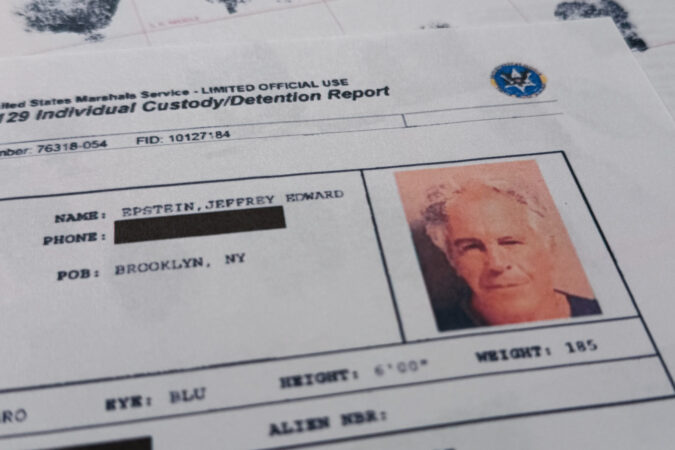
  • Justice Department says it’s taken down Epstein-related files that may have had victim information

    Justice Department says it’s taken down Epstein-related files that may have had victim information

    WASHINGTON — The Justice Department said Monday it had withdrawn several thousand documents and “media” related to disgraced financier Jeffrey Epstein after lawyers complained to a New York judge that the lives of nearly 100 victims had been “turned upside down” by sloppy redactions in the government’s latest release of Epstein-related materials.

    The department blamed the release of sensitive information that drew an outcry from victims and their lawyers on mistakes that were “technical or human error.”

    In a letter to the New York judges overseeing the sex trafficking cases brought against Epstein and confidant Ghislaine Maxwell, U.S. Attorney Jay Clayton wrote that the department had taken down nearly all materials identified by victims or their lawyers, along with a “substantial number” of documents identified independently by the government.

    Clayton, who is based in Manhattan, said the department has “iteratively revised its protocols for addressing flagging documents” after victims and their lawyers requested changes to the process for review and redaction of posted records.

    He wrote that documents are promptly pulled down from the public website when victims flag a concern that something should be redacted. He said the concern is then evaluated before a redacted version of the document can be reposted, “ideally within 24 to 36 hours.”

    Clayton’s letter came in response to a letter sent Sunday to Judge Richard M. Berman from two lawyers for Epstein victims who had sought “immediate judicial intervention” because of what they described as thousands of instances when the government had failed to redact names and other personally identifying information.

    The judge scheduled a conference for Wednesday, saying the lawyers could invite their clients and that he understood the concern of the lawyers and the urgency but also added: “I am not certain how helpful I can be.”

    He also encouraged the lawyers, Brittany Henderson and Brad Edwards, to “continue to resolve open issues in good faith.”

    In their letter to Berman, the lawyers included comments from eight women, including one who wrote that the records’ release was “life threatening” and another who said she’d gotten death threats after 51 entries included her private banking information, forcing her to try to shut down her credit cards and accounts.

    After Epstein took his own life in August 2019, Berman held a hearing in Manhattan federal court and allowed his accusers to speak. Berman, who presided over the sex trafficking case against Epstein, put the Sunday letter on the public docket on Monday.

    Also Monday, a section of the Justice Department’s Epstein files website that had contained public court records from Epstein and Maxwell’s criminal cases and civil lawsuits was no longer functioning.

    A message seeking comment on the website issue was left for the Justice Department.

    Deputy Attorney General Todd Blanche said in an interview Sunday on ABC’s This Week that there have been sporadic errors in redacting, or blacking out, sensitive information but that the Justice Department has tried to work quickly to address them.

    “Every time we hear from a victim or their lawyer that they believe that their name was not properly redacted, we immediately rectified that. And the numbers we’re talking about, just so the American people understand, we’re talking about .001 percent of all the materials,” Blanche said.

    The effect of errors in the document redactions was highlighted Monday morning at a sex trafficking trial in New York federal court when lawyers for two high-end real estate brokers and their brother asked Judge Valerie E. Caproni for a mistrial because of documents that were made public without necessary redactions.

    Deanna Paul, a defense lawyer at the trial of Tal, Oren and Alon Alexander, said the “government through its own conduct has destroyed the possibility of a fair trial in this case” after the names of the brothers were included in several documents released on Friday. The brothers have pleaded not guilty to drugging and raping multiple girls and women from 2008 to 2021.

    Paul said the Alexander brothers had now been “branded” with the “most toxic association.”

    The judge tentatively rejected the mistrial request but still confronted a prosecutor, asking: “Government, really?”

    “Yes, I understand where the court’s coming from,” replied Assistant U.S. Attorney Elizabeth Espinosa.

    She said she wasn’t sure how the documents were “caught up in the universe of documents” related to Epstein but confirmed that at least one of the documents that mention the Alexander brothers “should have been properly redacted” and she said the documents had been withdrawn from public circulation.

    As she spoke, Espinosa also gave an update on the general release of Epstein-related documents by the Justice Department, saying that the remaining documents to be released were “primarily related to civil litigation” that might require a judge’s approval to be made public.