Category: Wires

  • Noem blames ‘violent protesters’ for Minneapolis chaos under tough questioning in Senate hearing

    Noem blames ‘violent protesters’ for Minneapolis chaos under tough questioning in Senate hearing

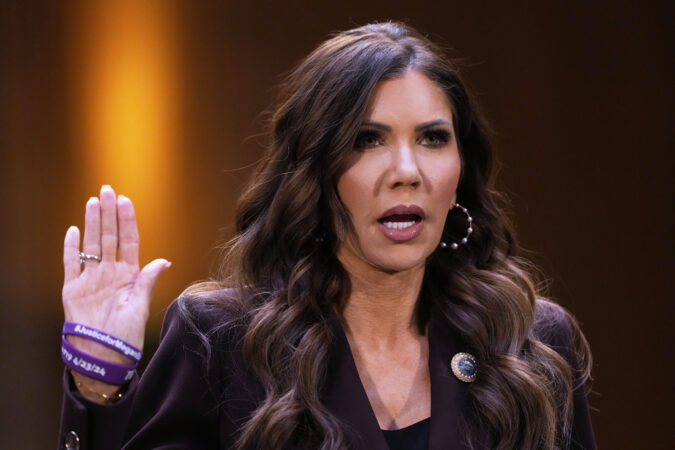
    WASHINGTON — Homeland Security Secretary Kristi Noem defended her department’s immigration enforcement tactics in front of a Senate committee on Tuesday and pushed back against criticism from Democrats who say she wrongly disparaged two protesters killed by federal officers in Minneapolis earlier this year.

    It was Noem’s first congressional appearance since the shooting deaths of the two protesters galvanized widespread opposition to how the Trump administration is executing its mass deportation agenda, a centerpiece policy of President Donald Trump’s second term. At the time, Noem portrayed the protesters, two U.S. citizens, as agitators, although accounts from local officials and bystander video contradicted assertions from her and other administration officials.

    In one exchange, retiring Republican Sen. Thom Tillis of North Carolina called her leadership a “disaster” and skewered her handling of the immigration crackdown and her management of emergency response.

    In the hearing, which stretched nearly five hours, Noem defended her agency’s treatment of immigrants caught up in enforcement activities, and blamed activists and others for attacks against officers.

    “I want to address the dangerous environment that our ICE officers face on the streets today,” Noem said. “They are facing a serious and escalating threat as a result of deliberate mischaracterizations of their heroic work and rhetoric that demonizes our law enforcement.”

    Since the deaths in Minneapolis, the administration has taken steps meant to tone down tensions, including drawing down the operation there. But the administration has continued pressing restrictions against both legal and illegal immigration, has been buying up warehouses for immigration detention and persisting in federal enforcement in areas around the country. Noem said about 650 investigators remain in Minnesota as part of a broader fraud probe.

    The immigration tactics of Noem’s department have triggered a clash in Congress over its routine funding, which remains unresolved, although a spending bill passed last year granted it a significant infusion of cash for the Republican administration’s mass deportation policy. Noem called the partial shutdown “reckless” and blamed Democrats for a move she said put national security at risk.

    Her appearance in front of the Judiciary Committee also comes after a weekend shooting at a bar in Texas that is being investigated as a possible act of terrorism, leading to concerns that the escalating conflict in Iran could have repercussions for security in the U.S.

    Noem blames chaotic situation for her characterization of killed protesters

    In what was initially billed as an effort to root out fraud in Minnesota, Homeland Security sent hundreds of officers from Immigration and Customs Enforcement and Customs and Border Protection to the state. They were met by protesters who organized marches, patrolled neighborhoods for ICE activity with whistles and ferried food to immigrants too afraid to leave their homes.

    Renee Good, a 37-year-old mother of three, was shot and killed by an ICE officer on Jan. 7, setting off intense protests demanding an end to the operation. Then on Jan. 24, Customs and Border Protection officers opened fire on another Minnesota resident, Alex Pretti, who had been filming enforcement operations.

    Those deaths led to cries for accountability and transparency. Noem, whose initial comments portrayed both Good and Pretti as the aggressors, has come under withering criticism by Democrats and some Republicans, who have called for her to resign.

    Democrats repeatedly questioned Noem about her initial comments and called on her to apologize.

    “You and your agency rushed to brand these victims as, quote, domestic terrorists,” said Sen. Dick Durbin of Illinois, the top Democrat on the committee. “We have ample video evidence and eyewitness testimony proving you are wrong. Your statements caused immeasurable pain to these families.”

    Noem said she was relying on information from people on the scene and blamed “violent protesters” for contributing to the chaos officers encountered.

    “I was getting reports from the ground from agents at the scene, and I would say that it was a chaotic scene,” she said.

    After public outrage over the deaths, Trump sent border czar Tom Homan to Minneapolis to take control of operations. Homan has since announced a drawdown of the ICE and CBP officers who had been sent to Minnesota to carry out what had been dubbed Operation Metro Surge, although he’s been adamant that the president’s mass deportation agenda will continue.

    Noem also faced some Republican criticism

    Republicans largely kept the focus on the large numbers of migrants who came into the country under former President Joe Biden, portraying Noem as the leader of a cleanup effort of the former administration’s mess.

    But she did come under some harsh questioning by members of her own party. Tillis, who called on Noem to resign following the shootings in Minneapolis, criticized her for erroneously arresting American citizens, for failures in her disaster recovery agency and for how she shot her own dog.

    “What we’ve seen is a disaster under your leadership, Miss Noem, a disaster,” Tillis said. “What we’ve seen is innocent people getting detained that turn out are American citizens.”

    Tillis, who has already announced that he is not running for another term., added: “We’re beginning to get the American people to think that deporting people is wrong. It’s the exact opposite. The way you’re going about deporting them is wrong.”

    Another Republican, Sen. John Kennedy from Louisiana, also pushed her to explain why her department paid more than $200 million for an ad campaign she appeared in last year encouraging migrants to leave the country voluntarily and questioned whether Trump knew about the price tag ahead of time.

    Noem, who is set to appear Wednesday in front of a House committee, defended those ads, saying they were effective and went through the regular department bidding process.

    “Well, they were effective in your name recognition,” Kennedy said.
  • New York’s congestion toll into Manhattan upheld by a federal judge over Trump’s objections

    New York’s congestion toll into Manhattan upheld by a federal judge over Trump’s objections

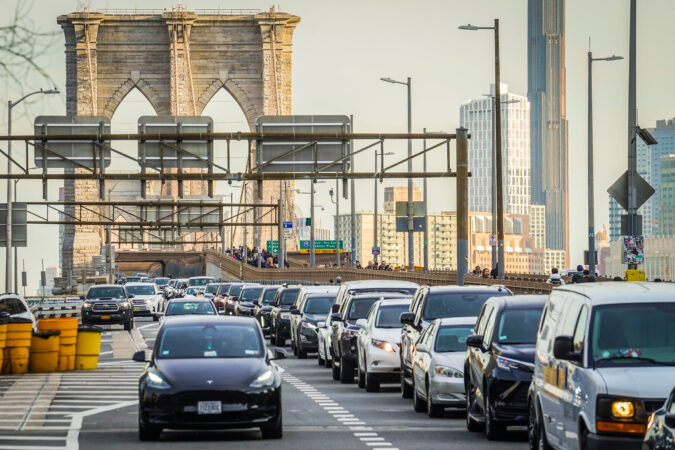
    NEW YORK — A federal judge has blocked President Donald Trump’s administration’s efforts to halt New York’s first-in-the-nation congestion fee meant to reduce traffic and pump revenue into the region’s aging transit system.

    U.S. District Judge Lewis Liman on Tuesday ruled that the U.S. Department of Transportation lacked the authority to unilaterally rescind approval of the $9 toll, which former Democratic President Joe Biden initially green-lit.

    Instead, he sided with the Metropolitan Transportation Authority, which had argued that the department’s reversal was “unlawful” because the agency had not adequately explained its reasoning.

    “The Secretary’s actions were arbitrary and capricious, an abuse of discretion, and not in accordance with law,” Liman wrote in his 149-page ruling, referring to Trump’s Transportation Secretary Sean Duffy.

    The judge noted that New York’s legislature passed the toll, which its governor signed into law and received the necessary federal approvals before launching.

    “The democratic process worked,” Liman wrote, even as he left the door open for future attempts by Trump and other opponents to kill the program, which took effect on Jan. 5, 2025.

    Gov. Kathy Hochul said the decision vindicates a “once-in-a-lifetime success story” that’s “yielded huge benefits” in its first year of operation, including reducing gridlock and unlocking critical funding for mass transit.

    “The judge’s decision is clear: Donald Trump’s unlawful attempts to trample on the self-governance of his home state have failed spectacularly,” the Democrat said in a statement. “Congestion pricing is legal, it works, and it is here to stay.”

    The U.S. DOT said it’s reviewing its legal options, including appealing.

    “Once again, working-class Americans are being sidelined under Governor Kathy Hochul’s policies, which impose a massive tax on every New Yorker,” the agency said in a statement.

    New York’s congestion toll is imposed on most vehicles driving into Manhattan south of Central Park.

    The toll varies depending on vehicle type and time of day, and is added to tolls drivers already pay to cross bridges and tunnels into Manhattan, but generally costs about $9.

    Congestion pricing schemes aimed at reducing traffic pollution and encouraging public transit use have long existed in other global cities, including London, Stockholm, Milan, and Singapore, but not in the U.S.

    But Trump, whose namesake Trump Tower and other properties are within the congestion zone, has strongly opposed the idea. During his presidential campaign, he vowed to kill New York’s plan as soon as he took office.

    Then last February, Duffy rescinded the toll’s federal approval, calling the fee “a slap in the face to working-class Americans and small business owners.” He threatened to withhold federal funding for projects in New York if the toll weren’t discontinued.

    But Liman temporarily blocked the administration from following through on those threats until he issued a final decision. The Manhattan judge previously dismissed a series of lawsuits brought by local opponents, including New Jersey’s governor, unionized teachers in New York City, a trucking industry group, and local suburban leaders.

    Hochul had been a vocal supporter of the toll but paused its planned rollout in 2024, a move widely seen as an attempt to help suburban Democrats in congressional races where the toll was divisive. She then reinstated the fee after the election, but lowered it from $15 to $9.

    As the program marked its first anniversary in January, Hochul, who is up for reelection, joined the MTA in touting the toll’s benefits.

    According to a recent MTA report, the toll has led to some 27 million fewer vehicles coming into the heart of Manhattan, resulting in 22% less air pollution and 23% faster commute times for those opting to drive and pay the fee.

    The toll has also generated more than $550 million in revenue for the region’s creaky and cash-strapped transit system — exceeding projections, the MTA has said.

    Sales tax revenues, office leases and foot traffic in the congestion zone have all increased since the toll took effect, disproving concerns it would hurt the local economy, according to the agency.

    “Traffic is down, business is up, and we’re making crucial investments in a transit system that moves millions of people a day,” Janno Lieber, the MTA’s CEO, said Tuesday. “New York is winning.”

  • War with Iran strains the U.S.-U.K. relationship as Starmer and Trump disagree

    War with Iran strains the U.S.-U.K. relationship as Starmer and Trump disagree

    LONDON — Keir Starmer has never had a bad word to say in public about Donald Trump.

    That is not being reciprocated now as the American president lambasts the British prime minister over his reluctance to join the U.S.-Israeli strikes on Iran.

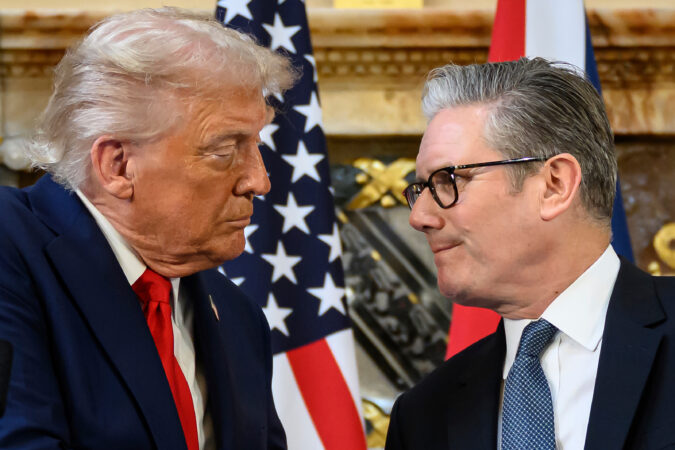
    “This is not Winston Churchill that we’re dealing with,” Trump said Tuesday at the White House, blasting Britain’s reluctance to let U.S. warplanes use its bases.

    The dispute is roiling a relationship that Starmer worked hard to forge, and further straining trans-Atlantic ties frayed by Trump’s “America first” foreign policy and transactional approach to international relations.

    Britain is in Trump’s bad books

    “This was the most solid relationship of all. And now we have very strong relationships with other countries in Europe,” Trump told British tabloid the Sun in an interview published Tuesday.

    “I mean, France has been great. They’ve all been great,” Trump said. “The U.K. has been much different from others.”

    “It’s very sad to see that the relationship is obviously not what it was,” he said.

    Starmer initially blocked American planes from using British bases for the attacks on Iran that started on Saturday. He later agreed to let the United States use bases in England and on Diego Garcia in the Indian Ocean to strike Iran’s ballistic missiles and their storage sites, but not to hit other targets.

    Even after the British base at Akrotiri in Cyprus was hit by an Iran-made drone over the weekend, Starmer said that the United Kingdom “will not join offensive action.” He said Tuesday that a Royal Navy destroyer, HMS Dragon, and Wildcat helicopters with counter-drone capabilities were being sent to the region as part of “defensive operations.” British forces have also shot down drones in Jordanian and Iraqi airspace, the government said.

    Starmer has offered a rare, though implicit, rebuke of the U.S. president, saying Monday that the U.K. government doesn’t believe in “regime change from the skies.”

    “Any U.K. actions must always have a lawful basis and a viable, thought-through plan,” Starmer told lawmakers in the House of Commons on Monday.

    “President Trump has expressed his disagreement with our decision not to get involved in the initial strikes, but it is my duty to judge what is in Britain’s national interest,” Starmer added.

    The Financial Times called it Starmer’s “Love Actually moment” — a reference to the 2003 movie scene in which a British prime minister played by Hugh Grant stands up to a bullying U.S. president played by Billy Bob Thornton.

    Friction has grown over Greenland and Diego Garcia

    Friction between the two leaders has been building for months. Trump’s threat to take over Greenland was denounced by Starmer and other European leaders earlier this year. Recently, Trump has condemned Britain’s agreement to hand over the Chagos Islands, home to the Diego Garcia base, to Mauritius, despite his administration earlier backing the deal.

    Peter Ricketts, a former head of the U.K. Foreign Office, told the Observer newspaper that under Trump, “the Americans have effectively given up on any effort to be consistent with international law.”

    That is a red line for the law-abiding Starmer, a barrister and former chief prosecutor for England and Wales.

    The spat is a setback for Starmer’s efforts to woo Trump since the president’s return to office in 2025. The British government rolled out the red carpet to the president for a state visit as the guest of King Charles III, and Starmer consistently has praised Trump’s efforts — so far unsuccessful — to broker an end to the Russia-Ukraine war.

    The Iran war has also divided European leaders, who fall along a spectrum from condemnation to support.

    NATO Secretary-General Mark Rutte said that he unreservedly approves of Trump’s decision to attack Iran and kill its supreme leader, and called the war crucial for Europe’s security.

    The U.K., France, and Germany jointly said that they weren’t involved in the strikes, but were prepared to enable “necessary and proportionate defensive action to destroy Iran’s capability to fire missiles and drones at their source.”

    Spanish Prime Minister Pedro Sánchez condemned the strikes as “unjustifiable” and “dangerous.”

    Polling suggests many Britons are skeptical of the U.S. justification for war. But politicians to the right of Starmer’s Labour Party slammed the prime minister for not joining the offensive. Conservative leader Kemi Badenoch said that her party “stands behind America taking this necessary action against state-sponsored terror.”

    Foreign Office Minister Stephen Doughty denied the U.S.-U.K. “special relationship” was on the ropes.

    “Our relationship with the United States is strong,” he said Tuesday in the House of Commons. “It has endured, it continues to endure, and it will endure into the future on both the economic and the security fronts.”

  • Father who gave gun to Georgia school shooting suspect for Christmas is guilty of 2nd-degree murder

    Father who gave gun to Georgia school shooting suspect for Christmas is guilty of 2nd-degree murder

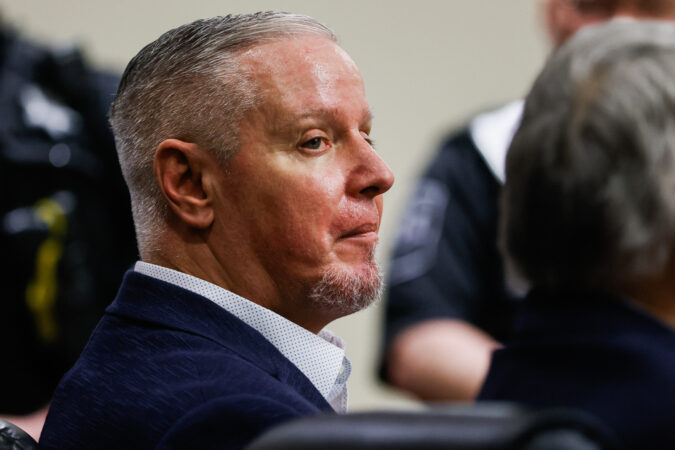
    WINDER, Ga. — A Georgia man who gave his teenage son the gun he’s accused of using to kill two students and two teachers at a high school was convicted Tuesday of second-degree murder and involuntary manslaughter.

    Jurors took less than two hours to find Colin Gray guilty of all charges in the September 2024 shooting at Apalachee High School in Winder, northeast of Atlanta. Gray now joins a growing number of parents being held responsible in court after their children were accused in shootings.

    Colin Gray was found guilty of second-degree murder in the deaths of two 14-year-old students, Mason Schermerhorn and Christian Angulo. Georgia law defines second-degree murder as causing the death of a child by committing the crime of cruelty to children. Gray was found guilty of involuntary manslaughter in the killings of teachers Richard Aspinwall, 39, and Cristina Irimie, 53.

    Another teacher and eight other students were wounded. Gray was also convicted of multiple counts of reckless conduct and cruelty to children.

    Reactions to the verdict

    Gray showed little emotion as the verdict was read and each juror was polled by the judge. Deputies then cuffed his hands behind his back as he stood at the defense table, speaking with his lawyer. He will be sentenced at a later date. Second-degree murder is punishable by at least 10 but no more than 30 years in prison, while involuntary manslaughter carries a penalty of one to 10 years in prison.

    Some relatives of victims wept as the verdicts were read. They declined to comment after court. Gray’s defense lawyers left without speaking to reporters.

    “We talk a lot about rights in our country,” Barrow County District Attorney Brad Smith said after the verdict. “But God gave us a duty to protect our children, and I hope that we remember that, as parents, as community members, to protect our children because that is our God-given duty.”

    The teen’s mother, Marcee Gray, wasn’t charged. She testified that she had urged her estranged husband to take any guns and lock them inside his truck so they would not be accessible to their son. She and Colin Gray were separated in the months leading up to the shooting, and Colt Gray lived mostly with his father during that time. She declined to comment when reached by phone after the verdict.

    The shooting

    Prosecutors said Gray gave his son the gun as a Christmas gift and allowed him access to it along with ammunition despite the boy’s deteriorating mental health. They said he had “sufficient warning that Colt Gray would harm and endanger” other people.

    Fourteen at the time of the shooting, Colt Gray has pleaded not guilty to a total of 55 counts, including murder. A judge has set a status hearing for mid-March.

    Investigators said Colt Gray carefully planned the Sept. 4, 2024, shooting at the school attended by 1,900 students.

    He boarded the school bus with a semiautomatic, assault-style rifle in his book bag, the barrel sticking out and wrapped in poster board, investigators said. He left his second-period class and emerged from a bathroom with the gun and shot people in a classroom and hallways, investigators said.

    Parents’ responsibility

    Colin Gray knew his son was obsessed with school shooters, even having a shrine in his bedroom to Nikolas Cruz, the shooter in the 2018 massacre at Florida’s Marjory Stoneman Douglas High School, prosecutors said.

    “It wasn’t like one parent missed one warning,” Smith told reporters. “This was multiple warnings over a lengthy period of time and, like we said, you just had to do one thing — take that rifle away and this would have been prevented.”

    Jennifer and James Crumbley, the first U.S. parents held criminally responsible for a mass school shooting committed by a child, are serving 10-year prison terms for involuntary manslaughter after their son Ethan killed four students and wounded others in Michigan in 2021.

    Colin Gray was the first such parent to be charged in Georgia. Smith said Marcee Gray had seen what happened in Michigan and asked her husband to remove the weapons as a result. “So Michigan was able to move the needle to the point that it almost stopped this tragedy,” he said. “We hope we’ve moved the needle a little further.”

    Legislative changes

    Georgia lawmakers last year passed a school safety bill in response to the shooting. It directs state officials to create an alert system, including the names of students who an investigation has found threatened violence or committed violence at schools.

    It also requires law enforcement to notify schools when officers learn a child has threatened death or injury to someone at a school, the implementation of mobile panic alert buttons at schools, quicker transfers of records when students switch schools and mental health coordinators in each of the state’s 180 school districts.

    Legislators also approved a request by Gov. Brian Kemp to spend an extra $50 million on school safety.

  • Justice Dept. reverses course and seeks to defend orders targeting law firms

    Justice Dept. reverses course and seeks to defend orders targeting law firms

    The Trump administration said Tuesday that it still wanted to defend President Donald Trump’s executive orders sanctioning several law firms, abruptly reversing course from its position a day earlier.

    Judges last year blocked Trump’s orders aimed at the firms, which had hired his perceived foes or took on cases he disliked. The Justice Department was appealing those rulings and trying to restore the orders, which demanded that the firms lose access to government contracts and buildings.

    On Monday evening, the agency said in a filing that it wanted to abandon the appeals, essentially admitting defeat. The law firms hailed that decision, with one saying the administration “capitulated.”

    But in a startling turnaround less than 24 hours later, the administration wrote in a brief filing in the U.S. Court of Appeals for the D.C. Circuit that it was seeking to withdraw its motion from a day earlier.

    The Justice Department did not explain in the filing why it was backpedaling, stating only that it was its prerogative to keep appealing and adding that the court had not yet granted its request to dismiss the case. The White House declined to comment, referring questions to the Justice Department. A spokeswoman for the agency also declined to comment.

    The four law firms involved — WilmerHale, Jenner & Block, Perkins Coie and Susman Godfrey — had all filed lawsuits challenging Trump’s sanctions, saying they could devastate their businesses.

    Judges sided with all four firms last year, issuing often scathing rulings that rebuked the president’s orders as retaliatory and unconstitutional.

    “The order shouts through a bullhorn: If you take on causes disfavored by President Trump, you will be punished!” U.S. District Judge Richard J. Leon, who was appointed by President George W. Bush, wrote while blocking sanctions for WilmerHale.

    The administration has repeatedly defended the orders as lawful and criticized judges who ruled against them. In court papers and during hearings, the Justice Department has said the orders were not meant as punishment and suggested that the firms’ lawsuits infringed on Trump’s speech.

    The government’s contradictory filings this week came ahead of a looming deadline in its appeals. The Justice Department’s opening brief in the case is due Friday, while the firms have briefs due in late March.

    The firms criticized Trump’s executive orders and his administration’s reversal alike on Tuesday. The Justice Department “offered no explanation to either the parties or the court for its reversal,” Perkins Coie said in a statement.

    “Yesterday evening, the Administration told the Court that it gave up and wouldn’t even try to defend its unconstitutional executive orders,” Susman Godfrey said in a statement. “Today, it reversed course. Regardless, Susman Godfrey will defend itself and the rule of law — without equivocation.”

    In its filing on Tuesday, the Justice Department said the administration contacted attorneys for the firms and that they all opposed the move.

    The filing included a statement attributed to the firms that said they “oppose the government’s unexplained request to withdraw yesterday’s voluntary dismissal, to which all parties had agreed. Under no circumstances should the government’s unexplained about-face provide a basis for an extension of its brief.”

    The New York Times first reported Tuesday that the government would try to continue defending the executive orders.

    While the firms involved in the appeals had fought Trump’s orders, other legal practices instead sought to avoid such battles. Nine firms struck deals with him to lift or avoid similar penalties, leading to intense upheaval and outrage across the legal industry.

    The first firm to strike an agreement, Paul Weiss, pledged $40 million in pro bono work on issues that included assisting veterans. Eight more firms, including some of the country’s wealthiest, struck deals for increasingly large amounts as well, with combined pledges of pro bono work reaching nearly $1 billion.

    These deals sent shock waves across the legal industry. The firms that reached the agreements defended them as needed to keep their businesses afloat, and their leaders vowed that the deals would not change their work.

    But many attorneys were deeply skeptical of these pledges, expressing outrage internally as well as publicly. Lawyers at some firms resigned in protest following deals with Trump, while others left places that made deals and joined offices that were fighting his executive orders.

  • Source: Braves’ Jurickson Profar faces 162-game suspension for second positive drug test

    Source: Braves’ Jurickson Profar faces 162-game suspension for second positive drug test

    NEW YORK — Atlanta Braves outfielder Jurickson Profar faces a 162-game suspension by Major League Baseball for a possible second failed test for a performance-enhancing drug, a person familiar with the issue told The Associated Press on Tuesday.

    The person spoke on condition of anonymity because the process, first reported by ESPN, was ongoing.

    Profar intends to ask the players’ association to file a grievance to appeal any discipline to baseball’s independent arbitrator, Martin F, Scheinman, a second person familiar with the process said, also on condition of anonymity, because no announcement had been made.

    Because this would be Profar’s second infraction, an appeal would take place after a suspension was announced.

    An All-Star in 2024, Profar was suspended for 80 games last March 31 following a positive test for Chorionic Gonadotrophin (hCG), a hormone that helps production of testosterone. He issued a statement then saying: “I would never willingly take a banned substance, but I take full responsibility and accept MLB’s decision.”

    His agent, Dan Lozano, did not immediately respond to a request for comment.

    Profar homered in his return from suspension on July 2 and finished with a .245 average, 14 homers, 43 RBIs and a .787 OPS in 80 games. He batted .280 in 2024, when he set career highs with 24 homers, 85 RBIs and an .839 OPS.

    Profar said at the start of spring training that he had sports hernia surgery in November, requiring a six-week recovery time. He has appeared in four spring training games this year, going 3 for 10 with three RBIs.

    A native of Curaçao, Profar had been set to play for the Netherlands in the World Baseball Classic.

    Under the suspension, he would be ineligible for the postseason.

    Profar would lose his $15 million salary for this year as part of a $42 million, three-year contract through 2027. He lost half his $12 million salary in 2025 due to the initial suspension.

    He would be the seventh player suspended 162 games for a second PED infraction after New York Mets pitcher Jenrry Mejia (July 2015), Cleveland outfielder Marlon Byrd (June 2016), free agent catcher Cody Stanley (July 2016), Houston pitcher Francis Martes (February 2020), Mets second baseman Robinson Canó (November 2020) and Milwaukee pitcher J.C. Mejia (September 2023).

    Mejia received a lifetime ban in February 2016 after a third positive test, the only player to be given a permanent ban since drug testing with penalties started in 2004.

    Four players have been suspended previously this year for positive tests, including former Phillies outfielder Max Kepler for 80 games under the major league program following a positive test for Epitrenbolone.

    Following the offseason signing of left fielder Mike Yastrzemski to a $23 million, two-year deal, Profar had been targeted to be the Braves’ primary designated hitter.

    When catcher Sean Murphy returns from a hip injury, perhaps in May, 2025 NL Rookie of the Year Drake Baldwin could fill in at DH when not behind the plate.

    With Yastrzemski, Michael Harris and Ronald Acuña Jr. in the outfield, Eli White could be a DH option. The Braves also are without projected starting shortstop Ha-seong Kim due to a finger injury. Mauricio Dubon, expected to serve a utility role, is scheduled to open the season as the starting shortstop.

    The loss of Profar could create an opportunity for Dominic Smith, who signed a minor league deal on Feb. 17.

  • White House offers shifting rationales for war with Iran

    White House offers shifting rationales for war with Iran

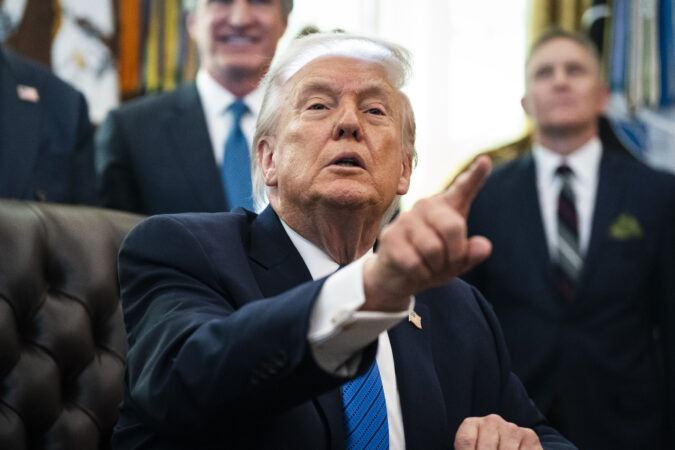
    As an expanding Middle East war entered its fourth day, the Trump administration gave shifting rationales for its decision to attack Iran, even as U.S. officials with access to intelligence reports said they saw no sign the country had posed an imminent threat to the United States.

    President Donald Trump and his top national security aides, defending a conflict that has tepid public backing and is incurring escalating risks, emphasized Iran’s arsenal of ballistic missiles rather than its nuclear program as the principal threat. But they provided different descriptions of the danger.

    At his first public event since the attack began, Trump on Monday never mentioned a key part of his original rationale for the war: deposing Iran’s theocratic regime.

    Instead, he emphasized that Iran would “soon” have missiles that could hit targets inside the United States.

    What Trump had outlined over the weekend as an effort to devastate Tehran’s rulers so that the Iranian people could take over was, by Monday, “not a so-called regime change war,” in the words of Defense Secretary Pete Hegseth.

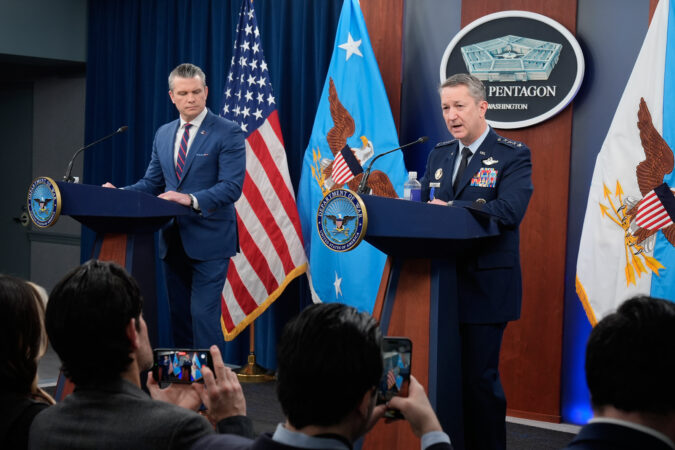
    Hegseth told reporters at the Pentagon that the Islamic Republic was building sophisticated missiles and other conventional weapons to shield its plans for a nuclear bomb. “Iran had a conventional gun to our head as they tried to lie their way to a nuclear bomb,” he said.

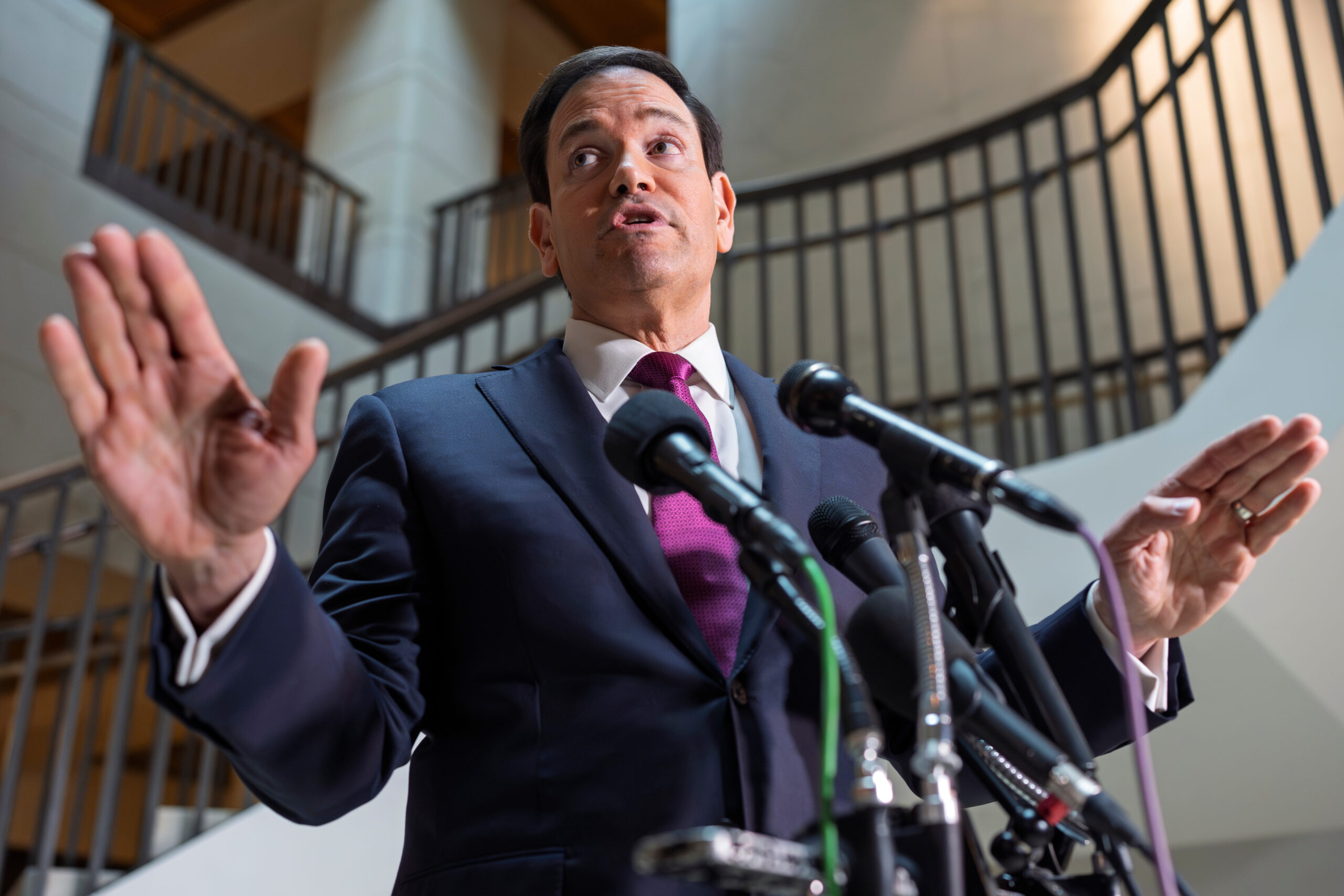
    Secretary of State Marco Rubio offered a third line of reasoning. The United States, he said, knew Israel was going to strike Iran, which would lead to counterattacks against U.S. forces and potential casualties, and decided to strike first to minimize the risk.

    Secretary of State Marco Rubio speaks to reporters as he arrives for an intelligence briefing with top lawmakers on Iran, at the Capitol in Washington, Monday, March 2, 2026. (AP Photo/J. Scott Applewhite)

    Iran’s voluminous missile arsenal, which was thinned by U.S.-Israeli strikes last June but still considered dangerous, consists mostly of short-range missiles threatening U.S. bases and allies in the Middle East. Over the last two years, Iran has fired those missiles in response to attacks on its territory or interests, but not preemptively.

    As for an intercontinental ballistic missile capable of directly reaching the United States, the Pentagon’s Defense Intelligence Agency reported last year that Iran could have that weapon by 2035 “should Tehran decide to pursue the capability.”

    Meanwhile, more than three days into the conflict and after more than a thousand airstrikes, U.S. and Israeli weapons so far have largely left Iran’s main nuclear installations untouched, suggesting those sites — significantly damaged last June — are not currently seen as a priority threat.

    The White House’s shifting public goals for the war, and questions about the intelligence behind them, have contributed to a lack of clarity about when Trump might declare an end to the largest military operation since the 2003 invasion of Iraq.

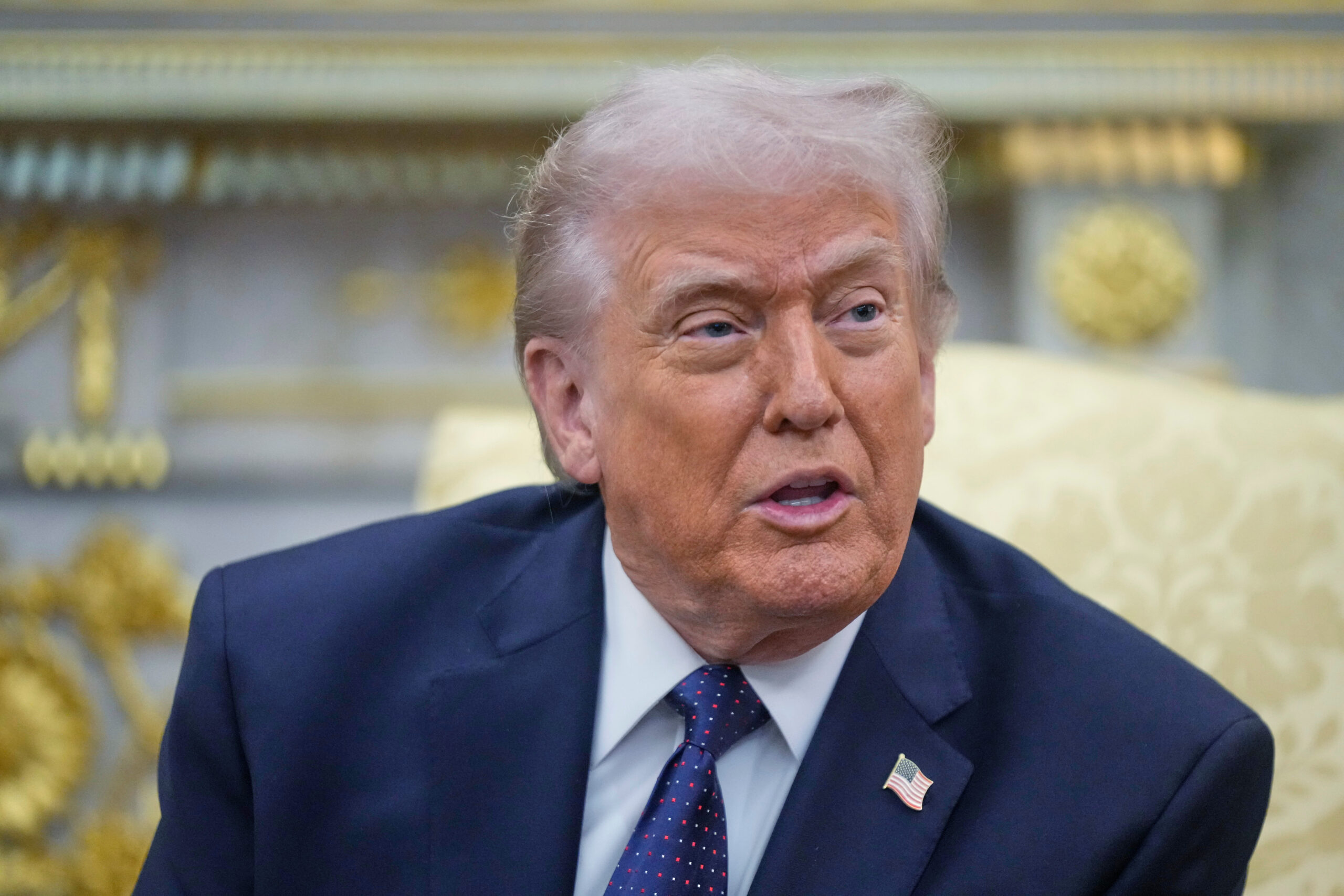
    As the war widened across the Middle East, Trump said operations against Iran could go on for four to five weeks, or longer. In an interview with the New York Post, the president said he would not rule out sending in U.S. ground troops, but added that they are “probably” not needed.

    President Donald Trump speaks during a meeting with German Chancellor Friedrich Merz in the Oval Office at the White House, Tuesday, March 3, 2026, in Washington. (AP Photo/Mark Schiefelbein)

    Republican lawmakers have largely backed Trump’s decision to strike Iran, citing its long record of terrorism against the United States and its allies, and its nuclear ambitions.

    But Rubio’s decision to pin the justification for the attack on Israel angered prominent MAGA commentators and conservative pundits, who said an operation of this magnitude should be done squarely in the interests of the United States.

    “My own feeling is no one should have to die for a foreign country. I don’t think those four service members died for the United States,” said Trump advocate and podcast host Megyn Kelly, referring to the first four acknowledged U.S. deaths in the war, a toll that later rose to six. “I think they died for Iran or for Israel.”

    In a social media post Monday night, Iranian Foreign Minister Abbas Araghchi piled on. “Mr. Rubio admitted what we all knew: U.S. has entered a war of choice on behalf of Israel. There was never any so-called Iranian ‘threat,’” he wrote.

    This week, the House and Senate are poised to vote on measures that would attempt to halt further military attacks in Iran without lawmakers’ approval, as Democrats frame the conflict as an “illegal war” launched without a clear rationale or an authorization from Congress.

    A Washington Post flash poll found that 52% of Americans oppose the strikes “strongly” or “somewhat,” while 39% support them.

    Even as the administration’s public case for war shifted, several U.S. officials with access to classified intelligence assessments said there was no information before the strikes began indicating Iran has made sudden, worrisome progress in its missile or nuclear programs.

    “There was no imminent threat to the United States of America by the Iranians. There was a threat to Israel,” Sen. Mark Warner (D., Va.), the vice chair of the Senate Intelligence Committee, told reporters Monday.

    Others said Iran’s weakness, amid severe economic problems and protests that challenged the regime, provided an opportunity to strike.

    A former U.S. intelligence official said American spy agencies were concerned by the speed with which Iran reconstituted its missile program after the 12-day war in June. “If you wait a year from now, maybe the regime will have stabilized, the missile program will be more populated and federated,” said the former official, who spoke before the strikes began and requested anonymity to discuss a sensitive subject.

    With Trump a potentially lame duck president in a year’s time, “Right now is the sweet spot,” he said.

    Multiple legal experts argued that none of the administration’s public explanations for the attacks appeared to constitute a legitimate rationale to enter into such a major conflict, especially without authorization from Congress.

    “Having a weapons capacity is not the same thing as presenting an imminent threat of an armed attack,” said Tess Bridgeman, a former senior lawyer on the National Security Council during the Obama administration.

    The first days of U.S. and Israeli airstrikes appeared focused on decapitating Iran’s leadership and blunting its ability to retaliate by destroying missile infrastructure and disrupting its military command network.

    Rafael Grossi, head of the International Atomic Energy Agency, said Monday that the U.N. nuclear watchdog agency has seen no “major military activity targeting the nuclear facilities” in Iran since the U.S.-Israeli attacks began early Saturday. That assessment, he said, is based on information from Iran as well as multiple satellite images, including those provided “by the U.S. and others.”

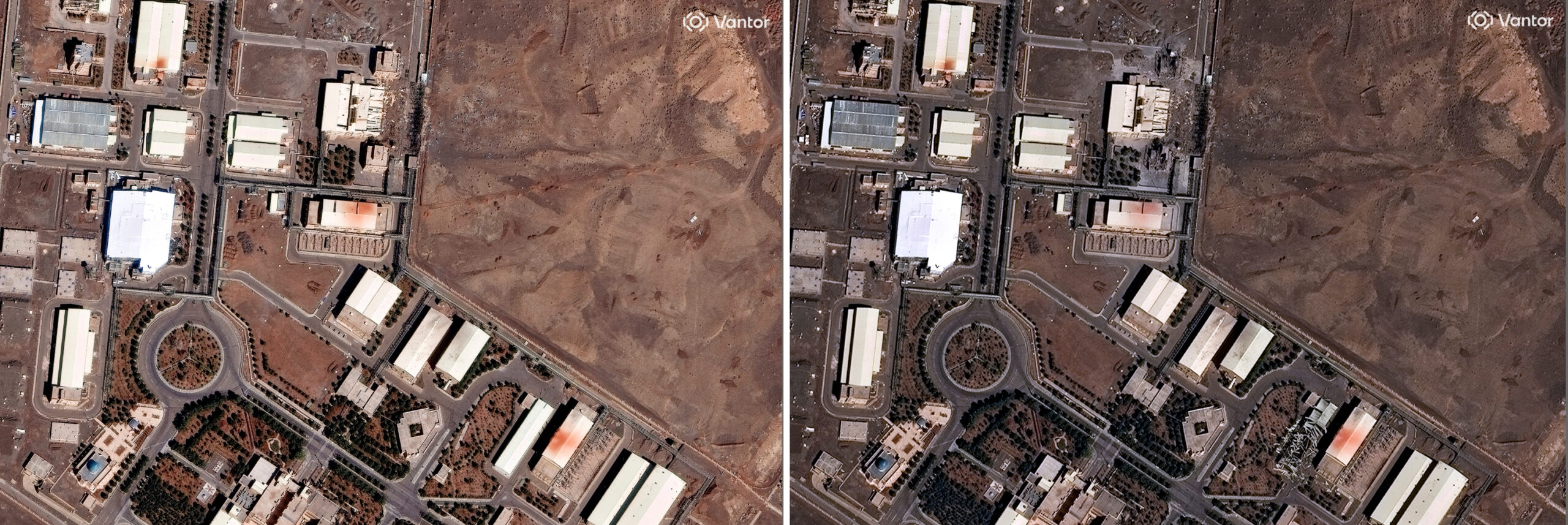
    Grossi’s assessment came as Tehran charged there was an attack on its Natanz enrichment facility and as Israel warned civilians to evacuate areas around Isfahan, a major center of Iran’s nuclear program.

    In this combo from satellite images provided by Vantor shows is a view of Natanz nuclear facility on March 1, 2026, left, and with damage on March 2, 2026 in Iran. (Satellite image ©2026 Vantor via AP)

    Satellite imagery of Natanz captured Monday showed damage to three buildings on the site, damage that Grossi indicated was fairly minor. Vehicle and personnel entrances to underground portions of the facility where centrifuges are kept appear to have been hit, according to the imagery.

    The United States and Israel have long accused Iran of seeking to build a nuclear weapon under the cover of enriching uranium for civilian purposes. Last year’s strikes targeting Iran’s uranium enrichment facilities and other sites significantly delayed the program, U.S., Israeli, and IAEA officials said. Trump and Hegseth said Iran’s nuclear ambitions had been “obliterated.”

    The Defense Intelligence Agency in a report produced before those strikes assessed that since 2019, in the wake of Trump leaving a nuclear deal with Iran that limited its nuclear program, the Islamic Republic had boosted uranium enrichment and expanded its stockpiles to the point that the time required to produce sufficient weapons-grade uranium for a first nuclear device had fallen to “probably less than one week.”

    The actual time to produce a weapon ranged from two to four months, the agency estimated, according to people familiar with the assessments who spoke on the condition of anonymity because of the matter’s sensitivity.

    The June strikes targeted Iran’s main enrichment plants at Natanz and Fordow. But the Iranians had been manufacturing centrifuge cascades long before the strikes and likely were storing them at other locations, the people said. “So their ability to do a breakout may or may not have been dependent at all” on the sites that were bombed, one person said.

    Post-strike, the DIA and other U.S. intelligence agencies determined that the time Iran now needed to produce enough weapons-grade uranium to build a warhead in extremis — without rebuilding the damaged sites — had lengthened to between four and eight months, people familiar with the matter said.

    Uncertainties about Iran’s nuclear program are heightened by the fact that IAEA inspectors left the country last July and haven’t returned.

    “The return of the IAEA inspectors will be further delayed as a result of the renewed conflict, and without effective IAEA monitoring, the whereabouts and security of Iran’s highly enriched uranium will now become even more uncertain,” said Daryl Kimball, executive director of the Arms Control Association think tank.

    In the meantime, Kimball said, “There hasn’t been any sign that Iran is rebuilding anything.”

  • Inside the Clintons’ depositions on Epstein and Maxwell

    Inside the Clintons’ depositions on Epstein and Maxwell

    The Republican-led House Oversight and Government Reform Committee released videos Monday of the closed-door depositions of former President Bill Clinton and former Secretary of State Hillary Clinton, part of its investigation into convicted sex offender Jeffrey Epstein.

    Bill Clinton appeared before the committee on Friday, marking the first time a former president had been compelled to testify before Congress under a subpoena. During his lengthy deposition, the former president sought to distance himself from Epstein, saying he had no knowledge of Epstein’s crimes and stopped associating with him years before his first guilty plea, in 2008.

    “There was nothing that I saw when I was around him that made me realize that he was trafficking women,” Clinton told the committee. “I saw nothing, and I did nothing wrong.”

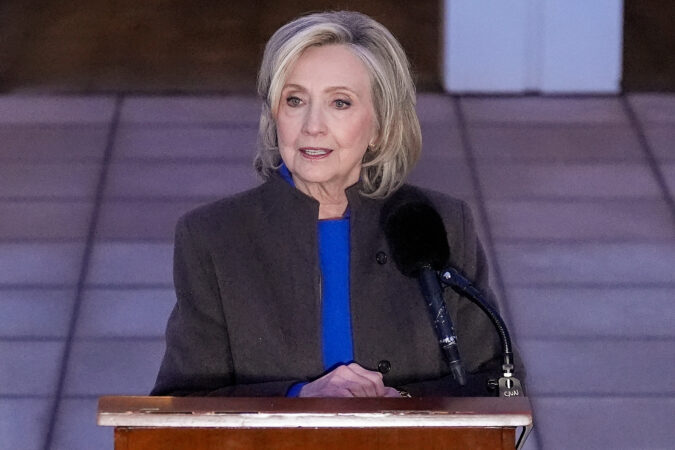
    In her hours-long deposition Thursday, Hillary Clinton said she had no recollection of ever meeting Epstein and had known Epstein associate Ghislaine Maxwell only “casually, as an acquaintance.” Hillary Clinton derided the deposition as “political theater” and sharply questioned why she was being deposed.

    House Republicans have issued subpoenas to several people — mostly Democrats — mentioned in the millions of files related to the federal government’s Epstein investigation that have been released by the Justice Department.

    They have not called in President Donald Trump, who had a long-standing friendship with Epstein. The president has said that he knew Epstein socially in Palm Beach, Fla., and that they had a falling out in the mid-2000s. Trump has maintained that he did not know about Epstein’s criminal behavior.

    Here are some of the highlights of the depositions:

    Bill Clinton says Larry Summers connected him with Epstein

    In his deposition, Bill Clinton said his former treasury secretary Larry Summers, then the president of Harvard University, first recommended that he strike up an acquaintance with Jeffrey Epstein.

    As Clinton recalled, Summers — who recently resigned his positions at Harvard because of his association with Epstein — called Clinton shortly after he left office, in late 2001 or early 2002, when Clinton was setting up a charitable foundation.

    Summers told him of “a man named Jeffrey Epstein” who had made a multimillion-dollar contribution to brain research, Clinton said, and described Epstein as an “information-hungry person” who owned a “massive airplane” and “wanted to spend some time talking to me about economics and politics.”

    Clinton said he saw the plane as an economical means of doing international travel for his foundation.

    After taking about a half-dozen trips aboard Epstein’s jet over a couple of years, Clinton said, he quit doing so because his foundation had launched and he had offers of transportation from people he knew better.

    Clinton said he considered Epstein “an interesting man, but I didn’t think he was really interested in what I was doing.”

    Clinton told the committee that he first learned of Epstein’s crimes “in 2008, when he was prosecuted. There was nothing that I saw when I was around him that made me realize that he was trafficking women.”

    At another point, he told the committee, “I don’t believe any law enforcement agency has ever asked me [about Epstein], and I don’t know enough to volunteer anything.”

    Hillary Clinton says she ‘knew nothing about’ Epstein

    Hillary Clinton repeatedly testified that she did not know Epstein. She characterized him as not being on her “radar,” but was told in preparation for the deposition that she and Epstein both attended an event at the White House that was put on by the White House Historical Association.

    “I have no recollection, in any way, of ever having any conversation at the White House or in any other place or on any kind of device of any sort. I knew nothing about him,” Hillary Clinton said when asked if she had any communication with Epstein.

    She testified that she knew Maxwell “casually” as someone who dated an acquaintance of hers — Ted Waitt, a software developer.

    Waitt, Clinton said, brought Maxwell as a guest to the wedding of the Clintons’ daughter, Chelsea, in 2010.

    Clinton said that she did not consider Maxwell a friend and that her daughter would have been “friendlier” with Maxwell, but that she “had no idea” how often they interacted.

    Clinton declined to characterize the relationship between Maxwell and Bill Clinton.

    “He’ll have to answer that,” she said when asked if Bill Clinton and Maxwell were friends.

    Bill Clinton reacts to hot tub photo during Asia trip

    Bill Clinton was shown a photo of himself in a hot tub that was among the Epstein files and that has generated much attention.

    He recalled that it was taken while he was in Brunei at the end of a long leg of one of his Asia trips.

    He and his party, including Epstein, were guests at a hotel owned by the sultan of Brunei, with whom Clinton had established a warm relationship while he was president, and spent time in the hot tub and pool, which were located on the same floor as some of their suites.

    “I swam around. I sat in the hot tub for five minutes or whatever it was. I got up and went to bed,” Clinton said.

    Bill Clinton denies having visited Epstein’s island

    A Democrat on the committee, Rep. Melanie Stansbury of New Mexico, grilled Bill Clinton on reports that he had been on Epstein’s island.

    Clinton repeatedly denied he had ever visited the island. He also denied a report, cited by Stansbury, that he had visited Epstein’s home while he was president.

    Bill Clinton says he’s not been in touch with Maxwell for a decade

    Bill Clinton said his first recollection of meeting Maxwell was on his first flight aboard Epstein’s plane, when she was working for the financier.

    Clinton’s relationship with her “lasted longer and was more extensive than my relationship with Mr. Epstein,” he said, because she started “going with” Waitt, the tech billionaire, who became a major donor to the Clinton Foundation.

    Clinton said that, by his recollection, he has not been in contact with her for a decade or more.

    He said he did not learn about her participation in Epstein’s sexual abuse of minor girls until “the first evidence against her came out in 2019.”

    Hillary Clinton’s deposition was paused after photos were shared

    Nearly 80 minutes into the deposition, Hillary Clinton’s lawyer interrupted Republican questioning, saying pictures of the former secretary of state testifying had been posted online.

    The attorney argued that the pictures, which had been shared by Rep. Lauren Boebert (R., Colo.), violated the committee’s rules — and noted that the Clintons had repeatedly asked that the depositions be held in public.

    Visibly frustrated, Hillary Clinton told Republicans that if they were going to be sharing pictures of the interview, she was “done.”

    “You can hold me in contempt from now until the cows come home. This is just typical behavior,” she said. “We all are abiding by the same rules.”

    The hearing was then paused. When the interview resumed, Rep. James Comer (R., Ky.), the committee’s chairman, said he advised Republicans that no pictures or videos of the deposition could be released.

    The Clintons were accompanied by trusted lawyers

    The Clintons were accompanied by two lawyers who for decades have been among the most trusted and protective allies in their orbit.

    David Kendall is the Clintons’ longtime personal attorney, and Cheryl Mills was deputy White House counsel during Bill Clinton’s presidency and chief of staff to Hillary Clinton at the State Department. Both are known for their discretion and were part of the legal team that defended Bill Clinton in his 1999 Senate impeachment trial, in which he was acquitted.

  • HBO Max and Paramount+ to merge into one streaming service

    HBO Max and Paramount+ to merge into one streaming service

    Paramount Skydance will combine Paramount+ and HBO Max into one streaming service, David Ellison, the company’s CEO, said on a Monday call with investors.

    “As we said, we do plan to put the two services together, which today gives us a little over 200 million direct-to-consumer subscribers,” Ellison said. “We think that really positions us to compete with the leaders in the space.”

    The announcement comes days after Paramount Skydance agreed to buy Warner Bros. Discovery, HBO’s parent company, following Netflix’s decision to walk away from its own deal amid pressure — and a higher bid — from Paramount.

    Ellison added that Paramount didn’t want to make changes to the HBO brand. “Our viewpoint is HBO should stay HBO,” Ellison said, noting that his favorite HBO product is Game of Thrones. If Justice Department regulators allow the deal to go through, it would place recent HBO Max hits, such as The Pitt and A Knight of the Seven Kingdoms, alongside Paramount offerings including South Park and Yellowstone.

    “They built a phenomenal brand,” he said. “They are a leader in the space, and we just want them to continue doing more of it.”

    Ellison is the son of Oracle cofounder and Trump ally Larry Ellison. His firm, Skydance, bought Paramount over the summer, putting CBS, Paramount Pictures, and more until his control. The $8 billion deal was approved by the Trump administration following a lengthy review and several concessions.

    The deal to buy Warner Bros., valued at about $110 billion, will almost surely attract regulatory scrutiny from the Justice Department because — without divestments — it places major swaths of the film, television, and news industries under one roof: Warner Bros. and Paramount studios, HBO Max and Paramount+, and CBS and CNN would all have the same parent company. Ellison expressed confidence on the call that the deal wouldn’t face hurdles with regulators.

    The streaming environment has already become more consolidated in recent years. Hulu, once a joint venture by several media companies, has been fully owned by Disney since 2025. While the company expects to combine Disney+ and Hulu, for now it offers streaming bundles to customers who want to subscribe to both, and another with ESPN+, too.

  • Iran strikes spark accusations of bad-faith diplomatic negotiations

    Iran strikes spark accusations of bad-faith diplomatic negotiations

    The talks were not going well, but there were signs that they would continue. The top U.S. diplomat was due to travel to the Middle East on Monday and negotiating teams were due to meet again in Geneva for a fourth round of discussions later in the week.

    “We’ll see what happens. We’re talking later,” President Donald Trump told reporters Friday, adding that he was “not happy” with the way Iran was approaching negotiations over the fate of its nuclear program amid his repeated threats to attack unless his demands were met.

    Hours later, U.S. and Israeli forces launched widespread strikes across Iran, killing much of the country’s political and military leadership. The assault has sparked multiple rounds of retaliation from Iran and threatened to plunge the region into chaos.

    Although U.S. officials say that the talks were in good faith, critics of the Trump administration call the abrupt shift to war duplicitous, if not deceitful. Iranian Foreign Minister Abbas Araghchi, who had led the Iranian delegation, told ABC News on Sunday that the United States had “attacked us in the middle of negotiation.”

    The White House declined to comment for this article. The State Department did not respond to a request for comment.

    Oman’s foreign minister, who had been mediating the talks in Geneva, also appeared shocked at the abrupt turn away from diplomacy.

    Badr Albusaidi had traveled to Washington on Friday in what he saw as a “last-ditch” effort to forestall war, according to two people familiar with his plans. The foreign minister had hoped to make his case directly with Trump and Secretary of State Marco Rubio, according to these people, who like some others spoke on the condition of anonymity to discuss the matter with the news media.

    He instead met with Vice President JD Vance as Trump and Rubio were already on their way to Mar-a-Lago, the president’s Florida estate, from which they oversaw the start of Operation Epic Fury overnight Saturday.

    “I am dismayed. Active and serious negotiations have yet again been undermined,” Albusaidi wrote on social media after the strikes, adding later that the “sooner talks are resumed the better it is for everyone.”

    During his second administration, Trump has sought to combine his self-proclaimed status as a dealmaker with an overt willingness to use military force to get what he wants. His critics have called it a 21st-century version of gunboat diplomacy — an imperial-era form of foreign policy based on military force — while experts have been left to guess whether the efforts at negotiation are genuine or simply an attempt to disarm and deflect.

    The talks with Iran appeared to be “a ruse,” said Brett Bruen, a former State Department official who served on the National Security Council during Barack Obama’s presidency, adding that the current administration will eventually struggle to continue using such tactics as it is becoming “increasingly hard for foreign leaders to take Trump at his word.”

    “This may work in real estate where one side wants to sell and another wants to buy,” Bruen said, but in diplomatic and trade negotiations, there almost certainly would be a “reluctance to make real concessions” moving forward on the part of anyone engaging with the U.S.

    Trump, for his part, has said he hopes to return to negotiations with whatever is left of Iran’s leadership. U.S. officials, meanwhile, have said that their talks were aimed at reaching a genuine compromise and that the decision to strike was made only at the last minute.

    A senior administration official told reporters Saturday that the Iranian negotiators were well aware that the U.S. was moving large amounts of military hardware into the region and willing to use it.

    “We communicated to them that this was something that would occur if we did not see real progress on a real deal very quickly,” the senior official said.

    Rubio’s since-canceled trip to Israel this week, disclosed publicly weeks ago and widely seen as an attempt to brief Israeli Prime Minister Benjamin Netanyahu ahead of any military action, was formally nixed Saturday after the strikes began.

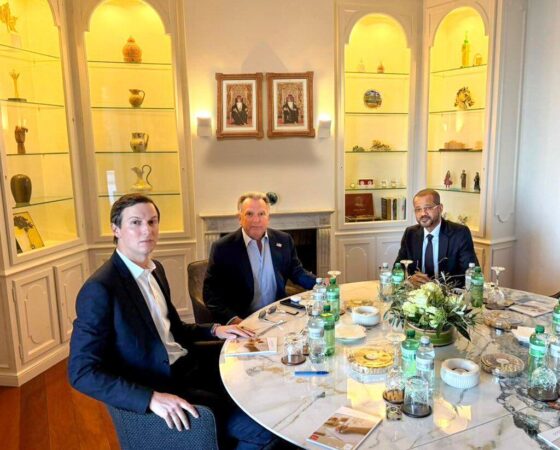
    Although the last round of talks in Geneva — where negotiators Steve Witkoff and Jared Kushner had been meeting with Iranians — were described as productive by the Omani mediators and a next round had been scheduled for this coming Friday, there is now no indication they will come to pass.

    In June, a similar situation arose when Witkoff was due to hold talks with Iranian counterparts in Oman. Days before the meeting was to occur, Israel carried out attacks on several Iranian military leaders, and Witkoff did not attend.

    Aaron David Miller, a former State Department diplomat who has advised Republican and Democratic administrations on the Middle East, said that Trump must have known there would not be another round of talks last summer but that he “continued to create the fiction” there would be.

    It kept Iranian leaders off guard, Miller said, which “allowed the Israelis to engage in their decapitation strategy.” The U.S. later joined the assault, striking at Iranian nuclear sites and leaving them “totally obliterated,” in Trump’s words.

    Araghchi, the Iranian foreign minister, told ABC News on Sunday that it had been “a very bitter experience for us.”

    The Trump administration also had made intermittent attempts at talks with Venezuelan President Nicolás Maduro before embarking on a stunning military operation in January that resulted in his arrest and the regime he once led cowed into obedience.

    The U.S. had amassed a huge military presence off the coast of Venezuela before the Jan. 3 raid to capture Maduro. But soon tensions with Iran were growing, sparked largely by Tehran’s bloody crackdown on anti-government demonstrations.

    Trump had pledged to intervene, urging protesters to stay in the streets and promising that “HELP IS ON THE WAY.” Around that time, the administration moved some military assets in the Caribbean Sea into the Middle East.

    Trump wrote on social media Jan. 28 that “a massive Armada is heading to Iran.” By that time, the protests had largely fizzled after a brutal response from government forces left thousands dead, according to independent estimates.

    Iran and the U.S. resumed talks, meeting several times in recent weeks. The last meeting, on Thursday, lasted hours. The Omani foreign minister, Albusaidi, described the outcome as positive, telling CBS News that a deal was “within our reach, if we just allow diplomacy the space it needs to get there.”

    Nate Swanson, a former State Department official who worked on negotiations with Iran last year, said that he did not believe the recent talks were a feint and that a deal was simply “never close to coming together,” which he said was “due to mismatched objectives and approaches.”

    Iranians were expecting to negotiate within the confines of a 2015 nuclear deal reached under the Obama administration, Swanson said, but the Trump administration had the “exact opposite expectation” and wanted something different and “better” to justify Trump’s withdrawal from that deal during his first presidency.

    Iran’s supreme leader, Ayatollah Ali Khamenei, had grown more obstinate after the June strikes on Iran, Swanson added, giving his negotiators even less room to reach a deal than they previously had.

    Briefing reporters Saturday, the senior administration official appeared to confirm this, stating that the U.S. negotiators had told the Iranians that they would need to stop enriching uranium and that in return, the United States would give them “free nuclear fuel forever.” The Iranians rejected this proposal, the official said.

    Another senior administration official said that the U.S. negotiators’ proposals were being “met with games, tricks, stalling tactics,” and that they had briefed Trump on this. “Obviously he weighed the different options,” this official said.

    Two people familiar with the talks said the Iranians had tried to appeal to Trump’s business sense by promising commercial investment between the two nations, including the purchase of commercial airplanes.

    Behnam Ben Taleblu, senior director of the Iran program at the hawkish Foundation for Defense of Democracies think tank, said it appeared that Trump had expected Iran to act like a “supplicant” and was too impatient to try to get results through negotiations.

    “The president’s patience for diplomacy is just like his patience for military confrontations: He wants things to be short, sharp, and decisive,” Ben Taleblu said.

    Miller cited Witkoff and Kushner, Trump’s personal friend and son-in-law, respectively. Both men primarily had experience in the business world rather than diplomacy before entering the administration, but they had been tasked not only with the Iran talks but also with shepherding negotiations between Russia and Ukraine, plus Israel and Hamas.

    “How is it possible that these two guys can manage three of the most complicated conflicts in the international system successfully?” he said. “The answer to the question is: They’re not.”