Category: Wires

  • Pakistan deploys troops and imposes curfew after deadly protests over US-Israeli strikes on Iran

    Pakistan deploys troops and imposes curfew after deadly protests over US-Israeli strikes on Iran

    ISLAMABAD — Pakistani authorities deployed troops and imposed a three-day curfew before dawn Monday in the northern cities of Gilgit and Skardu after several people died and tens were injured in violent protests following the killing of Iran’s Supreme Leader Ayatollah Ali Khamenei in U.S.-Israeli strikes, officials said.

    Thousands of Shiite demonstrators on Sunday attacked the offices of the U.N. Military Observer Group, which monitors the ceasefire along the disputed Himalayan region of Kashmir, and the U.N. Development Program in Skardu city. Protesters also burned a police station and damaged a school and the offices of a local charity in Gilgit, according to officials. At least 12 people were killed and 80 others injured, said police in the Gilgit-Baltistan region.

    U.N. spokesperson Stéphane Dujarric said Monday protesters became violent near the UNMOGIP Field Station, which was vandalized. “The safety and security of U.N. personnel and premises throughout the region remain our top priority, and we continue to closely monitor the situation,” Dujarric said.

    Meanwhile, Shabir Mir, a Gilgit-Baltistan government spokesperson, said Monday the situation was under control and that the curfew would remain in place until Wednesday. Police chief Akbar Nasir Khan urged residents to stay indoors, citing “deteriorating law and order conditions.”

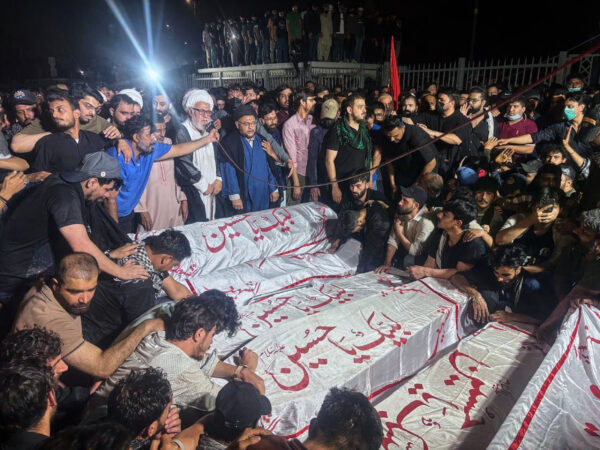
    Demonstrators in Pakistan’s southern port city of Karachi stormed the U.S. Consulate on Sunday, smashing windows and attempting to burn the building. Police responded with batons, tear gas, and gunfire, leaving 10 people dead and more than 50 injured.

    One person was also killed in clashes in Islamabad during an attempted march by Pakistan’s minority Shiites toward the U.S. Embassy. They were protesting in support of Iran, which is majority Shiite.

    On Monday, the U.S. diplomatic mission in Pakistan said its consulate in northwestern Peshawar city would close temporarily, while the embassy in Islamabad would continue providing all routine and emergency consular services for U.S. citizens.

    In a post on X, the embassy said that due to continued disruptions and traffic diversions around the U.S. consulates in Karachi and Lahore, both offices have canceled all appointments for U.S. visas and American citizen services scheduled for Tuesday.

    It added that normal consular operations would resume in Islamabad on Tuesday.

    Pakistani authorities have beefed up security at U.S. diplomatic missions across the country, including around the U.S. consulate building in Peshawar, to avoid any further violence.

    Also Monday, the Pakistan Stock Exchange plunged, with the benchmark KSE-100 Index falling nearly 10% amid rising geopolitical tensions following attacks on Iran. Investors sold off shares across sectors, with analysts citing heightened uncertainty as the main driver behind the sharp decline.

    Anger has been rising in Pakistan, particularly among members of the Shiite minority, following U.S. and Israeli strikes on Iran that killed Khamenei and other senior officials. While Shiites are a minority nationwide, they form a majority in some northern districts and in the province of Khyber Pakhtunkhwa bordering Afghanistan.

    Sunday’s unrest came amid ongoing cross-border fighting between Pakistan and Afghanistan, which began Thursday after Afghanistan launched attacks in retaliation for Pakistani airstrikes the previous Sunday. Pakistan has since carried out repeated operations along the border.

  • Judge nixes latest policy requiring 7 days’ notice for Congress members to visit ICE facilities

    Judge nixes latest policy requiring 7 days’ notice for Congress members to visit ICE facilities

    WASHINGTON — A federal judge agreed on Monday to temporarily suspend the latest version of a Trump administration policy that requires members of Congress to provide a week’s notice before they can visit immigration detention facilities.

    U.S. District Judge Jia Cobb in Washington ruled that a group of Democratic lawmakers is likely to succeed in showing that the seven-day notice requirement is illegal and exceeds the government’s statutory authority.

    The judge said the Republican administration hasn’t cited any “concrete examples of safety issues posed by congressional visits without advanced notice.”

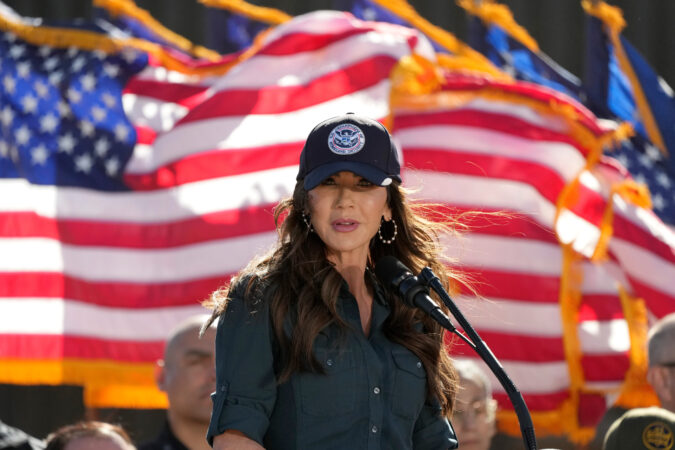
    Thirteen House members sued to challenge the Jan. 8 policy issued by Homeland Security Secretary Kristi Noem. Cobb had blocked a previous version of the policy in December. She ruled that it’s likely illegal for Immigration and Customs Enforcement to demand a week’s notice from members of Congress seeking to visit and observe conditions in ICE facilities.

    “Plaintiffs are undoubtedly frustrated with Defendants’ repeated attempts to impose a notice requirement,” Cobb wrote. ”But in taking further action, Defendants are required to abide by the terms of the Court’s order and act consistently with the legal principles announced in this opinion.”

    However, Noem secretly reinstated another notice requirement one day after an ICE officer shot and killed U.S. citizen Renee Good in Minneapolis. It was nearly identical to the version that Cobb blocked in December.

    Three days after the deadly shooting, three Democratic members of Congress from Minnesota were stopped from visiting an ICE facility near Minneapolis. The Department of Homeland Security didn’t disclose the new version of the policy until after U.S. Reps. Ilhan Omar, Kelly Morrison, and Angie Craig initially were turned away from the facility, according to plaintiffs’ attorneys.

    A law bars the government from using appropriated general funds to prevent members of Congress from entering DHS facilities for oversight purposes. Cobb found that it’s “highly likely” that President Donald Trump’s administration used restricted funds to promulgate and enforce the new policy.

    Cobb was nominated to the bench by President Joe Biden, a Democrat.

  • House panel releases videos of Bill and Hillary Clinton answering questions about Epstein

    House panel releases videos of Bill and Hillary Clinton answering questions about Epstein

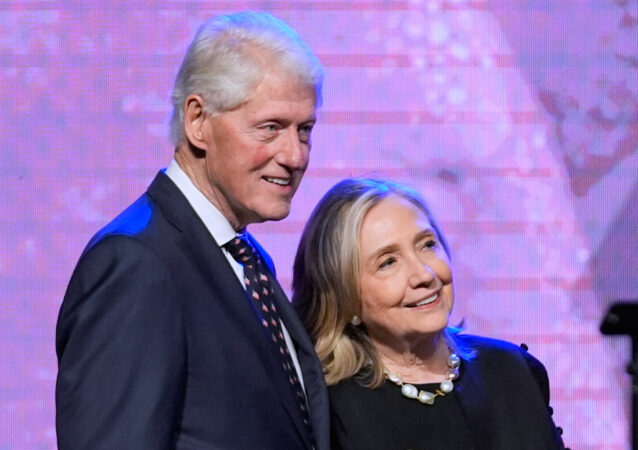
    WASHINGTON — Former President Bill Clinton distanced himself from convicted sex offender Jeffrey Epstein in closed-door depositions with lawmakers, according to videos that were released Monday by a House committee.

    The recordings of the depositions, which spanned hours over two days last week, show how Bill Clinton told the committee that he had ended his relationship with Epstein years before the financier entered a 2008 guilty plea to soliciting prostitution from an underage girl. Hillary Clinton told the committee she never even recalled meeting Epstein.

    The closed-door interviews before the House Oversight Committee were taken under oath Thursday and Friday.

    The Clintons’ testimony came as lawmakers are trying to meet demands for a reckoning over Epstein, who killed himself in 2019 in New York while facing charges for sex trafficking and abusing underage girls. High-status men around the world have been forced into resignations because of revelations about their relationships with Epstein, but so far there are few signs in the U.S. of serious legal consequences coming.

    The former Democratic president said he first remembered meeting Epstein when he flew aboard the financier’s private jet in 2002 for the Clintons’ humanitarian work, and they parted ways the year after.

    “There’s nothing that I saw when I was around him that made me realize he was trafficking women,” he told the committee.

    Epstein visited the White House numerous times during Clinton’s presidency and there are photos of them shaking hands. Clinton told lawmakers he did not recall those interactions.

    Democrats, Republicans question Bill Clinton

    Bill Clinton faced searching questions both from Republicans and Democrats about photos of the former president that have been released as part of the case files on Epstein. In response to a Democratic lawmaker’s questions about a photo that showed him in a pool with a woman whose face was redacted, the former president said he did not know the woman and did not engage in sexual activity with her.

    He said the photo was from a trip to Brunei for charitable work and a number of people in their travel party were swimming. He also said that he was not aware that one young woman who was ostensibly working as a masseuse and gave him a neck massage on one flight was in fact a victim of sexual abuse.

    Whether the subject was a note Clinton wrote for Epstein’s 50th birthday or their travel together for the Clinton Foundation, he described their relationship as little more than “cordial.” Bill Clinton described an arrangement with Epstein where the financier provided his private jet for humanitarian trips in exchange for Clinton discussing politics and economics with him.

    Larry Summers, who had worked as treasury secretary in Clinton’s administration, helped make that connection, Clinton said. But Clinton said they went separate ways after he sensed that Epstein was not deeply interested in the humanitarian work.

    “We were friendly, but I didn’t know him well enough to say we were friends,” he said.

    He said he had once visited Epstein’s townhouse in New York City, but said repeatedly he had never visited Epstein’s private island or other properties.

    Asked by Republicans whether they had talked about young women or girls together, Clinton responded emphatically: “No.”

    Clinton acknowledged he maintained a closer relationship with Ghislaine Maxwell, Epstein’s former girlfriend and confidant. But he maintained that was largely because of close mutual connections. He also said “she has to be punished” for her conviction on sex trafficking charges.

    What Bill Clinton said about Trump

    One line of questioning stirred up curiosity from lawmakers, and that was what Clinton had to say about President Donald Trump. He made clear he believed it was important for anyone, including presidents, to come forward and testify to their knowledge of Epstein.

    Clinton also shared how he and Trump had briefly discussed Epstein at a charity golf tournament more than 20 years ago. He said Trump had never “said anything to me to make me think he was involved in anything improper with regard to Epstein,” but also remarked that those two men had a falling-out over a real estate deal.

    Republican lawmakers left the deposition pointing to Clinton’s words and arguing that it showed there is no evidence that Trump ever did anything wrong in his own relationship with Epstein.

    Democrats, meanwhile, said Clinton’s testimony counters what Trump has said more recently about why he and Epstein had a falling-out. Trump has told reporters they had a disagreement because Epstein had hired people away from Trump’s Mar-a-Lago club in Florida.

  • Trump tests a new approach in Iran: Regime change without owning the fight

    Trump tests a new approach in Iran: Regime change without owning the fight

    President George W. Bush used a solemn address from the Cabinet Room to tell Americans that Iraqi leader Saddam Hussein had been captured. President Barack Obama spoke to cameras when he announced that Osama bin Laden had been killed.

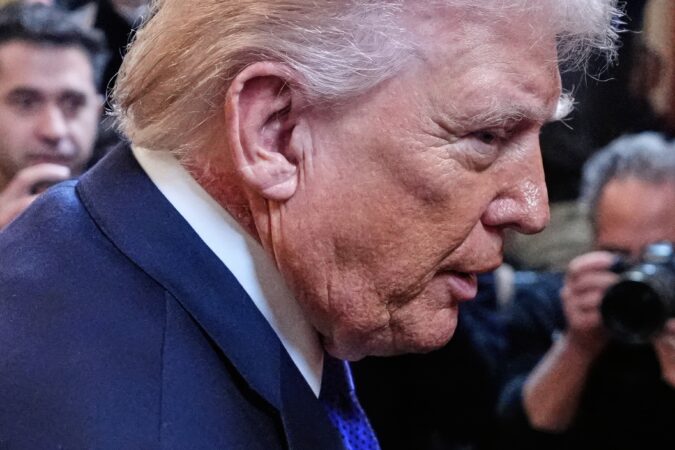
    After President Donald Trump’s attack on Iran killed its supreme leader on Saturday, he used a different messaging strategy — a written post on Truth Social.

    Trump has taken an approach to selling U.S. citizens on military action in Iran that sharply contrasts with his predecessors: He devoted three minutes of his 108-minute State of the Union address to the issue, spoke to Americans through social media posts and a pair of videos recorded at Mar-a-Lago but made no public appearances over the weekend since a Friday rally in Corpus Christi, Texas.

    The strategy might afford him flexibility in the coming days and weeks to avoid what former Secretary of State Colin Powell told Bush was the Pottery Barn rule — if you break it, you own it.

    From the outset, Trump has been careful to declare limits around the U.S. attack, saying he wanted to overthrow the current regime, but telling Iranians it was up to them to seize the opportunity to write their country’s next chapter. His communication strategy has reinforced those limits by creating a bit of distance — at least in imagery — between the president and the fighting.

    At the same time, however, Trump has adopted expansive rhetoric about the reasoning for his intervention that recalled the justifications used for earlier U.S. forays into the Middle East.

    “They have waged war against civilization itself,” Trump said in a six-minute video posted to Truth Social on Sunday in which he left the precise goals of the attack flexible.

    “We’re undertaking this massive operation not merely to ensure security for our own time and place, but for our children and their children, just as our ancestors have done for us many, many years ago. This is the duty and the burden of a free people.”

    It was his first on-camera acknowledgment of Supreme Leader Ayatollah Ali Khamenei’s death nearly 24 hours after he made his first written post about it.

    “I call upon all Iranian patriots who yearn for freedom to seize this moment to be brave,” Trump said. “I made a promise to you, and I fulfilled that promise. The rest will be up to you, but we’ll be there to help.”

    Middle East experts said Trump’s strategy could end up politically successful, pairing an airstrike-only approach with a flexible definition of what would constitute victory.

    “We have escalation dominance in Iran. We control the pace, the focus, the intensity of military conflict,” said Aaron David Miller, who advised Democratic and Republican administrations on Middle East issues. “We can escalate when we want, and we can presumably prevent Iranians from escalating, and so we can own Iran without the Pottery Barn rule going into effect. That’s what makes this so Trumpian.”

    Richard Haass, who was the director of policy planning at Powell’s State Department in the lead-up to the 2003 Iraq War, said Trump was “calling for regime change, but is not assuming the responsibility for it.”

    “It gives him an off-ramp, not having to see it through. So if it happens, he gets credit for it, if it doesn’t happen, he doesn’t get the blame for it,” said Haass, who is president emeritus of the Council on Foreign Relations.

    Still, there may be political risks to Trump’s sweeping rhetoric if the situation deteriorates, especially if the number of dead U.S. troops rises. So far in the operation, three have been killed and five injured, the U.S. Central Command announced Sunday. Another death was announced Monday.

    “Sadly there will likely be more before it ends. That’s the way it is,” Trump said in his Sunday video.

    White House officials say they owe nothing to past communications practice and that the president’s videos and written statements on Truth Social have reached a vast audience.

    If Trump had pursued a strategy similar to Bush’s approach to Iraq, in which he laid out an extensive argument for war, “the Ayatollah [Khamenei] would probably still be alive, because we would have been spending weeks and months leading up to this tipping off our adversaries, which would not have led to the killing of the Ayatollah yesterday,” White House press secretary Karoline Leavitt said.

    “Operational secrecy and security is the number one priority for the president,” she said.

    In addition to leaving the objectives flexible, the administration has also been vague about its justification for the attack, including in classified briefings for members of Congress.

    During a closed-door briefing with congressional staff Sunday, some aides said the administration provided no intelligence on an imminent or preemptive threat posed by Iran, according to people in the room who spoke on the condition of anonymity to discuss a classified briefing.

    When asked directly about potential threats, one briefer said Iran was prepared to retaliate against the United States, but such warnings fall short of the traditional tests for a legal basis to launch a preemptive attack on a country or decapitate its political and military leadership.

    U.S. officials told reporters on Saturday that Iran’s ballistic missile program posed a threat. International law would not typically support a military assault based on a country’s maintaining a conventional weapons program of that nature.

    Trump may have been more restrained in the lead-up to Saturday’s attack because he was giving more space for negotiations than Bush had offered Iraq, even as the U.S. military presence in the Middle East ramped up in recent weeks to the largest massing of force since the 2003 Iraq invasion.

    But for a president who rose to power in part on the shoulders of supporters who were weary of decades of U.S. wars in the Middle East, there may be political risk in launching major foreign actions and not bringing his supporters along. Last week, a Washington Post-ABC News-Ipsos poll found that among Trump voters, 46% supported the prospect of the president’s using the U.S. military to force changes in other countries while 22% were opposed and 30% had no opinion.

    White House officials have taken a far more restrained approach this year than last toward how they highlight the president’s foreign policy-related engagements. In 2025, he had a foreign leader in the Oval Office almost every week, ushering in reporters and taking questions in impromptu news conferences that highlighted his central role on the world stage. But since the beginning of the year, that practice has stopped, as the White House tried to steer closer toward a domestic agenda that would highlight positive aspects of the president’s economic record.

    Leavitt said the president put out the initial announcement about Khamenei’s death in the form of a written statement because he “was very busy yesterday in the situation room all day, monitoring it all night, and he was on the phone with our allies around the world and talking to other countries. And so the most effective way for him to get that message out yesterday was by a Truth [Social post], and obviously it was a statement heard around the world.”

    Trump’s Sunday video address offered a more traditional approach to Khamenei, embracing the victory on camera.

    “This wretched and vile man had the blood of hundreds and even thousands of Americans on his hands,” Trump said. “All over Iran, the voices of the Iranian people could be heard cheering and celebrating in the streets when his death was announced.”

    Administration officials make television appearances on Sunday morning shows nearly every week, but none made the rounds this time. A senior White House official said that wasn’t an effort to distance the administration from the fighting, but rather a measure of their need to monitor military operations from the Situation Room and from the president’s side at Mar-a-Lago. The official spoke on the condition of anonymity to discuss sensitive internal strategy.

    Rather than put administration officials in front of the cameras, the White House coordinated a message with congressional Republicans to speak on the shows, offering Secretary of State Marco Rubio on Saturday evening to brief them.

    “I thought the president’s eight-minute video yesterday was outstanding,” Sen. Tom Cotton (R., Ark.) told CBS’s Face the Nation on Sunday. “It laid out Iran’s 47-year campaign of terror and revolutionary violence against the United States and our people and really, the civilized world. I’m sure the president will speak more in the coming days, will have briefings to Congress.”

    Classified briefings to Congress are planned for Tuesday.

    Some supporters of tough action against Tehran said that it may take time to judge the final outcome of the military action — longer than the actual time frame of the bombing.

    “The question is going to be whether it’s good policy, and that will turn in part on American casualties,” said Elliott Abrams, who worked on Iran issues during the first Trump administration and on foreign policy in the Reagan and George W. Bush administrations.

    But, he said, “I caution critics that if this war ends in a week and the regime is still in place, it’s really too soon to say it failed. … If the regime falls in six months or 10 months or next year, everyone will have to acknowledge that this war brought it a lot closer and in retrospect, it will have been a great success, because I think getting rid of that regime will really change the Middle East.”

  • Hegseth insists the Iran conflict is ‘not endless’ and declares, ‘We fight to win’

    Hegseth insists the Iran conflict is ‘not endless’ and declares, ‘We fight to win’

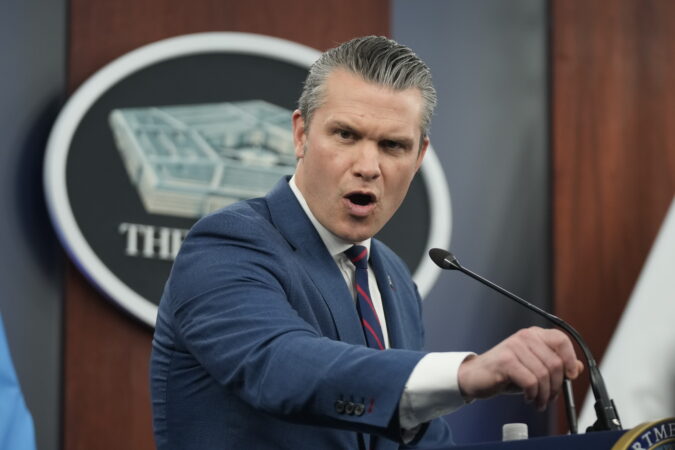
    WASHINGTON — Defense Secretary Pete Hegseth spoke Monday to widening concerns that the U.S.-Israeli strikes in Iran could spiral into a protracted regional conflict by declaring: “This is not Iraq. This is not endless,” even as he warned that more American casualties are likely in the weeks ahead.

    While the Trump administration has cited Iran’s nuclear ambitions as the chief concern to be addressed, officials increasingly are pointing to the threat from Iran’s ballistic missiles as a key reason to launch the attacks as well as an opportunity to take out the government’s leadership and the sense that negotiations around the nuclear program have stalled.

    Trump said Monday that Iran’s conventional missile program “was growing rapidly and dramatically, and this posed a very clear, colossal threat to America and our forces stationed overseas.”

    Hegseth said at a separate press conference with Gen. Dan Caine, chairman of the Joint Chiefs of Staff, that the operation had a “decisive mission” to eliminate the threat of Iranian ballistic missiles, destroy the country’s navy, and ensure “no nukes.”

    “No stupid rules of engagement, no nation building quagmire, no democracy building exercise, no politically correct wars. We fight to win, and we don’t waste time or lives,” Hegseth said.

    Trump, Hegseth, and Caine have not suggested any exit plan or offered signs that the conflict would end anytime soon as the killing of Iranian Supreme Leader Ayatollah Ali Khamenei cast doubt on the future of the Islamic Republic and hurtled the region into broader instability. Caine said the biggest U.S. military buildup in the Middle East in decades would only grow because the commander in the region “will receive additional forces even today.”

    “This is not a so-called regime-change war, but the regime sure did change, and the world is better off for it,” Hegseth said.

    Trump, however, in video statements released after the strikes began, urged the Iranian people “to take back your country.”

    More American troop casualties expected

    The conflict has spiraled into the wider region, with Iran and its allied armed groups launching missiles at Israel, Arab states, and U.S. military targets in the Middle East.

    Six American troops have been killed, with Trump, Hegseth and Caine predicting more casualties. All were Army soldiers and part of the same logistics unit in Kuwait, according to a U.S. official who was not authorized to comment publicly and spoke on condition of anonymity.

    When asked about the six deaths Monday, Hegseth said an Iranian weapon made it past allied air defenses “and, in that particular case, happened to hit a tactical operations center that was fortified.”

    Eighteen American service members also have been seriously wounded, said Capt. Tim Hawkins, a spokesman for U.S. Central Command.

    “We grieve with you, and we will never forget you,” Caine said of the troops killed and their family members.

    The latest sign of the escalating upheaval came when, the U.S. military said, ally Kuwait “mistakenly shot down” three American fighter jets during a combat mission as Iranian aircraft, ballistic missiles, and drones were attacking. U.S. Central Command said all six pilots ejected safely from the American F-15E Strike Eagles and were in stable condition.

    Asked if there are boots on the ground now in Iran, Hegseth said, “No, but we’re not going to go into the exercise of what we will or will not do.”

    He said it was “foolishness” to expect U.S. officials to say publicly “here’s exactly how far we’ll go.”

    Trump told the New York Post on Monday that he wasn’t ruling out U.S. forces in Iran if “they were necessary.” He noted, “I don’t have the yips with respect to boots on the ground.”

    At the White House, Trump said the mission was expected to take four to five weeks but “we have the capability to go far longer than that.”

    Secretary of State Marco Rubio told reporters at the Capitol that the U.S. “will do this as long as it takes to achieve” its objectives and warned that “the hardest hits are yet to come from the U.S. military.”

    Hegseth also dismissed questions about the time frame and said Trump had “latitude” to decide how long it would take. “Four weeks, two weeks, six weeks,” he said. “It could move up. It could move back.”

    Pentagon gives justification for strikes

    In laying out a case for the strikes, Hegseth did not point to any imminent nuclear threat from Iran and said again that strikes by the U.S. and Israel last June “obliterated their nuclear program to rubble.”

    Instead, Hegseth pointed to threats from other weaponry that justified the operation: “Iran was building powerful missiles and drones to create a conventional shield for their nuclear blackmail ambitions.”

    He added, “Our bases, our people, our allies, all in their crosshairs. Iran had a conventional gun to our head as they tried to lie their way to a nuclear bomb.”

    Hegseth said that during negotiations leading up to the attack, Iranian officials were “stalling” despite having “every chance to make a peaceful and sensible deal.”

    He also justified the operation by describing Iran’s government as having started the conflict from its inception, declaring that for 47 years it has “waged a savage, one-sided war against America.”

    In a private briefing Sunday, Trump administration officials told congressional staffers that U.S. intelligence did not suggest Iran was preparing to launch a preemptive strike against the U.S., three people familiar with the briefings said.

    Trump, a Republican, had said the objective of the mission was to eliminate “imminent threats from the Iranian regime.” And senior Trump administration officials, who were not authorized to comment publicly and spoke on the condition of anonymity, told reporters Saturday that there were indicators that the Iranians could launch a preemptive attack.

    Military doesn’t specify Iran’s nuclear sites as targets

    As with the attack that dropped massive bunker-buster bombs on Iranian nuclear facilities last year, Caine said the military used B-2 stealth bombers in the new operation with a 37-hour round trip.

    He said the penetrating bombs were dropped on Iranian underground facilities” but did not specify that they were nuclear facilities. Nuclear sites were not among the types of targets on a list released over the weekend by U.S. Central Command.

    The administration says Israel and the U.S. have bombed Iranian missile sites and targeted its navy, claiming to have destroyed its headquarters and multiple warships.

    Caine on Monday referenced the use of cyber technologies, saying the U.S. “effectively disrupted communications and sensor networks” that left “the adversary without the ability to coordinate or respond effectively.”

    Without giving specifics, Caine said the military “delivered synchronized and layered effects designed to disrupt, degrade, deny and destroy Iran’s ability to conduct and sustained combat operations on the U.S. side.”

    Caine said Trump gave the go-ahead order for the strikes at 3:38 p.m. EST on Friday. That meant the president gave the green light when he was aboard Air Force One heading to Texas with Republican Sens. Ted Cruz and John Cornyn and actor Dennis Quaid.

  • Sanders pitches $4.4 trillion tax on billionaires, in 2028 marker

    Sanders pitches $4.4 trillion tax on billionaires, in 2028 marker

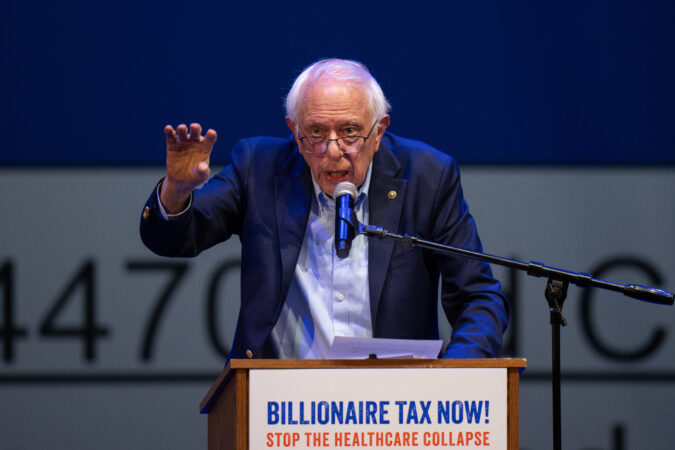
    Sen. Bernie Sanders (I., Vt.) on Monday was set to unveil new legislation that would raise $4.4 trillion in taxes from America’s roughly 1,000 billionaires, aiming to roughly halve their fortunes.

    The plan is a nonstarter in the current Republican-controlled Congress, but could become a litmus test for candidates in the 2028 Democratic presidential primary, much like Sanders’s Medicare-for-all plan was during the 2020 presidential cycle.

    Sanders’s new legislation, which expands on his prior efforts, calls for an annual 5% wealth tax on America’s billionaires. Revenue from the tax would be redirected to social spending programs, including $3,000 cash payments for Americans earning less than $150,000 per year, a $60,000 minimum salary for every public school teacher, and an expansion of Medicare to cover dental, vision, and hearing care, among other measures.

    While Sanders, 84, is not expected to run for president for a third consecutive time, the proposal could prove divisive among Democrats who do run. California Gov. Gavin Newsom, widely viewed as a top Democratic presidential candidate, has objected to a billionaire tax currently being proposed in his state. Sanders’ proposal is being introduced in the House by Rep. Ro Khanna (D., Calif.), a co-chair of Sanders’s 2020 presidential campaign who supports California’s proposed billionaire tax — and who has been testing the waters of his own presidential bid.

    “This is Senator Sanders’ defining vision for our age,” Khanna said. “It is the most ambitious and transformative legislation for our times to tackle inequality in the New Gilded Age.”

    The legislation comes amid a substantial increase in billionaire wealth during the first year of Trump’s presidency, driven by strong stock market gains. The total wealth of America’s billionaires rose last year by roughly 20%, according to Americans for Tax Fairness, a left-leaning organization. Billionaires’ political influence has risen along with their economic clout.

    Sanders argues that the measure is an essentially conservative compromise that would leave most billionaires’ fortunes intact. Tesla CEO Elon Musk’s holdings, according to estimates from Sanders’ office, would go from $833 billion to $792 billion. Meta CEO Mark Zuckerberg’s would go from $220 billion to $209 billion. Amazon founder Jeff Bezos’ would shrink from $218 billion to $207 billion. (Bezos also owns the Washington Post.)

    The amount of revenue raised would be substantial, however, and in addition to the aforementioned initiatives, would be used to provide home healthcare to seniors and people with disabilities through Medicaid. It would also reverse the GOP’s Medicaid cuts. The $3,000 checks would apply per person for households earning under $150,000, which would amount to $12,000 for a family of four.

    Sanders’ revenue estimates were provided by Emmanuel Saez and Gabriel Zucman, two economics professors at the University of California at Berkeley. The economists assume a 10% rate of “tax evasion/avoidance,” and argue that the existing “exit tax” for renouncing American citizenship would make doing so unattractive for the targeted billionaires.

    The plan is unlikely to be backed by any Republicans, but its support even among Democrats, who have a range of opinions about taxing billionaires, remains unclear. During the party’s last contested presidential primary in 2020, several leading candidates embraced far-reaching ideas to restructure the American economy with new levies on the rich and major new spending programs. Those ideas fizzled in Congress under former President Joe Biden, who supported many of them but failed to persuade Sen. Joe Manchin III, then a Democrat from West Virginia, to go along with even a small fraction of what Sanders and many other Democrats called for.

    The defeat of Biden’s ambitious “Build Back Better” agenda — which included many of the ideas Sanders is now attempting to revive — paved the way for passage of a smaller bill focused on climate and energy subsidies, after which Democrats lost control of both Congress and the White House.

    Since then, the party’s policy agenda has been mostly up for grabs. Democrats appear largely unified on reversing the more than $1 trillion in cuts to Medicaid and food stamps approved by Trump and congressional Republicans as part of last year’s One Big Beautiful Bill. But the party’s priorities beyond that appear unclear. Sanders’ proposal attempts to provide one potential blueprint.

    Newsom has been a prominent advocate for a different approach. The governor has warned that the wealth tax currently being pushed in California would hurt his state, driving companies to flee and suppressing the innovation that has helped make Silicon Valley among the richest regions in the world.

    “This will be defeated — there’s no question in my mind,” Newsom said last month of the billionaire tax. “I’ll do what I have to do to protect the state.”

    Other Democrats who are cautious about raising taxes on billionaires believe the party moved too far to the left during the 2020 Democratic presidential primary, alienating potential business allies and driving them into the Republican camp.

    Sanders and Khanna have taken the other side of that debate, and last month Sanders held an event with Khanna in California at which both called for passage of the measure.

    “The billionaire class no longer sees itself as part of American society,” Sanders said in Los Angeles last month. “They see themselves as something separate and apart, like the oligarchs of the 18th century, the kings and the queens and the czars, they believe they have the divine right to rule and are no longer subject to democratic governance.”

  • Trump awards the Medal of Honor to 3 U.S. Army service members in a White House ceremony

    Trump awards the Medal of Honor to 3 U.S. Army service members in a White House ceremony

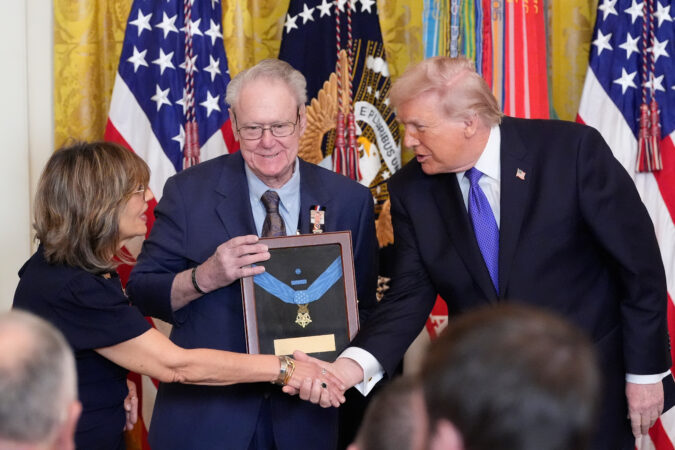
    WASHINGTON — President Donald Trump awarded the Medal of Honor to three U.S. Army soldiers at the White House on Monday, celebrating heroes of old wars as he defended his launch of a new one.

    Retired Command Sgt. Maj. Terry P. Richardson was recognized for actions during the Vietnam War that were credited with saving the lives of 85 other service members.

    Staff Sgt. Michael H. Ollis, who was killed in action in Afghanistan in 2013, was recognized for saving a Polish Army officer’s life.

    Master Sgt. Roderick W. Edmonds, who died in 1985, was recognized for his leadership and resistance as a prisoner of war in Germany during World War II.

    “There’s no ceremony that can be more important than this,” Trump said to begin the East Room ceremony that included the recipients’ family members and the man Ollis shielded from enemy fire.

    “Bravery is amazing,” Trump said. “You never really know who’s brave and who’s not until they’re tested.”

    Trump talks Iran, curtains, and Polish politics

    The Republican president also used the ceremony to talk about his fledgling war in Iran, his immigration crackdown, expansion of the White House, and curtains that he chose at the executive mansion.

    “I picked those drapes in my first term. I always liked gold,” he said.

    When noting Polish government officials there to recognize Ollis, Trump ventured into an aside on his endorsements in Poland’s elections.

    On Iran, Trump said preemptive action was necessary to block Tehran from rebuilding its nuclear program and becoming “an intolerable threat to the Middle East but also to the American people.”

    The Medal of Honor is awarded by U.S. presidents, in the name of Congress, for combat service that goes beyond the call of duty and risks one’s life.

    Richardson led a Vietnam reconnaissance mission

    On Sept. 14, 1968, Richardson was a staff sergeant on a reconnaissance mission as a platoon leader in the vicinity of Loc Ninh, part of the Republic of Vietnam.

    According to his citation, Richardson, a native of Cass City, Mich., came under fire from the North Vietnamese Army, including heavy machine-gun fire as he rescued three wounded soldiers. After the rescues, he led his unit to its intended destination, a hilltop identified as a place to direct airstrikes. He found the location to be part of an enemy camp but remained for at least seven hours, directing strikes even after being wounded by a sniper.

    Enemy forces eventually fled. Richardson, when found by other U.S. forces, declined medical evaluation so he could remain with his troops.

    “His gallant and selfless actions … spared the lives of 85 fellow soldiers,” the White House said.

    Trump praised Richardson, who attended with some members of his unit, as a “brave man” and described him as “central casting.”

    “You feel like fighting? I think we could take him today,” Trump said, joking with Defense Secretary Pete Hegseth.

    Ollis was killed shielding someone else in Afghanistan attack

    As a staff sergeant at Forward Operating Base Ghazni, Ollis was a skilled infantryman who led soldiers during an attack on the base by enemy combatants on Aug. 28, 2013.

    Ollis, 24 at the time, first directed soldiers to a bunker before returning to the building where they had been to check for any more endangered people, according to his citation. The New York City native came upon a Coalition Forces officer, Lt. Karol Cierpica of Poland. They moved toward combatants who breached the base perimeter and joined other coalition forces.

    During fighting, one enemy combatant confronted Ollis and Cierpica.

    “With complete disregard for his own safety, he positioned himself between the insurgent and the Coalition Forces Officer, who had been wounded and unable to walk,” his commendation reads. “Staff Sergeant Ollis fired on the insurgent and incapacitated him, but as he approached the insurgent, the latter’s suicide vest was detonated, mortally wounding him.”

    Called to the podium by Trump, Cierpica at times grew emotional as he paid tribute.

    “A soldier is not something you are from time to time. It is who you are forever,” Cierpica said, later adding, “I am deeply moved, happy, and grateful to God.”

    Cierpica named his son, Michael, after Ollis, and he addressed members of Ollis’ family by name, calling them “my second family from Staten Island” and the U.S. his “second homeland.”

    Edmonds led resistance in POW camp during WW II

    A master sergeant, Edmonds was the ranking non-commissioned officer among American prisoners of war at a German camp in early 1945.

    According to the commendation, the Germans announced on Jan. 26, 1945, that “only Jewish-American prisoners would fall out for roll call the following morning, at the threat of execution.”

    Edmonds, who enlisted from South Knoxville, Tenn., determined that allowing that segregation would result in the torture or death of 200 Jewish American POWs. He directed officers to have all 1,200 American troops present themselves for roll call.

    With a German commandant enraged, Edmonds stood his ground and invoked prisoners’ rights under international law.

    “We are all Jews here,” Edmonds said in a quote that Trump recounted Monday.

    The German officer relented and made no further efforts to identify the Jewish American soldiers.

    “Really amazing, right? It’s an amazing story,” Trump said.

    Weeks later, as Allied forces advanced toward the camp, the Germans ordered POWs to prepare for evacuation. Edmonds prepared the POWs to assemble in formation and resist. German forces eventually retreated from the camp.

    “Without regard for his own life Master Sergeant Edmonds gallantly led these prisoners in a relentless pursuit of opposition and resistance, forcing the Germans to abandon the camp leaving the 1,200 American prisoners behind,” the White House said.

    Edmonds’ son, Chris, first learned of the story when reading his father’s journals after his death, then interviewing surviving veterans who also were POWs. Chris Edmonds spent years pushing for the official recognition and on Monday accepted the medal from Trump on his father’s behalf.

  • Britain says it’s not at war after a drone strikes its Akrotiri base in Cyprus

    Britain says it’s not at war after a drone strikes its Akrotiri base in Cyprus

    AKROTIRI, Cyprus — Britain is not at war, the government said Monday, despite saying it would allow the U.S. to use British bases during its war with Iran and after a Royal Air Force base in Cyprus was struck by an Iranian-made drone.

    Sirens sounded again at RAF Akrotiri on Monday and British Typhoon and F-35 warplanes were scrambled. Cyprus government spokesperson Constantinos Letymbiotis posted on X that two drones heading toward the British base had been intercepted.

    More than two decades after Britain followed the United States into a devastating war in Iraq, it is trying to avoid being drawn into a new Middle East conflict with unpredictable consequences.

    Akrotiri attacked

    U.K. officials say an attack drone hit the runway at RAF Akrotiri, a British air force base in Cyprus, late Sunday. There were no injuries and “minimal” damage, but the strike brought the conflict onto European soil.

    Cyprus President Nikos Christodoulides identified it as a “Shahed-type” Iranian drone. It was not immediately clear whether it was launched from Iran or by a Tehran-backed militant group such as Hezbollah in Lebanon.

    Akrotiri is the U.K.’s main air base for operations in the Middle East and in recent years has been used by British warplanes on missions against the Islamic State group in Syria and Iraq and to strike Houthi targets in Yemen.

    As tensions between the U.S. and Iran mounted, Britain last month deployed extra F-35 fighter jets to Akrotiri, along with radar, counter-drone systems, and air defenses.

    Britain retained the base, and another on Cyprus, after the eastern Mediterranean island gained independence from British colonial rule in 1960.

    It was last attacked in 1986, when pro-Libya militants struck the base with mortars, rocket-propelled grenades and small arms, injuring three dependents of British personnel. The latest attack is believed to be the first attack on Cyprus from outside the country since Turkey’s invasion of the island in 1974.

    Britain’s defense ministry said families of U.K. personnel who live on the base were being moved to nearby accommodation as a precaution.

    Some residents of the nearby village of Akrotiri also opted to leave their homes and spend the night with relatives elsewhere.

    Villager Mikaella Malta said she heard “strange noises” just before the drone explosion.

    “We tried to figure out what was going on. We then picked up whatever we could from home. We were in a panic and we left,” she told the AP.

    U.K. ambivalence

    British officials have refused to say whether the U.K. supports the U.S.-Israeli war on Iran. They have said that Iran should not be able to have a nuclear weapon and called for an end to Iranian strikes and a diplomatic solution.

    Britain did not take part in the strikes on Iran that began Saturday, and did not allow the U.S. to use U.K. bases in England or on the island of Diego Garcia in the Indian Ocean.

    But on Sunday, Prime Minister Keir Starmer announced that he had agreed to let the U.S. use the bases for attacks on Iran’s missiles and their launch sites. He said the change came in response to Iranian attacks on U.K. interests and Britain’s allies in the Gulf, and is legal under international law.

    Britain says its bases can’t be used for attacks on political and economic targets in Iran, and Starmer said the U.K. is “not joining the U.S. and Israeli offensive strikes.”

    U.S. President Donald Trump told the Daily Telegraph on Monday he was “very disappointed in Keir,” saying the prime minister ”took far too long” to change his mind about the use of British bases.

    Unpredictable consequences

    Starmer said Britain would not be joining the U.S.-Israeli strikes, and Middle East Minister Hamish Falconer stressed that “the U.K. is not at war.”

    The memory of Iraq remains raw for many in Britain. The decision by then-Prime Minister Tony Blair to join the U.S.-led invasion in 2003 remains one of the most contentious in modern British history.

    The subsequent yearslong conflict killed 179 British troops, some 4,500 American personnel and many thousands of Iraqis.

    “We all remember the mistakes of Iraq and we have learned those lessons,” Starmer told lawmakers in the House of Commons on Monday. “Any U.K. actions must always have a lawful basis and a viable, thought-through plan.”

    Critics say attempts to set firm limits on Britain’s involvement in Iran could be swept away by a fast-moving conflict.

    “We are being drawn in, just as we were in Iraq, following the U.S. into an incredibly dangerous situation,” said John McDonnell, a lawmaker from the governing Labour Party.

    Patrick Bury, senior associate professor in security at the University of Bath, said Britain is in an “incredibly difficult” position.

    “We’ve had very little explanation for this war, really, from the U.S.,” he said. “The U.K. policy is always heavily on upholding international law. So they’re kind of looking at this going, ‘How does this fit with our own foreign policy?’ And I think that explains why they’ve held off as much as they could.

    “And nevertheless, they get a direct request. What are you going to do, say no?”

  • National Park Service database flags hundreds of items that might ‘disparage’ America

    National Park Service database flags hundreds of items that might ‘disparage’ America

    At the Emmett Till and Mamie Till-Mobley National Monument in Mississippi, staff members asked the Trump administration to review an entire exhibit on the Black teen’s brutal 1955 killing by white men and his mother’s decision to publicize it — though the park’s staff warned that its removal would leave the site “completely devoid of interpretation.”

    At Arches National Park in Utah, park managers wondered whether a sign about the damage that graffiti and invasive species leave on the iconic red rock landscape violates a Trump directive to focus solely on America’s natural beauty.

    In Philadelphia, displays at a house where George Washington once lived that presented the history of people enslaved by him were taken down, only to have a federal judge order their restoration.

    And at Harpers Ferry National Historical Park in West Virginia, staff members have asked federal officials to decide whether a document that describes an abolitionist’s murder by a mob might “denigrate the murderers.”

    These displays and materials are among several hundred that managers have flagged at hundreds of national park locations since last summer in response to administration orders to scrub sites of “partisan ideology,” descriptions that “disparage” Americans, or materials that stray from a focus on the nation’s “beauty, abundance, or grandeur.” The submissions were compiled in an internal government database and reviewed by the Washington Post, which confirmed its authenticity with current federal employees.

    The database does not make clear which of the plaques, maps, films, and books ultimately will be removed or recast by the Interior Department, though some have already been axed. But the submissions provide a sweeping portrait of the scope of President Donald Trump’s bid to reconsider how national park sites address the historic legacy of racism and sexism, LGBTQ+ rights, climate change, and pollution — or whether to acknowledge them at all.

    A group describing itself as “civil servants on the front lines” posted the database on two public websites Monday, saying in an attached note that it did so to show Americans how the administration is “trying to use your public lands to erase history and undermine science.”

    Asked for comment, the Interior Department issued a statement Monday saying that the “draft, deliberative internal documents” in the database “are not a representation of final action taken.” The statement, from spokesperson Charlotte Taylor, asserted that the documents were “edited before being inappropriately and illegally released to the media in ways that misrepresented the status of this effort.”

    The department did not respond to questions about the status or process for the reviews, nor about specific examples in the submissions.

    The tone and content of the materials described and submitted to Interior by park managers vary widely, reflecting a mix of careful attempts to obey administration orders, confusion about what might violate them, and, at times, apparent skepticism about the entire endeavor.

    Staff members identified a brochure at Cape Hatteras National Seashore, in North Carolina, for “possible disparaging of a prominent American” because it mentions that aviator and onetime Smithsonian Institution secretary Samuel Langley failed to achieve flight. A park staffer at Glen Canyon National Recreation Area in Arizona asks for clarification about whether displays on California condors’ return from the brink of extinction disparage hunters “or tell a success ??”

    Several submissions ask for reviews of book covers, book chapters, and entire books on sale at gift shops, including Incidents in the Life of a Slave Girl, an autobiography by abolitionist Harriet Jacobs.

    “They are mostly on slavery and the black experience in Washington DC as well as a few on Lincoln’s assassination,” wrote a park official at Ford’s Theatre National Historic Site. “Not sure they all disparage historical figures, but they do cover dark periods in American history.”

    Another inquiry came from the Thomas Jefferson Memorial in Washington, where employees shared a list of books on the third president. “I am not sure if they really disparage Thomas Jefferson, but they do aknowledge [sic] that he had children with Sally Hemings,” the inquiry notes.

    Bill Wade, executive director of the Association of National Park Rangers, said the breadth of the submissions revealed the many hours of work that Trump’s order imposed on already overextended park employees, who “probably should’ve been doing other things most of us believe would be more important.”

    The exercise, Wade added, runs counter to the reasons many National Park Service employees gravitated toward their work in the first place. “Park rangers everywhere, and all park employees for that matter, have been passionate about telling true stories about history, and about science,” said Wade, a former superintendent of Shenandoah National Park in Virginia. “It’s a real affront to the values that rangers have.”

    Others have embraced Trump’s effort, including Sen. Jim Banks (R., Ind.), who last summer wrote to top officials at Interior and the Park Service over concerns about “woke” projects he said appeared to violate the president’s order.

    “The President’s executive order rightfully opposes a decades-long effort by our institutions to usurp American history with an ideology-based narrative that casts America’s founding and history in a negative light,” Banks wrote at the time.

    In nearly a year since Trump’s order, National Park sites have responded by removing exhibits that address slavery and the challenges overcome by minority and marginalized groups, as well as signs about the science of climate change.

    But there also has been sustained pushback.

    Last month, a federal judge in Pennsylvania ordered the Trump administration to restore displays that discussed slavery at a site in Philadelphia where Washington lived as president.

    U.S. District Judge Cynthia M. Rufe of the Eastern District of Pennsylvania compared the displays’ removal earlier this year to the mind control employed by the government in George Orwell’s novel 1984.

    Rufe’s ruling — issued on Presidents Day — granted an immediate injunction, requiring the reinstallation of 34 educational panels removed in January by the Park Service from a site at Independence National Historical Park in Philadelphia.

    Two weeks ago, a coalition of scientific, preservation, and historical groups sued the Trump administration over changes that already have been made, arguing that the removal of information about civil rights, climate change, and other topics at multiple national parks amounts to illegal censorship.

    That lawsuit, filed in a federal court in Massachusetts, argues that Interior officials ignored well-established principles and legal requirements when seeking to overhaul information presented at national parks.

    Democratic members of Congress have also sharply criticized the effort, which they describe as a bid to whitewash the American story. “It is absurd that any president would go down this road of trying to retrofit history and culture in their own image instead of getting actual historians to tell us these stories,” said Rep. Jared Huffman of California, the ranking Democrat on the House Natural Resources Committee.

    The hundreds of submissions reviewed by the Post run the gamut, from signs and exhibits about slavery and the civil rights movement, to how the effects of climate change already are altering American landscapes, to how the nation remembers Indigenous people who inhabited lands long before there was a United States.

    Not every park flagged materials that needed reviewing under the executive order. The documents review by the Post show that at many locations, officials logged a simple entry: “Nothing to report.”

    It is clear that as government workers across hundreds of national parks and other historical sites scoured thousands of signs, read through publications, and surveyed countless educational films, they struggled with what exactly might violate Trump’s order not to “inappropriately disparage Americans past or living.”

    At Cape Hatteras, staff members asked whether information on the effect of light pollution on turtles might be “disparaging against park users.” The park also pointed out a Junior Ranger booklet’s mention of female pirates in the 17th and 18th centuries dressing like men to hide among ship crews. “Please review for appropriateness,” the park’s staff asked.

    But many of the submissions involve weightier topics in the nation’s history.

    At Cane River Creole National Historical Park in Louisiana, park staff members flagged a planned exhibit about the history of the train depot that is used as the site’s visitor center. The depot was still segregated when it ended rail service in 1965, and the exhibit relied on extensive consultation and oral history collection with Black community members, according to a former park employee who worked on the project.

    “For the community, it means for the first time having that story being told in an honest way — and actually just being told,” said the former employee, who was laid off from the Park Service last year.

    It is now unclear whether the exhibit will be installed.

    At Harpers Ferry, site of abolitionist John Brown’s raid in 1859, an employee singled out a document that describes how a “mob murders” an abolitionist. “Does this denigrate the murderers?” the employee wrote. “We can reword to: ‘Abolitionist editor Elijah Lovejoy is murdered for his views.’”

    A Civil War battlefield driving tour map was also flagged for its inclusion of direct quotes about the cause of the war from secession documents and Alexander Stephens, vice president of the Confederacy. The quotes cite slavery as the cause. “True, but is this considered cherry picking and denigrating southerners?” the park’s staff wrote.

    Those quotes were used to provide context and avoid downplaying the role of slavery in the Confederate rebellion, according to a former Harpers Ferry media specialist who inserted them.

    Changing the documents and the map would amount to “pulling us back into a position of supporting white supremacy and supporting the ‘Lost Cause’ narrative and erasing the importance of African American history,” said the specialist, who retired last year and spoke on the condition of anonymity for fear of retaliation.

    Along the Selma to Montgomery National Historic Trail, staffers highlighted signs and literature that discuss segregation in the South and how “non-violent civil rights demonstrators” crossing the Edmund Pettus Bridge on “Bloody Sunday” in 1965 “were attacked” by armed officers.

    “While these statements are historically accurate and supported by firsthand accounts,” staffers noted in the submissions, “they may be perceived as disparaging by individuals who are less familiar with the history of the Civil Rights Movement.”

    Amid the numerous materials submitted for review at Arlington House, the Robert E. Lee Memorial, just across the Potomac River from the District, was a line in a Junior Ranger book that reads, “In 1829, Robert E. Lee promised to serve in the Army and protect the United States. In 1861, he broke his promise and fought for slavery.”

    Staffers at Arches National Park raised questions about a sign devoted to the effects of human-caused climate change already visible in the park. “The park seeks guidance on whether this entire panel is within the scope of Secretary’s Order 3431 and should be covered or removed,” the submission reads.

    In other places, it appears that park officials are wrestling with whether entire exhibits — or even entire sites — somehow conflict with Trump’s order to “focus on the greatness of the achievements and progress of the American people.”

    At the Mississippi site commemorating Till, the very place deals with one of the grimmest examples of racial violence in the United States.

    Without this exhibit to share the difficult Till story, the new NPS site would be almost completely devoid of interpretation,” an employee notes in an inquiry shared with the Post. “The exhibit emphasizes ‘progress of the American people’ toward a better future.”

    Wade said he was encouraged by the ruling that ordered the Trump administration to restore displays that discussed slavery at the site in Philadelphia. Wade’s group was also among the plaintiffs in the recently filed lawsuit seeking to halt the administration’s changes and deletions at national parks, saying they amount to censorship.

    But if such legal avenues ultimately fail, Wade said, he suspects the push to alter the telling of history at many sites will continue.

    “The impact is that the visitors are just not going to get true, accurate stories,” he said. “I just think the public ought to be really concerned about that.”

    In some places, such as the preserved home of civil rights activist Medgar Evers or the Manzanar National Historic Site in California, where the U.S. government once incarcerated Japanese Americans during World War II, the entire site exists to commemorate painful moments in the nation’s history.

    “If you take away the stories, you take away the purpose of the park itself,” Wade said.
  • Melania Trump presides at U.N. Security Council meeting on children in conflict as U.S. attacks Iran

    Melania Trump presides at U.N. Security Council meeting on children in conflict as U.S. attacks Iran

    UNITED NATIONS — U.S. first lady Melania Trump presided over a U.N. Security Council meeting on Monday focusing on children in conflict, one of her signature issues, and acknowledged she was doing so at “challenging times” as the United States has joined Israel in attacking Iran.

    “The U.S. stands with all of the children throughout the world,” she said, speaking generally and not specifically about the new war in the Middle East. ”I hope soon peace will be yours.”

    Hanging over Monday’s meeting was what Iranian state media says was an airstrike that hit a girls’ school in southern Iran, killing at least 165 people and wounding dozens more. The Israeli military said it was not aware of strikes in the area. The U.S. military said it was looking into the reports.

    Shortly before Monday’s session began, Iran’s ambassador to the U.N., Amir Saeid Iravani, said it was “deeply shameful and hypocritical” for the U.S. to convene a meeting on protecting children during conflict while launching airstrikes on Iranian cities.

    “For the United States, ‘protecting children’ and ‘maintaining international peace and security’ clearly mean something very different from what the U.N. Charter provides,” he told reporters.

    U.N. political chief Rosemary DiCarlo said the world body was aware of the reports of the deaths at the girls’ school. She noted the impact the U.S.-Israeli strikes and the Iranian retaliatory strikes were having on children across the region.

    “We have been reminded of this truth over the last two days,” she told the Security Council. ”Schools in Israel, the United Arab Emirates, Qatar, Bahrain, and Oman have closed and moved to remote learning owing to the ongoing military operations in the region,” she said.

    Melania Trump was the first spouse of a world leader to take the president’s seat at the United Nations’ most powerful body, which is charged with ensuring global peace and security, according to the U.N.

    The wife of President Donald Trump was given the opportunity as the United States takes over the council presidency for the month of March. In the past, presidents, prime ministers, and foreign ministers have often wielded the gavel.

    In her address, Melania Trump said, “Peace does not have to be fragile.”

    “Enduring peace will be achieved when knowledge and understanding are fully valued within all our societies,” she said, urging members of the Security Council to “safeguard learning.”

    U.S. has cut funding to U.N. agencies that protect children

    While the first lady spoke of a need to protect children and their access to education and technology in conflict, her husband’s administration has cut funding for a number of U.N. agencies and other international organizations that address these issues.

    Among them is the U.N. Office of the Special Representative of the Secretary General for Children in Armed Conflict, which provides detailed reporting on the impact that conflicts have on children around the world. This information can help trigger action to prevent rape and violence against women and children. President Trump withdrew U.S. support in January.

    The U.S. has also dramatically cut funding for the U.N. children’s agency, UNICEF, and has withdrawn from the U.N. Educational, Scientific, and Cultural Organization, UNESCO.

    DiCarlo told the council the world is facing the highest number of armed conflicts since World War II. “The number of civilians killed in these conflicts is the highest in decades,” she said. ”Our reality is clear: When conflicts erupt, children are among those most severely affected.”

    The first lady arrived at U.N. headquarters in a motorcade and was greeted by U.N. Secretary-General António Guterres. She shook hands with each of the 15 Security Council members and posed for a group photo.

    The rotating president of the council gets to choose the subject and participants for some meetings. Monday’s meeting was scheduled before the war began.

    The council’s last meeting, on Saturday, was a contentious emergency session called in response to the start of the war. Guterres condemned the U.S. and Israeli airstrikes as violations of international law, including the U.N. Charter. He also condemned Iran’s retaliatory attacks for violating the sovereignty and territorial integrity of nations in the Mideast.

    Melania Trump’s support of Ukrainian children

    Melania Trump took the unusual step last summer of writing a letter to Russian President Vladimir Putin before his summit with her husband and later announced that the effort had led to a group of children displaced by the Russia-Ukraine war being reunited with their families.

    Putin’s invasion of Ukraine in 2022 resulted in Russia taking Ukrainian children out of their country so they could be raised as Russian. Ukrainian President Volodymyr Zelensky has lobbied world leaders for help reuniting families.