Category: Wires

  • Trump amasses $483 million war chest to bolster midterm chances

    Trump amasses $483 million war chest to bolster midterm chances

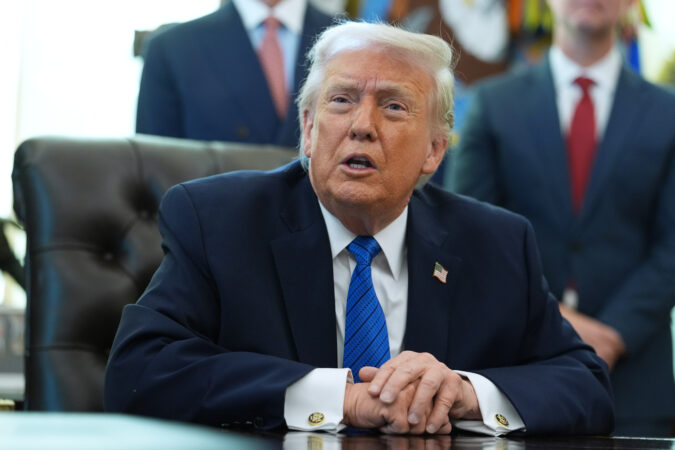
    President Donald Trump has said the “only thing” he worries about is losing Republican control of Congress in the November elections. The latest campaign finance filings show he’s built an unprecedented war chest to help keep that from happening.

    Trump’s political committees and the Republican National Committee amassed $483 million through the end of December, according to documents filed with the Federal Election Commission. That’s nearly triple the $167 million collectively held by the Democratic National Committee and its Senate and House party committees and super PACs.

    The haul comes from tapping Trump’s wealthiest donors with events like “MAGA Inc. dinners” at his Florida and New Jersey resorts as well as relentless appeals via text and email to small-dollar contributors who constitute the Make America Great Again base.

    Since returning to the White House, MAGA Inc. has gotten eight-figure contributions from pipeline billionaire Kelcy Warren and his company Energy Transfer LP; quant trader Jeff Yass; OpenAI co-founder Greg Brockman; and Crypto.com exchange operator Foris DAX Inc. In total, MAGA Inc. alone has raked in $313 million since Trump’s 2024 election victory.

    Targeting the other end of the donor spectrum, Trump’s Never Surrender leadership PAC recently asked potential contributors to make a “small, sustaining contribution so we can complete the MAGA agenda.” It asked for as little as $33.

    Whether all that financial armor is enough to buck history – incumbent presidents almost always lose ground in midterms – isn’t so clear, and Trump knows it.

    “Even presidents, whether it’s Republican or Democrat, when they win, it doesn’t make any difference – they seem to lose the midterms,” Trump said in a Jan. 27 interview on Fox News. “So, that’s the only thing I worry about.”

    Only twice since 1938 has the party in control of the White House gained House seats in a midterm election. During Trump’s first presidency, in 2018, Republicans lost 40 seats. In the two midterms that took place during Barack Obama’s presidency, in 2010 and 2014, Republicans netted 63 seats and 13 seats, respectively.

    – – –

    Growing Frustration

    This year, momentum and history seem to be on the Democrats’ side – they only need to swing a handful of seats to take control of the House.

    Working in their favor, national polls show a majority of voters disapprove of Trump’s handling of the economy, as well as growing frustration with the administration’s approach to deportations and foreign policy. Parts of the coalition that swept him back to office – including independents and young voters as well as Black and Hispanic males – are fraying.

    That handicap for Republicans has been evident in elections over the past three months in which Democrats have outperformed expectations, in part by tapping into voter frustration over cost-of-living concerns.

    “House Republicans are running scared,” said Viet Shelton, a spokesman for the Democratic Congressional Campaign Committee. He added that “with better candidates, a better message, and the public souring on Republicans, Democrats are poised to take back the majority.”

    Reflecting the shifting mood, the non-partisan Cook Political Report last month moved 18 House races toward Democrats, bringing the number of seats considered solidly blue to 189, compared to 186 for Republicans. A party needs 218 seats to win the majority.

    In the latest example of the headwinds Republicans face, this past weekend in Texas a Democratic candidate for a state Senate seat, Taylor Rehmet, defeated a Republican in a district Trump won in 2024 by 17 percentage points over Kamala Harris.

    As the GOP’s fund raiser-in-chief, Trump isn’t waiting until November to put his cash to work. The president intends to use the money he’s amassed to play the role of kingmaker in the midterms, according to people familiar with the strategy.

    That involves doling out money to loyalists, or chosen candidates in competitive primaries or congressional races and punishing lawmakers who’ve crossed him over the past year on everything from the passage of his signature tax bill to the release of the Epstein files.

    Trump allies also expect to tap their stockpile for specific districts in the final two months in the states and races where it’s most needed, flooding the zone to try to ensure victory.

    “MAGA Inc. will have the resources to help candidates who support President Trump’s America First agenda,” Alex Pfeiffer, a spokesperson for the super-PAC, said.

    MAGA Inc. has already intervened in one election: it spent $1.7 million backing Tennessee Republican Matt Van Epps in a special election to fill a vacant House seat. Van Epps won by about 9 points – but that margin was narrower than the cushion of more than 21 points his Republican predecessor enjoyed in 2024.

    Privately, many Trump allies are resigned to the idea the party could lose control of the House. Trump has warned he could be impeached for a third time if that happens, and his signaled he thinks his party’s lawmakers would be to blame.

    House Speaker Mike Johnson, a perennial optimist in his public remarks, said on Sunday that he remains “very bullish on the midterms” and cited the party’s fund-raising prowess as one reason.

    “We’re going to have a war chest to run on,” Johnson said on Fox News Sunday. “I think we’re going to defy history.”

    Trump says his first year as president shows he deserves reelection. Pressed in Iowa last week about why voters may perennially pick the opposition party in midterms, Trump mused about the electorate wanting “fences” or “guardrails” on presidents.

    But, he quickly added, “I don’t need guardrails. I don’t want guardrails.”

  • The first medical evacuees from Gaza enter Egypt as the Rafah crossing reopens

    The first medical evacuees from Gaza enter Egypt as the Rafah crossing reopens

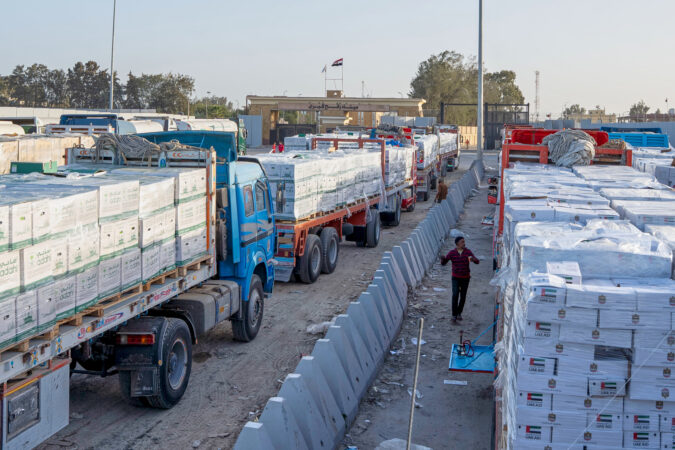
    CAIRO — The first medical evacuees from Gaza entered Egypt on Monday as the Rafah border crossing reopened. It marked a key step in the Israel-Hamas ceasefire but a mostly symbolic one, as few people will be allowed to travel in either direction and no goods will pass through.

    Ambulances waited for hours at the border before ferrying patients across after sunset, Egypt’s state-run Al-Qahera News satellite television channel showed. The crossing had been closed since Israeli troops seized it in May 2024.

    About 20,000 Palestinian children and adults needing medical care hope to leave the devastated territory via the crossing, according to Gaza health officials. Thousands of other Palestinians outside the territory hope to enter and return home.

    The number of travelers is expected to increase over time if the system is successful. Israel has said it and Egypt will vet people for exit and entry.

    The office of the North Sinai governor confirmed that the first Palestinian patient crossed into Egypt.

    Before the war, Rafah was the main crossing for people moving in and out of Gaza. The territory’s handful of other crossings are all shared with Israel. Under the terms of the ceasefire, which went into effect in October, Israel’s military controls the area between the Rafah crossing and the zone where most Palestinians live.

    Violence continued across the coastal territory Monday, and Gaza hospital officials said an Israeli navy ship had fired on a tent camp, killing a 3-year-old Palestinian boy. Israel’s military said it was looking into the incident.

    Egypt prepares to receive the wounded

    Rajaa Abu Mustafa stood Monday outside a Gaza hospital where her 17-year-old son Mohamed was awaiting evacuation. He was blinded by a shot to the eye last year as he joined desperate Palestinians seeking food from aid trucks east of the southern city of Khan Younis.

    “We have been waiting for the crossing to open,” she said. “Now it’s opened and the health ministry called and told us that we will travel to Egypt for (his) treatment.”

    About 150 hospitals across Egypt are ready to receive Palestinian patients evacuated from Gaza through Rafah, authorities said. The Egyptian Red Crescent said it has readied “safe spaces” on the Egyptian side of the crossing to support those evacuated from Gaza.

    Israel has banned sending patients to hospitals in the Israeli-occupied West Bank and east Jerusalem since the war began, cutting off what was previously the main outlet for Palestinians needing medical treatment unavailable in Gaza.

    The Rafah crossing will be supervised by European Union border patrol agents with a small Palestinian presence.

    Historically, Israel and Egypt have vetted Palestinians applying to cross. Fearing that Israel could use the crossing to push Palestinians out of the enclave, Egypt has repeatedly said it must be open for them to enter and exit Gaza.

    Palestinian toddler killed by Israeli fire

    A 3-year-old Palestinian was killed when Israel’s navy hit tents sheltering displaced people in Khan Younis, Palestinian hospital authorities said.

    According to Nasser hospital, which received the body, the attack happened in Muwasi, a tent camp area on Gaza’s coast.

    More than 520 Palestinians have been killed by Israeli fire since the ceasefire went into effect on Oct. 10, according to Gaza’s health ministry. The casualties since the ceasefire are among the over 71,800 Palestinians killed since the start of Israel’s offensive, according to ministry, which does not say how many were fighters or civilians.

    The ministry, which is part of Gaza’s Hamas-led government, keeps detailed casualty records that are seen as generally reliable by U.N. agencies and independent experts.

    Rafah’s opening represents ceasefire progress

    Israeli troops seized the Rafah crossing in May 2024, calling it part of efforts to combat arms smuggling for the militant Hamas group. The crossing was briefly opened for the evacuation of medical patients during a ceasefire in early 2025.

    Israel had resisted reopening the Rafah crossing, but the recovery of the remains of the last hostage in Gaza cleared the way to move forward.

    The reopening is seen as a key step as the U.S.-brokered ceasefire agreement moves into its second phase.

    The truce halted more than two years of war between Israel and Hamas that began with the Hamas-led attack on southern Israel on Oct. 7, 2023. Its first phase called for the exchange of all hostages held in Gaza for hundreds of Palestinians held by Israel, an increase in badly needed humanitarian aid, and a partial pullback of Israeli troops.

    The second phase of the ceasefire deal is more complicated. It calls for installing the new Palestinian committee to govern Gaza, deploying an international security force, disarming Hamas and taking steps to begin rebuilding.

  • Kennedy Center will close for 2 years for renovations in July, Trump says, after performers backlash

    Kennedy Center will close for 2 years for renovations in July, Trump says, after performers backlash

    WASHINGTON — President Donald Trump says he will move to close Washington’s Kennedy Center performing arts venue for two years starting in July for construction.

    Trump’s announcement on social media Sunday night follows a wave of cancellations since Trump ousted the previous leadership and added his name to the building.

    Trump announced his plan days after the premier of Melania, a documentary about the first lady, was shown at the storied venue. The proposal, he said, is subject to approval by the board of the Kennedy Center, which has been stocked with his hand-picked allies.

    Leading performing arts groups have pulled out of appearances, most recently composer Philip Glass, who announced his decision to withdraw his Symphony No. 15 “Lincoln” because he said the values of the center today are in “direct conflict” with the message of the piece.

    “This important decision, based on input from many Highly Respected Experts, will take a tired, broken, and dilapidated Center, one that has been in bad condition, both financially and structurally for many years, and turn it into a World Class Bastion of Arts, Music, and Entertainment,” Trump wrote in his post.

  • Mayor of Portland, Ore., demands ICE leave city after federal agents gas protesters

    Mayor of Portland, Ore., demands ICE leave city after federal agents gas protesters

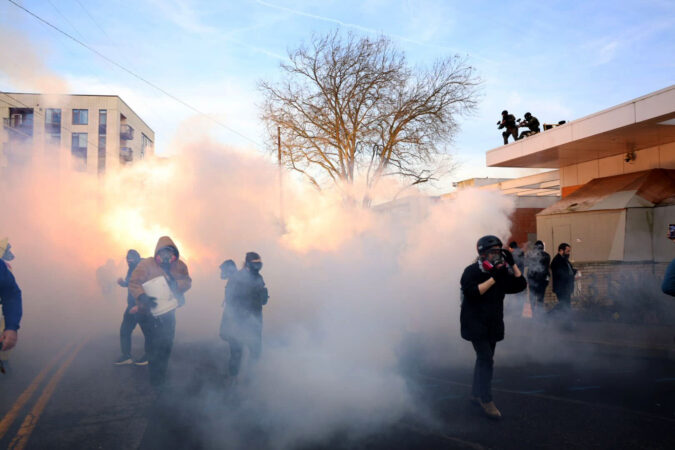
    PORTLAND, Ore. — The mayor of Portland, Ore., demanded U.S. Immigration and Customs Enforcement leave his city after federal agents launched tear gas at a crowd of demonstrators — including young children — outside an ICE facility during a weekend protest that he and others characterized as peaceful.

    Witnesses said agents deployed tear gas, pepper balls, and rubber bullets as thousands of marchers arrived at the South Waterfront facility on Saturday. Erin Hoover Barnett, a former OregonLive reporter who joined the protest, said she was about 100 yards from the building when “what looked like two guys with rocket launchers” started dousing the crowd with gas.

    “To be among parents frantically trying to tend to little children in strollers, people using motorized carts trying to navigate as the rest of us staggered in retreat, unsure of how to get to safety, was terrifying,” Barnett wrote in an email to OregonLive.

    Portland Mayor Keith Wilson said the daytime demonstration was peaceful, “where the vast majority of those present violated no laws, made no threat, and posed no danger” to federal agents.

    “To those who continue to work for ICE: Resign. To those who control this facility: Leave,” Wilson wrote in a statement Saturday night. “Through your use of violence and the trampling of the Constitution, you have lost all legitimacy and replaced it with shame.”

    The Portland Fire Bureau sent paramedics to treat people at the scene, police said. Police officers monitored the crowd but made no arrests on Saturday.

    The Portland protest was one of many similar demonstrations nationwide against President Donald Trump’s administration’s immigration crackdown in cities like Minneapolis, where in recent weeks federal agents killed two residents, Alex Pretti and Renee Good.

    Federal agents in Eugene, Ore., deployed tear gas on Friday when protesters tried to get inside the Federal Building near downtown. City police declared a riot and ordered the crowd to disperse.

    Trump posted Saturday on social media that it was up to local law enforcement agencies to police protests in their cities. However, Trump said he has instructed Homeland Security Secretary Kristi Noem to have federal agents be vigilant in guarding U.S. government facilities.

    “Please be aware that I have instructed ICE and/or Border Patrol to be very forceful in this protection of Federal Government Property. There will be no spitting in the faces of our Officers, there will be no punching or kicking the headlights of our cars, and there will be no rock or brick throwing at our vehicles, or at our Patriot Warriors,” Trump wrote. “If there is, those people will suffer an equal, or more, consequence.”

    Wilson said Portland would be imposing a fee on detention facilities that use chemical agents.

    The federal government “must, and will, be held accountable,” the mayor said. “To those who continue to make these sickening decisions, go home, look in a mirror, and ask yourselves why you have gassed children.”

  • Top Justice Department official plays down chance for charges arising from Epstein files revelations

    Top Justice Department official plays down chance for charges arising from Epstein files revelations

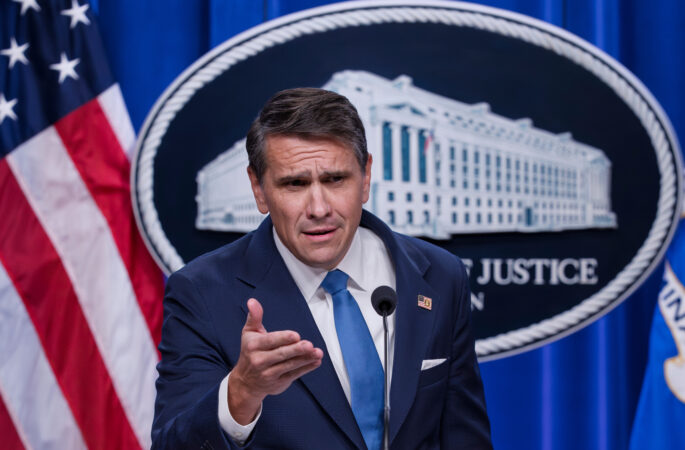
    WASHINGTON — A top Justice Department official played down the possibility of additional criminal charges arising from the Jeffrey Epstein files, saying Sunday that the existence of “horrible photographs” and troubling email correspondence does not “allow us necessarily to prosecute somebody.”

    Department officials said over the summer that a review of Epstein-related records did not establish a basis for new criminal investigations.

    That position remains unchanged, Deputy Attorney General Todd Blanche said, even as a massive document dump since Friday has focused fresh attention on Epstein’s links to powerful individuals around the world and revived questions about what, if any, knowledge the wealthy financier’s associates had about his crimes.

    “There’s a lot of correspondence. There’s a lot of emails. There’s a lot of photographs. There’s a lot of horrible photographs that appear to be taken by Mr. Epstein or people around him,” Blanche said Sunday on CNN’s State of the Union. “But that doesn’t allow us necessarily to prosecute somebody.”

    He said that victims of Epstein’s sex abuse “want to be made whole,” but that “doesn’t mean we can just create evidence or that we can just kind of come up with a case that isn’t there.”

    President Donald Trump’s Justice Department said Friday that it would be releasing more than 3 million pages of documents along with more than 2,000 videos and 180,000 images under a law intended to reveal most of the material it collected during two decades of investigations into Epstein.

    The fallout from the release of the files has been swift. A top official in Slovakia left his position after photos and emails revealed he had met with Epstein in the years after Epstein was released from jail. British Prime Minister Keir Starmer suggested that longtime Epstein friend Andrew Mountbatten-Windsor, formerly known as Prince Andrew, should tell U.S. investigators whether he knows about Epstein’s activities.

    The revelations continue

    The files, posted to the department’s website, included documents involving Epstein’s friendship with Mountbatten-Windsor, and Epstein’s email correspondence with onetime Trump adviser Steve Bannon, New York Giants co-owner Steve Tisch, and other prominent contacts with people in political, business, and philanthropic circles, such as billionaires Bill Gates and Elon Musk.

    The Epstein saga has long fueled public fascination in part because of the financier’s past friendships with Trump and former President Bill Clinton. Both men said they had no knowledge Epstein was abusing underage girls.

    Among the newly released records was a spreadsheet created last August that summarized calls made to the FBI’s National Threat Operation Center or to a hotline set by prosecutors from people claiming to have some knowledge of wrongdoing by Trump. That document included a range of uncorroborated stories involving many different celebrities, and somewhat fantastical scenarios, occasionally with notations indicating what follow-up, if any, was done by agents.

    Blanche said Sunday that there were a “ton of people” named in the Epstein files besides Trump and that the FBI had fielded “hundreds of calls” about prominent individuals that were “quickly determined to not be credible.”

    Some of Epstein’s personal email correspondence contained candid discussions with other people about his penchant for paying women for sex, even after he served jail time for soliciting an underage prostitute. Epstein killed himself in a New York jail in August 2019, a month after being indicted on federal sex trafficking charges.

    In one 2013 email, a person whose name was blacked out wrote to Epstein about his choice “to surround yourself with these young women in a capacity that bleeds — perhaps, somewhat arbitrarily — from the professional into the personal and back.”

    “Though these women are young, they are not too young to know that they are making a very particular choice in taking on this role with you,” the person wrote. “Especially in the aftermath of your trial which, after all, was public and could be — indeed was — interpreted as a powerful man taking advantage of powerless young women, instead of the other way around.”

    In another email written in 2009, not long after Epstein had finished serving jail time for his Florida sex crimes, another woman, whose name was redacted, excoriated him for breaking a promise that they would spend time alone together and try to conceive a baby.

    “I find myself having to question every agreement we have made (no prostitutes staying in the house, in our bed, movies, naps, two weeks Alone, baby…),” She wrote. “Your last minute suggestion to spend THIS weekend with prostitutes is just too much for me to handle. I can’t live like this anymore.”

    ‘This review is over’

    Blanche said in a separate appearance on ABC’s This Week that though there are a “small number of documents” that the Justice Department is waiting to release when it receives a judge’s approval, when it comes to the department’s own scouring of documents, “this review is over.”

    “We reviewed over six million pieces of paper, thousands of videos, tens of thousands of images,” Blanche said.

    House Speaker Mike Johnson (R., La.) told NBC’s Meet the Press on Sunday that he thinks the Department of Justice is complying with the law requiring public disclosure of the Epstein files.

    But Rep. Ro Khanna (D., Calif.), co-sponsor of the law requiring the Justice Department to release its Epstein files, said he did not believe the department had fully complied. He said survivors are upset that many of their names accidentally had come out without redactions and they want to make sure the rest of the files come out.

    Blanche said each time the department has learned that a victim’s name was not properly redacted, it has moved quickly to fix the problem but that those mistakes account for a tiny fraction of the overall materials.

  • Demond Wilson, who played Lamont on ‘Sanford and Son,’ has died at 79

    Demond Wilson, who played Lamont on ‘Sanford and Son,’ has died at 79

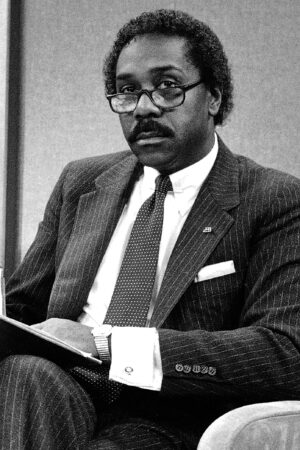
    Demond Wilson, who found fame in the 1970s playing Lamont on Sanford and Son and went on to become a minister, has died. He was 79.

    Mark Goldman, a publicist for Mr. Wilson, confirmed to the Associated Press that he died following complications from cancer on Friday.

    “A devoted father, actor, author, and minister, Demond lived a life rooted in faith, service, and compassion. Through his work on screen, his writing, and his ministry, he sought to uplift others and leave a meaningful impact on the communities he served,” Goldman said in an emailed statement.

    Mr. Wilson was best known as the son of Redd Foxx’s comically cantankerous Fred Sanford character in a sitcom that was among the first to feature a mostly Black cast when it began airing in 1972.

    The thoughtful Lamont had to put up with his junkyard owner father’s schemes, bigotry, and insults — most famously, and repeatedly, “You big dummy!”

    The show was a hit for its six seasons on NBC but ended when ABC offered Foxx a variety show.

    Mr. Wilson was born in Valdosta, Ga., and grew up in the Harlem section of Manhattan, according to the biography on his website.

    He served in the U.S. Army in Vietnam and was wounded there, and he returned to New York and acted on stage before heading to Hollywood.

    A guest appearance on All in the Family in 1971 led to his best-known role. Norman Lear produced both shows.

    Mr. Wilson told AP in 2022 that he got the role over comedian Richard Pryor.

    “I said, ‘C’mon, you can’t put a comedian with a comedian. You’ve got to have a straight man,’” he said he told the producers.

    After Sanford and Son ended, Mr. Wilson starred in the shorter-lived comedies Baby I’m Back and The New Odd Couple. He later appeared in four episodes of the show Girlfriends in the 2000s, along with a handful of movie roles.

    Though he returned to the screen at times, he told the Los Angeles Times in 1986 that the acting life was not for him: “It wasn’t challenging. And it was emotionally exhausting because I had to make it appear that I was excited about what I was doing.”

    Mr. Wilson became a minister in the 1980s.

    He is survived by his wife, Cicely Wilson, and their six children.

  • Trump says U.S. is ‘starting to talk to Cuba’ as he moves to cut its oil supplies

    Trump says U.S. is ‘starting to talk to Cuba’ as he moves to cut its oil supplies

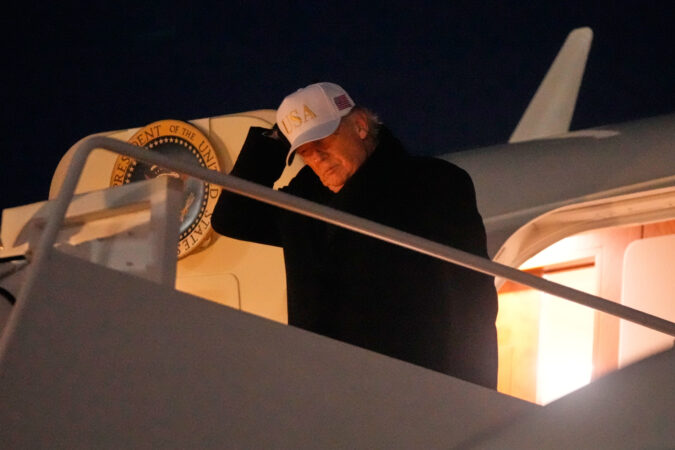
    ABOARD AIR FORCE ONE — President Donald Trump said the United States was beginning to talk with Cuban leaders as his administration puts greater pressure on the communist-run island and cuts off key oil supplies.

    He made the comment to reporters on Saturday night as he was flying to Florida. It comes in the wake of his moves in recent weeks to cut off supplies of oil from Venezuela and Mexico, which he suggested Saturday would force Cuba to the negotiating table.

    His goals with Cuba remain unclear, but Trump has turned more of his attention toward the island after his administration in early January captured Venezuela’s then-President Nicolás Maduro and has been more aggressive in confronting nations that are adversaries of the U.S.

    Trump has predicted that the Cuban government is ready to fall.

    The Republican president did not offer any details on Saturday about what level of outreach his administration has had with Cuba recently or when, but simply said, “We’re starting to talk to Cuba.”

    His recent moves to cut off its oil supplies have squeezed the island.

    Last week, Trump signed an executive order to impose a tariff on any goods from countries that sell or provide oil to Cuba. The move put pressure on Mexico, which Cuba became dependent on for oil after Trump halted oil shipments from Venezuela in the wake of Maduro’s ouster.

    Mexican President Claudia Sheinbaum warned that it could cause a humanitarian crisis. She said on Friday that she would seek alternatives to continue helping Cuba.

    “It doesn’t have to be a humanitarian crisis. I think they probably would come to us and want to make a deal,” Trump said Saturday. “So Cuba would be free again.”

    He predicted they would make some sort of deal with Cuba and said, “I think, you know, we’ll be kind.”

  • Venezuelan activist Javier Tarazona released from prison as US diplomat assumes post

    Venezuelan activist Javier Tarazona released from prison as US diplomat assumes post

    CARACAS, Venezuela — Venezuelan human rights activist Javier Tarazona, an ally of opposition leader María Corina Machado, was released from prison after the government promised to free political prisoners in an amnesty bill, rights organizations and family members said on Sunday.

    Tarazona, the director of the Venezuelan nonprofit human rights group FundaRedes, was arrested in July 2021, after reporting to authorities that he had been harassed by national intelligence officials. Two other activists of the group were also detained at the time.

    According to Venezuela’s Foro Penal, a nonprofit that monitors the situation of political prisoners in the country, 310 who were jailed for political reasons had been released by Saturday and 700 others are still waiting to be freed.

    “After 1675 days, four years and seven months, this wishful day has arrived. My brother Javier Tarazona is free,” José Rafael Tarazona Sánchez wrote on X. “Freedom for one is hope for all.”

    Tarazona was released shortly after the arrival to Caracas of U.S. Charge d’Affaires Laura Dogu, who will reopen the American diplomatic mission after seven years of severed ties. It comes after U.S. President Donald Trump ordered a military action that removed the South American country’s former President Nicolás Maduro from office and brought him to the U.S. for trial.

    Dogu, who was previously ambassador in Nicaragua and Honduras, arrived in Venezuela one day after the country’s interim president, Delcy Rodríguez, announced an amnesty bill to release political prisoners. That move was one of the key demands of the Venezuelan opposition.

    Venezuela’s government had accused Tarazona of terrorism, a frequent accusation it makes against real or potential opposition members. Tarazona was vocal against illegal armed groups on the country’s border with Colombia and their alleged connection to high-ranked members of the Maduro administration.

    Nonprofit Amnesty International reported that Tarazona’s health had deteriorated due to lack of medical attention during his time in prison.

    “All of Venezuela admires you and respects your bravery and your commitment,” Machado said on X. “You, better than anyone, know that there will be justice in Venezuela. Freedom for all political prisoners.”

    Venezuela’s government denies it jails members of the opposition and accuses them of conspiring to bring it down.

  • Gaza’s crucial Rafah crossing prepares for limited travel to resume Monday

    Gaza’s crucial Rafah crossing prepares for limited travel to resume Monday

    CAIRO — Palestinians in Gaza watched with hope and impatience Sunday as workers laid the groundwork to reopen the territory’s Rafah border crossing with Egypt, its lifeline to the world. Israel says the crossing is scheduled to resume Monday as its ceasefire with Hamas moves ahead.

    “Opening the crossing is a good step, but they set a limit on the number of people allowed to cross, and this is a problem,” said Ghalia Abu Mustafa, a woman from Khan Younis.

    Israel said the crossing had opened in a test, and the Israeli military agency that controls aid to Gaza said residents could begin crossing Monday. But only a small number of people can cross at first.

    “We want a large number of people to leave, for it to be open so that sick people can go and return,” said Suhaila Al-Astal, a woman displaced from the city of Rafah who said her sick daughter needed help abroad. ”We want the crossing to be open permanently.”

    Israel’s announcement came a day after Israeli strikes killed at least 30 Palestinians including several children, according to hospital officials — one of the highest death tolls since the ceasefire began on Oct. 10. Israel had accused Hamas of new truce violations.

    Nicolay Mladenov, director-general of U.S. President Donald Trump’s new board of peace in Gaza, urged the parties to “exercise restraint” and said his office was working with the new Palestinian committee chosen to oversee Gaza to find ways that prevent future incidents.

    Dozens will enter and leave Gaza daily at first

    The Rafah crossing has been largely shut since Israel seized it in May 2024. About 20,000 Palestinian children and adults needing medical care are hoping to leave war-devastated Gaza via the crossing, and thousands of other Palestinians outside the territory hope to return home.

    Few people, and no cargo, will be allowed to cross at first. Prime Minister Benjamin Netanyahu has said Israel will allow 50 patients needing medical evacuation to leave daily. An official involved in the discussions, speaking on condition of anonymity to discuss diplomatic talks, said each patient can travel with two relatives, while 50 people who left Gaza during the war can return each day.

    Zaher al-Wahidi, head of the Gaza Health Ministry’s documentation department, told the Associated Press the ministry hadn’t been notified about the start of medical evacuations.

    Israel has said it and Egypt will vet people for exit and entry through the crossing, which will be supervised by European Union border patrol agents. The number of travelers is expected to increase over time if the system is successful.

    Israel will stop Doctors Without Borders’ work in Gaza

    Also Sunday, Israel’s Diaspora Ministry said it was “moving to terminate” the operations of Doctors Without Borders in Gaza by Feb. 28.

    Israel in December suspended the group’s operations there because it refused to comply with new registration requirements for organizations to submit lists of local employees. The medical charity said the regulations could endanger Palestinian staff.

    Doctors Without Borders had no immediate comment. It has said Israel’s decision will have a catastrophic impact on its work in Gaza, where it provides funding and international staff for six hospitals and runs two field hospitals and eight primary health centers, clinics, and medical points. It also runs two of Gaza’s five stabilization centers helping children with severe malnutrition.

    Israel has suspended over two dozen humanitarian organizations from operating in Gaza because of failure or refusal to comply with the new requirements.

    The Diaspora Ministry, which proposed them, says they are aimed at preventing Hamas and other militant groups from infiltrating aid groups. The organizations call the rules arbitrary and warn that the bans harm a civilian population desperately in need of aid.

    Gaza’s health sector has been devastated by two years of Israeli bombardment and restrictions on supplies.

    Rafah has been Gaza’s main crossing

    Palestinian security officers on Sunday passed through the Rafah crossing’s Egyptian gate and headed toward the Palestinian gate to join an EU mission that will supervise exit and entry, said an Egyptian official who spoke on condition of anonymity because he wasn’t authorized to speak to the media. Ambulances also crossed through the Egyptian gate, the official said.

    Before the war, Rafah was the main crossing for people moving in and out of Gaza. The territory has four other border crossings with Israel.

    Israel called its 2024 seizure of the Rafah crossing part of efforts to combat Hamas arms smuggling. The crossing briefly opened for the evacuation of medical patients during a ceasefire in early 2025. Israel had resisted reopening the Rafah crossing, but the recovery of the remains of the last hostage in Gaza last week cleared the way to move forward.

    Under the ceasefire terms, Israel’s military controls the area between the Rafah crossing and the zone where most Palestinians live.

    Fearing that Israel could use the crossing to push Palestinians out of the enclave, Egypt has repeatedly said it must be open for crossing in both directions. Historically, Israel and Egypt have vetted Palestinians applying to cross.

    The ceasefire halted more than two years of war between Israel and Hamas that began with a Hamas-led attack on southern Israel on Oct. 7, 2023, that killed some 1,200 people, mostly civilians, and took 251 hostages.

    Israel’s retaliatory offensive has killed 71,795 Palestinians, including 523 since this ceasefire started, according to Gaza’s Health Ministry. The ministry doesn’t distinguish between civilians and combatants in its figures. It maintains detailed casualty records that are seen as generally reliable by U.N. agencies and independent experts.

    The ceasefire’s first phase called for the exchange of all hostages held in Gaza for hundreds of Palestinians held by Israel, a surge in humanitarian aid, and a partial pullback of Israeli troops.

    The second phase is more complicated. It calls for installing a new Palestinian committee to govern Gaza, deploying an international security force, disarming Hamas, and taking steps to begin rebuilding.

  • Iran’s supreme leader warns any U.S. attack would spark ‘regional war’

    Iran’s supreme leader warns any U.S. attack would spark ‘regional war’

    DUBAI, United Arab Emirates — Iran’s supreme leader warned Sunday that any attack by the United States would spark a “regional war” in the Mideast, further escalating tensions as President Donald Trump has threatened to militarily strike the Islamic Republic over its crackdown on recent nationwide protests.

    The comments from the 86-year-old Ayatollah Ali Khamenei are the most direct threat he’s made so far as the aircraft carrier USS Abraham Lincoln and associated American warships take positions in the Arabian Sea, sent there by Trump after Tehran’s bloody crackdown on nationwide protests.

    It remains unclear whether Trump will use force. He’s repeatedly said Iran wants to negotiate and has brought up Tehran’s nuclear program as another issue he wants to see resolved.

    But Khamenei also referred to the nationwide protests as “a coup,” hardening the government’s position as tens of thousands of people reportedly have been detained since the start of the demonstrations. Sedition charges in Iran can carry the death penalty, which again renews concerns about Tehran carrying out mass executions for those arrested — a red line for Trump.

    Iran had also planned a live-fire military drill for Sunday and Monday in the strategic Strait of Hormuz, the narrow mouth of the Persian Gulf through which a fifth of all oil traded passes. The U.S. military’s Central Command had warned against threatening American warships or aircraft during the drill or disrupting commercial traffic.

    Khamenei warns U.S.

    Khamenei spoke to a crowd at his compound in Tehran as Iran marked the start of a dayslong commemoration of the country’s 1979 Islamic Revolution. He, at one point, described the U.S. as being interested in its oil, natural gas, and other mineral resources, saying that they wanted to “seize this country, just as they controlled it before.”

    “The Americans must be aware that if they wage a war this time, it will be a regional war,” he said.

    The supreme leader added, “We are not the instigators, we are not going to be unfair to anyone, we don’t plan to attack any country. But if anyone shows greed and wants to attack or harass, the Iranian nation will deal a heavy blow to them.”

    Asked about the warning, Trump on Sunday told reporters that the U.S. “has the biggest, most powerful ships in the world over there, very close, a couple of days, and hopefully we’ll make a deal. If we don’t make a deal, then we’ll find out whether or not he was right.”

    Khamenei also hardened his position on the demonstrations after earlier acknowledging some people had legitimate economic grievances that sparked their protests. The demonstrations began Dec. 28, initially over the collapse of Iran’s rial currency. It soon grew into a direct challenge to Khamenei’s rule.

    “The recent sedition was similar to a coup. Of course, the coup was suppressed,” he said. “Their goal was to destroy sensitive and effective centers involved in running the country, and for this reason they attacked the police, government centers, (Revolutionary Guard) facilities, banks and mosques — and burned copies of the Quran. They targeted centers that run the country.”

    The U.S.-based Human Rights Activists New Agency, which relies on a network inside Iran to verify its information, reports that over 49,500 people have been detained in the crackdown. It says the violence killed at least 6,713 people, the vast majority of them demonstrators. The Associated Press has been unable to independently assess the death toll and arrest figures, given authorities have cut Iran’s internet off from the rest of the world.

    As of Jan. 21, Iran’s government put the death toll at a far lower 3,117, saying 2,427 were civilians and security forces, labeling the rest “terrorists.” In the past, Iran’s theocracy has undercounted or not reported fatalities from unrest.

    That death toll exceeds that of any other round of protest or unrest in Iran in decades and recalls the chaos surrounding the 1979 revolution.

    Parliament speaker: EU militaries considered terrorist groups

    The speaker of Iran’s parliament, meanwhile, said that the Islamic Republic now considers all European Union militaries to be terrorist groups, lashing out after the bloc declared the country’s paramilitary Revolutionary Guard a terror group over taking part in the bloody crackdown.

    Mohammad Bagher Qalibaf, a former Guard commander, announced the terror designation, which will likely be mostly symbolic. Iran has used a 2019 law to reciprocally declare other nations’ militaries terror groups following the United States’ declaration of the Guard as a terror group that year.

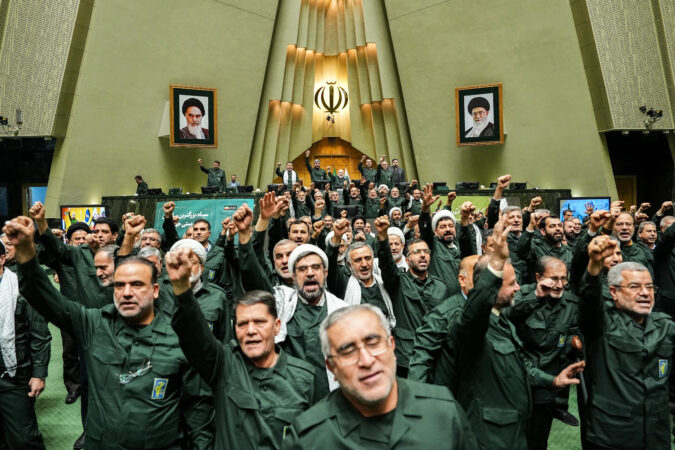
    Qalibaf made the announcement as he and others in parliament wore Guard uniforms in support of the force. The Guard, which also controls Iran’s ballistic missile arsenal and has vast economic interests in Iran, answers only to Khamenei.

    “By seeking to strike at the (Guard), which itself has been the greatest barrier to the spread of terrorism to Europe, Europeans have in fact shot themselves in the foot and, once again, through blind obedience to the Americans, decided against the interests of their own people,” Qalibaf said.

    Lawmakers at the session later chanted: “Death to America!” and “Death to Israel!”

    Trump says Iran is ‘seriously talking’ to U.S.

    Trump has laid out two red lines for military action: the killing of peaceful protesters or the possible mass execution of those detained in a major crackdown over the demonstrations. He’s increasingly begun discussing Iran’s nuclear program as well, which the U.S. negotiated over with Tehran in multiple sessions before Israel launched a 12-day war with Iran back in June.

    The U.S. bombed three Iranian nuclear sites during the war. Activity at two of the sites suggests Iran may be trying to obscure the view of satellites as it tries to salvage what remains there.

    Trump on Saturday night declined to say whether he’d made a decision on what he wanted to do regarding Iran.

    Speaking to reporters, Trump sidestepped a question about whether Tehran would be emboldened if the U.S. backed away from launching strikes on Iran, saying, “Some people think that. Some people don’t.”

    Trump said Iran should negotiate a “satisfactory” deal to prevent the Middle Eastern country from getting any nuclear weapons, but said, “I don’t know that they will. But they are talking to us. Seriously talking to us.”