Category: Wires

  • 4 Parkinson’s disease symptoms that can show up decades before a diagnosis

    4 Parkinson’s disease symptoms that can show up decades before a diagnosis

    Many people think of a tremor as the quintessential warning sign of Parkinson’s disease. But other symptoms — many of them not involving changes in movement — can appear much earlier than what’s known as a resting tremor.

    In fact, a resting tremor, which is a rhythmic shaking of a body part such as a hand when at rest, isn’t even required for diagnosis. Up to 20% of people with Parkinson’s disease don’t have one.

    “Parkinson’s is what we call a movement disorder because it affects our movement, but there’s a whole side of Parkinson’s that is non-motor,” said Rachel Dolhun, a neurologist and principal medical adviser at the Michael J. Fox Foundation for Parkinson’s Research. “We long thought it was just a movement disease, but now we see that it affects the whole body in different ways.”

    Certain symptoms show up years before motor changes

    Parkinson’s disease is one of the most common neurological disorders in the world, with cases expected to reach 25.2 million by 2050. While inherited genetic mutations are associated with 10 to 15% of cases, the rest have no known cause. Symptoms can be managed with available treatments, but there is no cure — although exercise is thought to reduce the risk of developing the condition. And there are several other things you can do to reduce your risk of Parkinson’s disease, as well.

    To make a Parkinson’s diagnosis, neurologists look for characteristic movement symptoms, including slowness, stiffness, and resting tremor. However, common non-motor symptoms of Parkinson’s, such as constipation and loss of sense of smell, often precede such changes in movement by more than a decade. This early stage of Parkinson’s, known as the prodromal phase, marks the beginning of a gradual onset of disease.

    “It’s a slow disease, and we’re realizing just how slow it can be,” said Ronald Postuma, a professor of neurology and neurosurgery at McGill University in Montreal. “It’s progressing in the brain, year by year, until it crosses a threshold at which doctors can make the diagnosis.”

    Parkinson’s disease damages neurons that produce dopamine, a chemical that transmits signals between cells and plays a crucial role in controlling movement and coordination in the brain. By the time motor symptoms show up, 50 to 70% of these neurons in the substantia nigra, a small but vital structure for voluntary movement located in the brain stem, have already died.

    In the last two decades, researchers have made major advances in understanding markers of prodromal Parkinson’s that they hope could, one day, be used for earlier diagnosis.

    “It’s important to stress that not everyone who has these symptoms goes on to develop Parkinson’s,” Dolhun said. “But we know that in some people, these can be some of the earliest signs.”

    Here are four early symptoms that often appear in people who are later diagnosed with Parkinson’s disease:

    Loss of sense of smell

    The inability to detect odors, known as anosmia, can be a temporary side effect from a cold or sinus infection, or even a more permanent issue after COVID. But more than 90% of people with Parkinson’s disease lose their sense of smell gradually over a long period of time. It can begin years or even decades before motor symptoms.

    “We’ve estimated that the loss of the sense of smell is occurring 20 years before the disease is diagnosed,” Postuma said.

    “We know that people who lose their sense of smell have about a fivefold increased risk of developing Parkinson’s in the future,” he said. “People lose their ability to detect and identify odors, and they are often not very aware because it happens so gradually.”

    Researchers are still trying to understand what causes anosmia in Parkinson’s disease and why it is one of the earliest symptoms. One hypothesis states that the disease could actually begin in the olfactory bulb, the part of the brain that controls sense of smell, where abnormal proteins wreak havoc and damage neurons.

    Adults ages 40 and older in the United States or Canada who have not been diagnosed with Parkinson’s disease can request a free scratch-and-sniff smell test from the Michael J. Fox Foundation for Parkinson’s Research. The test is part of a brain health study that uses loss of sense of smell as a way of identifying people who haven’t yet developed Parkinson’s but might in the future.

    Acting out dreams

    Normally, the body enters a state of almost total paralysis during rapid eye movement (REM) sleep, which is the sleep stage with the most vivid dreams. REM sleep behavior disorder is a chronic condition characterized by a loss of this paralysis that leads people to physically act out their dreams. They will sit up in bed, have one-sided conversations, and even punch or kick their partner.

    Studies have shown that between 50 and 70% of people with REM sleep behavior disorder will develop Parkinson’s disease or a related condition such as Lewy body dementia within an average of five to 10 years. People ages 50 and older with REM sleep behavior disorder have a 130 times greater likelihood of developing Parkinson’s compared with someone without the sleep condition.

    If you think you’re acting out your dreams, talk to your doctor and request a sleep study for confirmation. People who receive a diagnosis can sign up for a registry established by the North American Prodromal Synucleinopathy (NAPS) Consortium, which aims to develop treatments to delay or prevent Parkinson’s and related diseases.

    Constipation

    Constipation is one of the most common gastrointestinal complaints in the United States and usually not serious. However, chronic constipation that persists for several weeks or longer affects two-thirds of all people with Parkinson’s. Parkinson’s can affect the nerves that line the digestive tract, and studies have found clumps of abnormal protein in neurons lining the intestines of people with Parkinson’s.

    A meta-analysis of nine studies found that people with constipation — either assessed by a questionnaire or diagnosed by a healthcare professional — were twice as likely to develop Parkinson’s compared with those without constipation. Another study followed 6,790 men ages 51 to 75 over a 24-year period, and those who had a bowel movement less often than once a day had a greater risk of Parkinson’s.

    “Even people who are constipated in their 20s or 30s seem to have an increased chance of getting Parkinson’s 30, 40 years later,” Postuma said. “So, now we’re starting to wonder: Is the disease affecting the nerves that control the gut, or is being constipated a risk factor for Parkinson’s, as well?”

    Dizziness when standing up

    Postural low blood pressure, known as orthostatic hypotension, is a drop in blood pressure that occurs when a person goes from sitting or lying down to standing. It can lead to dizziness, lightheadedness, and even fainting. Orthostatic hypotension can be triggered by mild dehydration, low blood sugar, or overheating. But chronic, persistent orthostatic hypotension can be more serious.

    “When it’s neurological in origin — in other words, not dehydration, medication, or a heart problem — about half of these patients develop Parkinson’s or a related condition,” Postuma said. “So it’s a very high risk factor. Most people, though, don’t have a neurologic cause.”

    Researchers have identified orthostatic hypotension as a possible feature of prodromal Parkinson’s disease, although the evidence is not as strong as for other markers. For example, one study found that otherwise unexplained orthostatic hypotension was associated with an eventual diagnosis of Parkinson’s or a related condition in 18 of 79 (23%) patients after a 10-year follow-up.

    What prodromal markers mean

    At this point, these prodromal markers aren’t specific enough to definitively signal Parkinson’s on their own, and there’s a good chance they may be because of a different cause or medical condition. But if you have several markers at once or a family history of the disease, you may want to speak to your doctor.

    “If you start to combine some of these symptoms, then it really increases your risk for developing Parkinson’s disease in the future,” said Kelly Mills, director of the Parkinson’s disease and Movement Disorders Center at Johns Hopkins Medicine. “If someone has constipation, loss of smell sensation, and they’re acting out their dreams, you’re adding the risk of those different factors. But don’t necessarily jump to any conclusions without getting an evaluation.”

  • TSA’s faster PreCheck lane is expanding to more airports

    TSA’s faster PreCheck lane is expanding to more airports

    A faster way to get through airport security may be coming to an airport near you.

    TSA PreCheck Touchless ID, a new program that uses facial recognition, is expanding to 65 airports this spring. The expansion will prioritize 2026 World Cup host cities, where travel is expected to surge, said Transportation Security Administration spokesperson R. Carter Langston.

    “Passengers seem to absolutely appreciate it — the speed, the efficiency,” Langston said. “All they show is their face, and the officer just waves them right into the checkpoint. No hassling with passports or IDs or phones.”

    TSA launched the first iteration of the program in 2021 in partnership with Delta Air Lines at Hartsfield-Jackson Atlanta International Airport. It’s now available for five airlines across 22 airports.

    Critics worry that the program raises privacy concerns. It is voluntary, and travelers can opt out at any time and use a standard ID verification instead.

    What is PreCheck Touchless ID?

    TSA said in an email that the initiative is a joint effort from U.S. Customs and Border Protection, airports, and airlines that allows travelers “to move through dedicated lanes with ease, enjoying a smoother and more convenient airport experience.”

    The program uses the CBP Traveler Verification Service to create “a secure biometric template of a passenger’s live facial image taken at the checkpoint and matches it against a gallery of templates of pre-staged photos that the passenger previously provided to the government (e.g., U.S. Passport or Visa),” the agency website said.

    Who is eligible for PreCheck Touchless ID?

    To use the program, fliers must be a current TSA PreCheck member with a valid “known traveler number” and an active airline profile (such as being enrolled in a loyalty program). They must also have a valid passport uploaded to their airline profile.

    The airlines currently participating in the program include Alaska, American, Delta, Southwest, and United.

    TSA PreCheck Touchless ID offers current TSA PreCheck members an expedited airport security screening by way of “facial comparison technology.”

    It’s only available at select airports, through participating airlines — which vary. For example, travelers at John F. Kennedy International Airport, but only if they are flying with Alaska, America, or Delta. It is available at George Bush Intercontinental in Houston, but only for passengers flying with American. For a list of availability, visit the TSA website.

    How can travelers opt in?

    To use the program, travelers must first opt in through their airline’s website or app before checking in to their flight.

    The process varies by airline, but you can generally find the prompt under a “travel documents” section (where you add your known traveler number or passport details) of your airline loyalty program app or website.

    American Airlines customers, for example, will find the opt-in choice toward the bottom of the “Information and password” page of their AAdvantage profile, while Alaska Airlines customers should go to their account settings, then click into the “travel documents” section.

    Once travelers have opted in, then checked in for their flight, a TSA PreCheck Touchless ID symbol should then appear on their boarding pass. If the symbol is not on your boarding pass, you won’t be able to use the lane, even if you show an employee that you are enrolled in the program.

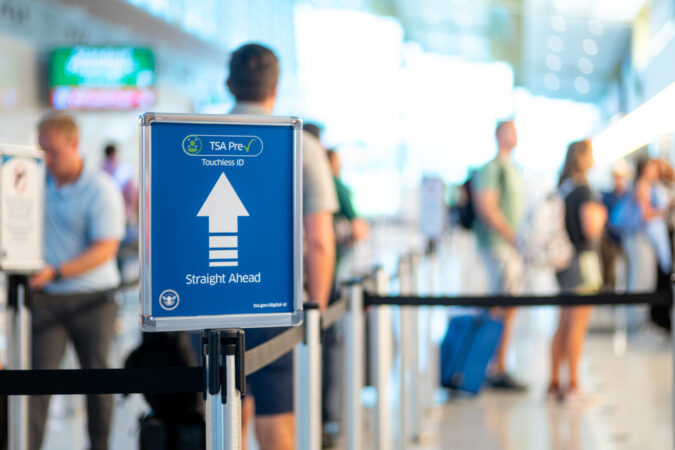
    At the airport, travelers should follow signs to a separate TSA PreCheck Touchless ID lane. Instead of handing an ID over to an officer to verify your identity, you’ll instead pause to scan your face, then keep moving.

    Is it really faster?

    It can be, for two reasons.

    First: There is no slowdown to hand over and scan your ID; travelers must only pause during their walk through the line dividers before proceeding to the X-ray machines.

    Second: Because the program is new, requires signing up in advance, and is not available for every airline, it’s getting a fraction of the traffic that regular security, Clear, or PreCheck lanes are.

    We’ve had mixed results. When it works, it’s incredible; you really are through in seconds.

    But we’ve also been delayed when the facial comparison machine was undergoing maintenance and out of use, sending us back into the longer PreCheck lane.

    Which airports offer PreCheck Touchless ID?

    TSA PreCheck Touchless ID is already available at 22 airports (however, participating airlines will vary; check the TSA website for more information):

    • Boston Logan International Airport
    • Charlotte Douglas International Airport
    • Chicago O’Hare International Airport
    • Dallas-Fort Worth International Airport
    • Denver International Airport
    • Detroit Metropolitan Wayne County Airport
    • Dulles International Airport
    • George Bush Intercontinental Airport
    • Harry Reid International Airport in Las Vegas
    • Hartsfield-Jackson Atlanta International Airport
    • John F. Kennedy International Airport
    • LaGuardia Airport
    • Los Angeles International Airport
    • Minneapolis–Saint Paul International Airport
    • Newark Liberty International Airport
    • Palm Beach International Airport
    • Philadelphia International Airport
    • Portland International Airport in Oregon
    • Ronald Reagan Washington National Airport
    • Salt Lake City International Airport
    • San Francisco International Airport
    • Seattle-Tacoma International Airport

    What are the privacy concerns?

    The TSA is using more facial recognition at the airport, including in regular security lanes and CBP checks.

    The CBP says its Enhanced Passenger Processing involves taking a traveler’s photo using “auto capture technology” to simplify the inspection and adjudication process.

    Travelers can also use biometric screenings to speed through Global Entry, using a CBP app.

    TSA says on its website that it may share your information with “CBP, DHS S&T, or others as necessary.” The agency confirmed that includes sharing information about travelers with Immigration and Customs Enforcement to check for deportation orders.

    There has been a bipartisan effort to put more guardrails on its use at airports.

    In 2019, the Department of Homeland Security said that photos of travelers were taken in a data breach, accessed through the network of one of its subcontractors. (TSA says its databases are encrypted).

    A new Senate bill would allow officers to continue scanning travelers’ faces if they opt in; it would ban the technology’s use for anything other than verifying identities. It would also require the agency to immediately delete the scans once the check is complete.

    If you change your mind about TSA PreCheck Touchless ID, you can opt out at any time and ask for standard ID verification instead. You can opt out of any facial recognition at the airport by saying, “I’d prefer a standard ID check.”

    The agency also says it deletes photos and personal data within 24 hours of scheduled flight departures. The TSA website’s FAQ section addresses some privacy concerns and says that all data collected during facial comparison checks is protected.

  • Maxey scores 40 points and hits winning layup with 1.3 seconds left to lead 76ers over Kings 113-111

    Maxey scores 40 points and hits winning layup with 1.3 seconds left to lead 76ers over Kings 113-111

    PHILADELPHIA — Tyrese Maxey scored 40 points, including the winning layup with 1.3 seconds remaining, Joel Embiid had 37 points and the Philadelphia 76ers rallied to edge the Sacramento Kings 113-111 on Thursday night.

    Paul George added 15 points for Philadelphia, which came back from an 11-point deficit in the fourth-quarter.

    Dennis Schroder scored 27 points and DeMar DeRozan added 25 for the Kings, who have lost seven in a row.

    After DeRozan missed a 14-footer that would have put the Kings in front, Embiid grabbed the rebound with 5.2 seconds left and Philadelphia coach Nick Nurse called a timeout. On the 76ers’ second attempt to inbound the ball on their ensuing possession, Kelly Oubre Jr. passed to Embiid at the top of the arc, and Maxey sprinted from half-court. He took the pass from Embiid and converted a driving, left-handed layup and was fouled by Precious Achiuwa.

    Sacramento outscored the 76ers 38-28 in the third quarter to take a 92-88 advantage into the fourth. Zach LaVine’s three-point play with 7:44 remaining put Sacramento up 103-92. But Philadelphia rallied to score 13 of the next 15 points, tying the game at 105 on two free throws by Maxey to set the stage for the finish.

    Sacramento dropped to 3-21 on the road and 0-4 on its six-game road trip.

    The 76ers played their second straight game with a healthy Embiid and George, who each were listed as probable entering the contest. George tied a Philadelphia single-game record with nine 3-pointers in Tuesday’s 139-122 win over Milwaukee, a game in which Embiid had 29 points, nine rebounds, and five assists.

    Russell Westbrook (right foot soreness), Malik Monk (right ankle soreness) and Keegan Murray (left ankle sprain) were sidelined for the Kings. Philadelphia’s Quentin Grimes (right ankle sprain) missed his second straight game.

  • Trump threatens Canada with 50% tariff on aircraft sold in U.S., expanding trade war

    Trump threatens Canada with 50% tariff on aircraft sold in U.S., expanding trade war

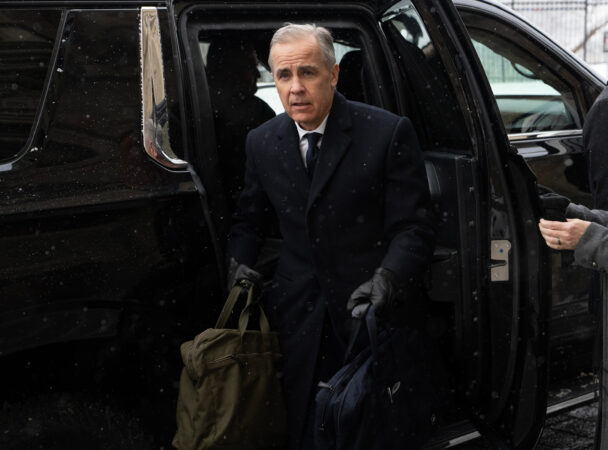
    WASHINGTON — President Donald Trump on Thursday threatened Canada with a 50% tariff on any aircraft sold in the U.S., the latest salvo in his trade war with America’s northern neighbor as his feud with Prime Minister Mark Carney expands.

    Trump’s threat posted on social media came after he threatened over the weekend to impose a 100% tariff on goods imported from Canada if it went forward with a planned trade deal with China. But Trump’s threat did not come with any details about when he would impose the import taxes, as Canada had already struck a deal.

    In Trump’s latest threat, the Republican president said he was retaliating against Canada for refusing to certify jets from Savannah, Ga.-based Gulfstream Aerospace.

    Trump said the U.S., in return, would decertify all Canadian aircraft, including planes from its largest aircraft maker, Bombardier. “If, for any reason, this situation is not immediately corrected, I am going to charge Canada a 50% Tariff on any and all Aircraft sold into the United States of America,” Trump said in his post.

    Spokespeople for Bombardier and Canada’s transport minister didn’t immediately respond to messages seeking comment Thursday evening.

    The U.S. Commerce Department previously put duties on a Bombardier commercial passenger jet in 2017 during the first Trump administration, charging that the Canadian company is selling the planes in America below cost. The U.S. said then that the Montreal-based Bombardier used unfair government subsidies to sell jets at artificially low prices.

    The U.S. International Trade Commission in Washington later ruled that Bombardier did not injure U.S. industry.

    Bombardier has since concentrated on the business and private jet market in recent years. If Trump cuts off the U.S. market it would be a major blow to the Quebec company.

    Treasury Secretary Scott Bessent warned Carney on Wednesday that his recent public comments against U.S. trade policy could backfire going into the formal review of the U.S.-Mexico-Canada Agreement, the trade deal that protects Canada from the heaviest impacts of Trump’s tariffs.

    Carney rejected Bessent’s contention that he had aggressively walked back his comments at the World Economic Forum during a phone call with Trump on Monday.

    Carney said he told Trump that he meant what he said in his speech at Davos, and told him Canada plans to diversify away from the United States with a dozen new trade deals.

    In Davos at the World Economic Forum last week, Carney condemned economic coercion by great powers on smaller countries without mentioning Trump’s name. The prime minister received widespread praise and attention for his remarks, upstaging Trump at the gathering.

  • Venezuelan lawmakers vote to ease state grip on oil, abandoning self-proclaimed socialist tenet

    Venezuelan lawmakers vote to ease state grip on oil, abandoning self-proclaimed socialist tenet

    CARACAS, Venezuela — Venezuela’s acting President Delcy Rodríguez on Thursday signed a law that will open the nation’s oil sector to privatization, reversing a tenet of the self-proclaimed socialist movement that has ruled the country for more than two decades.

    Lawmakers in the country’s National Assembly approved the overhaul of the energy industry law earlier in the day, less than a month after the brazen seizure of then-President Nicolás Maduro in a U.S. military attack in Venezuela’s capital.

    As the bill was being passed, the U.S. Treasury Department officially began to ease sanctions on Venezuelan oil that once crippled the industry, and expanded the ability of U.S. energy companies to operate in the South American nation, the first step in plans outlined by Secretary of State Marco Rubio the day before. The license authorization by the Treasury Department strictly prohibits entities from China, Russia, Iran, North Korea, or Cuba from the transactions.

    The moves by both governments on Thursday are paving the way for yet another radical geopolitical and economic shift in Venezuela.

    “We’re talking about the future. We are talking about the country that we are going to give to our children,” Rodríguez said.

    Rodríguez proposed the changes in the days after President Donald Trump said his administration would take control of Venezuela’s oil exports and revitalize the ailing industry by luring foreign investment.

    Private companies to control oil production

    The legislation promises to give private companies control over the production and sale of oil and allow for independent arbitration of disputes.

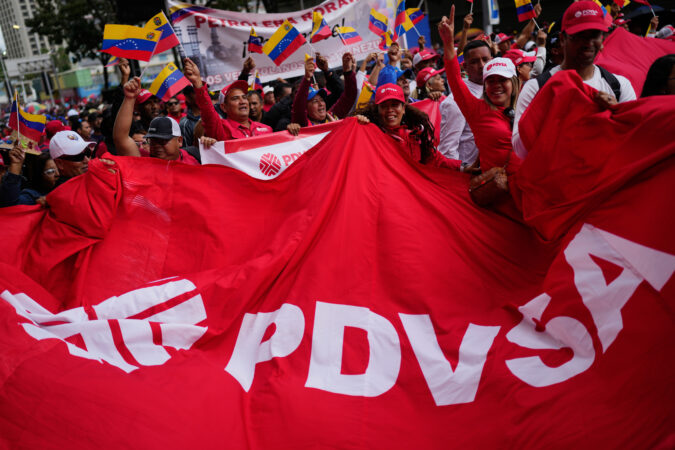
    Rodríguez’s government expects the changes to serve as assurances for major U.S. oil companies that have so far hesitated about returning to the volatile country. Some of those companies lost investments when the ruling party enacted the existing law two decades ago to favor Venezuela’s state-run oil company, Petróleos de Venezuela SA, or PDVSA.

    The revised law would modify extraction taxes, setting a royalty cap rate of 30% and allowing the executive branch to set percentages for every project based on capital investment needs, competitiveness and other factors.

    It also removes the mandate for disputes to be settled only in Venezuelan courts, which are controlled by the ruling party. Foreign investors have long viewed the involvement of independent courts as crucial to guard against future expropriation.

    Will change Venezuela’s economy

    Ruling-party lawmaker Orlando Camacho, head of the assembly’s oil committee, said the reform “will change the country’s economy.”

    Meanwhile, opposition lawmaker Antonio Ecarri urged the assembly to add transparency and accountability provisions to the law, including the creation of a website to make funding and other information public. He noted that the current lack of oversight has led to systemic corruption and argued that these provisions can also be considered judicial guarantees.

    Those guarantees are among the key changes foreign investors are looking for as they weigh entering the Venezuelan market.

    “Let the light shine on in the oil industry,” Ecarri said.

    Some oil workers support overhaul

    Oil workers dressed in red jumpsuits and hard hats celebrated the bill’s approval, waving a Venezuelan flag inside the legislative palace and then joining lawmakers in a demonstration with ruling-party supporters.

    The law was last altered two decades ago as Maduro’s mentor and predecessor, the late Hugo Chávez, made heavy state control over the oil industry a pillar of his socialist-inspired revolution.

    In the early years of his tenure, a massive windfall in petrodollars thanks to record-high global oil prices turned PDVSA into the main source of government revenue and the backbone of Venezuela’s economy.

    Chávez’s 2006 changes to the hydrocarbons law required PDVSA to be the principal stakeholder in all major oil projects.

    In tearing up the contracts that foreign companies signed in the 1990s, Chávez nationalized huge assets belonging to American and other Western firms that refused to comply, including ExxonMobil and ConocoPhillips. They are still waiting to receive billions of dollars in arbitration awards.

    From those heady days of lavish state spending, PDVSA’s fortunes turned — along with the country’s — as oil prices dropped and government mismanagement eroded profits and hurt production, first under Chávez, then Maduro.

    The nation home to the world’s biggest proven crude reserves underwent a dire economic crisis that drove over 7 million Venezuelans to flee since 2014. Sanctions imposed by successive U.S. administrations further crippled the oil industry.

  • A man impersonating an FBI agent tried to get Luigi Mangione out of jail, authorities say

    A man impersonating an FBI agent tried to get Luigi Mangione out of jail, authorities say

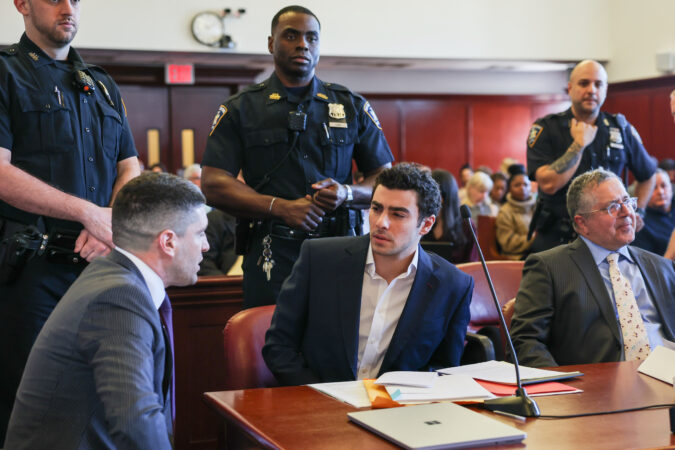
    NEW YORK — A man claiming to be an FBI agent showed up to a federal jail in New York City on Wednesday night and told officers he had a court order to release Luigi Mangione, authorities said.

    Mark Anderson, 36, a Minnesota native who has a history of drug and other arrests and disclosed last year in court papers that he suffers from mental illness, was arrested and charged with impersonating a federal officer in a foiled bid to free Mangione from the Metropolitan Detention Center. Mangione is being held at the notorious Brooklyn lockup while awaiting state and federal murder trials in the killing of UnitedHealthcare CEO Brian Thompson.

    A criminal complaint against Anderson did not identify the person he attempted to free. A law enforcement official familiar with the matter confirmed it was Mangione. The official was not authorized to speak publicly and did so on condition of anonymity.

    Anderson was ordered held without bail after an initial appearance Thursday in Brooklyn federal court. He was not required to enter a plea. A day after getting stopped at the entrance, he is now locked up in the same jail as Mangione, according to federal prison records. An online court docket did not include information on a lawyer who could speak on Anderson’s behalf. A message was also left for a spokesperson for Mangione’s legal team.

    In a lawsuit last year alleging injuries from a fall at a city homeless shelter, Anderson said he has “multiple disabilities” and has been ruled by the Social Security Administration to be “fully disabled because of mental illness.” He said he had no money and said he received state and federal assistance.

    According to public records, Anderson has had numerous drug and alcohol-related arrests and convictions over the last two decades in his native Minnesota and in Wisconsin, where he has also lived.

    Papers ‘signed by a judge’ and a pizza cutter

    According to the criminal complaint, Anderson approached the jail intake area around 6:50 p.m. Wednesday and told uniformed jail officers that he was an FBI agent in possession of paperwork “signed by a judge” authorizing the release of a specific person in custody at the jail.

    When the officers asked for his federal credentials, Anderson showed them a Minnesota driver’s license, threw documents at them and claimed to have weapons, the criminal complaint said. The documents appeared related to filing claims against the Justice Department, according to an FBI agent who viewed them and prepared the complaint. Officers searched Anderson’s bag and found a barbecue fork and a circular steel blade, the complaint said. In a photo included in the complaint, the blade appeared to be a small pizza cutter wheel.

    Anderson’s driver’s license listed an address in Mankato, Minn., about 65 miles southwest of Minneapolis. He moved to New York for a job opportunity and started working at a Bronx pizzeria when that fell through, the law enforcement official said. Court records indicate he had been living in the city at least since 2023, including at motels, a shelter and a Bronx apartment.

    Acting as his own lawyer, he has filed handwritten lawsuits against the Pentagon, Chinese and Russian ambassadors and a Minnesota police department, all of which have been thrown out. Another lawsuit, alleging a Bronx pizzeria forced him to work 70 hours a week with no overtime, is still pending.

    Mangione due in court Friday

    The alleged attempt to free Mangione added a bizarre wrinkle to a critical stretch in his legal cases.

    Hours before Anderson’s arrest, the Manhattan district attorney’s office sent a letter urging the judge in Mangione’s state case, Gregory Carro, to set a July 1 trial date.

    On Friday, Mangione will be in court for a conference in his federal case. The judge in that case, Margaret Garnett, is expected to rule soon whether prosecutors can seek the death penalty and whether they can use certain evidence against him.

    Last week, Garnett scheduled jury selection in the federal case for Sept. 8, with the rest of the trial happening in October or January, depending on whether she allows prosecutors to seek the death penalty.

    Mangione has pleaded not guilty in both cases. The state charges carry the possibility of life in prison.

    A cause célèbre for people upset with the health insurance industry, Mangione has attracted legions of supporters, some of whom have regularly turned up at his court appearances donning green clothing — the color worn by the Mario Bros. video game character Luigi — as a symbol of solidarity. Some have brought signs and shirts with slogans such as “Free Luigi” and “No Death For Luigi Mangione.”

    Thompson, 50, was killed on Dec. 4, 2024, as he walked to a midtown Manhattan hotel for UnitedHealth Group’s annual investor conference. Surveillance video showed a masked gunman shooting him from behind. Police say “delay,” “deny,” and “depose” were written on the ammunition, mimicking a phrase used to describe how insurers avoid paying claims.

    Mangione, 27, a Penn graduate from a wealthy Maryland family, was arrested five days later at a McDonald’s in Altoona, Pa., about 230 miles west of Manhattan.

    After several days of court proceedings in Pennsylvania, Mangione was whisked to New York and sent to the Metropolitan Detention Center.

    The jail is also home to former Venezuelan President Nicolás Maduro and his wife, Cilia Flores. Former inmates include hip-hop mogul Sean “Diddy” Combs and cryptocurrency fraudster Sam Bankman-Fried.

  • Man who rammed a car into NYC Jewish site had recently connected with Chabad community, police say

    Man who rammed a car into NYC Jewish site had recently connected with Chabad community, police say

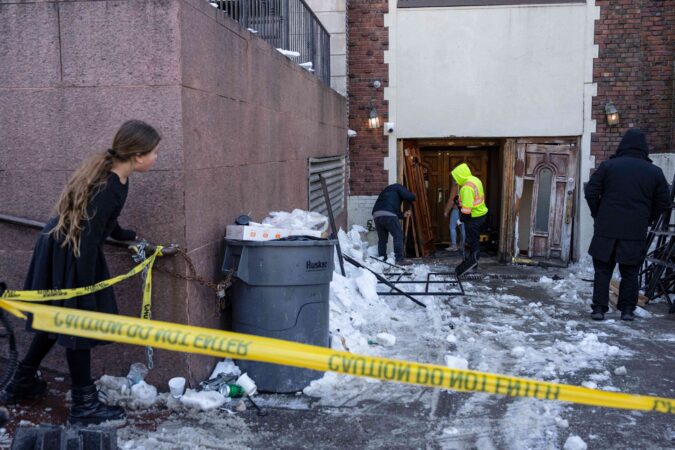
    NEW YORK — A man who drove his car into the Chabad Lubavitch world headquarters in New York City had recently been trying to connect with the Hasidic Jewish community and was recorded on video enthusiastically dancing with congregants during a recent visit to the site, police said.

    Investigators were still trying to piece together what prompted the man, Dan Sohail, 36, to ram his car repeatedly into a set of doors at the revered Hasidic Jewish center in Brooklyn on Wednesday night, but police charged him Thursday with attempted assault as a hate crime, based on the fact that the building was a Jewish institution.

    “Earlier this month, Sohail attended a social gathering at this very same location,” New York Police Department Chief of Detectives Joseph Kenny said at a news conference, noting there was video circulating online of that gathering.

    The video appears to show Sohail dancing with Orthodox men inside the headquarters.

    “We believe that he was in Brooklyn last night to continue this attempt to connect with the Lubavitch Jewish community,” Kenny said.

    Sohail told police that he lost control of his car because he was wearing “clunky boots,” Kenny said, though Kenny added that Sohail had removed several blockades and cleared snow away from a sidewalk before driving into the building.

    The complex at 770 Eastern Parkway includes a synagogue and offices, and was packed with worshippers at the time, but no one was injured. Some of the building’s doors were damaged. No weapons were discovered in Sohail’s car.

    Sohail’s father told the New York Daily News Thursday that his son had been considering converting to Judaism and that he had struggled with “mental problems.” The Forward, a media outlet centered on Jewish issues, interviewed a rabbi in New Jersey who said Sohail attended a Purim service at Chabad last year and visited two other times, looking for spiritual guidance.

    “I was able to talk to him for a few minutes and see that he’s not exactly stable,” Rabbi Levi Azimov told the Forward. Another rabbi at a Jewish school in Carteret, N.J., where Sohail lived, told the Forward he had dropped by for afternoon prayers on Tuesday but began yelling about feeling let down by Chabad after the service.

    The crash occurred on the 75th anniversary of Rabbi Menachem Mendel Schneerson becoming the leader of the Lubavitch movement and prompted immediate concern in the city. Mayor Zohran Mamdani and the city’s police commissioner, Jessica Tisch, rushed to the scene to brief the media, with officials announcing increased security around houses of worship across the city.

    “This is deeply alarming, especially given the deep meaning and the history of the institution to so many in New York and around the world,” Mamdani said. “And on today of all days.”

    The Chabad Lubavitch headquarters and synagogue in Brooklyn draws thousands of visitors each year. There is a near constant police presence around the complex.

  • Democrats, White House strike spending deal that would avert government shutdown

    Democrats, White House strike spending deal that would avert government shutdown

    WASHINGTON — Democrats and the White House struck a deal to avert a partial government shutdown and temporarily fund the Department of Homeland Security as they consider new restrictions for President Donald Trump’s surge of immigration enforcement. But passage was delayed late Thursday as leaders scrambled to win enough support for the agreement before the midnight Friday deadline.

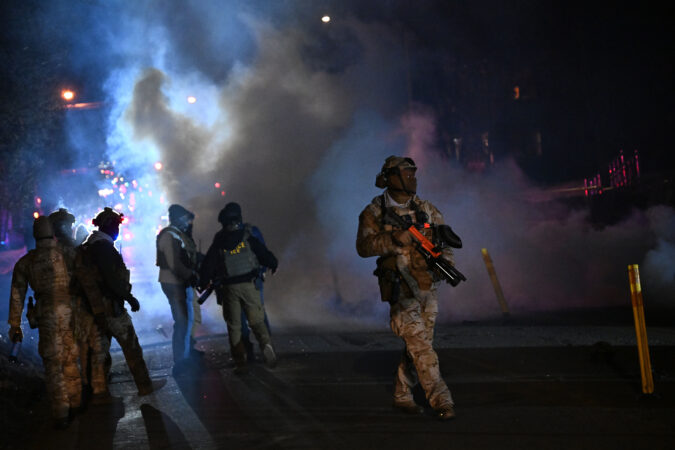
    As the country reels from the deaths of two protesters at the hands of federal agents in Minneapolis, the White House agreed to separate homeland security funding from a larger spending bill and fund the department for two weeks while they debate Democratic demands for curbs on the U.S. Immigration and Customs Enforcement agency.

    “Republicans and Democrats have come together to get the vast majority of the government funded until September” while extending current funding for Homeland Security, Trump said in a social media post Thursday evening. He encouraged members of both parties to cast a “much needed Bipartisan ‘YES’ vote.”

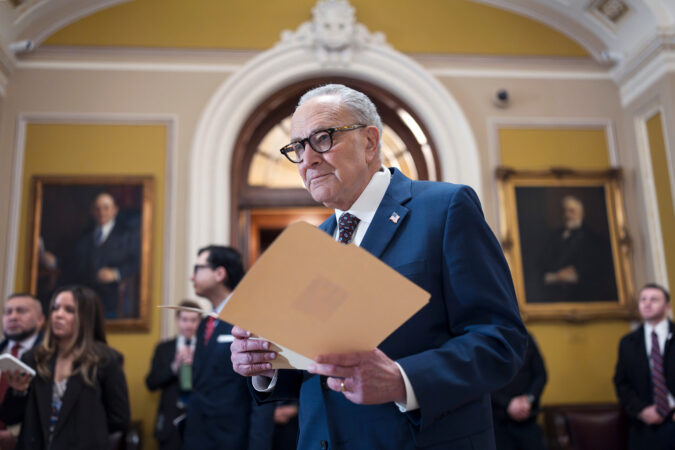
    Still, all senators weren’t yet on board. Leaving the Capitol just before midnight Thursday after hours of negotiations, Senate Majority Leader John Thune said there were “snags on both sides” as he and Democratic leader Chuck Schumer tried to rally support.

    “Hopefully people will be of the spirit to try and get this done tomorrow,” Thune said.

    Sen. Lindsey Graham, R-S.C., said late Thursday that he was one of the senators objecting. He said Immigration and Customs Enforcement agents were being treated unfairly. He has also opposed House language that would repeal a new law that gives senators the ability to sue the government for millions of dollars if their personal or office data is accessed without their knowledge.

    Democrats had requested the two-week extension and say they are prepared to block the wide-ranging spending bill if their demands aren’t met, denying Republicans the votes they need to pass it and potentially triggering a shutdown.

    Rare bipartisan talks

    The rare bipartisan talks between Trump and his frequent adversary, Senate Democratic leader Chuck Schumer, came after the fatal shooting of 37-year-old Alex Pretti in Minnesota over the weekend and calls by senators in both parties for a full investigation. Schumer called it “a moment of truth.”

    “The American people support law enforcement. They support border security. They do not support ICE terrorizing our streets and killing American citizens,” Schumer said.

    The standoff has threatened to plunge the country into another shutdown, just two months after Democrats blocked a spending bill over expiring federal health care subsidies. That dispute closed the government for 43 days as Republicans refused to negotiate.

    That shutdown ended when a small group of moderate Democrats broke away to strike a deal with Republicans, but Democrats are more unified this time after the fatal shootings of Pretti and Renee Good by federal agents.

    Democrats lay out demands

    Democrats have laid out several demands, asking the White House to “end roving patrols” in cities and coordinate with local law enforcement on immigration arrests, including requiring tighter rules for warrants.

    They also want an enforceable code of conduct so agents are held accountable when they violate rules. Schumer said agents should be required to have “masks off, body cameras on” and carry proper identification, as is common practice in most law enforcement agencies.

    The Democratic caucus is united in those “common sense reforms,” and the burden is on Republicans to accept them, Schumer said.

    “Boil it all down, what we are talking about is that these lawless ICE agents should be following the same rules that your local police department does,” said Democratic Sen. Tina Smith of Minnesota. “There has to be accountability.”

    Earlier on Thursday, Tom Homan, the president’s border czar, stated during a press conference in Minneapolis that federal immigration officials are developing a plan to reduce the number of agents in Minnesota, but this would depend on cooperation from state authorities.

    Still far apart on policy

    Negotiations down the road on a final agreement on the Homeland Security bill are likely to be difficult.

    Democrats want Trump’s aggressive immigration crackdown to end. “If the Trump administration resists reforms, we shut down the agency,” said Connecticut Sen. Richard Blumenthal.

    “We need to take a stand,” he said.

    But Republicans are unlikely to agree to all of the Democrats’ demands.

    North Carolina Sen. Thom Tillis said he is opposed to requiring immigration enforcement officers to show their faces, even as he blamed Homeland Security Secretary Kristi Noem for decisions that he said are “tarnishing” the agency’s reputation.

    “You know, there’s a lot of vicious people out there, and they’ll take a picture of your face, and the next thing you know, your children or your wife or your husband are being threatened at home,” Tillis said.

    South Carolina Sen. Graham said some of the Democratic proposals “make sense,” such as better training and body cameras. Still, he said he was putting his Senate colleagues “on notice” that if Democrats try to make changes to the funding bill, he would insist on new language preventing local governments from resisting the Trump administration’s immigration policies.

    “I think the best legislative solution for our country would be to adopt some of these reforms to ICE and Border Patrol,” Graham posted on X. But he said that the bill should also end so-called “sanctuary city” policies.

    Uncertainty in the House

    Across the Capitol, Speaker Mike Johnson, R-La., told The Associated Press on Thursday that he had been “vehemently opposed” to breaking up the funding package, but “if it is broken up, we will have to move it as quickly as possible. We can’t have the government shut down.”

    On Thursday evening, at a premiere of a movie about first lady Melania Trump at the Kennedy Center, Johnson said he might have some “tough decisions” to make about when to bring the House back to Washington to approve the bills separated by the Senate, if they pass.

    “We’ll see what they do,” Johnson said.

    House Republicans have said they do not want any changes to the bill they passed last week. In a letter to Trump on Tuesday, the conservative House Freedom Caucus wrote that its members stand with the Republican president and ICE.

    “The package will not come back through the House without funding for the Department of Homeland Security,” they wrote.

  • Handling of Pretti probe prompts prosecutors to consider resignations

    Handling of Pretti probe prompts prosecutors to consider resignations

    Federal prosecutors in Minneapolis have told U.S. Attorney Daniel Rosen, the Trump administration appointee leading the office, that they feel deeply frustrated by the Justice Department’s response to the shootings of Renée Good and Alex Pretti by immigration officers and suggested that they could resign en masse, leaving the office unable to handle its current caseload, according to two officials familiar with the office.

    At least one prosecutor in the office’s criminal division has resigned since a meeting this week with Rosen at which the prosecutors aired their concerns, according to the people, who spoke on the condition of anonymity to discuss a personnel matter that has not been made public.

    The threat of further resignations is the latest sign of how the federal judicial system in Minnesota has begun to crack under the strain imposed by the administration’s immigration enforcement surge in the state. On Wednesday, the chief federal district judge in the state wrote that Immigration and Customs Enforcement officials had violated 96 court orders since launching the crackdown in Minnesota, dubbed Operation Metro Surge.

    “ICE has likely violated more court orders in January 2026 than some federal agencies have violated in their entire existence,” Chief U.S. District Judge Patrick Schiltz wrote.

    When asked for comment about the Minnesota prosecutors, a Justice Department spokesperson responded with Attorney General Pam Bondi’s February 2025 “zealous advocacy” memo that said attorneys would face discipline or termination if they are not “vigorously defending presidential policies.”

    The U.S. attorney’s office in Minnesota has been in turmoil since the administration sidelined the office in the investigations around the shootings of Good and Pretti, who were shot two and a half weeks apart during confrontations with immigration officers in Minneapolis.

    At least a half-dozen prosecutors in the office — including the second-in-command — resigned earlier this month after top Justice Department officials told prosecutors not to investigate the shooting of Good but instead try to build a case against her partner.

    In the aftermath of those resignations, the Justice Department sent prosecutors from other Midwestern states to help deal with the swelling caseload in Minnesota. The severe staffing shortage in the office is expected to worsen in the coming weeks as more prosecutors from the office’s criminal and civil divisions resign.

    The Minnesota U.S. attorney’s office is down to about half of its full staffing level of approximately 70 lawyers. At least some of the resignations occurred in the final months of the Biden administration before President Donald Trump took office.

    When Pretti was shot by immigration officials on Jan. 24, Trump administration officials said the Department of Homeland Security would be leading the probe, prompting confusion and frustration among Minneapolis prosecutors who felt they should be involved.

    The shootings of Good and Pretti were captured on cellphone cameras and have prompted outrage from Democrats and Republicans over Trump’s immigration crackdown.

    Typically, a federal investigation into an officer-involved shooting would involve FBI agents and criminal and civil rights prosecutors. Any federal use-of-force investigation into an officer’s conduct is considered a civil rights investigation because the provision under which officers can be charged is a civil rights statute that covers deprivation of a person’s rights “under color of law.”

    The Washington Post reported that the FBI briefly opened a civil rights investigation into the Good shooting before changing course.

    Law enforcement officers are rarely charged for using lethal force, in part because the law provides significant leeway for officers to decide when use of force is needed. Law enforcement experts said that an accurate conclusion can only be reached, however, if officials examine all relevant state and federal laws and their application to the facts in the case.

    The immigration crackdown has strained U.S. attorney’s offices across the country. On the criminal side, prosecutors are handling a surge in cases involving allegations of residents impeding immigration officers. And on the civil side, attorneys are being inundated with an influx of petitions from immigrants contesting their detainments.

    The Justice Department is also facing staffing shortages at its Washington headquarters and in U.S. attorney’s offices across the country. In 2024, roughly 10,000 attorneys worked across the Justice Department and its components, including the FBI. In 2025, Justice Connection, an advocacy group that has been tracking departures, estimates that at least 5,500 people — not all of them attorneys — had quit the department, been fired or taken a buyout offered by the Trump administration.

    The department has struggled to find qualified candidates to fill these vacancies.

  • The FBI raid in Georgia highlights Trump’s obsession with the 2020 election and hints at possible future actions

    The FBI raid in Georgia highlights Trump’s obsession with the 2020 election and hints at possible future actions

    DENVER — Donald Trump lost his bid for reelection in 2020. But for more than five years, he’s been trying to convince Americans the opposite is true by falsely saying the election was marred by widespread fraud.

    Now that he’s president again, Trump is pushing the federal government to back up those bogus claims.

    On Wednesday, the FBI served a search warrant at the election headquarters of Fulton County, Ga., which includes most of Atlanta, seeking ballots from the 2020 election. That follows Trump’s comments earlier this month when he suggested during a speech at the World Economic Forum in Davos, Switzerland, that charges related to the election were imminent.

    “The man has obsessions, as do a fair number of people, but he’s the only one who has the full power of the United States behind him,” said Rick Hasen, a UCLA law professor.

    Hasen and many others noted that Trump’s use of the FBI to pursue his obsession with the 2020 election is part of a pattern of the president transforming the federal government into his personal tool of vengeance.

    Sen. Jon Ossoff, a Georgia Democrat, compared the search to the Minnesota immigration crackdown that has killed two U.S. citizen protesters, launched by Trump as his latest blow against the state’s governor, who ran against him as Vice President Kamala Harris’ running mate in 2024.

    “From Minnesota to Georgia, on display to the whole world, is a President spiraling out of control, wielding federal law enforcement as an unaccountable instrument of personal power and revenge,” Ossoff said in a statement.

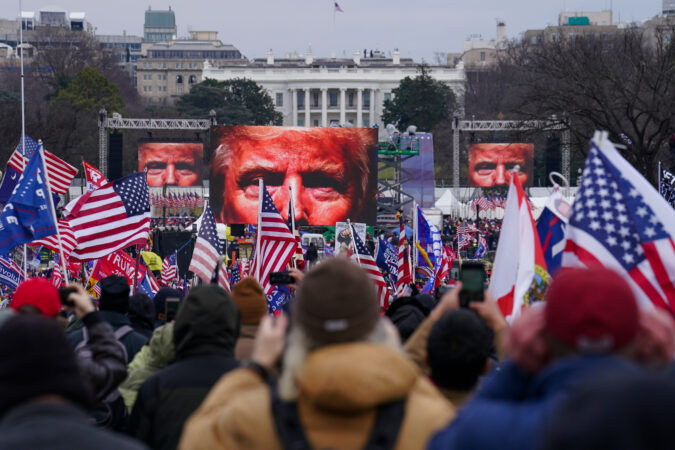
    It also comes as election officials across the country are starting to rev up for the 2026 midterms, where Trump is struggling to help his party maintain its control of Congress. Noting that, in 2020, Trump contemplated using the military to seize voting machines after his loss, some worry he’s laying the groundwork for a similar maneuver in the fall.

    “Georgia’s a blueprint,” said Kristin Nabers of the left-leaning group All Voting Is Local. “If they can get away with taking election materials here, what’s to stop them from taking election materials or machines from some other state after they lose?”

    Georgia has been at the heart of Trump’s 2020 obsession. He infamously called Republican Secretary of State Brad Raffensperger on Jan. 2, 2021, asking that Raffensperger “find” 11,780 more votes for Trump so he could be declared the winner of the state. Raffensperger refused, noting that repeated reviews confirmed Democrat Joe Biden had narrowly won Georgia.

    Those were part of a series of reviews in battleground states, often led by Republicans, that affirmed Biden’s win, including in Michigan, Wisconsin and Nevada. Trump also lost dozens of court cases challenging the election results and his own attorney general at the time said there was no evidence of widespread fraud.

    His allies who repeated his lies have been successfully sued for defamation. That includes former New York Mayor Rudolph Giuliani, who settled with two Georgia election workers after a court ruled he owed them $148 million for defaming them after the 2020 election.

    Voting machine companies also have brought defamation cases against some conservative-leaning news sites that aired unsubstantiated claims about their equipment being linked to fraud in 2020. Fox News settled one such case by agreeing to pay $787 million after the judge ruled it was “CRYSTAL clear” that none of the allegations were true.

    Trump’s campaign to move Georgia into his column also sparked an ill-fated attempt to prosecute him and some of his allies by Fulton County District Attorney Fani Willis, a Democrat. The case collapsed after Willis was removed over conflict-of-interest concerns, and Trump has since sought damages from the office.

    On his first day in office, Trump rewarded some of those who helped him try to overturn the 2020 election results by pardoning, commuting or vowing to dismiss the cases of about 1,500 people charged in the Jan. 6, 2021, attack on the U.S. Capitol. He later signed an executive order trying to set new rules for state election systems and voting procedures, although that has been repeatedly blocked by judges who have ruled that the Constitution gives states, and in some instances Congress, control of elections rather than the president.

    As part of his campaign of retribution, Trump also has spoken about wanting to criminally charge lawmakers who sat on the House committee investigating the Jan. 6 attack, suggesting protective pardons of them from Biden are legally invalid. He’s targeted a former cybersecurity appointee who assured the public in 2020 that the election was secure.

    During a year of presidential duties, from dealing with wars in Gaza and Ukraine to shepherding sweeping tax and spending legislation through Congress, Trump has reliably found time to turn the subject to 2020. He has falsely called the election rigged, said Democrats cheated and even installed a White House plaque claiming Biden took office after “the most corrupt election ever.”

    David Becker, a former Department of Justice voting rights attorney and executive director of The Center for Election Innovation & Research, said he was skeptical the FBI search in Georgia would lead to any successful prosecutions. Trump has demanded charges against several enemies such as former FBI Director James Comey and New York’s Democratic Attorney General, Letitia James, that have stalled in court.

    “So much this administration has done is to make claims in social media rather than go to court,” Becker said. “I suspect this is more about poisoning the well for 2026.”