Category: Wires

  • Trump claims killing of Iran protesters ‘has stopped’ even as Tehran signals executions ahead

    Trump claims killing of Iran protesters ‘has stopped’ even as Tehran signals executions ahead

    WASHINGTON — President Donald Trump said Wednesday that he’s been told “on good authority” that plans for executions in Iran have stopped, even as Tehran has indicated fast trials and executions ahead in its crackdown on protesters.

    The president’s claims, which were made with few details, come as he’s told protesting Iranians in recent days that “help is on the way” and that his administration would “act accordingly” to respond to the Iranian government. But Trump has not offered any details about how the U.S. might respond and it wasn’t clear if his comments Wednesday indicated he would hold off on action.

    “We’ve been told that the killing in Iran is stopping — it’s stopped — it’s stopping,” Trump said at the White House while signing executive orders and legislation. “And there’s no plan for executions, or an execution, or executions — so I’ve been told that on good authority.”

    The president on Tuesday consulted with his national security team about next steps after telling reporters he believed the killing in Iran was “significant.”

    Vice President JD Vance, Secretary of State Marco Rubio, and key White House National Security Council officials began meeting last Friday to develop options for Trump, ranging from a diplomatic approach to military strikes.

    The Iranian security force crackdown on the demonstrations has killed at least 2,586, the U.S.-based Human Rights Activists News Agency reported.

    On Wednesday, Iranian officials signaled that suspects detained in nationwide protests would face fast trials and executions while the Islamic Republic promised a “decisive response” if the U.S. or Israel intervene in the domestic unrest.

    The threats emerged as some personnel at a key U.S. military base in Qatar were advised to evacuate by Wednesday evening following Trump’s escalated warnings of potential military action over the killing of peaceful demonstrators.

    Mohammad Pakpour, commander of Iran’s paramilitary Revolutionary Guard, reiterated Iranian claims, without providing evidence, that the U.S. and Israel have instigated the protests and that they are the real killers of protesters and security forces who have died in the turmoil, according to Iran’s semiofficial Tasnim news agency.

    He added that those countries will “receive the response in the appropriate time.”

    Earlier Wednesday, Gholamhossein Mohseni-Ejei, Iran’s judiciary chief, said the government must act quickly to punish more than 18,000 people who have been detained through rapid trials and executions. Mohseni-Ejei’s comments about rapid trials and executions were made in a video shared by Iranian state television online.

    “If we want to do a job, we should do it now. If we want to do something, we have to do it quickly,” he said. “If it becomes late, two months, three months later, it doesn’t have the same effect. If we want to do something, we have to do that fast.”

    The comments stand as a direct challenge to Trump, who warned Iran about executions in an interview with CBS aired Tuesday. “If they do such a thing, we will take very strong action,” Trump said.

    “We don’t want to see what’s happening in Iran happen. And you know, if they want to have protests, that’s one thing. When they start killing thousands of people, and now you’re telling me about hanging — we’ll see how that works out for them. It’s not going to work out good.”

    One Arab Gulf diplomat told the AP that major Mideast governments had been discouraging the Trump administration from launching a war with Iran, fearing “unprecedented consequences” for the region that could explode into a “full-blown war.” The diplomat spoke on condition of anonymity because he wasn’t authorized to speak to journalists.

    Satellite internet service offer

    Iran’s government cut off the country from the internet and international telephone calls on Jan. 8.

    Activists said Wednesday that Starlink was offering free service in Iran. The satellite internet service has been key in getting around the internet shutdown. Iran began allowing people to call out internationally on Tuesday via mobile phones, but calls from people outside the country into Iran remain blocked.

    “We can confirm that the free subscription for Starlink terminals is fully functional,” said Mehdi Yahyanejad, a Los Angeles-based activist who has helped get the units into Iran. “We tested it using a newly activated Starlink terminal inside Iran.”

    Starlink itself did not immediately acknowledge the decision.

    Security service personnel apparently were searching for Starlink dishes, as people in northern Tehran reported authorities raiding apartment buildings with satellite dishes. While satellite television dishes are illegal, many in the capital have them in homes, and officials broadly gave up on enforcing the law in recent years.

    Death toll continues to rise

    The Human Rights Activists News Agency said 2,417 of the dead were protesters and 147 were government-affiliated. Twelve children were killed, along with 10 civilians it said were not taking part in protests.

    More than 18,400 people have been detained, the group said.

    Gauging the demonstrations from abroad has grown more difficult, and the AP has been unable to independently assess the toll given the communications being disrupted in the country.

  • Danish official says there’s a “fundamental disagreement” with Trump over Greenland

    Danish official says there’s a “fundamental disagreement” with Trump over Greenland

    WASHINGTON — A top Danish official said Wednesday that a “fundamental disagreement” over Greenland remains with President Donald Trump after talks in Washington with Vice President JD Vance and Secretary of State Marco Rubio.

    The two sides, however, agreed to create a working group to discuss ways to work through differences as Trump continues to call for a U.S. takeover of the Denmark’s Arctic territory of Greenland.

    “The group, in our view, should focus on how to address the American security concerns, while at the same time respecting the red lines of the Kingdom of Denmark,” Danish Foreign Minister Lars Løkke Rasmussen told reporters after joining Greenland’s foreign minister, Vivian Motzfeldt, for the talks.

    Trump is trying to make the case that NATO should help the U.S. acquire the world’s largest island and says anything less than it being under American control is unacceptable.

    Denmark has announced plans to boost the country’s military presence in the Arctic and North Atlantic as Trump tries to justify his calls for a U.S. takeover of the vast territory by repeatedly claiming that China and Russia have their designs on Greenland.

    Vance and Rubio met with Løkke Rasmussen and Greenlandic Foreign Minister Vivian Motzfeldt for roughly an hour to discuss Greenland, a semiautonomous territory of NATO ally Denmark.

    But a few hours before the officials sat down, Trump reiterated on his social media site that the U.S. “needs Greenland for the purpose of National Security.” He added that “NATO should be leading the way for us to get it” and that otherwise Russia or China would — “AND THAT IS NOT GOING TO HAPPEN!”

    “NATO becomes far more formidable and effective with Greenland in the hands of the UNITED STATES,” Trump wrote. “Anything less than that is unacceptable.”

    Løkke Rasmussen told reporters that it remains “clear that the president has this wish of conquering over Greenland.”

    “And we made it very, very clear that this is not in the interest of the kingdom,” he said after the meeting, citing a “fundamental disagreement” with the Trump administration but willing to keep talking.

    Both Løkke Rasmussen and Motzfeldt offered measured hope that the talks were beginning a conversation that would lead to Trump dropping his demand of acquiring the territory and create a path for tighter cooperation with the U.S.

    “We have shown where our limits are and from there, I think that it will be very good to look forward,” Motzfeldt said.

    Denmark bolstering presence in Arctic

    In Copenhagen, Danish Defense Minister Troels Lund Poulsen announced an increase in Denmark’s “military presence and exercise activity” in the Arctic and the North Atlantic, “in close cooperation with our allies”.

    Poulsen said at a news conference the stepped-up military presence was necessary in a security environment in which “no one can predict what will happen tomorrow.”

    “This means that from today and in the coming time there will be an increased military presence in and around Greenland of aircraft, ships and soldiers, including from other NATO allies,” Poulsen said.

    Other NATO allies were arriving in Greenland along with Danish personnel, he said. Poulsen declined to name the other countries contributing to increased Arctic presence, saying that it is up to the allies to announce their own participation.

    Earlier, Swedish Prime Minister Ulf Kristersson wrote on X that “some officers from the Swedish Armed Forces are arriving in Greenland today” as part of a group from several allied countries. “Together, they will prepare events within the framework of the Danish exercise Operation Arctic Endurance,” Kristersson said. Two Norwegian military personnel also will be sent to Greenland to map out further cooperation with allies, the country’s Defense Minister Tore O. Sandvik told newspaper VG.

    Greenlanders want the U.S. to back off

    Greenland’s prime minister, Jens-Frederik Nielsen, said Tuesday that “if we have to choose between the United States and Denmark here and now, we choose Denmark. We choose NATO. We choose the Kingdom of Denmark. We choose the EU.”

    Asked about those comments, Trump replied: “I disagree with him. I don’t know who he is. I don’t know anything about him. But, that’s going to be a big problem for him.”

    Greenland is strategically important because, as climate change causes the ice to melt, it opens up the possibility of shorter trade routes to Asia. That also could make it easier to extract and transport untapped deposits of critical minerals which are needed for computers and phones.

    Trump says Greenland is also “vital” to the United States’ Golden Dome missile defense program. He also has said he wants the island to expand America’s security and has repeatedly cited what he says is the threat from Russian and Chinese ships as a reason to control it.

    But experts and Greenlanders question that claim.

    “The only Chinese I see is when I go to the fast food market,” heating engineer Lars Vintner said. He said he frequently goes sailing and hunting and has never seen Russian or Chinese ships.

    His friend, Hans Nørgaard, agreed, adding “what has come out of the mouth of Donald Trump about all these ships is just fantasy.”

    Denmark has said the U.S, which already has a military presence, can boost its bases on Greenland. The U.S. is party to a 1951 treaty that gives it broad rights to set up military bases there with the consent of Denmark and Greenland.

    For that reason, “security is just a cover,” Vintner said, suggesting Trump actually wants to own the island to make money from its untapped natural resources.

    Mikaelsen, the student, said Greenlanders benefit from being part of Denmark, which provides free health care, education and payments during study, and “I don’t want the U.S. to take that away from us.”

    Løkke Rasmussen and Motzfeldt, along with Denmark’s ambassador to the U.S., met Wednesday with senators from the Arctic Caucus, a bipartisan delegation of U.S. lawmakers is also heading to Copenhagen this week to see Danish and Greenlandic officials.

  • These prosecutors spent years on cases. Then Trump granted pardons.

    These prosecutors spent years on cases. Then Trump granted pardons.

    Melanie Smith pulled grueling hours alongside FBI agents and other prosecutors as she prepped dozens of witnesses to prove that a Virginia sheriff had accepted $75,000 in bribes from wealthy business owners and undercover agents. Just over a year ago, the jury returned a guilty verdict against former Culpeper County sheriff Scott Jenkins in an astounding 90 minutes.

    V. Grady O’Malley built one of the most complicated cases of his 47-year Justice Department career to prove that a New York businessman who owned a chain of nursing homes had failed to pay more than $38 million in employment taxes, then laundered the money by bouncing it from account to account. The defendant, Joseph Schwartz, pleaded guilty.

    Just months after the defendants were sentenced, President Donald Trump pardoned them as he wielded his executive power to grant clemency to a host of convicts — many of them politically connected — outside of the traditional pardon-application process.

    Jenkins was pardoned the day before he was set to begin his prison sentence, his entire punishment erased and the restitution he owed taxpayers wiped out.

    “The president has the authority to grant a pardon, but when you have a strong case, and it is a good case, and you are holding elected officials accountable for wrongdoing, it is frustrating,” Smith said in an interview. “You put a lot of time and energy into these cases. It was a righteous case. The fact that the pardon happened before he went to prison, it undermines one of the purposes of the criminal justice system.”

    White-collar and public corruption cases are among the most resource-intensive for the Justice Department to pursue. Prosecutors, FBI agents, and other specialists often work for years to build such cases, following money trails and interviewing scores of witnesses before they even file an indictment.

    More than half a dozen experienced prosecutors interviewed for this story, some of whom spoke on the condition of anonymity because they feared retaliation, said Trump’s clemency acts have eroded faith among current and former Justice Department employees that the cases they devote years to prosecuting will lead to accountability.

    Calculating the amount of government resources poured into prosecuting a single case is next to impossible. But the cost can often run to millions of dollars when factoring in salaries and travel expenses, prosecutors said. On top of that, witnesses might require transportation to court and accommodation for the duration of the trial, paid for by taxpayers, the prosecutors noted.

    Some complex cases can take years to investigate before charges are filed, with prosecutors interviewing dozens of witnesses before grand juries to build their cases. Years typically pass before those cases reach a trial date.

    And once the trial arrives, prosecutors can spend upward of 80 hours a week preparing witnesses and getting exhibits ready. A long trial can involve more than 1,000 exhibits that need to be prepped and reviewed.

    “To bring a case to trial is just an incredible effort and use of department resources,” said John Keller, the former acting head of the Justice Department’s Public Integrity Section. “There’s an intensity of experience and effort and emotion that doesn’t come at any other stage of the case. It’s the pinnacle of the practice.”

    During Trump’s two terms, multiple defendants whose cases Keller has tried and supervised have received pardons. He said the pardons sting, but prosecutors are focused on their cases and trials, and do not allow a potential presidential act of clemency to influence how they approach a case.

    “There’s a feeling that, if a jury or judge has reached a verdict after hearing all the evidence, it’s even more of a slap in the face to have clemency handed down,” he said.

    During the first year of his second term, Trump has pardoned some of the most high-profile public corruption and white-collar defendants prosecuted during President Joe Biden’s administration, as well as some prosecuted during his own first term and some under earlier administrations.

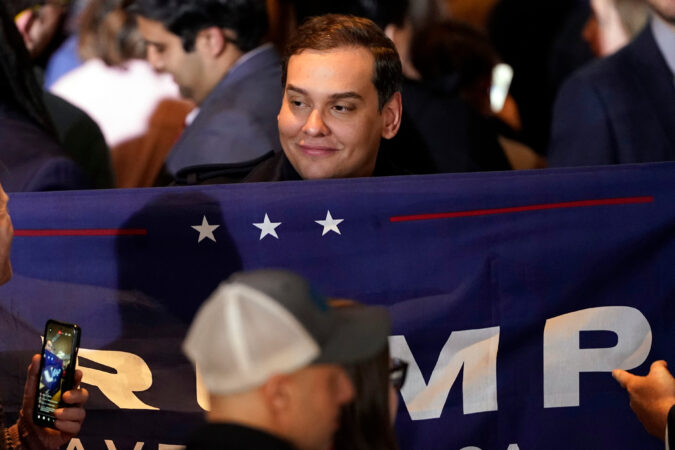
    Among them: former Republican congressman George Santos of New York, Democratic Rep. Henry Cuellar of Texas, former Tennessee state senator Brian Kelsey, and Trevor Milton, the former executive chairman of electric trucking company Nikola. One of the defining acts of Trump’s return to office has been his sweeping pardons of more than 1,500 people convicted in connection with the riot at the U.S. Capitol on Jan. 6, 2021, including those who assaulted police officers.

    Trump has defended his use of the pardons, saying the people to whom he granted clemency had been pursued by what he considers a corrupt and overzealous Justice Department under Biden. But the attorneys interviewed said they investigated each case scrupulously and apolitically to ensure a fair prosecution.

    “It’s personally upsetting because of how much time I invested in this case — the time traveling, the late nights looking through documents and prepping for witness interviews,” said Jacob Steiner, a former Justice Department employee who prosecuted the Santos case. “Beyond and more important than the personal aspect, it’s really disheartening that someone who lied to the public and stole a lot of money just gets to walk free and not have to pay back his victims.”

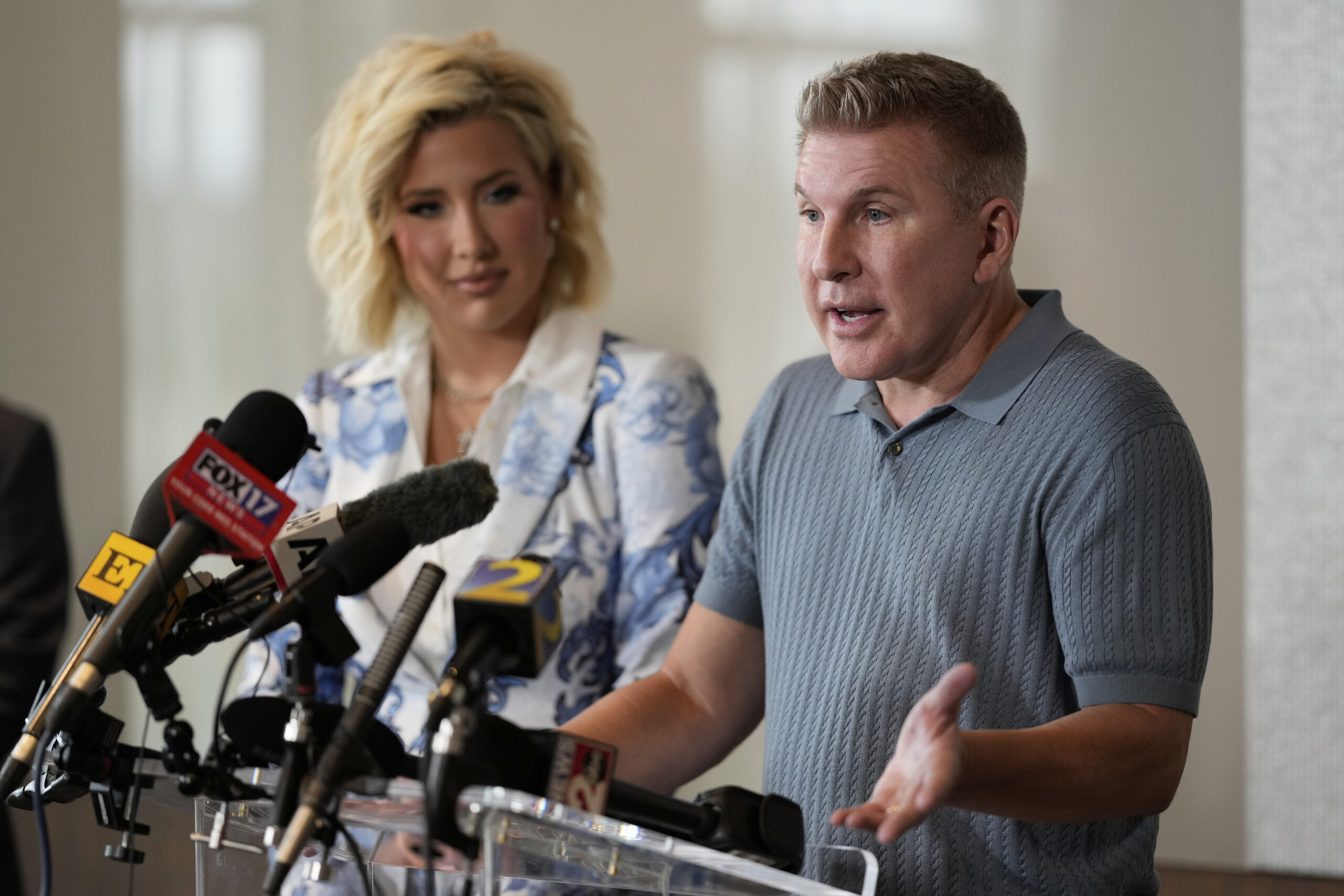
    Reality television star Todd Chrisley speaks as his daughter Savannah Chrisley looks on during a news conference on May 30, 2025, in Nashville. Todd Chrisley and his wife, Julie, were pardoned in May after being convicted in 2022 of bank fraud and tax evasion.

    In Atlanta, prosecutors and federal agents spent years investigating reality stars Todd and Julie Chrisley. The couple were found guilty of bank fraud and tax evasion in 2022 after a nearly three-week jury trial. The Justice Department then defended the conviction during appeals. But after a public campaign from the Chrisleys’ daughter, who spoke at the Republican National Convention and socialized at Trump’s Mar-a-Lago Club, the president granted the reality stars a pardon in May.

    In New York, prosecutors and federal agents spent roughly two years investigating the online black market Silk Road before indicting its creator, Ross Ulbricht, on charges related to the sale of drugs and other illegal goods on the platform. It took another two years before the case went to trial in 2015, resulting in convictions on seven counts and a sentence of life in prison. Trump pardoned Ulbricht on his first full day in office.

    “I couldn’t believe it was a complete and total pardon,” said one law enforcement official who worked on the Silk Road case.

    Santos, the Chrisleys, Ulbricht, and others who received pardons from Trump have said they deserved forgiveness because they were prosecuted at the hands of a corrupt Justice Department or were innocent and wrongly convicted.

    Every recent president has exercised the pardon power to benefit his allies, but legal experts say that Trump’s use of clemency has bucked every norm of a largely undefined process. Typically, Justice Department employees vet tens of thousands of applications, only recommending to the president people who have completed their sentences and showed contrition. Trump, however, has pardoned criminals without any such vetting, people familiar with the process said, sometimes granting clemency to convicts who have not started their sentences or admitted wrongdoing. Trump and his allies have pointed to Biden’s pardoning of his son Hunter as an example of how Trump’s predecessors politicized the pardon.

    O’Malley, who retired in 2023 and described himself as a supporter of the president, said he was flummoxed over Trump’s pardoning of Schwartz, the nursing home magnate. He said that sifting through the more than 100 accounts Schwartz set up to evade taxes had required a lot of effort, and that the prosecutors and agents assigned to the case did “yeoman’s work.”

    The Washington Post reported that Schwartz paid two lobbyists, right-wing provocateurs Jack Burkman and Jacob Wohl, $960,000 to help secure a pardon from Trump. (Schwartz must still complete a sentence on state charges in an Arkansas prison.)

    “I think the president was misled as to the reasons why [Schwartz] should be pardoned,” O’Malley said. “I can’t see anyone accepting an application and alleging that he somehow deserves to be pardoned unconditionally and completely in this case. Something had to be said to the president. Whether he was paying attention to it or not, I don’t know.”

    O’Malley continued: “I was stunned and angered. The $5 million in restitution was vacated. It was a strong case. I do not indict cases on a wing and a prayer.”

    In December — less than a month after Trump pardoned Schwartz — the Internal Revenue Service decided to present O’Malley with an award for his work on the Schwartz case. O’Malley said he declined to attend.

  • She made a Facebook comment about her mayor. Then the police arrived.

    She made a Facebook comment about her mayor. Then the police arrived.

    Raquel Pacheco began recording on her phone Monday as she opened her front door to the pair of police officers standing outside.

    They told her they had questions about a Facebook comment she had written.

    “Is that your account?” one officer asked. The other held out his phone, showing a message Pacheco had written days earlier about the mayor of Miami Beach, where she lives.

    Pacheco had left the comment about a post from Mayor Steven Meiner, calling his city a “safe haven for everyone.” Meiner, who is Jewish, contrasted Miami Beach with “places like New York City,” where he accused officials of discriminating against Jews and “promoting boycotts” of Jewish and Israeli-owned businesses.

    In a series of replies, Pacheco called him racist and criticized his actions toward a number of communities, including Palestinians and LGBTQ people. She said she felt his words of welcome were superficial.

    At her door, the officers told Pacheco they were looking for the commenter because that person’s words could “probably incite somebody to do something bad,” her video shows. Pacheco refused to answer their questions without an attorney present, and the officers left within minutes.

    Heart racing, Pacheco shut her door and texted her recording of the exchange to three friends who practice law. She struggled to comprehend why the officers were sent to question her – a private citizen who once ran for elected office, knew the mayor and other local officials, and had deep faith in American values. Where the officers saw a comment that could incite violence, Pacheco saw an expression of her right to free speech, she said.

    “If we can’t hold this line, we are screwed,” Pacheco, 51, told The Washington Post.

    The Miami Beach Police Department on Tuesday evening told The Post that detectives had “conducted a brief, consensual encounter” to make sure there was no safety threat to the mayor or the community. They assessed the social media posting, the department said, to be cautious, citing “recent national concerns regarding antisemitism.”

    Meiner said in a statement Tuesday evening that the situation was “a police matter,” adding that he was “a strong supporter of the State of Israel” and its “right to defend its citizens.”

    “Others might have a different view and that is their right,” Meiner wrote. “In this situation, our police department believed that inflammatory language that is false and without any factual basis was justification for follow-up to assess the level of threat and to protect the safety of all involved.”

    The now-public tussle over Pacheco’s Facebook comment, which was first reported by the Miami Herald, is another salvo in a battle between activists across the country and authorities whom they accuse of stifling speech about divisive political topics, all against the backdrop of political violence that has rocked the country. In recent years, people have faced suspensions, firings and other punishments for social media posts about the Israel-Gaza war, the assassination attempts against President Donald Trump and the killing of Charlie Kirk.

    Pacheco, who has lived in Miami Beach since 2004 and has run for local elected office three times as a Democrat, said she voted for Meiner in 2023. But she started speaking out against the mayor when he began addressing issues such as crime and homelessness by taking a page from “the Trump playbook,” using measures that she saw as laden with cruelty, Pacheco said. Her criticism often took the form of Facebook posts and comments, alongside advocacy work in the community.

    Miami Beach voters elected Meiner to his office, which is nonpartisan, a month after the Oct. 7, 2023, Hamas-led attack on Israel in which about 1,200 people were killed. Since then, the city has experienced a deepening rift among residents, including between Meiner and his constituents.

    In March, the mayor tried to end the lease of a local cinema after it screened “No Other Land,” a movie made by Palestinian and Israeli filmmakers that shows Israelis bulldozing a town in the West Bank. Meiner described the documentary at the time as a “false one-sided propaganda attack on the Jewish people.” He backpedaled his efforts against the theater after a fraught, nine-hour city commission meeting.

    Pacheco referenced the incident in the comment that led police to her doorstep.

    On Jan. 6, Meiner’s official Facebook account published the post about Miami Beach being a welcoming place. It featured a photo of the mayor with the following text: “Miami Beach is a safe haven for everyone. We will always stand firm against any discrimination.”

    Pacheco replied: “‘We will stand firm against any discrimination’ – unless you’re Palestinian, or Muslim or you think those people have a right to live.” She added: “Careful your racism is showing.”

    The next day, the mayor’s post was shared on a community Facebook page, where Pacheco again responded.

    “The guy who consistently calls for the death of all Palestinians, tried to shut down a theater for showing a movie that hurt his feelings, and REFUSES to stand up for the LGBTQ community in any way (even leaves the room when they vote on related matters) wants you to know that you’re all welcome here,” she wrote, alongside three clown emojis.

    It was this comment that police showed her when she opened her door Monday, Pacheco said.

    “This is freedom of speech, this is America, right? I’m a veteran,” she told the officers, according to her recording of the two-minute conversation.

    “And I agree with you 100 percent,” one officer responded. “We’re just trying to see if it’s you, because if we’re not talking to the right person, we want to go see who the right person is.”

    Pacheco, who said she served in Connecticut’s Army National Guard from 1993 to 1999, said the officers told her she was not going to jail and that they were “just here to have a conversation.” Later in the video, an officer tells Pacheco: “I would think to refrain from posting things like that, because that can get something incited.”

    After the brief exchange, Pacheco sat in disbelief.

    “There were cops at my door because of something I said,” Pacheco told The Post on Tuesday. “It felt like such a foreign, alien feeling.”

    In the day since the officers’ visit, she has retained an attorney and made public records requests about the situation. Should it escalate, she said she was “prepared to sue.” While she described herself as progressive, she said she is “conservative when it comes to the Constitution,” a document she had come to revere since moving to the United States from Portugal in the 1980s. She said she strongly sees Monday’s interaction at her home as a violation of the rights guaranteed by it.

    “I’m not one to stand down,” Pacheco said. “I don’t do well with bullies.”

    And the next time she sees a social media post from her mayor, or other elected officials for that matter, Pacheco said she knows what she will do: open the comment section, type her thoughts and hit send.

  • Scientists are inventing treatments for devastating diseases. There’s just one problem.

    Scientists are inventing treatments for devastating diseases. There’s just one problem.

    This past spring, a biotech company announced the first use of a new gene-editing technology in people to fix an errant gene that causes a severe immune disorder. In June, a baby born with a life-threatening metabolic disorder was allowed to leave the hospital after a six-month sprint by scientists to create a bespoke treatment for him. And increasingly, a generation of “bubble babies” born without immune defenses are nearing their teenage years after receiving a one-time experimental gene therapy in early childhood.

    Therapies that target genetic illnesses at their root are no longer on the horizon. They are here. More are coming. But even as a growing suite of gene therapy tools are changing individual patients’ lives, many are getting stuck in a medical purgatory because they don’t fit the model for turning breakthroughs into accessible treatments.

    Donald Kohn, a pediatric bone marrow transplant physician at the University of California at Los Angeles, has successfully rebuilt children’s immune systems with gene therapy in the clinic for over a decade, but it has not yet become a medicine.

    “There are several dozen rare diseases in a similar situation, where there is a therapy that looks good in academic clinical trials. But getting to the end zone of an approved drug is very challenging,” Kohn said.

    The potential public health impact may appear small individually, but it is massive collectively. Rare diseases are estimated to afflict 300 million people globally, and around 70% of them trace to genetic causes.

    Typically, drug development is a relay race. Academic labs, backed by federal funding, often do the early, basic research. Companies run the next leg to turn those insights into drugs. While scientists can now utilize an expanding arsenal of gene therapy technologies to start the race against potentially thousands of diseases, finding someone to pick up the baton is challenging when any individual therapy may help a handful of patients ― or even just one.

    That limbo has led scientists to experiment with new business models and more efficient ways of testing new therapies to fill a market gap. They are building biotech companies that don’t rely on maximizing profits, launching nonprofits, and fashioning new kinds of clinical trials. The Trump administration has also weighed in to help.

    In November, the Food and Drug Administration outlined a path forward for getting certain treatments of rare diseases with a clear biological cause to market.

    “Unfortunately, FDA has heard from patients, parents, researchers, clinicians, and developers, that current regulations are onerous, unnecessarily demanding, provide unclear patient protection, and stifle innovation. We share this view,” top FDA officials wrote in the New England Journal of Medicine. “Nearly 30 years after the sequencing of the human genome, bespoke therapies are close to reality.”

    Lifesaving cures that ‘ebb and flow’

    For several decades, scientists have tried to use cell and gene therapies to fix illnesses at their roots. A few dozen have been approved for diseases, such as sickle cell anemia and spinal muscular atrophy. Even as new tools have expanded this potential over the last decade, risks also exist. Patients have died after receiving gene therapies, showing the tension between encouraging innovation and guarding patient safety.

    Perhaps no case highlights the opportunity — and the challenge — better than an experimental gene therapy designed to rebuild the immune systems of babies who were born without one. The disease, called severe combined immunodeficiency (SCID), has more than a dozen different genetic causes, but the same result: Babies are born without immune defenses.

    The condition is rare, affecting 40 to 80 children in the United States each year, but was popularized by the story of David Vetter, featured in the 1976 movie The Boy in the Plastic Bubble.

    In 2014, Jeffrey and Caroline Nachem’s newborn daughter, Eliana, developed a cough that wouldn’t go away. A blood test delivered a shocking result — a white blood cell count so low that the doctor ordered it to be run again, thinking it might be a fluke.

    It wasn’t. The Nachems learned their daughter had a subtype called adenosine deaminase deficiency-SCID (ADA-SCID). They lived in Fredericksburg, Va., near the woods, but couldn’t open the windows because mold spores could float in. They found new homes for their pets. They wiped down every surface and changed clothes after coming home from the outside world, to protect Eliana from germs.

    With a matched bone marrow transplant, the disease can be effectively treated, but the best option is from a sibling, and Eliana was the Nachem’s first child. Scientists had been developing gene therapies that turn a patient’s own cells into a possible cure, requiring a lower dose of chemotherapy and fewer immune-related complications.

    Researchers remove bone marrow cells, use a harmless virus to insert a corrected version of the ADA gene, and then reinfuse the cells. At 10 months old, Eliana received an experimental gene therapy — and it worked. As her immune system rebuilt itself, doctors gave her parents the clearance to give her a kiss or bring her outside. When she was 18 months, the Nachems pushed her around in a shopping cart at the grocery store.

    In a recent study in the New England Journal of Medicine, Kohn and colleagues reported the long-term follow-up of 62 children with ADA-SCID who were treated with a one-time gene therapy, including Eliana. Nearly all of them have had their immune systems fully rebuilt, going strong after an average of nearly eight years.

    Eliana is now in sixth grade. “She is incredible. She has attitude, she is artistic, she is the commander of the world. Nothing gets in her way,” Caroline Nachem said.

    The therapy, however, has been stuck.

    A biotechnology company, Orchard Therapeutics launched a plan to develop the therapy in 2016, but stopped investing in it a few years later. Orchard returned the therapy to its academic inventors in 2022.

    Researchers in Kohn’s lab spun out Rarity Public Benefit Corporation to turn it into a medicine. Now the bottleneck is developing the commercial manufacturing.

    “I saw the ebb and flow of this therapy,” said Paul Ayoub, chief executive of Rarity. “The therapies work, but they stop at this academic stage … We wanted to put it in our own hands — take the proven science to the finish line.”

    Meanwhile, families are waiting. Maria Thianthong, who lives in Los Angeles, is one of them. Her 3-year-old daughter, Eliyah, has been on the waiting list for the therapy since birth. Children with this form of SCID can live with injections of a replacement enzyme therapy, though it is considered a stopgap.

    “Three years is a lot of time for them to figure out something with the funding,” Maria said. “We’re just a little impatient.”

    A new era of ‘genetic surgery’

    For scientists, the SCID example is a gold standard, but also a cautionary tale.

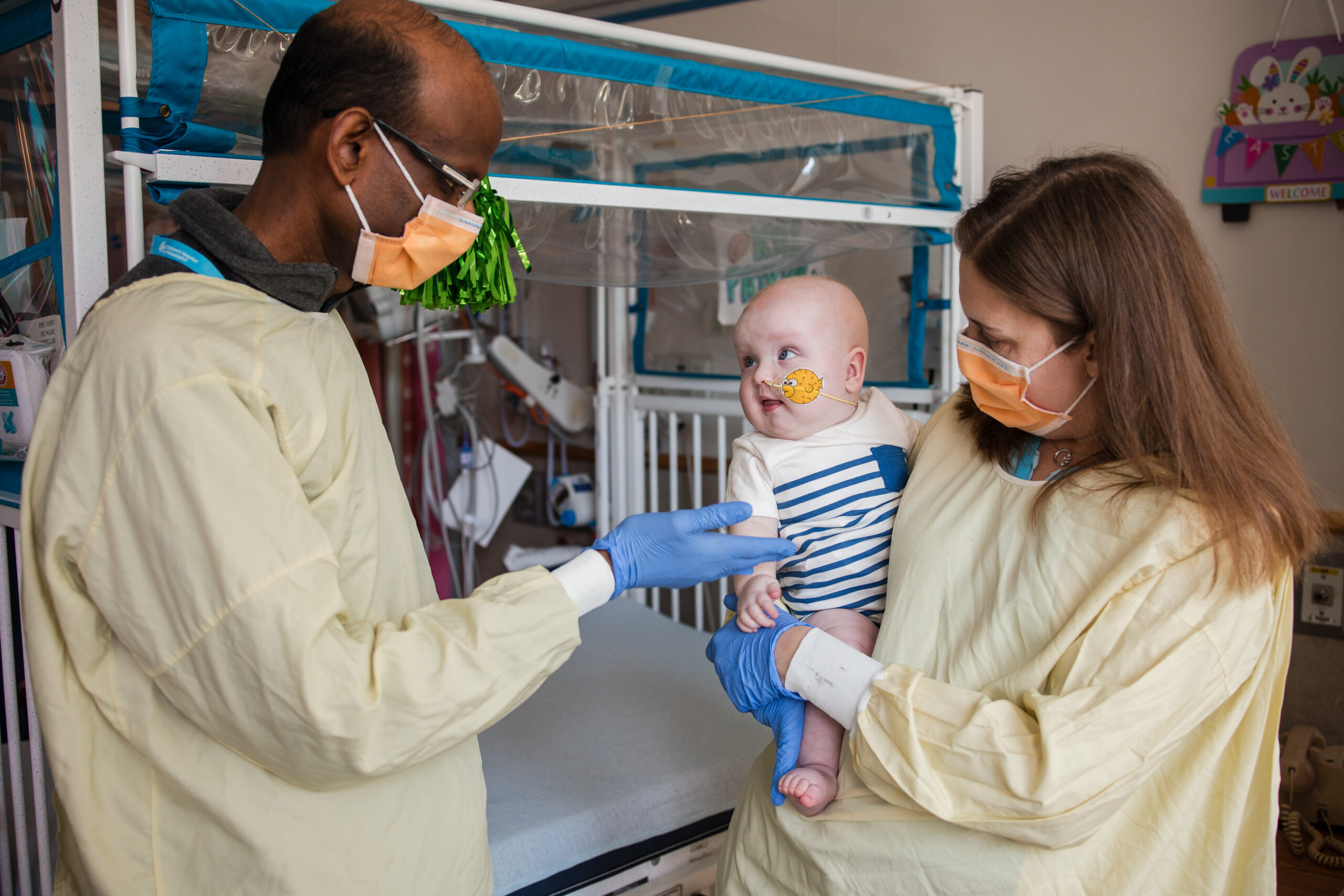
    Cardiologist Kiran Musunuru and pediatric geneticist Rebecca Ahrens-Nicklas hold KJ Muldoon after he received an infusion of a drug custom-made for him. MUST CREDIT: Children’s Hospital of Philadelphia

    Running a trial with dozens of patients for a decade is a “Herculean effort” said Kiran Musunuru, a cardiologist at the University of Pennsylvania’s Perelman School of Medicine. He hopes that federal rules can be streamlined to speed up the process. Otherwise, many cures may never be made.

    The beauty of modern gene-editing tools, many of which build off the Nobel Prize-winning CRISPR technology, is that cures become programmable. Instead of inventing a new medicine for each disease, scientists in theory can write a bit of code to address a patient’s unique mutation for multiple diseases.

    David Liu, a biochemist at the Broad Institute and one of the field’s leaders, recently showed that a one-size-fits-all therapy could, with a single edit, treat multiple diseases in human cell and mouse models of disease. He’s also working with colleagues to create a nonprofit Center for Genetic Surgery to advance cures “that are not likely to be served by industry anytime soon, because their disease is so rare.”

    A company he co-founded, Prime Medicine, announced promising early results last year in treating two patients with a rare, inherited immune deficiency called chronic granulomatous disease. But it announced that it would deprioritize the program to focus on other diseases.

    The company is continuing to explore possible paths to federal approval with the current data set, rather than treating more patients.

    Paving the way for the future is the case of “Baby KJ” Muldoon, an infant who received a custom gene-editing therapy for a rare metabolic disorder last year at Children’s Hospital of Philadelphia.

    KJ celebrated his first birthday at home this summer, is learning to walk and is meeting developmental milestones. But he is one patient. Other children also suffer from similar disorders, called urea cycle disorders, that are caused by different mutations in multiple different genes. KJ’s treatment team is working on an “umbrella” clinical trial, in which five other children will be treated. They’ll use the same basic approach they used for KJ, but tailor the treatment to different genes and mutations.

    The hope is the evidence, pooled together, could be used to support the treatment’s approval. Musunuru’s team recently published a step-by-step guide to their interactions with regulators in the American Journal of Human Genetics. He and other researchers, who have been encouraged by the FDA’s recent announcement about a new pathway, await more specific guidance on how it would operate.

    “We’re kind of taking the stance, there are many patients like KJ who need therapies now,” Musunuru said. “The clock is ticking and we know we can do it now.”

  • Wall Street CEOs warn Trump: Stop attacking the Fed and credit card industry

    Wall Street CEOs warn Trump: Stop attacking the Fed and credit card industry

    NEW YORK — Up until this week, Wall Street has generally benefited from the Trump administration’s policies and has been supportive of the president. That relationship has suddenly soured.

    When President Donald Trump signed the One Big Beautiful Bill into law in July, it pushed another significant round of tax cuts and also cut the budget of the Consumer Financial Protection Bureau, at times the banking industry’s nemesis, by nearly half. Trump’s bank regulators have also been pushing a deregulatory agenda that both banks and large corporations have embraced.

    But now the president has proposed a one-year, 10% cap on the interest rate on credit cards, a lucrative business for many financial institutions, and his Department of Justice has launched an investigation into Federal Reserve Chair Jerome Powell that many say threatens the institution that is supposed to set interest rates free of political interference.

    Bank CEOs warned the White House on Tuesday that Trump’s actions will do more harm than good to the American economy.

    BNY CEO Robin Vince told reporters that going after the Fed’s independence “doesn’t seem, to us, to be accomplishing the administration’s primary objectives for things like affordability, reducing the cost of borrowing, reducing the cost of mortgages, reducing the cost of everyday living for Americans.”

    “Let’s not shake the foundation of the bond market and potentially do something that could cause interest rates to actually get pushed up, because somehow there’s lack of confidence in the Fed’s independence,” Vince added.

    The Federal Reserve’s independence is sacrosanct among the big banks. While banks may have wanted Powell and other Fed policymakers to move interest rates one way or another more quickly, they have generally understood why Powell has done what he’s done.

    “I don’t agree with everything the Fed has done. I do have enormous respect for Jay Powell, the man,” JPMorgan Chase CEO Jamie Dimon told reporters Tuesday.

    Dimon’s message did not seem to resonate with President Trump, who told journalists that Dimon is wrong in saying it’s not a great idea to chip away at the Federal Reserve’s independence by going after Powell.

    “Yeah, I think it’s fine what I’m doing,” Trump said Tuesday in response to a reporter’s question at Joint Base Andrews after returning from a day trip to Michigan. He called Powell “a bad Fed person” who has “done a bad job.”

    Along with the attacks on the Fed, President Trump is going after the credit card industry. With “affordability” likely to be a key issue in this year’s midterm elections, Trump wants to lower costs for consumers and says he wants a 10% cap on credit card interest rates in place by Jan. 20. Whether he hopes to accomplish this by bullying the credit card industry into just capping interest rates voluntarily, or through some sort of executive action, is unclear.

    The average interest rate on credit cards is between 19.65% and 21.5%, according to the Federal Reserve and other industry tracking sources. A cap of 10% would likely cost banks roughly $100 billion in lost revenue per year, researchers at Vanderbilt University found. Shares of credit card companies like American Express, JPMorgan, Citigroup, Capital One, and others fell sharply Monday as investors worried about the potential hit to profits these banks may face if an interest rate cap were implemented.

    In a call with reporters, JPMorgan’s chief financial officer, Jeffrey Barnum, indicated the industry was willing to fight with all resources at its disposal to stop the Trump administration from capping those rates.

    “Our belief is that actions like this will have the exact opposite consequence to what the administration wants in terms of helping consumers,” Barnum said. “Instead of lowering the price of credit, it will simply reduce the supply of credit, and that will be bad for everyone: consumers, the broader economy, and yes, for us, also.”

    Trump seemed to double down on his attacks on the credit card industry overnight. In a post on his social media platform Truth Social, he said he endorsed a bill introduced by Sen. Roger Marshall (R., Kansas) that would likely cut into the revenue banks earn from merchants whenever they accept a credit card at point-of-sale.

    “Everyone should support great Republican Senator Roger Marshall’s Credit Card Competition Act, in order to stop the out of control Swipe Fee ripoff,” Trump wrote.

    The comments from Wall Street are coming as the major banks report their quarterly results. JPMorgan, the nation’s largest consumer and investment bank, and The Bank of New York Mellon Corp., one of the world’s largest custodial banks, both reported their results Tuesday with Citigroup, Bank of America, Wells Fargo, and others to report later this week.

  • Family budgets are stretched, and bargain grocer Aldi seizes the moment in a rapid expansion

    Family budgets are stretched, and bargain grocer Aldi seizes the moment in a rapid expansion

    The discount grocery chain Aldi is expanding rapidly and plans to open more than 180 U.S. stores this year as more Americans skip nights out at restaurants and cook at home due to anxiety over the nation’s economy.

    The chain, with U.S. operations based outside of Chicago, went on an expansion tear soon after inflation began to spike in 2021 and opened a record number of new stores last year.

    Food inflation has slowed, but it was still up 2.4% last year, according to U.S. data, and has soared about 25% since the pandemic. On Tuesday, the U.S. Labor Department said that grocery prices jumped 0.7% in December from the previous month, and that price hikes accelerated faster in 2025 than they had in the previous two years.

    Last month beef and veal prices climbed 1% from November, and are up 16.4% from last year. Coffee prices increased 1.9% in a month and are up almost 20% over a year. Egg prices dropped 8.2% in December, continuing to fall after surging last year after a bird flu outbreak.

    The vast majority of U.S. adults say they’ve noticed higher than usual prices for groceries and electricity in recent months, according to a survey from the Associated Press-NORC Center for Public Affairs Research.

    Aldi has sought to snap up market share as more families trade down, meaning they are changing where they shop to cut costs.

    Americans are dropping trusted name brands for cheaper store-brands and swapping out the places they’ve shopped for years in favor of discount or thrift stores. It’s been a boon for national bargain stores chains such as Dollar General and Dollar Tree.

    That shift had begun before President Donald Trump’s trade war began, but appears to have accelerated over the past year.

    Aldi said in 2024 that it planned to open 800 new stores by 2028 as inflation worries spread. It announced plans to open a record 225 locations last year in the U.S.

    Aldi said Tuesday that it will add new distribution centers in Florida, Arizona, and Colorado, and is still committed to investing $9 billion in the U.S. through 2028. The company is also looking to open more than 50 stores in Colorado within the next five years and plans to double its Las Vegas store count by 2030.

    The expansion will give Aldi almost 2,800 stores by the end of the year, which gets its closer to its goal of 3,200 stores by 2028.

    Traditional grocers are under pressure from bargain chains, massive retailers like Walmart, and also relatively new players like Amazon.com. In December, Amazon said same-day perishable grocery delivery had been expanded to more than 2,300 cities and towns, and the online giant said it has more expansion plans for this year.

  • Tensions flare in Minnesota as protesters and federal agents repeatedly square off

    Tensions flare in Minnesota as protesters and federal agents repeatedly square off

    MINNEAPOLIS — Federal officers dropped tear gas and sprayed eye irritant at activists Tuesday during another day of confrontations in Minneapolis, while students miles away walked out of a suburban school to protest the Trump administration’s bold immigration sweeps.

    Meanwhile, the fallout from the fatal shooting of a Minneapolis woman by an immigration agent reached the local U.S. Attorney’s Office: At least five prosecutors have resigned amid controversy over how the U.S. Justice Department is handling the investigation, according to people familiar with the matter.

    Separately, a Justice Department official said Wednesday there’s no basis for a criminal civil rights investigation. An FBI probe of Renee Good’s death is ongoing.

    Strife between federal agents and the public continues to boil, six days since Good was shot in the head while driving off in her Honda Pilot. At one scene, gas clouds filled a Minneapolis street near where she died. A man scrubbed his eyes with snow and screamed for help after agents in a Jeep sprayed an orange irritant and drove off.

    It’s common for people to boo, taunt and blow orange whistles when they spot heavily armed immigration agents passing through in unmarked vehicles or walking the streets, all part of a grassroots effort to warn the neighborhood and remind the government that they’re watching.

    “Who doesn’t have a whistle?” a man with a bag of them yelled.

    Brita Anderson, who lives nearby and came to support neighborhood friends, said she was “incensed” to see agents in tactical gear and gas masks, and wondered about their purpose.

    “It felt like the only reason they’d come here is to harass people,” Anderson said.

    In Brooklyn Park, Minn., students protesting the immigration enforcement operation walked out of school, as students in other communities have done this week.

    Good’s death has ripple effect

    The departures in the U.S. Attorney’s Office include First Assistant U.S. Attorney Joe Thompson, who had been leading the sprawling prosecution of public fraud schemes in the state, according to people who spoke to The Associated Press on the condition of anonymity to discuss personnel matters.

    With the Department of Homeland Security pledging to send more than 2,000 immigration officers into Minnesota, the state, joined by Minneapolis and St. Paul, sued President Donald Trump’s administration Monday to halt or limit the surge.

    The lawsuit says Homeland Security is violating the First Amendment and other constitutional protections by focusing on a progressive state that favors Democrats and welcomes immigrants.

    “What we are seeing is thousands — plural — thousands of federal agents coming into our city. And, yeah, they’re having a tremendous impact on day-to-day life,” Minneapolis Mayor Jacob Frey said.

    A judge set a status conference for Wednesday.

    Homeland Security says it has made more than 2,000 arrests in the state since early December and is vowing to not back down. Spokesperson Tricia McLaughlin, responding to the lawsuit, accused Minnesota officials of ignoring public safety.

    Trump defiant

    In a social media post, Trump defended the aggressive immigration enforcement actions being carried out across Minneapolis as part of his deportation agenda.

    The president asserted in the post that the anti-ICE activity is also shifting the spotlight away from alleged fraud in the state and said, “FEAR NOT, GREAT PEOPLE OF MINNESOTA, THE DAY OF RECKONING & RETRIBUTION IS COMING!”

    Trump blames what he calls “professional agitators” for the widespread protests. He has not provided evidence to support his claims.

    In response, Minnesota Gov. Tim Walz posted on X: “Trump admits that this is nothing but political retribution. Minnesota voted against him three times and now he’s punishing us – putting lives at risk and wasting enormous resources in the process.”

    ICE tactics on docket

    In a different lawsuit, a judge said she would rule by Thursday or Friday on a request to restrict the use of force, such as chemical irritants, on people who are observing and recording agents’ activities. Government attorneys argued that officers must protect themselves.

    The Trump administration has repeatedly defended the immigration agent who shot Good, a 37-year-old mother of three, saying he acted in self-defense. But that explanation has been widely panned by Frey, Walz, and others based on videos of the confrontation.

    State and local authorities are urging the public to share video and any other evidence as they seek to separately investigate Good’s death after federal authorities insisted they would approach it alone and not share information.

    In Wisconsin, Lt. Gov. Sara Rodriguez is proposing that the state ban civil immigration enforcement around courthouses, hospitals, health clinics, schools, churches and other places. She is hoping to succeed Gov. Tony Evers, a fellow Democrat, who is not running for a third term.

    “We can take a look at that, but I think banning things absolutely will ramp up the actions of our folks in Washington, D.C.,” Evers said, referring to the Trump administration. “They don’t tend to approach those things appropriately.”

  • Claudette Colvin, who refused to move seats on a bus at start of civil rights movement, dies at 86

    Claudette Colvin, who refused to move seats on a bus at start of civil rights movement, dies at 86

    On March 2, 1955, a 15-year-old Black high school junior named Claudette Colvin boarded a segregated city bus in Montgomery, Ala., taking a window seat near the back. When the driver ordered her to give up her seat so a white woman could be more comfortable, Ms. Colvin — who had been studying Black history in class, learning about abolitionists like Harriet Tubman and Sojourner Truth — did not budge.

    “History had me glued to the seat,” she said later, recalling how it felt as though Tubman and Truth had their hands on her shoulders, giving her “the courage to remain seated.”

    History would record that it was Rosa Parks, the longtime secretary of the local NAACP, who helped kick-start the modern civil rights movement by refusing to give up her seat on a crowded Montgomery bus.

    Yet it was Ms. Colvin, nine months earlier, who engaged in one of the first defiant challenges to the city’s Jim Crow transit system, remaining in her seat until police dragged her backward off the bus.

    While Parks’ stand proved far more consequential, leading to a year-long bus boycott that thrust the Rev. Dr. Martin Luther King Jr. to national prominence, Ms. Colvin’s arrest inaugurated what King described as a pivotal period for Black people in Montgomery. Community leaders formed a committee to meet with city and bus company officials, calling for improved treatment for Black passengers. Those discussions proved fruitless, King recalled in a memoir, but “fear and apathy” gradually gave way to “a new spirit of courage and self-respect.”

    Historian David Garrow said in an interview for this obituary that “Colvin’s experience proved a major motivating force for adult Black activists” including Jo Ann Robinson, who helped launch and sustain the bus boycott. Another leading figure in the boycott, lawyer Fred Gray, brought the federal lawsuit that overturned bus segregation, with Ms. Colvin serving as a plaintiff and star witness.

    “I don’t mean to take anything away from Mrs. Parks,” Gray said, “but Claudette gave all of us the moral courage to do what we did.”

    Ms. Colvin, who died Jan. 13 at 86, was almost forgotten in the annals of civil rights. Overshadowed by Parks and other activists, she spent decades in obscurity, caring for elderly patients as a nurse’s aide before gaining late-in-life recognition through the efforts of historians and writers such as Phillip Hoose, whose 2009 biography, Claudette Colvin: Twice Toward Justice, won the National Book Award for young people’s literature.

    “Young people think Rosa Parks just sat down on a bus and ended segregation, but that wasn’t the case at all,” Ms. Colvin told the New York Times in 2009. “Maybe by telling my story — something I was afraid to do for a long time — kids will have a better understanding about what the civil rights movement was about.”

    A movie based on her life, Spark, was announced in 2022, with actor Anthony Mackie lined up to make his directorial debut, and Saniyya Sidney slated to star.

    In the days after Ms. Colvin’s arrest, civil rights leaders in Montgomery wondered if her case might offer a chance to put segregation itself on trial. But, as Robinson later wrote in a memoir, “opinions differed where Claudette was concerned.”

    Some deemed her too young and immature, saying she was prone to profane outbursts. (Ms. Colvin said she never cursed.) There were also concerns about her class and background: She was looked down upon, Montgomery activist Gwen Patton once recalled with frustration, because she “lived in a little shack.”

    The deciding factor was the discovery by labor organizer E.D. Nixon, the local NAACP president, that Ms. Colvin was expecting a child. She later said that she became pregnant in the months after the bus standoff as a result of an encounter with a married man, which she described as statutory rape.

    “Even if Montgomery Negroes were willing to rally behind an unwed pregnant teenager — which they were not — her circumstances would make her an extremely vulnerable standard-bearer,” author Taylor Branch observed in Parting the Waters, a Pulitzer Prize-winning civil rights history.

    Ms. Colvin often said Nixon and other organizers were right to rally around Parks, who exuded a quiet authority, was familiar to activists from her work in the NAACP, and had an appeal that crossed class divisions through her job as a department-store seamstress.

    But Ms. Colvin remained frustrated by what she described as a lack of support and recognition in the years after she was arrested, when she struggled as a single mother to find work and eventually left Alabama for New York.

    “They wanted someone, I believe, who would be impressive to white people. … You know what I mean? Like the main star,” she told the Guardian in 2021. “And they didn’t think that a dark-skinned teenager, low income without a degree, could contribute. It’s like reading an old English novel when you’re the peasant, and you’re not recognized.”

    ‘I had had enough’

    Claudette Austin, as she was then known, was born in Birmingham, Ala., on Sept. 5, 1939. Her father, C.P. Austin, left the family when she was young.

    Her mother, Mary Jane Gadson, was unable to support Ms. Colvin and her younger sister by herself, and turned the children over to her aunt and uncle, Mary Ann and Q.P. Colvin. The older couple lived on a farm in Pine Level — the rural Alabama community where, by chance, Parks had gone to elementary school — and gave the girls their last name.

    When Ms. Colvin was 8, the family moved to nearby Montgomery, where her adoptive parents were hired by white families to do home and yard work. Her sister died of polio in 1952, shortly before Ms. Colvin started her first year at Booker T. Washington High School.

    Ms. Colvin was still grieving her sister’s death when her neighbor Jeremiah Reeves, an older schoolmate, was arrested and charged with raping a white woman. Following a confession he gave under duress and later retracted, he was convicted by an all-white jury, sentenced to death, and executed in 1958, at age 22.

    His arrest “was the turning point of my life,” Ms. Colvin said. As she saw it, the case embodied the hypocrisies of the legal system: Reeves was sent to death row as a juvenile because of a false confession, but when a white man raped a Black girl, “it was just his word against hers, and no one would ever believe her.”

    Ms. Colvin told Hoose that on the day the bus driver asked her to give up her seat, “rebellion was on my mind.”

    She was sitting in a row near the rear exit, joined by three schoolmates as the bus started filling up, and passengers stood in the aisle. Before long, a white woman was standing over Ms. Colvin and her peers. The driver asked for all four of their seats, so that the woman wouldn’t have to sit in the same row as a Black passenger.

    “I might have considered getting up if the woman had been elderly, but she wasn’t,” Ms. Colvin recalled. “She looked about 40. The other three girls in my row got up and moved back, but I didn’t. I just couldn’t.”

    Ms. Colvin remained seated as the driver grew exasperated — “Gimme that seat! Get up, gal!” — and hailed a transit policeman, who in turn summoned a squad car. Ms. Colvin said that as the police arrived, she began crying but remained defiant, telling the officers, “It’s my constitutional right to sit here as much as that lady. I paid my fare, it’s my constitutional right!”

    By her account, one of the officers kicked her as she was pulled off the bus. (One of the officers alleged that it was the other way around.) She was placed in handcuffs and put in a squad car, where, according to Ms. Colvin, the officers took turns trying to guess her bra size.

    Bailed out of jail by her minister, she returned home to fears of retaliation. Her adoptive father didn’t sleep that night, staying awake with a shotgun in case the Ku Klux Klan arrived. At school, classmates began to consider her a troublemaker, describing her as “that crazy girl off the bus.”

    Ms. Colvin was charged with assault and disorderly conduct in addition to violating the segregation law. Tried in juvenile court because of her age, she was found guilty of assault (a judge dismissed the other two charges), placed on indefinite probation and ordered to pay a small fine.

    Over the next few months, other Black women defied Montgomery’s segregated bus policy. The group included Lucille Times, who staged a one-woman boycott after an altercation with a driver, and 18-year-old Mary Louise Smith, who was arrested, convicted and fined after refusing to give up her seat.

    As with Ms. Colvin, organizers worried that Smith wasn’t right for a marquee case: Her father was said to be an alcoholic, and the family was deemed too low-class. It wasn’t until Parks’s arrest on Dec. 1, 1955, that a citywide bus boycott was organized.

    As the boycott progressed, Ms. Colvin became one of several plaintiffs in Browder v. Gayle, a federal lawsuit brought by Gray that challenged the city and state laws enforcing bus segregation in Montgomery. The case reached the U.S. Supreme Court, which ordered an end to bus segregation in late 1956.

    Ms. Colvin gave birth to her first son, Raymond, earlier that year. She never publicly identified the father and said she was expelled from high school as a result of her pregnancy.

    After passing a high school equivalency exam, she briefly attended Alabama State College in Montgomery and then moved in 1958 to New York, where she got a job as a live-in caregiver.

    She had a second son in 1960 and moved back and forth between New York and Montgomery — where her adoptive mother helped care for her children — before settling in New York City in 1968 and receiving training as a nurse’s aide.

    “The only thing I am still angry about is that I should have seen a psychiatrist,” she told The Washington Post in 1998, reflecting on her life after the movement. “I needed help. I didn’t get any support. I had to get well on my own.”

    Ms. Colvin’s death was confirmed by Ashley D. Roseboro, a spokesman for the family and for the Claudette Colvin Foundation. He said she died in hospice in Texas but did not share additional details.

    Her son Raymond died in 1993. Her younger son, Randy, worked as an accountant. He survives her, as do several sisters and grandchildren.

    In 2021, Ms. Colvin successfully petitioned to have her juvenile arrest record expunged, a symbolic act recognizing the injustice of the segregation laws.

    “I’m not doing it for me, I’m 82 years old,” she explained to the Times. “But I wanted my grandchildren and my great-grandchildren to understand that their grandmother stood up for something very important, and that it changed our lives a lot, changed attitudes.”


  • Trump is ending protected immigration status for Somalis, long a target of his anti-immigrant barbs

    Trump is ending protected immigration status for Somalis, long a target of his anti-immigrant barbs

    Donald Trump’s administration said Tuesday it will end temporary protected status for immigrants from Somalia, the latest move in the president’s mass deportation agenda.

    The move affects hundreds of people who are a small subset of immigrants with TPS protections in the United States. It comes during Trump’s immigration crackdown in Minneapolis, where many native Somalis live and where street protests have intensified since a U.S. Immigration and Customs Enforcement agent killed a U.S citizen who was demonstrating against federal presence in the city.

    The Department of Homeland Security said in a statement that affected Somalis must leave the U.S. by March 17, when existing protections, last extended by former President Joe Biden, will expire.

    “Temporary means temporary,” said Homeland Security Secretary Kristi Noem, adding that the decision puts “Americans first.”

    The Congressional Research Service last spring said the Somali TPS population was 705 out of nearly 1.3 million TPS immigrants. But Trump has rolled back protections across multiple countries in his second presidency.

    Congress established the Temporary Protected Status program in 1990 to help foreign nationals attempting to leave unstable, threatening conditions in their home countries. It allows the executive branch to designate a country so that its citizens are eligible to enter the U.S. and receive status.

    Somalia first received the designation under President George H.W. Bush amid a civil war in 1991. The status has been extended for decades, most recently by Biden in July 2024.

    Noem insisted circumstances in Somalia “have improved to the point that it no longer meets the law’s requirement for Temporary Protected Status.”

    Located in the horn of Africa, Somalia is one of the world’s poorest nations and has for decades been beset by chronic strife exacerbated by multiple natural disasters, including severe droughts.

    The 2025 congressional report stated that Somalis had received more than two dozen extensions because of perpetual “insecurity and ongoing armed conflict that present serious threats to the safety of returnees.”

    Trump has targeted Somali immigrants with racist rhetoric and accused those in Minneapolis of massively defrauding federal programs.

    In December, Trump said he did not want Somalis in the U.S., saying they “come from hell” and “contribute nothing.” He made no distinction between citizens and non-citizens or offered any opinion on immigration status.

    He has had especially harsh words for Rep. Ilhan Omar, a Minnesota Democrat who emigrated from Somalia as a child. Trump has repeatedly suggested she should be deported, despite her being a U.S. citizen, and in his rant last fall he called her “garbage.”

    Omar, who has been an outspoken critic of the ICE deployment in Minneapolis, has called Trump’s “obsession” with her and Somali-Americans “creepy and unhealthy.”