Category: Wires

  • Trump visits a Ford pickup truck factory, aiming to promote his efforts to boost manufacturing

    Trump visits a Ford pickup truck factory, aiming to promote his efforts to boost manufacturing

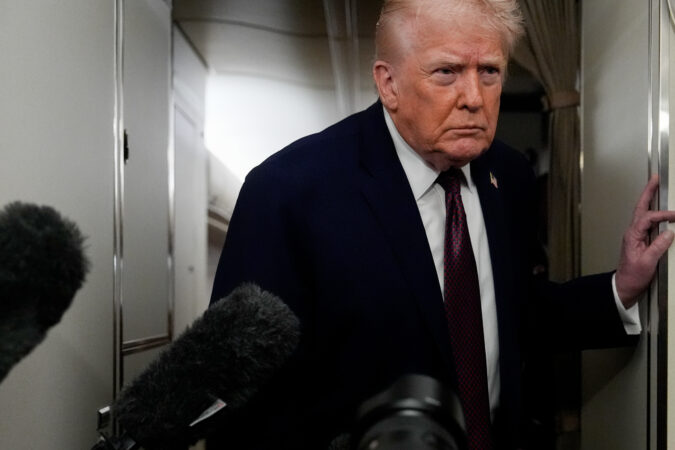
    DETROIT — President Donald Trump offered a full-throated defense of his sweeping tariffs on Tuesday, traveling to swing-state Michigan to push the case that he’s boosted domestic manufacturing in hopes of countering fears about a weakening job market and still-rising prices that have squeezed American pocketbooks.

    Trump visited the factory floor of a Ford plant in Dearborn, where he viewed F-150s — the bestselling domestic vehicle in the U.S. — at various stages of production. That included seeing how gas and hybrid models were built, as well as the all-gas Raptor model, designed for off-road use.

    The president chatted with assembly line workers as well as the automaker’s executive chairman, Bill Ford, a descendent of Henry Ford. “All U.S. automakers are doing great,” Trump said.

    He later gave a speech to the Detroit Economic Club that was meant to be focused on his economic policies but veered heavily to other topics as well. Those included falsely claiming to have won Michigan three times (he lost the state in 2020 to Joe Biden) and recalling the snakes that felled workers during U.S. efforts to build the Panama Canal more than a century ago.

    “The results are in, and the Trump economic boom has officially begun,” the president said at the MotorCity Casino. He argued that “one of the biggest reasons for this unbelievable success has been our historic use of tariffs.”

    Trump insists tariffs haven’t increased costs

    The president said that tariffs were “overwhelmingly” paid by “foreign nations and middlemen” — even as economists say steep import taxes are simply passed from overseas manufactures to U.S. consumers, helping exacerbate fears about the rising cost of living.

    “It’s tariffs that are making money for Michigan and the entire country,” the president said, insisting that “every prediction the critics made about our tariff policy has failed to materialize.”

    But voters remain worried about the state of the economy. Tuesday’s visit — his third trip to a swing state since last month to talk about his economic policies — followed a poor showing for Republicans in November’s off-year elections in Virginia, New Jersey, and elsewhere amid persistent concerns about kitchen table issues.

    The White House pledged after Election Day that Trump would hit the road more frequently to talk directly to the public about what he is doing to ease their financial fears. The president tried to drive that home on Tuesday, but only amid lengthy asides.

    “I go off teleprompter about 80% of the time, but isn’t it nice to have a president who can go off teleprompter?” he said, before mocking Biden, suggesting his predecessor gave short speeches and doing an impression that included a dramatic clearing of his throat.

    Trump promised to unveil a new “health care affordability framework” later this week that he promised would lower the cost of care. He also pledged to soon offer more plans to help with affordability nationwide — even as he blamed Democrats for hyping up the issue.

    “One of our top priorities of this mission is promoting greater affordability. Now, that’s a word used by the Democrats,” Trump said. “They’re the ones who caused the problem.”

    Trump eased some auto tariffs

    Despite cheering tariffs, Trump has actually backed off the import taxes when it comes to the automobile sector. The president originally announced 25% tariffs on automobiles and auto parts, only to later relax those, seeking to provide domestic automakers some relief from seeing their production costs rise.

    Ford nonetheless announced in December that it was scrapping plans to make an electric F-150, despite pouring billions of dollars into broader electrification. That followed the Trump administration slashing targets to have half of all new vehicle sales be electric by 2030, eliminated EV tax credits and proposed weakening the emissions and gas mileage rules.

    While touring the assembly line, Trump suggested that a major North American trade agreement he negotiated during his first term, the United States-Mexico-Canada trade pact, was irrelevant and no longer necessary for the United States — though he provided few details.

    The pact, known as the USMCA, is up for review this year.

    Trump largely sidesteps Powell probe

    The president’s attempt to shift national attention to his efforts to spur the economy comes as his Department of Justice has launched a criminal investigation into Federal Reserve Chair Jerome Powell, a move that Powell says is a blatant endeavor to undermine the central bank’s independence in setting interest rates.

    Critics of the move include former Fed chairs, economic officials and even some Republican lawmakers. During the Michigan visit, Trump lobbed his often-repeated criticisms of Powell but offered little mention of the investigation.

    Some good economic news for Trump arrived, though, before he left Washington, with new data from December showing inflation declined a bit last month as prices for gas and used cars fell — a sign that cost pressures are slowly easing. Consumer prices rose 0.3% in December from the prior month, the Labor Department said, the same as in November.

    “We have quickly achieved the exact opposite of stagflation, almost no inflation and super-high growth,” he said in his speech.

    Other economic policy speeches

    The Michigan stop follows speeches Trump gave last month in Pennsylvania — where his gripes about immigrants arriving to the U.S. from “filthy” countries got more attention than his pledges to fight inflation — and North Carolina, where he also insisted his tariffs have spurred the economy, despite residents noting the sting of higher prices.

    Like in Michigan, Trump also used a casino as a backdrop to talk about the economy in Pennsylvania, giving his speech there at Mount Airy Casino Resort in Mount Pocono.

    Trump carried Michigan in 2016 and 2024, after it swung Democratic and backed Biden in 2020. He marked his first 100 days in office with a rally-style April speech outside Detroit, where he focused more on past campaign grudges than his administration’s economic or policy plans.

    Democrats seized on Trump’s latest visit to the state to recall his visit in October 2024, when Trump, then also addressing the Detroit Economic Club, said that Democrats’ retaining the White House would mean “our whole country will end up being like Detroit.”

    “You’re going to have a mess on your hands,” Trump said during a campaign stop back then.

    Michigan Democratic Party Curtis Hertel said in a statement that “Trump’s speech showed just how out-of-touch he is with reality, claiming that affordability is ‘fake’ as Michiganders have less money in their pocketbooks because of the Republicans’ price-hiking agenda.”
  • NYC Council employee’s arrest sparks protests and a dispute over his immigration status

    NYC Council employee’s arrest sparks protests and a dispute over his immigration status

    NEW YORK — A New York City Council employee detained in the Trump administration’s immigration crackdown is an asylum-seeker from Venezuela, according to a court petition seeking his release.

    Rafael Andres Rubio Bohorquez was arrested Monday at a scheduled immigration check-in, enraging city leaders and drawing protesters Tuesday to the Manhattan federal building where he is being held.

    U.S. Immigration and Customs Enforcement said Rubio Bohorquez had long overstayed a tourist visa, had once been arrested for assault and “had no legal right to be in the United States.”

    City Council Speaker Julie Menin disputed that, telling reporters that Rubio Bohorquez, a data analyst for the city legislative body, was legally authorized to work in the U.S. until October.

    Menin, a Democrat, said the Council employee signed a document as part of his employment confirming that he had never been arrested and cleared the standard background check conducted for all applicants.

    The court petition, reviewed Tuesday by The Associated Press, said Rubio Bohorquez — identified in the document as R.A.R.B. — had always been seeking asylum and was arrested at a U.S. Citizenship and Immigration Services asylum office in Bethpage, on Long Island.

    Menin called it a regular check-in that “quickly went awry.”

    The document, known as a petition for writ of habeas corpus, said Rubio Bohorquez has no criminal record — no arrests, charges or convictions. A hearing on the petition is scheduled for Friday.

    ICE confirmed Rubio Bohorquez’s name. Menin said she wanted to protect his identity and referred to him only as a Council employee.

    “We are doing everything we can to secure his immediate release,” Menin told reporters Monday. She decried the arrest as “egregious government overreach.”

    New York City Mayor Zohran Mamdani, a Democrat, said he was “outraged” by what he called “an assault on our democracy, on our city, and our values.”

    New York Gov. Kathy Hochul, a Democrat, referenced Rubio Bohorquez’s arrest in her state of the state speech on Tuesday, asking: “Is this person really one of the baddest of the bad? Is this person really a threat?”

    Hochul added: “I will do whatever it takes to protect New Yorkers from criminals, but people of all political beliefs are saying the same thing about what we’ve seen lately: Enough is enough.”

    Menin said officials were attempting to reach Rubio Bohorquez’s family and obtain contact information for his immigration lawyer.

    The nonprofit New York Legal Assistance Group filed the habeas petition on Rubio Bohorquez’s behalf. The organization’s president and CEO, Lisa Rivera, said it represents dozens of people who have been wrongfully detained by ICE and hundreds who are following immigration procedures in hopes of staying in the U.S.

    “This staffer, who chose to work for the city and contribute his expertise to the community, did everything right by appearing at a scheduled interview, and yet ICE unlawfully detained him,” Rivera said in a statement.

    According to ICE, Rubio Bohorquez entered the U.S. in 2017 on a B2 tourist visa and was required to leave the country by Oct. 22, 2017. He has been employed by the City Council for about a year, Menin said. His position pays about $129,315 per year, according to city payroll data.

    “He had no work authorization,” ICE said in a statement confirming Rubio Bohorquez’s arrest. The agency, part of the Department of Homeland Security, said that under Secretary Kristi Noem “criminal illegal aliens are not welcome in the United States. If you come to our country illegally and break our law, we will find you and we will arrest you.”

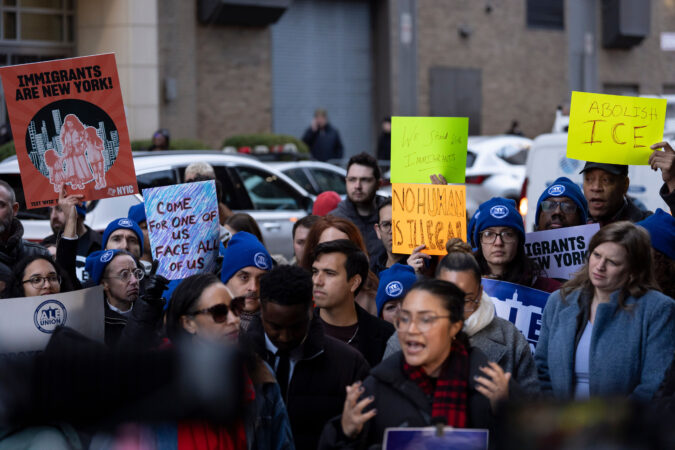
    Several dozen people protested Tuesday outside the Greater New York Federal Building, where Rubio Bohorquez was being held. Some carried signs that said “Abolish ICE” and “No Human Is Illegal.”’

    Venezuela, whose former President Nicolás Maduro was seized Jan. 3 by U.S. forces, has been roiled for years by violence and economic instability. Nearly 8 million people have fled the South American nation since 2014, according to the United Nations refugee agency.

    Last year, President Donald Trump’s administration ended Temporary Protected Status that had been allowing hundreds of thousands of Venezuelan refugees to live and work in the U.S. without fear of deportation. It wasn’t clear from court papers whether Rubio Bohorquez had been a part of that program.

    Disputes over an immigrant’s work authorization have arisen before, in part because many employers rely on E-Verify. The system compares information provided by employees with records available to the government but doesn’t automatically notify an employer if an employee’s right to work is later revoked.

  • Top prosecutors in D.C., Minneapolis leave amid turmoil over shooting probe

    Top prosecutors in D.C., Minneapolis leave amid turmoil over shooting probe

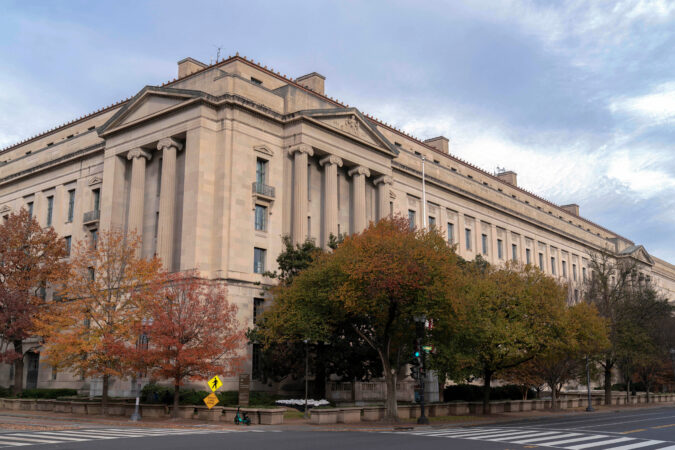
    Multiple senior prosecutors in Washington and Minnesota are leaving their jobs amid turmoil over the Trump administration’s handling of the shooting death of a Minneapolis woman.

    The departures include at least five prosecutors from the U.S. Attorney’s Office in Minneapolis, including the office’s second-in-command, according to emails obtained by The Washington Post and people familiar with the matter.

    Their resignations followed demands by Justice Department leaders to investigate the widow of Renée Good, the 37-year-old woman killed last week by an Immigration and Customs Enforcement officer who shot into her car, according to a person familiar with the resignations who spoke on the condition of anonymity out of concern for retaliation. Good’s wife was protesting ICE officers in the moments before the shooting.

    Five senior prosecutors in the criminal section of the Justice Department’s Civil Rights Division also said they are leaving, according to four people familiar with the personnel moves, who spoke on the condition of anonymity to discuss personnel matters.

    In another development, Deputy Attorney General Todd Blanche said in a statement that “there is currently no basis for a criminal civil rights investigation.” The statement, first reported by CNN, did not elaborate on how the department had reached a conclusion that no investigation was warranted.

    Federal officials have said that the officer acted in self-defense and that the driver of the Honda was engaging in “an act of domestic terrorism” when she pulled forward toward him.

    The departures wipe both the Civil Rights Division’s criminal section and U.S. Attorney’s Office in Minnesota of its most experienced prosecutors. The moves are widely seen as a major vote of no-confidence by career prosecutors at a moment when the department is under extreme scrutiny.

    The criminal section of the Civil Rights Division is the sole office that handles criminal violations of the nation’s civil rights laws. For years, the Justice Department has relied on the section to prosecute major cases of alleged police brutality and hate crimes. The departures followed the administration’s highly unusual decision to not include the Civil Rights Division in the initial investigation of the shooting.

    The Civil Rights Division departures include the criminal section’s longtime chief and deputy — Jim Felte and Paige Fitzgerald — career attorneys who served in their positions during President Donald Trump’s first administration and through President Joe Biden’s administration. Three other supervisors and senior litigators are also leaving.

    The prosecutors in Minnesota did not immediately respond to requests for comment. Felte and Fitzgerald also did not immediately respond to requests for comment Monday evening.

    The Civil Rights prosecutors informed their colleagues of their resignations Monday. People familiar with the section, who spoke on the condition of anonymity to discuss personnel matters, said the lawyers who are leaving did not attribute their decisions to the Minnesota investigation.

    The department has been offering voluntary early retirement packages to certain sections, and some of the departing civil rights prosecutors qualified for that option. Some indicated to their colleagues before the Minnesota shooting that they were considering the retirement packages.

    “Although we typically don’t comment on personnel matters, we can confirm that the Criminal Section Leadership gave notice to depart the Civil Rights Division and requested to participate in the Department of Justice’s Early Retirement Program well before the events in Minnesota. Any suggestion to the contrary is false,” a Justice Department official said in a statement.

    Deputy Attorney General Todd Blanche released a statement saying: “There is currently no basis for a criminal civil rights investigation” into the shooting.

    Trump’s appointees at the Justice Department pushed out and transferred many of the section heads and deputies in the Civil Rights Division in the early days of the administration. But the leadership of the criminal section was largely left intact.

    For months, however, frustration has been growing within the section, according to people familiar with the division who said that further resignations are likely. Many lawyers in the office have said they feel the administration has prevented prosecutors from doing their work. The administration has repeatedly reversed positions on cases that the section has spent years litigating.

    In July, for example, the Civil Rights Division told a judge that the Biden administration should not have prosecuted the Louisville police officer convicted in connection with a raid that resulted in Breonna Taylor’s death — and asked that the officer receive one day in jail. In November, the administration successfully pushed to dismiss a police brutality case in Tennessee, which was set to go to trial that month. The Civil Rights Division had been litigating that case for more than two years.

    Within the Justice Department, the Civil Rights Division typically experiences the sharpest swings in priorities between Republican and Democratic administrations. But several former officials interviewed by The Washington Post described the shifts implemented so far under the Trump administration as more intense than anticipated.

    In the first Trump administration, former Justice Department officials said, the division was largely left intact. The section did not pursue actions against police departments in the way that Democratic administrations had, but it prosecuted police brutality cases and continued to focus on prosecuting hate crimes, protecting disability rights and enforcing employment laws.

    During the current administration, the division has dramatically changed its mission. A majority of its nearly 400 attorneys left in 2025 as a result. The head of the Civil Rights Division, Harmeet Dhillon, changed mission statements across the sections to focus less on racial discrimination and more on fighting diversity initiatives. The division has also aggressively pursued cases alleging antisemitism and anti-Christian bias.

    After conservative activist Charlie Kirk was killed in September at a public event at Utah Valley University, the Civil Rights Division launched a hate-crime probe. The investigation is examining whether hate-crime charges can be pursued against the suspect because of anti-Christian bias, according to a person familiar with the probe.

    Prosecutors have also explored whether it would be possible to pursue hate-crime charges against the suspect, Tyler Robinson, if evidence shows motivation because of Kirk’s stance on transgender individuals — a move that would be a novel use of hate-crime laws. Robinson’s romantic partner was undergoing a gender transition at the time of the shooting, his mother told police.

    Dhillon has said she welcomes people to leave if they do not agree with the new direction for the department. Dhillon told conservative podcaster Glenn Beck in April that she intended to send a new message to her staff.

    “These are the president’s priorities,” Dhillon said on the podcast. “This is what we will be focusing on. Govern yourself accordingly.”

    MS NOW reported the civil rights resignations late Monday night.

    Dhillon has also said that her office is being flooded with applicants to fill vacant roles. But people familiar with the division said that just a fraction of the open roles have been filled, a process impeded by a lack of qualified candidates and bureaucratic delays. Some of the sections within the division are so understaffed that they cannot effectively complete their workloads.

    “This exodus is a huge blow signaling the disrespect and sidelining of the finest and most experienced civil rights prosecutors,” said Vanita Gupta, the head of the division during the Obama administration and the associate attorney general during the Biden administration. “It means cases won’t be brought, unique expertise will be lost, and the top career attorneys who may be a backstop to some of the worst impulses of this administration will have left.”

    The Civil Rights Division was established in 1957 as part of that year’s Civil Rights Act, which focused on fighting racial discrimination. Since its launch, the division has been tasked with upholding “the civil and constitutional rights of all people in the United States, particularly some of the most vulnerable members of our society,” according to the Justice Department’s website.

    The office has 12 sections that aim to combat discrimination in educational opportunities, housing, employment, voting and more.

    A Justice Department official also said that ICE has been conducting its own investigation of the Minnesota shooting.

    “As with any officer-involved shooting, each law enforcement agency has an internal investigation protocol, including DHS. As such, ICE OPR has its own investigation underway. This runs parallel to any FBI investigation,” the official said, referring to the Office of Professional Responsibility.

    This article includes information from the Associated Press.

  • Russia launches another major strike on Ukraine’s power grid in freezing temperatures

    Russia launches another major strike on Ukraine’s power grid in freezing temperatures

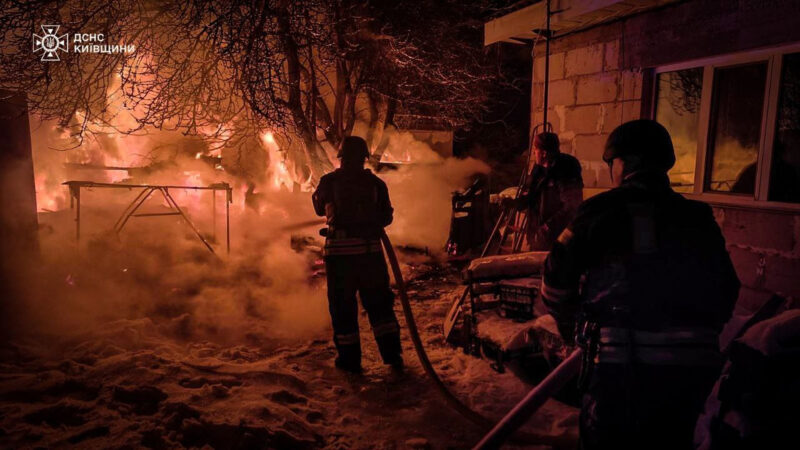
    KYIV, Ukraine — Russia launched a second major drone and missile bombardment of Ukraine in four days, officials said Tuesday, aiming again at the power grid amid freezing temperatures in an apparent snub to U.S.-led peace efforts as Moscow’s invasion of its neighbor approaches the four-year mark.

    Russia fired almost 300 drones, 18 ballistic missiles and seven cruise missiles at eight regions overnight, Ukrainian President Volodymyr Zelensky said on social media.

    One strike in the northeastern Kharkiv region killed four people at a mail depot, and several hundred thousand households were without power in the Kyiv region, Zelensky said.

    The daytime temperature in Kyiv, which has endured freezing temperatures for more than two weeks, was about 10 degrees, with streets covered in ice and the rumble of generators heard throughout the capital.

    Kyiv has grappled with severe power shortages for days, although Mayor Vitali Klitschko said Monday night’s strikes caused the biggest electrical outage the city has faced so far.

    Kyiv residents huddle for warmth

    More than 500 residential buildings remained without central heating Tuesday. Throughout the city, bare trees were weighed down with icicles and snow was piled up next to sidewalks.

    Olena Davydova, 30, charged her phone at what is called a “Point of Invincibility” shelter in Kyiv’s Dniprovskyi district. The government-built temporary installations, often large tents on the sidewalk, provide food, drinks, warmth and electricity.

    Davydova said she had been without power for nearly 50 hours. That forced her to adopt some new routines: sleeping in one bed with her child and two cats, storing fresh food on the balcony, and using candles after dark.

    She says she is taking the changes in stride. “I still have enough patience. I’m not reacting to this in a very emotional way,” she told The Associated Press.

    Elsewhere, friends and relatives gathered in apartments still with power or hot water, at least temporarily, to charge their phones, take showers, or share a warm drink.

    Klitschko ordered the city to provide one hot meal per day to needy residents. He also announced that workers in the city’s water, heating and road maintenance services would receive bonuses for working “day and night” to restore critical infrastructure.

    U.S. calls out ‘inexplicable’ Russian escalation

    Four days earlier, Russia also sent hundreds of drones and dozens of missiles in a large-scale overnight attack and, for only the second time in the war, it used a powerful new hypersonic missile that struck western Ukraine in what appeared to be a clear warning to Kyiv’s NATO allies that it won’t back down.

    On Monday, the U.S. accused Russia of a “dangerous and inexplicable escalation ” of the fighting at a time when the Trump administration is trying to advance peace negotiations.

    Tammy Bruce, the U.S. deputy ambassador to the United Nations, told an emergency meeting of the U.N. Security Council that Washington deplores “the staggering number of casualties” in the conflict and condemns Russia’s intensifying attacks on energy and other infrastructure.

    Russia has sought to deny Ukrainian civilians heat and running water over the course of the war, hoping to wear down public resistance to Moscow’s full-scale invasion, which began on Feb. 24, 2022. Ukrainian officials describe the strategy as “weaponizing winter.”

    The attack in Ukraine’s Kharkiv region also wounded 10 people, local authorities said.

    In the southern city of Odesa, six people were wounded in the attack, said Oleh Kiper, the head of the regional military administration. The strikes damaged energy infrastructure, a hospital, a kindergarten, an educational facility and a number of residential buildings, he said.

    2025 deadliest year for Ukrainian civilians

    Last year was the deadliest for civilians in Ukraine since 2022 as Russia intensified its aerial barrages behind the front line, according to the U.N. Human Rights Monitoring Mission in the country.

    The war killed 2,514 civilians and injured 12,142 in Ukraine — 31% higher than in 2024, it said.

    “The sharp increase in long-range attacks and the targeting of Ukraine’s national energy infrastructure mean that the consequences of the war are now felt by civilians far beyond the front line,” Danielle Bell, the agency’s head, said in a statement Monday.

    Zelensky said Ukraine is counting on quicker deliveries of agreed upon air defense systems from the U.S. and Europe, as well as new pledges of aid to counter Russia’s latest onslaught.

    Meanwhile, Russian air defenses shot down 11 Ukrainian drones overnight, Russia’s Defese Ministry said Tuesday. Seven were reportedly destroyed over Russia’s Rostov region, where Gov. Yuri Slyusar confirmed an attack on the coastal city of Taganrog, about 24 miles east of the Ukrainian border, in Kyiv’s latest long-range attack on Russian war-related facilities.

    Ukraine’s military said its drones hit a drone manufacturing facility in Taganrog. The Atlant Aero plant designs, manufactures and tests Molniya drones and components for Orion unmanned aerial vehicles, according to the General Staff of the Armed Forces of Ukraine. Explosions and a fire were reported at the site, with damage to production buildings confirmed, the General Staff said.

    It wasn’t possible to independently verify the reports.

  • More Americans are surviving cancer — even the deadliest ones

    More Americans are surviving cancer — even the deadliest ones

    More Americans diagnosed with cancer are now surviving the disease — marking a positive trend that experts say reflects the effectiveness of early prevention and detection strategies, and advancements in treatment and care.

    New findings from the American Cancer Society’s annual report released Tuesday show for the first time that the five-year survival rate for all cancers has reached 70%, with the most notable survival gains occurring among people diagnosed with more fatal cancers such as myeloma (a blood cancer), liver cancer, and lung cancer.

    “Seven in 10 people now survive their cancer five years or more, up from only half in the mid-70s,” Rebecca Siegel, senior scientific director of surveillance research at ACS and lead author of the report, said in a news release. “This stunning victory is largely the result of decades of cancer research that provided clinicians with the tools to treat the disease more effectively, turning many cancers from a death sentence into a chronic disease.”

    Living longer

    The cancer mortality rate has continued to decline through 2023, averting 4.8 million deaths since 1991, according to the report. In 2026, the United States is expected to see upward of 2 million new cancer cases and more than 626,000 deaths related to the disease. Cancer incidence and mortality generally appears to be higher among men than women, the report found.

    Improvements in survival rates can largely be attributed to less tobacco use, better ways to detect cancers early, and the development of more effective treatments, said William Dahut, chief scientific officer for ACS. Importantly, he noted, advancements in cancer care, such as novel therapies, that have led to people living longer would not have been possible without funding research.

    In early 2025, the Trump administration slashed millions in health research grants, including money that had been earmarked for cancer studies.

    “The thing to focus on is really the importance of scientific funding and scientific discovery to really drive improvements in five-year survival,” said Dahut, who added that the trends being observed in patients with metastatic cancer, in which the disease has spread to other parts of the body, are “particularly striking.”

    The survival rate for people with metastatic rectal cancer, for instance, increased from 8% in the mid-1990s to 18%. Meanwhile, the percentage of patients who survive a diagnosis of metastatic lung cancer is up to 10% from 2%.

    “Overall, the findings in this report are highly encouraging and demonstrate that meaningful progress has been made in the fight against cancer,” said Sharon Giordano, chair of breast medical oncology at the University of Texas MD Anderson Cancer Center, who was not involved in the research.

    More to learn

    Experts emphasized that there is still work to be done to better understand different types of cancers and how to treat them.

    “Decades of research and work in this area have led to longer, better lives for millions of Americans with cancer,” said Cardinale Smith, chief medical officer at Memorial Sloan Kettering Cancer Center, who was not involved in the report. “This continued progress also depends on the sustained investment that we’ve had in the research that has gotten us here.”

    Despite reductions in smoking, the report found that lung cancer is expected to cause the most cancer deaths in 2026. While smoking continues to be the main driver of lung cancer cases, more people who have never smoked are also being diagnosed, and scientists are working to understand why. Some experts have called for changes to lung cancer screening guidelines that would increase the number of people who can be screened.

    The report also highlighted that racial disparities continue to exist.

    Native American people have the highest cancer mortality and are two times more likely than white people to die of kidney, liver, stomach, and uterine cervix cancers. Young people who are Alaskan Natives are most likely to be diagnosed with colorectal cancer, Dahut said, adding that rates of the disease in this population are “the highest in the world.”

    Cancer survival is lower among Black people than white people for nearly every cancer type, the report notes. Researchers largely attributed the gap to less access to high-quality care from prevention to diagnosis and treatment.

    Supporting survivors

    While better survival rates should inspire hope in people, Dahut said there is a critical need to improve care for the growing number of survivors.

    As of January last year, there were more than 18.6 million cancer survivors in the United States — a figure that is projected to exceed 22 million by 2035, according to ACS.

    “In our current medical system, we don’t really have a great model for who’s best to follow cancer survivors,” Dahut said. Many primary care providers don’t have expertise in survivorship and cancer recurrence, he added.

    “Having more and more survivors is great,” he said. “But I think we’re going to have to come up with strategies in order to ensure that they’re cared for in a way that’s consistent across the country.”

  • Hundreds more Venezuelans come forward to register relatives as ‘political prisoners’

    Hundreds more Venezuelans come forward to register relatives as ‘political prisoners’

    GUANARE, Venezuela — Freedom came too late for Edilson Torres.

    The police officer was set to be buried Tuesday in his humble, rural hometown following his death in a Venezuelan prison, where he was held incommunicado since his December detention on what his family said were politically motivated accusations. Hours ahead of the ceremony, his children, neighbors, police officers, friends and dozens others gathered to pay their respects.

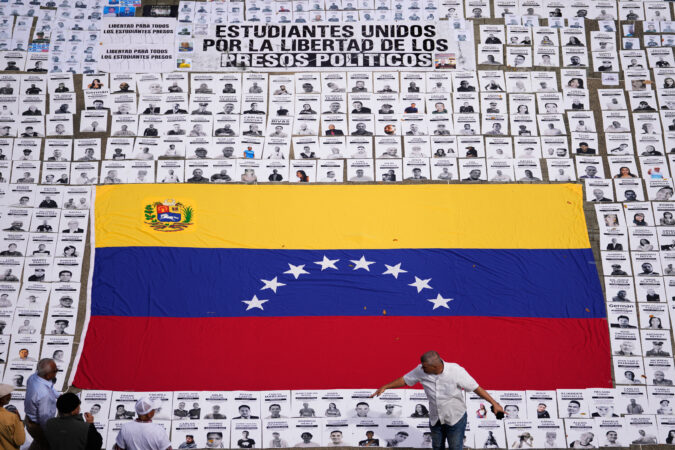
    Torres, 51, died of a heart attack on Saturday, just as his family awaited the government’s promised release of prisoners following the U.S. capture of then-President Nicolás Maduro. His death comes as scores of families like his — who once hesitated to approach advocacy groups — are now coming forward to register their loved ones as “political prisoners.”

    Alfredo Romero, director of the organization Foro Penal, a non-governmental organization that tracks and advocates for Venezuelan prisoners, said the group has received a “flood of messages” since last week from families.

    “They didn’t report it out of fear, and now they’re doing it because, in a way, they feel that there is this possibility that their families will be freed,” Romero said. “They see it as hope, but more importantly, as an opportunity.”

    The head of Venezuela’s national assembly, Jorge Rodríguez, said last week that a “significant number” of Venezuelan and foreigners imprisoned in the country would be released as a gesture to “seek peace” following the explosions that rocked the South American nation in the early hours of Jan. 3.

    The U.S. and Venezuela’s opposition have long demanded the widespread release of detained opposition figures, activists and journalists, whom they claim are used as a political tool by the ruling party.

    Venezuela’s government denies that there are prisoners unjustly detained, accusing them of plotting to destabilize Maduro’s government.

    ‘Pure and real kidnapping’

    Following Torres’ death, Venezuela’s Attorney General Tarek William Saab said in a statement that the case had been assigned to a terrorism unit and “was linked to criminal activities detected by state security agencies.” He did not offer any details, but the vague language tracks with past accusations leveled against real or perceived government critics.

    Romero explained that of the roughly 300 families who reached out, about 100 cases so far have been confirmed as politically motivated. Most of those reported over the past few days, he said, once worked for Venezuela’s military. That is on top of more than 800 people that the organization says continue to be detained for political reasons in Venezuela.

    As of Tuesday morning, Foro Penal had confirmed the release of 56 prisoners. While Venezuela’s government reported a higher figure of 116, it did not identify them, making it impossible to determine whether those freed were behind bars for political or other reasons.

    “My little brother, my little brother,” Emelyn Torres said between sobs after his casket, cloaked in Venezuela’s flag, arrived at her home for the wake. A few feet away, their grandmother nearly fainted as dozens of people crammed into the living room to pay their respects.

    Hours earlier, as a minivan transported the body of her brother 267 miles from the capital, Caracas, to Guanare, Torres learned that other men linked to the WhatsApp group that led to her brother’s arrest had just been released from prison. She wailed. He did not live long enough to walk free.

    Among those who have been released are: human rights attorney Rocío San Miguel, who immediately relocated to Spain; Biagio Pilieri, an opposition leader who was part of Nobel Peace Prize winner María Corina Machado’s 2024 presidential campaign; and Enrique Márquez, a former electoral authority and presidential candidate.

    Italian businessman Marco Burlò, who was released from prison Monday, told reporters outside an international airport in Rome Tuesday that he was kept isolated throughout his detention, which he characterized as a “pure and real kidnapping.”

    “I can’t say that I was physically abused, but without being able to talk to our children, without the right to defense, without being able to speak to the lawyer, completely isolated, here they thought that I might have died,” he said.

    A rare moment of hope

    The small set of releases over the past few days continues to fuel criticisms by families, human rights watchdogs at the United Nations and U.S. politicians, who have accused the government of not following through on their word of a wider release.

    But the rapid political shifts in the Latin American nation and the distant possibility of release simultaneously marked a rare moment of hope for many families who have spent years wondering if their loved ones would ever be freed.

    Part of the reason that Romero said he believed so many people had not come forward is the government’s ongoing crackdown on dissent since Venezuela’s tumultuous 2024 election, which Maduro claimed to have won despite ample credible evidence to the contrary.

    As mass street protests broke out, authorities said they detained more than 2,000 people. In the month after July elections, Venezuela’s government passed a law – dubbed the “anti-NGO law” by critics – making it easier for the government to criminalize human rights groups.

    That had a chilling effect, Romero said, making families hesitant to come forward — until now.

  • A $2,500 full body scan said he was healthy. Then he had a catastrophic stroke.

    A $2,500 full body scan said he was healthy. Then he had a catastrophic stroke.

    In July 2023, a 35-year-old Manhattan man decided to undergo a full-body health scan, a celebrity-endorsed trend aimed at people anxious about their body’s secrets and moneyed enough to afford the knowledge.

    The industry advertises that the MRI scans can detect hundreds of treacherous health conditions such as cancers and aneurysms before they become catastrophic. While the scans have been criticized as an extravagance within U.S. healthcare, proponents say they can offer peace of mind.

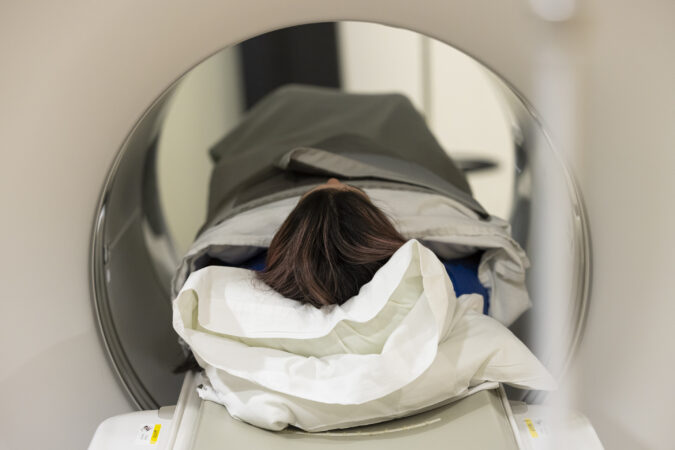
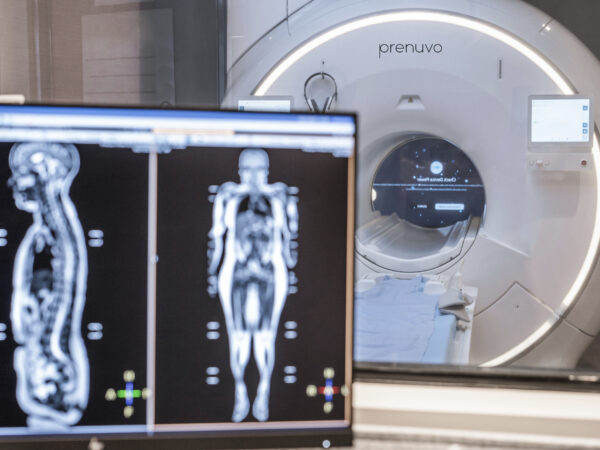
    Sean Clifford had his scan done by Prenuvo, one of the most prominent companies in the field. Kim Kardashian has described its screenings as “life saving.” The company’s website says a 45-minute whole-body scan, now priced at $2,500, “can detect subtle changes early” and “spot potential issues before they become serious.”

    The report based on Clifford’s scan indicated no major problems, according to a copy sent to him. But eight months later, he suffered a debilitating stroke, leaving him with paralysis in his left hand and left leg, according to a lawsuit he filed against Prenuvo and the doctor contracted to interpret the scan. He alleges that the company overlooked signs of trouble that appeared in the scans of his cerebral arteries.

    The Prenuvo defendants “should have reasonably known about the safety hazards or risks of injury presented by the misinterpretation of the Prenuvo MRI scans by its machines,” according to Clifford’s lawsuit filed in September 2024. According to a radiologist cited in the lawsuit, Clifford’s health report “was an obvious miss. His cerebral and cerebellar vasculature were incorrectly described as normal.”

    Clifford’s attorney, Neal Bhushan, said the family asked for privacy and declined further comment. The court records include a copy of Clifford’s Prenuvo report and other documentation, but his allegations, which the company has denied in court filings, have not been fully litigated. A judge’s decision last month allowed the case to move forward.

    Prenuvo declined to comment on the litigation, but it said in a company statement that “we take any allegation seriously and are committed to addressing it through the appropriate legal process. Our focus remains on delivering safe, high quality, proactive care to the patients who place their trust in us every day.”

    The lawsuit represents another aspect of the controversy over full-body scans, which have been criticized for detecting minor abnormalities that provoke unnecessary follow-up testing and for being overly broad. The use of MRI to conduct a full-body scan on healthy patients is a departure from its more common uses for targeted diagnoses and monitoring.

    Amid burgeoning interest in personal health data, these concerns are sometimes overwhelmed by publicity from the technology’s high-profile advocates. Prenuvo has drawn a slate of investors including supermodel Cindy Crawford; the CEO of 23andMe Anne Wojcicki; and the investment firm Steel Perlot, whose chairman is Eric Schmidt, the former Google chief executive.

    On her Instagram account, Crawford has posted a picture of herself and her husband with one of the Prenuvo scanners. “The couple that scans together, stays together,” she wrote.

    Paris Hilton also endorsed the company, writing on Instagram she was “impressed” with her fast results. “I encourage every single one of you to go get a scan and make sure you are taking care of yourselves,” she wrote.

    Among the skeptics are experts at the American College of Radiology, which warns in a statement on its website that “there is no documented evidence that total body screening is cost-efficient or effective in prolonging life.” The group said it is concerned that the scans could “lead to the identification of numerous nonspecific findings that will not ultimately improve patients’ health but will result in unnecessary follow-up testing and procedures, as well as significant expense.” Insurance rarely pays for the scans.

    While much of the criticism of the scans has focused on the potential for false alarms, the Clifford lawsuit focuses on the converse ― the possibility that the scans may miss critical problems.

    The company suggests as much in the patient consent agreement that Clifford signed, noting “as with any medical test … there are limitations which make it impossible to detect all malignancies and conditions,” according to court documents.

    Clifford’s legal complaint argued that a doctor contracted to review his Prenuvo scan missed clues to an imminent stroke.

    An image of Clifford’s brain by Prenuvo shows that one of his cerebral arteries had dangerously narrowed, according to the lawsuit. Another image, taken after his stroke, shows a blockage at that point.

    Clifford “sustained a catastrophic stroke on March 7, 2024, in the same exact area of the brain where he had the Prenuvo scan on July 15, 2023,” according to a radiologist’s report submitted by the plaintiffs. Had he known of the potential for a stroke, Clifford might have been treated with drugs, lifestyle changes, stents, or “other minimally invasive measures, thereby eliminating and preventing the catastrophic stroke,” according to the lawsuit.

    Mirza Rahman, a former president of the American College of Preventive Medicine, has been one of the foremost critics of the scans, arguing that the service exemplifies a problem in American healthcare: “The wealthy get too much of it and the poor do not get enough.”

    Even the wealthy ought to be wary of what they are getting from the scans, Rahman said, questioning whether the service may overlook some conditions because of the time and attention needed to review them.

    “Do the radiologists have sufficient time to carefully look at the bones, the vessels, the organs, and all the other information that is generated by such scans?” Rahman said. “That is a question that needs to be answered.”

    Just as troubling, Rahman said, is that the possibility of missing a dangerous condition could provide a patient with a “false sense of reassurance and that they continue with lifestyle choices that may be detrimental.”

    The company’s chief executive Andrew Lacy has boasted of its focus on accuracy.

    “This is the only thing that we do ― it’s not a side business,” Lacy said in a 2024 interview with Faces of Digital Health. “We are 100% focused on making sure that we have the best hardware, best software, best [artificial intelligence], and best radiologists so these exams are as accurate as they can be.”

    Doctors typically use MRIs to focus on just one area of the body where a problem is suspected ― not the entire body, said Max Wintermark, a doctor who is past president of the American Society of Neuroradiology and editor-in-chief of the American Journal of Neuroradiology.

    “MRI is not generally recommended for patients without symptoms,” he said. “When I have a patient, I tailor the MRI to answer specific questions. You can’t image all body parts together in great detail without making the MRI scan more than 60 minutes.”

  • Israel’s recognition of breakaway Somaliland brings uproar and threats to a volatile region

    Israel’s recognition of breakaway Somaliland brings uproar and threats to a volatile region

    JERUSALEM — Israel’s recognition of Somaliland has thrust the breakaway territory into the international spotlight, causing an uproar in the Horn of Africa and the Middle East as a surprise new factor in regional power struggles.

    For Israel, the decision reignites questions about the contentious proposal raised last year by American and Israeli officials for Somaliland to take in Palestinians displaced from Gaza. Israel also could use Somaliland as a base to more closely respond to attacks from Iran-backed Houthis rebels in Yemen, just across the Gulf of Aden.

    Israel also would get a diplomatic win. Somaliland’s foreign minister told The Associated Press that it aims to join the Abraham Accords, bilateral agreements between Israel and Arab and Muslim-majority countries.

    “It is a mutually beneficial friendship,” Abdirahman Dahir Adan said in an interview. In return, “Somaliland gains open cooperation with Israel in trade, investment and technology.”

    But the first international recognition of Somaliland as an independent nation also could make it a target. Analysts warn that its ties with Israel could become a rallying cry for Islamic extremists, destabilizing an already volatile region in which Somaliland has prided itself as an oasis of relative calm.

    Al-Qaeda affiliate al-Shabab, based in Somalia and the key challenge to that country’s stability, is already making threats. The group has rarely carried out attacks in Somaliland, which broke away in 1991 as Somalia collapsed into conflict.

    “Members of the movement reject Israel’s attempt to claim or use parts of our land. We will not accept this, and we will fight against it,” al-Shabab spokesperson Sheikh Ali Mohamud Rageal said in an audio message posted on one of the group’s sites.

    Strategic location

    Somaliland sits along one of the world’s busiest maritime corridors. It has drawn interest from foreign investors and military powers who see it as a potential alternative to neighboring Djibouti, which is home to the premier African bases for the American and Chinese militaries, and those of several other nations.

    Somaliland lies fewer than 100 miles from Yemen, where the Houthis have been targeting commercial and other ships in response to the Israel-Hamas war. The attacks have upended shipping in the Red Sea, through which about $1 trillion of goods pass annually. The Houthis also fired scores of missiles and drones at Israel during the war in Gaza, triggering long-range strikes by Israel’s air force.

    “If you are trying to watch, deter or disrupt Houthi maritime activity, a small footprint (in Somaliland) can provide disproportionate utility,” said Andreas Krieg, a military analyst at King’s College London.

    Shortly after Israel’s recognition, the Houthis threatened Somaliland.

    ‘No limits’ to cooperation

    Israeli Foreign Minister Gideon Saar visited Somaliland last week, and Somaliland’s president is expected to visit Israel soon.

    “This is a natural connection between democratic countries — both in challenging regions,” Saar said in defending Israel’s recognition.

    Israel and Somaliland have said their new ties would include defense cooperation, but officials declined to elaborate. Somaliland’s foreign minister said that details would follow his president’s visit to Israel.

    “There are no limits as to what areas we can work with,” Adan said.

    He expressed hope that Israel’s recognition would bestow new legitimacy on Somaliland and prompt others to recognize its sovereignty, even as Somalia has angrily rejected it.

    “Before Israel’s recognition, we were worried so much that other powers like Turkey and China would squeeze us,” Adan said, mentioning two of Somalia’s top benefactors. “I’m very hopeful that in the near future there will be many other countries that will follow Israel.”

    But the foreign minister insisted there has been no discussion with Israel about taking in Palestinians from Gaza. U.S. and Israeli officials told the AP last year that Israel had approached Somaliland about the proposal.

    Warnings of violence

    Israeli recognition of Somaliland has pushed the region into uncharted waters, said Mahad Wasuge, director of Somali Public Agenda, a think tank.

    “It could increase violence or bring proxy wars, particularly if the Israelis want to have a presence in the port of Berbera to counter threats in the Red Sea,” he said, referring to Somaliland’s largest port.

    The 57-nation Organization of Islamic Cooperation, and the African Union continental body, have condemned Israel’s recognition.

    Somali President Hassan Sheikh Mohamud has said it threatens his country’s sovereignty. He said that Somalis wouldn’t accept their nation being used by a foreign power accused of harming civilians — meaning Palestinians in Gaza — and warned that the establishment of foreign military bases would further destabilize the region.

    Somali territory “cannot be divided by a piece of paper written by Israel and signed by (Israeli Prime Minister Benjamin) Netanyahu,” Mohamud said in a televised address.

    Adan dismissed the criticism from Mogadishu, calling Somalia a “failed state.”

    Great power rivalries

    Already, Israel’s recognition has rocked the balance of powers in a region where rich Gulf countries and others have a growing interest.

    On Monday, Somalia annulled its security and defense agreements with the United Arab Emirates, a key regional ally of Israel that has long invested in Somaliland’s Berbera port, saying it was meant to safeguard “unity, territorial integrity, and constitutional order.”

    For the UAE, the area is important for its proximity to Sudan, where it has been accused of funding and arming the paramilitary Rapid Support Forces in that country’s civil war. And last week, Saudi Arabia accused the UAE of using Somaliland as a transit point to smuggle the leader of a separatist group out of southern Yemen.

    Asher Lubotzky, an analyst with Israel’s Institute for National Security Studies, said that Somaliland is one of several examples of the emerging alliance between Israel and the UAE, which have sought to align with U.S. foreign policy and shown a willingness to eschew international norms while countering extremist groups.

    “We know the Israeli interest is with the Houthis, but Somaliland also has an interest in some kind of an external protection,” he said.

    Others put on alert by Israel’s recognition are Turkey, Somalia’s largest investor and a rival to Israel, and China, which has long viewed Somaliland with suspicion over its ties with Taiwan. A rare visit to Somalia by China’s foreign minister, Wang Yi, set for last week did not occur as the Chinese embassy cited “scheduling reasons.”

    Closer to home, landlocked Ethiopia, Africa’s second-most populous country, sees Somaliland next door as a key route to the sea. It has remained silent on Israel’s recognition — perhaps scrambling, like many other countries, to understand what might come next.

  • Trump administration labels 3 Muslim Brotherhood branches as terrorist organizations

    Trump administration labels 3 Muslim Brotherhood branches as terrorist organizations

    WASHINGTON — President Donald Trump’s administration has made good on its pledge to label three Middle Eastern branches of the Muslim Brotherhood as terrorist organizations, imposing sanctions on them and their members in a decision that could have implications for U.S. relationships with allies in the region.

    The Treasury and State departments announced the actions Tuesday against the Lebanese, Jordanian and Egyptian chapters of the Muslim Brotherhood, which they said pose a risk to the United States and American interests.

    The State Department designated the Lebanese branch a foreign terrorist organization, the most severe of the labels, which makes it a criminal offense to provide material support to the group. The Jordanian and Egyptian branches were listed by Treasury as specially designated global terrorists for providing support to Hamas.

    “These designations reflect the opening actions of an ongoing, sustained effort to thwart Muslim Brotherhood chapters’ violence and destabilization wherever it occurs,” Secretary of State Marco Rubio said in a statement. “The United States will use all available tools to deprive these Muslim Brotherhood chapters of the resources to engage in or support terrorism.”

    Rubio and Treasury Secretary Scott Bessent were mandated last year under an executive order signed by Trump to determine the most appropriate way to impose sanctions on the groups, which U.S. officials say engage in or support violence and destabilization campaigns that harm the United States and other regions.

    Bessent wrote in a post on X that the Muslim Brotherhood “has a longstanding record of perpetrating acts of terror, and we are working aggressively to cut them off from the financial system.” He added that the Trump administration will “deploy the full scope of its authorities to disrupt, dismantle, and defeat terrorist networks wherever they operate in order to keep Americans safe.”

    Muslim Brotherhood leaders have said they renounce violence, and the Muslim Brotherhood branches in Egypt and Lebanon denounced their inclusion.

    “The Egyptian Muslim Brotherhood categorically rejects this designation and will pursue all legal avenues to challenge this decision which harms millions of Muslims worldwide,” it said in a statement, denying any involvement in or support for terrorism.

    The Lebanese branch of the Muslim Brotherhood, known as al-Jamaa al-Islamiya (the Islamic Group), said in a statement that it is “a licensed Lebanese political and social entity that operates openly and within the bounds of the law” and that the U.S. decision “has no legal effect within Lebanon.”

    Trump’s executive order had singled out the chapters in Lebanon, Jordan and Egypt, noting that a wing of the Lebanese chapter had launched rockets on Israel after Hamas’ Oct. 7, 2023, attack in Israel that set off the war in Gaza. Leaders of the group in Jordan have provided support to Hamas, the order said.

    The Muslim Brotherhood was founded in Egypt in 1928 but was banned in that country in 2013. Jordan announced a sweeping ban on the Muslim Brotherhood in April.

    Nathan Brown, a professor of political science and international affairs at George Washington University, said some allies of the U.S., including the United Arab Emirates and Egypt, would likely be pleased with the designation.

    “For other governments where the brotherhood is tolerated, it would be a thorn in bilateral relations,” including in Qatar and Turkey, he said. While the Turkish ruling party has been associated with members of the Muslim Brotherhood in the past, the government of Qatar has denied any relationship with it.

    Brown also said a designation on the chapters may have effects on visa and asylum claims for people entering not just the U.S. but also Western European countries and Canada.

    “I think this would give immigration officials a stronger basis for suspicion, and it might make courts less likely to question any kind of official action against Brotherhood members who are seeking to stay in this country, seeking political asylum,” he said.

    Trump, a Republican, weighed whether to designate the Muslim Brotherhood a terrorist organization in 2019 during his first term in office. Some prominent Trump supporters, including right-wing influencer Laura Loomer, have pushed his administration to take aggressive action against the group.

    Two Republican-led state governments — Florida and Texas — designated the group as a terrorist organization this year.

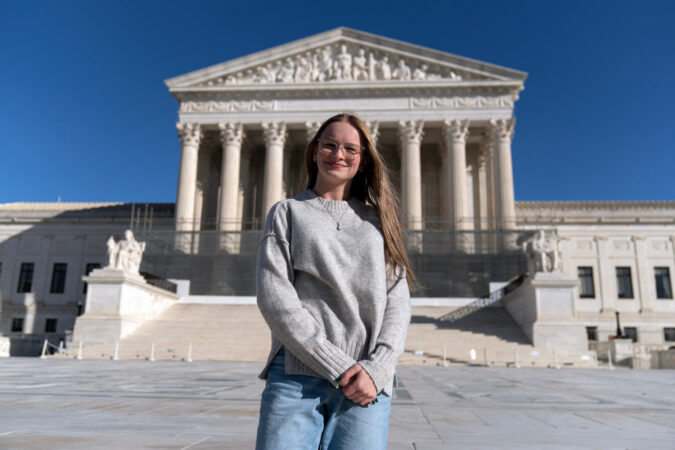
  • Supreme Court seems likely to uphold state bans on transgender athletes in girls and women’s sports

    Supreme Court seems likely to uphold state bans on transgender athletes in girls and women’s sports

    WASHINGTON — The Supreme Court on Tuesday appeared ready to deal another setback to transgender people and uphold state laws barring transgender girls and women from playing on school athletic teams.

    The court’s conservative majority, which has repeatedly ruled against transgender Americans in the past year, signaled during more than three hours of arguments it would rule the state bans don’t violate either the Constitution or the federal law known as Title IX, which prohibits sex discrimination in education.

    More than two dozen Republican-led states have adopted bans on female transgender athletes. Lower courts had ruled for the transgender athletes who challenged laws in Idaho and West Virginia.

    The legal fight is playing out against the backdrop of a broad effort by President Donald Trump to target transgender Americans, beginning on the first day of his second term and including the ouster of transgender people from the military and declaring that gender is immutable and determined at birth.

    The justices are evaluating claims of sex discrimination lodged by transgender people versus the need for fair competition for women and girls, the main argument made by the states.

    Justice Brett Kavanaugh, who coached his daughters in girls basketball, seemed concerned about a ruling that might undo the effects of Title IX, which has produced dramatic growth in girls and women’s sports. Kavanaugh called Title IX an “amazing” and “inspiring” success.

    Some girls and women might lose a medal in a competition with transgender athletes, which Kavanaugh called a harm “we can’t sweep aside.”

    The three liberal justices seemed focused on trying to marshal a court majority in support of a narrow ruling that would allow the individual transgender athletes involved in the cases to prevail.

    A ruling for West Virginia and Idaho would effectively apply to the other two dozen Republican-led states with similar laws.

    But the justices soon might be asked to decide about the laws in an additional roughly two dozen states, led by Democrats, that allow transgender athletes to compete on the teams that match their gender identity.

    The outcome also could influence separate legal efforts by the Trump administration and others seeking to bar transgender athletes in states that have continued to allow them to compete.

    The transgender athletes’ cases

    In the Idaho case, Lindsay Hecox, 25, sued over the state’s first-in-the-nation ban for the chance to try out for the women’s track and cross-country teams at Boise State University in Idaho. She didn’t make either squad because “she was too slow,” her lawyer, Kathleen Hartnett, told the court Tuesday, but she competed in club-level soccer and running.

    Becky Pepper-Jackson, a 15-year-old high school sophomore, was in the courtroom Tuesday. She has been taking puberty-blocking medication, has publicly identified as a girl since age 8 and has been issued a West Virginia birth certificate recognizing her as female. She is the only transgender person who has sought to compete in girls sports in West Virginia.

    Pepper-Jackson has progressed from a back-of-the-pack cross-country runner in middle school to a statewide third-place finish in the discus in just her first year of high school.

    Prominent women in sports have weighed in on both sides. Tennis champion Martina Navratilova, swimmers Summer Sanders and Donna de Varona and beach volleyball player Kerri Walsh-Jennings are supporting the state bans. Soccer stars Megan Rapinoe and Becky Sauerbrunn and basketball players Sue Bird and Breanna Stewart back the transgender athletes.

    In 2020, the Supreme Court ruled LGBTQ people are protected by a landmark federal civil rights law that prohibits sex discrimination in the workplace, finding that “sex plays an unmistakable role” in employers’ decisions to punish transgender people for traits and behavior they otherwise tolerate.

    But last year, the six conservative justices declined to apply the same sort of analysis when they upheld state bans on gender-affirming care for transgender minors.

    Chief Justice John Roberts signaled Tuesday he sees differences between the 2020 case, in which he supported the claims of discrimination, and the current dispute.

    The states supporting the prohibitions on transgender athletes argue there is no reason to extend the ruling barring workplace discrimination to Title IX.

    Idaho’s law, state Solicitor General Alan Hurst, said, is “necessary for fair competition because, where sports are concerned, men and women are obviously not the same.”

    Lawyers for Pepper-Jackson argue that such distinctions generally make sense, but that their client has none of those advantages because of the unique circumstances of her early transition. In Hecox’s case, her lawyers want the court to dismiss the case because she has forsworn trying to play on women’s teams.

    NCAA president Charlie Baker told Congress in 2024 that he was aware of only 10 transgender athletes out of more than a half-million students on college teams. But despite the small numbers, the issue has taken on outsize importance.

    Baker’s NCAA and the U.S. Olympic and Paralympic Committees banned transgender women from women’s sports after Trump, a Republican, signed an executive order aimed at barring their participation.

    The public generally is supportive of the limits. An Associated Press-NORC Center for Public Affairs Research poll conducted in October 2025 found that about 6 in 10 U.S. adults “strongly” or “somewhat” favored requiring transgender children and teenagers to only compete on sports teams that match the sex they were assigned at birth, not the gender they identify with, while about 2 in 10 were “strongly” or “somewhat” opposed and about one-quarter did not have an opinion.

    About 2.1 million adults, or 0.8%, and 724,000 people age 13 to 17, or 3.3%, identify as transgender in the U.S., according to the Williams Institute at the UCLA School of Law.

    A decision is expected by early summer.