Category: Wires

  • Trump says Iran wants to negotiate as the death toll in protests rises to at least 646

    Trump says Iran wants to negotiate as the death toll in protests rises to at least 646

    DUBAI, United Arab Emirates — U.S. President Donald Trump said Iran wants to negotiate with Washington after his threat to strike the Islamic Republic over its crackdown on protesters in nationwide demonstrations that activists said Monday had left at least 646 people dead.

    Iran had no direct reaction to Trump’s comments, which came after the foreign minister of Oman — long an interlocutor between Washington and Tehran — traveled to Iran this weekend. It also remains unclear just what Iran could promise, particularly as Trump has set strict demands over its nuclear program and its ballistic missile arsenal, which Tehran insists is crucial for its national defense.

    Iranian Foreign Minister Abbas Araghchi, speaking to foreign diplomats in Tehran, insisted “the situation has come under total control” in remarks that blamed Israel and the U.S. for the violence, without offering evidence.

    “That’s why the demonstrations turned violent and bloody, to give an excuse to the American president to intervene,” Araghchi said, in comments carried by Al Jazeera. The Qatar-funded network has been allowed to report live from inside Iran, despite the internet being shut off.

    However, Araghchi said Iran was “open to diplomacy.” Iranian Foreign Ministry spokesperson Esmail Baghaei said that a channel to the U.S. remained open, but talks needed to be “based on the acceptance of mutual interests and concerns, not a negotiation that is one-sided, unilateral, and based on dictation.”

    Meanwhile, pro-government demonstrators flooded the streets on Monday in support of the theocracy, a show of force after days of protests directly challenging the rule of 86-year-old Supreme Leader Ayatollah Ali Khamenei. Iranian state television aired chants from the crowd, which appeared to number in the tens of thousands, who shouted “Death to America!” and “Death to Israel!”

    Others cried out: “Death to the enemies of God!” Iran’s attorney general has warned that anyone taking part in protests will be considered an “enemy of God,” a death-penalty charge.

    On Monday, the U.S. State Department and the U.S. Virtual Embassy Iran issued an urgent warning to U.S. citizens in Iran to “leave now,” citing the surge in violence and communications blackout.

    Trump acknowledges proposal for talks

    Trump and his national security team have been weighing a range of potential responses against Iran, including cyberattacks and direct strikes by the U.S. or Israel, according to two people familiar with internal White House discussions who weren’t authorized to comment publicly and spoke on condition of anonymity.

    “The military is looking at it, and we’re looking at some very strong options,” Trump told reporters on Air Force One on Sunday night. Asked about Iran’s threats of retaliation, he said: “If they do that, we will hit them at levels that they’ve never been hit before.”

    Meanwhile, Trump announced Monday that countries doing business with Iran will face 25% tariffs from the United States. Trump announced the tariffs in a social media posting, saying they would be “effective immediately.”

    It was the first direct action from the president, who believes exacting tariffs can be a useful tool in prodding friends and foes on the global stage to bend to his will.

    Brazil, China, Turkey, the United Arab Emirates, and Russia are among economies that do business with Tehran.

    The White House did not immediately offer any further details on the new tariffs.

    Trump said that his administration was in talks to set up a meeting with Tehran, but cautioned that he may have to act first as reports of the death toll in Iran mount and the government continues to arrest protesters.

    “I think they’re tired of being beat up by the United States,” Trump said. “Iran wants to negotiate.”

    Iran, through the country’s parliamentary speaker, warned Sunday that the U.S. military and Israel would be “legitimate targets” if Washington uses force to protect demonstrators.

    More than 10,700 people also have been detained over the two weeks of protests, said the U.S.-based Human Rights Activists News Agency, which has been accurate in previous unrest in recent years and gave the latest death toll early Tuesday. It relies on supporters in Iran crosschecking information. It said 512 of the dead were protesters and 134 were security force members.

    With the internet down in Iran and phone lines cut off, gauging the demonstrations from abroad has grown more difficult. The Associated Press has been unable to independently assess the toll. Iran’s government hasn’t offered overall casualty figures.

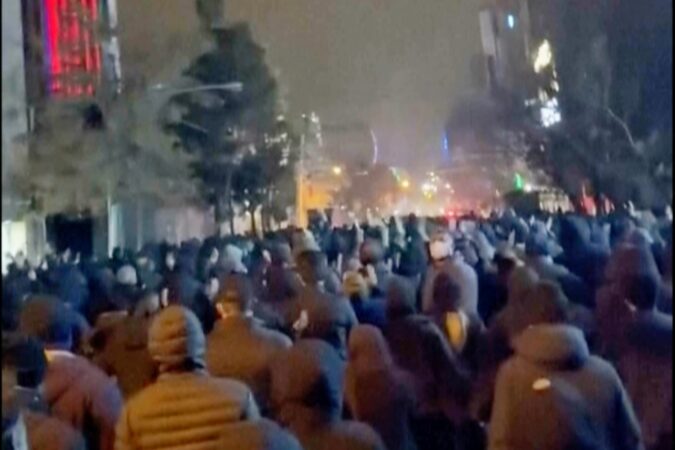
    Those abroad fear the information blackout is emboldening hard-liners within Iran’s security services to launch a violent crackdown. Protesters flooded Tehran’s streets on Saturday night into Sunday morning. Online videos purported to show more demonstrations Sunday night into Monday, with a Tehran official acknowledging them in state media.

    At 2 p.m. Monday, Iranian state television showed images of demonstrators thronging Tehran toward Enghelab Square, or “Islamic Revolution” Square, in the capital. It had been airing statements all morning from Iranian government, security, and religious leaders to attend the demonstration.

    It called the rally an “Iranian uprising against American-Zionist terrorism,” without addressing the underlying anger in the country over the nation’s ailing economy. State television aired images of such demonstrations around the country, trying to signal it had overcome the protests.

    Fear pervades Iran’s capital

    In Tehran, a witness told the AP that the streets were empty at the sunset call to prayers each night. By the Isha, or nighttime prayer, the streets are deserted.

    Part of that stems from the fear of getting caught in the crackdown. Police sent the public a text message that warned: “Given the presence of terrorist groups and armed individuals in some gatherings last night and their plans to cause death, and the firm decision to not tolerate any appeasement and to deal decisively with the rioters, families are strongly advised to take care of their youth and teenagers.”

    Another text, which claimed to come from the intelligence arm of the paramilitary Revolutionary Guard, also directly warned people not to take part in demonstrations.

    The witness spoke on condition of anonymity due to the ongoing crackdown.

    The demonstrations began Dec. 28 over the collapse of the Iranian rial currency, which trades at more than 1.4 million to $1, as iran’s economy is squeezed by international sanctions in part levied over its nuclear program. The protests intensified and grew into calls directly challenging Iran’s theocracy.

    Video shows corpses outside capital

    Meanwhile, video circulating online purports to show dozens of bodies in a morgue on the outskirts of Iran’s capital.

    People with knowledge of the facility and the U.S.-based Human Rights Activists News Agency said Monday that the video shows the Kahrizak Forensic Medicine Center.

    In the footage, people are seen walking by dozens of bodies in bags laid out in a large room, attempting to identify those there. In some cases, bodies can be seen lying outside on blue tarps. A large truck can be seen in part of the footage.


  • WNBA, players’ union agree to moratorium, halting initial stages of free agency

    WNBA, players’ union agree to moratorium, halting initial stages of free agency

    NEW YORK — The WNBA and its players’ union agreed to a moratorium for league business Monday.

    The moratorium, which was confirmed by the league, was necessary because the sides failed to reach a deal on a new collective bargaining agreement or an extension of the current one by Friday night’s deadline.

    The sides are continuing to negotiate in good faith on a new CBA and are far apart on salaries and revenue sharing.

    The moratorium will halt the initial stages of free agency in which teams would seek to deliver qualifying offers and franchise tag designations to players.

    Before the moratorium, the WNBA, under U.S. labor law, had a status-quo obligation to allow teams to send out qualifying offers under the expired CBA agreement. Sunday was the first day that teams would have sent out offers to players.

    While the moratorium makes sense for both sides, they are still far apart on key issues.

    The league’s most recent offer last month would guarantee a maximum base salary of $1 million in 2026 that could reach $1.3 million through revenue sharing. That’s up from the current $249,000 and could grow to nearly $2 million over the life of the agreement, a person familiar with the negotiations told the AP earlier this month. The person spoke on condition of anonymity because of the sensitive nature of the negotiations.

    The moratorium will halt the initial stages of free agency in which teams would seek to deliver qualifying offers and franchise tag designations to players.

    Under the league’s proposal, players would receive in excess of 70% of net revenue — though that would be their take of the profits after expenses are paid. Those expenses would include upgraded facilities, charter flights, five-star hotels, medical services, security and arenas.

    The average salary in 2026 would be more than $530,000, up from its current $120,000, and grow to more than $770,000 over the life of the agreement. The minimum salary would grow from its current $67,000 to approximately $250,000 in the first year, the person told the AP.

    The proposal would also financially pay star young players like Caitlin Clark, Angel Reese and Paige Bueckers, who are all still on their rookie contracts, nearly double the league minimum.

    Revenue sharing is one of the major sticking points in the negotiations.

    The union’s counter proposal to the league would give players around 30% of the gross revenue. The player’s percentage would be from money generated before expenses for the first year and teams would have a $10.5 million salary cap to sign players. Under the union’s proposal, the revenue sharing percent would go up slightly each year.

  • Minnesota and the Twin Cities sue the federal government to stop the immigration crackdown

    Minnesota and the Twin Cities sue the federal government to stop the immigration crackdown

    MINNEAPOLIS — Minnesota and its two largest cities sued the Trump administration Monday to try to stop an immigration enforcement surge that led to the fatal shooting of a Minneapolis woman by a federal officer and evoked outrage and protests across the country.

    The state, joined by Minneapolis and St. Paul, said the Department of Homeland Security is violating the First Amendment and other constitutional protections. The lawsuit seeks a temporary restraining order to halt the enforcement action or limit the operation.

    “This is, in essence, a federal invasion of the Twin Cities in Minnesota, and it must stop,” state Attorney General Keith Ellison said at a news conference. “These poorly trained, aggressive, and armed agents of the federal state have terrorized Minnesota with widespread unlawful conduct.”

    Homeland Security is pledging to put more than 2,000 immigration officers into Minnesota and says it has made more than 2,000 arrests since December. Immigration and Customs Enforcement has called the surge its largest enforcement operation ever.

    The lawsuit accuses the Republican Trump administration of violating free speech rights by targeting a progressive state that favors Democrats and welcomes immigrants.

    “They’re targeting us based on what we look and sound like. Our residents are scared. And as local officials, we have a responsibility to act,” said St. Paul Mayor Kaohly Her, who was born in Laos.

    Feds say they’re protecting the public

    In response, Homeland Security spokesperson Tricia McLaughlin accused Minnesota officials of ignoring public safety.

    “President Trump’s job is to protect the American people and enforce the law — no matter who your mayor, governor, or state attorney general is,” McLaughlin said. “That’s what the Trump administration is doing; we have the Constitution on our side on this, and we look forward to proving that in court.”

    The government also faces a new lawsuit over over a similar crackdown in Illinois. More than 4,300 people were arrested last year in Operation Midway Blitz as patrols of masked agents swept the Chicago area. The lawsuit by the city and state says the campaign had a chilling effect, making residents afraid to leave home or use public services.

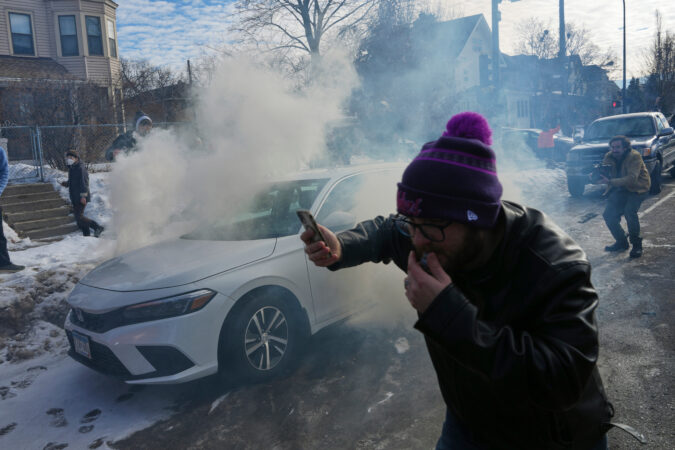
    Since the deployment in the Twin Cities, whistle-burst warnings by grassroots activists are commonly heard when agents flood streets. Witnesses have regularly posted video of federal officers using tear gas to discourage the public from following them.

    Earlier Monday, agents fired tear gas to break up a crowd of people who showed up to see the aftermath of a car crash in Minneapolis, just a few blocks from where Renee Good was fatally shot.

    A crowd emerged to witness a man being questioned by agents who had rear-ended his car. Agents used tear gas to try to discourage the group, then drove off as people screamed, “cowards!”

    “I’m glad they didn’t shoot me or something,” Christian Molina told reporters.

    Standing near his mangled fender, he wondered aloud: “Who’s going to pay for my car?”

    It was another tense scene following the death of Good on Jan. 7. There were dozens of protests or vigils across the U.S. to honor the 37-year-old mother of three and to passionately criticize the Trump administration’s tactics.

    Trump administration officials have repeatedly defended the immigration agent who shot her, saying Good and her vehicle presented a threat. But that explanation has been widely panned by Minnesota Gov. Tim Walz and others based on videos of the confrontation.

    Students walk out of school

    Hundreds of students walked out of Roosevelt High School in Minneapolis, where federal agents had deployed tear gas on students and staff last week. Adults wearing safety vests cleared traffic, and many parents who are Roosevelt alumni showed up in old school wear.

    Marchers held signs that said, “ICE out” and “Welcome to Panem,” a reference to the dystopian society from the Hunger Games book series.

    Meanwhile, in Portland, Ore., federal authorities filed charges against a Venezuelan national who was one of two people shot there by U.S. Border Patrol on Thursday. The U.S. Justice Department said the man used his pickup truck to strike a Border Patrol vehicle and escape the scene with a woman.

    They were shot and eventually arrested. Their wounds were not life-threatening. The FBI said there was no video of the incident, unlike the Good shooting.

  • Why the Federal Reserve has historically been independent of the White House

    Why the Federal Reserve has historically been independent of the White House

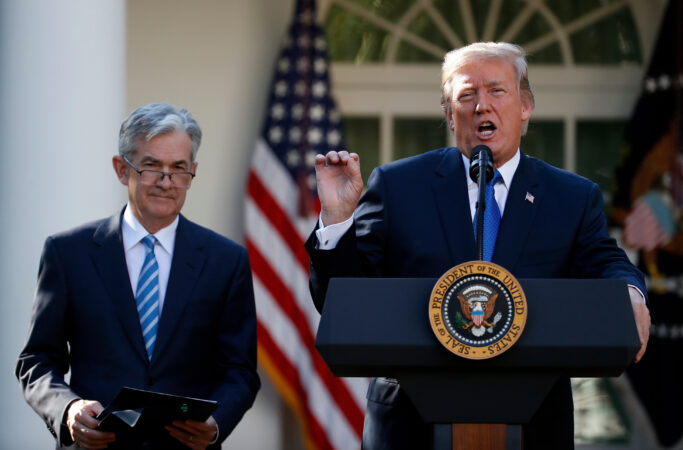
    WASHINGTON — The Justice Department has threatened the Federal Reserve with a criminal indictment over the testimony of Fed Chair Jerome Powell this summer regarding its building renovations, Powell said over the weekend.

    It is a major escalation by the administration after repeated attempts by President Donald Trump to exert greater control over the independent institution.

    Trump has repeatedly attacked Powell for not cutting its short-term interest rate, and even threatened to fire him. Powell’s caution has infuriated Trump, who has demanded the Fed cut borrowing costs to spur the economy and reduce the interest rates the federal government pays on its debt. That anger has not subsided even after the Fed cut interest rates in three of the final four months of 2025.

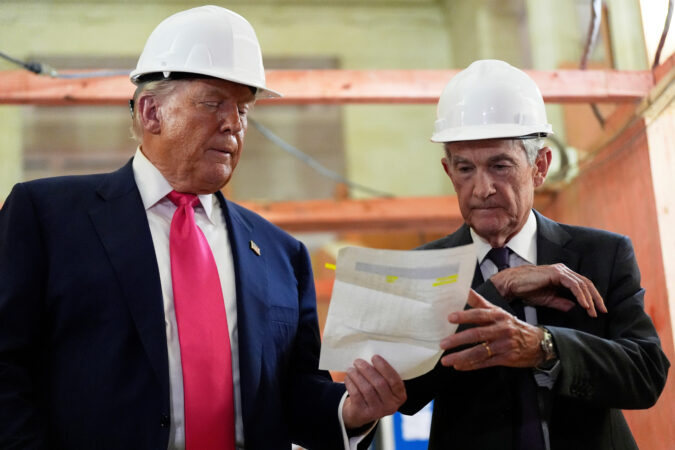
    Trump has also accused Powell of mismanaging the U.S. central bank’s $2.5 billion building renovation project. In a sharp departure from his previous responses to attacks by Trump, Powell described the threat of criminal charges as simple “pretexts” to undermine the Fed’s independence when it comes to setting interest rates.

    Trump is already seeking to fire Federal Reserve Governor Lisa Cook over unproven allegations that she committed mortgage fraud. The allegation was made over the summer by Bill Pulte, a Trump appointee to the Federal Housing Administration.

    Here are some reasons why the independence of the U.S. Federal Reserve is guarded so closely.

    Why the Fed’s independence matters

    The Fed wields extensive power over the U.S. economy. By cutting the short-term interest rate it controls — which it typically does when the economy falters — the Fed can make borrowing cheaper and encourage more spending, accelerating growth and hiring. When it raises the rate — which it does to cool the economy and combat inflation — it can weaken the economy and cause job losses.

    Economists have long preferred independent central banks because they can more easily take unpopular steps to fight inflation, such as raise interest rates, which makes borrowing to buy a home, car, or appliances more expensive.

    The importance of an independent Fed was cemented for most economists after the extended inflation spike of the 1970s and early 1980s. Former Fed Chair Arthur Burns has been widely blamed for allowing the painful inflation of that era to accelerate by succumbing to pressure from President Richard Nixon to keep rates low heading into the 1972 election. Nixon feared higher rates would cost him the election, which he won in a landslide.

    Paul Volcker was eventually appointed chair of the Fed in 1979 by President Jimmy Carter, and he pushed the Fed’s short-term rate to the stunningly high level of nearly 20%. (It is currently 3.6%, the lowest it has been in nearly three years.) The eye-popping rates triggered a sharp recession, pushed unemployment to nearly 11%, and spurred widespread protests.

    Yet Volcker didn’t flinch. By the mid-1980s, inflation had fallen back into the low single digits. Volcker’s willingness to inflict pain on the economy to throttle inflation is seen by most economists as a key example of the value of an independent Fed.

    Investors are watching closely

    An effort to fire Powell would almost certainly cause stock prices to fall and bond yields to spike higher, pushing up interest rates on government debt and raising borrowing costs for mortgages, auto loans, and credit card debt. The interest rate on the 10-year Treasury is a benchmark for mortgage rates.

    All major U.S. markets slid Monday at the opening bell, bond yields edged higher, and the value of the U.S dollar declined.

    Most investors prefer an independent Fed, partly because it typically manages inflation better without being influenced by politics, but also because its decisions are more predictable. Fed officials often publicly discuss how they would alter interest rate policies if economic conditions changed.

    If the Fed was more swayed by politics, it would be harder for financial markets to anticipate — or understand — its decisions.

    While the Fed controls a short-term rate, financial markets determine longer-term borrowing costs for mortgages and other loans. And if investors worry that inflation will stay high, they will demand higher yields on government bonds, pushing up borrowing costs across the economy.

    In Turkey, for example, President Recep Tayyip Erdogan forced the central bank to keep interest rates low in the early 2020s, even as inflation spiked to 85%. In 2023, Erdogan allowed the central bank more independence, which has helped bring down inflation, but short-term interest rates rose to 50% to fight inflation, and remain high.

    Fed’s independence doesn’t mean it’s unaccountable

    Fed chairs like Powell are appointed by the president to serve four-year terms and have to be confirmed by the Senate. The president also appoints the six other members of the Fed’s governing board, who can serve staggered terms of up to 14 years.

    Those appointments can allow a president over time to significantly alter the Fed’s policies. Former President Joe Biden appointed four of the current seven members: Powell, Cook, Philip Jefferson, and Michael Barr. A fifth Biden appointee, Adriana Kugler, stepped down unexpectedly on Aug. 1, about five months before the end of her term. Trump has already nominated his top economist, Stephen Miran, as a potential replacement, though he will require Senate approval. Cook’s term ends in 2038, so forcing her out would allow Trump to appoint a loyalist sooner.

    Trump will be able to replace Powell as Fed chair in May, when Powell’s term expires. Yet 12 members of the Fed’s interest-rate setting committee have a vote on whether to raise or lower interest rates, so even replacing the chair doesn’t guarantee that Fed policy will shift the way Trump wants.

    Congress, meanwhile, can set the Fed’s goals through legislation. In 1977, for example, Congress gave the Fed a “dual mandate” to keep prices stable and seek maximum employment. The Fed defines stable prices as inflation at 2%.

    The 1977 law also requires the Fed chair to testify before the House and Senate twice every year about the economy and interest rate policy.

    Could Trump fire Powell before his term ends?

    The Supreme Court last year suggested in a ruling on other independent agencies that a president can’t fire the chair of the Fed just because he doesn’t like the chair’s policy choices. But he may be able to remove him “for cause,” typically interpreted to mean some kind of wrongdoing or negligence.

    It’s a likely reason the Trump administration has zeroed in on the building renovation, in hopes it could provide a “for cause” pretext. Still, Powell would likely fight any attempt to remove him, and the case could wind up at the Supreme Court.

  • FBI: Suspect in Mississippi synagogue fire targeted house of worship because of its ‘Jewish ties’

    FBI: Suspect in Mississippi synagogue fire targeted house of worship because of its ‘Jewish ties’

    JACKSON, Miss. — A suspect in an arson fire at a historic Mississippi synagogue admitted to targeting the house of worship because of its “Jewish ties” and was turned in to authorities by his father who had observed burn marks on his son’s ankles, hands, and face, the FBI said Monday.

    Stephen Pittman was charged with maliciously damaging or destroying a building by means of fire or an explosive. The suspect confessed to lighting a fire inside the building, which he referred to as “the synagogue of Satan,” according to an FBI affidavit filed in U.S. District Court in Mississippi on Monday.

    There was no attorney listed for Pittman in the court docket Monday.

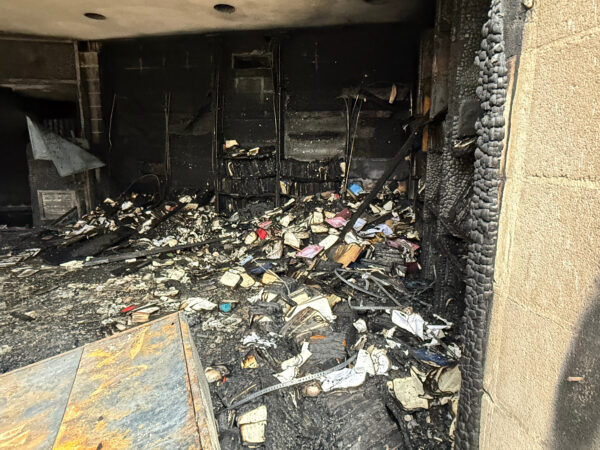
    The fire ripped through the Beth Israel Congregation in Jackson shortly after 3 a.m. on Saturday. No congregants or firefighters were injured. Security camera footage released Monday by the synagogue showed a masked and hooded man using a gas can to pour a liquid on the floor and a couch in the building’s lobby. More than five decades earlier, the synagogue was bombed by the Ku Klux Klan because of its rabbi’s outspoken support for civil rights.

    The weekend fire badly damaged the 165-year-old synagogue’s library and administrative offices. Five Torahs — the sacred scrolls with the text of the first five books of the Hebrew Bible — located inside the sanctuary were being assessed for smoke damage. Two Torahs inside the library, where the most severe damage was done, were destroyed. One Torah that survived the Holocaust was behind glass and was not damaged in the fire, according to the congregation.

    The suspect’s father contacted the FBI and said that his son had confessed to setting the building on fire. Pittman had texted his father a photo of the rear of the synagogue before the fire, with the message, “There’s a furnace in the back.” His father had pleaded with his son to return home, but “Pittman replied back by saying he was due for a homerun and ‘I did my research,’” the affidavit said.

    During an interview with investigators, Pittman said he stopped at a gas station on his way to the synagogue to purchase the gas used in the fire. He also took the license plate off of his vehicle at the gas station. He used an ax to break out a window of the synagogue, poured gas inside and used a torch lighter to start the fire, the FBI affidavit said.

    The FBI later recovered a burned cell phone believed to be Pittman’s and took possession of a hand torch that a congregant had found.

    Yellow police tape on Monday blocked off the entrances to the synagogue building, which was surrounded by broken glass and soot. Bouquets of flowers were laid on the ground at the building’s entrance — including one with a note that said, “I’m so very sorry.”

    The congregation’s president, Zach Shemper, has vowed to rebuild the synagogue and said several churches had offered their spaces for worship during the rebuilding process.

    With just several hundred people in the community, it was never particularly easy being Jewish in Mississippi’s capital city, but members of Beth Israel took a special pride in keeping their traditions alive in the heart of the Deep South.

    With the exception of the cemetery, every aspect of Jewish life in Jackson was under Beth Israel’s roof. The midcentury modern building not only housed the congregation but also the Jewish Federation, a nonprofit provider of social services and philanthropy that is the hub of Jewish institutional life in most U.S. cities. The building also was home to the Institute of Southern Jewish Life, which provides resources to Jewish communities in 13 southern states. A Holocaust memorial was outdoors behind the synagogue building.

    Because Jewish children throughout the South have attended summer camp for decades in Utica, Miss., about 30 miles southwest of Jackson, many retain a fond connection to the state and its Jewish community.

    “Jackson is the capital city, and that synagogue is the capital synagogue in Mississippi,” said Rabbi Gary Zola, a historian of American Jewry who taught at Hebrew Union College in Cincinnati. “I would call it the flagship, though when we talk about places like New York and Los Angeles, it probably seems like Hicksville.”

    Beth Israel as a congregation was founded in 1860 and acquired its first property where it built Mississippi’s first synagogue after the Civil War. In 1967, the synagogue moved to its current location, where it was bombed by local Ku Klux Klan members not long after relocating. Two months after that, the home of the synagogue’s leader, Rabbi Perry Nussbaum, was bombed because of his outspoken opposition to segregation and racism.

    At a time when opposition to racial segregation could be dangerous in the Deep South, many Beth Israel congregants hoped the rabbi would just stay quiet, but Nussbaum was unshakable in believing he was doing the right thing by supporting civil rights, Zola said.

    “He had this strong, strong sense of justice,” Zola said.

  • DOJ investigation of Fed Chair Powell sparks backlash, support for Fed independence

    DOJ investigation of Fed Chair Powell sparks backlash, support for Fed independence

    WASHINGTON — The Trump administration’s criminal investigation of Federal Reserve Chair Jerome Powell appeared on Monday to be emboldening defenders of the U.S. central bank against the efforts of President Donald Trump to control the Fed.

    The backlash reflected the bigger stakes of a contest about the fate of the Fed’s independence, the balance of power within the federal government, and the path of the U.S. economy. Trump has long publicly lashed out against Powell for not slashing the Fed’s benchmark interest rates to his liking, but the prospect of a criminal indictment was a step too far for an institution that has an outsized influence on both inflation and the job market.

    Several Republican senators have condemned the Department of Justice’s subpoenas of the Fed, which Powell revealed Sunday and characterized as “pretexts” to pressure him to sharply cut interest rates as Trump has demanded. Powell also said the Justice Department has threatened criminal indictments over his June testimony to Congress about the cost and design elements of a building renovation.

    Republican Sen. Dave McCormick of Pennsylvania objects to the Justice Department’s investigation of Powell.

    “I think the Federal Reserve renovation may well have wasted taxpayer dollars, but the proper place to fix this is through Congressional oversight,” McCormick said in a statement.

    He said he believes strongly in an independent Fed, and he also agrees with Trump that Powell “has been slow to cut interest rates.”

    But, he said, “I do not think Chairman Powell is guilty of criminal activity.”

    Trump has repeatedly used investigations — which might or might not lead to an actual indictment — to attack his political rivals, including Fed governor Lisa Cook, New York Attorney General Letitia James, and James Comey, the former FBI director.

    White House press secretary Karoline Leavitt told reporters that Trump did not direct his Justice Department to investigate Powell.

    “One thing for sure, the president’s made it quite clear, is Jerome Powell is bad at his job,” Leavitt said. ”As for whether or not Jerome Powell is a criminal, that’s an answer the Department of Justice is going to have to find out.”

    A bipartisan group of former Fed chairs and top economists on Monday compared the Trump administration’s actions to moves made in more impoverished countries. Some analysts said that the financial market’s muted response reflects a widespread belief that Powell could successfully fend off the allegations that his description to lawmakers of the Fed’s $2.5 billion project was criminal.

    “I think this is ham-handed, counterproductive, and going to set back the president’s cause,” said Jason Furman, an economist at Harvard and former top adviser to President Barack Obama. It could also unify the Fed’s interest-rate setting committee in support of Powell, and it means “the next Fed chair will be under more pressure to prove their independence.”

    The subpoenas apply to the price tag of renovating Fed buildings, including its marble-clad headquarters in Washington, D.C. They come at an unusual moment when Trump was teasing the likelihood of announcing his nominee this month to succeed Powell as the Fed chair, after Trump last summer played down the idea that the Fed’s renovation costs were a fireable offense.

    While Powell’s term as chairperson ends in May, he has a separate term as a Fed governor until January 2028. Trump’s moves could make it more likely that Powell will stay on the Fed’s governing board after his term as chairperson ends in May in order to defend the Fed’s independence from politics in making its decisions on interest rates, Furman said.

    While an interest-rate cut was already considered unlikely at the Fed’s next meeting in about two weeks, the news of the Justice Department investigation likely means that the Fed would avoid cuts at the next meeting in order to send the message that it cannot be pressured by politics, economists said.

    Powell quickly found a growing number of defenders among Republicans in the Senate, who will have the choice of whether to confirm Trump’s planned picks for Fed chair.

    Sen. Thom Tillis, a North Carolina Republican and member of the Senate Banking panel, said late Sunday in response to the subpoenas that he would oppose any of the Trump administration’s nominees for the Fed, including to replace Powell.

    “If there were any remaining doubt whether advisers within the Trump Administration are actively pushing to end the independence of the Federal Reserve, there should now be none,” Tillis said.

    Sen. Lisa Murkowski, an Alaska Republican, backed Tillis’ approach Monday.

    “After speaking with Chair Powell this morning, it’s clear the administration’s investigation is nothing more than an attempt at coercion,” Murkowski said. She voted against the White House’s nomination of Stephen Miran to the Fed’s board in September, which was barely approved by a 48-47 vote. Miran continues to be Trump’s chairperson of the White House Council of Economic Advisers, although he is on leave due to his post at the Fed.

    Trump has for the past year sought to pressure Powell into having the Fed slash its benchmark interest rates — a move that reflects a fundamental break over whether inflation still poses any risk to the U.S. economy.

    Powell maintains that inflation is still elevated in the aftermath of Trump’s tariffs and has moved cautiously, whereas Trump claims that inflation is no longer a worry and rates should be dramatically slashed.

    “I have carried out my duties without political fear or favor, focused solely on our mandate of price stability and maximum employment,” Powell said in a Sunday night video disclosing the subpoenas. “Public service sometimes requires standing firm in the face of threats.”

    If Powell stays on the board after his term as chair ends in May, the Trump administration would be deprived of the chance to fill another seat on the board.

    Powell has declined at several news conferences to answer questions about his plans.

    Asked on Monday by reporters if Powell planned to remain a Fed governor, Kevin Hassett, director of the White House National Economic Council and a leading candidate to become Fed chair, said he was unaware of Powell’s plans.

    “I’ve not talked to Jay about that,” Hassett said.

    Powell, jettisoning the cautious approach he has taken since Trump began attacking him last year for not cutting rates sharply enough, said on Sunday the subpoenas were a “pretext” to force the Fed to cut its key short-term interest rate.

    Sen. Kevin Cramer, a Republican from North Dakota and a frequent Powell critic, said Monday that he does not think that the Fed chair is “a criminal” and said he hopes that “this criminal investigation can be put to rest quickly,” according to CNBC.

    The bipartisan group of former Fed chairs and top economists said in their Monday letter that the White House’s legal actions and the possible loss of Fed independence could hurt the broader economy.

    “This is how monetary policy is made in emerging markets with weak institutions, with highly negative consequences for inflation and the functioning of their economies more broadly,” the statement said. “It has no place in the United States whose greatest strength is the rule of law, which is at the foundation of our economic success.”

    The statement was signed by former Fed chairs Ben Bernanke, Janet Yellen, and Alan Greenspan, as well as former Treasury Secretaries Henry Paulson and Robert Rubin.

    Still, Trump’s pressure campaign had been building for some time. The president relentlessly criticized and belittled Powell, attempting to blame him for some of the discontent over the economy that followed the president’s own tariff announcements.

    Trump appeared to preview the shocking news of the subpoenas at a Dec. 29 news conference. The president said his administration would “probably” sue Powell for “gross incompetence” on the cost of renovations, calling it the “highest price of construction per square foot in the history of the world.”

    “He’s just a very incompetent man,” Trump said. “But we’re going to probably bring a lawsuit against him.”

  • Judge orders HHS to restore funding for children’s health programs as lawsuit continues

    Judge orders HHS to restore funding for children’s health programs as lawsuit continues

    NEW YORK — A federal judge has ordered the Trump administration to restore nearly $12 million in funding to the American Academy of Pediatrics, including money for rural healthcare and the early identification of disabilities in young children.

    U.S. District Judge Beryl Howell in Washington, D.C., awarded the preliminary injunction late Sunday, siding with AAP in saying evidence showed the U.S. Department of Health and Human Services likely had a “retaliatory motive” when it terminated grants to the pediatric group in December.

    “This is not a case about whether AAP or HHS is right or even has the better position on vaccinations and gender-affirming care for children, or any other public health policy,” Howell wrote in her decision. “This is a case about whether the federal government has exercised power in a manner designed to chill public health policy debate by retaliating against a leading and generally trusted pediatrician member professional organization focused on improving the health of children.”

    The seven grants terminated in December supported numerous public health programs, including efforts to prevent sudden unexpected infant death, strengthen pediatric care in rural communities, and support teens facing substance use and mental health challenges.

    AAP alleged the cuts were made in retaliation for the group speaking out against the Trump administration’s positions and actions. HHS said in letters to AAP that the grants were cut because they no longer aligned with the department’s priorities. The department has denied AAP’s allegations of retaliation.

    AAP has been vocal about its support for pediatric vaccines and has publicly opposed HHS positions. Health Secretary Robert F. Kennedy Jr. — who helped lead the anti-vaccine movement for years — has made sweeping changes to childhood vaccine recommendations. Last year, the pediatrics group released its own recommendations on COVID-19 vaccines, which substantially diverged from the government’s guidance.

    The group also supports access to gender-affirming care and has publicly criticized HHS positions on the topic, saying it opposes what it calls the government’s infringements on the doctor-patient relationship.

    Explaining her decision, Howell said that AAP had shown it would likely suffer irreparable harm from the cuts. She also said the group had shown the public interest was in its favor in allowing the programs to continue as the lawsuit plays out.

    Skye Perryman, president and CEO of Democracy Forward, which is representing AAP in the lawsuit, said the ruling shows that “no administration gets to silence doctors, undermine public health, or put kids at risk, and we will not stop fighting until this unlawful retaliation is fully ended.”

    A spokesperson for HHS and attorneys representing the department declined to comment.

  • Man accused of driving into Iran protest rally in Los Angeles is under arrest

    Man accused of driving into Iran protest rally in Los Angeles is under arrest

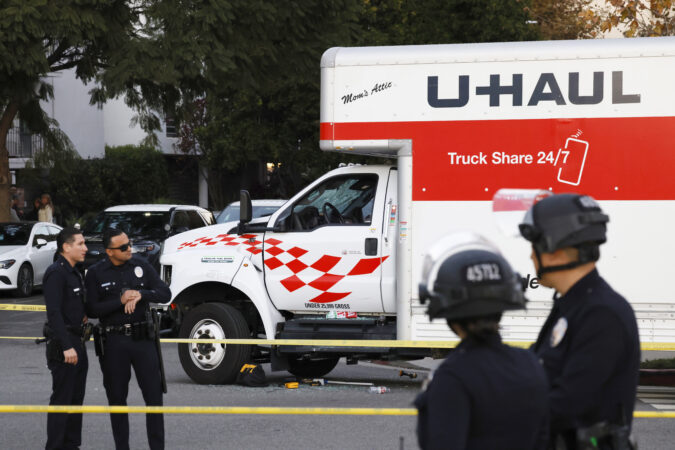
    LOS ANGELES — A man accused of driving a U-Haul truck into a crowd in Los Angeles over the weekend as they demonstrated in support of the protests sweeping Iran was in police custody Monday and authorities said they are considering an assault charge.

    One man was hit by the truck but was not seriously injured, according to police. Two people declined treatment after being evaluated by paramedics, the fire department said.

    The driver has not been identified and was in the process of being booked early Monday, said Officer Charles Miller, a spokesperson for the Los Angeles Police Department. It was unclear if the person has been charged yet but officials said Sunday they were considering an assault charge.

    “Right now it’s an open traffic investigation,” LAPD Capt. Richard Gabaldon said Sunday after the episode. “We’re looking at possible assault with a deadly weapon, the deadly weapon being the vehicle being used.”

    A huge crowd of demonstrators, some waving the flag of Iran from before the Islamic Revolution, had gathered Sunday afternoon along Veteran Avenue in Westwood, a neighborhood that’s home to the largest Iranian community outside of the country. The U-Haul truck forced demonstrators to scramble out of the way.

    The truck was stopped several blocks away, its windshield, a window, and side mirrors shattered. ABC7 news helicopter footage showed police officers keeping the crowd at bay as demonstrators swarmed the truck, throwing punches at the driver and thrusting flagpoles through the driver’s side window.

    Police and Mayor Karen Bass have declined to address other questions, including whether the driver was injured in the confrontation and why the driver went through the crowd.

    A banner attached to the truck said “No Shah. No Regime. USA: Don’t Repeat 1953. No Mullah,” an apparent reference to a U.S.-backed coup in that year which toppled then-Prime Minister Mohammad Mossadegh, who had nationalized the country’s oil industry. The coup cemented the power of Shah Mohammad Reza Pahlavi and lit the fuse for the 1979 Islamic Revolution, which saw Ayatollah Ruhollah Khomeini usher in the theocracy that still governs the country.

    From exile in the United States, Crown Prince Reza Pahlavi, whose father fled Iran just before the Islamic Revolution, has called on Iranians to join the demonstrations. Some Iranians have chanted pro-shah slogans, which were once punishable by death, highlighting the anger fueling demonstrations that began over Iran’s sanctions-crippled economy.

    Activists say the Iranian government’s crackdown on protests has killed at least 599 people. Pro-government demonstrators flooded the streets on Monday in a show of force after days of protests directly challenging the country’s theocracy.

  • U.S. lawmakers to visit Denmark as Trump continues to threaten Greenland

    U.S. lawmakers to visit Denmark as Trump continues to threaten Greenland

    WASHINGTON — A bipartisan U.S. congressional delegation is headed to Copenhagen later this week in an attempt to show unity between the United States and Denmark as President Donald Trump continues to threaten to seize Greenland, a semiautonomous territory of the NATO ally.

    Sen. Chris Coons (D., Del.) is leading the trip of at least nine members of Congress, including Republican Sen. Thom Tillis of North Carolina. The group will be in Copenhagen on Friday and Saturday, according to a congressional aide familiar with the trip’s planning. The lawmakers will meet with high-level Danish and Greenlandic government officials and business leaders, according to the aide, granted anonymity ahead of a formal announcement.

    In an interview with the Associated Press on Monday, Coons said the delegation wants to send a message that “we understand the value of the partnership we have long had with them, and in no way seek to interfere in their internal discussions about the status of Greenland.”

    Coons stressed that the United States and Denmark have long been allies, noting that the northern European nation came to the U.S.’ defense in the immediate aftermath of the Sept. 11, 2001, attacks and the two nations have for years worked in tandem on other priorities.

    “As long as we have been constructive and respectful allies, the Danes have been open arms with us on security and investment and the region,” Coons said, adding: “I think the only thing that has changed is the recent statements by the president and the extent to which it seems to have gone from casual to serious, and I just think it’s important for us to be heard as strongly supporting NATO and our alliance.”

    The trip comes as China said Monday that the United States shouldn’t use other countries as a “pretext” to pursue its interests in Greenland and said that its activities in the Arctic comply with international law.

    The comment by a Chinese Foreign Ministry spokesperson came in response to a question at a regular daily briefing. Trump has said that he would like to make a deal to acquire Greenland, a semiautonomous region of NATO ally Denmark, to prevent Russia or China from taking it over.

    Tensions have grown between Washington, Denmark, and Greenland this month as Trump and his administration push the issue and the White House considers a range of options, including military force, to acquire the vast Arctic island.

    Danish Prime Minister Mette Frederiksen has warned that an American takeover of Greenland would mark the end of NATO. On Friday, Greenland Prime Minister Jens-Frederik Nielsen and the leaders of the four other parties in the territory’s parliament issued a joint statement reiterating that Greenland’s future must be decided by its people and emphasizing their “wish that the United States’ contempt for our country ends.”

    Trump reiterated his argument that the U.S. needs to “take Greenland,” otherwise Russia or China would, in comments aboard Air Force One on Sunday. He said he’d rather “make a deal” for the territory, “but one way or the other, we’re going to have Greenland.”

    China in 2018 declared itself a “near-Arctic state” in an effort to gain more influence in the region. Beijing has also announced plans to build a “Polar Silk Road” as part of its global Belt and Road Initiative, which has created economic links with countries around the world.

    Asked in Beijing Monday about U.S. statements that it is necessary for Washington to take over Greenland to prevent China and Russia from taking control, Chinese Foreign Ministry spokesperson Mao Ning replied, “China’s activities in the Arctic are aimed at promoting peace, stability, and sustainable development in the region and are in accordance with international law.” She didn’t elaborate on those activities.

    “The rights and freedoms of all countries to conduct activities in the Arctic in accordance with the law should be fully respected,” Mao said, without mentioning Greenland directly. “The U.S. should not pursue its own interests by using other countries as a pretext.”

    She said that “the Arctic concerns the overall interests of the international community.”

    Danish and Greenlandic envoys are expected in Washington this week for talks.

  • Machado seeks Pope Leo’s support for Venezuela’s transition during Vatican meeting

    Machado seeks Pope Leo’s support for Venezuela’s transition during Vatican meeting

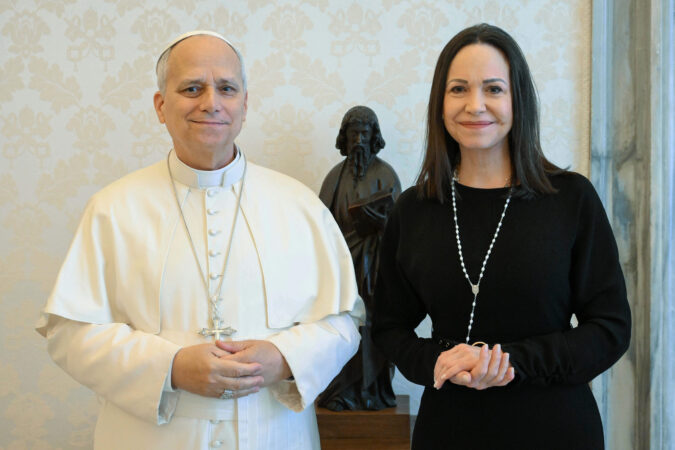
    ROME — Pope Leo XIV met with Venezuelan opposition leader and Nobel Peace Prize winner María Corina Machado in a private audience at the Vatican on Monday, during which the Venezuelan leader asked him to intercede for the release of hundreds of political prisoners held in the Latin American country.

    The meeting, which hadn’t been previously included in the list of Leo’s planned appointments, was later listed by the Vatican in its daily bulletin, without adding details.

    Machado is touring Europe and the United States after she reemerged in December after 11 months in hiding to accept her Nobel Peace Prize in Norway.

    “Today I had the blessing and honor of being able to share with His Holiness and express our gratitude for his continued support of what is happening in our country,” Machado said in a statement following the meeting.

    “I also conveyed to him the strength of the Venezuelan people who remain steadfast and in prayer for the freedom of Venezuela, and I asked him to intercede for all Venezuelans who remain kidnapped and disappeared,” she added.

    Machado also held talks with Vatican Secretary of State Pietro Parolin, who was Nuncio in Venezuela from 2009 to 2013.

    Pope Leo has called for Venezuela to remain an independent country after U.S. forces captured former President Nicolás Maduro in his compound in Caracas and took him to New York to face federal charges of drug-trafficking.

    Leo had said he was following the developments in Venezuela with “deep concern,” and urged the protection of human and civil rights in the Latin American country.

    Venezuela’s opposition, backed by consecutive Republican and Democratic administrations in the U.S., had vowed for years to immediately replace Maduro with one of their own and restore democracy to the oil-rich country. But U.S. President Donald Trump delivered them a heavy blow by allowing Maduro’s vice president, Delcy Rodríguez, to assume control.

    Meanwhile, most opposition leaders, including Machado, are in exile or prison.

    After winning the 2025 Nobel Prize for Peace, Machado said she’d like to give it to or share with Trump.

    Machado dedicated the prize to Trump, along with the people of Venezuela, shortly after it was announced. Trump has coveted and openly campaigned for winning the Nobel Prize himself since his return to office in January 2025.

    The organization that oversees the Nobel Peace Prize — the Norwegian Nobel Institute — said, however, that once it’s announced, the prize can’t be revoked, transferred, or shared with others.

    “The decision is final and stands for all time,” it said in a short statement last week.