Category: Wires

  • Sen. Kelly sues Pentagon over attempts to punish him for his warnings about illegal orders

    Sen. Kelly sues Pentagon over attempts to punish him for his warnings about illegal orders

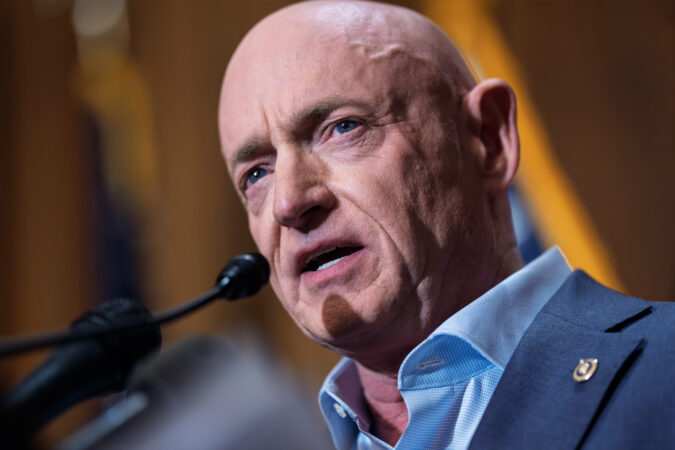
    WASHINGTON — Sen. Mark Kelly filed a lawsuit Monday seeking to reverse Defense Secretary Pete Hegseth’s letter of censure and effort to potentially demote the retired Navy officer — sharply escalating a confrontation between the Arizona Democrat and President Donald Trump’s Pentagon chief over a controversial video reminding U.S. service members they can refuse illegal orders.

    In the lawsuit filed in federal court in D.C., Kelly’s lawyers argued that the Pentagon’s inquiry, and formal reprimand, unlawfully punished the senator for his speech and violated his due process.

    “It appears that never in our nation’s history has the Executive Branch imposed military sanctions on a Member of Congress for engaging in disfavored political speech,” the lawsuit states.

    The Pentagon did not immediately respond to a request for comment.

    Last week, Hegseth sent a letter of censure to Kelly, criticizing what he called the senator’s “reckless misconduct” for joining five other Democratic lawmakers who had served in the U.S. military or intelligence community in filming a video that reminded service members of their duty to disobey illegal orders.

    The lawmakers have said they filmed the video in response to some of the Trump administration’s legally controversial uses of the military, such as attacking alleged drug trafficking boats in Latin America and deploying troops to major American cities.

    Hegseth also said the Pentagon was opening a proceeding into whether Kelly’s last military rank and his pension should be reduced.

    The administrative punishment fell short of the Pentagon’s most aggressive option: recalling Kelly to active duty and charging him under the Uniform Code of Military Justice. But Hegseth’s letter warned that criminal charges were possible if Kelly continued to “engage in conduct prejudicial to good order and discipline.”

    The FBI also is involved in the matter.

    Democrats, some Republicans, and many legal experts have criticized the inquiry as a specious attack on an outspoken critic of the Trump administration, who also oversees the Pentagon as a member of the Senate Armed Services Committee.

    In a statement Monday, Kelly said Hegseth’s actions would saddle other veterans with the “constant threat that they could be deprived of their rank and pay years or even decades after they leave the military just because he or another Secretary of Defense doesn’t like what they’ve said.”

    Kelly retired from the military in 2011 after serving 24 years on active duty. His career included flying fighter jets over Iraq during the Persian Gulf War and becoming an astronaut. He left the Navy several months after his wife, then-Rep. Gabrielle Giffords (D., Ariz.), was shot in the head during a constituent event and survived.

    The lawsuit filed Monday notes that Trump — and later Hegseth — publicly labeled Kelly’s remarks “seditious” even as the defense secretary directed a board of military officers to independently determine whether Kelly should face a reduction in rank. The public comments essentially denied Kelly any chance for fair treatment and due process, the lawyers argued.

    More importantly, they said in the filing, the Pentagon’s unprecedented disciplinary action would undermine an equal branch of government — where criticism from the political party out of power is essential to how American democracy functions.

    Kelly, as a retired service member drawing a military pension, has been Hegseth’s top target in response to the video, organized by Sen. Elissa Slotkin (Mich.), a former CIA analyst and political appointee in the Obama administration.

    The video also featured Reps. Jason Crow (Colo.), a former Army Ranger; Chrissy Houlahan (Pa.), a former Air Force officer; Chris Deluzio (Pa.), a former Navy officer; and Maggie Goodlander (N.H.), a Navy veteran. Goodlander is married to Jake Sullivan, the White House national security adviser under President Joe Biden.

    Eugene Fidell, a senior research scholar and military law expert at Yale Law School, said that Trump’s and Hegseth’s statements made it almost impossible for Kelly to get a fair review by other military officers, and he expected Kelly would prevail in the case.

    “The president is already on record calling Sen. Kelly a traitor; Secretary Hegseth has already shown he has prejudged this matter,” Fidell said. “I expect this will move quickly.”

  • Malaysia and Indonesia become the first countries to block Musk’s Grok over sexualized AI images

    Malaysia and Indonesia become the first countries to block Musk’s Grok over sexualized AI images

    KUALA LUMPUR, Malaysia — Malaysia and Indonesia have become the first countries to block Grok, the artificial intelligence chatbot developed by Elon Musk’s company xAI, as concerns grow among global authorities that it is being misused to generate sexually explicit and nonconsensual images.

    There is growing scrutiny of generative AI tools that can produce realistic images, sound, and text, and concern that existing safeguards are failing to prevent their abuse. The Grok chatbot, accessed through Musk’s social media platform X, has been criticized for generating manipulated images, including depictions of women in bikinis or sexually explicit poses, as well as images involving children.

    “The government sees nonconsensual sexual deepfakes as a serious violation of human rights, dignity and the safety of citizens in the digital space,” Indonesian Communication and Digital Affairs Minister Meutya Hafid said in a statement.

    Scrutiny of Grok is growing, including in the European Union, India, France, and the United Kingdom, which said Monday it was moving to criminalize “nudification apps.” Britain’s media regulator also launched an investigation into whether Grok broke the law by allowing users to share sexualized images of children.

    Last week, Grok limited image generation and editing to paying users following a global backlash over sexualized deepfakes of people, but critics say it didn’t fully address the problem.

    An emailed request for comment by the Associated Press to xAI resulted in an automated reply from the media support address which stated, “Legacy Media Lies.” This was the same message received from a different address when asked for comment regarding the global backlash.

    Asian action aimed at Grok

    Regulators in the two Southeast Asian nations said existing controls weren’t preventing the creation and spread of fake pornographic content, particularly involving women and minors. Indonesia’s government temporarily blocked access to Grok on Saturday, followed by Malaysia on Sunday.

    Initial findings showed Grok lacks effective safeguards to stop users from creating and distributing pornographic content based on real photos of Indonesian residents, Alexander Sabar, director-general of digital space supervision, said in a statement. He said such practices risk violating privacy and image rights when photos are manipulated or shared without consent.

    The Malaysian Communications and Multimedia Commission noted “repeated misuse” of the tool to generate obscene, sexually explicit, and nonconsensual manipulated images, including content involving women and minors.

    The regulator said notices were issued this month to X Corp. and xAI demanding stronger safeguards.

    “The restriction is imposed as a preventive and proportionate measure while legal and regulatory processes are ongoing,” it said, adding that access will remain blocked until effective safeguards are put in place.

    Investigation launched in U.K.

    Launched in 2023, Grok is free to use on X. An image generator feature, Grok Imagine, was added last year and included a so-called spicy mode that can generate adult content.

    The U.K.’s media regulator said it launched an investigation into whether Grok violated its duty to protect people from illegal content. The regulator, Ofcom, said Grok-generated images of children being sexualized or people being undressed may amount to pornography or child sexual abuse material.

    Technology Secretary Liz Kendall called the AI-generated images “weapons of abuse” and said the center-left Labour government would target the source of the problem by making it a crime for companies to supply tools to create nude images without consent.

    Kendall said X could face a possible Ofcom fine of up to 10% of its qualifying global revenue depending on the investigation’s outcome and a possible court order blocking access to the site.

    “They can choose to act sooner to ensure this abhorrent and illegal material cannot be shared on their platform,” Kendall said in Parliament.

    Musk over the weekend called the British government “fascist” and said it is trying stifle free speech.

  • Young Americans are increasingly rejecting Democratic and Republican parties, a new poll shows

    Young Americans are increasingly rejecting Democratic and Republican parties, a new poll shows

    WASHINGTON — Americans are increasingly rejecting the two major political parties, according to new polling.

    Just under half, 45%, of U.S. adults now identify as independents, a new Gallup survey found. That’s a substantial shift from 20 years ago, when closer to one-third of Americans said they didn’t identify with the Democrats or Republicans.

    This group appears, increasingly, to be driven by their unhappiness with the party in power, according to Gallup’s analysis. That’s a dynamic that could be good for Democrats in this year’s midterm elections, but doesn’t promise lasting loyalty. Independents have gravitated toward the Democrats over the past year when asked which party they lean toward, Gallup found, but attitudes toward the party haven’t gotten warmer. That suggests that the Democrats’ gains are probably more related to independents’ increasingly sour views of President Donald Trump.

    Younger people, in particular, are rejecting the parties at much higher rates than older generations. More than half of Generation Z and Millennials identify as political independents, while a majority of older generations side with a party. That’s different from the past, when more young adults identified with the Democrats or the Republicans. And it’s part of the reason why frequent, dramatic swings in political power may become increasingly normal.

    Democrats regain the edge with independents

    Independents have long been the largest political group in the U.S., and their numbers have increased over the last 15 years. But often, they’re more inclined to side with one of the parties over the other.

    This year, the Democratic Party gained the partisanship edge when independents were asked whether they lean more toward the Democratic or Republican Party. Nearly half, 47%, of U.S. adults now identify as Democrats or lean toward the Democratic Party, while 42% are Republicans or lean Republican. This is an indication of how Americans are feeling about their political affiliations, and it may not be reflected in voters’ actual registration.

    This shifted the 3-year party affiliation advantage that the Republican Party held while President Joe Biden was in office, reverting to where the Democrats stood during Trump’s first term.

    While that’s certainly not bad news for Democrats as they look to regain one or both houses of Congress in November, it’s likelier that they’re benefiting from independents’ unhappiness with Trump, rather than building lasting goodwill for themselves. Trump’s approval among independents has fallen steadily over the year, while Democrats’ favorability remains historically low.

    Young people drive independents’ strength

    Younger Americans are driving the recent rise in U.S. adults identifying as independents.

    The Gallup polling found majorities of Gen Z and Millennial adults — who were born between 1981 and 2007 — now identify as independents. Independent identity is softer in older generations, where only about 4 in 10 in Gen X currently call themselves independents and roughly 3 in 10 older adults do.

    Young adults today are more likely than previous generations to identify outside of the Democratic and Republican Party. While 56% of Gen Z adults call themselves independents, that’s higher than in 2012, when 47% of Millennials said they were independents, and 1992, when 40% of Gen X adults identified that way, according to the Gallup analysis.

    That means that this trend isn’t likely to shift, unless the parties are able to change the way younger people see them.

    Independent Americans are increasingly the moderates

    Americans who identify as moderates increasingly don’t see themselves in either party, Gallup’s polling shows.

    More independents have described their political views as “moderate” over the last decade, while Democrats and Republicans have grown less likely to identity as moderates.

    About half of independents, 47%, called themselves moderates in 2025, compared to about 3 in 10 Democrats and about 2 in 10 Republicans.

    At the same time, Democrats and Republicans have become increasingly polarized in their ideology. About 6 in 10 Democrats now call themselves liberal, while the share that consider themselves moderate is among the lowest it’s ever been. Among Republicans, 77% consider themselves conservative, and moderate identity is also at a low point.

    That creates another challenge for the parties to contend with, since appeals to the center to win the growing pool of independents could risk alienating the most committed people in their base.

  • Cuba’s president says no current talks with U.S. following Trump’s threats

    Cuba’s president says no current talks with U.S. following Trump’s threats

    HAVANA — Cuban President Miguel Díaz-Canel said Monday that his administration is not in talks with the U.S. government, a day after President Donald Trump threatened the Caribbean island in the wake of the U.S. attack on Venezuela.

    Díaz-Canel posted a flurry of brief statements on X after Trump suggested that Cuba “make a deal, BEFORE IT IS TOO LATE.” He did not say what kind of deal.

    Díaz-Canel wrote that for “relations between the U.S. and Cuba to progress, they must be based on international law rather than hostility, threats, and economic coercion.”

    He added: “We have always been willing to hold a serious and responsible dialogue with the various US governments, including the current one, on the basis of sovereign equality, mutual respect, principles of International Law, and mutual benefit without interference in internal affairs and with full respect for our independence.”

    His statements were reposted by Cuban Foreign Minister Bruno Rodríguez on X.

    A key lifeline severed

    On Sunday, Trump wrote that Cuba would no longer live off oil and money from Venezuela, which the U.S. attacked on Jan. 3 in a stunning operation that killed 32 Cuban officers and led to the arrest of President Nicolás Maduro.

    Cuba was receiving an estimated 35,000 barrels a day from Venezuela before the U.S. attacked, along with some 5,500 barrels daily from Mexico and roughly 7,500 from Russia, according to Jorge Piñón of the Energy Institute at the University of Texas at Austin, who tracks the shipments.

    On Monday, Mexican President Claudia Sheinbaum once again declined to provide data on current oil shipments or say whether such shipments would increase when Venezuelan supplies end. She insisted that the aid “has been ongoing for a long time; it’s not new.”

    Sheinbaum said Mexico’s fuel supply to Cuba is not a concern for her country because “there is enough oil” — even though production of state-owned oil company Petróleos Mexicanos is steadily declining. She reiterated that her government is willing to facilitate dialogue between the U.S. and Cuba if both agree.

    Even with oil shipments from Venezuela, widespread blackouts have persisted across Cuba given fuel shortages and a crumbling electric grid. Experts worry a lack of petroleum would only deepen the island’s multiple crises that stem from an economic paralysis during the COVID-19 pandemic and a radical increase in U.S. sanctions following the first Trump administration, which aim to force a change in Cuba’s political model.

    The communist government has said U.S. sanctions cost the country more than $7.5 billion between March 2024 and February 2025, a staggering sum for an island whose tourism revenue reached some $3 billion annually at its peak in the previous decade.

    The crisis also has triggered a large wave of migration primarily to the United States, where Cubans enjoyed immigration privileges as exiles. Those privileges were curtailed before Trump closed U.S. borders.

    ‘They didn’t even bring Cuban coffee’

    The situation between the U.S. and Cuba is “very sad and concerning,” said Andy S. Gómez, retired dean of the School of International Studies and senior fellow in Cuban Studies at the University of Miami.

    He said he sees Díaz-Canel’s latest comments “as a way to try and buy a little bit of time for the inner circle to decide what steps it’s going to take.”

    Gómez said he doesn’t visualize Cuba reaching out to U.S. officials right now.

    “They had every opportunity when President (Barack) Obama opened up U.S. diplomatic relations, and yet they didn’t even bring Cuban coffee to the table,” Gómez said. “Of course, these are desperate times for Cuba.”

    Michael Galant, senior research and outreach associate at the Center for Economic and Policy Research in Washington, D.C., said he believes Cuba might be willing to negotiate.

    “Cuba has been interested in finding ways to ease sanctions,” he said. “It’s not that Cuba is uncooperative.”

    Galant said topics for discussion could include migration and security, adding that he believes Trump is not in a hurry.

    “Trump is hoping to deepen the economic crisis on the island, and there are few costs to Trump to try and wait that out,” he said. “I don’t think it’s likely that there will be any dramatic action in the coming days because there is no rush to come to the table.”

    Cuba’s president stressed on X that “there are no talks with the U.S. government, except for technical contacts in the area of ​​migration.”

    As tensions remained heightened, life went on as usual for many Cubans, although some were more concerned than others.

    Oreidy Guzmán, a 32- year-old food delivery person, said he doesn’t want anything bad to happen to Cubans, “but if something has to happen, the people deserve change.”

    Meanwhile, 37-year-old homemaker Meilyn Gómez said that while she doesn’t believe the U.S. would invade Cuba, she was preparing for any possible outcome under Trump: “He’ll find entertainment anywhere.”

    The current situation is dominating chatter among Cubans on the island and beyond.

    “Cuban people talk and talk,” said 57-year-old bartender Rubén Benítez, “but to be honest, eleven, eight or nine million will take to the streets to defend what little we have left.”

  • Judge is asked for emergency hearing after Congress members blocked from ICE facility in Minneapolis

    Judge is asked for emergency hearing after Congress members blocked from ICE facility in Minneapolis

    WASHINGTON — The Trump administration secretly reimposed a policy limiting Congress members’ access to immigration detention facilities a day after a federal immigration officer fatally shot a woman in Minneapolis, attorneys for several congressional Democrats said Monday in asking a federal judge to intervene.

    Three Democratic members of Congress from Minnesota were blocked from visiting an Immigration and Customs Enforcement facility near Minneapolis on Saturday, three days after an ICE officer shot and killed U.S. citizen Renee Good in the city.

    Last month, U.S. District Judge Jia Cobb in Washington, D.C., temporarily blocked ICE from enforcing policies limiting Congress members’ access to immigration detention facilities. In a court filing on Monday, plaintiffs’ lawyers asked Cobb to hold an emergency hearing and decide if the duplicate notice policy violates her order.

    Cobb ruled on Dec. 17 that it is likely illegal for ICE to demand a week’s notice from members of Congress seeking to visit and observe conditions in ICE facilities. The judge said the seven-day notice requirement likely exceeds the Department of Homeland Security’s statutory authority.

    The attorneys asking Cobb for an emergency hearing say the matter is urgent because members of Congress are negotiating funding for DHS and ICE for the next fiscal year with DHS’ annual appropriations due to expire on Jan. 30.

    “This is a critical moment for oversight, and members of Congress must be able to conduct oversight at ICE detention facilities, without notice, to obtain urgent and essential information for ongoing funding negotiations,” the lawyers wrote.

    Cobb didn’t immediately rule on the plaintiffs’ hearing request. Government attorneys also didn’t immediately respond in writing to it.

    On Saturday, U.S. Reps. Ilhan Omar, Kelly Morrison, and Angie Craig attempted to tour the ICE facility in the Minneapolis federal building. They initially were allowed to enter but then told they had to leave about 10 minutes later.

    Officials who turned them away cited a newly imposed seven-day-notice policy for congressional oversight visits. Last Thursday, a day after Good’s death, U.S. Department of Homeland Security Secretary Kristi Noem secretly signed a new memorandum reinstating the same seven-day notice requirement, according to the plaintiffs’ lawyers.

    Cobb, who was nominated to the bench by Democratic President Joe Biden, ruled last month in favor of 12 other members of Congress who sued to challenge ICE’s amended visitor policies after they were denied entry to detention facilities. Their lawsuit accused Republican President Donald Trump’s administration of obstructing congressional oversight of the centers during its nationwide surge in immigration enforcement operations.

    Government attorneys had argued that the plaintiffs didn’t have legal standing to bring their claims. They also said it’s merely speculative for the legislators to be concerned that conditions in ICE facilities change over the course of a week. But the judge rejected those arguments.

    “The changing conditions within ICE facilities means that it is likely impossible for a Member of Congress to reconstruct the conditions at a facility on the day that they initially sought to enter,” Cobb wrote.

    A law bars DHS from using appropriated general funds to prevent members of Congress from entering DHS facilities for oversight purposes. Plaintiffs’ attorneys from the Democracy Forward Foundation said the administration hasn’t shown that none of those funds are being used to implement the latest notice policy.

  • Thousands of nurses go on strike at several major New York City hospitals

    Thousands of nurses go on strike at several major New York City hospitals

    NEW YORK — Thousands of nurses in three hospital systems in New York City went on strike Monday after negotiations through the weekend failed to yield breakthroughs in their contract disputes.

    “Nurses on strike! … Fair contract now!” they shouted on a picket line outside NewYork-Presbyterian Hospital’s campus in Upper Manhattan. Others picketed at hospitals in the Mount Sinai and Montefiore systems, where a 2023 nursing strike fed off pandemic-era frustrations and led to a deal to boost staffing and pay.

    “And now, it’s how they’re treating us: They don’t want to give us a fair contract, and they don’t want to give us safe staffing, and now they’re trying to roll back on our benefits,” emergency department nurse Tristan Castillo said as she picketed Monday outside Mount Sinai West.

    About 15,000 nurses are involved in the strike, according to their union, the New York State Nurses Association. The hospitals remained open, hiring droves of temporary nurses to try to fill the labor gap.

    The strike involves private, nonprofit hospitals, not city-run ones. But the strike, which the union casts as lifesaving essential workers fighting hospital executives who make millions of dollars a year, could be a significant early test of Mayor Zohran Mamdani’s new administration.

    The democratic socialist campaigned on a pro-worker platform and struck a similar note while visiting nurses on the NewYork-Presbyterian picket line Monday.

    “These executives are not having difficulty making ends meet,” said Mamdani, who extolled nurses’ work and said they were seeking “dignity, respect, and the fair pay and treatment that they deserve. They should settle for nothing less.”

    Some other Democratic city and state politicians also visited striking nurses, while Gov. Kathy Hochul sent state health officials to the hospitals to keep watch over patient care. She called in a statement for the sides to negotiate a deal that “recognizes the essential work nurses do.”

    The strike, which comes during a severe flu season, could potentially force the hospitals to transfer patients, cancel procedures, or divert ambulances. It could also put a strain on city hospitals not involved in the contract dispute, as patients avoid the medical centers hit by the strike.

    The nurses’ demands vary by hospital, but the major issues include staffing levels and workplace safety. The union says hospitals have given nurses unmanageable workloads.

    Nurses also want better security measures in the workplace, citing incidents such as an episode last week when a man with a sharp object barricaded himself in a Brooklyn hospital room and was then killed by police.

    The union also wants limitations on hospitals’ use of artificial intelligence.

    The hospitals say that they’ve been working to improve staffing levels but say that the union’s demands overall are too costly.

    After the nurses gave notice Jan. 2 of the looming strike, the hospitals hired temporary nurses, vowed to “do whatever is necessary to minimize disruptions,” and said they were prepared to deliver care no matter how long the strike lasts. Mount Sinai said in a statement Monday it had lined up 1,400 temporary nurses.

    Mount Sinai said the union was making “extreme economic demands.” Montefiore spokesperson Joe Solmonese said the union was pressing “$3.6 billion in reckless demands,” including exorbitant raises. The union hasn’t publicly disclosed its salary proposal.

    NewYork-Presbyterian accused the union of staging a strike to “create disruption.”

    “We’re ready to keep negotiating a fair and reasonable contract that reflects our respect for our nurses and the critical role they play, and also recognizes the challenging realities of today’s healthcare environment,” the hospital said.

    Each medical center is negotiating with the union independently. Several other private hospitals in and near New York City reached deals in recent days to avert a possible strike.

    The three-day strike in 2023 resulted in a deal raising pay 19% over three years at Mount Sinai and Montefiore. The pact also included staffing improvements, though the union and hospitals now disagree about how much progress has been made, or whether the hospitals are retreating from staffing guarantees.

    The sides also dispute whether the hospitals are trying to reduce health benefits. Mount Sinai, for instance, says its proposals would cut costs without changing coverage.

  • The Trevor Project receives $45M from MacKenzie Scott after difficult years and federal funding cuts

    The Trevor Project receives $45M from MacKenzie Scott after difficult years and federal funding cuts

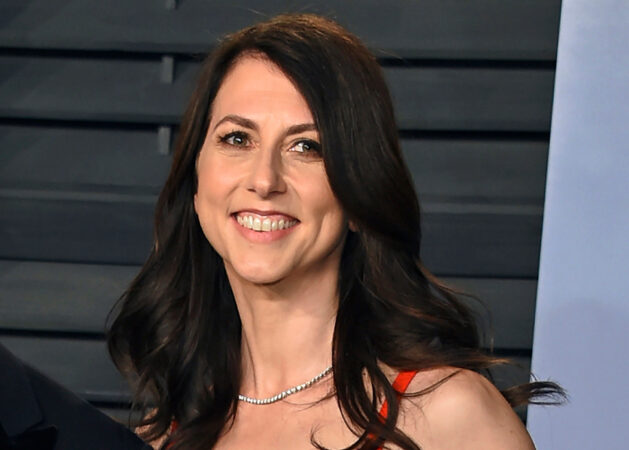
    The Trevor Project, known for its hotline for LGBTQ+ youth, received $45 million from billionaire and author MacKenzie Scott at the end of 2025, the organization said Monday.

    The gift is the largest in the organization’s history but also a major boon following years of management turmoil, layoffs, and the loss of significant federal funding over the summer.

    “I literally could not believe it and it took some time. I actually gasped,” said Jaymes Black, CEO of the Trevor Project, when they were notified of Scott’s gift.

    Scott, whose fortune largely comes from her ex-husband, Amazon founder Jeff Bezos, gave more than $7 billion to nonprofits in 2025, but this gift to the Trevor Project was not included among the donations she disclosed on her website in December. Scott previously gave the Trevor Project $6 million in 2020.

    In July, the Trump administration stopped providing specific support for gay, trans, and gender nonconforming young people who called the 988 National Suicide & Crisis Lifeline. The Trevor Project was one of the organizations staffing that option and lost $25 million in funding, the nonprofit said.

    The Trevor Project continues to run an independent hotline for LGBTQ+ young people that Black said reaches about 250,000 young people annually, but they served another 250,000 callers through the 988 Press 3 option, which was tailored for LGBTQ+ young people.

    The U.S. Department of Health and Human Services’ Substance Abuse and Mental Health Services Administration (SAMHSA) reported more than 1.5 million contacts were routed through the service between September 2022 and July 2025.

    The Trevor Project has gone through years of internal turmoil after exploding in size from an organization with an annual budget around $4 million in 2016 to over $83 million in 2023, according to its public tax returns. The nonprofit’s board removed its CEO in 2022 and has gone through a series of layoffs, including one in July. Black said the project’s 2026 budget was $47 million.

    “We are a smaller organization than we were before,” Black said. “And we will continue to be really intentional and really mindful around growth and what growth really means for the organization.”

    After it lost the 988 funding, the Trevor Project launched an emergency fundraiser that brought in $20 million to date, Black said, which they also hope Scott saw as proof that the organization was determined to stick around and make it through this period.

    “MacKenzie Scott’s folks were clear, like this gift was made for long-term impact,” Black said, adding that they would take their time deciding how to use the funds.

    Thad Calabrese, a professor at New York University who researches nonprofit financial management, said it’s not at all uncommon for nonprofits that grow very quickly to run into financial problems. But he also said the cuts and general instability in especially federal funding for nonprofits has upended many organizations’ business models.

    “Academic research has often viewed public funding as very stable, as a signal to donors that you’ve arrived as an organization, but the reality is you are now also open to changing political fortunes,” he said.

    He said research is also unclear about whether diversifying an organization’s revenue streams is always a better financial strategy.

    “You’re less dependent upon a few funders, but on the other hand, if you have a lot of different revenue streams, do you have the management capacity for that?” Calabrese asked, speaking generally and not commenting specifically on the Trevor Project.

    Scott has distinguished herself among the biggest individual donors by giving large, unrestricted gifts to nonprofits, often with a focus on equity or social justice. With the exception of an open call in 2023, she does not ask for project proposals nor accept applications.

    Despite the size of her gifts, which now often exceed the recipient organization’s annual budget, research from the Center for Effective Philanthropy has found that concerns about nonprofits misusing Scott’s funds or growing unsustainably have largely not been born out. That may be because Scott’s team, the members of which are largely unknown, conducts extensive research on organizations before making grants.

    In an essay announcing her 2025 gifts, Scott said, “The potential of peaceful, non-transactional contribution has long been underestimated, often on the basis that it is not financially self-sustaining, or that some of its benefits are hard to track. But what if these imagined liabilities are actually assets? … What if the fact that some of our organizations are vulnerable can itself be a powerful engine for our generosity?”

    Black called Scott’s second gift “a powerful validation” of the Trevor Project’s mission and impact, saying, “We’re calling this our turnaround story.”

  • Long story short: ‘Joe Dirt’ tribute takes top prize in mullet contest

    Long story short: ‘Joe Dirt’ tribute takes top prize in mullet contest

    HARRISBURG — A packed crowd celebrated the much-maligned but enduring mullet hairstyle Monday in a contest at the Pennsylvania Farm Show in Harrisburg.

    The short-in-the-front, long-in-the-back coiffure, once the province of Canadian hockey players and hair metal bands, attracted about 150 competitors and more than a thousand spectators for the day’s “mane” attraction.

    The top award, in the form of the rear bumper of a Corvette, went to 10-year-old Drew Fleschut of Dallas, Luzerne County — who wore a red-and-black shirt in an homage to movie character Joe Dirt and carried Joe’s trademark mop.

    Contestants were evaluated for the style of their cut, any props or accessories, their presentation and their overall sense of commitment, said judge Brittany Goldberg.

    “This is for fun,” said Goldberg, owner of Heavy Metal Hair Salon in Philadelphia. “It’s about the camaraderie and everyone having a laugh and a good time.”

    Ben Barley, a 7-year-old first grader from Red Lion, Pa., waits with his father, Robert Barley, for the start of a mullet judging contest at the Pennsylvania Farm Show in Harrisburg on Monday.

    There were magic tricks, customized T-shirts, and even a “skullet” — a mullet sported by a balding man. One kid didn’t want to leave the stage. Another took the occasion to pick his nose. Some danced the worm, some dabbed, and a few ripped off their shirts, pro-wrestling style.

    Brittni Williamson of Harvey’s Lake brought along her 3-year-old son Mason, who ended up with a mullet when the hair on the back of his head grew more quickly than the rest of his hair when he was a baby.

    “We just clean it up in the front and keep the party going,” Williamson said. Mason didn’t win, but he did get to accomplish his New Year’s resolution by feeding a cow.

    Ben Barley, 7, of Red Lion arrived at the event wearing a T-shirt featuring his name and the words “MULLET LIFE 6-7,” a nod to both his hairstyle and the bafflingly popular youth catchphrase. He said he’d been working on his mullet for two years.

    Kyle Wertman said he was inspired to go with a mullet while watching old professional wrestling footage of Hacksaw Jim Duggan. He gets a lot of comments about it in his hometown of Murrysville.

    “They like to fluff the curls in the back, ‘Look at this thing, it’s got a mind of its own,’” said Wertman, 43, who works in sales and service of industrial air compressors.

    It’s taken Lancaster resident Brayden Shaner, 14, about four years to grow his mullet, which was good enough for third-place in the teenager category.

    “I like it because it’s different,” he said. “You don’t see, walking through the grocery store, people with a mullet. I think the girls like it.”

    Though mullets likely have been around longer than there have been barbers, the Oxford English Dictionary cites hip-hop legends the Beastie Boys for helping popularize the term mullet with the song “Mullet Head” on their 1994 recording, Ill Communication. As the venerable dictionary notes, it’s a term that is slang, humorous “and frequently derogatory.”

    The contest, in its third year, is one of the few at the Pennsylvania Farm Show open to people who live outside the state.

    Meredith Nelson smiles at her son, “Mikey Mullet,” an 8-year old-contestant from South Jersey in Monday’s hairstyle contest at the Pennsylvania Farm Show.
  • More workers are stuck in part-time jobs, in warning for the economy

    More workers are stuck in part-time jobs, in warning for the economy

    In a slowing labor market, even people with jobs are increasingly making do with less-than-ideal arrangements. They’re stuck in part-time positions or patching together multiple jobs to make ends meet, employment data shows.

    The number of part-time workers who say they would prefer full-time positions jumped sharply in November to an eight-year high.

    Meanwhile, those with multiple jobs — 5.7% of the workforce — is at its highest level in more than 25 years, according to monthly figures from the Bureau of Labor Statistics. In all, a record 9.3 million Americans worked more than one job in November, a 10% increase from a year earlier.

    The data reflects, at least partially, disruptions from the recent government shutdown, which left hundreds of thousands of Americans furloughed without pay from Oct. 1 to Nov. 12. Many of those workers — along with contractors, consultants, and others who felt the ripples of the shutdown — may have picked up side jobs or part-time gigs to make up for lost pay.

    But economists also point to a broader shift in Americans’ finances and rising concerns about affordability that is driving them to pick up more work. Of particular note: The number of Americans with two full-time jobs jumped by 18% in the past year, with women making up the bulk of that increase.

    “When people start adding jobs, and certainly a second full-time job, that says something about affordability, and about needing more money to meet household expenditures,” said Laura Ullrich, director of economic research at the Indeed Hiring Lab. “In theory, yes, if people ‘want’ to have multiple jobs, and they’re able to find them, that’s a good thing. But from a human perspective, the fact that more people are working two full-time jobs is hard to think of as a positive development.”

    Although federal workers received back pay when the government reopened, that wasn’t the case for its network of contractors and consultants.

    Joshua Beers, a government contractor in Columbia, Md., took a second job delivering food for Uber Eats during the shutdown. Without his usual paychecks — or any hope of back pay – he quickly depleted his savings, and fell behind on credit card and loan payments. The $400 a week from his side hustle wasn’t much, he said, but it was enough to temporarily cover the basics.

    Now, even with his full-time job back, Beers is still making deliveries, late at night and on weekends, to make up for lost income. Plus, he said, he worries about the slowing job market: His wife has been looking for work for over a year.

    “The job market feels really confusing right now,” he said. “I don’t want to give up anything I can do for additional income on the side.”

    The U.S. labor market has cooled markedly in the past year. Employers added 584,000 jobs in 2025, an average of about 49,000 jobs per month. That’s a significant drop from the 2 million jobs added over 2024, or about 168,000 per month. The unemployment rate ticked down Friday to 4.4%.

    That’s left job-seekers in a tough position. Layoffs are still relatively low in a sign that companies would rather cut expansion plans than get rid of existing workers, making it difficult for newcomers to break in.

    To that end, the number of people working part-time because they couldn’t find full-time jobs has gradually picked up since 2023. The surge in November — a 62% increase from a year earlier — was the biggest annual jump on record, going back to 1956.

    “There’s been cooling in the labor market, but the most worrisome sign on its own is a big increase in the number of people working part-time for economic reasons,” said Guy Berger, director of economic research at the Burning Glass Institute. “This is a classic barometer of underemployment, and it tends to go up when the labor market is getting worse.”

    In Wisconsin, Rachel Fredrickson picked up a part-time job in retail in November, after eight months of unemployment from the manufacturing industry. Even with 14 years of experience in search engine optimization, she said it’s been impossible to find a full-time digital marketing position.

    Instead, Fredrickson has been working on a sales floor for up to 20 hours a week. Now, with the holiday rush over, she’s bracing for even fewer hours.

    “I’m back to having weeks where I don’t work at all,” said Frederickson, 38. “My husband and I are getting by, but we have virtually no savings left at this point.”

  • Federal Reserve Chair Powell says DOJ has subpoenaed central bank, threatens criminal indictment

    Federal Reserve Chair Powell says DOJ has subpoenaed central bank, threatens criminal indictment

    WASHINGTON — Federal Reserve Chair Jerome Powell said Sunday the Department of Justice has served the central bank with subpoenas and threatened it with a criminal indictment over his testimony this summer about the Fed’s building renovations.

    The move represents an unprecedented escalation in President Donald Trump’s battle with the Fed, an independent agency he has repeatedly attacked for not cutting its key interest rate as sharply as he prefers. The renewed fight will likely rattle financial markets Monday and could over time escalate borrowing costs for mortgages and other loans.

    The subpoenas relate to Powell’s testimony before the Senate Banking Committee in June, the Fed chair said, regarding the Fed’s $2.5 billion renovation of two office buildings, a project that Trump has criticized as excessive.

    Powell on Sunday cast off what has up to this point been a restrained approach to Trump’s criticisms and personal insults, which he has mostly ignored. Instead, Powell issued a video statement in which he bluntly characterized the threat of criminal charges as simple “pretexts” to undermine the Fed’s independence when it comes to setting interest rates.

    “The threat of criminal charges is a consequence of the Federal Reserve setting interest rates based on our best assessment of what will serve the public, rather than following the preferences of the President,” Powell said. “This is about whether the Fed will be able to continue to set interest rates based on evidence and economic conditions — or whether instead monetary policy will be directed by political pressure or intimidation.”

    It’s a sharp departure from the Fed’s understated response to Trump this year. The central bank has attempted to placate the administration by dialing back some policies, such as efforts to consider the impact of climate change on the banking system, that the administration clearly opposed.

    The renewed attacks on the Fed’s independence, and Powell’s full-throated defense, reignite what had appeared to be a dormant battle between Trump and the chair he appointed in 2017. The subpoenas will renew fears that the Fed’s independence from day-to-day politics will be compromised, which could undermine global investors’ confidence in U.S. Treasury securities.

    “We expect the dollar, bonds and stocks to all fall in Monday trading in a sell-America trade similar to that in April last year at the peak of the tariff shock and earlier threat to Powell’s position as Fed chair,” Krishna Guha, an analyst at Evercore ISI, an investment bank, wrote in a note to clients.

    “We are stunned by this deeply disturbing development which came out of the blue after a period in which tensions between Trump and the Fed seemed to be contained,” Guha added.

    In a brief interview with NBC News Sunday, Trump insisted he didn’t know about the investigation into Powell. When asked if the investigation is intended to pressure Powell on rates, Trump said, “No. I wouldn’t even think of doing it that way.”

    Powell’s term as chair ends in May, and Trump administration officials have signaled that he could name a potential replacement this month. Trump has also sought to fire Fed governor Lisa Cook, an unprecedented step, though she has sued to keep her job and courts have ruled she can remain in her seat while the case plays out. The Supreme Court will hear arguments in that case Jan. 21.

    At the Senate Banking Committee hearing in June, Chairman Tim Scott, a Republican from South Carolina, said the Fed’s building renovation included “rooftop terraces, custom elevators that open into VIP dining rooms, white marble finishes, and even a private art collection.”

    Powell disputed those details in his testimony, saying “there’s no new marble. … there are no special elevators” and added that some of the controversial items are “not in the current plan.” In July, Russell Vought, director of the Office of Management and Budget, said in a letter to Powell that his testimony about changes to the building plans “raises serious questions about the project’s compliance” with previous plans approved by a planning commission.

    Still, later that month, Trump visited the building site and, while standing next to Powell, overstated the cost of the renovation. Later that day, Trump, speaking to reporters, downplayed any concerns with the renovation. He said, “they have to get it done” and added, “Look, there’s always Monday morning quarterbacks. I don’t want to be that. I want to help them get it finished.”

    When asked if it was a firing offense, Trump said, “I don’t want to put that in this category.”

    The Justice Department in a statement Sunday said it can’t comment on any particular case, but added that Attorney General Pam Bondi “has instructed her US Attorneys to prioritize investigating any abuse of tax payer dollars.”

    Timothy Lauer, a spokesperson for U.S. Attorney Jeanine Pirro’s office, said they don’t comment on ongoing investigations.

    With the subpoenas, Powell becomes the latest perceived adversary of the president to face a criminal investigation by the Trump administration’s Justice Department. Trump himself has urged prosecutions of his political opponents, obliterating institutional guardrails for a Justice Department that for generations has taken care to make investigative and prosecutorial decisions independent of the White House.

    The potential indictment has already drawn concern from one Republican senator, who said he’ll oppose any future nominee to the central bank, including any replacement for Powell, until “this legal matter is fully resolved.”

    “If there were any remaining doubt whether advisers within the Trump administration are actively pushing to end the independence of the Federal Reserve, there should now be none,” said North Carolina Sen. Thom Tillis, who sits on the Banking Committee, which oversees Fed nominations. “It is now the independence and credibility of the Department of Justice that are in question.”