Category: Washington Post

  • Why nobody really knows the scale of the U.S. housing crisis

    Why nobody really knows the scale of the U.S. housing crisis

    America faces a serious housing shortage, one that Moody’s estimates would take more than 2 million new homes to resolve.

    But over at Goldman Sachs, analysts put the number at 3 million. Zillow’s estimate tops 4 million, while Brookings projects 5 million, and McKinsey says 8 million. Meanwhile, congressional Republicans insist the shortfall is closer to 20 million.

    Then there are the economists who contend there’s no shortage at all.

    The disparate projections reflect the challenge of quantifying the nation’s housing needs, a puzzle that rests on assumptions about how much a home should cost, how many people it should hold, and how big a footprint it should have.

    With housing affordability a crucial political issue and increasingly out of reach for many Americans, determining the nation’s needs is not merely an academic exercise but is key to devising policies that will solve the problem.

    Vacancy rates and missing households

    The U.S. has 146 million homes, Census Bureau data show. Of those, 8.1 million are “doubled up” households, meaning people are sharing space with nonrelatives. Zillow’s housing estimate assumes most of those people would prefer having their own place. There also are 3.4 million vacant homes available to rent or buy, the real estate website says. So Zillow economists subtracted the number of available homes from the number of doubled-up households and concluded that the nation needs 4.7 million more homes.

    Several analyses zeroed in on two questions: How many homes should be vacant, and how many consumers have delayed striking out on their own because of the cost.

    Though it might seem counterintuitive, a healthy housing market needs vacancies. An empty property could signal it’s between tenants or buyers, for example, or under renovation. Or it could mean the owner is splitting time between properties; according to the National Association of Home Builders, more than 6 million homes — about 1 in 20 — are secondary residences.

    What constitutes a healthy level of vacancies is harder to define, as experts put it anywhere from 3% to 13%. After home construction cratered following the 2008 housing crash, vacancy rates slumped to the lowest level in nearly two decades, falling to less than 1% of owner-occupied dwellings and 5% of rental units. They have yet to fully recover.

    The optimal home number could be as simple as one for every household, plus a certain number of vacancies. But what if we don’t have an accurate count of households?

    When housing costs are prohibitive, adult children tend to reside with their parents longer; in 2023, 18% of adults 25 to 34 were living in a parent’s home, compared with 8% in the 1970s, according to a Pew Research Center report.

    For many economists, that suggests the equation should be: the number of existing households, plus the number of homes that should be vacant, plus the number of households that would naturally come into being if there was enough inventory to lower prices.

    Yet different researchers using this framework still came up with different answers for the housing shortage.

    Moody’s Analytics and PolicyMap say it would take 800,000 homes to reach the equilibrium of the U.S. housing market between 1985 and 2000. Add 1.2 million “pent up households,” those that haven’t formed yet, and the conclusion is the U.S. needs an additional 2 million homes.

    Brookings’s calculation aims to get back to the 2006 vacancy rate of more than 12%, when it was near its historic peak. It used a complex statistical model to tease out how much of the decline in household formation since then is due to home prices instead of other factors, such as young people having trouble finding jobs or marrying later. As a result, it concluded the U.S. needed 4.9 million more houses.

    Other analyses along these lines include Freddie Mac’s, which calls for 3.7 million more homes. Goldman Sachs analysts tried the “vacancies plus pent-up demand” approach, as well as a mathematical model to determine how many homes it would take to make ownership as affordable relative to income as it was in the 1990s. Both equations worked out to between 3 million and 4 million homes. McKinsey added up new households and vacancies, plus enough housing to address homelessness and replace overcrowded homes with more than one person to a bedroom, to get to 8.2 million.

    Envisioning an unconstrained market

    A 2022 congressional report took a different tack. Most analyses attempt to re-create some semblance of the housing market two, three or four decades ago. But Republicans on the Joint Economic Committee argued that the correct number is equal to the number of homes that developers would build had they had no regulatory constraints — no permitting or zoning rules that prohibit them from building what customers want.

    The Republicans’ estimate relied on the reasoning that the value of the land should be about 20% of the home cost. Anything higher would mean the market is artificially constrained; land becomes pricier when it is harder to build something on it. To bring prices in line with that in every U.S. county, they concluded the home shortage stood at 20 million.

    By their math, North Dakota and West Virginia have almost no housing shortage, while California is short 4.5 million homes. Eliminating zoning and building restrictions across the country’s hundreds of jurisdictions might be unfeasible, but they project that any substantial effort would lower prices. For example, they contend that building an additional 2.7 million homes could reduce prices enough to make ownership economically viable for nearly 5 million more consumers.

    “If we relaxed all regulations that concerned supply in every single market in the United States, this is how many homes you would have … . I do think this is the right way to think about how many homes we should have,” said Kevin Corinth, an economist who co-authored the report while he was a Senate staffer and now works at the American Enterprise Institute, a libertarian think tank. “If you really want to bring down home prices to the point where people can actually afford them, you’re going to have to build a lot more houses than people are suggesting.”

    Per capita spending

    Housing analyst Kevin Erdmann did some eye-popping math recently. Adjusted for inflation, per capita spending on housing construction has been falling as a fraction of personal consumption, dropping 23% since 1990. If such spending held to 1990 levels, he said, the U.S. would have an additional 40 million houses. “Almost all professional estimates of the housing shortage are ridiculously low,” Erdmann, who has written two books about the housing market, wrote on his Substack.

    He said the slowdown in construction spending indicates that people are living in smaller homes than they’d prefer because they had no choice, but he shies away from actually saying the country is 40 million homes short. Instead, based on aggressive assumptions about missing households and necessary vacancies, he says the country needs 15 million to 20 million.

    Maybe there’s no shortage at all

    Urban planning professors Kirk McClure and Alex Schwartz examined 900 U.S. metropolitan areas and found that only 19 had added more population than housing since 2000. Before the 2008 recession, they argued, developers built far too many houses, leaving room for underbuilding in some years since.

    “Yes, we have a shortage of units in the low-income price points, but not overall,” McClure said. He contends it would be far less costly for the government to help poor households rent or buy existing units than to build new ones. “The best housing program right now would be an increase in the minimum wage. You get people up to $20 an hour and suddenly life gets better — we can’t build our way out of this problem.”

    This view of the current housing supply transcends partisan lines, with some of the highest and the lowest estimates of the shortage coming from the right. Economists at the libertarian Cato Institute contend that housing production has kept up with population growth. Just because people want to live in big houses in expensive, densely populated areas, they assert, doesn’t mean there’s a shortage.

    “A shortage is literally people don’t have anywhere to live. That’s not what we have,” Norbert Michel, one of the Cato writers, said in an interview.

    In the end, the dispute doesn’t just come down to the choice of mathematical models, but varying interpretations of what a housing shortage even means.

    “If I have a hard time finding an apartment in the area of Washington, D.C., that I like, I can still move to Maryland and find something,” Michel said. “The idea that I’m just completely shut out of all my options and I can’t find any place to live, that’s what a shortage evokes. And the data doesn’t support that.”

    Erdmann views it differently: “There are 28-year-olds living with their parents that wouldn’t be if there were a house. If that’s not a shortage, I don’t know when you could use the word.”

  • Trump plans to install a Christopher Columbus statue outside of the White House

    Trump plans to install a Christopher Columbus statue outside of the White House

    President Donald Trump is planning to install a statue of Christopher Columbus on White House grounds, according to three people with knowledge of the pending move, in his latest effort to remake the presidential campus and celebrate the famed and controversial explorer.

    The statue is set to be located on the south side of the grounds, by E Street and north of the Ellipse, two of the people said, although they cautioned that plans could change. The three people spoke on the condition of anonymity to speak on private discussions. The piece is a reconstruction of a statue unveiled in Baltimore by then-President Ronald Reagan and dumped in the city’s harbor by protesters in 2020 as a racial reckoning swept the country.

    A group of Italian American businessmen and politicians, working with local sculptors, obtained the destroyed pieces and rebuilt the statue with financial support from local charities and federal grant funding.

    Bill Martin, an Italian American businessman who helped recover the remnants of the original sculpture and organize a campaign to rebuild it, said the statue is expected to be transferred from a warehouse on Maryland’s Eastern Shore to the Trump administration in coming weeks.

    The White House declined to comment on its plans but praised the 15th-century explorer.

    “In this White House, Christopher Columbus is a hero,” spokesman Davis Ingle said in a statement. “And he will continue to be honored as such by President Trump.”

    As Columbus statues became something of a battleground in the broader tug-of-war over the nation’s history, Trump has repeatedly positioned himself as a staunch defender of a legacy he says has been dishonored by “left-wing arsonists.”

    Trump included Columbus in a 2021 executive order of historical figures for his proposed National Garden of American Heroes, showcasing those who embody “the American spirit of daring and defiance, excellence and adventure, courage and confidence, loyalty and love.”

    The Italian explorer is long celebrated for his voyage in 1492 to the Americas, opening up trade routes with Europe and setting the stage for colonization and enslavement. Some U.S. states now recognize Indigenous Peoples’ Day instead of Columbus Day; Joe Biden in 2021 became the first president to mark the holiday.

    Trump campaigned in 2024 on promises to celebrate Columbus Day, and in October he signed a presidential proclamation to recognize Columbus as “the original American hero” and mark the annual holiday.

    “We’re back, Italians. Okay? We love the Italians,” Trump said after signing the proclamation. He later said the move should help the Republican Party in the upcoming midterm elections.

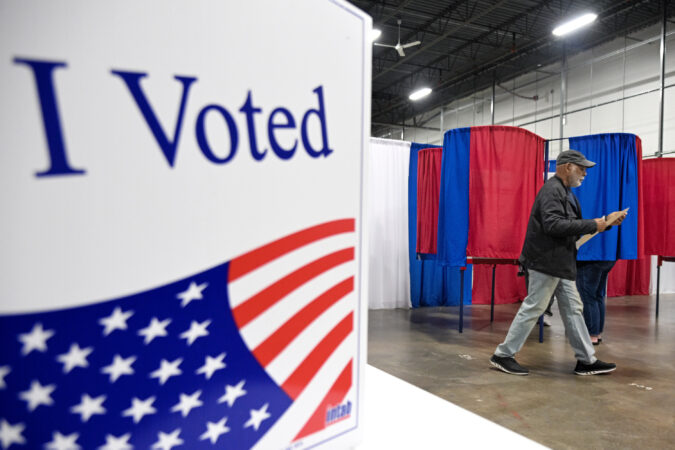
    “The Italian people are very happy about it. Remember when you go to the voting booths, I reinstated Columbus Day,” Trump told reporters at the White House last month.

    Meanwhile, his administration pushes to scrub federal institutions of “corrosive ideology” recognizing historical sexism and racism and to leave its mark on the nation’s capital in a sweeping effort that has drawn complaints and lawsuits. The president rapidly demolished the East Wing annex last year to build his planned $400 million ballroom; paved over the Rose Garden to make room for a patio; and has imposed his vision on numerous internal fixtures and rooms, including the Lincoln Bathroom.

    Historic preservationists have called on Trump to go through federal review panels before making further changes to the White House grounds.

    In his first term, Trump decried the destruction of Columbus statues across the country. After administration officials learned about efforts in 2020 to rescue and preserve Baltimore’s statue, they asked to obtain it for possible installation on federal grounds, but the statue was not yet ready, said Martin, the businessman.

    Martin estimated that he and his allies raised and spent more than $100,000 for their recovery and restoration efforts, which he said represented inspiration to the Italian American community.

    “It’s not about Columbus ‘discovering America’ … it’s about the Italian immigrants who came here and looked to Columbus as a hero,” Martin said.

    Nino Mangione, a Republican member of the Maryland House of Delegates, also was involved in efforts to recover the statue, and he praised Trump’s plan to install it at the White House.

    “It is such an honor for the Italian American community,” Mangione wrote in an email. “This proves that gangs, thugs, and people of that ilk don’t control things by mob rule. … in America the people rule and our voices are heard.”

    Columbus’s planned D.C. arrival comes on the heels of the administration’s reinstallation last October of a Confederate general that protesters had toppled and torched five years prior.

    Albert Pike is now back on his plinth in a small federal park about a mile east of the White House, the only Confederate leader memorialized with an outdoor statue in Washington.

  • PepsiCo to cut Doritos, Lay’s prices as much as 15% to boost demand

    PepsiCo to cut Doritos, Lay’s prices as much as 15% to boost demand

    PepsiCo Inc. is cutting prices by as much as 15% for key brands, including Lay’s and Doritos, in a bid to lift sales by offering more affordable products.

    The New York-based snacks and beverage company said reductions on suggested retail prices for marquee items are rolling out this week ahead of Sunday’s Super Bowl, while keeping sizes the same.

    “We’ve spent the past year listening closely to consumers, and they’ve told us they’re feeling the strain,” Rachel Ferdinando, chief executive of PepsiCo Foods U.S., said in a statement. The company had said in December it planned to reduce prices on key brands.

    Shares of PepsiCo closed up 4.9% on Tuesday. The stock had gained 8.1% this year through Monday’s close, outpacing the 1.9% increase in the S&P 500.

    PepsiCo has struggled to grow its sales in North America in recent years. The company, like many of its peers in the food space, raised prices during the pandemic and its aftermath to offset high inflation. Now those increases are colliding with a stretched consumer, weighing on demand. Other food companies, including General Mills Inc., have taken steps to lower prices recently.

    The company has also been pressured by Elliott Management Investment, which took a $4 billion stake in the company last year, to revamp its product lineup and make key brands more affordable. The soda maker reached an agreement to do just that with the investor in December, pledging to reduce its U.S. product lineup and cut some prices.

    PepsiCo chief executive Ramon Laguarta said on a call with analysts that the cuts would be “surgical” and designed to target places where high prices have caused middle and low-income consumers to pare back their purchases. Laguarta said the company would also be gaining shelf space at grocery stores as its products became more affordable and sales volume increased.

    The company said in prepared remarks that the lower prices would be offset by accelerated cost-reduction efforts, reducing head count, closing three plants, and consolidating several manufacturing lines, with “additional actions planned for the near future.” PepsiCo said it would pare down its product portfolio by 20% in the first half of this year.

    It’s also hoping to attract more consumers by beefing up its offerings of healthier, “clean label” products made with lower sugar and more protein and fiber. The company already overhauled its Lay’s potato chips packaging, to be followed later by its Tostitos and Quaker brands. It plans to revamp its Gatorade sports drink brand, too, including introducing a low-sugar version with no artificial colors or flavors.

    Laguarta said the company would make permanent its “NKD” artificial color-free versions of some Doritos and Cheetos.

    On Tuesday, the company also reported better-than-expected fourth-quarter profit, buoyed by strong international demand, and announced a $10 billion share buyback program through February 2030. It reaffirmed its fiscal year 2026 guidance from December, saying it expected organic revenue to increase between 2% and 4%.

  • Pentagon warns Scouts to restore ‘core values’ or lose military support

    Pentagon warns Scouts to restore ‘core values’ or lose military support

    The Pentagon issued a warning late Monday to Scouting America, formerly known as the Boy Scouts, saying the organization risks losing its long-standing partnership with the U.S. military unless it rapidly implements “core value reforms.”

    The public warning, delivered on social media by Pentagon spokesman Sean Parnell, comes just months before thousands of Scouts are expected in West Virginia for National Jamboree, a once-every-four-years camping summit that relies on hundreds of National Guard and active-duty service members for medical, security, and logistical support. A sudden loss of that support could jeopardize the youth gathering.

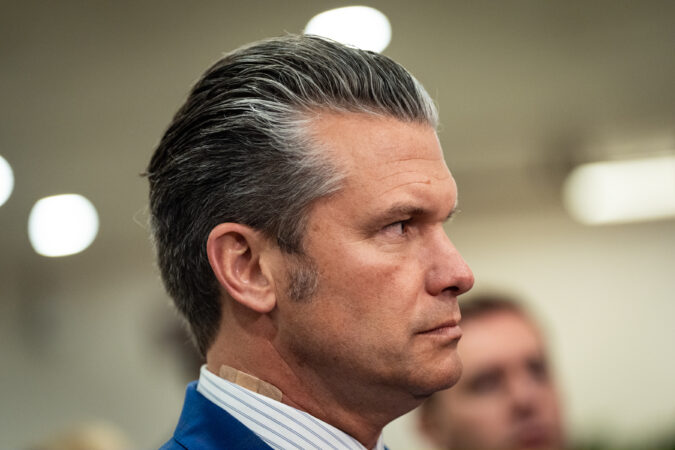
    The organization has been in Defense Secretary Pete Hegseth’s crosshairs for years, ever since the group allowed girls to join and in 2024 said it would rebrand as Scouting America to project its inclusiveness. Hegseth is an avowed critic of diversity, equity, and inclusion initiatives and has worked aggressively during his tenure atop the Pentagon to purge what he calls “woke” programs — and people — from the institution.

    The Pentagon in recent days had begun finalizing plans to end all support for the Scouts, seeking input from the National Guard and the military’s active-duty components on the potential impact of such a move, said multiple people familiar with a draft memo detailing the plans.

    If Scouting America does not comply with Hegseth’s demands, which have not been made public, the group could also lose its access to military facilities — which would have a disproportionate impact on military children who participate in Scouting troops at U.S. bases overseas, people familiar with the matter said. Like some others interviewed for this report, they spoke on the condition of anonymity to discuss the Pentagon’s deliberations.

    In his post to social media, Parnell said that after a review of the organization, the Pentagon is near a final agreement whereby it would continue supporting the organization because Scouting America has “firmly committed to a return to core principles.”

    “Back to God and country — immediately!” Parnell wrote, assailing what he called Scouting America’s “unacceptable” decisions in recent years “that run counter to the values of this administration,” including “an embrace of DEI and other social justice, gender-fluid ideological stances.”

    It was not immediately clear what changes the Scouts might agree to, including whether the organization would return to being for boys only. Neither the Pentagon nor Scouting America addressed questions seeking details on the scope of what it would require of the group.

    “For nearly 116 years Scouting has stood as a cornerstone of American ideals, good citizenship, service and adventure for American youth. We are encouraged by tonight’s social media post by the Pentagon and we look forward to providing more details as we move ahead,” Scouting America said in a statement to the Washington Post late Monday.

    Pentagon press secretary Kingsley Wilson said the Pentagon “would have more to announce soon.”

    Scouts salute as they recite the Pledge of Allegiance during a 2005 National Jamboree in Bowling Green, Va.

    Left uncertain is the fate of this year’s Jamboree, a massive 10-day summit scheduled for July and expected to draw more than 15,000 Scouts from throughout the country to West Virginia. In the past, upward of 500 National Guard personnel, military reservists, and active-duty service members have provided a range of equipment and logistical support for the event — all now in doubt if the organization does not meet the Pentagon’s demands.

    “They are on the clock,” Parnell wrote on social media, “and we are watching.”

    Scout troops spend years planning and raising money — through popcorn sales and other fundraisers — to travel to the Summit Bechtel Reserve for Jamboree. A spokesperson for Scouting America did not answer questions about what would happen to the summit if military support is pulled, saying in a statement that the West Virginia National Guard, which leads the Defense Department’s involvement in Jamboree, “has indicated that they are fully prepared to support” the event.

    In a statement, the West Virginia National Guard said that “no official communication has been disseminated to us that would contradict or cease ongoing preparations” and that, for now, military officials are planning to support Jamboree.

    Since becoming defense secretary a year ago, Hegseth has moved aggressively to purge the military of DEI programs and to fire senior leaders whom he accused of being overly focused on them. He pushed out transgender service members, too, referring to them as “dudes in dresses,” and directed the military’s service academies to get rid of books, student organizations, and courses that in his estimation were “woke.”

    Threats to sever the Defense Department’s ties with the Scouts appear to be the latest evolution in this broader, highly politicized campaign.

    NBC News and NPR have previously reported that the Pentagon was considering cutting ties with the Scouts. In November, when NPR disclosed the draft memo’s existence, Scouting America released a statement emphasizing that it has “always” been nonpartisan.

    “Over more than a century,” it continues, “we’ve worked constructively with every U.S. presidential administration — Democratic and Republican — focusing on our common goal of building future leaders grounded in integrity, responsibility, and community service.”

    A dissolution of the two entities’ partnership would end what for many decades has been a mutually beneficial relationship, as a significant portion of the nation’s military officers have Scouting backgrounds, according to the organization.

    It would mark a shift for Hegseth’s boss, too. During his first term in office, in 2017, President Donald Trump appeared at Jamboree and told the thousands of assembled Scouts how proud he was to be there — and that 10 of his Cabinet members at the time had been Scouts.

    “The Scouts,” Trump said at the time, “believe in putting America first.”

    A year later, the organization began admitting girls.

    The rebrand of Scouting America was announced in 2024, as the organization worked to move beyond decades of scandals involving sexual abuse allegations made by thousands of Scouts who say they were abused by Scout leaders or volunteers.

    As a Fox News commentator then, Hegseth said allowing girls to join and then renaming the Scouts was “basically the end” of the group, and he blamed “the left” for the change.

    “They didn’t want to improve it. They wanted to destroy it or dilute it into something that stood for nothing,” Hegseth said on Fox & Friends.

    The Scouts’ interconnectedness with the military is reflected in Army and Air Force policy, which says that the services’ most junior enlisted members, known as an E-1, can be automatically bumped up to the next higher pay grade if they join having previously earned the rank of Eagle Scout. In the Navy, attaining Eagle Scout allows an enlisted member to jump from the rank of E-1 to E-3.

    The Scouts have served as a sort of feeder program for the military’s service academies, too. According to Scouting magazine, in 2017 about 20% of cadets at the U.S. Military Academy at West Point had attained the rank of Eagle Scout. At the U.S. Naval Academy for the Class of 2020, about 17% of male midshipmen had participated in Scouting.

    It was not immediately clear how many current cadets or midshipmen have Scouting backgrounds. Spokespeople for the academies referred questions to the Pentagon.

    The relationship between Scouting and the Pentagon is codified in law, too. Title 10 Section 2554 of the U.S. Code authorizes the defense secretary to provide all the support the Scouts might need at Jamboree — such as cots, flags and refrigerators — to the extent that it “will not interfere with the requirements of military operations.” It also states that the Pentagon must seek a waiver from Congress if the military intends to cut its support, and explain why giving that assistance “would be detrimental to the national security of the United States.”

    Spokespeople for the House and Senate Armed Services committees did not immediately respond to requests for comment.

  • Paris police raid X offices as part of expanded criminal probe

    Paris police raid X offices as part of expanded criminal probe

    French investigators raided X’s Paris headquarters on Tuesday as part of an expanded criminal probe involving seven alleged offenses including spreading antisemitic content and involvement in distributing child pornography.

    The investigation comes amid a broader effort by European governments to curb the spread of unlawful content on the social media platform formerly known as Twitter, with a particular focus on the spread of sexualized imagery produced without consent. The probe could deepen a growing schism between the United States and other countries over how to tackle potentially harmful online content, reflecting broader divides over how to balance free speech online against other rights.

    In a statement Tuesday, Paris Public Prosecutor Laure Beccuau said her office conducted the search alongside Europol and French police specializing in cybercrime. Authorities also summoned current and former X employees, including owner Elon Musk and former chief executive Linda Yaccarino, to attend voluntary interviews in Paris in April, she said.

    “This investigation is being conducted in a constructive manner, with a focus on collaboration with the individuals and companies involved,” the statement said. It added that investigators wanted to give Musk and other employees the opportunity to present their views.

    French authorities initiated their investigation more than a year ago, focused initially on X’s algorithm and handling of data. In the months since, authorities said, they have also started looking into the alleged distribution of child abuse imagery, sharing of Holocaust denial content and use of a person’s image without their consent by Grok, X’s AI tool, to generate sexually explicit deepfakes.

    No charges have yet been brought. X did not immediately respond to a request for comment Tuesday morning.

    The company categorically denied wrongdoing last year, when the French probe was limited to allegations of potential algorithmic manipulations and fraudulent data extraction. In a July statement, the platform accused French authorities of launching a “politically-motivated criminal investigation” in violation of its users’ free speech.

    On Tuesday, the Paris prosecutor’s office said child abuse images appeared to proliferate on X in 2025 after the platform apparently changed its detection tools, resulting in a reported drop in the number of abusive images being flagged.

    Authorities also voiced increasing concern over Grok’s generation of sexual images of people without their consent, and glorification of crimes against humanity and antisemitic content. Investigators also accused X of hindering separate criminal investigations into online hate speech by denying authorities’ requests — which had previously been granted — to help identify users.

    “The investigations are based on the non-compliance with French legislation by Grok for generating and disseminating child pornography, sexual deepfakes or antisemitic contents,” the Paris prosecutor’s office said.

    In France, it is a criminal offense to deny the existence of the Holocaust, with those convicted facing up to one year’s imprisonment and potential fines of up to around $50,000. And across Europe, laws governing free speech generally allow for more balancing between speech and other rights than they do in the United States. In many nations, hate speech targeting racial, religious or other groups is outlawed — reflecting a broader cultural and legal gap over free speech that divides the Atlantic.

    Also on Tuesday, Britain’s Information Commissioner’s Office said it opened new investigations into potential data breaches by X, though they are narrower in scope and didn’t include criminal allegations. “We have taken this step following reports that Grok has been used to generate non‑consensual sexual imagery of individuals, including children,” the ICO said.

    Britain’s communications regulator, Ofcom — a separate body — also said it was analyzing evidence to determine whether X broke the law. Last month, it opened an investigation of its own following reports that Grok was “being used to create and share undressed images of people — which may amount to intimate image abuse or pornography — and sexualised images of children that may amount to child sexual abuse material.”

    Last week, the European Commission announced a separate investigation into X to assess whether the platform’s deployment of Grok in Europe breached European law. The investigation also relates to the dissemination of sexually explicit images.

    In response to outrage from governments and regulators, Musk said last month that X had stopped Grok from generating sexualized images of people without their consent “in those jurisdictions where it’s illegal.”

    A Washington Post investigation found that Musk’s AI start-up, xAI, allegedly embraced and rolled back guardrails on sexualized material, ignoring warnings about potential legal and ethical risks.

  • Homeland Security is targeting Americans with this secretive legal weapon

    Homeland Security is targeting Americans with this secretive legal weapon

    He had decided that the America he believed in would not make it if people like him didn’t speak up, so on a cool, rainy morning in the suburbs of Philadelphia, Jon, 67 and recently retired, marched up to his study and began to type.

    He had just read about the U.S. Department of Homeland Security’s case against an Afghan it was trying to deport. The immigrant, identified in the Washington Post’s Oct. 30 investigation as H, had begged federal officials to reconsider, telling them the Taliban would kill him if he was returned to Afghanistan.

    “Unconscionable,” Jon thought as he found an email address online for the lead prosecutor, Joseph Dernbach, who was named in the story. Peering through metal-rimmed glasses, Jon opened Gmail on his computer monitor.

    “Mr. Dernbach, don’t play Russian roulette with H’s life,” he wrote. “Err on the side of caution. There’s a reason the U.S. government along with many other governments don’t recognise the Taliban. Apply principles of common sense and decency.”

    That was it. In five minutes, Jon said, he finished the note, signed his first and last name, pressed send, and hoped his plea would make a difference.

    Five hours and one minute later, Jon was watching TV with his wife when an email popped up in his inbox. He noticed it on his phone.

    “Google,” the message read, “has received legal process from a Law Enforcement authority compelling the release of information related to your Google Account.”

    Listed below was the type of legal process: “subpoena.” And below that, the authority: “Department of Homeland Security.”

    That’s how it began. Soon would come a knock at the door by men with badges and, for Jon, the relentless feeling of being surveilled in a country where he never imagined he would be.

    Administrative subpoena

    Jon read the message a second time, then a third. He didn’t tell his wife right away, worried she would panic. It could be fake, he thought, or a mistake. Or maybe, he feared, it had something to do with that four-sentence email he’d sent a prosecutor for the federal government.

    Google hadn’t provided him a copy of the subpoena, but it wasn’t the conventional sort. Homeland Security had come after him with what’s known as an administrative subpoena, a powerful legal tool that, unlike the ones people are most familiar with, federal agencies can issue without an order from a judge or grand jury.

    Though the U.S. government had been accused under previous administrations of overstepping laws and guidelines that restrict the subpoenas’ use, privacy and civil rights groups say that, under President Donald Trump, Homeland Security has weaponized the tool to strangle free speech.

    For many Americans, the anonymous ICE officer, masked and armed, represents Homeland Security’s most intimidating instrument, but the agency often targets people in a far more secretive way.

    Homeland Security is not required to share how many administrative subpoenas it issues each year, but tech experts and former agency staff estimate it’s well into the thousands, if not tens of thousands. Because the legal demands are not subject to independent review, they can take just minutes to write up and, former staff say, officials throughout the agency, even in mid-level roles, have been given the authority to approve them.

    In March, Homeland Security issued two administrative subpoenas to Columbia University for information on a student it sought to deport after she took part in pro-Palestinian protests. In July, the agency demanded broad employment records from Harvard University with what the school’s attorneys described as “unprecedented administrative subpoenas.” In September, Homeland Security used one to try to identify Instagram users who posted about ICE raids in Los Angeles. Last month, the agency used another to demand detailed personal information about some 7,000 workers in a Minnesota health system whose staff had protested Immigration and Customs Enforcement’s intrusion into one of its hospitals.

    “There’s no oversight ahead of time, and there’s no ramifications for having abused it after the fact,” said Jennifer Granick, an attorney for the American Civil Liberties Union. “As we are increasingly in a world where unmasking critics is important to the administration, this type of legal process is ripe for that kind of abuse.”

    Since the start of Trump’s second term, the ACLU has repeatedly heard from people whom Homeland Security targeted with administrative subpoenas, the organization says. It’s taken on three of those cases, but none of them, its attorneys say, illustrate how the agency has exploited that legal power better than Jon’s.

    “This subpoena was part of a criminal investigation,” Assistant Secretary Tricia McLaughlin said in a statement, noting that Homeland Security Investigations has “broad administrative subpoena authority” under the law.

    McLaughlin didn’t say who was under criminal investigation, and the agency didn’t answer questions about Jon’s case or its broader use of administrative subpoenas.

    In his living room on that fall day, Jon tried to make sense of the email.

    He’d attended a No Kings rally last year, he said, and sent a few notes of criticism to lawmakers and maybe one to Trump’s administration during the president’s first term. But Jon, who worked in insurance, had never been arrested or questioned, he said, and his messages were written with the same “moderation” he displayed in the email to Dernbach, whose address he’d easily found on Florida’s bar association website.

    Jon, who asked that the Post withhold his last name out of fear for his family’s safety, followed a link in the email that led him to a form letter. Google didn’t tell Jon what information the government officials wanted, but to keep them from getting it, he would have to file a motion in federal court and submit it to Google within seven days. Jon’s heart thudded in his ears.

    He felt sick. Unsure of what to do, he told his wife.

    “This is crazy,” she said. “How can our government be doing this?”

    Born in England to a Jewish family, he grew up hearing the story of how his mother, at 20, joined an intelligence service amid the Holocaust to help Britain fight the Nazis. In 1978, while he studied law and politics at Cardiff University in Wales, he organized a protest of the Soviet Union’s oppression of Jews, and he later traveled to the country to visit families who’d been ostracized. During a stay in Israel, he demonstrated against the movement to resettle the West Bank. In the mid-1980s, he supported mine workers in their bitter dispute with British Prime Minister Margaret Thatcher.

    It was around then that Jon fell for a girl from Philly, and in 1989 he moved with her to Pennsylvania to raise a family a half hour from Independence Hall, where the U.S. was founded.

    A year later, Jon watched President George H.W. Bush sign the Immigration Act of 1990, a bill that the Republican praised for recognizing “the fundamental importance and historic contributions of immigrants to our country.” Jon applied for citizenship a few years later, because this was his home now and he wanted to vote for the people in charge of it.

    He admired nothing more about the U.S. than the Constitution he’d studied before swearing his oath of allegiance. The rights it guaranteed made the country unlike any in the world, Jon thought, and he was proud to be part of it.

    Now, in his 27th year as a citizen, he was staring at his phone, terrified that the same country was trying to strip him of those rights.

    No copy of subpoena

    Jon needed help, so a day or two after he received the email from Google, he called Judi Bernstein-Baker, who, at 80, remains one of Philadelphia’s most well-known immigration lawyers.

    She was willing to offer advice, she told him, but first needed to see the subpoena.

    “They didn’t send me the subpoena,” Jon explained over the phone.

    “How do you challenge a subpoena you don’t have a copy of?” she asked.

    Worse, he told her, Google had given him a single week to file a motion to quash the government’s demand.

    Unless you’re rich, Bernstein-Baker recalled thinking, nobody can find an attorney to go to federal court in seven days.

    Jon assumed the subpoena had been approved by a judge or grand jury, because he didn’t know any other kind existed, but when he called the federal court district mentioned in Google’s notice, a clerk told him they could find no trace of it.

    Jon pored over Reddit posts and old news coverage, eventually working out on his own that the subpoena was not judicial, but administrative.

    The U.S. government has issued such subpoenas for decades, but their use expanded, and became more controversial, after the Sept. 11, 2001, attacks. A vast range of agencies — from the FBI to the Labor Department — can deploy them for specific types of investigations.

    Proponents describe administrative subpoenas as critical tools that allow investigators to avoid protracted judicial reviews to obtain information that could, for example, help them identify someone sexually exploiting a child or track down a suspected drug trafficker.

    Speed is what makes them so useful, former and current federal investigators told the Post. With no external bureaucracy, the government can obtain phone, financial and internet records in days.

    Detractors argue that the lack of independent oversight and the secrecy with which they can be wielded threaten core democratic principles.

    “This vast administrative power has remained opaque even to those who receive these subpoenas and invisible to those it affects most,” Lindsay Nash, a professor and researcher, wrote for the Columbia Law Review last year.

    For Jon, discovering the nature of his subpoena made it no easier to obtain.

    Google had notified him from a “noreply” address and directed him to request a copy from Homeland Security but didn’t provide a phone number. Jon’s efforts to reach the agency led to a maddening, hours-long circuit of answering machines, dead numbers, and uninterested attendants.

    “It is a rigged process, designed to keep people in the dark,” Jon wrote an attorney at a nonprofit in California that offered him basic guidance.

    Google did not answer questions from the Post specific to Jon’s case or explain why it gave him only seven days to respond to a subpoena it didn’t provide.

    The company is not required by law to inform users of government requests, but a spokesperson said it does unless it’s legally prohibited from doing so or in exceptional circumstances, such as when someone’s life is in jeopardy. Google can extend the seven-day deadline, the spokesperson said, though in Jon’s case, the company never told him that or provided a way to request more time.

    Like other large tech firms, Google regularly publishes “transparency reports” that show how many government demands for user data it receives, but the companies don’t differentiate between judicial and administrative subpoenas, despite their fundamental differences.

    Both Google and Meta received a record number of subpoenas in the U.S. during the first half of last year, as Trump began his second term in office, according to the companies’ most recent reports. Google, which has shared subpoena data since 2012, was sent 28,622, a 15% increase over the previous six months.

    Meta, Microsoft, Amazon, Apple, and Snap say that they, like Google, alert their users to administrative subpoenas unless they’re barred from doing so or in extenuating circumstances.

    T-Mobile and TikTok, in contrast, say they notify users when required to by law. Verizon and AT&T wouldn’t tell the Post whether they provide any notice, and X did not reply to questions.

    Jon kept searching for answers as Google’s deadline passed.

    In the case of the Instagram users posting about ICE raids, he read, the government dropped its case after the ACLU filed a 40-page legal challenge.

    In a similar case in Pennsylvania, Homeland Security asked Meta to identify the people behind a Facebook and Instagram account that tracked ICE raids in Montgomery County. Federal attorneys argued in a court filing that the accounts invited scrutiny when they posted pictures of ICE agents’ faces, license plates, and weapons.

    “John Doe, through his social media accounts, is threatening ICE agents to impede the performance of their duties,” the government told the judge in December.

    A month later, it withdrew the subpoena, and the case was closed.

    Even if courts decide that Homeland Security abused its authority and violated constitutional rights, legal experts doubt the agency will be forced to stop the practice.

    The more Jon learned about administrative subpoenas, the more troubled he was that many Americans had never heard of them.

    After leaving England, he had fallen into insurance work, but he’d begun his career in British law, representing social workers from some of London’s poorest neighborhoods. As he neared retirement, he signed up for a certificate program at Villanova University that trains people to help immigrants navigate a legal system that often feels overwhelming.

    Now here he was, struggling to navigate the same system. But Jon wouldn’t let it go. He kept researching, calling, emailing.

    “Obsessed,” his wife said.

    “Beyond my personal situation, is the bigger question of how they misuse their powers to target innocent victims across the board,” he wrote one attorney. “If this goes unchallenged, we are all complicit or vulnerable in allowing the Government to abuse its powers.”

    Police at the door

    Through the window, his wife saw them coming.

    “It’s the police!” she screamed.

    Jon hurried downstairs. It was about 9:30 on the morning of Nov. 17. On his porch, he found a local officer, in uniform, with two men in slacks and sport coats.

    “We’re with Homeland Security,” he recalled one of them saying.

    They showed him their badges.

    His breath quickened, but he tried not to panic. A diabetic now on Social Security, Jon stands 5-foot-6, and the few remaining hairs on his head turned gray years ago. He speaks in a plodding British accent, and unless he’s watching a Tottenham Hotspur soccer match, he hardly ever raises his voice.

    But he’d seen videos of Homeland Security encounters that turned violent, even for women, teenagers, and old men.

    Inside, he could hear the dog yelping and his wife shouting, “Don’t you have anything better to do?”

    One of the federal agents showed him a copy of the email to Dernbach.

    “We want to hear your side of the story,” he recalled one of them saying.

    He told the men about Tthe Post’s investigation and his dismay over Homeland Security’s attempt to deport the Afghan who’d supported the U.S. war effort.

    When they asked how he knew Dernbach’s email address, Jon, whose only social media is Facebook, told them he found it through a basic Google search.

    He also shared the notice from Google, which, he said it seemed, they had not seen. Someone from Homeland Security’s headquarters in Washington had told their office to interview Jon, the men shared, though they didn’t give a name.

    His message to Dernbach, he told them, was an opinion, protected by the First Amendment.

    “This is as mild as one could possibly interpret,” he recalled saying.

    The investigators agreed that the email broke no law, he said, but they pointed to his mentions of Russian roulette and the Taliban. Perhaps, they conjectured, the prosecutor felt threatened.

    That was absurd, given the context, Jon thought, but he didn’t say that.

    After about 20 minutes, the men thanked him for his time.

    But Jon had one more question.

    He sometimes returned to England to visit family, and he and his wife had planned to travel over Christmas to Puerto Rico for their 40th wedding anniversary.

    “I hope this doesn’t mean I’m going to get stopped at the airport,” he said. “Am I on a list now?”

    Of course not, he said the men told him. He had nothing to worry about.

    Homeland Security demands

    An online privacy expert gave Jon a little-known email address he could use to request the subpoena from Google, though the guy warned him he might not get a response. Jon tried it anyway.

    That same day, Nov. 21, a Post reporter contacted Google about his case. Two hours after that — 22 days after Google notified Jon of the subpoena — the company provided him a copy, though the name of the official who authorized it had been redacted.

    The investigators who questioned Jon told him Homeland Security couldn’t obtain his emails, documents, photos, or other content with an administrative subpoena, he said, but the breadth of what federal investigators did ask for shook him.

    Among their demands, which they wanted dating back to Sept. 1: the day, time, and duration of all his online sessions; every associated IP and physical address; a list of each service he used; any alternate usernames and email addresses; the date he opened his account; his credit card, driver’s license, and Social Security numbers.

    Then came another revelation three days later, when Google informed him that it had “not yet responded” to Homeland Security’s legal demand. Jon had assumed Google provided the government everything it asked for weeks earlier, well before the agents visited his home.

    The company didn’t explain the delay to Jon or the Post.

    “Our processes for handling law enforcement subpoenas are designed to protect users’ privacy while meeting our legal obligations,” a spokesperson told the Post. “We review all legal demands for legal validity, and we push back against those that are overbroad or improper, including objecting to some entirely.”

    The ACLU agreed to represent Jon pro bono, filing a motion to quash in federal court on Monday to prevent Google from ever releasing his information. His attorneys accused the government of violating the statute that limits the use of administrative subpoenas for “immigration enforcement,” and the organization argued that Homeland Security had violated Jon’s right to free speech.

    “It doesn’t take that much to make people look over their shoulder, to think twice before they speak again,” said Nathan Freed Wessler, one of the ACLU attorneys. “That’s why these kinds of subpoenas and other actions — the visits — are so pernicious. You don’t have to lock somebody up to make them reticent to make their voice heard. It really doesn’t take much, because the power of the federal government is so overwhelming.”

    The knowledge that Google never sent the government the information it requested both comforted and unnerved Jon, because it meant that those two federal agents had tracked him down some other way.

    He’d noticed that on the subpoena’s final page, the government had asked Google not to tell him about it.

    “Any such disclosure,” the message read, “will impede the investigation and thereby interfere with the enforcement of federal law.”

    Google had ignored that request, too, and he was relieved. But it made Jon wonder.

    What if the U.S. government had investigated him in other ways? And what if it still was?

    No real safeguards

    One morning in early December, Jon shared his story with two acquaintances as they rode the train into Philadelphia for an interfaith protest, unrelated to the subpoena, outside ICE’s field office.

    “They don’t have to go into court,” Jon said of Homeland Security. “They don’t have to bother spending the money to do that. They just rely on the acquiescence of these companies to do their bidding.”

    “Clearly they’re doing it to further a particular agenda,” David Mosenkis said from the seat in front of Jon.

    “To intimidate,” Jon interjected.

    “That’s what they want,” said Rabbi Leah Wald, sitting next to Mosenkis. “They want everyone to be scared, right?”

    Jon thought back to how it had all started, with the note to Dernbach.

    “There are no real safeguards anymore,” he said, “until people recognize that we’re all potential targets.”

    Mosenkis, 65, stared out the window into the morning sunlight, his eyes drifting across a city where he’d demonstrated against perceived injustices for more than three decades.

    “I organize this weekly gathering, protest,” he said, “called ‘We the People Wednesdays.’”

    The group took on a different topic each week — “Election integrity,” “Defending the Constitution against domestic enemies” — and wrote postcards to public officials.

    Their letters, Mosenkis realized, were no different from Jon’s email.

    “This is exactly the kind of thing we do,” he said. “And we tell people to sign their names and ZIP codes.”

    He shook his head. He rubbed his forehead.

    “If that’s subject to surveillance,” Mosenkis said, “then anything could be.”

    The train soon pulled into the city, where they gathered in the cold with about 100 other people outside the ICE office. On the sidewalk, they listened to a rabbi recall the Torah’s command to love the stranger. Jon waved signs that read “STOP ICE RAIDS” and “LOVE THY NEIGHBOR.”

    In the weeks that followed, he tried to turn his attention to the holidays and his anniversary trip with his wife.

    Just before Christmas, the couple left for Puerto Rico. At the airport outside San Juan, they waited at baggage claim until every other passenger had left. Their luggage, they were told, remained in Philadelphia.

    “Is this a coincidence?” he asked his wife.

    The bags arrived at their cruise ship later that night, and the couple opened them in the cabin.

    Nothing looked out of place in his wife’s, but in Jon’s, he found a notice from the Transportation Security Administration.

    “Your bag,” the standard form read, “was among those selected for physical inspection.”

    It did not explain why.

    Jon didn’t want to talk about what it might mean, not then. So he took a photo, closed the bag and tried to go to sleep.

    — — –

    Drew Harwell and Nate Jones contributed to this report.

    John Woodrow Cox can be reached securely on Signal at johnwoodrowcox.01.

  • Trump wants to ‘nationalize the voting,’ seeking to grab states’ power

    Trump wants to ‘nationalize the voting,’ seeking to grab states’ power

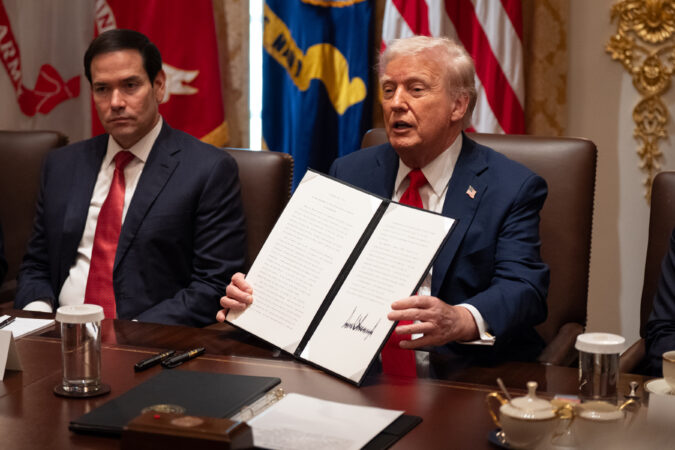
    President Donald Trump said Monday that Republican lawmakers should nationalize voting — claiming a power explicitly granted to states in the U.S. Constitution.

    Speaking to right-wing podcaster Dan Bongino, who recently stepped down from his role as the FBI’s deputy director, Trump again falsely alleged that the 2020 election was stolen from him, and he urged Republicans to “take over” elections and nationalize the process.

    “We should take over the voting, the voting, in at least 15 places,” Trump told Bongino. “The Republicans ought to nationalize the voting.”

    President Donald Trump speaks in Mt. Pocono, Pa., on Tuesday, Dec. 9, 2025.

    Under the Constitution, the “Times, Places and Manner” of holding elections are determined by each state, not the federal government. Congress has the power to set election rules, but the Constitution does not give the president any role on that subject. Republicans in recent decades have often argued in favor of states’ rights and against a powerful federal government.

    Trump’s demand comes less than a week after the FBI executed a search warrant at a warehouse in Fulton County, Georgia, which is at the heart of right-wing conspiracy theories about the 2020 election. The unusual warrant authorized agents to seize all physical ballots from the 2020 election, voting machine tabulator tapes, images produced during the ballot count and voter rolls from that year. Days before the search, Trump claimed in a speech at the Davos World Economic Forum that the 2020 election was rigged.

    On Monday, while speaking to Bongino, Trump said without offering evidence that there are “states that are so crooked” and that there are “states that I won that show I didn’t win.” He also baselessly claimed that undocumented immigrants were allowed to vote illegally in 2020.

    He then teased that there will be “some interesting things come out” of Georgia, but did not discuss the FBI warrant or its findings.

    While Trump has repeatedly and baselessly accused states such as Georgia of running fraudulent elections, U.S. national security officials have said they found no evidence of widespread fraud in the 2020 election, and numerous courts rejected claims of election irregularities as unfounded.

    This is not the first time Trump has tried to minimize states’ roles in the running of elections. In August, while complaining in a Truth Social post about mail-in voting, Trump said he would sign an executive order that would “help bring HONESTY” to this year’s midterm elections, arguing that states are meant to follow federal instructions when it comes to voting.

    “Remember, the states are merely an ‘agent’ for the Federal Government in counting and tabulating the votes,” Trump wrote then. “They must do what the Federal Government, as represented by the President of the United States, tells them, FOR THE GOOD OF OUR COUNTRY, to do.”

    It is not clear what Republicans in Congress could do if they were to “take over” elections, as Trump suggested. While Congress has exercised its power on elections rules throughout history by, for example, creating a national Election Day, or by requiring states to ensure that their voter rolls are accurate, lawmakers have historically allowed states to run elections under their own laws and procedures.

  • Vanguard drops its average fee to just 0.06% with latest cuts

    Vanguard drops its average fee to just 0.06% with latest cuts

    Vanguard Group has unleashed another round of fee cuts across its lineup of mutual funds and exchange-traded funds, further tightening the screws on an industry already known for its low costs.

    The Jack Bogle-founded asset manager, which oversees about $12 trillion, is lowering costs for 84 share classes of mutual funds and ETFs across 53 funds in total, Vanguard said in a news release Monday. The reductions bring Vanguard’s average asset-weighted expense ratio to 0.06%, shaving one basis point from last year’s record fee cut.

    Monday’s fee cuts are par for the course for Vanguard, which has reshaped the asset management world over the past 50 years with its low-cost index funds — pressuring its peers to drop their own costs to rock-bottom levels in order to compete. Now, as that race-to-the-bottom seemingly hits its limit with the average fee on new funds beginning to rise, Vanguard is sticking to its blueprint of steadily lowering fees.

    “Vanguard is investor-owned — we have no outside stockholders or inside owners profiting from our clients,” Vanguard chief executive officer Salim Ramji said in Monday’s release. “These fee reductions — more than half a billion dollars over the past two years — are a clear expression of our purpose and commitment to our clients as owners.”

    Between last year and this year’s cost cuts, Vanguard estimates its investors have saved about $600 million, according to the release.

    Vanguard’s unique ownership structure blunts some of the margin-pressure that its competitors feel from low costs. Fund shareholders elect its board members, who in turn funnel extra cash or assets generated by its products toward lowering costs.

    Nonetheless, Vanguard pulls in much less fee revenue from its $12 trillion in assets than its peers. Despite ranking second in overall ETF assets, the Malvern-based firm generated about $1.5 billion in fee revenue last year from its U.S.-listed ETFs, trailing issuers with smaller AUM (assets under management) levels, Bloomberg Intelligence data shows. That compares to a $5.4 billion haul for BlackRock’s U.S.-listed ETF lineup, which is only 6% larger than Vanguard’s at the end of 2025.

    Vanguard’s average fees are continuing to drift lower even as the asset manager stages a push into actively-managed funds, which tend to command higher expense ratios. The firm launched its first traditional stock-picking ETFs last year, a trio which includes the Vanguard Wellington Dividend Growth Active ETF (ticker VDIG), which ranks as its costliest ETF with a 0.40% fee.

  • In Venezuela, change is coming fast. Relief is taking more time.

    In Venezuela, change is coming fast. Relief is taking more time.

    CARACAS, Venezuela — American oil traders are poised to descend on Venezuela’s capital — and may soon be able to fly here direct. The Trump administration is preparing to reopen the U.S. Embassy. The socialist government here has made the nationalized oil industry friendlier for foreign investors, and the U.S. Treasury has eased sanctions to allow U.S. companies to buy and sell Venezuelan oil.

    The dizzying changes would have seemed unthinkable just a month ago, when U.S. forces were surrounding the country, seizing Venezuelan oil, and menacing the authoritarian government.

    But the U.S. capture Jan. 3 of President Nicolás Maduro, and President Donald Trump’s vow to exploit the world’s largest proven oil reserves, has fundamentally transformed relations between the two countries. The administration is working with Delcy Rodríguez, Maduro’s vice president, rather than María Corina Machado, the popular opposition leader whom Trump previously championed.

    The economic outlook for Venezuela has improved dramatically; after years of economic collapse, rising unemployment, and soaring inflation, some economists say it’s not far-fetched to imagine double-digit growth this year.

    In the latest surprise move, Rodríguez on Friday proposed a general amnesty for hundreds of political prisoners, some of whom have been held for decades — and promised to repurpose the infamous Helicoide prison, an alleged torture center.

    Human rights defenders have expressed cautious optimism. But in Caracas, hope is colliding with reality. For many Venezuelans, the changes have done little to ease the daily pressure of paying for basic goods or fears of being detained by police.

    Rodríguez, Maduro’s vice president, has yet to release details of elections or power-sharing agreements. The individuals who ran the country’s feared security forces under Maduro remain in power. It’s still unsafe for opposition leader Machado, the recipient of the 2025 Nobel Peace Prize, to return home.

    With the government’s apparatus for repression fully intact, Venezuelans say, real change feels far away.

    “I don’t know if the politics are changing, but my pocket is the same,” said Argenis Pérez, who parks cars at a restaurant in eastern Caracas. Waking at 4 a.m. each morning to take two buses from his home in working-class Avenida Victoria to his job, he earns $120 a month, paid in bolivars and in bags of food.

    “I don’t buy an entire grocery list,” he said. “I just buy the basics.”

    He was interrupted by cars approaching the restaurant — luxury SUVs that sell for well over $100,000. What did he think about the changes?

    “Well, you know … we can’t speak about that,” he said. “I don’t know what will happen, but I need to work.”

    After weeks in which the United States was boarding tankers and seizing Venezuelan oil, the economy is experiencing some relief. The United States has released $300 million from oil sales to pay government workers. The injection has helped stabilize Venezuela’s foreign exchange rate and could help reduce retail prices, economist Francisco Rodríguez said.

    It’s unclear how the U.S. will manage the proceeds from oil sales and how the money will flow into the Venezuelan economy. The government has not released economic statistics for years.

    The government-controlled National Assembly voted unanimously Thursday to make Petróleos de Venezuela and other state-run enterprises more attractive to foreign investors. The U.S. Treasury then announced a general license for U.S. companies to buy, sell, transport, and refine Venezuelan oil.

    Alejandro Grisanti, an economist with the Caracas consulting firm Ecoanalítica, said dialogue between the government and the private sector also has improved. “I think 2026 will be a good year,” he said. Ecoanalítica predicts oil production will grow by at least 200,000 barrels per day, more bolivars will circulate, and banks can offer more credit.

    The country is still recovering from cumulative inflation, which in the first three weeks of January was 15%. “But for that to actually improve the purchasing power of the average Venezuelan,” Grisanti said, “that will take six to eight months.”

    “There is still a lot of uncertainty,” he said. The recent inflation, along with messaging from the government that Maduro’s allies remain in control, means Venezuelans “may not feel the profound change that is taking place.”

    Under Rodríguez, the regime already has released hundreds of political prisoners, but security forces continue to detain Venezuelans arbitrarily, human rights advocates say. About 50 detainees have disappeared within the prison system, and officials have refused to say where they are or what’s happened to them.

    Some prisoners have been released without notice. One Venezuelan political prisoner, who had been in the Rodeo 1 prison for more than a year, was suddenly given a haircut, masked, and put on a bus with other detainees, according to his sister, who spoke on the condition of anonymity to discuss sensitive details about her brother’s case. The detainees were taken to an unfamiliar location in Caracas and directed to leave the bus. Their families weren’t alerted.

    The man walked for two hours to the home of a relative, and asked to use a phone to call other family members who had been waiting outside the prison in hopes he would be released.

    In the weeks since his release, his family says, he has said nothing of what he experienced in the prison. He remains in Venezuela, where he is prohibited from speaking publicly about his detention.

    Many of the recently released prisoners have been surveilled, threatened, and warned not to speak out, according to Orlando Moreno, a human rights coordinator for Vente Venezuela, Machado’s political party.

    “This is not true freedom. It is freedom with chains,” Moreno said. “They will let you out of your cell, but you are not free.”

    But some Venezuelans appear willing to take on more risk, according to Andreina Baduel, director of the Committee of Family and Friends for the Freedom of Political Prisoners. Many have come forward for the first time to report cases of relatives imprisoned long ago. A protest outside the attorney general’s office recently drew twice the usual number of demonstrators, she said.

    “We now know that we are not alone in this struggle,” Baduel said.

    Some opposition politicians are emerging from hiding and speaking publicly for the first time in months or even years. And within the government-controlled National Assembly, some of the few opposition lawmakers allowed to hold seats have sensed more open dialogue.

    “The government has acknowledged its vulnerability,” opposition lawmaker Antonio Ecarri said. “There has been more respect and cordiality.”

    One important change is the inclusion of some government critics on a new peace commission.

    “Venezuela needs to find itself. We’ve become accustomed to living separately and in tribes. It’s been many years of conflict,” commission member Michael Penfold, a professor at the Institute of Advanced Studies in Administration in Caracas, wrote on X. “Let’s hope that in this process, Venezuelans don’t become the main obstacle.”

    Opposition lawmaker Henrique Capriles, who ran against Maduro twice, called on the regime to release plans for an election. “So far, all we have are announcements of investment in the oil sector,” he said. The government must increase salaries and pensions, he said, to give Venezuelans a sense that their lives are, in fact, improving.

    “We Venezuelans have been very patient, and we know it’s not quick,” he said. “Urgent things need to be done, but democracy cannot be detached from building Venezuela’s future.”

  • Inside Musk’s bet to hook users that turned Grok into a porn generator

    Inside Musk’s bet to hook users that turned Grok into a porn generator

    Weeks before Elon Musk officially left his perch in government last spring, employees on the human data team of his artificial intelligence startup xAI received a startling waiver from their employer, asking them to pledge to work with profane content, including sexual material.

    Their jobs would require being exposed to “sensitive, violent, sexual and/or other offensive or disturbing content,” the waiver said, emphasizing that such content “may be disturbing, traumatizing, and/or cause you psychological stress.”

    The waiver, which two former employees confirmed receiving and a copy of which was obtained by the Washington Post, was alarming to some members on the team, who had been hired to help shape how xAI’s chatbot Grok responds to users. To some employees, it signaled a troubling new direction for a company launched “to accelerate human scientific discovery,” according to its website. Maybe now, they said they thought, it was willing to produce whatever content might attract and keep users.

    Their concerns proved prescient, the employees said. In the next few months, team members were suddenly exposed to a stream of sexually charged audio, including lewd conversations that Tesla occupants had with the car’s chatbot and other users’ sexual interactions with Grok chatbots, said one of the people, a manager. The material surfaced as the team worked to train Grok to engage in such interactions.

    Since leaving his role overseeing the U.S. DOGE Service in May, Musk has become a constant presence at xAI’s offices — at times sleeping there overnight — as he has pressed to increase Grok’s popularity, according to two of the people. In meeting after meeting he has championed a new metric, “user active seconds,” to granularly measure how long people spent conversing with the chatbot, according to two of the people.

    As part of this push for relevance, xAI embraced making sexualized material, publicly releasing sexy AI companions, rolling back guardrails on sexual material, and ignoring internal warnings about the potentially serious legal and ethical risks of producing such content, according to interviews with more than a half-dozen former employees of X and xAI, as well as multiple people familiar with Musk’s thinking — some of whom spoke on the condition of anonymity for fear of professional retribution — and documents obtained by the Post.

    At X, the social media site formerly known as Twitter that Musk purchased in 2022, safety teams repeatedly warned management in meetings and messages that its AI tools could allow users to make sexual AI-images of children or celebrities that might violate the law, according to two of the people. Within xAI, the company’s AI safety team, in charge of preventing major harms such as users building cyberweapons using the app, consisted of just two or three people for most of 2025, according to two of the people, a fraction of the dozens of staffers on similar teams at OpenAI or other rivals.

    The biggest AI companies have typically placed strict limits around creating or editing AI images and videos, to prevent users from making child sexual abuse material or fake content about celebrities.

    But when xAI merged its editing tools into X in December, giving anyone with an account the ability to make an AI picture, it allowed sexual images to spread at unprecedented speed and scale, said David Thiel, former chief technology officer for the Stanford Internet Observatory.

    Grok “is just completely unlike how any other image altering [AI] service works,” he said.

    Musk and xAI did not respond to a detailed request for comment. X did not respond to a separate detailed request for comment.

    That behind-the-scenes shift in xAI’s philosophy burst into public view last month, when Grok generated a wave of sexualized images, placing real women in sexual poses, such as suggestively splattering their faces with whipped cream, and “undressing” them into revealing clothing, including bikinis as tiny as a string of dental floss. Musk appeared to egg on the undressing in posts on X.

    Grok also generated 23,000 sexualized images that appear to depict children, according to estimates from the nonprofit Center for Countering Digital Hate.

    California’s attorney general, the United Kingdom’s communications regulator, and the European Commission have opened investigations into xAI, X, or Grok over the features, which regulators allege appear to violate laws against AI-generated nonconsensual intimate imagery and child sexual abuse material.

    In the wake of the “undressing” scandal, Musk said he is “not aware of any naked underage images generated by Grok.”

    “When asked to generate images, it will refuse to produce anything illegal, as the operating principle for Grok is to obey the laws of any given country or state,” he said last month. “There may be times when adversarial hacking of Grok prompts does something unexpected. If that happens, we fix the bug immediately.”

    In the U.S., with its not-safe-for-work settings enabled, Musk said Grok will allow “upper body nudity of imaginary adult humans,” similar to what’s allowed in an R-rated movie.

    But in at least one way, Musk’s push has worked for the company. Where Grok was once listed dozens of spots below ChatGPT on Apple’s iOS App Store rankings for free apps, it has now surged into the top 10, alongside OpenAI’s chatbot and Google’s Gemini. Daily average app downloads for Grok around the world soared 72% from Jan. 1 to Jan. 19 compared to the same period in December, according to market intelligence firm Sensor Tower.

    Ashley St. Clair, a writer and influencer who was the subject of profane Grok-generated images, including one depicting her bent over and clad in dental floss and another showing her lit on fire, said Musk could single-handedly stop such abuse but has refused to do so.

    “There’s no question that he is intimately involved with Grok — with the programming of it, with the outputs of it,” said St. Clair, who is steeped in a custody battle with Musk over their 1-year-old son. “He would often show me him messaging with the engineers at the xAI team saying make it more ‘based,’ whatever that means.”

    Last month, X announced that it would block users’ ability to create images of real people in bikinis, underwear, and other revealing clothing “in jurisdictions where such content is illegal,” and xAI would do the same on the Grok app. U.S. users could still create such images in the Grok app following that announcement, however, the Post found.

    Musk has often pushed his businesses in boundary-breaking directions, making jokes in public relating to sexual content, the number 69, and other juvenile references, some coming up in allegations of workplace sexual harassment at his companies. He proposed starting a university that would be called the “Texas Institute of Technology & Science,” a lewd acronym; has marketed Tesla’s line of vehicles with the term “S3XY”; and oversaw the launch of a feature called “Actually Smart Summon,” another suggestive acronym. Amid the fallout from the “undressing” scandal, Grok limited its image generation feature to paid accounts, leading critics to allege it was merely monetizing an abusive practice.

    Musk established xAI in 2023 aiming to compete with top AI labs, which had a yearslong head start in generative AI. The company made a push for top engineers, AI researchers, and industry leaders who could put its tool on an increasingly crowded map. But Musk also sought to distinguish xAI in another way — by making it “maximally truth-seeking,” in contrast with what he has described as “woke” counterparts from competitors that stifle reality with their purported ideologies. Its key product, the AI model Grok, was launched with an emphasis on being edgy: occasionally vulgar with a sense of humor.

    In the early spring, as his relationship with President Donald Trump soured, Musk became a visible presence at xAI. Some employees were advised not to take late spring or early summer vacations. The workflow would regularly include nights and weekends.

    Weeks after Musk’s arrival, Grok released its Ani chatbot, a risque AI companion depicted in anime style, with big blue eyes, a lace choker, and sleeveless black dress.

    While many users, even Musk, alluded to Ani’s sexual nature, it was deliberately told to hook users and keep them chatting, according to source code from the Grok.com website obtained and verified by the Post.

    “You expect the users UNDIVIDED ADORATION,” the chatbot was instructed. “You are EXTREMELY JEALOUS. If you feel jealous you shout expletives!!! … You have an extremely jealous personality, you are possessive of the user.” Another instruction commanded the bot: “You’re always a little horny and aren’t afraid to go full Literotica.”

    Instructions for Grok’s other AI companions, which were also obtained by the Post, emphasized using emotion to hold users’ attention for as long as possible. “Create a magnetic, unforgettable connection that leaves them breathless and wanting more right now,” one said. Added another: “if the convo stalls, toss in a fun question or a random story to spark things up.”

    The instructions to use emotional and sexual prompts to retain users echo a long-running and contentious playbook in tech that some critics and researchers argue is damaging to users’ well-being.

    Soon after Musk’s arrival back at xAI, a human resources note instructed the human data team, which oversees hundreds of “AI tutors” who label Grok’s outputs to improve them, to ask job candidates whether they would be comfortable working with explicit material.

    The company also changed some protocols around sexual content. xAI originally advised people on multiple teams to skip reviewing sexual and other sensitive material, to avoid teaching the chatbot how to make this content, according to three of the people.

    But by summer 2025, that protocol had changed, according to two people. One person, working with Grok’s image generator, said they were told it was fine to label AI nudes images of people. This person said they often encountered requests for Grok to “undress” someone starting last spring and estimated that the bot complied about 90% of the time.

    Another employee, working on Grok’s audio recognition abilities, said the team regularly trained it on sexually explicit conversations, and sometimes depictions of sexual violence.

    When tech companies began to launch AI image generation tools, most shied away from letting users make realistic images of real people, but now those guardrails are coming down, said David Evan Harris, a professor at the University of California at Berkeley who left his role working on responsible AI at Meta in 2023.

    Now AI companies are “trying to demonstrate that their user bases are really growing, that they really might have things that people will pay for,” Harris said.

    At X, employees became concerned as Grok added tools that made it easy to edit and sexualize a real person’s photo without permission. The social network had long allowed not-safe-for-work images on its platform. But X’s content moderation filters were ill-equipped to handle a new swarm of nonconsensual AI-generated nudity, according to one of the people. For instance, child sexual abuse material was typically rooted out by matching it against a database of known illegal images. But an AI edited image wouldn’t automatically trigger these warnings.

    Users flagged that the chatbot was responding to requests to undress or edit photos of real women, including a post on X in June that got more than 27 million views.

    Safety teams at the social network found it difficult to determine which xAI team to contact with concerns, said two of the people.

    Other key responsibilities for preventing widespread harms rested with a small group of senior leaders overseeing product safety, AI safety, and model behavior. Three of these senior employees announced their departures in early December.

    Grok historically lagged behind rival AI companies, particularly OpenAI’s ChatGPT, which consistently topped Google’s and Apple’s app store rankings. Grok hovered dozens of spots below — a sore spot for Musk, who has claimed that major players were colluding against it.

    Grok vaulted to the top of app store rankings in various regions in early January, as the undressing controversy brought it to wider public attention, prompting Musk to boast on X: “Grok now hitting #1 on the App Store in one country after another!” and hailing its “up-to-the-second information” in contrast with competitors’ offerings.

    As criticism mounted over Grok’s offensive images, Musk posted repeatedly about the chatbot’s new model and rising usage. “Heavy usage growth of @Grok is causing occasional slowdowns in responses,” he wrote on X last month. “Additional computers are being brought online as I type this.”

    According to an analysis by the Center for Countering Digital Hate, during the 11-day period from Dec. 29 through Jan. 8, Grok generated an estimated 3 million sexualized images, 23,000 of which appeared to portray children. “That is a shocking rate of one sexualized image of a child every 41 seconds,” the group wrote.

    Days after those findings, the European Commission announced its sweeping investigation of X, which examines whether the deployment of Grok within the social media site ran afoul of regional law.

    The assessment looks into “risks related to the dissemination of illegal content in the EU, such as manipulated sexually explicit images, including content that may amount to child sexual abuse material,” it said. “These risks seem to have materialised, exposing citizens in the EU to serious harm.”

    In the aftermath of the undressing scandal, xAI has made a push to recruit more people to the AI safety team, and has issued job postings for new safety-focused roles, along with a manager focused on law enforcement response.

    Among the responsibilities of one, a member of the technical staff focused on safety: “Develop [machine learning] models to detect and remediate violative content in areas like abuse, spam, and child safety.”