Category: Washington Post

  • Trump wants to build a 250-foot-tall arch, dwarfing the Lincoln Memorial

    Trump wants to build a 250-foot-tall arch, dwarfing the Lincoln Memorial

    The White House stands about 70 feet tall. The Lincoln Memorial, roughly 100 feet. The triumphal arch President Donald Trump wants to build would eclipse both if he gets his wish.

    Trump has grown attached to the idea of a 250-foot-tall structure overlooking the Potomac River, according to two people who spoke on the condition of anonymity to describe his comments, a scale that has alarmed some architectural experts who initially supported the idea of an arch but expected a far smaller one.

    The planned Independence Arch is intended to commemorate the United States’ 250th anniversary. Built to Trump’s specifications, it would transform a small plot of land between the Lincoln Memorial and Arlington National Cemetery into a dominant new monument, reshaping the relationship between the two memorials and obstructing pedestrians’ views.

    Trump has considered smaller versions of the arch, including 165-foot-high and 123-foot-high designs he shared at a dinner last year. But he has favored the largest option, arguing that its sheer size would impress visitors to Washington, and that “250 for 250” makes the most sense, the people said.

    Architectural experts counter that the size of the monument — installed in the center of a traffic circle — would distort the intent of the surrounding memorials.

    “I don’t think an arch that large belongs there,” said Catesby Leigh, an art critic who conceived of a more modest, temporary arch in a 2024 essay — an idea that his allies championed and brought to the White House. His allies also passed along Leigh’s recommendation of an architect, Nicolas Leo Charbonneau, who has been retained by the White House to work on the project.

    Charbonneau did not respond to requests for comment.

    Asked about the arch’s height, the White House on Saturday referred to the president’s previous comments.

    “The one that people know mostly is the Arc de Triomphe in Paris, France. And we’re going to top it by, I think, a lot,” Trump said at a White House Christmas reception in December.

    The Arc de Triomphe — already one of the world’s largest triumphal arches — measures 164 feet.

    Trump also told Politico in December that he hoped to begin construction of the arch within two months, a timeline that appears unlikely given that White House officials have yet to make the final plans public or submit them to federal review panels. Memorial Circle, the plot of land that the president has eyed, is controlled by the National Park Service.

    The White House reiterated the president’s desire to have an iconic monument.

    The arch will become “one of the most iconic landmarks not only in Washington, D.C., but throughout the world,” spokesperson Davis Ingle said in a statement sent to the Washington Post after this article’s publication. “President Trump’s bold vision will be imprinted upon the fabric of America and be felt by generations to come.”

    Washington does not have a triumphal arch, making it unusual among major cities that have built arches to commemorate wars and celebrate milestones, and some historians and civic leaders have long argued that such a monument is needed.

    Rodney Mims Cook Jr., an Atlanta-based developer and president of the National Monuments Foundation, proposed a peace arch to Washington leaders in 2000 before the plans were withdrawn in the wake of the Sept. 11, 2001, terrorist attacks. Cook later built a monumental arch in Atlanta, the Millennium Gate Museum, intended to celebrate Georgia’s history.

    Trump this month appointed Cook to the Commission of Fine Arts, a federal panel that would be set to review and approve the design of new monuments in Washington — including the president’s potential arch.

    Trump on Jan. 23 also posted images on his Truth Social platform with no comment that depict three versions of a large triumphal arch, including one option with gold gilding — a hallmark of Trump’s construction projects. Asked about the president’s post, White House officials said that the arch design continues to be refined. The White House also said the plan to put a large Lady Liberty statue atop the arch, which was included in previous concepts presented by Trump and Charbonneau but not in the president’s Truth Social post, has not been abandoned.

    City planners have eyed the land around what is now Memorial Circle for more than a century. A 1901-1902 report overseen by the Senate Park Commission, which laid the groundwork to construct the National Mall and beautify much of the city’s core, appears to envision some sort of structure in the circle, drawings show. Architect William Kendall in 1928 also presented plans to the Commission of Fine Arts to construct a memorial there.

    Local historians and architectural experts have said that a large arch could change the relationship between several historic sites, including Arlington Memorial Bridge itself, which was intended as a bridge between North and South in the wake of the Civil War, and memorials for Lincoln and Confederate Gen. Robert E. Lee.

    “It’s a very somber corridor,” said John Haigh, the chairperson of Benedictine College’s architecture program, who visited Memorial Circle with his students last year to consider the arch project. “We discussed the gravity of putting an arch there,” particularly one intended to be triumphal.

    The structure as planned could obstruct views of Arlington House, the former Lee estate that sits on a hillside in Arlington National Cemetery.

    “I would be very concerned about the scale,” said Calder Loth, a retired senior architectural historian for the Virginia Department of Historic Resources, warning that a 250-foot-high arch could alter pedestrians’ views as they approach Arlington National Cemetery from Washington. “It would make Arlington House just look like a dollhouse — or you couldn’t see it all, with the arch blocking the view.”

    They also cautioned that, barring major changes to the circle, it could be difficult for pedestrians to visit a potential monument there, given the busy motor traffic.

    Loth also invoked the vantage point from Arlington National Cemetery, where visitors often look across the river toward the Lincoln Memorial and the capital beyond — a view he said the proposed arch would reshape.

    “How does it impact the panorama of Washington?” Loth said, invoking a question that he said should guide designers of monuments. “What is supposed to be doing the speaking?”

    Leigh initially proposed a 60-foot arch that could pop up as a temporary structure to mark America’s 250th. Trump instead wants a permanent arch, more than four times larger, funded with leftover private donations to his White House ballroom project, which he has said could cost about $400 million. Publicly identified donors to the ballroom project, such as Amazon, Google, and Lockheed Martin, collectively have billions of dollars in contracts before the administration. (Amazon founder Jeff Bezos owns the Washington Post.)

    Any construction plan for the arch would probably need to go through several review panels and potentially require the sign-off of Congress, given laws around constructing monuments in Washington.

    Trump’s interest in enlarging the arch mirrors his desire to expand the White House ballroom, which last year sparked clashes with James McCrery II, the architect initially tapped for the project. Shalom Baranes, the architect now leading that work, told federal review panels this month that White House officials have halted plans to make the ballroom even larger.

    Leigh suggested a compromise location that could allow Trump his large monument without imposing on other structures.

    “If you’re going to build an arch that big, you should build it in another part of town and one possible site that comes to mind is Barney Circle,” Leigh said, referencing a site in Southeast Washington next to Congressional Cemetery, overlooking the Anacostia River. “There’s nothing around it competing with it.”


  • Judge won’t scale back Trump’s immigration surge in Minnesota for now

    Judge won’t scale back Trump’s immigration surge in Minnesota for now

    A judge on Saturday declined to order the Trump administration to immediately scale back its immigration enforcement surge in Minnesota, rejecting pleas from state officials who said the campaign was stepping on their sovereignty and endangering the public.

    U.S. District Judge Kate Menendez said Minnesota and the Twin Cities had not definitively shown that the administration’s decision to flood the state with immigration agents, an initiative dubbed Operation Metro Surge, was unlawful or designed to coerce local officials into cooperating with other administration objectives.

    However, while she denied the state’s request for a preliminary injunction ending the surge, the judge stressed that she was making not making a final determination on the state’s claims, a step that would take place after further litigation. She also cautioned that she was not deciding whether specific actions taken by immigration authorities during the surge were unlawful.

    “It would be difficult to overstate the effect this operation is having on the citizens of Minnesota, and the Court must acknowledge that reality here,” wrote Menendez, who was named to the bench by President Joe Biden. “However, those are not the only harms to be considered. … Defendants have presented evidence that entry of the injunction requested by Plaintiffs would harm the federal government’s efforts to enforce federal immigration law.”

    Immigration agents have flooded Minnesota in recent weeks, sparking protests as well as an intensive effort among residents to track and document the enforcement efforts. Federal authorities have shot and killed two people in Minneapolis since this surge began, prompting widespread outrage in Minnesota and across the country.

    Minnesota officials sued the Trump administration on Jan. 12 in response to the surge, saying that federal agents had “stormed the Twin Cities to conduct militarized raids and carry out dangerous, illegal, and unconstitutional stops and arrests.”

    In their lawsuit, Minnesota authorities said the Trump administration launched the campaign “to punish political opponents and score partisan points.” They said the federal government was putting public safety at risk, provoking protests, and undermining public trust in local law enforcement.

    The Trump administration said Minnesota officials were “effectively seeking a state veto over the enforcement of federal law by federal officers.”

    Federal officials wrote in court papers that the immigration crackdown has been a success despite attacks and threats against federal personnel. President Donald Trump campaigned on enforcing immigration laws, the Justice Department wrote, and “Minnesota is a crucial priority for immigration enforcement.”

    Federal officials said in a court filing Monday that there were approximately 3,000 officers and agents from the U.S. Immigration and Customs Enforcement and Customs and Border Protection “conducting immigration enforcement actions in the greater Minneapolis area.”

    Minnesota officials, in court filings and public comments, have said the situation in and around Minneapolis is dire and required urgent help from the courts. They have also pointed to the two recent shootings by federal authorities to bolster their case.

    After an ICE officer shot and killed Renée Good on Jan. 7, Minneapolis launched its emergency preparedness protocols, leading to “significant additional work” for police and others in the city, Minnesota officials wrote in a court filing.

    Federal agents fatally shot Alex Pretti, a 37-year-old ICU nurse, on Jan. 24. In a letter to the court the same day, Minneapolis and Minnesota officials said Pretti’s killing further illustrated the need for “a court-ordered respite” to the ongoing situation.

    During a court hearing Monday, Menendez said that while “we are in shockingly unusual times,” she was skeptical about whether her authority let her decide if the immigration agents could remain deployed in Minnesota.

    Menendez also questioned a letter Attorney General Pam Bondi wrote to Minnesota Gov. Tim Walz (D) on the day Pretti was killed, demanding access to the state’s voter rolls and records relating to food assistance programs.

    Bondi appeared to link these moves with a possible end to the immigration crackdown in Minnesota. During the hearing, Menendez asked whether the letter was akin to a ransom note.

  • U.N. secretary general says global body is at risk of fiscal collapse

    U.N. secretary general says global body is at risk of fiscal collapse

    The United Nations is on the verge of “imminent financial collapse,” in large part due to the failure of member states to pay their mandatory dues, Secretary General António Guterres said in a letter sent this week to the 193 U.N. ambassadors.

    Leading the list of those in arrears is the United States, which owes nearly $2.2 billion in overdue and current assessments for the regular U.N. operating budget, dating back to the end of 2024, and hundreds of millions in funds pledged or assessed to other programs, according to a U.N. official.

    Under a formula in which each nation pays annually according to its gross national income, population, and debt, the United States is assessed 22% of the regular budget, which for 2026 is $3.45 billion. Closely following is China, which is assessed 20% and paid up until the beginning of this year.

    The next highest arrears, $38 million, is owed by Venezuela, according to the official, who spoke on the condition of anonymity under rules set by the United Nations. Caracas’ vote in the General Assembly has been suspended, as mandated by the organization’s charter for any member that doesn’t pay for two years.

    “We have managed difficult periods of unpaid assessed contributions before,” Guterres wrote without mentioning any specific country. “But today’s situation is categorically different. … The current trajectory is untenable.”

    Republican administrations and lawmakers have long criticized the U.N. as wasteful, liberal, and ineffective — and in some years has reduced or temporarily withheld partial payments. The Trump administration has refused to pay at all, although it has not officially informed the U.N. whether it intends to make any future or overdue payments.

    Although annual payments are usually due in January, many countries pay in tranches throughout the year. The Biden administration left office last January with its second-half 2024 assessment unpaid.

    The U.S. mission at the U.N., where President Donald Trump’s former national security adviser Mike Waltz serves as ambassador, did not respond to queries on the budget.

    Trump has said the U.N. has great “potential” but is not living up to its promise to keep world peace. In an executive order signed early this month, he ordered U.S. withdrawal from 66 international organizations, agencies, and commissions, nearly half of them at the U.N., because, he said, they “undermine America’s independence and waste taxpayer dollars on ineffective or hostile agendas.”

    Trump’s recently announced Board of Peace, originally designed as the supervisory board for implementing his Gaza peace plan, has led to concerns that he plans to replace the U.N. altogether.

    In a letter sent to 60 world leaders invited to join (25 have officially signed up so far, none of them major U.S. allies), Trump said the board would “embark on a bold new approach to resolving Global Conflict.” Trump appointed himself board chair, with personal veto power over membership and virtually every action it might take.

    Responding to reporters Thursday who asked whether he thought the board was a U.N. competitor, Guterres said: “In my opinion, the basic responsibility for international peace and security lies with U.N., lies with the Security Council. … No other body or other coalition can legally be required to have all member states to comply with decisions on peace and security.”

    “Global problems will not be solved by one power,” Guterres said.

    Trump has also withdrawn U.S. participation from other U.N. agencies whose budgets are separate and voluntary, including the World Health Organization. Other voluntary humanitarian programs include refugee and natural disaster aid, to which the administration last month pledged $2 billion, a fraction of what Washington has contributed in the past.

    In addition to the problem of unpaid dues, Guterres in his letter called on the General Assembly to revise a system in which any budgeted money that is unspent at year’s end is returned to member governments, whether or not they have paid their dues.

    “We are suffering a double blow: on one side, unpaid contributions; and on the other side, an obligation to return funds that were never received in the first place,” he wrote. “In other words, we are trapped in a Kafkaesque cycle; expected to give back cash that does not exist.”

    U.N. officials expect this problem, if left unaddressed, to increase exponentially by 2027, as the amount of money that must be returned cuts into each new year’s available funds. The U.N. could run out of cash as early as July, by some accounts, if neither the dues nor the financial system is addressed.

    Guterres, whose term expires at the end of this year, sounded the alarm last year and proposed cutting the regular operating budget by as much as 20% via staff cuts, streamlining, building sales, and relocation of some offices from expensive locations such as Geneva to less costly regions. The General Assembly finally approved a 2026 regular budget that was 7.6% lower than last year.

    In an interview with the New York Post earlier this month, Waltz claimed U.S. credit for forcing the U.N. to accept “actual real cuts for the first time in its modern history. … They’ve never seen anything like it.”

    Saying he was now pushing to revamp pension and compensation plans, Waltz stressed the importance of the U.N. to international diplomacy. “There needs to be one place in the world where everyone can talk,” he told the New York Post. “We want that one place in the world to be in the United States, not in Brussels or Beijing.”

  • Israeli airstrikes kill 32 in Gaza, Palestinian officials say

    Israeli airstrikes kill 32 in Gaza, Palestinian officials say

    JERUSALEM — Airstrikes killed at least 32 people in Gaza overnight Friday, according to hospital and emergency response officials in the enclave, as Israel launched what it said were extensive strikes targeting Hamas militants and weapons sites.

    It was one of the bloodiest nights in Gaza since the Israel-Hamas ceasefire brokered by President Donald Trump in October, as the peace process enters its precarious second phase. Israel is due to open the key Rafah border crossing with Egypt on Sunday and begin allowing the limited entry and exit of people — a concession made by Prime Minister Benjamin Netanyahu under pressure from Trump.

    Egypt, a mediator in the conflict, condemned the strikes as the latest of Israel’s “repeated violations” of the ceasefire. An Israeli security official said Hamas had provoked Israel with “blatant violations” of the ceasefire by sending eight militants out of a tunnel in Rafah the previous night.

    Israel also struck weapons storage, manufacturing, and launch sites in Gaza, the Israel Defense Forces said in a statement.

    The Gaza Civil Defense emergency response team and hospital officials said Israel struck a tent in Khan Younis that housed the Abu Hadayed family, killing seven people; a residential home in the al-Nasr neighborhood west of Gaza City; and a police station in Gaza City’s Sheikh Redwan area.

    The majority of the 32 dead as of Saturday afternoon were women and children, according to Gaza Civil Defense spokesperson Mahmoud Bassal.

    The Israeli military has killed 509 Gazans and injured more than 1,400 since the ceasefire took effect Oct. 11, according to the Gaza Health Ministry. The Israeli campaign has killed more than 71,000 people in the enclave since October 2023, according to the ministry, which does not distinguish between combatants and civilians.

    The Israeli government launched the campaign after Hamas led an assault on southern Israel that killed 1,200 people and took 251 back to Gaza as hostages, according to Israeli officials.

    The IDF believes the number of deaths in Gaza is about 70,000, not including bodies buried under rubble, a senior Israeli military official told Israeli reporters on background this week. The IDF is still reviewing how many of the dead were combatants and how many were civilians, the official said.

    After Israeli media reported the official’s comments, the IDF clarified that it was not disclosing formal casualty estimates.

    “The details published do not reflect official IDF data,” Lt. Col Nadav Shoshani wrote on X. “Any publication or report on this matter will be released through official and orderly channels.”

  • 4 Parkinson’s disease symptoms that can show up decades before a diagnosis

    4 Parkinson’s disease symptoms that can show up decades before a diagnosis

    Many people think of a tremor as the quintessential warning sign of Parkinson’s disease. But other symptoms — many of them not involving changes in movement — can appear much earlier than what’s known as a resting tremor.

    In fact, a resting tremor, which is a rhythmic shaking of a body part such as a hand when at rest, isn’t even required for diagnosis. Up to 20% of people with Parkinson’s disease don’t have one.

    “Parkinson’s is what we call a movement disorder because it affects our movement, but there’s a whole side of Parkinson’s that is non-motor,” said Rachel Dolhun, a neurologist and principal medical adviser at the Michael J. Fox Foundation for Parkinson’s Research. “We long thought it was just a movement disease, but now we see that it affects the whole body in different ways.”

    Certain symptoms show up years before motor changes

    Parkinson’s disease is one of the most common neurological disorders in the world, with cases expected to reach 25.2 million by 2050. While inherited genetic mutations are associated with 10 to 15% of cases, the rest have no known cause. Symptoms can be managed with available treatments, but there is no cure — although exercise is thought to reduce the risk of developing the condition. And there are several other things you can do to reduce your risk of Parkinson’s disease, as well.

    To make a Parkinson’s diagnosis, neurologists look for characteristic movement symptoms, including slowness, stiffness, and resting tremor. However, common non-motor symptoms of Parkinson’s, such as constipation and loss of sense of smell, often precede such changes in movement by more than a decade. This early stage of Parkinson’s, known as the prodromal phase, marks the beginning of a gradual onset of disease.

    “It’s a slow disease, and we’re realizing just how slow it can be,” said Ronald Postuma, a professor of neurology and neurosurgery at McGill University in Montreal. “It’s progressing in the brain, year by year, until it crosses a threshold at which doctors can make the diagnosis.”

    Parkinson’s disease damages neurons that produce dopamine, a chemical that transmits signals between cells and plays a crucial role in controlling movement and coordination in the brain. By the time motor symptoms show up, 50 to 70% of these neurons in the substantia nigra, a small but vital structure for voluntary movement located in the brain stem, have already died.

    In the last two decades, researchers have made major advances in understanding markers of prodromal Parkinson’s that they hope could, one day, be used for earlier diagnosis.

    “It’s important to stress that not everyone who has these symptoms goes on to develop Parkinson’s,” Dolhun said. “But we know that in some people, these can be some of the earliest signs.”

    Here are four early symptoms that often appear in people who are later diagnosed with Parkinson’s disease:

    Loss of sense of smell

    The inability to detect odors, known as anosmia, can be a temporary side effect from a cold or sinus infection, or even a more permanent issue after COVID. But more than 90% of people with Parkinson’s disease lose their sense of smell gradually over a long period of time. It can begin years or even decades before motor symptoms.

    “We’ve estimated that the loss of the sense of smell is occurring 20 years before the disease is diagnosed,” Postuma said.

    “We know that people who lose their sense of smell have about a fivefold increased risk of developing Parkinson’s in the future,” he said. “People lose their ability to detect and identify odors, and they are often not very aware because it happens so gradually.”

    Researchers are still trying to understand what causes anosmia in Parkinson’s disease and why it is one of the earliest symptoms. One hypothesis states that the disease could actually begin in the olfactory bulb, the part of the brain that controls sense of smell, where abnormal proteins wreak havoc and damage neurons.

    Adults ages 40 and older in the United States or Canada who have not been diagnosed with Parkinson’s disease can request a free scratch-and-sniff smell test from the Michael J. Fox Foundation for Parkinson’s Research. The test is part of a brain health study that uses loss of sense of smell as a way of identifying people who haven’t yet developed Parkinson’s but might in the future.

    Acting out dreams

    Normally, the body enters a state of almost total paralysis during rapid eye movement (REM) sleep, which is the sleep stage with the most vivid dreams. REM sleep behavior disorder is a chronic condition characterized by a loss of this paralysis that leads people to physically act out their dreams. They will sit up in bed, have one-sided conversations, and even punch or kick their partner.

    Studies have shown that between 50 and 70% of people with REM sleep behavior disorder will develop Parkinson’s disease or a related condition such as Lewy body dementia within an average of five to 10 years. People ages 50 and older with REM sleep behavior disorder have a 130 times greater likelihood of developing Parkinson’s compared with someone without the sleep condition.

    If you think you’re acting out your dreams, talk to your doctor and request a sleep study for confirmation. People who receive a diagnosis can sign up for a registry established by the North American Prodromal Synucleinopathy (NAPS) Consortium, which aims to develop treatments to delay or prevent Parkinson’s and related diseases.

    Constipation

    Constipation is one of the most common gastrointestinal complaints in the United States and usually not serious. However, chronic constipation that persists for several weeks or longer affects two-thirds of all people with Parkinson’s. Parkinson’s can affect the nerves that line the digestive tract, and studies have found clumps of abnormal protein in neurons lining the intestines of people with Parkinson’s.

    A meta-analysis of nine studies found that people with constipation — either assessed by a questionnaire or diagnosed by a healthcare professional — were twice as likely to develop Parkinson’s compared with those without constipation. Another study followed 6,790 men ages 51 to 75 over a 24-year period, and those who had a bowel movement less often than once a day had a greater risk of Parkinson’s.

    “Even people who are constipated in their 20s or 30s seem to have an increased chance of getting Parkinson’s 30, 40 years later,” Postuma said. “So, now we’re starting to wonder: Is the disease affecting the nerves that control the gut, or is being constipated a risk factor for Parkinson’s, as well?”

    Dizziness when standing up

    Postural low blood pressure, known as orthostatic hypotension, is a drop in blood pressure that occurs when a person goes from sitting or lying down to standing. It can lead to dizziness, lightheadedness, and even fainting. Orthostatic hypotension can be triggered by mild dehydration, low blood sugar, or overheating. But chronic, persistent orthostatic hypotension can be more serious.

    “When it’s neurological in origin — in other words, not dehydration, medication, or a heart problem — about half of these patients develop Parkinson’s or a related condition,” Postuma said. “So it’s a very high risk factor. Most people, though, don’t have a neurologic cause.”

    Researchers have identified orthostatic hypotension as a possible feature of prodromal Parkinson’s disease, although the evidence is not as strong as for other markers. For example, one study found that otherwise unexplained orthostatic hypotension was associated with an eventual diagnosis of Parkinson’s or a related condition in 18 of 79 (23%) patients after a 10-year follow-up.

    What prodromal markers mean

    At this point, these prodromal markers aren’t specific enough to definitively signal Parkinson’s on their own, and there’s a good chance they may be because of a different cause or medical condition. But if you have several markers at once or a family history of the disease, you may want to speak to your doctor.

    “If you start to combine some of these symptoms, then it really increases your risk for developing Parkinson’s disease in the future,” said Kelly Mills, director of the Parkinson’s disease and Movement Disorders Center at Johns Hopkins Medicine. “If someone has constipation, loss of smell sensation, and they’re acting out their dreams, you’re adding the risk of those different factors. But don’t necessarily jump to any conclusions without getting an evaluation.”

  • TSA’s faster PreCheck lane is expanding to more airports

    TSA’s faster PreCheck lane is expanding to more airports

    A faster way to get through airport security may be coming to an airport near you.

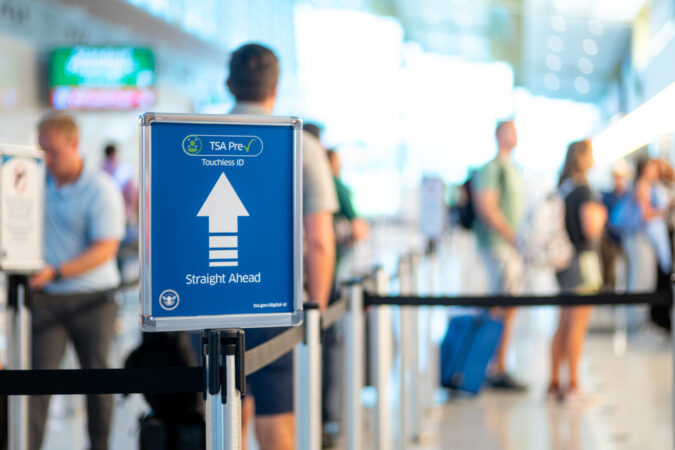
    TSA PreCheck Touchless ID, a new program that uses facial recognition, is expanding to 65 airports this spring. The expansion will prioritize 2026 World Cup host cities, where travel is expected to surge, said Transportation Security Administration spokesperson R. Carter Langston.

    “Passengers seem to absolutely appreciate it — the speed, the efficiency,” Langston said. “All they show is their face, and the officer just waves them right into the checkpoint. No hassling with passports or IDs or phones.”

    TSA launched the first iteration of the program in 2021 in partnership with Delta Air Lines at Hartsfield-Jackson Atlanta International Airport. It’s now available for five airlines across 22 airports.

    Critics worry that the program raises privacy concerns. It is voluntary, and travelers can opt out at any time and use a standard ID verification instead.

    What is PreCheck Touchless ID?

    TSA said in an email that the initiative is a joint effort from U.S. Customs and Border Protection, airports, and airlines that allows travelers “to move through dedicated lanes with ease, enjoying a smoother and more convenient airport experience.”

    The program uses the CBP Traveler Verification Service to create “a secure biometric template of a passenger’s live facial image taken at the checkpoint and matches it against a gallery of templates of pre-staged photos that the passenger previously provided to the government (e.g., U.S. Passport or Visa),” the agency website said.

    Who is eligible for PreCheck Touchless ID?

    To use the program, fliers must be a current TSA PreCheck member with a valid “known traveler number” and an active airline profile (such as being enrolled in a loyalty program). They must also have a valid passport uploaded to their airline profile.

    The airlines currently participating in the program include Alaska, American, Delta, Southwest, and United.

    TSA PreCheck Touchless ID offers current TSA PreCheck members an expedited airport security screening by way of “facial comparison technology.”

    It’s only available at select airports, through participating airlines — which vary. For example, travelers at John F. Kennedy International Airport, but only if they are flying with Alaska, America, or Delta. It is available at George Bush Intercontinental in Houston, but only for passengers flying with American. For a list of availability, visit the TSA website.

    How can travelers opt in?

    To use the program, travelers must first opt in through their airline’s website or app before checking in to their flight.

    The process varies by airline, but you can generally find the prompt under a “travel documents” section (where you add your known traveler number or passport details) of your airline loyalty program app or website.

    American Airlines customers, for example, will find the opt-in choice toward the bottom of the “Information and password” page of their AAdvantage profile, while Alaska Airlines customers should go to their account settings, then click into the “travel documents” section.

    Once travelers have opted in, then checked in for their flight, a TSA PreCheck Touchless ID symbol should then appear on their boarding pass. If the symbol is not on your boarding pass, you won’t be able to use the lane, even if you show an employee that you are enrolled in the program.

    At the airport, travelers should follow signs to a separate TSA PreCheck Touchless ID lane. Instead of handing an ID over to an officer to verify your identity, you’ll instead pause to scan your face, then keep moving.

    Is it really faster?

    It can be, for two reasons.

    First: There is no slowdown to hand over and scan your ID; travelers must only pause during their walk through the line dividers before proceeding to the X-ray machines.

    Second: Because the program is new, requires signing up in advance, and is not available for every airline, it’s getting a fraction of the traffic that regular security, Clear, or PreCheck lanes are.

    We’ve had mixed results. When it works, it’s incredible; you really are through in seconds.

    But we’ve also been delayed when the facial comparison machine was undergoing maintenance and out of use, sending us back into the longer PreCheck lane.

    Which airports offer PreCheck Touchless ID?

    TSA PreCheck Touchless ID is already available at 22 airports (however, participating airlines will vary; check the TSA website for more information):

    • Boston Logan International Airport
    • Charlotte Douglas International Airport
    • Chicago O’Hare International Airport
    • Dallas-Fort Worth International Airport
    • Denver International Airport
    • Detroit Metropolitan Wayne County Airport
    • Dulles International Airport
    • George Bush Intercontinental Airport
    • Harry Reid International Airport in Las Vegas
    • Hartsfield-Jackson Atlanta International Airport
    • John F. Kennedy International Airport
    • LaGuardia Airport
    • Los Angeles International Airport
    • Minneapolis–Saint Paul International Airport
    • Newark Liberty International Airport
    • Palm Beach International Airport
    • Philadelphia International Airport
    • Portland International Airport in Oregon
    • Ronald Reagan Washington National Airport
    • Salt Lake City International Airport
    • San Francisco International Airport
    • Seattle-Tacoma International Airport

    What are the privacy concerns?

    The TSA is using more facial recognition at the airport, including in regular security lanes and CBP checks.

    The CBP says its Enhanced Passenger Processing involves taking a traveler’s photo using “auto capture technology” to simplify the inspection and adjudication process.

    Travelers can also use biometric screenings to speed through Global Entry, using a CBP app.

    TSA says on its website that it may share your information with “CBP, DHS S&T, or others as necessary.” The agency confirmed that includes sharing information about travelers with Immigration and Customs Enforcement to check for deportation orders.

    There has been a bipartisan effort to put more guardrails on its use at airports.

    In 2019, the Department of Homeland Security said that photos of travelers were taken in a data breach, accessed through the network of one of its subcontractors. (TSA says its databases are encrypted).

    A new Senate bill would allow officers to continue scanning travelers’ faces if they opt in; it would ban the technology’s use for anything other than verifying identities. It would also require the agency to immediately delete the scans once the check is complete.

    If you change your mind about TSA PreCheck Touchless ID, you can opt out at any time and ask for standard ID verification instead. You can opt out of any facial recognition at the airport by saying, “I’d prefer a standard ID check.”

    The agency also says it deletes photos and personal data within 24 hours of scheduled flight departures. The TSA website’s FAQ section addresses some privacy concerns and says that all data collected during facial comparison checks is protected.

  • Handling of Pretti probe prompts prosecutors to consider resignations

    Handling of Pretti probe prompts prosecutors to consider resignations

    Federal prosecutors in Minneapolis have told U.S. Attorney Daniel Rosen, the Trump administration appointee leading the office, that they feel deeply frustrated by the Justice Department’s response to the shootings of Renée Good and Alex Pretti by immigration officers and suggested that they could resign en masse, leaving the office unable to handle its current caseload, according to two officials familiar with the office.

    At least one prosecutor in the office’s criminal division has resigned since a meeting this week with Rosen at which the prosecutors aired their concerns, according to the people, who spoke on the condition of anonymity to discuss a personnel matter that has not been made public.

    The threat of further resignations is the latest sign of how the federal judicial system in Minnesota has begun to crack under the strain imposed by the administration’s immigration enforcement surge in the state. On Wednesday, the chief federal district judge in the state wrote that Immigration and Customs Enforcement officials had violated 96 court orders since launching the crackdown in Minnesota, dubbed Operation Metro Surge.

    “ICE has likely violated more court orders in January 2026 than some federal agencies have violated in their entire existence,” Chief U.S. District Judge Patrick Schiltz wrote.

    When asked for comment about the Minnesota prosecutors, a Justice Department spokesperson responded with Attorney General Pam Bondi’s February 2025 “zealous advocacy” memo that said attorneys would face discipline or termination if they are not “vigorously defending presidential policies.”

    The U.S. attorney’s office in Minnesota has been in turmoil since the administration sidelined the office in the investigations around the shootings of Good and Pretti, who were shot two and a half weeks apart during confrontations with immigration officers in Minneapolis.

    At least a half-dozen prosecutors in the office — including the second-in-command — resigned earlier this month after top Justice Department officials told prosecutors not to investigate the shooting of Good but instead try to build a case against her partner.

    In the aftermath of those resignations, the Justice Department sent prosecutors from other Midwestern states to help deal with the swelling caseload in Minnesota. The severe staffing shortage in the office is expected to worsen in the coming weeks as more prosecutors from the office’s criminal and civil divisions resign.

    The Minnesota U.S. attorney’s office is down to about half of its full staffing level of approximately 70 lawyers. At least some of the resignations occurred in the final months of the Biden administration before President Donald Trump took office.

    When Pretti was shot by immigration officials on Jan. 24, Trump administration officials said the Department of Homeland Security would be leading the probe, prompting confusion and frustration among Minneapolis prosecutors who felt they should be involved.

    The shootings of Good and Pretti were captured on cellphone cameras and have prompted outrage from Democrats and Republicans over Trump’s immigration crackdown.

    Typically, a federal investigation into an officer-involved shooting would involve FBI agents and criminal and civil rights prosecutors. Any federal use-of-force investigation into an officer’s conduct is considered a civil rights investigation because the provision under which officers can be charged is a civil rights statute that covers deprivation of a person’s rights “under color of law.”

    The Washington Post reported that the FBI briefly opened a civil rights investigation into the Good shooting before changing course.

    Law enforcement officers are rarely charged for using lethal force, in part because the law provides significant leeway for officers to decide when use of force is needed. Law enforcement experts said that an accurate conclusion can only be reached, however, if officials examine all relevant state and federal laws and their application to the facts in the case.

    The immigration crackdown has strained U.S. attorney’s offices across the country. On the criminal side, prosecutors are handling a surge in cases involving allegations of residents impeding immigration officers. And on the civil side, attorneys are being inundated with an influx of petitions from immigrants contesting their detainments.

    The Justice Department is also facing staffing shortages at its Washington headquarters and in U.S. attorney’s offices across the country. In 2024, roughly 10,000 attorneys worked across the Justice Department and its components, including the FBI. In 2025, Justice Connection, an advocacy group that has been tracking departures, estimates that at least 5,500 people — not all of them attorneys — had quit the department, been fired or taken a buyout offered by the Trump administration.

    The department has struggled to find qualified candidates to fill these vacancies.

  • She planned to sell her old pot for $20. It just fetched $32K at auction.

    She planned to sell her old pot for $20. It just fetched $32K at auction.

    A 30-gallon stoneware crock sat in the corner of Lois Jurgens’ back porch for nearly three decades, collecting dust through Nebraska summers and snow through the winters. Her late husband used it as a makeshift table to rest grilling tongs and platters. They almost never thought of it.

    On Jan. 10, that same crock sold at auction for $32,000.

    “I just couldn’t believe it,” said Jurgens, who turned 91 on the day the crock was sold. “It’s the biggest thing I’ve ever gotten on my birthday.”

    The crock was manufactured by Red Wing Stoneware, probably between 1877 and 1900. The nearly knee-high crock features molded side handles and a cobalt blue butterfly, along with the company name stamped twice. Unlike later models finished with a smoother zinc glaze, the crock is salt glazed, giving it a coarser texture. Despite its many years outdoors, it is still in good condition.

    “It’s very unusual,” said Ken Bramer, the owner of Bramer Auction & Realty in Amherst, Nebraska, which sold the piece. “That’s the first one of those I’ve seen in 40 years of auctioneering.”

    Jurgens, who lives in Holdrege, Neb., said she can’t recall how or when she and her husband acquired the crock.

    “I really don’t know how it came into the family,” said Jurgens, whose husband died in 2022. She has three children and four grandchildren.

    Whatever its origins, Jurgens said, she never imagined it might be valuable. Stoneware crocks were common household items, historically used for food preservation before modern refrigeration. Today, some are still used for fermenting or as decorative objects, and pieces like Jurgens’s are seen as rare collectors’ items. In 2019, a salt-glazed stoneware cooler sold for $177,000.

    “Some people collect strange things,” Bramer said.

    Jurgens had spent the past several months clearing out items from her home that she no longer needed. Last summer, she had a garage sale and considered putting the crock out with the rest, but it never made it to the driveway.

    “It was too heavy for us to handle,” Jurgens said, adding that her daughter helped her with the garage sale. “We just decided we weren’t going to bother with it.”

    Then, earlier this month, she saw a notice in the local Holdrege Daily Citizen newspaper about an upcoming auction for antiques and collectibles, including many Redwing crocks. She called Bramer Auction & Realty, and Bramer offered to stop by Jurgens’s house and take some photos of the crock.

    “I said, ‘Oh my goodness, that’s a good one,’” Bramer said, telling her: “I think you will be pleasantly surprised by what it brings.”

    Jurgens’s son let Bramer know they were prepared to sell it for $20 at the garage sale, and they’d be glad if it fetched more than that.

    “She was hoping for $100,” Bramer said.

    Bramer posted pictures of the crock on his website and Facebook, and offers started pouring in.

    “I was getting calls from collectors all over the United States,” Bramer said. “I knew it was a good piece, but I really didn’t know how good.”

    Since so many calls came in from bidders outside Nebraska, Bramer said he allowed people to call in with offers during the auction on Jan. 10. Jurgens did not attend the auction, as she was at church for a funeral.

    He started bids at $1,000 for the crock, and things escalated quickly.

    “People just started bidding like crazy,” Bramer said, noting that the most he had sold a crock for was about $5,800 last year. “People were standing up in the crowd, and they all had their cameras out, taking pictures and videos of it … it’s something that doesn’t happen every day.”

    The bidding war ended when a crock collector in Kansas offered a whopping $32,000 for the crock. About an hour later, while the auction was still happening, Jurgens walked in with her daughter.

    “I stopped the auction and asked Lois if she’d come up to the front,” Bramer said. “I introduced her to the crowd and said, ‘This is the young lady who had the crock on the back porch.’”

    He asked her how much she thought it sold for.

    “I hope you got $100,” Jurgens said.

    “I think we did just a little bit better,” Bramer replied.

    When he revealed the final number, “she kind of went weak in the knees,” Bramer said.

    Jurgens said she was — and still is — in disbelief.

    “The whole situation kind of left me in shock. Thankful, but in shock,” she said. “I just couldn’t believe it.”

    Bramer said he, too, was stunned by the outcome.

    “It was really fun for both of us to be surprised,” Jurgens said. “I feel guilty that I didn’t even pretend to take care of it.”

    Jurgens said that since the auction, people stop her when they see her out and about and ask her to tell the story. It was first reported by local news personality Colleen Williams.

    “I can’t go anywhere or they recognize me,” Jurgens said.

    She said she plans to give part of her windfall to her church, and she’s still thinking about what to do with the rest.

    “It would have been fun to share with him if he was still alive,” she said of her husband.

    He would have gotten a kick out of his trusty makeshift table being an actual treasure.

    “It was a special day,” she said.

  • Trump faces fresh MAGA blowback for efforts to ‘de-escalate’ in Minnesota

    Trump faces fresh MAGA blowback for efforts to ‘de-escalate’ in Minnesota

    President Donald Trump’s efforts this week to “de-escalate” controversial deportation tactics in Minnesota in the face of widespread public dismay have caused a new wave of blowback from his base of hard-line anti-immigration advocates.

    The president is caught between competing interests: a loyal base of voters who elected him on a campaign promise of “mass deportations,” and a broader electorate that is increasingly uncomfortable with an aggressive approach that has led to the shooting deaths of two American protesters by federal agents this month.

    The conflicting viewpoints are evident within the administration, too, with advisers divided along similar lines and offering opposing feedback on whether and how drastically to shift Trump’s immigration strategy, according to people aware of the conversations.

    Federal agents deploy tear gas near the intersection of Park Avenue and 34th Street in Minneapolis on Jan. 13.

    Trump is also navigating a collision of his own instincts: his desire for flashy roundups of foreign-born criminals, and his recognition that the broader public, including business leaders he identifies with who rely on immigrant labor, have soured on the expansion of those roundups to noncriminals in workplaces.

    The conflict has put the normally resolute Trump in an unusual spot, needing to tread carefully on an issue that he has previously plowed ahead on with threats and swagger. The result has been mixed signals from the White House — and fresh evidence of the difficult task Trump faces in a midterm election year of appeasing both his MAGA base and a broader swath of voters.

    Earlier this month, Trump threatened to invoke the Insurrection Act to allow him to send the military to Minneapolis — and suggested that “THE DAY OF RECKONING & RETRIBUTION IS COMING.” He also sharply criticized two Minnesota Democrats, Gov. Tim Walz and Minneapolis Mayor Jacob Frey, calling them “useless” earlier this month.

    This week, however, the president characterized conversations with Walz and Frey as positive and productive. He told Fox News that he wanted to “de-escalate a little bit” and that his talk with Walz “couldn’t have been a nicer conversation.”

    Yet Trump has not articulated a clear shift in immigration strategy, leaving the public unsure of where he actually stands or what comes next.

    He sidelined Homeland Security Secretary Kristi L. Noem from the Minnesota operation — a tacit but rare show of disapproval toward a cabinet member. He has not taken parallel action against senior aide Stephen Miller, who is widely viewed as the architect of Trump’s immigration policies — and who advised Noem on how to respond publicly to the shooting death of ICU nurse Alex Pretti in Minneapolis on Saturday, according to a person who spoke on the condition of anonymity to describe internal conversations.

    In the immediate aftermath of the shooting, both Miller and Noem labeled Pretti a “domestic terrorist.” Miller also called him an “assassin.” Trump and White House press secretary Karoline Leavitt have not defended the officials’ rhetoric but also have not publicly criticized their job performance.

    In a statement to the Washington Post, Miller said the initial information he received about the shooting from the Department of Homeland Security was “based on reports from CBP on the ground.” Miller said the White House is now working to determine why Customs and Border Protection at the time of the incident was not using the extra personnel that DHS had sent to Minnesota for “force protection.”

    Stephen Miller, deputy White House chief of staff for policy, on Tuesday at the White House.

    Noem asked for a meeting with Trump on Monday evening — after Trump announced that his border czar, Tom Homan, would be taking over operations in Minnesota. The gathering lasted for hours, according to two people who spoke anonymously to describe a private meeting. Noem and her top aide, Corey Lewandowski, joined the president and other aides to discuss issues including the border wall and Minneapolis, one of the people said. Separately, Lewandowski and Homan, who have previously clashed, have spoken and agreed to work together, the person added.

    The White House’s efforts to make adjustments on tactics have not stanched the bleeding in public opinion.

    The most recent flood of criticism has come from pro-Trump users online and top influential MAGA commentators. Some called Trump’s pivot a “betrayal.” Others warned, as they have about other issues for months, of the risk that the base could sit out November’s elections.

    Fresh public polling showing increased “anti-ICE sentiment” and “increased support of sanctuary cities” makes clear that the administration must change its deportation tactics, said Mark Mitchell, head pollster at the conservative Rasmussen Reports.

    An Economist/YouGov poll released this week — with most respondents answering after the Pretti shooting — found that 55% of Americans have little confidence in ICE, an increase of 10 percent since mid-December. The decline in trust for ICE has been most pronounced among independent voters, the poll found, with 67% now saying they have little confidence in the immigration agency, compared with 49% last month.

    By contrast, 60% of Republicans say they have “a great deal” or “quite a lot” of confidence in ICE, highlighting the gap between Trump’s own party and independents and Democrats.

    And the president’s sudden interest in cooperating with Walz and Frey and his suggestions about going easy on longtime immigrant workers have amounted to a “rug pull” for the base in his rhetoric, Mitchell said. While polling hasn’t yet showed Trump’s base punishing him, the midterms already look increasingly problematic for the GOP, Mitchell said, and concern remains about declining enthusiasm among Trump supporters. Mitchell met with Trump in November to warn him of frustration within his populist base.

    “Ten years, this has been the core part of his platform — ‘They all have to go home … Build the wall,’” Mitchell said. Trump talking about only focusing on removing violent criminals sounds like he has “caved on the major campaign promise.”

    Within the MAGA base, the president’s supporters want as aggressive an offense as Trump can conceive.

    “This is an inflection point — you blink now and you’re going to blink forever. You bend the knee now, you’ll bend the knee forever,” Stephen Bannon, a former Trump adviser and influential MAGA commentator, said on his show Wednesday as he continued urging the Trump administration to ramp up deportations and to not “de-escalate” or draw back federal agents from Minnesota. “I don’t care how many people I’ve got to deport. I don’t care.”

    Federal agents threaten to spray a chemical agent as they confront journalists and rapid responders in Minneapolis on Jan. 14.

    Some prominent Trump supporters are also concerned about the actions by some members of Congress, possibly emboldened by Trump’s recent change of tone, to renew efforts to pass immigration reform.

    The White House has pushed back on the notion that Homan’s elevation amounts to a dialing back of deportations. A White House official, who spoke on the condition of anonymity to discuss strategy, said the administration has “not wavered” in its deportation mission, but Trump doesn’t want to see Americans injured because of clashes with immigration officials.

    In a statement, White House spokeswoman Abigail Jackson said the administration “will never waver in standing up for law and order and protecting the American people.”

    “Any left-wing agitator or criminal illegal alien who thinks Tom’s presence is a victory for their cause is sadly mistaken,” she said.

    This isn’t the first time in Trump’s second term that the MAGA base has erupted over his comments on immigration policy, which have consistently revealed his sensitivity to the concerns of business leaders and average conservatives put off by the deportation of otherwise law-abiding immigrants.

    In late spring, after hearing complaints from friends and donors about deportation roundups at farms, hotels and restaurants hurting operations and scaring off workers, Trump announced that “changes are coming” to spare the agriculture and hospitality fields.

    Trump’s base similarly went off on him. Even some top advisers were blindsided, privately insisting that no such policy changes were in the works and chalking up the suggestion to Trump’s habit of trying to smooth public conflicts with rhetoric.

    Miller at the time raised concerns to the president about his stated plans for “changes” to protect migrant workers, according to a person who spoke anonymously to describe private conversations. Miller had been calling for a drastic increase in deportation numbers to keep up with the administration’s aggressive goals. Homan told the Washington Post soon after Trump’s announcement that he had not discussed any such changes with the president and wasn’t a part of crafting a policy to carve out workers.

    During a speech a few weeks later in Iowa, Trump acknowledged he had gotten “into a little trouble because I said I don’t want to take people away from the farmers,” before describing supporters who were unhappy with his comments as “serious radical-right people.” The comment further inflamed tensions, with influential MAGA commentators including Bannon and Charlie Kirk, the head of Turning Point USA shot dead later last year, accusing the administration of preparing to offer amnesty to some illegal immigrants.

    A number of Republicans in Minnesota said they were glad to see Trump shift course this week. They said they welcomed the arrival of Homan and the apparent truce between Trump and local leaders.

    “I’m just grateful that we’re moving in a direction to get back to being sensible,” said Jim Abeler, a GOP state senator in Minnesota who worried that federal agents were violating people’s rights. “There are people afraid, there are citizens afraid to leave their homes, to go buy groceries because of their skin color or their nationality … It’s past time.”

    Yet on Wednesday, the president also signaled that he was aware of the latest criticism from within his base. A day after speaking favorably of his conversation with the Minneapolis mayor, Trump posted on Truth Social that Frey was “PLAYING WITH FIRE” by saying he would not enforce federal immigration laws.

  • The science behind an herbal remedy that has worked for thousands of years

    The science behind an herbal remedy that has worked for thousands of years

    The question: Does ginger really help an upset stomach?

    The science: For more than 2,500 years, ginger has been used for its medicinal properties.

    Ginger is still often recommended as a way to ease stomach upset.

    Ginger, which is available at almost any grocery store and often used as a spice, looks like a root but is technically a rhizome — a modified, horizontal-growing stem of the Zingiber officinale plant. And it has properties that can relieve mild to moderate nausea, experts and studies say. However, it works better for some types of stomach trouble than others — and it matters how you take it.

    “We live in a world where there’s this gigantic box of options for our patients and so many of them are costly and have side effects,” said Joshua Forman, a gastroenterologist at the University of Maryland St. Joseph Medical Center, who recommends ginger to his patients. “It’s interesting how sometimes the simplest things fly under the radar.”

    What is ginger, and why does it work?

    Ginger can be eaten raw or cooked, steeped in tea, or taken as lozenges, gummies, or chews. But when taken for medicinal purposes, Forman said, he advises his patients to take ginger root powder in capsule form, which offers more consistent dosing than most other variations, to ease symptoms of nausea, indigestion, and other symptoms.

    Here’s why it works. Ginger contains compounds such as gingerol, shogaol, and zingerone that act on receptors in our gut and nerves that send signals to our central nervous system. One receptor, 5-HT3, regulates nausea, while another, TRPV1, triggers pain signals. By affecting these receptors, ginger may help ease nausea and discomfort, Forman said.

    Additionally, these compounds can help the lower part of the stomach contract, which speeds up digestion and reduces fullness and bloating, he said.

    Ginger also has anti-inflammatory and antioxidant properties, which may help protect against gastrointestinal irritation, said Keshab Paudel, an associate professor of pharmacology at Burrell College of Osteopathic Medicine in Florida, who studies ginger.

    In a 2025 literature review on the pharmacological effects of ginger, Paudel and his colleagues found that ginger reduced nausea, particularly nausea related to pregnancy, but did not consistently relieve vomiting. Ginger also showed other potential benefits such as helping to reduce inflammation, oxidative stress, and blood glucose levels, said Paudel, who was the lead author of the study.

    Additionally, some studies show that ginger may help with nausea and vomiting caused by chemotherapy, particularly when combined with antinausea medications. It may help ease nausea after surgery, though findings are mixed on postoperative vomiting. It may also help with nausea related to migraine pain.

    There isn’t enough data, however, to suggest that ginger can curb nausea related to stomach viruses, hangovers, or chronic acid reflux, Paudel said.

    How should I take ginger for a stomachache?

    The amount of ginger used in studies to treat nausea varies from 500 to 1,500 milligrams divided throughout the day, with 1 to 3 grams daily at the upper end. More than that and it may worsen reflux, heartburn, and other gastrointestinal symptoms. Forman said he recommends taking 500 mg twice per day.

    If you like the taste, fresh ginger root works well in hot tea, though it’s harder to figure out what dose you are getting, Forman said.

    Just boil freshly grated or sliced ginger in a pot of water and let it steep for at least 10 minutes, then strain out the ginger. Add a tea bag or loose tea leaves (which you would also strain out) and, if you’d like, honey and lemon.

    Forman cautioned against using store-bought ginger tea drinks as they often contain sweeteners and other ingredients.

    Don’t waste your time with most ginger ales, Forman said. Many contain ingredients such as high-fructose corn syrup and very little ginger, sometimes using artificial ginger flavoring. Ginger beers (which are generally nonalcoholic, despite the name) can sometimes contain more ginger than soda, but the amount can vary.

    Who shouldn’t take ginger medicinally?

    Although ginger is generally considered safe and is almost universally well-tolerated, it can lower blood sugar and impair blood platelet function when taken regularly at high doses, Forman said. If you have diabetes or take blood thinners, talk to your doctor before taking ginger supplements.

    Additionally, there is limited clinical data on the use of ginger in young children, so before giving it to your child as a daily supplement, consult a pediatrician, Paudel said.

    Ginger “should be viewed as a supportive, evidence-based complementary option, not a cure-all,” and people with persistent or severe gastrointestinal symptoms should seek medical care rather than trying to treat the condition on their own, he said.

    What else you should know

    There are various over-the-counter medications to treat nausea and vomiting such as dimenhydrinate (Dramamine), which is commonly used to combat motion sickness, and bismuth subsalicylate (Pepto-Bismol), which can help with nausea, indigestion, and diarrhea often related to stomach bugs.

    If you prefer natural remedies, however, here are some ideas from experts:

    • Peppermint oil may relieve gastrointestinal discomfort and symptoms of irritable bowel syndrome. Although the evidence is not conclusive, some research suggests that enteric-coated peppermint oil capsules may reduce abdominal pain, bloating, and gas, Paudel said. (Enteric coating keeps the pill from dissolving in stomach acid so that the drug is released in the intestines, where it can be best absorbed.) But similar to ginger, “the effectiveness of these interventions largely depends on the underlying cause of the symptoms,” he said. In studies, peppermint oil appears safe for most people, but there isn’t much research on its medicinal use in women who are pregnant or breastfeeding, so consult your doctor before taking it.
    • Vitamin B6 may help with morning sickness — nausea and vomiting related to pregnancy, Paudel said. In some studies, doses have ranged from 10 mg to 25 mg, taken up to three times per day.
    • Chamomile tea also may help ease an upset stomach. A 2025 review found that chamomile was associated with reductions in sores and discomfort in the mucous membranes lining the digestive tract, suggesting it may have anti-inflammatory properties.

    The bottom line: Ginger — whether taken in capsules or fresh, homemade tea — can ease mild to moderate nausea, but research doesn’t show that it consistently reduces vomiting. It also hasn’t been shown to help with nausea related to stomach viruses, hangovers or chronic acid reflux.