Category: Washington Post

  • How China weaponized soybeans to squeeze U.S. farmers — and spite Trump

    How China weaponized soybeans to squeeze U.S. farmers — and spite Trump

    The start of the harvest in September is usually when China, the world’s biggest importer of soybeans, puts in a flurry of orders to the farms of Illinois, Iowa, Minnesota, and Indiana.

    This year, however, Chinese importers aren’t buying. In retaliation for President Donald Trump’s tariffs, Beijing has cut off Midwestern farmers from their largest and most lucrative overseas customer: China accounted for half — or $12.6 billion — of U.S. soybean exports last year.

    For the first time since November 2018, China imported no soybeans from the U.S. in September, data from China’s General Administration of Customs showed Monday.

    “We’re in uncharted territory in terms of a complete absence of Chinese buyers for the harvest that is currently coming in,” said Even Pay, director of agriculture research at Trivium China, a research firm based in Beijing.

    For Beijing, halting U.S. soybean imports has been an easy and relatively cost-free way to pile pressure on Trump ahead of a planned meeting with Chinese leader Xi Jinping in South Korea later this month.

    Trump, speaking to reporters on Air Force One last weekend, said he wanted China to return to its previous level of purchases and that he thought Beijing was ready to make a deal on soybeans.

    But while American farmers lobby Trump to get them back into China, there isn’t similar pressure within China for the government to allow purchases from U.S. suppliers. That “gives Beijing a great deal of negotiating leverage,” Pay said.

    On Tuesday, Trump took to social media to call China’s decision to not buy U.S. soybeans “an Economically Hostile Act” and said the U.S. was considering “terminating” buying cooking oil from China as retribution.

    But Beijing has shrugged off Trump’s threats. Analysts say it is ready to extend the purchasing freeze for the rest of the year.

    Here’s how China has turned its massive market for soy into a trade war weapon.

    Why does China buy so many soybeans?

    China consumes far more soybeans than any other country in the world, but it grows less than a fifth of what it needs — just enough to cover all the tofu and soy sauce used in Chinese cooking.

    It buys everything else from abroad — importing more than the rest of the world combined — and the U.S. has traditionally been one of its top suppliers.

    Those imported beans mostly feed huge numbers of pigs, chickens, and other livestock, as meat consumption by wealthier Chinese families has grown rapidly. Despite efforts to develop alternatives, soybeans accounted for 13% of animal feed in 2023.

    The remaining imported soybeans mostly become cooking oil: soybean oil’s mild taste and ability to withstand high heats make it perfect for stir-fries. Chinese producers favor U.S. or Brazilian imports over more expensive homegrown soybeans.

    For U.S. farmers, it’s hard to find a replacement for Chinese demand. “It’s just an enormous market,” said Phil Luck, director of the economics program at the Center for Strategic and International Studies (CSIS), a Washington-based think tank.

    How has China curbed reliance on American farmers?

    China has worked hard to curb its reliance on U.S. soy imports, especially after the trade conflict of Trump’s first term ended in 2020 when Beijing agreed to buy $200 billion in American products, including soybeans (although it bought far less than it promised.)

    Beijing has since pushed Chinese farms to consolidate and expand domestic output. It has launched trial programs for previously banned genetically modified crops. And it is aiming to lower the ratio of soybeans in animal feed to 10% by 2030, down from 18% in 2017.

    A Ministry of Agriculture report released in May said that these efforts meant import demand would steadily fall over the coming years.

    But thanks to limited farming land and ballooning demand, China is still a long way from its goals to meet half of its soybean needs with domestic crops and will rely on imports for years to come, analysts said.

    So who is supplying China instead?

    Chinese analysts are blunt about their country’s growing preference to buy from anywhere but the U.S.

    “From China’s perspective, the U.S. is an unpredictable supplier,” said Niu Haibin, director of the Center for Latin America Studies at Shanghai Institutes for International Studies.

    Tariffs mean U.S. soybeans no longer have a price advantage and China has already identified alternative suppliers to fill the gap. “The longer we rely on alternative sources, the dimmer the outlook for U.S. soybean exports to China becomes,” Niu said.

    Those suppliers include Argentina, Uruguay, and even Russia. But it is Brazil, the world’s largest soybean exporter, that has been the big winner from China’s U.S. embargo.

    China would typically alternate between hemispheres, buying from Brazil during its March to June harvest season and then from the U.S. for the remainder of each year.

    But this year, instead of switching to American farms, China kept placing orders from Brazil. It imported $4.7 billion in soybeans from the country in August and only $100 million worth from the U.S.

    That continued in September, when China bought 7.2 million tons of soybeans from the South American country — 93% its total exports, according to Anec, Brazil’s national association of grain exporters.

    China’s effort to secure Brazilian soybeans goes far beyond merely placing big orders.

    Chinese state-owned companies have taken stakes in the major Brazilian ports of Paranaguá, Açu, and Santos. COFCO, China’s largest agricultural importer, has the exclusive rights to run a major new terminal at Santos that opened in March and will expand the port’s throughput by 15 million tons per year when it reaches full capacity in 2026.

    And Beijing is still trying to lower barriers for Brazilian exporters to access its vast market. The two countries are working on plans to build a railway connecting Brazil to Peru’s Chancay port that could cut shipping times to Asia dramatically.

    What does this mean for U.S.-China trade talks?

    With plentiful supply from South America, China has been projecting confidence that it can cold-shoulder American farmers for as long as is necessary to reach a trade deal.

    Beijing once worried that U.S. wouldn’t sell China its soybeans, but it is now the U.S. that is anxious for China to buy, declared one widely shared article published on social media app WeChat last week.

    In response to Trump’s recent threat to retaliate by halting cooking oil trade — which Chinese analysts took to mean the U.S. stopping purchases of used oil that can be turned into biodiesel — the state-owned Global Times newspaper declared that “there is no shortage of buyers for China’s used cooking oil.”

    That defiant tone is helped by China’s sizable stockpiles. Its soybean imports hit a record in May and were up 5.3% year-on-year for January to September to reach 95 million tons, according to China’s customs agency.

    Beijing is in a position where it could hold out for months — possibly until new South American crops arrive in early 2026 — without needing to procure U.S. soybeans, said Pay, the Trivium analyst.

    Trump’s focus on soybean purchases has only strengthened Beijing’s belief that this is an easy way to squeeze the U.S. with minimal costs at home.

    In Beijing, “there’s definitely a sense that the U.S. is in chaos and there’s room for putting political pressure on targeted groups,” said Jack Zhang, director of the Trade War Lab at the University of Kansas.

    It also gives Xi something to offer Trump in exchange for what China really wants.

    “Part of the calculation,” Zhang said, “is that the U.S. will negotiate over these small but pressing concerns and relent on some of the larger structural stuff that China’s more worried about.” These include U.S. export controls on advanced computer chips.

    But even if a deal is struck this month, it may be too late for U.S. farmers to make up for orders already lost.

    “China’s in a pretty good position. We really want to resolve this. They don’t need to,” said Luck, the CSIS analyst. Even if China started placing orders the day after Xi and Trump meet, U.S. soybean farmers “still probably lost half of the season, so we’re on the clock here,” he said.

  • The fight between AI companies and the websites that hate them

    A lawsuit by online message board Reddit gives you a glimpse at the knockdown boxing match behind chatbot conversations.

    In one corner are artificial intelligence services that gobble information from across the internet to help you plan a vacation or create silly videos. In the other corner are companies that are sometimes unwilling or overwhelmed sources of that data.

    In its lawsuit, similar to ones against AI companies by news organizations, Hollywood studios, book authors, and others, Reddit alleges that the start-up Perplexity benefited from improperly using its website as AI fuel.

    The claims are an example of warnings from Reddit, Wikipedia, and others that say if the boxing match continues as is, AI services may kill the websites and other source material that we love.

    Dating back at least to the death of Napster a quarter-century ago, there have been constant fights over technology upstarts that remix media and information or deliver it in new ways. AI could be the most intractable fight of all.

    AI ‘bank robbers’ vs. Reddit

    The 20 years of our Reddit debates about the best Welsh restaurants and quiet air conditioners are gold for AI services. They typically need truckloads of online information like that to “train” their computers and serve up responses to your AI queries.

    Reddit knows how valuable it is and laid out ground rules for AI companies that wanted to profit from siphoning Reddit message boards in bulk: AI companies needed a paid contract with Reddit and to respect its guardrails.

    Some companies, including Google and ChatGPT parent company OpenAI, agreed to Reddit’s terms. For AI companies that didn’t agree, Reddit put up digital walls to block AI companies’ spiderlike software that crawls over websites to harvest their information.

    According to Reddit, Perplexity’s CEO promised Reddit’s top lawyer more than a year ago to respect Reddit’s digital walls. Perplexity, which makes what it calls an AI “answer” engine and an AI-specialized web browser, instead found another way to siphon Reddit pages, the company says.

    (The Washington Post has partnerships with Perplexity and OpenAI.)

    Reddit’s lawsuit, filed Wednesday in a New York federal court, said that Perplexity hired at least one data-siphoning middleman to grab many billions of pages of Reddit material indirectly, from Google search results.

    Those middlemen allegedly used technically sophisticated tactics to get around Google’s digital defenses against unwanted siphoning by bots. Reddit said that it obtained this information from a subpoena to Google in a different, secret lawsuit.

    Reddit’s lawsuit compared what Perplexity and the bot-for-hire middlemen did to “bank robbers” who know they can’t get into the bank vault and “break into the armored truck carrying the cash instead.”

    In a post on Reddit, Perplexity said that Reddit is after money. The lawsuit is a “sad example of what happens when public data becomes a big part of a public company’s business model,” Perplexity said.

    Google said that it has “strong technical measures to prevent this type of malicious abuse, because it undermines the choices websites make about who can access their content.”

    What this means for you

    Experts have said that the law generally protects technology companies that take copyrighted materials like news articles, books, and movies and put them to a new, creative use. Many AI companies say that their products meet that legal standard.

    Blake Reid, an associate professor at the University of Colorado Law School, said that Reddit’s case adds an extra wrinkle: The company doesn’t hold the copyright to Reddit posts. The people who created those posts do. Reid said that helps make the lawsuit’s outcome unpredictable.

    Regardless, AI keeps running into a paradox: To be useful, new forms of AI rely on ingesting vast swaths of the past, present, and future internet. But doing so can increase costs and divert users from websites, which imperils the internet we use.

    We’ve heard similar complaints before. Entertainment companies sued YouTube for giving you free access to their creations. Music companies have howled over TikTok letting you create dance videos to Taylor Swift tunes. News organizations have groused that Google and Facebook let you browse the news without buying newspapers or visiting news websites.

    The content companies have typically found ways to grudgingly live with, and even profit from, the technology upstarts. AI is different, said Toshit Panigrahi, CEO of TollBit, which helps websites get paid for AI data collection.

    AI services grab information at warp speed and at industrial scale from so many places, including news and entertainment sites, cruise operators, and furniture sellers. Panigrahi said that the old pattern — technology changes are good for us and the owners of digital creations — may no longer apply.

    “This is changing how the internet works fundamentally,” he said.

  • Think landing a job is hard? Try having ‘DEI’ on your resume

    Think landing a job is hard? Try having ‘DEI’ on your resume

    After seven rounds of grueling interviews, an offer for a recruiting job seemed within reach for David Daniels IV. Until a reference check that Daniels learned had involved wary discussions of his background in diversity, equity, and inclusion. The offer never came.

    Having DEI experience on a resume can feel like a scarlet letter in an already difficult job market, said Daniels, who lives in New York and held roles at companies including yoga wear retailer Lululemon Athletica Inc. “There’s this sense of, if you did DEI, we don’t want to hire you,” he said. For Daniels and others like him, working in diversity made them hot commodities in corporate America just a few years ago. Now it’s a liability. Conservatives have lambasted diversity work as exclusionary, while President Donald Trump’s ire against what he has termed “illegal DEI” has spurred a retrenchment in many companies. Fearing lawsuits and the loss of government contracts, businesses quickly pivoted, downsizing or dismantling their diversity groups.

    That left DEI professionals who lost their jobs stranded, competing for roles in a tight job market. Among the jobless population in the broader economy, about a quarter have been unemployed for a half-year or longer — the highest share since the mid-2010s, excluding the pandemic-era years. DEI specialists say they’re getting less interest from recruiters than they did several years ago and fewer interviews from companies. To bolster their chances, professionals have stripped the three letters from resumes and sought roles in adjacent departments such as in human resources, public affairs, and marketing. Others have weighed changing careers.

    One job hunter is Josue Mendez in New York, who used to work in the diversity group at Ogilvy, an advertising agency owned by WPP PLC. In June, weeks after his team won an industry award for a leadership program for its Black male employees, he was among those let go. Since then, Mendez spends his days scouring job listings and attending job fairs.

    A conversation with a recruiter was going well, he said, until Mendez mentioned his experience in diversity. “It suddenly went very cold,” Mendez recalled. “The second they see any previous work specifically in DEI, they want to stay away.” The call ended ahead of schedule. The recruiter later told Daniels he was out of the running for the job.

    A handful of large corporations remain publicly committed to workplace diversity. Delta Air Lines Inc., Southwest Airlines Co. and Coca-Cola Co. have kept the DEI label on their websites. And others are now emphasizing veterans and disabled employees.

    But there’s been a wave of reversals in the past year. Amazon.com Inc. halted some of its programs, McDonald’s Corp. stopped setting “representation goals” and Goldman Sachs Group Inc. ended a policy of only taking some companies public if they had diverse board members. Corporate fears around legal risks earlier this year overshadowed everything else, said Tynesia Boyea-Robinson, whose firm CapEQ advises companies on diversity and other social issues. “A lot of people basically looked to their legal counsel and asked: What is the way we can protect ourselves from being sued?” Job ads reflect the changed landscape. New postings for diversity roles have approximately halved this year to about 1,500 from 2019 levels, according to Revelio Labs, a firm that analyzes workforces. Postings had almost quadrupled to about 10,000 during the height of the DEI boom in 2022 compared with 2019.

    Since losing her position at a firm advising clients on their diversity efforts late last year, Victoria Person in New Orleans has been attending networking events held by the local Chamber of Commerce to help find clients for her new consulting business while she searches for a job. The moment Person mentions her 15-year career working in diversity, people give an uncomfortable laugh, change the subject or look over her shoulder to find someone else to talk to, she said. “I see and feel people reel back,” Person said. “There’s a lot of fear around this, people don’t want to be associated with it.” Still, in spite of the current malaise, Person said she hopes that diversity programs will reemerge stronger and more inclusive, serving all demographics rather than specific groups.

    Marie — who didn’t want her full named published because she fears online attacks from DEI critics — lost her role as a diversity manager, making $150,000, following Trump’s election win. Her job hunt initially yielded call backs and interviews. Now, responses have all but disappeared. Marie said she noticed some companies had posted the same diversity role multiple times over the course of months only to pull them later on. And in one interview, a chief diversity officer told her that the executive team wasn’t fully sold on workplace diversity, even though the company had posted a role. Given the scarcity of roles in diversity, Marie said she’s considering leaving the field. But returning to public education, her previous field, would mean risking cutting her income in half. In the meantime, she’s joined a group dedicated to professionals laid off from their diversity jobs. Its founder, Michael Streffery, who was let go from his job as director of DEI at Realtor.com earlier this year, says the group’s members have skills that are applicable to many other positions. “They’re systems thinkers, culture shapers, and crisis navigators,” he said.

    Before leaving his job earlier this year, Carlos Ayala experienced a slide. Once a chief diversity and inclusion officer at an energy company, his title was changed and his role downgraded. He stayed at the company for several months to help “de-risk” the department he once ran. That meant watering down or removing diversity policies to help reduce legal risks.

    Ayala quickly experienced firsthand the liability of having worked in DEI. He said he had applied for a role overseeing diversity efforts at a company that appeared, at least publicly, to be sticking with the strategy. Midway through his interviews, Ayala got an email from the recruiter who said the business was “reframing the role’’ and shifting it to a generalist human resources position. “I thought, God, that’s disappointing, they’ve been stringing me along,” said Ayala, whose based in the Chicago area. Weeks later, he’s still waiting to hear whether he got the job. Back in New York, Daniels is continuing his job search. He’s picked up some consulting work including a client in the United Kingdom, where the political backlash to diversity is less severe. He said he’s got more interviews after removing the DEI label from his online profile. In some interviews, Daniels said he’s repeatedly had to reassure hiring managers that he’s still comfortable working for a company even if it’s not focused on diversity. Despite the DEI retrenchment, Daniels is taking the long view. There’s an ebb and flow when it comes to social justice issues, he said. “America has always been this way.”

  • Amazon delivery contractors are bailing amid rising costs, meager profit

    Amazon delivery contractors are bailing amid rising costs, meager profit

    In 2022, Jake Clay started an Amazon delivery firm in Odessa, Texas, after hearing about the company’s program from a friend. He sank $75,000 into the business and earned more than $200,000 in the first year. An Air Force veteran, Clay, 50, felt like he’d joined an elite unit.

    The feeling didn’t last. Before long, rising insurance and other costs began eating into his profit. One of Clay’s drivers was badly bitten by a dog and went on workers’ compensation for a year, while his annual vehicle insurance rates soared fivefold to almost $500,000. Clay mulled laying off all his managers and running the business on his own, figuring he would clear about $75,000. In the end, he decided it wasn’t worth it. He quit last month.

    “I earned significantly less as I got more seasoned, which is the most upside-down business I’ve ever heard of,” Clay said. “Amazon wants a bunch of pawns and they keep a bunch of extra pawns on the bench to replace anyone who leaves.”

    Clay said he rejected an offer to sign an exit contract with Amazon that would have paid him $75,000, but ban him from speaking publicly about the program.

    Amazon.com Inc. launched its Delivery Service Partner program in 2018, offering aspiring entrepreneurs an opportunity to run their own businesses. The world’s biggest online retailer pledged to use its negotiating clout to help them lease vans and hire drivers. All they needed, the company said at the time, was can-do spirit and as little as $10,000 up front to earn as much as $300,000 (now $400,000) in yearly profit.

    Today, some who answered the call fear the best days are behind them. While many prospered during the pandemic-era e-commerce boom, they say their profits are dwindling owing to rising costs for insurance and vehicle maintenance even as Amazon tightens performance metrics that determine how much they earn. Like Clay, several delivery owners told Bloomberg that making money has become so hard they’re getting out — a wrenching decision with the economy slowing and unemployment rising.

    Amid the mounting discontent, Amazon recently announced a 20% hike to 12 cents for each package the firms deliver. It was the first such increase since the company launched the Delivery Service Partner program and an acknowledgment that inflation has driven up costs. But many contract delivery firms said the gesture was too little, too late. And because it doesn’t take effect until January, some saw it as a carrot to keep them working through the holidays when Amazon needs them most.

    Still, they recognize they have little leverage because Amazon can simply replace them. Last month, during the annual Ignite conference for delivery service partners, the company touted its “Road to Ownership” program, which is designed to persuade drivers to start their own delivery companies. Many owners saw the presentation as a reminder that there are plenty of people eager to step in. And a number of newbies attended the Las Vegas conference, looking for tips on how to run their businesses.

    Bloomberg interviewed 23 delivery partners who operate in 11 states around the U.S. Five said they quit the program because they were making less money each year, and several others are contemplating getting out. Four owners said they were happy with the program and that their income was growing. In online forums, delivery contractors have debated how to negotiate larger exit packages with Amazon and tried to establish how many have already quit. One chat room was set up specifically for contractors thinking of shuttering their firms and features more than 100 mostly anonymous members.

    Most of the delivery partners interviewed, including those who quit and one who liked the program, spoke on condition of anonymity because they feared repercussions from Amazon.

    “The anecdotes shared by a small number of DSPs don’t reflect the experience of the vast majority,” Amazon spokesperson Dannea DeLisser said in an emailed statement. “Interest in the program continues to grow as entrepreneurs recognize the opportunity to build their own businesses with Amazon’s support, and we’re proud of the thousands of DSPs that are doing well and making a positive impact in their communities.” Amazon has invested $16.7 billion in the program, which currently encompasses more than 4,400 firms — most of them in the U.S.

    Inflationary pressure

    Contract delivery firms have tangled with Amazon for years, often over what they consider unreasonable delivery targets that are monitored by artificial intelligence. Those concerns remain, but business owners trace their current woes to the inflationary environment and the company’s unwillingness to provide sufficient support at a time when Amazon is focused on cutting costs and boosting profits.

    Tension between the company and its delivery businesses flared earlier this year when the company passed along big bills to repair aging delivery vans. Some contractors said they were getting hit with repair bills of up to $20,000 per vehicle that they couldn’t afford to pay. The delivery firms used an app called Pave to estimate damages based on photos of the vehicle, but Amazon instituted a more rigorous inspection process this year that resulted in repair bills as much as 10 times higher than the app estimate.

    With delivery contractors balking, Amazon in September backpedaled and told them it would cover 20% of van repairs estimated in the Pave app going back to April and that it would send out revised invoices this month.

    The delivery firms are also grappling with the rising cost of insurance. Typically when they start out, insurance rates are reasonable. But the longer they are in business, the more chance there is for accidents, dog bites, and other issues, which in turn push up the costs of covering their operation.

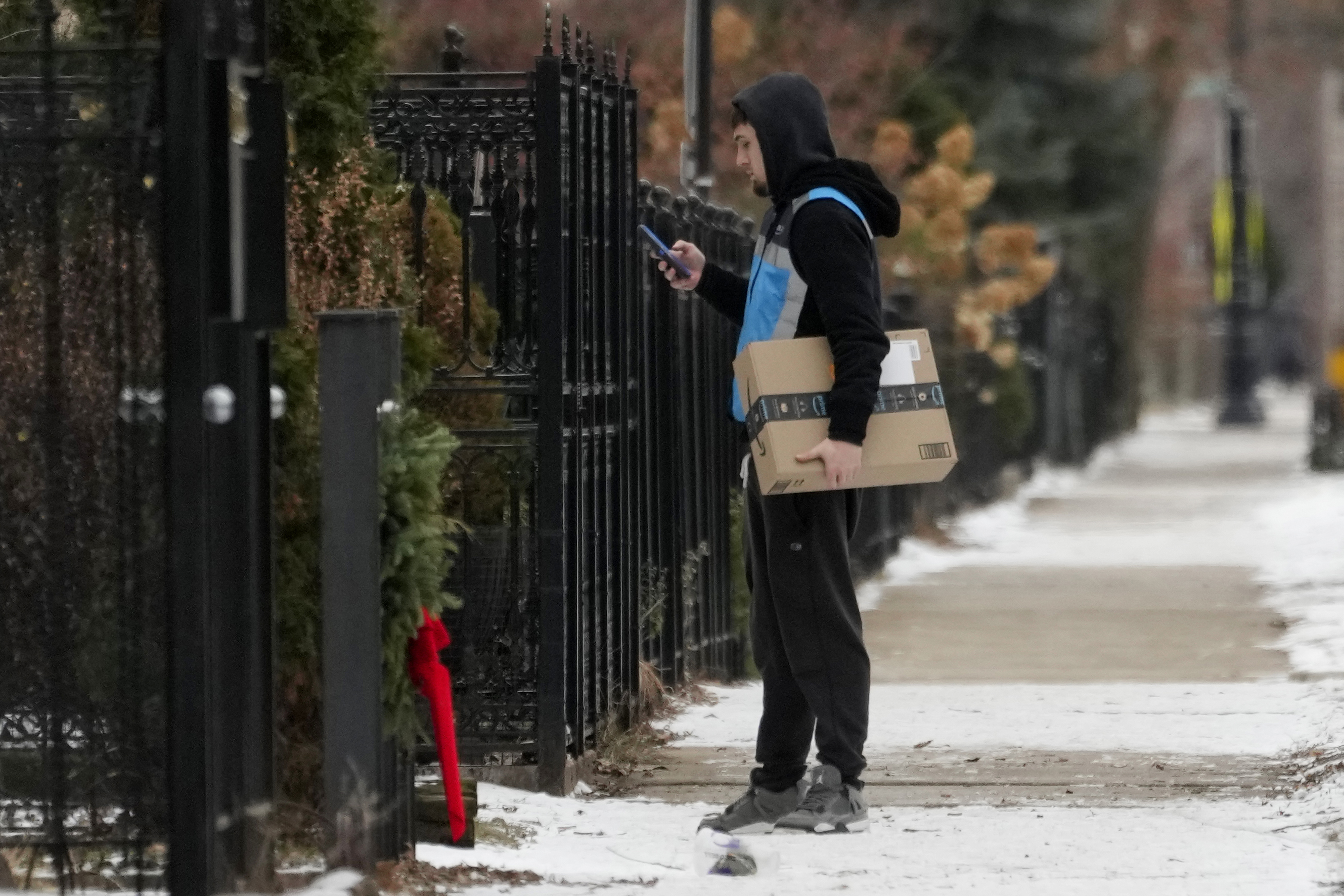
    A person checks an address before making an Amazon delivery in Chicago in January 2025.

    One owner who started an Amazon delivery business in 2019 blames skyrocketing premiums for slashing his annual profit from $400,000 to $150,000. He mostly employs young male drivers, whom insurers consider high-risk. His premiums soared after one driver was involved in a crash with serious injuries. When the case settled out of court for $1.4 million, the owner realized the risk wasn’t worth the reward.

    He went to the Amazon delivery station one Saturday evening to tell them he’d cease operating the next day, leaving the company scrambling to reassign thousands of packages to other firms. “They weren’t happy,” he said.

    Another delivery contractor who started when Amazon launched the program in 2018 said his yearly profits have been trending downward from about $200,000 to $160,000, which he expected to continue. His problems started when Amazon switched 10-hour delivery routes to begin later in the day at 11 a.m., meaning drivers made more deliveries in the dark when it’s harder to see street signs, addresses, and potential hazards like muddy puddles on dirt roads. That drove up his costs since he had to pay drivers overtime to complete routes and hire tow trucks to free vans stuck in mud. Amazon never increased his payments to reflect the increased costs associated with later deliveries.

    Amazon said it conducted a financial performance of 648 delivery contractors last year and found that about 80% of them generated annual profits of at least $100,000. The company said their profits, on average, increased each year. The average business has been operating for five years and fewer than 10% of them quit the program, according to Amazon.

    Some owners accept that running an Amazon delivery firm isn’t necessarily a long-term bet and prepare by diversifying. One delivery contractor in the Midwest started a plumbing franchise and encouraged his hardest-working delivery drivers to work there and learn a trade. Fred Vernon, 36, said starting an Amazon delivery business in 2019 in Houston has been life-changing. It’s hard work and he emphasizes driver safety to keep his insurance costs in line. Meanwhile, Vernon is using his proceeds to pay for law school.

    “We’re doing very well and I’m grateful for the opportunity to pursue other goals,” he said.

    Amazon delivery contractors quickly learn that bailing is no panacea. Unlike many small business owners, they have no hard assets to sell. They lease the vans, and the packages are stored in Amazon facilities. They could try to sell the business but it’s tied to a one-year contract with Amazon, which has veto power over any prospective buyer. So they can either quit with nothing or keep limping along with the knowledge that they could be replaced once the contract expires — perhaps with someone like Shannon Joseph.

    A former driver, Joseph launched her own delivery business in Austin in 2022. She says her experience hauling packages has helped build rapport with her 92 employees. Joseph has heard the complaints from other delivery firms, but is confident she’ll keep making money and growing by outperforming the pack.

    “I want to be one of the delivery partners who makes it for 10 years,” she said.

  • Skillet miso cod with warm slaw brims with protein, fiber, and flavor

    Everyone seems to be zoomed in on protein these days, but while protein is important, I suggest an expanded nutritional perspective. Instead of focusing on that one nutrient, consider a meal’s PFD — protein, fiber, and deliciousness. The acronym works, because together, these three elements provide the broader nourishment needed to ride life’s waves and to maximize the pleasure in doing it.

    This skillet recipe offers easily ample PFD in about 30 minutes. The protein is meaty fillets of cod, which also bring health-protective omega-3 fats and essential minerals to the plate. (Alternatively, any thick, steak-like fillet will work, such as salmon, halibut, or sea bass.) The fillets get nestled into a barely softened sauté of shredded cabbage, carrots, onion, and ginger. (You can slice the cabbage and carrots yourself, or use a package of slaw mix as a shortcut.) The vegetables introduce the gut-friendly fiber factor, plus a wealth of antioxidants, vitamins, and minerals.

    A mixture of miso paste, softened butter, and a touch of honey, slathered on the fish and dolloped on the vegetables, amplify the deliciousness of these already-tasty ingredients. Add a little water to the pan and a brightening drizzle of rice vinegar, cover it, and let the resulting steam cook the fish until it’s flaky, the vegetables relax into a warm slaw, and everything is imbued with the savory-sweet richness of the miso butter.

    Sprinkled with fresh scallions and served with rice, if you’d like, it’s a meal that can save a busy weeknight all the while maximizing nutrition.

    Skillet Cod With Miso Butter and Warm Slaw

    An umami-rich mixture of miso paste, butter, and honey imbues this saucy skillet cod and warm, gingery slaw with savory-sweet flavor. It’s quick to prepare as written, but can be made even faster by subbing the cabbage and carrots with a bagged slaw mix.

    4 servings

    Total time: 30 minutes

    Storage: Refrigerate for up to 2 days.

    Ingredients

    3 1/2 tablespoons shiro (white) miso

    2 tablespoons unsalted butter, softened

    1 tablespoon honey

    4 (6-ounce) center-cut cod fillets, patted dry

    1 tablespoon neutral oil, such as avocado or canola

    1 medium yellow onion (8 ounces), halved and thinly sliced

    1 (1-inch) piece fresh ginger, peeled and sliced into thin matchsticks (about 1 tablespoon)

    5 cups (9 ounces) lightly packed thinly sliced green cabbage

    2 medium carrots, sliced into ribbons using a vegetable peeler

    1/3 cup water

    1 tablespoon unseasoned rice vinegar

    1/4 teaspoon freshly ground black pepper

    2 scallions, thinly sliced

    cooked rice, for serving (optional)

    Steps

    In a small bowl, combine the miso, butter, and honey, and mash with a fork until well incorporated.

    Spread a scant 1 tablespoon of the miso mixture on top of each cod fillet.

    In a large (12-inch) skillet over medium heat, heat the oil until shimmering. Add the onion and ginger, and cook, stirring occasionally, until the onion starts to soften, about 2 minutes. Add the cabbage and carrots, and cook, stirring frequently, until slightly softened, about 2 minutes more.

    Arrange the fish, miso side up, on top of the vegetables. Scatter small dollops of the remaining miso mixture over the vegetables in the pan. In a liquid measuring cup, combine the water with the rice vinegar, then drizzle the mixture over the vegetables in the pan, taking care to avoid the fish. Cover and cook until the fish is just cooked through, 6 to 8 minutes, depending on the thickness of the fish, and adjust the heat as needed to maintain a steady, but not overly strong, steam.

    Transfer the fish to a cutting board or large plate. Stir the vegetables to coat them in the sauce and season with the pepper.

    Divide the warm slaw among plates or shallow bowls. Top each portion with the fish, garnish with the scallions, and serve warm, with rice on the side, if desired.

    Substitutions: Cod >> other firm fish, such as halibut or salmon. Sliced cabbage and carrots >> one 12-ounce bag slaw mix. Rice vinegar >> apple cider vinegar. Honey >> maple syrup or agave. Yellow onion >> white onion. Scallions >> chopped flat-leaf parsley leaves.

    Gluten-free? Be sure to seek out gluten-free miso.

    Nutrition | Per serving (1 fish fillet and 1/2 cup vegetables): 318 calories, 22g carbohydrates, 88mg cholesterol, 11g fat, 5g fiber, 33g protein, 4g saturated fat, 599mg sodium, 12g sugar

    This analysis is an estimate based on available ingredients and this preparation. It should not substitute for a dietitian’s or nutritionist’s advice.

    From cookbook author and registered dietitian nutritionist Ellie Krieger.

  • Google unveils quantum computing breakthrough on Willow chip

    Google unveils quantum computing breakthrough on Willow chip

    Alphabet Inc.’s Google ran an algorithm on its “Willow” quantum-computing chip that can be repeated on similar platforms and outperform classical supercomputers, a breakthrough it said clears a path for useful applications of quantum technology within five years.

    The “Quantum Echoes” algorithm, detailed in a paper published Wednesday in the science journal Nature, is verifiable, meaning it can be repeated on another quantum computer. It also ran 13,000 times faster than previously possible on the world’s best supercomputer, Google said. Taken together, the advances point to a broad range of potential uses in medicine and materials science, Google said.

    “The key thing about verifiability is it’s a huge step in the path toward a real world application,” said Tom O’Brien, a staff research scientist at Google Quantum AI who oversaw the completion of this work. “In achieving this result we’re really pushing us toward finding mainstream.”

    Alphabet shares rose as much as 2.4% Wednesday in New York trading before closing up 0.5%.

    The breakthrough brings Google a step closer to harnessing the processing power promised by quantum computing, also being pursued by rivals Microsoft Corp., International Business Machines Corp., and numerous start-ups. It follows Google’s announcement in December that Willow had solved a problem in five minutes that would have taken a supercomputer 10 septillion years.

    Quantum computers use tiny circuits to perform calculations, like traditional computers do, but they make these calculations in parallel, rather than sequentially, making them much faster. While firms have boasted of building quantum platforms that surpass classical computers, their challenge has been to find a useful application.

    Computer scientist Scott Aaronson, who wasn’t involved in the study, wrote in an email that he was “thrilled” by Google’s progress toward outperforming supercomputers in a way which could be efficiently repeated, and thus proved, on a second quantum computer — which had been “one of the biggest challenges of the field for the past several years.” Still, he warned that there was a lot of work ahead.

    “Getting from here to anything commercially useful, and/or to scalable fault-tolerance (which wasn’t used for this demonstration), will be additional big challenges,” wrote Aaronson, who serves as the Schlumberger Centennial Chair of computer science at the University of Texas at Austin.

    The Google team, which includes 2025 Nobel Prize in Physics winner Michel H. Devoret, said it plans to continue to move toward real-world applications by scaling up and improving the accuracy of its machines.

  • 4 vaccines that are linked to a lower risk of dementia

    4 vaccines that are linked to a lower risk of dementia

    Vaccines don’t just protect us from infectious diseases or lessen their effects. Some are also associated with a reduced risk for dementia, research shows.

    “They’ll protect against these really potentially severe infections, especially in older adults, and preventing that alone is huge,” said Avram Bukhbinder, a resident physician at Massachusetts General Hospital in Boston who has conducted research on vaccines and dementia risk.

    “There seems to also be some kind of added benefit and ultimately it just adds a more compelling reason” to get routine vaccines, he said.

    Studies have found that many vaccines may be associated with a reduced risk of dementia — here are four of the most common ones with the strongest links.

    The flu shot

    An estimated 47 million to 82 million people in the United States — about 13 to 24% of all people — caught influenza, or the flu, during the 2024-2025 season with 27,000 to 130,000 Americans dying as a result, according to preliminary data from the Centers for Disease Control and Prevention. (Flu season generally runs from October to May in North America.)

    Influenza and pneumonia — a potential complication of flu — are associated with five neurodegenerative diseases, including dementia and Parkinson’s disease, according to a 2023 study analyzing biobank data from over 400,000 people.

    “I don’t know how many times in the adult world we hear, ‘My loved one got flu, was in the hospital for a week or two, and it just was never the same.’ Like quickly went downhill from there,” Bukhbinder said.

    Many studies have found that flu vaccination is associated with a lower risk of dementia years later.

    In a 2022 study, Bukhbinder and his colleagues at the University of Texas Health Science Center at Houston examined a large health database of over 1.8 million adults ages 65 and over. They found that those who received at least one flu vaccine were 40% less likely to develop Alzheimer’s — the most common form of dementia — during the next four years.

    Getting the flu vaccine was also associated with a 17% reduction in dementia risk in a 2024 study of over 70,000 participants.

    The CDC recommends all people over 6 months old get annual flu shots, typically in September or October.

    Fewer than half of Americans typically get their flu vaccine each season.

    The shingles vaccine

    The shingles vaccine has the strongest evidence for reducing the risk of dementia with multiple large-scale studies in the past two years corroborating the results of older studies.

    In one 2025 study, researchers tracked more than 280,000 adults in Wales and found that the shingles vaccine was linked with reducing dementia risk by 20% over a seven-year period.

    “There may be potential additional benefits beyond the protection that the vaccine provides for a particular condition,” said Pascal Geldsetzer, an assistant professor of medicine at the Stanford University School of Medicine and the senior author of the study. “So, that’s only an additional reason to get vaccinated.”

    A subsequent study examining over 100,000 patients in Australia similarly found that getting vaccinated for shingles was associated with reduced dementia risk.

    If you are eligible, you should probably get a shingles vaccine regardless of its chances of reducing your dementia risk. The vaccine reduces the reactivation of the varicella-zoster virus, which causes chickenpox in childhood and remains dormant in nerve cells afterward. When reactivated in adulthood, the virus manifests as shingles, which is characterized by a burning, painful rash and can sometimes cause lifelong chronic pain conditions or serious complications in a subset of people who get it.

    The CDC recommends two doses of a shingles vaccine for adults 50 and older or those 19 and older with a weakened immune system; 36% of eligible Americans got vaccinated in 2022.

    The RSV vaccine

    Respiratory syncytial virus, or RSV, is a common respiratory virus that can cause mild, coldlike symptoms in most people, but may cause severe infections in children as well as adults ages 65 and older. (The virus is the leading cause of hospitalization among American infants and causes an estimated 100 to 300 deaths in children under 5, and 6,000 to 10,000 deaths in people 65 or older, every year in the U.S.)

    The FDA approved the first RSV vaccine in 2023.

    A recent study tracking over 430,000 people found that the RSV vaccine (as well as the shingles vaccine) was associated with a reduced risk of dementia over 18 months compared with those who received the flu vaccine.

    The CDC recommends all adults ages 75 and older, as well as adults older than 50 at higher risk of RSV, get the vaccine.

    The Tdap vaccine

    Several studies have reported that the vaccine against tetanus, diphtheria, and pertussis (or whooping cough), or Tdap, is associated with a reduced risk of dementia.

    One 2021 study with over 200,000 patients reported that older adults who received both the shingles and Tdap vaccines had further reduced risk of dementia compared with those who only received one of the vaccines.

    The CDC recommends routine Tdap vaccination for all adolescents and a booster for adults every 10 years. In 2022, about 30% of adults ages 19-64 who could be assessed had received a Tdap vaccine.

    How vaccines may reduce dementia risk

    Research has shown that severe infections, including flu, herpes, and respiratory tract infections, are linked to accelerated brain atrophy and increased risk of dementia years down the line.

    “We think it’s the uncontrolled kind of systemic inflammation that’s probably contributing to that,” Bukhbinder said. “And it’s very likely that they had the underlying Alzheimer’s or other dementia pathology already, but the inflammation is what pushed them over the edge.”

    Geldsetzer said that the varicella-zoster virus, which causes shingles, has the most clear biological links because it hibernates in our nervous system and can more directly affect the brain. (Getting a chickenpox vaccine in childhood can prevent this virus from taking hold in the first place.)

    Though different vaccines are linked to reduced dementia risk, there are inherent limitations to how the research was conducted. The link is associational, not causal, because the people who get vaccines may be different from those who don’t.

    For example, it could be that “those who are on average more health-motivated, have better health behaviors, are the ones who decide to get vaccinated,” Geldsetzer said. Even though researchers try to account for these confounding variables, it is not possible to fully filter out differences in health behaviors associated with dementia risk.

    But recent studies hint at a stronger link between the shingles vaccine and dementia-risk reduction. This research takes advantage of “natural experiments” because of arbitrary dates that the governments of Wales and Australia set for shingles vaccine eligibility; those born immediately before and after the eligibility date are probably not different and can be more directly compared. And when they are, those who got the shingles vaccines had lower risk of dementia, said Geldsetzer, who was an author on the Wales and Australia studies and is raising money to fund a randomized controlled trial.

    There are two broad biological hypotheses for how vaccines are linked to reduced dementia risk. Vaccines could reduce the risk of getting sick and infection severity, which have been linked to increased dementia risk.

    “I feel confident that that’s part of the story, but it’s not the whole story,” Bukhbinder said.

    Another, not mutually exclusive possibility is that the vaccine itself may activate the immune system in a beneficial way. Vaccination “may be honing or refining the immune system’s response,” Bukhbinder said.

    There’s “good evidence that what happens outside of the brain … seems to actually affect the inside pretty robustly,” Bukhbinder said.

    How to keep up-to-date on vaccines and reduce dementia risk

    Vaccinations, like all medical treatments, can have some risks and side effects, so it is important to speak with your doctor about your particular health needs.

    However, “I would say by and far the benefits of getting these vaccinations almost incomparably outweigh the risks,” Bukhbinder said.

    In addition, 45% of dementia cases could be delayed or prevented with lifestyle and environmental changes, according to the 2024 Lancet Commission report on dementia.

    To cut dementia risk and lengthen our cognitive health spans, research suggests steps such as changing lifestyle habits, staying socially connected, moderating alcohol intake, maintaining a healthy blood pressure, and addressing hearing loss (such as with hearing aids).

  • Health insurance sticker shock begins as shutdown battle over subsidies rages

    Health insurance sticker shock begins as shutdown battle over subsidies rages

    Millions of Americans are already seeing their health insurance costs soar for 2026 as Congress remains deadlocked over extending covid-era subsidies for premiums.

    The bitter fight sparked a government shutdown at the start of October. Democrats refuse to vote on government-funding legislation unless it extends the subsidies, while Republicans insist on separate negotiations after reopening the government. Now lawmakers face greater pressure to act as Americans who buy insurance through the Affordable Care Act are seeing, or about to see, the consequences of enhanced subsidies expiring at the end of the year.

    Healthcare.gov — the federal website used by 28 states — is expected to post plan offerings early next week ahead of the start of open enrollment in November. But window shopping has already begun in most of the 22 states that run their own marketplaces, offering a preview of the sticker shock to come.

    Premiums nationwide are set to rise by 18 percent on average, according to an analysis of preliminary rate filings by the nonpartisan health policy group KFF. That, combined with the loss of extra subsidies, have left Americans with the worst year-over-year price hikes in the 12 years since the marketplaces launched.

    Nationally, the average marketplace consumer will pay $1,904 in annual premiums next year, up from $888 in 2025, according to KFF.

    The situation is particularly acute in Georgia, which recorded the second-highest enrollment of any state-run marketplace this year and posted prices for 2026 earlier in October. About 96 percent of marketplace enrollees in Georgia received subsidies this year, according to the Center on Budget and Policy Priorities, a liberal think tank that supports extending the subsidies.

    Now Georgians browsing the state website are seeing estimated monthly costs double or even triple, depending on their incomes, as lower subsidy thresholds resume.

    “We have people saying they will have to choose between their monthly premiums and mortgage,” said Natasha Taylor, deputy director of Georgia Watch, a consumer advocacy group.

    For example, a family of four earning $82,000 a year in Georgia could see their annual premium double to around $7,000 for a plan with midrange coverage, according to a CBPP analysis. If that family earned at least $130,000, they would have to pay the full cost of the annual premium, about $24,000 instead of $11,000.

    It’s a similar story in other states, where people in higher income tiers will see especially big premium increases as they become ineligible for subsidies. A 60-year-old couple earning $85,000 may have to pay $31,000 for a plan in Kentucky, $28,000 for a plan in Oregon and $44,000 for a plan in Vermont, according to CBPP.

    If Congress doesn’t extend the extra subsidies, Georgia could lose around 340,000 people from its 1.5 million-person marketplace, according to an estimate by nonpartisan advocacy group Georgians for a Healthy Future.

    The enhanced subsidies had fully covered monthly premiums for millions of lower-income people in the marketplaces. Many of them will have to start kicking in some of their own money starting Jan. 1, while people with higher incomes will see their monthly subsidies shrink. People earning more than 400 percent of the federal poverty line will no longer be eligible for subsidies at all.

    The political fallout in Georgia has already begun to reverberate. Rep. Marjorie Taylor Greene (R-Georgia) broke with her party to demand an extension of subsidies, noting her adult children’s premiums are set to double. Greene’s office didn’t respond to a request for comment.

    Sen. Jon Ossoff, considered the most vulnerable Democratic incumbent in next year’s midterms, has seized on the issue of rising premiums. An Ossoff spokesman said the senator wants the subsidies extended, pointing to polling showing a majority of Georgians feel the same.

    Republican Gov. Brian Kemp, who championed the state’s marketplace, didn’t respond to a request for comment.

    Atlanta resident Jody Fieulleteau, 31, said she has been paying $160 a month for a subsidized plan on Georgia’s marketplace. She makes about $40,000 a year styling hair and providing behavioral therapy. She has yet to complete an application to see quotes for plans next year, but her monthly premium is likely to nearly double based on her age, income and Zip code.

    Fieulleteau said she rushed to schedule a surgery next week for a problem related to menstruation because she’s concerned about having insurance.

    “I’m feeling like I need to get everything done this year because I don’t know what next year is going to look like,” she said in a phone interview.

    Taylor, of Georgia Watch, said she finds that consumers often don’t understand that their plans are subsidized, which makes it difficult to explain that the pricey plans they see now could become cheaper if Congress votes to extend the subsidies.

    “For your average consumer, they look at the bottom line. What’s my out-of-pocket max,” Taylor said. “I don’t think they’re looking at the minutiae of why their premium is what it is.”

    The rising insurance costs highlight the political difficulties faced by Washington lawmakers.

    The Congressional Budget Office, the legislature’s nonpartisan bookkeeper, has estimated nearly 4 million fewer people will have marketplace plans a decade from now if the extra subsidies expire.

    Republicans say the premium assistance — intended to help people be insured during the coronavirus pandemic — are just a Band-Aid for a failure of the Affordable Care Act to rein in the costs of plans. They also say the subsidies were so generous they incentivized fraud, pointing to a CBO estimate that 2.3 million enrollees improperly claimed a subsidy this year.

    But 13 House Republicans who face competitive reelection campaigns next year wrote to House Speaker Mike Johnson (R-Louisiana) on Tuesday asking him to consider extending premium assistance.

    “Millions of Americans are facing drastic premium increases due to shortsighted Democratic policymaking,” they wrote. “While we did not create this crisis, we now have both the responsibility and the opportunity to address it.”

    Sen. Patty Murray (D-Washington) said in a news conference that she heard from families whose premiums are doubling as window shopping started in her state Tuesday. She said she heard similar stories from Idaho and Montana, noting most people who rely on premium assistance live in red states.

    “Families are logging on, looking for health coverage for next year, and coming face to face with massive price hikes because Republicans downright refuse to work with us to do something about it,” Murray said.

    Insurers have partially blamed the premium hikes on the expiration of the subsidies, saying they’ll cause healthy people to drop coverage, leaving a sicker, more expensive pool of customers behind. Insurers have also cited higher drug and hospital prices, expensive weight-loss drugs and medical inflation as reasons for raising premiums.

    But if Congress acts to extend the subsidies, even after open enrollment begins Nov. 1, some plans may be willing to lower premiums, said David Merritt, senior vice president of external affairs at the Blue Cross Blue Shield Association, whose member plans are sold in all marketplaces. Adjusting rates lower would get more complicated after Dec. 31, he said.

    Even if Congress does extend the subsidies, consumer advocates say damage has already been done.

    Many people will visit the insurance marketplaces and decide to forgo coverage after seeing pricey 2026 plans, they said, and not revisit their decision even if subsidies are restored.

  • U.S. finance ban takes effect after already crippling Mexico firms

    U.S. finance ban takes effect after already crippling Mexico firms

    An unprecedented order by the U.S. Treasury to cut off three Mexican financial firms for allegedly helping drug cartels launder funds takes effect Monday. But its impact has already swept through the country’s banking industry.

    The three designated firms — CIBanco SA, Intercam Banco SA, and Vector Casa de Bolsa SA — have been broken up and sold for parts. Their clients have decamped with their business — a big chunk of which was foreign exchange — to other banks or brokerages.

    And beyond those firms, the banking system at large is on high alert: Lenders have purged clients, bolstered internal controls, and upped communication with both Mexican and U.S. regulators in an effort to avoid becoming the next example of the Trump administration’s crackdown on drug cartels.

    U.S. officials have made their intentions clear: There’s a zero-tolerance policy when it comes to helping traffickers launder funds connected to America’s fentanyl crisis. The ban on the three firms — announced in June — was the first use of powers given to the Treasury’s Financial Crimes Enforcement Network by last year’s Fend Off Fentanyl Act. High-level Treasury officials have repeatedly visited the country to hammer home the message.

    “This was a shot across the bow in terms of telling banks that Treasury has this tool and intends to use it,” said Craig Timm, a former Department of Justice lawyer and senior director at the Association of Certified Anti-Money Laundering Specialists. “You don’t want to be next, because as we’re seeing with these institutions, it’s an existential threat the moment it becomes public.”

    Among the order’s knock-on effects: Kapital Bank is acquiring a significant part of Intercam’s operations while Vector has transferred some assets and clients to Casa de Bolsa Finamex SAB.

    CIBanco had its banking license revoked earlier this month and BanCoppel, part of Grupo Coppel, is buying the firm’s portfolio of auto loans. Banco Multiva SA is taking over CIBanco’s trustee business — an operation of substantial importance in Mexico’s financial system. CIBanco was trustee for most of the country’s issuances of private equity certificates and real estate investment trusts. Intercam also had a significant trustee business.

    While the U.S. order had downplayed the potential impact on the Mexico banking system and economy, saying that CIBanco and Intercam together represented less than 2% of the country’s commercial bank assets, it made no mention of the significant size of CIBanco’s trustee offering.

    In the wake of the order, Mexican real estate trusts and U.S. private equity firms had rushed to change trustees in investment vehicles to avoid potentially running afoul of the U.S. designation.

    Unconventional arsenal

    The FinCEN orders are among the Trump administration’s unconventional arsenal of tools it has been deploying both domestically and abroad, such as the recent deadly military strikes on alleged drug-trafficking boats from Venezuela.

    The move against the Mexican banks was part of a broader U.S. administration strategy for the “total elimination of cartels” using powerful tools with a relatively low bar for action. There was no recourse to the order by FinCEN, and just last week Mexican President Claudia Sheinbaum said the U.S. had not delivered convincing evidence that linked the firms to drug trafficking. She said Mexican regulators found only administrative faults and “nothing to do with money laundering.” The banks were fined in late June, in tandem with the U.S. orders, by local regulators over anti-money laundering controls while Vector faced fines related to updating fund information.

    Amid the deeper clampdown by U.S. officials, banks in Mexico and globally are enhancing their scrutiny of transactions, particularly those involving Chinese companies that could be linked to the trade in precursor chemicals, Timm said.

  • White House hits road block in effort to get top colleges to sign deal

    White House hits road block in effort to get top colleges to sign deal

    Despite strong pressure from the Trump administration, including a call with the White House on Friday, colleges and universities are largely rejecting the president’s offer of preferential treatment for funding in exchange for compliance with his ideological priorities.

    Six of nine universities offered the deal earlier this month had publicly said no to the White House request by Monday’s deadline.

    The administration has said it is seeking to make sure the country’s schools are merit-based, but many universities and higher education advocates said the White House’s proposed agreement would undermine the merit-based process currently utilized to award research grants.

    The “Compact for Academic Excellence in Higher Education” is a new attempt by the administration to get schools to eliminate diversity, equity and inclusion policies and ensure more conservative viewpoints and values are integrated into campus life.

    The Trump administration offered it to nine colleges earlier this month, casting it as a means to gain competitive advantage for federal and philanthropic benefits and invitations to White House events in return for what the administration described as compliance with civil rights law and “pursuing Federal priorities with vigor.”

    The ideological tension was reflected during a call on Friday, which the White House organized and presented as a chance to workshop the terms of the compact in partnership with colleges and universities that had not yet responded, according to a person close to the situation, who spoke on the condition of anonymity because of the sensitivity of the matter.

    From the Trump administration, Education Secretary Linda McMahon; White House Domestic Policy Director Vincent Haley, Special Assistant Eric Bledsoe and adviser May Mailman; Josh Gruenbaum of the General Services Administration; and billionaire Marc Rowan were on the call, the person said.

    But within a day of the call, University of Virginia and Dartmouth College rejected the compact, joining ranks with MIT, Brown University, the University of Pennsylvania and the University of Southern California. The University of Texas at Austin was invited to sign on and the chair of the University of Texas System Board of Regents expressed enthusiasm. The University of Arizona and Vanderbilt University have not publicly responded.

    Echoing a term that has been often used by the Trump administration, U-Va.’s president said the agreement violated the merit-based nature of the competition for federal research funding. The federal government currently awards billions of dollars in research grants based on peer reviews and scientific merit.

    On Saturday, Dartmouth President Sian Beilock wrote to McMahon, Mailman and Haley that she welcomed further engagement on enhancing the partnership between the federal government and research universities and ensuring that higher education “stays focused on academic excellence.” But, she wrote, “I do not believe that the involvement of the government through a compact-whether it is a Republican- or Democratic-led White House-is the right way to focus America’s leading colleges and universities on their teaching and research mission.”

    White House spokeswoman Liz Huston described the Friday call as “productive.”

    “The Administration hosted a productive call with several university leaders. They now have the baton to consider, discuss, and propose meaningful reforms, including their form and implementation, to ensure college campuses serve as laboratories of American greatness,” Huston said in a statement. “These leaders are working steadfastly to improve higher education and have been invited to the table to share ideas with the Administration, and we look forward to discussing transparent ways that, together, we will produce future generations of American excellence.”

    A White House official, speaking anonymously to discuss private conversations, said universities will not lose their federal funding because they decided not to engage in the compact.

    The sweeping terms of the compact called on schools to adopt the administration’s priorities, including pledging to freeze tuition for five years, cap international enrollment at 15 percent of a college’s undergraduate student body, and bar the consideration of factors such as gender, race and political views in admissions and other areas.

    Some legal scholars said the terms were unconstitutional. Trump administration officials have insisted they are protecting free speech by compelling universities to reject a culture that suppresses far-right thought.

    Officials asked for “limited, targeted feedback” in writing no later than Oct. 20, with hopes of a signed agreement by Nov. 21.

    As schools turned it down, citing similar concerns – Christina H. Paxson, Brown’s president, wrote in a letter to the White House that provisions in the compact restricting the university’s academic freedom and institutional autonomy would impede its mission – the Trump administration invited more universities to participate. Washington University in St. Louis, the University of Kansas and Arizona State University joined Friday’s call.

    In a Monday statement, Washington University Chancellor Andrew Martin said he had not endorsed or signed on to the compact but agreed to discuss it with the Trump administration. “We believe it is in the best interest of our university, and higher education more broadly, for us to participate constructively, share our experience and expertise, and help inform policies that strengthen the nation’s research and education ecosystem,” Martin said.

    Some of the wording in the compact is vague. But the magnitude of the stakes is clear: The Trump administration has frozen billions of dollars of federal research funding at multiple colleges that it has accused of violating federal civil rights laws for issues such as having diversity, equity and inclusion policies and allegedly not doing enough to prevent antisemitism.

    At Harvard University, which has filed two lawsuits to fight the government’s actions, the administration has tried to bar international students and scholars from campus, threatened to revoke the university’s tax-exempt status and has begun an effort to block the school from receiving any federal grants.

    Faculty, alumni and students at many of the nine schools urged university leaders not to sign. Rallies against the compact occurred on multiple campuses, and student leaders from seven of the nine original schools issued a joint statement opposing it. More than 30 higher education associations issued a statement of opposition Friday, saying “the conditions it outlines run counter to the interests of institutions, students, scholars, and the nation itself.” A coalition formed of alumni groups opposed to the compact.

    President Donald Trump wrote on social media that the administration would continue efforts to swiftly enforce federal law at universities that “continue to illegally discriminate based on Race or Sex,” but that “those Institutions that want to quickly return to the pursuit of Truth and Achievement” were “invited to enter into a forward looking Agreement with the Federal Government to help bring about the Golden Age of Academic Excellence in Higher Education.”