Category: Washington Post

  • DHS launches new immigration sting in New Orleans

    DHS launches new immigration sting in New Orleans

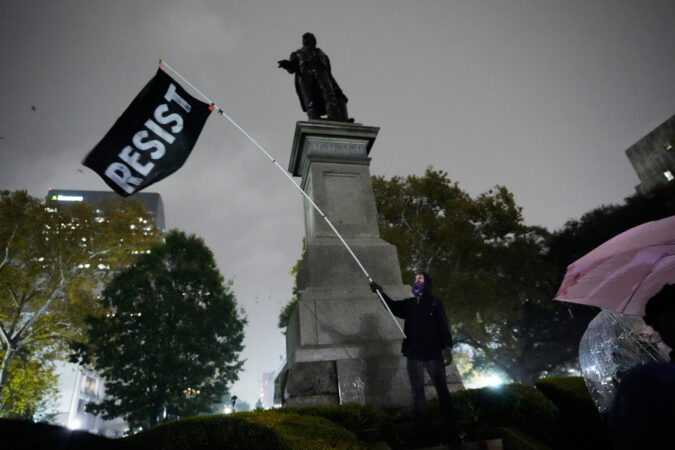
    The Department of Homeland Security announced the start of a new immigration enforcement operation in New Orleans on Wednesday, the latest in a series of sweeps that have resulted in thousands of arrests, legal challenges and protests.

    DHS said it was launching “Operation Catahoula Crunch” to target “criminal illegal aliens roaming free thanks to sanctuary policies that force local authorities to ignore U.S. Immigration and Customs Enforcement (ICE) arrest detainers.”

    The announcement included a list and photos of 10 undocumented immigrants — from Honduras, El Salvador, Guatemala, Jordan and Vietnam — who the agency said had been arrested for a variety of crimes in New Orleans and later released.

    “Sanctuary policies endanger American communities by releasing illegal criminal aliens and forcing DHS law enforcement to risk their lives to remove criminal illegal aliens that should have never been put back on the streets,” Assistant Secretary Tricia McLaughlin said in a statement. “It is asinine that these monsters were released back onto New Orleans streets to COMMIT MORE CRIMES and create more victims.”

    Immigration enforcement escalations in Los Angeles, Chicago, Boston and — for a shorter time — Charlotte have generated unrest. Residents have alleged civil rights abuses, and policing experts have questioned the tactics used and the training provided to agents in the rapidly growing U.S. immigration enforcement apparatus.

    While DHS has said the operations are targeted at capturing violent criminals, many undocumented immigrants with no record have also been arrested. In Chicago, the agency said, immigration officers arrested more than 4,000 people in “Operation Midway Blitz,” but officials have publicly identified only about 120 of those arrested as having a criminal arrest or conviction, some for major crimes such as murder and others for nonviolent offenses such as illegally crossing the border.

    In each city, whistleblowing protesters have trailed immigration agents, warning neighborhoods of their presence. In Chicago and Los Angeles especially, immigration agents were limited in their ability to manage large, hostile crowds or protesters as they worked independently of Chicago police officers, who were not permitted to assist in immigration arrests.

    Across New Orleans, residents had anticipated the operation, particularly immigrants. Some businesses had closed while others posted signs saying, “ICE not welcome here.”

    First Grace United Methodist Church posted a sign citing scripture that read, “ICE: Whatsoever you do to the least, you do unto me.”

    “A lot of people are locking their houses because it’s a scary time. We are all anticipating,” said Leticia Casildo, a co-founder of the nonprofit immigrant advocacy group Familias Unidas en Acción who immigrated to the United States from Honduras and who has lived in New Orleans for 20 years.

    New Orleans mutual aid organizations have been watching closely how immigration operations have played out in other cities, and several organizations have collaborated with like-minded entities in Chicago, Los Angeles and Charlotte to learn new strategies to adapt to increased enforcement.

    A spokesperson for the ACLU of Louisiana said the organization had consulted with the ACLU of North Carolina to fine-tune educational materials for individuals eager to document the actions of federal officers.

    Chicago organizers said they believe that a network of “rapid response” civilians who follow Homeland Security agents or respond to arrest scenes with cameras and whistles effectively warned communities of law enforcement’s presence and held agents accountable, to an extent, for violent interactions.

    “What we’ve learned is that even a street witness who is not recording makes these interactions less traumatic and less violent,” said Beth Davis, a press liaison for Indivisible NOLA. “So we need to get eyes on these people.”

    Louisiana residents’ reaction to Homeland Security actions may be complicated by a new state law punishing obstruction of immigration enforcement, said GOP state Sen. John “Jay” Morris, who represents northern Louisiana and wrote the law. While some mutual aid organizations in New Orleans have been directing people to buy whistles similar to those used in other cities, other organizations have not, anticipating immigration agents or local police may class the use of whistles as obstruction.

    “Such a law shouldn’t be necessary, but around the country and even the sheriff in Orleans Parish about a year ago indicated that she would not cooperate with ICE,” Morris said. “I hate that we have to have a law to tell people they have to cooperate with federal officials.”

    The law he wrote makes it a crime to “hinder, delay, prevent, or otherwise interfere with or thwart” federal immigration enforcement, and those in violation could face fines and up to a year in jail. Morris and other state lawmakers also expanded the crime of malfeasance in office, punishable by up to a decade in jail, to include government officials who refuse requests by ICE and prohibited police and judges from releasing anyone who “illegally entered or unlawfully remained” in the U.S. without notifying ICE.

    He said the laws could come into force if New Orleans officials or others attempt to interfere with DHS.

    New Orleans police spokesman Reese Harper said that federal officials had not notified the department about when the operation would start and that police will not be involved.

    “We handle the criminal aspect of the law. Border Patrol and ICE handle civil. So it’s unlawful for us to even touch that,” Harper said. “The only way we would even come in contact with them is if they called for backup, like a life-threatening situation.”

    He said that Superintendent Anne Kirkpatrick last month “did meet with both Border Patrol and ICE, but we don’t know much about the operation. We know that they are coming and that’s basically it.”

    New Orleans police have operated under a federal consent decree for the past 13 years that limited their cooperation with federal immigration enforcement, including the city’s jail. The Justice Department accused New Orleans of undermining federal immigration enforcement and included it on a list of 18 immigrant “sanctuary cities.”

    But a federal judge ended the consent decree last month, and Kirkpatrick said she would be a “partner” to the federal agents, although officers will not be conducting immigration arrests or asking people about their immigration status, according to a radio interview with WBOK reported by the Times-Picayune.

    Local and state leaders were split on the prospect of more immigration agents in Louisiana and Mississippi.

    New Orleans Mayor-elect Helena Moreno, who will begin her term in January as the city’s first Latina and Mexican-born mayor, criticized immigration enforcement tactics during surges in other cities in an interview with CNN on Tuesday.

    “It’s one thing if you would have a real strategic approach on going after people … who have criminal felonies or are being accused of some very serious and violent crimes. But that’s not what the public is seeing,” Moreno said. “They’re seeing people who are just trying to survive and do the right thing — and many of them now have American children who are not causing problems in our community — treated like they are violent, violent criminals.”

    The Orleans Parish Sheriff’s Office has refused to honor ICE detainers at the jail for more than a decade, but state officials last month challenged that policy under the new state law.

    A spokesman for the sheriff’s office this week referred questions about the operation to New Orleans police.

    Louisiana Gov. Jeff Landry (R) told Fox News on Monday that “we don’t talk about specific operations, but we certainly invite [Border Patrol official] Greg Bovino and [ICE Deputy Director] Madison Sheahan and [Homeland Security Secretary Kristi L.] Noem and all of President Trump’s great team that’s trying to make America safe to help make Louisiana safe.”

    “New Orleans is a crime-ridden city that we’ve been trying to keep people safe and something we’ve been working on since I became governor of Louisiana,” he said. “I’m welcoming them to come in. We’re going to take these dangerous criminals off the streets in Louisiana.”

    Asked what he thought of Kirkpatrick saying she can’t enforce immigration law, Landry conceded that “she can’t” and blamed the recently lifted federal consent decree that “decimated the New Orleans police department” and led him to create a French Quarter-based team of state police called “Troop Nola” “to get crime under control in New Orleans.”

    In September, Landry requested a National Guard deployment to New Orleans, citing an alleged increase in violent crime, even though police and city leaders say crime has decreased and federal support isn’t needed.

    Louisiana is a key hub in “Detention Alley,” a region that includes Texas and Mississippi that’s home to most of the country’s largest federal immigration detention centers. Louisiana’s centers house up to 6,000 detainees. The state opened the new “Louisiana Lockup” in September within the Louisiana State Penitentiary in Angola to hold immigrants whom federal officials consider dangerous. In a news conference, Noem said the prison’s “notorious” reputation — which includes a long, documented history of civil rights abuses — was a factor in choosing the facility to house undocumented immigrants.

    The New Orleans immigration enforcement operation, previously dubbed “Operation Swamp Sweep” in media reports anticipating the action, instead references Catahoula leopard dogs, trained by early Louisiana settlers to hunt wild boar.

  • Even a 15-minute walk may help boost your longevity

    Even a 15-minute walk may help boost your longevity

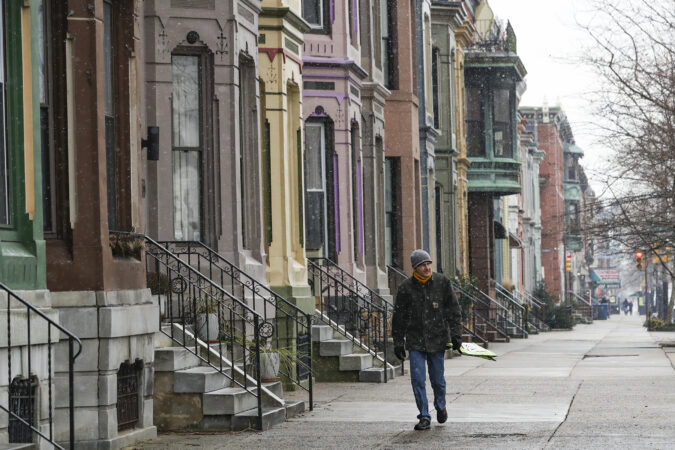
    Walking for at least 10 or 15 minutes at a time might do more for your health and longevity than spreading your steps out into shorter walks throughout the day, a large-scale study suggests.

    The study, published in October, looked at the effects of how people gather their steps each day, as well as how many steps they take and the associations that these patterns of daily activity might have with risks for heart disease and premature death.

    The data showed that middle-aged and older people in the study who grouped some of their steps into walks lasting 15 continuous minutes or more were about half as likely to develop heart disease in the near term as those who rarely walked for that long at one time. The people taking longer walks were also less likely to die during the yearslong study from any cause.

    “With physical activity, we know that the more the better,” said Emmanuel Stamatakis, a professor of physical activity, lifestyle and population health at the University of Sydney in Australia and lead author of the study. “But we haven’t had a very good understanding of the role of the pattern” of that activity.

    The study builds on earlier research, including from Stamatakis’s lab, exploring how to intensify the health benefits of even a little physical activity. But it also raises questions about whether it’s possible to overthink the simple walk.

    Most of us aren’t moving enough

    “This study is about identifying ways to maximize what people get out of their walking,” Stamatakis said.

    Walking may be the most common physical activity for almost everyone. But many of us do little of it. Current physical activity guidelines recommend 150 minutes a week of moderate activity, which would include brisk walking.

    But “75 to 80% of people are insufficiently active,” Stamatakis said, meaning they don’t meet those guidelines. Quite a few rarely exercise at all.

    It should be possible, though, to make even the briefest amounts of movement better for us, Stamatakis and his colleagues have speculated. In past studies, they have shown that picking up the pace of brief daily activities, such as housework, is associated with lower risks for heart disease and early death. The extra intensity seemed to make everyday chores and actions more potent for people’s health.

    But not everyone can or wishes to up the vigor of their vacuuming. Were there other ways to get more health bang from just being in motion, Stamatakis and his colleagues wondered? What about if people’s activities simply lasted a little longer?

    15-minute walks are best

    To find out, the scientists drew records for 33,560 men and women, most of them in their 60s, from the UK Biobank, a massive databank of British health records. All Biobank participants provide extensive medical information when they join, and many wear an activity tracker for a week.

    The scientists looked for participants who said they don’t formally exercise and whose activity trackers showed they typically accumulated fewer than 8,000 steps a day, most of them far fewer. They also had to be free of diagnosed heart disease.

    Using activity tracker data, the scientists divided people into groups, based on whether their longest daily walk lasted five or fewer minutes, 10 minutes, or 15 minutes or more. They also checked death and hospital records for up to about a decade after people wore the trackers. Then the researchers cross-referenced to see who seemed to have had the longest and healthiest lives.

    The results were consistent and clear. The men and women who’d walked for 15 continuous minutes or more had the lowest risks of heart attacks and other cardiovascular problems and were more likely than the other groups to still be alive. Similarly, those walking for 10 uninterrupted minutes tended to live longer and with less heart disease than those whose longest walk lasted only five minutes.

    These effects held true even if people were taking about the same number of total steps each day.

    Why? It’s likely that the longer walking bouts “meaningfully activated” and altered people’s cardiovascular and metabolic systems in ways the briefer walks couldn’t, the researchers speculate in the study.

    “This is a very insightful and important epidemiological paper that sheds further light into the importance of being physically active,” said Darren Warburton, an exercise scientist at the University of British Columbia, who has studied the health effects of physical activity. He wasn’t involved in the new study.

    Any activity is better than none

    But the study shows association, not cause and effect, so it can’t prove longer walks necessarily lead to better health outcomes. People who walk longer might also be more interested in healthy eating and other good habits that influence their longevity as much as — or more than — their stepping behavior.

    The effects were most pronounced, too, in people walking the least. The people who took fewer than 5,000 steps most days but grouped some of those steps into longer 10- or 15-minute walks showed relatively larger reductions in their risks for heart disease and early death than people taking closer to 8,000 steps a day who likewise strolled for a quarter hour. In other words, if people rarely walked but sometimes walked longer, they got more out of those longer walks than people who generally walked more.

    So, the true lesson of the study could be, just walk more. But if you can’t or really want to amplify the potential benefits of your daily steps, walk a bit longer sometimes.

    That’s a message the study’s authors embrace. “We have a lot of data from other studies showing that any amount of physical activity is good,” said I-Min Lee, a professor of epidemiology at the Harvard T.H. Chan School of Public Health and a study co-author. So, sure, “if you have a choice and are able to, try to walk for more than 10 minutes at a time,” she said. “But the total amount of activity is what matters more than the pattern in which it’s accumulated.”

  • Buy now, pay later boom shows shoppers are swapping impulse buys for strategy

    Buy now, pay later boom shows shoppers are swapping impulse buys for strategy

    From spreading out payments to dodging impulse purchases, holiday shoppers this year took a more judicious approach to spending over the Black Friday-Cyber Monday sales weekend, recent data shows.

    Underscoring this trend, “buy now pay later” services such as Klarna, Affirm, Afterpay, and PayPal Pay Later are increasingly popular among consumers of all income levels — whether shoppers are looking for convenience or seeking to spread out their budget, according to David Tinsley, a senior economist at the Bank of America Institute. Most customers are “light users,” he said, meaning they have about one to four transactions in their account, he added.

    So far this holiday season — beginning in November — the services have driven $10.1 billion in spending, a 9% jump from last year, according to Adobe Analytics. Cyber Monday was the single largest day for BNPL, accounting for a record $1.03 billion, a more than 4% increase over last year. That’s about 7% of what Americans spent online that day.

    Meanwhile, PayPal reported its BNPL transactions increased 23% year over year in the days leading up to Black Friday.

    “Consumers are planning ahead, prioritizing value, and making the most of how they spend their money,” Michelle Gill, the general manager of small business and financial services at PayPal, wrote in a news release on the rise of BNPL.

    Another factor is that these services are becoming more widely available each year at checkout. “BNPL could also just be going up because e-commerce is going up,” said Sucharita Kodali, an analyst at Forrester.

    There are also risks that come with these flexible payment methods. Some services charge interest on missed payments, and experts warn it could lead to overspending, especially for financially vulnerable consumers.

    Preholiday caution

    More broadly, the rising cost of groceries, housing, and energy — as well as tariff-induced price increases on core gifting categories including apparel, toys, and electronics — has forced consumers to be savvier when their dollar isn’t going as far, analysts said.

    “People are being cautious,” Kodali said. “The other shoe is going to drop any day now — the economy from a retail standpoint has been really positive … and this can’t go on forever.”

    While the National Retail Federation forecasts spending in November and December will break a record $1 trillion — an increase of between 3.7% and 4.2% over the same period last year — that doesn’t mean people are buying more, rather that things are costing more, analysts say.

    Still, there were signs of strength. Online sales on Cyber Monday reached $14.5 billion, while Black Friday hit $11.8 billion, according to Adobe Analytics. That’s a 7.1% and 9.1% surge over last year, respectively, and both surpassed Adobe’s forecasts.

    But in-store shopping slumped. Visits to malls and downtown areas on Black Friday fell a respective 2.5% and 2.6% compared to last Black Friday, according to MRI Software, which tracks pedestrian traffic. Small Business Saturday mall visits fell 4.3% while downtown traffic dropped 6%.

    RetailNext, which tracks in-store traffic for more than 560 brands, recorded a steeper decline. Visits fell 3.6% on Friday and 8.6% on Saturday.

    The slowdown doesn’t mean consumers weren’t spending, said Joe Shasteen, global head of advanced analytics at RetailNext, but a shift in how they intended to spend.

    “Shoppers showed they’re done with the impulse-driven, one-day frenzy,” he said in a news release. “Prices, tariffs, and tighter budgets pushed people to shop with discipline, not adrenaline, and they responded by turning Black Friday into a value calculation.”

    Consumers also took advantage of markdowns on everyday essentials. Among the top product categories from Shopify sellers were vitamins and supplements, followed by skin care and activewear. Adobe Analytics projects online grocery sales will drive $23.5 billion in revenue, a 9.3% year-over-year increase.

    “We’re seeing promotions on essentials and the things that consumers feel they need first,” said Marshal Cohen, chief retail adviser at market research firm Circana. “When they have the opportunity to buy grocery and pharmaceutical products at a discount, they’re going to do so.”

    But that doesn’t mean all shoppers are avoiding more exciting gifts.

    “Santa Claus is going to show up — and is he going to show up with vitamins? Yeah. But he’s also going to show up with a toy here and there,” he said.

  • Trump appears to doze off in another meeting

    Trump appears to doze off in another meeting

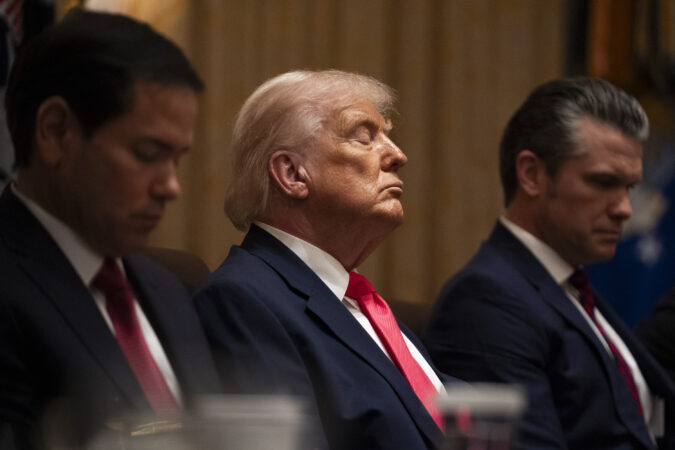
    President Donald Trump closed his eyes for extended periods as cabinet officials went around the room Tuesday providing updates on their work, at times seeming to nod off.

    It was the second time in less than a month that Trump has appeared to struggle to stay awake as his advisers speak about the administration’s initiatives. A Washington Post analysis of multiple video feeds of the meeting Tuesday showed that during nine separate instances, Trump’s eyes were closed for extended periods or he appeared to struggle to keep them open, amounting cumulatively to nearly six minutes. The episode was similar to an Oval Office event on Nov. 6 when the president spent nearly 20 minutes battling to keep his eyes open.

    Trump’s apparent drowsiness during the 2-hour, 17-minute gathering with his cabinet followed pronouncements in recent days by the 79-year-old president, his advisers and his doctor that he is in excellent health and full of stamina — an assertion the president repeated early in Tuesday’s meeting.

    “Right now, I think I’m sharper than I was 25 years ago,” Trump said, criticizing a recent New York Times article that said the president was facing the realities of aging. He later resurrected a frequent insult, “Sleepy Joe,” to mock former President Joe Biden, the first octogenarian to serve as president, who faced regular scrutiny for his perceived lack of stamina.

    In response to a request for comment about Trump’s eyes being closed during the meeting, a White House official initially told the Post that he was not sleeping, though a subsequent statement from press secretary Karoline Leavitt did not specifically address whether the president had dozed off.

    Leavitt instead said he was “listening attentively and running the entire” meeting, and cited Trump’s “amazing final answer in the news conference,” in which he bashed Somali migrants, calling it an “epic moment.”

    The White House has worked to refute suggestions that Trump has slowed down since his first term eight years ago. His advisers on Monday provided private logs to the New York Post that they said revealed Trump “working up to 12-hour days” on several instances during the past few weeks, the outlet reported.

    But on Tuesday, the president appeared sleepy. Throughout Secretary of State Marco Rubio’s discussion of “the most transformational year in American foreign policy since the end of the Second World War — at least,” Trump leaned his head forward and shut his eyes. They remained closed even as Rubio discussed one of the president’s favorite topics, his efforts to broker peace between warring foreign nations.

    Trump appeared far more alert later Tuesday when announcing “Trump accounts,” new tax-advantaged investment accounts for children. Unlike the meeting that had ended an hour earlier, where Trump was seated as he appeared to battle sleep, the president, Sen. Ted Cruz (R., Texas) and other officials were standing during the 40-minute announcement.

    “I don’t think [Trump] sleeps at all,” Cruz said at one point.

    While Trump’s Oval Office drowsiness last month came a week after he returned from a trip to Asia — a journey known for causing jet lag — the episode Tuesday followed a late night and early morning of the president scrolling and posting on social media.

    Between 10 p.m. Monday and midnight, Trump made nearly 150 posts and reposts on his Truth Social account, ranging from criticisms of Democrats and screenshots of posts from right-wing conspiracy theorists to positive video clips about himself and first lady Melania Trump. Despite being a prolific and longtime user of social media, Trump’s blitz of posts that night was far more than is typical for him, though Trump’s advisers have told the Post he frequently only gets about four hours of sleep a night.

    By 5:30 a.m. Tuesday, the president was back to posting again online.

  • Flesh-eating worm in Mexico is squeezing U.S. beef supply

    Flesh-eating worm in Mexico is squeezing U.S. beef supply

    Juan Manuel Fleischer’s ancestors ranched on the borderlands before the United States existed, and the Arizona resident’s business importing Mexican cattle across the modern-day frontier has survived decades of immigration politics and the construction of a towering steel wall.

    But that work has collapsed over the past year as an insidious threat shakes U.S.-Mexico relations and the American beef industry: the New World screwworm, a flesh-eating parasite that has resurged south of the border 60 years after it was mostly eradicated in U.S. livestock.

    Around 1.2 million young Mexican cattle cross each year through a half-dozen entry ports to bulk up in American pastures or feedyards. But the gates have been shut to livestock for most of the past year, since a cow in southern Mexico tested positive in November 2024 for New World screwworm — maggots that burrow into warm-blooded animals, creating foul-smelling wounds and sometimes fatal weight loss. Mexican cattle imports have plunged to about 230,000 in 2025 as additional cases have emerged farther north, including one in September only 70 miles south of the border.

    “We’re hurting,” Fleischer said. “We’re basically going broke.”

    The unprecedented closure, when a shrinking American cattle herd is contributing to near-record-high beef prices, represents both a rare agreement on science and trade between the Biden and Trump administrations and the intense alarm shared by federal officials and the broader U.S. livestock industry. Agriculture Secretary Brooke Rollins has called keeping the parasite out of the country “a national security priority.”

    The blockade, however, has upended cross-border relationships forged over generations and has financially strained Texas cattle feeders, New Mexico importers, and Arizona ranchers.

    “We’re trying to almost beg the USDA to keep our Nogales border open,” said Jorge Maldonado, the mayor of Nogales, Arizona, where the livestock pens are empty at a port of entry that remains busy with produce imports.

    Maldonado has a small cattle operation across the border in the Mexican state of Sonora, and recently he sold about a dozen animals for $10,000 less than he would have fetched in the United States.

    But Maldonado said his larger worry is for his city of 20,000. He estimates that it has collected as much as 15% less in bed taxes this year because of the absence of Americans and Mexicans who typically stay overnight and “wine and dine” while negotiating over cattle that must be quarantined for three days on the Mexican side. And it has been “a catastrophe,” he said, for local businesses that revolve around the industry.

    One belongs to Fleischer, who in a good year brought in 80,000 cattle from small ranches in Mexico. He walked steers and heifers through the dust and through the metal border barrier, where he was known as an expert at sorting the animals by size with just a glance. When he heard about the closure, Fleischer recalled, “I said, ‘Oh, my god, it’s going to kill us. This will break us.’ ”

    Now he is surviving on savings, and his wife and son have taken on substitute teaching jobs.

    New World screwworm was a scourge in the first decades of the 20th century, costing U.S. ranchers tens of millions of dollars a year and killing thousands of deer. The federal government spent millions of dollars more to eradicate it in the 1960s through the breeding and unleashing of sterile flies, which eventually doomed the species domestically. Occasional outbreaks have since occurred among livestock in the Southwest, and, in 2016, among endangered Key deer in the Florida Keys. And in August, a rare human case was reported in a Maryland resident who had traveled to El Salvador.

    The concern today is not that New World screwworm would wipe out American cattle, but that the cost of monitoring and controlling it would be enormous, experts and industry officials said. The Agriculture Department estimates that an outbreak could cost the Texas economy alone $1.8 billion.

    “This would be a very hands-on issue if it were to emerge,” said Hunter Ihrman, a spokesman for the National Cattlemen’s Beef Association. “It makes people very nervous.”

    He said the association is supportive of the border closure and other federal efforts to hold back the pest, though it wants speedier action on plans for an $8.5 million sterile fly production facility projected to open in Texas early next year. The only such facility in North America is in Panama.

    At a meeting with Rollins last month in Mexico City, Mexican President Claudia Sheinbaum again pushed for the reopening of the border, calling it a “top priority.” But the USDA, which did not respond to questions for this article, has made clear that it does not trust Mexico to control the threat.

    Maldonado, the Nogales mayor, said USDA officials who met with him and other Arizona officials and producers last week indicated that it would stay shut at least until the end of the year.

    He and others involved in the trade say they feel confident that the New World screwworm could not slip past import protocols, which involve quarantining in Mexico, anti-parasite treatments, and inspection by U.S. and Mexican government veterinarians. They also argue that the closure is contributing to high American beef prices, which the Trump administration has pledged to address by investigating meatpacking companies and importing Argentine beef.

    Industry watchers are skeptical the blockade has driven up prices. The loss of Mexican cattle, which in typical times represent about 3 to 4% of the American calf herd, has probably had only a “marginal impact” on prices, said Derrell Peel, an Oklahoma State University agricultural economist.

    What is clear, he said, is the hardship on those who depend on the trade. “Regionally, the impacts are very severe,” Peel said.

    Among those affected is Mark Rogers. He started his Dimmitt, Texas feedyards 30 years ago with a few Mexican cattle. When the border first shut a year ago, 90% of his 50,000 animals were Mexican. Rogers found Mexican cattle hardier than domestic, a quality he attributed to the travel and the import process they underwent. After years of almost daily phone calls, he calls the Mexican producers he works with “some of my best friends.”

    These days, Rogers is down to about 27,000 head of cattle, he has cut a third of his workforce, and he says he is breaking even. His neighbors also have vacant pens, he said. “I’ve laid in bed at night thinking, ‘What the heck?’” he said. “But I’ve just got to know that one of these days that border’s got to open back up.”

    Fifteen percent of the feeder cattle in Texas come from Mexico, the state’s agriculture commissioner, Sid Miller, said in an interview. He said he has sent proposals to White House officials, urging them to allow a “test opening” of imported Corriente cattle for rodeos and to deploy a specific fly bait. They have not responded to the first idea, he said; the USDA sternly rejected the latter.

    Discontent is hardly uniform in the industry. Those who breed calves are getting top dollar for their animals. And some who import Mexican cattle say they understand the caution.

    The shift “has been painful on one side of the ledger,” said Kevin Buse, chief executive of Champion Feeders in Hereford, Texas, who runs feedyards and ranches in Texas, Oklahoma, and Nebraska. He has faith in the health surveillance of cattle on both sides of the border but said he also trusts the USDA’s approach. “We need to open slowly, we need to make sure that what we’re doing is good, and make sure we’re not stepping into a bear trap.”

    But the change to Buse’s business is felt by Alvaro Bustillos, president of Vaquero Trading, an El Paso company that before the screwworm blockade generated $400 million in annual revenue importing 250,000 Mexican cattle a year, including for Champion Feeders. Now it is shut down.

    Like many in the trade, Bustillos, who is also chairman of the board of the cattle producers union in Chihuahua, Mexico, said he worries all the American politics around beef prices have made reopening even thornier. In a September letter, Bustillos urged Rollins to reconsider. “This relationship goes beyond numbers: We share traditions, genetics, culture and families that have worked together for generations on both sides of the border.”

    Just over the New Mexico state line, the pens at the Santa Teresa port of entry, the nation’s busiest for livestock, are eerily silent. In a typical year, 500,000 cattle and horses valued at $1 billion cross at the port, according to Daniel Manzanares, who directs the livestock crossing.

    Manzanares has laid off half of the 40 employees. Truckers who transported the cattle are also out of work, he said. “There are people selling homes, people selling semis,” he said. “It’s created such a disaster for so many people.”

    But for now, he sees little reason to hope. “We are a really tiny chip in the poker game between the U.S. and Mexico,” he said.

  • Supreme Court sympathetic to antiabortion center in fight over donor names

    Supreme Court sympathetic to antiabortion center in fight over donor names

    New Jersey Attorney General Matt Platkin issued a subpoena in 2023 — part of an investigation into whether a chain of faith-based, antiabortion pregnancy centers were deceiving clients and donors by falsely suggesting they offered abortion referrals.

    First Choice Women’s Resource Centers Inc. quickly sued in federal court. The broad request for donor information and other material chilled its First Amendment rights and was an act of intimidation by an official hostile to the group’s views on abortion, the organization said.

    Tuesday, the Supreme Court appeared sympathetic to First Choice’s argument, which is backed by other religious and antiabortion groups and also by some free-press advocates. The threat of disclosure was enough to make donors think twice about giving to the group, several justices suggested.

    “You don’t think it might have a future effect on donors if their name, addresses and phone number is disclosed?” Chief Justice John G. Roberts Jr. asked an attorney for New Jersey.

    The case turns on a technical legal issue — whether First Choice has met the bar to challenge the subpoena in federal court rather than state courts — but it has potentially wide implications.

    A range of ideological groups, from LGBTQ+ advocates to firearms rights organizations, have increasingly come under scrutiny by attorneys general armed with broad powers. They say the ability to file suits against subpoenas in federal court at an early stage of litigation will give them a tool to fight politically motivated investigations. The Reporters Committee for Freedom of the Press told the justices in a friend-of-the-court brief that investigative subpoenas could be used to threaten news organizations that investigate official misconduct.

    Erin M. Hawley, an attorney for First Choice, called the subpoena in this case “sweeping,” adding there were 28 categories of documents the attorney general was seeking.

    “That is a death knell for nonprofits like First Choice,” Hawley said.

    The case began after a state probe found some of First Choice’s client-facing websites and donation pages omitted or obscured its antiabortion mission, saying it was “a network of clinics providing the best care and most up-to-date information on your pregnancy and pregnancy options.” First Choice has five centers in New Jersey, where abortion is legally protected.

    First Choice denies any wrongdoing.

    Clinics like First Choice have been operating for decades to persuade women to continue their pregnancies, and they saw a surge of financial support after the Supreme Court struck down a right to abortion in 2022. Antiabortion strategists hoped more women would turn to centers like First Choice if they could not access an abortion. Red-state leaders rushed to fund the clinics to the tune of millions.

    The clinics say they offer valuable services, but critics have accused them of masking their antiabortion mission and using false advertising to lure pregnant women, including patients who need medical care that the clinics are not properly equipped for. There are more than 2,500 pregnancy centers across the United States, according to estimates by researchers at the University of Georgia.

    In 2023, a Massachusetts woman took a pregnancy center to court saying it had failed to catch signs of her ectopic pregnancy — which can be fatal if left untreated. The clinic later settled.

    This is not the first case the Supreme Court has considered in this area.

    In a major 2018 ruling, the high court ruled that pregnancy centers could not be required to tell their clients about abortion services, saying such a mandate would probably be a First Amendment violation.

    Platkin issued his subpoena in November 2023 seeking the names of First Choice’s donors, staff information and more, sparking a protracted and complicated court fight. First Choice argued that disclosing its donors would make them less likely to give money, chilling their free speech and association rights.

    The legal question at the heart of the case is whether First Choice’s claims are “ripe.” To bring legal action in federal court, plaintiffs are required to show they have suffered an actual harm, not a hypothetical one.

    The subpoena that Platkin issued for First Choice’s records requires a state court in New Jersey to order its enforcement. To date, a state judge has told First Choice to respond to the subpoena but has yet to demand it turn over the records. For that reason, Sundeep Iyer, chief counsel to the New Jersey attorney general, said First Choice had not yet suffered a concrete harm.

    Any harm was “wholly contingent on a future court order” that had yet to materialize, Iyer said.

    But several justices pushed back on that idea, including liberal Justice Elena Kagan who said “one of the funders for this organization or for any similar organization presented with this subpoena and then told ‘but don’t worry it has to be stamped by a court’ is not going to take that as very reassuring.”

    Iyer said if the justices embraced First Choice’s arguments, groups might challenge thousands of subpoenas that state governments issue each year, creating a logjam in the courts.

    “The risk would be federal court would be inundated,” Iyer said.

  • RFK Jr.’s vaccine advisers plan biggest change yet to childhood schedule

    RFK Jr.’s vaccine advisers plan biggest change yet to childhood schedule

    Federal vaccine advisers selected by Health Secretary Robert F. Kennedy Jr. are planning to vote on ending the practice of vaccinating all newborns for hepatitis B and to examine whether shots on the childhood immunization schedule are behind the rise of allergies and autoimmune disorders, the newly appointed chair of the group told the Washington Post.

    Kirk Milhoan, a pediatric cardiologist and critic of coronavirus vaccination who recently took over as chair of the influential vaccine panel, said members meeting Thursday and Friday are broadly scrutinizing vaccines recommended for children. The wide-ranging discussions on the timing of vaccines and ingredients could signal major changes to how children in the United States are vaccinated, marking the latest flash point in an accelerating reshaping of immunization policy under Kennedy.

    For decades, the childhood and adolescent immunization schedule has called for administering vaccines at set milestones. But Kennedy, the founder of an anti-vaccine group, has long linked the rise of chronic disease, autism, and food allergies in the U.S. to what he calls the “exploding vaccine schedule” — claims that have been rebutted by medical associations and extensive research into the safety of shots.

    The members of the Advisory Committee on Immunization Practices are preparing to make their most significant change to the childhood vaccine schedule yet since Kennedy purged the panel and replaced members with experts who have largely been critical of public health vaccination practices.

    The new members plan to vote Thursday on scrapping the recommendation to give babies a dose of hepatitis B vaccine within 24 hours of birth if their mothers test negative for the virus. Instead, the panel is weighing a delay in that first dose byan interval that is “still being finalized,” Milhoan said. Vaccine advisers pushed back a vote on hepatitis B vaccine recommendations at their September meeting following disagreement.

    The birth dose has been credited for a 99% drop in infections in children and teens since the 1991 recommendation from the Centers for Disease Control and Prevention and the American Academy of Pediatrics, according to a 2023 study in the official journal of the U.S. Surgeon General.

    Critics of the birth dose, including Kennedy, say that it is unnecessary to vaccinate all children for the virus when the vast majority are not at risk for infection.

    Clinicians say the birth dose acts as a safety net to give infants immediate protection if they acquire the infection from mothers whose infection status is unknown, incorrectly documented or whose test results are delayed.

    ACIP makes recommendations to the CDC director on how approved vaccines should be used. CDC directors have almost always adopted the committee’s recommendations, which compel insurers to pay for vaccines and have traditionally guided pediatricians and medical organizations.

    The committee also plans to begin public discussions on its effort to review the childhood immunization schedule and the cumulative health effects of the dozens of shots children receive.

    “We’re looking at what may be causing some of the long-term changes we’re seeing in population data in children, specifically things such as asthma and eczema and other autoimmune diseases,” Milhoan said in an interview Monday.

    “What we’re trying to do is figure out if there are factors within vaccines,” he said, such as their ingredients or unintended substances contaminating them during manufacturing.

    Milhoan said the panel is focusing on the use of aluminum as an adjuvant, an ingredient added to vaccines to help the body produce an immune response strong enough to protect the person from the disease.

    Aluminum salts are in more than a dozen routinely recommended vaccines such as hepatitis A, hepatitis B, diphtheria-tetanus-containing vaccines, Haemophilus influenzae type B, HPV, and meningococcal B and pneumococcal vaccines. Adjuvants are essential because without them, the vaccine might not be able to trigger adequate immune responses.

    Aluminum salts have been used safely in vaccines for more than 70 years, according to the CDC. Aluminum-adjuvant-containing vaccines have only uncommonly been associated with severe local reactions, according to the Food and Drug Administration, which tests vaccines containing adjuvants extensively in clinical trials before they are licensed. The agency notes that the most common source of exposure to aluminum is food and drinking water.

    Public health and medical experts have raised alarms that the panel is moving toward recommending that only vaccines without aluminum adjuvants be used, a move that health and industry experts have said would be expensive and difficult on a practical level and could lead to shots being pulled from the market. Milhoan said the panel is not calling for the removal of aluminum from vaccines.

    “We’re not saying that at all,” he said. “We’re just starting to have the discussion.”

    The FDA generally has the responsibility to direct manufacturers to remove ingredients from vaccines. Some high-level FDA officials think that it would be infeasible to take aluminum adjuvants out of vaccines and that it cannot be done on any practical timeline, according to a senior federal health official who spoke on the condition of anonymity to be candid.

    Vaccine industry officials said that removing aluminum adjuvants from vaccines would cost billions of dollars and that finding a replacement would take years, according to people involved in the drug industry who spoke on the condition of anonymity to avoid publicly antagonizing the administration. The costs and technical complexities of doing so are enormous, one of the people said.

    The two-day ACIP meeting this week follows intense upheaval in the federal vaccination system.

    The committee has come under intense criticism from public health groups who accused the new members of botching and misstating science to further an agenda to undermine vaccines.

    Sean O’Leary, who chairs the infectious-diseases committee of the American Academy of Pediatrics, said revisions to the childhood immunization schedule by the newly reformulated ACIP “should not be trusted.”

    “Any changes they do make could be devastating to children’s health and public health as a whole,” O’Leary said in a briefing with reporters.

    Andrew Nixon, a spokesman for the Department of Health and Human Services, said in a statement that the vaccine panel “remains committed to evidence based decision making, and will carefully consider all data before any recommendation is made.”

    HHS announced Monday that Milhoan would be chair because his predecessor Martin Kulldorff, a Swedish biostatistician and prominent critic of the public health response to COVID, is joining the health agency in a staff role.

    Milhoan is affiliated with an organization that promoted ivermectin as a coronavirus treatment despite trials finding it is not effective, and in March, he called for mRNA vaccines to be halted.

    Former CDC director Susan Monarez said she was fired in August after refusing to rubber-stamp recommendations from the reformulated committee, and several top CDC officials resigned in protest.

    Last week, the CDC revised its website to contradict its longtime guidance that vaccines don’t cause autism. Kennedy told the New York Times he personally directed the change.

    On Friday, the nation’s top vaccine regulator, Vinay Prasad, announced plans to impose a more stringent approach to approving vaccines, including the annual flu shot, citing his team’s conclusion — without detailing the underlying evidence — that coronavirus vaccines had contributed to the deaths of at least 10 children.

    With the exception of the vote on hepatitis B vaccine, the federal vaccine advisers have not scheduled any other votes on the childhood vaccine schedule this week. According to the draft agenda, there are no presentations about vaccine effectiveness, access, equity or practical consequences of disrupting well-established schedules, which were always included before panel membership changed.

    Milhoan said vaccine benefits are well known and have been extensively discussed.

    “Not enough attention is being paid to risk,” he said.

  • ‘Franklin the Turtle’ publisher slams Hegseth post joking about boat strike

    ‘Franklin the Turtle’ publisher slams Hegseth post joking about boat strike

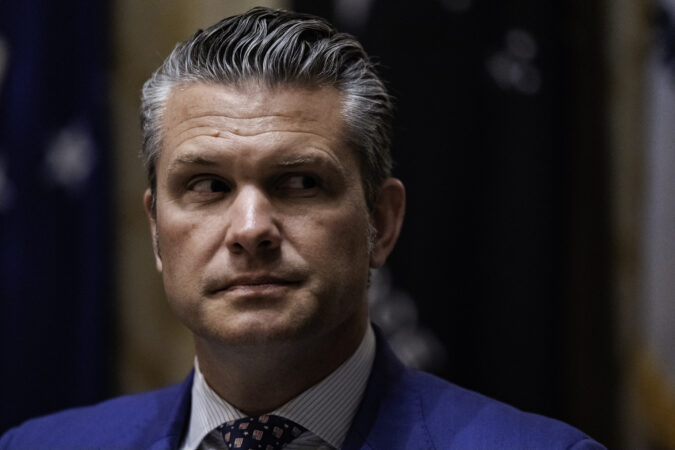
    The publisher of Franklin the Turtle, a Canadian book franchise aimed at preschoolers, has expressed criticism after Defense Secretary Pete Hegseth appeared to make light of deadly boat strikes in Latin America by posting a doctored image that showed the well-known turtle character attacking the crew of a narcotics vessel.

    The Washington Post reported exclusively Friday that Hegseth gave a spoken order to kill the entire crew of a vessel thought to be ferrying narcotics in the Caribbean Sea, the first of more than 20 such strikes carried out by the administration since early September. When two survivors were detected, a military commander directed another strike to comply with Hegseth’s order that no one be left alive, the Post reported.

    In a post on X over the weekend, Hegseth shared an image of a doctored book cover, titled “Franklin Targets Narco Terrorists,” that depicted the elementary-school-aged turtle firing a rocket-propelled grenade at apparent drug traffickers. “For your Christmas wish list …” Hegseth wrote.

    In a statement late Monday, the cartoon’s publisher, Kids Can Press, issued a statement that did not name Hegseth, but said: “Franklin the Turtle is a beloved Canadian icon who has inspired generations of children and stands for kindness, empathy, and inclusivity. We strongly condemn any denigrating, violent or unauthorized use of Franklin’s name or image, which directly contradicts these values.”

    In an emailed response to a request for comment Tuesday, chief Pentagon spokesman Sean Parnell said, “We doubt Franklin the Turtle wants to be inclusive of drug cartels … or laud the kindness and empathy of narcoterrorists.”

    The Franklin the Turtle franchise began in 1986 and spans over 30 books, as the young turtle embarks on familiar coming-of-age milestones including falling in love, celebrating Thanksgiving and having a sleepover. The series has sold more than 65 million copies in over 30 languages, according to its publisher, and has been made into two educational television series and multiple movies.

    On Monday, Senate Minority Leader Charles E. Schumer described Hegseth’s post as a “sick parody of a well-known children’s book,” and accused Hegseth of being childish and unserious. “This man is a national embarrassment. Tweeting memes in the middle of a potential armed conflict is something no serious military leader would ever even think of doing.”

    Pressure has been mounting on the Pentagon to provide a full accounting of its orders to target alleged narcotics traffickers in the Caribbean Sea with lethal force, in strikes that have killed more than 80 people to date. Following the Post’s report, lawmakers in the House and Senate pledged to open inquiries to see if a war crime was committed during the first strike, where the two survivors were targeted. Legal experts have said the survivors did not pose an imminent threat to U.S. personnel and thus were illegitimate targets.

    On Monday, White House press secretary Karoline Leavitt acknowledged Hegseth had authorized the commander, Adm. Frank M. Bradley, to conduct the Sept. 2 strikes, while saying Bradley had “worked well within his authority and the law, directing the engagement to ensure the boat was destroyed.” Writing on social media Monday night, Hegseth said he stood by the admiral and “the combat decisions he has made.”

    The statements were seen as an attempt to distance Hegseth from the growing fallout from the strikes, with military officials expressing concern that he was attempting to insulate himself from any legal recourse and leave Bradley to face the fallout alone, the Post reported.

  • Trump wants a bigger White House ballroom. His architect disagrees.

    Trump wants a bigger White House ballroom. His architect disagrees.

    President Donald Trump has argued with the architect he handpicked to design a White House ballroom over the size of the project, reflecting a conflict between architectural norms and Trump’s grandiose aesthetic, according to four people who spoke on the condition of anonymity to describe internal conversations.

    Trump’s desire to go big with the project has put him at odds with architect James McCrery II, the people said, who has counseled restraint over concerns the planned 90,000-square-foot addition could dwarf the 55,000-square-foot mansion in violation of a general architectural rule: don’t build an addition that overshadows the main building.

    A White House official acknowledged the two have disagreed but would not say why or elaborate on the tensions, characterizing Trump and McCrery’s conversations about the ballroom as “constructive dialogue.”

    “As with any building, there is a conversation between the principal and the architect,” said the official, who spoke on the condition of anonymity to discuss private conversations. “All parties are excited to execute on the president’s vision on what will be the greatest addition to the White House since the Oval Office.”

    McCrery declined an interview request through a representative who declined to answer questions about the architect’s interactions with Trump in recent weeks.

    Trump’s intense focus on the project and insistence on realizing his vision over the objections of his own hire, historic preservationists and others concerned by a lack of public input in the project reflect his singular belief in himself as a tastemaker and obsessive attention to details. In the first 10 months of his second term, Trump has waged a campaign to remake the White House in his gilded aesthetic and done so unilaterally – using a who’s-going-to-stop-me ethos he honed for decades as a developer.

    Multiple administration officials have acknowledged that Trump has at times veered into micromanagement of the ballroom project, holding frequent meetings about its design and materials. A model of the ballroom has also become a regular fixture in the Oval Office.

    The renovation represents one of the largest changes to the White House in its 233-year history, and has yet to undergo any formal public review. The administration has not publicly provided key details about the building, such as its planned height. The 90,000-square-foot structure also is expected to host a suite of offices previously located in the East Wing. The White House has also declined to specify its plans for an emergency bunker that was located below the East Wing, citing matters of national security.

    On recent weekdays, a bustling project site that is almost entirely fenced off from public view contained dozens of workers and materials ready to be installed, including reinforced concrete pipes and an array of cranes, drills, pile drivers and other heavy machinery, photos obtained by The Washington Post show.

    Plans for the addition as of Tuesday had not been submitted to the National Capital Planning Commission, a 12-member board charged by Congress with overseeing federal construction projects and now led by Trump allies. A preliminary agenda for the commission’s next meeting, scheduled for Dec. 4, does not include the ballroom project under projects expected to be covered at the meeting or reviewed by the body in the next six months. White House officials say that the administration still plans to submit its ballroom plans to the commission at “the appropriate time.”

    The administration’s rapid demolition of the East Wing annex and solicitations from companies and individuals to fund the new construction have caused controversy over the project, which Trump believes the White House needs to host special events. Democrats, historical preservation groups and some architects have criticized the project’s pace, secrecy and shifting specifications. The White House initially said this summer that the ballroom would cost $200 million and fit 650 people, while Trump in recent weeks asserted that it could cost $300 million or more and would fit about 1,000 people.

    McCrery has kept his criticism out of the public eye, quietly working to deliver as Trump demanded rushed revisions to his plans, according to two of the people with knowledge of the conversations. The president – a longtime real estate executive who prides himself on his expertise – has repeatedly drilled into the details of the project in their Oval Office meetings, the people said.

    McCrery has wanted to remain with the project, worried that another architect would design an inferior building, according to a person with knowledge of his thinking.

    McCrery, a classical architect and the founder and principal of McCrery Architects, had designed works like the U.S. Supreme Court bookstore and the pedestal for President Ronald Reagan’s statue in the U.S. Capitol. The ballroom was the largest-ever project for his firm, which has specialized in designing churches, libraries and homes.

    Trump hired McCrery for the project on July 13. Eighteen days later, the White House announced the ballroom project, with officials promising to start construction within two months and finish before the end of Trump’s second term.

    Trump also appointed McCrery in 2019 to serve a four-year term on the U.S. Commission of Fine Arts, which provides advice to the president, Congress and local government officials on design matters related to construction projects in the capital region.

    Democrats have pressed the White House and its donors for more details on the planned construction and what was promised to financial contributors. The ballroom is being funded by wealthy individuals and large companies that have contracts with the federal government, including Amazon, Lockheed Martin and Palantir Technologies. (Amazon founder Jeff Bezos owns The Post.)

    Several donors have cast the decision in statements as an investment in the future of a building that belongs to the American people, pushing back on the suggestion that their largesse sought to curry favor with Trump.

    A donor list released by the White House of 37 businesses and individuals who underwrote the ballroom is not comprehensive, administration officials acknowledged, leaving open the possibility that millions of dollars have been funneled toward the president’s pet project with no oversight.

    “Billionaires and giant corporations with business in front of this administration are lining up to dump millions into Trump’s new ballroom – and Trump is showing them where to sign on the dotted line,” Sen. Elizabeth Warren (D-Massachusetts) said in a statement last week. Warren and her colleagues also introduced legislation that would impose restrictions on White House construction and require more transparency from donors.

  • 5 common mistakes grandparents make, according to a pediatrician

    5 common mistakes grandparents make, according to a pediatrician

    Why is there so often tension between grandparents and parents when it comes to the grandchildren?

    Watching your child turn into a parent — and care for your grandchild — is one of the great joys that life has to offer. And yet, grandparents often give unsolicited opinions on the decisions that parents are making, from bedtime to mealtime to general attitudes about discipline — or pretty much anything else. As a grandparent who’s also a pediatrician of more than 30 years, I understand why it’s tempting to play the parental-experience card (not to mention the medical training card), but the better part of valor is to wait and give advice only when — and if — you’re asked for it.

    We’ve had our innings. We got to make each and every one of those decisions when we were bringing up our own children, and, child-rearing being what it is, we made them over and over, day after day, all those bedtimes, all those mealtimes, all those opportunities to teach, to set limits, to celebrate, to discipline.

    We reared responsible adults, able to take on the complex tasks of parenting, ready to make good choices. So this is our moment to stand back and respect those choices, weigh in when we’re asked to, and recognize that there are many different ways to navigate the complex waters of parenthood.

    Here are a few common mistakes grandparents make and my advice on how to become a respectful and helpful grandparent.

    Failing to accept that parenting patterns change with time

    There are real changes that happen over time in parenting styles. My own parents decided that they would never spank their children, which was a deliberate break from their own upbringings in the 1930s. Their parents would have seen that as moving in a permissive direction. On the other hand, they also would have thought that my parents were too preoccupied with knowing where the children were at any given moment. Still, I was allowed to walk without an adult to second grade in New York City, keeping an eye on my younger brother, which I wouldn’t have allowed my own children to do.

    I couldn’t resist asking my own son, Benjamin Klass, a child and adolescent psychiatrist, who is also the father of my almost 3-year-old grandson, about his perspective. (And you can just imagine the complex dynamics of the pediatrician mother trying to decide how to give advice — or not — to the child psychiatrist son!)

    He told me that even though grandparents worry all the time about how their grandchildren are doing, it can seem to parents like they don’t worry enough or realize how much parents may agonize over small issues of diet or behavior. “It’s understandable why there is a push and a pull all the time,” he said.

    Thus, some grandparents want to be more casual about food treats, screen time, or even supervision, which creates conflict with parents who take them all much more seriously.

    Remember that you are indeed in a different role now and may see things very differently than you did when you were the parent, with all the responsibility resting on you.

    Blaming your child’s partner

    You don’t want to be in conflict with your child over your grandchild. You don’t want to be in conflict with your child over your child’s partner. As much as possible, respect that parental unit, assume that your child is an integral part of the decision-making process, and remind yourself that if you love being a grandparent, you owe a good deal to the partner who made it possible. And if you do find yourself making a suggestion, treat it as a suggestion that you are in fact making to that parental unit — don’t go behind the other parent’s back.

    Assuming it’s the parents’ fault when a grandchild is struggling

    Remember how bad it feels to have a child who isn’t happy or isn’t doing well or is in some other way going through a bad patch? This is not the time to say “I told you so” or to point out that things in the home have been too disorganized or too strictly organized. Given the complexities of parenting, it’s rare to be able to attribute a child’s distress to any one factor, and it’s common for parents to beat themselves up over everything, including things they don’t control. If there’s a grandchild with a problem, be part of that child’s support system and part of the parents’ support system; ask them how you can help and listen when they want to talk.

    Making it a fight instead of a discussion

    You probably saw this coming, but I’m going to give you permission to advocate for regular pediatric care, immunizations and, within reason, to discuss other specific health-related issues. With immunizations, after all, since you’re among the older adults who will be caring for this child, you have a vested interest in knowing that said child is immunized against measles, RSV, influenza, coronavirus, etc.

    You don’t want to see your grandchild sick with measles (the most infectious virus in the world) for lots of reasons. But I also tell you, as a pediatrician, these can be very hard conversations — in the home as well as in the pediatric exam room — and you have to try to stay respectful, be clear that you’re speaking out of love and concern, make your case, leave the question open if necessary, and return to it — and don’t let it dominate the relationship.

    And you should certainly set a good example by making it clear that you’re getting all the recommended vaccines yourself.

    Weighing in too often, especially when you weren’t asked to

    You already know that picking your battles is a big part of parenting. Every parent of a toddler learns this, and every parent of an adolescent really learns it. There may turn out to be issues along the way, but choose those topics carefully — and pick your words with even more care.

    The goal of this entire enterprise is to help your precious grandchild grow into a responsible adult who can make good choices. You did this once, with your own child, so you know it can be done — and the more you recognize and respect those choices as your child makes them, the more you will be honoring your new role and helping everyone involved understand what goes into making a family.

    Perri Klass is a pediatrician and professor of journalism and pediatrics at New York University, and author of “The Best Medicine: How Science and Public Health Gave Children a Future.”