Blog

  • How the Reflecting Pool turned green: Missing ‘bubblers’ and a rush job

    How the Reflecting Pool turned green: Missing ‘bubblers’ and a rush job

    WASHINGTON — The nanobubblers had to go.

    It was early June, and the Trump administration was planning an event at the Lincoln Memorial on June 12 to promote President Donald Trump’s Ultimate Fighting Championship birthday celebration at the White House.

    Dotted around the perimeter of the memorial’s Reflecting Pool were the nanobubblers, the temporary water-purification machines meant to keep the pool clear of algae. Encased in black fencing and powered by large generators, the machines were something of an eyesore.

    Before the event, the National Park Service asked Greenwater Services, which won a $1.7 million no-bid contract to install the nanobubblers, to remove them, according to two people briefed on the decision. The people asked for anonymity because they feared retaliation from the administration. The Park Service did not provide a reason for the removal, but it coincided exactly with the promotional event, which drew crowds to the Reflecting Pool.

    Photos from that evening showed the pool without the hoses or enormous machines working to keep the water clean. The water looked dark blue.

    But by the time the purification systems were reinstalled 36 hours later, enormous algae blooms were starting to spread unchecked, turning the water green.

    Once the algae started growing, it proved difficult to eliminate. Even with the nanobubblers back online, Park Service workers tried dumping jugs of hydrogen peroxide into the water to clear the algae more quickly. But the peroxide largely dissolved before it could reach the large clumps in the middle of the basin.

    The result was a reflecting pool that stayed green and murky for about a week while nanobubblers cleared out the pea-colored residual chlorophyll — a highly visible symbol of one of Trump’s pet projects gone very wrong.

    The decision to remove the water-treatment systems, which has not previously been reported, was one of several missteps that have plagued Trump’s $16.4 million renovation of the reflecting pool. There have been no-bid contracts, peeling strips of waterproof coating in Trump’s handpicked shade of “American flag blue,” and even a dead duck floating in the water (though it is not clear if the renovation had anything to do with the duck’s demise).

    In recent days, the water has become clear again, reflecting the sky and the surrounding monuments. The temporary nanobubblers have been replaced with more discreet, permanent purification systems.

    Still, the Park Service plans to drain the pool again soon to fix the peeling coating.

    Taylor Rogers, a White House spokesperson, did not answer specific questions, but said in an email that “thanks to President Trump, the Lincoln Memorial Reflecting Pool is fixed, crystal clear and currently reflecting beautifully ahead of America’s 250th birthday celebration.”

    Trump has blamed vandals for the deteriorating conditions of the reflecting pool, saying they dumped fertilizer to feed the algae and slashed its blue coating with a “sharp knife or razors.” The administration has asserted in court that there were cuts made to the caulk and “surface material” of the pool.

    Interviews with people involved in the project and a New York Times analysis — including a review of images taken by news photographers — suggest that actions taken by the Trump administration and the companies involved caused disruptions at every turn.

    A construction spree

    Trump has embarked on a construction spree in Washington unlike any undertaken by a modern president. He has rolled out jobs quickly, bypassing traditional contracting requirements and review panels. And costs have mounted as Trump’s vision for his most prized projects has doubled or tripled in size.

    But it is the renovation of the Reflecting Pool that perhaps best serves as an emblem of how Trump operates. Instead of seeking competitive bids for the project, the administration awarded no-bid contracts, hoping to expedite the process. Trump never submitted the project to a review board so that experts could weigh in.

    A crucial decision came in early April, when the administration awarded a no-bid contract to a Virginia-based company called Atlantic Industrial Coatings to spread the waterproofing blue coating on the pool’s concrete slabs. That coating, known as Rhino Pipeliner 5000, may be peeling off because it is not stretchy or flexible enough, said Anthony Flett, the CEO of U.S. Coating Specialists, a Florida-based company that specializes in waterproofing substances.

    “They used a hybrid polyurea, and they really should have picked a pure poly,” Flett said, adding, “There’s people in the pool industry whose whole life is polyurea, and they should have been called in.”

    Tim Auerhahn, the chairperson of the Aquatic Council LLC, a consulting firm for the pool and hot-tub industry, said in an email that Rhino Pipeliner 5000 is usually used to line the inside of pipes.

    “The manufacturer’s technical literature indicates it may be suitable for certain waterproofing and protective coating applications beyond pipe rehabilitation,” he said, “but it does not specifically identify large ornamental water features, swimming pools, or granite-lined basins like the Reflecting Pool as primary use cases.”

    Rhino Pipeliner 5000 is made by a California-based company called Rhino Linings. Pierre Gagnon, the company’s CEO, said in an email that the peeling “is limited to isolated areas of the finish layer and does not affect the underlying waterproofing membrane.”

    Representatives for Atlantic Industrial Coatings did not immediately respond to a request for comment.

    As for the nanobubblers, problems with the generators caused issues with one or two of the four purification systems on June 15, according to government documents reviewed by the Times. But since then, the technology appears to have been working as intended, infusing the water with tiny bubbles of ozone gas to kill algae and bacteria.

    Chas Antinone, the president of Greenwater Services, said in an interview Friday that “we want people to understand that this is a cool technology. It’s clean and green. The only byproduct of this whole technology is oxygen.”

    The ultimate owner of Greenwater Services is an investment trust led by John J. Cafaro, a donor to Trump and a neighbor to Mar-a-Lago, the president’s private club in Florida, the Times previously reported.

    Antinone declined to comment on Cafaro’s role or the removal of the nanobubblers before the UFC event. “I’m not the political guy,” he said. “I’m the science guy.”

    Katie Martin, a spokesperson for the Interior Department, the parent agency of the Park Service, said in an email that the nanobubbler technology “actively kills algae, pathogens (e.g., E. coli), and contaminants that have long plagued the reflecting pool since 1922.”

    She added: “The current state of the crystal clear blue water is proof.”

    This article originally appeared in the New York Times.

  • Don Mattingly on the Mets’ firing of Carlos Mendoza’: ‘I don’t worry about what’s going on with them’

    Don Mattingly on the Mets’ firing of Carlos Mendoza’: ‘I don’t worry about what’s going on with them’

    NEW YORK — Don Mattingly has lived through his share of managerial firings by the baseball teams in this city.

    “Oh really?” he said, smiling.

    Indeed, in 14 seasons with the George Steinbrenner-era Yankees, Mattingly played for eight managers, including Billy Martin three times and Lou Piniella twice. The Boss fired a manager midway through a season five times in Mattingly’s career.

    And even if that wasn’t the case, Mattingly is managing the Phillies right now only because president of baseball operations Dave Dombrowski fired Rob Thomson on April 28 after a 9-19 start.

    Surely, then, Mattingly must have thoughts on the Mets’ decision Friday to can manager Carlos Mendoza amid a six-game losing streak and with the third-worst record (34-47) in the National League.

    Oh, and just in time for a visit from the Phillies.

    “We don’t know what’s been going on over there, and we’ve got enough stuff to deal with ourselves,” Mattingly said. “So, I kind of just get back to the coldhearted [viewpoint]. If I’m hitting, I need to get a good pitch to hit and I need to hit it hard. If I’m playing [defense], I need to make baseball plays for the situation of the game.

    “I don’t worry about what’s going on with them.”

    Phillies interim manager Don Mattingly said he does not get caught up in other organizations’ personnel decisions.

    For the Phillies, the managerial change served as a pivot point in the season. But as Mattingly notes, it had less to do with a difference between him and Thomson than with better starting pitching. The offense has started to come around, too.

    The Phillies were 36-15 under Mattingly — and 45-36 overall, a 90-win pace at the mathematical midpoint of the season entering Friday night.

    It may be too late for the Mets to save their season. But maybe they’ll get a boost under interim manager Andy Green, who was promoted after spending the past 2½ seasons as farm director.

    Like Mattingly, Green didn’t expect to be in this position. Green has managed previously in the majors, steering the Padres to a 274-366 record from 2016-19.

    “I just think it [feels like] you are where you’re supposed to be, right?” Mattingly said. “It just falls into your lap more than anything else, and then you just take it and just do the best job you can.”

    Alan Rangel will take the hill Saturday for the Phils.

    Rangel ready

    Two and a half hours before Friday night’s game began, Alan Rangel stepped out from the Phillies’ dugout and took a photo of Citi Field.

    He will pitch here Saturday.

    Mattingly said the Phillies were still deciding if Rangel will start the game or enter after an opener. Either way, it will be his latest audition for what amounts to the Phillies’ fifth-starter spot.

    It will mark Rangel’s second turn since replacing demoted righty Andrew Painter. The 28-year-old righty, released as a minor leaguer with the Angels in 2024, came in after opener Tim Mayza on Monday night in Washington and allowed one run in five walk-free innings.

    “He’s got an interesting mix, honestly,” Mattingly said. “[Commanding the ball] up-down is a mix that you’ve seen work in the game with different guys. You don’t have to be throwing 100 to have success, and he’s got a mix that can work. He has stuff to get people out.”

    Painter, meanwhile, is scheduled to start Sunday for triple-A Lehigh Valley. It wouldn’t be surprising to see Painter throw primarily fastballs. It’s essential for him to regain confidence in his heater after opponents batted .404 and slugged .660 against it in the majors.

    Phillies shortstop Trea Turner has begun to heat up slightly.

    Extra bases

    Mattingly on struggling Trea Turner, who went 6-for-20 in four games in Washington to raise his average to .231 and OPS to .618: “I think Trea’s fine. I mean, when do we decide that he’s there? When he’s getting two hits a night for 10 straight days? He’s getting his hits.” … Rangel will be opposed at 4:10 p.m. Saturday by Mets righty Christian Scott (2-0, 3.10 ERA). Scott, the Mets’ fifth-round pick in 2021, and Painter were teammates at Calvary Christian Academy in Fort Lauderdale, Fla.

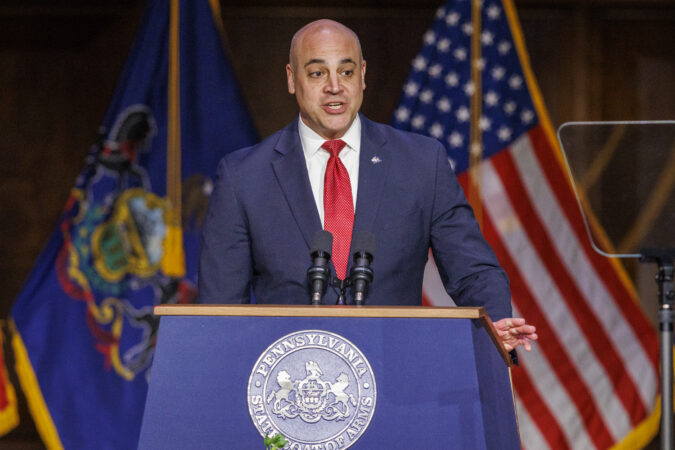
  • A Philly wedding photographer was sued by the Pa. attorney general for allegedly ripping off brides

    A Philly wedding photographer was sued by the Pa. attorney general for allegedly ripping off brides

    A Philadelphia wedding photographer who has been the target of complaints from so many couples in Pennsylvania and New Jersey that they created their own Facebook group was sued on Friday by the Pennsylvania Attorney General’s Office for allegedly ripping off her customers for at least $75,000.

    Christina Garcia, who also did business as Christina Hernandez Artistry LLC and Wandering Stardust Collective, allegedly failed to provide contracted photo and video services and refused to refund deposits, the attorney general’s office said.

    Attorney General Dave Sunday vowed in a statement Friday to make sure “this photographer never again conduct[s] business in the Commonwealth.”

    Sunday said in his statement: “A wedding day is one of the most precious and cherished moments in the lives of a couple, and this business darkened those days by neglecting appointments, then refusing to refund customers.”

    Garcia has been the focus of reports from the Washington Post, NJ.com, and CBS New York.

    She could not be reached for comment Friday. Her Instagram account and business website are now set on private.

    Edward S. Robson, who was described as Garcia’s lawyer in a Washington Post story published in March 2025, also could not be reached for comment.

    In that Post story, Robson said it was “an unfortunate situation” where Garcia faced a “perfect storm that included a health emergency regarding her husband, significant technological issues, and becoming so sought after that there were not enough hours in the day for her to finish her work as promptly as she would have liked.” Robson said Garcia was trying to “do right by her clients.”

    The Post reported that nearly 50 unhappy customers were part of a private Facebook group called “Brides Wronged by WSC.” It was unclear on Friday if the group still exists.

    A customer posted on Reddit about Garcia last June and said she was a member of the Facebook group. The customer said Garcia, with the help of a lawyer, supposedly was trying to deliver some of her contracted photos and videos. It was unclear what happened after that Reddit post.

    The Pennsylvania Attorney General’s Office alleged that Garcia had represented that she would personally photograph their weddings. Instead, Garcia allegedly double- or triple-booked herself on wedding dates and canceled at the last minute, sending replacement photographers instead.

    Customers who believe they were victimized by Garcia were urged to contact the Pennsylvania Attorney General’s Office to file an online complaint.

  • ‘A house from a scary movie’: Olney neighbors rattled amid rowhouse raid

    ‘A house from a scary movie’: Olney neighbors rattled amid rowhouse raid

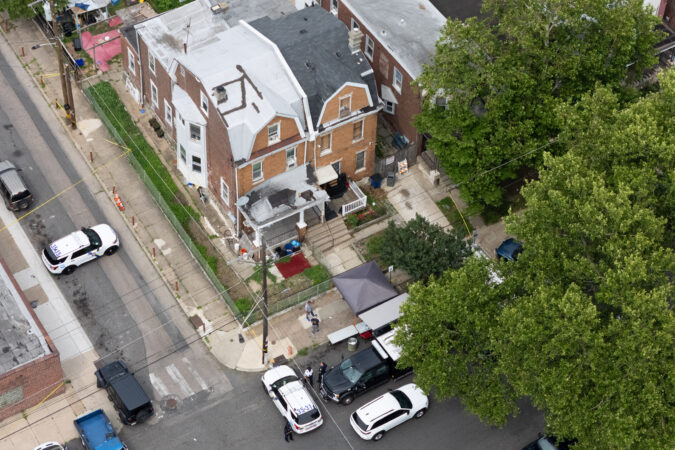
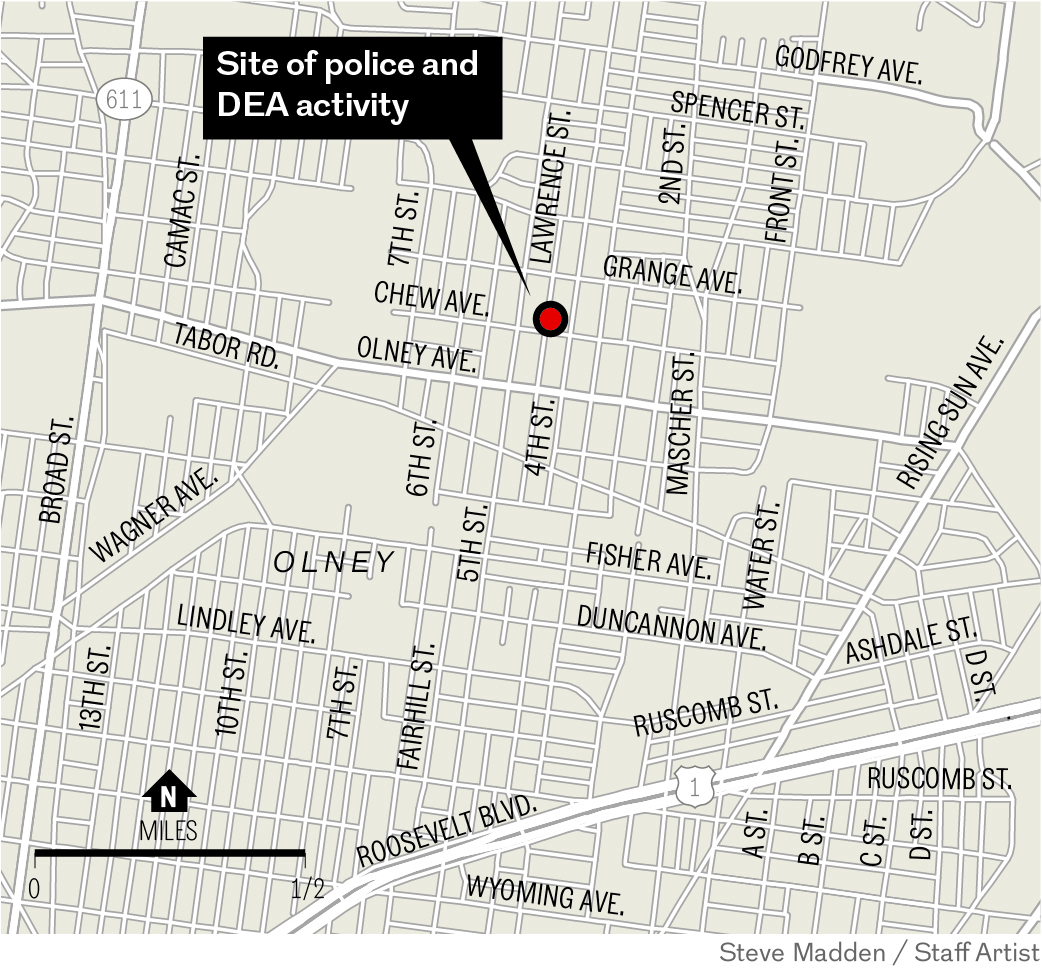
    The 400 block of West Chew Avenue in Olney was largely shut down Friday afternoon as Philadelphia and federal law enforcement officials searched a home on the block to determine if its owner had connections to at least two missing women.

    Residents of the block had effectively been sealed in as caution tape and Philadelphia Police Department vehicles cordoned off the street. Some residents gathered on their porches or sidewalks as federal officials produced equipment from the back of a black, unmarked utility truck.

    “I have been living here all my life,” Larry Alosi, 56, said. “It used to be a safe place, but it changed with time.”

    Consisting largely of rowhouses and small businesses, the North Philadelphia neighborhood of Olney is among the city’s most diverse, with large Korean American and Latin American populations calling the area home.

    The search had been ongoing for nearly a week, and came after U.S. Park Police encountered Eugene Albert Horsch, 44, acting suspiciously in a black BMW near Sixth and Market Streets on June 19, police said. Investigators recovered two firearms with obliterated serial numbers from Horsch’s vehicle, as well as cocaine, fentanyl, and marijuana — along with a baton, a cattle prod device, a switchblade, and a falsified U.S. Drug Enforcement Administration badge with Horsch’s photograph depicting a falsified name.

    Officials took Horsch into custody following the stop, and charged him with illegal gun possession and drug crimes. Searches of his home began last week.

    Horsch was being held Friday at Curran-Fromhold Correctional Facility with bail set at $500,000.

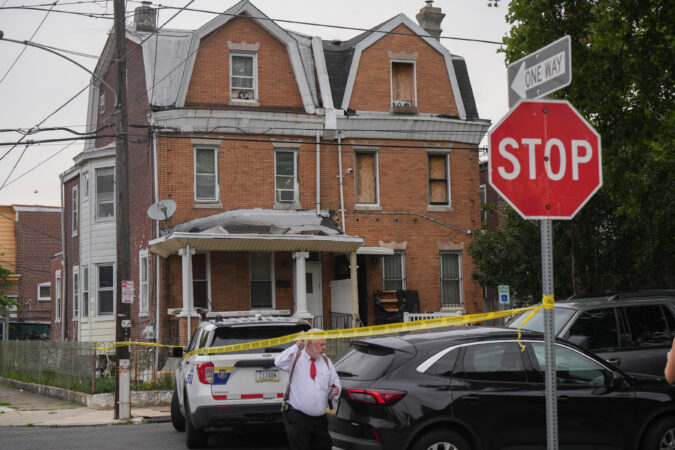
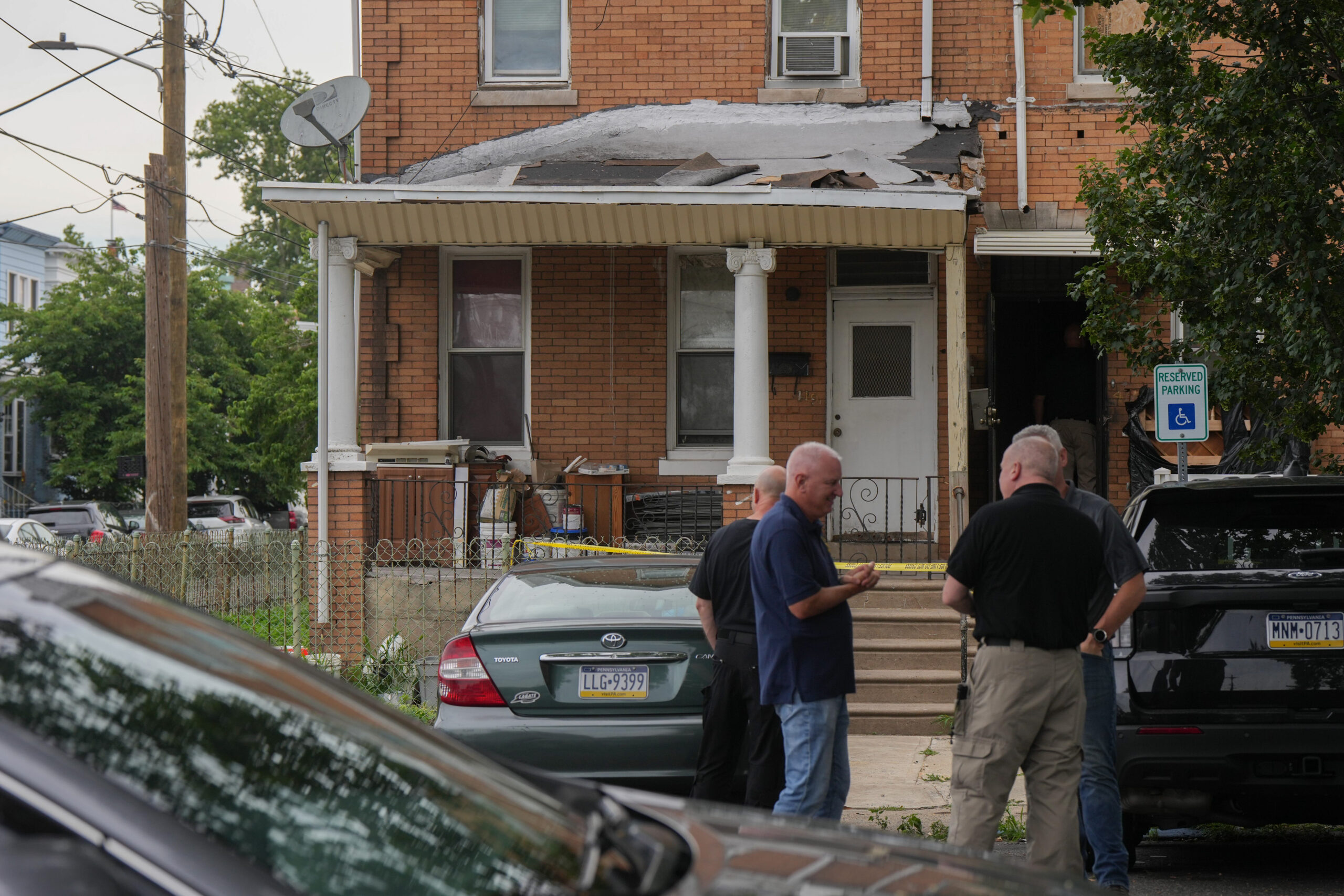
    A passerby called the West Chew Avenue residence “a house from a scary movie,” with boarded-up windows on its second and third floors. A camera on the exterior points to the street. The windows on the first floor have bars from top to bottom. Pink flowers remain on the lawn, decorated with pieces of broken glass from the door.

    Neighbors on Horsch’s block said the area is a quiet one, though it occasionally has its issues. Fabin Ingram, an area resident, said he never saw anyone coming or going at the corner of West Chew near Horsch’s home, and he largely worked to avoid the intersection.

    “I’m big on energy and feelings,” Ingram said. “If I get an eerie feeling, I act on it.”

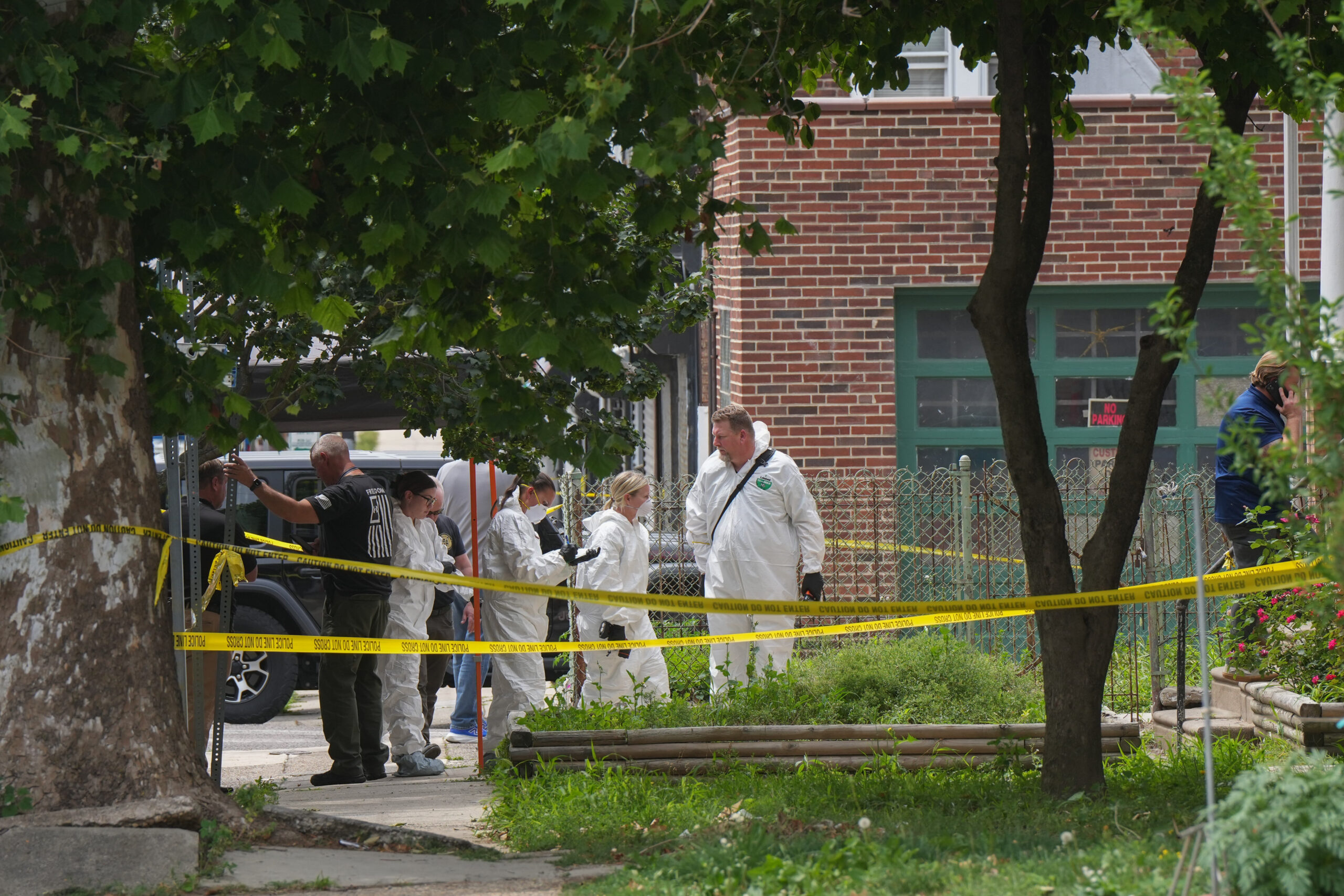
    Investigators at 417 W Chew, searching a home in Olney neighborhood in Philadelphia, June 26, 2026.

    One neighbor, Sid Brunson, who used to cut Horsch’s grass, described Horsch as a quiet, jittery man who “had a lot on his mind.” Brunson said that Horsch’s father, R.C. Horsch, a convicted drug manufacturer and erotic filmmaker, died in 2025, leaving a pall over the home.

    “You will never see a man other than him coming or leaving the house after that,” Brunson said. “If there was visitors at the home, it was always a female, never a male.”

    Another neighbor, who asked not to be identified for fear of reprisal, said Horsch was someone who got into disagreements with neighbors over parking and trash. He had long driven an impeccably maintained gold 1980s Lexus, and in recent years had started driving a new black BMW — and was often seen bringing women home with him, the neighbor said.

    The ongoing search of Horsch’s home this week was the latest in a series of odd developments at the property, with investigators saying that several urns had been found inside the home, including one that was labeled with the name of a deceased relative. Officials also discovered a 55-gallon drum with connections to water lines leading into a hole in the ground, as well as materials to grow marijuana, though it was not immediately clear if the items in the home were connected to drug manufacturing or more violent purposes.

    On Friday, law enforcement officials wearing hazmat suits were seen entering and exiting the property.

    During Horsch’s arrest last week, a woman falsely identified herself using the name of a 38-year-old woman who had been reported missing in Kensington in February 2023, sources told The Inquirer. Deputy Police Commissioner Frank Vanore declined to identify the woman who had been reported missing, but reports indicate that Horsch’s father had been questioned in the 2016 disappearance of his ex-wife, Amy McHale, of South Philadelphia.

    By late Friday afternoon, the investigation into Horsch’s home had not ceased, but a large FBI truck was spotted leaving the scene. Late in the day, the area had been largely left quiet, with the crime-scene tape on the home’s door serving as conspicuous evidence of the day’s events.

    Staff writer Andrea Padilla contributed to this article.

  • Olney house raid uncovers curious letter, drugs, chemicals, fake DEA badges — and possible links to two missing women

    Olney house raid uncovers curious letter, drugs, chemicals, fake DEA badges — and possible links to two missing women

    During a weeklong search of a crumbling Olney twin, federal agents and Philadelphia police found guns and drugs, tubs of chemicals, a curious unsigned letter, and fake law enforcement badges as they were investigating the homeowner’s connection to at least two women who have been missing for years.

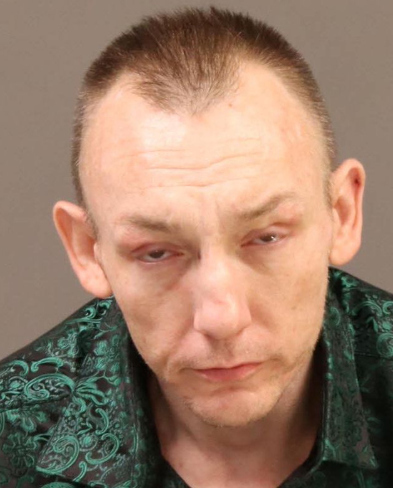
    The unusual investigation began under similarly bizarre circumstances: U.S. Park Police encountered Eugene Albert Horsch, 44, acting suspiciously in his black BMW parked near Sixth and Market Streets on the morning of June 19, Deputy Police Commissioner Frank Vanore said.

    As the ranger approached the car, Vanore said, he heard a woman in the backseat say, “You’re going to hurt me.” The woman then falsely identified herself to the officers using the name of a 38-year-old woman who had been reported missing in Kensington in February 2023, said the sources, who spoke on the condition of anonymity to discuss an ongoing investigation.

    The woman, 39, later told investigators that she’d given the alias because she had open warrants for her arrest in ongoing drug cases, and that Horsch had previously made her fake identification cards in that name, telling her she could use it if she was ever stopped and questioned by police, the sources said.

    And later, the sources said, she told officials that she did not know that missing woman — but feared something bad may have happened to her.

    Eugene Albert Horsch, 44, of Philadelphia.

    When police searched Horsch’s car outside Independence Hall, they recovered two firearms with obliterated serial numbers, as well as cocaine, fentanyl, and marijuana, according to an affidavit of probable cause for his arrest. What’s more, a source said, the car also contained a collapsible baton, a cattle prod, switchblade knives, and a fake U.S. Drug Enforcement badge with Horsch’s photograph under the name “Eugene Frederick Steiner.”

    Horsch was taken into custody and charged with illegal gun possession and drug crimes. He’s currently being held on $500,000 bail at Curran-Fromhold Correctional Facility.

    Officials with federal drug enforcement began searching Horsch’s home on the 400 block of West Chew Avenue alongside Philadelphia police on June 19.

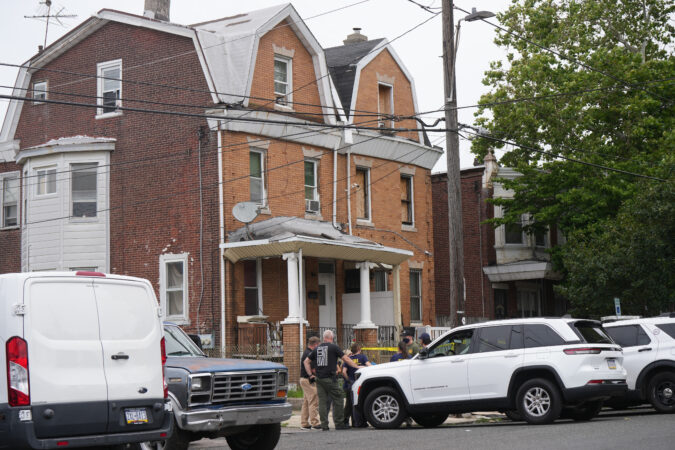
    The house at the 400 block of W. Chew Avenue in Olney being investigated.

    Vanore, in a news conference Friday, said the conditions of the boarded-up twin and materials recovered inside of it — including hidden compartments, drums filled with chemicals, and what appeared to be urns holding at least one of Horsch’s relatives’ cremated remains — only deepened the mysteries of the case.

    And investigators soon found themselves confronting a second concerning thread: Horsch’s late father, R.C. Horsch, a convicted drug manufacturer and erotic filmmaker, had an ex-wife who was last seen at the Olney property in 2016 and has never been found.

    Horsch’s attorney, Jerome Brown, said he did not have details about the ongoing police investigation.

    Brown said R.C Horsch, who died in 2025, had been questioned in the June 2016 disappearance of his ex-wife Amy McHale, of South Philadelphia. She suffered from mental health and substance abuse issues, he said.

    “This is much ado about nothing,” Brown said of the missing persons investigation. “They’re barking up the wrong tree.”

    Inside Horsch’s home, investigators found another handgun, chemicals and bottles of liquid that forensics investigators in white hazmat suits were still working to identify on Friday, Vanore said. There was also a 55-gallon drum with connections to waterlines leading into a hole in the ground, he said, and materials to grow marijuana upstairs.

    Federal investigators also found a multipage and unsigned handwritten letter that described references to hurting unspecified people, and references to the serial killer Ted Bundy, according to an affidavit of probable cause to search the home that was obtained by The Inquirer.

    “Acting on emotion is where problems occur. What I don’t think I told you was that the first time it was planned ahead of time. The threat was made before you know who came over and I already had a 2ft zip tie in my pocket and a drum set up,” the letter said, according to the affidavit.

    According to the warrant, it went on: “I had been ready and waiting and I damn sure showed no hesitation. And it was fun.”

    Law enforcement sources said investigators were working to verify the authenticity of the letter, who wrote it, and whether it was meant to serve as a portion of a novel or screenplay. Horsch’s father published several works of fiction with masochistic themes, including one described as an “autobiographical memoir of a caring, empathetic serial killer.”

    Police also found bank cards in the name of the woman who went missing in 2023, and also recovered what appeared to be a death certificate for another woman who died last year, the document stated.

    Vanore said no human remains were found inside the home.

    Forensic experts from the FBI are now analyzing the liquids and materials recovered in the home, he said.

    Vanore said it wasn’t clear whether the chemicals were intended for a drug manufacturing operation or another purpose.

    “We just don’t know what he’s doing, if he’s producing something, if he’s making something, if he’s irrigating something, we don’t know,” Vanore said. “I’m not a chemist, but from what I’ve been told … they could have been explosives.“

    And, he said, it was too early to say whether the evidence would speak to any of the missing person cases tied to the property. He declined to identify the woman who had been reported missing in 2023 and did not answer questions related to the ongoing investigation into McHale’s disappearance.

    “We’re certainly going to look into the activities that went on at that house,” he said.

    Investigators on W. Chew Avenue.

    News reports of the search of the Horsch home reopened wounds for McHale’s family. Gloria McHale said her daughter struggled with mental health issues and a drug addiction, and was married to R.C. Horsch for several years before disappearing June 14, 2016.

    In an interview Friday, she said when police questioned R.C. Horsch at the time of her daughter’s disappearance, he said he last saw McHale drinking vodka before he went to bed, and that when he woke up, she was gone.

    “I knew that wasn’t right,” McHale’s mother said. “She wouldn’t disappear. She had a daughter and grandkids. Her daughter was about to get married.”

    Prior to his arrest last week, Eugene Horsch had a criminal history that included at least 10 other arrests for drug possession, dealing, assaults and drunk driving. He was sentenced to four to eight years in prison after police discovered $1.9 million worth of cannabis inside the Chew Avenue home in 2013, court records show.

    He was arrested again in May 2025 for possession of marijuana and amphetamines and handed three years’ probation.

    Then, in March, he was charged with aggravated assault after police said he stabbed a man in the stomach at Eighth and Market Streets. Prosecutors withdrew the charges in May after a witness failed to appear in court, court records show.

    Since his release from jail, he appeared to be living back at his rundown home on Chew Avenue, a property that city inspectors cited as vacant and unsafe in recent years and that neighbors described as an increasingly off-putting presence on the block.

    On Friday morning, anxiety swirled along the typically quiet residential neighborhood, about a mile from the Montgomery County border.

    A security camera mounted on Horsch’s home between the boarded-up windows on the upper floors looked out over an overgrown yard where at least a dozen local and federal agents collected and tested evidence into the late afternoon.

    Sid Brunson, a construction worker who lives nearby and occasionally cut the grass in front of Horsch’s house, said Horsch often had women who appeared to use drugs at his property. A fire broke out on the upper floors of the property several months ago, he said, which led to plywood covering the windows.

    He described his neighbor as a “quiet” and “real jittery” man who kept to himself.

    “He always had a nice shirt on like he was going to the office,” Brunson said, “but he never gave you enough time to talk because he was always rushing.”

    Staff Writers Ryan W. Briggs, Samantha Melamed, Brett Sholtis, Michelle Myers, Isabel Maney, Andrea Padilla, and Jesse Bunch contributed to this article.

  • Knives, drugs, and guns: A police report obtained by The Inquirer shows what officers found inside Eugene Albert Horsch’s car

    Knives, drugs, and guns: A police report obtained by The Inquirer shows what officers found inside Eugene Albert Horsch’s car

    A U.S. park ranger last week conducted what seemed like a routine traffic stop near Independence National Historical Park, approaching a black BMW that was parked in front of a fire hydrant and asking to speak with the driver.

    But just moments into the encounter, the ranger discovered a series of alarming pieces of evidence inside the car, according to a police report obtained exclusively by The Inquirer: switchblade knives, drug materials, a cattle prod and, eventually, two loaded guns.

    The car’s occupants, too, were displaying troubling behavior, the report said — a woman inside said the driver was going to hurt her. And she then produced a fake identification that included her photo, but had the name of another woman who had been missing for three years.

    The episode kicked off what has since become a weeklong investigation into the car’s owner and a variety of unsettling materials police have since found in the man’s Olney rowhouse.

    And the probe has only intensified in recent days, growing to include Philadelphia homicide detectives, FBI agents specializing in chemical analysis, and unsubstantiated rumors spilling across social media about corpses being found in a basement.

    Officials said Friday that they had no indication that Eugene Albert Horsch, 44 — the man who owns the BMW and the home in Olney — had actually stored human remains in his house on the 400 block of West Chew Avenue. But Deputy Commissioner Frank Vanore cautioned that the investigation remained ongoing, and that law enforcement agents were examining a host of unusual evidence connected to Horsch and his home.

    Horsch, in the meantime, remains jailed on gun and weapons charges that were filed after his initial encounter with the park ranger last Friday.

    The police report obtained by the Inquirer, as well as the affidavit of probable cause for Horsch’s arrest, gave this account of how that episode unfolded:

    Around 8 a.m. on June 19, a park ranger patrolling the area noticed Horsch’s BMW stopped on Sixth Street in a restricted area, and the ranger walked up to the car to speak with the driver.

    When Horsch rolled down his window, the ranger heard a woman inside the car yell out that the man inside was going to hurt her. The ranger also noticed signs of potential drug use by the occupants of the car, including a butane lighter and tweezers, and he asked both people in the vehicle for identification.

    The woman then provided an ID that had her photo but the name and other details of a woman who had been reported missing several years ago.

    And when the ranger asked Horsch to step out of the car, he noticed Horsch had scissors, a switchblade knife, and a glass drug pipe. The ranger’s partner then searched the car and found more troubling signs under the floorboards: two loaded firearms.

    The rangers then handcuffed Horsch and the woman, but Horsch told police the guns were not hers. He also then said he had crack cocaine in a compartment near his steering wheel.

    Both Horsch and the woman — whom The Inquirer is not identifying because she has not been charged with a crime — then began hyperventilating, and were taken in separate vehicles to Jefferson Hospital.

    Officers continued searching Horsch’s car and found more apparent drug materials, a baton, a cattle prod, another knife, and fake credentials that purported to identify Horsch as an agent with the Drug Enforcement Administration.

    After being released from the hospital, Horsch and the woman were taken to DEA headquarters. Horsch declined to speak with investigators.

    The woman, however, said she’d met Horsch a few months ago, and provided enough details about their interactions at his house that investigators applied for a search warrant.

    Vanore, of the police department, said investigators were continuing to sort through a mix of guns, drugs, chemicals, and even urns they’d found inside — including during searches Friday.

    The possibilities of why such materials could have been on hand include drug manufacturing, explosive production, or other activities, he said, adding: “We’re certainly going to look into the activities that went on at that house.”

  • U.S. strikes Iran to respond to attack on ship that Trump says violated ceasefire

    U.S. strikes Iran to respond to attack on ship that Trump says violated ceasefire

    WASHINGTON — The U.S. struck Iran on Friday in response to a drone attack a day earlier on a cargo ship in the Strait of Hormuz. It’s the most significant test yet to an interim understanding reached a week ago by the two countries to begin working to end their monthslong war and reopen the pivotal waterway.

    U.S. President Donald Trump said the drone attack violated the ceasefire. The strikes came shortly after Trump told reporters, “You’ll find out” whether the U.S. would respond.

    U.S. Central Command said the military struck missile and drone locations and coastal radar sites in Iran.

    “I don’t like the fact that they took a shot yesterday, actually four of them,” Trump said at the White House shortly before the U.S. struck back. When asked why there would be strikes when Trump has insisted talks with Tehran are going well, Trump said of Iran: “They’re a little bit different.”

    He then abruptly cut off questions and reporters were ushered out of his office.

    Ebrahim Azizi, who heads the Iranian parliament’s national security commission, responded to Trump on social media earlier Friday, saying, “the Strait of Hormuz is governed by Iran, so: Respect the rules” and to “not mistake control for escalation.”

    “This is not a violation of the ceasefire; it is ceasefire management,” Azizi wrote.

    Friday evening, Vice President JD Vance said on social media that Iran should “pick up the phone” if there are disagreements about the ceasefire agreement.

    “But violence will be met with violence,” Vance said.

    Strikes conclude an hour later

    The U.S. strikes on Iran concluded about an hour after U.S. Central Command announced the military action on social media, a U.S. official with knowledge of the situation told the Associated Press. The official spoke on condition of anonymity to discuss an ongoing military operation.

    The British military said on Thursday that a container ship was hit a by projectile off the coast of Oman, coming hours after Iran threatened vessels to stop using the route. The United Kingdom Maritime Trade Operations center said no injuries were reported.

    The development came during a fragile time for the U.S. and Iran as they work to negotiate a permanent end to the war. Iran has increasingly challenged the region and the U.S. over its control of the Strait of Hormuz, even with the current interim deal it reached with the U.S. last week.

    The attack on the cargo ship happened while a United Nations maritime agency was beginning an operation to move stranded ships out of the strait this week, using an alternative route, hugging the shores of Oman rather than sailing through the central part of the strait.

    The International Maritime Organization halted the evacuations after the attack and said on Friday they won’t resume until there are guarantees that the other ships won’t be attacked.

    About 115 ships were able to move out of the strait in recent days, leaving about 500 still in the area, said Arsenio Dominguez, the agency’s secretary-general.

    The opening of the alternative passage through the strait was expected to relieve pressure on the world economy and remove Iran’s main source of leverage in ongoing peace talks with the U.S.

    The U.S. and Iran are still negotiating terms of the deal, including issues such as getting ships through the key strait and addressing the future of Iran’s stockpile of highly enriched uranium. Under the interim deal, the two sides have 60 days to work out the details.

    Shipping analysts said the drone strike cast a shadow over what had been a growing stream of trapped vessels finally leaving the Gulf and an increasing flow of tankers carrying crude oil.

    “A week of widening commercial confidence in the Strait of Hormuz has hit its first significant test,” said marine data company Windward on X. It said that while the strait remains operationally open with 43 transits recorded after the incident, “the pace of normalization has slowed.”

    On Wednesday before Thursday’s drone strike, 78 vessels transited the strait, the highest since the war began, although below the prewar averages of 130 or more per day.

    At least two tankers reversed course while attempting to transit the strait on the U.N.-backed route near Oman after Iran insisted vessels use only the Teheran-approved routes, according to marine data and analytic firm Lloyd’s List Intelligence.

    More than two dozen ships were still transiting the strait’s southern route after the attack, Lloyd’s said Friday.

  • Camden sees its third fatal shooting victim in June after a homicide-free summer in 2025

    Camden sees its third fatal shooting victim in June after a homicide-free summer in 2025

    A 50-year-old Camden man is dead after being shot on the city’s east side Thursday night, law enforcement said.

    Police responded to reports of a person shot on the 300 block of Morse Street around 10:20 p.m., according to a joint statement from the Camden County Prosecutor’s Office and Camden County police.

    Officers found Cornelius Smith, 50, lying in the street with a bullet wound. The Camden resident was transported to Cooper University Hospital, where he was pronounced dead about 10:46 p.m., officials said.

    No arrests have been made. The investigation into the killing is continuing, police said.

    Smith’s killing was the third fatal shooting in Camden this month.

    Around 12:20 a.m. on June 9, police responded to a report of a shooting in the 200 block of Morse Street and found Luis J. Bonet, 24, of Camden wounded by gunfire. He was pronounced dead at Cooper University Hospital a short while later.

    The following day, Eric Irizarry, 45, was charged in connection with Bonet’s death with first-degree murder, second-degree unlawful possession of a weapon, and second-degree possession of a weapon for an unlawful purpose.

    A week earlier, a fatal shooting in Camden, police said, was tied to a multi-vehicle crash in neighboring Pennsauken.

    While responding to a shooting on the 3300 block of Westfield Avenue on June 2, police discovered multiple shell casings and an unoccupied vehicle that had been struck by gunfire, officials said.

    A few minutes later, Pennsauken police responded to a crash involving five vehicles at Drexel Avenue and Route 130 in Pennsauken. One of the vehicles involved in the crash had been struck by gunfire and the driver, later identified as Izaiah Minzy, 36, of Westville, had been shot.

    Minzy was taken to Cooper University Hospital, where he was pronounced dead at 8:11 p.m.

    Six people in the other cars involved in the crash sustained minor injuries.

    The prosecutor’s office has not announced any arrests in the case.

    The violent June comes after Camden experienced a record year in 2025 with its lowest recorded homicide total in four decades and its first homicide-free summer, police said, in 50 years.

    Camden recorded 12 homicides last year, down from 17 in 2024, and saw an overall 6% drop in violent crime compared with the previous year, including a 32% decrease in sexual assaults and a 12% decrease in robberies, according to police.

    The decline came more than a decade after the city’s police department was disbanded in 2013. Since then, the department’s successor, the Camden County Police Department, has taken a new approach to community policing that includes pairing social workers with officers and supporting programs designed to help at-risk youth.

    Homicides have dropped by 82% since 2012, the last full year of the former police structure. During that time, the city has also invested heavily in public spaces and infrastructure, including $100 million for parks and street repaving.

    Earlier this month, U.S. Sen. Cory Booker (D., N.J.) visited the department’s headquarters alongside Camden Mayor Victor Carstarphen and Camden County Commissioner Director Louis Cappelli Jr. to get a firsthand look at some of the advanced tools and training methods police have utilized in recent years.

    Booker is promoting federal legislation designed to help other law enforcement agencies adopt similar technology, like automated license plate readers, live cameras, drones, and more, which Camden County Police Chief Gabriel Rodriguez has said contributed to the reduction in crime across the city.

    Officials asked that anyone with information about any of the recent shootings contact the Camden County Prosecutor’s Office Homicide Unit or the Camden County Police Department. You can also submit anonymous tips online.

  • Buttigieg was briefly separated from his children after police say he was target of false report

    Buttigieg was briefly separated from his children after police say he was target of false report

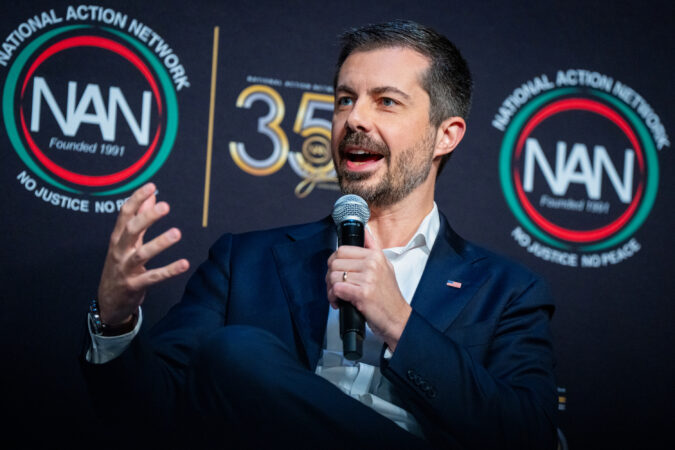
    WASHINGTON — Former Transportation Secretary Pete Buttigieg was the target of an anonymous report that police determined was false and that he says forced him to spend a night away from his 4-year-old twins.

    Buttigieg wrote in a Substack post that a Michigan State Police officer told him they found nothing to substantiate the anonymous allegation and believed it was politically motivated. He described the 24-hour ordeal as “among the darkest hours of my life.”

    In a statement, Michigan State Police said they received an “anonymous report” and that they and Child Protective Services “responded and determined the report was false.”

    According to Buttigieg, a Michigan State Police officer and a Child Protective Services worker came to his home after receiving an anonymous report alleging he posed a danger to his children. He said authorities arranged forensic interviews for his twins and instructed him not to be alone with them until the interviews were complete.

    The following day, Buttigieg said investigators told him the anonymous caller claimed he had confessed years earlier to violent crimes during a chance meeting in Alabama. Buttigieg said he had never been to the town where the meeting allegedly occurred. He said police told him the allegation would not be referred to prosecutors, while Child Protective Services found nothing to substantiate the report.

    “I cannot describe the mix of rage and sadness that I feel at the idea that someone brought our children into this,” writes Buttigieg. “They are four years old. Four. They do not know or care what a Democrat or a Republican is.”

    Buttigieg, who is widely viewed as a potential Democratic presidential candidate in 2028, has long been the target of anti-LGBTQ attacks.

    In recent years, conservative activists and some Republican officials have opposed efforts to portray same-sex parents as ordinary families in schools and public life. June — widely recognized as Pride Month — is Strong Families Month in Alabama, intended to coincide with Father’s Day. Gov. Kay Ivey’s proclamation says fathers are “the head of the household” and “homes led by a father and mother provide children with the structure and discipline necessary to succeed throughout life.”

    Buttigieg wrote that the incident occurred soon after he shared photos of his family online for Father’s Day.

    Buttigieg drew criticism from some Republicans for taking paternity leave after he and his husband, Chasten, adopted their twins while he was serving in the Biden administration. Buttigieg also wrote that he has faced death threats during his career.

    “But this is the ugliest thing that has happened to me since my career in service began,” he wrote.

    Public officials from across the political spectrum have increasingly been targeted by swatting, which is the act of making a false call to emergency services to prompt a response at a particular address. The goal is to get authorities, particularly a SWAT team, to show up. Law enforcement agencies have warned that the incidents divert resources from other pressing tasks and pose risks to both law enforcement and the victims.

    Buttigieg said the incident reflected a broader escalation in political attacks.

    “Everyone knows politics is ugly these days,” he wrote. “It’s always been ugly, but now it feels more and more like bloodsport.”

    “Even so, this is different.”

  • Jefferson Einstein nurses sign a new contract with raises, more staffing

    Jefferson Einstein nurses sign a new contract with raises, more staffing

    Nearly 1,200 nurses at Jefferson Einstein Philadelphia Hospital this week ratified a contract that includes raises and additional staffing at the Logan hospital.

    The nurses, part of the Pennsylvania Association of Staff Nurses and Allied Professionals union, reached a contract agreement with Jefferson Health officials after authorizing union officials to call a strike last week.

    Jefferson officials said in a statement that the three-year contract “reflects a thoughtful and collaborative approach, balancing the financial realities facing healthcare organizations today with our ongoing commitment to invest in the communities we serve.”

    Nurses had called for assurances that the hospital will not close departments; the health system announced plans earlier this year to close several pediatric outpatient clinics that are staffed by non-union nurses.

    As part of the new contract, union officials said in a news release, the hospital will add staff to behavioral health units. And a committee of nurses and nursing directors must agree with any plans to reduce staffing levels in any hospital department.

    The union negotiated wage increases of 10% to 14% over the course of the three-year contract. In addition, nurses who work weekends will also see higher pay rates to retain staffing levels on weekends.

    The hospital also agreed to continue contributing to nurses’ pensions, and cannot “negatively impact” sick and vacation time. The union said Jefferson employees will also save money on health insurance costs thanks to changes to pediatric-care coverage.

    “We’re trying to make Jefferson Einstein a more desirable place to work by enhancing our benefits,” said Jyll Kurczewski, a registered nurse in Einstein’s emergency department and the Einstein union’s co-president, in a statement.

    “There are many healthcare networks in the area where RNs can choose to work. We want them to want to be at Einstein and to stay at Einstein.”

    A Jefferson spokesperson said that wages and benefits in the contract are “consistent with Jefferson’s compensation philosophy and include the support we provide to all the dedicated professionals who deliver exceptional patient care every day.”