Blog

  • Venezuelans take search for the missing into their own hands as earthquake death toll climbs

    Venezuelans take search for the missing into their own hands as earthquake death toll climbs

    LA GUAIRA, Venezuela — Venezuelans took the search for missing loved ones into their own hands Friday in the aftermath of back-to-back earthquakes, citing the scarcity of government rescuers, as the human toll of the disaster climbed to at least 920 dead and more than 51,000 missing.

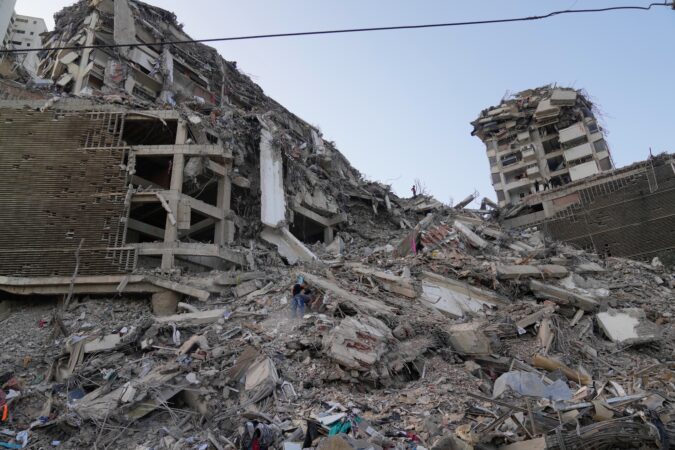
    Citizens digging through the rubble of their homes said they have seen few state rescue teams in the areas hit hardest by the devastating 7.2 and 7.5 magnitude quakes that struck late Wednesday, despite authorities projecting an image of a robust government response.

    The lack of help compounded families’ desperation as the pressure to find buried survivors increased with each passing hour. The South American nation on Friday marked nearly two days since the disaster. Aid agencies consider the first 48 to 72 hours to be a crucial time frame to retrieve people alive, though that period can be extended if they have access to food and water.

    Meanwhile, a broad international aid effort accelerated, with dozens of rescue teams from around the globe arriving in Venezuela or due to arrive there soon.

    “Each person saved is a miracle,” said Jorge Rodríguez, the president of the country’s National Assembly. “We are not going to hide absolutely anything about the magnitude of this tragedy.”

    Anxious families wait to see if their relatives survived

    Families across northern Venezuela searched in the ruins of buildings for relatives and whatever remained of their lives.

    Nazareth Jimenez sobbed into the shoulder of a loved one as she watched neighbors try to cut through slabs of concrete with hammers and power tools in a building reduced to a mountain of debris. “My god, how are we going to get them out of there?” she murmured.

    She was in the northern state of La Guaira, just north of the capital of Caracas, where some of the worst destruction unfolded. Jimenez was wracked with anxiety as she waited to see if her siblings, nephews, nieces, and friends would emerge from the debris alive.

    “We’re making a call for help to governments of countries across the world,” she said, pleading for machines that would be capable of moving collapsed structures. “There are still people alive in there.”

    Government forces distributed food and water to survivors in La Guaira as acting President Delcy Rodríguez said her government was “working tirelessly” to mount a full response. She welcomed the arrival of rescuers and humanitarian aid from all over the world. She said La Guaira had been militarized and that more help was on the way, even as residents said it was just a fraction of the aid they needed.

    The disaster poses a huge challenge for Rodríguez, the former vice president who took office in January after the capture and removal of then-President Nicolás Maduro by the United States. Venezuela has been facing economic disarray for more than a decade, and many people reject the legitimacy of the political movement Rodríguez represents.

    The number of dead was expected to climb, and civilians reported tens of thousands of people missing on independent digital databases. The number of missing likely includes those who have been incommunicado due to the lack of cell phone signals in disaster zones. Some reports may be duplicates created when multiple loved ones are searching for the same person.

    The number of injured climbed to more than 3,300 as of midday Friday, and authorities said they had rescued 243 people.

    Quakes leave millions of people reeling

    The International Organization for Migration said that up to 6.76 million people in Venezuela could be affected by the quakes, some 2 million of them in Caracas alone. Loyce Pace, the International Red Cross’ regional director for the Americas, said “people are still terrified to reenter what were their homes.”

    Desperation started to sink in Friday as many families still had not found their missing loved ones, had minimal equipment for rescue efforts, and continued to sleep on the street.

    In Catia La Mar, a community adjacent to the country’s main airport, throngs of people began to loot basic goods like toilet paper and food from stores. Others swarmed a civilian pickup truck that was giving out loaves of bread and water. A soldier intervened to allow the vehicle to leave. People turned the parking lot of a pharmacy into a makeshift shelter by setting up tarps, hammocks, and tents.

    Omar Reyes walked through the remains of what was once his home, calling out the names of his wife and children. He received no response.

    Around 20 family members have died. Two of his four children are buried in the debris.

    “I’ve been left alone in this life,” he said quietly.

    International aid is on the way

    Venezuela authorities said Friday that 861 international volunteers from Mexico, the U.S., El Salvador, Switzerland, Colombia, and beyond were working in Venezuela. Many more from other countries were expected in the coming hours and days. The U.N. said 1,000 emergency responders in 25 search-and-rescue teams from across the globe were on their way.

    On the country’s main highway, caravans of state forces, emergency personnel, dump trucks, and heavy machinery moved in the direction of the tragedy. A civilian pickup truck carrying thin mattresses had its windows marked with “Help from Trujillo.”

    Some survivors emerge from the dust and debris

    Media reports have shared notable moments of hope, including a young man brought out on a stretcher in the San Bernardino district of Caracas to the applause of onlookers as his tearful mother said, “Leandro, I love you.”

    Venezuelan TV broadcast video of a girl covered in dust and wrapped in a sweatshirt as she emerged from rubble with the help of rescuers. Caracas metropolitan rescue team head José Luis Núñez said she was found in a 10-story building in La Guaira that collapsed and flattened “like a pancake.”

    “We want to highlight this girl’s strength, determination, and will to live,” Núñez said.

    The U.S. Geological Survey said both earthquakes were centered near Moron on the Caribbean coast, about 105 miles west of Caracas. The one-two punch of the quakes, combined with the shallow seismic movements, amplified the destruction, said Marcos Ferreira, a geophysicist and researcher at the Geological Survey of Brazil.


  • Gov. Shapiro welcomes 63 new U.S. citizens from 17 countries in Chesco alongside a George Washington reenactor and bald eagle

    Gov. Shapiro welcomes 63 new U.S. citizens from 17 countries in Chesco alongside a George Washington reenactor and bald eagle

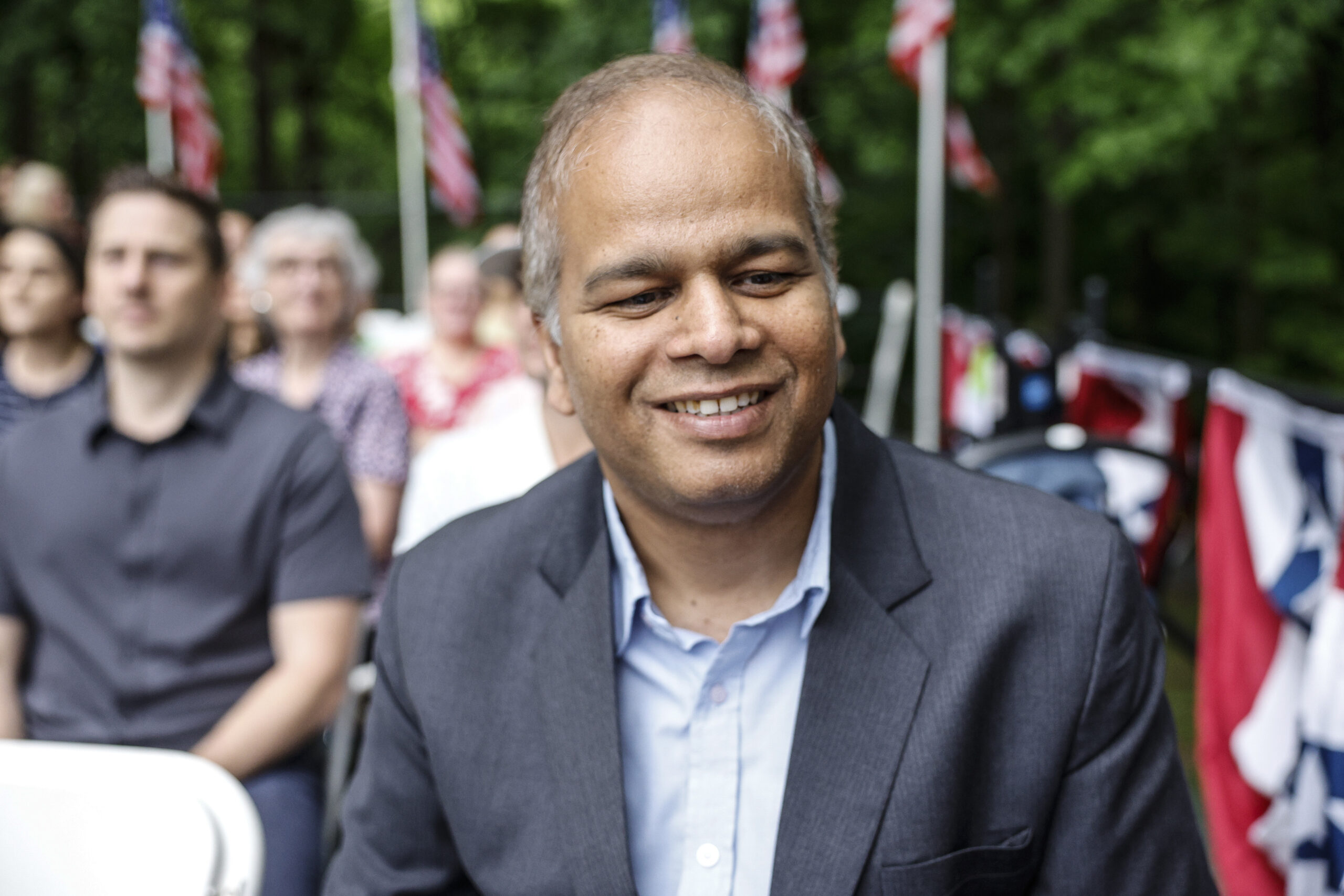
    It’s been a long time coming, Matthew Mckena reflected. There were hiccups in the process. But by midday Friday, he was officially a U.S. citizen, in time for the country’s 250th birthday, and welcomed by Gov. Josh Shapiro, a George Washington reenactor, and even a bald eagle.

    “It just became a battle of perseverance, but also we’ve come so far,” he said. “The hope in itself is also in the waiting, and so it’s now coming in full circle. It’s just unbelievable of having waited for so long for something, and then finally having it.”

    Mckena, 21, was one of 63 people from 17 counties to take their oaths as new citizens in Valley Forge on Friday. For many of them, who ranged in ages 18 to 87, the day was a culmination of years of effort and lives they’d built in the country.

    Mckena’s siblings were born in the United States, before his family moved back to Kenya, where he was born. When he was in high school, his family returned to the U.S. He’s now a college student pursuing a degree in mechanical engineering.

    “[There are] so many opportunities that have been afforded with this move to be at a place where it’s so easy to access education infrastructure,” he said.

    New citizen Helene Hartmann Dirani with her 3-year-old daughter Victoria are greeted by Gov. Josh Shapiro as he welcomes 63 new citizens from 17 countries at the historic Founding Forward in Phoenixville.

    Helene Hartmann Dirani, 42, has called a few nations home: Originally from Kazakhstan, she moved to Germany at 13 years old, and then studied in Austria. She later met her now-husband in the United States. After years of long-distance dating, they settled down, and she moved to the country 13 years ago. Three children later, the ceremony felt like a special moment for Hartmann Dirani.

    “Being with my husband and my children, and settling down is really what makes it so special,” she said.

    The naturalization ceremony was held one week before America’s Semiquincentennial in historic Valley Forge. Chester County Court of Common Pleas President Judge Ann Marie Wheatcraft called the new citizens’ attention to that legacy.

    “Valley Forge reminds us that citizenship is not simply inherited, it is claimed often at a great cost, and many of the many of us take that for granted. You understand better than most,” she said. “You chose America. You worked hard for this. … Bear with us your gifts, your culture, and all that makes you unique.”

    Rohan Bakshi talks about becoming a new citizen before Gov. Josh Shapiro welcomed 63 new citizens from 17 countries at the historic Founding Forward in Phoenixville on Friday, June 26, 2026.

    America has always been “a land of dreams” for Rohan Bakshi, 45. He came to the country from India in 2012, and has felt a part of the country. He built a life, family, and career here. After so many years, this was a “dream come true,” he said.

    “This is the best country to live in,” said Bakshi, whose wife will be sitting in his seat soon, as she pursues her own citizenship. “I’ve seen other countries as well. It’s a privilege to be an American citizen.”

    Lina Zhang, 41, felt emotional as she waited to take her oath. Roughly 14 years ago, she moved from China to the United States. In the beginning, her English “sucked,” she said. But she learned fast: attending GED classes, using her translator app to translate English to Chinese, and then translating back to English, so she could take her exams.

    Her hard work earned her some of the highest marks her teacher had seen in years, she said. She went on to college, majoring in accounting and minoring in finance, landing a job with a public accounting firm.

    Surrounded by her family Friday, she was glad to be sitting at the ceremony.

    “I’m proud of myself,” she said.

    New citizen Lina Zhang poses with George and Martha Washington reenactors Randall Spackman and Karyrn Saece before taking the oath of citizenship with 63 new citizens from 17 countries at the historic Founding Forward in Phoenixville.

    Speaking to the new citizens, Gov. Josh Shapiro recognized the work each person had put in to reach this moment. But, he warned: “As new Americans, your work is just beginning.”

    Recalling Ben Franklin’s famous quote, “A Republic, if you can keep it,” Shapiro told them those words — “if you can keep it” — was their charge.

    “Each successive generation of Americans have continued that work, caring for their neighbors, standing up for freedoms that our founding fathers fought for, taking an oath of citizenship, working in the halls of Congress, the halls of our state capitol, the halls of our county — that work now falls to each of you to be engaged American citizens,” he said.

    New citizens got to visit with Noah the bald eagle from the Elmwood Park Zoo after some 63 new citizens from 17 countries took the oath of citizenship at the historic Founding Forward in Phoenixville.

    After the ceremony, Mckena said, from his experience, a lot of people discount the value of American citizenship.

    “There really is a high cost that a lot of people pay, and there really is a huge disparity in what democracy offers and what the rest of the world offers, and so really it’s a special opportunity,” he said. “People who already had it [should] really treasure and understand it. And for those who don’t, seek after it.”

    This suburban content is produced with support from the Leslie Miller and Richard Worley Foundation and The Lenfest Institute for Journalism. Editorial content is created independently of the project donors. Gifts to support The Inquirer’s high-impact journalism can be made at inquirer.com/donate. A list of Lenfest Institute donors can be found at lenfestinstitute.org/supporters.

  • Could a Pa. Supreme Court decision on skill games help fund SEPTA?

    Could a Pa. Supreme Court decision on skill games help fund SEPTA?

    More funding for SEPTA and dozens of financially strained mass transit systems across Pennsylvania has been on the back burner in this year’s budget debate, but it may get some more attention now.

    The Pennsylvania Supreme Court ruled June 15 that tens of thousands of the so-called skill games in bars and convenience stores are in fact slot machines — and illegal unless licensed, regulated, and taxed like casino-based slots.

    “By dedicating a portion of skill game revenue to transportation, we can protect and strengthen transit services without placing additional burdens on taxpayers, while ensuring our transit agencies have the resources they need,” Republican State Sen. Frank Farry of Bucks County said Friday in a statement.

    Transit advocates renewed what has become an annual public push for more money for SEPTA and fellow transit agencies at a news conference in front of the Fifth Street/Independence Hall Station — prompted in part by the court decision.

    Farry issued the statement in support of that effort.

    “I have the freedom to be able to come here, thanks to this elevator behind us, which was recently renovated,“ said Julie Rea, an organizing fellow for Transit Forward Philadelphia who uses a wheelchair and depends on the Market-Frankford El (now called the L).

    “Without the long-term funding that SEPTA really needs, we’re not going to be able to keep the system accessible for all,” she said.

    Last year, lawmakers and Gov. Josh Shapiro failed for a third time to reach agreement on his proposal to dedicate an increased portion of general sales tax revenue to consistently fund transit agency operations for five years.

    Republicans, who control the Senate, did not want to take more sales tax revenue for transit, and the Democrats in charge of the House did not want to take up the GOP leadership’s counterproposal to use state money for infrastructure projects for operations instead.

    Farry offered legislation in 2024 to regulate and tax skill games and dedicate 50% of the revenue to create a stable source of funding for public transit. The most optimistic assessments are that taxes on the games at or near the rate casinos must pay for their slots could generate up to $1 billion a year.

    Taxing skill games has been discussed in budget deliberations for several years, though it never came together, in part because of differences of opinion in the GOP Senate caucus.

    “Maybe the court decision will spur people to get their act together,” Farry, who is up for reelection in the fall, said in an interview. “We have a pathway.”

    Shapiro has proposed taxing skill games at 52%, the same rate casinos pay for slot machine proceeds. Last year, the Senate GOP proposed a tax rate of 35% on the machines.

    When a transit funding deal failed to come together in 2025, SEPTA raised fares and slashed service, eliminating 32 bus routes outright, until a Philadelphia court ordered it to restore cuts in service.

    Shapiro then allowed SEPTA to use $394 million of reserved capital money in a state trust fund to pay to operate the transit system for two years; ironically, that was the same maneuver behind the GOP’s proposal.

    Meanwhile, this year, paratransit and shared-ride services are in trouble throughout the state and transit systems in Lancaster, Westmoreland County, and the Lehigh Valley are considering service cuts.

    “We know that the rural-urban divide is manufactured, and that a public good, like transit, touches us all,” said Connor Descheemaker, statewide campaign manager for Transit for All PA.

  • Israel and Lebanon sign framework agreement with U.S. in ‘first step’ toward peace, Rubio says

    Israel and Lebanon sign framework agreement with U.S. in ‘first step’ toward peace, Rubio says

    WASHINGTON — Secretary of State Marco Rubio joined ambassadors from Israel and Lebanon to the U.S. Friday to announce a framework agreement that was described as a first step toward peace following months of conflict between Israel and the Lebanese militant group Hezbollah.

    The officials did not share details on the agreement, which does not include Hezbollah and prompted one of the group’s officials in Lebanon to warn of civil war. Israeli Prime Minister Benjamin Netanyahu later said that the framework would allow Lebanese forces to eventually take control of territory from Israel’s military.

    The agreement was signed in front of Rubio in Washington by Yechiel Leiter, the Israeli ambassador to the United States, and Nada Hamadeh, the Lebanese ambassador to the United States.

    Hamadeh said the framework “is a first step on the road to restoring Lebanese sovereignty and territorial integrity, securing a permanent and final cessation of hostilities, enabling our people to go back to their land and allowing all Lebanese to live in peace, security, and prosperity.”

    Leiter said the final destination of the framework is peace between the two countries.

    “Real peace, where both countries will live in security, where Israel’s and Lebanon’s sovereignty will be respected, honored, and protected,” Leiter said. “In this performance-based trilateral framework agreement, Iran is out. Hezbollah is out. And the road to peace between Israel and Lebanon is in.”

    The latest conflict began when Hezbollah fired rockets into Israel days after Israel and the U.S. launched their war on Iran on Feb. 28. Israel invaded Lebanon and has expanded its control.

    The talks between Israel and Lebanon were separate from the interim deal that was signed last week by the leaders of the U.S. and Iran to end the fighting in the Islamic Republic. That agreement set a 60-day period for negotiations on key issues, including the future of Tehran’s nuclear program amid concerns that Iran wants to use it for military purposes, a claim the country denies.

    The Lebanese government had been wary of having Iran negotiate on its behalf, and Lebanon launched its own direct negotiations with Israel after the outbreak of the latest Israel-Hezbollah war. Hezbollah was not part of the talks, which resulted in several ceasefire agreements that were never implemented on the ground. Iran, meanwhile, insisted that its own agreement with the U.S. explicitly include a ceasefire in Lebanon. The first halt in fighting in Lebanon since March coincided with the beginning of U.S.-Iran talks in Switzerland.

    Hassan Fadlallah, a member of Hezbollah’s parliamentary bloc, reiterated the group’s stance on Beirut-based pan-Arab Al-Mayadeen TV that it rejects Lebanon’s direct negotiations with Israel and that it will not give up its weapons.

    Fadlallah said Lebanese authorities “will not be able to enforce the agreement signed in Washington unless they go, with American support, to civil war.” He also called the agreement in Washington “an attempt to derail the Islamabad process,” referring to the U.S.-Iran negotiations.

    In a statement, Lebanese President Joseph Aoun thanked the Trump administration and the Lebanese negotiating team and said Friday’s agreement will be a “first step” toward allowing the Lebanese displaced by the war “to return to their fully liberated land and to their homes” and to live “with their heads held high, under the sovereignty of a Lebanese state that has no partner in its sovereignty over its land and people.”

    He did not share details of the pact.

    More than 4,000 people in Lebanon have been killed in Israeli strikes since March. At least 37 Israeli soldiers have been killed in Lebanon or northern Israel during the fighting.

    A lull earlier this week in firing between Israeli and Hezbollah forces began to show cracks after Israel said it targeted Hezbollah militants in several strikes across southern Lebanon.

    Lebanese officials have said that securing a withdrawal of Israeli forces from southern Lebanon is a top priority for them in the negotiations, while Israeli officials have prioritized the disarmament of the Iran-backed Hezbollah.

    Aoun had told a visiting British parliamentary delegation on Wednesday that a proposal for “pilot zones” where the Lebanese army is supposed to take exclusive control of the territory as Israeli troops will withdraw was “under discussion pending approval from the Israeli side.” He reiterated that the Israel-Lebanon negotiations in Washington are separate from what emerged from the Iran-U.S. talks in Switzerland.

    An Israeli official who spoke on the condition of anonymity because they were not authorized to speak to the media said Israel’s direct negotiations with Lebanon include discussions about the redeployment of Israeli forces after southern Lebanon is cleared of Hezbollah infrastructure and Hezbollah has disarmed.

    Hezbollah is unlikely to agree to any plan that would include its disarmament throughout the country. The group has maintained that it is only required by previous agreements and U.N. resolutions to disarm in the area south of the Litani River, near Lebanon’s border with Israel.

    Netanyahu, the Israeli leader, said in a video on Friday that the framework is a “great achievement” for Israel.

    “The most important thing, first and foremost, is that Israel will remain in the security zone in southern Lebanon,” he said. “This is a major achievement, and we will maintain it as long as Hezbollah has not been disarmed and as long as it continues to pose a threat to the State of Israel.”

    Netanyahu also said that Israel is allowing the Lebanese army to begin preparing to take control of territory.

    “We are establishing two pilot zones, both based on the recommendation of the IDF,” he said. “The first is entirely outside the security zone and south of the Litani River. The second is north of the Litani.”

  • Pennsylvania health officials address measles outbreak: ‘We will not slow down until this … is over.’

    Pennsylvania health officials address measles outbreak: ‘We will not slow down until this … is over.’

    Pennsylvania health officials and doctors on Friday said several people have been hospitalized amid a growing measles outbreak that has spread to six counties in the southeastern and central parts of the state.

    At a news conference in Lancaster on the outbreak, which has sickened 72 people in the area since April, health officials stressed that vaccination was the best defense against the highly contagious disease.

    Secretary of Health Debra Bogen said she could not comment on the exact number of people hospitalized to protect their privacy, as the number was still relatively small.

    About one in 10 people who contract measles will require hospitalization, and three people were treated at hospitals in Lebanon County at the onset of the outbreak in late April.

    Fahmida McGann, an infectious disease doctor at Penn State Health, said the health system’s Lancaster Medical Center has treated patients who needed to be hospitalized for several days with symptoms including serious electrolyte abnormalities and liver and kidney dysfunction.

    Measles can infect up to 90% of unvaccinated people who come into contact with the disease, which can linger in the air for up to two hours.

    Newborns and young children are at higher risk for serious complications, but adults can also experience them, especially if their immune systems are weakened. Doctors at Friday’s news conference said they had treated both adults and children in hospitals.

    The state response

    In the current outbreak, state officials have recorded 41 cases in Lancaster County, 20 in Lebanon County, six in Northumberland County, two each in Berks and Dauphin Counties, and one in York County.

    Overall, the state has seen 84 measles cases this year, more than five times the cases recorded in all of 2025.

    The outbreak is spreading largely among people who are unvaccinated, Bogen said.

    “These are not numbers,” Bogen said. “They are children, parents, neighbors and friends.”

    The health department is conducting contact tracing to detect cases, and working with local healthcare providers and community organizations to ensure residents have access to vaccines and accurate information on their efficacy and side effects.

    (function() {
    var l2 = function() {
    new pym.Parent(‘HE_MEASLES2.html’,
    ‘https://media.inquirer.com/storage/inquirer/projects/innovation/arcgis_iframe/HE_MEASLES2.html’);
    };
    if (typeof(pym) === ‘undefined’) {
    var h = document.getElementsByTagName(‘head’)[0],
    s = document.createElement(‘script’);
    s.type = ‘text/javascript’;
    s.src = ‘https://pym.nprapps.org/pym.v1.min.js’;
    s.onload = l2;
    h.appendChild(s);
    } else {
    l2();
    }
    })();

    Health providers in Lancaster have said they believe there were more cases in the area than officials were aware of. Bogen said the department was working with community members to build trust and ensure that cases get reported.

    “People who are part of the community are really the key to the response, because we want people to know that if they call the department, we are here to help them,” she said.

    The department has vaccinated more than 430 people at pop-up clinics in the region in the last two months, she said, and state-run health centers around Pennsylvania have administered more than 1,300 measles, mumps, and rubella vaccine doses this year.

    “We’re not sitting back and just watching the virus spread,” Bogen said. “We will not slow down until this outbreak is over.”

    It’s crucial that residents get vaccinated, she said, to protect people who cannot safely get the vaccine, like newborns and pregnant women, and people whose immune systems are weakened, like organ transplant recipients and cancer patients.

    On Wednesday, the department recommended that physicians vaccinate infants and young children against measles early, beginning at 6 months, in affected areas. The same precautions should be taken by families with infants traveling to these areas.

    The department has also hosted webinars for hundreds of healthcare providers across the state. Measles was considered eradicated decades ago, and many doctors practicing today have never seen a case, Bogen said.

    Jeffrey Martin, a physician at Penn Medicine’s Lancaster General Hospital, said he last encountered a measles case 30 years ago, as a medical student in Colorado.

    “I still remember that patient, a child with a high fever, red eyes, and the classic rash we learned about in textbooks. At the time it was an illness we were trained to recognize,” he said. “None of us imagined that one day measles would become so rare that most physicians would go their entire careers without ever seeing a case.”

    Now, he said, physicians in Lancaster must keep measles in mind when they’re treating patients with respiratory symptoms. The virus’s early symptoms include a fever, a cough, and a runny nose — similar to other respiratory diseases — before patients develop a telltale rash.

    “It underscores the importance of being especially thoughtful about how we identify and respond to possible cases,” he said.

    It’s also key for families to call ahead to doctors’ offices if they’re experiencing measles symptoms, so physicians can prepare to treat them without exposing other patients, Martin said.

    Lower vaccination rates

    Vaccination rates among kindergarteners have decreased across Pennsylvania in recent years, and some counties affected in the current outbreak have particularly low rates, including Lancaster, where about 88.5% of kindergarten students are vaccinated.

    Health experts say 95% of a community must be vaccinated to prevent the spread of the disease.

    A map showing vaccination rates in kindergarteners for the 2024-2025 school year. Counties in yellow have vaccination rates between 95% and 90%. Counties in red have vaccination rates below 90%. To halt the spread of measles, at least 95% of a community must be vaccinated against the disease.

    The state is working with schools to increase vaccination rates, Bogen said Friday.

    After The Inquirer and the Pittsburgh Post-Gazette published analyses on low vaccination rates at individual schools across the state, health officials announced that they would soon publish a public database of school-level vaccination data. (Previously, the state published county-level vaccination data on its website.)

    Bogen said she hoped the new database would encourage schools with lower vaccination rates to reach out to healthcare providers to ensure students have access to vaccines.

    “We want to make sure as a public health department that we’re ensuring that anybody who wants access to a vaccine has that,” she said.

    Encouraging vaccination

    Martin, the Lancaster General physician, said the area was welcoming and helpful to people in need.

    “It is a defining characteristic of our community to help others, especially the most vulnerable, during times of crisis,” he said.

    Residents now have an opportunity to help protect vulnerable people from measles by getting vaccinated, raising awareness about the disease, and helping doctors decrease exposures in care settings, he said.

    “When vaccination rates are high, the virus has very little opportunity to spread. When gaps emerge, even small ones, measles can find a way back in because it is so contagious,” Martin said. “Ultimately what keeps measles rare is not luck. It’s the choices we make together to protect those who cannot protect themselves.”

  • Ukrainian drones drive Russia to declare emergency in occupied Crimea

    Ukrainian drones drive Russia to declare emergency in occupied Crimea

    Authorities in occupied Crimea, the Black Sea peninsula that Russia annexed illegally from Ukraine in 2014, declared a state of emergency Friday following weeks of punishing Ukrainian drone strikes.

    The Russian Defense Ministry said its air defenses intercepted 660 Ukrainian drones overnight across 13 regions, including Crimea. The peninsula, which Ukrainian President Volodymyr Zelensky has vowed to reclaim, has become the centerpiece of Kyiv’s campaign to demonstrate the reach of its increasingly advancing medium-range drone capabilities.

    The Ukrainian military last month announced a “logistics lockdown” of Crimea, with plans to “systematically destroy Russian logistics, warehouses, equipment, command posts, and supply routes at operational depth.” In the weeks since, Ukrainian forces have targeted roads, bridges, and energy infrastructure to sever the peninsula from Russia and from Russian-occupied territories in eastern Ukraine.

    The assault has disrupted fuel, electricity, and water supplies, and the Russian tourists who have traveled to Crimea each summer despite the war have rushed to leave.

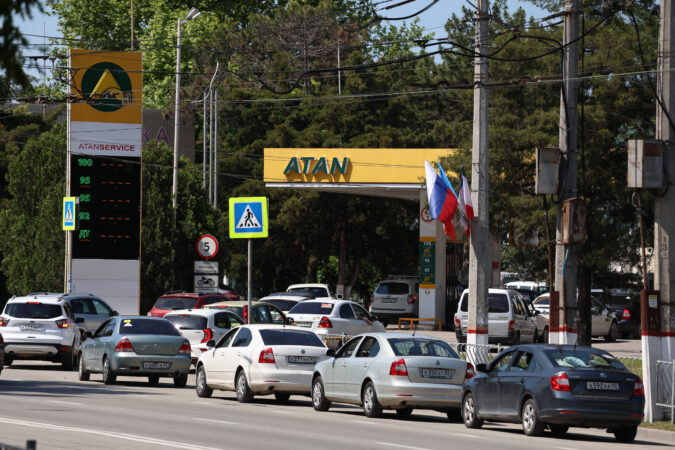
    Locals have not seen such disturbance to everyday life since the annexation. Gas stations have run dry, leaving motorists who have already waited hours for fuel vouchers to queue at the few stations still operating. Summer camps have been canceled and children evacuated, including from Artek — the iconic Soviet-era camp the Kremlin has used as a symbol of state prestige since 2014.

    Rolling power outages have halted water supplies that depend on electric pumps.

    Kyiv intends the strikes on Crimea, which is far removed from the main front line in Donbas, to erode the sense of distance from the war that President Vladimir Putin has worked to maintain since the full-scale invasion began — and to chip away at the public perception that Russian forces can contain the fighting within Ukraine.

    Ukraine has also stepped up pressure on Russia’s closest ally, Belarus, which allowed Moscow to use its territory as a launchpad for attacks on Ukraine early in the invasion. Kyiv maintained diplomatic relations with Minsk. But after Russian drone strikes on northwestern Ukraine this year, Zelensky ordered strikes on relay stations in Belarus.

    Zelensky warned President Alexander Lukashenko this week that he would strike them again if Lukashenko didn’t shut them down. Zelensky said Wednesday they had been switched off.

    It was the latest test for Lukashenko’s long-running gamble. He has survived for years by balancing his regime’s economic and security dependence on Russia against being fully absorbed by Moscow.

    Ukrainian officials say Russia might be trying to draw Belarus deeper into the war. On Friday evening, Lukashenko flew to Putin’s Valdai residence, where the Kremlin said they discussed “the implementation of joint economic projects and issues related to regional security.”

    Before the trip, Lukashenko said he had recently received Zelensky’s representatives in Minsk.

    “If he thinks he can talk to us like this and then drag us into a war, he must understand that the quality of the war will instantly change,” the Belarusian president said. “This will be a completely different war. So let’s come to an agreement.”

    The combination of the chaos in Crimea, record drone strikes on Moscow, and fuel rationing spreading across Russia appears to be taking a toll. According to data from the Public Opinion Foundation, a polling organization with Kremlin ties, trust in Putin has fallen to 69% — its lowest point since the war began.

    The emergency declaration stoked anxiety among residents that already had been building for weeks. Authorities appeared eager to manage the alarm, describing the measure as “an emergency situation” rather than a “state of emergency.” It should allow authorities to bypass normal bureaucratic procedures to mobilize resources, use emergency budgets, and coordinate evacuations where necessary.

    “This does not envision restrictions on movement and the introduction of a curfew,” Sergei Aksyonov, the Russian-installed governor, wrote on social media.

    Zelensky said Thursday he had authorized a 40-day strike campaign against Russian targets to “influence the aggressor state in order to press for an end to the war.” Strikes were reported to have hit oil facilities deep inside Russia.

    Kyiv has been trying to reengage President Donald Trump after a monthslong effective freeze in peace talks. Trump this week had rare praise for Zelensky over the offensive, saying the Ukrainian leader is “doing pretty well.”

    Trump, meeting with NATO Secretary General Mark Rutte, was asked whether he believed Zelensky was winning the war.

    “He’s winning now. Well, he’s doing pretty well. … At least he’s holding on,” Trump said. He also said “a lot of people are dying on both sides.”

    “I have to say he’s courageous,” Trump said. “He’s got great equipment, he’s got great people, he’s got fighters.”

    Whether Ukraine’s campaign can pressure Putin into yielding is another question. The Russian leader has shown a consistent willingness to absorb enormous losses in a grinding war of attrition. Analysts warn that the Ukrainian offensive could fuel anti-Ukrainian sentiment at home.

  • Trump threatens 100% tax on European imports if countries impose tax on digital services

    Trump threatens 100% tax on European imports if countries impose tax on digital services

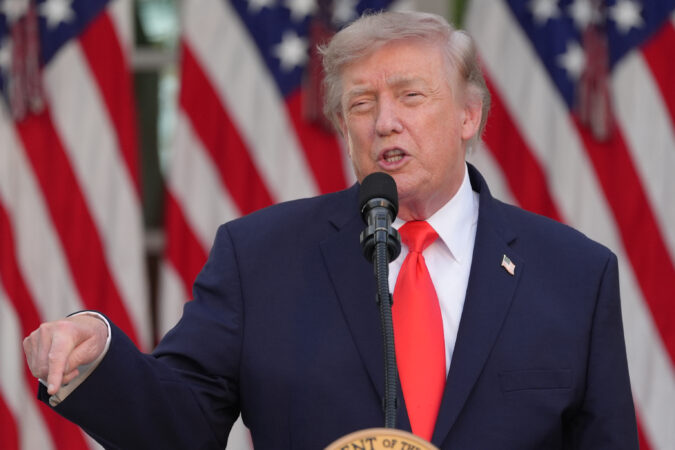
    WASHINGTON — President Donald Trump on Friday threatened a 100% tax on imports from any country that imposes a tax on digital services from United States companies.

    In a post on social media, Trump took aim at European countries that he said are discussing “imminent” implementation of taxes on American companies. The U.S. president has repeatedly sought to use tariffs as way to deter such taxes, but many countries are looking for revenues as their economies increasingly operate in digital realms that are dominated by American companies.

    “Please let this statement serve to represent that any Country that imposes such a Tax will immediately be met with a 100% TARIFF on any and all Goods sent to the United States of America,” Trump wrote.

    He added that the new tax would supersede any previously negotiated trade deals. Trump said the penalty would apply to any country that moves forward with such a tax, but he singled out European nations in his post.

    The move could lead to a larger showdown that could increase prices and hinder economic growth, possibly setting off a larger trade war if the 27-member European Union was compelled to retaliate.

    “Unilateral measures targeting such legitimate policies are unjustified. If pursued, the EU will respond swiftly and decisively to defend its rights and regulatory autonomy,” said Olof Gill, a spokesperson for the European Commission on Friday.

    He defended taxation on technology companies as “non-discriminatory” and applied equally to “all large companies, regardless of their origin.”

    Trump has repeatedly pushed against foreign efforts to tax or regulate American tech giants. Last year, he threatened new tariffs on any country that moved to do so. A post from last August said that digital taxes and regulation “are all designed to harm, or discriminate against, American Technology.”

    The threat comes ahead of Trump’s July 4 deadline for the European Union and the United States to start implementing a tariff deal that caps tariffs on most EU exports at 15%.

    The European Union in May finalized a trade deal with the United States that caps most tariffs on EU exports at 15%. The deal followed months of debate within the EU after European Commission chief Ursula von der Leyen tentatively struck the deal last year while visiting Trump’s golf course in Scotland.

    Digital taxes were not part of the agreement and have remained a sticking point between the U.S. and the European bloc.

    The U.S. government has previously conducted tariff investigations into digital services taxes under Section 301 of the Trade Act of 1974. But it was unclear how Trump would carry out his threat and whether he would apply the tariffs broadly or initially target certain nations.

    Britain, which is no longer part of the EU, has since 2020 levied a 2% digital services tax on revenues earned by search engines, social media sites, and online marketplaces that “derive value” from U.K. users.

    The British government said in a policy document at the time that corporate tax rules for digital businesses had “led to a misalignment between the place where profits are taxed and the place where value is created.”

    The U.K. tax includes thresholds, so mainly large international companies will pay it. The tax was designed to “ensure the large multinational businesses in-scope make a fair contribution to supporting vital public services,” the document said.

  • U.S. strikes Iran in response to attack on ship Trump says violated ceasefire

    U.S. strikes Iran in response to attack on ship Trump says violated ceasefire

    WASHINGTON — The U.S. struck Iran on Friday to respond to a drone attack a day earlier on a cargo ship in the Strait of Hormuz, a provocation that U.S. President Donald Trump said violated the ceasefire.

    U.S. Central Command said the military struck missile and drone locations and coastal radar sites in Iran.

    The strikes came shortly after Trump told reporters, “You’ll find out” whether the U.S. would response to the drone attack.

    “I don’t like the fact that they took a shot yesterday, actually four of them,” Trump said at the White House shortly before the U.S. struck back. When asked why there would be strikes when Trump has insisted talks with Tehran are going well, Trump said of Iran: “They’re a little bit different.”

    He then abruptly cut off questions and reporters were ushered out of his office.

    The British military said on Thursday that a container ship was hit by a projectile off the coast of Oman, coming hours after Iran threatened vessels to stop using the route. The United Kingdom Maritime Trade Operations center said no injuries were reported.

    The development came during a fragile time for the U.S. and Iran as they work to negotiate a permanent end to the war. Iran has increasingly challenged the region and the U.S. over its control of the Strait of Hormuz, even with the current interim deal it reached with the U.S. last week.

    The attack on the cargo ship happened while a United Nations maritime agency was beginning an operation to move stranded ships out of the strait this week, using an alternative route, hugging the shores of Oman rather than sailing through the central part of the strait.

    The International Maritime Organization halted the evacuations after the attack and said on Friday they won’t resume until there are guarantees that the other ships won’t be attacked.

    About 115 ships were able to move out of the strait in recent days, leaving about 500 still in the area, said Arsenio Dominguez, the agency’s secretary-general.

    The opening of the alternative passage through the strait was expected to relieve pressure on the world economy and remove Iran’s main source of leverage in ongoing peace talks with the U.S.

    The U.S. and Iran are still negotiating terms of the deal, including issues such as getting ships through the key strait and addressing the future of Iran’s stockpile of highly enriched uranium. Under the interim deal, the two sides have 60 days to work out the details.

    Shipping analysts said the drone strike cast a shadow over what had been a growing stream of trapped vessels finally leaving the Gulf and an increasing flow of tankers carrying crude oil.

    “A week of widening commercial confidence in the Strait of Hormuz has hit its first significant test,” said marine data company Windward on X. It said that while the strait remains operationally open with 43 transits recorded after the incident, “the pace of normalization has slowed.”

    On Wednesday before Thursday’s drone strike, 78 vessels transited the strait, the highest number since the war began, although below the prewar averages of 130 or more per day.

    At least two tankers reversed course while attempting to transit the strait on the U.N.-backed route near Oman after Iran insisted vessels use only the Teheran-approved routes, according to marine data and analytic firm Lloyd’s List Intelligence.

    More than two dozen ships were still transiting the strait’s southern route after the attack, Lloyd’s said Friday.

  • Speed cameras on Frankford Avenue will begin issuing fines

    Speed cameras on Frankford Avenue will begin issuing fines

    Starting Friday, drivers traveling 36 mph or faster on Frankford Avenue in Northeast Philadelphia will face a minimum $100 fine.

    Ten new speed-enforcement cameras were activated on April 13, initiating a 60-day warning period which brought mailed warnings to violators of the road’s 25 mph speed limit.

    “Speed cameras are a tremendous tool that helps save lives,” said Gabe Roberts, acting executive director of the Philadelphia Parking Authority, in an emailed statement.

    There are three tiers of penalties for speeding on the 4.5-mile stretch of U.S. Route 13 that are now going into effect.

    Fines are $100 for traveling 11-19 mph over the speed limit; $125 for going 20-29 mph over; and $150 for speeding by 30 or more mph.

    Tickets are mailed to the registered owner of the vehicle speeding. No points — PennDOT’s method of recording driving violations — are added to the motorist’s driver’s license.

    The cameras are placed at 9900 Frankford Ave.; 8300 Frankford Ave.; 7000 Frankford Ave.; 6400 Frankford Ave.; 3100 Levick St.; and 2100 Robbins St.

    Automated speed enforcement cameras went live Monday April 13 on the portion of U.S. Route 13 shown in green. Philadelphia Parking Authority will install cameras on the rest of the corridor in July 2026.

    Speed-enforcement cameras were first piloted in Philadelphia on Roosevelt Boulevard in June 2020, with 32 automated cameras placed along the highway previously considered the most dangerous road in the city.

    According to the Philadelphia Parking Authority, speed violations have since decreased on the boulevard by more than 90%, and there has been a 50% reduction in pedestrian-involved crashes.

    There are now a total of 80 speed cameras operating throughout the city, with additional cameras installed on Broad Street and nearby five school zone locations.

  • The USMNT’s sour World Cup group stage ending should be motivation for the bigger games to come

    The USMNT’s sour World Cup group stage ending should be motivation for the bigger games to come

    INGLEWOOD, Calif. — It’s a good thing that the U.S. men’s soccer team’s 3-2 loss to Turkey on Thursday didn’t matter for the standings. Because in many other circumstances, it would have been infuriating, not just annoying.

    Had the game finished tied, there would have been very few complaints. Everyone knew coming in that the lineup would have a lot of rotation. An unbeaten run through the group stage would have kept up the good vibes, even with that changed squad giving up two goals.

    Instead, giving up a last-kick-of-the-game goal meant the questions that followed were far less positive.

    “Having that moment in the last moment where they score, it’s tough,” said Medford’s Brenden Aaronson, whose first World Cup start included four tackles, three defensive recoveries, three shots, 21-of-22 passing, and a first-touch misfire toward an open net in the 62nd minute that overshadowed much of the rest of his night.

    “We wanted to walk away with no losses in the group stage, but we’ve got to take it, as it was still a fantastic group stage,” Aaronson said. “We had so many really good performances, and even before the group stage, in the friendlies. We’re at a top level. I’m not worried whatsoever, and we’re going to move on to the next one and be ready to go for Bosnia” in the round of 32.

    Other players were more positive, in particular Sebastian Berhalter. He had an assist and a terrific goal in the game, and tried to set a tone by stepping to the microphone first.

    Asked if the final score affects the team’s momentum, he said bluntly, “No, it doesn’t. … I think we gave everything we had, and we’ll be ready for the knockouts.”

    Manager Mauricio Pochettino was flat-out defiant, saying “no one congratulated us for finishing first in a very difficult group.”

    He repeatedly chided the media, saying at one point: “Your questions are a little bit weird, but I am so happy, and the players are happy, because I think we perform, we compete, and we are first. … Maybe I am confused, but the mood, the vibes [are] like we go home tonight and Turkey stays.”

    Tyler Adams, who watched from the bench to avoid getting another yellow card, was asked if it’s better to flush the moment as Berhalter wanted or keep it as motivation heading into the knockout rounds.

    “It’s not going to be perfect,” he said. “No tournament is perfect. You live and you learn. I think a lot of the guys will take lessons from that game. A lot of good performances otherwise.”

    A moment later, goalkeeper Matt Turner was asked the same question. His inclusion in the starting lineup was perhaps the most controversial of the nine changes Pochettino made from the Australia game.

    Matt Turner (left) watches Turkey’s players celebrate the game-winning goal.

    “When it’s 2-2 at the end there, that probably would have been the more fair result given the chances both sides had, but this is football, and we know how cruel the game can be,” he said. “We let our guard down, and we got punished for it. We were all in positions to make a play, and none of us could make the decisive play.”

    Alejandro Zendejas, who finally got to make his World Cup debut, had a similar opinion.

    “It’s always the worst, especially on the last play of the game, when that happens — when I think we had the game controlled, pretty dominated in my opinion,” he said. “But yeah, it’s a time to take the night or the day to reflect on the game, and then turn the page right away to focus on the next round for sure.”

    In the big picture, the result didn’t matter — a rare luxury for a U.S. team that for decades has scrapped for every point it has gained at men’s World Cups. But it still did in a way, because a last-second goal like that has to matter.

    Sebastian Berhalter (right) helping Auston Trusty (6) to his feet after the final whistle.

    And when the Americans, who won Group D, next take the field, on July 1 against Bosnia & Herzegovina in Santa Clara, Calif. (8 p.m., Fox29, Telemundo), the result will be all that matters. Bosnia & Herzegovina finished third in Group B.

    “You can always take these things as fuel,” Aaronson said. Many U.S. fans will hope the team does so.

    Auston Trusty’s moment of history

    Whatever ends up happening to the U.S. in the knockout rounds, one moment will stay in the history books for a long time. Media native Auston Trusty became the first men’s player born and raised in the Philadelphia region to score a World Cup goal when he slammed in Berhalter’s corner kick service in the third minute.

    “I’m a center back usually, playing in a left back spot [in this game],” Trusty said. “I can advance up, I can show different parts of my game going forward. I live and breathe for corners, and then had the opportunity and took advantage of it.”

    The only other male player to have lived in the area and scored a World Cup goal was Bart McGhee. He immigrated from Scotland to Philadelphia as a child and scored the program’s first-ever World Cup goal in the inaugural tournament in 1930.

    “It means everything,” Trusty said. “I absolutely didn’t know that stat. … I think it’s an honor to score a goal and even participate in this competition, let alone score a goal. So yeah, just a dream come true.”

    His celebration was as vibrant as the shot, as he screamed and raised a finger while sprinting away toward the U.S. bench. And back home, a big crowd at Philadelphia’s fan fest on Lemon Hill roared just as loudly.

    Coincidentally, Trusty said, the celebration was similar to how he celebrated his first goal for the Union in 2018.

    “I don’t know why I did that,” he quipped. “I didn’t plan for that, but pretty cool. It’s kind of full circle.”

    Trusty’s night ended on a sour note when he got stepped on by Turkey’s Oğuz Aydın, rolled an ankle, and managed to suffer a hamstring cramp as he hit the ground. He went back in the game (in part because the U.S. was out of substitutions), then slipped amid the chaos of the last goal.

    By the time he emerged to the media, he had that ankle wrapped, but otherwise, he didn’t seem any worse for wear.