In 2026, you either die a bargain or stay around long enough to get hit by inflation. In other words, Fountain Porter’s iconic $6 burger is now $7, roughly the price of a fancy latte or a McDonald’s Quarter Pounder with cheese after tax.
The East Passyunk neighborhood bar made the nearly 17% price increase official last Wednesday, said owner Evan Clancy, after months of watching the prices of ingredients creep up.
Five days later, a post appeared in the popular r/PhiladelphiaEats subreddit breaking the news like a bargain hunting, beer-loving version of Paul Revere. “Recession indicator: Fountain Porter has officially raised the price of their burger,” the post read. “End of era.”
Commenters were aghast.
“Noooooooo,” bemoaned one Redditor. “Bring back boiled peanuts!” shouted another. A third cried of shrinkflation, alleging that the patty had gotten smaller. But most agreed on one thing: the burger is still dirt cheap and delicious.
“I still ate three total this past weekend,” wrote another Reddit user, undeterred by the change.
This isn’t first time inflation has come for Fountain Porter: When Clancy opened the bar at 1601 S. 10th St. in 2012, its burgers were just $5. Somewhere along the way — Clancy couldn’t recall when — he raised the price to $6 in recognition of the labor his staff put in to running a pub that, in many ways, also doubles as a burger factory.
Fountain Porter makes upwards of 800 burgers a week, Clancy said, with the three cooks alone dedicated just to grilling and flipping patties. It’s also the platonic ideal of the sandwich, comprised of a modest beef patty with a salty char topped with American cheese, crisp lettuce, and a tomato slice on a Martin’s potato bun with two pickle chips on the side.
The burger and its price — along with the bar’s deep beer list, dirty martini, and solid Guinness pour — has cemented Fountain Porter’s status as a Philly icon, beloved equally by world class chefs and people who just really like eating and drinking.
“Their burger is the perfect size — not too small, not too big — and their lettuce is always cold and crispy,” Rachel Lorn, the co-owner of acclaimed South Philly restaurants Mawn and Sao, previously told The Inquirer.
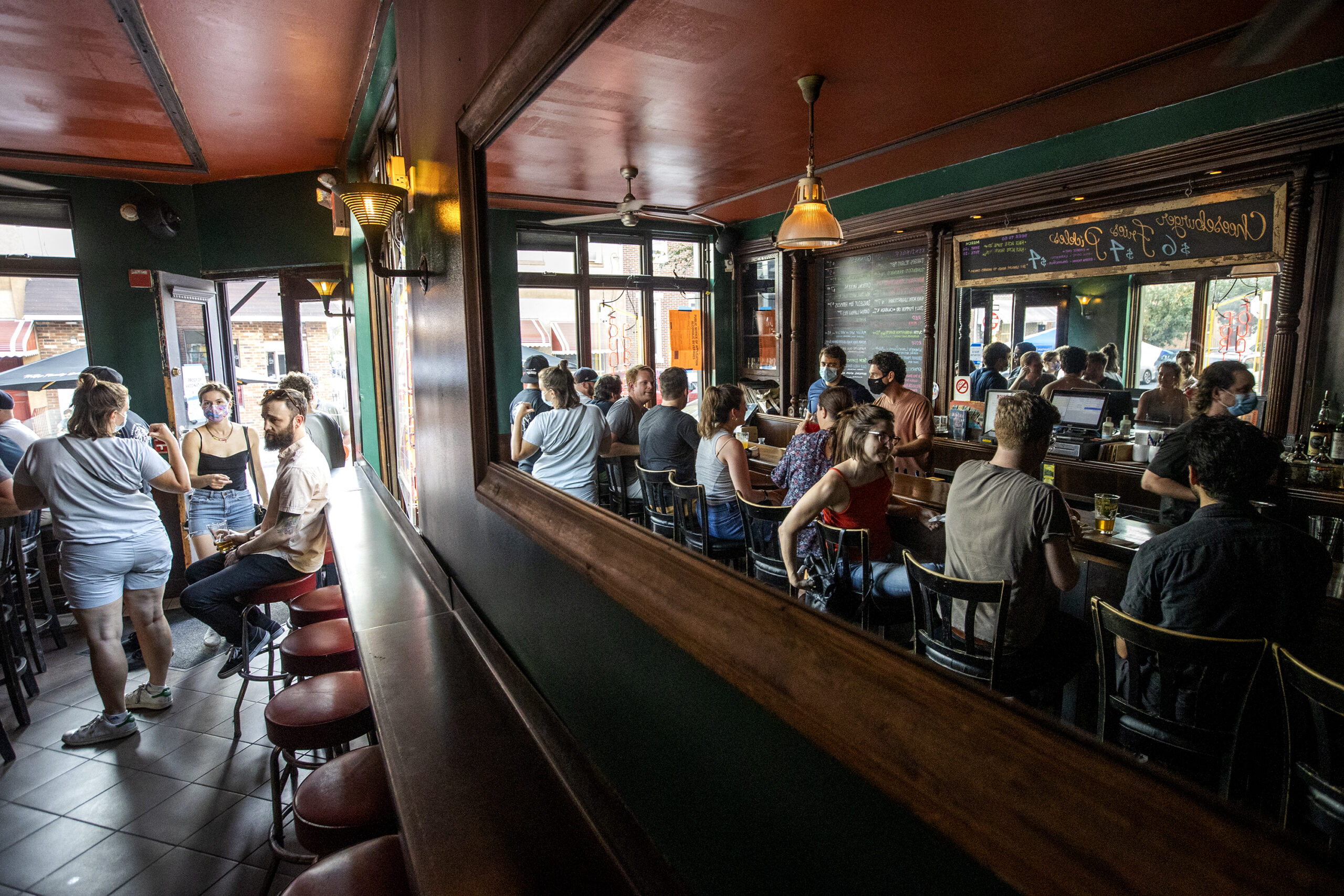
The crowd is reflected in a mirror at Fountain Porter at 1601 S. 10th St. in 2021.
The burger will remained unchanged despite the price increase, Clancy said. He also doesn’t think it will harm the bar’s reputation, and was shocked that people cared enough to post about it on social media.
“If the burger is not good at $7, then it’s really not that good at all. And that’s not on me, that’s on whoever is heaping the praise,” said Clancy. “It’s never been about a budget burger. It’s about being fair and honest. That’s what a burger is supposed to be.”
Drinks on the bar at Fountain Porter at 1601 S. 10th St. in 2021.
The price of the beef Fountain Porter uses in its burgers nearly doubled over the past two months, Clancy said, and he expects it to keep rising. The cost of tomatoes has also risen sharply and varies daily due to a mixture of tariffs and crop shortages, making it difficult for Clancy to budget. And, Clancy said, that despite Fountain Porter’s high volume of burgers, “we’re not making a lot of money off them.”
Besides, Clancy wondered, why shouldn’t his burger be allowed to get more expensive if everything else is?
“I know it’s a change, but we raised the price twice in 13 years, Clancy said. ”Tell me something else that hasn’t changed the price a lot in 13 years.”
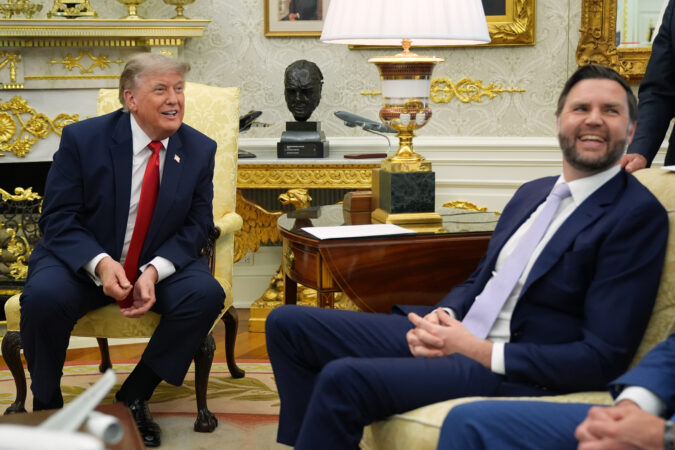
Vice President JD Vance on Thursday expressed sympathy for former President Richard M. Nixon, suggesting that Nixon was wrongly forced out as president in 1974 and comparing his political travails decades ago to those facing President Donald Trump now.
“As I joked … backstage, if Watergate happened tomorrow, it would be like a 12-hour news story,” Vance said in remarks at the Richard Nixon Presidential Library and Museum in California. “The idea that it would have taken down a presidency is crazy.”
A spokesperson for Vance did not immediately respond to questions about whether the vice president was being facetious and how he was defining Watergate.
The Watergate scandal, which began in 1972 with a botched attempt to bug the Democratic National Committee’s offices at the Watergate Hotel in Washington, mushroomed into a wide-ranging investigation by reporters and lawmakers that revealed Nixon was aware of the break-in and directed secret White House payments in an effort to cover it up. He resigned as president two years after the scandal broke, with Nixon blaming the Washington Post for its central role in exposing his involvement in the break-in and other abuses.
The scandal also prompted a series of reforms intended to rein in presidential authority, including more independence for government watchdogs such as inspectors general, which Trump has steadily rolled back.
Historians said Thursday that the full scope of the Watergate scandal, ranging from the president’s efforts to apply pressure to his “enemies list” to asking for a census of Jewish Americans serving in government because he believed they were unpatriotic, revealed Nixon’s abuses of presidential power.
Vance “should know better as a well-educated lawyer,” said Timothy Naftali, a previous director of the Nixon library, referring to Vance’s law degree from Yale University.
Naftali, a Columbia University presidential historian, referenced tapes that contained thousands of hours of Nixon’s Oval Office conversations.
“You can hear him suborn perjury on the tapes. He’s telling an intermediary, what to tell someone who’s about to be interviewed by the FBI, what to say and what not to say,” said Naftali, who oversaw the Nixon library’s Watergate exhibit. “You can hear Nixon being told that money had been found to hire teamsters to go and break the bones of demonstrators. That’s all illegal.”
“It’s not as if it’s a matter of partisan interpretation. The evidence is overwhelming,” Naftali said, offering additional examples of Nixon’s efforts to subvert legal protections. “If he does know all of this, he’s telegraphing the kind of president he hopes to be.”
Some conservatives in recent years have reframed the scandals that ended Nixon’s presidency, arguing that government bureaucrats and the media unfairly sought to push him out.
In his remarks, Vance also repeatedly compared Nixon to Trump, pointing out the similarities in their political coalitions as well as their experiences with overseas wars.
“One of the other lessons of Richard Nixon is it’s not just that he got out of Vietnam, but that he got out of Vietnam from a position of strength. OK?” Vance said, making a comparison with Trump’s war against Iran. “It’s one thing to tuck tail and run. It’s another thing to clearly define an objective, to accomplish that objective, and then to ensure that you don’t allow mission creep to transform a victory into a defeat.”
Vance also alluded to lawmakers’ efforts to investigate both presidents. Trump was twice impeached in his first term, after first pressuring the Ukrainian government to investigate his rival Joe Biden, and then after lawmakers said he helped incite a riot at the U.S. Capitol on Jan. 6, 2021, as he attempted to have the results of the election overturned.
Nixon resigned as president while an impeachment process into his Watergate-related conduct was underway. Lawmakers ultimately decided to end the process given Nixon’s resignation. His former vice president, Gerald Ford, later issued a controversial pardon.
“If you look at the story of how the ‘deep state’ took down Richard Nixon, it’s not all that different from what the same groups of people, the same institutions tried to do to Donald Trump and the first Trump administration,” Vance said to applause. “There is a parallel.”
The 41-year-old Vance also mused on his own similarities to Nixon, who served as a California senator in his late 30s and became vice president when he was 40.
“Young senator, vice president, writes some best-selling books, is hated by the media,” Vance said. “It kind of sounds like JD Vance. … I’ve always liked Richard Nixon.”
The 76ers will play their first Las Vegas Summer League game July 9 against the Detroit Pistons, the NBA announced Friday afternoon.
Those games are expected to mark the on-court debut of Labaron Philon, whom the Sixers drafted 22nd overall earlier this week. Johni Broome, last year’s second-round pick, also is expected to play in Las Vegas after missing much of his rookie season while recovering from knee surgery.
That first game could match Philon against Ebuka Okorie, whom the Pistons acquired with the draft’s 17th overall pick.
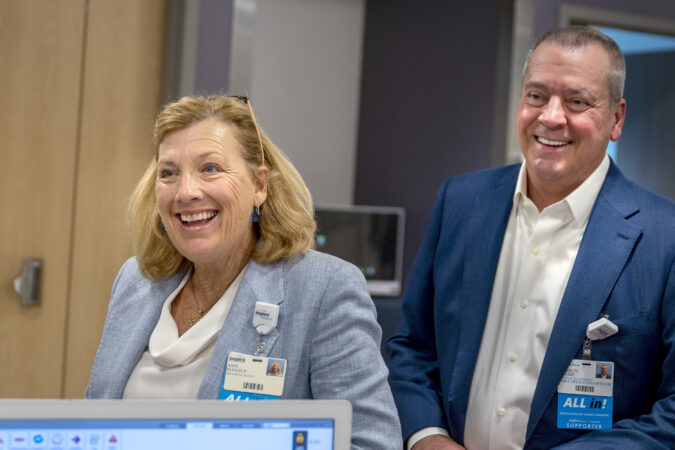
New Jersey hospitals could lose an estimated $3.6 billion from Medicaid changes through 2032, forcing them to bring their expenses in line, Inspira Health Network CEO Amy Mansue said Friday during a panel discussion in Cherry Hill.
“That will only happen with dramatic changes in how we look at our business,” she said during the Southern New Jersey Development Council’s Annual Health Care Leadership Forum at the Legacy Club of Woodcrest.
Mansue predicted that health systems will close little-used programs. “There is no way to cut that much money out of the hospitals without doing some of that,” she said.
The $3.6 billion estimate from the New Jersey Hospital Association does not include hospitals’ losses from the growing population of uninsured people who show up at emergency departments because they can’t afford to pay cash for a doctor visit.
The hospital executives pleaded for state officials to reduce the red tape that makes it hard to implement programs needed to meet community needs.
“We need to be more nimble, we need to be more adaptable, we need to be more flexible,” said Aaron Chang, president of Jefferson Health NJ, which includes hospitals in Cherry Hill, Stratford, and Washington Township.
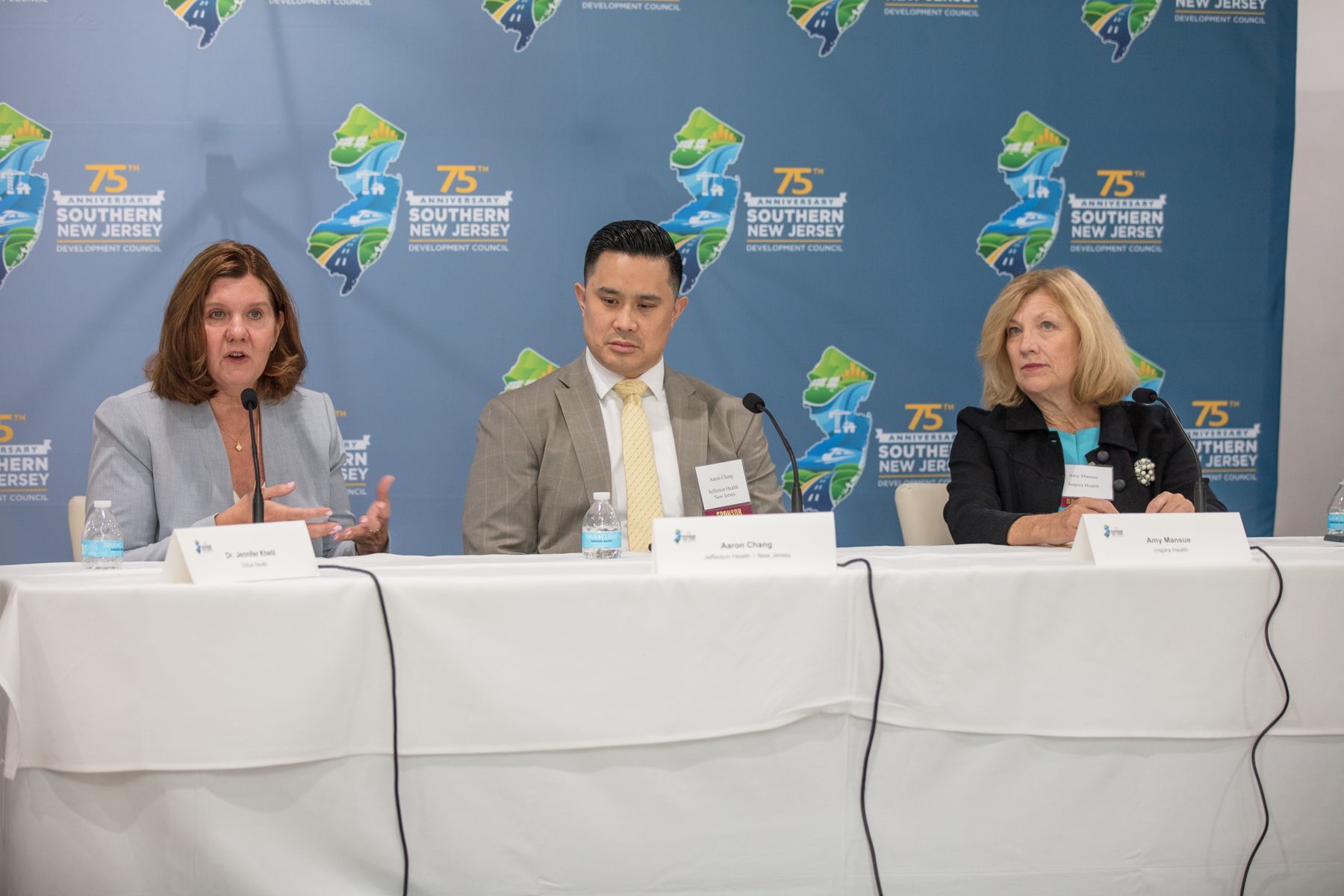
Jennifer Khelil (left), Virtua Health’s chief clinical Officer; Aaron Chang (center), president of Jefferson Health New Jersey; and Amy Mansue, CEO of Inspira Health spoke Friday at the Southern New Jersey Development Council’s Health Care Leadership Forum.
Inspira is adding a $220 million patient tower at Inspira Mullica Hill in Harrison Township, near the intersection of Routes 55 and 322. Construction is expected to be completed Oct. 1, Mansue said. “The reality is we’re not going to open until March” because it will take that long to get all the regulatory approvals, she said.
Inspira operates three other hospitals in Cumberland and Salem Counties.
Raynard E. Washington, who heads the N.J. Department of Health, spoke after the panel and said Gov. Mikie Sherrill is serious about making it easier to do business in the state. She told state agencies “to limit additional regulations and to look for opportunities to streamline,” he said.
Workforce development is a top priority
Six years ago, Virtua and Rowan University started working together to create the Virtua Health College of Medicine & Life Sciences out of Rowan’s School of Osteopathic Medicine, Rowan’s School of Nursing & Health Professions, and Virtua’s Our Lady of Lourdes Nursing School, plus a new school of translational biomedical engineering and sciences.
The institution officially launched in 2022 with $85 million in support from Virtua and $125 million from Rowan and has seen its class sizes grow steadily.
“We are now training about 360 nurse graduates every year, 300 medical students,” said Jennifer Khelil, Virtua’s chief clinical officer. Virtua operates five hospitals in South Jersey.
Workforce efforts also reach into high schools, Chang said. Jefferson Cherry Hill Hospital has a relationship with Cherry Hill West High School that brings 12 to 15 interns to the hospital.
“Because of the internship, their exposure to the hospital environment, whether it’s the ancillary departments and or the clinical areas, over 95% of those individuals get a healthcare job as a first foray into the workforce,” Chang said.
Editor’s note: This story has been updated to correct the time period for the Medicaid cuts.
Who the Flyers will actually select in the first round is now just hours away from being revealed, with the 2026 NHL draft kicking off at 7 p.m.
Philly picks at No. 21, so there is a lot of intrigue to see who they can get that deep in the draft. And that’s the crux and the reasoning behind why, in the fourth and final mock draft for The Inquirer, we have the Flyers picking a fourth different player.
In the first mock draft, compiled before the NHL scouting combine, we had the Flyers taking small defenseman Tommy Bleyl. Although he could help on the power play, it doesn’t sound like the Flyers are 100% behind picking an under-6-foot-tall blueliner, and as general manager Danny Brière has noted a player picked today will not impact the team for a few seasons — and the power play needs help immediately.
After the scouting combine in Buffalo, our second mock draft had Alexander Command. The Swedish center expressed a connection with the organization and just oozed Flyer during his time in Western New York; however, the consensus is that he is rising and will now be long gone.
So with that, we went for another center in the third mock draft, taking Jack Hextall, a player many see as already having pro habits. And, no, he’s not closely related to Ron, the former goalie and GM; they are distant cousins, and according to Jack, have never met.
And now we come to our final mock draft, where none of these players are on the list in the first round.
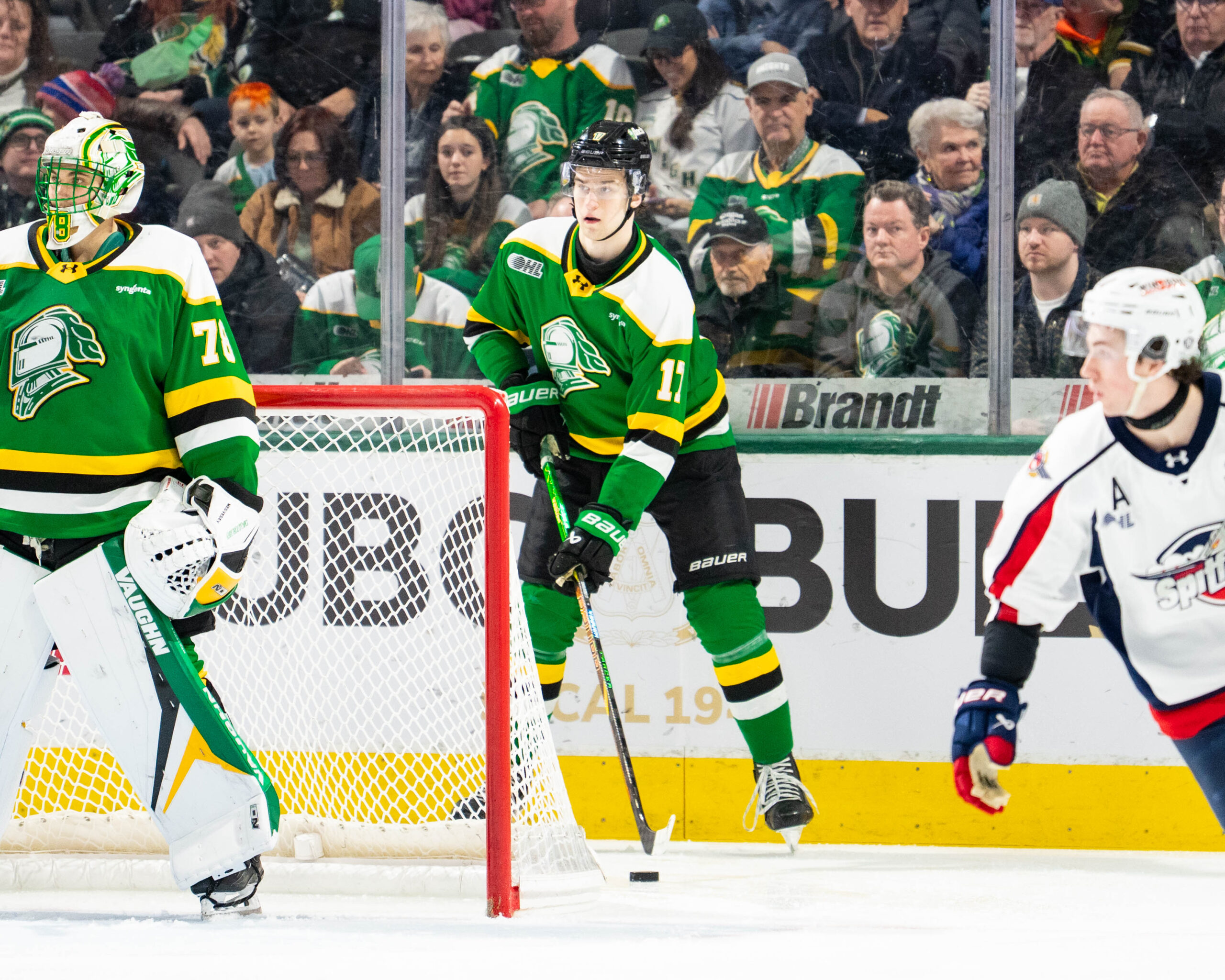
Maksim Sokolovskii (No. 17) tied forward Brooks Rogowski for the tallest players measured at this year’s combine.
First round: Maksim Sokolovskii, LHD, London (OHL)
Meet Sokolovskii, who checks several boxes for the Flyers’ usual modus operandi at the draft and is the targeted pick for several outlets and insiders.
For background, since assistant general manager Brent Flahr took over, he has drafted 50 players, with general manager Danny Brière by his side for 26 of those.
The position Flahr has drafted the most across his tenure is defense, at 15, and he did mention during his sit-down in Buffalo that the Flyers need to add to their defensive depth. He added during his pre-draft presser last week that the Flyers could use some more depth down the left side in particular — he did add “not necessarily being the first round” — and Sokolovskii is a left-handed defenseman.
Unlike other teams lately, the Flyers are not afraid to draft Russian players, with three taken in the last three drafts. The difference here with Sokolovskii, compared to Matvei Michkov, Egor Zavragin, and Aleksei Kolosov, who is Belarusian and also played in the Kontinental Hockey League, is that while Sokolovskii was born in Kazakhstan and raised in Russia, he spent the past two years playing in North America. And the Flyers tend to stick with North American-based teams under the Flahr-Brière tandem (74%).
Now here’s where the eyebrows will get raised. After spending the 2024-25 season with the Atlantic Coast Academy, Sokolovskii played this past season for London of the Ontario Hockey League. Yes, that London, where Denver Barkey and Oliver Bonk won a Memorial Cup one June ago. That London where team president Keith Jones has a connection with Mark and Dale Hunter. The Flyers like the system and how they prepare players. Could this be a match just for that reason?
And then there’s the height. And Sokolovskii is, to put it mildly, a big boy at6-foot-7¼, 240 pounds. The Flyers like tall dudes, drafting 6-5 Jack Nesbitt, Carter Amico, Luke Vlooswyk, and Matthew Gard all last year. Since Flahr took over, 31 of 50 players are over 6-feet, and 17 of those were taken with Brière as GM.
The biggest difference compared to several previous prospects is that Sokolovskii is a pretty good skater for a guy his size.
“He’s 6-foot-8, and he skates like he’s 5-foot-8,” Mike Taylor, the owner and one of Sokolovskii’s coaches at Atlantic Coast Academy, told The Inquirer recently. “… He came here, and I had a skating coach once a month come up and do power skating with our guys, and he does it like with UMass Amherst, and all these other schools. And he saw him skate, and he’s like, ‘Oh my God.’ He couldn’t believe how good his edge work was, and stuff, for being the size that he is.”
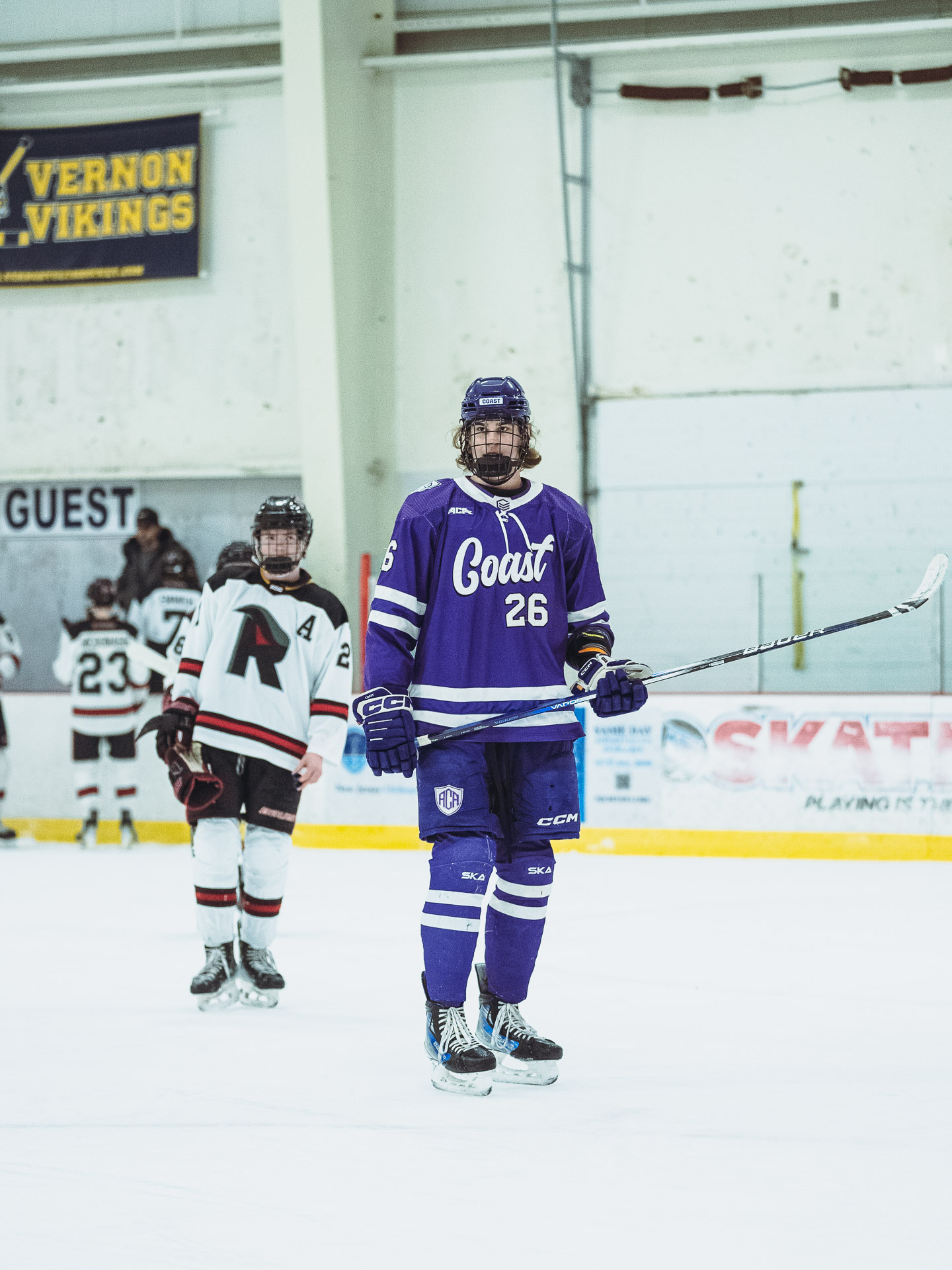
Maksim Sokolovskii first came to North America as a 16-year-old to play for Atlantic Coast Academy.
Considered a mean guy with some bite on the ice, Sokolovskii likes to be physical, throw the body around, and play tough. Although Taylor says there is an offensive dimension to his game — as seen from his numbers at Atlantic Coast — he is considered a shutdown defender.
He had eight points (two goals, six assists) in 44 regular-season games with London; however, everyone agrees there was a ton of improvement in his game as he got more comfortable in the OHL.
But like most in the draft class, Sokolovskii has his warts, and there are question marks surrounding his game in his decision-making and puck play. He told The Inquirer at the NHL scouting combine that he wants to keep working on his foot speed and make his feet quicker. He’ll need some time to grow into his game, and the Flyers have the time for that.
Sokolovskii’s name was mentioned to this reporter at the combine as someone the Flyers were interested in, and some pundits think this is their guy. But it does make one wonder that if the two are being connected … is it all smoke and mirrors and sleight of hand? Because outside of maybe Craig Button, no one had Jett Luchanko for the Flyers in 2024. And Jack Nesbitt wasn’t seen as on the radar either, although they did trade up for him.
So with that, let’s add in that Maddox Dagenais, Jack Hextall, and Ilia Morozov are three players we see the Flyers considering at 21, too.
Called a “mobile, punishing shutdown defender with NHL-calibre tools” by Elite Prospects, Charlie Morrison’s floor is a third-pair defenseman.
Second round: Charlie Morrison, LHD
The Athletic’s NHL draft and prospects reporter Scott Wheeler’s final mock draft has the Flyers taking Sokolovskii in the first round and right-handed Finnish defenseman Samu Alalauri in the second.
Wheeler’s colleague, senior NHL prospects writer Corey Pronman, has the Flyers taking 6-4 leftt-handed defenseman William Håkansson in the first and small but dynamic lefty defenseman Xavier Villeneuve — our pick in version 3.0 — in the second.
Elite Prospects’ Cam Robinson has center Oliver Suvanto in the first and defenseman Måns Gudmundsson in the second. And Daily Faceoff’s Steven Ellis had the Flyers taking center Suvanto in the first and defenseman Timmy Runtso, an overager who is heading to the University of Miami (OH) this fall, in the second.
It feels like everyone is leaning toward defensemen in the second round, as everyone has the Flyers pegged for stocking the blue line cupboard.
A few names pop here for us, like Juho Piiparinen, who says he grew up a Flyers fan in Finland, Runtso, who brings some offensive punch and attention to detail the Flyers like, and Ben Macbeath, our pick in version 2.0. Macbeath plays for Calgary of the Western Hockey League, the same team Travis Sanheim was drafted from in 2017.
For our final draft, we’re going with a defenseman, too, but it’s Morrison, a 6-3½, 200-pound physical left-shot blueliner who plays for Québec of the Quebec Maritimes Junior Hockey League. Pronman has him going at 44 to the New Jersey Devils, Wheeler at 50 to the Ducks, and Ellis has him at 65 to the Flames.
And guess who the GM of that team is? Simon Gagné.
The Inquirer recently spoke with the Flyers legend, and he gave his scouting report on Morrison.
“A big, strong defenseman. Likes to hit. Likes to [catch] guys [with their] head down, middle of the ice type of defenseman that you don’t see too often in the league anymore. They’re seeing, sure, that Charlie needs to improve — he’s only played two years in our league — but he’s getting better and stronger, and that’s definitely a guy that could be a good pick for the Flyers.”
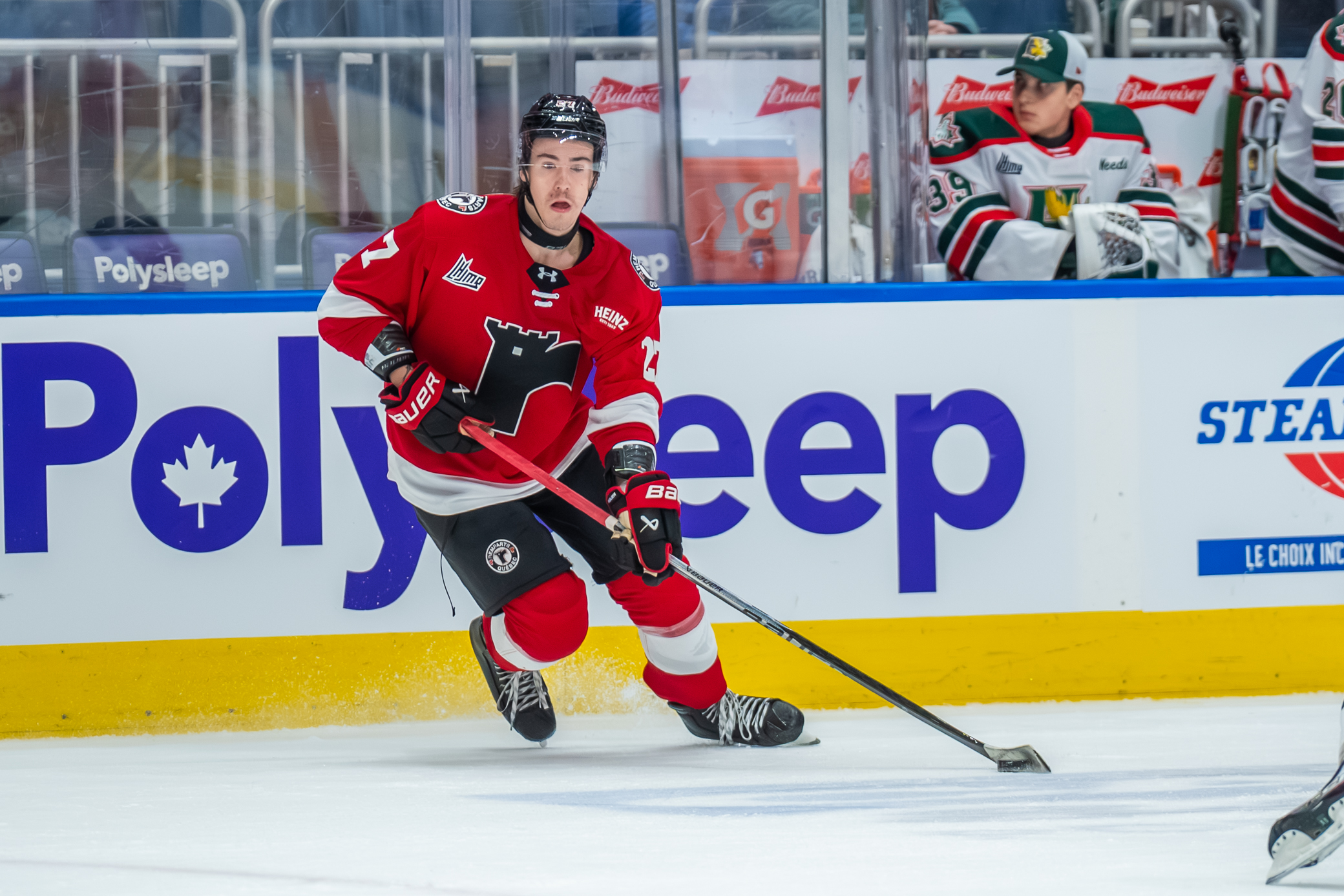
Charlie Morrison (27) lays a booming hit during a game against the Charlottetown Islanders.
The Flyers have done their homework on the Québec players, which also includes potential first-round pick Maddox Dagenais and late-round option and defenseman Alexandre Taillefer. This past season, Morrison had 13 points in 41 regular-season games before adding another four points in 10 playoff games.
Morrison does have some pedigree, as Elite Prospects lists his great uncle as Dan Bouchard, a goalie who played 656 NHL games, and Morrison is heading to the University of Connecticut in 2027.
And one interesting note: last season, the four Flyers taken in the second were listed at 30 (Jack Murtagh), 33 (Vansaghi), 37 (Matthew Gard), and 41 (Carter Amico) in Central Scouting’s final rankings for North American skaters. Morrison is right there, too, at No. 39.
With the group stage still going strong, FIFA has already set an all-time World Cup attendance record, and Philadelphia has been a major part of that.
Following Thursday’s slate of group stage games, FIFA announced that 3,605,357 fans had attended matches in this year’s expanded tournament of 48 nations vying for the top prize in the July 19 final.
The mark passed FIFA’s previous mark of 3,587,538 fans set in 1994, the last time the World Cup came to the United States.
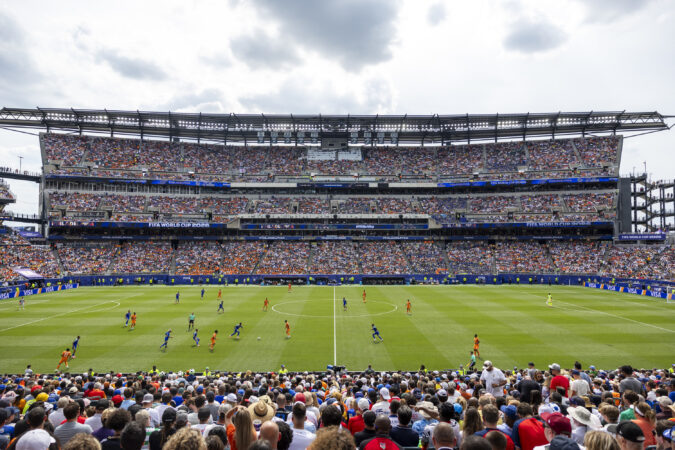
Philly’s place in all of it hasn’t gone unnoticed as the mark was set during the city’s fourth match on Thursday between the Ivory Coast and Curaçao, which had an announced attendance of 68,324. Across the four matches, Lincoln Financial Field, renamed Philadelphia Stadium for the World Cup, has welcomed 273,296 fans — approximately 7.6% of the total.
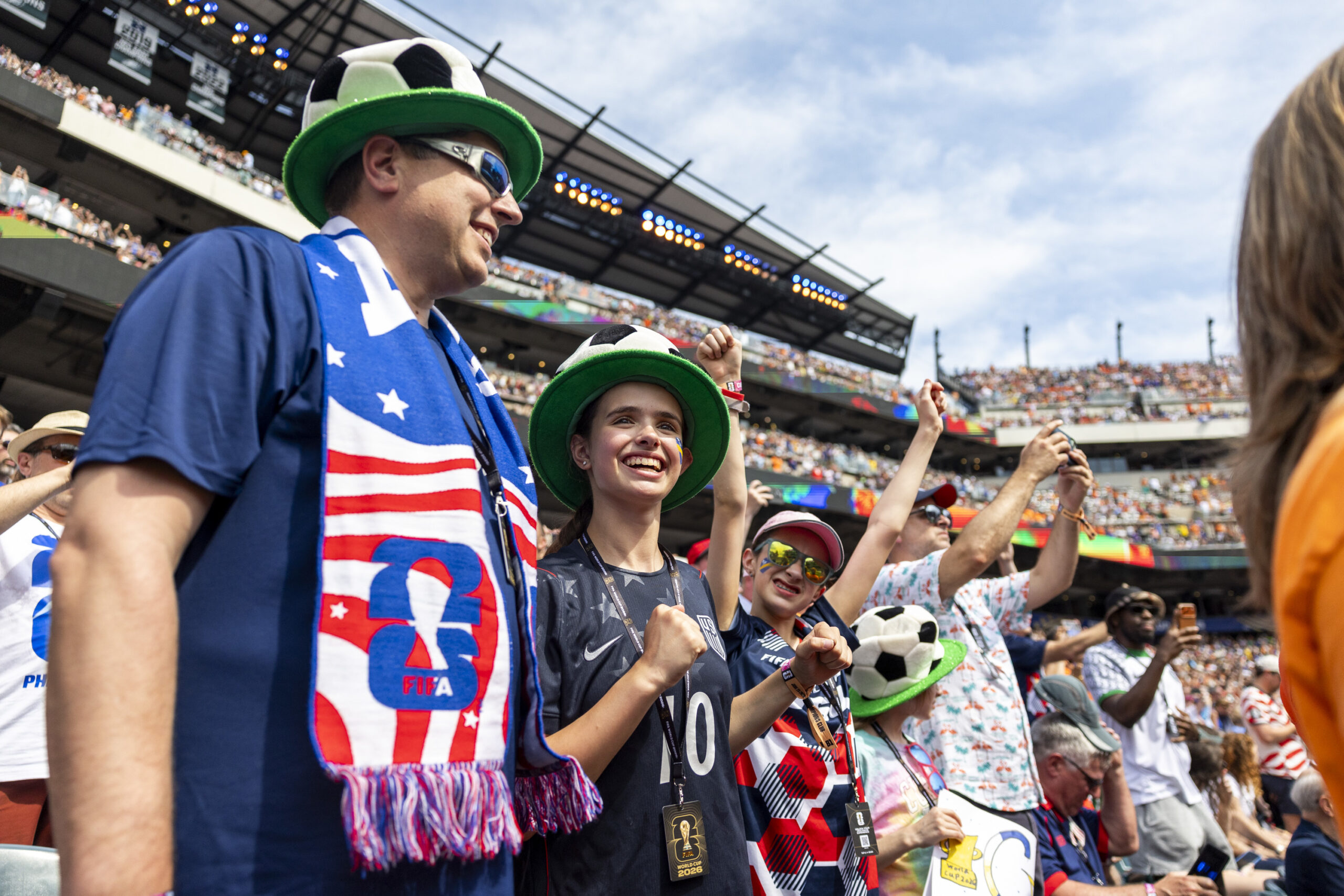
“This was incredible, the whole experience is a memory,” said Mustafa Al-Hasani, a fan from Iowa who attended Monday’s rain-delayed Group I match between France and Iraq. Despite the rain, Al-Hasani lauded both the stadium and the city’s hospitality. “Philly’s great, I’ve been here before, but this is an experience I don’t think I’ll ever forget.”
FIFA’s attendance record being surpassed was an inevitability, given that this tournament field expanded from 32. FIFA’s increase in the number of nations means more matches and venues. For this World Cup, 104 games are being played in 16 stadiums across the United States, Canada, and Mexico over the monthlong event.
However, with it being just 14 days into the tournament, this also sets the standard going forward for FIFA reaching an attendance record.
Patrick Murray, of West Chester, Pa., is with his niece Maggie McDermont, 15, and her sister Cecilia, 12 has contributed to Philly having 273,296 fans attend the four matches that have been played in Philadelphia since Thursday.
According to FIFA, stadium capacities have been at an all-time high; here in Philadelphia, attendance at all four matches has been an announced 68,324, which is capacity at the Linc.
That’s a remarkable number when you consider that, with FIFA enacting a dynamic pricing model for the first time in a World Cup, ticket prices have never been higher, including some seats listed in the thousands of dollars in the lower-level seating of stadiums.
Philadelphia has just two more matches. Croatia and Ghana play in Group L on Saturday (5 p.m., FS1), and then on July 4 the city will host a Round of 16 game, between the winners of two games in the Round of 32.
In the late 1970s, comic artist Art Spiegelman and his wife, the editor Françoise Mouly, began dreaming up a new magazine, one they hoped would elevate cartooning into the realm of high art.
A colleague suggested that they talk to Jerry Moriarty, a painter who lived in Manhattan, a little uptown from their SoHo loft.
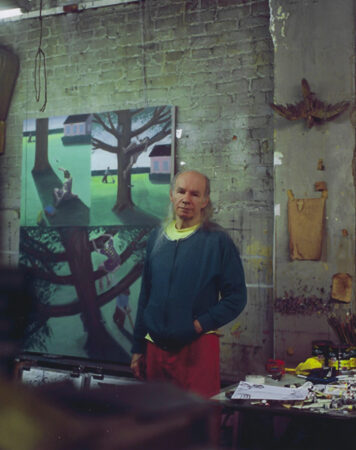
Arriving at Mr. Moriarty’s studio, Spiegelman was stunned by what he encountered: comics that were painted.
“It was totally mind-blowing,” Spiegelman, whose graphic memoir Maus won a Pulitzer Prize in 1992, said in an interview. “It was exactly what we were groping for, which was a place that wasn’t underground comics anymore, nor was it art underground.”
Raw, their magazine, debuted in 1980 with Jack Survives, the first in a series of painted comics by Mr. Moriarty about a stoic Everyman who muddles through the indignities of life in a hat and tie, refusing to capitulate.
“It’s as if Edward Hopper had taken up songwriting,” comic artist Chris Ware wrote in the Believer magazine in 2009. “For lack of a better word, it’s poetry — I believe the first that comics has ever seen — and poetry as fresh and affecting now as when first drawn.”
Mr. Moriarty died on March 25 at his home in Binghamton, N.Y., where his nephew Kevin Moriarty had been caring for him in his final years. He was 88. His death, which was not widely reported, was confirmed by his brother Fred Moriarty, who survives him.
A self-described loner, Mr. Moriarty refused to sell his paintings, and supported himself by teaching at the School of Visual Arts in Manhattan. In many ways, he had the sort of average life embodied by his Everyman character, Jack, who resembled Mr. Moriarty’s father in appearance (and only in appearance).
“Jack is an average man wanting to be average,” he wrote in The Complete Jack Survives, a 2009 collection of his Jack comics. “I am an average man who doesn’t want to be average, and art allows me to express that frustration.”
Jack’s spare dialogue — often spoken aloud to himself — reminded Mr. Moriarty’s admirers of Samuel Beckett’s minimalist, existentialist plays.
In another panel, Jack is in his office. He opens his lunch and discovers that his wife has packed him a cat-shaped cookie.
“I can’t eat a cat cookie,” he says out loud, seemingly to nobody, before taking a bite. “You have to start with the head or it looks at you to the end.”
To describe his craft, Mr. Moriarty created a portmanteau: paintoonist, a fusion of painter and cartoonist. The word hasn’t yet appeared in the Oxford English Dictionary, but it certainly defined him.
“There’s a kind of stillness in his work,” Hillary Chute, a professor at Northeastern University and a scholar of graphic narratives, said in an interview. “So you enter it as a story, and it has psychological depth, but also the kinds of composition that you would see in paintings.”
Jerome Brien Moriarty was born on Jan. 15, 1938, in Binghamton, the third of four children. His father, John Moriarty, was an expert in Morse code who telegraphed play-by-play accounts of sporting events for the Associated Press. His mother, Esther (Turner) Moriarty, sold magazine subscriptions and worked as a sales clerk at a department store.
Growing up, Jerry loved cowboy movies and radio shows. He also read and collected comics.
“At age 8, I crossed the ‘fantasy barrier’ and became an ‘art kid’ because I could copy Superman or Bugs Bunny better than my classmates,” he wrote in the catalog for “Uninked: Paintings, Sculpture and Graphic Works by Five Cartoonists,” a 2007 exhibition at the Phoenix Art Museum.
His father bought him a drafting table and encouraged him to pursue a career in art, setting up a studio in the cellar.
“It was dank, low and funky, but I loved the cellar because no one came down there unless they had to,” Mr. Moriarty said in the Believer. “Sometimes my dad came down after supper and watched me paint, still in his shirt and tie from work.”
After graduating from high school, he moved to Brooklyn to study at the Pratt Institute, earning a bachelor of fine arts degree in 1960.
He remained in New York City, working as a freelance illustrator and contributing drawings to Esquire, GQ, Seventeen, the New Yorker, and pinup magazines. In 1963, he began teaching at the School of Visual Arts, painting in his studio at night.
Jack came along in the late 1970s after a student gave Moriarty a copy of the war comic Frontline Combat, which he had read as a teenager.
“I took it home and I fell on the floor,” he said in a 2009 interview with the Daily Cross Hatch, an online comics journal. “Not only was it better than I remembered, it was inspiring. I thought, ‘How many other things since that period have I not seen?’ So I started going to comic cons, and that’s where the collector in me started to awaken.”
To Moriarty, Jack wasn’t just a character on canvas; he was a way to reconnect with his father, who had died when he was 14.
“Jack Survives is a whimsical, one-sided conversation with my father where I am 99% of it,” he told the Believer. “Dad is in Jack as a quiet presence who survives Jack’s frustrations far better than I do.”
Mr. Moriarty moved on from Jack in the late 1980s and continued to paint, though in an entirely new way — in panel form, much like a comic book artist. In one painting, Moriarty peers down from the ceiling at his father, who is reading the newspaper. In another, he is an old man painting in his cellar.
“There was no conscious attempt to be poetic or subtle,” he said. “I am not a fan of bigness or theatricality. I prefer string quartets to symphonies, jazz trios to big bands.”
He also savored solitude.
“Loner and loneliness are not the same,” he said. “Everybody has been lonely, but not everybody is a loner. Jack is alone, but he is not a loner. I am a loner, and I fully understand why that makes me strange to society. I am not lonely. Being alone is total freedom for me.”
He usually started painting after midnight, finished by 3 a.m., ate dinner, watched movies, went to bed at 7 a.m., woke up at 2 p.m., had breakfast and watched Jeopardy! He had no use for the hoity-toity art world.
“It was about as pure an experience of being an artist as I’ve ever witnessed,” Spiegelman said. “It was, in some ways, without ambition and without a thought about posterity.”
Rachel Maddow’s brief turn as a Philadelphian began with her bicycle being stolen on the first day of a new job.
“I got to work at 9 a.m. and I got out for lunch before noon, because I didn’t have anything to do,” Maddow said. “My bike was already gone.”
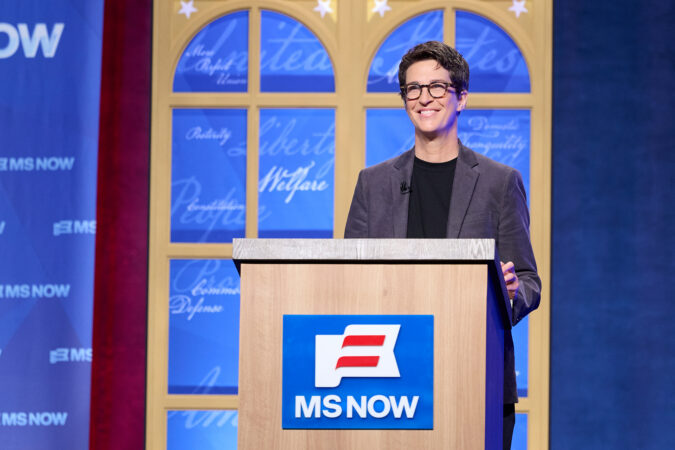
MS NOW’s top star was in Center City on Thursday night to interview constitutional legal expert Sherrilyn Ifill live in front of nearly 2,000 people at the Academy of Music.
But prior to the event, she reminisced about her brief time in Philly in the early 1990s, shortlyafter she came out as gay during her freshman year of college at Stanford University.
“It didn’t go well at home, so it was a bit of a scramble in terms of like paying for college, figuring out what I was going to do, where I was going to live,” Maddow said. “And I got an internship at a think tank at Penn.”
Maddow lived in West Philadelphia and basically ate nothing but Ethiopian food for a few months, though she can’t remember the name of the street: “It was in the 40s and it was one of the tree-named streets.”
In college she was an AIDS activist and focused on healthcare policy, so landing at the University of Pennsylvania’s Leonard Davis Institute of Health Economics seemed liked an ideal fit.
Maddow said her job was to answer the phone. But the internship didn’t last long.
“I was not an additive,” Maddow said. “I don’t think I was an asset to the organization.”
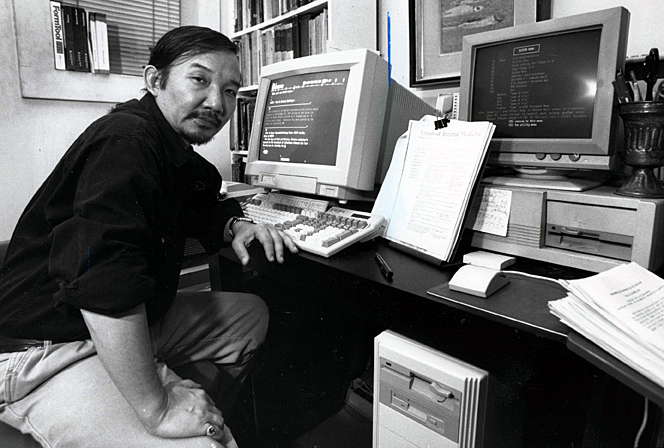
Kiyoshi Kuromiya seen here in 1992, was a gay civil rights activist who helped establish ACT UP Philly.
Maddow’s activism began when she was still in high school, when she began working at a hospice for people who were dying during the AIDS epidemic.
Still, those few months living in Philadelphia influenced Maddow’s developing political voice. She idolized ACT UP Philly, an activist organization fighting for people with HIV/AIDS, and thinks that gay civil rights activist Kiyoshi Kuromiya is the city’s most overlooked hero for the work he did helping connect people with hard-to-find information about the virus and treatment.
“He saved millions of lives,” Maddow said. “The city needs to build a statue for Kiyoshi Kuromiya.”
Maddow has returned to Philly a number of times over the years, and every time she does, it makes her feel like she’s 19 again. Things have changed — seeing Indego bicycles to rent on street corners after hers was stolen is pretty jarring — but though her time living here was brief, she didn’t hesitate saying, “Philly was really formative for me.”
“The thing I loved about Philly at the time, and that I kind of fell in love with, even before I really knew what to do with it, was the really sparky, edgy, impolite activist spirit,” Maddow said. “I think I’m just a middle-class polite kid who doesn’t like to offend anybody, and Philly kind of shook me out of that a little bit, and made me aspire to edgier things.”
More live events and a new app coming from MS NOW
Nearly 2,000 people attended Thursday night’s event at the Academy of Music.
A strong Philly current ran through MS NOW’s event Thursday night, which highlighted the messy history of the American experiment leading up to the country’s 250th anniversary next week.
“My mother’s best friend of 70 years lives here,” Psaki said.
Thursday’s event was part of a larger strategy of engagement at the network after breaking away from NBC and becoming part of Versant, hence the name change from MSNBC to MS NOW. Ratings are up, but the cord-cutting trend is undeniable, so MS NOW is attempting to secure a digital future while it remains a popular TV destination.
The network has now hosted three large fan events since 2024 and another is planned for Sept. 26 ahead of the midterm elections, though further details have not been announced. Attendees in Philly on Thursday night received a free, one-year subscription to MS NOW’s membership product that is set to launch soon. It will act as a streaming platform and online community for the network’s progressive fans and provide access to its biggest stars.
“We’re always looking for ways to connect with our MS NOW community, to meet more viewers where they are, and to engage them in new ways,” said Lauren Peikoff, the network’s executive producer of live events.
Cecil Parker, a Philadelphia musician, said the state of affairs in Washington compelled him to attend Thursday’s event.
“Urgency. That’s the all-encompassing word,” Parker said, who often tunes into MS NOW to get their take on the news. “They have their opinions, but it’s based on the facts. So I dig that.”
Some audience members traveled from as far as Arizona and California to have a chance to hear Maddow and her MS NOW colleagues in person.
Tony Clyburn and his wife, Lisa, drove more than 10 hours from West Columbia, S.C., to take part. A radio host back home, Clyburn said it was inspiring being in a room with people from different walks of life who want what’s best for their neighbors and their country.
“These gatherings are good because they’re as close to a town hall as we can get,” Clyburn said.
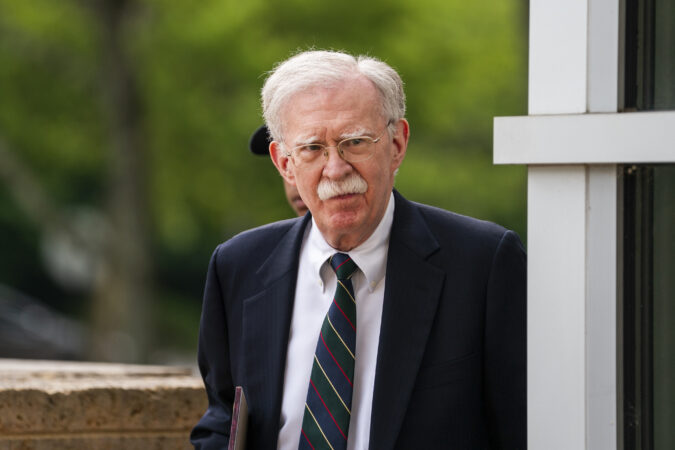
WASHINGTON — John Bolton, a former top adviser to President Donald Trump who became one of his most outspoken critics, pleaded guilty Friday morning to mishandling classified information in a case that could send him to prison.
Bolton appeared in U.S. District Court in Greenbelt, Md., and admitted to a single charge of illegal retention of classified information over notes he compiled for a book that excoriated Trump.
“I’m sorry for it,” he told Judge Theodore Chuang, who said he would sentence Bolton in October.
Under the plea deal, Bolton could be incarcerated for up to five years, according to the terms of the plea deal described in court. The deal also includes a fine of $2.25 million. If Bolton had gone to trial and lost, he could have faced decades in prison.
When he was first indicted, Bolton sought to frame the case against him as part of a push by the president to misuse the Justice Department to punish his perceived political enemies. The case against Bolton, however, began in the first Trump administration and gained momentum during the Biden administration, as investigators gathered additional evidence.
The original 18-count indictment against Bolton accused him of using personal email and a messaging app to share more than 1,000 pages of notes, which included national defense information, with two family members who did not have security clearances.
The accusations against Bolton center on his notes for The Room Where It Happened, his 2020 memoir about his time as Trump’s national security adviser. Those relatives were Bolton’s wife and daughter, according to people with knowledge of the matter, who spoke on the condition of anonymity to describe details of the case that were not in court filings.
According to the indictment, Bolton’s notes revealed that he understood that he was documenting intelligence secrets. One entry began, “The intel briefer said,” while another read, “While in the Situation Room, I learned.”
The first Trump administration fought unsuccessfully to prevent the publication of Bolton’s book, but the criminal investigation ultimately focused not on what was in the published manuscript, but instead on what Bolton wrote in private notes and correspondence.
Unlike some other investigations involving classified information, including charges filed in 2023 against Trump, Bolton was not accused of retaining the secret documents themselves, but rather of keeping diaries and sending emails that mentioned details of his daily work in national security.
Bolton’s emails, however, were later hacked by someone associated with the government of Iran, the indictment said.
“A representative for Bolton notified the U.S. government of the hack in or about July 2021,” according to the filing, “but did not tell the U.S. government that the account contained national defense information, including classified information, that Bolton had placed in the account from his time as national security adviser.”
One section of the indictment described Bolton apparently being taunted by his hacker. A message on July 25, 2021, warned, “I do not think you would be interested in the FBI being aware of the leaked content of John’s email (some of which have been attached).”
The email went on to declare: “This could be the biggest scandal since Hillary’s emails were leaked, but this time on the GOP side! Contact me before it’s too late.”
A representative for Bolton forwarded the email to the FBI.
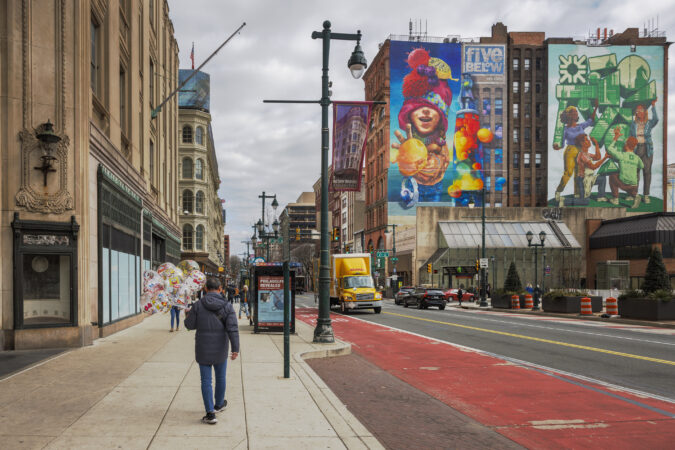
Philadelphia officials are planning a major renovation of Market Street’s sidewalks, landscaping, and streetscapes, from Sixth Street toward City Hall.
The announcement of a $2.5 million federal grant to begin the planning and design comes on the heels of the recently completed renovation of the thoroughfare in Old City from Second to Sixth streets. That effort took 18 months of construction and $16 million.
Most recently, the row of storefronts on the 900 block of Market owned by Comcast and Harris Blitzer Sports & Entertainment have begun hosting small pop-up businesses for the summer,as the city celebrates the 250th anniversary of the Declaration of Independence.
The Department of Planning and Development is overseeing the revitalization, and the public-private Market East Corridor Advisory Group is helping to craft a vision.
The new $2.5 million grant from the U.S. Department of Transportation, which the city will match, is limited to planning the streetscape along Market Street between 6th and Juniper Streets.
Construction is years away, said Kelley Yemen, Philadelphia’s director of the Office of Multimodal Planning. Her office is gathering information to evaluate everything from traffic patterns to potential road diets and bike lanes.
“Everything’s on the table at this point,” Yemen said.
Safety remains a primary driver, she said, given that the section of Market Street is situated on the city’s “high-injury network.”
However, she said redesigning the corridor poses unique logistical challenges compared with the recent improvements in Old City.
Market East serves as a major commercial hub with heavy transit use, requiring planners to balance the needs of transit riders, pedestrians, and cyclists.
Additionally, the shallow depth of the underground subway system may constrain surface-level landscaping.
Yemen explained that any trees or plantings must account for the height of the subway ceiling, potentially leading to elevated planters rather than vegetation that’s rooted in the ground.
The city is working with the consulting firm WSP and a team of subconsultants to develop design options.
Yemen anticipates the design will take two to three years, as the city also has to navigate federal environmental reviews.
Though the planning phase is now paid for, the city does not yet have money to fund construction and will likely look to federal or state grants for help in the future.
Public involvement will be a key next step, she said.
The planning commission is expected to launch a broader public engagement push this July to gather community input on the larger Market East revival.