Blog

  • Trump plans to keep Democratic governors out of traditionally bipartisan meeting

    Trump plans to keep Democratic governors out of traditionally bipartisan meeting

    President Donald Trump plans to keep Democrats out of a traditionally bipartisan White House gathering of governors typically held as part of the National Governors Association’s annual Washington summit, the organization said.

    According to the governors’ offices, the president also revoked invitations sent to Maryland Gov. Wes Moore (D), the NGA’s vice chair; and Colorado Gov. Jared Polis (D) to attend a second White House event scheduled to occur around the summit: a dinner for governors.

    “This week, I learned that I was uninvited to this year’s National Governors Association dinner — a decades-long annual tradition meant to bring governors from both parties together to build bonds and celebrate a shared service to our citizens with the President of the United States,” Moore said in a statement Sunday. “… It’s hard not to see this decision as another example of blatant disrespect and a snub to the spirit of bipartisan federal-state partnership.”

    Moore told CNN’s State of the Union on Sunday that he was confused by the White House’s decision, saying that, just a few weeks ago, he led a bipartisan group of governors who met with the president as Trump signed a memorandum on bringing down energy costs.

    Moore also said on CNN that it was “not lost” on him that he is the only Black governor of a state.

    “I find that to be particularly painful, considering the fact that the president is trying to exclude me from an organization that not only my peers have asked me to help to lead, but then also a place where I know I belong in,” he said. “I’m never in a room because of someone’s benevolence nor kindness. I’m not in a room because of a social experiment. I’m in the room because I belong there and the room was incomplete until I got there.”

    Spokespeople for Polis, as well as representatives of the Democratic Governors Association, did not immediately respond to a request for comment.

    While Moore and Polis were excluded from the dinner with Trump, some Democrats remained invited to the gathering.

    The White House did not explain why Democratic governors were not invited to the meeting with Trump, and a spokesperson did not respond to a request to provide a list of Democrats who were invited to the dinner.

    Trump has frequently clashed with Moore and Polis, and his decision comes after months of conflict between the federal government and Democratic governors.

    Moore has condemned the president’s threat to deploy the National Guard to Baltimore and defund Maryland’s efforts to replace the fallen Key Bridge. Trump has also repeatedly claimed that Baltimore is “crime ridden” despite the fact that the city is experiencing its lowest homicide rate in 50 years.

    Polis and Trump have repeatedly feuded over Tina Peters, a former county clerk in Colorado who was convicted in state court on felony charges related to efforts to overturn the 2020 presidential election. Polis has defended the conviction and refused the White House’s request to transfer Peters to a federal prison. Because of this, in December, Trump in a Truth Social post called Polis a “scumbag” and said he should “rot in Hell.”

    The NGA’s Washington meetings are expected to take place Feb. 19 to 21. The organization said Friday that the White House meeting will no longer be part of the association’s official schedule.

    In a statement Friday, Brandon Tatum, the interim CEO of the NGA, said that the “bipartisan White House governors meeting is an important tradition, and we are disappointed in the administration’s decision to make it a partisan occasion this year.”

    “To disinvite individual governors to the White House sessions undermines an important opportunity for federal-state collaboration,” Tatum said. “At this moment in our nation’s history, it is critical that institutions continue to stand for unity, dignity and constructive engagement.”

  • Lindsey Vonn undergoes surgery after being airlifted off mountain following Winter Olympics crash

    Lindsey Vonn undergoes surgery after being airlifted off mountain following Winter Olympics crash

    American ski champ Lindsey Vonn was airlifted off Olympia delle Tofane and was in stable condition following surgery on a broken leg Sunday after crashing during the women’s Alpine skiing event at the Winter Olympics.

    Vonn, skiing with a torn ACL she ruptured last month, lost control near the start of the race and crashed after clipping a flag on the course. She was heard screaming after the crash as she was surrounded by medical personnel before she was strapped to a gurney and flown away by helicopter, possibly ending the skier’s storied career.

    The race was paused for nearly half an hour, with a stunned crowd watching.

    “Lindsey Vonn sustained an injury, but is in stable condition and in good hands with a team of American and Italian physicians,” the U.S. Ski & Snowboard Team said in a statement Sunday afternoon.

    “That definitely was the last thing we wanted to see,” Vonn’s sister, Karin Kildow, said during NBC’s broadcast. “It happened quick. When that happens, you’re just immediately hoping she’s OK. It was scary, because when you start seeing the stretchers being put out, it’s not a good sign.”

    “She does have all of her surgeons and her [physical therapy] staff here and her doctors,” Kildow added.

    All downhill skiers were required to have smart safety air bags in their racing suits, triggered by motion sensors and GPS data in the event of a crash. Vonn’s air bag inflated during her crash, which may have softened her fall, supplier Dainese told the Associated Press.

    Lindsey Vonn the moment she crashed into a gate during an Alpine skiing downhill race at the Olympics.

    The 41-year-old underwent a partial knee replacement in April 2024, which rekindled hope of an Olympic return after retiring in 2019. She suffered another setback last month when she ruptured her ACL skiing at the Alpine Ski World Cup in Switzerland.

    Fellow Team USA skier Breezy Johnson won gold in the event, her first Olympic medal. But speaking after the national anthem, Johnson’s thoughts were on her teammate.

    “It’s devastating,” Johnson said. “It’s not the physical pain — we can deal with physical pain — but the emotional pain is something else. I wish her the best and I hope that this isn’t the end.”

    She has some experience in what happened to Vonn. Johnson crashed at Cortina d’Ampezzo and injured her knee, which forced her to miss the 2022 Winter Olympics in Beijing.

    Andorra’s Cande Moreno and Austria’s Nina Ortlieb both also crashed during their runs Sunday. Ortlieb was able to stand up and walk off the course, while Moreno needed to be airlifted.

  • Sixers’ Tyrese Maxey will take part in the All-Star three-point contest

    Sixers’ Tyrese Maxey will take part in the All-Star three-point contest

    Tyrese Maxey will compete in the three-point contest on Saturday at All-Star Weekend in Los Angeles, the NBA announced Sunday afternoon.

    Maxey, the 76ers’ standout point guard, is one of the NBA’s most dangerous three-point shooters, connecting on 38.2% of his 8.8 attempts per game. That effectiveness from deep has contributed to Maxey entering Sunday ranked sixth in the NBA in scoring at 28.8 points per game.

    The three-point contest is part of the All-Star Saturday festivities. The other three-point contest participants are the Phoenix Suns’ Devin Booker, the Charlotte Hornets’ Kon Kneuppel, the Portland Trail Blazers’ Damian Lillard, the Cleveland Cavaliers’ Donovan Mitchell, the Denver Nuggets’ Jamal Murray, the Milwaukee Bucks’ Bobby Portis, and the Miami Heat’s Norman Powell.

    Maxey is also an Eastern Conference starter for the All-Star Game next Sunday. Sixers rookie VJ Edgecombe will play in the Rising Stars competition on Friday.

  • ‘Take the vaccine, please,’ a top U.S. health official says in an appeal as measles cases rise

    ‘Take the vaccine, please,’ a top U.S. health official says in an appeal as measles cases rise

    WASHINGTON — A leading U.S. health official on Sunday urged people to get inoculated against the measles at a time of outbreaks across several states and as the United States is at risk of losing its measles elimination status.

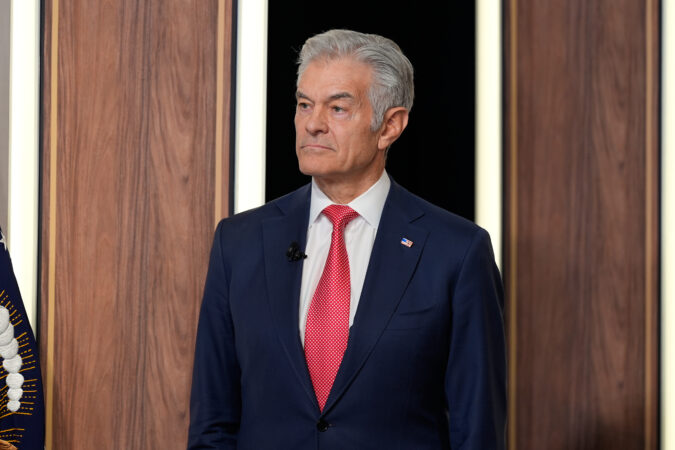
    “Take the vaccine, please,” said Mehmet Oz, the Centers for Medicare and Medicaid Services administrator whose boss has raised suspicion about the safety and importance of vaccines. “We have a solution for our problem.”

    Oz, a heart surgeon, defended some recently revised federal vaccine recommendations as well as past comments from President Donald Trump and the nation’s health chief, Robert F. Kennedy Jr., about the efficacy of vaccines. From Oz, there was a clear message on the measles.

    “Not all illnesses are equally dangerous and not all people are equally susceptible to those illnesses,” he told CNN’s “State of the Union.” “But measles is one you should get your vaccine.”

    An outbreak in South Carolina in the hundreds has surpassed the recorded case count in Texas’ 2025 outbreak, and there is also one on the Utah-Arizona border. Multiple other states have had confirmed cases this year. The outbreaks have mostly impacted children and have come as infectious disease experts warn that rising public distrust of vaccines generally may be contributing to the spread of a disease once declared eradicated by public health officials.

    Asked in the television interview whether people should fear the measles, Oz replied, “Oh, for sure.” He said Medicare and Medicaid will continue to cover the measles vaccine as part of the insurance programs.

    “There will never be a barrier to Americans get access to the measles vaccine. And it is part of the core schedule,” Oz said.

    But Oz also said, “We have advocated for measles vaccines all along” and that Kennedy “has been on the very front of this.”

    Questions about vaccines did not come up later in a Kennedy interview on Fox News Channel’s The Sunday Briefing, where he was asked about what kind of Super Bowl snack he might have (probably yogurt). He also said he eats steak with sauerkraut in the mornings.

    Critics of Kennedy have argued that the health secretary’s longtime skepticism of U.S. vaccine recommendations and past sympathy for the unfounded claim that vaccines may cause autism could influence official public health guidance in ways contrary to the medical consensus.

    Oz argued that Kennedy’s stance was supportive of the measles vaccine despite Kennedy’s general comments about the recommended vaccine schedule.

    “When the first outbreak happened in Texas, he said, get your vaccines for measles, because that’s an example of an ailment that you should get vaccinated against,” Oz said.

    The Republican administration last month dropped some vaccine recommendations for children, an overhaul of the traditional vaccine schedule that the Department of Health and Human Services said was in response to a request from Trump.

    Trump asked the agency to review how peer nations approach vaccine recommendations and consider revising U.S. guidance accordingly.

    States, not the federal government, have the authority to require vaccinations for schoolchildren. While federal requirements often influence those state regulations, some states have begun creating their own alliances to counter the administration’s guidance on vaccines.

    U.S. vaccination rates have dropped and the share of children with exemptions has reached an all-time high, according to federal data. At the same time, rates of diseases that can be protected against with vaccines, such as measles and whooping cough, are rising across the country.

    Kennedy’s past anti-vaccine activism

    Kennedy’s past skepticism of vaccines has come under scrutiny since Trump first nominated him to lead the Department of Health and Human Services.

    During his Senate confirmation testimony last year, Kennedy told lawmakers that a closely scrutinized 2019 trip he took to Samoa, which came before a devastating measles outbreak, had “nothing to do with vaccines.”

    But documents obtained by the Guardian and the Associated Press undermine that testimony. Emails sent by staffers at the U.S. Embassy and the United Nations said that Kennedy sought to meet with top Samoan officials during his trip to the Pacific island nation.

    Samoan officials later said Kennedy’s trip bolstered the credibility of anti-vaccine activists before the measles outbreak, which sickened thousands of people and killed 83, mostly children under age 5.

    Mixed messaging on autism, vaccines

    Oz’s comments mark a broader pattern among administration officials of voicing discordant and at times contradictory statements about the efficacy of vaccines amid an overhaul of U.S. public health policy.

    Officials have walked a fine line in criticizing past U.S. vaccine policy, often at times appearing to express sympathy for unfounded conspiracy theories from anti-vaccine activists, while also not straying too far from established science.

    During a Senate hearing Tuesday, Jay Bhattacharya, the director of the National Institutes of Health, said no single vaccine causes autism, but he did not rule out the possibility that research may find some combination of vaccines could have negative health side effects.

    But Kennedy, in Senate testimony, has argued that a link between vaccines and autism has not been disproved.

    He has previously claimed that some components of vaccines, like the mercury-containing preservative thimerosal, may cause childhood neurological disorders such as autism. Most vaccines for measles, mumps, and rubella do not contain thimerosal. A federal vaccine advisory board overhauled by Kennedy last year voted to no longer recommend thimerosal-containing vaccines.

    Administration public health officials often cite the need to restore trust in public health systems after the coronavirus pandemic, when vaccine policy and the general public health response to the deadly pandemic became a highly polarizing topic in American politics.

    Misinformation and conspiracy theories about the public health system also spread during the pandemic, and longtime anti-vaccine activist groups saw a swell in interest from the wider public.

    Kennedy, who for years led the anti-vaccine activist group Children’s Health Defense, has been criticized for ordering reviews of vaccines and public health guidelines that leading medical research groups have deemed settled science.

    Public health experts also criticized the president for making unfounded claims about highly politicized health issues. During a September Oval Office event, Trump asserted without evidence that Tylenol and vaccines are linked to a rise in the incidence of autism in the United States.

  • Investigation continues a week after Savannah Guthrie mother was reported missing

    Investigation continues a week after Savannah Guthrie mother was reported missing

    TUCSON, Ariz. — The urgent investigation into the apparent kidnapping of 84-year-old Nancy Guthrie continued Sunday, a week after the mother of Today show host Savannah Guthrie was reported missing in Arizona.

    Savannah Guthrie solemnly told the potential kidnappers in a social media video released Saturday that the family was prepared to pay for her safe return. Flanked by her siblings, Guthrie said “we received your message” and that: “This is the only way we will have peace. This is very valuable to us, and we will pay.”

    An FBI spokesperson said Savannah Guthrie was referring to a message that was sent to the Tucson-based television station KOLD on Friday. The station declined to share details about the message’s contents as the FBI conducted its review.

    Detectives and agents continued to perform follow-up work at multiple locations as part of the investigation, according to an email Sunday from the Pima County Sheriff’s Department. The agency said in the email to media that it would not yet provide details about that work.

    “Investigators have not identified any suspects, persons of interest, or vehicles connected to this case,” read the email.

    Two marked sheriff’s cars and another vehicle arrived at Nancy Guthrie’s house around midday Sunday and at least two people went to the back of the home for more than 20 minutes before leaving without comment.

    Investigators believe Nancy Guthrie was taken against her will last weekend from her home just outside Tucson. DNA tests showed blood on Guthrie’s front porch was a match to her, Pima County Sheriff Chris Nanos has said.

    Multiple press outlets have received alleged ransom letters during the past week. At least one letter made monetary demands and established Thursday evening and Monday evening as deadlines. Law enforcement officials declined to affirm that the letters were credible but said all tips were being investigated seriously.

    The disappearance of the well-known TV host’s mother has fixated Americans over the past week. Candles remained lit early Sunday near Nancy Guthrie’s home, next to a sign expressing support for the family.

    The White House said President Donald Trump called and spoke with Savannah Guthrie last week. The president told reporters on Friday that there are clues in the case “that I think are very strong.”

    Authorities say they have growing concerns about Nancy Guthrie’s health because she needs daily medication. She is said to have a pacemaker and has dealt with high blood pressure and heart issues, according to sheriff’s dispatcher audio on broadcastify.com.

    The video released Saturday was the third this week that pleaded with potential kidnappers.

  • Moderate Republican willing to break with party is set to lead ICE hearing

    Moderate Republican willing to break with party is set to lead ICE hearing

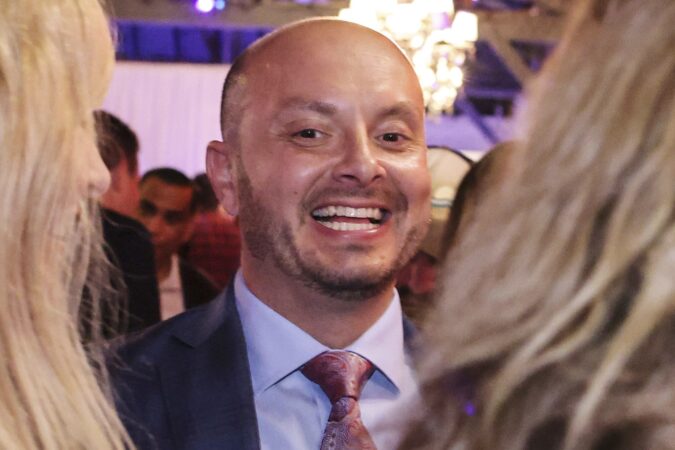
    On Tuesday, Rep. Andrew R. Garbarino (R., N.Y.) plans to lead what is likely to be the most contentious and closely watched hearing of his short tenure as a House committee chairperson. The focus is the Trump administration’s surge in immigration enforcement in Minnesota and elsewhere that has included the shooting deaths of two people in Minneapolis by federal authorities.

    The Homeland Security Committee hearing, which follows public blowback against the administration’s actions, is notable for a Republican-led House that has scaled back oversight hearings since President Donald Trump returned to office. It will be led by a chairperson who also stands out — both for his rapid ascent into the ranks of House leaders and for his reputation as a moderate willing to break with his party on high-profile issues.

    Garbarino, 41, faces the challenge of leading the interrogation of top immigration officials at the peril of angering the White House over Trump’s marquee policy of immigration — at a time when polls suggest a majority of voters disapprove of the president’s handling of it. Those scheduled to testify Tuesday include leaders at U.S. Immigration and Customs Enforcement, Customs and Border Protection, and Citizenship and Immigration Services.

    Former member of Congress Peter T. King, a Republican who represented the same district as Garbarino for 28 years, said it will be a difficult balancing act for the third-term lawmaker, who ascended to chairperson of the Homeland Security Committee in July.

    “He’s going to run the risk of Democrats saying he’s stonewalling, and he’s protecting ICE,” King said, while some Republicans on the committee are going to say “you can’t give an inch” in defending the administration.

    Garbarino’s temperament suits him well for what’s ahead, King said.

    “He has a good style,” King said, adding that Garbarino doesn’t get rattled easily. “He’s not going to be hitting somebody with the gavel.”

    Garbarino, in an interview, said he doesn’t see his job Tuesday as protecting the administration.

    “One of our roles is congressional oversight,” he said. “It’s not my job at this hearing to tout any accomplishments.”

    During the hearing, Garbarino, who practiced law before joining Congress, said he plans to ask questions about the training of immigration agents and their use of force, among other topics.

    Garbarino’s independent streak has at times put him at odds with his party as he sided with Democrats on some consequential votes.

    He supported legislation in 2022 that codified same-sex and interracial marriage. The previous year, he was one of only eight House Republicans to support a bill with new background check requirements for firearm transfers. The same year, he was one of 13 House Republicans to vote for President Joe Biden’s infrastructure bill. The latter move prompted then-Rep. Marjorie Taylor Greene (R., Ga.) to post Garbarino’s telephone number on social media in retaliation.

    And yet, Garbarino has vaulted past most rank-and-file House Republicans to land key committee assignments.

    Besides chairing Homeland Security, he sits on the coveted House Steering Committee that is responsible for doling out committee roles, and he also serves on the Financial Services and the Ethics committees. The latter often deals with controversies. During Garbarino’s tenure on Ethics, the panel voted in 2024 to release its report on former member of Congress Matt Gaetz (R., Fla.) that concluded Gaetz regularly paid for sex and possessed illegal drugs, charges Gaetz consistently denied.

    Ahead of Tuesday’s hearing, some of Garbarino’s more right-wing colleagues have expressed skepticism about how he’ll handle a high-profile examination of the Trump administration’s immigration agenda.

    “I think we need to have strong conservative leadership on that issue in the House,” Rep. Michael Cloud (R., Texas) said. When asked if he doubts whether Garbarino fits that description, Cloud responded: “We’ll see.”

    Similar doubts surfaced at the start of Garbarino’s tenure as Homeland chairperson. Rep. Clay Higgins (R., La.) resigned from the committee after losing a bid to lead it to Garbarino.

    “I would have been disagreeing with probably 90% of the positions that he takes,” Higgins said. “So the best thing for me to do as a joyful warrior was to withdraw from that position that was going to be fraught with disagreement, and I would have essentially derailed the chairman.”

    Garbarino was recommended by the steering committee in July over two other lawmakers as well: Reps. Michael Guest (R., Miss.) and Carlos A. Gimenez (R., Fla.).

    During his tenure in Congress, Garbarino has accomplished a feat that few have in the GOP conference: winning the favor of both former speaker Kevin McCarthy (R., Calif.) and the current speaker, Mike Johnson (R., La.), who helped Garbarino land a seat on the Ethics Committee. His shared first-floor Capitol hideaway is another signal of his close ties to leadership — a perk extended to a select few in the conference.

    “Part of my personality is being able to bring people together, you know, get things done, break down barriers, and part of that is … I do it through humor,” Garbarino said.

    For the most part, Garbarino, who represents Long Island’s South Shore, has won the respect of members of the New York delegation and fellow committee members, including those who represent red districts hundreds of miles from his home state.

    “In many ways, he’s very low-profile. From a public perspective, he doesn’t do a lot of press releases or social media or fanfare, but he has great relationships, and he’s utilized those relationships to deliver for New York,” Rep. Nicole Malliotakis (R, N.Y.) said, adding that she considers Garbarino a “professional schmoozer.”

    Rep. Brad Knott (R., N.C.), a freshman on Homeland Security, said Garbarino “embraces every positive stereotype of a New Yorker: He’s loud, he’s brash, he’s hilarious, he’s off the cuff.”

    King attributed Garbarino’s rapid rise in the House to his affable nature and described him as being a “straight shooter.”

    “People don’t worry about him knifing them in the back, agreeing to one thing and then saying another or doing something else or criticizing something that he really supported,” King said.

    King also led Republicans on the Homeland Security Committee, serving from 2005 to 2013 as chairperson and ranking Republican when the focus was more on counterterrorism in response to the Sept. 11, 2001, attacks — the events that led to the committee’s creation.

    The committee has since evolved, pivoting from counterterrorism to its current focus on immigration and border security. Given that, Garbarino faces another balancing act of guiding the committee’s priorities. Just recently, he shepherded the latest fix to the 9/11 healthcare program in a fraught spending package that passed after a temporary government shutdown.

    Tuesday’s hearing is long overdue, according to Garbarino’s Democratic counterpart, who said he’s been pushing for an oversight hearing on the Department of Homeland Security since Trump took office in January 2025.

    Rep. Bennie G. Thompson (Miss.), the panel’s ranking Democrat, said Garbarino “understands that part of our role is oversight,” adding that Mark Green (R., Tenn.), who led the panel until his resignation from Congress last summer, was not willing to convene a hearing focused on ICE.

    “He understands that part of our role is oversight based on our jurisdiction, so we’ve been able to get a commitment to have a specific hearing on ICE, which we couldn’t get Green to do,” Thompson said.

    Garbarino acknowledged some of the challenges that come with the hearing, which is expected to be confrontational and emotional. He pledged he will “keep order” and ensure every member adheres to the committee’s five-minute rule for questioning.

    “I’m not the Hulk, where all of a sudden I’ll turn angry,” he said.
  • Philadelphia native Noam Chomsky counseled Jeffrey Epstein on how to handle media scrutiny, DOJ files show

    Philadelphia native Noam Chomsky counseled Jeffrey Epstein on how to handle media scrutiny, DOJ files show

    Noam Chomsky, the Philadelphia-born and educated intellectual, told Jeffrey Epstein to “ignore” negative media attention as the disgraced financier was being accused of abusing women and girls, emails recently released by the U.S. Department of Justice show.

    The exchange occurred in early 2019, after the Miami Herald published a series of investigative reports on Epstein but months before he was arrested and charged with sex trafficking. The latest tranche of Epstein files from January also reveals years-long correspondence between Epstein and Chomsky, discussing topics like Chomsky’s finances and social plans.

    “Noam. I d love your advice on how I handle my putrid press. its is spiraling out of control,” Epstein wrote in an email dated Feb. 23, 2019. Epstein then asked Chomsky if he should “defend myself” or “try to ignore.”

    In a response purportedly from Chomsky, the famed linguistics professor advised Epstein “the best way to proceed is to ignore it” and “not to react unless directly questioned.” Chomsky drew parallels to his own experience with “hysterical accusations of all sorts,” writing, “I pay no attention, unless I’m approached for a comment on a specific matter.”

    “What the vultures dearly want is a public response, which then provides a public opening for an onslaught of venomous attacks, many from just publicity seekers or cranks of all sorts,” the email said. “That’s particularly true now with the hysteria that has developed about abuse of women, which has reached the point that even questioning a charge is a crime worse than murder.”

    Chomsky’s wife and spokesperson, Valeria Chomsky, did not immediately respond to an email from The Inquirer seeking comment.

    In a statement posted on social media, Valeria Chomsky said the couple was “careless in not thoroughly researching [Epstein’s] background,” calling it a “grave mistake.” She apologized for the couple’s “lapse in judgement.” Noam Chomsky, who is 97, suffered a massive stroke in 2023 and is unable to speak, according to the statement.

    The statement said the couple did not know the extent of the allegations against Epstein until his 2019 arrest, and cautioned that the men’s emails should be “read in context.”

    “Epstein created a manipulative narrative about his case, which Noam, in good faith, believed in,” the statement read. “It is now clear that it was all orchestrated, having as, at least, one of Epstein’s intentions to try to have someone like Noam help repair Epstein’s reputation by association.”

    Noam Chomsky has appeared in other batches of the Epstein files. In her statement, Valeria Chomsky — whose name and emails were also among the more than three million documents released — said her husband and Epstein were introduced in 2015. When asked in 2023 about his relationship with Epstein by the Wall Street Journal, Noam Chomsky replied, “First response is that it is none of your business. Or anyone’s. Second is that I knew him and we met occasionally.”

    Noam Chomsky was born in Philadelphia’s East Oak Lane neighborhood, attended Central High School, and earned his undergraduate and graduate degrees from the University of Pennsylvania. Considered the founder of modern linguistics and one of the most cited scholars, he is celebrated for his research and influential political activism.

    Noam Chomsky is not the only prominent person tied to Philadelphia to be tangled with Epstein in the latest trove of documents: Epstein closely followed the sexual assault case against actor and comedian Bill Cosby, maintained a business relationship with Sixers co-owner Josh Harris, and inquired about buying a private plane from Penn megadonor Marc Rowan, The Inquirer previously reported.

  • Brad Arnold, 47, lead singer of Grammy-nominated rock band 3 Doors Down, has died

    Brad Arnold, 47, lead singer of Grammy-nominated rock band 3 Doors Down, has died

    LOS ANGELES — Brad Arnold, the lead singer of the Grammy-nominated rock band 3 Doors Down, died Saturday, months after he announced that he had been diagnosed with Stage 4 kidney cancer. He was 47.

    The band said in a statement that Mr. Arnold “passed away peacefully, surrounded by loved ones, in his sleep after his courageous battle with cancer.”

    3 Doors Down formed in Mississippi in 1995 and four years later received a Grammy nomination for the breakout hit “Kryptonite.” Mr. Arnold wrote the song in math class when he was 15 years old, according to the band statement.

    Their debut album, The Better Life, sold over 6 million copies. A second Grammy nomination came in 2003, for the song “When I’m Gone.”

    The band said Mr. Arnold “helped redefine mainstream rock music, blending post-grunge accessibility with emotionally direct songwriting and lyrical themes that resonated with everyday listeners.”

    3 Doors Down released six albums, most recently Us and the Night in 2016. Singles included “Loser,” “Duck and Run,” and “Be Like That,” which appeared on the soundtrack for the 2001 film American Pie 2.

    While promoting their fifth album, Time of My Life, Mr. Arnold said he considered himself lucky to have carved out a career in the music business.

    “If you do something as long as we’ve done it, you can’t help but get better at it, you know?” Mr. Arnold told the Associated Press in 2011.

    In 2017, 3 Doors Down performed at the first inauguration concert of President Donald Trump.

    Mr. Arnold announced his cancer diagnosis last May, saying clear cell renal carcinoma had metastasized to his lungs. The band was forced to cancel a summer tour.

    “His music reverberated far beyond the stage, creating moments of connection, joy, faith, and shared experiences that will live on long after the stages he performed on,” the band said.

  • Voters are worried about the cost of housing. But Trump wants home prices to keep climbing

    Voters are worried about the cost of housing. But Trump wants home prices to keep climbing

    WASHINGTON — President Donald Trump wants to keep home prices high, bypassing calls to ramp up construction so people can afford what has been a ticket to the middle class.

    Trump has instead argued for protecting existing owners who have watched the values of their homes climb. It’s a position that flies in the face of what many economists, the real estate industry, local officials, and apartment dwellers say is needed to fix a big chunk of America’s affordability problem.

    “I don’t want to drive housing prices down. I want to drive housing prices up for people that own their homes, and they can be assured that’s what’s going to happen,” Trump told his cabinet on Jan. 29.

    That approach could bolster the Republican president’s standing with older voters, a group that over time has been more likely to vote in midterm elections. Those races in November will determine whether Trump’s party can retain control of the House and Senate.

    “You have a lot of people that have become wealthy in the last year because their house value has gone up,” Trump said. “And you know, when you get the housing — when you make it too easy and too cheap to buy houses — those values come down.”

    But by catering to older baby boomers on housing, Trump risks alienating the younger voters who expanded his coalition in 2024 and helped him win a second term, and he could wade into a “generational war” in the midterms, said Brent Buchanan, whose polling firm Cygnal advises Republicans.

    “The under-40 group is the most important right now — they are the ones who put Trump in the White House,” Buchanan said. “Their desire to show up in an election or not is going to make the difference in this election. If they feel that Donald Trump is taking care of the boomers at their expense, that is going to hurt Republicans.”

    The logic in appealing to older voters

    In the 2024 presidential election, 81% of Trump’s voters were homeowners, according to AP VoteCast data. This means many of his supporters already have mortgages with low rates or own their homes outright, possibly blunting the importance of housing as an issue.

    Older voters tend to show up to vote more than do younger people, said Oscar Pocasangre, a senior data analyst at liberal think tank New America who has studied the age divide in U.S. politics. “However, appealing to older voters may prove to be a misguided policy if what’s needed to win is to expand the voting base,” Pocasangre said.

    Before the 2026 elections, voters have consistently rated affordability as a top concern, and that is especially true for younger voters with regard to housing.

    Booker Lightman, 30, a software engineer in Highlands Ranch, Colo., who identifies politically as a libertarian Republican, said the shortage of housing has been a leading problem in his state.

    Lightman just closed on a home last month, and while he and his wife, Alice, were able to manage the cost, he said that the lack of construction is pushing people out of Colorado. “There’s just not enough housing supply,” he said.

    Shay Hata, a real estate agent in the Chicago and Denver areas, said she handles about 100 to 150 transactions a year. But she sees the potential for a lot more. “We have a lack of inventory to the point where most properties, particularly in the suburbs, are getting between five and 20 offers,” she said, describing what she sees in the Chicago area.

    New construction could help more people afford homes because in some cases, buyers qualify for discounted mortgage rates from the builders’ preferred lenders, Hata said. She called the current situation “very discouraging for buyers because they’re getting priced out of the market.”

    But pending construction has fallen under Trump. Permits to build single-family homes have plunged 9.4% over the past 12 months in October, the most recent month available, to an annual rate of 876,000, according to the U.S. Census Bureau.

    Trump’s other ideas to help people buy houses

    Trump has not always been against increasing housing supply.

    During the 2024 campaign, Trump’s team said he would create tax breaks for homebuyers, trim regulations on construction, open up federal land for housing developments, and make monthly payments more manageable by cutting mortgage rates. Advisers also claimed that housing stock would open up because of Trump’s push for mass deportations of people who were in the United States illegally.

    As recently as October, Trump urged builders to ramp up construction. “They’re sitting on 2 Million empty lots, A RECORD. I’m asking Fannie Mae and Freddie Mac to get Big Homebuilders going and, by so doing, help restore the American Dream!” Trump posted on social media, referring to the government-backed lenders.

    But more recently, he has been unequivocal on not wanting to pursue policies that would boost supply and lower prices.

    In office, Trump has so far focused his housing policy on lobbying the Federal Reserve to cut its benchmark interest rates. He believes that would make mortgages more affordable, although critics say it could spur higher inflation. Trump announced that the two mortgage companies, which are under government conservatorship, would buy at least $200 billion in home loan securities in a bid to reduce rates.

    Trump also wants Congress to ban large financial institutions from buying homes. But he has rejected suggestions for expanding rules to let buyers use 401(k) retirement accounts for down payments, telling reporters that he did not want people to take their money out of the stock market because it was doing so well.

    There are signs that lawmakers in both parties see the benefits of taking steps to add houses before this year’s elections. There are efforts in the Senate and House to jump-start construction through the use of incentives to change zoning restrictions, among other policies.

    One of the underlying challenges on affordability is that home prices have been generally rising faster than incomes for several years.

    This makes it harder to save for down payments or upgrade to a nicer home. It also means that the places where people live increasingly double as their key financial asset, one that leaves many families looking moneyed on paper even if they are struggling with monthly bills.

    There is another risk for Trump. If the economy grows this year, as he has promised, that could push up demand for houses — as well as their prices — making the affordability problem more pronounced, said Edward Pinto, a senior fellow at the American Enterprise Institute, a center-right think tank.

    Pinto said construction of single-family homes would have to rise by 50% to 100% during the next three years for average home price gains to be flat — a sign, he said, that Trump’s fears about falling home prices were probably unwarranted.

    “It’s very hard to crater home prices,” Pinto said.

  • Sen. John Fetterman said he ‘absolutely’ expects a DHS shutdown as ICE negotiations stall

    Sen. John Fetterman said he ‘absolutely’ expects a DHS shutdown as ICE negotiations stall

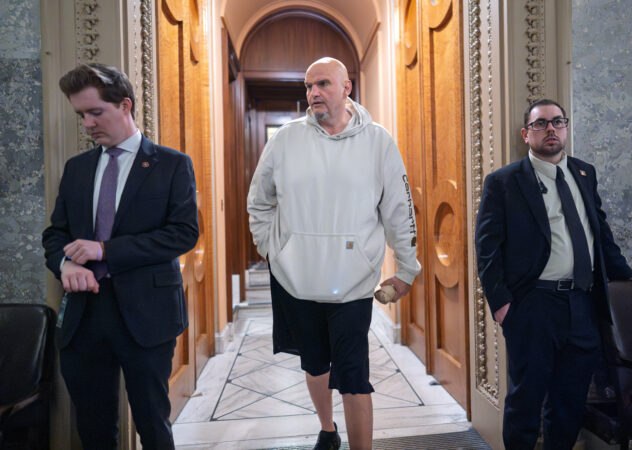
    U.S. Sen. John Fetterman said Sunday that he expects the Department of Homeland Security to shut down Friday as negotiations over immigration enforcement have stalled, an outcome that could impact air travel and emergency response across the nation.

    “I absolutely would expect that it’s going to shut down,” the Pennsylvania Democrat said during an interview on Fox News’ Sunday Morning Futures with Maria Bartiromo.

    Funding for DHS is scheduled to lapse Friday, a deadline that lawmakers set after separating the agency’s funding from other parts of the federal budget and approving a two-week extension to continue talks.

    At the center of the impasse is Democrats’ insistence on overhauling federal immigration enforcement. The party’s leaders drafted a list of 10 policies they want Republicans to agree to in exchange for their support in funding DHS, which includes U.S. Immigration and Customs Enforcement.

    Among Democrats’ demands are banning immigration enforcement agents from wearing masks and requiring DHS officers to obtain a warrant signed by a judge before entering a home.

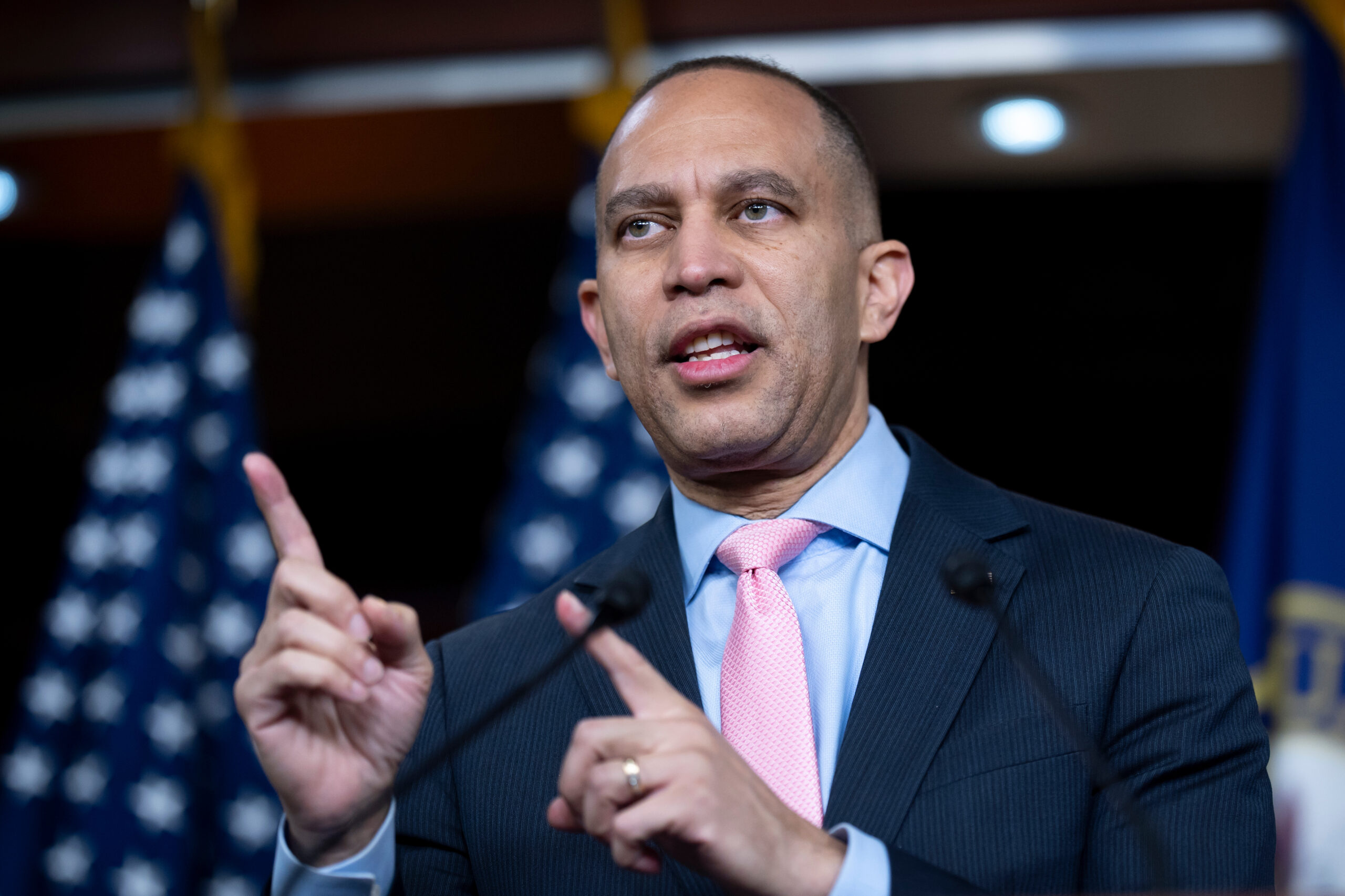
    House Minority Leader Hakeem Jeffries (D., N.Y.) said Sunday during an interview on CNN’s State of the Union that “at this point” he was not willing to accept a deal that didn’t include President Donald Trump’s administration implementing Democrats’ full list of ICE changes.

    “We know that ICE is completely and totally out of control,” Jeffries said. “They’ve gone way too far, and the American people want them reined in.”

    House Minority Leader Hakeem Jeffries (D., N.Y.) speaks to reporters about Venezuela, the ICE shooting in Minneapolis, and affordability ahead of a vote in the House to extend the Obamacare subsidies for three years at the Capitol on Jan. 8. (AP Photo/J. Scott Applewhite)

    Fetterman has called for significant changes at DHS, including the firing of Secretary Kristi Noem. But he said Sunday that Democrats shouldn’t expect to “get all 10″ demands.

    “We, the Democrats, we provided 10 kinds of basic things, and then the Republicans pushed back quickly saying, ‘That’s a Christmas wish list,’ and that they’re nonstarters,” Fetterman, a member of the Senate Homeland Security Committee, said. “I truly don’t know what specifically are the Democrats’ red lines that it has to be — certainly not going to get all 10.”

    Fetterman generally opposes any measure that would shut down the government and has been the only Senate Democrat to vote for some Republican budget proposals. He added that he is concerned about federal workers, including TSA agents, not being paid amid a funding lapse.

    “Every American deserves to be paid for the work that they’ve done,” he said. “That’s real lives, and they’re not wealthy if they’re TSA folks. They’re allowing us to fly safe here in America, and that’s part of that conversation now, too.”