Blog

  • Trump’s chaotic governing style is hurting the value of the U.S. dollar

    Trump’s chaotic governing style is hurting the value of the U.S. dollar

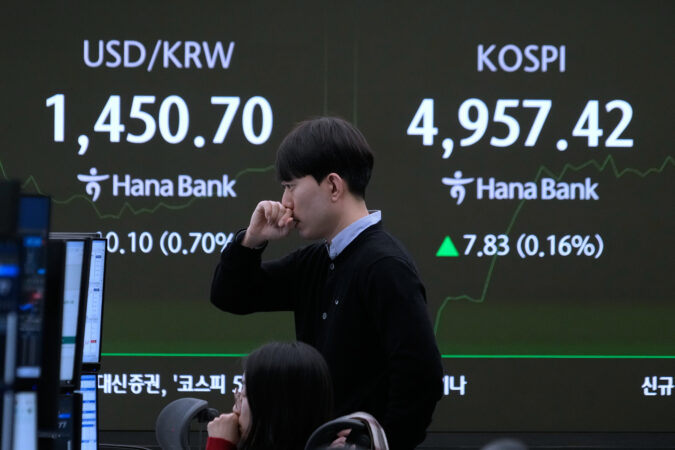
    Fallout from the recent Greenland crisis clipped the U.S. dollar, aggravating a yearlong decline that has shaved more than 10% off the greenback’s value since President Donald Trump returned to the White House.

    The dollar is under pressure on multiple fronts. After a long period of U.S. financial market outperformance, many foreign investors are rebalancing their portfolios to reduce excessive exposure to the United States and to capitalize on improving prospects elsewhere. Washington’s failure to address its mounting public debt, including crisis-level annual budget deficits at a time of low unemployment, isn’t helping.

    But perhaps the key to the dollar’s drop is the ripple effect of the president’s erratic policymaking, including abrupt stops and starts with tariffs and military action against a lengthening list of countries. After more than a year of nonstop upheaval emanating from the White House, many foreign investment managers are exhausted.

    “There is a visceral dislike of this kind of policy chaos,” said economist Robin Brooks, a senior fellow at the Brookings Institution. “I think the dollar will fall around 10% [more] this year.”

    One sign of the dollar’s ebbing appeal has been a staggering surge in gold prices, up almost 80% over the past year.

    At the end of January, the dollar rallied — and gold sank — on news that Trump had nominated Kevin Warsh, a former Federal Reserve governor, to be the next chairman of the nation’s central bank.

    But the broader trend of dollar weakness remains in place, several economists and money managers said. The president has pushed repeatedly for the Fed to cut its benchmark 3.75% interest rate to levels far below what mainstream economists say is appropriate, which would be likely to further erode the dollar’s standing.

    “We should have the lowest interest rate anywhere in the world. They should be two points and even three points lower,” the president said on Thursday during a Cabinet meeting.

    The Fed’s policymaking committee left rates unchanged at their January meeting. But financial markets expect cuts to resume in June.

    A weaker dollar will help U.S. exporters by making their products more affordable for foreign customers while boosting companies that earn profits abroad and convert them into dollars. A sagging greenback also should aid the president’s efforts to shrink the trade deficit and attract foreign capital to spur U.S. reindustrialization.

    But by raising the cost of imported goods such as furniture, computers, cars, appliances, and clothing, a softer dollar could hamper the fight to cool inflation. That would be bad news for the president, already struggling to address voter concerns over the cost of living with the midterm congressional elections little more than nine months away.

    The president and his aides have sent mixed signals about the trend. Recently, Trump brushed off currency concerns, telling reporters in Iowa that the dollar “was doing great.” After traders responded by driving it lower, Treasury Secretary Scott Bessent reaffirmed the traditional U.S. stance in favor of a “strong dollar.”

    Doubts about Trump’s position have swirled since the 2024 election. A widely-read paper by Stephen Miran, a Trump economic adviser the president later named to a Fed position, argued for a weaker dollar to help rebalance the global trading system. With a nod to the president’s Florida resort, Miran christened the proposed arrangement “the Mar-a-Lago accord.”

    No such agreement has emerged. But the dollar showed pronounced weakness on two occasions following major Trump initiatives.

    After Trump’s announcement of historic global tariffs last April, U.S. stocks, bonds, and the dollar all sank in an unusual trifecta. While stocks and bonds recovered, the dollar remained depressed — the opposite of what typically happens when a nation imposes new import taxes.

    Some analysts diagnosed a widespread “Sell America” trade sweeping financial markets. Bessent scoffed, and many analysts now acknowledge that assessment was overstated. The S&P 500 index hit an all-time high recently, which hardly supports the idea of a flight from U.S. assets.

    If foreign investors did not abandon the dollar, they did become less confident in it, a change of sentiment that appeared through increased demand for hedges against their currency exposure.

    For a foreign investor, changes in currency values are as important as movements in asset prices.

    If the dollar falls while a foreigner holds U.S. stocks or bonds, their investment gains can be eroded or eliminated. Foreign investors can protect themselves against that risk by effectively selling dollars and buying their home currency, a practice called hedging.

    When the dollar fell after Trump’s tariff announcements, unhedged investors suffered big losses and some began hedging to mitigate the damage. Those transactions served to encourage the dollar decline, according to a detailed June 2025 analysis by economists with the Bank for International Settlements.

    “Global investors have changed their behavior. Even when they want exposure to the U.S. stock market, they now feel that they have to hedge the currency,” said Dario Perkins, an economist with TS Lombard in London.

    Another headwind facing the dollar is the growing attractiveness of financial markets outside the U.S. For years, global investors poured funds into the U.S., drawn by available returns that were larger than in other markets.

    That’s no longer true. The S&P 500’s 14% return over the past year was dwarfed by gains on exchanges in London, Tokyo, Hong Kong, and Toronto. Brazilian stocks are up 44% since this time last year.

    The latest gauges of economic activity also show other economies stirring. Both the United Kingdom and Japan are growing at least as quickly as the U.S., according to January’s flash PMI surveys.

    The uptick in activity is driving up the price of industrial metals. Zinc is up 30% since mid-2025 and iron ore is up 11%.

    “There was this era of U.S. exceptionalism where the U.S. was significantly outperforming the rest of the world. And now we’re seeing more of a broad base. Global growth is picking up,” said Priya Misra, portfolio manager of JPMorgan’s core-plus bond fund.

    Even after its recent decline, the dollar is about as strong, adjusted for inflation, as it was three years ago and remains at a level some analysts call “overvalued.” Many analysts expect a further decline this year. But there seems little reason to anticipate a full-fledged rout.

    In a statement, Joseph Lavorgna, a counselor to the treasury secretary, described the dollar’s dip as unremarkable. The inflation-adjusted dollar “remains higher today than it was during President Trump’s first term, and it is overall at one of its highest levels in the last several decades,” he said.

    Even as foreign investors edge away from the geopolitical chaos enveloping the dollar, it remains the global reserve currency. No viable alternative exists. Global central banks hold more than $7.4 trillion in U.S. currency, by far their largest single holding.

    The U.S. also boasts the largest and most liquid financial markets. Its leading position in artificial intelligence makes it an essential destination, even for investors who are skeptical of Trump’s governing style.

    “The U.S. economy is one of the strongest, most dynamic in the world. Investors should be careful about declaring the dollar is dead,” said Daniel Ivascyn, chief investment officer for Pimco in Newport Beach, Calif.

    Foreign central banks also would be expected to push back against any rapid dollar plunge, according to economists at Bank of America. The flip side of a sinking dollar, by definition, is the appreciation of other currencies, a particular problem for exporting nations and a “recessionary shock” for the world outside the U.S., they said in a client note recently.

    One wild card is the situation in Japan, where a long era of ultralow borrowing costs appears to have ended. That suggests the Japanese economy may have decisively emerged from its long-term funk. But rising interest rates threaten a popular strategy long used by global investors.

    When Japanese interest rates hovered near zero, global investors could borrow yen cheaply and then invest it in U.S. and other markets, earning sizable returns via a strategy known as the “carry trade.”

    Japanese investors hold nearly $5 trillion in overseas securities, with most of that amount in the U.S. With the gap narrowing between yields in Japan and those in other developed markets, some analysts expect Japanese investors to bring a portion of that money home.

    Last week, Michael Burry, the famed investor known for “The Big Short,” posted several Japanese financial charts on X under the terse heading: “Repatriation pending.”

    So far, there has been no sign of any Japanese exit, and some analysts think the concern is overblown.

    “Japanese interest rates have been going up for some time now, and I’m not seeing any evidence that the Japanese are keeping their money at home,” said Marc Chandler, chief market strategist at Bannockburn Capital Markets in New York.

    If that changes, it would only add to the downdrafts buffeting the dollar.
  • Is protest music coming back? From Bad Bunny to Bruce Springsteen, Grammys to the Super Bowl, the answer seems to be yes

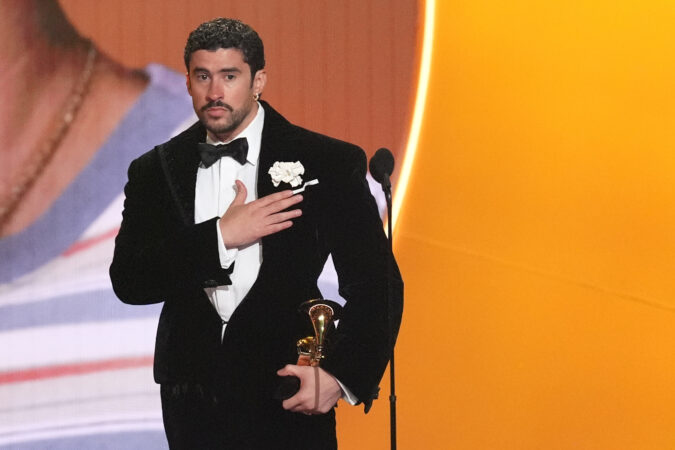
    Is protest music coming back? From Bad Bunny to Bruce Springsteen, Grammys to the Super Bowl, the answer seems to be yes

    Bad Bunny vows to protest with love. Bruce Springsteen has opted for a more confrontational approach.

    Both are part of a growing wave of pop-music dissent aimed at what critics see as overreach by the Trump administration’s Department of Homeland Security — actions in Minneapolis that have been linked to the deaths of two American citizens during encounters with U.S. Immigration and Customs Enforcement agents.

    Bad Bunny, the Puerto Rican superstar known as the King of Latin Trap, was the world’s most-streamed pop music maker in 2025. The rapper-singer-producer, whose full name is Benito Antonio Martínez Ocasio, has a massive platform to air his grievances if he chooses, serving as the half-time show headliner at Super Bowl LX on Sunday.

    This year’s half-time show is likely to surpass Kendrick Lamar’s 2025 performance, which drew 113.5 million viewers as the most-watched in history.

    The decision to book Bad Bunny, whom, NFL commissioner Roger Goodell this week called “one of the world’s great artists,” has been steadily attacked by conservative critics since September.

    Those critics include President Donald Trump. “I’m anti-them. I think it’s a terrible choice. All it does is sow hatred. Terrible,” he said last month, referring to Bad Bunny and Green Day, who will play a pregame concert during NBC’s broadcast. The clash between the Seattle Seahawks and New England Patriots will also stream on Peacock.

    Bad Bunny haters have an alternative: Kid Rock, whose 5 million monthly Spotify listeners is dwarfed by Bad Bunny’s 87 million, will top the bill on Turning Point USA’s All-American Halftime Show, shown on TPUSA’s YouTube page and conservative media outlets. Country singers Brantley Gilbert, Lee Brice, and Gabby Barrett will also perform.

    Will Bad Bunny’s performance be a virulent attack on the Trump administration’s immigration policy?

    That remains to be seen. But the speech he gave at the Grammys last weekend, after winning best música urbana album for Debí Tirar Más Foto — which also became the first Spanish-language album of the year winner — suggests a more subtle expression of Puerto Rican pride that emphasizes the humanity of demonized brown-skinned immigrants.

    Speaking in English, Bad Bunny thanked God, said “ICE Out,” then continued: “We’re not savages, we’re not animals, we’re not aliens. We are humans and we are Americans.” (As a Puerto Rican native, Bad Bunny is an American citizen unlike recent MAGA convert Nicki Minaj, who was born in Trinidad and Tobago.)

    “Hate gets more powerful with more hate. The only thing that is more powerful than hate is love. We need to be different. If we want to fight, we have to do it with love.”

    Bad Bunny’s speech was one of many gestures opposing ICE at the Grammys, from Bon Iver’s Justin Vernon wearing a whistle on his lapel to Billie Eilish criticizing anti-immigrant voices with a terse line: “Nobody is illegal on stolen land.”

    Olivia Dean, the British singer who won best new artist, said: “I’m up here as a granddaughter of an immigrant. I’m a product of bravery, and I think those people deserve to be celebrated.”

    Vernon and Eilish immediately were embroiled in left-right political back and forth. Eilish’s brother, Finneas O’Connell, sparred with multiple critics on social media and Vernon with Sirius/XM host Megyn Kelly.

    But the Grammys didn’t include any overtly political new music. A rumor that Springsteen would open the show with “Streets of Minneapolis” proved unfounded. Springsteen wrote the new anti-ICE broadside the day protester Alex Pretti was killed by federal agents.

    But Springsteen’s protest song leads the way in a trend toward musicians opposing the Trump administration in song, in many cases consciously connecting with a tradition that reaches back to Woody Guthrie, Peter Seeger, Bob Dylan, and the Civil Rights protest of the 1960s.

    In “Street of Minneapolis,” Springsteen meets the moment by expressing outrage at the deaths of Renee Good and Pretti, specifically the administration’s initial pronouncements that placed blame on the dead rather than the federal agents.

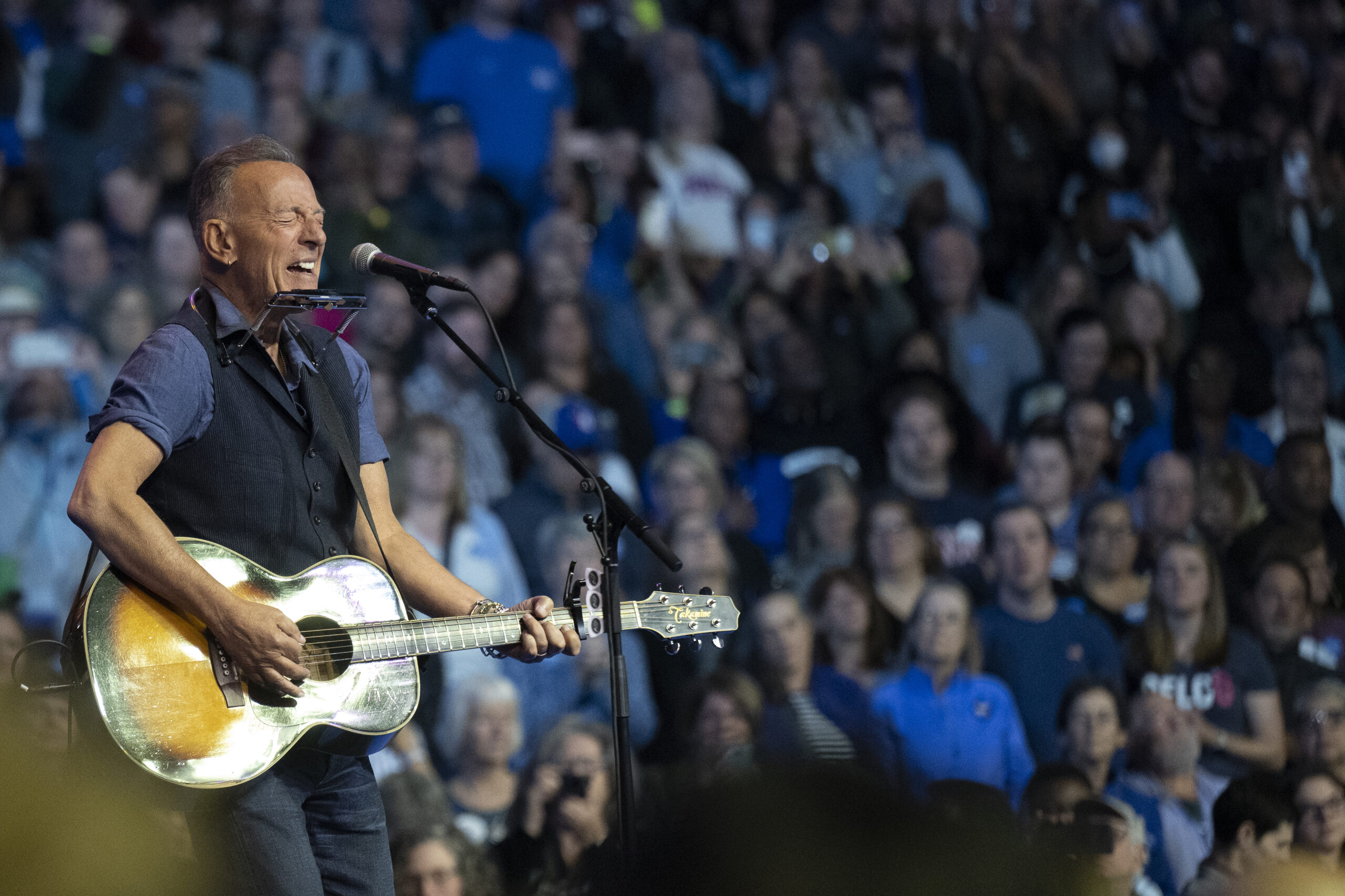
    Bruce Springsteen performs Oct. 28, 2024, during a Democratic concert rally at the Liacouras Center at Temple University.

    “Their claim was self-defense sir, just don’t believe your eyes,” the Boss sings. “It’s these whistles and phones against Miller and Noem’s dirty lies.”

    The song builds to a rousing “ICE out” chorus that’s so unsubtle it even gave the Boss pause.

    Performing in Minneapolis last month with rabble-rousing former E Street Band member Tom Morello, Springsteen said he asked the guitarist whether “Streets” was too “soap boxy.” Morello, of Rage Against the Machine, replied: “Nuance is wonderful, but sometimes you have to kick them in the teeth.”

    Springsteen, of course, can afford to be aggressively provocative. Not only is he a revered superrich artist at the tail end of his career whose loyal audience is not going anywhere. He’s also a white man whose fans who look like him are not in danger of being detained and deported.

    And he has a history of sparring with Trump, whose administration he repeatedly labeled “corrupt, incompetent, and treasonous” on stage in Europe last spring. At the time, Trump responded by calling the Jersey rocker “not a talented guy — Just a pushy, obnoxious JERK.” The president hasn’t responded to “Streets of Minneapolis” as of yet, but loyalist Steve Bannon called Springsteen “fake and gay, as the kids say.”

    Springsteen’s singing out will also surely lead to others joining the chorus. And plenty of broadsides have been in the works already.

    Low Cut Connie at Concerts Under The Stars in King of Prussia on Friday August 1, 2025. Left to right: Rich Stanley, Nick Perri, Adam Weiner, Jarae Lewis (on drums, partially hidden), Amanda “Rocky” Bullwinkel, Kelsey Cork.

    Philadelphia’s Adam Weiner of Low Cut Connie has been an outspoken Trump critic, among the first to pull out of a Kennedy Center performance last year.

    He’s announced an entire protest album called Livin’ in the U.S.A. Weiner said he made the album “because I am disgusted to see our country descend into an authoritarian hell, a place where art does not lead the cultural conversation.” It arrives timed to the Semiquincentennial on July 3.

    The same day that Springsteen released “Streets of Minneapolis,” British folk-punk singer Billy Bragg dropped “City of Heroes,” also written to commemorate Pretti’s death.

    Veteran punk rockers are joining in, too, sometimes by rewriting lyrics to old protest songs like Boston band Dropkick Murphys’ “Citizen I.C.E.” — a new version of “Citizen C.I.A.”

    The protest isn’t manifest only in topical song writing. In Philly, local events in the indie music scene are aiming to assist immigrants. Juntos, the organization that aids Philadelphia communities affected by ICE, will be the beneficiary of “A Jam Without Borders” at Ortlieb’s on Wednesday, with local musicians Arnetta Johnson, Nazir Ebo, and others.

    New generation protest singers include Liberian-born Afro Appalachian singer Mon Rovia, whose buoyant 2025 song “Heavy Foot” remains upbeat as he sings “the government staying on heavy foot / No, they never gonna keep us all down.”

    Most prominent in branding himself as a modern folk troubadour is Jesse Welles, whose “No Kings” duet with Joan Baez came out in December.

    Welles’ “Join ICE” uses humor as a weapon, with an early Dylan persona. “There’s a hole in my soul that just rages,” he sings. “All the ladies turned me down and I felt like a clown / But will you look at me now, I’m putting people in cages!”

    He plays the Fillmore on March 4.

    Serious songwriters are likely to continue to pen protest songs as long as scenes of turmoil continue to show up on TV and social media screens.

    But high-profile artists worried about alienating their audience aren’t likely to start flooding the zone with anti-ICE screeds if they’re concerned about backlash.

    A case in point would be formerly Philadelphian country superstar Zach Bryan. Last October, he released a song snippet of “Bad News” that included the lyrics “ICE is gonna come, bust down your door” and cited “the fading of the red, white and blue.”

    The song was met with disdain by the White House. Spokesperson Abigail Jackson said, “Zach Bryan wants to open the gates to criminal illegal aliens and has condemned heroic ICE officers.” DHS secretary Kristi Noem was “extremely disheartened and disappointed.”

    Bryan did include the song on his album With Heaven on Top in January, but not before taking great care to explain he wasn’t on one political side or the other.

    “Left wing or right wing, we’re all one bird and American,” the Eagles fan said. “To be clear I’m not on either of these radical sides.”

  • Could the Philly region become the ‘eds, meds, and defense industrial base’ region?

    Could the Philly region become the ‘eds, meds, and defense industrial base’ region?

    As Chris Scafario sees it, Philadelphia’s reputation as an “eds and meds” region, referring to its plethora of colleges and hospitals, could grow a third leg.

    It could also become the defense industrial base region, said Scafario, CEO of the Delaware Valley Industrial Resource Center.

    President Donald Trump wants to increase defense spending, with $1.5 trillion proposed for 2027. This could mean more research and workforce development training opportunities — and local universities are positioned to take advantage of it, Scafario said.

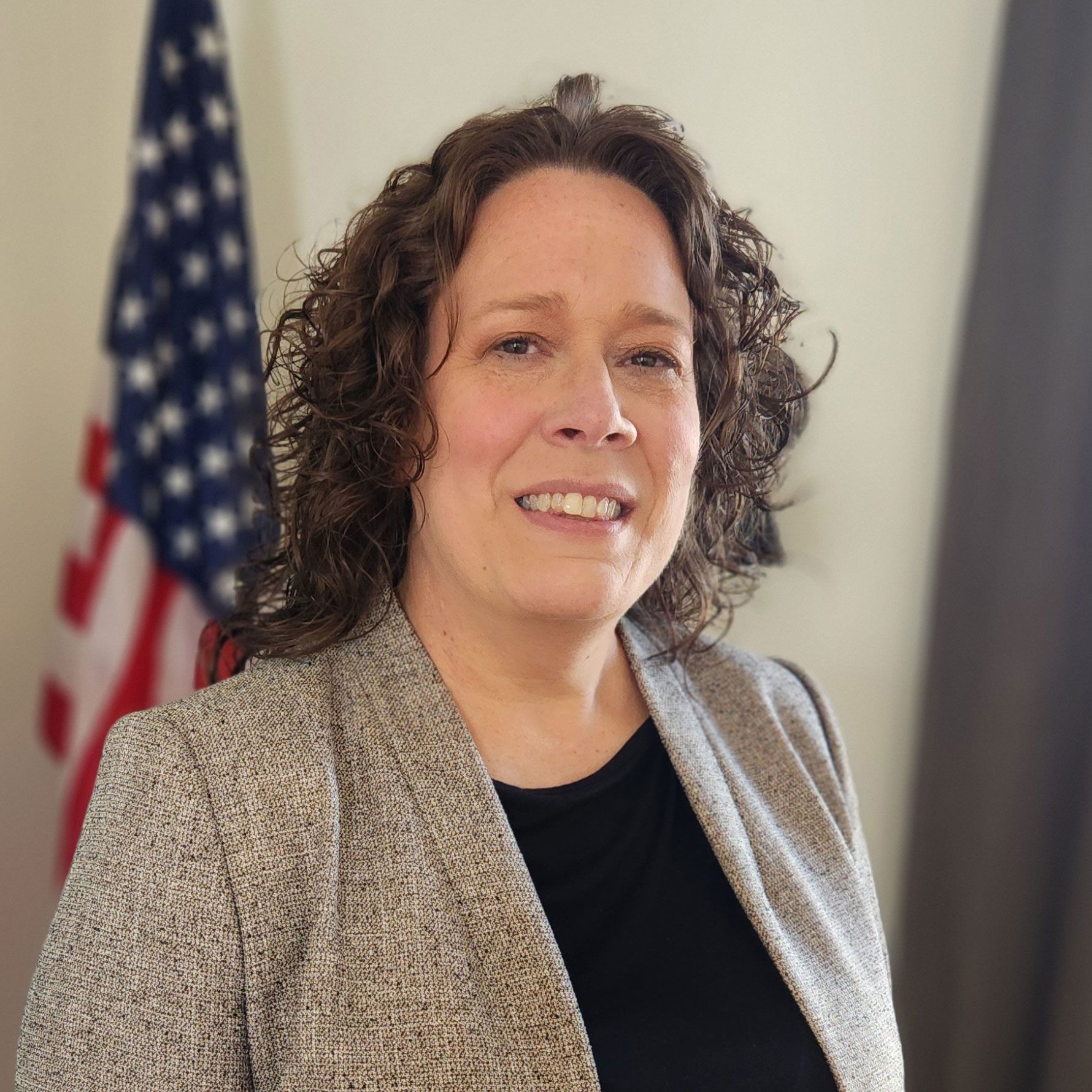
    Chris Scafario, CEO of the Delaware Valley Industrial Resource Center

    “A lot of that investment is going to be targeted toward university and innovation-based relationships because they need help getting stuff done,” said Scafario, who is talking to local colleges to help get them ready to capitalize. “They need access to brilliant people, whether they’re faculty or the faculty’s work products, the students.”

    The move comes as colleges face potential cuts in research funding under the Trump administration in other areas, such as the National Institutes of Health. Both Princeton University and the University of Pennsylvania in the last month announced cutbacks to cope with potential financial fallout from federal policies.

    Scafario’s center, which is based at the Navy Yard and was founded in 1988, aims to foster economic development and local manufacturing.

    The Philadelphia region has been involved in defense contracting on and off for years, with major hubs in naval and aerospace manufacturing, and local universities say they worked with the Department of Defense in the past. Rowan University in New Jersey says it has $70 million in defense-related research projects underway.

    But Scafario sees the opportunity for major expansion.

    Drexel University, Temple University, Penn, Rowan, and Villanova University, which is already a top producer of naval engineers, are among the schools that are “in a great spot to leverage the opportunities that are going to be coming through the defense industrial base,” Scafario said. “In the next year, people are going to start realizing that we are meds, eds, and a defense industrial base region. It’s going to bring a lot of investment, a lot of economic opportunities, and some really, really great employment opportunities in the region.”

    The Philadelphia region could become a national anchor for shipbuilding or other maritime industrial-based activities, he said.

    Scafario hopes to bring colleges together with other partners for more discussions in the spring when the timeline for those federal investments starts to become clearer, he said.

    Amanda Page, Warfighter Technologies Liaison for the Delaware Valley Industrial Resource Center

    Colleges could help with efforts to accelerate production capacity of naval ships and work on initiatives such as how to make submarines less traceable and more durable. Or they could help improve medical equipment and training for the battlefield. The treatment standard in the military used to be the “golden hour”; now it’s about “prolonged field care,” said Amanda Page, a retired active-duty Army medic who serves as warfighter technologies liaison for the center.

    “Medical personnel need to be prepared mentally, physically, emotionally, and electronically to keep those patients for 96 hours,” Page said. “That’s going to require a ton of research and technology.”

    Page was hired by the center in October to help build relationships between the center, the Department of Defense (which the Trump administration has rebranded the Department of War), local higher education systems, and the city.

    “I’m super excited about what it will bring to the region and what the region can prove to the Department of War about its legitimacy,” she said, “as a manufacturing and technology powerhouse.”

    Local colleges say they are reviewing potential collaborations.

    “There are a lot of opportunities we are looking at,” said Aleister Saunders, Drexel’s executive vice provost for research and innovation, declining to provide specifics for competitive reasons.

    In addition to opportunities with the Navy and the Navy Yard, he noted major local companies involved with aerospace and aviation, including Lockheed Martin and Boeing. There are also opportunities around materials and textiles with the Philadelphia-based Defense Logistics Agency Troop Support, which provides many of the supplies to the military.

    “Those are really valuable assets that we should find a way to leverage better than we are,” he said.

    Key opportunities are available in advanced manufacturing and workforce development, he said.

    “There could be folks who are already working in manufacturing who need [upgraded skills] in advanced manufacturing techniques,” he said.

    Temple University president John Fry said increasing research opportunities and impact — the school’s research budget now exceeds $300 million — is a priority in the school’s strategic plan. Temple offers opportunities around medical manufacturing, healthcare, and health services, he said.

    “The key to doing that is going to be partnerships,” he said.

    Josh Gladden, Temple’s vice president for research, said he has met with folks from Scafario’s group and they are talking about some opportunities, but declined to discuss them because they are in early development.

    He noted that the Navy is interested in working with Temple’s burn unit.

    Temple has also been getting to know the workforce needs of businesses at the Navy Yard and looking at how to align its educational programs, Fry said.

    “Those are relationships I would love to pursue,” he said. “Part of our mission is to develop the future workforce and grow the regional economy, and that’s one way of doing it.”

    Rowan has been a longtime research partner with the U.S. military, said Mei Wei, the school’s vice chancellor for research.

    “It’s encouraging to know there could be more funding available for research,” Wei said. “These projects give our undergraduate and graduate students the opportunities they need to develop their research skills with close guidance from our faculty and our external partners.”

  • Horoscopes: Sunday, Feb. 8, 2026

    ARIES (March 21-April 19). Today brings the same old scene but with brand-new emotions. Your feelings are just one part of you talking to another part of you. There’s no need to broadcast the message now because it feels special and safe to work it out in your own private world.

    TAURUS (April 20-May 20). Why tolerate a stale environment when there is so much out there that could inspire you? Wonder is possible, and it’s likely, but you have to move. Any direction will do. You don’t have to go far. You just have to go.

    GEMINI (May 21-June 21). Self-censoring is smart when it’s part of the job, aids a negotiation or upholds the level of professionalism required. Hopefully, though, you don’t have to hold back with your nearest and dearest. Who can you really be yourself around?

    CANCER (June 22-July 22). Adding complicates. Subtracting simplifies. What can you ditch today? Sell it, give it away, toss it or drop it — boom, done. That’s the move that’ll actually make your life better.

    LEO (July 23-Aug. 22). Life is moving too fast to make gradual moves today. Get caught up in the swirl. There’s no reason to resist. Sudden disruptions are working in your favor. You’ll adapt as quickly as you need to.

    VIRGO (Aug. 23-Sept. 22). It’s not fair to treat everyone the same because everyone is different, with different needs and expectations. Instead, you aim for peaceful dealings, staying aware of what that requires given the person involved and the situation at hand.

    LIBRA (Sept. 23-Oct. 23). Trust yourself. You’re trustworthy! And if you doubt it, trust yourself anyway and forge ahead as if you have every reason to believe you’ll get there eventually. Confidence is attractive, so you’ll magnetize whatever you need to make things happen.

    SCORPIO (Oct. 24-Nov. 21). Socializing in any way whatsoever will fall under the category of building your network. It’s an extremely productive way to use your time today, even though it looks, from the outside, like a lot of fun — also true!

    SAGITTARIUS (Nov. 22-Dec. 21). Self-compassion isn’t only about finding comfort and stability when things go wrong; it’s also about placing yourself in environments where things are very likely to go right. Play the low-stakes game and get a few wins under your belt.

    CAPRICORN (Dec. 22-Jan. 19). You’re in no mood to explain yourself, and it’s better anyway if you don’t. Your enigmatic presence will be powerfully felt. People will bring their imagination to your story, and they will feel oddly attached to their version of you.

    AQUARIUS (Jan. 20-Feb. 18). Imagine the very ground beneath you loving you the way a good parent loves their child. You belong to this place, and you can feel it on a primal level today as you move the world and the world moves you.

    PISCES (Feb. 19-March 20). You’ll receive indirect requests, soft invitations and mere hints that others are seeking your company. Tune in or miss out, because following subtle suggestions will lead to some of the most promising and interesting connections.

    TODAY’S BIRTHDAY (Feb. 8). It’s your Year of Receptivity, when you hoist the sail of joy and let the wind do the rest. Receiving fuel, inspiration, help, love and more puts you in entirely different territory. Exploration is a thrill. You’ll learn the lay of the land, then establish new purposes and build them with the help of a worthy team. More highlights: Relationships flourish with fun and togetherness. Family expands. Taurus and Sagittarius adore you. Your lucky numbers are: 24, 18, 7, 31 and 44.

  • Dear Abby | Spouse of serial cheater is ready to even the score

    DEAR ABBY: My wife and I are approaching our 40th anniversary. Friends and family have already begun to mention the upcoming milestone. While I politely acknowledge the event, I hide my indifference. You see, my wife has always been a serial cheater. It’s a secret I have kept from everyone, especially our children.

    Because she has always been a wonderful mother, I would never do anything to tarnish their love and appreciation of her. The children are a large part of the reason I have remained married. Aside from her betrayal, she has been a good wife and companion, and I still love her.

    During her affairs, I fought depression by submerging myself in work and crying when alone. Our children are grown and on their own now. We have a beautiful grandson. We both retired a couple of years ago, and that is when the reality of the past 40 years hit me. I no longer have the crutch of work to help me through.

    Our marriage has been sexless since she went through menopause 15 years ago. I have been loyal to her all these years, but I still desire intimacy. I have a few female friends who, in the past, have shown an interest in more intimate relationships. Would it be wrong to rekindle and move forward with an old friend? I have no intention of leaving my wife, but I am so in need of something more.

    — FORTY YEARS A FOOL

    DEAR ‘FOOL’: Have you actually TALKED to your wife (whom you love) about this? Many postmenopausal women whose libidos have declined still enjoy sex. This is a subject she should have discussed with her gynecologist 15 years ago because this is not an insurmountable problem. If she refuses, you would be within your rights to tell her you want the same dispensation you have given her for 40 years of infidelity, because you still need and desire intimacy. Her response will tell you everything you need to know.

    ** ** **

    DEAR ABBY: I have been eating dessert on days I have deemed “dessert-free.” I get to have dessert on Monday, Wednesday and Friday. Can you please help me to stop my struggle on the days when I don’t get dessert?

    — CRAVING IT IN WASHINGTON

    DEAR CRAVING IT: I understand (only too well!) the mindset that a meal isn’t complete unless there’s something sweet at the end of the main course.

    Years ago, a psychologist friend shared with me that she resolved her craving for something sweet by carrying a small bag containing a gingersnap cookie in her purse when she went to restaurants. When she was finished with her meal, she took the bag out of her purse and ate HALF of one. She said it satisfied her craving without sabotaging her diet. Try it. However, if it doesn’t work for you, consider substituting a piece of fresh fruit for the cookie.

  • Sixers takeaways: Matching physicality, Tyrese Maxey is hard to guard, and more from the win against Suns

    Sixers takeaways: Matching physicality, Tyrese Maxey is hard to guard, and more from the win against Suns

    The 76ers need to keep playing a heady brand of basketball.

    Tyrese Maxey is unguardable when in his bag of tricks.

    And so far, Paul George’s absence hasn’t had a major impact on the outcomes of games.

    These things stood out in Saturday’s 109-103 victory over the Phoenix Suns at Mortgage Matchup Center.

    With the win, the Sixers improved to 30-22 and evened the two-game season series against the Suns (31-22). They’re also 3-1 in the first four games of their five-game West Coast road trip, which concludes on Monday against the Portland Trail Blazers at the Moda Center.

    Solid brand of basketball

    The Sixers had effective ball movement against the Suns. They also attacked the basket, crashed the boards, and played at a much faster pace than in recent games.

    In addition to doing those things, they didn’t back down from Phoenix’s physicality or Dillon Brooks’ antics. Kelly Oubre Jr. got in the face of his former roommate and high school teammate at Findlay Prep (Nevada) after Brooks flopped on a play.

    Before that, Joel Embiid and Devin Booker exchanged words at the conclusion of the first half. And there were other heated exchanges.

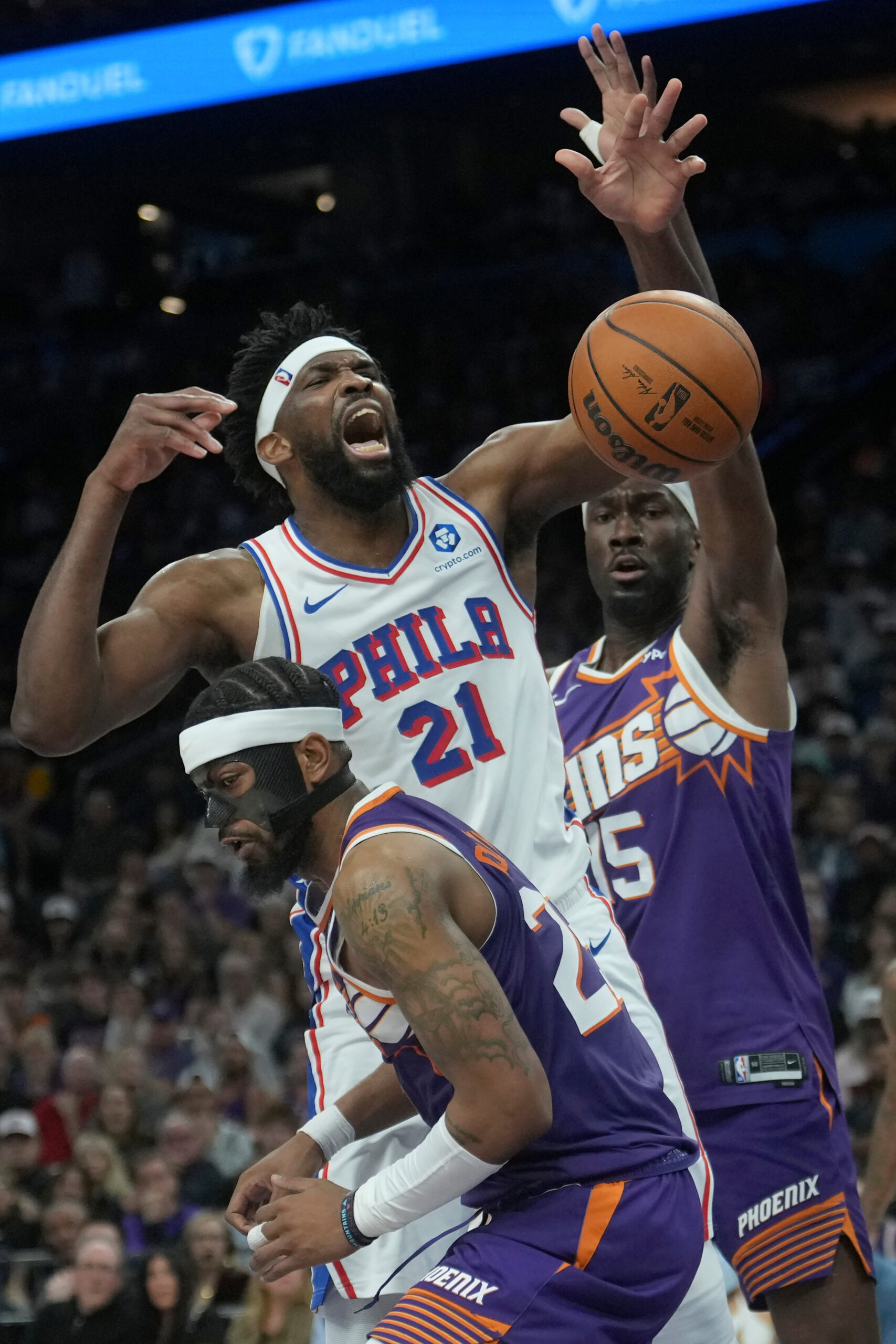
    Joel Embiid (21), who led with a game-high 33-point effort, gets fouled by Suns guard Jordan Goodwin in the first half of Saturday’s game.

    The Sixers didn’t match the physicality of the Detroit Pistons and Cleveland Cavaliers earlier this season. So seeing them fight back and play with an edge against the Suns was a great sign.

    “We stayed professional,” Maxey said to the media. “We didn’t let all the rah rah stuff affect us. We got physical back, and that’s good. That happens, and we can take that.”

    Maxey said he could anticipate the Suns’ antics. With the Sixers up 16 points in the second quarter, he knew Phoenix would resort to something.

    “Any good team or any team that’s playing for something, they’re not going to let you steamroll them. They’re not going to lay down. They are going to go out there and try to put up a fight. And sometimes that’s what has to come with it. You have to get more physical, and you have to sustain that lead. And we did a good job of that.”

    The Sixers had a 50-40 rebounding advantage. They scored 34 points in the paint and held the Suns to 23.9% three-point shooting.

    Embiid finished with 33 points, nine rebounds, three assists, and one block. Maxey finished with 29 points, nine rebounds, six assists, and one steal, while Oubre added 18 points, six rebounds, and two steals.

    Marvelous Maxey

    Maxey had a slow start, missing his first three shot attempts. But after that, the two-time All-Star was close to unstoppable.

    Unable to keep him in front of them, the Suns’ defenders were helpless. The point guard drained a couple of his three-pointers. He scored on a post-up. And Maxey played through contact on his way to the rim. Fourteen of his points came in the first half.

    “We just played fast that group that I was in there with,” Maxey said regarding the first half. “Got rebounds, got stops, and got out and ran, trying to make sure everybody touched the ball, everybody involved, and it was good.”

    Maxey missed his first three shots in the second half. But after settling down, the Suns, once again, had a tough time guarding him.

    Making 8 of 9 foul shots, the sixth-year player scored 13 of his points in the fourth quarter. His last two with 11.8 seconds remaining gave the Sixers their six-point cushion.

    No George, no problem?

    Let’s not get it twisted.

    The Sixers are a better team with George on the floor. The nine-time All-Star is a solid facilitator and one of their best defenders. As a result, there was a thought that the team would struggle while he serves a 25-game suspension for violating the NBA’s Anti-Drug Program.

    So far, that hasn’t been the case.

    The Sixers are 4-1 in the first five games without the 6-8 forward. Their lone loss was Thursday’s 119-115 setback to the Los Angeles Lakers at Crypto.com Arena.

    Different players stepped up to help Embiid and Maxey in each of their victories. On Saturday, it was Trendon Watford in addition to Oubre.

    “He’s become a little more important now [what] the roster is,” said Sixers coach Nick Nurse. “If one of those guys gets in foul trouble, he’s got to kind of be another ball handler. I thought he did a good job.

    “He’s starting to show a little bit of element of some toughness, kind of standing up to [the Suns with] some of his physicality out there.”

    Watford finished with six points, seven rebounds, two assists, and two blocks.

    While he didn’t score a lot of points, the reserve point forward displayed a lot of toughness and did a lot of intangible things. Being impactful, Watford played the entire fourth quarter. That’s when he had four points, four rebounds, and two blocks.

    “The big thing for us is he can handle the ball,” Maxey said of his close friend. “He’s a connector. We needed that for a long time. Nico [Batum during the 2023-24 season] was probably the last [point forward] we had. But he doesn’t handle the ball as much as TY does. So he does a good job of handling the ball. He can play pick-and-roll. He can post, get a bucket down there in the post. We just got to get him to play some defense, then we will be alright.”

  • Washington Post publisher Will Lewis says he’s stepping down, days after big layoffs at the paper

    Washington Post publisher Will Lewis says he’s stepping down, days after big layoffs at the paper

    Washington Post publisher Will Lewis said Saturday that he’s stepping down, ending a troubled tenure three days after the newspaper said that it was laying off one-third of its staff.

    Lewis announced his departure in a two-paragraph email to the newspaper’s staff, saying that after two years of transformation, “now is the right time for me to step aside.” The Post’s chief financial officer, Jeff D’Onofrio, was appointed temporary publisher.

    Neither Lewis nor the newspaper’s billionaire owner, Jeff Bezos, participated in the meeting with staff members announcing the layoffs on Wednesday. While anticipated, the cutbacks were deeper than expected, resulting in the shutdown of the Post’s renowned sports section, the elimination of its photography staff, and sharp reductions in personnel responsible for coverage of metropolitan Washington and overseas.

    They came on top of widespread talent defections in recent years at the newspaper, which lost tens of thousands of subscribers following Bezos’ order late in the 2024 presidential campaign pulling back from a planned endorsement of Kamala Harris, and a subsequent reorienting of its opinion section in a more conservative direction.

    Martin Baron, the Post’s first editor under Bezos, condemned his former boss last week for attempting to curry favor with President Donald Trump and called what has happened at the newspaper “a case study in near-instant, self-inflicted brand destruction.”

    The British-born Lewis was a former top executive at the Wall Street Journal before taking over at the Post in January 2024. His tenure has been rocky from the start, marked by layoffs and a failed reorganization plan that led to the departure of former top editor Sally Buzbee.

    His initial choice to take over for Buzbee, Robert Winnett, withdrew from the job after ethical questions were raised about both he and Lewis’ actions while working in England. They include paying for information that produced major stories, actions that would be considered unethical in American journalism. The current executive editor, Matt Murray, took over shortly thereafter.

    Lewis didn’t endear himself to Washington Post journalists with blunt talk about their work, at one point saying in a staff meeting that they needed to make changes because not enough people were reading their work.

    This week’s layoffs have led to some calls for Bezos to either increase his investment in the Post or sell it to someone who will take a more active role. Lewis, in his note, praised Bezos: “The institution could not have had a better owner,” he said.

    “During my tenure, difficult decisions have been taken in order to ensure the sustainable future of The Post so it can for many years ahead publish high-quality nonpartisan news to millions of customers each day,” Lewis said.

    The Washington Post Guild, the union representing staff members, called Lewis’ exit long overdue.

    “His legacy will be the attempted destruction of a great American journalism institution,” the Guild said in a statement. “But it’s not too late to save The Post. Jeff Bezos must immediately rescind these layoffs or sell the paper to someone willing to invest in its future.”

    Bezos did not mention Lewis in a statement saying D’Onofrio and his team are positioned to lead the Post into “an exciting and thriving next chapter.”

    “The Post has an essential journalistic mission and an extraordinary opportunity,” Bezos said. “Each and every day our readers give us a roadmap to success. The data tells us what is valuable and where to focus.”

    D’Onofrio, who joined the paper last June after jobs at the digital ad management company Raptive, Google, Zagat, and Major League Baseball, said in a note to staff that “we are ending a hard week of change with more change.

    “This is a challenging time across all media organizations, and The Post is unfortunately no exception,” he wrote. “I’ve had the privilege of helping chart the course of disrupters and cultural stalwarts alike. All faced economic headwinds in changing industry landscapes, and we rose to meet those moments. I have no doubt we will do just that, together.”

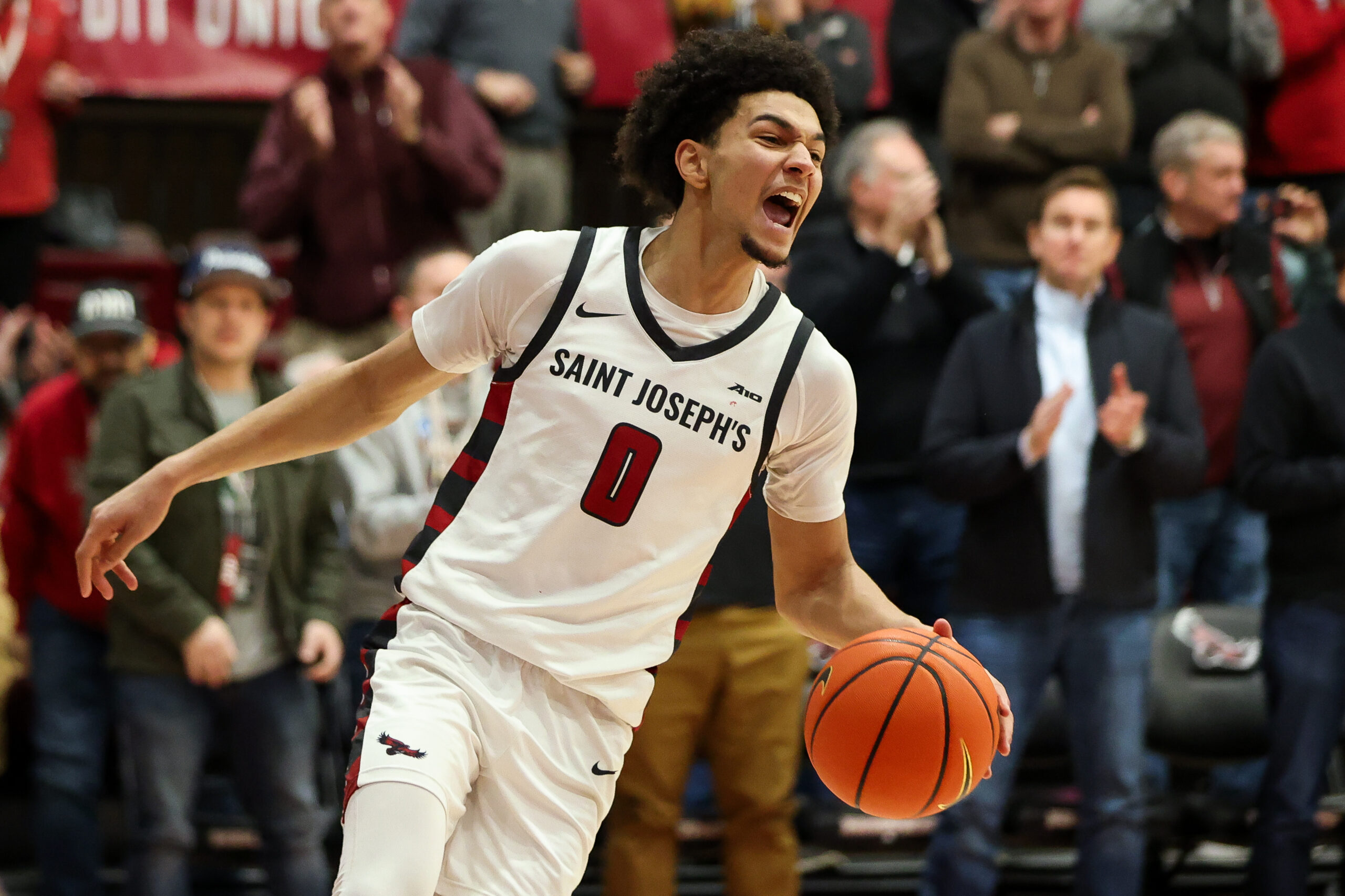
  • St. Joseph’s is unable to upset George Mason despite pushing the game to the brink

    St. Joseph’s is unable to upset George Mason despite pushing the game to the brink

    Eleven minutes.

    That how much time remained to find St. Joseph’s knocking off a 20-win George Mason team, extending its winning streak to five games, and being one step closer to earning a coveted double bye in next month’s Atlantic 10 Tournament.

    Instead, in those remaining minutes against the Patriots, the Hawks went silent, highlighted by a nearly five-minute stretch of unsuccessful field goal attempts, ending up on the losing end of a 60-52 score in Fairfax, Va.

    During that same stretch, George Mason (21-3, 9-2 A-10) scored six points before a three-pointer late from Hawks guard Austin Williford.

    Statistical leaders

    Guard Jaiden Glover-Toscano scored 14 points to lead the way for St. Joe’s (15-9, 7-4), but all of them came in the first half. Derek Simpson (13 points) and Williford (11) stepped up in his place in the second half. The Hawks also grabbed 44 rebounds compared to 35 by George Mason.

    St. Joe’s shot just 31% while George Mason knocked down 41.1% of its shots from the floor. Guard Jahari Long led the way with 20 for the Patriots and also dished out three assists.

    Hawks guard Derek Simpson, seen here in action earlier this season, scored 13 points in St. Joe’s road loss to George Mason.

    What we saw

    Points were scarce for both teams to begin the game. The Hawks suffered shooting lapses, with just 32.4% of their first-half shots falling. However, the defense matched the Patriots, holding them to 11-for-29 shooting in the first 20 minutes to keep the score tight.

    Glover-Toscano was a key to get St. Joe’s moving with three consecutive triples to give the visitors a 18-13 lead. The guards’ efforts helped St. Joe’s snatch momentum as George Mason went on a two-minute drought before an 8-0 run gave the Patriots life.

    What allowed St. Joe’s to survive its inconsistent offense was its defense, specifically an ability to grab rebounds. The Hawks were relentless on the glass with 20 of their offensive rebounds leading to 22 second-chance points. It was 29-29 at the half.

    The lack of offensive production continued for both teams once the second half started. A quick 7-2 run for St. Joe’s gave the Hawks a five-point lead. The rebounding efforts continued for the Hawks with seven offensive boards, but the Patriots defense continued to limit any chances for separation.

    Up next

    The Hawks return to Hagan Arena to host Fordham (12-12, 3-8) on Tuesday (7 p.m., ESPN+).

  • ‘We will pay,’ Savannah Guthrie says in desperate video plea to potential kidnappers of her mother

    ‘We will pay,’ Savannah Guthrie says in desperate video plea to potential kidnappers of her mother

    TUCSON, Ariz. — Savannah Guthrie told the potential kidnappers of her mother, Nancy Guthrie, on Saturday that the family is prepared to pay for her safe return.

    “We received your message, and we understand. We beg you now to return our mother to us so that we can celebrate with her,” Guthrie said in the video, flanked by her siblings. “This is the only way we will have peace. This is very valuable to us, and we will pay.”

    It was not immediately clear if Guthrie was referring to a new message from someone who might have kidnapped Nancy Guthrie. The Associated Press reached out to the Pima County Sheriff’s department seeking additional details.

    The frantic search for the 84-year-old Nancy Guthrie has entered a seventh day. Authorities have not identified any suspects or ruled anyone out, Sheriff Chris Nanos said this week.

    Authorities think she was taken against her will from her home just outside Tucson over the weekend. DNA tests showed blood on Guthrie’s front porch was a match to her, Nanos said.

  • Appeals court affirms Trump policy of jailing immigrants without bond

    Appeals court affirms Trump policy of jailing immigrants without bond

    President Donald Trump’s administration can continue to detain immigrants without bond, marking a major legal victory for the federal immigration agenda and countering a slew of recent lower court decisions across the country that argued the practice is illegal.

    A panel of judges on the 5th Circuit Court of Appeals ruled on Friday evening that the Department of Homeland Security’s decision to deny bond hearings to immigrants arrested across the country is consistent with the constitution and federal immigration law.

    Specifically, circuit judge Edith H. Jones wrote in the 2-1 majority opinion that the government correctly interpreted the Immigration and Nationality Act by asserting that “unadmitted aliens apprehended anywhere in the United States are ineligible for release on bond, regardless of how long they have resided inside the United States.”

    Under past administrations, most noncitizens with no criminal record who were arrested away from the border had an opportunity to request a bond hearing while their cases wound through immigration court. Historically, bond was often granted to those without criminal convictions who were not flight risks, and mandatory detention was limited to recent border crossers.

    “That prior Administrations decided to use less than their full enforcement authority under” the law “does not mean they lacked the authority to do more,” Jones wrote.

    The plaintiffs in the two separate cases filed last year against the Trump administration were Mexican nationals who had both lived in the United States for over 10 years and weren’t flight risks, their attorneys argued. Neither man had a criminal record, and both were jailed for months last year before a lower Texas court granted them bond in October.

    The Trump White House reversed that policy in favor of mandatory detention in July, reversing almost 30 years of precedent under both Democratic and Republican administrations.

    Friday’s ruling also bucks a November district court decision in California, which granted detained immigrants with no criminal history the opportunity to request a bond hearing and had implications for noncitizens held in detention nationwide.

    Circuit Judge Dana M. Douglas wrote the lone dissent in Friday’s decision.

    The elected congress members who passed the Immigration and Nationality Act “would be surprised to learn it had also required the detention without bond of two million people,” Douglas wrote, adding that many of the people detained are “the spouses, mothers, fathers, and grandparents of American citizens.”

    She went on to argue that the federal government was overriding the lawmaking process with DHS’ new immigration detention policy that denies detained immigrants bond.

    “Because I would reject the government’s invitation to rubber stamp its proposed legislation by executive fiat, I dissent,” Douglas wrote.

    Douglas’ opinion echoed widespread tensions between the Trump administration and federal judges around the country, who have increasingly accused the administration of flouting court orders.

    U.S. Attorney General Pam Bondi celebrated the decision as “a significant blow against activist judges who have been undermining our efforts to make America safe again at every turn.”

    “We will continue vindicating President Trump’s law and order agenda in courtrooms across the country,” Bondi wrote on the social media platform X.