Blog

  • Rams QB Matthew Stafford edges Patriots’ Drake Maye for the AP NFL Most Valuable Player award

    Rams QB Matthew Stafford edges Patriots’ Drake Maye for the AP NFL Most Valuable Player award

    SAN FRANCISCO — Matthew Stafford walked away with the AP NFL Most Valuable Player award and a declaration that he’s returning to the Los Angeles Rams for another season.

    Stafford edged Drake Maye for the MVP award on Thursday night in the closest race since Peyton Manning and Steve McNair were co-winners in 2003.

    Stafford received 24 of 50 first-place votes while Maye got 23. But Maye has a chance to go home this week with a Vince Lombardi Trophy. He leads the New England Patriots against the Seattle Seahawks in the Super Bowl on Sunday.

    Stafford, who turns 38 on Saturday, wants another opportunity to try to win his second Super Bowl ring with the Rams.

    “Oh yeah, I’ll be back. It was such an amazing season and I play with such a great group of guys and great group of coaches that I was lucky enough to finish this season healthy, and I want to make sure that I go out there and see what happens next year,” Stafford told the AP.

    Stafford brought his four daughters — all dressed in identical black-and-white dresses — to the stage to accept the award.

    He thanked his team and saved his wife and daughters for last: “You’re unbelievable cheerleaders for me. I appreciate it. I am so happy to have you at the games on the sideline with me, and I can’t wait for you to cheer me on next year when we’re out there kicking (butt).”

    It was Stafford’s way of announcing he will be back next season after contemplating retirement.

    Myles Garrett was a unanimous choice for the AP NFL Defensive Player of the Year award after setting a season record for sacks with 23.

    All-Pro wide receiver Jaxon Smith-Njigba beat out Christian McCaffrey for the AP NFL Offensive Player of the Year award.

    New England’s Mike Vrabel beat out Jacksonville’s Liam Coen for the AP NFL Coach of the Year award, becoming the seventh coach to win it with two different teams.

    McCaffrey became the first running back to win the AP NFL Comeback Player of the Year award in 24 years.

    Browns linebacker Carson Schwesinger was a runaway winner for the AP NFL Defensive Rookie of the Year award.

    Panthers wide receiver Tetairoa McMillan ran away with the AP NFL Offensive Rookie of the Year award.

    Patriots offensive coordinator Josh McDaniels won the AP NFL Assistant Coach of the Year award in the first season of his third stint with the team.

    A nationwide panel of 50 media members who regularly cover the league completed voting before the playoffs began. Votes were tabulated by the accounting firm Lutz and Carr.

    Voters selected a top 5 for the eight AP NFL awards. First-place votes were worth 10 points. Second- through fifth-place votes were worth 5, 3, 2 and 1 points.

    Josh Allen, the 2024 NFL MVP, received two first-place MVP votes, and Justin Herbert got the other one.

    Stafford, who earned first-team All-Pro honors for the first time in his 17-year career, finished with 366 points to Maye’s 361. Allen placed third with 91 points, Christian McCaffrey (71) was fourth and Trevor Lawrence (49) came in fifth.

    It’s McCaffrey’s second top-five finish in three years, more than any other non-quarterback since the weighted point system was implemented in 2022.

    Stafford led the NFL with 4,707 yards passing and 46 TDs. He threw eight picks and finished second to Maye with a 109.2 passer rating. Stafford and the Los Angeles Rams lost to Seattle in the NFC championship game.

    Maye had 4,394 yards passing, 31 TDs and eight picks. The second-year pro led the league in passer rating (113.5) and completion percentage (72).

    Coach of the Year

    Vrabel can get his first Super Bowl title as a head coach Sunday if the Patriots beat the Seahawks. He received 19 first-place votes to Coen’s 16 and finished with 302 points.

    Vrabel, the 2021 Coach of the Year winner with the Titans, led the Patriots from worst to first in the AFC East, a 10-win turnaround in his first season in New England.

    Coen had 239 points after leading the Jacksonville Jaguars to 13 wins and an AFC South title in his first season.

    Seattle’s Mike Macdonald got eight first-place votes and finished third (191). Chicago’s Ben Johnson received one first-place vote and came in fourth (145). San Francisco’s Kyle Shanahan had six first-place votes to place fifth (140).

    Defensive Player of the Year

    Garrett received all 50 first-place votes to become the ninth player to win DPOY multiple times and second unanimous choice following J.J. Watt, who did it in 2014. Cleveland’s edge rusher also was a unanimous All-Pro selection. Garrett previously won the award in 2023.

    “It doesn’t just start with me,” he said. “It starts with great teammates, a great organization, great coaches being able to put us in position. I’m thankful for every single one of teammates to help get me up here. It’s not possible without them.”

    Texans edge rusher Will Anderson Jr. finished second with 77 points, Packers edge rusher Micah Parsons came in third (63) followed by Broncos edge rusher Nik Bonitto (52) and Lions edge rusher Aidan Hutchinson (42).

    Garrett surpassed both Michael Strahan (22.5) and T.J. Watt (22.5) when he sacked Joe Burrow in the final game of the regular season.

    Offensive Player of the Year

    Smith-Njigba got 14 first-place votes to McCaffrey’s 12 and finished with 272 points. McCaffrey, who won the AP NFL Comeback Player of the Year award, had 223 points.

    Smith-Njigba caught 119 passes and led the league with 1,793 yards receiving. He had 10 TDs.

    Rams wide receiver Puka Nacua, a unanimous All-Pro like Smith-Njigba, finished third with eight first-place votes and 170 points. Falcons All-Pro running back Bijan Robinson was right behind him with six first-place votes and 168 points.

    Comeback Player of the Year

    McCaffrey, San Francisco’s All-Pro do-it-all back, received 31 first-place votes and 395 points, outgaining Aidan Hutchinson. Garrison Hearst was the last running back to win it in 2001.

    Hutchinson got nine first-place votes and 221 points. Dak Prescott came in third with six first-place votes and 167 points. Lawrence got two first-place votes and finished fourth (130). Stefon Diggs came in fifth (40).

    Philip Rivers and Chris Olave each received one first-place vote.

    McCaffrey played in just four games in 2024 due to bilateral Achilles tendinitis followed by a season-ending PCL knee injury. He returned to play every game for the 49ers and had 2,126 yards from scrimmage and 17 TDs.

    Defensive Rookie of the Year

    Schwesinger received 40 first-place votes and had 441 points to become the sixth player in the last 45 seasons to win the award after not being picked in the first round. Shaq Leonard (2018) and DeMeco Ryans (2006) were the only others in the last 20 seasons. Cleveland selected Schwesinger in the second round at No. 33 overall.

    Versatile Seahawks defensive back Nick Emmanwori got seven first-place votes and finished second (199).

    Offensive Rookie of the Year

    McMillan earned 41 first-place votes after catching 70 passes for 1,014 yards and seven TDs.

    Saints quarterback Tyler Shough got five first-place votes and finished second with 168 points, way behind McMillan’s 445.

    Assistant Coach of the Year

    McDaniels received 17 of 50 first-place votes and finished with 249 points. Broncos defensive coordinator Vance Joseph placed second with 10 first-place votes and 176 points.
  • In northwest Nigeria, U.S. confronts a growing terrorist threat

    In northwest Nigeria, U.S. confronts a growing terrorist threat

    BAIDI, Nigeria — There are still bloodstains and bullet holes in the mud-brick alcove where villagers took shelter last month after militants overran their community, opening fire on residents who had gathered to drink tea in the town square.

    Six people, ages 18 to 60, were killed in Baidi that night, locals said, gunned down without warning by men whose faces were obscured by the darkness. The attack was the latest in Nigeria’s northwestern Sokoto state, carried out by what Nigerian and U.S. officials believe is the newest African affiliate of the Islamic State.

    On Christmas night, President Donald Trump announced that United States had launched airstrikes against the group, known here as Lakurawa, part of what the White House and its allies have described as a campaign to put a stop to the “slaughter of Christians” in Nigeria. But the U.S. strikes were largely ineffective, Nigerian officials, analysts and residents said, and there are very few Christians in Sokoto to protect. The state, once part of a 19th-century caliphate, remains overwhelmingly Islamic, and it is Muslims in villages like this one who have borne most of the violence in Sokoto.

    Yet no one here denies there is a real and growing security crisis. Islamist militants from several different groups have wrought havoc in Mali, Burkina Faso and Niger in recent years while quietly extending their reach into northern Nigeria. Most researchers see Lakurawa as an extension of the Islamic State Sahel Province (ISSP), which is strongest along the borderlands between Mali and Niger but has shown the ability to strike high-profile targets. Its fighters kidnapped an American missionary in central Niamey, Niger’s capital, late last year and, just last week, executed a large-scale attack on Niger’s international airport.

    Now, according to five Nigerian and U.S. officials, ISSP is sharing intelligence and coordinating logistics with the more established Islamic State West Africa Province (ISWAP), which is based hundreds of miles to the east on the islands of Lake Chad. Together, officials fear, the two groups could destabilize vast stretches of northern Nigeria, home to an estimated 130 million people, where authorities have long struggled to contain insurgent violence.

    “This is not just a Nigeria problem,” said one of the Nigerian security officials, speaking like others in this story on the condition of anonymity to discuss sensitive and ongoing operations. “It affects the entire region.”

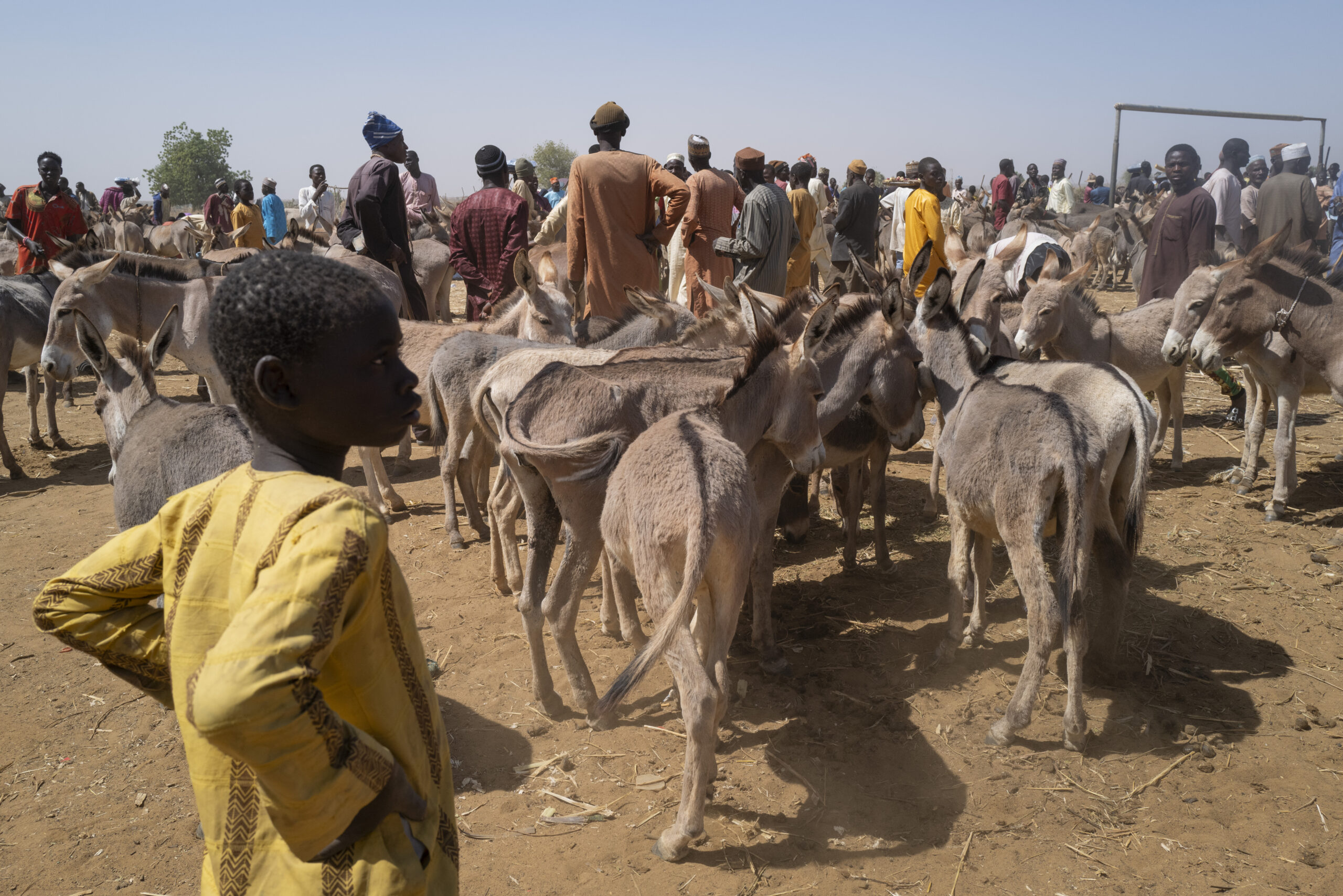
    Men handle donkeys at the market in Tangaza, Nigeria, on Jan. 26. Many kidnappings and attacks occur in this area.

    The U.S. has ramped up cooperation with Nigeria’s military in recent months, according to four of the officials, running daily surveillance flights over northern Nigeria with drones launched from Ghana. Officials said the flights have provided actionable intelligence used in additional strikes by the Nigerian military.

    What, if anything, the U.S. and Nigerian strikes have achieved against militants in the northwest remains difficult to discern. Both nations are playing catch-up on a threat that analysts say has been building for years and is still poorly understood. Attacks by Lakurawa have not been officially claimed by the Islamic State, and researchers and officials have competing theories about the group’s origins and allegiances.

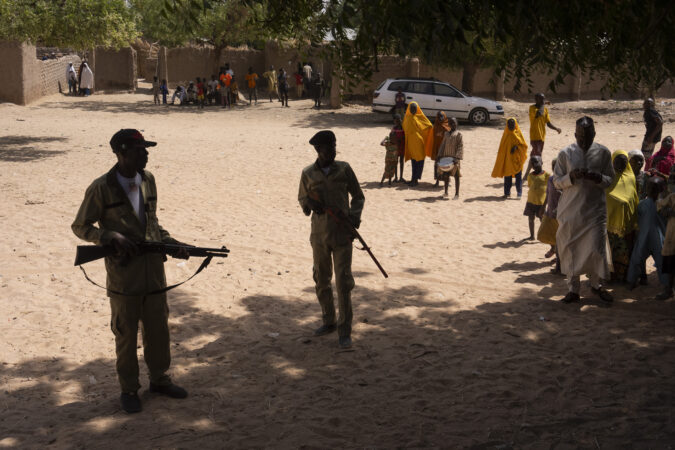
    What was clear over the course of more than 20 interviews across Sokoto state is that the militants are on the offensive. Residents in multiple front line villages say armed men are increasingly imposing an extreme version of Islamic law on their communities, demanding they pay taxes known as zakat and punishing those who refuse.

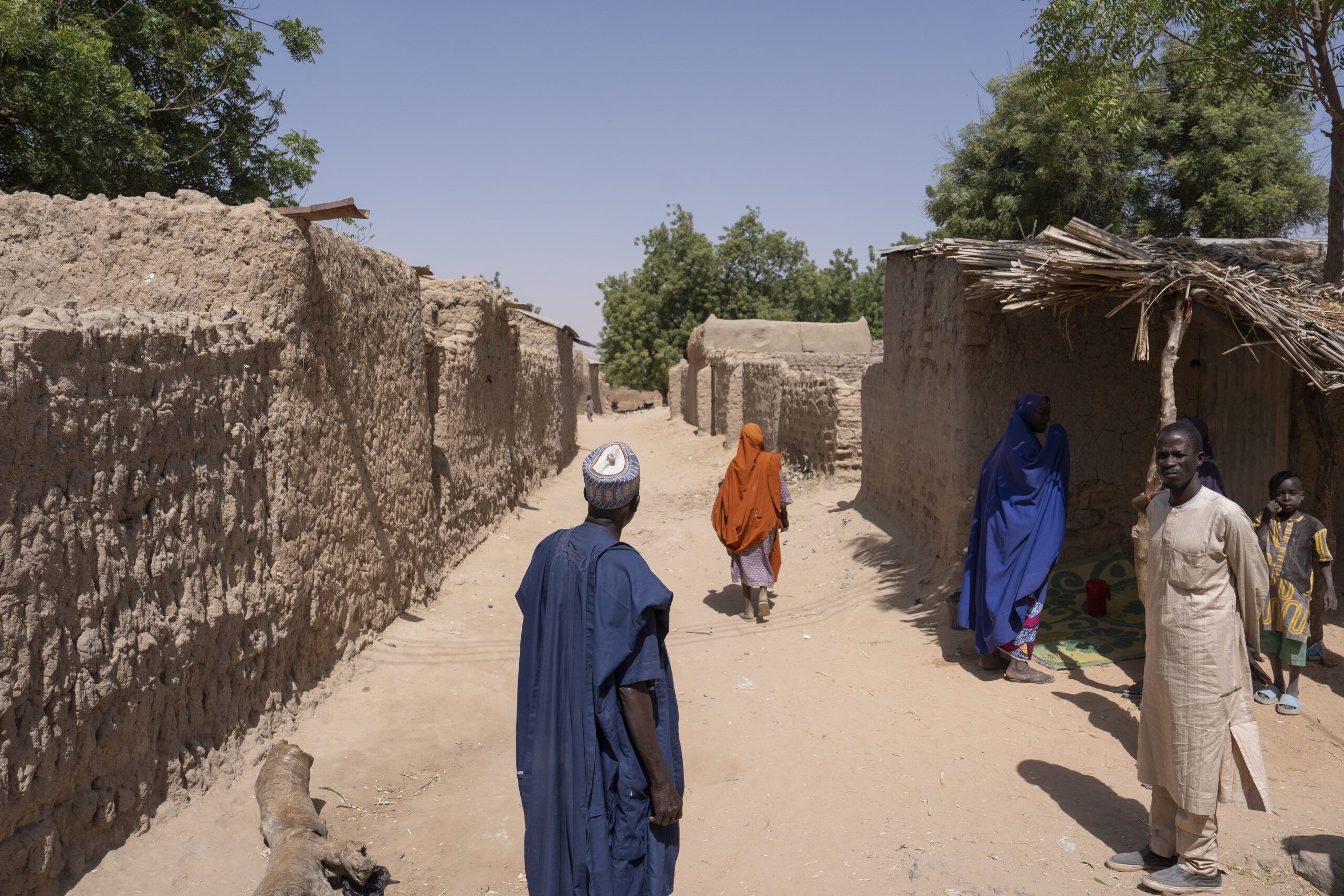
    Fighters often announce their arrival by barging into mosques and dictating the rules communities must live by. Most of the villages around Baidi, residents said, have already fallen under Lakurawa’s control. Western schools, already rare in this impoverished region, have been shuttered. Music, cigarettes, and traditional celebrations, including weddings and naming ceremonies, have been banned. Drinking and drugs are forbidden and strict dress codes are enforced.

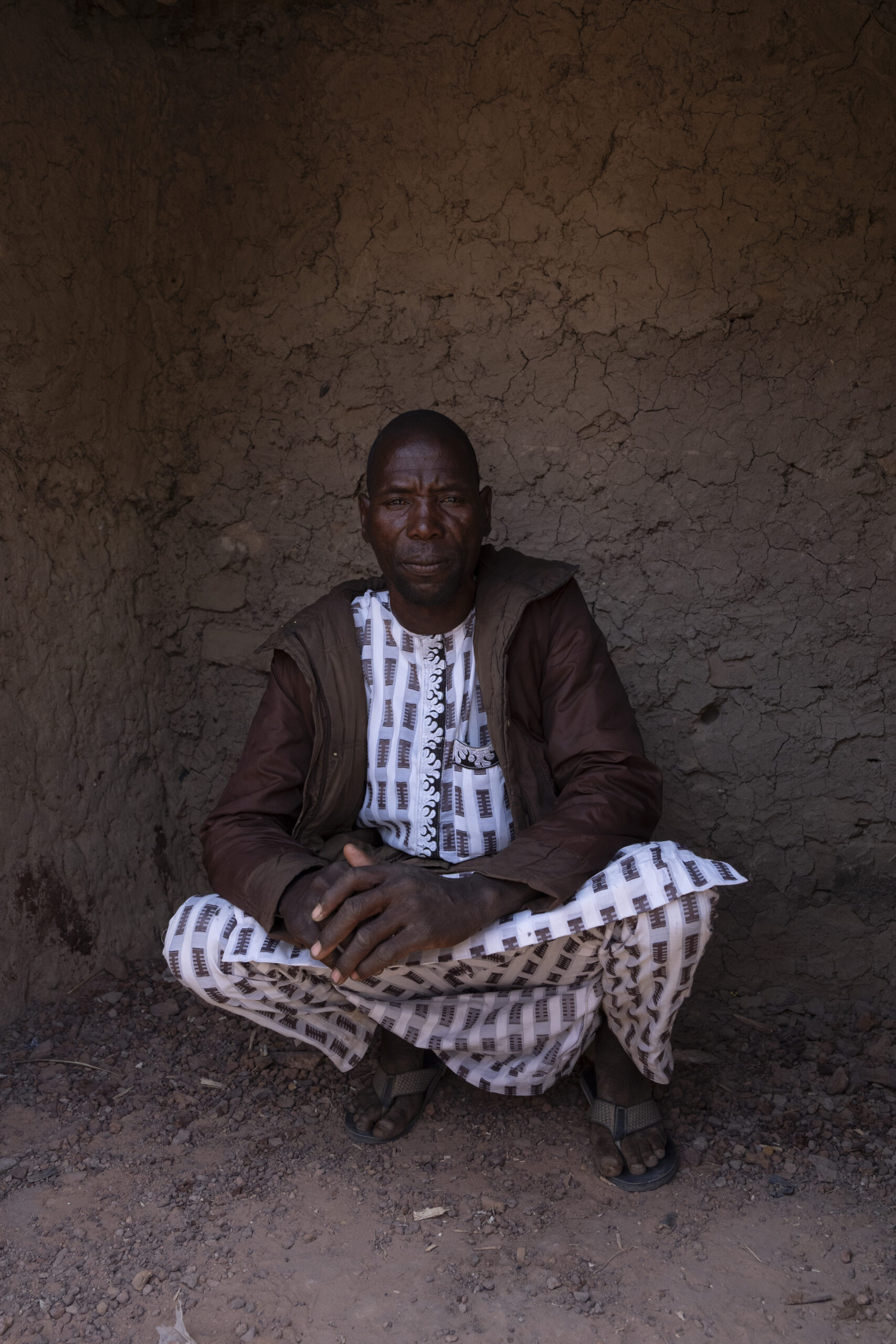
    Musa Sani next to blood and bullet holes where Lakurawa shot during a recent attack that killed several people in Baidi, Nigeria, on Jan. 26.

    A few weeks before the attack in Baidi, residents said, militants approached members of a local vigilante group that had formed to defend the community, demanding they urge local leaders to submit to their rule. The leaders refused.

    “We understood there would be retaliation,” said Musa Sani, 47, one of the vigilantes. “But we did not want to live under a terrorist regime.”

    Men hang out in Silame, Nigeria, where Lakurawa pass through, on Jan. 25. Lakurawa have been known to punish people for having cell phones. Many kidnappings and attacks occur in this area.

    ‘Under the radar’

    In November, U.N. secretary-general António Guterres told the U.N. Security Council that Africa’s Sahel region, spanning the breadth of the continent from the Atlantic Ocean to the Red Sea, now accounts for more than half of all terrorism deaths worldwide and warned of a “disastrous domino effect across the entire region.”

    A dizzying array of armed groups thrive across a succession of weak states with porous borders. JNIM, a powerful al-Qaeda affiliate, and ISSP compete for influence in Mali, Burkina Faso, and Niger (JNIM also claimed its first attack in Nigeria in late October). ISWAP and the remnants of the Boko Haram jihadist movement are dominant in northeast Nigeria and around Lake Chad.

    Boko Haram’s rampage in northeast Nigeria captured the world’s attention more than a decade ago when fighters kidnapped nearly 300 schoolgirls from their dormitories in Chibok. But the arrival of Sahelian militants in the northwest a few years later flew largely under the radar and has been a source of growing alarm for Nigerian officials.

    Hakimi Maikudi, community leader, stands in the road where Lakurawa came through during the attack in Baidi, Nigeria, on Jan. 26.

    In early November, when Trump suddenly threatened to go “guns-a-blazing” into Nigeria to protect embattled Christmas, officials here were surprised and angry. Nigeria’s population of 230 million is roughly split between Christians and Muslims, and people of both faiths have been targeted by extremists.

    But Nigeria’s military was watching the militant violence, especially in the northwest, with growing concern, acknowledged Daniel Bwala, a senior adviser to President Bola Tinubu. “We had always viewed the United States as a senior brother,” said Bwala. “We needed to find a way to work with [them].”

    Bwala and a delegation of top officials made the rounds in Washington, appealing for help in addressing a security crisis they said impacted all Nigerians. Their efforts paid off: When the U.S. launched strikes on Dec. 25, it was against Lakurawa targets provided by Nigerian officials.

    Although Trump and other U.S. officials have publicly claimed the strikes were a success, they have provided no evidence to support their claims. At least four of the 16 Tomahawk missiles failed to explode, the Washington Post found, landing in open fields and a residential area far from where the militants are known to operate. Nigeria’s government has said three dozen suspected militants were arrested while attempting to flee Sokoto state following the strikes. Mohammed Idris, the country’s information minister, told the Post that a “comprehensive evaluation” was still underway.

    A senior Nigerian intelligence official who deployed a team to the sites where missiles reached their targets told the Post that while Lakurawa camps were destroyed, there was no indication that militants were killed. Three other Nigerian officials conceded that the sheer number of armed groups operating in the northwest, and shifting alliances among them, have made it difficult to obtain accurate intelligence.

    That lack of clarity presents “a real operational challenge vis-à-vis targeting,” said James Barnett, a Nigeria specialist based between Lagos and Britain. “Intelligence has to be precise and fresh for it to be effective.”

    Barnett also cautioned that Lakurawa may not be a single coherent group, but rather a catchall term for Sahelian Islamist militants. Allied criminal bandits, he added, may be exploiting the confusion and operating under its name.

    As officials try to make sense of the situation, fighters loyal to ISSP have “entrenched themselves in the Niger-Nigeria borderland and are advancing toward Benin,” said Héni Nsaibia, the senior West Africa analyst for the Armed Conflict Location & Event Data project.

    “They have decided to run their operations covertly,” he said, “to try to stay under the radar.”

    Children leave their home in Silame, Nigeria, where Lakurawa pass through, on Jan. 25.

    Rule of the gun

    Driving north from the bustling city of Sokoto, the regional capital, toward the border with Niger, the roads are largely devoid of traffic. Rolling brushland is interrupted only by the occasional farm.

    It is in these remote, ungoverned spaces that Lakurawa established a foothold, officials say, and is now expanding.

    Residents in four towns and villages described armed men arriving here more than five years ago from Mali and Niger, traveling on motorbikes and speaking languages they didn’t understand.

    At first, they presented themselves as peacemakers — mediating disputes between herders and farmers, which sometimes turned violent, and protecting communities from roving bandits. But it was not long before they showed their true colors, residents said, issuing draconian decrees at gunpoint.

    Over the last year, according to experts, residents and officials, the militants have widened their reach, bringing more villages under their control and using violence against those who resist.

    Residents in Dankale recalled being crowded into the village meeting place last year by 10 men with AK-47s, their faces mostly hidden by turbans. Through an interpreter, the Islamists demanded that locals disarm and adhere to their rules, said Awal, one of the men present that day.

    “We knew that if we spoke,” he said, “we would be killed.”

    Habiba, left, and Bashariya, carrying baby Awaisu, grind cornmeal in Dankale, Nigeria, where Lakurawa pass through, on Jan. 25.

    In nearby Karadal, imam Sirajo Lawal said that virtually everyone in his village tries to live by the Quran. But the Islam that he preaches, and that his father preached before him, gives people the freedom to choose their own path, he said.

    With the militants, however‚ “they say, ‘You must do this, otherwise, hellfire,’” said Lawal, 55. “This is the point of difference.”

    He spoke to the Post at a school in Tangaza, about six miles from his village, now solidly under the control of Lakurawa. Interviewing him there would have been too dangerous. Men in the community who listen to music or refuse to grow beards are beaten or fined by the militants, he said. Gunmen have also burst into traditional ceremonies, which are no longer permitted, and fired into the air.

    Imam Sirajo Lawal in Tangaza, Nigeria, on Jan. 26.

    In Karadal, and dozens of communities like it, the group rules by extortion: forcing locals to pay taxes in exchange for safety. Lawal said he had put aside eight bags of grain for his next payment to the group.

    Kingsley L. Madueke, the Nigeria research coordinator for the Global Initiative Against Transnational Organized Crime, said much of Lakurawa’s funding is believed to come from tax collection, though the group also carries out kidnappings for ransom and steals cattle from herders. Often, he added, they cooperate with local bandits who know the terrain.

    Most analysts believe Lakurawa is part of, or affiliated with, the Islamic State Sahel Province, which first emerged in 2015, killed four U.S. soldiers in an ambush in rural Niger in 2017 and was officially recognized as a “province” by the Islamic State in 2022. How much support Lakurawa receives from the Islamic State’s hub in northern Somalia is unclear — one of many things researchers are still trying to pin down.

    Lawal said the militants came straight to him when they wanted to enter his village. He acquiesced to their demands, he said, knowing the Nigerian government would not protect them.

    “We are not comfortable at all, but we cannot do otherwise,” he said. “They could kill us at any time.”

    In the wake of U.S. strikes, Lakurawa have apparently moved their camps, Madueke said, but their attacks have continued. Dislodging them from the northwest would require a clear strategy and sustained commitment from an administration that has not prioritized Africa, said retired U.S. Air Force Maj. Gen. Kenneth Ekman.

    “A dozen cruise missiles does not a counterterrorism mission make,” he said. “We’ve learned time and again that success requires consistent presence with sufficient capability and will alongside our partners.”

    Men walk with camels in Baidi, Nigeria, on Jan. 26. A recent attack by Lakurawa here killed several people.

    Sani, the vigilante in Baidi, was initially hopeful the U.S. strikes would wipe out so many militants that they would abandon the area. He knew he was mistaken when he heard the gunfire in the town square.

    He found his grandfather among the dead, his stomach perforated with bullets. Through his tears, he tried to help two men with critical injuries, he said, but neither made it. He expects more violence is coming.

    “We’re more scared than ever before,” he said. “It feels like they’ve dispersed and are everywhere.”

  • Sixers convert Dominick Barlow’s two-way contract to a standard NBA deal

    Sixers convert Dominick Barlow’s two-way contract to a standard NBA deal

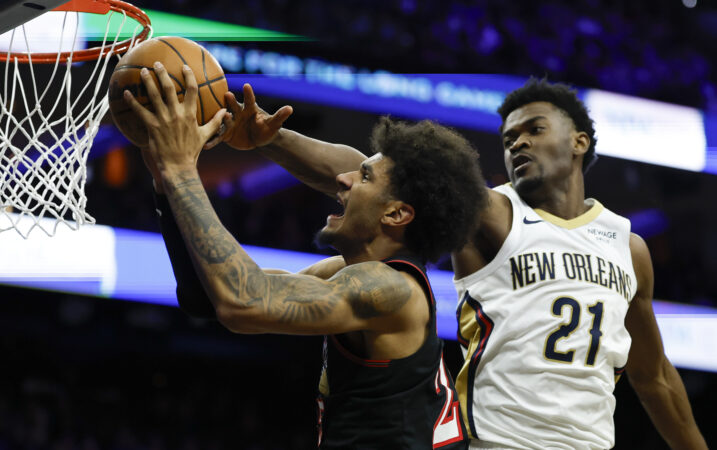
    The 76ers signed Dominick Barlow to a standard NBA contract.

    The 6-foot-9 power forward, who started 33 games, is averaging 8.4 points, 5.1 rebounds, 1.3 assists, and 1.0 steals this season.

    Not afraid of the moment, Barlow finished with a career-high 26 points to go with 16 rebounds — including a career-high 10 on the offensive boards — in Tuesday’s 128-113 victory over the Los Angeles Clippers at the Intuit Dome in Inglewood, Calif.

    He became the first Sixer with at least 25 points and 10 offensive rebounds since Hall of Famer Charles Barkley did so in November 1990.

    Barlow’s previous two-way deals with the San Antonio Spurs and Atlanta Hawks also were converted to standard deals. Barlow averaged 4.2 points and 3.1 rebounds in 96 games over three seasons with the Hawks and Spurs before joining the Sixers on a two-way contract last July.

    Barlow, who has family in Philadelphia, was one of the top high school players in New Jersey.

    He had his freshman year of high school at St. Joseph High School in Metuchen, N.J. cut short due to a torn labrum in his shoulder. The native of Hackensack, N.J., transferred to Dumont High School as a sophomore.

    As a senior, he was named the North Jersey boys’ basketball player of the year while averaging 27.6 points, 17.0 rebounds, 3.1 assists, and 2.6 blocks in eight games during the pandemic-shortened 2020-21 school year.

    Barlow opted to sign with Atlanta-based Overtime Elite, forgoing his college career. After going undrafted a year later, he signed a two-way contract with the Spurs on July 10, 2022, and his contract was converted to a standard deal on March 2, 2024.

    He then signed a two-way contract with the Hawks on July 30, 2024, and it was converted on March 4, 2025.

  • Phillies are well-represented across the World Baseball Classic team pool

    Phillies are well-represented across the World Baseball Classic team pool

    All 20 rosters for the World Baseball Classic were announced on Thursday night, and the Phillies are well-represented.

    Bryce Harper and Kyle Schwarber will play for the United States under manager and Penn alum Mark DeRosa, joined by Brad Keller in the bullpen.

    Schwarber represented the U.S. at the 2023 World Baseball Classic, helping the team win a silver medal. Harper had plans to play for the 2023 team as well, but withdrew after undergoing elbow surgery the previous winter.

    “[Schwarber] was the chemistry guy for me, last time,” DeRosa said in December.

    Cristopher Sánchez will join the Dominican Republic’s rotation, with outfielder Johan Rojas also named to the team.

    The Phillies’ other participants include José Alvarado (Venezuela); Taijuan Walker (Mexico); Garrett Stubbs and Max Lazar (Israel); Edmundo Sosa (Panama); and Aaron Nola (Italy).

    Several Phillies prospects were also named to rosters. Outfielder Dante Nori, the Phillies’ 2024 first-round selection and No. 6 prospect, will join Nola on Team Italy.

    Pitching prospect Jaydenn Estanista will play for the Netherlands. Estanista had a 4.84 ERA in 44⅔ innings last season between high-A Jersey Shore and double-A Reading. Mitch Neunborn, who pitched for Reading and triple-A Lehigh Valley last year, will represent Australia.

    Phillies prospect Dante Nori will represent Italy in the WBC.

    Gabriel Barbosa was named to Brazil’s roster. Barbosa had a 3.62 ERA across three levels in the Phillies’ system in 2025, finishing the season in double A.

    The Phillies will play an exhibition game against Team Canada in Clearwater, Fla. on March 4 before WBC pool play takes place March 5-10 in Tokyo, San Juan, Miami, and Houston.

    The quarterfinals will be held on March 13 in Miami and Houston, while the semifinals and finals are March 15-17 in Miami.

  • Social media spoilers can ruin big events like the Olympics and Super Bowl. Xfinity has a new way to prevent that.

    Social media spoilers can ruin big events like the Olympics and Super Bowl. Xfinity has a new way to prevent that.

    It’s every sports fan’s nightmare.

    You’re watching a big game, it’s getting into crunch time, and there’s a crucial play about to happen. The only issue is, that play already happened and the people who saw it first are sharing it on social media.

    The notifications begin to flood your feed from X or ESPN informing you what just happened, all before it plays out on your television screen. Now though, with Super Bowl LX just days away and the Winter Olympics officially getting underway, Xfinity has created a way for people to stay current with everything that happens.

    The Philly-based company’s new RealTime4K feature, which will be introduced Sunday during the Super Bowl between the New England Patriots and Seattle Seahawks, will allow Xfinity viewers to keep pace with the game as if they were in attendance, while still watching in high-quality 4K.

    “The benefit here is our customers will be among the first in the country, other than those at the game, to see what happens at the Super Bowl,” said Vito Forlenza, Comcast’s vice president for sports entertainment. “So we’re doing this for a whole day of 4K. It’s going to be Olympics programming in the morning, 7 a.m. to noon, Super Bowl programming all the rest of the day.”

    RealTime4K will debut during the Super Bowl and will allow fans to watch the game in 4K up to 30 seconds faster than other 4K broadcasts.

    Xfinity rolled out its enhanced 4K before creating RealTime4K. At the 2024 Summer Olympics in Paris, enhanced 4K resulted in a nearly 30-second difference between Xfinity viewers and other viewers watching Noah Lyles win the men’s 100-meter gold medal in a photo finish. In other words, Xfinity viewers could have watched Lyles finish the race three times before others would have seen him cross the line once.

    Being able to keep up with sporting events in real time is not the only new feature Xfinity is adding for the Winter Olympics. It’s also adding Fan View, tailoring the Games to each viewer and making sure the events and sports they want to see are on their screens.

    “There’s so much Olympics [content] on here you can get overwhelmed,” said Comcast’s director of product management, Scott Manning. “But what we’re bringing for 2026 is Fan View. What that does is it takes all these experiences and puts it into one.”

    That means viewers will be able to personalize their Olympic experience. They can pick certain events that they find interesting in Fan View. Then, viewers will be able to access a sidebar that will serve them highlights of the events they like, as well as interviews from athletes competing in the sports they picked.

    “I’m able to pick actual broadcasts and then specific sports as I’m going through, and it’s going to remember these selections, and then it will start tailoring some of the experience based on that too,” Manning said. “I don’t have to pick things. If I just want to try to get everything, that’s fine.”

    Viewers can access Xfinity’s new Fan View even while watching four Olympic events at the same time.

    Viewers will be able to also see medal counts, a feature that was there for previous Olympics, but this time it will be integrated into Fan View, which will debut on Friday.

    Fan View can also help customers keep track of several sports at once — even while they’re watching something different, as it won’t interfere with the sport currently on the screen. So, if curling is on the TV, viewers can continue to have their Fan View on the side, and their watching experience will not be impacted.

    After all, there’s a lot to keep track of.

    “Our customers said, ‘Well, that sounds good, but I want to make sure I can find the one sport that I’m looking for,’” Forlenza said. “One of our customers said it doesn’t matter if we have 3,000 hours [of content] if they can’t find the one hour they really want to watch. So that’s the problem we’re trying to solve to make sure customers can get to the Olympics coverage they want to watch quickly and easily.”

    With a big 2026 on tap for Xfinity, both in Philly and nationally, this won’t be the last time fans get this kind of experience.

    “We’re already thinking about the World Cup,” Forlenza said. “We’re building these types of features. We’re already thinking, ‘How’s this?’”

  • About 40 anti-ICE activists are arrested at protest inside Target in South Philly

    About 40 anti-ICE activists are arrested at protest inside Target in South Philly

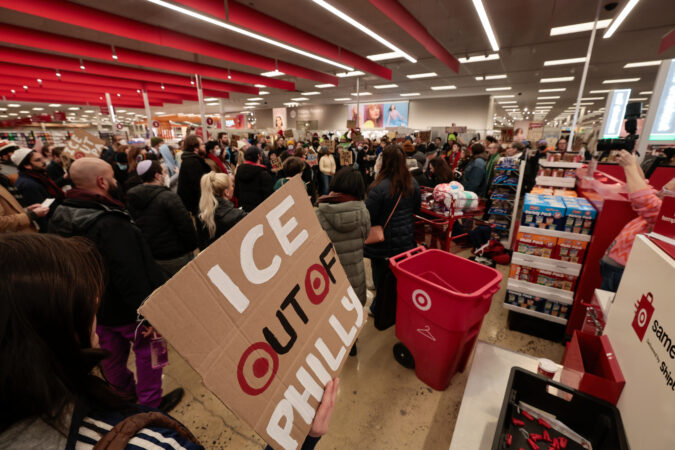
    About 40 people were arrested after an activist group Thursday evening conducted a demonstration inside a Target store in South Philadelphia to demand that the company take a public stand against U.S. Immigration and Customs Enforcement actions at the chain’s stores.

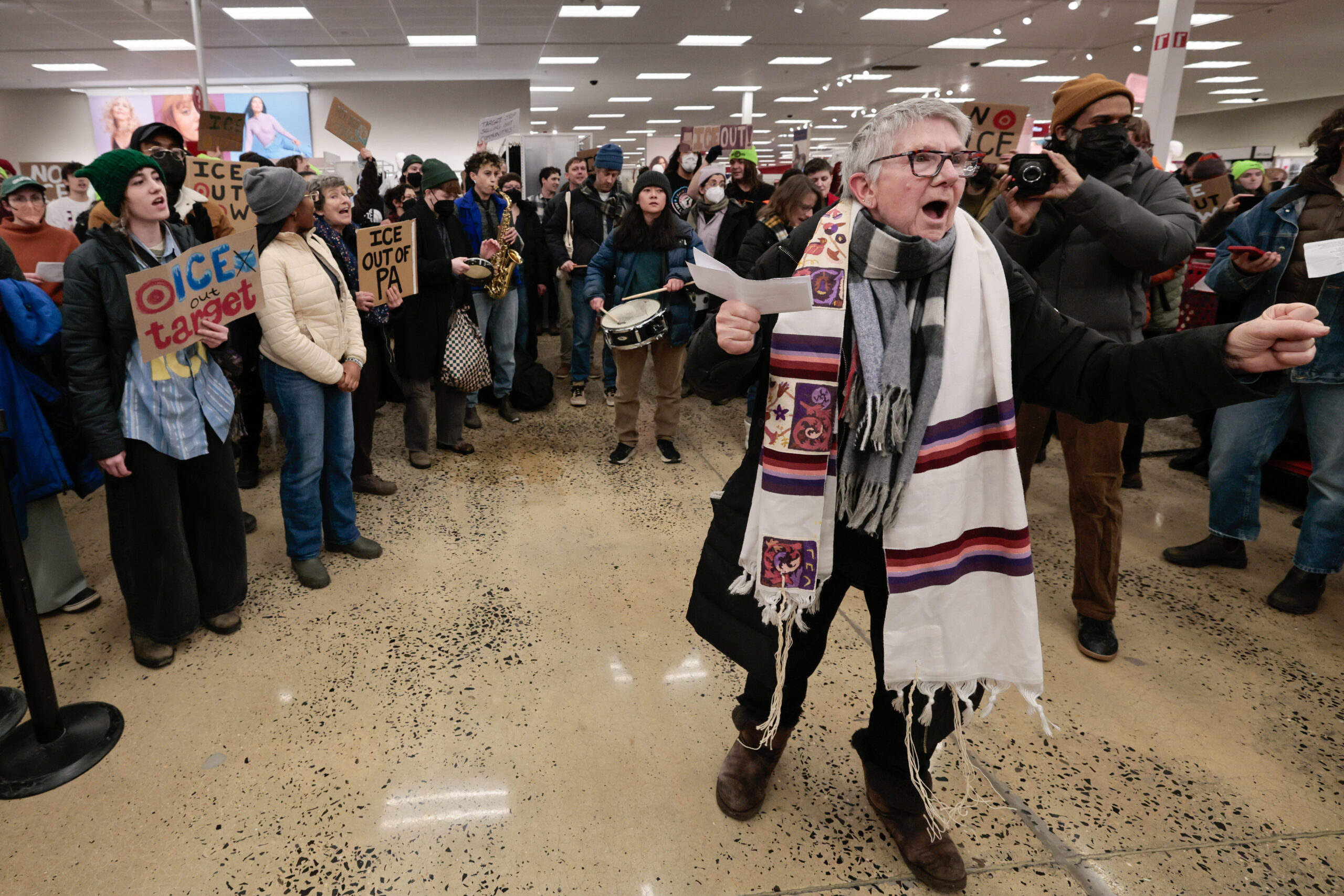
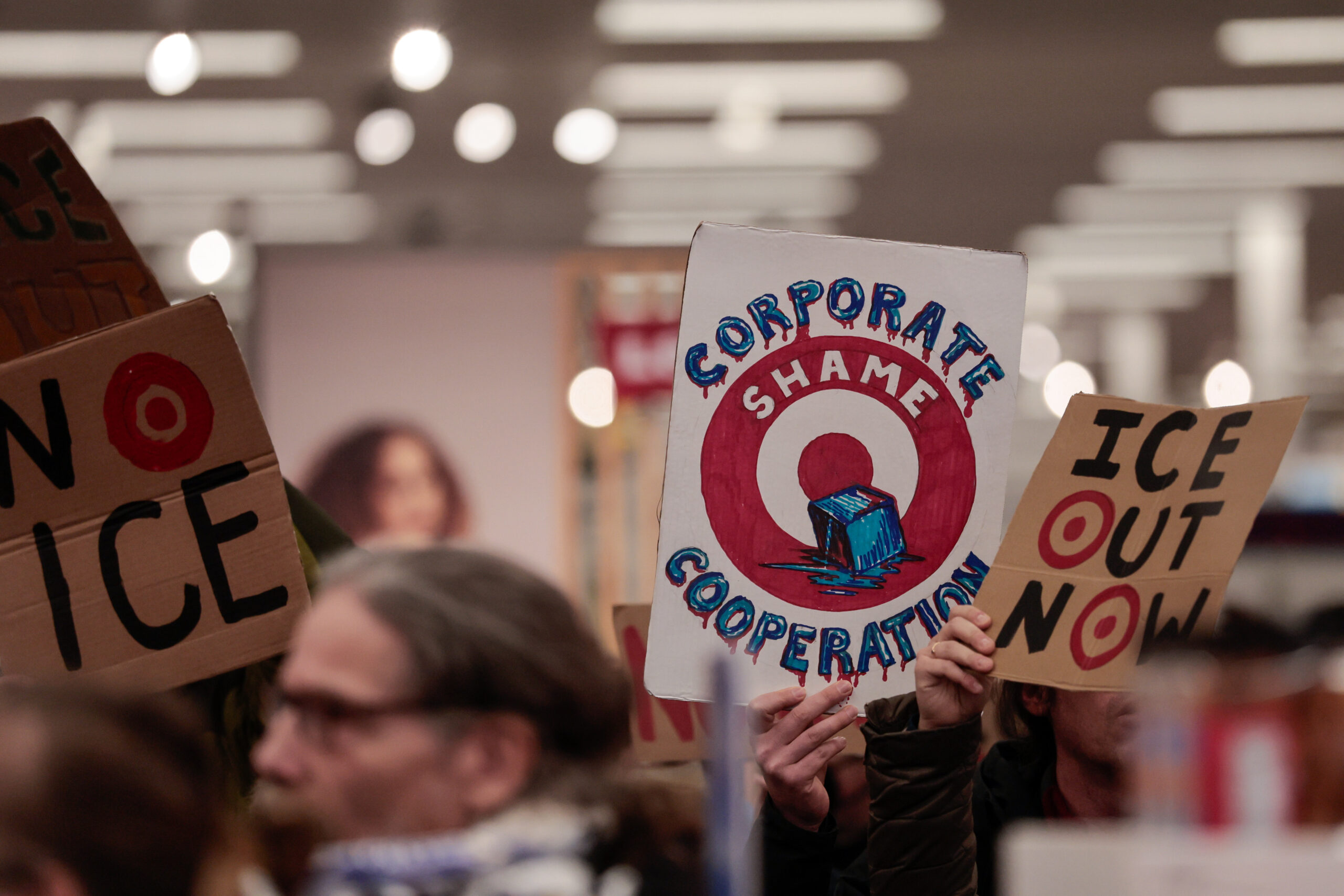
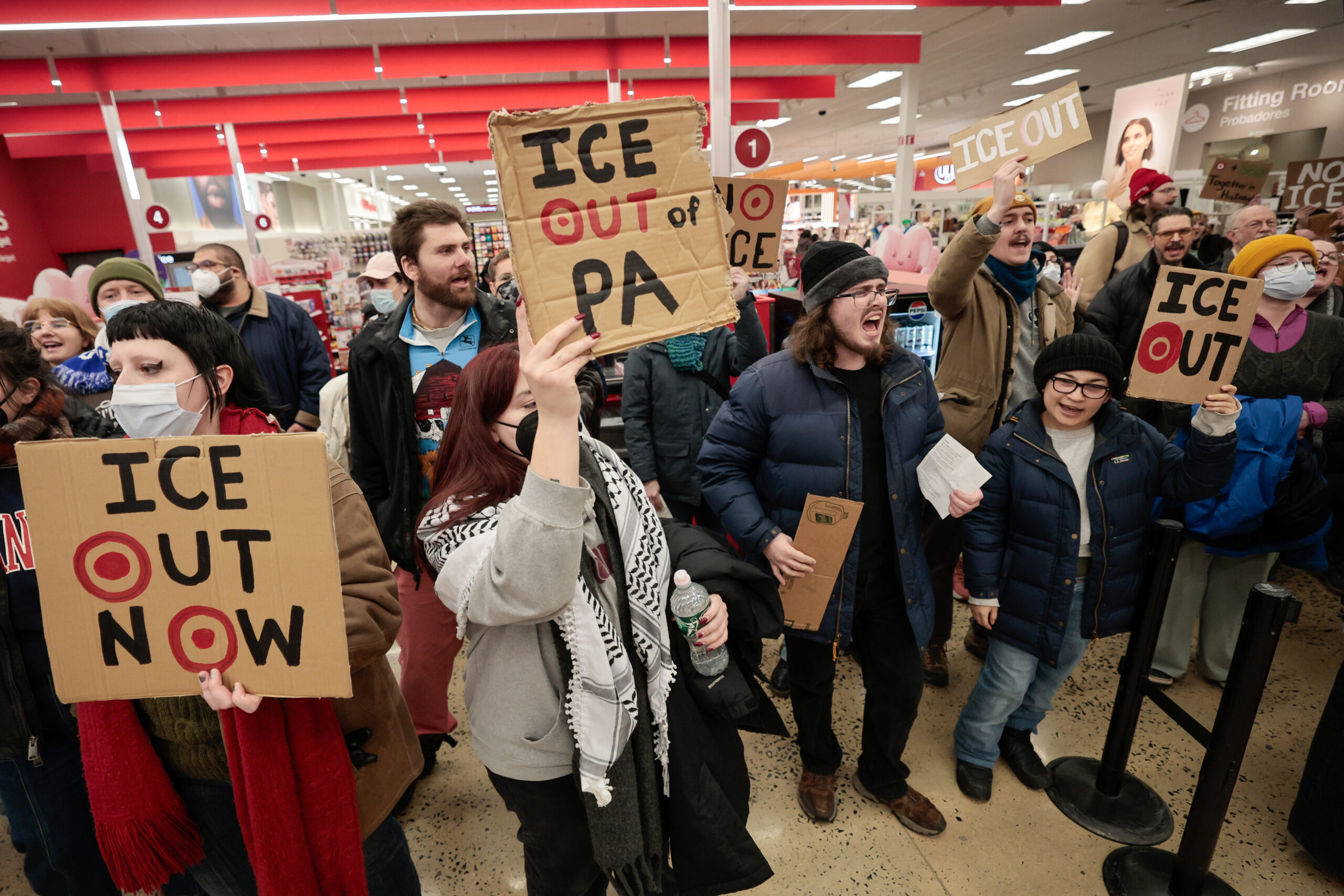
    More than 100 demonstrators affiliated with No ICE Philly chanted “ICE out of Target now!” and played instruments inside the store near Snyder Avenue and I-95. Some shoppers joined the chanting.

    Shortly before 6 p.m., the protesters were given their first warning by police to leave or be arrested. Dozens then left, but a group of 40 or so remained inside, seated on the floor. Around 6:15 p.m., police began making arrests without incident. Three remaining protesters were given citations and allowed to leave, police said.

    The zip-tied detainees were led by police out of the store one by one to cheers from other protesters outside.

    The demonstration and subsequent arrests did not deter shoppers from going about their business, entering and leaving the store.

    A man dressed in a bear costume and wearing an action camera harnessed to his chest showed up and yelled at the activists inside the store, calling them “weirdos.” Police intervened to prevent an escalation.

    Rabbi Linda Holtzman, 73, (right) a spokesperson for No ICE Philly, addresses the crowd during a demonstration inside a Target store in South Philadelphia, Feb. 5, 2026.

    Benita Dixon, 66, accompanied by her granddaughter, was at the store to buy a Valentine’s Day present for her daughter when the protest broke out.

    Dixon’s first reaction was to get a tighter grip on her granddaughter’s hand, but when chanting began, the pair joined in dancing with protesters.

    “ICE has been going around killing people in Minnesota, and that’s not right,” Dixon said. “Many of my co-workers are coming into work carrying their passports because they are scared, so I’m glad we are protesting: No ICE in our streets.”

    Protests coordinated by No ICE Philly were conducted last month at Target stores around Philadelphia, including in Center City, Fairmount, Port Richmond, and South Philadelphia.

    Across the country, protesters — including employees of the company — have been calling for Target to publicly oppose the federal immigration crackdown in Minnesota, the company’s home state, and deny ICE agents who do not have judicial warrants access to Target stores and parking lots.

    Demonstrators from No ICE Philly protesting inside the Target store.

    “Target does not have cooperative agreements with any immigration enforcement agency,” a company executive said in a memo to employees on Jan. 22, Business Insider reported.

    A day after two ICE agents fatally shot 37-year-old Alex Pretti in Minneapolis, where Target is headquartered, then-incoming CEO Michael Fiddelke cosigned a joint statement from the Minnesota Chamber of Commerce with dozens of other executives, “calling for an immediate de-escalation of tensions and for state, local and federal officials to work together to find real solutions.”

    Pretti’s Jan. 24 killing in Minneapolis was the second in less than a month. On Jan. 7, an ICE agent fatally shot 37-year-old Renee Nicole Good.

    A Target spokesperson said in an email that Fiddelke also sent a note to employees saying “the violence and loss of life in our community is incredibly painful” and that “we are doing everything we can to manage what’s in our control, always keeping the safety of our team and guests our top priority.”

    Target, founded in 1962, operates 1,989 stores across the United States and generates net revenue of more than $100 billion annually.

    The company was hit with a national boycott last year after it rolled back Diversity, Equity, and Inclusion initiatives to fall in line with the policies of President Donald Trump.

    No ICE Philly has led demonstrations against the agency and against the arrests of immigrants outside the city Criminal Justice Center.

    Demonstrators from No ICE Philly protesting inside the store.

    At the Target in South Philadelphia, Rabbi Linda Holtzman, 73, said the in-store protest is what people must do when neighbors are under attack.

    “What ICE is doing, what they have been doing, is horrible, and we stand with the people of Minneapolis,” Holtzman said.

    Protesting at the South Philadelphia Target is a way to tell the company that it must stand on the side of the people, Holtzman said.

    “Target has become an ally to ICE, letting them come into their stores without a warrant,” Holtzman said. “That’s not the America I grew up in. Is that the country you want?”

  • Trump launches TrumpRx.gov, branding his push to lower prescription prices

    Trump launches TrumpRx.gov, branding his push to lower prescription prices

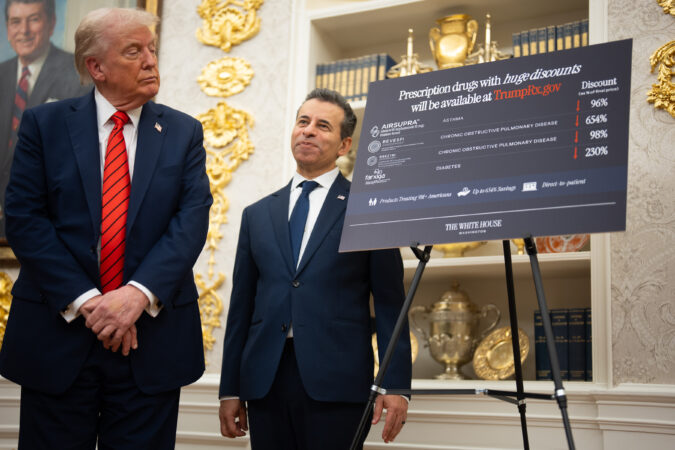
    NEW YORK — The Trump administration on Thursday launched TrumpRx, a website it says will help patients buy prescription drugs directly at a discounted rate at a time when health care and the cost of living are growing concerns for Americans.

    “You’re going to save a fortune,” President Donald Trump said at the site’s unveiling. “And this is also so good for overall health care.”

    The government-hosted website is not a platform for buying medications. Instead, it’s set up as a facilitator, pointing Americans to drugmakers’ direct-to-consumer websites, where they can make purchases. It also provides coupons to use at pharmacies. The site launches with over 40 medications, including weight-loss drugs such as Ozempic and Wegovy.

    The site is part of a larger effort by the Trump administration to show it’s tacking the challenges of high costs. Affordability has emerged as a political vulnerability for Trump and his Republican allies going into November’s midterm elections, as Americans remain concerned about the cost of housing, groceries, utilities and other staples of middle-class identity.

    Trump stressed that the lower prices were made possible by his pressuring of pharmaceutical companies on prices, saying he demanded that they charge the same costs in the U.S. as in other nations. He said prescription drug costs will increase in foreign countries as a result.

    “We’re tired of subsidizing the world,” Trump said at the event on the White House campus that lasted roughly 20 minutes.

    The president first teased TrumpRx in September while announcing the first of his more than 15 deals with pharmaceutical companies to lower drug prices to match the lowest price offered in other developed nations. He said in December the website would provide “massive discounts to all consumers” — though it’s unclear whether the prices available on drugmakers’ websites will routinely be any lower than what many consumers could get through their insurance coverage.

    The website’s Thursday release came after it faced multiple delays, for reasons the administration hasn’t publicly shared. Last fall, Mehmet Oz, administrator of the Centers for Medicare and Medicaid Services, told Trump the site would share prices for consumers before the end of the year. An expected launch in late January was also pushed back.

    The president has spent the past several months seeking to spotlight his efforts to lower drug prices for Americans. He’s done that through deals with major pharmaceutical companies, including some of the biggest drugmakers like Pfizer, Eli Lilly and Merck, which have agreed to lower prices of their Medicaid drugs to so-called “most favored nations” pricing. As part of the deals, many of the companies’ new drugs are also to be launched at discounted rates for consumer markets through TrumpRx.

    Many of the details of Trump’s deals with manufacturers remain unclear, and drug prices for patients in the U.S. can depend on many factors, including the competition a treatment faces and insurance coverage. Most people have coverage through work, the individual insurance market or government programs like Medicaid and Medicare, which shield them from much of the cost.

    Trump’s administration also has negotiated lower prices for several prescription drugs for Medicare enrollees, through a direct negotiation program created by a 2022 law.

  • Epstein emails show he helped arrange White House visit for Woody Allen

    Epstein emails show he helped arrange White House visit for Woody Allen

    NEW YORK — In 2015, Woody Allen and his wife, Soon-Yi Previn, went on a trip to Washington, D.C. With the help of their friend Jeffrey Epstein, they were able to tour the White House.

    Allen’s friendship with Epstein has been known for years, but emails in the huge trove of records released by the Justice Department in recent days illustrate that relationship in new depth.

    The filmmaker, his wife and Epstein were neighbors in New York City, and the three dined together often, records show. They offered each other emotional support during periods when they were being criticized in the media. They commiserated about being accused — unfairly, they told each other — of sexual misconduct.

    And in 2015, Epstein used his connections to another friend who had been in President Barack Obama’s administration to help the couple get a White House tour.

    “Could you show soon yi the White House,” Epstein wrote in a May 2015 email to former White House counsel Kathy Ruemmler. “I assume woody would be too politically sensitive?”

    “I am sure I could show both of them the White House,” Ruemmler responded, although she doubted whether Epstein, who in 2008 had pleaded guilty to solicitating prostitution from an underage girl, would be allowed in.

    “You are too politically sensitive, I think,” she added.

    White House records show that Allen, Previn, and Ruemmler visited on Dec. 27, a Sunday. Obama was in Hawaii at the time.

    Ruemmler and Allen were among a long list of notable people who maintained friendships with Epstein for years, even though he was a registered sex offender who had been accused of abusing children, and whose legal problems had been widely covered in newspapers.

    Some of the guests who accompanied Allen and Previn to dinners with Epstein included talk show host Dick Cavett, linguist Noam Chomsky, and the late comedian David Brenner. Epstein also attended screenings of Allen’s movies and, according to emails, would visit with Allen so he could watch him edit his latest film.

    “Wide variety of interesting people at every dinner,” was how Allen described some of their gatherings in a letter commissioned for a 2016 Epstein birthday party. “It’s always interesting and the food is sumptuous and abundant. Lots of dishes, plenty of choices, numerous desserts, well served. I say well served often it’s by some professional houseman and just as often by several young women reminding one of Castle Dracula where (actor Bela) Lugosi has three young female vampires who service the place.”

    A message sent to an assistant for Allen and Previn via email seeking comment wasn’t immediately returned. Epstein killed himself in 2019 while awaiting trial on sex trafficking charges.

    Emails suggest that Previn, too, had a close relationship to Epstein and she often served as the intermediary between Epstein and Allen.

    Numerous exchanges among Allen, Previn, and Epstein refer to the scandals that began in the early 1990s when Allen acknowledged he was having an affair with Previn, the adopted daughter of his then-girlfriend Mia Farrow. Around the same time, he was investigated by state authorities over allegations he had assaulted their adopted daughter, Dylan Farrow, while visiting Mia’s Connecticut home.

    A Connecticut prosecutor said in 1993 that there was “probable cause” to charge Allen with molesting Dylan, but that he decided not to pursue the case.

    Allen, who married Previn in 1997 and has since adopted two daughters, has denied any wrongdoing. Dylan’s allegations returned to the news in 2014 when an open letter from her was published in the New York Times. Allen has since been largely ostracized by the American film community.

    In emails in 2016, Epstein, Previn, and Allen compared their own scandals to another celebrity in the news at the time: Bill Cosby, who had denied allegations that he drugged and sexually assaulting numerous women.

    “The crowd needs a witch to burn, and there are not many left,” Epstein wrote.

    Allen replied, in a message relayed through Previn, that his own situation is “radically different” from Cosby’s.

    “I do expect (and get) many ugly unfair accusations, (but) he has to battle 50 women and criminal charges,” Allen said, according to Previn’s email. “I have one irate mother whose case was investigated and discredited,” he said, referring to Mia Farrow.

    Epstein replied that the public scorn Allen received was more likely related to his relationship with Previn, which he called a “publicly broken taboo.”

    “Everything else is noise,” he added.

    Allen, in comments relayed through Previn, responded that if the couple’s taboo relationship was the issue, “there’s nothing to be done.”

    “I’m certainly not going to dump her and I’m not going to apologize because I don’t feel either of us did anything we have to apologize for,” he says. “Our romantic life is our business and not the business of the public so it’s a hopeless situation because there’s no way out if that’s what they’re holding against us.”

    Epstein advised his friends to just enjoy themselves and in life.

    “Some actors or actresses might decline a role,” Epstein wrote. “But, so what.”

    Allen hasn’t been accused of having any involvement in Epstein’s alleged sexual abuse of girls and women.

  • Argentina and U.S. sign a major trade deal to slash tariffs and boost a political alliance

    Argentina and U.S. sign a major trade deal to slash tariffs and boost a political alliance

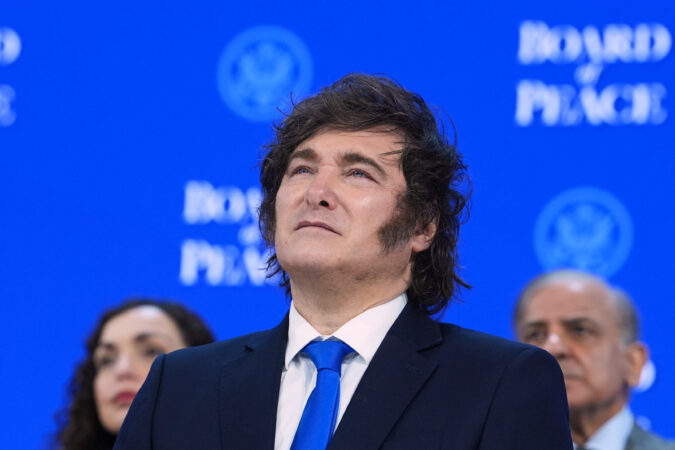
    BUENOS AIRES, Argentina — Argentina and the United States agreed Thursday to ease restrictions on each other’s goods in an expansive trade and investment deal that boosts a drive by President Javier Milei’s government to open up Argentina’s protectionist economy and a push by the Trump administration to reduce food prices for Americans.

    The deal, which slashes hundreds of reciprocal tariffs between the countries, also reflects the importance of Milei’s ideological loyalty to President Donald Trump, even as the chronically distressed South American nation long isolated from the global economy has little to offer Washington in the way of economic reward or geopolitical clout.

    Argentina’s radical libertarian leader has gone to dramatic lengths to prove his devotion to Trump, reshaping his country’s foreign policy to align with the U.S. and championing Trump’s increasingly aggressive interventions in the Western Hemisphere. Milei has traveled to the U.S. at least a dozen times since entering office and plans to visit Trump’s private Mar-a-Lago club in Florida again next week.

    The efforts have already paid off. Last year as market turmoil threatened to derail Milei’s free-market overhaul and drain Argentina’s foreign currency reserves ahead of a crucial midterm election, Trump offered his ally a $20 billion credit line. Milei avoided a currency devaluation and won a decisive victory in the election that sent markets rallying.

    A trade deal between ideological allies

    On Thursday, Argentine Foreign Minister Pablo Quirno and U.S. Trade Representative Jamieson Greer signed the trade and investment agreement in Washington.

    After imposing sweeping tariffs on its traditional trading partners for months, the Trump administration changed its tune last November in announcing framework deals with four Latin American countries, including Argentina.

    The White House argued that the reduction of mutual tariffs on a range of food imports, like Argentine beef and Ecuadorian bananas, would improve the ability of American firms to sell industrial and agricultural products abroad and relieve rising prices for American consumers. The announcement also came as Trump’s steep tariffs drew scrutiny from the Supreme Court.

    Argentina on Thursday became the first of the four countries to finalize its agreement with the U.S. Quirno hailed it as a milestone not only in Argentina’s alliance with the U.S., but also in Milei’s campaign to rebuild the serial defaulter’s reputation.

    “Today Argentina sent a clear signal to the world,” he wrote on social media. “We are a reliable partner, open to trade and committed to clear rules, predictability and strategic cooperation.”

    Concessions could revive criticism

    Argentina’s foreign ministry said it would scrap trade barriers on more than 200 categories of goods from the U.S., including chemicals, machinery and medical devices, slash tariffs to 2% on a range of imports like auto parts and allow sensitive imports like vehicles, beef and dairy products to enter the country tariff-free under government quotas.

    Those are key concessions as local Argentine industries long protected by steep tariffs voice concern about their ability to compete with American manufacturers.

    Washington, for its part, will eliminate reciprocal tariffs on 1,675 Argentine products, the Argentine Foreign Ministry said, adding $1 billion in export revenue. It did not name all the products, while the White House only said the U.S. would remove reciprocal tariffs on “unavailable natural resources” and ingredients for pharmaceutical goods.

    The text of the deal also shows the U.S. agreeing to review its stiff 50% taxes on steel and aluminum imports that have hobbled Argentine manufacturers since last year and quadruple the amount of Argentine beef it allows into the country annually at a lower tariff rate.

    An influx of Argentine beef

    The influx of beef could reignite criticism from cattle ranchers and Republican lawmakers in farm states who were outraged last October when Trump first floated plans to increase imports of Argentine beef, threatening to lower the price that American ranchers receive for their cattle.

    The move, aimed at shoring up the South American country’s limping economy while helping bring beef prices in the U.S. down from record highs, came shortly after the Trump administration offered Milei the $20 billion lifeline and directly purchased both U.S. dollar-denominated Argentine bonds that ratings agencies were classifying as “junk” at the time and the volatile Argentine currency that local investors were dumping in droves.

    The backlash came from across the political spectrum. Trump’s MAGA base questioned the need to bail out a far-flung country that has never been a natural U.S. trading partner: The two countries export many of the same things and directly compete in markets of soy, corn, wheat, meat and oil.

    Democratic lawmakers expressed outrage that Trump was staking taxpayer money on a political gift to an ideological soulmate. That criticism continues, with U.S. Sen. Elizabeth Warren, the top Democrat on the Senate Banking Committee, on Thursday appealing to Treasury Secretary Scott Bessent to end the $20 billion lifeline.

  • Families of plane crash victims ask U.S. appeals court to revive a criminal case against Boeing

    Families of plane crash victims ask U.S. appeals court to revive a criminal case against Boeing

    Thirty-one families that lost relatives in two fatal crashes of Boeing 737 Max jetliners asked a federal appeals court on Thursday to revive a criminal case against the aircraft manufacturer.

    Paul Cassell, a lawyer for the families, urged a three-judge panel of the 5th U.S. Circuit Court of Appeals to overturn a lower court’s dismissal of a criminal conspiracy charge Boeing faced for allegedly misleading Federal Aviation Administration regulators about a flight-control system tied to the crashes, which killed 346 people.

    The dismissal came at the request of the U.S. government after it reached a deal with Boeing that allowed the company to avoid prosecution in exchange for paying or investing an additional $1.1 billion in fines, compensation for victims’ families, and internal safety and quality measures.

    Cassell said Thursday that federal prosecutors violated the families’ rights by failing to properly consult them before striking the deal and shutting them out of the process.

    Federal prosecutors countered that, for years, the government, “has solicited and weighed the views of the crash victims’ families as it’s decided whether and how to prosecute the Boeing Company.”

    More than a dozen family members attended Thursday’s hearing in New Orleans, and Cassell said many more “around the globe” listened to a livestream of the arguments.

    “I feel that there wouldn’t be meaningful accountability without a trial,” Paul Njoroge said in a statement after the hearing. Njoroge, who lives in Canada, lost his entire family in the second of the two crashes — his wife, Carolyne, their children, ages 6, 4, and 9 months, and his mother-in-law.

    All passengers and crew died when the 737 Max jets crashed less than five months apart in 2018 and 2019 — a Lion Air flight that plunged into the sea off the coast of Indonesia and an Ethiopian Airlines flight that crashed into a field shortly after takeoff.

    U.S. District Judge Reed O’Connor in Texas, who oversaw the case for years, issued a written decision in November that described the families’ arguments as compelling. But O’Connor said case law prevented him from blocking the dismissal motion simply because he disagreed with the government’s view that the deal with Boeing served the public interest.

    The judge also concluded that federal prosecutors hadn’t acted in bad faith, had explained their decision and had met their obligations under the Crime Victims’ Rights Act.

    In the case of its deal with Boeing, the Justice Department had argued that given the possibility a jury might acquit the company, taking the case to trial carried a risk that Boeing would be spared any further punishment.

    Boeing attorney Paul Clement said Thursday that more than 60 families of crash victims “affirmatively supported” the deal and dozens more did not oppose it.

    “Boeing deeply regrets” the tragic crashes, Clement said, and “has taken extraordinary steps to improve its internal processes and has paid substantial compensation” to the victims’ families.

    The appeals court panel that heard the arguments said it would issue a decision at a later date.

    The criminal case took many twists and turns after the Justice Department first charged Boeing in 2021 with defrauding the government but agreed not to prosecute if the company paid a settlement and took steps to comply with anti-fraud laws.

    However, federal prosecutors determined in 2024 that Boeing had violated the agreement, and the company agreed to plead guilty to the charge. O’Connor later rejected that plea deal, however, and directed the two sides to resume negotiations. The Justice Department returned last year with the new deal and its request to withdraw the criminal charge.

    The case centered on a software system that Boeing developed for the 737 Max, which airlines began flying in 2017. The plane was Boeing’s answer to a new, more fuel-efficient model from European rival Airbus, and Boeing billed it as an updated 737 that wouldn’t require much additional pilot training.

    But the Max did include significant changes, some of which Boeing downplayed — most notably, the addition of an automated flight-control system designed to help account for the plane’s larger engines. Boeing didn’t mention the system in airplane manuals, and most pilots didn’t know about it.

    In both of the deadly crashes, that software pitched the nose of the plane down repeatedly based on faulty readings from a single sensor, and pilots flying for Lion Air and Ethiopian Airlines were unable to regain control. After the Ethiopia crash, the planes were grounded worldwide for 20 months.

    Investigators found that Boeing did not inform key Federal Aviation Administration personnel about changes it had made to the software before regulators set pilot training requirements for the Max and certified the airliner for flight.