Blog

  • Former Prince Andrew arrested and held for hours on suspicion of misconduct over ties to Epstein

    Former Prince Andrew arrested and held for hours on suspicion of misconduct over ties to Epstein

    LONDON — The former Prince Andrew was arrested and held for hours by British police Thursday on suspicion of misconduct in public office related to his links to Jeffrey Epstein, an extraordinary move in a country where authorities once sought to shield the royal family from embarrassment.

    It was the first time in nearly four centuries that a senior British royal was placed under arrest, and it underscored how deference to the monarchy has eroded in recent years.

    King Charles III, whose late mother lived by the motto “never complain, never explain,” took the unusual step of issuing a statement on the arrest of his brother, now known as Andrew Mountbatten-Windsor.

    “Let me state clearly: the law must take its course,’’ the king said. “As this process continues, it would not be right for me to comment further on this matter.’’

    The Thames Valley Police force said Mountbatten-Windsor was released Thursday evening, about 11 hours after he was detained at his home in eastern England. He was photographed in a car leaving the station near his home on the royal Sandringham Estate.

    Police said he was released under investigation, meaning he has neither been charged nor exonerated. Police said they had finished searching Mountbatten-Windsor’s home, but officers were still searching his former residence near Windsor Castle.

    The police force, which covers areas west of London, including Mountbatten-Windsor’s former home, said Thursday that a man in his 60s from Norfolk in eastern England, had been arrested and was in custody. Police did not identify the suspect, in line with standard procedures in Britain.

    Mountbatten-Windsor, 66, moved to the king’s private estate in Norfolk after he was evicted from his longtime home near the castle earlier this month.

    Police previously said they were “assessing” reports that Mountbatten-Windsor sent trade information to Epstein, a wealthy investor and convicted sex offender, in 2010, when the former prince was Britain’s special envoy for international trade. Correspondence between the two men was released by the U.S. Justice Department late last month along with millions of pages of documents from the American investigation into Epstein.

    “Following a thorough assessment, we have now opened an investigation into this allegation of misconduct in public office,’’ Assistant Chief Constable Oliver Wright said in a statement.

    “We understand the significant public interest in this case, and we will provide updates at the appropriate time,” he added.

    Police also said they were searching two properties.

    Earlier in the day, pictures circulated online that appeared to show unmarked police cars at Wood Farm, Mountbatten-Windsor’s home on the Sandringham Estate in Norfolk, with plainclothes officers gathering outside.

    Mountbatten-Windsor has consistently denied any wrongdoing in his association with Epstein.

    The allegations being investigated Thursday are separate from those made by Virginia Giuffre, who claimed she was trafficked to Britain to have sex with the prince in 2001, when she was just 17. Giuffre died by suicide last year.

    Still, Giuffre’s family praised the arrest, saying that their “broken hearts have been lifted at the news that no one is above the law, not even royalty.”

    The family added: “He was never a prince. For survivors everywhere, Virginia did this for you.”

    A ‘spectacular fall from grace’

    “This is the most spectacular fall from grace for a member of the royal family in modern times,” said Craig Prescott, a royal expert at Royal Holloway, University of London, who compared it in severity to the crisis sparked by Edward VIII’s abdication to marry American divorcee Wallis Simpson.

    “And it may not be over yet,’’ Prescott added.

    Thursday’s arrest came a day after the National Police Chiefs’ Council said it had created a coordination group to assist forces across the U.K. that are assessing whether Epstein and his associates committed crimes in Britain. In addition to the concerns about Mountbatten-Windsor ’s correspondence, documents released by the U.S. suggest Epstein may have used his private jet to traffic women to and from Britain.

    The documents also rocked British politics. Prime Minister Keir Starmer had to fight off questions about his judgment after the papers revealed that Peter Mandelson, the man he appointed ambassador to the U.S., had a longer and closer relationship with Epstein than was previously disclosed.

    London’s Metropolitan Police Service has said it is investigating allegations of misconduct in public office related to Mandelson’s own correspondence with Epstein. Mandelson was fired as ambassador to the U.S. in September.

    But it is Mountbatten-Windsor’s relationship with Epstein that brought the scandal to the doors of Buckingham Palace and threatened to undermine support for the monarchy.

    The last time a senior British royal was arrested was almost 400 years ago during the reign of King Charles I that saw a growing power struggle between the crown and Parliament.

    After the king attempted to arrest lawmakers in the House of Commons in 1642, hostilities erupted into the English Civil War, which ended with victory for the parliamentary forces of Oliver Cromwell.

    Charles I was arrested, tried, convicted of high treason, and beheaded in 1649.

    Modern concerns about Mountbatten-Windsor’s links to Epstein have dogged the royal family for more than a decade.

    The late Queen Elizabeth II forced her second son to give up royal duties and end his charitable work in 2019 after he tried to explain away his friendship with Epstein during a catastrophic interview with the BBC.

    But as concern mounted about what the Epstein files might reveal, the king moved aggressively to insulate the royal family from the fallout.

    Since October, Charles has stripped his younger brother of the right to be called prince, forced him to move out of the royal estate he occupied for more than 20 years and issued a public statement supporting the women and girls abused by Epstein.

    Last week, the palace said it was ready to cooperate with police investigating Mountbatten-Windsor.

    Charles was forced to act after Mountbatten-Windsor’s correspondence with Epstein torpedoed the former prince’s claims that he severed ties with the financier after Epstein’s 2008 conviction for soliciting a minor for prostitution.

    Instead, emails between the two men show Epstein offering to arrange a date between Mountbatten-Windsor and a young Russian woman in 2010, and the then-prince inviting Epstein to dinner at Buckingham Palace.

    Additional correspondence appears to show Mountbatten-Windsor sending Epstein reports from a two-week tour of Southeast Asia that he undertook in 2010 as Britain’s trade envoy.

    Danny Shaw, an expert on law enforcement in the U.K., told the BBC that in most cases, suspects are held between 12 and 24 hours and are then either charged or released pending further investigation.

    Mountbatten-Windsor will be placed in “a cell in a custody suite” with just “a bed and a toilet,” where he will wait until his police interview.

    “There’ll be no special treatment for him,″ Shaw said.

  • Some Delco SEPTA riders will have 15 minutes added to their commutes, beginning Monday

    Some Delco SEPTA riders will have 15 minutes added to their commutes, beginning Monday

    Rides on the two trolley lines serving Delaware County promise to be safer but longer with a modern signal system scheduled to go live on Monday, SEPTA said.

    The upgraded signals on the D1 and D2 trolley lines will require operators to make more gradual accelerations and decelerations. They will also enforce speed limits and stop signals with automatic braking if needed.

    “It will reduce the possibility of operator error,” SEPTA general manager Scott A. Sauer said. “They won’t be able to speed and risk derailment. They won’t be able to violate stop signals or misaligned switches.”

    But the computer won’t replace the judgment of the people operating a trolley, Sauer said. Operators will get an alert, and the system provides backup if they cannot correct it in time, he said.

    Trips will be up to 15 minutes longer on the D1 route and 10 minutes on the D2 route, depending on where a passenger boards and gets off the trolley.

    The trolleys operate between Media and the 69th Street Transportation Center in Upper Darby, and between Sharon Hill and the transit hub. They were formerly called Routes 101 and 102.

    The transit agency also is releasing new spring schedules for all elevated-subway and bus transit, using the new “Metro” way-finding nomenclature, which uses letters for the various services.

    SEPTA accounted for the increased Delaware County trolley travel times in the new schedules, which begin Monday.

    It took about a decade and $75 million to install the system, called Communications-Based Train Control, on the Delco trolleys, said John Frisoli, SEPTA’s top rail signals engineer. Radios communicate between the control system and the trolleys.

    A similar system has operated in the Center City trolley tunnel since 2005. SEPTA has been adding safety features to its rail-signal systems for about 20 years, including the installation of Positive Train Control on Regional Rail, which controls train speed and applies automatic brakes to prevent crashes caused by human error.

  • Upper Darby Council passes resolution to restrict cooperation with ICE following resident’s death in the agency’s custody

    Upper Darby Council passes resolution to restrict cooperation with ICE following resident’s death in the agency’s custody

    The Upper Darby Township Council passed a resolution Wednesday to restrict cooperation with U.S. Immigration and Customs Enforcement in response to growing concerns about the agency’s activities in the diverse township.

    The 11-member council, made up entirely of Democrats, voted unanimously to pass a resolution saying the town will not use its resources to assist ICE with non-criminal immigration enforcement. But the largely symbolic resolution nearly mirrors the municipality’s existing guidelines, leading to criticism that it does not go far enough.

    The resolution’s passage comes after Parady La, an Upper Darby resident struggling with addiction, died last month in a hospital while in ICE’s custody. It also follows the chaotic scenes in Minneapolis, where federal agents fatally shot Renee Good and Alex Pretti last month as President Donald Trump’s administration targeted the city with a massive immigration enforcement operation.

    Those events have fueled anxiety in Upper Darby, where nearly a quarter of the population is foreign-born, compared with 15% in Philadelphia. Armed ICE agents wearing masks have become a familiar sight in the township, prompting residents to question why their community is suddenly under pressure, including high school students who held a walkout earlier this month.

    Council President Marion Minick called the resolution a chance to show immigrants in the community “they are not alone.”

    “We can demonstrate through our votes and through our voices that Upper Darby Council will do everything within our legislative power to shield our residents and their families from this climate of intimidation,” he said.

    The council’s resolution comes as local governments across the country and in the Philadelphia area try to curb ICE’s impact on their residents. Last month, Haverford passed a similar measure and Bucks County ended its agreement with the agency that allowed sheriff’s deputies to act as immigration enforcement.

    Council member Kyle McIntyre, a progressive community organizer who began his term last month, emphasized that the resolution is “just the start.”

    “There is so much more than we can do, and we will be doing, and I make that solemn promise to the community right now,” he said before the vote.

    “If we don’t do more, hold us accountable,” he added.

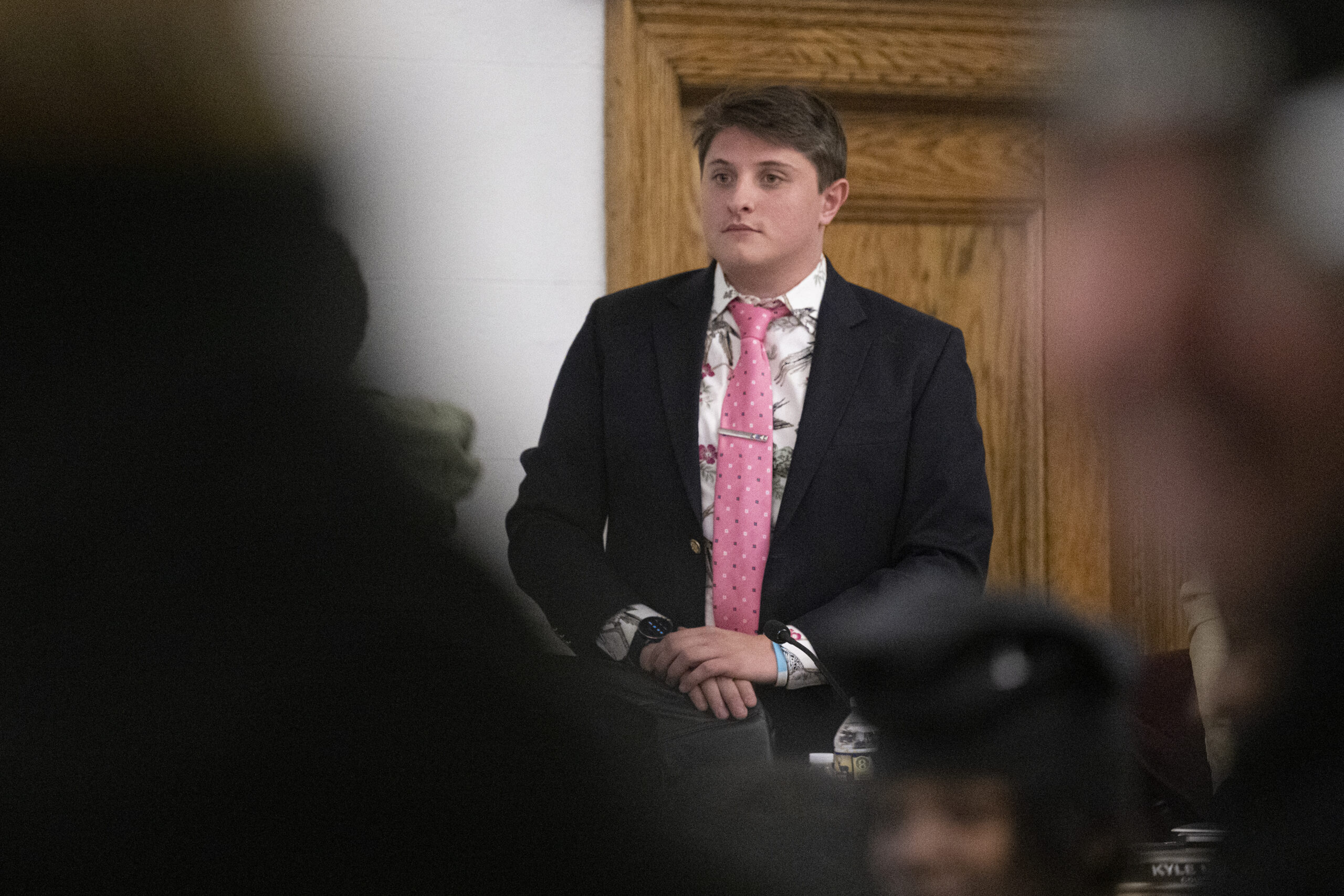
    Kyle McIntyre, an Upper Darby Township council member, listens to residents’ comments during a township meeting on Wednesday, Jan. 21, at the Upper Darby Municipal Building in Upper Darby, Pa.

    Township solicitor Mike Clarke said that police will cooperate with ICE if the agency has a criminal warrant signed by a judge.

    “Local law enforcement is not supposed to be in the immigration enforcement business, and essentially that’s what this resolution is saying … but if it’s a criminal warrant, they will be involved,” Clarke said.

    A list of frequently asked questions about ICE on the township’s website already stated that Upper Darby does not participate in civil immigration enforcement or ask residents their immigration status, though it does cooperate with lawfully issued criminal warrants and court orders. Township spokesperson Rob Ellis confirmed that the resolution reaffirms the town’s existing internal policy.

    The lack of cooperation seems to be going both ways.

    Upper Darby Mayor Ed Brown said earlier this month that ICE would no longer communicate with local police to tell them when agents are operating in the township, calling the change “scary.” ICE did not immediately respond to a request for clarity on Thursday.

    Some residents at the meeting expressed concern about the reaffirmed policy getting in the way of public safety, and McIntyre later said the policy ensures anyone in Upper Darby can feel comfortable reporting crimes to the police. He said “anybody that commits a crime in Upper Darby Township will be held accountable,” regardless of immigration status.

    Jennifer Hallam, who said she has worked with immigrants in Upper Darby for almost a decade, urged the council to postpone its vote and instead pursue legislation that has more teeth.

    “The current resolution really just preserves the status quo,” she said.

    She called for a resolution that would restrict ICE from municipal property without judicial warrants, prohibit the collection and sharing of immigration status among municipal employees, and prohibit ICE from wearing masks. Philadelphia lawmakers are attempting to ban ICE from wearing masks, though experts are split on whether the measure would be legally sound.

    McIntyre said in an interview that Wednesday’s resolution puts the council’s values down on paper and provides clarity to the community, but he acknowledged that a resolution is not enforceable.

    A death in ICE custody close to home

    The community has been grappling with the death of La, a 46-year-old Cambodian immigrant and Upper Darby resident who, according to his widow, Meghan Morgan, struggled with addiction. La came the United States in 1981 as a refugee around the age of 2. He became a lawful permanent resident a year later but lost his legal status after committing a series of crimes over two decades, ICE said.

    ICE said agents arrested La outside his home last month before he received treatment for severe withdrawal in a Philadelphia detention center. He was admitted to the hospital in critical condition, where his condition worsened and he died, the agency said.

    Morgan and La’s daughter Jazmine La said they believe he was not given proper medical treatment and the Pennsylvania ACLU filed a Freedom of Information Act request surrounding his detention and death.

    McIntyre last month called on Delaware County District Attorney Tanner Rouse and Philadelphia District Attorney Larry Krasner to investigate La’s death.

    Rouse said at the time that Delaware County law enforcement was not involved or aware of La’s detainment when it happened, and that his office would investigate it. He said Thursday that surveillance footage showed La was detained “without violence” but that his death in Philadelphia should be addressed by “investigating authorities” in the city.

    Krasner’s office declined to comment, saying it was a federal matter.

    Staff writer Jeff Gammage contributed to this article.

  • Silicon Valley is building a shadow power grid for data centers across the U.S.

    Silicon Valley is building a shadow power grid for data centers across the U.S.

    The GW Ranch project approved on 8,000 windswept acres of West Texas will look like many of the other data centers that have sprung up across the country to support Silicon Valley’s ambitions for artificial intelligence. Dozens of airplane-hangar-size warehouses packed with computing hardware will consume more power than all of Chicago.

    But it’s missing one standard feature: The mammoth project, recently green-lit by state environmental regulators, won’t need new power lines to deliver the electricity that it guzzles. GW Ranch will be walled off from the power grid and generate its own electricity from natural gas and solar plants installed on site.

    GW Ranch is set to become part of a shadow power grid emerging across the country with potentially far-reaching consequences for the U.S. electricity system and environment.

    After the rapid growth of data centers triggered pushback from politicians, utilities, and local residents over the pressures they place on the grid, tech companies are now building their own fleet of private power plants, mostly fueled by natural gas.

    Dozens of sprawling off-grid data center projects are planned across Texas, New Mexico, Pennsylvania, Wyoming, Utah, Ohio, and Tennessee, according to a review of regulatory filings, permits, earnings call transcripts, and other documents by the energy industry research firm Cleanview. Several are already under construction.

    Companies rushing to develop the facilities include Meta, ChatGPT-maker OpenAI, business software provider Oracle, and oil giant Chevron. (The Washington Post has a content partnership with OpenAI.)

    The off-grid projects already approved by state energy and environmental regulators could power all of New York City several times over, a vast new energy infrastructure that will bring huge new industrial facilities to communities across the country and increase U.S. emissions of carbon dioxide and other air pollutants. A handful of states have passed laws to encourage off-grid data centers by loosening rules around who can build power plants and where they can be located.

    The projects are sparking alarm from El Paso to Davis, West Virginia, from residents unhappy to learn that gas plants large enough to fuel major cities are set to sprout in places they were never expected.

    “This came out of nowhere,” said Amy Margolies, a resident fighting an off-grid data center planned near Davis, in one of West Virginia’s major tourism corridors. The project was permitted to operate a gas plant large enough to generate roughly equivalent power to that used by every home in the state. It is being propelled by a 2025 state law that eased approvals for off-grid data centers.

    “They removed local control completely for this speculative gold rush,” Margolies said. “Everything is shrouded in secrecy, and the public is removed from the process.”

    The idea of taking data centers off-grid is the latest in a line of provocative strategies adopted by the tech industry in its pursuit of more electricity that also includes reviving old nuclear plants, backing long-shot fusion energy schemes, and planning to plunk down hundreds of compact nuclear power plants in communities across the U.S. But while these approaches are fossil fuel-free, most of the sector’s immediate investments will be in gas power, driving up the planet-warming emissions the companies long promised to take a lead in curbing.

    Billions of dollars are now being invested in power plants for off-grid data centers, even though key engineering challenges have not been solved, according to veteran energy developers.

    Most of the projects rely on natural gas because the variable output of solar and wind is difficult to manage without the grid as backup. But the most efficient gas turbines are back-ordered for years, forcing developers to use more wasteful and polluting equipment.

    “It is catastrophic for climate goals,” said Michael Thomas, founder of Cleanview, which has identified 47 behind-the-meter projects nationwide.

    Others warn that off-grid projects could struggle to keep the lights on. Gas plants typically spend a third or more of the year down for maintenance, but data centers generally operate around the clock. “I get that cost is no object for these companies and they just want to get online,” said Jigar Shah, an energy entrepreneur who helped manage federal energy investments for the Biden administration. “But they have not figured out even with unlimited funds how to make these plants run with 24/7 reliability.”

    Shah said the projects could also drive up prices for customers who still use the power grid, as developers outbid utilities for equipment and leave other ratepayers to bear the costs of maintenance for older energy infrastructure. “This whole thing feels like a fairy tale concocted on the back of a napkin,” he said.

    Developers of the projects have said they can use backup generators or gas plants to keep data centers operating without interruption. President Donald Trump and White House officials have argued that loosening regulations that gave utilities a monopoly over power generation will make electricity more abundant and protect ordinary consumers.

    “President Trump’s vision really since the beginning of the administration is … ‘Let the AI companies become power companies. Let them stand up their own power generation as they built side by side with these new data centers,’” said David Sacks, Trump’s AI and crypto czar, during a podcast interview at the World Economic Forum meeting in Davos, Switzerland, last month. “We get this infrastructure, [and] residential rates don’t go up.”

    Silicon Valley’s build-out of AI infrastructure is “too onerous for the power grid to take on,” said Kevin Pratt, chief operating officer of Pacifico Energy, the energy developer building GW Ranch in Texas. “We were hearing, ‘We want you to build these projects, but the utility can’t give us the power we need. What can you do?’”

    The off-grid strategy appears to have worked for Elon Musk. In 2024, his company xAI got a Memphis data center up and running in months — instead of the more typical years — in part by largely sidestepping the grid and powering the facility with dozens of portable gas generators.

    Last month, the Environmental Protection Agency ruled the setup illegally breached emissions rules, and required the company to get permits. But tech industry officials say xAI had put rivals on notice that unless companies found work-arounds to lengthy wait times for power grid hookups, they risked being left behind.

    The fallout is now reverberating in places like Tucker County, W.Va. Residents learned through a legal notice in the community newspaper the Parsons Advocate that developer Fundamental Data was seeking to build a massive, off-grid data center with a large gas plant on a ridgeline near Davis.

    The state law promoting such projects strips local officials of their usual authority to vet and approve new developments if these proposals are related to data center campuses using off-grid power. Fundamental Data received a state environmental permit for the gas plant over the loud objections of residents and officials in surrounding communities.

    The company declined to say how many gas turbines it plans to use or what kind they will be. It would not comment on whether the data center would be for AI development, crypto mining, or something else.

    “As designed, it is intended to operate independently and does not rely on ratepayer-funded infrastructure or impact existing residential customers,” Fundamental Data said in a statement.

    The project is one of at least three large off-grid data center developments that builders are pursuing in West Virginia under its 2025 law. One of the others, the Monarch Compute Campus in Mason County, will initially use gas to generate enough electricity to power 1.5 million homes, plans say, and later quadruple its output. That would see the site generate and consume several times the total electricity consumption of West Virginia residents.

    The major tech companies that will tap this shadow grid are mostly keeping their names off the projects while developers go through the messy process of permitting, overcoming community opposition and construction.

    Meta is one exception. Through a subsidiary, it is working with natural gas colossus Williams on a project called Socrates in New Albany, Ohio, that will install a pair of off-grid gas power plants that will each sprawl across 20 acres. Williams says it will be operational this year.

    The social media giant has another off-grid project in El Paso, Texas, where it is working with the local utility to create a large gas generating facility by linking together 813 modest generators. Local officials and activists have protested the plan, alleging that Meta won lucrative city and county incentives after leaving the impression its data center campus would be powered by clean energy.

    Meta’s local partner, El Paso Electric, wrote in regulatory filings first reported on by the Texas Tribune that using solar panels and battery storage “would require thousands of acres adjacent to the Data Center site which are not available.”

    Meta said that the fossil fuel power used in El Paso will be paired with purchases of renewable energy. “As with all of our data centers, including dozens of renewable projects throughout Texas, we work to add energy to the grid and match our data center’s electricity use with 100% clean, and renewable energy,” company spokesman Ryan Daniels said in an email.

    Oracle and OpenAI are also developing off-grid power plants for their data centers. Construction is underway at their Stargate Project Jupiter campus in New Mexico, which will be powered by massive natural gas systems.

    OpenAI chief executive Sam Altman is an investor in aerospace firm Boom Supersonic, which has refashioned a jet engine design to power off-grid data centers. The first batch will go to developer Crusoe, which is building one of the world’s largest data center campuses in Wyoming.

    Despite the immense capital invested and shovels in the ground, the AI industry’s off-grid plans do not compute for some veterans of big energy projects.

    Developers are “trying to rush to market with a bunch of clankety old stuff that was headed to the scrapyard, or with dozens to hundreds of small generating units strung together,” said Aaron Zubaty, CEO of California-based Eolian, which builds large energy installations.

    Those untested designs will inevitably develop maintenance problems that cause cost overruns, malfunctioning equipment and unanticipated outages, Zubaty said. He predicted that spending on the projects may be more likely to pay off by creating pressure on utility companies to accommodate more data centers on the grid.

    “If you are a utility, this can’t be your future,” he said. “You can’t have your biggest customers never need you again.”

  • Phillies pitcher Aaron Nola chooses Philabundance as the recipient of a $25,000 grant

    Phillies pitcher Aaron Nola chooses Philabundance as the recipient of a $25,000 grant

    After being named the 2025 Philanthropist of the Year by the Major League Baseball Players Trust, Phillies pitcher Aaron Nola earned a $25,000 grant to donate to a charity of his choice. On Wednesday, he selected Philabundance, the largest food bank in the Greater Philadelphia region, as the recipient.

    “Aaron Nola has been helping Philabundance strike out hunger for five years,” said Loree D. Jones Brown, the chief executive officer of Philabundance. “We are deeply grateful for his generosity and partnership. Delivering food, hope, and stability to those of our neighbors who need it most is a collective effort, and we could not fulfill our mission without the crucial, consistent support of donors — and friends — like Aaron.”

    Nola has been working with Philabundance since 2019, joining its efforts to battle food insecurity across two states in nine counties. Their partnership will continue into 2026 with Philabundance as one of the beneficiaries for Nola’s charity poker tournament on April 16 at Citizens Bank Park.

    “Aaron embodies the Players Trust’s goal of making a positive impact in the world and has demonstrated an extraordinary personal commitment to philanthropic endeavors,” said Amy Hever the executive director of the Players Trust. “Our goal is to amplify the good the Players do in their community, and we hope this grant will help Philabundance reach even more people and families experiencing food insecurity.”

    Phillies pitcher Aaron Nola was named the 2025 Philanthropist of the Year by the MLBPA.

    Nola was named the Philanthropist of the Year for all his work giving back to the community, working with Philabundance, Team Red, White and Blue — an organization for veterans and service members seeking improved physical or mental health — and ALS research.

    Although Nola was unable to attend Wednesday’s Playmakers Classic, the Players Trust’s annual fundraising and awareness event, the 11-year veteran left an important message.

    “This award means a lot to me, because giving back has always been a core part of who I am and what I believe in,” said Nola in a video message.

    “Baseball has given me so many opportunities, mentors, and teammates who feel like family, and I’ve always felt a responsibility to use that platform to make a positive impact — whether it’s supporting ALS, veterans, kids and families, or doing whatever I can to strengthen communities and help make the world a little bit better. … This is truly an honor, and it motivates me to keep doing more, both on and off the field.”

  • Colman Domingo is up for three NAACP Image Awards including the President’s Award

    Colman Domingo is up for three NAACP Image Awards including the President’s Award

    Colman Domingo will be presented with the President’s Award at the 57th NAACP Image Awards, Saturday, Feb. 28.

    The West Philly native and Temple alum is also nominated for the NAACP Image award for outstanding supporting actor in a comedy series and outstanding director in a comedy series for his work on Netflix’ comedy series The Four Seasons.

    “Colman Domingo represents the power of creativity to bring people together and move culture forward,” BET president Louis Carr said in a statement earlier this week. “At BET our commitment has always been to community, culture, and connection. Colman’s impact reflects those values in action.”

    Marco Calvani, Colman Domingo, Tina Fey, and Will Forte in the new comedy series ‘The Four Seasons,’ premiering in 2025.

    The NAACP President’s Award is presented for public service. Previous awardees include Dave Chappelle, Usher, Gabrielle Union-Wade, and LeBron James.

    Domingo took home the NAACP Image Award for outstanding actor in 2024 for his work in Netflix’ Rustin and the trophy for outstanding supporting actor for The Color Purple.

    In early February, Deadline reported the biopic Domingo is working on about legendary singer Nat King Cole will be called Unforgettable. Domingo cowrote the script and will direct, produce, and star in the movie. The film will follow Cole’s success as a musician and quiet revolutionary navigating racial justice. It is set to begin filming at the end of the year.

    Domingo will deliver the commencement address at Temple University this spring and will receive an honorary degree. The ceremony will be held at the school’s Liacouras Center on May 6, 2026.

    The NAACP Image Awards will air live from the Pasadena Civic Auditorium on Saturday, Feb. 28, at 8 p.m. Eastern on BET and CBS.

  • ‘Phillies Extra’ Q&A: J.T. Realmuto on thinking he might leave, Nick Castellanos’ exit, and more

    ‘Phillies Extra’ Q&A: J.T. Realmuto on thinking he might leave, Nick Castellanos’ exit, and more

    CLEARWATER, Fla. — J.T. Realmuto is in spring training with the Phillies for the eighth consecutive year.

    But for a week in January, he wasn’t sure he’d be back.

    Realmuto sat down last week with Phillies Extra, The Inquirer’s baseball podcast, to talk about his start-and-stop contract talks, which included a call in which president of baseball operations Dave Dombrowski told the star catcher’s agent that the team was heading in a different direction.

    In addition, Realmuto discussed the Phillies’ decision to release Nick Castellanos, offered his outlook for the starting rotation in 2026, and more.

    Watch the full interview below and subscribe to the Phillies Extra podcast on Spotify or Apple Podcasts.

    Q: Take me back to that week in January and how seriously you began thinking that you might be somewhere else this year.

    A: It was definitely a pretty hectic maybe 48 hours for us. Obviously there were the rumblings about the [Bo] Bichette stuff going on, and then, we were kind of at a standstill with the Phillies for quite a while. It had been all the way dating back to December at that point where there was no momentum. We had many conversations. There was just no momentum on the deal moving anywhere. So, yeah, I got a little stressful there for a couple days where we weren’t sure what was going to happen. Started kind of thinking about our other options and putting the logistics together of what it might be like to go somewhere else. And thankfully it didn’t come to that, because as we’ve stated all along, this is where we wanted to be. So, we’re happy we didn’t have to up and move and go somewhere else.

    Q: How much confidence do you have in this starting rotation, and how do you feel about how that group shapes up again going into 2026?

    A: I love it. I don’t think there’s any secret that this starting pitching is one of the main strengths of our team. And it’s going to be what gets us to where we want to go. Similar to last year, we were so good in the regular season because of our starting pitching, and they’re going to be the horses we ride again all year long.

    It’s obviously not ideal. Losing Ranger [Suárez to the Red Sox] is going to be tough. But also [Zack] Wheeler starting on the IL most likely, it’s tough to replace those type of innings. But we have the depth, and we have the guys back there to do it. You got [Andrew] Painter coming back after being healthy for a full season, coming off that injury. I think he’s going to be big for us this year. [Jesús] Luzardo, [Cristopher] Sánchez, [Aaron] Nola, those guys, Taijuan [Walker] is throwing the ball great for us. So we just have to lean on those guys. And the Phillies are going to go how those guys go. And it’s a really good group to ride with.

    Q: There are people back in Philly who are saying the Phillies are running it back, and it’s been the same core for the last four or five years. How do you avoid it becoming kind of a stale feeling in the clubhouse?

    A: I understand the narrative that comes from the fans, the media, just the fact that it’s largely the same team. But as far as staleness goes, inside the clubhouse, we don’t feel any. We’re still as hungry as we’ve ever been, because we haven’t been able to finish the job. Obviously, we’ve been a very good regular season team the last few years, had a couple pretty good postseason runs, but we just haven’t been able to get over that hump and win the World Series. We’re still very hungry for that. So, there’s definitely no sense of staleness in the clubhouse. We still really enjoy each other. We love to hang out. We get along together well.

    So, the recipe is there. We have the pieces to win a championship. We all know that. I think the fans and the media know that as well. It’s just a matter of putting it together and playing our best baseball at the right time. Last year … I know we lost [in the NLDS to the Dodgers], 3-1, but the series was very close. Every game was very close, one play here and there changes that whole series, so we didn’t feel overmatched. If we play our best brand of baseball, we feel like we can beat anybody. And obviously the Dodgers are the team to chase down right now because they won two in a row, and they even got better this offseason. So, I feel like we have as good a chance as anybody to take them down. They’re going to be the favorites. But in my opinion, the Phillies are right up there with them, and we have as good a chance as anybody to beat them.

    J.T. Realmuto said Nick Castellanos (right) “was always a great teammate to me.”
    Q: How difficult was last year for Nick Castellanos, and what were you guys trying to do to make sure that you could try to keep Nick in the right frame of mind?

    A: Yeah, I’m sure it was tough on him, just coming from the career he’s had, and just being an everyday player, getting everyday at-bats his whole career, being able to have the transition into that role of playing less. That can’t be easy for anybody. And everybody knows Nick. Sometimes he’s going to say what’s on his mind, and that rubs some people wrong, and others love him for it. So, that’s just who he is, and he’s always going to be that way.

    So, I’m sure it’s not easy going through what he went through. But to be honest, now that he’s going to be moving on [to the Padres] and hopefully get another good opportunity for himself, I think he would say the same — that it’s best for both parties, just based off of everything that went on last year. And we obviously wish him the best. Our clubhouse loves Nick. I know that some people have feelings about him, but Nick was always a great teammate to me. I love that guy, and I wish him the best moving forward.

    Q: What does it do for a team when you can inject some youth like Justin Crawford, Andrew Painter and Aidan Miller into a roster?

    A: It’s awesome. I think it’s just a spark for our team, especially our team where everybody talks about how old we are. So, it’s nice that [we’re] finally getting some young pups in the mix. What was our last youth wave — [Bryson] Stott, [Alec] Bohm, those guys. Bringing those guys up and being able to kind of take them under our wings and show them how to be big leaguers, that stuff is fun for us, for the older guys, and really being able to teach them how to win and show them what matters in this game. Our minor league system does a good job of having guys prepared when they come up, how to act like professionals, and how to play winning baseball. So, it’s always fun for us to get them in the clubhouse and make them feel like part of the team.

  • When Rhode Island shooter started firing, bystanders jumped into action to end the carnage

    When Rhode Island shooter started firing, bystanders jumped into action to end the carnage

    PROVIDENCE, R.I. — Sitting in the stands at a hockey game, Michael Black heard what he thought was popping balloons before quickly realizing it was gunfire. As dozens of people rushed out of the Rhode Island arena, Black told his wife to “run, run” and then lunged toward the shooter’s handgun.

    Black managed to get his left hand caught in the chamber of Robert Dorgan’s gun, jamming it and then briefly attempted to hold Dorgan down. But Dorgan, a former bodybuilder, hoisted Black into the air before at least two other bystanders rushed over to subdue the shooter. One of them could be seen on video putting Dorgan into a choke hold.

    Dorgan fell to the ground, with the 58-year-old Black on top of him. The shooter died from a self-inflicted gunshot after pulling out a second gun as the two locked eyes. Black never heard Dorgan say a word.

    “The first thought was the safety of my wife. And the second thought was, because the bullets were coming out, was to focus in on the gun,” said Black, who ran a printing company until he retired in 2021 and has no specialized emergency response training. “Get the gun and then subdue the shooter.”

    Pawtucket police have said the shooter behind the deadly ice rink tragedy on Monday was Robert Dorgan, who also went by Roberta Esposito and Roberta Dorgano.

    Dorgan’s ex-wife Rhonda Dorgan and adult son Aidan Dorgan were killed in the shooting, and three others were injured: Rhonda Dorgan’s parents, Linda and Gerald Dorgan; and a family friend, Thomas Geruso, all of whom remained in critical condition Wednesday.

    ‘Courageous citizens’ help stop tragedy

    Along with Black, Robert Rattenni, and Ryan Cordeiro are being credited as subduing the suspect. Separately, Chris Librizzi and Glenn Narodowy, both retired Rhode Island firefighters and EMTs, and nurse Maryann Rattenni provided first aid in the immediate aftermath.

    Pawtucket police say this group of “courageous citizens” who rushed to intervene in the attack “undoubtedly prevented further injury and increased the chances of survival for the injured.”

    “I look at it as being fortunate, saddened tremendously in the loss, but fortunate that a small group of people could make a difference,” Black said in a Zoom interview Thursday from South Carolina where he was on a college visit with his son.

    One of the more puzzling unsolved questions surrounding the ice rink shooting is over why Dorgan chose the Dennis M. Lynch arena. It was a familiar spot for Dorgan’s family, with Aidan Dorgan, 23, playing hockey and had once hoped to be recruited by a college hockey team. He’d shown up Monday to watch his little brother’s hockey match with his mom, grandparents, and other family. Dorgan had also been known to frequent the arena to watch family matches.

    On Monday, Amanda Wallace-Hubbard, Aidan Dorgan’s sister and stepdaughter to Rhonda Dorgan, was in the stands. She has since credited Black as the reason she’s still alive since she was likely next in line to have been shot.

    Black also said a detective reached out to him Tuesday to say that one of Dorgan’s daughters wanted to thank him for his efforts.

    Survivors grapple with hero title

    Authorities have not directly said that Dorgan was transgender and have said questions around Dorgan’s gender identity are not relevant to their investigation surrounding the case.

    However, court records from Dorgan’s past show that gender identity was at least one of the contributing factors to Dorgan’s wife filing for divorce in 2020 after nearly 30 years of marriage. Dorgan’s X account mentions being transgender and sharing far-right ideologies.

    With Dorgan dead, other bystanders rushed to provide treatment for the five people who had been shot and were lying between the bleachers. Blood was everywhere. Police arrived within minutes, and Black with his injured hand was escorted outside in the parking lot where he reunited with his wife.

    “My wife saw me and she ran underneath the yellow tape, kind of grabbed me from behind, and we gave a big hug,” Black said. “She said, ‘I heard you helped with the shooter. And she says, what’s all the blood? I said, ’I got my hand caught in the gun.’ And then she said, ‘Honey, I don’t know whether I should be proud of you, but I’m pissed off at you for putting yourself in that situation.’”

    As he was sitting in the hospital getting treatment on his injured hand, Black recalled a nurse calling him a hero — a label that has repeatedly been applied to all three bystanders in recent days.

    “I said I don’t feel like I’m a hero right now,” Black said. “I looked up and I was feeling for the family. So I started getting some tears in my eyes. And then she got tears in her eyes, too. It was just a moment of decompression at that point.”

    Black said after the shooting he initially canceled plans to take his son on a college visit to South Carolina before reconsidering and going ahead with the trip.

    “About an hour and a half later, as I was decompressing a little bit, I was on my couch, the TV, and I had my chocolate Lab next to me, and I started thinking that I’m not going to allow this shooter to change my life,” he said. “I’m not going to allow him to start, you know, dictating or making me afraid.”

  • A three-year ban on puppy breeding in Philly is likely to become law | City Council roundup

    A three-year ban on puppy breeding in Philly is likely to become law | City Council roundup

    A three-year ban on puppy breeding in Philadelphia is likely to become law after City Council members on Thursday passed a bill to relieve overcrowded animal shelters.

    Lawmakers unanimously approved legislation to institute a three-year moratorium on puppy breeding in the city, a ban that applies to all breeders except those that have a state kennel license or are breeding service dogs.

    The bill now heads to Mayor Cherelle L. Parker’s desk. If she signs the bill and it becomes law, the moratorium will take effect 90 days later.

    Also on Thursday, a Council member amended his legislation that would allow lawmakers to keep their jobs while running for another office — but there are exceptions.

    Here’s what happened during Thursday’s meeting.

    What was today’s highlight?

    Tightening the leash on backyard breeders: The bill was authored by Councilmember Cindy Bass, a Democrat who represents parts of North and Northwest Philadelphia.

    Bass was sick and absent from Council on Thursday, but she has previously said that her bill is aimed at limiting people from breeding more puppies than they can sell.

    “Every litter means more dogs in our shelter, more cost for taxpayers, and more suffering that we can prevent,” Bass said last year. “This isn’t about punishment; it’s about compassion and responsibility.”

    Under the bill, it would be illegal to sell puppies or post ads to sell them within city limits. Breeders who violate the moratorium could face a $1,000 fine, with the proceeds going to the city’s Animal Care and Control Team, also known as ACCT Philly. The animal control agency would also enforce the ban.

    Sammi Craven, a local animal welfare advocate, testified Thursday about overcrowding at ACCT Philly’s North Philadelphia shelter. She named the dogs that were recently euthanized or are scheduled to be put down: Stella, Cheese Burrito, Luna, and Muffin, among others.

    “Philadelphia’s current animal welfare policy is ineffective,” Craven said, “and infrastructure and prevention have not kept pace with intake.”

    In this 2022 file photo, Brian Martin, 31, and Vanessa Green, 29, look at their new dog they plan to adopt while Green holds Autumn, 1, at ACCT Philly, which was hosting a pet adoption event.

    Critics of the moratorium say it will be challenging to enforce and could harm smaller, responsible breeders as opposed to those already operating illegally.

    Charley Hall, a government relations official with the American Kennel Club, called on Council to hold the bill and establish a working group to draft new regulations.

    “Working together, we can stop the flow of irresponsible breeders and improve animal welfare and fewer dogs ending up in Philadelphia’s shelters,” Hall said. “The question is how to achieve that goal in a way that is effective, fair, and legally sound.”

    What else happened today?

    Resign to run gets amended: City Councilmember Isaiah Thomas has been trying for more than a year to pass legislation amending a rule that requires city employees quit their jobs to run for higher office.

    He’s attempting to amend the rule so that city officeholders can keep their jobs only if they are running for a state or federal office. That means Council members running for mayor would still have to give up their seats.

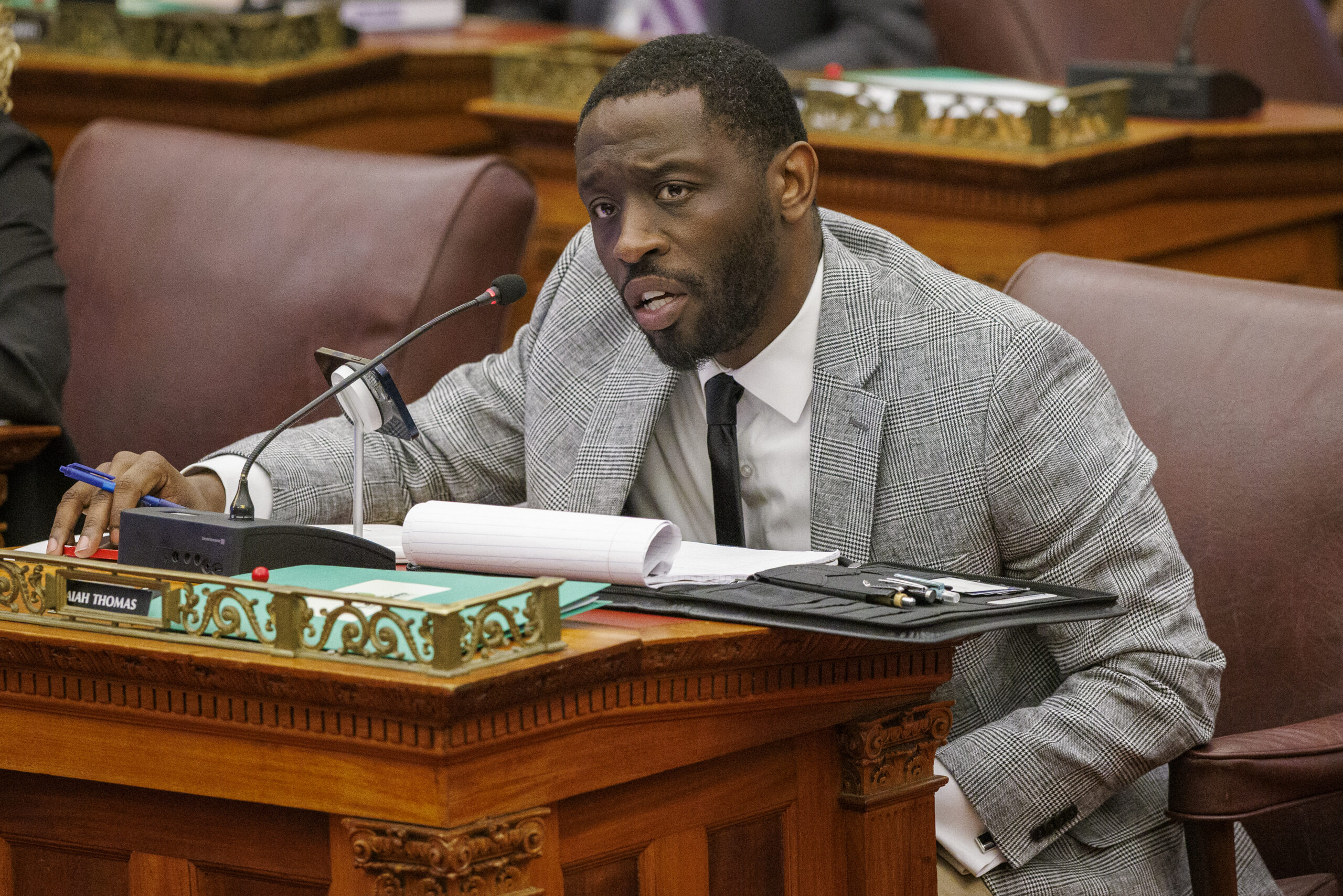
    Councilmember Isaiah Thomas makes a statement at the start of a hearing last week.

    But Thomas has run into roadblocks, including opposition from the city’s Board of Ethics, which asked him to make changes to the legislation in December, just before it appeared poised to pass.

    On Thursday, he introduced an amendment that made a series of tweaks, including clarifying that sitting city officeholders may only run for one public office in any election.

    Jordana Greenwald, general counsel for the city’s Board of Ethics, testified that the board still has concerns and requested more amendments, including prohibiting certain forms of politicking in the workplace.

    She also said the legislation should clarify that the mayor can’t run for another office while serving as the city’s chief executive, a rule that is already enumerated elsewhere in the city charter.

    However, making additional amendments could require Thomas re the legislation entirely. He said he would prefer for the bill to be called up for a final vote next week.

    Amending the resign-to-run rule requires changing the city’s Home Rule Charter, meaning voters would have to approve it through a ballot question. Voters have rejected earlier attempts to repeal resign-to-run.

    Codifying the youth watchdog: Council members also approved legislation to make the city’s Office of the Youth Ombudsperson permanent.

    The office was created through an executive order signed by former Mayor Jim Kenney and is responsible for monitoring child welfare, juvenile justice, and behavioral health residential placement facilities in the city.

    Making the office permanent also requires an amending the charter. A ballot question is likely to appear in the May primary election.

    Quote of the week

    Councilmember Jim Harrity in Council Chambers in September 2025.

    That was Councilmember Jim Harrity, an Irish Catholic who in a speech Thursday honored the sacrifices made during the Muslim holy month of Ramadan.

  • Is AI’s authoritarianism a bigger threat than Trump’s?

    Is AI’s authoritarianism a bigger threat than Trump’s?

    Like every other beleaguered top editor in a big-city newsroom these days, Chris Quinn — who leads Cleveland.com and the print Plain Dealer — has to deal with assaults from all sides.

    In March 2024, Quinn briefly became a darling of the online left (not easy for a journalist to pull off these days) with a bold manifesto for how Cleveland.com would deal with one of those many threats: An authoritarian president who despises a free press.

    “We tell the truth, even when it offends some of the people who pay us for information,” Quinn wrote that fateful spring in his “Letter From the Editor” column. “The truth is that Donald Trump undermined faith in our elections in his false bid to retain the presidency. He sparked an insurrection intended to overthrow our government and keep himself in power. No president in our history has done worse.”

    Less than two years later, Quinn has gone viral again. But this time, instead of resisting a powerful force aiming to upend American life as we’ve known it, he’s embracing one: The power of artificial intelligence to transform the workplace … and just about everything else.

    Quinn has said that steep job cuts (more on those later) have left just a skeleton crew covering Cleveland’s far-flung exurban counties, and using an AI tool to write stories based on the downsized staff’s reporting will result in more articles about these potential news deserts. When an anonymous college journalism student withdrew her application to Cleveland.com because she said she couldn’t work in a newsroom using AI to perform what was once a human task, the editor went off in his column.

    “Journalism programs are decades behind,” wrote Quinn in arguing that technology is rendering such degrees as worthless. “Many graduating students have unrealistic expectations. They imagine themselves as long-form magazine storytellers, chasing a romanticized version of journalism that largely never existed.”

    Seriously, how dare those young whippersnappers dream of creating beauty in their lives, instead of welcoming their new robot overlords and embracing their future as a cog in a faceless news machine?

    But the dilemma facing Cleveland, Quinn, and the Unknown Job Applicant is the crisis that’s been thrust in the face of all Americans as the brutal winter of 2026 slowly melts into spring, and, it seems, a reality we’re truly not ready to confront — not practically, nor politically, nor morally.

    People forget, but there was a brief moment in the mid-to-late 1990s when the internet was dismissed as a fad — clunky to use (remember dial-up?) and its abilities overhyped by Silicon Valley. But the internet radically changed how we live, as did the arrival of smartphones in the 2000s — not always for good. Yet, these seem like the warm-up acts for the life-altering conniptions caused by omnipresent AI.

    Suddenly, there’s been a flood of essays trying to warn us that whatever one initially thought about programs like ChatGPT — and, yes, AI is still prone to “hallucinations” and other embarrassing errors — we need to adjust to the news that a new generation of AI tools is much more powerful, and better poised to replace many jobs.

    “I am no longer needed for the actual technical work of my job,” an AI executive named Matt Shumer wrote in the most viral of these hot takes, titled “Something Big Is Happening.”

    In describing how new AI programs rolled out by Anthropic, maker of Claude, and ChatGPT’s parent OpenAI can now perform complex coding tasks from the most simple instructions, Shumer warned the earthquake is coming to “[l]aw, finance, medicine, accounting, consulting, writing, design, analysis, customer service. Not in ten years. The people building these systems say one to five years. Some say less.”

    This jibes with dire predictions from Anthropic’s CEO Dario Amodei, who has warned repeatedly of “painful” white-collar job losses caused by AI, and said in his most recent long-form essay that the new technologies are “acting as a ‘general labor substitute for humans.’”

    Is that bad? It sounds bad.

    The sweeping changes in the labor market are already starting, including a sharp drop in entry-level hiring for coders, who seem to be the canaries in this coal mine. January was the worst month for layoffs since the Great Recession of 2009, and analysts say job losses directly attributable to replacement by AI were a significant slice of that. The idea that wiping out millions of jobs might be bad for the overall economy even caught the ADD-addled attention of Wall Street for a day or two.

    I don’t have space here to go deep on the technology, but everyone should take a moment to learn what “vibe coding” and “agentic AI” are, and read the New Yorker on the rise of Anthropic’s Claude, or listen to a really good podcast explanation of AI and the labor market from the New York Times’ Kevin Roose. But we’re already overdue in addressing what this all means for everyday human existence.

    The idea that eventually “everything you think, do, and say is in the pill you took today” — as Zager and Evans sang so presciently in their 1969 No. 1 smash, “In the Year 2525” — has been with us for decades. But there was also a sense that robots performing the worst drudgery of the workplace might be liberating, creating more leisure time and space for human creativity.

    So far, that’s not what’s happening. Avoiding the poverty and deprivation that would be caused by massive job losses would require a government willing to pay people a universal basic income (UBI), but the current government has instead been dismantling the existing welfare state. And the workers creating AI are sleeping in their cubicles.

    And creativity may become a fever dream, not just for that naive journalism student with her “romanticized” visions of telling stories. Did you read the Times profile of the romance novelist who’s relying on Claude to crank out new tomes in as little as 45 minutes? Did you watch the lifelike short movie of an AI-generated “Brad Pitt” fighting “Tom Cruise”?

    Let me get this straight. AI is taking our jobs and ending artistic struggle to liberate us … for what, exactly?

    I haven’t even discussed the other really bad things about AI, including the drain on electricity from massive data centers likely to unleash yet another form of tyranny, unbridled climate change, and the death of critical thinking as reliance on AI decimates the classroom. At a moment when we’re just coming to terms with the downside of smartphones — such as higher rates of anxiety and depression among teenagers — could we learn to avoid similar mistakes with AI before they start?

    And did I mention the whole “robots take over the world” scenario?

    Dealing with all this would take political will. Yet, leaders in both parties — Trump, for sure, but also top Democrats like Josh Shapiro and Gavin Newsom — have embraced the data center and AI ambitions of their donor class, even though the majority of their voters want strict regulation. A pro-AI super-PAC raised $125 million last year to buy the midterm elections. Who is fighting for the about-to-be-starving artists?

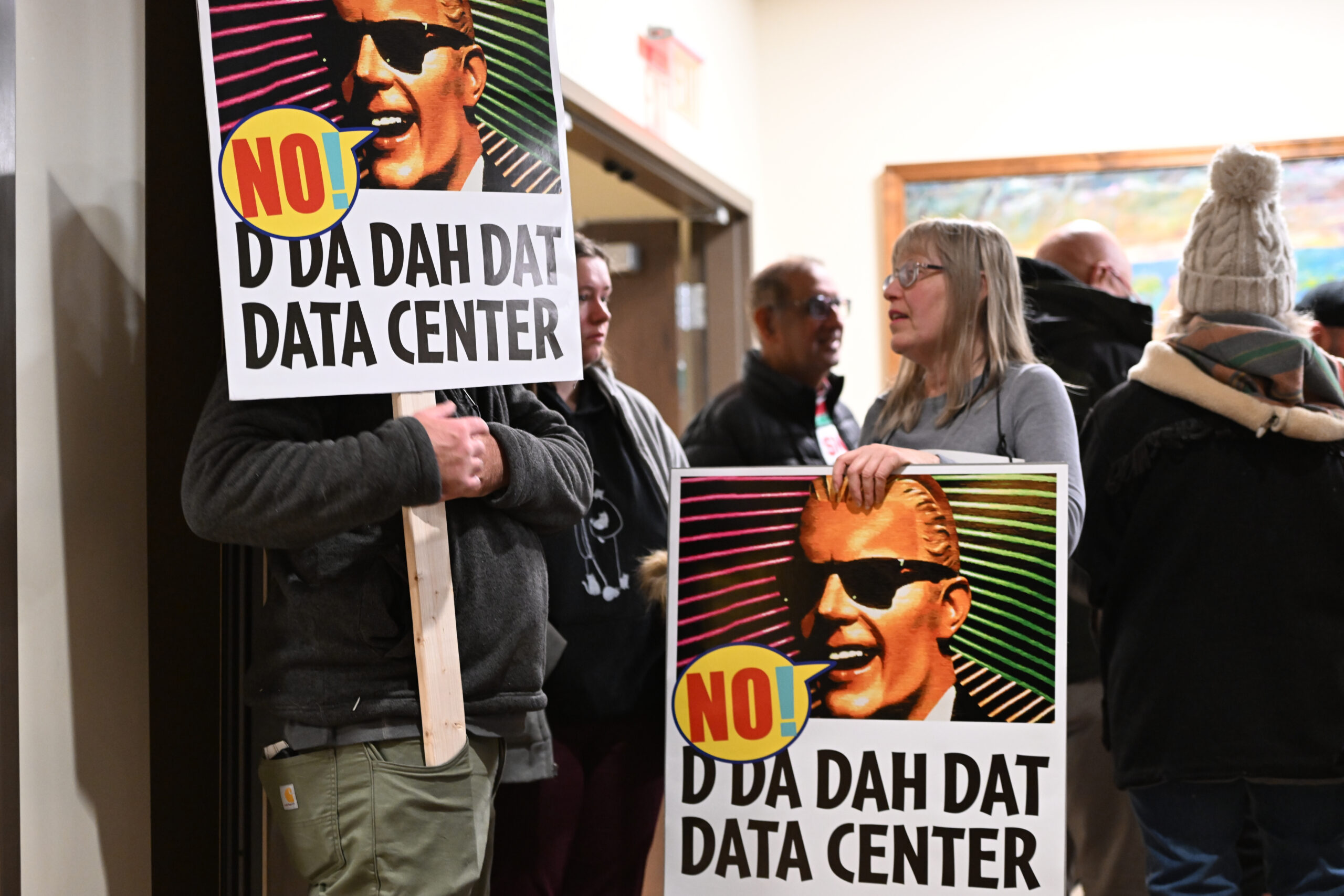
    People opposed to a data center proposal at the former Pennhurst state hospital grounds talk during a break in an East Vincent Township supervisors meeting in December in Spring City, Pa.

    It doesn’t have to be like this. The same better-late-than-never push to remove smartphones from classrooms can be used as a model for eradicating AI in K-12 schools as well as college, to give the next generation at least a fighting chance to learn to think for itself. The politicians don’t have to allow data centers that burn fossil fuels instead of clean energy and consume the lion’s share of water available to the communities where they’re located.

    Nor do we need to embrace the late-stage capitalist ethos that if shareholders make more money employing robots than human beings, some invisible law forces us to do this. Remember Chris Quinn back in Cleveland? The reason he feels he needs AI to write up the news is because, back in 2019, he oversaw the layoff of one-third of his unionized newsroom, at the behest of the paper’s corporate parent.

    Maybe robots are now “agentic,” but humans have always had agency. Here’s the perfect chance to use it: by encouraging the uses of AI that will be good for society — diagnosing sick patients and inventing medicines to cure them, for example — but regulating or banning the aspects of AI that will make life worse.

    That’s partly up to the politicians, but it’s also up to us. Societal trends like the outbreak of “neighborism” — strangers forming new community bonds to beat back the fascism of immigration raids — or a rise in union membership are healthy signs that Americans are finally getting tired of technology driving us apart.

    The fight against the authoritarianism of unchecked and often unwanted AI is the battle of the 21st century that will be waged long after the fight against political authoritarianism in Trump’s United States and elsewhere has been won.