Blog

  • Top Justice Department official plays down chance for charges arising from Epstein files revelations

    Top Justice Department official plays down chance for charges arising from Epstein files revelations

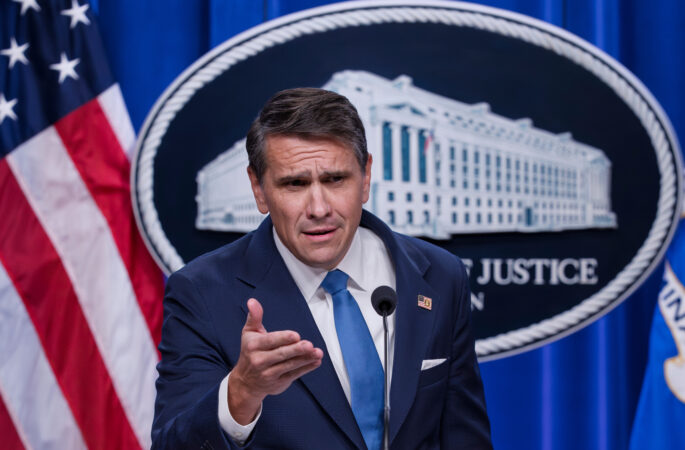
    WASHINGTON — A top Justice Department official played down the possibility of additional criminal charges arising from the Jeffrey Epstein files, saying Sunday that the existence of “horrible photographs” and troubling email correspondence does not “allow us necessarily to prosecute somebody.”

    Department officials said over the summer that a review of Epstein-related records did not establish a basis for new criminal investigations.

    That position remains unchanged, Deputy Attorney General Todd Blanche said, even as a massive document dump since Friday has focused fresh attention on Epstein’s links to powerful individuals around the world and revived questions about what, if any, knowledge the wealthy financier’s associates had about his crimes.

    “There’s a lot of correspondence. There’s a lot of emails. There’s a lot of photographs. There’s a lot of horrible photographs that appear to be taken by Mr. Epstein or people around him,” Blanche said Sunday on CNN’s State of the Union. “But that doesn’t allow us necessarily to prosecute somebody.”

    He said that victims of Epstein’s sex abuse “want to be made whole,” but that “doesn’t mean we can just create evidence or that we can just kind of come up with a case that isn’t there.”

    President Donald Trump’s Justice Department said Friday that it would be releasing more than 3 million pages of documents along with more than 2,000 videos and 180,000 images under a law intended to reveal most of the material it collected during two decades of investigations into Epstein.

    The fallout from the release of the files has been swift. A top official in Slovakia left his position after photos and emails revealed he had met with Epstein in the years after Epstein was released from jail. British Prime Minister Keir Starmer suggested that longtime Epstein friend Andrew Mountbatten-Windsor, formerly known as Prince Andrew, should tell U.S. investigators whether he knows about Epstein’s activities.

    The revelations continue

    The files, posted to the department’s website, included documents involving Epstein’s friendship with Mountbatten-Windsor, and Epstein’s email correspondence with onetime Trump adviser Steve Bannon, New York Giants co-owner Steve Tisch, and other prominent contacts with people in political, business, and philanthropic circles, such as billionaires Bill Gates and Elon Musk.

    The Epstein saga has long fueled public fascination in part because of the financier’s past friendships with Trump and former President Bill Clinton. Both men said they had no knowledge Epstein was abusing underage girls.

    Among the newly released records was a spreadsheet created last August that summarized calls made to the FBI’s National Threat Operation Center or to a hotline set by prosecutors from people claiming to have some knowledge of wrongdoing by Trump. That document included a range of uncorroborated stories involving many different celebrities, and somewhat fantastical scenarios, occasionally with notations indicating what follow-up, if any, was done by agents.

    Blanche said Sunday that there were a “ton of people” named in the Epstein files besides Trump and that the FBI had fielded “hundreds of calls” about prominent individuals that were “quickly determined to not be credible.”

    Some of Epstein’s personal email correspondence contained candid discussions with other people about his penchant for paying women for sex, even after he served jail time for soliciting an underage prostitute. Epstein killed himself in a New York jail in August 2019, a month after being indicted on federal sex trafficking charges.

    In one 2013 email, a person whose name was blacked out wrote to Epstein about his choice “to surround yourself with these young women in a capacity that bleeds — perhaps, somewhat arbitrarily — from the professional into the personal and back.”

    “Though these women are young, they are not too young to know that they are making a very particular choice in taking on this role with you,” the person wrote. “Especially in the aftermath of your trial which, after all, was public and could be — indeed was — interpreted as a powerful man taking advantage of powerless young women, instead of the other way around.”

    In another email written in 2009, not long after Epstein had finished serving jail time for his Florida sex crimes, another woman, whose name was redacted, excoriated him for breaking a promise that they would spend time alone together and try to conceive a baby.

    “I find myself having to question every agreement we have made (no prostitutes staying in the house, in our bed, movies, naps, two weeks Alone, baby…),” She wrote. “Your last minute suggestion to spend THIS weekend with prostitutes is just too much for me to handle. I can’t live like this anymore.”

    ‘This review is over’

    Blanche said in a separate appearance on ABC’s This Week that though there are a “small number of documents” that the Justice Department is waiting to release when it receives a judge’s approval, when it comes to the department’s own scouring of documents, “this review is over.”

    “We reviewed over six million pieces of paper, thousands of videos, tens of thousands of images,” Blanche said.

    House Speaker Mike Johnson (R., La.) told NBC’s Meet the Press on Sunday that he thinks the Department of Justice is complying with the law requiring public disclosure of the Epstein files.

    But Rep. Ro Khanna (D., Calif.), co-sponsor of the law requiring the Justice Department to release its Epstein files, said he did not believe the department had fully complied. He said survivors are upset that many of their names accidentally had come out without redactions and they want to make sure the rest of the files come out.

    Blanche said each time the department has learned that a victim’s name was not properly redacted, it has moved quickly to fix the problem but that those mistakes account for a tiny fraction of the overall materials.
  • Demond Wilson, who played Lamont on ‘Sanford and Son,’ has died at 79

    Demond Wilson, who played Lamont on ‘Sanford and Son,’ has died at 79

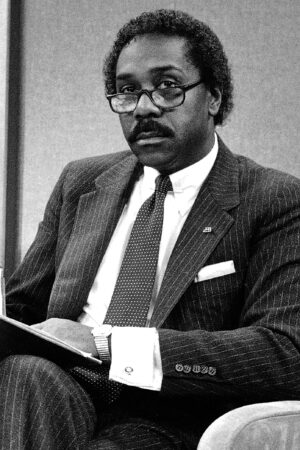
    Demond Wilson, who found fame in the 1970s playing Lamont on Sanford and Son and went on to become a minister, has died. He was 79.

    Mark Goldman, a publicist for Mr. Wilson, confirmed to the Associated Press that he died following complications from cancer on Friday.

    “A devoted father, actor, author, and minister, Demond lived a life rooted in faith, service, and compassion. Through his work on screen, his writing, and his ministry, he sought to uplift others and leave a meaningful impact on the communities he served,” Goldman said in an emailed statement.

    Mr. Wilson was best known as the son of Redd Foxx’s comically cantankerous Fred Sanford character in a sitcom that was among the first to feature a mostly Black cast when it began airing in 1972.

    The thoughtful Lamont had to put up with his junkyard owner father’s schemes, bigotry, and insults — most famously, and repeatedly, “You big dummy!”

    The show was a hit for its six seasons on NBC but ended when ABC offered Foxx a variety show.

    Mr. Wilson was born in Valdosta, Ga., and grew up in the Harlem section of Manhattan, according to the biography on his website.

    He served in the U.S. Army in Vietnam and was wounded there, and he returned to New York and acted on stage before heading to Hollywood.

    A guest appearance on All in the Family in 1971 led to his best-known role. Norman Lear produced both shows.

    Mr. Wilson told AP in 2022 that he got the role over comedian Richard Pryor.

    “I said, ‘C’mon, you can’t put a comedian with a comedian. You’ve got to have a straight man,’” he said he told the producers.

    After Sanford and Son ended, Mr. Wilson starred in the shorter-lived comedies Baby I’m Back and The New Odd Couple. He later appeared in four episodes of the show Girlfriends in the 2000s, along with a handful of movie roles.

    Though he returned to the screen at times, he told the Los Angeles Times in 1986 that the acting life was not for him: “It wasn’t challenging. And it was emotionally exhausting because I had to make it appear that I was excited about what I was doing.”

    Mr. Wilson became a minister in the 1980s.

    He is survived by his wife, Cicely Wilson, and their six children.

  • Trump says U.S. is ‘starting to talk to Cuba’ as he moves to cut its oil supplies

    Trump says U.S. is ‘starting to talk to Cuba’ as he moves to cut its oil supplies

    ABOARD AIR FORCE ONE — President Donald Trump said the United States was beginning to talk with Cuban leaders as his administration puts greater pressure on the communist-run island and cuts off key oil supplies.

    He made the comment to reporters on Saturday night as he was flying to Florida. It comes in the wake of his moves in recent weeks to cut off supplies of oil from Venezuela and Mexico, which he suggested Saturday would force Cuba to the negotiating table.

    His goals with Cuba remain unclear, but Trump has turned more of his attention toward the island after his administration in early January captured Venezuela’s then-President Nicolás Maduro and has been more aggressive in confronting nations that are adversaries of the U.S.

    Trump has predicted that the Cuban government is ready to fall.

    The Republican president did not offer any details on Saturday about what level of outreach his administration has had with Cuba recently or when, but simply said, “We’re starting to talk to Cuba.”

    His recent moves to cut off its oil supplies have squeezed the island.

    Last week, Trump signed an executive order to impose a tariff on any goods from countries that sell or provide oil to Cuba. The move put pressure on Mexico, which Cuba became dependent on for oil after Trump halted oil shipments from Venezuela in the wake of Maduro’s ouster.

    Mexican President Claudia Sheinbaum warned that it could cause a humanitarian crisis. She said on Friday that she would seek alternatives to continue helping Cuba.

    “It doesn’t have to be a humanitarian crisis. I think they probably would come to us and want to make a deal,” Trump said Saturday. “So Cuba would be free again.”

    He predicted they would make some sort of deal with Cuba and said, “I think, you know, we’ll be kind.”

  • Venezuelan activist Javier Tarazona released from prison as US diplomat assumes post

    Venezuelan activist Javier Tarazona released from prison as US diplomat assumes post

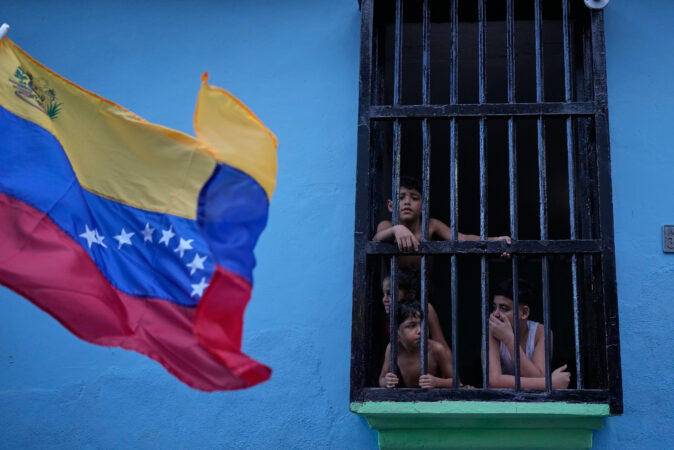
    CARACAS, Venezuela — Venezuelan human rights activist Javier Tarazona, an ally of opposition leader María Corina Machado, was released from prison after the government promised to free political prisoners in an amnesty bill, rights organizations and family members said on Sunday.

    Tarazona, the director of the Venezuelan nonprofit human rights group FundaRedes, was arrested in July 2021, after reporting to authorities that he had been harassed by national intelligence officials. Two other activists of the group were also detained at the time.

    According to Venezuela’s Foro Penal, a nonprofit that monitors the situation of political prisoners in the country, 310 who were jailed for political reasons had been released by Saturday and 700 others are still waiting to be freed.

    “After 1675 days, four years and seven months, this wishful day has arrived. My brother Javier Tarazona is free,” José Rafael Tarazona Sánchez wrote on X. “Freedom for one is hope for all.”

    Tarazona was released shortly after the arrival to Caracas of U.S. Charge d’Affaires Laura Dogu, who will reopen the American diplomatic mission after seven years of severed ties. It comes after U.S. President Donald Trump ordered a military action that removed the South American country’s former President Nicolás Maduro from office and brought him to the U.S. for trial.

    Dogu, who was previously ambassador in Nicaragua and Honduras, arrived in Venezuela one day after the country’s interim president, Delcy Rodríguez, announced an amnesty bill to release political prisoners. That move was one of the key demands of the Venezuelan opposition.

    Venezuela’s government had accused Tarazona of terrorism, a frequent accusation it makes against real or potential opposition members. Tarazona was vocal against illegal armed groups on the country’s border with Colombia and their alleged connection to high-ranked members of the Maduro administration.

    Nonprofit Amnesty International reported that Tarazona’s health had deteriorated due to lack of medical attention during his time in prison.

    “All of Venezuela admires you and respects your bravery and your commitment,” Machado said on X. “You, better than anyone, know that there will be justice in Venezuela. Freedom for all political prisoners.”

    Venezuela’s government denies it jails members of the opposition and accuses them of conspiring to bring it down.

  • A Montco Army veteran was indicted alongside journalist Don Lemon for anti-ICE protest at a St. Paul church

    A Montco Army veteran was indicted alongside journalist Don Lemon for anti-ICE protest at a St. Paul church

    A decorated U.S. Army veteran from Montgomery County was arrested Friday for participating in a protest at a St. Paul, Minn., church, just two days after a video of him speaking out against the Trump administration went viral.

    Ian Austin, 35, of Bryn Athyn, is one of nine people facing felony charges for their involvement in a Jan. 18 protest at Cities Church in St. Paul. Former CNN host Don Lemon, who was covering the protest, is also a defendant. Lemon’s arrest, and that of another journalist who attended the protest, has brought criticism from media and civil rights advocates.

    The Department of Justice indicted Austin for conspiring to interrupt a church service and “injure, intimidate, and interfere with exercise of right of religious freedom” at a place of worship, federal court documents state.

    But Austin’s parents in Bryn Athyn say their son’s actions are in keeping with his sense of duty to his country, and his determination to help others however he can.

    “Those are things he cares about more than political party,” his mother, Paige Austin, said. “It’s more about what does it mean to be human, and to treat people justly and kindly, regardless of where you live.”

    In a video clip dated Jan. 20 and posted online days before his arrest, Austin said that he believed as an Army veteran it was his duty to travel to Minnesota.

    “We took an oath to the Constitution, and it’s just being shredded right now,” Austin said in the video, which racked up hundreds of thousands of likes across multiple social media platforms.

    “This has all of the signs from every fascist movement in history that we’re going to lose the opportunity to resist,” he said. “So that’s why I’m here.”

    The protesters said they targeted the church because one of its pastors, David Easterwood, leads the Immigration and Customs Enforcement (ICE) St. Paul field office. The church’s website lists David Easterwood as a pastor, and news outlets have reported that his personal information appears to match that of the David Easterwood identified in court filings as the acting director of the ICE St. Paul field office.

    In the video, Austin said he’d previously been detained for protesting outside the Bishop Henry Whipple Federal Building before being released without charges. It was during that detainment, he said, that a Department of Homeland Security officer questioned him about why someone “from Philadelphia” would be in Minneapolis.

    “And I’m like, ‘Well, because the nation that I was willing to die for is being systematically oppressed with men in military uniforms, a private army told by the president that they have no other laws to follow than his, and they’re systematically attacking and even killing our neighbors — in the United States of America,” Austin said.

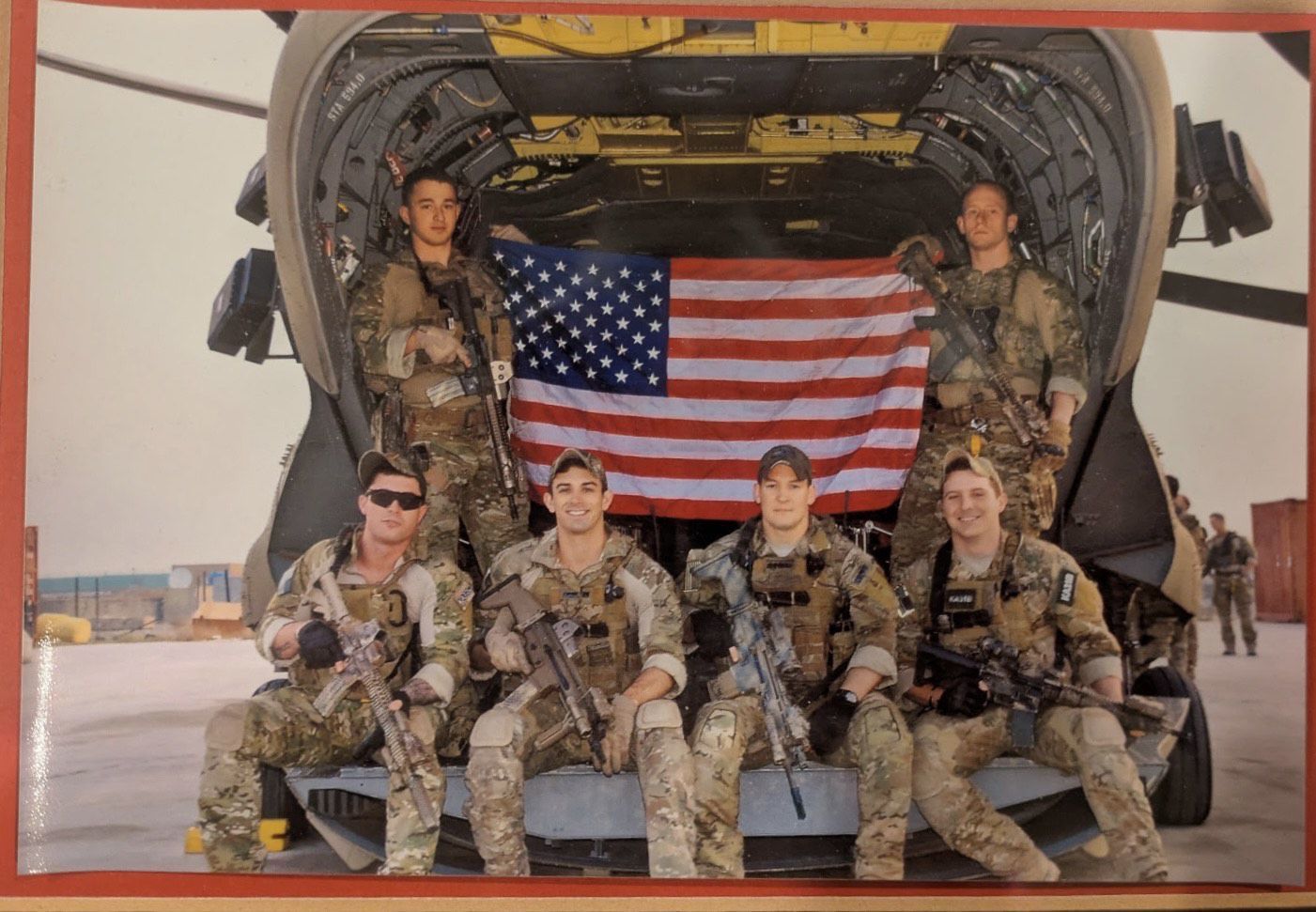
    This undated photo shows Ian Austin and other U.S. Army soldiers.

    Valorous service

    Austin grew up in Huntingdon Valley, a couple miles outside of Philly in Montgomery County. His parents, Kenneth and Paige Austin, said he went to Academy of the New Church high school, where he excelled at baseball and wrestling, earning a spot in the J. Robinson Intensive Wrestling Camp in Minnesota.

    “It’s brutally hard,” Kenneth Austin said in an interview with The Inquirer. “It’s like boot camp. He did very well. I think that planted a seed for the military.”

    Austin graduated from high school in 2008, celebrated the Phillies’ World Series win with family and friends, and weeks later, shipped out to Army basic training.

    His parents confirmed that as a member of the U.S. Army’s elite 1st Ranger Battalion, Austin served six combat deployments in Afghanistan. In 2013, he was awarded a Joint Commendation Medal with Valor device, according to a news report.

    The valor device is given to soldiers who displayed “an act or acts of heroism by an individual above what is normally expected while engaged in direct combat with an enemy of the United States, or an opposing foreign or armed force, with exposure to enemy hostilities and personal risk,” according to a military website.

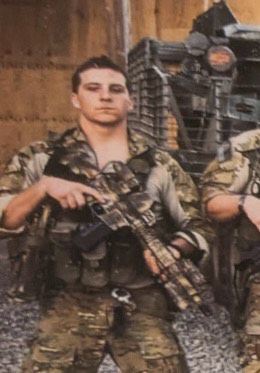
    This detail shot of an undated family photo shows Ian Austin while serving in the U.S. Army 1st Ranger Battalion.

    After his Army contract ended in 2014, Austin returned home, his parents said. He was diagnosed with post-traumatic stress disorder, and he threw himself into his recovery process with the same passion he put into his training, Kenneth Austin said. He had his share of setbacks; in 2021, Austin pleaded guilty to disorderly conduct and fighting after refusing to leave a local bar, his parents noted.

    But as Austin took college classes at La Salle University and elsewhere, he became increasingly interested in social justice and helping others.

    During the 2020 George Floyd protests in Philly, Austin packed his backpack with medical supplies and water, Paige Austin said. “He would go down there and sort of join the protest, but he was there also to help, because part of the Ranger training was emergency medical training.”

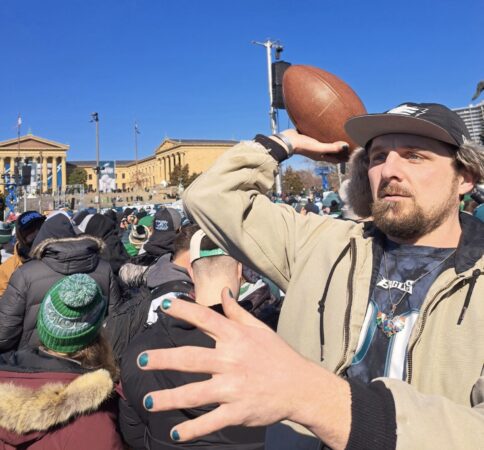
    Kenneth Austin recounted that his son even carried a backpack full of water, snacks, and first aid supplies during the parade after the Philadelphia Eagles’ 2025 Super Bowl victory, earning him the nickname “headquarters” from some of those out celebrating.

    “It was a little much for me,” his father said. “But it really struck me, like, he’s … here to have fun, but he’s also looking out for everyone, and becoming buddies with everyone, and making sure everyone’s OK.”

    A protest in a church

    A few weeks after ICE agent Jonathan Ross shot and killed Renee Good in Minneapolis, Austin told his parents he was going to Minnesota. Three hours later, his truck was packed, and after a 17-hour drive, he was out protesting.

    Austin is being held in the Sherburne County Jail in Minnesota, county records show. His attorney, Sarah Gad, said that she took on his case pro bono after seeing agents arrest him Friday. Gad said that based on what she’s seen in similar cases, she expects him to be released on his own recognizance as early as Monday.

    Video of the protest shows protesters in the church chanting “Renee Good,” “Don’t shoot,” and “ICE out,” while a pastor shouted “shame on you” into a microphone. As the protest continued, many congregants can be seen leaving the church, while others stayed put or filmed the takeover. A few church attendees struck up conversations with protesters.

    “I understand that what has happened is wrong, and I agree with that,” one congregant said to the person filming. “But this can’t happen. This is the house of the Lord.”

    The federal indictment states that between 20 and 40 “agitators” occupied the main aisle and front of the church and yelled at the pastor and congregants. The indictment alleges that some protesters intimidated church members and prevented them from moving about freely in the church.

    Austin, the indictment states, stood with other protesters, “approached the pastor and congregants in a menacing manner, and near the end of the operation, loudly berated the pastor with questions about Christian nationalism and Christians wanting their faith to be the law of the land.”

    News reports have noted that Cities Church has ties to prominent Christian nationalists and powerful figures in the MAGA movement. Slate reported that its founder, Joe Rigney, is now a pastor at Christ Church in Moscow, Idaho. That church is run by Doug Wilson, who wants America to become a theocracy, according to a New York Times interview. Defense Secretary Pete Hegseth attends an affiliated church.

    Austin’s attorney said this is a unique case, but it doesn’t surprise her that the Department of Justice would want to make an example of anti-ICE protesters who were allegedly disrupting a place of worship.

    “I think that this is being taken very seriously by the United States attorney,” Gad said, though she added, “federal cases often look much more alarming at the front end than they turn out to be.”

  • Gaza’s crucial Rafah crossing prepares for limited travel to resume Monday

    Gaza’s crucial Rafah crossing prepares for limited travel to resume Monday

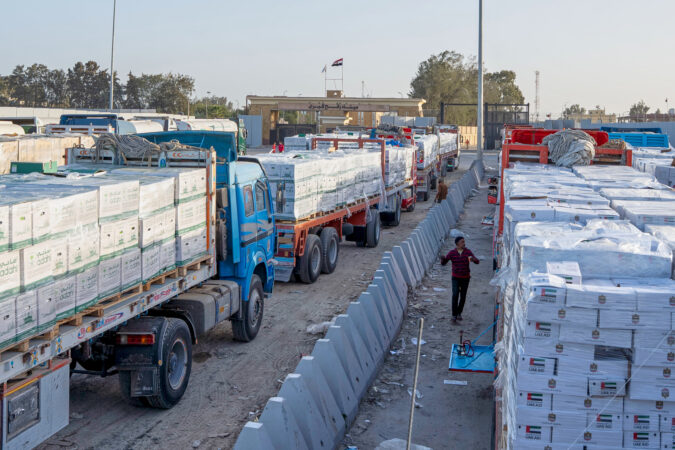
    CAIRO — Palestinians in Gaza watched with hope and impatience Sunday as workers laid the groundwork to reopen the territory’s Rafah border crossing with Egypt, its lifeline to the world. Israel says the crossing is scheduled to resume Monday as its ceasefire with Hamas moves ahead.

    “Opening the crossing is a good step, but they set a limit on the number of people allowed to cross, and this is a problem,” said Ghalia Abu Mustafa, a woman from Khan Younis.

    Israel said the crossing had opened in a test, and the Israeli military agency that controls aid to Gaza said residents could begin crossing Monday. But only a small number of people can cross at first.

    “We want a large number of people to leave, for it to be open so that sick people can go and return,” said Suhaila Al-Astal, a woman displaced from the city of Rafah who said her sick daughter needed help abroad. ”We want the crossing to be open permanently.”

    Israel’s announcement came a day after Israeli strikes killed at least 30 Palestinians including several children, according to hospital officials — one of the highest death tolls since the ceasefire began on Oct. 10. Israel had accused Hamas of new truce violations.

    Nicolay Mladenov, director-general of U.S. President Donald Trump’s new board of peace in Gaza, urged the parties to “exercise restraint” and said his office was working with the new Palestinian committee chosen to oversee Gaza to find ways that prevent future incidents.

    Dozens will enter and leave Gaza daily at first

    The Rafah crossing has been largely shut since Israel seized it in May 2024. About 20,000 Palestinian children and adults needing medical care are hoping to leave war-devastated Gaza via the crossing, and thousands of other Palestinians outside the territory hope to return home.

    Few people, and no cargo, will be allowed to cross at first. Prime Minister Benjamin Netanyahu has said Israel will allow 50 patients needing medical evacuation to leave daily. An official involved in the discussions, speaking on condition of anonymity to discuss diplomatic talks, said each patient can travel with two relatives, while 50 people who left Gaza during the war can return each day.

    Zaher al-Wahidi, head of the Gaza Health Ministry’s documentation department, told the Associated Press the ministry hadn’t been notified about the start of medical evacuations.

    Israel has said it and Egypt will vet people for exit and entry through the crossing, which will be supervised by European Union border patrol agents. The number of travelers is expected to increase over time if the system is successful.

    Israel will stop Doctors Without Borders’ work in Gaza

    Also Sunday, Israel’s Diaspora Ministry said it was “moving to terminate” the operations of Doctors Without Borders in Gaza by Feb. 28.

    Israel in December suspended the group’s operations there because it refused to comply with new registration requirements for organizations to submit lists of local employees. The medical charity said the regulations could endanger Palestinian staff.

    Doctors Without Borders had no immediate comment. It has said Israel’s decision will have a catastrophic impact on its work in Gaza, where it provides funding and international staff for six hospitals and runs two field hospitals and eight primary health centers, clinics, and medical points. It also runs two of Gaza’s five stabilization centers helping children with severe malnutrition.

    Israel has suspended over two dozen humanitarian organizations from operating in Gaza because of failure or refusal to comply with the new requirements.

    The Diaspora Ministry, which proposed them, says they are aimed at preventing Hamas and other militant groups from infiltrating aid groups. The organizations call the rules arbitrary and warn that the bans harm a civilian population desperately in need of aid.

    Gaza’s health sector has been devastated by two years of Israeli bombardment and restrictions on supplies.

    Rafah has been Gaza’s main crossing

    Palestinian security officers on Sunday passed through the Rafah crossing’s Egyptian gate and headed toward the Palestinian gate to join an EU mission that will supervise exit and entry, said an Egyptian official who spoke on condition of anonymity because he wasn’t authorized to speak to the media. Ambulances also crossed through the Egyptian gate, the official said.

    Before the war, Rafah was the main crossing for people moving in and out of Gaza. The territory has four other border crossings with Israel.

    Israel called its 2024 seizure of the Rafah crossing part of efforts to combat Hamas arms smuggling. The crossing briefly opened for the evacuation of medical patients during a ceasefire in early 2025. Israel had resisted reopening the Rafah crossing, but the recovery of the remains of the last hostage in Gaza last week cleared the way to move forward.

    Under the ceasefire terms, Israel’s military controls the area between the Rafah crossing and the zone where most Palestinians live.

    Fearing that Israel could use the crossing to push Palestinians out of the enclave, Egypt has repeatedly said it must be open for crossing in both directions. Historically, Israel and Egypt have vetted Palestinians applying to cross.

    The ceasefire halted more than two years of war between Israel and Hamas that began with a Hamas-led attack on southern Israel on Oct. 7, 2023, that killed some 1,200 people, mostly civilians, and took 251 hostages.

    Israel’s retaliatory offensive has killed 71,795 Palestinians, including 523 since this ceasefire started, according to Gaza’s Health Ministry. The ministry doesn’t distinguish between civilians and combatants in its figures. It maintains detailed casualty records that are seen as generally reliable by U.N. agencies and independent experts.

    The ceasefire’s first phase called for the exchange of all hostages held in Gaza for hundreds of Palestinians held by Israel, a surge in humanitarian aid, and a partial pullback of Israeli troops.

    The second phase is more complicated. It calls for installing a new Palestinian committee to govern Gaza, deploying an international security force, disarming Hamas, and taking steps to begin rebuilding.

  • Reserve center Mohamed Keita comes up big in the clutch for Temple

    Reserve center Mohamed Keita comes up big in the clutch for Temple

    Temple center Mohamed Keita entered the game against South Florida on Saturday with 5½ minutes left and the Owls clinging to a four-point lead. Forwards Babatunde Durodola and Jamai Felt had both fouled out, leaving the 7-foot-1 big man as Temple’s only option for the rest of the game.

    Keita delivered. He knocked down two free throws with 30 seconds left, then came through with the decisive bucket for the Owls (14-8, 6-3 American).

    Derrian Ford missed a jumper and Keita flew in for the tip-in with six seconds left. USF (14-8, 6-3) had a chance, but a desperation heave by Isaiah Jones wasn’t enough as Temple held on for a 79-78 win at the Liacouras Center.

    “It was Coach [Adam Fisher] who told me to crash the board when [Ford] shot it,” Keita said. “So I just crashed, and then I’m happy it came my way and then scored.”

    The Owls went nearly six minutes without a field goal at the end of the game, but Keita’s heroics helped them stay in the conference race. Temple is in a three-way tie for third place in the American with Florida Atlantic and USF.

    “We all know if your shots are not falling, keep shooting and just keep playing defense,” said guard Aiden Tobiason, who scored a game-high 22 points. “That’s something we harp on the most, because that’s something you can control.”

    Owls guard Masiah Gilyard shoots the ball against South Florida.

    Temple’s depth has been tested, but the Owls rely on guard Masiah Gilyard and the 6-8 Durodola, with Keita coming in sparingly.

    Those three helped Temple stay afloat on Saturday. Gilyard scored 11 of his 13 points in the first half and Durodola finished with seven points, seven rebounds, and a team-high five assists.

    “[Gilyard] is a guy that does a lot of dirty work, getting offensive rebounds,” Fisher said. “I think any time you’re a player and you see the ball go in early on, an easy one, it makes the basket look a little bigger to you. I thought he’d made some big shots. But again, there’s just a trust like our guys, whoever’s out there, we believe in. I thought his minutes tonight were fantastic.”

    Next up

    Temple visits East Carolina (6-15, 1-7) on Saturday (noon, ESPNU).

  • Iran’s supreme leader warns any U.S. attack would spark ‘regional war’

    Iran’s supreme leader warns any U.S. attack would spark ‘regional war’

    DUBAI, United Arab Emirates — Iran’s supreme leader warned Sunday that any attack by the United States would spark a “regional war” in the Mideast, further escalating tensions as President Donald Trump has threatened to militarily strike the Islamic Republic over its crackdown on recent nationwide protests.

    The comments from the 86-year-old Ayatollah Ali Khamenei are the most direct threat he’s made so far as the aircraft carrier USS Abraham Lincoln and associated American warships take positions in the Arabian Sea, sent there by Trump after Tehran’s bloody crackdown on nationwide protests.

    It remains unclear whether Trump will use force. He’s repeatedly said Iran wants to negotiate and has brought up Tehran’s nuclear program as another issue he wants to see resolved.

    But Khamenei also referred to the nationwide protests as “a coup,” hardening the government’s position as tens of thousands of people reportedly have been detained since the start of the demonstrations. Sedition charges in Iran can carry the death penalty, which again renews concerns about Tehran carrying out mass executions for those arrested — a red line for Trump.

    Iran had also planned a live-fire military drill for Sunday and Monday in the strategic Strait of Hormuz, the narrow mouth of the Persian Gulf through which a fifth of all oil traded passes. The U.S. military’s Central Command had warned against threatening American warships or aircraft during the drill or disrupting commercial traffic.

    Khamenei warns U.S.

    Khamenei spoke to a crowd at his compound in Tehran as Iran marked the start of a dayslong commemoration of the country’s 1979 Islamic Revolution. He, at one point, described the U.S. as being interested in its oil, natural gas, and other mineral resources, saying that they wanted to “seize this country, just as they controlled it before.”

    “The Americans must be aware that if they wage a war this time, it will be a regional war,” he said.

    The supreme leader added, “We are not the instigators, we are not going to be unfair to anyone, we don’t plan to attack any country. But if anyone shows greed and wants to attack or harass, the Iranian nation will deal a heavy blow to them.”

    Asked about the warning, Trump on Sunday told reporters that the U.S. “has the biggest, most powerful ships in the world over there, very close, a couple of days, and hopefully we’ll make a deal. If we don’t make a deal, then we’ll find out whether or not he was right.”

    Khamenei also hardened his position on the demonstrations after earlier acknowledging some people had legitimate economic grievances that sparked their protests. The demonstrations began Dec. 28, initially over the collapse of Iran’s rial currency. It soon grew into a direct challenge to Khamenei’s rule.

    “The recent sedition was similar to a coup. Of course, the coup was suppressed,” he said. “Their goal was to destroy sensitive and effective centers involved in running the country, and for this reason they attacked the police, government centers, (Revolutionary Guard) facilities, banks and mosques — and burned copies of the Quran. They targeted centers that run the country.”

    The U.S.-based Human Rights Activists New Agency, which relies on a network inside Iran to verify its information, reports that over 49,500 people have been detained in the crackdown. It says the violence killed at least 6,713 people, the vast majority of them demonstrators. The Associated Press has been unable to independently assess the death toll and arrest figures, given authorities have cut Iran’s internet off from the rest of the world.

    As of Jan. 21, Iran’s government put the death toll at a far lower 3,117, saying 2,427 were civilians and security forces, labeling the rest “terrorists.” In the past, Iran’s theocracy has undercounted or not reported fatalities from unrest.

    That death toll exceeds that of any other round of protest or unrest in Iran in decades and recalls the chaos surrounding the 1979 revolution.

    Parliament speaker: EU militaries considered terrorist groups

    The speaker of Iran’s parliament, meanwhile, said that the Islamic Republic now considers all European Union militaries to be terrorist groups, lashing out after the bloc declared the country’s paramilitary Revolutionary Guard a terror group over taking part in the bloody crackdown.

    Mohammad Bagher Qalibaf, a former Guard commander, announced the terror designation, which will likely be mostly symbolic. Iran has used a 2019 law to reciprocally declare other nations’ militaries terror groups following the United States’ declaration of the Guard as a terror group that year.

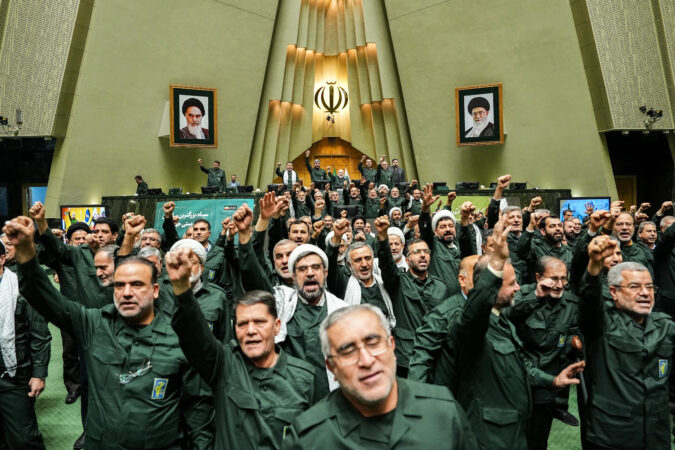
    Qalibaf made the announcement as he and others in parliament wore Guard uniforms in support of the force. The Guard, which also controls Iran’s ballistic missile arsenal and has vast economic interests in Iran, answers only to Khamenei.

    “By seeking to strike at the (Guard), which itself has been the greatest barrier to the spread of terrorism to Europe, Europeans have in fact shot themselves in the foot and, once again, through blind obedience to the Americans, decided against the interests of their own people,” Qalibaf said.

    Lawmakers at the session later chanted: “Death to America!” and “Death to Israel!”

    Trump says Iran is ‘seriously talking’ to U.S.

    Trump has laid out two red lines for military action: the killing of peaceful protesters or the possible mass execution of those detained in a major crackdown over the demonstrations. He’s increasingly begun discussing Iran’s nuclear program as well, which the U.S. negotiated over with Tehran in multiple sessions before Israel launched a 12-day war with Iran back in June.

    The U.S. bombed three Iranian nuclear sites during the war. Activity at two of the sites suggests Iran may be trying to obscure the view of satellites as it tries to salvage what remains there.

    Trump on Saturday night declined to say whether he’d made a decision on what he wanted to do regarding Iran.

    Speaking to reporters, Trump sidestepped a question about whether Tehran would be emboldened if the U.S. backed away from launching strikes on Iran, saying, “Some people think that. Some people don’t.”

    Trump said Iran should negotiate a “satisfactory” deal to prevent the Middle Eastern country from getting any nuclear weapons, but said, “I don’t know that they will. But they are talking to us. Seriously talking to us.”

  • Oscar-nominated screenwriter of Iranian drama ‘It Was Just an Accident’ arrested in Tehran

    Oscar-nominated screenwriter of Iranian drama ‘It Was Just an Accident’ arrested in Tehran

    One of the Oscar-nominated screenwriters of the Iranian drama It Was Just an Accident has been arrested in Tehran just weeks before the Academy Awards.

    Representatives for the film on Sunday said that Mehdi Mahmoudian was arrested Saturday. No details on the charges against Mahmoudian were available. But his arrest came just days after Mahmoudian and 16 others signed a statement condemning Islamic Republic leader Ayatollah Ali Khamenei and the regime’s violent crackdown on demonstrators.

    Two other signatories, Vida Rabbani and Abdullah Momeni, were also arrested.

    Jafar Panahi, the prize-winning director of It Was Just an Accident, issued a statement Sunday decrying his co-writer’s arrest.

    “Mehdi Mahmoudian is not just a human-rights activist and a prisoner of conscience; he is a witness, a listener, and a rare moral presence — a presence whose absence is immediately felt, both inside prison walls and beyond them,” Panahi said.

    Panahi was also a signatory on the Jan. 28 statement. It reads in part: “The mass and systematic killing of citizens who bravely took to the streets to bring an end to an illegitimate regime constitutes an organized state crime against humanity.”

    It Was Just an Accident is nominated for best screenplay and best international film at the March 15 Oscars. The film, made covertly in Iran, was France’s nominee for best international film.

    Panahi, one of the most acclaimed international filmmakers, has made films through various states of imprisonment, house arrest, and travel ban. It Was Just an Accident, a revenge drama and the Palme d’Or-winner at last year’s Cannes Film Festival, was inspired by Panahi’s most recent stint in prison. It was there that he met Mahmoudian. Panahi called him “a pillar” to other prisoners.

    It Was Just An Accident was written by Panahi, Mahmoudian, Nader Saeiver, and Shadhmer Rastin.

    Last fall, Panahi was again sentenced to a year in prison and given a two-year ban on leaving Iran after being convicted on charges of “propaganda activities against the system.” Panahi, who has been traveling internationally with the film, has said he will return to Iran despite the sentence.

    The U.S.-based Human Rights Activists New Agency, which relies on a network inside Iran to verify its information, says that more than 6,713 people have been killed and 49,500 people have been detained in the recent government crackdown. The Associated Press has been unable to independently assess the death toll and arrest figures, given that authorities have cut Iran’s internet off from the rest of the world.

    Panahi has repeatedly spoken out against the crackdown.

    “As we stand here, the state of Iran is gunning down protesters and a savage massacre continues blatantly on the streets of Iran,” Panahi said last month at the National Board of Review Awards in New York. “Today the real scene is not on screens but on the streets of Iran. The Islamic Republic has caused a bloodbath to delay its collapse.”

  • More winter weather leads to heavy snow, canceled flights and, in Florida, falling iguanas

    More winter weather leads to heavy snow, canceled flights and, in Florida, falling iguanas

    MEMPHIS, Tenn. — A huge swath of the U.S. from the Gulf Coast into New England was mired in extra-cold temperatures Sunday after a bomb cyclone brought heavy snow and hundreds of flight cancellations to North Carolina, flurries and falling iguanas in Florida, and more misery for thousands who are still without power from last weekend’s ice storm in the South.

    About 150 million people were under cold weather advisories and extreme cold warnings in the eastern portion of the U.S., with wind chills near zero to single digits in the South and the coldest air mass seen in South Florida since December 1989, said Peter Mullinax, a meteorologist with weather prediction center in College Park, Md.

    The Tampa-St. Petersburg area in Florida saw snow flurries. and temperatures dropped into the 20s in the Panhandle and 30s in South Florida on Sunday morning, Mullinax said. That left cold-stunned iguanas lying motionless on the ground. Iguanas in South Florida go dormant in the cold and, though they usually wake when temperatures warm, the reptiles can die after more than a day of extreme cold.

    The cold also left ice on strawberries and oranges in the state. Farmers in Florida sometimes spray water on fruit trees and berry plants to protect them from the cold.

    Meanwhile, the bomb cyclone, known to meteorologists as an intense, rapidly strengthening weather system, contributed to nearly a foot of snow in and around Charlotte, North Carolina’s largest city. The snowfall represented a top-five snow event all time there, Mullinax said.

    Flight cancellations exceeded 2,800 in the U.S. on Saturday, with another 1,500 on Sunday, according to FlightAware, a flight tracking and data company. About 800 of those Sunday cancellations were for flights departing or arriving at Charlotte Douglas International Airport.

    The storm caused an hourslong mess on Interstate 85 northeast of the city, after a crash left dozens of semitractors and other vehicles backed up into the evening, according to the State Highway Patrol. More than 1,000 traffic collisions and two road deaths were reported, North Carolina Gov. Josh Stein said Sunday.

    “It’s an impressive cold shot, for sure, and there are daily records that are being seen down in the South,” Mullinax said.

    Snow blanketed the neighborhood of Lee Harrison, an insurance agent in a town outside of Greenville, N.C., and he planned to take his three daughters sledding in the backyard.

    “We’re not going to drive anywhere,” Harrison said. “It’s thick enough that I would not feel comfortable driving with our family.”

    More than 110 deaths connected to the wintry weather and storms have been reported around the U.S. since late January. In Tennessee and Mississippi, two states struck last weekend by a storm carrying snow and ice, more than 97,000 customers were still without electricity on Sunday, according to the outage tracking website poweroutage.us. Another 29,000 didn’t have power on Sunday in Florida.

    Nashville Electric Service said it expects 90% of its customers to have power restored Tuesday, with 99% getting electricity back by next Sunday, two weeks after the ice and snowstorm hit.

    Gov. Bill Lee said he shared “strong concerns” with leadership of the utility, which has defended its response and said the storm was unprecedented.

    Mississippi officials said it was the state’s worst winter storm since 1994. About 80 warming centers were opened and National Guard troops delivered supplies by truck and helicopter.

    Mullinax said parts of the Carolinas are going to be “digging out” for several days as they contend with gusty winds and bitterly cold wind chills. Heading into Tuesday and Wednesday, light snow could fall in the Ohio Valley and the mid-Atlantic, from Washington, D.C., and possibly into New York City, he said.