Head to the corner of 32nd and Berks, Kahleah Copper says. And find the telephone pole with the backboard still nailed to it.
“That’s where I started hooping,” Copper said Thursday. “That’s where it all really began for me.”
That spot is so meaningful that Copper took her Unrivaled teammates on a walking tour there, traipsing through snow-lined sidewalks and frigid temperatures to reach it. The 31-year-old wanted them to see the North Philly she always boasts about, to “share that little piece of me.”
Kah visiting where it all started👑 #Unrivaled #WNBA
It was part of the nostalgia and “waves of gratitude” Copper felt during this particular trip home, culminating in playing Friday night at Xfinity Mobile Arena in professional women’s basketball’s return to Philly. While speaking about the family, friends, and mentors in that sold-out crowd — who knew the kid who once shot on that makeshift hoop — Copper’s emotions quickly (and unexpectedly) bubbled to the surface.
“There’s so many people that just kind of stepped into my life,” said Copper, eyes teary and voice breaking, “and did stuff for me, literally not looking for anything in return. … For them to see me now, like I really made it because of y’all. That’s tough. That’s fire.
“Everybody literally planted little seeds for me to be who I am today. That’s why it’s so special.”
An early opponent on that neighborhood basket? One of her three sisters, whom Kahleah claims “wasn’t even that good, and she did not even, like, like it.” It is how she realized how much she did love basketball — and hated losing.
Then there were the guys who welcomed her into pickup games at Fairmount Park playground courts at 33rd and Diamond, even though she was a girl. As long as she did not cry. As long as she was ready to take hits. And as long as, whenever she lost, she got off the court and found her way back into the next game.
“Nothing being handed to me. Got to go get it. Got to be tougher,” Copper said. “That’s kind of where I got my mindset, and that’s how I approach everything.”
Eric Worley, the cofounder of Philadelphia Youth Basketball, first met Copper as a middle schooler. Sabrina Allen, a friend and then the coach at Girard College, recognized potential in Copper. Worley agreed that Copper “could run real fast, could jump real high” — and “got off the ground twice before the other player got off the ground once.”
“She just came in the game and you knew she was going to bring energy,” Worley told The Inquirer in front of an arena suite Friday night. “Get some offensive rebounds. Get some putbacks. And just kind of bring that North Philly toughness that she always kind of goes back to.
“That’s really true, and that has always been part of her makeup.”
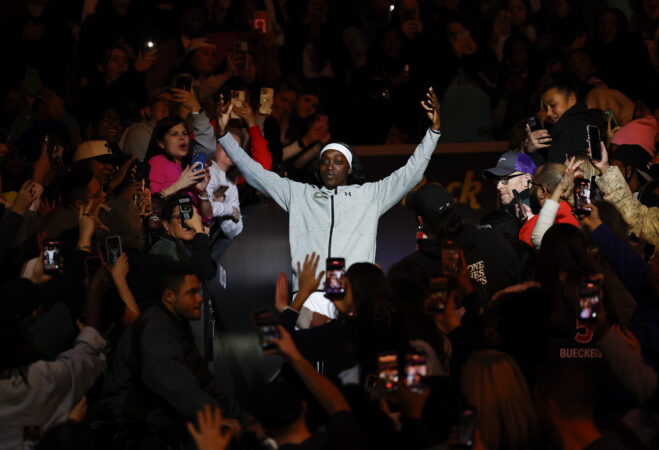
Kahleah Copper introduced in front of the Philly crowd. Got something cooking on her that you’ll be able to read tomorrow 👀
Yet because of work and family obligations for Copper’s mother, Leticia, Kahleah often needed a ride to practices or AAU games. Worley and his family stepped in. Reminiscing about that kindness is what first made Copper’s voice waver in front of reporters on Thursday. The next day, Worley called the gesture “easy” because of the Copper family’s honesty about their situation and appreciation for the support.
“She trusted us with her baby,” Worley said of Copper’s mother. “She was like, ‘Hey, I know y’all are good people. I know you have her best interests at heart. Come get her. What time do I need to have her ready? She’s going to have her bags packed and ready to go.’”
Copper later moved to 23rd and Diamond, into the same Raymond Rosen projects where basketball legend Dawn Staley grew up. Copper started playing at Hank Gathers Recreation Center and walked Broad Street to Temple to join the pickup games with the women’s basketball team.
Eventually, Copper branched out, starring in college at Rutgers before turning pro. She blossomed into a four-time All-Star and won the 2021 WNBA championship and Finals MVP. She played overseas in Belgium, Poland, Turkey, Israel, and Spain. This past fall, she helped the Phoenix Mercury to a surprise Finals run, upsetting the defending champion New York Liberty along the way.
Then Unrivaled, the offseason league in its second season, finally brought Copper home to play professionally.
Veteran star Skylar Diggins sat behind Copper on the bus once they arrived, watching her take in her hometown. Copper kept a camcorder handy to document everything from the familiar surroundings to her teammates crammed in an elevator in their hotel. Awaiting everybody was a massive cheesesteak order from the iconic Dalessandro’s, ready for Copper to dress her sandwich with mayonnaise, salt and pepper, and ketchup (but no onions).
“Everybody I know [eats it that way],” Copper said. “That’s real Philly right there.”
All four Unrivaled teams practiced at the Alan Horwitz “Sixth Man” Center located about 10 minutes from where she grew up. She marveled at the easily accessible “safe space” — complete with study areas, therapy rooms, and meals — it provides area kids today. That is where she first reunited with Worley, the coach calling it “genuine love.” Copper then spent time with some of Worley’s current players, along with kids who have grown up attending Copper’s summer camp, launched nine years ago.
“Now it’s time to really cement your legacy,” Worley said, “by paying it forward for the next generation.”
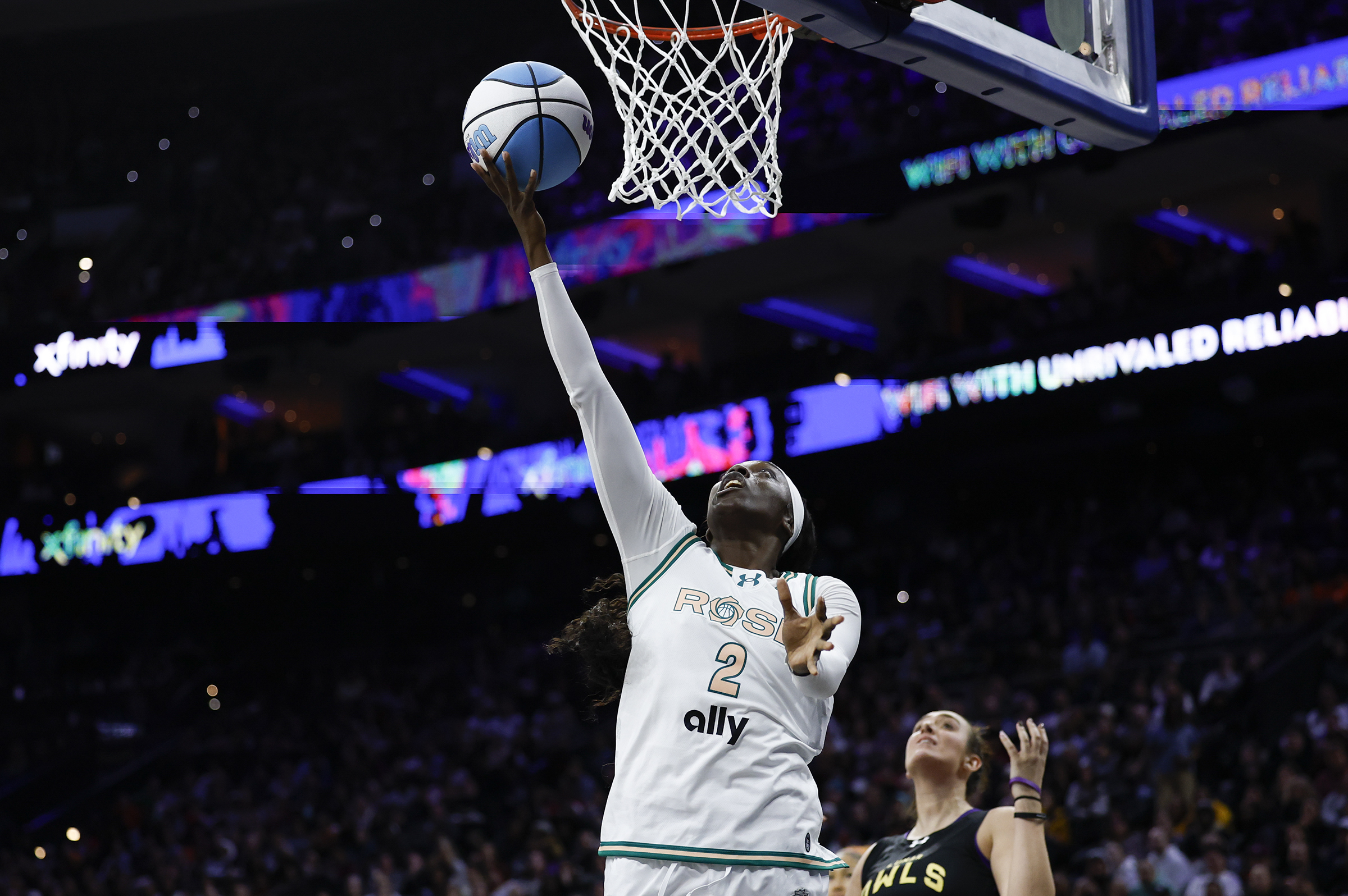
Kahleah Copper of the Rose scored 19 points and had four rebounds during the Philly Is Unrivaled doubleheader on Friday.
And with her Rose BC teammates in tow, Copper still squeezed in that neighborhood walk she made countless times as a kid. They began at the park and then moved to the pole with the backboard, which Copper said left everybody “in awe.” Then they went to her home, sat on the stoop, and yelled “Norf!”
Throughout the stroll, Copper pointed out her favorite water ice stand and go-to gas station. She shared memories of trying to hurry back home before the streetlights came on. It all illustrated why, in teammate Shakira Austin’s words, Copper is an “embodiment of Philly.”
“You can just see the way she speaks about things,” Austin said Friday. “She’s so excited about this opportunity and about this experience. She’s been rambling a lot, but it’s so fun to hear and just to see her be her true self.
“She’s probably been the most out of her shell since we’ve been here.”
Copper took all 60 tickets provided by Unrivaled for “her people” to attend Friday’s game, with several others sharing that they had bought their own. She could not wait to scan the crowd and “probably see people I haven’t seen since I was maybe in college, or maybe in high school.” After the Rose’s 85-75 loss, in which she totaled 19 points and four rebounds, Copper ventured into Section 123, wrapping those loved ones in hugs and posing for photos.
Many of them know all about 32nd and Berks, and the pole with the backboard. And now, so do her Unrivaled teammates.
“I made them walk in that cold,” Copper said. “But they love so much, so they did it for me. I was just super grateful to be able to show that little piece of me.”
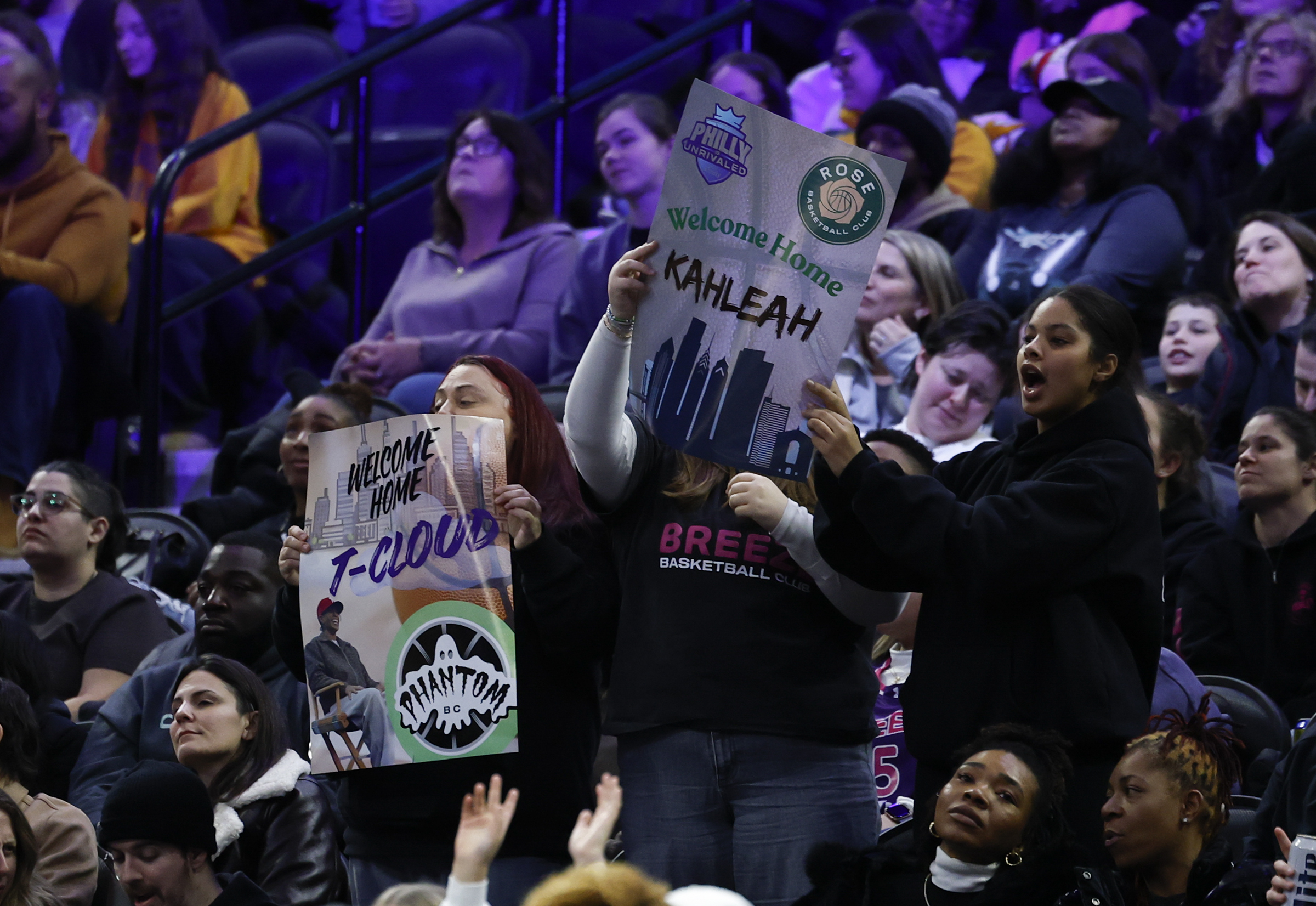
Fans hold up their signs supporting Kahleah Copper of the Rose and Natasha Cloud of the Phantom during the Philly Is Unrivaled doubleheader on Friday.
STATE COLLEGE, Pa. — Foreigner blasted from the stadium’s speakers.
“You’re as cold as ice,” Lou Gramm sang.
For the 74,575 fans packed into West Shore Home Field at Beaver Stadium, it’s fair to say that was an accurate description of how they were feeling Saturday. The faithful stayed outside in freezing temperatures — it was 16 degrees Fahrenheit at puck drop, but felt colder — willing to sacrifice their own bodies to watch Penn State host Michigan State in the first outdoor game at the home of the Nittany Lions.
“I think it’s cool. It’s like going back to hockey’s roots,” said Penn State alum Billy Maney. “It’s just a different environment and each stadium I’ve been to, or each event, it’s been unique.”
Sporting a 2010 Winter Classic Flyers jersey, Maney — who said it was way colder in Happy Valley than for that game at Fenway Park — wore three to four layers. His game plan to stay warm was to run the stairs, like how Montreal Canadiens coach Martin St. Louis does at the Bell Centre after his team’s morning skate.
Some scenes from the outdoor game at Penn State. Have seen NYR, CHI, WPG, BUF, WSH, NYI, and of course, lots of #Flyers jerseys from Rod Brind'Amour to Shayne Gostisbehere to Keith Yandle. pic.twitter.com/x4JyQVqSP4
He wasn’t the only one strategizing how to stay warm as the sun arced east to west during the three hours it took to complete a 5-4 overtime victory for the Spartans. Michigan State’s Charlie Stramel, a Minnesota Wild prospect, capped off his hat trick in the extra session to win it for the Spartans.
Boxes and boxes of hand warmers welcomed revelers as they entered, with each person bundled up and ready to face the tundra of Beaver Stadium. That is, everyone but the students standing under the press box shirtless for most of the game.
The men, who dwindled from 15 down to five as they turned redder and redder from the cold with each passing goal, would yell “Take it off” to other fans, intermixed with the usual “We are” chants from the rest of the crowd.
“It’s the first time,” explained Brian Keck, a Penn State alum who traveled from York to stand in the cold all bundled up with 15 of his former classmates and their families for a winter weekend, something they’ve done for the last 20 years.
“It’s going to be a great event, and always, Penn State sporting events are the place to be when it comes to sports.”
Despite the ice needing repairs throughout, it was truly a spectacle as No. 5 Penn State hosted No. 2 Michigan State. It had a football vibe as the Blue Band played, and flags with “We Are” and “Penn State” ran up and down the field after every goal for the hometown team. And the team that normally calls the field home, lined the rink and marveled as pucks hit the glass — and some went over the netting — during warmups.
“It’s one of our first experiences with another team here,” said Tony Rojas, a linebacker for the Nittany Lions, in a custom hockey jersey with his No. 13 on the back. “It’s a cool experience and obviously to cheer on the guys at Penn State. We’re all together.”
But it also had an NHL vibe with jerseys for the Washington Capitals, Chicago Blackhawks, Pittsburgh Penguins — former Flyers forward Jaromír Jágr was spotted on one — Winnipeg Jets, New York Rangers, and of course, the Orange and Black dotting the crowd. Flyers orange is an easy color to spot at games in general, and Saturday was no different, as prospect Shane Vansaghi could see the faithful while on the rink.
“So fun,” Vansaghi said of the experience. “Probably one of the best experiences I’ve ever been a part of in terms of my hockey career. It’s got to be up there with probably the most fun game that I’ve ever played.
“And just the way it ended, the way it went, it was fun. … Competitive, tight game back and forth, so it’s just fun to be a part of those games, especially playing in front of [more than] 74,000 people.”
Growing up in St. Louis, Vansaghi didn’t get to experience outdoor hockey often, although there was a bitter cold snap when he was 12 or 13 years old, so he had about two weeks to skate outdoors. Despite his inexperience, he was an old pro at it with eye black and zero extra layers thanks to the heated benches; however, he did confess his toes and his hands were a little cold at the end of the game.
His teammate and fellow Flyers prospect, Porter Martone, “grew up and found the love for the game on an outdoor pond,” as a youth in Ontario, Canada.
“It is pretty special to play an outdoor game,” said Martone, who had three assists on Saturday after collecting the game-winner and two assists in Friday’s 6-3 win at Pegula Ice Arena.
“I remember when I was 2 years old, just skating on that rink and just learned how to fall in love with the game, and that’s where I kind of learned all the skills and kind of all the little things.”
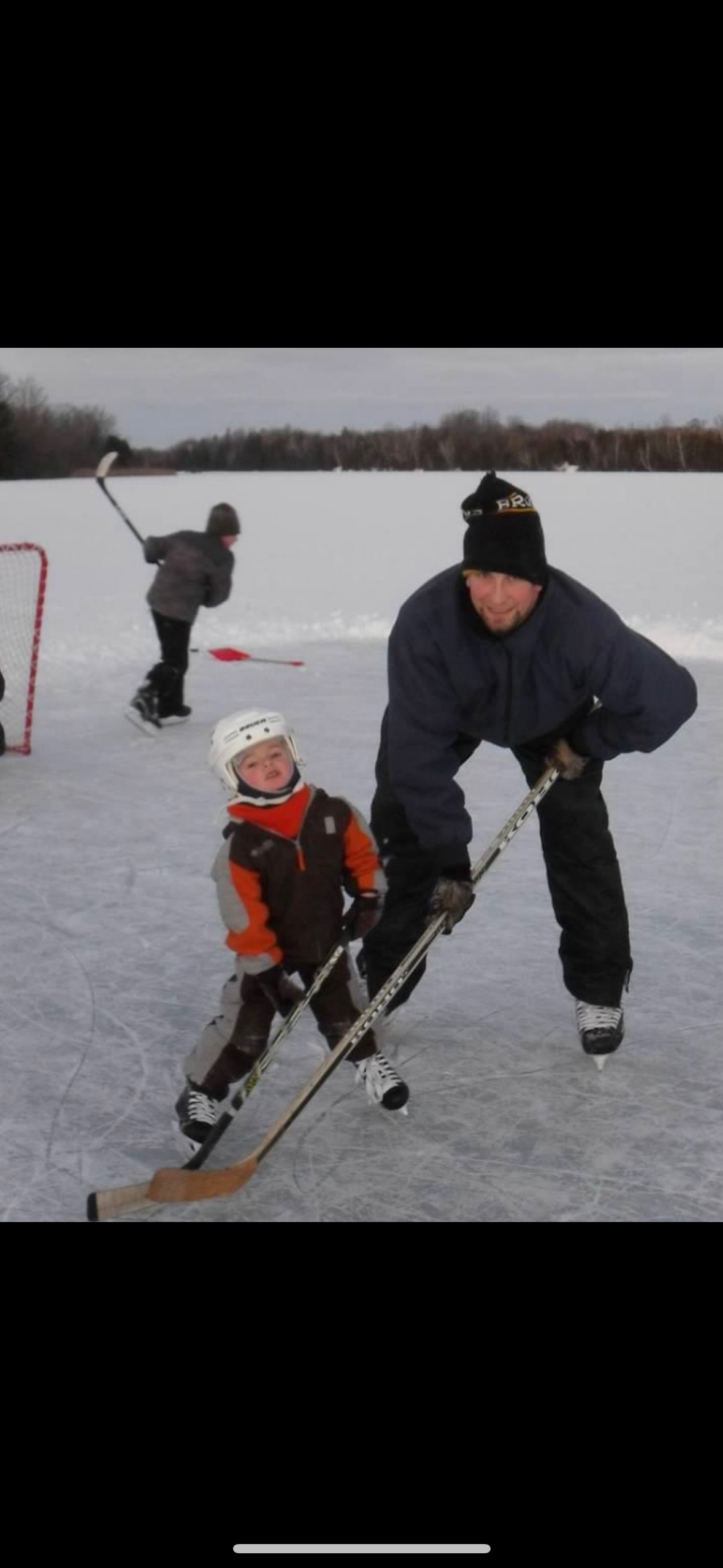
Porter Martone grew up playing on the ponds in Ontario.
While there was a lot of blue and white, there was also Michigan State green. Jayson Lottes and Michael Regan came with five layers to insulate them from the cold. They drove from Bethesda, Md., and Wilkes-Barre, respectively, to cheer on their alma mater. “It’s exciting for the sport. Having so many people here is a great thing,” said Regan.
But the Penn Staters were the loudest and proudest since they had, literally, home-field advantage. With each goal by their team, a roar echoed around the stadium, and white pom-poms pumped to the music.
No reaction was bigger than when Gavin McKenna, the projected No. 1 pick in the 2026 NHL draft, showed off his high-end talent and tied the game 2-2 in the second period.
“I kind of blacked out on that one,” said McKenna, who grew up skating outside in Whitehorse, Yukon, of his animated reaction. “I think just the emotions in that game, obviously, with the crowd, the atmosphere, how tight of a game it was, it’s pretty easy to get excited like that.”
The game was another major milestone for a school that is becoming a hockey valley. Fourteen years ago, Penn State became a Division I program. Last season, they reached a Frozen Four normally dominated by blue-blood teams from established hockey states like Massachusetts, Minnesota, Michigan, and Colorado.
On Saturday, the University filled a football stadium with not just hockey fans but with Penn State hockey fans.
“I went to every coach on our staff and said, ‘Look behind you,’ because when you looked behind you, it was just absolutely jammed,” Penn State coach Guy Gadowsky said. “And people were into it. I couldn’t believe it was a hockey game; I really couldn’t. It just blew me away. Constantly, numerous times, every period, I would just look around at the atmosphere and just take it in. I don’t know how to explain it.
“It’s very, very humbling that I get to be a part of something like this.”
Spotlight PA is an independent, nonpartisan, and nonprofit newsroom producing investigative and public-service journalism that holds power to account and drives positive change in Pennsylvania. Sign up for our free newsletters.
HARRISBURG — Rents are soaring, homelessness is rising, and homeownership is out of reach for many families in Pennsylvania. As the state grapples with a serious housing shortage and affordability dominates the national political conversation, Gov. Josh Shapiro is preparing to release a long-awaited plan to tackle the crisis.
The plan, first announced in late 2024, will draw on months of outreach to advocates, developers, and local officials. Supporters hope it will offer a clear path forward and build momentum around proposals that can win support in Pennsylvania’s politically divided legislature. But significant obstacles stand in the way.
“The housing crisis has risen to the level such that none of the four caucuses can ignore it,” said Deanna Dyer, director of policy at Regional Housing Legal Services, a nonprofit law firm.
The housing shortage is a nationwide problem, but Pennsylvania has been particularly slow to build new units. The shortfall leaves families squeezed by rising costs, pushes recent graduates to take jobs in other states, and makes it harder for companies to expand.
Other states are passing laws to loosen local zoning restrictions and encourage new development — despite often fierce opposition from groups representing local governments.
Similar efforts in Harrisburg have not yet gained traction, although more lawmakers are exploring solutions, said State Rep. Lindsay Powell, a Democrat representing Pittsburgh who cochairs the House Housing Caucus.
“Pennsylvania has an opportunity to really push itself forward here.”
Falling behind
Underlying Pennsylvania’s housing crunch is the law of supply and demand.
Between 2017 and 2023, the number of households in Pennsylvania grew by 5%, according to a recent report from Pew Charitable Trusts, a think tank. Over the same period, local governments issued only enough building permits to increase the state’s housing stock by 3.4%.
That left Pennsylvania ranked 44th out of 50 states on the rate of housing built.
“The most important driver of affordability is whether there are enough homes for everyone,” said Alex Horowitz, Pew’s director of housing policy.
High demand for existing units, combined with a lack of new supply, gives landlords more leverage to raise rents and drives up house prices, Horowitz said.
“The shortage is what is causing housing to get so expensive right now.”
The problem is not spread evenly across the state. Costs have risen the most in areas with growing populations that have not added enough housing, including the Philadelphia suburbs, Northeastern Pennsylvania, and cities like Harrisburg, York, and Lancaster.
To keep up with the demand, state officials estimate, Pennsylvania needs to build 450,000 units by 2035 — a 70% increase in new construction.
In September 2024, Shapiro signed an executive order directing the Pennsylvania Department of Community and Economic Development to create a statewide plan to increase the supply of housing, and to review the effectiveness of existing programs. The executive order also requires the Pennsylvania Department of Human Services to conduct a separate review of policies to address homelessness.
“We don’t have enough housing, the cost of housing is going up, and the housing we do have is getting older and is in need of more repairs,” Shapiro said, announcing the plan.
Since then, DCED has received feedback from almost 2,500 people and organizations, and held 15 listening sessions across the state, a spokesperson said.
A draft was due to be submitted to the governor’s office in September, according to the executive order, but the details have not yet been made public.
Zoning headaches
In roundtables and written feedback, state officials heard about problems small and sweeping. One issue came up repeatedly, according to interviews with participants and a review of hundreds of pages of written recommendations obtained through the state Right-to-Know law: To build more housing, Pennsylvania needs to change local zoning rules that stifle new construction.
There are a number of ways the state could approach this. Many municipalities reserve most of their land zoned residential for single-family homes. Pennsylvania could allow apartment buildings on land currently zoned for commercial use, or near public transit, or legalize accessory dwelling units, like backyard cottages and granny flats.
Changes like these would require revising the municipal planning code, the state law that gives local governments authority over land-use decisions.
These changes would also make it easier to address rising demand for smaller units, as the average household size falls and more people live alone.
Any attempt to change zoning laws, however, will likely face strong opposition from groups representing Pennsylvania’s municipalities. They argue that local governments know their communities best and should retain control over decisions about land use. They also say the focus on zoning overlooks other factors contributing to the housing shortage, like the rising cost of construction materials and supply-chain disruptions.
Municipal zoning laws are “often scapegoated” as the culprit for a lack of affordable housing, Logan Stover, director of policy and legislative affairs at the Pennsylvania State Association of Boroughs, told Spotlight PA in a statement.
In October, a senior Shapiro staffer working on the housing plan told a local group in Lancaster the plan would focus on “incentives rather than mandates,” with a points-based system to give communities that adopt pro-housing policies priority for state funding. Communities with policies that restrict new development could be disqualified, he said.
At least six states — including California, Massachusetts, and New York — have already created incentive programs, which vary in design and enforcement mechanisms.
These efforts have not proven as effective as broader statewide zoning changes, said Horowitz, the Pew researcher.
“States that tried that early on didn’t see the supply response,” he said.
The state plan will also likely focus on how to simplify and speed up local permitting processes, which can delay construction with time-consuming paperwork and unpredictable outcomes. Streamlining state permitting has already been a major focus for Shapiro.
Focus on preservation
Pennsylvania doesn’t just need to build more housing — it also needs to help people stay in their current homes, state officials heard.
Groups that provide free legal services to low-income residents say there has been a dramatic increase in the number of people seeking help with evictions, foreclosures, and similar problems. In 2024, legal aid providers said, housing made up a third of all their cases — the single largest category.
They also urged state officials to keep pushing to seal eviction records in some cases, which Shapiro has said he supports but would require changing state law.
Another common thread was the need for a permanent source of funding to help low-income homeowners with repair costs. The state has some of the oldest housing stock in the U.S.; more than 60% of houses were built before 1970.
Investing in home repairs is broadly popular but has proven politically challenging.
In 2022, the state legislature agreed to spend $125 million in federal pandemic aid to create a new home repair program.
Demand was overwhelming: Some counties were able to take applications only for a few days and thousands of homeowners ended up on wait lists. The program was widely praised for its flexibility, which allowed administrators to help homeowners who would not have been able to get help from other programs, although some counties ran into administrative difficulties.
The program was created with bipartisan support, but efforts to continue it with state funding in 2023 and 2024 were unsuccessful. Last year, Shapiro proposed $50 million for a new, rebranded repair program, but the money didn’t make it into the final budget deal.
Looking ahead
Although Shapiro could make some changes through executive action, many of the suggested policy goals would require legislation.
Housing has proven to be an issue that can cut through political divides in Harrisburg, where Democrats control the state House and the governor’s mansion while Republicans hold a majority in the state Senate.
In recent years, lawmakers have agreed to a series of funding increases for a grant program to build and repair affordable housing. They also supported Shapiro’s proposal for a major expansion of a program that gives older and disabled residents a partial refund on their rent and property tax payments. The changes, which took effect in 2024, made more Pennsylvanians eligible and boosted the value of the rebates.
Between July 2024 and June 2025, more than 25 states passed legislation aimed at increasing the supply of housing, according to an analysis by the Mercatus Center, a libertarian think tank. Pennsylvania was not one of them, although lawmakers in both chambers have unsuccessfully introduced bills to loosenzoning requirements.
More recently, lawmakers from both parties have circulated proposals that echo some of the recommendations floated during the outreach for Shapiro’s housing plan. Republicans who control the state Senate say addressing the housing shortage will be a “key focus” for their caucus this year.
State Sen. Joe Picozzi (R., Philadelphia), chair of his chamber’s Urban Affairs and Housing Committee, plans to introduce legislation that would offer grants to local governments that work with developers to build housing near centers of employment. “To qualify, communities must show they are committed to smart housing policies — like updating zoning, faster permitting processes, or preparing development-ready land,” according to a legislative memo.
This year represents a real opportunity to make progress on the housing shortage, said State Rep. Jared Solomon, a Democrat representing Northeast Philadelphi,a who has sponsored several pieces of legislation aimed at adding more housing.
“We’re all seeing the same thing in our neighborhoods — we all know we have to be proactive about it,” Solomon said.
BEFORE YOU GO… If you learned something from this article, pay it forward and contribute to Spotlight PA at spotlightpa.org/donate. Spotlight PA is funded by foundations and readers like you who are committed to accountability journalism that gets results.
As Philadelphia endured another day of historically frigid temperatures, outreach workers on Friday fielded hundreds of calls for shelter as warming centers filled with people seeking respite from the cold.
In the mazelike concourse at Suburban Station, a Project HOME outreach worker hugged clients and encouraged them to head inside.
At the Hub of Hope, the nonprofit’s drop-in center in the concourse for people experiencing homelessness, dozens lined up for hot meals. Later that night, as they had for the last several days, staff would set up cots for up to 80 people with nowhere else to go.
Typically, the Hub closes in the early evening. But amid the ongoing freeze, it’s open 24-7 as city officials and homeless services providers work to keep vulnerable Philadelphians safe.
Last month, the city declared a “Code Blue,” a designation that opens additional shelter beds and other resources. Ever since, the nonprofit’s hotline has fielded more than 6,000 calls, an average of more than 500 a day.
Normally, it receives about 140 a day.
“Many calls are concerned citizens who see someone who is homeless and want a team to go and check on them. Some are people who are literally homeless right now and need a place to go. Some are facing eviction and scared, reaching out for their options,” said Candice Player, the nonprofit’s vice president of advocacy, public policy, and street outreach.
“The extreme cold challenges us and pushes us even harder.”
City officials navigate a lengthy cold snap
When the wind chill makes it feel like it’s 20 degrees outside or lower for more than three days, the city can declare what is called an enhanced Code Blue. The distinction opens up furtherresources, including daytime and nighttime warming centers.
Cheryl Hill, executive director of the Philadelphia Office of Homeless Services, describes these periods as an all-hands-on-deck situation. Hill said that “every city entity can be outreach” during this time, and that work can also be aided by members of the public, who have been quick to call for help.
“We are all basically helping our neighbor, in essence — we see them out on the street, we want to help,” Hill said. “As a result, outreach is getting a lot more calls to go and check on those individuals.”
Philadelphia declared an initial Code Blue on Jan. 18 and an enhanced Code Blue on Jan. 20.
The city has about 3,500 shelter beds, which can become open as people get placed in longer-term housing.
If the beds reach capacity, the city has additional overnight spaces at warming centers, primarily in recreation centers. People who spend the day at warming centers that close overnight can receive transportation to a nighttime center.
People who need a ride to a warming center can ask for transportation at their local police district, city officials said.
On average, the overnight warming centers have provided shelter to about 300 to 400 people across the city per night. Last Monday night, after 9.3 inches of snow had blanketed Philly, warming centers sheltered just shy of 450 people.
Last year, peak usage of warming centers hovered around 150 people, Hill said.
Still, helping the city’s most vulnerable off the streets can be difficult even in the best of circumstances.
On Friday afternoon, a sign posted at the South Philadelphia Library informed people visiting to get out of the cold that they could eat and sleep in a section designated as a warming center. Librarians and community support groups collect and provide snacks, along with hand-warmers and other essentials, for those who need them.
Even so, only a handful of people sat in the area. A woman yelped in pain as she rubbed a blackened toe. Children played with blocks in another corner of the library as others checked out books.
The homeless services office tries to have medical staff at warming sites, but more serious cases get sent to the hospital.
In extreme cold, as a last resort, people with serious mental illnesses who refuse to come inside and are underdressed could be involuntarily committed.
Homeless services providers said they are working around the clock to care for clients exhausted by the struggle of simply staying warm.
“The experience of being homeless in this brutal cold is awful, and the folks who come in are just worn down,” Playersaid.
At shelters run by the Bethesda Project, staff are trying to keep residents’ spirits up and encouraging them to stay inside as much as possible, said director of shelter Kharisma Goldston. “One of our guests was doing haircuts last night,” she said. “We try to do a lot so guys don’t feel like they’re trapped inside.”
Staffers set up additional beds to accommodate more clients, she said.
“We do our best to set up however many beds we can,” she said. “When it’s this cold, it takes a very short amount of time for hypothermia to set in.”
Rachel Beilgard, Project HOME’s senior program manager for outreach, said that outreach teams have encountered several people suffering from frostbite who were involuntarily committed. Some, she said, risked limb amputations if they had stayed outside any longer.
But many people who typically refuse offers for shelter from outreach teams are now accepting help, Beilgard said. “We’ve had a lot of folks this winter who say, ‘Once it starts snowing, come find me,’” she said.
Tim Neumann works with people experiencing housing instability, in Philadelphia.
The count, taken every year at the behest of federal housing officials, happens over one night in January; city workers and volunteers fan out across the city to physically count people sleeping on the street and those in shelters. Federal officials use the count to gauge funding allocations, and city officials look to it to understand the needs on the streets.
The Jan. 22, 2025, count was also taken during a Code Blue, although temperatures were not as frigid as they were last week. It found that homelessness rose by about 9% between 2024 and 2025, after a 38% jump the year before. In Kensington, the number of homeless, unsheltered people dropped by about 17%.
The number of people experiencing chronic homelessness rose by 49%. This is a designation tightly defined by the federal government as a homeless person with a disability who lives in a shelter or in a place that is not meant for habitation, and who has been homeless for a full year, or homeless at least four times in the last three years for a total of 12 months.
The category also includes people who fit these criteria but have entered jail, rehab, or another care facility in the last three months. Most of Philadelphia’s chronically homeless residents were living in emergency shelters.
City officials and providers said a number of factors likely contributed to the increase.
People with substance use disorder and mental health issues are vulnerable to becoming chronically homeless, especially in Philadelphia, where a toxic drug supply causes wounds and intense withdrawal that keep many from seeking shelter. But a lack of affordable housing, low wages, job loss, or a major health issue can also put residents at high risk for homelessness, stressed Crystal Yates-Gale, the city’s deputy managing director for health and human services.
Hill also said that in recent years, Philadelphia has lost bids to receive competitive housing funds from the federal government.
“We’ve been working really intentionally to make sure that our programs will get funded” in the future, Hill said.
Yates-Gale also pointed to Mayor Cherelle L. Parker’s December executive order directing city officials to add 1,000 beds to the shelter system by the end of January. As of last week, the city had added 600 winter shelter beds that are crucial during the enhanced Code Blue and will eventually become available year-round, she said.
Anecdotally, neighborhoods have reported decreases in homelessness since last year, Hill said, although officials will have to wait until February to conduct the count this year.
The count had originally been set for Wednesday, but the city canceled it due to the cold — and because too many outreach staffers were at work getting people inside.
Editor’s note: This article has been updated to reflect that library staff and supporters provide people using daytime warming centers with snacks.
Or carrying a salon’s worth of hair products through airport security?
Cruise ships used to be about sailing and the sea. If you wanted to rent a room, you went to a hotel. People wore hard pants on planes.
Those were such quaint times.
The past quarter-century has been a whirlwind of change. In the world of travel alone,there have been innovations and inventions, sobering tragedies and surprising trends.
Smartphones and other technological advances have completely altered how we move around the world and communicate with one another. New experiences have opened up for more diverse populations and in places once accessible only to penguins and extreme explorers.
In 2026, we can’t imagine traveling like it was 1999.
As we enter Q2 of the 21st century, our staff discussed the biggest moments and advances that took place between 2000 and 2025. Then we asked industry stalwarts for theirs. The list of 25 is a reminder that the business of travel takes us to places that we couldn’t imagine — and then makes them a given.
1. Smartphones put maps in our hands
In the old days, there was paper. Drivers referred to road atlases or marked routes on giant maps. Tourists explored new cities with walking routes laid out in guidebooks. Later, we printed out turn-by-turn directions from MapQuest.
Smartphones equipped with Google Maps gave us a new way to get around the world, on foot or by bike, car, or public transportation.
“All of a sudden, it’s there at your fingertips,” said Samantha Brown, host of Places to Love on PBS. “It’s like this whole world becomes opened to you.”
2. Everyone sees your vacations
Social media has forever altered travel — for better and for worse. It has widened the audience for your vacation photos from a slideshow party to everyone you’ve ever friended on Facebook.
With one click, you can keep tabs on a travel fling for the rest of your digital days. (Weird!) It has allowed us to learn about pockets of the globe we’d never find otherwise and has given a voice to the often-overlooked, such as disenfranchised locals and behind-the-scenes industry workers.
On the darker side, social media has fueled overtourism, FOMO, and trip envy. Influencers disrupt peaceful natural wonders. Viral posts cause long lines and traffic jams, and travel selfies have led to countless — and sometimes fatal — accidents. (Don’t get us started on AI travel influencers.)
3. The demise of customer service
Flight’s canceled? Wrong charge on your rental car bill? Good luck dialing zero: The age of the helpful human operator is over.
Talking to a human to solve your hotel, airline, cruise, or vacation package problem has become Kafkaesque. Unless you’re traveling at the luxury level, the decline of front-desk workers and customer service centers in favor of artificial intelligence “solutions”is now ubiquitous — and often infuriating.
4. Cruises become floating theme parks
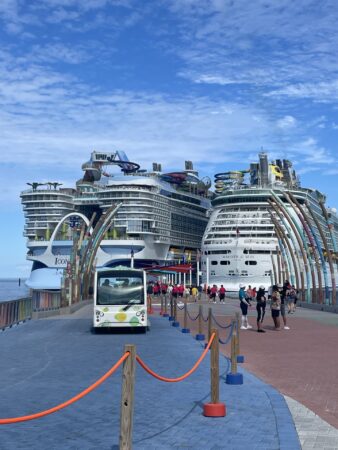
When the world’s largest cruise ship debuted in 2009, it visited some islands, but many people considered the behemoth Oasis of the Seas a destination of its own: The ship held 5,400 passengers at two to a room.
Megaships have gotten even bigger since — Icon of the Seas and Star of the Seas are now the world’s largest — and operators battle for onboard thrills. You can ride a roller-coaster around the top of some Carnival Cruise Line ships, simulate skydiving on Royal Caribbean, or navigate a go-kart on Norwegian. And yes, there are still pools and buffets if you’re old-school like that.
5. The ‘bucket list’ gives us a new framework
In the 2007 film The Bucket List, two men diagnosed with terminal cancer set off for an around-the-world trip to have as many adventures as possible before they “kick the bucket”: Visit the Taj Mahal. Go skydiving. Eat fine food in France. View wildlife on an African safari.
Before long, travelers and marketers turned “bucket list” into an adjective, applying the termto destinations, festivals, and natural phenomena. Travel became a checklist item in a new way — for better or for worse. (See: No. 6)
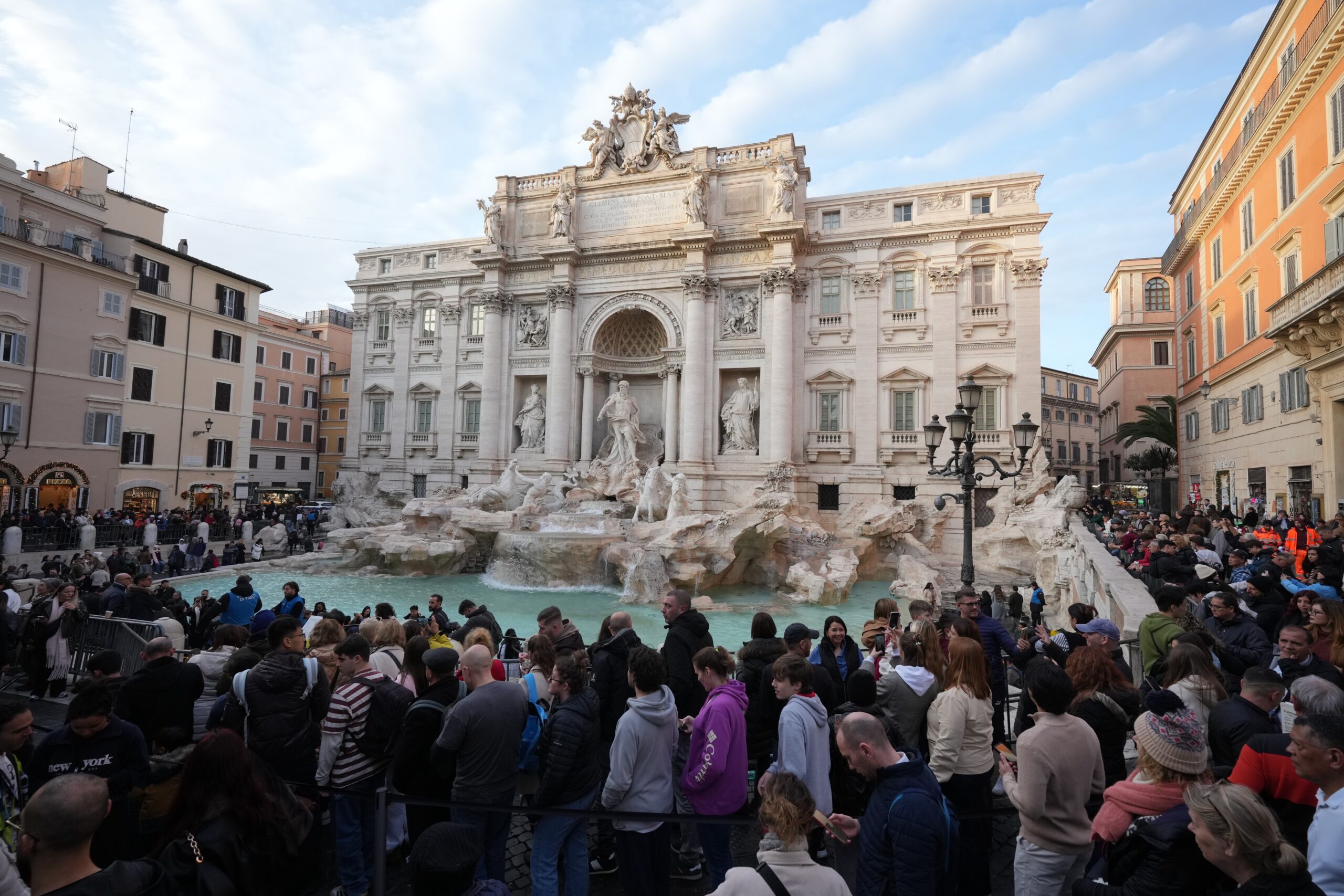
Visitors admire Rome’s Trevi Fountain, Friday, Dec. 19, 2025. Tourists are now being charged a fee to visit the fountain.
6. Overtourism clogs Europe’s icons
Europe has long had a popularity problem, but it has accelerated over the past 25 years. Blame it on social media or blame it on Hollywood, but these days, “everybody goes to the same places at peak times,” said guidebook author and tour company owner Rick Steves, “and it’s just insanity.” Travelers flock to Amalfi to get the same aesthetic beach-umbrella photos; they clog the streets of Santorini at sunset; they’re using up all the water in Sicily. Overtourism has become so untenable in European hot spots that authorities are now charging entrance fees for the Trevi Fountain and banning Airbnbs in Barcelona.
7. You can pay to skip the line
Hate waiting in line? Join the club. Have extra money to burn? Skip right on past the club through airport security and onto your plane, or through the throngs and onto your favorite theme-park ride.
TSA PreCheck, Global Entry, and Clear reduce airport waits for qualifying travelers willing to pay more. Some airlines offer priority boarding for a fee. At Disney parks, visitors who shell out extra cash can use “Lightning Lanes” to bypass lines.
The budget-minded among us can only wave and wait.
8. 9/11 creates the security state
Tragedy struck in 2001, and the airport experience has never been the same. The creation of the Transportation Security Administration and heightened security checkpoints — body scanners, X-ray machines, pat-downs, bomb-sniffing dogs — marked the end of regular-size liquids, foot modesty, and emotional send-offs at gates.
9. Your house is my hotel
Somewhere between the 2008 launch of AirBed & Breakfast and the global proliferation of Airbnb, short-term rentals transformed from a frugal traveler’s way to meet locals to rule-happy hosts’ way to get their linens washed before housekeeping arrives.
Like ride-hailing for car owners, short-term rentals gave anyone who owned property the ability to enter the hospitality business, creating new revenue streams — and new headaches for destinations with overtourism concerns and housing crises. Today, Airbnb’s market value is just a few billion shy of Marriott.
However, some bohemian networks (Couchsurfing, TrustedHousesitters, Reddit groups for apartment swaps) keep the dream of bed-bartering alive.
This image released by Focus Features shows Anthony Bourdain in Morgan Neville’s documentary “Roadrunner.”
10. Anthony Bourdain becomes the world’s travel host
In 1999, a brasserie chef gets published in the New Yorker, and all of his dreams come true. That article turns into a book. That book turns into another book, and then multiple TV series. “Bourdain” becomes bigger than life.
No television host before or since has connected with audiences the same way. Tall, devious, and handsome, Bourdain disarmed viewers with swagger and snark, then endeared himself to them with earnestness and humanity. He lauded haute cuisine and holes-in-the-wall with equal reverence. Behind the gross-out jokes and knife-sharp takes, there was a champion of the working stiff, a keen observer of history, a self-conscious artist with a deep love for writing and filmmaking.
He was a caricature in cowboy boots, a never-ending stomach, the collective id for everyone who dreams of going everywhere. He made us feel like we knew him. We didn’t.
11. Airlines abandon the middle class
Carriers once welcomed regular Joes and Janes with reasonable fares that included a seat roomy enough for their limbs. Carry-on bags, seat selection, and food and beverage service were on the house.
Then ultra-low-cost airlines — looking at you, Spirit and Frontier — upended the social order with a la carte pricing for nearly every amenity and transaction. The major carriers, meanwhile, adopted the unbundling model, turning the cabin into a real-life version of Downton Abbey.
12. COVID takes the workcation mainstream
The coronavirus pandemic sent many of us home. When we got tired of our own walls, we realized we could work from anywhere. It turned out that we liked the change of scenery.
Enter Zooms from the beach house, workdays wrapped up in time for sunset walks, and notes typed up from a sidewalk cafe. Some of us were brazen enough to take a “quiet vacation.”
Return-to-office mandates might be on the rise, but workcation habits will probably stick around, creating a new perk (or pain) for employers.
13. Points people gamify rewards
Gone are the days of mileage runs to nowhere and cashing in rewards for flights. Today’s Jedi masters of points and miles open new credit cards (those signing bonuses!) and charge all of their restaurant meals, groceries, travel reservations, and dog grooming appointments on high-yield cards, such as the Chase Sapphire Preferred or Capital One Venture X.
You can find these winners gloating in the airport lounge or in their premium seats at a World Cup match.
14. Anybody can explore Antarctica
Antarctic explorers don’t need Endurance — just several thousand dollars, seasickness patches, and a bathing suit for the polar plungeaboard an expedition cruise from Argentina.
15. The rise of the layover trip
Once considered dreaded pit stops, layovers have emerged as destinations unto themselves. Airlines such as Icelandair, Turkish Airlines, and Qatar Airways now pitch their hubs as a side trip or bonus adventure.
For the same ticket price, travelers can sample the local cuisine, soak up some culture, and sleep horizontally before returning to the airport and resuming their regularly scheduled vacation.
16. In-flight WiFi ends the age of unplugging
The airplane used to be one of our last sanctuaries from the connected world. A flight — or a cruise or a hike or a trip aboard — once offered a break from texts, emails, and conference calls. But thanks to advancements in technology, the untethered era is over.
Today, multiple airlines offer “fast, free” in-flight WiFi, and satellite internet makes it possible to work everywhere, whether on a yacht or in a yurt.
17. Hotel brands multiply like rabbits
We knew what we were getting into with a Courtyard by Marriott, a Hilton Garden Inn, or a Motel 6. But then came the hotel brand explosion: Your destination might offer an Aloft, a Spark, a Motto, or a Moxy.
You might wonder, Aren’t those just nouns? No, they’re part of hotel companies’ ever-growing ambition to get more heads into their beds.
18. Airlines tell passengers: BYO screen
Once upon a time, airlines put on a movie for the whole plane to watch from dangling monitors or, on a long-haul flight, a big, boxy TV screen. The in-flight entertainment situation got more glamorous when airlines began installing screens in seat backs in the late ’80s.
It was a luxurious shift, one that led to the discovery of a new societal phenomenon: the absolute pleasure of watching someone else’s airplane movie. But in the past decade, we’ve started seeing those screens disappear. Airlines claim they’re following passenger behavior: If we’re more likely to watch reruns of Lost on our personal devices than engage with seat-back screens, why keep investing in them?
19. Boeing tests our faith in air travel
Back-to-back crashes of Boeing 737 Max jets in 2018 and 2019 killed 346 people, shaking travelers’ confidence in the company while triggering the temporary grounding of the jet and years of scrutiny. Investigators pointed to flaws in a flight-control software system.
In 2024, a door panel missing key bolts broke off from a Max jet midflight, leading to new questions about the plane manufacturer’s safety culture. The company agreed to plead guilty to fraud later that year in a criminal case connected to the crashes, but instead reached a non-prosecution agreement with the Justice Department last year.
20. Athleisure takes over
The hordes of people flying, cruising, and sightseeing in yoga pants, moisture-wicking tops, sweatpants, and tracksuits are not part of a fitness flash mob. They’re today’s comfy travelers.
As millennials became the generation of leggings, the world followed suit. Some see this as a decline in civility, but travelers aren’t sweating it.
21. Southwest sells out
Southwest Airlines was always proud of standing out.
It didn’t do boarding like other carriers, didn’t slice up its cabins to charge more for the fancy front. It kept offering two (two!) free checked bags long after its competitors were raking in the cash for luggage.
But under pressure from investors, Southwest announced that it would shed its quirks and start acting like every other airline. Farewell, seating scrum. We miss you, free bags.
22. YouTube replaces travel TV
Turn on the Travel Channel, and you’re more likely to catch an episode of Ghost Adventures than your typical hosted travelogue. That sort of content has been democratized by social media.
Now, when travelers need information and inspiration for an upcoming trip, they’re turning to DIY creators on YouTube and TikTok. It’s where they’ll find (sometimes) realistic reviews alongside expert insights from the pros, no monthly subscription fee necessary.
23. Tripadvisor trumps guidebooks
Since Tripadvisor launched in February 2000, it has racked up more than a billion reviews, travel tips, photos, comments, and forum threads, making it one of the most abundant travel resources on the internet. (One of its most reviewed destinations? Pastéis de Belém in Lisbon, Portugal, famous for its egg tarts.)
The website and tour marketplace has been criticized for driving travelers to tourist traps, but it has also provided essential information to travelers since its founding. It’s one of the many crowdsourced platforms — like Yelp, Google Maps, and Reddit — that have turned guidebooks from must-have resources to old-fashioned extras.
24. More accessibility for people with disabilities
Innovations such as lightweight power chairs, adaptive adventure gear, sensory rooms, and navigational devices have cracked open the world for travelers with disabilities.
Travel is slowly becoming more inclusive as destinations, hotels, the transportation industry, parks, and attractions invest in accessible features for their tours, trails, and guest rooms.
25. Climate change
Where some see an existential threat, the travel industry sees an opportunity. Tourists are traveling to see “dying glaciers.” In Venice, Steves, the guidebook author, recently went on a walking tour with the theme “indicators of climate change.”
“This is something that really is taking its toll on Europe and impacting the way people travel,” Steves said.
Every year, Steves’s tour company takes tens of thousands of travelers to Europe, and every year, he notices that extreme weather is increasing. Now, as his company plans guided trips, it must factor in the potential for wildfires in Greece, heat waves in London, and sudden storms in Germany.
When President Donald Trump called on Iranian demonstrators to “KEEP PROTESTING — TAKE OVER THE INSTITUTIONS” in early January and pledged “HELP IS ON THE WAY,” I feared a shameful episode of American betrayal was about to be repeated.
“We are locked and loaded and ready to go,” he had promised these brave Iranians, fed up with decades of corruption and repression by the ayatollahs.
Human rights activists report that these words encouraged many ordinary Iranians to come to the streets.
My mind flashed back to January 1991, when President George H.W. Bush urged Iraqis to rise up against Saddam Hussein, as U.S. troops were liberating Kuwait, then allowed the Iraqi Kurds and Shiites who responded to be slaughtered by the thousands. On assignment in Iraq, I saw the bloody consequences, which undermined U.S. forces during the 2003 Iraq War.
Sure enough, history is repeating itself, this time in Iran. TACO Trump ignored the impact his braggadocio has on real people and reneged on his promises to the Iranians. Many thousands of demonstrators who believed him were shot dead in the streets by regime forces, and many more thousands jailed, beaten, and tortured.
Human rights groups estimate the number of dead at a minimum of 5,000, but we won’t know if the number is much higher until the regime stops blocking the internet. Iranian officials insist, contrary to Trump’s claims, that they won’t halt executions.
If Trump had moved quickly to do the possible — aid the protesters with satellite connections, isolate Iran at the United Nations, organize tighter sanctions against their oil sales and shadow fleet, cripple their military and government with cyberattacks — he might have made a difference. He still could.
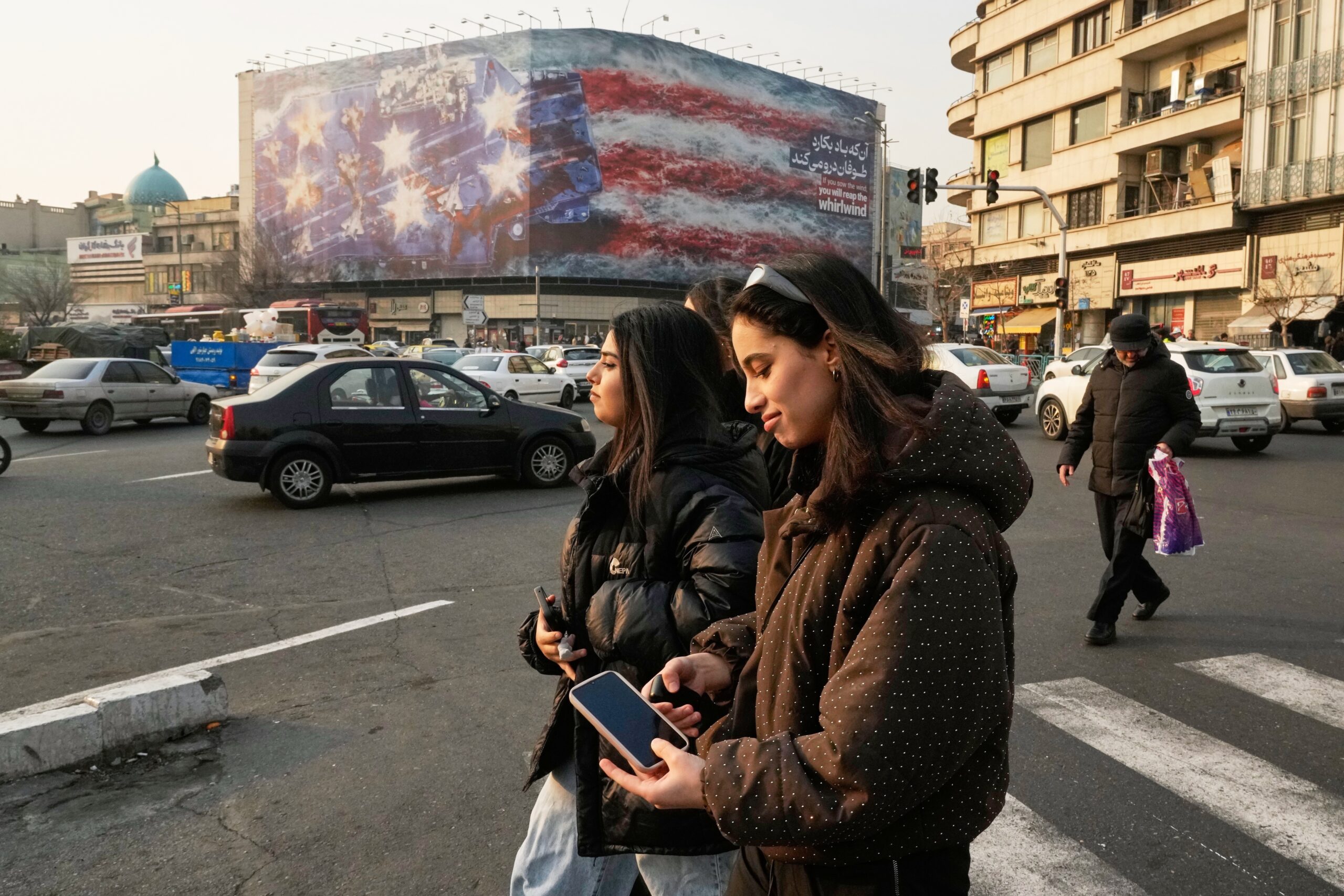
Two girls, not wearing the legally required headscarves, walk past a billboard depicting a damaged U.S. aircraft carrier with disabled fighter jets on its deck and a sign reading in Farsi and English, “If you sow the wind, you’ll reap the whirlwind,” at Enqelab-e-Eslami (Islamic Revolution) Square in Tehran, Iran, Sunday.
Instead, convinced of his own brilliance, surrounded by incompetent advisers, and possessed of a mistaken belief that he has the power to reorder the world, he has tweeted cheap rhetoric that only provoked more regime brutality on young people in the streets.
The consequence of betraying Iran’s citizen uprising will have ripple effects that Trump is unable to foresee.
“We’re in a very difficult situation,” I was told by Suzanne Maloney, a leading Iran expert who directs the foreign policy program at the Brookings Institution. “President Trump raised hopes without a strategy or the tools to carry it out. The tools [a massive U.S. armada dispatched to the region] have arrived too late to make a difference for the demonstrators on the street.”
Now that the uprising has been crushed, Trump no longer mentions the murdered protesters. Compassion is not his thing.
Instead, the president is seeking a deal with the ayatollahs to completely abandon their nuclear program, cut back their missile program, and stop meddling in the region.
In other words, as in Venezuela, the regime could remain if it bowed to the United States. The demands themselves lay out highly desirable objectives, but the regime recognizes that meeting them would leave them totally at the mercy of the U.S. and Israel. So it will probably delay or reject them.
Then what? Trump has likely boxed himself into conducting military strikes. Yet, bombs alone aren’t likely to unseat a government in which the military still has plenty of weapons and sees its fate as tied to the Islamic Republic. More likely, U.S. strikes would provoke a wider regional war, with attacks on U.S. bases in Arab countries and on Israel.
“Trump sees Venezuela as a model,” Maloney said, and indeed POTUS has said so. But in Venezuela, the CIA had inside sources who betrayed Nicolás Maduro and made his extraction possible. Moreover, the United States had previous contacts with Maduro’s vice president, swapping one dictator for another so long as she was willing to let Trump control Venezuelan oil profits. One limited strike, no messy follow-up with ground troops.
Iran, on the other hand, would be brutal, long, and messy, probably requiring U.S. ground troops, something Trump rightly won’t consider.
A man holds a poster of the Iranian Supreme Leader Ayatollah Ali Khamenei during a funeral ceremony for a group of security forces, who were killed during anti-government protests, in Tehran, Iran, on Jan. 14.
In Iran, said Maloney, “with the Revolutionary Guards and the clerical elite, there is not a pathway to a pro-Western leader who will bow to the U.S. They are going to go down fighting.”
As for Reza Pahlavi, the son of the last shah of Iran, who has some popularity in Iran, he has lived in exile in the United States since the 1979 Iranian Revolution and has no organization inside his homeland. U.S. experience with overhyped Iraqi exiles in 2003 taught diplomatic officials a bitter lesson, about which Trump is probably totally unaware.
Even if Iran’s supreme leader, Ali Khamenei, were miraculously slain, no one can guarantee what would come after. This is why the Saudis are urging Washington not to pursue regime change, and closing their airspace to any U.S. warplanes headed for Tehran.
Meantime, the trials and future executions of protesters will go forward.
So let me return to the bitter consequences of betraying allies who believed in the promises of the U.S.
The Shiites of southern Iraq never forgot Bush 41’s betrayal, during which he allowed a defeated Saddam to retain military helicopters that were used to slaughter at least 10,000 of their people who had answered the president’s call.
In 2003, just after the U.S. invasion, I returned to Najaf, the heart of Iraq’s south, where George W. Bush expected the Shiite population to welcome American troops. Instead, clerics and merchants recalled bitterly how their fathers and uncles had been slain in 1991. “You owe us,” one Najaf leader told me. “So kill Saddam and get out of Iraq, or we will turn on you, too.”
Instead, we remained in Iraq for years, and Shiite militias ultimately took revenge on our soldiers for the earlier betrayal.
Perhaps the population of Iran will be more forgiving if Trump devises a strategy that will help them, not cause more slaughter. But he doesn’t have much time.
When Will Yip was 12 years old, his future flashed before his eyes.
“The second I walked into the studio I knew that this is what I wanted,” said the Grammy-nominated music producer and engineer, sitting in the control room at Memory Music Studios, the new recording studio he’s built in the Whitman section of South Philadelphia.
“I remember the smell,” he said, recalling a visit to Ground Control Recording in Northeast Philly, where he and a friend paid $20 an hour to record two songs in 1999. “I always loved playing drums. But I was like: ‘This is cool!’ I still remember that feeling.”
That enthusiasm has guided Yip, beginning with the days when he was convincing bands like Philly hardcore quartet Blacklisted to record (for free) in his mother’s basement while still a student at Central High.
It’s stayed with him through two decades as one of the busiest producer-engineers in the music business at Studio 4 in Conshohocken, where he went to work at 19. He has co-owned the studio with mentor Phil Nicolo since 2012.
And Yip’s nonstop work ethic and command of his craft — “Will has a gift,” said Nicolo — has made him a go-to collaborator for acclaimed bands like Philly’s Mannequin Pussy and Baltimore’s Turnstile.
Yip recorded Turnstile’s breakthrough Never Enough at uber-producer Rick Rubin’s Los Angeles mansion in 2024.
Citing this recent work with Turnstile as well as rock and shoegaze bands Scowl, Die Spitz, and Doylestown’s Superheaven, music and pop culture site Uproxx named Yip 2025’s “indie producer of the year.”
Yip’s teaming with Turnstile has resulted in five Grammy nominations for the Brendan Yates-fronted hardcore-adjacent band.
If Turnstile triumphs in the rock album category, Yip — who was nominated for his work on Pittsburgh band Code Orange’s Underneath in 2021 — will come home from California with his first golden gramophone. (The other four nods are technical nominations for Yip. “If they win those,” he said, “They’ll give me a plaque.”)
But even if Yip returns empty-handed from the Grammys — which will be broadcast on CBS and streamed on Paramount+ at 8 p.m. Sunday from the Crypto.com Arena in LA — he’ll be coming back to his already up-and-running state of the art studio, where he’s turned a longtime dream into reality.
“Everyone is like, ‘Bro, why are you building a million-dollar studio? Aren’t studios dying?’” said the producer, who turns 39 this month.
“They are. But my brand of music, that I’m lucky enough to work with, is flourishing. Rock is back. I’ve waited my entire life for this, for people to want electric guitars. I’ve felt it bubbling for the last 10 years. And now it’s happening.”
Will Yip, owner of Memory Music Studios, speaks with music producer Steph Marziano.
At Studio 4 — which was headquarters to 1990s hip-hop label Ruffhouse Records, home to the Fugees, Cypress Hill, and Lauryn Hill — Yip has stayed busy.
How busy? A 2019 profile on the Grammy website was headlined: “Philly Producer/Engineer Will Yip Works Harder than You.” Muso, the music industry website that tracks creator credits, ranks Yip as the 88th most active producer, alive or dead, with 37,116 credits.
“I opened a studio because bands need to come to Philadelphia, and I was running out of space,” said Yip, who also co-owns Doom, the metal bar and restaurant around the corner from Franklin Music Hall.
“It was my dream to build a studio. But I wasn’t going to do one until it made sense. We were very calculated with what we were doing. I’m booked through 2027.”
Taking visitors on an early morning tour of the 7,500-square-foot facility before Southern California rock band Movements arrived for a session, he showed off Memory Music’s four rooms to record and mix music.
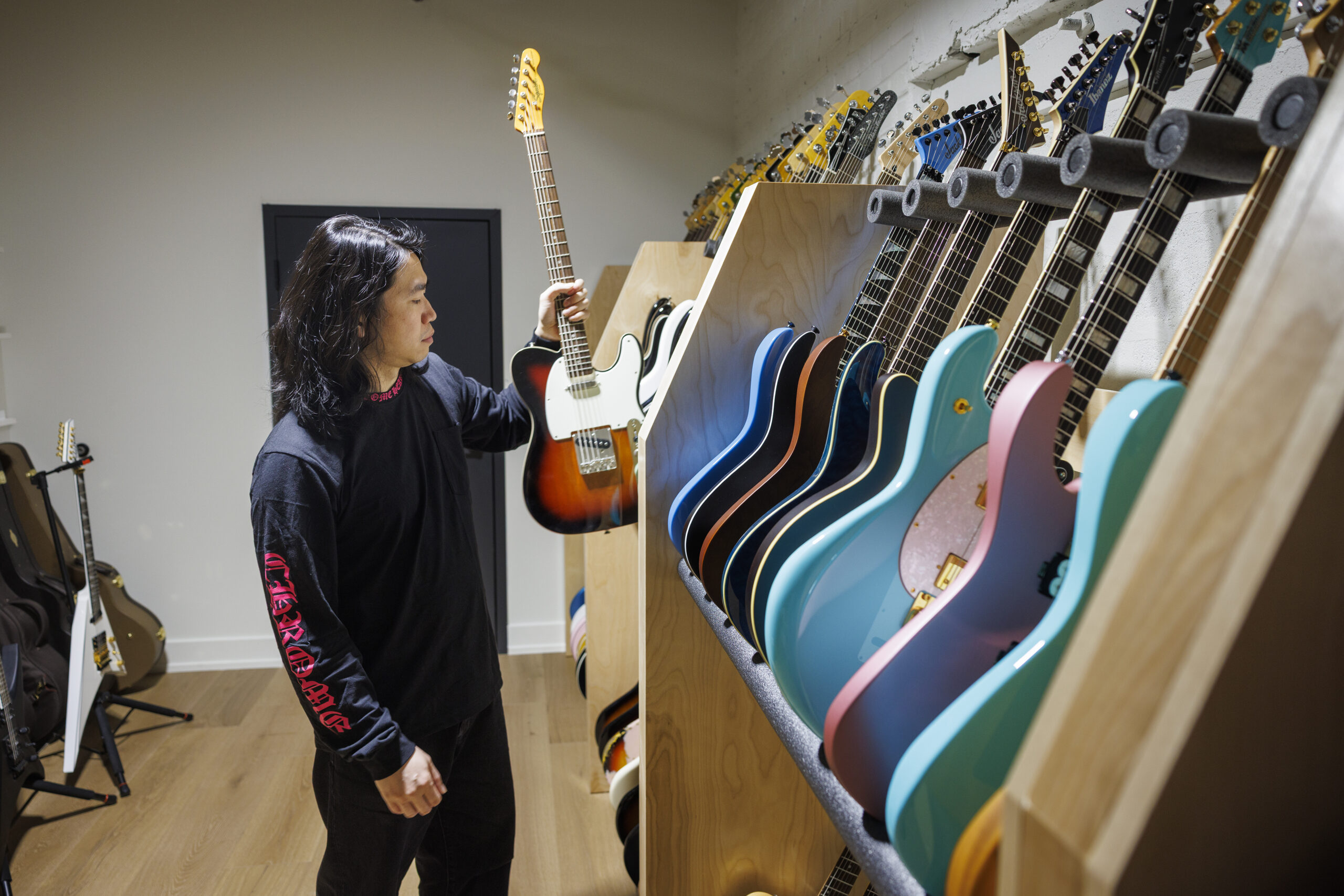
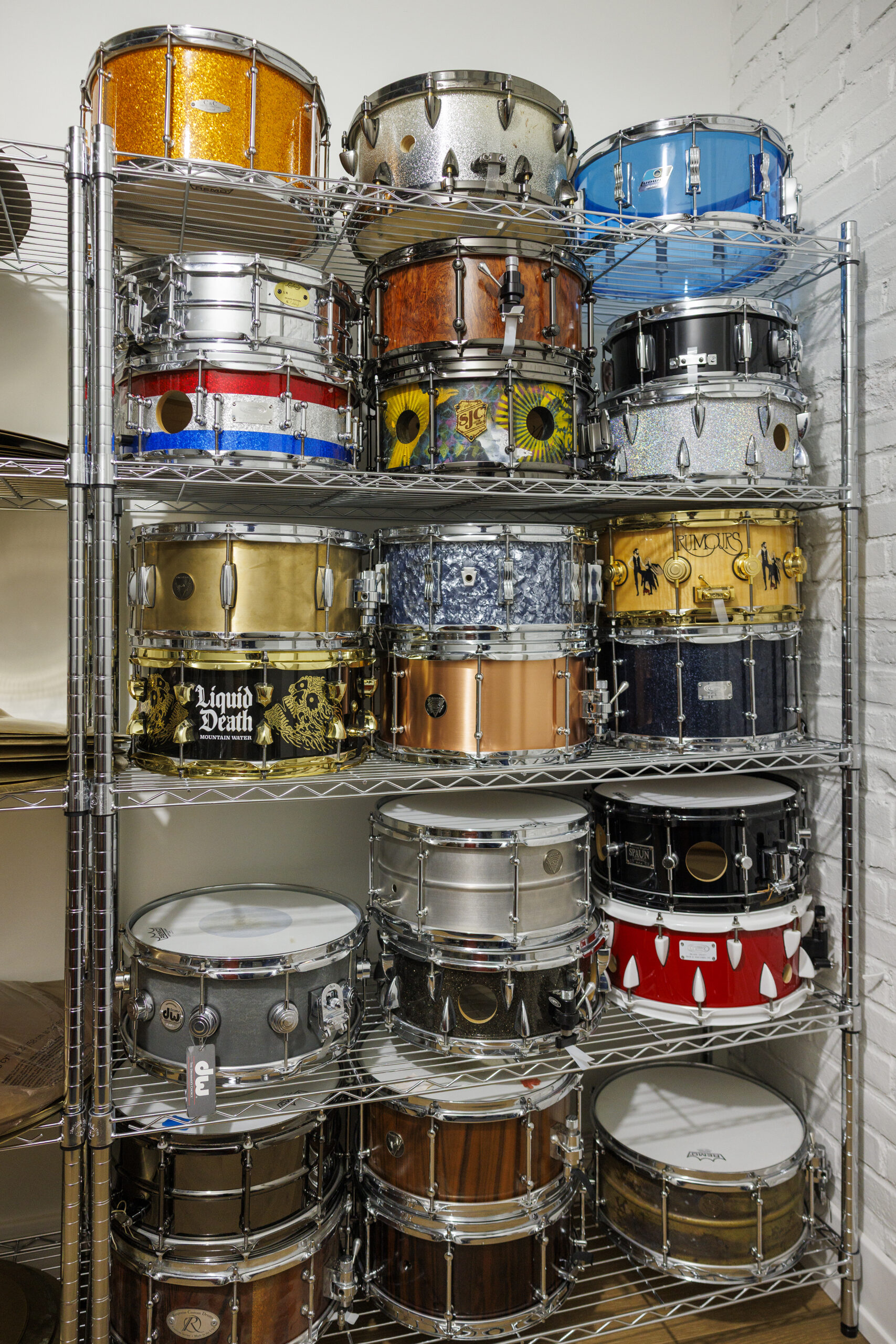
Storage rooms are hung with scores of electric guitars, neatly shelved snare drums, and stacks of Marshall amps. Lounges are equipped with an impressive bourbon-centric whiskey bar, pool table, comfy couches, and Street Fighter II and NFL Blitz video games.
Yip, who is living with his wife, Christina, and toddler son, Milo, in Center City while they house shop, is a passionate Philly sports fan who owns the world’s largest collection of game-worn Phillies jerseys.
“I collect things. I have eight Scott Kingery rookie jerseys,” he said, laughing at himself.
On a recent visit, while Yip worked with Movements in Memory Music’s main room, producer Steph Marziano, who grew up in Philly and lives in London, was next door with Brooklyn indie songwriter Kevin Devine. Atlanta rapper Kenny Mason was due in later in the week.
“I needed a place in Philly to work out of,” said Marziano, who teamed with Hayley Williams on “Parachute” on Ego Death at a Bachelorette Party.
Will Yip in guitar room of his new studio, Memory Music Studios, south Philadelphia, Tuesday, Jan. 13, 2026.
That LP is nominated for best alternative music album this year. The award will most likely be given away in the pre-telecast ceremony, which will stream from the Peacock Theater in LA starting at 3:30 p.m. on grammys.com and the Recording Academy’s YouTube channel.
“This is my new spot,” Marziano said of Memory Music. “Honestly, I love this place. I’m never even working in New York again.”
Yip was born in New York and moved to Philadelphia at age 1. His parents had escaped Mao Zedong’s Cultural Revolution by swimming from China to Hong Kong before immigrating to the United States.
His father co-owned Ocean City Restaurant in Chinatown, but never wanted Yip or his older brother to work there.
His parents hoped Yip would go to Penn, but enraptured by The Miseducation of Lauryn Hill, recorded by Nicolo and his sibling Joe — known as the Butcher Bros. — Yip had a higher aspiration: to work at Studio 4.
So he went to Temple to study recording with Phil Nicolo. When he inquired about helping out at the studio, he got valuable advice he now often shares: “Just show up.”
Assortment of snare drums in the newly constructed music studio built by Will Yip, Memory Music Studios, south Philadelphia, Tuesday, Jan. 13, 2026.
“I drove to Conshohocken that day. I was so nervous. There was a Brazilian band there. I felt like I was in Disneyland.”
“He showed up, and he started doing stuff,” said Nicolo, who still co-owns Studio 4 and Studio 4 Vinyl, an LP pressing plant based in Coatesville.
“And then he started saying, ‘Hey, if I clean out this room can I use it on the weekend?’ He started bringing bands in there, and on Monday morning, he’d hand me a roll of twenties. And it was like, ‘Dude, you can come in whenever you want!’”
Nicolo said Yip’s productions, on which he is frequently also credited as a cowriter and drummer, are marked by “an aggressive rock sound, but with a style and an emotion and a musicality that you don’t often hear in quote unquote modern music, that seems kind of AI. That first time I heard that Turnstile record on WXPN, I was like ‘I bet this is Will.’ And it was.”
Will Yip in Studio 5 in his newly constructed studio, Memory Music Studios, south Philadelphia, Tuesday, Jan. 13, 2026.
In 2021, when six women of Asian descent were killed at spas in the Atlanta area, Yip raised $100,000 through a memorabilia raffle, donating the money to the Asian American and Pacific Islanders Community Fund.
“I’m around great people all the time that support me, but I’ve always felt alone in being Asian in this genre, in this field, that from top to bottom is white male-dominated,” he told The Inquirer at the time. “But my friends and brothers, they came immediately and said, ‘We want to stand with you.’ And that meant the world to me.”
Now, he says, “I’m so proud of how much our little sector of the rock community has strived to improve inclusivity, especially this past decade. Twenty-five years ago, you would never find an Asian-fronted rock band, but today, you’re starting to see legit Asian rock stars like Mitski, Japanese Breakfast, and Turnstile. I’m confident it’ll only continue to grow.”
Yip’s collaborations tend to be long running. Scranton’s Tigers Jaw, whose new Lost on You is due in March, has worked with Yip on all of their albums since 2014’s Charmer. New Yip-produced music by Scranton pop-punk band the Menzingers is also due later this year.
Scranton band Tigers Jaw, with Ban Walsh on the left) have recorded four albums with producer Will Yip, including Lost On You, which is due in March.
“Will is such a detail guy,” said Tigers Jaw’s Ben Walsh. “Every detail in the new studio is meticulously planned out. And the stuff he suggests come from a place of understanding. He’s just very good at what feels natural and creatively fulfilling for the people he’s working with.”
“I’m a song guy,” Yip said. “I don’t look at myself as a sound nerd,” he added, gesturing to the staggering amount of gear he’s assembled. “But I want all the tools I can possibly have to be great at building songs.”
Jesse Ito, the acclaimed Philly chef who co-owns Royal Sushi & Izakaya, where Yip is a regular and often brings bands, calls his friend “the ultimate hype man.”
“Will just makes everybody around him feel so good about themselves. Even though we do different things, we understand each other about the grind and the growth and what it takes at this level.
“He doesn’t drink coffee,” Ito said. “If he drank coffee I think he would explode. He’s just so naturally hyped.”
And nothing comes more natural to Yip than hyping the city where he’s built his new musical home.
“Philly is the indie music capital of the world,” Yip said. “I’ll stand by that. And I want people to see how awesome and investable and easy it is to live in Philly and make music, and enjoy life in Philly. I want to build the culture. To give people a reason to come to Philly. And to stay in Philly.”
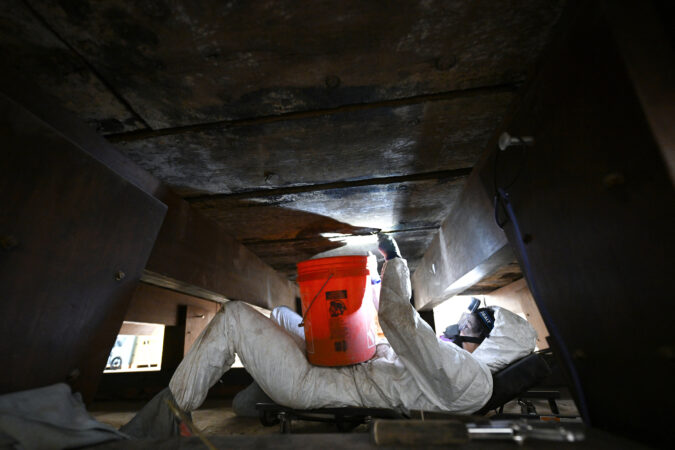
Conservator Angela Paola is lying on her back under the 16-ton gunboat, picking debris from between its nearly 250-year-old planks. She is wearing blue surgical gloves, grimy white coveralls, and a half-face respirator.
Dust floats in the beam of her headlamp, and the light reveals bits of the original oakum and pitch used to seal the bottom of the Philadelphia before it was sunk in battle by the British in 1776.
As she pokes a tool between the planks, clumps of hardened sediment fall on her. “It’s dirty,” she says. “But it is really satisfying work. And it’s really exciting to see it slowly start to show itself through all the mud and the years.”
Texas A&M University research assistant Marissa Agerton works on the project to preserve the gunboat Philadelphia at the Smithsonian National Museum of American History in Washington on Jan. 13.
The Philadelphia is the country’s oldest surviving intact warship, according to the Smithsonian Institution. It was launched on July 30, 1776, a few weeks after the Declaration of Independence was adopted. And as the nation prepares for its 250th birthday this summer, experts are grooming the old vessel for its place in the celebration.
“It’s one of the most important objects — movable objects — of the Revolution, flat out,” Anthea M. Hartig, director of the Smithsonian’s National Museum of American History, said in an interview at the museum this month.
The gnarled boat has survived battle, sinking, the elements, wood-eating bacteria, rodents, misguided attempts at preservation, tourists, and almost 250 years in the country it helped found.
It’s “one in a million,” Paola, the conservator from Texas A&M University, said through her respirator last week.
The 53-foot-long boat, hastily built of green oak, was sunk by British cannon on Oct. 11, 1776 at the Battle of Valcour Island, on Lake Champlain. But historians say the small fleet it was part of helped thwart British plans to invade the colonies from the north, and furthered the cause of independence.
The boat, powered by oars and sails, spent 159 years sitting upright in 60 feet of water at the bottom of the lake until it was raised in 1935. It then became a tourist attraction: admission 50 cents, according to an old advertising poster, and was carried from place to place on a barge.
After almost 30 years, it came to Washington in 1961 as one of the early arrivals at what was then the National Museum of History and Technology. It was hoisted inside while the building was still under construction and has been there ever since.
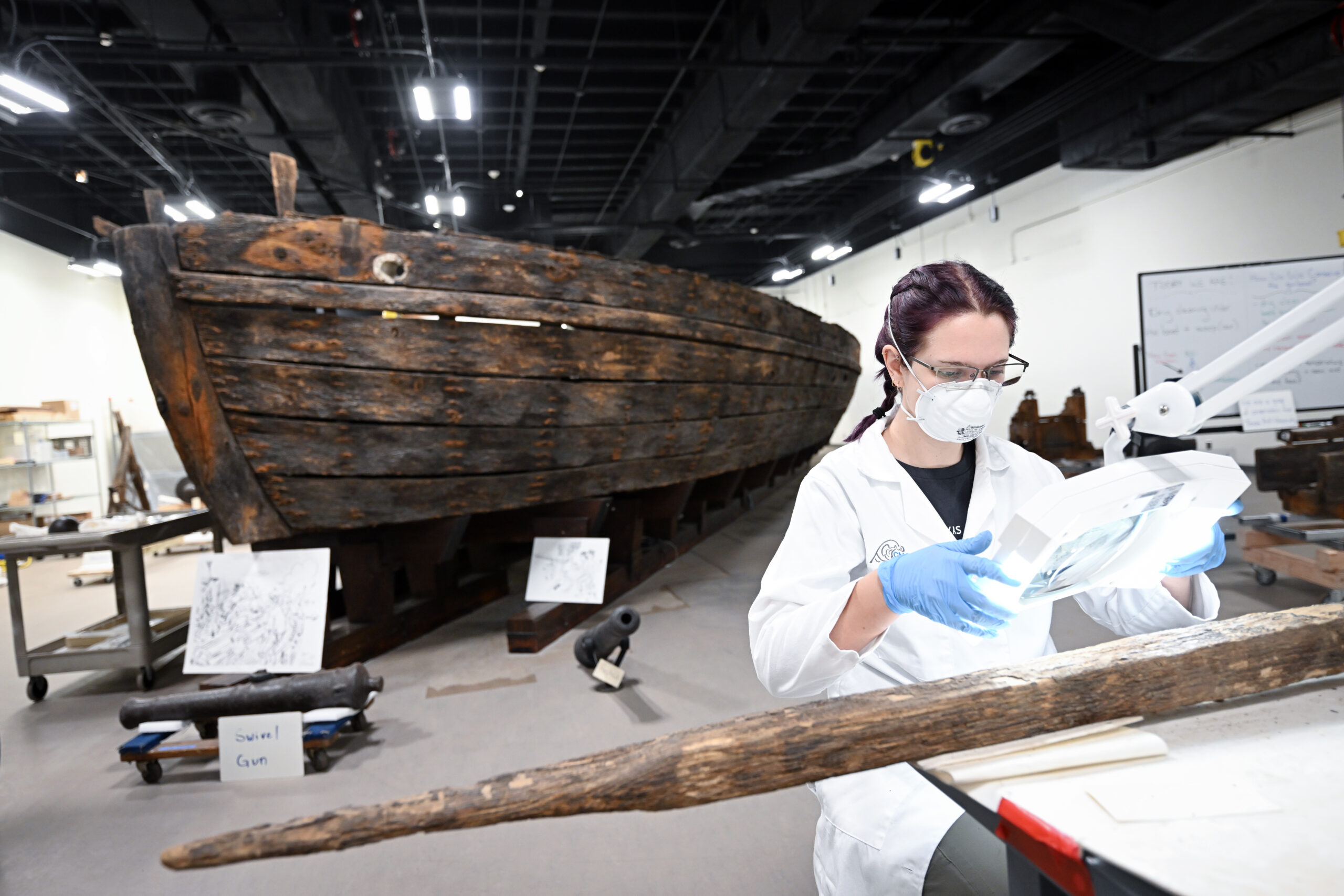
Since July, the museum has had the Philadelphia partially cordoned off in a special conservation lab on the third floor of the East Wing.
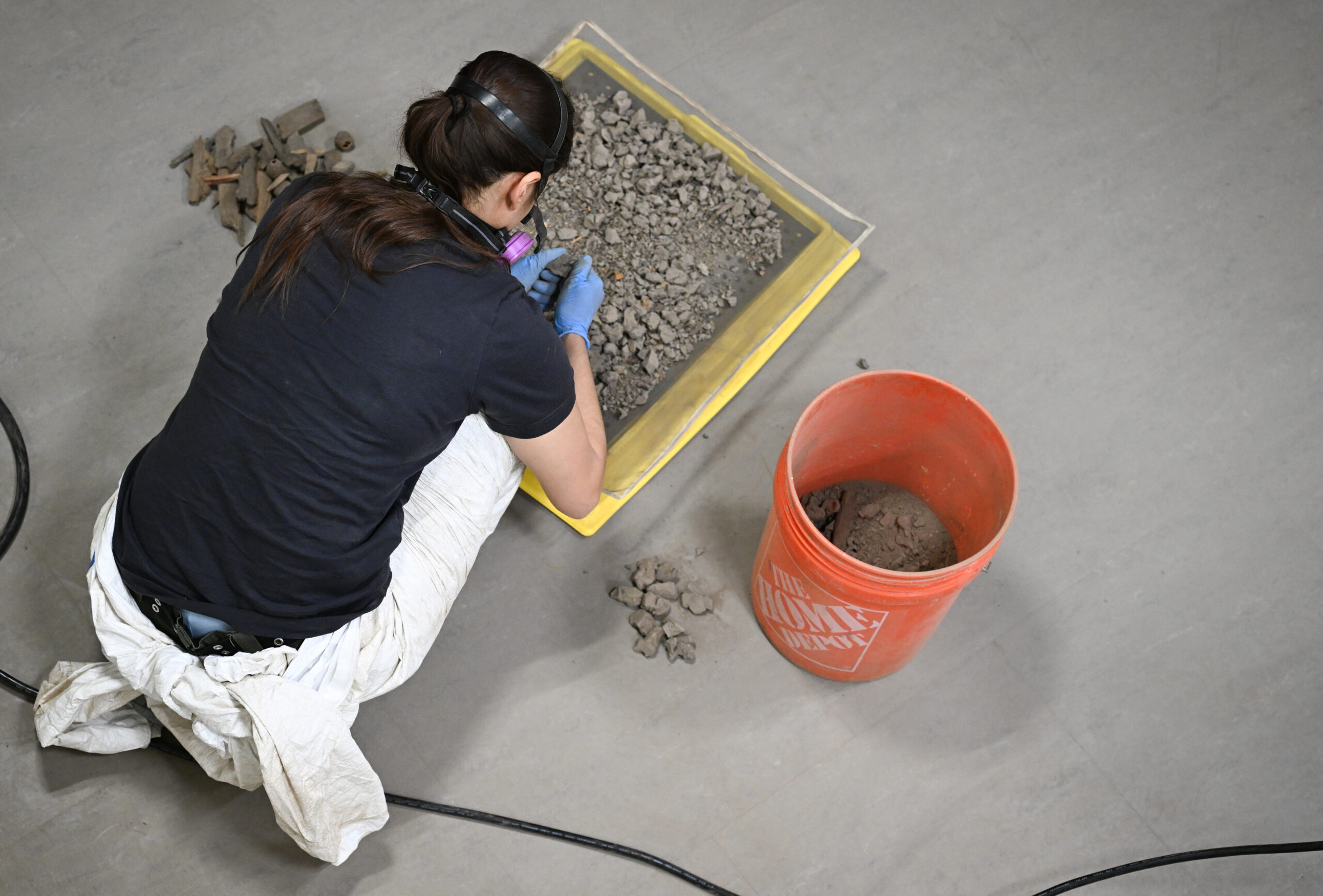
There, experts from the Smithsonian and Texas A&M are working with vacuums, brushes and dental tools to give it a state-of-the art cleaning and look for lost artifacts in areas they said have never been probed before. Visitors can watch the work through a large viewing window.
A portion of the Philadelphia.
The vessel rests in a huge cradle. Arrayed around it are its lower mast, rudder, two anchors, three big cast-iron guns, gun carriages, swivel guns, and the 24-pound British cannon ball that helped sink it.
The Philadelphia’s biggest weapon was an 8-foot-long, 3,800-pound cannon made in Sweden. It sat on a wooden rail at the front of the boat and fired a 12-pound iron ball. The gun still had a projectile in its mouth when it was discovered.
The boat was raised on Aug. 9, 1935 by history enthusiast and salvage engineer Lorenzo F. Hagglund and yachtsman J. Ruppert Schalk. When it came up, it contained a trove of more than 700 artifacts, according to John R. Bratten’s 2002 book, The Gondola Philadelphia & the Battle of Lake Champlain.
It also had a handful of human bones.
According to salvage reports, “there were a couple of arm bones … some teeth and a partial skull that were found on board the boat itself,” said Jennifer L. Jones, director of the museum’s Philadelphia gunboat preservation project.
“We know there were a lot of injuries,” she said in an interview at the museum this month.
Angela Paola goes through debris as she works on the Philadelphia.
The Oct. 11 battle was a daylong shootout with both sides firing iron cannon balls that could sink a ship or tear off a limb.
Less than two years after the start of the Revolutionary War, the British had been planning an attack from Canada south along the lake between New York and Vermont to try to split the colonies.
They quickly assembled a fleet of about two dozen vessels near the lake in Canada for the task.
The Americans countered, building and gathering a fleet of 16 vessels, including the flat-bottom Philadelphia and seven others like it, said Peter D. Fix, of Texas A&M, the lead conservator on the gunboat preservation project.
The two sides met in a narrow channel of the lake between the New York shore and Valcour Island, about five miles south of Plattsburgh, N.Y.
“It was a very bloody battle,” Jones said.
From the American hospital ship, “Enterprise,” crewman Jahiel Stewart wrote in his journal: “The battel was verryey hot [and] the Cannon balls & grape Shot flew verrey thick.”
“I believe we had a great many [killed] … Doctors Cut off great many legs and arm and … Seven men [were thrown] overbord that died with their wounds while I was abord,” he wrote.
Each side suffered about 60 men killed and wounded, Bratten wrote.
Jones said it is possible the limbs found on the ship had been amputated. Their whereabouts are unknown, she said.
The Philadelphia was commanded by a young Pennsylvania army officer, Benjamin Rue. He had 43 men from many walks of life under him.
“We have a wretched, motley crew in the fleet,” American Gen. Benedict Arnold wrote before the battle. “The refuse of every regiment, and the seamen, few of them, ever wet with salt water.”
Texas A&M University research assistant Alyssa Carpenter works on the Philadelphia this month in D.C.
Arnold, who commanded the patriot fleet, later deserted the American cause and went to fight for the British in 1780. He died in England in 1801. One of the crewmen on the Philadelphia, Joseph Bettys, also switched sides. He was later captured and hanged.
The Oct. 11 battle was a stalemate. The British withdrew; the Americans, bottled up in the channel, escaped that night. But two days later, the British force tracked down the Americans and destroyed most of their fleet.
Only a handful of American ships survived the fight. The Philadelphia was not one of them.
The ship is now “heavily degraded,” said Fix, the lead conservator,
The hull still bears three holes made by British cannon balls. A wooden cross piece near where the mast stood is charred, probably from the ship’s brick fireplace. The hull planks have lost about three-quarters of an inch in thickness to bacteria, Fix said.
Care of the boat “is a huge undertaking, of which the conservation is one part,” he said. “The conservation, the preservation, is kind of the avenue to learn all this other extra stuff, which has been great.”
“Our main task, as we were assigned, was ‘let’s make sure we make it last for another 250 years,’ ” he said.
Back under the vessel recently, conservator Paola put chunks of fallen debris in an orange bucket, to be sifted for artifacts later. She said it was amazing that the Philadelphia had survived.
“She lasted,” she said. “We’re really lucky.”
Texas A&M University research assistants Alyssa Carpenter, Marissa Agerton, and Angela Paola work on the gunboat Philadelphia, preparing it for the United States’ 250th birthday celebration this summer.
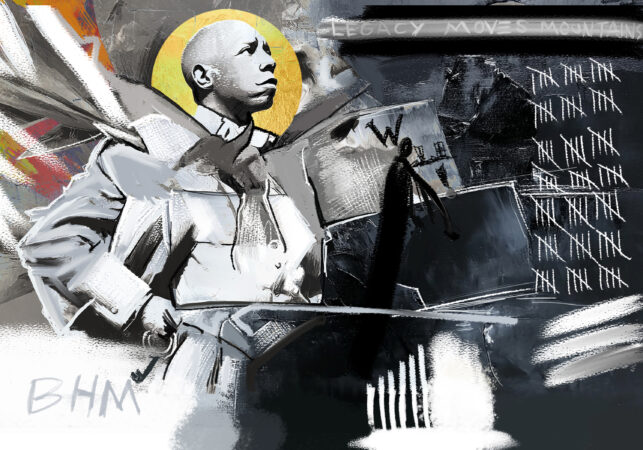
I am not a huge fan of comic books and superheroes, but I appreciate the storytelling. In comics, the origin story is just as important as the hero saving the day. The same is true for Black History Month, which originated as Negro History Week.
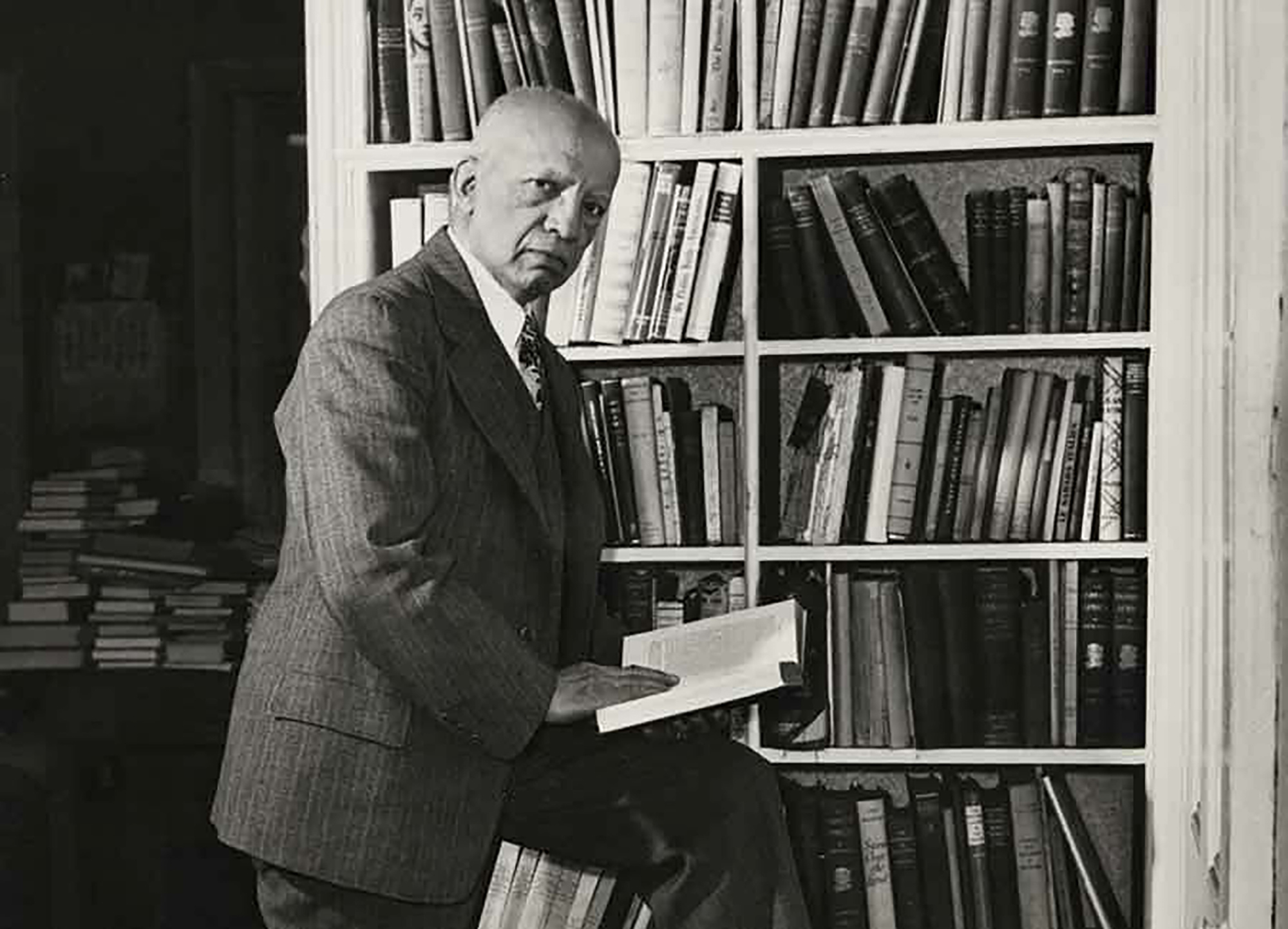
Negro History Week was created by Carter G. Woodson, the child of two formerly enslaved parents. According to Harvard historian Jarvis R. Givens, Woodson was taught by his two uncles, John and James Riddle, his mother Anne Riddle’s brothers, who had also been enslaved. Both had been educated in a Freedmen School toward the end of Reconstruction, and they became Woodson’s first teachers.
“As a student, [Woodson] witnessed the shared vulnerability of Black people through the story of his teachers and family,” writes Givens. “These first encounters taught Woodson more than just reading, writing, and arithmetic. He also inherited a political orientation to schooling informed by the lived history of the teachers standing before him … Here, Woodson encountered the project of Black education.”
The historian and author Carter G. Woodson is widely regarded as the father of what has become Black History Month. Much of the observance’s origin can be traced to Philadelphia, writes Rann Miller.
That project, which continues to this day, was the equipping of Black people with the practical knowledge to do a thing, and the historical memory to understand why they do it. This was the basis with which Woodson founded the Association for the Study of Negro Life and History (ASNLH) in 1915 and created Negro History Week in 1926, as a time for Black people to not only learn about Black history, but to take the time to reflect on it.
In Woodson’s words: “It is evident from the numerous calls for orators during Negro History Week that schools and their administrators do not take the study of the Negro seriously enough to use Negro History Week as a short period for demonstrating what the students have learned in their study of the Negro during the whole school year.”
A mural honoring W.E.B. Du Bois on a firehouse at Sixth and South Streets in Philadelphia. He was an early advocate of Black history events.
The first Negro History Week took place from Feb. 7 to 13, 1926. The Philadelphia Tribune, in an article published Feb. 6, 1926, said: “It is essential to the future growth of the Negro race that we become acquainted with our past … We have passed the point in our advancement where we can afford to disregard our history.” That sentiment remains true today.
In April 1928, the Germantown YMCA hosted an event called Negro Achievement Week for the Germantown community, featuring such prominent African Americans as Alain Locke, W.E.B. Du Bois, and James Weldon Johnson. The week’s events received little media attention but were robust, including a mass community meeting, a music night, an art night, and a history lecture, held in both Germantown and Center City, according to David Young, director of the Historical Society of Montgomery County.
The events were aimed at educating white people, as well, with Du Bois’ pointedly noting that “he reminded the whites too often of their injustice to the Negro.”
Planning for Negro Achievement Week in Philadelphia began in 1923 at the “Black Branch” of the Germantown YMCA, known as the “Colored Y,” under the guidance of Olivia Yancey Taylor and Eva del Vakia Bowles.
Members of the Colored Y formed an interracial committee to plan the week’s activities, including a variety of African American heritage events.
The first Negro Achievement Week, which became Negro History Week, happened in 1925, influenced by a partnership between Woodson and members of the Black fraternity Omega Psi Phi, who created Negro History and Literature Week, first celebrated in April of 1921.
“Celebrations took the form of public programs in churches, schools, and events partnering with literary societies,” according to Givens. “Given the success of the program, a committee was established in 1923 to outline a strategic plan: to develop plans for fostering the study of Negro History in the schools and colleges of the country.”
The week subsequently became a shared project between Woodson and Black schoolteachers.
While Negro Achievement Week in Philadelphia didn’t take place after 1928, Negro History Week continued nationwide because Black people understood that they were past “the point in our advancement where we can afford to disregard our history.”
Although President Gerald Ford officially expanded Negro History Week to become Black History Month in 1976, Black communities had already done so on their own, believing one week was not sufficient to contain their history.
Philadelphia stands proudly in that tradition — from the Colored Y to educator Nellie Bright. Thanks to Carter G. Woodson and countless Black educators, their vision endures a century later.
Rann Miller is an educator and freelance writer based in southern New Jersey. His “Urban Education Mixtape” blog supports urban educators and parents of children attending urban schools. urbanedmixtape.com@RealRannMiller
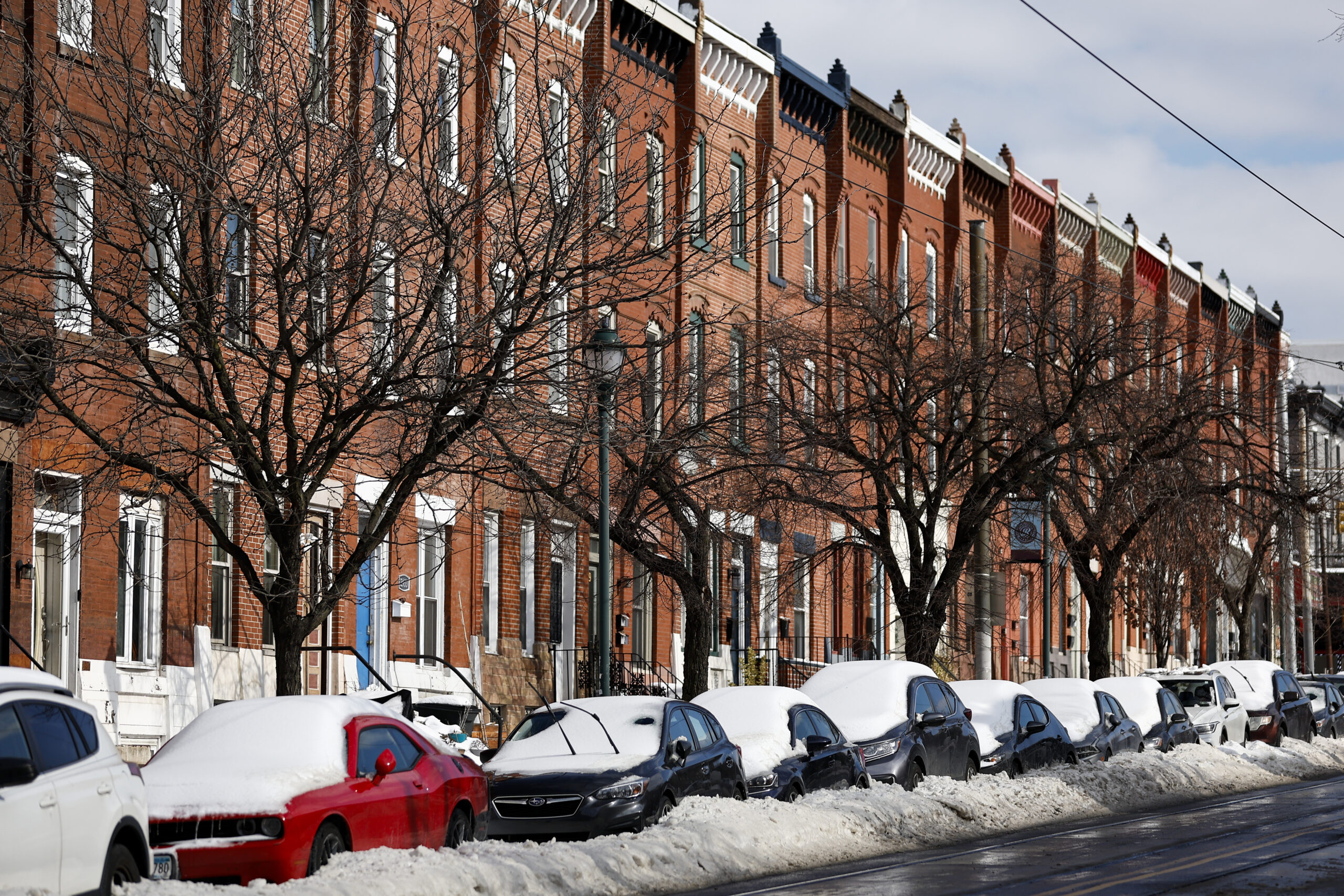
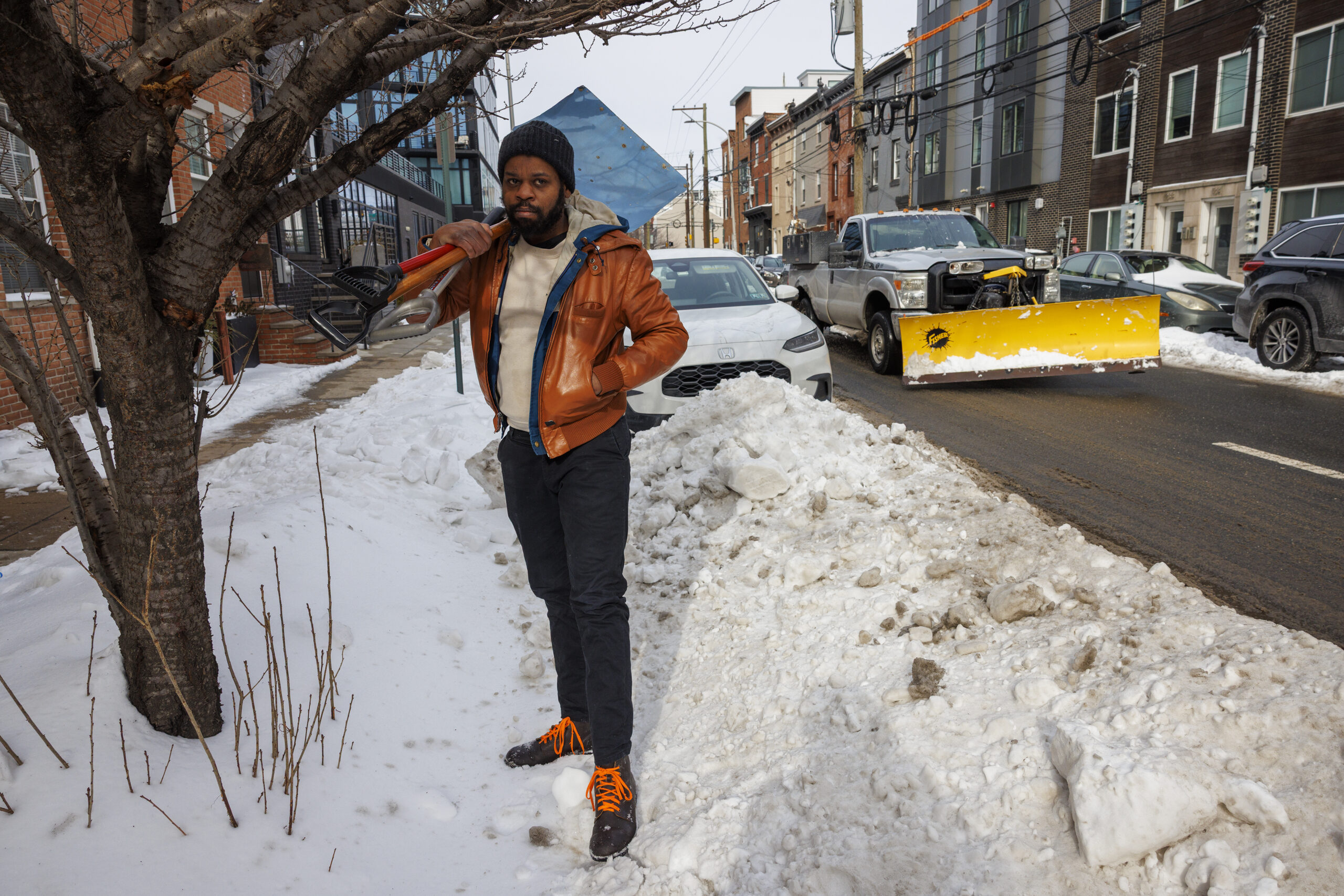
Denise Bruce paid a stranger $75 to shovel out her Hyundai Venue, which was encased in snow and ice outside her East Kensington rowhouse.
“My car was really badly packed in on all sides,” said Bruce, 36, who works in marketing. “I just didn’t have the strength honestly to dig it out myself.”
The West Coast native also didn’t have a shovel.
So she was elated to find a woman on Facebook who agreed to dig out her compact SUV for between $40 and $60. After the endeavor took four hours on a frigid evening, Bruce thought it was only fair to pay more.
After Bruce forked over the money — digitally via Cash App — she asked herself: What should one pay to outsource the onerous task of shoveling?
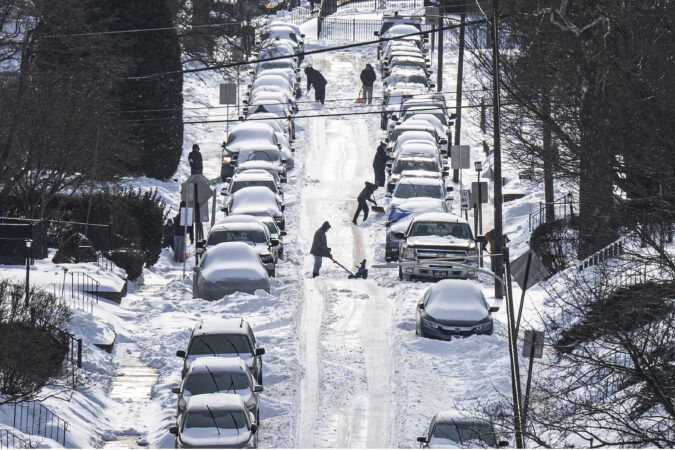
Snow-covered cars lined Girard Avenue in Brewerytown on Monday.
While some shoveled themselves or hired professional snow removal companies with fixed rates, others turned to an ad hoc network of helpers who hawked shoveling services on neighborhood Facebook groups, the Nextdoor app, and the online handyman service TaskRabbit.
On online forums, strangers agreed to dig out the cars of folks like Bruce, who didn’t have the strength, tools, or time to do so on their own. Others signed up to clear the driveways and sidewalks of older people, for whom shoveling such heavy snow can increase the risk of heart attacks.
Prices per job vary from $20 to $100 or more. Some freelance shovelers are upfront about their rates, while others defer to what their customers can afford.
Higher prices now for ‘trying to dig through concrete’
Alex Wiles stands on North Second Street on Tuesday before taking the bus to another snow-shoveling job.
On Monday, the day after the storm hit, Alex Wiles, 34, of Fishtown, shoveled out people’s cars, stoops, and walkways for between $30 and $40 per job. As the week went on, he increased his rate to about $50 because the work became more physically demanding.
“At this point, it feels like trying to dig through concrete,” Wiles said. As of Thursday, he had shoveled for nearly 20 people across the city and broken three shovels trying to break up ice. He said most people tip him an additional $5 to $20.
“I want it to be an accessible service,” he said, “but I also want to be able to make money doing it and remain competitive with other people,” including teenagers who often shovel for less.
For Wiles, who works in filmmaking and photography, his shoveling earnings go toward paying rent.
He said he sees his side hustle as essential service, especially since the city did “a terrible job,” in his opinion, with snow removal.
“A lot of the city looks like a storm happened 10 minutes ago,” Wiles said Thursday.
Shoveling is “necessary and people are just otherwise going to be stuck where there are,” he said. “They aren’t going to be able to get to work easily. They aren’t going to be able to walk down the street.”
Some adults see themselves filling in for ‘the young kids’
When Max Davis was a kid in Hopewell, N.J., he’d compete with his neighbors to see who could shovel the most driveways during snowstorms.
Now, the 28-year-old said he seldom sees or hears of kids going door to door when it snows.
That was part of the reason Davis got off his Northern Liberties couch on Monday and started shoveling out cars for a few neighbors who posted on Facebook that they needed help.
A snow shoveler on Waverly Street on Monday.
Davis, a founding executive at an AI startup, said he didn’t need the money, so he accepted however much his neighbors thought was fair. He ended up making about $40 to $50 per car, money he said he’ll likely use for something “frivolous” like a nice dinner out in the city.
If there is another snowstorm this winter, he said, he’d offer his shoveling services again.
“Why not?” Davis said. “I’d love to see the young kids get out there and do it. I think they’re missing out.”
In Broomall, Maggie Shevlin said she has never seen teenagers going door to door with shovels, but some of her neighbors have.
During this most recent storm, the 31-year-old turned to Facebook to find someone to clear her mother’s driveway and walkway in neighboring Newtown Square. Shevlin connected with a man who showed up at 6:30 a.m. Monday, she said, and did a thorough job for a good price.
“I figured it would be somewhere around $100. He charged me only $50,” said Shevlin, who works as a nanny and a singer. “Oh my god, [my mom] was so thankful.”
How a professional company sets snow removal prices
A snow removal contractor clears the sidewalk in front of an apartment building in Doylestown on Wednesday.
Some Philadelphia-area residents, especially those with larger properties, use professional snow removal services. They often contract with these companies at the start of the winter, guaranteeing snow removal — at a price — if a certain amount falls.
In Bristol, Bucks County, CJ Snow Removal charges $65 to $75 to remove two to four inches of snow from driveways, walkways, and sidewalks at a standard single-family home, said co-owner John Miraski.
The cost increases to $95-$115 for a corner house, he said, and all rates rise about $25 for every additional two inches of snow.
Last week, he said, several people called him asking for help shoveling out cars, but he was too busy to take on the extra customers. He passed those requests to other companies, he said, and recommended they charge “nothing less than $50 to $60, because you’re dealing with [nearly] a foot of snow plus a block of ice.”
Miraski said he recommends professionals because they are insured. That’s especially important, he said, in storms that involve sleet or freezing rain, as Philly just experienced.
“You start throwing ice, who knows where it is going and what it is hitting,” Miraski said.
Professionals are more expensive, he acknowledged, but often more thorough. “Some of my properties we went back to two or three times to make sure they were cleared.”
And sometimes, regardless of who shovels, a resident can find themselves unexpectedly stuck in the snow again.
In Northeast Philadelphia, J’Niyah Brooks paid $50 for a stranger to dig out her car on Sunday night. But when she left for her job as a dialysis technician at 3 a.m. Monday, her car had been plowed in.
“I was out there kicking snow,” said Brooks, who was eventually able to get to work.