Lower Bucks Hospital was cited by the Pennsylvania Department of Health for failing to properly record a patient’s weight and improperly treatinganother patient’s pressure ulcer last year.
The issues were among the instances health inspectors visited the Bristol hospital, owned by Prime Healthcare Services, between December 2024 and November 2025.
Here’s a look at the publicly available details:
Dec. 4, 2024: The Joint Commission, a nonprofit hospital accreditation agency, renewed the hospital’s accreditation, effective September 2024, for 36 months.
Dec. 16: Inspectors came to investigate a complaint but found the hospital was in compliance. Complaint details are not made public when inspectors determine it was unfounded.
Jan. 29, 2025: Inspectors came to investigate a complaint but found the hospital was in compliance.
Feb. 27: Inspectors cited the hospital for failing to measure a patient’s weight and instead recording the weight told to staff by the patient’s family member. Staff were retrained that a patient’s weight must be recorded using a hospital scale within eight hours of admission.
March 4: Inspectors cited the hospital for failing to properly monitor and care for a patient’s hospital-acquired pressure ulcer. Inspectors found that the ulcer was not reported to a doctor or documented in the internal reporting system. Administrators said they were trying to hire a wound care nurse, and retrained staff on wound care policies.
April 1: Inspectors visited for a mental health monitoring survey and found the hospital was in compliance.
Aug. 27: Inspectors followed up on the March citation and found the hospital in compliance.
Sept. 5: Inspectors followed up on the February citation and found the hospital in compliance.
Sept. 9: Inspectors came to investigate a complaint but found the hospital was in compliance.
The three-year drought with no men’s team from the Big 5 in the NCAA Tournament will end, finally, with Villanova seemingly locked into the field of 68 for the first time since 2022.
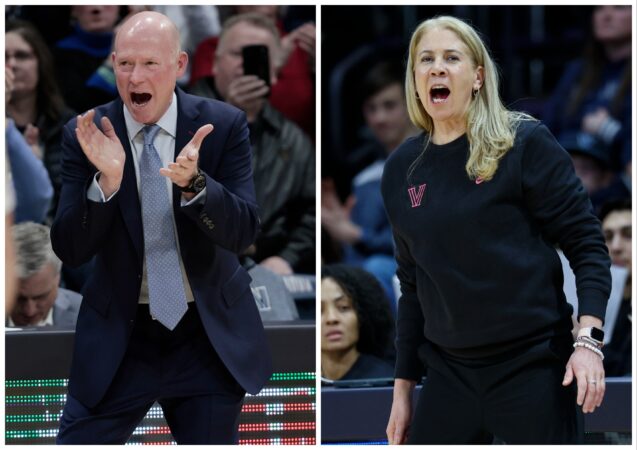
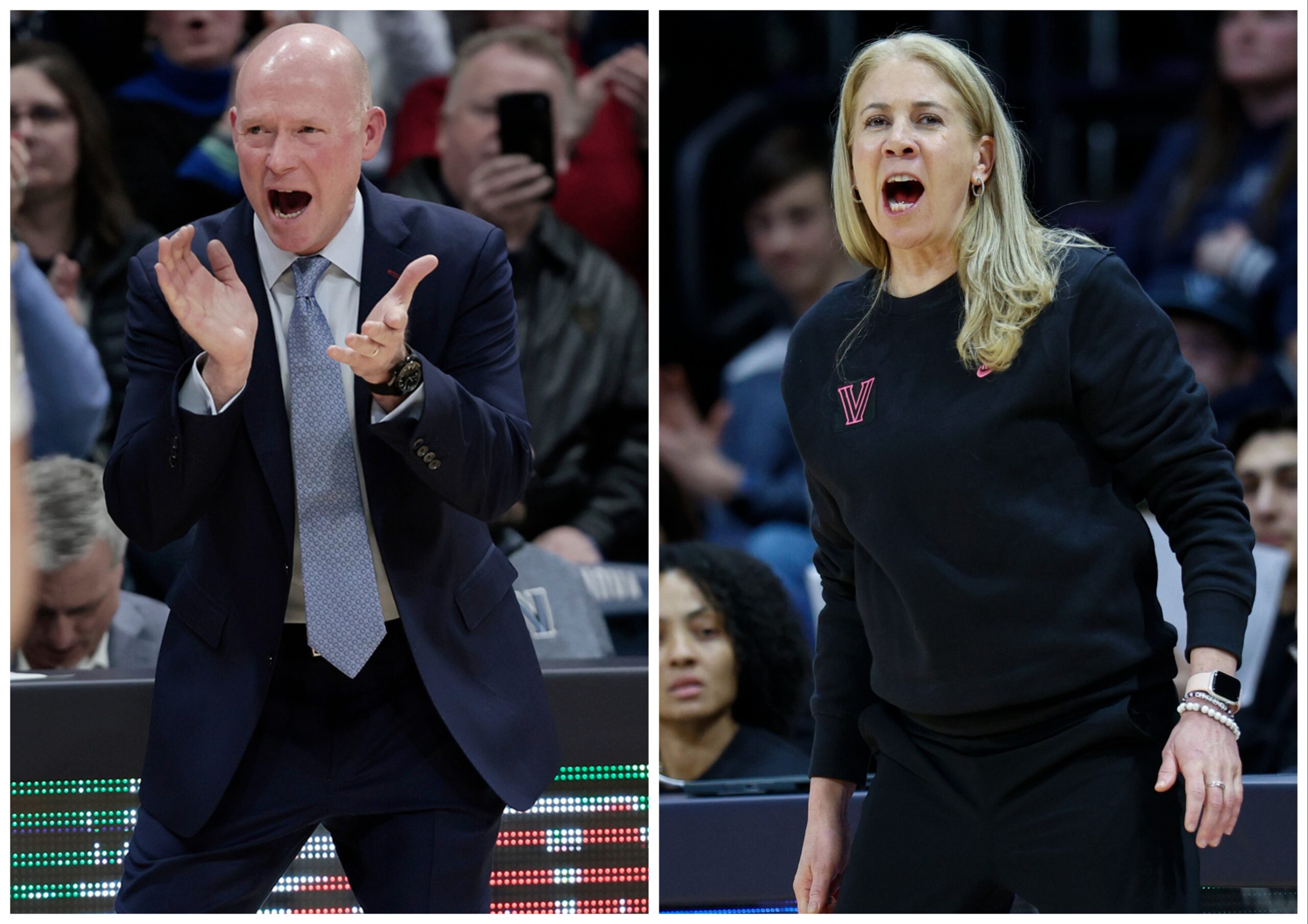
Kevin Willard’s Wildcats (23-7, 14-5 Big East) finish their regular season Saturday at home against Xavier before embarking on their postseason run beginning next week at the conference tournament in New York.
Villanova’s women, too, appear on their way to the dance after a two-year drought. The Wildcats (23-6, 16-4) were projected as a No. 9 seed in ESPN’s latest women’s bracketology, and it’s hard to imagine that an opening-round loss in the Big East tournament would slide Denise Dillon’s team back to the bubble.
St. Joseph’s men: The Hawks may not have the best mathematical chance among the rest of the pack (more on that soon), but it’s worth starting here because they pulled off a pretty impressive road win Wednesday night at Davidson and secured their first double-bye and top-4 seed in the Atlantic 10 tournament since 2018.
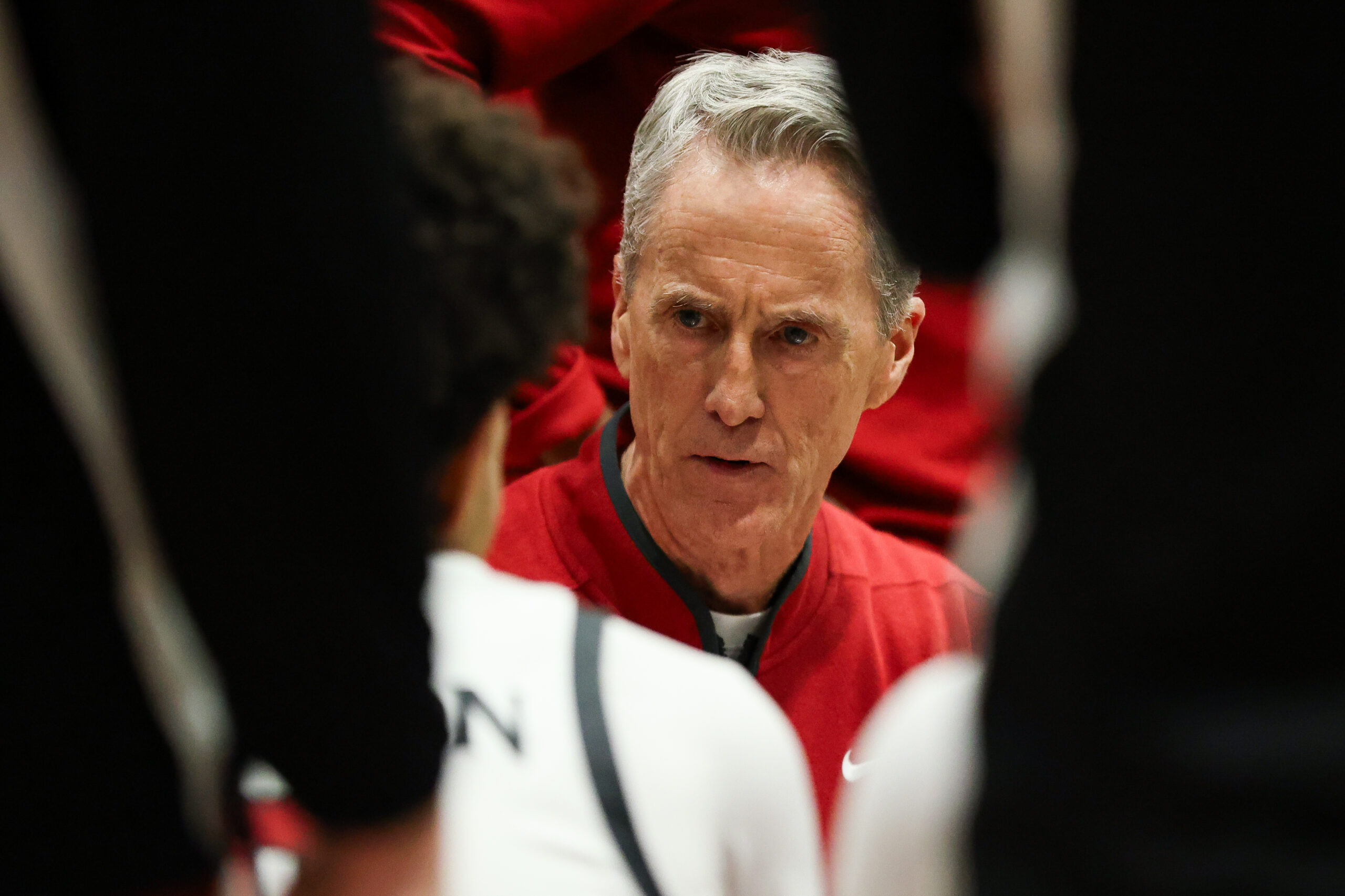
St. Joe’s coach Steve Donahue has his team in the Atlantic 10 tournament with a double-bye and top-4 seed for the first time since 2018. Could the Hawks make a run and reach the NCAA Tournament?
This has been a pretty remarkable season on Hawk Hill considering all of the context. Former coach Billy Lange bolted for the NBA in the fall. Steve Donahue, whom Lange hired as an assistant after Penn fired him, was given the keys.
The Hawks stumbled a bit at the start of the season, and then starting guard Deuce Jones was off the team by the holidays. But a team meeting in January helped turn the tide, and Derek Simpson, Jaiden Glover-Toscano, and company have been on a roll.
Will they cut the nets down in Pittsburgh? It’s still pretty hard to imagine, given the talent of Saint Louis and Virginia Commonwealth at the top of the conference.
But the double-bye means the Hawks will start the tournament in the quarterfinals, needing just three wins in three days to reach the dance. Bart Torvik’s NCAA hoops analytics site gives the Hawks a 7.8% chance based on thousands of simulations. That’s not nothing.
Penn men: While we’re on the subject of math, it’s the Ivy League tournament that makes any of its participants more likely than those in other conferences to run the table simply because only four teams are invited and only two wins are needed to win an automatic bid.
Penn is back in Ivy Madness for the first time since 2023.
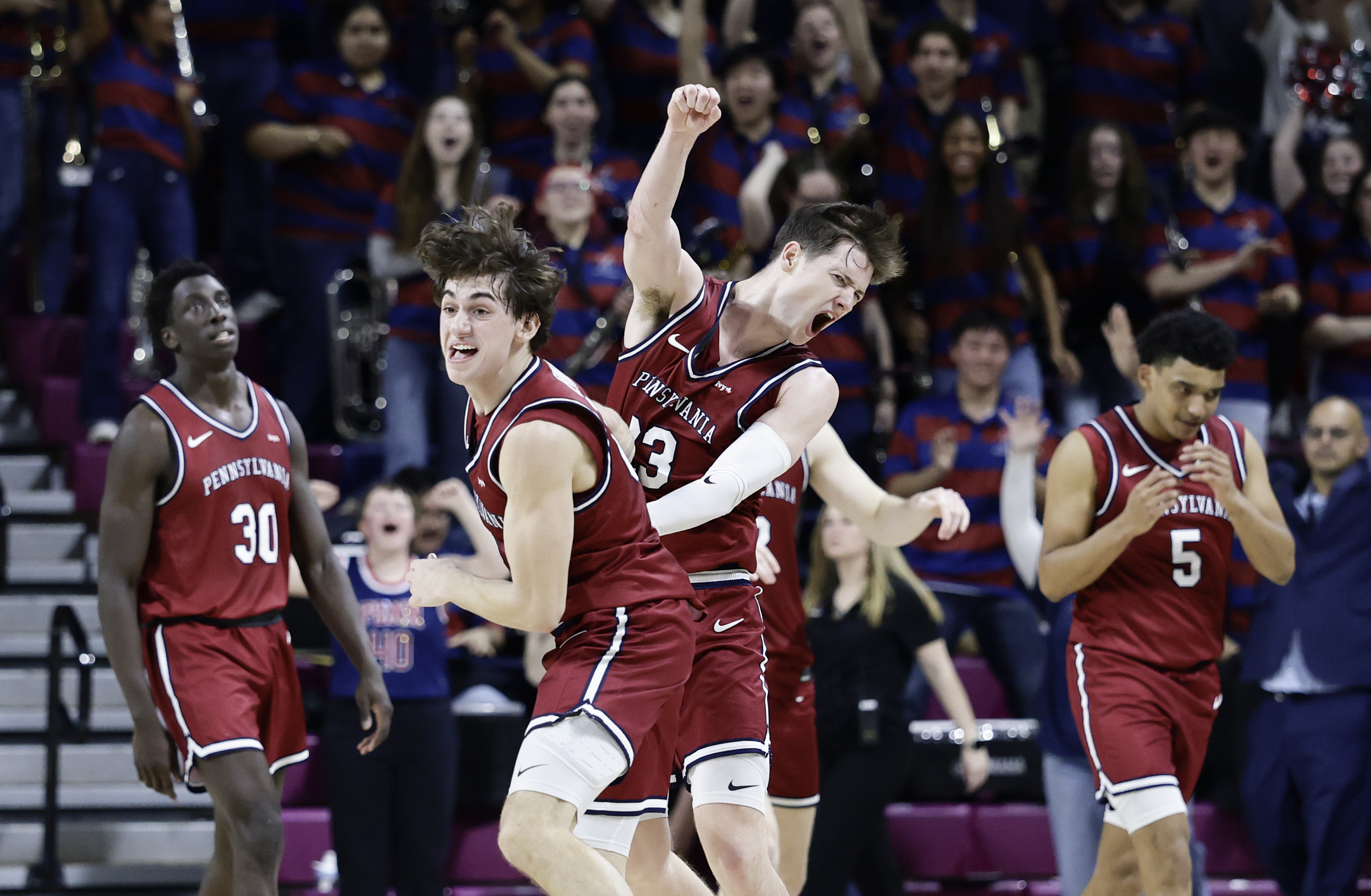
The Quakers, under Fran McCaffery, are back in Ivy Madness for the first time since 2023. They have plenty of talent with Ethan Roberts and TJ Power leading the way. Penn is the No. 3 seed and plays Harvard in the semifinals, a team the Quakers beat at home last weekend. A win would likely mean a date with Yale, the top team in the Ivy. But the Bulldogs just lost to fourth-seeded Cornell, which is the host site for the tournament. Penn beat Cornell twice this season.
Torvik has the Quakers at 14.7% to win the league.
Drexel women: The Dragons have one regular-season game remaining, Saturday at Towson, and sit second in the Coastal Athletic Association with a 13-4 record. That’s certainly good enough to be labeled a contender, especially considering that Amy Mallon led a 10-8 CAA team to a conference tournament championship two seasons ago.
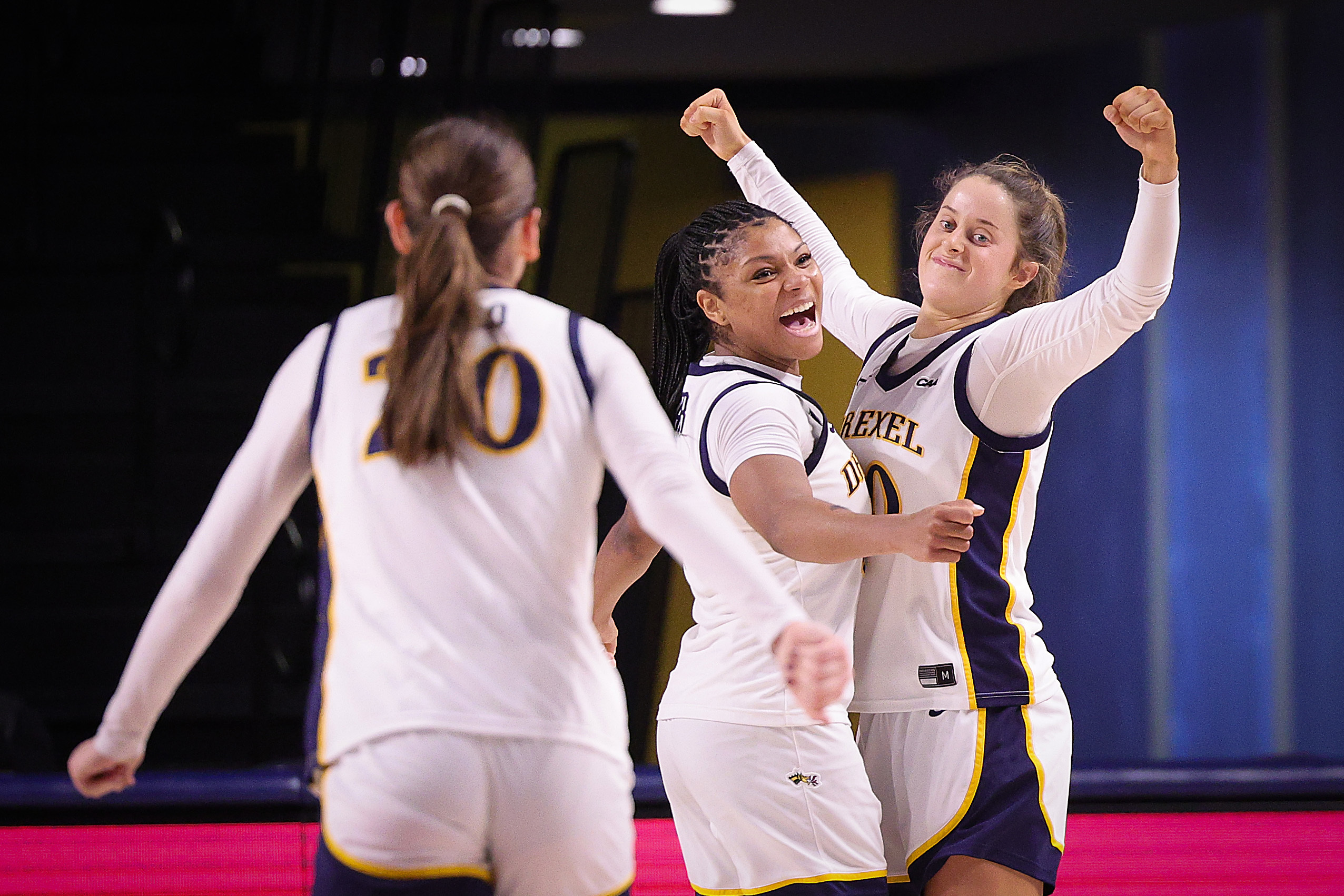
Drexel guard Laine McGurk (right) celebrates with guard Amaris Baker (center) as Molly Rullo (left) joins them after they defeated North Carolina A&T on March 1.
This year’s squad has won 11 of 12 and has two local products leading the way. O’Hara’s Amaris Baker, a senior, is second in the CAA in scoring with 19.0 points per game, and her backcourt mate, West Chester Rustin’s Laine McGurk, was at 13.2 points and 4.1 rebounds per game.
The long(er) shots
Drexel men: The CAA tournament is usually wide open. Twelfth-seeded Delaware reached the final game last season, a year after seventh-seeded Stony Brook took top-seeded Charleston to overtime in the final. Two years before that, Delaware took a 10-8 conference record and the fifth seed and went all the way to the NCAA Tournament.
That’s where Drexel stands ahead of its first conference tournament game Saturday, at 10-8 and the No. 5 seed. The Dragons started 0-3 in conference and are 10-5 since. And though they haven’t beaten any of the four seeds ahead of them, weird things tend to happen at the CAA tournament. Torvik says this weird occurrence has a 4.5% chance of happening. So, not all that different from the Hawks running the table in the A-10.
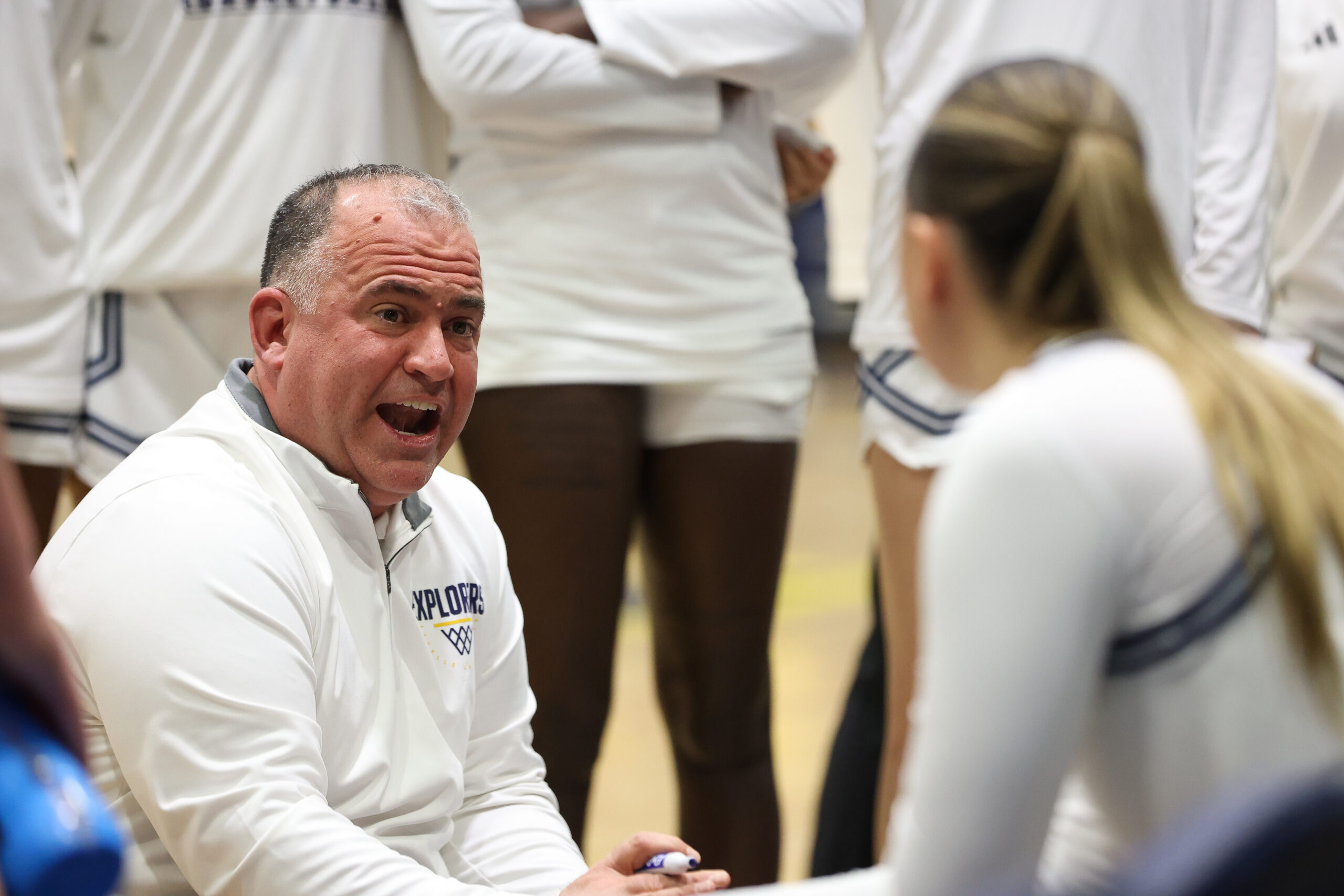
La Salle coach Mountain MacGillivray has led his team to go 10-8 in the conference.
La Salle women: Mountain MacGillivray should be getting some coach of the year love both in his conference and locally in the Big 5. The Explorers won three A-10 games last season and five the year before. They went 10-8 this year. They faced Richmond in a tournament quarterfinal Friday night.
Better luck next year
La Salle men: Darris Nichols’ first season in Olney was marred by injuries, and though the Explorers have been a tough out at times, it’s bordering on impossible for them to get through the gauntlet that would be five wins in five days. (Torvik chances: 0.1%)
Temple men: The Owls went from vying for the No. 2 seed and a bye to the semifinals in their conference tournament to needing a win Thursday just to qualify for it. They got that, but the prospect of running the table and winning five games in five days seems too daunting for a team that has seemingly been running out of gas. (Torvik chances: 1%)
St. Joe’s women: Like La Salle, the Hawks went 10-8 in the A-10 and owned the tiebreaker to get the fifth seed. They lost in the quarterfinals Friday night to Davidson, 64-59, after a 66-45 win over 12th-seeded Duquesne on Thursday.
Temple women: Temple is 7-10 entering its final regular-season game Saturday at home against Florida Atlantic. The Owls are minus-97 in point differential in seven games against the top four teams in the conference.
Penn women: The Quakers are 6-7 in the Ivy and have one game remaining, Saturday at home against Brown, but they will not qualify for the four-team league tournament.
NEW YORK — The Iran war has effectively halted oil tanker movement in the key Strait of Hormuz. But it’s also disrupting the wider global supply chain beyond oil, affecting everything from pharmaceuticals from India, semiconductors from Asia, and oil-derived products such as fertilizers that come from the Middle East.
Cargo ships are stuck in the Gulf or making a much longer detour around the southern tip of Africa. Planes carrying air cargo out of the Middle East are grounded. And the longer the war drags on, the more likely that there will be shortages and price increases on a wide range of goods.
“This is really causing some major impacts within the global supply chain,” said Patrick Penfield, professor of supply chain practice at Syracuse University. “As this conflict keeps progressing, you’ll start to see some shortages, you’ll see some major price increases.”
Stalled at sea
Clarksons Research, which tracks shipping data, estimates that about 3,200 ships, or about 4% of global ship tonnage, are idle inside the Persian Gulf, but that includes about 1,231 that likely only operate within the Gulf. About 500 ships, or 1% of global tonnage, are currently “waiting” outside the Gulf in ports off the coast of the United Arab Emirates and Oman, according to the firm.
While those may seem like small percentages, they have a domino effect that will lead to congestion elsewhere, said Michael Goldman, general manager North America of CARU Containers.
“The supply chain is kind of like a long train with many cars and each car represents, let’s say, a port in the world. Well, if one car gets derailed, it can very often have a domino effect to many other cars behind it or in front of it,” he said. “So although we only have a small number of ports affected by this military action, it can really have a big effect on the total supply chain.”
On Tuesday, President Donald Trump pitched a plan aimed at getting oil and trade moving again through the Strait.
Trump said on social media he ordered the U.S. International Development Finance Corp. to provide political risk insurance for tankers carrying oil and other goods through the Persian Gulf “at a very reasonable price.”
Political risk insurance is a type of coverage intended to protect firms against financial losses caused by unstable political conditions, government actions, or violence. Marine insurers had been canceling or raising rates for insurance in the region.
He said that, if necessary, the U.S. Navy would escort oil tankers through the Strait of Hormuz. The Navy has at least eight destroyers and three, smaller, littoral combat ships in the region. These ships have previously been used to escort merchant shipping in the region and in the Red Sea.
Computer chips, pharmaceuticals, and other goods face delays
A wide range of products are shipped through the Mideast region. Along with about 20% of the world’s oil that comes from the region, products made with natural gas such as petrochemical feedstock — used to make plastic and rubber — and nitrogen fertilizer come from the Middle East. Pharmaceuticals exported from India and semiconductors and batteries exported from Asia to the rest of the world are all shipped through the region and could face delays.
Limited routes, higher costs
In addition to constraints on the Strait of Hormuz, the instability has put a damper on transit in the Red Sea and the Suez Canal, which had just begun to see more transit after years of instability due to Houthi attacks on ships in the region. Shipping company Maersk had resumed transit in the Suez Canal and Red Sea but said Sunday that it was rerouting that traffic around the Cape of Good Hope in Africa, a move other companies have been making to avoid the volatile region.
That journey adds 10 to 14 days to the trip and about $1 million extra in fuel per ship, Syracuse’ Penfield estimates.
With higher fuel prices, longer routes, and higher risk in the region, shippers have begun adding fuel and “war risk” or “emergency conflict” surcharges to what they’re charging clients, leading to higher costs all around, he said.
Air cargo under pressure
Air cargo has also been constrained. Closed airspace and airports in countries including UAE, Qatar, Bahrain, Kuwait, Iraq, and Iran have stranded tens of thousands of people — and cargo.
Each of the three major Middle Eastern airlines — Emirates, Qatar Airways, and Etihad Airways — operate fleets of cargo aircraft, and the airlines also transport goods in the belly of their passenger planes.
The amount of goods that travels through the air typically accounts for less than 1% of all freight moving globally, but the products that do travel by air tend to be perishable or high-value goods like pharmaceuticals, electronics, and produce that together account for about 35% of the world trade value, Boeing estimated in its World Air Cargo Forecast.
The longer these airports in the Middle East remain closed the greater the potential disruption to the economy if these sensitive shipments don’t arrive or have to be rerouted around the conflict. Even before the war in Iran began over the weekend, air freight and airlines were already contending with closed airspace over Ukraine and Russia.
Flights through these Middle Eastern airport hubs are a key route for passengers and cargo from India. Henry Harteveldt, an airline industry analyst with Atmosphere Research Group, said it’s going to be hard to get to India now, and passengers may have to switch to different routes that fly west across Asia. Airlines may have to resort to longer flights, and in some case even add fuel stops on some routes.
“Remember, there’s a lot of pharmaceutical products that are made in India and then exported to different countries around the world. If that’s disrupted, that has a huge, huge, huge impact,” Harteveldt said.
Air cargo costs are expected to rise due to reduced capacity, increased demand, and surcharges.
Maersk said in an operational update Tuesday that it expects air freight rates to rise due to capacity constraints.
“Airlines are also introducing or reviewing the possibility of introducing war risk surcharges on shipments routed through or near the impacted regions,” Maersk said in a statement. “There may also be added costs linked to jet fuel which in turn can push up costs.”
An industry that ‘runs on disruption’
Despite the supply chain upheaval, however, Michael Goldman, general manager North America of CARU Containers, said the industry will adjust. Over the past few years it has faced other major disruptions like COVID supply shortages and other recent Mideast conflicts and has become more nimble.
“The specific situation that’s happening is pretty unprecedented, so it’s very unique from that perspective,” he said. “[But] for the last few years the industry just kind of runs on disruption. So in terms of our industry having disruption, that is nothing new. That’s more of the same.”
This week’s column covers an unproductive conversation about public transit in Harrisburg, historic preservation, and what to do with the city’s incoming fiscal windfall.
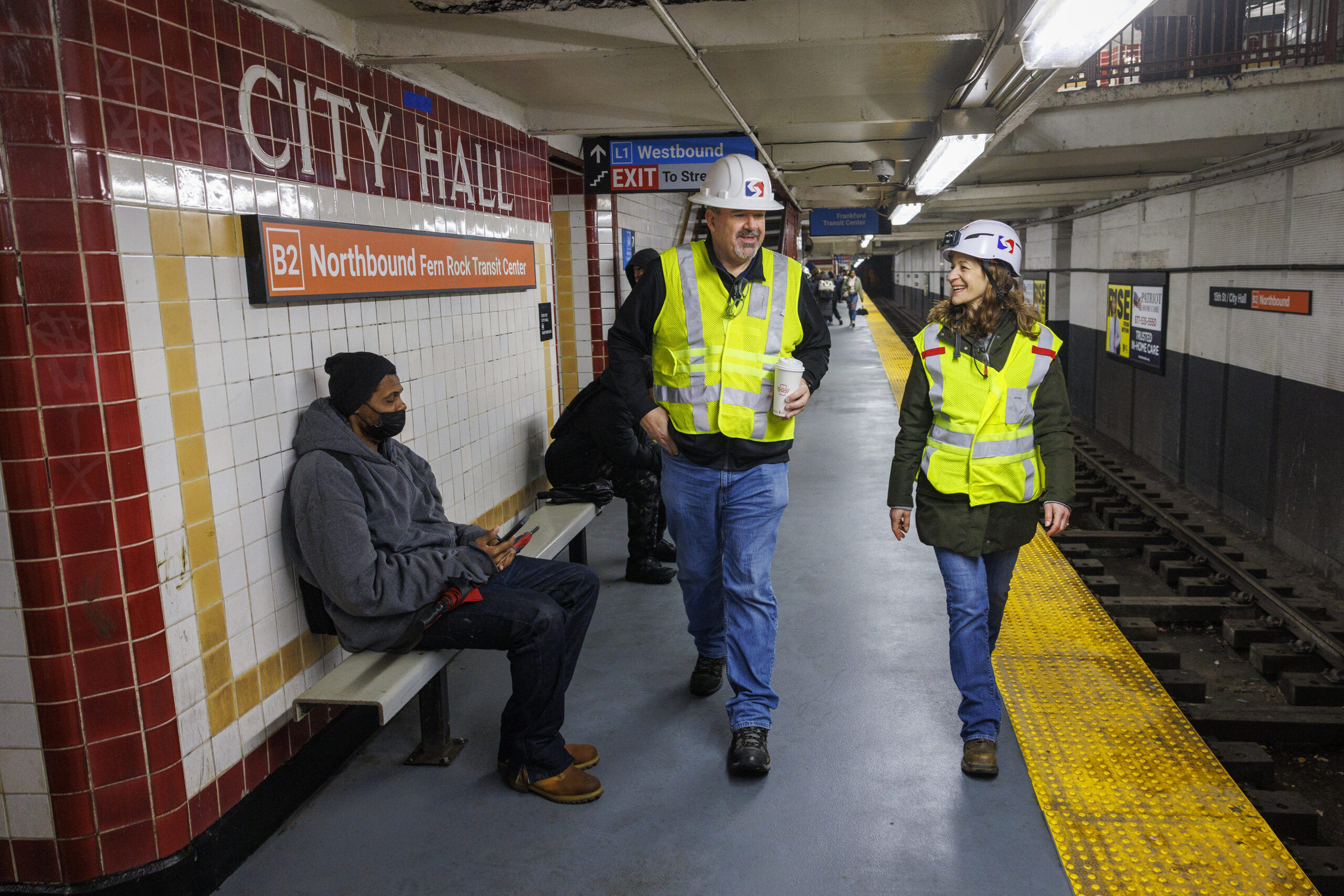
SEPTA General Manager Scott Sauer and Kate O’Connor, assistant general manager of engineer maintenance construction, make their way through City Hall Station in February.
Transit takeover
PennDot’s budget hearings are usually focused on the things the department has direct control over, i.e., Pennsylvania’s state-owned roads and bridges. On Monday, however, the hearing turned into a transit-bashing fest. Senate Republicans used the meeting to push their own plan to exhaust the state’s transportation reserves rather than adequately fund operations.
There’s just one big problem: The senators frequently did not know what they were talking about.
Republican State Sen. Tracy Pennycuick asked about the status of the King of Prussia rail project, which has been canceled for almost three years. Her fellow GOPState Sen. Jarrett Coleman asked if SEPTA considered raising fares, which climbed from $2 in November 2024 to $2.90 last year in September, a near 50% increase.
PennDot’s leaders could have done a stronger job defending themselves. In particular, their inability to produce a list of projects was mystifying. Many of the volunteer transit advocates I know could do so on the spot. It was clear to me that the most knowledgeable person in the room was Delaware County’s Democratic State Sen. Tim Kearney, himself a regular SEPTA rider. At one point, Harrisburg’s State Sen. Patty Kim, a Democrat, suggested that PennDot bring charts next time to help explain complicated financial maneuvers.
There’s a role Republicans in the General Assembly could play in ensuring SEPTA’s fiscal health, if they were willing to do their homework instead of grandstanding. While SEPTA is more efficient with its use of revenue than critics have claimed, there are still ways to save money and bring down the capital deficit. They are just politically difficult. It would be a lot easier for SEPTA’s board to tell the good people of Eddystone, Angora, or Eddington they are losing their low-ridership Regional Rail stops if they could add “because Harrisburg made us.”
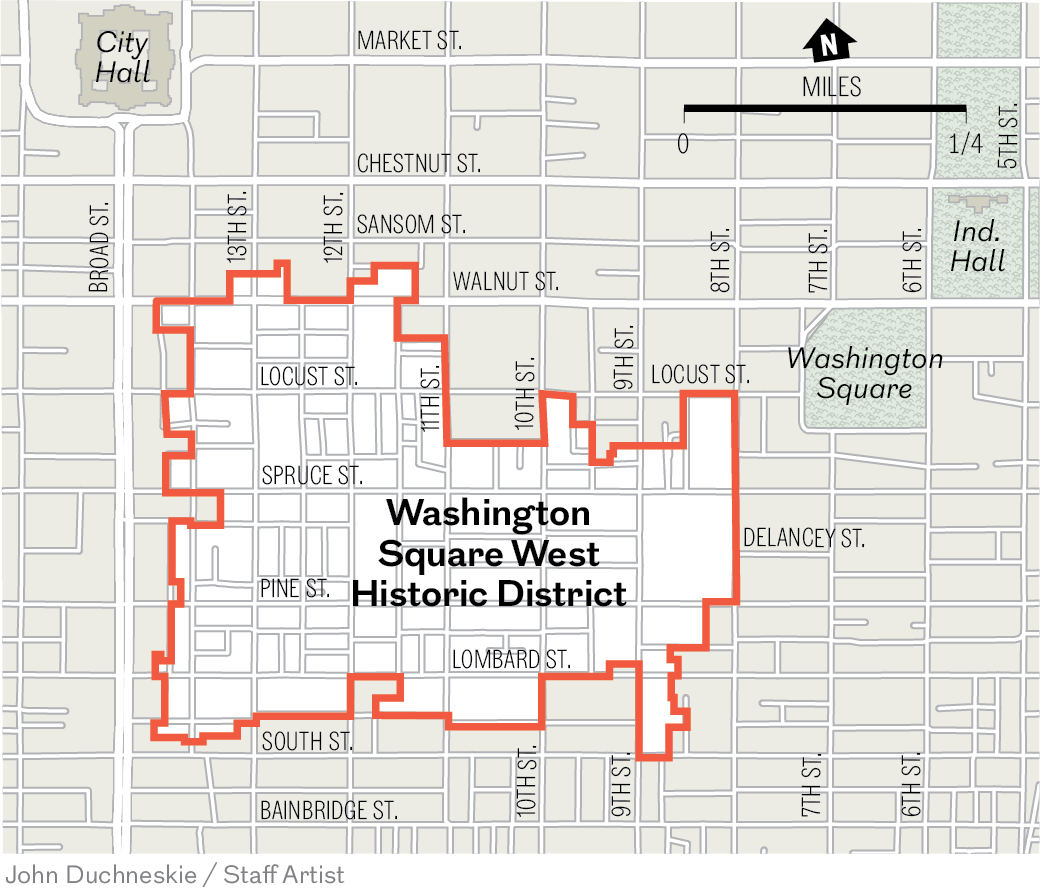
Map of the Washington Square West Historic District. After some neighbors sued, the district designation was recently revoked in court.
Historic revocation
Regular Shackamaxon readers know that while I love our city’s history, that doesn’t mean I expect everyone else to love it, too. After a coalition of neighbors challenged the Washington Square West Historic District, Common Pleas Court Judge Christopher Hallrevoked the district, granting a major victory to homeowners who resented their inclusion in the city’s largest and most nebulous historic zone.
Some residents objected to being part of the district because of the high costs usually associated with making the necessary modifications required to bring their properties in line with the city’s strict codes for historic properties.
Preservationists, to put it mildly, are miffed. They feel the ruling is deeply unfair and should be overturned.
Instead, they should treat this as a learning opportunity. The Washington Square West district really was a step too far. While historic districts typically focus on specific architectural styles and eras, this district covered more than a thousand buildings from before the Revolutionary War until after the Second World War. While advocates describe working with the historic commission as painless, everyday homeowners often disagree.
Additionally, covering the city in preservation districts will have an impact on overall housing supply and, as a result, costs. A recent analysis by CityLab shows how New York’s preservation rules have led to many smaller, more affordable apartment buildings being converted into urban mansions. This means exchanging multiple working- or middle-class residents for one extraordinarily wealthy household.
While local preservationists commissioned a study they claim debunks this concern, the document’s results fall into the category of correlation, rather than causation. If density and population are growing in historic districts, it is probably because people tend to put historic districts where development is most lucrative. If people truly believed that designation brought only benefits with no drawbacks, we may as well designate the entire city.
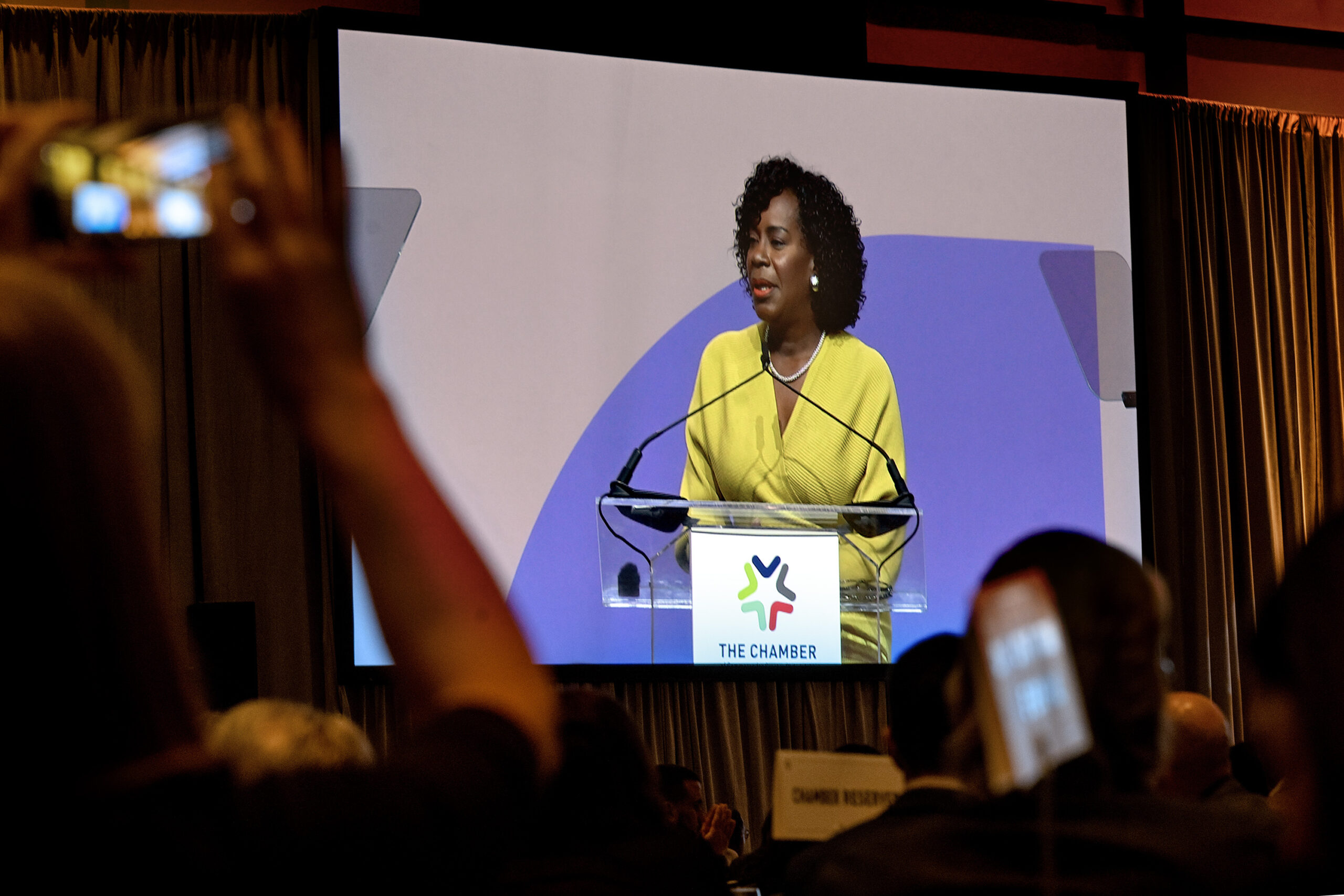
Attendees record Mayor Cherelle L. Parker as she delivers her keynote address at the Chamber of Commerce for Greater Philadelphia’s Annual Mayoral Luncheon in February.
Future flush
According to reporting by my Inquirer colleague Sean Collins Walsh, Philadelphians may soon experience a new reality in civic finance: extra cash.
For decades, City Hall struggled to pay the bills, as pension costs and low wages sapped the public purse. Now, the city is looking at the prospect of having a budget surplus of $400 million and a fully funded pension system by 2032.
It is important we begin the discussion now on what to do with that money.
There is no shortage of need in this city. The school district, affordable housing, SEPTA, parks and recreation, the libraries, and the city’s workforce all have strong arguments to make when it comes to which agencies should receive that money. The boldest course of action, however, might be to set the city on a new economic course entirely by reforming our local tax code.
Despite Philadelphia’s high tax rates, the city generates relatively little income. Boston spends just over $7,000 per resident, New York City spends over $13,000, and even Baltimore spends over $8,000. Philadelphia spends just $4,250. This gap can’t be fixed by raising our taxes even higher. It requires growing our economy.
Alongside tax reform — which should attract new businesses — the city should eliminate the restrictive zoning overlays that add significant costs for entrepreneurs in Philadelphia.
If the City of Brotherly Love could generate as much tax revenue per resident as Charm City or the Hub, City Hall would have more than $12 billion to spend each year. That’s enough money to make a major difference.
If this year is anything like the previous two, expect the Flyers to make some noise ahead of Friday’s 3 p.m. deadline.
General manager Danny Brière has a history of making trades in the hours leading up to the deadline, and this year could be a similar case, with players such as Rasmus Ristolainen rumored to be on the move.
Jackie Spiegel takes a look back at the last two years and what Brière did in the week leading up to the previous trade deadlines.
But let’s evaluate where this team currently stands. Entering Thursday’s game against Utah, Rick Tocchet’s club was on a sudden upswing and just six points out of a playoff spot with 22 games to play.
Their playoff odds was 11%, but dropped to 7.7% after a 3-0 shut out loss to the Mammoth. So, how are Brière and Keith Jones approaching the deadline? Are they still taking the long-view approach to rebuilding or has patience worn thin?
While the Flyers are desperate to reach the playoffs for the first time in six seasons, they should avoid the temptation and sell off, writes Gustav Elvin.
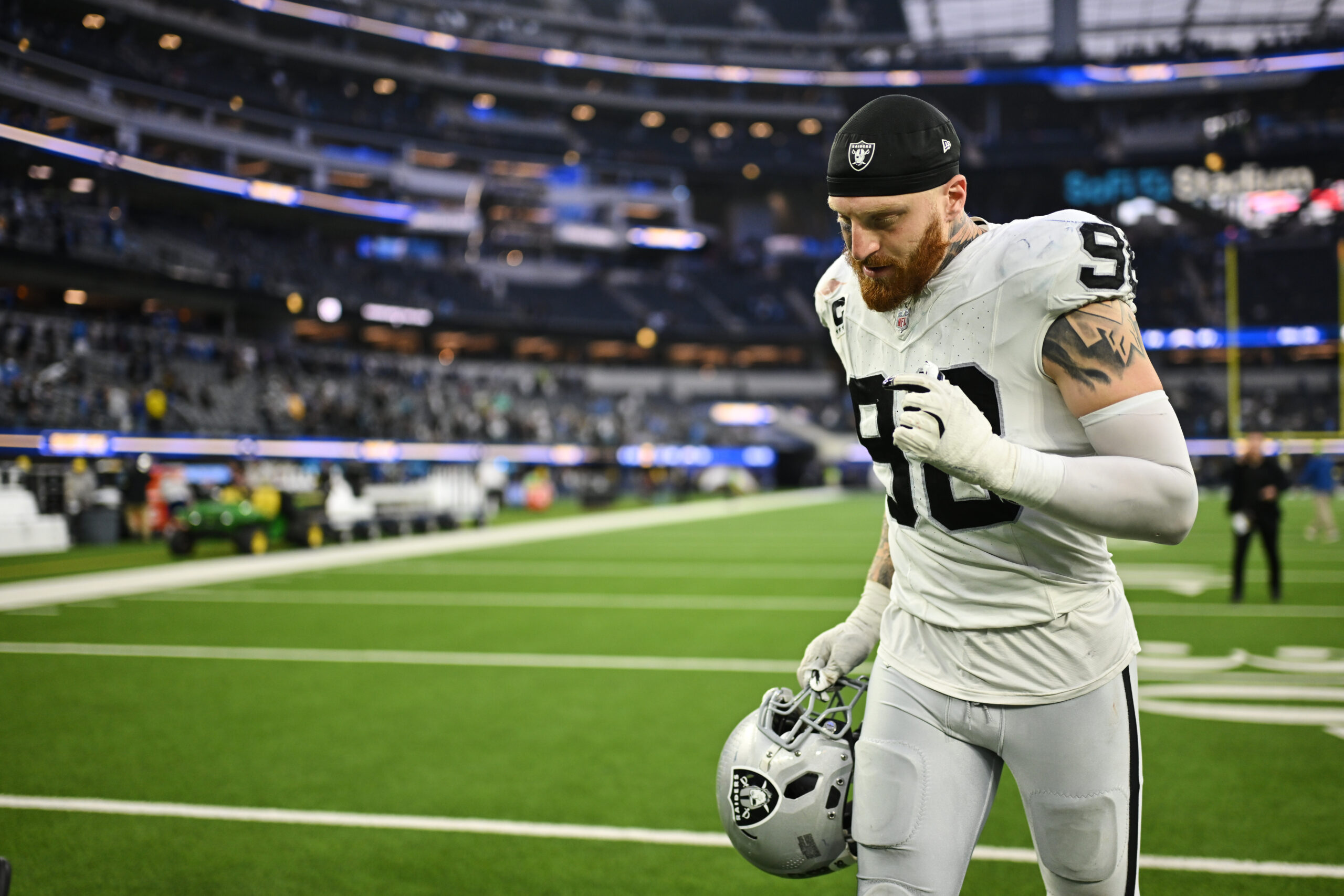
Trading for Raiders defensive end Maxx Crosby would be a bold move for the Eagles, but Vegas is said to want two first-rounders and a player in return.
The 2026 NFL free agency period begins on Monday when “legal tampering” negotiation window opens. The Eagles are not expected to be among the NFL’s most active teams — but big things could happen nonetheless.
The Inquirer’s Jeff McLane, Olivia Reiner, and Jeff Neiburg got together for a roundtable ahead of next week’s festivities and weighed in on some of the realistic targets and moves we could see the Birds make.
What we’re …
🔍 Following: A woman hit in the face by a foul ball at Little League Classic field is suing MLB, Williamsport, and the Crosscutters for carelessness and recklessness.
🤔 Wondering: Twenty-four Iowa State players transferred to Penn State. Why did so many follow coach Matt Campbell to Happy Valley?
🎉 Celebrating: After more than six months of searching, The Stoop Pigeon, a women’s sports hub and cafe, has a new location with plans to open in June.
📰 Reading: TJ Power never found a home on the court at Duke and Virginia. At Penn, he’s tougher, more mature, and has rekindled his love for the game.
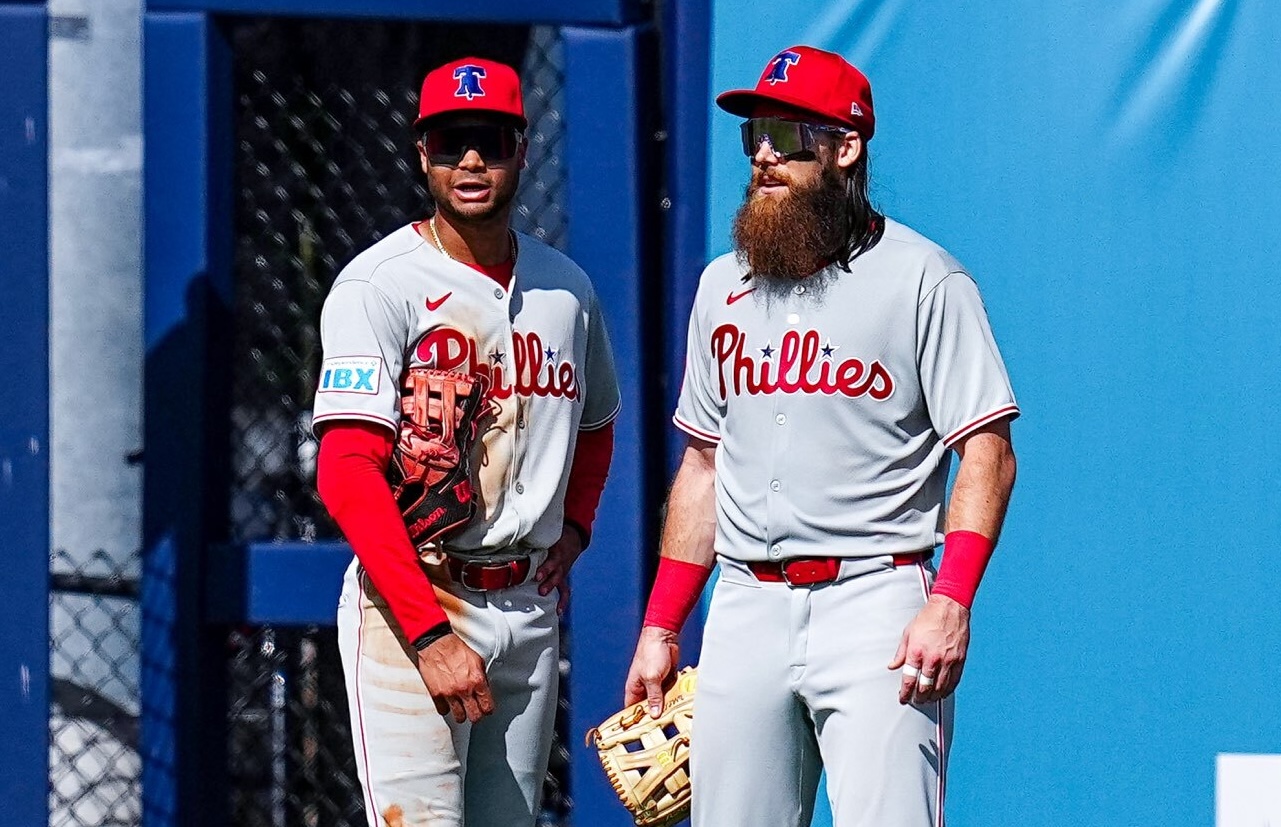
Phillies outfielders Justin Crawford (left) and Brandon Marsh during spring training.
The Phillies have done their best to make 22-year-old center fielder Justin Crawford feel comfortable. It started with manager Rob Thomson calling him this winter to encourage Crawford to “be himself” and to get ready to compete for a starting job. And it has continued during spring training with 28-year-old left fielder Brandon Marsh, who has tried to pay it forward by offering advice, friendship, and springing for a custom made black suit so the rookie can “look good” for a playoff run this fall.
Jesús Luzardo said “maybe a little bit of adrenaline” contributed to an uptick in his velocity, but he was pleased with his first spring start.
Next: The Phillies will play a split-squad game against the Pirates in Bradenton, Fla., at 1:05 p.m. Friday. Jean Cabrera will start for the Phillies.
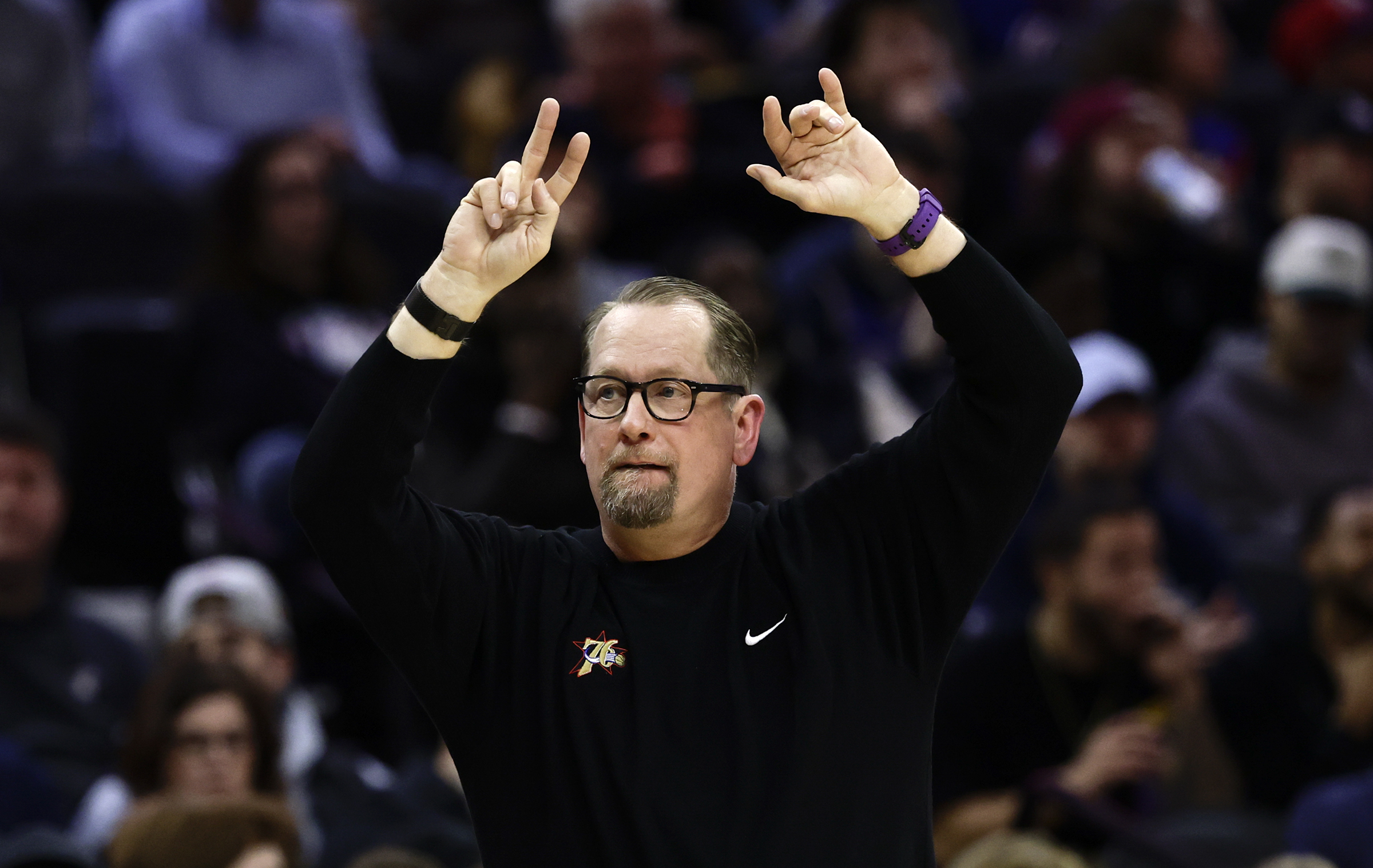
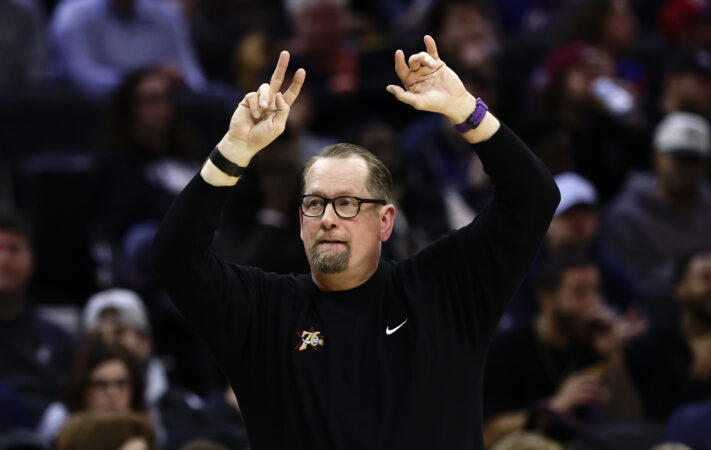
Sixers head coach Nick Nurse called the middle of the Eastern Conference “tightly squeezed.”
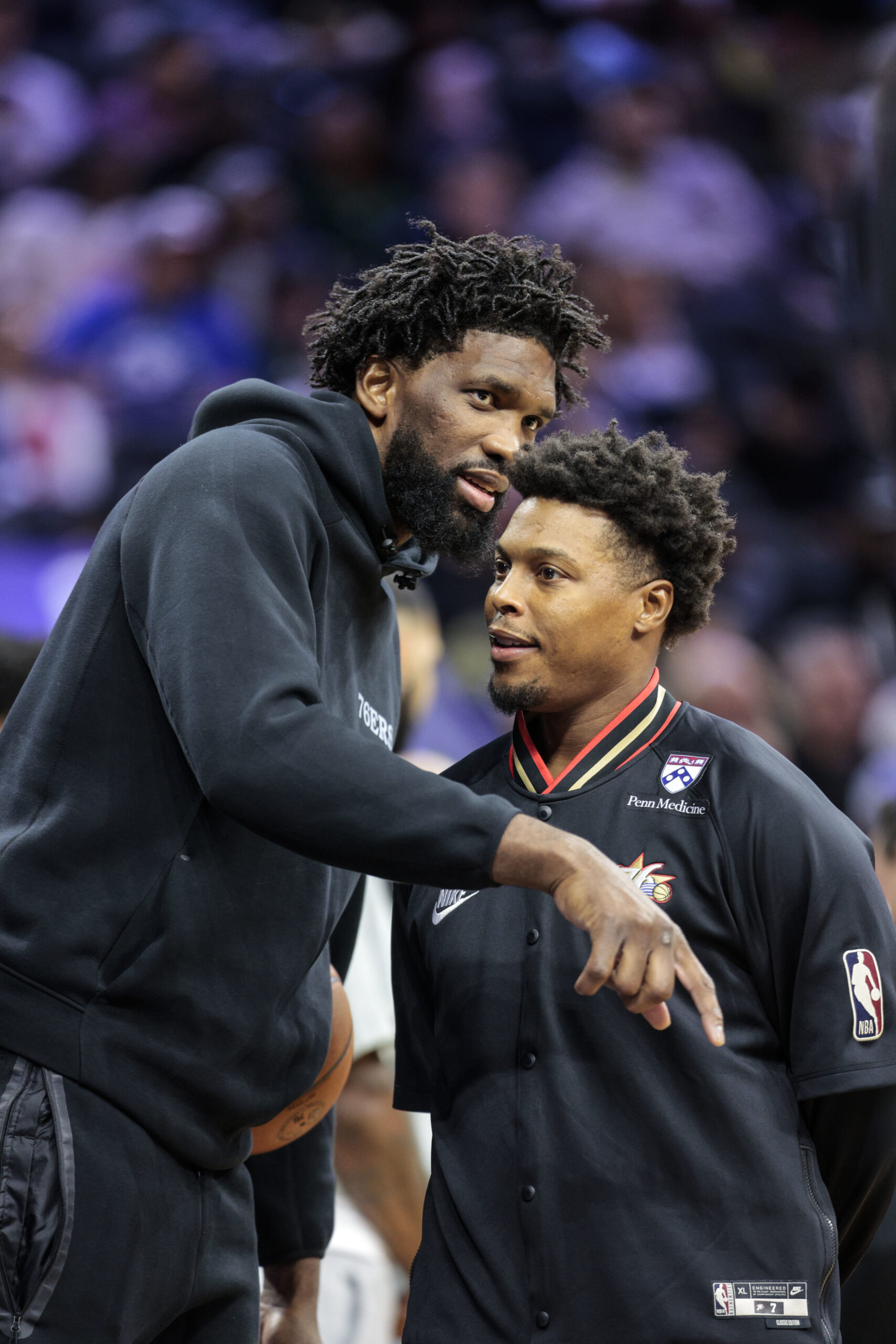
Jabari Walker was one of the 76ers’ lone standouts in their 40-point loss to the San Antonio Spurs. The next night he starred again in the Sixers’ win over the Utah Jazz. They’ll need those types of performances down the stretch of the final 20 games of the season. The Inquirer’s Gina Mizell took a look at that stretch, focusing on Paul George’s return, Joel Embiid’s injury management, and playoff positioning.
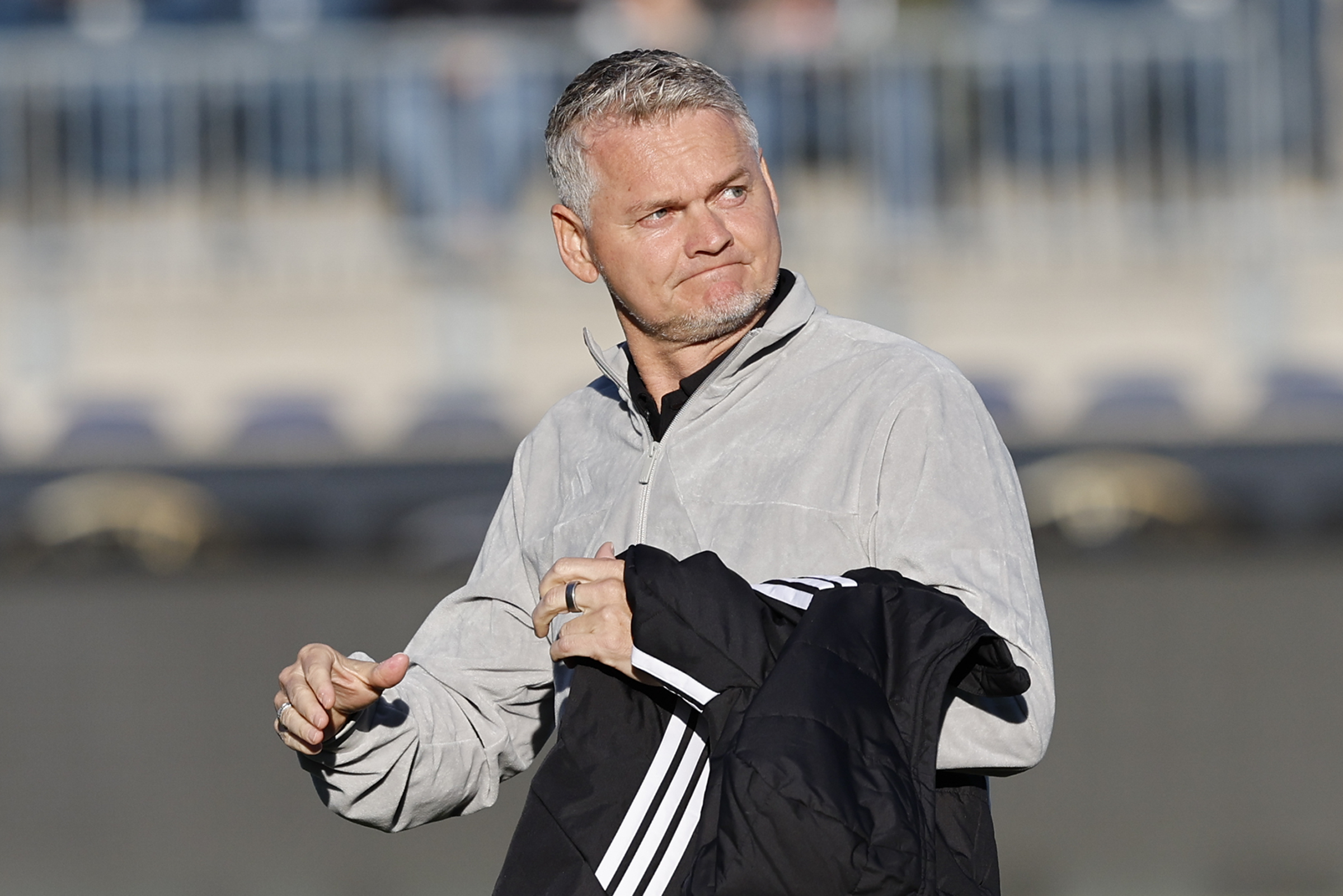
“We’ve expected more out of ourselves in terms of being sharp, mentally and cognitively,” Union manager Bradley Carnell said.
With no midweek game this week, Bradley Carnell had time to reflect on the Union’s loss to New York City FC on Sunday. He suggested that “sometimes the moment gets to us a little bit.”
His club is off to a 0-2 start in Major League Soccer. Carnell is looking address that and make adjustments, starting at the attacking end of the field.
Sports snapshot
Kevin Willard and Denise Dillon are leading Villanova men and women to the NCAA Tournament.
The Big Dance: Villanova’s teams are going to the NCAA Tournament. Will they have any company from the Big 5?
Moving on: St. Joe’s women leaned on its defense and three-point shooting to advance to the Atlantic 10 quarterfinals.
Blowout win: Villanova’s 76-57 win over DePaul was their eighth conference road win, the program’s most since 2016.
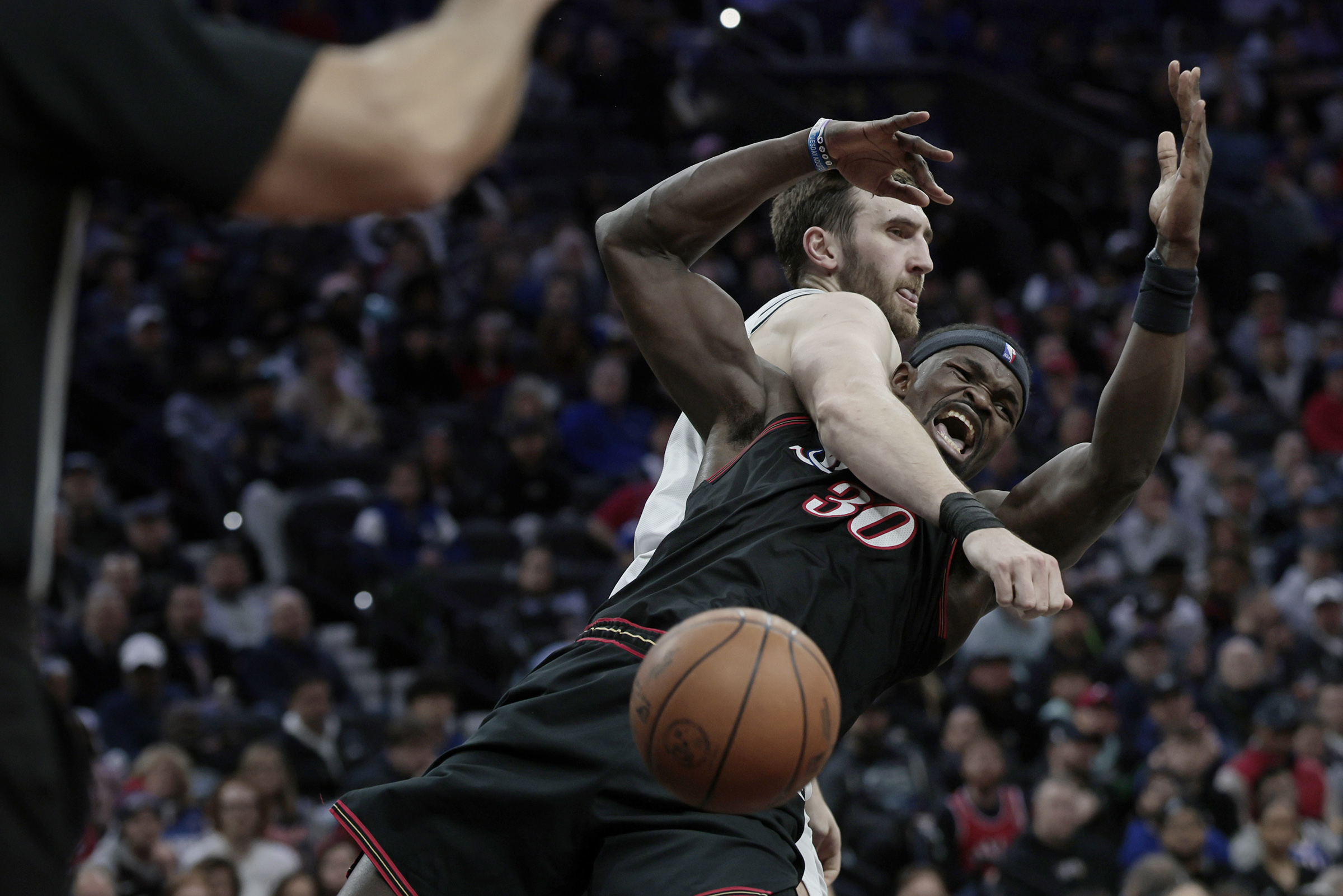
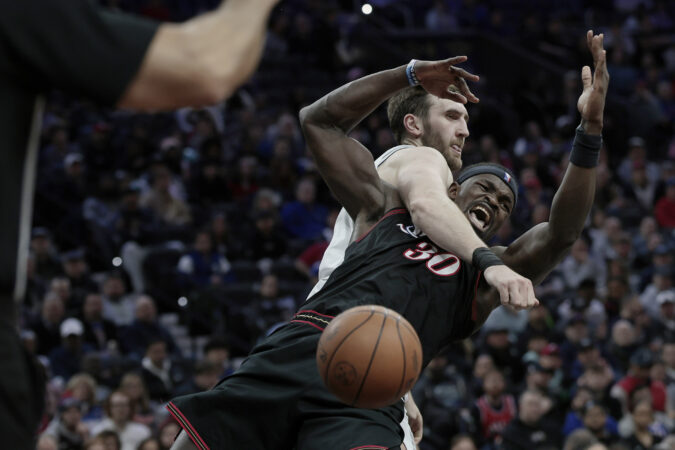
Adem Bona falls to the floor after being fouled by Spurs’ Luke Kornet on Tuesday.
Each Friday, Inquirer photo editors pick the best Philly sports images from the last seven days. As the calendar flips to March, we’ve got nearly every sport covered, with the exception of football — but don’t worry, NFL free agency starts next week. From the Sixers and Flyers getting physical in Philly to the Phillies heating up in Clearwater, here’s a look at our best shots of the week.
What you’re saying about the Big 5
We asked: Do you have a Big 5 hoops memory? Among your responses:
The La Salle University Explorers were NCAA national champions in 1954, with Tom Gola being named the MVP. I was in 9th grade back in the days and basketball was the “In Sport” in Philly. The entire sporting world knew about Overbrook High School with Wilt and this small LaSalle College now a University at Broad & Olney. Waiting for the Evening Bulletin & Daily News newspapers to be delivered was always exciting so we could read the stories. Guess I’m one of the lucky ones that at 86 my memory immediately flashed back to Tom Gola & Wilt. — Ronald R.
I am a Temple University graduate. I remember going to lots of “big 5” games at the palestra. It was an outstanding venue. Win/loss records did not matter for big 5 games. They were always hard fought. One game stands out because my future wife and I were photographed and appeared in the Inquirer sports page. — Richard P.
It’s always the streamers, the rolls of toilet paper thrown after first basket score and the drums. We’re talking the 1960’s. Villanova – St Joe’s always the best. — Charlene C.
Grew up loving the Big 5 and going almost every Sat night in the late 60’s. I say the Palestra had charisma! Best memory was in 1969 (?) when LaSalle played Villanova in game 2 and Penn v Columbia in game 1. The nightcap featured Ken Durrett (L) vs Howard Porter (V) but LaSalle also had future NBA /ABA players Larry Cannon (my Lincoln HS), Roland Taylor and Bernie Williams. Columbia had Jim McMillan who played for the Lakers. Amazing talent in the building that night. LaSalle was ranked #2 in the polls, but couldn’t go to the NCAA’s because of probation. The crowd noise, streamers, rollout banners are still great memories. Now I suffer in a basketball coma in State College with Penn State. — Gary P.
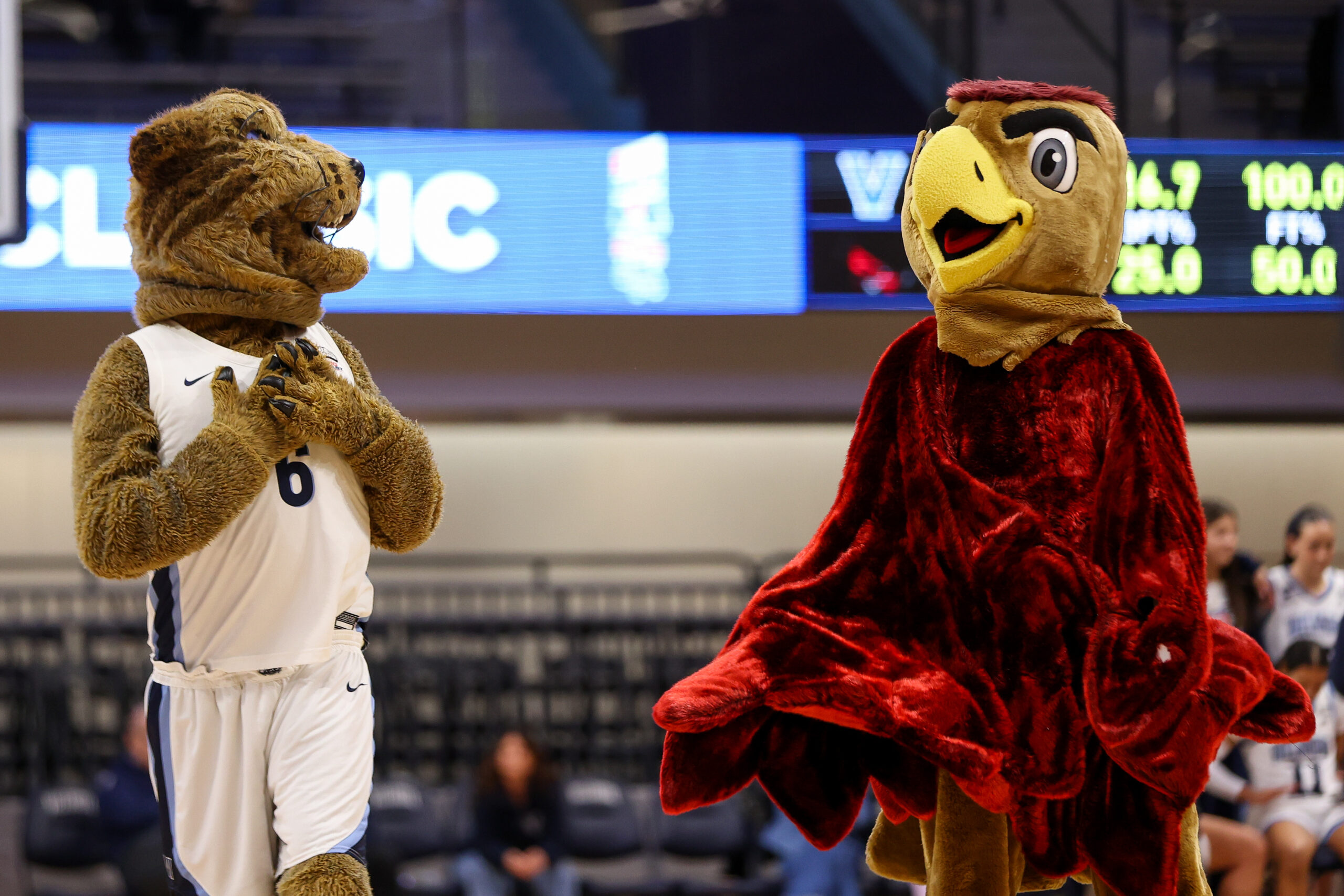
Villanova Wildcats mascot and St. Joe’s Hawks mascot stand on court during this year’s Big 5 women’s basketball championship.
Saturday afternoon doubleheaders at the Palestra. The first game would be a Big 5 match and second game involved another Big 5 team. Good times. Really miss the streamers. — Brad L.
My favorite Big 5 memories are many Villanova/St. Joe’s games. This has always been a special rivalry resulting in memorable games. Unfortunately, these games have lost something in intensity and just overall atmosphere since they have moved from the Palestra. — Tom E.
Used to love the Palestra. Penn would win the first game, then the Big 5 game would go. Got in on a St Joe’s ID for years. All games were competitive. Seems to me Rollie Massimino screwed it up, because the other Big 5 teams were as good as Villanova and he was such a big baby he didn’t want to lose to any of them.— Bill M.
Mike Sielski’s story about the decline of the Big 5 was very interesting and the reasons very logical. When growing up in the Philly area I was always a big fan of the Big 5 teams, but rarely ever saw them in person. I was much more interested in going to see the Philadelphia Warriors first and later the 76ers. Of course many of the Philly pros came from the Big 5 including Arizin, Gola, Wali Jones, Guy Rodgers, Melchonni, Goukas, Mike Bantum and more. — Everett S.
Loved the Palestra doubleheaders along with the creative signs that were rolled open, passes down the student section and shredded by the first few rows. The best times were when Penn made the Final 4, Temple made it to several elite 8s and St Joe’s was #1 for part of a season. — Bob C.
We compiled today’s newsletter using reporting from Jackie Spiegel, Gustav Elvin, Olivia Reiner, Jeff McLane, Jeff Neiburg, Jonathan Tannenwald, Ariel Simpson, Sean McKeown, Greg Finberg, Owen Hewitt, Dylan Johnson, Alex Coffey, Colin Schofield, Inquirer Staff Photograpers, and Gina Mizell.
By submitting your written, visual, and/or audio contributions, you agree to The Inquirer’s Terms of Use, including the grant of rights in Section 10.
As always, thanks for reading. Have a wonderful weekend, we’ll be back in your inbox on Monday. — Bella
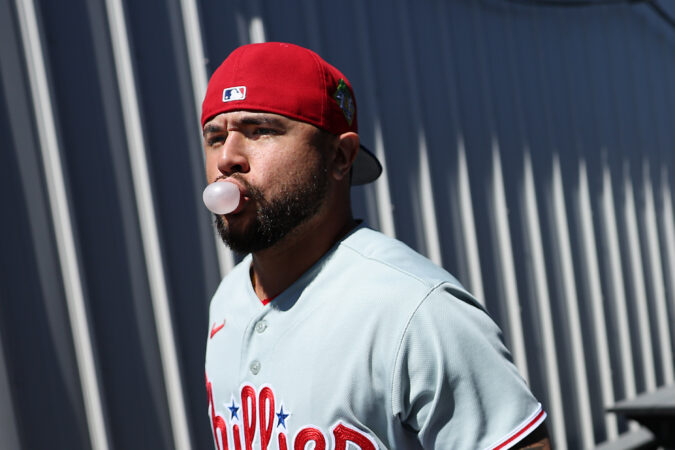
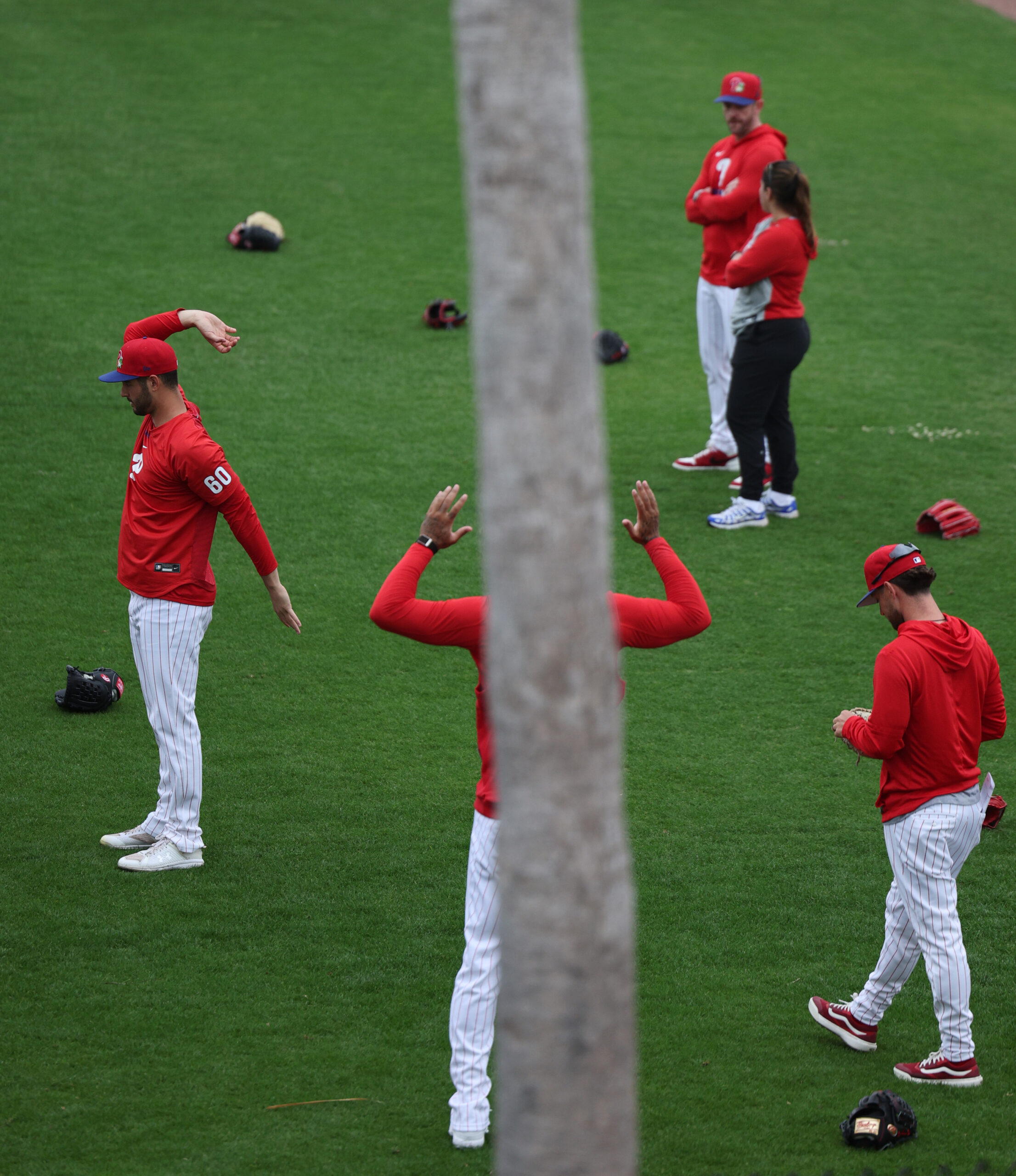
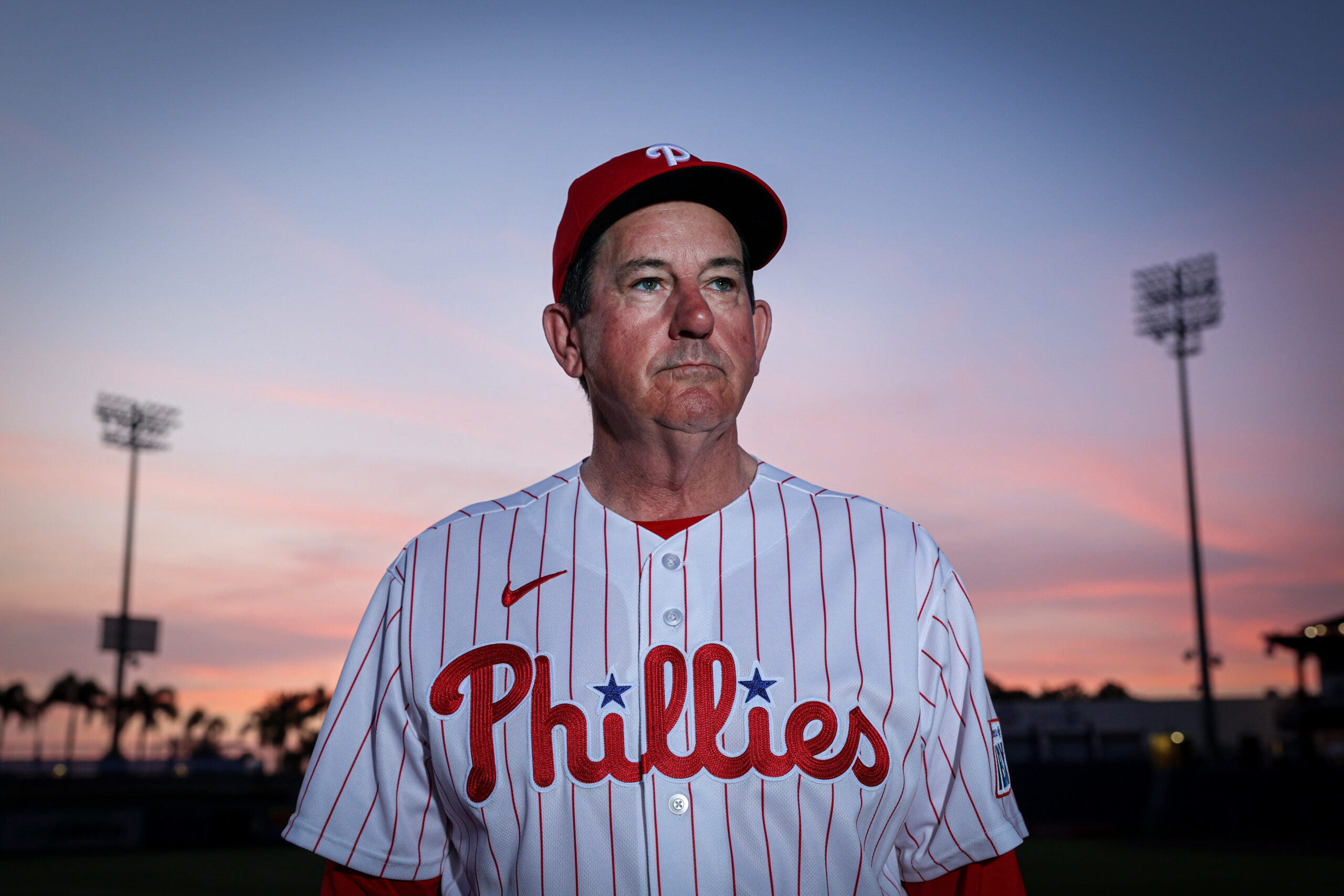
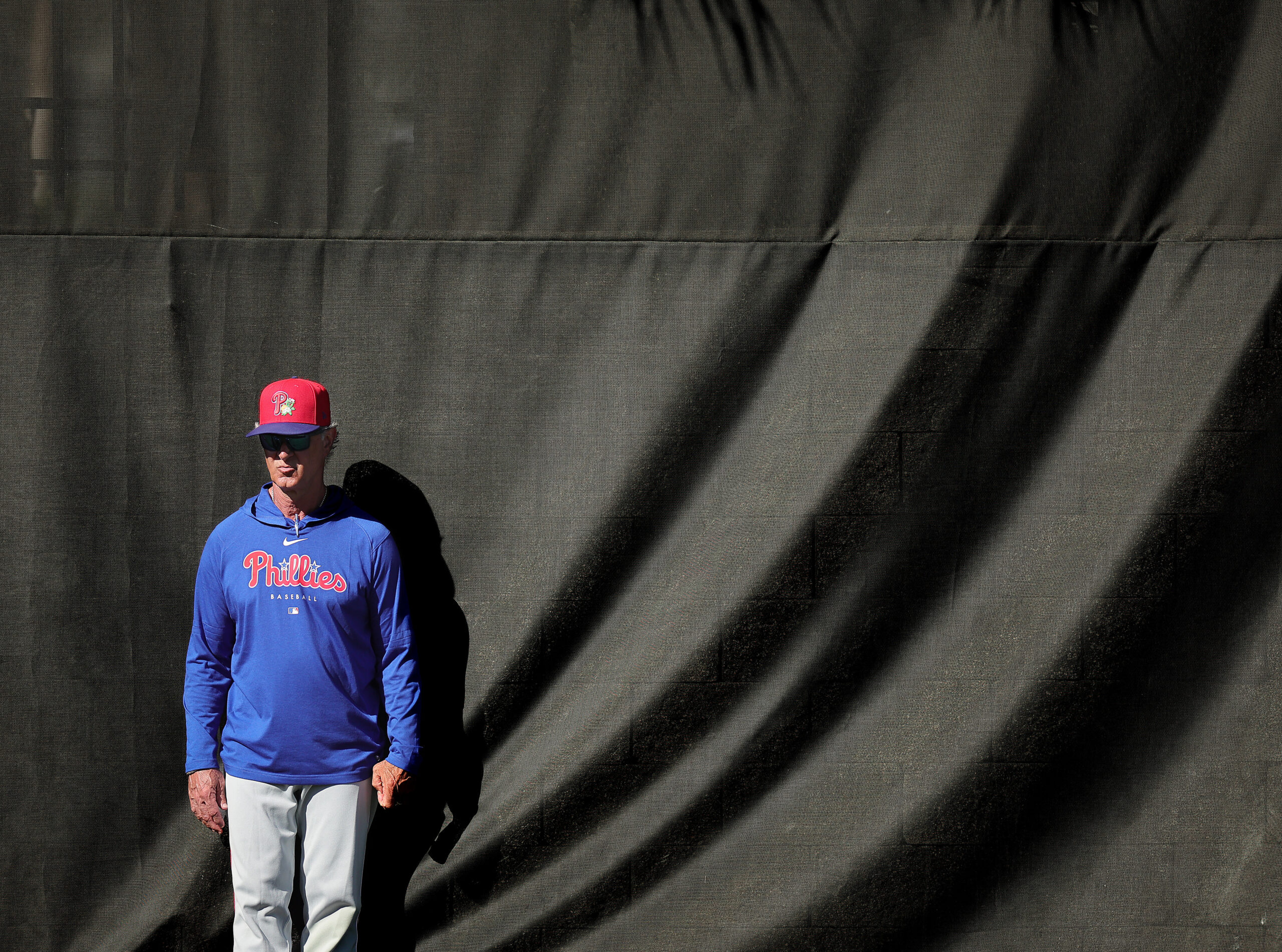
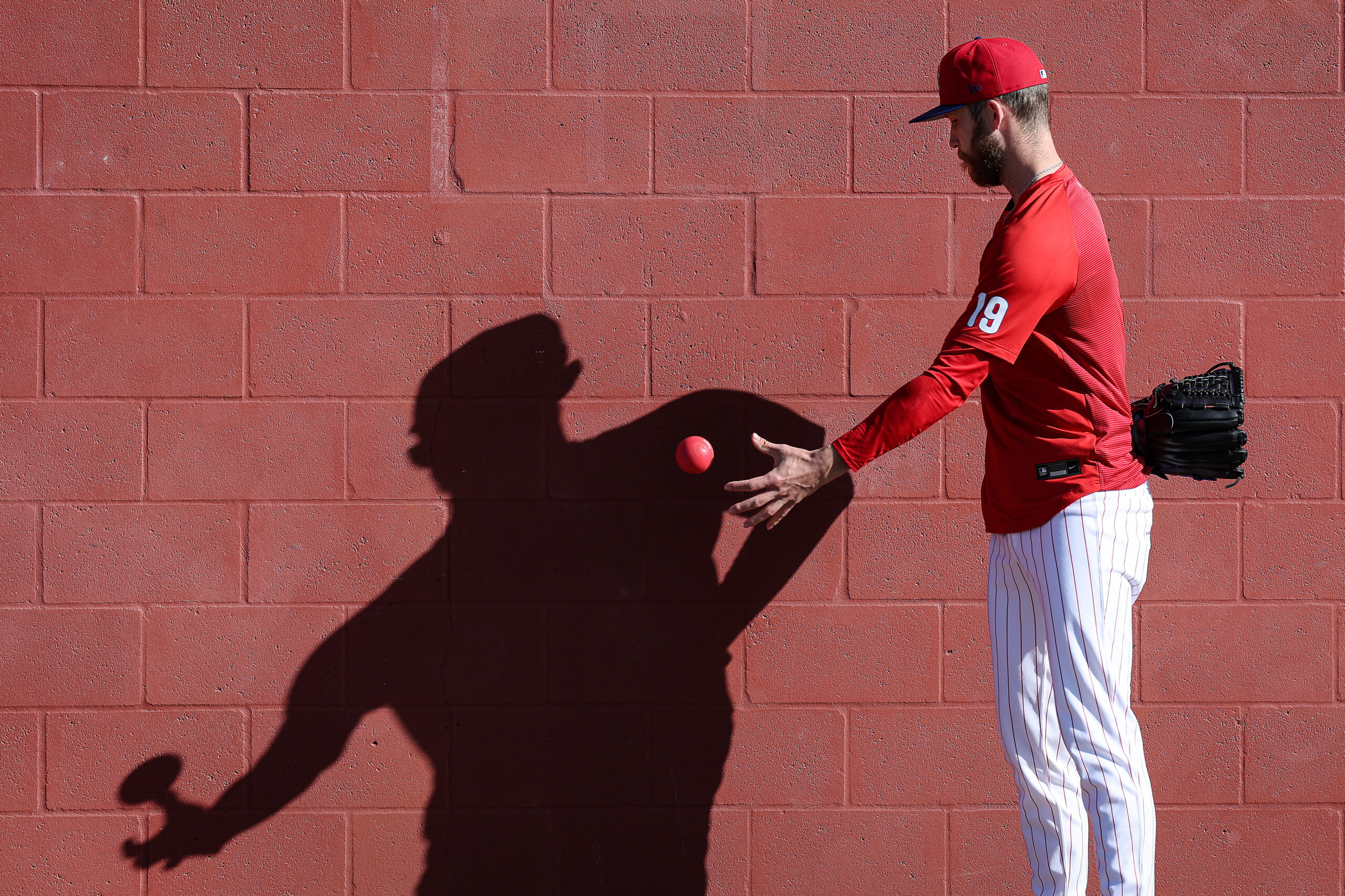
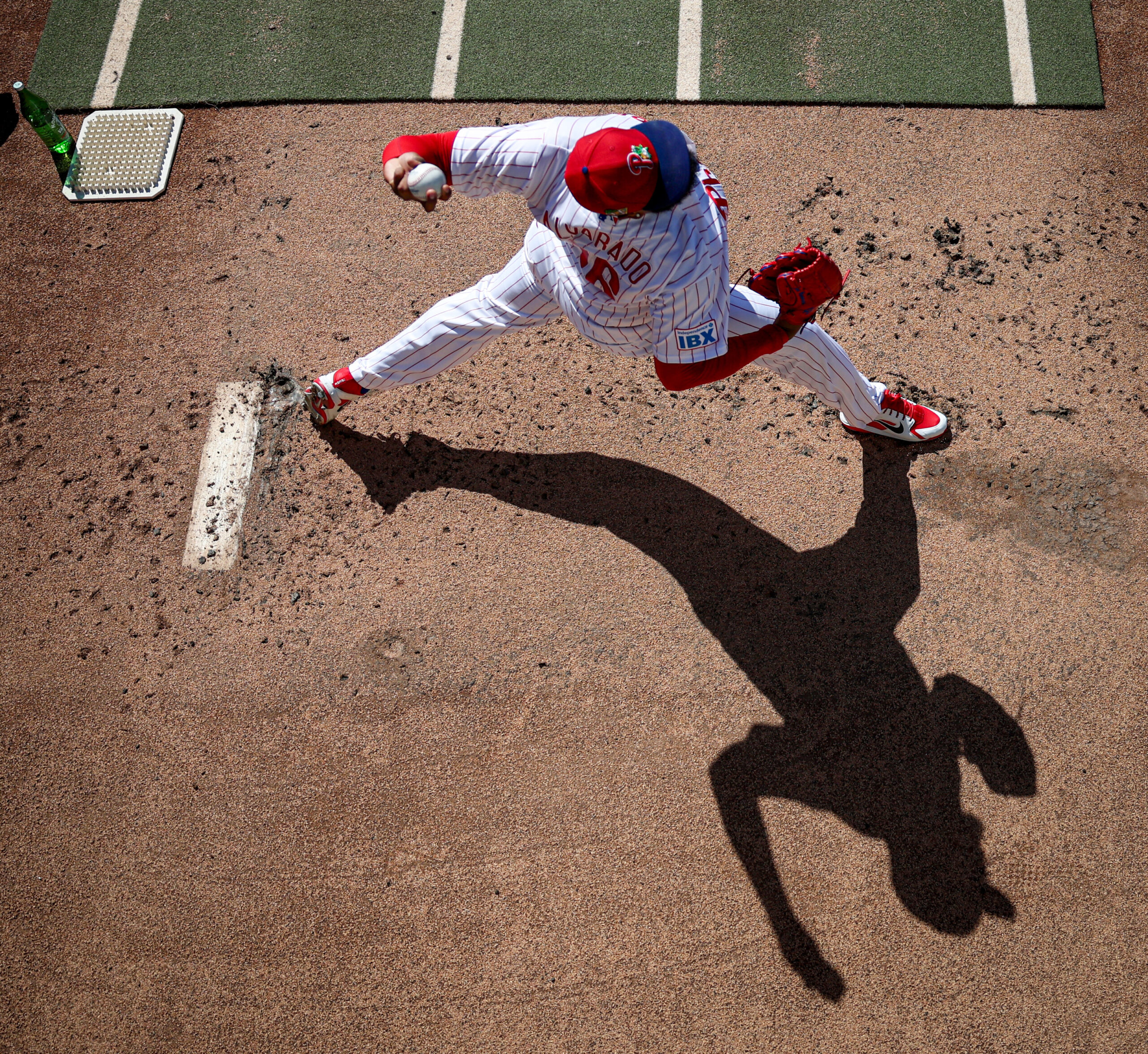
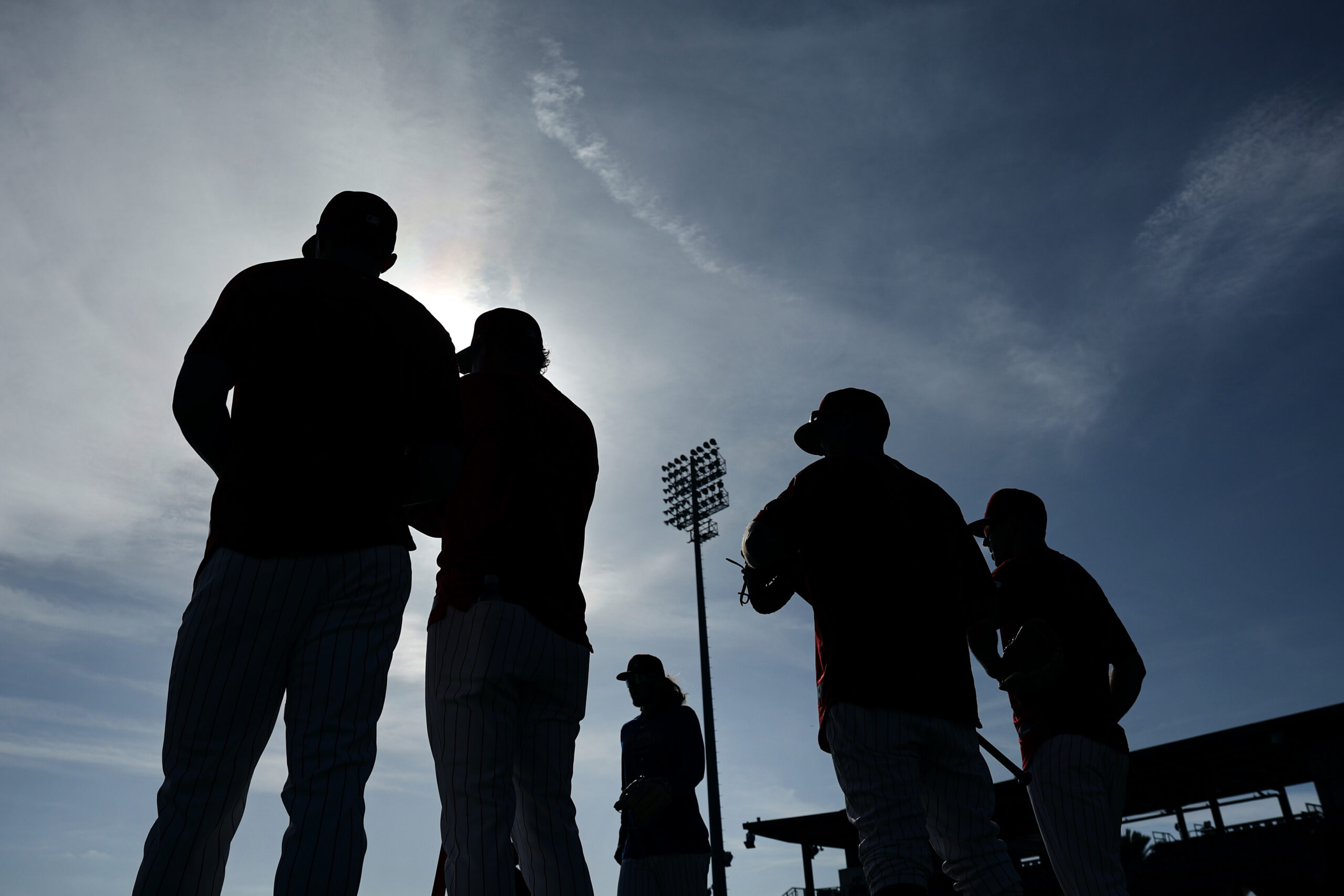
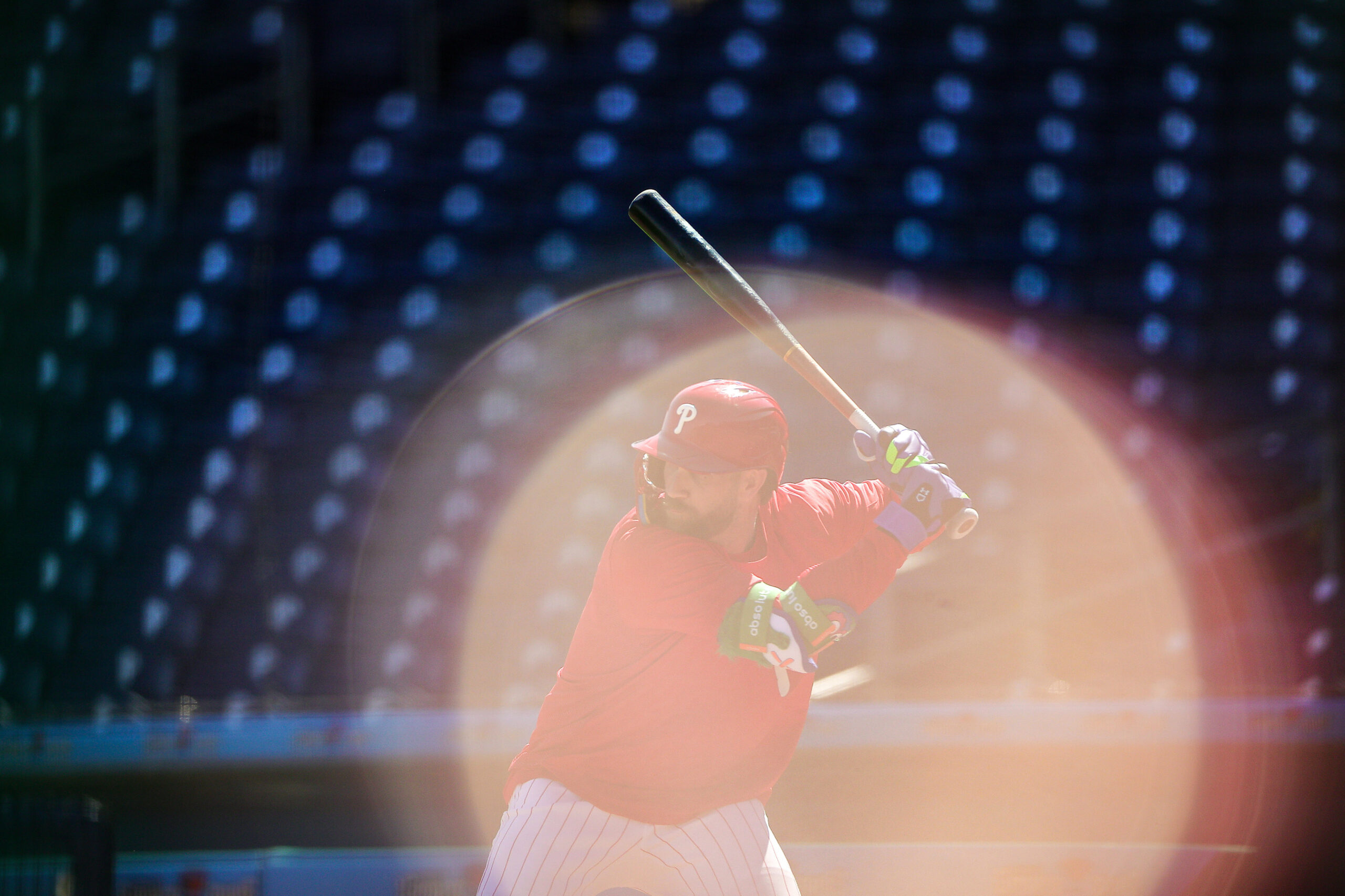
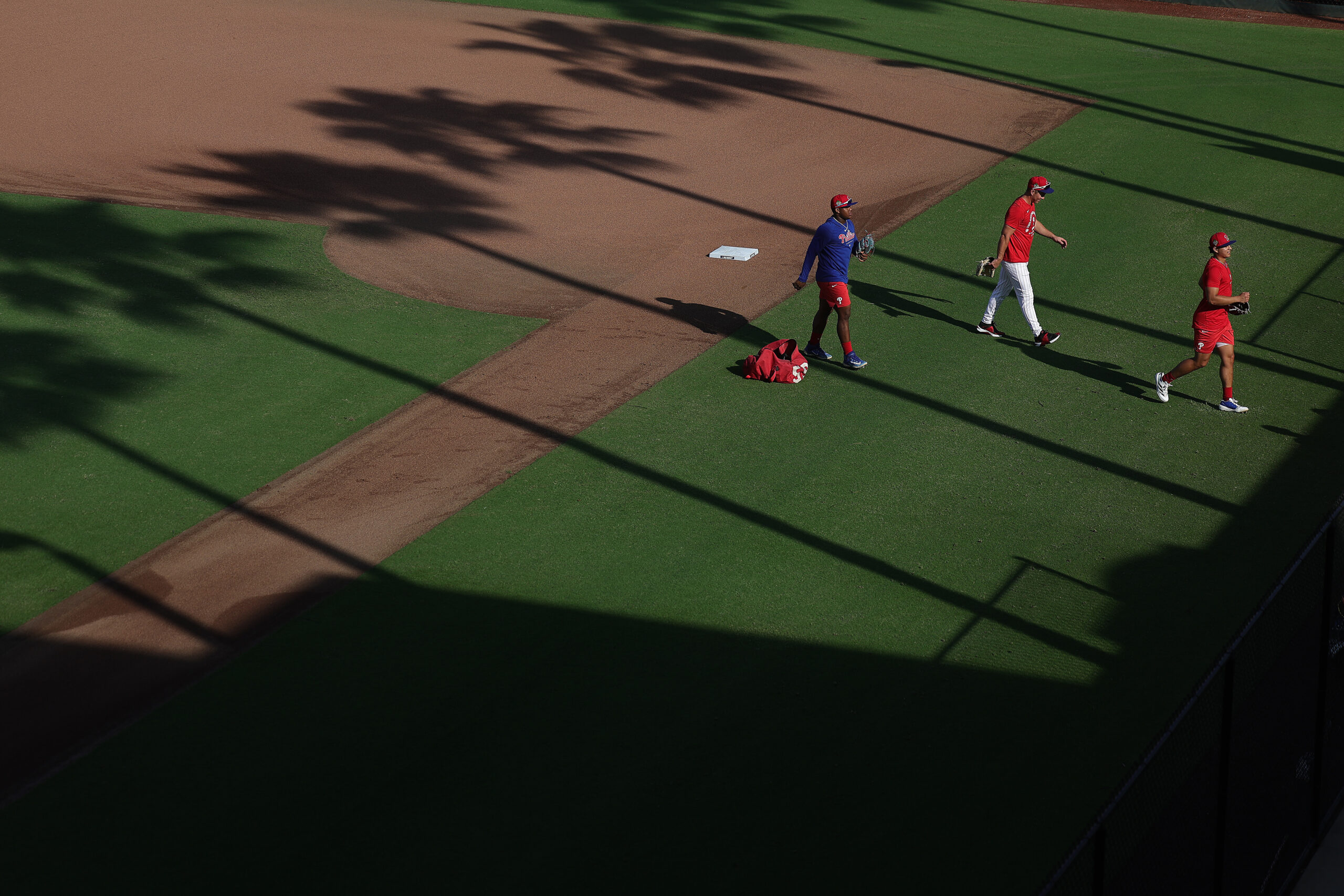
Covering Phillies spring training offers sports photographers an opportunity to stretch beyond everyday game coverage. On one of my first mornings at the training facility in Clearwater, Fla., I noticed pitcher Taijuan Walker stretching behind a palm tree. I knew it could make a picture, but it didn’t line up naturally. Every morning, he stretched. Every morning, I tried again. Finally, I made the picture on my last day in the Sunshine State. When I made the photo of bench coach Don Mattingly, I looked for a way to eliminate all other visual distractions. The morning light created a unique pattern on the tarp that put the attention on Mattingly. Using red as the dominant color holds the image of pitcher Kyle Backhus together. I again took advantage of the morning light to capture the shadow and fill the negative space. The portrait of manager Rob Thomson was a combination of a little planning and a lot of luck. I knew there would be a small window at sunrise when the sky would add some visual drama. Luckily, it was when Thomson was ready for his photo. The Phillies outfielders are seen through palm fronds during a game. The contrast of the mostly green palette with the red in the Phillies uniforms encourages the viewer to search into the image. For the photo of catcher Rafael Marchán jogging from the clubhouse, the pattern on the background caught my eye first. I then waited for someone to come into the space. The bubble gum gave the photo an extra pop.
On Feb. 22, pitcher Tijuan Walker warms up behind the truck of a palm tree.Outfielders Dante Nori (from left), Dylan Campbell, and Pedro León are seen through a palm tree during a spring training game against the Pittsburgh Pirates on Feb. 22. Catcher Garrett Stubbs with a playful pose on photo day.Manager Rob Thomson poses as the sun rises on photo day Feb. 19.Pitcher Andrew Painter poses on Feb. 19 for photo day.On Feb. 21, bench coach Don Mattingly watches as players warm up.Pitcher Kyle Backhus warms up on Feb. 17.Pitcher José Alvarado warms up Feb. 20.Alec Bohm (center) is silhouetted with teammates as they watch a drill Feb. 18.A light refection from a bat in the dugout casts a glow around first baseman Bryce Harper at batting practice Feb. 20.Aroon Escobar (from left), Dylan Moore, and Bryan Rincon leave after completing a drill Feb. 19.
Each Friday, Inquirer photo editors pick the best Philly sports images from the last seven days. As the calendar flips to March, we’ve got nearly every sport covered, with the exception of football — but don’t worry, NFL free agency starts next week. From the Sixers and Flyers getting physical in Philly to the Phillies heating up in Clearwater, here’s a look at our best shots of the week.
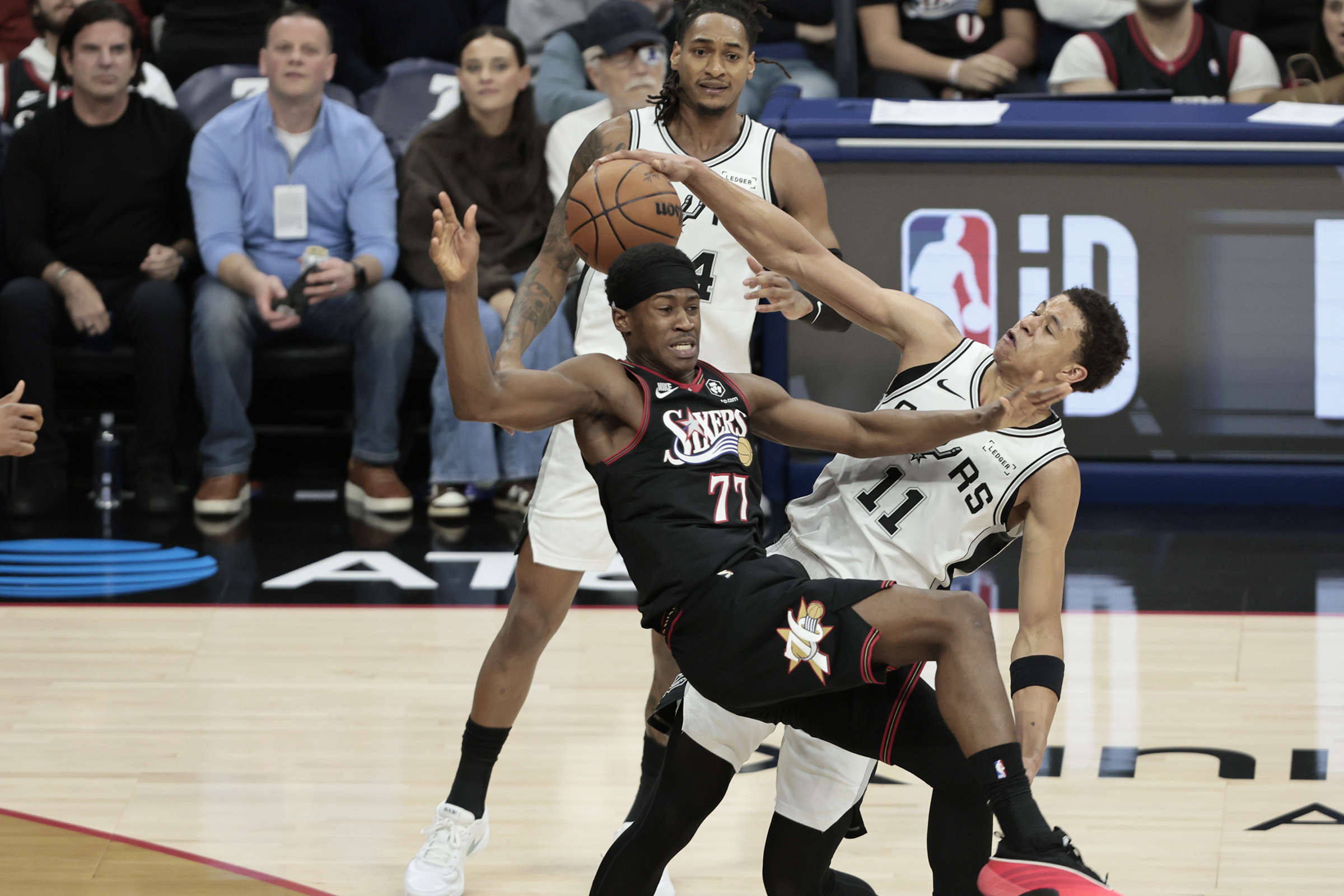
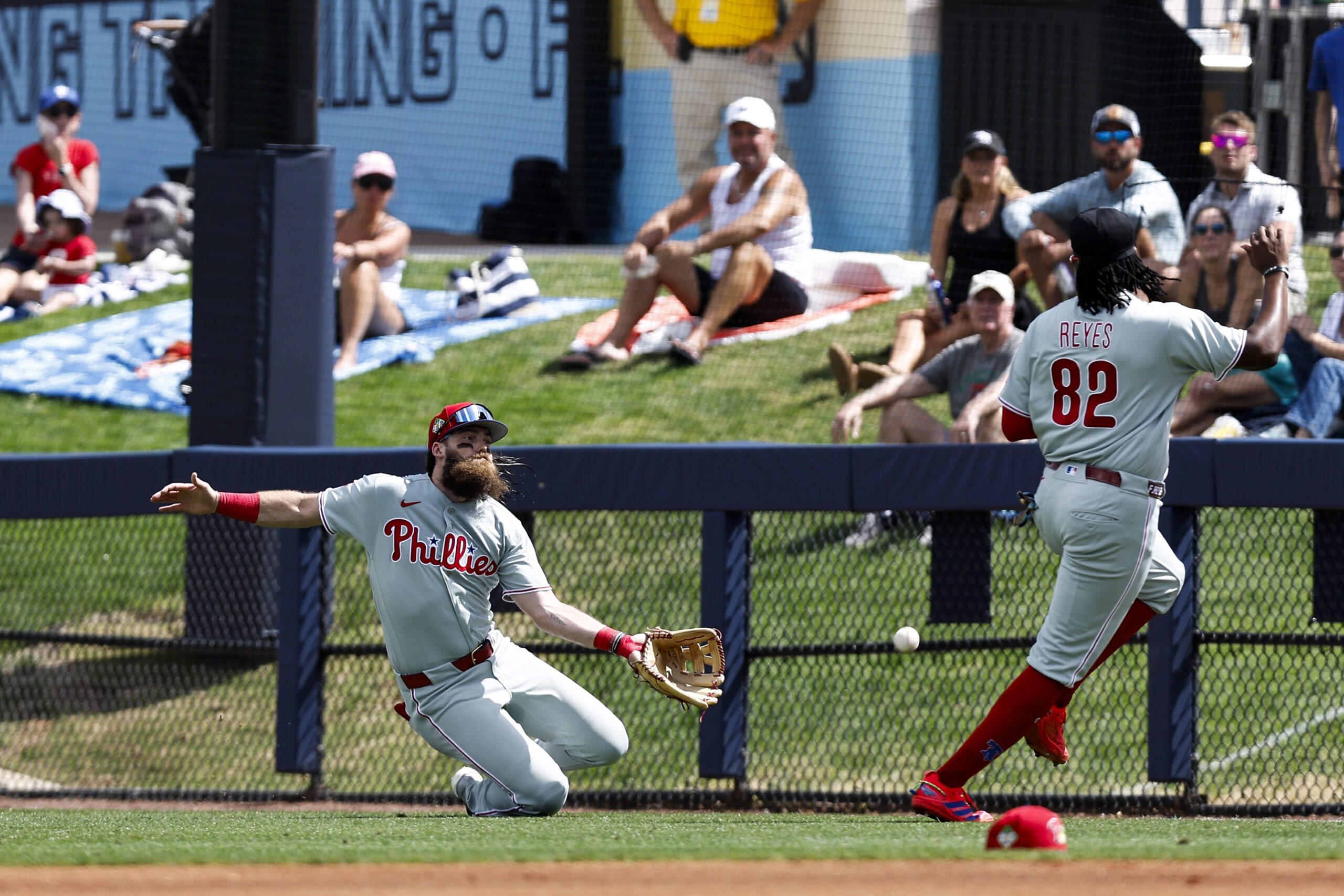
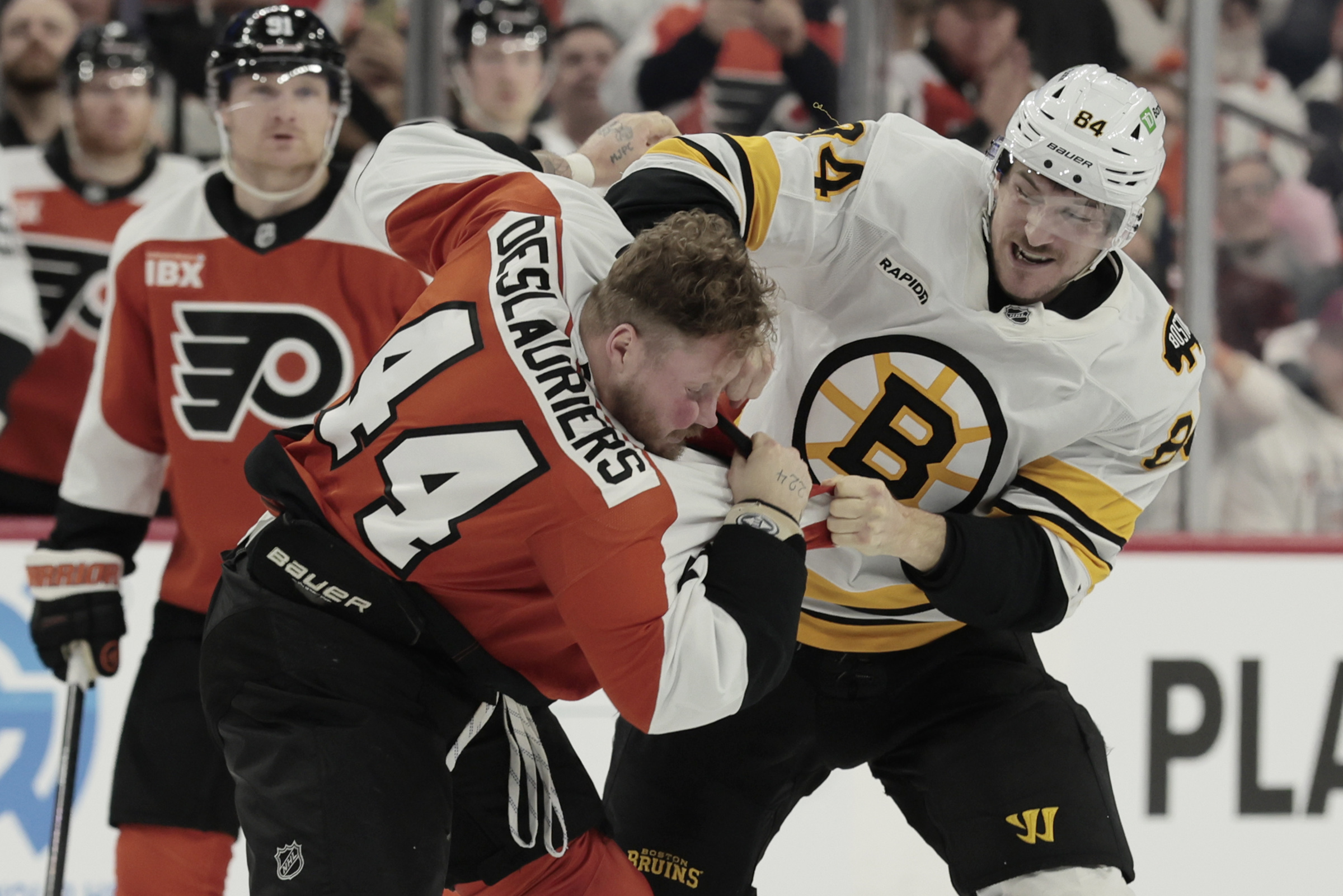
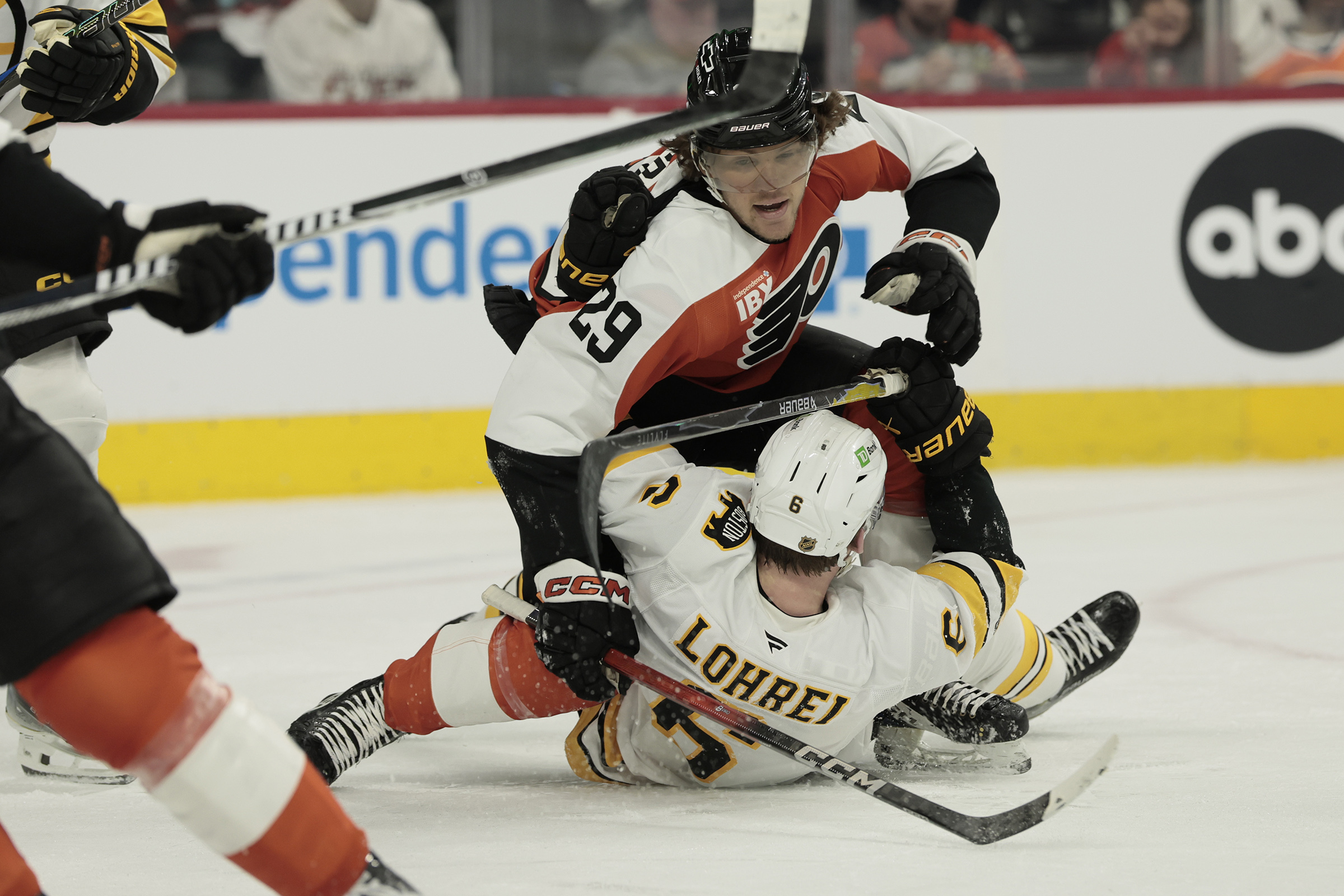
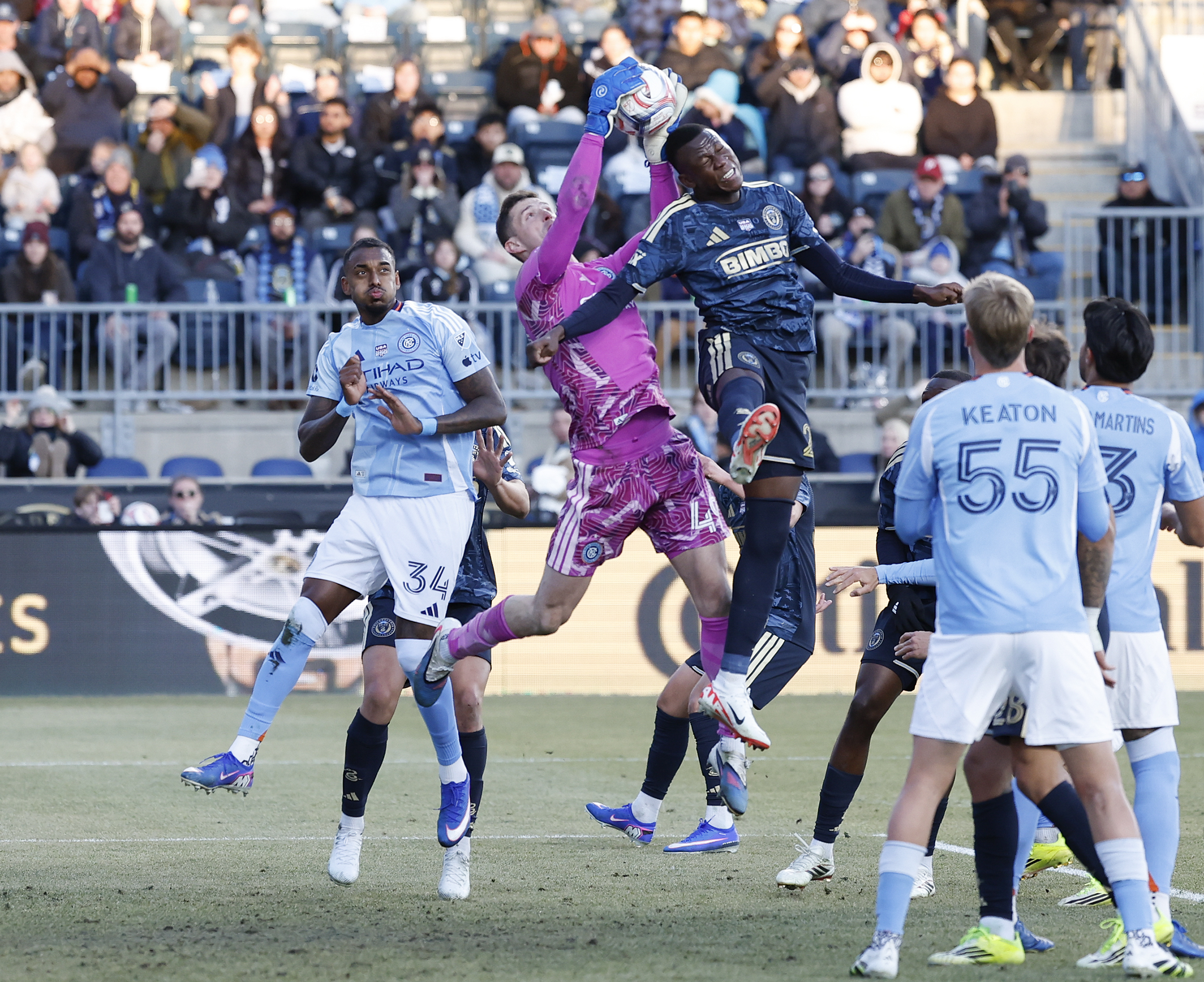
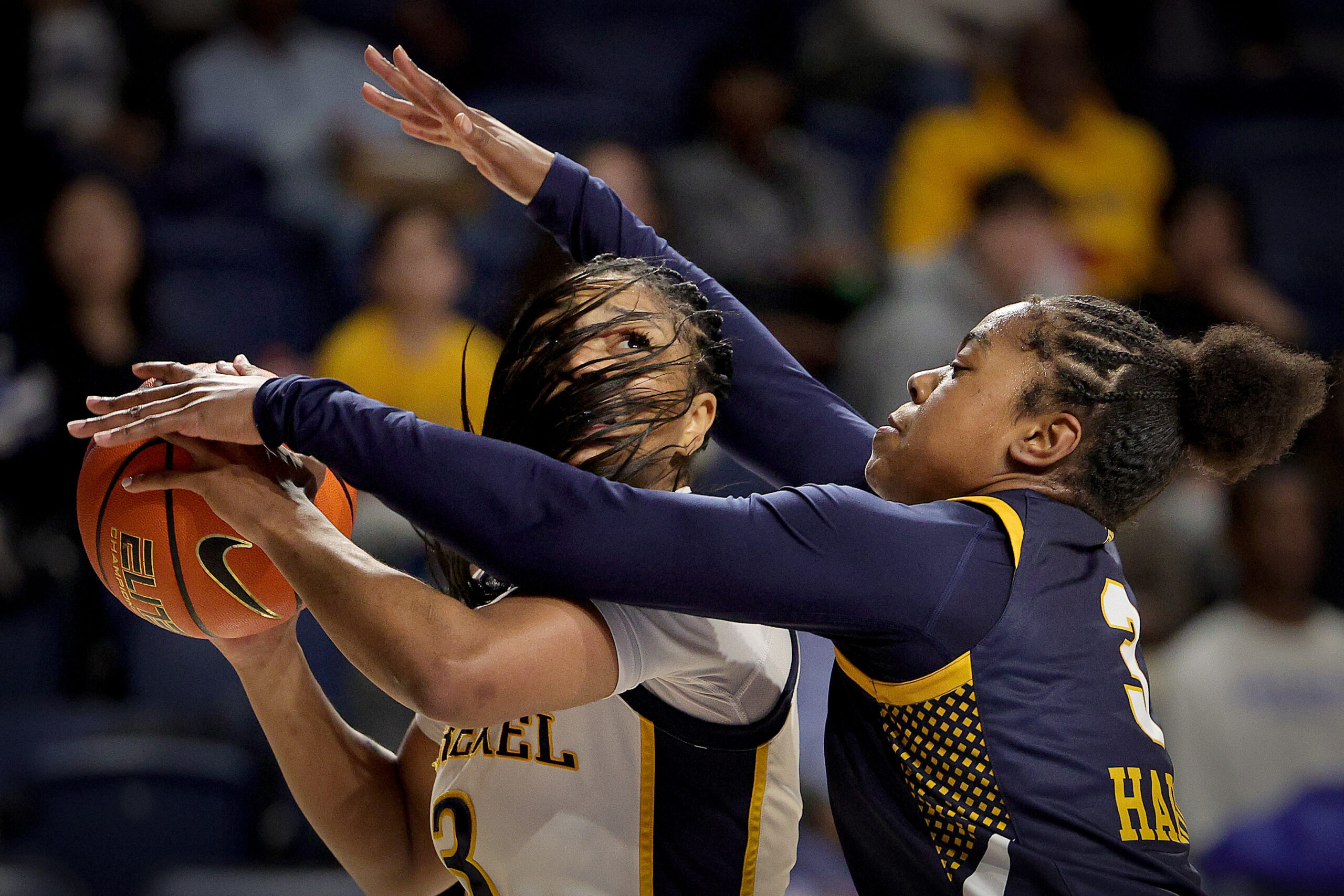
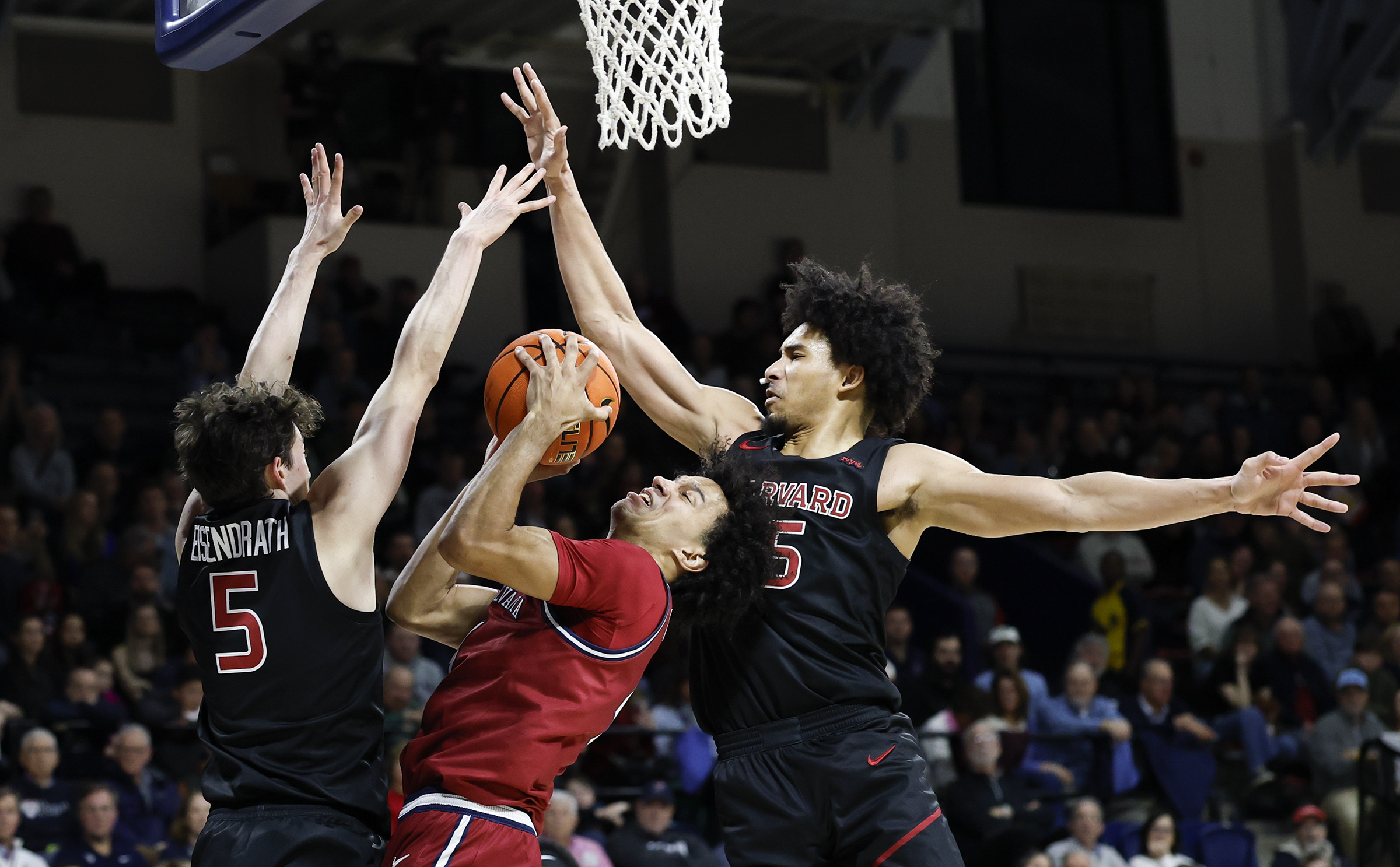
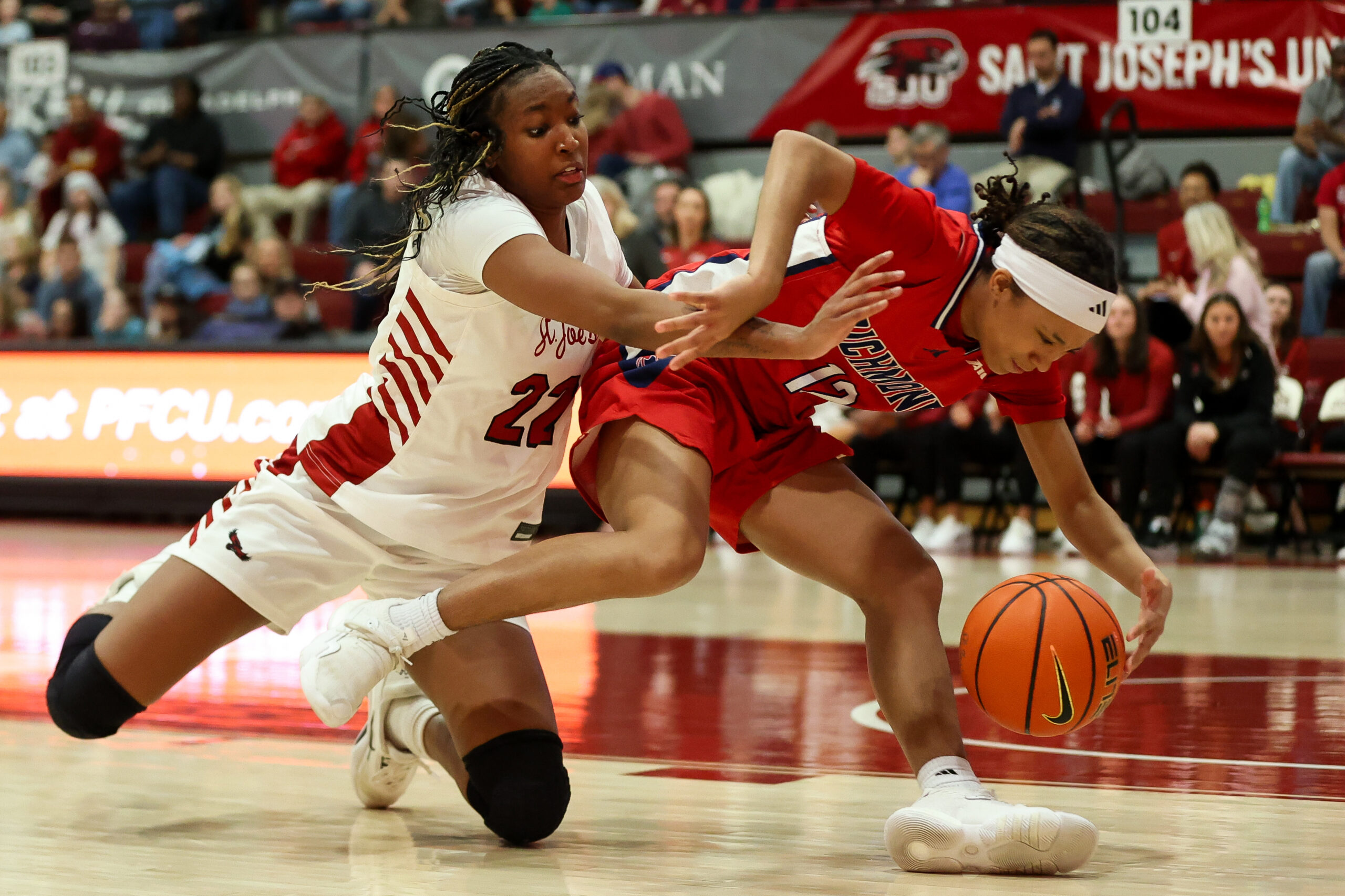
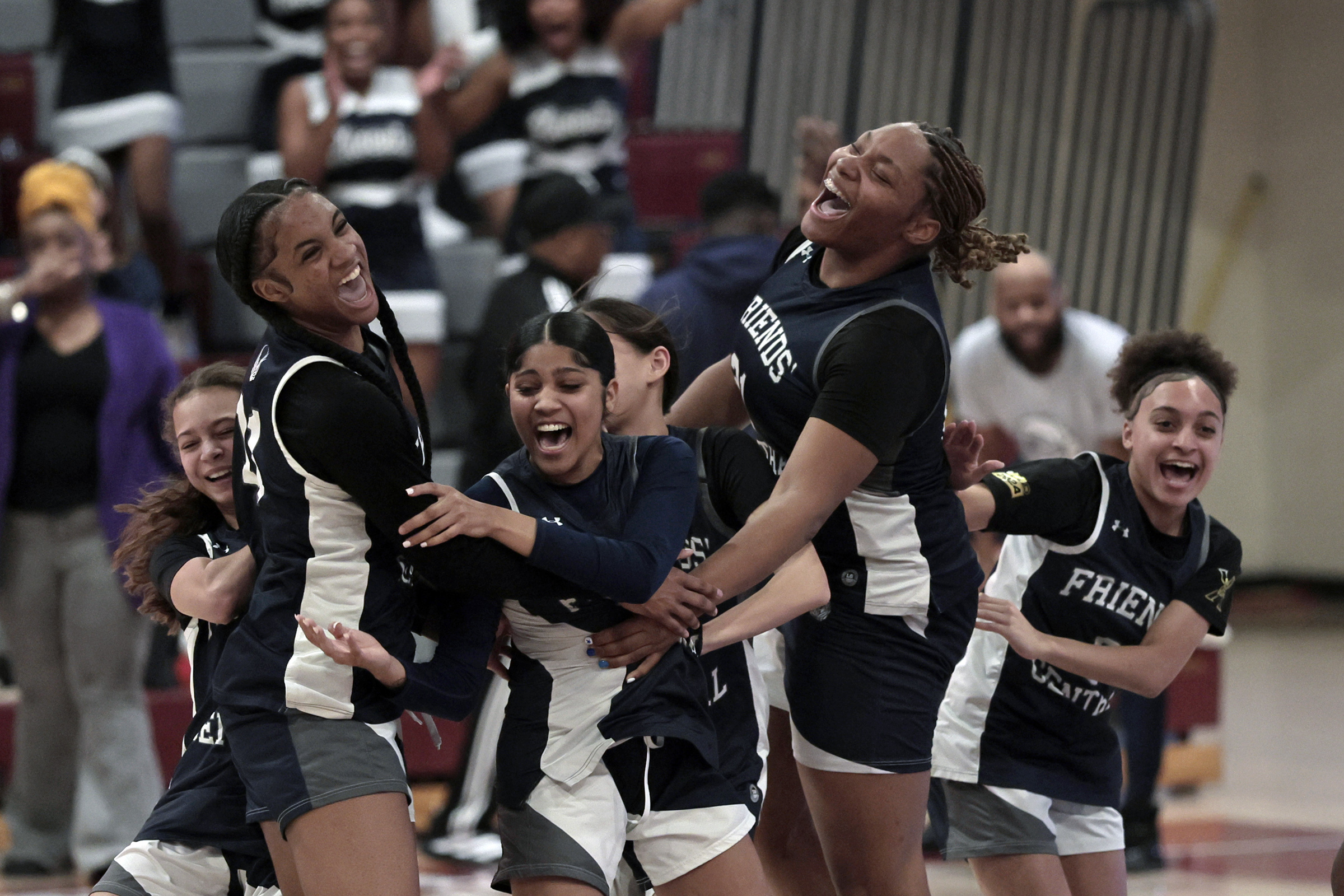
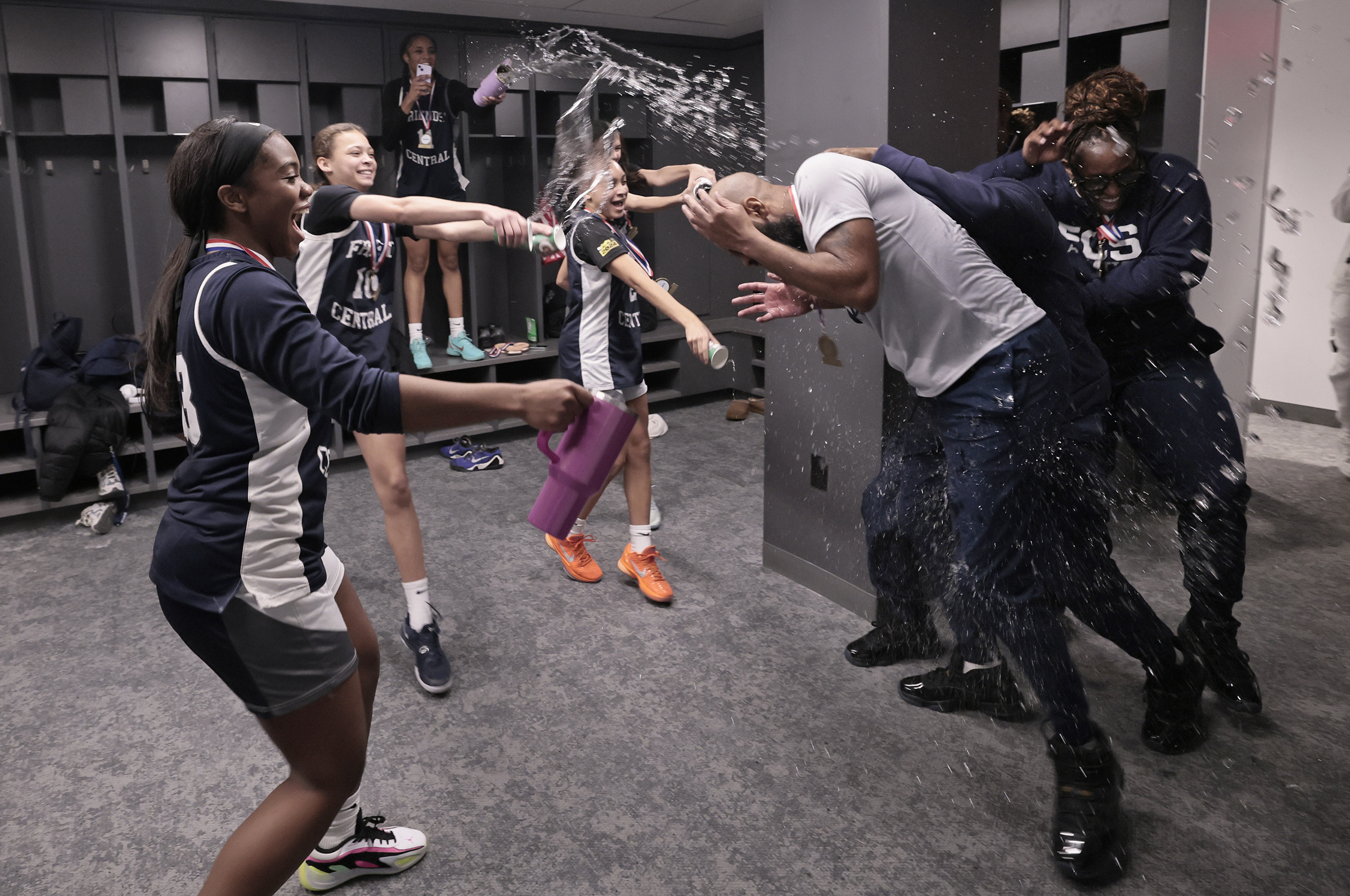
Sixers guard VJ Edgecombe falls hard and injures his back after being fouled by Spurs forward Carter Bryant on Tuesday. Edgecombe missed Wednesday’s game against the Jazz with a lumbar contusion.Phillies second baseman Bryson Stott is 7-for-10 with two home runs through his first six spring training games.Phillies right fielder Brandon Marsh misses a foul ball during the second inning of Tuesday’s spring training game against the Tampa Bay Rays in Port Charlotte, Fla.Phillies pitcher Andrew Painter greets Little Leaguers before Sunday’s game against the New York Yankees at BayCare Ballpark in Clearwater, Fla.Flyers winger Nic Deslauriers and Bruins forward Tanner Jeannot tangle during the Flyers’ 3-1 win over Boston on Sunday.Bruins defenseman Mason Lohrei takes down Flyers forward Nikita Grebenkin, drawing a holding penalty in the first period of Saturday’s game.New York City FC goalkeeper Matt Freese catches a corner over Union midfielder Danley Jean Jacques during the first half Sunday’s loss at Subaru Park.Drexel guard Amaris Baker (left) is fouled by North Carolina A&T Aggies guard Crystal Hardy (right) during the Dragons’ 65-63 overtime win at the Daskalakis Athletic Center Sunday.Penn guard Jay Jones is fouled while driving to the basket against Harvard guard Ben Eisendrath (left) and forward Thomas Batties III in the first half Saturday. Penn won, 64-61, and will face Harvard again in the first round of the Ivy League Tournament.Saint Joseph’s Hawks guard Kaylinn Bethea (left) and Richmond Spiders guard Aneisha Scott (right) scramble for the ball during the fourth quarter at Hagan Arena on Saturday. Richmond won, 72-61,The Friends Central girls celebrate winning the PAISAA girls’ basketball final over Westtown.Friends Central head coach Vincent Simpson and assistant coach Joy Morton (far right) get a celebratory water bath after the team won the PAISAA girls’ basketball final last Friday night.
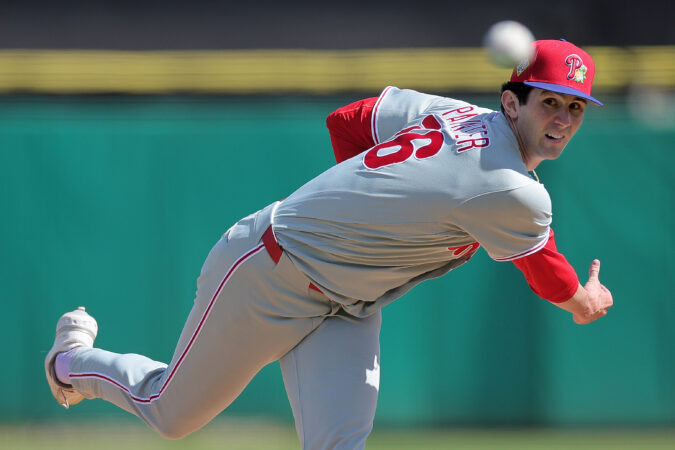
CLEARWATER, Fla. — Andrew Painter likes to eat. It has never been much of an issue. The Phillies’ top prospect has a fast metabolism and stands 6 feet, 7 inches.
If anything, it is hard for him to add weight. So, the occasional — or frequent — ice cream cone doesn’t hurt. But this offseason, while training at Cressey Sports Performance in Florida, the lanky pitcher noticed something.
It was early November, and Painter was reviewing video of his 2025 triple-A season with coach Spencer Stockton. He hadn’t felt a difference on the mound, but could see one on the screen.
The prospect had put on some extra pounds — topping out at 240 at one point — and was moving slower. He’d get fatigued by the fourth or fifth inning.
His delivery was impacted, too. Instead of driving off the mound, Painter was “falling” off it.
Stockton and Painter looked back at his delivery in 2022, before he got Tommy John elbow surgery. It was quicker and more up-tempo.
They decided they’d try to get back to that. The coach and the pitcher made some slight changes to Painter’s offseason program, adding more “movement days” of sprints and agility work.
Phillies pitcher Andrew Painter greets Little Leaguers before a game against the Yankees on Sunday at BayCare Ballpark in Clearwater, Fla.
They also made some tweaks to his diet. Painter’s weight in 2022 was 225 pounds.
To get back to that number, he’d have to make some sacrifices.
“Fewer trips to the Dairy Queen,” he said with a laugh.
This would be a challenge. Painter’s house in Pompano Beach, Fla., was a block away from the fast-food restaurant. It was easy — perhaps too easy — to order an Oreo Blizzard or milkshake.
His teammate and longtime friend, Phillies lefthander Jesús Luzardo, described Painter’s eating habits as “notorious.” Former Phillies minor league pitching coordinator Vic Díaz recalled that he had a “big sweet tooth.”
“I’m almost positive he would go to Publix and just pick up a pie,” Díaz said.
But nevertheless, Painter got it done. He’s at 225 pounds, his “ideal weight.” His leaner physique is part of the reason he showed dominance in his one game so far this spring — no hits, no walks, no runs in two innings — as he prepares for a starting job on the big league club. He is scheduled to pitch on Saturday.
“All offseason he’s looked great,” Luzardo said. “He looks strong, he looks athletic, the way he’s pitching, moving down the mound. His body is moving cleaner, is the way I would describe it.”
‘Sorry, I ate a whole pumpkin pie’
Painter has never been shy about his proclivity for dessert. In September 2021, months after he was drafted in the first round, he was sitting alongside Díaz at the Bobby Mattick Complex in Dunedin, Fla.
The highly-touted prospect was minutes away from his final start of the year, against the FCL Blue Jays. But there was one problem.
“He just looked at me and said, ‘Sorry, I ate a whole pumpkin pie last night,’” Díaz said.
Painter ended up having his best FCL outing to date. He pitched two innings, struck out five, and allowed just one hit.
But Díaz wasn’t about to let him off the hook.
“He called me out at the end of the [pitchers] meeting,” Painter said. “We were wrapping up and he says my name. And I’m like, ‘What did I do?’
“And he’s like, ‘Just wanted to let you all know, Painter ate a whole pumpkin pie.’”
Andrew Painter pitched two scoreless innings in his spring debut on Sunday.
The minor league coordinator started regularly asking the prospect what he’d eaten the night before. And Painter was happy to divulge.
Even as a teenager, he was unapologetically himself. Painter would shag fly balls left-handed in the outfield during batting practice. He relished Beach Dog Fridays at single-A Clearwater, picking out his favorite mutts in the crowd.
So, it was no surprise to Díaz that Painter also had a light-hearted approach to his diet.
“In Clearwater, he and Alex Garbrick had a thing where they would go to BJ’s Restaurant once a week,” Díaz recalled. “When it was two-for-one Pizookies.”
(For those unfamiliar, a Pizookie is a cookie skillet with ice cream on top).
Luzardo, who also has a sweet tooth, was not familiar with the pumpkin-pie fiasco or the weekly Pizookies. But he was aware that his friend liked to eat.
“I didn’t know about that,” Luzardo said. “But I saw him do a — he did do a hot dog eating contest here last year.”
Of course, there is a balance to all of this. Painter doesn’t want to reach 240 pounds again, but he also doesn’t want to dip below 220, which was where he was in 2023, before he got Tommy John.
“It’s trying to find that middle spot of where I’m light, but I’m not injured, too,” he said. “Because you get to a certain point where you’re too skinny and there’s not enough fat in your body to stay healthy.
“And everyone always says, ‘You can’t tear fat.’ So, it’s trying to find that middle point.”
Around 225 seems to be it. Painter feels great. He isn’t as sluggish as he was last year. He’s fluid and agile.
Coupled with a higher arm slot, and a lengthier long toss routine, it’s just another reason why he’s looked — and felt — so good this spring.
And as long as he isn’t anywhere near a pumpkin patch come October, it should stay that way.
Nick Nurse recently described the teams in the middle of the Eastern Conference standings, including his 76ers, as “tightly squeezed.” And even though veteran guard Cameron Payne vows to go 1-0 every day rather than looking too far ahead, he acknowledged that the Sixers “need to win every game we possibly can.”
“That’s kind of the situation we’re in,” Payne said. “We need wins.”
Such is life with the 34-28 Sixers clinging to the East’s sixth seed — which avoids the play-in tournament — with 20 games remaining, starting with Saturday’s road contest at the Atlanta Hawks. The Sixers enter Friday a half-game ahead of the seventh-seeded Orlando Magic (33-28) and eighth-seeded Miami Heat (34-29), and one game behind the fifth-seeded Toronto Raptors (35-27). The Sixers rank 17th in remaining strength of schedule, per Tankathon, though the next week includes challenging road games at the Cleveland Cavaliers and Detroit Pistons.
While attempting to maintain their positioning (or move up) during the stretch run, the Sixers will be tasked with rapidly reacclimating the suspended Paul George with 10 games to go. They will deal with uncertainty regarding Joel Embiid, who enjoyed a dominant month but is now hobbled again by shin and oblique injuries. And will they ever reach circumstances that allow some rest for All-Star point guard Tyrese Maxey, who entered Friday leading the NBA in minutes played?
Here is a breakdown of Sixers’ final 20 games:
March 9 at Cleveland Cavaliers
The Cavaliers made arguably the most impactful deadline trade, acquiring former Sixer James Harden to boost the backcourt anchored by All-NBA contender Donovan Mitchell. That automatically adds spice to the final regular-season clash between these teams. But Harden’s addition has fueled a Cleveland turnaround from a disappointing start to the season. The Cavaliers have ascended to the East’s fourth seed and enter Friday one game back of the third-seeded New York Knicks, making Cleveland a potential first-round matchup for the Sixers.
March 12 and April 4 against Detroit Pistons
The Sixers have two games remaining against the East’s bona fide top seed, including a visit to Detroit on Thursday. The Sixers must be ready for the Pistons’ rugged playing style, along with MVP contender Cade Cunningham. These matchups always have Philly ties, with former Sixers Tobias Harris and Paul Reed now in Detroit and Sharon Hill native Jalen Duren, who became a first-time All-Star this season. That April 4 home matchup is the second game of a challenging back-to-back, which also includes an intriguing rematch with the Minnesota Timberwolves.
Sixers center Joel Embiid has missed time recently for shin and oblique injuries.
March 17 at Denver Nuggets
Will we finally get another matchup between Embiid and Nikola Jokić, who previously jostled for MVP awards? Embiid has not played in Denver since 2019, including a 2024 absence when he was an extremely late scratch with a knee issue days before Jonathan Kuminga inadvertently fell on that knee, which prompted multiple surgeries. Jokić, meanwhile, remains a basketball wizard but has not quite looked like himself since returning from a knee injury. Still, the Nuggets are viewed as a primary playoff threat to the Oklahoma City Thunder’s title defense.
March 23 vs. Oklahoma City Thunder
The Thunder’s lone visit to Philly this season was always going to be a high-profile matchup. But it also will be the return of Jared McCain, whom the Sixers dealt to the Thunder at the deadline, a move that has become wildly unpopular with Philly fans. McCain has thrived with the Thunder so far, averaging 11.9 points and shooting 41.1% on 4.7 three-point attempts in 12 games entering Friday.
March 25 vs. Chicago Bulls
This will be George’s first game back following a 25-game suspension for violating the NBA’s antidrug policy. Nurse and teammates have raved about George’s work as an individual and teammate during this time, when he is permitted to be around the Sixers for all practices and shootarounds but must be away from the arena during games. But how quickly he reintegrates on both ends of the floor will be crucial to the Sixers’ postseason outlook.
March 28 at Charlotte Hornets
Remember when the Hornets absolutely obliterated the Sixers in late January? Turns out they were just one victim of the Hornets’ surge into the playoff contention while becoming arguably the NBA’s most entertaining team. Though it would be foolish for the Sixers to overlook this opponent again if they want to stay out of the play-in tournament, they must win games like this. This game will also pit two of the NBA’s top rookies in VJ Edgecombe and Kon Knueppel, now the front-runner for Rookie of the Year.
March 30 at Miami Heat
After the Sixers and Heat split their first two meetings this season, this matchup will decide what could be a crucial tiebreaker. A scheduling advantage for the Sixers? The Heat will be on the second night of a back-to-back and coming off a three-game road trip.
After the Spurs embarrassed the Sixers at home earlier this week, they get another crack at the West contender and superstar Victor Wembanyama about a month later. Will Embiid, who missed Tuesday’s matchup, be healthy for this one? One potential silver lining for the Sixers: This could be late enough in the season that if the Spurs’ seeding is locked up, they could begin resting their top players. Ditto for the Sixers’ visit to the Houston Rockets three days later.
April 12 vs. Milwaukee Bucks
This is the regular-season finale, against a Bucks team that could be desperate to keep its postseason hopes alive. Every NBA team plays on this day, which could cause some last-minute seeding shifts.
Games against the ‘tankers’
Wednesday’s closer-than-expected win over the Utah Jazz underscored how crucial it is for the Sixers to take advantage of all perceived “gimmie” wins.
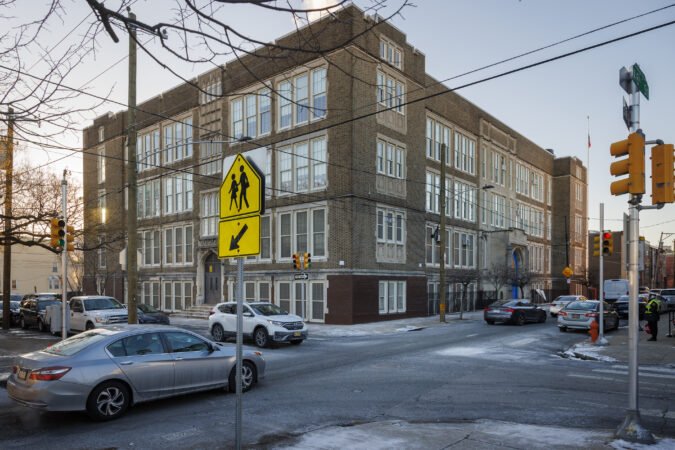
James R. Ludlow Elementary School in North Philadelphia educates a substantial population of special-education students.
And the learning environment for those studentswould be upturned bythe schooldistrict’s recommendation to close Ludlow after next school year, teachers say.
“For our children in special education, that consistency isn’t a luxury, but a requirement for them to learn. If we relocate our students, we aren’t just changing their school address; we’re breaking their routines and undoing their progress,” Vanessa Martin, an autistic support teacher in kindergarten through second grade at Ludlow, said at a community meeting last month with school district officials.
“This building isn’t just a facility. It’s the one predictable place where our students feel safe and supported every single day,” she said.
The district says Ludlow was slated for closure because of an “unsatisfactory” building quality score, a lack of appropriate space for programming, and only utilizing 47% of its capacity. Ludlow has 237 students enrolled across general and special education, of whom 75% are Black and 20% are Hispanic.
The K-8 schoolwill celebrate its 100th anniversary in what could be its final school year of operation. The district, which has proposed closing 18 schools, plans to convey the building at 550 Master St. to the city so it could be converted into affordable housing or used for job creation. Ludlow students would be reassigned to one of three schools: Paul L. Dunbar School, Spring Garden School, and Gen. Philip Kearny School.
‘Severing a lifeline’
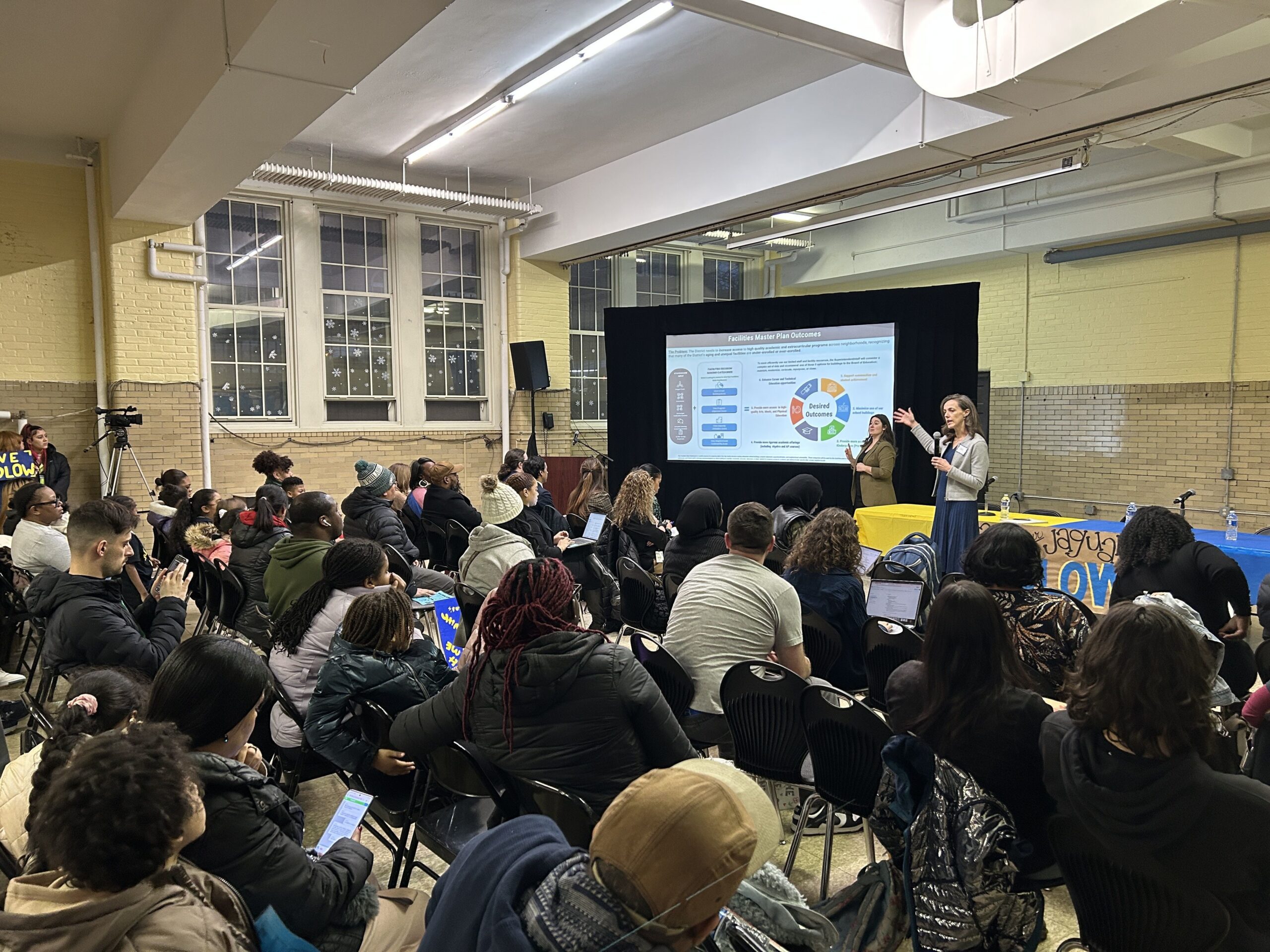
The Ludlow community is strong and connected, and about a hundred people packed the school’s cafeteria for the community meeting on a recentThursday evening to show their support for the school and fight against the district’s plan.
District officials present their plan for closing Ludlow at the February community meeting.
“I felt very angry. I felt upset. I felt like they were taking something away that was a part of me,” said Deilyhanix Vazquez, a Ludlow eighth-grade student who has attended the school since kindergarten. She said her teachers “feel like home,” and she had been planning to continue visiting the school even after she graduates.
“I’m worried that the students will have to travel far just to get an education. Something they have to do on the daily starts to feel like a burden,” said Savannah Lindsay, another Ludlow eighth grader.
Another young studentbroke down into tears as she spoke into the microphone, sayingshe had planned to attend Ludlow for “my whole life.”
If the plan goes forward, she said, she may have to split up from her friends as they get assigned to one of three different schools.
“I don’t want to leave them,” she said, as others inthe room clapped and cheered her on.
Should Ludlow close, the neighborhood and the wider school district would lose a valuable special-education resource andhub. Its offerings include autistic and other learning support for all grades, and emotional support for grades three through eight.
Ludlow often receives student referrals from other schools and catchments across the district, staff members said,including from the schools that would take in Ludlow students in the closure plan. It can feel like the district dumps its most difficult students on Ludlow, Martin said, but those children are accepted and become like family.
District officials have said that in addition to closing buildings that are not operating at full capacity, another goal is focusing on K-8 schools over middle schools to reduce transitions. That goal especially doesn’t square with the plan to close Ludlow, critics said.
“Ludlow is an exceptional school that works. By moving forward with this proposal, the district would be doing more than just closing Ludlow’s doors — it would be severing a lifeline and dismantling a support system that children and families depend on for their stability,” Martin said.
Affordable for whom?
Community members questioned the plan to turn Ludlow into affordable housing. They doubted whether those units would actually be affordable for the people living in the neighborhood, where the annual median household income is about $58,000.
The area sits next to Fishtown and Olde Kensington, where gentrification has made living more expensive for longtime residents.
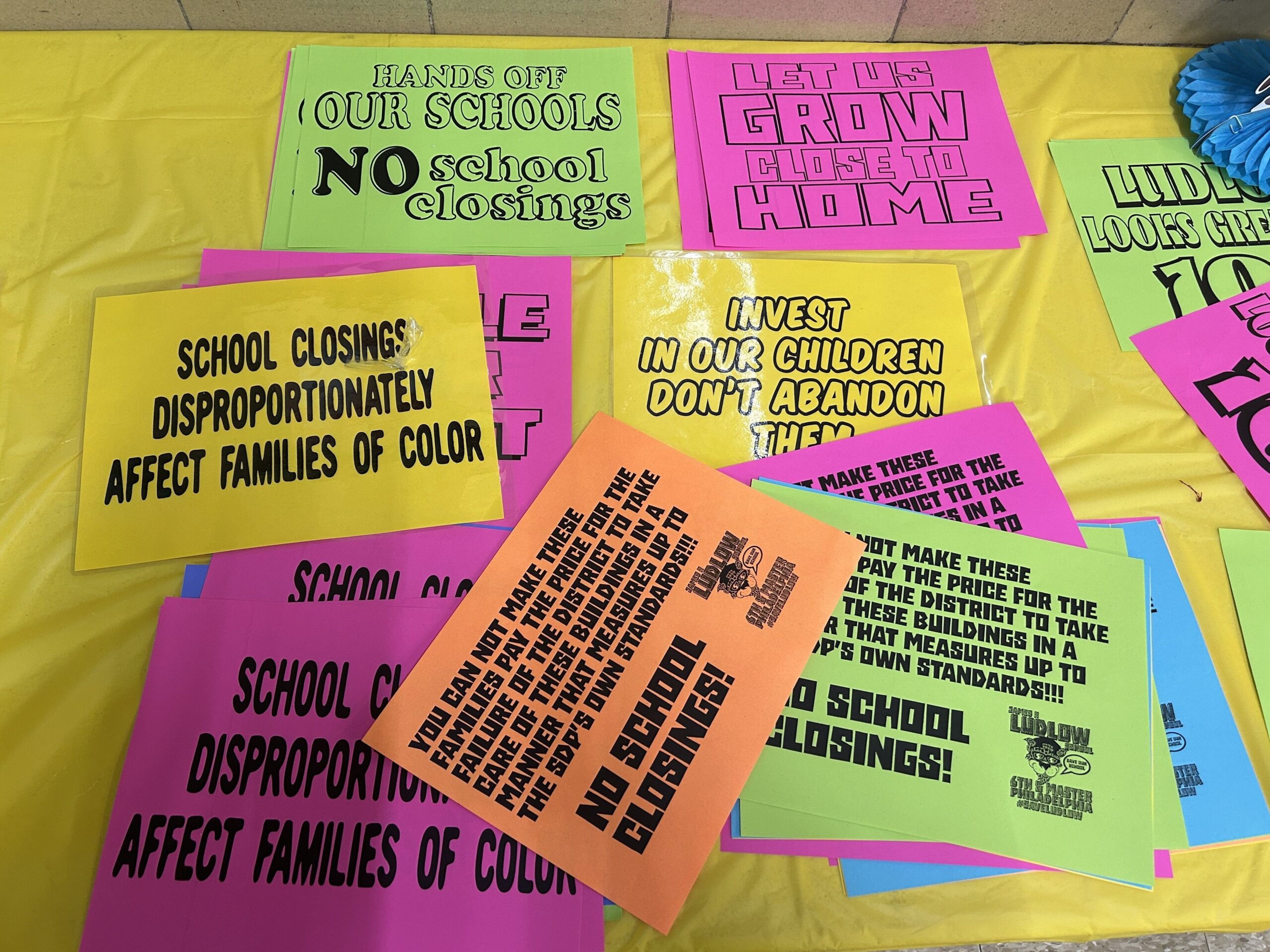
Various signs protesting the closure of James R. Ludlow School, available at a community meeting with district officials in February.
Ludlow community memberssaid they did not want or need more housing. They wished the district would instead invest in the building for learning purposes, and said the district had let it fall into its poor condition.
“It’s money before our kids,” said Valerie Johnson, known better as Valerie Brown, a beloved former Ludlow staff member who worked at the school for more than30 years.
While housing may bring new residents and investment to the neighborhood, the loss of Ludlow could drive some to leave, one mother said.
“I stay in this neighborhood because of Ludlow,” said Darlene Abner, a mother of six whose children have attended the school, including a kindergartner enrolled this school year.
Abner herself was born in the neighborhood, and she said shedoes not want her children to attend any school but Ludlow.
She wears a nearly full face-covering niqab, and credited the school and its teachersfor never letting that be a barrier to building a relationship with herand caring for her children.