MINNEAPOLIS — If there’s been a soundtrack to life in Minneapolis in recent weeks, it’s the shrieking whistles and honking horns of thousands of people following immigration agents across the city.
They are the ever-moving shadow of the Trump administration’s Operation Metro Surge.
They are teachers, scientists and stay-at-home parents. They own small businesses and wait tables. Their network is sprawling, often anonymous and with few overall objectives beyond helping immigrants, warning of approaching agents or filming videos to show the world what is happening.
“I think that everyone slept a little better knowing that Bovino had been kicked out of Minneapolis,” said Andrew Fahlstrom, who helps run Defend the 612, a hub for volunteer networks. “But I don’t think the threat that we’re under will change because they change out the local puppets.”
The surge begins
What started with scattered arrests in December ramped up dramatically in early January, when a top ICE official announced the “largest immigration operation ever.”
Masked, heavily armed agents traveling in convoys of unmarked SUVs became commonplace in some neighborhoods. By this week, more than 3,400 people had been arrested, according to Immigration and Customs Enforcement. At least 2,000 ICE officers and 1,000 Border Patrol officers were on the ground.
Administration officials insist they are focusing on criminals in the U.S. illegally, but the reality in the streets has been far more aggressive. Agents have stopped people, seemingly randomly, to demand citizenship papers, including off-duty Latino and Black police officers and city workers, area officials say.
They smashed through the front door of a Liberian man and detained him without a proper warrant, even though he’d been checking in regularly with immigration officials. They have detained children along with their parents and used tear gas outside a high school in an altercation with protesters after detaining someone.
To be sure, federal agents are barely a presence in many areas, and most people have never smelled a whiff of tear gas. But the crackdown rippled quickly through immigrant-heavy neighborhoods. Patients are avoiding life-saving medical care, doctors said. Thousands of immigrant children are staying home. Immigrant businesses shut down, cut their hours or kept their doors locked to everyone but regular customers.
Pushback comes quickly
Activist groups rapidly organized across deeply liberal Minneapolis-St. Paul and some suburbs. Small armies of volunteers began making food deliveries to immigrants afraid to leave their homes. They drove people to work and stood watch outside schools.
They also created interlocking webs of dozens, perhaps hundreds, of rapid response networks — sophisticated systems involving thousands of volunteers who track immigration agents, communicating with encrypted apps like Signal.
Tracking often means little more than quietly reporting the movement of convoys to dispatchers and recording the license plates of possible federal vehicles.
But it’s not always quiet. Protester caravans regularly form behind immigration convoys, creating mobile protests of anger and warning that weave through city streets.
When agents stop to arrest or question someone, the networks signal the location, summoning more people who sound warnings with whistles and honking, film what’s happening and call out legal advice to people being detained.
Trump’s border czar, Tom Homan, warned Thursday that activists will continue to “be held accountable.”
“Justice is coming,” he told reporters.
Many protesters come expecting trouble
Sometimes it all can feel performative, whether it’s Bovino in body armor tossing a smoke grenade, or young activists who rarely take off their helmets and gas masks, even when law enforcement is nowhere to be seen.
But crowds often lead to real confrontations, with protesters screaming at immigration agents. Agents respond only sometimes, but when they do it’s often with punches, pepper spray, tear gas and arrests.
Those confrontations worry some in the activist world.
Take the recent afternoon in south Minneapolis, where dozens of protesters, some in gas masks, clashed with immigration agents in south Minneapolis. Protesters screamed at agents, threw snowballs and tried to block their vehicles. Agents responded by shoving protesters who got too close, firing pepper balls and finally throwing tear gas grenades and driving away. Demonstrators without masks wretched in the streets as volunteers handed out bottles of water to flush their eyes.
By then, even many of the people in the protest weren’t sure what started it, including the city council member who soon arrived.
Minneapolis has a long tradition of progressivism, and Jason Chavez is a proud part of that.
He bristled when asked about the confrontation.
“I didn’t see anybody ‘confronting,’” said Chavez. “I saw people alerting neighbors that ICE was in their neighborhood. And that’s what neighbors should continue to do.”
Tracking immigration in an immigrant neighborhood
To understand this world, talk to a woman known in the rapid response networks only by her nickname, Sunshine. She asked that her real name not be used, fearing retaliation.
A friendly woman who works in health care, she has spent hundreds of hours in her slightly beat-up Subaru patrolling an immigrant St. Paul enclave of taquerias and Asian grocery stores, watching for signs of federal agents. She can spot an idling SUV from the tiniest hint of exhaust, an out-of-state license plate from a block away, and quickly distinguish an undercover St. Paul police car from an unmarked immigration vehicle.
On the messaging apps, she’s simply Sunshine. She knows the real names of few other people, even after working with some for weeks on end.
She hates what is happening, and feels deeply for people living in fear. She worries the Trump administration wants to push the nation into civil war, and believes she has no choice except to patrol — “commuting” it’s often called, half-jokingly — every day.
“Sometimes people just want to pick up their kid and walk their dog and go to work. And I get that. I get that desire,” she said while driving through the neighborhood last week. “I just don’t know if that’s the world we live in anymore.”
She runs constant equations in her head: Should she report an immigration vehicle to the network’s dispatcher, or honk her horn as a warning? Would honking unnecessarily scare residents who are already afraid? Are agents leading her around? Are federal vehicles moving to launch a raid, or are they distracting observers while other agents make arrests elsewhere?
She is careful and avoids confrontation. She also finds hope in the community that has been created, and how offers to volunteer exploded after the Jan. 7 killing of Renee Good by an ICE agent. And she understands the anger of the people who face off against agents.
“My strategy, my approach, my risk calculation is different than other peoples’. And at the same time, the vitriol, the frustration, I get it,” she said. “And sometimes it feels good to see someone unleash that.”
Not everyone agrees. Nationally, some activist groups avoid protest strategies that could lead to clashes.
“Loud does not equal effective,” a group in a heavily immigrant Maryland county said in a recent social media post, explaining why their volunteers don’t use whistles.
The Montgomery County Immigrant Rights Collective notes that it isn’t suggesting how other groups should operate, and that “local conditions should guide your local tactics.” But it warns its own members that whistling can “escalate already volatile ICE agents who don’t respect our rights” and “increase the likelihood of aggression toward bystanders or the detained person.”
“This is not an action movie,” the post says. “You are not in a one-on-one fight with ICE.”
KYIV, Ukraine — President Donald Trump said Thursday that President Vladimir Putin has agreed not to target the Ukrainian capital and other towns for one week as the region experiences frigid temperatures. There was no immediate confirmation from the Kremlin that Putin has agreed to such a pause.
Russia has been pounding Ukraine’s critical infrastructure, hoping to wear down public resistance to the war while leaving many around the country having to endure the dead of winter without heat.
“I personally asked President Putin not to fire on Kyiv and the cities and towns for a week during this … extraordinary cold,” Trump said during a Cabinet meeting at the White House, adding that Putin has “agreed to that.”
Kremlin spokesman Dmitry Peskov was asked earlier Thursday whether a mutual halt on strikes on energy facilities was being discussed between Russia and Ukraine, and he refused to comment on the issue.
Ukrainian President Volodymyr Zelensky late Wednesday had warned that Moscow was planning another large-scale barrage despite plans for further U.S.-brokered peace talks at the weekend.
Trump said he was pleased that Putin has agreed to the pause. Kyiv, which has grappled with severe power shortages this winter, is forecast to enter a brutally cold stretch starting Friday that is expected to last into next week. Temperatures in some areas will drop to minus-22 Fahrenheit, the State Emergency Service warned.
“A lot of people said, ‘Don’t waste the call. You’re not going to get that.’” the president said of his request of Putin. “And he did it. And we’re very happy that they did it.”
Zelensky, for his part, thanked Trump for his effort and welcomed the “possibility” of a pause in Russian military action on Kyiv and beyond. “Power supply is a foundation of life,” Zelensky said in his social media post.
Trump did not say when the call with Putin took place or when the ceasefire would go into effect. The White House did not immediately respond to a query seeking clarity about the scope and timing of the limited pause in the nearly four-year war.
Russia has sought to deny Ukrainian civilians heat and running water over the course of the war, which began with Russia’s full-scale invasion on Feb. 24, 2022. Ukrainian officials describe the strategy as “weaponizing winter.”
Last year was the deadliest for civilians in Ukraine since 2022 as Russia intensified its aerial barrages behind the front line, according to the U.N. Human Rights Monitoring Mission in the country.
The war killed 2,514 civilians and injured 12,142 in Ukraine — 31% higher than in 2024, it said.
A Russian drone attack killed three people in Ukraine’s southern Zaporizhzhia region overnight and caused a major blaze in an apartment building, officials said Thursday.
Firefighters also worked through the night to put out fires in the central Dnipropetrovsk region, where two people were injured, officials said.
Zelensky said Ukrainian intelligence reports indicate Russia is assembling forces for a major aerial attack. Previous large attacks, sometimes involving more than 800 drones as well as cruise and ballistic missiles, have targeted the Ukrainian power grid.
The ongoing attacks discredit the peace talks, Zelensky said. “Every single Russian strike does,” he said late Wednesday.
Russia’s daily bombardment of civilian areas behind the roughly 600-mile front line has continued despite international condemnation and attempts to end the fighting.
Ukraine is working with SpaceX to address the reported use of its Starlink satellite service by Russian attack drones, Ukrainian Defense Minister Mykhailo Fedorov said Thursday on the Telegram messaging app.
He said his team contacted the American aerospace company run by Elon Musk and “proposed ways to resolve the issue.” Starlink is a global internet network that relies on around 10,000 satellites orbiting Earth.
Fedorov thanked Musk and SpaceX President Gwynne Shotwell for their “swift response and the start of work on resolving the situation.”
Musk and SpaceX have sought to steer a delicate course in the war.
Shotwell said a year after the invasion that SpaceX was happy to provide Ukrainians with connectivity “and help them in their fight for freedom.” At the same time, the company sought to restrict Ukraine’s use of Starlink for military purposes, she said.
Negotiations between the two sides are poised to resume on Sunday amid doubts about Moscow’s commitment to a settlement.
The European Union’s top diplomat accused Russia of not taking the talks seriously, calling Thursday in Brussels for more pressure to be exerted on Moscow to press it into making concessions.
“We see them increasing their attacks on Ukraine because they can’t make moves on the battlefield. So, they are attacking civilians,” Kaja Kallas said of Russia at a meeting of EU foreign ministers.
She stressed that Europe, which sees its own future security at stake in Ukraine, must be fully involved in talks to end the war. The push for a settlement has been led over the past year by the Trump administration, and European leaders fear their concerns may not be taken into account.
Steve Witkoff, Trump’s special envoy, said Thursday “a lot of progress” was made in recent three-way talks and expressed optimism that more headway can be made when the parties meet again in the coming days.
“I think the people of Ukraine are now hopeful and expecting that we are going to deliver a peace deal sometime soon,” Witkoff added.
The number of soldiers killed, injured or missing on both sides during the war could reach 2 million by spring, with Russia suffering the largest number of troop deaths for any major power in any conflict since World War II, according to an international think tank report published Tuesday.
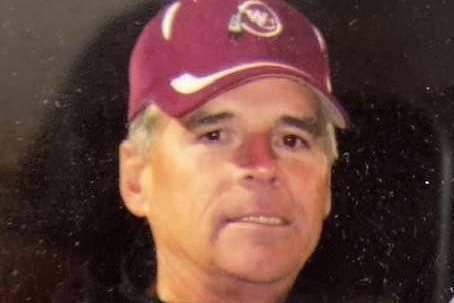
Joe Walsh, 75, of West Chester, member of four athletic Halls of Fame, longtime high school and college football coach, retired health and physical education teacher at West Chester Henderson High School, mentor, and neighbor extraordinaire, died Tuesday, Jan. 27, of cancer at his home.
Mr. Walsh grew up in the Farmbrook section of Levittown, Bucks County, and played football at the old Woodrow Wilson High School and what is now West Chester University. He got a job as a health and physical education teacher and assistant football coach at Henderson in 1972 and spent the next five decades coaching thousands of high school and college athletes, teaching thousands of high school students, and mentoring hundreds of friends and colleagues.
He coached football, wrestling, lacrosse, and tennis at Henderson, and his football teams at Henderson and Sun Valley High School combined to win four league championships. He coached in 13 all-star football games and was named the Chester County area football coach of the year four times, the Ches-Mont League coach of the year three times, and the Del-Val League coach of the year once.
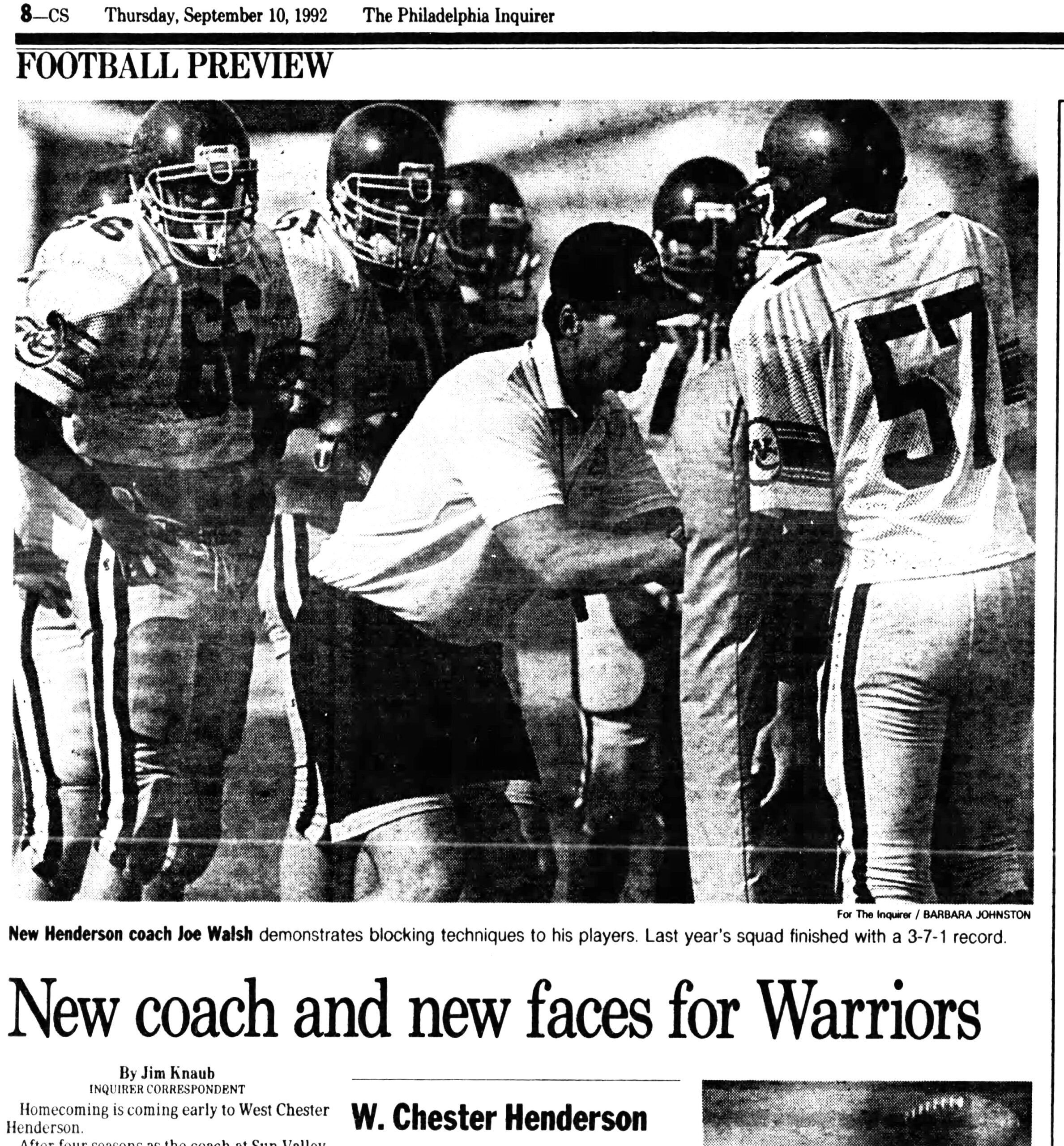
In 1992, an Inquirer reporter asked him to describe himself. “I am an easygoing, volatile kind of coach,” he said with a big chuckle, the reporter wrote. “Actually,” he said, “I think I’m a player’s coach. I think my rapport with my players is my strong point.”
Mr. Walsh (center) had many occasions to celebrate with family and friends on the football field.
Former colleagues, players, and friends said in online tributes that Mr. Walsh was “an inspiration,” “a great coach,” and “a positive example for many, many young people.” On Threads, his brother, Russ, called him a “Hall of Fame human being.”
“He was always there,” said John Lunardi, assistant principal at Henderson, who played quarterback for Mr. Walsh and served later as his assistant coach, “a steady, reliable role model, somebody who could be counted on no matter what.”
In 20 years as head football coach at Henderson, from 1992 to 2011, Mr. Walsh’s teams won 131 games, lost 104, and captured three Ches-Mont League championships. From 1988 to 1991, he went 17-25 as head coach at Sun Valley and won the 1990 Del-Val League championship.
His 2007 team at Henderson went 12-2, won the Ches-Mont title, and made it to the district championship game. “Our motto,” he told The Inquirer in2004, “is no excuses, just results.”
Mr. Walsh and his Henderson football team were featured in The Inquirer’s 1992 preview section.
In 2025, he was inducted into the Chester County Sports Hall of Fame, and colleagues there noted his “remarkable achievements and contributions to local athletics” in a Facebook tribute. He earned a standing ovation after speaking at the ceremony, and Henderson officials recognized his legacy with a moment of silence at a recent basketball game. They said in a tribute: “Joe Walsh was a Hall of Fame person in every possible way.”
Mr. Walsh taught health and physical education at Henderson from 1972 to 2008. He organized offseason clinics to encourage all students to join sports teams and told The Inquirer in 1992: “I’ve always tried my best to get as many people out and make it enjoyable for them so they stay out.”
He served as board president for the Killinger Football Foundation and cofounded W & W Option Football Camps LLC in 2001. “It wasn’t about the wins and losses for him,” said his wife, Pam. “It was all about the kids, and he was that way in all aspects of his life.”
Mr. Walsh and his wife, Pam, had many adventures together and spent countless afternoons at football games.
Joseph Richard Walsh was born Feb. 5, 1950, in Philadelphia. He lettered in football, wrestling, and track in high school, and graduated from Wilson in 1968.
He earned a bachelor’s degree in health and physical education at West Chester in 1972 and played center on its two-time championship football team.
He married Sharon Clark, and they had a son, Joe, and a daughter, Kelly. After a divorce, he married Pam Connor in 1978, and they had a daughter, Jen, and lived in Downingtown and then West Whiteland Township since 1985.
Mr. Walsh enjoyed all kinds of fishing and golf. In 2023, he and his wife visited half a dozen college football stadiums on a wild cross-country road trip to Yellowstone National Park.
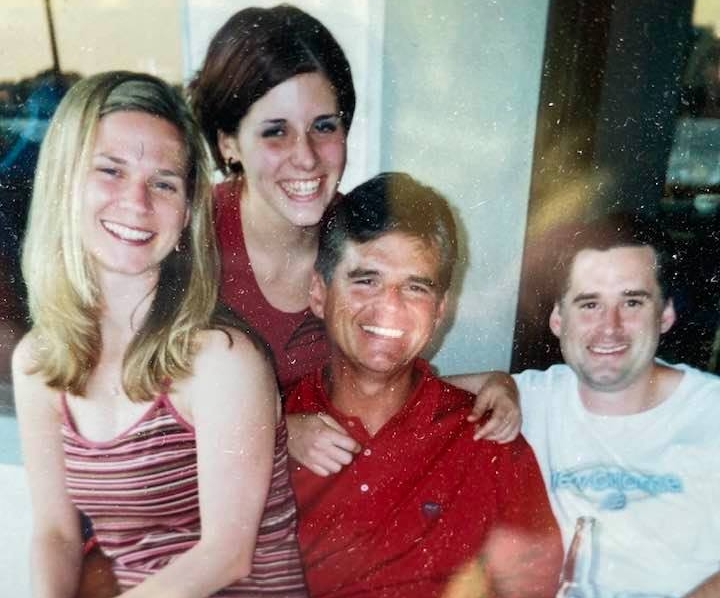
Mr. Walsh enjoyed time with his children.
They entertained often at home, and his gourmet soups were usually the hit of the party. He doted on his children and grandchildren, and never lost his sense of humor, they said.
He was the best neighbor ever, friends said. He cleared miles of sidewalks and driveways with his snowblower every winter, hosted late-into-the-night firepit parties every summer, and could fix practically anything.
“He was gentle but strong,” his wife said. “He was kind and considerate, and he never badmouthed anybody. He truly was a great man.”
In addition to his wife, children, brother, and former wife, Mr. Walsh is survived by seven grandchildren, one great-granddaughter, sisters Eileen and Ruth, and other relatives.
Mr. Walsh rarely let the big ones get away.
Visitation with the family is to be from 5 to 8 p.m. Thursday, Feb. 5, and from 9 to 10:30 a.m. Friday, Feb. 6, at DellaVecchia, Reilly, Smith & Boyd Funeral Home, 410 N. Church St., West Chester, Pa. 19380. A celebration of his life is to follow Friday at 10:30.
After a foot of snow hit the region last weekend, there hasn’t been much movement in Philadelphia (or so it seems).
The snow and slush has been as stubborn as Ben Simmons’ fans during his Sixers days. No matter how much sun has peeked out from under the winter clouds, the roads are still covered with mounds of snow, and cars are still boxed in from the plowed piles.
But that hasn’t stopped Philadelphians from their weekly commute, and certainly won’t stop them from enjoying the many events happening this weekend.
That includes the Philadelphia Auto Show, the celebration of Asian cultures for CultureFest!, and a clam chowder crawl in Manayunk. The best WNBA players in the world are also going head-to-head at Xfinity Mobile Arena on Friday for Philly is Unrivaled.
And if the city still looks like the inside of a snow globe this weekend, maybe we all head to another impromptu sledding fest at the Rocky Steps.
Brooke Piazza prepares to takeoff sledding on a piece of cardboard at the Philadelphia Art Museum in Philadelphia, Pa., on January 29, 2022.
The best sledding hills in the region
Forecasts indicate another weekend of freezing temps is likely in the cards, giving Philly sledders plenty of terrain to enjoy the city’s winter wonderment.
Along with the Philadelphia Art Museum steps, my colleagues Nick Vadala and Dugan Arnett suggest bundling up and taking a trip to places like Lemon Hill, Water Tower Recreation Center, Clark Park, and other nearby sledding havens.
🏀 Show Philly how to ball: Philly Is Unrivaled, an offseason professional women’s basketball league, is coming to Xfinity Mobile Arena this Friday. The event will feature 3-on-3 games between four clubs, with the WNBA’s best players duking it out in playoff-style.
🍺 A taste of international brew: On Saturday, craft beers from Japan, Mexico, Spain, and other distant lands will be front and center at Ardmore Passport: World Pours at Ardmore Music Hall. The event will include international menu items, music, and other activities for the one-day event.
🇺🇸 Philly history is back, baby: After four months of closure, due to a government shut down and planned repairs, Independence Hall reopens to the public on Thursday.
❄️ Bundle up for a Freeze-Out:Manayunk’s signature Founders Philly Freeze-Out returns to Main Street, offering some winter fun. The day also includes a three-mile Founders Freeze Out Fun Run and the Manayunk Chowder Crawl.
Attendees hold up signs during an announcement about the Unrivaled Women’s Basketball League 2026 Philly tour stop at LOVE Park on Thursday, Oct. 2, 2025 in Philadelphia. Xfinity Mobile Arena was announced as Unrivaled’s first tour stop, with two games to be played here on Jan. 30.
Unrivaled kicks off its tour in Philly Friday night
Not to be confused with the WNBA, which begins its 30th season in May, Unrivaled is a three-on-three professional women’s basketball league that lands in Philly to kicks off its second season.
Four of the eight teams will head to Xfinity Mobile Arena for a doubleheader on Friday. It will be a homecoming for North Philly native Kahleah Copper, and an ultimate win for fans of women’s hoops.
🪭 Year of the fire horse: Learn more about Chinese, Vietnamese, Korean, Tibetan and other Asian cultural traditions at the 45th annual Lunar New Year celebration for Penn Museum’s signature CultureFest! series.
🍜 NoLibs bites: Two dozen bars and eateries will offer special prix fixe menus for this year’s Northern Liberties Restaurant Week, which runs through Feb. 8.
🏎️ Rev your engines: The Philadelphia Auto Show is a can’t miss annual winter classic. Hundreds of hot rides will be on display at the Pennsylvania Convention Center through Feb. 8, offering guests test drive opportunities in and outside the venue.
📜 An ode to Black history: This Sunday, Black History Month programming kicks off at the National Constitution Center. The monthlong celebration will feature daily crafts, scavenger hunts, trivia, and discussions about some of the most influential figures in American history.
🎸 Thursday: 1990s Seattle emo band Sunny Day Real Estate take the stage at Brooklyn Bowl with a lineup that includes original members Jeremy Enigk, Dan Horne, and William Goldsmith.
🕺🏽 Friday: Former NPR host Ari Shapiro stars in a cabaret show, “Thank You for Listening,” which is adapted from his memoir, The Best Strangers in the World. He will flex his musical muscles at City Winery this Friday.
🎸 Saturday: The Brooklyn indie rock band Wild Pink, still touring from the group’s 2024 album Dulling the Horns, stop by for a back-to-back show at MilkBoy Philly.
🎤 Sunday: West Philly emcee Reef the Lost Cauze kicks of the first of the series, “A Month of Black Excellence at the Fallser Club.” The afternoon event will feature a mix of vendors, food, art, and community-centered activities.
🎤 Monday: While Irish music season doesn’t fully kick off until March, brothers Brian and Diarmuid Mac Gloinn of Ye Vagabonds will bring their hauntingly modern jams to Johnny Brenda’s. Local bluegrass songwriter Daphne Ellen opens.
Put your snow shovel to good use, so you can free yourself out of snow jail, and enjoy what’s in store this weekend. You won’t regret it.
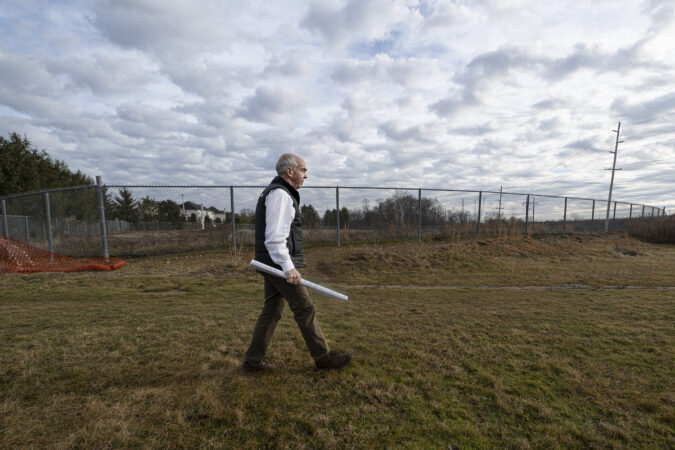
A developer wants to increase the size of its proposed data center on a remediated Superfund site in East Whiteland Township, stoking ire from nearby residents who worry about the increased scope stressing the power grid and driving up costs, along with environmental and health risks.
The facility — which would exceed 1.6 million square feet in the amended plan —would sit on roughly 100 acres at 13 S. Bacton Hill Rd., located along the boundary line for East and West Whiteland Townships, and near U.S. Route 202.
The amended plan, brought before the township’s planning commission Wednesday, would increase the size of the two data center buildings by roughly 61% from what was previously approved.
Other changes in the new plan include:
Scrapping two microwave towers, antenna yards, and ground-mounted cooling towers
Relocating office and loading facilities to face Swedesford Road
Redesigning cooling equipment to use waterless chillers instead of water-consuming cooling towers, reducing water use by about 3 million gallons per day
The applicants are asking the planning commission to approve the modifications because the currently approved plan is outdated, in both technology capacity and what occupants of such centers would need, said Josh Rabina, principal for Sentinel Data Centers, who is working with Green Fig Land LLC on the project.
The planning commission had approved the original plan in 2024, but the project has been underway since at least 2018, when the developer sought zoning changes to OK data center use. After the planning commission’s approval in 2024, Sentinel joined the project, and suggested changes to address water and energy consumption, said Lou Colagreco, the attorney for the applicant.
“They just looked at it with a different set of eyes, and they said, ‘First plan works; this plan probably works better,’” Colagreco told the commission. “It addresses certain concerns that we have heard about regarding data centers.”
But nearly an hour and a half of public comment showed that residents’ concerns weren’t assuaged by the proposed new plan.
“My head’s spinning with what’s going on here. I think you guys are way out over your skis here with what you should be asking, and there’s a lot that appears to me that you don’t even know you should be asking,” said one resident, Dean Prescott.
Across the county — and the region — data center projects have been met with scrutiny from the people who will reside near them. Their opposition clashes with Democratic Gov. Josh Shapiro, who has been championing data center development, promoting a 10-year plan that includes cutting regulatory “red tape” to make it easier to approve them. The governor’s office also recently announced Amazon would spend $20 billion to develop data centers and other artificial-intelligence campuses across Pennsylvania.
Despite the enthusiasm at the state level, 42% of Pennsylvania say they would oppose the centers being built in their area, according to a recent survey.
And it’s creating a bind for local officials, who are limited in what they can do to prohibit development in areas that are zoned for such purposes.
Residents in nearby East Vincent, also in Chester County, are pressing hard on their board of supervisors to reject a proposed data center at the historic Pennhurst State School and Hospital. The board there had sought to impose restrictions on data centers, but last month declined to move forward with an ordinance after the township’s solicitor warned it could lead to a challenge from the developer.
In East Whiteland, as residents called on officials to reject the plan, township solicitor Michael Gill warned it wasn’t that simple.
“This property is zoned to allow a data center use,” Gill said. “From a perspective of sheer outright denial of the use, that is not likely something that the township has the authority to do at this point in time. Nor did the township ever have the opportunity or the legal right to completely say, ‘We do not want data centers at all in East Whiteland Township.’”
The proposed data center would be located at a former limestone mining site that eventually became a lithium ore-processing business called the Foote Mineral Co., which closed in 1991. A Superfund cleanup was completed in 2010.
It is slated to sit across from Malvern Hunt, a neighborhood with about 280 homes and would be intersected by the Chester Valley Trail, a 18.6-mile route popular with walkers, cyclists, and runners.
Residents worried about the noise, the safety of their well water, and whether digging at a remediated site could adversely affect health. They also raised concerns about the stress — and cost — the facility could put on the power grid.
The facility would be adjacent to Peco’sPlanebrook substation, and the developer is paying for the upgrades needed to support the project, they said Wednesday. Peco officials said previously that surrounding customers wouldn’t see any impact.
The developers sidestepped questions about resident utility cost increases. The township’s planning director, Zachary Barner, said they had not seen “any sort of detailed analysis of consumer prices or anything like that.”
Chris Fontana, a Wakefield resident who said he works in software and infrastructure engineering leadership at Zillow, the real estate website, said industrial noise, massive infrastructure, and energy demands make buyers hesitate, affecting home values.
“Any tax benefit does not outweigh the permanent impact on our land, the strain on local utilities infrastructure, and the risk to the value of our homes, the single biggest investment most families here will ever make,” he said.
The developer will submit a revised plan and responses to consultant review letters in the coming days, township officials said. The developer will return to the planning commission next month, seeking a positive recommendation from the planning commission to go forward to the township’s board of supervisors.
DEIR AL-BALAH, Gaza Strip — Israel turned over the bodies of 15 Palestinians on Thursday, just days after recovering the remains of the last Israeli hostage, a Gaza Health Ministry official said.
It marks the last hostage-detainee exchange between Israel and Hamas carried out as part of the first phase of the U.S.-brokered ceasefire reached in October.
The Red Cross said that it helped facilitate the return of the bodies. They were taken to Shifa Hospital in Gaza City, health ministry spokeperson Zaher al-Wahidi said.
The return of all remaining hostages, living or dead, had been a key part of the first phase in the ceasefire that paused the war.
Israel agreed to return 15 Palestinian bodies for each hostage recovered, according to the ceasefire terms. It’s unclear if the bodies released Thursday were of Palestinian detainees who died in Israeli custody or bodies taken from Gaza by Israeli troops during the war.
Israel has released roughly 2,000 Palestinian prisoners under the ceasefire deal, many of whom were seized by Israeli troops during the more than two-year war and held without being charged. It also has released the bodies of 360 Palestinians back to Gaza, where officials have struggled to identify them.
The Gaza health ministry, part of the Hamas-run government, has posted photos of the deceased for families to identify. Of the bodies handed back by Israel, about 100 have been identified by families, al-Wahidi said.
On Monday, Israel announced that it found and identified the remains of the last Israeli hostage, police officer Ran Gvili, following an extensive search at a cemetery in northern Gaza.
The attack by Hamas-led militants on Israel on Oct. 7, 2023, which launched the war, killed about 1,200 people and saw 251 taken hostage. Gvili, a 24-year-old police officer known affectionately as “Rani,” was killed while fighting Hamas militants.
The return of his body closed a painful chapter for the country and cleared the way for the next and more challenging phase of the ceasefire, which calls for deploying an international security force, disarming Hamas, pulling back Israeli soldiers and rebuilding Gaza.
Deaths continue in Gaza
While U.S. envoy Steve Witkoff announced the launch of the second phase of the ceasefire deal earlier this month, Israeli fire and strikes continue to kill Palestinians across Gaza almost daily.
Israeli fire killed two Palestinians on Thursday in southern Gaza’s Khan Younis area, according to Nasser hospital, where the bodies were taken. Health officials said that the two men were killed in areas that aren’t Israeli-controlled.
Another Israeli strike in central Gaza killed one Palestinian and wounded others, according to Al-Aqsa martyrs hospital, where the casualties were taken.
Israel’s military said that it carried out a “precise strike” on Thursday that targeted a suspect planning to attack its troops in the southern Gaza Strip.
The Gaza Health Ministry said that 492 Palestinians have been killed since the ceasefire. The ministry doesn’t distinguish between civilians and combatants in its figures. The ministry maintains detailed casualty records that are seen as generally reliable by U.N. agencies and independent experts.
The Israeli military has said that some of those killed in recent months were along the ceasefire line that splits Israeli-held areas and most of Gaza’s Palestinian population, and that it has targeted those posing a threat to its troops.
Rafah border crossing
For Palestinians separated from their families by the war and the tens of thousands of people outside Gaza seeking to return home, the reopening of the Rafah crossing along the border with Egypt can’t come soon enough.
The crossing is expected to reopen soon, Israeli officials have said, but how many people will be allowed to enter and leave Gaza remains unclear.
Preparations are underway to allow the departure of a limited number of medical evacuees who were wounded in the war and need to travel abroad for medical care.
But Israeli Prime Minister Benjamin Netanyahu has said that crossing won’t be open to goods for now. The crossing, Gaza’s main gateway to the outside world, has been largely closed since May 2024.
BRUSSELS — The European Union agreed Thursday to list Iran’s paramilitary Revolutionary Guard as a terrorist organization over Tehran’s bloody crackdown on nationwide protests, the bloc’s top diplomat said, in a largely symbolic move that adds to international pressures on the Islamic Republic.
The EU’s foreign policy chief, Kaja Kallas, said foreign ministers in the 27-nation bloc unanimously agreed on the designation, which she said will put the regime “on the same footing” with al-Qaeda, Hamas and the Islamic State group.
“Those who operate through terror must be treated as terrorists,” Kallas said.
Meanwhile, Iran faces the threat of military action from President Donald Trump in response to the killing of peaceful demonstrators and over possible mass executions. The American military has moved the USS Abraham Lincoln and several guided-missile destroyers into the Mideast. It remains unclear whether Trump will decide to use force.
Activists say the crackdown has killed at least 6,443 people. “Any regime that kills thousands of its own people is working toward its own demise,” Kallas said.
For its part, Iran has said it could launch a preemptive strike or broadly target the Mideast, including American military bases in the region and Israel.
Iran issued a warning to ships at sea Thursday that it planned to run a drill next week that would include live firing in the Strait of Hormuz, potentially disrupting traffic through a waterway that sees 20% of all the world’s oil pass through it.
Other countries, including the U.S. and Canada, have designated the Guard as a terrorist organization.
Terrorist group label a ‘symbolic act’
Iranian Foreign Minister Abbas Araghchi dismissed the designation as a “PR stunt” and said Europe would be affected if energy prices surge as a result of the sanctions.
“Several countries are presently attempting to avert the eruption of all-out war in our region. None of them are European,” he wrote on X.
France originally objected to listing the Revolutionary Guard as a terrorist organization over fears it would endanger French citizens detained in Iran, as well as diplomatic missions, but the country reversed course. French Foreign Minister Jean-Noël Barrot told the Foreign Affairs Council on Thursday in Brussels that France supports more sanctions on Iran and the listing “because there can be no impunity for the crimes committed.”
“In Iran, the unbearable repression that has engulfed the peaceful revolt of the Iranian people cannot go unanswered,” he said.
Edouard Gergondet, an lawyer focused on sanctions with the firm Mayer Brown, said the Revolutionary Guard will be notified of the listing and given the opportunity to comment before the measure is formally adopted.
Kristina Kausch, a deputy director at the German Marshall Fund, said the listing is “a symbolic act” showing that for the EU “the dialogue path hasn’t led anywhere, and now it’s about isolation and containment as a priority.”
“The designation of a state military arm, of an official pillar of the Iranian state, as a terrorist organization, is one step short of cutting diplomatic ties,” she said.
The EU on Thursday also sanctioned 15 top officials and six organizations in Iran, including those involved in monitoring online content, as the country remains gripped by a three-week internet blackout by authorities.
The sanctions mean that affected officials and organizations will have their assets frozen and their travel to Europe banned, according to Barrot.
The Revolutionary Guard holds vast business interest across Iran, and sanctions could allow its assets in Europe to be seized.
Iran already struggles under the weight of multiple international sanctions from countries including the U.S. and Britain.
Iran’s rial currency fell to a record low of 1.6 million to $1 on Thursday. Economic woes sparked the protests, which broadened into a challenge to the theocracy before the crackdown.
Guard emerged from 1979 revolution
The Guard emerged from Iran’s 1979 Islamic Revolution as a force meant to protect its Shiite cleric-overseen government and was later enshrined in its constitution. It operated in parallel with the country’s regular armed forces, growing in prominence and power during a long and ruinous war with Iraq in the 1980s. Though it faced possible disbandment after the war, Supreme Leader Ayatollah Ali Khamenei granted it powers to expand into private enterprise, allowing it to thrive.
The Guard’s Basij force likely was key in putting down the demonstrations, starting in earnest from Jan. 8, when authorities cut off the internet and international telephone calls for the nation of 85 million people. Videos that have come out of Iran via Starlink satellite dishes and other means show men likely belonging to its forces shooting and beating protesters.
Iranian men once reaching the age of 18 are required to do up to two years of military service, and many find themselves conscripted into the Guard despite their own politics.
Strait of Hormuz drill planned
In other developments, a notice to mariners sent Thursday by radio warned that Iran planned to conduct “naval shooting” in the Strait of Hormuz on Sunday and Monday. Two Pakistani security officials, speaking on condition of anonymity because they were not authorized to talk to journalists, also confirmed the warning had been sent.
Iran did not immediately acknowledge the drill. The hard-line Keyhan newspaper raised the specter of Tehran attempting to close the strait by force.
“Today, Iran and its allies have their finger on a trigger that, at the first enemy mistake, will sever the world’s energy artery in the Strait of Hormuz and bury the hollow prestige of billion-dollar Yankee warships in the depths of the Persian Gulf,” the newspaper said.
Such a move would likely invite U.S. military intervention. American military officials did not immediately respond to a request for comment.
Elsewhere, Iranian opposition leader Mir Hossein Mousavi, whose Green Movement rose to challenge Iran’s disputed 2009 presidential election, again called for a constitutional referendum to change the country’s government. A previous call failed to take hold.
WHO says doctors detained, health services attacked
In other developments, at least five doctors have been detained and multiple health workers assaulted while treating injured patients in Iran since the protests began, the World Health Organization said Thursday.
The statement from WHO offered some of the first information to emerge about the country’s medical system as journalists and human rights organizations struggle to assess the toll of the crackdown.
WHO Director General Tedros Adhanom Ghebreyesus wrote on X that a hospital in the western city of Ilam came under attack, and authorities deployed tear gas inside a hospital in Tehran. At least 50 paramedics were hurt at 10 emergency medical posts and over 200 ambulances were damaged, he said.
The U.S.-based Human Rights Activists News Agency reported that the violence in Iran has killed at least 6,443 people in recent weeks, with many more feared dead. Its count included at least 6,058 protesters, 214 government-affiliated forces, 117 children and 54 civilians who were not demonstrating. More than 47,208 have been arrested, it added.
The group verifies each death and arrest with a network of activists on the ground, and it has been accurate in multiple rounds of previous unrest in Iran. The communication cutoff imposed by Iranian authorities has slowed the full scale of the crackdown from being revealed, and The Associated Press has been unable to independently assess the death toll.
Iran’s government as of Jan. 21 put the death toll at a far lower 3,117, saying 2,427 were civilians and security forces and labeled the rest “terrorists.” In the past, Iran’s theocracy has undercounted or not reported fatalities from unrest.
That death toll exceeds that of any other round of protest or unrest in Iran in decades and recalls the chaos surrounding the 1979 Islamic Revolution.
Superintendent Tony B. Watlington Sr. will not formally present the plan to the board until Feb. 26, but the topic took center stage at Thursday’s meeting as parents, educators, and other community members shared their concerns.
Here are a few takeaways:
Many people spoke out in support of Lankenau High, an environmental sciences magnet school slated to close under the plan. One parent said the closure would be a “death sentence.”
Many also spoke in support of Conwell Middle School, including its principal, who said closing it would “erase a legacy that still matters.”
Roxborough High school psychologist says the facilities proposal ‘appears to be a workaround’
Paul Brown, a school psychologist at Roxborough High School and member of Stand Up For Philly Schools, shares his thoughts about the facilities proposal.
On paper, he said, Roxborough will benefit from the plan because it will take in Lankenau High, a high-performing magnet.
“Lankenau would have to phase out their environmental science program” if it merges into Roxborough, Brown said.
“This proposal appears to be a workaround to push our students out of public education, rather than give them what they need,” Brown said.
Retired district teachers share concerns about the facilities plan, with one calling it ‘a moral failure’
Lisa Haver, a retired district teacher and founder of the Alliance for Philadelphia Public schools, calls the plan “a moral failure.”
Blankenburg Elementary, in West Philadelphia, would be closed under the plan; it sits across the street from a large charter school in a new building. This plan does not represent the public’s will, Haver said.
“None of these schools has to be closed. It’s not a budget issue,” Haver said. She taught at Harding Middle School, which is also on the closure list. “It hurts my heart.”
Barbara Dowdall, also a retired Philadelphia teacher, said: “Let us not mimic the crowbar removal of buildings, or history.”
Retired teacher says the community input process for the facilities plan was performative
Retired teacher Diane Payne says she can’t believe what the district says because she sees what it does. Community input on the facilities plan was performative, she said, and the blueprint feels top-down.
“We the people do not have buy-in with your top-down plan,” Payne said. “We do not want our public schools sold out from under us.”
Payne calls the plan “extremely flawed and disruptive.”
District parent asks board to consider what brought them to this moment
Colin Hennessy Elliott, a district parent, is speaking about the facilities plan broadly. The board must consider what brought the district to this moment, he said.
Closing Lankenau ‘would be like a death sentence,’ parent and district teacher says
Dana Williams, a Lankenau High parent and district teacher, said her son, who has autism, is thriving.
“Closing Lankenau High school would be like a death sentence to so many students’ social, emotional, and academic” lives, Williams said.
“This is the highest form of inequity,” Williams said of Lankenau’s closure. “I do not need my child going to a neighborhood high school. That was never an option.”
Williams’ son had choices of other magnet schools, she said, but he chose Lankenau. She said the closure would be a “bait and switch.”
Former student board member and Conwell graduate says Conwell is ‘one of the best pathways for student success’
Mwanasha VanWright, a 1997 Conwell graduate and former student board member, calls Conwell “one of the best pathways for student success our city has to offer.”
Conwell was key to her success, VanWright said. “I hope you reconsider closing Conwell,” VanWright said. If you do close the building, make Conwell the official middle school of Bodine, she urged the board.
VanWright is raising three fourth-generation Philadelphians. She wants them to have “strong options like Conwell,” she said.
Retired teacher questions the district’s plan to give some buildings to the city
Retired Philadelphia teacher Deborah Grill said the current facilities plan is “even worse” than the 2012 closures.
“At least those schools were given time to react and fight for their schools” before the School Reform Commission made its closure decisions, she said.
Grill asks: Why isn’t the district considering closing charter schools with empty seats?
Grill also questions the district’s plan to give some buildings to the city rather than using or selling them. “It really has nothing to do with the welfare of your students,” Grill said.
Vare-Washington Elementary principal expresses gratitude for board’s consideration of playground project
Alison Barnes, principal of Vare-Washington Elementary, said the community is thrilled the board will consider approving a playground project for Vare-Washington Thursday night. It’s nine years in the making, Barnes said.
Conwell parent asks the board to reconsider closing any middle schools
Tasha Smith, a parent of two Conwell students, opposes the closure of the school.
“I am asking for this board to require the district to reconsider closing Conwell, and to reconsider closing all middle schools. There has to be other ways to succeed,” Smith said.
Smith said that the district asking, “Do you want unnecessary transition?” in the facilities planning survey was a misleading question. It should have asked, “Do you want us to close middle schools?” because that what it’s doing. Kids need middle schools, she said.
Parent of two Conwell alums says the school is ‘a cornerstone of our community’
Priscilla Rodriguez, whose two sons attended Conwell, said the school is “a cornerstone of our community.”
It’s more than a school, she said. It offers meals and after-school support. “When a school closes, families don’t just adjust. They struggle,” Rodriguez said.
Conwell families “are already dealing with a lot,” said Rodriguez said. “You won’t make it any better by closing Conwell.”
Kensington ‘deserves investment, not abandonment,’ says former Conwell climate manager
James Washington, a former Conwell climate manager and husband of a Conwell graduate, noted the school’s 100th anniversary. “Closing Conwell is a profound loss to a community that has already endured too many disappointments,” Washington said.
Instead of celebrating the anniversary, “we are preparing to erase the legacy.”
“The Kensington community deserves investment, not abandonment,” Washington said, urging the board to “look beyond spreadsheets” and save Conwell.
Head of Philadelphia Charters for Excellence asks the board to consider charters an equal partner
Cassandra St. Vil, head of Philadelphia Charters for Excellence, raised issues, including what she said was the coercion of some schools into signing their charters.
She said charters deserve more funding to address facilities needs, and urged the school district to consider charters an equal partner.
Organizer tells the board this is only a ‘25% plan’
Katy Egan, a community member with Stand Up for Philly Schools, the coalition that organized the rally before the meeting, said this is a “25% plan” with a serious lack of information. Which schools are being modernized? When? How? How will displaced students get to new schools? What about special education students? How do you plan to keep students and staff members safe?
“It’s not a plan. We deserve more than 25%, and our students deserve everything,” Egan said.
Parent asks: If the district doesn’t get the full $2.8 billion, which schools won’t get modernized?
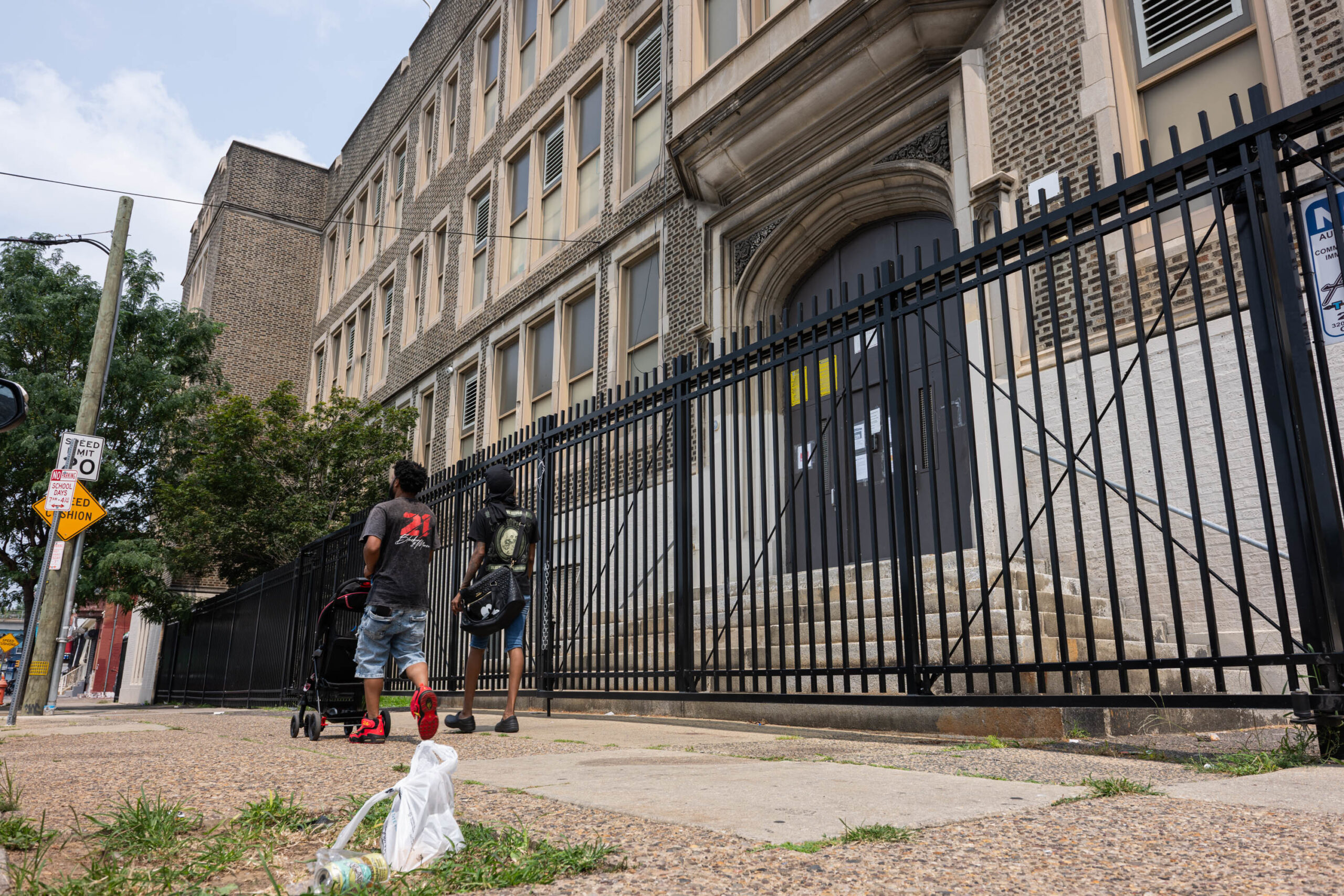
Afternoon dismissal at Penn Treaty Middle School on Jan. 22. The school building was built in 1927.
Lizzie Rothwell, a parent of two district students and spouse of a teacher at Penn Treaty — a school slated to be closed — is speaking against the facilities plan.
If the district doesn’t get the full $2.8 billion, 40 schools wouldn’t be modernized, Rothwell said. What are the 40 schools? (The district has not released those lists.)
“The city of Philadelphia and the state of Pennsylvania owe the district $8 billion in deferred maintenance,” Rothwell said.
‘Closing schools ruins families and neighborhoods,’ says Ludlow Elementary teacher
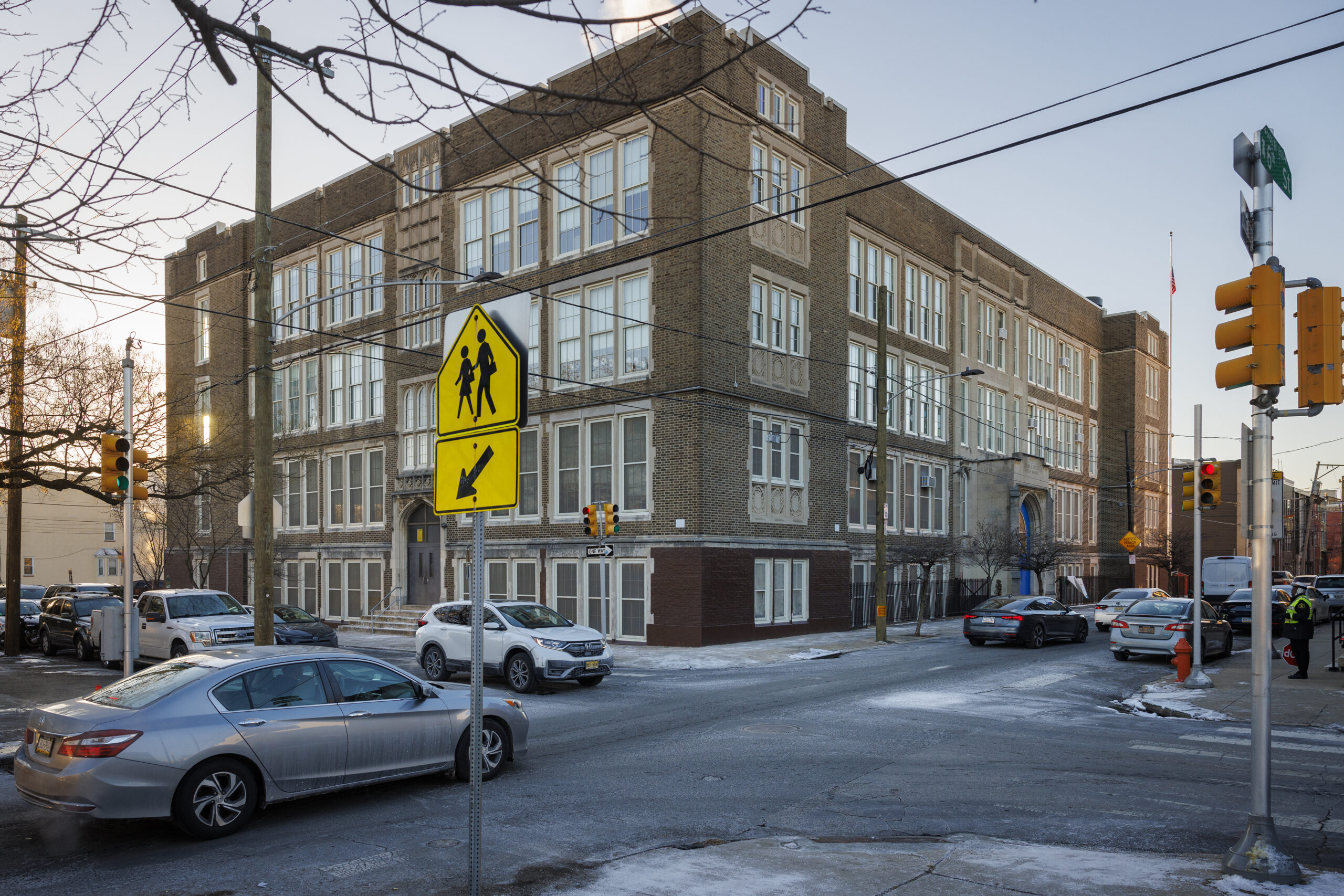
Ludlow Elementary.
Carin Bennicoff, a teacher at Ludlow Elementary, is speaking out against the school’s closure. She’s worked at Ludlow for 30 years.
“Closing schools ruins families and neighborhoods,” Bennicoff said. “A facilities dashboard can’t measure what a school means to a community.”
Generations of students attend Ludlow, Bennicoff. “Instead of closures, we need you to invest in creating safe and healthy schools” by giving us smaller classes and more resources.
“Our children deserve real, stable neighborhood schools,” Bennicoff said.
Conwell principal urges the board to save her school from closure
Conwell Middle School.
Erica Green, principal of Conwell, a school tagged for closure, is speaking now.
“Closing it would erase a legacy that still matters,” Green said. “Conwell is a cornerstone in the Kensington community.”
Philadelphia’s police commissioner was sworn in at Conwell, Green points out. “We are what the city needs,” she said. “Our building is celebrating 100 years. Bright and shiny does not mean better. Philadelphia is a city that celebrates history.”
“Do not let the almighty dollar” drive Conwell’s closure, an impassioned Green said. “Preserve the building, preserve the culture, preserve the legacy. History matters. Conwell matters.”
Proposed closures would disproportionately harm Black and low-income students, researcher says
Ryan Pfleger, a researcher, said the district’s proposed closures are disproportionately hurting Black and low-income communities.
“The burden of closure would fall roughly evenly across racial groups. This is not what the data shows.”
Black students are 1.6 times more likely to be in closing schools, he said. Fifteen of 20 schools tapped for closure are majority-Black. “This is disparate racial impact,” Pfleger said.
Perhaps it was unintentional, but Black and poor kids are more likely to be affected under this plan, he said.
“Build schools up. Don’t shut them down,” Pfleger said.
Mastery parents speak out in support of their schools
Gloria Carroll, a Mastery parent, said Mastery Clymer Elementary is an excellent school. “I love Clymer,” she said.
Ashtin Richard, a Mastery Gratz parent, loves the school and said it has helped his son have a smooth transition from a school in the Midwest.
// Timestamp 01/29/26 5:55pm
‘Take our time, be logical, be strategic,’ high school football coach urges the board
“Sending a kid from school to school can be very damaging,” said Jordan Holbert, the football coach at Vaux Big Picture High School and a North Philadelphia resident. “It’s not what’s best for the student long-term. As we’re making these difficult decisions about what to do next, I urge and beg and plead and frankly demand that we think about the kids and the long-term closure. We did this before … and we still haven’t recovered from that. Making the same type of decision is misguided and risky.”
Holbert urges the board to “take our time, be logical, be strategic,” and think about long-term effects.
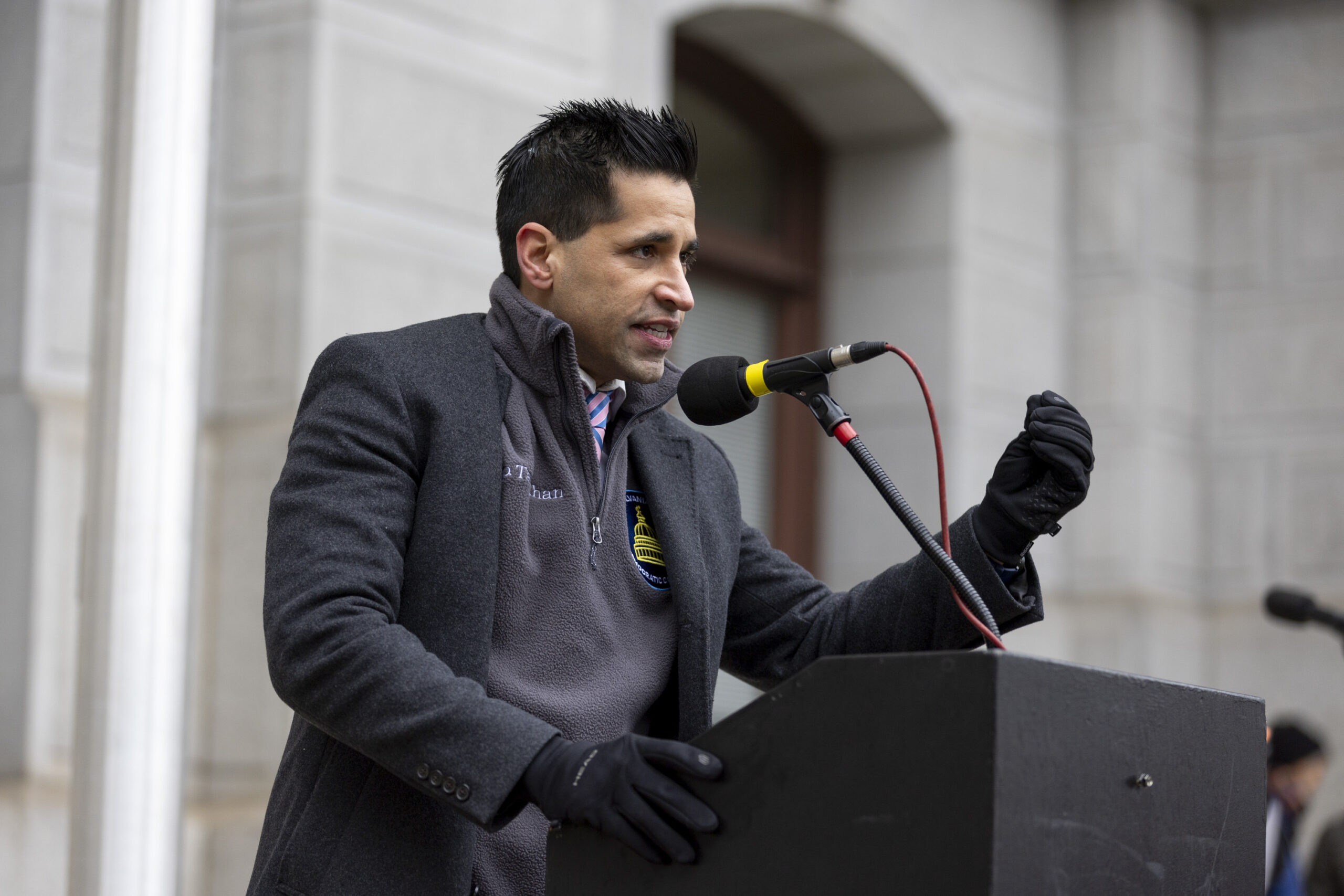
District has ‘100% support’ from Philly delegation to get the funds it needs, State Rep. Tarik Khan says
State Rep. Tarik Khan speaks during the Peoples March in Philadelphia on Jan. 18, 2025.
State Rep. Tarik Khan is now addressing the school board. The district has “100% support” from the Philadelphia delegation to get the funds it needs, Khan said.
“I understand that there are difficult decisions to be made,” Khan said, and Lankenau is not the only school in his district to be planned for closure. But, he said, “there’s something special about Lankenau.”
Lankenau has 100% graduation rate. It is set in the woods. “They have unrivaled partnerships,” Khan said. “Please keep Lankenau open.”
Streater reiterates: Watlington will present the facilities master plan to the board on Feb. 26, but they will not vote that night
Board president Streater said it would not be appropriate for him to opine on Watlington’s facilities plan until it’s firmly in the board’s hand. He urges people to attend community meetings.
“Feb. 26 is just you presenting the proposal, it’s not the day of a vote, just putting that out there for the record,” Streater said.
The new student board representatives say one of the three of them will try to be at every forthcoming facilities planning meeting.
The superintendent said it’s a “once in a lifetime, significant opportunity for Philadelphia” to modernize schools, increase access to arts, music, pre-K, algebra in eighth grade, add a year-round K-8 and high school, add a new comprehensive high school in the Northeast, and a year-round indoor pool at one Philadelphia school.
School selection deadline has been extended to Friday at 5 p.m.
Watlington reiterates that the school selection deadline was extended to Friday at 5 p.m. Initial waitlist offers will be made on Feb. 1 at 5 p.m., and the deadline to accept a waitlist offer is Feb. 4 at 5 p.m.
More than 4,000 additional students completed applications for the school selection process, Watlington said.
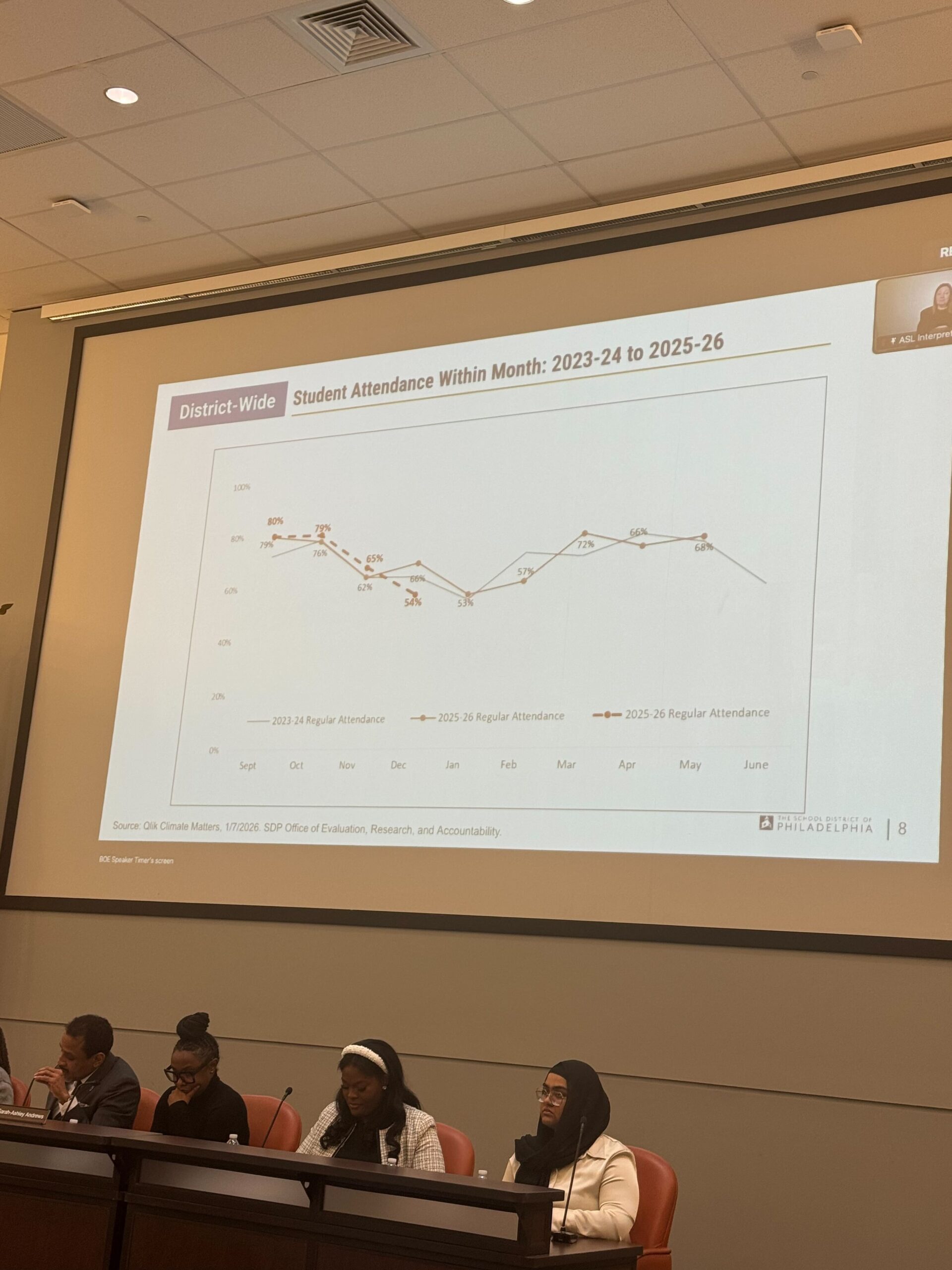
Student attendance drops year-over-year for December, ‘the largest drop I believe I’ve seen during my tenure here,’ Watlington says
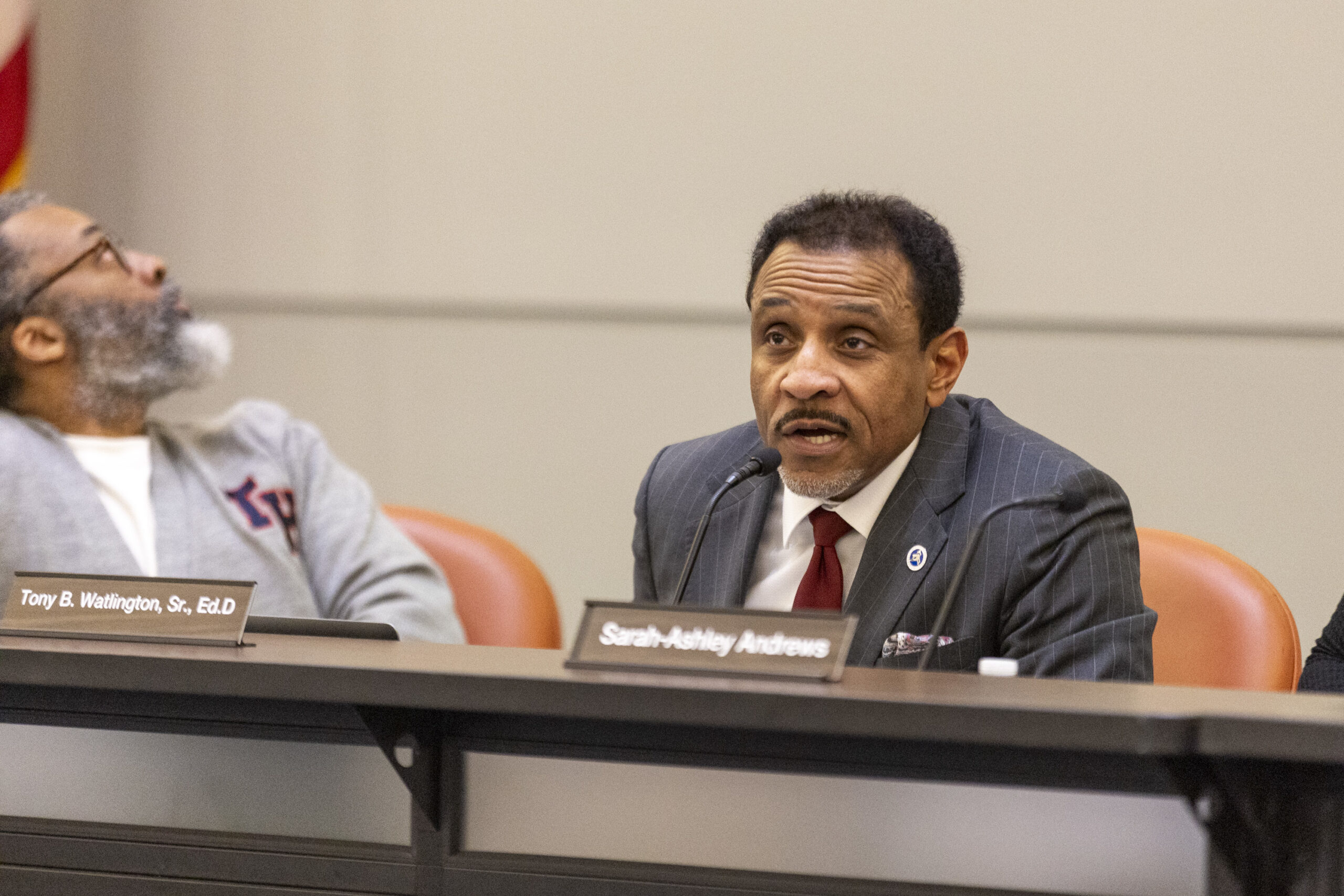
Student attendance dropped year over year for the month of December, Superintendent Tony B. Watlington shared with the school board.
Student attendance dropped year-over-year for the month of December, Watlington said.
It was 66% in 2024, and 54% in 2025, “the largest drop I believe I’ve seen during my tenure here,” Watlington said. He believes the change was due to a half day for professional development, a two-hour delay for snow, and lightly attended days prior to the winter break.
Philly builds one snow day into the calendar, and any other inclement weather days will be virtual, Watlington says
Watlington is making his monthly presentation now. He welcomes the new student board members, then pivots to the district’s inclement weather process. While in-person learning is preferred, the “absolute number one, without question” priority is safety, the superintendent said.
Philadelphia builds one snow day into its calendar; any subsequent inclement weather days will shift to virtual instruction, Watlington said.
The student said she and others are scared to lock up their phones. Hers was stolen once, and her family cannot afford to replace another phone, she said.
“Let’s not strip away the only safety tool” that some children have.
Superintendent Watlington directed one of his assistant superintendents to speak to the Frankford student.
‘To me, closing Lankenau doesn’t make sense,’ high school senior tells the board
LeeShaun Lucas, a senior at Lankenau High School, is upset the school might close. “To me, closing Lankenau doesn’t make sense,” Lucas said.
Lankenau’s campus is unique in the city — set against a wildlife preserve and a farm, a stream, and a forest.
Lucas has studied how to make the Schuylkill healthier by studying mussels, he said. He’s had the opportunity to study in a GIS class, the city’s only such high school opportunity. That shaped Lucas, he said.
“I truly believe that voting to close Lankenau Environmental would be a mistake,” Lucas said. “Please vote to save Lank so that others may benefit from the type of learning that is only possible at Lankenau Environmental.”
Cecelia Henderson, a junior at Lankenau, is also speaking against the proposed closure of her school.
“My overall experience at the school has been overwhelmingly positive,” Henderson said. “Lankenau teachers build very strong personal relationships with students. These are the things I don’t hear from my friends who attend other inner-city Philadelphia high schools.”
Lankenau gave her “structure, support and the privilege of a beautiful campus” that helped her deal with personal issues, Henderson said.
Henderson takes dual enrollment biology and GIS classes. “I strongly believe that this cannot be replicated elsewhere,” Henderson said. “Why close a school that gives real-world education and credentials to students? Why not give that school aid and support it so we can grow bigger and better?”
Conwell students urge the board not to close Conwell Middle School
Julia Spencer, an eighth grader at Conwell Middle School, is speaking now.
“When I got to Conwell, I found my fit,” Julia said. She’s involved in track and field, ballet, student government, and more.
The district has proposed closing Conwell, and that makes Julia worry about kids who won’t get the chance to attend the magnet middle school.
“They should be able to carry the Conwell name like I will, and so many other generations,” Julia said. “Keep Conwell open.”
Jebaz Spencer, another Conwell student, said: “Conwell has programs and opportunities that other schools don’t have. … My peers and I deserve Conwell.”
Conwell students have to score high on state tests. Kids deserve “to have the legendary Conwell name on our school records,” Jebaz said. “I’ve become a better person at Conwell, and an example for other students.”
“Conwell matters,” Jebaz said. “We matter.”
Under the proposed facilities plan, Conwell would close, and the building would be repurposed as a district swing space. Students would attend AMY at James Martin as a 5-8 program with a preference for Bodine High School.
The school board will hear from student speakers now, including multiple students scheduled to testify about proposed school closings.
Up first is Shereeta Jones, a student at Mastery Simon Gratz. Shereeta loves her school, and the staff who “just want to see me succeed at school and in life.”
Up now is the installation of the student representatives of the school board.
Board members Sarah-Ashley Andrews and Cheryl Harper work closest with the student reps. This year’s reps are: Brianni Carter, from Philadelphia High School for Girls; Ramisha Karim, from Northeast High; and Semira Reyes, from the Philadelphia High School for Creative and Performing Arts.
Six board members are in attendance at tonight’s meeting
The board has a quorum at tonight’s meeting, but not all members are in attendance.
President Reginald Streater and vice president Sarah-Ashley Andrews are attending in person. Crystal Cubbage, ChauWing Lam, Joyce Wilkerson, and Cheryl Harper are present virtually.
Whitney Jones, Wanda Novales, and Joan Stern are absent.
District plans to host upcoming community meetings centered on the proposed facilities plan
School board president Reginald Streater acknowledges Superintendent Tony B. Watlington Sr.’s long-awaited facilities plan, which was made public last week. It won’t be presented to the board until next month.
Streater urges attendance at upcoming community meetings, starting next week. The meetings will center on closing schools.
“Once he [Watlington] has formally presented his recommendations to the board, we will announce additional information on how we will proceed,” Streater said.
In other words, there will be no immediate vote after the Feb. 26 Watlington presentation, and more community engagement opportunities to come.
Board honors general counsel for the district, and its senior and teacher of the month
The board is honoring Shahirah Brown, assistant general counsel for the district, who has won multiple recognitions by community and legal organizations for her work.
First school board action meeting of 2026, here we go!
Most board members are not present in person tonight — just board president Reginald Streater and vice president Sarah-Ashley Andrews are at Philadelphia School District headquarters today.
Rally begins to break up as organizers head inside for school board meeting
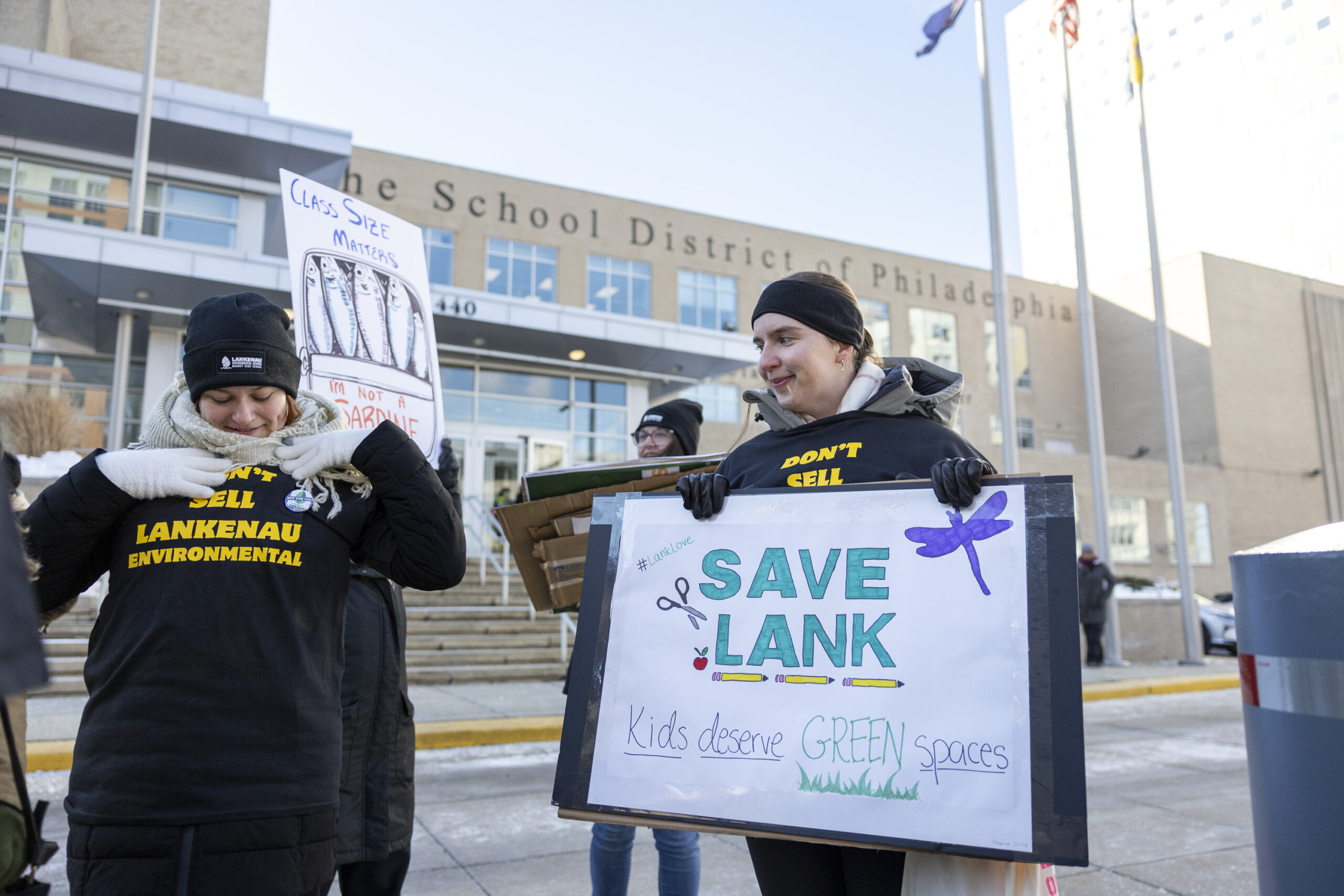
Grace Keiser, 27, a math teacher at Lankenau High School, holds a “Save Lank” sign during the rally on Thursday.
At the close of the rally, Krys Fannis, a 10th grader at Lankenau, spoke on the megaphone.
“I feel scared,” he said about the district’s plan, which would close the school. Fannis would have to transfer to a new school for his senior year. He said that Lankenau is more than just a building filled with classrooms. It is a community, and its focus on environmental education is essential for students like him, he said.
To those in the school district who argue his school must go?
‘It’s just an injustice,’ says president of Lankenau Home & School Association
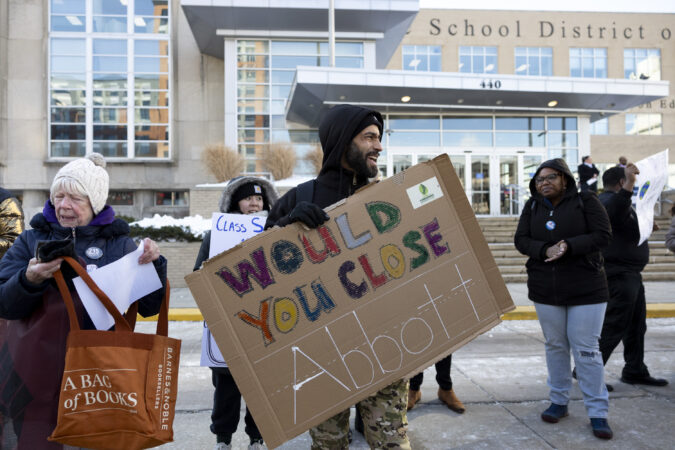
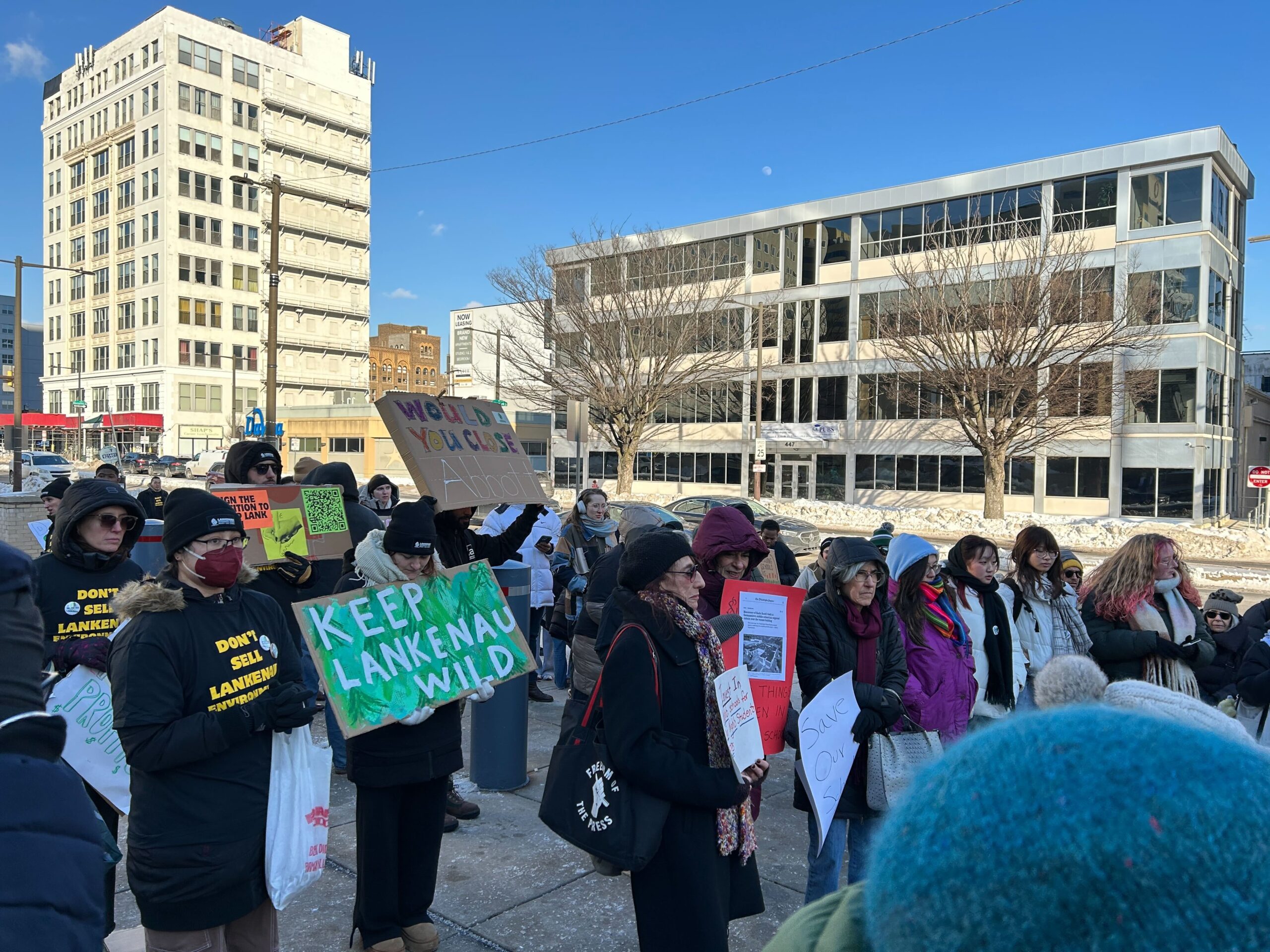
Demonstrators rallied against school closures outside the School District of Philadelphia headquarters on Thursday.
Some of the demonstrators warned that removing children from their neighborhood schools would be traumatizing to already vulnerable kids.
“These schools are another home for these families,” said Margarita Davis-Boyer, president of the Lankenau High School Home & School Association. She said schools are a place where kids can get a meal, see a friendly face, and feel safe, especially when home may not offer the same reprieve.
“It’s just an injustice,” she said.
Annie Moss, from the Olde Kensington Neighborhood Association, said the school district’s plan threatens the future of Philadelphia.
“You cannot build a strong city… by traumatizing them,” she said.
North Philly community member protests proposed closure of Ludlow Elementary
Annie Moss, who runs after-school programs at Ludlow Elementary, rallied outside the School District of Philadelphia before their school board meeting on Thursday.
Annie Moss, a member of the Olde Kensington Neighborhood Association, braved the bitter temperatures to protest the planned closure of Ludlow Elementary in North Philadelphia. Ludlow, and the neighborhood, have finally gotten some investments.
“And now they’re talking about closing,” Moss said.
Moss said students would lose if Ludlow is closed.
“Why take them out of something that is good, and been built for them, and destroy it?” said Moss.
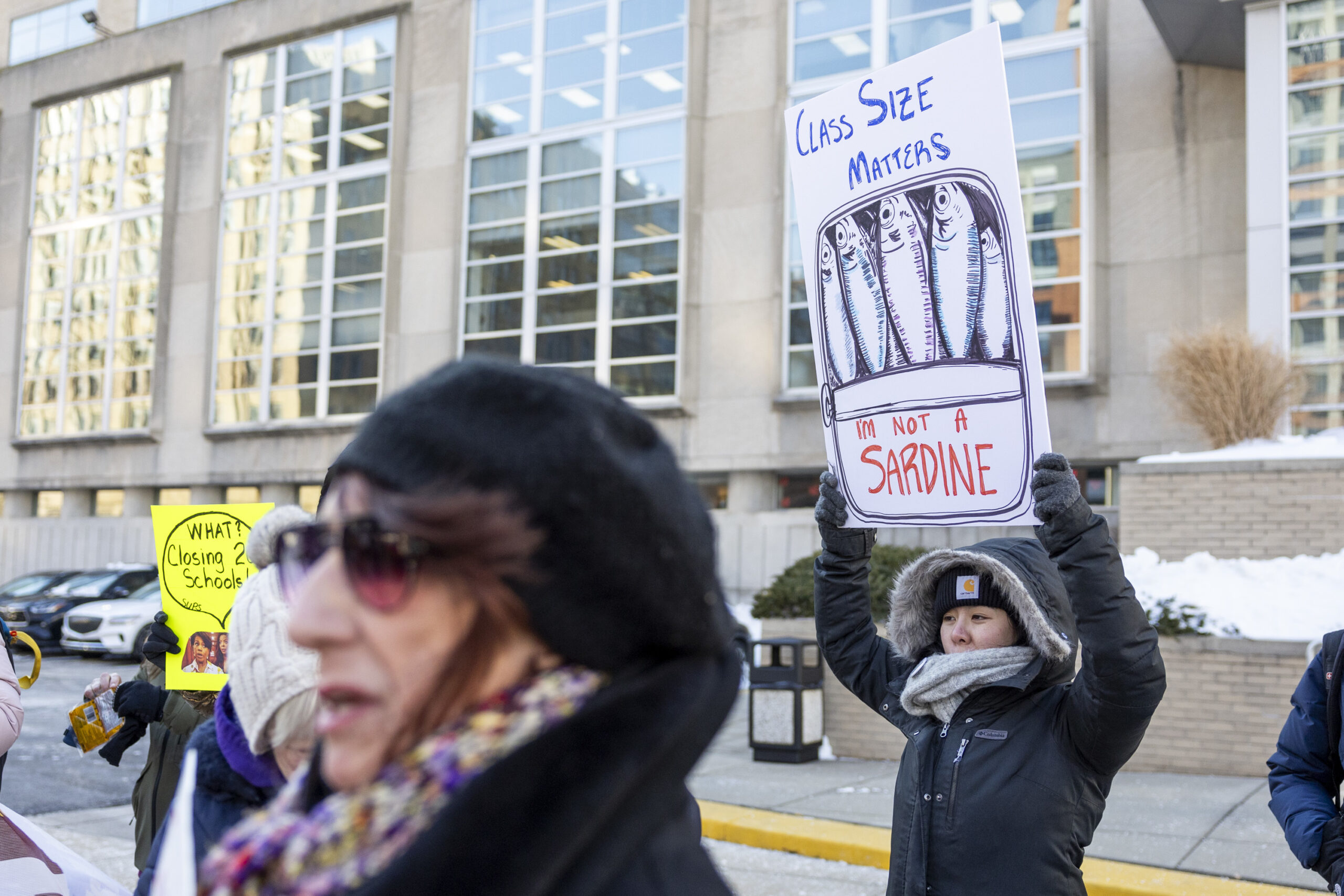
Hannah Loo, who works for advocacy organization 12 Plus, rallied outside the Philadelphia school district headquarters against school closures on Thursday.
Around 60 people are gathered in front of the school district headquarters, surprising organizers with their turnout given the frigid weather.
Hannah Loo, 30, braved the wintry day holding a sign that warns of crammed classrooms if the proposed schools close.
“Class Size Matters: I’m not a Sardine,” the sign read.
Loo, who works for advocacy organization 12 Plus, said that she was fighting against school closures because schools are essential parts of the neighborhoods and communities where they’re located. She believes the district’s plan will ultimately hurt graduation rates and attendance, and said she hopes the district listens to organizers doing grassroots work to advocate for schools.
Organizers set to rally against school closures outside school district headquarters
// Timestamp 01/29/26 2:45pm
Stand Up for Philly Schools, a coalition of neighborhood, parent, and educator groups, plans to rally outside the School District of Philadelphia headquarters starting at 3 p.m. Thursday, one hour before the school board’s first meeting of 2026.
The facilities plan is not on the agenda of Thursday’s meeting, but it will be the public’s first opportunity to share question and concerns with the board.
COLUMBUS, Ohio — For most of the night, it seemed as if the Flyers were still on a road outside Columbus. Despite facing a Metropolitan Division foe in the Blue Jackets, and with their playoff dreams fading away, it was too much of that Midwest way of ease.
They finally turned it up for the third period and were knocking on the door of a comeback, thanks to Travis Konecny and Dan Vladař, but then fell back into the habits that sank them earlier in the game. Within five minutes it went from a tie game to a 5-3 loss.
Just a few weeks ago, the Flyers were sitting inside the playoff picture. Now they’ve lost nine of 11.
“We just shot ourselves in the foot a few times, and they capitalized on them,” defenseman Travis Sanheim said. “And just weren’t executing the way that we need to at this level. And it cost us.”
The gas tank seemed to be low for much of the team for much of the time — except for Konecny and Vladař.
“We all know he’s our big dog, as everybody says,” Vladař said about Konecny. “We were happy that he’s going, but at the same time, it’s a team game. We just can’t rely on only two players. We cannot expect from him scoring [a] hat trick every single game.”
A painful hat trick
Konecny notched his third career hat trick as he gutted and grimaced out a performance that could have and should have gone down in Flyers lore.
His first goal tied the score at 1, settling things down momentarily after his line was on the ice for the first Columbus goal 38 seconds into the game — thanks to a turnover by Trevor Zegras. But then, at the end of the second, Konecny blocked a Damon Severson slap shot off his ankle or foot and appeared to be in so much pain that the guy who normally sticks around after the buzzer was already deep down the tunnel when it sounded.
Travis Konecny (right) leads the Flyers in goals with 20 and points with 48.
He wasn’t out there for the start of the third — missing the opening shift with his linemates, Zegras and Christian Dvorak — but he was on the bench just as the puck dropped and was back on the ice for their next rotation. The next shift after, Konecny made it 3-2, and with 4 minutes, 46 seconds remaining, he received a nifty pass from his buddy Travis Sanheim to tie it at 3.
But in the process, the Flyers may have lost Konecny for some time.
“He’s hitting the holes, and … he races inside on them and beats people, and then obviously he’s got a good shot,” coach Rick Tocchet said.
“And he took one off the foot. He’s limping around. He might not play [Thursday against the Boston Bruins]. We don’t know. He [had] a lot of guts tonight.”
Konecny is the Flyers’ leader in goals (20) and points (48), and losing him would be a big hole to fill as they try to climb back in the race. They are six points out of third place in the Metro and eight points back of a wild-card slot.
Vladař’s strong return
Although Sam Ersson battled and performed up to the task across the gauntlet through Las Vegas, Utah, and Colorado, the return of Vladař after a six-game absence was expected to be a durable shovel added to the dig-out.
Although he missed two weeks and said he didn’t “think my legs and my reads were there at the beginning,” the No. 1 goalie was up to the task. But the defense faltered in front of him again, committing turnovers and leaving Blue Jackets wide-open on the weak side.
“We’ve talked from training camp [about] the weakside goals, and lately, since Tampa, we’re just giving up too many weakside goals,” Tocchet said, referencing two straight losses to the Lightning in mid-January.
“You cannot let that weakside goal go in. Obviously, there’s a couple of guys [who] made mistakes on it. Let Vladdy have the strong side shot; he stops that all day long. But that one’s impossible for him to stop.
“I shouldn’t say impossible, because he made some great saves.”
Indeed, he did.
Flyers goaltender Dan Vladar in action against the Tampa Bay Lightning on Jan 12. He made 26 saves Wednesday.
There’s always talk about goalies needing to make one more save in a game. Vladař did that and more. He saw the puck well, especially through traffic, and made 26 saves on 30 shots, stopping three out of five high-danger shots.
Two of those saves were highlight-reel, saves-of-the-year stops on Adam Fantilli when it was 3-1 and Boone Jenner when it was 3-2, with his glove as they waited on the weak side all alone at the right post. Sean Monahan, who scored the game-winner two shifts after Konecny notched his third goal, mentioned postgame he was happy his shot was on the stick side.
“[Sanheim] can’t be tied up with his guy, he’s got to stay loose. He’s got to stay loose because there’s a breakdown,” Tocchet said about the game-winner. “Noah [Cates] should have took back ice, but Sanny just was, he stood with his guy. He should just leave him loose, and then he takes the weak side. So, it’s a couple of things, multiple things. You want to give your goalie a chance to make the save when there’s a breakdown.”
It did seem as if the Blue Jackets were crashing the net and making a goalie returning from injury move side-to-side a lot.
“I don’t think it was intentional because of Vlad,” Sanheim said.
“I think it was some of the mistakes that we were making and coverages and allowing them to make those plays. It puts a lot of stress on your goaltender and can’t blame him, he made a heck of a save on a couple of occasions and really kept us in that game.”
There were turnovers galore, missed assignments, missed reads, and the official stat says nine giveaways. It’s been the norm lately for the Flyers as their once-promising season is charging downhill.
The question is, how many times can the Flyers break till they shatter?
Philly isn’t exactly known for barbecue. But there is a robust scene here, with players, old and new, doing it up right and keeping us full.
Local barbecue specialists smoke meats for more than a dozen hours to achieve the perfect smoke ring and Texas-trained chefs cook up exciting takes on classic barbecue dishes.
Fette Sau (German for “Fat Pig”), opened in Fishtown to eager crowds more than a decade ago and has since established itself as a mainstay in the Philly barbecue scene. The shop has three signature barbecue sauces each offering its own tangy, smoky, or spicy flavor to the pink-ringed smoked meats and meat-heavy sandwiches.
Ruth Henri, owner and chef, prepares ribs from the smoker with help from Michael Bradley at Henri’s Hotts BBQ, a roadside barbecue joint in Hammonton, N.J.
After owner Doug Henri passed away unexpectedly in 2021, his capable wife Ruthie took over the beloved roadside barbecue spot known for slow-smoked meats and homestyle soul food. Not much has changed with the family matriarch at the helm: The brisket — which smokes for 19 hours — is still moist, the St. Louis Style ribs are still cooked until the ribs bend and served fresh (never reheated), and the corn pudding still comes from Henri’s grandmother’s recipe.
Pit master Mike Strauss may have sold his namesake barbecue joint to young gun Daniel Grobman in 2023, but Strauss’ energy still courses through the kitchen thanks to a virtually unchanged menu. The spare ribs, pulled pork, brisket, and crispy pork belly remain fantastic, while the restaurant’s Korean barbecue wings have a hard to replicate smokey-yet-spicy flavor — just asked Herr’s, which made a limited-edition chip inspired by the recipe in 2023.
Hidden down an alley and around a parking lot in Westville, Gloucester County, is Big Swerve’s, a converted shipping container that churns out oversized platters of brisket and chicken with all the classic Southern fixings. Big Swerve is actually Stephen Clark, a former Free Library of Philadelphia security guard who stands 6′3″ and is fastidious about what powers his smoker ( lump charcoal, oak and cherry wood, never hickory). Big Swerve’s is best known for their brisket-stuffed egg rolls and jerk chicken sliders, plus combos that include three proteins and three sides, more than enough to share.
Rick Gray opened Rick’s Backyard Barbeque & Grill in Mizpah in the location where beloved Uncle Dewey’s BBQ operated for over two decades. Here, find a smoker as big as a school bus’s hood, plus a menu inspired by the barbecue Gray’s father, Melvin Gray Sr., cooked at backyard family cookouts, a distinctive, and perhaps elusive flavor that he captures with the touch of charcoal that he adds to regulate the heat of his oak logs. Gray’s seasonings are fairly simple, letting the meats and their slow ride through the long brick smoking pits. Try the tender spareribs or opt for the chicken, particularly when it’s taken fresh off the grill. Rick’s is closed for the season through mid-April, but is still taking catering order over the phone should a rib emergency ever strike.
Sweet Lucy’s Smokehouse in Holmesburg is a reliable barbecue spot with a well-rounded menu of hickory-smoked meats, sandwiches, and sides. Meats like smoked chicken and pulled pork are available in platter, sandwich or just meat form, and smoked wings and baby back ribs round out the menu.
Owner Matt Lang smokes on a gas-fired Ole Hickory, turning out brisket, pork, turkey, and pork spare ribs, which he sells by the pound and in sandwiches. A rotating assortment of sides such as queso mac, corn pudding, potato salad, and KFC style slaw complement the selection of meats.