Blog

  • Trump faces fresh MAGA blowback for efforts to ‘de-escalate’ in Minnesota

    Trump faces fresh MAGA blowback for efforts to ‘de-escalate’ in Minnesota

    President Donald Trump’s efforts this week to “de-escalate” controversial deportation tactics in Minnesota in the face of widespread public dismay have caused a new wave of blowback from his base of hard-line anti-immigration advocates.

    The president is caught between competing interests: a loyal base of voters who elected him on a campaign promise of “mass deportations,” and a broader electorate that is increasingly uncomfortable with an aggressive approach that has led to the shooting deaths of two American protesters by federal agents this month.

    The conflicting viewpoints are evident within the administration, too, with advisers divided along similar lines and offering opposing feedback on whether and how drastically to shift Trump’s immigration strategy, according to people aware of the conversations.

    Federal agents deploy tear gas near the intersection of Park Avenue and 34th Street in Minneapolis on Jan. 13.

    Trump is also navigating a collision of his own instincts: his desire for flashy roundups of foreign-born criminals, and his recognition that the broader public, including business leaders he identifies with who rely on immigrant labor, have soured on the expansion of those roundups to noncriminals in workplaces.

    The conflict has put the normally resolute Trump in an unusual spot, needing to tread carefully on an issue that he has previously plowed ahead on with threats and swagger. The result has been mixed signals from the White House — and fresh evidence of the difficult task Trump faces in a midterm election year of appeasing both his MAGA base and a broader swath of voters.

    Earlier this month, Trump threatened to invoke the Insurrection Act to allow him to send the military to Minneapolis — and suggested that “THE DAY OF RECKONING & RETRIBUTION IS COMING.” He also sharply criticized two Minnesota Democrats, Gov. Tim Walz and Minneapolis Mayor Jacob Frey, calling them “useless” earlier this month.

    This week, however, the president characterized conversations with Walz and Frey as positive and productive. He told Fox News that he wanted to “de-escalate a little bit” and that his talk with Walz “couldn’t have been a nicer conversation.”

    Yet Trump has not articulated a clear shift in immigration strategy, leaving the public unsure of where he actually stands or what comes next.

    He sidelined Homeland Security Secretary Kristi L. Noem from the Minnesota operation — a tacit but rare show of disapproval toward a cabinet member. He has not taken parallel action against senior aide Stephen Miller, who is widely viewed as the architect of Trump’s immigration policies — and who advised Noem on how to respond publicly to the shooting death of ICU nurse Alex Pretti in Minneapolis on Saturday, according to a person who spoke on the condition of anonymity to describe internal conversations.

    In the immediate aftermath of the shooting, both Miller and Noem labeled Pretti a “domestic terrorist.” Miller also called him an “assassin.” Trump and White House press secretary Karoline Leavitt have not defended the officials’ rhetoric but also have not publicly criticized their job performance.

    In a statement to the Washington Post, Miller said the initial information he received about the shooting from the Department of Homeland Security was “based on reports from CBP on the ground.” Miller said the White House is now working to determine why Customs and Border Protection at the time of the incident was not using the extra personnel that DHS had sent to Minnesota for “force protection.”

    Stephen Miller, deputy White House chief of staff for policy, on Tuesday at the White House.

    Noem asked for a meeting with Trump on Monday evening — after Trump announced that his border czar, Tom Homan, would be taking over operations in Minnesota. The gathering lasted for hours, according to two people who spoke anonymously to describe a private meeting. Noem and her top aide, Corey Lewandowski, joined the president and other aides to discuss issues including the border wall and Minneapolis, one of the people said. Separately, Lewandowski and Homan, who have previously clashed, have spoken and agreed to work together, the person added.

    The White House’s efforts to make adjustments on tactics have not stanched the bleeding in public opinion.

    The most recent flood of criticism has come from pro-Trump users online and top influential MAGA commentators. Some called Trump’s pivot a “betrayal.” Others warned, as they have about other issues for months, of the risk that the base could sit out November’s elections.

    Fresh public polling showing increased “anti-ICE sentiment” and “increased support of sanctuary cities” makes clear that the administration must change its deportation tactics, said Mark Mitchell, head pollster at the conservative Rasmussen Reports.

    An Economist/YouGov poll released this week — with most respondents answering after the Pretti shooting — found that 55% of Americans have little confidence in ICE, an increase of 10 percent since mid-December. The decline in trust for ICE has been most pronounced among independent voters, the poll found, with 67% now saying they have little confidence in the immigration agency, compared with 49% last month.

    By contrast, 60% of Republicans say they have “a great deal” or “quite a lot” of confidence in ICE, highlighting the gap between Trump’s own party and independents and Democrats.

    And the president’s sudden interest in cooperating with Walz and Frey and his suggestions about going easy on longtime immigrant workers have amounted to a “rug pull” for the base in his rhetoric, Mitchell said. While polling hasn’t yet showed Trump’s base punishing him, the midterms already look increasingly problematic for the GOP, Mitchell said, and concern remains about declining enthusiasm among Trump supporters. Mitchell met with Trump in November to warn him of frustration within his populist base.

    “Ten years, this has been the core part of his platform — ‘They all have to go home … Build the wall,’” Mitchell said. Trump talking about only focusing on removing violent criminals sounds like he has “caved on the major campaign promise.”

    Within the MAGA base, the president’s supporters want as aggressive an offense as Trump can conceive.

    “This is an inflection point — you blink now and you’re going to blink forever. You bend the knee now, you’ll bend the knee forever,” Stephen Bannon, a former Trump adviser and influential MAGA commentator, said on his show Wednesday as he continued urging the Trump administration to ramp up deportations and to not “de-escalate” or draw back federal agents from Minnesota. “I don’t care how many people I’ve got to deport. I don’t care.”

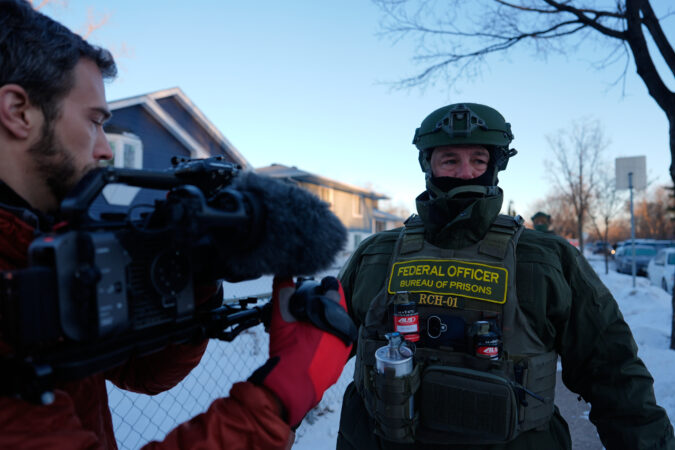
    Federal agents threaten to spray a chemical agent as they confront journalists and rapid responders in Minneapolis on Jan. 14.

    Some prominent Trump supporters are also concerned about the actions by some members of Congress, possibly emboldened by Trump’s recent change of tone, to renew efforts to pass immigration reform.

    The White House has pushed back on the notion that Homan’s elevation amounts to a dialing back of deportations. A White House official, who spoke on the condition of anonymity to discuss strategy, said the administration has “not wavered” in its deportation mission, but Trump doesn’t want to see Americans injured because of clashes with immigration officials.

    In a statement, White House spokeswoman Abigail Jackson said the administration “will never waver in standing up for law and order and protecting the American people.”

    “Any left-wing agitator or criminal illegal alien who thinks Tom’s presence is a victory for their cause is sadly mistaken,” she said.

    This isn’t the first time in Trump’s second term that the MAGA base has erupted over his comments on immigration policy, which have consistently revealed his sensitivity to the concerns of business leaders and average conservatives put off by the deportation of otherwise law-abiding immigrants.

    In late spring, after hearing complaints from friends and donors about deportation roundups at farms, hotels and restaurants hurting operations and scaring off workers, Trump announced that “changes are coming” to spare the agriculture and hospitality fields.

    Trump’s base similarly went off on him. Even some top advisers were blindsided, privately insisting that no such policy changes were in the works and chalking up the suggestion to Trump’s habit of trying to smooth public conflicts with rhetoric.

    Miller at the time raised concerns to the president about his stated plans for “changes” to protect migrant workers, according to a person who spoke anonymously to describe private conversations. Miller had been calling for a drastic increase in deportation numbers to keep up with the administration’s aggressive goals. Homan told the Washington Post soon after Trump’s announcement that he had not discussed any such changes with the president and wasn’t a part of crafting a policy to carve out workers.

    During a speech a few weeks later in Iowa, Trump acknowledged he had gotten “into a little trouble because I said I don’t want to take people away from the farmers,” before describing supporters who were unhappy with his comments as “serious radical-right people.” The comment further inflamed tensions, with influential MAGA commentators including Bannon and Charlie Kirk, the head of Turning Point USA shot dead later last year, accusing the administration of preparing to offer amnesty to some illegal immigrants.

    A number of Republicans in Minnesota said they were glad to see Trump shift course this week. They said they welcomed the arrival of Homan and the apparent truce between Trump and local leaders.

    “I’m just grateful that we’re moving in a direction to get back to being sensible,” said Jim Abeler, a GOP state senator in Minnesota who worried that federal agents were violating people’s rights. “There are people afraid, there are citizens afraid to leave their homes, to go buy groceries because of their skin color or their nationality … It’s past time.”

    Yet on Wednesday, the president also signaled that he was aware of the latest criticism from within his base. A day after speaking favorably of his conversation with the Minneapolis mayor, Trump posted on Truth Social that Frey was “PLAYING WITH FIRE” by saying he would not enforce federal immigration laws.

  • More than 100 burst water mains, freezing rivers puts Philadelphia Water Department on alert

    More than 100 burst water mains, freezing rivers puts Philadelphia Water Department on alert

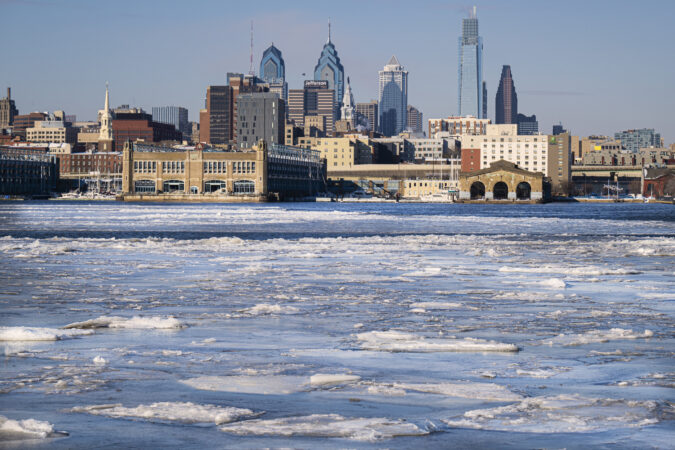
    Large slate-shaped slabs of ice in the Delaware River this week have been like a floating harbinger of things to come for the Philadelphia Water Department (PWD).

    PWD, which draws its drinking water from intakes along the Delaware and the Schuylkill, takes a freezing river seriously.

    It has implemented emergency plans to provide for 24-hour ice patrol at its river water intake plants — and it is on high alert for freezing and bursting water mains and pipes.

    The department has two intakes on the Schuylkill and one on the Delaware that help provide drinking water for about 1.6 million people.

    There is no easy way to say how much of the rivers are icing. But the Middle Atlantic River Forecast Center at State College, an office of the National Weather Service, uses gauges placed in the rivers by the U.S. Geological Survey. At various times this week, officials could not get readings from some gauges because they were affected by ice.

    Brian Rademaekers, a spokesperson for PWD, said the city can also pull from already stored water if ice does became a problem at an intake.

    “We’re getting into a stretch where we haven’t been above freezing for days,” he said, “And I think at least through Feb. 1 it looks like we’ll remain below freezing.”

    Indeed, the region has been subjected to an Arctic blast for nearly a week. Daily highs have been below freezing since Saturday. The top temperature in that stretch was 28 degrees on Monday. Wednesday hit a low of 14. Overnight Thursday into Friday is forecast to drop to 2 degrees.

    The National Weather Service is not forecasting a high of 32 until Tuesday. And then it’s back to below-freezing temperatures.

    Burst water main on S. 16th Street just below Federal Street, Philadelphia, Wednesday, Jan. 28, 2026.

    Bursting pipes

    PWD is warning residents and businesses that the extreme cold is affecting city water mains and reminding them that water lines that are the responsibility of property owners.

    As the city faces unbroken stretches of below-freezing temperatures, PWD knows pipes will begin to freeze or, worse, burst, Rademaekers said.

    Pipes can start to be seriously affected after 72 hours, or three days, of below-freezing weather. Philadelphia is past that benchmark.

    PWD’s call center is already inundated with reports of water outages and leaks. But the department cannot help people with frozen pipes because that takes away from crews responding to public water main leaks.

    Rademaekers said PWD has responded to 147 water main breaks in January, but noted that is a preliminary figure.

    Last year, 256 breaks were reported in January. In recent memory, he said, 2018 was the worst year, with 366 breaks.

    City mains are public property and range in size from 96 inches in diameter to 48 inches, 12 inches, and 6 inches.

    Breaks in smaller pipes are most common. PWD is currently fixing a 6-inch main at 16th and Federal Streets.

    Property owners are responsible for the lateral pipes that run from the curb into a home.

    Rademaekers said residents who suddenly find themselves without water should check with a neighbor first. If the neighbor has running water, it’s likely the homeowner has a frozen pipe.

    In that case, PWD suggests trying to bring the pipes near your water to 40 degrees and opening faucets so that thawing water can drip out and release pressure.

    He said running a hair dryer or using another source to gently warm the pipes could help them thaw. He said residents should be cautious trying to use space heaters to warm on pipes.

    The department has tips online for how to deal with frozen pipes.

    Homeowners should not to wait for the department to respond to take these steps, PWD advises. Doing so could lead to burst pipes.

    Rademaekers said many homes in Philadelphia have their main water meter by the wall facing the street, often in uninsulated basements, some with cracked windows.

    “When it falls to 6 degrees overnight, even if the heat’s on in your house, that particular space right there might just get cold enough to freeze that pipe up, and then ice kind of spreads through the system,” Rademaekers said. “Once the freezing starts, the pressure will build.”

    Rademaekers cautioned customers against calling 311 if they have a frozen pipe. Instead, he said, they should call the PWD hotline at 215-685-6300 and press 1.

    “Certainly whenever we see freezing temperatures for more than two days we start to see a surge of calls into the call center,” he said. “Over the last week, the top three reports we have been getting are water in the basement, leak in the street, or no water at the tap.” Some of those could be water main problems, he said, ”but most often they are traced back to private lines.”

  • A former Illinois deputy is sentenced to 20 years in prison for killing Sonya Massey

    A former Illinois deputy is sentenced to 20 years in prison for killing Sonya Massey

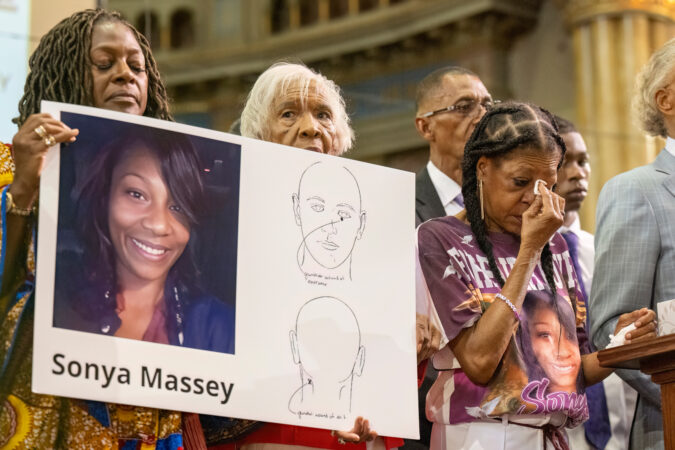
    SPRINGFIELD, Ill. — A former Illinois sheriff’s deputy was sentenced Thursday to 20 years in prison for fatally shooting Sonya Massey, who had dialed 911 to report a possible prowler outside her Springfield home.

    Sean Grayson, 31, was convicted in October. Grayson, who is white, received the maximum possible sentence. He has been incarcerated since he was charged in the killing.

    He apologized during the sentencing, saying he wished he could bring Massey back and spare her family the pain he caused.

    “I made a lot of mistakes that night. There were points when I should’ve acted, and I didn’t. I froze,” he said. “I made terrible decisions that night. I’m sorry.”

    But Massey’s parents and two children — who lobbied for the maximum sentence — said their lives had changed dramatically since the killing. Her two children said they had to grow up without a mother, while Massey’s mother said she lived in fear. They asked the judge to carry out justice in her name.

    “Today, I’m afraid to call the police in fear that I might end up like Sonya,” her mother Donna Massey said.

    When the judge read the sentence, the family reacted with a loud cheer: “Yes!” The judge admonished them.

    After the hearing, Massey’s relatives thanked the public for the support and listening to their stories about Massey.

    “Twenty years is not enough,” her daughter Summer told reporters.

    In the early morning hours of July 6, 2024, Massey — who struggled with mental health issues — summoned emergency responders because she feared there was a prowler outside her Springfield home.

    According to body camera footage, Grayson and sheriff’s Deputy Dawson Farley, who was not charged, searched Massey’s yard before meeting her at her door. Massey appeared confused and repeatedly said, “Please, God.”

    The deputies entered her house, Grayson noticed the pot on the stove and ordered Farley to move it. Instead, Massey went to the stove, retrieved the pot and teased Grayson for moving away from “the hot, steaming water.”

    From this moment, the exchange quickly escalated.

    Massey said: “I rebuke you in the name of Jesus.”

    Grayson drew his sidearm and yelled at her to drop the pan. She set the pot down and ducked behind a counter. But she appeared to pick it up again.

    That’s when Grayson opened fire on the 36-year-old single mother, shooting her in the face. He testified that he feared Massey would scald him.

    Grayson was charged with three counts of first-degree murder, which could have led to a life sentence, but a jury convicted him of the lesser charge. Illinois allows for a second-degree murder conviction if evidence shows the defendant honestly thought he was in danger, even if that fear was unreasonable.

    Massey’s family was outraged by the jury’s decision.

    “The justice system did exactly what it’s designed to do today. It’s not meant for us,” her cousin Sontae Massey said after the verdict.

    Massey’s killing raised new questions about U.S. law enforcement shootings of Black people in their homes. Civil rights attorney Ben Crump negotiated a $10 million settlement with Sangamon County for Massey’s relatives.

    The case also generated a U.S. Justice Department inquiry that was settled when the county agreed to implement more de-escalation training; collect more use-of-force data; and forced the sheriff who hired Grayson to retire. The case also prompted a change in Illinois law requiring fuller transparency on the backgrounds of candidates for law enforcement jobs.

    Grayson’s attorneys had filed a motion for a new trial, which Judge Ryan Cadigan dismissed at the start of the sentencing.

  • An engaged South Philly couple were ambushed in a random shooting in Puerto Rico, killing a young chemist

    An engaged South Philly couple were ambushed in a random shooting in Puerto Rico, killing a young chemist

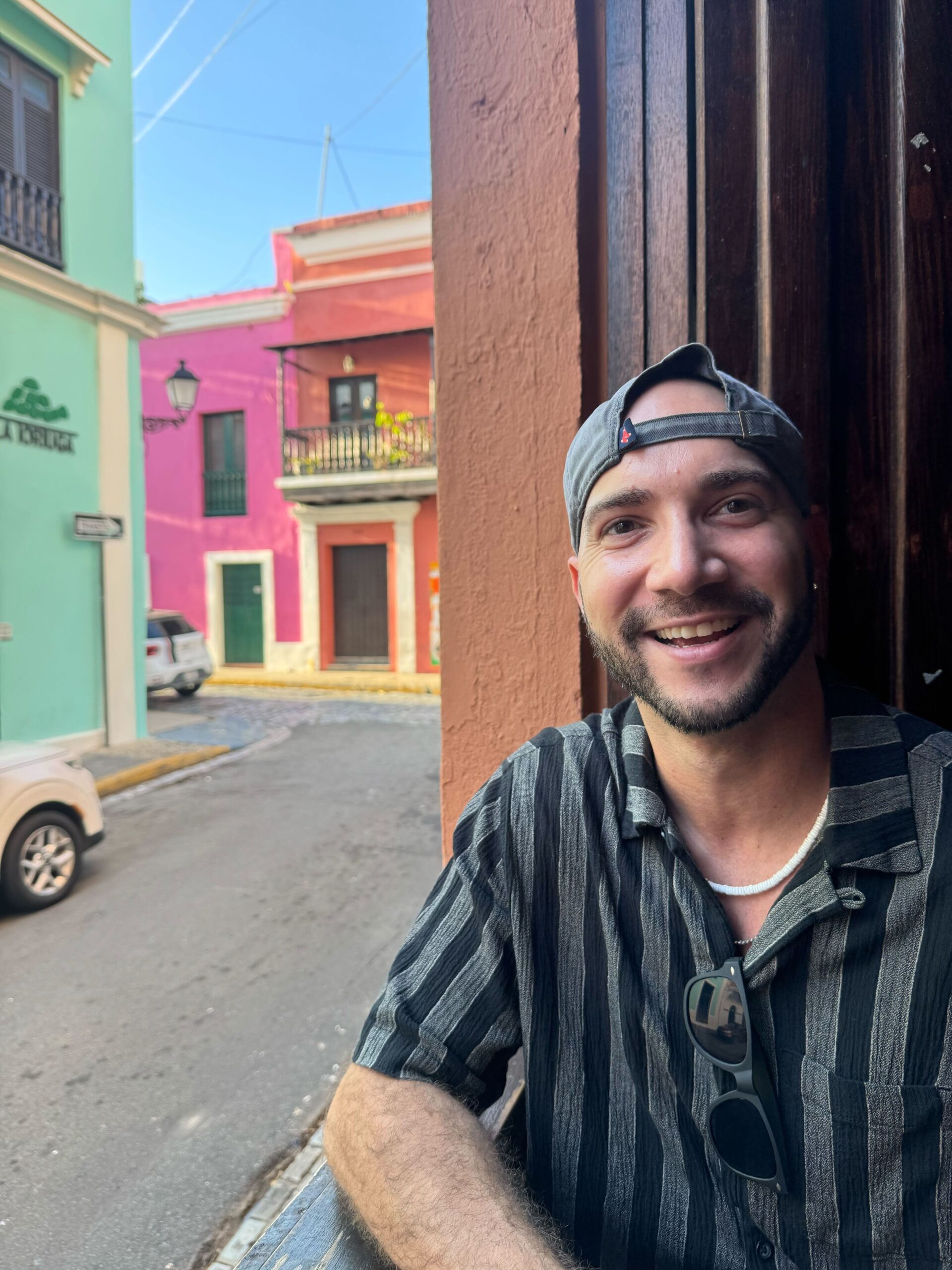
    After a night of dancing and laughter in San Juan, Puerto Rico, Kelly Crispin and her fiance, Omar Padilla Vélez, were driving back to his family’s home when they made a wrong turn off the popular Calle Cerra nightlife strip.

    It was about 1:45 a.m. on Jan. 3. The side street that the South Philadelphia couple had turned onto, which they thought led to the highway, was nearly pitch-black. Then suddenly, Crispin said, roughly a dozen masked men carrying AR-15-style rifles appeared in the road and quickly surrounded the car.

    Padilla Vélez tried to press forward and drive around the crew, she said, when the men opened fire. She remembers the glass exploding around her and the pain in her shoulder and hand as bullets tore through the car. And then the words from her fiance: “I’ve been shot.”

    Padilla Vélez, a 33-year-old chemist for DuPont, was shot in the head. He was rushed to a hospital, where he died days later.

    Omar Padilla Vélez, of South Philadelphia, was shot and killed in San Juan on Jan. 3.

    Crispin, 31, recounted the attack in a phone interview from her South Philadelphia home this week as she struggled to come to terms with what she said San Juan police believe was a random attack by a gang controlling a small stretch of road near a popular tourist area.

    After the shooting stopped, at the intersection of Calle Blanca and Calle La Nueva Palma, Crispin said, one of the men appeared at the side of the car and took her phone as she was calling 911.

    She said she heard some of the men yelling at one another that there was a woman in the car and urging others not to shoot, as if realizing they had made a mistake. They searched her purse, she said, but returned her phone. They took nothing.

    Crispin and a friend, who was with them in the car and was unharmed, pulled Padilla Vélez into the back seat. As she held pressure on his wounds, her friend took the wheel, and the gunmen told them to leave and told them how to get out of the neighborhood.

    It was surreal, she said, to be shot and then have one of the gunmen explain how to leave safely.

    They called 911 again as they left, and met an ambulance at a nearby gas station and were rushed to Centro Médico de Puerto Rico.

    About two days later, Padilla Vélez was briefly stable enough for Crispin to visit him.

    “He told me that he loved me, and I told him that I loved him, too,” she said. “And he said, ‘I’m so sorry.’ Then he fell asleep.”

    Kelly Crispin and Omar Padilla Vélez got engaged in the fall and were looking forward to getting married.

    Later that day, she said, he suffered a catastrophic stroke. Days later, he was declared brain-dead. He was an organ donor, she said, and doctors were able to use his organs to save several lives.

    Padilla Vélez was Puerto Rican, she said, and came to the mainland U.S. in 2015 to earn a Ph.D. in chemistry at Cornell University. He moved to Philadelphia in 2022 and worked as a senior scientist for DuPont in Wilmington.

    The couple met about three years ago at their best friends’ wedding. Crispin, who works as a project manager for an electrical vehicle company, moved to Philadelphia about a year into their relationship. In September, they got engaged.

    They often returned to San Juan to visit Padilla Vélez’s relatives. This trip, which began Dec. 30, was meant to ring in the new year.

    Crispin said she has been frustrated with San Juan police, who she said did not appear to have visited the scene of the shooting until five days later, after her fiance died and the case was assigned to a homicide detective. She said she was not interviewed until Jan. 21 and worries those delays could hamper the investigation.

    No arrests have been made.

    Police in San Juan did not respond to several requests for comment about the case.

    Crispin said the homicide detective assigned to the investigation told her that residents in the area, fearful of retaliation, have refused to provide information. Police, she said, told her that a gang operates on the street where they were ambushed, and that she and her fiance were likely shot in a case of mistaken identity.

    Crispin said the city should warn people to avoid the area, especially since it’s so close to a popular tourist district.

    Omar Padilla Vélez earned a doctorate in chemistry from Cornell, before moving to South Philadelphia, where he lived with his fiancée.

    Since returning to Philadelphia last week, she has struggled to make sense of her new reality. The bones in her hand were shattered and will require multiple surgeries to repair. The bullet passed through her shoulder, and she will need months of physical therapy.

    But that is nothing, she said, compared to the searing heartache of what she has lost.

    Padilla Vélez, she said, was intelligent and funny. To meet him was to feel like you’d known him for years.

    He had a booming laugh that was often the loudest in the room.

    “I thought it was mortifying at first, how loud it was,” she said. “Then I just began to love it.”

    She recalled sitting with him on their couch one night and laughing so hard that their stomachs ached. She can’t remember what started the laughing fits, she said, but she remembers thinking: I am so lucky.

    “I would see other couples and wonder if they laugh like Omar and I do,” she said.

    “We had just made this decision to spend the rest of our lives together, forever,” she said. “It just feels so cruel that this was taken away.”

  • CBS, Washington Post blind themselves when America needs eyes on the ground

    CBS, Washington Post blind themselves when America needs eyes on the ground

    She said all the right things.

    The embattled new boss of CBS News, the until-now opinion journalist Bari Weiss, on Tuesday led a town hall-style meeting for editors and reporters at the storied TV network and appeared to understand both the crisis of American media and the values needed to fix it.

    “Our strategy until now has been: Cling to the audience that remains on broadcast television,” Weiss told her newsroom. “I’m here to tell you that if we stick to that strategy, we’re toast.” She called for more investigative reporting and pledged to merge the values of a high-tech start-up with “journalistic principles that will never change — seeking the truth, serving the public, and ferociously guarding our independence …”

    Meanwhile, the overpowering stench of burning toast filled the room.

    That’s because Weiss and her billionaire pro-Trump overlords, the Ellison family, seem to be doing all the wrong things, undercutting those pretty words. Her first concrete move announced in tandem with the town hall was the hiring of 18 thumb-sucking opinion journalists — a ragtag, right-leaning group that includes a medical huckster and an ex-Trump official — even as the newsroom braced for buyouts and feared layoffs that would slash honest shoe-leather reporting.

    The move toward more commentators telling you what to think about an America spiraling into chaos and fewer boots-on-the-ground journalists digging up what’s needed to fix that crisis — objective truth — could not happen at a worse time, and unfortunately, this is not unique to CBS News.

    The Washington Post — which has lost hundreds of thousands of digital subscribers since a self-coup by its billionaire owner, Amazon founder Jeff Bezos, shifted its opinion section to the political right — is also bracing for deep staff cuts that would cripple its international reporting, as well as its sports staff.

    The extent of the widely rumored staff reductions isn’t yet known, but a preview came last week when the paper briefly told the newsroom it was axing its long-standing plan to send 12 journalists to next month’s Winter Olympics in Italy, before slightly backtracking and saying four reporters would still go.

    Still, that move, and the louder rumors about pending layoffs, has led to deep concern over the future of its metro Washington and international desks. “We urge you to consider how the proposed layoffs will certainly lead us first to irrelevance — not the shared success that remains attainable,” stated a letter from 60 journalists on the foreign desk sent this week to Bezos.

    “It’s all very confusing, and no one knows anything,” an anonymous Post staffer told the Guardian. “The anxiety is so sad.”

    America has been losing news reporters for years. Nationally, newsroom staff have plummeted a whopping 26% since 2008, and the pace of job cuts has only accelerated in recent years as vast news deserts with no sources of local journalism expand across rural America. It’s been a perfect storm prompted heavily by internet-driven changes in reader or viewer habits, as well as declining public trust in traditional media.

    But the looming cuts at the Post and CBS are especially painful both in a symbolic sense and also as self-inflicted own goals that will only heighten public mistrust instead of attacking the problem.

    In 1972, with then-President Richard Nixon driving toward a landslide reelection, the Post, under its legendary editor Ben Bradlee, and CBS, with its popular, avuncular anchor Walter Cronkite, were the only two major outlets that took seriously the links between the Watergate break-in and the Nixon White House. Both newsrooms threw major resources into keeping alive the story that eventually caused Nixon to resign, including a 22-minute special report that Cronkite anchored on the CBS Evening News.

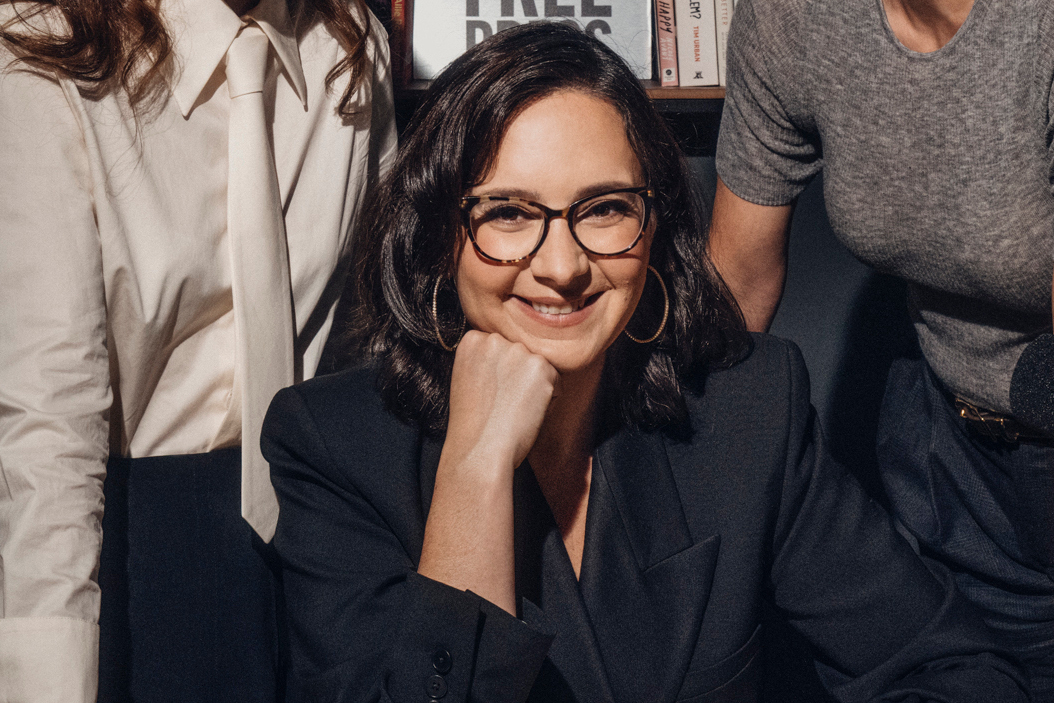
    In this undated photo released by Paramount, one of the Free Press’s cofounders, Bari Weiss, poses for a portrait. Weiss is the editor-in-chief of CBS News.

    That kind of accountability journalism created a bond with the audience that should have left CBS and the Post better positioned to weather the economic storms that have battered journalism in the 21st century. The current crises were self-inflicted, albeit for slightly different reasons.

    In Washington, the Post zigzagged from acknowledging what its readers wanted during Donald Trump’s first term — both in its “Democracy Dies in Darkness” slogan to some solid journalism that backed that up — to billionaire Bezos’ embrace of authoritarianism ahead of Trump’s second coming. The Bezos-ordered spiking of a Kamala Harris endorsement and a rightward editorial shift accelerated a steep decline in subscriptions, including about 300,000 lost readers after the nonendorsement.

    One could argue that staff cuts in such an environment are inevitable, but one might also question the priorities of the Post’s owner, the world’s second-richest person. Amazon — where Bezos remains executive chairman — has just spent $75 million on a White House-fluffing Melania documentary expected to bring back just $1 million at the box office.

    The priorities at Weiss-run CBS News seem similarly warped. The money the newsroom is spending on those 18 or so opinion journalists — a motley crew that includes Mark Hyman, who health experts have accused of “quackery,” calling him a “germ theory denialist,” and retired Gen. H.R. McMaster, a key policy adviser in Trump’s first term — could have been spent on new investigative reporters.

    Indeed, a major CBS rival — MS Now, which is also in a state of flux after spinning off from its longtime relationship with NBC News — did exactly that when it hired Pulitzer Prize-winning journalist and author Carol Leonnig away from the Post, of all places. Since late last year, Leonning has been scooping CBS and everybody else on corruption in Trump’s Justice Department, and the curious case of immigration czar Tom Homan and his $50,000 Cava bag.

    But then Weiss’ overlords in the Ellison family, whose recent role in the TikTok takeover and current fight to acquire Warner Bros. Discovery both depend on the blessing of the Trump White House, probably don’t want the stories Leonnig is uncovering.

    This is not a diatribe against all opinion journalism. I am an opinion journalist, and I started moving in that direction in the 2000s when I thought someone needed to be screaming from the rooftops about the lying and the war crimes of the George W. Bush regime. I think commentary and debate are especially needed in the local communities where such jobs have vanished the most, but I also think powerful opinion journalism exists mainly to augment on-the-ground reporting, not replace it.

    The greatest irony of the pullbacks at CBS and the Post is that the national crisis over immigration raids in Minnesota and the conduct of U.S. Immigration and Customs Enforcement and U.S. Customs and Border Protection officers who’ve killed two citizens has shown that what American democracy needs most is seekers of the truth — much more than people telling you what to think.

    The over-the-top lies from the highest levels of the U.S. government about how and why Renee Good and Alex Pretti were gunned down on the streets of Minneapolis have fallen apart because multiple videos have allowed citizens to see the truth of what actually happened.

    Most of those videos were shot by citizen observers, but with 3,000 federal agents fanning out across Minnesota and hundreds more conducting immigration raids from Maine to Los Angeles, a web of local and independent journalists has also proved critical in documenting the raids and their many human rights abuses.

    Dozens of journalists have been tear-gassed multiple times or struck with rubber bullets or pepper balls, and yet continue to cover protests and ICE activities, often in the most miserable conditions, and keep going out there to create a public record.

    This week, a federal judge called out ICE for violating nearly 100 court orders just since the start of this year. The reason we know about many of these is because of an army of journalists — some independents, some with small community weeklies, and some with metro newspapers like the Chicago Tribune or the Minnesota Star Tribune — who refused to accept the regime’s lies and refused to be scared off by the projectiles fired at them.

    They are showing people the truth. And the truth is rapidly turning public opinion against Trump’s immigration raids and the rush to authoritarianism. Public opinion is changing policy, including the regime’s abrupt retreat from Maine on Thursday, and possible legislative action on Capitol Hill (we’ll believe it when we see it).

    CBS News and the Washington Post could have been at the vanguard of this movement, which would have been a fitting tribute to the legacies of Cronkite and Edward R. Murrow, Bradlee and Bob Woodward and Carl Bernstein, and their many intrepid colleagues. Instead, the supposed keepers of those flames have made a horrible, doomed bet on autocracy.

    What I’ve watched in recent weeks coming out of Minneapolis and elsewhere on the front lines of the war for America’s soul has given me more hope for the future of journalism than any time since the ball dropped to launch this cursed millennium. That CBS and the Post chose this exact moment to willingly blind themselves is beyond pathetic.

  • Slavery was central to the presidency. The President’s House should say so.

    Slavery was central to the presidency. The President’s House should say so.

    Last Thursday, the National Park Service removed a series of informational signs about slavery from the President’s House Site at Sixth and Market Streets in Old City Philadelphia.

    Installed when the site opened in 2010, the signs documented the lives of the enslaved people who lived and labored in the home of Presidents George Washington and John Adams. Their removal occurred without consultation with the city, despite a 2006 agreement requiring the parties to meet and confer before any changes were made to the exhibit.

    The City of Philadelphia responded by filing a federal lawsuit seeking to have the signs restored. According to the suit, the National Park Service and the U.S. Department of the Interior made unilateral changes in violation of those long-standing agreements. At stake is not simply a set of panels, but whether the public will continue to confront an essential historical truth: Slavery was central to the American presidency.

    Philadelphia is the wrong place for historical amnesia.

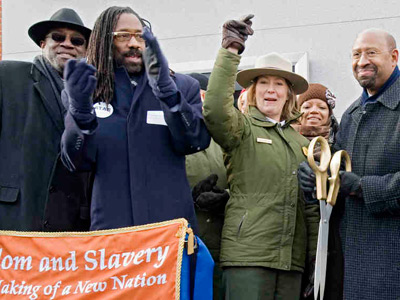
    Dignitaries gather for the opening of a memorial to enslaved people at President’s House in 2010. From left: Municipal Judge Charles Hayden, attorney Michael Coard, Independence National Historical Park’s Cynthia MacLeod, and Mayor Michael Nutter.

    The President’s House stands on ground where the ideals of liberty were articulated alongside the daily practice of human bondage. During Washington’s presidency, the executive mansion functioned simultaneously as a seat of republican government and a site of enslavement, even as Philadelphia emerged as a center of abolitionist thought and Black civic life. The exhibit that opened in 2010 was the result of years of advocacy by historians, community members, and activists who insisted that the enslaved people in Washington’s household not be erased from public memory.

    Slavery was not incidental to Washington’s presidency. It was essential to it.

    Washington enslaved people from childhood, inheriting human property at the age of 11 and expanding his holdings through purchase and marriage. By the time he became president in 1789, he was a Virginia planter whose wealth, household, and public standing depended on enslaved labor. That dependence followed him north.

    When Washington relocated to Philadelphia, he encountered Pennsylvania’s Gradual Abolition Act of 1780, which allowed enslaved people to claim freedom after residing in the state for six months. Rather than comply with the law’s intent, Washington devised a deliberate strategy to evade it.

    Enslaved people in his household were sent out of Pennsylvania just before the deadline and then returned, resetting the clock. He was careful to keep this arrangement private, instructing aides that it should not become public.

    Among the enslaved people living in the President’s House was Ona Judge, who belonged to Martha Washington and served as her personal attendant. As historian Erica Armstrong Dunbar has shown through meticulous research, Judge understood the possibilities and dangers of freedom in a city like Philadelphia. In May 1796, after learning she was to be given away as a wedding gift, Judge fled the President’s House and escaped north.

    Committed to slavery

    Washington’s response reveals the depth of his commitment to slavery.

    Within days, an advertisement appeared on the front page of the Philadelphia Gazette and Universal Daily Advertiser. It announced that Judge had “absconded from the household of the President of the United States.” Placed by the steward of the President’s House, the notice described her appearance in detail, warned ship captains not to assist her escape, and offered a reward for her capture and return.

    The language matters. It explicitly tied the presidency itself to the pursuit of an enslaved woman who claimed her freedom.

    Washington pursued Judge for years, dispatching friends, relatives, and officials to recapture her. He never succeeded, but his actions make clear that slavery was not a peripheral contradiction in his life. It was a system he actively defended while serving as president.

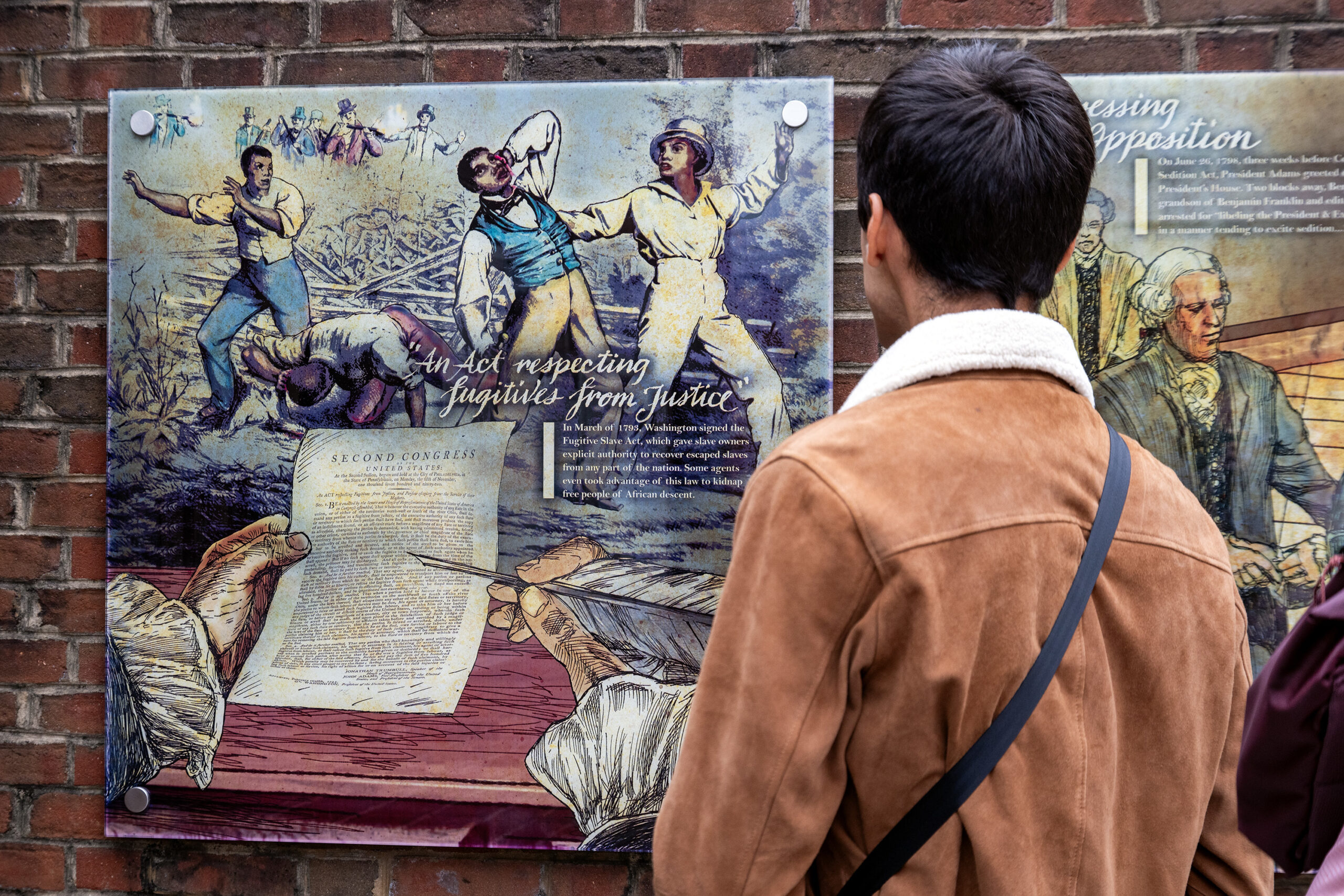
    A visitor views a panel about the Fugitive Slave Act at the President’s House in Independence National Historical Park in 2025.

    At the same time, Black Philadelphians were building institutions that challenged slavery not in theory, but in practice.

    Only a few blocks from the President’s House, Richard Allen and Absalom Jones organized mutual aid through the Free African Society, laying the groundwork for what would become Mother Bethel African Methodist Episcopal Church. Born from the violence of segregation in white churches, Mother Bethel became a cornerstone of Black autonomy in the early republic — a place where abolition was preached, freedom was practiced, and Black civic life flourished.

    The ironies of Philadelphia’s founding moment are unavoidable. The same Washington who pursued Judge and signed the Fugitive Slave Act also contributed financially to Allen’s efforts to build an African church. These contradictions were not hidden from contemporaries. They were preserved.

    More than a century after the American Revolution and Washington’s presidency, the association between presidential authority and enslaved labor had not faded from public memory.

    In 1883, a widely circulated illustrated history depicted Washington walking along a cobblestone street with a Black “servant” following several steps behind him in livery, carrying his coat. For Americans who could not read — or who absorbed history visually — such images conveyed meaning powerfully. Even generations later, Washington was still remembered in proximity to enslaved labor.

    That illustration is not an abstraction. It survives today in the holdings of the Library Company of Philadelphia, where I direct the Program in African American History. Despite contemporary efforts to erase or soften this past, the evidence remains materially present. The Library Company holds the largest collection documenting the Black presence in Philadelphia — more than 13,000 items spanning the 18th through 20th centuries.

    These materials document slavery, but they also trace the Black community’s sustained fight to advance abolition, and the enduring ways Black Philadelphians confronted the afterlives of slavery across the 19th and 20th centuries.

    Preserving memory

    The archive does what removed signage cannot. It insists on memory.

    It shows how Black political thought, religious life, and institutions developed alongside — and in opposition to — slavery. Mother Bethel AME Church, which continues to stand today, hosted abolitionists, organized resistance to colonization schemes, supported the Underground Railroad, and later aided Black migrants during emancipation, Reconstruction, and the Great Migration. This is not peripheral history. It is Philadelphia’s history.

    Removing slavery interpretation from the President’s House is therefore not a neutral curatorial decision. It contradicts the historical record, violates agreements requiring consultation with the city, and risks teaching the public that the presidency can be understood without reckoning with slavery.

    It cannot.

    This moment is especially fraught as the nation approaches the 250th anniversary of 1776. That commemoration will invite renewed storytelling about founding ideals and national origins. If we enter that moment by stripping slavery from public history sites, we will be manufacturing historical amnesia precisely when historical clarity matters most.

    Philadelphia has another choice. In February, the Library Company of Philadelphia, in partnership with the American Philosophical Association, will host a conference titled “Black Declarations of Independence: Before and After 1776.” The premise is straightforward: Black claims to freedom, dignity, and self-determination were not marginal to the founding era. They were central to it — and they continue to shape the nation’s unfinished project.

    Restoring the President’s House signs would be a modest but meaningful step in that direction. It would affirm that Philadelphia will confront its history honestly as it prepares to commemorate 1776 — and that it will not celebrate independence by forgetting those whose bondage, resistance, and perseverance make the meaning of independence intelligible in the first place.

    Jim Downs is a historian and Guggenheim Fellow, a professor of history at Gettysburg College, and director of the Program in African American History at the Library Company of Philadelphia.

  • The Philadelphia Orchestra next season premieres a ‘new’ piece by Leonard Bernstein. Plus, Simon Rattle is coming back.

    The Philadelphia Orchestra next season premieres a ‘new’ piece by Leonard Bernstein. Plus, Simon Rattle is coming back.

    Simon Rattle is returning to the Philadelphia Orchestra after a decade. New works are being unveiled by Spirited Away composer Joe Hisaishi. And a major orchestral piece by Leonard Bernstein is receiving its world premiere — sort of.

    The Philadelphia Orchestra’s 127th season will be a mix of standard repertoire, newly minted scores, film music, family concerts, and guest artists new and familiar.

    Emanuel Ax has been dubbed “artist of distinction” for the season, the orchestra said in its announcement of 2026-27 artists and repertoire unveiled Thursday. The much-loved pianist makes both recital and concerto appearances to celebrate his half-century-plus history with the orchestra.

    Several big, ambitious pieces anchor the season in Marian Anderson Hall.

    The Philadelphians will perform their first-ever complete Bach Christmas Oratorio. Following on the heels of last season’s Tristan und Isolde, the orchestra takes on Wagner’s Lohengrin for the first time. Beethoven’s Symphony No. 9 is on the roster, as are four Mahler symphonies — Nos. 1, 3, 5, and 7.

    Soprano Elza van den Heever.

    Lohengrin, like the Tristan, will be led by music and artistic director Yannick Nézet-Séguin.

    “He’s always able to attract the people that are known for these roles,” Jeremy Rothman, chief programming officer for the Philadelphia Orchestra and Ensemble Arts, said of the cast of singers. Tenor Stanislas de Barbeyrac takes the role of Lohengrin, with soprano Elza van den Heever as Elsa.

    “It’s the kind of thing that really only the Philadelphia Orchestra can do — attracting this talent with Yannick conducting with this level orchestra,” said Rothman.

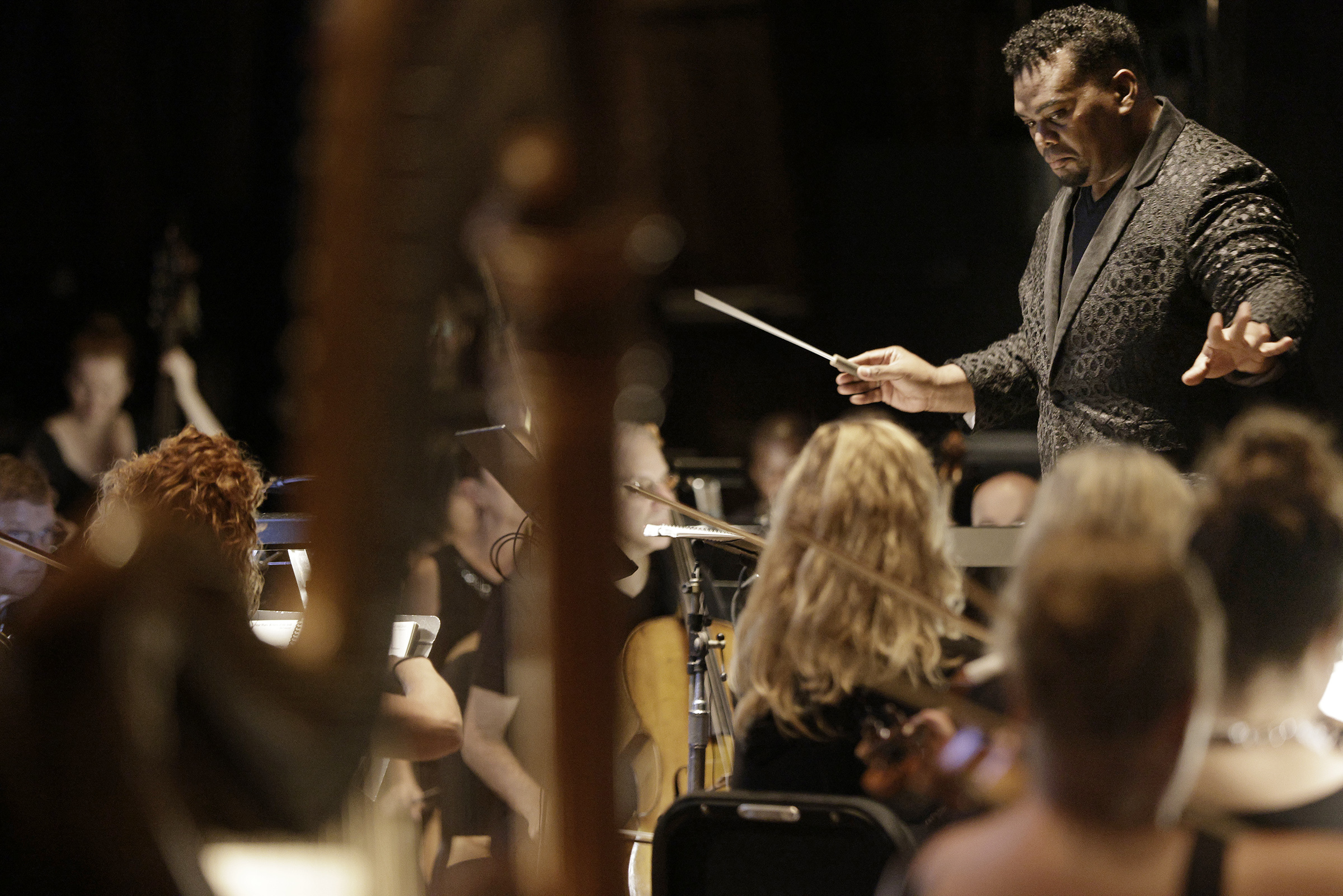
    Conductor Anthony Parnther leading the Philly Pops in a live orchestra-to-screen performance of “Star Wars: Return of the Jedi” at the Mann Center on Aug. 11, 2022.

    Nézet-Séguin will lead 12 weeks of programs in 2026-27 (plus special concerts), with podium appearances by Esa-Pekka Salonen, Anthony Parnther, Dima Slobodeniouk (his debut here), Jane Glover, Fabio Luisi and others.

    Marin Alsop, the orchestra’s principal guest conductor, leads three weeks of programs plus special concerts.

    Violinist Arabella Steinbacher.

    Guest soloists include pianists Yunchan Lim and Seong-Jin Cho in Rachmaninoff, Nikolaj Szeps-Znaider as both violinist and conductor, violinist Arabella Steinbacher in Beethoven, Yefim Bronfman in Schnitke and Liszt, Daniil Trifonov performing Prokofiev, and Yuja Wang in Beethoven.

    The Spotlight recital series continues with artists like Yo-Yo Ma, Yuja Wang, and Itzhak Perlman.

    Composer Gabriela Ortiz.

    Among the premieres, or first performances by the Philadelphia Orchestra, are works by Reena Esmail, Julia Wolfe, Unsuk Chin, Anna Meredith, Erkki-Sven Tüür, Gabriela Ortiz, and Caroline Shaw.

    Film music once again threads throughout the season, with live orchestra-to-screen presentations of Star Wars: A New Hope and Harry Potter and the Prisoner of Azkaban. Film concerts are often a sell-out for the orchestra, but they are also a lure for new audiences who later buy tickets to regular orchestra concerts, said Ryan Fleur, president and CEO of the Philadelphia Orchestra and Ensemble Arts.

    Howard Shore’s score for “Lord of the Rings: The Fellowship of the Ring” was performed live by the Philadelphia Orchestra and guest conductor Ludwig Wicki to a packed house at Marian Anderson Hall, Dec. 5, 2025.

    If past statistics are a reliable guide, the orchestra will sell 6,000 tickets to next season’s Star Wars program. About 4,000 of those listeners will be people who had not bought an orchestra ticket previously. Of those, 20% will come back for a straight orchestra concert in the following year and a half.

    “It’s pretty consistent data now that we’ve seen over the last few years,” said Fleur.

    “Gateway” is the word the orchestra uses to describe concerts like those with film, or the shorter, informal Orchestra After 5 concerts, which also continue next season.

    “It’s programs that are accessible as a first date,” said Fleur.

    The season-wide average ticket price next season is increasing about 2.5% due to a higher share of premium, or special, programs, a spokesperson said.

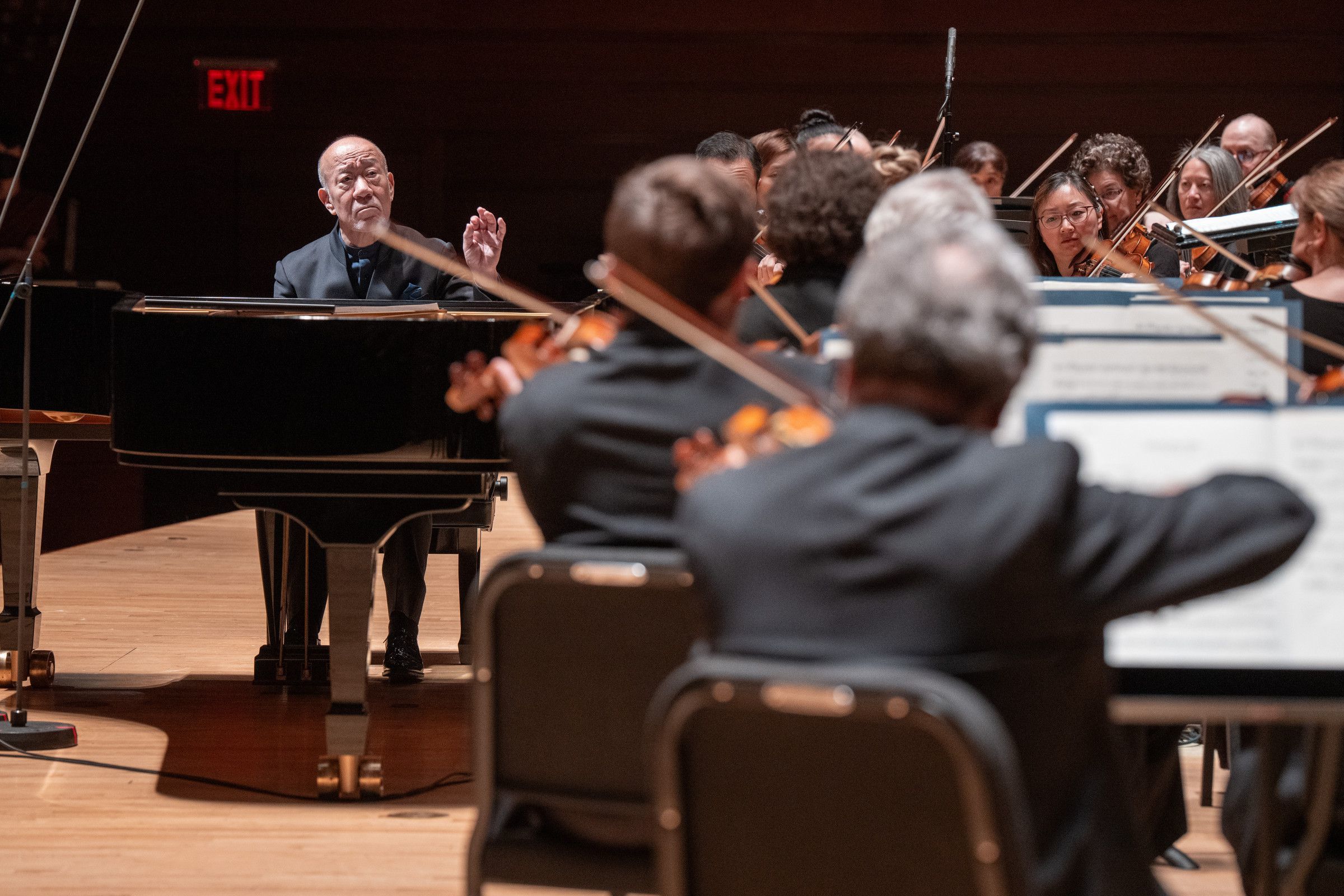
    Composer and conductor Joe Hisaishi performing with the Philadelphia Orchestra at Marian Anderson Hall, June 26, 2025.

    Another film-adjacent presence next year is Joe Hisaishi, the orchestra’s composer in residence best known for his work on the animated films of Hayao Miyazaki (My Neighbor Totoro, Castle in the Sky). Hisaishi’s Orbis is the very first work heard next season, prefacing Beethoven’s Symphony No. 9 on opening night, Sept. 24. In the spring, Hisaishi leads the world premiere of his own Piano Concerto with Alice Sara Ott as soloist on a program with his Concerto for Orchestra.

    Rattle’s concerts, in January 2027, feature familiar territory: John Adams’ propulsive and emotional landmark work from 1985, Harmonielehre; Debussy’s La Mer; and the Ravel Daphnis et Chloé Suite No. 2.

    Why these particular pieces?

    “We didn’t have an in-depth discussion about it,” said Rothman. “When Simon wants to bring a program here, we trust him with what he knows [is] going to work really well with this ensemble.”

    Marin Alsop conducting the Philadelphia Orchestra at its Pride Concert at the Kimmel Center in June 2023.

    More novel for both performers and audience is a Marin Alsop program that includes the world premiere of The Party, a collaboration between composer Austin Fisher and conceptual artist Alex Da Corte. The artistic forces include the orchestra, a cast of singers, and life-size sculptures inspired by 1960s artist Marisol Escobar in a stop-motion film.

    Rothman calls the work, which was commissioned by the orchestra, “a really novel way to present opera, where you have the singers and the orchestra live on stage, but all the action is taking place up on the screen.”

    The Party is on a program with Pacific 231, Arthur Honegger’s classic 1923 depiction of a train accelerating, then grinding to a halt; and Haydn’s Symphony No. 101, “the Clock.

    “It’s a way of exploring the depiction of time,” said Rothman of the three pieces.

    A scene from the Philadelphia Orchestra’s performance in April 2015 – in what was then named Verizon Hall – of Bernstein’s “Mass.”

    Rothman was responsible for the creation of one of the season’s most intriguing creations: a “new” work by Leonard Bernstein.

    “I was thinking about how Mass has some of his most beautiful music in it,” said Rothman, “but just the scope of that work means that music is rarely ever heard live because of the forces that are required to mount it.”

    He conceived of a symphonic suite made of material from Mass, the musical-theatrical piece commissioned by Jacqueline Kennedy that premiered in 1971 at the opening of the John F. Kennedy Center for the Performing Arts.

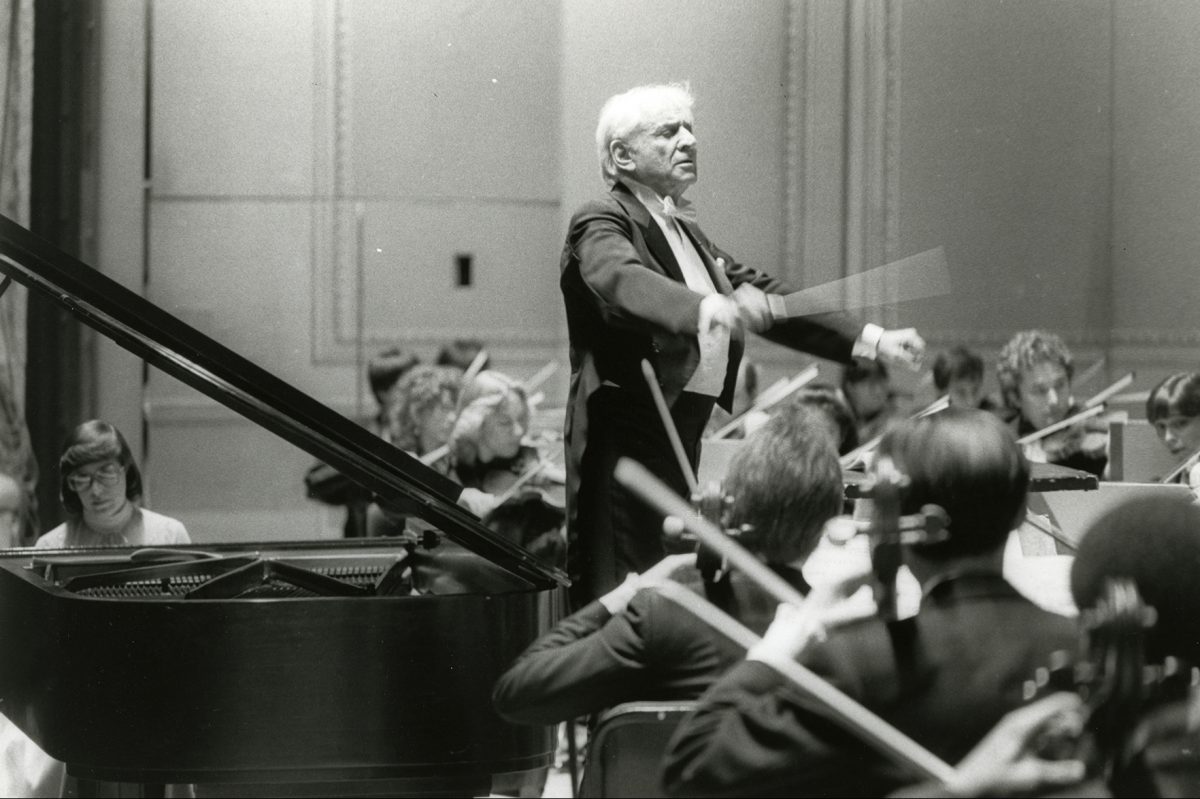
    Leonard Bernstein conducts the Curtis Symphony Orchestra with soloist Susan Starr in a 1984 performance at the Academy of Music.

    “So I reached out to the kids,” said Rothman, referring to Bernstein’s three children, “and I said, ‘What do you think of this idea?’ And I got back like an immediate, ‘Oh my God, we love it. Let’s do it.’”

    Garth Edwin Sunderland, a composer and vice president of creative projects at the Leonard Bernstein Office, was engaged to create Symphonic Rituals from Mass, which contains about 40 minutes of music — a “new” work drawn from Bernstein’s original colorful, groovy score.

    “It’s still paying homage to the sacred nature and the ritual of the piece, but bringing all that fantastic musical material into the orchestra, so no vocalists, no choirs,” said Rothman. “There will be a little bit of a rock band because that’s so essential to the core essence of the piece.”

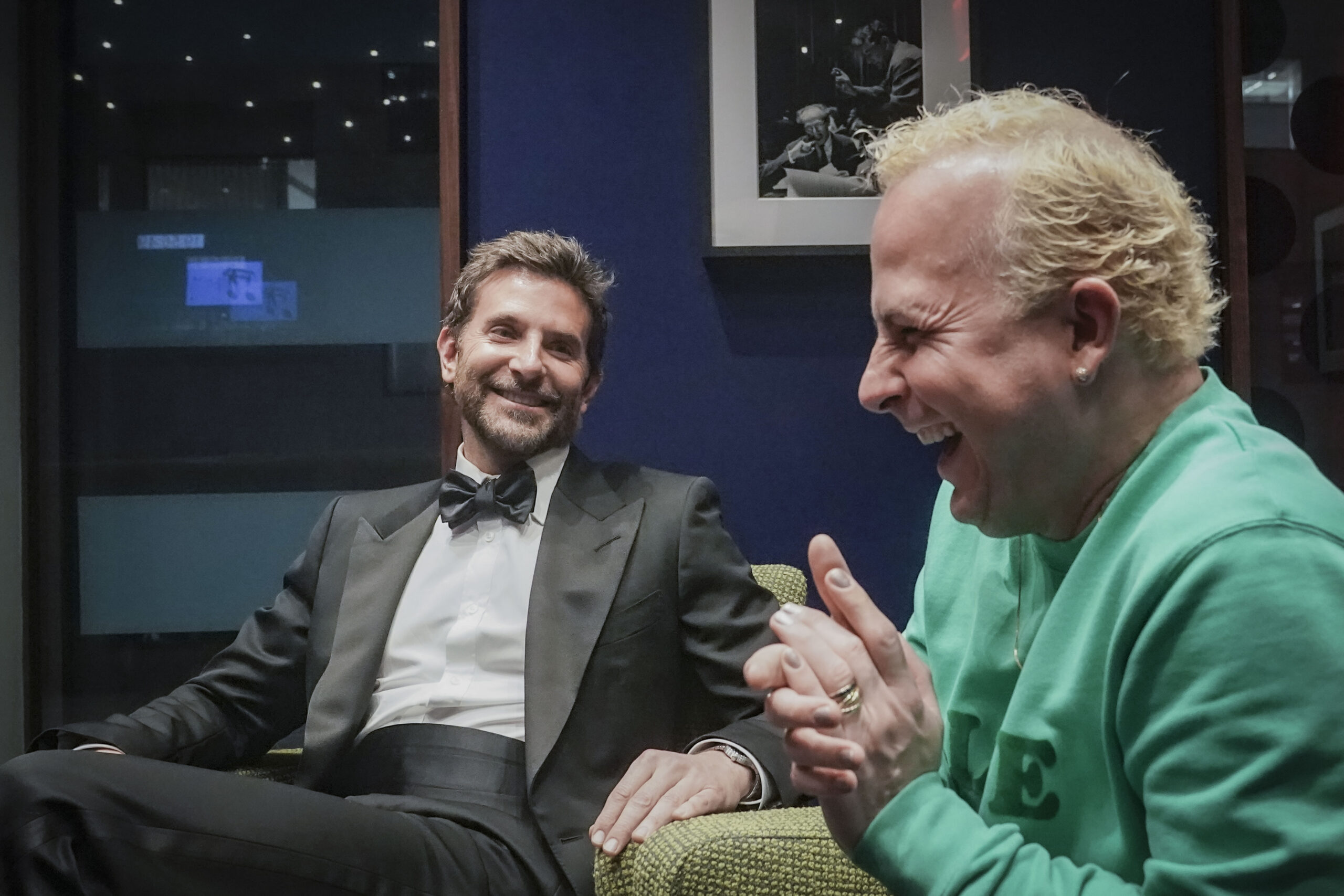
    Actor and director Bradley Cooper (left) and Yannick Nézet-Séguin speak during an interview, Feb. 14, 2024, in New York.

    Nézet-Séguin was, of course, the perfect choice to conduct. He’s been an enthusiastic champion of Bernstein’s music and was involved in the Bradley Cooper movie about Bernstein, Maestro.

    “I texted Yannick,” said Rothman, “and I said, ‘Yannick, how would you like to give the world premiere of a piece by Leonard Bernstein?’ And he goes, What? What are you talking about?’”

    Philadelphia Orchestra 2026-26 subscriptions go on sale at noon Thursday, with single tickets available July 30. ensembleartsphilly.org, 215-893-1955.

  • Five reasons the Sixers should be cautious at the NBA trade deadline

    Five reasons the Sixers should be cautious at the NBA trade deadline

    The 76ers have made at least one move at five consecutive NBA trade deadlines since Daryl Morey took over as president of basketball operations in 2020.

    Many of those moves slashed salaries, enabling the Sixers to avoid paying the luxury tax. However, the new acquisitions didn’t make the team’s playoff chances any better.

    The Sixers are expected to continue their trend of making moves ahead of this season’s 3 p.m. deadline on Feb. 5. Here are five reasons the Sixers should be cautious at the deadline:

    The Sixers could avoid the luxury tax by trading Kelly Oubre Jr. ahead of the Feb.5 NBA trade deadline. However, he’s their best perimeter defender.

    A bad look for the franchise

    The Sixers are $7 million above the allowable threshold to avoid being taxed. They’re also around $1 million away from being a first-apron team and facing penalties.

    Quentin Grimes ($8.7 million), Kelly Oubre Jr. ($8.3 million), and Andre Drummond ($5 million) have expiring contracts that could help avoid paying the threshold tax.

    But trading a key contributor for the sake of avoiding being taxed would be a bad look for the franchise. It would give the impression that saving money for Sixers managing partner Josh Harris is more important than contending for a title. The team would come off looking cheap, especially considering that the Joel Embiid championship window is closing quickly.

    Aside from Tyrese Maxey and VJ Edgecombe (77), the Sixers don’t have the assets to bring in the type of player who could drastically improve the team.

    Not enough assets

    The Sixers don’t have much to give up to upgrade talent via a trade. Aside from Tyrese Maxey and VJ Edgecombe, the Sixers don’t have the assets to acquire the type of player who could drastically improve the team. And they’re not trading either of those guys. Nor should they forfeit their future by surrendering future draft picks to help facilitate a trade. The Sixers will need those picks to acquire young talent and continue building around Maxey and Edgecombe after Embiid and Paul George leave.

    Joel Embiid (21) and Paul George (8) are once again healthy. As a result, the Sixers can beat anyone in the Eastern Conference when the team plays well.

    A dangerous team

    The Sixers are dangerous as currently constructed. When they play well, they can beat anyone in the East. They’ve won two of their three meetings against the conference’s second-place New York Knicks. The Sixers have done the same against the third-place Boston Celtics, and split the four-game series against the fourth-place Toronto Raptors. They’re 0-2 against the first-place Detroit Pistons. However, the Sixers were without Embiid and George in both games. And they still had opportunities to win before blowing fourth-quarter leads both times. So if they remain healthy, the Sixers are a team no one wants to face in the postseason.

    Forward Trendon Watford is one of many role players who have learned to mesh well with the Sixers’ Big Three of Joel Embiid, Tyrese Maxey, and Paul George.

    Losing chemistry

    If you bring in someone new, he’ll have to learn to play with Embiid. The current players spent half the season learning how to play with Embiid, Maxey, and George. And based on the Sixers’ early struggles with their Big Three intact, there’s clearly a learning curve to playing alongside Embiid, Maxey, and George.

    Players like Oubre, Grimes, Drummond, Dominick Barlow, Jabari Walker, Adem Bona, Jared McCain, and Trendon Watford have established roles. Tinkering with that could negatively impact the team, especially if the Sixers are not acquiring a major upgrade in talent.

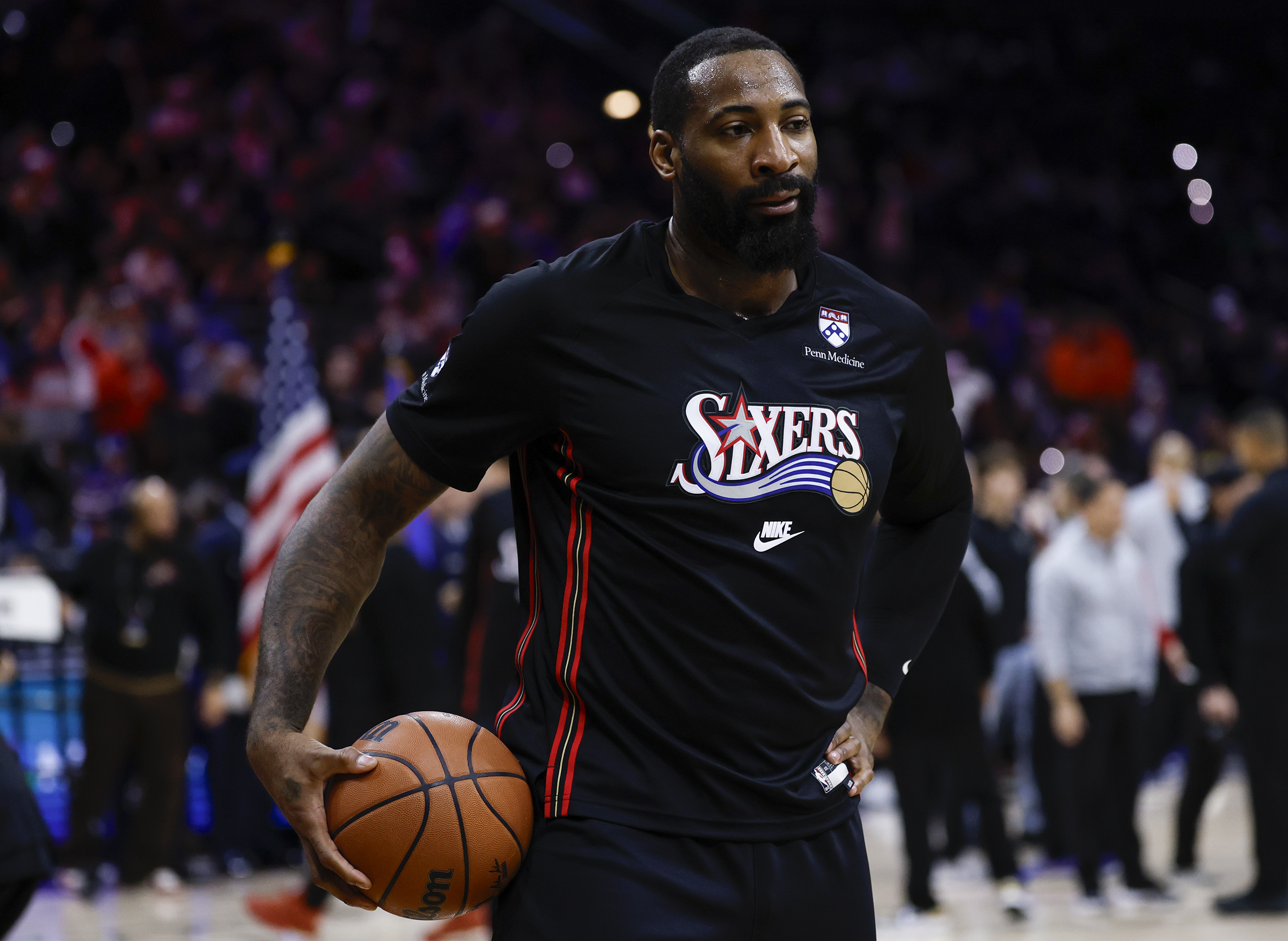
    League sources say the Sixers are open to trading Andre Drummond.

    Insurance for Embiid

    With Drummond and Bona backing up Embiid, who is back to playing at a high level, the center position is set. However, league sources say the Sixers are open to trading Drummond, even though he and Bona have been equally valuable assets, playing behind and often in place of Embiid, who misses games because of knee injury management.

    Bona plays against the teams that have fast and athletic centers, while Drummond usually plays against towering centers who flourish in the post.

    The 6-foot-11 Drummond averages a team-leading 8.9 rebounds while playing just 20 minutes per game. Drummond is second in the NBA in rebounds per 36 minutes at 16.0, trailing the Knicks’ Mitchell Robinson (16.9). And he has started 17 of the games Embiid has missed, averaging 8.6 points, 10.9 rebounds, and 1.1 assists in those contests.

  • Gameday Central: Phillies extra with Whit Merrifield

    Gameday Central: Phillies extra with Whit Merrifield

    In 2024, Whit Merrifield was the newcomer to a Phillies’ roster that was virtually unchanged from the previous season. Now, the retired former infielder joined Phillies Extra to discuss the team’s decision to keep the core of the roster intact, as well as his close friend Brad Keller’s path to the Phillies’ bullpen and why Rob Thomson was his favorite manager. Watch here.

  • Man steals bike from SEPTA bus before shooting a man dead in Southwest Philadelphia, police say

    Man steals bike from SEPTA bus before shooting a man dead in Southwest Philadelphia, police say

    A 19-year-old man was arrested and will be charged with homicide in the fatal shooting of another man in Southwest Philadelphia on Wednesday night, according to police.

    The shooting occurred at 66th Street and Dicks Avenue just after 10 p.m.

    The suspect, whom police did not immediately identify, had just stolen a bicycle from a SEPTA bus at a nearby intersection, police said, when he encountered the man he later shot, also a 19-year-old whom police did not identify.

    Police responded to the scene to find the victim unresponsive with a gunshot wound to the throat. He was taken to Penn Presbyterian Medical Center and pronounced dead around 10:20 p.m.

    The shooter fled after robbing a second person of an electric bicycle, police said.

    Investigators tracked the shooter to 84th Street and Bartram Avenue, where they took him into custody and recovered a firearm, police said.