Blog

  • Howie Roseman will have a role in remaking the Eagles offense. Here’s his offseason to-do list.

    Howie Roseman will have a role in remaking the Eagles offense. Here’s his offseason to-do list.

    Diversification should be the operational word for Howie Roseman and his front office this offseason.

    You’ve heard it said that the Eagles have more talent on their roster than any team in the NFL. The claim is more often than not the source of the shade thrown at Nick Sirianni and his coaching staff. When the Eagles win, it is because of their overwhelming talent. When the Eagles lose, it is because of how their overwhelming talent is coached.

    That claim wasn’t true at the end of the 2025 season, and I’m not sure it was true at any point. The Eagles were getting less than 100 percent of Landon Dickerson and Cam Jurgens and zero percent of Lane Johnson. Even if A.J. Brown was 95 percent of the player he had been over the previous three years, that missing five percent is often what distinguishes very good players from unstoppable ones. Same goes for Saquon Barkley, whose name popped up on the injury report late in the season and who lacked at least some percentage of the lateral improvisation and finishing abilities that he’d displayed during the Eagles’ 2024 championship run.

    All of these things could prove to be temporary, the result of the shortened recovery period that comes as a result of a season ending in mid-January rather than early February. It stands to reason that those most impacted would be players whose competitive advantage lies in their sheer physicality. Johnson, Brown, Barkley, Dickerson, and Jurgens weren’t as physically capable as they were in 2024. Yet, here we are, fixated on the play-calling.
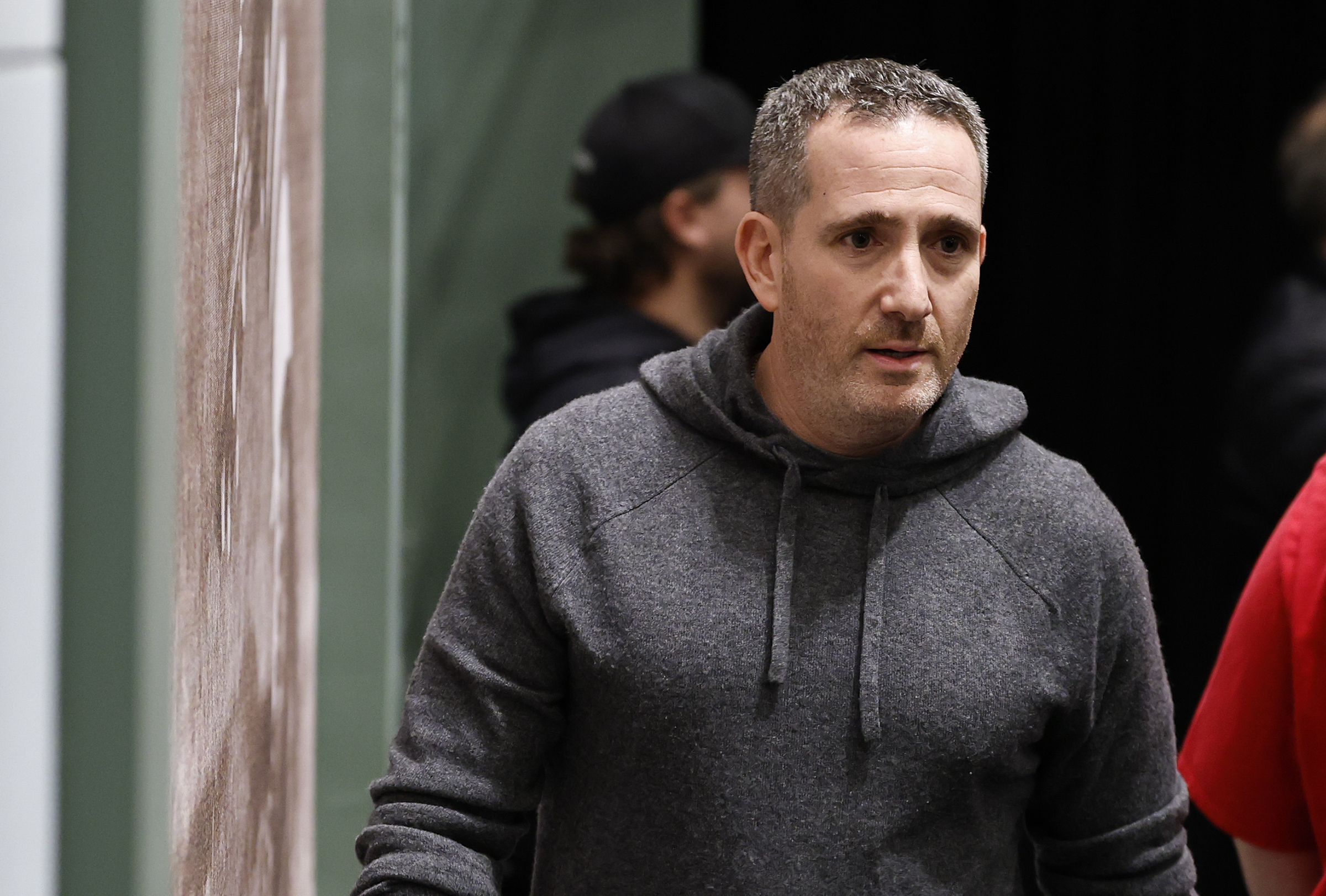
    Eagles general manager Howie Roseman is knee-deep in preparations for the draft and free agency.

    That’s not to say the Eagles offense won’t benefit from a new strategic direction. But their problems clearly are not singular in nature, given the depth and breadth of their issues. For three seasons, the Eagles’ scheme was the logical conclusion of their personnel. They went to two Super Bowls and won one in a blowout because their talent allowed them — heck, required them — to keep it simple.

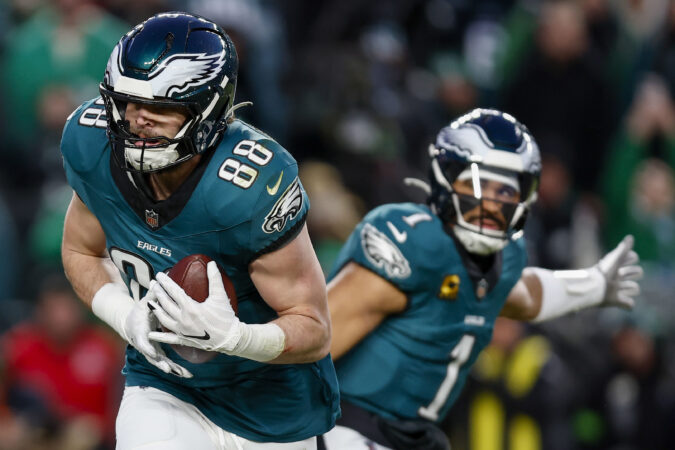
    What we saw this season was a team whose elite performers could be mitigated enough to place the onus on those operating in their shadow. This reality expressed itself most clearly in the form of Dallas Goedert. He scored eight more touchdowns and averaged nearly as many targets per game as he did in 2022, when he averaged 59 yards per game and arrived at the Super Bowl being compared to Travis Kelce. But, this season, Goedert averaged just 39.4 yards per game, his lowest output since he was a rookie.

    If the path forward for the Eagles is a scheme that does not rely as heavily on the singular abilities of players like Johnson and Brown and Barkley — and it almost certainly is — the path forward requires a roster that allows for such a scheme. It is a roster that has a third wide receiver with much better ball skills, and/or physicality on routes, than Jahan Dotson brings. It is a roster that has a second tight end who brings positive value as a run blocker and makes a catch or two a game. It is a roster that has a change-of-pace back who adds a different dimension from Barkley.

    Let’s address those in order:

    1) Fix the tight end position

    Tight end is as important as it has ever been. Among the 13 highest-graded run blockers at the position according to Pro Football Focus, only two played for teams that missed the playoffs.

    All three Eagles tight ends ranked among the 15 lowest-graded run blockers at the position (among 94 total).

    Goedert’s future isn’t the only question. He’ll be a free agent after playing 2025 on a one-year deal. But the Eagles also need to find a TE2 who can complement the starter.
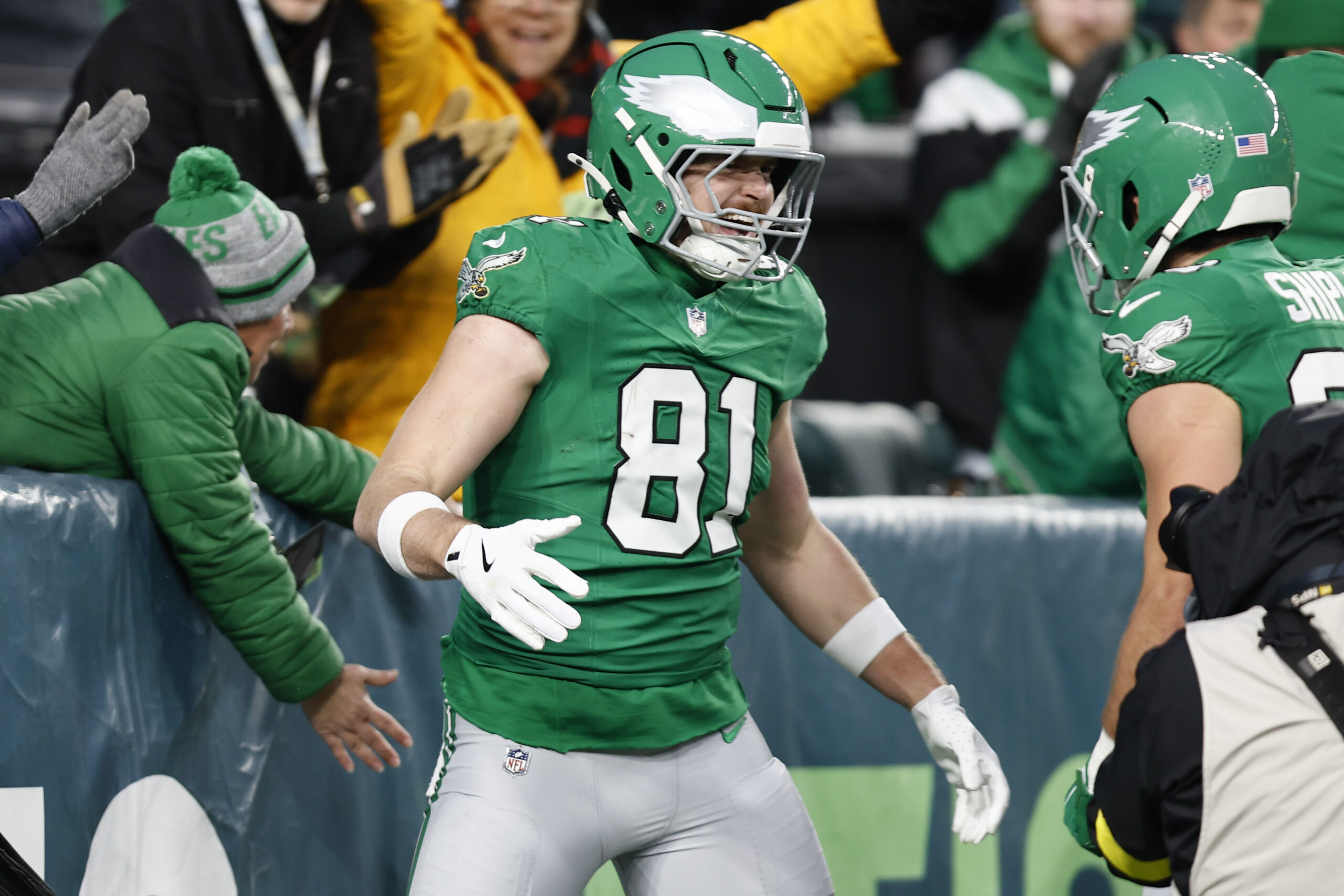
    Grant Calcaterra and the Eagles tight ends came up short as blockers.

    The Eagles were one of only five teams in the league that didn’t have a second tight end with at least 100 yards receiving. That’s partially due to the presence of two top-end wide receivers who were targeted on nearly half of Jalen Hurts’ pass attempts. But there is also a chicken-and-egg component to the Eagles’ narrow pass distribution. Would Hurts distribute the ball more evenly with a wider set of options? The Rams had four tight ends with at least 200 receiving yards despite Puka Nacua and Davante Adams combining for nearly half of the team’s targets.

    The Eagles missed out on last year’s bumper draft crop at the position. They are missing what they once had in Goedert — a young, three-dimensional player who is poised to step up the way he did alongside of and then in place of Zach Ertz. They have no choice but to focus on the free-agent market. Jake Tonges is likely to return to the 49ers as a restricted free agent. The Ravens’ Isaiah Likely is unrestricted, but is likely to have a significant market. The Eagles need to find this year’s version of Colby Parkinson and move aggressively the way the Rams did post-2023.

    2) Replace Jahan Dotson

    A lot was made of the non-pass interference call deep down the left sideline in the Eagles’ playoff loss to the 49ers. But a receiver needs to earn those calls. Dotson has not.

    In the entire NFL, there was only one wide receiver who caught fewer than 29 passes while playing at least 575 snaps. It was Jahan Dotson. He caught 18.
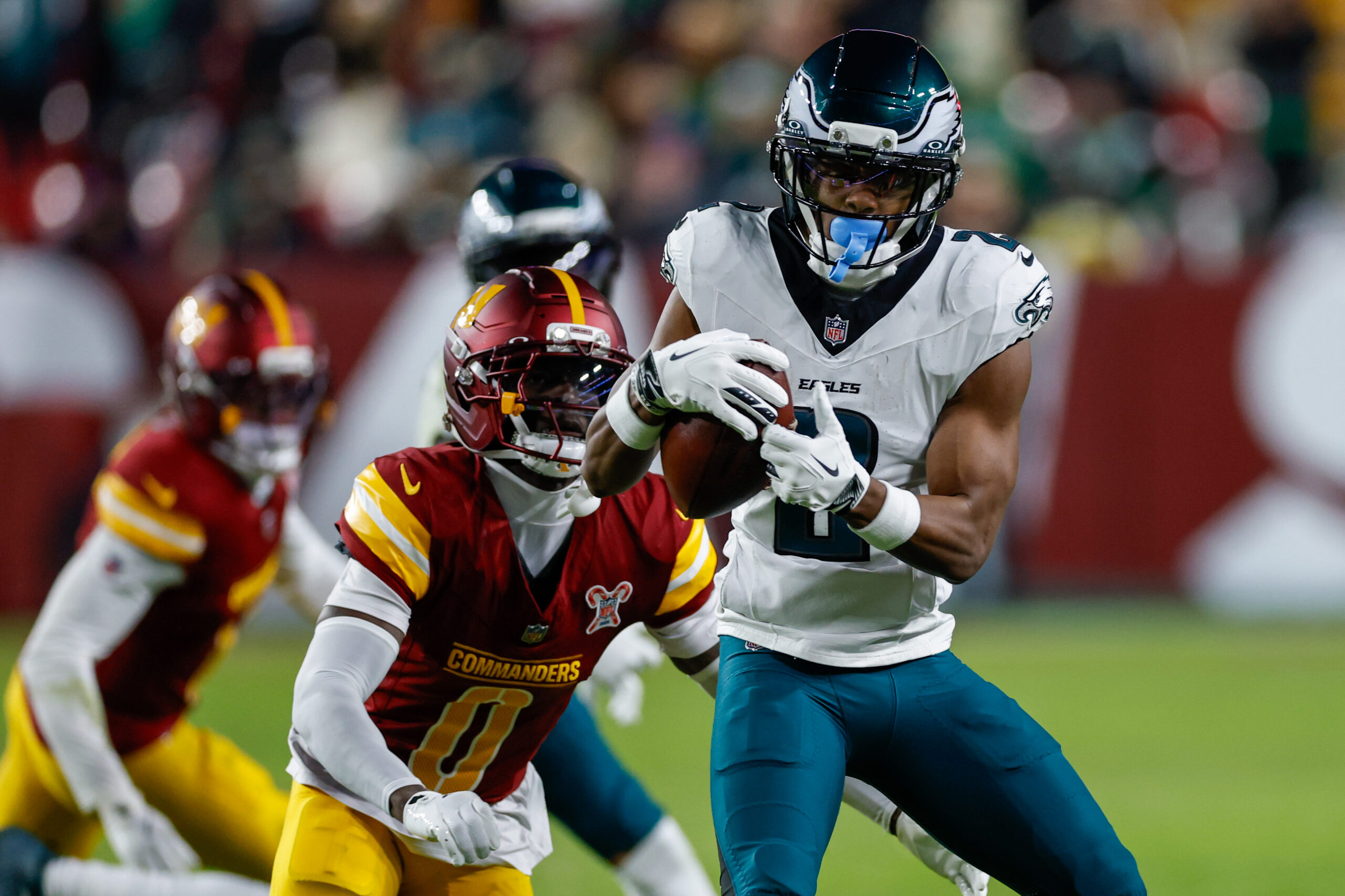
    Eagles wide receiver Jahan Dotson caught only 18 passes this season.

    The Eagles’ fourth-leading receiver was Saquon Barkley with 50 targets, 37 catches and 273 yards. Dotson was behind him with 36 targets, 18 catches and 262 yards.

    Only three playoff teams didn’t have a fourth pass-catcher with 300-plus yards: the Eagles, the Seahawks, and the Panthers. Of the 14 teams that made the playoffs, eight had at least five players with 300-plus receiving yards, including six of the eight teams that advanced to the divisional round.

    That doesn’t prove anything, of course. There are lots of different ways to operate a functional passing offense. Nobody is saying the Seahawks would be better off if more of Jaxon Smith-Njigba’s targets went to Elijah Arroyo. But even the Seahawks’ pass distribution was fairly broad beyond their top three target-getters. They finished the season with eight players who had at least 22 targets and 144 receiving yards. The Eagles had five players with more than 13 targets and 92 receiving yards while throwing the ball about as often as Seattle (slightly more, in fact).

    Let’s not forget the whole point of this exercise. While functional NFL passing offenses take all sorts of forms, the Eagles’ passing offense was not functional. Assuming Brown returns and continues to draw the same coverages he and DeVonta Smith faced this season, the Eagles need a third wide receiver who can actually take advantage of the lack of attention paid to him.

    3) A change-of-pace back

    The Eagles need their version of the Ravens’ Justice Hill, a player who can take a screen pass 20-plus yards or gash a defense on the infamous third-and-long Will Shipley draw. Tank Bigsby was an excellent find by Roseman, but he brings a similar dimension to Barkley. The goal here is to find a veteran back with quickness and pass-catching ability who can be more than a lesser version of the lead back.

    Long story short, the Eagles either need to upgrade the breadth of their skill sets behind their Big Three (Brown, Smith, Barkley) and/or find a fourth player who brings his own dynamic skill set that can exploit the defense’s focus on the stars.

    Sure, they need a play-caller who can enable their skill players to fully express themselves.

    They also need the skills.
  • What is the Sixers’ biggest need at the NBA trade deadline? Patience.

    What is the Sixers’ biggest need at the NBA trade deadline? Patience.

    What do the 76ers really need?

    What type of player would help them with the NBA trade deadline 10 days away?

    At the guard spot, where the duo of Tyrese Maxey and VJ Edgecombe is regarded as one of the NBA’s best young backcourts, they’re pretty good. And that doesn’t account for the depth that Quentin Grimes provides off the bench.

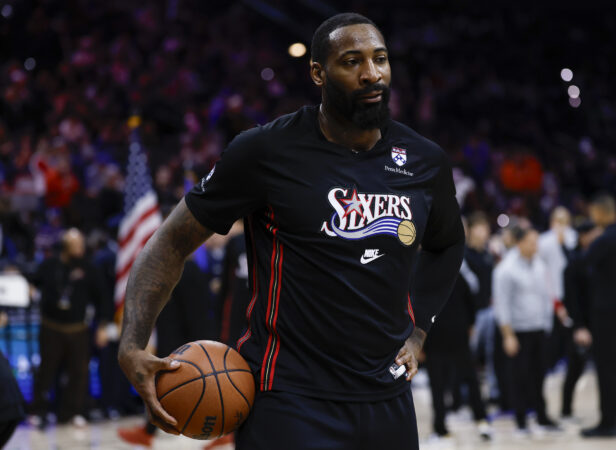
    With Andre Drummond and Adem Bona backing up Joel Embiid, who’s playing at a high level, the center position is pretty good, too.

    At forward, Dominick Barlow is playing well. And the Sixers get stellar play out of the duo of Paul George and Kelly Oubre Jr.

    I’m not sure what they need.

    Some will argue that the Sixers (24-20) don’t have a true point guard. But they have a lot of guards who can handle the ball. And you can add Oubre and George, who were guards in the previous season, to that mix.

    If the Sixers remain healthy, they’re a deep team.

    But based on their recent history of trading to get under the luxury-tax threshold, there’s an expectation that they’ll make at least one trade ahead of the Feb. 5 deadline.

    Guard Quentin Grimes Grimes has a no-trade clause, giving him full veto power over any trade the Sixers attempt to make involving him.

    The Sixers are $7 million above the allowable threshold to avoid being taxed. They’re also around $1 million away from being a first-apron team and facing penalties.

    But this season is different from the recent ones heading into the trade deadline. Whether it’s fool’s gold or not, the Sixers see that they have a chance.

    Embiid, the 2023 MVP, is returning to his All-NBA level, averaging 33.3 points, 10 rebounds, and 5.5 assists, while shooting 58.3% from three-point range in his last four games. George is regaining his rhythm while playing the role of a facilitator and defender who occasionally takes over scoring for stretches. Maxey is the league’s third-leading scorer (29.9 points per game) and an All-Star starter. And Edgecombe has been better than expected as a rookie.

    So this season is definitely different. In 2023-24, the Sixers’ hopes were dashed heading into the trade deadline because Embiid suffered a torn meniscus in his left knee. And last season, they were 20-30 and on their way to full-blown tanking.

    The Sixers probably think that when they’re at their best, they could beat anyone else in the East.

    However, sources around the league say the team is willing to part ways with Drummond.

    At first glance, it’s hard to imagine that the financial aspect will play a role at the trade deadline unless it’s someone like Eric Gordon. The reserve guard has played in only six games, with his last appearance coming Dec. 23 against the Brooklyn Nets.

    The 37-year-old, in his 18th season, signed a one-year, $3.63 million contract on July 1 after declining his $3.47 million player option. Gordon’s deal created a $2.3 million cap and a $2.3 million dead cap value, which is considered a good, low-risk expiring salary for potential trades.

    Maybe the Sixers could entice the Nets or the Utah Jazz, teams with a lot of cap space, with a second-round pick just to take on Gordon’s contract for the remainder of the season. However, he’s Edgecombe’s mentor, and there’s a sense the Sixers may keep him because of that.

    Meanwhile, Oubre ($8.3 million), Grimes ($8.7M), and Drummond ($5M) also have expiring contracts.

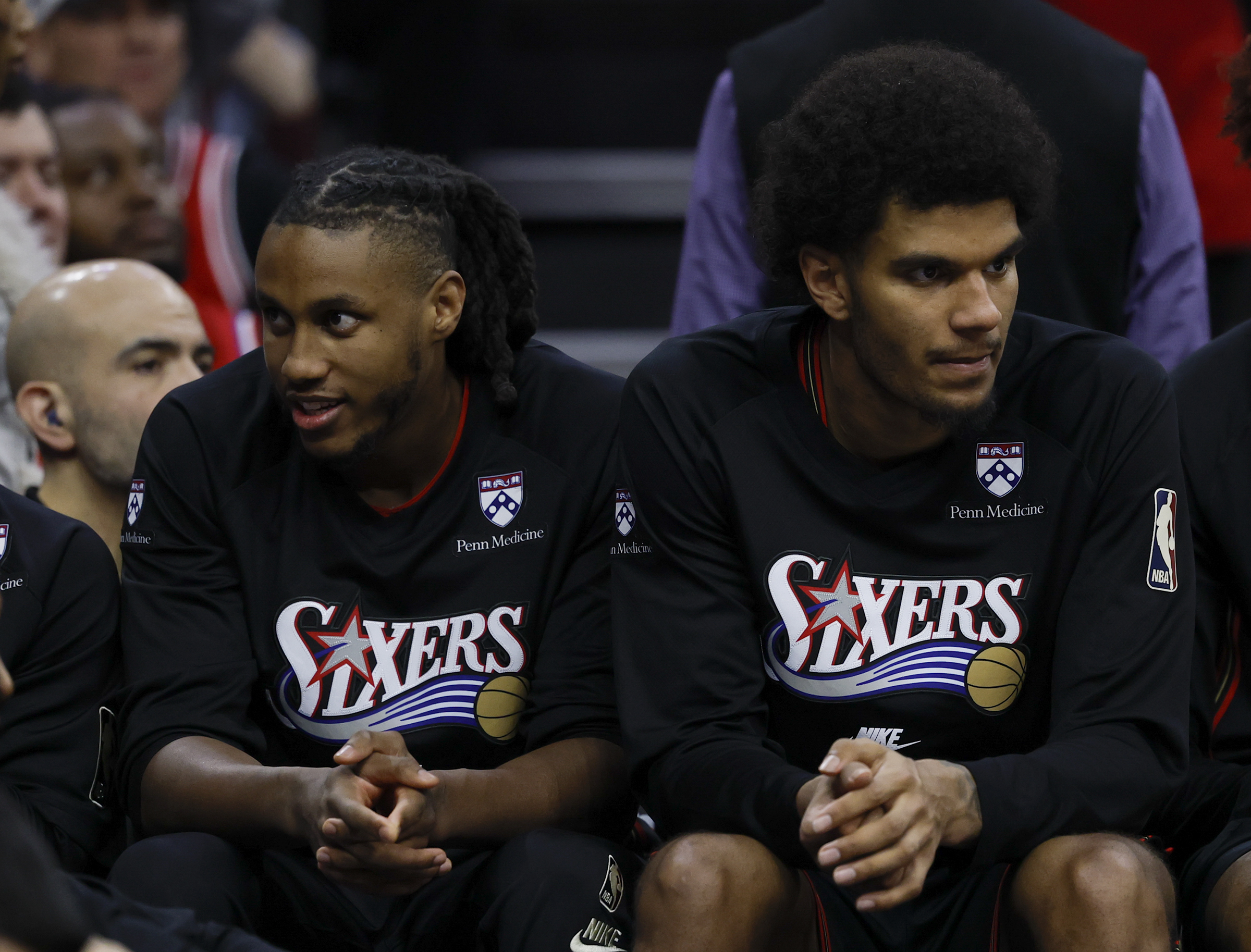
    The Sixers have gotten the most out of two-way players Jabari Walker (left) and Dominick Barlow.

    Grimes has a no-trade clause, giving him full veto power over any trade the Sixers attempt to make involving him. Yet some around the league are wondering if the Sixers are willing to part ways with Oubre, whose name keeps coming up as a possible trade chip. But by getting rid of Drummond, the Sixers would be in the market for another backup center.

    Maybe, they’ll give former Sixer Charles Bassey a look after he signs his 10-day contract. However, it appears that his signing is more to help facilitate Barlow and Jabari Walker getting extended time on their two-way contracts. Bassey was scheduled to sign his deal Sunday night. He needed to do so ahead of Monday’s 3 p.m. game against the Charlotte Hornets at the Spectrum Center in order for Barlow and Walker to play.

    But Drummond and Bona have been equally great assets, playing behind and often in place of Embiid. Bona plays against the teams that have fast and athletic centers, while Drummond usually plays against towering centers with a post presence.

    The 6-foot-11, 279-pounder averages a team-leading 9 rebounds while playing just 20 minutes per game. Drummond is second in the NBA in rebounds per 36 minutes at 16.1, trailing the Knicks’ Mitchell Robinson (16.9).

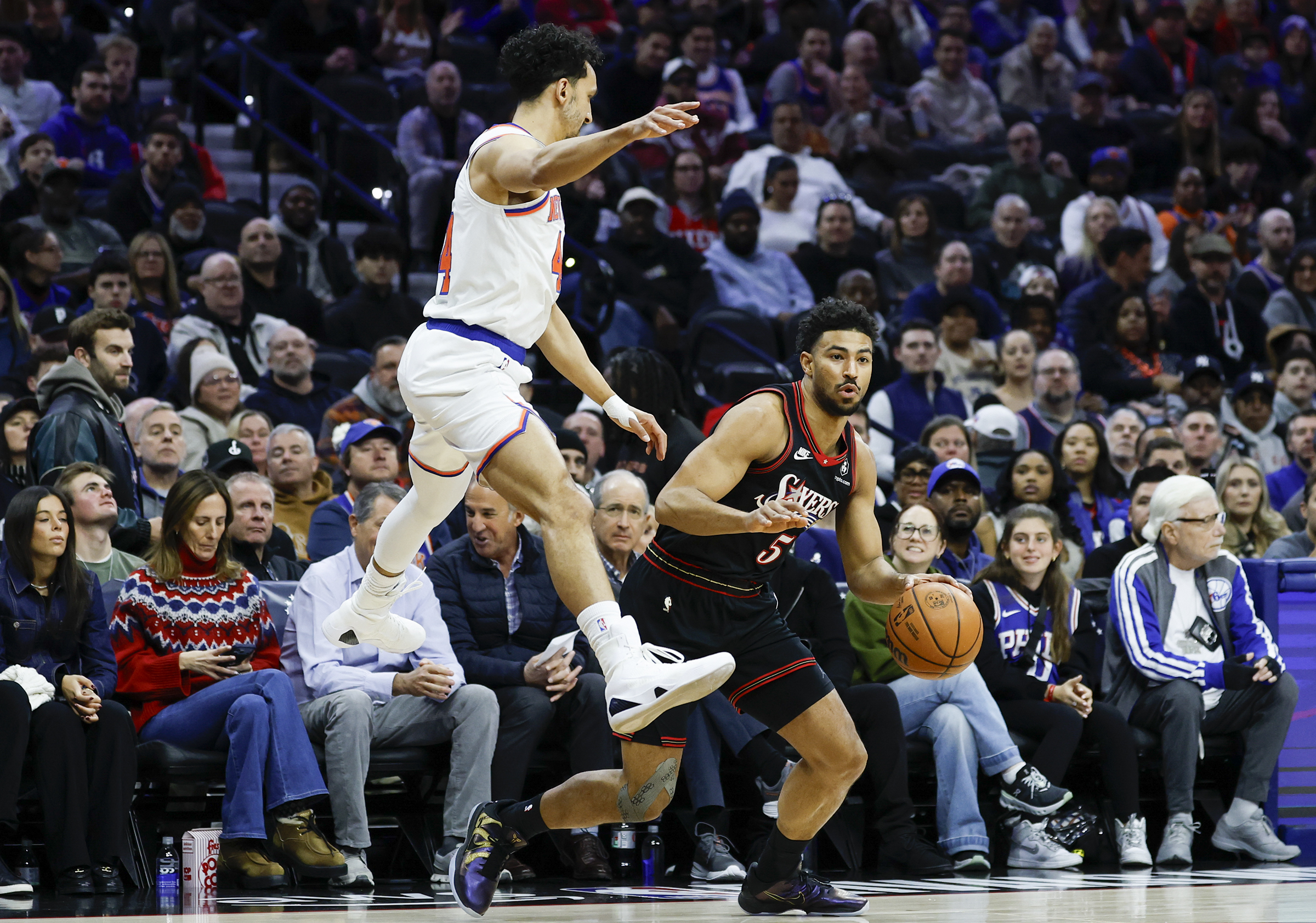
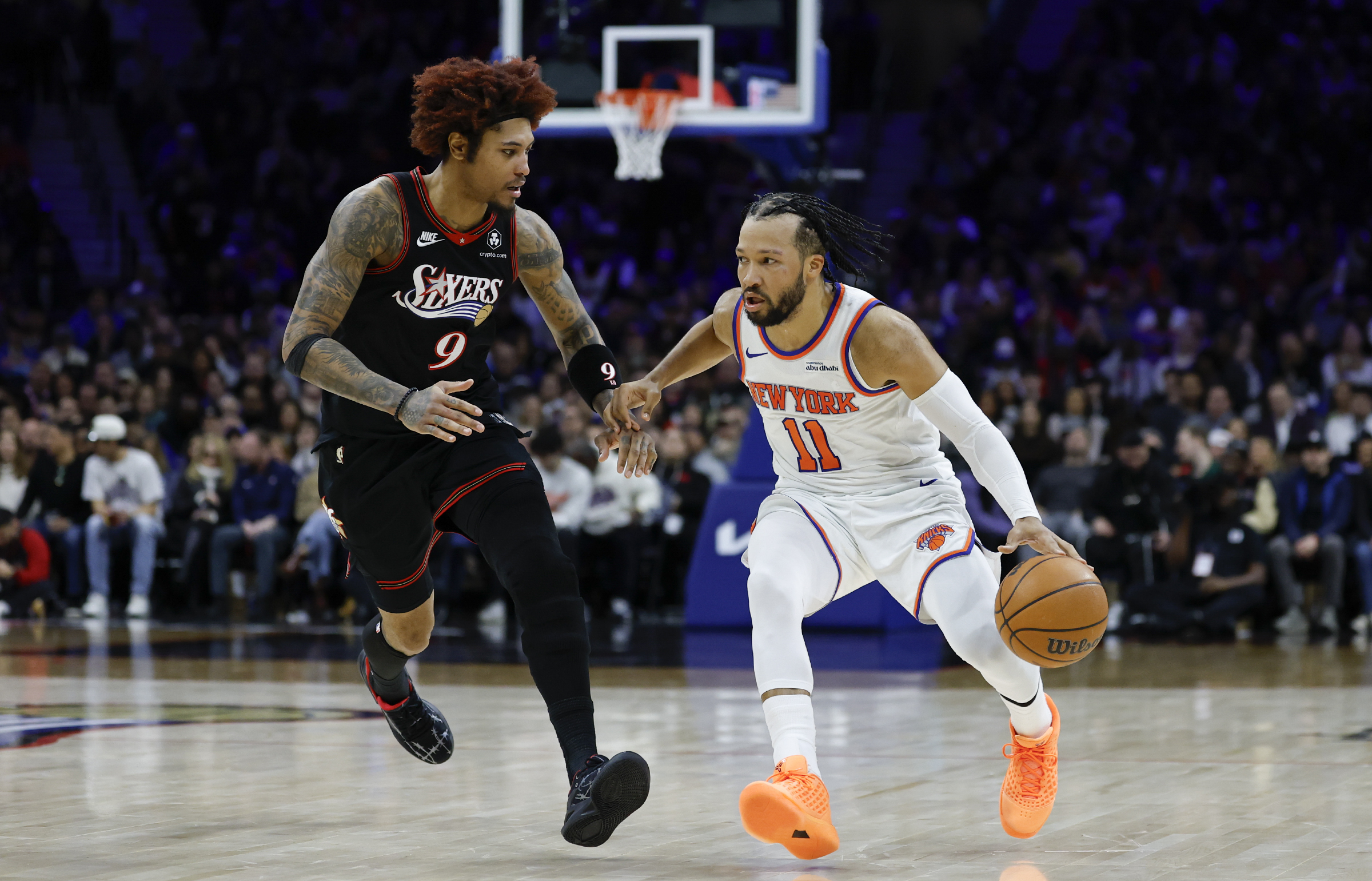
    Kelly Oubre Jr. of the Sixers guarding the Knicks’ Jalen Brunson on Saturday.

    He’s also averaging 7.1 points while playing in 35 games with 16 starts this season. With his contract, there’s a market for Drummond. Teams in need of a backup center would like to acquire him.

    But coach Nick Nurse didn’t play him in Saturday’s loss to the Knicks despite his squad being outrebounded by 53-38 and having a 26-4 disadvantage in second-chance points. This came after Drummond had 14 points and 13 rebounds in his lone game against the Knicks this season.

    Perhaps Nurse felt the Knicks, who favored a small-ball lineup, were a bad matchup for Drummond. But his not playing was a big omission and a conversation piece.

    It’s hard to imagine Sixers co-managing partner Josh Harris, who knows the window is closing, would forfeit the opportunity to finally win an NBA championship to get rid of key pieces just to save money. I wouldn’t blame Harris if he could stay under the first apron and get below the luxury-tax threshold if it was manipulated by a fringe player or someone out of the rotation.

    But if it were Oubre, Grimes, or Drummond, players vital to their success, it would be a bad look.

    Nor should they trade Jared McCain, who recently dropped out of the rotation. Even though the second-year guard is struggling, he’s insurance for Grimes, whom the Sixers could lose this summer in free agency. And the Sixers should only trade Grimes if they were getting back an upgrade in talent. It doesn’t make any sense to part ways with him in return for a same-level player.

    But the Sixers do have three players on two-way contracts in Barlow, Walker, and MarJon Beauchamp.

    Beauchamp has yet to be active in an NBA game since signing his Sixers deal on Dec. 26. However, power forwards Barlow and Walker have been with the Sixers all season. And all three players’ time would have expired following Saturday’s 112-109 loss to the New York Knicks if the Sixers didn’t make a roster move.

    Bassey must sign his contract before Monday’s game for Barlow and Walker to be available to play.

    Both of them have played well this season, but Walker could be replaceable now that the Sixers have their full complement of players.

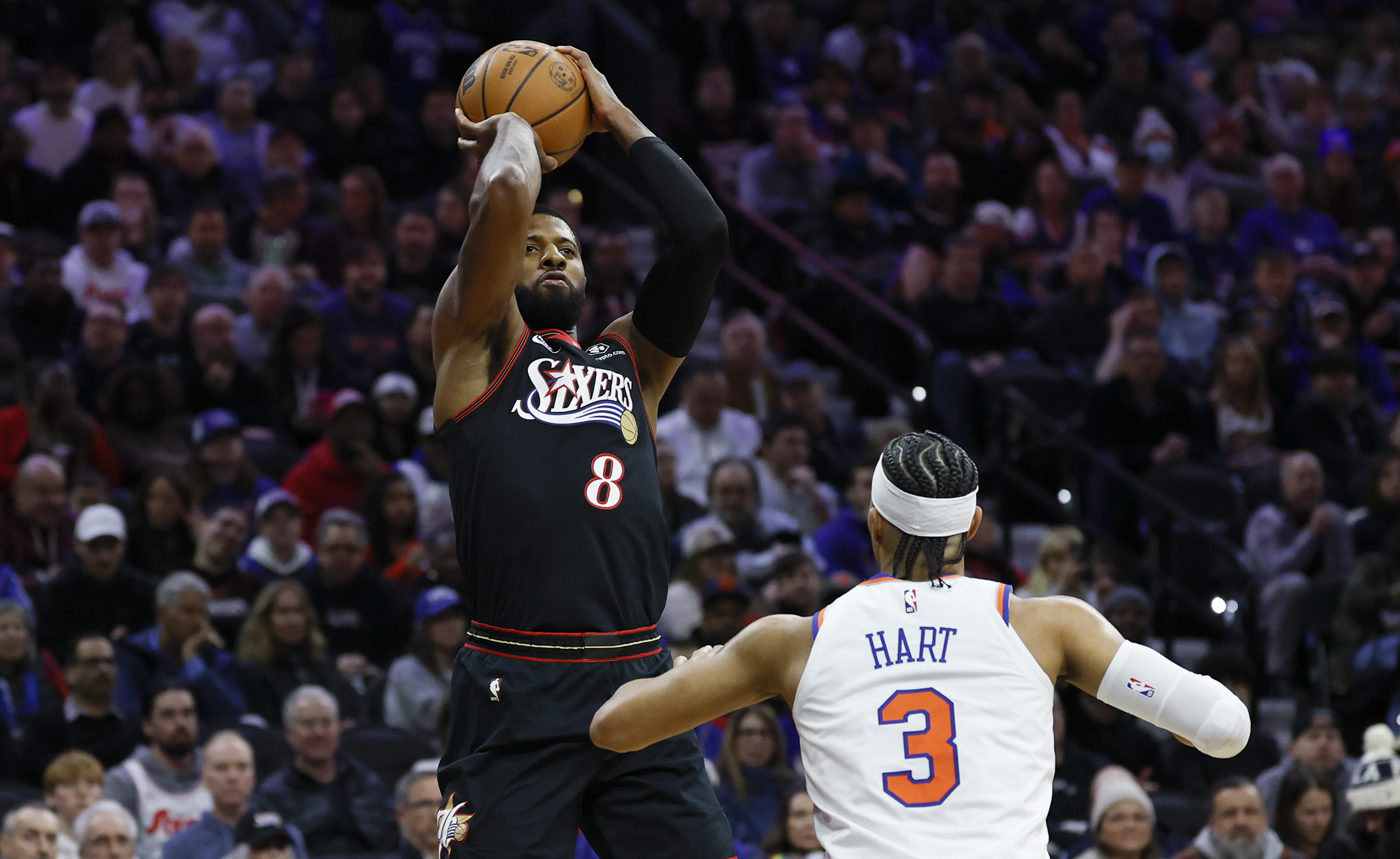
    Paul George has assumed an important role for the Sixers after a lost season.

    Barlow has come off the bench in the last two games as the team moved George to power forward and started Oubre at small forward. Walker did not play in either game as Trendon Watford received the other power-forward minutes in the rotation.

    So it wouldn’t be surprising if we find out the Sixers aren’t committed to converting both players to standard deals, as they’re making decisions based on the salary cap and who’s helping the team. Things will work themselves out, as the squad has cap experts who handle such matters.

    But this roster, as it stands, is the best one Nurse has coached during his tenure.

    The Sixers have been in a lot of games that came down to the wire — some they won, others they lost. They could easily be seven games over .500 instead of four. And they’re just starting to consistently play games with their Big Three of Maxey, Embiid, and George.

    So the Sixers’ biggest need is time, not an addition before the trade deadline.

  • 🏀 Good to go? | Sports Daily Newsletter

    🏀 Good to go? | Sports Daily Newsletter

    Good morning, frozen Philly.

    That overtime loss to the Knicks on Saturday notwithstanding, this has been quite a different season for the 76ers. Tanking losers a season ago, they stand at 24-20 and look at times like a team that might actually win a playoff series, something the Sixers haven’t done since 2023.

    The NBA trade deadline is 10 days away and NBA sources tell our Keith Pompey that the Sixers are willing to part ways with Andre Drummond. Pompey is not a fan of such a move, given the big man’s contributions off the bench.

    In fact, Pompey writes, it might make sense for the team to do little at all at the Feb. 5 trade deadline. Whether it’s fool’s gold or not, the Sixers believe they have a chance to contend. They might try to unload some salary (Eric Gordon, anyone?), but they might just decide to see how far Nick Nurse can take this team.

    Incidentally, that loss to the Knicks at Xfinity Mobile Arena marked the second straight game in which the Sixers got some tough calls from the referees during crunch time.

    For their part, the Knicks are feeling better about their chances after beating the Sixers for the first time this season.

    Because of the storm, the Sixers’ game against the Hornets in Charlotte, initially scheduled for tonight, has been moved up to 3 p.m. (NBCSP).

    — Jim Swan, @phillysport, sports.daily@inquirer.com.

    If someone forwarded you this email, sign up for free here.

    ❓Should Joel Embiid be an NBA All-Star this season? Email us back for a chance to be featured in the newsletter.

    Are the Phillies any better?

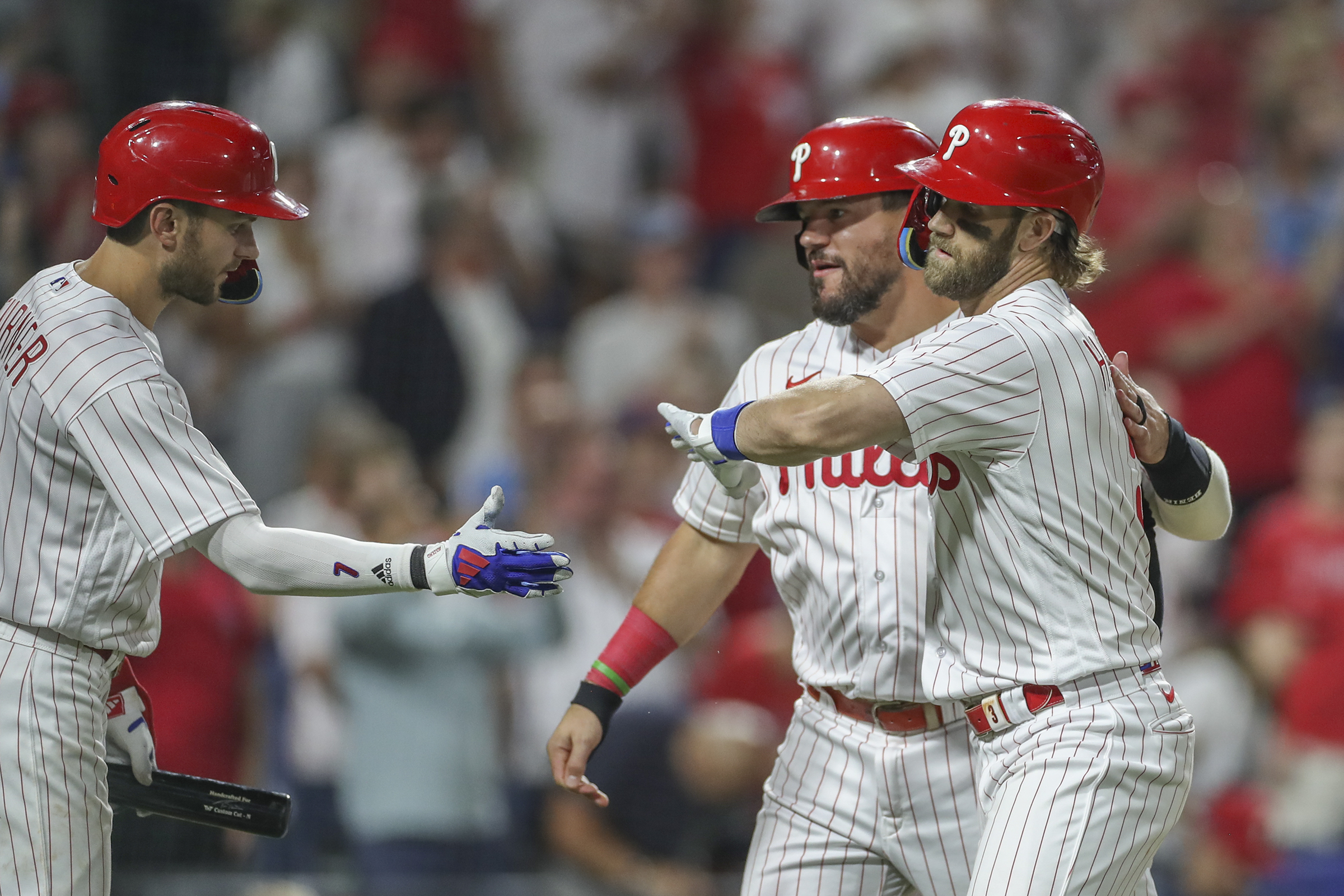
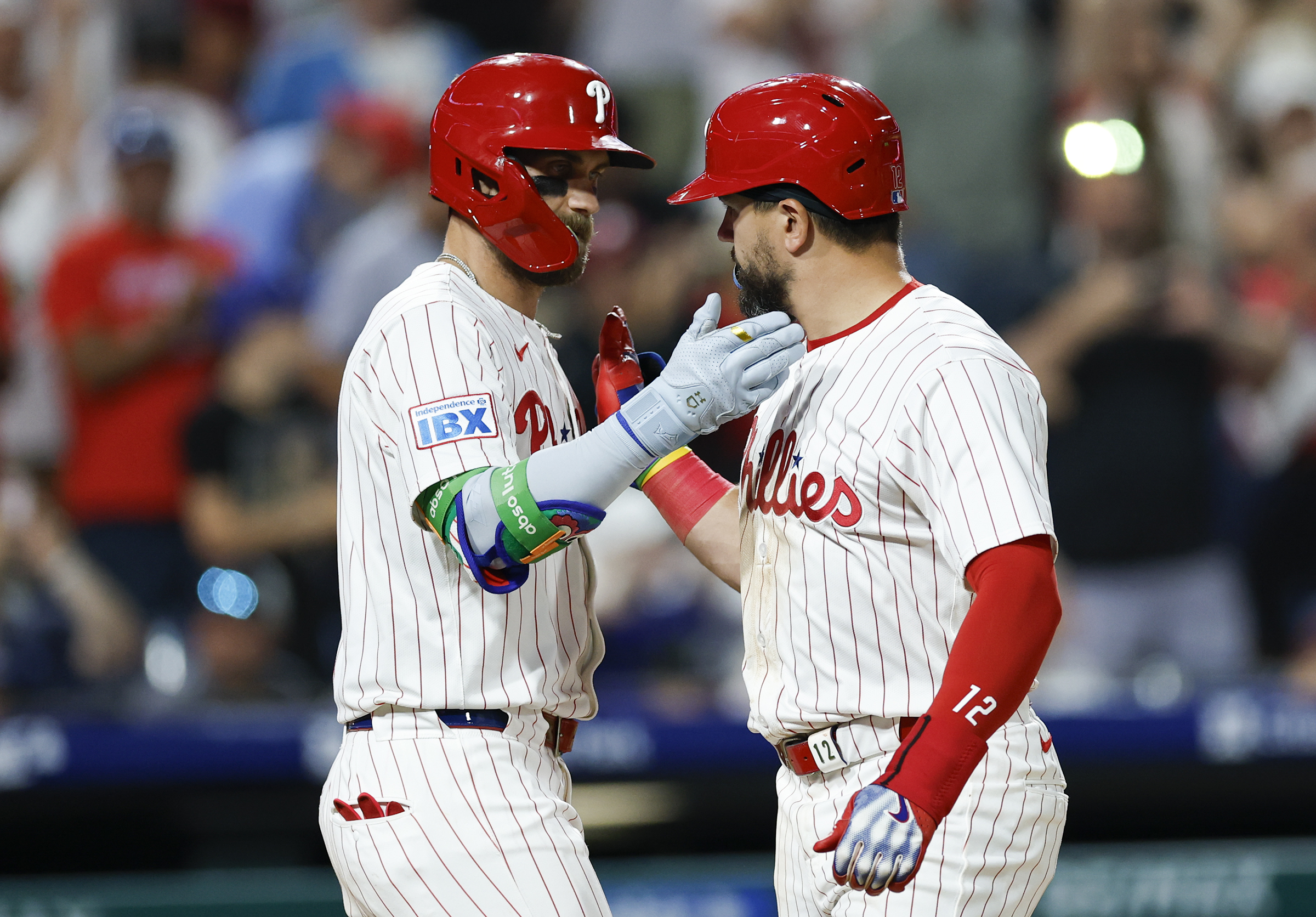
    The Phillies’ core that includes (from left) Trea Turner, Kyle Schwarber, and Bryce Harper will be in place again in 2026 with some young players joining the mix.

    Whether or not you think the Phillies made an appropriate number of changes after a second straight NL East title and another loss in the divisional round of the playoffs, the pertinent question is this: Are they better or worse today than when last season ended Oct. 9 at Dodger Stadium?

    Scott Lauber examines whether the Phillies are any better with a cast of characters that is one year older but almost as familiar as ever. Here are a few factors to consider.

    Pride of Downingtown

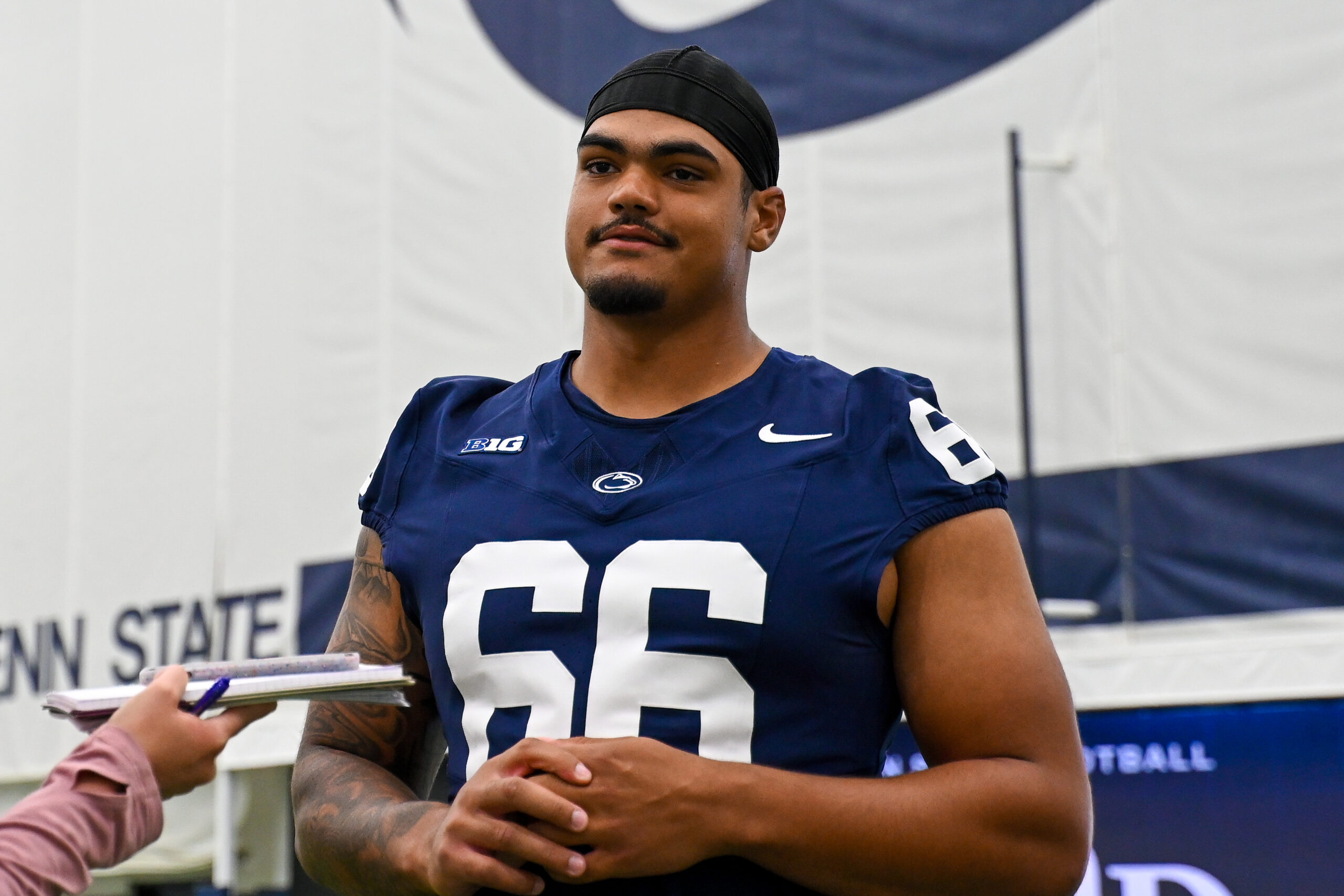
    At 6-foot-5 and 296 pounds, Downingtown’s Drew Shelton was Penn State’s left tackle for the last two seasons.

    Penn State tackle Drew Shelton is in Frisco, Texas, for East-West Shrine Bowl workouts as he prepares for the NFL draft. The Downingtown native will get even deeper in preparation when he attends the sports academy run by OL Masterminds, a program for standout offensive linemen with NFL opportunities ahead.

    “Coming from Downingtown and growing into the offensive lineman that I needed to be at Penn State, and continuing to grow to be the offensive tackle I need to be in the NFL, it’s been fun,” Shelton says. “It’s been a challenge.”

    ‘We should have won that game’

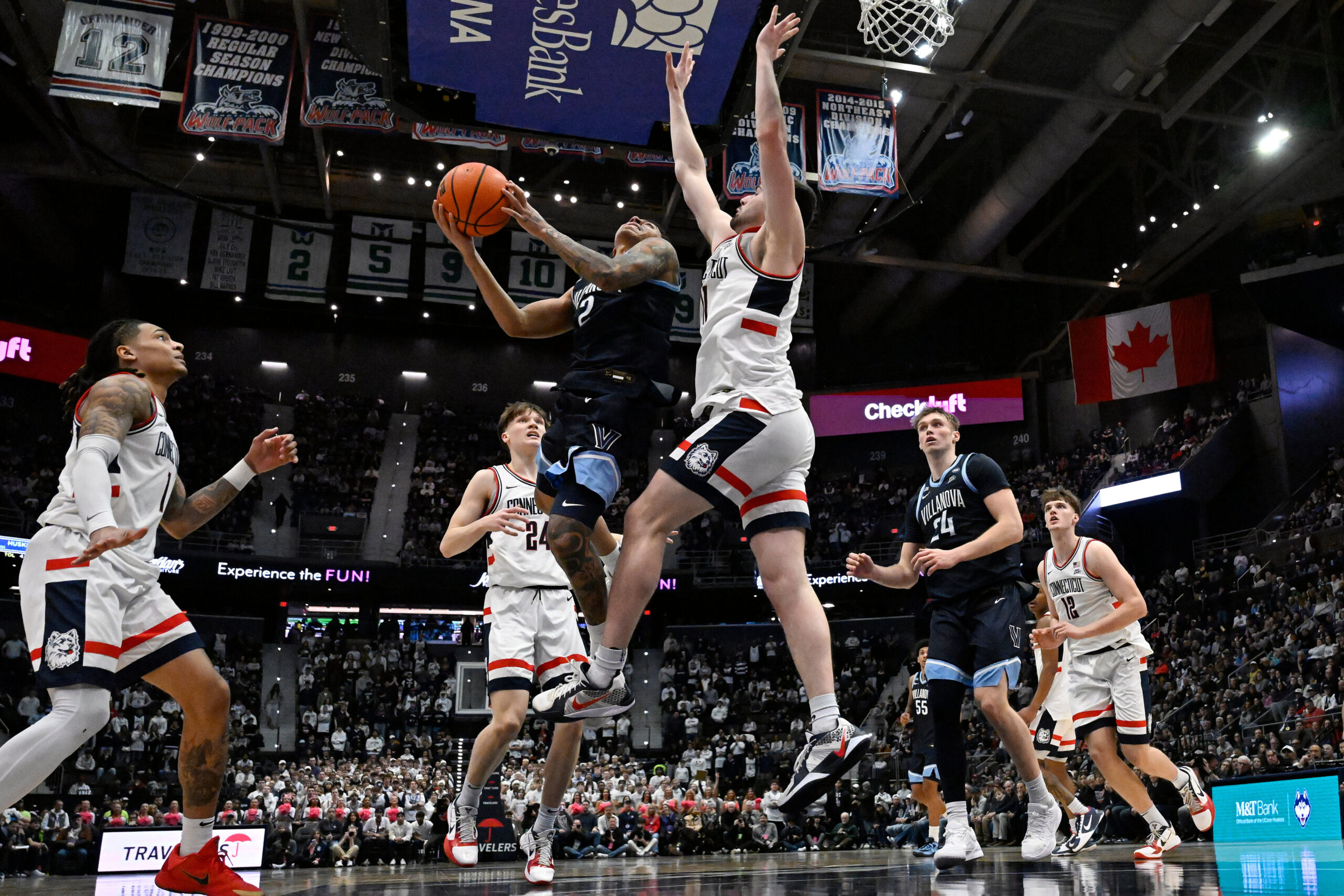
    Villanova guard Bryce Lindsay shoots as UConn’s Alex Karaban guards him Saturday in Hartford, Conn.

    Villanova coach Kevin Willard is taking no moral victories from a 75-67 road loss to No. 2 Connecticut in overtime on Saturday. Sure, the Wildcats battled, but they also missed 10 of 15 layups.

    “I don’t like losing,” Willard said. “We should have won that game.”

    Things went better for St. Joseph’s, which had three players score 20 points in an 81-74 victory against Dayton.

    Tippett and a turnaround

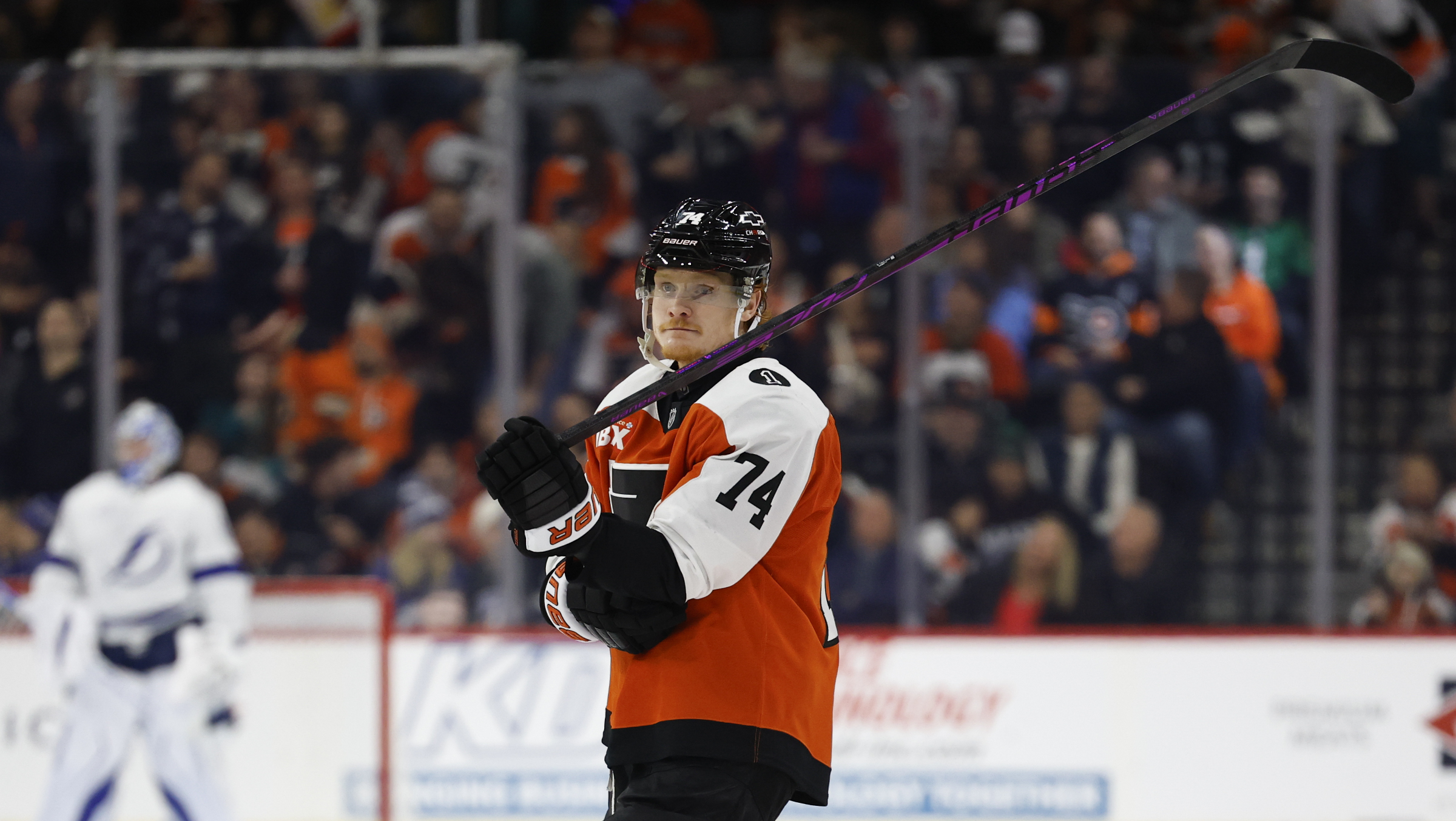
    Flyers right wing Owen Tippett picked up his second career hat trick in a big win at Colorado.

    The Flyers had lost six straight before heading west to take on three of the NHL’s best. They headed home after taking five out of six points, capped by a 7-3 victory against the league-leading Colorado Avalanche. Owen Tippett notched his second career hat trick against Colorado.

    “He’s a big-time player,” goalie Sam Ersson said. “He makes big-time plays at the right time when we need it. And he’s that guy who can score from anywhere. He just doesn’t need much. And you give him the finger, he’ll take the whole hand.”

    Sports snapshot

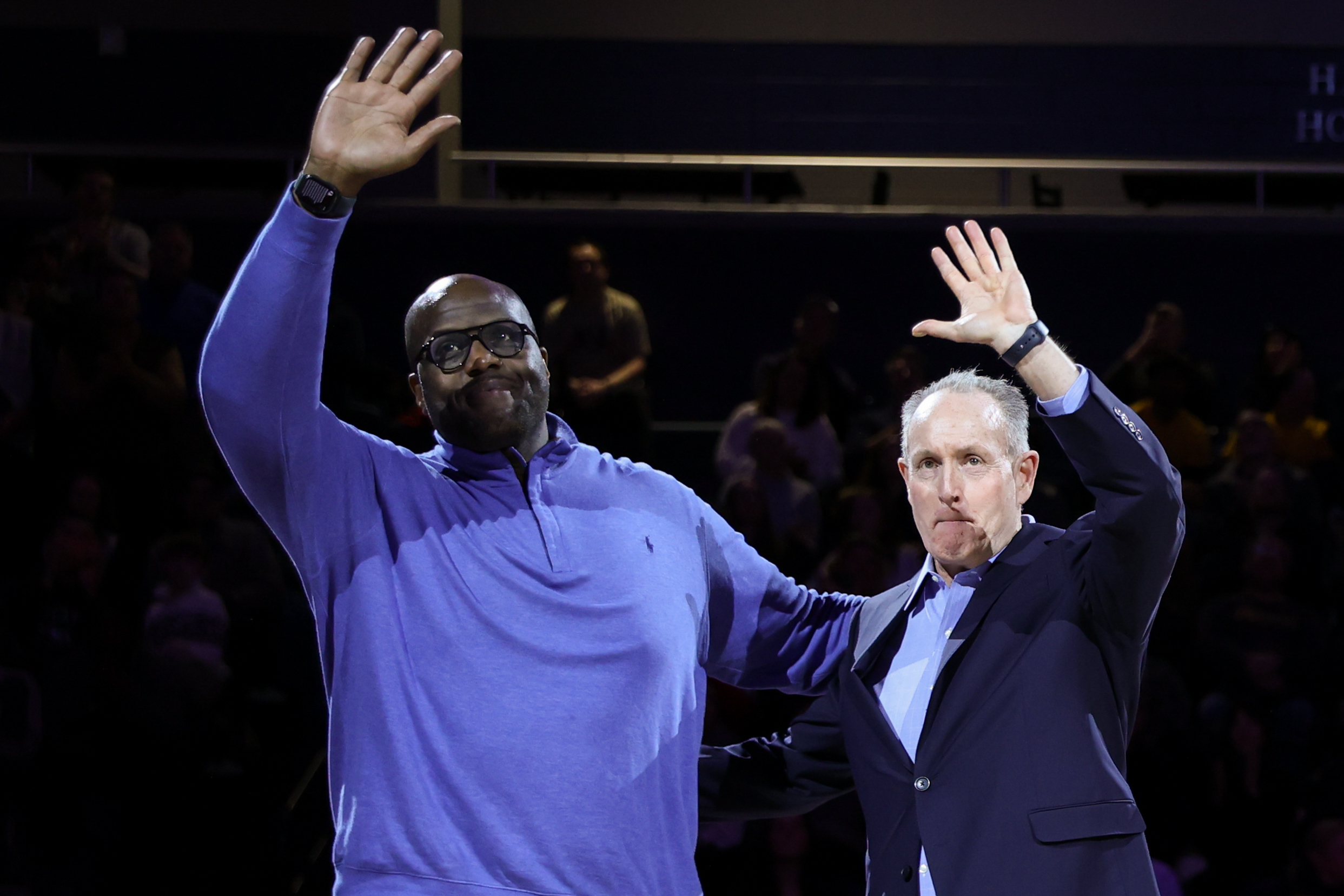
    Former Drexel star Malik Rose (left) and coach Bill Herrion acknowledge the crowd Saturday at the Daskalakis Athletic Center.

    On this date

    Jan. 26, 2025: The Eagles throttled the Washington Commanders, 55-23, in the NFC championship game. Saquon Barkley rushed for 118 yards and three touchdowns.

    Marcus Hayes’ take

    Bryce Harper (left) hit behind Kyle Schwarber for most of the 2025 season. That could change in 2026.

    The Phillies led the National League in batting average and finished second in OPS last season as they won their second consecutive NL East title. That offense was led by a lineup that generally featured Trea Turner leading off, Kyle Schwarber batting second, and Bryce Harper batting third. Harper has spent most of his career batting third.

    This year might be different.

    Asked if the changes could involve Harper moving out of the three-hole, manager Rob Thomson said, “Yes.”

    A change might do him good, and here’s why. More from Marcus Hayes.

    We compiled today’s newsletter using reporting from Keith Pompey, Gina Mizell, Gabriela Carroll, Devin Jackson, Marcus Hayes, Scott Lauber, Jackie Spiegel, Jeff Neiburg, Ryan Mack, Conor Smith, and Katie Lewis.

    By submitting your written, visual, and/or audio contributions, you agree to The Inquirer’s Terms of Use, including the grant of rights in Section 10.

    Thanks for reading. Here’s hoping you stay warm in this deep freeze. I’ll see you in Tuesday’s newsletter. — Jim

  • Quinn Sullivan ‘would love to be the face’ of the Union. When he returns from a torn ACL, he just might be.

    Quinn Sullivan ‘would love to be the face’ of the Union. When he returns from a torn ACL, he just might be.

    We’ll never know how far the Union would have gone in last year’s playoffs had Quinn Sullivan not been sidelined with a torn ACL.

    But for as far as he still has to go until he’s back on the field, Sullivan has let any such feelings go from his mind.

    “I definitely felt like if I was healthy, I could have contributed, and maybe the game’s a little different,” he said. “But it wasn’t that way, and you know, it’s how the cookie crumbles. It’s all right.”

    That doesn’t mean he has moved on from everything along the way. Some of the moments were ones he’ll cherish for a long time: being named the fans’ player of the year, joining his teammates to lift the Supporters’ Shield, and banging the pregame drum before the Union’s first-round rout of Chicago.

    The roars from the crowd during the last two of those could have powered Subaru Park for a few weeks afterward.

    Quinn Sullivan, out there even with his injury, lifts the Supporters’ Shield to a big ovation:

    [image or embed]

    — Jonathan Tannenwald (@jtannenwald.bsky.social) October 4, 2025 at 9:52 PM

    “It was an amazing experience to really feel part of it,” Sullivan said. “My teammates have been truly great [since then]. Checking in, just asking me stuff, how I’m doing, how are things going in the offseason, were you here the whole time.”

    Yes he was, rehabbing under the watchful eye of the Union’s head of health and innovation, Brad Papson.

    “So it’s nice to have the guys back,” Sullivan said. “My banter was at an all-time high because I had a lot of time to prepare some stuff.”

    Respect from the national team, too

    Another memorable moment came when the U.S. men’s national team visited in November. Sullivan got to meet with the squad when it trained at the Union’s facilities leading up to the game vs. Paraguay, then after the Americans won he went downstairs to join them again.

    As he arrived at the walkway to the locker room, he was greeted by U.S. manager Mauricio Pochettino, who had given Sullivan his first senior caps with the Gold Cup team in the summer. Pochettino put an arm around Sullivan’s shoulder as they passed the media nearby.

    Quinn Sullivan met Mauricio Pochettino at the mixed zone to walk (gingerly) toward the #USMNT locker room, which is the Union locker room.

    Nathan Harriel and Alejandro Bedoya followed a few steps later.

    [image or embed]

    — Jonathan Tannenwald (@jtannenwald.bsky.social) November 15, 2025 at 7:56 PM

    “Seeing ‘Poch’ was great,” Sullivan said, also praising top assistant Jesús Pérez for catching him on the way. “The whole staff was super-loving and caring and asked a lot of questions, and the support staff and the athletic training department over there has reached out a couple times to see how recovery has been going. So that definitely makes me feel part of it, which is nice.”

    Sullivan is one of 70 players Pochettino has called up in his tenure, and no offense is meant by the assumption that he’s not a contender to crack Pochettino’s World Cup roster.

    One could say it’s a fact.

    But Pochettino and Pérez showed their character by reaching out to him, and the moment stuck with many people who saw it.

    “It makes you feel a part of it,” Sullivan said. “I definitely felt that when I was in the Gold Cup camp. I obviously didn’t get a ton of minutes — we talked post-camp that I would love to have played more — and yet here I am injured and they still are caring and supporting. So I really appreciate it, and it goes a long way.”

    He has passed the time in a number of ways: from social media content to making his own matcha to helping his girlfriend launch Stavélo, a soccer-themed fashion brand.

    Now he is at the point in his rehab where he can start looking forward to returning to action, even though it will still be a while before he plays in a game.

    Growing into a locker room leader

    It says much about Sullivan and the Union’s emphasis on youth that this season will be his sixth since the 21-year-old attacking midfielder turned pro at the start of 2021. He and 24-year-old Nathan Harriel, who made his first-team debut the same year, are now old heads in the locker room.

    “Being injured allows me to play a bigger role in that leadership, because I’m not actively fighting for a spot or trying to prove something,” Sullivan said. “I’m trying to prove something to myself and get back, obviously, but in terms of on the pitch.”

    Not only does he embrace it, but he’d take on more of it if offered.

    “I’m able to take that role of, whatever people need, they can come to me, ask questions,” he said. “Talking to the new guys, and trying to help them get acclimated to everything. So, yeah, I’m definitely trying to take a bigger leadership role — it’s also a different one. It’s definitely a learning process, but I think I’m getting a pretty good hang of it.”

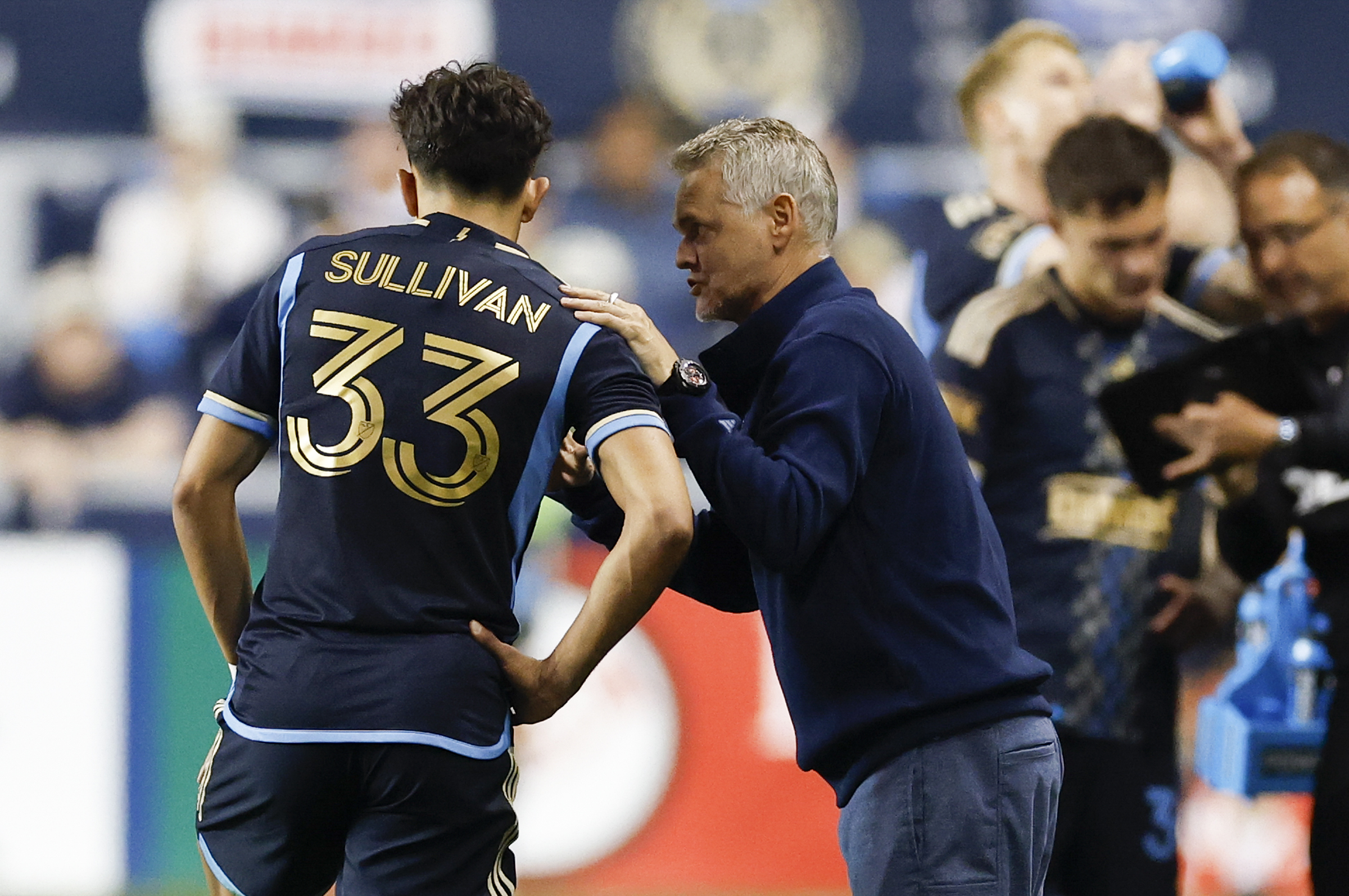
    Quinn Sullivan talking with Union manager Bradley Carnell during a game in April.

    It’s possible, perhaps even likely, that Sullivan won’t play in another game for the Union until after the World Cup break ends in July, a point he was first to make.

    “I’m ahead of schedule already, but I’m still saying nine months [after surgery in early October] is what we’re shooting for,” he said. “When you get in that last month, you’re basically shooting with strength numbers from what I’ve talked to with Brad. … ACL is by no means a linear recovery. I’m cautiously optimistic with how recovery has gone thus far.”

    When the time finally comes, it’s also possible that he won’t just be greeted with another roar. He could well become one of the faces of the Union, even more than he already is in advertisements around town with his more-heralded brother Cavan.

    “I feel the support from the fans obviously, with winning player of the year last year — that was really nice,” Quinn said. “And to know that I have that support, and that roar when Kevin [Casey, Subaru Park’s public address announcer] says my name over the loudspeaker for the starting lineup. So, yeah, that would be amazing.”

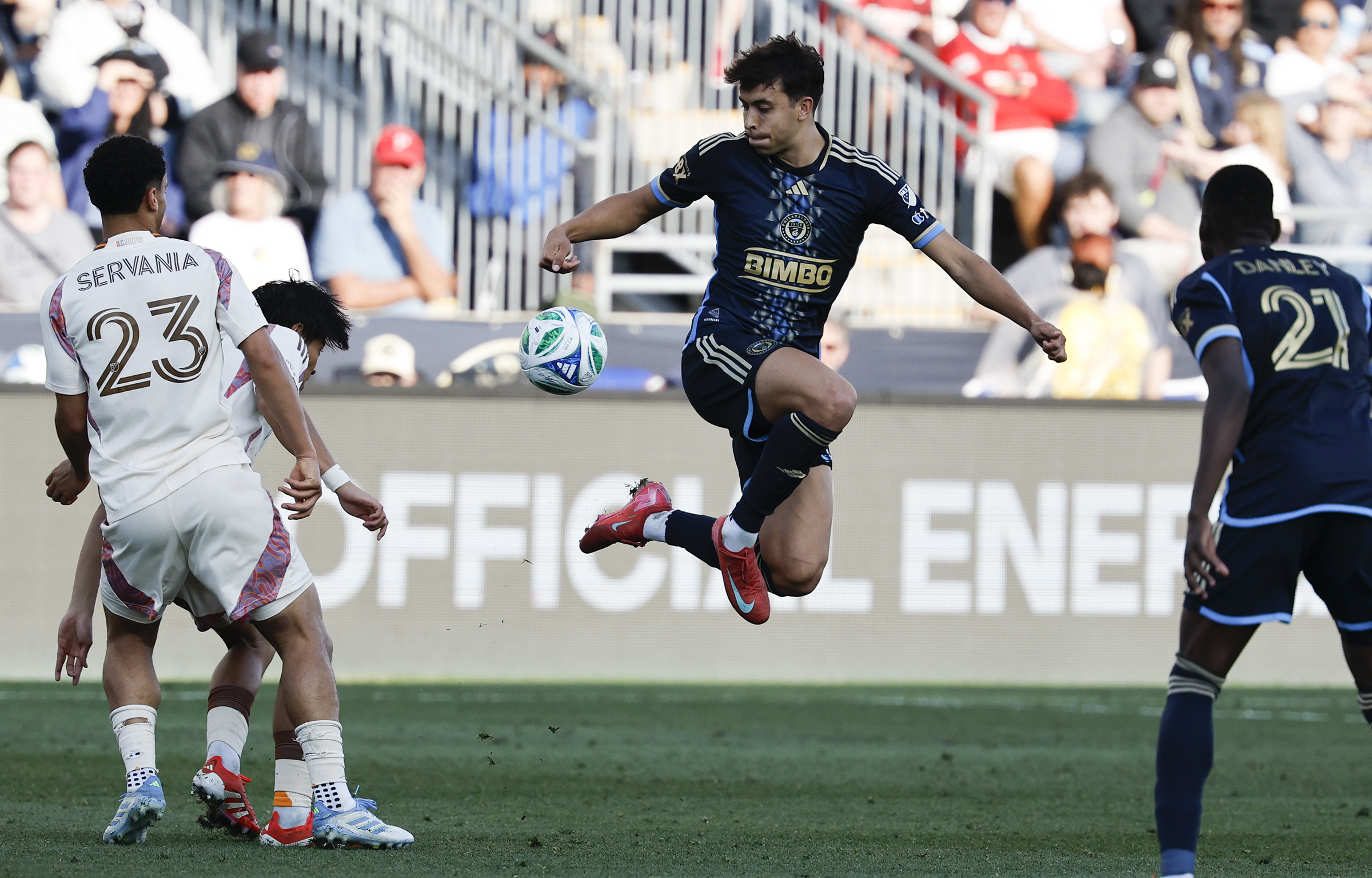
    Quinn Sullivan going airborne to corral a ball during a game in April.

    It is, again, not meant to diminish Quinn’s feats or potential to say he is not on the fast track to Europe like Cavan is. If he really excels late this year and next, there could certainly be offers from abroad for him.

    But if they are a little slower to come, and if that means the Bridesburg native stays in his hometown for a little while longer, he won’t mind standing in the spotlight.

    “I’d love to be the face of this team,” he said. “I mean, I grew up supporting this team. I love this team, I love this city, I feel like I embody what Philadelphia means. I would love if that was the case.”

  • How 21-year-old chef RJ Smith went from cooking dorm dinner parties to a Rittenhouse restaurant residency

    How 21-year-old chef RJ Smith went from cooking dorm dinner parties to a Rittenhouse restaurant residency

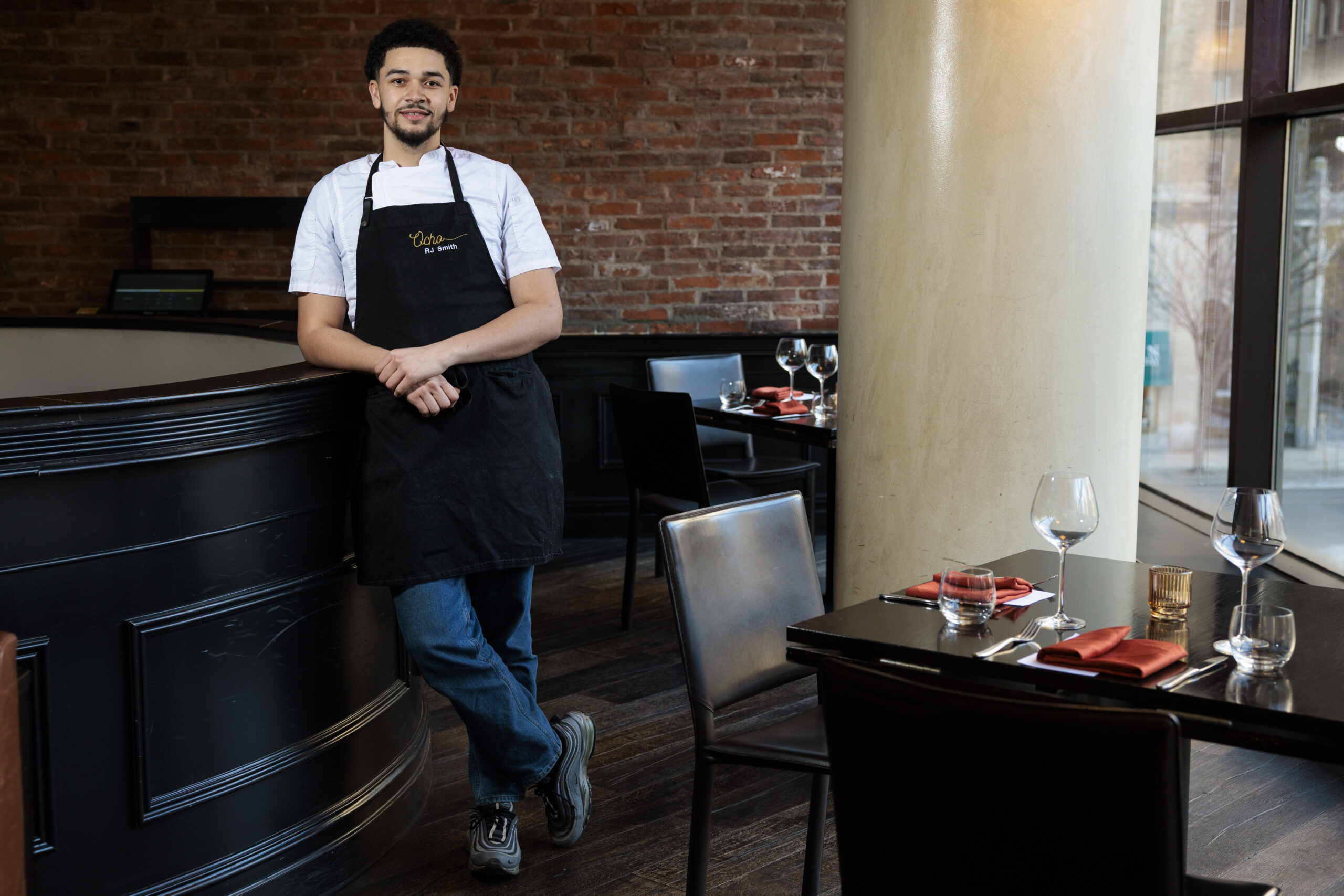
    Less than two years ago, RJ Smith was cooking elaborate tasting menus for four people in his Drexel University dorm room. Now, the 21-year-old chef is about to step onto a far bigger stage: a 120-seat restaurant overlooking Rittenhouse Square.

    Smith’s Ocho Supper Club will begin a six-month residency at the Rittenhouse Hotel on Feb. 1, taking over the Scarpetta space ahead of construction on the Ruxton, a steakhouse from Atlas Restaurant Group due to open in 2027. Ocho’s run is expected to continue through July 26 — a month after Smith graduates from Drexel’s culinary program.

    Atlantic cod on the Ocho Supper Club tasting menu at the Rittenhouse Hotel.

    Ocho blends Afro-Caribbean flavors and fine-dining techniques. Since its premiere in April 2024, it has become one of Philadelphia’s most-subscribed underground dining experiences, solidly booking venues including Forin Cafe, Fitler Club, Yanaga Kappo Izakaya, and Bolo.

    Lanky and soft-spoken, Smith tours the dining room during each seating, explaining the menu, pouring sauces, and telling his story.

    At the Rittenhouse, Ocho will offer a $130 eight-course tasting menu upstairs and a walk-in bar downstairs with à la carte options. James Beard Award-winning drinks author Danny Childs is developing a cocktail program centered on fermentation-driven and tradition-based Caribbean drinks. (The hotel’s Lacroix Restaurant is unaffected by the residency.)

    The residency marks another “pinch me” moment for Smith, a Bay Area native who has cooked in Michelin-starred kitchens including Californios in San Francisco, Core by Clare Smyth in London, and Philadelphia’s own Provenance, as well as Jean-Georges at the Four Seasons and Royal Izakaya. Last fall, NBC’s Today show profiled Smith in a segment and brought on one of his idols, chef Daniel Boulud, who offered him a day in the kitchen of his New York City flagship, Daniel.

    Smith launched Ocho as a sophomore, offering a six-course tasting menu for $35. “For the longest time, we were losing money every service,” he said. “But I saw it as a long-term investment.”

    (He’s not the first Philadelphia chef to get their start via elaborate dorm-room dinners: Chef Amanda Shulman regularly hosted five-course dinners in her West Philly apartment while studying at the University of Pennsylvania; the meals eventually paved the way for the now-Michelin-starred Her Place Supper Club.)

    As word spread, Smith moved Ocho off campus, upgrading to a $65 experience served at a six-seat table he had bought for $200 on Facebook Marketplace. By last summer, Ocho had segued into pop-ups, backed by a small core group of friends and restaurant professionals, including an assistant chef, Sokona Diallo, and pastry chef Marly Gates.

    Chef RJ Smith working in the kitchen at the Rittenhouse Hotel to prepare for a photo shoot.

    “We’ve been consistently trying to operate as close to a true restaurant as we can without having a brick-and-mortar space,” Smith said.

    Ocho caught the attention of Gregg Skowronski, managing director of the Rittenhouse Hotel, who attended one of Smith’s dinners — after being shut out by sell-outs three times.

    “When I finally went, I was blown away by his charisma, his talent, and the food,” Skowronski said. “But what really impressed me was watching him run the kitchen — seeing what he was able to produce with such limited equipment honestly blew my mind.”

    After that dinner, Skowronski called Smith to float the idea of bringing Ocho to the hotel to fill the gap between Scarpetta and the Ruxton.

    “What he’s doing is truly unique in the city,” Skowronski said. “I felt it could elevate our culinary program and open the Rittenhouse up to a more modern Philadelphian audience.”

    Chef RJ Smith pours a sauce on the jerked duck at the Rittenhouse Hotel.

    Smith said he was stunned by the call. “The fact that he believed in me and my team enough to invite us into that space and say, ‘Do what you do and make it work,’ meant a lot,” he said.

    His team includes Alex Ifill, a Four Seasons alumna who handles the front of house. (She said she slid into Smith’s DMs several months ago to offer to oversee service.) The hotel is also supporting Smith with staffing, Skowronski said.

    The opening menu starts with an amuse-bouche or two, then segues from kanpachi to mole negro, Atlantic cod, and jerked duck, and finishes with a black cocoa tart and petits fours. Smith describes the experience as a journey through flavor, richness, and spice, shaped by his team’s African and Caribbean backgrounds and relationships with regional farmers and fishermen.

    Chef RJ Smith as a boy with his grandmother, Rusty Keilch.

    Smith credits the Oakland home of his maternal grandmother, Rusty Keilch, as the place where he first connected to cooking and hospitality.

    “Whenever we went there, everything revolved around food,” Smith said. “That’s where I really understood the importance of a home base — of sitting down to a home-cooked meal and feeling the care that comes through it.”

    But a trip to Jamaica at age 16 inspired both Ocho’s name and its approach. That’s where he got in touch with his father’s Afro-Caribbean heritage as well as the diverse food scene of Ocho Rios.

    Smith chose Drexel so he could learn the business side of hospitality.

    “I was 17, working at a two-Michelin-star restaurant, and everyone told me I was crazy for wanting to go to culinary school,” he said. “But I always felt there was something more than just being behind the line.”

    Ocho remains entirely self-funded, with every dollar reinvested into the operation. “We’re not printing money,” Smith said. “But we’re floating, and that’s gotten us here.”

    After the residency, Smith plans to open a permanent Philadelphia restaurant within 12 to 18 months; he is scouting locations near Rittenhouse Square. For now, besides the residency, his focus is on finishing school.

    “I graduate in June,” he said. “My family is coming to Philly for the first time, and I’m excited for them to finally experience what we do.”

    Chef RJ Smith in the dining room of what will be the Ocho Supper Club residency at the Rittenhouse Hotel.
  • How some Philly-area workers make $100,000 without a bachelor’s degree

    How some Philly-area workers make $100,000 without a bachelor’s degree

    Can you make $100,000 a year in the Philadelphia area without a four-year college degree?

    Yes. But it’s not common.

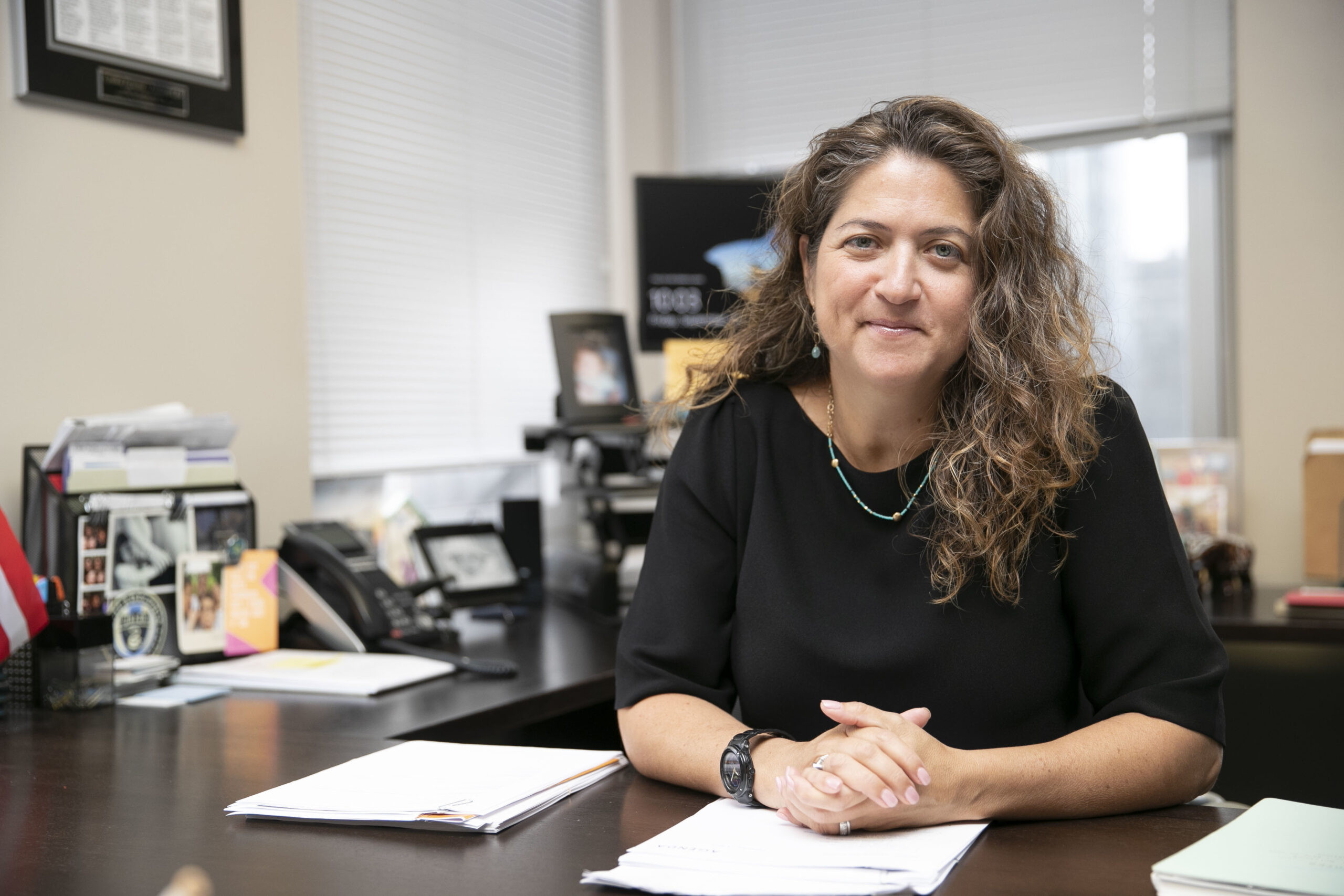
    “There is no magic wand to get to a six-figure salary,” said Cynthia Figueroa, who leads workforce development nonprofit JEVS Human Services. “There’s a lot of steps that have to happen along the way.”

    Companies including IBM, Delta, and Google have dropped degree requirements in recent years. Locally, Pennsylvania Gov. Josh Shapiro slashed college degree requirements for most state jobs in 2023, and Mayor Cherelle L. Parker has advanced an effort to do the same for some city jobs. Meanwhile, more are pursuing vocational training, the Wall Street Journal reported, as some in Gen Z turn to the trades amid the rising cost of college.

    Data center technicians are increasingly in demand, don’t require a college degree, and can make a six-figure salary after some experience. And store managers at Walmart, who often don’t have college degrees, can make $128,000 before bonuses.

    But who actually makes $100,000 or more in the Philadelphia area without a four-year degree and what does that path look like? The Inquirer took a look at the data.

    Cynthia Figueroa poses for a portrait in Philadelphia in 2019. She is the CEO and president of JEVS Human Services.

    What industries pay $100,000-plus without a bachelor’s degree?

    Among the Philadelphia metro area’s 3.97 million workers, the vast majority who make a six-figure salary have at least a bachelor’s degree, according to Census data compiled by IPUMS USA at the University of Minnesota. The metropolitan area includes 11 counties in Pennsylvania, New Jersey, Delaware, and Maryland.

    Roughly 159,000 people made $100,000 or more without a four-year college degree in 2024, the data indicates. (That includes people with an associate’s degree.)

    window.addEventListener(“message”,function(a){if(void 0!==a.data[“datawrapper-height”]){var e=document.querySelectorAll(“iframe”);for(var t in a.data[“datawrapper-height”])for(var r,i=0;r=e[i];i++)if(r.contentWindow===a.source){var d=a.data[“datawrapper-height”][t]+”px”;r.style.height=d}}});

    “There is potential” for high earning without college, but it’s not typical, said Sean Vereen, president and CEO of career-focused education nonprofit Heights Philadelphia.

    “We know that not everybody wants to go to college, but particularly the way the economy in this region is constructed, that college degree still is very useful,” said Vereen.

    But the majority of the workforce in the Philadelphia metro area lacks a bachelor’s degree. Only about 7% of them reach the high-earning $100,000-plus bracket.

    It’s more common in jobs where salaries overall tend to be higher, such as management, business, and finance. About 51,000 Philly-area people in those jobs with less than a bachelor’s degree earned $100,000 or more in 2024.

    window.addEventListener(“message”,function(a){if(void 0!==a.data[“datawrapper-height”]){var e=document.querySelectorAll(“iframe”);for(var t in a.data[“datawrapper-height”])for(var r,i=0;r=e[i];i++)if(r.contentWindow===a.source){var d=a.data[“datawrapper-height”][t]+”px”;r.style.height=d}}});

    What industries are adding more $100,000 jobs?

    Still, more opportunities for people without a four-year degree could be on the horizon.

    Shipbuilding is having a resurgence in Philadelphia’s Navy Yard, and more electricians, carpenters, and welders will be needed, said Figueroa.

    Among Philadelphia construction workers, including carpenters and welders, more than 11,000 do not have a bachelor’s degree and make at least $100,000 annually.

    Hanwha plans to expand its shipbuilding operations in Philadelphia and will need to hire. That includes positions requiring considerable math skills, said Figueroa, of JEVS. The organization is currently figuring out how to get job-training graduates into opportunities.

    Philadelphia Works, the city’s workforce development board, is working closely with Hanwha, CEO and president H. Patrick Clancy said.

    “Our goal is to do more of the pre-apprenticeship,” Clancy said. “They have a lot of people interested in applying for their roles, but not all of them are passing the math and reading [requirements].”

    The newly repainted Goliath Crane is shown July 16, 2025, at the Hanwha Philly Shipyard in Philadelphia.

    Last year, a Brookings Institution report highlighted enterprise digital solutions (business software), specialized manufacturing (like producing parts for medical devices or industrial electronics), and biomedical commercialization (life sciences businesses) as areas where Philadelphia residents should be able to find good jobs. Many jobs in those sectors don’t require a college degree.

    “We need to be focused on creating the right kinds of jobs,” said Chellie Cameron, CEO and president of the Chamber of Commerce for Greater Philadelphia, which is now focusing on the areas Brookings identified.

    The right kinds of jobs, Cameron said, are not minimum-wage positions. They “start at a place where people can earn a family-sustaining wage and have access to pathways for promotion and making more money over the course of their career.”

    Paths and training for high-earning jobs

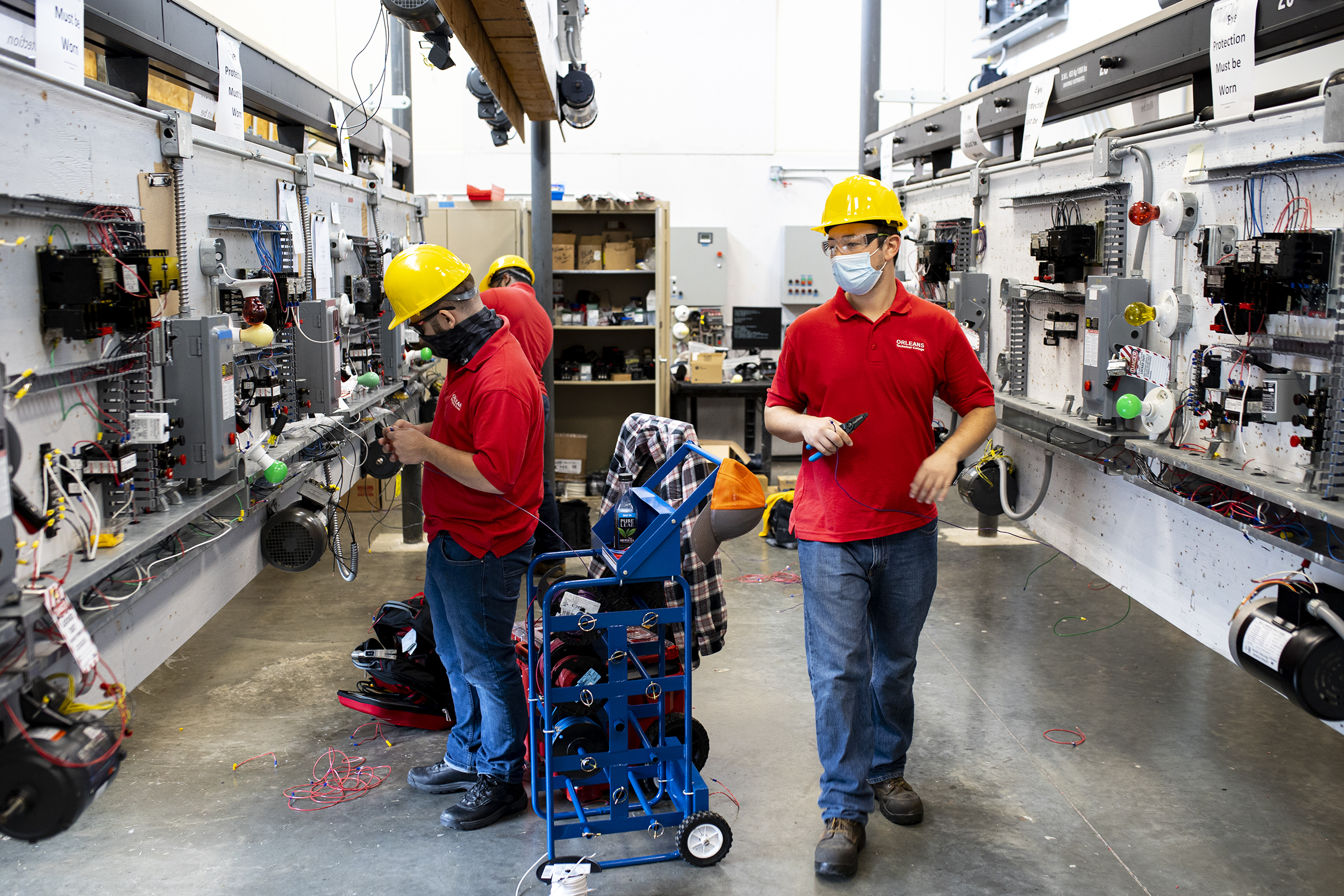
    Orleans Technical College in Northeast Philadelphia, run by JEVS, trains people for building trades and healthcare professions. It had 379 students last year. Tuition ranges from roughly $13,000 to $25,000, but most students get financial assistance and typically leave with $6,000 or less in debt.

    Residential and commercial electrician Dan Finke, 25, of Abington, (right), is learning about motor controls with fellow classmates at Orleans Technical College, in Northeast Philadelphia on a Friday in September 2020.

    “There’s still very much the physical application of running wire, bending metal,” said Figueroa, and many medical tasks seem to be AI-proof for now. “At the end of the day, you need somebody who is taking the blood pressure next to the bed, and who is drawing the blood.”

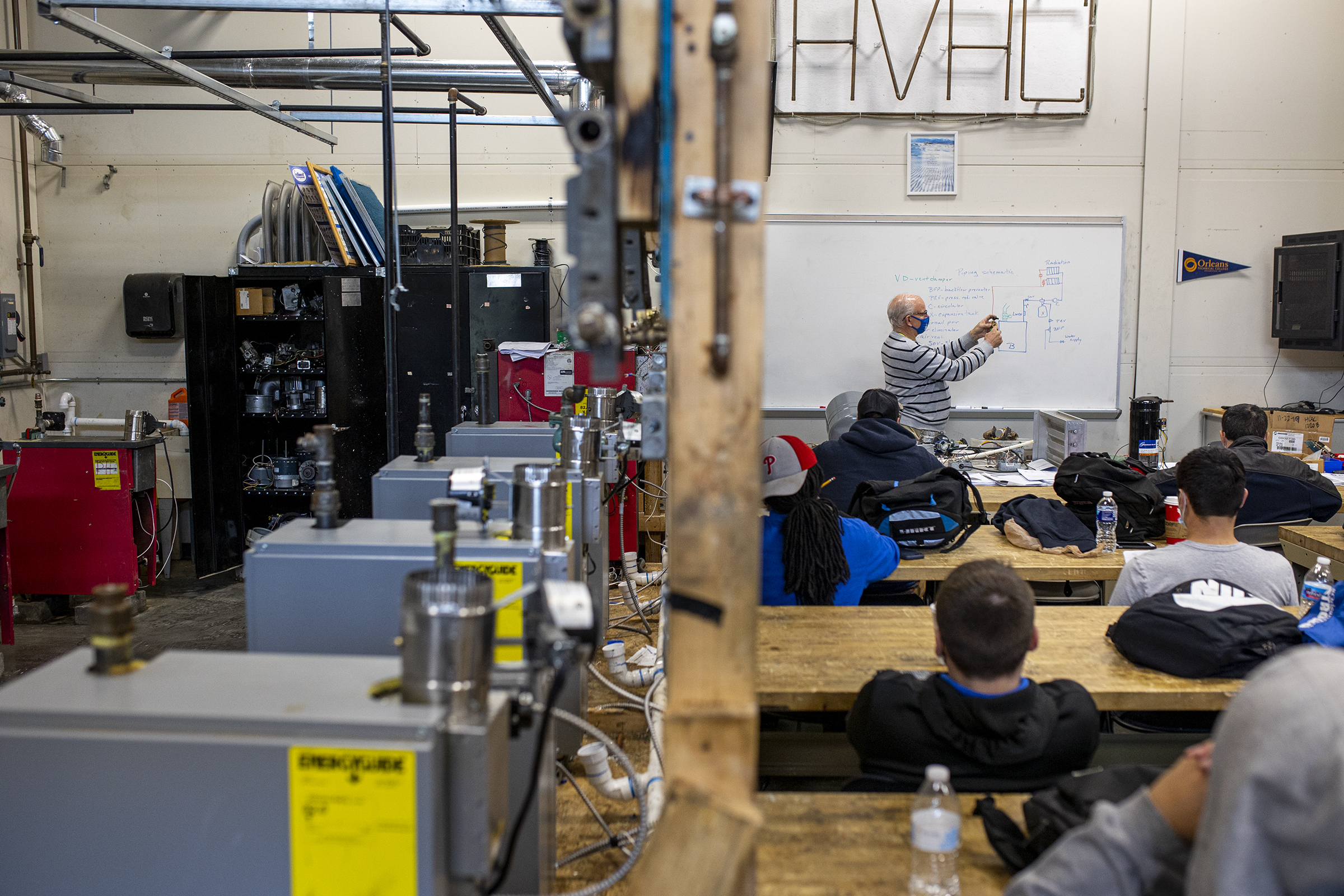
    Construction management and HVAC students can expect starting salaries around $75,000 and $60,000 respectively. Those who work overtime can make even more, Figueroa noted, and pay also increases over the course of a career.

    That’s not a six-figure salary on Day One, she acknowledged. But college graduates can make a similar amount in their first job, and “they have this enormous debt” from their schooling.

    Lou Abruzzese, HVAC Instructor, is teaching his class about hydronics at Orleans Technical College, in Northeast Philadelphia on Friday, Sept. 25, 2020.

    Orleans also offers healthcare training for clinical medical assistants and practical nursing. Starting salaries for those jobs are generally around $44,000 and $64,000 respectively.

    “Going from an hourly wage — at like a Target, McDonald’s, Walgreens, what have you — to salaried, hopefully with benefits, is a huge first step,” Figueroa said.

    Connecting people to employment also means addressing barriers like lacking a driver’s license, needing childcare, financial literacy, or housing support, says Clancy. Pursuing training might mean going without paid work for weeks or months, which can be a challenge. Philadelphia Works has some funds available to pay people during their training.

    Sean Vereen is the president and CEO of Heights Philadelphia.

    Young adults need to be aware of opportunities, too, said Vereen. For instance, he said, sterilization technician is a good job within a hospital, but young people may not know it’s a path available to them without going to college.

    And sometimes young people need to catch up before training for jobs in the trades, Vereen says. “We’ve heard things like, ‘The kid coming from the school district doesn’t have strong enough math skills to take the test for the building trades,’” he said.

    “You need basic academic skills that are about math and reading and reading comprehension,” he said. “We don’t get away from giving kids basic knowledge.”

  • Tackling gun violence as our shared purpose

    Tackling gun violence as our shared purpose

    As we start the new year, many of the challenges that persisted in 2025 remain on our horizon for 2026. Sadly, gun violence is one such challenge, but our city has demonstrated what the power of working together can do in making progress in such a significant way.

    Philadelphia made history in 2025, recording the fewest homicides in almost 60 years, and it is true that many cities nationwide are also experiencing this trend. But Philadelphia’s gains are noteworthy in that it is seeing these tremendous public safety gains despite continuing to struggle with issues like deeply entrenched poverty.

    There are many factors driving these numbers, and Mayor Cherelle L. Parker’s public safety strategy of prevention, intervention, and enforcement (PIE) has brought vital focus and intention driven by data. Working together — the Philadelphia Police Department and the Office of Public Safety working in tandem, along with organizations like the group I lead, the Civic Coalition to Save Lives — enable the sum to become greater than the parts in their overall effectiveness in bolstering the city’s strategy.

    For our part, we represent nonprofit and private-sector partners by activating resources like subject matter experts, new data infrastructure, and innovative cross-jurisdictional collaborations.

    The results are compelling: One analysis found that Philly had the best community safety infrastructure of any of the nation’s 10 largest cities, and a Pew poll found that public perception of safety is improving. That means the Office of Public Safety — an entity only two years old — is leading other major cities in its comprehensive approach to violence prevention and intervention.

    This is something our city should be proud of and raise up.

    Just a few years ago, the city was struggling with record-high shooting and homicide rates coming out of the pandemic, and while many individuals and organizations from every sector had meaningful tools to address the issue, it lacked one cohesive, well-coordinated approach to save the maximum number of lives from gun violence in the near term.

    From this gap, both the coalition and the Office of Public Safety were derived, the latter via mayoral executive order, and have grown intertwined in expanding the reach and capacity of Philadelphia’s vast network of anti-violence and cognitive behavioral health approaches deployed to reduce shootings.

    The credit for the success of these many violence prevention and intervention strategies lies with our leaders who have the focus and political will, the practitioners and participants in these programs relentlessly choosing to do this hard work, the public and private funders, and informed and engaged nongovernmental partners.

    Looking to the future, maintaining success and remaining focused on Mayor Parker’s and City Council’s goal of being the safest city will require continued vigilance and commitment to what works. Unfortunately, many organizations are already facing historic budget challenges exacerbated by losses of funding at the federal level that had incentivized proven, focused violence intervention practices.

    As we confront this reality, let’s keep in mind the adage that an ounce of prevention is always worth a pound of cure.

    According to a report by the city, every fatal shooting in Philadelphia can cost as much as $1.5 million in related policing, healthcare, job/property loss, and that is not even accounting for the indirect lost tax revenue or economic activity in high crime areas, or the most important cost: the human impact and intergenerational trauma carried through families and communities.

    A report by the City Controller’s Office also estimated that an investment of $43 million over five years could reduce homicides by 35%, which would translate into a more than $70 million return on investment in increased property tax revenue alone.

    Our call to action for Philadelphians when it comes to reducing violence is this: Stay tuned in and keep showing up, however you can. As Mayor Parker often says, don’t just listen to what is said, watch what people do.

    The unified, coordinated effort to reduce gun violence is working (for context, 2025 saw fewer than half of the record-high homicides and shootings seen in 2021). Mayor Parker, Police Commissioner Kevin J. Bethel, and Public Safety Director Adam Geer have said it, too: “We can’t let up off the gas pedal.”

    We agree.

    There is an African proverb that says: “If you want to go fast, go alone. If you want to go far, go together.” Reducing gun violence can only be achieved over time — not overnight. And the only way we’ll be able to solve it is by working together.

    Here’s to the promising journey ahead.

    David W. Brown serves as the executive director of the Civic Coalition to Save Lives.

  • CHOP launches Philly-area autism therapy network in partnership with Soar Autism Centers

    CHOP launches Philly-area autism therapy network in partnership with Soar Autism Centers

    The Children’s Hospital of Philadelphia and Denver-based Soar Autism Centers have opened in Newtown the first of five planned early childhood autism centers in the Philadelphia region and expect the network could grow to more than 30 centers, officials said.

    The 50-50 joint venture is designed to reduce wait times for therapy and to make it easier for families to access multiple types of therapy at one location while remaining connected to CHOP specialists.

    “It can take a year to get into therapy on a regular basis,“ an extremely long time in a young child’s neurological development, Soar cofounder and CEO Ian Goldstein said.

    Such wait times continue to frustrate families despite dramatic growth in the autism-services sector over the last 15 years or so, as states mandated insurance coverage and diagnosis rates soared with more awareness and an expanded definition of autism.

    Nationally, applied behavioral analysis, commonly known as ABA therapy, has become popular for autism treatment, increasing nationally by 270% between 2019 and 2024, according to Trilliant Health, a Nashville data analysis firm. The volume of services provided locally — where companies including ABA Centers, Helping Hands Family, and NeurAbilities Healthcare have expanded — was not available.

    The increase in diagnoses has outpaced the growth in available services, said Matthew Lerner, an autism expert at Drexel University, who is not involved with the newly launched CHOP-Soar Autism Centers.

    When Lerner moved to the Philadelphia region from Long Island in 2023 and started getting plugged into the autism network, a few clinicians here would ask if he could connect patients with services in New York.

    “I was coming from eastern Long Island, two hours east of New York City, and people were like, do you know anyone closer to you?” he recalled.

    CHOP’s road to a joint venture with Soar

    The freestanding, 10,000 square-foot clinic that opened on Jan. 5 in suburban Bucks County near CHOP Pediatric Primary Care Newtown has 35 to 40 rooms and an indoor playground for therapeutic uses.

    CHOP, among the largest children’s health systems in the country, has long been concerned about limited access to autism care in the region, said Steve Docimo, CHOP’s executive vice president for business development and strategy.

    The nonprofit has provided diagnostic services, but not the forms of therapy that the CHOP-Soar centers will offer. “The threshold to doing this on our own has always been high enough that it hasn’t been a pool that we’ve jumped in,” he said.

    CHOP was in talks with Soar for three years before agreeing to the 50-50 joint venture with the for-profit company. CHOP’s investment will be its share of the startup costs for CHOP-Soar locations.

    The partnership plan calls for five locations in the first two years. The partners did not say where the next four centers will be.

    Soar has 15 locations in the Denver area, which has about half the population of the Philadelphia region, Goldstein said.

    That comparison implies that the CHOP-Soar partnership could grow to 30 centers, Goldstein added. He thinks the region’s needs could support additional expansion, saying the total could reach “into the dozens.”

    The first CHOP-Soar Autism Center opened this month in Newtown. Shown here is the reception area.

    That’s assuming CHOP-Soar provides high quality care for kids, an appealing family experience, and a system of coordinated care: “There will be a need to do more than five, and I think we’re jointly motivated to do so,” Goldstein said.

    The CHOP-Soar approach

    Families seeking care for an autistic child typically have to go to different places to get all the types of therapy they need.

    Families “get behavioral analytics in one place, occupational therapy somewhere else, and speech language pathology in another place,” Docimo said.

    Soar brings all of that together in one center. “If it can be scaled, this will fill a gap in our region in a way that I think will work very well for these families,” he said.

    CHOP-Soar centers will emphasize early intervention and treat children through age six. “The brain has its greatest neuroplasticity” up to age 3, “so waiting a year is a really big deal,” Goldstein said. “You’re missing out on that opportunity to really influence the child’s developmental trajectory at a young age.”

    Some autism services providers focus on ABA therapy, which breaks social and self-care skills, for example, down into components and then works discretely on each.

    But Soar offers what Goldstein described as “integrated, coordinated care for the child.” That includes speech, occupational, and behavioral therapies.

    With CHOP, medical specialties, such as genetics, neurology, and gastrointestinal care, can be tied in as well, Goldstein said.

    It’s rare for autism providers to offer a wide variety of commonly needed services under one roof, said Lerner, who leads the A.J. Drexel Autism Institute’s Life Course Outcomes Research Program.

    He said Soar’s evidence-based, multidisciplinary approach has a lot to offer the region.

    “A person diagnosed with autism will have complex care needs throughout their life, and a one-size-fits-all, one-intervention approach will not work,” he said.

  • Citizens Bank CEO talks about record business profits, data centers, and Phillies’ prospects

    Citizens Bank CEO talks about record business profits, data centers, and Phillies’ prospects

    Big U.S. banks have hit record stock-market highs this month, with hopes for cheaper money from Federal Reserve rate cuts outweighing fears of war, tariffs, and rising prices.

    Citizens Financial Group stock topped $65 for the first time Tuesday, as the owner of Citizens Bank reported higher-than-expected profits. Citizens, based in Providence, R.I., is one of a dozen U.S. banks with a thousand or more branches. With rivals Wells Fargo, PNC, and TD, it controls more than half of Philadelphia-area bank deposits.

    Like its rivals, Citizens has boosted profits by targeting more affluent Americans and their businesses, while shutting some branches. Wall Street is happy: The share price has gone so high, Citizens can afford to buy other banks, analyst David J. Long wrote in a report to clients at Raymond James & Associates on Jan. 23.

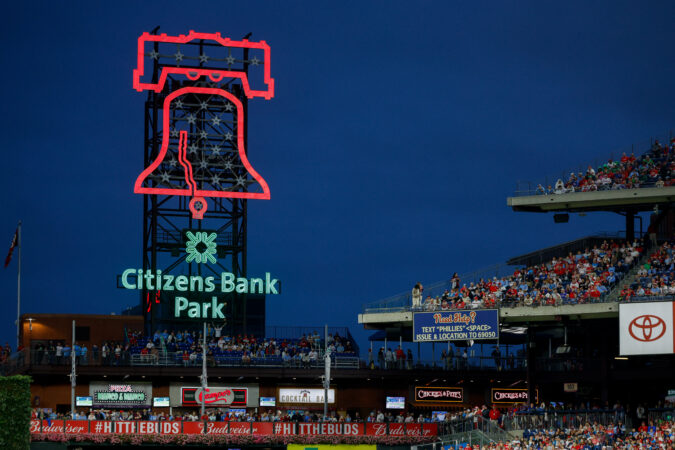
    Locally, Citizens is best known as the longtime sponsor of the Phillies ballpark, under a $95 million deal expiring in 2028.

    Bruce Van Saun, chief executive of Citizens Bank’s parent, Citizens Financial Group, since it went public in 2013, agreed to answer questions about business and consumers, whether the data-center boom is for real, and hopes for the Phillies’ 2026 season. Answers edited for clarity and brevity.

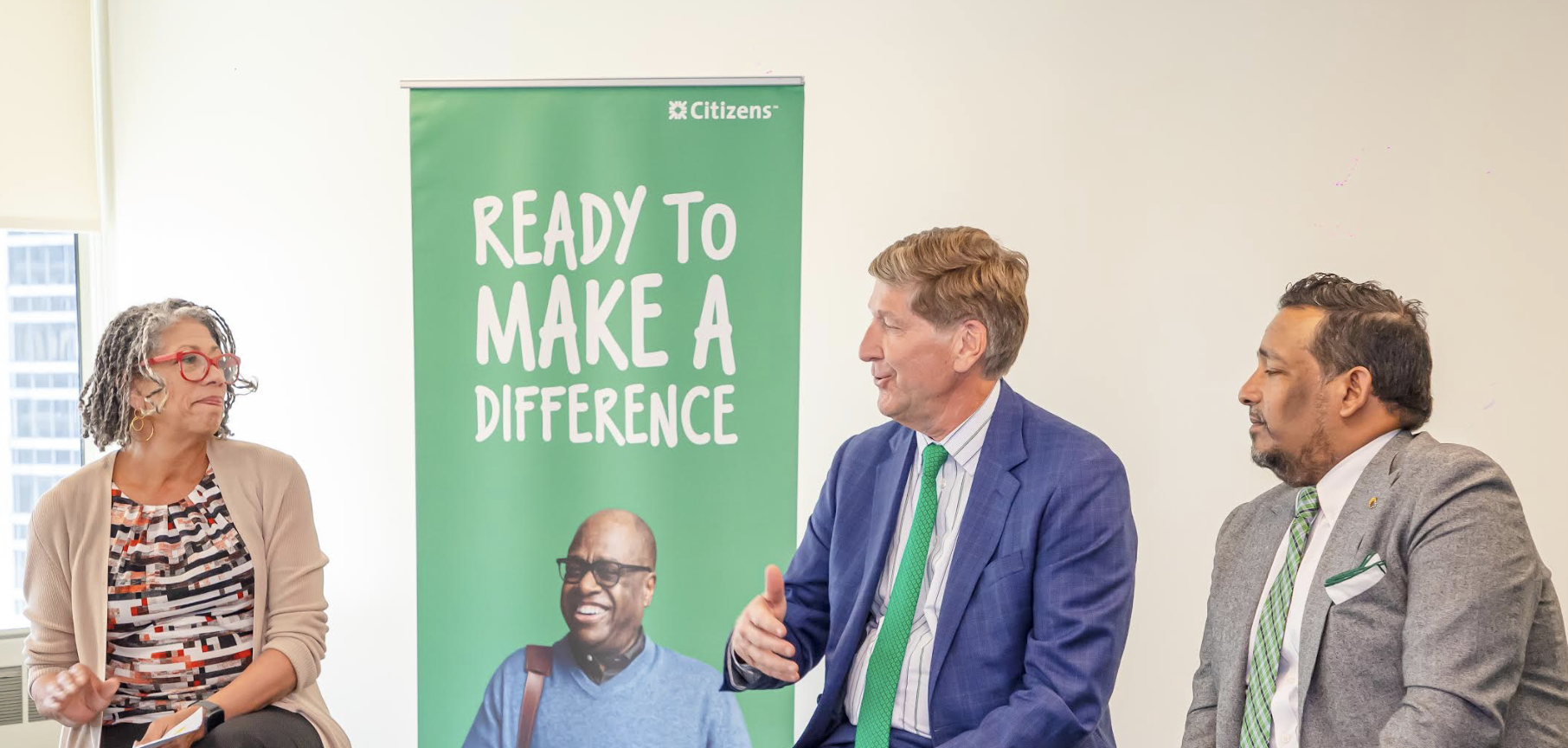
    Bruce Van Saun (center, blue jacket), chief executive of Citizens Financial Group, with Leslie Winder (left), a director of the nonprofit Urban Affairs Coalition of Philadelphia, and Arun Prabhakaran, coalition president and former chief of staff to Philadelphia District Attorney Larry Krasner, in March 2025.
    Was business hurt by trade and tariff costs, inflation, or the labor market slowdown?

    The very biggest companies have more diversification and more ability to withstand choppy waters. The smaller the business, the less diversified it is and the more impacted it is by exogenous factors.

    But most middle-market companies have had a successful year. They have come through the pandemic closings, the bout with high inflation, the higher interest rates, then the tariffs.

    Businesses had to become more adaptable and better at scenario planning, at predicting what events will do to their suppliers. Companies have sharpened how they manage real estate, digital technology, and now AI. And they locked in very attractive financing when rates were lower.

    What about the middle class, homebuyers, credit card borrowers?

    People lost a little purchasing power. People are eating out a little less. They are taking fewer trips.

    But we are not seeing a lot more loan delinquencies. Prices go up more than wages, but they are still saving for kids’ education and retirement. Maybe they are taking a home-equity line of credit.

    As economic growth stabilizes and inflation comes down, you’ll see wages increase and people get to a place where they feel better.

    Which sectors are improving?

    Tech-related, health-related show a lot of strength and resilience. Aerospace and the whole military defense sector, companies like Day & Zimmerman [which makes ammunition for the U.S. and clients such as Israel]. There are many wars going on; people need their armament. We’ve seen pretty dynamic strength last year.

    Transportation and logistics — road construction — is pretty strong.

    And data center construction. I hope Pennsylvania gets its share.

    Is Pennsylvania a good place for data centers? How do you overcome local opposition?

    There is a general NIMBY attitude: ‘I like to play on my phone and get the advantages of Microsoft Copilot and AI. Just don’t put a data center near me to use a lot of power.’ There’s controversy around that.

    But if you look at the investment and jobs that go with data centers — they need access to low-cost energy and water — then look at Pennsylvania with its natural gas and its nuclear plants like Three Mile Island. Data centers need low-cost energy and water. Pennsylvania has it.

    Will 2026 improve on last year?

    Our returns should continue to go up. Our net interest margin [the difference between what banks charge borrowers and what they pay depositors] widened last year, and we expect it will be up this year. And all our businesses are demonstrating loan growth.

    Whom do you lend to?

    We serve the middle market, from $25 million in revenues up to corporations with around $3 billion in yearly sales. PNC and Wells Fargo [are larger, but] we aren’t playing the game materially differently from what they offer. If a company wants to finance more, they go to maybe JPMorgan or Bank of America.

    We started building a private bank [focused on business owners and wealthy professionals] a couple of years back. Now we have $14 billion in deposits, $7 billion in loans, $10 billion in client investments, just in that unit. And growing faster than we projected, with more accretion to our bottom line.

    We help our clients become more successful: ‘Here’s an acquisition idea. Here’s a working-capital idea.’ That level of personalized attention has been a winning strategy for us.

    U.S. software start-ups, and biotech centers like Philadelphia, staggered a bit when the best-known tech banks failed in 2023. JPMorgan bought First Republic, but you hired a lot of their staff. How’s that going?

    What First Republic did really well for company founders was advice banking, wealth needs, family financial planning. And we invested heavily in technology to get to the service levels First Republic was famous for. We took on 150 of their people, teams of strong, highly regarded wealth managers, and added private bankers, to locate with our banking teams. That group is now 550 people.

    We went into areas where they were strong — Boston, New York, Palm Beach, and three areas of Northern California. We had to add teams in Southern California — San Diego, Orange County, and one in Los Angeles.

    But not Philly?

    Philly is high on the list of new markets we want to attack with that approach. There is a cadre of successful people here. We want to be known as the bank for successful people.

    Gov. Josh Shapiro talks about a Pennsylvania manufacturing revival. What signs do we see that’s happening?

    We are positioning ourselves for a lot of inbound investments. President Donald Trump is going to our allies in Japan and South Korea to invest and bring skilled jobs into our country to be more self-sufficient in manufacturing — in steel, in shipbuilding, for example. It all sounds good on paper. I think it will come.

    Why do car factories and other big manufacturers open down South, instead of in Pennsylvania?

    They find the states willing to take a fresh look at how much bureaucracy they have and cutting it back. You are competing with Texas, Virginia, the Carolinas, which are very successful at attracting industry. I don’t think Pennsylvania will want to miss out.

    What will it take to bring the World Series back to Philly, which increases fan and ad spending?

    We are hopeful the Phillies have a great offseason. I’m a little disappointed [Bo] Bichette went to the Mets. But, hey, they signed J.T. [Realmuto]. John [Middleton, the Phillies’ lead owner] is very committed to fielding a winning team. Go Phils!

  • Letters to the Editor | Jan. 26, 2026

    Letters to the Editor | Jan. 26, 2026

    Our history removed

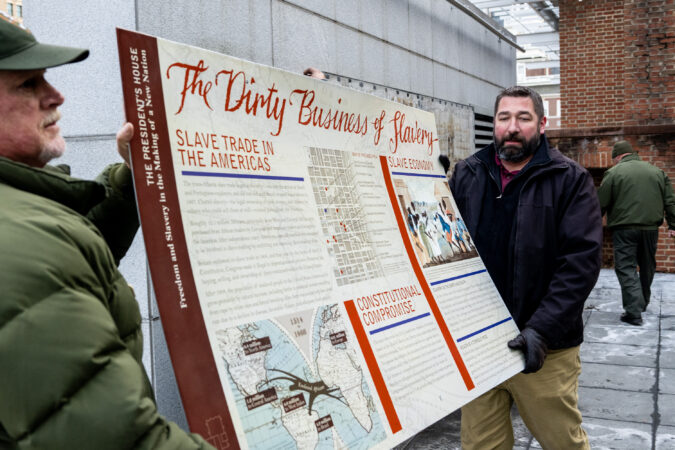
    The dirty business of censorship snuck its way into Philadelphia Thursday afternoon and removed panels from the President’s House memorial to the nine people enslaved by George Washington on Independence Mall.

    Ripped from the walls was our history, our freedom of expression, and the respect and dignity for all human beings.

    Peter Tobia, Philadelphia

    The writer formerly worked as a visual journalist at The Inquirer.

    . . .

    What? No one protested and said they wouldn’t take down the slavery exhibit at the President’s House here in Philly? No one protested that taking down the pictures of enslaved people was destroying our country’s history, whitewashing a people’s history?

    What kind of country rewrites history? Certainly not a democratic country. Little did I know that years ago, when I read Cry, the Beloved Country, I would now be crying for our own country.

    And what would have happened if everyone refused to take down the exhibit? Of course, they knew they would lose their jobs. But beyond that, it would have made news, and I believe a lot of us Americans, particularly here in Philly, would have joined in their courageous protest.

    After desecrating our history, how can we feel good about Philadelphia’s historical significance as the Semiquincentennial City in 2026?

    Ettie Davis, Philadelphia

    Cruel tradition

    Bucks County is home to a cruel practice that most Pennsylvanians believe belongs in the past: live pigeon shoots. At the Philadelphia Gun Club in Bensalem, birds are released and shot at close range. It is reported that the club holds about a dozen shoots per year. While the vast majority of states have outlawed this cruelty, political maneuvering has allowed it to continue in Pennsylvania.

    House Bill 1097, sponsored by State Rep. Perry Warren, aims to finally close this shameful chapter by banning live pigeon shoots statewide. The passage of this legislation is an urgent imperative. The movement to ban live pigeon shoots has a long history and is supported by a broad coalition of veterinarians, hunters, and concerned citizens. Yet, HB 1097 has languished for more than 30 years in the General Assembly.

    Please contact your state representative and senator and demand they take immediate action by stating support for HB 1097. In November, every state representative and many state senators are up for reelection. To find your local lawmakers, visit: www.palegis.us/find-my-legislator.

    Victor M. Verbeke, Pennsylvania Voters for Animals, Harleysville

    A firmer foundation

    Today, our Constitution, like the chassis of a very old car, is breaking down. Perhaps it’s time to trade it in. Our current Constitution, drafted in Philadelphia in 1787, certainly lasted longer than our first constitution, the Articles of Confederation — a document that was drafted in Philadelphia in 1777. Our founders were not hesitant to toss a constitution that was not working for a new and improved model. What better place than Philadelphia, and what better time than now to begin an inclusive conversation about a new foundation for our federal government? We deserve a government that is less chaotic and more respectful of the common citizen.

    Hank Bienkowski, Boothwyn

    Join the conversation: Send letters to letters@inquirer.com. Limit length to 150 words and include home address and day and evening phone number. Letters run in The Inquirer six days a week on the editorial pages and online.