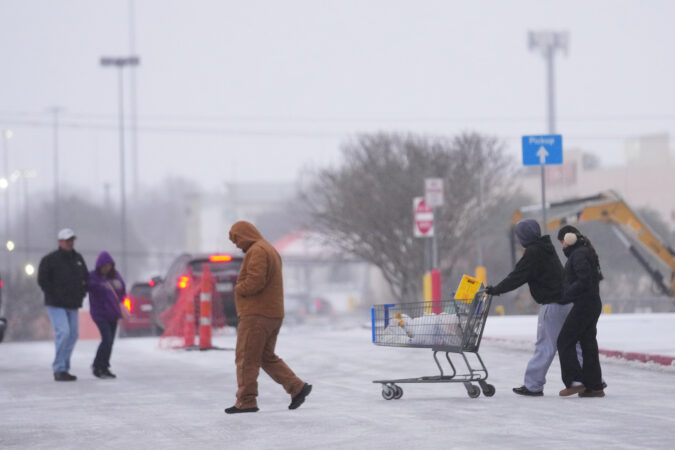
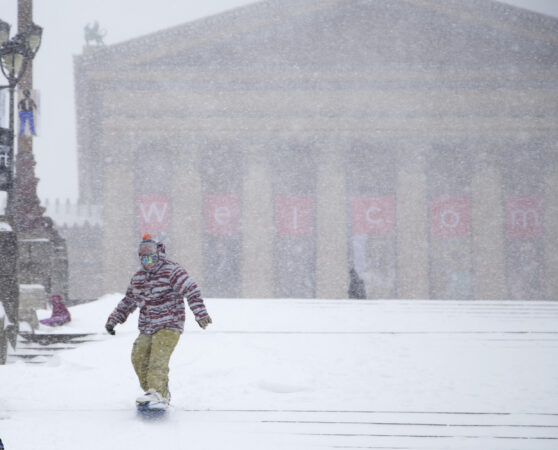
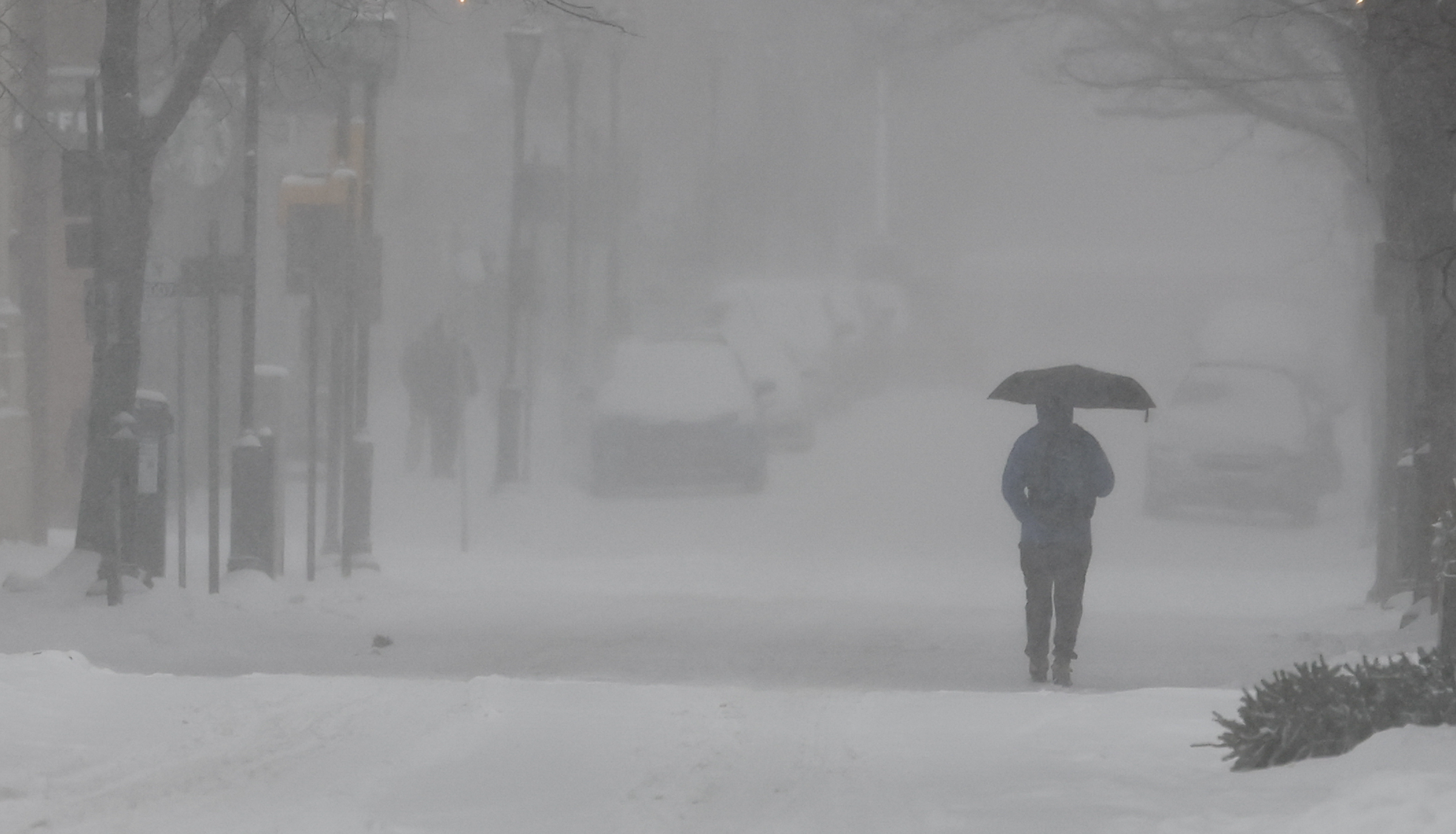
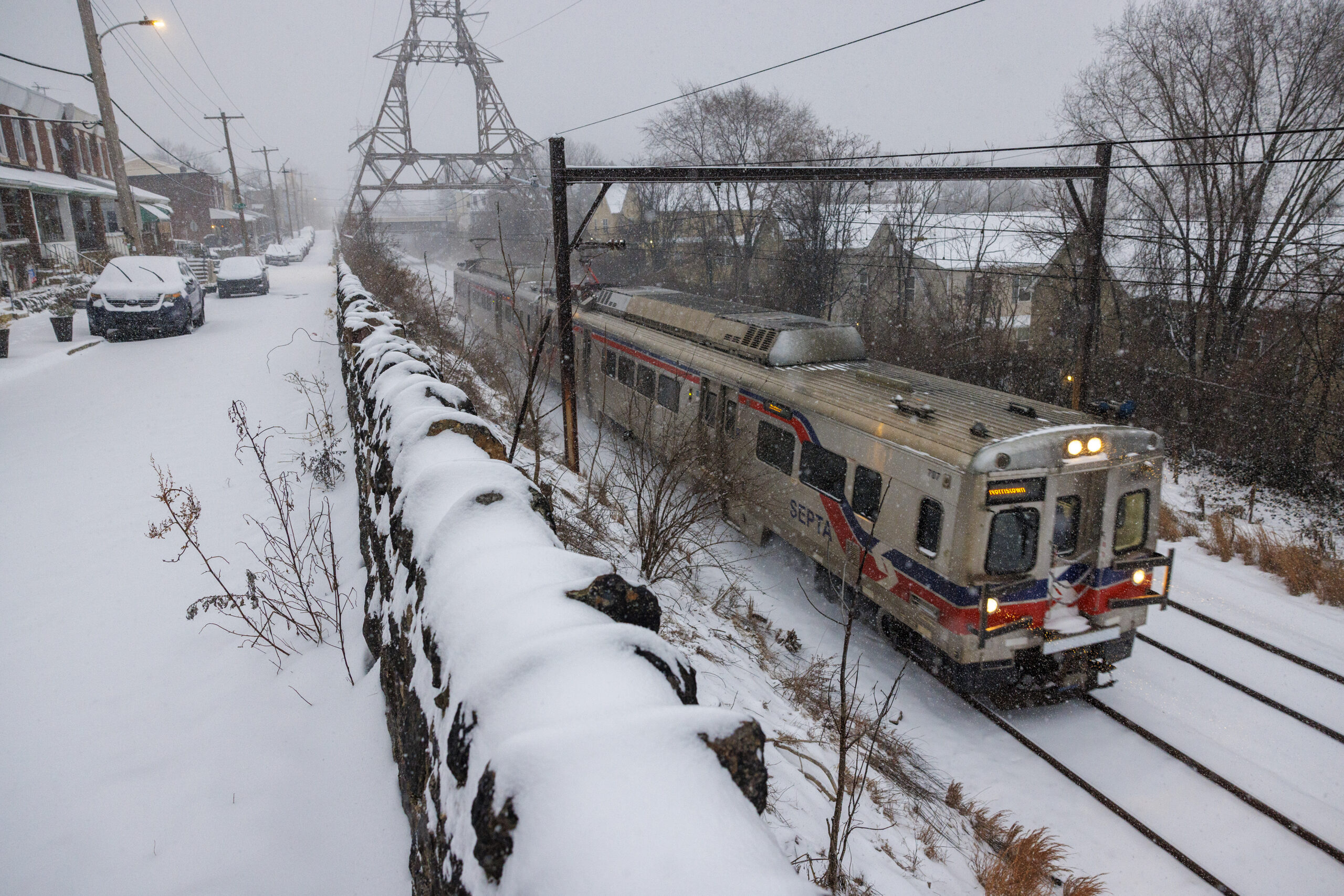
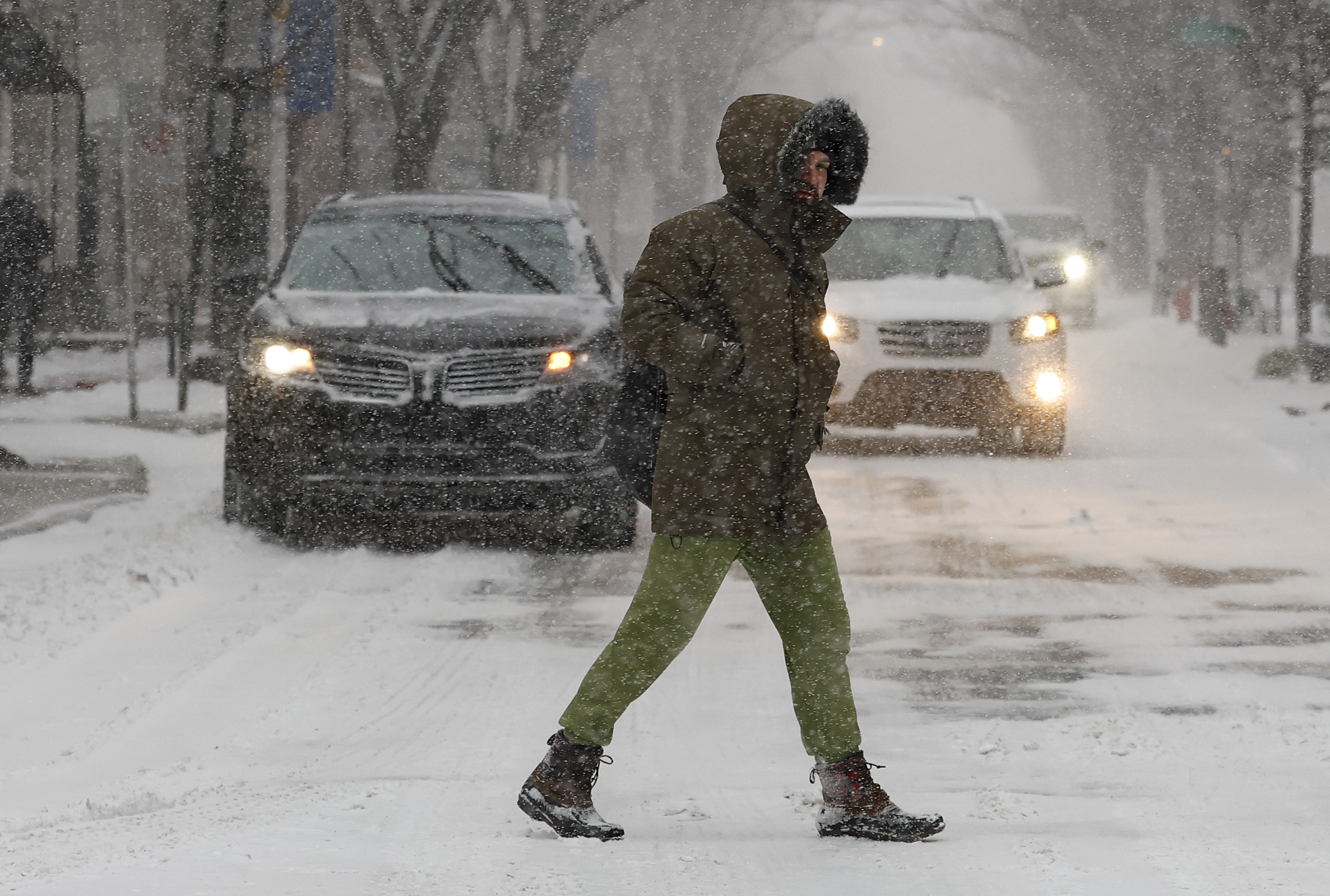
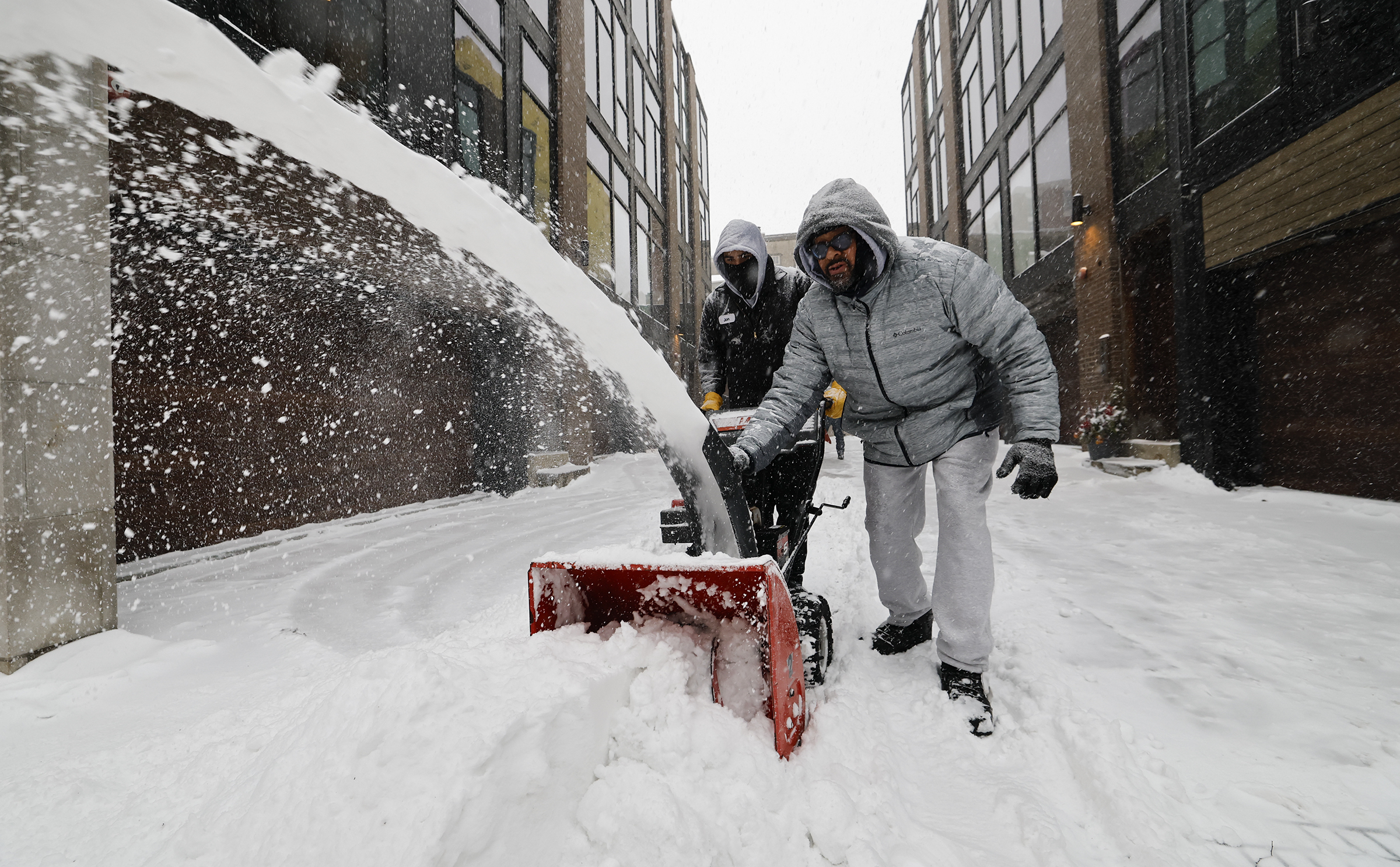
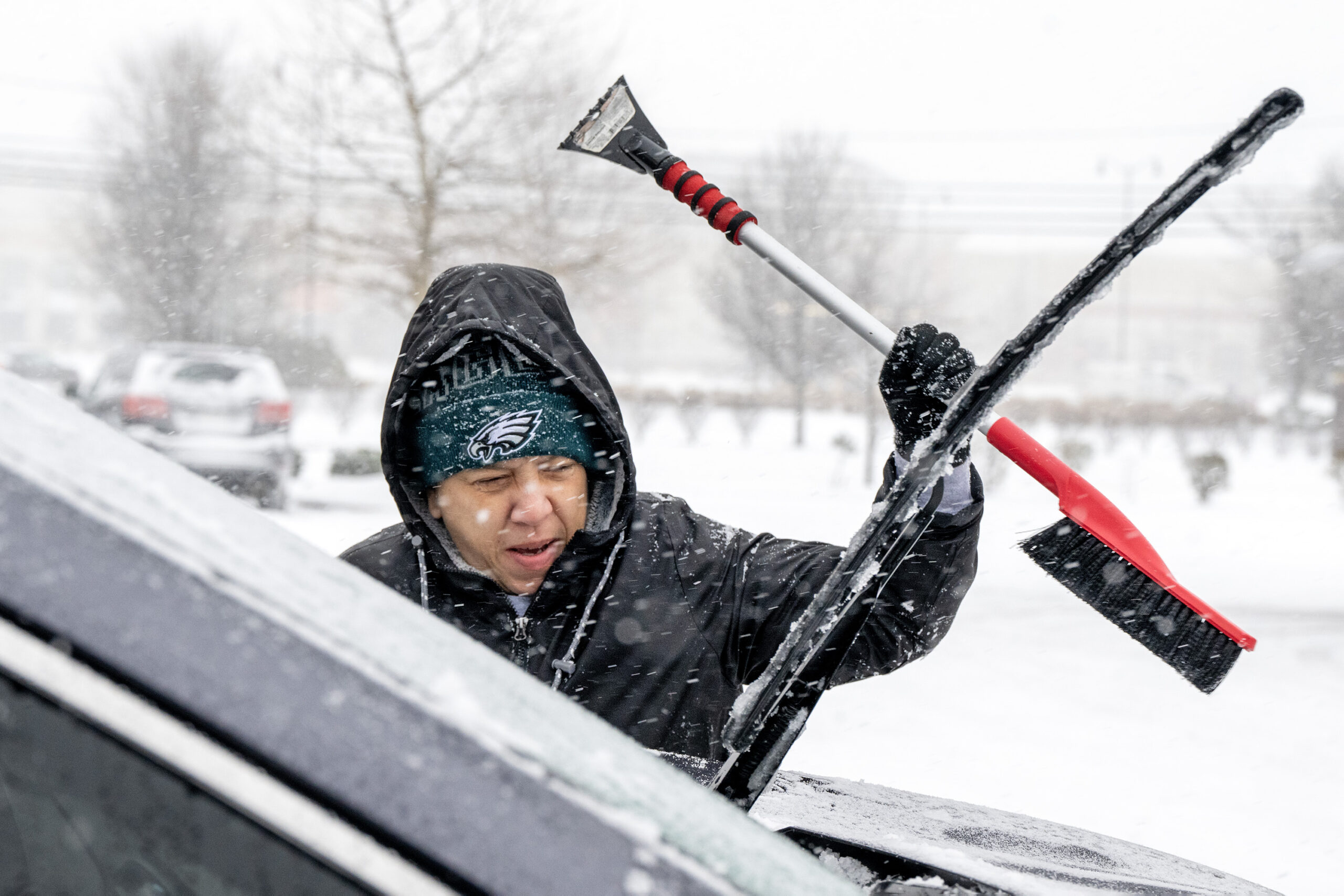
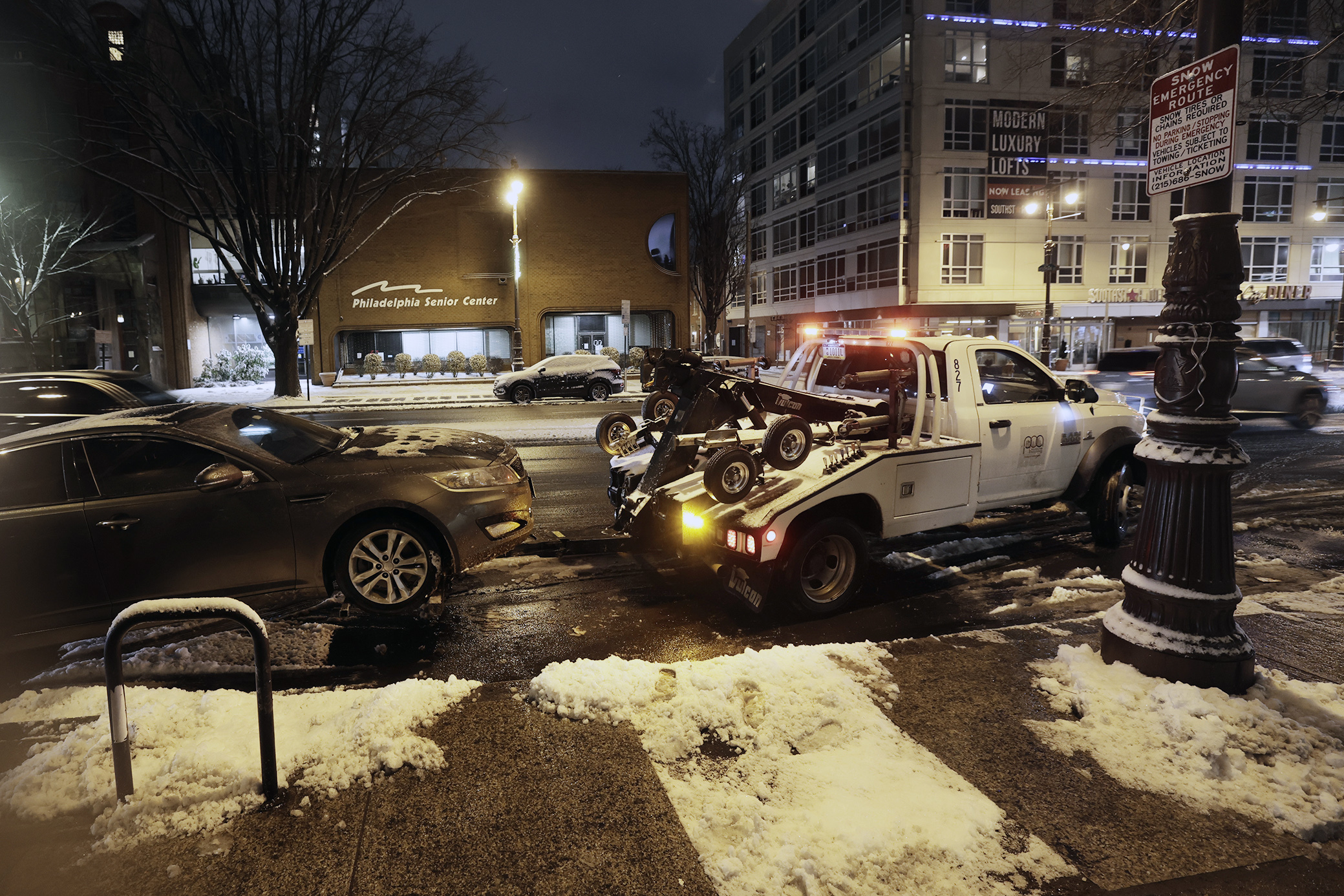
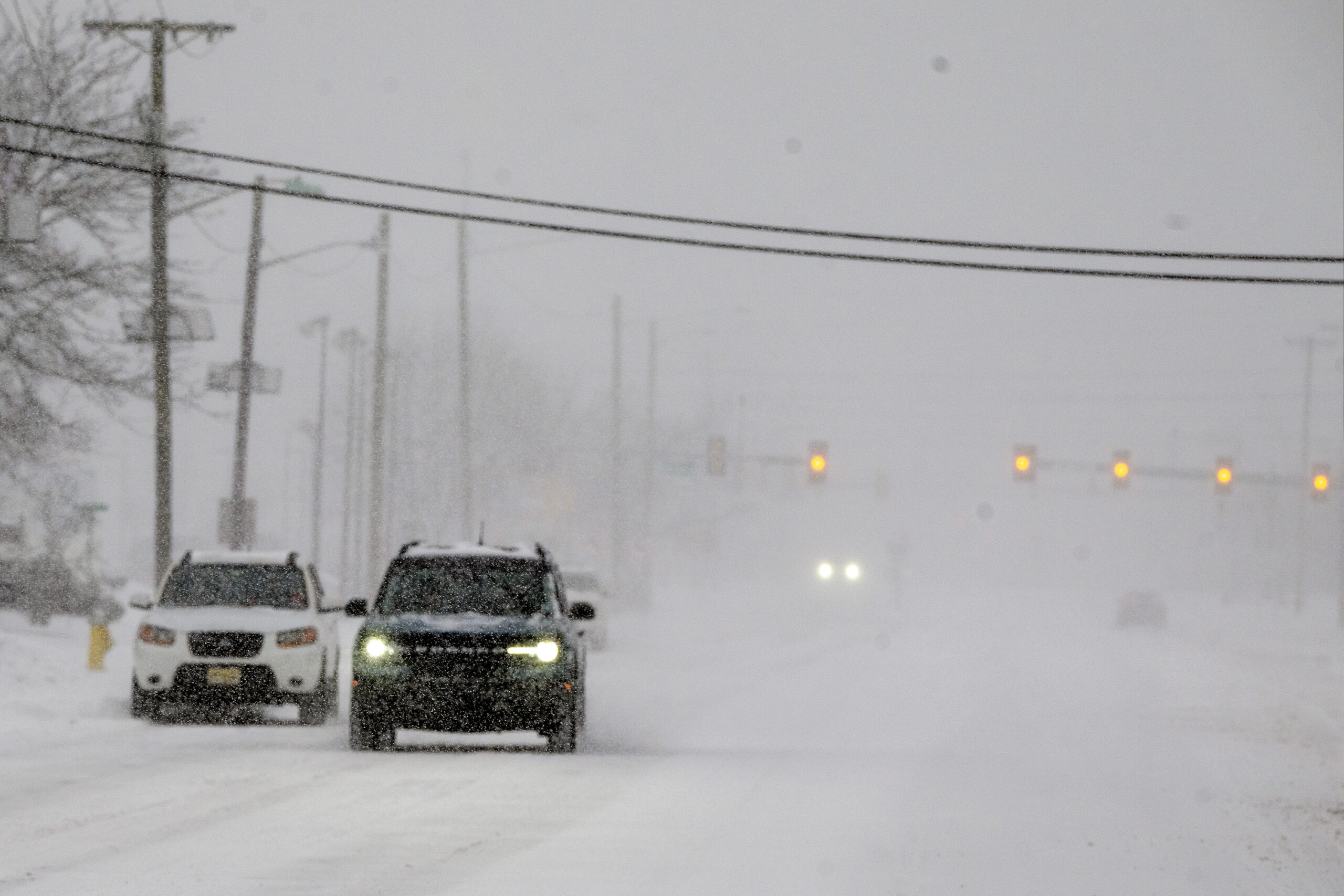
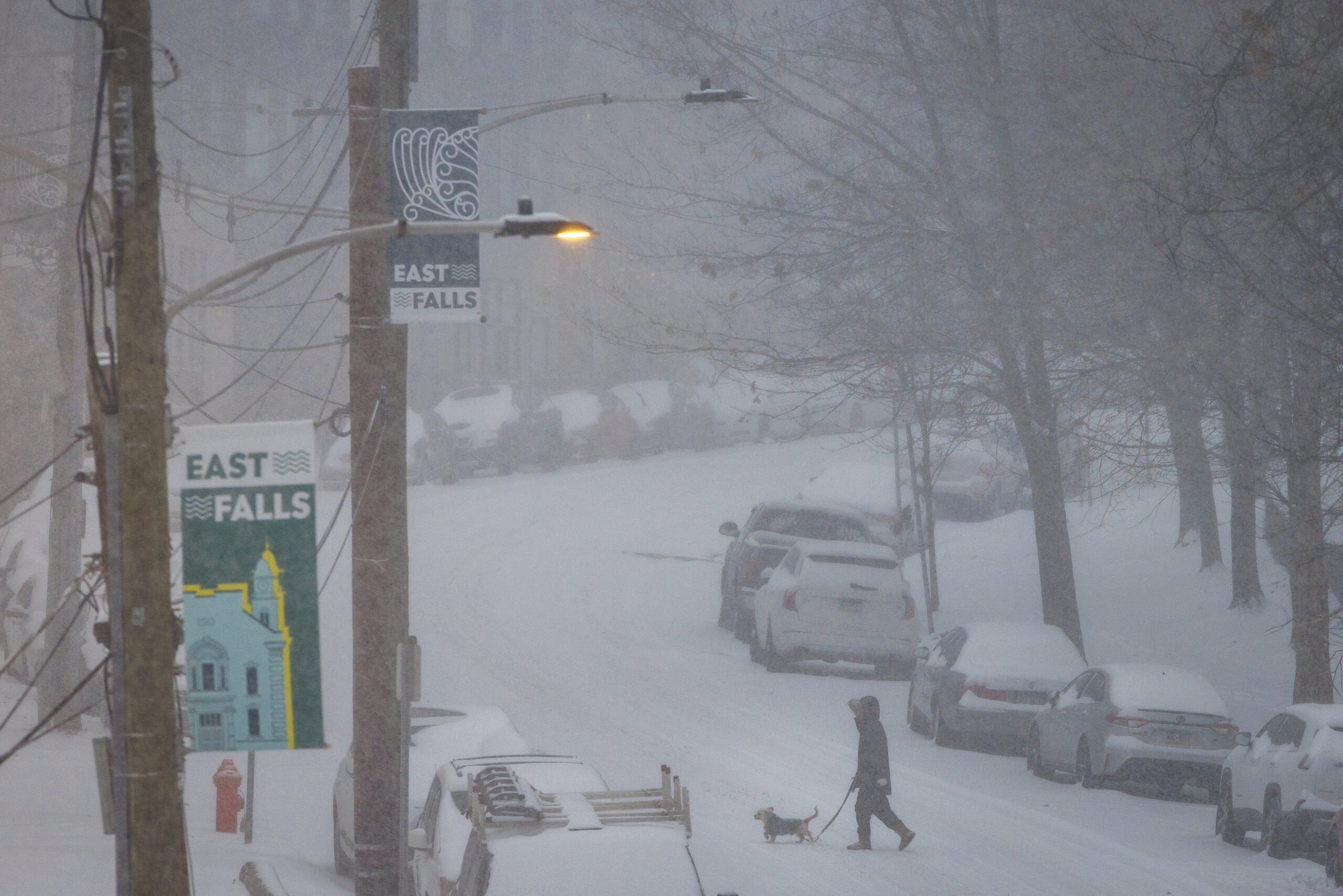
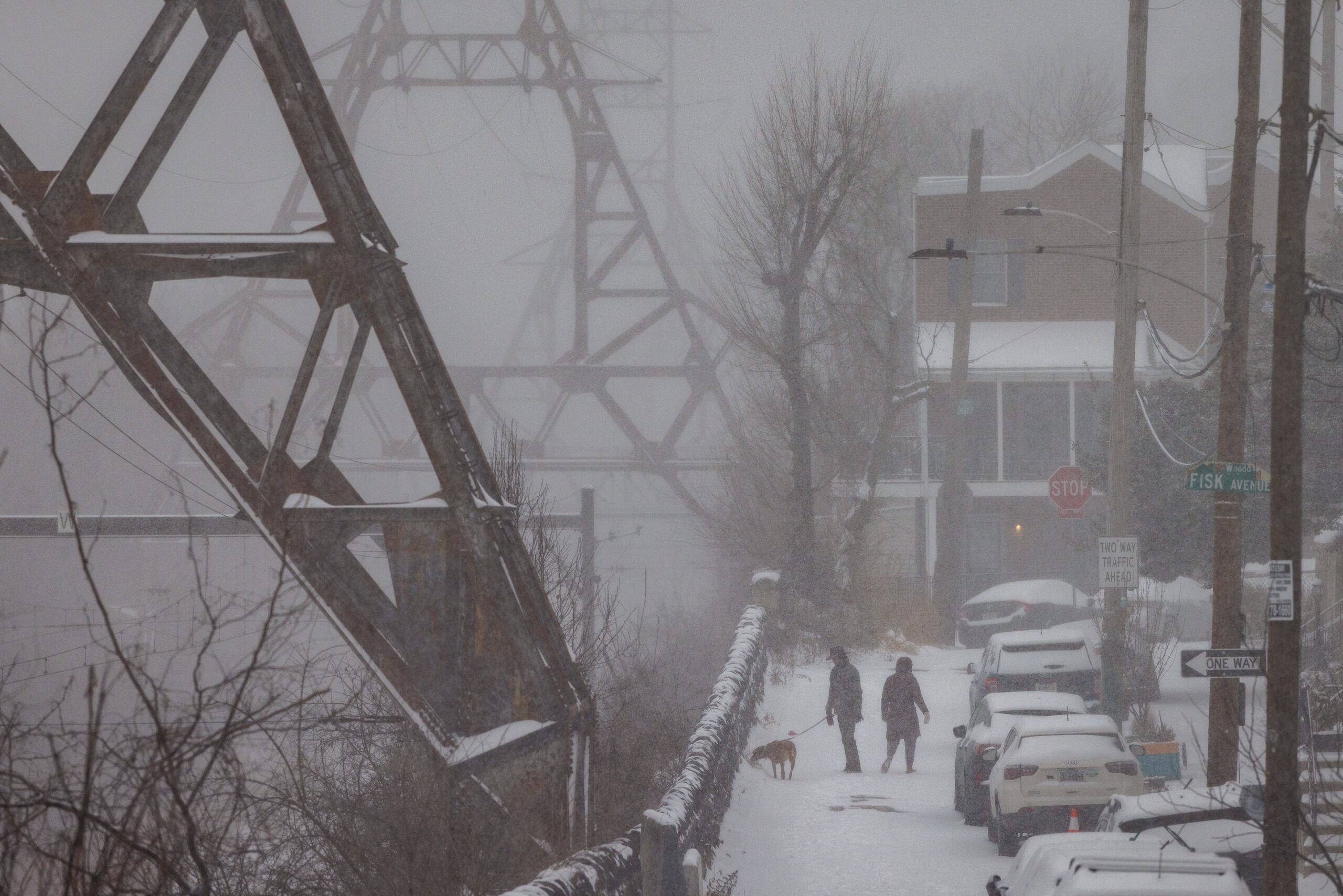
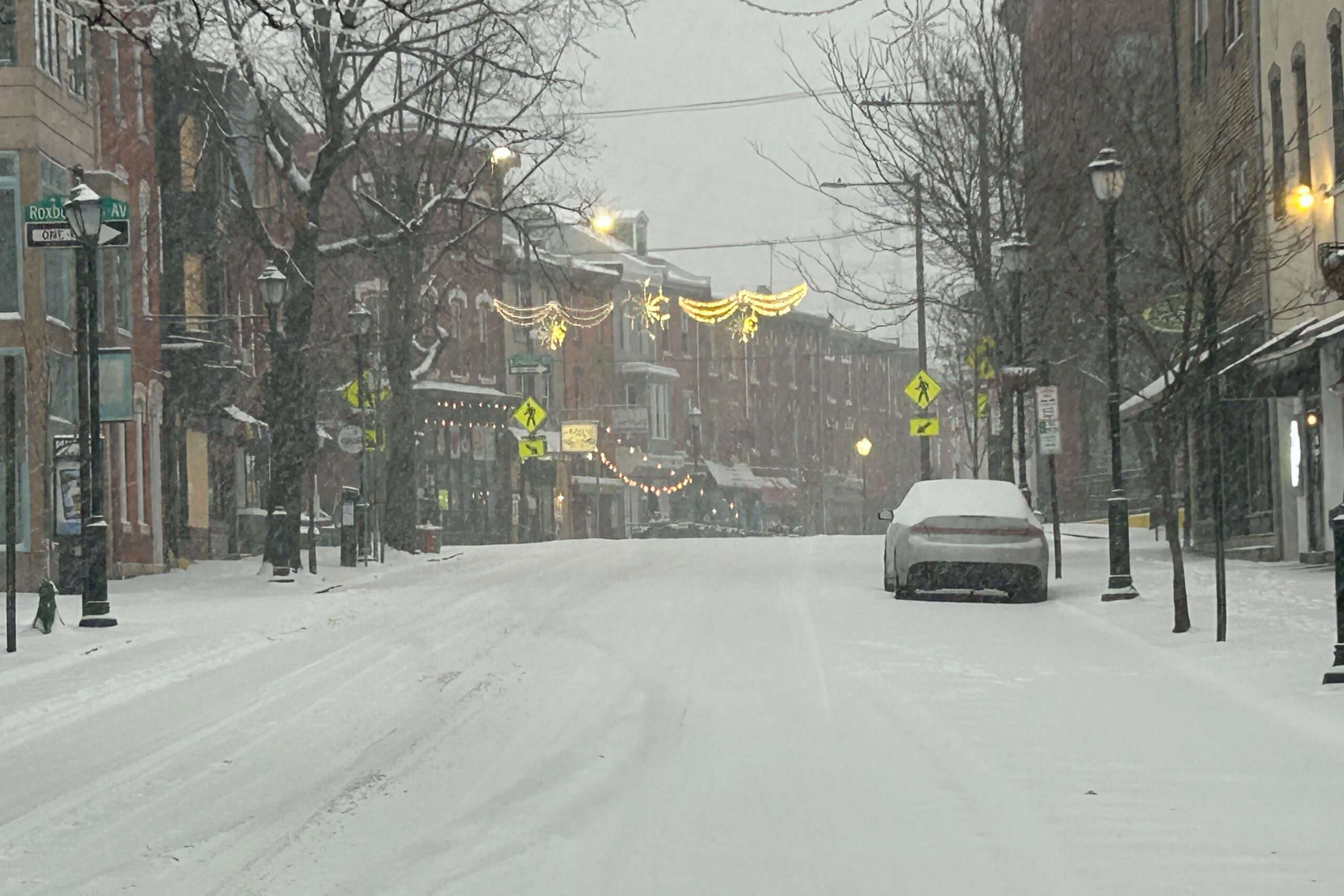
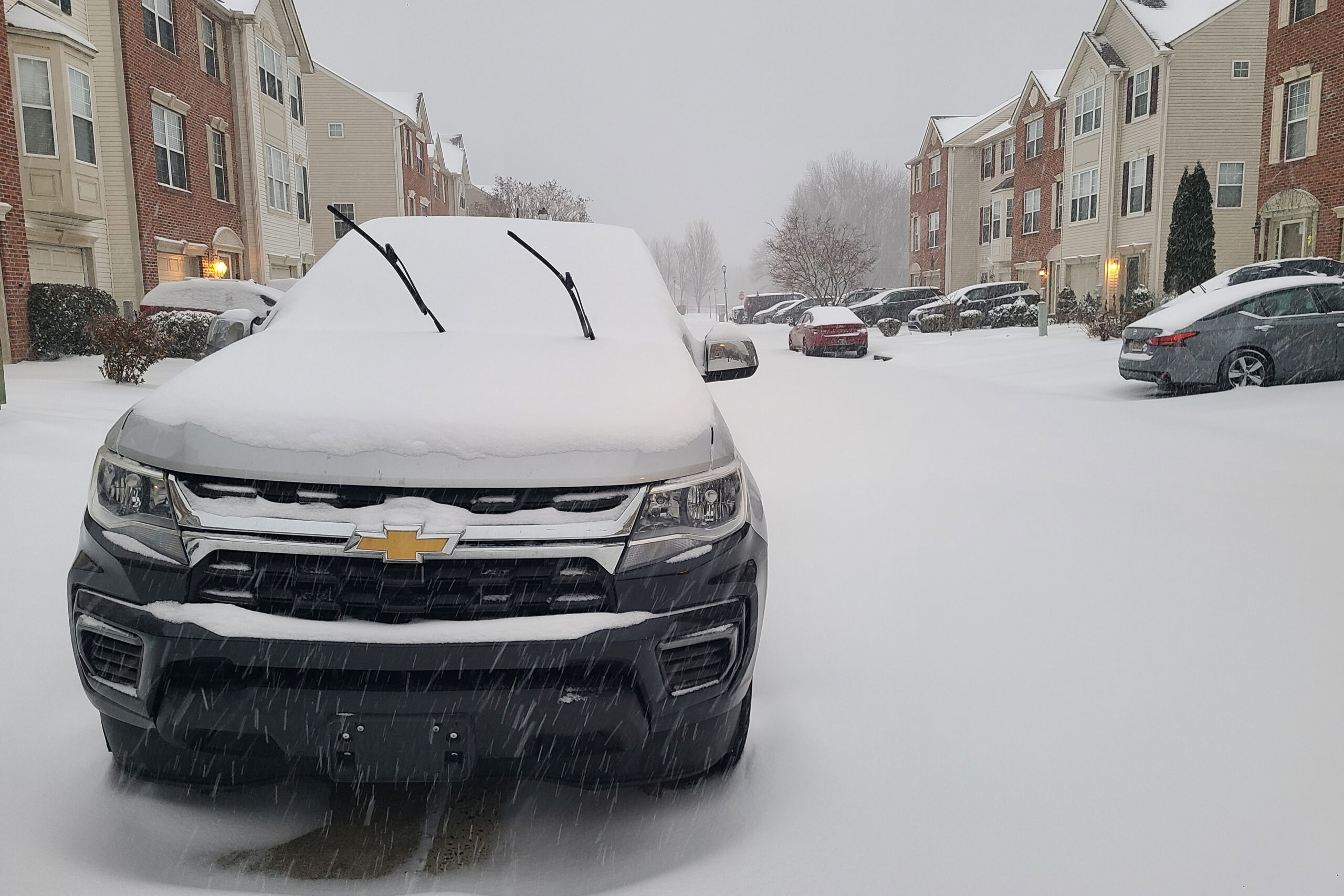
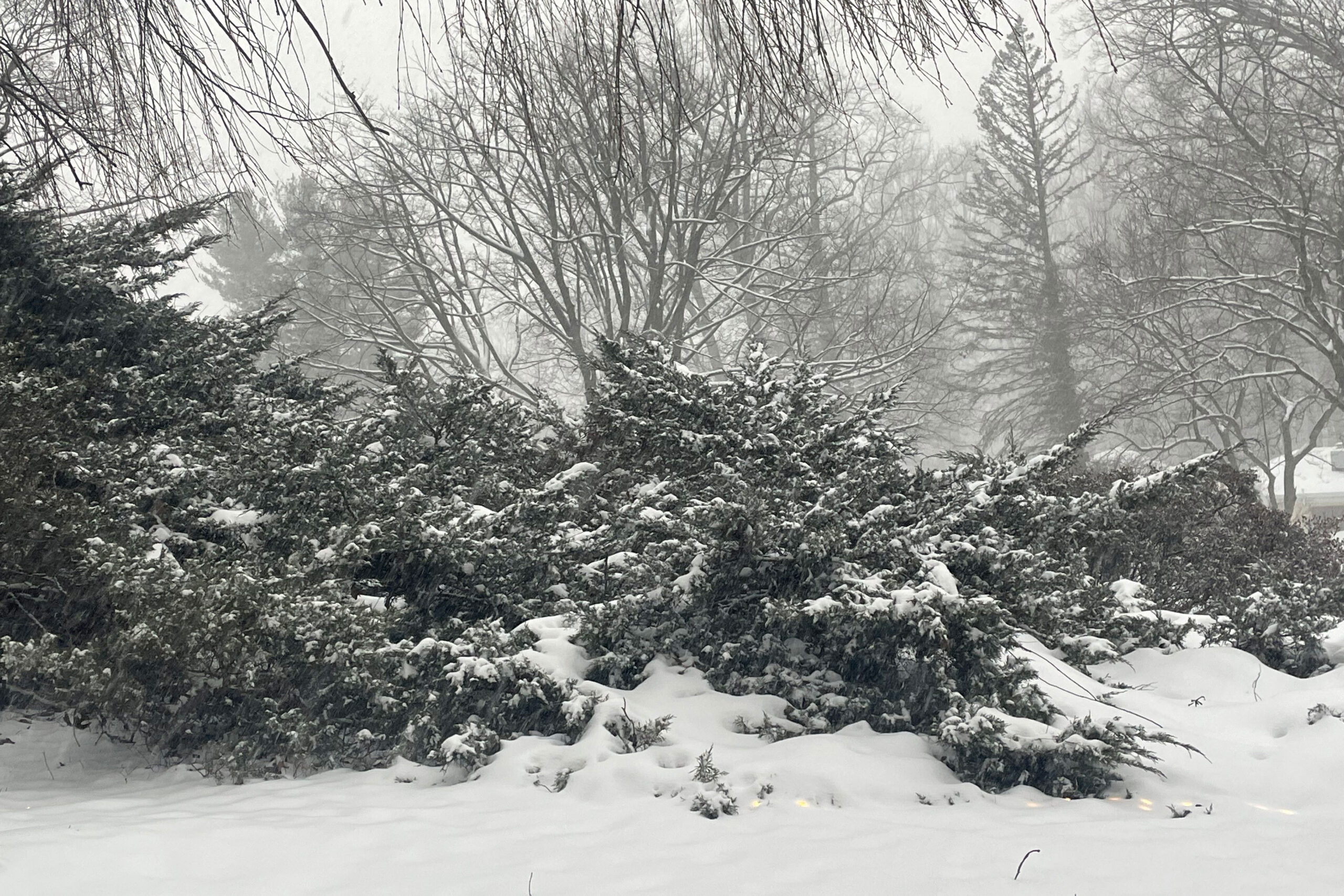
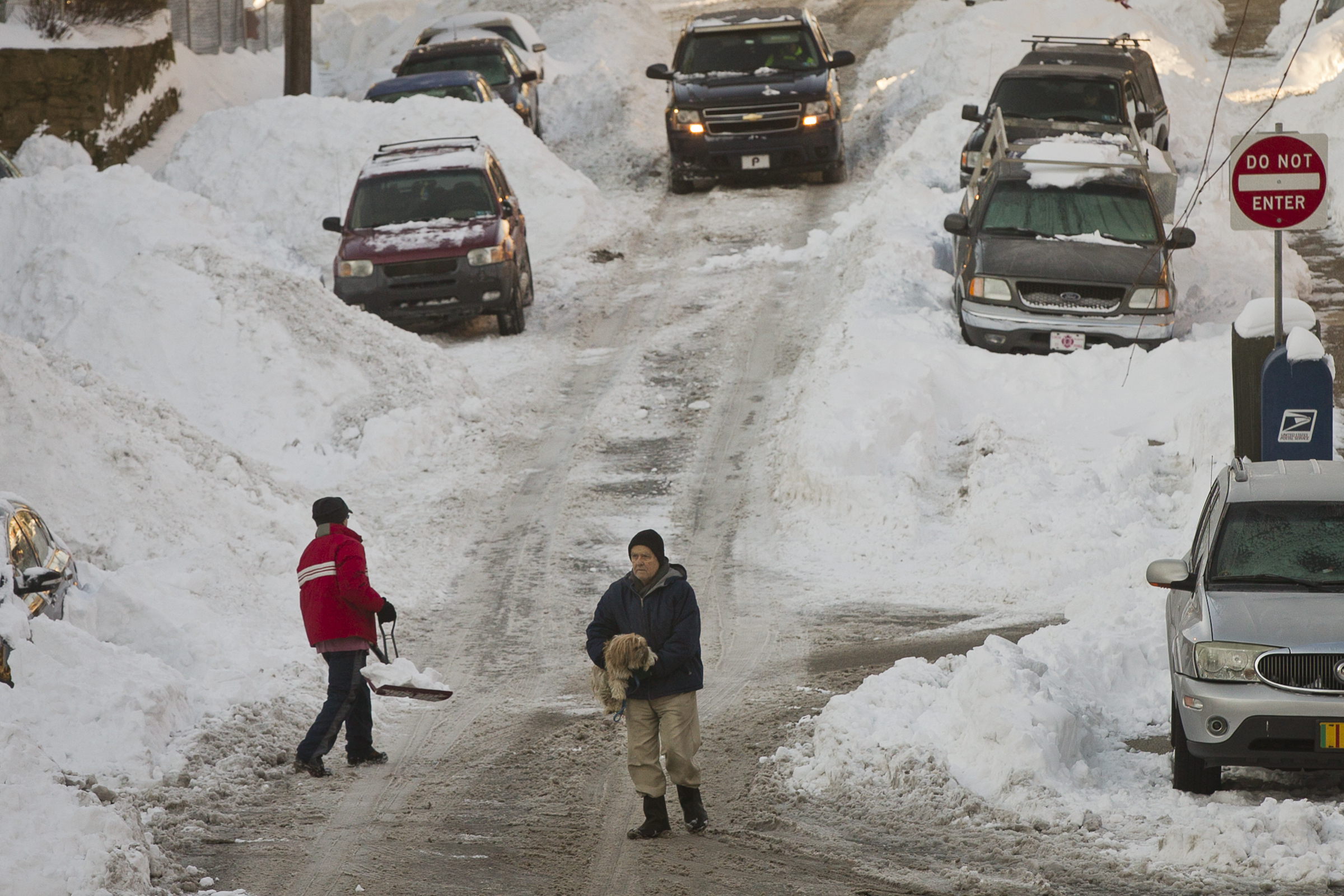
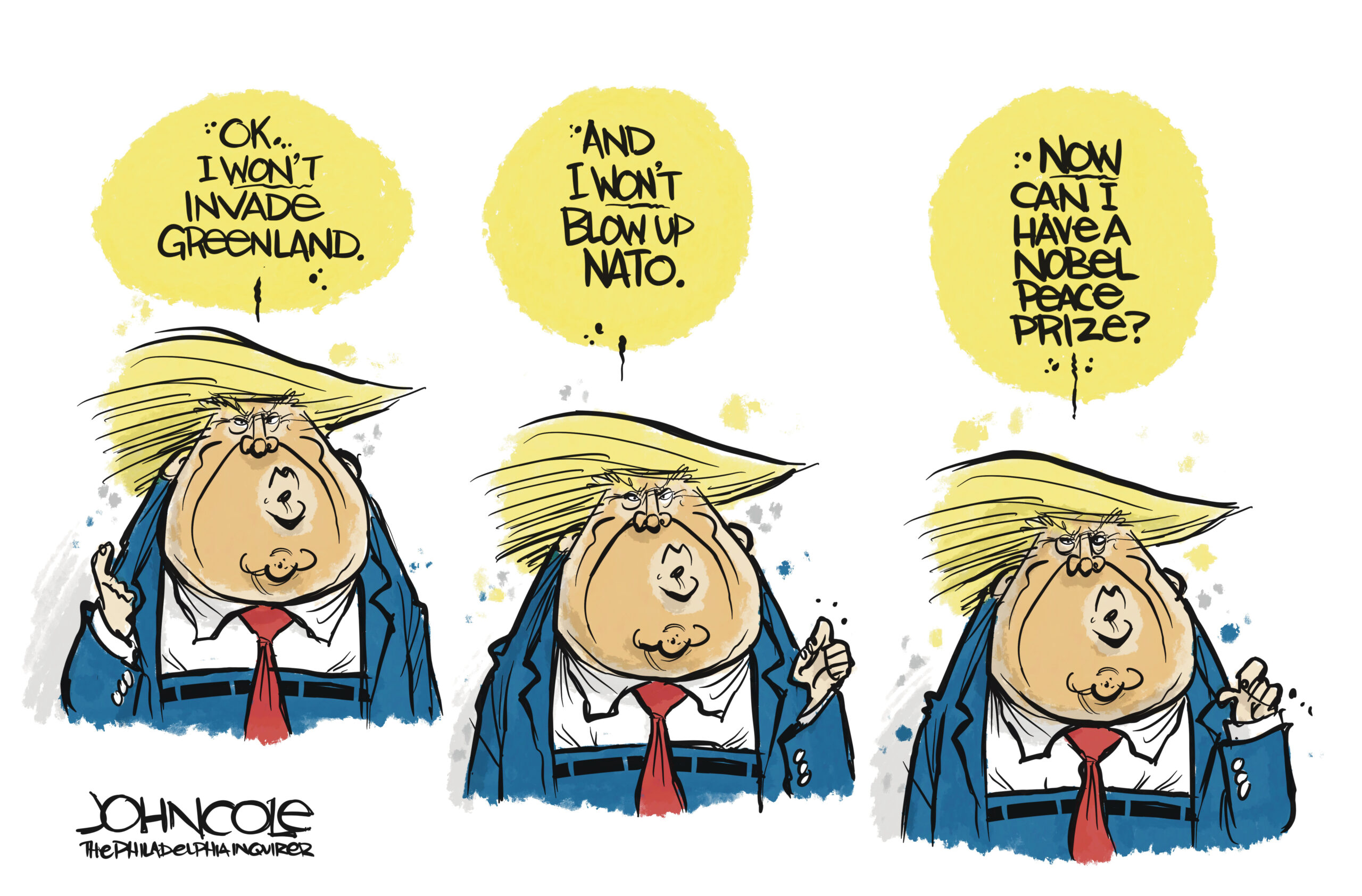
A massive winter storm dumped sleet, freezing rain, and snow across much of the U.S. on Sunday, bringing subzero temperatures and paralyzing air and road traffic. Power lines were draped in ice, and hundreds of thousands of people in the Southeast were left without electricity.
The ice and snowfall were expected to continue into Monday in much of the country, followed by very low temperatures, which could cause “dangerous travel and infrastructure impacts” to linger for several days, the National Weather Service said.
Heavy snow was forecast from the Ohio Valley to the Northeast, while “catastrophic ice accumulation” threatened from the Lower Mississippi Valley to the Mid-Atlantic and Southeast.
“It is a unique storm in the sense that it is so widespread,” weather service meteorologist Allison Santorelli said in a phone interview. “It was affecting areas all the way from New Mexico, Texas, all the way into New England, so we’re talking like a 2,000-mile spread.”
President Donald Trump had approved emergency declarations for at least a dozen states by Saturday, with more expected to come. The Federal Emergency Management Agency prepositioned commodities, staff, and search and rescue teams in numerous states, Homeland Security Secretary Kristi Noem said.
New York Gov. Kathy Hochul said the state was bracing for the longest cold stretch and highest snow totals it has seen in years. Communities near the Canadian border have already seen record-breaking subzero temperatures, with Watertown registering minus 34 degrees Fahrenheit and Copenhagen minus 49 F, she said.
“An Arctic siege has taken over our state,” Hochul said. “It is brutal, it is bone chilling, and it is dangerous.”
Storm knocks out power and snarls flights
As of Sunday morning, about 213 million people were under some sort of winter weather warning, Santorelli said. The number of customers without power topped 900,000, according to poweroutage.us, and the number was rising.
Tennessee was hardest hit with nearly 325,000 customers out, and Texas, Louisiana, and Mississippi all had more than 100,000 customers in the dark. Tens of thousands of homes and businesses were without power in Kentucky, Georgia, Alabama, and West Virginia.
Some 11,000 flights had already been canceled Sunday and more than 13,000 have been delayed, according to the flight tracker flightaware.com. Airports in Philadelphia, Washington, Baltimore, North Carolina, New York, and New Jersey were hit especially hard.
At Philadelphia International Airport, inside displays registered scores of canceled flights and few vehicles could be seen arriving Sunday morning. At Reagan National in Washington, virtually all flights were canceled.
Bitter cold makes things worse
Even once the ice and snow stop falling, the danger will continue, Santorelli warned.
“Behind the storm it’s just going to get bitterly cold across basically the entirety of the eastern two-thirds of the nation, east of the Rockies,” she said. That means the ice and snow won’t melt as fast, which could hinder some efforts to restore power and other infrastructure.
Along the Gulf Coast, temperatures were balmy Sunday, hitting the high 60s and low 70s, but thermometers were expected to drop into the high 20s and low 30s there by Monday morning. The National Weather Service warned of damaging winds and a slight risk of severe storms and possibly even a brief tornado.
In New York City, Mayor Zohran Mamdani said at least five people died as temperatures plunged Saturday before the snows arrived in earnest.
“While it’s still too early to determine the causes of death, it is a reminder that every year New Yorkers succumb to the cold,” he wrote on X.
The Democrat also announced that Monday would be a remote learning day for students in the nation’s largest school system. Other officials across the affected areas also announced that school would be canceled or held remotely Monday.
Coping with the storm
In Corinth, Miss., where power outages were widespread, Caterpillar told employees at its remanufacturing site to stay home Monday and Tuesday.
“May God have mercy on Corinth, MS! … The sound of the trees snapping, exploding & falling through the night have been unnerving to say the least,” resident Kathy Ragan said on Facebook.
University of Georgia sophomore Eden England said there was a thin layer of ice on the ground of the campus in Athens and a mist fell as she walked with friends from the campus dining hall to her residence hall.
“It is definitely a little deserted but plenty of people chose to stay on campus,” England said.
Recovery could take a while
Nashville and the surrounding area saw ice accumulations of half an inch or more, with icicles hanging from power lines and overburdened tree limbs crashing to the ground.
In Oxford, Miss., police on Sunday morning used social media to tell residents to stay home as the danger of being outside was too great. Local utility crews were also pulled from their jobs during the overnight hours.
“Due to life-threatening conditions, Oxford Utilities has made the difficult decision to pull our crews off the road for the night,” the utility company posted on Facebook early Sunday. “Trees are actively snapping and falling around our linemen while they are in the bucket trucks.”
Tippah Electric Power in Mississippi said there was “catastrophic damage” and that it could be “weeks instead of days” to restore everyone.
The Tennessee Valley Authority provides power to some utilities across the region, and spokesperson Scott Brooks said the bulk power system remains stable but overnight icing had caused power interruptions in north Mississippi, north Alabama, southern middle Tennessee, and the Knoxville, Tenn., area.
Icy roads made travel dangerous in north Georgia, where the Cherokee County Sheriff’s office posted on Facebook, “You know it’s bad when Waffle House is closed!!!” along with a photo of a shuttered restaurant. Whether the chain’s restaurants are open — known as the Waffle House Index — has become an informal way to gauge the severity of weather disasters across the South.
Senate Democrats plan to block a sweeping government funding package after U.S. Border Patrol agents killed a man in Minneapolis on Saturday — increasing the likelihood of another shutdown at the end of the week.
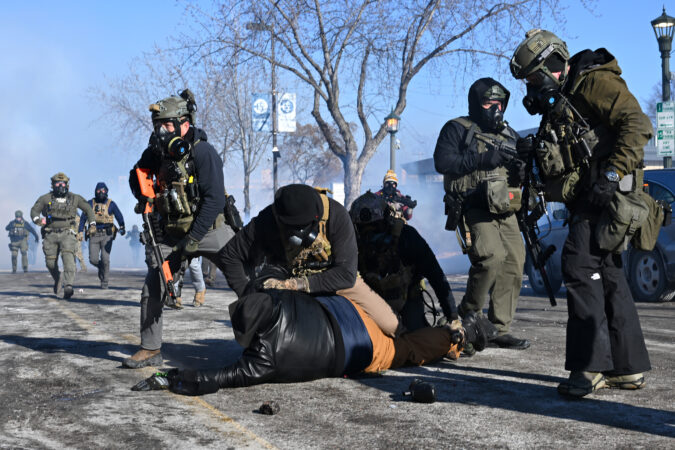
Federal law enforcement agents shot and killed a 37-year-old intensive care nurse, Alex Pretti, in Minneapolis on Saturday morning during an immigration enforcement surge in Minnesota. Federal officials alleged that Pretti approached officers with a handgun and resisted attempts to disarm him. Videos of the incident show federal agents swarming Pretti, wrestling him to the ground, and shooting him after he attempted to get up.
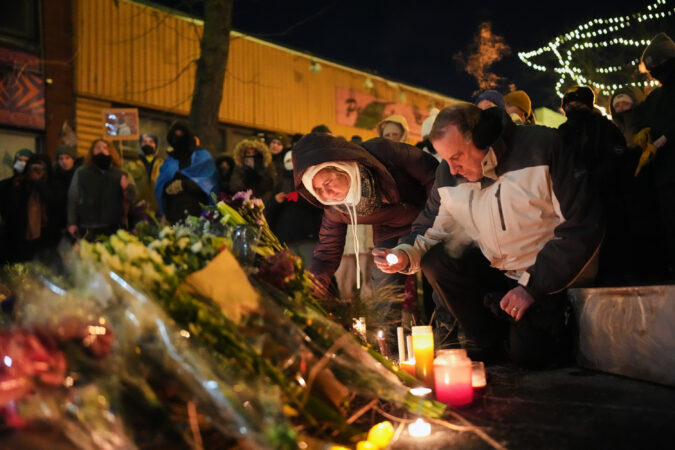
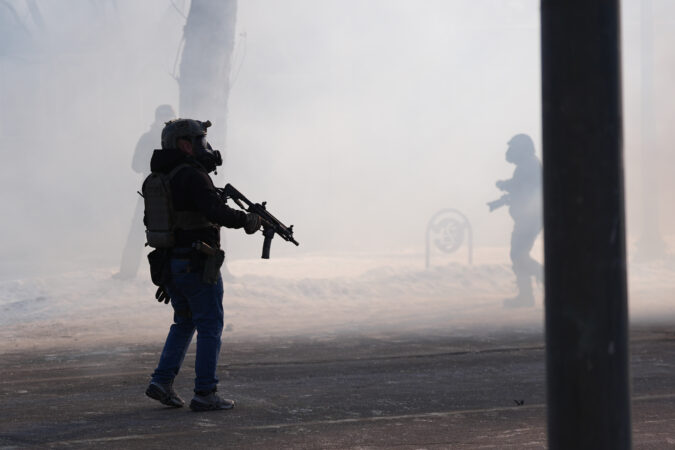
The shooting prompted protests and clashes between demonstrators and federal agents and drew furious recrimination from Democratic lawmakers who are expected to vote on bipartisan legislation this week that would fund most of the federal government. It is the third shooting by federal agents in Minneapolis this month: Officers also shot and killed Renée Good in her car and shot Julio Cesar Sosa-Celis in the leg as he attempted to evade arrest, according to federal officials.
Democrats said they could not vote for legislation to continue U.S. Immigration and Customs Enforcement’s funding without changes to how the agency operates.
“What’s happening in Minnesota is appalling — and unacceptable in any American city. Democrats sought common sense reforms in the Department of Homeland Security spending bill, but because of Republicans’ refusal to stand up to President Trump, the [Department of Homeland Security] bill is woefully inadequate to rein in the abuses of [Immigration and Customs Enforcement.] I will vote no,” Senate Minority Leader Charles E. Schumer (D., N.Y.) said in a statement. “Senate Democrats will not provide the votes to proceed to the appropriations bill if the DHS funding bill is included.”
The legislation set to come to the Senate floor this week includes six government funding bills spanning multiple agencies — including large agencies like the Departments of Defense and Health and Human Services — and makes up the majority of discretionary spending. It would appropriate $64.4 billion for Homeland Security, including $10 billion for ICE.
Existing government funding runs out at the end of the day on Friday, and most of the government would shut down if a funding bill is not approved in time. At least seven Senate Democrats would need to vote for the legislation for it to pass in the upper chamber, where 60 votes are needed to overcome the filibuster.
Lawmakers could try to split the Homeland Security bill from the legislation to fund the rest of the government, which has stronger bipartisan support. A spokesperson for Senate Appropriations Chair Susan Collins (R., Maine) said she is “exploring all options” to pass the remaining government funding bills in time.
ICE’s immigration enforcement raids in Minneapolis and other cities across the country have enraged Democrats in Congress and brought increased pressure from their voters to block funding for Homeland Security, even though most lawmakers have little appetite for another shutdown. The whole government closed in October for the longest period in U.S. history, as Congress deadlocked over demands from Democrats to extend enhanced healthcare subsidies that expired at the end of the year.
President Donald Trump and Homeland Security Secretary Kristi L. Noem have ramped up ICE operations across the country, arguing it is necessary to deport undocumented immigrants with criminal records. Agents have been recorded aggressively detaining individuals, including many U.S. citizens or undocumented immigrants without violent criminal records.
Some Democrats were already urging their colleagues not to vote for the funding package even before the Saturday shooting in Minneapolis. The House passed the Homeland Security funding measure last week, largely on party lines.
“I don’t think we will look sincere in our moral outrage about what’s happening in DHS if we vote to fund a budget that puts no constraints on their illegal, inhumane operations,” Sen. Chris Murphy (Conn.), the top Democrat on the Homeland Security appropriations subcommittee, said Thursday in an interview.
Sen. Tim Kaine (Va.), one of a handful of Senate Democrats who voted to end last year’s shutdown in November, said Friday that he would not vote for the Homeland Security bill “without significant amendment” due to concerns over ICE.
By Saturday, it was clear that Democrats wouldn’t support the Homeland Security funding unless it included additional accountability measures for ICE.
The top Democrat on the Senate Appropriations Committee, Sen. Patty Murray (Wash.), wrote on X on Saturday that she would no longer support the Homeland Security bill. Last week, she had advocated for the legislation, arguing that a funding extension or a shutdown would give the Trump administration more leeway over spending decisions at the agency.
“Federal agents cannot murder people in broad daylight and face zero consequences,” she wrote Saturday. “The DHS bill needs to be split off from the larger funding package before the Senate — Republicans must work with us to do that. I will continue fighting to rein in DHS and ICE.”
Another Democratic senator who voted to reopen the government last year, Catherine Cortez Masto (Nev.), said in a statement Saturday that the Trump administration is “putting undertrained, combative federal agents on the streets with no accountability” and “oppressing Americans.”
Some Republicans, too, raised concerns with ICE’s actions in Minnesota.
“The events in Minneapolis are incredibly disturbing,” Sen. Bill Cassidy (R., La.) said on X. “The credibility of ICE and DHS are at stake. There must be a full joint federal and state investigation. We can trust the American people with the truth.”
But others defended the federal operation. Sen. Bill Hagerty (R., Tenn.) argued that Schumer wants to shut down the government “because he puts illegal immigrants above law enforcement.”
“Instead of bowing to his socialist flank, what Schumer should be doing is telling [Gov. Tim Walz] to stop encouraging violence and let law enforcement do its job,” Hagerty wrote on X. “He must turn the rhetoric down and all the chaos is on his hands.”
In the waning days of the worst January any of us can remember, I desperately wanted to tell a good story about America, and then on Friday, I watched one unfold in frozen Minnesota with an abiding love and white-hot intensity that seemed to melt the subzero air.
The sight of as many as 50,000 people packing the downtown streets on a minus-9-degree day to demand federal immigration raiders leave Minneapolis was a high watermark for a pro-democracy movement that refuses to obey the autocracy of Donald Trump.
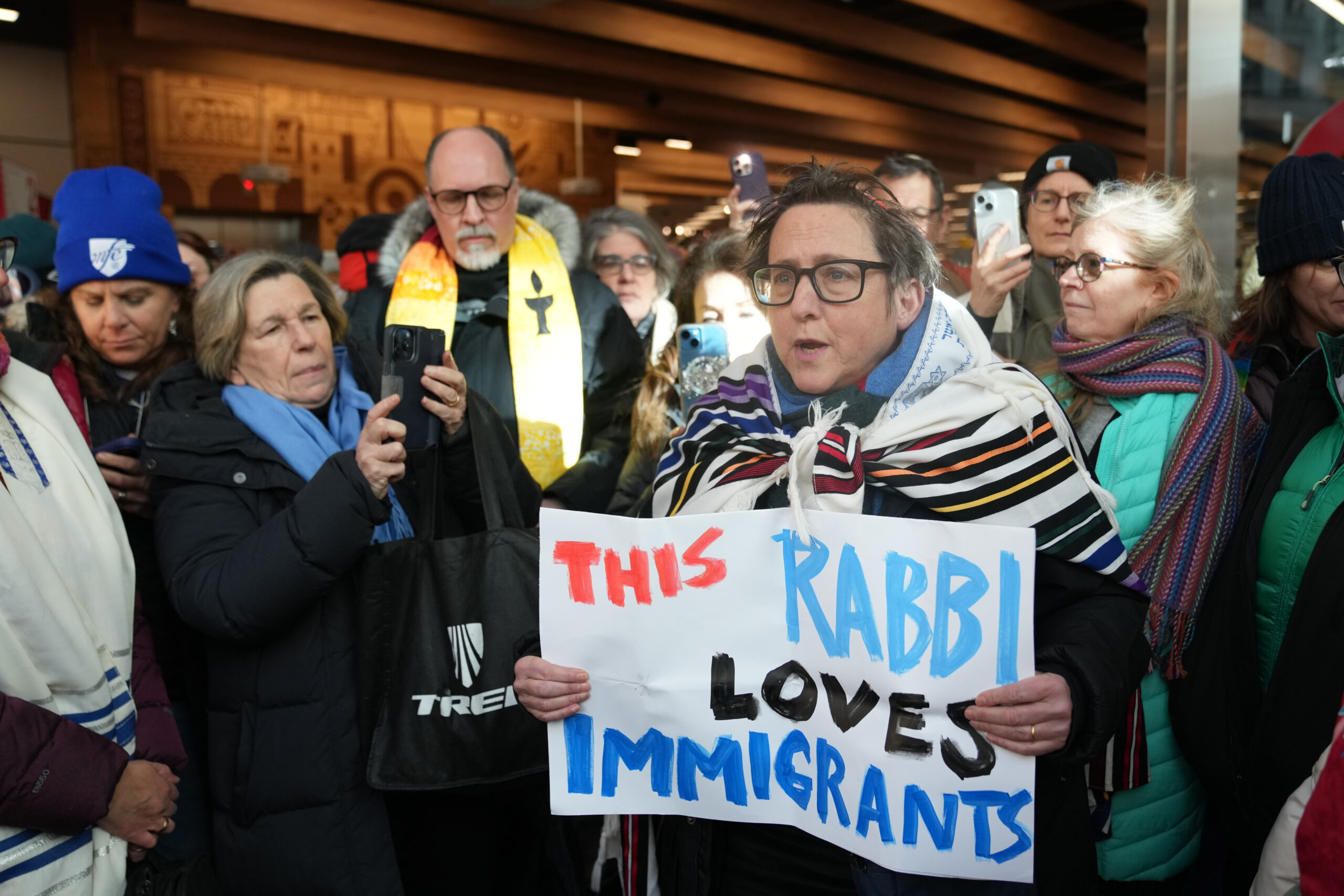
I was especially moved by the images of a polyglot of clergy from all across the nation — priests, rabbis, imams — leading the protests as they blocked traffic at the Minneapolis airport before marching on the headquarters of the giant retailer Target, pleading for an end to any cooperation with U.S. Immigration and Customs Enforcement. The group included as many as a half dozen rabbis, Unitarian ministers, and other faith leaders from the Philadelphia area.
Saturday morning, I reached out to one of them: Rabbi Nancy Fuchs Kreimer, a professor emeritus at Reconstructionist Rabbinical College in Wyncote. We talked about how, in a moment when pollsters and pundits fret about the steep decline in religiosity in American life, members of the clergy are providing a moral leadership so many crave.
Kreimer told me about the instant bond in Minneapolis between the many rabbis there — the ICE raids “had a magnetic quality to them because of the echoes of the Gestapo,” she said — and other faith leaders like Black clergy, who were reminded of 19th-century slave patrols, and white Protestant ministers ashamed over a rising tide of white Christian nationalism in the Republican Party.
Rabbi Sharon Kleinbaum and protesters gather at Target headquarters in Minneapolis on Friday.
“People see coming out of the government — from out of the president, specifically — such cruelty, such contempt, such dehumanizing language, and just crudeness and awful meanness,” the rabbi said. “But yes, actually, people are looking for a different kind of culture of kindness. And yes, they can find it perhaps in a spiritual setting.”
While we were on the phone, one of the lowest and most immoral acts in America’s 250-year history was taking place on the same snow-covered Minneapolis streets that had just been overflowing Friday with a vast sea of righteousness.
At 9:05 a.m. Central Time, a 37-year-old community volunteer and nurse named Alex Pretti stepped between a half dozen masked federal agents and a female volunteer they were attacking with pepper spray, documenting the moment on his phone. In a split second, the goon squad had thrown Pretti to the ground, punching and kicking him in a brutal scene that looked like a documentary about the rise of Nazi Germany, or maybe an outtake from Martin Scorsese’s Goodfellas.
Then, shockingly, a shot rang out. Then a volley of as many as 10 more. Pretti had been summarily executed in public by agents of the U.S. government, in a scene that was captured on multiple phone cameras from every angle and will haunt the American soul for generations to come.
Federal agents claimed Alex Pretti, 37, forced their hand on a Minneapolis street Saturday morning, alleging he “violently resisted” disarmament until the officers fired “defensive shots.”
In the first 24 days of 2026, there have been three homicides in the city of Minneapolis. Two of them have been committed by agents from ICE or the U.S. Border Patrol. And the similarities between Saturday’s murder and the Jan. 7 fatal shooting of Renee Nicole Good go beyond the sad fact that both victims were 37-year-old millennials who’d moved to Minneapolis in hopes the progressive enclave could offer them a better life, only to see their dreams cut short by a repressive regime.
Both Good and Pretti came under a vicious second attack before their families had even been notified — falsely slandered as “terrorists” by their own government that lacks even the tiniest shred of human decency. As with Good’s murder, the Trump regime asked Americans to believe a ridiculously fabricated version of what went down on Nicollet Avenue instead of their own eyes and ears.
This time, the U.S. Department of Homeland Security raced out the lies that Pretti — who was legally carrying a licensed, holstered handgun — had brandished his weapon at the Border Patrol officers, when videos show the nurse only holding his phone, and alsowhen the gun was safely pulled away by an agent before the shooting began. DHS spun a fantasy that Pretti was there to kill officers when he was just protecting his neighbors.
“The sickening lies told about our son by the administration are reprehensible and disgusting,” the victim’s heartbroken parents, Michael and Susan Pretti, said in a statement late Saturday, adding: “Please get the truth out about our son. He was a good man.”
When Good was slain less than three weeks ago, I wrote that her death might mark a turning point in the war for objective truth that requires combating the Orwellian Big Lies at the core of the Trump regime’s tyrannical rule. Both in Friday’s massive protests and Saturday’s aftermath to Pretti’s murder, you see how America is already changing — for good.
A protester holds a sign reading “Love thy neighbor -Jesus” during a rally against federal immigration enforcement on Friday in Minneapolis.
Even online message boards about the most nonpolitical topics — like cats — were cluttered Saturday with posts expressing outrage or denouncing ICE and the Trump regime. A pundit for the ultimate dude-bro, anti-“woke” site, Barstool Sports, wrote that “Pretti was murdered by ICE with zero justification for deadly force,” while NBA All-Star Tyrese Haliburton tweeted in agreement: “Alex Pretti was murdered.”
Most importantly, Senate Minority Leader Chuck Schumer (D., N.Y.), with the ability to stop most legislation with a filibuster by 41 of the chamber’s 47 Democrats, announced Saturday that he will work to block a new appropriations bill for DHS that’s due by the end of the month as long as ICE occupies Minneapolis and keeps abusing people. The time is right. A fight over funding ICE could be the decisive battle of the Trump years, and it’s clear many Americans are ready for this fight.
The tired conventional wisdom of politics that has cowed the likes of Schumer for so long also died in that hail of gunfire on Saturday. This thing is way beyond politics now. The brute force and absurd lies of a would-be American dictatorship have finally made people realize this is no longer left vs. right, but good vs. evil.
“My father warned us, ‘When evil men plot, good men must plan. When evil men burn and bomb, good men must build and bind,’” Bernice King, the daughter of the Rev. Dr. Martin Luther King Jr., wrote of Pretti’s murder. “What we are witnessing now (masked raids, people taken without due process, vigilante, Gestapo, and slave patrol-like tactics, normalized under the color of law) is a moral crisis.”
That moral fight has come full circle. In 1965, the televised images of Alabama state troopers clubbing peaceful voting rights marchers in Selma led hundreds of clergy from across America to fly south to join King in a march on the state capital of Montgomery. One of those ministers, the Rev. James Reeb of Boston, was murdered by racist thugs. That historic effort inspired today’s faith leaders who descended on Minneapolis.
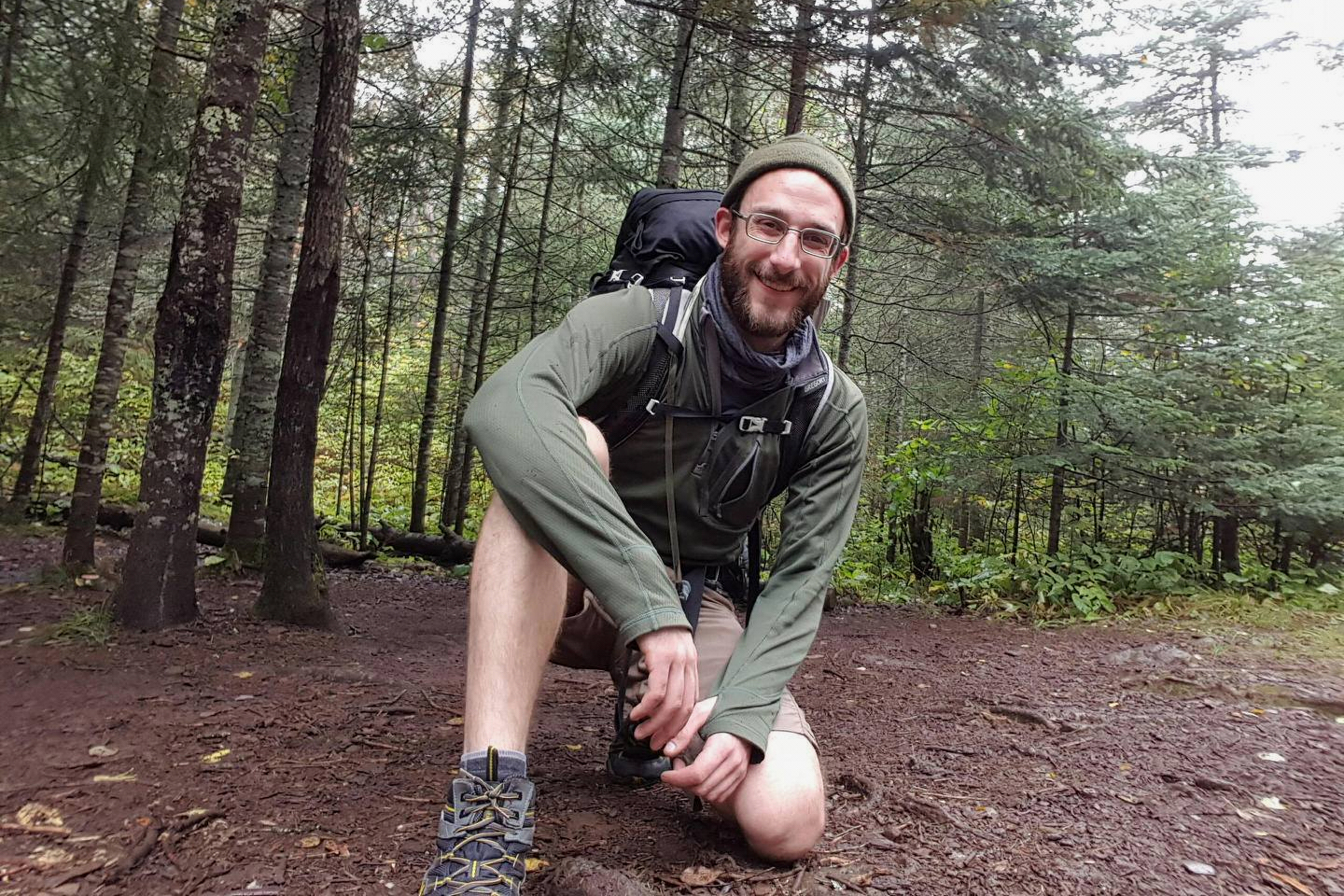
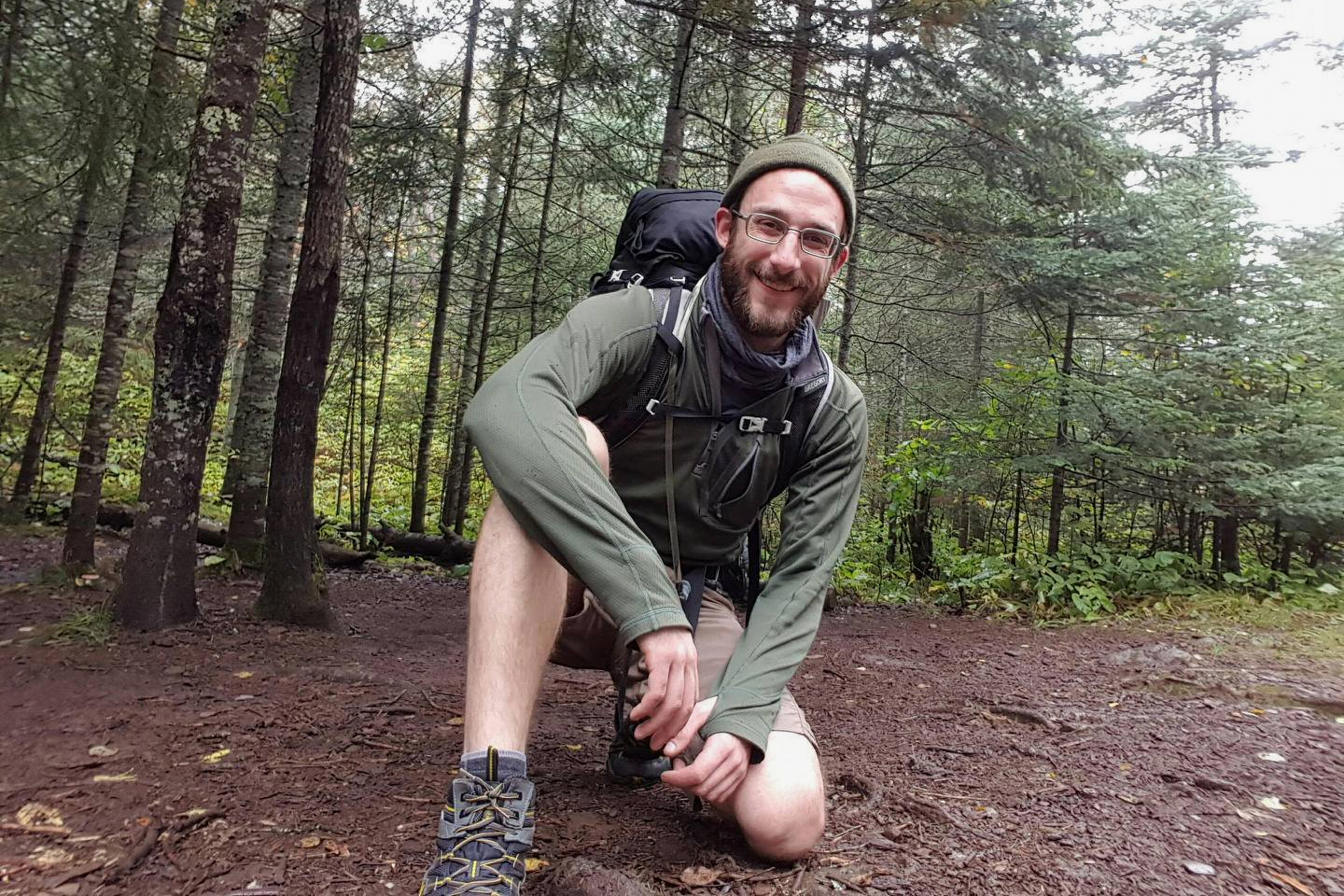
This undated photo provided by Michael Pretti shows Alex Pretti, the man who was shot by federal officers in Minneapolis on Saturday.
“People are searching for values,” Kreimer said after returning from her sessions with Minnesota activists, who trained her on how to organize people when ICE inevitably descends on Philadelphia. She added that they are “saying, ‘I am repelled by this. What is it about this? It’s not OK. What is it in the way that I live my life that I need to do about this?’”
There’s no disputing that church attendance is nowhere near what it was in 1965, or that organized religion has the same kind of public trust issues as other institutions. But the unthinkable scenes of thuggery on once placid American streets, and the blatant lies from our leaders, clearly have people asking questions about the arc of a moral universe that has been suppressed for far too long.
It’s been too easy to become jaded about the word evil and its meaning when that term has been abused by cynical politicians to justify their pointless wars.
But it’s become impossible to watch the courage of whistleblowing everyday citizens putting their lives on the line to fight for the neighbors they don’t even know, or to see the utter depravity of top government officials slandering innocent murder victims while their bodies are still warm, and not conclude: Yes, there is good and evil in this world.
The church pews might be empty, but millions of Americans are still desperate to affirm that they love thy neighbor. In the shock and sorrow over the Minneapolis murders, this is something we can all cling to.
I don’t know what lies ahead on this bumpy road, or how many more Alex Prettis or Renee Goods will have to die before the positive moral force that finally awoke in Minneapolis can fully reclaim America. It’s tough to think about right now. But what’s clear is this: The time for choosing is today. Which side are you on?
“Terrible things are happening outside. At any time of night and day, poor helpless people are being dragged out of their homes … Families are torn apart; men, women and children are separated. Children come home from school to find that their parents have disappeared … Everyone is scared … No one can keep out of the conflict … the end is nowhere in sight.”
Donald Trump’s masked marauders murdered another U.S. citizen in Minneapolis on Saturday, a senseless killing in a senseless war playing out in broad daylight on America’s streets.
Cell phone videos showed one of Trump’s immigration enforcement goons violently pushing a woman to the ground. As a man recording the agents tried to intervene, at least seven federal agents surrounded and dragged him to the ground as another beat him with a canister.
As the agents struggled to subdue the man, another agent appeared to remove a gun from the scrum. A Border Patrol agent then shot the man in the back from close range. A third agent pulled out his gun as nine more shots were fired within seconds.
Several agents scampered away as Alex Pretti, a 37-year-old U.S. citizen with no criminal record, lay motionless on the street.
This undated photo provided by Michael Pretti shows Alex Pretti, the man who was shot by a federal officer in Minneapolis on Saturday.
After the shooting, a crowd of protesters shouted profanities at the federal officers, calling them “cowards” and urging them to leave. One officer mockingly responded, “Boo-hoo.”
Pretti’s killing came two weeks after a U.S. Immigration and Customs Enforcement agent in Minneapolis killed Renee Good — a mother of three and a U.S. citizen — as she tried to maneuver her SUV out of the street. A week later, a DoorDash delivery driver was shot in the leg by ICE agents in Minneapolis.
After the two killings, Trump and his loyal lieutenants tried to blame the victims and local Democratic leaders. But cell phone videos showed the truth: Trump’s jackboots have now plainly executed two U.S. citizens.
The American people can see the lawless mayhem with their own eyes.
Trump has unleashed a paramilitary of ICE and Border Patrol agents into American streets with a license to arrest, confront, detain, beat, or kill anyone who gets in their way — even if it is an off-duty police officer or a 5-year-old boy.
Any pretense of federal investigations into abuses by ICE or others doing Trump’s bidding is quickly compromised or shut down. Constitutional rights are ignored. The rule of law is now set by Trump’s morality, which appears to thrive on cruelty.
Federal immigration agents must leave Minneapolis and end their vigilantism. But who will stop them?
There are no checks on Trump’s power, as his administration is stocked with unqualified lackeys competing for his attention.
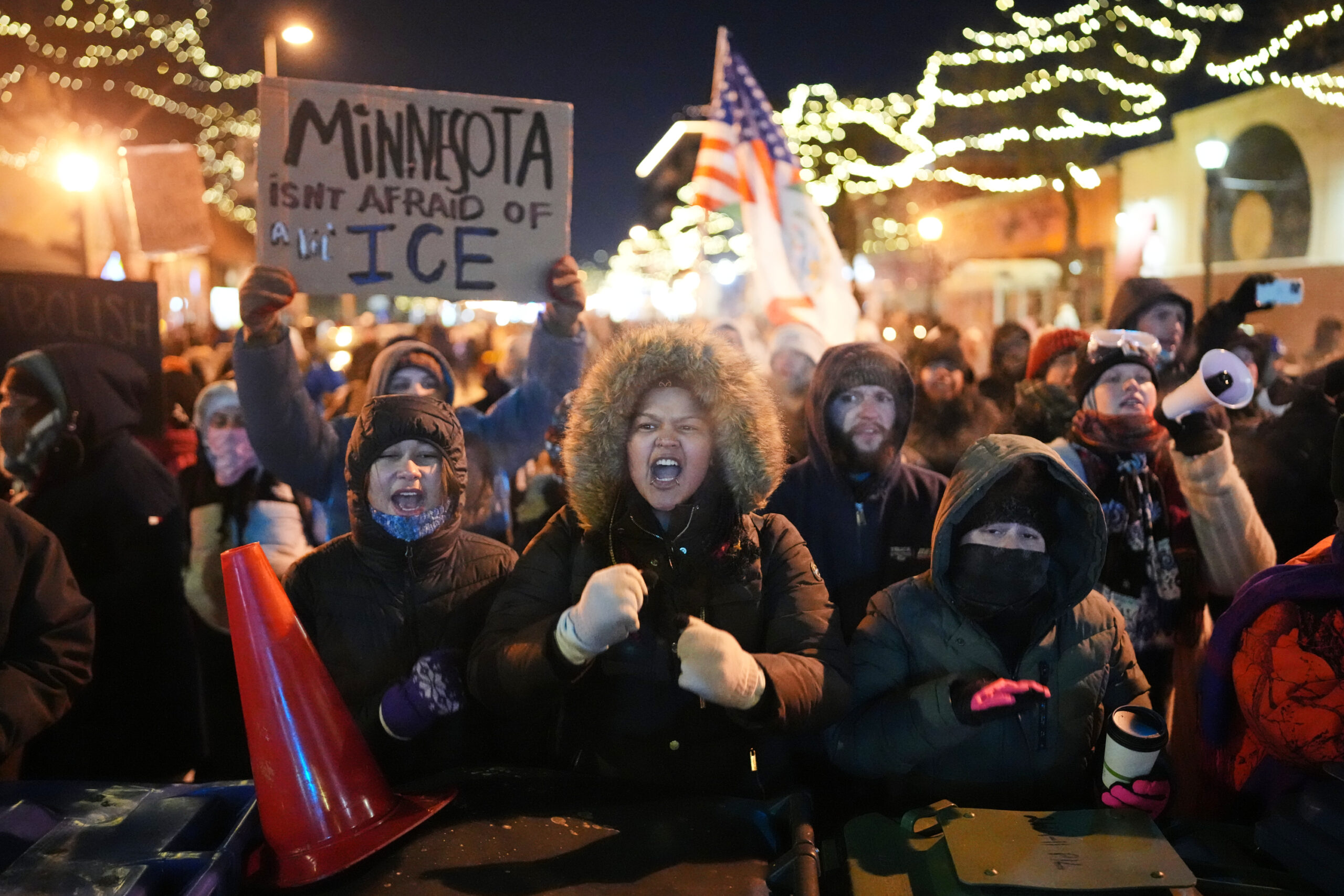
Protesters chant and bang on trash cans Saturday as they stand behind a makeshift barricade during a protest in response to the death of 37-year-old Alex Pretti, who was fatally shot by a U.S. Border Patrol agent earlier in the day in Minneapolis.
The Republicans who control Congress have abdicated their constitutional duty, while conservatives on the U.S. Supreme Court continue to enable the president.
Sadly, justice left town after the U.S. Senate — including Pennsylvania’s John Fetterman and Dave McCormick — confirmed Pam Bondi, one of Trump’s personal lawyers, as attorney general.
The FBI has been decimated by Kash Patel, an unqualified incompetent, pushing conspiracy theories and vendettas. Kristi Noem has turned the U.S. Department of Homeland Security into a Bull Connor-like police force, led by Gregory Bovino in his greatcoat.
The architect behind the draconian ICE crackdown is Stephen Miller, an unelected and unconfirmed senior adviser and speechwriter with a history of white nationalist ties and bigotry.
Republicans enabled the surge in ICE man power and funding when they approved Trump’s Big Beautiful Bill. If the GOP will not stop Trump, then voters must act come November.
ICE was supposed to go after the “worst of the worst” people who entered the country illegally. Instead, Trump and his lawless administration have occupied cities, caused civil unrest, and accomplished essentially nothing.
Tens of thousands of immigrants arrested have no criminal records. Others are collateral damage. After Good was killed, Trump said that “things happen.”
Pretti was among the best in America. He was a nurse in an intensive care unit that served veterans. He died trying to help a woman attacked by a masked thug.
Minneapolis Mayor Jacob Frey asked the question many want to know about the Trump administration’s growing domestic war: “How many more Americans need to die?”
MINNEAPOLIS — In dueling news conferences, federal and state officials offered starkly different messages Sunday about the immigration crackdown that has swept across Minneapolis and surrounding cities, with both claiming the moral high ground in the wake of another shooting death by federal agents.
“Which side do you want to be on?” Gov. Tim Walz asked the public. “The side of an all-powerful federal government that could kill, injure, menace, and kidnap its citizens off the streets, or on the side of a nurse at the VA hospital who died bearing witness to such government,” a reference to the shooting of Alex Pretti on Saturday in Minneapolis.
At the same time, in a federal office building about 20 miles away, Border Patrol Commander Gregory Bovino, the public face of the crackdown, again turned blame for the shooting to Pretti.
“When someone makes the choice to come into an active law enforcement scene, interfere, obstruct, delay, or assault law enforcement officer and — and they bring a weapon to do that. That is a choice that that individual made,” he told reporters.
The competing comments emerged as local leaders and Democrats across the country demanded federal immigration officers leave Minnesota after Pretti’s shooting, which set off clashes with protesters in a city already shaken by another shooting death weeks earlier.
Video contradicts administration statements
Video shot by bystanders and reviewed by the Associated Press appears to contradict statements by President Donald Trump’s administration, which said agents fired “defensively” against Pretti, a 37-year-old intensive care nurse, as he approached them.
Pretti can be seen with only a phone in his hand as he steps between an immigration agent and a woman on the street. No footage appears to show him with a weapon. During the scuffle, agents appear to disarm him after discovering that he was carrying a 9 mm semiautomatic handgun, and then the agents opened fire several times. Pretti was licensed to carry a concealed weapon.
In the hours after the shooting, Homeland Security Secretary Kristi Noem said Pretti attacked officers, and Bovino said he wanted to “massacre law enforcement.”
Bovino was more restrained Sunday, saying he would not speculate about the shooting and that he planned to wait for the investigation.
Relatives say they are heartbroken
Pretti’s family said they were “heartbroken but also very angry” at authorities. Relatives were furious at federal officials’ description of the shooting.
“The sickening lies told about our son by the administration are reprehensible and disgusting. Alex is clearly not holding a gun when attacked by Trump’s murdering and cowardly ICE thugs. He has his phone in his right hand, and his empty left hand is raised above his head while trying to protect the woman ICE just pushed down all while being pepper sprayed,” the family statement said. “Please get the truth out about our son.”
Pretti was shot just over a mile from where an ICE officer killed 37-year-old Renee Good on Jan. 7, sparking widespread protests.
A federal judge has already issued an order blocking the Trump administration from “destroying or altering evidence” related to the shooting, after state and county officials sued.
Minnesota Attorney General Keith Ellison said the lawsuit filed Saturday is meant to preserve evidence collected by federal officials that state authorities have not yet been able to inspect. A court hearing is scheduled for Monday in federal court in St. Paul.
“A full, impartial, and transparent investigation into his fatal shooting at the hands of DHS agents is nonnegotiable,” Ellison said in a statement.
Drew Evans, superintendent of the state’s Bureau of Criminal Apprehension, which investigates police shootings, told reporters Saturday that federal officers blocked his agency from the scene of the shooting even after it obtained a signed judicial warrant. On Sunday morning, bureau officers were working at the scene.
Assistant Homeland Security Secretary Tricia McLaughlin dismissed the lawsuit, saying claims that the federal government would destroy evidence are “a ridiculous attempt to divide the American people and distract from the fact that our law enforcement officers were attacked — and their lives were threatened.”
The Minnesota National Guard temporarily assisted local police at Walz’s direction, officials said, with troops sent to the shooting site and a federal building where officers have squared off daily with demonstrators.
But Minneapolis Police Chief Brian O’Hara said Sunday morning on CBS’ Face the Nation that “it’s back to just the Minneapolis police responding to calls.”
No evidence that Pretti brandished gun
O’Hara said he had seen no evidence that Pretti brandished the pistol, and that the crackdown was exhausting his department.
“This is taking an enormous toll, trying to manage all this chaos on top of having to be the police department for a major city. It’s too much,” he said.
Rep. Alexandria Ocasio-Cortez of New York was among several Democratic lawmakers demanding that federal immigration authorities leave Minnesota.
In a statement, former President Barack Obama called Pretti’s death a “heartbreaking tragedy” and warned that “many of our core values as a nation are increasingly under assault.”
He urged the White House to work with city and state officials.
“This has to stop,” Obama said.
Federal officials have repeatedly questioned why Pretti was armed during the confrontation. But gun rights groups noted that it’s legal to carry firearms during protests.
“Every peaceable Minnesotan has the right to keep and bear arms — including while attending protests, acting as observers, or exercising their First Amendment rights,” the Minnesota Gun Owners Caucus said in a statement. “These rights do not disappear when someone is lawfully armed.”
Minnesota businesses issue letter urging cooperation
“With yesterday’s tragic news, we are calling for an immediate deescalation of tensions and for state, local and federal officials to work together to find real solutions,” the open letter reads.
CEOs that signed the letter included 3M CEO William Brown, Best Buy CEO Corie Barry, General Mills CEO Jeff Harmening, Target incoming CEO Michael Fiddelke, UnitedHealth Group CEO Stephen Helmsley, and others.
Before the letter, most of the biggest Minnesota-based companies had not issued any public statements about the enforcement surge and unrest.
But the issue has become more difficult to avoid. Over the past two weeks protesters have targeted some businesses they see not taking a strong enough stand against federal law enforcement activity, including Minneapolis-based Target. Earlier in January a Minnesota hotel that wouldn’t allow federal immigration agents to stay there apologized and said the refusal violated its own policies after a furor online.
“In this difficult moment for our community, we call for peace and focused cooperation among local, state and federal leaders to achieve a swift and durable solution that enables families, businesses, our employees, and communities across Minnesota to resume our work to build a bright and prosperous future,” the letter reads.
It may not approach their magnitudes, but Sunday’s snow-and-ice cold brew is expected to bear eerie similarities to some of Philly’s historic winter storms and perhaps rival them for disruption.
By 7 a.m., up to 3 inches had been reported around the region, with heaviest amounts to the south where the snow started earlier.
Officially, at Philadelphia International Airport, 1.6 inches had been measured, already making this the city’s biggest official total of the month. But Center City trumped it at 1.8.
From 8 to 10 inches was expected around the city before the snow mixes with sleet and possibly freezing rain during the afternoon, said Nick Guzzo, a meteorologist at the National Weather Service Office in Mount Holly. All that is subject to change, of course.
As for the potential mixing, “pick your poison,” said Guzzo’s colleague Mike Lee.
The office has posted winter storm warnings for the entire region, joining offices from New Mexico to Maine.
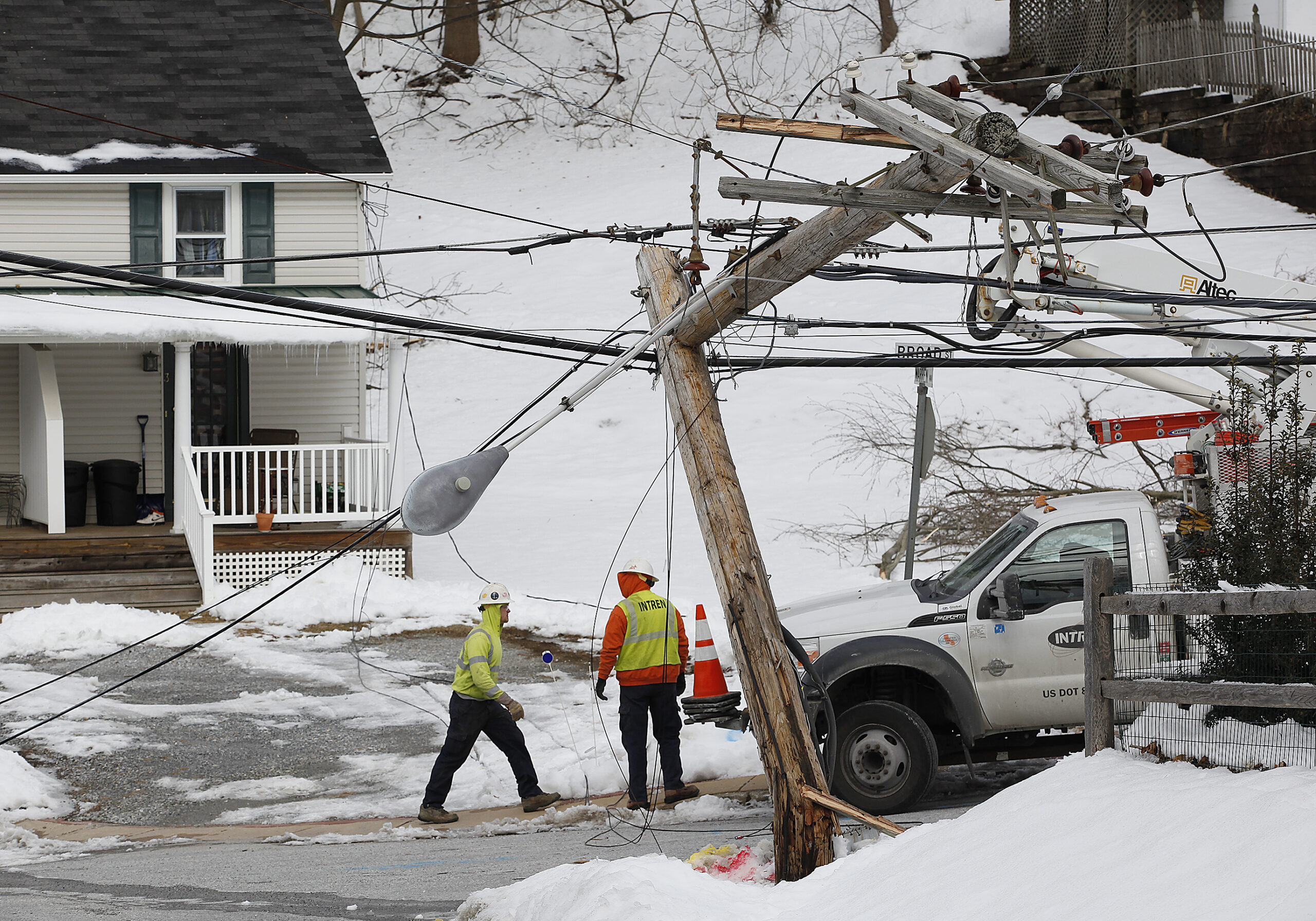
A crew from northern Illinois works to restore power at Broad Street and Warren Avenue in Malvern after the February 2014 ice storm.
The precipitation is due to shut off early Monday, but by then it may be a case of welcome to ice station Philly.
Nothing that falls is going to melt, as temperatures will get no higher than the 20s Sunday and may not see 30 for the rest of the week
Affirming their faith in the forecasts, Philadelphia, New Jersey, and Pennsylvania have declared emergencies. If you have plans the next few days, don’t count on them happening, and some kids might be able to put off homework for a few days.
Perhaps of more interest to some parties, Pennsylvania announced that all its liquor stores will be closed Sunday, and the Girl Scouts have pushed back their cookie-sale dates all the way to the spring equinox. (At least some of the bars and churches may be open.)
How much for Philly?
On Saturday, the National Weather Service was sticking with 8 to 10 inches for the immediate Philly area, said meteorologist Amanda Lee, with less to the southeast. AccuWeather Inc. was calling for 6 to 10 inches.
A lot of that would fall during a “front-end thump,” said AccuWeather meteorologist Elizabeth Glenny. Once the mixing begins, accumulation rates would back off.
While people understandably want to know how many inches of snow are going to land, that is almost always difficult to answer, meteorologists say, especially in a storm of this nature.
In this case, snow amounts are dependent on a coastal storm that had not yet formed Saturday and on what might happen in parts of the atmosphere that are not well-observed.
Temperatures in the bottom 5,500 feet of the atmosphere over Philly are expected to remain below freezing, said AccuWeather senior meteorologist Tom Kines, but computer models insist that a warm layer in the higher atmosphere would result in the changeover.
That warmth would be imported from the Atlantic Ocean by the strong onshore winds from the northeast generated by the storm — it’s not for nothing that these things are called nor’easters.
Another wild card would be if the snow is heavy enough that it could survive the warm layer and delay the changeover.
But the mixing of sleet, which is liquid that remains frozen in its trip through the atmosphere, and freezing rain, liquid that freezes on contact, is inevitable, forecasters said.
Freezing rain atop a snowpack is especially dangerous because it adds weight to vulnerable and snow-burdened power lines and tree branches. Sleet is polite enough to bounce off hard surfaces, but since it is pure ice, it is slower to melt.
Said the weather service’s Mike Lee, the mixing “just means we’re getting a different blend of horrors.”
Remembrance of Philly storms past
Mike Lee said that about 1.5 inches of liquid precipitation — the amount of melted snow and ice — was expected to fall during the storm, and whatever landed was certain to participate in becoming a massive block of ice.
And it is close to what fell during Philly’s last double-digit snow, the 22.4 inches of Jan. 22-23, 2016.
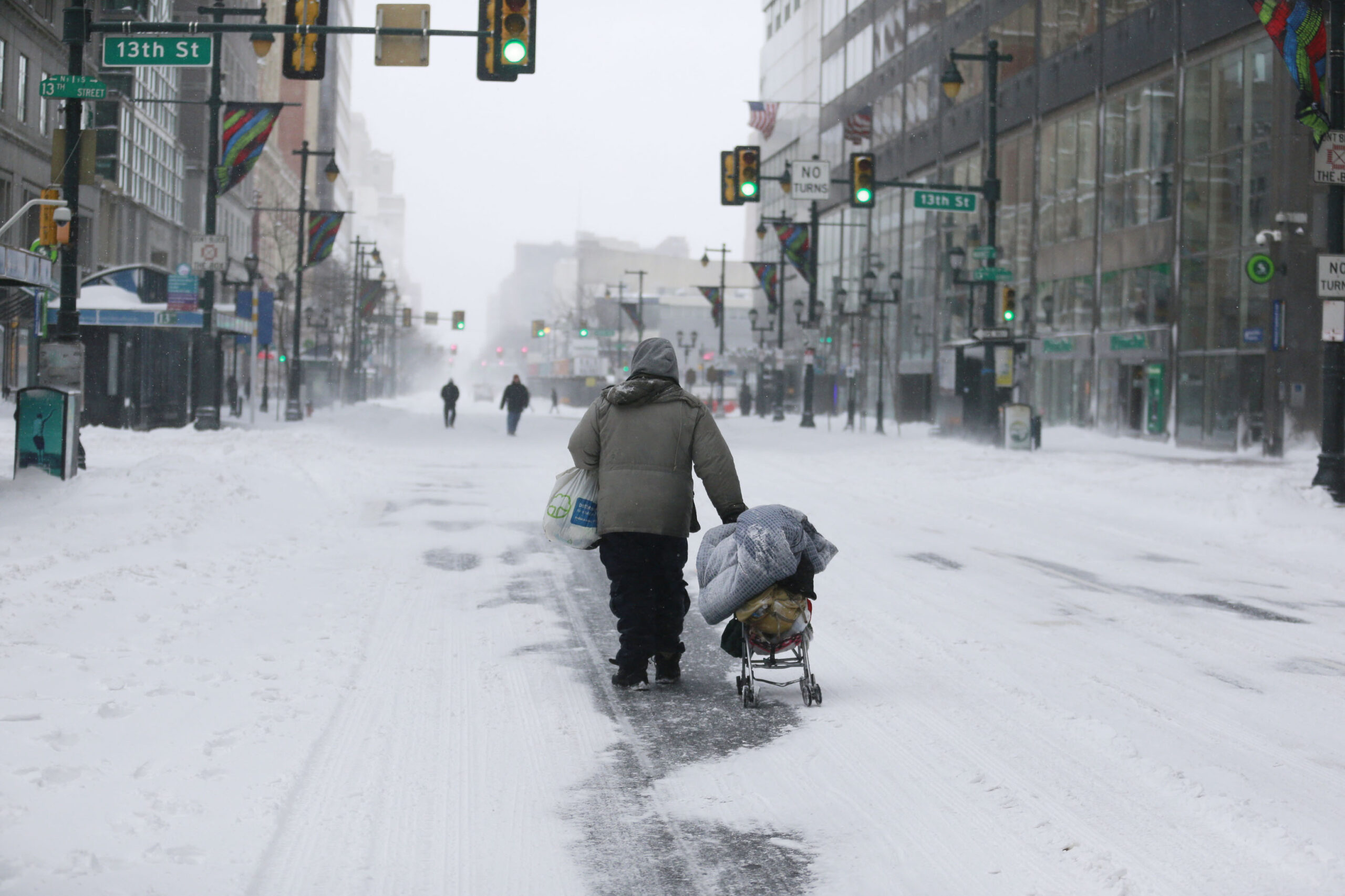
Market Street near 13th is mostly pedestrian traffic as snow falls over the region on Jan. 23, 2016.
In mid-March 1993, a foot of snow accumulated rapidly during a blizzard, followed by several hours of sleet and a flash freeze during the early morning. It created what a weather service meteorologist famously called an “Arctic landscape.”
The landscape Monday may be similar, but with one important difference.
That March storm occurred near the equinox, when the sun was about 50% stronger than it is this time of year, according to NASA data, and days were close to two hours longer. (Yes, those days are coming.)
The temperature bottomed out at 11 degrees Saturday morning, the lowest reading of the season at Philadelphia International Airport, and into the single digits outside the city.
Most airlines have canceled flights departing Sunday from Philadelphia International Airport. By late Saturday afternoon, there were 502 canceled flights into or out of the airport, according to the city.
Temperatures are expected to get no higher than the mid-20s Sunday and Monday. And then it’s going to get colder, with daytime highs no better than the low 20s, and nights in the single digits.
Philly’s biggest snow in five years has an icy finish, and it isn’t going anywhere soon
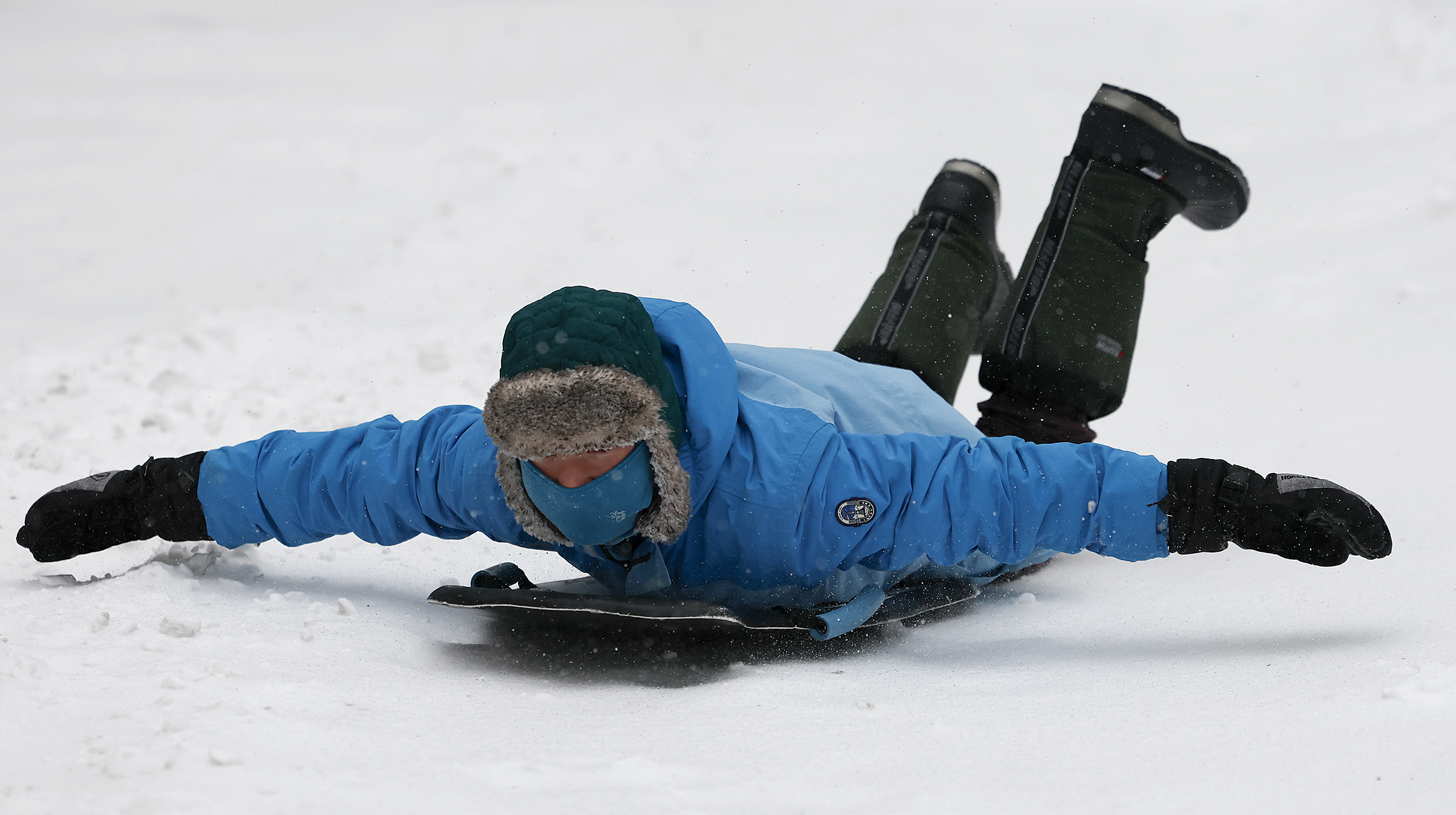
George Lynch, 11, slides on his stomach down 2nd Street in the Society Hill neighborhood Sunday.
Hours of percussive sleet layered a nasty icing on Philadelphia’s biggest snowfall in five years Sunday, and it may be some time before bare ground resurfaces in the region, if not normality.
This was not the stuff of postcards.
Officially 7.4 inches of snow was measured at unusually quiet Philadelphia International Airport, with similar amounts reported in the neighboring counties, as temperatures didn’t get out of the teens during the day anywhere near Philly.
And shovelers beware: That mess may weight as much as 18 inches of pure snow. Besides, we may be out of practice. This was the most snow since the 81 inches of Feb. 2-3, 2021. Incidentally, that snowfall was the biggest in five years, in what has been a generally snow-deprived decade.
Forecasters say it is unlikely that the precipitation would flip back to snow, but some additional accumulation was possible, since sleet — liquid that freezes before it lands — counts as snow. In some places it was falling at the rate of 0.5 inches an hour, the National Weather Service said, an extraordinary rate for sleet.
Some freezing rain — liquid that freezes on contact with a surface — was possible Sunday evening, said Nick Guzzo, meteorologist at the National Weather Service in Mount Holly.
However, widespread power outages were unlikely, a function of the unusual behavior of a potent but peculiar storm that wrought a familiar set of disruptions and inconveniences.
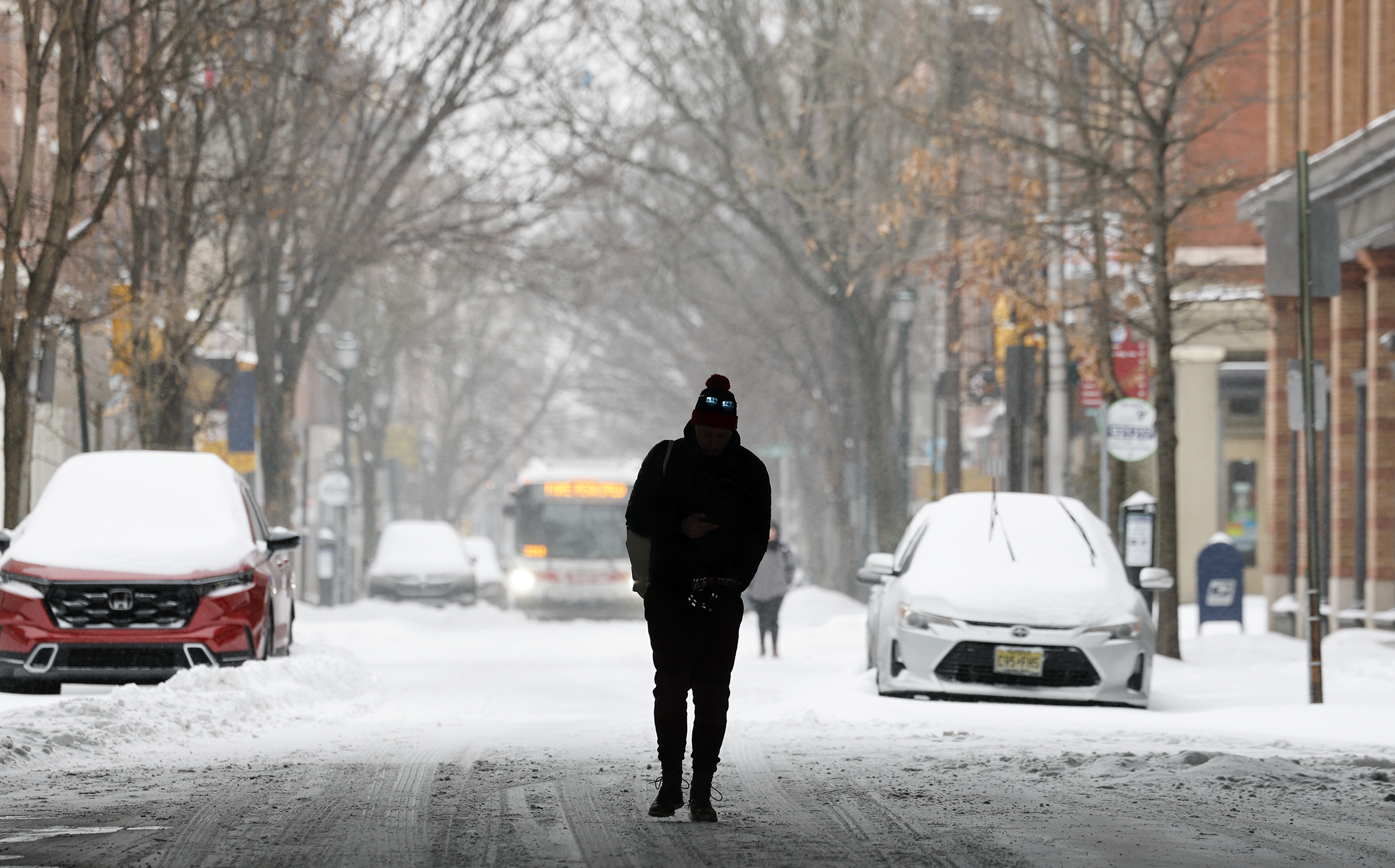
A pedestrian walks under the Benjamin Franklin Bridge Sunday.
A far-reaching winter storm blanketed the Mid-Atlantic in an icy brew of snow and sleet Sunday, with preliminary totals nearing a foot in parts of New Jersey.
Philadelphia ranked near the top end of regional totals. A survey of five regional National Weather Service offices showed PHL’s total ranked 103rd of 565 reports made in the last six hours.
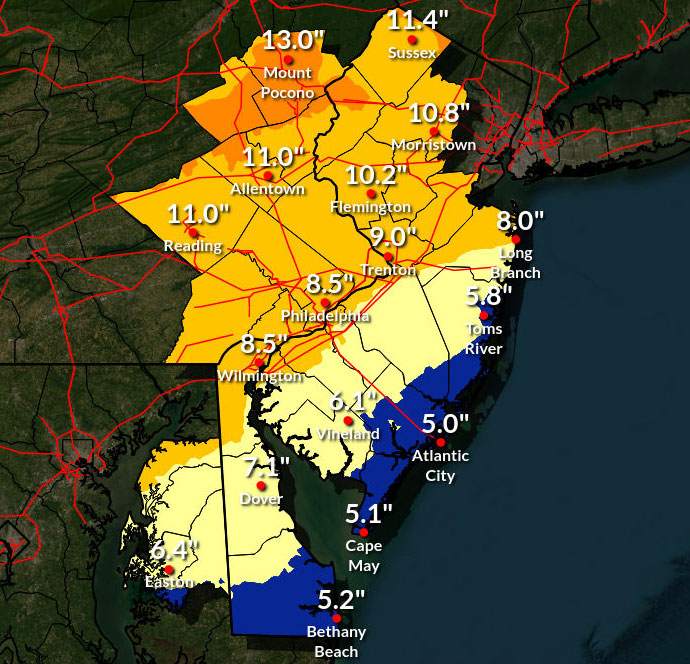
The Philadelphia metropolitan region generally received between four and nine inches of snow by early Sunday afternoon, according to National Weather Service reports.
Among the highest totals:
Pottstown – 9.5 inches
Norristown – 8.7 inches
Stowe – 8.5 inches
Lower Pottsgrove – 8.5 inches
New Hanover – 8.5 inches
Use the map and chart below to find preliminary snow totals in your area. Hover over dots on the map to reveal more information, or search for Philadelphia-area totals below.
window.addEventListener(“message”,function(a){if(void 0!==a.data[“datawrapper-height”]){var e=document.querySelectorAll(“iframe”);for(var t in a.data[“datawrapper-height”])for(var r,i=0;r=e[i];i++)if(r.contentWindow===a.source){var d=a.data[“datawrapper-height”][t]+”px”;r.style.height=d}}});window.addEventListener(“message”,function(a){if(void 0!==a.data[“datawrapper-height”]){var e=document.querySelectorAll(“iframe”);for(var t in a.data[“datawrapper-height”])for(var r,i=0;r=e[i];i++)if(r.contentWindow===a.source){var d=a.data[“datawrapper-height”][t]+”px”;r.style.height=d}}});
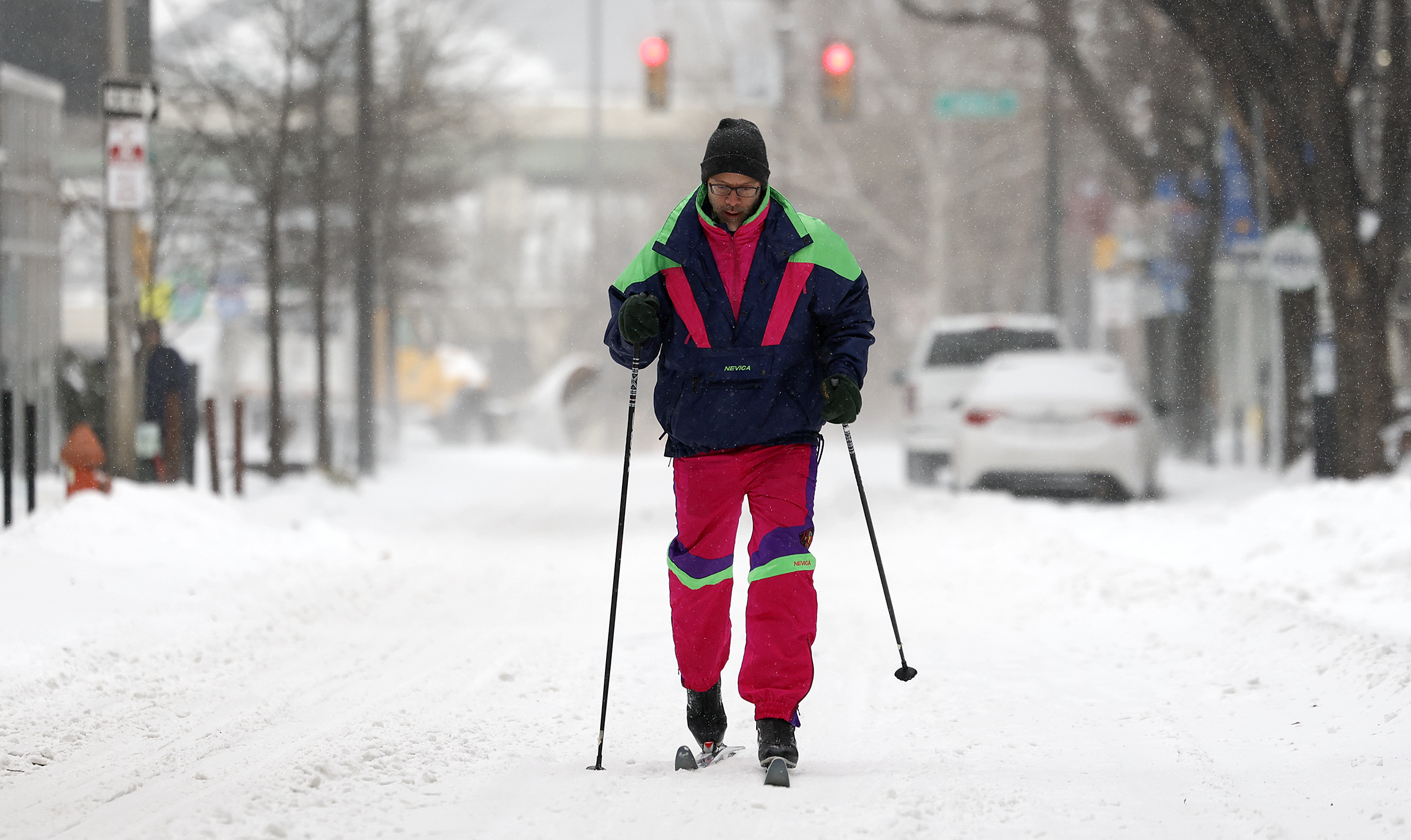
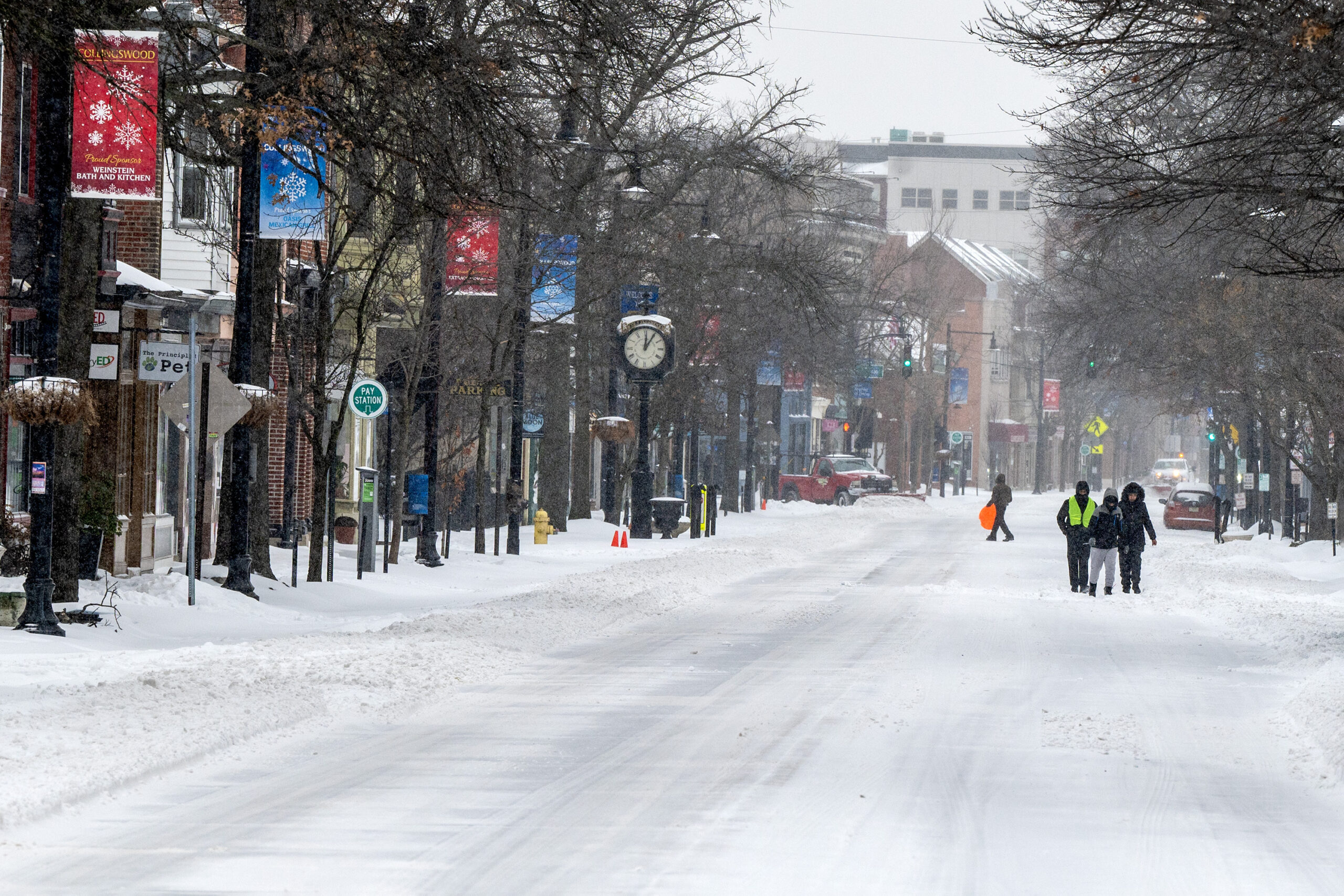
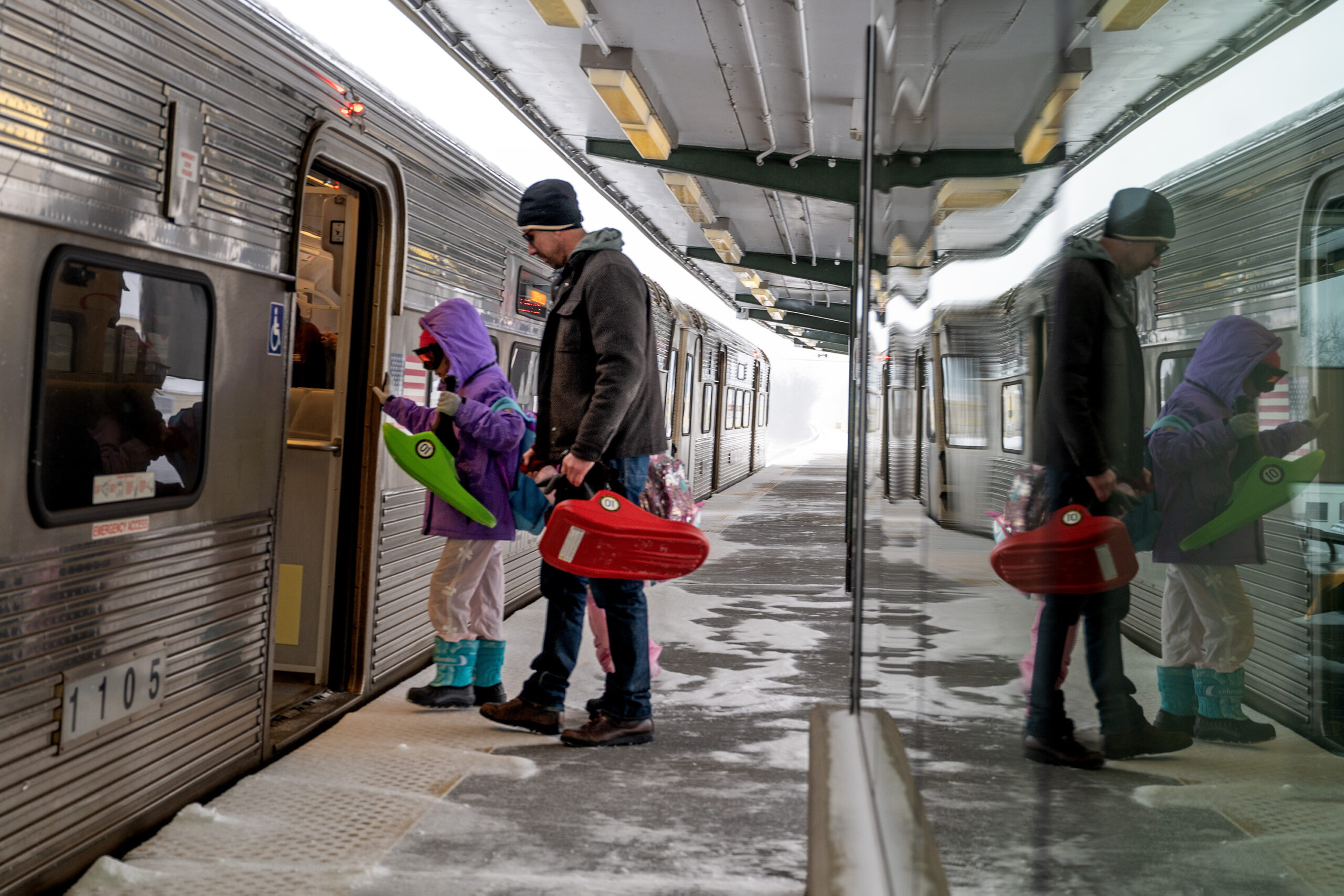
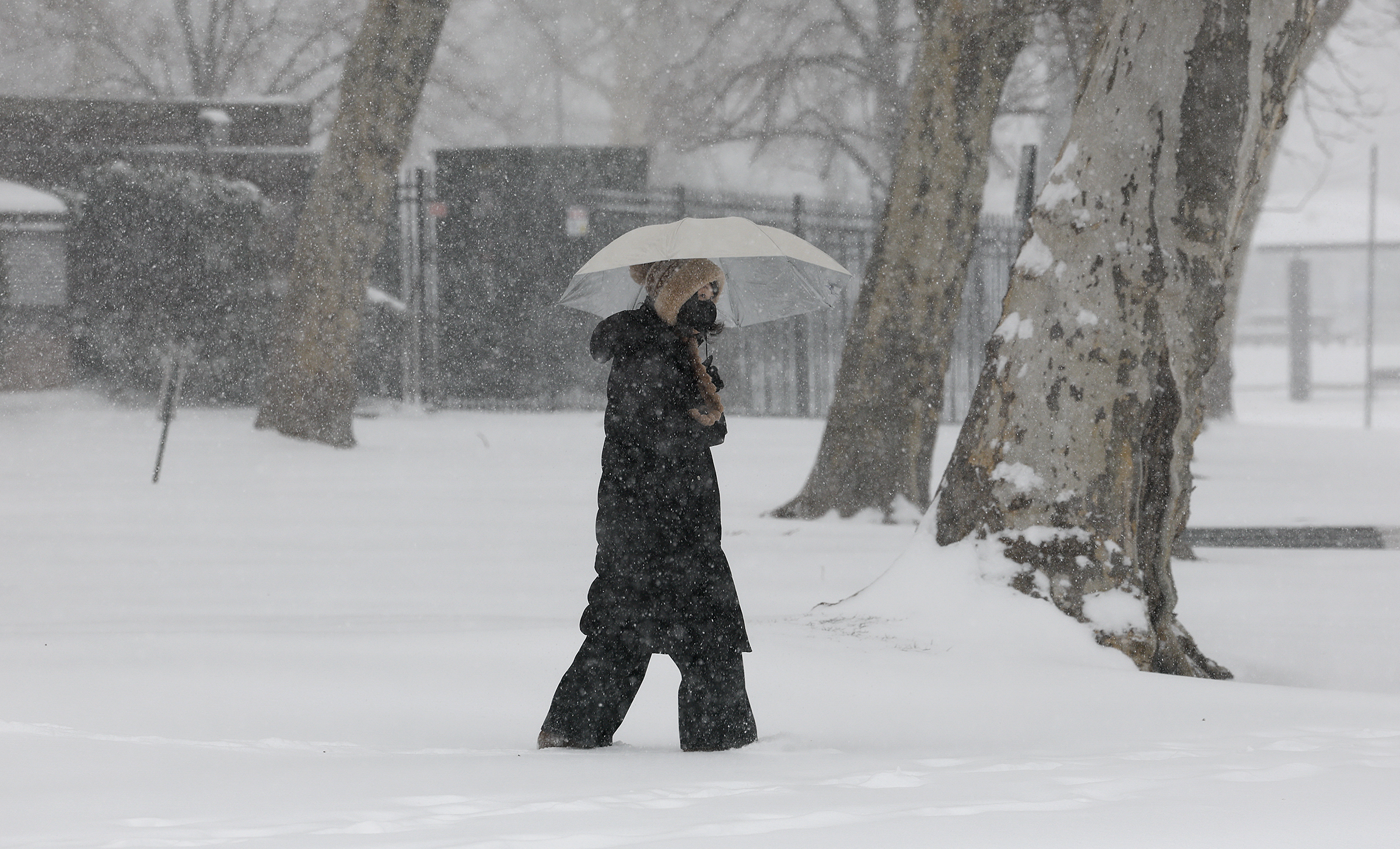
Russ Walters skies along Race Street in the Old City neighborhood Sunday. Pedestrians walk in the middle of a plowed but empty Haddon Avenue in downtown Collingswood. Mike Doveton and his daughters. Maya, 10, and Jaydan (hidden), 6, board a PATCO train with their sleds heading out to snow. A pedestrian uses their umbrella as snow falls on Race Street.
// Timestamp 01/25/26 1:41pm
Philly officially has its biggest snow in five years
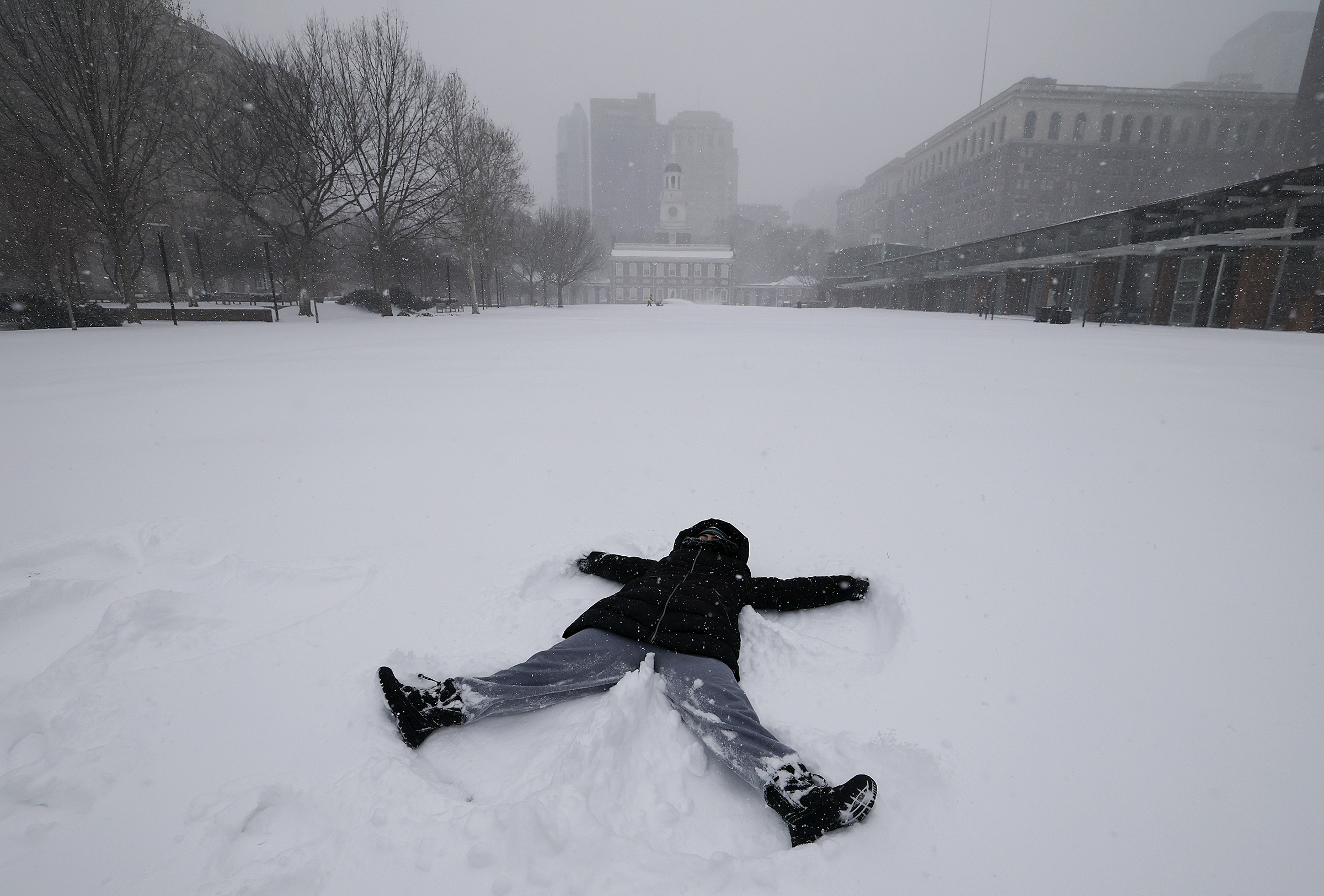
Julie Cohen makes a snow angel on the snow covered lawn at Independence Mall Sunday.
At 1 p.m., 7.4 inches of snow was measured at Philadelphia International Airport, the biggest snow in five years.
It also pushed the seasonal total to 13.8 inches, also the highest since the winter of 2020-21.
Given how cold it was during the snowfall, the regional totals didn’t show their usual wide variations, and were mostly in the 6- to 8-inch range. It’s possible that another inch could be added to the totals with the slow-accumulating sleet and a possible flip-back to light snow before the precipitation ends.
Some freezing rain also is possible late in the day or evening Sunday.
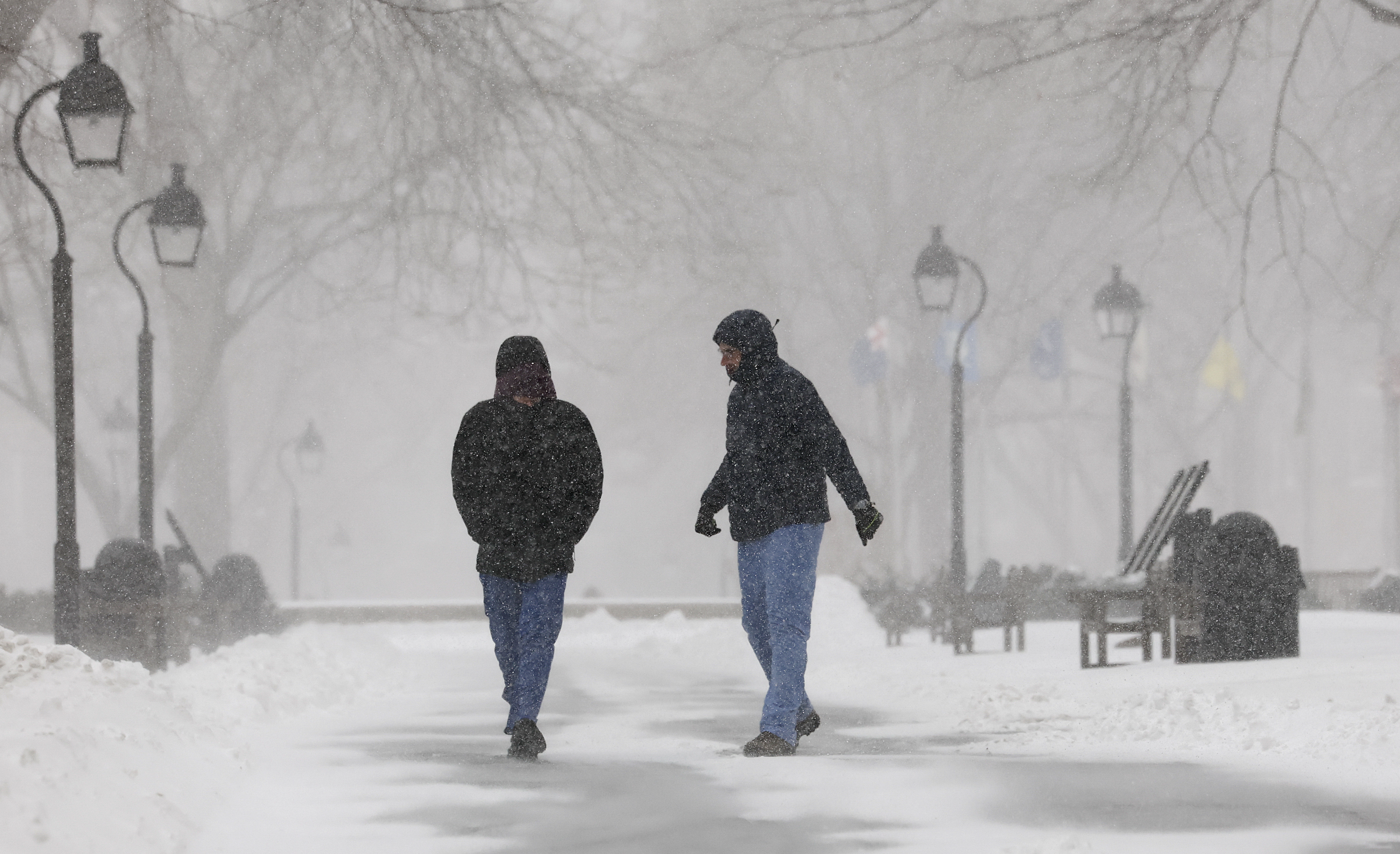
Two pedestrian brave the weather in Washington Square Park Sunday.
Temperatures at the surface remain in the teens, but sleet has routed the snow throughout the region.
Before the changeover, weather service spotters reported as much as 7 inches of snow. By convention, spotters measure snow before changeovers, since sleet and rain compress the snowpack.
Sleet, which is liquid that freezes on the way to the surface, counts as snowfall, but it accumulates ponderously. A tenth of an inch of liquid will yield about an inch of snow, but it would take three times that to produce an inch of sleet.
The changeover is the result of a layer of warm air in the upper atmosphere imported from the ocean by the onshore winds of a potent coastal storm.
The sleet is due continue this afternoon, and freezing rain also remains a possibility before it all ends late tonight or early Monday, said Nick Guzzo, meteorologist at the National Weather Service Office in Mount Holly.
Whereas sleet and freezing rain hold down accumulations, he notes that they slow down the melting process.
Ice cubes take longer to melt than snowflakes.
Be careful shoveling. The whole frozen mess may feel like it weighs as much as 18 inches of snow.
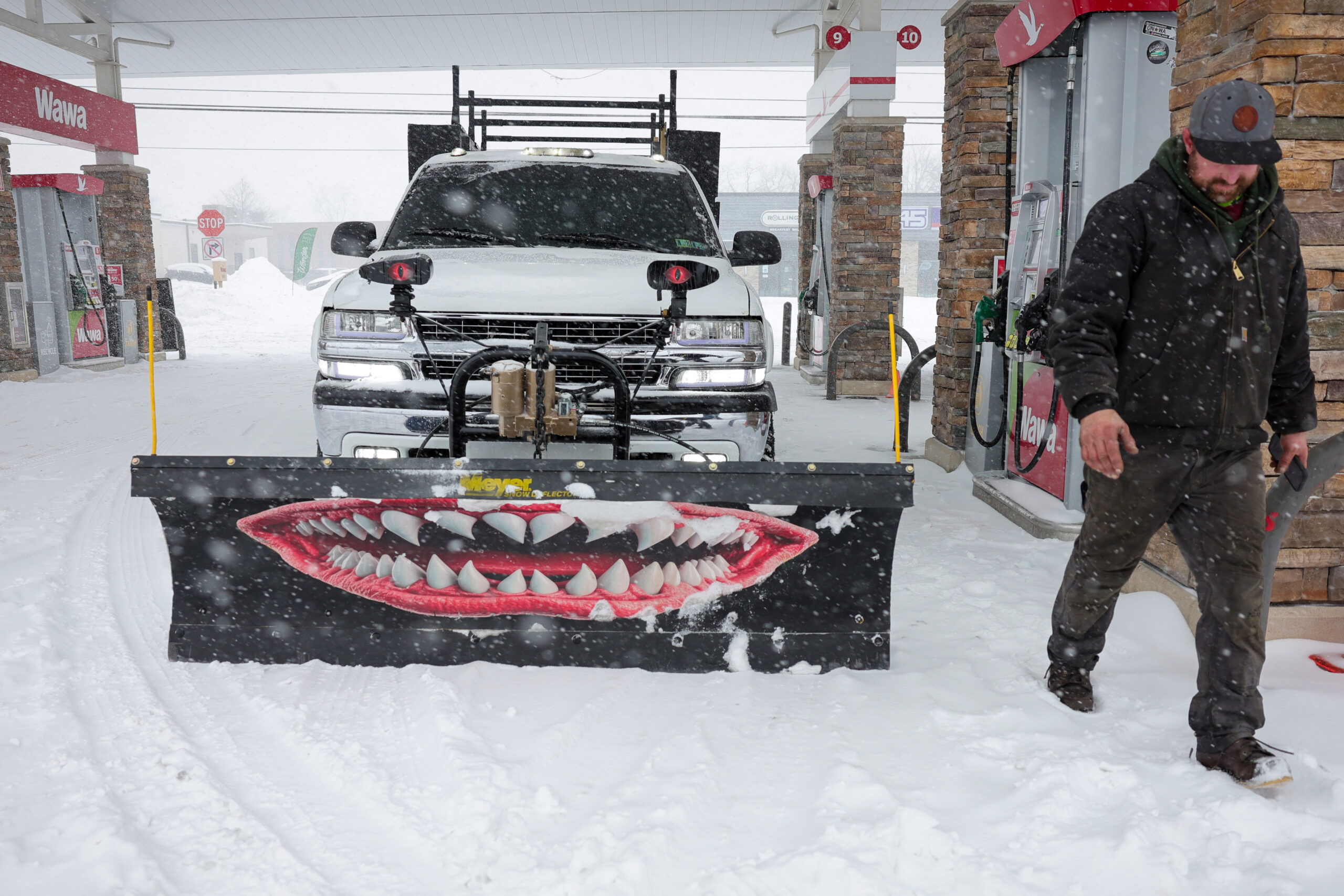
Mike Orazietti takes a break at Wawa from snowplowing in West Chester Sunday.
Five inches or more of snow have fallen in several locations in the Philly region, according to reports from National Weather Service trained spotters.
Here is the current list, which is likely to grow before sleet mixes in the next few hours:
Lehigh Valley International Airport cancels all flights Sunday
ABE is currently closed. Snow Ops continue as long as weather conditions allow for our team to work safely. We encourage travelers to check with their airline for flight delays or cancellations impacting Sunday / Monday's schedule. @69News@mcall@LVNewsdotcom@lehighvalleypic.twitter.com/MyTfQgElWI
Warming centers across Philadelphia will remain open during this storm as part of the ongoing Code Blue declaration, Philadelphia Mayor Cherelle L. Parker said a news conference Sunday.
24-hour warming centers are available for use, stocked with water, snacks, blankets, warming kits, and cots, said Crystal Yates-Galle, deputy managing director for health and human services.
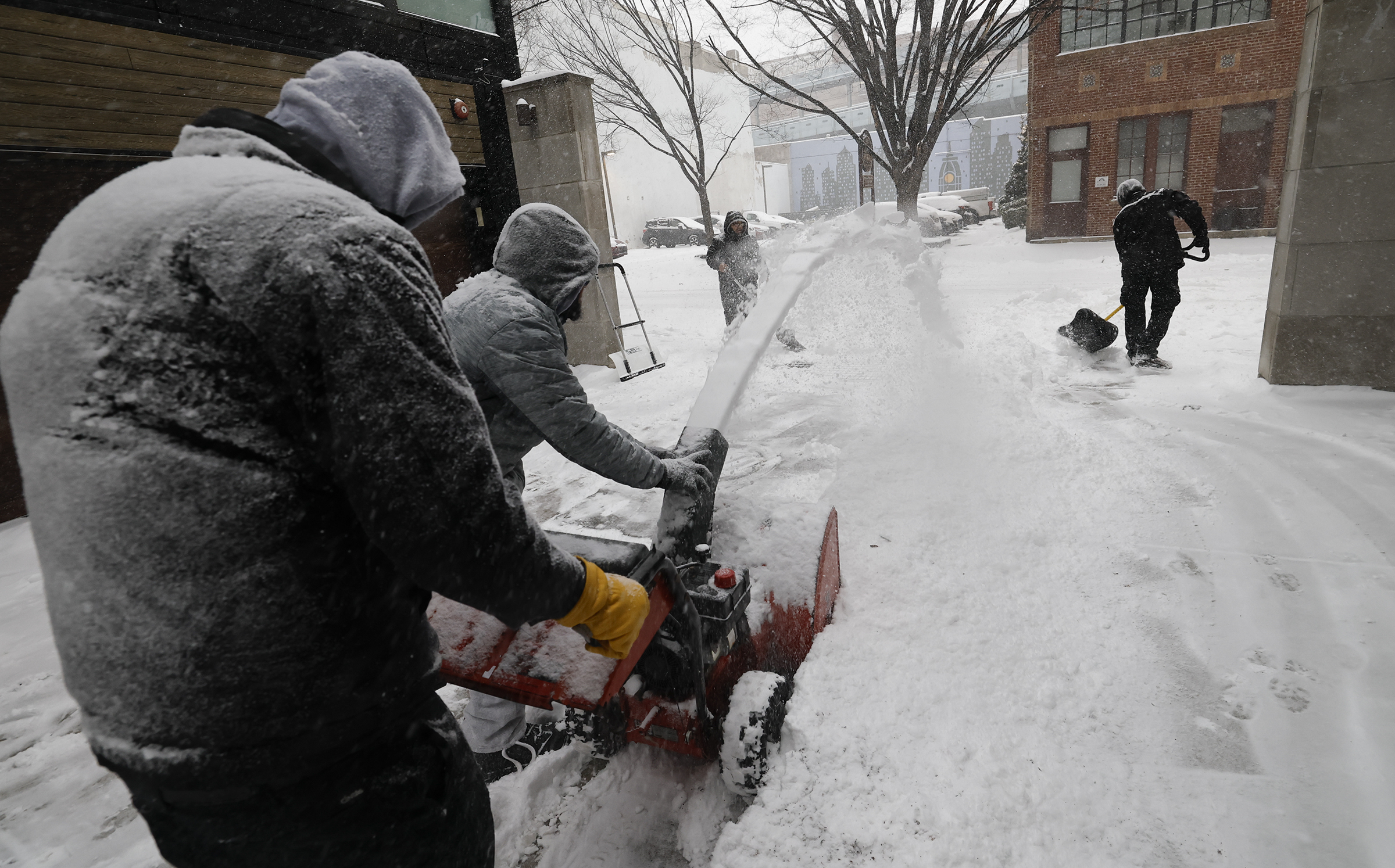
Jonathan Ahmad (left) and Michael Thompson clear snow in Old City Sunday.
Carlton Williams, director of the office of clean and green initiatives, debunked a widespread piece of misinformation he said has been circulating online.
No, he said, the city is not handing out free salt, which it needs for roadways and events given the expected icy conditions.
“We must be smart about the work that we’re doing … because this is a matter of life and death if we don’t get this right,” Williams said at a news conference Sunday.
Williams said 4 to 7 inches of snow are expected to fall in the next couple hours, and it’s likely to freeze.
Meanwhile, in some parts of the city, accumulation will likely get to a point where snow must be removed from the neighborhood and deposited elsewhere.
The city has also invested in a snow melter “that delivers 135 tons an hour melting snow,” Williams said.
So far, that snow has fallen at a rate of two inches in two hours, said Dom Morales, director of the office of emergency management
Like other officials, he warned of treacherous conditions on the roads, noting that state’s 511PA website can provide details on road conditions.
“Whether you have four wheel drive, all wheel drive, the conditions are not favorable to being on the road right now,” Morales said.
He warned that sleet and freezing rain could create “invisible ice” and lead people to fall off their stoops even if they’ve shoveled earlier.
Morales encouraged people to keep their phones charged in case power goes out and check out the city’s website for details on how to respond to common scenarios including a downed tree, a water emergency, and a power outage.
“Philly we have a few more days ahead of us,” Morales said. “So please, let’s keep ready, and let’s take care of one another.”
Cherry Hill Mall, Christiana Mall close due to snow
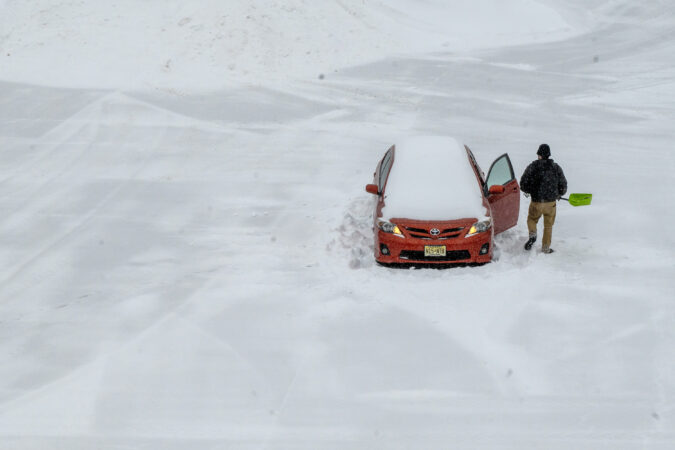
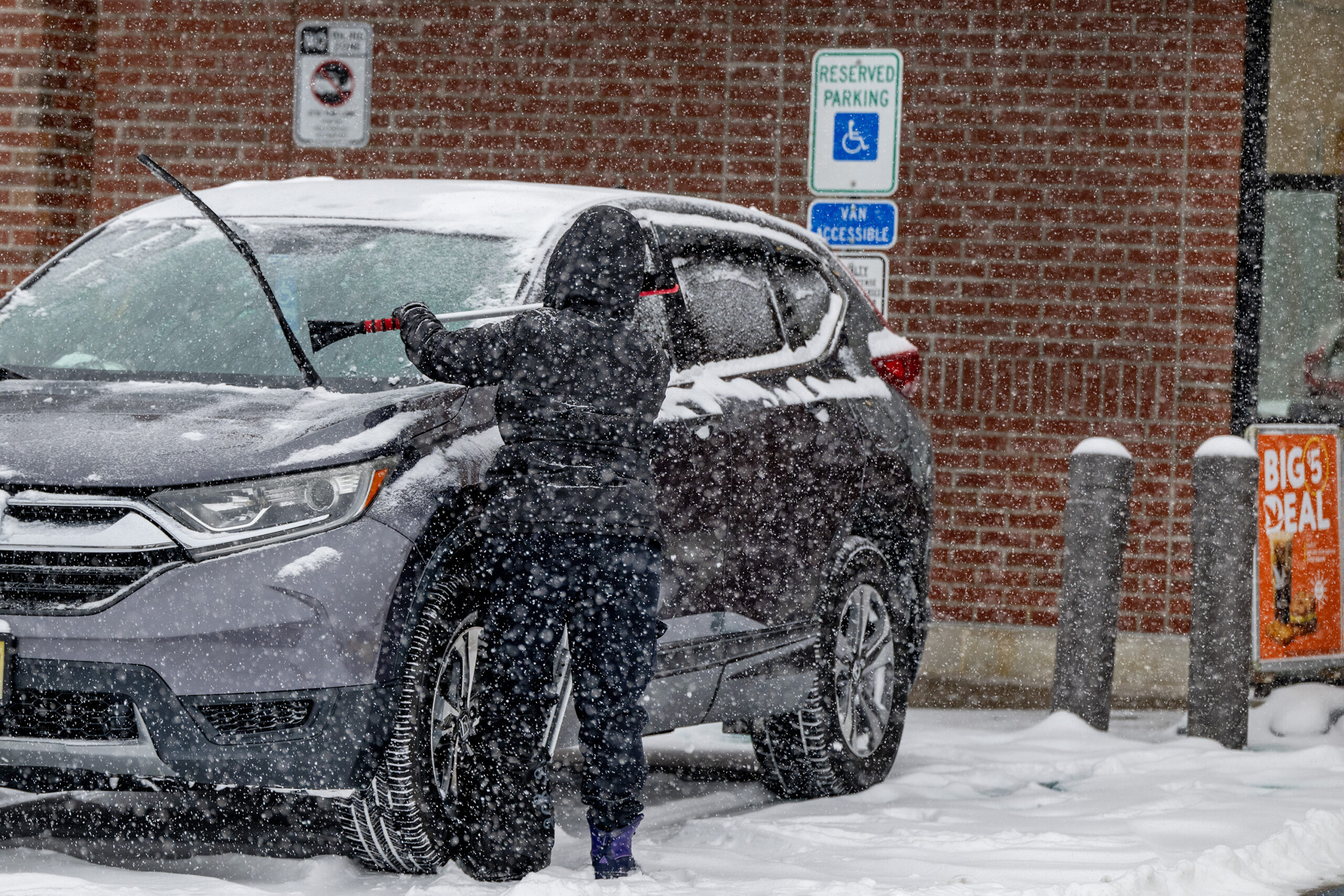
Carmen Roman clears snow off her car at the Wawa on Haddonfield Road in Cherry Hill Sunday.
Both the Cherry Hill Mall and the Christiana Mall will be closed Sunday due to the snow.
In New Castle County, level 2 driving restrictions are in effect, meaning only essential personnel are permitted to drive.
In Philadelphia, Emilia, James Beard Award-winning chef Greg Vernick’s Italian restaurant in Kensington, has postponed its scheduled opening from Monday to Tuesday. Vernick told The Inquirer he was unsure if his fish supplier could deliver Monday.
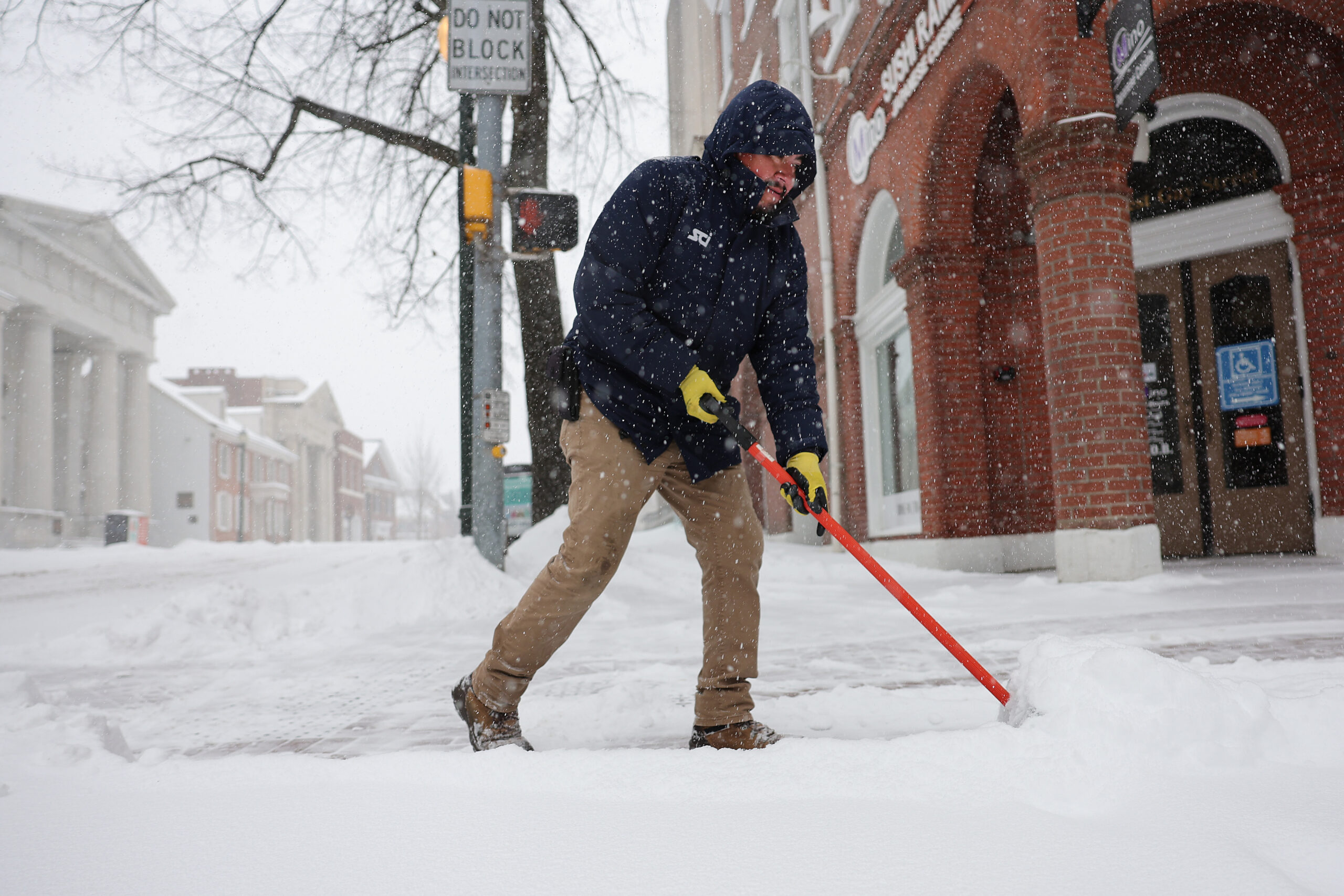
Alex Peralta shovels a sidewalk on Gay Street in West Chester, Pa., Sunday.
Snow totals of 4 to 6 inches have been reported across the region as heavy snow continues.
Meanwhile, the sleet line continues to advance northward and had reached central Delaware by mid morning. The Washington, D.C., area flipped to sleet around 8:30 a.m., after about seven inches had accumulated.
Sleet is expected to join the party in the immediate Philly area by early afternoon, and that would put the brakes on further accumulations. Before that happens, it is possible that the city officially will have had its biggest snowfall in five years.
Parker warns Philly residents to stay home and off the roads
A pedestrian uses their umbrella as snow falls in the Old City neighborhood of Philadelphia Sunday.
Philadelphia Mayor Cherelle L. Parker asked people to stay home and off the roads if possible as the city grapples with a winter storm that has dumped about three inches so far — and is expected to turn to ice in the coming hours.
“This remains a significant winter storm, and there are rough travel conditions expected all day,” Parker said.
Parker said 1,000 city workers are clearing roads and sidewalks and battling snow with about 600 pieces of equipment, including triaxial dump trucks, loaders, sanitation compactors with plows attached, and pickup trucks.
“And this was a new one for me, Philadelphia, even ATVs have been deployed,” Parker noted.
Philadelphia remains under a snow emergency that began Saturday night at 9 p.m.. The city has no update on when it plans to lift the emergency.
The city has teams working in “an enhanced emergency posture” to address the needs of people affected by the bitter cold. The city has implemented 250 additional beds for those in need, Parker said. If residents see anyone in need of immediate help, they can call 215-232-1984.
SEPTA to suspend bus, regional rail service at 2 p.m.
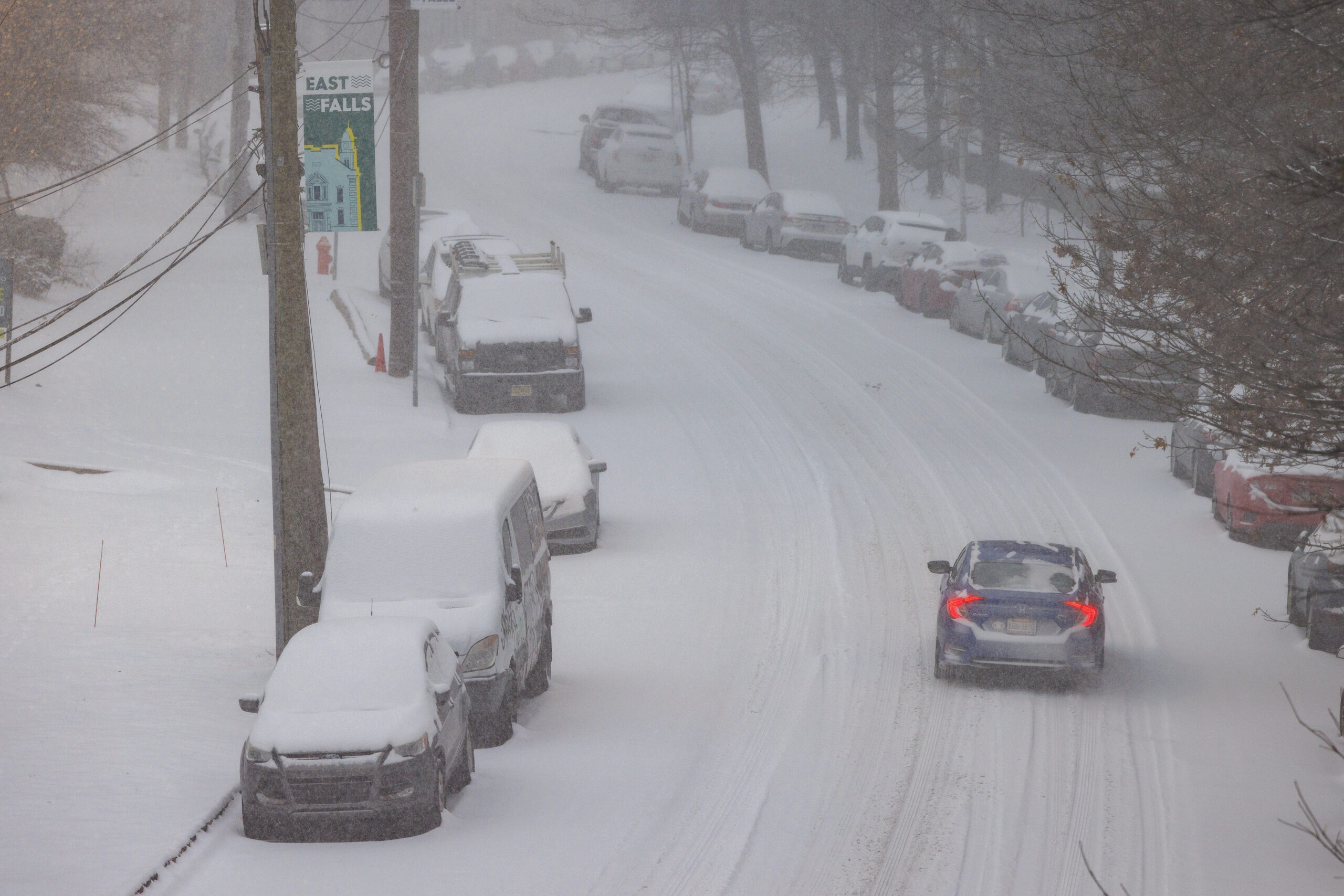
A SEPTA Regional rail train heading through the East Falls section of Philadelphia Sunday.
SEPTA will suspend all bus and Regional Rail service at 2 p.m. Sunday, the agency announced.
As for trolley service, the T1 is suspended, the T3 is cutting back at 59th/Chester, and the T4 is cutting back at Island/Woodland, SEPTA said. The T2 and T5 are currently running regular service.
The Market-Frankford and Broad Street subway lines will continue to run. through the storm, the agency said. Crews have been assigned to keep station entrances, platforms, and sidewalks clean of ice and snow, as best they can.
A pedestrian walks across Race Street along 2nd Street in the Old City neighborhood of Philadelphia. Michael Thompson (right) and Jonathan Ahmad clear snow. Carmen Roman clears snow off her car after dropping her partner off at work at the Costco In Cherry Hill early Sunday morning.
// Timestamp 01/25/26 9:27am
$5 parking in Center City garages to avoid getting your car towed
A Philadelphia Parking Authority truck tows a car from South Broad Street, a snow emergency route, earlier this month.
As the snow covers everything in its path, parking on designated snow emergency routes is the fastest way to get your car towed.
To prevent this, the Philadelphia Parking authority is offering $5 parking for 24 hours in Center City garages until the snow emergency is lifted.
Philadelphia Family Court Garage (1503-11 Arch Street – Going south on 15th Street, enter the garage on the west side just after 15th & Cherry Streets)
Meters and time limit violations won’t be enforced until the emergency ends. But if you suspect your car was towed, call 215-686-SNOWor visit www.philapark.org/tow to locate it. A license plate number is needed.
PennDOT and Philadelphia Department of Streets are working hard plowing to keep highways and roads passable. Please avoid unnecessary travel so they have room to safely work. If traveling, use caution and give yourself at least 6 car lengths behind snow response equipment. pic.twitter.com/yATOdEnJqV
2 to 3 inches of snow have already fallen across the Philadelphia region.
Not that the bar was especially high, but officially Philly has had its biggest snowfall of the month, with 1.6 inches measured officially at the mostly dormant Philadelphia International Airport.
That tops the 1.1-inch report of last weekend. It also brings the seasonal total to 8, and one of the safer bets is that this winter will end up being snowier than the winter of 2024-25 – 8.1 inches.
By 8:30 a.m., amounts of 2.5 to 3 inches were common throughout the region.
The next official report from PHL is due at 1 p.m. For now, it is playing catch-up with the 1.8-inch reading at Rittenhouse Square.
Heavy snow arrives, with ice to follow. It all may stick around for a week or more.
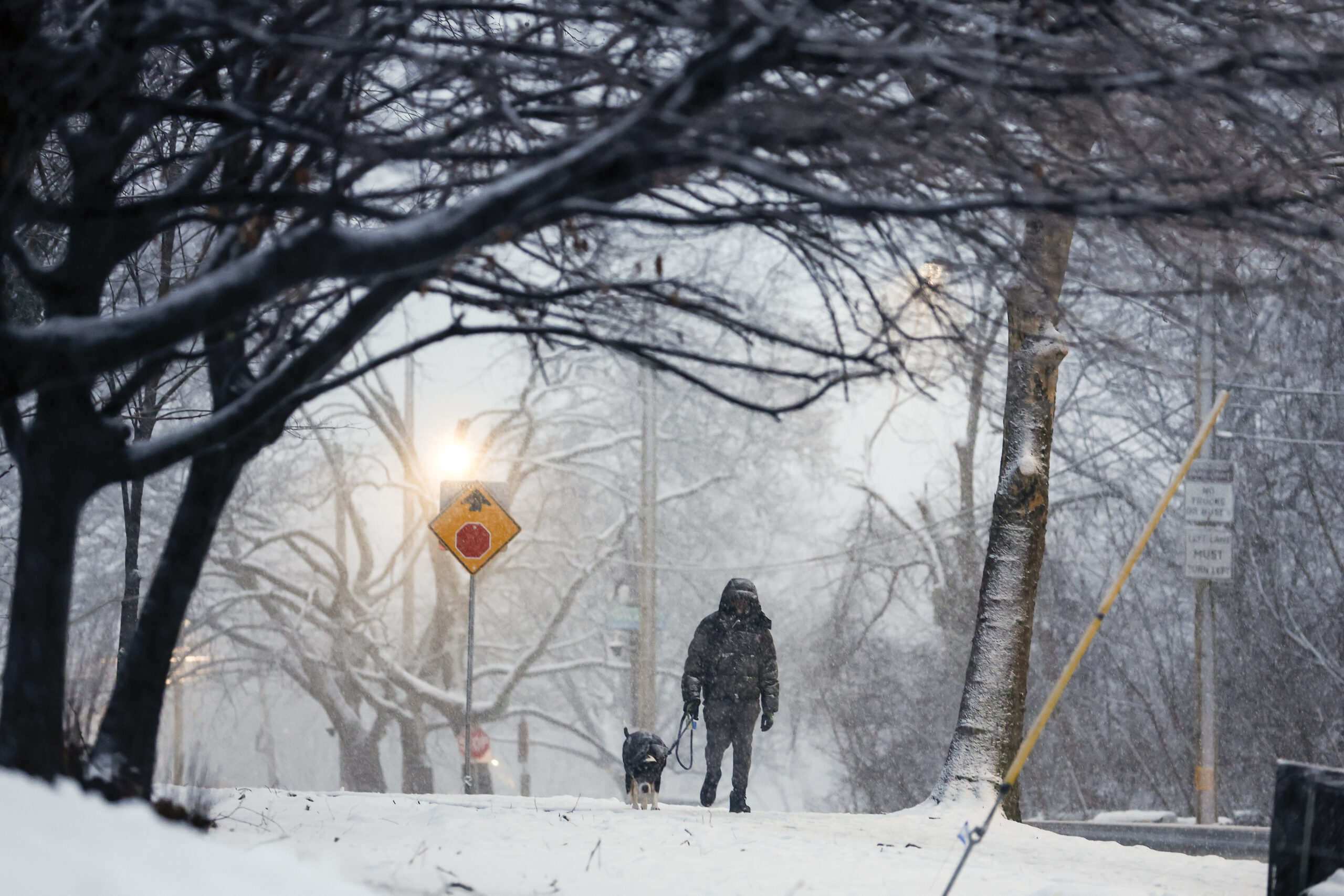
Dog walkers and fresh snow along Cresson Street in the East Falls section of Philadelphia.
It may not approach their magnitudes, but Sunday’s snow-and-ice cold brew is expected to bear eerie similarities to some of Philly’s historic winter storms and perhaps rival them for disruption.
By 7 a.m., up to 3 inches had been reported around the region, with heaviest amounts to the south where the snow started earlier.
Officially, at Philadelphia International Airport, 1.6 inches had been measured, already making this the city’s biggest official total of the month. But Center City trumped it at 1.8.
From 8 to 10 inches was expected around the city before the snow mixes with sleet and possibly freezing rain during the afternoon, said Nick Guzzo, a meteorologist at the National Weather Service Office in Mount Holly. All that is subject to change, of course.
The precipitation is due to shut off early Monday, but by then it may be a case of welcome to ice station Philly.
Nothing that falls is going to melt, as temperatures will get no higher than the 20s Sunday and may not see 30 for the rest of the week
Snow falls in Manayunk. Several inches of snow have already fallen in Bear, Del. Snow covers the trees in Conshohocken, Montgomery County.
// Timestamp 01/25/26 8:11am
Cancellations piling up at PHL
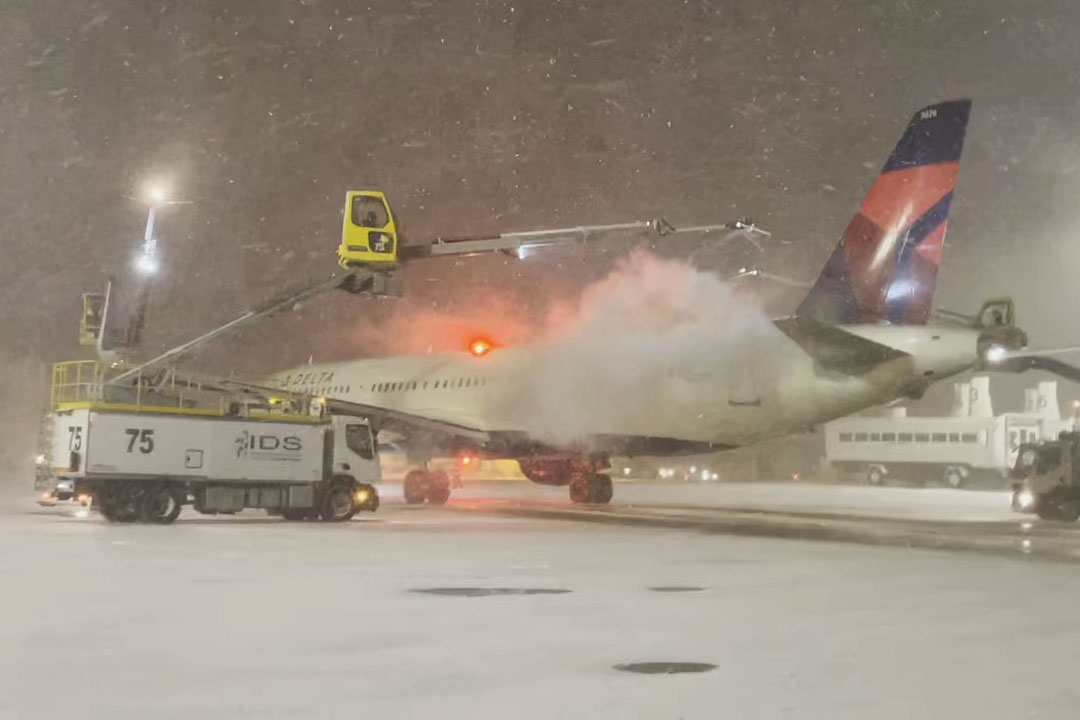
Crews deice a Delta plane as snow falls at Philadelphia International Airport Sunday, Jan 25, 2026.
At least 641 flights have been canceled going into or out of Philadelphia International Airport Sunday, as a major snowstorm moves across the Northeast.
Due to the reduced number of flights, TSA agents will only be operating at checkpoints A-East, D/E, and F.
Travels are encouraged to check with their airlines for the latest flight information.
The National Weather Service is forecasting 8.5 inches of snow will fall in Philadelphia, followed by sleet and freezing rain.
On Saturday, the National Weather Service was going with 8 to 10 inches for the immediate Philly area, said meteorologist Amanda Lee, with less to the southeast. AccuWeather Inc. was calling for 6 to 10 inches.
A lot of that would fall during a “front-end thump,” said AccuWeather meteorologist Elizabeth Glenny. Once the mixing begins, accumulation rates would back off.
While people understandably want to know how many inches of snow are going to land, that is almost always difficult to answer, meteorologists say, especially in a storm of this nature.
In this case, snow amounts are dependent on a coastal storm that had not yet formed Saturday and on what might happen in parts of the atmosphere that are not well-observed.
Temperatures in the bottom 5,500 feet of the atmosphere over Philly are expected to remain below freezing, said AccuWeather senior meteorologist Tom Kines, but computer models insist that a warm layer in the higher atmosphere would result in the changeover.
That warmth would be imported from the Atlantic Ocean by the strong onshore winds from the northeast generated by the storm — it’s not for nothing that these things are called nor’easters.
Another wild card would be if the snow is heavy enough that it could survive the warm layer and delay the changeover.
But the mixing of sleet, which is liquid that remains frozen in its trip through the atmosphere, and freezing rain, liquid that freezes on contact, is inevitable, forecasters said.
Freezing rain atop a snowpack is especially dangerous because it adds weight to vulnerable and snow-burdened power lines and tree branches. Sleet is polite enough to bounce off hard surfaces, but since it is pure ice, it is slower to melt.
Said the weather service’s Mike Lee, the mixing “just means we’re getting a different blend of horrors.”
Midvale Avenue is covered in fresh snow in the East Falls section of Philadelphia.
Snow is forecast to accumulate rapidly Sunday morning, with temperatures in the teens and snowfall rates of one to two inches per hour.
Models were suggesting sleet could mix in as soon as early afternoon, said Tom Kines, senior meteorologist with AccuWeather Inc.
Temperatures in the bottom 5,500 feet of the atmosphere are going to remain well below freezing. However, as the coastal storm intensifies, its onshore winds from the northeast are forecast to import warmer air from over the ocean into the upper atmosphere, which would change the snow to sleet and rain Sunday afternoon and evening.
It’s possible the precipitation will flip back to all snow and accumulate maybe another inch early Monday, Staarmann said. But at that point it would have all the impact of drizzle in the ocean. The mass of snow and ice evidently will be vacationing in Philly for a while.
“It will stick around for a week, maybe two weeks,” Staarmann said.
Vehicle restrictions on Pa. highways now in effect
PennDOT implemented vehicle restrictions on Pennsylvania highways due to the storm
Vehicle restrictions aimed at limiting the number of cars on roads statewide during Sunday’s snowstorm are not in effect across Pennsylvania.
PennDot’s vehicle restrictions are instituted in a tiered system, with today’s coming in at tier four — the second-highest level. Under that tier, commercial vehicles are totally prohibited from using a number of interstates around Pennsylvania, as well as the Pennsylvania Turnpike.
“The decision to implement these restrictions was made with the intention of balancing safety for everyone on the roadway, including commercial drivers,” PennDot secretary Mike Carroll told reporters Friday at a news conference. “We will remove these restrictions as soon as conditions warrant.”
In addition to limiting the travel of vehicles like tractor trailers and commercial buses, PennDot’s restrictions also apply to school buses, motorcycles, RVs, and passenger vehicles that are towing trailers, Carroll added. None of those vehicles, he said, are permitted to use roadways while the restrictions are in place.
Officials urged motorists to stay home, noting the anticipated snowfall rate of one to two inches per hour, as well as the overall snowfall totals, will make keeping roads safe and clear difficult.
Restrictions, PennDot notes online, are evaluated hourly. Pennsylvania’s traveler information website, 511PA, keeps an up to date map of which roads are impacted by the restrictions, and Carroll recommended travelers check that website before heading out, should they absolutely have to.
“Stay home and watch the NFL games, despite the fact that the Eagles and Steelers are not playing,” Carroll said.
But as large and disruptive as this storm will likely be, it will have a difficult time cracking the list of the top January snowstorms in Philly history.
It would take 12.3 inches of snow for this latest storm to make its way on to the list of the snowiest January storms in Philly history. That would match a 1922 event dubbed the “Knickerbocker storm” because snow caused the collapse of the Knickerbocker Theatre in Washington, D.C., killing 98 people, which remains the worst natural disaster in the city’s history.
Here’s the full list of the Philly snowfalls of a foot or more in January history:
The news that the Pittsburgh Post-Gazette will soon cease publishing has, justifiably, sounded alarms across the media landscape. The end of a storied organization with deep local roots and a legacy of strong journalism should concern all who believe that a free and thriving press is fundamental to a functioning civic society.
Among the questions clamoring for answers in light of the news: What will fill the void in Pittsburgh? Will the deep pockets of the city’s many notable philanthropies provide the funds needed to support a new news organization? Will the remaining media outlets — Pittsburgh is not a news desert by any stretch — have the capacity to grow and expand? And the existential question: Will the citizens of the Steel City see the need to support local news now that it is, to an extent, imperiled?
As publisher of The Philadelphia Inquirer, I believe that our own experience over the past decade offers a template for success. It was only a little more than a decade ago that we were a struggling news organization, with an impressive history of notable journalism, but beset by warring owners, threatened by bankruptcy, and, in May 2014, up for sale on the auction block.
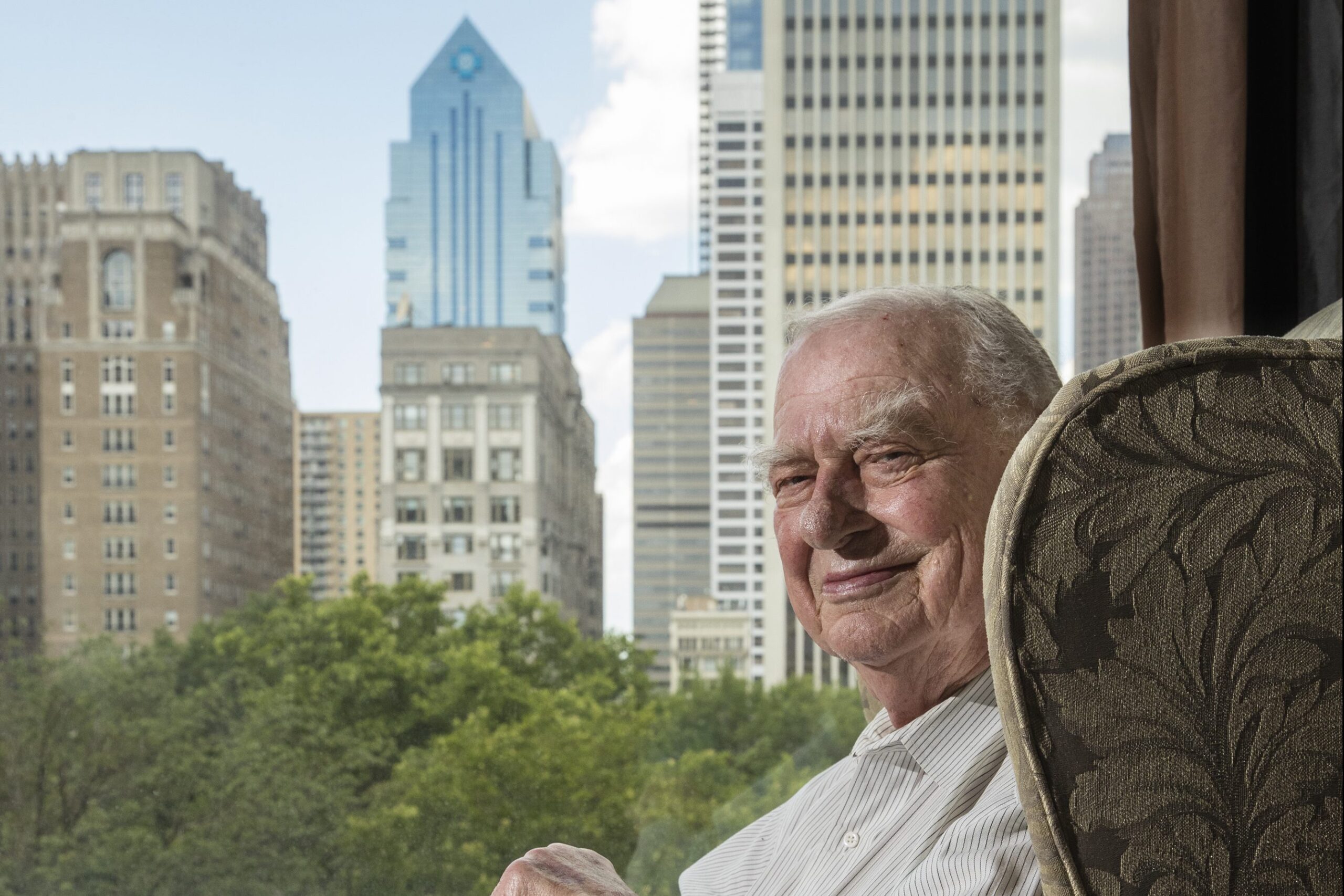
Redemption began with a visionary philanthropist, H.F. “Gerry” Lenfest, who set out to save The Inquirer and provided the wherewithal to do it. He established the Lenfest Institute for Journalism, our nonprofit owner, and pursued an innovative tax structure that created a for-profit Inquirer with a separate board. Both are the indispensable keys to our stability and success.
Lenfest’s generosity planted the news philanthropy seed in Philadelphia and, through the institute, established a funding mechanism that supports our journalism. His donation, in cash, allowed The Inquirer to modernize and transform from a legacy print shop to a modern multiplatform news organization.
The late H.F. “Gerry” Lenfest’s generosity planted the news philanthropy seed in Philadelphia, writes Elizabeth H. Hughes.
But we have also known that The Inquirer’s long-term stability — and the ability to consistently provide quality journalism — depended on building a successful and integrated business. And that meant forging a new identity through a modern brand campaign, developing a robust marketing strategy, engineering our own path to success by building our own products, and creating new and compelling opportunities for advertisers. Significantly, it also required meeting and convincing civic and business leaders that The Inquirer was a vital asset worth investing in.
There are 200 journalists in our newsroom, and the journalism produced every day is impressive and innovative, deep and local. In the end, that is what people will pay for. And the business results? The Inquirer in 2025 had its first year-over-year increase in revenue since 2004, and an operating profit of several million.
The majority of our revenue, 70%, comes from consumer marketing, which means people are paying for our journalism; 19% is from advertising, which signals that local businesses and institutions find merit in supporting us; and 5% from syndication and other partnerships. Philanthropy accounted for 6% of revenue in 2025, and we project donor contributions ranging from 6% to 10% going forward.
The facade of The Inquirer’s offices on Independence Mall West. The Inquirer in 2025 had its first year-over-year increase in revenue since 2004.
Lenfest, who died in 2018, was a successful businessman before he became an influential philanthropist. He left his mark on civic and cultural institutions throughout Philadelphia. But his last great effort was to save The Inquirer — to give it the runway it needed because he believed in the importance of local journalism.
There is much work to be done, and challenges to be met, but the lasting legacy of H.F. “Gerry” Lenfest is an Inquirer that is stable and succeeding as a business.
Elizabeth H. Hughes has been the publisher of The Philadelphia Inquirer since 2020.
Philadelphia is weathering its most significant winter storm in years. The threat of heavy snowfall and potentially dangerous icing prompted a citywide emergency and a winter storm warning through early Monday afternoon. All schools are closed Monday.
Forecasts say 6 to 18 inches of snow is possible across most of New Jersey and Pennsylvania. Philly is expecting somewhere between 6 and 10 inches.
🎤 Now I’m passing the mic to City Hall reporter Anna Orso.
When Mayor Cherelle L. Parker unveiled her much-anticipated plan to address Philadelphia’s housing crisis last year, there was predictable criticism from the political left. Activists said the proposal drafted by the moderate Democrat would not do enough for the city’s poorest residents.
Less predictable was that a majority of City Council stood with them.
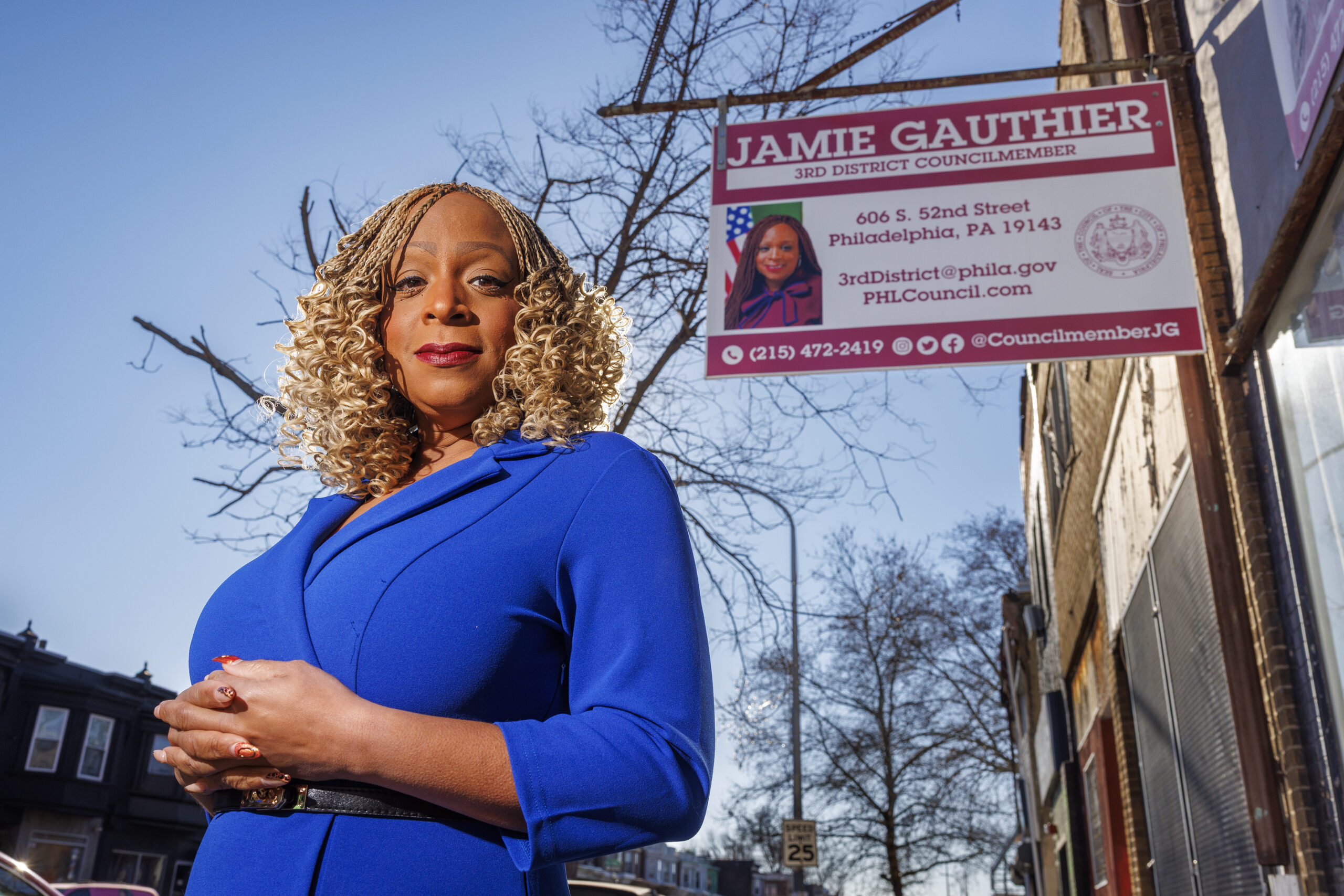
Even the Council president, a centrist ally of the mayor, sided with a progressive faction that just two years ago had been soundly defeated in the mayor’s race — but whose new de facto leader in City Hall has proven adept at building alliances across the ideological spectrum.
At the center of that shift was Jamie Gauthier. — Anna Orso
Philadelphia parents are worried and shocked over the school district’s proposal for closings, colocations, and other changes would affect children in every neighborhood in the city. “That can’t happen,” one told The Inquirer.
Michael Coard, a leader in the fight to memorialize enslaved people at the President’s House in Philadelphia, is launching a new campaign to restore the dismantled slavery exhibit and keep it on Independence Mall.
Federal immigration officers shot and killed a man Saturday in Minneapolis, as hundreds of people protested in the cold in a city still reeling from another fatal shooting weeks earlier. The man, identified as Alex Pretti, was an intensive care nurse at the Veterans Administration who was troubled by President Donald Trump’s immigration crackdown, according to his family.
Very little is publicly known about Jonathan Gerlach, the Ephrata man accused of stealing human remains from Mount Moriah Cemetery. Here’s what we have learned about him.
In Camden, incoming state-appointed School Superintendent Alfonso Q. Llano Jr. says it’s too soon to know if more budget cuts will be needed after the district cut nearly 300 jobs last year.
Collingswood Mayor Daniela Solano-Ward settled a conflict-of-interest lawsuit by agreeing to void her vote and recuse herself from decisions on an ambulance-services contract with Virtua Health, which employs her husband.
Swedish retailer Ikea, which has its U.S. headquarters in Conshohocken, announced this week that it is testing an immersive product experience on which platform?
Cheers to Geraldine DiPersia, who correctly guessed Saturday’s answer: Will Shortz. The New York Times crossword editor and NPR puzzle master is moving the American Crossword Puzzle Tournament to Philly next year.
Emilio Mignucci with a cheese spread he enjoys eating.
Emilio Mignucci, the third-generation grocer of Di Bruno Bros, is synonymous with cheese in Philly. He recently took us through his favorite places to grab a bite on a perfect Friday in the city.
🎶 Today’s song goes like this: “The things we do for love / Like walking in the rain and the snow / When there’s nowhere to go…”
One more thing: Food writer Kiki Aranita has a reminder to boot: “If you’re ordering delivery from any restaurant or local business, remember to tip your delivery person extra — especially if they dash through the snow and arrive at your house on a re-purposed ATV.”
👋🏽 How will you pass the time indoors today? Let me know. I plan to eat soup and (finally!) finish Task.Thank you for checking in this morning, and may you be safe and warm.