Blog

  • Philadelphia has spent $59 million on its snow response so far. Here’s how it breaks down.

    Philadelphia has spent $59 million on its snow response so far. Here’s how it breaks down.

    With the arrival of above-freezing temperatures, Philadelphia is declaring an end to an emergency response that lasted 26 days, closing the chapter on an all-hands-on-deck mobilization of various city departments that navigated the biggest snowfall in a decade and the persistent cold snap that followed.

    The city’s “enhanced code blue” response began the Friday before a winter storm that blanketed Philadelphia with 9.3 inches of snow and sleet on Jan. 25. The designation allowed the city to deploy support services across departments for some of the city’s most vulnerable, living on the streets.

    A preliminary estimate by the city puts the cost of the storm response at about $59 million, which officials said reflects the intensity of the storm and conditions that followed.

    “A tremendous City workforce, outreach teams, first responders, nonprofit partners, and community stakeholders came together without hesitation,” Mayor Cherelle L. Parker said in a statement Tuesday. “Because of their coordination, compassion, and commitment, lives were protected during some of the harshest conditions we have faced this winter.”

    Amid a bitter cold that hampered snow-removal efforts, the city embarked on a cleanup operation that lasted more than two weeks and combined heavy machinery and old-fashioned manual digging.

    Here are some key numbers highlighting how various city departments mobilized and the costs they accrued.

    Heavy machinery and dump trucks collecting piles of snow from Germantown and Thompson Street, Philadelphia, Wednesday, Jan. 28, 2026.

    $46,021,516 in snow removal

    The city crafted its $4.1 million snow operations budget for fiscal year 2026 using a rolling-year average of prior costs.

    But the storm brought about a slew of unanticipated expenses and challenges, including snow removal, ice control, and other emergency operations.

    The city looked to contractors to bolster its workforce as it launched a massive effort to treat and plow streets.

    Contractor plowing and salting operations during the storm cost $13.9 million, while the post-storm contractor cleaning and lifting operations cost $31.8 million. The remainder of the expenses came from snow-related operations across departments, such as the activation of warming centers.

    Part of what made the storm so costly was the uncooperative temperatures.

    Amid complaints from residents over what was perceived as a slow cleanup, the city noted that the below-freezing temperatures created increasingly tightly packed ice that had nowhere to go.

    The city even brought in a snow melter from Chicago, which eliminated 4.7 million pounds of snow in the first two days after the snowfall. The costs of melting, which is considered a specialized service, ran more than $139,000.

    After the initial snow removal, the city moved to what it called its lifting operations.

    Snowplows, compactors, front-end loaders, and backhoes took part in an intricate operation where snow was placed in dumpsters before being shipped off to more than 30 dumping sites.

    The Philadelphia Streets Department mobilized up to 300 pieces of equipment on any given day in an effort to leave no street untreated.

    The city went through 15,000 tons of salt through the three-week cleanup amid other challenges, such as an icy Delaware River that temporarily blocked additional salt orders, and the rising cost of salt post-storm.

    The cost of salt was more than $1.2 million.

    Emily Street is still covered in snow near Furness High School (top left) on Wednesday, Jan. 28, 2026 in South Philadelphia.

    18,340 ramps cleared

    The massive cleanup had the city looking at creative ways to boost the number of workers clearing streets.

    The streets department tapped participants in its Future Track Program for snow-removal efforts early on. These are trainees, typically at-risk young adults, who are not enrolled in higher education and are unemployed. They get job experience, as well as other services, and they help in beautification projects.

    The trainees cleared hundreds of ADA ramps across Philadelphia.

    But more than a week after the storm, the city was still being flooded with complaints about inaccessible crosswalks and SEPTA stops piled with ice.

    That’s when officials tapped into a city program that pays people the same day for their work, deploying 300 people to help chip and sweep away the hardened ice with shovels and brooms.

    The city assembled a more than 1,000-person workforce for cleanup efforts this way, deploying a mix of city employees, contractors, and participants from the same-day pay program.

    In all, the city said, the crews worked nearly 2,300 intersections, clearing 18,340 ADA ramps and about 2,800 SEPTA stops.

    The use of contractors, however, was met with pushback from American Federation of State, County and Municipal Employees District Council 33, the city’s largest municipal workers union, which said the decision was made without consulting the union.

    “Our members are the trained, dedicated workforce responsible for this work, and it is disheartening to see the administration move forward without even a discussion on how best to manage these challenges,” DC 33 president Greg Boulware said in a statement in early February.

    (function() { var l = function() { new pym.Parent( ‘phillysnowcosts__graphic’, ‘https://media.inquirer.com/storage/inquirer/ai2html/phillysnowcosts/index.html’); }; if(typeof(pym) === ‘undefined’) { var h = document.getElementsByTagName(‘head’)[0], s = document.createElement(‘script’); s.type = ‘text/javascript’; s.src = ‘https://pym.nprapps.org/pym.v1.min.js’; s.onload = l; h.appendChild(s); } else { l(); } })();

    22 warming centers

    The cold snap presented another life-or-death challenge for the city: how to get people living on the streets indoors.

    Between Jan. 20 and Feb. 14, homeless outreach teams worked nonstop distributing more than 2,800 warming kits, 4,000 fleece blankets, 700 cases of water, and 35,000 food items while trying to get people to take a shelter bed or go to one of the city’s 22 so-called warming centers.

    The code blue designation allowed the city to activate some libraries and recreation centers as hubs for people looking to escape the cold.

    The warming center operation was seen as lifesaving, largely supported by library staff. Between Jan. 19 and Feb. 11, New York City recorded at least 18 cold-related deaths; Philadelphia had three over a similar time frame.

    Still, after 20 days of 12-hour operations, staff at the daytime centers described a lack of support from the city when it came to dealing with people who had medically complex issues requiring behavioral health support and wound care. (One library staffer said more city-assigned support staff showed up at the daytime centers after The Inquirer published a report about workers’ concerns.)

    Philadelphia officials said more than 100 people from more than 20 city and partner organizations helped support the warming centers.

    Nighttime warming centers had about 4,400 overnight guests, according to the city.
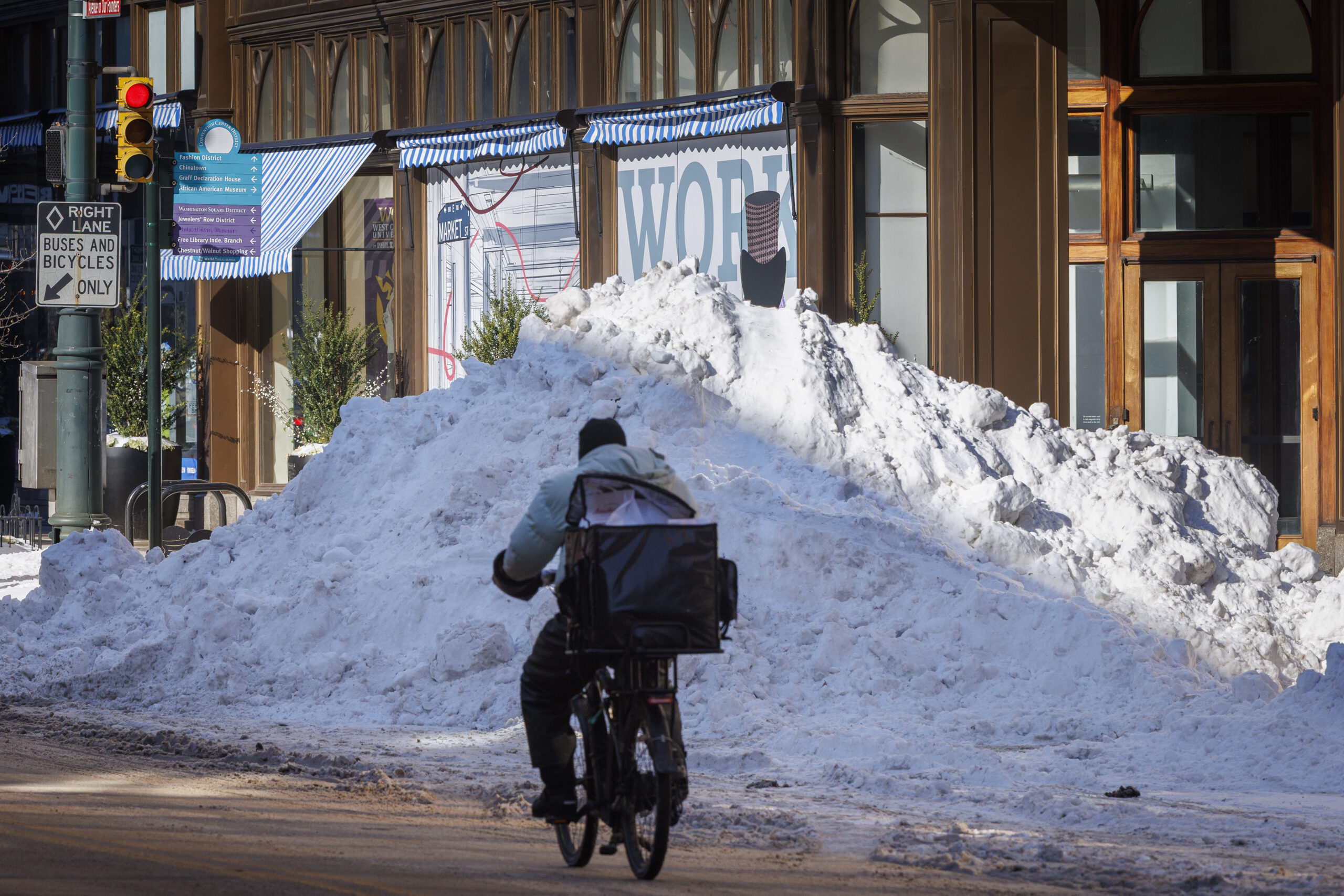
    Mount Market Street at 7th Street, Center City Philadelphia, Tuesday, Jan. 27, 2026. Large pile of snow on northeast corner of Market and 7th.

    $50 million from general fund

    Because snow operations exceeded the initial amount allotted in the budget, the city plans to transfer $50 million from its general fund to its transportation fund.

    Even so, the city said its general fund remains higher than projected in its five-year plan because of a larger-than-anticipated general fund balance in the previous fiscal year.


  • Chester County man pleads guilty to killing a 9-month-old baby

    Chester County man pleads guilty to killing a 9-month-old baby

    A Chester County man pleaded guilty to murder and related crimes earlier this month after he punched a 9-month-old infant and did not seek medical care for the child, prosecutors said Wednesday.

    Enrique Lopez-Gomez, 32, of West Grove, pleaded guilty to third-degree murder and endangering the welfare of a child on Feb. 11, according to prosecutors.

    He remains incarcerated in the Chester County Prison and awaits sentencing.

    Announcing the charges, Chester County District Attorney Christopher de Barrena-Sarobe called the crime “unthinkable.”

    Prosecutors say Lopez-Gomez was the child’s caregiver at the time of the 2024 incident, when he fell on the infant at a residence in Kennett Square. As the baby began to cry in pain, Lopez-Gomez punched the child in the abdomen, prosecutors said.

    He did not seek help or tell anyone about the child’s injuries, according to prosecutors, nor did he offer medical care as the child’s condition worsened that evening.

    First responders who were later called to the scene removed the baby from the home, and the child was pronounced dead at Nemours/A.I. DuPont Hospital for Children.

    Medical examiners determined that the child had died from blunt force trauma, leading to an intestinal rupture and soft tissue bleeding, prosecutors said.

    The baby had also suffered large bruises around the abdomen.

    Prosecutors have yet to set a date for Lopez-Gomez’s sentencing. He is being held on $10 million bail.

  • Dozens more drug, gun cases tied to cops who defenders say ‘lied’ are thrown out. Some sent people to prison for years.

    Dozens more drug, gun cases tied to cops who defenders say ‘lied’ are thrown out. Some sent people to prison for years.

    More than 40 drug and gun convictions were vacated Wednesday, the latest batch in what could grow to 1,000 cases tied to three narcotics officers who prosecutors say repeatedly gave false testimony in court.

    Common Pleas Court Judge Rose Marie DeFino-Nastasi dismissed 47 cases — most involving defendants jailed because of their convictions — after prosecutors conceded that the testimony of three officers on the Philadelphia Police Department’s Narcotics Strike Force could no longer be trusted.

    In December, the district attorney’s office said that Officers Ricardo Rosa, Eugene Roher, and Jeffrey Holden were found to have repeatedly given false statements in drug-related cases after attorneys with the Defender Association of Philadelphia uncovered video evidence that contradicted their accounts.

    The defenders said the officers regularly watched live surveillance footage to monitor suspects in drug investigations, then did not disclose it to prosecutors or defense attorneys in court. The video footage showed they also testified to things that did not happen or that they could not have seen from where they were positioned, according to court filings.

    Prosecutors later said that they could no longer vouch for the officers’ credibility and are expected to dismiss scores of cases built on their testimony in the coming months.

    Nearly all the defendants at the center of the cases dismissed Wednesday were in custody, including several serving years in prison tied to their drug convictions.

    Among them is Hamid Yillah, 34, serving four to nine years in state prison, plus two years’ probation, on gun and drug charges based on the testimony of Roher and Rosa, prosecutors said.

    And Juan Lopez, 38, serving five to 10 years in prison on drug possession and conspiracy charges.

    DeFino-Nastasi vacated their convictions and sentences.

    Not everyone whose conviction was overturned will walk free. Some are also serving time for unrelated serious crimes, including murder and aggravated assault.

    But many without additional arrests could be released as a result of Wednesday’s ruling.

    The dismissals follow more than 130 convictions that were thrown out in December after prosecutors and defenders identified more than 900 cases built almost entirely on the officers’ word. Approximately 200 cases have been resolved so far.

    The officers at the center of the case remain on active duty, but have been temporarily reassigned from narcotics amid an ongoing internal affairs investigation, said police spokesperson Sgt. Eric Gripp.

    That investigation, which began in early 2024, remains incomplete because the district attorney’s office has not provided the department with the information necessary to complete it, he said.

    The district attorney’s office previously said it provided internal affairs with details of the officers’ false statements last March. But Gripp said the records and evidence offered did not appear to show wrongdoing.

    (Paula Sen, of the Defender Association’s Police Accountability Unit, said she and her colleagues have also provided internal affairs with a few dozen cases where the officers’ testimony did not match surveillance footage.)

    Since the first batch of cases was thrown out in December, Gripp said, the department has followed up with the district attorney’s office for more information about the alleged wrongdoing, including the nine cases identified in court records in which the officers were said to have given false statements.

    “To date, we have not been provided with those cases,” he said.

    Gripp said that some of the cases discharged Wednesday involved dangerous drug dealers carrying weapons, and that narcotics officers risk their lives to make arrests.

    “This work matters, and repeated dismissals without providing the department the information necessary to review and address the concerns does not advance officer accountability or public safety,” he said. “We continue to expect good faith cooperation from all partners in the criminal justice system. We remain ready to act immediately upon receipt of any substantiated information.”

    The district attorney’s office did not immediately respond to a request for comment.

    Prosecutors have stopped short of accusing the officers of lying, but said “there’s enough of a pattern of inconsistencies across testimony that we can’t rely on them as critical witnesses in court.”

    Michael Mellon and Paula Sen work in the Police Accountability Unit for the Defender Association.

    Sen and Michael Mellon, of the defenders’ Police Accountability Unit, disagreed, and said the officers “straight up lied.”

    Sen and Mellon said they first spotted a pattern of testimony discrepancies in 2019 while reviewing surveillance footage that conflicted with statements Rosa had made in drug cases. Over time, they said, they continued scrutinizing his narcotics squad and identified similar issues with testimony from Holden and Roher.

    According to the defenders, the officers relied on the city’s surveillance camera network to watch suspected drug activity in real time but did not disclose that investigative method — withholding evidence that should have been turned over to the defense.

    In court, Mellon said, the officers denied using the cameras and frequently testified that they personally observed hand-to-hand drug transactions. Video later showed those exchanges either did not occur or would have been impossible for the officers to see because the suspects were out of view.

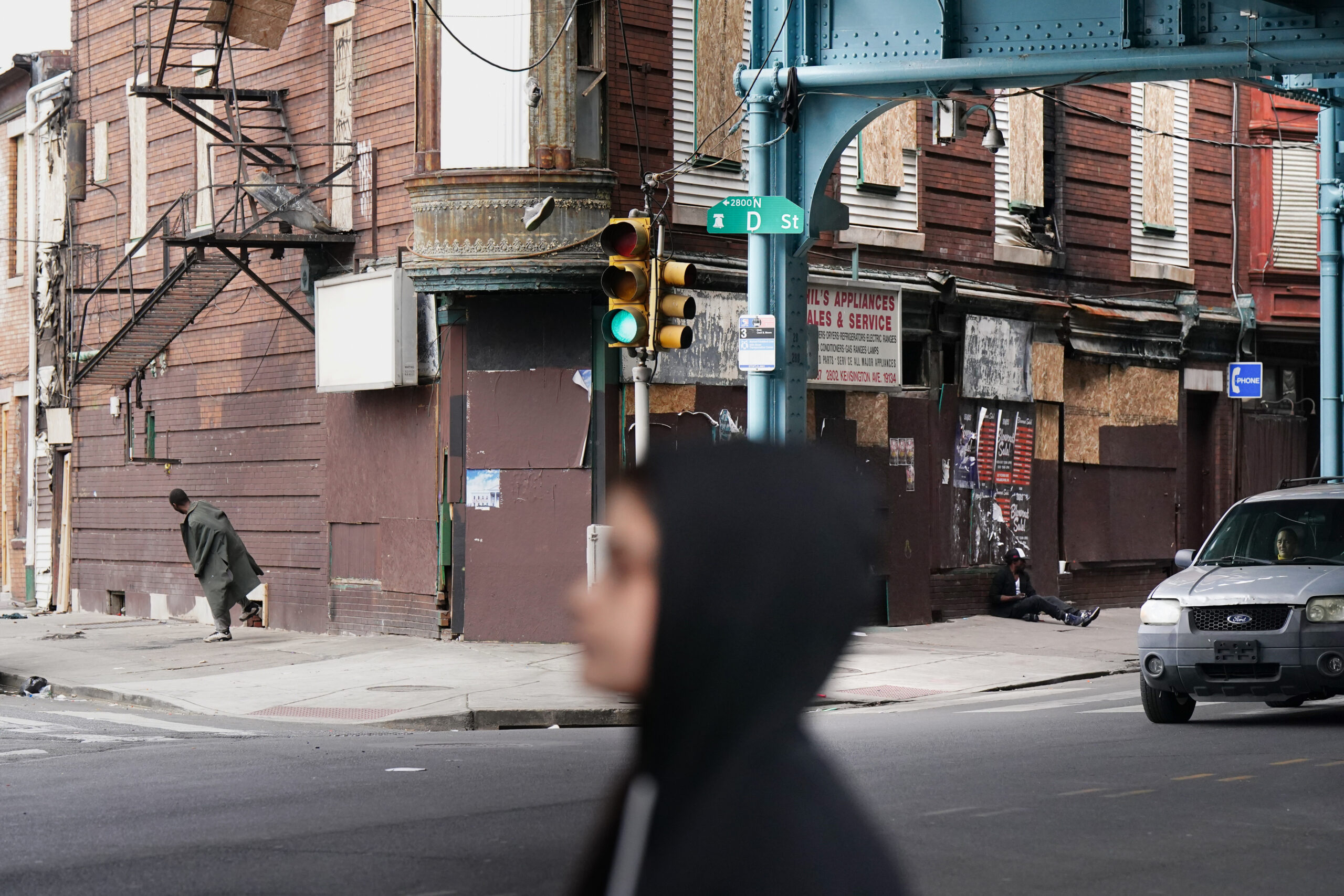
    A video camera used by Philadelphia police is positioned at the corner of D Street and Kensington Avenue.

    Sen said her office sent letters to all of the defendants whose cases were being reviewed to let them know they might be eligible for relief.

    Still, she said, the convictions often resulted in years of peoples’ lives spent incarcerated and on court supervision — time they cannot get back.

    “We are not talking about big drug busts. We are talking about the lowest of the low cases, hand-to-hand drug sales … within a quarter of a mile radius of Kensington,” she said. “That’s what makes this especially egregious.”

  • Judge gives Trump administration a deadline to restore President’s House exhibits

    Judge gives Trump administration a deadline to restore President’s House exhibits

    President Donald Trump’s administration now has a hard deadline to restore slavery exhibits to the President’s House.

    The Department of Interior and National Park Service must restore the President’s House to its condition before the exhibits were removed by 5 p.m. Friday, according to a new order from District Judge Cynthia M. Rufe. In a blistering 40-page opinion Monday, the judge had ordered the exhibits to be restored “immediately,” but without a specific time frame.

    Rufe wrote that the deadline follows the agencies’ “failure to comply” with the injunction’s instruction to take action “forthwith,” which is often defined in law to mean as soon as possible or within 24 hours.

    While the federal government appealed the injunction to the Third Circuit Court of Appeals, the judge noted, the Trump administration did not ask for a stay.

    “Absent a stay granted by this Court or the Third Circuit, this Court must enforce its own order,” Rufe wrote.

    The U.S. Attorney’s Office for the Eastern District of Pennsylvania did not respond to a request for comment. The city declined to comment.

    The National Park Service last month removed exhibits telling the story of the nine enslaved people who lived in George Washington’s Philadelphia home. The city sued the federal government in turn, and following a tense hearing and the judge’s inspection of the exhibits and site, secured an injunction on Monday that required the federal agencies to restore the interpretive panels.

    National Park Service staff were at the President’s House site on Wednesday morning to hose down the walls, which are covered with protest signs in lieu of the exhibits, and place barricades around them.

    The National Park Service did not respond to questions about the activity.

    A spokesperson for the White House, Taylor Rogers, said in a statement Wednesday that the lawsuit brought by Philadelphia was “premature” because the removal of the exhibits from the President’s House and other national parks is not final.

    “The Department of the Interior is engaged in an ongoing review of our nation’s American history exhibits in accordance with the President’s executive order to eliminate corrosive ideology, restore sanity, and reinstate the truth,” Rogers said.

    Staff writer Fallon Roth contributed to this article.

  • Phillies coach’s infield drills take an unconventional approach to practice a basic skill: Watching the ball

    Phillies coach’s infield drills take an unconventional approach to practice a basic skill: Watching the ball

    CLEARWATER, Fla. — For the first few drills that infield coach Bobby Dickerson often runs each day in Phillies camp, no gloves are necessary.

    The early days of spring training are an opportunity for players to work on fundamentals and reactivate their muscle memory before the 162-game grind. Some of Dickerson’s tactics for his infielders might look unconventional, but there’s a method to the madness.

    In one drill, the infielder wears a softball mask, and Dickerson tosses tennis balls at him, which he then “catches” with his face. In another, the infielder uses a paddle to field tennis balls that Dickerson hits toward him with a fungo bat.

    Both drills are designed to help with ball security. The idea behind the mask drill is to practice getting a player’s face in the path of the ball. That way, when a glove enters the equation, he will be more likely to watch the ball all the way into it.

    “You hear it all the time, ‘Watch the ball in,’ ‘See the ball to catch it.’ ‘Don’t take your eye off the ball,’ all these things,” Dickerson said. “But yet, if you pay attention and you really watch the game like, fortunately, I have for 40 years, and watching every little detail, you’ll see even great players, they’re so good they lose sight of the ball, the last six inches to 10 inches.”

    If an infielder forgets to watch a ground ball all the way into his glove, he still could make the play. But once in a while, he also could make a mistake that a bit of concentration may have prevented. Dickerson wants to eliminate those mistakes.

    Phillies shortstop Trea Turner knocks a tennis ball away during a drill on Tuesday at spring training in Clearwater, Fla.

    “This is a drill to get them to really focus. You’d be surprised how many times when you first do it to a guy, they don’t realize that their face is that far away from the ball, that they’re not really looking it in, looking at the ball,” he said.

    The paddle drill is intended to help with glove action. Dickerson said some infielders have a tendency to retreat their glove at the last second as the ball enters it, which can allow the ball to stay alive.

    Using the paddle helps reinforce better habits. Using a tennis ball, which bounces more, helps players work on timing.

    “It reinforces good glove presentation,” Dickerson said. “The face of that glove should be looking at the ball the whole time, and the last move to catch it is toward the ball.”

    For players who have fielded thousands of ground balls in their lifetime, drills that take them out of their comfort zone can help them get back to basics. Dickerson likes incorporating them early in camp as a way to wake players’ gloves up. He also often tells them to do other activities at home with their nondominant glove hand, like using a fork.

    When Dickerson, 60, started incorporating these drills earlier in his career, he had to earn trust from players for some of his seemingly unorthodox instruction methods.

    But now, the results speak for themselves. Dickerson credits some of Trea Turner’s defensive improvements at shortstop last year to the work he put in with these drills. Turner went from minus-3 outs above average in 2024 per Statcast to plus-17 in 2025.

    “He had a little retreat to his glove. And there would be times where his glove was behind his face,” Dickerson said. “And I think both those drills — both the tennis ball with the paddle glove and the face mask — I think both of those helped him with just some cues to get the ball out in front of his face, see it in. … And his glove hand has woke up a lot in the last year.”

    Dickerson recently introduced the drills to 21-year-old Aidan Miller. The shortstop prospect, who is also getting work at third base this spring, said he found the mask drill fun.

    “At first, it was hard,” Miller said. “I sucked at it, but I really get the point behind it. It’s all about just keeping your eyes behind the ball, getting your head behind it. So it’s really good in that way.”

    Dickerson has been impressed with what he’s seen from Miller.

    “They’ve done a lot of great stuff in the minor leagues with him,” Dickerson said. “I can see he’s already ahead of a lot of guys I’ve had at some point that have come to big league camps in my past and were highly touted players, but he’s ahead of that right now, for me. They’ve done a great job. His glove hand works great. His glove presentation is really good. His glove action is really good, and all these things. …

    “If I didn’t do the drill, he’d probably play great. And by doing the drill, maybe we can get him to play a little greater, just a little bit.”

    Extra bases

    Zack Wheeler (thoracic outlet decompression surgery) threw out to 120 feet on flat ground on Wednesday. … Orion Kerkering (hamstring strain) threw 10 pitches from the mound and was “fine,” Rob Thomson said. … Aaron Nola, Jesús Luzardo, and Andrew Painter pitched in live batting practice on Wednesday. … Bryse Wilson will start the Phillies’ Grapefruit League opener against the Toronto Blue Jays on Saturday.

  • Township should deny data center project proposed for Pennhurst, planning commissioners say

    Township should deny data center project proposed for Pennhurst, planning commissioners say

    Calling a developer’s plan for a data center at the historic Pennhurst site “technically deficient” and not in compliance with the zoning ordinance, East Vincent’s planning commission voted Tuesday to recommend that the township’s board of supervisors deny the proposal.

    The decision, which passed the commission unanimously and saw enthusiasm from residents who had been vehemently pushing back against the project for months, doesn’t hit the brakes completely. The township’s board of supervisors will still have a hearing for the project in March.

    The developer declined to appear at the meeting Tuesday, instead sending a letter indicating they intended to revise the submitted plan and pressing the commission for a positive vote.

    Their absence rankled the commission.

    “I take exception to the fact that the applicant and the applicant’s lawyers have declined to present this evening, and they informed us by letter” that morning, said vice chairman Lawson Macartney. “This is especially germane, given the lamentably poor technical quality of detail presented in the plans.”

    The commission’s vote is a win for the residents in the township — and surrounding municipalities — who have decried the plan that would bring five two-story data center buildings, a sixth building, an electrical substation, and a solar field, totaling more than 1.3 million square feet, according to sketch plans.

    The data center would sit on the property of the former Pennhurst State School and Hospital — known as Pennhurst Asylum during the Halloween season. It’s situated near the Schuylkill and borders Spring City, and would be a close neighbor to the Southeastern Veterans’ Center.

    “Based on the materials presently before the township, there is no factual or legal basis to conclude that the proposed development would create impacts greater than those ordinarily associated with a permitted conditional use,” Matthew McHugh, the developer’s attorney, wrote in the letter.

    But the commission found the plans lacking in detail and explanation of what impact it’d have on water, trees, employment, and more, saying the materials were “significantly technically deficient and do not comply with our zoning ordinance in some major ways.”

    The letter indicated the developer would submit a revised plan that would add private power generation consisting of natural gas and battery storage installation, and relocate the proposed substation. The overall square footage and building heights wouldn’t change, the letter said.

    “I just think this is the biggest, most impactful development that’s been proposed in our community since I’ve been on the planning commission,” said the commission’s chairwoman, Rachael Griffith. “I’m just shocked at the minimal detail that has been provided and just doing the absolute bare minimum, especially when data centers are just such a hot topic these days…I’m just sort of dumbfounded as to why they thought we might be interested in recommending this in the first place.”

    Residents praised the commission’s decision.

    “This is the kind of stuff that keeps people up at night, especially those of us who are impacted,” resident Larry Shank told the board. “You really made my night. Thank you.”

    State Sen. Katie Muth, who represents the township and is a resident, said commissioners protected the community.

    “I think that you all made the right decision tonight on a multitude of fronts,” she told them.

    In a statement, Kevin A. Feeley, a spokesperson who represents the developer, rejected the commission’s assertions, saying that they had “exchanged information about the development on a regular basis throughout this period.”

    He added that the developer would submit revised plans to “address some of the review comments, particularly with respect to onsite power generation and water usage.”

    East Vincent’s proposed data center comes as Democratic Gov. Josh Shapiro has championed data center development, promoting a 10-year plan that includes cutting regulatory “red tape” to make it easier to approve them. The governor’s office also announced Amazon would spend $20 billion to develop data centers and other artificial-intelligence campuses across Pennsylvania.

    Despite pushes at the federal and state level, 42% of Pennsylvanians say they would oppose the centers being built in their area, according to a recent survey.

    With the state’s strong private property rights, it creates a bind for township officials, who are struggling with residents’ pushback and zoning allowances.

    “Pennhurst LLC owns the land, so they can do what they want with it, as long as it aligns with our ordinances and what they’re allowed to do,” Griffith told attendees Tuesday. “They’re trying to do something that is not really allowed. It’s our role to uphold our zoning ordinance so that they stick to that.”

    In December, the township’s board of supervisors declined to move forward with a draft ordinance it had been penning for months that would govern data center development in the township, allowing the application to come before the planning commission and continue on to the conditional use hearings.

    The township’s solicitor said the scheduled March 16 conditional use hearing for the project would move forward. If the developer submits an updated plan, the proposal could come back before the planning commission.

  • 8 backcountry skiers found dead and 1 still missing after California avalanche

    8 backcountry skiers found dead and 1 still missing after California avalanche

    NEVADA CITY, Calif. — Crews found the bodies of eight backcountry skiers near California’s Lake Tahoe and were searching for one more after they were caught in an avalanche, the nation’s deadliest in nearly half a century, authorities said Wednesday.

    Authorities said the skiers had little time to react.

    “Someone saw the avalanche, yelled avalanche, and it overtook them rather quickly,” said Capt. Russell “Rusty” Greene, of the Nevada County sheriff’s office.

    Six from the guided tour were rescued six hours after the avalanche hit Tuesday morning during a three-day trek in Northern California’s Sierra Nevada, as a monster winter storm pummeled the West Coast.

    Nevada County Sheriff Shannan Moon said investigators would look into the decision to proceed with the trip despite the forecast for relentless weather.

    Authorities have told the families the mission has moved from rescuing people to recovering bodies, Moon said during a news conference.

    The victims, including three guides, were found fairly close together, Greene said. The dead and missing include seven women and two men, ranging in ages from 30 to 55. The crews have not yet been able to remove the victims from the mountain because of the extreme conditions, the sheriff said.

    Three to six feet of snow has fallen since Sunday, when the group started its trip. The area was also hit by subfreezing temperatures and gale force winds. The Sierra Avalanche Center said the threat of more avalanches remained Wednesday and left the snowpack unstable and unpredictable in an area known for its steep, craggy cliffs.

    Rescuers were guided by beacons and a cell phone in dangerous conditions

    Rescuers reached the survivors just before sunset on Tuesday.

    The skiers all had beacons that can send signals to rescuers and at least one of the guides was able to send texts, but it wasn’t clear if they were wearing avalanche bags, which are inflatable devices that can keep skiers near the surface, Greene said.

    While they waited to be rescued, the survivors used equipment to shelter themselves and fend off temperatures dipping below freezing. The survivors located three others who had died during the wait, Moon said.

    Rescuers used a snowcat to get within 2 miles of the survivors, then skied in carefully so they didn’t set off another avalanche, the sheriff said.

    One of those rescued remains in a hospital Wednesday, Moon said.

    The area near Donner Summit is one of the snowiest places in the Western Hemisphere and until just a few years ago was closed to the public. It sees an average of nearly 35 feet of snow a year, according to the Truckee Donner Land Trust, which owns a cluster of huts where the group was staying near Frog Lake.

    The avalanche is the deadliest in the U.S. since 1981, when 11 climbers were killed on Mount Rainier, Wash. Each winter, 25 to 30 people die in avalanches in the U.S., according to the National Avalanche Center.

    It was the second deadly avalanche near California’s Castle Peak this year, after a snowmobiler was buried by one in January.

    Skiers were heading for the trailhead when the avalanche struck

    Greene said authorities were notified about the avalanche by Blackbird Mountain Guides, which was leading the expedition, and the skiers’ emergency beacons. The sheriff’s office said Tuesday night that 15 backcountry skiers had been on the trip, not 16 as initially believed.

    One skier had pulled out at the last minute, Moon said.

    Authorities were waiting to release the victims’ names to give the families time. “They’re still reeling,” Moon said. “I could not imagine what they’re going through.”

    The skiers were on the last day of the backcountry trip and had spent two nights in the huts, said Steve Reynaud, an avalanche forecaster with the Sierra Avalanche Center. He said the area requires navigating rugged mountainous terrain. All food and supplies need to be carried to the huts.

    Reaching the huts in winter takes several hours and requires backcountry skills, avalanche training and safety equipment, the land trust says on its website.

    The area near Donner Summit was closed for nearly a century before it was reopened by the land trust and its partners in 2020. Donner Summit is named for the infamous Donner Party, a group of pioneers who resorted to cannibalism after getting trapped there in the winter of 1846-1847.

    Blackbird Mountain Guides said in a statement that the group, including four guides, was returning to the trailhead when the avalanche occurred.

    When asked what went through her mind as her staff and volunteers responded to the scene, Moon said she was hoping they would be able to make it there safely. Once they did, she said she was “immediately thinking of the folks that didn’t make it, and knowing our mission now is to get them home.”

  • Trump officials limit FEMA travel to disaster areas amid funding lapse, emails show

    Trump officials limit FEMA travel to disaster areas amid funding lapse, emails show

    The Department of Homeland Security has halted almost all travel amid the ongoing standoff over its funding, restricting the ability of hundreds of Federal Emergency Management Agency staff members to move in and out of disaster-affected areas, according to emails and documents obtained by the Washington Post.

    Much of the department ran out of money over the weekend after negotiations stalled between the White House and Democratic lawmakers over restrictions on federal immigration enforcement. It is normal for the department to stop employees from traveling across the country for various assignments, such as trainings, during a funding lapse, 10 current and former FEMA officials said. But it is unusual for a government shutdown to impede ongoing disaster recovery efforts, the officials explained, saying it further reflects sweeping policies instituted under Homeland Security Secretary Kristi L. Noem.

    Typically, FEMA staffers who work on disasters are able to travel to and from ongoing recovery projects regardless of DHS funding issues. And a current veteran officials said that disaster travel is always allowed because it is mission-critical.

    In a statement, DHS criticized Democratic lawmakers over the stalled funding negotiations and said the department and FEMA are coordinating closely to “ensure effective disaster response under these circumstances.”

    “During a funding lapse, FEMA prioritizes life safety and property protection. FEMA continues mission-essential operations for active disasters, including immediate response and critical survivor assistance,” FEMA spokesperson Daniel Llargués said in the statement. “While some non-essential activities will be paused or scaled back, FEMA remains committed to supporting communities and responding to incidents like Hurricane Helene.”

    Congressional Democrats have demanded new restrictions on federal immigration agents after federal personnel killed Alex Pretti and another U.S. citizen, Renée Good, in Minneapolis in January.

    On Tuesday night, DHS sent out an email ordering a stop to all travel, including for disaster-related work, sparking confusion across FEMA as teams continue to respond to 14 ongoing disaster declarations as a result of brutal winter storms that hit parts of the country last month. In another message obtained by the Post, a FEMA official said that “ALL travel stopped” and noted that 360 people who were slated to go to trainings and other assignments had to stand down. People who were supposed to deploy could begin some work virtually, but DHS now had to sign off on their in-person assignment, the message said.

    The next morning, officials within DHS and FEMA had to scramble and negotiate guidance for how disaster-specific workers could continue to travel, according to an official familiar with the situation.

    “In most cases, FEMA’s ability to deploy staff to active disaster response and recovery operations is not impacted by a DHS funding lapse,” said former FEMA administrator Deanne Criswell. “Those personnel are funded through the Stafford Act’s Disaster Relief Fund, which is specifically designed to ensure continuity of operations during emergencies. If DHS experiences a shutdown, FEMA employees supported by the Disaster Relief Fund should still be able to travel and carry out response missions.”

    Emails and documents obtained by the Post show that FEMA officials must submit a justification to DHS headquarters explaining why a staffer needs to travel during the funding lapse, including employees who are paid through the Disaster Relief Fund. Officials also have to state whether the travel is “mission essential,” meaning it involves the “safety of human life or protection of property.”

    “DHS imposing restrictions on FEMA’s ability to deploy our response/recovery workforce slows us down and limits our ability to respond quickly and effectively to the needs of impacted states and communities,” said one official in a region still cleaning up from the heavy onslaught of sleet and snow.

    According to one email sent Tuesday night, agency staff members currently deployed in another region that was hit particularly hard can continue assisting communities. But those who were slated to travel to these locations after Thursday can no longer do so. Employees who were on a rotation — perhaps home for a week to see family or go to the doctor — are not able to return to their job under the order.

    These rotations are critical to disaster work because they enable people who have been working nonstop to take a break and then come back to their work. FEMA is also required to relieve employees who have been working too long in a state where they do not live.

    In the email, FEMA staff members who had not yet begun their deployments or returns from rotation were directed to cancel their travel and notify their point of contact to “receive updated reporting instructions.”

    “Additional agencywide information will be forthcoming,” it read.

    The snag with some FEMA employees being unable to travel for disaster work, take breaks or relieve their colleagues adds to the beleaguered agency’s long list of operational issues since President Donald Trump took office for a second time and his appointees implemented significant changes in how the agency functions.

    The travel pause has also halted some of FEMA’s other critical work, such as leading exercises and assessments for emergency plans and procedures at nuclear facilities, and flood-mapping meetings with communities, according to an email obtained by the Post and an agency official familiar with the situation. That “will delay flood map updates, which directly impacts people waiting on new maps for any number of reasons,” the official said.

    As the winter storms barreled in last month, Noem, who has been spearheading many of FEMA’s staffing reductions and reforms, was particularly hands-on, embedding at the agency’s headquarters, hosting a call with governors to show her support and holding news conferences with FEMA staff members in front of maps laying out where the weather would hit.

    DHS also made a big push to pre-position teams, millions of ready-made meals and liters of water, blankets, and hundreds of generators in several states that were expected to be slammed.

    That’s why instituting travel restrictions when staffers are still working on these storm responses is even more frustrating, several current employees said.

    “They are just trying to make it hurt, and the only people they are hurting are survivors and FEMA employees,” one veteran official said. “They just pull new rules out every day.”

  • Philly launches real-time public air quality monitoring network

    Philly launches real-time public air quality monitoring network

    Philadelphia residents can now consult a new online dashboard to gauge outdoor air quality before heading out to a park, going for a run, or cycling through the city.

    The city unveiled a real-time air quality network that collects data from solar-powered sensors at 76 strategic locations, blanketing every neighborhood. The system can warn residents when pollution spikes — for instance, if a junkyard fire sends particulate levels surging.

    “Starting now, every resident in Philadelphia will be able to see, almost in real time, the air quality in their own neighborhood,” said Philadelphia Mayor Cherelle L. Parker.

    What does the system measure?

    The weatherproof sensors, bolted to utility poles at 1.5-mile intervals, track two primary pollutants:

    • Fine particulate matter (PM2.5), tiny particles that can penetrate deep into the lungs and cause respiratory issues.
    • Nitrogen dioxide (NO2), a component of ozone.

    Parker, along with City Council members and officials from the Philadelphia Department of Public Health’s Air Management Services (AMS), introduced the Breathe Philly initiative Wednesday at Stinger Square Park in Grays Ferry.

    The monitoring system, manufactured by Clarity Movement Co., will cost the city $90,000 annually. It is currently funded through the nonprofit Philadelphia City Fund.

    The new network operates independently from the city’s existing 10‑sensor system that supplies data to the U.S. Environmental Protection Agency.

    Parker said it represents a significant step toward environmental justice, especially in neighborhoods that previously lacked adequate monitoring. Some of the sensors will begin monitoring for ground-level ozone as soon as spring.

    Ozone is a potent pollutant formed from chemical reactions between vehicle, power plant, and industrial emissions in the presence of sunlight.

    “You can check it on your phone, your tablet, your computer,” she said. “You can access up-to-date information about the air that you and your family are breathing right where you live.”

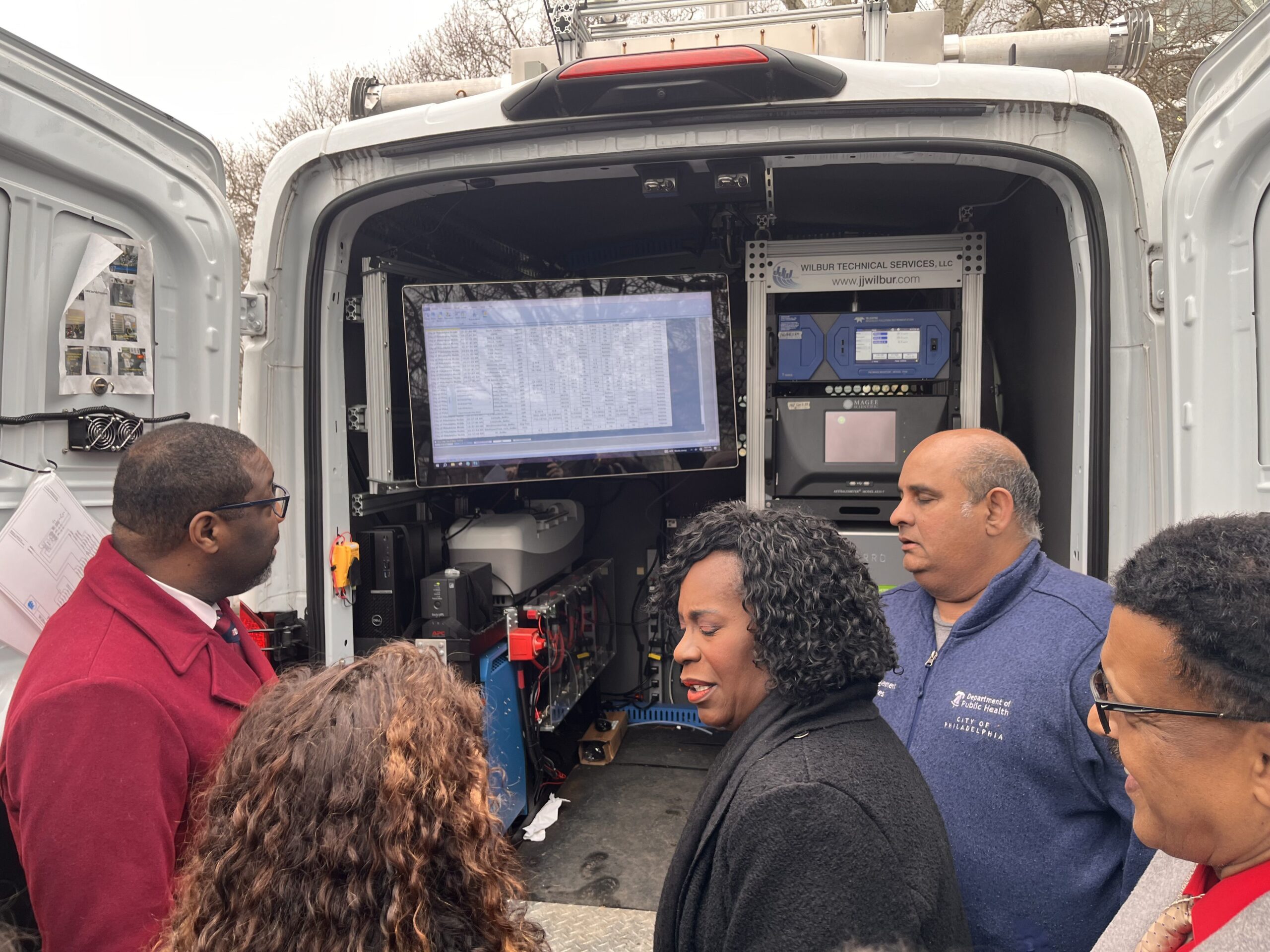
    Paresh Mehta (right), an engineer with Philadelphia’s Air Management Services, explains to City Council President Kenyatta Johnson (left) and Mayor Cherelle L. Parker how air quality data is collected.

    ‘We knew right away’

    Palak Raval-Nelson, the city’s health commissioner, said the new air monitoring network has been in the works for years. The project is overseen by the health department’s AMS.

    “It’s amazing to finally see that it’s here,” she said.

    The system detected the air quality as poor during a fire last week, Raval-Nelson said.

    “The monitor went off, and we knew right away that we needed to communicate information,” Raval-Nelson said.

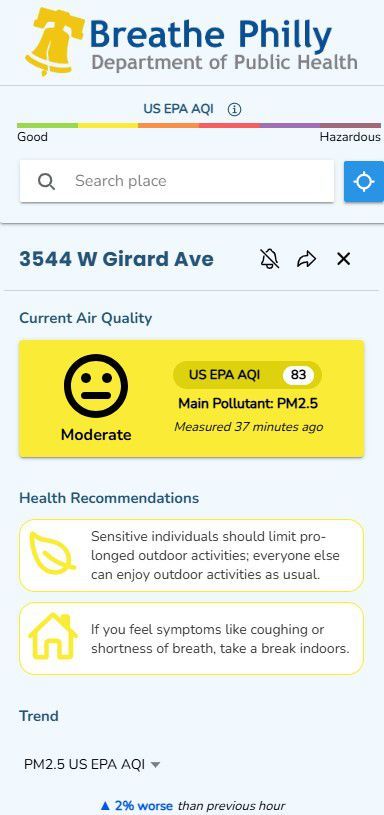
    The monitor displays colored circles and squares indicating the air quality at each monitor. Colors range from green, the best, to purple and mauve, the worst.

    A sample of the Breathe Philly online dashboard that gives residents real-time data on air pollution from 76 sensors placed around the city.

    The sensors detect levels of particulate matter, which are tiny particles in the air that can cause health risks. PM2.5 is the result of the burning of fossil fuels, such as by vehicles or power plants. They sensors also measure NO2, a gas also emitted by burning fossil fuels.

    Both chemicals can cause respiratory issues.

    “It is a concrete step to help keep all of us and our loved ones safe,” Raval-Nelson said of the new sensor system.

    Council President Kenyatta Johnson, who grew up in Point Breeze, said the system will help provide real-time information in the event of a disaster, such as the PES Refinery explosion and fire in 2019.

    And it will help those with breathing issues like asthma decide whether it is safe to go outside for extended periods.

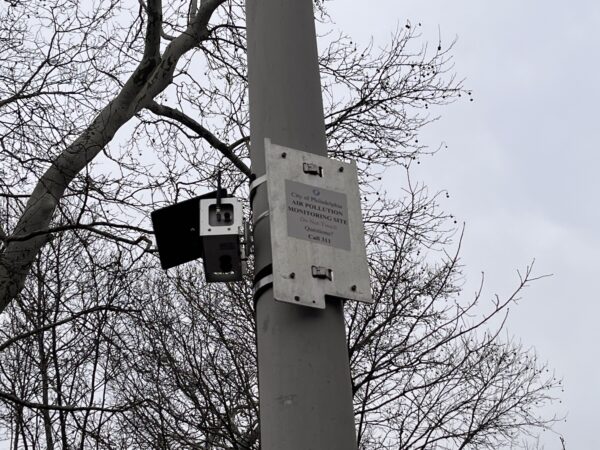
    One of 76 solar-powered sensors made by Clarity Movement Co. for a new network of real time air quality data available for Philadelphia residents.

    A new layer of safety

    Alex Bomstein, executive director of the nonprofit advocacy group Clean Air Council, said the network adds a new layer of safety for city residents.

    “You can’t go very far in the city without encountering a monitor, which is wonderful, because that means that everybody in the city is being protected,” Bomstein said.

    He fears pollution will worsen in the future as the administration of President Donald Trump continues to roll back environmental rules and regulations, such as those governing vehicle tailpipe emissions.

    Sean Wihera, a vice president with Clarity Movement Co., said the company was founded in 2014 as a start-up at the University of California, Berkley. Similar systems have been installed in Los Angeles and Chicago, he said.

    The company owns the sensors and is responsible for them if they break or are stolen. The sensors are upgraded after three years for the latest technology. Wihera said it is possible that Philly’s system could monitor for benzene in the future.

    “We’ve been working now in 85 different countries, hundreds of cities,” Wihera said. “But this is one of the most successful integrations that we’ve seen.”

  • Man arrested for $175,000 theft at Morey’s Piers in Wildwood

    Man arrested for $175,000 theft at Morey’s Piers in Wildwood

    A man has been arrested in the theft of more than $175,000 worth of metal and mechanical components from the iconic Jersey Shore theme park Morey’s Piers.

    Wildwood police said they arrested William Morelli, 67, of Wildwood Crest. Police first became aware of the heist, which occurred over several days, on Feb. 4. The reporting party provided police with a suspect and vehicle description after reviewing surveillance video.

    Upon investigation, police said they identified Morelli, as the suspect who removed a large amount of metal from Morey’s temporary work site on the beach.

    Morelli allegedly removed metal from the beach before selling it to an unidentified scrapyard business, according to Wildwood police. Morelli was charged with theft of movable property and later released from custody.

    The theft comes at a time when the iconic Morey’s Ferris wheel is undergoing much-needed renovations at the South Philadelphia Navy Yard.

    Geoff Rogers, chief operating officer at Morey’s Piers, said although work crews remain optimistic, the stolen materials bring an “unexpected and disappointing setback” to the project.

    “We are heartbroken by this incident,” Rogers said. “The Giant Wheel holds deep sentimental value for not only the company and our team members, but the generations of families who have made memories on it.”

    Despite the theft, Rogers said that the planned Ferris wheel renovation should be complete by the start of the 2026 summer season, as originally planned.

    The Giant Wheel, a 156-foot LED-lit Ferris wheel and one of the tallest at the Jersey Shore, is disassembled, repaired, and repainted regularly, but this year’s renovation required transportation to the Navy Yard to work on its 16,000-pound centerpiece.

    Designed by Dutch ride manufacturer Vekoma Rides and installed in 1985, the Giant Wheel has been a recognizable symbol of the Wildwood skyline for decades. In 2012, they upgraded it with an LED light system.

    After last year’s closures of Gillian’s Wonderland in Ocean City and Wildwood’s Splash Zone Water Park, Morey’s Piers are the last beachside water parks and one of the Jersey Shore’s remaining large-scale Ferris wheels.