Acaden Lewis did a little bit of everything to lift Villanova to a 92-89 overtime victory over Xavier in Cincinnati on Tuesday.
Lewis had 21 points, seven rebounds, seven assists, and four steals, including one that sealed the win in the final seconds of the game. Villanova (21-5, 12-3 Big East) improved to 7-1 on the road in the Big East.
“I think we’re just built for [overtime],” Lewis told reporters. “We’ve been on the road. We’ve had seven road wins after this game. So I think we’ve been through the fire. We’ve been in some far games. We played the first game of the year [against] BYU in Las Vegas. It was with no other games around. So, we’re used to it at this point. We’re growing up in front of everybody’s eyes. And I think we’re getting really good on the road for that reason.”
Lewis is averaging 12.7 points and leads the Wildcats in assists (5.3).
Duke Brennan had 10 points and 13 rebounds for his 12th double-double of the season. He is two double-doubles shy of tying Michael Bradley’s single-season program record.
In overtime, Villanova outscored Xavier, 11-8, and outrebounded the Musketeers, 5-4. Lewis and Bryce Lindsay had nine of the 11 points.
Bench lifts Villanova
Xavier (13-12, 5-9) opened the game on an 11-2 run that forced Villanova coach Kevin Willard to call a timeout. Willard took out Matt Hodge, Brennan, and Lindsay. He replaced them with Devin Askew, Malachi Palmer, and Braden Pierce.
Villanova quickly spun off a 17-7 run over the next six minutes to take a lead. It spun into a 28-13 run.
Askew scored back-to-back three-pointers during the run.
“Coming into the game, we didn’t get any stops,” Lewis told reporters. “Starting five was out there, kind of, lackadaisical. They were running the speed of the game kind of got to us. And we didn’t really respond. Chris [Jeffrey] came in, Dev [Askew] came in, a bunch of guys came in and just changed the whole game. Got more stops, got us in the rhythm. And then going back in and help guys that start to get into a rhythm as well. And I think [the starters] just kept that same pressure.”
Duke Brennan, shown during a game on Feb. 10, had his 12th double-double of the season against Xavier on Tuesday.
Lindsay shows improvement
After scoring double digits in 13 of his first 14 games of the season, Lindsay has struggled. He went from averaging 16.9 points over the first 14 games to just 6.4 over the last 10.
Against Xavier, Lindsay finished with 15 points, shooting 5-for-11 from the field and 4-for-8 from beyond the arc. It was his fourth double-digit performance in the last 11 games.
“There’s a reason he started,” Willard told reporters. “I have tremendous confidence in Bryce, and he’s been putting the work in. He’s just been in a little bit of a slump, and it’s good to see him get out of it.”
Lewis echoed Willard’s thoughts on Lindsay’s performance.
“That’s great to see,” Lewis told reporters. “I’m proud of [Lindsay]. It’s not easy to go through big slumps like this when you’re playing on national TV. And everyone expects so much out of you. So for him to just keep his head down, stick to it, and keep working … I mean, that’s what happened.”
Villanova returns home after two road games to face No. 5 UConn at the Xfinity Mobile Arena on Saturday (5:30 p.m., TruTV/TNT). UConn won 75-67 in overtime on Jan. 24 in Storrs, Conn.
The last time Villanova hosted UConn, it upset the No. 9 Huskies, 68-66, on Jan. 8, 2025.
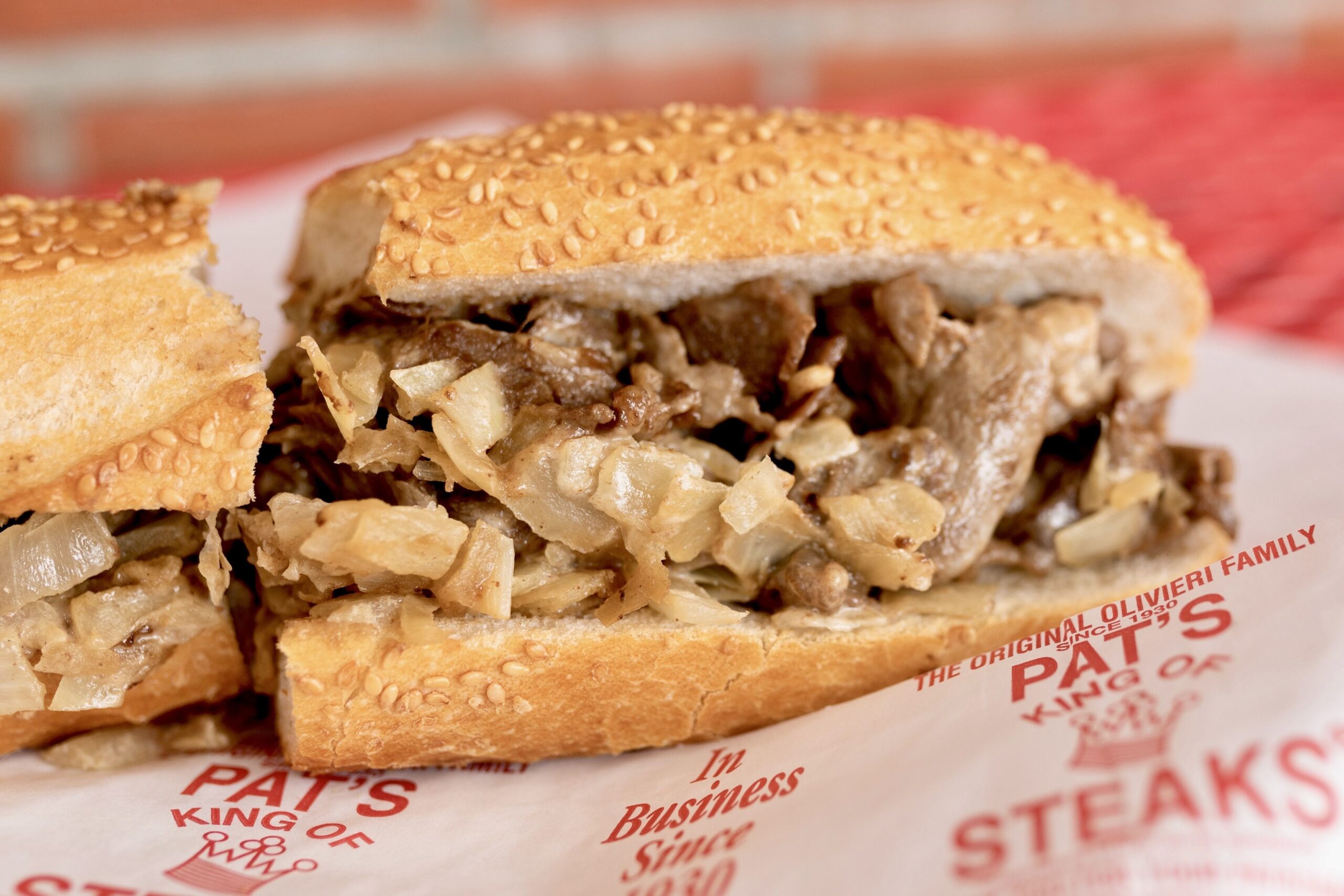
It’s only taken 96 years, but you can now get a seeded roll for your steak at Pat’s King of Steaks. Frank Olivieri explains this and one other seismic shift at the shop that invented this storied sandwich.
Hira Qureshi is fasting for Ramadan, and she shares her guide to fasting and celebrating. Above is the lagman soup from Uzbek standout Plov House in Northeast Philadelphia.
Kiki Aranita sat down for Del Frisco’s $39 martini/oysters/Caesar/fries bar special. It’s a ready-made “girl dinner” that social-media consumers are eating up.
Manakeesh Cafe Bakery & Grill — home of fine Lebanese treats such as the qatayif shown above — has ended its 15-year run at 45th and Walnut Streets. Management cites a rent increase, and Andrew Kitchenman explains the family’s next steps.
La Chingonitawill wrap its four-year brick-and-mortar run in Fishtown with burrito offerings on Wednesday, Feb. 18 (burritos) and Friday, Feb. 20 (birria), from noon-6 p.m. or sellout. Rebecca Baez and Omar Martinez, who started the business in 2020 as a food cart, said they decided it was best “to prioritize our family, bow out gracefully, and end things on a high note.” They said the decision to shut down “did not come lightly, but we recognized that it was time to close this chapter with intention and gratitude, before burnout set in further.” They say they think they’ll do popups but have no plans to open another restaurant in the near future.
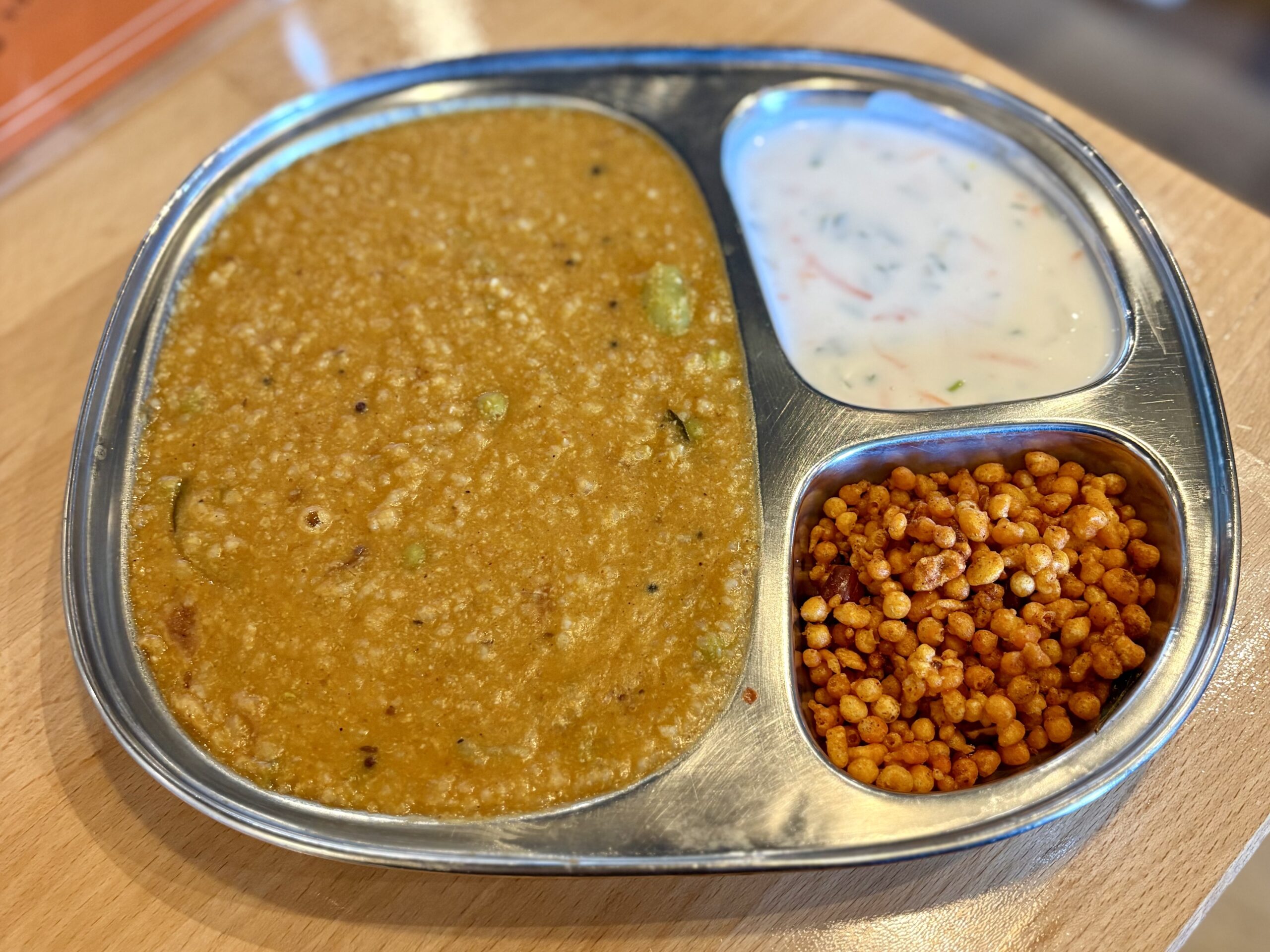
Here’s what we enjoyed during our various local travels: Craig LaBan is delighted by the bise bele bath (above) — a comforting porridge from southern India — at Exton’s Malgudi Cafe. Also: Bedatri Choudhury enjoyed a goat with spicy scallop creole at a Honeysuckle collab dinner with New York’s Kabawa, while Jenn Ladd says she visited Bomb Bomb Bar and had what might be the best crab cakes she’s ever had. That’s high praise coming from someone who lived and worked in Baltimore. (To enjoy more of our “Best Things,” click here.)
Craig, meanwhile, found “something magical about the mole poblano” for his review of Tlali, a modest Mexican BYOB in Upper Darby, where the Sandoval family is cooking its heart out.
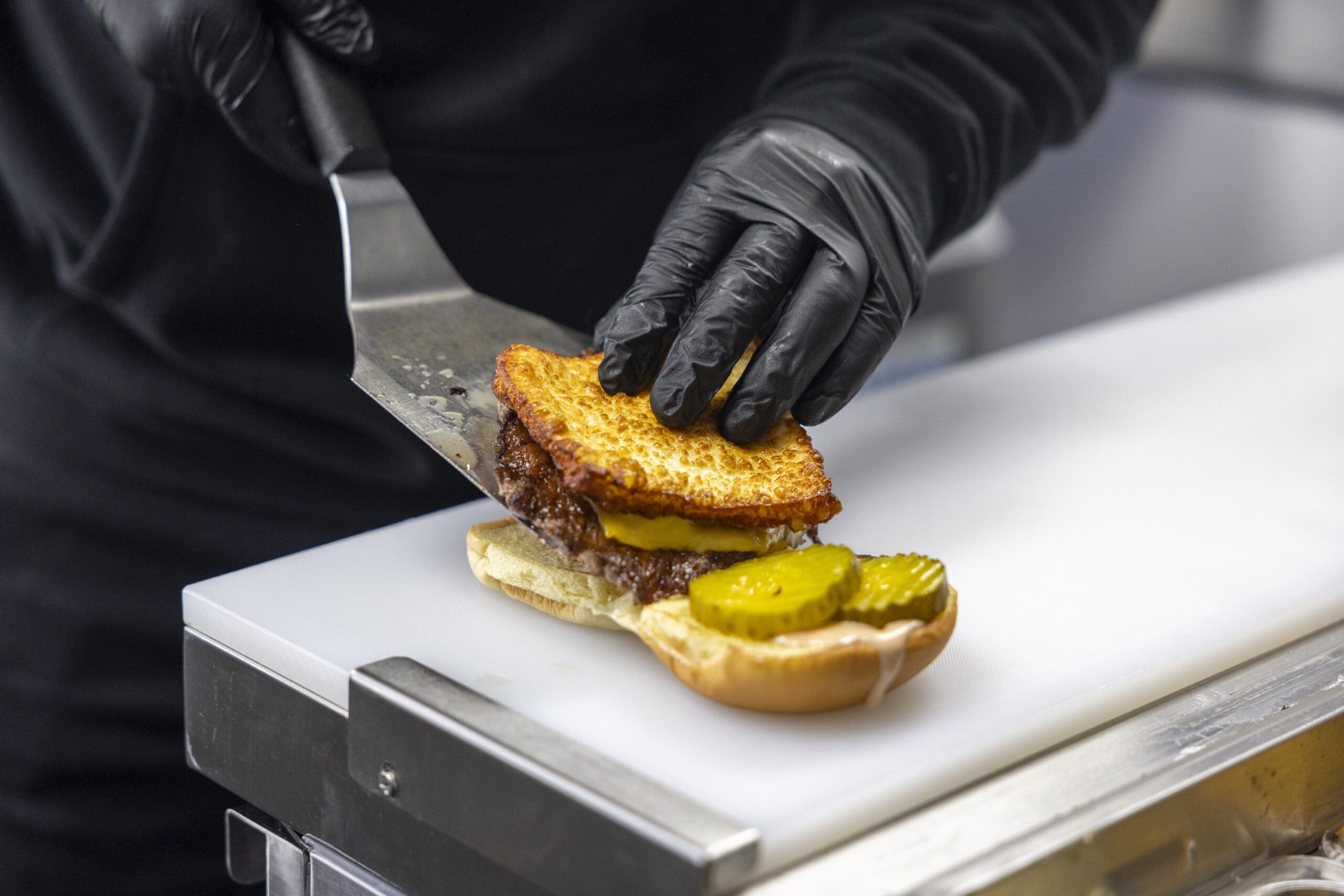
Beatrice Forman touts the smashburgers at the new El Sazón R.D. in Northern Liberties, which are topped with a pad of queso frito and tangy mayo-ketchup to bring Dominican flavors to an American classic.
Scoops
Chef Dominique Shields, founder and former owner of North Philly’s Pretty Girls Cook (at left with her staff when she was featured last year on the Fox show Gordon Ramsay’s Secret Service), will oversee weekend brunch at the new Savú (208 S. 13th St.) as chef-in-residence. The brunch service starts Feb. 28.
The Broad Street Diner will yield to a new six-story hotel, as Jake Blumgart found in new city documents. What could that mean for the Melrose Diner site, also owned by Michael Petrogiannis?
Imminent openings include Mi Vida (the swank Mexican restaurant out of D.C.), coming to 1150 Ludlow St. in East Market on Feb. 22, and Bar Tacconelli, the cocktail lounge from the pizza family in the former Versa Vino at 461 Route 38, Maple Shade, on Feb. 25.
Root & Sprig, Top Chef judge Tom Colicchio’s health-forward fast-casual restaurant, has been booked for the Shop Penn retail district in the Perelman School of Medicine’s Kelley Research Building (421 Curie Blvd.) later this spring. There’s also a location at the Penn Medicine Food Hall.
Sports bar P.J. Whelihan’s will replace the shuttered Iron Hill Brewery in Newtown, Bucks County.
Restaurant report
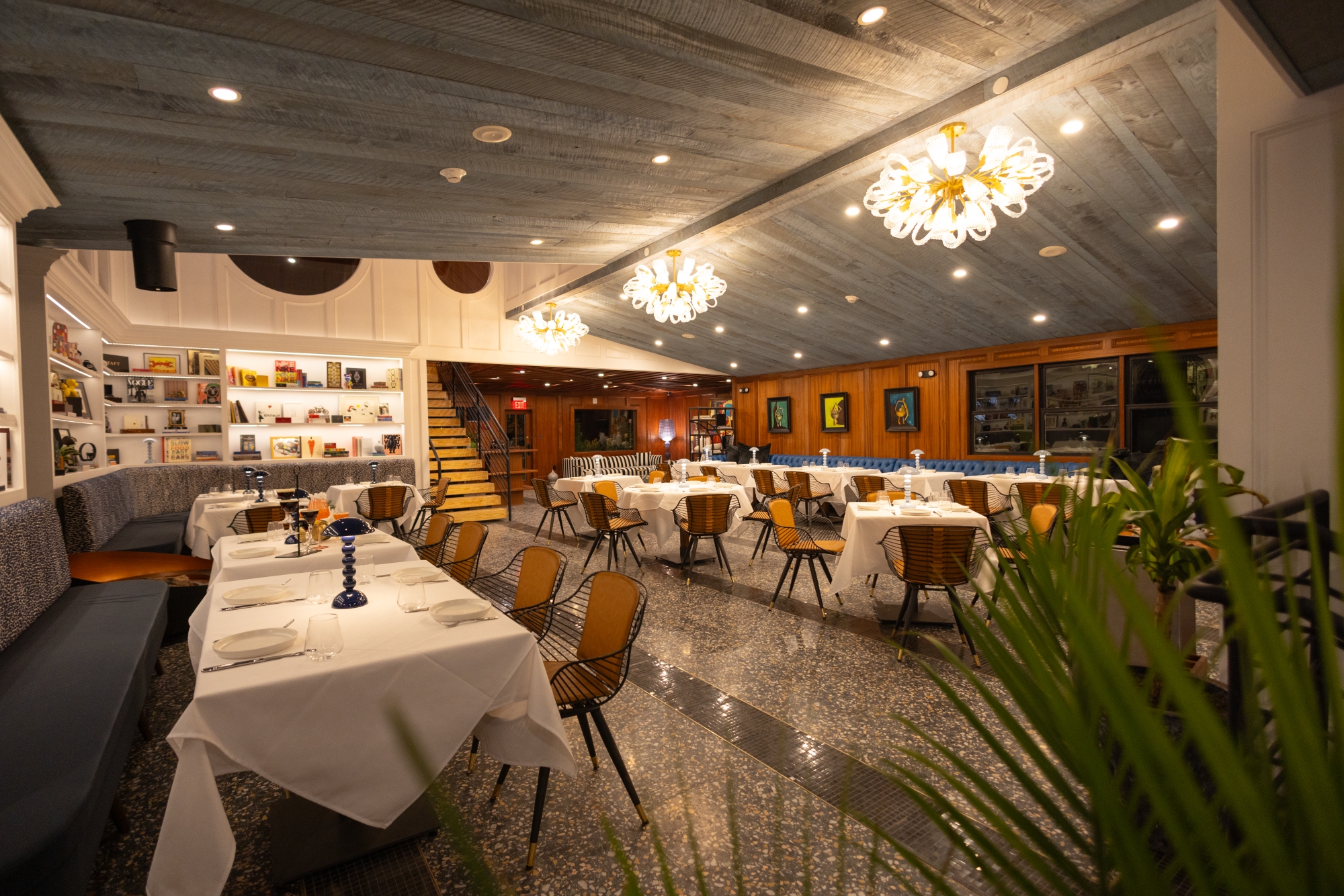
Maddy Rose at the Landing has replaced the Landing restaurant on the Delaware River in New Hope, which closed in late 2024. It’s a second Maddy Rose location (after Jersey City) for Frank Cretella of By Landmark, who also runs the nearby Logan Inn, Hotel du Village, and Anzu Social. The open dining room faces the Delaware and the New Hope–Lambertville Bridge, with indoor dining, bar seating, and deck dining planned as part of a second renovation phase. Mediterranean-influenced menu includes dinner entrees priced in the high $20s (white bean ravioli, Bolognese), the $30s (roasted chicken, baby back ribs), and occasional gusts into the $40s and higher (dayboat scallops, prime rib).
Maddy Rose at the Landing, 22 N. Main St., New Hope. Hours: 4-10 p.m. Wednesday and Thursday, 4-11 p.m. Friday, noon-3 p.m. and 4-11 p.m. Saturday, and noon-3 p.m. and 4-9 p.m. Sunday. Reservations via OpenTable.
Cake & Joe owners Sarah Qi and Trista Tang open their third location at 10 a.m. Wednesday, Feb. 18 at 1735 Market St. with free cakes for the first 100 people. The specialty coffee-and-dessert shop started in Pennsport in December 2020 and added a second in Fishtown in June 2023. The Center City location, open daily from 7 a.m.-7 p.m., features more grab-and-go options as well as a larger focus on Chinese food.
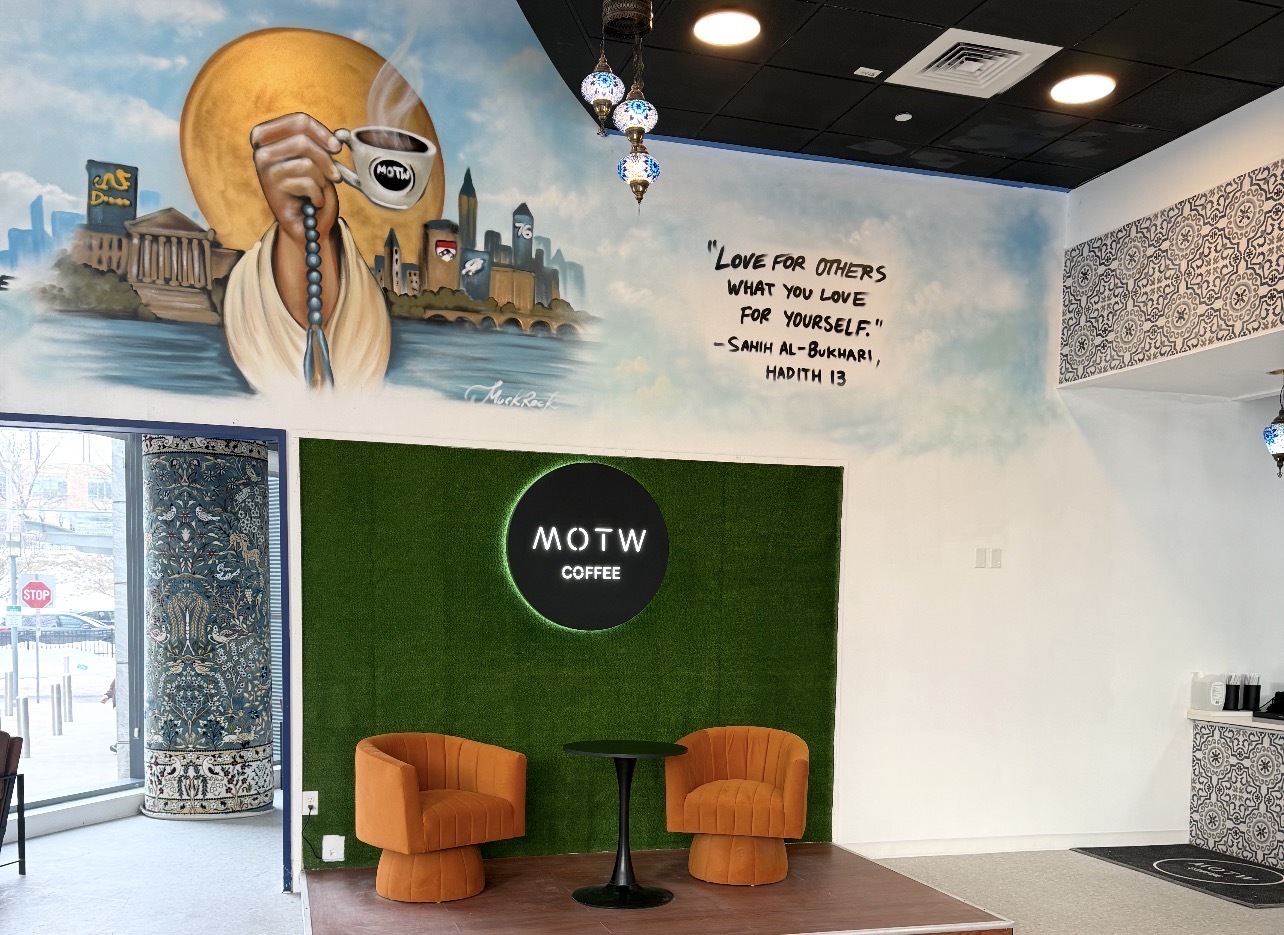
Besides Cake & Joe, the Center City West coffee scene is broadening. Last week, Mahmood Islam and Samina Akbar opened a M.O.T.W Coffee (Muslims of the World Coffee) franchise at the Murano (2101 Market St.), next to Trader Joe’s, with Arabic baked goods alongside specialty coffee in chill environs. Two Yemeni coffeehouses are planned nearby: As I reported a few weeks ago, Haraz Coffee House is applying for zoning to open at 1822 Chestnut St., while Rittenhouse Ramblings says Jabal Coffee House has a deal at 1524 Chestnut St.; Jabal’s corporate website suggests a fall opening.
Briefly noted
West Chester Restaurant Week will run from Sunday, Feb. 22 to Sunday, March 1 with 30 restaurants offering multicourse menus priced from $40 to $60.
East Passyunk Restaurant Week returns for its 14th year: Monday, Feb. 23 to Friday, March 6 at 21 participating restaurants with prix-fixes of $20, $40, and $60.
Filipino stylings are on the menu Wednesday, Feb. 18 at Breezy’s Deli (2235 Washington Ave., 10 a.m.-7 p.m.) and Porco’s & Small Oven Pastry (2204 Washington Ave., 4-8 p.m.). Owner Chad Durkin is collaborating with the visiting Mike and Eylonah Strauss — formerly of Mike’s BBQ and Sidecar Bar — who in 2023 moved to Bacolod City, Philippines, where they run Sugaree Gelato Bakery Cafe.
Gilda in Fishtown will have help from Cantina La Martina for Gilda’s first-ever Tuesday service, on Feb. 24. Expect Mexican specialty drinks, pastries, sandwiches, and more with a Portuguese twist. Menus will be released on their Instagram accounts. It’ll be pay-as-you-go; dine-in or takeaway.
At Amá, chef Frankie Ramirez’s Taco Tuesday special, Taco Novela, brings in a guest chef every month for a special weekly taco, with proceeds benefiting a charity. Juan Carlos Aparicio of El Chingon launched the series this week with a taco de lobster zarandeada (a full 1½-pound Maine lobster, charred cabbage sancocho, squink ink sofrito, and chiltepín mayo on squid ink corn tortillas, priced at $42). It will be repeated on Feb. 24. Esperanza Immigration Legal Services is the beneficiary.
Cuba Libre in Old City is marking its first quarter-century with an open house noon-4 p.m. Saturday, March 7 (snow date, Sunday, March 8) with comp tastings of the restaurant’s original menu items plus rum tastings, cocktail samples, beer, wine, and sangria. No reservations, but those who register will get a $25 gift voucher.
Convenience chain Sheetz is scouting Wawa territory hard for a new location— as in “a site five miles down the road from Wawa HQ” hard. Erin McCarthy shares the intrigue.
❓Pop quiz
What new policy is in place at Philly dive bar Dirty Franks?
A) Customers must be at least 25 to enter
B) One additional hour of happy hour daily
C) Free drink for anyone with Frank in their first or last name
I saw a posting at the former Devon Seafood Grill on Rittenhouse Square with an estimated investment of $3.2 million. Any insight? — Woody R.
Stephen Starr is developing a restaurant — concept is TBD — at the former Devon Seafood Grill at 18th and Chancellor Streets, as I reported nearly a year ago. What you’ve spotted in a window is a printout of a city commercial building permit. The “$3.2 million” cited is the estimated cost of the general work — just a fraction of the total budget, including major categories such as equipment, furnishings, and architectural and design work. Starr would not disclose the budget. It’s probably safe to say it won’t be $20 million, the sum he and partners invested in Borromini, which opened last year across the way.
📮 Have a question about food in Philly? Email your questions to me at mklein@inquirer.com for a chance to be featured in my newsletter.
By submitting your written, visual, and/or audio contributions, you agree to The Inquirer’s Terms of Use, including the grant of rights in Section 10.
A millionaire’s private island filled with luxury goods, gourmet food, and fine wine seems like a reality a million miles from yours, so what can Philadelphia-area parents learn from the Epstein files?
Plenty.
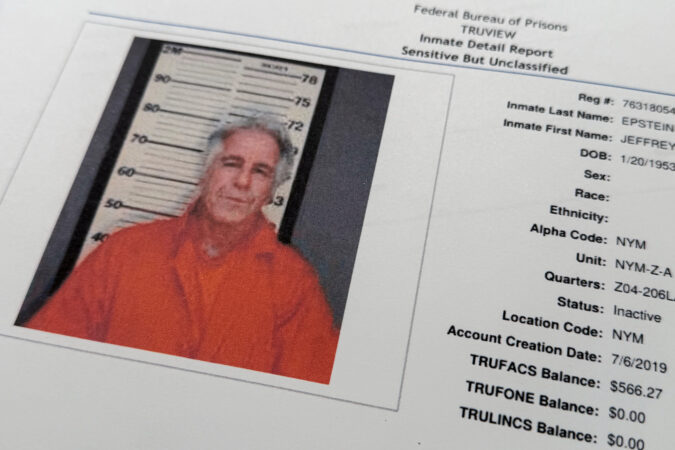
There are people like Jeffrey Epstein everywhere. He just had a bigger field.
Epstein started small. In her memoir Nobody’s Girl, the late Virginia Roberts Giuffre, abused and trafficked by Epstein starting at age 16, describes how Epstein told her that as a teacher, he traded sex for grades. Alumni of New York’s elite Dalton School have described inappropriate conduct toward girls. Yet he was dismissed from the school simply for “poor performance.”
Back in the 1970s, when Epstein taught, sex abuse prevention programs were primarily directed at kids. Teaching kids to recognize “good touch/bad touch” would have done nothing for teenage girls, likely targeted for their insecurity, for whom attention from a cute, popular new teacher felt like affection and status. Today, the most effective school-based sex abuse prevention programs involve the entire school helping faculty and staff recognize and respond to inappropriate behavior. Policies explicitly identify acceptable and unacceptable behaviors around issues from touching to communicating with students outside of school. Ongoing prevention programs empower everyone to act if they see a breach. Parents are included as partners to reinforce healthy messages at home. One great example is Safety STARS — Enough Abuse.
What are the lessons for parents? I can count at least four:
1. Learn what sexual abuse prevention program is offered in your school or district and participate in the parent component. Confirm that it follows best practices, such as requiring a code of conduct for faculty, staff, and students, and commitment from administration to continuous monitoring of adherence to the policies.
Almost 20 years ago, Epstein was convicted of trafficking children for sex but escaped serious punishment in a now widely criticized plea deal. Defense attorneys at the time used the phrase “underage women” to soften how his acts against children sounded. I urge parents and all adults to more accurately call his crimes “child rape.” This helps challenge the social norm that it is somehow acceptable to have sex with minors who may be dressed up to appear older than they truly are.
2. For decades, social scientists have distinguished a pedophile — someone primarily attracted to prepubescent children — from ephebophiles, people attracted to older adolescents and teens. Either way, acting on such attractions is a crime against children.
Adults who target older youth may be more subtle in how they approach their targets, and that’s why parents should monitor all their teens’ relationships with adults, both virtual and in real life. A 17-year-old may look grown, and may balk at this supervision. But their brain still has nearly a decade before it can consistently make mature decisions.
Adolescence is a time of deep insecurity, when teens are highly sensitive to others’ opinions. As Giuffre noted in her memoir, people like Epstein are adept at “reading a room.” They can intuit what a vulnerable teen needs, and offer it, exacting their price later.
3. Even as maturing teens pull away, parents must work harder to stay connected and know what is happening in their teens’ lives. Set special times — driving to school can be ideal — to ask questions that require more than a yes-no answer. Take the time to learn the names of their friends, teachers, and coaches, so they know you’re really interested. Leave a surprise note on their bed telling them you’re proud of something they did. Teens need steady validation of their worth — not only for achievements, but simply for who they are. Keeping their self-esteem “cup” as full as possible is an important protective factor.
Predators are master manipulators. They can patiently work their way into an adolescent’s confidence, shoring up fragile self-esteem. That’s why it’s so critical for parents to be their children’s consistent support. Predators don’t just live on private islands and roam the world in private jets; they can run the social hierarchy as the “alpha” in a high school, or orchestrate hazing in a college fraternity or sorority.
4. Use the Epstein news as a moment to remind kids what a bully really is: someone who repeatedly uses their power to hurt, scare, or control a more vulnerable person. It is also a crucial chance to talk about sexual health and safety. Explain how youth of any age can be vulnerable to exploitation, and be explicit that sex should never be traded for anything.
A colleague raising teens put it starkly when I asked how she was handling the Epstein stories: “Kids are watching how we handle this as adults, and they are not impressed.” The children of this attorney are likely not the only ones who wonder why Epstein went so lightly punished, or why our culture seems to condone sexualized images of teens.
Ask your children what they’ve read and heard, what they think it means, and listen. Then share your thoughts and values. All adults can show the young people in our lives that we can do better — by talking openly about abuse, bullying, harmful media messages and whatever else is troubling our children. We can show them that we stand behind them and will advocate for safer policies in schools and communities.
Janet Rosenzweig MS, PhD, MPA is author of the book “The Sex-Wise Parent,” a senior policy analyst at The Institute for Human Services, and a member of the board of directors of The National Coalition to Prevent Child Sexual Abuse and Exploitation.
Good morning, Philly. It’s official: One of the region’s longest snow-cover streaks is over, just in time for a possible weekend storm.
Across Philadelphia, churches and neighborhood groups are preparing to confront U.S. Immigration and Customs Enforcement if the federal agency undertakes a large-scale deployment of agents.
Philadelphia has so far not been the target of a massive ICE operation like the one seen in Minneapolis this winter. It’s not clear if or when a bigger push will come from President Donald Trump’s administration.
Immigration advocates aren’t waiting around. From block leaders to religious communities, Philly groups are preparing to confront federal immigration agents pursuing their undocumented neighbors for arrest.
A Presbyterian church in Spring Garden, for instance, created what its congregants call Fourth Amendment areas to shield immigrant families in case ICE enters the building, while a Center City synagogue ordered 300 whistles to be able to quickly alert neighbors to ICE presence. Know-your-rights trainings and ICE-watch chats are active across the city.
“While you’re here, you’re safe, is what we want to assert,” the Rev. Peter Ahn, pastor of the Spring Garden church, told The Inquirer.
Sen. Dave McCormick says Chester County’s recent pollbook error proves the need for national election rules. But the GOP proposal wouldn’t have solved the county’s problems.
Philadelphia is not known as a late-night hotspot, with closing time at 2 a.m. and crowds diminished since the pandemic.
🍻 That’s a potential problem for the estimated 500,000 World Cup fans visiting this summer, many of whom will be used to later last calls. A handful of matches set to broadcast in from other North American host cities won’t even start until midnight.
🍻 Some hospitality organizations are proposing a solution: Let Philly bars stay open until 4 a.m. for the duration of the tournament.
🍻 It’s been done on a limited basis before, during the 2016 Democratic National Convention. And it’s not just a chance to earn more money, but to “prove that 4 a.m. nightlife can work in Philadelphia,” as one sports bar owner put it.
Cheers to Devynn Chester, who solved Tuesday’s anagram: Jill Scott. The North Philly singer just made her debut on NPR Music’s Tiny Desk Concert series.
Photo of the day
Mason Kardon, 1, just started walking. He is seen talking a stroll at Liberty Place in Center City.
Keep going, Mason! We’re about halfway to the weekend. ’Til then, be well.
By submitting your written, visual, and/or audio contributions, you agree to The Inquirer’s Terms of Use, including the grant of rights in Section 10.
Republicans think patients should be shopping for better healthcare prices. The party has long pushed to give patients money and let consumers do the work of reducing costs. After some GOP lawmakers closed out 2025 advocating to fund health savings accounts, President Donald Trump introduced his Great Healthcare Plan, which calls for, among other policies, requiring providers and insurers to post their prices “in their place of business.”
The idea echoes a policy implemented during his first term, when Trump suggested that requiring hospitals to post their charges online could ease one of the most common gripes about the healthcare system — the lack of upfront prices. To anyone who’s gotten a bill three months after treatment only to find mysterious charges, the idea seemed intuitive.
“You’re able to go online and compare all of the hospitals and the doctors and the prices,” Trump said in 2019 at an event unveiling the price transparency policy.
But amid low compliance and other struggles in implementing the policy since it took effect in 2021, the available price data is sparse and often confusing. And instead of patients shopping for medical services, it’s mostly health systems and insurers using the little data there is, turning it into fodder for negotiations that determine what medical professionals and facilities get paid for what services.
“We use the transparency data,” said Eric Hoag, an executive at Blue Cross Blue Shield of Minnesota, noting that the insurer wants to make sure providers aren’t being paid substantially different rates. It’s “to make sure that we are competitive, or, you know, more than competitive against other health plans.”
Not all hospitals have fallen in line with the price transparency rules, and many were slow to do so. A study conducted in the policy’s first 10 months found only about a third of facilities had complied with the regulations. The federal Centers for Medicare & Medicaid Services notified 27 hospitals from June 2022 to May 2025 that they would be fined for lack of compliance with the rules.
The struggles to make healthcare prices available have prompted more federal action since Trump’s first effort. President Joe Biden took his own thwack at the dilemma, by requiring increased data standardization and toughening compliance criteria. And in early 2025, working to fulfill his promises to lower health costs, Trump tried again, signing a new executive order urging his administration to fine hospitals and doctors for failing to post their prices. CMS followed up with a regulation intended to up the fines and increase the level of detail required within the pricing data.
So far, “there’s no evidence that patients use this information,” said Zack Cooper, a health economist at Yale University.
In 2021, Cooper co-authored a paper based on data from a large commercial insurer. The researchers found that, on average, patients who need an MRI pass six lower-priced imaging providers on the way from their homes to an appointment for a scan. That’s because they follow their physician’s advice about where to receive care, the study showed.
Executives and researchers interviewed by KFF Health News also didn’t think opening the data would change prices in a big way. Research shows that transparency policies can have mixed effects on prices, with one 2024 study of a New York initiative finding a marginal increase in billed charges.
The policy results thus far seem to put a damper on long-held hopes, particularly from the GOP, that providing more price transparency would incentivize patients to find the best deal on their imaging or knee replacements.
These aspirations have been unfulfilled for a few reasons, researchers and industry insiders say. Some patients simply don’t compare services. But unlike with apples — a Honeycrisp and a Red Delicious are easy to line up side by side — medical services are hard to compare.
For one thing, it’s not as simple as one price for one medical stay. Two babies might be delivered by the same obstetrician, for example, but the mothers could be charged very different amounts. One patient might be given medications to speed up contractions; another might not. Or one might need an emergency cesarean section — one of many cases in medicine in which obtaining the service simply isn’t a choice.
And the data often is presented in a way that’s not useful for patients, sometimes buried in spreadsheets and requiring a deep knowledge of billing codes. In computing these costs, hospitals make “detailed assumptions about how to apply complex contracting terms and assess historic data to create a reasonable value for an expected allowed amount,” the American Hospital Association told the Trump administration in July 2025 amid efforts to boost transparency.
Costs vary because hospitals’ contracts with insurers vary, said Jamie Cleverley, president of Cleverley and Associates, which works with healthcare providers to help them understand the financial impacts of changing contract terms. The cost for a patient with one health plan may be very different than the cost for the next patient with another plan.
The fact that hospital prices might be confusing for patients is a consequence of the lack of standardization in contracts and presentation, Cleverley said. “They’re not being nefarious.”
“Until we kind of align as an industry, there’s going to continue to be this variation in terms of how people look at the data and the utility of it,” he said.
Instead of aiding shoppers, the federally mandated data has become the foundation for negotiations — or sometimes lawsuits — over the proper level of compensation.
The top use for the pricing data for healthcare providers and payers, such as insurers, is “to use that in their contract negotiations,” said Marcus Dorstel, an executive at price transparency startup Turquoise Health.
Turquoise Health assembles price data by grouping codes for services together using machine learning, a type of artificial intelligence. It is just one example in a cottage industry of startups offering insights into prices. And, online, the startups’ advertisements hawking their wares often focus on hospitals and their periodic jousts with insurers. Turquoise has payers and providers as clients, Dorstel said.
“I think nine times out of 10 you will hear them say that the price transparency data is a vital piece of the contract negotiation now,” he said.
Of course, prices aren’t the only variable that negotiations hinge on. Hoag said Blue Cross Blue Shield of Minnesota also considers quality of care, rates of unnecessary treatments, and other factors. And sometimes negotiators feel as if they have to keep up with their peers — claiming a need for more revenue to match competitors’ salaries, for example.
Hoag said doctors and other providers often look at the data from comparable health systems and say, “‘I need to be paid more.’”
KFF Health News is a national newsroom that produces in-depth journalism about health issues and is one of the core operating programs at KFF — the independent source for health policy research, polling, and journalism.
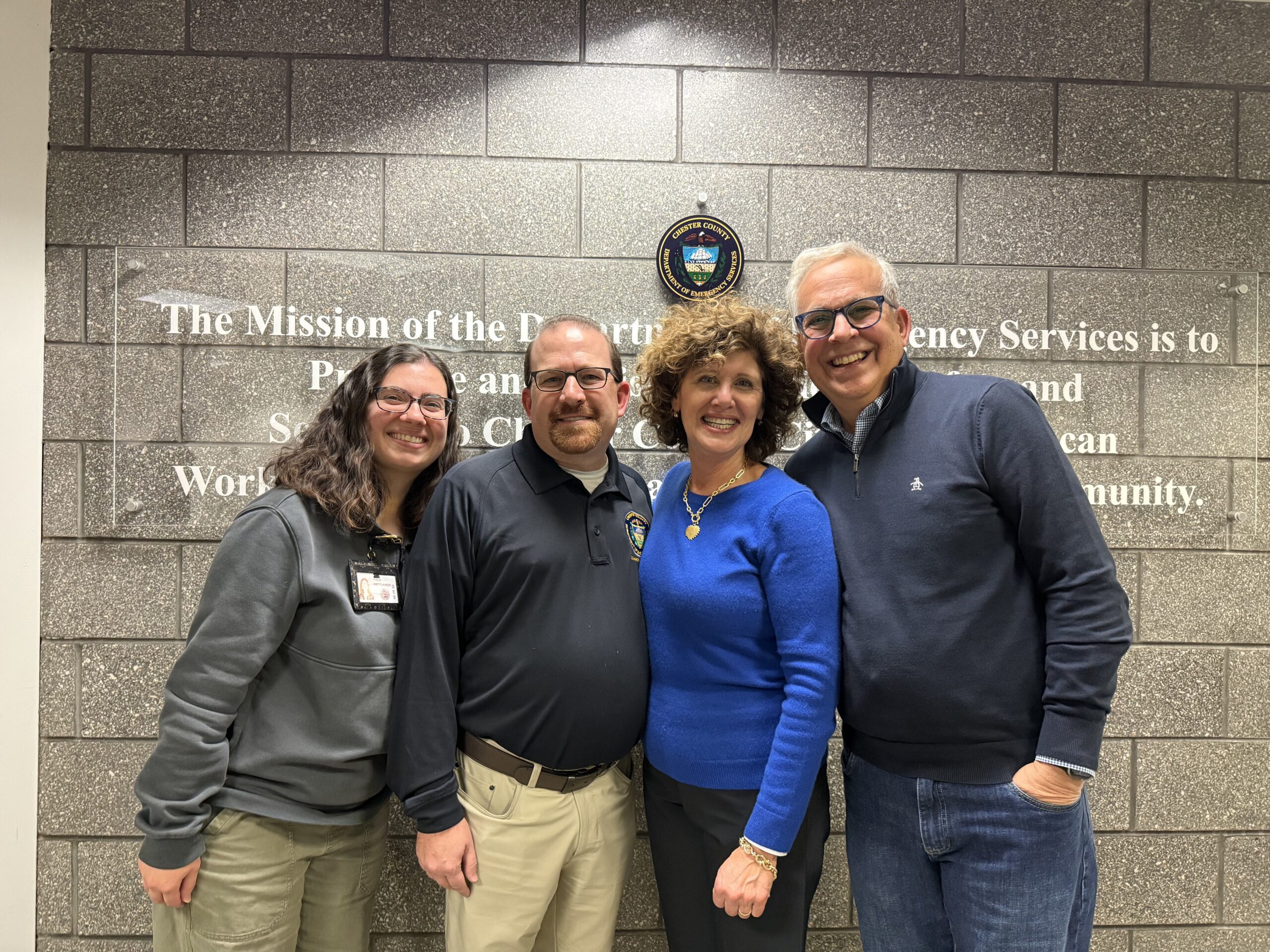
Chester County 911 dispatcher Kayla Wettlaufer (left) guided Terri Borzillo (center right) through CPR on the phone when Bob Borzillo (right) went into cardiac arrest in November.
When Willistown residents Terri and Bob Borzillo returned from a trip to Barcelona last fall, neither had expected that Terri would soon be holding “the balance of his life” in her hands.
But that’s what happened one November evening when Bob, 65, went into cardiac arrest. With guidance from county dispatcher Kayla Wettlaufer, Terri, also 65, was able to perform compressions on her husband of more than 40 years years while she waited for EMTs to arrive.
Wettlaufer’s direction helped saved Bob’s life in an often fatal situation, earning her honors from the county this month.
The Brandywine Valley Viaduct, better known as the Downingtown Trestle Bridge, will eventually help extend the Chester Valley Trail.
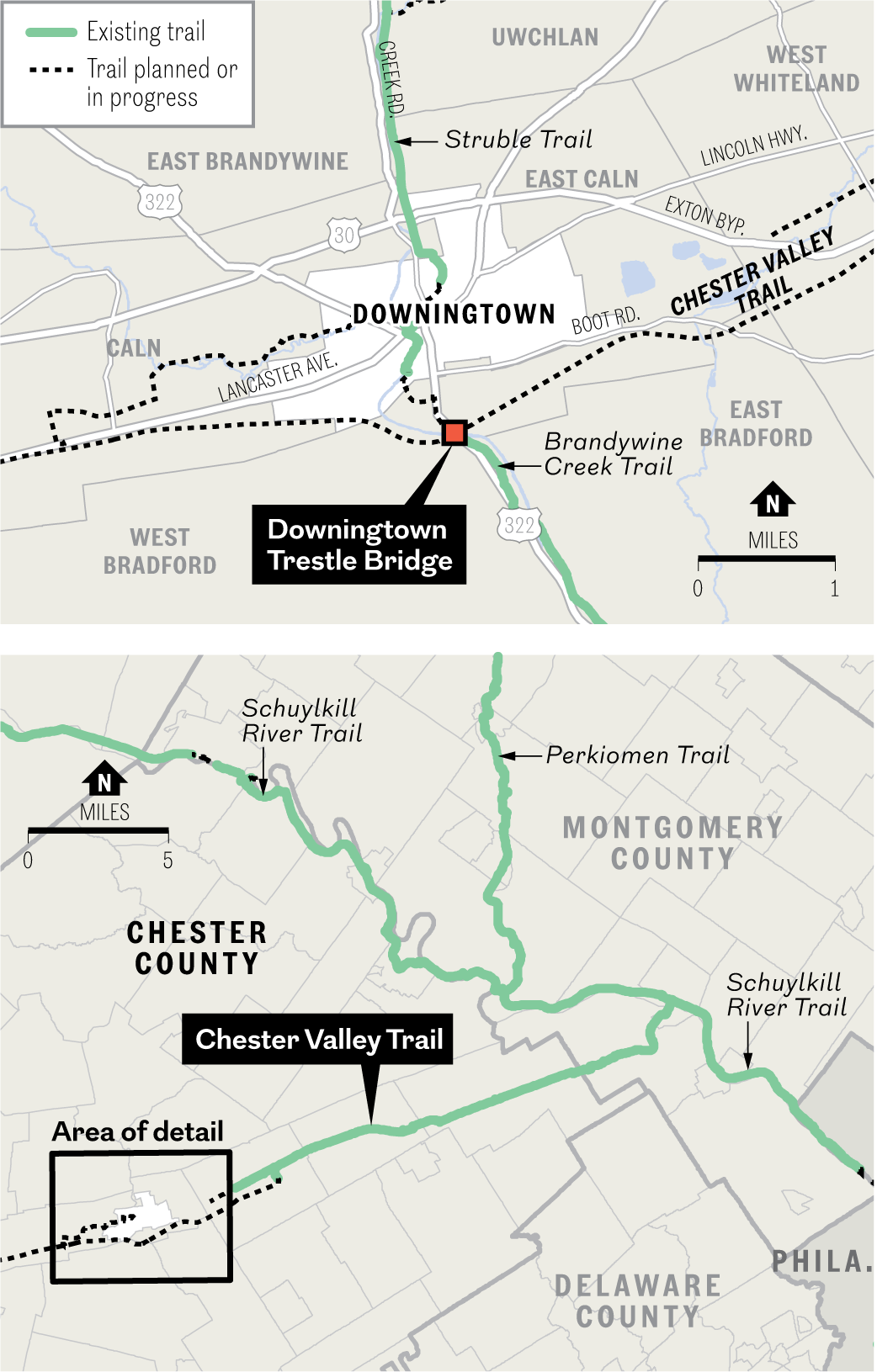
The more than century-old bridge known as the Downingtown Trestle is set to be rehabilitated, a move that will eventually help extend the Chester Valley Trail. Work on the overall extension project is estimated to take five to seven years, with the design phase starting next year.
The nearly 19-mile multi-use trail currently runs from Atglen to Exton and the trestle bridge is a “keystone” of the extension project, said Chester County’s director of facilities and parks department.
In case you missed it, an unknown number of annual mail ballot applications went out to county residents with the first and last names reversed earlier this month. Officials said the error won’t affect processing of the forms, but it comes at a time when some voters have expressed concerns after tens of thousands of independent and unaffiliated voters were left off November’s poll books.
In an address to the Senate floor, Sen. Dave McCormick used the county’s recent poll book blunder as an example of why there should be nationwide rules mandating proof of citizenship and photo identification for voters, like those outlined in the proposed SAVE Act. But the senator painted an incomplete and inaccurate picture of what happened in November and the SAVE Act wouldn’t have solved those problems, The Inquirer’s Katie Bernard reports.
💡 Community News
Michael Phillips, a 44-year-old Coatesville man, was taken into custody last week after allegedly stabbing his 3-month-old son and then throwing him into the snow. The infant was taken to Children’s Hospital of Philadelphia for surgery and was later listed in critical but stable condition. Phillips faces charges of attempted homicide and aggravated assault.
Tredyffrin Township officials have responded to community concerns after the Department of Homeland Security, which oversees ICE, leased about 10,000 square feet of space at the Westlakes Office Complex. In a statement, they reiterated that local law enforcement agents don’t enforce immigration orders or work with ICE. The space “will not house ICE agents or support their operations. It is strictly for back-office officials, such as lawyers and analysts,” a spokesperson for the property told Wired.
There have been recent leadership changes at two area police departments. Brian Barber, who previously spent over 26 years with the Pennsylvania State Police, is the new deputy police chief of Caln Township. In Uwchlan Township, James Fisher has been appointed as the department’s new head following Chief of Police Scott Alexander and Lieutenant Maureen P. Evans’ recent retirements.
The Netflix comedy show Tires has been awarded $6 million in tax credits for production of its third season. The Shane Gillis-led show takes place in a fictional West Chester auto shop and is expected to generate $24 million in the local economy.
Alisan Road Mercantile, a new general store stocking Pennsylvania-made goods, is now open at 89 N. Main St. in Spring City.
A new bookstore opened over the weekend in Kennett Square. Located at 121 W. State St., Forage Books also offers a selection of gifts.
Heads up for drivers: There are several construction projects causing delays around the county. In Uwchlan Township, there will be traffic restrictions on Route 113 between Gordon Drive and Lionville Station Road today from 9 a.m. to 3 p.m. for utility work. In East Pikeland Township, Rapps Dam Bridge will be closed today for maintenance. In West Whiteland Township, there’s a temporary new traffic pattern in effect for the next three weeks on Valley Creek Boulevard between Swedesford Road and the entrance of the Church Farm School. The southbound lanes will be closed from 7 a.m. to 5 p.m. for sewer line construction. In Easttown Township, Chester Road between South Fairfield and South Waterloo Roads is expected to be closed to non-local traffic from 9 a.m. to 3 p.m. through Friday for sewer improvements. And in and around East Marlborough Township, there may be delays on U.S. 1 between Schoolhouse Road and the Kennett Oxford Bypass tomorrow from 7 p.m. until 5 a.m. Friday as PennDot installs overhead signage.
After multiple power outages in East Marlborough and Pocopson Townships,Peco will be upgrading and installing new equipment as well as trimming treesover the next month. The $1.5 million project includes work along Folly Hill Road, East Doe Run Road, East Street Road, Brooks Road, Huntsman Lane, Schilling Drive, Windovr Way, Gideon Drive, and Valley Road.
🏫 Schools Briefing
Kennett Consolidated School District’s finance committeeis considering a 4.17% real estate tax hike in its 2026-27 preliminary budget, which would cost homeowners of the average assessed home an extra $268 annually. The hike would help to fund special education and student services, according to the finance committee. The proposed hike requires a referendum exception and could change between now and June when the board is expected to approve the final budget.
A WesttownSchool teenager is balancing being a kid with a burgeoning collegiate athletic career. As Jordyn Palmer looks ahead to college ball, the 6-foot-2 junior guard who’s averaged 23 points and 12 rebounds this season, “has not even scratched her full potential,” one coach said. Joseph Santoliquito recently profiled Palmer for The Inquirer.
Palmer scored 19 points in Westtown’s victory over Friends’ Central on Friday, clinching the team’s sixth Friends Schools League title. Westtown’s boys’ team similarly won its game against Academy of the New Church, giving the Moose its first league title in four years.
🍽️ On our Plate
The Original Hot Bagels, a Delaware eatery specializing in bagels, breakfast sandwiches, and omelets, is opening its first Pennsylvania location in Landenberg. It will take over the former home of The Landenberg Store, at 100 Landenberg Rd., which closed in September.
West Chester Restaurant Week kicks off on Sunday and runs through March 1. Over two dozen restaurants will offer $40 to $60 specials during the eight-day event. See the full list of participating restaurants and their menus here.
🎳 Things to Do
🏠 Cabin Fever: This family-friendly event includes arts and crafts as well as a mobile zoo, where you can get up close to animals. Registration is requested. ⏰ Saturday, Feb. 21, 1-4 p.m. 💵 Free 📍 Malvern Borough Hall
🎤 The Best of Carole King and James Taylor: Listen and sing along to hits from these iconic musicians at this benefit for Marvin’s Home, an organization that supports youth after foster care. ⏰ Saturday, Feb. 21, 7 p.m. 💵 $15 📍 Steel City Coffeehouse and Brewery
🎶 Mad Dogs and Englishmen: A 20-piece band will recreate Joe Cocker’s live album and tour, Mad Dogs and Englishmen. ⏰ Saturday, Feb. 21, 8 p.m. 💵 $41.78-$83.18 📍 The Colonial Theatre, Phoenixville
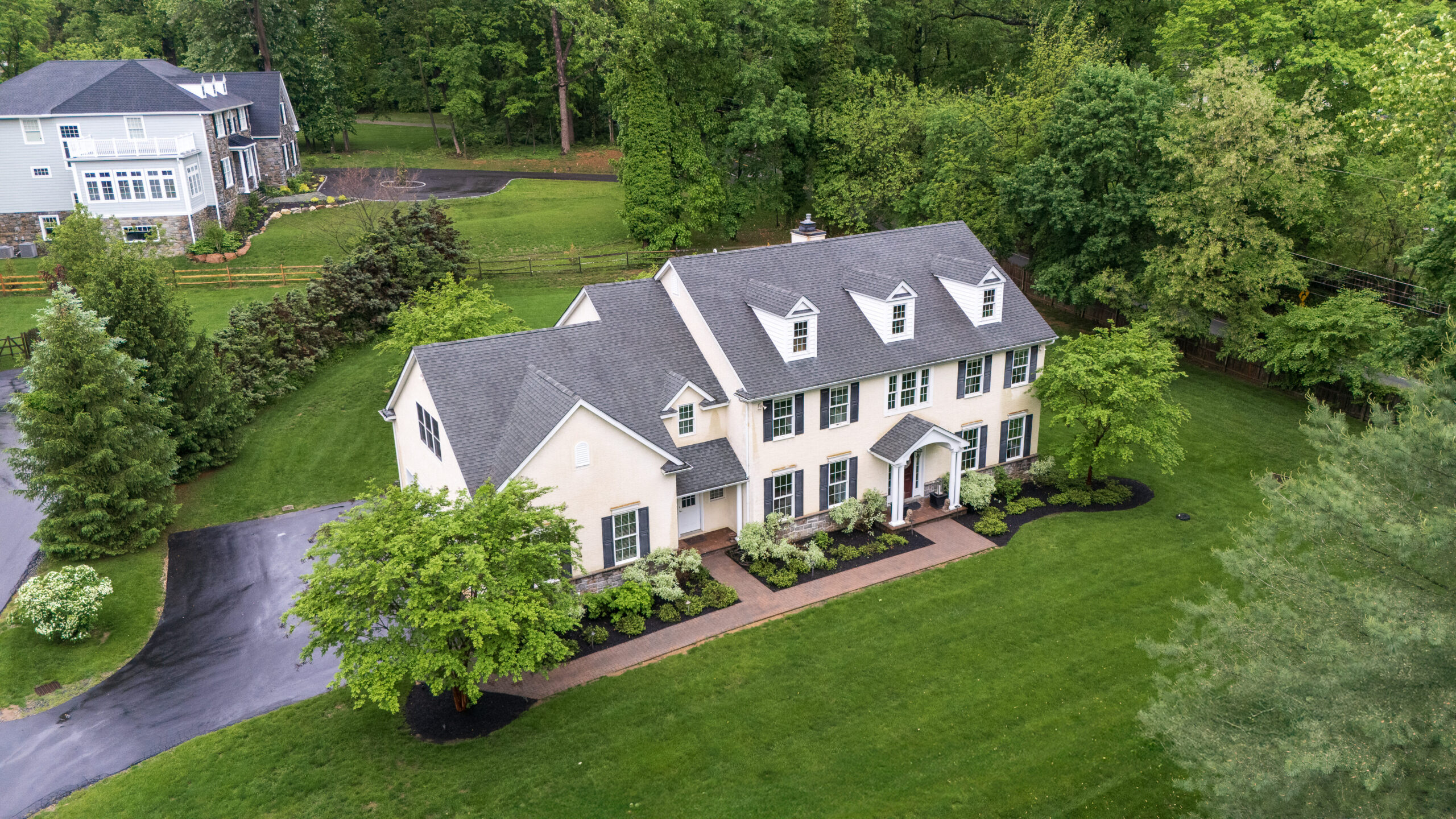
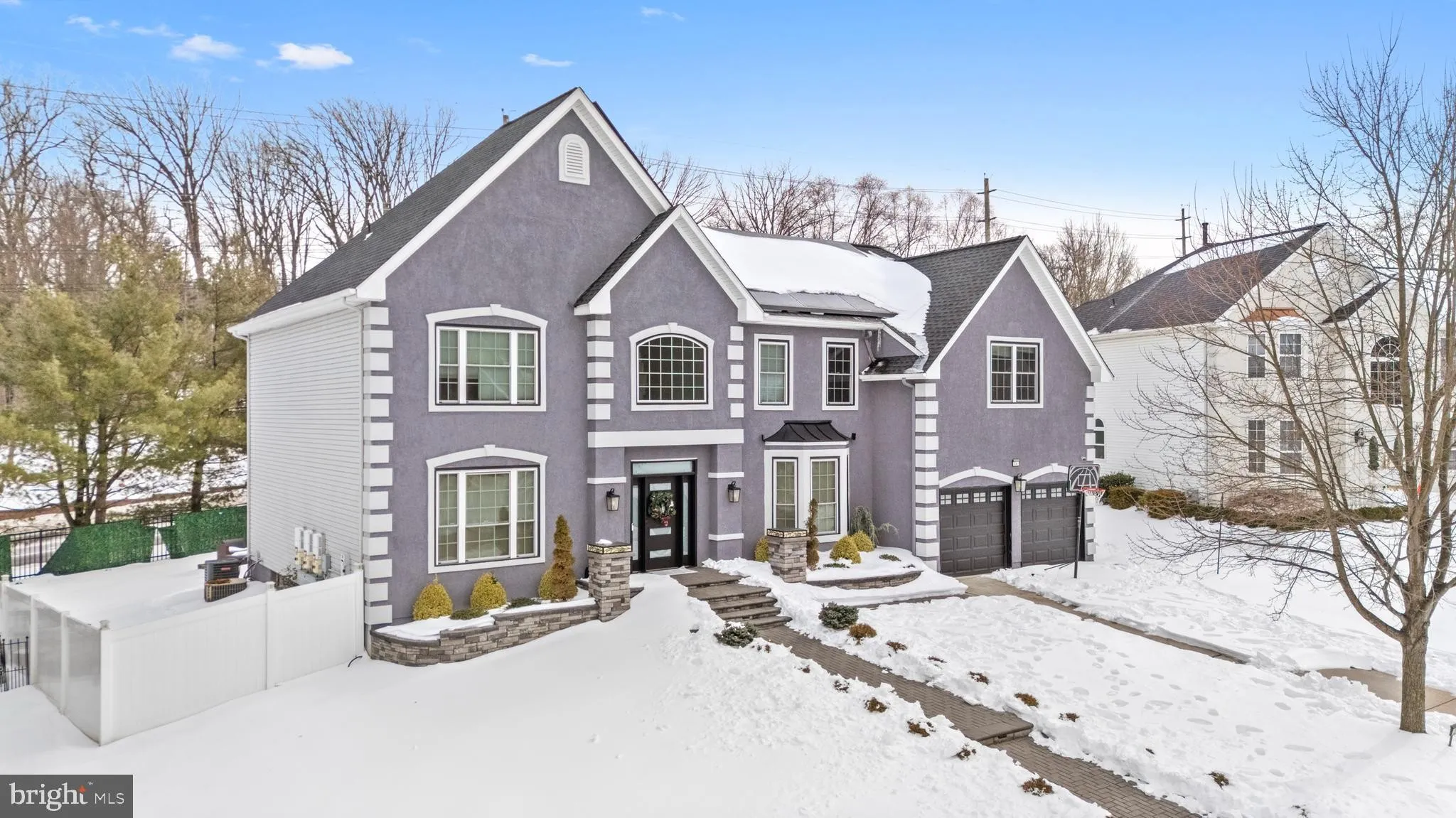
This spacious five-bedroom Paoli home is a blend of classic details and modern amenities. Its first floor features a two-story foyer flanked by dining and living rooms; an office; an eat-in kitchen with cherry cabinetry, an island, and a butler’s pantry; and a family room with vaulted ceilings and a gas fireplace. There are four bedrooms upstairs, including the primary suite, which has a sitting area, two walk-in closets, and a bathroom with a soaking tub. Other features include a finished basement with a wet bar, wine storage, a full bathroom, a fifth bedroom, and another office. Outside, there’s a fenced yard and a brick patio with a firepit. There’s an open house Saturday from noon to 2 p.m.
By submitting your written, visual, and/or audio contributions, you agree to The Inquirer’s Terms of Use, including the grant of rights in Section 10.
This suburban content is produced with support from the Leslie Miller and Richard Worley Foundation and The Lenfest Institute for Journalism. Editorial content is created independently of the project donors. Gifts to support The Inquirer’s high-impact journalism can be made at inquirer.com/donate. A list of Lenfest Institute donors can be found at lenfestinstitute.org/supporters.
The Farm and Fisherman Tavern has a happy hour special.
Looking for a spot to score $3 tacos or $7 martinis? Luckily you don’t have to go very far, thanks to these eight restaurants’ happy hour deals.
The Inquirer’s Denali Sagner has rounded up eight spots in and around Cherry Hill with happy hour offerings, including the nostalgia-inducing Steak 38, neighborhood bar Kaminski’s, and farm-to-table eatery Farm and Fisherman ($8 P.E.I. Mussels, anyone?).
Cherry Hill residential property taxes rose 5.23% from 2024 to 2025, according to new data from the state, outpacing the statewide average hike of 4.7%. The average household paid $9,874 in residential property taxes, which is slightly less than the statewide average of $10,570. The average Cherry Hill residence was valued at $227,125 in 2025, a 0.03% increase from 2024. (NJ.com)
Speaking of taxes, today is the extended deadline for residents to pay their tax bills for the first half of 2026.
The landmark former Cherry Hill Diner could soon be demolished after construction permits were recently filed for the site, which will make way for a new Tidal Wave Auto Spa. A second Tidal Wave is planned for 2301–2311 Route 70 West. Yet another carwash is in the works at 1507 Kings Highway North, where Speeders Car Wash is taking over the former Route 41 Car Wash. (42 Freeway and A View From Evesham)
Archaeologists working at Croft Farm have discovered evidence that the historic property was an active part of the Underground Railroad. A dig to assess the property ahead of planned drainage improvements has turned up cuts of meat and crockerypossibly used by people who moved through there. Residents can see the work up close this weekend (more on that below). (70 and 73)
The township is seeking feedback from residents 55 and older for its senior needs assessment. The survey, which is open through March 31, is part of a grant-funded study about how Cherry Hill can better support older residents, who make up about a third of the township’s population. Find the survey, which is available in English, Spanish, and Chinese, here.
Registration for the township’s spring programs is now open. Programs include yoga, cardio kickboxing, golf, painting, and dancing.
🏫 Schools Briefing
In case you missed it, the school district has decided against redrawing its elementary school boundaries to head off expected overcrowding in the coming years and instead is planning additions to Clara Barton Elementary School and Rosa International Middle School, which are anticipated to be the most impacted. The school board still has to approve the additions.
East’s boys’ and girls’ swim teams have advanced to the state semifinals after capturing their respective New Jersey State Interscholastic Athletic Association sectional titles for South Jersey last week. The boys’ team defeated Gloucester County Institute of Technology 111-59, a victory that led to its 17th consecutive title. The girls’ team defeated Egg Harbor Township High School 91-79, marking the team’s second consecutive title. The boys’ semifinals take place today, with the girls’ slated for tomorrow. (NJ.com)
Mikado will ask the town zoning board this week for permission to turn its roughly 500-square-foot outdoor patio into an enclosed 10-seat bar and waiting area.
Indian Villa Restaurant reopened earlier this month in the Woodcrest Shopping Center, and introduced an updated menu featuring classic Indian dishes.
Looking for a great cup of soup? Hen Vietnamese Eatery has one of the best in the state, according to a new list from NJ.com.
🎳 Things to Do
Unearthing History: Archaeologists will be excavating part of the Croft Farm property, where 18th and 19th century artifacts, as well as earlier pieces of Native American history, have previously been found. The public can view the dig and ask questions at designated times. ⏰ Saturday, Feb. 21 and Sunday, Feb. 22, 10 a.m.-4 p.m. 💵 Free 📍Croft Farm
🎹 A Time for Love: Vocalist and pianist Jay Daniels will perform some iconic love songs. Registration is required. ⏰ Saturday, Feb. 21, 2-3 p.m. 💵 Free 📍Cherry Hill Public Library
❤️ Healthy Heart Big Fitness Event: Part of the JCC’s heart health programming for February, this event will take attendees through pilates and fitness dancing demonstrations, followed by snacks. The event is open to anyone 12 and older. ⏰ Sunday, Feb. 22, 10 a.m.-12:30 p.m. 💵 $20 for members, $25 for non-members 📍Katz JCC
🥐 Black Girl Magic Drag Brunch: VinChelle is hosting this drag brunch, which features performances by Mz Peaches, Cyrus K. Stratton, and Samara LaNegrá. ⏰ Sunday, Feb. 22, 2:30-5 p.m. 💵 $19.03 📍Vera
⛸️ LGBTQ+ Skate Night: Head to WinterFest Cottage at Cooper River Park for skating, a DJ, food, drinks, and access to local resources for the LGBTQ+ community. Registration is encouraged. ⏰ Monday, Feb. 23, 6-8 p.m. 💵 Free 📍Cooper River Park
Located in the Springdale Crossing neighborhood, this four-bedroom home has a modern interior, including new flooring. It features a two-tone, two-story foyer, a dining room, an eat-in kitchen with a waterfall island and stainless steel appliances, plus living and family rooms. The family room has vaulted ceilings and a floor-to-ceiling stone fireplace. All four bedrooms are upstairs, including the primary suite, which has a jacuzzi tub with a built-in sound system, and a walk-in closet. Other features include a finished basement and a fenced backyard. There are open houses Saturday and Sunday from 11 a.m. to 1 p.m.
By submitting your written, visual, and/or audio contributions, you agree to The Inquirer’s Terms of Use, including the grant of rights in Section 10.
This suburban content is produced with support from the Leslie Miller and Richard Worley Foundation and The Lenfest Institute for Journalism. Editorial content is created independently of the project donors. Gifts to support The Inquirer’s high-impact journalism can be made at inquirer.com/donate. A list of Lenfest Institute donors can be found at lenfestinstitute.org/supporters.
A project to expand the Chester Valley Trail and repair the historic Downingtown Trestle Bridge, which has spent decades largely untouched, will kick off soon, Chester County officials said.
It’s part of a larger effort to expand the sprawling Chester Valley Trail, a 19-mile rail trail that runs through Chester and Montgomery Counties, from Exton to Atglen.
“The bridge is a really key part of it, because it’s multimodal,” said George Martynick, director of Chester County’s facilities and parks department. “Without that bridge, I really don’t know what we’d do with this project. It is the keystone of that project. It’s a big job.”
As the county kicks off the project, people can expect to see inspections taking place on the bridge in the coming months. The trestle will get a full inspection to make sure it meets federal standards, Martynick said. Design is slated to begin in the next year, and the rehabilitation and extension should be completed in five to seven years, he said.
The bridge stretches 1,450 feet long and more than 130 feet high over the east Brandywine River. Known as the “Brandywine Valley Viaduct,” “Downingtown High Bridge,” or “Pennsylvania Railroad Freight Bridge”— but colloquially called the Downingtown Trestle Bridge — it was constructed in the early 1900s, according to the Downingtown Area Historical Society.
“This is taking on something much bigger than I think a lot of people understand,” Martynick said.
Map of the Downingtown Trestle Bridge and the Chester Valley Trail in Chester County.
The Trestle Bridge has been out of commission since the 1980s, with the track removed. Since then, the bridge has sat abandoned, and has had atroubled history. Security measures were added to prevent people fromaccessing it, and netting was put on it to keep debris from falling off it.
The county completed a drone inspection before it took ownership of the bridge last year.
In May, the county commissioners voted to purchase a portion of the former Philadelphia and Thorndale railroad corridor from the Pennsylvania Department of Transportation for $1.
Other than some growth and weeds, “it’s in fairly good shape,” Martynick said.
The county has received three grants for the project — two from the state department of conservation and natural resources, each for $500,000, and a Delaware Valley Regional Planning Commission grant for $200,000, said Brian Styche, the multimodal transportation planning director for the county’s planning commission.
The county is matching both of the conservation and natural resources grants, for a total of $2.2 million in funding toward the bridge’s design.
“It’s a good project. It’s going to take a lot of time and effort and a lot of patience, but it will be a pretty impressive project for the community,” Martynick said.
It’s a personally important project, too: Martynick applied to work in the county’s parks department because of his love of the trail.
“I love it,” he said. “It’s a very, very special trail.”
Enrique Fuentes counted on the $250 he received monthly in federal nutrition assistance to cover the cost of groceries. That changed last month.
Fuentes works three days a week as a technician assisting therapists who help autistic children and adults, ages 3 to 22. He is one of an estimated 3 million able-bodied Americans who do not work enough hours to qualify for the Supplemental Nutrition Assistance Program (SNAP) under a law signed by President Donald Trump.
“They cut me off because you need to work more than 20 hours a week to get benefits, and I didn’t have those hours,” said Fuentes, 27, who lives in Philadelphia. “I wasn’t even aware of that stipulation.”
Roughly 4 million Americans are expected to lose SNAP benefits in 2026 under the One Big Beautiful Bill Act. Many of them do not meet work requirements added to the anti-hunger program under the legislation, which paid for Trump’s tax cuts with cuts to SNAP and Medicaid.
In Pennsylvania, around 144,000 SNAP recipients could see benefits cut this year — an estimated 45,000 in Philadelphia and 12,000 in its collar counties, according to Pennsylvania Department of Human Services estimates.
Without enough food, Fuentes, who has an associate’s degree in psychology, felt overwhelmed, he said. He is consulting Community Legal Services, which serves people in poverty, for help.
“I fell into a downward spiral. It’s been upsetting,” he said.
“Lots of people didn’t know the rules, thinking the winds of Washington don’t affect them. But they do.”
Since January, advocates say, they have begun to hear from increasing numbers of people suddenly being removed from the program.
“The White House is rifling through our pockets for lunch money,” said George Matysik, executive director of the Share Food Program, a major provider of food to hundreds of pantries in the region. The cuts constitute “a rounding error for the federal government but [the money is] a lifeline for working-class families,” he added.
Asked for comment on criticism of the SNAP cuts, a White House spokesperson did not address the program. Instead, the spokesperson praised Trump for helping U.S. families by “fixing” former President Joe Biden’s “broken economy.”
The spokesperson saidthat benefits meant for American citizens are “no longer supporting illegal aliens.” But undocumented immigrants have never been eligible to receive SNAP benefits, according to the American Immigration Council,a group that provides legal services to immigrants.
Policy changes under Trump’s law
Because the new law revises categories of SNAP recipients — many of which will go into effect at different times — people are uncertain about what they may lose and when. Others who have already seen reductions say they are growing apprehensive because they don’t know whether the law is the reason, or whether bureaucratic adjustments or errors are the cause.
“Will all this change result in mass panic?” wondered Cailey Tebow, an education outreach coordinator for AmeriCorps VISTA, a national service program designed to alleviate poverty. Tebow works with low-income individuals in Northeast Philadelphia. “It’s scary to think what will happen when people realize what’s being taken from them.”
Hoa Pham, deputy secretary of the Office of Income Maintenancein the Pennsylvania Department of Human Services, which administers SNAP in the state, is more hopeful. She said she believes the efforts her department has been making will help Pennsylvanians understand SNAP revisions and will “avoid chaos.”
One category of potential confusion is the change in work requirements.
Until Trump’s spending plan rewrote the rules, groups of low-income people in Pennsylvania and other states were exempt from a long-standing requirement that childless adults without disabilities and under the age of 54 work, volunteer, or go to school 20 hours per week in order to be eligible for SNAP benefits.
The work stipulation had been waived for decades because of high levels of poverty and hunger, as well as diminished job opportunities in Philadelphia and elsewhere in the state.
Under the new policy, childless, able-bodied adults — whose age limit has now been increased to 64 — can be exempt from the work requirements only in areas with at least 10% unemployment — a rate of joblessness considered catastrophic, experts say. In November, Philadelphia’s unemployment rate was 4.8% and other areas in the region saw similar or lower rates.
“Work requirements in SNAP will put forward a substantial amount of bureaucracy that Pennsylvanians have to contend with,” Pham said. “It could kick many people off SNAP. The impact to people could be severe.”
She added that reducing SNAP rolls should not be construed as a savings for taxpayers, as Trump and other Republicans have long argued. That is because food insecurity exacerbates health problems, which will add other costs in the long term, Pham said.
“That will just drive up healthcare and insurance costs,” she said.
‘Life is already crumbling’
At the Jenkintown Food Cupboard last week, “anxiety about what will happen is growing,” said Nicolino Ellis, the executive director. “But bellies are already aching from hunger. Life is already crumbling today.”
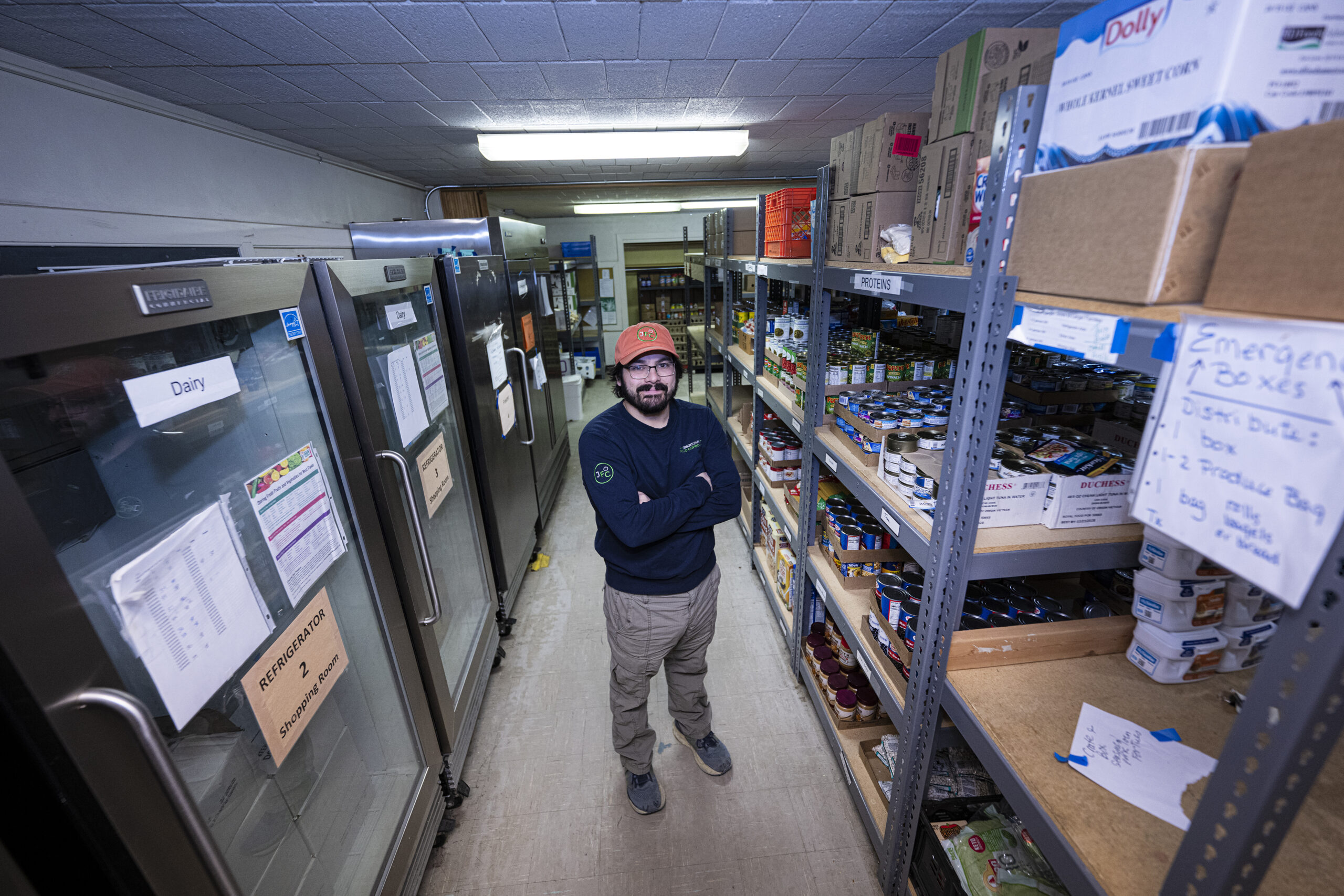
Nicolino Ellis, executive director of the Jenkintown Food Cupboard, in the warehouse.
Outside the cupboard at the Jenkintown United Methodist Church, food was distributed in a driveway to clients who drove up in cars. A phalanx of volunteers slid bags of perishables and shelf-stable foods into trunks and back seats.
As SNAP benefits dry up while food prices soar, cupboards like this one become overburdened. But they are a less efficient means of feeding Americans in need, according to Stuart Haniff, CEO of the nonprofit Hunger-Free Pennsylvania.
“For every single meal distributed at a food pantry,” he said, “SNAP provides nine. And need in Philadelphia increased 140% over the last two years.”
A Jenkintown Food Cupboard volunteer works to set up food distribution.
Shelley Gaither is one of the hundreds of people receiving groceries from the pantry.
Gaither, 51, is a former data analyst with an MBA who suffered a disability that caused her to stop working at a Malvern finance company 13 years ago. She now collects Social Security Disability Insurance and lives with her three sons, ages 6, 9, and 18, in Cheltenham.
Gaither said that in January, her SNAP payment dropped from $400 to $200. “I don’t know if it was a new formula from the government cutting me back, or some other reason,” she saidin a phone interview. “No one told me why. It’s not supposed to happen when you have a disability. It’s crazy.”
Whatever caused the cut, Gaither said, she is in trouble, and worried the benefit will shrink even further.
“Now, the money I used to pay for electricity and water has to go for food,” she said. “This makes surviving more difficult.”
“At the time, the industry was largely reactive and built around moments of crisis,” he said.
It now has 630,000 active members, who can choose from lightweight medical alert devices worn as a necklace or on the wrist. One of them, which looks like any other smartwatch on first glance, allows users to track health and activity stats.
The company employs more than 600 people and is approaching $250 million in annual revenue. Gross said it is poised to step in as aging-in-place becomes an urgent challenge facing families, healthcare systems, and policymakers.
“Caregiving is now widely recognized as a public health, workforce, and economic issue, not just a personal one,” Gross said. “Burnout, anxiety, and sleep deprivation are increasingly common, yet caregivers are still underserved by technology that focuses almost entirely on emergencies instead of daily reassurance and support.”
From peace of mind to longevity
Gross founded Medical Guardian based on a “simple but deeply personal belief” that “people deserve to age with confidence, dignity, and the freedom to live life on their own terms,” he said.
That was informed by his family’s experience with Gross’ grandmother, Freda, a retired nurse who lived alone later in life and experienced frequent falls. “She was fiercely independent, but those moments created real anxiety for our family,” he said.
She became Medical Guardian’s first member.
The MGMini Lite by Medical Guardian.
“People who are older, frail, or have a disability or chronic illness” need to be able to easily, reliably contact family or emergency services, said Richard C. Wender, who chairs the Department of Family Medicine and Community Health at the University of Pennsylvania’s medical school.
He recommends choosing a system that’s affordable and delivers on promises made. These services can offer more independent options for vulnerable individuals.
“Most people want the same things as they get older, as they did before: control over their daily lives, privacy, and the ability to remain in their own homes and communities for as long as possible,” Gross said. “When done thoughtfully, connected health and safety tools can remove barriers rather than impose them.”
People often find Medical Guardian through referrals from adult children, caregivers, clinicians, and community organizations, Gross said. He noted that such decisions are “often made collaboratively, and our approach is designed to reflect that reality.”
The company also does direct-to-consumer marketing, as well as social media advertising and influencer outreach. And it works closely with health plans, providers, senior living operators, and state programs focused on helping aging adults remain safely at home.
“That blend of consumer and healthcare channels mirrors how aging and caregiving actually happen, in real homes, with real families, over time,” Gross said.
Gross says Medical Guardian members have shared feedback that their devices’ biggest impact is not a dramatic moment, but the everyday reassurance.
Medical Guardian’s MGMini device, which is worn around the neck.
“Feeling steady taking a shower, walking outside without hesitation, or knowing help is there if something feels off,” Gross said. “Those small moments of confidence shape how people experience independence.”
With that in mind, one of the company’s goals is to support people earlier — before a fall, a health scare, or a rushed decision.
“Our services often come years before in-home care or assisted living, which gives us the opportunity to build trust while people are still living independently and confidently,” he said.
Medical Guardian also has wellness advocates, many of whom have social work backgrounds, as well as emergency response specialists and care teams.
“Our platforms use data, automation, and intelligence to notice patterns and surface insights, but when something matters, a real person is always involved,” Gross said.
Philly-based medical device competes with Big Tech watches
Many of the people answering Medical Guardian’s emergency calls, building its software, supporting members, and working with health plans are doing so from Philadelphia, where the company is headquartered. More than half its employees are based in the area.
Geoff Gross, CEO of Medical Guardian, in the Technology Product Innovation Lab at the company’s Center City Philadelphia office.
“We’ve built and scaled this company in Philly, and that matters to us,” Gross said. “There’s a strong work ethic here, a deep healthcare ecosystem, and a sense of community responsibility that aligns with our mission.”
Some of Medical Guardian’s partners are based in the region — such as AmeriHealth Caritas, Independence Blue Cross, and Jefferson Health.
Some may feel that an Apple Watch can do as much as one of Medical Guardian’s devices by providing vital stats, location tracking, and communication capabilities. But Gross said Medical Guardian’s products offer a unique alternative.
“Many of our members do not want dozens of apps or daily charging. They want something reliable, intuitive, and built for real life, especially in moments when clarity and speed matter,” he said.
Gross cited that Medical Guardian can monitor location and, when appropriate, biometrics like oxygen levels or blood pressure. That’s not meant to overwhelm people with data but to create meaningful context for families and care teams.
“For many older adults,” he said, “that focus on usefulness over features is more appealing than a general-purpose smartwatch that tries to do everything.”