Editor’s note: Updated to reflect that the ban, for now, does not affect travel or business visas.
The State Department will suspend processing visas for people from dozens of countries, according to a person familiar with the matter, in what marks one of the Trump administration’s most extreme moves in its immigration crackdown.
A department memo says the US is freezing visa processing indefinitely for 75 countries, including Brazil and Nigeria, according to the person, who asked not to be identified discussing a document that hasn’t been made public. Citizens from some of the included countries such as Afghanistan, Iran, Russia and Somalia already have little chance of getting a visa. But the move will be a shock for people coming from other nations on the list.
Fox News Digital reported the move earlier Wednesday. The move shuts the door to new travelers to the US for more than a third of the world’s nearly 200 countries, upending work and vacation plans. It comes about five months before the US co-hosts the World Cup, when hundreds of thousands of overseas visitors are expected.
According to the U.S. Department of State, the ban will not affect tourist or business visas, which are classified as non-immigrant visas.
The move comes after Trump threatened further visa restrictions after an Afghan national shot two National Guard troops in Washington late last year. He’s also moved to end deportation protections for Somalis amid a broader deportation push in Minnesota, home to thousands of people from the country.
“The State Department will use its long-standing authority to deem ineligible potential immigrants who would become a public charge on the United States and exploit the generosity of the American people,” State Department spokesperson Tommy Pigott said in a statement Wednesday.
According to the Fox report, consular officers have been directed to refuse visa applications until screening and vetting procedures are reassessed. The pause goes into effect Jan. 21, it said.
The Trump administration had already imposed far stricter rules on top of a visa-screening process that has for years been among the most stringent in the world. Last year, the administration ordered officers to scrutinize applicants’ social-media profiles for signs of anti-US views.
The U.S. Attorney’s Office is seeking documents and information from those connected to the case of Ellen Greenberg, whose 2011 death remains shrouded by questions about whether it was properly investigated by authorities, according to sources.
The sources, who asked not to be identified, said federal prosecutorsrecently sent out subpoenas in the matter, and that the investigationdoes not appear to be focused on the manner of Greenberg’s 2011 death by 20 stab wounds — which was initially ruled homicide then switched to suicide. Instead, the sources said, the probe appears to be centered on questions about how a variety of agencies handled the case in the years after she died, and whether any of those missteps might amount to criminal corruption.
Still, the scope of the potential inquiry was not clear Wednesday.
Multiple city and state agencies have been involved in Greenberg’s case in the last 15 years, including the Philadelphia Police Department, the Philadelphia Medical Examiner’s Office, the Philadelphia District Attorney’s Office, the Philadelphia Law Department, and the Pennsylvania Attorney General’s Office.
Spokespeople for all of those city offices would neither confirm nor deny they have received subpoenas.
A spokesperson for the U.S. Attorney’s Office said they could “neither confirm nor deny the existence of an investigation.”
Joseph Podraza Jr., the attorney for Greenberg’s parents, said he and his clients are “ecstatic.”
“If that is in fact correct and accurate, that the federal government is going to investigate … this is exactly what we’ve wanted all along,” he said. “It’s unfortunate it’s taken more than seven years to get to this point but we are really grateful and thankful to the U.S. attorneys and, of course, are available to assist in any way we can in helping their investigation.”
From homicide to suicide
Ellen Greenberg and Samuel Goldberg in the kitchen of the Manayunk apartment they shared.
Greenberg, 27, was found by her fiancé, Samuel Goldberg, in the kitchen of their Manayunk apartment with a 10-inch knife lodged four inches into her chest on Jan. 26, 2011.
Investigators on the scene treated her death as a suicide because Goldberg told them the apartment door was locked from the inside and he had to break it down to get in. There were no signs of an intruder and Greenberg had no defensive wounds, police have said.
During an autopsy the next morning, then-assistant medical examiner Marlon Osbourne noted a total of 20 stab wounds to Greenberg’s body, including 10 to the back of her neck, along with 11 bruises in various stages of healing, and ruled her death a homicide.
By the time homicide investigators returned to the scene to conduct their investigation, the apartment was already professionally cleaned and electronic devices belonging to Greenberg had been removed by a member of Goldberg’s family.
Shortly after the homicide ruling, police publicly disputed the findings, citing “mental issues” Greenberg may have had. Osbourne later changed his ruling to suicide, with no explanation to Greenberg’s parents, Joshua and Sandra.
Greenbergwas dealing with anxiety, had met with a psychiatrist, and was prescribed anti-anxiety and sleep aid medications. Herpsychiatrist told police Greenbergfelt overwhelmed at work, but “there was never any feeling of suicidal thoughts,” and according to the medical examiner’s investigation report at the time, there was nothing indicative of suicide found on Greenberg’s computers.
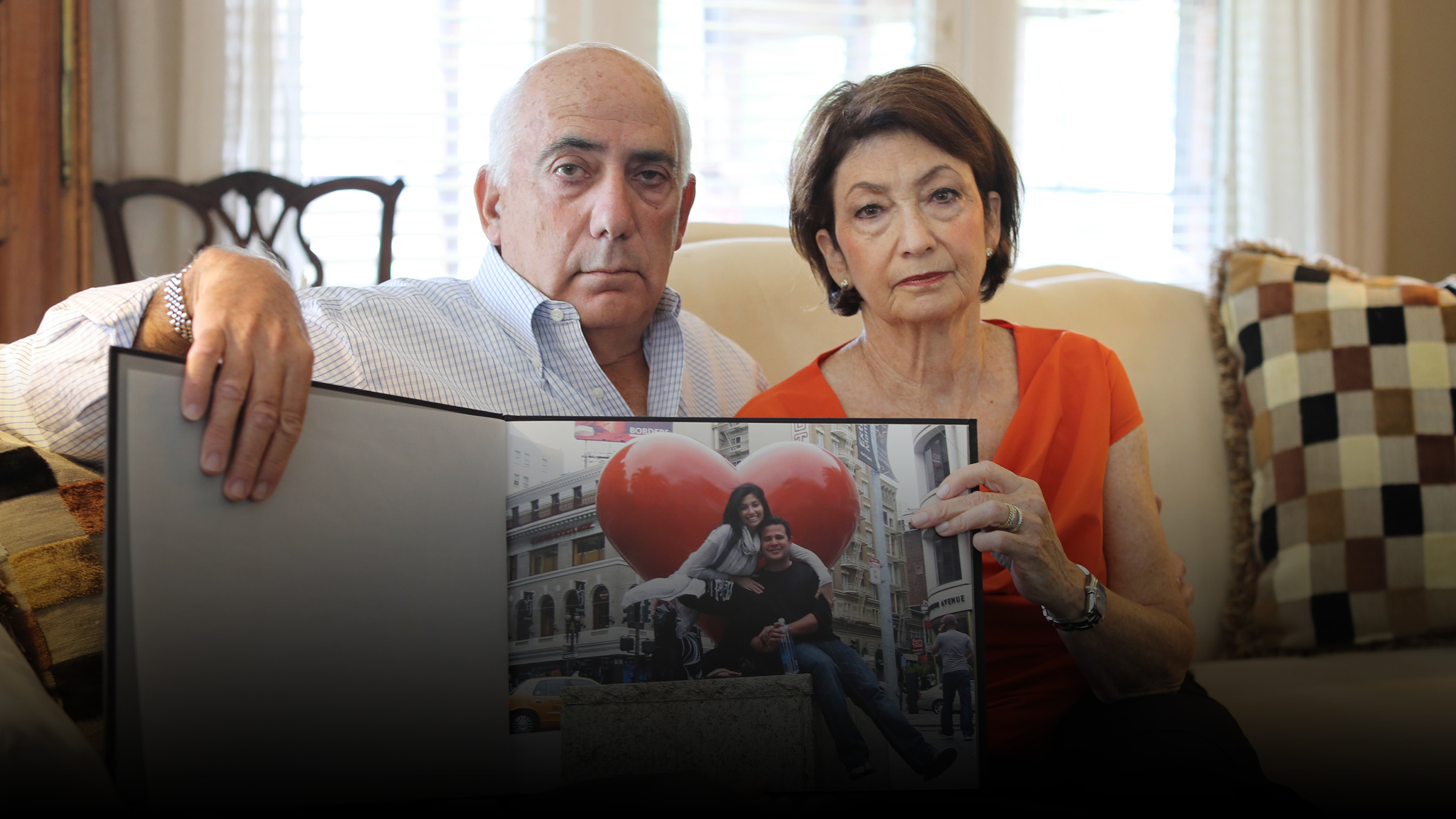
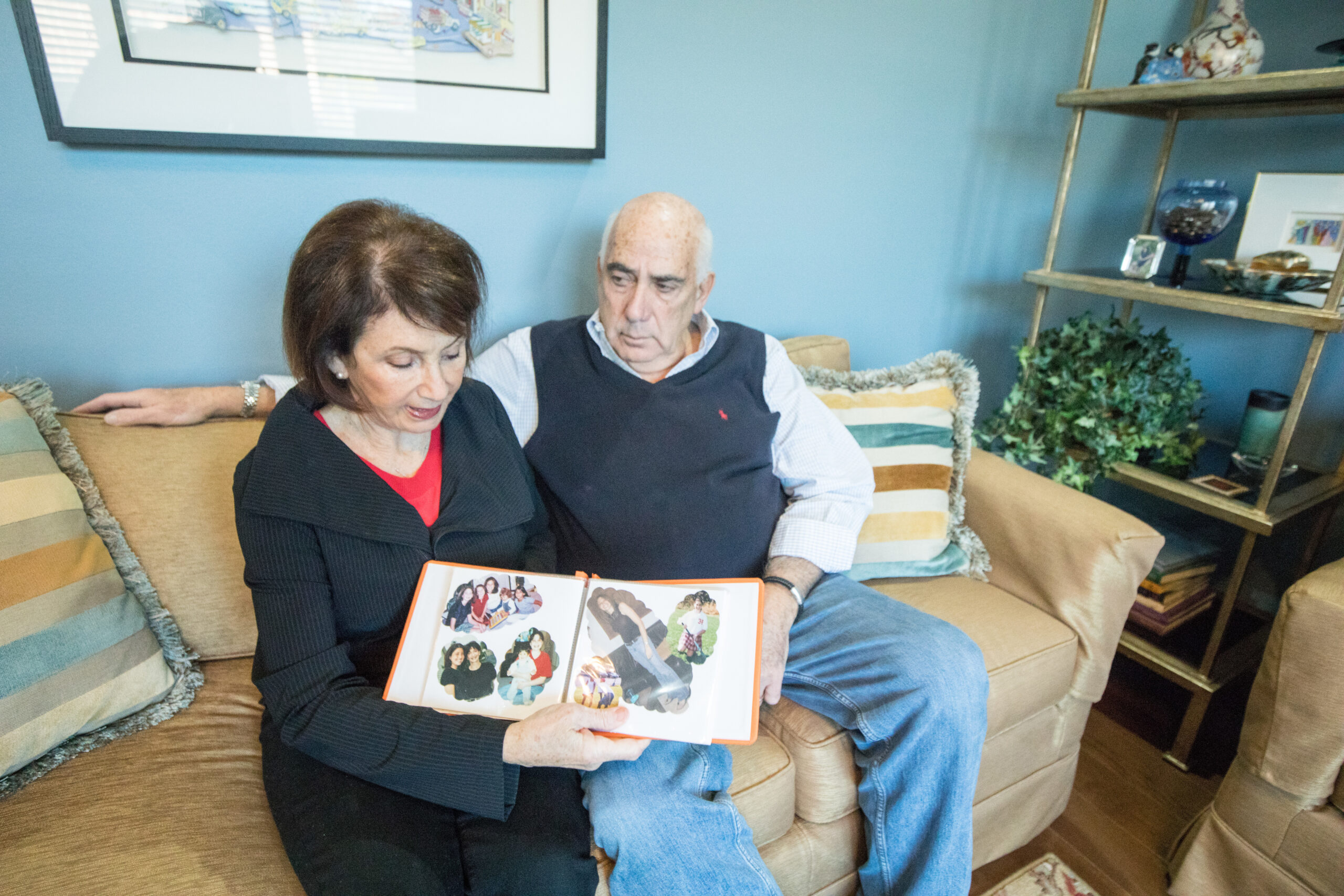
Ellen Greenberg’s parents, Joshua and Sandra, hold a photo album of their daughter.
In their search for answers, the Greenbergs hired then-civil rights attorney Larry Krasner in 2012. He convened a meeting for the Greenbergs with police officials and the district attorney’s office in an effort to get the investigation reopened, but nothing happened, the Greenbergs said.
When Krasner became district attorney in 2018, the Greenbergs reached out to see if he’d reopen the investigation. Krasner referred the matter to the state Attorney General’s Office, then helmed by now Gov. Josh Shapiro, to avoid the appearance of a conflict of interest.
Shapiro’s office had the case for more than a year. It was only when The Inquirer pressed the office for answers that Shapiro’s spokesperson at the time, Joe Grace (now spokesperson for Mayor Cherelle L. Parker), said in a 2019 statement that they had conducted a “thorough investigation,” the “evidence supports ‘Suicide’ as the manner of death,” and that the office had closed the investigation.
Grace pointed to search history on Greenberg’s computer that included the search terms “suicide methods,” “quick suicide,” and “painless suicide.”
When asked why the medical examiner’s 2011 report said nothing indicative of suicide was found on Greenberg’s computer, Grace said his office didn’t find the analysis in the file, so “we cannot say if anyone, police or prosecutor, ever looked at it.”
The lawsuits
Following the Attorney General Office’s review, the Greenbergs filed a lawsuit against the Medical Examiner’s Office and Osbourne in 2019 seeking to have the manner of their daughter’s death changed back to homicide or undetermined.
The city law department fought to have the case dismissed and a lengthy appeals process followed. In the Commonwealth Court’s 2-1 decision in 2024, judges wrote they had “no choice under the law” but to grant the city’s appeal but added that “… this court is acutely aware of the deeply flawed investigation of the victim’s death by the City of Philadelphia Police Department (PPD) detectives, the City of Philadelphia District Attorney’s Office (DAO), and the MEO [Medical Examiner’s Office].”
Ellen Greenberg
While that case was ongoing, the Greenbergs filed a second suit in 2022, based on additional details about the case that came to light through the first suit, including new information about the process around how Greenberg’s death was classified.
In the new suit, Podraza alleged the investigation into Greenberg’s death was “embarrassingly botched” and resulted in a “cover-up” by Philadelphia authorities. It sought monetary damages for intentional infliction of emotional distress.
The city law department fought both suits until February, when Osbourne — the pathologist who initially ruled Greenberg’s death a homicide then switched it to suicide — signed a sworn statement saying he now believes her death should be categorized as something other than suicide.
Within days, and shortly before the second case was to go to trial, the city offered to settle with the Greenbergs. The settlement included $650,000, which was paid, and an agreement that the Medical Examiner’s Office conduct an “expeditious” review of the manner of Greenberg’s 2011 death.
Sandra and Joshua Greenberg
As part of the settlement, the Greenbergs agreed to withdraw both of their lawsuits against the city. The first suit had been slated for a hearing before the Supreme Court of Pennsylvania last year.
In October, Philadelphia Chief Medical Examiner Lindsay Simon delivered her review of the case, in which she said she discovered 20 additional bruises and three additional “perforations in the skin” never before documented on Greenberg’s body, raising the total number of bruises to 31 and stab wounds to 23, up from 20.
Simon concluded that Greenberg “would be capable of inflicting these injuries herself,” and that her death “is best classified as ‘Suicide.’”
NEW YORK — The Trump administration has made abrupt and sweeping cuts to substance abuse and mental health programs across the country in a move that advocates said will jeopardize the lives of some of the country’s most vulnerable.
The Substance Abuse and Mental Health Services Administration on Tuesday night canceled some 2,000 grants representing nearly $2 billion in funding, according to an administration official with knowledge of the cuts who was not authorized to discuss them publicly.
The move pulls back funding for a wide swath of discretionary grants and represents about a quarter of SAMHSA’s overall budget. It builds on other, wide-ranging cuts that have been made at the Department of Health and Human Services, including the elimination of thousands of jobs and the freezing or canceling of billions of dollars for scientific research.
The latest funding cuts immediately jeopardize programs that give direct mental health services, opioid treatment, drug prevention resources, peer support and more to communities affected by addiction, mental illness and homelessness.
“Without that funding, people are going to lose access to lifesaving services,” said Yngvild Olsen, former director of SAMHSA’s Center for Substance Abuse Treatment and a national adviser at Manatt Health. “Providers are going to really need to look at potentially laying off staff and not being able to continue.”
Funding tied to agency’s priorities
SAMHSA, a sub-agency of HHS, notified grant recipients that their funding would be canceled effective immediately in emailed letters on Tuesday evening, according to several copies received by organizations and reviewed by The Associated Press.
The letters, signed by SAMHSA Principal Deputy Assistant Secretary Christopher Carroll, justified the terminations using a regulation that says the agency may terminate any federal award that “no longer effectuates the program goals or agency priorities.”
Grant recipients who were notified of the cancellations said they were confused by that explanation and didn’t get any further detail about why the agency felt their work didn’t match up with SAMHSA’s priorities.
“The goal of our grants is entirely in line with the priorities listed in that letter,” said Jamie Ross, CEO of the Las Vegas-based PACT Coalition, a community organization focused on substance use issues that lost funding from three grants totaling $560,000.
HHS didn’t respond to a request for comment on the funding cancellations, which were first reported by NPR. Two sources within SAMHSA who were not authorized to speak to media said staff weren’t widely notified of the agency’s action.
Programs at risk after funding is slashed
Organizations reeling from the news on Wednesday told the AP they had already been forced to cut staff and cancel trainings. In the long term, many were considering whether they could keep programs alive by shuffling them to different funding sources or whether they’d need to stop the services altogether.
Robert Franks, CEO of the Boston-based mental health provider the Baker Center for Children and Families, which lost two federal grants totaling $1 million, said the loss of funding will force his organization to lay off staff and put care in jeopardy for some 600 families receiving it. One of the canceled grants had been awarded through the National Child Traumatic Stress Initiative, a more than 20-year-old program supporting specialized care for children who have been through traumatic events ranging from sexual abuse to school violence.
Franks said his organization’s work directly advances SAMHSA’s goals to address mental illness. He said trauma care provided to children through his organization helps people from all walks of life and reduces burdens on other parts of society.
“The reality is these programs are probably our most effective tool in addressing the issues that they identify as being critical to them,” he said. “Honestly, I don’t understand it.”
The National Association of County Behavioral Health and Developmental Disability Directors, a group that represents local organizations that deliver safety net services, sent a letter to its members on Wednesday noting that many of its partners estimated the funding pullbacks were focused on grants classified as Programs of Regional and National Significance. They also said the grants totaled around 2,000 and likely amounted to some $2 billion.
The group said it believed certain block grants, 988 suicide and crisis lifeline funding and Certified Community Behavioral Health Clinics were spared from the cuts.
For Honesty Liller, CEO of the peer support organization the McShin Foundation in Richmond, Va., the loss of about $1.4 million in funding is personal. She said the foundation she leads saved her life 18 years ago when she was struggling with a heroin addiction.
The terminated grant has already forced Liller to lay off five staff members. It will mean fewer peers are available to go into local jails and visit incarcerated people who are recovering from substance abuse disorder.
“They need hope dealers like us, they need people that have lived experience in recovery and they need this funding,” Liller said. “I’ve just never felt so gut punched.”
WASHINGTON — The United States said Wednesday that it is moving into the next phase of a Gaza ceasefire plan that involves disarming Hamas, rebuilding the war-ravaged territory and establishing the group of Palestinian experts that will administer daily affairs in Gaza under American supervision.
President Donald Trump’s envoy Steve Witkoff said in a post on X that the deal that the Republican president helped broker was entering its second phase following two years of war between Israel and Hamas, including the establishment of a technocratic government in Gaza.
While Wednesday’s announcement indicates a key step forward, a new government in Gaza and the ceasefire agreement face a number of huge challenges — including the deployment of an international security force to supervise the deal and the difficult process of disarming Hamas.
Witkoff did not offer any details about who would serve on the new transitional Palestinian administration that would govern Gaza. The White House did not immediately offer any more information, either.
The other mediators of the ceasefire deal — Egypt, Turkey and Qatar — welcomed the establishment of the Palestinian technocratic committee and said it would be led by Ali Shaath, a former deputy minister in the Palestinian Authority.
In a joint statement, the three countries called it an “important development … aimed at consolidating stability and improving the humanitarian situation in the Gaza Strip.”
Shaath is a Gaza native who served as a deputy minister for transportation with the internationally recognized Palestinian Authority. Shaath, an engineer, is an expert in economic development and reconstruction, according to his biography on the Palestine Economic Policy Research Institute’s website.
Witkoff said the U.S. expects Hamas to immediately return the final Israeli hostage as part of its obligations under the deal, noting that “failure to do so will bring serious consequences.”
A Hamas spokesperson, Hazem Qassem, told Al-Jazeera Live on Wednesday that Witkoff’s announcement is an important and positive development, adding that the group is ready to hand over the administration of Gaza to the independent technocratic committee and facilitate its work.
“Hamas is ready to engage in internal Palestinian approaches to discuss the issue of the resistance weapons,” said Qassem in the statements that he shared on his Telegram channel.
Israeli Prime Minister Benjamin Netanyahu spoke Wednesday evening to Gvili’s parents, Tali and Itzik Gvili, and told them that the return of their son’s remains a top priority, his office said in a statement.
“The declarative move to establish a technocratic committee will not affect efforts to return Ran to Israel’s grave,” the statement said.
The statement added that Israel will act on any information the mediators receive and said Hamas is required under the ceasefire agreement to do all it can to return each and every hostage.
The ceasefire reached under Trump’s 20-point plan took effect in October and stopped much of the fighting. Under the first phase of the three-phase deal, Hamas released all but one hostage it was holding in exchange for hundreds of Palestinians who were held by Israel.
Appointees to a technocratic committee that Witkoff said would be established under the second phase are part of a broader plan to end Hamas’ 18-year rule of Gaza. The appointees will run day-to-day affairs in Gaza, under the oversight of a Trump-led “Board of Peace,” whose members have also not yet been named.
The technocratic committee will be tasked with providing public services to the more than 2 million Palestinians in Gaza, but it faces towering challenges and unanswered questions, including about its operations and financing.
There also is the more immediate challenge of figuring out how to take over basic services after nearly two decades of Hamas-led rule in Gaza and repeated rounds of conflict with Israel.
BUFFALO ― Jamie Drysdale is back. But Rasmus Ristolainen is out.
Drysdale was activated off injured reserve after morning skate Wednesday and is back in the lineup. He suffered an upper-body injury in the Flyers’ win on Jan. 6 against his former team, the Anaheim Ducks, after absorbing a high hit well away from the puck by forward Ross Johnston.
Without him in the lineup, the Flyers lost three straight, including two in a row to the Tampa Bay Lightning, in which they were outscored by 12-3. Getting the fleet-of-foot defenseman, who is having a breakout year on the defensive side of the puck, back in the lineup is a big lift.
“Oh, man, he has such an impact on our back end. He plays with speed. He helps our offense, so it’ll be good to have him back,” said forward Travis Konecny, who added he is good to go after dealing with his own ailments, including an upper-body injury, a lower-body injury, and a good slash to the leg on Monday.
But now they have to get back on track without Ristolainen, who was not on the ice for warmups before the Flyers faced the Buffalo Sabres at KeyBank Center. The team announced he is day-to-day with an upper-body injury. He was a full participant at morning skate and was on the point for one of the power-play units.
It’s another unfortunate setback for the 31-year-old blueliner. He returned to the Flyers lineup on Dec. 16 in Montreal after missing the start of the season and the end of last season after undergoing surgery on a right triceps tendon rupture in late March. It followed a pair of procedures in 2024, which also repaired a ruptured triceps tendon. Flyers general manager Danny Brière said last April that the injury was similar, although he wouldn’t confirm whether he suffered a torn tendon again.
In 13 games this season, Ristolainen has three assists and a plus-minus of minus-3 while averaging 20 minutes, 59 seconds a game.
Before the announcement, Rick Tocchet was planning on shaking up his defensive pairings because, “I think during the season maybe things get stale [so] you want to move it around stuff,“ he said.
Ristolainen would have been paired alongside Travis Sanheim and Drysdale with his good buddy Cam York. The other pairing would have been Nick Seeler and Emil Andrae. Instead, York and Sanheim remain together, Drysdale is back with Andrae, and Seeler will skate with Noah Juulsen.
Jamie Drysdale (left) and Cam York are close friends and will get a chance Wednesday to be paired together.
Although Bobby Brink was not on the ice for morning skate and is expected to miss his fourth straight game with an upper-body injury, Denver Barkey will be a healthy scratch on Wednesday.
“He just played junior last year, so I think it’s important that he gets a little bit of a break,” Tocchet said. “I told him work out this morning, and go watch the game up top [in the press box]. I think that’s important for young guys to go watch, it slows the game down up top.”
“I think it’s important that even the young guys go up there and just take a look at it. Well, it looks easy up top. It looks a lot slower,” Tocchet said.
“Obviously, on the ice, it’s different. But you can learn from up top. I think it’s important that he does that. I’ll go the next day [and say], ‘What did you see?’ It’s almost like a homework assignment. … He’s a pretty smart kid. … That’s why he was drafted, for his hockey IQ.”
Rick Tocchet thinks rookie Denver Barkey can benefit from a break and watching the game from up in the press box.
Barkey has one goal and three points across 11 games since being called up and recording two assists in his NHL debut on Dec. 20. He has struggled the last two games and had the puck stolen by Brayden Point ahead of Nikita Kucherov’s first goal on Saturday and Nick Paul’s goal later in the game.
Breakaways
Dan Vladař (16-7-4, 907 save percentage) will start in goal. He is 2-1-1 with a .902 save percentage in four career games against Buffalo.
Several Philadelphia-connected entertainers have been nominated for the 57th NAACP Image Awards.
The nominees, announced Monday, include Philly-based filmmaker Chisom Chieke and WURD Radio.
Chieke, whose projects explore romance and identity across Black diasporic communities, earned a nomination for outstanding short form (live action) for her film,Food for the Soul.
“Receiving this nomination is indescribable,” Chieke said. “I’m so grateful to BlackStar for giving me the opportunity and trusting the vision. They really are the foundation of the project. I’m doubly grateful for my crew, the support I got from Philly, and just being able to grow my network of collaborators.”
“Food for the Soul” by Chisom Chieke, who is based in Philly, is up for an NAACP Image Award. The film won the award for favorite short narrative at the 2025 BlackStar Film Festival.
“We’re in a category that has some real heavy hitters, but we’re telling the story of everyday Philadelphians who have overcome extraordinary barriers and obstacles, and still are,” WURD president and CEO Sara Lomax said.
The podcast series, hosted by author, consultant, and educator James Peterson, highlights the experiences of wrongfully incarcerated people and the support they draw from their own communities.
The series also spotlights the work of the Pennsylvania Innocence Project, which has secured the release of more than 30 people and provides reentry support and advocacy.
Peterson said the nomination is a credit to Lomax and others’ hard work, but also to the Philadelphians who have supported the station over the years.
“It’s validation for the people who listen to WURD when they wake up in the morning and until they go to sleep at night,” he said. “And there’s a level of dedication from some of our listeners that sets the bar for what we’ve done throughout the years. It’s a team win and team effort, but it’s really a community win.”
WURD’s podcast series, “Exonerated: The Cost of Wrongful Conviction,” is nominated for a 2026 NAACP Image Award.
Other Philly-connected nominees include Temple University graduate Jalen Blot, whose film, Before You Let Go, was also nominated for outstanding short form (live action). Also competing in the same category is Ella, starring Jill Scott, who’s affectionately called “Jilly from Philly.”
The Kevin Hart-produced Kingsland was nominated in the outstanding podcast category. Also, Hart, who grew up in North Philadelphia, stars in the animated sitcom Lil Kev, which was nominated for outstanding animated series.
Philly native Kevin Hart, seen here in 2017, has two NAACP Image Award nominations, for outstanding podcast (“Kingsland”) and outstanding animated series (“Lil Kev”).
Other Philly-linked nominees include Colman Domingo for outstanding directing in a comedy series for Netflix’s The Four Seasons. And Boyz II Men’s Shawn Stockman, whose podcast Shawn Stockman’s on That Note, was nominated in the outstanding podcast — arts, sports, and entertainment category.
Philly’s own Dawn Staley received a nod for outstanding literary work — biography/autobiography for her memoir, Uncommon Favor: Basketball, North Philly, My Mother, and the Life Lessons I Learned From All Three.
The winners will be announced Feb. 28. Public voting is available through early February.
The 57th NAACP Image Awards will be telecast live on BET and CBS on Feb. 28.
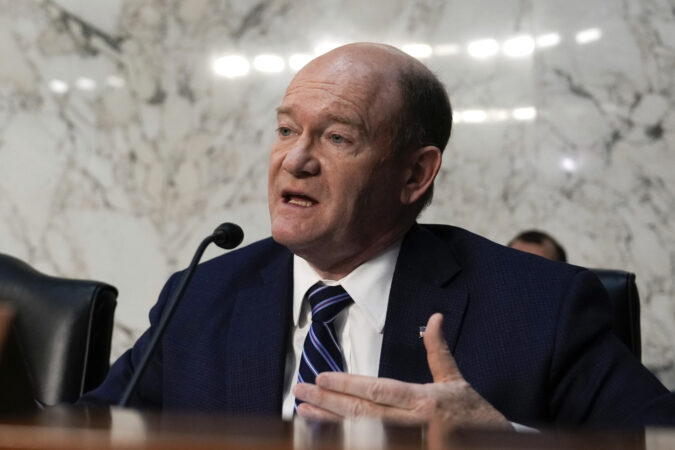
As President Donald Trump threatens to acquire Greenland, Sen. Chris Coons is boarding a plane to Denmark to push back.
Coons (D., Del.), who opposes the president’s takeover proposal, is bringing a bipartisan group of House and Senate members on a mission to highlight the longstanding relationship between the U.S. and Denmark, which has control over defense and foreign policy in the semi-autonomous territory,located northeast of Canada.
Coons said in an interview Wednesday that the delegation will meet with Danish and Greenlandic government and business leaders to discuss issues including Arctic security and strengthening trade relations.
“Denmark has been a strong close and trusted ally for decades and this is a chance for a bipartisan and bicameral delegation from Congress to go and communicate our respect and appreciation for their close partnership,” he said.
He said he hopes the visit clarifies “there are folks in Congress who do not support an aggressive engagement.”
Coons noted Danish soldiers fought alongside Americans in Iraq and Afghanistan and suffered some of the highest casualties per capita. The delegation will lay a wreath to commemorate that sacrifice on their trip.
Joining Coons will be Democratic U.S. Reps. Sarah McBride of Delaware, Madeleine Dean of Pennsylvania, Gregory Meeks of New York, and Republican Sen. Thom Tillis from North Carolina. The delegation will be in Copenhagen Friday and Saturday. Some members of the delegation will continue on to the World Economic Forum in Davos, Switzerland.
Coons called that rationale “puzzling,” given leaders of Greenland and Denmark have assured him on previous visits that they are happy to collaborate with the U.S. to amp up American military presence in the country and work together on arctic security issues or to explore investments in mineral resources.
“I asked are you aware of any foreign threats, cyber, or other incursions?” Coons said of a previous conversation with Denmark Minister of Foreign Affairs Lars Løkke Rasmussen. “Nope, none.”
Leaders in Greenland this week said they wanted the territory to remain part of the kingdom of Denmark.
“Greenland does not want to be owned by the USA,” Greenland’s Premier Jens-Frederik Nielsen said at a news conference Tuesday in Copenhagen. “Greenland does not want to be governed by the USA. Greenland will not be part of the USA. We choose the Greenland we know today, which is part of the Kingdom of Denmark.”
Denmark officials have warned an attack on Greenland, which is part of Denmark and thus under the protection of the North Atlantic Treaty Organization, would destroy the alliance, which has been a pillar of U.S.-European relations since 1949.
Trump has been seemingly undeterred by foreign protestations. He said on social media Wednesday that “anything less” than U.S. control of Greenland is “unacceptable,” arguing the United States needs the territory for national security purposes, which could in turn strengthen NATO.
“NATO becomes far more formidable and effective with Greenland in the hands of the UNITED STATES,” Trump wrote in a Truth Social post. “Anything less than that is unacceptable.”
Dean, who also went on a trip to Denmark in April, said in an interview she hopes to convey “the president’s notion is wrongheaded, dangerous, inane and not something we support.”
Dean said if the president wants to boost security in Denmark he might consider increasing the number of U.S. military bases there, which has precipitously declined, rather than trying to take control of the country.
Dean also encouraged her Republican colleagues to speak out against the president’s comments.
“If somehow this president unleashes military action against Greenland, against the kingdom of Denmark — it will destroy 80 years of a NATO partnership that has kept the world in a more peaceful place,” she said. “It’s just a sick irony that this is the same president who so wishes he could win the Nobel Peace Prize.”
Coons and Dean’s trip comes as tensions have risen internationally.
The government of Greenland and Denmark’s Ministry of Defense said there would be an increased military presence in the territory starting Wednesday due to “security tensions,” CNN reported.
Elsewhere, European leaders continue to reject Trump’s calls to control the semi-autonomous territory. French President Emmanuel Macron warned Wednesday that the consequences of the US trying to seize Greenland from Denmark would be “unprecedented.”
Days before protests erupted in Iran in late December, Israeli officials notified the Iranian leadership via Russia that they would not launch strikes against Iran if Israel were not attacked first. Iran responded through the Russian channel that it would also refrain from a preemptive attack, diplomats and regional officials with knowledge of the exchange said.
The communications between Israel and Iran — and the role Russia played as the intermediary — were unusual given the hostility between the two Middle Eastern rivals, which engaged in a 12-day war in June.
But the contacts reflected Israel’s desire to avoid being perceived as escalating tensions toward Iran or spearheading any new attacks against it at a time when Israel was preparing a significant military campaign against Hezbollah, the Iran-aligned militia in Lebanon, according to the diplomats and regional officials. The private reassurances contrasted with Israel’s public rhetoric late last year, when its officials openly hinted at the possibility of carrying out renewed strikes on Iran to roll back what they said was the country’s rapidly replenishing ballistic missile stockpile.
Although Iranian officials responded positively to the Israeli outreach, they were wary of Israel’s intentions, said two officials with knowledge of the message exchange. Iran believed that even if the Israeli assurances were genuine, they left open the possibility that the U.S. military would carry out attacks on Iran as part of a campaign coordinated by the two allies, while Israel was training its firepower strictly on Hezbollah, the officials said.
Still, “for Iran, it was a good deal” to stay out of any Israel-Hezbollah clash, said a senior official in the region who, like others interviewed for this report, spoke on the condition of anonymity to discuss sensitive communications. U.S. officials have said that Iran’s substantive support for Hezbollah, in any case, has already decreased as Tehran grapples with domestic upheaval.
It’s not clear now how the furious protests in Iran in recent weeks, which have challenged the government’s grip on power, have changed Israel’s and Iran’s calculations and whether the two countries will still abide by their private agreement. President Donald Trump has been weighing attacks against Iranian regime targets in response to the crackdown on the protest movement, and any strikes could provoke Iran to retaliate against Israel, a U.S. ally, analysts say.
A senior Iranian official told Reuters that if attacked, Iran would retaliate against U.S. military bases in the Middle East, the news agency reported Wednesday, without mentioning Israel as among the potential targets.
Nor is it clear whether Israeli officials would renege on their December reassurances and join in a U.S.-led attack if they sensed an opportunity to topple the Iranian government. As protests flared in Iran, Israeli officials described their military preparations as defensive in nature, and Israeli government and security officials have avoided overtly bellicose language. In June, Israel launched an elaborate surprise attack against Iran even as nuclear negotiations between the United States and Iran were underway.
“Israel is giving the U.S. the leading role [in any potential strikes against Iran], but there is no question Israel would love to see regime change because that would change the Middle East — as well as Hezbollah,” said Sima Shine, a senior researcher at the Institute for National Security Studies in Tel Aviv and a former head of research at the Israeli intelligence agency Mossad. “But Israel could be a target for the Iranian response, and therefore Israel has already taken a lot of steps to be better defended and prepared.”
For Israel, the outreach to Iran was designed to keep Tehran on the sidelines and leave Hezbollah isolated if Israel were to attack. The “same logic” may hold today, with Israel seeking to prevent the two countries from trading direct blows, at least initially, an Israeli official said. The official added that a military campaign against Hezbollah was not off the table, regardless of what transpires with Iran. Israel has warned that it continues to face a threat from Hezbollah because the group has not disarmed.
“The [Lebanon] campaign will take place, and Hezbollah will be heavily targeted,” the official added. “The question is if it’s during or after the Iran war.”
The most recent exchange of messages between Israel and Iran came in late December, shortly after Iranian Foreign Minister Abbas Araghchi visited Moscow, the senior regional official said. It was not the first time that Russia has sought to serve as an intermediary between the two countries or bolster its standing with Trump as a mediator to win concessions in negotiations over the war in Ukraine.
The Kremlin previously raised to Trump the idea of serving as an intermediary between Israel and Iran, according to a Russian academic close to senior Russian diplomats. Trump declined the offer, this person said, telling the Russians “to deal with Ukraine first.” It’s not clear whether the December exchanges took place with Washington’s knowledge or participation.
The Israeli public broadcaster KAN reported last week that Prime Minister Benjamin Netanyahu had recently asked Russian President Vladimir Putin to relay messages to Iran that Israel did not intend to attack it.
A spokesman in Netanyahu’s office and Kremlin spokesman Dmitry Peskov did not respond to requests for comment.
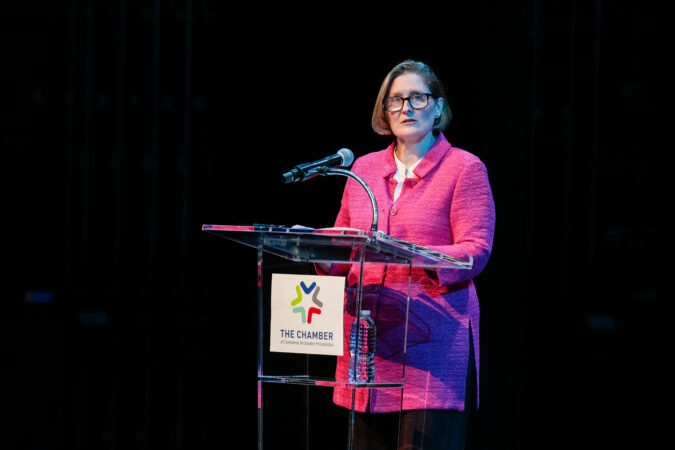
AI has already replaced some workers at Philly-area firms, a new report says. But the bulk of the AI-related job loss is yet to come, the Federal Reserve Bank of Philadelphia CEO and president Anna Paulson said.
Paulson, speaking Wednesday at the Chamber of Commerce for Greater Philadelphia’s State of the Economy event, said AI could further reduce demand for workers in the years ahead.
Also Wednesday, the Fed released its annual report, which surveyed 54 Chamber businesses on the past year and what lies ahead. They found that the biggest concern area businesses faced in 2025 were uncertainty about regulations and government policies, and that nearly 39% of respondents expected better business conditions overall in this coming year.
Amid a slow labor market, a central topic of Wednesday’s event was jobs.
Job growth slowed, but healthcare helped Philadelphia
Last year, the majority of private-sector jobs created were in healthcare and social assistance, Paulson noted. Philadelphia has a larger-than-average share of workers in this sector, which means the region has “been somewhat insulated from the national slowdown in job creation,” she said.
But in other sectors, AI and immigration trends have contributed to a hiring slowdown.
“On the supply side, the sharp drop in immigration has slowed the growth of labor supply,” said Paulson. “On the demand side, firms — both nationally and here in Philadelphia — tell us that uncertainty is holding back hiring as they consider a range of factors: trade policy and the potential for artificial intelligence to transform the need for workers.”
AI is just starting to replace jobs, and isn’t creating many
AI has been widely adopted by companies in the region, the Chamber’s survey found. Nearly 76% of respondents said they used AI for their work.
That’s changing what kinds of human work firms need.
Among those surveyed, 9.5% said generative AI had decreased the need for workers at their firm, while 23.8% said it changed the kinds of workers they needed but not the number.
Only 4.8% reported needing more workers because of generative AI.
The AI boom has brought plans for more data center development in the region. But those kinds of facilities don’t require a lot of workers, says Paulson.
“Going forward, we can see a period of strong growth where relatively few jobs are created as AI becomes fully embedded,” she said.
Amazon data centers loom over houses at the edge of the Loudoun Meadows neighborhood in Aldie, Va., in 2023.
Some Philadelphians are spending money cautiously
As uncertainty slows hiring on the business side, it seems to be influencing consumer trends as well.
Paulson noted that low-income households are struggling due to high prices and worries around job security.
Individuals with discretionary income are being careful of how they spend their money, noted Paulson. “A retailer who is active in the Philadelphia area told us they are seeing a lot of headwinds for the consumer, especially for lower-income individuals,” she said.
While people in Philadelphia continue to eat at restaurants, “contacts tell us that less expensive options on the menu are becoming more popular,” she said. Upscale restaurants are an exception, she noted, adding that “high-income households, bolstered by a strong stock market, appear to be driving elevated consumption growth.”
People shop on Black Friday at Cherry Hill Mall on Nov. 28, 2025. Philadelphia Fed CEO Paulson said people are being more careful with their discretionary income amid economic uncertainty.
Some employers want better applicants. Working people want better jobs.
When they are hiring, companies are often challenged to find the right candidates. About 30% of employers surveyed struggled to hire last year because they lacked applicants, or lacked qualified applicants, the Chamber’s report said.
Comcast executive Bret Perkins, who leads the company’s external and government affairs, noted at Wednesday’s event that the Philadelphia area is “just not creating enough opportunity jobs,” that lend workers upward mobility. He pointed to Philadelphia ranking 50th among 50 metro areas for upward economic mobility recently.
The Philadelphia Fed recently partnered on a survey of Philadelphians in the city’s lower-income zip codes, in which roughly one-third said “a better-paying job is the single thing that would be most helpful to them,” said Paulson.
But getting that job is a challenge, Paulson said. Health, caretaking responsibilities, and reliable transportation are among the barriers these Philadelphians are facing, the survey found.
BOSTON — The Trump administration apologized in court for a “mistake” in the deportation of a Massachusetts college student who was detained trying to fly home to surprise her family for Thanksgiving, but still argued the error should not affect her case.
Any Lucia Lopez Belloza, 19, a Babson College freshman, was detained at Boston’s airport on Nov. 20 and flown to Honduras two days later. Her removal came despite an emergency court order on Nov. 21 directing the government to keep her in Massachusetts or elsewhere in the United States for at least 72 hours.
Lopez Belloza, whose family emigrated from Honduras to the U.S. in 2014, is currently staying with grandparents and studying remotely. She is not detained and was recently visiting an aunt in El Salvador.
Her case is the latest involving a deportation carried out despite a court order. Kilmar Abrego Garcia was deported to El Salvador despite a ruling that should have prevented it. The Trump administration initially fought efforts to bring him back to the U.S. but eventually complied after the U.S. Supreme Court weighed in. And last June, a Guatemalan man identified as O.C.G. was returned to the U.S. after a judge found his removal from Mexico likely “lacked any semblance of due process.”
At a federal court hearing Tuesday in Boston, the government argued the court lacks jurisdiction because lawyers for Lopez Belloza filed their action several hours after she arrived in Texas while en route out of the country. But the government also acknowledged it violated the judge’s order.
In court filings and in open court, government lawyers said an Immigration and Customs Enforcement deportation officer mistakenly believed the order no longer applied because Lopez Belloza had already left Massachusetts. The officer failed to activate a system that alerts other ICE officers that a case is subject to judicial review and that removal should be halted.
“On behalf of the government, we want to sincerely apologize,” Assistant U.S. Attorney Mark Sauter told the judge, saying the employee understands “he made a mistake.” The violation, Sauter added, was “an inadvertent mistake by one individual, not a willful act of violating a court order.”
In a declaration filed with the court Jan. 2, the ICE officer also admitted he did not notify ICE’s enforcement office in Port Isabel, Texas, that the removal mission needed to be canceled. He said he believed the judge’s order did not apply once Lopez Belloza was no longer in the state.
The government maintains her deportation was lawful because an immigration judge ordered the removal of Lopez Belloza and her mother in 2016, and the Board of Immigration Appeals dismissed their appeal in 2017. Prosecutors said she could have pursued additional appeals or sought a stay of removal.
Her lawyer, Todd Pomerleau, countered that she was deported in clear violation of the Nov. 21 order and said the government’s actions deprived her of due process. “I was hoping the government would show some leniency and bring her back,” he said. “They violated a court order.”
U.S. District Judge Richard Stearns said he appreciated the government acknowledging the error, calling it a “tragic” bureaucratic mistake. But appeared to rule out holding the government in contempt, noting the violation did not appear intentional. He also questioned whether he has jurisdiction over the case, appearing to side with the government in concluding the court order had been filed several hours after she had been sent to Texas.
“It might not be anybody’s fault, but she was the victim of it,” Stearns said, adding at one point that Lopez Belloza could explore applying for a student visa.
Pomerleau said one possible resolution would be allowing Lopez Belloza to return to finish her studies while he works to reopen the underlying removal order.