MUNICH — A top European Union official on Sunday rejected the notion that Europe faces “civilizational erasure,” pushing back at criticism of the continent by the Trump administration.
EU foreign policy chief Kaja Kallas addressed the Munich Security Conference a day after U.S. Secretary of State Marco Rubio offered a somewhat reassuring message to European allies. He struck a less aggressive tone than Vice President JD Vance did in lecturing them at the same gathering last year but maintained a firm tone on Washington’s intent to reshape the trans-Atlantic alliance and push its policy priorities.
Kallas alluded to criticism in the U.S. national security strategy released in December, which asserted that economic stagnation in Europe “is eclipsed by the real and more stark prospect of civilizational erasure.” It suggested that Europe is being enfeebled by its immigration policies, declining birth rates, “censorship of free speech and suppression of political opposition,” and a “loss of national identities and self-confidence.”
“Contrary to what some may say, woke, decadent Europe is not facing civilizational erasure,” Kallas told the conference. “In fact, people still want to join our club and not just fellow Europeans,” she added, saying she was told when visiting Canada last year that many people there have an interest in joining the EU.
Kallas rejected what she called “European-bashing.”
“We are, you know, pushing humanity forward, trying to defend human rights and all this, which is actually bringing also prosperity for people. So that’s why it’s very hard for me to believe these accusations.”
In his conference speech, Rubio said that an end to the trans-Atlantic era “is neither our goal nor our wish,” adding that “our home may be in the Western hemisphere, but we will always be a child of Europe.”
He made clear that the Trump administration is sticking to its guns on issues such as migration, trade, and climate. And European officials who addressed the gathering made clear that they in turn will stand by their values, including their approach to free speech, climate change, and free trade.
British Prime Minister Keir Starmer said Saturday that Europe must defend “the vibrant, free and diverse societies that we represent, showing that people who look different to each other can live peacefully together, that this isn’t against the tenor of our times.”
“Rather, it is what makes us strong,” he said.
Kallas said Rubio’s speech sent an important message that America and Europe are and will remain intertwined.
“It is also clear that we don’t see eye to eye on all the issues and this will remain the case as well, but I think we can work from there,” she said.
CHICAGO — A Chicago teen who spoke out for her father’s release after he was detained last fall by immigration officials in a deportation case has died after battling a rare form of cancer.
Ofelia Giselle Torres Hidalgo, 16, died Friday from stage 4 alveolar rhabdomyosarcoma, the family said in a statement. Funeral arrangements are private.
The teenager had been diagnosed in December 2024 with the aggressive form of soft tissue cancer and had been undergoing chemotherapy and radiation treatment.
An immigration judge in Chicago ruled three days before Ofelia’s death that her father, Ruben Torres Maldonado, was conditionally entitled to receive “cancellation of removal” due to the hardships his deportation would cause his children, who were born in the United States and are U.S. citizens, according to the statement sent by an attorney representing Torres Maldonado.
The ruling provides Torres Maldonado with a path to becoming a lawful permanent resident and eventual U.S. citizenship, the statement said.
Ofelia was present via Zoom at last week’s hearing.
“Ofelia was heroic and brave in the face of ICE’s detention and threatened deportation of her father,” said Kalman Resnick, Torres Maldonado’s attorney. “We mourn Ofelia’s passing, and we hope that she will serve as a model for us all for how to be courageous and to fight for what’s right to our last breaths.”
Torres Maldonado, a painter and home renovator, was detained Oct. 18 at a Home Depot store in suburban Chicago as the area was at the center of a major immigration crackdown dubbed “Operation Midway Blitz,” which began in early September.
Ofelia was undergoing treatment when she appeared in October in a video posted on a GoFundMe page set up for the family.
“My dad, like many other fathers, is a hard-working person who wakes up early in the morning and goes to work without complaining, thinking about his family,” she said in the video. “I find it so unfair that hardworking immigrant families are being targeted just because they were not born here.”
In a wheelchair, she attended a hearing for her father in October. The family’s attorneys told a judge at that time that she was released from the hospital just a day before her father’s arrest so that she could see family and friends. They added that Ofelia had been unable to continue treatment “because of the stress and disruption.”
Torres Maldonado’s attorneys petitioned for his release as his deportation case went through the system. A judge ordered a bond hearing after ruling in October that his detention was illegal and violated Torres Maldonado’s due process rights.
Lawyers said Torres Maldonado entered the U.S. in 2003. He and his partner, Sandibell Hidalgo, also have a younger son.
The Department of Homeland Security had alleged he had been living illegally in the U.S. for years and has a history of driving offenses, including driving without a valid license, without insurance, and speeding.
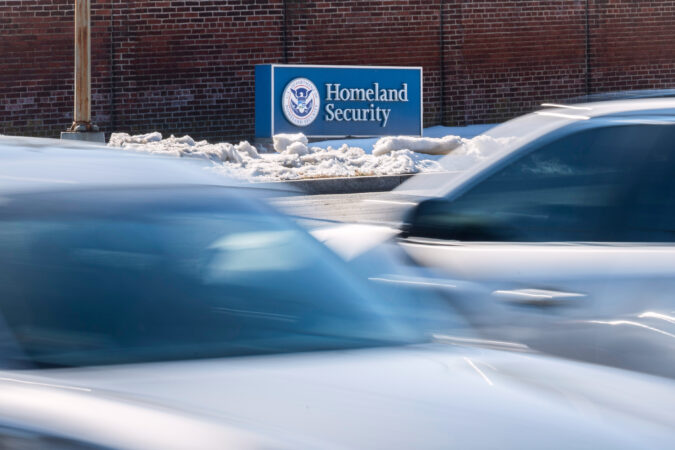
WEST PALM BEACH, Fla. — Lawmakers and the White House offered no signs of compromise Sunday in their battle over oversight of federal immigration officers that has led to a pause in funding for the Department of Homeland Security.
A partial government shutdown began Saturday after congressional Democrats and President Donald Trump’s team failed to reach a deal on legislation to fund the department through September. Democrats are demanding changes to how immigration operations are conducted after the fatal shootings of U.S. citizens Alex Pretti and Renee Good by federal officers in Minneapolis last month.
Congress is on recess until Feb. 23, and both sides appear dug into their positions. The impasse affects agencies such as the Transportation Security Administration, the Federal Emergency Management Agency, U.S. Coast Guard, the Secret Service, U.S. Immigration and Customs Enforcement, and U.S. Customs and Border Protection.
The work at ICE and CBP goes on unabated because Trump’s tax and spending cut law from 2025 provided billions more to those agencies that can be tapped for deportation operations. About 90% of DHS employees were to continue working during the shutdown, but do so without pay — and missed paychecks could mean financial hardships. Last year there was a record 43-day government shutdown.
White House border czar Tom Homan said the administration was unwilling to agree to Democrats’ demands that federal officers clearly identify themselves, remove masks during operations, and display unique ID numbers.
“I don’t like the masks, either,” Homan said, But, he said, “These men and women have to protect themselves.”
Homan also said Sunday that more than 1,000 immigration agents have left Minnesota’s Twin Cities area and hundreds more will depart in the days ahead as part of the Trump administration’s drawdown of its immigration enforcement surge.
A “small” security force will stay for a short period to protect remaining immigration agents and will respond “when our agents are out and they get surrounded by agitators and things got out of control,” Homan said. He did not define “small.”
“We already removed well over 1,000 people, and as of Monday, Tuesday, we’ll remove several hundred more,” Homan said. “We’ll get back to the original footprint.”
Democrats also want to require immigration agents to wear body cameras and mandate judicial warrants for arrests on private property.
Senate Minority Leader Chuck Schumer (D., N.Y.) said Democrats are only asking for federal agents to abide by rules followed by law enforcement agencies around the country.
“And the question that Americans are asking is, ‘Why aren’t Republicans going along with these commonsense proposals?’” Schumer said. “They’re not crazy. They’re not way out. They’re what every police department in America does.”
Sen. Markwayne Mullin (R., Okla.) said he could back Democrats calls to equip immigration officers with body cameras and would support efforts to bolster training. But he balked at their demands that federal officer remove masks and clearly identify themselves, noting some officers taking part in immigration enforcement operations have faced doxing and other harassment.
“What are you going to do, expose their faces so you can intimidate their families?” Mullins said. “What we want is ICE to be able to do their job. And we would love for local law enforcement and for states to cooperate with us.”
Republican Sen. Katie Britt of Alabama, a Trump ally who had pushed for a two-week extension of DHS funding while negotiations continued, said it was “shortsighted of Democrats to walk away” from talks.
Trump made enforcement of the nation’s immigration laws a centerpiece of his 2024 campaign for the White House and he promised to be aggressive in detaining and deporting people living in the United States without legal permission.
DHS reports it has deported more than 675,000 migrants since Trump’s return to office last year and claims some 2.2 million others have “self-deported” as the Republican president has made his immigration crackdown a priority.
“President Trump is not going to back away from the mission, the mission that American people said they wanted him to complete, and that is securing our border and making sure that we actually do interior enforcement,” Britt said.
Homan was on CBS’ Face the Nation, Schumer and Mullin appeared on CNN’s State of the Union, and Britt was interviewed on Fox News Sunday.
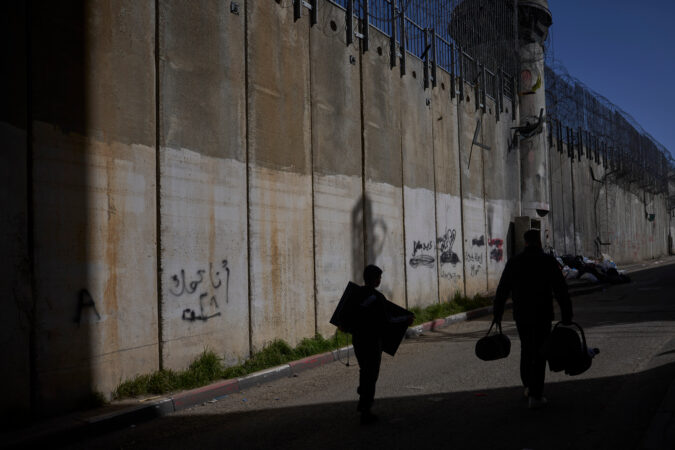
TEL AVIV, Israel — Israel will begin a contentious land regulation process in a large part of the occupied West Bank, which could result in Israel gaining control over wide swaths of the area for future development, according to a government decision on Sunday.
It paves the way for the resumption of “settlement of land title” processes, which had been frozen in the West Bank since the Mideast War in 1967. It means that when Israel begins the land registration process for a certain area, anyone with a claim to the land must submit documents proving ownership.
The Israeli anti-settlement group Peace Now said the process likely amounts to a “mega land grab” from Palestinians.
“This move is very dramatic and allows the state to gain control of almost all of Area C,” said Hagit Ofran, the director of Peace Now’s Settlement Watch program. Area C refers to the 60% of the West Bank that is under full Israeli military control, according to agreements reached in the 1990s with the Palestinians.
Israel’s Foreign Ministry in a statement claimed, without offering evidence, that the Palestinian Authority was “advancing illegal land registration procedures in Area C” and said Sunday’s decision was taken for greater transparency.
The decision was first announced last May but required further development before it was approved in this week’s Cabinet meeting. Under the decision, Israeli authorities will announce certain areas to undergo registration, which will force anyone who has a claim to the land to prove their ownership.
Ofran said the process for proving ownership can be “draconian” and is rarely transparent, meaning any land that undergoes the registration process in areas currently owned by Palestinians is likely to revert to Israeli state control.
“Palestinians will be sent to prove ownership in a way that they will never be able to do,” Ofran told the Associated Press. “And this way Israel might take over 83% of the Area C, which is about half of the West Bank.”
The registration process could start as soon as this year, she said.
The proposal had been put forward by some of Israel’s far-right members of the ruling coalition, including the Minister of Justice Yariv Levin. “The government of Israel is committed to strengthening its grip on all its parts, and this decision is an expression of that commitment,” he said.
A ‘dangerous escalation’
Palestinian Authority President Mahmoud Abbas’ office in a statement called the decision “a grave escalation and a flagrant violation of international law,” which amounts to “de facto annexation.” It called on the international community, especially the U.N. Security Council and the United States, to intervene immediately.
Previous U.S. administrations have sharply condemned an expansion of Israeli activity and control in the West Bank, but Prime Minister Benjamin Netanyahu has a particularly close relationship with President Donald Trump. The two met last week in Washington, their seventh meeting in the past year.
And yet Trump has opposed annexation, Ofran with Peace Now noted.
Palestinians are not permitted to sell land privately to Israelis, though measures announced last week aim to nullify this. Currently, settlers can buy homes on land controlled by Israel’s government. Last week’s decision also aimed to expand Israeli enforcement of several aspects of in the West Bank, including environmental and archaeological matters in Palestinian-administered areas.
More than 700,000 Israelis live in the occupied West Bank and east Jerusalem, territories captured by Israel in 1967 from Jordan and sought by the Palestinians for a future state. The international community overwhelmingly considers Israeli settlement construction in these areas to be illegal and an obstacle to peace.
Jordan’s Foreign Ministry in a statement called on the international community to “assume its legal and moral responsibilities, and to compel Israel, the occupying power, to stop its dangerous escalation.”
Over 300,000 Palestinians are estimated to live in Area C of the West Bank, with many more in surrounding communities dependent on its agricultural and grazing lands, including plots for which families retain land deeds or tax records dating back decades.
CLEARWATER, Fla. — Bryce Harper touched down in Phillies camp, pulled on a black T-shirt — no, not the black T-shirt that went viral over the holidays — and summarized one of the weirdest weeks in an offseason of his career.
“For Dave [Dombrowski] to come out and say those things,“ Harper said, ”it’s kind of wild to me still.”
Key word: Still. Because this was Sunday, 122 days after the Phillies’ highest-ranking baseball official gave a 90-second answer 34 minutes into a 54-minute news conference about whether Harper’s good-but-not-great 2025 season was a one-off or the start of a downward trend.
Pardon the rehashed sound bite, but well, here goes: “Of course he’s still a quality player,” Dombrowski said, “still an All-Star-caliber player. He didn’t have an elite season like he has had in the past. And I guess we only find out if he becomes elite [again], or if he continues to be good.”
Bryce Harper missed 22 games for the Phillies last season because of an inflamed right wrist.
Cue the hysteria, fomented by sports-talk radio and social media. And a candid answer to a good question exploded into unfounded speculation that the Phillies would consider trading Harper. (For what it’s worth, John Middleton is clear about wanting Harper to go into the Hall of Fame with a “P” on his plaque.)
Harper is self-aware. He wasn’t satisfied with last season. There were factors, including an inflamed right wrist that caused him to miss 22 games. But he also swung at a career-high rate of pitches out of the zone, a problem given that Harper saw fewer strikes than any hitter in baseball. He also delivered fewer hits in the clutch than ever before.
“Obviously,” he said after digesting it for four months, “not the best year of my career.”
But the substance of Dombrowski’s comments didn’t bother Harper as much as the forum.
“The big thing for me was, when we first met with this organization [in 2019] it was, ‘Hey, we’re always going to keep things in-house, and we expect you to do the same thing,’” Harper said. “So, when that didn’t happen, it kind of took me for a run a little bit. I don’t know.
“It’s kind of a wild situation, that even happening.”
Dombrowski reached out to Harper about 10 days later. The whole affair seemed to be over. Then, in December, a video posted to Harper’s TikTok account showing him working out while wearing a T-shirt with two words across the chest: “NOT ELITE.”
Is Harper using Dombrowski’s critique as motivation?
“I don’t need to be motivated to be great in my career or anything else,“ Harper said. ”That’s just not a motivating factor for me.”
So, why the T-shirt?
“They made the shirts for me and I wore them,” he said. “If they’re going to make them, I’m going to wear them.”
OK then. Just don’t be surprised if Harper channels all of this into an MVP-worthy season. Because elite athletes have a way of turning more innocuous slights into fuel. Michael Jordan was notorious for it. Tom Brady, too.
Bryce Harper says it was kind of “wild” the way Phillies President Dave Dombrowski made his comments about Bryce’s season and that it was not elite.
Bryce says he is always available to anyone with the team and he had an understanding that everything would be kept “in house”… pic.twitter.com/MdzkjVII0l
“I just know his mindset is he wants to perform,“ manager Rob Thomson said. “He loves playing the game. He wants to perform for himself, for his teammates, for the organization, for the city of Philadelphia. With the way he’s come into camp, the shape that he’s in, we’ve got to keep him healthy and I think he’s going to have a huge year.”
Harper does appear to have bulked up since last season. Other than hiring a new trainer, he said he didn’t change much about his offseason program at home in Nashville.
The wrist, which hitting coach Kevin Long said bothered Harper before he went on the injured list last season, is fully healed. Harper said he hasn’t felt pain since June.
“Really happy about that,” he said. “My offseason was pretty similar to what I do each offseason. Just trying to make sure my body is where it needs to be. Just pretty much all the same stuff, getting in and making sure I’m ready to go.”
Maybe the stakes of the WBC will be invigorating for Harper, never a fan of the tedium of spring training.
“I feel like I’m pretty excited to play,” Harper said. “My face might not look it a lot of times. But I’m excited to be out there. I love being part of the culture and the group and Philly baseball. I don’t want that to ever not be the notion. I don’t smile all the time or I don’t laugh all the time, but I enjoy playing this game.”
With baseball returning to the Olympics in 2028 in Los Angeles, MLB is considering allowing players to compete, a scenario for which Harper has long lobbied.
In that case, the WBC would be a precursor. And Team USA is loaded. For years, many of the sport’s top starting pitchers resisted the WBC. But Tarik Skubal and Paul Skenes are at the top of the U.S. team’s rotation.
“Being able to take a step back and act like you are 16, 17, 18 years old again playing with your buddies,” Harper said, “really looking forward to it.
“And having Aaron Judge hitting behind me is going to be a lot of fun as well.”
Which brings up another question that looms over Harper this spring: How will the Phillies protect him in the lineup?
Thomson has considered putting Kyle Schwarber behind Harper. It was the other way around for most of last season. But then who will protect Schwarber? Alec Bohm and new right fielder Adolis García are the leading cleanup-hitter candidates.
“The four spot has a huge impact,” Harper said. “I think the numbers in the four spot weren’t very good last year for our whole team. Whoever’s in that four spot is going to have a big job to do.”
As far as his relationship with Dombrowski?
“We keep things in-house, that’s just how it’s always been, and in that moment, it just didn’t happen,” Harper said. “I think my locker is always open for them to come and talk to me, and vice versa. It is what it is right now.”
CAIRO — One of Gaza ‘s last functioning large hospitals condemned the decision by Doctors Without Borders to pull out of operations over concerns about armed men, claiming on Sunday that the facility had installed civilian police for security.
The rare public friction between two well-known health care providers in Gaza came as the Palestinian death toll since the current ceasefire surpassed 600. At least 11 Palestinians were killed by Israeli fire in the last 24 hours, hospitals said.
Doctors Without Borders, also known by its French acronym MSF, said in a statement Saturday that all its noncritical medical operations at Nasser Hospital were suspended due to security breaches that posed “serious” threats to its teams and patients. MSF said there had been an increase in patients and staff seeing armed men in parts of the compound since the U.S.-brokered October ceasefire was reached.
Nasser Hospital said Sunday the increase in armed men was due to a civilian police presence aimed at protecting patients and staff and said MSF’s “allegations are factually incorrect, irresponsible and pose a serious risk to a protected civilian medical facility.”
One of Gaza’s few functioning hospitals
Hundreds of patients and war wounded have been treated daily at Nasser Hospital in the southern city of Khan Younis, and the facility was a hub for Palestinian prisoners released by Israel in exchange for Israeli hostages as part of the current ceasefire deal.
MSF said its teams had reported “a pattern of unacceptable acts including the presence of armed men, intimidation, arbitrary arrests of patients and a recent situation of suspicion of movement of weapons.” The suspension occurred in January but was only recently announced.
Nasser Hospital staff say that in recent months it has been repeatedly attacked by masked, armed men and militias, which is why the presence of an armed civilian police force is crucial.
Hamas remains the dominant force in areas of Gaza not under Israeli control, including the area where Nasser Hospital is located. But other armed groups have mushroomed as a result of the war, including groups backed by Israel’s army in the Israeli-controlled part of the strip.
Israel’s military said it had intelligence that Nasser Hospital is being used as a headquarters and military post for senior Hamas officials, without providing evidence. It called MSF’s move “an important decision, but one that comes too late.”
Throughout the war, which began with the Hamas-led attack on Israel on Oct. 7, 2023, Israel has repeatedly struck hospitals, including Nasser, accusing the militant group of operating in or around them. Hamas security men often have been seen inside hospitals, blocking access to some areas.
Some hostages released from Gaza have said they spent time during captivity in a hospital, including Nasser Hospital.
11 Palestinians killed in strikes across Gaza
At least 11 Palestinians were killed Sunday by Israeli fire in Gaza, hospital authorities said.
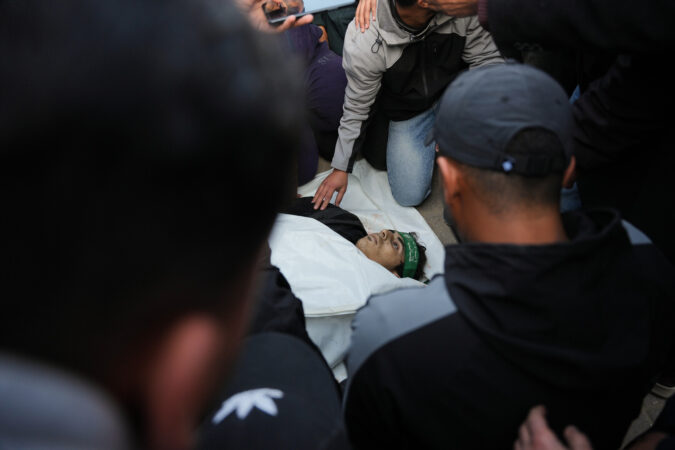
The dead include five men in their 20s who were killed in the eastern part of Khan Younis, according to Nasser Hospital, which received the bodies. The strike hit a group of people close to the Yellow Line that separates Israeli-controlled areas from the rest of Gaza, it said.
Rami Shaqra said his son, al-Baraa, was among the militants securing the area from potential attacks by Israeli forces or Israeli-backed armed groups when they were hit. He said they were killed by an airstrike.
“They were in the area they say is safe,” Shaqra said.
Associated Press footage from the morgue showed at least two of the men had headbands denoting membership in the Qassam Brigades, the militant arm of Hamas.
In northern Gaza, a drone strike hit a group of people in the Falluja area of Jabaliya refugee camp, killing five people, according to Shifa Hospital. A separate drone strike killed a man in Gaza City, according to the hospital.
Israel’s military said it had carried out multiple strikes in response to several ceasefire violations near the Yellow Line, including militants attempting to hide in debris and others who attempted to cross the line while armed.
The U.S.-brokered ceasefire deal that took effect Oct. 10 attempted to halt more than two years of war between Israel and Hamas. While the heaviest fighting has subsided, the ceasefire has seen almost daily Israeli fire.
Israeli forces have carried out repeated airstrikes and frequently fire on Palestinians near military-held zones, killing 602 Palestinians, according to Gaza health officials. The ministry, which is part of the Hamas-led government, maintains detailed casualty records that are seen as generally reliable by U.N. agencies and independent experts. It does not give a breakdown of civilians and militants.
Militants have carried out shooting attacks on troops, and Israel says its strikes are in response to that and other violations. Four Israeli soldiers have been killed.
Two Israeli soldiers attacked by ultra-Orthodox Jews
In Israel, two female Israeli soldiers were rescued from riots in the ultra-Orthodox city of Bnei Brak. Footage shows two soldiers being hurried away by police from thousands of ultra-Orthodox men running after them and yelling.
Many in Israel’s ultra-Orthodox community are furious over laws that may force them to serve in the Israeli military, holding frequent protests.
Israeli police said the soldiers were performing a welfare visit but had not coordinated it with police. At least 22 people were arrested as protesters set police motorcycles on fire, attacked officers, threw trash, and overturned a police car, police said.
Prime Minister Benjamin Netanyahu strongly condemned the attack on the soldiers but blamed an “extremist minority” for the violence.
Roughly 1.3 million ultra-Orthodox Jews make up about 13% of Israel’s population and oppose enlistment because they believe studying full time in religious seminaries is their most important duty. The broad exemptions from mandatory military service have reopened a deep divide in the country and infuriated much of the general public, especially during the war in Gaza.
A 9-year-old boy remains hospitalized after being hit by a car in West Philadelphia that fled the scene, police said.
The child was walking in the 800 block of South 56th Street, around 12:22 p.m. Saturday, when a driver in a 2010–2013 Honda Crosstour struck him, police said.
He sustained several injuries and was transported to Children’s Hospital of Philadelphia, where he was in stable condition as of Sunday afternoon.
Police are now looking for the driver — a man they describe has having short hair and a beard, around the ages of 25 to 35 — in a burgundy Honda Crosstour with a black passenger-side fender, a green passenger-side front door, a white passenger-side rear door, and a bicycle rack on the roof.
Anyone with information can contact the police Crash Investigation Division.
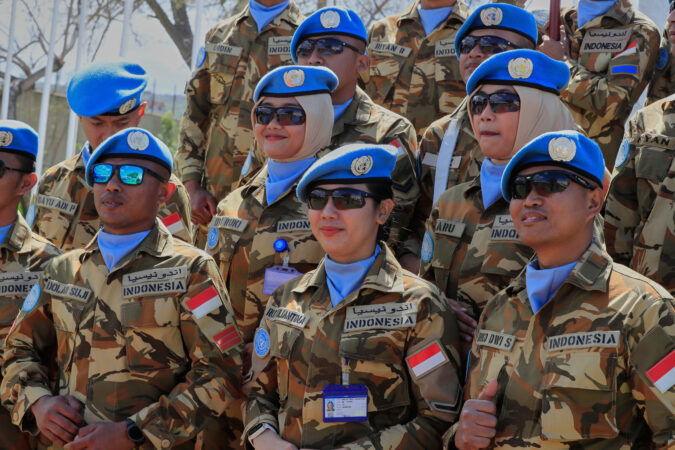
JAKARTA, Indonesia — Indonesia’s military said Sunday that up to 8,000 troops are expected to be ready by the end of June for a potential deployment to Gaza as part of a humanitarian and peace mission, the first firm commitment to a critical element of U.S. President Donald Trump’s postwar reconstruction plan.
The Indonesian National Armed Forces, known as TNI, has finalized its proposed troop structure and a timeline for their movement to Gaza, even as the government has yet to decide when the deployment will take place, army spokesperson Brig. Gen. Donny Pramono said.
“In principle, we are ready to be assigned anywhere,” Pramono told the Associated Press, “Our troops are fully prepared and can be dispatched at short notice once the government gives formal approval.”
Pramono said the military prepared a composite brigade of 8,000 personnel, based on decisions made during a Feb. 12 meeting for the mission.
Under the schedule, troops will undergo health checks and paperwork throughout February, followed by a force readiness review at the end of the month, Pramono said. He also revealed that about 1,000 personnel are expected to be ready to deploy as an advance team by April, followed with the rest by June.
Pramono said that being ready does not mean the troops will depart. The deployment still requires a political decision and depends on international mechanisms, he said.
Indonesia’s Foreign Ministry has repeatedly said any Indonesian role in Gaza will be strictly humanitarian. Indonesia’s contribution would focus on civilian protection, medical services, and reconstruction, and its troops would not take part in any combat operations or actions that could lead to direct confrontation with armed groups.
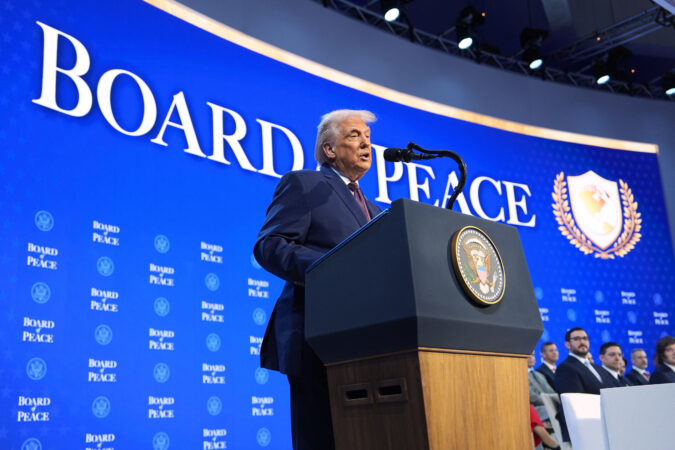
Indonesia would be the first country to formally commit troops to the security mission created under Trump’s Board of Peace initiative for Gaza, where a fragile ceasefire agreement between Israel and Hamas has held since Oct. 10 following two years of devastating war.
Indonesia, the world’s most populous Muslim majority nation, does not have formal diplomatic relations with Israel and has long been a strong supporter of a two-state solution. It has been deeply involved in providing humanitarian aid to Gaza, including funding a hospital.
Indonesian officials have justified joining the Board of Peace by saying it was necessary to defend Palestinian interests from within, since Israel is included on the board but there is no Palestinian representation.
The Southeast Asian country has experience in peacekeeping operations as one of the top 10 contributors to United Nations missions, including in Lebanon.
WEST PALM BEACH, Fla. — President Donald Trump said Sunday that members of his newly created Board of Peace have pledged $5 billion toward rebuilding war-ravaged Gaza and will commit thousands of personnel to international stabilization and police forces for the territory.
The pledges will be formally announced when board members gather in Washington on Thursday for their first meeting, he said.
“The Board of Peace will prove to be the most consequential International Body in History, and it is my honor to serve as its Chairman,” Trump said in a social media posting announcing the pledges.
He did not detail which member nations were making the pledges for reconstruction or would contribute personnel to the stabilization force. But Indonesia’s military said Sunday that up to 8,000 of its troops are expected to be ready by the end of June for a potential deployment to Gaza as part of a humanitarian and peace mission. It’s the first firm commitment that the Republican president has received.
Rebuilding the Palestinian territory will be a daunting endeavor. The United Nations, World Bank, and European Union estimate that reconstruction of the territory will cost $70 billion. Few places in the Gaza Strip were left unscathed by more than two years of Israeli bombardment.
The ceasefire deal calls for an armed international stabilization force to keep security and ensure the disarming of the militant Hamas group, a key demand of Israel. Thus far, few countries have expressed interest in taking part in the proposed force.
The Oct. 10 U.S.-brokered ceasefire deal attempted to halt a more than 2-year war between Israel and Hamas. While the heaviest fighting has subsided, Israeli forces have carried out repeated airstrikes and frequently fire on Palestinians near military-held zones.
It is not clear how many of the more than 20 members of the Board of Peace will attend the first meeting. Israeli Prime Minister Benjamin Netanyahu, who held White House talks with Trump last week, is not expected to be there.
Trump’s new board was first seen as a mechanism focused on ending the Israel-Hamas war in Gaza. But it has taken shape with his ambition for a far broader mandate of resolving global crises and appears to be the latest U.S. effort to sidestep the United Nations as Trump aims to reset the post-World War II international order.
Trump also confirmed that Thursday’s meeting will take place at the U.S. Institute of Peace, which the State Department announced in December it was renaming the Donald J. Trump U.S. Institute of Peace.
The building is the subject of litigation brought by former employees and executives of the nonprofit think tank after the Republican administration seized the facility last year and fired almost all the institute’s staff.
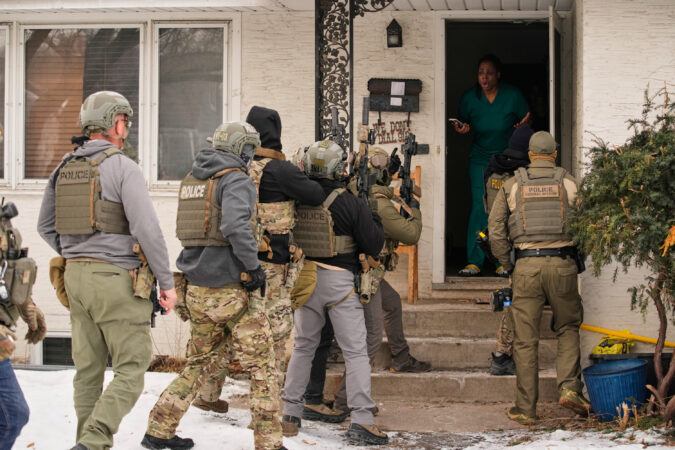
It was understandable and probably justified when a surge of roughly 3,000 masked and gun-toting federal agents into Greater Minneapolis was described in martial terms, as a kind of modern-day Battle of Stalingrad fought in a snowbound U.S. prairie metropolis.
Watching the icy slips of the clumsy U.S. Immigration and Customs Enforcement (ICE) officers, and the remarkable pushback from whistle-blowing neighbors braving subzero cold, the writer Margaret Killjoy quoted a friend: “ICE made a classic Nazi mistake: they invaded a winter people in winter.” So when border czar Tom Homan stood at a Minneapolis podium last week and declared an end to “Operation Metro Surge,” many in the media raced to cast the move as a major pullback.
“The Occupying Army Retreats,” proclaimed the American Prospect, in a tone that was echoed across numerous outlets. “The announcement of ICE’s withdrawal from Minnesota, like that of the British from Boston 250 years ago, marks a victory for people power.”
But the smell of victory didn’t travel the nearly 1,200 miles east to the South Jersey suburb of Lindenwold, where on the very same morning Homan announced the end of the Minnesota surge, residents were shocked by an ICE raid that targeted a bus stop for an elementary school in a district that is 60% Latino.
A Ring video from the Woodland Village Apartments, where about 44 kids were waiting for the bus, captured the alarming scene as fourth and fifth graders — some screaming “ICE! ICE!” — ran away from the masked agents in tactical gear who’d pulled up in unmarked vehicles. School officials believe no child was apprehended, although there were conflicting reports on whether any adult was arrested. But the suburban community, some 15 miles southeast of Philadelphia, was shaken to its core.
Thursday morning kids were sent running from their bus stop in panic because ICE showed up. This guy at yesterday's ICE Out of Lindenwold, NJ protest is a must watch
“I never protested before in my entire life but …,” he said, choking back tears. “I watched fourth- and fifth-grade kids run away from our own government. I never want to see that again.”
Unfortunately, America is all but certain to see this again. While Homan’s public proclamation of a drawdown in Minnesota seemed a small concession to crumbling political support for ICE, what happened in Lindenwold was a window into a dystopian near-future of more immigration raids — not fewer. This would allow an undeterred authoritarian Donald Trump regime to fill a $38 billion gulag archipelago of coast-to-coast warehouses with newly handcuffed human beings.
Even Homan said as much last Thursday, if you listened closely. “And let me be clear, mass deportations will continue, and we’re not rolling back,” he said. “President Trump promised mass deportations, and that’s exactly what the American people are going to get.”
Let’s also be clear. What happened in Minneapolis since the start of the year really was a landmark victory for democracy, and the notion that everyday Americans can defend their neighbors. At the cost of two lives, the great personal risks taken by Minnesota’s ICE resisters ended in both an unforgettable moral triumph and some real tangible gains.
The actions taken by ICE watchers — who blew their alert whistles, recorded the government’s maneuvers on their phones, or volunteered food and rides to help immigrants stay safe indoors — prevented the arrests of scores and maybe hundreds of law-abiding neighbors. The courage of their resistance drove a huge shift in public opinion against the immigration raids, forcing rare concessions from the Trump regime. This heroism probably did cause ICE to scale back its Minnesota operations sooner than planned, and even pressured the U.S. Department of Justice to investigate two agents whose version of a shooting didn’t fit reality.
But Trump’s mass deportation drive — with an inexorable inertia created when Congress threw a whopping $170 billion toward this effort last year — refuses to obey the normal laws of political gravity.
U.S. Border Patrol officers walk along a street in Minneapolis last month.
For starters, the U.S. Department of Homeland Security has lied repeatedly to the American people, which means there’s no way of truly knowing to what extent the Minnesota surge has even ended. The day after Homan’s announcement, a St. Paul-based journalist noted 100 reports of ICE activity, still more than any other state.
But even more importantly, a flurry of reports last week about a massive ICE expansion for the rest of the year with many more agents in the field, more offices to support them, and more detention camps to hold thousands of new arrestees showed that what happened on the streets of Minneapolis was not the beginning of the end.
The fact that ICE is ending its surge in Minneapolis — similar to what happened in 2025 in Los Angeles, Chicago, Charlotte, N.C., and New Orleans, albeit on a smaller scale — seems less significant than the fact that the agency has, under Trump, more than doubled the number of field agents from 10,000 to 22,000, with many just hitting the streets.
Indeed, the drive to recruit new agents isn’t letting up. A Times of London reporter described the push as “a breakneck operation” as he watched officers from U.S. Customs and Border Protection — which also had its biggest hiring year in a decade — work the crowd with promises of a $50,000 bonus at a sold-out professional bull-riding event in Salt Lake City.
Can we really celebrate a “retreat” from Minneapolis when WIRED reported last week that ICE is also rushing to close leases on as many as 150 new offices — an average of three in every single state — to house its growing roster of agents and the attorneys and other back-office staffers needed to process the thousands of new arrestees?
Barricades block a drive outside a warehouse as federal officials tour the facility to consider repurposing it as an ICE detention facility on Jan. 15.
For example, multiple outlets confirmed last week that Homeland Security just inked a lease for high-end office space in the Westlakes Office Park in Berwyn, in Philadelphia’s Main Line suburbs, reportedly to house ICE attorneys and related personnel. A planned office in Philadelphia’s Chinatown, at 801 Arch St., is also listed by WIRED.
Experts say the logistics of converting these rectangular behemoths — like the 1.3 million-square-foot warehouse in Schuylkill County, Pa., that used to distribute cheap consumer goods for Big Lots that DHS claims can house up to7,500 detained immigrants — into even remotely humane facilities is daunting, if not impossible. Yet, DHS is plowing ahead with stunning speed, clearly expecting a pending spike in arrests.
In rural Social Circle, Ga., ICE is claiming it will convert a one million-square-foot warehouse into a detention site for as many as 10,000 people — double the town’s population — as soon as two months from now. Project Salt Box, which is tracking the rapid gulag expansion, says DHS is using a legal maneuver to fast-track bidding to allow large private firms like the Geo Group to run these detention centers.
Neither Trump’s plunging approval rating, nor the rapidly rising level of ICE resistance from everyday citizens like that flag-waver in Lindenwold, nor the Democratic demands for major reforms that have caused a DHS shutdown (with, ironically, no impact on ICE or Border Patrol) has put a dent in this unyielding drive toward rank inhumanity.
A newly bloated ICE wants to create a Minneapolis in every state, even as more and more Americans are willing to take considerable risks to stop them. What we are witnessing just over one year into the Trump regime is less a retreat and more an escalating game of chicken — with the forces of democracy and fascism headed for a dangerous collision.
If you’re part of the growing American majority who is disgusted with what ICE is doing in our streets, now is the time to get your whistle, attend a training session on what to do when the secret police arrive at your kid’s bus stop, attend a protest like the next “No Kings” event on March 28, and join the movement to protect your neighbors.
In the spirit of John Paul Jones and the revolutionary American founders, we have not yet begun to fight.