Blog

  • South Koreans are shunning dangerous shipbuilding jobs envied by Trump

    South Koreans are shunning dangerous shipbuilding jobs envied by Trump

    South Korea has promised to help “Make American Shipbuilding Great Again,” pitching its world-leading shipyards to President Donald Trump as a model to revive U.S. manufacturing and create desirable blue-collar jobs. But in reality, the sector is reliant on low-paid migrants and plagued by a high accident rate. Shipbuilding is among the country’s most dangerous industries, killing dozens of people each year, prompting more South Korean workers to shun those jobs — a growing problem for Lee Jae Myung, the nation’s leader.

    “If we bring in foreign workers on around 2.2 million won ($1,500) a month to fill shipyard jobs, we have to ask what happens to domestic employment, and whether that truly helps the long-term development of the industry,” Lee said at a cabinet meeting Tuesday.

    At first glance, the country’s shipyards are formidable: fast, cheap, and relentlessly efficient. Seoul made the industry an integral part of a $350 billion trade agreement with the U.S., and has also sought to leverage it into contracts for military vessels and permission to build nuclear-powered submarines. Yet a closer look reveals a more complicated picture. South Korea’s occupational fatality rate is almost 4 deaths per 100,000 workers, vs. an OECD average of roughly 3, according to International Labour Organization data compiled by Bloomberg. Risks are especially acute in shipbuilding, where the fatality rate in 2024 was more than four times the national average, government data showed.

    South Korean President Lee Jae Myung (center) and Pennsylvania Gov. Josh Shapiro (left) visited the Hanwha Philly Shipyard in August 2025 in Philadelphia. The event marked the christening of the NSMV State of Maine and highlighted growing industrial and strategic cooperation between South Korea and the United States.

    The safety record helps explain why many skilled Korean workers have deserted the yards. To keep up production as big orders roll in, shipbuilders have turned to foreign workers, often using layers of subcontracting to keep costs low.

    As of April 2025, more than 23,000 migrant workers hold the main work visas used in South Korea’s shipyards, industry data shows. The government has repeatedly eased strict quotas, now allowing foreigners to make up as much as 30% of the workforce in certain skilled shipbuilding roles — one of the highest rates of any sector. The data point to a central contradiction: The productivity Washington admires is sustained by jobs many Koreans no longer take, filled instead by workers with far fewer options to refuse them. This sits uneasily with Seoul’s $150 billion pledge to support a revival of U.S. shipbuilding and U.S. manufacturing jobs.

    Modern servitude

    “What worries me most is that we’re exporting a shipbuilding model whose reality is barely sustainable at home,” said Kim Hyunjoo, head of the Ulsan Migrant Center. “If this industry is being kept afloat by highly constrained foreign labor, it’s hard to see how that model can simply be transplanted to the U.S., where regulations and scrutiny are far stricter.”

    Aslam Hassan, a migrant worker from Sri Lanka, was injured while working at a shipyard in Ulsan, South Korea. “When you look closely at migrant worker visas, it feels like they were designed to create a kind of modern servitude.”

    Three years ago, while working at a shipyard in Ulsan, a sudden blast from a high-pressure spray machine knocked Sri Lankan worker Aslam Hassan to the ground, shattering his protective gear and shooting toxic paint into both eyes.

    “As I fell, I thought, ‘So this is how I die, without even seeing my baby,’” said Hassan, who was working as a subcontractor at the time. His vision never fully recovered.

    His experience reflects the dangerous conditions that underpin South Korea’s shipbuilding efficiency. Government data show nonaffiliated workers, including subcontracted and dispatched labor, make up about 63% of shipbuilding employment, far above the economy-wide average of roughly 16%.

    “When you look closely at migrant worker visas, it feels like they were designed to create a kind of modern servitude,” said Hassan, who now works for an auto parts company after his injury. “During the contract period, we can’t move even in unfair conditions.”

    Safety rules are enforced more strictly during regular shifts for directly employed workers, one migrant worker told Bloomberg News, asking not to be identified as he’s not authorized to speak publicly. More hazardous tasks are often pushed to subcontractors, who are called in early, late, or overnight, when oversight is looser.

    Demand is growing as the industry enjoys a new boom that puts further strains on its workforce. Fresh orders last year reached nearly $36 billion for HD Korea Shipbuilding & Offshore Engineering Co., Hanwha Ocean Co., and Samsung Heavy Industries Co., accounting for about 20% of global new ship orders by volume, according to SK Securities.

    Shipbuilding ties have also bolstered Seoul’s security goals. President Lee has received Trump’s conditional approval to pursue nuclear-powered submarines, a long-standing ambition. But the growing strategic role has raised the stakes.

    Tensions have also become more acute in recent weeks, with Trump warning that the U.S. could again raise tariffs on South Korean goods, citing frustration over what he sees as slow or uneven follow-through on trade commitments. The threat has pushed senior officials back to Washington to explain delays and reassert Seoul’s promises.

    Further straining ties is South Korea’s probe into a massive data breach at Coupang Inc., the Seattle-headquartered e-commerce firm known as the “Amazon of South Korea.” Vice President JD Vance has framed Seoul’s actions as an assault on the U.S. tech sector.

    With the trade deal still very much up in the air, shipbuilding — as one of the highest-profile deliverables — is under the microscope. And any failure to deliver what has been promised could derail the entire agreement.

    Ignoring rights

    The sector’s heavy reliance on migrant workers on restrictive contracts is also likely to pose problems in any wholesale export of the model stateside, experts say. South Korea is painfully aware of Trump’s anti-immigrant drive after Hyundai and LG workers were detained in a massive Immigration and Customs Enforcement sweep at a battery plant in Georgia last year, just weeks after Lee first met Trump.

    Sri Lankan welder Manoj Wijesekara paid a broker to secure a skilled-worker visa and a job at HD Hyundai Heavy Industries Co. When the pay turned out to be far lower than expected, Wijesekara resigned — only to discover that his visa effectively tied him to HD Hyundai, leaving him unemployed and at risk of deportation.

    In the shipyards, many South Korean companies rely on a visa regime that binds overseas workers to a single employer, limiting their ability to change jobs, experts say. Sri Lankan welder Manoj Wijesekara paid a broker about 20 million won to secure a skilled-worker visa and a job at HD Hyundai Heavy Industries Co., hoping the move would allow him to support his two children.

    When the pay turned out to be far lower than expected, Wijesekara resigned — only to discover that his visa effectively tied him to HD Hyundai, leaving him unemployed and at risk of deportation. He says the company misled him. The company says he resigned of his own accord. The dispute is pending before South Korea’s National Labor Relations Commission.

    “I am terrified to speak out for fear of being deported,” said Wijesekara, who missed his mother’s funeral in November but said he was determined to hold his former employer to account. “People tell me it’s foolish to fight a company this big.”

    But this broken labor model doesn’t just hurt migrant workers, said Kim Doona of Korean Lawyers for Public Interest and Human Rights, if it continues “it will hurt Korean shipbuilders.”

    “Ignoring labor rights in an industry built on high-skilled work ultimately weakens global competitiveness,” she said. “Once companies fall short of international human rights standards and domestic labor laws, that risk can weigh on exports.”


  • After 50 years devoted to a Logan Square landmark, Cherry Street Tavern’s owners have decided it’s time to sell

    After 50 years devoted to a Logan Square landmark, Cherry Street Tavern’s owners have decided it’s time to sell

    In 1976, when Bill Loughery was a rookie bartender at Cherry Street Tavern, the old-world saloon seemed as abandoned as the neighborhood around it. Back then, the streets around 22nd and Cherry in Logan Square were littered with abandoned warehouses, rusting textile mills, and crumbling body shops.

    First operated as a bar around 1902 and surviving Prohibition as a barbershop — at least one where regulars swilled hooch in the back room — the tavern had retained much of its bygone charms into the ’70s. It had an elaborately carved mahogany backbar, vast beveled bar mirrors, pearly white tiled floors, and an old-timey phone booth. Even the tiled water trough running the length of the floor under the bar — a no longer operational relic from the barroom’s pre-World War II days designated for fedora-sporting patrons to spit tobacco juice and relieve themselves — had survived the decades.

    But like the neighborhood, business had faded.

    Bill Loughery, then 24, and his younger brother, Bob, had scored the bartending gigs from their former coach and mentor, legendary La Salle High School football coach John “Tex” Flannery, who purchased the bar in the early 1970s. Serving 25-cent Schaefers, rocking their favorite Grateful Dead tunes, and warmly greeting the newbies filling the barstools, the Lougherys brought life to Cherry Street Tavern, eventually buying it from Flannery in 1990.

    Bill Loughery, co-owner of Cherry Street Tavern, inside his bar in Philadelphia on Friday, Dec. 19, 2025.

    While burnishing its old-world grace, they had transformed the timeworn taproom into a thriving, in-the-know spot for eating and drinking, with a diverse, dedicated, and colorful cast of regulars from all over. Everyone from construction workers and electricians to lawyers and bankers to art students and professors came to the bar — even rock icons like Jimi Hendrix, who, as the legend goes, knocked on the side door wearing a cape in 1968 after playing a show at the original Electric Factory, just blocks away; he palmed the bartender $100 for a case of Bud and a bottle of Jack Daniels. There were also visiting sports legends like Larry Bird, who would drink at Cherry Street with his staff when he came through town as a coach in the 1990s and 2000s.

    “He’d say, ‘Billy, let me know when you’re closing that kitchen,’” Bill Loughery remembers. “And then he would go back to the Four Seasons with bags of roast beef and roast pork.”

    And always, there were Bill and Bob Loughery, either toiling in the tavern’s tiny kitchen before dawn to prepare steaming cauldrons of Irish potato soup and huge slabs of beef for the bar’s signature sandwiches, or working the wood until closing.

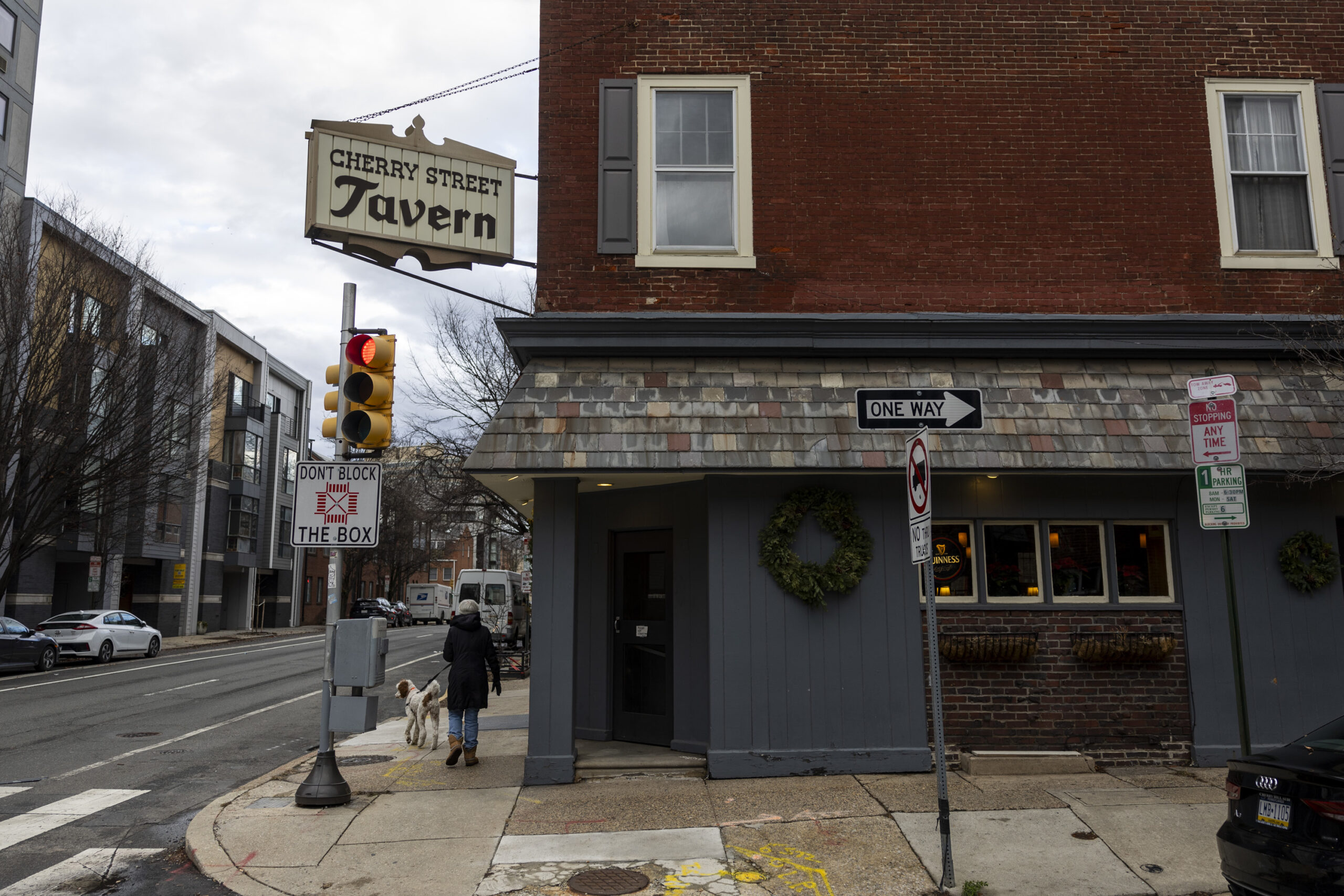
    The outside of Cherry Street Tavern in Philadelphia on Friday, Dec. 19, 2025.

    After 50 years devoted to a tavern that always felt more like a labor of love — and bearing witness to the change all around it — Bill and Bob Loughery have decided it’s time.

    “Time to take off the apron,” said Bill Loughery, taking a quick break on a recent afternoon to sit in the soft sunlight slipping through Cherry Street’s bottle-height barroom windows. “It’s just time.”

    History, for sale

    It’s been time for a few years, but the Lougherys — wanting to preserve the understated elegance and identity of the shot-and-a-beer saloon, especially after revitalizing the bar once again as a popular meeting spot for locals after COVID-era restrictions dried up lunchtime and commuter crowds — have never officially listed the tavern and its upstairs apartment for sale. They began whispering to friends and regulars about selling around 2024.

    “People were always asking us to let them know when we were ready,” Bill Loughery said.

    After months of talks with prospective purchasers, the Lougherys are now in talks with a buyer who they say is interested in expanding the bar’s kitchen and making other renovations.

    The Lougherys’ efforts to find a buyer committed to keeping the spirit of the bar alive have eased the worries of regulars old and new, and loyal staff.

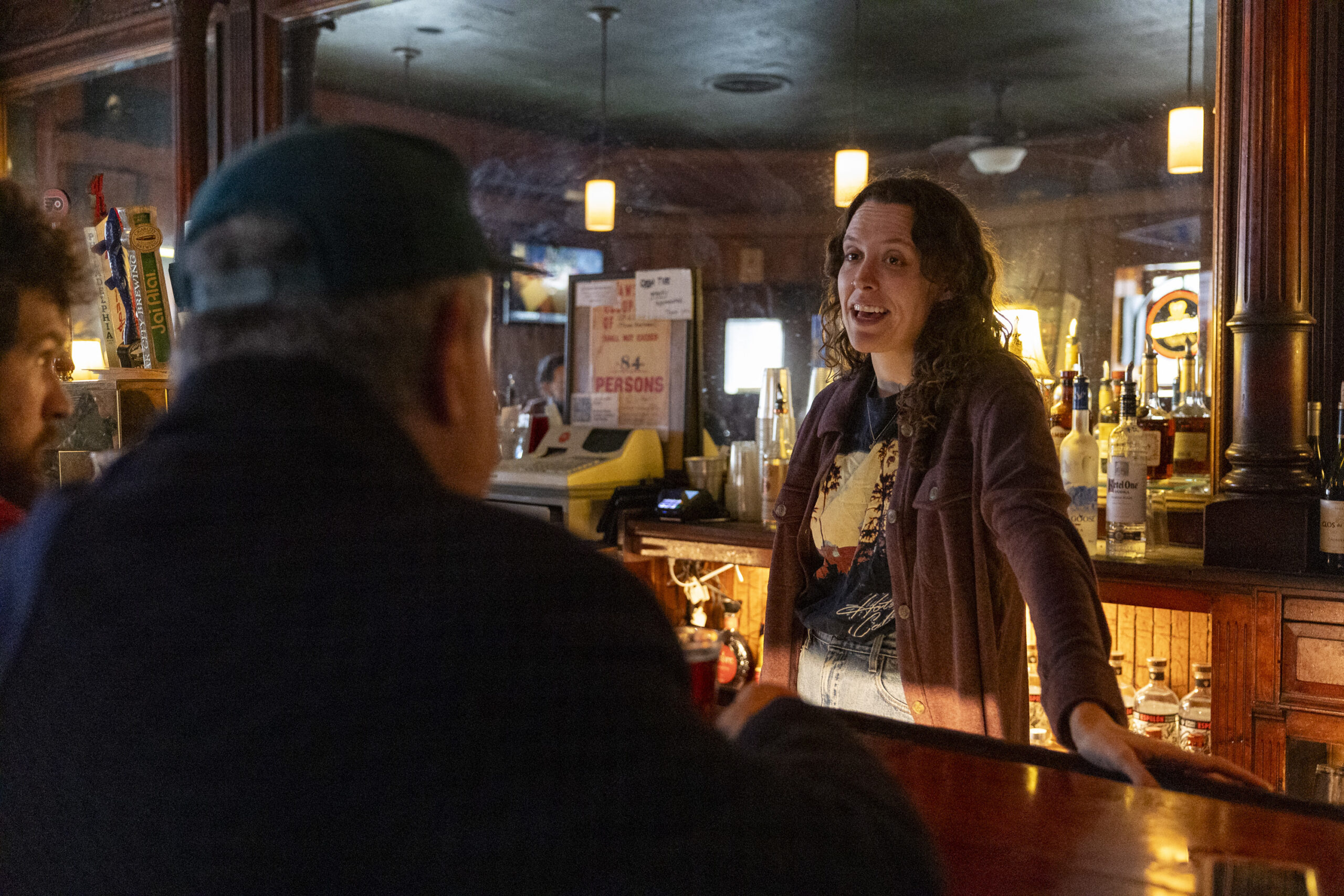
    Kira Baldwin, 27, chats and makes drinks for folks at Cherry Street Tavern.

    “There’s just something sacred about the place,” said Kira Baldwin, 27, of Ardmore, who tends bar at Cherry Street Tavern, along with her brother, Jack, 24, and her mother, Juanita Santoni, with whom she sometimes shares a shift.

    For Baldwin, it’s personal. As a child, she cherished special occasions when her mother allowed her to visit the bar. (Santoni has worked nights and weekends at Cherry Street Tavern since 1991, when she was a part-time child life therapist at CHOP.) On those nights, Baldwin would do her homework in the quiet of the ancient phone booth and swing from the brass dining rails. At the annual Christmas parties, when Bill Loughery hired Moore College of Art & Design students to paint the windows for the holidays, she and her brother received gifts from a regular dressed up as Santa.

    Now, she watches new regulars fall in love with a bar she’s been coming to since “the womb.”

    “People treat it with reverence,” she said. “When they come in, they understand it completely. They have a deep and profound respect for the place.”

    Prohibition, the food, and the regulars

    Little is known about Cherry Street’s earliest days, but by Prohibition, it was known as Dever’s, operated by John “Jack” Dever, a dapper barman who lived above the tavern with his wife and two children, and whose father, Joseph, had run it before him. (Like Flannery and the Lougherys after him, Dever happened to be a La Salle High alum.)

    The barbershop speakeasy had been Jack Dever’s idea, said his grandson, Michael Dever.

    Before it became Cherry Street Tavern, John “Jack Dever (left) operated the tavern for years, living upstairs with his family, and eventually dying behind the bar.

    “The story always went that, when Prohibition came about, he closed the front door and opened the back door,” said Dever. “It became dangerous. The story was that you were either buying from the mob or dirty politicians.”

    Dever reopened the bar after Prohibition, sponsoring a bar baseball team. But dangers persisted. In 1940, two robbers broke into the bar while Dever and his family slept upstairs, briefly making off with 25 quarts of high-quality whiskey before their bulging bag of booze crashed to the pavement. Nearby patrolmen ran to the scene, “their noses guiding them unerringly as the liquor spilled into the gutter,” The Inquirer reported.

    Dever, who soon moved his family out of the upstairs apartment, ran Cherry Street until 1967, when he died of a heart attack behind the bar, according to granddaughter Maureen Ginley. At first, customers assumed her grandfather had just stepped down a hatch behind the bar, leading to a liquor cellar.

    “But he didn’t,” she said.

    After keeping the bar afloat for five years, Dever’s widow, Mary, sold the bar to Flannery. A local high school football legend who coached at La Salle for nearly 30 years, Flannery operated a no-frills, old-school establishment, refusing to allow a jukebox. Under Tex, the tavern’s old-world grace peeked out from behind a dusty veneer and faded Venetian blinds.

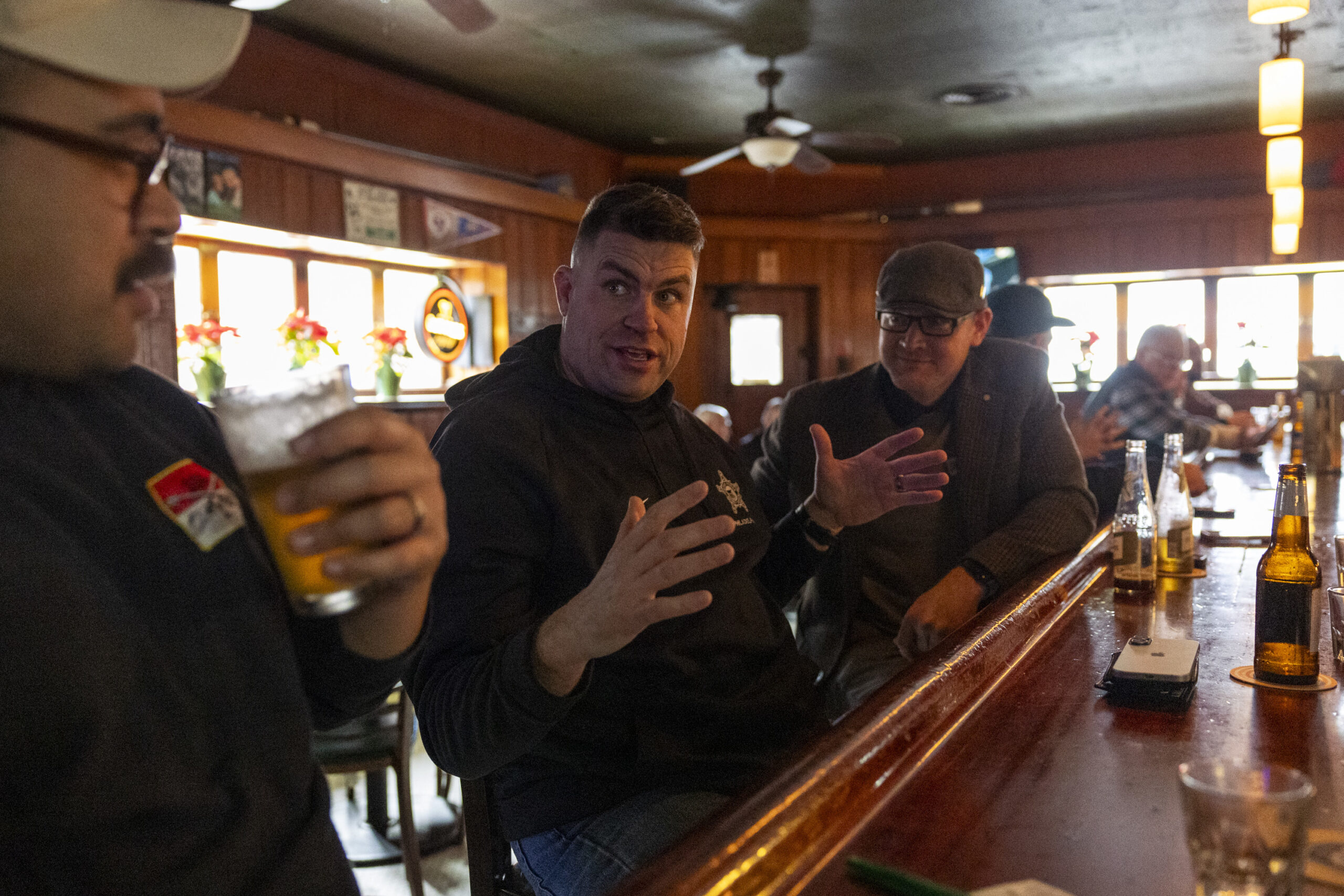
    Kevin Sanders, of Quakertown, Pa., first time at the bar, sharing a story with friends as they enjoy drinks at Cherry Street Tavern in Philadelphia on Friday, Dec. 19, 2025.

    A 1981 Daily News article described the bar “as cave-dark, cave-cool, cave-quiet.”

    “Let’s face it, a guy comes in here, he wants to drink,” the article quoted Flannery.

    For a while, it was just the old-timers, said Bill Loughery.

    “We had the senior citizens from the neighborhood who started drinking right in the morning and went home before lunchtime,” he remembered.

    One Friday during Lent in 1977, Flannery summoned the brothers to a sit-down fish cake dinner and laid it out straight. “He said, ‘Listen, the future of the bar business isn’t 25-cent beers,’” remembers Bill Loughery. “‘You got to come up with a food angle.’”

    With the help of a regular, Bill and Bob Loughery introduced the tavern’s signature hot roast beef and roast pork sandwiches, chili, and daily soups.

    A roast beef sandwich at Cherry Street Tavern in Philadelphia on Friday, Dec. 19, 2025.

    By the 1980s, when condos and townhomes and office buildings and new life began to fill the neighborhood, the Lougherys were ready.

    Soon, the expanded back room was packed at lunch and the stools were filled with regulars who Bill Loughery blessed with nicknames: Happy Bob and Sleeping Charlie, Big Tom and Buddy Bud, Catfish and Canadian John (who eventually became American John). Joe Watson — a beloved old-timer who lived upstairs, and became a “patron saint” to the bar, said Bill Loughery — took a busload of regulars to a Phillies game for his 89th birthday. There were St. Patrick’s parties and fishing trips and softball teams and marriages and births and deaths. It was their “Cheers,” one regular said.

    “What’s Cheers?” Bill Loughery would ask, unironically.

    It was Bill and Bob who brought everyone back, said Frank Oldt, 81, who has been a Cherry Street regular since the days of Tex.

    “They just made it such an easy place to be,” he said.

    It’s bittersweet, said Santoni, who remembers how the bar regulars threw her not one — but two — baby showers when she was pregnant with Kira. She has been trying to get Bill and Bob Loughery to slow down for years. But she understands the special pull of the place.

    “It gets in your bones,” she said.

    Last call

    It all took a toll on Bill Loughery’s bones, who still works 12-hour shifts, splitting days and nights with his brother. Bill’s back is hunched from those endless hours in the kitchen. He doesn’t want to become the second person to die behind the bar at Cherry Street. Sitting down, he flipped through photo albums from the bar’s heyday. They’ll be the last things he takes with him when he leaves, he said.

    “It’s like the Old and New Testament,” Bill Loughery said, opening a near-to-bursting photo album.

    For a few minutes, he allowed himself to recall the faces and the nicknames and the good times.

    “So many nice people,” he said.

    Then, he closed the book and went back to work.

  • Tyrese Maxey eager to ‘try again’ after first All-Star three-point contest

    Tyrese Maxey eager to ‘try again’ after first All-Star three-point contest

    INGLEWOOD, Calif. — Minutes after he left the Intuit Dome court Saturday afternoon, Tyrese Maxey rattled off everything he would do differently in the All-Star three-point contest.

    The 76ers’ guard would start on the opposite corner, so he could take his “money ball” rack balls from his right side. He also would squeeze in at least one practice run, which he could not manage this past week between the Sixers’ return home from a five-game Western Conference road trip and another cross-country flight to Los Angeles.

    Maxey’s 17 points were not enough to move on to the final, which the Portland Trail Blazers’ Damian Lillard eventually won with a score of 29.

    He joked that the fact that he “didn’t even get 20” points will haunt him for the next year. Still, competing in All-Star Saturday’s showcase event was gratifying for Maxey, who has transformed from a player whose three-point shooting was knocked coming out of college to one of the NBA’s most lethal from beyond the arc.

    “I just wanted to see what it was going to be like my first time,” Maxey said. “I’ll definitely come back and try to win it, for sure.”

    Maxey entered the All-Star break shooting 37.9% on 8.8 three-point attempts per game, which is tied for seventh in the NBA. He is proud of the variety of ways he now can get to that shot, by creating off the dribble or shaking free to catch and fire.

    Yet Maxey was not always this feared from deep range. He shot 29.2% from three during his one season at Kentucky, leading to numerous questions from NBA front offices during the pre-draft process. Maxey’s father, Tyrone, recently recalled to The Inquirer a workout when Tyrese made 33 consecutive three-pointers and the unnamed NBA team “still passed on him.”

    “Most [general managers] were like, ‘Man, you play the game with a joy, but you can’t shoot,’” Maxey said. “I’m like, ‘I can shoot.’”

    Tyrese Maxey shoots during the three-point contest at the NBA All-Star Weekend festivities on Saturday.

    The Sixers’ front office, meanwhile, believed in Maxey’s form and “secondary indicators” of NBA shooting success, president of basketball operations Daryl Morey said in 2021. Former coach Doc Rivers often shared publicly that he was regularly bamboozled that Maxey was accurate inside the Sixers’ practice facility, but made only 30.1% of his 1.7 attempts as a rookie.

    However, confidence instilled by the coaching staff encouraged Maxey to launch more. The next two seasons, his percentages catapulted above 40%, while increasing that volume, as his overall offensive responsibilities blossomed.

    His percentage dipped to 33.7% during the Sixers’ disastrous 2024-25, primarily due to an injured little finger that prematurely ended his season. His efficiency is back to normal this season, with the freedom from Sixers coach Nick Nurse to take even deeper shots — particularly while in transition.

    This season, Tyrese Maxey has been unafraid to let loose on his three-ball.

    When asked to partake in the All-Star three-point competition as a first-time All-Star two years ago, Maxey turned it down because he was “nervous” and wanted to soak in the full weekend of festivities. This year, it was a no-brainer.

    He said he felt some jitters while being introduced at center court, then anxious while waiting for the five competitors’ trip around the arc before his.

    “I wanted to shoot, man,” Maxey said, before a performance he described as “a little cold.”

    Once eliminated, Maxey watched as Lillard and the Phoenix Suns’ Devin Booker put on a show in a scorching 29-27 final. An NBC television camera caught Maxey, hands on his head and mouth agape, as Booker’s potential tying final corner shot bounced off the rim.

    Then Maxey praised Lillard, whom he noticed shooting deep three-pointers while recovering from a torn Achilles tendon when the Sixers visited Portland last week.

    “That was amazing,” Maxey said. “ … He’s a legend in our league. Still hooping. Still playing the right way. Love seeing him out there.”

    Plenty still awaits this weekend for Maxey, who will start for the U.S. “Stars” team in Sunday’s All-Star game (5 p.m., NBC10, Peacock).

    But he is already eager for the 2027 three-point contest.

    “That was really fun,” he said. “I can’t wait to try that again.”

  • Students protest U.S. Customs and Border Protection participation at campus career fairs

    Students protest U.S. Customs and Border Protection participation at campus career fairs

    Amid President Donald Trump’s crackdown on immigration and deployment of federal officers to cities across the country, students at Philadelphia-area colleges are protesting against the appearance of U.S. Customs and Border Protection at campus career fairs.

    At least four local universities — Thomas Jefferson, Villanova, Temple, and Rowan — have faced opposition to allowing recruitment in recent months.

    A petition circulated at Jefferson last week sought to keep CBP from appearing at a campus career event. CBP and ICE — both agencies that enforce immigration laws under the Department of Homeland Security — have been at the center of a national debate after two Minneapolis residents were killed by federal immigration enforcement agents in shootings now under investigation.

    “Due to the harm CBP has caused to communities across the nation, it is abhorrent for TJU to accept CBP at their institution,” said an occupational therapy student who signed the petition and asked that her name be withheld, fearing retribution. “I don’t think any institution should be encouraging students to get involved in these kinds of agencies, given the current climate.”

    But the petition has since come down, the student said, and CBP is not on the list of employers due to appear at the event, called the 2026 Career Day and Design Expo, on Thursday at the East Falls campus. Jefferson has not acknowledged that CBP was on the list initially or responded to questions on whether it was removed.

    CBP, which has offices in Philadelphia, has appeared at campus career events in the area in the past.

    An email seeking comment from CBP’s media office was not returned.

    At Rowan University in New Jersey earlier this month, the participation of CBP’s Trade Regulatory Audit Philadelphia Field Office in a career fair drew some student protest. Members of a student activist group distributed fliers speaking out against CBP during the fair, according to Rowan’s student newspaper, the Whit, and campus police and administration officials came to the scene.

    The agency also reserved a table and came to a fall event at Rowan to share information about accounting-related auditing internships, said Rowan spokesperson Joe Cardona, and has done so at the public university for the last decade.

    Rowan’s Rohrer College of Business Center for Professional Development hosts more than 200 employers each year, including local, state, and federal agencies as well as private-sector groups, he said.

    “The presence of any employer on campus does not constitute institutional endorsement of that organization’s policies or actions,” Cardona said. “Rather, it reflects our commitment to supporting student career exploration while upholding principles of open access and free expression.”

    At Villanova, CBP pulled out of a career fair it had planned to attend earlier this month, according to the Villanovan, the student newspaper. The withdrawal followed criticism on social media about the organization’s planned appearance.

    The organizer of an Instagram account that opposed the agency’s participation said they wished that Villanova had made the decision to disallow the group rather than the group withdrawing, according to the student newspaper.

    “I think a lot of students will feel a lot safer and more comfortable attending this Career Fair,” the organizer said. “But it doesn’t take away the anger that this was ever something that was gonna happen.”

    Villanova said in a statement that CBP‘s Office of Trade had participated in prior career events and that employers with prior participation were contacted “through standard outreach” about this year’s event.

    Temple’s law school last semester had planned to host a “Coffee and Careers” networking event with a DHS and Immigration and Customs Enforcement lawyer but later canceled it, according to the Temple News, the student newspaper. The event was replaced with a talk on public interest law by Philadelphia City Councilmember Rue Landau.

    DHS “chose to engage directly with students interested in DHS opportunities rather than participate in a scheduled career event,” Temple spokesperson Steve Orbanek said.

    He also noted that “career fairs are university-sponsored events, and actions that disrupt these events may violate university policy and established on-campus demonstration guidelines.”

  • U.S. Army Corps official, congressman say help is on the way for N.J. beach erosion

    U.S. Army Corps official, congressman say help is on the way for N.J. beach erosion

    The federal official in charge of the U.S. Army Corps of Engineers visited Ocean City and other Jersey Shore communities Friday, along with U.S. Rep. Jeff Van Drew, pledging that beach replenishment help is on its way.

    Adam Telle, assistant secretary of the Army for civil works, came to New Jersey for a tour hosted by Van Drew. The Army Corps manages beach projects and puts up the majority of money. States and municipalities contribute the rest.

    “There’s emergency funding that’s available,” Telle said from Fifth Street on Ocean City’s boardwalk, adding that some beaches would see repairs by summer.

    Telle said the money does not hinge on legislation and has President Donald Trump’s support.

    The Army Corps will evaluate which beaches are in the most severe condition, he said, including Ocean City, which is among the top of the list. Telle and Van Drew did not cite a specific amount of money but indicated millions could be available.

    Telle, Van Drew, and other officials visited Strathmere, Avalon, and North Wildwood, which have all been heavily impacted by storm erosion over the last year. The short-term goal this year would be to take spoils from Army Corps projects and spread that on beaches.

    They said they plan to draw on a mix of funding, including money still remaining from Hurricane Sandy in 2012, other supplemental funds, and earmarks — language in appropriations bills to direct federal funds to state and local projects.

    Van Drew, a Republican, represents multiple Shore towns on the southern tip of New Jersey.

    Friday’s tour came on the heels of zero dollars earmarked for beach replenishment in 2025 — the first time that had happened since 1996. Up to $200 million annually has typically been awarded for beach erosion control projects.

    Van Drew also introduced a bill last week to establish a new source of continuous beach replenishment money through the Coastal Trust Fund Act.

    The bill would pay for ongoing coastal storm risk management by the Army Corps. U.S. Rep. Laura Gillen, a Democrat from New York, is a cosponsor.

    According to Van Drew, the legislation would use revenue from offshore energy leases to fund $1 billion a year into Army Corps of Engineers coastal storm management projects.

    He said his bill, if approved, would create a permanent source of funding so that it would not depend on yearly appropriations from Congress.

    “We need to get a permanent system in place so we aren’t riding this roller coaster,” Van Drew said.

    However, he acknowledged that getting any bill approved in Congress right now is difficult.

    “It’s going to be a labor of love,” Van Drew said, adding that he is gathering “support from all around the country.”

    There is no date for a vote on the bill.

    U.S. Rep. Jeff Van Drew (center), Assistant Secretary of the Army for Civil Works Adam Telle (right) and Upper Township Mayor Curtis Corson Jr. discuss shore erosion and beach replenishment in Strathmere.

    A measure has been introduced by U.S. Rep. Chuck Fleischmann, a Republican from Tennessee, for $23 million to fund coastal replenishment projects this year. That would be supplemented by a Senate bill introduced by U.S. Sen. John Kennedy, a Republican from Louisiana, that would allocate $62.2 million. However, neither bill is scheduled for a vote.

    In 2025, multiple New Jersey Shore towns found themselves in a crisis over erosion as Congress and Trump pushed for a huge reduction in the federal budget.

    No money was made available for crucial beach nourishment projects. The lack of funding became a political issue in New Jersey, which depends heavily on its beaches for tourism revenue.

    For decades, beach projects have been a staple of coastal management in the United States. In 2025, projects were paused in New Jersey, Maryland, and Delaware.

    Projects set for Cape May, Stone Harbor, Avalon, Sea Isle, Strathmere, Ocean City, and Long Beach Island were stalled because of the lack of funding. Georgia and Florida also were affected.

    In October, Ocean City declared a local emergency over the severe erosion exacerbated by storms like Hurricane Erin and a potent nor’easter in October. The city was left grappling with sand cliffs upward of five feet high after the storms scoured its beaches.

    Mayor Jay Gillian and others pushed for urgent state and federal intervention, citing the difficulty of managing large-scale beach replenishments and dune restoration with city resources alone.

    Gillian said Friday at the tour stop in Ocean City that he welcomed any help from the Army Corps and Van Drew.

    “They’re working for a solution,” Gillian said of Telle and Van Drew. “The permanent funding, that’s huge because it stops the games, and it stops the politics.”

    Van Drew represents the largely conservative 2nd District, which spans mostly rural and Shore communities in South Jersey, including all of Atlantic, Cape May, Cumberland, and Salem Counties, plus parts of Gloucester and Ocean Counties. He remains optimistic for funding.

  • Meet the Philly native and St. Joe’s Prep grad running Philly’s largest outdoor shopping center operator

    Meet the Philly native and St. Joe’s Prep grad running Philly’s largest outdoor shopping center operator

    Brian Finnegan, Brixmor Property Group’s new CEO, is a true Philadelphian.

    He was born in Southwest Philly, spent his formative years in Roxborough, and graduated from St. Joe’s Prep. He met his wife, Katie, at a Halloween party in his mother’s Packer Park backyard in 2009, while just down the road the Phillies played the Yankees in the World Series and Pearl Jam closed the Spectrum.

    Finnegan, now 45, can’t give up his Eagles season tickets, despite living outside New York and traveling the world as a real estate executive, When he can’t make games, he can usually count on his 73-year-old mother, Geraldine, to take the seats.

    Finnegan said he got his work ethic from his mom, who’s worked for the legal services company MCS Group for nearly 50 years, and his late father, Thomas, a 30-year employee and manager of city parks. He also points to his early jobs, which included a summer gig as “head grill guy” at Circle Pizza in Avalon.

    These experiences paid off: Last month, Finnegan was named Brixmor’s CEO, a role he’d previously held on an interim basis.

    Brian Finnegan, who was named CEO of Brixmor Property Group last month, said he’s especially proud of the company’s commitment to its more than 20 shopping centers in and around Philadelphia, where he grew up.

    Finnegan lives in Rye, N.Y., with Katie and their three young daughters, Magnolia, Daisy, and Poppy.

    In a recent interview, Finnegan talked about Brixmor’s dedication to its more than 20 Philly-area shopping centers, including Roosevelt Mall, Pilgrim Gardens, and the Village at Newtown.

    The company has invested about $180 million in its Philly portfolio over the past nine years, Finnegan said, and calls itself the largest operator of open-air shopping centers in the region.

    The following interview has been edited and condensed for clarity.

    How would you say Brixmor is doing overall?

    The company is in the best position it’s ever been. We’re signing rents at the highest level that we ever have. We have occupancy levels that are close to the highest we’ve had.

    Consumers today are demanding much more of the suburbs in terms of the types of services that they’re looking for, the types of restaurant options that they’re looking for. And that’s allowed us to really improve the merchandising mix at our shopping centers with better food and beverage options and better service options in terms of health and wellness.

    Why do you think Brixmor shopping centers are thriving while many brick-and-mortar stores falter?

    Grocers, especially [tenants like Sprouts, Whole Foods, and McCaffrey’s], have really invested in their stores, and they’re drawing a lot of traffic.

    Sprouts is among the retailers located at Roosevelt Mall in Northeast Philadelphia, one of Brixmor Property Group’s complexes in the region.

    As it relates to fitness and wellness, and higher quality food and beverage options, I think consumers today care more about what they’re putting in their bodies and how they look than they ever have.

    Across the income spectrum, consumers are looking for value. And as department stores have closed, off-price operators [such as Burlington and Five Below] have taken a significant amount of share.

    You have to create an environment at specific shopping centers where if one tenant draws traffic, another tenant can complement them.

    It really matters who your neighbor is, so if you’re able to put a strong merchandising mix together, which we’ve been able to do at our centers in Philadelphia, you’re really going to see traffic.

    The Ross Dress for Less at Roosevelt Mall is one of several off-price retailers that have found success in Brixmor Property Group centers, according to CEO Brian Finnegan.
    What would you like to accomplish as CEO?

    We’d love to find some new opportunities to grow our footprint in Philadelphia.

    The deals that we’ve done in Philadelphia, many of them are [with retailers new to Brixmor’s national portfolio], like with Lululemon, like with Free People, like with Warby Parker, like with Pottery Barn and Williams-Sonoma.

    We think about how our centers connect with the communities that we’re in. We’re part of those communities. We’re actually landlords to Philadelphia institutions like Chickie’s & Pete’s and P.J. Whelihan’s.

    The more that we can tie our assets with retailers that are relevant to those communities, the better.

    What makes you optimistic about shopping centers amid all the e-commerce competition?

    What [the pandemic] showed was that people like connectivity. They don’t like to just have things delivered to their door. They want to go out and experience things. They want to touch and feel things.

    Our traffic since the pandemic across the entire portfolio is up 7%.

    Barnes & Noble is shown at Barn Plaza shopping center in Doylestown, which is one of more than 20 complexes in the region owned by Brixmor Property Group.

    If you talk to a lot of these major retailers, what they’ll say is the store is the center of everything that they do. They’re utilizing that store to be able to connect with the consumer in store, at delivery, as part of pickup.

    I’m pretty bullish. There are a lot of retailers that continue to thrive despite the fact that consumers have options to be able to get something online if they wanted to.

  • Letters to the Editor | Feb. 15, 2026

    Letters to the Editor | Feb. 15, 2026

    Seditious behavior?

    Donald Trump has accused six Democratic officials of sedition for saying U.S. service members should refuse to obey illegal orders. He ordered his prosecutors to pursue criminal charges against them, but the grand jury to which Trump’s officials presented the claim thankfully refused to return an indictment. All of this begs the obvious question that no one has posed to Trump: Does he believe members of the U.S. military should carry out orders that are patently illegal? There are legal safeguards in place to protect members of the military who refuse to carry out such orders. How does Trump circumvent them? The Nuremberg trials established as a matter of international law that “I was just following orders” is not a legally valid defense. Why is no one holding Trump’s feet to this fire?

    Ben Zuckerman, Philadelphia

    Lead with love

    The Bible, Torah, Quran, and other sacred texts all call us to care for our neighbor, yet this founding tenet of our various and mutual faiths has been twisted throughout our history as humans. You, as I, may have once considered that America could be different. Though we have gone terribly astray within our 250 years from the intentions of our Creator, we have also struggled to become a people more worthy of our aspirations. Yet, within this one year, we witness a vicious tearing asunder of the justice and fellowship we have striven to achieve.

    This is the very moment we must rededicate ourselves to one another. To seek the truths of our lives, knowing we are all connected. That we need one another. Let us shine the light of our lives in all the dark places we have allowed to grow within and around us. Taking our courage in new and daring directions, not least of which is the voting booth.

    Marilyn Frazier, Ambler

    The apprentice

    Our company has made a terrible error. We have given a uniquely powerful position to an employee who has proven to be untrustworthy, even dangerous. He has intentionally ignored or altered fundamental policies of our organization. He actively avoids accountability and changes the rules to his benefit. His words and actions sow division among us and soil our reputation here and abroad. He has shared proprietary information with our competitors. He expresses bigotry against people of color, women, and minority groups. His reports are replete with lies and exaggerations to the point where he cannot be trusted. He has enriched himself, his family, friends, and business associates at our expense. Many of us tolerated his behavior, thinking he could change, but ignoring it has only emboldened him and weakened us. To placate him is to destroy the 250-year-old organization we have worked so hard to build and sustain. Our situation has become intolerable. It is time to fire him, now, before it is too late.

    Carol A. Stein, Dresher

    Join the conversation: Send letters to letters@inquirer.com. Limit length to 150 words and include home address and day and evening phone number. Letters run in The Inquirer six days a week on the editorial pages and online.

  • Horoscopes: Sunday, Feb. 15, 2026

    ARIES (March 21-April 19). The way you live your day-to-day is admirable. How about a little credit? Negativity bias makes it easy to note what you did wrong, but why? Thousands of things are going right now because of you.

    TAURUS (April 20-May 20). Love sends you on a mission. Your heart asks, your mind finds the way. Of course, there is no journey without things like feet, wheels and the like. Money helps, too. Love communicates itself practically.

    GEMINI (May 21-June 21). Instead of talking yourself out of things, you just choose. You step up, and the doubts quiet down. People notice the confidence and assume you know what you’re doing. You can safely assume it, too.

    CANCER (June 22-July 22). Something’s been bugging you, and you’ll finally figure out what. It boils down to a bad transaction. You didn’t know the value of what you had, and you gave too much away. You’ll get a do-over and get it right.

    LEO (July 23-Aug. 22). It couldn’t work as things were. Time has passed, so now the question is simple: What has changed, and is it enough to change the outcome? Because as alluring as nostalgia may be, it’s more interesting to have an emotional life that progresses.

    VIRGO (Aug. 23-Sept. 22). The ice cream parlor of life has an abundance of flavors, but you keep coming back to your favorite scoops time and again because it’s so nice to have predictable, dependable sweetness. Taste is self-knowledge.

    LIBRA (Sept. 23-Oct. 23). Relationships are central to your mood. When your relationships are in good working order, you feel grounded. Since sweet exchanges lift you and friction brings the vibes down, you’re sure to initiate the sweetness and stay happy.

    SCORPIO (Oct. 24-Nov. 21). You won’t have to fight for anything. What’s yours will be freely given or returned to you. Argument and persuasion are unnecessary uses of your energy today as well. You’ll simply stand in your own truth, and everything will work out.

    SAGITTARIUS (Nov. 22-Dec. 21). You have the gift of gab today, which is actually a gift that has more to do with listening well and choosing topics people enjoy than it is a talent for talking. Conversation will challenge your assumptions and expand your sense of what could be.

    CAPRICORN (Dec. 22-Jan. 19). Instead of defaulting to the usual tokens of appreciation, consider this: Taking the time to understand how someone thinks can mean more than anything you could buy. It’s a deeper and rarer kind of care.

    AQUARIUS (Jan. 20-Feb. 18). You’ve got a burning drive, and you make time for your passions. Developing your talent teaches you that your abilities are more substantial than you thought. You’re rising to the next league.

    PISCES (Feb. 19-March 20). Letting go of a problem is not the same as solving it, but the effect on your life will be the same. Even if you just leave the problem for another day so you can feel unfettered today, you’ll take full advantage of the subsequent levity. Viva compartmentalization!

    TODAY’S BIRTHDAY (Feb. 15). Welcome to your Year of Vivid Horizons — not because they are wide open and cloudless but because the clouds reflect vibrant colors and a life that moves into shapes unexpected and lovely. Travel, study and serendipitous encounters keep this vision a bit surreal and ever joyful. More highlights: Romantic sparks ignite, you’re recognized for your contributions, and you receive the money you need to rocket your dream. Gemini and Virgo adore you. Your lucky numbers are: 5, 21, 36, 14 and 9.

  • Dear Abby | Girlfriend taking new romance as slow as possible

    DEAR ABBY: I have been dating “Rita” for four months. We peck on the lips, hug and hold hands, but we have had only one real kiss so far. Rita was first married for 22 years to an emotionally abusive man and then remarried to a manipulative one. She said we were going too fast and she wanted to slow down. I understood and have exerted no pressure on her.

    Rita has canceled dates for various reasons and gone silent for a day here and there. She says she’s not talking to anyone else, and neither am I. I have told her she is worth the wait. I have fallen hard for her and have serious intentions about her.

    Rita says she has strong feelings for me and that I treat her better than any man she has ever been involved with, but she doesn’t know how to handle the feelings. How long should I give her to figure out what she wants this relationship to be?

    I’m not worried about sex or anything like that, but four months without even calling us “dating” or “girlfriend and boyfriend” has me worried that I am, for a lack of a better description, wasting my time with her. What would you advise me to do?

    — TAKING IT SLOW IN VIRGINIA

    DEAR TAKING IT SLOW: Continue allowing your relationship with Rita to develop slowly. The woman has had two unsuccessful marriages, so it’s no wonder she’s slow to commit. If, after a year (eight months from now), Rita still feels uncomfortable calling you “boyfriend” or “companion,” revisit the conversation and decide then if you have invested enough time.

    ** ** **

    DEAR ABBY: After reading so many horrible letters sent to you from people about their mothers-in-law, I feel compelled to write to you about mine. I met her 43 years ago when I was dating her oldest son (now my husband). From the moment we met, she treated me with caring, acceptance and love. She and my father-in-law raised five amazing children, and they treated their children’s spouses as if we were their own. She devoted her entire life to caring for and nurturing her husband, children, grandchildren and great-grandchildren.

    Unfortunately, we just lost this beautiful woman at the age of 89 to a long and difficult battle with Parkinson’s and dementia. We watched her “sparkle” slowly fade away, but we will carry her amazing legacy with us always. I hope I can be half the MIL to my children’s spouses that she was to me.

    I also hope that all those who aren’t as lucky as I was can find some common ground with their mothers-in-law — especially if there are children involved. I LOVE YOU, MOM!

    — FORTUNATE IN NEW YORK

    DEAR FORTUNATE: Thank you for sharing this beautiful tribute to a woman who made such a positive difference in the lives of those she touched. Not only were you fortunate to be a member of such a warm and loving family, but she was also lucky to have a daughter-in-law like you.

  • Sloppy, slushy snow could hit Philly Sunday, but probably won’t stick around too long

    Sloppy, slushy snow could hit Philly Sunday, but probably won’t stick around too long

    Philadelphia could be hit with some sloppy, slushy snow Sunday.

    After a banner day Saturday, with a downright balmy high of 47 degrees in Philly, forecasters now expect a coastal storm to spread precipitation through the region late Sunday into Monday,

    “It’s one of those situations where if we have just enough cold air and just enough intensity, we could get several inches,” said Ray Martin, a meteorologist in the National Weather Service’s Mount Holly office. “But if the temperature is just a little bit warmer — even just a degree —it could end up being a rain-snow mix where there’s no accumulation. It’s a really borderline situation.”

    Currently, forecasters are calling for an inch of snow in Philadelphia, Martin said.

    “But I wouldn’t be shocked if we got unlucky and maybe got two to three inches of sloppy wet snow,” he said. “I also wouldn’t be shocked if we ended up with just mainly rain. There’s still some uncertainty with this forecast.”

    Still, he said, more snow would not necessarily represent a major blow to Philly’s efforts to dig out from its most stubborn snowpack in 65 years, courtesy of January’s blizzard and recent polar temperatures. With temps expected to climb back into the low 40s Monday, any accumulation will quickly melt away, Martin said.

    “Everything will look less brown,” he said. “But it’s not going to be 10 tons of snow or anything like that.”

    The changing forecast comes 24 hours after earlier weather models showed higher potential snow totals, Martin said.

    “There was some guidance suggesting a significantly higher snowfall of up to six inches of heavy wet snow,” he said. “But it’s way backed off from that.”