Blog

  • Health department warns residents in Grays Ferry to avoid smoky air from a trash fire

    Health department warns residents in Grays Ferry to avoid smoky air from a trash fire

    The Philadelphia Health Department on Thursday evening issued a warning for residents in the city’s Grays Ferry section near a trash fire to “avoid unnecessary exposure to smoke.”

    The department said it had dispatched inspectors to collect air samples. “At this time, no specific hazardous substances have been identified, and the Department is taking this action out of an abundance of caution,” the department said.

    The air, however, “may be potentially hazardous for sensitive groups, including children, elderly people, people who are pregnant, and those with respiratory diseases or heart conditions,” the department said.

    The fire was reported around 5:30 p.m. on Grays Ferry Avenue near South 34th Street at the Philadelphia Transfer Station, which is operated by Waste Management. The company could not be reached for comment.

    The fire appeared to be contained to a large open building and no injuries were reported. An aerial image from NBC10 showed firefighters spraying a stream of water on a smoldering mound of trash.

    The health department asked residents to avoid going outdoors “as much as possible.” If they do go outside, avoid excessive physical activity and wear a mask, if available.

    Residents should close all window and doors to minimize air pollution into their homes, the department said.

    “The Health Department and the Office of Emergency Management will continue to monitor the air quality and provide updates as they become available,” the department said.

  • RFK Jr. promised to restore trust in U.S. health agencies. One year later, it’s eroding

    RFK Jr. promised to restore trust in U.S. health agencies. One year later, it’s eroding

    NEW YORK — Since Robert F. Kennedy Jr. was sworn in to lead the U.S. Department of Health and Human Services one year ago, he has defended his upending of federal health policy by saying the changes will restore trust in America’s public health agencies.

    But as the longtime leader of the anti-vaccine movement scales back immunization guidance and dismisses scientists and advisers, he’s clashed with top medical groups who say he’s not following the science.

    The confrontation is deepening confusion among the public that had already surged during the COVID-19 pandemic. Surveys show trust in the agencies Kennedy leads is falling, rather than rising, as the country’s health landscape undergoes dramatic change.

    Kennedy says he’s aiming to boost transparency to empower Americans to make their own health choices. Doctors counter that the false and unverified information he’s promoting is causing major, perhaps irreversible, damage — and that if enough people forgo vaccination, it will cause a surge of illness and death.

    There was a time when people trusted health agencies regardless of party and the government reported “the best of what science knows at this point,” said Kathleen Hall Jamieson, director of the Annenberg Public Policy Center at the University of Pennsylvania.

    “Now, you cannot confidently go to federal websites and know that,” she said.

    HHS spokesman Andrew Nixon argued that trust had suffered during the Biden administration. “Kennedy’s mandate is to restore transparency, scientific rigor, and accountability,” he said.

    Trust slid during the COVID pandemic

    Historically, federal scientific and public health agencies enjoyed strong ratings in public opinion polls. The U.S. Centers for Disease Control and Prevention for decades scored above many other government agencies in Gallup surveys that asked whether they were doing a “good” or “excellent” job.

    Two decades ago, more than 60% of Americans gave the CDC high marks, according to Gallup. But that number fell dramatically at the beginning of the COVID-19 pandemic, amid agency mistakes and guidance that some people didn’t like.

    In 2020, the percentage of Americans who believed the CDC was doing at least a “good” job fell to 40% and then leveled off for the next few years.

    Alix Ellis, a hairstylist and mom in Madison, Georgia, used to fully trust the CDC and other health agencies but lost that confidence during the COVID-19 pandemic. She said some of the guidance didn’t make sense. At her salon, for example, stylists could work directly on someone’s hair, but others in the room had to be several feet away.

    “I’m not saying that we were lied to, but that is when I was like, OK, ‘Why are we doing this?’” the 35-year-old said.

    Kennedy helped create the trust problem, doctor says

    Part of Kennedy’s pitch as health secretary has been restoring Americans’ trust in public health.

    “We’re going to tell them what we know, we’re going to tell them what we don’t know, and we’re going to tell them what we’re researching and how we’re doing it,” Kennedy told senators last September, while explaining how he intended to make the CDC’s information reliable. “It’s the only way to restore trust in the agency — by making it trustworthy.”

    Before entering politics, Kennedy was one of the loudest voices spreading false information about immunizations. Now, he’s trying to fix a trust problem he helped create, said Dr. Rob Davidson, a Michigan emergency physician.

    “You fed those people false information to create the distrust, and now you’re sweeping into power and you’re going to cure the distrust by promoting the same disinformation,” said Davidson, who runs a doctor group called the Committee to Protect Health Care. “It’s upside-down.”

    Kennedy has wielded the power of his office to take multiple steps that diverge from medical consensus.

    Last May, he announced COVID-19 vaccines were no longer recommended for healthy children and pregnant women, a move doctors called concerning and confusing.

    In November, he directed the CDC to abandon its position that vaccines do not cause autism, without supplying new evidence. And earlier this year, the CDC under his leadership reduced the number of vaccines recommended for every child, a decision medical groups said would undermine protections against a half-dozen diseases.

    Kennedy also has overhauled his department through canceled grants and mass layoffs. Last summer, Kennedy fired his new CDC chief after less than a month over disagreements about vaccine policy.

    Confusion emerges as trust erodes

    Some have applauded the moves. But surveys suggest many Americans have had the opposite reaction.

    “I have much less trust,” said Mark Rasmussen, a 67-year-old retiree walking into a mall in Danbury, Connecticut, one recent morning.

    Shocked by Kennedy’s dismantling of public health norms, professional medical groups have urged Americans not to follow new vaccine recommendations they say were adopted without public input or compelling evidence.

    The American Academy of Pediatrics, along with more than 200 public health and advocacy groups, urged Congress to investigate how and why Kennedy changed the vaccine schedule. The American Medical Association, working with the University of Minnesota’s Vaccine Integrity Project, this week announced a new evidence-based process for reviewing the safety of respiratory virus vaccines — something they say is needed since the government stopped doing that kind of systematic review.

    Many Democratic-led states also have rebuffed Kennedy’s policies, even creating their own alliances to counter his vaccine guidance.

    “We see burgeoning confusion about which sources to trust and about which sources are real. That makes decision-making on an individual level much harder,” said Dr. Megan Ranney, dean of the Yale School of Public Health.

    She said she worried the confusion was contributing to the recent rise in diseases like whooping cough and measles, which were once largely eliminated in the U.S.

    Surveys indicate growing public wavering over support for the measles-mumps-rubella vaccine. Although a large majority of people support giving it to children, the proportion declined significantly in just over nine months, according to Annenberg research. An August 2025 survey finds that 82% would be “very” or “somewhat” likely to recommend that an eligible child in their household get MMR vaccine, compared with 90% in November 2024.

    Surveys show trust is declining again

    New findings from the healthcare research nonprofit KFF in January show that 47% of Americans trust the CDC “a great deal” or “a fair amount” to provide reliable vaccine information, down about 10 percentage points since the beginning of Trump’s second term.

    Trust among Democrats dropped 9 percentage points since September, to 55%, the survey found. Trust among Republicans and independents hasn’t changed since September, but it has declined somewhat among both groups since the beginning of Trump’s term.

    Even among MAHA supporters, the poll shows, fewer than half say they trust agencies like the CDC and FDA “a lot” or “some” to make recommendations about childhood vaccine schedules.

    Gallup surveys also show a drop in Americans who believe the CDC is doing a “good job,” from 40% in 2024 to 31% last year.

    Those results came alongside a decline of trust across the government — not just agencies under Kennedy’s oversight. Yet concerns about Kennedy’s trustworthiness also have emerged in the past year. Documents recently obtained by The Associated Press and The Guardian, for example, undermine his statements that a 2019 trip to Samoa ahead of a measles outbreak had “nothing to do with vaccines.” The documents have prompted senators to assert that Kennedy lied to them over the visit.

    HHS officials say they are promoting independent decision-making by families while working to reduce preventable diseases. They say reducing routine vaccine recommendations was meant to ensure parents vaccinate children against the riskiest diseases.

    HHS did not make Kennedy available for an interview, despite repeated requests. But as he has pledged to restore trust, he’s also urged people to come to their own conclusions.

    “This idea that you should trust the experts,” Kennedy said recently on The Katie Miller Podcast, “a good mother doesn’t do that.”

  • Puerto Rico governor signs law to recognize fetus as human being as critics warn of consequences

    Puerto Rico governor signs law to recognize fetus as human being as critics warn of consequences

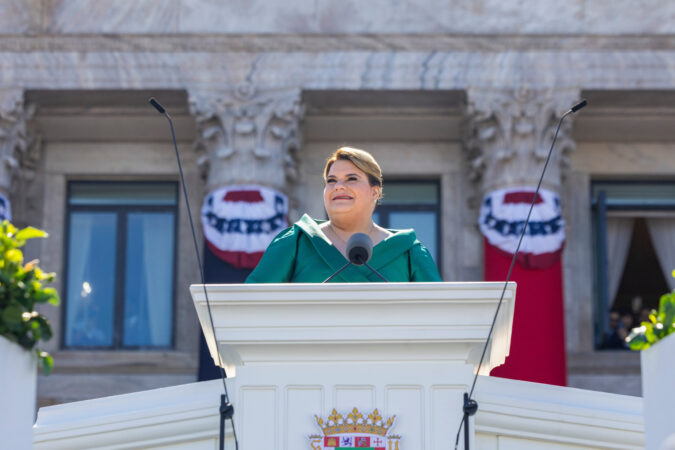
    SAN JUAN, Puerto Rico — Puerto Rico’s governor on Thursday signed a bill that amends a law to recognize a fetus as a human being, a move doctors and legal experts warn will have deep ramifications for the U.S. Caribbean territory.

    The amendment was approved without public hearings and amid concerns from opponents who warned it would unleash confusion and affect how doctors and pregnant or potentially pregnant women are treated.

    The new law will lead to “defensive health care,” warned Dr. Carlos Díaz Vélez, president of Puerto Rico’s College of Medical Surgeons.

    “This will bring complex clinical decisions into the realm of criminal law,” he said in a phone interview.

    He said that women with complicated pregnancies will likely be turned away by private doctors and will end up giving birth in the U.S. mainland or at Puerto Rico’s largest public hospital, noting that the island’s crumbling health system isn’t prepared.

    “This will bring disastrous consequences,” he said.

    Díaz noted that the amended law also allows a third person to intervene between a doctor and a pregnant woman, so privacy laws will be violated, adding that new protocols and regulations will have to be implemented.

    “The system is not prepared for this,” he said.

    Gov. Jenniffer González, a Republican and supporter of U.S. President Donald Trump, said in a brief statement that “the legislation aims to maintain consistency between civil and criminal provisions by recognizing the unborn child as a human being.”

    The amendment, in Senate Bill 923, was made to an article within Puerto Rico’s Penal Code that defines murder.

    The government noted that the amendment complements a law that among other things, classifies as first-degree murder when a pregnant woman is killed intentionally and knowingly, resulting in the death of the conceived child at any stage of gestation. The law was named after Keishla Rodríguez, who was pregnant when she was killed in April 2021. Her lover, former Puerto Rican boxer Félix Verdejo, received two life sentences after he was found guilty in the killing.

    Some cheered the amendment signed into law Thursday, while opponents warned that it opens the door to eventually criminalizing abortions in Puerto Rico, which remain legal.

    “A zygote was given legal personality,” said Rosa Seguí Cordero, an attorney and spokesperson for the National Campaign for Free, Safe and Accessible Abortion in Puerto Rico. “We women were stripped of our rights.”

    Seguí rattled off potential scenarios, including whether a zygote, or fertilized egg, would have the right to health insurance and whether a woman who loses a fetus would become a murder suspect.

    Díaz said doctors could even be considered murder suspects and condemned how public hearings were never held and the medical sector never consulted.

    “The problem is that no medical recommendations were followed here,” he said. “This is a serious blow … It puts us in a difficult situation.”

    Among those condemning the measure was Annette Martínez Orabona, executive director for the American Civil Liberties Union in Puerto Rico.

    She noted that no broad discussion of the bill was allowed, which she said is critical because the penal code carries the most severe penalties.

    “There is no doubt that the measure did not undergo adequate analysis before its approval and leaves an unacceptable space for ambiguity regarding civil rights,” she said.

    “The legislative leadership failed to fulfill its responsibility to the people, and so did the governor.”

  • MLB commissioner Rob Manfred optimistic major leaguers will play in 2028 Los Angeles Olympics

    MLB commissioner Rob Manfred optimistic major leaguers will play in 2028 Los Angeles Olympics

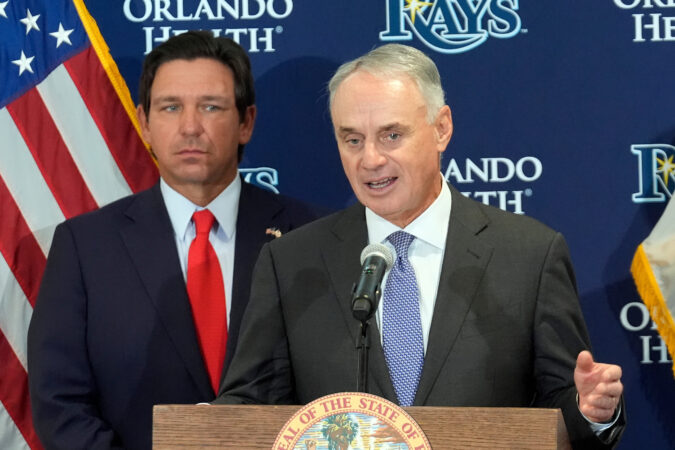
    PALM BEACH, Fla. — Baseball commissioner Rob Manfred is optimistic that major leaguers will play in the 2028 Los Angeles Olympics.

    Manfred, speaking following an owners meeting Thursday, said there are still issues to resolve with the Major League Baseball Players Association before those Olympic aspirations are a reality, but “I think we’re a lot closer to there than we were the last time we talked about it,” he said.

    The six-nation baseball tournament will be played from July 13-19 at Dodger Stadium. MLB is planning for an extended All-Star break between July 9 and July 21, with the All-Star Game likely at San Francisco on July 11.

    An agreement with the union is needed.

    “I sense a lot of momentum towards playing in L.A. in 2028,” Manfred said. “I think we are going to get over those issues. I think people have come to appreciate that the Olympics on U.S. soil is a unique marketing opportunity for the game. I think we had a lot of players interested in doing it and, you know, I feel pretty good about the idea (that) we’ll get there.”

    In addition, an agreement is needed on insurance to cover player contracts for time with Olympic teams.

    The United States will have an automatic berth in the both the baseball and softball tournaments and the top two other nations from the Americas in next month’s World Baseball Classic will earn berths.

    MLB did not allow players on 40-man rosters to participate in the 2021 Tokyo Olympics, when Nippon Professional Baseball interrupted its season and Japan beat the U.S. 2-0 in the gold medal game.

    Manfred was also asked if the involvement of Casey Wasserman, the prominent businessman and talent agent who has recently lost clients because of his appearance in recently released government files on Jeffrey Epstein, would deter the league from participating in the Olympics. He declined to comment on Wasserman, who is the chairman of the Los Angeles Games, saying, “Look, our dealings are not with Casey. Our dealings are with the institution of the Olympics.”

  • Grieving families press Congress on aviation safety reforms after midair collision near D.C.

    Grieving families press Congress on aviation safety reforms after midair collision near D.C.

    Key senators and the families of the 67 dead in an airliner collision with an Army helicopter near the nation’s capital are convinced that advanced aircraft locator systems recommended by experts for nearly two decades would have prevented last year’s tragedy. But it remains unclear if Congress will pass a bill requiring every plane and helicopter to use them around every busy airport.

    The Senate Commerce Committee held a hearing Thursday to highlight why the National Transportation Safety Board has been recommending since 2008 that all aircraft be equipped with one system that can broadcast their locations and another one to receive data about the location of other aircraft. Only the system that broadcasts location is currently required. The hearing will review all 50 of the NTSB’s recommendations to prevent another midair collision like that of Jan. 29, 2025.

    Everyone aboard the helicopter and the American Airlines jet flying from Wichita, Kansas, including 28 members of the figure skating community, died when the aircraft collided and plummeted into the icy Potomac River.

    The Senate already unanimously approved the bill that would require all aircraft flying around busy airports to have both kinds of Automatic Dependent Surveillance-Broadcast systems installed. However, leaders of the key House committees seem to want to craft their own comprehensive bill addressing all the NTSB recommendations instead of immediately passing what’s known as the ROTOR act. The ADS-B Out systems continually broadcast an aircraft’s location and speed and have been required since 2020. But ADS-B In systems that can receive those signals and create a display showing pilots were all air traffic is located around them are not standard.

    Facing headwinds in the House

    Commerce Committee Chairman Sen. Ted Cruz said he’s concerned that some people are talking about possibly adding loopholes to the bill that would exempt regional airlines and private jets from the mandate. The Texas Republican said that would undermine the effort, and doesn’t make sense given that the plane involved in this collision was flown by a regional airline.

    “Flying can only be safe when everyone follows the same standards,” Cruz said. He said that he hopes the House will vote on the bill in the next two weeks to send it to the president’s desk.

    But Rep. Sam Graves, who leads the House Transportation Committee, said Thursday that he doesn’t plan to consider the Senate bill.

    “I haven’t looked a whole lot at the ROTOR Act. We’re going to do our own bill,” Graves said.

    If the American Airlines jet and the helicopter had also been equipped with one of the ADS-B In systems that can receive location data, the NTSB and the victims’ families and key lawmakers say, the pilots may have been able to avoid the collision because they would have received nearly a minute of advanced warning.

    The receiving systems would have provided more warning along with an indication of where the other aircraft was. But for that to work the helicopter’s ADS-B Out system that’s supposed to broadcast its location would have to be turned on and working correctly, which wasn’t the case on the night of the crash.

    Tragedy could have been prevented

    These locator systems are one of the measures that might have been able to overcome all the systemic problems and mistakes the NTSB identified in the disaster. That’s why this requirement was endorsed by NTSB Chairwoman Jennifer Homendy — the only witness called to the hearing — Transportation Secretary Sean Duffy and all of the Senate. This is the 18th time the NTSB has recommended the technology.

    “This seems like a no-brainer, right? Especially when this is not a new thing that they’re proposing,” said Amy Hunter, whose cousin Peter Livingston died on the flight with his wife and two young daughters.

    Sen. Tammy Duckworth said the FAA also failed to act on warnings from its own controllers after a strikingly similar near miss in 2013 about the risks that helicopters pose around DCA (Ronald Reagan Washington National Airport), and an alarming number of near misses chronicled in the agency’s own data.

    “FAA’s failure in the face of blaring alarm bells, screaming out that it was a matter of when — not if — one of the near misses at DCA would become a deadly tragedy is, unfortunately, emblematic of a chronic crisis that’s plagued FAA for years,” Duckworth said.

    Afterward, the FAA made several changes including prohibiting helicopters from flying along the route where the crash happened whenever a plane is landing on DCA’s secondary runway and requiring all aircraft to use their ADS-B Out systems to broadcast their locations.

    The crash anniversary and NTSB hearing on the causes of the crash have made recent weeks challenging for victims’ families. And now the Olympics are reminding Hunter and others that their loved ones — like young Everly and Alydia Livingston — will never have a chance to realize their dreams of competing for a gold medal.

    Cost concerns for plane owners

    The biggest stumbling block is cost. Upgrading some airline jets might cost hundreds of thousands of dollars or more, placing an expensive burden on some — especially regional airlines with tighter profit margins like the one that flew the jet that collided with the Army helicopter. Some also worry whether general aviation pilots could afford the upgrades. These systems haven’t even been designed and certified for some airline jets — particularly the CRJ models that were involved in this crash.

    But some airlines have already begun to add the technology to their planes, partly because in addition to the safety benefits, the systems can help increase the number of planes that can fly into an airport by spacing them more precisely. American Airlines leads the industry, having added the technology to its Airbus A321s over the past several years, equipping more than 300 of its roughly 1,000 planes to date. Homendy said American officials told her the retrofits cost less than $50,000 per plane.

    Any plane more than a decade old likely doesn’t have either of these systems installed. Most newer planes have at least an ADS-B Out system that broadcasts their location.

    But roughly three quarters of the pilots of business jets and smaller single-engine Cessnas and Bonanzas use portable devices that only cost $400 dollars that can tap into this location data and display the information about nearby aircraft on an iPad. So it doesn’t appear the legislation would create a significant expense for them. Homendy held up one of the small receivers during her testimony to demonstrate how easy it is for pilots to get ADS-B In warnings.

    Tim Lilley, a pilot himself, said having both these locator systems would have saved the life of his son Sam, who was copilot of the airliner, and everyone else who died. He said small plane owners have an affordable option, but even the expensive upgrades to large planes would be worth it.

    “If those recommendations had been fully realized, this accident wouldn’t have happened,” Lilley said. “I don’t know what value we put on the human life, but 67 lives would still be here today.”

  • Trump immigration officials shown video of Minneapolis protester’s death in tense Senate hearing

    Trump immigration officials shown video of Minneapolis protester’s death in tense Senate hearing

    WASHINGTON — The men tasked with carrying out President Donald Trump’s mass deportation agenda were made to watch a video of the shooting death of Alex Pretti in a slow, moment-by-moment analysis on Thursday by Sen. Rand Paul, who repeatedly cast doubt on the tactics used by federal officers and warned that the American public had lost trust in the country’s immigration agencies.

    It was a tense confrontation at a Senate hearing that was called to scrutinize the immigration chiefs as they carry out one of Trump’s signature policy and after the deaths of two protesters in Minneapolis over recent weeks at the hands of federal officers.

    Paul, who paused the video every few seconds to explain his interpretation of the events, argued that Pretti posed no threat to the officers and questioned why the situation culminated in the ICU nurse’s death.

    “He is retreating at every moment,” said Paul, speaking of Pretti’s behavior while officers pepper-sprayed him. “He’s trying to get away and he’s being sprayed in the face.”

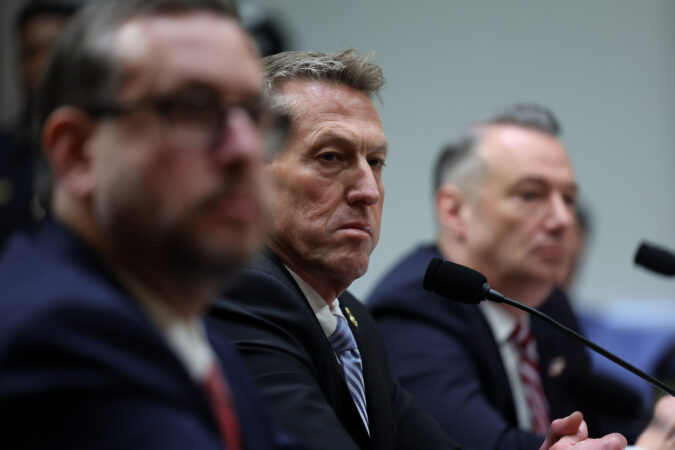
    The hearing’s witnesses included Todd Lyons, the acting director of Immigration and Customs Enforcement; Rodney Scott, who heads Customs and Border Protection, and Joseph Edlow, who runs U.S. Citizenship and Immigration Services. The same officials appeared in front of a House committee earlier this week.

    Paul’s comments were a strong rebuke of the conduct by CBP officers who ultimately shot and killed Pretti on Jan. 24 in Minneapolis.

    “It’s clearly evident that the public trust has been lost. To restore trust in ICE and Border Patrol they must admit their mistakes, be honest and forthright with their rules of engagement and pledge to reform,” Paul said in his opening statements.

    But Paul, who’s often shown a willingness to buck party line, was the lone Republican voice questioning the immigration officers’ conduct with others steering clear of any criticism. Democrats also weighed in with sharp condemnation of the shooting and, more broadly, on how officers from those agencies are using force when carrying out their responsibilities.

    Scott disputed that Pretti wasn’t a threat.

    “What I’m seeing is a subject that’s also not complying. He’s not following any guidance. He’s fighting back nonstop,” said Scott.

    Lyons disputed claims that his officers are not held accountable. He said in the year since Trump took office, ICE has opened 37 investigations for excessive force; 18 were closed, 19 are still pending and one was been referred for “further action,” he said.

    The shooting death of Pretti, along with another American citizen, Renee Good, who were protesting immigration enforcement in Minnesota, sparked outrage and prompted changes to the Minnesota operation. On Thursday, Trump’s border czar, Tom Homan, announced that he was winding down the operation, which at one point included 3,000 ICE and CBP officers.

    Sen. Richard Blumenthal pushed Lyons to explain a memo he wrote justifying the use of administration warrants — documents signed by an ICE officer and not an independent judge — to forcibly enter a home to make an arrest.

    The Associated Press reported last month that ICE was asserting sweeping power through the use of administrative warrants in its enforcement operations.

    Administrative warrants historically have not been sufficient to overcome Fourth Amendment protections that guard against illegal searches.

    Lyons defended the practice, arguing that there is case law in Minnesota that allows officers to enter a home to catch a fugitive using only an administrative warrant.

    Blumenthal, who compared the ICE’s administrative warrants to a permission slip, said they aren’t enough to overcome constitutional protections.

    Other Republicans directed their toughest questioning toward an earlier panel of Minnesota officials. When questioning Lyons and Scott, they focused not on the officers’ tactics but on the threats they said ICE and CBP officers faced in carrying out their jobs.

    Sen. Ron Johnson, a Wisconsin Republican, asked Lyons to talk about the “violence, the threats, the doxing against ICE officers.”

    “That’s where I’ve got a great deal of sympathy for people trying to enforce law,” he said.

  • White House fires new U.S. attorney in N.Y. within hours of his appointment

    White House fires new U.S. attorney in N.Y. within hours of his appointment

    Federal judges in Albany, N.Y., appointed a new U.S. attorney on Wednesday, exercising a rarely invoked legal authority to appoint top prosecutors in regions without a Senate-confirmed nominee.

    Their choice lasted less than five hours on the job.

    Donald T. Kinsella, a 79-year-old former prosecutor and registered Republican, was summarily fired via an email from the White House later that evening, Justice Department officials said.

    The move underscored a growing point of tension between the Trump administration and courts in parts of the country where the president’s controversial picks for U.S. attorney have been unable to win Senate support.

    Kinsella’s swift termination also sent a signal to judges in several other federal court districts, including the Eastern District of Virginia, who have recently announced plans to make similar replacements of Trump-installed prosecutors whose appointments have been deemed invalid by the courts.

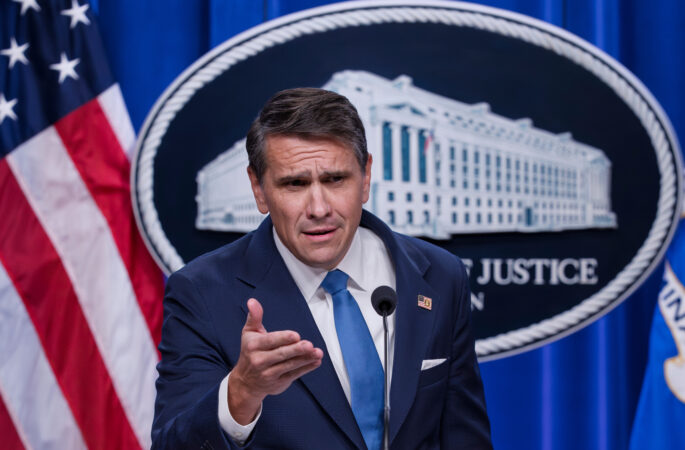
    “Judges don’t pick U.S. Attorneys, @POTUS does,” Deputy Attorney General Todd Blanche, said in a social media post late Wednesday. “See Article II of our Constitution. You are fired, Donald Kinsella.”

    Kinsella did not immediately respond to requests for comment Wednesday morning. And it was not immediately clear whether federal judges in Albany had any recourse to counter the White House’s decision.

    When administration officials similarly fired a new U.S. attorney whom federal judges in New Jersey appointed in July to replace Alina Habba, President Donald Trump’s former personal lawyer and pick for the position there, there was little formal response from the courts.

    Typically, U.S. attorneys, who wield broad prosecutorial discretion to pursue civil and criminal matters in their districts, are nominated by the president and confirmed or rejected in a Senate vote. But federal law empowers judges to name acting U.S. attorneys when there is no lawfully serving appointee or Senate-confirmed presidential pick serving in the role.

    Before his appointment Wednesday, Kinsella had most recently worked as a senior counsel to Albany-based law firm Whiteman Osterman & Hanna. He had served a previous stint in the U.S. attorney’s office in Albany from 1989 to 2002.

    The judges named him to lead the office as a replacement for John A. Sarcone III — a Trump loyalist whom the Justice Department appointed to serve in the position on an interim basis in March.

    Before his appointment, Sarcone had never worked as a prosecutor and most recently had served as a regional administrator for the General Services Administration.

    His tenure as interim U.S. attorney has been marked by a series of controversies, including an incident in June in which he announced a knife-wielding undocumented immigrant from El Salvador had tried to kill him outside an Albany hotel.

    Surveillance footage later showed the man did not come close to Sarcone with his weapon, and charges brought by a local prosecutor were downgraded from attempted murder to a misdemeanor.

    Sarcone had also launched an investigation over the summer into New York Attorney General Letitia James (D), probing whether her office had violated Trump’s civil rights when it secured a multimillion-dollar fraud judgment against him and his real estate empire in 2024.

    As part of a legal challenge from James, a federal judge ruled in January that Sarcone had been serving unlawfully in his position for months well beyond the 120-day limit federal law places on interim U.S. attorney picks.

    But like other interim U.S. attorney picks by Trump who have faced similar disqualification rulings in Los Angeles, Nevada, New Mexico and Alexandria, Va., Sarcone refused to immediately vacate the job. He continues leading the office.

    Until recently, judges in districts like Sarcone’s have been reticent to exercise their authority to appoint prosecutors counter to the Trump administration’s wishes.

    Last month, though, the chief federal judge in the Eastern District of Virginia announced the courts there would be accepting applications for a U.S. attorney to replace Lindsey Halligan, another former Trump lawyer named interim U.S. attorney only to be later disqualified by the courts. She left her post in January.

    The judges in Virginia have not yet named a replacement.

    Federal judges in Seattle have similarly been soliciting applications to potentially appoint a new acting U.S. attorney there, after the term of the Trump administration’s interim pick expired this month.

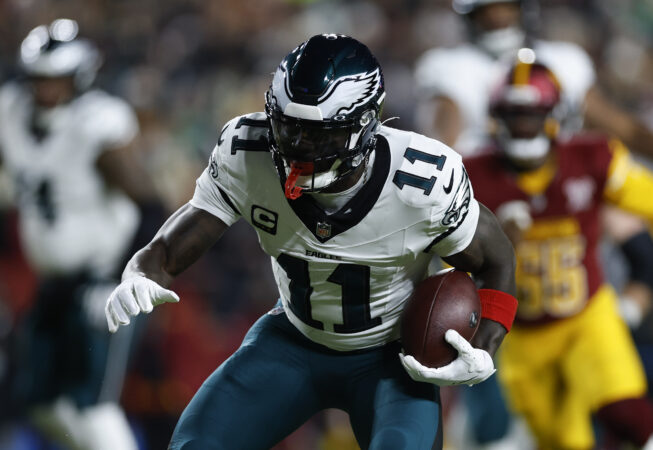
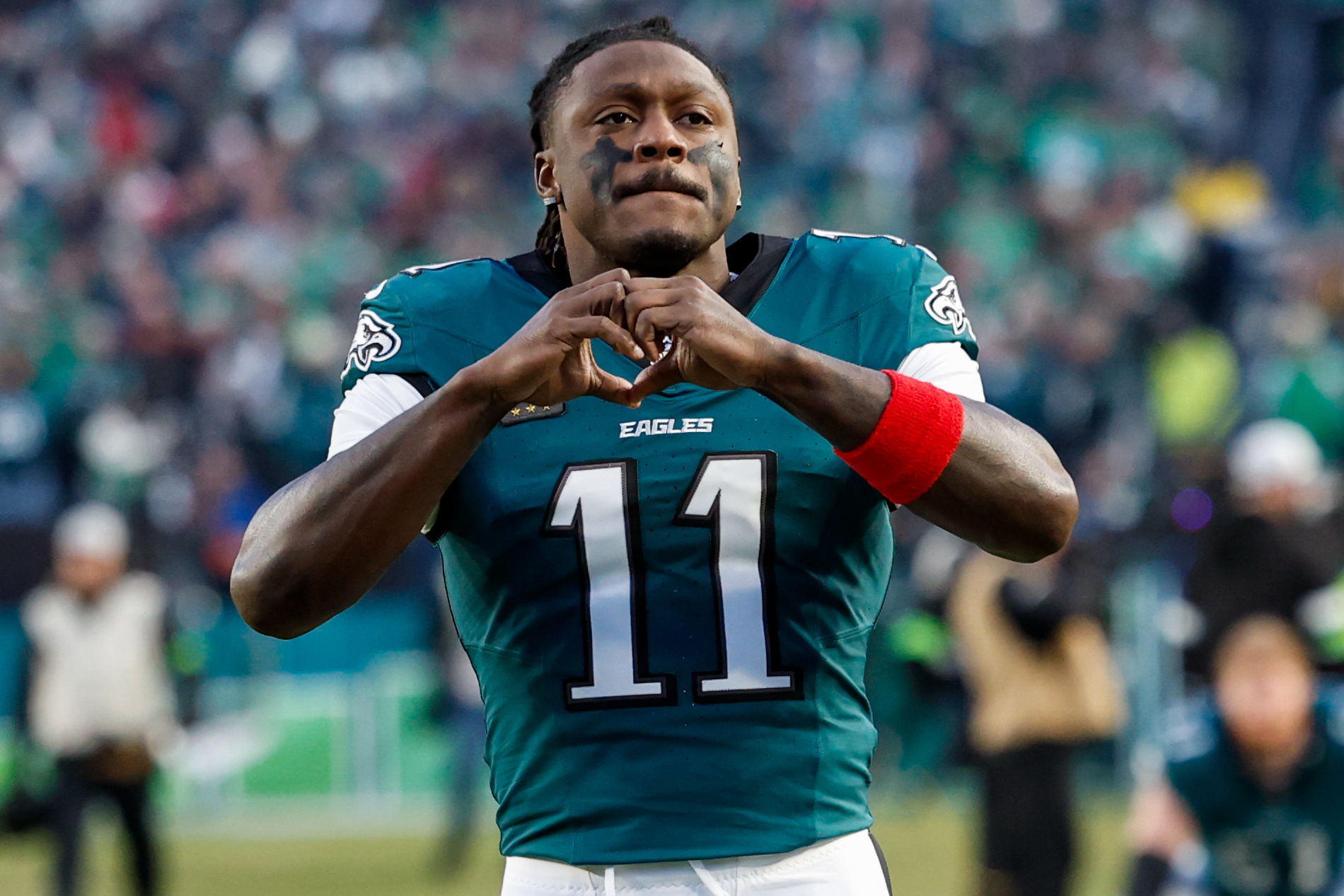
  • A.J. Brown’s frustrations likely affected the Eagles last season, Jason Kelce says: ‘You can just feel it’

    A.J. Brown’s frustrations likely affected the Eagles last season, Jason Kelce says: ‘You can just feel it’

    There was plenty of blame to go around after the Eagles’ postseason run ended early, following a loss to the San Francisco 49ers in the NFC wild-card round. But a few people are getting more heat than the rest.

    One of the main culprits was offensive coordinator Kevin Patullo, who was fired after one season in the role and is reportedly on his way to Miami. Another person who has taken a lot of the blame is three-time Pro Bowler A.J. Brown.

    Brown expressed frustrations with the offense over the last season with cryptic social media posts, Twitch livestreams, and to the media. Following the Eagles’ early exit, Brown declined speaking to reporters postgame and the following day as the players cleaned out their lockers.

    Throughout the season former Eagles center Jason Kelce defended the receiver. Now, with Brown’s future in Philly still in question, Kelce was asked about the receiver’s perceived lack of effort on 94 WIP.

    “How hard is it to play with a player that’s not giving full effort?” Kelce said. “It’s incredibly frustrating, right. I think any player that’s out there when you’re seeing a teammate not go all out, like that’s all you want from your teammates. And that’s all we want as fans. And it’s a really hard thing to optically watch. It’s frustrating to watch.”

    Eagles wide receiver A.J. Brown has surpassed 1,000 receiving yards in each of his four seasons in Philly.

    Brown finished last season with 78 catches for 1,003 yards and seven touchdowns. In the wild-card loss, Brown recorded three receptions for 25 yards and had a costly third-down drop late in the game.

    “I think whatever was affecting A.J. affected the team,” Kelce said. “And I think that A.J. was clearly affected. I don’t know to what degree A.J. affected the other guys, probably a little bit. Whenever you have somebody who doesn’t have the right energy come through the building and you can just feel it. It’s not good, right? But, I think the reality is most of the words that come out of the building — from players, from coaches, from everybody — love A.J. Brown. … There’s a genuine appreciation for A.J. Do you know how hard that is when it’s so apparent that he’s frustrated on the field?

    “ … He’s well respected. I think part of it is that he’s a great player and teammates want him there and know that he can be a dominating force for them. He’s just unfortunately a player who allows his internal frustrations to manifest into his play. And it makes him play worse, and makes the offense worse, and it makes his energy worse. And some guys can block that out and go out there and just play football. He is clearly not one of those guys.”

    Kelce has since clarified his comments with a post on X.

    “It seems people are taking this as a dig on A.J. Brown, which wasn’t really the intent of the response,” Kelce wrote. “It was apparent that A.J. was frustrated, and it’s apparent that A.J. lets that affect his play at times. That’s frustrating to watch as fans and people on the outside. But it’s more important that his teammates and coaches for all of this external frustration still love and only say positive things about A.J.

    “That probably means that his teammates understand where he’s coming from, and that’s what really matters. If there was an issue with it, teammates would be saying different things publicly. That was the point I was attempting to say. That was the purpose of this response and I worded it poorly. I love A.J. Brown, I loved him as a teammate, and I think if he ends up getting traded, the Eagles, and fans will end up regretting it majorly.”

    Brown is under contract with the Eagles through the 2029 season.

  • A ‘Cease Operations’ notice was posted on World Cafe Live’s door this week

    A ‘Cease Operations’ notice was posted on World Cafe Live’s door this week

    Is the World Cafe Live about to close for good?

    The West Philadelphia music venue has been embattled since the leadership team led by Joe Callahan took over from founder Hal Real in last spring.

    In May, workers walked out during a Suzanne Vega concert, complaining of “unfair treatment.” In July, the venue’s landlord, the University of Pennsylvania, delivered a notice to vacate, saying the WCL owed $1.29 million in rent and utilities.

    Callahan challenged that eviction notice with a counterclaim in Common Pleas Court, with no court date currently set.

    The venue has remained open as the drama has continued: the venue’s liquor license lapsed for weeks in the fall, and workers complained of light paychecks and firing without cause.

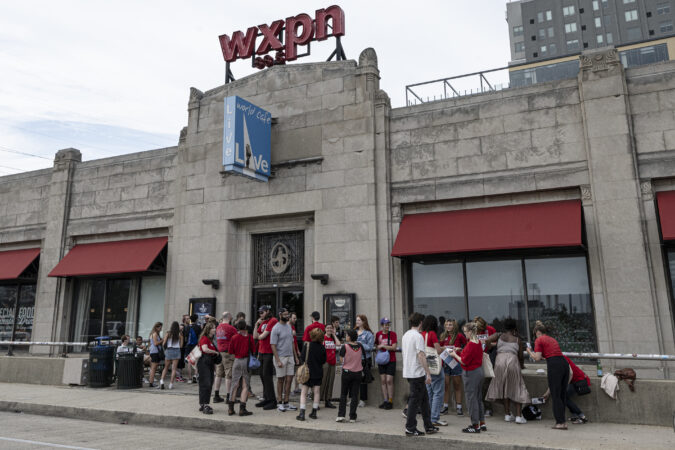
    And on Wednesday, the latest sign that the venue’s immediate future is in danger appeared taped to the doors of the building at 3025 Walnut St. that also houses Penn radio station WXPN-FM (88.5), a separate business.

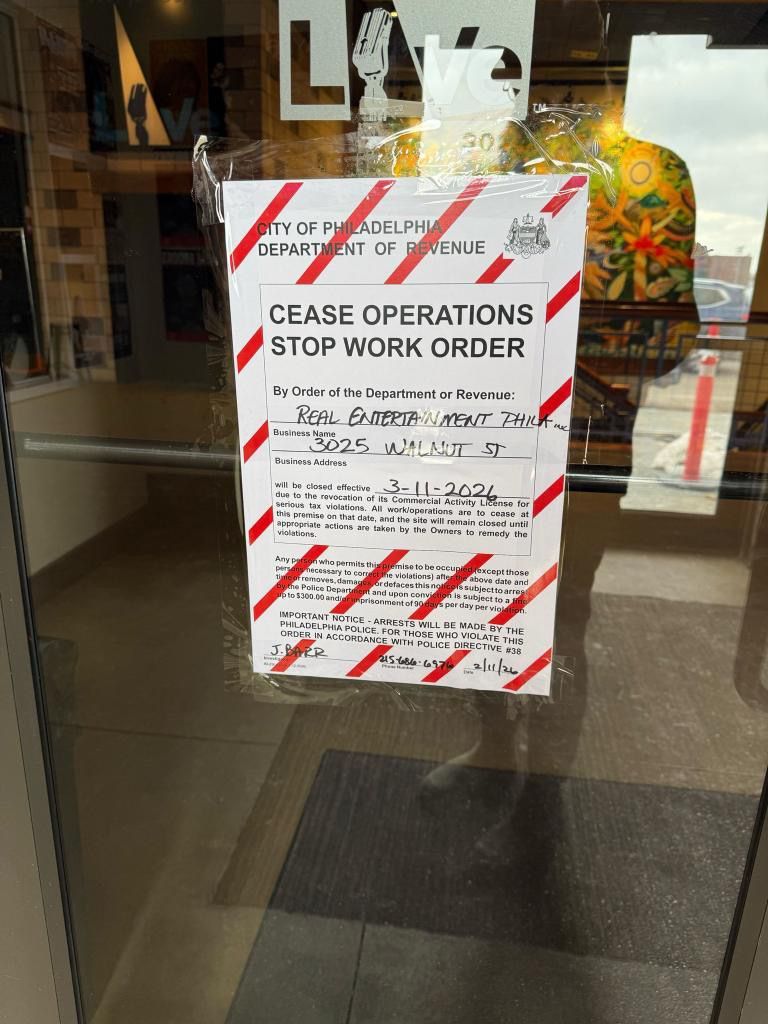
    The Cease Operations – Stop Work Order that was taped to the door of the University City music venue World Cafe Live on Wednesday.

    In bold black lettering, the notice reads: “CEASE OPERATIONS — STOP WORK ORDER.”

    The notice “by order of the Department of Revenue” says the WCL, which consists of the 650-capacity downstairs Music Hall and 220-capacity Lounge, will be forced to close as of March 11 because it will lose its Commercial Activity License as a result of “serious tax violations.”

    The notice was attached to the glass doors to the venue early Wednesday but had been removed from there by the end of the business day. On Thursday morning, it was taped to the wall in the entryway, facing inward and partially hidden by a traffic cone.

    Real founded the venue in 2004. It has served as a community hub as well as a home for XPN’s much-loved Free at Noon series for two decades. Does the “Stop Work Order” mean that it is bound to close for good in four weeks’ time?

    Not necessarily. The WCL has a fairly busy entertainment schedule booked between now and March 11, and some dates into May and June.

    XPN has brought the Free at Noon series back to the Walnut Street location after relocating to Ardmore Music Hall in November and December while the WCL’s liquor license was lapsed. There’s a sold-out show there on Friday with Sam Beam of Iron & Wine.

    Shows are slated for this weekend in the Music Hall with the Jazz Room: A Journey to New Orleans and a Don’t Call Me White Girl comedy show. Shows scheduled in the Lounge include comedian Reginald Ballard and vocalist Alex Moreno Singer.

    On March 11 — the date the stop-work notice cites as the deadline — the Poetry Cafe open-mic night is scheduled for the Lounge. Future dates include Joe Conklin & the City Rhythm Orchestra on March 20, and Martha Wash, a dance music vocalist and former member of the Weather Girls, on June 27.

    Whether those shows will come to pass depends on the status of the unpaid taxes, which are being billed to Real Entertainment Philadelphia Inc., the nonprofit that still bears its founder and former CEO’s name.

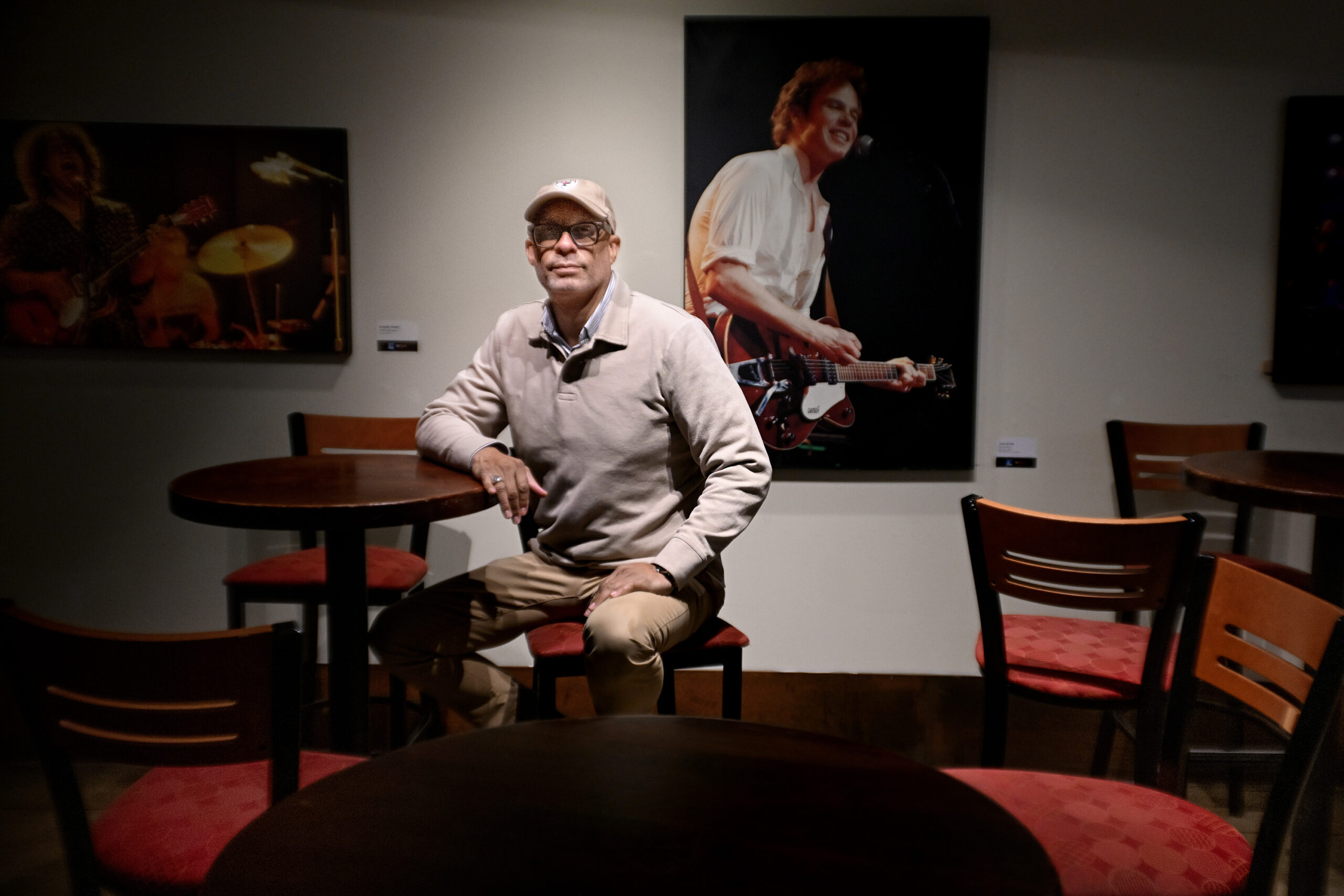
    World Cafe Live President and CEO J. Sean Diaz poses at the embattled West Philly music venue Tuesday, Dec. 2, 2025.

    Messages left for Callahan (who stepped down as CEO last fall but remains chair of the WCL board) and J. Sean Diaz, who is listed as the venue’s CEO and president on the World Cafe Live website, were not responded to on Thursday.

    Stern warnings of closure from the Philadelphia Department of Revenue also occurred during Real’s tenure, World Cafe Live insiders say. They were resolved when the venue caught up on its back taxes, allowing it to stay open.

    In a statement, the Philadelphia Department of Revenue said it is “unable to discuss specific taxpayers due to state confidentiality laws.”

    The city, the statement reads, “pursues license revocation when a business is unregistered, has a delinquent tax balance, and/or unfiled returns.”

    The posting of a revocation notice, the statement says, “indicates that the business is not tax compliant, and its removal generally indicates that the business has come into compliance.”

    This article has been updated with a statement from the City of Philadelphia’s Department of Revenue.

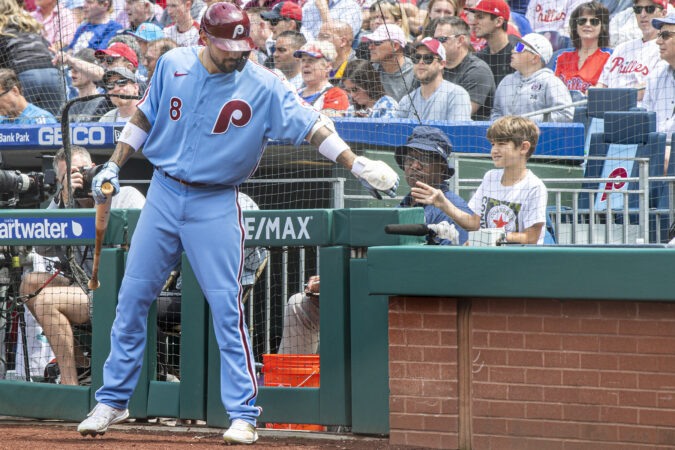
  • Nick Castellanos’ most memorable Phillies moments, from coincidental home runs to the ‘Miami Incident’

    Nick Castellanos’ most memorable Phillies moments, from coincidental home runs to the ‘Miami Incident’

    The Phillies released Nick Castellanos on Thursday after failing to find a trade partner for the 33-year old outfielder, three days before position players were scheduled to report to the team’s spring training facilities in Clearwater, Fla.

    Although the end of his time with the Phillies has been defined by a prolonged search to shed the $20 million left on his contract, Castellanos was one of the Phillies’ most intriguing characters, on and off the field.

    Here’s a look back at some of the right fielder’s most memorable moments from his time with the Phillies:

    The Castellanos Curse

    Castellanos became known nationally for hitting home runs with bad timing for broadcasters. It began in an August 2020 game with the Reds when he hit a drive into deep left field while former Reds broadcaster Thom Brennaman was apologizing for using a homophobic slur earlier in the broadcast.

    When the right fielder logged his first hit with the Phillies in a spring training game against the Blue Jays in 2022, the Toronto broadcasters were discussing pitching coach Pete Walker being charged with driving under the influence a day earlier.

    Castellanos caught Phillies broadcaster Tom McCarthy in the middle of a tribute to fallen service members on Veterans Day in 2022, lifting a homer to deep left field as the NBC Sports Philadelphia broadcast was returning from commercial in the bottom of the second.

    Eventually, he began delivering big hits at the same time as major news events or celebrity deaths. Castellanos hit a homer the day I-95 collapsed in Northeast Philadelphia on June 11, 2023.

    He hit a walk-off double on the day Willie Mays died in 2024; homered and hit a double on the day President Donald Trump was shot at during a rally in Butler, Pa., in July 2024; and hit a drive into deep left field on the day former President Joe Biden dropped out of the 2024 presidential race. He hit a spring training homer on the day Eagles defensive end Brandon Graham announced his retirement in March, although Graham came out of retirement and returned to the Eagles during the 2025 season.

    A surge of bets on Castellanos to hit a homer on April 21, the day the Vatican announced the death of Pope Francis, caused FanDuel Sportsbook to temporarily lock the outfielder’s odds. Notably, Castellanos was 0-for-4 with two strikeouts that day, and the Phillies lost to the Mets, 5-4.

    There is something to suggest that Castellanos was hitting coincidental homers long before anyone was paying attention. He hit his first minor league homer on May 1, 2011, the same day that former President Barack Obama announced the U.S. had killed Osama bin Laden.

    Father and son

    Castellanos’ son Liam became a good-luck charm for the Phillies as the team made its run to the National League Championship Series in 2023. Liam, who lives in Florida during the school year, witnessed his father play arguably the best two games of his career when the son came to Philadelphia for the team’s division series against the Braves.

    With his son in the stands, Castellanos became the first player in MLB history to hit two home runs in back-to-back postseason games.

    Liam joined the Phillies at Xfinity Live after they beat the Braves, 3-1, in the NLDS and stuck around for the rest of the postseason, until the Phils fell in a seven-game NLCS to the Arizona Diamondbacks.

    Liam returned for Red October in 2024 and worked as his father’s good luck charm again. Castellanos claimed a walk-off hit in game two of the NLDS against the Mets to tie the series at one game apiece.

    But the Phils’ ride was shorter that season as the Mets won the series in four games.

    The team’s postseason luck ran dry in 2025, as the Dodgers beat the Phillies in four games of the division series. Castellanos’ final act in a Phillies uniform was to embrace teammate Orion Kerkering after the pitcher made a season-ending errant throw to home in the bottom of the 11th.

    The ‘Miami Incident’

    Not all of Castellanos’ moments with the Phillies were highlights. The outfielder took time to address what he called the “Miami incident” in his farewell letter to Philadelphia, which he posted to Instagram on Thursday afternoon.

    Castellanos was benched last season during a road series against his hometown team, the Miami Marlins, ending an iron man streak of 236 games. Phillies manager Rob Thomson said the decision to sit Castellanos was due to an “inappropriate comment” the outfielder made after being removed in the eighth inning of the previous game.

    Castellanos’ letter says that he brought a can of Presidente beer into the dugout after being removed from the game. The beer was taken from Castellanos’ hand before he could take a sip, but the outfielder still let Thomson know he was frustrated.

    “I then sat next to Rob and let him know that too much slack in some areas and to [sic] tight of restrictions in others are not condusive [sic] to us winning,” Castellanos wrote.

    Castellanos added that he apologized to Thomson and president of baseball operations Dave Dombrowski after the incident. Dombrowski said Thursday that Castellanos’ behavior in Miami did not directly contribute to the team’s decision to release him.