On the second day her kindergartener was off from his Philadelphia public school because of snow, Karen Robinson shut herself away in her Fairmount home, hoping to take a 15-minute meeting for an important work project.
Her husband had put up a baby gate to signal to 5-year-old Sam that mom was briefly off limits.
Naturally, “my son crawled under the baby gate to come find me,” said Robinson, whose son attends Bache-Martin Elementary. “If I’m working, he wants to be right next to me.”
Superintendent Tony B. Watlington Sr. gave beleaguered parents a reprieve Wednesday afternoon, saying schools would re-open for in-person learning Thursday. But the week was tough for many to navigate.
For parents who rely on hourly work, or jobs that have no remote flexibility, the inclement weather-forced school changes have meant either foregoing pay or figuring out childcare arrangements that are often costly, complicated, or both.
North Philadelphia mom Asjha Simmons’ son attends a charter school that’s been closed — no virtual learning — since Monday.
Simmons runs her own business, so is able to be flexible with her schedule and stay home with her son. But she’s getting antsy.
“I feel forced to be in the house and it’s killing me,” Simmons said. “I would rather be in the gym than in the house. And I don’t even go to the gym.”
Simmons’ son, who’s 12, relishes the down time since “he has every screen known to man on,” she said. She keeps the snacks coming, and it’s all good. (He was less than thrilled when Simmons made him shovel snow, she said.)
Leigh Goldenberg said she was having uncomfortable flashbacks to the pandemic, when her daughter completed virtual kindergarten.
“For me, it’s an emotional regression to that terrible time,” said Goldenberg. “And I feel for the people that didn’t build up that muscle before.”
Virtual school with a fifth grader is much easier than virtual school with a kindergartener, said Goldenberg, whose daughter attends Kirkbride Elementary in South Philadelphia. Her daughter spent 30 minutes on Tuesday completing schoolwork, and managed to keep herself busy socializing with friends online and outside, a short walk away in their neighborhood.
Goldenberg is trying to keep things in perspective — this is not forever, this is not the pandemic.
But, she’s still frustrated.
“All the suburban schools around us went back already, but here in the city, we’re stuck with a giant pile of snow at the end of our street, and it feels pretty unfair,” she said.
Coral Edwards was prepared for Monday’s snow day, but when the district announced a virtual day Tuesday, she began to panic.
“I was like, oh my gosh, there’s a real possibility the entire rest of the week will be virtual,” said Edwards, who lives in Graduate Hospital and has a seven-year-old son who attends Nebinger Elementary and a four-year-old daughter in a private prekindergarten program.
Her daughter’s pre-K is reopened Wednesday with a two-hour delay. And that means dropoff time came when Edwards would haveneeded to be helping her first grader with virtual learning. So instead, she paid to send both children to Kids on 12th, a Center City school open the full day, so she can get her work done as a marketing consultant and leadership coach.
The scramble has also summoned up emotions and frustrations she last experienced during the pandemic, when her son was 1 and his daycare shut down. While she acknowledged that she is “incredibly privileged,” she said the fact thatparents like herself are in such a bind speaks to a larger systemicproblem with childcare, Edwards said.
“There’s literally no one to help us,” she said. “There’s just no systemic support whatsoever.”
Streets are being plowed, SEPTA is running, and trash is getting picked up, “but there’s nothing in press conferences about how we’re supporting parents and students,” Edwards said. “The schools are like, ‘we have this virtual learning environment’ — are we just supposed to pull another parent out of our butts?” she said.
Edwards’ husband works in-person as a research physician running a lab, and the burden of childcare logistics falls to her.
“There’s a lot of rhetoric about supporting parents, and raising women up, … but when push comes to shove, something about our kids’ childcare is changed or tightened, it falls on those people,” she said.
Hannah Sassaman, a West Philadelphia parent of a district fourth grader and ninth grader, is making it through.
“We had another fourth grader live here for 24 hours randomly. I think they went to school? My ninth grader seems to be going to school. We’re just lucky we don’t have little kids,” said Sassaman.
“The questions that I have knowing that the storm was coming for over a week,” Sassaman said, “is what could the administration have done to help resource our sanitation workers and the rest of our incredible city servants to really focus on what it would take to get our kids back in schools, our teachers and the other staff back in their buildings safety to support not just the economy, but also all of the important supports and services kids access at schools every day?”
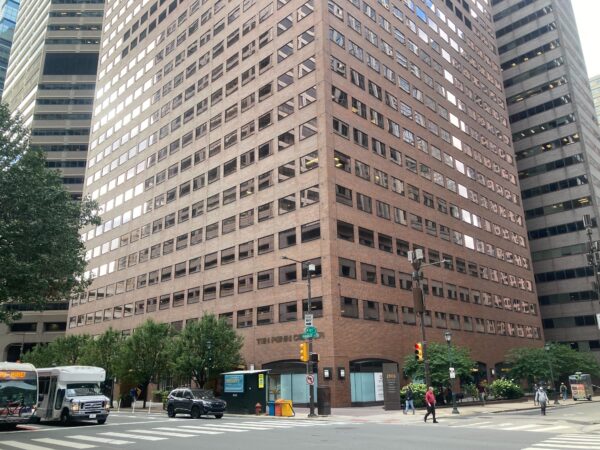
Ten floors of the 27-story Ten Penn Center at 1801 Market St. will be converted from office space to 273 apartments, according to a zoning permit issued Tuesday.
The building was purchased by PMC Property Group last summer for $30 million, less than half the price it was the last time it changed hands in 2006. At that time, it sold for $75 million, or roughly $144 million in today’s dollars, according to the Bureau of Labor Standards’ inflation calculator.
PMC is one of Philadelphia’s largest apartment developers and has distinguished itself in the post-pandemic push to convert underused office space into apartments. PMC previously converted half of the 20-story Three Parkway building at 1601 Cherry St. In that case, the lower levels were turned into 143 apartments.
According to Ten Penn Center’s sales listing last summer, 65% of the offices in the building wereoccupied with much of the vacancy being concentrated in the upper levels. The building is effectively divided in half by the 16th floor, which is largely mechanical.
The downtown residential market has remained robust during the societal and economic turmoil over the last six years, with 3,500 new apartments opening between Pine and Vine Streets and the rivers since 2023 alone, according to Center City District.
“The apartment market remains really healthy, across the entire city, but in Center City specifically,” said Clint Randall, vice president of economic development at Center City District.
Despite fears of an apartment glut, especially along the Delaware River and in Northern Liberties, demand for multifamily living has remained resilient in much of Philadelphia. (Occupancy rates in Center City are at 92%.)
The pipeline of office-to-residential conversions has been relatively robust as well, despite the fact that so many of Philadelphia’s older industrial and commercial buildings had already been turned to multifamily use pre-pandemic.
In Center City, 673 apartments have been created in former office space since the COVID-19 pandemic, according to the Center City District.
“There was an assumption that it would take longer to to eat up all of the supply, but it’s not taking as long as anybody thought,” Randall said. “Because of that, you’re able to move forward and get financing for new deals because you can prove that when there are good products available, it leases.”
PMC Property Group did not respond to a request for comment.
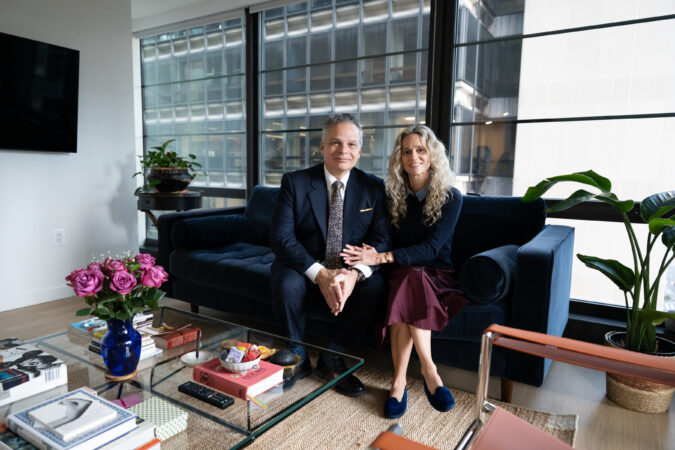
“When I did the tour I was just wowed by it,” recalled DiMeo, an attorney at Rosen, Schafer, & DiMeo.
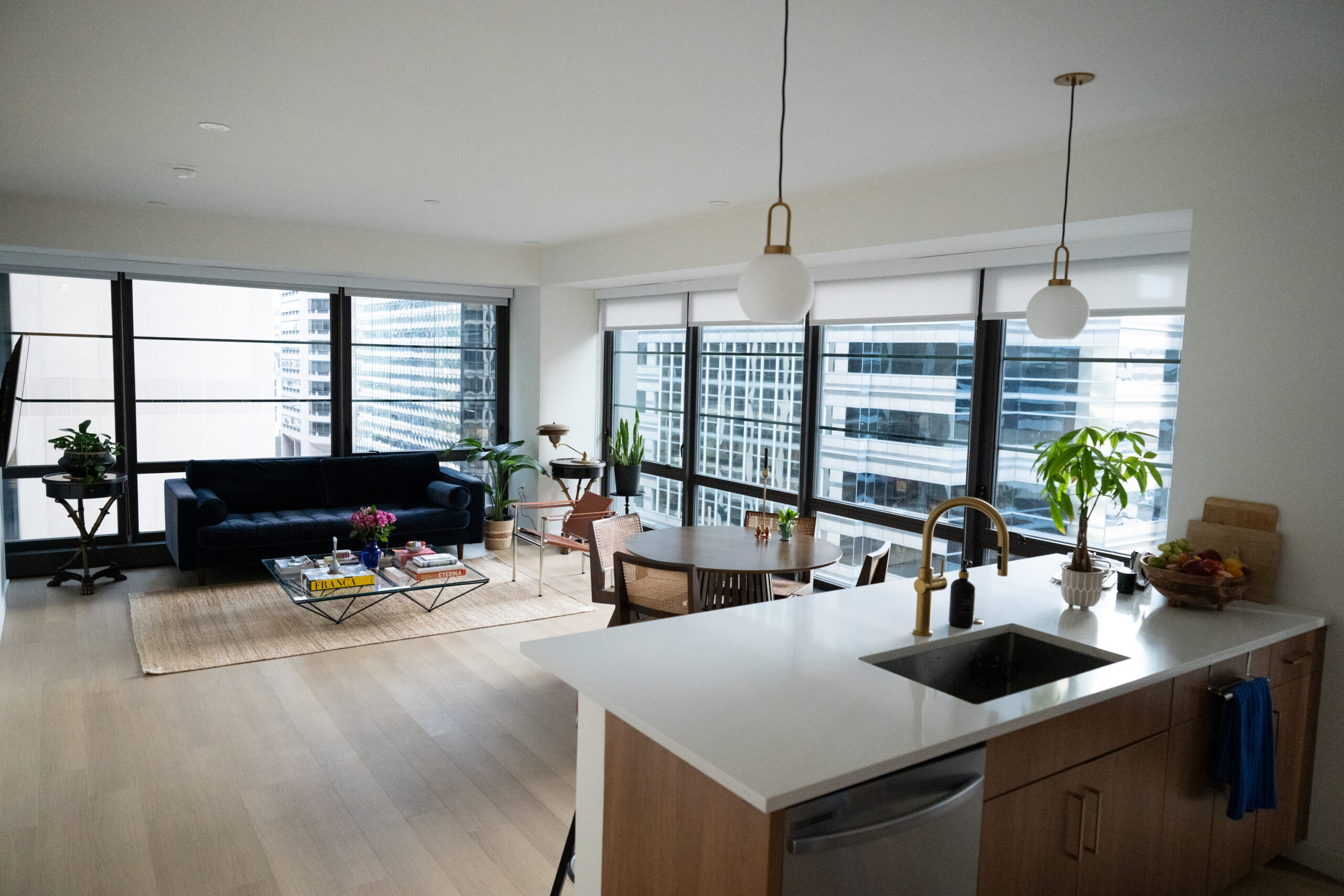
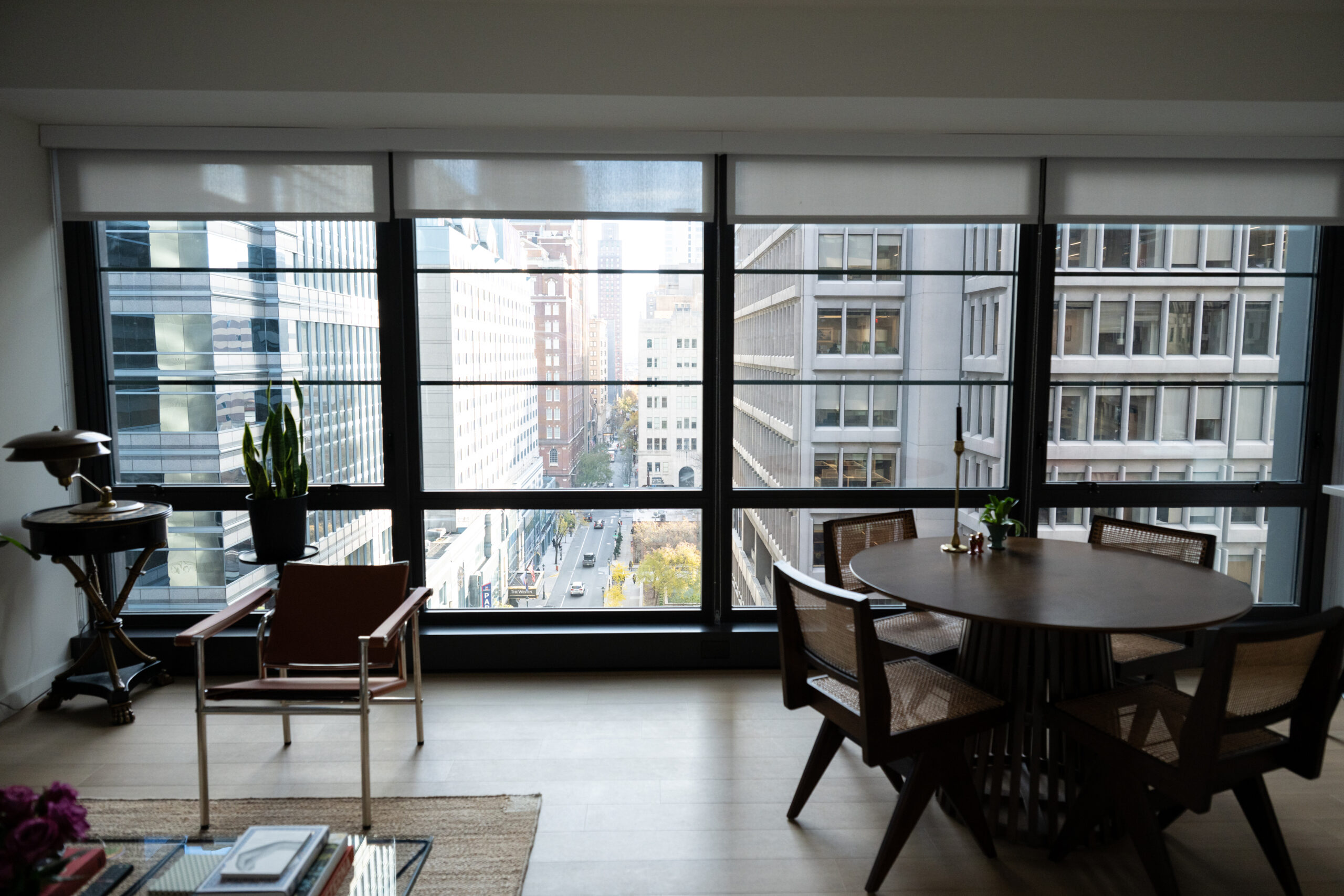
Their corner unit faces southeast, flooding the apartment with natural light through windows that stretch from the floor nearly to the ceiling. The 1,200-square-foot unit features an open-concept floor plan with two bedrooms and two bathrooms.
“We love the city feel, seeing the skyline,” said Levari, a court stenographer. She opens the windows each morning, letting in the fresh air and sounds of the city. “I will follow the light around the apartment throughout the day, finding the sunniest spot to enjoy a good book.”
The kitchen, dining area, and living room, where light pours in from the nearly floor-to-ceiling windows.
“Replacing the old office windows with floor-to-ceiling glass was a complex work sequence but necessary in order to transform the interiors, bringing in natural light and city views that define the new apartments,” said property manager Jennifer Oyola.
The design pays quiet tribute to its origins, honoring the strength and scale of a classic Center City high-rise while reshaping it for the way people live now, she added.
The couple enjoy dining in front of the wall of windows, watching the activity down below. In the evening, they admire the sights of City Hall, Liberty Place, and other buildings lighting up.
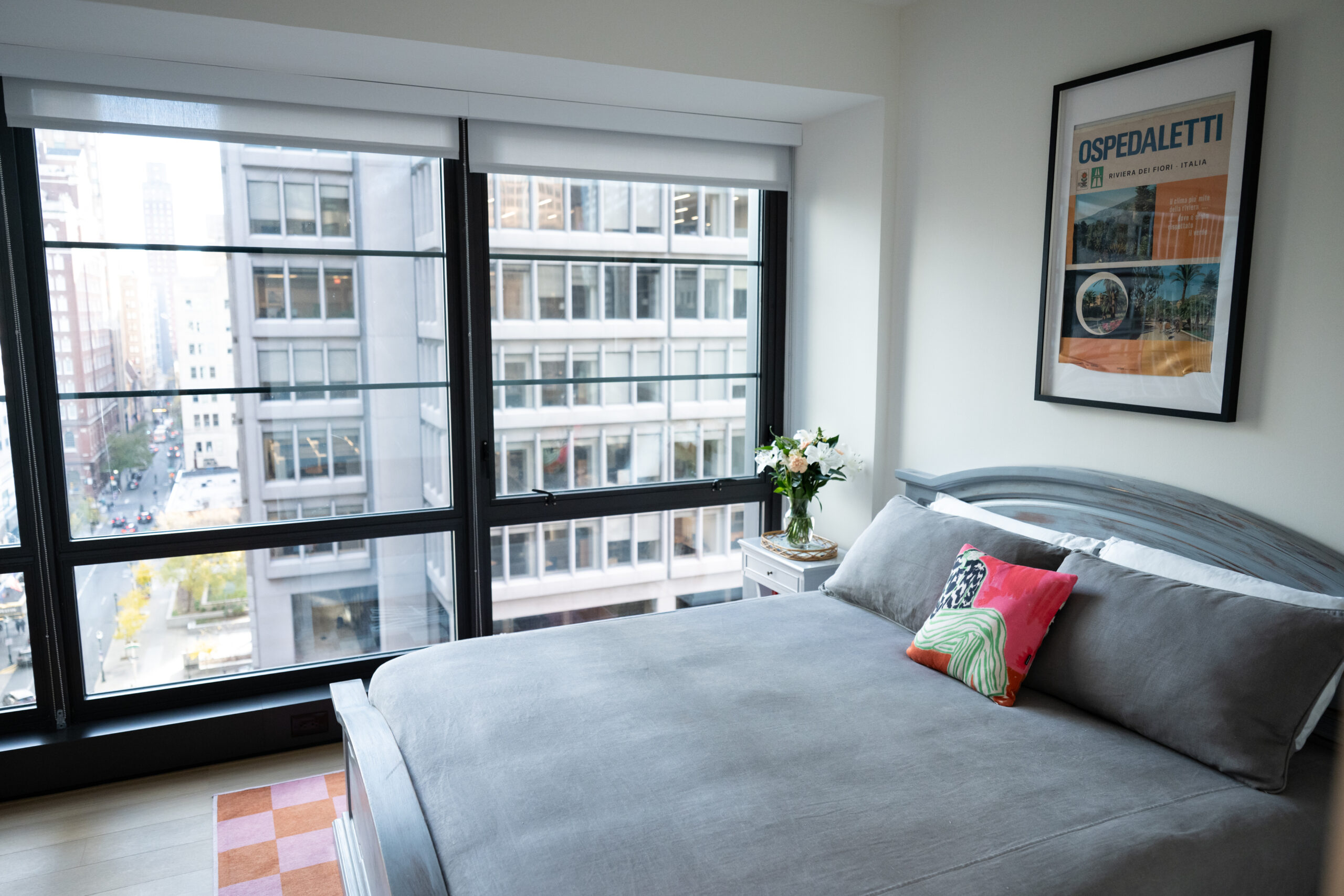
The guest bedroom, with views of the street below.DiMeo says dining in the apartment feels like dinner at a fancy restaurant.
“Frank says he feels like he’s at a fancy restaurant with the view, especially at night,” Levari said.
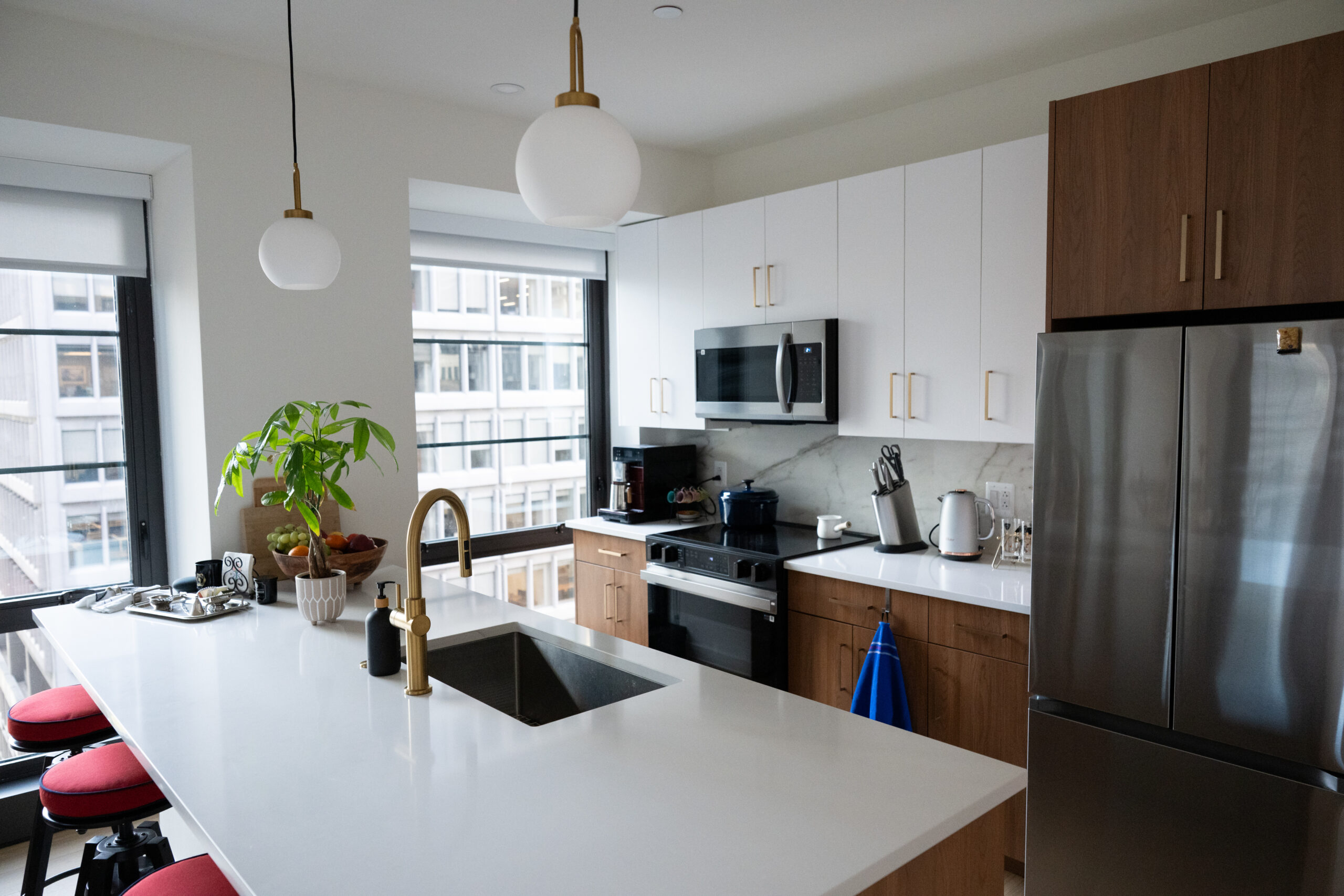
Both love to cook, and Italian food is their specialty. The kitchen is equipped with Samsung appliances, including a smart oven with phone app features, which is especially helpful to ensure they turned the stove off, Levari said with a laugh. There is plenty of counter space for meal prep and a lot of cabinet space.
The apartment’s construction — windows framed in black, light brown luxury vinyl tile plank floors, and plentiful glass — lends itself to a contemporary design.
Levari chose mostly neutral tones with pops of color to complement the look. She enjoys mixing classic pieces with vintage styles.
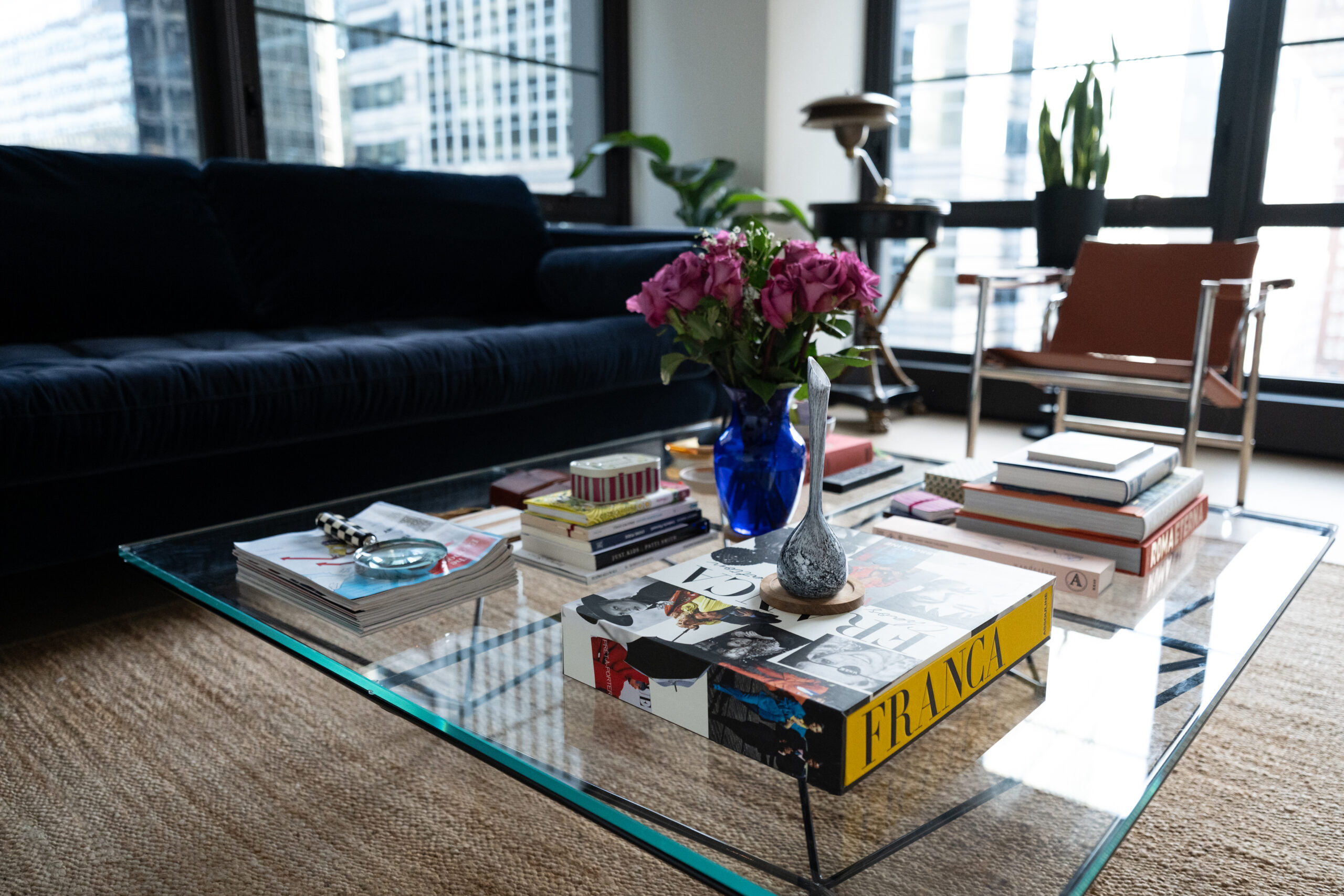
The Alanda glass coffee table, made by Italian designer Paolo Piva, complements the apartment’s contemporary style.
The living room features a lush velvet navy blue couch, a comfy spot to curl up on weekend nights and watch TV. The couple bought their Alanda glass coffee table, made by Italian designer Paolo Piva, at B&B Italia in New York.
“It’s one of those designs that never goes out of style,” Levari said.
The guest room/office includes the bedroom furniture she shipped over from Italy, where she lived for many years and taught English. It’s a comfortable reminder of the time she spent there. The only drawback is that the mattress is a European size that would be difficult to replace and it’s hard to find sheets that fit.
“I felt it was worth it for the memories, look, and quality,” Levari said. “It’s hard to find pieces of quality that you love. Therefore, the shipping cost made sense.”
The walnut Renaissance revival style cabinet in the primary bedroom came from a vintage shop outside of Como, Italy.
The kitchen provides ample counter space and cabinet storage, with stainless steel appliances and gold details.
Levari and DiMeo appreciate the building’s amenities, starting with the rooftop, which includes a saltwater pool, sauna, and cold plunge.
“You really get the city vibe there because it’s on the 19th floor and you have all the highest buildings in the city surrounding you,” Levari said.
Other amenities include the fitness center with a turfed area for cross training, pickleball and basketball courts, a yoga studio, and sport simulator. A club-style lounge includes a chef’s prep kitchen, private dining room, and billiards table. For furry friends, there’s a pet spa and park.
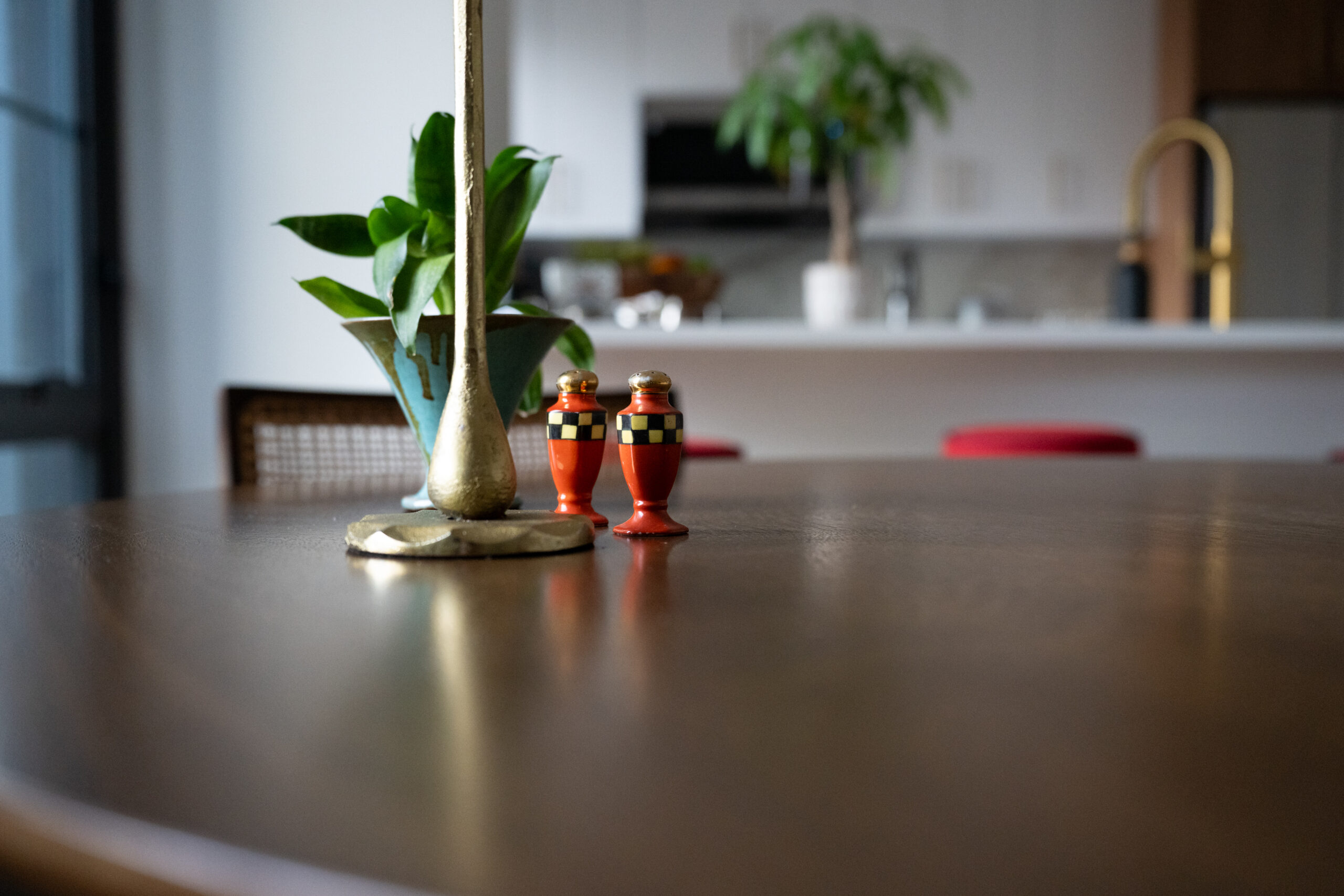
Decorations on the dining room table echo the gold details in the kitchen.The apartment is decorated in neutral tones with some pops of color, like this throw pillow on the guest bed.
The couple are embracing life in the city, where they can walk to great restaurants, shows, concerts, and the ballet. But they are also happy to come back home.
“Having our corner apartment with the huge windows makes it feel like I’m on vacation,” said DiMeo.
Is your house a Haven? Nominate your home by email (and send some digital photographs) at properties@inquirer.com.
Four months after the chain closed nearly 20 locations and filed for bankruptcy, a federal judge has approved the acquisition of Iron Hill’s trademark and intellectual property in conjunction with the transfer of five restaurant leases, including one in Philadelphia, according to court documents filed over the weekend.
The shuttered brewpubs in Center City, Huntingdon Valley, Hershey, Lancaster, and Wilmington are set to be taken over by new tenants, each of which is referred to as “IHB” in the documents. Earlier this month, these tenants registered as business corporations under “IHB” and the name of each location, according to state records in Pennsylvania and Delaware.
Judge Jerrold N. Poslusny Jr. also approved a written agreement that allowed for “Rightlane LLC” to assume Iron Hill Brewery’s trademark and intellectual property, according to the same filing in U.S. Bankruptcy Court in New Jersey.
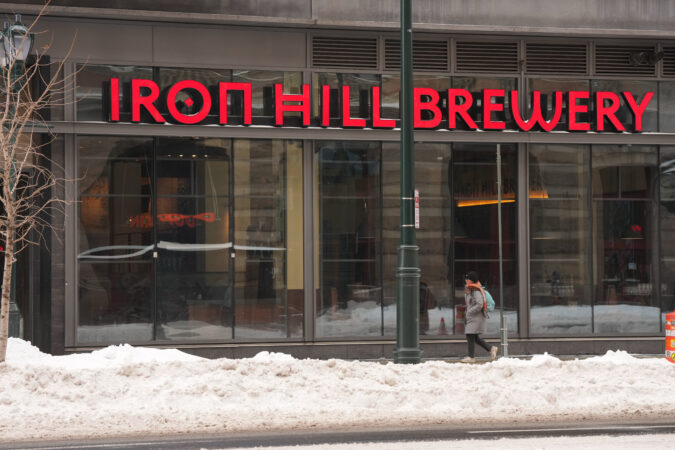
A view from the outside looking in on a closed Iron Hill Brewery.
On Monday, Crivello confirmed that the assets of his five remaining Iron Hills, along with the brand’s trademark and intellectual property, had been acquired by a buyer called Right Lane.
There are several companies that go by the name Rightlane or Right Lane. Attempts to reach representatives of the Right Lane that was involved in the Iron Hill deal were unsuccessful.
Iron Hill Brewery, which was founded in Newark, Del., developed a loyal following over its nearly 30 years in business. Fellow business owners and brewers considered it a pioneer in the local craft beer scene and a restaurant that helped put suburban downtowns like West Chester and Media on the map. Customers said they loved its family-friendly atmosphere.
Since then, massive shells of former breweries have sat vacant throughout the region. As the case made its way through bankruptcy court, landlords were delayed in their searches for new tenants.
Many locations still remain empty, with no word on what might fill the spaces. But in some spots, there are signs of life.
The company that owns P.J. Whelihan’s may be moving into the former Iron Hill in Newtown, Bucks County.
Last month, PJW Opco LLC, which is registered at the headquarters of PJW Restaurant Group, was approved to take over a lease for an 8,000-square-foot closed Iron Hill in the Village at Newtown shopping center.
Opera Philadelphia has signed an early contract extension with general director and president Anthony Roth Costanzo, the company announced Monday.
The initial deal was to have kept the renowned countertenor in the job until the end of the 2026-27 season; the extension commits him and the company to each other for two more years, through May 31, 2029.
Costanzo, 43 — who took over the financially challenged company in 2024 — has maintained an active international performing career while quickly making a mark on the Philadelphia arts scene. Under his watch, Opera Philadelphia has drawn national attention for launching a “pick-your-price” program making tickets available for as low as $11.
The company also played a key impresario and fundraising role last year in keeping the former Wanamaker Center City store space alive for several months with performances after the historic building was vacated by Macy’s. It was Costanzo who landed a $1 million gift from philanthropist and organ enthusiast Frederick R. Haas to fund the concert and film series.
Anthony Roth Costanzo, countertenor, sings with Opera Philadelphia’s chorus during ‘Home for the Holidays’, a concert part of the ‘Pipe Up!’ series at the Wanamaker Building’s Grand Court, Dec. 2, 2025.
Costanzo is in mid-process of retooling the opera company and raising the money to do it, so extending his contract made sense, he said.
“When you’re looking at development, whether it’s of artists, patrons or new business models, those are long trajectories, and it’s been remarkable how fast we’ve been able to accomplish a lot,” Costanzo said. “But there’s a lot more that I want to do, and I think there’s a lot of ambition the board has to grow this organization and its impact.”
The troupe also announced Monday that the company and music director Corrado Rovaris have agreed to a contract extension through May 31, 2029. Costanzo has also promoted David Levy from senior vice president of artistic operations to the company’s executive vice president — making him, essentially, Costanzo’s right-hand man.
Costanzo arrived in June 2024 to a company in debt. He established a fundraising campaign, paid off the debt, and has raised $21 million toward a goal of $33 million. The campaign is expected to run through the end of next season.
“We’re not out of the woods. I don’t know if you ever will be as an opera company,” he said. “We still don’t have an endowment. It’s not that we have transformed entirely.”
Baritone Will Liverman performing at Opera Philadelphia’s 50th anniversary gala, Vox Ex Machina, at the Academy of Music, Sept. 13, 2025, at which the company announced a $33 million fundraising campaign.
Costanzo has restored some of the company’s artistic initiative. Before he arrived, the season was down to three productions for a total of nine performances. He boosted the schedule this season to five productions and 18 performances. The company closed its 2024-25 season with a $2.1 million surplus on an $11.1 million budget, Costanzo said.
Contract extensions are often used at nonprofits engaged in fundraising campaigns to encourage confidence in the future of the institution.
“It’s good for our patrons, our supporters, our artists to know that this is a long-term commitment on everyone’s part,” said Costanzo.
When Mayor Cherelle L. Parker unveiled her much-anticipated plan to address Philadelphia’s housing crisis last year, there was predictable criticism from the political left. Activists said the proposal drafted by the moderate Democrat would not do enough for the city’s poorest residents.
Less predictable was that a majority of City Council stood with them.
Even the Council president, a centrist ally of the mayor, sided with a progressive faction that just two years ago had been soundly defeated in the mayor’s race — but whose new de facto leader in City Hall has proven adept at building alliances across the ideological spectrum.
At the center of that shift was Jamie Gauthier.
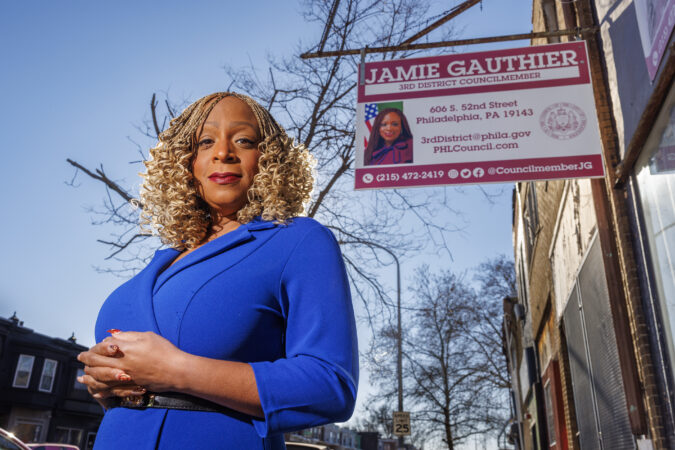
The second-term Democratic lawmaker from West Philadelphiahas solidified herself over the last year as a leading voice on Council and a counterweight to Parker. She has worked within the system as opposed to trying to break it, maintaining relationships with power players who disagree with her on policy.
She counts Ryan N. Boyer — the labor leader who is Parker’s closest political ally — among those who consider her a “thought leader.”
“Over the last year, what you saw,” Boyer said, “is her modulate her positions to become more practical.”
Gauthier has generally voted with progressives, including last year when she opposed the controversial Center City 76ers arena proposal. But she has also endeavored to be a team player, at times compromising on ideological battles to focus on priorities in her district.
Last year, she voted for Parker’s plan to cut taxes for businesses and corporations when other progressives opposed it, because her main priority was securing housing funding. She has not opposed some tough-on-crime efforts in the Kensington drug market, instead allowing her colleagues who represent that area to dictate the policy there.
She says she is trying to use her political capital where it matters.
“Why would I take a protest vote and tank a relationship with a colleague when I’m going to need them later?” she said. “I want to win.”
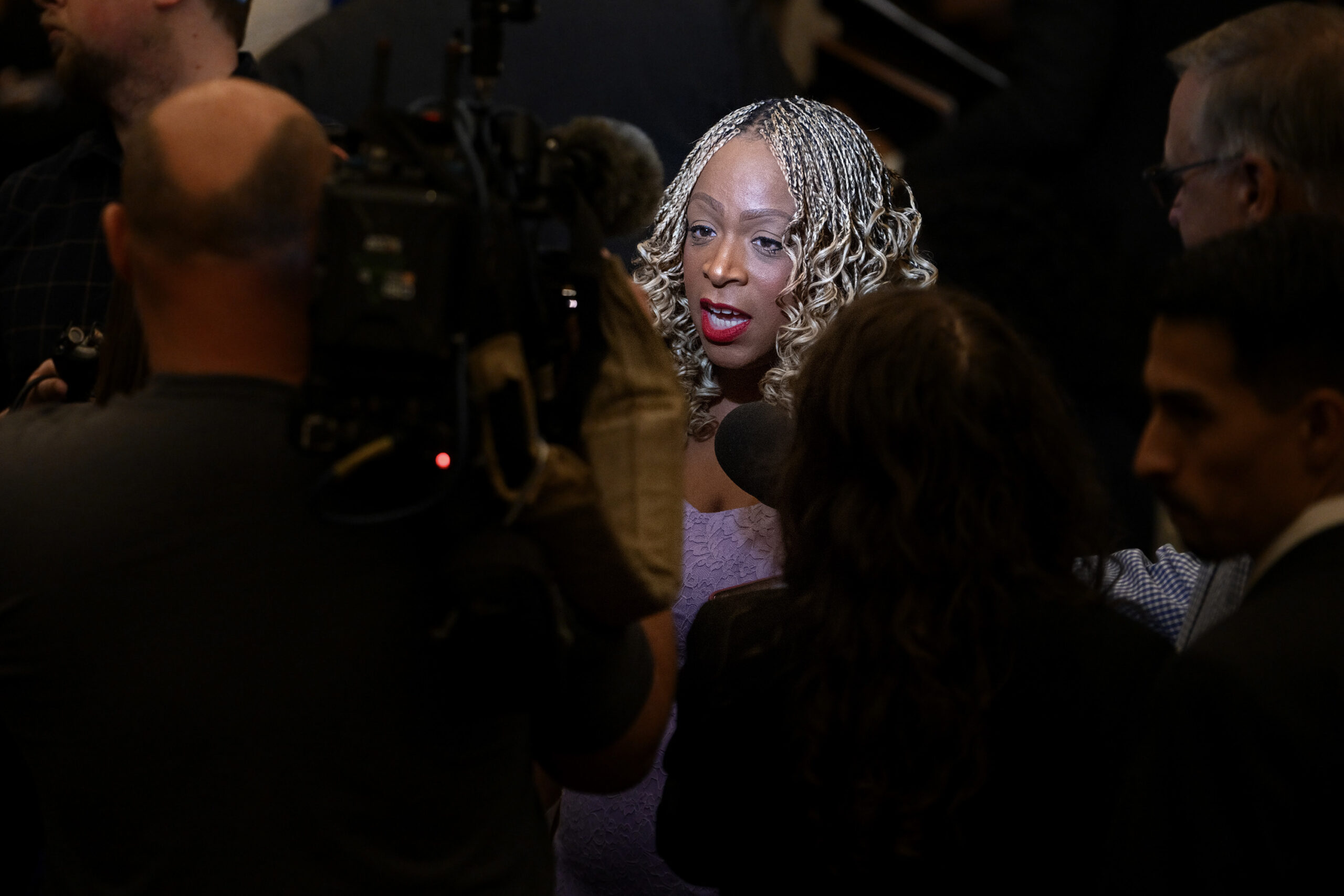
Councilmember Jamie Gauthier talks with news media following a special session of City Council on March 24, 2025.
The fact that Gauthier is a district Council member who represents a large swath of the city west of the Schuylkill also gives her cachet with colleagues. Council has a long tradition of honoring how members want their own neighborhoods to be governed.
Gauthier, who leads Council’s housing committee, has used the influence to make West Philadelphia something of a testing ground for left-of-center policy. Plenty oppose what they see as draconian restrictions on real estate development in her district.
Others see a progressive champion, and some political observers think Gauthier could amass enough support to run for mayor one day. She doesn’t deny that she has thought about it.
But for whatever politics Gauthier can navigate in City Hall, she knows she can rise only if she is successful at home.
‘Not just a lone actor’
When Parker took office, Council was in a moment of upheaval. Council President Kenyatta Johnson was the new leader of the chamber, and several prominent voices were gone after they had resigned to run for mayor themselves.
One was Helen Gym, who was seen as the leader of Council’s left flank. There were questions about who would fill the void once Gym was gone.
Gauthier, 47, an urban planner by trade, did not come up through an activist movement in the same way Gym did, and was a bit more reserved in her style.
But she carries the mantle for the same theory of governance: that lawmakers should prioritize the vulnerable, and that what is good for business is not necessarily good for everyone else.
That set Gauthier on an ideological collision course with Parker, a former Council member who ran for office on a promise to uplift the middle class, a group the mayor believes has been too often ignored.
It came to a head in the fight over Parker’s Housing Opportunities Made Easy, or H.O.M.E., initiative.
Parker wanted to set unusually high income eligibility thresholds for some of the programs so that middle-class families could unlock government subsidies they may not otherwise qualify for. A significant portion of Council, meanwhile, wanted the money to go initially to Philadelphians most vulnerable to displacement.
Parker was clear-eyed about who was leading the charge.
“Councilmember Jamie Gauthier, she may be comfortable and OK with telling Philadelphia homeowners, working-class Philadelphians, that they have to wait and there is no sense of urgency for them,” Parker said in a December interview on WHYY. “But that is not a sentiment that I support or agree with.”
Gauthier is quick to point out that she did not work alone, and that one member of a 17-member body cannot accomplish much. Alongside Councilmember Rue Landau, a fellow Democrat and a housing attorney by trade, Gauthier worked for months to win over her colleagues.
Gauthier didn’t think Parker helped her own cause. A “line was crossed,” she said, when Parker took the fight outside City Hall and to the pulpit. Amid negotiations with Council, the mayor went to 10 churches on one Sunday in December to lobby for support, saying her vision was to not “pit the ‘have-nots’ against those who have just a little bit.”
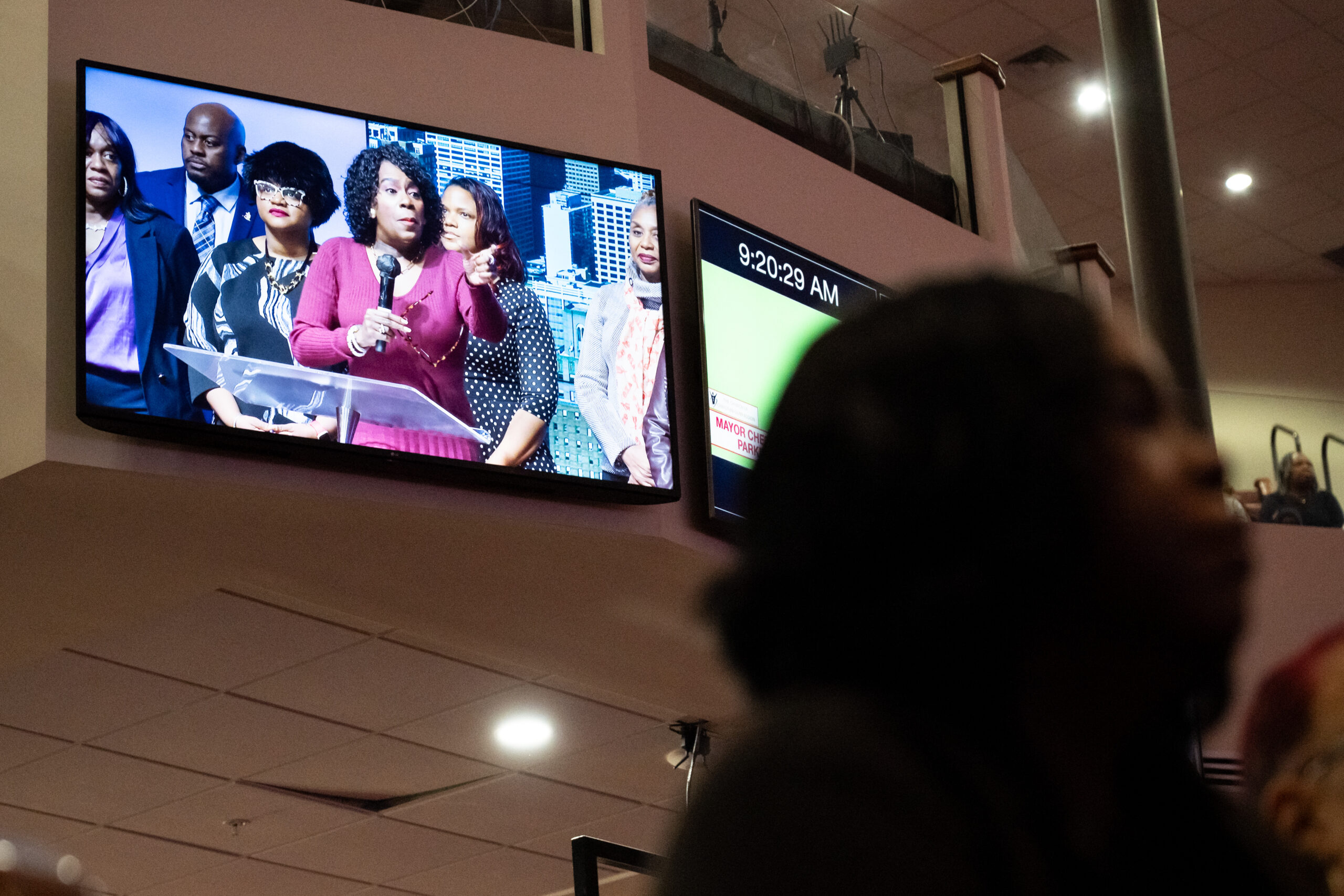
Mayor Cherelle L. Parker speaks to the crowd at The Church of Christian Compassion in the Cobbs Creek neighborhood of West Philadelphia on Sunday, Dec. 7, 2025. Parker visited 10 churches in Philadelphia on Sunday to share details about her HOME housing plan.
To Gauthier, the divisiveness was coming from the mayor’s office.
“I wish the mayor and her administration were more open to other people’s ideas, were more OK with disagreement on policy issues, and more aware of Council as a completely separate chamber of government,” Gauthier said, “as opposed to a body that works for her.”
That is a candid assessment of the relationship between Parker and City Council from Gauthier. Few lawmakers from the mayor’s own party have criticized her publicly.
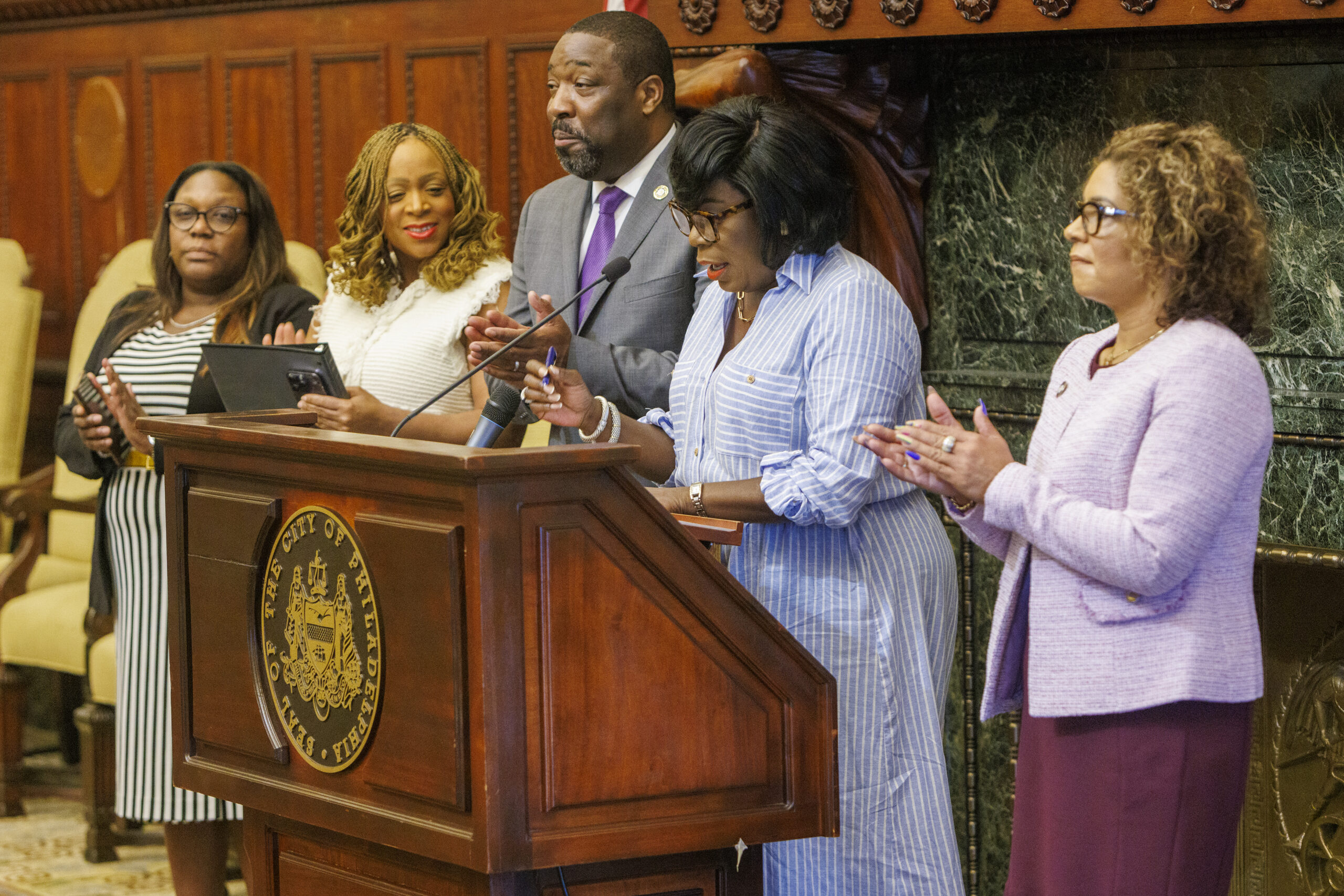
Philadelphia Mayor Cherelle Parker holds a press conference regarding her first budget flanked by members of city council in her reception room, Philadelphia City Hall on Thursday, June 6, 2024. Council members from left are Kendra Brooks, Jamie Gauthier, council president Kenyatta Johnson, and Quetcy Lozada.
State Rep. Rick Krajewski, a West Philadelphia Democrat and a progressive who has worked closely with Gauthier, said the fight over H.O.M.E. showed that Gauthier has learned “the diplomacy required to be an effective legislator.”
“It was a good example of not being afraid of a conflict that felt important to stand up for,” he said, “but then to not just be a lone actor, but organize with other colleagues and allies.”
Gauthier’s most important ally was Johnson, who negotiated directly with Parker through the process and controls the flow of legislation in the chamber.
The two go back years. Before Johnson was Council president, he made a point of welcoming new members, a gesture that has always stuck with Gauthier. They worked closely to secure funding for gun violence prevention. And Gauthier said that since Johnson took the gavel, he has been more open to working with progressives than his predecessor was.
He does not talk about that publicly. What he will say is that he works in partnership with Gauthier because she understands “the bigger picture in terms of how we move forward as the institution.”
“I consider her to be a pragmatic idealist,” Johnson said. “She wears her heart on her sleeve, and she really believes in actually doing the work.”
She was also supported by real estate interests, some of whom now have buyer’s remorse.
After Gauthier pulled off a shock win, she arrived in Council and quickly aligned with the progressive bloc. Through her first two terms, she has used councilmanic prerogative often, and has voted with her district Council colleagues so that they can do the same.
She admits that it is an effective tool for accomplishing her goals quickly.
Carol Jenkins, a Democratic ward leader in West Philadelphia, said Gauthier’s use of councilmanic prerogative is “part of her maturation.”
“That’s the power you have,” Jenkins said.
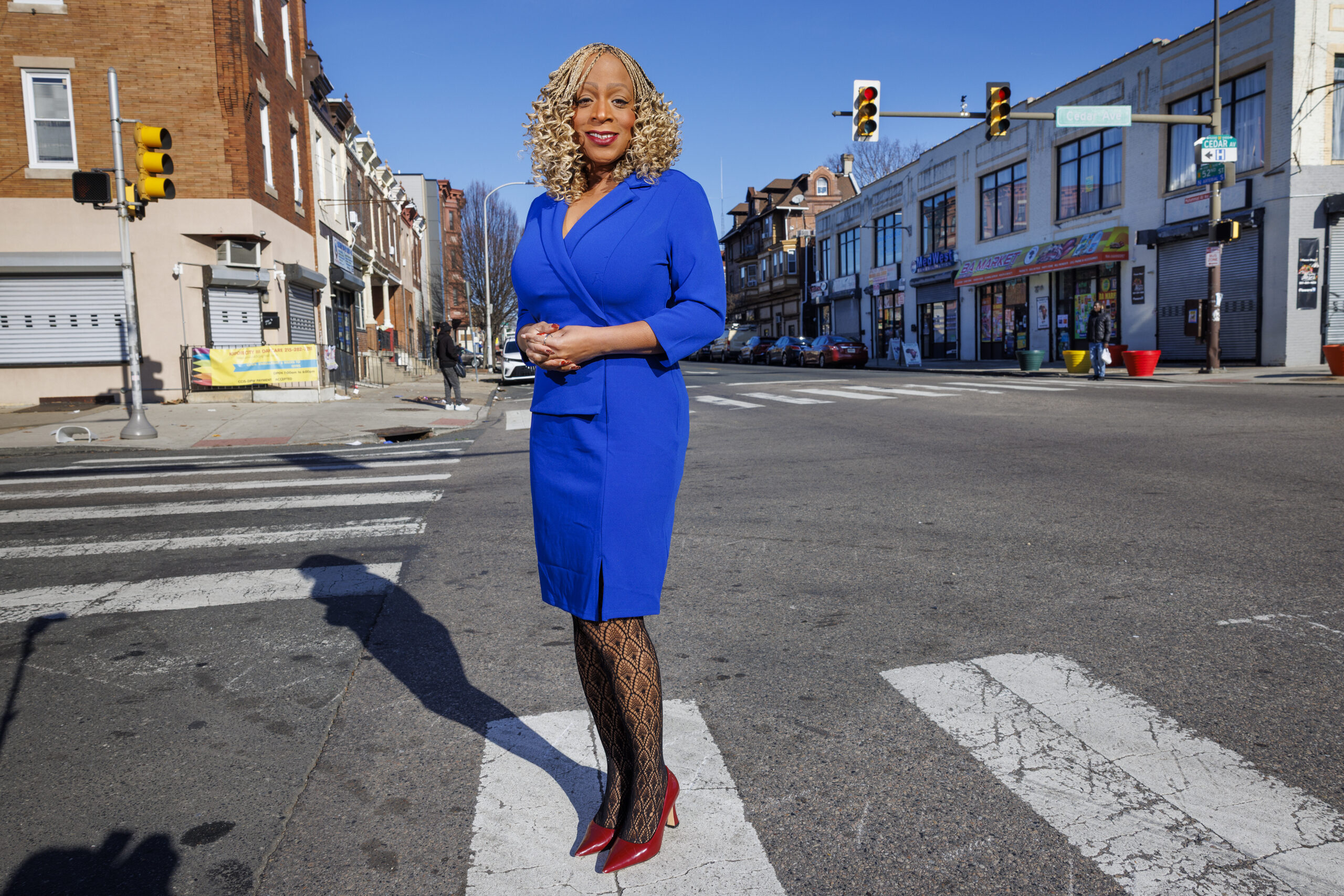
City Councilmember Jamie Gauthier in her district near 52nd Street and Cedar Avenue in Philadelphia on Monday, Dec. 22, 2025.
However, her most notable use of councilmanic prerogative has been in housing policy, and some developers say her district is now the most hostile to growth in the city.
In Gauthier’s first term, she championed legislation to create what is known as a Mixed Income Neighborhood overlay. In essence, it requires that developers building projects with 10 or more units in certain parts of her district make at least 20% of their units affordable. That is defined as accessible for rental households earning up to 40% of the area median income.
For Gauthier, it’s a tool to slow the rapid gentrification of her majority-Black district.
But developers say that growth has slowed significantly in the areas covered by the overlay since it took effect in 2022. Some have said they avoid seeking to build in the 3rd District entirely. The only major project currently in the works in the area is a parking garage.
Ryan Spak, an affordable housing developer who said he considers Gauthier a friend, has been among the most outspoken critics of the overlay. He said while Gauthier’s “moral compass is pointed in the right direction, her policies don’t math.”
“You would never ask a restaurant to give away its ninth and 10th meal for 40 cents on the dollar, with no additional discounts or benefits,” he said, “and expect that restaurant to survive.”
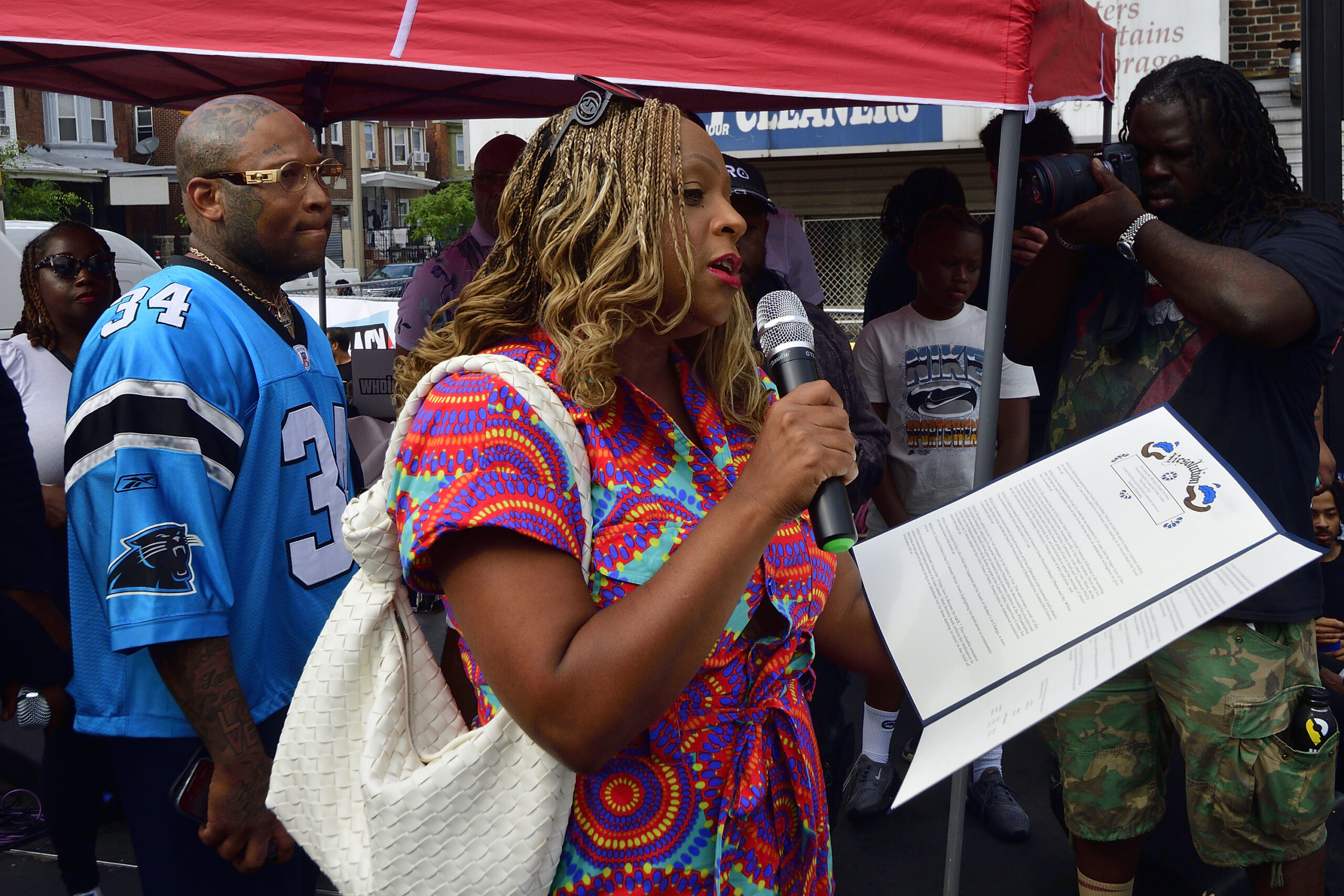
Councilmember Jamie Gauthier reads out a citation honoring Rapper Mont Brown during a street naming ceremony for the Southwest Philadelphia native at the 13th Annual Stop the Violence Kickback Block Party at 55th Street and Chester Avenue, in Southwest Philadelphia on August 17, 2024.
Gauthier said she has made adjustments, and she championed legislation to accelerate permitting and zoning approvals. The mandate, she said, is necessary because the market won’t build enough affordable housing on its own.
“As untenable as it is to them that they can’t make the numbers work, it’s untenable to me that people can’t afford to live here,” Gauthier said. “So we can come together and we can fix that. But I’m not going to move from my position that we have to demand affordability.”
Mayoral buzz, but no ‘stupid campaigns’
Gauthier is one of several names that have been floated in political circles as potential candidates for mayor in 2031, which would be Parker’s final year in office if she runs for and wins a second term. Several of her Council colleagues, including Johnson, are seen as potential contenders.
“I’d be lying if I didn’t say that mayor could be interesting one day,” Gauthier said. “I also don’t believe in stupid campaigns. So I would never do that if I didn’t think I had a path.”
Boyer said he has counseled Gauthier to pursue moderate policy and avoid being “label-cast” as far left. He said Philadelphia is not Chicago or New York, and he doesn’t see the city electing an uber-progressive to be the mayor any time soon.
“Philadelphia has always been a real center-left community,” Boyer said, “and just because you’re the loudest isn’t the most popular.”
The left may have other plans. Robert Saleem Holbrook, a progressive activist, said that Gauthier would be an “ideal candidate” for higher office and that the city’s leftists would back her.
Probably.
“So long as she stays true and supportive of progressive ideals,” Holbrook said. “You can’t compromise on your way up.”
Another Philadelphia office building has sold for a small fraction of what it last changed hands for, this time in the heart of Center City’s retail district.
The six-story property at 1619 Walnut St. was purchased by Marc Zollinger, a Swiss investor and CEO of the company MZP AG, which is listed as the purchaser. Zollinger’s LinkedIn profile shows that he formerly worked in Philadelphia for Miller Investment Management.
The property sold for over $5 million, a dramatic decrease from when the seller Nuveen Real Estate purchased it in 2013 for over $19 million, according to a person familiar with the sale.
Neither Nuveen or Zollinger responded to a request for comment.
The office space in 1619 Walnut is wholly vacant, although real estate firm Keller Williams still holds a lease for two floors of now empty office space.
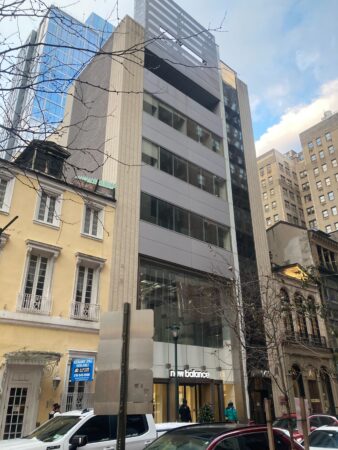
The retail picture at the property is more positive, with shoe seller New Balance occupying nearly 4,000 square feet on the ground floor with a lease that expires in 2035.
The sale price is seen as an unusually good deal for the location. Although the second-tier office space available in the building is the exact kind of product that has been hard hit by the rise of hybrid work since the COVID-19 pandemic, the upper floors of 1619 Walnut are seen as ideal for conversion into apartments.
“The sale price is an anomaly. … [Zollinger] bought it at an astoundingly good price,” said Larry Steinberg, head of the urban retail division for real estate services firm Collier’s Philadelphia office, who was not involved with the deal. “It would make a lovely residential conversion.”
The property’s sale was handled by JLL, a real estate services company, which advertised the building as an ideal office-to-residential conversion. The property enjoys the most flexible zoning in Philadelphia’s code, making such a transition relatively simple.
“With rectangular floorplates measuring approximately 4,900 square feet, the floor plan of the building makes it an ideal candidate for a conversion to boutique residential,” reads JLL’s promotional materials for the sale. “Given the existing layout of each floor, the redevelopment would accommodate a variety of modern open layouts with access to an abundance of natural light.”
JLL estimates that the office floors could accommodate up to 20 residential units, depending on the size of the apartments.
The building was purpose built for KYW radio in 1937 and, later, its television division. The influential Mike Douglas Show was based out of the building for much of its run, employing Roger Ailes, later of Fox News fame, in the late 1960s. In the early 1970s, John Lennon and Yoko Ono guest-hosted the show from the building for a week, interviewing people including Chuck Berry and Ralph Nader.
More recently, between 1997 and 2009, 1619 Walnut was home to the influential French restaurant Brasserie Perrier.
JLL’s Jim Galbally, who led the sales team, told real estate analytics firm CoStar that the purchase represented a “rare opportunity to acquire a retail, mixed-use asset along Walnut Street, Philadelphia’s premier high avenue.”
Of the district’s 307 buildings, most schools — 159 in total — would be modernized under the proposed plan. The district pointed to Frankford High, which closed for two years because of asbestos issues and just reopened in the fall with $30 million worth of work to spruce it up, as an example of modernization.
An additional 122 schools would fall into a “maintain” category, meaning they would receive regular upkeep. And six facilities would be co-located, meaning two separate schools would be housed under one roof, each with its own principal and team.
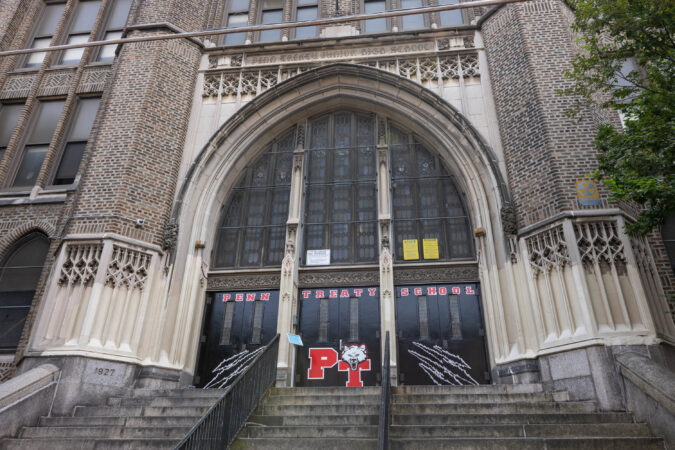
Finally, 20 schools would be recommended for closure. Among them is Penn Treaty, now a 6-12 school, which would close in its current form, but go on to house the current Bodine High School, a magnet in Northern Liberties. Bodine’s building would become the home of Constitution High, which now occupies a rented space in Center City.
As proposed, Watlington’s plan would cost $2.8 billion over 10 years. The district would put up $1 billion via capital borrowing during that time — leaving $1.8 billion unaccounted for that the superintendent said would need to be covered by state money or philanthropic support. If the district doesn’t get all or some of that amount, the plan would have to be amended.
Will some schools definitely close? Which ones?
Right now, the closures are just a proposal, and the school board is slated to have the final say at a vote this winter. They could adopt all, some, or none of Watlington’s recommendations.
If the closures are approved, no school would be shuttered before the 2027-28 school year. And should some schools close, no job losses are expected, Watlington said.
Of the 20 facilities targeted for closure, 12 would be repurposed for district use. Eight would be given to the city for affordable workforce housing, or job creation, both priorities of Mayor Cherelle L. Parker.
We don’t have the full list of proposed modernizations yet, so it’s tough to say the proposed fate of every school.
What will happen to students who attend closing schools?
Every affected student would be routed to a new school. A new transition office would work closely with impacted communities to make sure academics, attendance, and social-emotional needs don’t suffer, Watlington said.
“These families will get gold-standard, red-carpet treatment directly from the superintendent’s office,” he pledged.
Why are these changes necessary?
The district hasn’t had a facilities master plan in more than a decade. It has 70,000 empty seats citywide, with some schools overcrowded and others with entire unused floors. It’s also got a lot of aging buildings — the average district school is nearly 75 years old — and many have environmental and/or significant systems issues.
Officials said they want to solve district-wide disparities: Some schools have art, music, and ample space for physical education, plus extracurricular activities, and some have few of those things.
How were school buildings’ fates determined?
Watlington said there was no formula to determine his recommendations. But four factors entered into the decision: building condition, utilization, the school’s ability to offer robust programming, and neighborhood vulnerability — a new measure that considers things like poverty and whether the area has lived through prior school closings.
The district formally launched the final phase of its facilities master planning process in late 2024. Since then, officials have hosted 47 community conversations and received 13,700 survey responses from people in every zip code in the city. Officials heard from a project team of 30 members and received feedback from nine advisory groups composed of more than 170 members.
The district later launched surveys to gain more input, with the topline result being that Philadelphians didn’t want their local schools closed. Many respondents outlined fears about potential hardships that closing schools could create, such as longer walks to school or tough bus rides in unfamiliar or unsafe areas.
And they flagged worries about merging schools and having large grade spans in a single building.
When did the district last close schools?
Mass school closures last happened in 2012 and 2013, when 30 schools shut.
That process hit economically disadvantaged neighborhoods disproportionately, did not yield substantial savings, and generally led to worse academic outcomes and attendance for students.
The mistakes of 2012 informed this go-round, officials said. They have promised better services for schools, students and families affected by any coming transitions.
Philadelphia City Council’s first meeting of 2026 on Thursday comes as tensions rise over President Donald Trump’s immigration crackdown and as Mayor Cherelle L. Parker continues to sidestep that conversation while focusing on advancing her signature housing initiative.
They will also tackle the city’s waste-disposal practices, a long-standing law requiring Council members to resign before campaigning for higher office, and the city budget.
Meanwhile, events largely outside Council’s control, including potential school closings and Philly’s role in the nation’s 250th birthday, are also expected to prompt responses from lawmakers.
Here’s what you need to know about Council’s 2026 agenda.
‘Stop Trashing Our Air’ bill up for vote
The first meeting of a new Council session rarely features high-profile votes, but this year could be different.
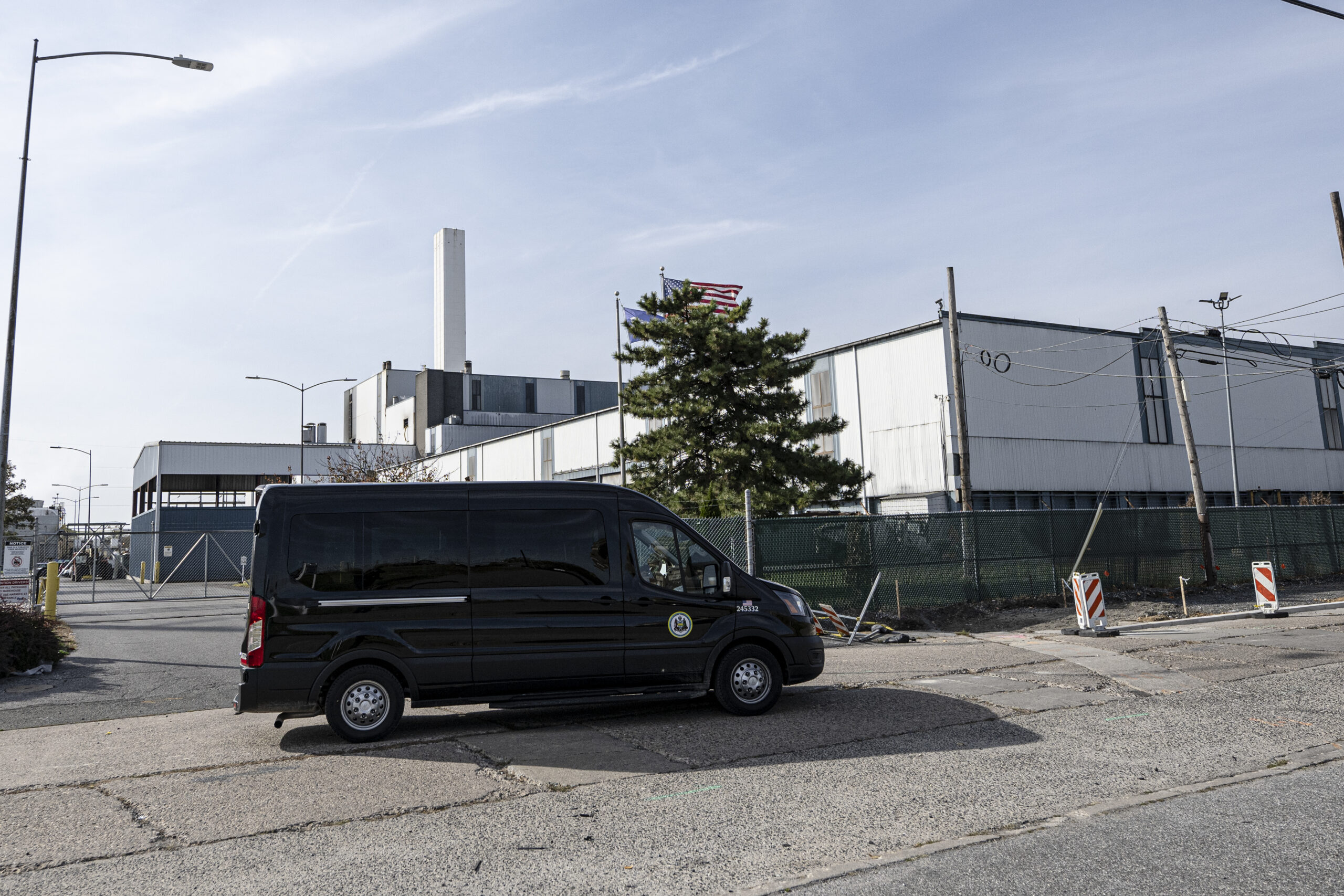
Currently, the city government sends about a third of the trash it collects to the Reworld trash incinerator in Chester, with the rest going to landfills. Those waste-disposal contracts expire June 30, and Gauthier is hoping to take incineration off the table when new deals are reached.
The Reworld incinerator in Chester, Pa., on Friday, Nov. 7, 2025.
“Burning Philadelphia’s trash is making Chester, Philadelphia, and other communities around our region sick,” Gauthier has said, pointing to elevated rates of asthma and other ailments and a legacy of “environmental racism” in Chester. The low-income and majority-Black city downriver from Philly has been home to numerous heavy industrial facilities.
Reworld has said its waste-to-energy facility, which produces some electricity from burning trash, is a “more sustainable alternative to landfilling.”
At a hearing last year, Parker administration officials said the city is including language in its request for proposals for the next contracts that will allow the city to consider environmental impacts. But they asked lawmakers not to vote for a blanket ban on incineration to allow the city to study the issue further.
Parker waiting for Council to reapprove $800 million in bonds for her H.O.M.E. plan
The biggest agenda item left hanging last month when lawmakers adjourned for the winter break was a bill to authorize the Parker administration to issue $800 million in city bonds to fund her H.O.M.E. initiative.
Parker had hoped to sell the bonds last fall, and Council in June initially authorized the administration to take out new debt. But lawmakers made significant changes to the initiative’s first-year budget, especially by lowering income thresholds for some programs funded by the H.O.M.E. bonds to prioritize the lowest-income residents.
Mayor Cherelle L. Parker speaks to the crowd at The Church of Christian Compassion in the Cobbs Creek neighborhood of West Philadelphia on Sunday, Dec. 7, 2025. Parker visited 10 churches in Philadelphia on Sunday to share details about her H.O.M.E. housing plan.
“Council members have always been supportive of the H.O.M.E. initiative,” Johnson said. “H.O.M.E. advances City Council’s goals to expand access to affordable homeownership for Philadelphians … and to ensure that city housing investments deliver long-term benefits for families and neighborhoods alike.”
Currently, Council members and other city employees are required to quit their jobs to run for higher office. Lawmakers have tried several times over the last 20 years to repeal the law, but they have been unsuccessful. Changing the rule requires amending the city’s Home Rule Charter, which a majority of voters would have to approve through a ballot question.
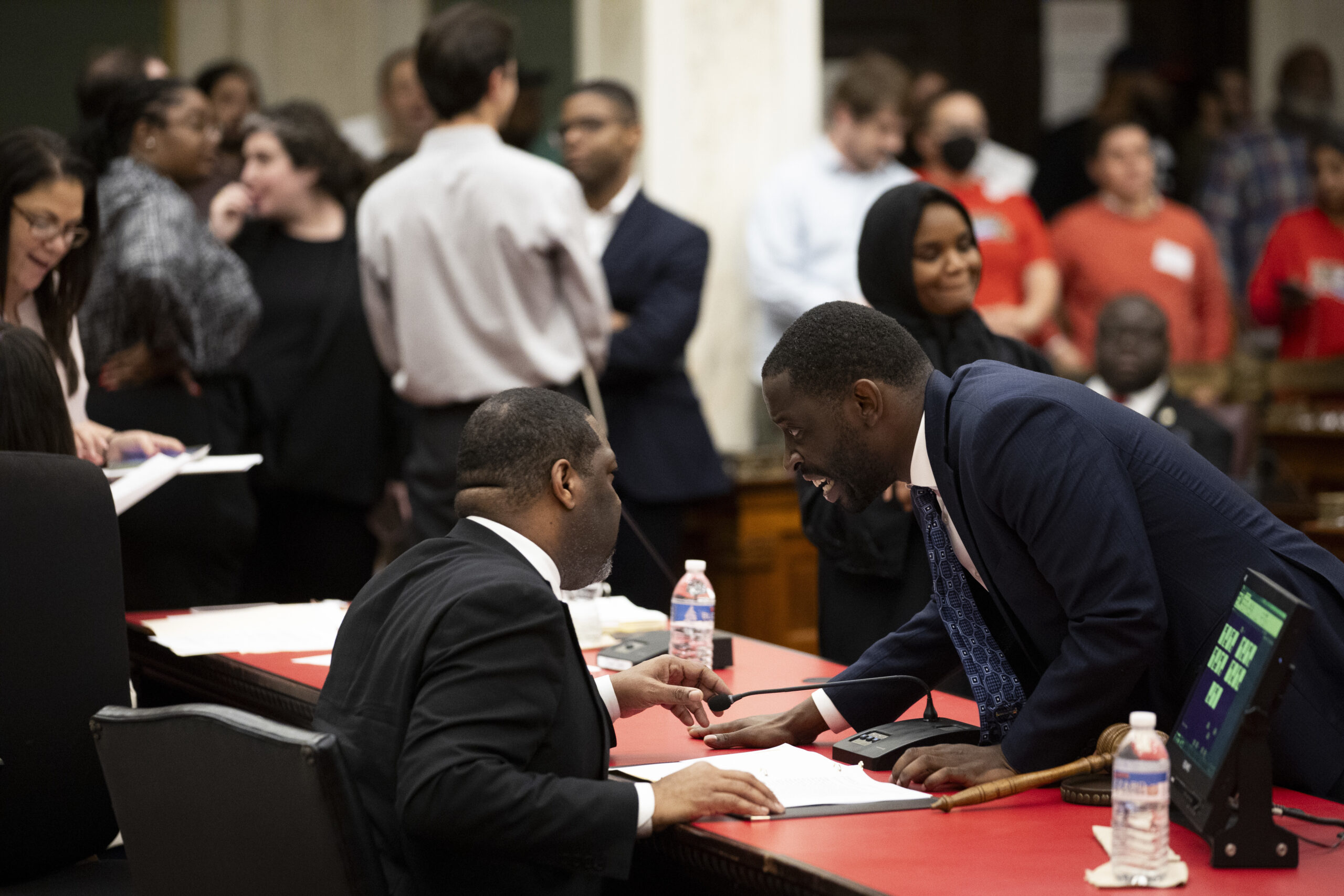
Council President Kenyatta Johnson talks with Councilmember Isaiah Thomas at City Hall on Wednesday, Dec. 11, 2024 in Philadelphia.
The latest attempt, spearheaded by Councilmember Isaiah Thomas, would not entirely repeal the resign-to-run law, but instead would narrow it to allow elected officials to keep their seats only if they are seeking state or federal office, such as in Congress or the state General Assembly. Council members who want to run for mayor would still have to resign.
Thomas, a Democrat who represents the city at-large and is rumored to have ambitions of running for higher office, plans to make minor amendments to the legislation this spring, a spokesperson said, before calling it up for a final vote. The goal, Thomas has said, is to pass the legislation in time for a question to appear on the May primary election ballot.
The mayor, however, cannot control what other local elected officials say about national politics, and Trump’s immigration crackdown appears to be stirring stronger local reaction heading into his second year in office.
Meanwhile, progressive Councilmembers Rue Landau and Kendra Brooks this year are expected to introduce legislation aimed at constricting ICE operations in Philadelphia.
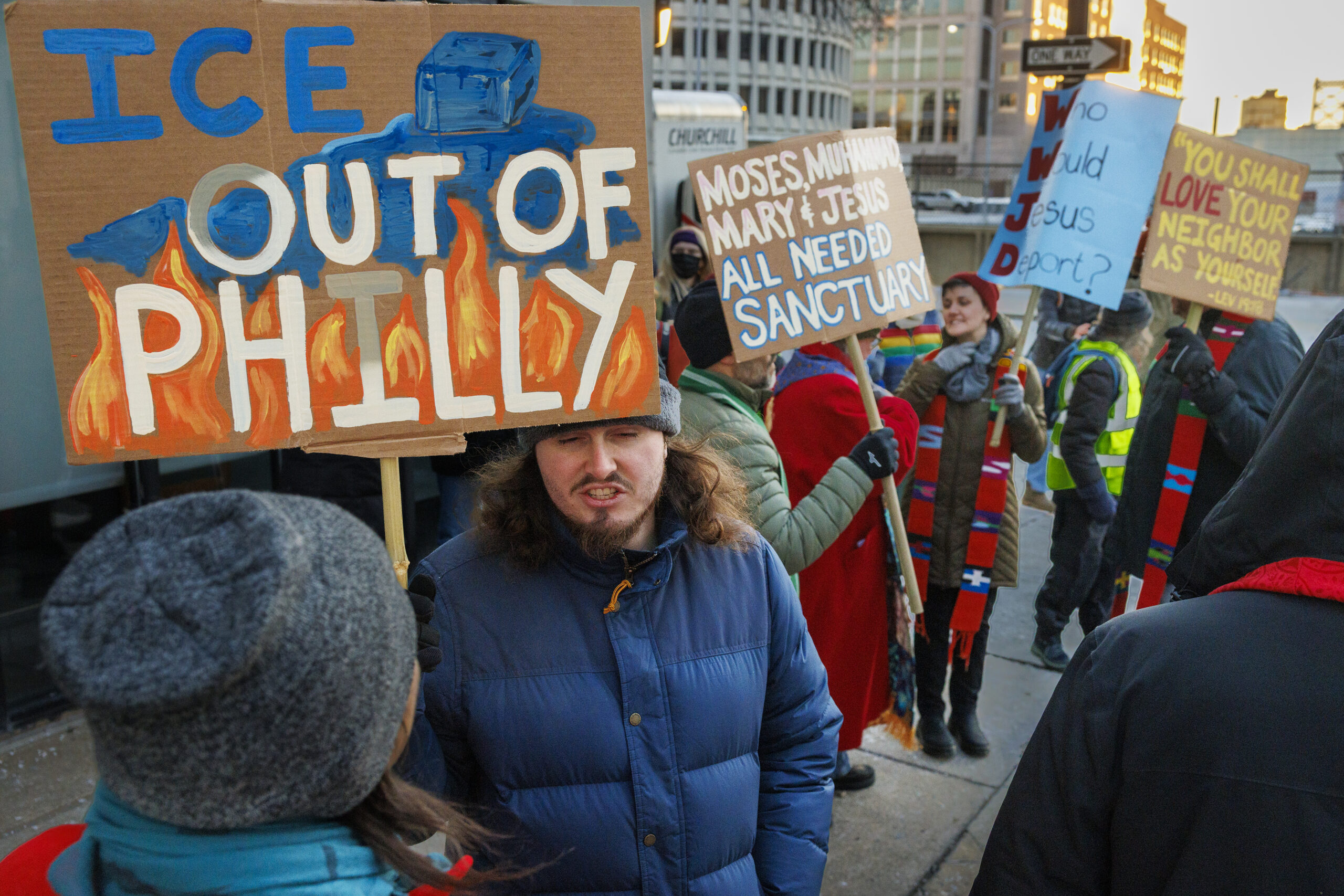
Demonstrators from No ICE Philly gathered to protests outside the U.S. Immigration and Customs Enforcement, office at 8th and Cherry Street, Philadelphia, Tuesday, Jan. 20, 2026.
It is not yet clear what the lawmakers will propose. But Brooks, who has called on Parker to take a firmer stand against Trump, recently criticized the Philadelphia courts for allowing agents to seize suspects leaving the Criminal Justice Center. She said officials who in her view have failed to stand up to ICE are engaged in “complicity disguised as strategic silence,” and she vowed to force those who “cooperate with ICE in any way” to testify in Council.
“Cities across the country are stepping up and looking at every available option they have to get ICE out,” Brooks said at a news conference earlier this month. “In the coming days, you will hear about what my office is doing about city policy. These demands must be met or face the consequences in Council.”
Landau added Philly cannot allow “some masked, unnamed hooligans from out of town [to] come in here and attack Philadelphians.”
“We are saying, ‘ICE out of Philadelphia,’” she said.
Parker has said her administration has made no changes to the city’s immigrant-friendly policies, but she continues to be tight-lipped about the issue.
The Pennsylvania Office of Open Records last week ruled in favor of an Inquirer appeal seeking to force Parker’s administration to disclose a September letter it sent the U.S. Department of Justice regarding local policies related to immigration.
The administration still has not released the document. It has three more weeks to respond or appeal the decision in court.
South Philly arena proposal still in the works
After the 76ers abandoned their plan to build a new arena in Center City a year ago, the team announced it would partner with Comcast Spectacor, which owns the Flyers, to build a new home for both teams in the South Philadelphia stadium complex.
The teams announced last fall they have selected an architect for the new arena, which is scheduled to replace the Spectacor-owned Xfinity Mobile Arena, formerly the Wells Fargo Center, in 2031.
If the teams are still planning to open the new arena on their previously announced timeline, legislation to green-light the project could surface as soon as this spring. But so far, there has been no sign of movement on that front.
“There is currently no timeline for introducing legislation to build a new Sixers arena in South Philadelphia,” said Johnson, whose 2nd District includes the stadium complex. “At the appropriate time, my legislative team and I will actively collaborate with Mayor Cherelle L. Parker’s administration on drafting any legislation related to the Sixers arena before it is introduced in City Council.”
School closings and 2026 celebrations also on the horizon
In addition to its legislative agenda, Council this year will likely be drawn into discussions over school closings and the high-profile gatherings expected to bring international attention to Philly this summer.
Johnson said his agenda includes “making sure Philadelphia has a very successful celebration of America’s 250th Birthday that results in short and long-term benefits for Philadelphia.”
Staff writers Jake Blumgart, Jeff Gammage, and Kristen A. Graham contributed to this article.
Daniel Segal, 79, of Philadelphia, cofounder and shareholder of the Hangley Aronchick Segal Pudlin & Schiller law firm, adjunct law professor at the University of Pennsylvania, former cochair of the Philadelphia Soviet Jewry Council, onetime board president at the Juvenile Law Center, mentor, and “mischievous mensch,” died Thursday, Jan. 8, of stomach cancer at his home.
Born and reared in Washington, Mr. Segal moved to Philadelphia in 1976 to teach at what is now Penn Carey Law School. He went into private law practice in 1979, became cochair of a litigation department in 1993, and joined with colleagues in 1994 to establish Hangley Aronchick Segal & Pudlin.
For more than 40 years, until his recent retirement, Mr. Segal handled all kinds of cases for all kinds of clients, including The Inquirer. He was an expert in juvenile law, defamation, the First Amendment, professional ethics, education, civil rights, and other legal issues.
He was president of the board at the Juvenile Law Center and worked pro bono for years, beginning in 2009, to help represent more than 2,400 juvenile victims and win millions of dollars in settlements in what is known as the Luzerne County “kids-for-cash” case. In that case, two judges were convicted of taking kickbacks for illegally sending juveniles to two private for-profit detention facilities.
“This is one of the worst judicial scandals in history,” Mr. Segal told The Inquirer in 2009. “The people you’re stepping on are the true, true little guys.”
Mr. Segal was honored in 2010 by the Philadelphia Bar Foundation.
Among his other notable cases are a 1985 workplace racial discrimination dispute, a 1990 libel case against The Inquirer, and a 2000 trial about the city taxing outdoor advertisers. “Dan Segal was a living testament to professional excellence,” said Mark Aronchick, his law partner and longtime friend.
Law partner and friend John Summers said: “He was a great teacher and mentor.” Marsha Levick, cofounder of the Juvenile Law Center, said: “He was a brilliant, steady partner who made us smarter and kept us laughing.”
Mr. Segal clerked for Chief Judge David Bazelon in the U.S. Court of Appeals for the District of Columbia Circuit in 1974 and for Supreme Court Associate Justice Thurgood Marshall in 1975. He was active with the Philadelphia Bar Association, Philadelphia Common Pleas Court, and the Penn Law School American Inn of Court.
He wrote articles for legal journals and letters to the editor of The Inquirer and Daily News. He spoke at panels and conferences, earned honors from legal organizations and trade publications, and was named the Thomas A. O’Boyle adjunct professor of law at Penn in 1992.
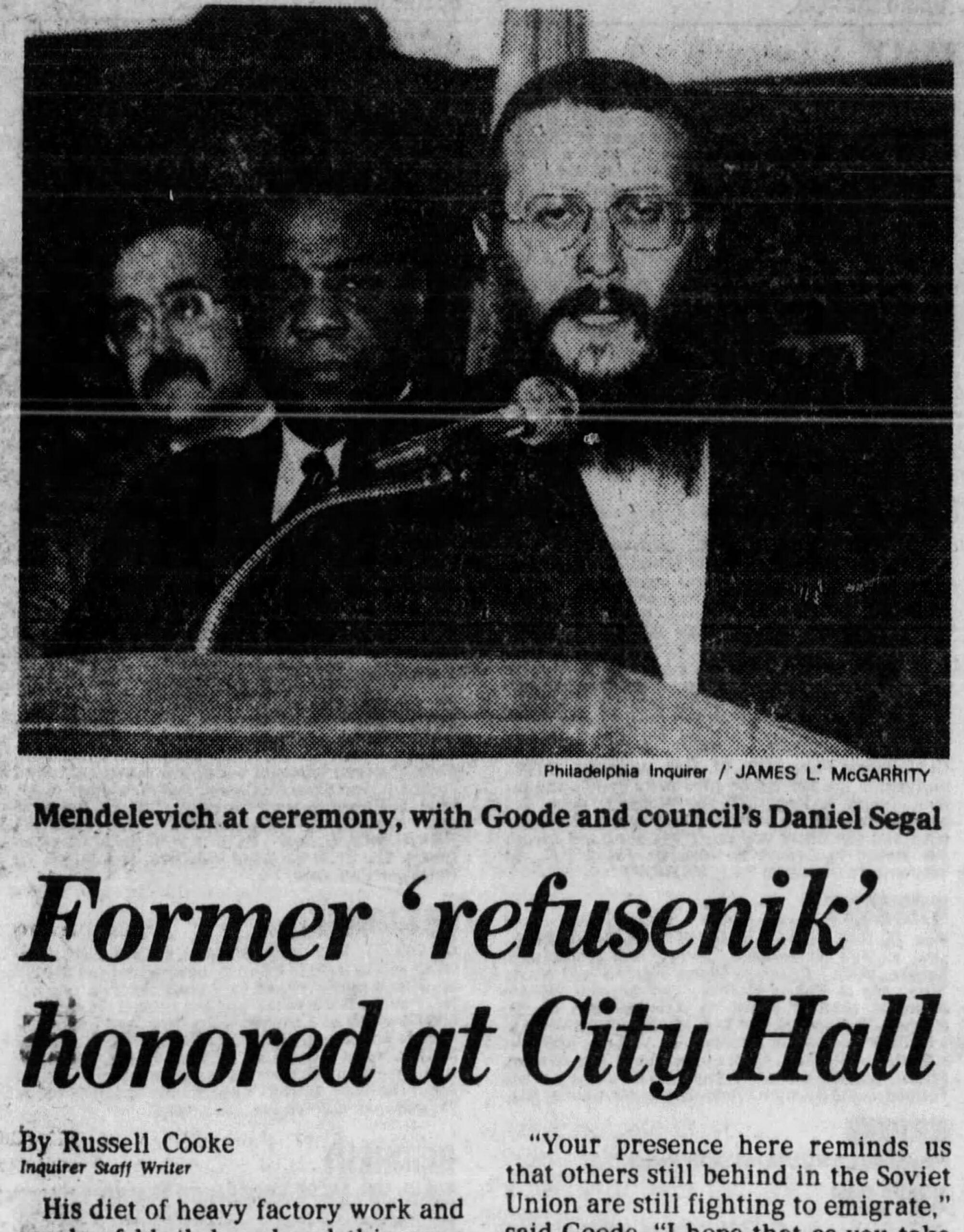
This story and photo features Mr. Segal (left) and appeared in The Inquirer in 1984.
The son of a rabbi, Mr. Segal was cochair of the Soviet Jewry Council in the 1980s, and he organized rallies and marches for social justice and human rights. He traveled to Israel often and to the old Soviet Union several times to secretly support Jews not permitted by government officials to immigrate to Israel.
“We are persuaded that the Soviet Jews are pawns in the Soviet-American relationship,” he told The Inquirer in 1985.
He served as president of the board of directors at what is now Jack M. Barrack Hebrew Academy and held leadership roles with the Jewish Community Relations Council, the New Israel Fund, Mazon: A Jewish Response to Hunger, and other organizations.
Colleagues at the New Israel Fund praised his “characteristic kindness” and “gentle and sparkling humor” in an online tribute. They said: “He was everyone’s favorite board member.”
Mr. Segal and his wife, Sheila, married in 1968.
Mr. Segal enjoyed pranks and funny jokes, even at work, and neighbors called him Silly Dan. His son Josh said: “His warmth, humor, and humility meant that he could connect with just about anyone.” A friend said he was a “mischievous mensch.”
He earned his law degree in 1973 and was executive editor of the Law Review at Harvard University Law School. He earned a bachelor’s degree in politics and economics at Yale University in 1968 and a master’s degree in international relations from the London School of Economics in 1969.
He taught elementary school for a year in Washington and spent another year in Europe before moving to Philadelphia. “He taught us just how important it is to stand up for what is right,” his son Eli said, “and to do so not only with conviction but with humility and kindness, and without a thought of getting personal credit.”
Daniel Segal was born July 4, 1946. He started dating Sheila Feinstein in ninth grade, and they married after college in 1968. They had sons Josh and Eli, and lived in Center City and Lower Merion before moving to Fairmount in 2018.
Mr. Segal’s sons said: “Our dad showed us that relationships are the heart of a life well-lived by nurturing lifelong friendships.”
Mr. Segal loved chocolate and ice cream. He recovered from a traumatic brain injury 20 years ago, and he and his wife traveled to Iceland, Peru, Vietnam, Europe, Japan, and elsewhere.
He doted on his family and friends, and he and his wife rented vacation places every summer to bring his sons and their families together. “Neither of us were surprised that our dad always made our kids feel so loved,” his son Eli said. “Because that was just how he made us feel.”