Tag: Center City

  • A homegrown and scrappy beauty boom is taking shape right here in Philadelphia

    A homegrown and scrappy beauty boom is taking shape right here in Philadelphia

    On a recent wintry evening at Queen Village’s Moon and Arrow, a group of 10 women poured essential oils into beakers, mixing them with carrier oils.

    They’d gathered for a workshop led by Tasha Gear, founder of local brand Linear Beauty, who instructed as they created a formula for body oils.

    The 10 women took a whiff of each other’s potions, commented on their notes, and took in the smells.

    Here was a perfect picture of Philadelphia’s beauty scene, which is having a moment — not the glossy, influencer-backed boom of coastal cities, but something scrappier, smarter, and deeply local.

    Across the city, indie founders are hand-batching serums, mixing skincare in one-kilogram beakers, and designing products meant to withstand SEPTA, summer humidity, and long work shifts.

    Leila McGurk (left) laughs with Leah Antonia at a DIY body oil workshop organized by local skincare brand Linear Beauty at Moon and Arrow, a boutique in Queen Village on Thursday, Dec. 4, 2025.

    They are united by a commitment to science, transparency, and community,

    At the center of this shift is Indie Shelf in Grays Ferry and Malvern, where cosmetic scientist Sabeen Zia helps customers navigate an often confusing clean-beauty landscape.

    “Clean beauty goes beyond ingredient lists,” the Main Line resident said. “It’s how a product is developed, packaged, and the values behind it.” Zia doesn’t draw up fear-based “toxic ingredient” lists. Instead, she relies on science-backed safety standards and direct conversations with product founders.

    “People come in because they want to support small businesses, but they stay because they’re stunned by the changes in their skin,” she said.
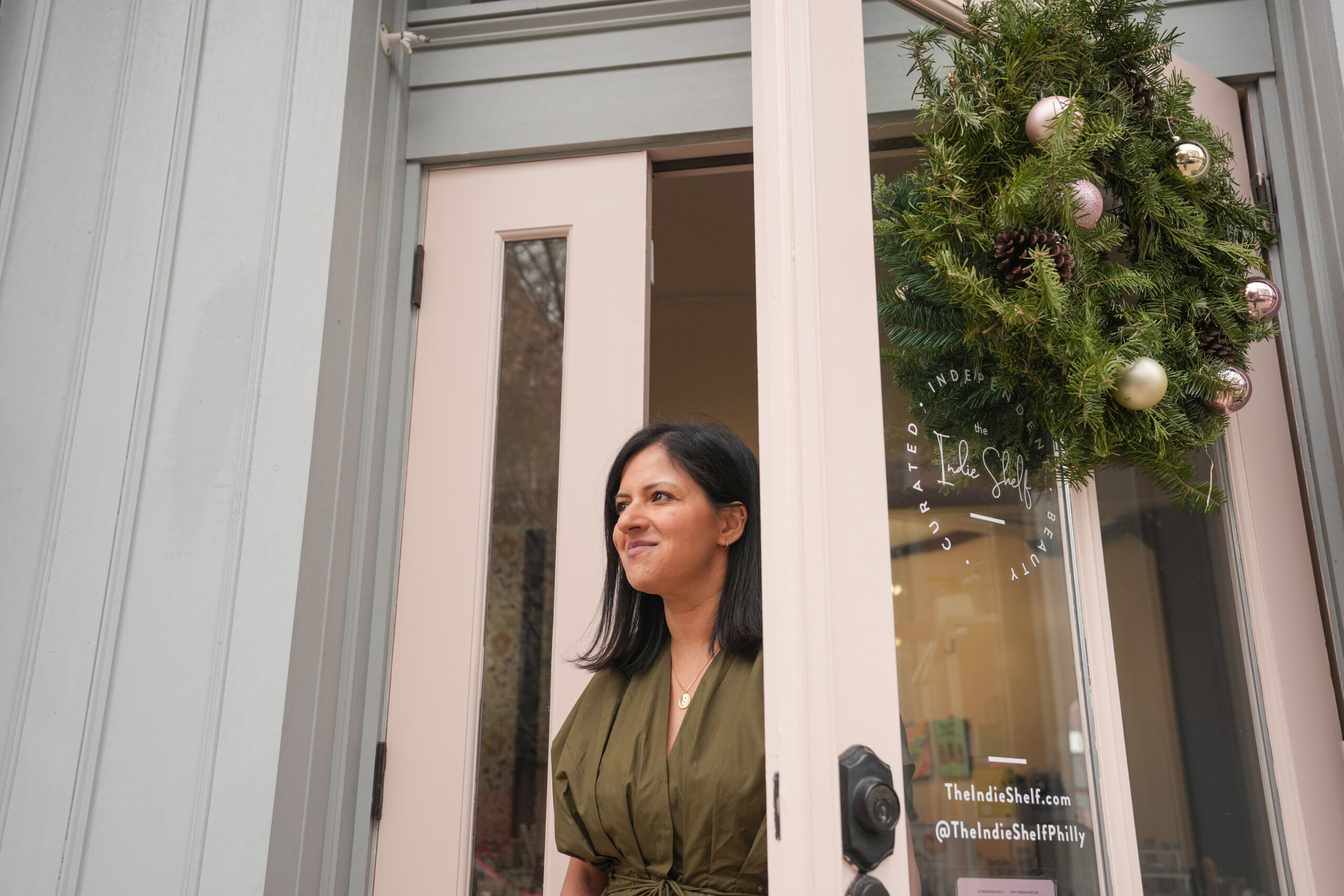
    Sabeen Zia runs Indie Shelf, which stocks a bunch of indie beauty brands. She also runs a brand called Muskaan that she sells at the store, in Philadelphia, December 11, 2025.

    Before opening the shop in 2019, Zia ran her own makeup line, Muskaan Beauty, which was cruelty-free, vegan, gluten-free, and halal. It struggled to get visibility — a challenge she realized many indie founders shared. “Philly didn’t have many clean beauty shops at the time,” she said. “It felt like a real gap in the market.”

    A gap that Indie Shelf aims to fill.

    Other local founders, too, swear by that community-first ethos.

    A former professor of English at Stockton University, Adeline Koh of Sabbatical Beauty, hand-batches high-concentration, K-beauty–inspired products, often using ingredients from neighborhood businesses, like Câphe Roasters and Baba’s Brew.

    “I wanted formulas that actually deliver what they promise,” she said. “Philly has so much pride in Philly-owned businesses. That made me feel this would be a really good market to build in. People here show up for their community.” She’s based in the Bok building.

    As for what feels uniquely “Philly” in Sabbatical Beauty’s identity, she doesn’t hesitate when asked.

    “We’re unapologetic about who we are, and that shows up in our emphasis on diversity: skin tones, body sizes, age. We want to expand what beauty means, not narrow it.”
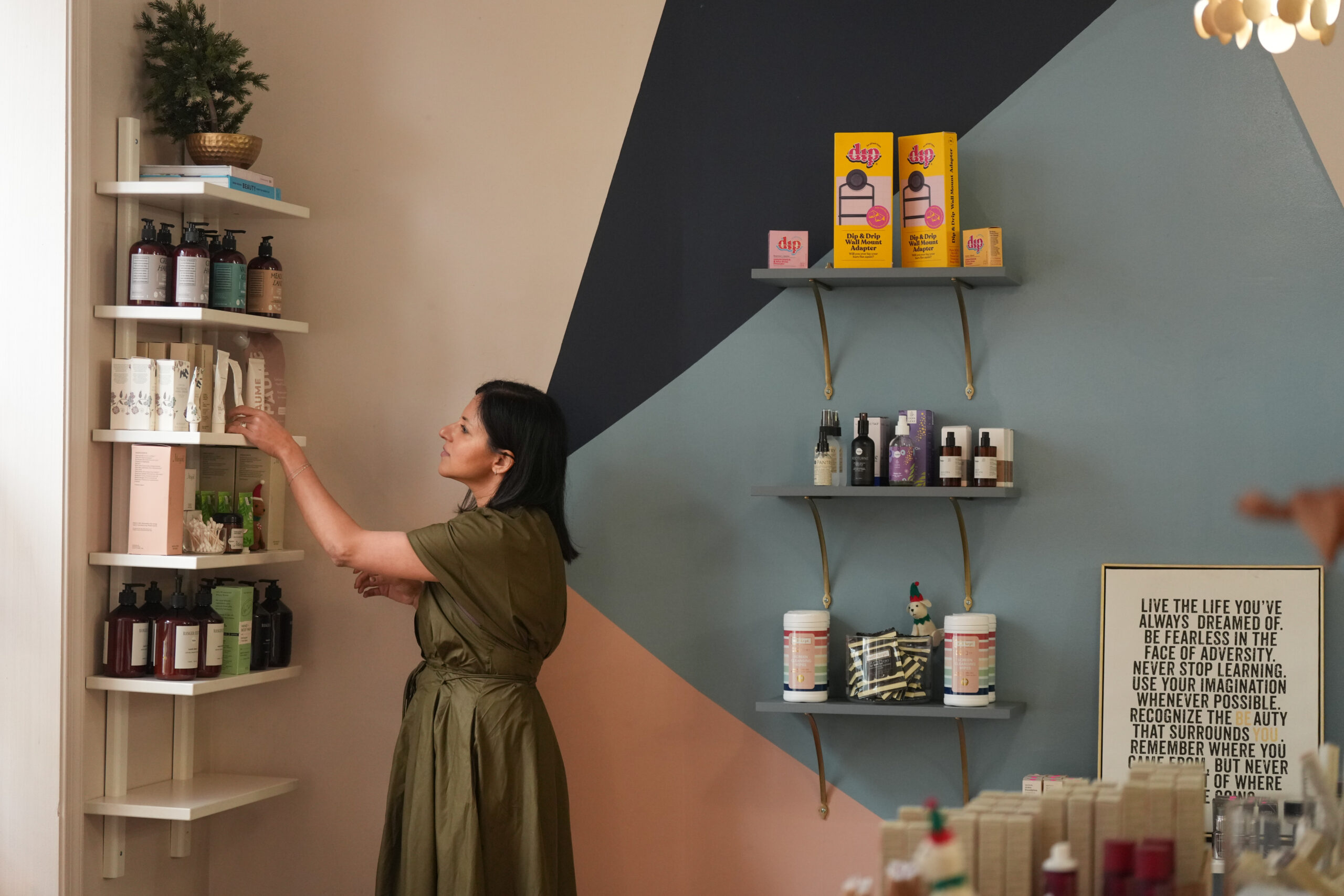
    Sabeen Zia runs Indie Shelf, which stocks a bunch of indie beauty brands. She also runs a brand called Muskaan that she sells at the store, in Philadelphia, December 11, 2025.

    The brand is sold at local shops and spas.

    Sabbatical Beauty also pours back into the city’s maker ecosystem — donating masks and sanitizer during COVID, hosting holiday toy drives, running small-business markets, and partnering with the Equitable Skincare Project to fund donation facials for the trans community.

    It’s a similar story with brow artist Tara Giorgio.

    When the Lancaster native grew frustrated by the discontinuation of her favored brow beauty products, she created Brow Gang — her line of high-pigment brow mousse and powders that are, as she says, made “for real life.”

    Her products are sold in her two salons — in West Chester and Northern Liberties — and online.

    Essential oils and an instruction sheet are pictured before Linear Beauty’s DIY body oil workshop at Moon and Arrow, a boutique in the Queen Village section of Philadelphia, on Thursday, Dec. 4, 2025. Linear Beauty is an independent Philadelphia-based botanical skincare brand founded by Tasha Gear.

    Philly’s beauty customers, she said, are unique because this city is “a true melting pot — all cultures, all backgrounds, all brow textures, all lifestyles. We don’t like fluff in Philly and we want things that work and are priced reasonably.”

    People here are busy and “they want products that make their lives easier — fast routines, long-lasting wear, and formulas that hold up through humidity, work shifts, SEPTA, the gym, real everyday life.”

    Cosmetic chemist Tina D. Williams feels “there’s still a real lack of handmade, natural skincare” in the local market to feed that need.

    Her Center City-based DVINITI Skincare crafts small-batch, food-grade blends of natural oils like argan, jojoba, and almond, which are designed for customization. Her philosophy, too, is rooted in the city: “The first ingredient in every DVINITI product is love — and this City of Brotherly Love is the perfect home for a brand built on self-care.”

    Williams, who grew up in the Olney area and graduated from the Philadelphia High School for Girls, is all too familiar with the city’s cold winters and hot summers. “I grew up here, so I understand the kind of skincare [Philly] people need,” she said. She also sees the city’s scientific backbone as a natural fit for a chemistry-driven brand. “Philly is a tech hub and a leader in research and development. DVINITI is positioned well to scale and grow with the local resources here to support our clients’ needs.”
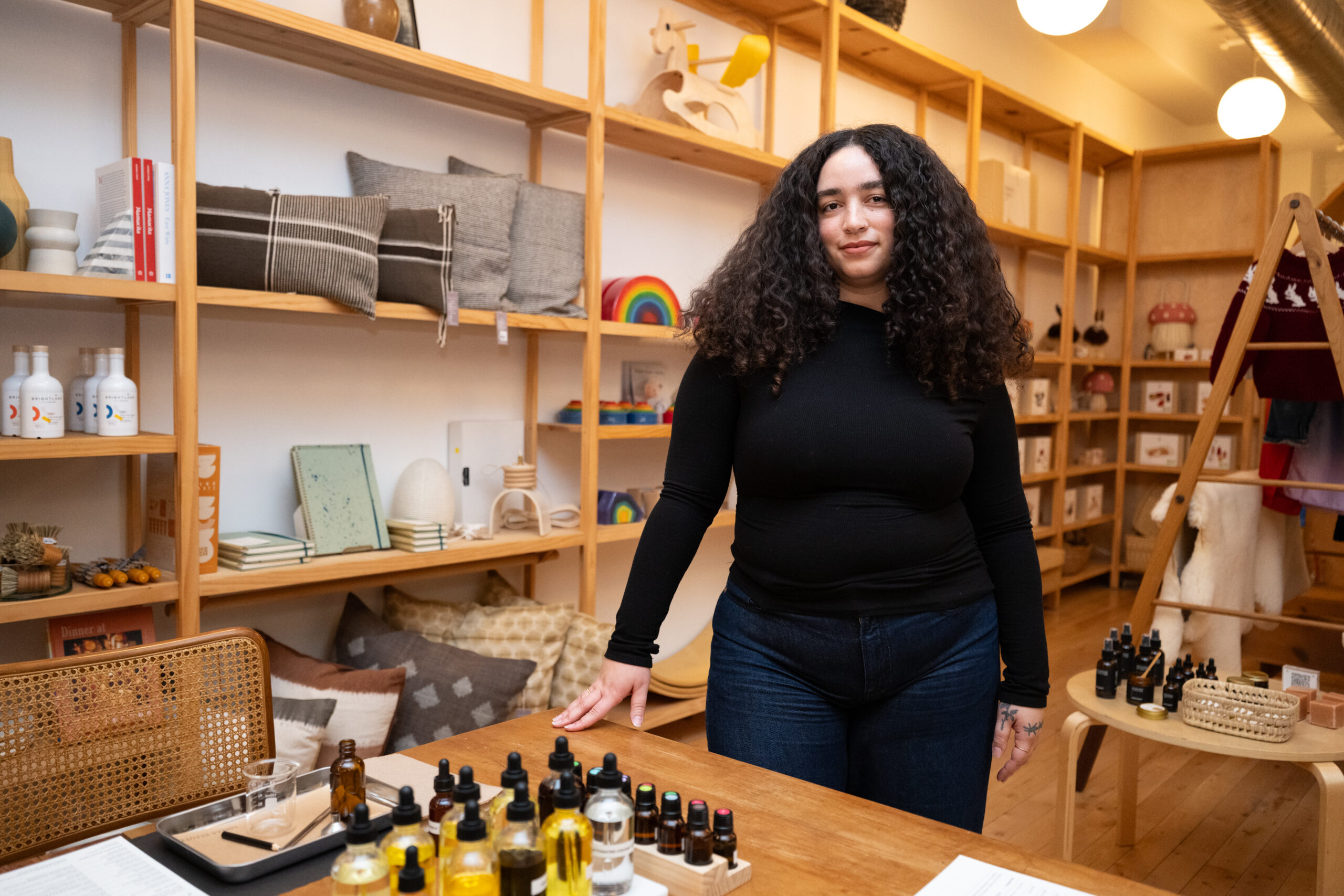
    Linear Beauty founder Tasha Gear poses for a portrait at a DIY body oil workshop hosted by the beauty brand at Moon and Arrow, a boutique in the Queen Village section of Philadelphia, on Thursday, Dec. 4, 2025.

    Another brand shaping the city’s beauty identity is Haiama Beauty, a Black woman–owned haircare line built in Philadelphia “because I love this city wholeheartedly,” said founder Allison Shimamoto.

    Haiama’s Grow & Strengthen Elixir takes four months to make and uses premium, organic argan oil — not because it’s the most profitable, but because it’s the right way to make it.

    Small-batch production allows the brand to source intentionally from BIPOC, LGBTQIA+, and women-owned suppliers and to design products that work across all curl patterns— from the Leona red-light scalp stimulator to the multipurpose Everything Cream.

    What resonates with her Philly consumers, Shimamoto said, is connection. “People here want to know who’s behind the brand.”

    Linear Beauty products are pictured at a DIY Body Oil Workshop hosted by the brand at Moon and Arrow, a boutique in the Queen Village section of Philadelphia.

    Markets like Made@Bok and Art Star have helped Haiama meet customers face-to-face, build community, and grow within the city’s tight-knit maker ecosystem.

    Philadelphia’s indie founders agree that the city’s beauty identity is defined by three traits: creative, authentic, community driven.

    “The passion for high-quality products and supporting small business truly sets Philly brands apart,” said Zia. Even small details — easy drop-offs, quick restocks, face-to-face conversations with founder-formulators — become part of the city’s distinctive customer experience.

    Local customers meet founders in person, pick up their products, return for refills, and show up at pop-ups and farmers markets.

    Products at Indie Shelf, which stocks a bunch of indie beauty brands.

    Despite challenges like tariffs, supply-chain delays, and seasonal slowdowns, Zia remains hopeful. Her dream? “For Philly to be known as the city for indie beauty — a place where founders can scale without losing their authenticity.”

    Gear, who moved to Philadelphia in 2019 after spending a decade working in New York City’s Package Free Shop, agrees.

    “Philly is a pretty no-B.S. city,” she said. “That shows up in everything I make.”
  • This Philly charter is starting its own college so kids can graduate with high school diplomas and college credits — for free

    This Philly charter is starting its own college so kids can graduate with high school diplomas and college credits — for free

    A Philadelphia charter school is building its own college.

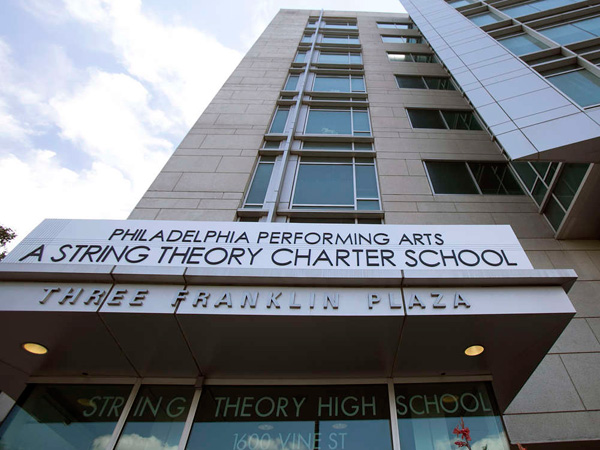
    Students at the Philadelphia Performing Arts Charter School, a K-12 facility of about 2,500 with campuses in South Philadelphia and Center City, should soon be able to graduate with high school diplomas and 60 college credits — for free.

    PPACS is not the only early college in the city — the Philadelphia School District has Parkway Center City Middle College, and other schools allow students to take college courses while in high school. Some schools offer dual enrollment, and a new early college charter will open in the city in the fall.

    But instead of partnering with existing colleges, String Theory, the education management organization that runs PPACS, is in the process of opening its own degree-granting institution.

    String Theory College will focus on design, technology, and entrepreneurship, offering PPACS students more flexibility than prior dual-enrollment partners had, said Jason Corosanite, the college president. Students won’t have to leave the school’s Vine Street campus to attend classes, either.

    “The whole goal is to get all kids prepared for college, with as many college credits as possible,” Corosanite said.

    The college already has Pennsylvania Department of Education approval, and its Middle States Commission on Higher Education accreditation vote is scheduled for March, commission officials said. Once schools are candidates for accreditation, that opens up college transferability, student loans, and Pell grant opportunities, though PPACS students pay no tuition because the school is a publicly funded charter.

    Corosanite said he is confident the school will gain Middle States approval and ultimately be able to offer students associate’s degrees.

    With Philadelphia’s crowded higher education market and a looming college enrollment cliff, it’s fair to question whether the city needs more degree-granting institutions, said Shaun Harper, a professor of education, public policy, and business at the University of Southern California. Some would say it does not.

    But, Harper said, “if this new creation is going to expand access and make higher ed more affordable, I think that is a spectacular thing. We need more innovative models in education that create more seamless pipelines from high school to college.”

    Harper’s research once centered on the experiences of high-achieving Black and Latino boys in New York schools who, once in college, “suddenly they realized that they were not as prepared for college as they had been led to believe by their high school teachers and by the grades they received in high school.”

    That makes Harper consider whether String Theory students “are really going to be pushed to do college-level work, and perform like college students would otherwise be able to perform? I think that is a thing to be concerned about.”

    Ultimately, Harper said, he is intrigued by the model.

    “There’s a real opportunity for [String Theory] to ensure that they are providing the right kinds of professional learning and professional development experiences for these educators, so they amass the skills that will be able to make the curriculum much more complex, much more college-level,” Harper said. “They may have a real shot here at teaching the rest of the nation something that ultimately becomes replicable.”

    High school and college in one stop

    The seeds of the idea trace back to PPACS’ first high school graduates — the Class of 2017.

    When Corosanite and other String Theory officials tracked those students, “some of our best and brightest kids were dropping out of college because of cost,” he said. “It wasn’t because they couldn’t do it. They were looking at the value proposition of these schools and dropping out. I felt the burden of, ‘We’re telling all these kids, yeah, you have to go to college,’ and then they graduate and can’t afford life. How do we solve for that?”

    Enter String Theory College.

    The program is already underway — about 40 students who participated in a pilot program are on track to graduate with college credits in June, and about 40 more are in 11th grade now.

    The college will initially be open only to students enrolled in PPACS. Going forward, every 11th- and 12th-grade honors and Advanced Placement course at the school will be a college-level course, and the PPACS faculty who teach the courses are college faculty.

    Course offerings include multivariable calculus, linear algebra, biotechnology, entrepreneurship, and design.

    Students still have access to the trappings of high school: All non-honors classes are still within the PPACS confines. And students must still meet state requirements for their high school diplomas — they are learning math, but it might be a design-focused math class, for instance.

    “Kids still have their high school experience — they still come to school on time, they still go to the lunchroom with everybody they go to school with,” Corosanite said. “They still see their friends, they still have prom, but they also have college. It makes it a lot easier.”

    There is no budget impact for PPACS, Corosanite said. The school, which as a charter is independently run and publicly funded, pays the college a per-credit hour rate that is roughly equivalent to community college, and that money covers teachers’ salaries and benefits.

    “We’re trying to be as efficient as possible with the classes the teachers have, and the college is in our building,” he said. “We’ve designed it to be cost-neutral. This is not a moneymaker — it’s mission-driven.”

    Going forward, Corosanite dreams of a graduate school of education — String Theory already offers continuing education for teachers — and offering college courses to other schools and districts.

    ‘This is a good opportunity’

    Hasim Smith, a PPACS senior, was pitched on the idea of taking college classes in high school when he was a 10th grader.

    Smith’s dad had heard about the pilot program and urged his son to go for it.

    “He said, ‘This is a good opportunity. I don’t want you to miss out on it,’” Smith said. “I like to challenge myself and do things that other people see as hard. And I like that it’s free — it helps with college costs.”

    Smith was game and now, at age 18, he’s looking forward to collecting his high school diploma and transferring dozens of credits to another college. (He’s already been accepted to 10 and is awaiting more decisions.)

    The courses are challenging, he said, but manageable, especially with his teachers’ support. He’s enjoyed the design challenges in particular, Smith said.

    “We had to learn a lot — it gets really deep. We have to learn about design, and different theories, and entrepreneurship,” Smith said.

    He had always thought he might want to pursue nursing as a career, but his String Theory college experience has him also considering architecture, he said.

    How to apply

    The college-in-a-high-school program has a limited number of slots for students who will be in 10th through 12th grade for the 2026-27 school year, and is accepting applications for those seats and for its incoming ninth-grade class.

    The school’s application deadline is Jan. 30.

  • Here are the Philly ties to the new basketball gambling scandal

    Here are the Philly ties to the new basketball gambling scandal

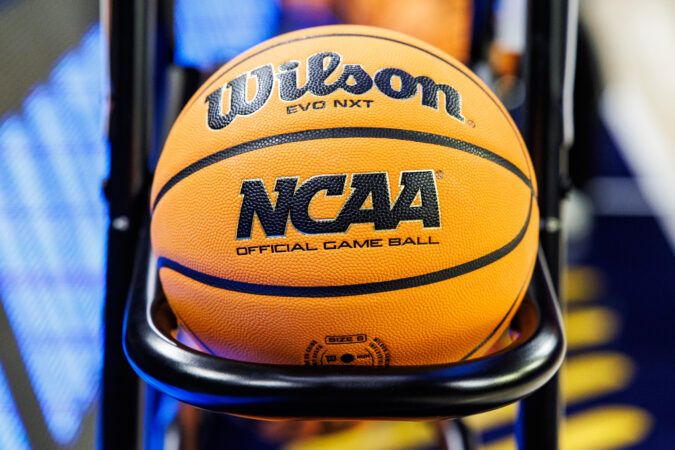
    Philadelphia had a moment in the global spotlight this week as the U.S. Attorney’s Office said it had charged 26 people — including 20 basketball players — with participating in a wide-ranging, international scheme to rig games on behalf of gamblers.

    U.S. Attorney David Metcalf said bettors bribed players on teams in the Chinese professional league, as well as in NCAA games from Texas to New York.

    So why was the case charged here? And what role did Philadelphia play in the allegations?

    Below are three takeaways about the local ties of the sprawling investigation — the latest high-profile case to target alleged corruption in sports.

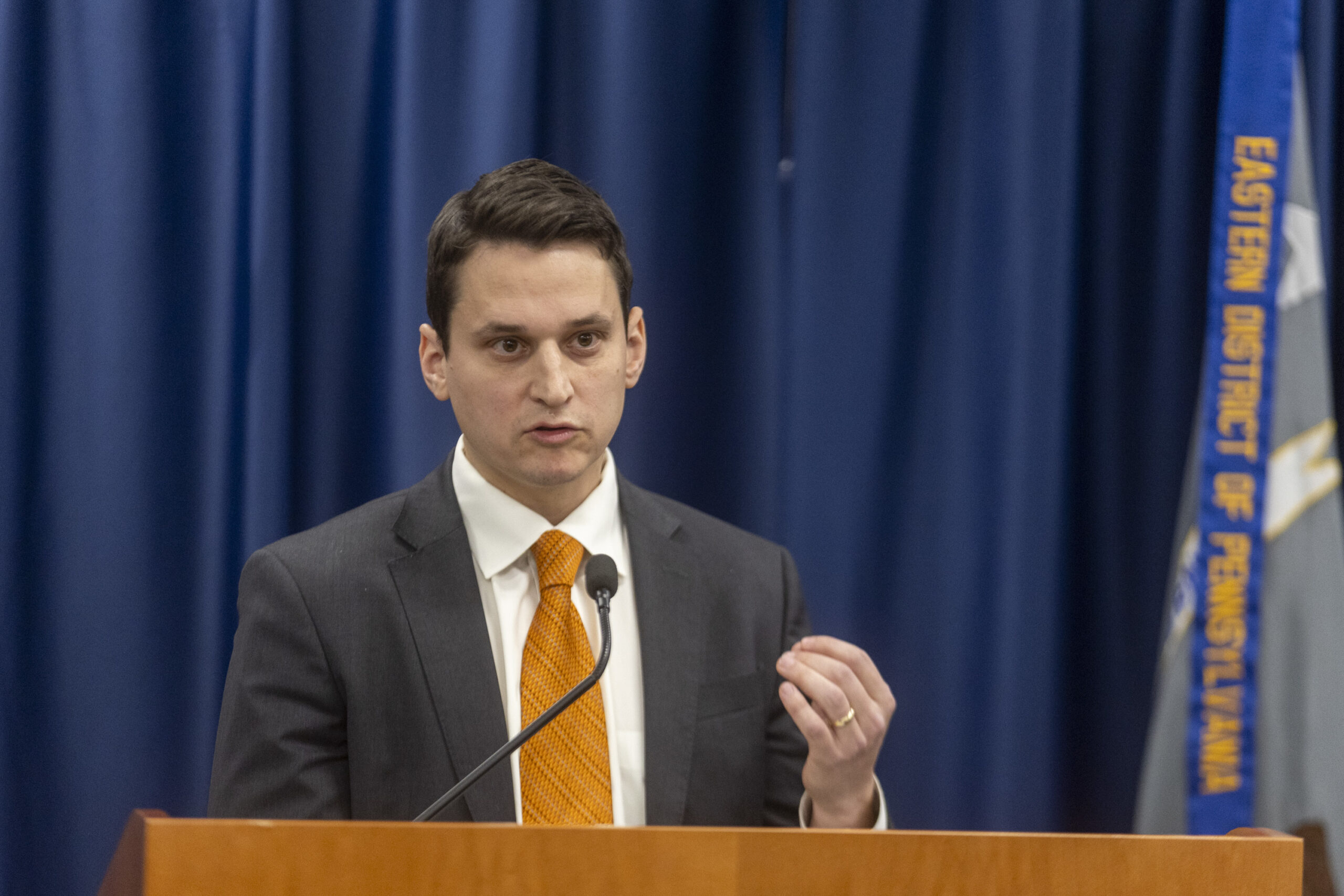
    U.S. Attorney David Metcalf announced charges against 26 people in what prosecutors described as a point shaving operation to benefit gamblers.

    Why was the case charged in Philadelphia?

    Federal prosecutors have wide latitude to pursue criminal investigations as long as some aspect of the alleged wrongdoing took place in their jurisdiction, and if a suspect’s actions could be considered a violation of federal law.

    In this case, prosecutors have alleged that the bets and payoffs that impacted games amounted to a criminal conspiracy between the so-called fixers and players, and also that the actions violated federal bribery and wire-fraud laws.

    In addition, the indictment contends one of the key organizers of the point-shaving scheme — professional gambler Shane Hennen — lived partially in Philadelphia at the time of his alleged crimes.

    And even though most of the games he gambled on took place elsewhere, Hennen is accused of placing huge bets at Rivers Casino’s sportsbook in Fishtown. One of the wagers was a $198,300 bet against a Chinese team called the Jiangsu Dragons, court documents say. Hennen had allegedly recruited one of the Dragons’ best players, Antonio Blakeney, to play poorly in exchange for bribes.

    (A spokesperson for Rivers Casino declined this week to comment on the case and did not respond to questions about why Hennen was allowed to place such large wagers on relatively obscure games.)

    The indictment says several other crimes took place in Philadelphia as well, including Jalen Smith — a basketball trainer and alleged organizer of the scheme — traveling to the Philadelphia International Airport to pay an unnamed player his bribe money.

    Were any Philadelphia schools part of the scheme?

    The indictment paints a limited portrait of connections between the point-shaving operation and Philadelphia schools or universities.

    In one of the more detailed local episodes in the document, prosecutors said Smith and Blakeney in 2024 attempted to recruit players from the La Salle men’s basketball team to take bribes and underperform in a game against St. Bonaventure.

    Hennen and a codefendant apparently thought the plan had succeeded — the indictment said they went on to place nearly $250,000 in bets on St. Bonaventure for that game.

    But none of the bets won, prosecutors said. And no La Salle players were named or accused of accepting the bribes in relation to the contest.

    A La Salle spokesperson said in a statement this week that it was aware of the allegations in the case, adding: “Neither the university, current student-athletes, or staff are subjects of the indictment. We will fully cooperate as needed with officials and investigations.”

    What about any Philadelphia-based players?

    The role of Philadelphia-based players was similarly limited.

    While several players accused of participating in the scheme spent time in the area, none was accused of accepting bribes while playing for a Philadelphia-based school.

    Former Temple University forward Elijah Gray, for example — who played for the Owls in the 2024-2025 season — participated in the scheme the year before, while he was playing at Fordham. Prosecutors said he was offered $10,000 to $15,000 to underperform on the court, and said he later recruited a teammate to participate in the point-shaving operation as well.

    Gray left Temple and transferred this academic year to the University of Wisconsin, but he was dismissed from the team in the fall over what the program said were “events preceding his enrollment.” He has pleaded guilty to one count of bribery, court records show, and is scheduled to be sentenced in March.

    Micawber “Mac” Etienne — who played for La Salle last year — was also bribed before he came to Philadelphia. Fixers approached Etienne in 2024, prosecutors said, while he was playing at DePaul. He agreed to help throw games, prosecutors said, which led Smith to give him and three teammates $40,000 in cash.

    Etienne has also pleaded guilty to a bribery count, court records show, and is scheduled to be sentenced in April.

    One current Philadelphia-based player is facing charges: C.J. Hines, a guard who transferred to Temple this year. But prosecutors said he took bribes in 2024, when he was playing at Alabama State.

    Hines has been charged by information, which typically indicates a defendant intends to plead guilty.

    A Temple spokesperson said the university had “previously received notice from the NCAA that Hines had potential eligibility concerns, and for that reason, he has not participated in any athletic competition since enrolling at Temple.”

    What happens now?

    The prosecutions will now proceed through Philadelphia’s federal courthouse in Center City.

    Some defendants — such as Gray, Etienne, and Hines — will likely have their cases wrapped up relatively quickly, as they’ve already pleaded guilty or indicated an intent to do so.

    Hennen has not yet entered a formal plea in the case, according to court records. If he or any other defendants plans to take the case to trial, it could be many months before the case is put before a jury.

    Staff writer Isabella DiAmore contributed to this article.

  • Temple bought the site of a former McDonald’s for $8 million

    Temple bought the site of a former McDonald’s for $8 million

    Temple University last month bought a vacant property at the site of a former McDonald’s near its North Philadelphia campus for $8 million, according to property records.

    The university is still developing plans for the 48,640 square-foot lot at 1201-1219 N. Broad St., by Girard Avenue, a spokesperson said.

    It’s adjacent to the Temple Sports Complex, which features two fields for soccer, lacrosse, and field hockey. That location “provides an opportunity to implement the vision of our campus safety and physical environment plan,” Steve Orbanek said.

    The transaction was earlier reported by the Philadelphia Business Journal.

    The restaurant franchise was demolished in 2023.

    Temple’s latest acquisition comes as the university has expanded its footprint in recent months along Broad Street.

    In early 2025 the university paid $18 million for Terra Hall, a former University of the Arts building on South Broad Street. The building will be Temple’s Center City campus. And last fall Temple bought jazz bar New Barber’s Hall on Oxford Street for $2.3 million, the Business Journal reported.

  • Judicial district says decisions on ICE presence at Philly courthouse are the sheriff’s ‘sole responsibility’

    Judicial district says decisions on ICE presence at Philly courthouse are the sheriff’s ‘sole responsibility’

    The judicial district that oversees the Philadelphia court system says that the authority for managing ICE’s controversial presence at the Criminal Justice Center rests on Sheriff Rochelle Bilal and that decisions around that are her “sole responsibility.”

    That follows a Wednesday morning news conference where the sheriff joined local elected and community leaders who suggested that court officials or legislators needed to address the ongoing turmoil around courthouse immigration arrests. They called for meetings with court leaders to discuss how to set guardrails on ICE activity.

    The First Judicial District responded with a statement late Wednesday:

    “The First Judicial District is always willing to discuss matters of mutual concern with our justice partners, but managing security in court buildings ― which includes managing ICE’s presence ― is the sole responsibility of the sheriff. These decisions are the sheriff’s to make.”

    The Philadelphia Sheriff’s Office responded Thursday that it was “ready to execute all lawful judicial orders.”

    “To be clear,” its statement said, “security inside court facilities is the responsibility of the Sheriff’s Office. … Areas outside of court facilities are public spaces, where individuals retain their First Amendment rights, including the right to assemble and protest. Those areas are not under the operational control of the Sheriff’s Office.”

    The sheriff’s office added that it is committed to maintaining order and safety while upholding the rights of all who enter, and that it remains open to dialogue to ensure “clarity, coordination, and public safety.”

    The sheriff has said her office does not cooperate with ICE, does not assist in ICE operations, and does not share information with the agency. She has not directly addressed whether she believes she has authority to bar ICE agents from the property.

    Her supporters have defended the sheriff by insisting that she does not have that power, that she could only carry out orders issued by a judge or legislature.

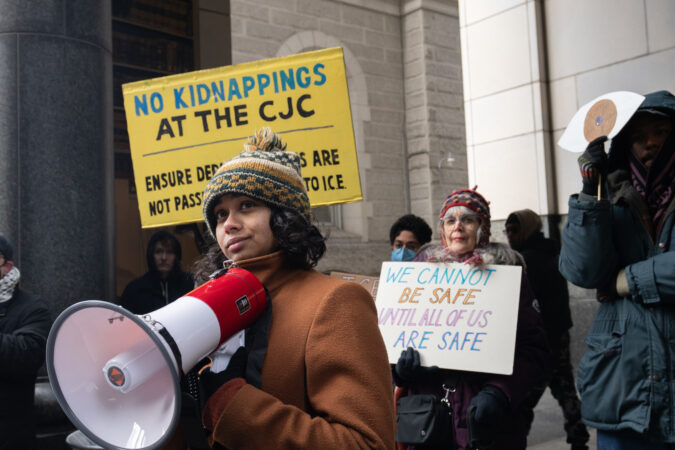
    Meanwhile, the presence of ICE in and around the Criminal Justice Center has provoked demonstrations and controversy, with activists charging that the sheriff has allowed ICE to turn the property into a “hunting ground” for immigrants.

    U.S. Immigration and Customs Enforcement officials did not reply to a request for comment on Thursday.

    The group No ICE Philly has castigated the sheriff, saying that by not barring ICE — as judges and lawmakers in some other jurisdictions have done — she has helped enable the arrest of 114 immigrants who were trailed from the courthouse and arrested on the sidewalk.

    That group and others say ICE agents have been allowed to essentially hang out at the Center City courthouse, waiting in the lobby or scouring the hallways, then making arrests outside.

    Many people who go to the courthouse are not criminal defendants ― they are witnesses, victims, family members, and others in diversionary programs. But they have been targeted and arrested by ICE, immigration attorneys and government officials say, causing witnesses and victims to stay away from court and damaging the administration of justice in Philadelphia.

    Aniqa Raihan, a No ICE Philly organizer who has helped lead courthouse protests, said she was not encouraged by the First Judicial District’s statement.

    “We already know that Sheriff Bilal is not doing all she can to protect people at the courthouse,” she said Thursday. “However, the First Judicial District is not powerless. The court can make its own policy, like the court in Chicago did, barring civil arrests on and around the courthouse. … What we’re seeing is a lot of blame-shifting and finger-pointing from our leaders at a time when we desperately need teamwork.”

    The issue around ICE access is complicated by the fact that courthouses are public buildings, generally open to everyone. And sidewalks outside the buildings are generally considered public property.

    Last week the sheriff garnered national headlines ― and condemnation ― for calling ICE “fake, wannabe law enforcement” and for sending a blunt warning to agency officers.

    “If any [ICE agents] want to come in this city and commit a crime, you will not be able to hide,” Bilal said in viral remarks. “You don’t want this smoke, ’cause we will bring it to you. … The criminal in the White House would not be able to keep you from going to jail.”

    On Wednesday, at the news conference at the Salt and Light Church in Southwest Philadelphia, Bilal said her office follows the law and would obey judicial orders and legislative statutes around courthouse security.

    District Attorney Larry Krasner ― whose office led the event, and who reiterated his pledge to prosecute ICE agents who commit crimes ― said victims and witnesses are not showing up for cases due to fear of ICE.

    About half a dozen elected officials and community leaders gathered, with some calling for ICE to get out of Philadelphia.

    They asked for the court system to establish rules and protections for immigrants seeking to attend proceedings at the Criminal Justice Center, and for state court administrators to meet with the district attorney, the sheriff, the chief public defender, City Council members, and others.

    Krasner said Thursday that his office and the other parties “look forward to meeting with the leadership of the courts to discuss lawfully regulating ICE activity in and around the Criminal Justice Center. We will be corresponding with the courts to schedule monthly meetings immediately.”

    At the same time, “we will continue to do all we can to prioritize safety and justice for victims, witnesses, and families who are navigating the criminal justice system,” he said. “Unlawful and unnecessary ICE activity in and around the CJC is deeply traumatizing to those who are already navigating pain and unfortunate circumstances.”

  • Hahnemann redevelopment may be another victim of councilmanic prerogative | Editorial

    Hahnemann redevelopment may be another victim of councilmanic prerogative | Editorial

    Since his 2023 election, 5th District Councilmember Jeffery “Jay” Young has earned a reputation as City Council’s quarrelsome contrarian. His penchant for swooping in and obstructing projects at the last minute has upset everyone from progressive community activists to affected developers.

    Young is a single vote on Philadelphia’s 17-member legislative body, but thanks to the tradition of councilmanic prerogative — where the rest of Council yields to district representatives regarding land-use decisions — he wields absolute power over an area that includes Rittenhouse Square and City Hall to the south, Strawberry Mansion to the west, part of Northern Liberties and Fishtown to the east, and Hunting Park to the north.

    Projects impacted by his objections include a long-standing proposal to build senior housing in Strawberry Mansion, a plan to protect students with speed cameras in school zones, and the renovation of the Cecil B. Moore Library.

    Young’s latest disruptive gambit — ill-conceived and misguided — is a bill that targets the proposed redevelopment of the former Hahnemann University Hospital patient towers in Center City into hundreds of apartments.

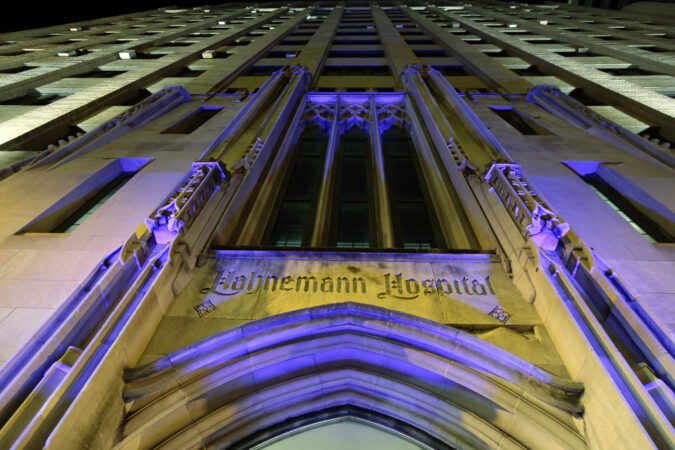
    Established in 1885, the hospital healed generations of Philadelphians, and its south tower was the first skyscraper teaching hospital in America. Beyond the loss of medical services, when Hahnemann closed six years ago, it left a gaping hole in the heart of the city.

    Located along a stretch of North Broad Street that is heavily underutilized, the vacant buildings are begging for a new lease. Dwight City Group has proposed refilling the campus with housing. The plan would add hundreds of new residents right next to Center City and the Broad Street Line, and within walking distance of Suburban Station.

    To most housing, development, and planning experts, the idea is perfectly sound. Philadelphia would add workforce housing (around 1% of Mayor Cherelle L. Parker’s goal) in a location that already has the infrastructure and amenities residents require, and the city would not have to spend any taxpayer money to make it happen.

    And yet, Young is opposed.

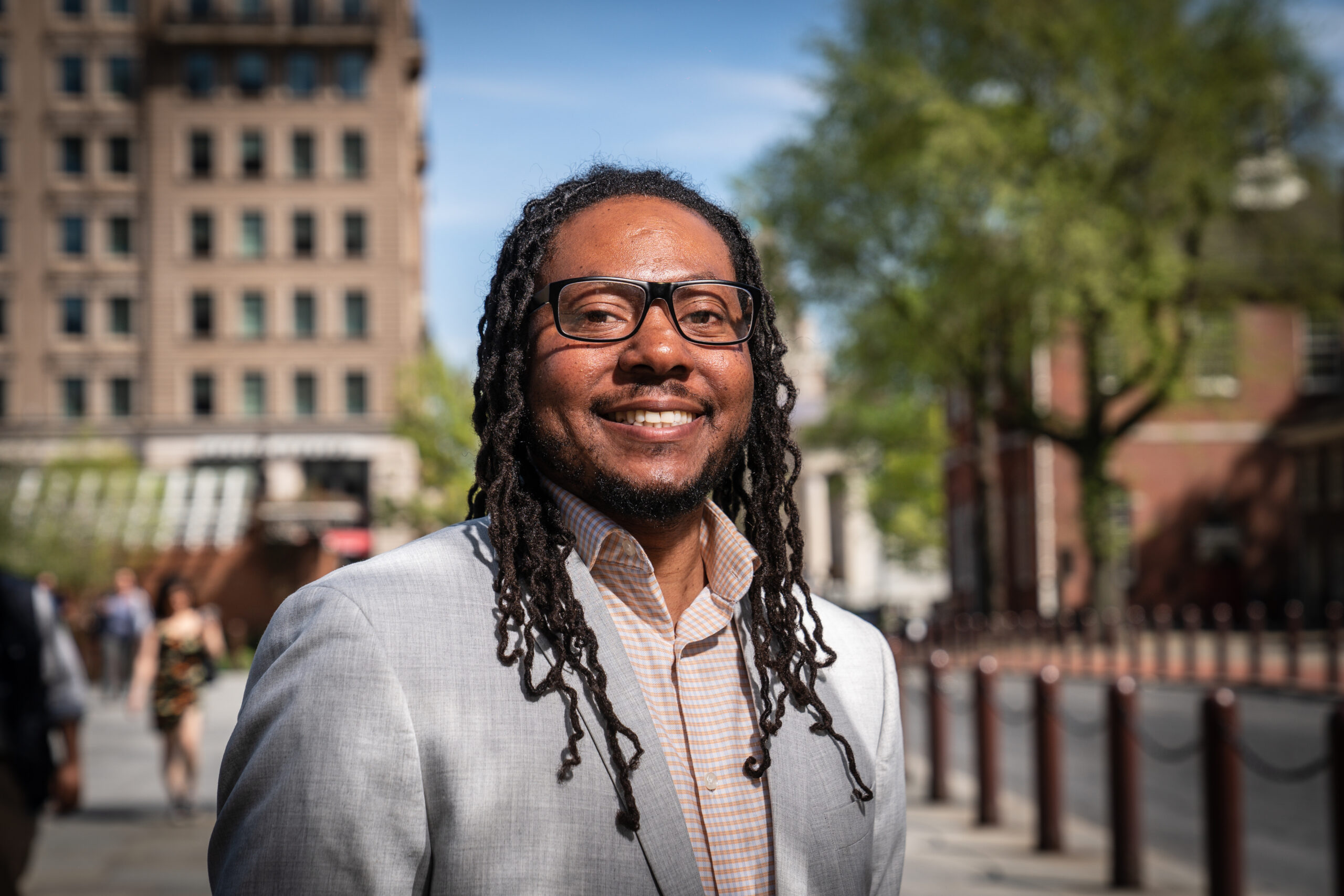
    Jeffery “Jay” Young represents Philadelphia’s 5th District.

    In a statement to the Editorial Board last year, Young defended the move as being motivated by a desire to grow jobs in the city by limiting development in the area to commercial use. That’s an admirable goal. But who is going to buy the goods and services these hypothetical new businesses would offer? The redevelopment of Hahnemann into an apartment building would only increase local entrepreneurial opportunities.

    Thankfully, in this case, it looks like Young’s obstructive desires may be a moot point — at least when it comes to his proposed legislation.

    Because Council adjourned for its winter break without voting Young’s bill out of committee, the developer was able to secure zoning permits to build 361 apartments, with space for commercial use in the building’s ground floor.

    While the Dwight City Group did not want to comment, CEO Judah Angster earlier told Inquirer reporter Jake Blumgart they remain in negotiations with Young. Given the fact that the developer may have to deal with the councilmember in the future, there is a chance the Hahnemann project may be curtailed to avoid Young’s ire elsewhere.

    Were that to happen, it would mark another missed opportunity for positive growth in the city, thanks to councilmanic prerogative.

    For decades, Philadelphia has trailed peer cities in job growth and economic activity. While high business taxes, deep poverty, and other factors play a role, prerogative stands out as an impediment that is entirely self-inflicted.

    The practice — no matter how strongly it is defended by Young and his colleagues — is a constant detriment to the city. While there is merit in giving district representatives a strong voice to protect their constituents from unwanted development, councilmanic prerogative too often allows the whims of a single person to override the will of the people.

    The only thing Philadelphia would lose by eliminating councilmanic prerogative is the opportunity for Council members to grandstand and feed their egos.

  • Pit bull that attacked dogs in Center City is in ACCT custody

    Pit bull that attacked dogs in Center City is in ACCT custody

    For Brian Lovenduski and J. Bazzel, the week after Christmas turned into horror when a pit bull in Center City attacked their beloved dogs. Now that the canine is in custody, they can’t help but feel a bittersweet sense of solace.

    “I feel relieved that the dog is not a danger to other people on the streets, but I have mixed feelings that the authorities didn’t work faster,” Lovenduski said.

    Between Dec. 26 and 31, three dogs and two owners were attacked by a pit bull in Center City, leaving behind thousands in veterinary bills and GoFundMe pages asking for help.

    Lovenduski’s miniature pinscher, Ziggy, lost a leg after a pit bull lunged at him at 12th and Chestnut Streets. And, Stella, Bazzel’s sheltie pup, required surgery, a plate, and a skin graft to piece her crushed foreleg together, after being attacked at Juniper and Chestnut Streets.

    It that intersection where police located the pit bull and her owner, whom they believed to be a homeless woman, on Jan. 6.

    Stella, an 11-month-old sheltie, seen here recovering from surgery after she was attacked by a pitbull Dec. 26 in Center City. Police believe the pitbull is responsible for three recent attacks.

    Miguel Torres, a spokesperson for the Philadelphia Police Department, said the woman was arrested for an unrelated matter he would not disclose. So far, no charges have been filed in connection with the dog attacks, Torres said.

    The pit bull was transported to ACCT for evaluation. She has not been euthanized, but is not a candidate for adoption, said Sarah Barnett, ACCT Philly executive director.

    All incidents remain under investigation, police said.

    Both Lovenduski and Bazzel were told the pit bull responsible for their dogs’ attacks was in custody at ACCT.

    “It’s bittersweet. We have a dog that is not in a great situation, which creates situations for other dogs and other people. I’m relieved, but I’m not happy it had to come to that,” Bazzel said.

    Stella, an 11-month-old sheltie, seen here recovering from surgery after she was attacked by a pit bull Dec. 26 in Center City. Police believe the pit bull is responsible for three recent attacks.

    Regardless, his full focus is on his 11-month-old puppy, Stella, who is working on her recovery and getting ready for her first birthday on Jan. 23.

    Looking at Ziggy, Lovenduski feels like he may be heartbroken forever, but he is pulling strength from seeing his little guy trying to keep going.

    “He is this innocent little creature that relies on me for his safety, and this horrible thing happened that changed his life forever,” Lovenduski said. “I never expected to be in this situation, but the kindness of people has really reminded me that even when it feels like the world is rotten, kindness wins among the lost.”

    Ziggy, a miniature pinscher, was attacked by a pit bull while being walked by owner, Brian Lovenduski on Dec. 29, 2025. It was one of three known attacks by the pit bull.
  • Time for the Eagles to answer to their true bosses: angry Philadelphians

    Time for the Eagles to answer to their true bosses: angry Philadelphians

    With less than a minute remaining in Sunday’s game against the 49ers, with the Eagles down 23-19 and their back-to-back Super Bowl aspirations on the line, fans crowded together in McGillin’s Olde Ale House erupted into E-A-G-L-E-S chants as a way to keep hope alive.

    Unfortunately, Jalen Hurts was sacked and threw three straight incompletions to end their playoff run early. The Birds’ journey had ended, and with it, the hopes of the region.

    Eagles wide receiver A.J. Brown is unable to make the catch as 49ers cornerback Deommodore Lenoir defends during the second half Sunday.

    Brandon LaSalata, 24, made the drive from Richmond, Va., to watch Sunday’s wild-card matchup surrounded by Eagles fans.

    “I don’t know what happened,” LaSalata said. “We need to get rid of Kevin Patullo. I think that hopefully next year we’ll be a better playoff contender. We should have gotten through this round. I don’t know what happened. I’m very upset.”

    On the other side of the pub, 27-year-old Lancaster native Dominic Polidoro sat with his head hanging low in defeat.

    “I feel pretty deflated,” Polidoro said. “This team was probably the most talented team in the league. It’s really disappointing to see them fall short. We had higher hopes.”

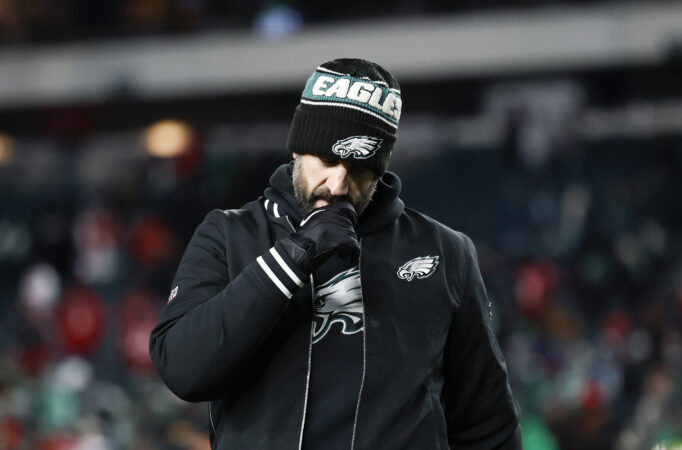
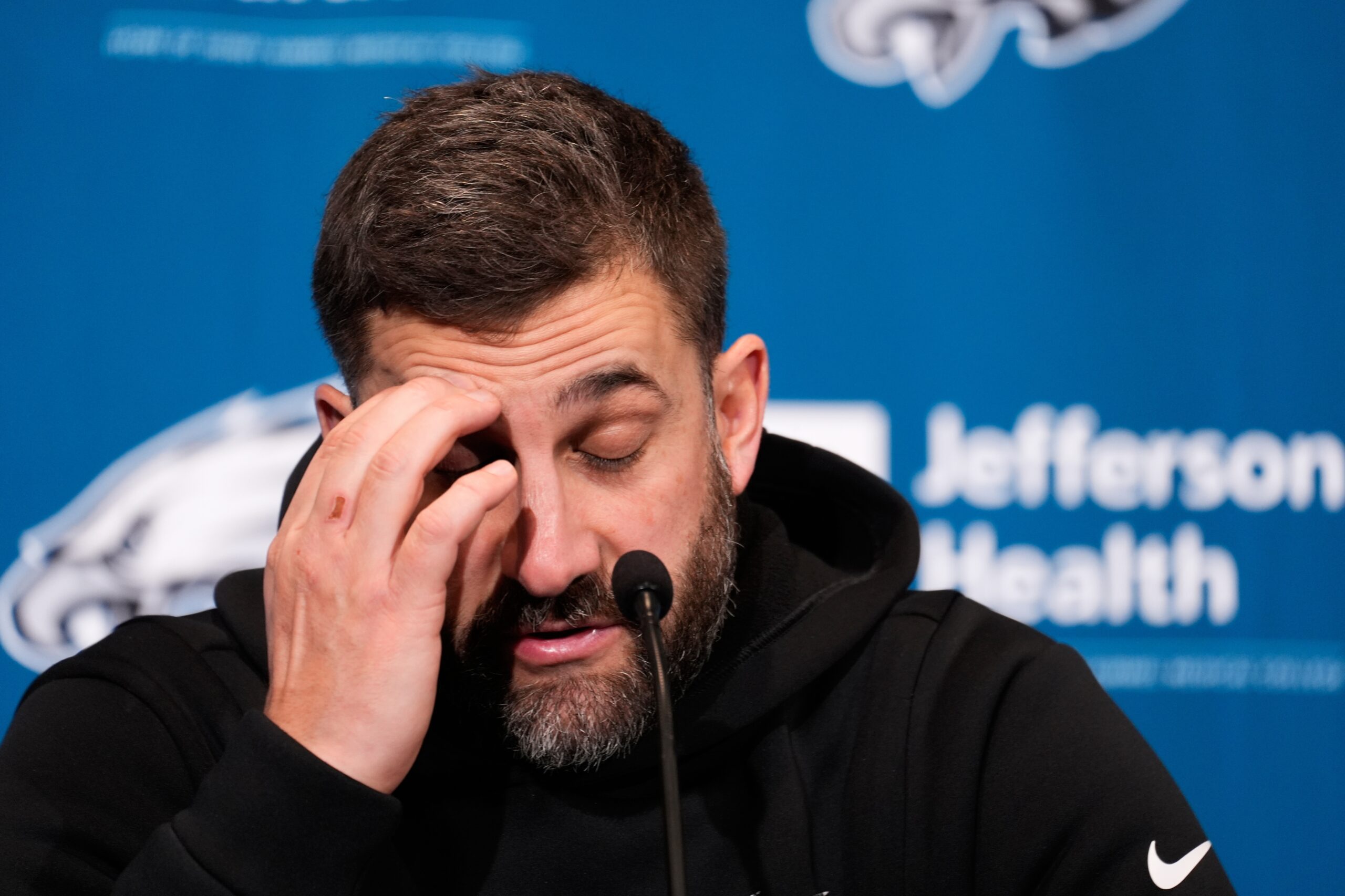
    Eagles coach Nick Sirianni speaks during a news conference after the loss.

    Somber morning commute for Eagles fans

    On Monday morning, the air in Center City was dry, stiff, and unforgiving. And so were the Eagles fans cussing out their favorite team after the season-ending loss.

    “I don’t mind losing, but give me an effort. A.J. Brown has to get traded. [Nick] Sirianni has to get fired. Offensive coordinator, fired,” said 73-year-old North Philadelphian Rodney Yatt. “And then we’ll go from there.”

    Sunday’s game was marred by incomplete passes, a sideline argument between Sirianni and star wide receiver Brown, and, according to fans, tough calls from referees.

    Clay Marsh, 35, of Manayunk, doesn’t think a loss falls to one player.

    “I don’t think it was A.J.’s fault,” Marsh said. He saw the offense as disjointed and questioned offensive coordinator Patullo’s strategy, which Marsh said was an overreliance on “running it up the middle” with Saquon Barkley.

    “Even if we won, it felt like we were going to go into Chicago and probably get spanked anyway,” Marsh said. “Maybe we saved ourselves some real embarrassment.”

    Patullo has been at the center of fans’ ire, not only after last night’s loss but throughout the season. That agita hit a new low when someone egged Patullo’s family home in November after a 24-15 loss to the Chicago Bears.

    The latest Patullo roasting comes in the form of a Bucks County golf simulator that allows players to drive balls directly into a digital fairway featuring Patullo’s face. The Golf Place co-owners Justin Hepler and Killian Lennon shared a video of themselves relieving their frustrations and honing their swings.

    West Philadelphian James Booker, 49, said the small mistakes in the game added up to the loss. He pointed to Brown’s dropped passes and a missed extra point by kicker Jake Elliott that could have brought the Birds into tie-game territory later on.

    Despite the hard loss, Booker doesn’t think Sirianni should be canned.

    “You can’t just say you want to up and fire him, even though fans like to do that a lot — Sirianni got us to this point,” Booker said. “I only hope for a better season next year.”

  • 14 events to look forward to in Philly this year that aren’t the World Cup or the 250th

    14 events to look forward to in Philly this year that aren’t the World Cup or the 250th

    You can’t turn around these days in Philly without someone telling you this is going to be a big year for the city, including me. You get it, things are happening, people are coming, but I bet you mostly just want to know how you can either join in on the parties or figure out how much they’re going to annoy you.

    I usually try to temper my expectations — one, because I’ve learned a few things in 18 years here and two, because I like to be pleasantly surprised. But I’ve recently found myself imagining what the big moments will be like: the NCAA Division I men’s basketball tournament in March; the PGA Championship in May; the FIFA World Cup and MLB-All Star games this summer; and the yearlong celebrations marking the 250th anniversary of the signing of the Declaration of Independence.

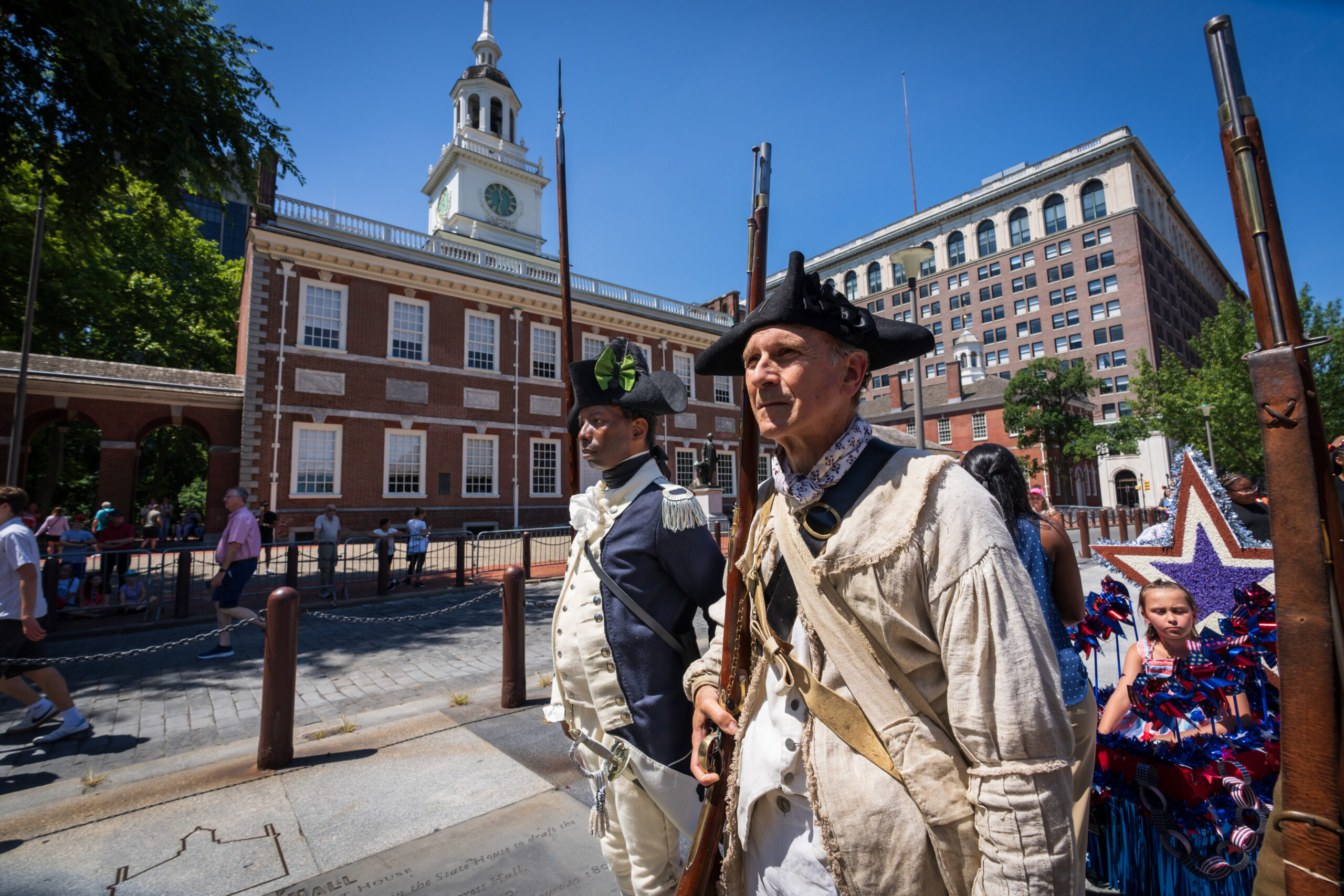
    Antoine Watts, back left, and Michael Clement, front center, participate in the Red, White, and Blue To-Do Pomp & Parade at Independence Hall in 2024.

    I have big hopes and some worries for Philadelphia, just like I do for everything I love.

    And while the stuff above is a lot, it’s not everything going on here this year, not even close. So if you’re seeking alternatives to the big to-dos, looking to keep your calendar full all year long, or just hoping to run into Mark Ruffalo, here are 14 more Philly happenings to look forward to this year.

    (Dates are subject to change. Check related websites for updates.)

    Jan. 30: Philly is Unrivaled

    The first big event features incredible athletes you won’t see in any of the major sporting events I mentioned above: women.

    Unrivaled, a three-on-three format women’s basketball league, is holding a doubleheader at Xfinity Mobile Arena to kick off its first tour later this month.

    Rose BC guard Chelsea Gray (12) drives past Lunar Owls wing Rebecca Allen (9) in their Unrivaled 3-on-3 basketball game Jan. 5 in Medley, Fla.

    The games will undoubtedly hype up fans for when Philly gets its own WNBA expansion team in 2030 and prove to any doubters that Philly is a women’s sports town (we even have a shirt that says it).

    Some tickets remain. The games will also be televised on TNT and truTV.

    Feb. 6 — 22: The Winter Olympics

    The Milano Cortina 2026 Winter Olympics in northern Italy will feature a host of local athletes and at least one famous Philly podcaster. Watching it also doesn’t require you to leave your house, so win-win.

    Four Philadelphia Flyers will be playing Olympic hockey: Travis Sanheim for Canada, Rasmus Ristolainen for Finland, Dan Vladar will represent Czechia, and Rodrigo Abols will take the ice for Latvia.

    People take photos in front of the Milan Cortina Winter Olympics and Paralympics rings, in Cortina D’Ampezzo, Italy.

    Other local athletes will undoubtedly qualify, but I don’t have a full list yet so don’t email me asking why I didn’t mention your cousin-in-law on the U.S. Curling Team.

    Kylie Kelce will also serve as a digital content creator for NBCUniversal’s Creator Collective and she’ll have on-the-ground access to the games to produce social media content.

    Go Birds. Go Team U.S.A.

    Feb. 14: ‘Universal Theme Parks: The Exhibition’

    How much fun can learning about theme parks be without the roller coaster rides, immersive lands, or concession stands? Philly will find out next month when the Franklin Institute premieres: “Universal Theme Parks: The Exhibition.”

    An artists’ conceptual rendering of the Franklin Institute’s “Universal Theme Parks: The Exhibition,” which is slated to open Feb. 14.

    The new exhibit spans eight galleries and tracks the history and world-building of Universal’s theme parks. It was created by the team at the Franklin, who hope it will introduce young visitors to science and tech careers in the theme park industry.

    I’m hoping there’s a section about whatever alien incantation protects the E.T. Adventure ride, which opened in 1990 and is the last remaining original ride at Universal Studios Florida. The high-tech stuff is awesome, but there’s nothing that beats the nostalgia of that flying bicycle ride and the flashlight-fingered alien.

    March 14: Ministry of Awe opens

    The more I hear about the Ministry of Awe the less I understand it, and the more intrigued I become.

    The permanent, six-story immersive art experience helmed by Philly muralist Meg Saligman inside of Manufacturers National Bank in Old City “transforms an abandoned 19th-century bank into a fantastical, seemingly impossible institution that trades in the many enigmatic facets of humanity,” according to its website.

    Guests will be encouraged to question what they value and to wander the multimedia art space, which will lean into a banking theme and includes a room for counterfeiting. Actors will be on hand to enliven their experiences.

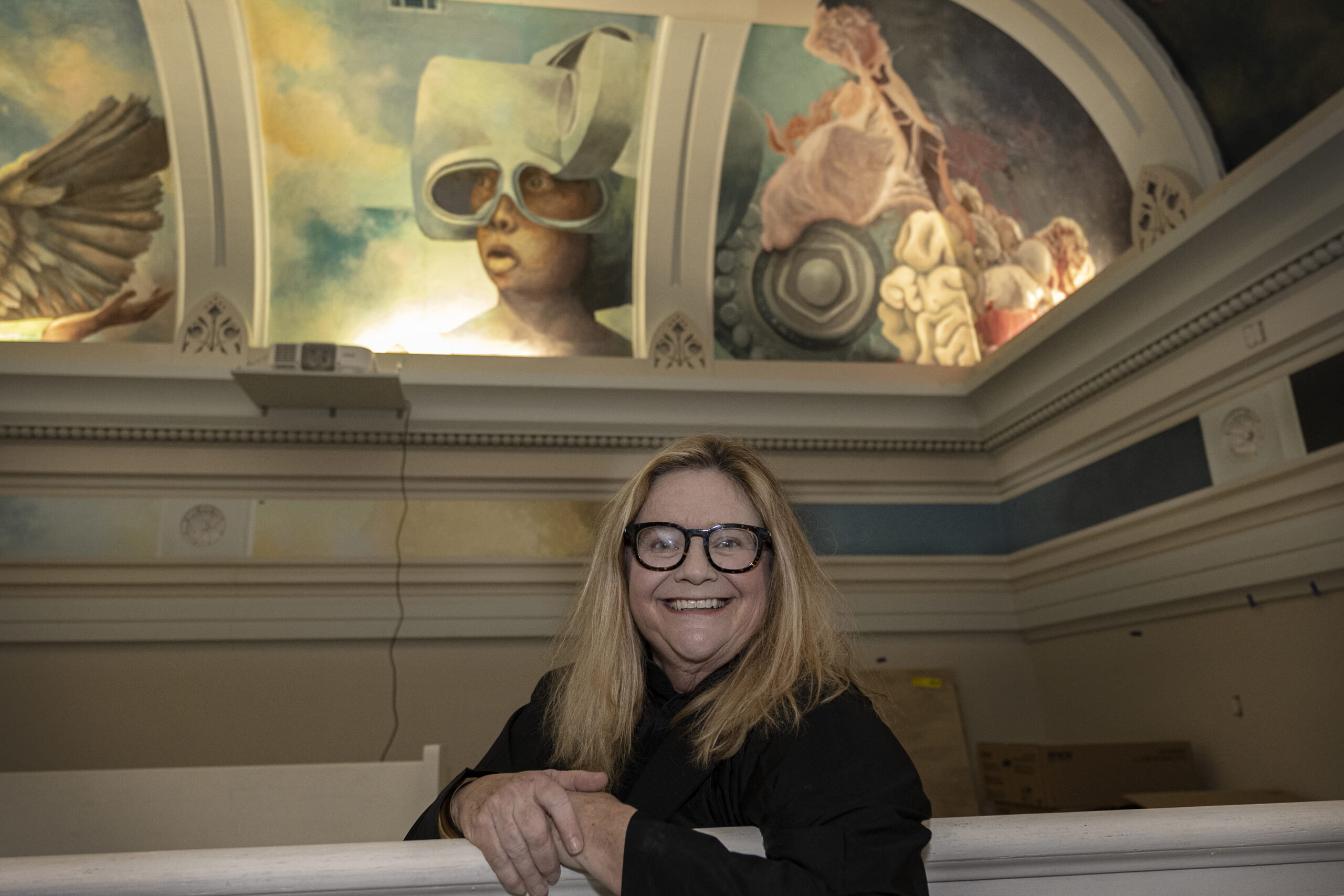
    Muralist Meg Saligman inside of the still-under-construction Ministry of Awe in November. Opening date is March 14.

    “There’s a teller that smells you. You will walk through and be delighted and surprised along the way,” Saligman told The Inquirer.

    The Ministry of Awe says we all already have accounts open there and one thing is for certain, my interest rate is sky-high.

    April 14 — May 31: ‘1776 The Musical’

    There are not many musicals set in Philadelphia and the one thing you can say about 1776 is that it’s one of them.

    The production about the events that led to the signing of the Declaration of Independence never became a juggernaut like Hamilton and didn’t produce any smash songs. But after rewatching the film version last Independence Day, I can safely say it’s still a pretty good musical. Especially if you hate John Adams, or love watching people hate on him.

    While it would have been epic if this production could have been staged at Independence Hall this year, seeing it at the Walnut Street Theatre — the country’s oldest theater, which opened just 32 years after 1776 — is a close second.

    April 16: Cruise ships begin sailing out of Philly

    For the first time in nearly two decades, cruise ships will return to the region this spring, offering locals a chance to seas the day with an aquatic trip abroad.

    Construction of the Port of Philadelphia (PhilaPort) Cruise Terminal began last month in Tinicum Township, Delaware County, at a site adjacent to the Philadelphia International Airport that was formerly known as the Hog Island Dock Terminal Facility.

    (How’s that for a local word salad — a Philly port in Delco at a dock named after the place that may have inspired the word hoagie.)

    A conceptual rendering of the future PhilaPort Cruise Terminal, a 16-acre site adjacent to Philadelphia International Airport.

    Norwegian Cruise Lines has exclusive rights to sail out of the PhilaPort Cruise Terminal through March 2033. According to its website, the first voyage will be a seven-day round-trip to Bermuda.

    Fear not the Bermuda Triangle, my fair Philadelphians, for we’ve weathered far stranger things here following Super Bowl wins, and on an average Tuesday.

    April 18: Monster Jam at the Linc

    If you think the Birds are beasts on their home turf, buckle up, because 12,000-pound trucks are coming to Lincoln Financial Field this spring as part of Monster Jam’s Stadium Championship Series.

    Foam teeth line the front of the Megalodon monster truck at Monster Jam at Lincoln Financial Field in 2023.

    When I hear Monster Jam my first thought is “It’s probably boysenberry,” or “I wonder if it’s as fun as a mash?” but if you have little ones who love things that go vroom — or you do — this auto be wheelie good time.

    May: The Greyhound station reopens

    Slated to come back from the dead this spring like it was Kenny or Jon Snow will be Philly’s intercity bus terminal, formerly known as the Greyhound station.

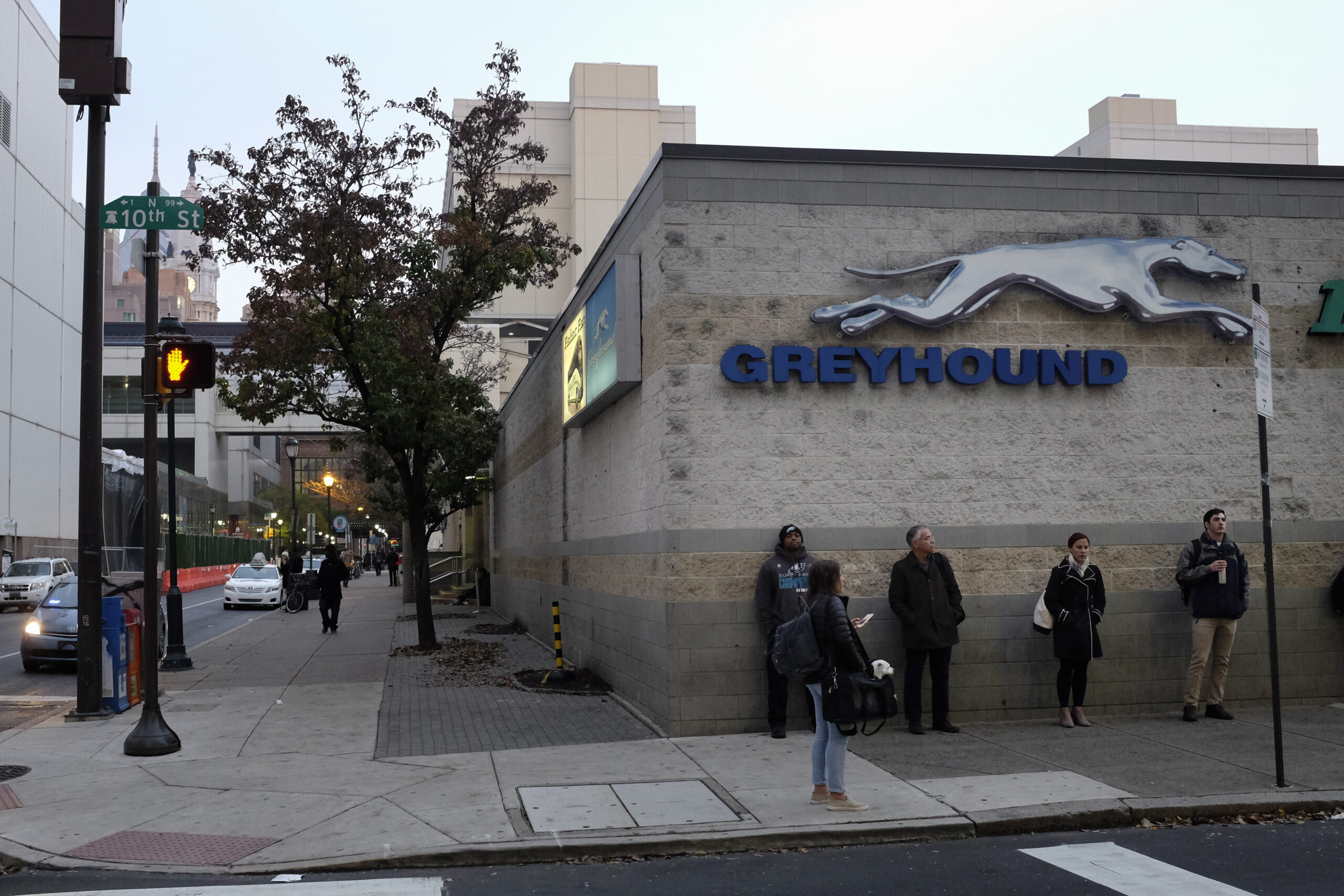
    The Philadelphia Parking Authority will operate the terminal on behalf of the city, which has gone more than two years without a facility since Greyhound left the terminal at 10th and Filbert Streets in 2023 after 35 years.

    Corner of the former Greyhound station at North 10th and Filbert Streets in 2018.

    In the aftermath, buses used public street curbs to pick up travelers, who were forced to wait outdoors in the elements and had very little access to basic amenities, like bathrooms. The whole situation was bus-ted and I’ll be glad to see it fixed.

    June 12: ‘Disclosure Day’ premieres

    Filmed in parts of South Jersey last year and featuring Philly’s own Colman Domingo, Disclosure Day is an alien thriller from director Steven Spielberg that I can’t wait to get my tentacles on.

    I love good sci-fi and this one has a screenplay by David Koepp, who also wrote the screenplay for Jurassic Park, one of my favorite movies of all time. The trailer for Disclosure Day is intriguing, unsettling, and reveals little about the plot, but I already find the movie authentic: If aliens were to land anywhere, South Jersey seems like a fitting place.

    At the end of the trailer, a nun says “Why would He make a vast universe yet save it only for us?” which hearkens to a famous Carl Sagan quote: “The universe is a pretty big place. If it’s just us, seems like an awful waste of space.”

    Aug. 30: Philadelphia Cycling Classic returns

    If there’s one thing Philadelphians love doing, it’s partying while watching other people exercise and this year they’ll get to do it again at the Manayunk Wall when the Philadelphia Cycling Classic returns after a 10-year hiatus.

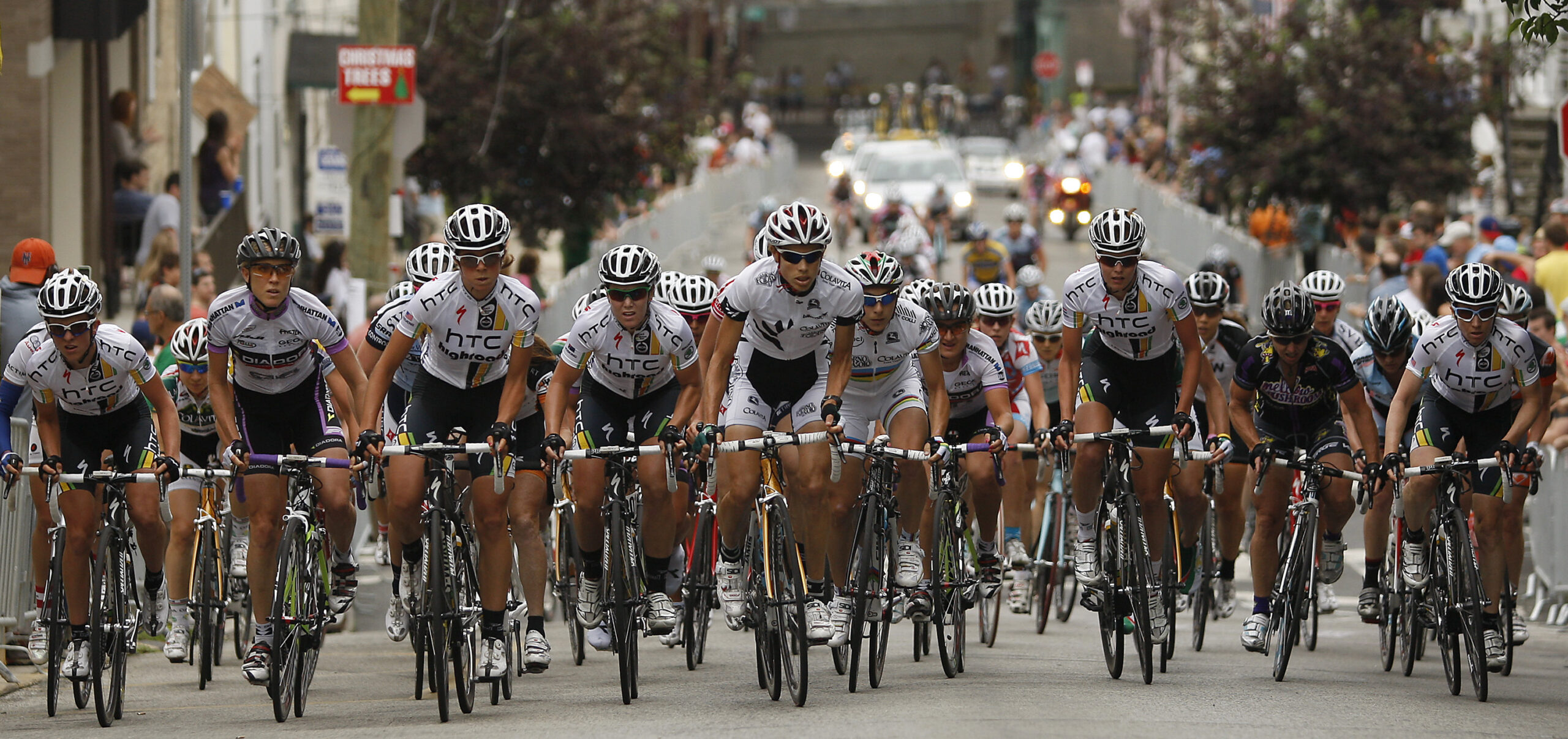
    Held for 30 years before it was canceled in 2016 due to lack of sponsorship, the race follows a 14.4-mile course from Center City to Manayunk, where cyclists must climb the “Manayunk Wall,” a stretch of Levering Street with a 17% gradient.

    Women cyclists pedal up Levering Street, aka the “Manayunk Wall,” during the Liberty Classic TD Bank International Championship race in 2011. The race is returning this year as the Philadelphia International Cycling Classic.

    Back in the day, people partied like it was Two Street on New Year’s along the route in Manayunk, particularly at the Wall. As bikers cycled through the course, spectators cycled through kegs and cowbells, with some folks on Levering Street charging admission to their house parties and others hanging beer banner ads on their porches for a fee.

    Also slated in 2026, but dates remain unknown:

    A conceptual rendering of FloatLab, set to be installed at Bartram’s Garden on the Schuylkill in 2026.
    • Opening of Mural Arts’ FloatLab: Located in the Schuylkill at Bartram’s Garden, FloatLab is a 75-foot installation and environmental center that will be “a convergence of art, architecture, and nature,” according to its creator, J. Meejin Yoon. The sloped, ADA-compliant circular platform, which allows visitors to look eye-level at the river while standing in it, will serve as both an educational and artistic space.
    • Gimme my Philly money: To mark the nation’s 250th, the U.S. Mint is releasing quarters with Independence Hall and the Liberty Bell on them this year and I’m going to need some of those for my piggy bank. Just to be clear, this does not change the fact that I’m still salty at the Mint for stopping penny production. What will people put in their loafers? How will Penny from Pee-Wee’s Playhouse see? It’s just cents-less.
    This new design for the quarter commemorates the U.S. Constitution and depicts Independence Hall in Philadelphia, where the Declaration of Independence and U.S. Constitution were signed. The other side of this quarter has a depiction of President James Madison.

    Rumored in 2026, but in no way confirmed:

    From left: Thuso Mbedu (Aleah Clinton), Fabien Frankel (Anthony Grasso), Alison Oliver (Lizzie Stover), and Mark Ruffalo (Tom Brandis) in “Task.”
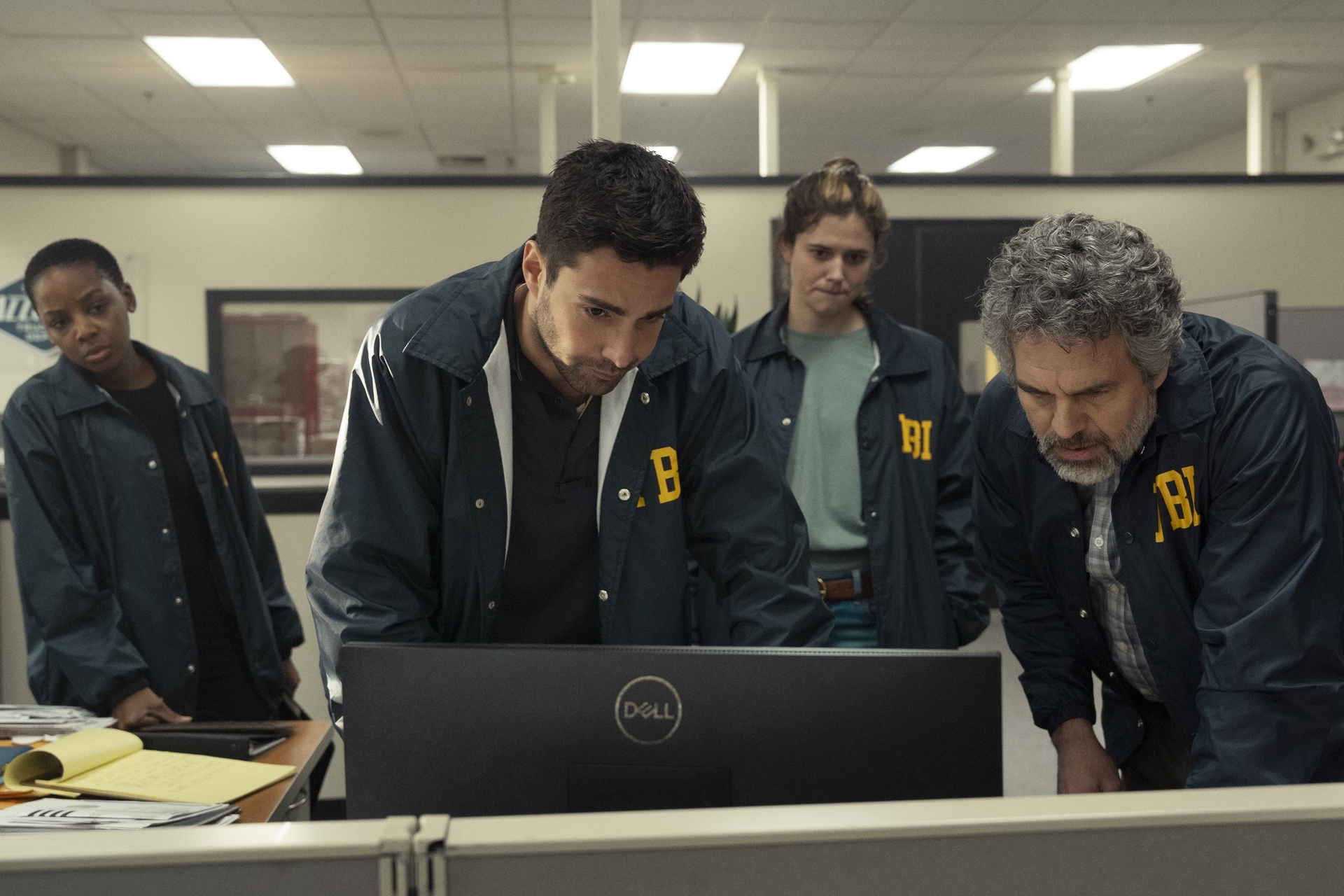
    • Task season 2: The Delco-set HBO thriller starring Mark Ruffalo was renewed for a second season and I’m hoping they start filming around Philly’s weirdest suburb this year (though creator Brad Ingelsby may have to write the script first). While it’s unclear if Ruffalo will reprise his role as FBI agent Tom Brandis, one of my resolutions this year is to frequent more local hoagie shops in the hopes of running into him, but also because I love hoagies.
    • Stranger Things spinoff?: Philly was named-dropped in the finale of the beloved sci-fi show, which got fans hypothesizing that the home of one of the greatest urban legends of all time — the Philadelphia Experiment — might be the setting for one of the confirmed spinoffs. Or it could just be subliminal advertising for Netflix House Philadelphia (which is actually in King of Prussia). An Instagram post from the show and Netflix on Wednesday only fueled rumors, with its caption: “meet me in philly.”
  • Developer Iron Stone transfers two Hahnemann properties to new ownership

    Developer Iron Stone transfers two Hahnemann properties to new ownership

    Philadelphia-based Iron Stone Real Estate Partners transferred control of two of their former Hahnemann University Hospital properties in the last two weeks.

    The investment group acquired a portfolio of Hahnemann properties in 2021 and began redeveloping them into laboratory and office space.

    But in recent weeks Iron Stone disposed of two of these properties.

    The company donated the New College Building at 245 N. 15th St. to Drexel University on Dec. 31.

    “It’s a charitable donation,” said Jason Friedland, director of operations and investments at Iron Stone. “We felt that that building was best served with Drexel owning it and using it for a long time, long-term, for their research.”

    When Iron Stone acquired the New College Building five years ago, Drexel occupied the property’s medical labs and was one of the few remaining tenants in the Hahnemann campus.

    Back then the university was considering moving this Center City operation to the suburbs in the short term and to University City in the long term.

    “The generous gift will provide the university with flexibility as it continues to consolidate operation of its College of Medicine on its University City campus,” Drexel spokesperson Britt Faulstick said in an email statement. “Plans for the New College Building will be determined in the future.”

    On Jan. 6, Iron Stone sold the Broad and Vine Parking Garage at 1416 Wood St. to the Philadelphia Parking Authority for $21.3 million.

    The 850-space garage had been exclusively for Hahnemann’s use. Iron Stone renovated the vacant garage after the bankruptcy and hired Metropolis Technologies — the largest parking operator in the United States — to run it.

    The acquisition is the first time the Parking Authority has purchased a garage built by someone else, said Rich Lazer, executive director of the Parking Authority.

    “Most of our garages, outside of the airport, are Center City-based, so its nice to push out onto North Broad,” Lazer said. “Our garages are lower cost than private garages, so it’ll help us maintain reasonable pricing.”

    The authority plans to retain Metropolis Technologies as the operator, Lazer said.

    Iron Stone still owns a couple former Hahnemann properties, including the 120,000-square-foot Race Street Laboratories at 1421 Race St. and the 15,000-square-foot building at 231 N. Broad St., which is fully leased by Bayada Home Health Care Inc. with a third of the space and Dynamed Clinical Research with the rest.

    Race Street Laboratories was developed to tap into the life sciences and biomedical market, which boomed during the pandemic but has slowed substantially as interest rates spiked. Currently the building has only one tenant, Sbarro Health Research Organization, with 7,500 square feet of space.

    Friedland said Iron Stone plans to move its headquarters from University City’s FMC Tower to one of Race Street Lab’s unused floors.

    As for the rest of the space, Iron Stone is exploring alternative uses as the life sciences market continues to struggle.

    “We’re seeing where the opportunities are in commercial real estate,” Friedland said. “We have a couple things we’re exploring, but we’re not really in a rush.”

    New York-based Dwight City Group has purchased most of the remainder of the former Hahnemann buildings.

    Their plans for an apartment building were complicated by a bill introduced in December by Councilmember Jeffery Young to ban housing from the former hospital site.

    But on Dec. 24, in advance of City Council action on the legislation, the developer received zoning permits for a 361-unit apartment complex at 222-248 N. Broad St. Dwight Group says they are nonetheless in negotiations with Young to secure his support.