Tag: Delaware County

  • Shareholders approve merger of American Water and Essential Utilities, which serve Pa. and N.J.

    Shareholders approve merger of American Water and Essential Utilities, which serve Pa. and N.J.

    Shareholders of Camden-based American Water Works and Bryn Mawr-based Essential Utilities, which owns the Aqua water and sewer companies, voted overwhelmingly Tuesday to merge and create a combined company with nearly $30 billion in yearly water and sewer sales.

    More than 99% of the 161 million American Water shares that were voted were cast in favor of the deal, the company told the Securities & Exchange Commission. Essential’s online proposal to merge was approved by around 95% of voting shareholders.

    The planned combination of these rivals, which have competed for more than 100 years to manage water and sewer for the small number of U.S. communities that allow for-profit operators, still needs approval from state public utility commissions.

    The combined companies’ sales are concentrated in Pennsylvania and New Jersey. In suburban Philadelphia, Aqua serves West Chester, northern Delaware County, parts of Lower Bucks, and Main Line communities. American Water serves Abington, King of Prussia, Norristown, Phoenixville, and nearby towns.

    New Jersey American Water serves towns along the PATCO rail line in Camden County, in northern and central Burlington County, and in Shore communities such as Absecon and Ocean City. Aqua New Jersey has customers in the three suburban South Jersey counties and at the Shore.

    American Water’s 14 million U.S. customers include systems in 12 other states, and on 18 U.S. military bases. Essential has around 3 million customers, including systems in six other states, and Pittsburgh-based Peoples Gas, which serves 750,000 in western Pennsylvania and Kentucky.

    American Water is already the nation’s largest private operator of water and sewer systems, and the deal will make it a larger player in competition with Florida-based NextEra Water Group and France-based Veolia’s U.S. operations, among other private systems that have been seeking to expand.

    A separate vote on an Essential executive pay package drew some opposition, with 85%approving.

    That package included more than $17 million in severance compensation and stock grants for departing Essential CEO Christopher H. Franklin, plus medical benefits and up to three years’ professional assistance helping him land another job, plus millions more for his four top deputies.

    The merged company’s larger size, as big as many of the leading natural-gas companies that dominate utility stock-index funds, will boost its visibility to investors, John C. Griffith, the American Water chief executive who will run the combined companies, said in announcing the deal last fall.

    The companies disclosed the approvals Tuesday afternoon and said more details on the vote and their plans would come later this week.

    Deal backers say the combination should enable Griffith to cut management costs, boost profits, drive up the share price, and could ease pressure to keep raising water rates.

    Regulators in New Jersey and Pennsylvania are weighing the company’s latest rate increase requests. American Water’s New Jersey affiliate is asking the state Board of Public Utilities for an average 10% water and 8% sewer rate hike on Jan. 16 for 2.9 million customers, which it said would fund improvements to aging water and sewer systems. Customers would pay an average of $18 more a month.

    Pennsylvania’s Public Utility Commission said last month that it would consider the company’s request to boost water and sewer rates on 2.4 million customers by an average 15%, or $20 a month.

    Critics had urged Essential to seek rival buyers to drive up the share price and shareholder profits from the sale, noting that both stocks had dropped after the merger was proposed last year.

    Tim Quast, founder of Colorado-based ModernIR, a consultant the companies hired to help explain the merger, said share price declines are now typical, even for merger-target companies like Essential whose shares command a premium from buyers like American Water because index-fund investors such as Vanguard and BlackRock tend not to buy more shares of merging companies until a deal is completed.

    Even after long competition from U.S. and foreign utility owners, private water companies serve only about one in six Americans. In recent years, customers of public utilities serving parts of Chester, Delaware, and Bucks Counties have defeated privatization campaigns, though some towns in Pennsylvania and New Jersey have signed on. Pennsylvania also has asked private operators to take over small, troubled public systems.

  • Eddie Bauer operator files for bankruptcy and is liquidating stores

    Eddie Bauer operator files for bankruptcy and is liquidating stores

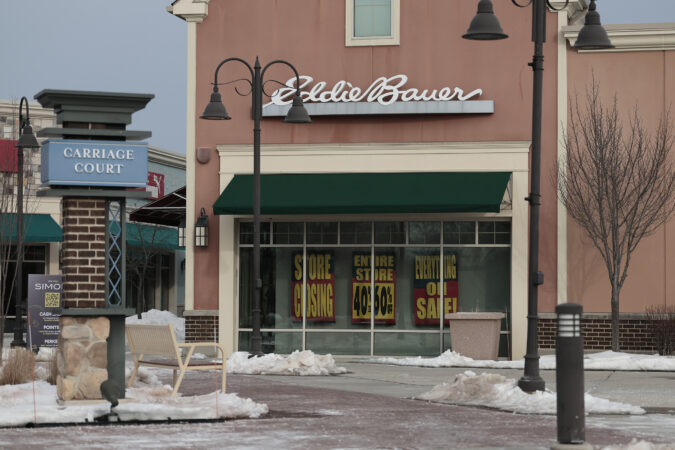
    Over 60 years ago, the first American to climb Mount Everest sported an Eddie Bauer coat. Now the company behind the outdoor apparel finds itself conducting liquidation sales.

    The operator of Eddie Bauer filed for Chapter 11 bankruptcy in the U.S. Bankruptcy Court for the District of New Jersey on Monday and is winding down stores as it seeks a buyer.

    Eddie Bauer is laying off some 58 employees in New Jersey at locations in Burlington, Gloucester, Middlesex, and Monmouth Counties, according to a layoff notice filed with the state.

    “In an effort to rightsize the company’s store footprint and close underperforming stores, the company will be closing a number of retail locations in N.J.,” reads the notice.

    In Pennsylvania, a spokesperson for the state’s Department of Labor and Industry said they had not received a layoff notice for Eddie Bauer stores as of Tuesday morning.

    Before filing for bankruptcy, the company chose not to renew leases for 49 stores that had leases ending Jan. 31. Those locations have since closed, bankruptcy documents indicate.

    The company is liquidating the remaining 175 stores as it seeks out a buyer.

    In the Philadelphia area, Eddie Bauer stores are located at the Gloucester Premium Outlets in Camden County, at the Philadelphia Premium Outlets in Montgomery County, as well as in Concordville in Delaware County.

    As of Tuesday, the Fashion District location in Center City appeared to be closed, according to the Eddie Bauer website.

    What led to the bankruptcy?

    Eddie Bauer stores have been operated by Catalyst Brands, which was formed in January 2025 in a merger that brought together brands including Aéropostale, Brooks Brothers, and JCPenney.

    The CEO of Catalyst Brands, Marc Rosen, said in a news release Monday that the Eddie Bauer operator had been in a “challenged situation,” even before the new parent company was formed last year. The company was dealing with declining sales and supply chain challenges amid other issues, he said.

    “Over the past year, these challenges have been exacerbated by various headwinds, including increased costs of doing business due to inflation, ongoing tariff uncertainty, and other factors,” Rosen said. “While the leadership team at Catalyst was able to make significant strides in the brand, including rapid improvements in product development and marketing, those changes could not be implemented fast enough to fully address the challenges created over several years.”

    Other retailers have also faced headwinds recently. The parent company of Saks Fifth Avenue and Neiman Marcus filed for bankruptcy in January, and shopping mall mainstay Claire’s, did so in August.

    Eddie Bauer stores in the Philadelphia area

    Pennsylvania:

    • Fashion District, 901 Market St., Philadelphia
    • Shoppes at Brinton Lake, 961 Baltimore Pike, Glen Mills
    • Montgomery Mall, 290 Montgomery Mall, North Wales
    • Philadelphia Premium Outlets, 18 Lightcap Rd., Pottstown
    • Tanger Outlets Lancaster, 1140 Stanley K Tanger Blvd., Lancaster

    New Jersey

    • Gloucester Premium Outlets, 100 Premium Outlets Drive, Blackwood
    • Jersey Shore Premium Outlets, 1 Premium Outlets Blvd., Tinton Falls
  • An ex-Philly City Council aide from a prominent political family is accused of sexual harassment

    An ex-Philly City Council aide from a prominent political family is accused of sexual harassment

    After Sharif Street Jr. got into a highly public fight at Mayor Cherelle L. Parker’s 2024 inauguration ceremony, his boss, City Councilmember Jim Harrity, extended him some grace.

    Harrity, who credits Street Jr.’s father, State Sen. Sharif Street (D., Philadelphia), with giving him a second chance earlier in his own career, kept the junior Street on staff as a special assistant, saying the incident was a lapse in judgment.

    But according to another staff member in Harrity’s office, it was not the only transgression.

    Shanelle Davis, a former constituent services representative, filed a federal lawsuit last week against the city claiming that she told supervisors months before the inauguration fight that Street Jr. had sexually harassed her while she was at work, including twice grabbing her and making sexualized comments about her body.

    She said in the suit, filed in the U.S. District Court for the Eastern District of Pennsylvania, that no action was taken and Street Jr. remained on staff.

    Davis is seeking unspecified damages from the city, which she claims violated state and federal laws related to gender-based discrimination. Street Jr. is not named as a defendant in the suit, but he is mentioned throughout the 13-page filing.

    Davis’ complaint portrays a dysfunctional workplace environment in the City Hall office, including an alleged physical altercation between Street Jr. and another staffer for which no one was reprimanded. Davis, who is Black, claimed another colleague in Harrity’s office made racist comments, including hurling the N-word toward her.

    Davis, who was hired in late 2022, said in the lawsuit that she was fired for underperforming at her job about a year later, after Harrity won reelection.

    Her attorney did not respond to a request for comment Monday. Street Jr. did not respond to calls seeking comment.

    Harrity, a Democrat who represents the city at-large and was a longtime aide to the elder Street, said in a statement that he “categorically denounce[s] workplace harassment, or any conduct that undermines a respectful and professional work environment.”

    He declined to comment further, citing the ongoing legal proceedings. A spokesperson for the city law department also declined to comment.

    The lawsuit is the latest legal trouble involving Sharif Street Jr., 26, who over the last three years has pleaded guilty to criminal offenses in Philadelphia, Montgomery, and Delaware Counties. In August, his employment with the city was terminated the week he pleaded guilty to charges in connection with the inauguration assault and another incident.

    City Councilmember Jim Harrity speaks to colleagues on during a Council session in September.

    Street Jr. comes from one of Philadelphia’s most well-known political families. His grandfather is former Mayor John F. Street, his mother is Common Pleas Court Judge Sierra Thomas Street, and his father is a state senator and the former head of the state Democratic Party who is now running for a seat in Congress.

    Anthony Campisi, a spokesperson for the elder Sharif Street’s congressional campaign, said the state senator had “no knowledge” of the sexual harassment allegations.

    “Sharif loves his son unconditionally and has supported his son through personal troubles, like so many parents across Philadelphia,” Campisi said. “That being said, Sharif unequivocally condemns sexual harassment in all its forms and is looking for the legal process to play out.”

    City Council President Kenyatta Johnson, who took over as leader of the chamber in 2024, declined to comment. Under City Council rules, individual members are responsible for hiring and terminating their own employees.

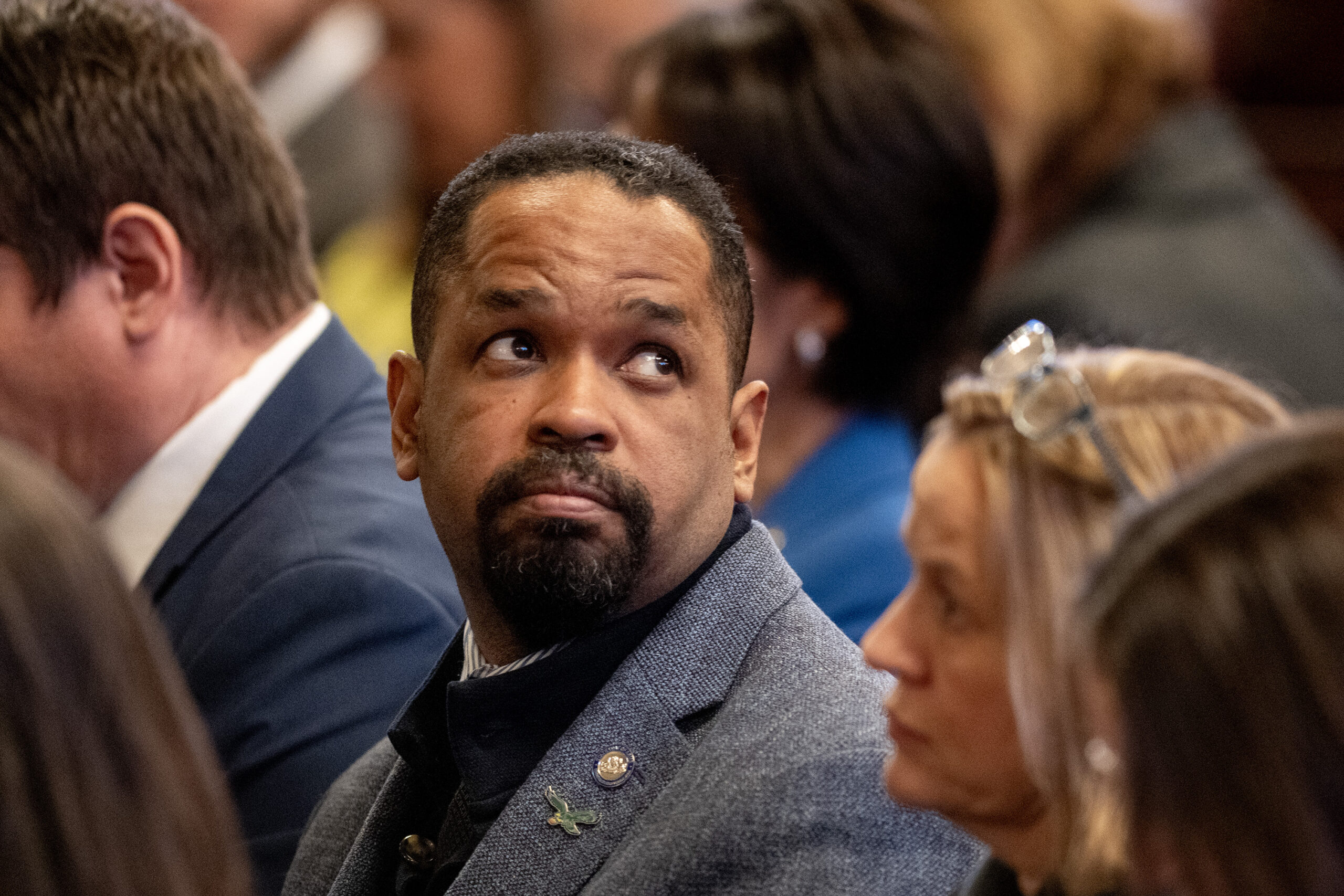
    State Senator Sharif Street (D., Phila.)is in the state House chamber as Gov. Josh Shapiro makes his annual budget proposal Feb. 3, 2026.

    Street Jr. was arrested several times over three years while working in City Hall as an assistant in Harrity’s office, court records show. Davis’ lawsuit comes about six months after Street Jr.’s employment in Harrity’s office ended, according to payroll records.

    In January 2024, Street Jr. punched a security guard at the entrance to Parker’s inauguration ceremony at the Met Philadelphia on North Broad Street. He told The Inquirer at the time that he was defending his grandfather, the former mayor, whom he said the guard had grabbed because they were trying to enter at a back entrance without waiting in line.

    “I saw my grandfather get grabbed and I just sort of blacked out,” Street Jr. said. His father defended him at the time, saying the security guard had initiated the altercation.

    Later that month, Street Jr. was charged in connection with a hit-and-run from the previous August that left a 14-year-old injured.

    The two cases were consolidated in Common Pleas Court, and Street Jr. pleaded guilty in August to charges of assault and causing an accident that resulted in an injury. According to prosecutors, he was sentenced to 60 days in jail.

    Four months later, when he was no longer working in city government, Street Jr. was briefly jailed in Delaware County following what police in Upper Darby described as a “prolonged struggle” during a traffic stop. He pleaded guilty to disorderly conduct, a summary offense.

  • A security fence has sparked dueling lawsuits between Gov. Josh Shapiro and his Abington neighbors

    A security fence has sparked dueling lawsuits between Gov. Josh Shapiro and his Abington neighbors

    Gov. Josh Shapiro’s Abington Township neighbors filed a federal lawsuit Monday against Pennsylvania’s first couple, in what is the latest clash over security upgrades to his personal home following an arson attack on the governor’s Harrisburg residence while Shapiro and his family slept inside.

    In the suit, filed in U.S. District Court for the Eastern District of Pennsylvania, the Shapiros’ neighbors in Abington Township, Jeremy and Simone Mock, accuse the governor and his wife, Lori Shapiro, of illegally occupying part of the Mocks’ yard to build an eight-foot security fence last summer in what they claim in the lawsuit is an “outrageous abuse of power.”

    In short, they asked a federal judge to order the Shapiros off their property.

    The Shapiros quickly filed a countersuit in Montgomery County Court of Common Pleas on Monday against the Mocks, asking a judge to declare that the disputed chunk of the property has been theirs for years.

    The attempt to build the new fence is part of a larger security upgrade for Shapiro and his family, following the April firebombing of the state-owned governor’s residence in Harrisburg, when a man broke in to the mansion and set off Molotov cocktails that quickly engulfed part of the home. Cody Balmer, 38, pleaded guilty in October to attempted murder and was sentenced to 25 to 50 years in prison.

    The Mocks, whose property is adjacent to the Shapiros’ Montgomery County property, say the planned location of the fence is on their property unlawfully and violates their rights, according to the lawsuit.

    The couple is represented by Wally Zimolong, a Delaware County attorney who is described as “the ‘go-to’ lawyer in Pennsylvania for conservative causes and candidates” on his firm’s website. He previously represented the political campaigns of President Donald Trump and U.S. Sen. Dave McCormick (R., Pa.), according to his website.

    “The Governor looks forward to a swift resolution and will not be bullied by anyone trying to score cheap political points, especially at the expense of his family’s safety and wellbeing,” Will Simons, a spokesperson for Shapiro, a Democrat running for reelection, said in a statement.

    According to the Mocks’ lawsuit, the Shapiros approached their neighbors in July to discuss the construction of a security fence near where their yards meet. The Shapiros were interested in purchasing a portion of the Mocks’ property for the fence, and also discussed a lease option. But the couples couldn’t agree on the price, according to the suit.

    Things took a turn in late August, when, according to the lawsuit, the Shapiros’ attorney told the Mocks they would obtain the chunk of land through “alternative actions.”

    “What followed was an outrageous abuse of power by the sitting Governor of Pennsylvania and its former Attorney General,” the complaint says. (Shapiro served as Pennsylvania’s attorney general before he was elected governor in 2022.)

    The Shapiros told the Mock family, according to the neighbors’ lawsuit, that they owned the land through adverse possession, a legal mechanism through which a person can gain ownership of a property they’ve actively used for at least 21 years. The Shapiros have lived in their Montgomery County home for 23 years.

    The governor and first lady then began planting arborvitae-type trees and other plants on the Mocks’ property, flying drones over it, threatening to remove healthy trees, and “chasing away” contractors who came to work in the Mocks’ yard, the lawsuit claims.

    The complaint also accuses Shapiro of directing state police to patrol the property. Troopers instructed the Mocks to leave the area of the yard multiple times, calling it a “disputed” area or “security zone,” the suit says.

    The Mocks purchased the house in 2017, according to property records, and their lawsuit says they have paid taxes on the property over the time period. The offer to purchase the land shows the Shapiros knew it wasn’t theirs, according to the complaint.

    “The Shapiros continue to occupy the Mock Property without permission or any legal justification whatsoever,” the lawsuit says.

    The security fencing for the Shapiros’ home was purchased but ultimately never installed, and is being repurposed at the Pennsylvania State Police training academy, Spotlight PA previously reported.

    Zimolong declined to comment on the lawsuit Monday.

    The Shapiro’s countersuit

    The Shapiros’ lawsuit doesn’t dispute many elements of the Mocks’ suit, but casts them in a different light.

    As the Shapiros tell it, a land surveyor discovered in summer 2025 that the Mocks actually owned about 2,900 square feet of land that the Shapiros had believed was a part of their property since they bought the home in 2003. That time period, 22 years, satisfies Pennsylvania’s adverse possession law.

    The Mocks didn’t consider that part of the property to be theirs, according to the complaint, until the Shapiros told them.

    But after negotiations fell apart when the Shapiros attempted to purchase the land, the Mocks sought a permit to erect their own fence and include the disputed area on their property, the suit says.

    Shapiro’s security detail denied a tree-removal contractor access to the area, according to the complaint, because the first couple believe they possessed the land.

    And the state police troopers the Mocks saw were part of Shapiro’s security detail, which after the April attack have conducted review of his Abington home.

    The governor and his wife are asking a judge to find that they are the “legal and equitable owners” of the area in dispute.

    This image provided by Commonwealth Media Services shows damage after a fire on April 13, 2025, at the Pennsylvania governor’s mansion while Democratic Gov. Josh Shapiro and his family slept inside.

    Scrutiny over security

    Shapiro has faced scrutiny for using taxpayer dollars with little transparency to upgrade the security of his personal home, which is the primary residence for two of his four children, who are school-aged. State Police spent at least $1 million to upgrade security on his Abington Township property, in addition to more than $32 million in upgrades and repairs to the Harrisburg governor’s mansion.

    The GOP-controlled Senate Intergovernmental Operations Committee in December took the rare step of subpoenaing Shapiro for access to records about how taxpayer dollars were spent to upgrade the Shapiro property and home, including a new security system and landscaping work previously reported by Spotlight PA. Sen. Jarrett Coleman (R., Lehigh), who chairs the committee, argued the subpoenas were necessary because the Shapiro administration did not turn over the requested documents, or turned over incomplete records.

    As the Democratic governor of the nation’s fifth most-populous state, Shapiro continues to face threats to his safety. Police arrested a Carlisle man last week for allegedly sending messages to the governor’s office, that said “I do plan on stalking and hurting your family, before adding “metaphorically speaking of course.” The man, George R. Brown Jr., later told police they were “fake threats” and he was trying to get help with an eye injury he suffered while at Cumberland County Prison, PennLive reported.

  • Swarthmore Public Library closes the chapter on overdue book fees

    Swarthmore Public Library closes the chapter on overdue book fees

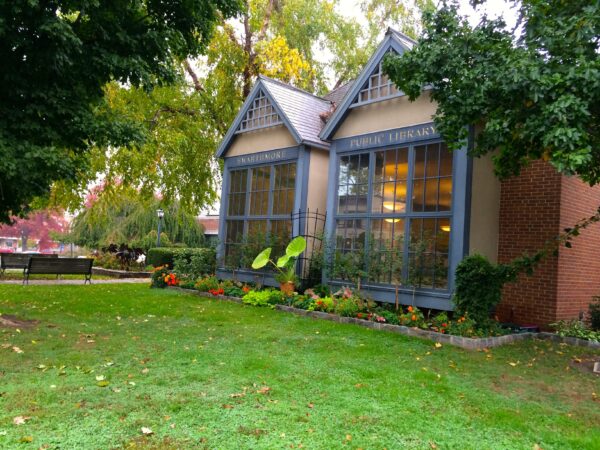
    The Swarthmore Public Library has officially done away with overdue fees, joining a growing contingent of libraries that say the fines do more to drive patrons away than to get them to return their books on time.

    Swarthmore’s library serves residents of Swarthmore and neighboring Rutledge and is a member of the Delaware County Public Library System. A nonprofit, the library is powered by private donations and government funding. It served around 3,100 cardholders in 2024.

    Overdue fines can actually deter library use, all while bringing in marginal financial benefits, said Alec Staley, the library’s director.

    Case studies have shown that library fees ultimately can discourage people from returning books. After the Chicago Public Library dropped fees in 2019, it saw a 240% increase in return of materials within three weeks. During a six-week fine-forgiveness program at the San Francisco Public Library in 2017, nearly 700,000 items were returned (the items returned were valued at $236,000).

    Once late fees start accruing, many people, especially low-income library patrons, will stay away to avoid paying them, forfeiting their library access entirely. Oftentimes, late fees burden the people who need library resources the most.

    Collecting fees has also become taxing for library staff, Staley said. Turning away families because of overdue fees has weighed heavily on Swarthmore’s librarians.

    “We were just punishing [people] for no reason at all,” he said.

    The new policy means any outstanding late fees will be wiped from cardholders’ balances.

    Elizabeth Brown, president of the library’s board of trustees, said fine revenue is “not a meaningful source of our budget.”

    Swarthmore Borough is set to contribute $277,000 to the library this year, up 17% from the year prior.

    Late fees make up only around 1%, or $5,000, of the Swarthmore Public Library’s annual revenue. Library officials believe they can close the gap with fundraising.

    Does this mean people will be able to take the books and run? Not really.

    “We’ll still have a lost-item charge,” Brown said. “This is by no means a free-for-all.”

    Unreturned items will be marked “lost” after three weeks and a fee will be charged. However, fees will be dropped if the “lost” book is returned.

    The Swarthmore Public Library joins a growing group of Philly-area fine-free libraries.

    The Free Library of Philadelphia went fine-free in 2020, a move the library system said would increase equity and bring back 88,000 cardholders who were unable to access library services due to fines.

    In Delaware County, the Upper Darby Township and Sellers Memorial Free Public Library, Newtown Public Library, Media-Upper Providence Free Library, and Ridley Park Public Library are fine-free.

    Ultimately, Staley said, imposing fines runs counter to the heart of what a public library is supposed to be.

    “We champion that we’re one of the last free spaces in the United States,” he said. “But then we have this secret where we’re still charging fines.”

    This suburban content is produced with support from the Leslie Miller and Richard Worley Foundation and The Lenfest Institute for Journalism. Editorial content is created independently of the project donors. Gifts to support The Inquirer’s high-impact journalism can be made at inquirer.com/donate. A list of Lenfest Institute donors can be found at lenfestinstitute.org/supporters.

  • After a historic win, Joi Washington settles into life as Media’s mayor

    After a historic win, Joi Washington settles into life as Media’s mayor

    Joi Washington’s first challenge as mayor came in the form of a winter weather emergency.

    On Jan. 5, Washington was sworn in as Media’s first new mayor in three decades. On Jan. 25, 9.3 inches of snow fell on Philadelphia, setting off a snow emergency declaration. Washington monitored the storm and worked to put parking restrictions and plowing operations into effect.

    It was “fascinating” — a headfirst dive into running a municipal government, she said.

    A graphic designer by trade and former borough council member, Washington moved to Media from Philadelphia in 2013 and fell in love with its walkability and tight-knit community of 6,000. As she learns on the job, friends and colleagues say her intelligence and ability to work across the aisle make her the right person for the role. For Washington, learning how to be a good mayor is all about “being a good neighbor.”

    Media Mayor Joi Washington talks with Garden Café owner Willow Culbertson in downtown Media on Sunday, Feb. 1.

    Who is Joi Washington?

    Washington, 39, was born and raised in Germantown. She graduated from Moore College of Art and Design in 2008 with a bachelor of fine arts in illustration. She has worked for numerous Philly-area companies doing graphic design, digital asset management, and storyboarding.

    Around a decade ago, Washington took a graphic design job in Media. The long commute from Roxborough, where she lived at the time, quickly became tiresome, so she packed up and moved. She met her husband at work, and the two have lived in Media since.

    Washington, a Democrat, was elected to Media’s borough council in 2021, serving until she became mayor last month.

    Katey McVerry, Media’s tax collector, was impressed with Washington as a borough council member. She described Washington as civically and politically engaged, “well known by her neighbors,” and able to work across the aisle.

    When Bob McMahon, Media’s mayor of 33 years, decided to retire last year, Washington stepped up.

    Children played as folks dined on State Street during Media’s Dine Under the Stars event on Wednesday, June 4, 2025.

    A ‘resounding’ win

    Washington campaigned for mayor on expanding public transit options, supporting local businesses, and working with law enforcement to make streets safer for drivers, cyclists, and pedestrians. She was elected with 77% of the vote, beating out Republican Kevin Kellogg.

    Democrats swept local races in Media and Delaware County in November, winning seats on the Rose Tree Media school board, borough council, and Delaware County Council.

    Mary Tonita Austin helped campaign for Washington last year. Austin and Washington met at a Juneteenth celebration when Washington was still on borough council. Last year, when Austin ran for the Rose Tree Media school board, they found themselves in similar spots — Black women running for office in a county that remains largely white (Washington is the first woman and first person of color to be elected mayor of Media).

    Austin gladly handed out Washington’s campaign fliers along with her own.

    “She’s both intelligent and creative, which I think is so important for us to have,” Austin said of Washington.

    Malcolm Yates, a convener of the Delaware County Black Caucus, said Washington’s win was “resounding.”

    Media is 82% white, according to the most recent census estimates — a percentage nearly 1.5 times higher than the Philly metro area at-large. Before Democrats won three seats on the Delaware County Council in 2019, the body had been controlled by Republicans since the Civil War.

    “It shows that the county has been moving and progressing forward to be more of a melting pot,” Yates said of Washington’s win. “You don’t necessarily have to always look or identify a certain way to be a leader.”

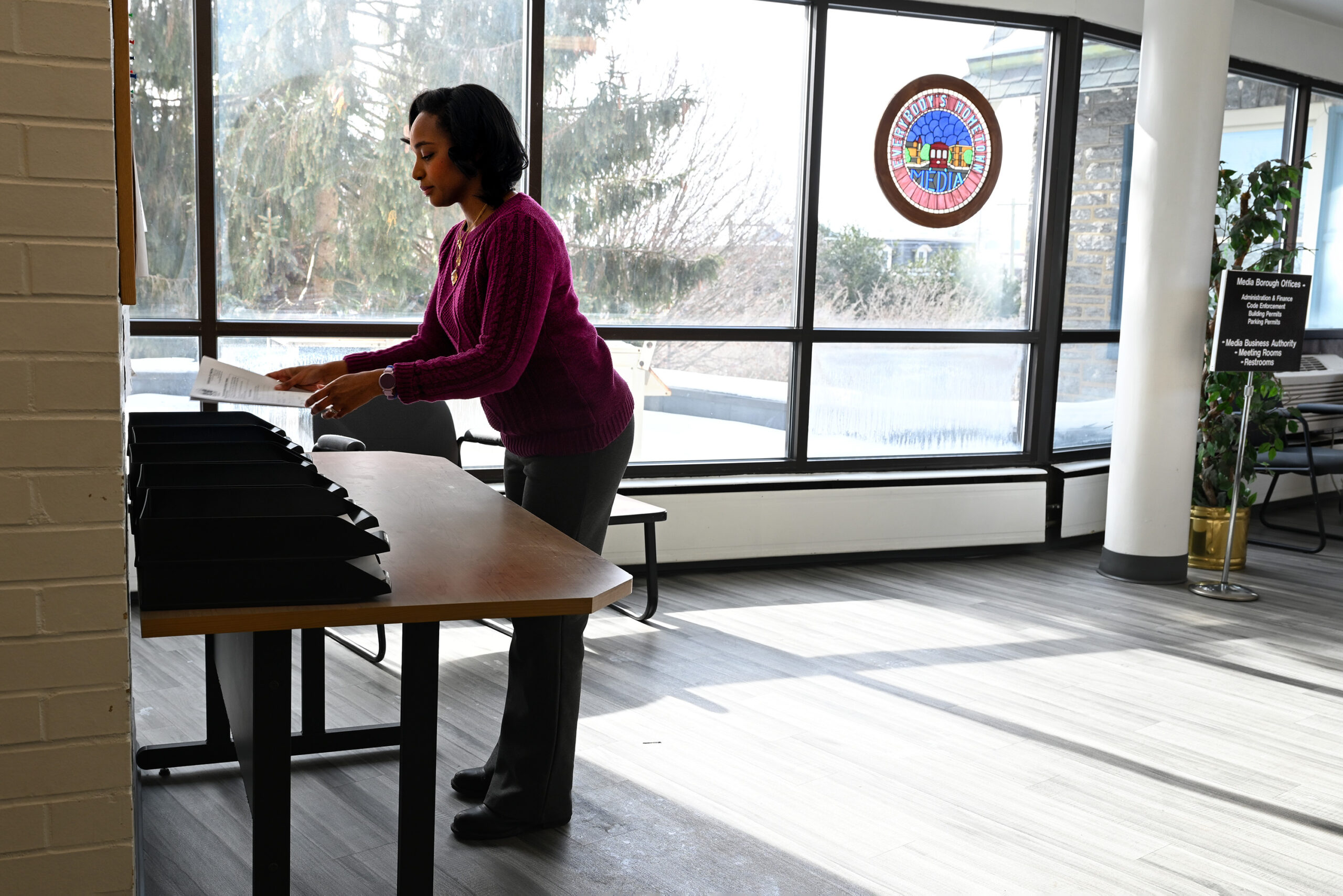
    Media Mayor Joi Washington at Media Borough Hall Sunday, Feb. 1, 2026.

    Becoming the mayor

    Washington describes the first few weeks of being mayor as a “whirlwind.” There are webinars to watch, police reports to study, hands to shake, and nuggets of advice to glean from McMahon, now retired, whom Washington has stayed in touch with.

    There’s a lot to look forward to, as well. Media recently secured grants to purchase a new ambulance, enhance walkability within the borough, and improve Barrall Community Park. Washington hopes to bring in visitors to shop and dine at Media’s small businesses, continuing the borough’s ascent as a Delco destination. Washington rattled off a list of forthcoming events with excitement: Dining Under the Stars, the completion of Plum Street Park, and the Media Spring Arts Show.

    As for her personal life, Washington said she is trying to find balance as mayor, which is a part-time gig in Media. Washington is still working as a freelance illustrator and graphic designer. She is also a natural introvert learning to manage an increasingly busy social calendar.

    “I’m also glad that I have two cats to keep me sane. My husband’s very supportive. I think it’s really good to have a life outside of politics,” she said.

    This suburban content is produced with support from the Leslie Miller and Richard Worley Foundation and The Lenfest Institute for Journalism. Editorial content is created independently of the project donors. Gifts to support The Inquirer’s high-impact journalism can be made at inquirer.com/donate. A list of Lenfest Institute donors can be found at lenfestinstitute.org/supporters.

  • A couple bought a house on a quiet street. Then they found a swastika in the basement.

    A couple bought a house on a quiet street. Then they found a swastika in the basement.

    The property listing in Beaver, Pa., extolled the countless charms of the Colonial Revival. There was the “grand foyer with a handmade railing,” the built-in cabinets and “beautiful” hardwood floors, and the covered porch offering “stunning” views of the nearby Ohio River.

    “This home adorns many wonderful features,” the listing read, “and outstanding details throughout.”

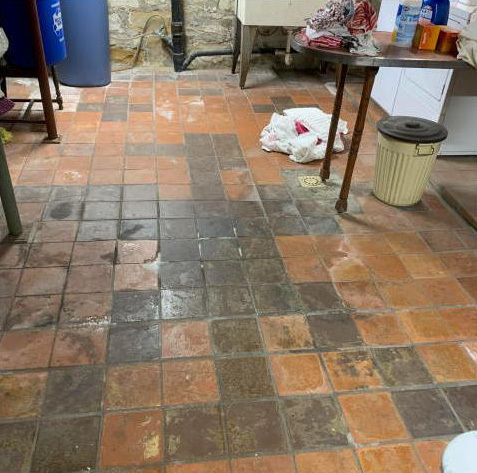
    One detail, however, was notably absent from the listing: the sizable swastika arranged in permanent tile on the basement floor.

    That omission has become the source of an unusual legal battle, a disturbing discovery that has weaved its way through the state court system and raised questions — legal and otherwise — about what represents a “material defect” in a property.

    “I certainly have not seen [this] particular fact-pattern come up before,” said Hank Lerner, chief legal officer for the Pennsylvania Association of Realtors. “It’s a pretty specific one.”

    When Daniel and Lynn Rae Wentworth closed on the five-bedroom home in 2023, for around $550,000, it was easy to see the draw. Anchored on a spacious lot, just a block from the river, the home was idyllic by just about any measure.

    But shortly after moving in, the Wentworths were clearing out the basement when they discovered the grim iconography in tile — a swastika, along with, what appeared to the couple, to be an image of a Nazi eagle. (According to the Wentworths, the tiled images had been covered by rugs during the inspection of the home.)

    After Daniel and Lynn Rae Wentworth purchased a home in Beaver, Pa., they discovered in the basement floor what they believed to be a tiled image of a Nazi eagle (pictured above) and a swastika.

    “Mortified,” as they would later say, the Wentworths filed a complaint in Beaver County civil court, alleging the previous owner had violated the Pennsylvania Real Estate Seller Disclosure Law, and seeking monetary damages.

    The Wentworths argued they would never have bought the home had they known about the tiled floor. Nor, they said, could they be expected to live in the home — or sell it — given its condition. In their complaint, the couple estimated it would cost roughly $30,000 to replace the floor.

    “This … is just not something you’d ever expect to have to deal with,” said Daniel Stoner, an attorney for the Wentworths.

    “They could have actual economic harm from the potential reputational damage if people thought they put it in themselves or were aware of it.”

    The seller — an 85-year-old German immigrant who’d owned the home for nearly a half-century — did not share this view.

    In response to the Wentworths’ suit, Albert A. Torrence, an attorney for the seller, argued in a court filing that “purely psychological stigmas do not constitute material defects of property … and a seller has no duty to disclose them.”

    What’s more, he argued, the Wentworths had failed to identify any untruthful or inaccurate statements he’d made regarding the property.

    In an interview, Torrence denied that the home’s previous owner was a Nazi supporter. Forty years ago, he said, the previous owner had been reading a book about the swastika symbol being co-opted by Germany’s Nazi Party; angry, he decided to include the symbol in a basement renovation project, placed a rug over it not long after, and forgot about it.

    “And, of course, it fits into the narrative, ‘A Nazi lived in this house,’” said Torrence. “It’s just not the narrative that people want it to be.”

    Regardless, the case raised an interesting question: When it comes to property sales, what, exactly, does rise to the level of a material defect worthy of disclosure?

    Pennsylvania law requires sellers to disclose a laundry list of potential problems with a home — termites, structural or heating problems, sewage issues. “[Any] problem with a residential real property or any portion of it that would have a significant adverse impact on the value of the property or that involves an unreasonable risk to people on the property.”

    Absent from that list? Hate symbols that had been permanently embedded.

    In court filings, the previous owner cited an earlier case that had advanced all the way to the Pennsylvania Supreme Court.

    In 2007, after a California resident purchased a Delaware County home, she learned from a neighbor that the property had been the site of a grisly — and highly publicized — murder-suicide. The new owner, Janet S. Milliken, sued.

    In that case, the state’s Supreme Court ruled that the home’s unfortunate history did not represent a material defect, adding that it would be impossible to quantify the psychological impact of various events that might have occurred on a given property.

    “Does a bloodless death by poisoning or overdose create a less significant ‘defect’ than a bloody one from a stabbing or shooting?” the court wrote. “How would one treat other violent crimes such as rape, assault, home invasion, or child abuse? What if the killings were elsewhere, but the sadistic serial killer lived there? What if satanic rituals were performed in the house?”

    Leaning heavily upon the Supreme Court’s decision in the Milliken case, the Beaver County trial court dismissed the Wentworths’ complaint.

    Unsatisfied with the ruling, the Wentworths appealed.

    In a decision filed late last year, three Superior Court judges affirmed the initial ruling that the tiled imagery was not required to be disclosed in accordance with the state’s disclosure law.

    “A basement that floods, a roof that leaks, beams that were damaged by termites … these are the conditions our legislature requires sellers to disclose if they are known,” the judges wrote in an 18-page ruling filed Nov. 12.

    “We are not dismissive of the Wentworths’ outrage, nor their concern that the existence of the images could taint them as Nazi supporters,” the decision went on. “With this lawsuit, however, they have made a public record to counter any supposition in that regard.”

    Though the couple could’ve appealed to the Pennsylvania Supreme Court, Stoner, their attorney, said this week that they had decided against doing so, citing the low likelihood that the case would’ve been heard by the court.

    “I’ve only had one case in my entire career that they’ve actually taken up,” Stoner said. “So the chances of them even getting it heard weren’t the greatest.”

    As for the home, Lynn Rae Wentworth told the Pittsburgh Jewish Chronicle recently that she and her husband planned to remove the tiling once they were sure the legal wrangling had concluded.

    She said they were also considering approaching local legislators in hopes of changing the law, making hate symbols material defects that necessitated disclosure.

    As she told the publication, “I don’t want anyone to have to go through this again.”

  • Signs of a frozen housing market in Philadelphia and Delaware County

    Signs of a frozen housing market in Philadelphia and Delaware County

    The ground and your toes aren’t the only things frozen in the Philadelphia region.

    In the city and Delaware County last month, potential home sellers and buyers stayed on the sidelines, and sales were slow, according to a Redfin analysis of the 50 most-populous metropolitan areas for the four weeks ending Jan. 25. Pending home sales were down about 4% from the same time last year.

    “You’re just not seeing a lot of activity happening,” said Chen Zhao, head of economics research at Redfin.

    What has been heating up are prices. The market that Redfin defines as Philadelphia and Delaware County was in the top three areas where sale prices increased the most compared to the same time last year. The median sale price was up just over 10% to $294,125.

    Limited home supply and rising home prices tend to go hand in hand, and that is what is happening in these markets, Zhao said.

    Sales in January’s slow market happened at higher prices because buyers who are still in the market are willing to pay elevated prices.

    The average number of new home listings ticked up slightly from last year, and it should continue to grow as the typically busy spring housing market approaches. So should the number of buyers looking for homes.

    Any changes in affordability, Zhao said, will be “mostly driven by mortgage rates, not so much by prices.”

    The average interest rate on a 30-year, fixed-rate mortgage was almost 7% at the end of January 2025, according to the government-backed mortgage buyer Freddie Mac. This year, it was 6.10% at the end of the month.

    Zhao said she doesn’t expect mortgage rates to go much lower this year.

    But buyers have more power than they think, especially now when sales are slow, Zhao said. They “really should be thinking about negotiating” with sellers.

  • House of the week: A historic five-bedroom house in Media for $785,000

    House of the week: A historic five-bedroom house in Media for $785,000

    Kai Lu and Edward Mendez had expected to spend many years in the spacious Media home, enjoying the easy access to Center City by SEPTA Regional Rail, the good schools for their two-year-old son and the second on the way, and its aura of history.

    But in the words of Lu, who is in data analytics for a major communications company, “life intervened.”

    Mendez landed his dream job as a data analyst for the Miami Marlins baseball team, and the couple are headed to Florida after two years in the house.

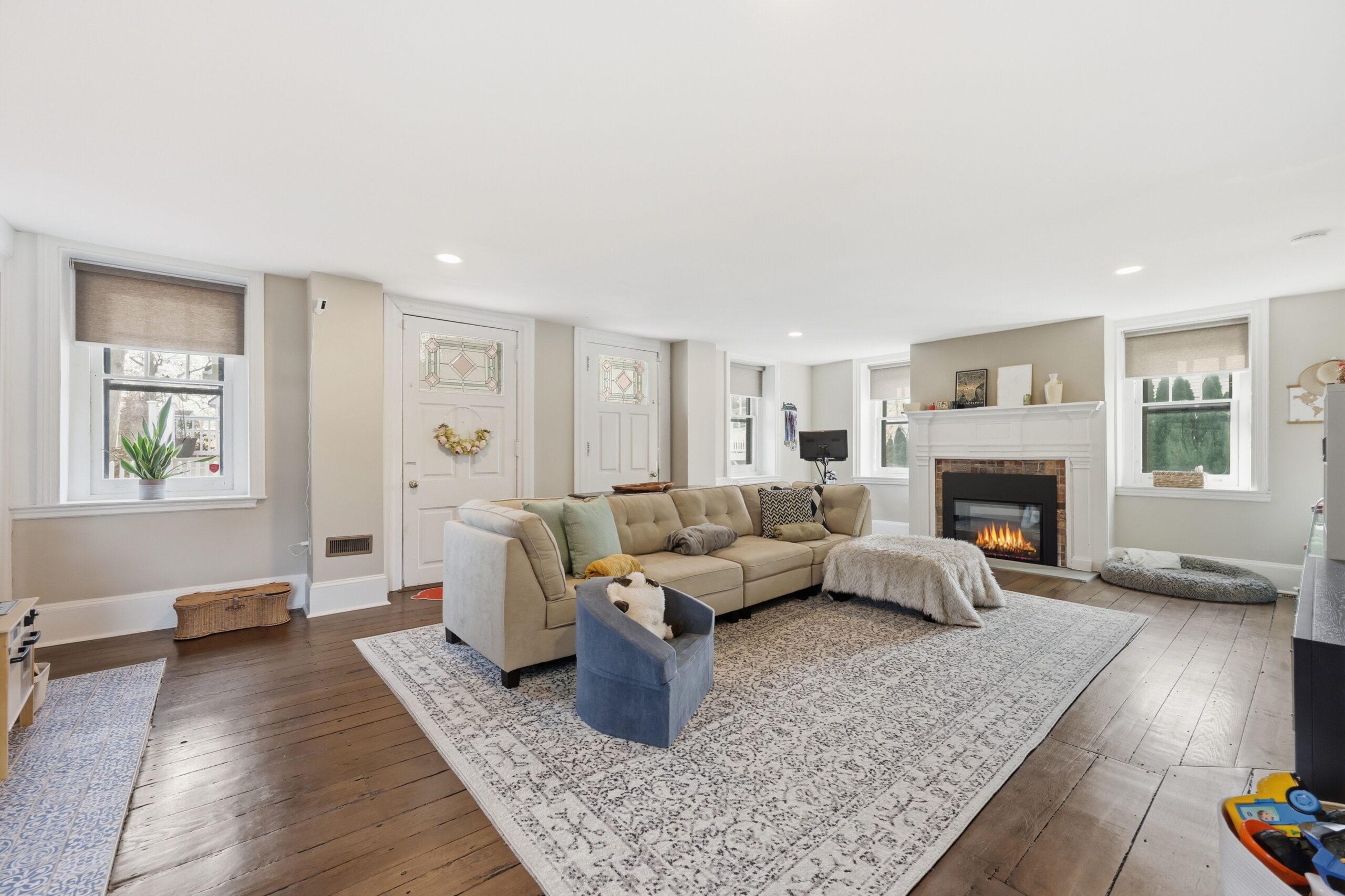
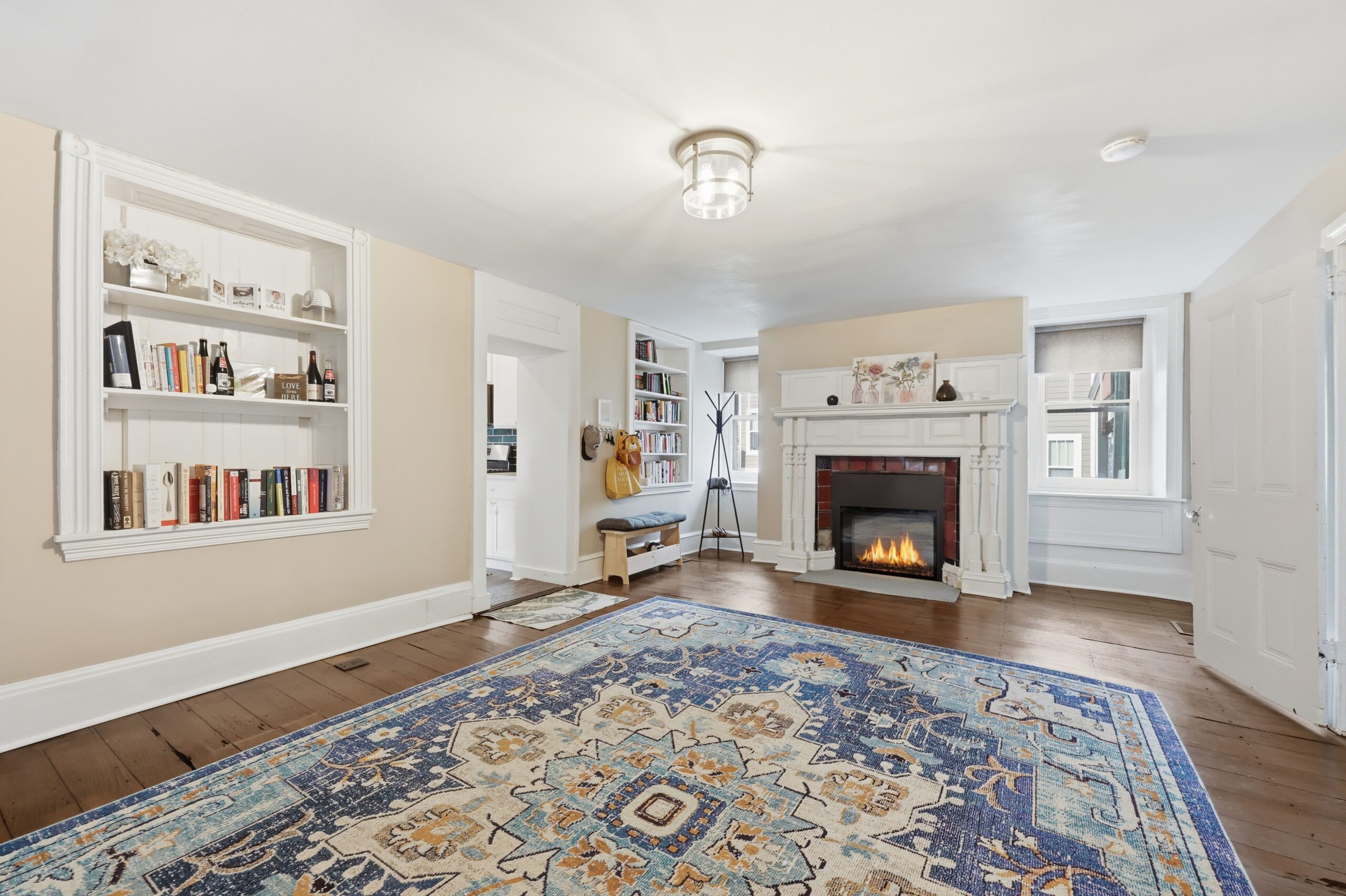
    The living room. The home has four working fireplaces.

    The five-bedroom, 4½-bathroom home was once the general store of Providence Village, and Lu says she doesn’t know when the changeover came.

    The earliest part of the house dates to the 18th century, with some 19th-century additions.

    The 4,334-square-foot house has three floors of living space plus an unfinished basement, and four working fireplaces powered by electric inserts.

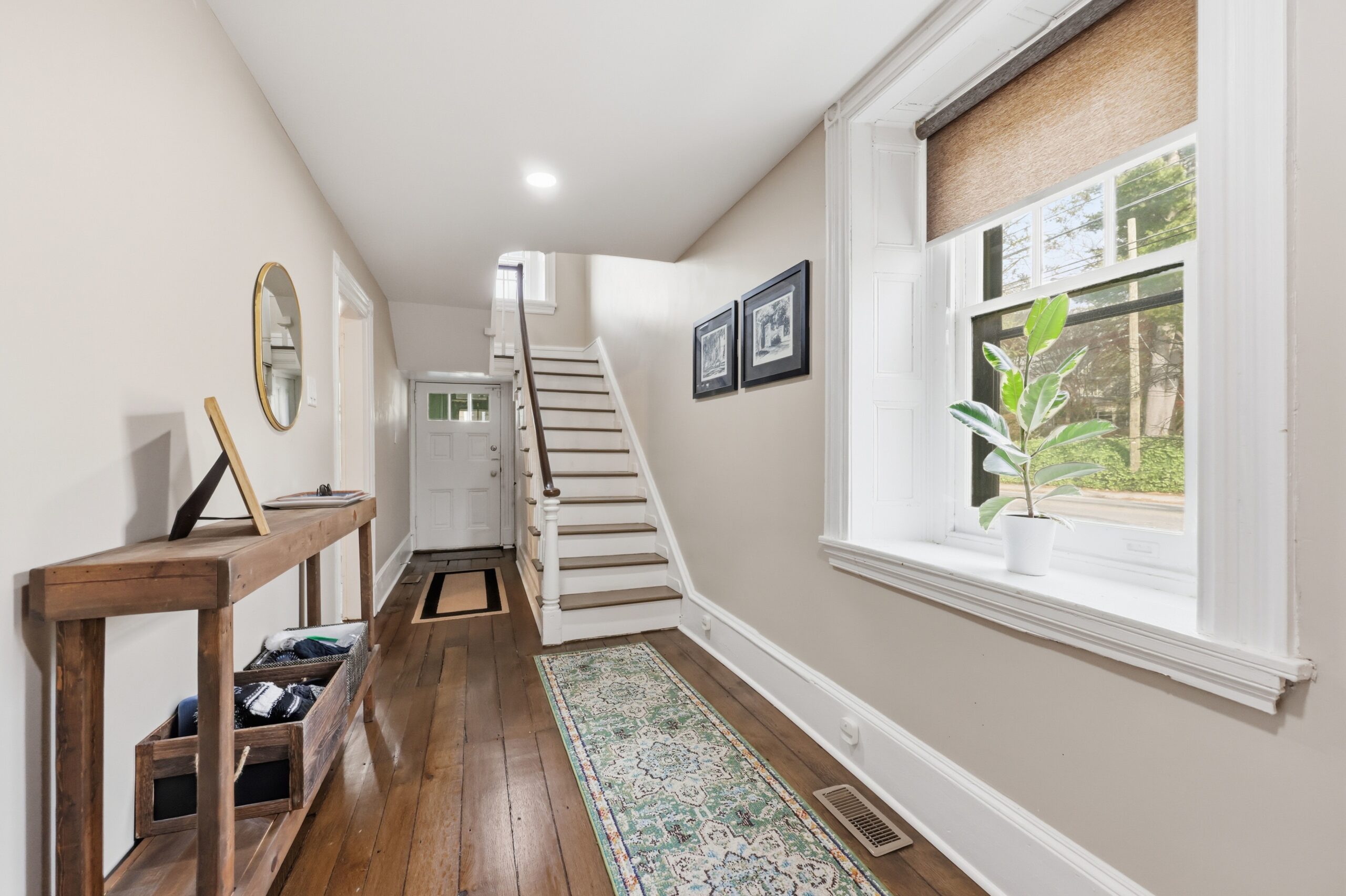
    Front hall

    The home has its original hardwood floors and a two-zone thermostat system with central air and forced heat.

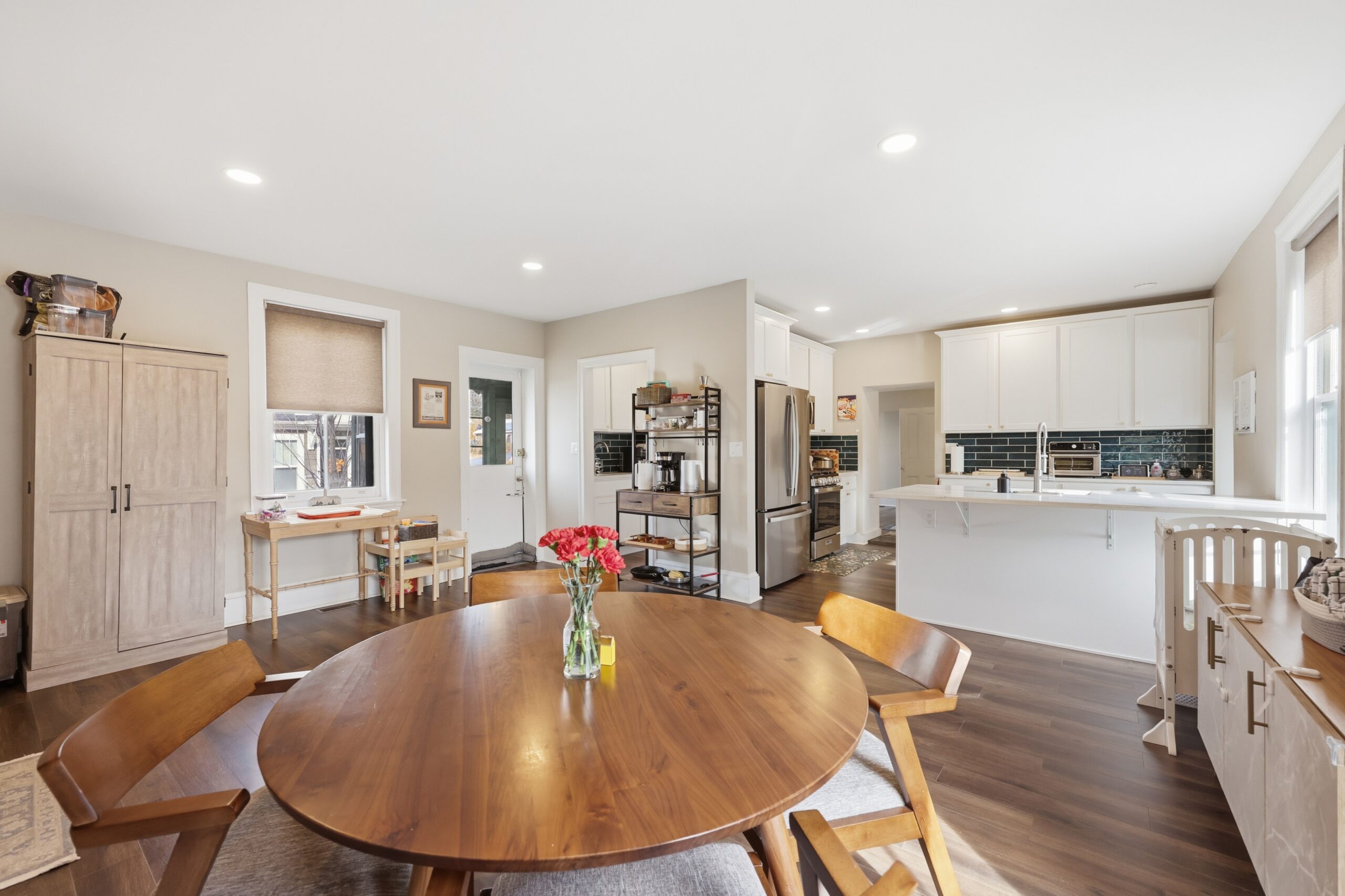
    The newly renovated kitchen has quartz countertops, stainless steel appliances, gas cooking, a separate coffee bar and pantry area, and an adjacent sunroom.

    The formal dining room has built-in shelves and a fireplace.

    The kitchen, which includes a dining area.

    The primary bedroom and another bedroom are on the second floor, along with a laundry room.

    The third floor has three additional bedrooms — one of which serves as an office — two full bathrooms, and a full-sized cedar closet.

    The formal dining room has built-in shelves.

    Updates by the current owners include partial roof replacement, resurfacing and staining the hardwood floors, new flooring in the kitchen, exterior stone repointing, custom window treatments, and a new sewer line.

    The house is in the Rose Tree Media School District.

    It is listed by Amanda Terranova and Adam Baldwin of Compass Realty for $785,000.

  • Villanova football player accused of rape texted victim hours after alleged assault

    Villanova football player accused of rape texted victim hours after alleged assault

    A freshman football player at Villanova University texted the woman he is accused of raping to apologize for the encounter, according to the affidavit of probable cause for his arrest, offering new details about the incident.

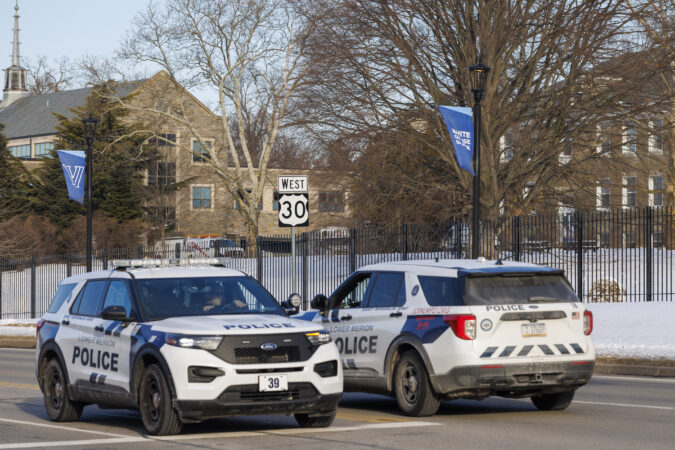
    D’Hani Cobbs, 20, was charged with rape, sexual assault, and related crimes after police say he assaulted a woman who also attends the university. He was removed from campus following the Dec. 7 attack, school officials said in a statement. The student newspaper the Villanovan first reported his arrest.

    According to the affidavit, Cobbs allegedly assaulted the woman in Good Counsel Hall on the Main Line school’s South Campus.

    The early morning attack began after Cobbs and the woman, whom police did not identify, met at an off-campus event and exchanged phone numbers, the document said.

    The two later got a ride with others back to South Campus, according to the affidavit. Sometime between 1 and 2 a.m., Cobbs and the woman entered a residence hall room along with another person, whom the filing did not identify. That person left, the document said, leaving the woman alone with Cobbs.

    Cobbs asked the woman for a hug, and then he “tried to kiss her, and she said no,” the filing said. Cobbs then “pinned her up against a desk” and began touching her buttocks and genitals and penetrated her with his fingers, the affidavit said. He then grabbed her and lifted her on top of his bed and allegedly raped her, according to the affidavit.

    The woman later told police she was screaming and crying during the attack. She said she left the room in tears and asked Cobbs to call a friend to pick her up.

    Cobbs later contacted the woman twice, according to the filing.

    Around 2 a.m., he texted: “Are [you for real] good tho? That was random [as hell]” and “U were jus fine.”

    Just before 5:30 p.m., Cobbs texted: “Yoo Wsp, u ok? My apologies if I made u feel uncomfortable in any way last night I didn’t have any intentions on making u feel uncomfortable. If u want to talk about it over the phone or in person we can just to come to more of a understanding.”

    When investigators interviewed Cobbs that week, he did not deny that he had sexual contact with the woman but said it was consensual.

    Cobbs’ defense attorney, Thomas G. Masciocchi, did not immediately return a request for comment.

    Delaware County District Attorney Tanner Rouse said in a statement Monday that prosecutors had reviewed evidence in the case and swiftly brought charges.

    “The message here is as simple as it is clear — when it comes to other people’s bodies, no means no, and stop means stop,” Rouse said. “That’s what we tell our kids and it holds true throughout life, no matter who you are or how talented an athlete you might be.”

    As of this week, Cobbs’ player bio page on Villanova’s website is out of service with an error message.

    Cobbs’ profile on ESPN is still active, and lists the New Jersey native as a wide receiver. He returned one punt last season, according to the page. A post from the Instagram account for Villanova’s football team announced Cobbs’ signing in 2024.

    A Villanova spokesperson said in a statement that in addition to ordering Cobbs to leave campus, the school is “committed to both supporting the victim and fostering a safe environment for all of our students.”

    Cobbs was arraigned Friday and was released on unsecured bail, according to court records. He is scheduled to appear in court for a preliminary hearing on Feb. 12 and is ordered not to have contact with the woman.