Tag: Democrats

  • There’s now a ‘Club America’ at Great Valley High School. Turning Point USA says interest grew after Charlie Kirk’s assassination.

    Making his pitch to the Great Valley school board, Jed Lu said he and fellow students seeking to bring slain conservative activist Charlie Kirk’s Turning Point USA organization into their high school weren’t racists or extremists.

    “We simply have a different perspective,” Lu told the board at a late February meeting.

    The Chester County district is one of the latest in the Philadelphia area to approve a Club America chapter — the high school offshoot of Kirk’s group. The organization seeks to mobilize “anti-woke warriors” and has rapidly been adding new local chapters since his assassination in September, provoking debate around right-wing influence in public schools.

    Nationally, chapters have nearly tripled — from 1,200 prior to Kirk’s death, to more than 3,300, according to Turning Point officials. Governors in Republican-led states like Arkansas and Nebraska are partnering with Turning Point to expand clubs throughout their states.

    In eastern Pennsylvania, there were 11 Club America chapters at the end of last school year. Now, “we’re currently approaching 40,” said Nick Cocca, Turning Point’s enterprise director.

    The group’s expansion might be overstated in the Philadelphia region. Seven area high schools listed by Turning Point on its website or Instagram graphics as having Club America chapters said they didn’t have clubs.

    Souderton Area High School, for instance, appears on Turning Point’s map, but doesn’t have a club. The school’s assistant principal, Matthew Haines, said “a student made an inquiry” in September about starting a chapter, but never applied to do so.

    In some schools, like Springfield High School in Delaware County, “we have a few students who started running an after-school student pilot a few months back,” said principal Monica Conlin, but the district doesn’t officially recognize the club. Conlin said new clubs must complete a three-year pilot before gaining district approval.

    Still, the organization has gained traction. In addition to Great Valley, Penncrest High School in Rose Tree Media School District lists Club America among its student clubs; district officials and staff didn’t respond to requests for comment.

    Turning Point says it also has a Club America chapter at Pennsbury High School, and an Instagram account for “Club America at Pennsbury” invited students to a Feb. 25 meeting to discuss the State of the Union and “participate in prayer for law enforcement and our nation.” District officials didn’t respond to requests for comment.

    ‘An outpouring of support’ after Kirk’s death

    A spokesperson for Turning Point couldn’t explain the discrepancy between its list and schools that say they don’t have any Club America chapters.

    The organization was also unable to provide a local student willing to be interviewed.

    Cocca said Turning Point “saw an outpouring of support and outreach from young people across the country” in the wake of Kirk’s Sept. 10 assassination. To support its growth, the organization is hiring more field representatives to work with high school students, Cocca said.
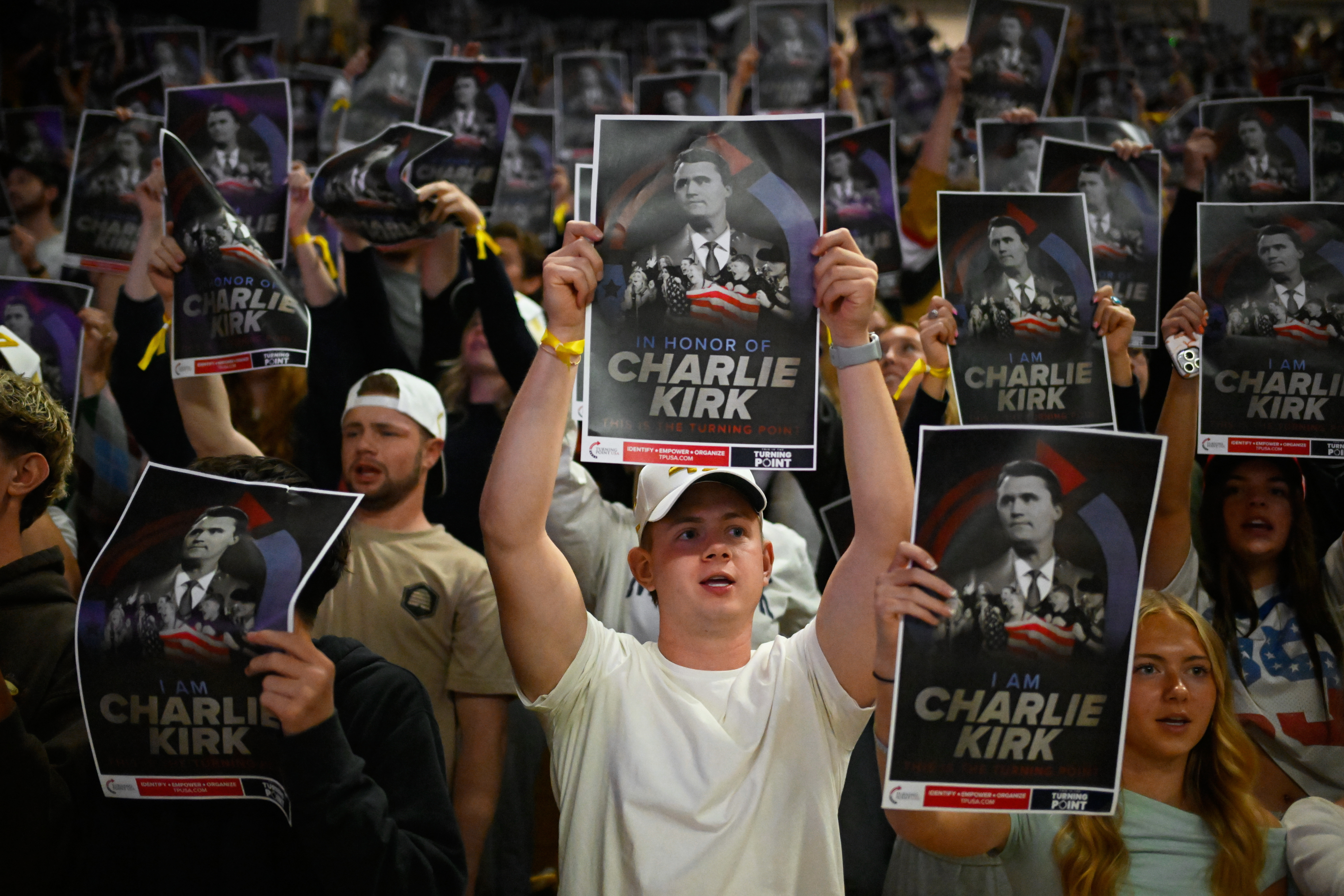
    People hold posters of Charlie Kirk during a Turning Point USA rally at Utah State University, as a part of the organization’s push to memorialize Kirk in Logan, Utah, in September.

    Turning Point, which began as an organization advocating for conservative views on college campuses, had previously been expanding its presence in high schools. (A Turning Point chapter launched years ago at Pennridge High School in Upper Bucks County, for example.)

    Turning Point last July renamed its high school operation Club America. “We wanted a brand that spoke specifically to them,” Cocca said. He said that “when Charlie was alive, he used to say ‘I want a Club America chapter in every high school in America.’”

    The expansion has spurred conflict. Critics have highlighted Kirk’s controversial statements, including referring to the Rev. Dr. Martin Luther King, Jr. as “an awful person” and calling the passage of the 1964 Civil Rights Act a “mistake.”

    Kirk also promoted the so-called “great replacement theory,” framing non-white immigration as a plot to replace white populations.

    “This club is an easy way to incorporate hate and discrimination within our high school. This should not be normalized,” a Change.org petition launched in January against a proposed Club America chapter at West Chester East High School read. An update to the petition later declared that Turning Point “was shut down at West Chester East.”

    Molly Schwemler, a district spokesperson, said that earlier this year, some students expressed interest in starting a Club America chapter.

    But “after discussing the process and need for sponsorship from a teacher with school administration,” students “instead decided to organize independently outside of the school,” Schwemler said. (On its website, Turning Point lists West Chester East as having a chapter.)

    In an Instagram post, the club said it decided to operate independently “because people can’t be mature, open minded or respectful at our school.”

    Activism hubs and kits

    In addition to identifying a teacher adviser, students looking to form clubs often have to supply information to administrators like their purpose, planned activities, and funding needs.

    Schools have little discretion to reject a new club, based on the federal Equal Access Act and First Amendment, said Jeffrey Sultanik, a solicitor for numerous Philadelphia-area districts.

    Districts need “to be viewpoint-neutral,” Sultanik said, noting that “once you open up the door to clubs coming in,” administrators can’t pick and choose which to permit.

    In its handbook for Club America chapters, Turning Point calls it “imperative that every chapter works to become officially recognized by the school,” offering students help if schools deny them.

    Students can form an “activism hub” outside of school for a specific geographic area “as a last resort,” the handbook says.

    In Downingtown — where Turning Point says there is an activism hub — a school district spokesperson said the district has not sponsored any clubs “related to religious or political groups in recent history.” (Some other area schools have official political clubs: Penncrest High School, for instance, lists Penncrest Democrats of America.)

    Turning Point says its Club America chapters are nonpartisan and don’t support specific candidates.

    But the group’s ideology is clear from materials it supplies to student members. Presentations available in Turning Point’s “Activism Library” for students to use have titles including “Taxes Are Shady,” “Socialism Kinda Sus,” and “Big Gov Scares.”

    “Why are those on the left not proud to be Americans?” a presentation titled “Always Love America” asks.

    Kids can order “Activism Kits” from Turning Point with posters and stickers. A “2A” kit features slogans like “Gun rights are women’s rights” and “Guns are the greatest equalizer.”

    Cocca said Turning Point provides students “anything they may need, to promote what they want to promote, and what they want to make their club about” — whether that’s registering students to vote, or learning about the Constitution, he said.

    “Ultimately, it’s up to the students to use those resources the way they want to use them,” he said.

    Opposition to Club America groups

    Critics accuse Turning Point of trying to indoctrinate high schoolers.

    “They are grooming at the high school level, and college level, for a generational change,” said Sherry Lawrence, a parent in Great Valley who opposed the district’s new Club America chapter. “All the red flags are there for people who don’t subscribe to this brand of conservatism, or this brand of Christianity.”

    Lawrence questioned whether adults were driving some efforts to organize Club America chapters.

    In an October Facebook post in a Turning Point Pennsylvania Action group, George Sabo, then a GOP candidate for township supervisor in East Whiteland, said his daughter was starting a chapter at Great Valley High School. “We had discussed it over the summer but pulled the trigger after Charlie’s assassination,” Sabo wrote.

    In a brief phone interview, Sabo said it was his daughter’s idea to start the chapter.

    “My daughter and family, who believe in the Bible, and believe God is king, value those properties and want to see that brought more into the school district,” Sabo said.

    He said that while there had been pushback from other kids, “there’s some support from other kids, too.”
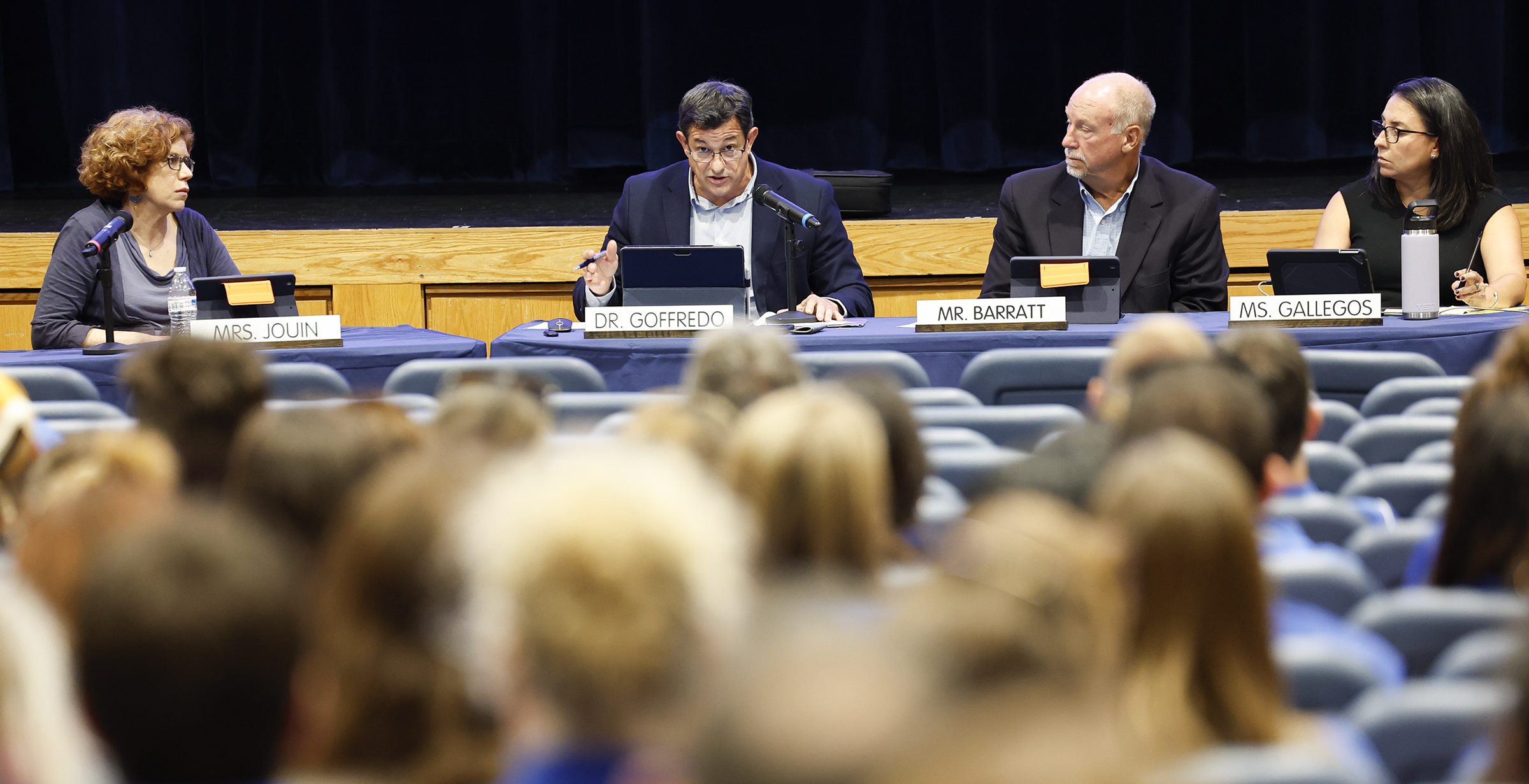
    Great Valley school board members during a meeting at Great Valley High School in Malvern in 2024.

    The Great Valley board approved the club 7-0 at its February meeting.

    At the board meeting, Lu, the club president, said he and the three other club officers had initiated its formation.

    While the club has a “conservative viewpoint,” Lu said, “our purpose is civic debate and civil discussion.” He added that the club is motivated by “the Christian value of love and compassion.”

    The club hopes to be an “impactful addition to Great Valley High School,” Lu said.
  • Ala Stanford is banking on a healthcare message to break through in crowded Philly primary for Congress

    Ala Stanford is banking on a healthcare message to break through in crowded Philly primary for Congress

    At times, Ala Stanford feels like she doesn’t quite fit in.

    She’s a pediatric surgeon — albeit very well-known — who is running for political office for the first time, trying to win a seat in Congress that for decades has been held by a seasoned Philadelphia politician.

    At campaign events, when the top Democrats in the congressional race are chit-chatting among themselves, Stanford has found herself on the margins. Often, she feels more comfortable talking medical procedures with Dave Oxman, the other physician in the race, than whatever the sitting state representatives have going on in Harrisburg.

    The trail may get lonelier. Oxman is planning to drop out Wednesday and endorse Stanford, making her the hands-down most prominent outsider in a race that is stacked with political veterans.

    To amass support ahead of the crowded May 19 primary election — the likely deciding contest in one of the nation’s bluest congressional districts — Stanford will have to chart a path that beats both the Democratic establishment and the progressive left, which have chosen other candidates in the wide-open race.

    Stanford, 55, knows her lack of political experience makes her stand out, and she’s accentuating it on the campaign trail. She is highlighting her career as a physician, and she says she’ll fix a healthcare system her opponents failed to address in their years as public officials. Her candidacy comes as an increasing number of medical professionals are running for office across the country, and as thousands of Pennsylvanians have dropped their healthcare coverage due to rising costs.

    She has kept pace with three sitting lawmakers who are also running for the seat, in part by lending her campaign $250,000 of her own money.

    Candidates (from left) State Rep. Morgan Cephas; physician David Oxman; State Rep. Chris Rabb; physician Ala Stanford and State Sen. Sharif Street appear at a forum hosted by the 9th Ward Democratic Committee in Mt. Airy Thursday, Dec. 4, 2025.

    Stanford also has a cadre of healthcare workers uplifting her. She has won endorsements from prominent doctors, as well as a national super PAC, 314 Action, which backs candidates with backgrounds in science and has poured $1.5 million into a pro-Stanford campaign.

    The group so far funded five weeks of television commercials reminding voters that Stanford founded the Black Doctors COVID-19 Consortium. In the throes of the pandemic, she set up mobile testing sites in majority-Black communities and ran vaccination clinics to inoculate thousands of Philadelphians, a grassroots effort to fill gaps left by government-funded programs.

    Today, she runs a primary care health clinic in North Philadelphia that bears her name.

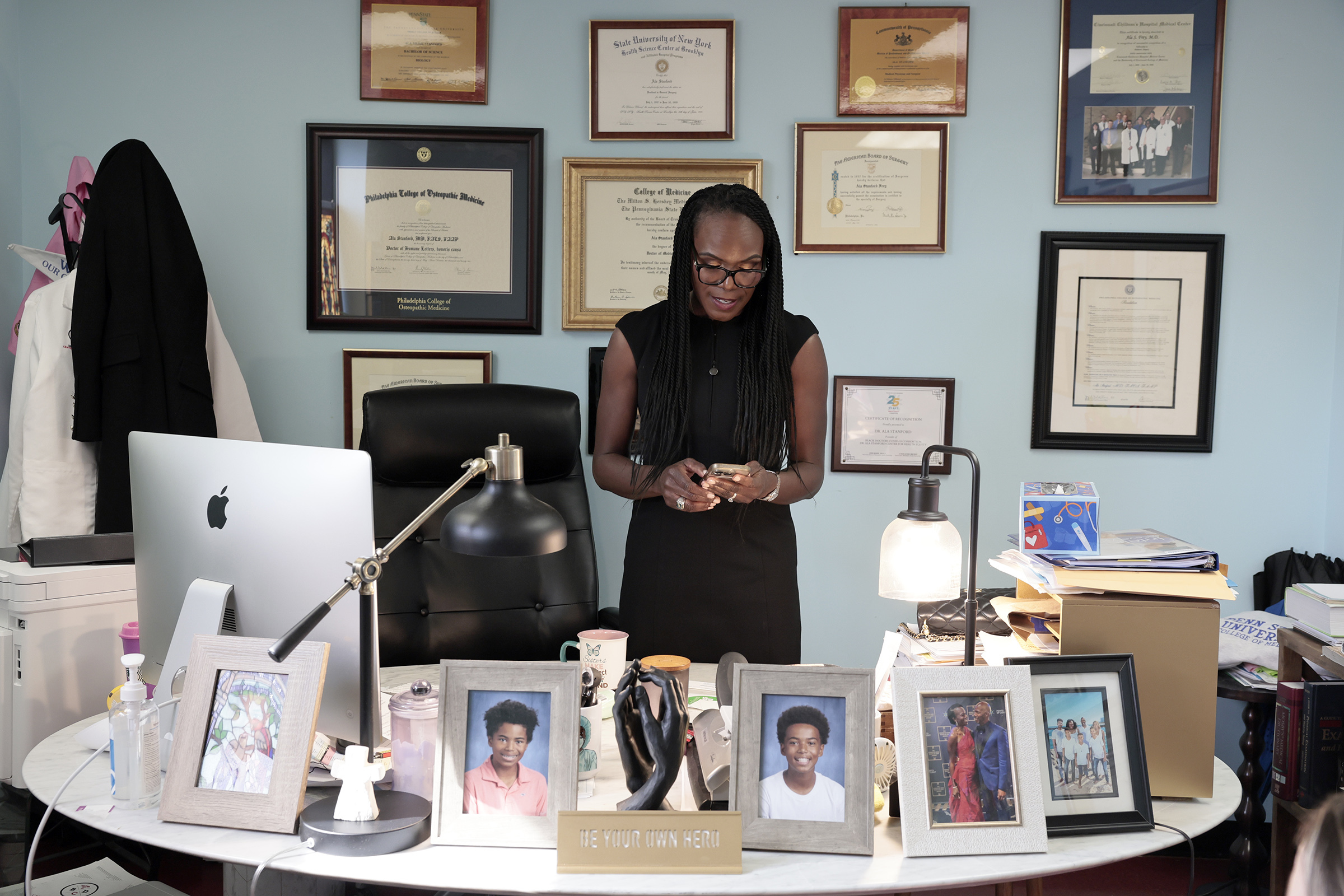
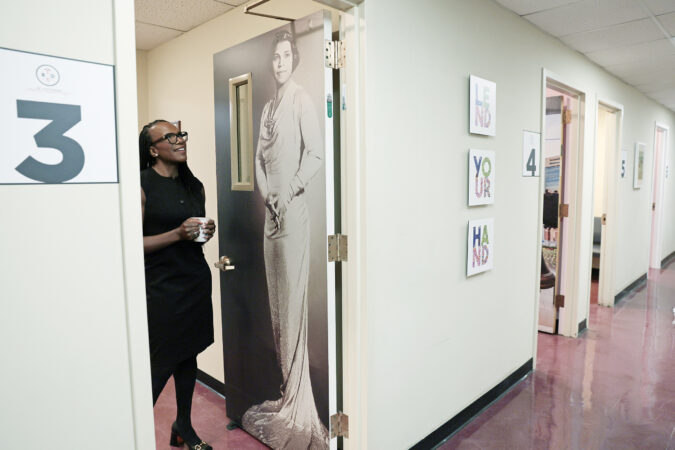
    Ala Stanford texts her son while in her office at the Dr. Ala Stanford Center for Health Equity, 2001 W Lehigh Ave. in Philadelphia on Friday, March 13, 2026

    It is a compelling story that has been told many times — across national media, on podcasts, and in Stanford’s own memoir.

    What hasn’t been told is why it means she should represent the 3rd Congressional District, which covers much of Philadelphia, over her opponents who have spent years in politics.

    “People get so comfortable doing things the same way, the same way, the same way,” she said in a recent interview at her health clinic. “And no one likes change. But the city needs this. The city needs some change.”

    Other candidates say Stanford doesn’t have a monopoly on talking about healthcare. State Sen. Sharif Street, another front-runner in the race, has touted that he and other government officials helped secure funding for Stanford’s pandemic operation.

    “During COVID, he was very proud of his work,” Street spokesperson Anthony Campisi said, “to ensure that Doctor Stanford’s vaccination efforts received the support they needed so that we could get vaccines into arms quickly.”

    Stanford’s opponents also clearly know that her status as a physician may be an asset.

    She submitted paperwork to appear on the ballot as “Dr. Ala Stanford.” But on Tuesday, a member of the Democratic City Committee — which endorsed Street — filed a petition in state court, saying Stanford’s name should appear without the “Dr.” in front of it.

    In the coming days, a judge will decide.

    Leaning on healthcare as a core issue

    Stanford does not fit neatly onto the ideological spectrum.

    Of course, she is not conservative. She doesn’t call President Donald Trump by his name — he’s “47″ — and she uses words like “tyranny” and “running amok” to describe the current White House.

    But unlike some of her opponents, she is not of the Philadelphia Democratic establishment. She said she feels like the city’s long-entrenched party apparatus had always planned to endorse Street, the former head of the state party and the son of a Philadelphia mayor.

    Stanford is also not of the populist left. She believes Palestinians “deserve to have safety and freedom,” but thinks it’s inflammatory when her progressive opponent, State Rep. Chris Rabb, calls Israel’s war in Gaza a “genocide.”

    “I know when you use the G-word how hurtful it is to a group of people,” she said. “It’s like someone saying the N-word around me. I don’t want to hear that. And every time you shout that from the rooftops, how many people are you hurting?”

    What she does believe is that government systems have failed underserved communities, and that most domestic issues can be traced back to inequities in healthcare — points she has consistently emphasized in her campaign.

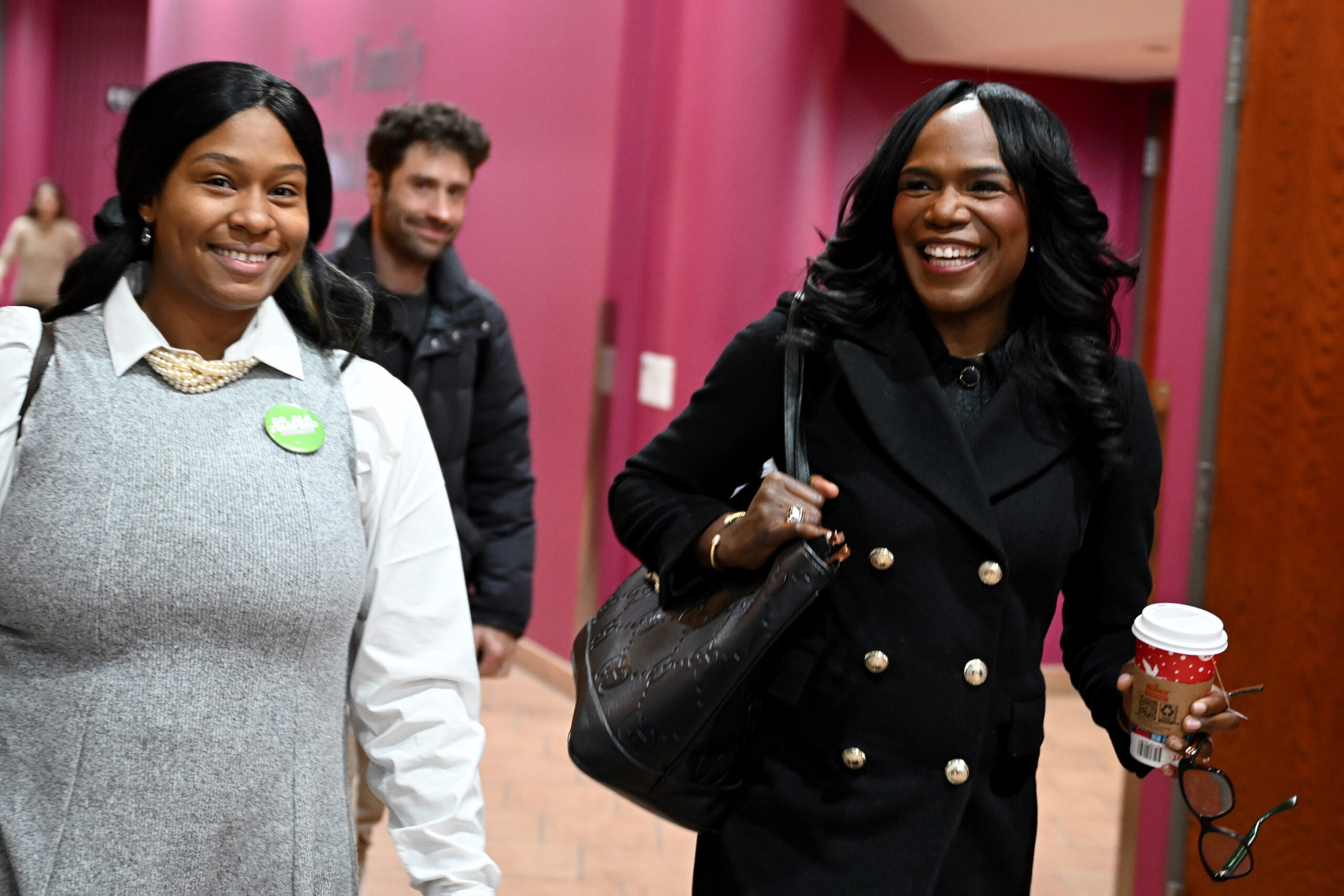
    Physician Ala Stanford (right) arrives at a forum hosted by the 9th Ward Democratic Committee Dec. 4, 2025. She is a Democratic candidate running to represent Philadelphia’s 3rd Congressional District.

    She has hammered Republicans for not extending pandemic-era subsidies that ensured people on Affordable Care Act health plans did not pay more than 8.5% of their income for care. She has advocated for universal healthcare. And she has harshly criticized Health and Human Services Secretary Robert F. Kennedy Jr., who has long been skeptical of vaccines.

    “In this country, wealth is linked to homeownership, home ownership is linked to education, education is linked to health outcomes, and health outcomes are all exacerbated by racial injustice,” Stanford said during a recent candidates forum. “So when you talk about one, you talk about all.”

    Stanford is careful to say that her focus on healthcare doesn’t mean she can’t discuss housing, immigration, or the war in Iran.

    But it is clear that she feels most comfortable talking about what she knows best. Her supporters say that’s an asset in the 3rd Congressional District, which has a disproportionately high number of people who rely on public healthcare systems.

    More than a third of the district’s residents, or more than 284,000 people, were on Medicaid as of December, according to the state Department of Human Services. Among Pennsylvania congressional districts, that’s the second-highest proportion of residents on Medicaid. (The first highest is the 2nd Congressional District, which also includes parts of Philadelphia.)

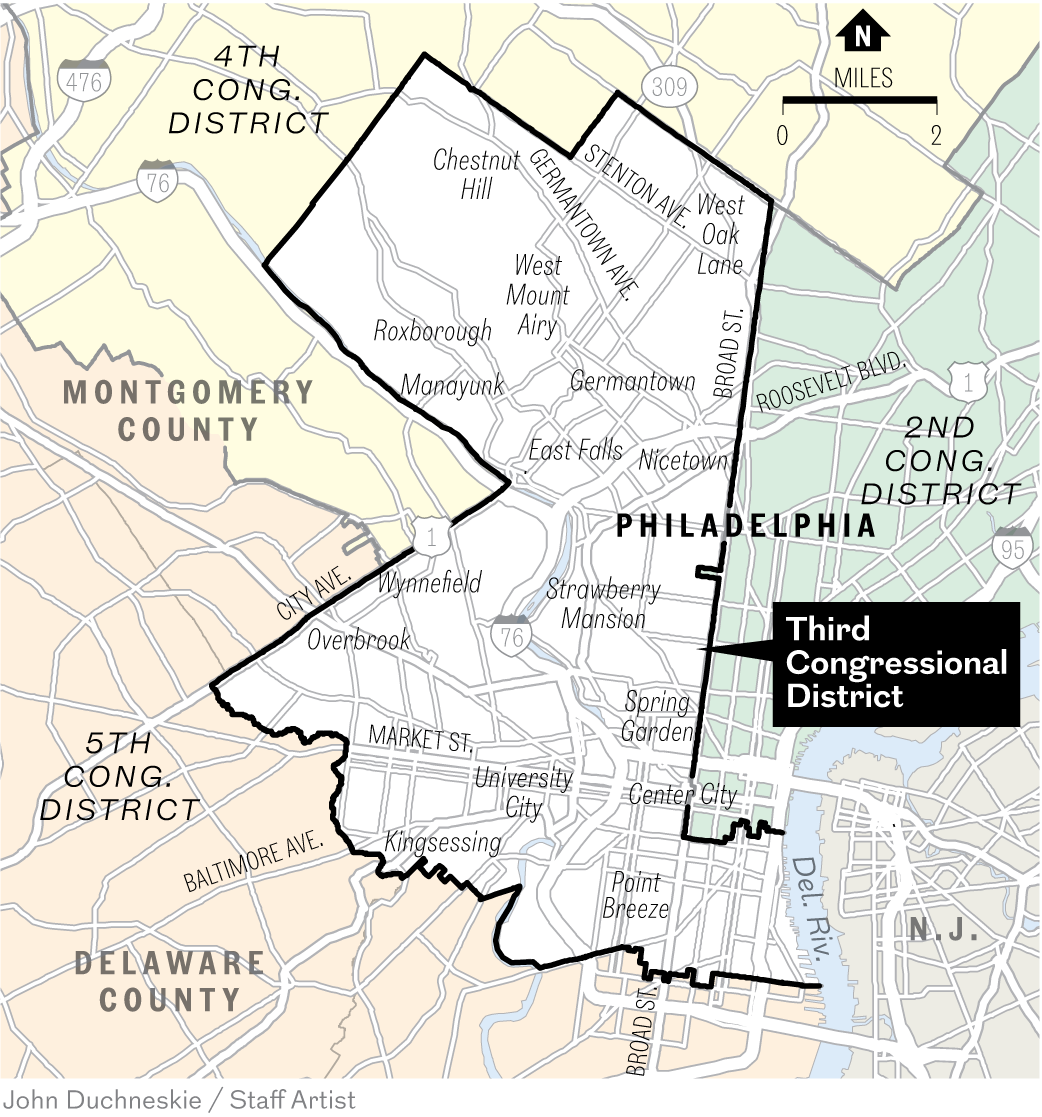
    Map of Pennsylvania’s 3rd Congressional District.

    The state estimates that more than 30,000 people in the district could lose their healthcare as a result of changes to Medicaid eligibility and coverage under Trump’s One Big Beautiful Bill Act.

    There were also more than 80,000 people in the district who last year had health coverage under the Affordable Care Act, either through expanded Medicaid eligibility or a plan they purchased through the marketplace.

    That number is also likely lower now since ACA subsidies expired this year and premiums rose. Statewide, one in five people who bought plans last year from Pennsylvania’s marketplace, Pennie, opted out for 2026.

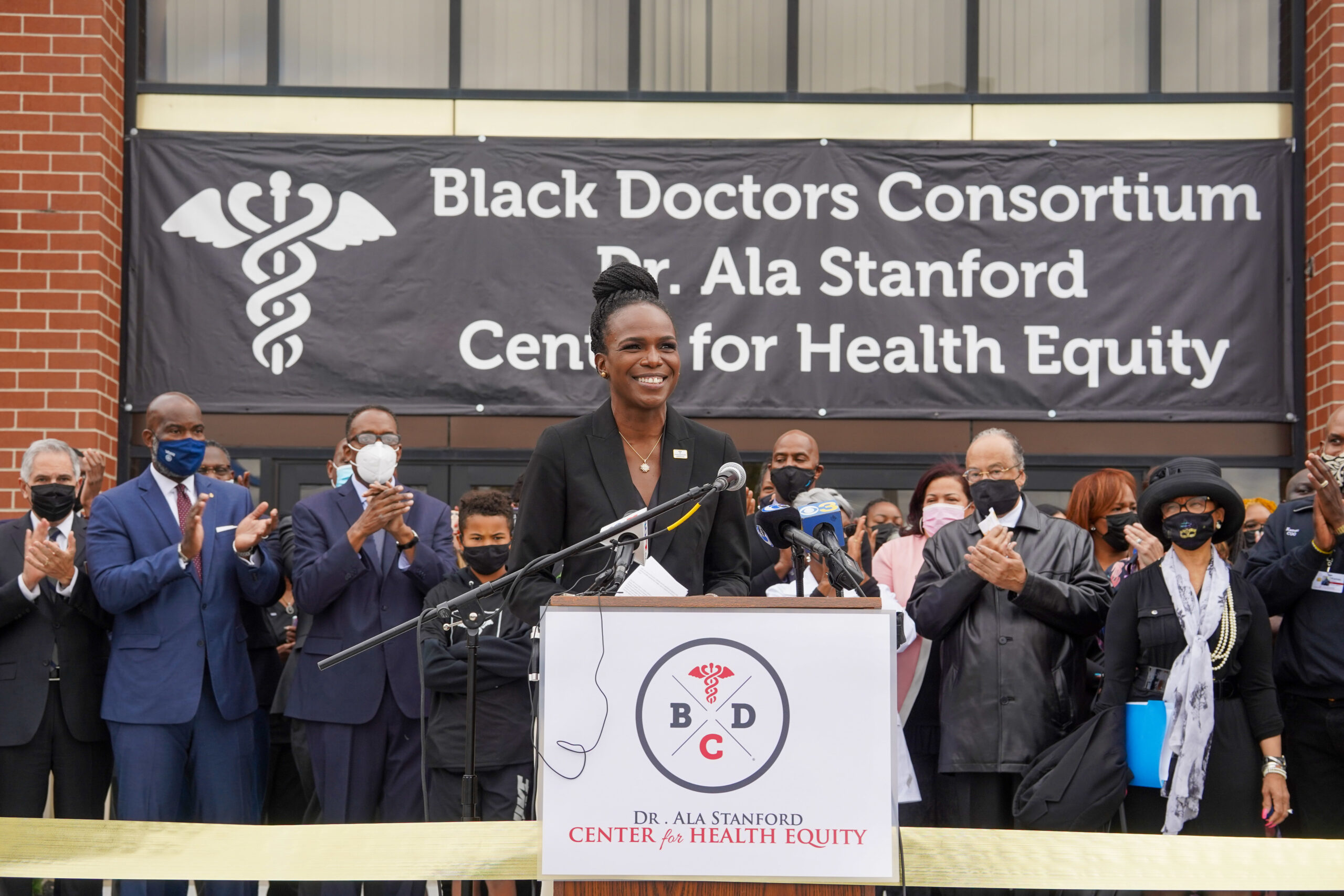
    Ala Stanford speaks at the Black Doctors Consortium Dr. Ala Stanford Center for Health Equity in Philadelphia, Pa., on October 27, 2021. The center was opened with the goal of making healthcare accessible for those in communities who might struggle to get proper healthcare treatment.

    Stanford’s supporters think Philadelphia voters will trust a doctor to ensure affordable healthcare access. They point to a survey released this month by the Annenberg Policy Center at the University of Pennsylvania that found 86% of respondents said their primary healthcare provider is trustworthy.

    Erik Polyak, the executive director of 314 Action, said Stanford’s background differentiates her in a Democratic primary in which most candidates align on key issues.

    “Voters want healthcare decisions made by people who understand patients and the science,” he said, “and not politicians chasing headlines.”

    Oxman, Stanford’s now-former opponent, said physicians running for office can help rebuild a Democratic Party that has “lost the trust of so many people.”

    “So many people see us as not centered on their needs, particularly their economic needs,” he said. “If the Democrats are going to build a party that has a chance of winning in Center City Philadelphia and in central Pennsylvania, it’s got to regain the trust of the voters.”

    New to politics, but not government

    It was the spring of 2020, and the bills were piling up.

    Stanford, who was born in Germantown, had given up her well-paying day job as a surgeon to work full-time with the Black Doctors Consortium. She ran COVID-19 testing clinics in Philly parking lots and churches, and amassed some $200,000 in bills, saying she couldn’t “let one person lose their life for a test that costs $100.”

    That was the beginning of her pandemic experience with government.

    A lot of it was begging. As Stanford tells it, she peppered government officials with emails, telling them how many people she and her volunteers had tested that day, and asking for help securing funding.

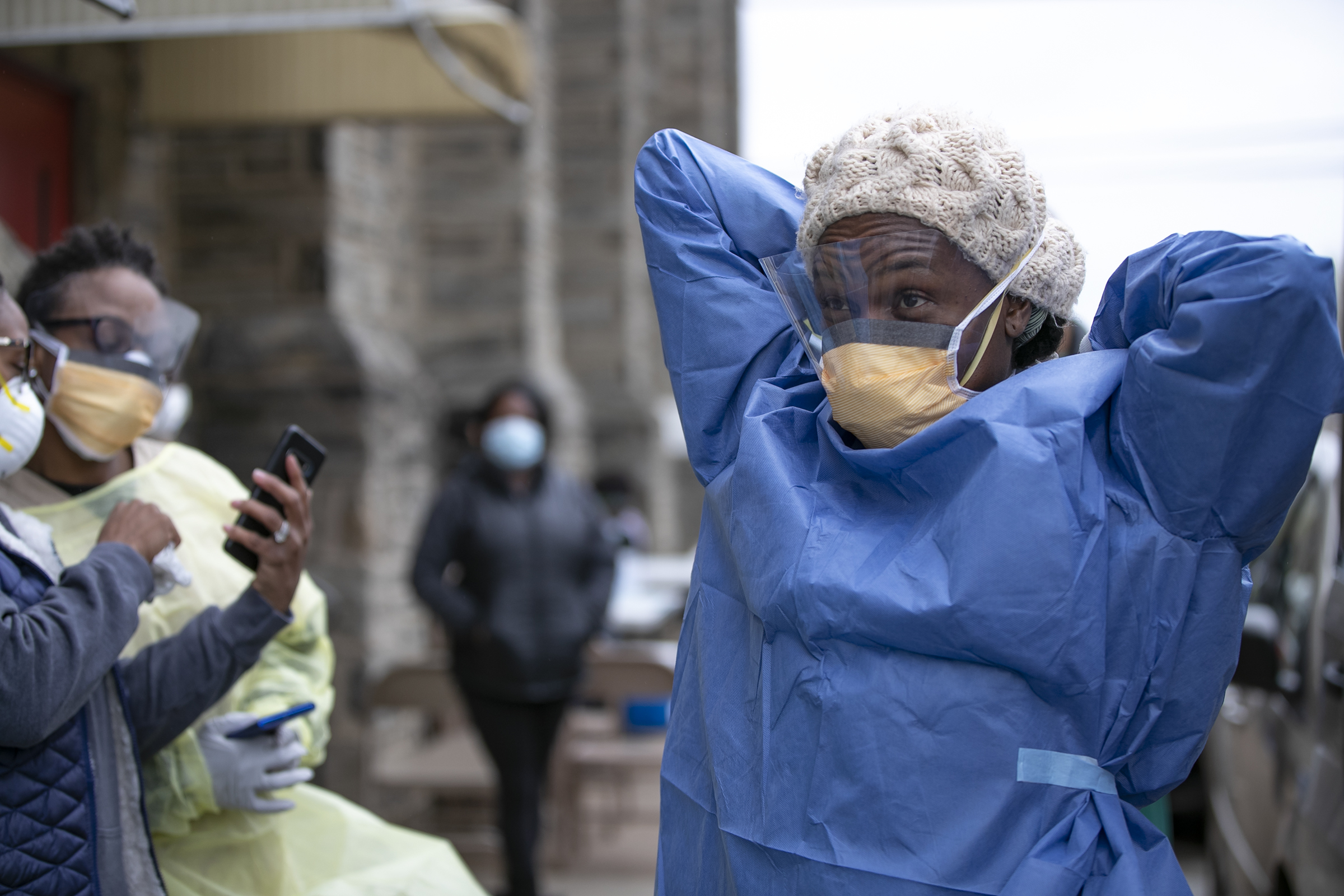
    In this April 2020 file photo, Ala Stanford puts on her mask before running a coronavirus (COVID-19) testing site at the Miller Memorial Baptist Church in Philadelphia.

    U.S. Rep. Dwight Evans was immediately responsive. He connected Stanford with the White House, other members of Congress, and top insurance companies. And he publicly called on former Gov. Tom Wolf and then-Mayor Jim Kenney to allocate funding to Stanford’s organization, citing the group’s outreach to predominately Black communities and its work to address distrust of medical institutions.

    The money came in several months later. It was finally enough for Stanford to pay for testing, compensate her staff, and prepare to vaccinate thousands of Philadelphians.

    Fast-forward five years, and Evans has endorsed Stanford to replace him in Congress as he retires after decades of public service. His backing has been invaluable to Stanford, and it surprised some political observers who figured he might endorse one of the politicians whom he’d served alongside.

    Stanford said Evans’ support has not convinced some Democratic voters. Some tell her they plan to vote for Street, citing his family name, or they say that “it’s his turn now.”

    “What about if he is not what’s best for the people?” Stanford said. “Doesn’t that factor in?”

    She tells voters that despite being new to the campaign trail, she isn’t new to government. She worked as a regional director for the Department of Health and Human Services under former President Joe Biden, who appointed her to the role. And she leads medical services at the Riverview Wellness Village, the city-owned drug recovery center opened last year by Mayor Cherelle L. Parker’s administration.

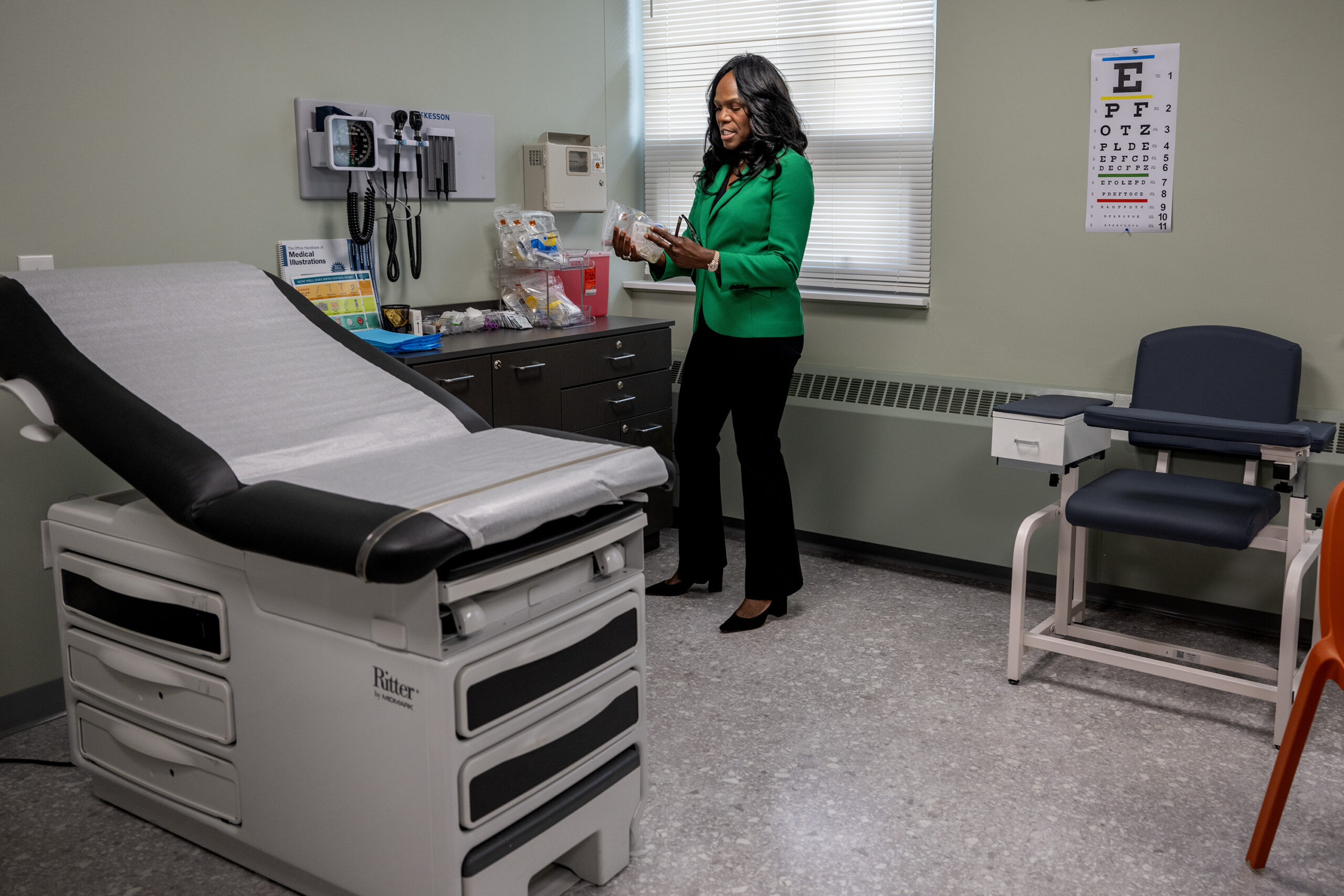
    Physician Ala Stanford in an examination room at the primary medical care center run by her Black Doctors Consortium at Riverview Wellness Village, a city-owned drug recovery home in Northeast Philadelphia Tuesday, Nov. 25, 2025.

    Still, Stanford very much sees herself as a doctor.

    She often works out of a corner office in the North Philadelphia health center, and she still is alerted when the temperature of the vaccine refrigerator dips a degree too low. She has, on more than one occasion, tended to someone experiencing a medical emergency while she was campaigning.

    She knows that overseeing day-to-day operations at the health clinic won’t be possible if she’s in Congress. There’s a succession plan in place.

    “It’s just about, how can I have more significance at a larger scale? Congress is definitely a way to do it, but it might be somewhere else,” Stanford said. “That is, if I don’t win. But I want to win. I should win.”

  • ‘Unattainable’: POWER Interfaith calls on City Hall to address affordability crisis. But Philly doesn’t have many good options.

    ‘Unattainable’: POWER Interfaith calls on City Hall to address affordability crisis. But Philly doesn’t have many good options.

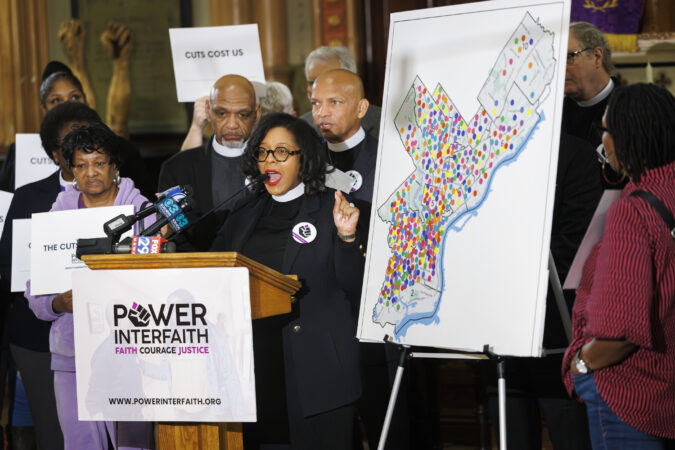
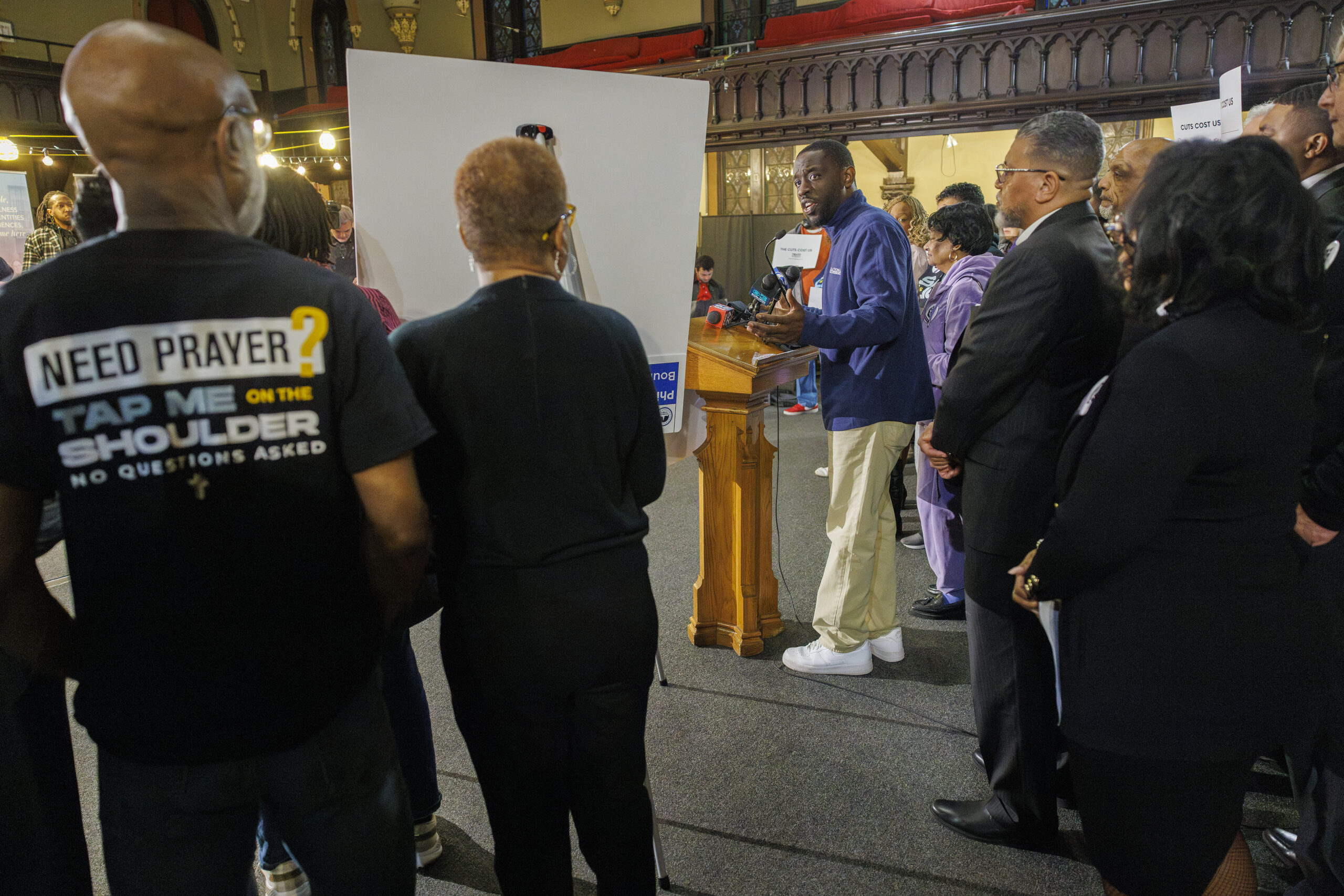
    Philadelphians are facing a growing affordability crisis, and City Hall needs to act quickly to counter the impact of funding reductions from the federal and state governments, leaders of the progressive group POWER Interfaith said Monday.

    “Living comfortably in our city is becoming unattainable,” the Rev. Cean R. James, senior pastor of the Salt + Light Church, said at the gathering at Arch Street United Methodist Church. “The mayor’s recent budget does focus on economic mobility, and that is noble. But it does not go far enough. It’s not sustainable.”

    POWER, an influential coalition that includes more than 50 congregations in the city, on Monday released a report based on interviews with 750 city residents at church meetings, neighborhood gatherings, and other events. The informal survey found:

    • About two-thirds of respondents had to forego another bill to pay mortgage or rent, and 80% struggled to afford property taxes.
    • A majority of congregations surveyed have seen the number of unhoused members in their congregations increase.
    • Ninety percent of respondents said the city hasn’t done enough to “invest in their community’s needs.”

    POWER leaders on Monday called on City Council to hold a hearing on affordability. But the report did not include policy prescriptions for addressing the crisis it described, and it’s far from clear what city lawmakers or Mayor Cherelle L. Parker can do to make it easier to get by in the city.

    Philadelphia already has a relatively small property tax burden, and the city has some of the strongest protections in the nation for people struggling to stay in their homes.

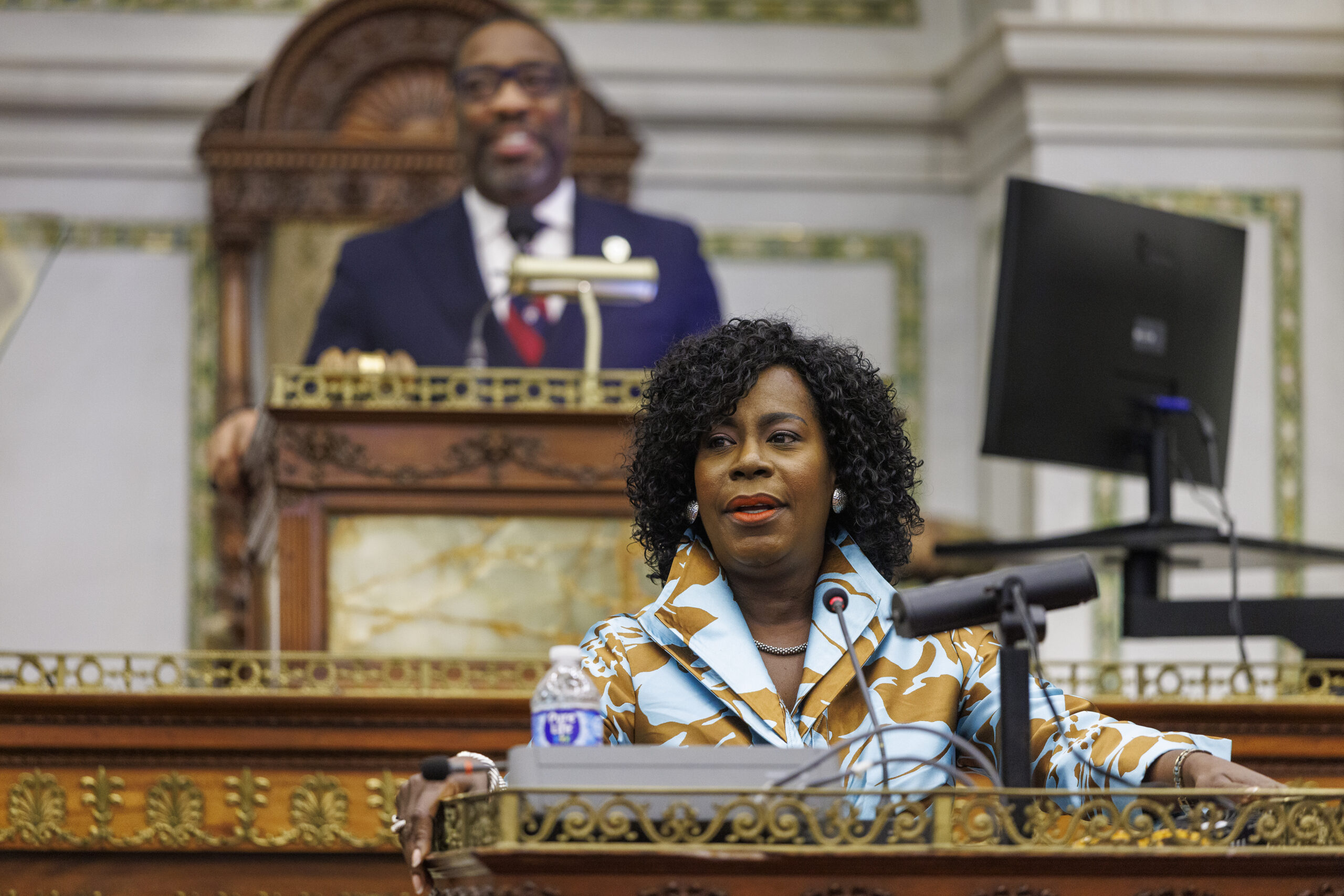
    Philadelphia Mayor Cherelle L. Parker speaks to City Council, guests, and dignitaries at start of her budget presentation in Council Chambers last Thursday.

    Parker last year unveiled her Housing Opportunities Made Easy, or H.O.M.E., initiative, which involves selling $800 million in city bonds to fund programs aimed at making housing more accessible and affordable. Last week, she unveiled a $7 billion proposal for the next city budget with a focus on economic mobility, including investments in workforce development training, internship opportunities, and financial counseling.

    But with little ability to affect the cost of goods and state-imposed restrictions on how it can collect taxes — preventing the city from imposing higher rates on wealthier residents — Philadelphia officials have limited options when it comes to addressing affordability.

    window.addEventListener(“message”,function(a){if(void 0!==a.data[“datawrapper-height”]){var e=document.querySelectorAll(“iframe”);for(var t in a.data[“datawrapper-height”])for(var r,i=0;r=e[i];i++)if(r.contentWindow===a.source){var d=a.data[“datawrapper-height”][t]+”px”;r.style.height=d}}});

    The POWER report acknowledged the predicament.

    “To be very clear: There are no easy answers to these challenges,” the report said. “We must prepare serious and sober projections about the impacts of the impending revenue losses we face, and then we must develop a menu of policy options to soften those impacts and mitigate harm to residents. And we must ensure that any actions we take do not make the current cost-of-living crisis even worse.”

    The city’s limited options on addressing affordability won’t stop it from being a major topic during this spring’s budget negotiations. Affordability has recently become a political buzzword, and Democrats are hoping to win back Congress in November in part by blaming rising costs on President Donald Trump’s administration.

    This year, thousands of Pennsylvanians are abandoning the state’s Affordable Care Act insurance exchange after congressional Republicans declined to renew expanded healthcare subsidies. Trump’s efforts to increase tariffs and the war with Iran threaten to increase inflation nationwide. SEPTA last year increased fares and is still facing a fiscal crisis due, in part, to objections by GOP lawmakers in Harrisburg.

    It’s unlikely the city could meaningfully address any of those losses without significantly increasing taxes, which would in turn make Philadelphia less affordable. And hiking any of the city’s three major sources of local revenue — the wage, property, and business taxes — all come with significant downsides or political roadblocks.

    Increasing the wage levy alone would make the city’s tax structure more regressive, meaning a greater share of the overall tax burden would be paid by poorer workers.

    Increasing the real estate tax rate could make the tax structure more progressive, because property owners tend to be wealthier than the average resident. But POWER and other left-leaning groups generally oppose that option due to concerns about displacing low-income homeowners.

    And when it comes to the business income and receipts tax, or BIRT, City Hall has recently been moving in the opposite direction of POWER’s goals. Council last year approved a proposal championed by Parker and Council President Kenyatta Johnson that will provide annual cuts to the BIRT rate over the next 12 years.

    Philadelphia City Councilmember Isaiah Thomas addresses members of POWER Interfaith during a news conference on affordability at Arch Street United Methodist Church. at Broad and Arch Streets, on Monday.

    POWER leaders have called on lawmakers to pause those reductions or even increase the tax. But the political headwinds they face in City Hall were evident at Monday’s news conference. Two of three Council members in attendance voted for the business tax cuts last year: Democrats Jamie Gauthier of West Philadelphia, and Isaiah Thomas, who represents the city at-large.

    “It’s very difficult, as we discussed in the past, for local government to be able to step up and address some of these concerns,” Thomas said at the event. “There’s not much we can do as it relates to the catastrophe that we’re seeing around healthcare. There’s not much we can do as it relates to all the tariffs and the cost of living that’s going up significantly. But there are things that we can do, that we control.”

    He pointed to efforts by Councilmember Nicolas O’Rourke to preserve a program that provides free SEPTA fares for low-income Philadelphians and to Gauthier’s advocacy to direct more housing money to the city’s poorest residents.

    The Rev. Carolyn C. Cavaness, pastor of Mother Bethel AME, said she understands that lawmakers have to deal with complicated political dynamics. But she said she hopes that POWER’s focus on the affordability crisis will reset the conversation.

    “I always think about context. … Sometimes we’re in tight spaces,” Cavaness said at the POWER event. “I think also conditions then were much different than what they are now. … We’re really back to ground zero.”

  • TSA closes Terminal C checkpoint at PHL Airport due to staffing shortages

    TSA closes Terminal C checkpoint at PHL Airport due to staffing shortages

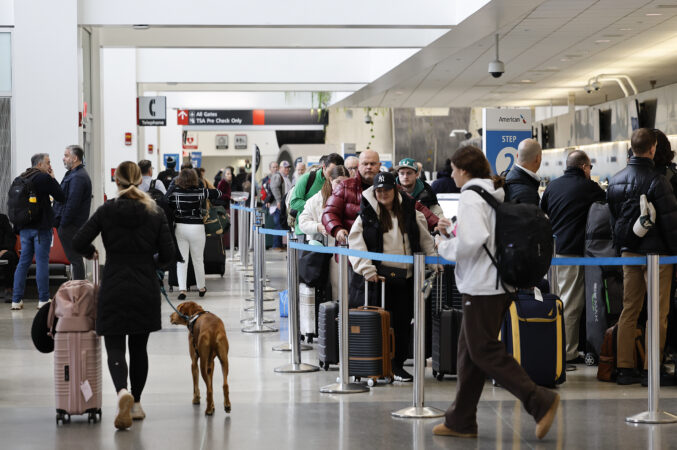
    The Transportation Security Administration temporarily closed the Terminal C security checkpoint at Philadelphia International Airport on Thursday morning.

    “Due to staffing constraints related to the government shutdown, the TSA, in collaboration with the airport, is temporarily closing the Terminal C checkpoint,” said PHL spokesperson Heather Redfern.

    All other security checkpoints remain open, and TSA PreCheck passengers can use the designated lanes at the Terminal A-East and D/E checkpoints. There is no timeline for when Terminal C will be back up and running.

    “We encourage you to check the MyTSA app or the airport’s website to find current wait times and to arrive early to the airport,” said an American Airlines spokesperson. “We are grateful for our federal partners at TSA who continue to ensure safe travel for our customers.”

    The scene at the TSA checkpoint line in Terminal B at Philadelphia International Airport on Sunday morning, Nov. 9, 2025.

    The TSA is experiencing a lapse in funding, alongside other Department of Homeland Security agencies, because its budget has not been passed by Congress.

    In January, federal lawmakers narrowly avoided another full government shutdown by approving budgets for all federal agencies except the Department of Homeland Security. Republicans and President Donald Trump agreed to carve out the DHS budget for further negotiations as Democrats want to put more guardrails on federal immigration enforcement.

    There have been a couple of attempts at passing the DHS budget, but neither side has budged on its demands. The only Senate Democrat to support funding DHS is Pennsylvania Sen. John Fetterman.

    At this point, there is no end in sight to the DHS shutdown and, by proxy, the lapse in TSA funding that is leading to staff shortages across the country, including Philadelphia’s airport.

  • Philly City Council will consider limiting ICE next month as new Pa. detention centers loom

    Philly City Council will consider limiting ICE next month as new Pa. detention centers loom

    Philadelphia City Council next month will consider legislation to place some limits on immigration enforcement in the city and is planning a daylong hearing to parse the proposals.

    Council President Kenyatta Johnson, a Democrat who controls the flow of legislation in the chamber, said he has scheduled a hearing to take place at 10 a.m. on April 6 before the Committee of the Whole, which comprises all 17 Council members.

    That means every lawmaker will have the opportunity to question members of Mayor Cherelle L. Parker’s administration, as well as immigration advocates, about the package.

    The timeline means mid-April is the earliest that Council could pass the package. Fifteen of the body’s 17 members have expressed support, and that constitutes a veto-proof majority.

    City Councilmembers Rue Landau, a Democrat, and Kendra Brooks, of the progressive Working Families Party, sponsored the legislation introduced in January, which prohibits ICE agents from wearing masks, bans them from staging raids on city property, and makes it illegal to discriminate against someone based on immigration status.

    The legislation also clarifies how and when Philadelphia officials can coordinate with federal immigration enforcement.

    Parker has said an executive order signed by her predecessor remains in place, limiting some cooperation between law enforcement and ICE. But the legislation that Council is considering goes further, codifying a prohibition on city officials assisting ICE and prohibiting data-sharing agreements.

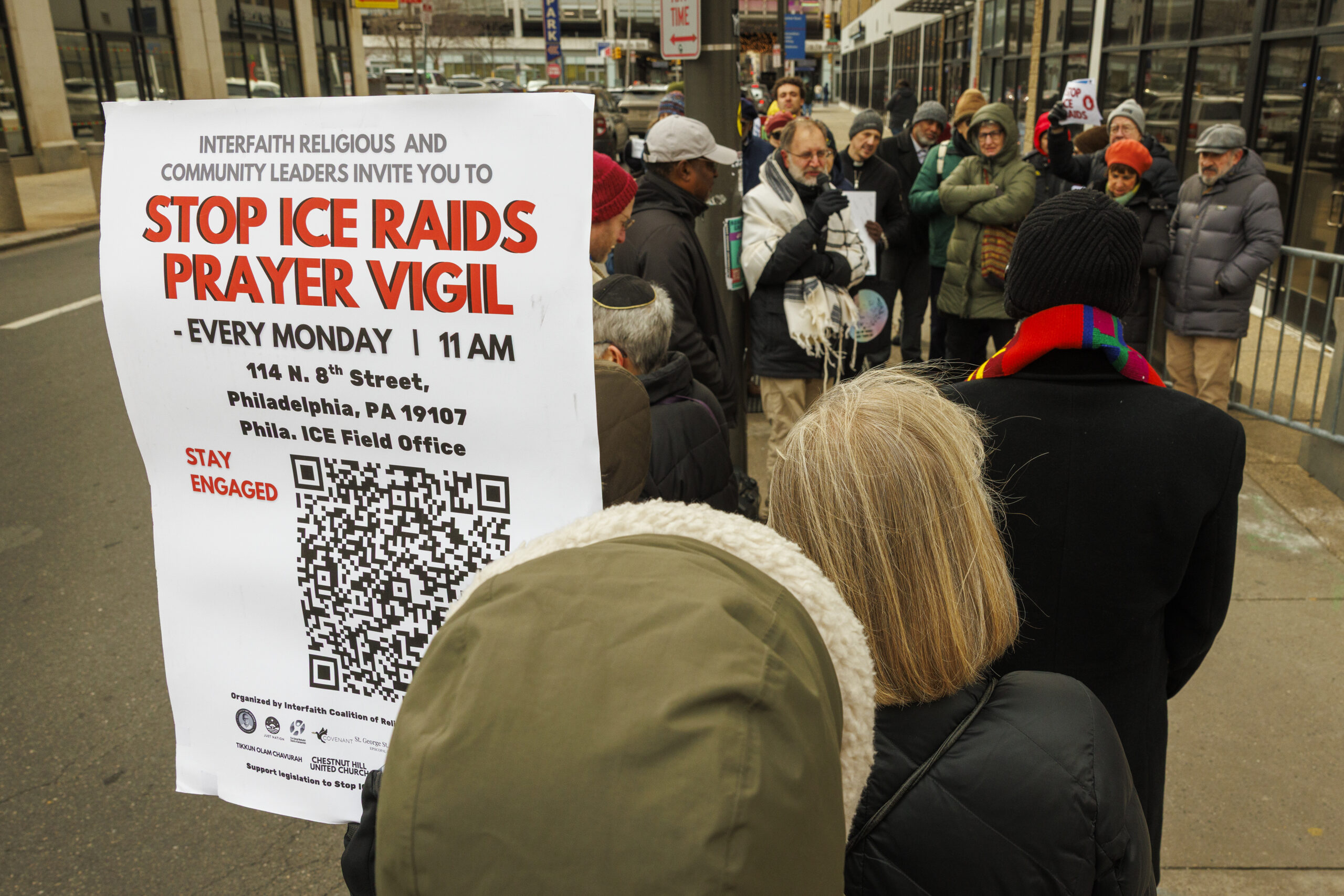
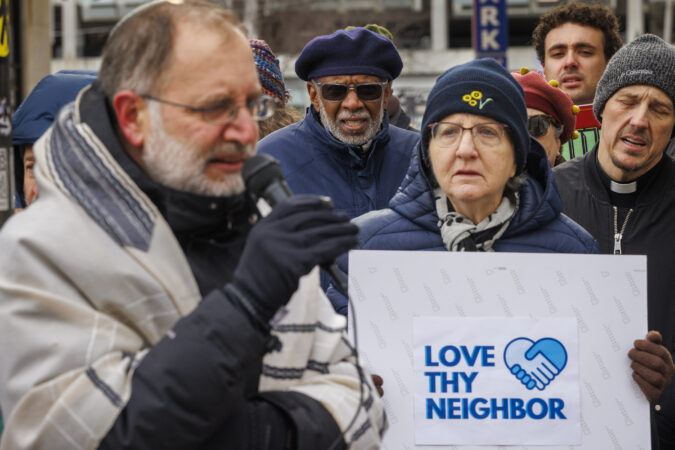
    Interfaith religious and community leaders prayer vigil outside the Philadelphia U.S. Immigration and Customs Enforcement office at 114 N. 8th Street in Center City on March 2.

    It comes as the U.S. Immigration and Customs Enforcement agency is undergoing a revamping to its leadership structure. President Donald Trump on Thursday ousted Department of Homeland Security Secretary Kristi Noem, and said he intends to nominate U.S. Sen. Markwayne Mullin (R, Okla.) to replace her.

    At the same time, Democrats across Pennsylvania, including Gov. Josh Shapiro, continue to denounce ICE, including the agency’s plans to develop two immigration detention centers outside the city.

    Several local officials said this week that they’re worried the federal government will surge enforcement efforts in Philadelphia in order to fill the centers, and that the city must move quickly to pass its legislation.

    “I’m extremely concerned,” said City Councilmember Quetcy Lozada, a Democrat whose North Philadelphia-based district has a large immigrant population. “We need to really figure out what our position is as it relates to working with ICE very closely. We have community residents that we should be protecting.”

    The Trump administration this year quietly spent millions of dollars buying warehouses in two dozen communities across the country.

    Two are in Pennsylvania and could reportedly hold about 9,000 beds in total.

    Spotlight PA reported Tuesday that ICE is referring to a facility in Tremont, located in Schuylkill County, as the “New ICE Philadelphia Mega Center” and one in Upper Bern Township in Berks County as the “New ICE Philadelphia Processing Center.”

    Landau said Council is “paying close attention to these developments and the questions they raise about the expansion of detention facilities in our area.”

    “The majority of Philadelphians are deeply disturbed by ICE’s tactics,” she said.

    Johnson said in an interview last month that the detention centers are a reason to move swiftly on the ICE-related legislation.

    The proposed laws, he said, are a means to “be out in front” of a potential surge of immigration enforcement in the city.

    “Some people say, ‘Well, they’re not even here yet.’ But they just built a warehouse in [Berks County],’” Johnson said. “I believe that was strategic. It took some planning to say ‘We want to set up shop right in your backyard.’”

  • Texas primary exposed GOP scheme to rig the 2026 midterms

    Texas primary exposed GOP scheme to rig the 2026 midterms

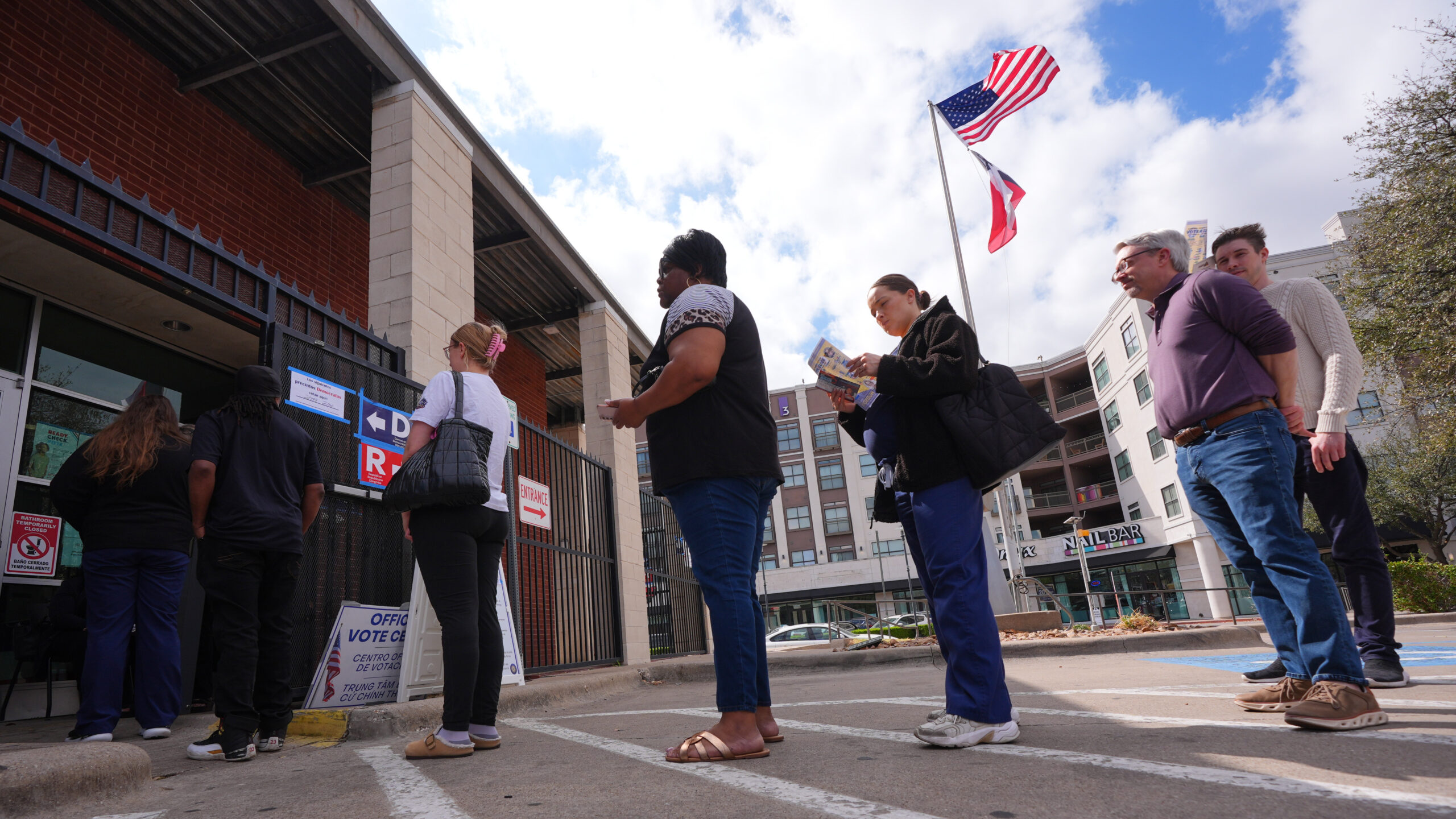
    A man named Juston Marine had arguably the toughest job in America on Tuesday: “election navigator” in Dallas County, Texas, where a confusing, Republican-engineered change in voting rules for 2026 left many voters dazed, confused, and miles from the place where they were supposed to be casting ballots.

    “There are a lot of infuriated voters,” Marine told a reporter for the Votebeat website as he struggled to do his job outside the Anita Martinez Recreation Center in West Dallas, where he encountered voters as they arrived at the large polling center. It seems this election worker heard a lot of words that aren’t found in the Bible, as he told every second or third voter that they were supposed to be somewhere else.

    “I walked up here because I want to vote so, so bad,” Veronica Anderson told a reporter after traveling two and a half miles on foot to Dallas’ Martin Luther King Jr. Community Center, only to be told she could only cast a ballot at some other location she’d never heard of. She added that the rejection felt like “your self-esteem and everything is torn down.”

    That level of despair is exactly what Donald Trump’s Republican Party is going for, as America this week kicked off an eight-month mad dash to a November midterm election that will be pivotal for the nation’s barely breathing democracy.

    We’ll never know exactly how many intended votes weren’t cast on Tuesday at the site named for the civil rights legend credited for the 1965 Voting Rights Act, or other Dallas County polling places where scores of voters — primarily Democrats — were turned away from highly competitive primaries for a U.S. Senate seat and other key races.

    It may have looked like chaos, but in many ways it all went down according to a Republican plan that will likely inspire further scheming from Trump and his MAGA minions as the general election draws closer.

    With polls showing that an election held today — with the two-term president’s unpopularity at an all-time low — would result in a Democratic takeover of the U.S. House and possibly the Senate, perhaps in a landslide, Team Trump has spent months looking for any and every way to put its finger on the scale of democracy.

    No one, other than some online Chicken Littles, believes Trump would go full banana republic and send in troops to cancel the 2026 midterms. But his attempted coup on Jan. 6, 2021, aiming to undo his 2020 loss, is an indication of how far this autocrat will go to retain power.

    The Trump-led Republican scheme to make the 2026 elections less free and less fair started with a push for red states to do extreme gerrymandering, ripping up the maps drawn after the 2020 Census to make new districts crafted to maximize GOP power. (Texas was Ground Zero for this effort — more on this later.)

    As the calendar flips toward the midterms and Republican popularity wanes, the push is likely to get more extreme. A legislative push for the so-called SAVE America Act, which would make voting harder with harsh ID requirements, has stalled, so Trump is now weighing an executive order to get the same results — which would surely trigger a legal fight — and possibly try to curb mail-in ballots, as well.

    What just happened in Texas’ second-most populous county proved a case study in today’s brand of Republican voter suppression, so let’s unpack it.

    Like much of what happens in a political party that still clings to the Big Lie of nonexistent voter fraud in that 2020 election that Trump lost, the problems in Dallas County all began with a conspiracy theory.

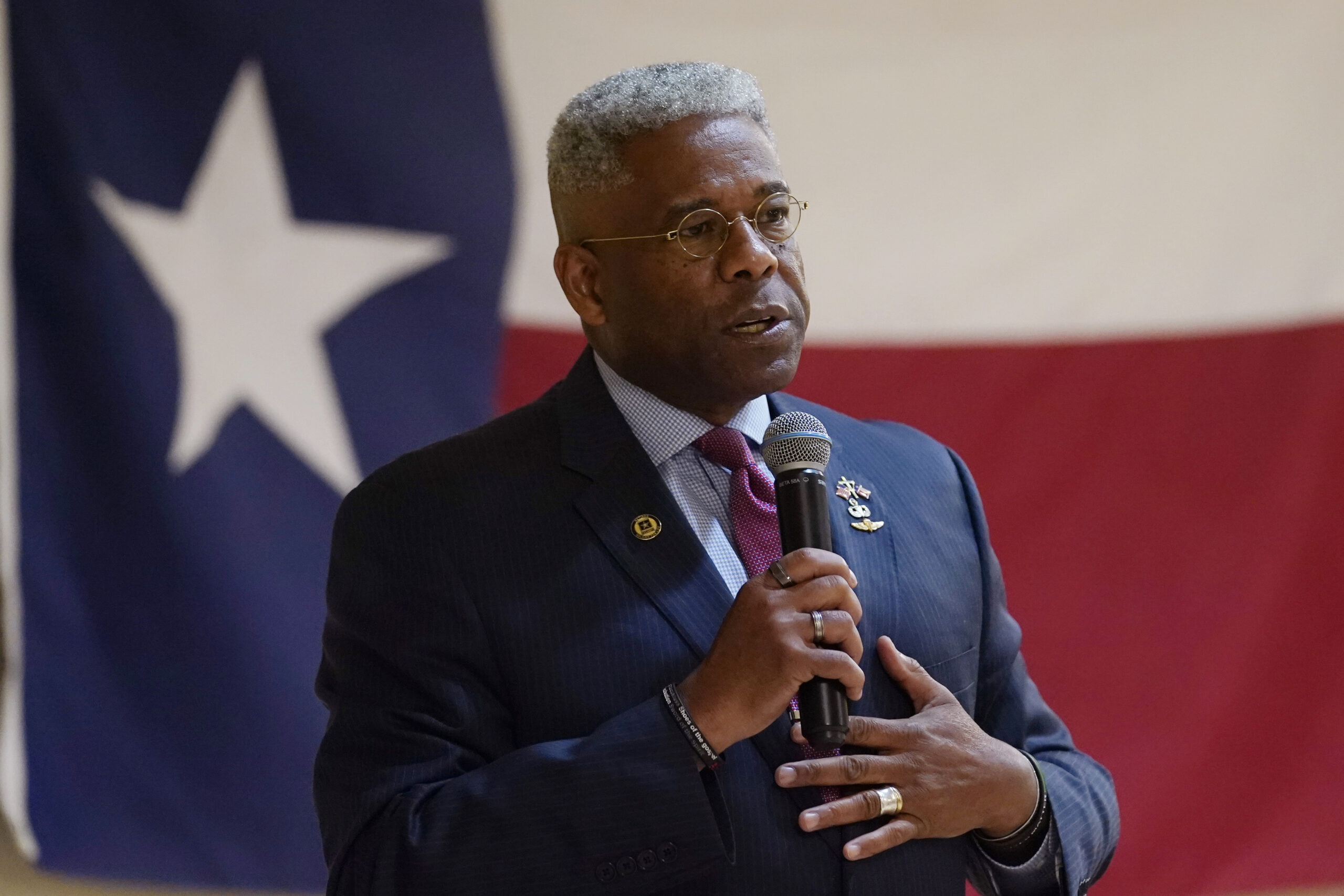
    In this September 2021 file photo, Texas gubernatorial hopeful Allen West speaks at the Cameron County Conservatives anniversary celebration in Harlingen, Texas.

    The county GOP leader in Dallas is a well-known conspiracy theorist, Allen West, an ex-congressman from Florida who moved to Texas and, for a time, ran the state Republican Party, where he adopted a slogan and a style from QAnon and seemed to favor secession, among other extreme views.

    In 2024, West became chair of the Dallas County GOP and made election and voting machine conspiracy theories his prime focus, in a state where parties have a lot of say over how primaries are conducted.

    What the local GOP pushed was for the county to count all of its paper ballots by hand — a laborious process that would also require abandoning the large countywide voting centers and a return to smaller neighborhood precincts. Ultimately, the ballot-counting idea proved not practical, but the switch back to local precinct voting stuck and was in effect Tuesday for both parties — even as Democrats struggled to inform their voters. (A similar change occurred in smaller Williamson County.)

    Election experts note that the GOP generally opposes large centers where anyone in a jurisdiction can vote — much as it opposes early voting, mail-in ballots, or anything else that makes voting easier instead of harder, in an increasingly fragile democracy.

    Voter suppression that unravels the gains from the 1965 Voting Rights Act — weakened and perhaps about to be gutted further by a right-wing U.S. Supreme Court — has been a Republican strategy for decades, but the Dallas debacle was a new low.

    “The confusion is the point,” a Democratic Texas state lawmaker, Ana-María Rodríguez Ramos, posted on social media, noting further, “This is the GOP voter suppression that Dems must come together to overcome in November.”

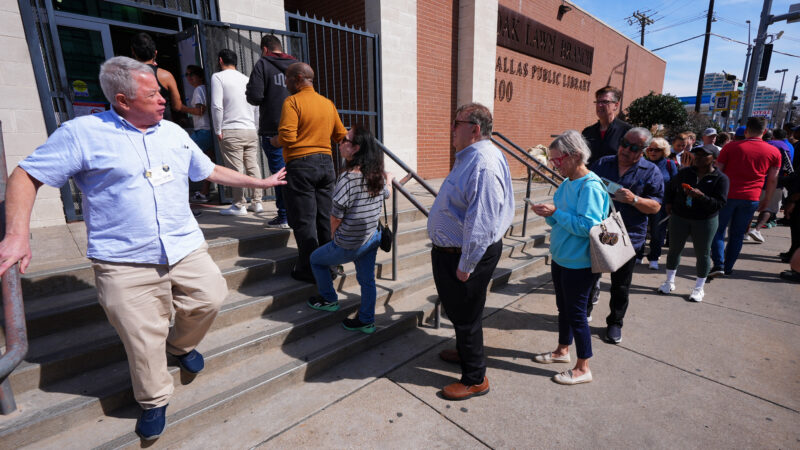
    Primary voters line up to cast ballots at a voting center in Dallas on Tuesday, March 3.

    Ramos also noted one other wrinkle that happened Tuesday. Democrats and fair-voting advocates in both Dallas and Williamson Counties went to court during the day, seeking an emergency order to extend voting hours. That push initially succeeded, and in Dallas County, a judge ordered the polls open for two additional hours.

    But Texas’ right-wing extremist Attorney General Ken Paxton — also a leading candidate in Tuesday’s GOP Senate primary — appealed the ruling and got the state’s conservative Supreme Court to rule in his favor. Votes that were cast after the original 7 p.m. closing time were segregated and may or may not ultimately be counted.

    Not surprisingly, West actually bragged about what looked to many folks like a voting fiasco, blaming the Democrats for not being informed about the confusing rules change. “It’s apparent that Democrats struggled with grasping basic civics and their usual attempt at lawfare backfired,” the GOP leader said in a statement.

    It’s clear that what we saw in Dallas — balloting drenched in conspiracy theories from start to finish, new rules with the sole purpose of making it harder to vote, and an increasingly conservative judiciary making the final call — was clearly a test case for the national election in November.

    It’s not hard to imagine a scenario in which Republicans will manufacture conspiratorial doubt about some of the ballots cast in the fall — as just happened with those post-7 p.m. votes in Dallas — as a pretext for some grander and potentially cataclysmic effort to nullify Democratic victories in Congress.

    But Texas also provided a window into how this MAGA scheme might not work.

    Remember that extreme gerrymander the Lone Star State enacted last year, which aimed to create five additional Republican seats in Congress? Much of the plan aimed to capitalize on a dramatic shift toward the GOP among Texas’ large Latino population during Trump’s last two runs in 2020 and 2024.

    But polls and now early voting have shown the Hispanic vote swinging back toward Democrats since Trump returned to office, thanks to the sluggish economy and the brutal manner of his immigration raids. On Tuesday, Democratic turnout in Texas soared to levels not seen since the high-profile 2008 battle between Barack Obama and Hillary Clinton, in what was a very good year for their party. Voter suppression can be swamped by voter enthusiasm.

    But it shouldn’t have to be that way. The right to vote is the fundamental building block of the American Experiment in democracy, and folks shouldn’t have to walk clear across town or stay up all night to exercise it. Dallas was a warning shot for every citizen: Do not let this nightmare go national in November.

  • More than half of Pennsylvanians oppose ICE’s methods under Trump, new poll finds

    More than half of Pennsylvanians oppose ICE’s methods under Trump, new poll finds

    Pennsylvania voters broadly oppose some of President Donald Trump’s immigration enforcement tactics — but there’s a stark partisan split, according to a new statewide poll of registered voters.

    Franklin & Marshall College’s Center for Opinion Research released a wide-ranging poll Thursday that tracked registered Pennsylvania voters’ opinions on America’s 250th anniversary, ICE enforcement tactics, and other issues facing the state and nation ahead of the midterm election.

    Trump’s approval ratings have remained consistently low since returning to office last year, with a majority of Pennsylvanians disapproving of his job as president.

    Democratic Gov. Josh Shapiro maintains a 50% approval rating heading into the midterm elections later this year.

    Pollsters at Franklin & Marshall College surveyed 834 registered Pennsylvania voters, including 353 Democrats, 347 Republicans and 134 independents. The sample error is +/- 4.1 percentage points.

    Here are three takeaways from the poll of registered Pennsylvania voters, conducted Feb. 18 through March 1 by phone or online.

    Trump is consistently unpopular in Pennsylvania

    Trump’s approval ratings among registered Pennsylvania voters remain low, with 61% of voters rating him as doing a “poor” or “fair” job, according to the statewide poll, which also assessed Trump’s performance on immigration, the economy, and other issues.

    Trump maintained a net negative approval rating throughout his first term in 2017-2021 and so far in his second term, according to the poll.

    Despite winning the state in 2024, he remains divisive with 51% of respondents rating him as doing a “poor” job, and only 10% who rate him as doing a “fair” job. Approximately 39% of registered Pennsylvania voters view Trump as doing an “excellent” or “good” job, according to the poll.

    window.addEventListener(“message”,function(a){if(void 0!==a.data[“datawrapper-height”]){var e=document.querySelectorAll(“iframe”);for(var t in a.data[“datawrapper-height”])for(var r,i=0;r=e[i];i++)if(r.contentWindow===a.source){var d=a.data[“datawrapper-height”][t]+”px”;r.style.height=d}}});

    Trump’s low approval numbers could have a drag effect on Republicans’ performance in the midterm election, said Berwood Yost, the director of Franklin & Marshall’s poll.

    “While there’s still a long way to go until November, [Trump has] got to figure out a way and his party has to find a way to prevent that and earn those voters back,” Yost said.

    Trump’s low numbers align with those of former President Barack Obama or George W. Bush’s approvals at the same point in their second term, Yost added. Both of their parties lost seats in the midterms elections those years.

    However, Trump’s approval ratings are not the lowest they have been in the state. His approval ratings dropped to their lowest, 70% disapproval, during his first term in September 2017.

    Josh Shapiro is still popular

    Gov. Josh Shapiro remains popular ahead of his reelection contest this year: 50% of Pennsylvania voters say he is doing an “excellent” or “good job,” while another 44% believe he is doing a “fair” or “poor” job leading the nation’s fifth most populous state.

    Shapiro is the most popular governor since 2000, when comparing his approval ratings to those of other Pennsylvania governors at the same point during their first terms, Yost said.

    Shapiro also maintains a significant lead over his likely GOP challenger, State Treasurer Stacy Garrity. If the midterm elections were to happen today, 48% of voters said they would reelect Shapiro, while 28% said they would vote for Garrity. Another 7% of voters said they would vote for a different candidate, while 17% were undecided or refused to answer the question.

    Shapiro’s approval ratings have remained steadily high since taking office in January 2023. A Quinnipiac University poll released last month found similar public opinion toward Shapiro’s reelection, while some voters said they were unsure whether they wanted the rumored 2028 presidential candidate to run for higher office.

    Pa. voters broadly oppose some of ICE’s enforcement actions, but are split on others

    Approximately three-fourths of Pennsylvania voters believe ICE should not be able to use deadly force against protesters or enter a home without a warrant, in a major pushback to Trump’s immigration enforcement tactics.

    Pennsylvania voters’ opinions on immigration enforcement varies significantly based on a person’s political party: While nine in 10 Republicans support ICE tactics, only two in five independents and one in 10 Democrats support them.

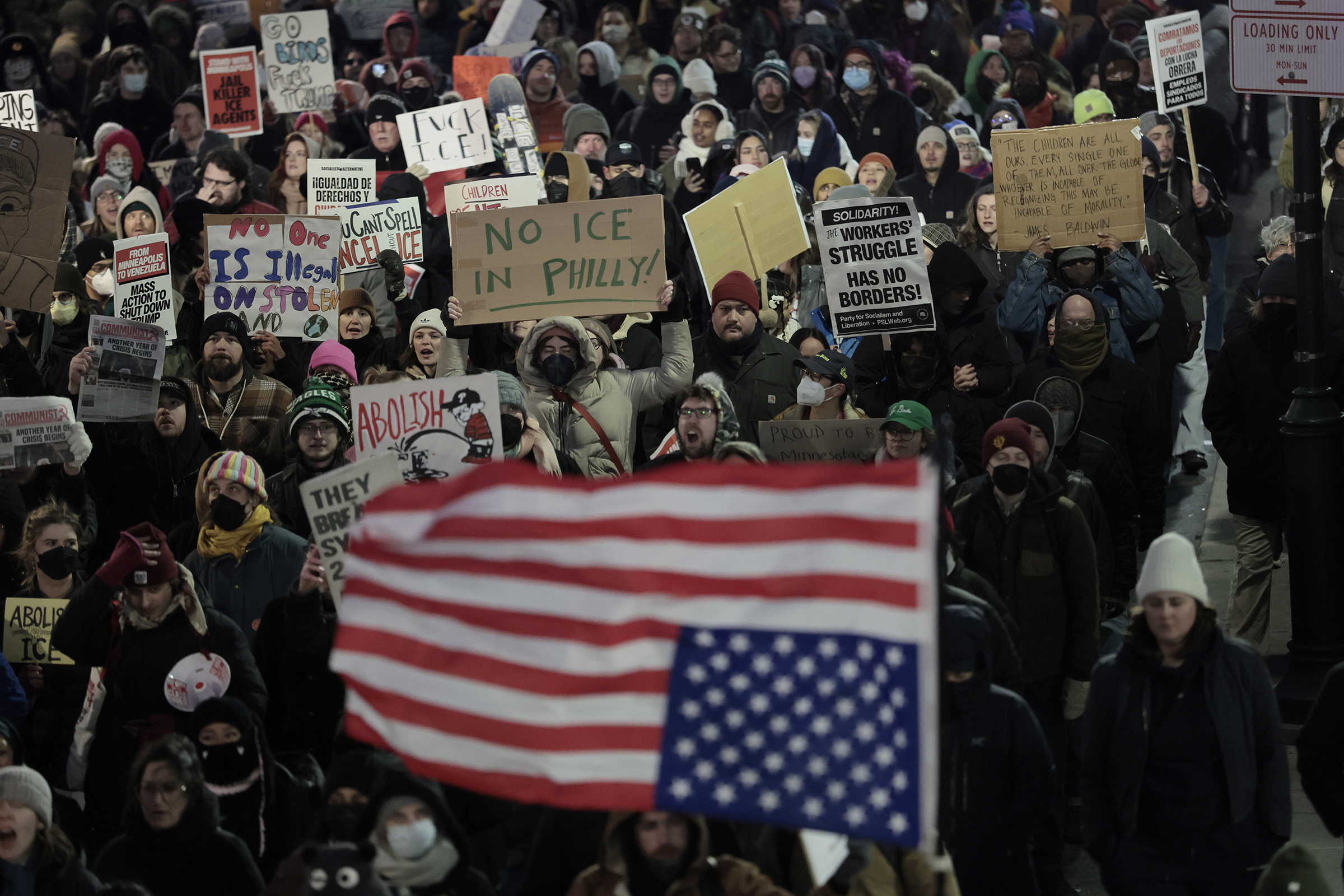
    Protesters march up Eighth Street, towards the immigration offices, during the Philly stands with Minneapolis Ice Out For Good protest at Philadelphia’s City Hall on Friday, Jan. 23, 2026.

    Republicans support ICE’s use of unmarked vehicles to detain people and their use of masks to hide an agent’s identity at much higher rates than Democrats, while independents are split. On the use of masks, 77% of Republican voters believe agents should be able to wear them, while 40% of independents and only 10% of Democrats do.

    “There’s a lot of consensus about the fundamental principles that protect our individual rights like entering a home without a warrant or using force against protesters, whereas there’s a little more partisanship in others,” Yost said.

    window.addEventListener(“message”,function(a){if(void 0!==a.data[“datawrapper-height”]){var e=document.querySelectorAll(“iframe”);for(var t in a.data[“datawrapper-height”])for(var r,i=0;r=e[i];i++)if(r.contentWindow===a.source){var d=a.data[“datawrapper-height”][t]+”px”;r.style.height=d}}});

    There is also overwhelming support among Pennsylvania voters that non-citizens who are in the U.S. legally — whether by visa, green card, asylum or other protected statuses, or in the process of becoming a citizen — should not be targeted by Immigration and Customs Enforcement for deportation, according to the poll.

    However, a majority of Republicans and independent voters believe undocumented immigrants who have been in the United States illegally for any amount of time and have no criminal record should be targeted for deportation, while less than a quarter of Democrats believe they should.

    Pennsylvania voters want the 250th anniversary to acknowledge the positives and negatives from American history

    As Trump tries to reframe American history for the nation’s 250th anniversary, most Pennsylvanians want the celebrations to acknowledge its positive and negative parts.

    Approximately 73% of Pennsylvania voters believe any retelling of American history should include the upsides and downsides of the nation’s founding, while 24% believe only positive aspects should be celebrated.

    “Most people, they want to see historical interpretations that include the whole picture,” Yost said.

    This finding is of particular interest in Pennsylvania, following the Trump administration’s removal of an exhibit that memorialized the enslaved people who lived in George Washington’s home from the historic President’s House site in Independence National Historical Park. A federal judge ordered the restoration of the exhibit, but the Trump administration is appealing the decision.

  • Philadelphia may host another DNC in 2028. Here’s what that could mean for the local economy.

    Philadelphia may host another DNC in 2028. Here’s what that could mean for the local economy.

    The first time Philly hosted a major presidential nominating convention was in 1848, when the Whig Party, meeting in Sansom Street’s long-gone Chinese Museum building, nominated Zachary Taylor, who went on to win the White House.

    The 10th and most recent time, Democrats in 2016 made Hillary Rodham Clinton the first woman to be nominated for president by a major party.

    Mayor Cherelle L. Parker and other local leaders are hoping to make more history by landing Philly’s 11th convention in 2028. And part of the appeal is the promise of a boost to the local economy as thousands of conventiongoers buy up hotel rooms, spend money at restaurants, and visit the city’s attractions.

    Philadelphia “would see substantial economic benefits,” Gov. Josh Shapiro recently wrote to the Democratic National Committee, which this week named the city as one of five finalists to host the party’s next convention, alongside Atlanta, Boston, Chicago, and Denver.

    But how much do cities really benefit from hosting political conventions? Here’s what you need to know about what Philly stands to gain from hosting another DNC.

    Conventions’ economic impact debatable

    Tourism bureaus and convention planners often make lofty claims about the economic benefits of major events like political conventions.

    Visit Philly, for instance, in 2016 commissioned the consulting firm Tourism Economics to examine that year’s DNC, and the firm found the event brought 54,300 visitors to the region and provided a $230.9 million injection into the local economy.

    But economists who have studied conventions are skeptical of such claims. A 2018 study of both parties’ conventions in 2008 and 2012 found that “political conventions do not seem to have the large economic impact that is usually suggested by traditional economic impact studies.”

    Officials at the time often claimed economic impacts north of $150 million for conventions. But estimates that high rely on unrealistic assumptions about how much money conventiongoers spend each day, according to the study, which was published in the journal Papers in Regional Science.

    “Cities and states often tout mega events as vehicles for economic growth,” economists Lauren R. Heller, Victor A. Matheson, and E. Frank Stephenson wrote in the paper. “Hosting national political conventions generates a large inflow of overnight visitors and increases hotel revenue. However, the cumulative effect of approximately 29,000 additional room nights of lodging services and $20 million of hotel revenue imply that traditional economic impact estimates may be unrealistically large.”

    Hotels are big winners

    Although conventions’ overall economic impact is debatable, there is little disagreement about their benefits to one industry in particular: hotels.

    “I’ve seen a lot of different large events come through [over] the years, and the DNC was one that definitely delivered,” said Ed Grose, president and CEO of the Greater Philadelphia Hotel Association. “I can think of a few of examples of hotels making their annual budget based on the DNC alone.”

    Grose said the benefits are widespread in the lodging industry when a convention rolls into town.

    “It’s not just Center City hotels, but the airport area, the suburban hotels — everyone benefits from the DNC,” Grose said. “It’s especially good for our frontline team members; it’s good for our restaurants; it’s good for our bars. It is an event that delivers a huge economic hype.”

    Minimal tradeoffs

    Debates over economic impact are often centered on situations in which officials must weigh tradeoffs, such as whether to provide tax breaks to businesses promising new jobs.

    For cities, political conventions are a different story. While hosting another DNC would likely require taxpayer resources from the state and federal governments, there would be little downside for Parker and the city budget.

    Conventions are funded primarily through private contributions. In 2016, the DNC host committee raised about $85 million — $10 million of which came from taxpayers in the form of a state grant.

    Much of the cost incurred by local governments related to security is reimbursed by the federal government. Congress has appropriated grant funding for presidential nominating convention host cities since 9/11.

    In 2024, the localities hosting both the DNC and the Republican National Convention were each eligible to receive about $75 million in reimbursements.

    Beyond dollars and cents

    For some, the value proposition of a convention coming to town is as much about getting attention as it is boosting the economy. The 2016 DNC drew roughly 19,000 media members from around the world, according to the Philadelphia Convention and Visitors Bureau.

    Labor leader Ryan Boyer, who heads the Philadelphia Building and Construction Trades Council and is a close Parker ally, said conventions like the DNC that bring major donors and corporations to town have the potential to result in “longitudinal jobs,” meaning they could lay the groundwork for future investments by potential employers.

    He said a convention is an opportunity to showcase spots of the city ripe for investment — such as the Navy Yard, the industrial hub known as the Bellwether District, and the life sciences corridor in University City — to corporate figures who might not otherwise travel here.

    “It’s a chance to show off Philadelphia,” Boyer said. “We’re a good business proposition.”

    Grose said there were indirect, long-term impacts from hosting conventions.

    “We get a lot of exposure from being on TV for a week. There’s a lot of things that happen during the DNC that we can’t buy,” he said. ”It’s great to see we are back in the mix after a relatively short time since hosting the DNC. That just shows what a great job we did as a city.”

    David L. Cohen, the longtime Democratic fundraiser who is leading the recently formed host committee called Pick Pennsylvania, noted another reason revisiting Philadelphia could be an appealing pick for Democrats: It allows the party to dominate the biggest media market in a critical swing state.

    “You own the media market for the week that you’re there,” said Cohen, a former Comcast executive who served as U.S. ambassador to Canada under former President Joe Biden. “The party couldn’t afford to pay for the positive advertising the party would get for holding its convention in Philadelphia.”

  • House committee votes to subpoena Attorney General Bondi to answer questions over the Epstein files

    House committee votes to subpoena Attorney General Bondi to answer questions over the Epstein files

    WASHINGTON — The House Oversight Committee voted Wednesday to subpoena Attorney General Pam Bondi to answer questions over the Justice Department’s handling of files related to the Jeffrey Epstein sex trafficking investigation.

    Five Republicans joined Democrats to support the subpoena proposed by GOP Rep. Nancy Mace of South Carolina in a sign of continued frustration with the department’s review and release of a tranche of documents regarding the disgraced financier.

    The Justice Department had no immediate comment on the subpoena.

    Former President Bill Clinton and his wife, former Secretary of State Hillary Clinton, recently sat with lawmakers on the committee for their own depositions over the former Democratic president’s connections to Epstein from more than two decades ago.

  • ‘MAGA is Trump’: President fires back at right-wing mutiny over Iran

    ‘MAGA is Trump’: President fires back at right-wing mutiny over Iran

    As President Donald Trump directs military strikes on Iran, he is also fighting online attacks at home from some of the loudest voices in his MAGA political movement.

    “This is Israel’s war. This is not the United States’ war,” former Fox News host Tucker Carlson said Tuesday on his weekly political podcast.

    “No one should have to die for a foreign country,” Megyn Kelly, another former Fox News host with a massive online following, said on her podcast Monday.

    Daily Wire podcaster Matt Walsh beseeched fellow conservatives on Monday to stop supporting Trump’s military campaign. “I can’t take the gaslighting, guys. I really can’t,” he wrote on X.

    MAGA critics of Trump’s new military conflict say they are struggling to reconcile it with his “America First” principles and long record of criticizing costly and protracted American military interventions. The president has said operations against Iran could go on for four to five weeks, or longer.

    “I think to them it feels legitimately like a betrayal on a fundamental tenet of Trumpism,” said Matthew Dallek, a professor at George Washington University’s Graduate School of Political Management.

    Trump has dismissed the idea that his critics could speak for the Make America Great Again movement: “MAGA is Trump,” he said in an interview with independent journalist Rachael Bade on Monday.

    Online infighting is common in political movements, but Dallek said the degree of open dissent among conservatives over Iran suggested it could be a “breaking point” for some of Trump’s most influential supporters. Carlson, Kelly, and Walsh together list more than 13 million subscribers among them on YouTube, with millions more on X and other platforms.

    Trump claimed that he alone spoke for MAGA after Bade asked him about the rebellion in the ranks of his supporters, according to a post she published late Monday. “MAGA wants to see our country thrive and be safe. And MAGA loves what I’m doing — every aspect of it,” he said.

    White House spokesperson Olivia Wales echoed the president’s comments in a statement to the Washington Post. “President Trump is MAGA and MAGA is President Trump,” she wrote in an email. “With Operation Epic Fury, President Trump is putting America first, eliminating the threat to our people, and securing our Nation and world for generations to come,” she added.

    Trump has made opposition to foreign military intervention a cornerstone of his political platform since he first sought the presidency. In the 2016 Republican primary, he called the Iraq War “a big, fat mistake” as he sought to tie rival Jeb Bush to his brother George W. Bush’s unpopular legacy. Running against Democrat Kamala Harris in 2024, Trump called himself “the candidate of peace,” and said in his election night victory speech: “I’m not going to start a war.”

    Stephen K. Bannon, Trump’s chief strategist for part of his first term in office, warned that turnaround could become a political problem for the president. He criticized the Iran operations after a guest on his War Room podcast over the weekend suggested the conflict could be “a hard slog.”

    “I’m just going to be brutally frank,” Bannon said. “That was not pitched in the 2024 campaign. It just wasn’t. We’re going to bleed support.”

    Whitney Phillips, a professor of information politics at the University of Oregon, said the president was severely testing his supporters’ loyalty.

    “Trump has put these people in such an impossible position,” she said. “He’s not asking them to bend a little — he’s asking them to entirely reconfigure themselves into a new kind of balloon animal.”

    Walsh, who has long urged Trump to take a hard line on immigration, transgender people, and diversity policies, is among the MAGA influencers refusing to reconfigure.

    He criticized the administration’s “confused” messaging on the justification for the Iran operation in an X post on Monday that drew a lengthy response from Trump’s press secretary, Karoline Leavitt. Her X post listed what she called the “clear objectives” of Trump’s military campaign.

    Instead of Walsh and others falling in line, an online fracas ensued. Some X users mused that Walsh might be fired by Daily Wire founder Ben Shapiro, who had opened his own podcast on Sunday by lauding the operation that killed Ayatollah Ali Khamenei. Shapiro did not respond to a request for comment. Walsh stepped up his online campaign against Trump’s strategy, taking aim at his fellow Trump supporters.

    “Conservatives are now running around saying ‘Iran has been waging war on us for 47 years,’” Walsh posted Monday on X. “Okay, then why didn’t any of you call for an attack on Iran at any point until now? … You and I both know that almost every conservative influencer in the business was opposed to war with Iran until just now.”

    Laura Loomer, a right-wing influencer who has described herself as “Trump’s loyalty enforcer,” has used her own online platform to attack critics of the war and sought to enlist Trump in hitting back at them. She posted on X that she had spoken to Trump and congratulated him, but also told him about the criticism he was receiving from Carlson, Kelly, Rep. Thomas Massie (R., Ky.) and former Rep. Marjorie Taylor Greene (R., Ga.) — a group she lumped in with “communist Democrats.”

    “I’m so glad I was able to speak to President Trump after the strikes on Iran and show him what the Woke Reich, including Tucker, Megyn, and Marjorie Traitor Greene have been saying about him,” Loomer added Tuesday. “He was not happy when I showed him, but he told me he is focused on winning and they aren’t.”

    Conservative figures opposing the war appear to be in the minority despite the attention their criticism has generated.

    An analysis by the Post of about 5,000 online posts, podcasts, and newsletters from 79 conservative politicians and commentators since the Iran conflict began last weekend showed that most supported the operation, but that more than a dozen criticized it at least some of the time. Only a few were staunchly opposed to Trump’s new military intervention in Iran.

    While Trump returned to office amid a wave of online loyalty from leading conservative voices, experts in political communication said that in just a few days the Iran attacks had begun to test the limits of his influence.

    A.J. Bauer, a professor of journalism at the University of Alabama, said the pushback has gained traction in part because the administration has struggled to articulate a clear message on Iran for the right to rally around. That has left conservative influencers to chart their own course based on their personal beliefs, their loyalty to Trump, and their assessment of the risk that the conflict becomes unpopular with MAGA voters.

    A flash poll conducted by the Post over the weekend found that Americans oppose Trump ordering airstrikes on Iran by 52% to 39%; 9% said they were unsure.

    Sam Rosenfeld, a professor of political science at Colgate University, said the influencer backlash over Iran also speaks to wider problems emerging for Trump. His approval rating was 39% ahead of last month’s State of the Union address.

    There is an “emerging sense that Trump’s centrality to right-wing politics has an endpoint in the not-so-distant future,” Rosenfeld said. “That all serves to loosen Trump’s symbolic grip on the right’s discourse.”